Where do Ajosshis Come From? Part 2: The Colonial Origins of the South Korean Military

( Source: Aldask )

The Big Japanese 象【ぞう】 in the Room

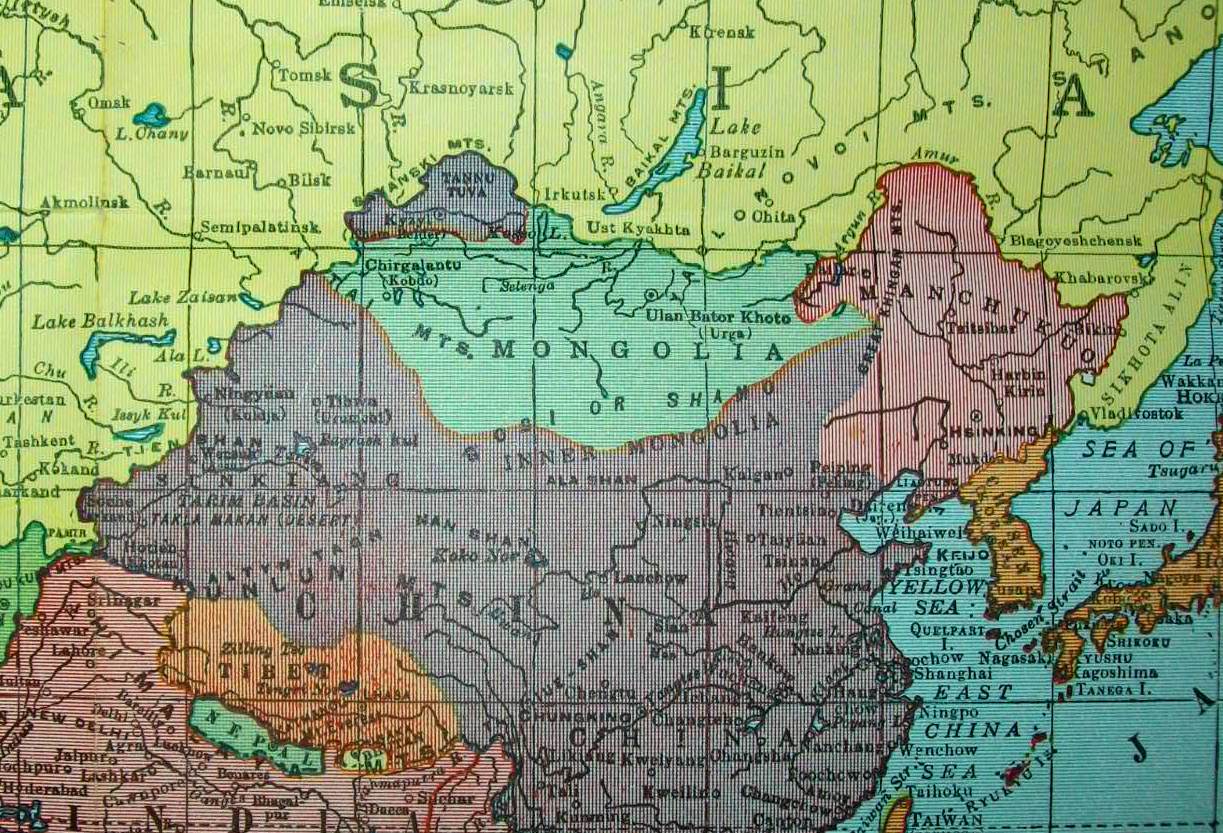
Switching from the office politics of Korean workplaces to the Japanese colonization of East Asia may seem like quite a jump at first, especially to those whose primary interest is gender issues, but then to fully understand the present-day impact of conscription on Korean society it is obviously necessary to study the military as a whole first. Doing so invariably leads to colonial Korea, for the Korean military regimes of 1961 to 1987 had uniquely pervasive roles in and control of Korean society, and any accounting for those cannot avoid the fact that the bulk of their military officers and bureaucrats in the 1960s had served in the Japanese colonial state in some capacity.  Once in power they had no hesitation in recreating a state model that had, in their experience, demonstrably delivered high growth under an authoritarian, top-down control of society, and both features tied in well with and were ultimately considered essential to the new state ideology of anti-communism. Indeed president Park Chung-hee had spent most of his impressionable twenties as an officer in the army of colonial Manchukuo, a vast social laboratory of state control that 1960s Korea increasingly began to resemble.

I’ve frequently mentioned the profound similarities between Japan and Korea in this blog, but in many senses the colonial origins of these are still like the elephant in the room here, their presence still keenly felt in economics, state-society relations and domestic politics, but something that Korean social-science scholars have only just begun acknowledging – let alone the Korean public – lest Korea’s post-colonial achievements be viewed as nothing more than the product of a much disliked and particularly brutal colonial rule. Hence while nobody in any country likes having foreigners explain their history to them, in this particular case Korea specialists outside of the country, with more job security, really do seem to have a much more balanced and objective view of the period than Koreans themselves.

With that note on being objective in mind, it is important to begin by putting all stereotypes and preconceptions of other military regimes out of one’s mind, especially for North Americans (the bulk of my readers) who may be very familiar with Latin American cases and tempted to equate those of South Korea with them. In those cases (with the important exception of the huge social and economic transformations begun under Pinochet in Chile), militaries generally merely took over state organs, either for the sake of preventing leftists coming to power, preventing the socialization of the economy, and/ or for the sake of their own enrichment, but overall they left state and elite structures largely intact. In contrast, a more accurate picture of the level of control and transformation wrought by South Korean military regimes would be of China under the Chinese Communist Party, and this is by no means a coincidence as I’ll explain later.

Ultimately, by outlining this historical context in this post and the next, I hope to demonstrate both why it’s so important to treat the Korean military as a special entity and why it’s reasonable to describe Korea as a “militarized” (if not technically military) regime even now, and having done so then hopefully readers will be more convinced of the truth of the seemingly outlandish assertions about the effects of conscription on Korean men that I’ll make in Parts Five and Six.

( Source: Peter Bo Rappmund )

For the sake of space then I’m going to assume that readers know a little about the history of Japanese colonialism and how Japan had been trying to catch up economically and militarily with the West since at least 1868. If not then no problem, the Wikipedia articles linked to above are perfectly adequate, if basic introductions; this provides some additional information and links too. Instead, I’m going to start off here with some facts about the former that I’ll hazard that most readers probably don’t know, but which proved very influential on the ultimate development of its colonies and of Korea in particular. Ironically, considering the government’s largely empty rhetoric on the subject today, back then Korea was a very real hub for the movement of soldiers, immigrants and materials between Japan, its other colonies and then front-lines in China, and as such it was also a natural supplier of mineral resources, hydroelectricity and forced labour.

But first, a note on sources before I begin properly. I actually studied all this as an undergraduate, but as most of my notes are back in New Zealand then for now I relied on the book The Developmental State, edited by Meredith Woo-Cumings (1999) for the first half or so of this post, and used the chapters “Introduction: Chalmers Johnson and the Politics of Nationalism and Development” by Meredith Woo-Cumings and “Where do High-Growth Political Economies Come From? The Japanese Lineage of Korea’s Developmental State” by Atul Kohli in particular, and for the second last section I used the chapter “Colonizing Manchuria: The Making of an Imperial Myth” by Louise Young in Mirror of Modernity: Invented Traditions of Modern Japan, edited by Stephen Vlastos (1998) and especially the journal article “Imitating the Colonizers: The Legacy of the Disciplining State from Manchukuo to South Korea” by Suk-Jung Han in the July 2005 volume of Japan Focus (available online here).

Finally, for any readers also interested in Latin American studies and in particular what made the Pinochet regime so unique in the region, I strongly recommend reading the journal article “Reconceptualizing Latin American Authoritarianism in the 1970s: From Bureaucratic-Authoritarianism to Neoconservatism” by Hector E. Schamis in Comparative Politics, January 1991, pp. 201-220. I usually wouldn’t bother mentioning something so off-topic, but then it’s one of those articles that made three years of Latin American Studies suddenly all make sense in fifteen minutes of reading, and so it should be much more widely known (Part Three will be based on a similarly revelatory journal article for East Asian Studies). Speaking of which, the best comparative study remains Chapters Five and Six of Capitalist Development and Democracy by Dietrich Rueschemeyer, Elelyne Huber Stephens and John D. Stevens (1992), one of the first books I made sure to buy as soon as I received my first ever paycheck.

Japanese Colonization in Comparative Perspective
( Source: Wikipedia )

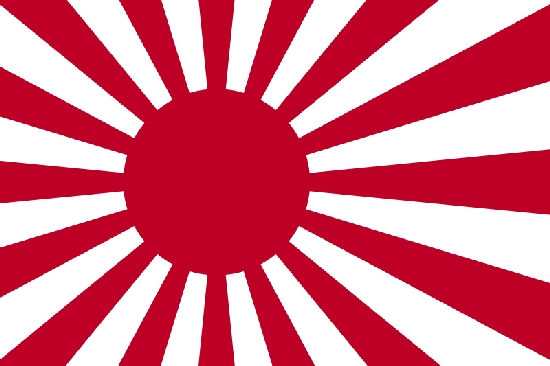
Again, please put aside all preconceptions. First, those of Japanese strength back then based on its position as an economic superpower today. While European powers were at the height of their technological, military and economic superiority to the rest of the world by the latter half of the Nineteenth Century, it’s important to remember that Japan, in contrast, barely avoided being colonized itself. The developmental passion that this provoked in the Japanese was very important, and combined with its victory in the Russo-Japanese War of 1904-5 and the benefit of hindsight then its ultimate rise appears somewhat inevitable. But in reality that victory was a very close-run thing, against the most backward of European powers, and in contrast to their then global empires this only granted Japan a very limited corner of the world to just begin to colonize. Even four decades later Japan was by no means fully developed, and the consensus of historians is that even if Japan had, say, won the Battle of Midway or even occupied Hawaii, an ultimate US victory in the Pacific (and Europe) was still somewhat inevitable, albeit one heavily army-based involving hopping from the Aleutian Islands, the Kamchatka Peninsula, and finally the Kuril Islands, involving a transfer of resources that may have stalled the development of atomic weapons and their attendant technologies.

( The Aleutian Islands. Source: Wikipedia )

Yes, I am a big fan of alternate history fiction and counterfactual history. Meanwhile, Japan’s quite weak position at the turn of the Nineteenth Century forced a uniquely intensified form of colonialism, which again any preconceptions based on European colonialism would give quite a false impression of. Japanese colonialism was different in several crucial ways:

1. It began much later, and was initiated, led and controlled by the Japanese state for the sake of Japanese development rather than by private companies and business interests in pursuit of profit.

While it’s true that all European powers were in a mad scramble for colonial possessions in the second half of the Nineteenth Century, this belies the fact that for centuries they generally only gained territories with the greatest reluctance, usually after becoming entangled in disputes between natives and trading companies and having to stay for the latter’s protection and continued free pursuit of trade. In contrast, in Kohli’s words, Japan stands out amongst colonizing nations “as nearly the only one with a successful record of deliberate, state-led political and economic transformation” (the other would be Germany, as it was also a late developer), and given their circumstances as described then the Japanese were forced to make “ruthless use of [this] state power to pry open and transform Korea in a relatively short period.”

2. It only occurred in those areas geographically closest to Japan, and, not unimportant, culturally and racially closest to Japan too.

This proximity both facilitated and encouraged many more Japanese to play a direct role in colonial rule than was ever the case in European colonies. To give some comparisons, there were 87,552 government officials in Korea in 1937, 52,270 of whom were Japanese, whereas the French state in Vietnam (relatively large itself compared to British colonies in Africa) only had 3000 French officials. In other words, for geographically-similar sized colonies the Japanese had fifteen officials for every French one. Also, there was a police force of 60,000 in 1941, just under half of whom were Japanese. Kohli gives no figures for Vietnam, largely as having a large colonial police force isn’t all that unique, but again this belies the unusually close personal supervision of it by the Japanese: in 1915-20, about one in ten police officers were sternly disciplined for transgression of police rules. In contrast, you virtually need the direct intervention of the president for that in Korea today.

This proximity also led to a great deal of movement of ordinary civilians from Japan. Grand state narratives of colonial settlement before the 1930s were more propaganda then reality, genuine examples only being confined to places like Okinawa and Hokkaido (much less historically “Japanese” than people think) in the 1870s and 1880s, and after that emigration was primarily to other places like Hawaii, California and Latin America (by coincidence, Brazil recently celebrated 100 years of Japanese immigration) until the racist natives increasingly restricted their numbers. After that the state certainly encouraged farmers to colonize the new overseas territories, but few actually did until the agrarian pressures and poverty engendered by the depression, combined with the newly acquired territory of Manchukuo, persuaded no less than 321,882 to settle there in a decade or so. Even more extraordinarily, roughly 720,000 Koreans settled there between 1932 and 1940 too.

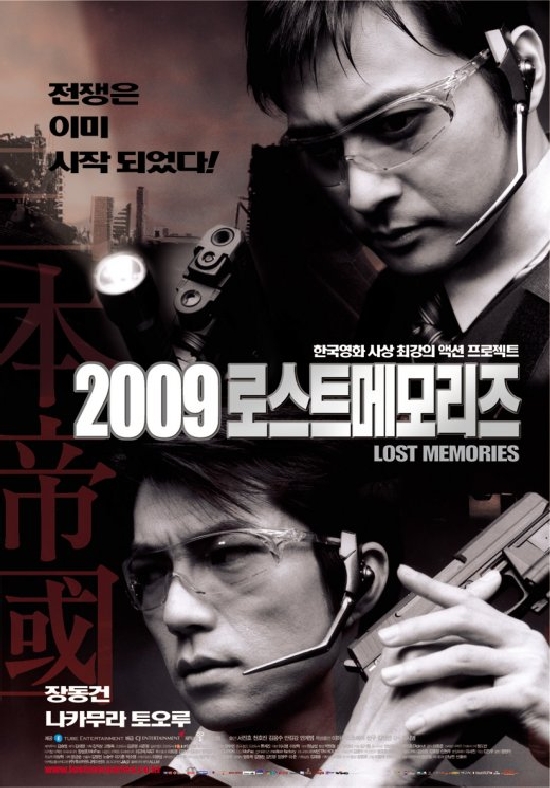
My budget for books is large but not unlimited, so I don’t have any figures for the numbers of settlers from European nations to their colonies sorry, but I’d be surprised if those figures didn’t compare well to those for, say, Canada, Australia or New Zealand, which took much longer and lacked such large and/or vulnerable indigenous populations. Moreover, there is a clear agricultural and psychological ease in colonizing areas similar climatically to the mother country (obvious, but strangely rarely pointed out), and given their geographical proximity and racial and cultural affinities with the natives then the Japanese could realistically consider their rule to be permanent, leading eventually to a full integration of colonies into an expanded Japan. This, indeed, was the idea of the official ideology of the ”Greater East Asia Co-Prosperity Sphere“, even if the racism of the officials charged with implementing it did seriously undermine this vision in practice.
( Source. Good review available here. )

3. Given the above, then Japanese colonization ultimately involved the complete transformation and development of colonies’ economies and the establishment of modern bureaucratic states where none had existed before, and while all this was purely for the sake of Japan, this involved much more investment and establishment of infrastructure and industry than the extractive industries of European colonies ever did.

In Kohl’s words, its impact was “more intense, more brutal, and deeply architectonic: it also left Korea with three and a half decades of economic growth [at an average of 3%] and a relatively advanced level of industrialization (nearly 35% of Korea’s national production in 1940 originated in mining and manufacturing).” No, the word “architectonic” isn’t in my dictionary either, but you get the idea. One of the first and most important things I learned in my Southeast Asian history classes at university was that coloring, say, England, Malaysia and Burma red in an atlas didn’t imply that the latter in anyway resembled the former, but in very real senses Korea at least was indeed a mini-Japan by the 1940s.

( Source: elguyer )

It is natural and correct to point out that a great deal of this development was destroyed in the Korean War, but although the developmental mindset passed on was ultimately a much more influential colonial endowment as I’ll explain in Part Three, the remaining industry and infrastructure was by no means insignificant. In brief, this included:

- As the hub of the colonial empire, Korea’s roads and railways were among the finest that a developing country could inherit from its colonial past.

- Although technically “human capital”, the Japanese made significant investments in primary education, and the benefits of these would have largely been felt by North and South Korea rather than the colonial state itself.

- The exhaustive land survey of 1910-1918, which “mapped all plots of land, classified it according to type, graded its productivity and established ownership” both provided a reliable source of taxation and the information upon which Korea’s agricultural revolution was based, Korea going from a land of regular famines to the granary of the empire in two decades. Certainly this never meant that Koreans actually ate more themselves, and however important clearly delineated land ownership is to developing economies today it was obviously of little use in Korea after the Korea War. But still, the postcolonial state knew its subjects and resources intimately, whereas most governments of former colonies today still haven’t mapped their territories adequately.

- The geographical distribution of industries established did have impacts later. Most chemical, metal, and electricity-generating industries were in the North, and the remainder of those, combined with communist regimes’ strengths in producing industries but not consumer goods, in large measure accounts for the economic superiority of the North over the South until the late-1960s. But these were largely highly capital-intensive industries “that were not well integrated into the local economy…much more likely to evolve into white elephants, requiring continuous protection, rather than into nimble, labor-intensive exporters of consumer products”. In contrast, the South actually had 60% of total industrial production in 1938, and what’s more this was concentrated in such fields as food production, textiles, machines and tools, and tobacco-related industries, not coincidentally much better suited to export than anything produced in the North.

- And export they did. In 1938 Korea was exporting twice as much as other similar-sized economies, and what’s more almost half of its exports were in manufactured goods. And as anybody who studied history in school should know, the whole idea of most colonies was to extract raw materials from them, send them back to the mother country, make things from them, then sell them back to the colonies, a captive market. No wonder then, that South Korean military and bureaucratic elites in 1961, largely the same people that had previously occupied the lower rungs of the colonial state, relished the chance to restart a high-growth economic system for the sake of Korean rather than Japanese development and capital accumulation.

I’ll cover the colonial period in a little more detail in Part Three, but only on a macro-level so to speak, so anyone further interested in the Japanese colonial period and grassroots Korean history in general, I recommend the Korean section of Frog in a Well for many interesting posts, and Matt at Gusts of Popular Feeling has written a great deal on that period too (although without a category section his posts can take some time to find sorry). Meanwhile, as so many of those elites mentioned and especially Park Chung-hee had served in Manchukuo in some capacity, then an examination of that colony really does become almost as important as colonial Korea itself to understand Korean military regimes.


Part One

Part Three

Share

Where do Ajosshis Come From? Part 1: The Evidence For Militarism

( Surprising by superlocal )

Introduction

Like Michael Hurt said back in February, ajosshis ruin everything, and his post quickly went viral because so many people could relate to it. For not only is there a huge sense of male entitlement in Korea that begins when young and “continues unabated with the implicit knowledge that you can feel up, push, or even hit women with minimal social consequences,” but also there is the fact that “public drunkenness and rudeness – which are crimes in many other countries - are par for the course here.” If both are added to a legal system heavily stacked in favor of natives, then whole subway lines and areas of cities can be rendered virtual no-go areas for foreigners.

Is it really that bad? Well, yes. While the passion and dynamism of the place and – let’s face it – the eye-candy mean that long-timers like myself can (almost) tolerate the pollution, the habitual flouting of laws and the pervasive irrationality in exchange, the ever-present possibility that some drunk guy will not only attack my family members or myself but will also get away with a light punishment because of his inebriation, or hell, even his “troubled home situation,” is more than enough to make my time remaining in this country limited. It doesn’t matter that in 8 years here I’ve only suffered two very trivial, racist incidents myself; there’s enough of a critical mass of testimony from foreigners of all stripes here that I perceive the threat, and that’s good enough for me.

Ready access to cheap, strong alcohol is certainly a lubricant for this, and in many senses present-day Korea strongly resembles the “Gin Lane” of pre-Victorian England, a connection first pointed out to me by Gord Sellar and one which I hope he explores soon. But it is also a profoundly gendered social malaise too.

I’ve covered many ostensibly “women’s issues” on the blog in the past year, not originally my intention but I ended up doing so because, well, where do “social issues” begin and those concerning women stop? But a study of Korea also forces the subject upon you in a way that studying, say, France or Brazil would not, for, in short, gender here cuts across society like a virtual apartheid system.

( Source: jeremyallen )

Exaggeration? Well, I’m just as guilty of it as any expat in my rants about the place, but something is seriously flawed in a society when it’s first-world standard of living coexists with levels of female empowerment more akin to Middle Eastern monarchies (update here). No, really: South Korea has numbers of female politicians, business leaders and so forth similar to those in countries where, variously, domestic violence isn’t illegal, men can have four wives, or rape victims suffer “honour killings” by their families. Even Pakistan, that well-known bastion of feminism, is a better (if less hygienic) place to live for women. Yes, Pakistan. And say I’m reading too much into it, but I’ll be damned if Korea’s having one of the lowest birth rates in the world is a mere coincidence.

Why is this division so common and yet so unquestioned, “in the same way that the fish doesn’t notice the water around it”? Unusually for Michael, he doesn’t analyze the causes, instead focusing on the consequences. Admittedly that particular post is a self-confessed rant, but still, he hasn’t covered the subject since. Hence, this series is an attempt to fill the gap.

The “C-Word(s)”

( Source: wit’s )

Let me say straight up that invoking Neo-Confucianism doesn’t explain it. For sure, it provides an ideological bedrock, and the two are intimately related, but “explain” it? I’ve been guilty of attributing so much in Korean society to it, and feeling pretty damn clever about myself when I did so too (one does have to distinguish oneself from the newbies after all), but after eight years here I realise that the term has become like a mantra for me, as reflexive as the “That’s Korean culture” line from Koreans and almost as unhelpful. Knowing something about Neo-Confucianism is useful for Westerners first trying to make sense of the place, but beyond the most general of observations it should be avoided. It would sound absurd to English speakers to, say, discuss levels of domestic violence in Sweden in terms of, say, Protestantism, yes? But links like that are par for the course here.

What does explain it then? Part of the reason this situation exists is because, as Roboseyo puts it, the link between Neo-Confucian privilege and responsibility has been broken. The catalyst for that was people’s hand-to-mouth existence in the immediate post World War Two period, as ably described by Matt here in Gusts of Popular Feeling. Possibly the Korean War and its immediate aftermath were responsible too, although in Europe for one, the shared experience of war is universally regarded as leading to the exact opposite, leading to a half-century of social democratism,  with some commentators even going so far as to argue that the Norwegian welfare state is more generous than that of its Swedish neighbour, for instance, because of the former’s experience of occupation by the Nazis.

But these don’t explain why it is primarily older Korean women who are notorious for their impoliteness and inconsideration towards others, whereas the sense of male entitlement that Michael describes is universal. I argue that the universal male conscription system is responsible, an institution much more entrenched in society, much more integral to notions of citizenship, and much more transformative an experience for its subjects than face-value comparisons of other countries with conscription like Russia, Germany and Israel would suggest. Being so central, the subject of gender must now take a backseat for the remainder of this post and the next as I discuss the background to conscription and to the South Korean military instead, albeit via a very circuitous route at first. Readers only interested in gender may well be tempted to bail, but I hope they don’t – I aim to convince all readers that, ultimately, any discussion of the origins of the gender gap in Korea without reference to the military is woefully inadequate.

( With a nod to my female readers; source: coplover )

One caveat and one point about sources before I get started. The caveat is that I’m not saying that conscription and/or military experience makes one sexist per se. While I do think that there’s a case to be made for the former’s existence in a society making that society more sexist overall, based largely on what I know about the German and Czech Republic’s records relative to their neighbors, I haven’t studied the subject enough to make any definitive conclusions like that. Also, whatever my gut instinct says about the tendency of militaries to be deeply sexist institutions overall, I’ve heard from reliable sources that the US military, for instance, is one of the most meritocratic institutions in the country. So I’ll try to keep my own prejudices and preconceptions to a minimum, and will reiterate here that I’ll only ever be referring to the South Korean conscription system.

Finally, this series of posts is loosely based on the journal article “A Feminist Exploration of Military Conscription: The Gendering of the Connections Between Nationalism, Militarism and Citizenship in South Korea” by Insook Kwon in The International Feminist Journal of Politics (3:1 April 2001, 26-54), and the book Militarized Modernity and Gendered Citizenship in South Korea by Seungsook Moon (2005), although neither get much mention in this post. If you can’t wait, you can read an excellent review of the latter here.

My Militarized Institute

( Source: wit’s )

Conscription in any country isn’t just about the actual service time, variously 22, 24 or 26 months in Korea. Kwon describes it as being “most usefully understood as a social process that can be divided into three sub-processes: (1) pre-conscription socialization; (2) miliary service; and (3) post-conscription interpretation of that miliatary experience”, and notes that none of those processes is an all-male affair. When I began this post over a week ago I tried to stick to the same format, but really, those neat-sounding divisions are actually very problematic: where do workers, civil officials, teachers, military personnel, and parents’ own interpretations of those experiences end and younger Koreans learning about conscription through those sources begin? Any starting point for discussion being somewhat arbitrary then, describing life at the institute I work at is as good a place as any.

I am the only Westerner amongst eighty staff at my branch, and only one of perhaps five out of the total of 1500 or so staff at all ten branches. With those numbers, I think I can be forgiven for thinking that my presence makes little impact on office culture there, and that it’s not substantially different to any other Korean workplaces either (especially public schools). But still, I’d be interested to hear how much my experience there and assumptions about the rest of Korea based on it match those of readers’.

The bizarreness begins as soon as I arrive, as I must loudly announce “반갑습니다” (literally “Nice to Meet You”) to all sixty people already in the staff-room, who reply in kind. Later, when I’m going to class and come across individual teachers in the corridors, we must say “수고하십시오” to each other (“Do a good job”), unless I haven’t already greeted them with my collective staff-room greeting, in which case it’s “반갑습니다” again (it can be difficult to keep track). And after class and when leaving for the day we have to say “수고했습니다” (“I did a good job”) to each other. With 100 staff in total at my branch, you can imagine how grating all that soon gets.

It is tempting to dismiss the literal interpretations and argue that they are really effectively “Hi” and “Bye” respectively, but that would be very misleading. It is certainly convenient to explain to learners of Korean that ”주세요”, for instance, is “please give” in English, but as soon as you realise that it’s really just the “요” conjugation of “주다” (give) with the honorific term “시” added, then as an English teacher of Koreans you suddenly understand why Koreans rarely say “please” in English, as there is no Korean equivalent, and overall that the Korean language reflects, at the very least, a completely different mode of social interactions. And on a higher level, “우리나라” – “our country” - supposedly meaning ”Korea” in the same way that I think of the concept of “Korea”? Don’t get me started.

( 夏 summer estate by nicoloacassa )

To return to my workplace then (which by the way is “직장” in Korean, by coincidence also meaning “rectum”), anyone that doesn’t think that these thousands of empty greetings said at my workplace are anything but virtual salutes should see the manner and gusto with which they’re said when the boss walks into the staffroom….it’s virtually “Captain on the bridge!”.

That’s bad enough, but then every hour my boss turns on the loudspeaker and loudly berates the students for 5-10 minutes for chewing gum and using their cellphones too much. Nothing wrong with that per se, but then they heard exactly the same at the end of class an hour ago, the hour before that, and three times the day before that too, and so they give his mini-lecture precisely the attention it deserves. Sometimes names of students who didn’t, say, do their homework will be called and they will have to go to reception, and as I go through there on the way to the staff-room later I may pass 30 of them squatting on the ground with their hands on their heads being screamed at by a male teacher, and after 20 minutes of that they’re jumping up and down in unison (still with their hands on their heads) chanting “We will try harder!” after him. And their parents pay money for this? Well yes, precisely this.

Sure, kids need to be disciplined, but then every day my department head makes sure to scream at all English teachers for 20 minutes or so too (as do the other department heads to their teachers). My Korean skills don’t extend to translating screaming in real time, but I think the contents are irrelevant: it’s all just a show of authority. Every other week the boss, the nicest of guys most of the time, comes into the staffroom and does the same to all teachers, for exactly the same reason I’m sure: it’s quite a transformation. I should also point out that there are no separate offices for most staff regardless of their position, so when a teacher has screwed up (I’m still not entirely sure how one does so…the students only got a 95% average or something?) he or she has to stand in front of his or her superior, be loudly and publicly berated by him or her in front of sixty colleagues, all the while staring at the floor like an 8 year-old who’s being told off by their mother.

My chain of institutes is bit tougher, well a lot tougher than most – it only began hiring women to teach English and Maths a few weeks ago, after 19 years in business, and the teachers walk around with big sticks to hit students – but still, it’s going to be difficult to persuade me that the screaming and the constant displays of authority and hierarchy at any workplace are a result of Neo-Confucianism rather than what male workers learned in the military…you too would think “boot camp” if you walked into it, not an image Confucius usually invokes. And considering what they learned at the receiving end as youths and then themselves as young adults, I strongly suspect that many Korean men know few alternatives to shouting, embarrassment, shaming and physical violence to getting others to do what they want. Of course, there is much more to Korean protest culture than that, but recent events certainly haven’t dispelled me of the notion.

If Korean dramas are any indication, this workplace culture is the norm rather than the exception. Let me pass on a description of it (which I’ll paste in full because the original requires registration) and ask you from where else would a workplace culture arise that tells people that not only should work never be for pleasure or personal development and fulfillment, but also that have to accept any crap from their bosses for the rest of their working lives? No wonder so many Koreans are self-employed:

Koreans’ Motivation to Work

( Source: Christian Bjork )

CHOI Sook-Hee
Samsung Economic Research Institute
Jun. 11, 2008

Job-switching is rampant today with the percentage of new workers who quit within a short time growing every year. This is a genuine matter for concern, given the huge costs incurred by businesses to recruit and train new workers.

To prevent new workers from quitting early, P&G has introduced a new employment system differentiated by job type. Based on its understanding that young workers prefer interesting work, P&G has attempted to minimize the disparity between aptitude and work content by presenting them with a clear description of tasks they will undertake from the beginning.

Florida-based power firm CHELCO is running a career coach system that is designed to promote understanding of the work orientations and aptitude of employees through dialogue, enabling them to improve their work capabilities.

As seen above, global companies are increasingly reflecting on the importance of work orientations in the process of personnel and organization management. “Work orientations” refer to the attitude and thinking of employees. Work orientations are inseparable from job satisfaction, commitment, the acquisition of talent, and the retirement rate.

Today, we’ll take a close look at how Koreans think of their jobs and how their workorientations are shaped.

Based on the International Society Survey Program (ISSP) for 2005, an international survey conducted with 31 out of 43 ISSP member countries, SERI classified people’s work orientations into four types: relationship-oriented, self realization, livelihood, and value-oriented compensation, by using two axes’ value of work and interpersonal satisfaction.

“Self realization” refers to countries like the US, in which jobs are expected to bring high value of work. The exemplary case of the “value-oriented” type is France, a country in which employees enjoy high motivational rewards but suffer rampant skepticism about authoritarianism.

Korea belongs to the “livelihood” type, indicating that most employees here in Korea regard their jobs as a means of livelihood with the degree of value of work and job satisfaction remaining low.

SERI also analyzed and compared the key trends and features of the work orientations of four major countries: the US, France, Japan and Korea. The Korean employees turned out to have low satisfaction regarding “opportunities for skills improvement” and “interest in work.”

The primary reasons behind workers’ low satisfaction regarding “opportunities for skills improvement” include a lack of appropriate job training and mentoring programs that are necessary for the improvement of careers and job skills. In this regard, Korea needs to learn lessons from Denso, one of the world’s top three auto parts makers, which runs an in-house job training program aimed at improving skills for less educated employees.

Even in terms of interest in work, Korea ranked last among the four countries, indicating that people here tend to place more value on the level of income, job stability and social reputation than their personal aptitude when getting new jobs. The US was positioned at the top in this category, showing that the job seekers put their personal capabilities and attributes first in the list of considerations. Not only when looking for jobs, but also when entering a school of higher grade, Americans make active use of counselor systems.

Korean workers also showed a low level of satisfaction in the category of pride in their jobs. This is quite different from US counterparts.

Smucker’s, for example, committed itself into bolstering company loyalty in close collaboration with regional partners. Thanks to these efforts, employees began to feel a strong sense of loyalty toward their company, while believing that the company loves them like a family. Smucker’s, as a result, was named one of the best workplaces in the US in 2006.

In sum, Koreans still regard their jobs principally as a means of livelihood. This mirrors the reality here in Korea where work does little to enrich the life of the people.

Many workers still take it for granted that they have to tolerate anything in return for getting paid. This kind of job atmosphere produces a negative influence on both companies and employees alike. With this in mind, businesses need to make more efforts to develop new programs, aimed at bringing a higher sense of value of work and satisfaction to their employees.

They also need to come up with a new educational training program, in which job placement and career management are performed in consideration of personal interest and growth potential. Also needed is a program to balance life and work that could be achieved by respecting personal time, providing due consideration about the families of workers, helping them upgrade their skills and supporting their leisure activities.

( My emphasis. Hat Tip to Tom Coyner’s Korea Economic Reader for the article)

Having hopefully convinced you that there’s something more to a sense of pervasive militarism in Korean society than a mere vibe on my part, in Part Two I’ll discuss why the Korean military has been and remains so uniquely involved in Koreans’ daily lives, which in turns means examining its origins. The resulting jump from gender in the beginning of this post to Japanese colonization and then “developmental states” may seem quite a leap on the surface, but like the example of my institute has hopefully at least hinted at, my intention is to show how something so abstract-sounding is in fact really so practical and relevant to ordinary people, something I’m not sure I would have been able to do in a stand-alone post devoted to the topic.

And on that note I’ll finish this post, before Safari conspires against me too!

Part Two

Part Three

Share

Cosmetic Surgery in North Korea?

( Source: Eric Lafforque )

Was I wrong? Does this article about North Korean women getting double eyelid-surgery contradict my arguments about South Korean women ultimately having Caucasian ideals of beauty? I don’t think so - North Korea will always be a unique case – but this new use of double-eyelids as a status symbol there would certainly have little to do with Caucasians.

But I emphasise the ”new”, as despite what many commentators to that earlier (and perhaps most controversial) post of mine have said, I’ve still yet to find one source that mentions that any East Asian population thought double-eyelids particularly attractive before the middle of the Twentieth Century, not coincidentally when richer, then usually taller Caucasians arrived in great numbers and East Asians got to see images of their enviable lifestyles on TV. I’m quite happy to learn of any evidence that they’re not related, but man…I’ve gone through enough journal articles on the subject in the past few months to write about nothing else for the remainder of the year if I chose to, and any arguments for that are noticeable only for their absence.

(As a small aside for a moment, I’m actually lucky I found the original article at all, as this blog’s focus gives me little time for checking out the numerous but mostly security-focused blogs about North Korea out there. In turn, I strongly suspect that there’d be few readers of those blogs interested in this blog also, so any focus here would be counterproductive on my part too. Having said that, if you’re interested in East Asia but also turned off by anything to do with North Korea, then I recommend not listening to the numerous podcasts by the Korea Society on the country… they’re so good that they’ll make a convert out of you despite yourself)

( Source:  hstoutzenberger )

The article is two years old, but the conclusions to be made from from it still apply. And sorry to freak you all out with that photo, but a sense of unease is probably appropriate when you read that the North Korean elite are getting cosmetic surgery while their neighbours are starving.

“60% of Single Women in Shinuiju Get Plastic Surgery on Their Eyelids”

By Kwon Jeog Hyun, Dandong of China [2006-05-10]

Plastic surgery is has quickly spread among young single women in North Korea. In Shinuiju alone, more than 60% of the women have reported having had work done.

Trader Kim Man Gil (pseudonym, 53), who trades shoes and clothes between Shinuiju and Dandong, China, said that, “North Korean young women have increasingly gotten plastic surgery on their eyes… At a glance, more than half of the young women walking in the streets have signs of plastic surgery”.

( Source: LAN LAN )

Okay, call me picky, but although this is the first time I’ve ever heard of The Daily NK that this article is from, I don’t exactly have a good first impression of it considering how happy it is to cite the statistics of one trader with North Korea as gospel truth. Sure, reliable information on North Korea is often difficult to get, but the anonymous “North Korea insider” quoted later doesn’t quite cut it for sufficient corroborating sources.

North Korea has implicitly allowed plastic surgery hospitals in Pyongyang, Chongjin and Shinuiju to complete simple double-eyelid surgeries and tattooed eyebrows. Officially, the North Korean government does not permit plastic surgery, yet defectors said that in big cities plastic surgery is commonly performed in secret.

Regarding women who work at North Korean tourist resorts, the North Korean government actively encourages plastic surgery; a fact many visitors to North Korea have already attested to.

If so, why? I can’t see Kim Jong-il pandering to international tastes by wearing Western suits anytime soon (unlike Castro), but surely this is a small step in the same direction? If it is true, then the Caucasian element would possibly be a factor, and as well as the push factors from the government Caucasians may well have a certain exotic appeal as a pull factor for those women too, no matter how much they’re demonized in propaganda. But all that is speculation, and having criticized the article for its lack of reliability then I’m not going to cherry-pick things from it that happen to agree with my arguments.

( Source: Voodoo Plastik )

Mr. Kim said that, “Starting in 2004, plastic surgery by non-licensed operators, not doctors, has been in vogue”. He added that, “Although the government does not allow plastic surgery, because of its extensive popularity, the government is reluctant to crack down on it”.

Although plastic surgery is a generally expensive undertaking, women of all economic and social strata are finding the means to get “fixed”. Kim noted, “Because many people in Shinuiju work at places related to Foreign Currency Earning departments and are thus well-off, they have enough money to get plastic surgery… Yet even women who do not have enough money sell food until they are able to pay for it”.

I seriously doubt that. According to an excellent podcast in February on the state of North Korean agriculture and comparative regional rates of malnutrition entitled North Korea: Market Opportunity, Poverty and the Provinces by Helen Clark of the University of Warwick (again, courtesy of the Korea Society), even Pyongyang citizens were struggling to find sufficient food when she was conducting her research, just before this article was written.

Kim mentioned that, “Meanwhile, in counties or districts away from Shinuiju, most people have so little money that one in three children in a family cannot attend school. The gulf between rich and poor is really wide and serious”.

He said that, “Plastic surgery in the North is limited to relatively simple double-eyelid surgery and tattooing of eyebrows. As for Shinuiju, 60% of single women without double eyelids seem to have gotten plastic surgery”. Subsequently he noted, “North Korean women and Chinese women are all the same in that they want to be pretty”.

A common side-effect of North Korean double-eyelid surgery is that after an operation the eyes come to look artificial, due to the relative thickness of the lower eyelids.

Well, that kind of contradicts the idea of it being “pretty”, yes? (check out the mannequin-like figure in the original article). Again, despite what some commentators think, that the women themselves may well get the operation because “they want to pretty” merely changes the question to “Why do they think that is pretty?” rather than actually answering anything. This shouldn’t need pointing out, but in my experience the “because they want to be pretty” crowd seem pretty myopic in refusing to acknowledge that standards of attractiveness vary according to time and place.(Source: MyCine)

To give a quick for instance, one very close to home, I’m rather tired of Korean women’s current obsession with baby-faced, smooth-skinned feminine men meaning that my baldness shaved head garners dismissive and often insulting comments from some of them as I pass by (worth it for the look on their faces as I insult them in Korean back), whereas its’ general acceptance in Western countries now (but not 20-30 years ago) means that I can reap the fruits of the increased status and maturity it conveys. I could mention virility also, but then I promised I wouldn’t.

Plastic surgery on one eye cost 500 won ($0.17) in 2004, yet now is quoted to be around 1,500 won ($0.50) in 2006. Both eyes cost 3,000 won, or 1 US dollar. As for eyebrow tattooing, one eyebrow cost 200 won ($0.06) in 2004, and now has risen to 500 won.

In order to confirm the numbers of young women getting plastic surgery in Shinuiju, we contacted a North Korean insider. During the conversation, our contact asked us, “Why does it sound so strange to want to be pretty? Because it [the surgery] does not cost much, many wealthy women have already gotten plastic surgery or are trying to get it”.

Mr. Kim said “Most women have gotten plastic surgery through recommendations from other people. And well-known surgeons make lots of money”.

All in all, an interesting but ultimately frustrating article because of it’s unreliability: if any readers more knowledgeable than I can shed more light on the phenomenon then I’d be very grateful. Although I don’t think anything it mentions contradicts arguments I’ve made about South Korean women’s body ideals, it does raise some interesting related issues.

Share

Sex and Maths

( Source: snowfreak92187 )

Readers, I’m sure, are familiar with many of the biological and cultural explanations proffered for differences in mental abilities between the sexes. Here’s an an article in the Economist magazine with some strong evidence for, well…both sides to the debate, and with some surprising conclusions about Korea too:

Girls are becoming as good as boys at mathematics, and are still better at reading

TRADITION has it that boys are good at counting and girls are good at reading. So much so that Mattel once produced a talking Barbie doll whose stock of phrases included “Math class is tough!”

Although much is made of differences between the brains of adult males and females, the sources of these differences are a matter of controversy. Some people put forward cultural explanations and note, for example, that when girls are taught separately from boys they often do better in subjects such as maths than if classes are mixed. Others claim that the differences are rooted in biology, are there from birth, and exist because girls’ and boys’ brains have evolved to handle information in different ways.

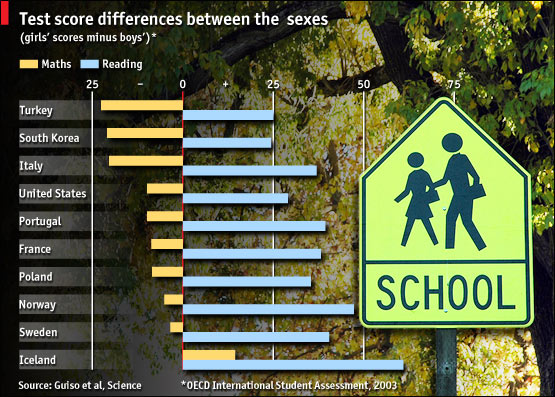
Luigi Guiso of the European University Institute in Florence and his colleagues have just published the results of a study which suggests that culture explains most of the difference in maths, at least. In this week’s Science, they show that the gap in mathematics scores between boys and girls virtually disappears in countries with high levels of sexual equality, though the reading gap remains.

Dr Guiso took data from the 2003 OECD Programme for International Student Assessment. Some 276,000 15-year-olds from 40 countries sat the same maths and reading tests. The researchers compared the results, by country, with each other and with a number of different measures of social sexual equality. One measure was the World Economic Forum’s gender-gap index, which reflects economic and political opportunities, education and well-being for women. Another was based on an index of cultural attitudes towards women. A third was the rate of female economic activity in a country, and the fourth measure looked at women’s political participation.

( Source: Splat Worldwide )

As long-term readers will know, I usually have problems with virtually anything the Economist says about international comparisons of education standards, its consistent praise of the high scores of South Korean students, for instance, undermined by South Koreans themselves finding their education system appalling themselves (a fact which a whole five minutes of checking on the internet would reveal). There’s little scope for misinterpretations of correlations between reading and writing scores and measures of sexual equality though, but still, as you can see, the researchers were at pains to keep the variables down to a minimum.

On average, girls’ maths scores were, as expected, lower than those of boys. However, the gap was largest in countries with the least equality between the sexes (by any score), such as Turkey. It vanished in countries such as Norway and Sweden, where the sexes are more or less on a par with one another. The researchers also did some additional statistical checks to ensure the correlation was material, and not generated by another, third variable that is correlated with sexual equality, such as GDP per person. They say their data therefore show that improvements in maths scores are related not to economic development, but directly to improvements in the social position of women.

And notice where Korea fits into that scale:

( Source )

That was actually quite surprising, and confusing. For sure, Korea is one of the most sexist countries in the world, and although it was less than a generation ago that girls’ university and even high-school educations were often sacrificed for the sake of their brothers’, I’ve heard from many different sources that the Korean education system today is relatively meritocratic. Hell, Michael Seth in this must-read book on the subject argues that it is one of its greatest strengths, albeit one unfortunately (and ironically) at odds with the great respect, status and deference given to high acheivers.

I’d imagined, then, that young Korean women confront sexism more once they enter the workforce, as despite their educations there remain strong societal expectations that they will be happy to work at non-advancing jobs in their twenties and then effectively retire upon marriage, not unlike the situation in Western countries in the 1950s and 60s.

But then these tests were for 15 year-olds, so clearly there is some sex-based factor at work in the Korean education system that I wasn’t aware of. Why do Korean girls do so badly at math then? I’m open to suggestions.

( Source: tejqill )

The only clue I have myself is that Maths (and English) is considered a hard and difficult subject for students, which is why in its 19-year history the chain of institutes I work for didn’t hire any female teachers to teach it until, well, literally last week, only men apparently being authoritative enough to get students to study in class (yes, perfectly legal in Korea). For sure, the institutes I work for are quite unique in that regard, and much more demanding of students than most, but still, I think it’s telling that the policy was in place. And if students of either sex disliked it so much, then I can’t imagine that girls with interest and/or ability in it would have been particularly encouraged to pursue it, given their relative absence in engineering and scientific fields in Korea. Perhaps Korean education isn’t quite as meritocratic as I thought?

(On a side note, it’s says a great deal about the sort of English taught at my institute that only men were considered capable of teaching it, despite a majority of English teachers in Korea {and probably the world} being women)

The one mathematical gap that did not disappear was the differences between girls and boys in geometry. This seems to have no relation to sexual equality, and may allow men to cling on to their famed claim to be better at navigating than women are….

Again, surprising in a Korean context. I’ve been teaching 13 and 14 year-olds, on-and-off, for a good eight years now, and I’ve noticed that their math textbooks are always just full of geometry, far more than I ever had to do at their age. For sure, frantically copying each other’s answers in breaks between classes doesn’t equate to real learning, something they’re forced to do because they wouldn’t possibly have enough time to do all the homework required of them and – heaven forbid – eat and sleep too. But still, if there’s one country where I’d thought girls would have been good at geometry, it would have been Korea. Something is clearly up.

The article gets more interesting (and controversial) after that:

….However, the gap in reading scores not only remained, but got bigger as the sexes became more equal. Average reading scores were higher for girls than for boys in all countries. But in more equal societies, not only were the girls as good at maths as the boys, their advantage in reading had increased.

This suggests an interesting paradox. At first sight, girls’ rise to mathematical equality suggests they should be invading maths-heavy professions such as engineering-and that if they are not, the implication might be that prejudice is keeping them out. However, as David Ricardo observed almost 200 years ago, economic optimisation is about comparative advantage. The rise in female reading scores alongside their maths scores suggests that female comparative advantage in this area has not changed. According to Paola Sapienza, a professor of finance at the Kellogg School of Management in Illinois who is one of the paper’s authors, that is just what has happened. Other studies of gifted girls, she says, show that even though the girls had the ability, fewer than expected ended up reading maths and sciences at university. Instead, they went on to be become successful in areas such as law.

In other words, girls may acquire an absolute advantage over boys as a result of equal treatment. This is something that society, more broadly, has not yet taken on board. Mattel may wish to take note that among Teen Talk Barbie’s 270 phrases concerning shopping, parties and clothes, at least one might usefully have been, “Dostoevsky rocks!”

( Image by Vaguely Artistic )

I’m very much a proponent of the existence of some fundamental biological differences in aptitudes between the sexes myself, and do believe that even in a perfect world that there will always be, say more female nurses than male ones, and more male engineers then female ones and so forth. Not for a moment does that mean that I will ever stop or even not positively encourage my daughter to be an engineer, or not take seriously a male nurse, but the above is yet another inconvenient truth against the argument that all difference is due to prejudice.

For more on that I recommend the book The New Sexual Revolution, by Robert Pool (1994), and especially “The Real Truth About The Female Body” in Time Magazine, March 8 1999. The latter especially is good on they numerous ways in which (most) women are mentally and physically stronger to (most) men, just as men are to women in other ways. I especially recommend checking out the (naturally) numerous comments to the Economist article; as you have to be a subscriber to make a comment, then the dialogue is a lot more intelligent and civilised than you’ll find on most blogs and forums! I especially like this one of Tom West’s, a healthy cautionary message against what I’ve written above:

“Do all feminists rail against the idea that men and women might actually be inherently different?”

The trouble with acknowledging differences is that human beings tend to turn a generality into a specific rule. As soon as you say that it’s natural that men are over-represented in higher math, it becomes instantly harder for any woman to be even average at math. The meme is simplified into “women can’t do math”, and you soon end up with teacher’s wjho won’t work hard to teach girls math, boys and girls that reject those who are good at math as weird and different, and of course, dissuade many from putting in the effort to become good at math because they themselves believe they can’t do math.

As an aside, in my opinion, that was why Larry Summers deserved to lose his job for his remarks. Not that he was necessarily wrong. It was that by virtue of his widely circulated speech, he had legitimized “women can’t do math” in the minds of many, regardless of what he actually meant or believed. (And that people in authority have to be aware of not what their words say, but of what their words will do.)

P.S. Having my blog posts regularly copied and pasted by others myself, normally I’d be loathe to paste an entire article here, but it was of an annoying length that made simply giving excerpts difficult, but pasting all of it too much. After much time and repeated links wasted on trying the former, I plumped for the latter in the end!

Share