The Grand Narrative

Open Thread #5: So What?

Posted in Open Threads, Readers' Emails by James Turnbull on January 30, 2010
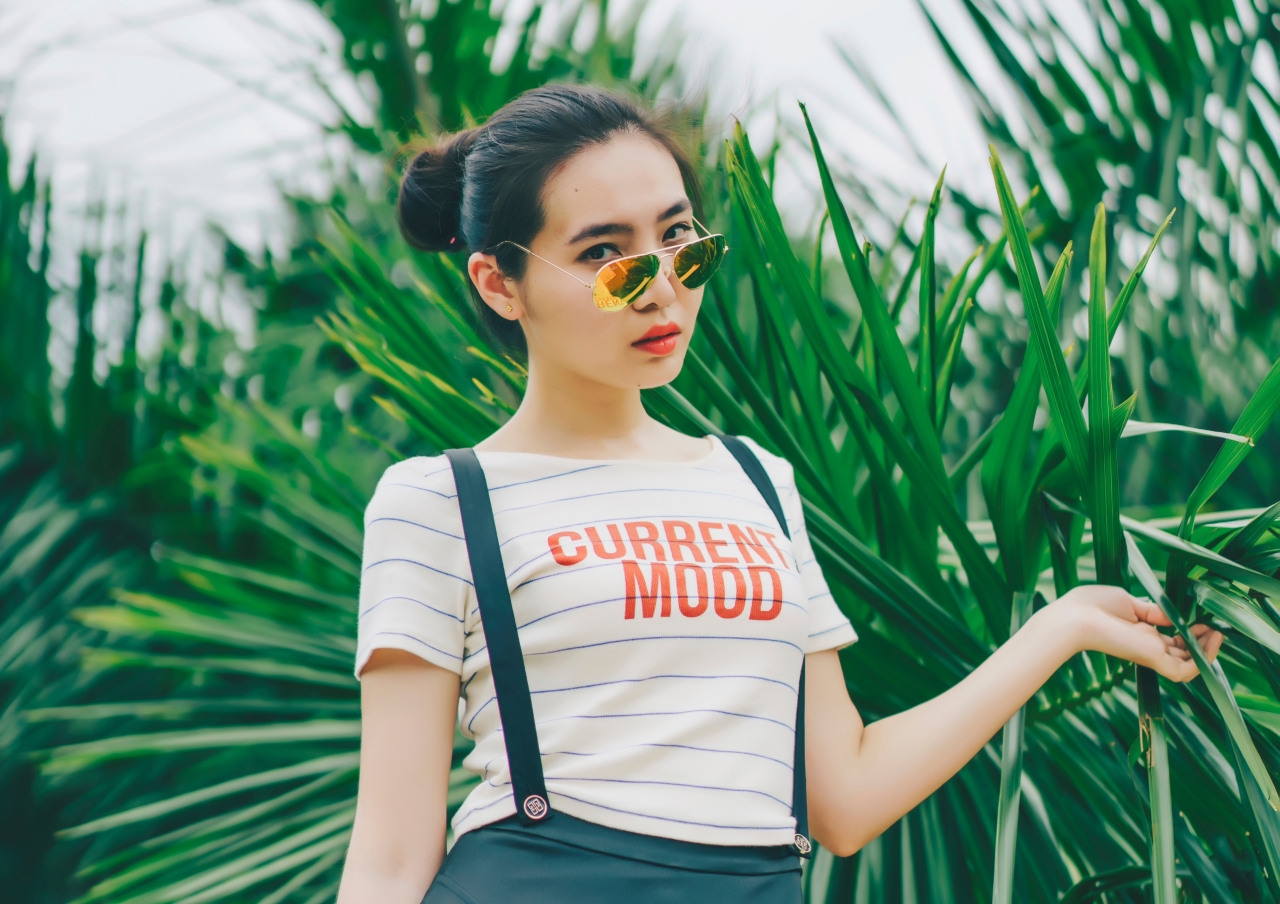
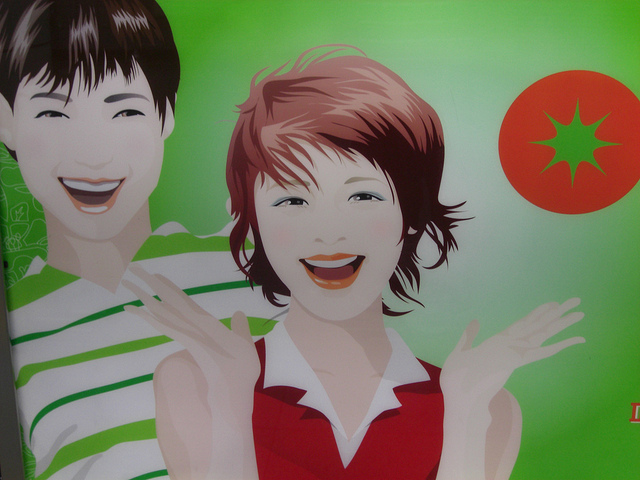
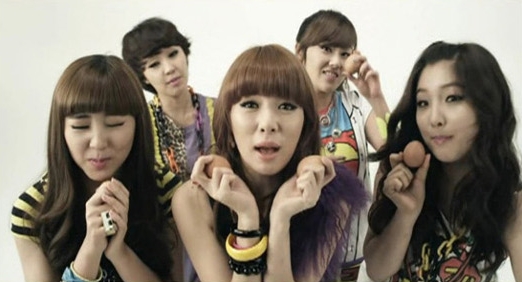
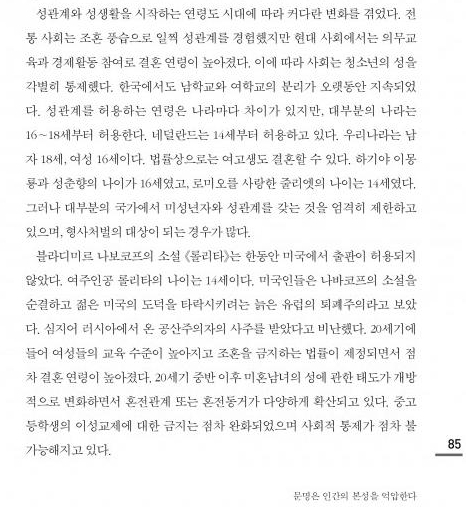
( Source: RaySoda )

To get you started, a provocative comment I just received on an old post, which would be wasted in obscurity there. With apologies to the author if this sounds impolite, but I ultimately find much of his argument superficial, although it’s always good to have one’s views tested:

…Hi, just stumbled on to your blog last night in between reviewing flashcards for my Chinese class, and I have to say I’m thrilled to find someone as interested (at least in this and recent posts) in the topic of standards of beauty, particularly in Korea. I do however have to argue a point. And this isn’t necessarily aimed at you personally or the views you hold, but you seem to be a willing enough participant in the discussions that occur because of your blog posts that I though I’d give it a shot.

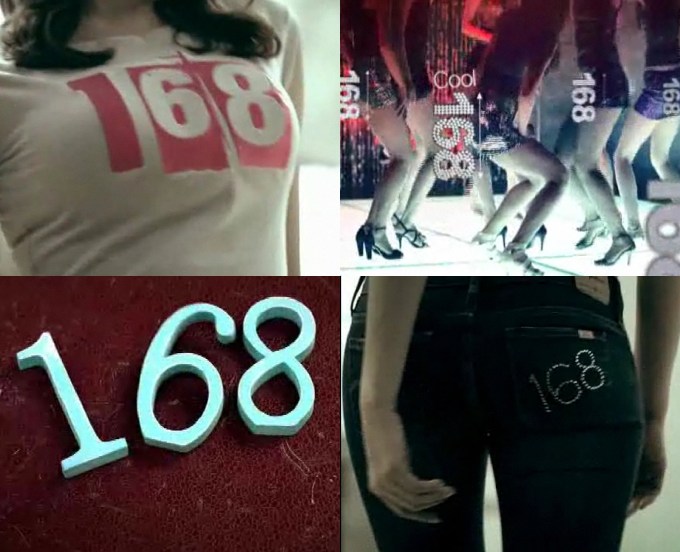
Looking back over said “beauty” posts, I continually find myself asking, “so what”? So what if Koreans openly put an exceptionally high standard on external appearance? So what if women in Korea try to become most easily divisible by which letter they most look like? So what if even kids are targeted by the media in what amounts to little more than marketers seeking the widest possible audience?

Is all this something that doesn’t happen in western countries? You yourself have said that it is not.

Granted, I come from something of a biased perspective in a number of ways. First of all, I don’t think of women in ad campaigns, subconsciously or otherwise, as sex objects because I’m gay. Secondly, from my “objective” perspective on feminine beauty, I tend to lean more towards the thinner, petite side of women that are shown so ubiquitously in magazines from Vogue downwards. Thirdly, as someone who has been very tall (6′5″, so ~195cm)and called thin all his life almost in place of standard introductions, I can see where all of the body-consciousness in our society comes from; it’s only natural to judge someone first and foremost on appearance.
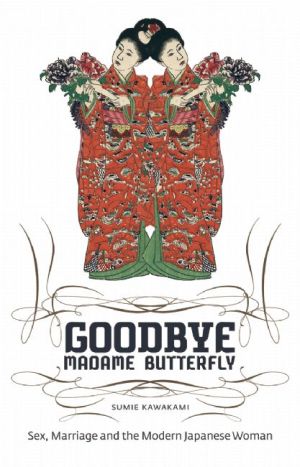
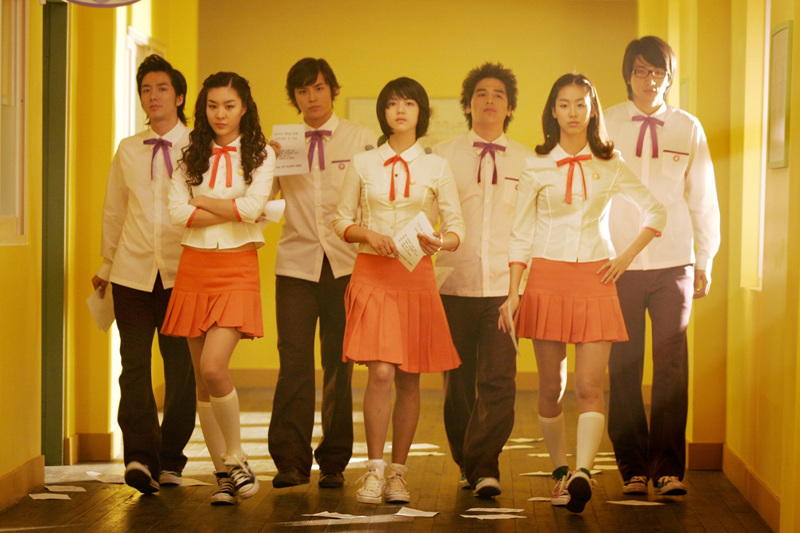
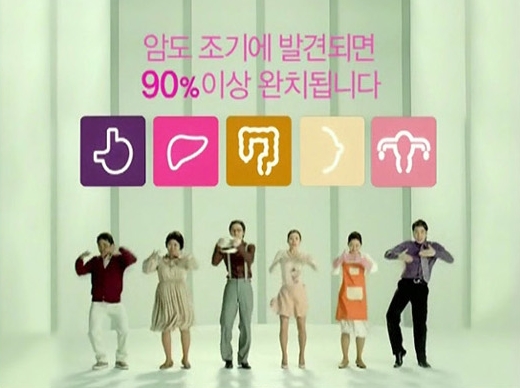
( Source: unknown )

Anyway, back to the gist, I have to say, is it a bad thing that Korean ad firms target womens’ physical appearance so blatantly? After all, at least it seems as though a Korean woman knows what’s expected of her in terms of appearance. In the West, on the contrary, we constantly say that size doesn’t matter, which we know perfectly well to be false. Heterosexual males may not be as turned on by a 100lb, 170cm woman as they are by one maybe 20lbs heavier, but the upper limit to what most males find attractive, by my subjective observations, is significantly lower than what the average woman in the U.S. (my country of residence) now weighs. Because we’ve told women (and men) that size doesn’t matter, things have, to be polite, gotten out of hand. According to the U.S. gov’t, which calculates these things based on body-mass index (admittedly a very poor way of doing so, basically just weight divided by height), more than two-thirds of women in America are overweight.

Although of course there are exceptions, in most East Asian countries overweight and obese people, particularly women, are fairly rare. I think in part it’s because the culture in that part of the world (yay generalizations!) says outright that size does matter, whereas we say it doesn’t, but really it still does.

In short, long-winded post aside, I’d rather be in a country where people say to my face that I’m fat instead of whispering it to each other as I walk by. At least that way, the social pressure to be thin is so much greater and clearer that it can’t be overlooked or downplayed to save face for those applying that pressure. And in terms of health, I think more would rather be underweight than overweight. After all, eating disorders affect, what, about 10% of women in the U.S., while obesity-related diseases kill millions each year. Just from the perspective of someone living in the U.S., I think maybe being a bit more upfront about the natural inclination towards “thinner” (when compared to the national average) women may not be such a bad thing after all.

Then again, having never been to Korea, you’re more able to say whether this is quite so helpful there as it would be here. Of course, culture aside, that brings us to the question of whether certain ethnic groups are naturally thinner or not, which is another issue entirely of questionable validity and fairness…(end).
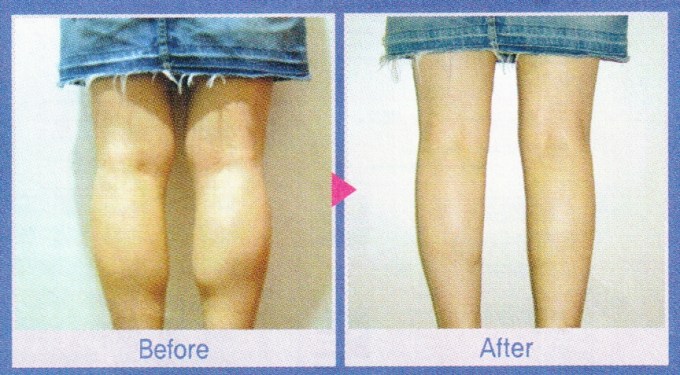
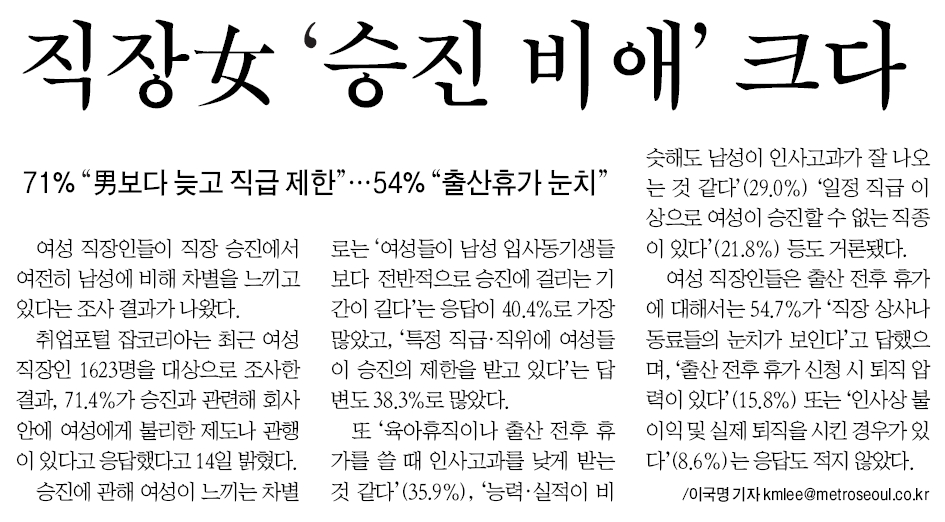
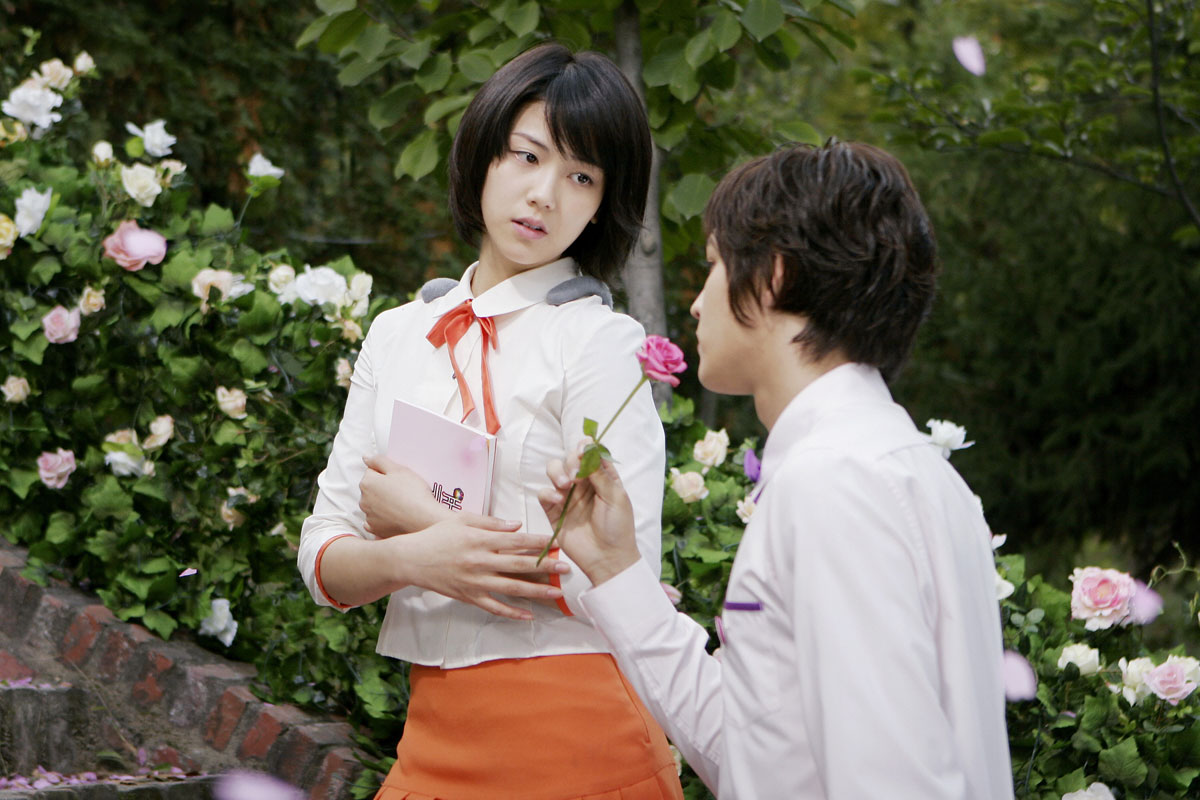
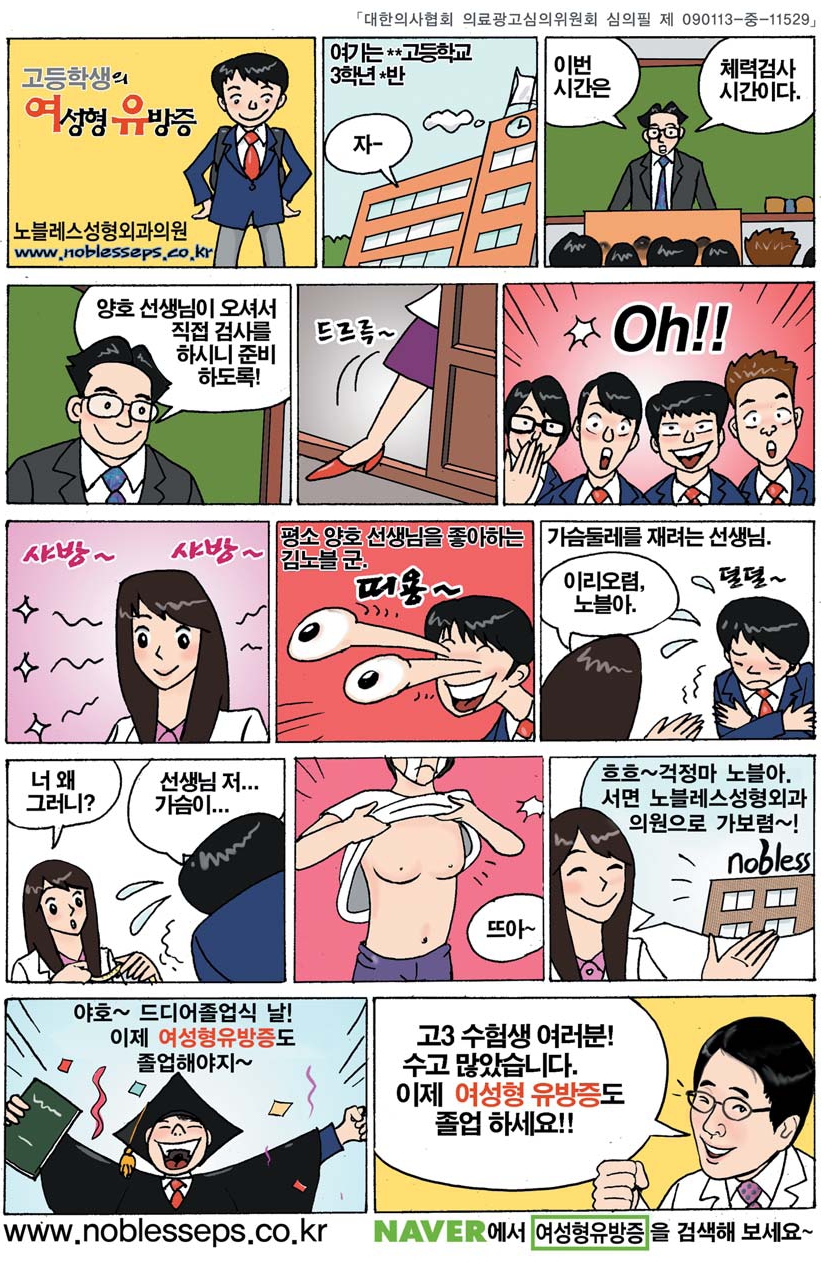
( Source: Cocofun )

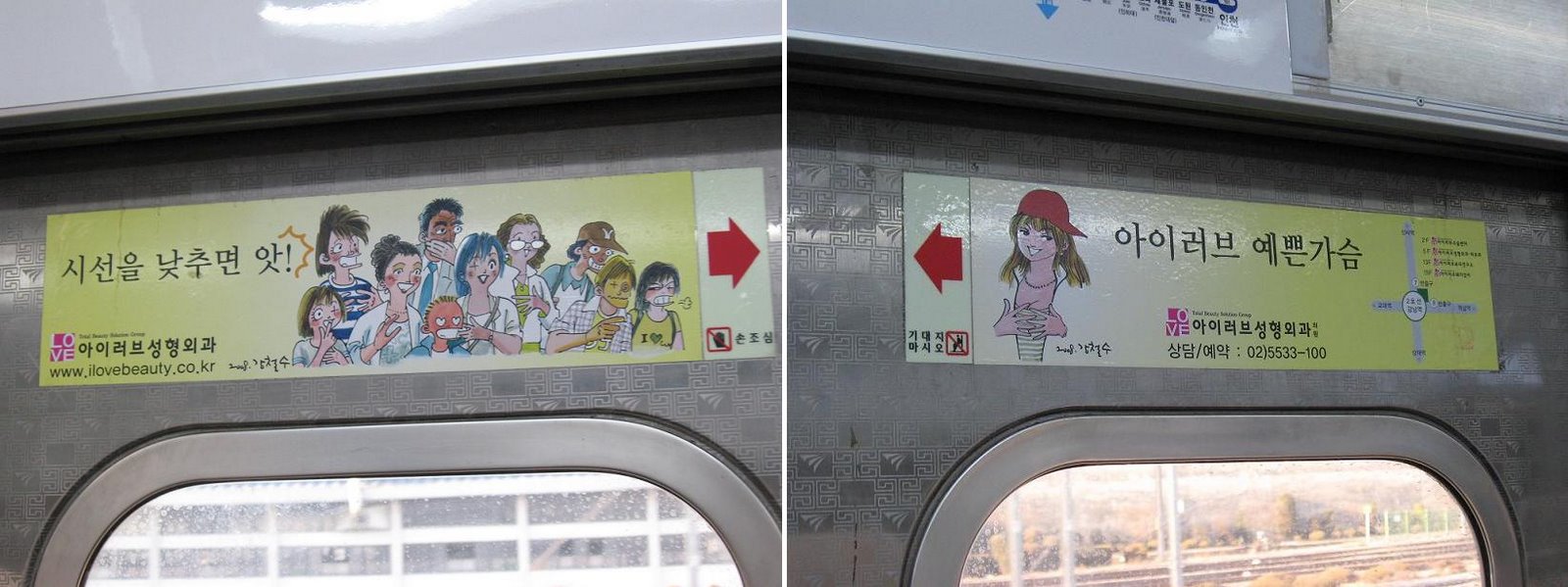
Actually I don’t disagree with all of that, and by coincidence its “so what?” tone struck a chord with me because of some similar advice about writing I’ve been putting into practice in recent months. Unfortunately, I feel too guilty about my daughters being glued to the television for hours to provide a proper critique this weekend sorry, and will have to rely on my choice of accompanying images to speak for themselves. Besides which, I’m much more interested in what you think!

Share

Creative Korean Advertising #20: Quit Smoking for Her? Or for Him?

Posted in Creative Korean Advertising, Gender Roles, Korean Advertisements by James Turnbull on January 29, 2010
( Source: Focus Busan, 29/1/10, p. 13 )

Creative advertising by design? Or just by luck?

If you look at the large black text, it reads “Now I’m getting married, so it’s time to quit.” A noble sentiment indeed, and as there are 10 times more Korean men than women that smoke, a bride rather than a groom is the obvious choice of model.

But then she is wearing the patch, and with the same text, which is a little odd. And then if you take a closer look at her face…

Personally, I think it’s actually a man’s face pasted onto a woman’s body, but my students – eager for some distraction on a Friday afternoon – were evenly divided. While I do concede that it may be a woman’s however, albeit with a rather unflattering expression, the ambiguity renders either ad concept badly executed.

On the other hand, it certainly got me to take a second look, and in turn 20 of my students. If that was the deliberate intention, then it was simply inspired!

Meanwhile, for those of you more interested in the topic of smoking in Korea itself, by coincidence earlier this week I had done the “Smoke Signals” chapter of Decisionmaker: 14 Business Situations for Analysis and Discussion (1997) with the same students, a hypothetical situation about a Korean intern at an international tobacco company that stumbles on confidential, board-level plans to encourage Korean teenage girls to smoke. While that proved too difficult for them unfortunately, I was very interested to read in “The strategic targeting of females by transnational tobacco companies in South Korea following trade liberalisation” by Kelley Lee (et.al) in Globalization and Health 2009, 5:2 later about how true to life some of the suggested strategies had been, summed up by the Korea Herald here.

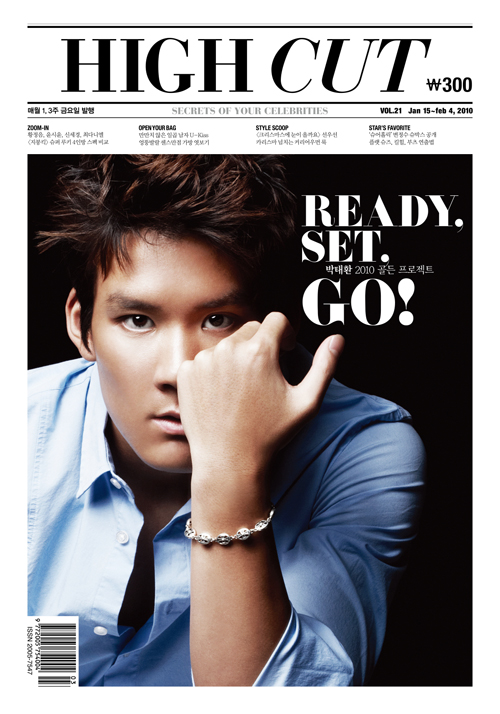
( Source: Unknown )

Fortunately the original paper is still available to download if that piques your curiosity; only 10 pages long, I heartily recommend it. Alas, another that looks useful for a future post on cigarette advertising and gender I’d like to do -  “Marital status and smoking in Korea: The influence of gender and age” by Hong-Jun Cho (et. al) in Social Science & Medicine 2008, 66:3  – isn’t, so I would be very grateful to any readers with library access if they could pass it on!

(For all posts in the Creative Korean Advertising series, see here)

Share

Sex and the Red Blooded Woman

Posted in Body Image, Cosmetics, Korean Sexuality, Skin Whitening by James Turnbull on January 28, 2010

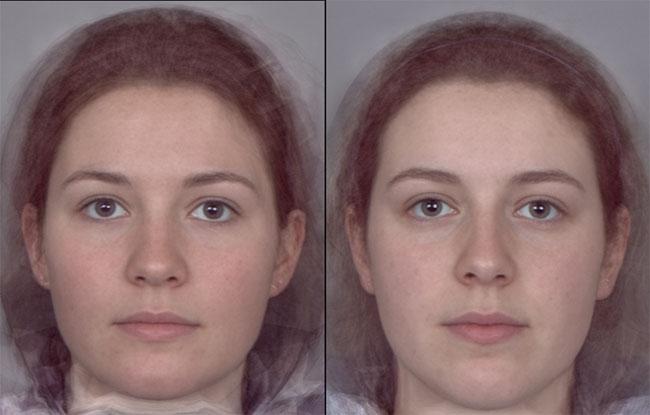
Remember these?

I first came across them back in 2008, the first time I really tried to understand Korean women’s penchant for skin-whitening. While it turns out that I originally misinterpreted what exactly the images above were though, from a 2005 study of the relationship between female attractiveness and hormones, one of its conclusions remains the same: the redder a women’s cheeks, the sexier.

In brief, the images are 2 composites made from 2 separate groups of 10 women each from the study (out of 59), all taken on the days they were ovulating, i.e. when they were most likely to get pregnant. On the left is that of the 10 women with the highest oestrogen levels on that day in their menstrual cycles, and on the right of the 10 women with the lowest.

It sounds mean to the latter, but I’m sure there’d be little argument as to which women are the more attractive.

While I’ve touched in passing on the role of hormones in human sexual attractiveness many times before however, most notably the fact that women with (arguably) universally-attractive hourglass figures have much more oestrogen than those with other body shapes, making them up to 3 times more likely to get pregnant, I don’t mean to imply that one’s preferences in the opposite sex are nothing but a reflection of their hormone levels.

For example, all things being equal then men with high testosterone are better mates for women, as that is a good indicator of physical health. But while a great many women might find men with “masculine” jaws like Harrison Ford irresistible however, that is not the same as saying that they would automatically choose to have children with them over more “feminine” men, as those same high hormone levels tend (and I stress, only tend) to make them poorer fathers.

But ideally, women would get pregnant by the hunks, and trick other men who were better fathers into raising them, thinking they were their own. And one way in which men try to prevent this is by spending much more time with their female partners when they are ovulating, thereby ensuring that they don’t get a chance to have flings with those dashing Harrison Ford types just when they’re most tempted to (women in heterosexual relationships, take note of the extra attention right about the same time you feel like a night out with the girls!).

On the women’s side, one way to ensure that he doesn’t have flings when you’re having your period, thereby potentially having children with other women who will take some of his time and resources away from your own, is to trick him into thinking that you’re actually ovulating instead. And how best to do that?

Well, remember those red cheeks in the opening image?

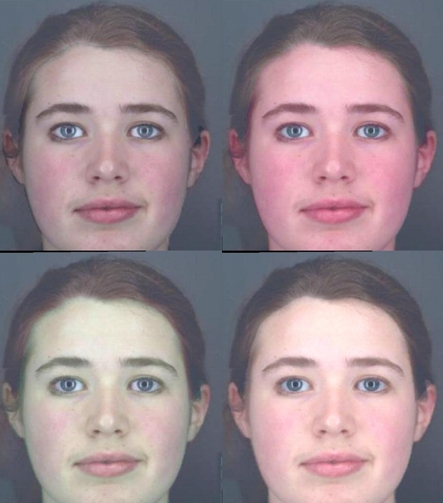
I confess, I haven’t actually had many conversations with women about why they wear blusher, and invariably they’ve just said they do so out of habit, and/or that it makes them look prettier. And indeed it might, in the sense that if one associates red and pink with femininity (for whatever cultural and/or biological reasons), then wearing it would certainly make one appear more feminine. But in a new study by Ian Stephen and colleagues at the University of St. Andrews in Scotland, one more very good reason to wear it has been revealed. In short, as Jina Pincott at Love, Sex, Attraction…and Science explains, they:

…recruited volunteers of various races and asked them to digitally adjust the color tone on more than 50 faces [of both sexes] to make them look as healthy and attractive as possible. Volunteers consistently added more red coloring to the cheeks — whether the face was Caucasian, Asian, or Black. The redder the face, the more suggestive it is of oxygen-rich blood reaching the skin. The more oxygen-rich blood, the more suggestive it is of the person’s general health and youth. An old person, a sick person, a person with hypertension or bad circulation…will not get rosy-cheeked.

And crucially, the researchers also found that volunteers preferred women over men with rosy cheeks. Why?

One reason may be the sex hormones, which show up more obviously in flushed female faces. But it may also be due to the fact that men already have ruddier faces than women do — they have higher levels of hemoglobin and arterial oxygen content in their blood. As a result, the male blush is not as obvious a cue of good health and high sex hormones.

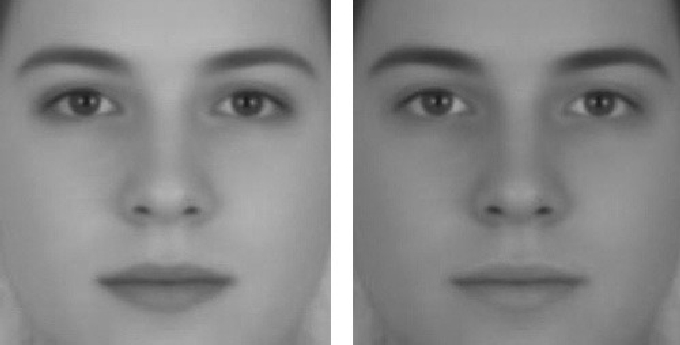
Corroborated by this study that I discussed back in May, which showed that people tend to judge the same androgynous face on left as female because it is much lighter than that on the right:

In my view then, and regardless of my opinions on its origins, skin-whitening is an enduring but fundamentally anti-instinctive cultural practice. Or is it?

Despite all the above, please bear in mind that interpretations and explanations of otherwise objective studies of human attractiveness can in practice be very culturally determined…not least my own. For example, as an impressionable 19 year-old I became a huge fan of evolutionary psychology after reading this article in Time magazine in 1995, and in turn the sociobiological explanations of human attractiveness that are its bread and butter. But just 4 years later, I was suitably chagrined by a second article in the same magazine that exposed the fact that, for one, evolutionary psychologists’ depictions of the work division in hunter-gatherer societies was remarkably like that of 1950s suburban nuclear families. More recently, Bad Science provides a scathing critique in much the same vein, including of some of the specific points I’ve mentioned in this post, and while I share many commenters’ concerns that author Ben Goldacre doesn’t seem to appreciate the differences between media reports on evolutionary psychology and the discipline itself, he does make some valid points.

So please feel free to question anything here yourself also! And I have a request: while writing this post, I realized that I’ve never actually asked any Korean men themselves if they prefer women with light skin, let alone why. With apologies for my lack of field research then, can anyone that has please let me know? I have a sneaking suspicion that it might pressure to do so might primarily come from other women rather than men, just like I recently read somewhere is the case with losing weight, so I’d be very interested in finding out.

Share