
Knowing the concepts of “Ambiguous Loss” and “Learned Helplessness” can be useful for understanding a personal or professional rut you’re in. But for actually getting out of one, smiling “like you have laser tits” is a simple, fun, and surprisingly effective method—and has helped me stave off a repeat of clinical depression for nearly 30 years too!
 Estimated reading time: 15 minutes; if you haven’t already, please consider reading the introduction and Part 1 first. Photo by Conner Ching on Unsplash.

Only 10 a week.
Ten.
If I extend Bumble’s filters to neighboring cities, entailing weekend-only relationships, that’s about how many age-appropriate profiles I encounter in a good week, in a region of ten million people. And of those ten profiles, nine will include either tourists, scammers, MAGA or Yoon Seok-yeol cultists, women my age using using pictures from their 20s, chain-smokers, anti-vaxxers, those whose only book they read is the Bible, five or six with no bios or personal information whatsoever, “ethical non-monogamists,” and/or—shudder—dog people.
Yes, it’s always going to be tough wanting a fluent English speaker. Yes, heaven forbid that compatible hobbies and personalities aren’t enough either, and that I only swipe right on women I find attractive too. Yes, there’s other apps I could talk about. Or what I’ve been doing offline as well. Yes, there’s finally going to bars to consider, and maybe it’s about time I should. Yes, we could indeed dwell on my game, or supposed lack thereof.
 But that would be boring for both of us. As I stressed in the introduction, my giving dating advice, or wanting to receive your tips, is absolutely not the point of this series.
What it is about, is “how to cope when life isn’t going the direction you expected, when you feel trapped, when nothing you do to escape seems to work, and you just feel like giving up.” So, although I personally learned the following lessons through trying and then giving up on seeking a long-term partner, and ultimately being all the happier for it, all of the advice below is centered on providing answers for when you find yourself in that kind of space too, whatever your own personal or professional goals may be.
Very much inspired by, mirroring, and further developing Atlantic staff writer Faith Hill‘s August 2024 article, “The People Who Quit Dating” though, first, in sections 3 and 4 below, I do really want to convey what the dating scene is actually like in 2025. Especially to well-meaning family members and friends already with partners and spouses, who tend to be…well, utterly clueless and unsympathetic about that frankly. I want to empathize with any of my fellow singles too, who may also be struggling and disheartened like I was. In particular, by giving their feelings names in section 5, “ambiguous loss,” and “learned helplessness,” that show they’re not alone in suffering from them, and which have a whole host of associated therapies and solutions. Then finally in section 6, I’ll talk about my own experience of—yes—clinical depression in my early-20s, for the sake of imparting just how serious I am about my own solution of smiling “like you have laser tits”—which anybody can benefit from!
 Photo by Mitsuo JR on Unsplash.

3. “Being single can be hard—but the search for love may be harder.”
I led with those numbers in the intro, because I want to you to please put all your stereotypes and assumptions about dating aside from now on. Especially online dating, which has become particularly soul-destroying since Covid. It is not just a smorgasbord for lucky singles out there, no matter what their age. So, when someone unwisely opens up to you, revealing they’ve actually been struggling to find someone, then please, enough with the stereotypes and jokes already. As unless you’re the same sex and age as the person you’re judging, in the same area, looking for the same kind of people, then you—absolutely, hell no, the sheer fucking audacity—can not just tell them there’s still plenty of fish in the sea really, insinuating it’s all their fault they can’t catch one.
 Source: @omgskr.

Tempting as it is to continue divesting myself of this huge chip on my shoulder though, let’s just say that I have been doing my homework. I’ve lost lots of weight, recently spent a month’s salary on a couple of suits, look like the shit, feel like the shit, and that I actually get more than enough likes and matches these days. (Yeah, I finally figured out how to use photo filters too.) Also, that when I’m meeting someone online: I’m respectful; somehow manage to refrain myself from making bawdy jokes within the first five minutes, let alone sharing pictures of my glorious erection; ask questions that show I’ve actually read her profile, and genuinely want to know more about her hobbies and interests and dreams and goals; don’t start calling her various expletives if she’s been too busy to respond in a few hours; and so on.
Only, despite that basic respect alone already, supposedly putting me in the top 1% of cishet men’s profiles (yes, guys reading, online dating sucks for cishet women too), sooo many matches never get to find out, because they just don’t respond, Or they do but just stop abruptly mid-conversation, or, I so frequently and casually get ghosted, that I even kind of expect it by now.
 Always par for course with dating apps, anyone’s ego can take the occasional hit. But when such low numbers mean you might only get an average of one match every week or so, and it seems to happen again and again, and again, for months on end?
Each time it does, it just gets that little bit harder to get excited about talking to anyone new at all.
Seriously, some days, I greet notifications of a new “buzz in the hive” with about as much enthusiasm as texts from Coupang, letting me know my toilet rolls have just been delivered.
Just a few months ago though, I’d have been pounding the wall at the latest lost opportunity with my seeming soulmate. Screaming at the cruel universe. Crying into my whiskey. Imploring my long-suffering cats to give me an answer. How could I be doing everything right again, and again, and again, yet keep losing?
Well, all the interviewees in Hill’s article too, had also been doing everything they were supposed to. But whether due to either their age, location, job, family situation, and/or some other reasons or circumstances or combination thereof, there just weren’t enough—or even any—suitable partners out there for them. It was as simple as that.
Much better then, to move on to what Hill says what people like me, and many of you, can do.
 Photo by Aleksandr Popov. Second photo below by Mitsuo JR (both on Unsplash).
4. It’s Okay to be Lonely
First, to eventually realize like I did, how foolish it is to ever tie one’s happiness to something you can’t control. Especially dating apps, which are specifically designed to provide their services in the most terrible ways possible, prolonging their users’ feelings of loneliness until, frustrated, they’ll cave in and pay extra to make those services suck ever so slightly less. Only, that dynamic took such a long time to register with me. Because, offline, my numbers are even worse. Despite my probably socializing more in the past 12 months than in the last 12 years, I think I’ve met maybe 3 women my age range in all that time whom I’ve known to be also single and looking. (Alas, I didn’t check enough of their boxes, nor they mine.) Which is why I went on the apps in the first place last summer—and let the initial rush of likes and matches get to my head, paying extra to repeat my dopamine fix when those dried up. Which again, is exactly as the dating apps are designed to do.
 Source: @netcapgirl

The next thing you can do, is to acknowledge your needs and desires are still valid, which I’d argue Hill doesn’t stress enough. Because a big surprise has been encountering some listeners who do acknowledge it’s tough out there, but who will still roll their eyes at anyone opening up about their frustrations. “It’s barely been two years yet!”, many couples especially have laughed in my face, then gone home and fucked each other.
To anyone inclined to join them, in laughing at single people I mean, please consider all the little things you cherish about your own relationship—nay, what define it as a relationship at all. Well, heads up—most single people want them too. And the recently divorced or broken-up, who supposedly haven’t suffered without for long enough yet? If  you’d put yourself in their shoes for just a goddamn moment, you’d realize they probably didn’t get to do any of them “recently” at all.
For instance, yeah, sure: I did indeed only get divorced in 2022. But, say, the last time my ex and I watched Netflix together before we did? The first season of Lucifer, which started in 2016.
Yes. Nine years ago.
Honestly, once I looked it up, I was kind of shocked myself.
I’m thinking about the last time we went for a walk holding hands too. Being vulnerable without being judged. Making love on the couch. Going out for a meal together. Releasing our inner childs around each other. Regularly giving and receiving affection. Just knowing when the other person needed a hug. Sharing little jokes that only we understood. Texts that showed no matter how cruel the world gets, we were still thinking of each other. Laughing at single people. Grossing out friends and family, not realizing or caring how obviously we both wanted to go home to have sex.
I honestly can’t even remember the last time my ex and I did most of those. Hell, even if you’d have asked me before we divorced.
Hence what feels like a purgatory for long-term singles. Because unlike most other aspects of your life where hard work usually brings tangible results, absolutely nothing you do seems to increase your chances of finding someone. For when “there may not be someone out there for everyone,” as Washington, D.C. therapist Karen Lewis starkly points out in Hill’s article, who reminds us herself that you can’t just “will a partner into being” to compensate, then it just doesn’t matter how many tweaks you give to your profile; how much you buff up at the gym; how many invites to parties you accept; how much you up your TOPIK score; how carefully you craft your sophisticated and witty online persona; how fashionably you dress; how many pictures of your cats and books you post to social media, which inexplicably does not result in hot singles in your area lining up at your door; how many book, arts, film, hiking, or game clubs you join; and so on.
And which all starts feeling so fucking desperate too.

You still have the same needs and desires though, so you do still try…but it’s just exhausting. Soul-destroying. Time-consuming. Expensive.
In your head, you know you have to move on. To channel all your angst and frustration into more productive, healthier pursuits. But in your heart, you just can’t.
This is why cliched advice like “Just focus on yourself, then you’ll meet someone” is so utterly trite and unhelpful, like telling depressed people just to cheer up. There’s just no acknowledgement of the strength of the feelings getting in the way, or guide to dealing with them. There’s no how.
 Photo by Streetwindy on Unsplash
5. Use Insights from Psychology and Therapy
Perhaps the first step to escaping this purgatory then, is to put a more psychological, more practical, more therapy-centered name to it. Lewis:
“…describes it as a form of ‘ambiguous loss,’ a term first coined by the University of Minnesota social scientist Pauline Boss in the 1970s. At first, Boss was writing about the psychological absence of a father. But this was during the Vietnam War, and it quickly became apparent that the phenomenon was spurred by physical absence too—as with the prisoners of war whose families didn’t know whether to grieve them or keep hoping for their return. When loss is ambiguous, closure is near impossible; it’s not clear whether there’s anyone to mourn. Perpetual singlehood doesn’t have the same gravity, but it can feel similarly unresolved. If you’ve long had an idea of a future partner, and that imagined person keeps not showing up, how do you know whether to keep hoping or to move on? ‘That hanging in the middle,’ Lewis told me, ‘is a very, very uncomfortable place.'”
I like a definition from former Yugoslav War refugee Jelena Markovic too, who recently wrote about “cultural bereavement” in Aeon. What she goes on to say about “disenfranchised loss” really resonates, especially in light of people’s indifference or mocking reactions to your involuntary extended singlehood:
“Cultural bereavement seems to be a type of ambiguous loss—one in which the boundaries about what was lost, where it was lost, or when are unclear, partial or indefinite. Ambiguous loss often involves an interplay of absence and presence, according to the psychologist Pauline Boss. A parent with dementia might be physically present but feel emotionally absent. After a stillbirth, a mother might experience her child as physically absent but emotionally present. Cultural loss can feel similarly diffuse. It may relate to multiple events across long distances and timescales, and which shape or break the shared lifeworld of a community. No one person bears the whole loss, which can make it difficult for the griever to discern the focal point of their emotions. Similarly, cultural loss also seems to fall within the category of disenfranchised loss: a loss that isn’t recognised as such by one’s social milieu, and for which there aren’t established rituals or customs. Ambiguous and disenfranchised losses pose challenges for moving forward through grief, because they make it hard for the griever to pinpoint what is actually gone.”
Locating your sense of angst and frustration in what is now a well-established field in psychology, with many lessons and treatments for coping to investigate, is surely helpful. But actually, honestly, I only got to writing this post at all because I’d argue there’s an even better known field from the 1970s that compliments it, which I learned as a geeky teenager from my father’s dusty old Psychology Today compendiums:
Click here for an Instagram reel that goes to the most important sections of that video, which I think is the best of the many YouTube offerings on the subject. Or, here’s a less good, but much shorter one:
And another centered on the experiences of children:
Or, as articles from the same magazine 50 years later put it:
Imagine facing a series of unfortunate events where no matter what you do, nothing seems to change. This sense of powerlessness can become so ingrained that even when circumstances improve, you remain passive and resigned. This psychological condition, known as ‘learned helplessness,’ was first identified by researchers who discovered that it’s not just the adverse events themselves, but the perception of inescapable trauma that leads to this state. Individuals caught in the grip of learned helplessness believe their efforts are futile, leading to a lack of action even when they have the power to change their situation.
Finally, it behooves me to post a video about the antidote of “learned optimism” also:
A field of treatments usually applied to young adults who grew up in abusive or, ironically, overprotective households, I absolutely do not want to equate my not being able to find a girlfriend as being remotely on the same level. And yet, whatever combination of ambiguous loss and learned helplessness one might be suffering, for whatever reasons, there’s an obvious strong potential for depression, alcoholism, or some other kind of substance abuse to fill the void. And in the case of cishet men and dating specifically, the strong appeal of incel communities and their misogynistic narratives too.
 I’ll spare you my own descent into high-functioning alcoholism to cope with my deteriorating marriage though, and slow but eventual recovery post-divorce. (No, really—I can go without alcohol for whole weeks now. Weeks, I tell you!) Incel communities meanwhile, will never exactly appeal, no matter how bitter and disillusioned I may sound to my friends after each and every ghosting, or how funny I do find that meme on the right. But depression?
Well, all those articles about learned helplessness stress that optimistic patients are best placed to overcome their condition. Lewis and Hill’s solution is all about changing one’s attitude too. And, as the final step in this long lead-up to that, having experienced clinical depression myself when I was 21, I want to share something deceptively simple, but surprisingly effective, that has not just prevented me from a relapse ever since, but made me into a much more likeable, genuinely happy person too.
And which is easily my—dare I say the?—most important piece of advice in this series. Even in my 18 years of blogging too…
 Photo by Larm Rmah on Unsplash
6. Smile Like You Have Laser Tits.
Hear me out. That imperative is objectively awesome and hilarious, and its seeming 180 from such a serious subject will soon make total sense. Because I am not being facetious. My experience was real, is something from my past that almost nobody, even very close friends and family members know about me, and is something everyone who knows me in 2025 would probably find very difficult to reconcile with my present, generally enthusiastic and affable self.
How and why it happened is not important here, nor even how I recovered.
What is important, is that at its worst point for about a month that winter break at university, I barely functioned. I barely ate. I barely left my room. With no internet to turn to, I was completely, profoundly isolated and alone. Instead of trying to climb myself out of the hole I’d dug myself into, I would just sit there in the cold, silently crying my eyes out. Every night. I would pass out crying, then wake up crying. It was uncontrollable. Unlike during the darkest moments of my divorce 25 years later, when one small comfort was knowing exactly why the tears flowed, for the longest time I was just too far gone to ask myself why, to someone, God, anyone, to somehow please, just fucking please, finally, I beg you please, begin to make them stop. There was absolutely no-one around me who cared enough to ask me either, or to point me in the direction of student health services. Which was kind of the whole point.
All this is completely true.
I’ve needed breaks, reliving it here.
What is also important, is that while my experience absolutely does not make me any kind of expert—hell, even beginner—on depression, I do know the utter depths to which I am capable of sinking. So too, that I realized that despite recovering. Despite transforming myself into the sort of person that was able to get on that plane to Korea just a few years later. That still, for much of my 20s and early-30s, I continued to have the sort of personality that meant I dwelt obsessively on the many microaggressions I experienced living here, as well as all the other real and perceived negatives in my life, letting the feelings build up inside of me until I would explode, or end up bitter, angry, and/or depressed for weeks on end.
Every few days back then, over and over, it would be like I was back on that same, stormy precipice I’d lingered that distant winter of 1997. Every time I returned there, I didn’t just know, I could feel just how steep and slippery was its slope down, and how dangerously I was hanging over the edge.

I frame it this way, in retrospect, because I actually bungee-jumped shortly before the darkest moments of my depression. Twice. People who also have, know exactly the mental what-if about what it’s like to jump from a high place before, then the instantaneous tingles in your legs and instant sweating and visceral, heart-pounding fear every time you recall the experience after. How in an instant, it’s like you’re back there, looking over the edge.
Unlike when I eventually stepped—okay, shuffled—off the bridge in Skipper’s Canyon though? When I was still too scared to open my eyes, but was ready to accept whatever consequences the universe handed me? In these cases, I knew I absolutely had to pull myself back from the brink. Using the only method I knew how.
I smiled.
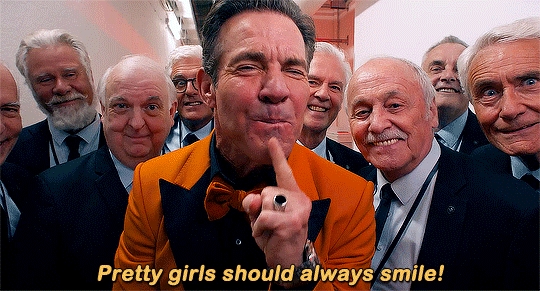
Believe me, out of context, I realize how that sounds. Especially to many women, and especially coming from a middle-aged man. But it’s not that scenario at all.
Picture this instead. You’re on the subway home. We’ve been talking about dating, so let’s say you realize someone you’ve deeply connected with, been chatting like teenagers 24/7 for a week with, who liked you first, who—yes, really—named their dog after the very same village with the Etruscan statue of a couple you’ve wanted to see in person since you were 15, who also happens to be completely hot, the person I mean, and who sounded at least as excited as you are about the prospect of finally meeting you on the weekend…has just ghosted you. No biggie though, I can pretend for the sake of argument—like I said, it’s just par for the course with dating apps. Serves me right even, for thinking I could ever have a future with a dog person. But when something like that happens for months on end, with Every. Single. Match? Even with avowed feminists? With cat people??

Extrapolate to facing your own personal or professional setbacks you’ve been experiencing, whatever they may be. All things considered, you were generally fine with them until today, actually. But this one, this is it. This is the tipping point. Suddenly, you’re in a rage, just hating all Seoulites, millennials, men, Americans, gyopos, women, dog people, Xennials, Koreans, ajosshis, boomers—whoever.
Only, immediately after, you realize you can’t actually do anything whatsoever about what happened to you. So, all the anger suddenly flows out of you like blood from a wound, leaving you with an impotent, emasculating, hollow void instead.
Nature abhorring a vacuum, you may feel like filling it with some stiff drinks, to feel nothing but a warm buzz for a few precious hours. But not before you seriously contemplate throwing in the towel, on whatever it may be. Your career. Dating. New hobbies. Side hustles. On any hopes and dreams at all really. You tried, and failed, again. Slowly but surely, you’re realizing there just doesn’t seem any point any more. That deeply, fundamentally, you’re just not in control of your own destiny. You start feeling in your gut, that perhaps you never will be.
 Photo by Beth Macdonald on Unsplash
How about instead of that though, before reflex and muscle memory has dragged you off the train and you suddenly find yourself at the checkouts at Homeplus, buying a cheap bottle of whiskey despite yourself, you try this:
1) Drop your face in your hands, making sure to cover your mouth.
2) Then, close your eyes.
3) Next, take a deep breath.
4) Don’t worry that if any of your fellow commuters looked up from their phones right now, they might be getting a little concerned about you. I assure you, they didn’t and couldn’t care less.
5) Then, under the cover of your hands or mask, smile the widest, goofiest, batshit-craziest smile you ever have in your entire life. The more embarrassing and Cheshire cat-like, the better. To ensure the best, most hilarious effects, open your eyes and stare wide-eyed at your fellow commuters while you do this.
(You see? I told you they wouldn’t look up from their phones.)
6) Next, if you’re wearing a mask, and so didn’t bother with the hands, quickly remind yourself it’s the mid, not early-2020s now. So, check that you are actually wearing a mask before someone does in fact notice you, and calls the subway police.
7) And then…
You will feel like this is all so unbelievably stupid. You will feel stupid, and probably be hating me by now too. You’ll also be thinking that something so simple, so utterly childish, can not possibly work.
Please, just give it a few seconds more.
Because suddenly, despite yourself, you’ll either be laughing at me, at yourself, at that guy’s ridiculous haircut across from you, or at the ridiculous nickname you just coined right then and there for your latest, doomed Bumble match. Hell, it’ll be so funny, you may even be in tears at coining the name “Etruscan Dog Woman,” and your fellow commuters, annoyed, are indeed beginning to notice your cackling. But so what? SCREW THEM. Because, while your problems haven’t suddenly, miraculously gone away, somehow they just don’t seem to be as big and overwhelming as they did just two minutes ago. They really, really don’t. And, you suddenly feel much better placed to deal with them too. Hell, you may even feel happy suddenly, despite your fierce determination not to, and you realize you can survive without some alcohol for one more day.
And hating me all the more, for being so right.
Still not convinced? Well, that’s only because—be honest—you haven’t actually tried it for yourself yet, right?
 No, not like this—you absolutely have to move your mouth. Photo (cropped) by Charles Etoroma on Unsplash.

But perhaps you need more than just the say-so of a high-functioning alcoholic first. Very well. It works, because although you can struggle distinguishing between real and fake smiles when you see them on other people, dramatically reducing the effects of any smile which you don’t find sincere, your brain itself couldn’t care less when it comes to your own smiles’ effects on yourself. As in, no matter how fake you intellectually know your own smile is, just moving your smile muscles at all still emotionally induces the feelings associated with genuine smiling anyway:
“They say it takes more muscles to frown than to smile, and although there’s no hard evidence to support that, we do know that smiling comes with some real-life benefits. It’s not always the easiest thing to do, especially after a long and stressful day. But if you can take it upon yourself to crack a smile, you’ll actually feel better.”
“When you smile, your brain releases tiny molecules called neuropeptides to help fight off stress. Then other neurotransmitters like dopamine, serotonin and endorphins come into play too. The endorphins act as a mild pain reliever, whereas the serotonin is an antidepressant. One study even suggests that smiling can help us recover faster from stress and reduce our heart rate. In fact, it might even be worth your while to fake a smile and see where it gets you. There’s been some evidence that forcing a smile can still bring you a boost in your mood and happiness level. That being said, if you’re suffering from depression or anxiety you should talk to your physician immediately to find the best treatment for you.”
I too would stress seeking therapy or professional treatment if you’re at that stage. But for the last nearly 30 years, regularly smiling, especially when I least feel like doing so, has prevented me from reaching there again myself.
But in fact, I’ve made this soooo much more than a mere preventive.
This has become an ongoing source of empowerment for me. A way of life even. And it can so easily be yours too.
 Source: @hinwland.
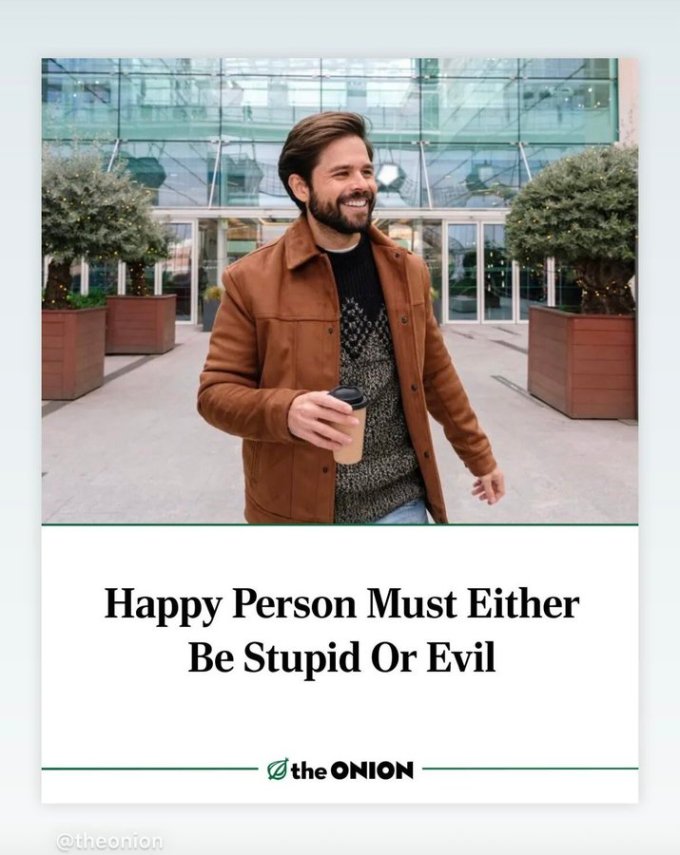
The moment I saw this magnificent “Cool tip/꿀팁,” I uploaded it to my ‘Randomly RemindMe’ app. For the frequency, FYI, I found the sweet spot to be three times between 7am and 11pm; any more often, and I found I started to ignore it, because there’s only so much attention you can give your nipples during class.
Now imagine I had an app for smiling too. Only it’s in my head, and I’ve set it to 20-30 times a day.
 Source: @_letterbxmb.
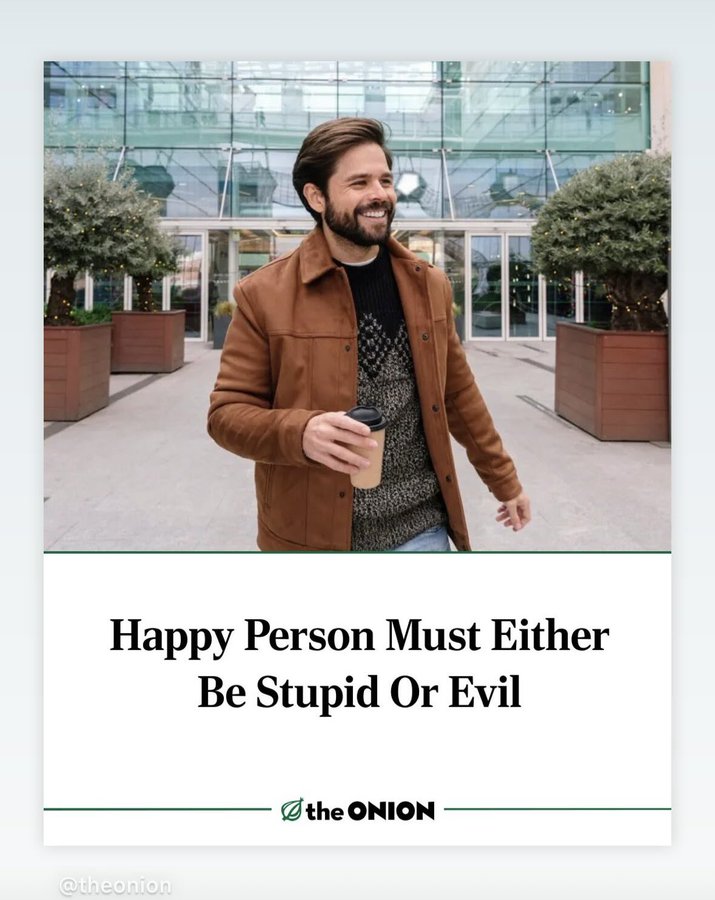
It goes like this. Get up, smile. Fifteen minutes later, use another to really appreciate the coffee you just made. Smile as you check your reflection in the flattering mirror in your apartment elevator (God, you look good today.) Walk to the subway station to go to work, just quickly throw another one in there, why not. Getting irritable at how long your bibimbap is talking at a restaurant later, take a whole 30 seconds to put your phone down, force yourself to look out the window, and try one then too. Smile as you begin your least favorite class, I mean what the hell, what harm can it do. Smile at how Bumble has shown you only one profile between the actually, pretty damn conservative ages of 38 and 53 in the last week. Smile as you check your email on your phone. Good writing or bad, smile as you finish a chapter in a book. Smile waiting for the lights to change. Smile as you think about finally finishing writing this bloody section about bloody smiling, because it’s been 5 months in the making, it’s 2am, and you really want to go to bed.
 I’m not saying grin like a vacuous idiot all day. By all means, if you’ve had a particularly shitty one, then scowl away—and make sure everyone damn well knows how you feel too, if that’s what you want. We’ve all been there.
But seriously. You know how they say people’s personalities are generally set once they reach 30? I don’t need to be told how recent research shows that’s actually bullshit, because I’ve already stumbled on this secret method that completely upends that. Put in the effort to add the “Work hard. Know your shit. Show your shit. And then feel entitled” of Part 1 too, and you have a killer combination. One totally worthy of posting this clip from “Those Old Scientists” again, from the Season 2, Episode 7 of Strange New Worlds, when Chief Engineer Pelia explains (0:23) heroes are just pretending to be really, until they themselves can’t tell the difference any more:
I’d be lying though, if I didn’t admit to still having my bad days, just like everyone else. I do still drink at home alone, still far too often and still far too much. But even when I do stagger around my ‘two-room’ later, I keep finding myself suddenly sobering up, realizing with stone cold clarity that: huh, it’s pretty damn clean and tidy these days, especially for a divorced guy living with 1500 books and 2 cats; and—OMG—I’m usually not drinking because I’m angry. Or at least, not any more.
Again, I’d wager that most people who have met me for the first time in the past year, and in the last few months especially, would be hard pressed to reconcile the generally positive, carefree, affable person they encountered with the brooding, bitter, intense guy people who met earlier would probably describe me as.
(On that note, any women who met me over a year ago, do you want to catch up? Did I mention I’ve lost 15kg/33lb since then too? ㅋ)
And, I just have to say, I’ve objectively gotten far more attention from random women just by smiling, usually not even at them but just to myself, than reading any of my bloody books have ever provided me…
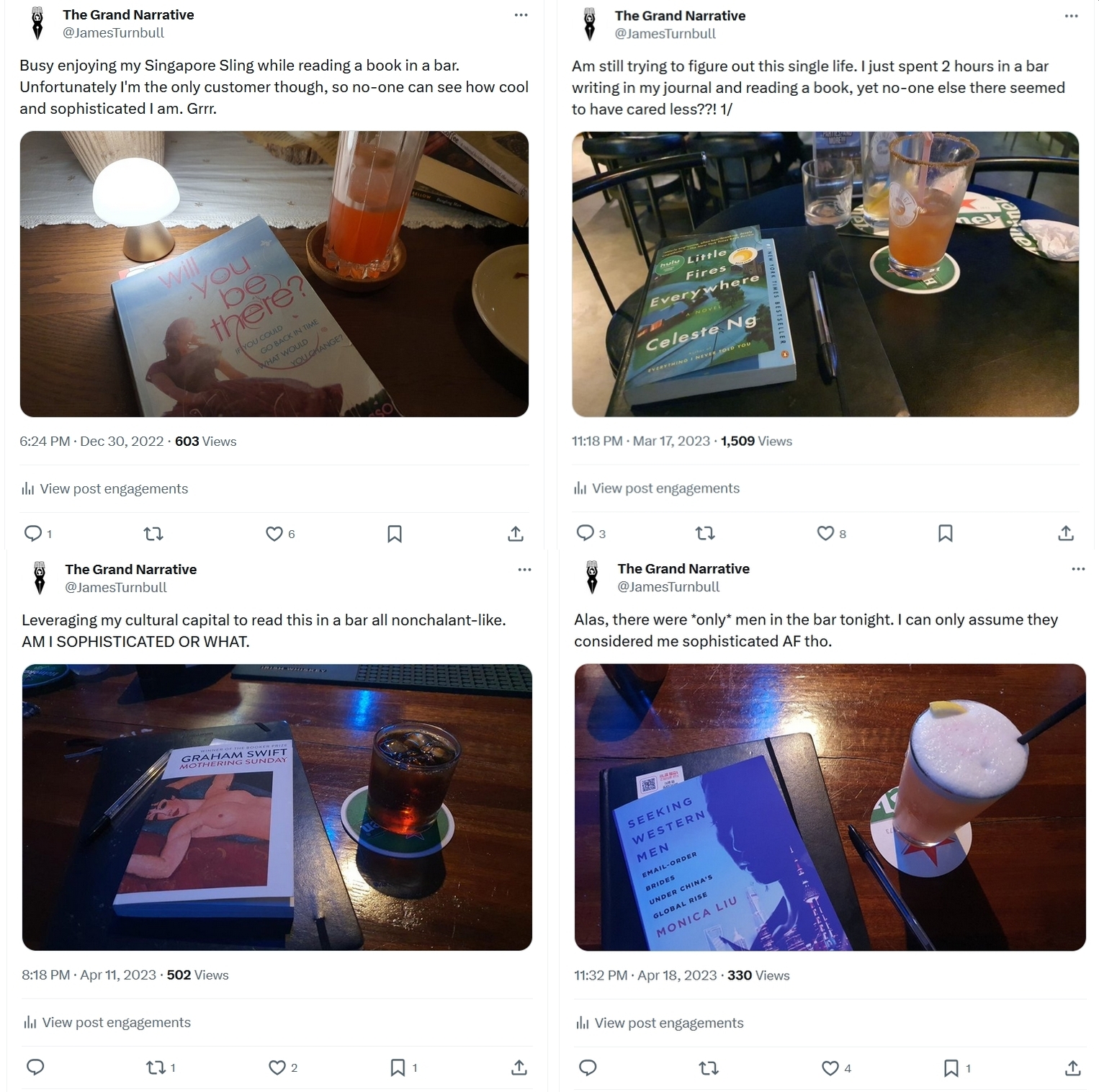
Or am I putting the chicken before the egg? I don’t think so. But I can understand anyone who might think smiling is perhaps not so much a method of becoming happy, as a reflection of already feeling that way. And which by all means, would be far harder to pull off had I not also been putting the methods of Part 1 into place. Nor a few more I haven’t mentioned yet, which I’ll summarize in the conclusion to this series in Part 3 next.
 Photo by Jerome Jome on Unsplash
Until then, keep smiling!
(For ease of navigation, here are the three groups of posts in the series; I’ll add links to each as they go up.)
- Introduction: Life is Immense 인생은 광대해
- Part 1
- 1. “Do one thing, every day, that scares you.”
- 2a. “Chicks love confidence (sic).”
- 2b. “Work hard. Know your shit. Show your shit. And then feel entitled.”
- Part 2 (This one!)
- 3. “Being single can be hard—but the search for love may be harder.”
- 4. It’s Okay to be Lonely
- 5. Use Insights from Psychology and Therapy
- 6. Smile Like You Have Laser Tits
- Part 3
- 7. Make a Conscious Decision to Leave the Purgatory. Live Lewis’s Thought Exercise
- 8. The Rest
- 9. Life is Immense 인생은 광대해

If you reside in South Korea, you can donate via wire transfer: Turnbull James Edward (Kookmin Bank/국민은행, 563401-01-214324)
 The Grand Narrative


Hey you probably poured your heart out here thinking that no one reads, but I just wanted to 읽는 사람이 있다고 알려주고 싶었어요 in the strangest place. I’m a korean woman (or should I say non binary because I never strongly felt I was mentally a 100 percent ‘woman’) in the western academia currently staying in a place where anglophones have intense fantasies and longing for, but almost no korean person knows about. What I’d like to say is, first of all, living as an expat can be at times extremely hard (I almost developed pseudo psychosis during the pandemic I believe), and second, thanks for sharing your earnest male experience, I get that the longing for intimacy can be really intense. I recently invited an old korean male friend of mine as the freaking godfather for my baby’s baptism. I didn’t understand catholicism or christianity that well. And I didn’t know, after 10 years, my old friend became a total born again jesus freak and could 쏟아부어 like 20 bible quotes about anything I said. But I sensed. Perhaps. He was a lonely single man in his mid-30s who probably still lived in his studio in Sillim-dong. Desperate for intimacy. I felt he was deep down attracted to me (the fuck) and it bothered me and perhaps bothered him as well, even though I’m not sure he was conscious of it, and he was being mean and weird and just pissed me off. Your post gave me a perspective that it’s probably really hard for a man, whether he’s korean or a foreigner, to find a date in Seoul maybe because women simply avoid them. No date no sex, you know 4B, even though I heard the term is not that often used in korea. I mean I don’t know korea is such a sexually repressed place, a lot of its problems stem from it in my humble opinion. No korean person I recently talked to seemed to be happy, no matter they’re married or single. You said there were ENM folks (ethical non-monogamous), I suggest you try that – one of my friends here is a community organizer for those folks. I once witnessed their gathering, and most of them were white people your age, many of whom went through divorce. At least you may feel less desperate. Just an internet stranger’s two cents. Good luck. I like your blog posts and wish you well.
LikeLike
Hi. Thanks very much for taking the time leave a comment, and for being so real. I appreciate it.
There’s been a lot of water under the bridge in the near year since I wrote this post. Not least, that I ended up barely writing again at all in 2025. Why I needed such a long break, that will have to be a topic for another time. But it’s a pity that I didn’t finish the final Part 3 first, which focused on learning to accept and even enjoy being long-term single, as not only might my fellow lonely hearts have appreciated it, but…let’s just say I was riding a bit of a crest when I wrote this Part 2, only to soon relapse, and would find myself really needing to be reminded of my own advice sometimes.
Just two things or three things about your comment I want to respond with, while hopefully avoiding another epic about my dating life—or lack thereof!
First, it is and isn’t important that I’m in Busan, not Seoul. Numerous friends and acquaintances have suggested that there’s far, far more of the English-speaking, educated, bookish, film buffs, and fit types that I’m into there, and, if you know anything about much Seoul utterly dominates South Korea, that does make a lot of sense. Unfortunately though, my university job of the past 16 years is here, and my daughters (17 & 19) very much still need me around for now. Sure, I might not have my job for much longer (no small factor in me being so distracted in 2025), and be forced to move to Seoul at some point, but I want to stay until at least my daughters leave (my ex’s) home.
It isn’t important though, because, second, I’ve very recently learned that the dating apps deliberately exclude the most compatible profiles from you, and/or don’t notify either of you when you match.
Basically, whenever I’m back on Tinder and on Bumble especially, I soon notice that the few women I find both attractive and my type would invariably be from out of town, while the very rare ones who do live here, who—hell—sometimes even swipe right on me first, will almost never message or respond after we match (very important on Bumble in particular, which has a 24 hour expiry on new chats if the other person doesn’t respond). At first, like most people new to apps, trying to figure out why they were making me so completely miserable, I’d try to rationalize the former by what everyone said about Busan and Seoul women like I mentioned, and the latter by my getting lost among all the other 100s of likes and messages many women get on apps (or just them changing their mind, but not wanting to hurt my feelings by unmatching). But wait—almost no single, pretty, English-speaking, 40-something bibliophiles looking for deep chats, living in a region of 10 million people?? And those supposed few that do exist on the apps, whom I guessing don’t just casually swipe right on aging, bald geeks like me if they’re not really interested in them, almost always suddenly not being interested at all once I reciprocate???
Seriously, the deliberate hiding of appropriate profiles to men especially, and of likes and matches to women, is the only explanation that makes sense. Sure enough, those former employees in the link claim that is precisely what does occur. Add that they also mention that in the meantime you’ll be fed lots of likes from incompatible profiles and/or, well, uglier people, all designed to persuade you that paying for an upgrade will make these supposed chance, bad luck, “that’s just online dating” frustrations go away…that also totally jibes with my experience too. (Which is why I’m convinced those Reddit posters in the link were genuine.)
I could continue with my offline frustrations too, but this comment is already too long sorry, and when I started I didn’t mean to talk to you rather than with you sorry. So, those third thing/things (ㅋ):
— I totally get that many Korean women simply avoid men, and the general sexual repression. Agreed that a lot of problems would be solved if Koreans just got laid more often too(!), although probably a decent night’s sleep would be even more helpful. But it’s just so difficult to generalize anymore. For instance, for sure, just 10-15 years ago, I was writing about how it was considered perfectly normal for married couples to stop having sex after having children, and how Korean women were so scared of being slut-shamed that they relied on their male partners for contraception. But I’m not sure how true either are any more (my better students generally said the latter isn’t at all for them in their response papers to my lectures on it), and it’s difficult to say Koreans are sexually repressed with such huge, clean sex shops highly visible on main shopping streets these days.
— So, I’d say it’s much more helpful to look at specific demographics and regions. In that vein, it’s my personal and professional experience that it’s mostly Millenials and Zoomers that are avoiding dating, and mostly because it’s just soooo time-consuming and expensive, and/or in a sense pointless, if you can’t see yourself ever having enough time and money for a longer-term relationship. Crusty GenXers like me though, we tend to have more time and money to play around ;)
— Finally, thanks for the suggestion about ENM, and—not going to lie—just actually being touched by another human being would be nice. So I do get the appeal, and all power to those who are into it. But—sorry that I wasn’t clearer—it’s just not what I want at all…and now I’m little concerned that you think I sound “desperate” TBH (I mean I am, but didn’t think it was so obvious!ㅋ) So, I’ll definitely have to get onto that Part 3 to try and clear that up!
Thanks again!
LikeLike