
For sure, the patriarchy harms men just as much as women, and 3x more Korean men than women attempt suicide overall. But this dramatic reversal among Korean 20-somethings is truly shocking.
 Estimated reading time: 5 minutes. Photo by Brandon Wong on Unsplash.
Not going to lie—when first reading the following tweet, this old Korea book geek felt a frisson of recognition. That warm feeling, and wanting to quickly joke about my overwhelming confirmation bias, is what initially made me want to share. Thinking about the horrifying content only came later:
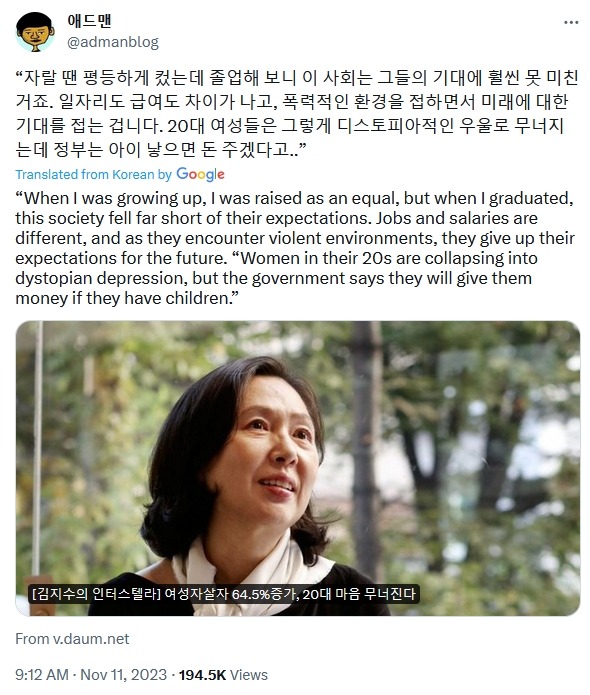 Source: 나도계란/@aravis12
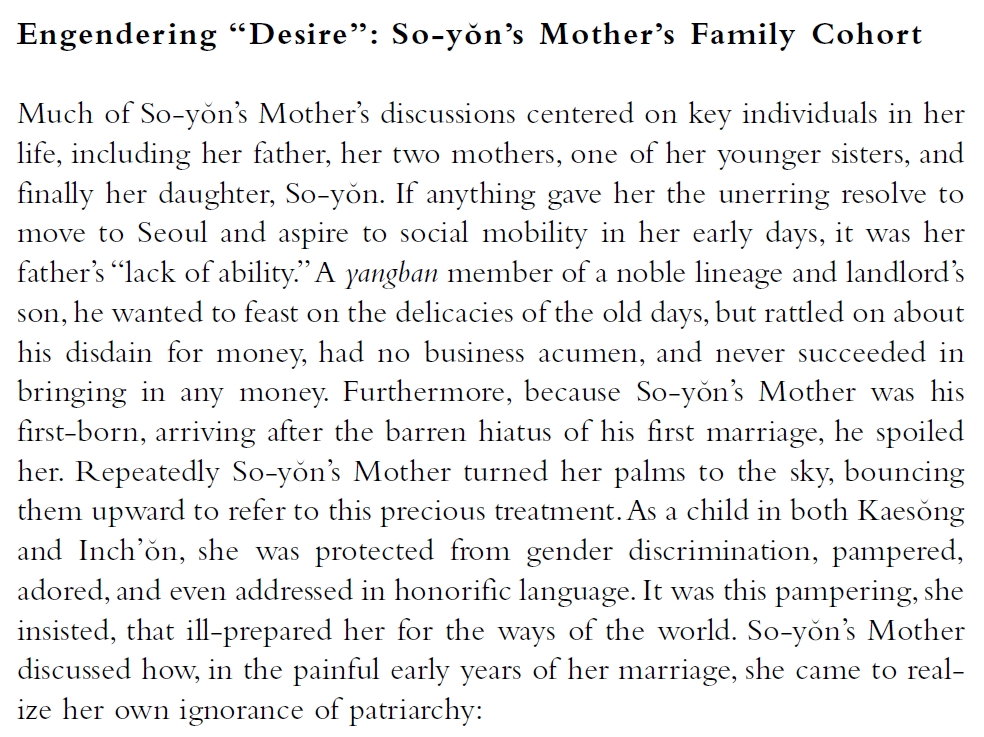
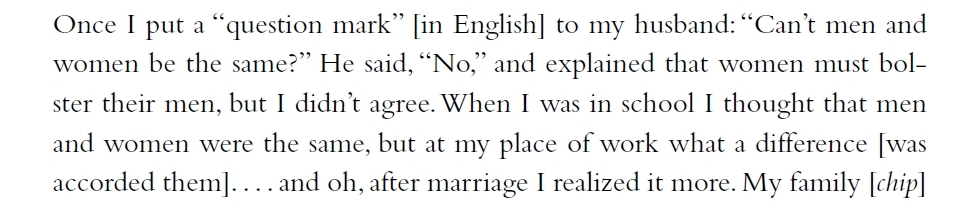
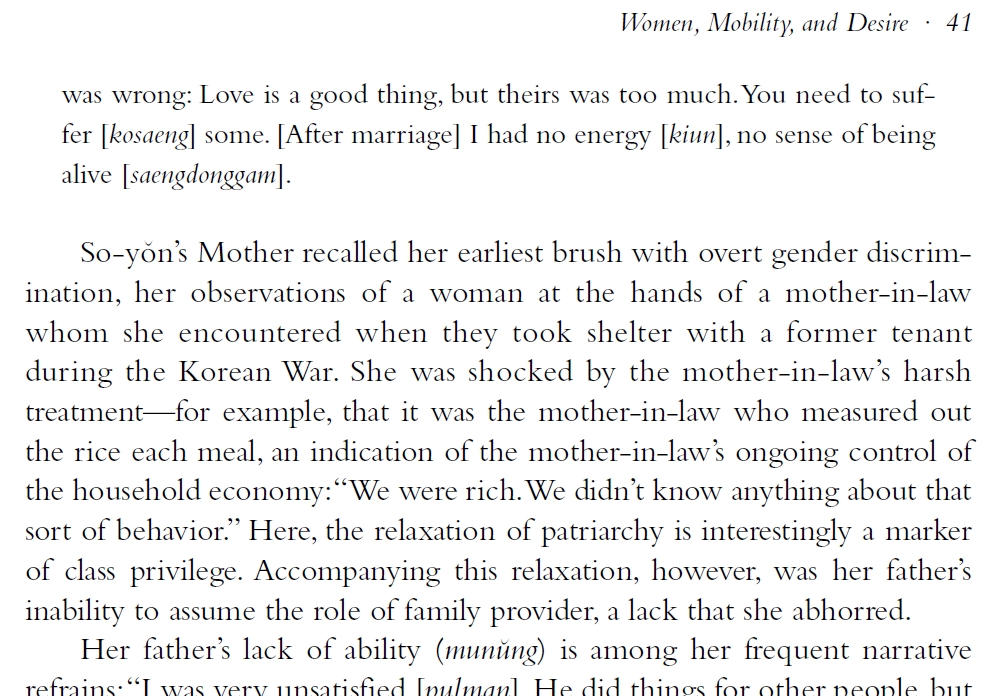
Feeding into what I would learn from Under Construction and other sources about the strength of egalitarian and democratic ideals in Korea, which the education system promoted even during the height of its various military dictatorships, that point really stuck with me 20 years ago. It’s been in the back of my mind when thinking about Korean workplaces and marriages ever since.
Then I read the tweet again, and it finally hit me what so little change in two decades actually meant—”Women in their 20s are collapsing into dystopian depression.”
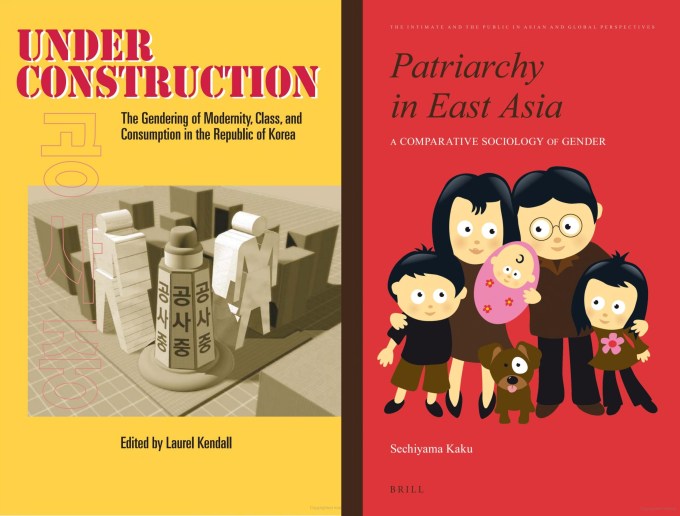 Also highly recommended: Patriarchy in East Asia: A Comparative Sociology of Gender by Kaku Sechiyama (2013)
That’s from what the link was to—an interview of Professor Kim Hyeon-ah (김현아) of Hallym University Sacred Heart Hospital, author of My Daughter Was Quietly Falling Apart (딸이 조용히 무너져 있었다; 2023), about her struggles with her bipolar daughter who self-harmed and attempted suicide.
Through it, I learned that although men still comprise the bulk—three quarters—of Korean suicides overall, as myself and probably everyone reading would expect, the (translation) “number of female suicides has increased by 64.5% since 2015, compared to 19.7% for men. Also, that as of 2020, mood disorders such as depression were twice as common among women as among men, and were especially prevalent among those in their 20s.”
Only, those suicide statistics, by being generalized to all women, annoyed more than clarified.
You see, by coincidence I’d read yesterday that the smoking rate for Korean women was now 4.5%. Which was a huge red flag. Because as I demonstrated in my series on that a decade ago, the taboos surrounding female smoking in Korea meant rates varied hugely by age, with the rate for 19-29 year-olds then coming to 23.1%, and rising quickly. So quickly in fact, I’d estimate that their rate is now closer to 33%, and will try to confirm that in a much-needed follow-up to that series for you soon.
With that in mind, while a 64.5% rise in suicide rates for Korean women is of course terrible, as is a 19.7% rise for men, it doesn’t sound so dramatic considering the much, much lower figures for women overall. With not unlimited funds available for suicide prevention measures, it’s not unreasonable to suppose that, put that way, both policymakers and the public might be swayed into downplaying the changing gender dynamics of the problem. That perhaps specific age and sex-based policies aren’t necessarily the best use of resources.
I’m absolutely not blaming the reporter here, or claiming any sort of agenda over a few statistics that should have been presented differently. But it did mean an age-based breakdown of those suicide statistics was absolutely necessary, which I found in The Korea Bizwire:
When analyzed by gender, the highest rate [of self harm and suicide attempts] among males was among those over 80 years old (125.9 per 100,000), followed by those in their twenties (105.4), teenagers (69.1), and those in their thirties (65).
Among females, the highest rate was in those in their twenties (284.8 per 100,000), followed by teenagers (257.8), those in their thirties (119.9), and those in their forties (86.3).
And on that note, my apologies. This was supposed to be a light post, expressing my joy at finding something so similar to something meaningful that I once read 20 years ago. Then, joking at this curmudgeon’s ever-growing confirmation bias, and admonishing him to constantly seek sources that challenge his outdated views. Only now having done precisely that…I simply don’t know what to say.
Most suicide victims worldwide being men, I am just too shocked. Not just that the rate for Korean women in their 20s is higher than than that for men at all, but that also it’s almost triple. For the first time ever, this issue makes me genuinely scared for my daughters, whom I don’t live with any longer and don’t see day to day, and one of whom will be doing the university entrance exam this year.
What do you think needs to be said?
Related Posts:
- The Pee Doesn’t Lie: 1 in 4 young Korean women smoke (The Gender Politics of Smoking in South Korea, Part 5)
- “An epic battle between feminism and deep-seated misogyny is under way in South Korea”
- Male Privilege at Korean Universities
- Korean Women’s Sexual Histories: Still a slippery subject
- When “How to Own the Room” is Really Just a Lesson in Male Privilege
- The Hidden Roots of Korea’s Gender Wars

If you reside in South Korea, you can donate via wire transfer: Turnbull James Edward (Kookmin Bank/국민은행, 563401-01-214324)
 The Grand Narrative