Apparently, Koreans *Like* to Have Sex Now?

While young Korean women’s greater use of condoms in recent years is—You go girls!—definitely something to be celebrated, their continued disdain for long-term contraceptive methods, particularly the pill, sends mixed messages about female empowerment.

Estimated reading time: 7 minutes. Image source: FM Korea

But no, seriously. There has been a seismic shift in Koreans’ attitudes to premarital sex over the last decade or so.

So earth-moving in fact, that I just did a huge double take during my own lecture. I had to pause for a moment when I presented the slides below, so many other things I was covering that day—nay, the entire semester—seeming to suddenly coalesce into a coherent whole, vindicating all the work I’d put into it.

In particular, my earlier lecture on the almost equally dramatic rise in single households in Korea, more than doubling in 20 years to reach 42% of all households in 2024, with particularly rapid rises in the years since Covid. Also that, coming just a few slides later in this one, 20-something Korean women have far, far more experience of and willingness to use contraception than their 30- and 40-something counterparts do.

Whereas as recently as 2014, unmarried women were so concerned about maintaining their virginal reputations, akin to UK women before the sexual revolution of—yes—the 1960s, that the Ministry of Health and Welfare would launch a campaign to encourage them to stop relying entirely on their male partners to provide, know how to use, and, you know, actually use contraception.

Alas, it wasn’t as enlightened as it necessarily sounds, mostly being prompted by a desire to reduce the (then illegal) abortion rate. But still—that was then, and this is now. As, during class, the following statistics suddenly made abundantly clear:

Continue reading “Apparently, Koreans *Like* to Have Sex Now?”

A Must-read on Japan’s (and Korea’s) #MeToo

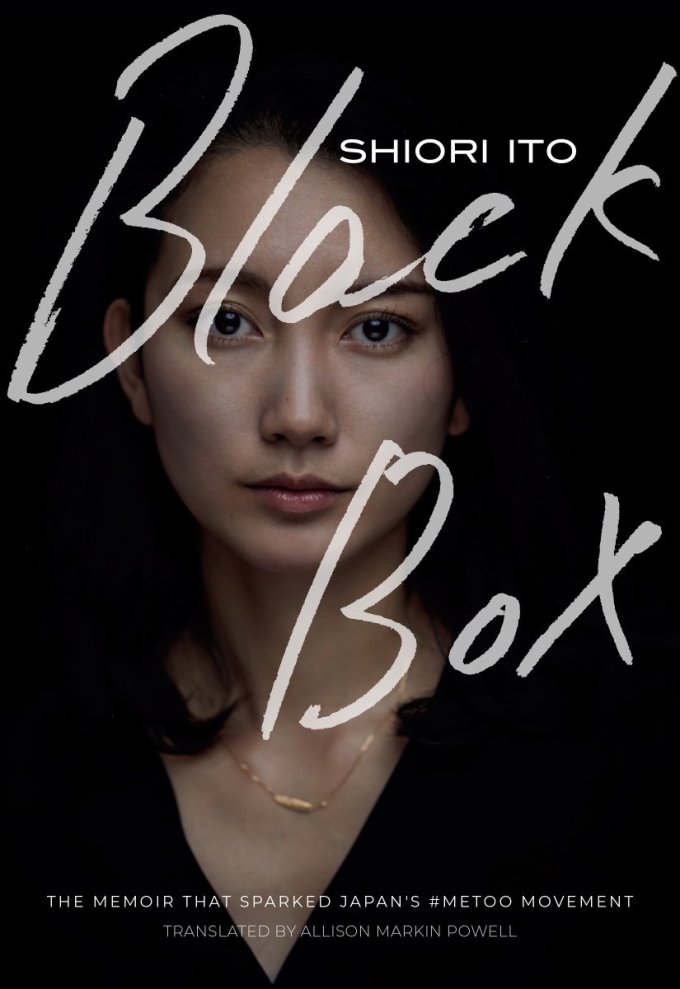
Korea’s #MeToo movement was much more successful than Japan’s. This must-read 2025 interview from Asia-Pacific Journal: Japan Focus suggests some of the differences responsible.

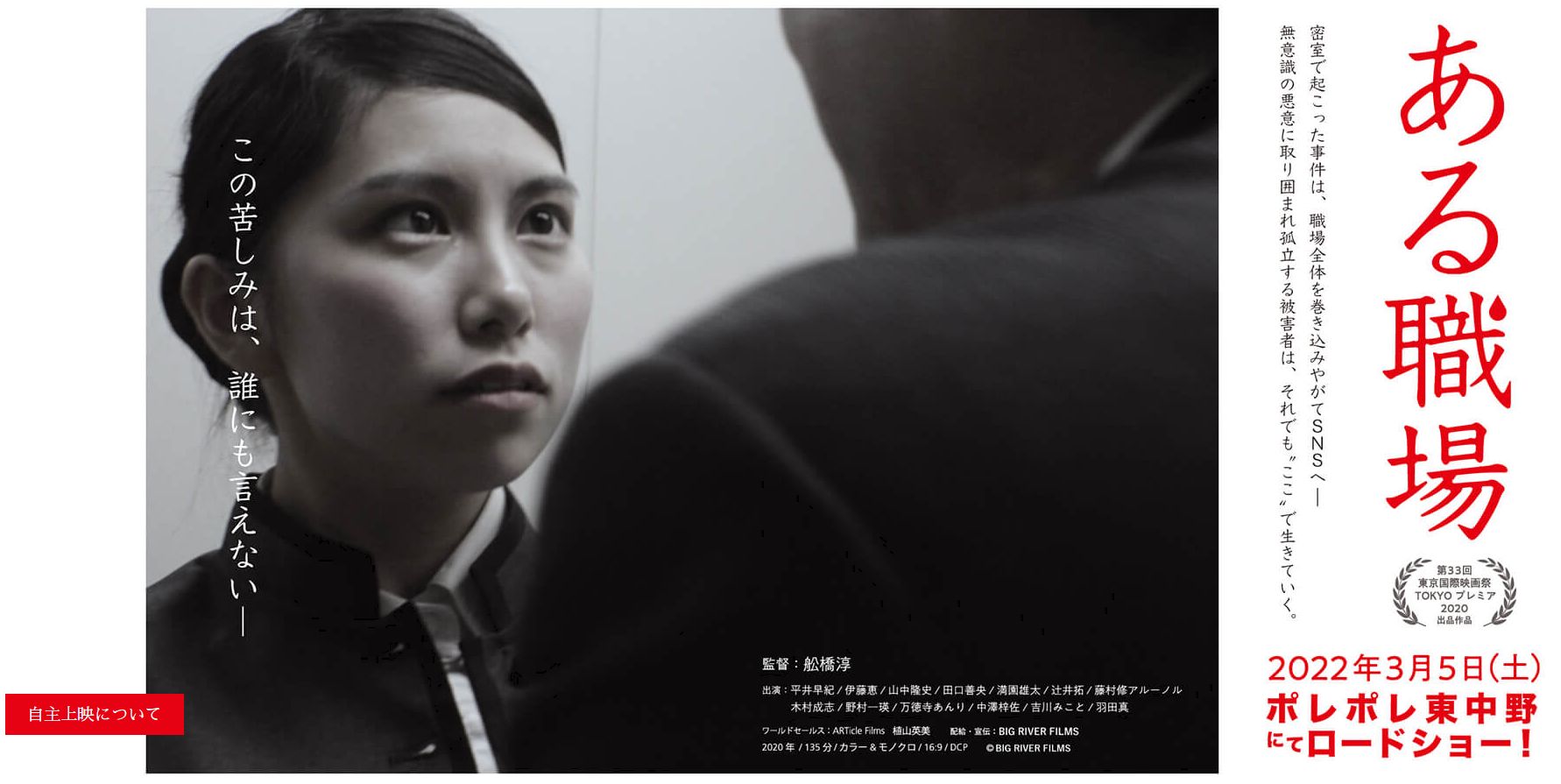
Estimated reading time: 5 minutes. Screenshot, Company Retreat homepage.

It’s such a relief to have made the decision to share things that are simply of interest from now on, feeling no shame if I’m unable to substantially add to them. While I’m still definitely working on my own original posts, that means in the meantime I have years’ worth of links to pass on.

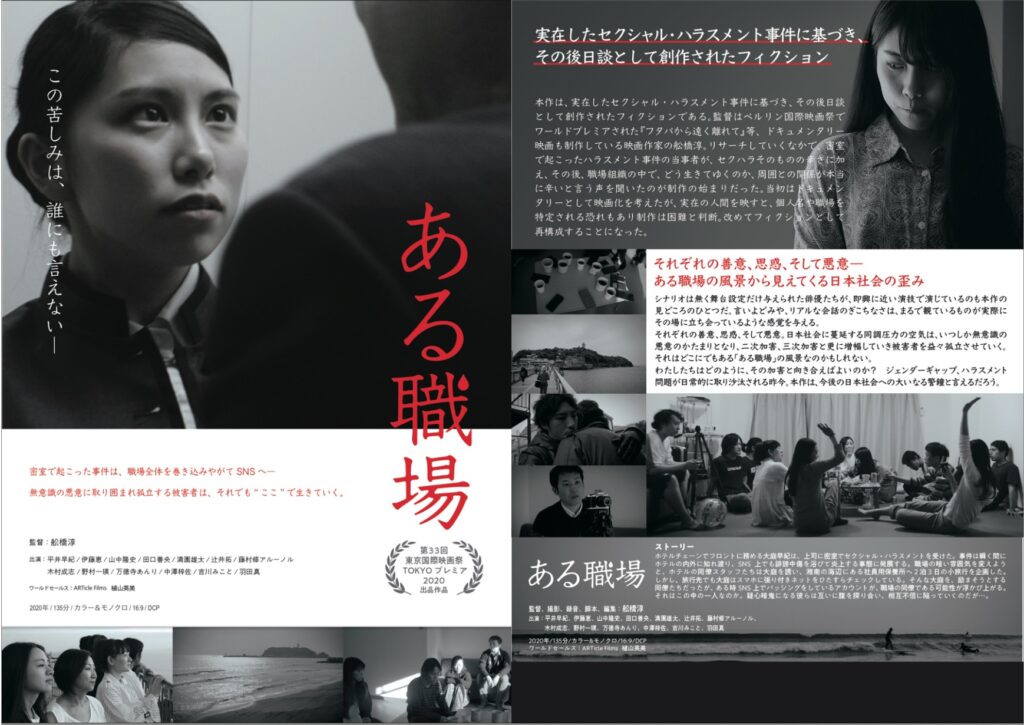
With apologies to the Asia-Pacific Journal: Japan Focus for the large copy and paste below then, what I’m sharing today is actually just a short excerpt of art historian Asato Ikeda’s lengthy, November 2025 interview there of film director Atsushi Funahashi about his 2022 film Company Retreat, a fictional #MeToo scenario based on a true story. In it, they cover much about the pernicious effects of a culture that strongly discourages challenging superiors, asking questions in Japanese schools, and how paying special attention to reading the room (a.k.a., not ruffling feathers) has significantly hindered the progress of Japan’s #MeToo movement. Indeed, “this basic inability to have debate” about uncomfortable, thorny problems has previously been cited as why the “comfort women issue still remains unresolved in Japan—and East Asia—nearly a century later.

Those familiar with Korean society will find much to recognize here. But don’t worry—this is no essentializing screed, which I highlight only because it confirms my own Orientalist stereotypes about collectivist Asians and their fixation with saving face.

Rather, recall that Korea’s #MeToo movement was much more successful than Japan’s? Meaning that the differences are more important.

To get a sense of those then, I encourage you to read the excerpts below if you’re pressed for time, or the entire interview if you’re not.

What are you waiting for? ;)

(I do have one, very familiar complaint about Company Retreat though—like much pop culture produced in Japan, it’s unavailable outside of it. Grrr.)

Source: Asia-Pacific Journal: Japan Focus

Ikeda: Thank you for making the time for this today. I re-watched Company Retreat for this interview a few days ago, and I’m still struck by how uncomfortable the film made me. As somebody who grew up in Japan, I remember how human relationships there can be convoluted in a particular way. There are certain very abstract phrases that are often used in Japan, such as “you are relying too much on other people” (amaeteiru), “you must work hard” (ganbatte), “we are a team” (nakama dakara),” or “don’t run away” (nigenaide). I am working on collaborative research on NHK data regarding sexual violence and consent with other researchers, but the survivors’ voices there are isolated from the cultural context.2 I thought your film did a great job presenting that context—the dark aspects of Japanese culture—though I am having a hard time articulating exactly what they are. Perhaps narrow-mindedness and herd/village mentality? I know you talked about the goal of your filmmaking as capturing the “unconsciousness of the times” (jidai no muishiki), which might be relevant here. Would you like to elaborate on this?

Funahashi: There might be many answers to this question, but I often talk about how there is no education in Japan that allows people to have debate. They cannot debate. I think they take things personally. In our East Asian culture, the hierarchical thinking—the idea that we cannot challenge somebody in a higher position—is deeply ingrained in our unconscious. There are cultural codes about how we are expected to behave toward our boss (jōshi), the senior (senpai), and the junior (buka) and to be mindful about that relationality. When somebody “lower” than you speaks in a certain way, you get to think “how dare you talk like that” and that emotional reaction comes first. That cultural code prevents us from having a frank “debate” about something on an equal level. You are supposed to “read the air”—the hierarchy among people.

When I was in New York and I worked on the NHK production team for a show called “New Yorkers.” For a special episode on American education, I went to an elementary school in Brooklyn. Everybody raises their hands when their teachers ask if there are any questions and they grow up like that. When I went to a Japanese elementary school, first and second graders usually raise their hands, but around third and fourth grades, the students stop raising their hands. They will start looking around and see if it is okay to raise their hands or speak up and say certain things. For fifth and six grades, nobody raises their hand and there is only silence. That moment of silence where everybody is looking around trying to “read the air” is quite unique to Japan, I think. It is the culture of “hirame-kyorome,” referring to somebody who only looks upwards at “superiors” and sideways at “equals,” not caring to see people “below” or “inferiors.”

The underlying problem regarding sexual violence in Japan is this basic inability to have debate. When sexual harassment happens, there is no clear debate about what caused it. In addition to the lack of practice of debate, sexuality is a complex and sensitive issue to begin with, and sexual violence becomes a topic that people cannot discuss for multi-layered reasons. So consequences or narratives of sexual harassment get decided by people on “the top” and everybody else has to follow them without questioning. And often the understanding of sexual violence or harassment by those people in senior management positions has not been updated, so I can see how this could easily become a problem.

Read the rest here.

Related Posts:

If you reside in South Korea, you can donate via wire transfer: Turnbull James Edward (Kookmin Bank/국민은행, 563401-01-214324)

So, I Finally Bought This Damned Vagina Book!

No, wait—this is wholesome.

Estimated reading time: 9 minutes. Photo by Maria Talks on Unsplash.

So, it’s been a minute.

Why? Believe me, I could list all the reasons. Perhaps sometime in the future, I will. But those of you that have stuck around all this time, you deserve my endless gratitude(!), not my navel-gazing. And besides, I don’t feel much connection to the person and writer I was a year ago, so there’s really no need to go over the transformation process. The new me doesn’t waste your time, and gets straight to the point.

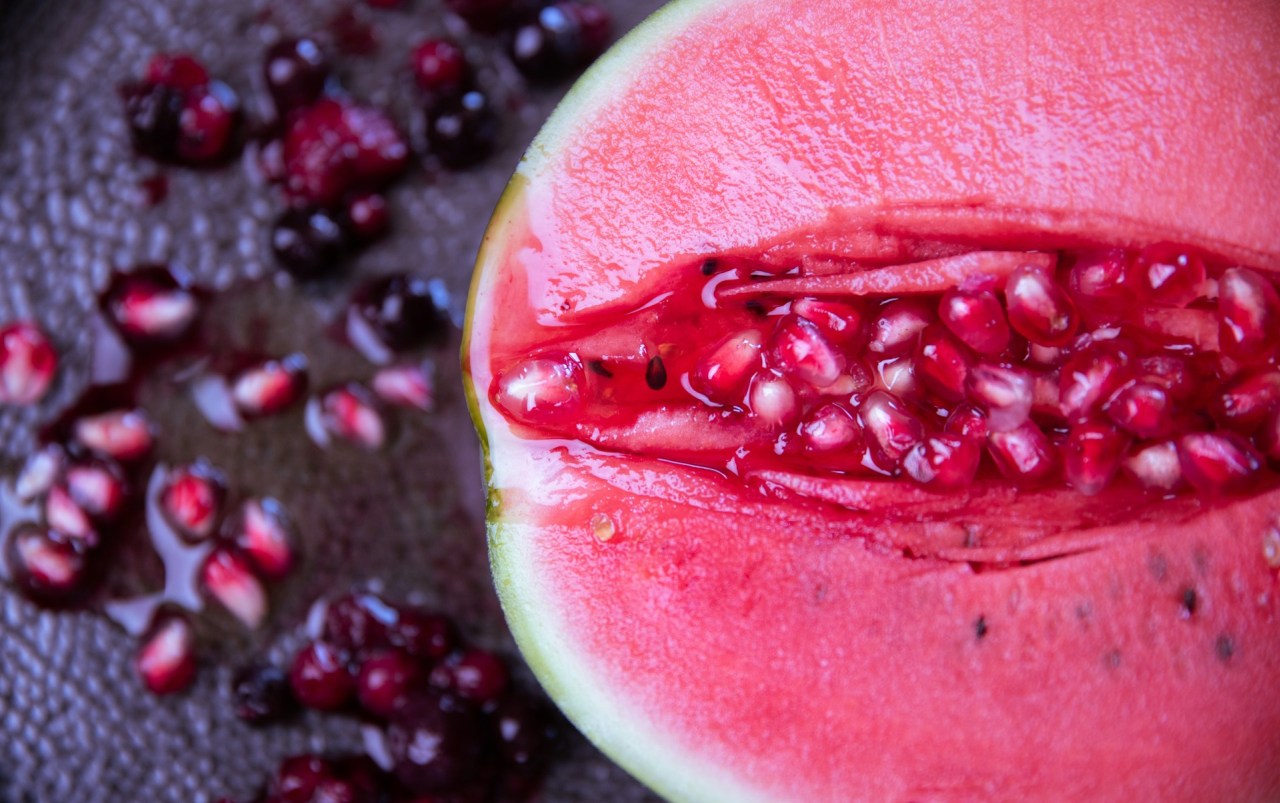
The main point of this post then, is to celebrate the example set by a Korean husband who, wanting to understand his wife and her body and needs better, loudly and proudly bought the Korean translation of The Origin of the World: A History of the Vagina (버자이너 문화사 – 교양과 문화로 읽는 여성 성기의 모든 것) by Jelto Drenth (2004; trans. by Kim Myeong-nam, 2006). And also, to present this six-foot, multicolored glowing uterus below too—the quite literal sign from the universe that inspired me to finally buy the book for myself!

Continue reading “So, I Finally Bought This Damned Vagina Book!”

Follow These Two Blogs for Up-to-date Statistics and Commentary on Social Trends in South Korea!

It can be a real challenge sometimes finding the insider knowledge I use to pretend I’m smart, let alone knowing what to make of it. Fortunately, I can rely on these sources to provide both!

Estimated reading time: 5 minutes, plus 15-minute video. Photo by Andrew Neel on Unsplash.

Without any further ado, the first blog is Connecting the Data Dots by Ssen Kim, which has many excellent short posts in English.

Alas, there seems to be no information about the author. But I do know that in the very first post of theirs I read, “Has The M-shaped Curve Of South Korea’s Female Employment Rate Disappeared?“, they not only directly addressed a question I’ve long been worried about getting called out on, they’d even provided some handy graphs for me to distract my accusers with too.

So last winter, while preparing this semester’s Korean Gender Studies class, I realized I just had to use them. But as the day of this week’s lecture on the birthrate approached, a crisis loomed. While I found the topic very interesting, and you will when you read that post too, I started considereing it from the perspective of my already disengaged young students. Still scarred from growing up during COVID, and barely older than children themselves, would they find the topic of why Koreans aren’t having children completely irrelevant to them? Arcane even?

What to do?

Continue reading “Follow These Two Blogs for Up-to-date Statistics and Commentary on Social Trends in South Korea!”

TradWife TikToks Trouble Me

From banking to taking care of babies, it can be a real headache living and working in Korea as a foreigner. So much so, it’s usually objectively easier to let a Korean partner deal with any bureaucratic issues. And very, very possible to fall into some decidedly traditional gender roles in the process.

Estimated reading time: 5 minutes. Photo by Elle Morre on Unsplash.

Heartache, I expected from getting divorced. Backache? Not so much.

Every Saturday morning though, I have to contort myself like Houdini to clean my apartment’s tiny bathroom, lest I be judged on it later that evening. I have to vacuum and mop my floors often too, desperate to avoid the distinctive, single middle-aged guy smell my friend’s girlfriends all point out when they come over to break up with him. And in particular, I absolutely have to wash my dishes after every meal, because I have to do them in a kitchen sink that was expressly designed for the 155-160cm height of the average Korean woman of over 40 years ago. Let three meals’ worth pile up though, and it’s not just my lack of self-discipline that I’ll be wincing at.

Seriously, walking around my apartment like a hunchback every day gives a whole new meaning to feeling single. As a cishet, ostensibly middle-class, able-bodied man, it’s quite the novelty being a victim of the many gender norms literally built into our homes and cities.

Perhaps that’s why during my latest recuperation on my hard living room floor, I was finally persuaded to reach over and pick up Sociology of Everyday Life in New Zealand, ed. by Claudia Bell (2001), heading straight to the chapter “Negotiating Housework,” by Ruth Habgood (pp. 52-69). Amongst many other gems from the book I wish I’d seen earlier, this part really stood out:

Continue reading “TradWife TikToks Trouble Me”

Older Korean Men Just LOVE the F-Word?

Just an amusing coincidence for your Friday night. But don’t worry, Korean Feminism geeks—I’ve also got you covered!

Estimated reading time: 2 minutes. Image source: Aladin.

No, not that F-word—although these days, it’s just as taboo to say either. And no, I don’t quite know how Easy to Read Feminism: Who Says Feminism is Difficult (Background information for beginners to feminism) / 쉽게 읽는 페미니즘: 페미니즘 누가 어렵대 (패미니즘 입문자를 위한 배경지식서), by the BT Humanities Research Institute / 비티인문학 연구소 (2019), ended up on my phone screen exactly. Probably, watching Blue is the Warmest Colour (2013) the week before subliminally affected me somehow. But, however it got there, I couldn’t help but notice the age and sex breakdown of customers who had already bought the book, which seemed to mirror the gender gap underlying the interest—or antipathy towards—feminism among the wider Korean public.

Source: @HeejungChung

I too lament that gender gap, but also found the image amusing, so am sharing it for that reason.

I don’t really mean to imply anything more meaningful in it beyond that! Indeed, just a quick perusal of other Korean books on feminism I’ve recently bought, showed that that same buying pattern didn’t apply to those.

If that leaves you dissatisfied though, let me also take this opportunity to link to what I somehow found next: “A new variation of modern prejudice: young Korean men’s anti-feminism and male-victim ideology” by Han Wool Jung, in Volume 14-2023 of Frontiers in Psychology. Probably the most comprehensive, crucially open-access article I’ve ever encountered on the subject, it should keep you—and me!—occupied for several hours at least.

Enjoy!

Related Posts:

If you reside in South Korea, you can donate via wire transfer: Turnbull James Edward (Kookmin Bank/국민은행, 563401-01-214324)

Transnational Sex Workers in Yokohama, and Migrant Integration and Multiculturalism in Korea—Today’s Must-See Zoom Presentations!

Estimated reading time: 3 minutes. Image by ArtHouse Studio @Pexels.

Apologies that this post comes so last-minute. I only just discovered I was free, and my policy with Zoom lectures is only to announce those I can attend myself. If I didn’t, this blog would be overwhelmed, turning into a lighter version of the Korean Studies Events Database!

(You should totally sign up for the Korean Studies Events Database.)

The first lecture, from 3:30–5:00 pm (all Korean time), is:

“Doing Ethnography in the Wake of the Displacement of Transnational Sex Workers in Yokohama: Sensuous Remembering” by Ayaka Yoshimize, author of a book of the same title. From the event page:

(Zoom participation: Pre-registration is not required. Please login with the Zoom Meeting ID: 923 4787 3527 and Passcode: KUMMC.)

This presentation reflects on the politics, poetics, and ethics of remembering the lives of migrant sex workers in a diasporic city of Yokohama, Japan. Drawing on her performative sensory ethnography, Yoshimizu will focus on the transnational space of mizushobai (water trade) in Yokohama’s historically marginalized neighbourhoods along the Ōoka River, where sexual services were performed by racialized migrant women. Since 2005 the city has sought to rebrand one of these neighbourhoods, Koganecho, evicting transnational migrant sex workers who had been integral to postindustrial development and erasing their past presence. Yoshimizu examines Yokohama’s dominant memoryscapes in the aftermath of displacement, examining the built environment, official historical narratives, films, and photographic works that obscure racialized migrants’ participation in the city’s place-making. She then seeks to create an alternative memoryscape based on her own fieldwork experience of becoming entangled with the local social relations, unexpectedly coming to perform social roles legible in the field, and, ultimately, having her relationship with the city refashioned anew. Yoshimizu writes the alternative memoryscape through the imagery of water in ways that are informed by the local usage and imaginations—the ocean, flowing rivers, swamps, humidity, alcohol, the fluidity of relationships, and transient lives. This talk will end by introducing her current multi-sited research on transpacific memories of karayuki-san in Yokohama, Nagasaki, and Western Canada.

Then immediately after, starting at 5pm:

“Current status and policy response to migrant integration and multiculturalism in Korea” by Prof. In-Jin Yoon” (Korea University)

Also from the event page (but please note the pre-registration link there is wrong; instead, go to https://uni-due.zoom.us/meeting/register/u50qdeCgqToqHtePLf6_S_NppjpA9Wk6vica#/registration):

The current status of migrant integration in Korea seems to be far from ideal. The human rights violations against migrants remain common in the workplace and everyday life. The public’s perception and attitudes toward migrants have changed from paternalism to apathy, and is deteriorating to the level of hatred toward certain groups. Korean adults’ multicultural acceptance increased from 2010 to 2015, but has continued to decline since then. The level of social integration of migrant workers and married immigrant women, which are representative groups of migrants in Korea, is not high in both material and psychological aspects. Migrant workers have a high employment rate, but they work long hours in low-skilled, low-wage work, are exposed to non-payment or delayed payment of wages and physical and verbal violence, and their labor rights are greatly restricted. They cannot bring their families, and their opportunities to acquire permanent residency and nationality are greatly limited, so they are not subject to social integration. Marriage migrant women tend to have low employment rates, employment stability, and income due to their low age and education level, ability to understand Korean language and culture, the large age and cultural gap with their husbands, and the burden of childbirth and childcare. They are also dependent on their husbands because they need their consent when applying for permanent residency and nationality. The language and culture of their home country are not respected and they are under strong pressure to assimilate into Korean culture.

See you there!

If you reside in South Korea, you can donate via wire transfer: Turnbull James Edward (Kookmin Bank/국민은행, 563401-01-214324)

Single Korean Women are Being Scammed into Paying More to Feel Safe in Their Homes. You Don’t Have to be a ‘Feminist’ to Acknowledge That.

But if you do, there’s a real danger you might start thinking and acting like one…

Estimated reading time: 8 minutes. Photo (cropped) by Raka Miftah @Pexels.

So, I finally have the elevator pitch about what feminism is.

Pursuing equality of opportunity. For all sexes and sexual orientations.

It’s crude, but I think it’d do. In the moment, there’d probably be so little time to work with whoever might be asking, and so much hostility from some, that my priority would be getting them to acknowledge any inequality even exists at all.

First then, I’d broach that different sexes paying different prices for essentially the same product or service, or the same price for an inferior version of them, is obviously unfair.

(I wouldn’t waste any more time on anyone who couldn’t even concede that.)

I’d want to tread carefully next though. Maybe my inquirer wouldn’t know—or hadn’t deigned to know—that there are so many examples of this ‘pink tax’ out there, so named because it’s overwhelmingly women that suffer from them.

Here the old me, unsure about how to make that case in such a limited time, would probably jump the gun by explaining how just being angry about that discrimination, and wanting to do something about it, absolutely makes someone a feminist in his book.

The new me though, knows a case for that would need to actually be made first, and also how toxic that f-word is to so many people outside his circles—especially in Korea. So, he would confine himself to providing one or two quick examples, and consider that a solid achievement for two minutes. Surely it would be more effective to let his inquirer put two and two together themselves about them later, he’d reason, than beat them over the head with their obvious takeaways.

Photo by Andy Song on Unsplash.

Take these two handy recent Korean examples for instance, courtesy of an April 22, 2024 contribution to the “중앙로365” column in the Busan Ilbo by Byeon Jeong-hee, standing representative of the ‘Salim’ Women’s Human Rights Support Center (my emphasis). Both also happen to be about issues dear to my heart, for reasons I’ll explain in a moment:

얼마 전 부동산에도 ‘핑크택스(Pink Tax)’ 현상이 일어나고 있다는 기사를 읽었다. ‘여성 전용’ 원룸이나 ‘여성 안심 구역’에 위치한 부동산 매물의 월세나 보증금이 다른 매물에 비해 비싸게 책정되어 있다는 것이다. 부동산 정보 플랫폼에서 제공한 자료에 따르면 서울 주요 10개 대학 중 원룸 월세는 이화여자대학교가 월 71만 원으로 가장 비쌌는데, 대부분 여성 전용 원룸 밀집 지역이었다. 부산에서도 부산대 인근 여성 전용 원룸과 일반 원룸을 비교한 결과, 별도 보안 장치가 추가된 것이 아님에도 불구하고 여성 전용 원룸의 월세가 약 20만 원 비쌌다는 취재 결과가 있었다. 때문에 주로 여성들이 느끼는 범죄에 대한 두려움이나 안전에 대한 불안을 이용한 마케팅이자 핑크택스라는 지적이다.

“Not long ago, I read an article saying that the ‘Pink Tax’ phenomenon was occurring in real estate….The monthly rent or deposit for real estate properties located in ‘female-only’ studio apartments or ‘female-safe zones’ are set at a higher price compared to other properties. According to data provided by a real estate information platform, among the 10 major universities in Seoul, Ewha Womans University had the highest monthly rent at 710,000 won per month, and most of them were concentrated areas of studio apartments exclusively for women. In Busan, as a result of comparing women-only one-rooms and regular one-rooms near Pusan National University, the results showed that the monthly rent for women-only one-rooms was about 200,000 won more expensive even though there were no additional security devices. Therefore, it is pointed out that it is a marketing and pink tax that mainly exploits women’s fear of crime or anxiety about safety.”

This may come as a surprise. For a long time Korea has had a reputation as a safe country, and in many respects it still is—the homicide rate is extremely low by international standards. However, it has also long been one of the few places in the world where women are actually more likely to be murdered than men. And, since the 2016 murder of a woman in a public toilet in Gangnam especially, the perception that Korea is a safe country for women is, I suspect, one largely only felt by short-term visitors, relying on outdated, frequently sanitized (or naive) sources.

Instead, for women living in Korea in 2024: femicides by ex-boyfriends; dating violence; random attacks while hiking, while waiting for an elevator, or simply having short hair; and an increasing numbers of stalkers? All these contribute to a constant feeling of danger, that there is an epidemic of violence against women, and that “nowhere feels safe.”

Photo (cropped) by Matteo Catanese on Unsplash.

It’s no wonder then, that among all demographics, it’s women living alone who are most anxious about these developments, so are prepared to pay extra not to have to worry about them. Indeed, so anxious that their fears are now being exploited by landlords and realtors, as Byeon points out.

I do however, completely acknowledge that she is vague about her sources, and provides none of their data. Indeed, the ‘Salim’ Women’s Human Rights Support Center, which Byeon represents, is actually an anti-sex work organization, which makes me wary of potential hyperbole in her claims (this is my unfortunate experience with such organizations). So, I’ll endeavor to find those sources and data myself for a follow-up post.

Source: Remark Vill.

Mom, you’re bringing that up again?

I’m taking care of things myself now!

I can get lightbulbs changed if I need to, and the toilet unblocked too.

I don’t need to call Dad!

But I also acknowledge I don’t really have any doubts about their veracity, based on my deep dive into Remark Vill serviced apartments’ advertising campaign with then 32 year-old Im Se-mi in 2020 above. Because, although it first drew my attention through the cloying, traditional, initializing gender roles it portrayed (Could my interlocutor in the elevator seriously imagine a man being asked to say those things? Could anyone?), it also left me with a heavy sense of just how unsafe women felt even back then, the grim, more recent statistics in all those links above being just the tip of the iceberg of those I outlined in that earlier post.

Plus, in an equally deep follow-up the next year, I recounted what I learned from two must-read books about how adding safety features for women, real or otherwise, were often implemented entirely for financial reasons (giving the impression of gentrifying a neighborhood say), so frequently didn’t substantively improve women’s safety at all. Also, I learned how various Korean government policies often financially discriminate against single female households specifically.

No wonder Korean women are pissed.

But of course my new elevator friend and I would never get that far. And I’d want to save them the embarrassment too, of getting into knots arguing that Korea’s consistently terrible gender gap…is because of Korean women choosing to have babies. We’re only talking about how much money women may or may not have to spend on safety features compared to men, and why, I’d remind them, not how much money they may or may not have in the first place. And, instead of quibbling about either, we could surely agree that is very not cool that women have to pay extra for the privilege of safety men take for granted, let alone be scammed over it (I might want to avoid that scary ‘p-word’ though). We could then talk next about what men and women should do to remedy that. In other words, be feminists, although I wouldn’t want to say that word yet either—I wouldn’t want them to realize they’ve been tricked yet.

Or, we could just move onto the next example (my emphasis again):

우리나라에서는 2018년부터 이러한 핑크택스에 대한 문제 제기가 있었다. 한 유명 아웃도어 브랜드에서 여성용 패딩의 충전량이 남성용의 절반밖에 되지 않지만 같은 가격에 판매되고 있다거나, 유명 패션 온라인 스토어에서 뒷주머니와 밴딩 처리 등을 없앤 여성용 슬랙스가 남성용보다 비싸게 판매되어 논란이 일었다. 같은 가격의 옷임에도 여성용으로 출시된 옷은 주머니가 너무 작거나 옷의 마감 처리가 허술하게 되어 있다는 취재가 이어졌다. 미용실에서 머리 커트 가격이 성별에 따라 다르게 책정되어 있는 것도 꾸준히 지적되어 왔다. 한국소비자원 사이트에 따르면 서울 지역 여성 커트 1회 평균 가격은 2만 1308원으로 남성 1만 1692원에 비해 약 1.82배 비싼 것으로 나타났다.

“In Korea, issues regarding the pink tax have been raised since 2018. Controversy arose when a famous outdoor brand said that women’s padding had only half the amount of padding as men’s but was sold at the same price. And, at a famous fashion online store, women’s slacks with no back pockets or banding were sold more expensively than men’s. Even though the clothes were the same price, there were continued reports that the clothes released for women had too small pockets or poor finishing. It has also been consistently pointed out that haircut prices at beauty salons are set differently depending on gender. According to the Korea Consumer Agency website, the average price of one haircut for women in Seoul is 21,308 won, which is about 1.82 times more expensive than 11,692 won for men.”

Source: Newsis.

This last one is meaningful to me, because I recall hearing on the radio as a student in Auckland, New Zealand in the late-1990s, that hairdressers were complaining about having to charge the same prices for men and women. Which made complete sense to me then—women tended to have longer hair, and so took more time.

I’d stress this first. That this opinion was reasonable, based on the information I had available at the time. That it wasn’t stupid at all, and that I’m not about to judge someone for having an opinion that I once did.

(Only now, in my 40s, have I finally learnt it’s easier to persuade people by praising their intelligence and common sense first rather than by implying they have neither. Who’d have thought??)

Only then would I explain that when I actually asked women about haircuts much later though (another secret way to trick people into becoming feminists, I hear), did I realize how unfair differential pricing would be to them. Because have women ever really been completely “free” to get short hair cuts, and men long ones? How about right now then, after an attack on a woman in Jinju in November 2023, targeted because her short hairstyle made her look like a feminist to her attacker?

Perhaps that could lead to a discussion about everything else appearance-wise women are expected or required to spend their time and money on?

Perhaps. But the new me knows when to end when the going’s good ;)

Related Posts:

If you reside in South Korea, you can donate via wire transfer: Turnbull James Edward (Kookmin Bank/국민은행, 563401-01-214324)

WEBINAR—International Women’s Day Event: A Conversation with “Convenience Store Woman” Author Murata Sayaka, Monday 18 March, 5pm KST

Estimated reading time: 2 minutes.

From the event website:

To celebrate International Women’s Day this March, Tokyo College’s “Gender, Sexuality & Identity” collaborative research group will host a special webinar event with MURATA Sayaka, author and winner of the 155th Akutagawa Prize for her novel Convenience Store Woman (2016). Through discussing Murata’s writing, experiences, and inspirations, the event hopes to generate reflection on society’s gender and sexuality “norms” and how they shape our world.

Please register there.

Related Posts:

If you reside in South Korea, you can donate via wire transfer: Turnbull James Edward (Kookmin Bank/국민은행, 563401-01-214324)

Happy International Women’s Day, Powergirls! We Can Do It! “세계 여성의 날 잘보내! 우리는 할수 있다!”

Estimated reading time: 2 minutes.

A rare wholesome greetings card I found for my daughters when they were little. I’ve kept some spare copies ever since.

It reads: “Like a powergirl, always be confident! Spread/Brace your shoulders, be strong/cheer up! Yay!”

Sadly for you, I’m not about to give up those precious spares any time soon—they’re reserved for any granddaughters I might have one day. But it is still possible to grab a print of “우리는 할수 있다!” by cartoonist Jen Lee, the first Korean version of the We Can Do It! poster. Rest assured, my framed copy always gets a lot of attention from my cats at my sophisticated cocktail parties!

So again, Happy International Women’s Day, Powergirls! We/You Can Do It!

And (cough) Happy Birthday to me too!

If you reside in South Korea, you can donate via wire transfer: Turnbull James Edward (Kookmin Bank/국민은행, 563401-01-214324)

Why Feminism? Because Stalking Victims Need Protection, the Gender Pension Gap Needs Fixing, and Enough Jokes Already About Big Boobs?

Well, yes. Those would be a pretty decent start towards explaining why actually.

Here’s why I’m deliberately developing a ‘feminist toolkit,’ and seeking out short talking points like these to add to it.

Estimated reading time: 9 minutes. Photo by Cristine Enero on Unsplash.

A few years ago, at a department dinner at my university, a coworker asked me what feminism was, and why it was even needed.

Honestly, I was just too stunned to answer.

Not because I didn’t have an answer. I’m used to giving catchy one-liners to curious teens, or trading barbs with men’s rights activists who are really just sealioning.

But because he was genuinely asking.

Once I realized that, I was just at a loss. I just could not understand why someone in their late-50s, and so well-educated, would need to at all.

Stammering to come up with any sort of reply at all then, I was saved by our meals arriving, our conversation mutually forgotten. Still, later I regretted how a real opportunity for education had been missed. As someone who proudly mentions the f-word in their elevator pitch (no, not that f-word!), expressly wanting people to ask me more about it, I really should have had some responses already prepared for that kind of encounter.

So, I remembered our conversation again last summer while casually listening to a random episode of the BBC Woman’s Hour podcast, realizing any one of its short segments on those title topics would have sufficed to start explaining “why.” Ever since, I’ve been mentally storing and seeking out these and many anecdotes, factoids, and stories like them, every day finding both more of a need for them and more of a responsibility to use them.

The need is because I’ve been really putting myself out there professionally, socially, and romantically in the past two years. Mostly, I’ve been loving it. But this sort of thing keeps happening:

In his work in the city Sammy found himself among Republicans for the first time in his life. Nothing in his background or higher education had conditioned him to expect that anyone but a bandit, sociopath, or ignoramus would ever want to be a Republican. But these coworkers weren’t ignorant, and they were not bandits or sociopaths.

Chapter 8, “Time,” in Closing Time by Jospeh Heller (1994)

The responsibility is because, as mentioned in my last post, the Korean manosphere, for one, has a very real and growing influence. Ignoring them, dismissing them, writing blogposts that they won’t read, aren’t exactly helping to counter that. Rather, a political gender divide continues to grow globally, and is especially wide in Korea.

I also feel a responsibility because I recently listened to a (2017) podcast episode about conservative intellectuals by The Point Magazine, in which co-editor Jon Baskin stresses the need for engagement:

“…where[as] on the left, they think these aren’t real ideas, they’re so obviously ridiculous that no-one can even believe them…they must just be there to bale power, you know, power dynamics or privilege. And you know, I think we take it as…besides just a matter of sort of honesty, intellectual honesty, we take it as a matter of political responsibility to try and actually meet these ideas. It seems to me the more politically responsible thing to do is to actually meet these ideas which obviously are convincing to many people, and take them as arguments and treat them as such.”

(From 6:50.)

And I feel even more of a responsibility because I’ve mingled and networked enough that I’ve reached a tipping point. That now, I don’t just abstractly know, but also feel in my gut and see right in front of my eyes how my wide range of privileges—male, cishet, White, native English-speaking, middle-aged—work to ensure I’m more likely to be listened to. And, crucially, much more likely to be listened to over a drink in a bar, with someone with shared interested or some other connection, than randomly read by them.

No, it’s not like I’m going to take advantage to proselytize at every cocktail party I’m invited to. Nor be taken advantage of by people who had no intention of listening. But when opportunities for genuine dialog are offered, how to make the most of them?

“Okay, but this 2023 study of Norwegians found no sexual double-standards for long-term relationships.”
“…”
“And that Insta had links to 4 more studies that came to similar conclusions.”
“Interesting. I’ll have to read them. But although there’s absolutely no excuse for anyone slut-shaming anyone, you know there used to be legit evolutionary reasons for both men and especially women to want to restrain female promiscuity, right? And, just got to say, Korean women are still too scared to go to gynecologists for vital health checks for fear being labelled sexually active. And in 20+ years, there’s only been a handful of ads in Korea that portray women as sexually assertive too. And looking for those is kinda my thing. So, yeah, for sure, I will read those studies, I swear. But not going to lie, I’m already a little dubious about their methodology and results.
“Huh, I guess you have you have a point about the gynecologists. I walked into a skincare clinic once, and ended up in a gyno hidden inside instead, and got kicked out. Crazy!”
“I know, right? Hey, cool jacket by the way. Where’d you get it?”
Woman texting friend on her phone: “WTF did I just listen to???”
(Hey, I can dream.) Photo by Antenna on Unsplash.

Well, you know how one of the first pieces of advice about networking is to keep introductions and pitches short and to the point? To prepare for meeting lots of people, to have a maximum 10-second spiel prepared that says who you are, what you do, and what makes you worth remembering? It’s all about just extending that skill really.

(And intersects with improving my writing skills too. You may scoff, but you should see what I cut these days!)

So, I’m taking notes from good communicators I know on social media, especially those who make reels. Off the top of my head, here’s some of those who post (mostly) sexuality, feminism, and/or Korea-related content specifically, whose insights I very much rely on to be able to write about those subjects at all here:

Professor Neil — Excellent at responding to the sort of ‘self-evident’ truths about women and so on presented by the manosphere, and quickly ripping them to shreds.

Will Hitchins — Like Professor Neil, but funnier and in Australian ;)

Jae-Ha Kim 김재하As well as her must-read commentary on Korean social issues on Twitter, she has such biting critiques of sexism in Korean pop-culture, and recommendations of what dramas do well, that you can’t not follow her. Make sure to subscribe to her Substack newsletter especially.

CedarBough Saeji — I’m very biased because “The K-pop Prof” is a personal friend, lives 5 minutes away, and is the only one in this list I’ve met personally, but still: it’s an objective fact that much of what I say above Jae-Ha Kim, I could also say of CedarBough. Alas, her focus is more on music and K-pop, and her academic writing leaves little time for a Substack ㅠㅠ

Macken Murphy —“Macken Murphy is able to condense vast chunks of information into engaging and digestible episodes.” (The New York Times) Focusing on dating advice, attractiveness, and relationships through an evolutionary perspective, ironically Murphy first came to my attention through his poor communication skills though, my jaw dropping during an episode of the Sisyphus 55 podcast at how eerily similar his speaking style was to my own, and realizing just how convoluted I can sound. But he’s vastly improved since then, making him a perfect role model for me personally. And he’s especially good at shutting down the incels etc. that unfortunately gravitate towards science-based speakers like himself, who selectively go through their work to find supposed rational, ‘scientific’ justifications for their misogyny.

Follow the River North, formerly based in Korea at I’m no Picasso — E. the baker in rural Texas may be very surprised to be included here. But feminism suffuses whatever she writes, and, just in case she doesn’t already know, I also consider her to be one of the most frugal and direct yet also most moving writers I’ve ever encountered—whatever she writes about, she always packs a punch. If you haven’t already, again make sure you all subscribe to her SubStack newsletter.

Alexander — Description: “MSc Cognitive and Behavioral Neuroscience. Research interests in attractiveness & dating. YT – alex.datepsych.” Pinned post: “Redpillers and blackpillers seething as some of their golden cows get knocked down with data. Had a very good interview with Connor Tomlinson here.” Enough said.

Ibagua Kihanovief — In my own words, discovered through her “handy riposte to anyone who claims that feminism is unnecessary in Korea,” whom I’ve already sung the praises of here. All of her work is in Korean, but she often includes English translations.

Professor Michael Flood “Researcher on men, masculinities, gender, and violence prevention. Educator and advocate. Tweets my own. I strive for content-rich and evidence-based tweeting,” and great at respectfully responding to, interacting with, and ultimately shutting down the sorts of people and opinions I’m increasingly encountering myself.

thetinmen — “”Widening perspectives around men. Uncomfortable conversations and ugly truths; the unpopular other half of gender equality, and men’s mental health.” The old me would hesitate to include them, as most of what they post I disagree with. But like Sammy said in Closing Time, they’re really not all the “bandits, sociopaths, or ignoramuses” you might expect. And while I think many of their messages are indeed ultimately flawed, they aren’t easily dismissed, and are well-presented and put together.

Brazenly learning tips and tricks from them to win alt-right friends and influence incels may sound a little calculating, especially if said alt-right friends and incels read this later, but to me it’s still fundamentally all about just learning communication skills. And besides which, strategizing and weaponizing those skills is what the alt-right already does:

And after all that, here finally are the descriptions and times of those segments of that BBC Woman’s Hour episode. Sorry not sorry that just posting a link seemed seemed insufficient, and I hope you and your future conversation partner likewise get inspired and talking by them, wherever you are on the political spectrum. Enjoy!

From 1:20-19:25:

“A woman who was stalked by her husband and then placed into witness protection with a new identity to escape him, says she feels like she’s the one being punished. She’s complained to the police about the way her case was handled after being told she failed an assessment and was no longer being supported by them in her new life. She spoke to our reporter Melanie Abbott, and says she felt completely cut adrift. We hear her story of how she had to uproot her two children and start a new life with a new job in a new town, while her husband is free to live wherever he likes. Academic Rachael Wheatley from the university of Derby tells Anita how she is training police to be better at dealing with stalkers and how victims need better support.”

From 19:25-29:35:

“A new report by the Trade Union Congress has highlighted a gender pension gap between what men and women are living on in retirement. The estimate it’s currently running at 40.5%, which is more than double the current gender pay gap. Nuala talks to Nikki Pound from the TUC and financial expert Sarah Pennells Consumer finance specialist at Royal London – pensions insurance provider about the issues facing women and possible solutions.”

And from 35:15 to 45:50:

“Writer and Podcaster Jackie Adedeji speaks to Nuala about her new Channel 4 documentary UNTOLD: My Big Boobs, a look into the impacts of having big boobs and the rise in breast reduction surgery. Sarah Ditum also joins to discuss the cultural trends of breasts through the years.”

(Alas, the linked video can’t be watched in Korea. Sigh. But for a change, it’s not the Korean government’s fault—the video is only available in the UK.)

Related Posts:

If you reside in South Korea, you can donate via wire transfer: Turnbull James Edward (Kookmin Bank/국민은행, 563401-01-214324)

Manufacturing Outrage Against Korean Feminists: Could it GET any more obvious?

“It was there for literally 0.1 seconds! And drawn by a guy! And…and…WHY THE HELL DO YOU FEEL SO THREATENED BY IT ANYWAY??”

Estimated reading time: 12 minutes. Photo by Timur Weber @Pexels.

It’s always heartwarming when a columnist literally calls bullshit on the Korean manosphere.

For that sass alone, in a moment I’ll gladly pass on to you my full translation of Hankyoreh Gender Team Leader Jang Su-gyeong’s accusation, written in December 2023 about the MapleStory controversy of the previous month.

But for all her flair, I think it was a little misdirected.

“I am very interested and concerned about hatred and discrimination, which hang as prevalent and thick in Korean society as air.”

Basically, she criticizes the controversy for being only the latest example of the ‘feminist check’ tactic the Korean manosphere engages in these days. Whereby they: go bananas over any alleged instance of a small penis finger gesture; dig deep to find evidence that those responsible have even the slightest of feminist leanings; then shrilly demand the company responsible fire them and remove the offending gesture.

This is more pernicious and impactful than it may sound to outside observers. Emboldened by the term “feminism/페미니즘/女性主義” more accurately meaning radical feminism in Korean, to most men and women alike, virtually anyone even only indirectly advocating for sexual equality can get tarred with that brush. And when that happens, say, for wearing t-shirts incels don’t like, companies are only too eager to throw those real or alleged “femis/페미” under the bus, all for the sake of appeasing the manosphere.

Source: John Marcotte.

So I share her ire, and don’t want to get too hung up on semantics. It’s just that, precisely because the manosphere can be so loud and proud about what they doing, why they’re doing it, and who they’re hurting, with absolutely no subterfuge necessary, perhaps “bullshitting” isn’t the best way to describe the process.

Or, perhaps I only say that with the benefit of hindsight.

Because as if to prove her point, an even more bullshit controversy, over nonexistent government plans to switch the genders of emergency exit signs, is emerging as I type this a month later.

As you’ll see after her column, it’s a much more blatant example of what she describes. Especially when you contrast it with a real example, which there was a clear need for, made nationwide to the caregiver figures in subway escalator signs in the late-2000s. And which, to the best of my knowledge, did not result in any harm to anyone’s sense of manhood—no matter how deeply the Korean manosphere seems to feel threatened if the same ‘concessions’ were made today.

Left: the offending gesture, which is visible for precisely 0.1 second. Full screenshot source: 원정상 @YouTube. (For the record, I just thought it was too good a screenshot not to steal—I don’t know the YouTuber’s stance on the controversy.)

너 페미니? Are You a Femi?

장수경/Jang Su-gyeong, 2023-12-17 (flying710@hani.co.kr/@jsggija)

“너는 페미니스트야?”

“Are you a feminist?”

몇달 전 대학 때 친하게 지낸 남자 동기를 만나 들은 질문이다. 질문을 받은 뒤 처음 느낀 감정은 당황스러움이었다. 그동안 받아본 적 없는 질문이었기 때문이다. 페미니스트냐 아니냐를 따지는 게 무의미할 정도로, 나는 스스로 페미니스트가 아니라는 생각을 해본 적이 없던 터였다.

This is a question I was asked a few months ago, when I met a male classmate with whom I was close to in university. My first reaction was embarrassment. Because it was a question I’d never been asked before. I’d never thought of myself as *not* a feminist, to the point where it was meaningless to consider whether I was one or not.

“나는 페미니스트지.”

“Yea, I am a feminist.”

“왜 너 자신을 그렇게 규정해? 네가 생각하는 페미니즘이 뭐야?”

“Why do you define yourself like that? What do you think feminism is?”

“여성과 남성은 동등하고, 성별에서 오는 각종 차별을 없애야 한다는 거지.”

“I think it means women and men are equal, and so all kinds of sexual discrimination must be eliminated.”

“그건 인권 차원에서 당연한 거 아니야?”

“Isn’t that only natural from just from a human rights perspective though [So a feminist one isn’t necessary]?”

친구는 페미니즘의 방향에는 동의하면서도 페미니스트에 대해서는 부정적 생각을 가진 듯했다. 친구는 내게 “너의 정체성을 어느 하나로 규정하지 않길 바란다” “역차별당하고 있다고 주장하는 2030 남성들의 이야기도 귀담아들어달라”는 말을 남겼다.

Although my friend agreed with the general direction of feminism, he seemed to harbor negative thoughts about feminists themselves. He continued, “I hope you don’t define your identity as just this one thing,” and “Please listen to the stories of men in their 20s and 30s who claim they are being reverse discriminated.”

최근 게임 업계에서 일하는 여성 작가들을 향해 잇따르고 있는 ‘페미니즘 사상 검증’ 사태를 지켜보면서 당시 대화를 떠올린 건, 페미니스트를 옥죄는 사회 분위기가 전방위적이라는 생각 때문이었다. 친구의 질문 의도가 ‘사상 검증’일 것이라곤 생각하지 않는다. 다만, 이런 질문이 나와 동등한 위치에 선 사람의 ‘순수한 궁금증’에서 비롯된 것이 아니라 누군가를 검열하고, 억누르고, 일자리를 겨냥하고 있다면 말은 달라진다.

While watching the recent ‘feminist check’ [lit., ‘verification of feminist ideology’] that has been taking place against female writers working in the game industry, I remembered the conversation at that time because I thought that the social atmosphere that oppresses feminists is omnipresent. I don’t think the intention of my friend’s question [was malicious], to confirm that I was a feminist [and then target me on that basis]. However, if these questions do not arise from a place of genuine curiosity [and willingness to engage in dialogue] expressed by a person standing on equal footing with me, but instead is a form of sealioning aimed at censoring, suppressing, or targeting someone’s job, the story is different.

지난달 말 남초 사이트와 게임 업체 넥슨이 한 행동은 전형적인 ‘사상 검증’이었다. 남초 커뮤니티는 넥슨의 게임 ‘메이플스토리’ 홍보 영상에 등장하는 캐릭터의 손가락 모양을 두고 ‘남성 혐오’라고 주장했다. 근거는 빈약했다. 해당 영상을 작업한 하청 업체의 한 여성 직원이 자신의 사회관계망서비스 계정에 올린 페미니즘 옹호 발언이 전부였다. 전형적인 확증 편향이었지만 넥슨은 별다른 사실관계 확인 없이 해당 영상을 비공개하고 업체 쪽에 법적 대응을 예고했다.

At the end of last month, the actions taken by the manosphere sites and forums, and then the game company Nexon’s responses, were a typical example of the feminist check process. The manosphere claimed that the shape of the finger of the character appearing in the promotional video for Nexon’s game *MapleStory* was ‘man-hating.’ But the evidence was actually quite weak. A female employee of the subcontractor who worked on the video uploaded it to her social networking service account, and all she said was her defense of feminism. It was a typical confirmation bias, but Nexon made the video private without verifying the facts and announced legal action against the subcontractor she worked for?

이후 해당 작업물을 그린 이는 40대 남성 애니메이터라는 사실이 보도됐다. 주장의 근거가 사라졌으니, 남초 커뮤니티가 사과했을까. 아니다. 애초 사실 여부는 중요하지 않다는 듯, ‘언론의 보도가 거짓’이라거나 ‘남페미는 문제가 아니냐’며 방향을 틀었다. 그사이 해당 여성 직원은 개인 신상 정보가 털리고 온갖 욕설을 듣는 등 사이버불링을 당했다.

However, it was later reported that the person who drew the work was actually a male animator in his 40s. Now that the basis for the claim has disappeared, did the manosphere apologize? Not at all. In the first place, it seemed as if it didn’t matter whether it was true or not. And then they changed direction by saying, “The media’s reports were false,” or “Aren’t male feminists the real problem here?” Meanwhile, the female employee suffered cyberbullying, including having her personal information stolen and receiving all kinds of abusive language.

퓰리처상을 받은 영국의 저널리스트 제임스 볼은 책 ‘개소리는 어떻게 세상을 정복했는가’에서 ‘진실이든 거짓이든 신경 쓰지 않는 사람들이 만들어내는 그럴싸한 허구의 담론’을 ‘개소리’(bullshit)라고 말했다. 개소리꾼의 개소리는 거짓말과 달리 자신이 원하는 결과를 얻기 위해 최소한의 진실조차 중요하지 않기에 거짓말보다 해롭고, 팩트로 대응해도 힘을 잃지 않는다고 했다.

In his book Post-Truth: How Bullshit Conquered the World (2021), Pulitzer Prize-winning British journalist James Ball said that ‘bullshit’ is “a specious fictional discourse created by people who do not care whether it is true or false.” He said that unlike lies, this, the most bullshit of bullshits, is more harmful than lies because even the minimum amount of truth is not important to achieve the results one wants, and it does not lose its power even if it is responded to with facts.

“업장에서 왜 사회운동을 하냐”(허은아 국민의힘 의원), “악질적인 점은 실수가 아니라 의도적이라는 데 있다”(이상헌 더불어민주당 의원), “의도를 가지고 넣었다면 조롱”(류호정 정의당 의원)이라는 정치인들의 반응은 ‘개소리’ 기세를 더 강화할 뿐이었다. 정치권의 메시지는 ‘사상 검증을 하지 말라’ ‘페미니스트가 뭐가 문제냐’여야 했다. 기업은 개소리꾼의 개소리를 수용할 것이 아니라 무시해야 했다. 언론은 ‘집게손 논란’이라는 제목으로 개소리를 앞다퉈 보도하지 말아야 했다.

The politicians’ responses—“Why are you engaging in social movements at your workplace?” (People Power Party Rep. Heo Eun-ah), “The malicious point is not that it was a mistake, but that it was intentional” (Democratic Party Rep. Lee Sang-heon), “If it was put in with intention, it would be ridiculed” (Justice Party Rep. Ryu Ho-jeong)—only added to the bullshit’s momentum. Instead, the message from the political world should have been, “Don’t engage in a feminist check,” and “What’s the problem with feminists anyway?” Companies should have ignored this bullshit of bullshits, not blindly accepted it, and the media should not have rushed to report it under the title ‘Claw Hand Controversy.’

‘페미니스트는 남성 혐오론자이기 때문에 그런 집게손가락 모양을 넣었을 것’이라는 ‘개소리 담론’에 기업, 정치인, 언론 등이 동조한 결과는 ‘일터를 잃는 노동자’다. 2016년 ‘소녀에게 왕자는 필요 없다’는 글이 쓰인 티셔츠를 입었다는 이유로 교체된 성우처럼, 과거 에스엔에스에 페미니즘 관련 글을 올렸다는 이유로 2023년에 계약 해지된 게임 ‘림버스 컴퍼니’의 그림작가처럼 말이다.

Source: Twitter/@KNKNOKU via BBC.

The result of companies, politicians, media, and so on agreeing with the bullshit discourse, that “feminists must have put that index finger symbol because they are male haters,” is workers losing their jobs. Just like the voice actor who was replaced in 2016 for wearing a T-shirt with the words “Girls do not need a prince” written on it, the illustrator of the game Limbus Company whose contract was terminated in 2023 for [retweeting tweets that used derogatory terms for men].

개소리를 하며 ‘사상 검증’을 정당화하는 이들에게 말해주자. 너희 주장은 개소리라고. 페미니즘이 뭐가 문제냐고. 너희들이 페미니즘을 알긴 아느냐고.

Let’s tell those who spew bullshit in the name of feminist checks: Your arguments are bullshit. What’s the problem with feminism anyway? Do you guys even know *anything* about feminism? (END)

(For more information, in chronological order over November to December, including the response of the Nexon Union, please see the Korea JoongAng Daily, this Reddit thread, Korea Bizwire, the Korea Times, and again the Korea JoongAng Daily.)

Now fast forward to mid-January 2024, when multiple media outlets reported that in the name of gender equality, the government was immediately replacing the ‘male’ pictogram in some of the emergency exit signs nationwide with more obviously ‘female’ ones. Some outlets added that it was at the behest of women’s groups.

I’m sure I don’t need to outline the absurdities of such a plan. Nor that (most of) the multiple, eminently justifiable criticisms, did not necessarily stem from misogyny.

But more often than not, feminists became the target anyway.

Because at best, the new design was actually just one of many possibilities considered for updating the signs, to replace the existing ones only as per needed (so, no extra cost at all). Whereas at worst—and it’s unclear which applies, frankly—it was a complete fabrication of the media.

As were the supposed women’s groups that were demanding it:

직장인 A씨(29)는 “새 픽토그램을 보니 긴 머리에 치마를 입고 가슴 부분이 튀어나와 있었다”며 “여성 중에 이런 기호를 원하는 사람이 실제로 얼마나 되겠냐. 오히려 여성을 희화화한 듯하다”라고 말했다. 한 누리꾼은 “누군가 일부러 논란을 만들었다고 생각될 정도”라고 했다.

한 여성단체 관계자는 “어떤 기사에선 ‘여성단체 등이 요구해왔기 때문’이란 식으로 설명했던데, 그런 요구를 한 단체가 어디에 있나. 괴담 수준의 터무니없는 얘기”라며 “오히려 성 고정관념을 고착화하는 그림이다”라고 비판했다. (Kyunghyang Shinmun)

Office worker A (29) said, “When I looked at the new pictogram, I saw her with long hair and a skirt and her breasts sticking out,” adding, “How many women actually want this symbol? “In fact, it seems like a caricature of women.” One netizen said, “It almost makes you think someone created controversy on purpose.”

An official from a women’s group said, “In some articles, it was explained as ‘because women’s groups have been making demands,’ but where is the group that made such demands?” “It is an absurd story at the level of a ghost story,” he criticized, adding, “Rather, it is a picture that perpetuates gender stereotypes.”

And from the Dailian:

…”이런 것도 성별 갈라치기 소재로 쓰냐” 라는 등 비판 의견이 쏟아졌다.

…[Netizens] said “Is this just another thing that can be used to divide the sexes?”

Image sources: 스포츠하국, Pixabay (edited).

Now, you could rightfully argue that the media was responsible in that case, not technically the manosphere.

Only, there’s a great deal of synergy between the two.

Crucial context is that the notoriously clickbaity Korean media is one of the least trusted in the (developed) world, and that it is heavily male-dominated. Add that Korea is a deeply patriarchal country, currently in the midst of a polarizing “gender war,” then a constant backlash of ‘journalists’ scapegoating feminists for all Korea’s ills is all too predictable.

The deceit involved can be staggeringly blatant and obvious. I’ve even caught out with one bullshit story myself. When, after ‘reporting’ on a literally non-existent controversy over Berry Good member Johyun‘s cosplay above, then getting the sought-after inflamed response from the manosphere, the media added insult to injury by blaming the entire controversy on the reports of a single female reporter, who criticized Johyun for her overexposure despite praising male nudity in previous articles.

Only, her article on Johyun wasn’t published until several hours after news about about the controversy first appeared. (And ironically, her article wasn’t at all like it was described; in fact, they it was just as clickbaity as everyone else’s, and provided no basis to label her a feminist.)

Sources: MLBPark (1; since deleted); 2)

But still: these three cases alone are insufficient evidence of systematic misogyny by Korean journalists and the media. I do strongly suspect though, that a thorough investigation by academics, media-watchdogs, and/or feminist groups will undoubtedly reveal that such an agenda exists. Likely, many such investigations have already been conducted, so I’ll follow this post up with those at a later date.

In the meantime, Korean or otherwise, I will never, ever trust any news source that makes claims about unnamed women’s and feminist groups.

As part of my own 2024 agenda though, I try to highlight the positive where I can, and can’t end on that note.

So, with my apologies for the crappy quality of my digital camera back in the late-2000s, finally let me remind you of when, in a bid to challenge antiquated gender roles and encourage more equitable childcare between parents, subway-caregiver signs with a female figure were gradually replaced with an androgynous one. They were only replaced as per needed, so they didn’t cost extra money, leaving even the most vitriolic of incels struggling to oppose them without exposing their misogyny. Which is probably why I haven’t actually seen one with a female caregiver ever since.

Only, doing my due diligence, I’m sorry to report that today I learned my experience isn’t at all universal (let alone my nonexistent experience of female spaces). That the initiative stalled, and that as of 2019, many Seoul subway stations still have almost entirely female caregivers in their signs. Most ironically and symbolically perhaps, in Gangnam Station, where 100% of them are of women:

Source: Hankook Ilbo.

So, the fight continues, even over the little things. But it does continue.

Related Posts:

If you reside in South Korea, you can donate via wire transfer: Turnbull James Edward (Kookmin Bank/국민은행, 563401-01-214324)

“당신의 얼굴 괜찮습니까?/Is Your Face Okay?” Anti Deepfake Poster Misses the Mark

Estimated reading time: 3 minutes.

An ad at my local Busan subway station, which I’d never given a second thought to until today. I had no reason to—with a title and image like that, I’d assumed it was for some kind of beauty app or filter.

Then my aging eyes finally noticed the “딥페이크/Deepfake,” and I did a double-take:

It reads:

당신의 얼굴 괜찮습니까?

딥페이크로 인한 성 범죄가 매년 증가하고 있습니다. 성폭력처벌법 제14조의 2에 의거해 타인의 얼굴이나 신체 등을 허위 영상물로 만들거나 배포하면 5년 이하 징역 또는 5천만 원 인하의 벌금에 처하게 됩니다.

Is Your Face Okay?

Sex crimes caused by deepfakes are increasing every year. Pursuant to Article 14-2 of the Sexual Violence Punishment Act, anyone who creates or distributes a false video of another person’s face or body is subject to imprisonment for up to 5 years or a fine of up to 50 million won.

This text, a bland rehashing of the law, feels like a real missed opportunity.

The issue is who this ad is aimed at. The “Is Your Face Okay?” headline seems aimed addressed to victims, and indeed a Korean friend assures me that it is. However, surely most victims aren’t unaware that deepfakes are illegal? Surely, more of a concern would likely be feelings of embarrassment, shame, that they themselves were to blame for them in some way, and/or worries about the impact on their jobs and livelihoods? So, the priority should be giving victims assurances that these are not at all the case, and that they could receive all the help, support, lack of judgement, and legal aid they needed at the Center.

In their absence, a more creative alternative is that the headline is a double entendre intended to mean “Aren’t You Red-faced/Ashamed?” to potential perpetrators, then letting them know what might happen if they get caught.

Which applies? Unfortunately, there’s no further information about it on the Busan Gender-based Violence Prevention Center’s website, nor does Googling/Navering yield any results.

So, without disputing the Center’s good intentions for a moment, again I’m forced to defer to my friend’s judgement. In which case, I think the poster really misses the mark.

What do you think?

Related Posts:

If you reside in South Korea, you can donate via wire transfer: Turnbull James Edward (Kookmin Bank/국민은행, 563401-01-214324)

WOMEN WE LOVE Bookclub Event—Sunday, February 11, 2-4pm

Estimated reading time: 2 minutes.

Just a heads-up to let you all know about this upcoming event, to give you time to order and read the excellent Women We Love: Femininities and the Korean Wave (2023) before we zoom!

(My copy arrives tomorrow! Squeeeee~)

Organized again by Rhea Metituk (rhealm@gmail.com) of the KOTESOL Women and Gender Equality Special Interest Group, at the moment there’s absolutely no agenda other than everyone being welcome to join, that it won’t be recorded, and that you can rest assured that Rhea will be graciously but ruthlessly ensuring the KOTESOL Code of Conduct is followed by all participants. So please do get in touch with myself or Rhea if you’d like to be on the list to receive the private Zoom link closer to the event, and we’d appreciate any ideas for discussion questions before the day. Thanks!

See you there!

If you reside in South Korea, you can donate via wire transfer: Turnbull James Edward (Kookmin Bank/국민은행, 563401-01-214324)

Today, I Learned That 3x More Korean Women in Their 20s Attempt Suicide Than Men.

For sure, the patriarchy harms men just as much as women, and 3x more Korean men than women attempt suicide overall. But this dramatic reversal among Korean 20-somethings is truly shocking.

Estimated reading time: 5 minutes. Photo by Brandon Wong on Unsplash.

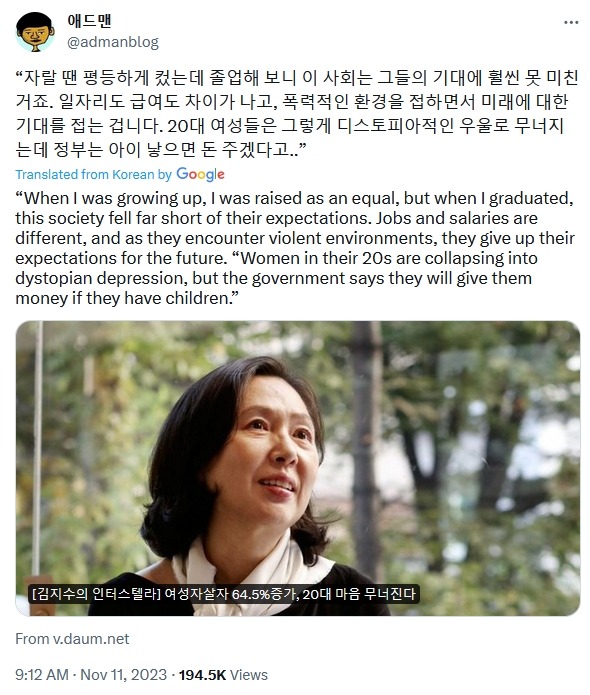
Not going to lie—when first reading the following tweet, this old Korea book geek felt a frisson of recognition. That warm feeling, and wanting to quickly joke about my overwhelming confirmation bias, is what initially made me want to share. Thinking about the horrifying content only came later:

Source: 나도계란/@aravis12
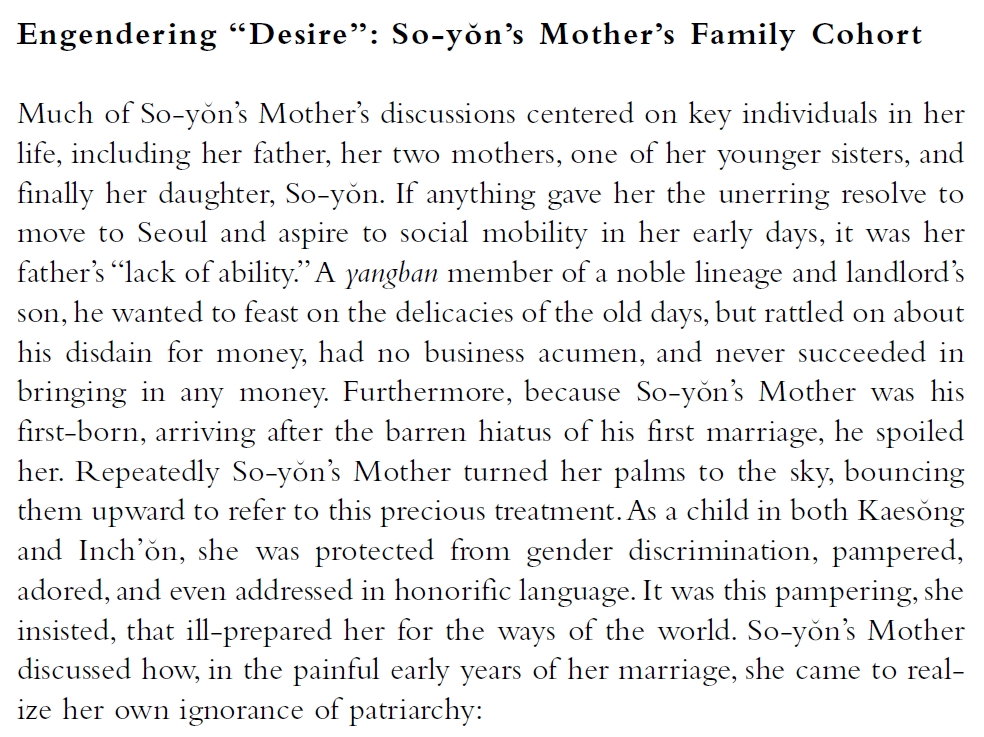
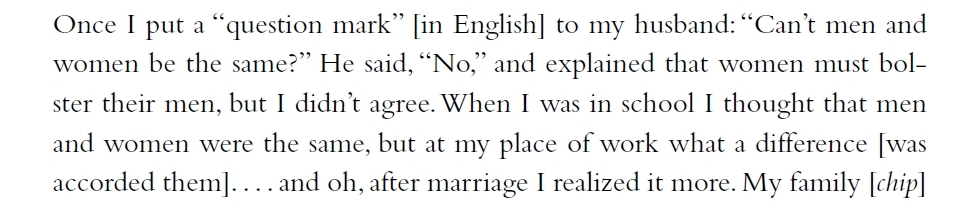
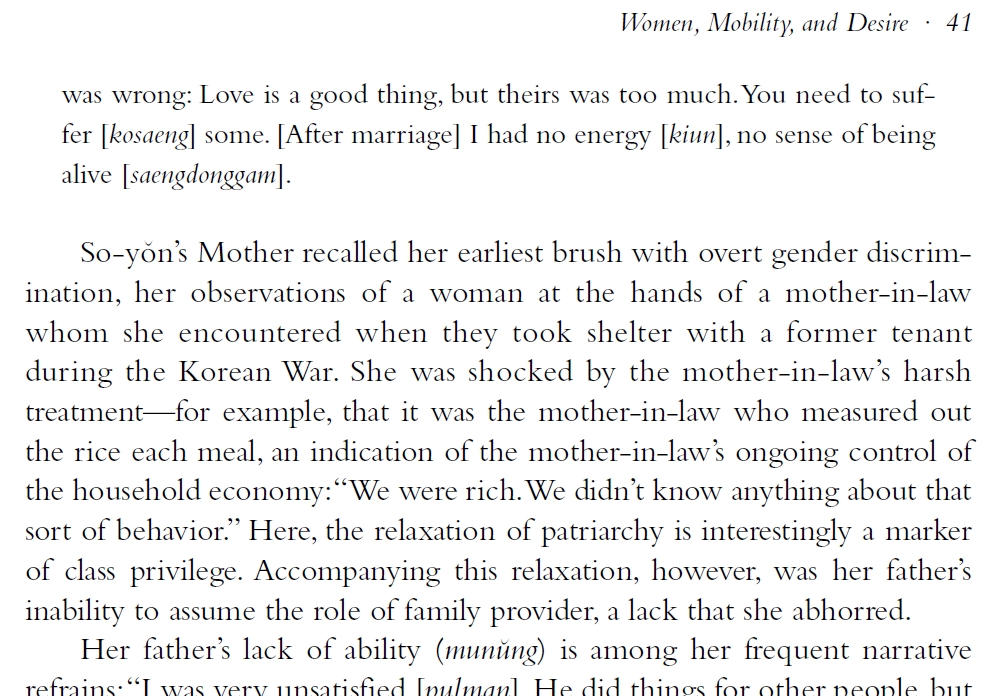
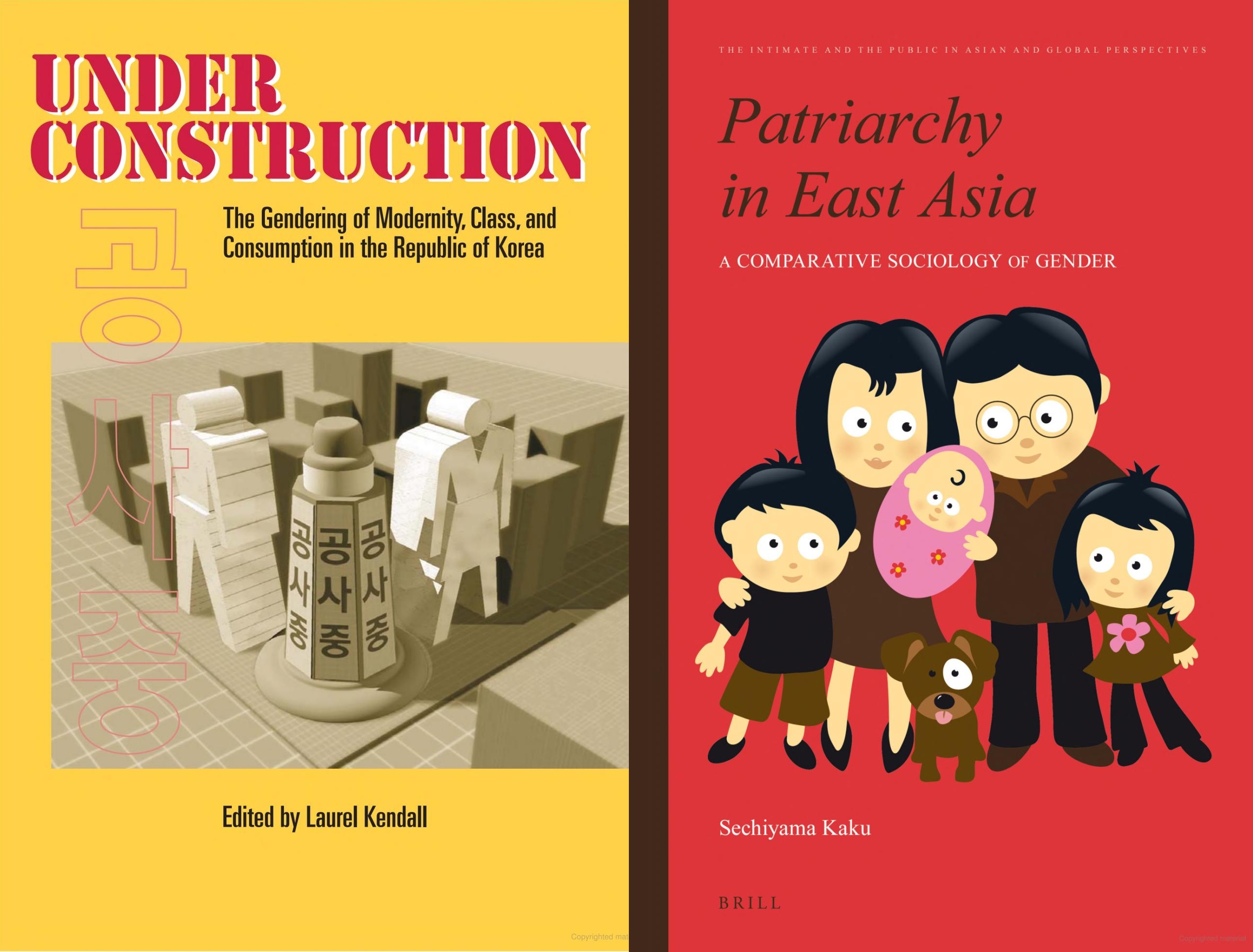
Its similarity is to the following from Chapter 2, “Women, Mobility, and Desire: Narrating Class and Gender in South Korea” by the late Nancy Abelmann, in Under Construction: The Gendering of Modernity, Class, and Consumption in the Republic of Korea, edited by Laurel Kendall (2002):

Feeding into what I would learn from Under Construction and other sources about the strength of egalitarian and democratic ideals in Korea, which the education system promoted even during the height of its various military dictatorships, that point really stuck with me 20 years ago. It’s been in the back of my mind when thinking about Korean workplaces and marriages ever since.

Then I read the tweet again, and it finally hit me what so little change in two decades actually meant—”Women in their 20s are collapsing into dystopian depression.”

Also highly recommended: Patriarchy in East Asia: A Comparative Sociology of Gender by Kaku Sechiyama (2013)

That’s from what the link was to—an interview of Professor Kim Hyeon-ah (김현아) of Hallym University Sacred Heart Hospital, author of My Daughter Was Quietly Falling Apart (딸이 조용히 무너져 있었다; 2023), about her struggles with her bipolar daughter who self-harmed and attempted suicide.

Through it, I learned that although men still comprise the bulk—three quarters—of Korean suicides overall, as myself and probably everyone reading would expect, the (translation) “number of female suicides has increased by 64.5% since 2015, compared to 19.7% for men. Also, that as of 2020, mood disorders such as depression were twice as common among women as among men, and were especially prevalent among those in their 20s.”

Only, those suicide statistics, by being generalized to all women, annoyed more than clarified.

You see, by coincidence I’d read yesterday that the smoking rate for Korean women was now 4.5%. Which was a huge red flag. Because as I demonstrated in my series on that a decade ago, the taboos surrounding female smoking in Korea meant rates varied hugely by age, with the rate for 19-29 year-olds then coming to 23.1%, and rising quickly. So quickly in fact, I’d estimate that their rate is now closer to 33%, and will try to confirm that in a much-needed follow-up to that series for you soon.

With that in mind, while a 64.5% rise in suicide rates for Korean women is of course terrible, as is a 19.7% rise for men, it doesn’t sound so dramatic considering the much, much lower figures for women overall. With not unlimited funds available for suicide prevention measures, it’s not unreasonable to suppose that, put that way, both policymakers and the public might be swayed into downplaying the changing gender dynamics of the problem. That perhaps specific age and sex-based policies aren’t necessarily the best use of resources.

I’m absolutely not blaming the reporter here, or claiming any sort of agenda over a few statistics that should have been presented differently. But it did mean an age-based breakdown of those suicide statistics was absolutely necessary, which I found in The Korea Bizwire:

When analyzed by gender, the highest rate [of self harm and suicide attempts] among males was among those over 80 years old (125.9 per 100,000), followed by those in their twenties (105.4), teenagers (69.1), and those in their thirties (65).

Among females, the highest rate was in those in their twenties (284.8 per 100,000), followed by teenagers (257.8), those in their thirties (119.9), and those in their forties (86.3).

And on that note, my apologies. This was supposed to be a light post, expressing my joy at finding something so similar to something meaningful that I once read 20 years ago. Then, joking at this curmudgeon’s ever-growing confirmation bias, and admonishing him to constantly seek sources that challenge his outdated views. Only now having done precisely that…I simply don’t know what to say.

Most suicide victims worldwide being men, I am just too shocked. Not just that the rate for Korean women in their 20s is higher than than that for men at all, but that also it’s almost triple. For the first time ever, this issue makes me genuinely scared for my daughters, whom I don’t live with any longer and don’t see day to day, and one of whom will be doing the university entrance exam this year.

What do you think needs to be said?

Related Posts:

If you reside in South Korea, you can donate via wire transfer: Turnbull James Edward (Kookmin Bank/국민은행, 563401-01-214324)

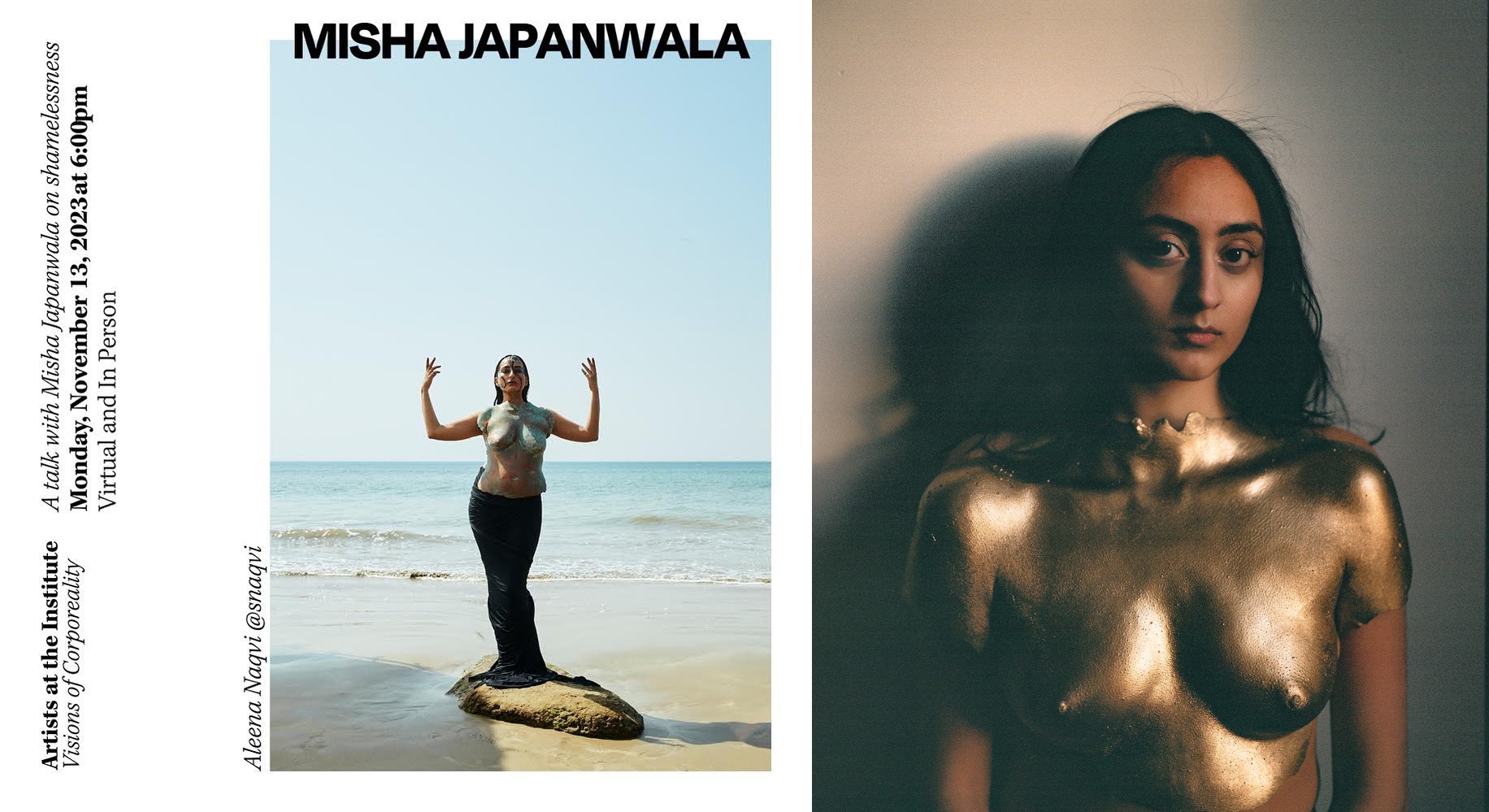
Visions of Corporeality | Artists at the Institute: Misha Japanwala—Webinar, 8AM Tuesday, November 14 in South Korea

(Also available as an in-person lecture at 6PM, Monday, November 13 at The Institute of Fine Arts, 1 East 78th Street, New York.)

Estimated reading time: 3 minutes. Image source (cropped): NYU The Institute of Fine Arts newsletter. NSFW images follow.

For the sake of shorter, more impactful and easy-to-remember announcements, I’m posting about notices about webinars and virtual lectures (that I’m able to attend) separately from now on.

Sorry that this one comes so last minute, but as far as I know registration for the webinar is available right up until the event itself:

“As part of the Institute of Fine Arts’ (Instagram, Facebook, Linkedin, X/Twitter) ongoing tradition of inviting contemporary artists to speak about their practices in the Duke House Lecture Hall, this year’s Artists at the Institute Lecture Series invites four artists who explore the body as a site of confrontation. The body is continuously subjected to political, social, and aesthetic judgments both within and outside of the art historical canon. Whether it be through the ongoing battle with reproductive rights or the modification of the body in digital and social media, this phenomena proves to be omnipresent. Contemporary artists are constantly grappling with conceptions of corporeality, and each artist brings a diverse approach to what this means to them. This year’s series is committed to uplifting the voices of women working in representational practices across a range of media, styles, and backgrounds. Through feminist, cross-cultural, and art historical methods, these artists challenge the contours of corporeal form, transcending the limitations and restrictions that have bound the female body to the canonical canvas, and imagining how such liberation might transform aesthetics.”

Sources: NYU Institute of Fine Arts Instagram & Newsletter.

“For our second installment of Artists at the Institute, Visions of Corporeality, lecture series we are excited to welcome Misha Japanwala. Misha Japanwala (b. 1995, London, England and raised in Karachi, Pakistan) is a Pakistani artist and fashion designer, whose work is rooted in the rejection and deconstruction of shame attached to one’s body, and discussion of themes such as bodily autonomy, gender based violence, moral policing, sexuality and censorship.” (Instagram, homepage.)

“In our second installment of this series, Misha will touch upon what it means to be a Pakistani woman familiar with the historical objectification, commodification and control exerted on marginalized bodies by societies and systems enveloped in patriarchy.”

(Join in-person / Join virtually.)

And as a reward for those you still reading, please click here to register for the next virtual lecture I’ll be announcing tomorrow: “Remedy, Mobility, and the Feminized Consumption of Beauty in Post-Authoritarian South Korea,” a virtual talk featuring So-Rim Lee from the University of Pennsylvania, and presented by the Korean Studies Research Network. In South Korean time, that event will be on Thursday, November 16, again at 8am.

See you there!

Related Posts:

If you reside in South Korea, you can donate via wire transfer: Turnbull James Edward (Kookmin Bank/국민은행, 563401-01-214324)

Performing in “Public” Spaces in Korea and Japan—Can Anyone Do it? Or Mostly Just Men?

“Musicians’ experiences of dis/comfort, im/mobility, security and threat, as well as their coping strategies, are all gendered.”

Estimated reading time: 5 minutes. Photo by Chris Barbalis on Unsplash.

My TBR pile is glorious, and it is teetering. So, I really should have known better than to even glance at the New Book Networks feed…

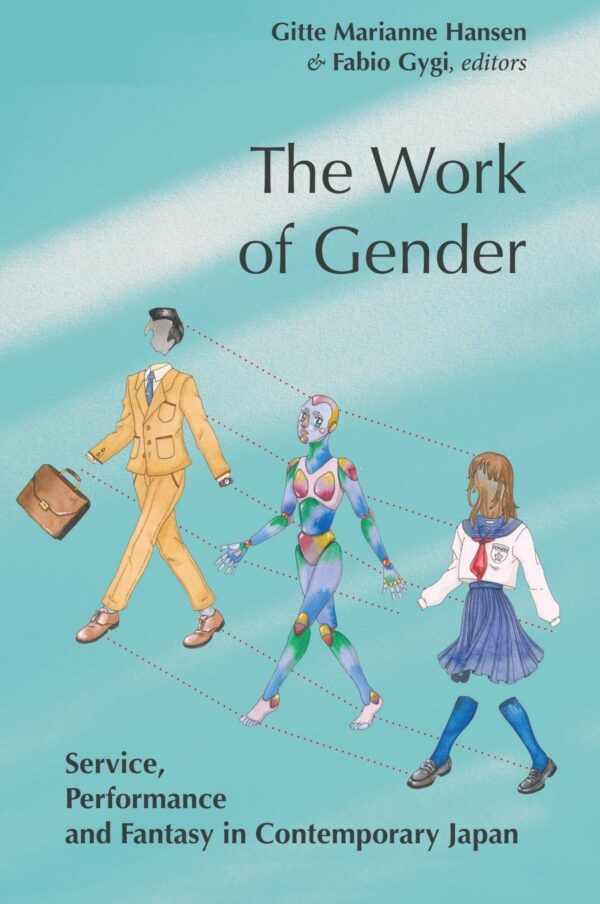
Assuming I can actually find the space then, this latest, slightly pricey candidate is all due to Tuesday’s interview of Dr. Gitte Marianne Hansen and Dr. Fabio Gygi, editors of The Work of Gender: Service, Performance and Fantasy in Contemporary Japan (NIAS Press, 2022). Specifically, the section from 28:35-31:10 where Dr. Gygi talks about Chapter 6, in which his colleague, Dr. R. J. Simpkins, shares his findings from months of observing and talking to buskers and street performers near a Tokyo train station. Like me, listening will probably immediately remind you too, my beloved tribe (*hugs*), of Feminist City: Claiming Space in a Man-made World by Leslie Kern (Verso, 2020; see my review here). You also get how tempted I am right now then, as I almost seem to hear the soft serenade of  “지금 택배로 주문하면 11월 24일 출고” sweetly whispered into my ear…Oh! Aladin, you tease…

Ahem.

With no further ado then, sorry for any mistakes in my transcript of that section of the podcast below. And please don’t worry about giving offense if you’d rather jump ahead to a reviewer’s excellent summary below that instead!

“Well, I think this is a wonderful chapter, because Rob, the author, was actually playing as a street musician himself, and that’s how he entered the field, and he’s been there for quite a long time, and it’s a wonderful ethnography, and very detailed. But towards the end he realized, ‘Well, I’m only talking to men. I know a few female performers but it seems to be a very different experience for them.’ So he started to focus a little bit more on the differences, and one of the things that he really found was that it’s all about space-making.”

“So, it’s a public space, you’re exposed to the gaze of the passers-by, but as a musician or performer you have to create…you have to take this public space and turn it into something else, like a concert venue or a venue for self-expression. And this of course takes on a very strong gender dimension. So men felt very much at ease, you know…especially the more rock-type musicians who would just start to play…there would be a good vibration and people would sort of assemble. But women working as performers felt very much exposed in a very different way. Now, you have to imagine, during commuter rush hour it’s mostly men…it’s salarymen who come back from work, often in a state of inebriation, and there would be a lot of sexual harassment, there would be a lot of unwanted attention, or rather boundary-breaking attention, so people would come, they would listen to a song, and then they would try to chat you up or get close or break the sort-of boundaries that you have created. And so there was a much greater sense of vulnerability, and what he sort-of concluded from that is a public space is also to a strong degree male-coded, it’s the male gaze that defines what is happening.”

“So if you expose yourself to that, you have to be aware of the gendered dynamics of the space and so his artists chose very different and very creative strategies [to deal with those]…Reyna(?) for example performed in a mask to deflect from the fact that she was a female performer, and so it is very important to understand that this public sphere itself is gendered…not something we would normally, you know, have a good understanding of.”

These difficulties and dangers are underscored by co-editor Dr. Hansen then going on to note that this was the most difficult subject in the book for any of the contributors to research. Because, unlike with other venues and performances, the rules of engagement (and enforcement) were not set. My personal additional takeaway from that being, those rules were also more open to exploitation and abuse by those with (male) privilege.

Photo by Victoriano Izquierdoh Barbalis on Unsplash.

For the busier feminist book geek among you though, as promised here is an excellent summary of Dr. Simpkins’ chapter by Dr. Kai E. Tsao, taken from her review in Feminist Encounters:

“Simpkins observed and interviewed music performers at a Tokyo station, and his chapter demonstrates that the musicians’ experiences of dis/comfort, im/mobility, security and threat, as well as their coping strategies, are all gendered. Male musicians considered their experience, occupying and transgressing in public space, as performing their authentic self and self-realisation. This sentiment was not shared by the female musicians. Instead, they performed ‘charm’ and created a ‘non-threatening atmosphere’ to navigate social interactions in a station space with a predominantly male presence. Public space around the station is coded: compared to their male counterparts who ‘naturally’ hung around to interact with their supporters, female musicians were much more cautious about the risks of inviting passers-by to take an interest in their performance. This makes me wonder: how is the performance of invitation gendered? How might female musicians be perceived if they invited an audience in a space where they were ‘not supposed to be’?”

And which also makes me wonder, what are the Korean parallels? Where are those spaces?

Frankly, I can’t really think of any. In fact, the only place I ever encounter buskers and street performers at all is the main drag of Gwangalli Beach close to where I live, which ironically I don’t visit very often because it’s always jam-packed with happy, 20-something, heterosexual couples (sigh). That very different audience composition to a busy Tokyo subway station then, as well as the very public and open setting, would likely mean performances there were almost completely devoid of the (negative) gendered dynamics described above.

Maybe various Korean laws are responsible for making them much less common than in Japan?

Or maybe not? Are there buskers in, say, Hongdae in Seoul? In Nampo-dong here in Busan, which I haven’t visited for years? Performers in busy Seoul subway stations? Please do let me know then, if know of any similar Korean spaces to what Dr. Simpkins outlines in Tokyo, and your experiences of them. And how do think the gender dynamics play out in those?

Related Posts:

If you reside in South Korea, you can donate via wire transfer: Turnbull James Edward (Kookmin Bank/국민은행, 563401-01-214324)

Please Help Some Struggling Students by Filling in Their Quick Surveys on Anime and Smoking!

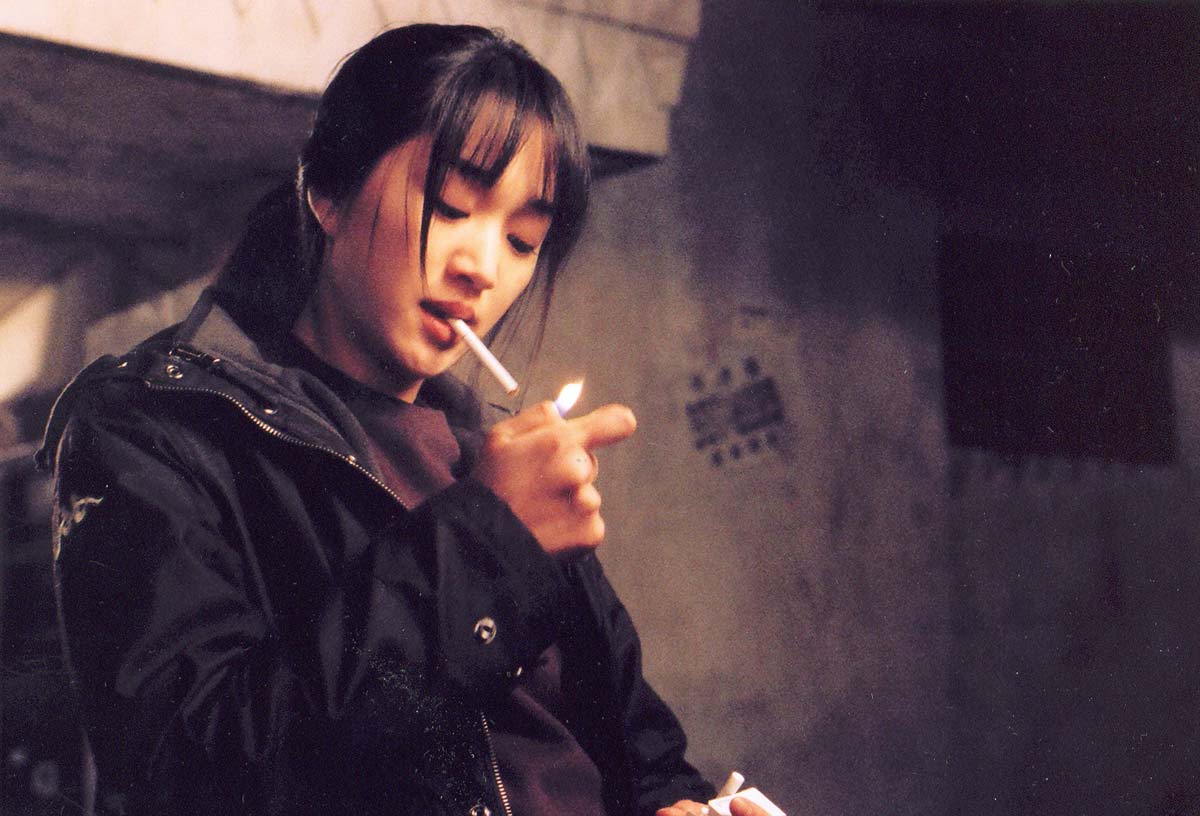
Less than 20 years ago, Korean women could get assaulted for publicly smoking. Less than 2 days ago, a short-haired woman in Jinju did get assaulted for the same, real reason—openly defying restrictive gender norms.

Estimated reading time: 3 minutes. Image sources (adapted): @TheKpopProf on X/Twitter and @cottonbro at Pexels.

An academic friend has asked for help for her students, who are having trouble finding participants for surveys they need to conduct as part of their coursework.

If you’re eligible, both surveys are completely anonymous, and each should just take just a few minutes to complete.

The first is about how women feel about the way women and young girls are portrayed in anime/hentai. Your nationality is not important, but it is open to women and non-binary participants only.

The second is about smoking habits and perceptions of men and women smoking in Korea, and is open to all Korean smokers, although Korean ability is not required.

Park Soo-ae/박수에 in A Family/가족 (2004). Source.

Alas, I don’t think I’ve written anything much at all about anime. But back between 2010-2013, I did write the long series below about the gender politics of smoking in Korea, prompted by an incident in the news about a young woman getting physically attacked on the street for openly doing so. So I can certainly understand what prompted the line of questioning in that survey, and am very interested in learning from the students about how much things have changed in the last 10 years.

Fortunately, cases of women getting assaulted in Korea for smoking now seem like ancient history. But then it was never really about smoking, was it? The real reason female smokers were assaulted back then was for openly defying restrictive gender norms and roles. And, sadly, as more and more women are brave enough to do so in other aspects of Korean social life, it seems the rates of assault against them are only increasing in response. Most recently, with a woman in Jinju this week being attacked for having short hair.

I really didn’t intend to sound so cynical. And I’m not—preventing such crimes starts with undermining the attitudes behind them, and determining how prevalent they are helps towards that. So, thanks in advance for your help with the surveys, and please feel free to share them with your networks!

Related Posts:

If you reside in South Korea, you can donate via wire transfer: Turnbull James Edward (Kookmin Bank/국민은행, 563401-01-214324)

Note to Self—Check Thy Orientalism!

Lady Mary Wortley Montagu, an 18th Century woman of letters, had a keen eye for ignorant European male travel writers who projected their sexual fantasies onto Turkish women, and why they waxed lyrical about women’s suffering under barbarous Turkish men. Her skills at exposing hidden agendas, and at highlighting women’s shared experiences of misogyny, rather than stressing exoticism and difference, remain just as useful and necessary today.

Estimated reading time: 10 minutes. Photo, right, by Kazi Mizan on Unsplash.

Now, I know you’re totally jealous I have a physical copy of Critical Terrains: French and British Orientalisms, a.k.a. “a sustained reflection on Orientalism, with feminist accents” by Lisa Lowe (1991), and not just an open-access PDF.

Or not? Perish the thought. Still, while this particular tome does make its central point that orientalism “is profoundly heterogeneous,” I can concede it’s also very academic and literary and critical-theory heavy, requiring a lot of concentration. So, if you’re actually just trying to impress fellow bibliophiles and geeks on the subway in the mornings with it, or beat crippling insomnia in the evenings when that fails to elicit the companionship you seek, much of it will simply fail to stick.

But of the two parts that did stand out to me, which I’ll highlight in two separate posts, I wasn’t expecting the first to make me feel so…uncomfortable.

Specifically, it was the second chapter on Lady Mary Wortley Montagu’s Turkish Embassy Letters, a collection of her reflections on her travels through the Ottoman Empire between 1716 and 1718, published in 1763 just after her death. In those, she criticized European men’s writings about Turkish men and women for presenting the former as barbarous, and using the alleged civilized treatment of women in Christendom as evidence of that, compared to their supposed abject misery under Islam in Turkey. In other words, they presented a false dichotomy between a feminist West and patriarchal East that, well, you could probably see faint echoes of in my own first attempts writing about Korea nearly two decades ago.
Image: Young Woman Reading, 1880 by Osman Hamdi Bey (Turkish, 1842–1910).

Mercifully, the offending posts have long since been deleted. I don’t think I could ever have been accused of projecting my sexual fantasies onto Korean women like Montagu’s male contemporaries did Turkish women either, let alone doing so while acknowledging they had no knowledge on which to base those fantasies whatsoever, as we’ll see.

But that false dichotomy? Stressing the differences between the men and women ‘over there’ compared to ‘here,’ rather than emphasizing shared experiences and potential solutions to, say, overcoming the patriarchy?

That’s definitely something to be remain wary of. In particular, when so many negatives of women’s position in Korea are genuinely objectively worse than in the countries interested English-speaking readers tend to hail from, it’s deceptively easy for any Korea-related news to simply confirm one’s preexisting prejudices and stereotypes about Korean men and women, or to pander to those if you want your work to be read. And I’m just as open to temptation as anyone.

So, to help maintain that awareness, let me highlight the relevant passages from the second chapter of Critical Terrains for you here. Starting with the first mention of the letters on page 31:

Then on page 32, introducing the crucial additional theme that for all her proto-feminism, Montagu was also very elitist and aristocratic, both in her concerns and in the Turkish women she most interacted with. But for more on that, you will have to read the chapter for yourself sorry!

Then on page 38, on one of those European men waxing lyrical about what goes on in the fabled harems, despite never actually visiting one…

Continuing with yet another man doing the same:

Continuing past the page break into page 39:

Continuing:

Continuing:

Page 40, which I especially liked for its point about Turkish and European women’s shared experiences:

And finally from page 44 (NSFW image coming below):

If you’ll please bear with me a moment, Orientalism, I find, is a bit like the Theory of Relativity. (Hey, I did ask you.) As in, like my physics professor once pointed out back when I was studying to become a professional astronomer (it’s a long story), Einstein’s theory, for all the creativity, originality, and genius behind it, is actually quite simple to understand after a couple of lectures or good YouTube videos. Which is my somewhat arcane excuse for why, wanting to learn more about Lady Montagu, I consulted my other books exclusively devoted to Orientalism, and discovered to my horror and shame that I actually only had two: Culture and Imperialism by Edward Said (1993), and The Erotic Margin: Sexuality and Spatiality in Alterist Discourse by Irvin C. Schick (1999). Alas, Said didn’t mention Lady Montagu at all (perhaps it’s time to finally purchase Orientalism?). But Schick did…

…and then I finally noticed a certain similarity of cover theme with that of Critical Terrains. Potential accusations of hypocrisy by authors and/or publishers and a certain blogger aside though, and how much that extends to the genre as a whole or not (Culture and Imperialism actually has quite a bland cover), obviously both covers were used to sell more copies of both books. Or, to put it crudely, there was an agenda behind the choice to put naked Oriental women on both.

Which finally brings me to how, even 150 years after the publication of Montagu’s letters, Schick explains that the British public, industry, government, and press, for a wide variety of reasons and agendas, were all just too fundamentally committed to their own agendas—an alternative, collective ‘truth’ about the Orient so to speak—to really care less about what its men and women were actually like. Which is also why, sadly, Montagu’s letters ultimately made little impact:

From Pages 211-212:

And finally, from pages 50-51:

Related Posts:

If you reside in South Korea, you can donate via wire transfer: Turnbull James Edward (Kookmin Bank/국민은행, 563401-01-214324)

OMG YOU HAVE TO WATCH THIS KOREAN FEMINIST DANCE PERFORMANCE

“Women have always been at the center of my work and world.”

Estimated reading time: 4 minutes. Image source: tumblbug.

Is contemporary Korean dance always as hypnotic as this? Have I been wholly misjudging it all these years?

Actually, if you’re at all knowledgeable, please reserve your answers for the comments. Better that most readers approach the video with no preconceptions like I did, puzzled at the notification from an unfamiliar YouTube channel on my phone. Better still, that first they turn off the lights, get close to their screens, plug in their headphones or ear buds, are slightly sleepy, drunk, or high…and be ready for their jaws to hit the floor:

The choreographer and performer is Jinyeob Cha (차진엽) founder of Collective A, an interdisciplinary dance performance group, and who is probably best known for having been the director of the choreography for the opening and closing ceremony of the 2018 Pyeongchang Winter Olympic Games. But the reason I personally was subscribed to her channel was because in March 2022, London Korea Links wrote about her and Collective A’s performance there of “MIIN: Body to Body,” in which Cha:

“…examines perceptions of beauty and femininity beyond societal norms and traditions.”

“Accompanied by a hypnotic soundscape created by two acclaimed musicians based in Seoul, Eun-yong Sim, from Korean Avant-rock band Jambinai, and haihm, an electronic musician, six female dancers flit between precise, discreet, feminine poses and aggressive, erratic movements to embody all aspects of a woman.”

“Miin (미인) is a Korean word meaning ‘beautiful person’, but is more often used as a synonym for ‘beautiful woman’. This work challenges the meaning of ‘beauty’ and encourages women to embrace their bodies as they are without succumbing to unrealistic expectations.”

Source: Collective A

You can read much more about her in—some—English at the Collective A website, and especially in a May 2018 interview at The Wonderful World of Dance, from where I took that lede. And for Korean speakers, I also recommend Tell You About Her: Korean Feminist Dance Since the 80s] 차진엽 Interview, which can (only) be watched on her channel.

She’d slipped my mind though, because this was the first upload on her channel in a year. There seems to be little information specifically about the “원형하는 몸: round1” (“Body Go-round: round 1”) performance in English available too (or at least that I could find), which is surprising because it was actually first performed in 2021. What I could find then, was a quick explanation in the blurb to another UK performance in September 2022, that explained it was:

“…a genre-bending, mixed reality, dance spectacle inspired by the process of melting to evaporation in the water cycle.”

“Looming above the stage, a giant ice formation slowly melts as performers respond to the process of circulation and transition through dance. Each drop shaping the sound and visual landscape of the stage influences the interaction of each body in the space.”

Image source: tumblbug.

And in Korean, a blurb from the tumblbug page used to raise funds for it, that at least hints at feminist themes:

차진엽 작업의 중심은 한 인간으로서의 인간성, 여성으로서의 여성성을 둘러싼 몸의 안과 밖을 연결하기 위해 몸을 둘러싸고 있는 세상에 관심을 두며, 몸/몸짓 을 통해 끊임없이 존재에 대해 질문한다. 이는 곧 예술행위를 통해 자기 자신의 본질적 가치를 찾아가는 여정이며 collective A의 궁극적인 모토이다.

The center of Cha Jin-yeop’s work focuses on the world surrounding the body in order to connect the inside and outside of the body surrounding humanity as a human being and femininity as a woman, and constantly questions existence through body/gesture. This is a journey to discover one’s own intrinsic value through artistic activities and is the ultimate motto of collective A.

And finally, a in-depth making-of video on her channel, in which she likely expands on those themes at some point:

Only “likely” though, because of her background (so…very likely!), and because I haven’t had the chance to watch myself yet sorry—powerpoints for tomorrow’s lectures beckon. But please do let me know if you’re interested but can’t speak Korean, and I’ll watch properly and translate the relevant segments as soon as I can. (I’m interested too!)

In the meantime, why not check out more of her performances on her YouTube channel? ;)

If you reside in South Korea, you can donate via wire transfer: Turnbull James Edward (Kookmin Bank/국민은행, 563401-01-214324)