Gendered Tea-drink Advertising in South Korea

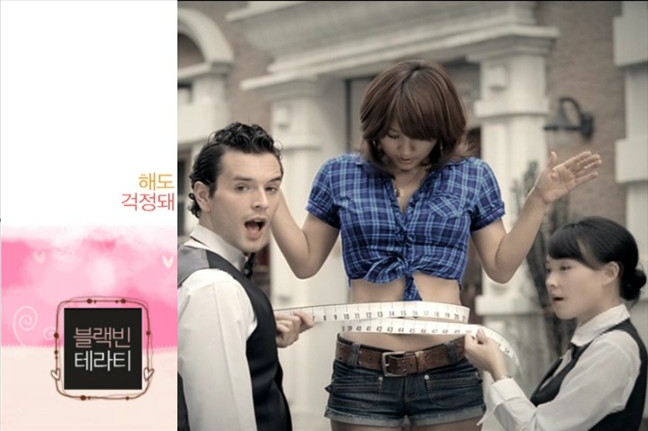
Lee Hyori Black Bean Tea(Source)

Granted, Marxism might not be the first thing one thinks of when one sees Lee Hyori’s navel. But as it turns out, it’s a perfect fit.

If you’ll bear with me for a moment, once a market is saturated, I learned at university in New Zealand, there is a inherent tendency for a company’s rate of profit to fall. But this can be offset by re-marketing and/or making new varieties of the original product, and accordingly my lecturer posited the plethora of varieties of Coca-Cola available in the U.S. as a reflection of the greater capitalistic development of its economy (read: saturation of its domestic market) compared to New Zealand’s, which then only had two. Indeed, advertising culture in New Zealand in the late-1990s, he suggested, was only akin to that of the US in the 1950s in its scale and intensity, no matter how brash and “American” New Zealanders regarded it.

It comes as a great surprise then, that even in the U.S. sports drinks are still “wildly skewed towards men”, and only within the last couple of years were drinks developed that took into account their (usually) lower-intensity exercise and dislike of the salty, high-calorie drinks available.

But one seriously wonders if equivalents will ever be available for Korean women. As the following summary of this 2006 study explains:

Diet advertisements in Korean magazines appear to promote more passive dieting methods (e.g., diet pills,aroma therapy, diet crème, or diet drinks) than active dieting methods (e.g., exercise). Results further indicated that women may be misled to believe that dieting is simple,easy, quick, and effective without pain, if they consume the advertised product. This study suggests that there is an urgent need to establish government regulations or policies about diet products and their claims in Korea. Magazine publishers alsoneed to recognize their role in societal well-being and accept some responsibility for advertisements in their magazines.

Korean Diet AdvertismentNaturally, I’ve discussed that study a great deal on the blog (see here for all the links), and it is primarily in that context that I want to examine the burgeoning Korean tea-drink market. But the economics of the industry still matter of course, and so this post is my translation of an article on the subject from the August 2008 edition of IM AD (아이엠애드; Korea’s only remaining advertising magazine), to be used as a resource for that analysis at a later date (or your own).

It’s rather long, so I’ve decided to provide each part in stages over the next week to give readers a better chance to digest them (particularly those interested in the original Korean). As you read this then, I will have just posted part two of three!

블랙빈테라티의 본격 웰빙 마케팅 Full-scale Black Bean Tea Well-being Marketing

음료 시장에서 탄산음료는 서서히 김이 빠지고, 과즙음료는 단맛을 잃었다. 차음료는 백 번을 우려도 남을 만큼 꾸준한 성장을 기록하고 있다. 또 동아오츠카의 블랙빈테라티는 시장에서 검은콩 음료를 새로운 트렌드로 만들어냈다. 그리고 이번에 진행한 온라인 캠페인은 신선한 ‘광고 테라피’라고 불러도 좋다.

While the market for carbonated drinks is slowly losing its fizz over time, and that for fruit drinks is losing its sweetness, the market for tea drinks remains as hot as the first time they are brewed, with the entrance of Donga-Otsuka’s ‘Black Bean Terra’ drink in particular creating a whole new trend. You could call the accompanying online advertisement campaign fresh “Advertisement Therapy” too.

음료 시장의 트랜드 ‘윌빙 + 디이어트’

Drink Market Trends of  “Well-being and Diet”

최근 한국의 음료 시장에는 몇 년 전부터 지속되고 있는 웰빙 트렌드에 맞춰 새로운 브랜드가 끊임없이 등장하고 있다. 소비자의 건강 증시 풍조에 따라 최근 3년간 탄산음료 시장은 6-7%대의 마이너스 성장늘 기록했다. 탄산음료는 2006년 월드컵 특수 등으로 반짝 성장률을 보였지만, 플레이버 음료 및 유성 탄산 브랜드의 매출이 급격히 줄어들면서 현재까지 하향 곡선을 그리고 있다. 과즙음료 또한 2006년 초에 출시된 ‘미녀는 석규를 촣아해’가 인기를 끈 것을 제외하면 대부분 주스 브랜드가 부진에 빠졌다.

Since the beginning of the well-being trend several years ago, new brands taking advantage of it haven’t stopped appearing. In accordance with consumers’ new focus on their health, the consumption of carbonated drinks has decreased 6-7% since 2006, although there was a brief spike in consumption during the 2006 World Cup. The consumption of flavored drinks and milky drinks has shown definite decreases too, and with the exception of the “미녀는 석규를 촣아해” drink popular at the beginning of 2006, the consumption of fruit juice drinks has stagnated.
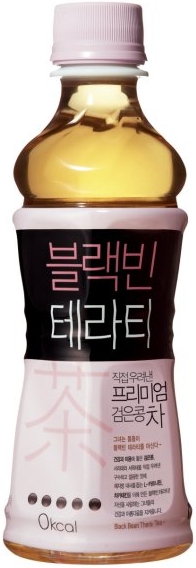
Black Bean Thera Tea이처럼 대부분의 탄산/과즙음료가 마이너스 곡선을 그렸던 반면, 차 음료는 시장에서 지속적으로 성장하면서 지난해에도 전년 대비 30%에 달하는 신장세를 기록했다. 2000년을 전후로 녹차 제품은 차 음료 시장을 주도하고 있었다. 지나치게 달거나 자극적인 탄산/과즙 음료에 비해 담백한 맛을 지닌 녹차는 고정적인 소비자층을 형성하면서 2004년 당시 차음료 시장의 80%를 차지할 만큼 인기가 높았다. 하지만 녹차가 가진 떫은 맛은 10~20대 소비자들에게 어필하는 데 한계가 있었다. 또한 웰빙은 물론 다이어트와 미용에 관심이 많은 20대 여성이 시장의 핵심 소비자로 떠오르면서 맛과 성분을 개선한 혼합차를 선보이기 시작했다.

Like this, most carbonated and fruit juice drinks have a minus growth curve, but on the other hand the consumption of tea drinks grew by 30% in 2007. Green tea was the most popular tea drink around 2000. Compared to excessively sweet and stimulating carbonated and fruit juice drinks, consumers began to prefer plain green tea drinks and so a market was formed, comprising 80% of the tea-drink market by 2004. But green tea is very astringent, so it had limited appeal to consumers in their teens and 20s. Hence companies have started to develop new, more pleasant blended tea-drinks to be marketed to women in their 20s, who naturally have a lot of interest in dieting and their appearance.

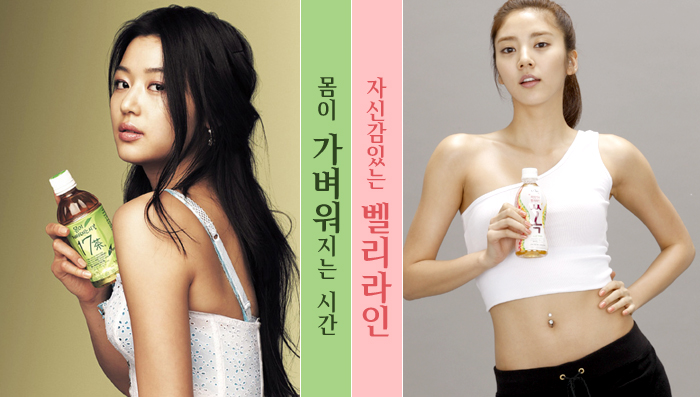
처음 혼합차 시장에서 두각을 나타낸 것은 남양유업의 ‘몸이 가벼워지는 시간 17차’ 였다. 이후 광독제약이 ‘광동 옥수수수염차’를 내놓으면서 경챙은 가열됐고, 현재 옥수수수염 원료 제품만 30여 가지가 넘는다. 한 가지 눈에 띄는 점은 이들 제품의 공통적인 특징이 노화방지와 피부미용 효과가 있는 한약재를 비롯, L-카르티닌 등 지방 연소 기능이 있는 성분을 첨가해 젊은 여성들에게 폭발적인 호응을 얻고 있다는 사실이다. 또 각 업체들은 여성 연예인들 활용한 스타 마케팅에도 공을 들이고 있다. 이들은 전지현 (남양유업), 김태희 (광동제약)와 김아중 (해태음료) 등의 톱 모델을 자사 브랜드 이미지와 접목시켜 여성 소비자들의 구매욕구를 자극하고 있다.

Originally, Namyang’s “Make Your Body Lighter Time 17 Tea” stood out in the blended tea drink market. But a little later, an intense rivalry developed between that and with Gwangdong’s “Gwangdong Corn Cob Roots” drinks, and now there are as many as 30 products with that ingredient on the market. One noticeable point is that all these products contain both some traditional Korean medicine, which helps to prevent aging and maintain skin’s youthful appearance, and also L-Keratin, which helps to burn fat, both of which make these drinks have a very strong appeal to young women. Each company is putting a lot of effort into using famous stars to market their products, such as Jun Ji-hyun for Namyang, Kim Tae Hee for GwangDong, Kim Ah-joong for Haetai, and each hopes to have them and their images firmly associated with their brands by consumers.

독자적인 시장을 형성한 검은콩 음료

A Market for Black Bean Drinks Has Been Formed

외연의 확대는 여기서 그치지 않은다. 지난해부터는 곡물과 한약재 등을 섞은 혼합차 시장에서 검은콩이라는 단일 원료를 부각시킨 제품들이 출시되디 시작했다.

This market has not stopped expanding, and from last year, companies have started developing new blended tea drinks mixed with grains and/or Korean medicinal products. It was in this context that drinks with black beans as the sole ingredient were launched.

지난해 5월 해태음료는 검은콩을 ㅇ뤈료로 한 ‘차온 까만콩차(이하 까만 콩차)’를 선보였다. 한때 일화의 ‘햇살 가득한 까만콩차’가 브랜드명과 용기 디자인 흡사해 미투 (me too) 마케팅 논쟁이 일었을 정도로 검은콩 음료는 단기간에 시장에서 영역을 확장해나갔다.
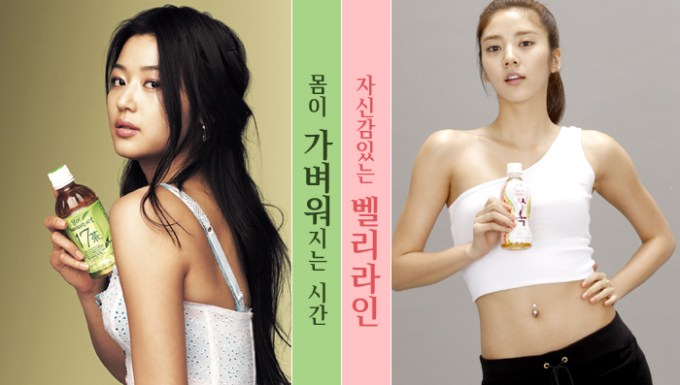
Jun Ji-hyun Son Dam-bi Tea Advertisments(Source)

The market share of Black Bean drinks has increased rapidly, resulting in many cases of “me too marketing”. Haetai’s “Cha-eon Dark Black Bean Tea” (Dark Bean Tea) for instance, introduced last May, was quickly involved in heated competition with Ilhwa’s similar-sounding “Dark Bean Tea full of Sunshine,” which even had a similar design of bottle too.

까만콩차보다 한 달 앞서 동아오츠카가 론칭한 ‘블랙빈테라티’ 역시 블랙음료 시장을 빠르게 장악했다. 100% 검은콩을 우려냈음을 강조함과 동시에 차카테킨과 L-카르티닌을 함유한 제품 특징으로 기존차 음료의 핵심 타깃인 20 대 여성을 확보한다.

Donga-Otsuka’s “Black Bean Terra Tea” was launched one month before Dark Black Bean Tea, and also quickly established a foothold in the market. It is made entirely of the juices from crushed and squeezed black beans, and its catechin and L-keratin make it especially appealing to its core market of women in their twenties.

사실 무주공산과 다름없던 블랙음료 시장에서 결과적으로 ‘생존’과 ‘성공’을 동시에 달성한 브랜드는 까만콩차와 블랙빈테라티 뿐이라고 할 수 있다. 이 둘은 제품의 내외적인 측면에서 대동소이하면서도 명확한 차이를 보이며 경쟁하고 있다. 까만콩차가 국산 서리태만을 사용하는데 비해 블랙빈테라티 서리태와 서목태를 섞어 맛이 서로 다르다.

Actually, the black bean drink was entirely new, and so the only brands which came to survive and succeed were Dark Black Bean Tea and Black Bean Terra Tea. These two products are very similar, but do have some differences. Dark Black Bean Tea is made from Korean seoritae beans, which are blue inside, while Black Bean Terra Tea is made from seoritae beans and seomogtae (Rhynchosia Nulubilis) beans, and so they taste different.

Ji Hyun-woo Tea또 까만콩차와 영화배우 정우성과 지현우를 CF 모델로 선정해 고정 타깃인 여성뿐 아니라 차 음료시장에서 소외되다시피 했던 남성들을 아울렀던 반면, 블랙빈테라티는 이효리를 브랜드 모델로 선정해 젊은 여성층에게 제품 홍보와 마케팅을 집중시컸던 점 역시 차이를 봉ㄴ다. 물론 오프라인 여역을 토대로 한 무료 시음행사와 가종 이벤트 전략은 두 제품 외에 대부분의 음료 브랜드에서도 볼 수 있는 전통적인 프로모션 형태이다.

Also, Dark Black Bean Tea has used Jung Woo-sung and Ji Hyun-woo (right) in its commercials, indicating that its target consumers are not just women but also men who reject the notion that only women drink tea drinks. On the other hand, Black Bean Terra Tera has used Lee Hyori to market itself exclusively to young women. Of course, just like for other drinks, offline they are also used to market their products in various free-drinking events and so on (end).

보이는 라디오, 끌리는 캠페인

Visual Radio: A Campaign That Draws You In
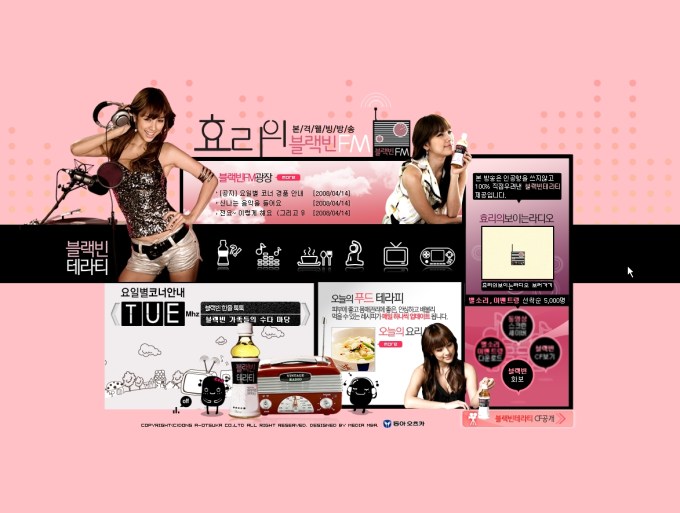
Lee Hyori Black Bean Tea Online Campaign

(Source)

이번 블랙빈테라티의 온라인 캠페인 (블랙빈FM 이벤트)은 브랜드 론칭 1년여 만에 처음 진행된 것이다. 이전까지는 웹사이트 내에서의 자체 홍보 외에 TV CF와 오프라인 프로므션 위주로 마케팅을 실시했다. 온라인 캠페인을 담당했던 다츠커뮤니케이션의 허정 대리는 “블랙빈테라티의 경쟁 브랜드는 크게 차 음료와 검은콩 음료로 분류된다. 하지만 17차를 비롯한 대부분이 스타마케팅에 의지해 온라인에서는 이밴트와 제품 자체의 홍보에 주력했다면, 블락빈테라티 캠페인은 코어 타깃은 1929여성들이 즐길 수 있는 다양한 콘텐츠를 만들어 자연스럽게 브랜드 인지도를 높이는 것이 목적”이라고 설명했다.

While the Black Bean Terra Tea drink was launched over a year ago, “this Black Bean FM Event” was the first time it has had a big online campaign; previously, minor website promotions, television commercials, and offline promotions were the main methods of promoting the drink. As Heo-jeong, representative for Dartz Communications (in charge of the online campaign) explained, “Black Bean Thera Tea’s competing brands can be categorized into either tea-drinks or black-bean drinks. But while most (including 17 tea) concentrated their efforts on either star-marketing, online events, and promotions of the products itself, the aim of Black Bean Terra Tea’s campaign was to focus on more varied events, so as to better increase brand awareness among its core target of 19-29 year old women.”

실제로 블랙빈 FM이벤트는 이름에서 드러나듯 라디오 동영상과 CM송을 캠페인의 킬러 콘텐츠로 활용하고 있다. 보이는 라디오는 브랜드 모델인 이효리가 DJ로 출연해 미용과 패션, 다이트 등의 다양한 소재로 진행하는 형식으로 구성돼 있으며, 유저들은 라디오를 ‘시청’하면서 댓글을 등록할 수 있다. 때문에 TV광고 제작 당시에 이미 촬영됐었던 이 영상은 마치 사이트에서 실시간으로 유저들과 대화를 나누는 듯한 인상을 주기도 한다. 허정 대리는 “사이트의 커뮤니케션 콘셉트가 ‘젊은 여성들끼리 수다를 떠는것’이었기 때문에 그들의 주된 관심사를 이효리는 통해 전달함으로써 자연스럽게 브랜드와 모델레 대한 호감도가 증가할 수 있었다”고 말했다.

Vodpod videos no longer available.

As is obvious from the name, the Black Bean FM Event’s killer content was the use of radio, videos, and advertising jingles, or a “visual radio.” In addition to model Lee Hyori performing as its DJ, it also consisted of information about various things such as beauty, fashion, and dieting (and so on), which users could register and leave comments about. As Heo-jeong explains, the choice of Lee Hyori as a model naturally encouraged discussion of these topics among young-women – the core of the site’s communication concept – and because of this, a Black Bean FM Event video that gives the impression of Lee Hyori interacting with the user was produced for the website in advance of the TV commercials. Thus, the strategy greatly increased the chances for brand recognition to rise amongst young women.

CM송을 활용한 ‘블랙빈테라티 CM송 콘테스트’ 이벤트 또한 눈에 띄는 부분이다. 최근 CM송을 활용한 이동통신사 광고가 화제를 모으고 있지만, 음료 광고에서는 보기 드문 사례이기 때문이다. 이미 TV 광고와 사이트의 인트로를 통해 CM의 원곡을 감상한 유저들은 이벤트 페이지에서 힙합과 R&B, 트로트 등 4가지 버전의 CM송을 모두 감상한 후 순위를 매긴다. 이벤트에 참여한 유저들은 추첨을 통해 경품을 지급받게 되며, 동영상을 다운로드 또는 스크랩해 미니홈피와 블로그 등에 등록한 경우 재차 경품 기회가 제공된다. 허 데리는 “블랙빈테라티의 CM송을 버전별로 반복 감상함으로써 소비자들에게 브랜드와 제품에 대한 긍정적인 이미지를 형성하게 된다”고 설명하며 “콘테스트 동영상의 다운로드/스크랩을 유도한 전략은 소비자들 스스로 웹사이트의 홍보는 물론 블랙빈 FM과 이벤트 내용을 바이럴하는 ‘MGM (Member Get Member, 일명 ‘권유마케팅’으로 불리며 고객을 통해 또 다른 신규 고객을 확보하는 마케팅 방법)’ 효과를 거둘 수 있었다”고 덧붙였다. 이외에도 지난 5월 1일부터 한달간 진행했던 ‘CF모델 까메오 이벤트’ 역시 소비자들의 적극적인 참여를 유도했다.

Vodpod videos no longer available.

The “Black Bean Terra Tea Advertising Song Contest” event was also a prominent feature of the website. While using advertising jingles is common for advertisements on mobile phones, it is very rare for tea-drinks. But here, users who have had already heard the jingles used in Black Bean Terra Tea’s TV advertisements and website could listen to different versions of them in different music styles such as hip-hop, R&B, trot, and so on, and personally rank them. They could also enter into a lottery and win prizes, and increase the number the times they entered by downloading videos and posting them on their blogs and websites. As Heo-jeong explained, “through being able to listen to the various versions of the jingles, users acquired a positive image of the brand and the product” and ” the viral PR strategy of getting consumers themselves to download and post videos to their own websites, known as ‘MGM,’ (Member Get Member, also called ‘Persuasive Marketing,’ a method by which customers attract new customers themselves) was very effective.” Besides this, from May the 1st there was also a month-long ‘Commercial Model Cameo Event’ which similarly encouraged consumers to actively participate (end).

And the third and final part, which discusses cross-media marketing, will hopefully be up later this week. In the meantime, if this post has piqued your interest in gendered advertising in Korea, then you may also enjoy this post on the evolving images of women in soju advertisements.

Korean Sociological Image #21: Calf Reduction Surgery

Korean Calf Reduction Surgery Advertisement Before AfterEstimated reading time: 4 minutes.

It’s one thing to be aware of the popularity of calf-reduction surgery on an abstract level, but quite another to see the results in the flesh.

Or rather, the reduction thereof. And, while I’m aghast at the notion of voluntarily having one’s nerves cut and muscle removed for any cosmetic surgery procedure, in this particular case the mind simply boggles at how anybody can consider the “after” picture as an improvement.

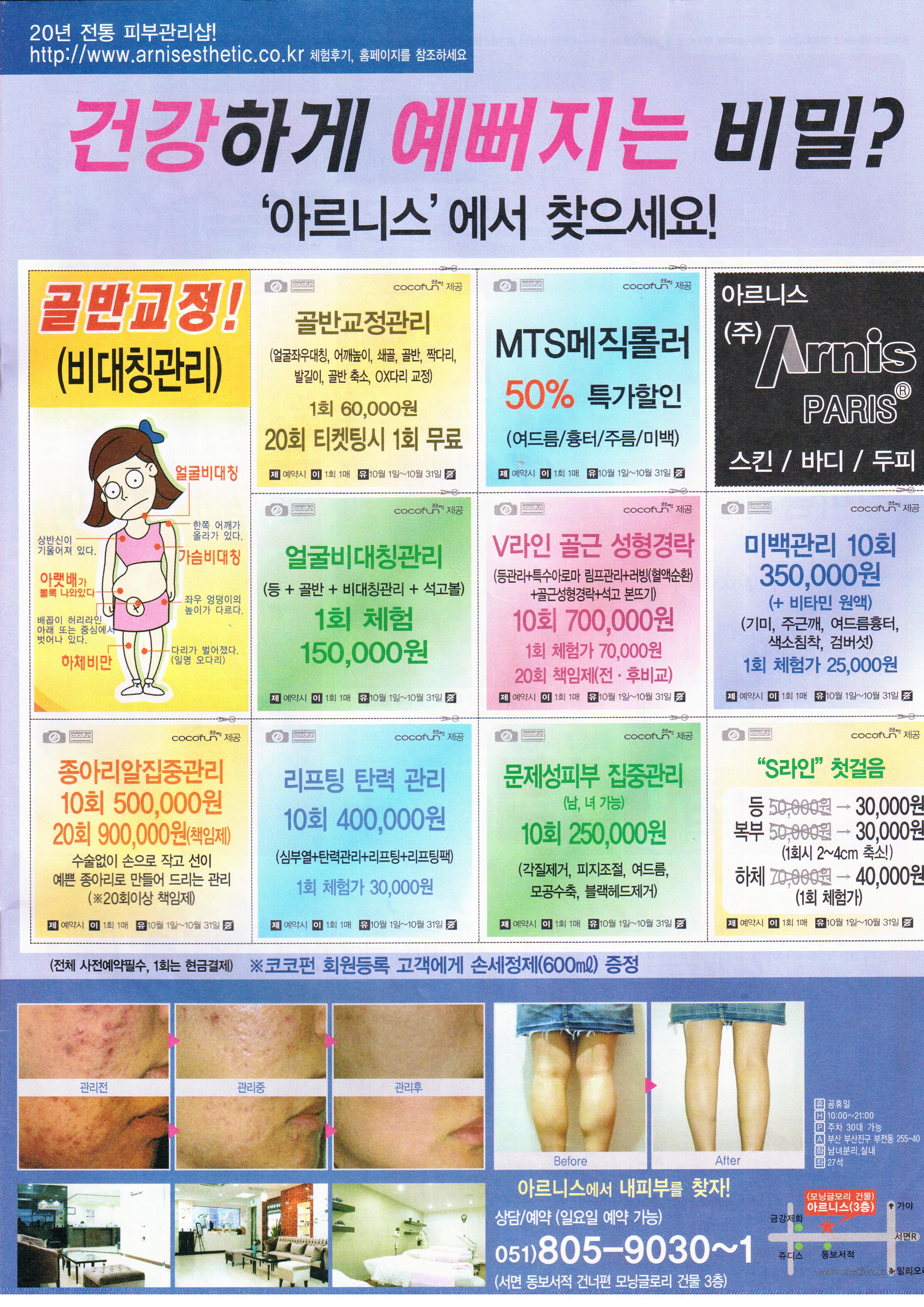
Unfortunately though, it is neither a mistake nor a satire, but is instead from a genuine advertisement in this month’s Busan edition of Cocofun (코코펀), a free local entertainment guide available in major cities. Here is the full version:

Korean Calf Reduction Surgery AdvertisementFor the record, I’m not labeling skinny calves as unattractive by definition, particularly if a woman—and it’s almost exclusively women who undergo calf-reduction surgery—has such legs naturally; as it happens, the difficulty of finding food I wasn’t allergic to when I was young meant that my own calves probably weren’t much bigger until my mid-teens. Buffing-up in my early-20s to compensate for my own body image issues then, naturally I also prefer healthy and active women over sedentary, thin ones today. But regardless of my background, I think I would always have struggled to understand how the muscle development naturally ensuing from an active lifestyle could ever be considered unattractive.

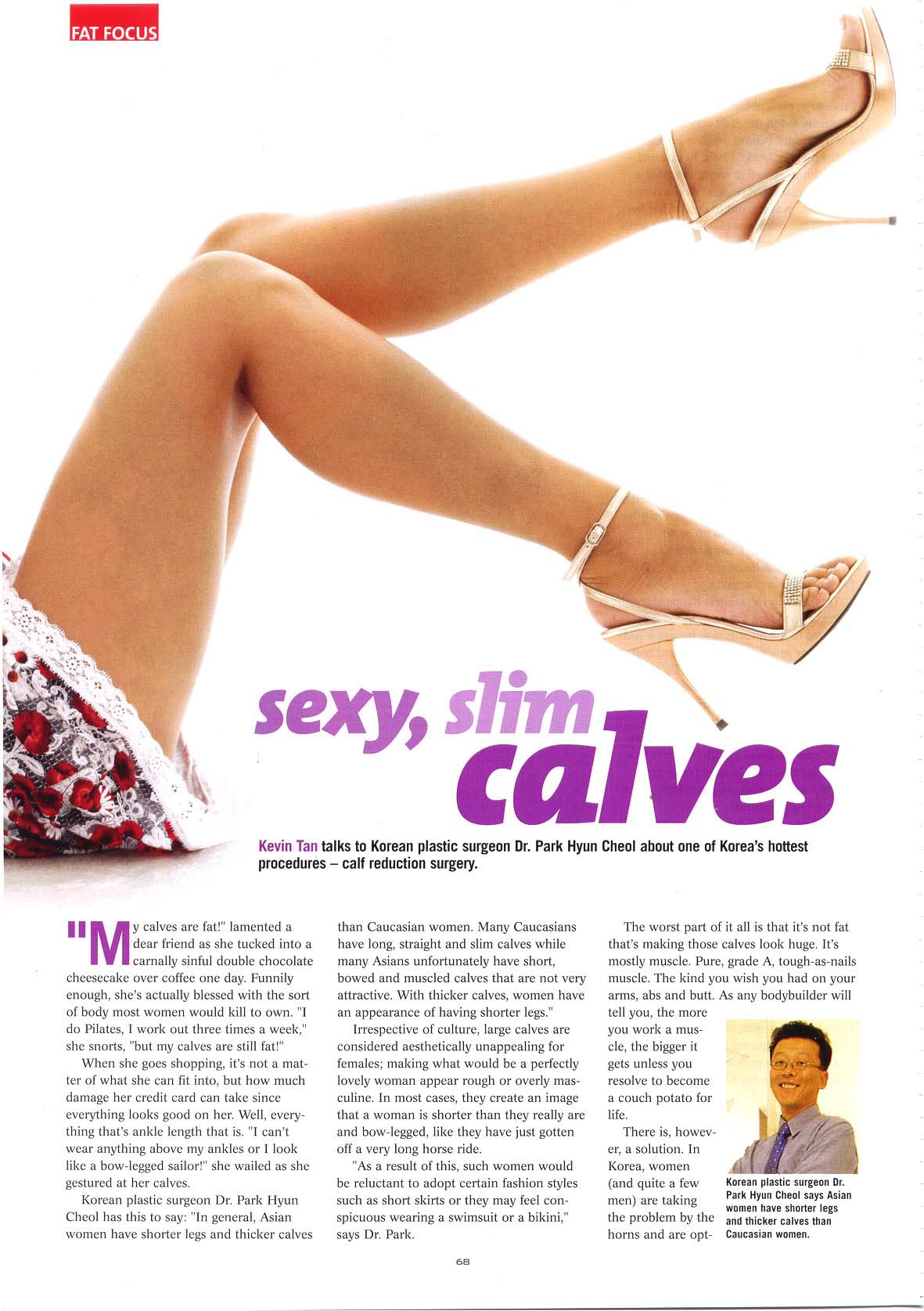
That isn’t the case in Korea and the rest of Northeast Asia however. For a good introduction as to why, I recommend this post at FeetManSeoul for starters, while some other sources, such as the following English guide to the procedure from this cosmetic surgery clinic in Seoul for instance, also mention the fact that “Asian women have shorter legs and thicker calves than Caucasian women.” But, lest one is tempted to read too much into that curious racial comparison though, by no means do all commentators on the subject indirectly refer to some alleged Caucasian ideal, and actually even this more direct description of the procedure from the same site fails to mention it.

Korean Calf Reduction Surgery (Source)

However, there may also generational differences to consider. Take 38 year-old singer and actor Uhm Jung-hwa below for instance, appearing in a press conference with 29 year-old actor Han Chae-young for their movie Are you living with the person you love? (지금 사랑하는 사람과 살고 있습니까?) in July 2007. Ironically, both are well-known for having received extensive cosmetic surgery, but as you can see, only Uhm Jung-hwa has retained her muscular legs. I find her much the more attractive for that reason, and—assuming that she had the procedure done herself—seriously wonder how much physical exertion Han Chae-young is capable of; did I mention that calf-reduction patients have to learn how to walk again?

Uhm Jung-Hwa Han Chae-young legs calvesBut while its voluntary nature may may mean that it’s too extreme of me to compare calf-reduction surgery akin to foot-binding at this point (although both do involve the physical disablement of women for the sake of a wholly artificial beauty ideal), I will go so far as to invoke Mary Wollstonecraft’s A Vindication of the Rights of Woman: with Strictures on Political and Moral Subjects (1792) here. For not only did she note that women being considered “too susceptible to sensibility and too fragile to be able to think clearly” was partially the consequence of not receiving the physical education that boys did (see here also), tellingly she also wrote that women are “taught from their infancy that beauty is woman’s sceptre, the mind shapes itself to the body, and, roaming round its gilt cage, only seeks to adorn its prison,” implying that if young women weren’t so encouraged to focus their attention on beauty and outward accomplishments, they could achieve just us much as men do.

Points to ponder in a country where health-food is promoted to elementary school girls on the basis of allegedly improving their face-shape and making their undeveloped breasts and buttocks bigger. And yet still people wonder why I’m so negative sometimes!

(For more posts in the Korean Sociological Images series, see here)

If you reside in South Korea, you can donate via wire transfer: Turnbull James Edward (Kookmin Bank/국민은행, 563401-01-214324)

Korean Sociological Image #15: Gendered Health Drinks

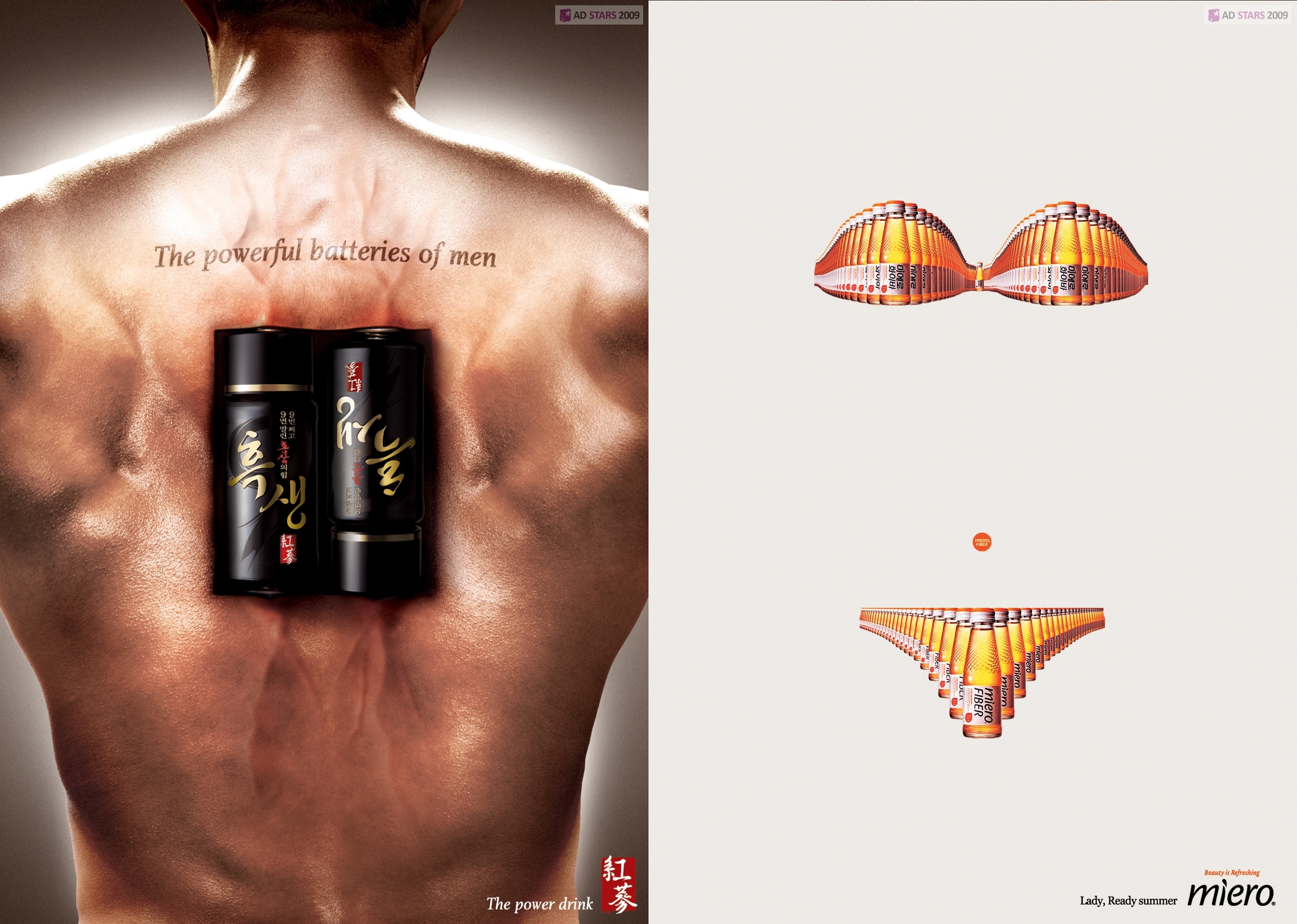
Korean Gendered Advertising( Source: left, right )

What is the first thing that goes through your mind when you hear of a “power drink” for men?

If you live in Korea, then I’d wager some form of aphrodisiac, testament to the large number of drinks claiming to improve “men’s power” or “men’s stamina” that are available here. In the particular case of the advertisement on the left though, that would be quite wrong, as Huksaeng (흑생) is the name of a health drink from Hyundai Pharm (현대약품) made with huksam (흑삼), or black-red ginseng (흑삼), and it has no prior history of being marketed to men specifically. Here you can see a women’s taekwondo team extolling its virtues for instance, albeit that of a different company.

But compare that with Hyundai Pharm’s other product Miero Fiber (미에로화이바) on the right, which in its 20-year history has only ever been marketed towards women. Currently placed alongside each other at the Busan Ad Stars 2009 website, the accidental juxtaposition of the two advertisements provides an interesting contrast. And given Koreans’ overwhelming preference for health drinks over multivitamin pills also, then the insights to be gained have more relevance to Koreans’ body images than may at first appear to overseas observers.

My own first reaction was that I was at a loss to think of an Korean advertisement for a health drink aimed at women that uses the analogy of recharging one’s batteries. This is a minor point though, and by no means do I have an encyclopedic knowledge of Korean advertisements, so I would be grateful if readers could pass on any examples that I may have missed. But with the proviso that Huksaeng is supposed to provide more of a mental and general health boost rather than improving one’s body per se, both that and any counter-examples from readers would not detract from the obvious and correct inference that Korean advertisements for “men’s drinks” generally feature men as sporty, active participants in the process of achieving that perfect body and/or losing weight. With those for women however, it’s genuinely difficult to find any that don’t promote the idea that drinking the product is the only step required.

Girls' Generation Miero Beauty N Advertisement( Source )

Don’t just take my word for it though. Consider recent popular commercials with girl-group Girls’ Generation (소녀시대) for Miero Beauty N (미에로뷰티엔) here and here for instance, and more importantly the evidence provided by the journal article “Content Analysis of Diet Advertisements: A Cross-National Comparison of Korean and U.S. Women’s Magazines” (Clothing and Textiles Research Journal, October 2006), by Minjeong Kim and Sharron Lennon, which I discuss in great detail in parts One, Two, and Three of my series on Korean women’s body images from last year. More recently, I discuss it in passing in this post about an advertisement for a diet clinic and this one about the advertisement below for a slimming tea-drink also:

Unfortunately the article is no longer freely available at the link above, and I’ve long since lost my own copy of the original PDF file. I can scan my copy if anybody requests it though, but in the meantime hopefully the abstract will suffice:

Content analysis of diet advertisements was performed to examine how diet advertisements portray the Western ideal of feminine beauty and promote dieting in Korean women’s magazines in comparison with U.S. women’s magazines. Results showed that the Western cultural ideal of feminine beauty and dieting were prevalent in Korean women’s magazines. Diet advertisements in Korean magazines appear to promote more passive dieting methods (e.g., diet pills, aroma therapy, diet crème, or diet drinks) than active dieting methods (e.g., exercise). Results further indicated that women may be misled to believe that dieting is simple, easy, quick, and effective without pain, if they consume the advertised product. This study suggests that there is an urgent need to establish government regulations or policies about diet products and their claims in Korea. Magazine publishers also need to recognize their role in societal well-being and accept some responsibility for advertisements in their magazines.

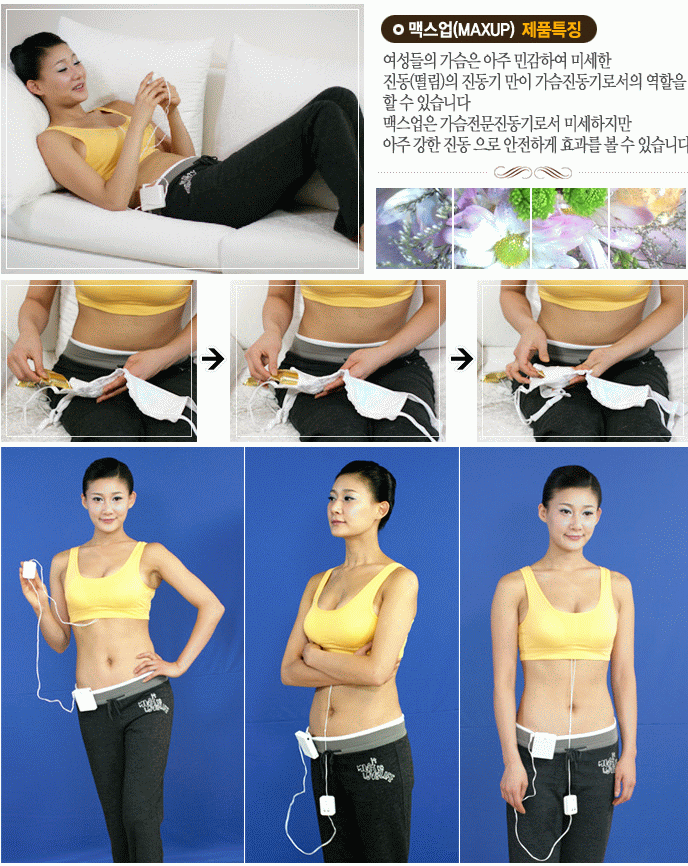
In especially part Two of that series above I discuss that passivity in more detail and extend it to Korean exercise culture, further continued in this recent post about a device that electrically massages breasts in order to make them grow bigger. No, really:

Korean Breast Massager Advertisement Caucasian

Let me also pass on this post at Sociological Images about the similar gendering of energy drinks in the US, with more of a focus on those targeted towards men, and this one at Feministing about the fact that laxatives there are almost exclusively marketed towards women, with the implicit purposes of losing weight. To which I’d add that their Korean equivalents are both ubiquitous and completely lacking of the usual euphemisms, instead providing computer graphics of bowel movements that leave little to the imagination. Rather than continuing in that vein though(!), let me close with a question prompted by the latter post: what is the reason that products like these are marketed specifically towards women?

(For all posts in the “Korean Sociological Image” series, see here)

Share

Korean Sociological Image #9: The Secret to Bigger Breasts?

Korean Breast Massager Advertisement Caucasian

( The title reads: “A message of hope to all women!” )

If someone had told me years ago that I’d be writing about a Korean infomercial at some point, then I would have wagered good money that it would have been about one for bidets actually, for nothing quite gives you that “We’re not in Kansas anymore” feeling as switching the television on and seeing attractive women holding perspex buttocks over jets of water, waxing lyrical about how well they cleared a strategically placed brown-yellow paste. I could mention the looks of ecstasy and relief on various actors’ faces as they supposedly use the bidets later too…but you get the idea.

Lest I give the wrong impression though, there are certainly many advantages to Koreans’ no-nonsense attitudes to bodily functions, and actually I much prefer them to many Americans’ delicate sensibilities. But what to make of these – for want of a better term – electric breast enlargers?

If you can forgive the pun, then two things really stick out about this infomercial and its accompanying website for me (beware a loud video if you click on the latter):

First, needless to say, since writing this post on the subject a year ago I’ve still seen absolutely no evidence to suggest that doing fuck all is an effective way to lose weight and gain muscle tone and so on, let alone enlarge any specific body part. But while Korea by no means has a monopoly on misleading advertising, it is also true that various loopholes in advertising legislation here mean that there is little to stop producers of “diet-related” products from, well, basically completely lying about the efficacy of their products. For more on this, see the second half of this post where I discuss Minjeong Kim’s and Sharron Lennon’s “Content Analysis of Diet Advertisements: A Cross-National Comparison of Korean and U.S. Women’s Magazines” (Clothing and Textiles Research Journal, October 2006)¹ from which I first learned of it, and if it sounds like I’m exaggerating, then consider the fact that despite supposedly far stricter standards for “normal” food that over 88% of food labeled as organic isn’t, for instance, or that the KFDA is not empowered to tell you, say, which Vitamin C drinks contain carcinogens, but only (and uselessly) how many (see #14 here).

And second, in the strange event that you didn’t look closely enough to notice, then let me point out that it is only the Caucasian model above that you can see in lingerie, whereas her Korean counterparts are all fully clothed. True, that may sound like a strange way to describe a woman in a crop-top, but the difference is more than mere semantics, as many Korean porn stars worked as lingerie models before bans on foreign models working in Korea were lifted in the mid-1990s. This means that even today lingerie modeling still has a certain stigma that even bikini-modeling lacks, and despite the bikinis themselves obviously being just as (if not more) revealing. For more information, see #1 here for the most recent of many posts on that.

Korean Breast Massager Advertisement Korean

Still, Koreans are notoriously savvy consumers, so while I confess that I haven’t bothered to look at this late hour, I imagine that there will be many scathing reviews of this product available online. And, with obvious parallels in many other (more important) aspects of life in a democracy as young as Korea’s, to a certain extent this vibrancy of online Korean life is the result of and compensates for deficient legislation, although on the other hand in this particular case it is also stymieing the development of a healthy Korean consumer culture.

Tempting as it is to continue this post in that vein, let me wisely close here by pointing out that in the product’s defense, it can simply be returned with your money back before 2 weeks. And I seem to recall from my 2 viewings of Dragon: The Bruce Lee Story that actor Jason Scott Lee playing Bruce Lee had two similar things strapped to his pecs in a scene where he was working on a script at home (i.e. not exercising, just like the women in this infomercial). Can anybody enlighten me? Am I dismissing…er…electric shock treatment(?) unfairly? As far as I know though, and to many teenage girls’ chagrin, the size of a woman’s pectoral muscles still has little effect on the ultimate size and look of her breasts, which are mostly connective tissue, “lobules,” and fat.

(For all posts in my “Korean Sociological Image” series, see here)

1. On a technical note, since I wrote that post the PDF of the article is no longer free to download I’m afraid, so I would be grateful if anyone that knows of a free link an/or a copy themselves could pass it on for me to provide to others here. Alternatively, serendipitously my printer broke last week and I’m buying a printer/scanner to replace it, so I’ll be able to scan the copy I printed if anybody asks!

Share

Are Korea’s Women Boxers Good Enough for Adidas?

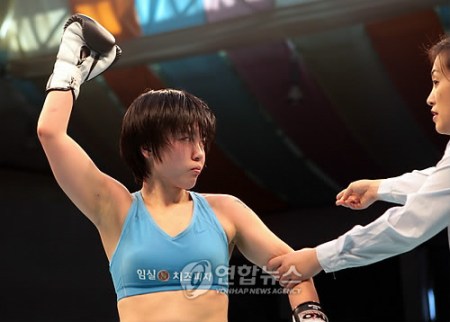
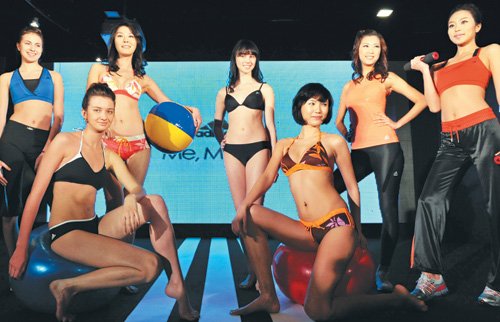
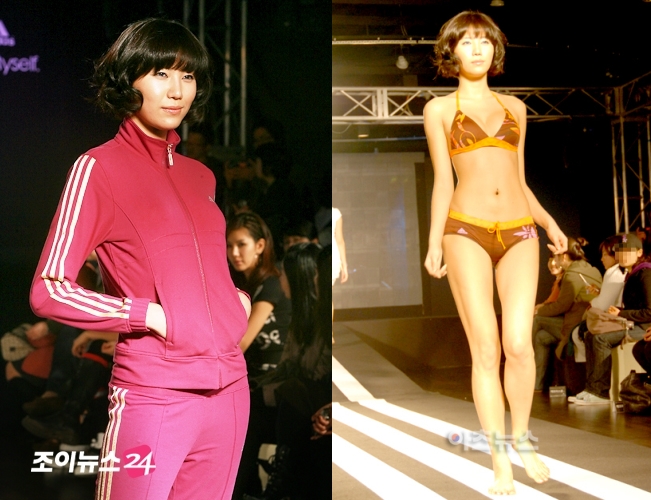
kim-ji-young-twoWriting earlier this month, I was very impressed by the rhetoric of the launch of Adidas Korea’s “Me, Myself” campaign, and especially by the healthy-looking models used. But one fair criticism by frequent commenter Sonagi was that while on the one hand they definitely weren’t “the gaunt-looking models of most fashion shows,” were all “healthy and glowing,” and may well have shown “that women could look stylish while working out at the gym, doing complicated yoga moves or swimming in the pool,” on the other hand they certainly didn’t appear to have anything at all like the physiques of actual athletes either, somewhat diluting the campaign’s supposed message (source, left: Yonhap News).

And it’s not hard to think of attractive athletes who could have—nay, should have—taken their place instead, a point which I was suddenly reminded of earlier today when I was flicking channels and happened to come across IFBA Bantamweight Champion Kim Ji-Young (김지영) in action, her—let’s face it—feminine appearance being so in contrast to the bulk of her counterparts (in both senses of the phrase!) that I immediately sat up and took notice. As it happens, she was in her hometown of Yeongdong City, successfully defending her title for the fourth time (against Dennapa Sukruaangrueng of Thailand).

(Update, September 2014: Reading over this post five years later, I’m cringing at—among other things—my implication that women with bulky physiques are any less feminine than Kim Ji-Young, and the notion that they could never be accepted as endorsement models for sports clothing companies).

Unfortunately, as images of female athletes tend to be unflattering, taken as they are at instants of extreme pain, anger, passion or even all three (not that those of male athletes aren’t kim-ji-young-oneeither) then in lieu of a video of the fight I saw then that photo of her above and this on the right from 2005 (source: Yonhap News) will have to do for my purpose, which is to ask you if she could realistically be a model for Adidas or any other clothing company? Why or why not? Yes, granted, she does has bigger arms than average (naturally), but although this is not to say that people of either sex can only find athletic role models in those of a similar (or desired) size to them, her diminutive height and weight  (“bantamweight” means 51-54 kg) and small bust do make her very similar physically to a lot of Korean women, albeit having muscle where they usually have fat. Moreover, given that the notions that models “have to” be tall and thin would supposedly be the very antithesis of the Me, Myself campaign, then I can’t think of any reason to reject her for something like that especially.

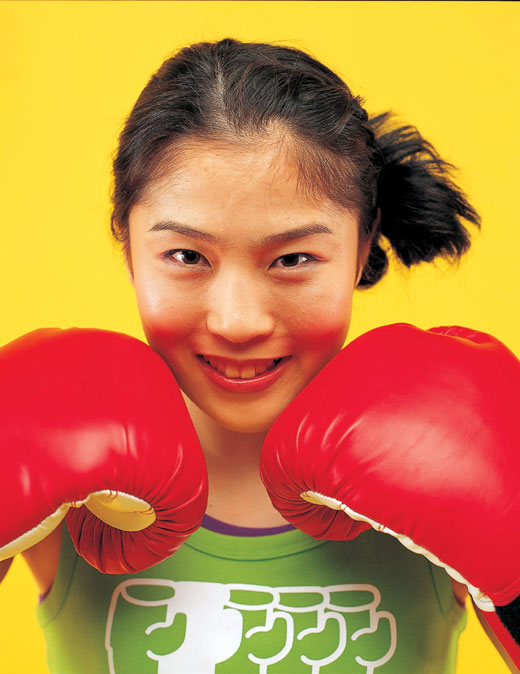
As it happens, there is already a Korean female boxer who makes a great deal of money through sponsorship, commercial and TV appearances: Choi Shin-hui (최신희), whom I found about via this slightly old but otherwise excellent introduction to female boxing in Korea over at Korea Beat, and it turns out that two years ago at least there was quite a boom in the sport, with Korea having several world champions. I’m almost a little reluctant to post any pictures of her however, as with the vast majority available being modeling shots (including this one below for Vogue magazine in 2004 for example; see here for the article), then they’re naturally going to present her in a much better light than the few and quite frankly rather hideous ones of Kim Ji-young in action out there. So I include a link to this and this other one (scroll down) of Choi Shin-hui from that period too, not to imply that she’s ugly in them—quite the opposite—but more to demonstrate that they’re certainly less flattering than those to be found in advertisements, which just again goes to show that however unglamorous they—or you and I for that matter—can appear in photos of them grunting away at their sport(s) can be, surely Kim Ji-young and/or other athletes like her should have been in consideration for even a one-off, token appearance at a launch for products that are supposedly aimed at athletic women? Even just the minimal consideration towards the campaign’s professed message that that would have demonstrated would have been much better than none at all.

choi-shin-hui-boxing-in-vogue-women-in-2004(Source: DBSD Boxing)

Or am I making too much of it? Do you think athletes weren’t used simply (and perhaps quite legitimately) because of their inexperience with a catwalk? Or is there another simple reason I’m overlooking?

Regardless, if you’ve read this far then you’ll probably also be quite interested in and inspired by this story of 18 year-old Choi Hyun-Mi, who defected with her family from North Korea in 2004 and on whose boxing success they now entirely rely on for financial support (Update: Sorry that the link has died; instead here’s a video below). And I have one final request too: somewhere on this list of expat blogs is one I used to read by a woman in Seoul who happens to be a female boxer and very active in the boxing scene, but I’ve completely forgotten both its and her name, it being a long time since this blog you’re reading turned my own reading of other blogs from pleasure into business (sigh). Writing this post has made me interested again though, and I may well want to pick her brains about some of the issues raised in it too, so if anyone knows who I’m talking about, please pass on her blog address!

Adidas’ “Me, Myself Campaign”: Refreshing Body Images for Korean Women?

아디다스의-2009-우먼스-캠페인-미, 마이셀프And here’s the other reason I have the focus on the blog that I do!

Seriously though, while I am never lacking for pictures of attractive Korean women in sportswear and bikinis to attract “readers” to the blog with if I do so choose, there is still reason to single out this week’s Korean launch of the global Adidas ”Me, Myself” (미,마이셀프) campaign here. Consider its claimed raison d’être, however perfunctory its sentiments may be in practice (source, right: Naver):

Impossible standards of beauty continue to be foisted on young women today. Flip through any fashion magazine, and you’ll find super skinny supermodels on almost every page. Not to mention on billboards, on television and movies and the Internet. Young women feel pressured to live up to this standard of beauty, often to the detriment of their mental and physical well being.

Instead of pressuring women to conform to this impossible standard of beauty, sportswear giant Adidas wants to inspire women to be themselves.

With its new campaign philosophy, ”Me, Myself,” women are encouraged to be healthy, happy, fit, full of life and be true to who they are. It celebrates women’s individuality, confidence and motivation.

To launch the ”Me, Myself” campaign in Korea, adidas staged a unique fashion show featuring its spring/summer women’s wear line at Kring, Daechi-dong, southern Seoul, Wednesday. Korean celebrities like singer Solbi and girl group Afterschool were spotted at the event.

And crucially (my emphasis):

Unlike in most fashion shows with gaunt-looking models, the Adidas models were healthy and glowing. They showed that women could look stylish while working out at the gym, doing complicated yoga moves or swimming in the pool.

Granted, it comes from a blatant advertorial, but that last is much more important than it may sound at first. As while on the surface modern Korean exercise culture is very similar to its Western counterpart(s), albeit naturally with more of an emphasis on hill-walking and, in turn, free open-air facilities in those hills for its rapidly aging population to use, in practice Korean women have generally interpreted the modern Western imports of gym culture and health consciousness through their preexisting notions of consumption and feminine passivity (see here, here and here), often with quite startling and absurd results.  Indeed, one could argue that their gym-going merely serves to allow many Korean women to feel a certain sweet self-satisfaction in the mere act of doing so, never actually having to face the challenge of exercising to the extent that, say, sweat interferes with the cosmetics that many wear while doing so, or that it burns off excess fat. Instead, a vast and unregulated industry of passive dieting methods (e.g. diet pills, aroma therapy, diet crème, and diet drinks) takes that place, overall giving the impression that dieting is simple, easy, quick, and effective without pain, so long as women consume various products.

아디다스의-2009-우먼스-캠페인-미,마이셀프-tracksuit-bikini

(Sources: 아이뉴스; Artsnews Paran)

Which is not to say that all Western women (or men) don’t also waste a lot of time at gyms, nor that the act of attending one isn’t also de rigeur for the trendy modern urban professional, and much less the quality of the exercise done there. But…well, as those links above make clear, these things — like so many other trappings of modernity here — are just so magnified here, almost like a hyperreal parody of the goals of modernity itself. In this particular case though, lacking an educational background of critical thinking, Korean women are to a certain extent its victims, which again renders any alternative message of self-agency and of being proactive in naturally achieving one’s desired body image worthy of getting out to as wide an audience as possible.

I dare say, however, that that message could have been done somewhat more effectively had anything at all about the campaign been included on Adidas’ Korean website (let alone in Korean), especially as news coverage seems to have concentrated rather more on the celebrities that attended instead. Being in the job-market myself soon though, then I’ll gladly take on that responsibility of ensuring that the site is regularly updated from now on (there’s my contact details in the top-left corner!), but until that point then I guess that this post and these Korean videos of the event will have to do.

Update: I’m afraid those videos didn’t embed very well: try watching here instead.

Update 2: Thanks to commenters, I now realize that the choice of models (specifically, their body types) should have been much more diverse, preferably with some real athletes included. See here for a follow-up post exploring precisely that, focusing on female boxers.