Is contemporary Korean dance always as hypnotic as this? Have I been wholly misjudging it all these years?
Actually, if you’re at all knowledgeable, please reserve your answers for the comments. Better that most readers approach the video with no preconceptions like I did, puzzled at the notification from an unfamiliar YouTube channel on my phone. Better still, that first they turn off the lights, get close to their screens, plug in their headphones or ear buds, are slightly sleepy, drunk, or high…and be ready for their jaws to hit the floor:
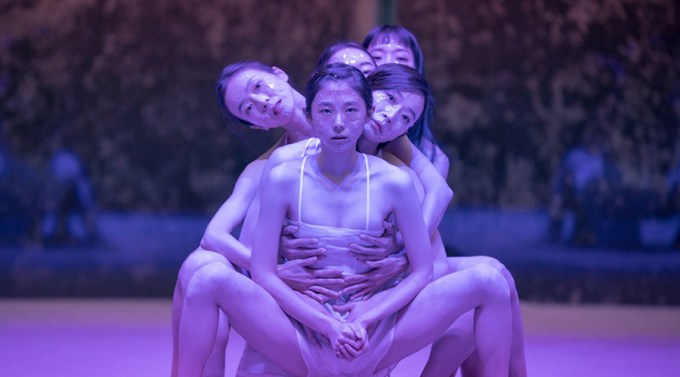
The choreographer and performer is Jinyeob Cha (차진엽) founder of Collective A, an interdisciplinary dance performance group, and who is probably best known for having been the director of the choreography for the opening and closing ceremony of the 2018 Pyeongchang Winter Olympic Games. But the reason I personally was subscribed to her channel was because in March 2022, London Korea Links wrote about her and Collective A’s performance there of “MIIN: Body to Body,” in which Cha:
“…examines perceptions of beauty and femininity beyond societal norms and traditions.”
“Accompanied by a hypnotic soundscape created by two acclaimed musicians based in Seoul, Eun-yong Sim, from Korean Avant-rock band Jambinai, and haihm, an electronic musician, six female dancers flit between precise, discreet, feminine poses and aggressive, erratic movements to embody all aspects of a woman.”
“Miin (미인) is a Korean word meaning ‘beautiful person’, but is more often used as a synonym for ‘beautiful woman’. This work challenges the meaning of ‘beauty’ and encourages women to embrace their bodies as they are without succumbing to unrealistic expectations.”
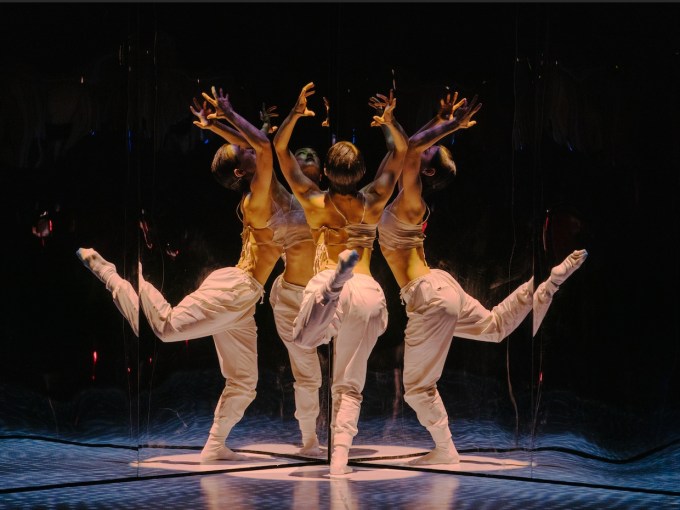
She’d slipped my mind though, because this was the first upload on her channel in a year. There seems to be little information specifically about the “원형하는 몸: round1” (“Body Go-round: round 1”) performance in English available too (or at least that I could find), which is surprising because it was actually first performed in 2021. What I could find then, was a quick explanation in the blurb to another UK performance in September 2022, that explained it was:
“…a genre-bending, mixed reality, dance spectacle inspired by the process of melting to evaporation in the water cycle.”
“Looming above the stage, a giant ice formation slowly melts as performers respond to the process of circulation and transition through dance. Each drop shaping the sound and visual landscape of the stage influences the interaction of each body in the space.”
And in Korean, a blurb from the tumblbug page used to raise funds for it, that at least hints at feminist themes:
차진엽 작업의 중심은 한 인간으로서의 인간성, 여성으로서의 여성성을 둘러싼 몸의 안과 밖을 연결하기 위해 몸을 둘러싸고 있는 세상에 관심을 두며, 몸/몸짓 을 통해 끊임없이 존재에 대해 질문한다. 이는 곧 예술행위를 통해 자기 자신의 본질적 가치를 찾아가는 여정이며 collective A의 궁극적인 모토이다.
The center of Cha Jin-yeop’s work focuses on the world surrounding the body in order to connect the inside and outside of the body surrounding humanity as a human being and femininity as a woman, and constantly questions existence through body/gesture. This is a journey to discover one’s own intrinsic value through artistic activities and is the ultimate motto of collective A.
And finally, a in-depth making-of video on her channel, in which she likely expands on those themes at some point:
Only “likely” though, because of her background (so…very likely!), and because I haven’t had the chance to watch myself yet sorry—powerpoints for tomorrow’s lectures beckon. But please do let me know if you’re interested but can’t speak Korean, and I’ll watch properly and translate the relevant segments as soon as I can. (I’m interested too!)
In the meantime, why not check out more of her performances on her YouTube channel? ;)
If you reside in South Korea, you can donate via wire transfer: Turnbull James Edward (Kookmin Bank/국민은행, 563401-01-214324)
It seems my blog is devolving into rambling book recommendations about life, the universe, and female sexuality. Sorry not sorry!
Estimated reading time: 9 minutes. Photo by John Cahil Rom at Pexels.
But seriously, longform Korea-related content is coming soon.
In the meantime, you may recall one of my most recent longform posts was on how we talk about biological, sex-based differences. Like men’s slightly better ability to mentally manipulate 3D objects, or women’s to endure long-term pain.
I’d recently been forced to confront beliefs about those I’d held for nearly 30 years, and found them wanting. In the process, I learned so much from so many sources in so short a space of time, that I just had to share.
Naturally then, almost no one read it!
So, not going to lie—my first of six goals today is highlighting it again for anyone who may have missed it the first time.
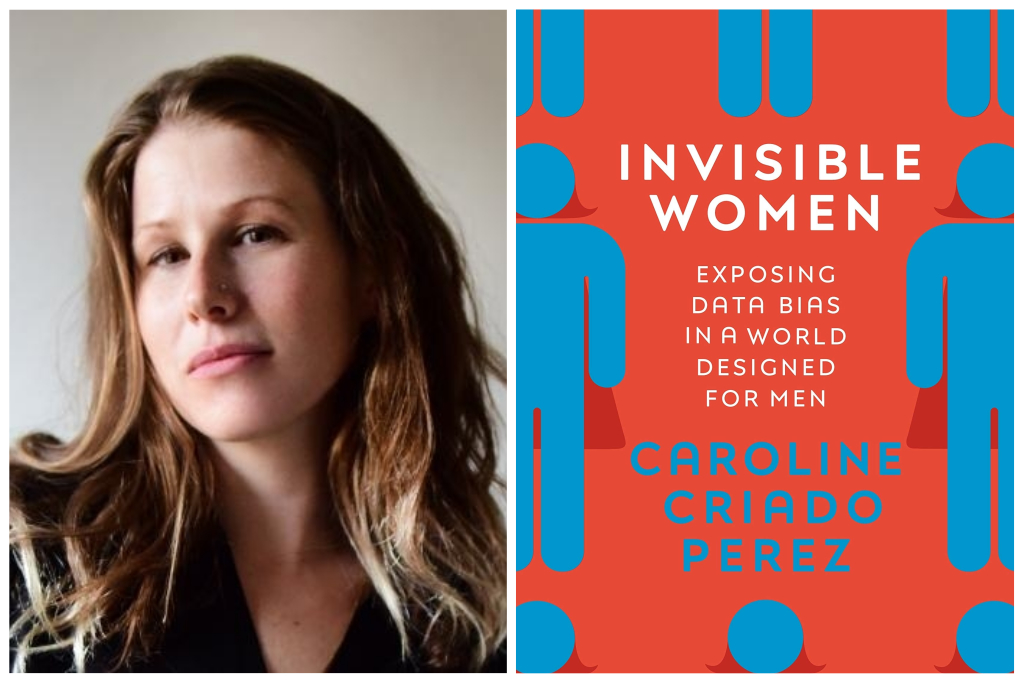
To help persuade you, the spark was a passage in Invisible Women: Exposing Data Bias in a World Designed for Men by Caroline Criado Perez (2019), about how gender role expectations and social pressure prevent most girls and women from devoting themselves to their passions, whereas boys and men are giving much freer reign to obsess. So, more of their numbers going on to dominate in and excel in various stereotypical male fields like chess or coding was no simple consequence of those sex differences alone. Also, I read elsewhere that, despite the differences being very real, and many of them undeniably innate, people’s brains were remarkably pliable too, requiring surprisingly little training to overcome them.
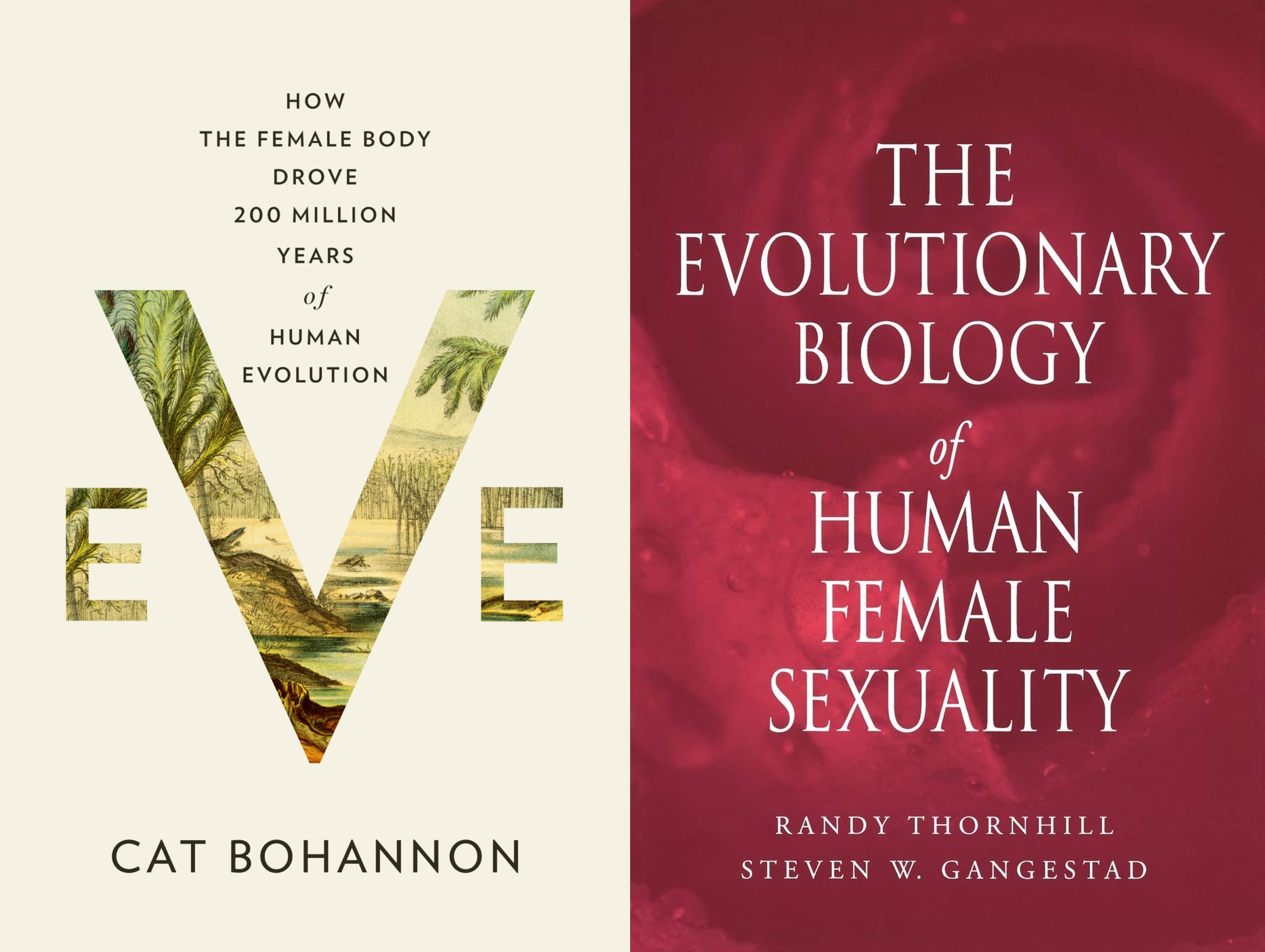
And if that sounds interesting, let proceed with my second goal—availing myself of the opportunity to not only recommend Invisible Women, but also Eve: How the Female Body Drove 200 Million Years of Human Evolution by Cat Bohannon (2023), which I’ve recently ordered because reviews (Undark, The Atlantic) indicate it discusses many of those themes. Let me recommend The Evolutionary Biology of Human Female Sexuality by Randy Thornhill and Steven W Gangestad (2008) too, which I’ve also just ordered because it’s actually what Eve first reminded me of, and because it’s easily the most thorough, most challenging and demanding, but also most rewarding tome I’ve ever encountered on its subject. (Much more academic and narrowly focused than Eve though, see here for a positive review, here for a negative one, and here for the authors’ response to the latter.)
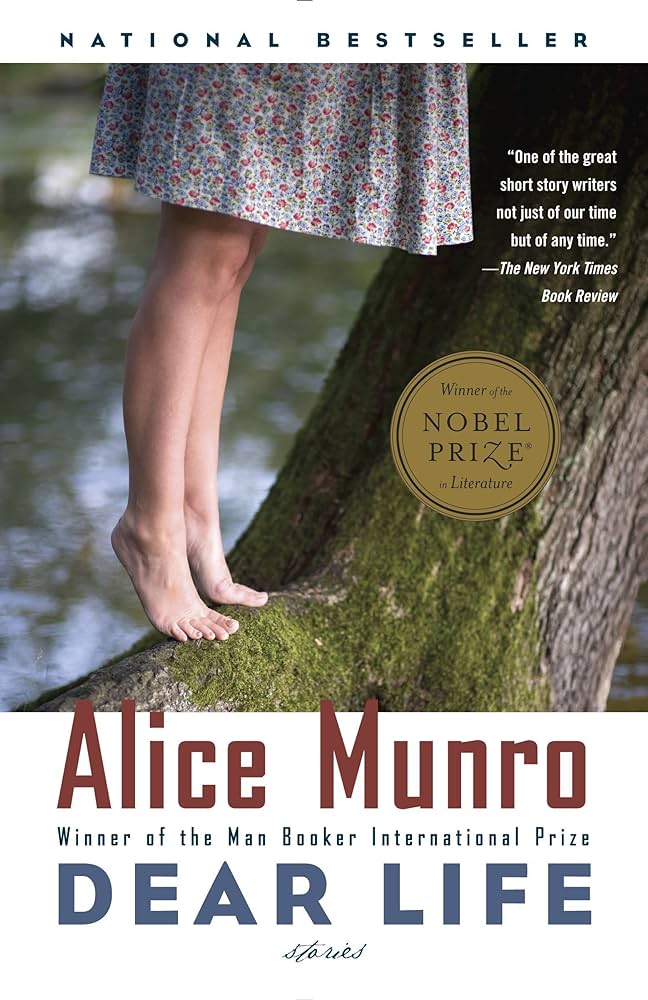
Which is all quite the introduction to why today’s title quote jumped out at me from “Haven” by Alice Munro, part of the short story collection Dear Life (2012), which I’ll give the full passage it’s from in a moment. All that explanation felt necessary to fully convey the connection I felt though, and why it brought me the frisson of joy it did, which I wanted to share—my third goal today.
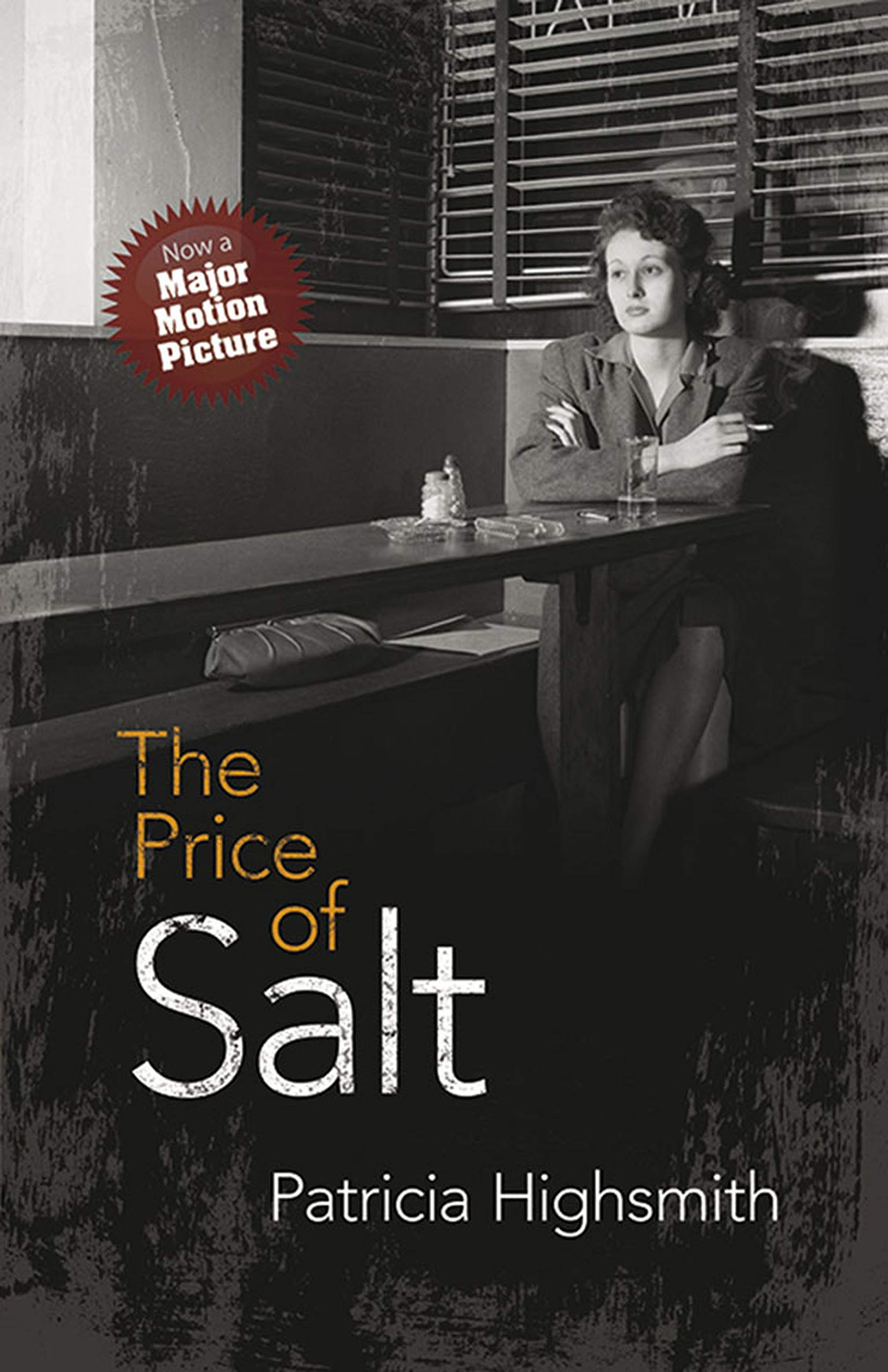
But before I do pass it on, frankly it feels more important to explain how I came to be reading Dear Life in the first place. Which was actually because I first read the lesbian classic, The Price of Salt by Patricia Highsmith (1952; renamed as Carol, 1990), and specifically because this passage from Chapter 10 really resonated with me:
Therese watched Abby’s fork cutting the scaloppine into small bites before she picked up any. “Do you take trips a lot with Carol?”
“A lot? No, why?” Abby asked.
“I should think you’d be good for her. Because Carol’s so serious.” Therese wished she could lead the conversation to the heart of things, but just where the heart of things was, she didn’t know. The wine ran slow and warm in her veins, down to her finger tips.
“Not all the time.” Abby corrected, with the laughter under the surface of her voice, as it had been in the first word Therese had heard her say.
The wine in her head promised music or poetry or truth, but she was stranded on the brink. Therese could not think of a single question that would be proper to ask, because all her questions were so enormous.
I return to it often, because—please bear with me a moment—I’ve lived in Korea for most of my life, where house parties are just not a thing. Compared to what I remember of social gatherings in my 20s in New Zealand then, those I’ve been to here have tended to be quite structured, where most people already knew each other. Yes, I’m generalizing, and, now that I’m in my late-40s, maybe it’s just that I don’t get invites from the cool kids anymore. But add that Koreans generally don’t strike up conversations with strangers in coffee shops or on the subway either, least of all bald middle-aged white men they assume can’t speak any Korean, then I do so miss the opportunities parties gave for meeting interesting strangers and having deep conversations. Having the type of encounters that render evenings so memorable and magical for being pregnant with possibility, with friendships, romances, careers, and hopes and dreams hinging on what’s said—or not said—in a moment, before fracturing into a multitude of unreachable, mysterious alternate timelines and what ifs ever after.
Everyone has books and films that are merely good for them, until a passage, moment, scene, glance or you name it renders it great instead. For Carol the book, the above passage is that tipping point for me. And I type it all out here, rather than being content with photographing the page in the book for you, in my fourth goal, or rather hope, that somewhere out there are others who feel exactly the same way about it, and that one day we’re able to make a connection through them googling it :)
Alas, I haven’t actually watched the film yet—ironically, the better adaptations are, the less enthusiastic I am about watching, because I know what to expect. My fifth goal then, is to ask those that have watched, does that scene get included? How are the inner dialogue and tension conveyed? Please let me know!
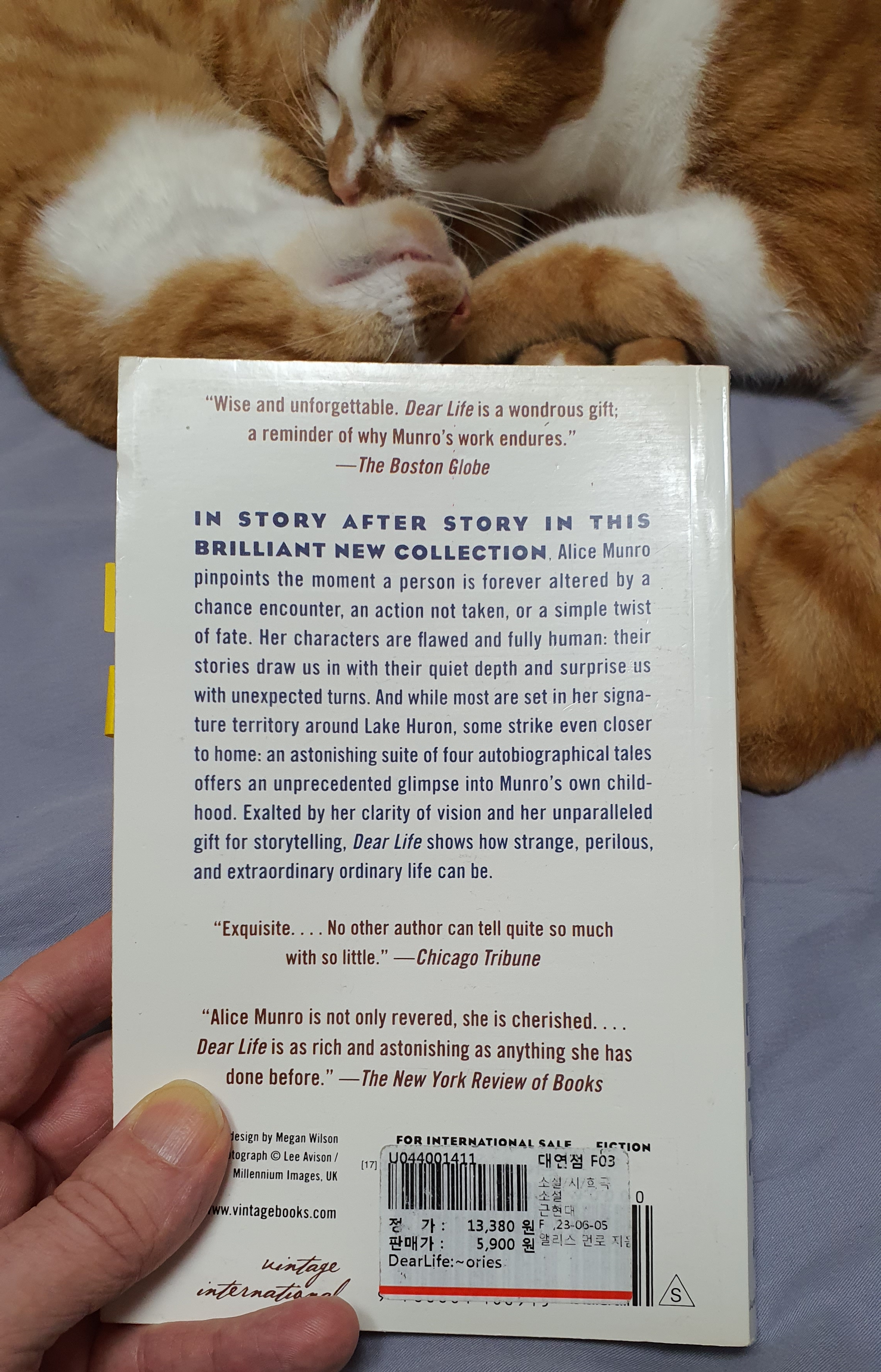
Which finally brings me to the blurb to Dear Life then.
Thank you for reading this far. And, if you have, you’ll see why I was instantly sold on it:
And here’s the specific passage from “Haven” which precipitated this whole post. For context, the main character, a girl in her late-teens, has to live with her uncle and aunt while her parents spend a year abroad. Her uncle, perhaps not so much patriarchal as deeply controlling, has a sister (Mona), a gifted classical musician, and an unusually tall woman, whom he resents for vague, largely undisclosed reasons. So much so, that the main character only learns of the very existence of her aunt by accident:
Some of my ideas had changed during the time I had been living with my aunt and uncle. For instance, I was no longer so uncritical about people like Mona. Or about Mona herself, and her music and her career. I did not believe that she was—or had been—a freak, but I could understand how some people might think so. It wasn’t just her big bones and her big white nose, and the violin and the somewhat silly way you had to hold it—it was the music itself and her devotion to it. Devotion to anything, if you were female, could make you ridiculous.
And earlier in the same story, for even more context, and the obvious parallels with the inexplicable hatred all too many obsessive middle-aged male fans of, say, American football share, with anything whatsoever teenage girls like:
“…They’ve got too much sense, your parents. Too much sense to join all these people who are fussing and clapping and carrying on like [classical music concerts are] just the wonder of the world. You know the kind of people I mean? They’re lying. A load of horse manure. All in the hope of appearing high-class. Or more likely giving in to their wives’ hope to appear high-class. Remember that when you get out in the world. Okay?”
I agreed to remember. I was not really surprised by what he was saying. A lot of people thought that way. Especially men. There was a quantity of things that men hated. Or had no use for, as they said. And that was exactly right. They had no use for it. so they hated it. Maybe it was the same way I felt about algebra—I doubted very much that I would ever find any use for it.
But I didn’t go so far as to want it wiped off the face of the earth for that reason.
Did my providing a photo of the blurb, rather than my typing it out à la the passage from Carol, foreshadow my ultimate disappointment with the book though? Or did my adorable cats distract?
Because in so many of the stories, the characters just didn’t feel fully-formed, particularly in the senses that we could predict their actions and know what they were feeling. While the promised “unexpected turns” were very real then, I tended to find them jarring. And those “quiet depths”? Only the results of our own imaginations, which we’re forced to project into the voids that are the characters’ back stories. What does—can—a reader take away then, with say a married female character having a sudden tryst with a random man, when we know so little about ther, let alone her husband or the state of their marriage?
But I realize grandiose, evocative blurbs are ripe for criticism, and easy to feel duped by. I also realize the book is critically acclaimed, that I’m in a minority of bibliophiles in disliking it, and that having to fill the blanks with one’s own imagination would actually be a draw for many people. (Before I’m pigeonholed for having supposedly blunt, direct, and altogether much too shallow tastes though, its a draw for me too actually. But I do have limits.) So my sixth and final goal is to please hear from and engage with anyone who has read Dear Life themselves. Until then, I’m forced to google for definitive analysis instead. And find vindication in my charges of overprojection, or should I say unconcious need to compensate for those voids, in the very first hit being a two-hour long video. No, not about the book, which would be reasonable. Just about the first, 28-page story:
To be fair, I haven’t watched it yet. I only have a suspicion that the length is the result of overanalysis. And I know I can go on and on myself sometimes (cough). So, I will watch, and will be happy to learn something, and/or proven wrong about my dismissal of the book.
Or not. I write today, only to connect. To seek further conversations about Dear Life, or my takes on any of the half-dozen books I’ve mentioned.
So whether rants or raves, please do get in touch. About any of them!
If you reside in South Korea, you can donate via wire transfer: Turnbull James Edward (Kookmin Bank/국민은행, 563401-01-214324)
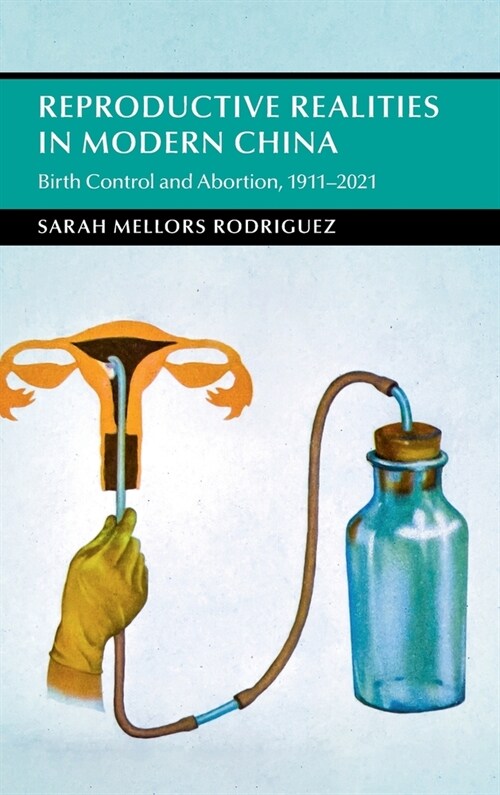
At an annual rate of 49 abortions per 1,000 reproductive-aged women, China has one of the highest abortion rates in the world. This phenomenon is often attributed to the One Child Policy (1979-2015), yet even when abortion was illegal in the early twentieth century, it was already commonplace. This talk traces the history of contraception and abortion in China from the fall of the Qing dynasty in 1911 to the present. Rodriguez demonstrates how inconsistent state policies and patriarchal norms have historically worked in concert to normalize abortion as birth control.
More information and registration are available here and here. Also, check out an interview of her about her book at Made in China Journal, and a long podcast interview at New Books Network.
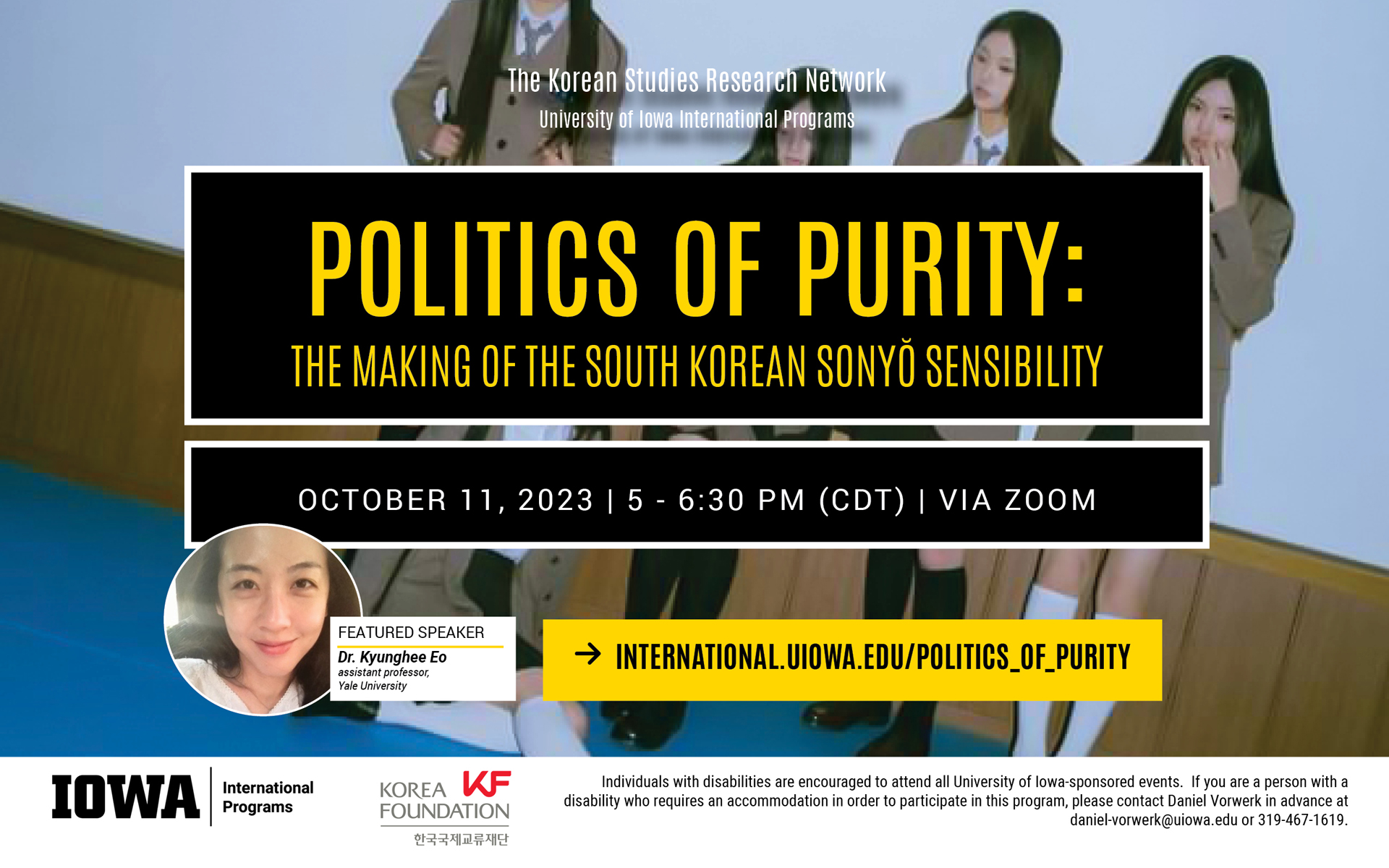
Next, and finally for today, onThursday 12 October, from 07-08:30 Korean Time, Dr. Kyunghee Eo, assistant professor of East Asian languages and literatures at Yale University, will give a virtual talk entitled “Politics of Purity: The Making of the South Korean Sonyŏ Sensibility”:
Eo will demonstrate how we can enrich our understanding of Korean culture and society through a critical engagement with the figure of the girl (sonyŏ), a subject position that seldom takes center stage in official narratives of history. Using an interdisciplinary methodology, Eo will trace how girls were represented in various types of cultural texts, from canonical literature and popular magazines of the postwar period to the contemporary K-pop industry. By doing so, Eo will show how the unique girl sensibility (sonyŏ kamsŏng) that we see in South Korean cultural production today is not just a byproduct of hetero-patriarchal discourse, but rather, a cultural form that has articulated the desires, erotic fantasies, and political aspirations of women and girls in Korea over the past century.

 Estimated reading time: 4 minutes. Image source: tumblbug.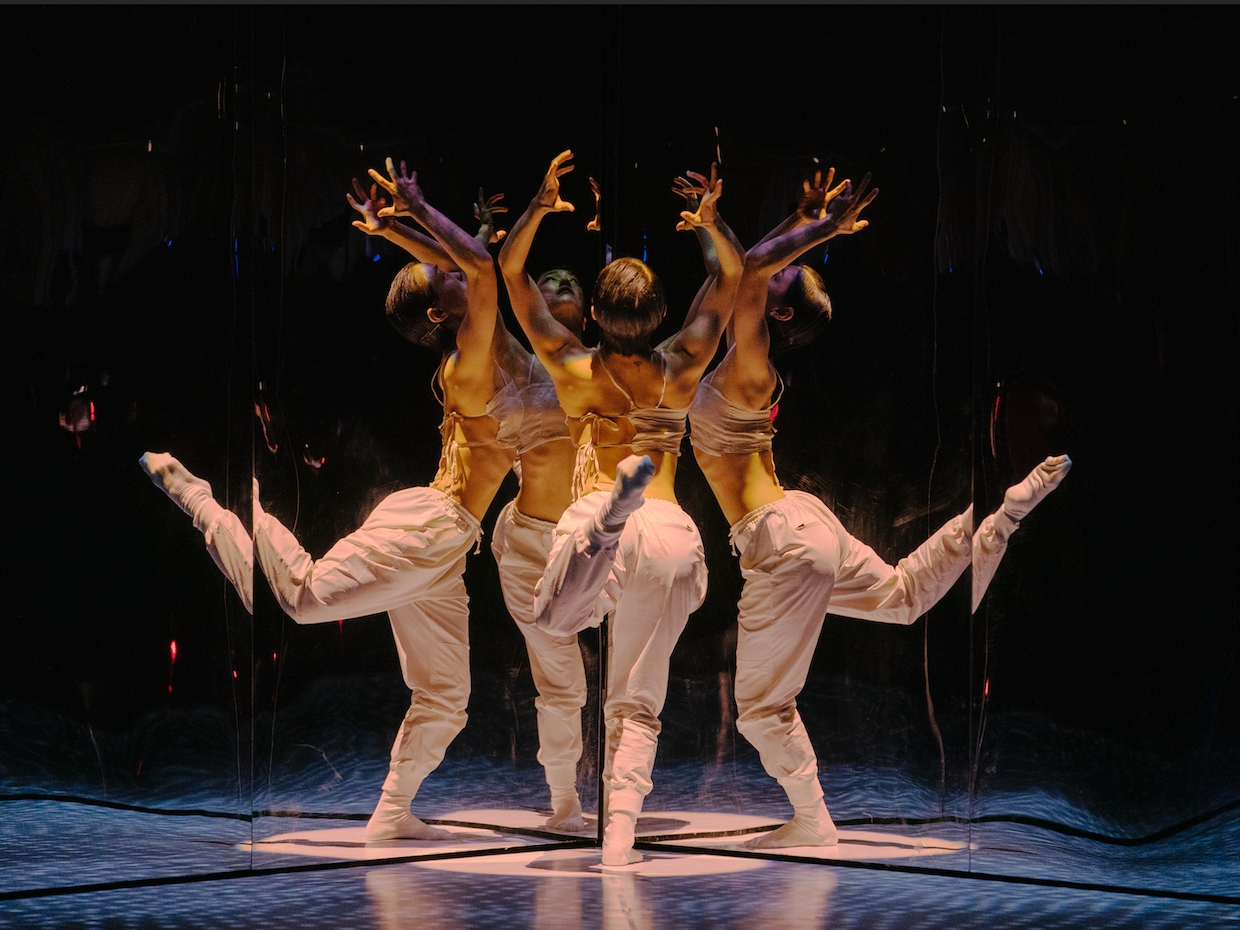
 Source: Collective A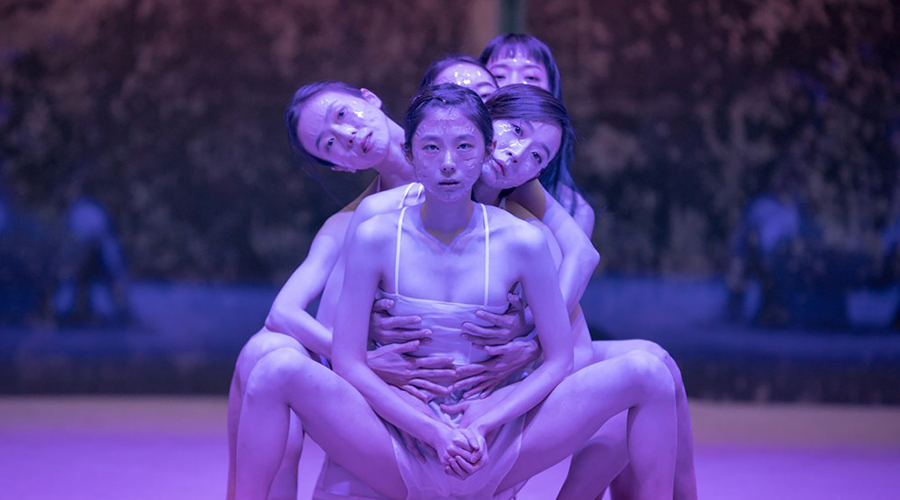
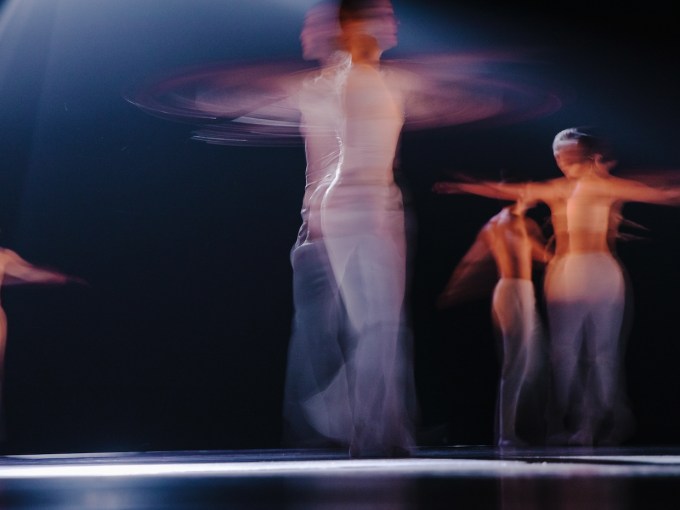 Image source: tumblbug.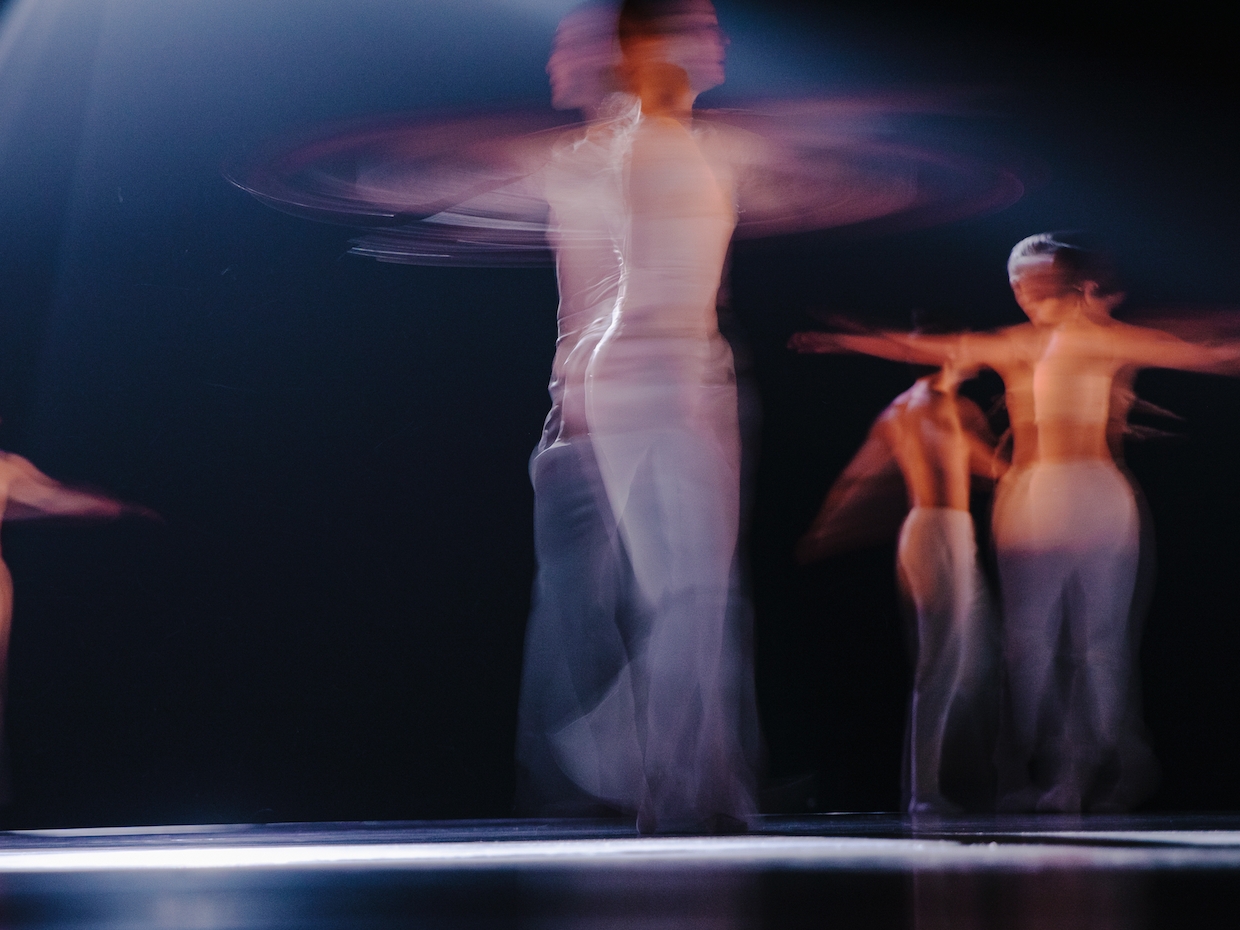


 The Grand Narrative