Yeah, I may be straining the definition of “fashionably late” here. But most of these 22 books were already quite old, so let’s make this post just as much about the subjects they raise as about their authors and contents, which I hope you’ll find much more interesting.
To that end, it’s very long, which I’ve had to split into four separate posts so as not to overwhelm you. But by all means, just skim ahead just to whatever catches your eye, or to Parts Two, Three, and Four that I’ll link to once they’re completed. And, if you’re tempted to buy one of my recommendations but want to know more about it first, or if you think I’ve misread something by one of your idols, please do let me know in the comments section.
For those of you interested in a breakdown of the authors, 15 of the 22 were written by women, with one more co-authored with a man; needless to say, I’ll never understand men who are too embarrassed to be seen reading female authors, especially when some women are turned on by those that do. (At which point, it behooves me to mention the crucial role of the book I was reading when I met my first girlfriend.) Unfortunately though, to the best of my knowledge only three of the books were written by people of color, or included chapters by them. But, frankly, correcting that remains a luxury I literally can’t afford: just two of the books were new ones ordered by me, and delivery charges often make second-hand books from overseas just as expensive as new ones in Korea. Most of the remainder then, came second-hand from the limited choices available at Fully Booked—since closed down—and Nampodong Book Alley in Busan, or from What The Book in Seoul.
Also complicating matters are my 900-ish books which arrived from New Zealand last year, after 14 years in storage, some 50-100 of which were well overdue for a read even before they were boxed. For example, tempting me from the corner of my eye as I type this is the 654-page The Prospect Before Her: A History of Women in Western Europe, 1500-1800 by Olwen Hufton (1995), which I see from my note on the inside front cover* that I bought on October 26, 1997. Like a lot of things associated with turning 18, I’m not sure I can wait any longer.
Finally, alas, my total pales in comparison to the veritable library read by the person who inspired me to keep track. But I have many uncounted journal articles as an excuse, and it’s still on par with that of a busy io9 writer, as well as an improvement on the measly 16 I read in 2013. With only 13 read so far this year though, I’m going to have to seriously up my game to reach my goal of 30 in 2015.
But that’s what are summers are for, right?
(*A habit I picked up from Clive James)
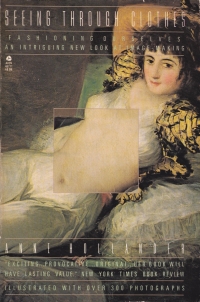 #1) Seeing Through Clothes by Anne Hollander (1980)
One of those books that completely shifts how you look at the world.
As a student in the mid-1990s, I was constantly disappointed with art history books, which overwhelmed with references to artists, works, and movements that I’d never heard of. But I wasn’t a beginner; if they’d been adequately illustrated, I’d have been able to follow along. Instead, they just left me feeling frustrated and ignorant, as if I shouldn’t even bother reading if I didn’t already have a degree in the subject. Better to learn something else to dazzle women at cocktail parties with, I soon realized, after ranting about snobbish art history writers inexplicably failed to impress.
Twenty years and thousands of books later, many with lots of big words and no pictures at all, I’m much more confident in calling out bad academic writers. But I’m also less quick to judge authors for things that are often out of their control, having some practical experience of my own with the arcane restrictions editors place on the use of images, and I’m much more willing to accept where my knowledge is lacking, and which subjects will need more of a commitment from me than others. For those, I’ve learned to approach via angles which I already have some background in, and know in advance I find interesting.
With art history, my interest was slowly rekindled through Erving Goffman’s occasional allusions to it in Gender Advertisements (1979), which I’ve done extensive work on (scroll down the right sidebar), then later through John Berger’s Ways of Seeing (1972). With Seeing Through Clothes though, I’ve become a giddy, wide-eyed teenager again, as not only does it have over 300 accompanying photographs (if only I’d found it 20 years ago!), but it made made me realize that art is one of our main and sometimes only source on changing notions of fashion, beauty ideals, status, and sexuality for much of human history. Rather than a study of art for art’s sake, that’s what this book is about, which makes it much more interesting and accessible for the lay reader, and means it’s thick with facts and insights that completely overturn what you thought you knew about those subjects. It’s clearly had quite an influence too, being referenced repeatedly in the very next books on fashion—The Language of Clothes by Alison Lurie (1981), and Fashion, Culture, and Identity by Fred Davis (1992)—that I read a year later.
That said, it’s still a solid, academic, 504-page tome, not for the faint-hearted. Also, while the first chapter on drapery was interesting enough (which, again in hindsight, there’s rather a lot of in medieval paintings), and the next two chapters titled “Nudity” and “Undressing” were fascinating, I have to admit that the remaining three of “Costume”, “Dress”, and “Mirrors” were really quite dull by comparison; naturally and obviously perhaps, but I’m not just being facetious, as the difference was so great that it was a genuine relief to finish the book. Still, I heartily recommend buying a second-hand copy at least, even for Korea-based readers that would have to pay $16.95 delivery.
Sadly, Anne Hollander died just a few months after I’d discovered her.
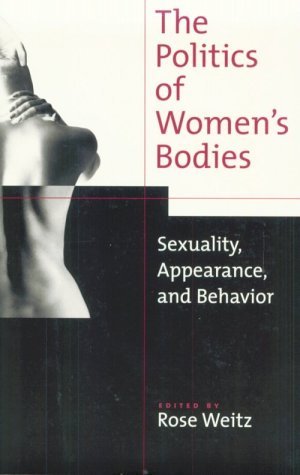
 #2) The Politics of Women’s Bodies: Sexuality, Appearance, and Behavior ed. by Rose Weitz (1998)
This was worth it just for Eugenia Kaw’s chapter, “Medicalization of Racial Features: Asian-American Women and Cosmetic Surgery“ (originally in Medical Anthropology Quarterly 7(1), pp. 74-89, March 1993), which led to the revelation I explained in my post “Those Damned Double Eyelids: How can a society still have Caucasian beauty ideals if its members explicitly don’t want to look White?“.
Of course, there’s still 19 more chapters on a very wide range of topics, albeit of widely varying quality, and although many are quite dated (I didn’t even bother with the final chapter on fetal rights), there’s still plenty to interest everyone. Personally, my three other favorites were:
Which has just reminded me that, many years ago, a (necessarily anonymous) reader emailed me on how to overcome that:
“…with Foucault, some people (like me) fall in love with him whereas others just wave him away. To answer your question [of which book is more appropriate for a beginner], his book, Discipline and Punish may be a better pick for you, indeed. It is difficult to understand (or appreciate) The History of Sexuality series truly without systematically following Foucault’s development of thoughts from his earlier books, just because Foucault himself was experimenting his ideas and didn’t really know where things were heading. I think Foucault finally clarified his thoughts, his plans, and his interests in Discipline and Punish and he completed them in History of Sexuality books. Besides, Discipline and Punish is more fun to read than History of Sexuality.”
- Next, Chapter 5, “From the ‘Muscle Moll’ to the ‘Butch’ Ballplayer: Mannishness, Lesbianism, and Homophobia in U.S. Women’s Sports” by Susan K. Chen, which unfortunately is just as valid today as it was when it was written in 1993. For a good book on similar themes in a Korean context, I highly recommend Transnational Sport: Gender, Media, and Global Korea by (the awesome) Rachel Miyung Joo (2012), whom I’ve been fortunate to meet.
- Finally, Chapter 8, “Selling Hot Pussy: Representations of Black Female Sexuality in the Cultural Marketplace” by Bell Hooks, who will already be familiar to many of you.* And I can see why: her writing style is very forceful and galvinizing, and I especially liked her brief examination of Tina Turner’s career, which she convincingly argues “has been based on the construction of an image of black female sexuality that is made synonymous with wild animalistic lust.” Then again, forceful writing doesn’t leave much room for nuance, so some of her arguments here are much too categorical for my taste.
(*By coincidence, as I type this I’m busy tweeting “15 Books That Changed Women Forever” open in another tab, where her 1981 book Ain’t I a Woman? is described as “a foundational text of intersectional feminism, explaining how the feminist movement failed to speak to women of color and the working class. Hooks continues to be instrumental in calling out mainstream feminism for its racism and classism.”)
My only, minor complaint with Women’s Bodies as a whole is that it exclusively looks at the US, which doesn’t become apparent until you’re already well into it.
#3) The Symptom of Beauty by Francette Pacteau (1994)
From the introduction (p.13; emphasis in original):
The issue of beauty, as such, played little part in the initial feminist debates about ‘images of women’. Nevertheless, it formed the background against which the debates were staged. The anger directed towards advertising, for example, was basically in protest against a world of representations—in particular, the representation of a world in which a women was young, and ‘beautiful’ or she was nothing. The close-cropped heads, the burned bras, the functional overalls and the eschewal of make-up which characterized the appearance of feminism in the 1970s, represented the will to eject ‘beauty’ (seen as an oppressive male cliche) from the world of women.
Who among you wouldn’t want to buy it after reading that? Yet what followed was one of the most impenetrable volumes I’ve ever read, full of some of the worst excesses of postmodernist and poststructuralist waffle. Occasional semi-readable sections, for example Chapter 4—”The Girl of the Golden Mean”—which added slightly to my knowledge of 1950s narratives about female body shape, were scant compensation for the 19,000 won I’d wasted on a book I could barely comprehend.
In fairness, the back cover did promise “an intriguing psychoanalytic study of beauty that looks into the eye of the beholder and to the mind conjuring behind it”, and pointed out that the author is less interested “in the contingent object of desire than the fantasy that frames it”, and instead “considers the staging of the aesthetic emotion”—not necessarily a flaw of course, but certainly a red flag for those of us more used to focusing on those objects of desire (let alone us plebs not quite used to using the word “contingent” like that). Unspoken is that she also clearly assumes the reader is intimately familiar with the work of Jacques Lacan, although again I imagine that every undergraduate psychoanalysis student would be.
Still, most English speaking undergrads—and I’d venture even their French counterparts—would surely struggle to follow along as she applies her psychoanalytic lens to some extremely obscure figures and cultural works, the very first two discussed being the Sarrasine and The Unknown Masterpiece novellas by Honoré de Balzac (1830 & 1831), followed by the 5th century BC philosopher Hippias of Elis. Again, that’s not necessarily a flaw. But it is heavy going for the very first page of a book about a subject you expected to be much simpler.
Or am I just going to the wrong cocktail parties?
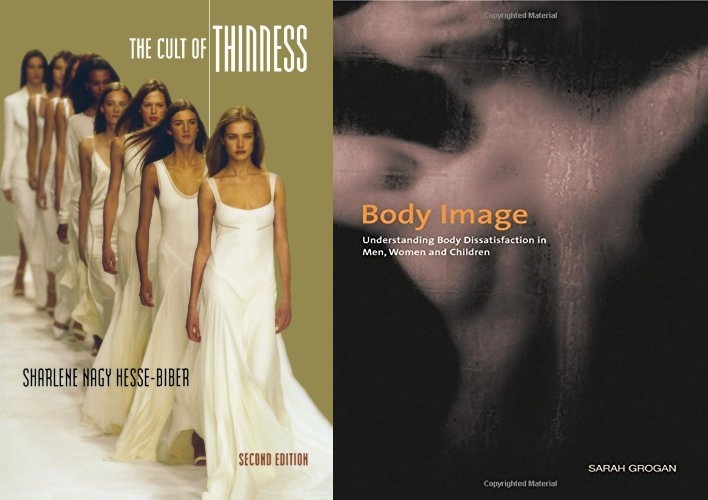
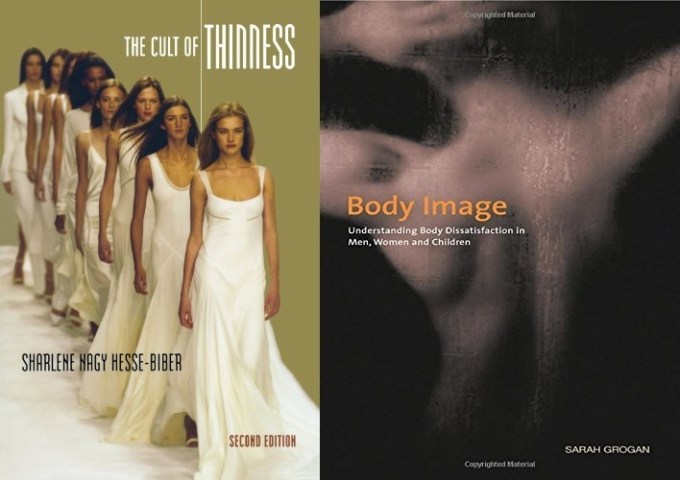 #4) The Cult of Thinness by Sharlene Nagy Hesse-Biber (2007, 2nd ed.), & #5) Body Image: Understanding Body Dissatisfaction in Men, Women and Children by Sarah Grogan (2007, 2nd ed.)
Both excellent, comprehensive discussions of the subject of body image, but both written before the rise of social media (an issue I’ll address in a moment). So, I would encourage you to keep both names in mind, but to holdout for third editions.
When those do come out though, my preference would easily be for Sarah Grogan’s. Primarily, because this edition’s clear chapter structure means that information is easy to find (and hence a much better quick reference guide when I was asked for a quick contribution to an article on “Korean Primetime’s ‘Lookism’ Problem” for the Korea Times), whereas the vague, overlapping ones of The Cult (e.g., Chapter 5 “Becoming a Certain Body”, Chapter 6 “Joining the Cult of Thinness”) makes navigation difficult, and the content somewhat repetitive; this meant finishing the book became more of a chore than a learning experience. Also, because of personal preferences: first, because The Cult overwhelmingly discusses the US, whereas Body Image throws a much wider net, but with a focus on the UK; and second, because The Cult often breaks the text with random collages and so on, in contrast to the more spartan use of images in Body Image. I can hardly critique that on a blog of course, but when it’s in an academic book it does give the impression of catering to a much younger, less-informed readership.
In Body Image, the most interesting and eye-opening section for me was Chapter 5 on media effects, which raised my understanding of the subject to a new level by outlining the major theories of media influence—social comparison theory, self-schema theory, and self-discrepancy theory—and how these can and have been incorporated in strategies to overcome media effects. Students have asked me about the latter sometimes, but frankly I haven’t really known what to say; now though, they’ll be a core part of my presentations.
Also, the concluding paragraph from that section sounds quite prescient in light of recent shifts in model types and messages in advertising, although catering to attractiveness is also not without its critics (p. 132, my emphasis):
“Clearly, media portrayals of the slender (and muscular, for men) body reflect current cultural ideology of the body as well as promoting these ideals. However, since the portrayal of such imagery has been shown to reduce body satisfaction and create body concerns, this is surely sufficient reason for advertisers to opt for the use of models in a range of sizes. Although advertisers may argue that only thin models sell products, recent British evidence from a study by Emma Halliwell and Helga Dittmar [downloadable here] demonstrates that it is attractiveness, rather than size of models, that is crucial in making associated products attractive to consumers.“
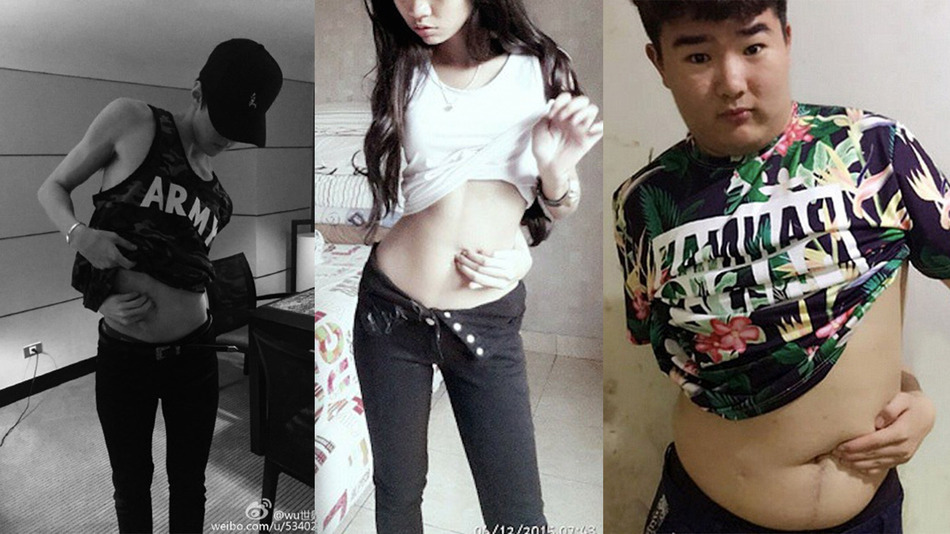
Originally, this post had 500 more words of breathless praise for Grogan’s book, and of what I learned from it. Wisely, I’ll race ahead to my conclusion instead, which I’d planned to be a lament on how dated both books were, the research I did for my article on the thigh gap teaching me that social media has had a radical effect on the ways and especially speed in which body image trends are formed and disseminated. And, as if to rub that in, the “Bellybutton Challenge” was going viral as I began this post, followed by the “Collarbone Coin Test“(?) that’s emerged as I’m ended it.
Skimming through Grogan’s book again a year later though, from which I realize I still have a lot to learn, I’m no longer convinced that things are that different to when I was young, and that insights gained about the effects of other, slower media are no longer relevant. Moreover, the rise of social media is hardly a uniform negative either, as a recent interview of young adult fiction writer Louise O’Neill recently taught me:
…Her books are equally unflinching about life in the social media age. “Social media is a double-edged sword,” says O’Neill, herself an enthusiastic user of Twitter. “There are extremely positive elements to it, particularly the way in which it makes it easier for us to connect and build our own communities. Even selfies can be positive – I think there’s something brave and amazing about teenage girls posting pictures of themselves saying, ‘This is how I look and I am beautiful’ but it’s also true that it can exacerbate feelings of not being good enough. There’s so much toxic competitiveness when you’re a teenage girl, so much are my thighs smaller than hers? Am I prettier? Do boys like me more? Social media adds to the pressure and then society tells young women that they must look sexy and act sexy but that they can’t be sexual beings.”
Comments such as this help explain why O’Neill’s books are read as much by the anxious mothers of teenage girls as by the girls themselves. “The key is to be honest,” she says when asked what advice she would give those parents. “I would hope mothers who read my books understand the pressures their daughters are under and why they are acting or behaving the way they are. Try to encourage honest communication, be open and interested, try to understand.”
So by all means, read “old” books on body image if you can get a hold of them, especially these ones. But also keep up with developments, these dozens of journal articles on gender and body image, freely available from Routledge until the end of September, being an excellent place to start (and one of the first ones is about Korean women!). And please feel free to discuss those in the comments too!


 (Source, left: Bombshell Bettie. Source right: unknown)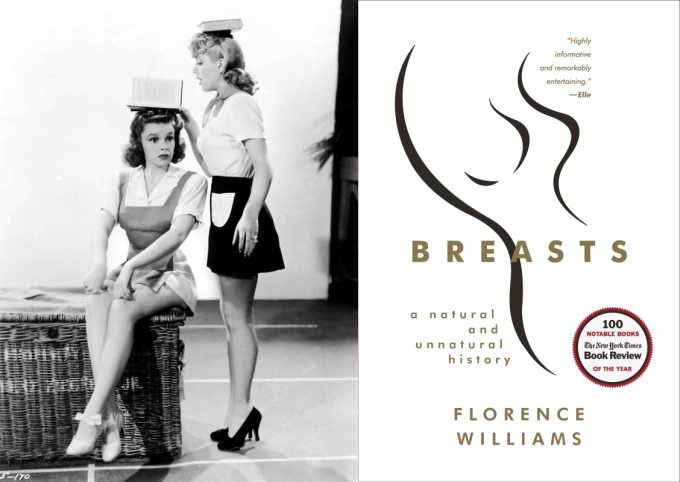
 own copy, it looks like I read it during a ticker-tape parade.)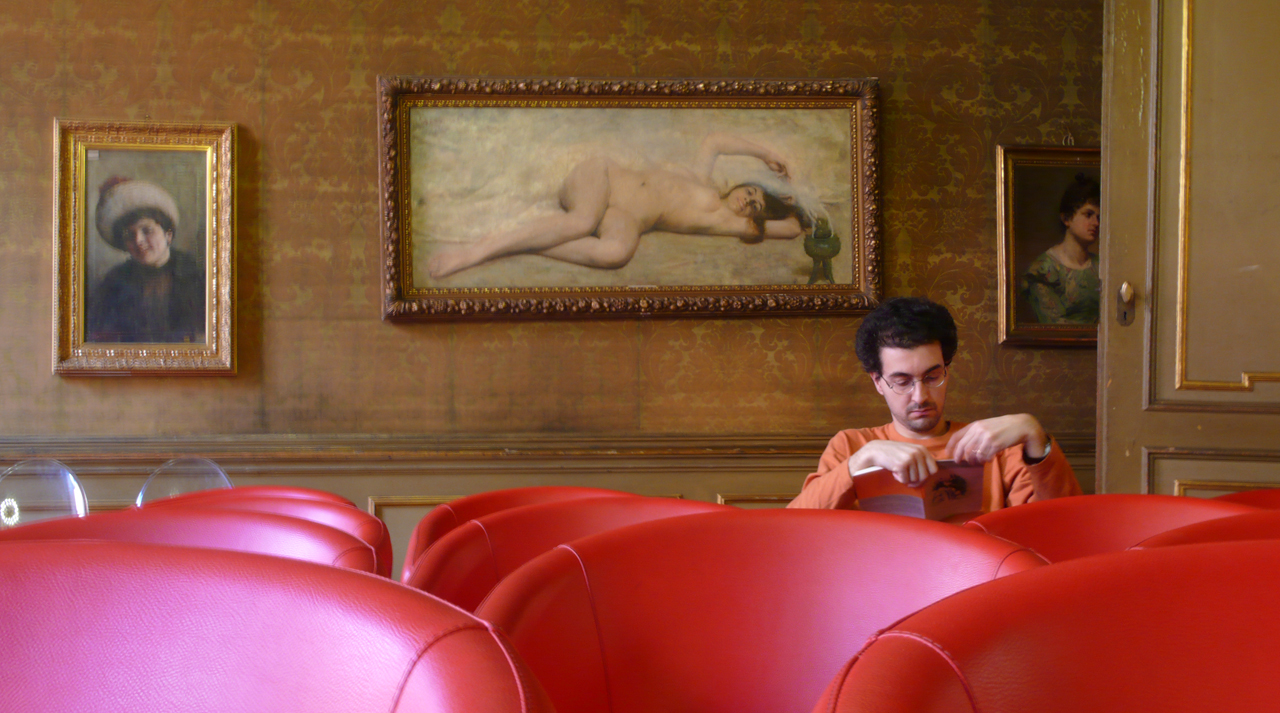


 relationship, and that marriage might be on the cards.” Whereas for women, inviting her to meet her parents “means she expects to marry him, and Chinese men understand this arrangement.” What’s more, the average age of marriage for Chinese men was only 24 in 2010; for women, 22 (
 The Grand Narrative