
A study of one British girls’ school made me think again about what school uniforms teach girls in Korea
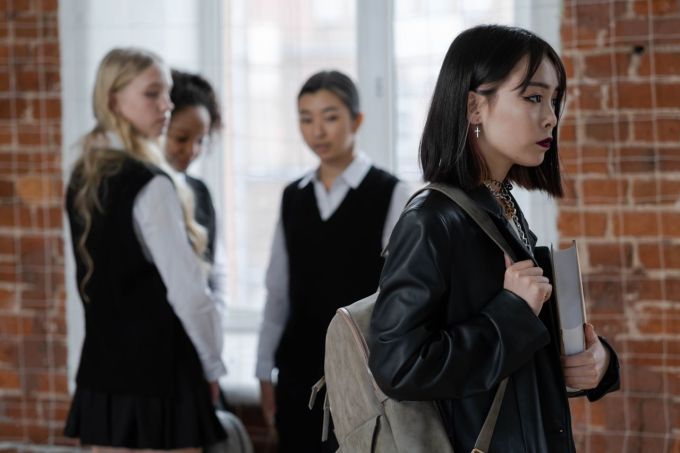 Estimated reading time: 5 minutes. Image source: cottonbro studio @pexels.
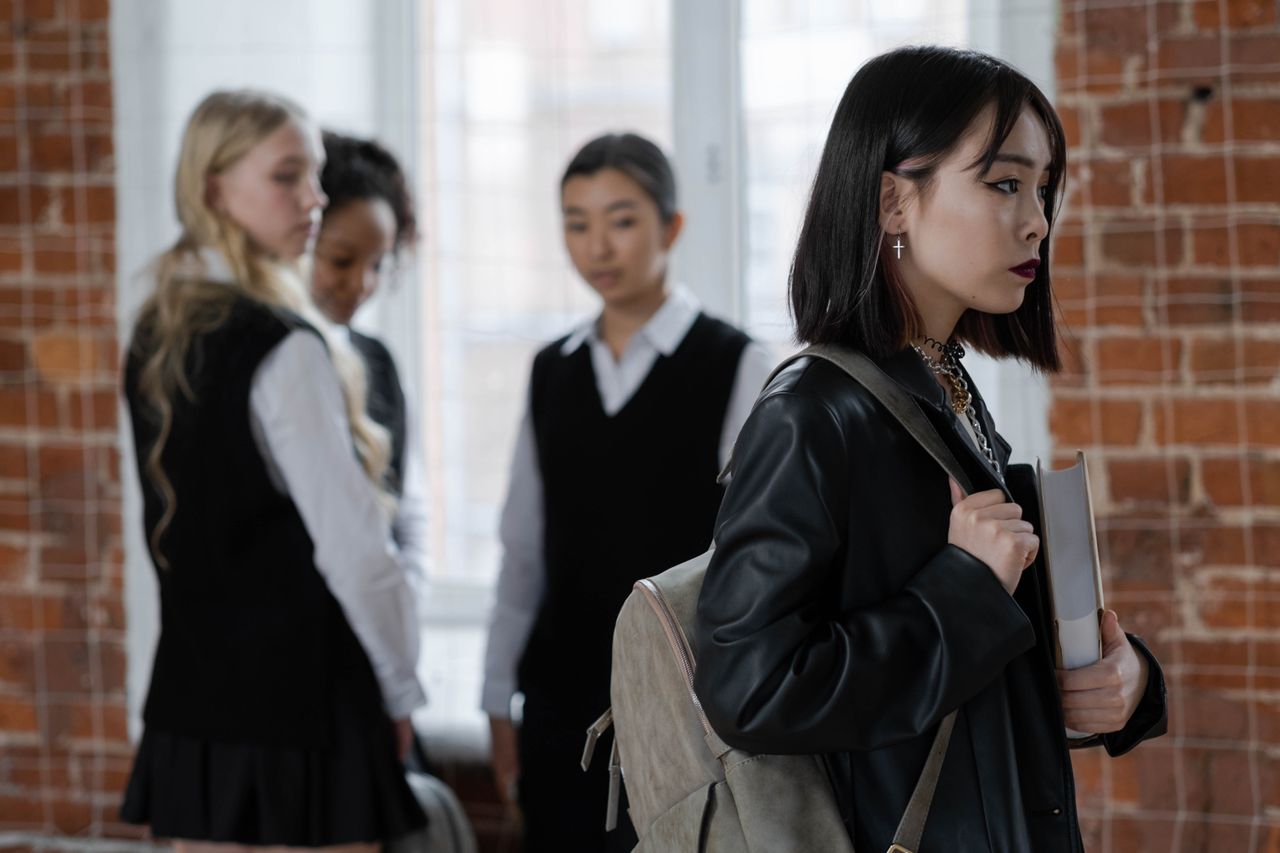
“The girls emphasize the contradiction between the school’s apparent feminist principles and their everyday, lived experiences. Jane Kenway and colleagues (2015) refer to the liberal feminist agendas of girls’ schools as “faux feminism” (158). This is apparent in the way in which Hillcroft promotes a feminist narrative of challenging stereotypes and celebrating a can-do attitude, an ethos that is adopted by many girls’ schools in the area. However, the idea that girls can do and be anything they want to be is starkly contradicted by the heavy policing of their dress and appearance. The lesson they take away from this is that a Hillcroft girl can be anything she wants to be, but only within the permissible, normalizing frameworks of conventional, elite (hetero)femininity.”
Am loving the open-access article “Producing and Policing Elite Bodies in an Independent Girls’ School” by Louise Alice Taylor (LinkedIn; University of Sussex), which popped up in my subscription to Girlhood Studies this morning. With all the work I’ve done on Korean school uniforms, especially “How Slut-Shaming and Victim-Blaming Begin in Korean Schools” and “Korean High School Girls Complain They Can Barely Breathe in Uniforms Smaller Than Clothes for 8-Year-Olds,” that paragraph above really stood out.
 Naturally enough though, I read Taylor’s opening paragraph first, and it’s that one which got me hooked. Because although the article technically isn’t about Korea, it sounds like it could be, providing the conceptual tools and frameworks for understanding how Korean families navigate the paths set by elitist middle and high schools for channeling students into SKY universities.
With my youngest daughter just having sat Korea’s university entrance exam, and my eldest already at university, this really hit home:
Given the relatively small number of private schools in the UK (Brooks and Waters 2015) and concerns over reputation, research in this private sector is often difficult to access. Nevertheless, a focused body of research on privileged, middle-class pupils exists, but, as Claire Maxwell and Peter Aggleton (2010) suggest, this remains a “relatively understudied context” (4). Researchers have drawn attention to how the school curriculum reproduces pupils as elitist through the exchange of economic capital for cultural capital (Bourdieu 1987). For example, Louise Archer and colleagues (2014) debate the need for class to be considered alongside gender in an exploration of STEM participation in state schools. Other studies such as Alexandra Allan’s (2009) work on the production of the so-called lady, in a single sex independent primary school and Claire Charles’s (2014) work on elite students in Australia have examined how class and gender intersect to produce elite femininity in a private school setting. Further studies have explored the reproduction of the global elite; see Joan Forbes and Bob Lingard’s (2015) concept of “assured optimism” (118) for young women in a Scottish private school and Debbie Epstein’s (2014) examination of postcolonial narratives of whiteness amongst elite schools in South Africa. Drawing on Butler’s conceptualization of gender (2002) and Pierre Bourdieu’s (1987) understanding of social class, I contribute to these debates by exploring how privately educated schoolgirls’ bodies are policed by both adults and peers in a specific school to produce white, elite femininity. I begin with Beverley Skeggs’s (2002) concept of respectability to examine how femininity is reproduced by, inscribed on, and rehearsed in the middle-class schoolgirl body through uniform regulation. However, whereas Skeggs focuses on white, working-class women and their concerns about being seen to be respectable, I argue that middle-class girls are also concerned with demonstrating respectability and suggest that with privilege comes anxiety and precarity. In this study, the girls at Hillcroft Girls’ School demonstrate how they work relentlessly to maintain and secure their elite status. This renders elite femininity a fragile construct in which its ongoing embodied performance must be continually reproduced and worked on.
Sadly, Girlhood Studies only seems to have one article specifically about Korea—but it’s worth it. “Gender Transformation and Childism: Girl Activists Challenge Sexual Harassment in School” by Minkyung Kwon (LinkedIn; University of Edinburgh), about the Korean School #MeToo movement, is also open access. What’s more, her doctoral thesis, on which it was based, turns out to have been covered by the YouTuber The Paper Guy, whom I already subscribe to (great minds think alike!):
Enjoy! :)
Related Posts:
- Korean High School Girls Complain They Can Barely Breathe in Uniforms Smaller Than Clothes for 8-Year-Olds.
- How Slut-Shaming and Victim-Blaming Begin in Korean Schools
- Thinking Sociologically About Modern Korean Female Body Ideals
- Being Able to Wear Glasses Was a Crucial Step for Korea’s Anchorwomen. Now, Let’s Give Them a Chance to SPEAK as Much as Anchormen Too
- Korean Sociological Image #55: School Uniform Advertisements
- Korean Lolita Nationalism: It’s a thing, and this is how it works
- Hyundai Fit-Shaming Korean Girls
- Time to Stop Skirting the Issue: Sexualization of School Uniforms in South Korea (Korea Exposé)
- Why, oh Why, do we Need Mosaics on Women’s Nipples?
- When You Only Have 8 Seconds to Cram as Many Clichéd, “Feminine” Poses into Your Commercial as Possible

If you reside in South Korea, you can donate via wire transfer: Turnbull James Edward (Kookmin Bank/국민은행, 563401-01-214324)

