
TIL that many simple, everyday things like monkey bars in playgrounds, and standing desks, were originally born out of eugenic concerns with white people’s postures.
What surprises might an examination of Korean “figure correction” services also provide?
 Estimated reading time: 10 minutes.

Full disclosure—I’m not actually answering that question I pose. Or at least, not for now. Sorry. Instead, this meta post is about reveling in the asking. Then, passing on to you the mind-blowing BBC podcast episode about the “posture police” that helped me remind me of the value of that, plus a myriad of sources to help come to some answers. I’ll also give a shoutout to my favorite fashion history YouTuber.
But first, how I got to them, starting with the visceral unease I felt when I first saw the ad below. It was just too much, even by Korean standards. It simply begged commentary.
Or did it? What was there to say exactly?

I’m not at all against the “체형교정,” or “figure correction” services this clinic provides. Actually, I could do with a consultation for my back myself.
But that figurehead-like ‘after’ shot, the model’s impossibly high heels conveniently hidden? That however uncomfortable and painful that pose looks to hold for more than a moment, it’s still presented as an ideal?
I can’t help but be reminded of the “figure flaws” or “figure faults” that overseas corset manufacturers invented a century ago, to help keep their industry afloat.
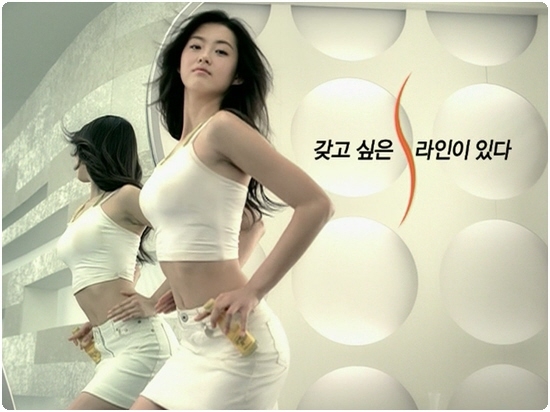
For readers unfamiliar (long-term readers, please bear with me a moment), those manufacturers’ pseudo-scientific justifications for their ensuing schema for women’ bodies, developed only to disguise that their flaws were wholly invented, somehow became the accepted wisdom for how women viewed themselves. Which I saw uncanny parallels to in the Korean craze for inventing various “lines/라인” for women’s bodies 10-20 years ago. Then, it was

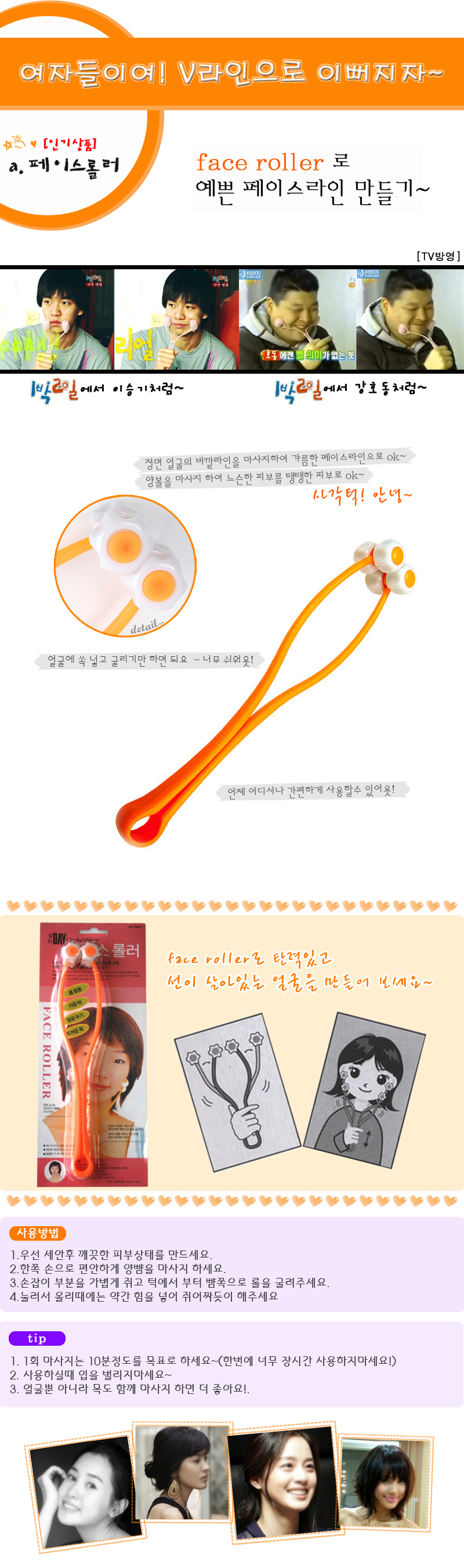
astonishing to see how brazenly companies would compete for their new, eponymous lines to sink into in the public consciousness. Venus lingerie claiming that women’s breasts were a “V-line” for instance, Yes lingerie that they were a “Y-line.”
Hanging over this trend was the inconvenient fact that most women neither needed nor wanted exciting new names for their body parts, which would invariably be found wanting compared to those photoshopped versions in the ads. Hence most lines, mercifully, were quickly forgotten. But some did indeed stick, a V-line neck becoming a standard offering by cosmetic surgeons today for instance, and just a few days ago my female students told me that their summer plans included working on their “bodylines.” In fact, in the 2020s, it seems just about everything to do with a woman’s body has become a generalized “line.”
But these subjects, I’ve already covered in depth. You could argue I’m merely projecting too, and overemphasizing mere semantic similarities.
Either way, I could have just tweeted the ad, and all those links.
For both you long-term and hopefully new, interested readers though, who I need to provide extra value to if I’m (very) belatedly going to transition this blog into a paying, subscriber-based newsletter, simply linking to stuff you’ve probably read before felt woefully insufficient.
But again, what to add though? An in-depth look at the growth of the figure-correction industry? Now ubiquitous, but which I’m not sure I’d even heard of 5 years ago? Interesting to learn more about, for sure, but probably lacking English sources. So, not really worth, as a busy divorced dad, the huge time investment I’d need to spend on all the translations.
 “For liposuction and fat transplantation, Model-Line Clinic, Busan.”

Hence I sat on this post for a year, leaving it half-finished. And, frankly, dozens like it before and since, for the same reason that I didn’t feel I knew enough about the subject to add that value, so fresh research was needed first. All culminating in my recent hiatus.
Then finally, in just the last two weeks, they all suddenly starting making sense again.
Like all breakthroughs, this one is merely the culmination of a lot of hard work. Or rather, my reading of the hard work done by other people much smarter than me. Specifically, one trigger was my recently encountering the article “The Intimacy of Exercise: Sensuality and Sexuality in Black Women’s Fitness History” by Ava Purkiss at Nursing Clio, author of Fit Citizens: A History of Black Women’s Exercise from Post-Reconstruction to Postwar America (2023), which I couldn’t order fast enough. Instantly, it reminded of themes I’d previously read about in, to give just a small sample:
- Working Out in Japan: Shaping the Female Body in Tokyo Fitness Clubs by Laura Spielvogel (2003)
- Beauty Up: Exploring Contemporary Japanese Body Aesthetics by Laura Miller (2004)
- Transnational Sport: Gender, Media, and Global Korea by Rachael Miyung Joo (2012)
- and Flawless: Lessons in Looks and Culture from the K-Beauty Capital by Elise Hu (2023)
All of which I was too daunted by to even begin to parse here. But just thinking about them all together for the first time now, persuaded me to buy 운동하는 여자: 체육관에서 만난 페미니즘 / A Woman Who Exercises: Feminism Meets the Gymnasium by 양민영 / Lee Min-yeong. Which I’m finding surprisingly well-suited to my Korean level, and has already thrown me headfirst into an equally deep dive on the sexualization of Korean (female) basketball players’ uniforms, which I’ll link to here once I emerge.
 Source: Aladin.

An 인증샷 and teaser for Korean speakers:


But to continue with the ‘small’ sample, “The Intimacy of Exercise” also reminded me of Militarized Modernity and Gendered Citizenship in South Korea by Seungsook Moon (2005) and 예쁜 여자 만들기 / Making Pretty Women by 이영아 / Lee Yeong-ah (2011) which I have discussed. The former, because it more provides essential socio-historical context and background than looks specifically at body image and beauty ideals per se, and the latter because it’s Korean, so normally I only, slowly, examine small sections at a time.

Then Moon’s book suddenly reminded me of Suk-Jung Han’s July 2005 Japan Focus article “Imitating the Colonizers: The Legacy of the Disciplining State from Manchukuo to South Korea,” one of two utterly essential for understanding Northeast Asia in the second half of the 20th Century, specifically South Korea’s national Jaegun citizens’ gymnastics (국민체조) from the 1960s. Which then reminded me of Taeyeon Kim’s 2003 Body and Society article “Neo-Confucian Body Techniques: Women’s Bodies in Korea’s Consumer Society,” because of @equalopportunityreader’s perceptive point below about Korean self-cultivation, and the endless drive—very much shared by myself—to improve one’s ‘specs.’ And, oh, what about that guy you ask? Don’t get me started on photo requirements for resumes, and the ensuing excessive, often alien-like photoshopping, absolutely enabling resigned acceptance of often literally impossible body image standards for women—and men.
 Source: @equalopportunityreader.
More specifically, the breakthrough is my suddenly beginning to see the links between all of those. A grand narrative coalescing as it were, rather than feeling overwhelmed all the time. That maybe just through osmosis, I do know my shit. That I’m worth $2-$5 a month, if only I can put those thoughts into words on paper on a regular basis. And, crucially, stop with all the navel-gazing already!
On that note, may I first present the “The Politics of the Body,” the 16 June episode of the BBC 4 radio show and podcast Thinking Allowed, hosted by sociologist Laurie Taylor. The ultimate impetus for this post, his interview of Beth Linker, Associate Professor in the Social Sciences at the University of Pennsylvania, about her new book Slouch: Posture Panic in Modern America (2024), which I will happily throw money at once the paperback comes out, is a fascinating examination of aspects of everyday life we take for granted—which nicely dovetailed with my sense there was—is—something to be said about those figure correction ads.

Beth Linker’s full interview, from 1:45 to 16:50, I can’t possibly do justice to with my transcripts of brief sections. But hopefully they’ll suffice give a taste.
First, from 5:45-7:10:
Laurie Taylor:
“Then you actually get posture exams in the early 20th-Century, [they] became mainstays in the military, workplace, and schools…and there’s a thing called the ‘American Posture League,’ which was formed in 1914. Tell me about the League, and what beliefs it promoted.”
Beth Linker:
“Yes, the American Posture League was formed by Jessie Bankcroft, head of public schools in New York City…the first order of business was to standardize posture…they developed tools by which to measure posture…, so they used what’s called a schematograph—an overhead projector where you get posture tracings. Eventually they adopt camera technology. And they begin to use this technology in the military, in public schools, and universities to physically examine every person, and then, they develop grading systems for everybody’s posture. Standard grades then became A, B, C, D—D being the worst….and they also developed posture contests.”

Next, from 10:08-11:00:
Laurie Taylor:
“Slouching has been linked to an offensive discourse about so-called ‘primitive people,’ but you found out that the rise of eugenics in the early 20th-Century prompted scientists to worry that bad posture could lead to a backward slide in human progress. Tell me a little bit more about this development and about ‘race betterment’ projects.” (Source, right: Penn Arts & Sciences.)
Beth Linker:
“The white educated class, again, very much worried that, if they lacked physical fitness, that other non-white peoples would become stronger and overtake them and their better physical form. The end of that quote that you had you could hear good posture requires drill, which requires a certain kind of intellect and a will, which still puts white people as superior.”
And finally, from 16:02-16:45:
Beth Linker:
“…it was assumed that your outward appearance indicated inward ability and morality.”
Laurie Taylor:
“That’s not denying posture therapy can be a powerful tool when used to alleviate existing back pain. But…in a way, we’ve got to salvage that thought, haven’t we, from the rather long, troubled history of ‘posture panic.'”
Beth Linker:
“I am not opposed to, you know, standing desks…to anything that people do to improve their well-being. I am more trying to get us to think more critically about when we say to someone ‘Oh, you should stand up straight,” what do we mean by that, and what do we think that that’s going to improve?”
 Sources: KoreanYouSay, CollectorsWeekly.

And finally for this post, let me take advantage of the opportunity to give a shoutout to my favorite fashion history YouTuber, SnappyDragon. Swayed by the image above that reigned supreme on the sidebar I had then, a year ago the model’s pose in the figure correction ad reminded me of the bustle, leading me to the following two videos of hers. For the second, I’ll wrap up this post by leaving you with several screenshots I took before I developed my colossal writer’s block—but again, I highly recommend watching both in full.
Enjoy!
From 16:10 in that second video:


Continuing, from earlier at 13:26:


And, last but not least, from 21:55:


Related Posts:
- Korean High School Girls Complain They Can Barely Breathe in Uniforms Smaller Than Clothes for 8-Year-Olds.
- How Slut-Shaming and Victim-Blaming Begin in Korean Schools
- Being Able to Wear Glasses Was a Crucial Step for Korea’s Anchorwomen. Now, Let’s Give Them a Chance to SPEAK as Much as Anchormen Too
- Busting the Myth of Jeju Island’s Topless Divers
- When You Only Have 8 Seconds to Cram as Many Clichéd, “Feminine” Poses into Your Commercial as Possible
- The Korean Conscription System Promotes a Servile, Subordinate, Sexually-Objectifying View of Women. Here’s How.

If you reside in South Korea, you can donate via wire transfer: Turnbull James Edward (Kookmin Bank/국민은행, 563401-01-214324)
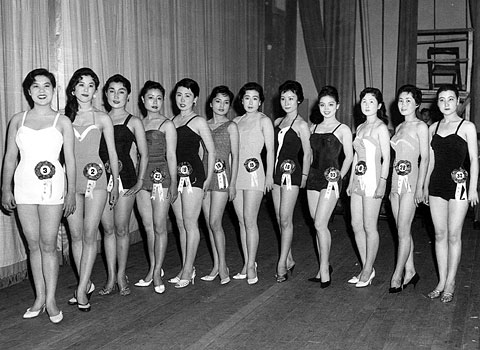




 Three out of four female college students consider X-line, a term referring to a slim waist with ample breasts and hips, to be the ideal body shape, according to a survey by
 The Grand Narrative
