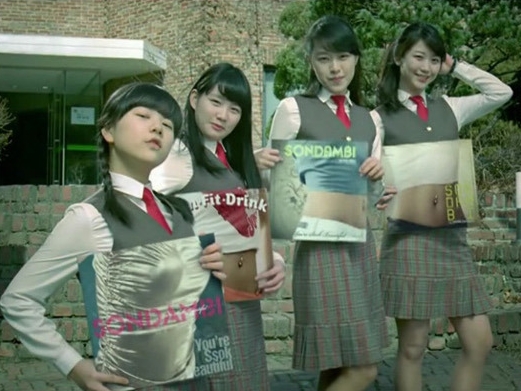
Korean Sociological Image #9: The Secret to Bigger Breasts?

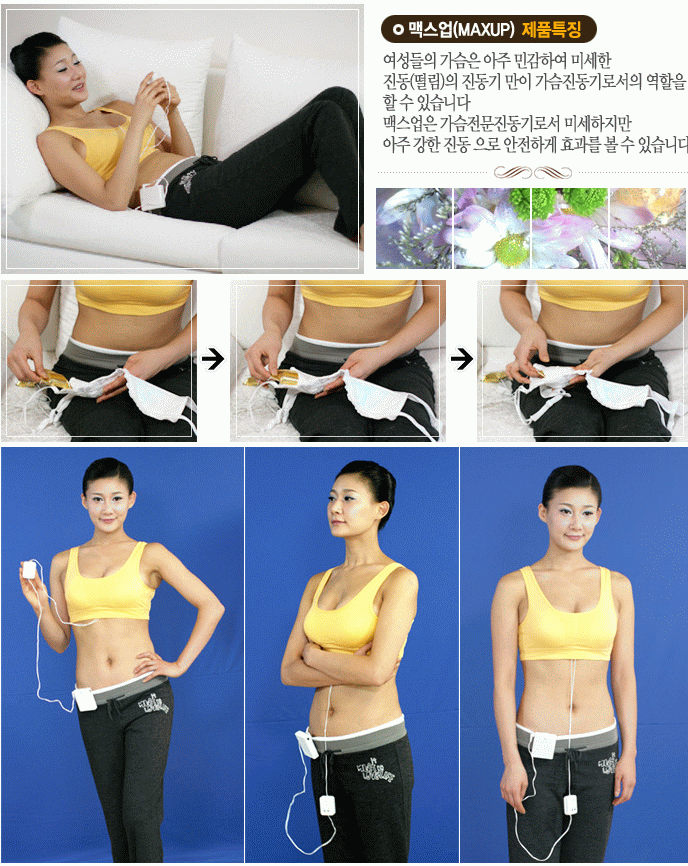
Korean Breast Massager Advertisement Caucasian

( The title reads: “A message of hope to all women!” )

If someone had told me years ago that I’d be writing about a Korean infomercial at some point, then I would have wagered good money that it would have been about one for bidets actually, for nothing quite gives you that “We’re not in Kansas anymore” feeling as switching the television on and seeing attractive women holding perspex buttocks over jets of water, waxing lyrical about how well they cleared a strategically placed brown-yellow paste. I could mention the looks of ecstasy and relief on various actors’ faces as they supposedly use the bidets later too…but you get the idea.

Lest I give the wrong impression though, there are certainly many advantages to Koreans’ no-nonsense attitudes to bodily functions, and actually I much prefer them to many Americans’ delicate sensibilities. But what to make of these – for want of a better term – electric breast enlargers?

If you can forgive the pun, then two things really stick out about this infomercial and its accompanying website for me (beware a loud video if you click on the latter):

First, needless to say, since writing this post on the subject a year ago I’ve still seen absolutely no evidence to suggest that doing fuck all is an effective way to lose weight and gain muscle tone and so on, let alone enlarge any specific body part. But while Korea by no means has a monopoly on misleading advertising, it is also true that various loopholes in advertising legislation here mean that there is little to stop producers of “diet-related” products from, well, basically completely lying about the efficacy of their products. For more on this, see the second half of this post where I discuss Minjeong Kim’s and Sharron Lennon’s “Content Analysis of Diet Advertisements: A Cross-National Comparison of Korean and U.S. Women’s Magazines” (Clothing and Textiles Research Journal, October 2006)¹ from which I first learned of it, and if it sounds like I’m exaggerating, then consider the fact that despite supposedly far stricter standards for “normal” food that over 88% of food labeled as organic isn’t, for instance, or that the KFDA is not empowered to tell you, say, which Vitamin C drinks contain carcinogens, but only (and uselessly) how many (see #14 here).

And second, in the strange event that you didn’t look closely enough to notice, then let me point out that it is only the Caucasian model above that you can see in lingerie, whereas her Korean counterparts are all fully clothed. True, that may sound like a strange way to describe a woman in a crop-top, but the difference is more than mere semantics, as many Korean porn stars worked as lingerie models before bans on foreign models working in Korea were lifted in the mid-1990s. This means that even today lingerie modeling still has a certain stigma that even bikini-modeling lacks, and despite the bikinis themselves obviously being just as (if not more) revealing. For more information, see #1 here for the most recent of many posts on that.

Korean Breast Massager Advertisement Korean

Still, Koreans are notoriously savvy consumers, so while I confess that I haven’t bothered to look at this late hour, I imagine that there will be many scathing reviews of this product available online. And, with obvious parallels in many other (more important) aspects of life in a democracy as young as Korea’s, to a certain extent this vibrancy of online Korean life is the result of and compensates for deficient legislation, although on the other hand in this particular case it is also stymieing the development of a healthy Korean consumer culture.

Tempting as it is to continue this post in that vein, let me wisely close here by pointing out that in the product’s defense, it can simply be returned with your money back before 2 weeks. And I seem to recall from my 2 viewings of Dragon: The Bruce Lee Story that actor Jason Scott Lee playing Bruce Lee had two similar things strapped to his pecs in a scene where he was working on a script at home (i.e. not exercising, just like the women in this infomercial). Can anybody enlighten me? Am I dismissing…er…electric shock treatment(?) unfairly? As far as I know though, and to many teenage girls’ chagrin, the size of a woman’s pectoral muscles still has little effect on the ultimate size and look of her breasts, which are mostly connective tissue, “lobules,” and fat.

(For all posts in my “Korean Sociological Image” series, see here)

1. On a technical note, since I wrote that post the PDF of the article is no longer free to download I’m afraid, so I would be grateful if anyone that knows of a free link an/or a copy themselves could pass it on for me to provide to others here. Alternatively, serendipitously my printer broke last week and I’m buying a printer/scanner to replace it, so I’ll be able to scan the copy I printed if anybody asks!

Share

Korean Sociological Image #8: America…Fuck Yeah!

Korean Advertisement Sungshin Women's University Relative Size Racism Caucasian

An advertisement from today’s Korea Times, which immediately grabbed my attention for 3 reasons:

  • It’s for a women’s university, but not only does it feature men, it has more men than women.
  • It has a Caucasian man in it, whereas the target audience would overwhelmingly be Korean.
  • The Caucasian man is easily the most prominent feature in it, and is looking at the viewer rather than into the distance like the Korean students.

After just a few minutes thought though, obvious reasons emerge for all of those: men are and should be featured because the program is available to both men and women (well technically, the website doesn’t mention anything about the sex of applicants) for instance, and for all their ethnic diversity Caucasians are still an instant and logical signifier of Western countries. And dealing face to face with an American colleague at an American hospital – ie, having a job at one – is precisely the goal of students that will enter this program too, which in turn is well represented by the Koreans in the advertisement looking towards their futures as it were. As the male Korean is wearing a tie, then I’m a bit unsure as to whether the Koreans are supposed to be students in the program or graduates with jobs looking for better opportunities, but other than that slight confusion then the advertisement appears logical as a whole.

Still, despite myself it gives me misgivings.

One minor reason is because the doctor is male. Nothing wrong with that of course, but it seems strange to have a male role-model in an advertisement for a women’s university. Yes, I know I just said that the doctor is supposed to be a future colleague, yet in addition to representing both that and a life in America he does still have a job that students entering into the program would aspire to. If the primary target of the advertisement is women then, not choosing a female doctor seems like a wasted opportunity to kill three birds with one stone.

kim-tae-hee-kang-dong-won-cyon-phone-advertisement-relative-size-eab980ed839ced9dac-eab095eb8f99ec9b90( Source )

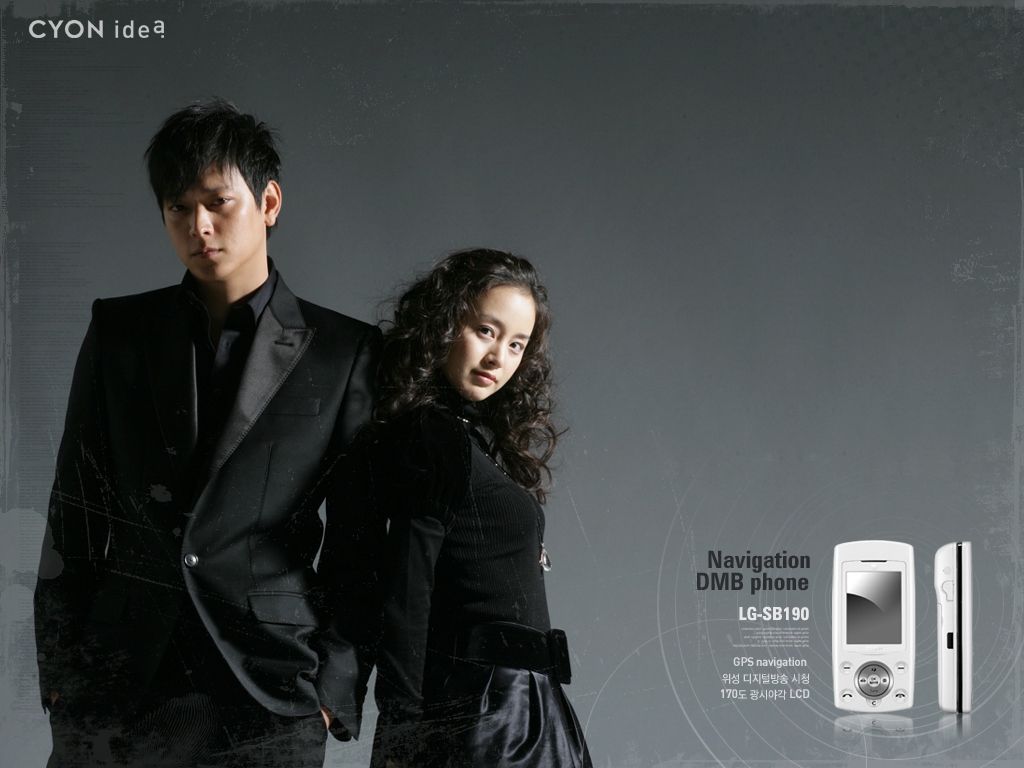
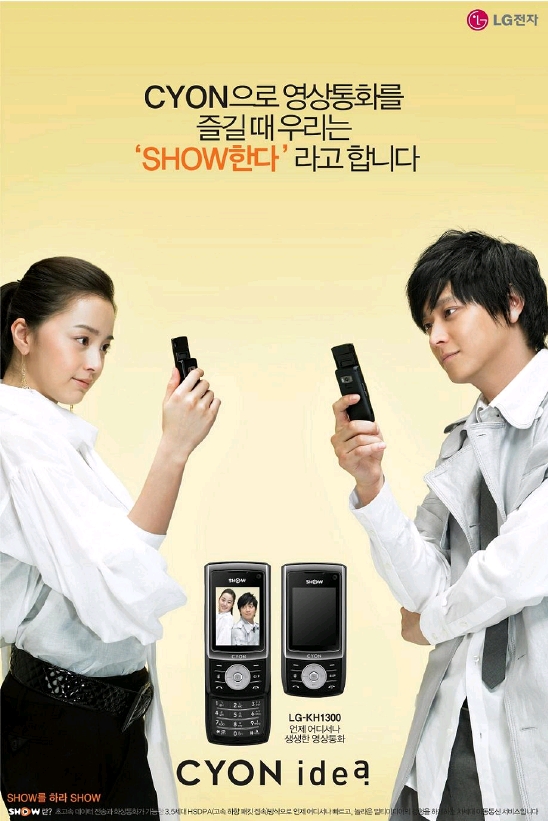
But dammit, why’d he have to be so big? As I discuss at great length here, relative size is one of the most powerful tools in advertising, not only making certain features more prominent than others but also – especially when it’s used to contrast two or more people of different sexes, ethnicities, jobs, ages, and so on – both determining and conforming to social norms of ranking, status, and appropriate social roles. For instance, if you take a random man and woman then in 1 in 6 cases the woman will be of equal height or taller, but in advertisements the figure is closer to 1 in 20 or even less. Not that that is evidence of sexism per se though, as women overwhelmingly prefer men that are taller than themselves, and it’s natural that many advertisements would reflect this. Moreover, if you’ve chosen specific celebrities with a significant height difference, say Kang Dong-won (강동원) and Kim Tae-hee (김태희) above, then it would be difficult to engineer a realistic-looking advertisement in which he somehow appears shorter than her.

kim-tae-hee-kang-dong-won-cyon-phone-advertisement-eab491eab3a0-relative-size-eab980ed839ced9dac-eab095eb8f99ec9b90But then consider this advertisement on the right with the exact same couple (source), in which the height difference has been significantly reduced. Sure, it’s not the only reason why the advertisement has a completely different, more egalitarian vibe than the first, but I’d argue that it’s the most important one. And to hammer that point home, consider how simply bizarre everyone would find the above, gangsterish one if Kim Tae-hee were just a little bigger, let alone if a woman taller than Kang Dong-won had been used.

Ergo, size matters, and so while my concern with Sunghin Women’s University’s advertisement may well only stem from the inherent angst of being a socially-aware Caucasian male, guilty at living in a country where being such undeniably confers certain advantages, it still leaves me feeling a little uncomfortable. I would have much preferred one that focused more on the Korean students themselves, and how the program empowered them, but while retaining the signifiers of America, the job, and so on. Not something that basically says:

Oooh, do this course, and you can talk to and work with White people! In America!!! What more could you ever want?

Okay, that specific vocalization may just be me. Or is it? That’s a rather indelicate way to put it above, but it is certainly true that living and working (and being educated) in America conveys a lot of status in Korean society, so far from me implying that any Korean is a passive dupe for responding positively to advertisements like this it is logical and intelligent for them to do so. Moreover, my wife, who is Korean, pointed out that most Koreans wouldn’t think twice about the Caucasian in this ad. Perhaps my concerns are misplaced then.

What do you think? Mere overanalysis and liberal-arts major angst on my part? Or a legitimate concern? Regardless, admit that the doctor is the first person you noticed too though!

(For all posts in the “Korean Sociological Image” series, see here)

Share

Korean Sociological Image #7: The Best Gillette Could Get?

Park Ji-sung Gillette Advertisement Photoshop( Source )

On the face of it, Park Ji-sung (박지성) is a very logical choice to endorse any given Korean company’s products or services. After all, he is easily Korea’s most popular male sports star at the moment, he (naturally) has a good body, and he is so successful that he has even published an autobiography already. Accordingly he has dozens of advertising deals to his name, and – to place his popularity into context – via his numerous Korean fans’ choices of credit cards he has more than financially compensated Manchester United for the loss of David Beckham for instance. Presumably then, Gillette Korea thought it was on to a good thing when it belatedly decided to join his bandwagon.

Nevertheless, while it’s not like I can claim to being all that photogenic myself, Park Ji-sung is actually a *cough* less than inspired choice, and at the very least advertisements like the above probably stretch consumers’ senses of disbelief just a little too far, if they don’t put off Korean men from using Gillette products altogether! If you haven’t already figured out why, then photos like this, this, this and this may help, and as Roboseyo points out, it’s not just because of her own sudden popularity that Korean companies started signing deals en masse with ice-skater Kim Yu-na (김연아) last year.

Update: Which brings up the side issue that Korean celebrities are notorious for being unconcerned about diluting their own personal brands, but so far this doesn’t appear to have been the case with either Park Ji-sung or Kim Yu-na.

Korean Zespri Kiwifruit AdvertisementOf course, photoshopping is by no means a recent phenomenon or unique to Korean advertisers, although it’s also true that extreme examples like Amore Pacific’s recent attempt to get women to aspire to a – by definition impossible – photoshopped “X-line” body ideal may well be very hard to find in other countries. With that in mind, I’m always interested in the extent to which Koreans are aware* of the level of photoshopping that occurs in advertisements and their opinions of it, but as I and many commenters have already talked about photoshopping on numerous occasions on the blog already (here’s a very small sample!), then rather than merely rehashing old points here, instead let me ask you how well you think Gillette’s ads will do, what your Korean friends, lovers and/or colleagues think of it, and what they think of photoshopping in general? Commenter Seamus Walsh’s female friends for instance, told him a little while ago that:

…they all were aware of the altering of photos that goes on…but that it is generally ignored because they know the models are attractive anyway, and that they look good after photoshopping, so that’s all that matters. Basically, despite knowing an image isn’t a true representation, they would rather have the altered image. I just wonder if this means that their ideals of beauty are based on the reality or the unnatural and unattainable?

Me too. But how representative are those opinions of average Koreans’ in turn? Please let me know!

* Not to imply that your average Korean consumer is any less intelligent than your average Western one with that statement, but having said that, on the other hand I’m not going to lie and pretend that somehow the Korean education system encourages the same level of critical thinking either.

(For all posts in the “Korean Sociological Image” series, see here)

Share

Korean Sociological Image #6: How about a date with Lee Yeon-hee?

Lee Yeon-hee Oz Date

An otherwise innocuous, quick slice of Korean life…but which inadvertently prompted some soul-searching and a minor epiphany about Korean society on my part. Please bear with me!

If you’re reading this blog in Korea, then by virtue of its inane “We Live in OZ” catchphrase you’ve probably more aware of LG Telecom’s “OZ Generation” advertising campaign than most. But you may not have heard of its online virtual first person “date” with model and actress Lee Yeon-hee (이연희) that was launched about two weeks ago, and which deserves kudos for being the first of its kind in Korea (indeed, this post was originally intended to be #16 in my Creative Korean Advertisingseries). As Coolsmurf explains at allkpop here:

Users get to have a complete, enjoyable date with Lee Yeon Hee by completing 6 stages with varying difficulties, but all of which can be solved by using the LG mobile phone and your trusty keyboard. You get to hold the hands of Yeon Hee as you dash away from the crowd, ride a bus with her, have a meal, celebrate her birthday, etc.

And as of Saturday, 200,000 people had participated since it was released 10 days earlier, with 20,000 visitors daily. Unfortunately, and all too typically for Korea, the main site requires your national ID number to participate (I didn’t check if my “foreign” one worked or not sorry), but strangely this alternate entry site (in the screenshot below) doesn’t, which will hopefully give K-pop fans outside of Korea a chance to participate.

Lee Yeon-hee Oz Star Date Game

I confess, I did it myself for a little while: it’s like a surreal bubblegum version of Doom 3, with eye-candy as the target rather than demons. And my 3 year-old daughter sitting on my lap found it hilarious when I crashed into people and potholes while running to meet Yeon-hee in “Mission 1” (hint, use the cursors), but neither of us were sufficiently motivated to figure out how to rouse her after she fell asleep on the bus in Mission 2 though I’m afraid (but get on the bus using the mouse this time). Not for a fifth time at least…

But what epiphany about Korean society did this prompt on my part? Other than being reminded, say, of the penetration and pervasiveness of mobile phones into all elements of Korean life that is?

Well, consider the rather childish and platonic way the couple interacts on the “date” itself, replete with numerous uses of the word Oppa (오빠): to Western eyes it makes it appear more reminiscent of the sorts of dates we had – or perhaps, our parents liked to think we had? – back in our early teens, and certainly nothing like what most Western adults would consider worth showing up for. Lest you feel like that’s an exaggeration though, then by all means examine it for yourselves, but I’m sure that most people at all familiar with unmarried Koreans need no such assurances.
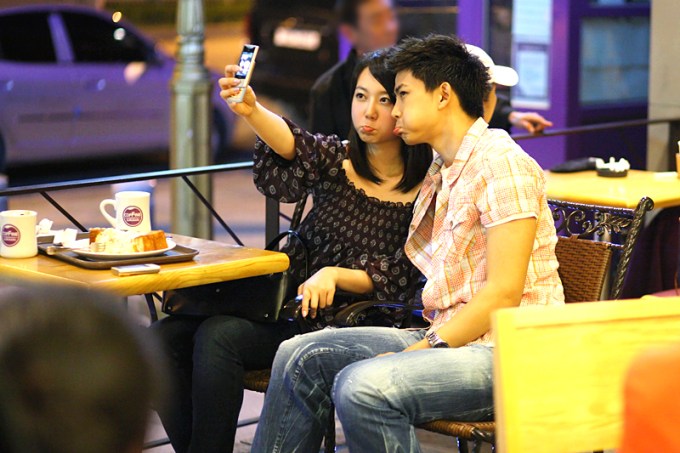
A Typical Korean Date

In the original version of this post, this prompted a lot of speculation on my part as to whether the date game was in fact primarily targeted towards teenagers, but that was misguided: as Charles points out in his comment that made me realize that, I myself went on “dates” like that with a 25 year-old Korean woman before I met my future wife, and although I haven’t dated in the 9 years since – and so by no means claim to be an expert on Korean dating culture – I’m confident that a sizable proportion of 20-something Koreans do have indeed have platonic dates like this. After all, the various cultural, social, and economic factors that lay behind the plethora of blind-dating systems in Korea certainly do still exist, although as Michael Hurt in this excellent practical guide to the cultural pitfalls of dating Korean women points out, the move from single-sex to mixed schooling is beginning to change those (see the KoreanClass101 Blog here also).

Lest I give the wrong impression though, I’m not against such dates per se. And while it’s true that I don’t personally consider dating without the ultimate aim of a sexual relationship as dating at all, that’s isn’t quite the same as thinking that, say, any woman that doesn’t sometimes put out on the first date (or guy that doesn’t want that) is a prude! And that so many Koreans go on such dates is – however patronizing it may sound – a very nice and endearing aspect of Korean society.

However, it is but one version of Korean dating culture. And yet while Koreans as a whole are certainly more sexually reserved than your generic Westerners, I doubt that any readers need convincing of the fact that over 50% of Koreans have sexual experiences before marriage. Yet- and herein lies the (belated) beginning of my epiphany – why is it only the platonic version of dating that is still overwhelmingly presented in the Korean media? And particularly when depictions of so many other aspects of sexuality in the Korean media are becoming increasingly bolder and more liberal over time?

Girls' Generation... Korean Teens are Sweet and Innocent

True, if you take issue with my description of the way dating is depicted in the Korean media, then I have no data to back that up: indeed, I don’t watch Korean dramas precisely because on the rare occasions I’ve naively wanted to spend more than 5 minutes with my wife on the sofa while she’s watching one, then I’ve soon been forced to leave the room at sheer disgust and incredulity with the surreal, Disneyland version of Korean life presented on the TV screen. Still, as commentators on this lengthy post on that subject pointed out, there are more realistic and palatable dramas out there if you’re prepared to look for them.

Also, granted: the ways dating and premarital sex are depicted in the Korean media are in many respects quite separate to, say, the censorship issues that I’ve been following closely in my weekly(ish) Korean Gender Readerposts. But still, rather than censorship being akin to some inexorable fact of nature (i.e. Korea is a conservative country…what else does one expect?), the numerous forward and backward steps in Korea just this year has provided me with a healthy reminder that what is considered suitable for Korean viewers is in reality a very mutable concept (and don’t get me started on Japanese censorship issues). Which begs the question of who is doing the defining, and why.

This brought to mind the following lesson I learned from An Introduction to Japanese Society by Yoshio Sugimoto (and easily the first book you should ever read on the subject):

Japanese culture, like the cultures of other complex societies, comprises a multitude of subcultures. Some are dominant, powerful, and controlling, and form core subcultures in given dimensions. Examples are the management subculture in the occupational dimension, the large corporation subculture in the firm size dimension, the male subculture in the gender dimension, and the Tokyo subculture in the regional dimension. Other subcultures are more subordinate, subservient, or marginal, and may be called the peripheral subcultures. Some examples are the part-time worker subculture, the small business subculture, the female subculture, and the rural subculture.

Core subcultures have ideological capital to define the normative framework of society. Even though the lifetime employment and the company-first dogma associated with the large corporation subculture apply to less than a quarter of the workforce, that part of the population has provided a role model which all workers are expected to follow, putting their companies ahead of their individual interests…. (p. 12).

yellow-salaryman

Yes, Japan, supposedly the land of the faceless salaryman…is anything but. And yes, the subject of salarymen may seem a little out of place at first glance, but I’m sure you’re seeing the connections already. Continuing in the same vein (although as a quick aside, it’s interesting to consider why Japan is so well-known for the salaryman system, when if fact it’s only Korea that ever had them as a majority of workers):

Dominating in the upper echelons of society, core subcultural groups are able to control the educational curriculum, influence the mass media, and prevail in the areas of publishing and publicity. They outshine their peripheral counterparts in establishing their modes of life and expectations in the national domain and presenting their subcultures as the national culture. The samurai spirit, the kamikaze vigor, and the soul of the Yamato race, which some male groups may have as part of the dominant subculture of men, are promoted as presenting Japan’s national culture….

More generally, the slanted views of Japan’s totality tend to reproduce because writers, readers, and editors of publications on the general characteristics of Japanese society belong to the core subcultural sphere. Sharing their subcultural base, they conceptualize and hypothesize in a similar way, confirm their portrayal of Japan between themselves, and rarely seek outside confirmation….(pp. 12-13).

As another aside, this last point highlights how Koreans are in many senses shooting themselves in the foot by alienating and demonizing a whole generation of English teachers in Korea (see here, here, and here):

Core subcultural groups overshadow those on the periphery in inter-cultural transactions too. Foreign visitors to Japan, who shape the images of Japan in their own countries, interact more intensely with core subcultural groups than with peripheral ones. In cultural exchange programs, Japanese who have houses, good salaries, and university educations predominate among the host families, language trainers, and introducers of Japanese culture…(p. 13)

(Update: See here for some quick recent examples of how different the Japanese are to the way they’re normally represented in the foreign media)

No, I’m not suggesting that there is a big conspiracy to keep premarital sex off Korean screens. Nor am I suggesting that the above is all that original or profound, and certainly my ultimate epiphany – merely to extend the above lesson to depictions of Korean dating and premarital sex in the Korean media also – is much less so.

But the point that I want you to take away from all this is that at the very least it provides an interesting and useful alternate framework with which to analyze the topic in future. For instance, the completely ineffectual Youth Protection Committee’s (of the Ministry for Health, Welfare and Family Affairs) recent banning of music group TVXQ’s latest songs from being played on TV and the radio because of “lewd content” and the need to “protect teenagers” (see #2 here), may be most explicable in terms of corporatist motivations, or in other words be the result of the Ministry’s struggle for relevance and definition under the hostile Lee Myung-bak Administration, which originally planned to disband the former Ministry of Gender Equality and Family altogether (now a separate Ministry of Gender Equality exists: see #4 here), and despite the compromise being opposed by all ministries involved. No, I’m not saying that that is the case necessarily, just that it’s a possibility that needs to be considered.

And on that note, I’d better end this post, which has admittedly somewhat evolved from its ostensible original topic. Which reminds me, presumably other male and female members of the “OZ Generation” in the advertisements will have similar dates set up for them, and it’ll be interesting seeing the different conventions for the former’s behavior and writing about that a later date. And probably this topic will be in IM AD (아이엠 애드) also (Korea’s only magazine devoted to online advertising), and I’ll make sure to buy it and translate the corresponding article also. In the meantime, I’m curious as to if this virtual date has already been done overseas, so if any readers know of foreign examples then please pass them on.

Image sources: first & second, third, fourth, last.

(For all posts in the “Korean Sociological Image” series, see here)

Share

Korean Sociological Image #4: Where do Korean Politicians Come From?

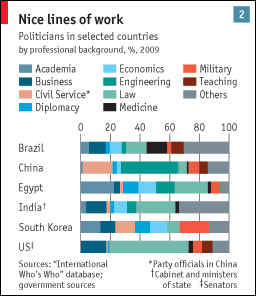
Original Lines of Work, Politicians in Selected=Apologies for the small size, but if you can see the pink and orange blobs for Korean politicians that were originally civil servants or in the military respectively, then you get the idea.

The graph is from this article in the Economist magazine, which asks the question of why professional paths to the top vary so much, but unfortunately only mentions South Korea when it says…

Countries often have marked peculiarities. Egypt likes academics; South Korea, civil servants; Brazil, doctors (see chart 2). Some emerging-market countries are bedeviled by large numbers of criminals, even if this doesn’t usually show up in their ‘Who’s Who’ records.

…yet is no less fascinating for all that. If I reluctantly confine my brief discussion to South Korea here though, then that predominance of civil servants among Korean politicians should be no surprise to anyone familiar with its Twentieth Century history (see here and here), and I’d expect to find much the same in other postwar “developmental states” also, particularly Japan that is their model and the former colonial power of most.

But of course their importance goes back much further than that (see here), as indeed it does in China, which has historically provided Korea with many governmental and political models to emulate. Hence the Economist is quite correct in painting Chinese Communist Party officials with (literally) the same brush also, for despite their modern ideological labels they are in many senses merely performing what are really quite timeless roles.

Other than that, I confess to being surprised at the number of politicians with military backgrounds, even though I’ve written a great deal about the pervasiveness of military culture in Korean daily life. One shouldn’t make too many generalizations from so little information though, and so I’d hesitate to make any links between the low numbers of politicians that were formerly lawyers and Korean legal culture also, although I’m certainly tempted!

(For more posts in the “Korean Sociological Image” series, see here)

Korean Sociological Image #2: Son Dambi, The Perfect Woman

(Source: Paranzui)

Updated, October 2013

My previous commentary on this “Today’s Tea” commercial was woefully out of date, so it’s since been mercifully deleted(!). But many of the themes expressed remain just as potent in the Korean media today, including the encouraging of teenage girls and children to be dissatisfied with their bodies; the constant invention of new, often impossible, body shapes and “lines” for females of all ages to strive for; the over-reliance on celebrity endorsements, to the extent that the one chosen here, Son Dam-bi, is portrayed as somehow having a superior body and face to an equally-attractive, almost identical woman; and finally, albeit admittedly minor here, the reinforcement of gendered dieting roles by portraying the (single) male humorously—confirming that dieting is something only women need should be serious about.

Think I’m exaggerating? Just see for yourself:

Those problems aside, note that the “34-쏙/ssok-34” is a clever wordplay on women’s “vital statistics” (bust/waist/hip measurements), with one use of the word “ssok” being to stress how concave something is. In fairness, it’s quite apt for a slimming product.

(For more posts in the “Korean Sociological Image” series, see here)