 Estimated reading time: 4 minutes.

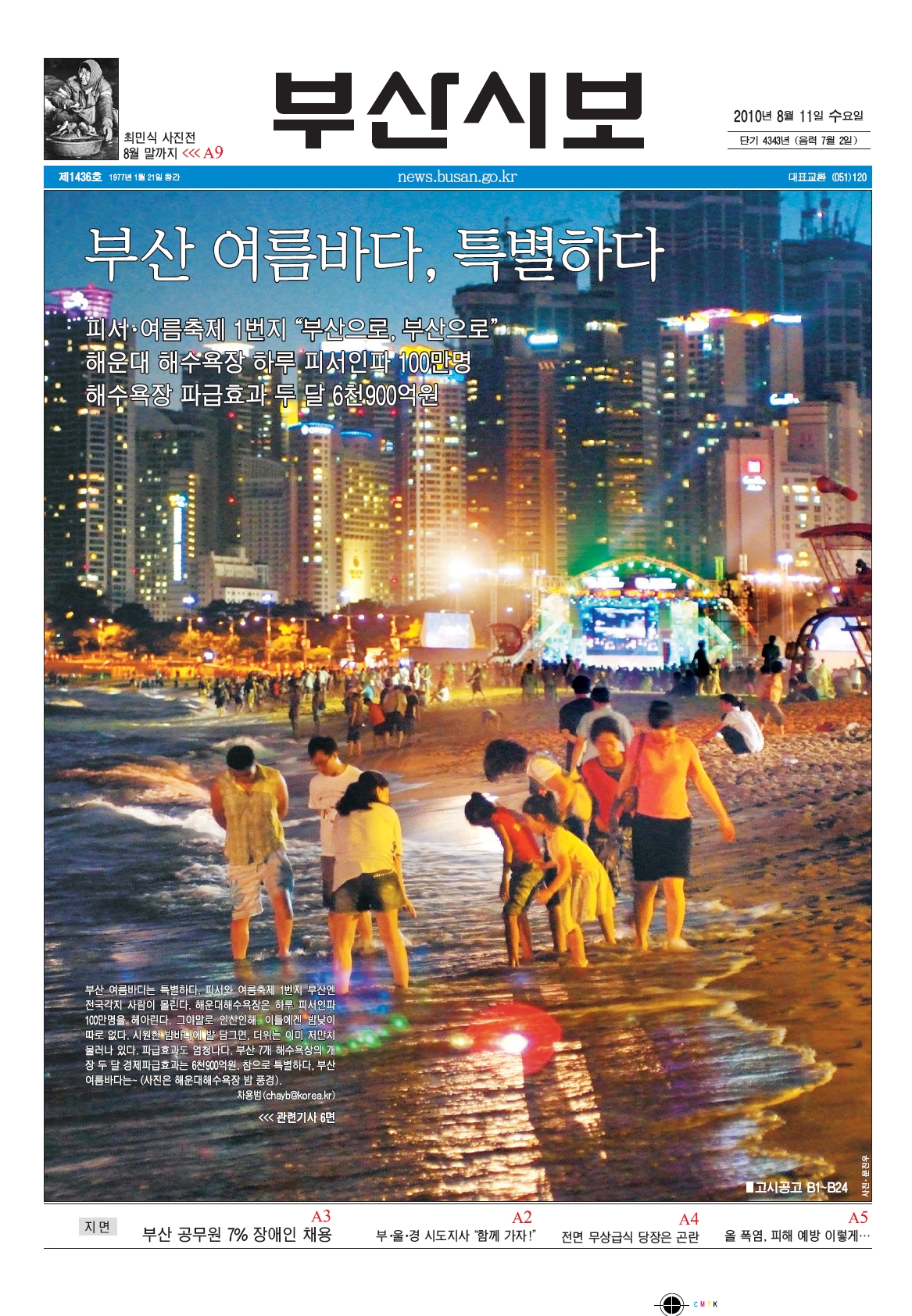
As a 23-year resident of Busan, who can often see Japan from his apartment, how could I not attend this book talk tomorrow?
Alternatively, maybe you’re a fan of the Pachinko novel or TV series? Their story begins on Yeong Island, which I once used to see the sun rising over as my (yes) 7am English class in Nampo-dong began. And which means now you have to attend the talk too.
Did I mention tomorrow is a holiday in Korea? ;)
From the event page (register):
Presenter: Hannah Shepherd, Assistant Professor, Yale University (homepage)
Discussant: Tessa Morris-Suzuki, Professor Emerita of Japanese History, Australian National University
Moderator: Joseph Seeley, Associate Professor of History, University of Virginia
The Modern Japan History Association invites the wider community to a conversation with Hannah Shepherd, who will be speaking about her new book The Narrowing Sea: Fukuoka, Pusan, and the Rise and Fall of an Imperial Region (University of California Press, 2025). This book examines the shared histories of Pusan and Fukuoka over the eight decades from Japan’s forced opening of Korea’s ports in 1876 to the end of the Korean War in 1953. One city was Korean, the other Japanese; one was a burgeoning colonial port, the other a provincial city buoyed by imperial expansion. Wars, colonization, and capitalist industrialization forged intimate connections between the two, knitting together an imperial region that transcended its maritime boundaries. Drawing on both Japanese and Korean archives, and emphasizing the concept of imperial urbanization, Shepherd challenges traditional views of empire and urban growth and shows how local networks, migration, and capital flows shaped the region’s exploitative and uneven geographies. The waters between Fukuoka and Pusan narrowed through intensified interactions that continued even after the end of empire, creating enduring legacies for the postwar and postcolonial eras. Tessa Morris-Suzuki (ANU) will serve as interlocutor.
By coincidence, which admittedly tends to happen very often when it comes to my blog, just last week I was giving a lecture on a favorite topic of mine: the “new women” (shinyeoseong/신여성) of the Japanese colonial period that spans most of the period of the book talk. Careful to impress upon my students that despite my passion for them (new women I mean), and despite their huge impact on the Korean popular imagination, their numbers were actually extremely small, I show the following map of Busan to try to convey just how small the city actually was then:
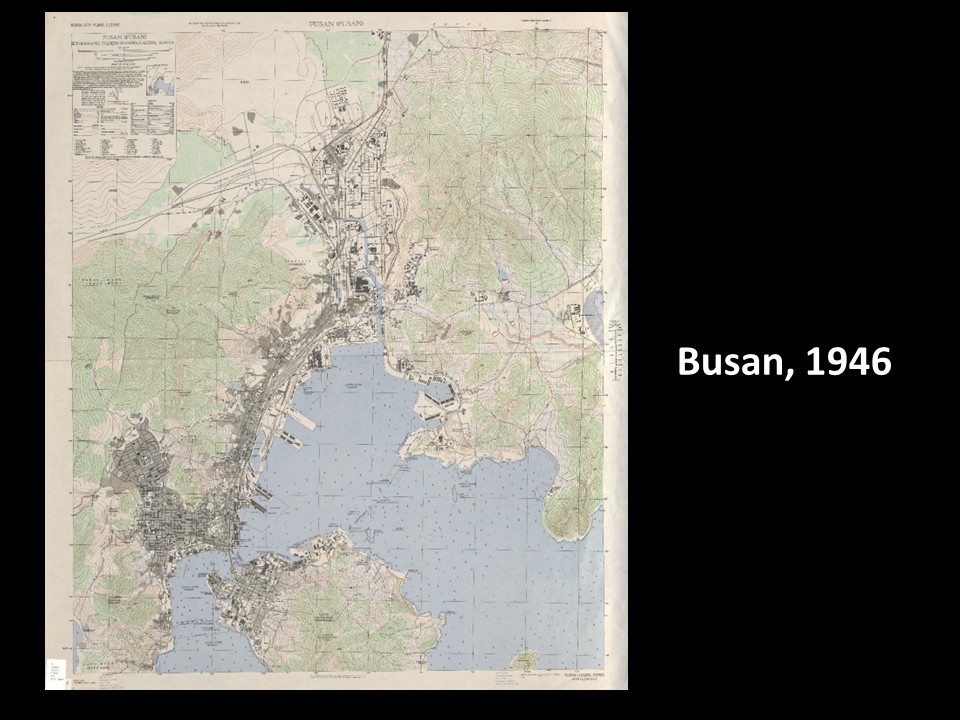
See here for a high-quality version. It comes from the blog Gusts of Popular Feeling, which I highly recommend for more historical maps, long descriptions, and a potted history of the period. Young Island is in the center-bottom.
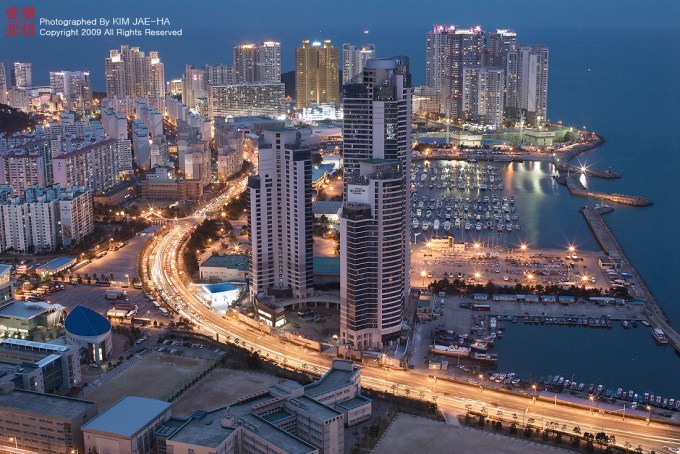
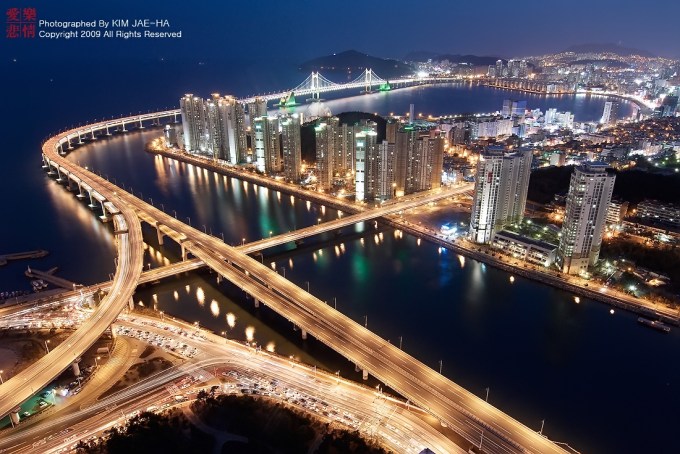
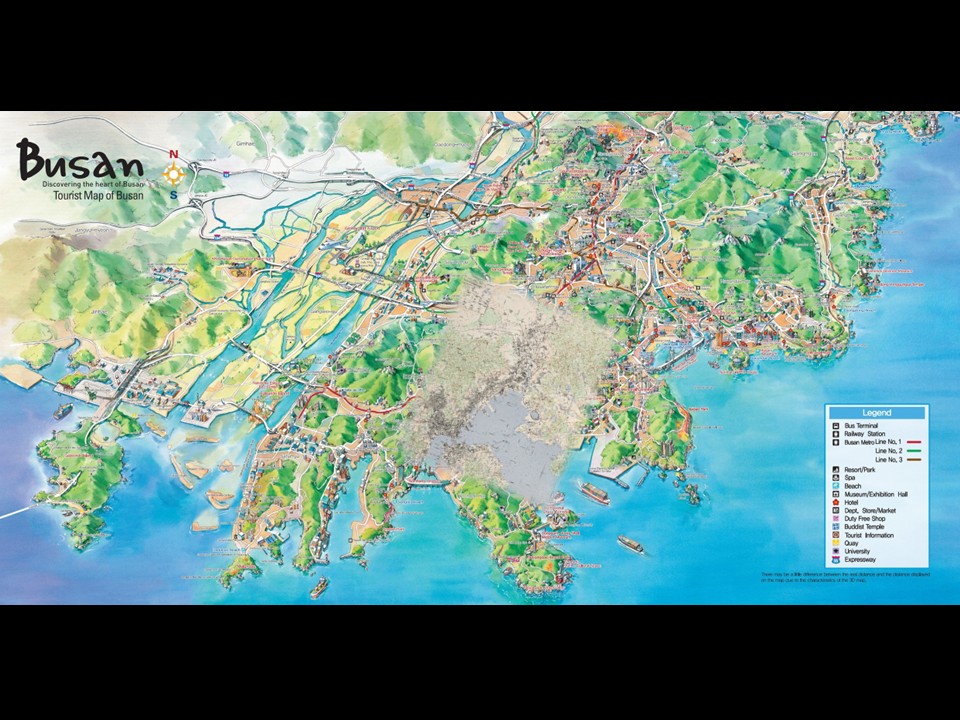
Alas, in preparing the lecture I did have to account for the fact that I’ve lived in Busan longer than any of my students, let alone that few would ever share my fetish for maps. So, in the next slide, I superimposed it on a modern map of Busan:
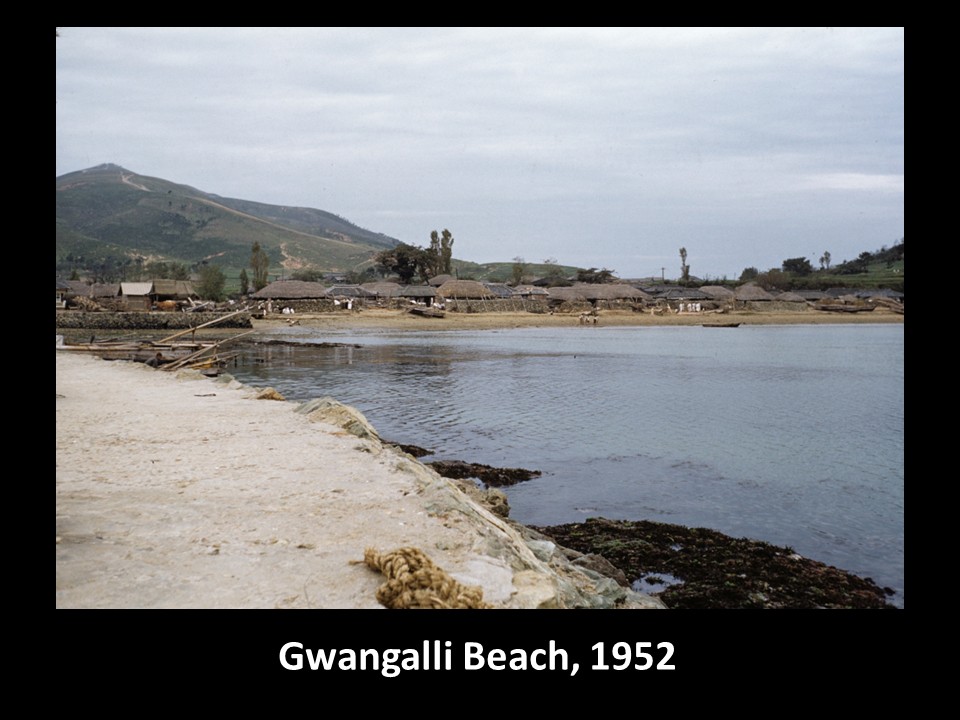
And if that didn’t have any impact on them, my last resort was a picture of where they probably went drinking the night before. I have them try to guess where it is before I make the caption appear:
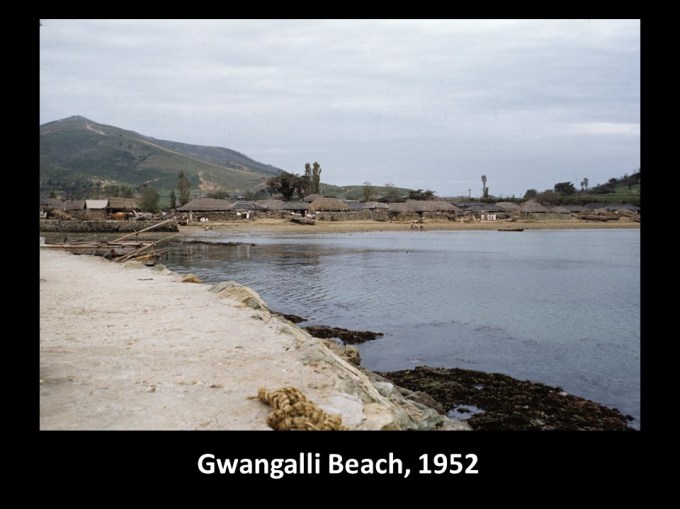 “Seaside Village, Busan, 1952” by Kenneth H. Lehr. Source: m20wc51 (used with permission).
See you tomorrow! :)
Related Posts:
- Busting the Myth of Jeju Island’s Topless Divers
- “Making Pretty Women” (예쁜 여자 만들기) — Consumerism, S-lines, and Learning that Healthy≠Beautiful in 1930s Korea
- Video about Korean Vacations Leads to Fascinating Insights into 1970s Korea—And its Dire Poverty
- In Just Two Minutes, My Eyes Were Opened to Why Resolving the Comfort Women Issue is so Necessary for Japan’s #MeToo
- One Quick Thing You Absolutely Must Read to Understand Modern East Asia
- How Were Korean New Women and Modern Girls Different? DID Their Rights Have to be Put Aside for the Sake of Achieving National Independence First?

If you reside in South Korea, you can donate via wire transfer: Turnbull James Edward (Kookmin Bank/국민은행, 563401-01-214324)