Women Getting on Top: Korean Sexuality in Flux in the 1990s

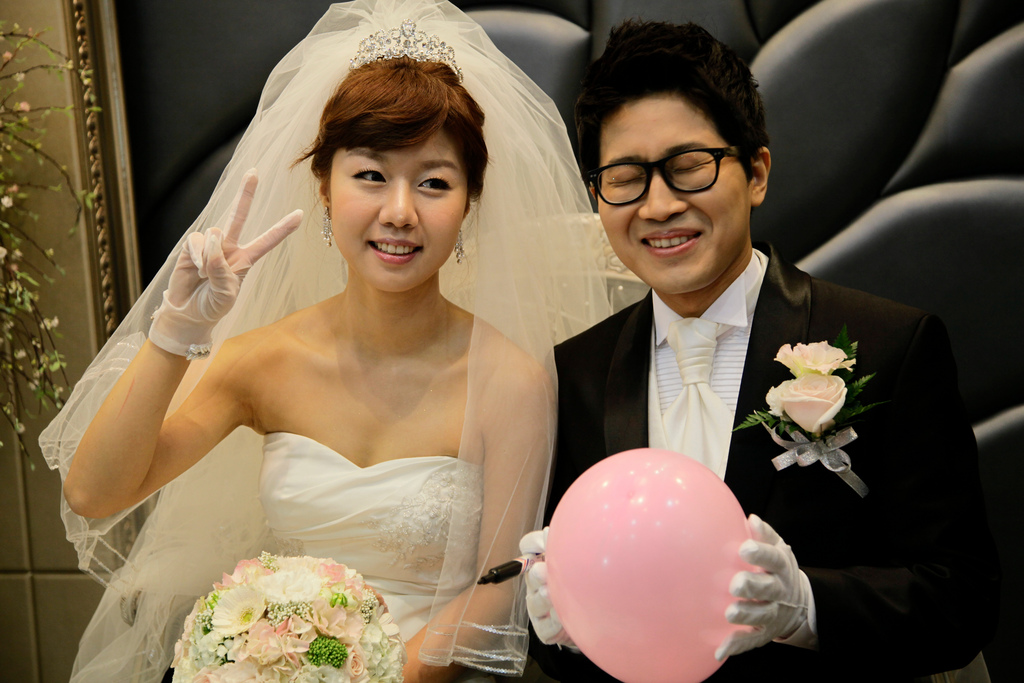
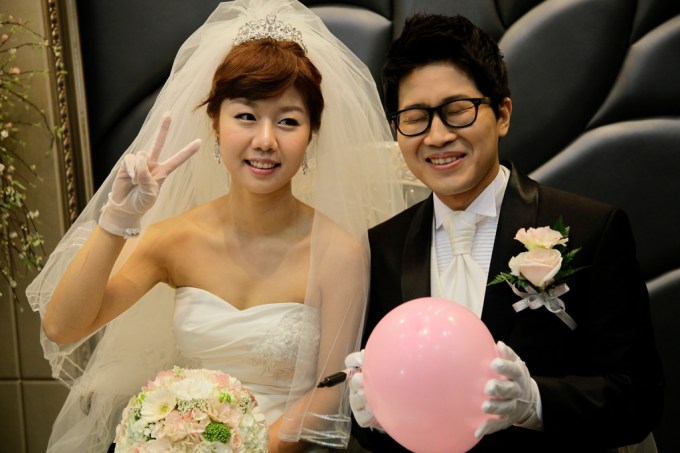
Jule Nav Wedding day(Source: Sunghwan Yoon; CC BY-SA 2.0)

Of course, a society’s accepted norms of sexuality are always in flux, and popular culture both reflections of and a huge catalyst for that. But while you and I will undoubtedly be able to name individual dramas, movies, novels, and so on that have been deeply influential in that regard (yes, Sex and the City was the first thing that came my mind too), it is probably much harder to think of a recent period which had many in rapid succession, fundamentally and forever changing a society as a result. But according to So-hee Lee, who wrote ‘The Concept of Female Sexuality in Korean Popular Culture’ (pp. 141-164) in Under Construction: The Gendering of Modernity, Class and Consumption in the Republic of Korea (ed. by Laruel Kendell, 2002) and the must-read text for Korean gender studies, this is precisely what occurred in Korea in the mid-1990s.

Which is not to say that equivalent periods in Western, English-speaking societies don’t exist: it’s just that with having spent most of my adult life in Korea, then none really spring to mind, although I am interested in learning about any that readers can think of. And there are certainly many instances of Western-Korean cultural transmission too, with Friends and (again) Sex and the City in particular arguably having surprising impacts on Korean consumerism and gender relations here despite – nay, because of – the much more sexually repressed and sexist context in which they were received. But these earlier works Lee discusses were definitely home-grown, and:

…should be considered not only as illustrations of contemporary concerns but also as generating social discourse on female sexuality….each publication and each media screening provoked intense discussions throughout Korea (p. 142).

But although this post is ostensibly about popular culture, even some of my friends in academia that specialize in it admit that the three novels, three films, two dramas, and one play Lee discusses would probably be too dated for them to enjoy watching, let alone worth going to the time and trouble to find. Moreover, my own aim in looking at this subject is primarily to demonstrate that on the eve of the Asian Financial Crisis of 1997-98, Korean women were already very open to challenging sexual stereotypes and their ideals of men, and that this partially explains their alacrity in doing so afterward, as I’ll be arguing in this conference presentation I’ll be giving in Daejeon in August (but which has evolved a lot since I first submitted that abstract many months ago: see here for my latest, hopefully much more nuanced thoughts on the subject, and to which I owe a great deal of credit to commenters on this blog). Hence, with apologies to culture buffs, this post is much more about those “intense discussions” than in the cultural works themselves.
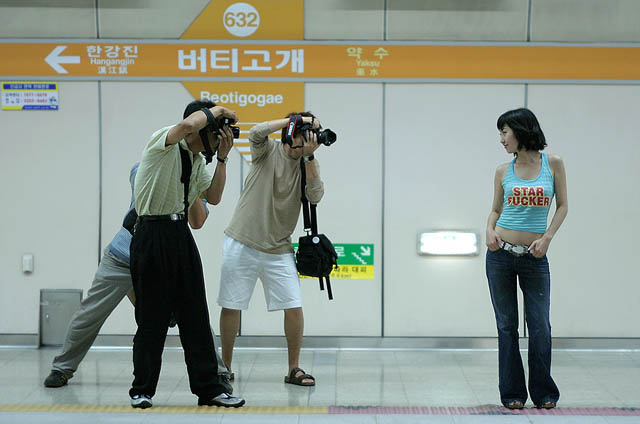
Korean woman wearing Star Fucker t-shirt(Source: Unknown)

Naturally enough, Lee starts with the context in which these cultural works were received, recalling her embarrassment and confusion when she attended some English literature lectures at Cambridge University in the mid-1980s:

My topic was “Women Characters in Victorian Novels”. During the lectures and seminars, I was acutely embarrassed by what I heard. Why was everyone talking about sexuality, masculinity, and femininity?…

In those days, Koreans did not have exact counterpart terms for “sex”, “sexuality”, “sexual intercourse”, and “gender”. I was very confused as I struggled to determine the appropriate meanings. In Korean, one very general term “seong” (성) could be used for these four concepts, its particular meaning dependent on the speaking and listening context….

It’s actually a little more complicated than that, “성” really being the chinese character that means “nature” and “life” as well as “sex”, but that probably adds to rather than detracts from her point.

….Korean society in the mid-1980s did not find it necessary to make sharp distinctions between these concepts. At the annual Korean Women’s Studies Association Conference in 1989, the issue of sex language was raised and discussed. More recently, the Korean counterpart of the term “sexual intercourse” (성교) has gained wide usage, accompanied by the frequent use of the a Korean counterpart for the term “sexual violence” (성폭행)….Sexual violence has now become a recognized issue in need of a discourse.

Korean concepts of sexuality have changed profoundly since the Democratic Revolution of 1987….In 1995, the most popular topics among university students were sexuality, sexual identity, and other sexual subjects. There are many reasons for this…In Korea, there is still no broad popular social discourse on female sexuality outside of marriage.

Which changed a great deal as a result of the 2002 World Cup, as I wrote here, but I’m getting ahead of myself. All of the above I originally typed from the book when I wrote this post about the (literal) Korean language of sex and sexuality, and in which based on my own largely unsuccessful attempts to find Korean-language internet sources on such issues as “sexist advertisements” and “sexual discrimination,” I argued that the change Lee noted was more apparent then real, and that Korean gender studies as an academic discipline clearly somewhat lagged its Western counterparts. Ironically however, that may well add to rather than detract from her arguments for the explosive impacts of the movies and so on that she discusses, for they would have been all the more exceptional and unprecedented at the time.

On top of that, something that can be said with some certainty was how exceptional Korean women (then) in their late-20s and early-30s were in themselves, as they were really the first ever Korean generation to have grown up going to school en masse, alongside their brothers, and while doing so to have learned as an abstract, academic concept the notions of democracy, liberty, and equality. Indeed, Lee is by no means the only author to note Korean military regimes’ curious desire for at least the trappings of democratic legitimacy through (tightly-controlled) elections, and a reflection of this in the education system, replete with references to Thomas Jefferson, the Magna Carta, the French Revolution, and so on. But, this meant that in the 1990s:

Looking at their mother’s lives, Korean women in their early thirties believed that their marriages would be different. Because the Korean standard of living and patterns of material life changed very quickly, they believed that Korean ways of thinking had been transformed with the same speed. This is where their tragedy begins….[this] generation experiences an enormous conflict between the real and the ideal. During sixteen years of schooling, they have learned that equality is an important democratic value, but nowhere have they been taught that women experience the institution of marriage as a condition of inequality. Many married women of this generation have [thus] experienced a process of self-awakening….(p. 144)

And another way in which that process is a novel one is because women of their mothers’ and grandmothers’ generation:

…would have had an entirely different concept of female sexuality. [They] accepted the sexual double-standard as a women’s fate and put their sexual energy into rearing children, identifying themselves as asexual, strong mother figures. [But] Korean women [of this] generation give priority to their identities as sexual beings, struggling to conceptualize a sense of individual selfhood while the mystified ideology of mothering and family obligation, which has repressed Korean women for so long, collapses. (p. 145)
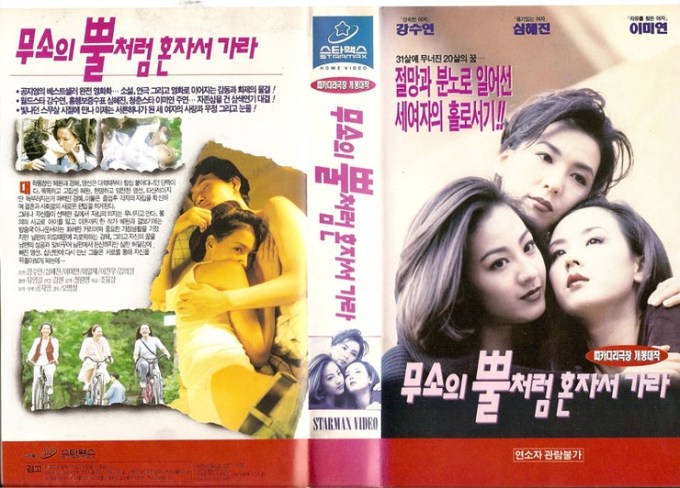
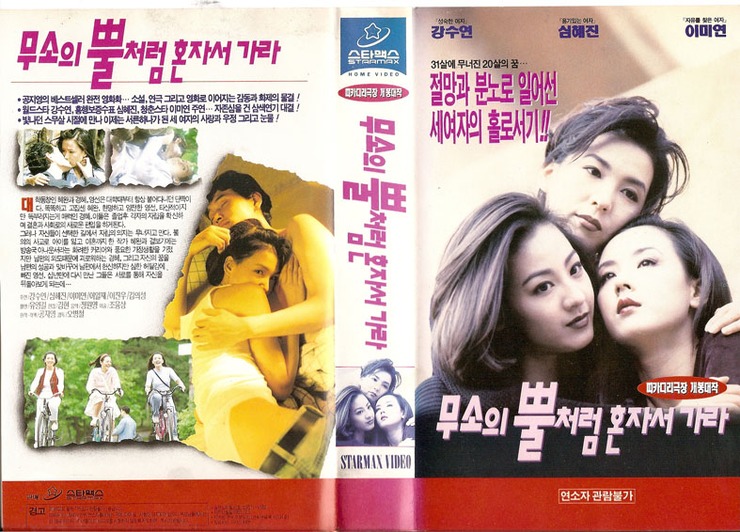
Go Alone Like the Rhinoceros's Horn(Source: Dreamday)

The novel Go Alone Like the Rhinoceros’s Horn (also know as Go Alone Like Musso’s Horn) (무소의 뿔처럼 혼자서 가라, 1993) by Gong Ji-Yeong (공지영) , produced as a play that performed for several months in 1994, and released as a film in 1995 (both adaptations were successful), is about the lives of three married women friends, all 31, and all of whom deal with that process in different ways. Another is the widely-read novel Marriage (결혼) by Kim Su-hyeon (김수현) in 1993, which was made into an even more successful television drama the following year, and about the marriages of three sisters (aged 25, 32, and 34) and their different perceptions of the institution based on their different ages, and indeed it is in Lee’s discussion of it that I first came across the quote that I’ve used repeatedly in this blog:

Generation is an important attribute of identity in Korea, like race in the United States. (p. 146)

But in this section of the chapter I think Lee disproportionately blames Korean husbands seeing their wives as asexual, unattractive ajumma (아주마) for their sexless marriages (and finding their own sexual relief with mistresses and prostitutes and so on), whereas in reality just as many Korean women share widely-held stereotypes and expectations of rarely having sex after getting married or having children, even in 2009 (I am not exaggerating: see here).
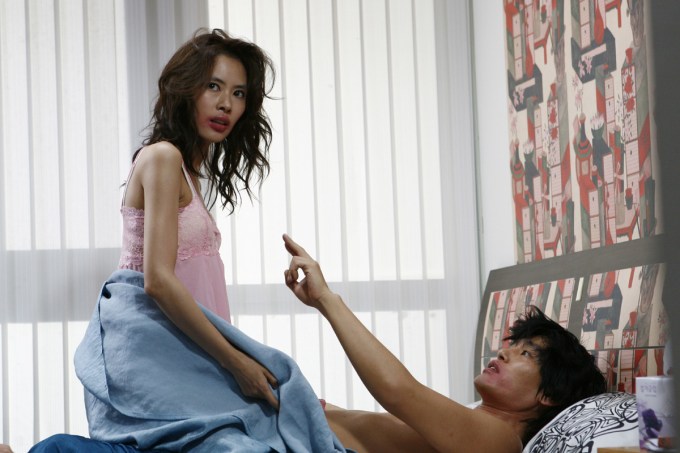
Sex is Zero 2 sex scene( Source: KoreanMovie)

Probably by coincidence, at about the time that these were making waves, the new term “Missy” (미시) was invented, which when Lee wrote (it’s not so common these days) was used widely as:

…an expression of the strong desire of young Korean wives in their late twenties for an alternative way of life. The term was first used…in the marketing advertisement of a grand department store in Seoul. As soon as it came out, it was adopted widely to indicate a particular kind of housewife, a married woman who still looks like a single woman. Even the copywriter was surprised at the speed with which this term took on social meaning and evoked specific images of women and femininity. “Missy” rapidly permeated the Korean language once the advertising industry recognized the consumerist implications of this target age group’s flamboyant desires (pp. 149-150).

I think Lee ascribes too much importance to the Missy concept, as both Cho Haejoang in the same book that Lee writes in, and Dennis Hart in this book on Korean consumerism, have written about a steady series of (mostly negative) terms invented in the 1980s and 1990s for different kinds of women that “Missy” is just one example of, culminating in this crass one used today and which in hindsight make Koreans’ recent predilection for naming women’s body-parts and shapes after letters of the alphabet a little more explicable (but still absurd). I also think she exaggerates its novelty, as the Korean advertising industry, buttressed as it was by Neo-Confucianism and associations of the development of a consumer industry with national security (see this series), had developed a profound and intimate relationship with Korean housewives well before 1994. But, regardless, I’m sure you can already see how well the Missy concept meshed with the provocative novels and films I’ve described. Moreover:

The essential condition of being a Missy is a preoccupation with being looked at….Film, as a visual medium, has provided the best representation of this kind of social desire, not confined to material possessions but inclusive of an active and blatant sexuality. While [some characters] in Go Alone Like the Rhinoceros’s Horn and…Marriage decide to have lovers in reaction to their husbands’ relationships with mistresses, the Missy jumps into affairs to satisfy her own needs and desires (p. 150).

And another fundamental condition of being a Missy is having a professional job, yet another reason why women being the first to be fired a few years later during the Asian Financial Crisis would have had a big psychological and cultural impact.
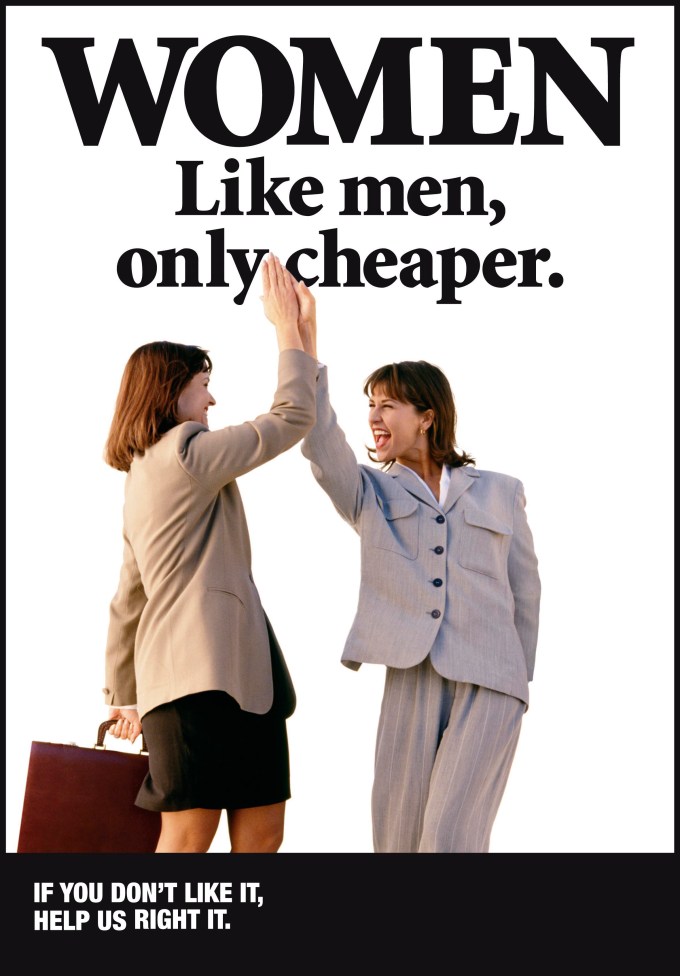
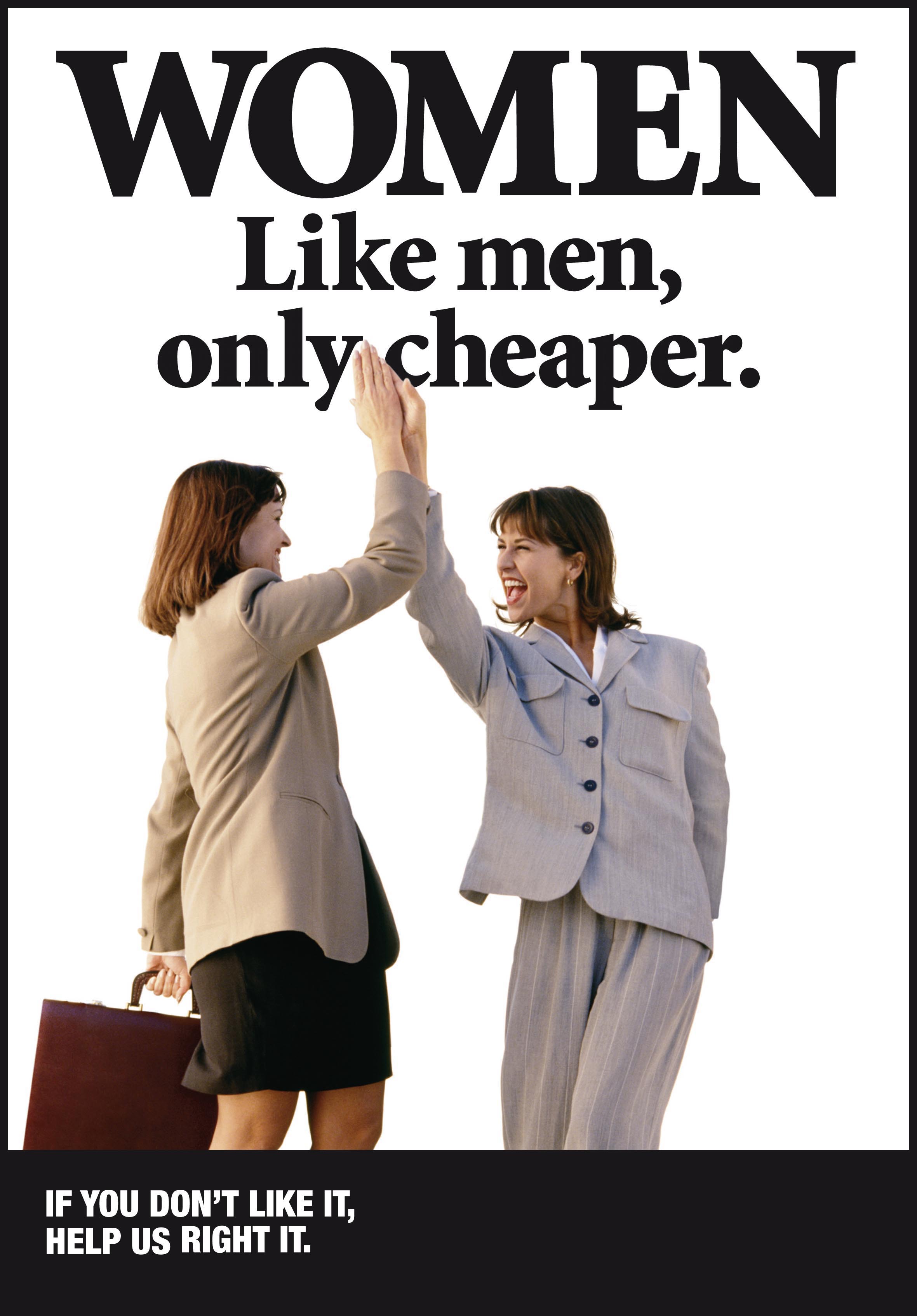
Women Like Men Only Cheaper(Source: Equal Writes)

The film Mommy Has a Lover (also known as Mom Has a New Boyfriend) (엄마에게 애인에 생겼어요, 1995), was about two Missys, and was exceptional in doing away with the previous film conventions of portraying women as reluctant and ashamed when they intentionally or unintentionally had a lover outside of marriage, nor of having a woman somehow punished for her “fall”. At its first screening, reactions were divided along gender lines, men complaining about the ending because it seemed to glorify wives having affairs, whereas no women expressed any complaints. Probably a more influential work involving the development of a late twenty-something’s sexual identity though (and not about a Missy per se, but in a similar vein), was the novel of the same year called The Pornography in my Mind (내마음의포르노), by then only 26 years-old Kim Byeol-ah (김별아), and whom:

…bravely deals with a previously forbidden theme. The novel rebels against the sexual double-standard, insisting on the existence of female sexual desire in contemporary Korea, where adultery is still illegal (p. 143).

Hence:

This novel [played] an important part in an emergent sexual politics by bringing the forbidden theme of sexuality into the public sphere via television talk shows and other media events. However, this public discussion has been confined to the experiences of married women (p. 151).

And which paved the way for the even more provocative and controversial drama The Lover (애인) and the film The Adventures of Miss Park (박봉곤 가출 사건), both of which came out in September the following year. In particular, the drama’s depiction of an extramarital love story between two highly successful professionals in their mid-30s hit Korean society like a bombshell, primarily because television tends to be conservative because of its wide audience of course, but also because both the ages of the characters meant that the drama had to confront the all-important issue of familial duties and roles. Indeed, by October it reached 36.3% of television viewers, and it:

…even was discussed in the National Assembly because of the social implications of its theme, a challenging portrayal of a married woman’s sexuality. This response reveals how powerful the television is in subverting the traditional ideology of female sexuality (p. 154).
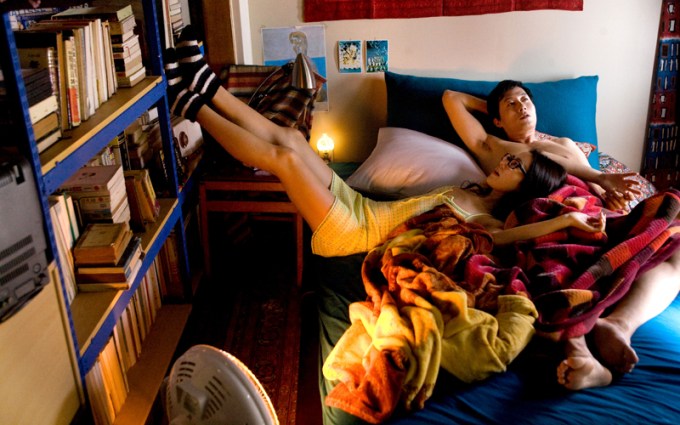
my-wife-got-married-bed-scene-ec9584eb82b4eab080-eab2b0ed98bced9688eb8ba4-ecb9a8eb8c80-ec9ea5eba9b4-eb85b8ecb69c(Above: Screenshot from My Wife got Married)
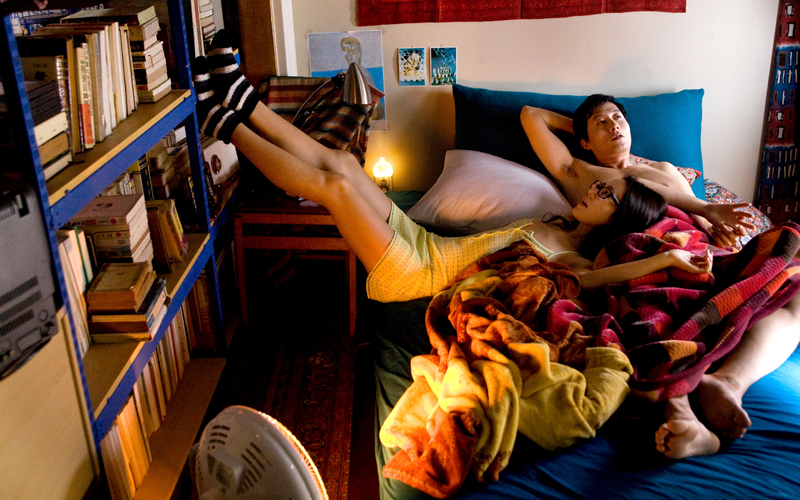
An important point for me to remember, although I would have liked to have also learned more about the contents of that discussion in the National Assembly! There is, however, also a third possibility for its success that Lee does not really mention, and that is that in many senses both characters ostensibly had perfect and desirable lives, with no apparent reason to have affairs, and yet they did anyway: it must have been quite confounding to many, and which may also play a role in “many married men in their 40s and 50s  [calling] the broadcasting company to protest this drama, demanding ‘What is it trying to say?’ (p. 155).”

Rather then getting into details here, for a very thorough examination at The Lover see this lengthy presentation by Kim Sumi entitled “Popular Feminism and the Hegemonic Practice of Mass Media: A study of two South Korean TV dramas, Lovers [The Lover] and The Woman Next Door,” which was presented at the annual meeting of the International Communication Association in New York in May this year, and in passing let me note a point not unimportant to my presentation, which is that like in Mommy Has a Lover, the man that the lead female character has an affair with “has a soft, gentle, and sweet personality, reflecting the new masculinity of 1990s Korea” (p. 155). Meanwhile, Lee sees the drama as having:

…accomplished a great deal in bringing into public discourse the issue of a middle-aged wife’s sexuality. Until recently [which is 2002 at the latest, but I think she’s actually writing in early 1998 – James], the wife’s subjective sexuality has been elided by the web of obligations spun by the husband’s family or by the terms of a wife’s subordination to her husband, as in [one character’s] case in Go Alone like the Rhinoceros’s Horn. However, in the mid-1990s, as the wife’s subjective sexuality emerged through the weakening of Korean familism, a sympathetic rapport between a man and a woman became more important than the functional element of role obligations between a husband and wife, or of a father and mother to their children (pp. 155-156).

Coming out at the same time as The Lover, on the surface The Adventures of Mrs. Park is an average romantic comedy, albeit a very successful one, but Lee notes that unlike the convention of most films in the genre, this one ends with a women running away from a domineering husband, achieving her dream of becoming a singer, and finally entering into a happy second marriage, “thus subverting a traditional morality that expects the runaway wife to come back home to restore everyone’s happiness and family security (p. 156).”
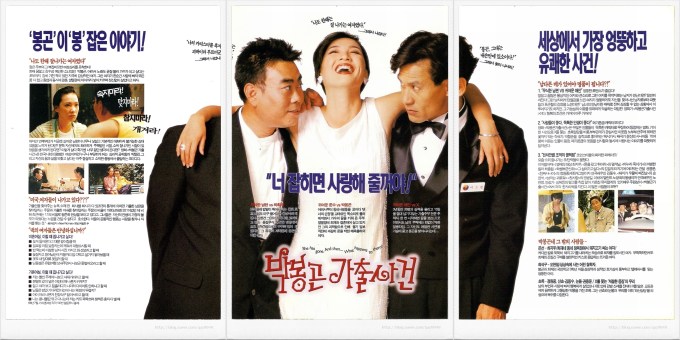
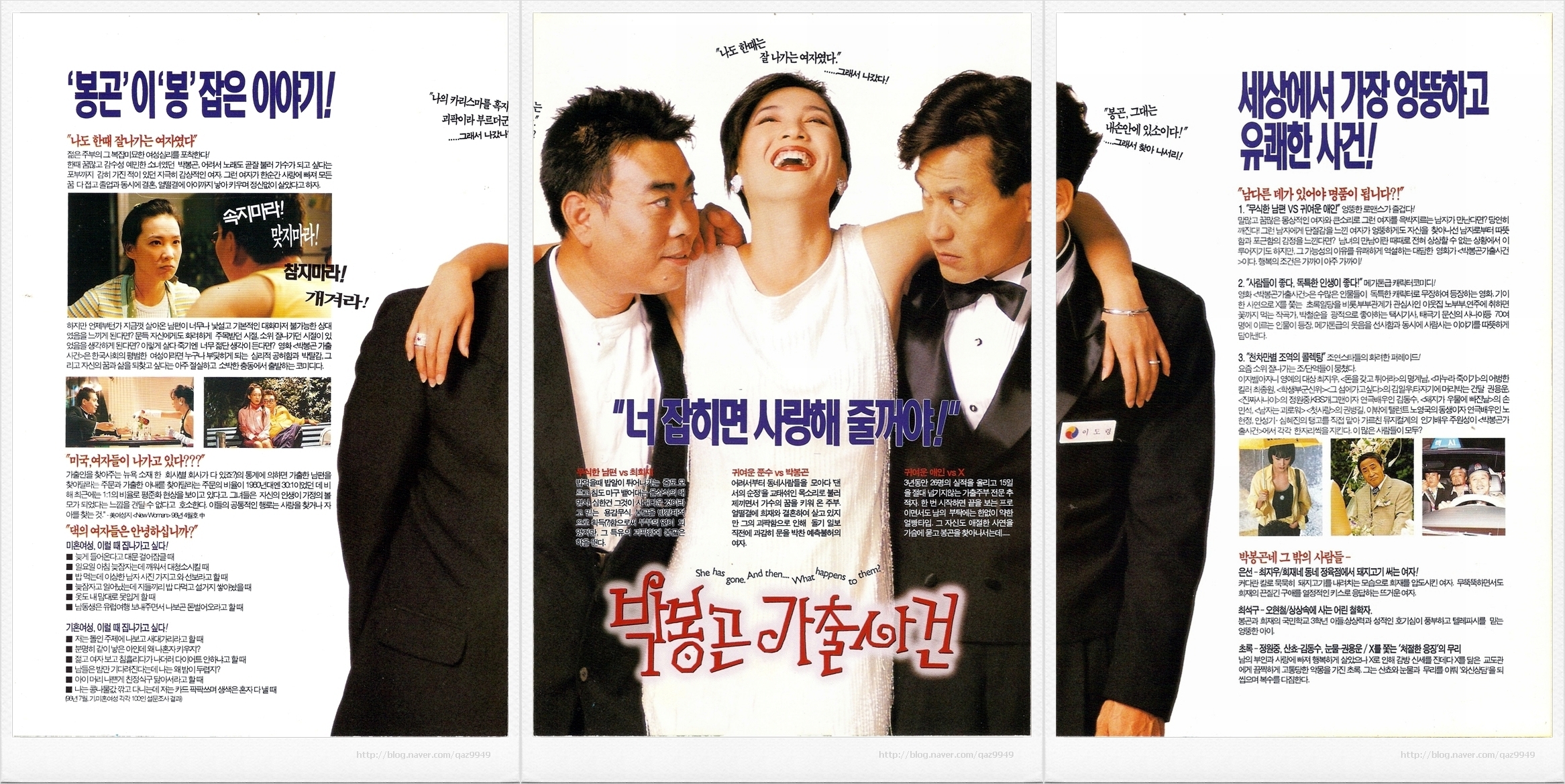
The Adventures of Mrs. Park(Source: Unknown)

As such, Lee notes the film director was concerned about how a conservative audience might respond to the uncommon story and its unexpected ending, and in many ways the movie presents a guerrilla attempt to sneak a serious social message into Korean cinema by presenting it as comedy. In the poster above for instance, it appears that the female character is in possession of two men simultaneously, and what’s more she is bursting into laughter while her soon to be ex-husband and the detective he hires to find her (who falls in love with her instead) stare fiercely at each other, whereas in reality women less wealthy than the Missys described earlier (and the characters in Mommy Has a Lover and The Lover) tended to be (and still are) very economically dependent on their husbands and therefore very submissive to them, and hence that is how they tended to be portrayed in previous Korean movies. Moreover, the happy ending made possible by the comedy genre here implicitly highlighted the grim reality that such an act would entail for most women in that position…and which probably explains much of its success, for it articulated their feelings.

And that marks the end of the works that Lee looks at. By way of conclusion, let me mention just two things that she mentions in her final section of the chapter, entitled “Prospects for the Social Concept of Sexuality in Twenty-First Century Korea”. First:

Looking at Korean culture with a certain detachment, I can imagine that the years 1995 and 1996 will be remembered as a critical period for the emergence of a social discourse on sexuality, particularly female sexuality (p. 160). The year 1995 was particularly remarkable in that housewives began, on their own initiative, to speak in public about wives’ subjective sexuality (p. 160).

Although the book this chapter is in was published in 2002, I strongly suspect that Lee actually wrote this in late-1997 at the latest, as only 2 out of 50 or so references are from sources later than 1996, and she writes in the next paragraph that “even with the economic downturn since November 1997, this tide is still in motion.” Unfortunately, when the true extent of Korea’s economic crisis became apparent just a few months later, and in particular its profoundly gendered nature (women, particularly married women, were overwhelmingly targeted for layoffs, under the explicit presumption that they would be provided for by their husbands or fathers), then this “tide” was to proved to be at best a mere ripple against new economic realities.

On the other hand, she proved to be remarkably prescient with the following:

…while this discussion of the changing process of female sexuality in the popular culture from 1993 to 1996 gives the impression that Korean women now are marching to demand their sexual subjectivity, in reality, most Korean women are marching only as the passive consumers of the sorts of cultural products described previously, not as their active cultural producers. When women are able to intervene in the process of cultural production as subjective consumers with a feminist point of view, the Korean concept of female sexuality can be transformed more rapidly than before (p. 159, my emphasis).

And as I explain here in great detail, such an opportunity was provided by the 2002 World Cup, and Korean women more than took advantage of it. That will be the focus of a follow-up post, hopefully to be written well before the conference!

Update) For those of you fluent in Korean, this short essay also discusses some of the movies mentioned here, and adds many more from the 2000s that in the same vein)


Korean Gender Reader

Chae-Yeon in her underwear cropped1. Chae-yeon’s Music Video Banned by Korean Broadcasters

Personally, I think that the K-pop blogs (see here and here) have been too harsh in their criticisms of Chae-yeon’s (채연) new music video Shake (흔들려) as being more skanky than sexy, and while it’s certainly true that at the ripe old age of 31 she’s much older than most Korean pop stars, any c0mments to the effect that the video is a sign of desperation on her part are rendered false by her being no stranger to sexy outfits and provocative dances and music videos since…well, pretty much since she first rose to fame in late 2003.

Now, I’m not so naive as to think that her management company, now humbled into editing the video to make it suitable for television, didn’t deliberately seek this ban for promotional purposes, nor do I so dogmatically associate sexual liberation and it’s expression in the media with democratization that I see Chae-yeon as a feminist pioneer merely for showing us some cleavage either. But if you actually see the video, then like I imagine what most Koreans are doing you will probably ask yourself what all the fuss is about. And coming on top of the Ministry for Health, Welfare and Family Affairs recent banning of music group TVXQ’s I’ve Got You Under My Skin from TV and radio on the one hand (see #2 here), but also the Supreme Court’s recent ruling in favor of the import and distribution of the very sexually explicit U.S. film Shortbus on the other (see #1 here), then it doesn’t seem unreasonable to suppose that this latest banning just adds to Koreans’ increasing frustrations with a completely arbitrary, often contradictory, and almost always completely ineffective system for determining what is and isn’t “suitable” for them to watch.

2. The Changing Role of Women in Korea’s Past

Andrei Lankov writes an amusing column here about stereotypes of widows and the prohibitions against their remarriage in Korean history, and how these proved unsustainable in the 1950s in the face of their huge numbers and inability to make a living. After all, considering that they were well-known to have voracious sexual desires, all the better for them to remarry and have a man to provide for them rather than satisfy themselves with married men (but remain destitute).

Meanwhile, here Don Southerton discusses how paintings of the late-18th and early-19th Century reflected changes in women’s roles in the late Joseon dynasty (대조선국).

3. Female Climber Conquers Top 11 Himalayan Peaks

South Korean Oh Eun-sun, 43, became Korea’s first and the world’s third female mountaineer to conquer the 11 highest Himalayan peaks, her agency said Friday.

On top of that…*cough*…she aims to be the first women in the world to climb the 14 highest, and will on her way to Pakistan to do just that as soon as July!

4. “Making Pregnancy Unglamorous”

jung hye-young uncomfortable pregnancy D-line(Source: Cloudnain)

Skinny Bitch Bun in the OvenAs a father of two, then I don’t know how anyone could ever describe pregnancy as “glamorous,” although if one doesn’t have any direct experience of it then I suppose that Byun Jung-soo (변정수) and Son Tae-young (손태영) did manage to pull that image off, or at least within the confines of a photo studio and then with later retouching by Photoshop that is (see here and #11 here respectively).

Unfortunately, the same can’t really be said of Jung Hye-young (정혜영) in photos of her pregnant figure in Elle magazine here, here, and here, and which with her squashed belly in some and high heels in all of them, beg the question of what Elle’s purpose in taking them was exactly. To highlight how uncomfortable pregnancy actually is in reality? :D

Update, right: A book that all these recent celebrity pregnancies reminded of (see here for the details).

5. Koreans’ Bodies Are Changing

Obviously Koreans are getting much taller as a result of their better diets, and these days it’s not at all unusual to see children literally a foot (30.48cm) or more taller than their parents because those have improved so rapidly. Personally, whenever I see such a stark contrast I’m always reminded of sociologist So-Hee Lee’s point that ” Generation is an important attribute of identity in Korea, like race in the United States” (p. 146 of this book), and something always good to bear in mind when thinking about Korean society, although it was intended as more of a comment on how that was changing so quickly rather than on Koreans’ actual bodies themselves!

But the shape of their faces changing also? Apparently so, according to this article, but it seems counter-intuitive, and without further access to the original data and descriptions of the methodology of the Korean Agency for Technology and Standards behind the research, then the first thing that comes to mind is the possibility – but I stress, only possibility – that researchers may be projecting today’s desired face shapes and/or changes onto the data.

Just something to bear in mind: it would be good to have more information. In the meantime, for more discussion of that and other related issues, see here and here, and let me highlight Sonagi’s point that “Nutrition can explain changes in bone and facial structure” especially.

6. The Five Prettiest Male Entertainers

A description to be taken literally!  See the results of a netizen poll here.

7. Traditional Feminism

“Traditional” in the sense that some people are actually doing something about women’s inequality here rather than *cough* merely writing about on the internet. First, see here for more information about a group of Korean women that “envision a global network of local feminist activists that they are calling the Glocal Activist Network (글로컬액티비즘), and are traveling the world to recruit organizations and individuals to join up,” then here for a little about members of the Korean Women’s Trade Union who are campaigning for a 1000 won increase in the minimum wage (I believe it’s at about 3500 won at the moment, or US$2.80), and finally here on the rising inequality in Korea behind the latter, which has disproportionately affected women (see #2 here).

8. Love, Marriage, Babies…and Taxes

As I discuss here, with Korean women still being “encouraged to resign” once their bosses discover that they’re pregnant, then I’ve often made the point that minimal tax incentives and/or one-off cash payments for recent parents are unlikely to encourage many women to have more children, and indeed – lo and behold – Korea has had the lowest birthrate in the world for the second-year running.

Moreover, it turns out that while “conventional wisdom holds that married couples with children pay less income tax than singles, with multiple-member households enjoying greater tax deductions,” in fact “the nation’s tax system still favors single-member households over married couples,” according to this report.

On top of that, Korea already has the third most dangerous roads for children in the OECD (and is the sixth most dangerous to drive in overall), and Korean children and teenagers are the unhappiest in the OECD also.  Which begs the question of why I chose to raise two here myself…

9. Seoul Going Woman Friendly

I’ve already mentioned the increases in the numbers of women’s toilets, and a more comprehensive list of the changes being made is available here. Many are logical and positive steps, but most attention has (naturally) been given to the “women-only parking spaces, ” conceived under the explicit assumption that “women are worse drivers” (see here and here). That is sexist and just plain wrong, like I noted in #3 here, but the following extra information in that first link above draw my attention to yet another, overlooked sexist element:

…Seongdong and Dongdaemun in Seoul offer women-only parking spaces designed to help female drivers. The parking spaces are a bit larger than ordinary, giving consideration to children and baby carriages, and are also arranged in bright and open places.

On the one hand, it’s good that they’re in bright and open places, and women may well enjoy the greater room for children and baby carriages also. But then, as this image from Thailand reminded me, it also reinforces the notion that childcare is only women’s work.

10. Kim Yu-na: Most Overexposed Performer in Korean Commercials

I’ve nothing against ice-skater Kim Yu-na, and in fact quite like the new sultry and sweaty side of her presented in the image on the left (source, and see here also), quite a contrast to the childish image of her that is usually presented in the media (and of Korean female celebrities in general). But the idea of drinking milk while exercising is so incongruous that I soon wake up from any fantasies Maeil presumably wanted me to have, although it has to be said that that probably wouldn’t put most Koreans off, whom will in my experience drink it at some distinctly odd times and occasions (such as with spicy kimchee-stew (김치찌개), and after a hard day’s hiking!).

More to the point, Yu-na appeared in more commercials than any other Korean celebrity in the May 2008-May 2009 period, and yet is merely the latest – and certainly won’t be the last – in a string of Korean personalities to suddenly become famous overseas and thereby immediately overexposed in the Korean media. For more on that, and on Koreans’ collective passionate embrace of a sport once a Korean person – any Korean person – becomes internationally successful in it, and their just as abrupt abandonment of all interest in it after their fame dies down, see here, here, here and here.

(By the way, “Kim Yu-na” is a very bad Anglicization of  “김연아”: the official one of “Kim Yeon-ah”, with the “eo” sounding like the “o” in hot, would be much better)

The Illusion of Sex

The Illusion of Sex.

A description of the images above made by Harvard psychologist Richard Russell, who won third prize in the 5th Annual Illusion of the Year Contest for them:

In the Illusion of Sex, two faces are perceived as male and female. However, both faces are actually versions of the same androgynous face. One face was created by increasing the contrast of the androgynous face, while the other face was created by decreasing the contrast. The face with more contrast is perceived as female, while the face with less contrast is perceived as male. The Illusion of Sex demonstrates that contrast is an important cue for perceiving the sex of a face, with greater contrast appearing feminine, and lesser contrast appearing masculine.

I found the following explanation much more useful and interesting though:

What you’re looking at isn’t an optical illusion, but is a play on the basic expected traits of men and women’s faces. The flusher lips of the left pic coincide with our expectations for women’s faces, as does the fairer skin. And it’s not just the illusion of lipstick; even without lipstick, we expect women’s lips to be more red than men’s. The difference in skin tone also brings to mind a recent a study suggesting that, on the whole, men’s faces are more red complected, while women’s are more green. Thus, even in the B&W photo, we infer that the darker complected face has the deeper reddish tone of masculinity; the lighter, the paler, greenish tone of femininity.

Obviously there’s much that’s debatable in that, especially whether those “expected traits” are universal or culturally-determined, but in the meantime I can’t deny that contrast is an important cue for determining the sex of a face, and that this provides more evidence for Korean women’s mania for lightening their skins being influenced by much more than merely wanting to emulate the wealth and sophistication represented by Caucasians.

Update) There is an 11-page PDF about these images available here, and you can find out more about Richard Russel and his research interests here.

(Thanks very much to reader Nicolas for passing this on)

Women Bullying Women at Work

In today’s Korea Times, with links and and a little extra information that couldn’t be squeezed into the 800 word limit:

No Room for Sisterhood in Today’s Workplaces?

In U.S. workplaces, women are primarily bullied by other women rather than by men, the New York Times reported last week, and the news quickly went viral as it busted some long and deeply-held stereotypes about the women’s movement.

In total, 60 percent of bullies in U.S. workplaces are men, according to the Workplace Bullying Institute (WBI), a national advocacy group. But whereas they tend to target both sexes equally, their female counterparts choose other women as their targets over 70% of the time (source, right: A Muchness of Me).

These figures were surprising because they arrived in an environment where the glass ceiling remains quite strong: a 2008 census by the nonprofit research group Catalyst, for instance, found that only 15.7 percent of Fortune 500 officers and 15.2 percent of directors were women. On that basis, it had been natural to assume that many women workers identify themselves as members of a repressed group, and consequently are more supportive and nurturing of each other in their working lives than men are.

Yet in reality, as numerous examples provided by the WBI attest to, there is little sense of feminist solidarity in the workplace. Why?

One reason is the record number of working women in the U.S., who are now more numerous than working men for the first time in history, primarily because the recession has hit male-dominated industries. Yet reaching this point has long been predicted, and as women also make up more than 50 percent of management, professional, and related occupations, then the surge in their numbers isn’t the result of them taking low paid and/or irregular work to make ends meet during the recession either.

But ironically this may actually increase pressures on women, as with so many now going after top jobs, yet a variety of discriminatory practices still preventing most from acquiring them, then it is logical for women to perceive female coworkers as competitors rather than as possible allies. Add the stereotype shared by both sexes that women are less tough and less likely to complain about bullying than men also, and it’s a wonder that this gender dimension to bullying in the workplace wasn’t noticed much earlier.

Women bullying women(Source: fav.or.it)

If anything, this competition is likely to be more cut-throat in Korea, where it is primarily women that are losing their jobs. As this newspaper reported in March for instance, of the 166,000 of Korean 30-somethings had lost their jobs the previous month, only 9000 were men.

That was not necessarily due to discrimination in itself: in a recession, all companies fire their irregular and temporary workers first. But in Korea, a disproportionate number of these are 30-something women, largely due to this group being singled out for firing during the Asian Financial Crisis of 1997-98.

That was explicitly for discriminatory reasons, the logic being that fathers and husbands would provide for their families or wives respectively. Unfortunately, government and business sentiments have little changed since.

Lee Myung-bak cartoonIn January, President Lee Myung-bak was quoted as saying that “the most urgent issue on our hands is to create jobs for the heads of households” (see #2 here), and as reported in Wednesday’s Hankyoreh newspaper, many Korean companies are encouraging pregnant women to resign, or are making their working lives intolerable if they don’t.
Consequently, compared to other OECD member countries Korea comes dead last on many indicators of women’s position in economic life, and it was without exaggeration that a 2007 OECD report described the country as the worst to work in for women. For example, in addition to extremely long working hours, the wage gap between men and women, which showed slow but steady improvement in the two decades before the Asian Financial Crisis, has stagnated at women earning roughly 64% of what men do ever since (source, right: unknown).

In these circumstances, it is to be expected that Korea also has one of the lowest women’s workforce participation rates also: according to the Korea Labor and Society Institute, 41.9 percent of all women aged 25-54 were working in 2006, little changed from an average rate of 41.5 percent for 1995-99, or, indeed, of 38.2 percent in 1980. The corollary of this is one of the lowest birth rates in the world, for Korean women are naturally choosing to have one child or none at all in order to work. But at least two are required to maintain a population.

There is perhaps no greater indictment of a society than the unwillingness of its members to raise children in it. But with wages being cut, hours being raised, and stress levels rising for everybody during this recession, Korean women are even less likely to want to do so with having to compete so vigorously with other women just to keep their jobs, let alone break the glass ceiling.

Update) A brief but interesting discussion of the origins of the term “glass ceiling” and the reasons for its persistence is available at the Economist here.

Korean Sociological Image #4: Where do Korean Politicians Come From?

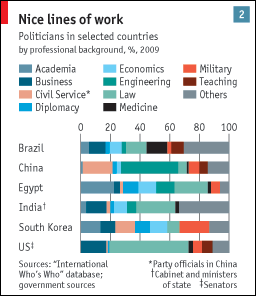
Original Lines of Work, Politicians in Selected=Apologies for the small size, but if you can see the pink and orange blobs for Korean politicians that were originally civil servants or in the military respectively, then you get the idea.
The graph is from this article in the Economist magazine, which asks the question of why professional paths to the top vary so much, but unfortunately only mentions South Korea when it says…

Countries often have marked peculiarities. Egypt likes academics; South Korea, civil servants; Brazil, doctors (see chart 2). Some emerging-market countries are bedeviled by large numbers of criminals, even if this doesn’t usually show up in their ‘Who’s Who’ records.

…yet is no less fascinating for all that. If I reluctantly confine my brief discussion to South Korea here though, then that predominance of civil servants among Korean politicians should be no surprise to anyone familiar with its Twentieth Century history (see here and here), and I’d expect to find much the same in other postwar “developmental states” also, particularly Japan that is their model and the former colonial power of most.

But of course their importance goes back much further than that (see here), as indeed it does in China, which has historically provided Korea with many governmental and political models to emulate. Hence the Economist is quite correct in painting Chinese Communist Party officials with (literally) the same brush also, for despite their modern ideological labels they are in many senses merely performing what are really quite timeless roles.

Other than that, I confess to being surprised at the number of politicians with military backgrounds, even though I’ve written a great deal about the pervasiveness of military culture in Korean daily life. One shouldn’t make too many generalizations from so little information though, and so I’d hesitate to make any links between the low numbers of politicians that were formerly lawyers and Korean legal culture also, although I’m certainly tempted!

(For more posts in the “Korean Sociological Image” series, see here)

Korean Gender Reader

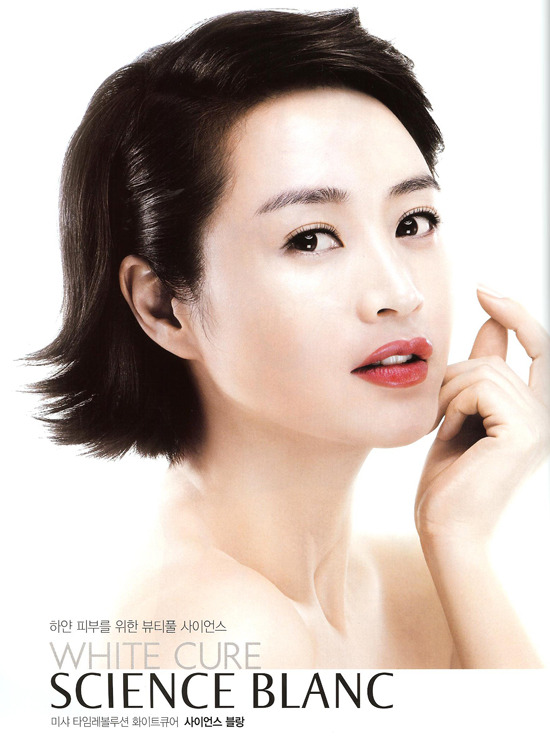
White Kim Hye-su Missha1. Number of Women Suffering Osteoporotic Fracture Increasing

So short that I may as well give the entire article:

Around 200 out of 100,000 Korean women are suffering from osteoporotic fracture, more than a four-fold increase over the past decade. The estimated annual socio-economic losses from such fractures are around W1.05 trillion (US$1=W1,275).

According to a 2007 survey by the U.S. National Institute of Health, the number of female osteoporotic fracture patients was seven times more than that of breast cancer patients, 2.5 times more than stroke patients, and 1.4 times more than heart attack patients.

Moon Sung-hwan, an orthopedist at Severance Hospital, said, “According to the World Health Organization, one in four women suffers a fracture in her lifetime. The rate increases to over 33 percent among those in their 60s or 70s, and 50 percent among those aged 80 or over.” Hip-joint fractures are particularly dangerous, since approximately 30 percent of patients die within two years.

I accept that a host of factors may be responsible for the dramatic increase, but as I make clear here, here, and here, Korean women go to great lengths to avoid the sun for the sake of light skins (to the extent that they now have among the lowest Vitamin D levels in the world). Moreover, as Korean women’s disposable incomes have gone up over the last few decades then so too has the range of whitening creams, lotions, and pills and so forth available to them, one of the most recent of which is that in this recent advertisement with Kim Hye-su (김혜수) for Korean cosmetics company Missha (미샤) above (source). It is not illogical to suppose that with greater spending on such items comes even greater care and attention to avoiding the sun, hence a drop in Vitamin D levels, and in turn a greater risk of osteoporotic fracture.

Naturally, that would be more young women than the middle-aged and older women most at risk, so there is an unresolved issue of timing with the recent increase. Alternative explanations?

2. South Korea Ranks Low In Terms Of Its Mothers’ Quality Of Life

For the details, see here. Again, just like with the UNDP’s 2008  “Human Development Index” and “Gender Empowerment Index” that I discussed here, whereas most countries’ economic indicators are also pretty good guides to the quality of life there, when it comes to Korea anything to do with women’s quality of life trails those economic indicators quite significantly. In this case for instance, its GDP was 15th largest in the world in 2008, but somehow it was only the 50th best place to be a mother (out of 158 countries surveyed).

I haven’t looked at the breakdown of the figures, but I would be very surprised if Korean maternal and infant death rates weren’t indeed the 15th lowest in the world or even lower, but that Korea lost a great deal of marks on its inability and/or unwillingness to reintegrate mothers into the workplace. For stark illustrations of just how bad Korea is in that regard, see here.

3. Jeong Ryeo-won’s Anorexia Problems?

Skinny Jeong Ryeo-won in April 2009(Source: zziixx)

In this interview, Jeong Ryeo-won (정려원) claims that she only lost the weight for a recent movie role, and never went below 40kg, but personally I think that the jury is still out on both. Regardless, in a sense it’s surprising that she’s been getting the attention that she has for it, considering that Biotherm presumably thinks that that caricature of an actual women above would not repel Korean women but be instead what they aspire to look like themselves. And if you think that that’s bad, wait till you see how she looked last July, when clothing retailer Giordano thought that pictures of her that scared my two year-old daughter would somehow have women rushing to their stores…

4. “If I Can Grope You, You Pass”

There’s been a great deal more discussion of the case of the student teachers sexually harassed by four teachers at their assigned public school earlier in the month (see #4 here), but probably the best is that at Brian in Jeollanam-do here, who also talks about the pervasiveness of this sort of thing at mandatory drinking parties at Korean workplaces. Here and here are two follow-ups also.

Meanwhile, the medical confinement of sexual predators has begun. According to Korea Beat, it’s a rare positive step, with rehabilitation as the goal.

Cruel Temptations Korean Drama5. Swearing Increases on Korean Television

A strange inclusion perhaps, but while there are naturally awkward aspects to all societies that its members are aware of but refuse to acknowledge and/or discuss (particularly sexual ones), in this part of world cultural norms of deference to authority, saving face, and not wanting to stand out in the crowd and so on probably mean that pressing social issues tend to get avoided for longer than in most.

So far, so cliched. Sure. But in a general sense, it’s a step in the right direction when popular culture reflects how people actually think, speak, and behave rather than cultural producers’ notions of how they should do so, and can create a feedback loop leading to more of the same

More concretely though, a spate of Korean women swearing on television, which appears to be occurring in the currently playing popular drama Cruel Temptations on the right in particular (source), may well challenge the sexist dubbing of foreign films and dramas, reported on by Robert Koehler in 2006:

A women’s group has issued a report on the “sexist” dubbing of foreign films and dramas, reports women’s newspaper Ilda The group took a look at some 27 English-language dramas shown on terrestrial broadcasting in September and October.  It found that most of them employed sexist sexist practices when dubbed into Korean.  Namely, male characters spoke in banmal, or “low language,” while female characters used jondaenmal, or “high/respectful” language, even though the original English dialogue made no such distinctions.

I don’t watch enough Korean television to know how prevalent this practice still is (can any readers fill me in?), but if it does still occur then it can only look more ridiculous in light of these new developments.

And I say “ridiculous” because a) it is, and b) I’m not so sure that any Korean couples even speak like that anymore, but then if any of my own limited circle of Korean friends used such a sexist division of language with their spouses and partners then we probably wouldn’t be friends in the first place! Can anyone without kids who gets to leave the house more than do I confirm that that is indeed out of date now (or not)?

6. Love and Marriage

Worried Moment for Korean Couple(Source: Unknown)

First up, the Korea Times reports that there’s a recent trend for employers to set up events for their single employees to meet:

Here’s what they do ― First, companies offer their single staff to register for a large dating event offsite at a hotel or theme mark. Matchmaking companies then kick in with games and events to help the crowd get to know each other better. At the end of the session, participants pick ― through a secret ballot ― who they want to be with.

Duo says about 50 people are accepted for one session and 30 percent of them go home as a couple. Some companies host the event as much as four times a year.

Considering Koreans are physically at work for some of the longest hours in the world, albeit not actually working for much of them (see here), then these events certainly make sense, although I doubt that they’re so efficient and no-nonsense that 30 percent of participants “go home as a couple”(!). Which makes me wonder whether: the long hours and culture of the salaryman system is primarily responsible for the idea (or rather, the vestiges of it), and if so if it is mirrored in Japan especially; or the fact that most Koreans were raised in single-sex middle and high-schools until recently, and thus much prefer arranged, usually group meetings rather than being so bold as to ask the opposite sex for a date directly; or, most likely, a combination of the two?

Regardless, Korean companies clearly seem unlikely to go down the Western path of banning the practice anytime soon, but on a more grass-roots level Koreans I have spoken to about this personally have invariably been surprised to hear about what occurs – or rather, what doesn’t occur – in Western workplaces, and have taken a surprising amount of time to get their heads around notions such as “Don’t screw the crew.” But naturally my friends and students don’t speak for all Koreans, so I’d be interested in hearing what others have (had) to say.

Before I forget, Michael Hurt has written an excellent guide for (primarily) men on the positives and pitfalls of dating Korean women because of having such different backgrounds, including the effects of that single-sex schooling as mentioned. But don’t get the wrong impression: this is not a “How to screw Korean women”  kind of Korean guide, but rather something I could very much relate to after being in a relationship with a Korean woman for the last 9 years, and that I wish had been available much earlier!

Also, Koreans are continuing to get married at later and later ages, compounded by the recent financial crisis:

The latest statistics compound the frustrations felt by baby boomer parents. Last year, the average marrying age was 31.4 for men and 28.3 for women. More and more Koreans are choosing to marry later in life. In 1981, Korean men got married at an average age of 26.4 and women when they were 23.2. This means in 27 years, the average marrying age has been pushed back five years. Three out of 10 Koreans between the ages of 25 and 34, which are considered prime marrying years, are single.

In addition, the crisis is also having an effect on the kind of ceremonies couples that actually do get married actually have, practicalities and strained finances forcing a rethink in the previous norm of the groom’s family paying for the couple’s apartment, and the bride’s for the contents.

A more equitable, more Feminist arrangement because it’s the cheapest? God moves in mysterious ways!

And finally, here is a story about a matchmaker that is setting up North Korean defectors with eligible South Korean men.

7. Quick Links

A follow-up on the Joo Ji-hoon drug scandal, which I discussed last week.

KoreaBeat briefly discusses a TV program about a 23 year-old that leads a double life as a university student and a prostitute, and also about the military opening up to girlfriends, sisters and mothers by encouraging conscripts to blog about their experiences. Considering the huge socialization effect of military conscription on Korean men, then this may ultimately prove much more significant than it probably first appears.

– And last but not least, more information on the cost of studying in Korea at Extra! Korea here, and part and parcel of the primarily financial and not cultural reasons that Koreans adults live with their parents until marriage.

How to Get Ahead in Korea…

Samsung Mini-notebook advertisementWhile I wouldn’t go so far as to include it in my “Creative Korean Advertising” series, this advertisement certainly did get my attention when it was in the form of the entire back page of today’s Korea Times, and not just because I have a shaved head myself! Click on it for a full-size image, and you’ll soon see what I mean.

Meanwhile, apologies for the lack of posts recently, but my father-in-law literally fell off a cliff last weekend, and had to be taken by helicopter to the closest hospital. He’s okay (ish), but he’ll be in hospital for a long time, and with my wife going back and forth to her hometown to see him, my looking after the children while she does, and all my other work and paid writing commitments, then my blogging plans for this week have lost out to my getting a whole 5 hours of sleep a night I’m afraid(!). But blogging-wise at least, things should be back to normal within a couple of days.

Korean Women Are Not Alphabets!

kim-tae-hee-v-line-face-drink-advertisement

Update, February 2013: Please see here, here, and many other posts in my “Revealing the Korean Body Politic” series for my considerably updated, hopefully much more nuanced thoughts on Korea’s alphabetization trend, especially in light of what I’ve learned about historical Western precedents!

The original version of my article for today’s Korea Times:

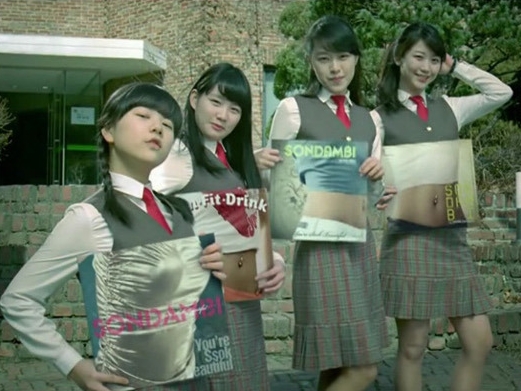
Well known for donning corsets on stage since her comeback in May last year, few can deny that there is much to find cute in singer Son Dam-bi (손담비) tightening a miniature one around a bottle of ‘Today’s Tea’ in her latest commercial.

But while modern corsets lack the uncomfortable body-shaping functions of their Victorian counterparts, they remain an enduring symbol of the pressures women can be under to conform to often impossible ideals of appearance. And despite its lightheartedness, this commercial provides an excellent illustration of a distinctly Korean spin on this (source, right: kjutaeng3)

Beverage producer Lotte Chilsung invented the term ‘bellyline’ for use in this commercial, and it is this that the corset and supposedly the drink help with slimming. In itself, doing so is not at all worthy of any criticism, nor is the term dissimilar to, say, the English equivalent of ‘waistline,’ which would actually have been a much more appropriate choice here. But with that perfectly good term existing already, then why invent a new one?

The reason is that the term is merely the latest in a spate of naming particularly female body parts after English letters in recent years, a very curious fashion that seems unique to Korea so far. Consider the following best known examples of this:

  • M-line (abdominals, for men)
  • S-line (breasts and buttocks, viewed from the side)
  • U-line (exposed lower back)
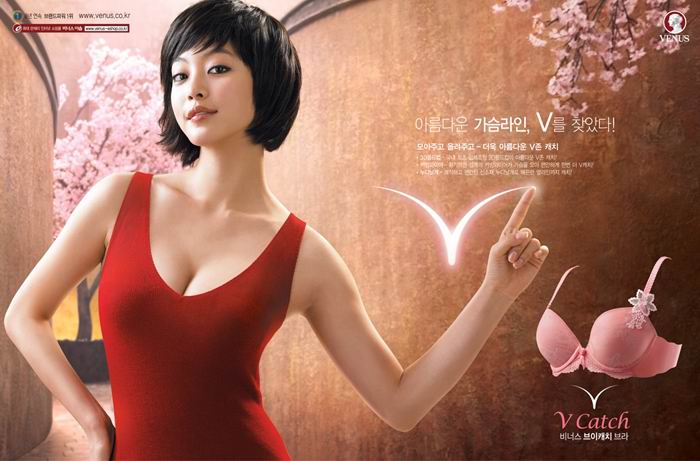
  • V-line (one for face, and another for the line in-between breasts)
  • W-line (breasts)
  • X-line (long legs and arms, with a narrow waist)
A Woman and her lines(Source: Dark Roasted Blend)

And so integral to Korean pop culture are S-lines and V-lines in particular, that within five minutes of turning on a television you are likely to see either female celebrities strutting them on talk-shows, or prominent ‘S’s and ‘V’s displayed in commercials. Indeed, such is the current mania surrounding them that you can even come across examples completely unrelated to the original body parts involved, including in commercials for cell-phones, school uniforms, and even gas boilers!

Although this practice seems frivolous on the surface, says blogger Javabeans “it actually belies much more pernicious trends in society at large,” and something is surely seriously amiss when, rather than the media, you have a majority of female celebrities “vocally espousing their alphabet-lines and therefore actually objectifying themselves as a conglomeration of “perfect” body parts rather than as whole, genuine people.” But, why their alacrity in doing so? (source, left: 여자가 좋다. 남자는 필요없다.)

A clue is that this quote was made in the context of a breast cancer fund-raising party in October last year, the producers of which saw absolutely no irony in naming ‘Love Your W.’ And if nothing is viewed as untoward in doing so for an event supposedly about empowering women by encouraging them to respect more and take better care of their bodies, then you can imagine that there are few inhibitions for promoting the use of ‘lines’ to teenagers and young girls either.

Accordingly, there are even educational videos that promote healthy food such as fermented bean paste (dwenjang/된장) to elementary-school children that mention that eating it will be good for their S-lines and V-lines also. And one probably direct effect of this is the fact that many Korean middle-school girls have ‘face rollers,’ the repeated application of which is supposed to flatten one’s face towards a desired, angular, ‘V’ shape.

To be sure, the Korean media is not unique in placing undue emphasis on women’s appearances rather than their intelligence — the American media obsession with Michelle Obama’s fashion choices being a notorious recent example — nor is it in providing often unobtainable and unnatural role models and body ideals for women and girls. But the contexts in which those are received are important, and whereas videos like the above would rapidly be banned in schools in many other developed countries, and/or educators that criticized children because of their appearance rapidly fired, unfortunately both are par for the course in Korea.

(Han Ye-seul demonstrates yet another “V-line.” Source: Naver Photo Gallery)

To an extent, this lack of awareness and/or concern is understandable when a child’s entire life prospects are almost entirely determined by a single exam: parents have other priorities. But on the other hand, when a majority of netizens did not take pride in astronaut Yi Soyeon for being the first Korean to go into space last year, but instead criticized her for her appearance during the flight, then teenage girls will hardly be encouraged to study harder.

And on a wider scale, as Korea again faces an economic crisis, in order to recover it is worth pondering what lies behind Korea long having one of the lowest rates of working women in the OECD. Surely a good start to using this underutilized human resource, one of the best-educated in the world, would be to encourage both sexes to stop judging women, and women expecting to be judged, entirely on their appearance?

Quick Statistics on Child Sexual Abuse in Korea

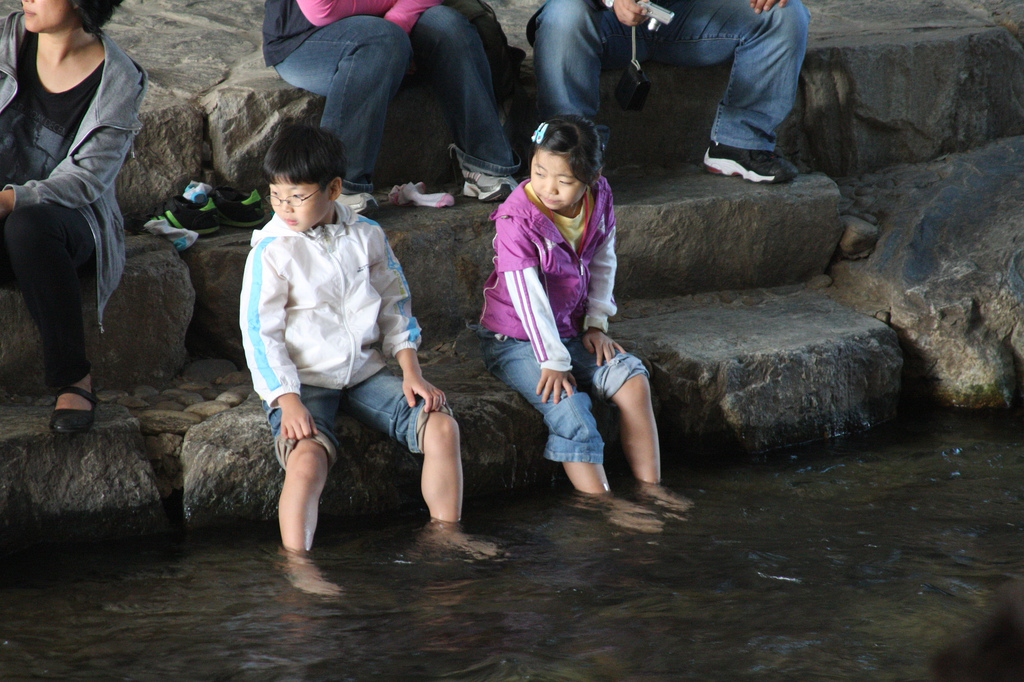
Korean Children Stream(Source: Bridget CollaCC BY-SA 2.0)

The Ministry for Health, Welfare, and Family Affairs can certainly be misguided in the “protection” it provides to youngsters sometimes (see #2 here). But given Korean television’s propensity for highlighting dull, vacuous company-endorsed public “campaigns” in commercial breaks, then it deserves kudos for its simple but effective message in this one:

For those of you that are interested, here is the full text seen in the book (repeated by the voice over):

허루평균 2.7 명 아동성폭력 피해

On average, everyday 2.7 children suffer from sexual abuse.

성폭력 피해 아동 편균 연령 9.4세

The average age of victims is 9.4

2007년 아동 성폭력 1,081건 발생

In 2007, there were 1,081 cases of sexual abuse against children

아동 성폭력 ,  당신의 관심만이 사전에 막을 수 있습니다

Only your concern can prevent this

모든아이가 내아이입니다

All children are my children(?)

보건복지가족부

Ministry for Health, Welfare, and Family Affairs

And for further reading I highly recommend this semi-introduction to the topic by Gord Sellar, prompted by his witnessing a mother pouring water over her son’s head to punish him for not liking his food. Alternatively, for more statistics and analysis, then I recommend most of the posts in the “youth” section of Gusts of Popular Feeling here, and Brian in Jeollanam-do has also written a lot about specific cases.

And last but not least, there is also the English section of the Ministry’s website itself, which is actually not all that bad.

Korean Gender Reader

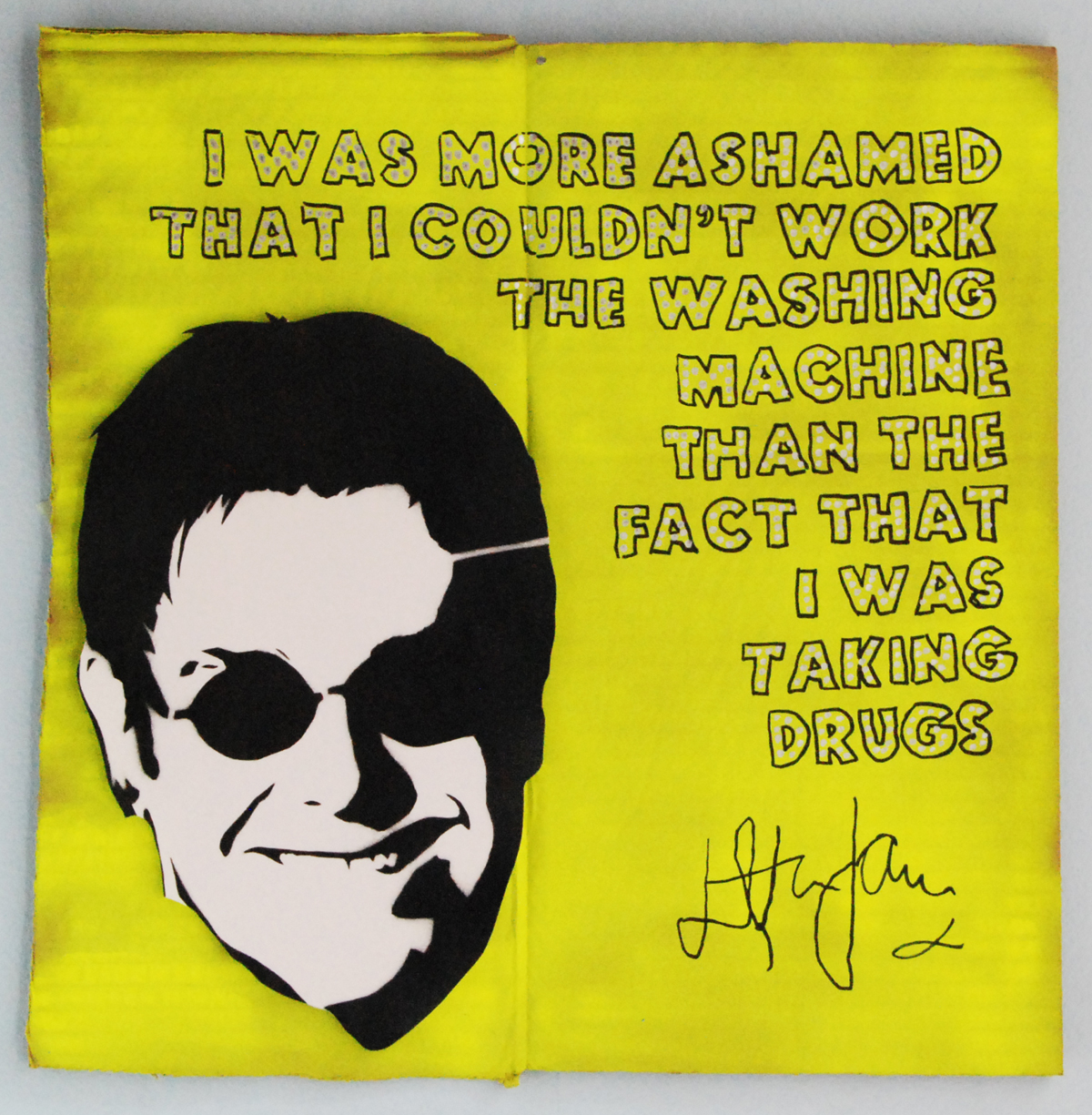
elton-john-drugs-quoteSource: id-iom.

Sorry for the delay: although I’d like to provide a much more professional-sounding excuse, the reality is that my toddler’s constant temper tantrums over the last two days have completely ruined my blogging plans for this week!

1. Joo Ji-hoon Drug Scandal

My personal choice for the most interesting story last week. In brief:

In the latest drug bust of entertainers, police booked popular film star Ju Ji-hun, 27, on suspicion of drug use and arrest warrants were sought for actress Yun Seol-hee, 28, and model Ye Hak-young, 26, for alleged smuggling ecstasy tablets and ketamine into the country from Japan. Two other residents were booked on similar suspicions.

“Besides the suspects on the list we have secured, there are likely more, given the amount of drugs smuggled. Further investigations are unavoidable,” an officer of the Seoul Metropolitan Policy Agency said (Korea Times).

Why I found it so interesting, and why it’s notable in a feminist sense, is because of how the huge disparities between Western and Korean celebrity culture may play out here. Very broadly speaking, Westerners usually tolerate – nay, encourage –  debauchery on the part of their idols, but Koreans are the polar opposite, usually demanding of celebrities standards of behavior and conduct much stricter than they do of themselves. Throw sexual double-standards and many especially young actresses frequently playing “sweet and innocent” roles into the mix too, then many female celebrities in particular have faced heavy public opprobrium once they have been revealed to be, say, merely human.

Yoon eun hye the temptressHence my first thought that the female celebrities involved in this scandal might get the most flak for it, but as Joo Ji-hoon (주지훈) is so much better known than them then so far most attention has been on him instead. Naturally, this story is all over the K-pop blogs, but DramaBeans provides the best coverage: see here, here and then here for all the details in chronological order, to which I’d add the surprising news that so far he hasn’t given the tearful apology that is de rigueur for these situations, and instead is – shock! horror! – unrepentant.

(Right: Does the blame ultimately lie with Yoon Eun-hye? Source)

2. I’ve Got You Under My Skin

Previous restrictions on nudity, sex, and swearing in the media are rapidly being lifted in Korea (see #1 here), but that doesn’t mean that all the individuals and institutions involved are liberalizing things at the same speed, nor, indeed, that they’re even on the same page. As I explain in the bottom of this post:

…aside from the government’s push for a  “real name” internet system of course, one other notable censorship issue is the Youth Protection Committee’s (of the Ministry for Health, Welfare and Family Affairs; see #4 here) recent banning of music group TVXQ’s latest songs from being played on TV and the radio because of “lewd content” (see here also). But one might ask what exactly the point was considering the album has already been out for six months though!

And blogger Gord Sellar has written an excellent post on the supreme irony of this:

…The idea that a censor who cannot speak English well enough to understand the nuances of what’s being said is interesting.

But then again, there’s also the nuances of what’s being heard. After all, I can say, “Ha, that censor doesn’t know enough English to know that it means, “I’ve got you on my mind,” or, “You’ve affected me emotionally in such a way that I cannot shake this effect you have on me.” But the censor’s grasp of English is…

Well, there’s the question. The Ministry for Health, Welfare and Family Affairs certainly doesn’t seem to know what the phrase means in English — though it’s well-documented, is present in popular culture, and absolutely innocuous in an English speaking context. (Even the stuff about “… deep down in the heart of me, so deep inside, that you’re really a part of me…” is tame enough to have been on mainstream TV back when sexual content was not broadcast in the States.)

See here for the rest.

3. More Female Toilets to be Built in Seoul

By coincidence, I heard on the Guardian Daily podcast last year about recent changes to laws in the UK requiring all new buildings to have female toilets double the size of those provided for men, and as a guy I had no idea of just how impractical and inconvenient and still steeped in a Victorian architectural mentality many are there, ultimately with big impacts on women with children in particular (and in turn, families), although as a father now I have much the same problems myself, and can certainly empathize. See here, here, here for more information on that UK case, but most of the problems mentioned would be universal,  and so provide some good context for the following news about the Seoul City Government, which will:

…increase the number of women’s toilets to close to that of their male counterparts. Currently, there are 42,348 male toilets compared to only 34,649 toilets for females. It will build 3,100 more this year and 3,800 next year (Korea Times).

A curious disparity. Regardless, and even if you’re a guy and/or not interested in such matters, at the very least more and bigger female toilets will mean less waiting for your partner, as someone on the podcast I heard mentioned.

Another, somewhat misguided initiative also mentioned in that report is to provide many slightly larger female-only car-parking spaces, the logic presumably being that women are worse drivers and so need more space to maneuver. Admittedly I don’t drive myself, but I’m pretty confident that any car-insurance salesperson can confirm that that is complete bullshit (women actually have less accidents than men), and so this idea reflects the prejudices of the city councilors more than anything else.

Update: See KoreaBeat here for more details.

4. Gwangju Female High School Students Stripped as Punishment

For the details, see Brian in Jeollanam-do here. One minor thing that he forgot to mention in that post is that it occurred at an all-girl high school, but which is not to say that that condones the punishment in any way

Also occurring at a high school, it was reported by the Korea Times that four male teachers are to receive punishment for sexually harassing female interns. Unfortunately, given a history of teachers getting off lightly for far worse offenses, such as one being given only a six-month sentence for sex with an 11 year-old (see #9 here), then…let’s just say I have my doubts as to how effective their ultimate “punishment” will be.

5. Han Chae-young Models Men’s Clothes

han-chae-young-rogatis-한채영-로가디스As allkpop reports, Rogatis (로가디스), a Korean menswear company, has chosen actress Han Chae-young (한채영), as their next model for their latest line of mens clothing (right, source). Not that significant perhaps, but it immediately brought to mind Danish clothing company JBS’s notorious underwear advertisements from last year, which featured virtually naked (naturally) women in men’s underwear, and which ultimately got…er…pulled (see here and here for more on those, but which are probably NSFW).

Now, I’m not going to feign outrage at those, nor at the notion of using women to model men’s clothes in itself, although personally I found the ones with nurses and so forth actually sniffing the underwear (and savoring the smell) to be very unrealistic more of a turn-off than anything else. But I’m curious as to readers’ opinions on the Rogatis advertisements specifically, as although they’re certainly still quite risqué (see more examples here), most of the complaints against those by JSB focused less on the women’s nudity as their explicit subservience in them, which clearly doesn’t apply here.

So, does it work? It it still objectionable in any way? Why, why not?

6. Korea’s Lost Generation

First becoming involved in Korean sociology via the huge differences in living arrangements for 20-somethings between Korea and Western countries, then I’ve long been interested in the various financial barriers that prevented Korean twenty-somethings from leaving home, and without which it’s no exaggeration to say a veritable revolution in Korean sexuality would occur. Indeed, the situation of today, rife with double-standards and open secrets and all, is not at all dissimilar to that of Western countries before huge expansions in university enrollments in the 1960s and 1970s, but until a similar Korean generation of cohabitants that no longer feels a need to hide things emerges from that, then it will continue to be women especially that suffer the most from sexual matters not being out in the open, either physically or by placing feminine virginity and “modesty” on a pedestal.

In my most recent posts on the subject then (here, here, and here), excessive student loan interest rates and rising univeristy fees have emerged as the biggest of those financial burdens, and in many ways what is occurring in Korea today parallels what occurred when I was a student myself in New Zealand in the mid-1990s. I didn’t, however, have this to contend with also:

As a candidate, President Lee Myung-bak promised to slash school fees by 50 percent and create 600,000 jobs annually. He did neither….

….It’s true President Lee had made these pledges before he knew the world would fall to what he has dubbed the “unprecedented” economic crisis. But there are not many governments trying to get out of this crisis by cutting initial salaries of college graduates, and telling them to remain content with internships, as the Lee administration does now.

President Lee called for the new entrants into labor markets, who probably constitute the best-educated generation of all, to “lower their sights and start humbly.” This could pass as advice among individuals but hardly a sermon coming from a responsible official ― much less the head of state ― to the fresh workforce that will shoulder the nation’s future.

By all means much recent criticism about the Korea Times is deserved (see here and here), but the editorial that that is from may prove remarkably prescient: at the very least, telling a whole swath of young people to STFU and be content with working in Family Mart for what should be the most productive and exciting part of their lives will accentuate their disengagement with the political process.

7. Birth, Death and Divorce in Korea

A swathe of statistics on each have been published recently:  for links and analysis on the former two especially, see Matt at Gusts of Popular Feeling here, and for the latter see Brian in Jelloanamdo here.

Meanwhile, if you’re futher interested in Korean demographics, particularly similarities and differences in family structures between Korea, the US, and Japan,  then you’ll probably like this series of mine on the subject also.

8. Korea’s Lack of Rape Kits: A Comparison to the U.S.

As someone who gets plagiarized himself on a regular basis, then normally I’d be very reluctant to cut and paste a post by KoreaBeat in its entirety, but in this case I think I can make a rare exception:

Nicholas Kristof wrote in [the] New York Times about the problem of severely backlogged rape kits in the United States, putting me in mind of how they are often never even collected in Korea.

And the latter, a translation of a lengthy article on the subject, should be required reading for everyone reading this blog!

If you reside in South Korea, you can donate via wire transfer: Turnbull James Edward (Kookmin Bank/국민은행, 563401-01-214324)

Korean Sociological Image #2: Son Dambi, The Perfect Woman

(Source: Paranzui)

Updated, October 2013

My previous commentary on this “Today’s Tea” commercial was woefully out of date, so it’s since been mercifully deleted(!). But many of the themes expressed remain just as potent in the Korean media today, including the encouraging of teenage girls and children to be dissatisfied with their bodies; the constant invention of new, often impossible, body shapes and “lines” for females of all ages to strive for; the over-reliance on celebrity endorsements, to the extent that the one chosen here, Son Dam-bi, is portrayed as somehow having a superior body and face to an equally-attractive, almost identical woman; and finally, albeit admittedly minor here, the reinforcement of gendered dieting roles by portraying the (single) male humorously—confirming that dieting is something only women need should be serious about.

Think I’m exaggerating? Just see for yourself:

Those problems aside, note that the “34-쏙/ssok-34” is a clever wordplay on women’s “vital statistics” (bust/waist/hip measurements), with one use of the word “ssok” being to stress how concave something is. In fairness, it’s quite apt for a slimming product.

(For more posts in the “Korean Sociological Image” series, see here)

Teenage Sexuality in Korean Pop Culture

원더걸스-wondergirls-in-short-skirts-doing-cute-faces

In Monday’s Korea Times, and it’s close enough to the original that I’ll forgo presenting my own version here this time. New readers, please see here for a video, screenshots,  and much wider discussion of the O’yu commercial mentioned and the issues it raises, and see here for more on the Sahmyook University study on condom use and premarital sex by Koreans referred to also. Old readers, apologies for the repetition this time, but fulfilling Brian’s request just proved too tempting in the end!

Share