Like everywhere else, Korea has a long tradition of celebrities endorsing government campaigns.
Unlike everywhere else, a “huge proportion of Korean ads depend on famous people,” says Bruce Haines, head of Korea’s largest ad agency Cheil Worldwide, a tendency which in its crudest form degenerates Korean advertising into merely “beautiful people holding a bottle.” In turn, that leads to a scramble for and subsequent overexposure of whichever Korean stars are most popular at that moment, regardless of their inappropriateness for the product(s).
Government campaigns are no different, to my mind the most notorious case still being the National Election Commission’s (중앙선거관리위원회) choice of The Wondergirls (원더걸스) to encourage people to vote in local elections in April 2008. Needless to say, I can’t think of anyone more inappropriate than teenagers (two of whom were only 15), and their choice of outfits simply beggars belief:
Vodpod videos no longer available.
But again, no different to what they wore in commercials at the time. Which is precisely my point: regardless of their merits, major trends in advertising are bound to be reflected in government campaigns sooner or later.
And as long term readers of this blog will be well aware, one trend is encouraging consumers to associate certain foods and drinks with certain desired body shapes. While it is hardly unique to Korea, it is done to excess here.
Is it any wonder then, that with the decline of the domestic rice industy, and concerns food security as a whole, that the government would do the same when promoting the consumption of domestic foods and drinks?
Last year for instance, I gave the example of how the Korean rice wine Makgeolli (막걸리) was being marketed to women on the basis that it is supposedly good for one’s skin. Now, I’ve found two more examples by the Ministry for Food, Agriculture, Forestry and Fisheries (농림수산식품부; MIFAFF), using the new group 4Minute (포미닛) and the Olympic medalist Park Tae-hwan (박태환) respectively:
Vodpod videos no longer available.
Vodpod videos no longer available.
To be clear, I am not saying that either are inappropriate choices. Actually I think they’re rather good: both are very popular, and it turns out that 4minutes’ egg song is a variation of their recent hit “Hot issue” too. I also fully concede that the connections between consumption of the product and obtaining an attractive body are fleeting (4minute) or merely implied (Park Tae-hwan) at best.
But still, they’re there. And given the long-term problems with Korean agriculture as identified above, then I hereby predict that we’re going to be seeing many more public campaigns like these in 2010. In particular, the links made between the products being advertised and obtaining an “S-line” and so on are going to be made more explicit.
Sound like an exaggeration? Well, recall how quickly commercial incentives have transformed decades-old standards for soju advertisements: just three years ago, they overwhelmingly offered virginal images of women, whereas now it’s rather difficult to find ones that don’t present them as eminently sexually available. Moreover, in an effort to appeal more to women, soju companies too are encouraging them to associate new lower-strength brands with maintaining a good body, however implausibly.
But perhaps an even more appropriate example is soy milk. If you’ll bear with me, being allergic to milk means that I follow developments in the soy milk industry here pretty closely, and Starbucks Korea’s belated decision to add soy to its menu in 2005 had a huge impact on my quality of life here! Not unlike the drinks themselves though (anybody know where I can find these flavored ones?) – or, indeed, government campaigns – soy milk commercials tend to be rather bland, so I certainly sat up and took notice when I first saw this one a few days ago:
Vodpod videos no longer available.
Soy milk companies too then, seem to be adopting the tactics of their more popular counterparts now. Lest I appear overly critical though, consider the scene 0:03 from 0:06 where 17 year-old Kim Hyun-ah’s says “[S]라인을 유지하려면 어쩔 수 없어,” or “If you want to maintain your S-line, you have no choice but to [drink] this.” Despite my constant criticisms of that sort of thing, and my earnest desire that my daughters don’t grow up to repeat it, I have to admit that I can’t help but find her expression and tone of voice, well, extremely cute…
Yes, I know: very hypocritical of me, and I await your counsel. But on a final, more serious note, consider Garaetteok Day (가래떡데이), MIFAFF’s scheme since 2006 to get people to eat stick-shaped rice cakes instead of Pepero chocolate sticks on November 11 each year. Promoted mostly as a romantic event for couples, as are most imported and/or artificially created holidays (Christmas Day, for instance, is the date the most condoms are sold in Korea), is it really too much of a jump to imagine that concerns about one’s appearances will be added to that too? Watch this space!
Update: An alternative way of exploiting Koreans’ associations with November 11 (source):
(For all posts in the Korean Sociological Images series, see here)
For the article in full, on Seoul Mayor Oh Se-hoon’s “Happy Women, Happy Seoul” plan involving more women’s toilets and the notorious pink parking spaces, see here. Meanwhile, for readers coming from there, see #2 here for the specific quote of Lee Myung-bak’s for which the blog was mentioned, and #2 here for more information on Korea’s disproportionately low Gender Empowerment Measure.
I would also add—with no offense to reporter Veronica Zaragovia, who necessarily had to omit most of what was said in our interview—that the argument that “the plan may end up reasserting South Korean women’s secondary status more than boosting it” is also one that I made in our phone conversation. I based it on the knowledge that the pink parking spaces were made wider in order to better accommodate loading and unloading pushchairs and so on (see #3 here), which had reminded me of this post from Sociological Images about the images in our daily lives that serve to subtly reaffirm the notion that childcare is primarily women’s responsibility. In that vein, while the extra space may well be appreciated by mothers, consider that if I were to park in one of those spaces myself, with just as pressing a need for the space to deal with my two young daughters in the back as my wife would have, then as a man I would be likely either be fined or shooed away.
I grant you, it sounds innocuous. But place that into the context of Korean women having the lowest workforce participation rate in the OECD, the result of a combination of a lack of childcare facilities and an enduring male-breadwinner mentality that forces a stark choice between motherhood or a career, then the underlying sexist logic becomes apparent. Moreover, with Korea in turn having the lowest birthrate in the world, the economic effects of which will be felt soon, then one might reasonably ask if the money could have been better spent.
p.s. Apologies in advance for some light blogging this week; I have a conference presentation to give this weekend.
Update, January 19 2010: See TheJoongAng Dailyhere for all the ways in which programs like this have been considerably expanded since this post was written, now including pink spaces for women at bus stops, on buses, in parking lots and special pink taxis under the rubric of improving women’s safety (via: The Marmot’s Hole).
For those of you that are interested in the title topic, then let me mention that I’ve finally finished the rather lengthy post on it that I started back in May, which you can read here. Apologies for taking 2 months rather than the promised 2 days to do so, and by why of compensation you can expect a flurry of related posts from me over the next 3 weeks, which by complete coincidence I’ve just realized is all the time I have left to prepare a presentation on the subject for a conference in Daejeon…
Seriously though, while it is a much more academic post than usual, even if you just give it a quick scan then you may be simply amazed at how much Korean television and movies have changed in the last 10-15 years, and how important dramas in particular have been at subverting traditional ideologies of female sexuality. This provides a precedent for the impact of things like Friends and Sex and the City on Korean gender relations and consumerism a little later, and hence also myself a newfound respect for them: see here for some recommendations for more recent ones in the same radical vein as the ones mentioned in the post.
In today’s Korea Times, with links and and a little extra information that couldn’t be squeezed into the 800 word limit:
No Room for Sisterhood in Today’s Workplaces?
In U.S. workplaces, women are primarily bullied by other women rather than by men, the New York Timesreported last week, and the news quickly went viral as it busted some long and deeply-held stereotypes about the women’s movement.
In total, 60 percent of bullies in U.S. workplaces are men, according to the Workplace Bullying Institute (WBI), a national advocacy group. But whereas they tend to target both sexes equally, their female counterparts choose other women as their targets over 70% of the time (source, right: A Muchness of Me).
These figures were surprising because they arrived in an environment where the glass ceiling remains quite strong: a 2008 census by the nonprofit research group Catalyst, for instance, found that only 15.7 percent of Fortune 500 officers and 15.2 percent of directors were women. On that basis, it had been natural to assume that many women workers identify themselves as members of a repressed group, and consequently are more supportive and nurturing of each other in their working lives than men are.
Yet in reality, as numerous examples provided by the WBI attest to, there is little sense of feminist solidarity in the workplace. Why?
One reason is the record number of working women in the U.S., who are now more numerous than working men for the first time in history, primarily because the recession has hit male-dominated industries. Yet reaching this point has long been predicted, and as women also make up more than 50 percent of management, professional, and related occupations, then the surge in their numbers isn’t the result of them taking low paid and/or irregular work to make ends meet during the recession either.
But ironically this may actually increase pressures on women, as with so many now going after top jobs, yet a variety of discriminatory practices still preventing most from acquiring them, then it is logical for women to perceive female coworkers as competitors rather than as possible allies. Add the stereotype shared by both sexes that women are less tough and less likely to complain about bullying than men also, and it’s a wonder that this gender dimension to bullying in the workplace wasn’t noticed much earlier.
If anything, this competition is likely to be more cut-throat in Korea, where it is primarily women that are losing their jobs. As this newspaper reported in March for instance, of the 166,000 of Korean 30-somethings had lost their jobs the previous month, only 9000 were men.
That was not necessarily due to discrimination in itself: in a recession, all companies fire their irregular and temporary workers first. But in Korea, a disproportionate number of these are 30-something women, largely due to this group being singled out for firing during the Asian Financial Crisis of 1997-98.
That was explicitly for discriminatory reasons, the logic being that fathers and husbands would provide for their families or wives respectively. Unfortunately, government and business sentiments have little changed since.
In January, President Lee Myung-bak was quoted as saying that “the most urgent issue on our hands is to create jobs for the heads of households” (see #2 here), and as reported in Wednesday’s Hankyoreh newspaper, many Korean companies are encouraging pregnant women to resign, or are making their working lives intolerable if they don’t.
Consequently, compared to other OECD member countries Korea comes dead last on many indicators of women’s position in economic life, and it was without exaggeration that a 2007 OECD report described the country as the worst to work in for women. For example, in addition to extremely long working hours, the wage gap between men and women, which showed slow but steady improvement in the two decades before the Asian Financial Crisis, has stagnated at women earning roughly 64% of what men do ever since (source, right: unknown).
In these circumstances, it is to be expected that Korea also has one of the lowest women’s workforce participation rates also: according to the Korea Labor and Society Institute, 41.9 percent of all women aged 25-54 were working in 2006, little changed from an average rate of 41.5 percent for 1995-99, or, indeed, of 38.2 percent in 1980. The corollary of this is one of the lowest birth rates in the world, for Korean women are naturally choosing to have one child or none at all in order to work. But at least two are required to maintain a population.
There is perhaps no greater indictment of a society than the unwillingness of its members to raise children in it. But with wages being cut, hours being raised, and stress levels rising for everybody during this recession, Korean women are even less likely to want to do so with having to compete so vigorously with other women just to keep their jobs, let alone break the glass ceiling.
Update) A brief but interesting discussion of the origins of the term “glass ceiling” and the reasons for its persistence is available at the Economisthere.
(Movie poster for “The Longest 24 Hours,” (기다리다미쳐, 2007), a lighthearted look at military service from the perspective of conscripts’ girlfriends; also known as “Crazy4wait.” Source:여자도 모른는 여자이야기)
It’s been quite a while, so to remind readers, in Part One of this series I argued that a virtual gender apartheid existed in modern Korea, with women excluded from economic and political life here to an extent much more reminiscent of Middle Eastern countries than what one would expect in a modern liberal democracy. If that sounds like mere hyperbole to new readers, then sure, it probably would to me too(!), but by all means examine the evidence given there, to which I would now add that Korea has the lowest number of working women of all developed countries also, and that spousal rape isn’t even a crime here (see #2 here).
(Update, February 2014: Part One has since been deleted sorry)
How to explain this? Well, naturally many specific elements of Korean women’s disadvantaged position in Korean society are no great mysteries: decades of salaryman male-breadwinner forms of employment for instance, explain a great deal about the lack of women in senior positions in companies (a parallel is how the Cultural Revolution four decades ago resulted in an “intellectual skills gap” that still affects the Chinese economy), and deeply hierarchical and sexist Neo-Confucianism has had a profound influence on Koreans’ worldviews, even extending to how men’s and women’s bodies are perceived and valued differently, and from which it is no great leap of the imagination to see echoes of in – amongst other things – the widespread use of doumi (도우미) or female “assistants” and scantily-clad “narrator models” (나레이터 머델) here to sell mundane household items or open even the humblest of new stores and restaurants respectively.
(With apologies to Michael Hurt for the use of the top image, but like he says, despite their ubiquity most doumi are embarrassed by their jobs and very reluctant to have their photos taken; after half an hour of looking (in Korean!), this is the only similar one I could find. Bottom image taken from shytiny)
But both those and many other factors commonly cited are by no means confined to Korea, and while going into greater detail would undoubtedly tease out plausible reasons why Korean women are worse off than, say, their counterparts in Japan or even China (hardly well-known for gender equality in themselves), here I am more concerned with the systematic nature of women’s exclusion in Korea. Ergo, however cliched it sounds, this series is all about seeing the forest rather than the trees.
With that in mind, based on my readings of especially Kwon (2001) and Moon (2005) and on my own nine years’ experience of the militarism that is still inherent to many Korean institutions (especially schools) in particular, then I laid the blame for that exclusion squarely on the continuation of and widespread public acceptance of the universal male conscription system, and all that that entails: nothing else seems adequate to explain so widespread and pervasive a phenomenon.
Again, that may well sound somewhat exaggerated at first: after all, South Korea is by no means the only country in the world to have conscription, and while I’d venture that a cross-country comparison would undoubtedly demonstrate at least a tendency towards lower levels of women’s empowerment in those countries that had it, that the “feminist paradises” of Sweden and Norway also have it, for instance, shows that any link would by no means be clear-cut. But then for most of the brief history of South Korea the military has had a uniquely pervasive role in society, one not revealed by any casual comparisons with other military regimes, and this really needs to be fully appreciated and understood before some of my more outlandish sounding claims about the effects of conscription on gender roles here can be assessed objectively. Hence, while it will take us far in time and space from what would normally come under the rubric of “Korean gender issues” – and which explains the 9 month hiatus, for unfortunately my beginning to write the series coincided with my wanting to examine more “traditional” aspects of that subject – I realized that the Korean military itself needed to be studied first, and so Part Two was about its origins in the Japanese colonial state, again much greater in size, scope and ambitions than a simple conflation with its European and US counterparts would suggest.
This post continues where that left off, focusing on the short-lived Japanese colonial state of Manchukuo (Manchuria region, 1932-1945), which eventual nreturnees to Korea among the 720,000 Korean immigrants there (from 1932-1940) and a sizable proportion of the South Korean bureaucracy, armed forces, and police of the 1950s and 1960s had some first-hand experience of living in and working for. In particular, Manchukuo was where president Park Chung-hee (1963-1979) above (source) spent most of his formative years as an officer in the army (even going so far as to sign an oath of loyalty to it in his own blood), and, as we shall see, is what he would effectively recreate in South Korea in the 1960s and 70s.
Okay, first the big picture: what were Japanese motives in occupying what was to become Manchukuo? Well, primarily because it greatly expanded the Japanese imperial empire, still much smaller, weaker, and younger than its European and American counterparts as explained in Part Two. But more practically speaking, it also provided:
A bridgehead for the invasion of China, well connected by rail and road links to Korea even before the 1930s
A buffer-zone between the USSR and both the more developed and crucial colony of Korea, and indeed there would be several clashes between the two on the Machukuo border in the late 1930s
An important source of particularly mineral resources in its own right, without which the later invasion of Southeast Asia wouldn’t have been possible
And finally, an escape valve to ease Japanese (and Korean) domestic agrarian population pressures and poverty, exacerbated by the depression.
(The Prewar Expansion of the Japanese Empire. Source: Wikipedia)
The 2008 movie The Good, The Bad, The Weird (좋은 놈, 나쁜 놈, 이상한 놈) in the poster above happens to be set there, and by all accounts it is fun to watch, but unfortunately its depiction of life there in the 1930s as Korea’s version of the Wild West is probably exaggerated at best. While it’s true that the Chinese Warlord Eraas a whole is not exactly well known for the stability or internal coherence of its various regimes, and that things would have been quite chaotic around the period when warlord Zhang Xueliang withdrew his forces from the region and ceded it to the elite Kwangtung Japanese Imperial Army after the Mukden Incident of September 18 1931, that strategic retreat was largely dictated by forces beyond his control, such as Chiang Kai-Shek being unable to provide assistance. In fact, his regime was far more coherent than most of that era, being able to effectively wipe out opium-trafficking and internal corruption in the previous decade for instance. Moreover, much of the state bureaucracy was bequeathed to the new Japanese colonial state, and as soon as April of 1932, it was one of the most controlled, regimented regimes in Northeast Asian history.
Don’t worry if that was all above your head: suffice to say that Manchukuo state organs were in many senses grafted onto the preexisting ones of Zhang Xueliang’s regime, but with the crucial difference that recent events meant that there were no longer any substantial non-state actors like a business or landed class to impede them in instilling notions of loyalty and nationalism in their new pool of workers and soldiers.
And whom were by no means unwilling victims of the process either. For example, writing about the Korean “Truth Commission on Forced Mobilization under the Japanese Imperialism (sic)” in 2006, Michael Breen said:
The Truth Commission on Forced Mobilization under the Japanese Imperialism (sic) announced on Monday that 83 of the 148 Koreans convicted of war crimes were victims of Japan and should not be blamed….
[But they] were not tried as soldiers or POW camp guards who had done their jobs. They were tried for over-zealousness, for decisions and actions over and above the call of duty. They were the thugs, the brutes, the monsters, the most horrible of the ”horrible people”….By what authority does the Truth Commission have to remove their individual responsibility with its class act defense of nationality? Such skewed morality led to the crimes against the lowest class– ”prisoners” — in the first place. People who committed crimes against humanity are not innocent by virtue of being Korean any more than Japanese who brutalized Koreans are innocent by virtue of being Japanese.
….[the Truth Commission] should recognize that the idea that Koreans were all unhappy citizens of imperialism bar a few collaborators is a myth. Koreans were Japanese citizens, and it did not occur to many to support the allies against their own country. Ask anyone who lived in that period, and they will tell you that the political correctness of the post-colonial generation is distorted.
They will also tell you that from 1937-42, Koreans in the Japanese army were volunteers — who included King Kojong’s son, an army general — and that large-scale forced conscription only started in 1944. The Commission should know that those rounding up comfort women were Koreans and those torturing people in police stations were mostly Koreans. Koreans, in other words, were more ”horrible” to Koreans in many cases than the Japanese were. The solution to this dilemma is to accept the notion of individual responsibility.
And according to Suk-Jung Han in his July 2005 Japan Focus article “Imitating the Colonizers: The Legacy of the Disciplining State from Manchukuo to South Korea,” similar senses of citizenship were instilled in new Manchukuo citizens by means of:
State-Sponsored Confucianism
Mourning Rituals and Ancestor Worship
State-foundation Gymnastics
Anti-Communist Rallies
A combination which will probably sound very familiar to those of you even with just the most basic of knowledge of South Korea’s history. Indeed, as Han’s article is only 14 pages long and very readable in its own right, rather than provide a detailed discussion of what you many of you will go on to read there regardless, it’s probably wiser if I just provide some excerpts here, starting with:
The legacy of Manchukuo can be seen in numerous “naturalized” events in South and North Korea. So-called “national ceremonies,” such as paying a one minute silent tribute to the war dead in front of monuments, marching, lectures on the “current emergency situation”, movie-showing, poster making, student speech contests, rallies, big athletic meetings, and so on- largely related to anti-communism, and all too familiar to South Koreans for several decades from the 1950s- were originally national events of Manchukuo in the 1930s.
For state-sponsored Confucianism, some crucial clues as for how South Korea has come to be known as “More Confucian than China”:
South Koreans grew accustomed to the Confucian ideology of loyalty and filiality (choong-hyo) stressed by Syngman Rhee’s regime (1948-1960) as well as Park Chung Hee’s (1961-1979). The post-liberation ideology was different from the Confucianism of the Chosun dynasty, which had been not only the official ideology but also the basis of ethics and cosmic philosophy. The former was less intense than the latter. But Confucianism was still influential in the post-liberation era. Important Confucian concepts, like loyalty to the nation, were instilled in students. It was Manchukuo that energetically patronized Confucianism. Manchukuo differed from mainland China where Confucianism was severely attacked by the May 4th intellectuals and their heirs. Also, Manchukuo differed from Japan in the 1930s when Shinto was deployed as the state religion.
About the importance of mourning rituals and ancestor worship, which might sound outlandish to many outside of Korea, but intimately familiar to anyone who’s ever experienced either of the two biggest occasions of the year Seollal or Chuseok in an actual Korean home, and learned first-hand just how morbid they can be, at least symbolically:
Although monuments for the war dead began to supplement Confucian shrines as the site of important ceremonies, the mourning ceremony, either for ancestors or soldiers, was long essential to Confucian practice inside and outside the home. In April, 1935, officials and army officers attended a great mourning ceremony (zhaohunji, shokonsai), held at the newly built monument in the capital. The assembly, opening ceremony, invocation of the spirits, enshrining of the dead, offering of food, and tributary speech solemnly proceeded. This was simply one example of numerous mourning ceremonies of subsequent years, particularly after the outbreak of the Sino-Japanese war.
The mourning ceremony for dead officials, policemen and soldiers was an important an event, next only to one worshipping Confucius. Although prewar Japanese society also had ceremonies for the war dead at Yasukuni shrine, they were not equal to those in Manchukuo. In Japan, all the war dead (except those who died in hospitals, rather than at the front) were enshrined at Yasukuni. Ceremonies for all were held there at fixed dates. In Manchukuo, by contrast, ceremonies were held at numerous places and at various times. Each ministry of the central government, central police board, army district, province, and county office organized a committee for constructing monuments. Monuments and plazas for the war dead were built across the nation.
(Offerings of food and drink at a temporary mini-shrine devoted to the spirits of dead ancestors, to whom male members of the family must bow to in ceremonies on Seollal and Chuseok. Source: DiscoverKorea)
For state-foundation gymnastics:
Most middle-aged and older South Koreans remember Jaegun gymnastics from the 1960s. “Jaegun chejo shiijak (let’s start Jaegun gymnastics), one, two, three, four!” The song was broadcast in the early morning across the country in the 1960s following Park’s military coup. [9] Most family members woke up to this song-like command and practiced Jaegun gymnastics, still practically asleep. Jaegun, meaning reconstruction (of the state or nation), was the catch phrase of Park’s regime. Several other songs about Jaegun were written and propagated for citizens and students to memorize. The model for Jaegun gymnastics was the Jianguo (state foundation or construction of the nation) gymnastics of Manchukuo. Jianguo and Jaegun had the common Chinese character of foundation or construction (“jian” in Chinese, “gun” in Korean). Jianguo was the essential word in Manchukuo, from “Jianguo spirit”, “Jianguo celebration day” to “Jianguo University” and “Jianguo exercise.” Hence, construction and reconstruction were the key words for Manchukuo and South Korea.
And still as big a part of the collective Korean psyche that there are still many references to it in popular culture, even that explicitly catering to young people that would barely remember it, if at all. One recent example of which was in a commercial for an eyeliner, as I discuss here:
Also of note:
In Manchukuo, exercise and sanitation were important fields in which the regime invested. There were special weeks of exercise and street cleaning. During this time, the human body came under the jurisdiction of the state. One month after its foundation, the regime prepared an athletic meeting….Imitating the German fascists, the rulers of Manchukuo were interested in the physical training of citizens….Through sports, Manchukuo sought international approval, for which the regime was so thirsty.
This importance of this will become apparent in later posts when I discuss Korea’s population control policies of the 1960s and 1970s, only marginally less rigorously pursued and personally invasive than their Chinese counterparts, and a good illustration of which is the withdrawal troops from the DMZ at the height of tensions with North Korea in order to implant IUDs and perform (voluntary, but rather highly encouraged) sterilizations on citizens in remote rural areas and islands. No, really.
South Koreans became sick and tired of anti-communist rallies (bangongdaehue) or “Great gathering for destroying communists” (myulgongdaehue) under Syngman Rhee’s and Park Chung Hee’s regimes. Old folks and housewives were led by officials of city districts and neighborhood districts, and students led by teachers gathered in great stadiums and shouted anti-communist phrases. Again, the model was Manchukuo. In prewar Japan, of course, there was mass mobilization (through such organizations as the Military reservist association and National youth association). After the Manchurian Incident, in particular, jingoism spread among news media, magazines, movies, and literature. According to Louise Young, however, neither government repression nor market pressures can entirely explain the enthusiasm in the 1930s. It was voluntary. Journalists of Asahi or Mainichi supported the army, because they had conviction (Young 1998: 79). Also, the main enemy in Japanese society was not necessarily communist Russia (although it may have been for the Japanese army). Hence, there were no anti-communist rallies in Japan. By contrast, there were myriad anti-communist rallies in Manchukuo. Also, Manchukuo had many more occasions for rallies. Manchukuo was a pioneering place of maximum mobilization, summoning people day and night. The fascist gatherings of Germany and Italy flowed to both North Korea and South Korea through Manchukuo.
Hell, for all its anti-Japanese rhetoric, even at least one of South Korea’s national holidays (until 2005) ultimately comes from Manchukuo too:
In 1936, “tree-planting day” was added. There were other celebrations such as, those for Japan’s withdrawal from the League of Nations, the entry of Japanese soldiers to Manchuria, the visit of Japanese royal family members, and the abolition of Japanese privilege, even one for the founding of the post office.
For a little more on the national-security mania of South Korean military regimes, see here, but that will be the main topic of *cough* a much bigger Part Four.
But let me stop this post here, for Han’s section on “Inheritors in the 1970s,” in which South Korea sounds like a carbon copy of all the above, really needs to be read in its entirety, and my amount of copying and pasting has already become a little excessive. Apologies for that, and I don’t like looking lazy either, but I confess that the question of how to summarize an article that most readers would go on to read regardless proved such a stumbling block for me that it’s taken me nine months to return to it. And that was despite the fact that the next post in the series will be about something I read in 1997 which – in no uncertain terms – was such a revelation to me that without having done so I literally wouldn’t be in Korea or even East Asia today too, let alone have started this blog (but hence its title). Better then, to be a little lazy in this one post then to procrastinate any longer!
(Update, 2 March 2016: Thanks for the link in today’s Guardian, but this Korea Times article of mine is a little out of date. I recommend this 2013 Busan Haps article instead.)
In Saturday’s Korea Times. As always, here’s the original version:
…Everyone knows the strong Korean custom of adult children living with their parents until marriage. Yet a report released earlier this year revealed that one-person households now account for a fifth of all households in Seoul.
This is lower than national figures for most other developed countries, the Seoul Development Institute report notes, and the number for Korea as a whole is likely to be lower still. But the rise puts Seoul on par with Australia, and the rate is predicted to grow to a quarter of all households by 2030.
How to interpret this? Does it signal that the Korean custom of staying in the family home until marriage is under threat?
That is unlikely. The figure includes single professionals, jobless youth, those separated from their spouses, divorcees, and senior citizens, with growth in every category. It does not imply a sudden glut of young Koreans leaving home.
While Korea has experienced many periods of great labor mobility in its recent history, particularly of young, single, working-class women moving to work in factories in cities in the 1960s and 1970s, there is definitely no tradition of young middle-class Korean university students leaving home to share private accommodation with fellow students, and there are still strong taboos against openly cohabiting with partners.
At the same time, young Westerners are adjusting their expectations for living arrangements, as the combination of rising university fees, stingier government allowances, and prospect of paying back student loans leads them to defer leaving home until graduating and/or getting their first job. This delay is often both parents’ and children’s least preferred option, but it is a trend likely to continue given the bleak job market for graduates worldwide.
This points to important economic reasons for the differences, and indeed there are big financial hurdles to overcome to live independently in Korea. For instance, at the moment Korean students cannot get student loans without their parents acting as guarantors (although the Ministry of Education, Science and Technology is working to change this). Nor do the vast majority of universities accept credit cards for payment of fees. In practice though, the combination of extremely high “key money” deposits required by landlords and the low wages afforded by part-time jobs favored by students are keeping even the most rebellious of youths at home until graduating and getting their first job. And then, he or she faces a dearth of rentals of appropriate size.
But familiarity breeds acceptance, and while cultural factors are still important, in practice they are often overstated, as for all the purported differences in how Koreans and Westerners view and value family life, many would behave in a similar fashion in similar circumstances.
For instance, with a child’s school being such an important consideration for entrance into a preferred university, and seniority-based promotion systems locking an employee into a specific company, then if a man is transferred to a different city it is very logical for his wife and children to remain in the family home rather than the children leaving the good school and/or him starting at a much lower wage and position in another company.
Also, as legions of unhappy mothers driving home every Sunday night can attest, Koreans generally don’t like to give their children to relatives to look after during the week, but with childcare facilities being so inadequate, working parents usually have little choice.
Certainly there are some arrangements that Westerners would almost unanimously reject, such as sending one’s family overseas for years for the sake of the children’s education, but Koreans’ living arrangements do not mean that they are as cold, calculating, or dogmatic as they may at first appear. For instance, while they are not openly discussed, ubiquitous love hotels point to unmarried Koreans having romantic relationships much like Westerners, and as the spate of recent celebrity pregnancies can attest, engaged couples are usually given a great deal of freedom.
Moreover, Korean’s living arrangements may well become more liberal in the future.
A long-running debate within sociology rages over whether capitalism forces very different societies to “converge” and become more similar to each other over time or not, and as one of the only non-Western developed societies, Korea is an important element in that debate.
And as reported by the Economist in March, a decade ago Andrew Oswald of the University of Warwick observed that countries with high rates of home ownership have higher rates of unemployment: with few rental options, he argued, young people living with their parents find it harder to move out and get work, or are stuck in local jobs for which they are ill-suited, and earning less than they could.
Perhaps given the dire state of today’s economy, such imperatives will force such a change in Korea? (End)
With apologies to long-term readers, for naturally my articles for the KT will tend to be about subjects that I’ve already covered and know well (source right: Korea Times).
As they’re for a newspaper rather than a blog though, then I’m being forced to make the subjects much more newsworthy, contemporary, and concise than in their original rambling manifestations here, which (presumably) can’t help but have positive effects on my writing style in the blog as a whole. At the very least then, my planned next blog post will be much shorter than it would have been had I posted it just a few months ago(!), but never fear, for I am still a geek, and so it will still be an in-depth one on an original subject (update: sorry, it’ll be next week, but I’m not sure what day now).
For anyone new to the blog and wanting to learn more about any of the issues raised in the article though, then please try the following links:
The Seoul Development Institute’s Report (in Korean), which I analyze in more detail here.
The Ministry of Education, Science and Technology’s recent moves to allow students to get student loans without their parents as guarantors.
The effect of the current economic recession on Korean students’ student loan plans and employment prospects after graduation (here and here)
The sociological debate over whether Japanese (and Korean) society is being forced to become more Western as a consequence of its deeper capitalist development, in two long posts here and here.
Update) The SDI’s report also mentioned that 51% of those people living alone in Seoul lived in the districts along subway line No. 2, a very small area relative to the vast conurbation that is the second most populous city in the world! It’s definitely no coincidence then, that those districts are dense with cafes, restaurants and retail shops, in total offering 21% of all the part-time jobs in Seoul.
Most of those pay 4000 won an hour, that article reports; the minimum wage is 3500.
Update 2) Here’s a graphic representation of the “single belt” around subway line No. 2, from p.15 of the SDI report.
A commentator on my recent post on the origins of Korea’s kkotminams (꽃미남), or “flower men”:
Is there anything to back up your assertions in this essay? I’m just curious, because I’ve never run into anything that would suggest such a mass reaction to the IMF crisis from the married women of korea. There very could have been, but I’ve never seen anything to suggest it and I’m curious as to how you developed this conclusion.
“in just a few short weeks forever changing standards of dress, discourses of sexuality, and cementing these new ideals of the Korean man.” – you’re kidding right? A few weeks? Unless you’re talking a bloody revolution, or something similiarly radical, I”m not aware of any social movements that can change societies that quickly. I highly doubt a soccer tourney ranks like that.
Your essay overall suggests something pivotal occured in the gender relations in South Korea due to the IMF crisis, but you just make some bald assertions without even giving examples. It’s a little tough to swallow, especially to people who are not in South Korea to see what you are talking about, if indeed there is anything to support your assertions.
I thought that last point was a little harsh, but still, those are some valid criticisms. Hence my lengthy response below, which I decided to make a post of rather than burying it in the comments section to a post that most people were unlikely to reread!
I do have evidence, but I admit that the charge that I “make some bald assertions without even giving examples” is fair. The lack is partially because I wrote this too much in the style of an opinion piece, and partially because regardless it would have been virtually impossible to provide satisfactory evidence in only 800 words. Like I said in that post, in hindsight this was a very bad choice of subject for a newspaper article.
But that doesn’t mean that what I wrote is somehow all just wild conjecture on my part.
I will be giving a presentation on this subject at a conference in a few months, for which I have to write an accompanying paper first, so if you can wait I will be beginning to present the evidence on the blog in a few weeks. But here’s the gist of what it will include below, and my problems with some of your criticisms.
To start, a discussion of a series of films, novels and plays of the mid-1990s that dealt with married women’s sex lives for the first time. Very controversial when they first appeared, they challenged the widely-accepted notions that women suddenly became asexual upon marriage and that they should simply acquiesce to husband’s affairs and frequent visits to prostitutes, and so many portrayed women (angrily) having affairs of their own as a form of revenge.
Left: Kim Byeol-ah, author of the 1995 novel “The Pornography in my Mind” (내마음의포르노); interview in Korean here(source).
Well before the period of the Asian Financial Crisis (AFC) then, women’s frustrations with popular notions of Korean sexuality were already being articulated, and they were very receptive to new ideals of Korean Men. It is in this context that the Asian Financial Crisis occurred.
Next, that very rapidly after the AFC, there were many dramas indirectly criticizing the fact that married women were overwhelmingly targeted for layoffs (to the extent that they worked hard to keep their marital status a secret from their employers), and there was a sudden spate of movies depicting relationships between older Korean women and younger men. Thinking that there might be some connection is what got me started on this line on research.
Yes, correlation does not imply causation, and while logical, to claim that the changes were primarily a reflection of women’s anger does require a leap of faith to a certain extent. I am working on finding more concrete evidence for that, but unfortunately, occurring in (still) a largely pre-internet era, and with me having a family of four to provide for(!), then practically speaking that is proving quite difficult. So I have been concentrating my research on other aspects of the origins of flower men first.
But of course, even if I am fully correct, am I ever going to find bold, unequivocal statements saying “Fuck those previous ideals of strong provider types. I’m going to fantasize about weaker, effeminate ones to get back at them” to prove the link? And yet even subtler expressions of this sentiment are still going to be few and far between, and more open to (biased) interpretation. True, these days internet forums and so on are indeed full of bold expressions of anger at women, again, being the first to be laid off in the current crisis (see #1 here), but beyond these the reality is that Korean women are still under severe restrictions as to how explicitly they can challenge the current state of gender relations in more traditional forms of media, of which I can provide dozens of examples just off the top of my head (see here for one of the best examples). You can imagine how much more restricted they were in 1998.
Update) In hindsight, of course people don’t really change their tastes so willingly and knowingly like that, do they? Ultimately, it may be quite misguided and pointless of me to seek out explicit confirmations of the shift. Particular events can certainly make people more receptive to new things though, so long as those are available and/or fashionable already…hmmm…
Which begs the question of what would be “sufficient” evidence for my argument exactly? I’m at a loss as to what more evidence than a spate of indirect critiques in popular culture and increased popularity of other ideals there could be really. But then there is the important counter-argument that flower men ideals were primarily, say, the result of imported manga instead, which I will deal with next.
For the record, although I did do this when I first started researching this subject a year ago, now I will never deny that manga did played a large role — hell, the primary role — in the fact that Korean women’s new ideals of men came to be flower men rather than, say metrosexuals, and indeed I was at pains to allude to that in the article in the last paragraph of the article. For that reason had the AFC not occurred, then I admit that it is entirely possible that some new forms of flower men or similar ideals would have eventually emerged in Korea regardless. But it did, and the timing is crucial, as it renders any claim that the teens that read it then were somehow responsible for the movies and dramas of the late-1990s I describe as naïve and anachronistic at best.
Only just now, in 2009, are there signs of a critical mass of Koreans that are prepared to admit that Koreans have pre- and extramarital sex, and lots of it, and that women’s sexual desires in particular are not just miraculously turned on like a light on their wedding night—nor just as quickly turned off after the birth of their first child. But still very much today, and sure as hell back in the late-1990s, what public discourses on women’s sexuality that existed were very much confined to married women and that it should and only occur within the confines of marriage. So in short, young unmarried women, very defensive of their virginal reputations, were in no great position to make demands of and/or have their sexual desires reflected in popular culture.
Finally, enter the 2002 World Cup, which no, I’m definitely not kidding about: while people may not have noticed this particular aspect at the time, anyone that was actually here would readily agree that it was an amazing time to be young and in Korea, and was just as revolutionary in terms of expressions of women’s sexuality as I described. In all seriousness, consider what life was like for unmarried women literally just a week prior to the start of the games: they would often be criticized walking down the street for merely wearing short sleeves – remember that 19 out of 20 women would wear t-shirts over their bikinis at the beaches then – and it was quite taboo to discuss sexual feelings and preferred men’s bodies, even to close friends. Meanwhile, soccer was very much seen as a men’s game – who were originally rather taken aback by women’s sudden interest – and members of the national team(!) made less per year than I made then as an English teacher (source, right: unknown).
And yet four weeks later – yes really, just four weeks – literally millions of women had made soccer their own, often outnumbering men in attendance at games and mass viewings of them on big screens in city streets and then celebrations and rallies and, as it was done in the context of a national event, “allowed” and praised by the media to wear crop tops and so on too, just so long as it was in the context of being “Red Devils,” or supporters for the soccer players, and whose bodies they could now suddenly wax lyrical over (and whom were suddenly making millions in advertising deals). Lest you think that I’m exaggerating about how free women were to do either before though, note that women still came under harsh criticism for doing the same to any foreign players, and that the Korean media basically, well, laughed at Japanese women for doing so. Moreover, although it is not making too much of events to characterize all this as unmarried women taking rapid advantage of an outlet for their frustrations, none of it would have been possible without married women taking part in equal if nor more numbers.
It is certainly true that after the World Cup is when the flower men “wave” really started, spearheaded by attractive soccer player An Jung-hwan who sent Korean women’s hearts aflutter ever time he kissed his wedding ring upon scoring a goal and so on, but as I outline in that earlier post I mention (and which I go into these aspects of the World Cup in much more detail), he’d already been appearing in male cosmetics commercials, for instance, years earlier. So the ground for the wave was paved, so to speak, by married women in the half-decade earlier, and that is why “in just a few short weeks” the World Cup ”forever chang[ed] standards of dress, discourses of sexuality…cementing these new ideals of the Korean man.”
To sum up then, if the AFC has not occurred then we probably still would have flower men today: like I say in the article, the tastes of teenage readers of manga in the late-1990s are now having a strong impact on popular culture. But it did, and without five years of angry, frustrated, and disappointed married women expressing their displeasure in the only (indirect) ways that were permissible in Korea’s deeply patriarchal society to precede it, then flower men ideals for Korean men would not be as entrenched as they are now. And in particular, the 2002 World Cup would not have had the revolutionizing effect on expressions of women’s sexuality that it did, and today Korea as a whole would be a much less liberal place than it is.
(Source: Korea Times, 25/02/2009, p. 20; see full advertisement here)
A classic case of sociologist Erving Goffman’s notion of “The Ritualization of Subordination” in depictions of the sexes together, although you don’t need to have heard of either to tell who’s the boss in this particular advertisement!
One slightly less obvious point of interest though, is Han Ye-seul’s (한예슬) use of the “bashful knee bend,” a common motif for women in advertisements, and which according to Goffman:
…can be read as a foregoing of full effort to be prepared and on the ready in the current social situation, for the position adds a moment to any effort to fight or flee. Once again one finds a posture that seems to presuppose the goodwill of anyone in the surround who could offer harm. Observe…that a sex-typed subject is not so much involved as a format for constructing a picture (Gender Advertisements, 1976, p. 45).
Which I read as it being used in advertisements to show women feeling safe and secure in the presence of their male protectors, in this case Song Seung-heon (송승헌). And why not? To claim that the depiction of that natural feeling is sexist in itself is absurd, but Goffman’s point was simply that the knee bend, and a host of other means of active/passive dichotomies in depictions of the sexes like that—such as men almost always being portrayed as taller than women, far more than in real life—were still overdone in advertising, and not exactly compensated by images of women as assertive, aggressive and/or as instructors, superiors and leaders either.
Or at least in 1976; as that last link explains and the advertisement on the right (source: popseoul) with Lee Min-ho (이민호) makes clear, things have certainly changed a great deal since, having one person on a bed and/or lower than the other also being a common way of showing ranking. Which is not to say that—now that you have it in mind—you won’t still find many many examples of women with the knee bend in advertisements (or, indeed, in a bed).
But even more interesting though, is the fact that it is Song Seung-heon at all that is advertising the Whisen (휘센) air-conditioner, for actually I only noticed the ad because is the first Korean one for an air-conditioner that I’ve seen in which a man is the center of attention. Sure, that they’re dominated by women is no surprise, as it’s also true of their Western counterparts, albeit to a much lesser extent (but a difference one would expect given Korea’s deeply patriarchal society). But then bear in mind that the process of modernization that electronics and electric appliances still epitomize—especially in a society as development-obsessed as Korea—has always involved “housewifization” and the nuclearization of the family, and so while it’s certainly true to say that owning one’s first washing machine in the 1960s in the UK, say, was also a definite signifier of status and upward mobility, Korean advertisements for the same should be placed in the context of a society where consumerism has been equated with national security, and in which the lowest numbers of women in the world work (for a developed society). Hence not only are Korean examples almost hyperreal advertisements for modernity itself, but so far they’ve overwhelmingly featured female-centered narratives, Korean housewives’ need for the self-fulfillment that Betty Friedan saw that their purchase provided being all that more the greater here, and other manifestations of which would be an obsessive focus on real-estate speculation and on children’s educational achievements.
Which might sound a little to take in all at once, but I assure you, once you’ve seen a few examples like the one below then you’ll get a sense of how surreal they consistently are, and why this deserves explanation (and have also reminded me personally of how advertisements really area reflection of the zeitgeist of an era). So, why the change in that particular advertisement?
My first thought was because it was for the “Luxury” (럭셔리) model, as the instant I learned that in fact a scene from science-fiction novel I read as a teenager came to mind, which opened with a conversation between a couple in which the woman explained to her fiance that, while women did the bulk of shopping, men still bought the important expensive things like houses and cars. As it happens, the couple were in a decidely backward parallel universe where, among other things, American women had never gained the vote(!), but obviously it still has echoes in real life, and indeed this logic does especially apply to Korea: for instance, while I’m not sure to what extent this tradition is followed, I’ve repeatedly heard that it is expected that before a wedding a new wife’s family must provide for the furniture for their new apartment, whereas the husband’s family must provide the apartment itself. Does the expense of this model then, draw it from the female realm to the male, thereby appealing more to the latter? Or is the advertisement still primarily aimed at women, this supposedly luxurious model possessing a male and/or sophisticated aura that other, cheaper ones lack? Or is there still some other factor that I’m missing?
Unfortunately, the K-pop blogs (see here, here and here) do little more than provide more pictures and links to related commercials, so I’d be happy to hear your own thoughts. And I’ll make sure to keep an eye out for mention of it in next month’s Korean advertising magazines.
It’s always nice to be proved right. Even if it is true that my earlier observations about the advertisement were common-sense really, and that it just so happens to be a tabloid-style article from Yahoo Korea that provides the first confirmation of them:
Recessions Lead to Nude Advertisements…and Flustered Commuters
인 박인숙 (35세, 가명)씨는 출근 후 회사에 비치된 신문들을 훑어보며 깜짝 놀랐다.
After arriving at work one day, a 35 year-old woman that we’ll call Park In-sook (not her real name) was surprised at what she saw while browsing a newspaper provided by her company.
맨살을 훤히 드러낸 한 여성의 뒷모습이 담긴 광고가 눈에 띄었기 때문. 녹색의 투명한 타올이 엉덩이에 살짝 걸쳐 있을 뿐 전라에 가깝다. 신문에 실린 이 광고의 품목은 여성전용 제품이 아니었다. 기능성 의자 광고였다.
Her eyes were drawn to an advertisement which featured the back side *cough* of a woman, completely naked but for a green transparent towel lightly covering her buttocks. The advertisement wasn’t actually for any product specifically for women, but was for an expensive ergonomic chair instead.
‘인간의 몸을 기억하다’는 메시지를 담고 있는 이 광고는 여성 누드 사진을 이용해 독자들의 눈길을 끌고 있다.
The accompanying message in the advertisement was that “This chair remembers the human form,” and the nude woman was clearly placed in it simply to draw the attention of readers.
또 다른 신문엔 여성의 상체 누드(뒷모습) 사진이 전면광고로 실렸다. 이 광고는 한 아울렛을 소개하는 것으로 역시 여성의 알몸이 등장할 만한 제품과 거리가 멀었다.
A different full-page advertisement for a outlet store featuring only a woman’s nude back has already been in another newspaper, and in that earlier advertisement too the product(s) advertised had little to do with nor required nude women (James: not the one on the right for another Duoback chair, although it seems a strange coincidence that it’s the only other Duoback chair featuring nudity, and that the “outlet store” is unnamed; I think the report made a mistake).
최근 이처럼 일간지에 여성의 누드 사진이 활용된 광고가 눈에 띄게 늘자 독자들은 낯 뜨겁다는 반응이다. 아침부터 신문에 누드 사진과 다름없는 광고를 보게 돼 불쾌하다는 설명이다.
Recently, there has been a spate of advertisements featuring nudity in daily newspapers, and these have been making many readers embarrassed and uncomfortable when they encounter them. But these days, it is almost impossible to escape them.
박인숙씨는 “신문광고에 누드사진이 실리면 시선을 집중시킬 순 있겠지만 너무 선정적인 광고로 인해 불쾌해지는 사람들도 많을 것”이라며 “상쾌한 기분으로 아침을 시작해야하는데 이런 광고는 달갑지 않다”고 토로했다.
According to Park In-sook, “Certainly advertisements featuring nudity will get many reader’s attentions, but sensational and shocking advertisements can also make many people uncomfortable. It is important to start every day with a fresh mind, and advertisements like these aren’t helping.”
한 편으론 독자의 시선을 한 번에 끌어당길 수 있다는 측면에서 광고효과가 극대화된다는 평가다. 특히 요즘같이 불황에는 사람들의 감각을 자극하는 광고기법이 먹힌다는 속설대로 제품을 하나라도 더 팔려고 하는 회사들이 이런 광고를 자주 하고 있다는 분석이 나온다.
On the other hand, advertisements like this are more effective because they attract consumers’ attentions with just one glance. And as both modern analysis and a traditional saying advise, during a recession companies should use dependable advertisement techniques which are well proven to do so.
한 광고회사 PD는 “통상적으로 경제가 어려울 땐 자신의 소득을 기준으로 이성적인 구매를 하기 마련인데 회사 입장에선 조금이라도 자극적인 광고를 통해 소비자를 유혹하려고 한다”며 “섹스어필처럼 감각에 호소하는 광고는 단기적으로 큰 효과가 있다”고 말했다.
According to a spokesperson for the advertisement company PD behind the Duoback advertisement, “People naturally spend rationally and frugally during a recession, so from a company’s perspective it is best to use stimulating and direct advertisements that appeal to basic human senses, and those with sex-appeal especially will certainly get a quick result.”
이어 “많은 돈을 들여 톱스타를 쓰지 못하는 중소기업에서 이런 광고를 선호한다”며 “경기 불황일수록 이런 광고를 더욱 많이 하게 될 것”이라고 덧붙였다.
Moreover, “Small and medium-sized that can’t afford top stars tend to prefer these kinds of advertisements, and as the economy gets worse we can expect to see more like these.”
If you’ve been following my recent discussions on why Koreans generally live at home until marriage, then you’ll have noticed that one gap in those were the ubiquitous love-hotels (러브호텔) that were the obvious corollary of that arrangement, and which would probably have been more interesting topics than demographic data on Korean household types and student loans too. In my defense though, I already covered premarital sex and cohabitation and their relation to Korean capitalism (yes, really) in lengthy posts back in 2007, and besides which love hotels are not only or probably even primarily used by young unmarried couples. The numbers of hotels that are in the middle of the countryside for instance, relatively devoid of that age group, and accessible only after quite some driving, testify to the fact that they are also host to just as many adulterous trysts in practice.
But that the latter occurs doesn’t mean that grown children, parents and even grandparents all under one roof can’t both be faithful to their partners and spouses and still chafe at the lack of space and privacy, and so need to get away for a few hours occasionally. Which is why although I might still balk at opening one next to an elementary school myself, I’m all for love hotels, and see no reason to pretend that both the need and the demand don’t both exist in droves. Hence I’m very interested in reading about the development of both in Ed Jacob’s new book Love Hotels: An Inside Look at Japan’s Sexual Playgrounds, which editor-in-chief James provides a quick review of over at the ironically-titled Japan Probe blog. History-cum-practical guide, I’d be surprised if the general course of events described in the book wasn’t closely paralleled in Korea too, albeit perhaps with a gap of ten to fifteen years as it reached the same level of economic development.
Unfortunately there the similarities probably end, for in a social environment where women are so concerned about their virginal reputation that they rely on men for contraception (lest a proactive attitude reveal their experience), and in which one of the largest prostitution industries in the world exists and is openly advertised despite periodic crackdowns and extensive legislation banning it (see here also) too, then in Korea love hotels and what occurs in them are like dogs loudly mating in the corner of the garden: an inescapable but otherwise seedy, unspoken part of life that is preferably hidden away from polite society.
In other words, the polar opposite of their hygienic and matter-of-fact Japanese counterparts. The hotels that is, not the dogs.
But having said that, it’s (naturally) been many years since I’ve visited a hotel myself, my daughters and meager family budget preventing much traveling these days. So, in lieu of more fieldwork on my part, I’d be interested to hear if Korean love hotels are really still as bad as my experience of them in before I was married, when I used to stay in them with my then-girlfriend now-wife while traveling all over Korea. Sigh…
Actually I’m surprised that that figure for Korea is so high, regularly hearing that Korea has the lowest rate in the OECD, and which given the high numbers of Koreans in tertiary education and the low wages in the types of jobs open to young women (and men), both of which will only be exacerbated by the current financial crisis, it may still well be if the age range is extended from 25-54 to 15-64. Regardless, it’s very low, and while I’ve written a great deal on the blog over the last two years as to the reasons why (see here and here for starters), a picture really does say a thousand words.
Or more graphs to be precise, the next one below clearly showing Korea’s sharp “M-shaped curve” of women’s labor force participation, the result of women entering the labor force after finishing their schooling, then leaving in droves as they find it impossible to juggle children and work, then returning gradually once the children reach school age, finally to leave again as they retire. This is in contrast to the “upside-down U-curve” of – let’s face it – more enlightened countries (at least when it comes to the position of women), and the “n-curve” for men, which is usefully included as a comparison:
Unfortunately I couldn’t find an online graph showing how Korea’s women’s labor force participation rate has changed over time, but I do have the figures below from page 24 of Working Korea 2007 published by the Korea Labor & Society Institute, which you can compare to the rates of some other countries through these graphs that I could find, luckily for the same age range of 15-64:
In this case, Korea’s figures most resemble Mexico’s I guess. For the sake of future reference, here are some more recent, albeit depressingly similar figures:
2005: 41.7%
2006: 41.9%
Being so…er…ripe for it, then ideally this or a similar ad will also appear in Korea sometime soon; either way, I’m sorry if in the past I’ve sounded a little like a stuck record, so regularly lamenting the low position of women in Korea and all, but hopefully all of the above has provided a stark demonstration as to why I have the focus on the blog that I do!
Let me take that break this weekend by posing a couple of questions to readers for a change: if you have a Korean partner, but aren’t married, do you live with him or her? And if so, do his or her parents know about the arrangement? Or is it a secret, which is what I expect most of you to say?
I say that because it’s been nine years now since my then girlfriend moved in with me back in Jinju, and I remember how for the next four years until our marriage she was determined to keep it a secret from her parents, who still think she lived in a “one-room” (원룸) with her younger sister all that time. Fortunately, they and most of her relatives were farmers who lived an hour’s bus-ride out of town, so it was only on the very rare occasion when we were out together that her spotting one in the distance had me hurriedly climbing over walls and up trees to get out of sight. Literally and figuratively then, Koreans’ conservative attitudes to cohabitation was the first cultural difference I really grappled with, and truthfully it was what ultimately inspired to me to start this blog too, my bristling years ago at most Koreans’ blanket assertions that conveniently ill-defined—yet somehow also timeless and unchanging—”Korean culture” was responsible for them, and my wanting to dig deeper.
In reality though, it doesn’t take half an hour up a tree dwelling on the subject to demonstrate that extremely high security deposits demanded of tenants, combined with absurdly low wages provided by part-time jobs, would make living away from home next to impossible for most young people. Change either economic disincentive though, then despite cultural prohibitions, in my experience many young Koreans can, will, and do leave the stifling confines of their homes the instant they’re given the opportunity.
Those young Koreans that can’t live away from home though, must reconcile themselves to the fact, and so by their mid to late-20s — when they do have the means to leave — I find that (as a psychological coping mechanism?) they can ironically often end up being among the stoutest of defenders of living with their parents instead. Hearing it from men specifically though, I don’t need to invoke that notion, for there is plenty of truth to the stereotype that they have all the comforts of having their housework done for them and with none of the restrictions applied to their sisters; hell, in their case I’d probably stay at home too. But a defense of the arrangement from the latter? Of the curfews often applied on them, and parents’ expectations that after working hard studying and/or pursuing their careers during the day, that they still should have to do a load of housework once they arrive home at 11pm? That will never cease to amaze me, and if I know that a Korean woman has the means to leave home but still tolerates such living arrangements, then in all seriousness we could never be friends: I’ve just had too many experiences of feeling like I’m talking to a 27 year-old teenager, and/or of wanting to grab her and shake some sense into her, demanding that she stop moaning to me about her mother and take some control of her life.
(Update: I should probably add that I find it just as difficult to be friends with men living at home too though, my respect also not extending to anyone who expects to go through their entire life with their mothers and then their wives doing all their housework for them!)
To be fair though, the “That’s Korean culture” mantra is a useful device with which to silence know-it-all foreigners, often happy to provide Koreans with their profound insights into Korean society after *cough* less than two weeks in the country, and as an immigrant to both countries I’m familiar with similar responses in Australia and New Zealand too (I’m sure it’s a universal tendency really). And while most Koreans outside of sociology departments naturally haven’t spent all that much time thinking — up a tree or otherwise — about why adult Koreans tend to live with their parents, it has to be said that when the subject came up in conversation (as it had a tendency to do so with me), that actually they did usually agree with my arguments that economics had quite a bit to do with it.
People thinking I’m right because I’ve paid more attention to the subject than them isn’t quite as satisfying as having the evidence to prove I’m right however(!), so although I put that specific topic on the backburner long ago, my ears still always prick up at any mention of related statistical data, although as I discovered recently, there’s much less of that than you might think. Hence I got quite excited when I came across this in today’s Korea Herald:
One-person homes rise to 20%
By Kim So-hyun (sophie@heraldm.com)
One-person households accounted for a fifth of all households in Seoul, according to a report released yesterday by a city-funded research institute (source, right: Jude Lee; CC BY 2.0).
Some 675,000, or 20.4 percent of the total households in the capital, were people living alone, according to the Seoul Development Institute.
The SDI categorized those who live alone into four groups of professional singles, jobless youth, people who got divorced or had separated families, and senior citizens aged 65 or more.
“The percentage of one-person households is expected to reach 25 percent by 2030,” said Byun Mi-ree, an SDI research fellow who wrote the report.
She noted that the city needs to come up with matching policies such as supplying a wide variety of small homes, creating more jobs for unemployed youth, helping unstable singles rebuild families and assisting senior citizens in poverty.
The number of white-collar, professional singles has constantly increased since the mid-1990s along with the changing views of marriage, social accomplishment and individualism, according to the report.
Others increased as well with the tight job market, the aging society and the rising number of children leaving home with their mothers to study abroad.
Forty-five percent of the one-person households earned less than a million won per month. Seventy-six percent made less than 2 million won per month.
More than half of the people who live alone had blue-collar jobs such as sales service (26 percent) or manual labor (10 percent).
Fifty-one percent said they mostly used the mass transportation systems and lived along the subway line No. 2.
Yes, I expected a breakdown of the numbers of those “four groups of professional singles, jobless youth, people who got divorced or had separated families, and senior citizens aged 65 or more” too, and have to wonder what the point of one-person households as a unit of analysis is, given how disparate the make-up and needs of each of those groups mentioned above are. At first I was very curious that there was no mention of middle-aged “lonely goose fathers” (외기러기) too, who live and work in different cities during the week and then return home to their families on the weekend, but then I realized that the concentration of wealth and educational opportunities in Seoul would mean that when those fathers that were already living there were, say, transferred to a branch office, it was logical for the family to remain behind. I couldn’t imagine a family not following a father’s new job in or transfer to Seoul though, so although many Seoulites will indeed be lonely geese fathers, while they’re actually there they wouldn’t count as one-person households (but see here for some information on their numbers that I did find).
So, I checked out the Korean report from the Seoul Development Institute itself , and although it’s quite comprehensive, unfortunately that doesn’t have any figures either! I’ll keep an eye out for them any new reports from the SDI though, which I’m glad that the Korea Herald made me aware of, but in the meantime…then I guess I should provide an apology for not providing an actual answer to the question I pose in the post title. But if you did want to know then I’d genuinely be surprised if you weren’t also interested in the above report too, so *ahem* please forgive the slight subterfuge on my part? And regardless, please do pass on your own experiences of cohabiting in Korea, for my own opinions on the issue, first forged up a tree over nine years now, may well be in some serious need of updating!
Just some quick good news that my presentation proposal “Backlash: The Role of the Asian Financial Crisis in the Feminization of Korean Ideals of Male Beauty”has been accepted for the sixth International Convention of Asia Scholars (ICAS) conference at Chungnam National University in Daejeon in August next year. I understand if you won’t be penciling anything in your 2009 diary quite yet though, so I’ll make sure to post a reminder closer to the date—it would be nice to meet any readers while I’m there, and to receive feedback.
In the meantime, here’s the abstract, based on this (5100 word!) post from earlier in the year:
In the mid-1990s, the dominant images of men in Korean popular culture were of strong, masculine figures that protected and provided for women, mirroring the male breadwinner ethos that underlay Korea’s then prevalent salaryman system and which, by dint of being much larger and more integral to the Korean economy than the Japanese one with which it is most often associated, had a correspondingly larger hold on the Korean psyche. Despite this, in accounting for the complete switch of dominant images of men to effeminate, youthful “kkotminam” in just a few short years after the Asian Financial Crisis of 1997-98, what limited literature exists on evolving Korean sexuality and gender roles in the last decade seems to exhibit a curious blind spot as to possible economic and employment-related factors, instead attributing it to, variously, a rising general “pan-Asian soft masculinity”, the import of Western notions of metrosexuality, and particularly of Japanese ones of “bishōnen”.
In this paper, I begin by acknowledging the validity of these factors but argue that the dominance of Japan in East Asian cultural studies has led scholars to overemphasize the latter, in turn ascribing too much agency to Korean women in their late-teens and early-twenties that were the primary recipients of such Japanese cultural products as “yaoi” fan-fiction. This is anachronistic, as public displays and discussions of female sexuality and ideals of male beauty were in reality very much proscribed in Korea for unmarried women before the 2002 World Cup, the locus of which was primarily married women instead. Indeed, as I will next discuss, in the mid-1990s there was an sudden and intense public discourse on both generated by increasingly radical depictions of married women’s sex lives in books and films, partially reflecting the coming of the age of the first generation of Korean women to receive democratic notions of gender and family life through their schooling but then encountering the reality of Korean patriarchy in their marriages, and partially also the concomitant liberation represented by increased numbers of Korean women entering the workforce: small, but growing, and symbolically significant in that they vindicated decades of the relegation of feminist concerns to the wider aims of the democratization movement as a whole, with the understanding that they would be addressed upon its success.
It is in these contexts that the Asian Financial Crisis struck Korea, and married women in particular would be the first to be laid-off as part of restructuring efforts, with the explicit justification that they would be supported by their husbands. Rather than retaining and reaffirming breadwinner ideals of male beauty as encouraged however, in the final part of this paper I demonstrate how images of men in Korean popular culture were suddenly dominated by kkotminam and such indirect criticisms of salarymen as were permitted under prevailing public opinion. This was a natural reaction to circumstances, and I conclude that explanations for the shift that do not consequently take the role of the crisis as a catalyst into account are inadequate.
In hindsight, my overall argument about the increasing popularity of feminine ideals of Korean male beauty—that it at least partially stemmed from a sense of backlash and anger by Korean married women at their mass lay-offs and so forth—could possibly have been made a little clearer in that last paragraph, but then I was only just shy of the 500 word limit, and I’m not sure that I could have fitted everything necessary in otherwise. But it did the job! :D
Back in July, I wrote a lengthy post* on the reasons behind and implications for Korean society of the high numbers of “weekend couples” (주말부부) and “lonely geese fathers” (외기러기) here, the latter generally referring to fathers who remain in Korea to work while their families live overseas for the sake of the children’s eduction. Back then, no statistics on the numbers of either seemed to be available, so I speculated that the combination of both meant that a total of perhaps one in fifteen to one in ten Korean teenagers lived in a different city to their father most of the time (source, left: James Kim; CC BY-SA 2.0).
But it turns out that perhaps I underestimated that number: according to this recent survey of single women, effectively teenagers in this particular sense, for Koreans tend to live at home until marriage (although this is more for economic rather than the cultural reasons usually cited: see here and here), as many as one in eight Korean families have “at least one immediate family member living apart from the rest”. True, on the one hand that figure will include also university students living away from home, but then they are not common as I explain in those two posts linked to above, and on the other it wouldn’t contain the “international” lonely goose fathers I mention above either, so ultimately I’d wager that 90% or more of those one in eight immediate family members referred to would indeed be fathers working in different cities during the week.
There are some other interesting points made in that survey, but as it doesn’t mention the numbers and methodology (par for the course for most Korean newspapers unfortunately), then I’d take them with a grain of salt. But I think that the figures for geese families would be pretty consistent whatever the sample size.
If you’ve followed a link here, please note that this post was deleted and completely rewritten in January 2012, but unfortunately I’m unable to do automatic redirects for single posts sorry. Instead, please click here for the new version.
You can’t blame overseas reporters for just calling them metrosexuals: kkotminam (꽃미남), literally “flower beauty man,” sounds a little strange even in Korean, let alone English.
Done too often though, it’s easy to lose sight of the differences. Combined with scholarship that (over)emphasizes the trend’s roots in popular yaoi manga from Japan, one can easily be forgiven for thinking that Korean men are doing no more than imitating what they see overseas.
This needs rectifying. Not least, because when men suddenly adopt some new fashion en masse, it’s invariably with the specific purpose of getting laid. But what was so special about the 2002 World Cup that made Korean women demand hitherto “effeminate” clothing, personal-grooming, and behaviors from them, if they wanted any hope of doing so?
To answer, you need to consider what happened in the 5 years preceding it, which was a tumultuous period for Korean society. Especially for Korean women, something which tends to get ignored in most accounts of events.
In brief, once democratization began in the late-1980s, women were finally rewarded with the drafting, implementation, and — yes — even enforcement of a wealth of sexual equality legislation, after years of having such concerns ignored or deferred by the military authorities and democracy movement respectively. Also, the female workforce participation rate slowly but surely increased, despite the predominance of the salaryman system and the attendant male-breadwinner ideology. In more ways than one, women could feel justified that their patience was being rewarded.
Then the Asian Financial Crisis of 1997-8 struck. Not only was “expensive” sexual equality legislation indefinitely postponed, but the government-business “solution” was to disproportionately lay off women, the logic being that young single ones, largely living with their parents, would be provided for by their fathers, whereas married women (and their children) would be provided for by their husbands. More advanced in their careers, and thus more expensive, the latter would be particularly targeted, to the extent that many would do their utmost to keep their marriages a secret from their employers, a theme subsequently explored in many dramas.
Lest anyone feel that this overview is a wild generalization, note that, tellingly, president Lee Myung-bak would repeat the same solution in the next financial crisis in 2008, although by that stage there was more of a pure financial logic: by having the most irregular workers in the OECD, which women would form the vast majority of. Back in 1998 though, and coming so soon after supposedly liberating and empowering democratization, which actually only really, qualitatively, began upon the administration of the first civilian president Kim Young-sam (김영삼) from 1993, then I’m going to take a wild guess that women were, in short, pissed off.
And with that prickly conclusion in mind is precisely how one should view the following music video by the Korean girl-group SES, made in 2002:
About which Matt at Gusts of Popular Feeling gives the following insightful commentary, starting with:
Taken at face value, the SES video seems to be about getting revenge on some boorish (white) men and humiliating them, but I think there are other ways to look at this video than just as a representation of Korean anti-Americanism. A very simple question would be: How many working women in Korea interact with foreign bosses, foreign colleagues, or foreign customers? I would imagine that the vast majority of working women never have to deal with foreigners in the workplace. So, for working Korean women…who would the sexist or rude bosses, colleagues, or customers really be?
And a little later:
…could this be seen as a “liberating” narrative of women standing up to boorish, disrespectful men in positions of power over them and humiliating them or otherwise getting revenge on them and asserting their power. In this case, the use of foreign actors to portray these men acts as the spoonful of sugar which makes the medicine go down because images of Korean men being humiliated would never be approved.
Whatever the answer, what’s clear is that, especially in 2002, on TV, Korean men could never have been treated like this, unless it was done with a lot of humor (and probably not even then). It needs to be asked, of course, why it would be acceptable to portray foreign men the way they are in this video, but not Korean men.
Lest you feel that Matt exaggerates the restrictions on how Korean men could be — and still can be — portrayed in popular culture, see here for a wealth of further examples. Yet, despite those, there were other ways women could express their anger. And a lot more besides.
While I should always resist the temptation to generalize my own experiences to the rest of Korea, it is still remarkable just in its own right that, in one of my first ever classes here in 2000, some of my female students mentioned that they were regularly chastised by middle-aged women on the street for — wait for it — wearing short sleeves. For just 2 years later, it would be a point of patriotic pride for them to wear a crop-top made out of the previously sacred national flag during the 2002 World Cup, and very much encouraged by their elders. As Hyun-Mee Kim (see the footnotes) puts it:
Stripping the Korean national flag of its heavy solemnity and nationalism, [women] brought change with their white, red, blue, and black sports bras, scarves, tank tops, and skirts. And the young Korean women who had been the target of criticism by the media every summer for their “excessive spending” and “oversexed outfits” were praised as original and attractive fashion leaders at the soccer scenes (Hyun-mee Kim: 228-229)
To clarify, I am not (yet) making a connection between this and previous events: merely pointing out the speed of the change. But, how to explain that pace? What on earth did soccer — of all things — have to do with the way women chose to dress?
Perceptive readers may already be thinking that all the skin was publicly encouraged to show support of the Korean soccer players, not the first time women’s bodies and sexuality have quite literally been used in service of the South Korean state (see Sex Among Allies by Katharine Moon, or my own series on gender and militarism). And, indeed, the media did soon describe it as such.
But Hyun-mee Kim notes that Korean women were already on the streets wearing sexier and/or more comfortable clothing that summer, well before public perceptions caught up with and condoned the new standards of dress that they had created. Moreover, and crucially, they were also simultaneously publicly discussing, idolizing and objectifying the Korean players and their bodies in ways that would have been previously thought of as shocking. And, as one does not salivate over a guy’s pecs simply by government decree (please correct me if I’m wrong), then it’s difficult to deny that both were definitely initiated by and for women.
Also, that much more was going on than simply women showing more skin, questioning public standards of decency, or talking more about men that they found attractive. Indeed, the process had already begun in popular culture in the mid-1990s.
Writing in 2002, So-hee Lee mentions that in 1995, “the most popular topics among university students were sexuality, sexual identity, and other sexual subjects” but that in 2002 “there is still no broad popular social discourse on female sexuality outside of marriage”. Partially that was because the term barely existed in Korea then as explained, but primarily it was because – for all the stereotypes of married Korean women or ajumma (아주마) having gender but not sex – precisely they that were at the forefront of a veritable sexual revolution in Korea beginning in the mid-1990s. As she explains, many Korean women novelists confessed that it was in marriage that they had begun to recognize their repression as women for the very first time”, and this was because:
Looking at their mother’s lives, Korean women in their early thirties believed that their marriages would be different. Because the Korean standard of living and patterns of Korean life changed very quickly, they believed that Korean ways of thinking had been transformed with the same speed. This is where their tragedy begins. As [a character in a mid-1990s novel discussed] says, “mothers teach daughters to live differently from themselves but teach sons to live like their fathers”….During sixteen years of schooling, they had learned that equality is an important democratic value, but nowhere had they been taught that women experience the institution of marriage as a condition of inequality. Many married women of this generation have [thus] experienced a process of self-awakening…(Lee: 144)
Lee’s chapter is about a succession of novels, movies and TV dramas that suddenly appeared between 1993-1996 which, with their blunt depictions of Korean women’s sexual desires, sexual repression, sexual frustrations within marriage, direct challenges to sexual double standards and so forth, were direct challenges to those stereotypes and provoked intense discussions throughout Korea. Unfortunately, a detailed discussion of them will have to wait for another post (update: and here that is!), but it can be said here that Lee concludes from her study of them that:
Looking back at Korean culture with a certain detachment [in 2002], I can imagine that the years 1995 and 1996 will be remembered as a critical period for the emergence of social discourse on sexuality, especially female sexuality. The year 1995 was particularly remarkable in that housewives began, on their own initiative, to speak in public about wives’ subjective sexuality (Lee: 160).
And that, in a comparison with the US in the 1970s:
My reading of the concept of female sexuality in Korean popular culture might suggest that Korean society is now at a stage of development comparable to America in the 1970s, when every kind of women’s issue appeared in realistic novel form….If this parallel holds, then what kind of story is unfolding in twenty-first-century Korea? Is it not difficult to image that a viable revolution against sexual repression might take place? (158)
With even greater benefit of hindsight, I’m not all that sure that the mid-1990s are remembered quite like that in 2008, and Lee did acknowledge that her discussion possibly:
…gives the impression that Korean women now are marching to demand their sexual subjectivity, in reality, most Korean women are marching only as the passive consumers of the sorts of cultural products described previously, not as their active cultural producers (159).
But quite presciently, she continues:
When women are able to intervene in the process of cultural production as subjective consumers with a feminist point of view, the Korean concept of female sexuality can be transformed more rapidly than before (159, my emphasis).
And of course, just like the 2008 Olympics that are coming in up in 3 weeks time, the World Cup is no longer merely or even primarily a competition for victory between nations, but is a prominent global cultural product. Part of that cultural product is the bodies of the the players themselves, and Korean women in 2002 definitely fundamentally changed the ways in which they “consumed” those.
The Rise of Kkotminam: A backlash against salarymen?
The first change they made was in confirming the dominance of feminized ideals of male beauty that had first begun evolving in the mid-1990s. Consider this description of the previous ideals:
The streets of Seoul are now filled with girlish women. Some look fragile, as if calling for protection. Women of this generation say that want to be protected rather than to protect. Young girls who used to favor gentle “mama’s boys” now turn their backs on them. They are anxious to fall in love with “tough guys” who look strong and even violent, like Choi Min-su and Lee Cheong-jae, who played tough gangsters in the explosively popular 1995 television drama Sand Clock (모레시계). Besides having a “tough guy” as a boyfriend, the women of this emerging generation want a pet. A pretty and coquettish girl, with a tiny, cute dog, beside a tough guy is part of this emergent new image. (Cho Haejoang: 182)
Although the book that was from was published in 2002, by the reference to the television drama and by the focus of other chapters I get the impression she is really writing about the mid to late-1990s. Later in the chapter, she mentions how the country as a whole reverted to a justifying male breadwinner mentality under the banner of “Let’s protect the our fathers who have lost their vitality” or “Let’s restore the authority of the family head” as a result of the IMF Crisis as I’ve discussed, and presumably the natural result would have been that those “tough guy” preferences of Korean women would have been reinforced, or at least the protective elements of them. But in fact, quite the opposite occurred. For instance, by 2000 there was:
…a new type of male emerging albeit in a small number of music videos. It is a de-gendered image of men which is a contrast to the macho image. Male groups such as Y2K, H.O.T., ITYM, and Shinhwa, whose fans are mostly teenage girls, portray this image. They wear make-up and a lot of jewelry and ornaments – which are all considered feminine – and take of their shirts to show off their bodies. This indicates that the male body is also sexually objectified as the female body….The style of the video is similar to that used to show female [bodies] with extreme close-ups to fill the screen with a face, and medium range or full body shots for dances. Although there is a risk of overstating the phenomenon, this image could be interpreted as a signal indicating the possibility of breaking the binary boundaries of men and women that have been formed in a patriarchal culture (Hoon-soon Kim: 207)
And this is corroborated by the fact, as early as the mid-1990s, there were already distinctly feminine advertisements for cosmetics aimed at men. These following ones are all from the Somang Cosmetics website (update: they’ve since been taken down), but I can’t imagine that those of other cosmetics companies would have been significantly different.
1998, with Kim Sung-woo (김승우):
1999, when soccer player Ahn Jung-hwan (안정한) must have signed a modeling contract with them:
And then of course the notorious television advertisement for “Color Lotion” from 2002, featuring Kim Jae-won (김재원) on the left:
Regardless of what women made of that particular homoerotic advertisement, the establishment of distinctly feminine ideals of male attractiveness were at least partially sealed by Ahn Jung-Hwan’s success in the World Cup, when Somang Cosmetics must have thought that all its Christmases had come at once:
Although the Earth must surely have shifted as Korean women collectively put their hands to their chests and sighed as Ahn Jung-hwan kissed his wedding ring every time he scored a goal, I’m not for an instant placing the blame(!) for what came to be known as the “Flower Men” (꽃미남) phenomenon solely on his shoulders. Where does it come from then?
Of course there is some international basis for it. While Taiwan, for instance, both survived the IMF Crisis relatively unscathed and didn’t host the World Cup, much the same phenomenon still happened there:
Josephine Ho (2001: 63-86), a feminist from Taiwan, points out that most of the recent idols of teenage girls are no longer buff and tough men but rather “feminine men” who evoke a sense of sympathy, saying that there is a “clear contrast between teenage girls of enormous strength and their idols of somewhat weak image.” This illustrates that women in their teens are breaking away from the typical framework of heterosexual romance in which women long for me who will devote themselves to, and take care of them, and have started to express their sexuality in an active manner. The preference for men with the capability and personality of the breadwinner as the “most attractive” is being undermined. (Hyun-Mee Kim: 235)
I don’t know enough about modern Taiwanese society to judge the accuracy of that, but I have no reason to doubt that it’s true. But I have many problems with international comparisons.
Firstly, because they mean that the Western notion of “metrosexuality” invariably comes to dominate discussions, years of repetitive comparisons between An Jung-hwan and David Beckham in the Korean English-language media (and, by extension, by foreign observers too) ultimately seeming to absolve Korean women of any ability to determine their own tastes in men. And just like it does to be told personally that my liking any Korean women at all is mere “yellow fever”, it must surely rankle Korean women to be told that them liking say any Korean idol is no different to, say, a British teenage girl liking a member of Westlife.
On top of that, for all their new assertiveness, there were still definite limits on how far women’s new freedoms could go, and they did not extend to publicly praising and/or objectifying non-Korean men. Obviously that’s a crucial point, but as this post approaches (ahem) 4500 words I realize that a discussion of that would be better placed in Part Three; meanwhile, accounting for changes by a simple importation of foreign ideals of male attractiveness portrays Korean women as, well, mindless, uncritical, and passive consumers and again as Part Three will more fully reveal, this was anything but the case.
As the title suggests, I pose a more proactive explanation, and herein (finally) lies the revelation that has so preoccupied me for the past two weeks. First, consider this statement:
When gender discrimination in public areas such as the labor market and politics is still powerfully all pervasive, Korean women often feel helpless in thinking that change won’t come easily. Their sense of devastation leads to displays of resistance and subversiveness in “private areas such as sexuality. Sexuality and intimacy lend themselves to being viewed as the only arena where the women can affect a measure of change through their will or emotions. In this respect, Korean women’s rapid sexual subjectification demonstrates, on the one hand, the power to transform and, on the other, a collective sense of powerlessness (Hyun-Mee Kim: 240).
The first things that came to mind when I read that were the scene in either La Femme Nikita or Point of No Return (I can’t remember which) when, after receiving her training to become an assassin, the main character is placed in a sort of finishing school where her female tutor reveals the existence of “this power” that women have over men. After that was a line from some sex and/or relationship advice book that I read once, which said that women should not consider sex as something to be given to or withheld from partners as a form of reward and punishment.
Yes, considering the virtual gender apartheid that exists in Korea, then an alleged asexuality of ajummas as a form of resistance to patriarchy was one of the first things that came to mind too. But then the next thing was that, maybe, just maybe, flower men became their new ideal of male attractiveness as a act of at least subconscious resistance to the men that had denied them of the opportunity for children and careers that they’d (finally) come to expect? That still maintained that women didn’t even have sexual feelings, but at the same time taking advantage of one of the biggest prostitution industries in Asia? That had the gall, after doing all that, to expect Korean women to continue to hold breadwinners like them on a pedestal? Like I said, they were pissed off, andKorean men that came up with the aforementioned slogans were surely naive to think that things could have gone on simply as before.
Of course, I acknowledge that it will be much more complicated than that in reality. Like I said, I haven’t looked at the 1990s in any great detail here, but in addition to the sexually radical new books, movies and dramas that came out in 1993-96 that Cho Haejeong discusses, there’s a whole host of developments like the “Missy” phenomenon beginning in 1994 and the “Samonim” (사모님) one before that: in other words, things weren’t quite as simplistic as how I’ve depicted them. I haven’t paid enough attention to generational differences either, even though Hyun-mee Kim quite correctly claims that they are as strong markers of identity in Korea as race is in the US, so much so that most chapters in the books used here us them as their base units of analysis, and increasingly books on Korean politics are too.
As I type this, I realize that no description is complete without those, and so they’ll require an unplanned additional post before I talk about the 2002 World Cup proper in now Part Four (or Five)…which is not to imply that this post hasn’t considerably evolved and mutated itself since I first began writing on this, now somewhat amorphous subject.
Another thing I realize is that until recently I’ve been so enamored of my associations of Korea with futurism (see here and especially here for instance) that I’ve mistakenly disdained studying the 1990s previously, feeling that as I looked further and further back in time in Korea then the people become more conservative and unlikeable, the clothes and hairstyles more bizarre, the women less attractive, and the country as a whole much less modern…and so on. That’s not unreasonable given Korea’s breakneck speed of development, but considering that I arrived in Korea as long ago as 2000, and that I first went to university in 1994, then in hindsight my disinterest has been very strange. After all, to understand me, you’d have to understand New Zealand in my formative years as an adult, and indeed just on the bus home yesterday I listened to a Korea Society Podcast on president Lee Myung-bak’s first 100 days in office, in which one panelist argued that the experience of the IMF crisis defines Koreans of my generation. All obvious certainly, but I’ve got some catching up to do.
Regardless of all that though, I think my notion of flower men becoming popular because of a backlash is a definitely a valid one, and I think original too; certainly no-one that I’ve read recently makes a link like that. At the very least, it needs further exploring.
Only having just begun examining the 1990s myself then, I can’t confirm or disprove Gord Sellar’s suggestion that cross-fertilization from some elements of Japanese popular culture may also have played a role in the rising appeal of flower men, and while my gut instinct tells me that it was mostly home grown and that that would only have had a marginal role at best, I still highly recommend his post just for its discussion of the ways in which the phenomenon has evolved and be sustained since 2002 alone. Given that I end my discussion on them in 2002 (for now), then our two posts nicely compliment each other on that score.
Ho, Josephine, “From ‘Spice Girls’ to ‘compensated dating’: sexualization of Taiwanese teenage girls,” Yonsei Women’s Journal, 7, (2001), pp. 63-86.
Hoon-Soon Kim, “Korean Music Videos, Postmodernism, and Gender Politics” in Feminist Cultural Politics in Korea, ed. by Jung-Hwa Oh, 2005, p. 207 pp. 195-227.
Hyun-Mee Kim, “Feminization of the 2002 World Cup and Women’s Fandom” in Feminist Cultural Politics in Korea, ed. by Jung-Hwa Oh, 2005, pp. 228-243.
So-hee Lee, “Female Sexuality in Popular Culture” in Under Construction: The Gendering of Modernity, Class, and Consumption in the Republic of Korea, edited by Laurel Kendall, pp. 141-164.
Update, February 2014:In case of any confusion, Part 1 on Korean workplace culture has since been deleted sorry!
Switching from the office politics of Korean workplaces to the Japanese colonization of East Asia may seem like quite a jump at first, especially to those whose primary interest is gender issues, but then to fully understand the present-day impact of conscription on Korean society it is obviously necessary to study the military as a whole first. Doing so invariably leads to colonial Korea, for the Korean military regimes of 1961 to 1987 had uniquely pervasive roles in and control of Korean society, and any accounting for those cannot avoid the fact that the bulk of their military officers and bureaucrats in the 1960s had served in the Japanese colonial state in some capacity. Once in power they had no hesitation in recreating a state model that had, in their experience, demonstrably delivered high growth under an authoritarian, top-down control of society, and both features tied in well with and were ultimately considered essential to the new state ideology of anti-communism. Indeed president Park Chung-hee had spent most of his impressionable twenties as an officer in the army of colonial Manchukuo, a vast social laboratory of state control that 1960s Korea increasingly began to resemble.
I’ve frequently mentioned the profound similarities between Japan and Korea in this blog, but in many senses the colonial origins of these are still like the elephant in the room here, their presence still keenly felt in economics, state-society relations and domestic politics, but something that Korean social-science scholars have only just begun acknowledging – let alone the Korean public – lest Korea’s post-colonial achievements be viewed as nothing more than the product of a much disliked and particularly brutal colonial rule. Hence while nobody in any country likes having foreigners explain their history to them, in this particular case Korea specialists outside of the country, with more job security, really do seem to have a much more balanced and objective view of the period than Koreans themselves.
With that note on being objective in mind, it is important to begin by putting all stereotypes and preconceptions of other military regimes out of one’s mind, especially for North Americans (the bulk of my readers) who may be very familiar with Latin American cases and tempted to equate those of South Korea with them. In those cases (with the important exception of the huge social and economic transformations begun under Pinochet in Chile), militaries generally merely took over state organs, either for the sake of preventing leftists coming to power, preventing the socialization of the economy, and/ or for the sake of their own enrichment, but overall they left state and elite structures largely intact. In contrast, a more accurate picture of the level of control and transformation wrought by South Korean military regimes would be of China under the Chinese Communist Party, and this is by no means a coincidence as I’ll explain later.
Ultimately, by outlining this historical context in this post and the next, I hope to demonstrate both why it’s so important to treat the Korean military as a special entity and why it’s reasonable to describe Korea as a “militarized” (if not technically military) regime even now, and having done so then hopefully readers will be more convinced of the truth of the seemingly outlandish assertions about the effects of conscription on Korean men that I’ll make in Parts Five and Six.
For the sake of space then I’m going to assume that readers know a little about the history of Japanese colonialism and how Japan had been trying to catch up economically and militarily with the West since at least 1868. If not then no problem, the Wikipedia articles linked to above are perfectly adequate, if basic introductions; this provides some additional information and links too. Instead, I’m going to start off here with some facts about the former that I’ll hazard that most readers probably don’t know, but which proved very influential on the ultimate development of its colonies and of Korea in particular. Ironically, considering the government’s largely empty rhetoric on the subject today, back then Korea was a very real hub for the movement of soldiers, immigrants and materials between Japan, its other colonies and then front-lines in China, and as such it was also a natural supplier of mineral resources, hydroelectricity and forced labour.
But first, a note on sources before I begin properly. I actually studied all this as an undergraduate, but as most of my notes are back in New Zealand then for now I relied on the book The Developmental State, edited by Meredith Woo-Cumings (1999) for the first half or so of this post, and used the chapters “Introduction: Chalmers Johnson and the Politics of Nationalism and Development” by Meredith Woo-Cumings and “Where do High-Growth Political Economies Come From? The Japanese Lineage of Korea’s Developmental State” by Atul Kohli in particular, and for the second last section I used the chapter “Colonizing Manchuria: The Making of an Imperial Myth” by Louise Young in Mirror of Modernity: Invented Traditions of Modern Japan, edited by Stephen Vlastos (1998) and especially the journal article “Imitating the Colonizers: The Legacy of the Disciplining State from Manchukuo to South Korea” by Suk-Jung Han in the July 2005 volume of Japan Focus (available online here).
Finally, for any readers also interested in Latin American studies and in particular what made the Pinochet regime so unique in the region, I strongly recommend reading the journal article “Reconceptualizing Latin American Authoritarianism in the 1970s: From Bureaucratic-Authoritarianism to Neoconservatism” by Hector E. Schamis in Comparative Politics, January 1991, pp. 201-220. I usually wouldn’t bother mentioning something so off-topic, but then it’s one of those articles that made three years of Latin American Studies suddenly all make sense in fifteen minutes of reading, and so it should be much more widely known (Part Three will be based on a similarly revelatory journal article for East Asian Studies). Speaking of which, the best comparative study remains Chapters Five and Six of Capitalist Development and Democracy by Dietrich Rueschemeyer, Elelyne Huber Stephens and John D. Stevens (1992), one of the first books I made sure to buy as soon as I received my first ever paycheck.
Again, please put aside all preconceptions. First, those of Japanese strength back then based on its position as an economic superpower today. While European powers were at the height of their technological, military and economic superiority to the rest of the world by the latter half of the Nineteenth Century, it’s important to remember that Japan, in contrast, barely avoided being colonized itself. The developmental passion that this provoked in the Japanese was very important, and combined with its victory in the Russo-Japanese War of 1904-5 and the benefit of hindsight then its ultimate rise appears somewhat inevitable. But in reality that victory was a very close-run thing, against the most backward of European powers, and in contrast to their then global empires this only granted Japan a very limited corner of the world to just begin to colonize. Even four decades later Japan was by no means fully developed, and the consensus of historians is that even if Japan had, say, won the Battle of Midway or even occupied Hawaii, an ultimate US victory in the Pacific (and Europe) was still somewhat inevitable, albeit one heavily army-based involving hopping from the Aleutian Islands, the Kamchatka Peninsula, and finally the Kuril Islands, involving a transfer of resources that may have stalled the development of atomic weapons and their attendant technologies.
Yes, I am a big fan of alternate history fiction and counterfactual history. Meanwhile, Japan’s quite weak position at the turn of the Nineteenth Century forced a uniquely intensified form of colonialism, which again any preconceptions based on European colonialism would give quite a false impression of. Japanese colonialism was different in several crucial ways:
1. It began much later, and was initiated, led and controlled by the Japanese state for the sake of Japanese development rather than by private companies and business interests in pursuit of profit.
While it’s true that all European powers were in a mad scramble for colonial possessions in the second half of the Nineteenth Century, this belies the fact that for centuries they generally only gained territories with the greatest reluctance, usually after becoming entangled in disputes between natives and trading companies and having to stay for the latter’s protection and continued free pursuit of trade. In contrast, in Kohli’s words, Japan stands out amongst colonizing nations “as nearly the only one with a successful record of deliberate, state-led political and economic transformation” (the other would be Germany, as it was also a late developer), and given their circumstances as described then the Japanese were forced to make “ruthless use of [this] state power to pry open and transform Korea in a relatively short period.”
2. It only occurred in those areas geographically closest to Japan, and, not unimportant, culturally and racially closest to Japan too.
This proximity both facilitated and encouraged many more Japanese to play a direct role in colonial rule than was ever the case in European colonies. To give some comparisons, there were 87,552 government officials in Korea in 1937, 52,270 of whom were Japanese, whereas the French state in Vietnam (relatively large itself compared to British colonies in Africa) only had 3000 French officials. In other words, for geographically-similar sized colonies the Japanese had fifteen officials for every French one. Also, there was a police force of 60,000 in 1941, just under half of whom were Japanese. Kohli gives no figures for Vietnam, largely as having a large colonial police force isn’t all that unique, but again this belies the unusually close personal supervision of it by the Japanese: in 1915-20, about one in ten police officers were sternly disciplined for transgression of police rules. In contrast, you virtually need the direct intervention of the president for that in Korea today.
This proximity also led to a great deal of movement of ordinary civilians from Japan. Grand state narratives of colonial settlement before the 1930s were more propaganda then reality, genuine examples only being confined to places like Okinawa and Hokkaido (much less historically “Japanese” than people think) in the 1870s and 1880s, and after that emigration was primarily to other places like Hawaii, California and Latin America (by coincidence, Brazil recently celebrated 100 years of Japanese immigration) until the racist natives increasingly restricted their numbers. After that the state certainly encouraged farmers to colonize the new overseas territories, but few actually did until the agrarian pressures and poverty engendered by the depression, combined with the newly acquired territory of Manchukuo, persuaded no less than 321,882 to settle there in a decade or so. Even more extraordinarily, roughly 720,000 Koreans settled there between 1932 and 1940 too.
My budget for books is large but not unlimited, so I don’t have any figures for the numbers of settlers from European nations to their colonies sorry, but I’d be surprised if those figures didn’t compare well to those for, say, Canada, Australia or New Zealand, which took much longer and lacked such large and/or vulnerable indigenous populations. Moreover, there is a clear agricultural and psychological ease in colonizing areas similar climatically to the mother country (obvious, but strangely rarely pointed out), and given their geographical proximity and racial and cultural affinities with the natives then the Japanese could realistically consider their rule to be permanent, leading eventually to a full integration of colonies into an expanded Japan. This, indeed, was the idea of the official ideology of the “Greater East Asia Co-Prosperity Sphere“, even if the racism of the officials charged with implementing it did seriously undermine this vision in practice.
3. Given the above, then Japanese colonization ultimately involved the complete transformation and development of colonies’ economies and the establishment of modern bureaucratic states where none had existed before, and while all this was purely for the sake of Japan, this involved much more investment and establishment of infrastructure and industry than the extractive industries of European colonies ever did.
In Kohl’s words, its impact was “more intense, more brutal, and deeply architectonic: it also left Korea with three and a half decades of economic growth [at an average of 3%] and a relatively advanced level of industrialization (nearly 35% of Korea’s national production in 1940 originated in mining and manufacturing).” No, the word “architectonic” isn’t in my dictionary either, but you get the idea. One of the first and most important things I learned in my Southeast Asian history classes at university was that coloring, say, England, Malaysia and Burma red in an atlas didn’t imply that the latter in anyway resembled the former, but in very real senses Korea at least was indeed a mini-Japan by the 1940s.
It is natural and correct to point out that a great deal of this development was destroyed in the Korean War, but although the developmental mindset passed on was ultimately a much more influential colonial endowment as I’ll explain in Part Three, the remaining industry and infrastructure was by no means insignificant. In brief, this included:
– As the hub of the colonial empire, Korea’s roads and railways were among the finest that a developing country could inherit from its colonial past.
– Although technically “human capital”, the Japanese made significant investments in primary education, and the benefits of these would have largely been felt by North and South Korea rather than the colonial state itself.
– The exhaustive land survey of 1910-1918, which “mapped all plots of land, classified it according to type, graded its productivity and established ownership” both provided a reliable source of taxation and the information upon which Korea’s agricultural revolution was based, Korea going from a land of regular famines to the granary of the empire in two decades. Certainly this never meant that Koreans actually ate more themselves, and however important clearly delineated land ownership is to developing economies today it was obviously of little use in Korea after the Korea War. But still, the postcolonial state knew its subjects and resources intimately, whereas most governments of former colonies today still haven’t mapped their territories adequately.
– The geographical distribution of industries established did have impacts later. Most chemical, metal, and electricity-generating industries were in the North, and the remainder of those, combined with communist regimes’ strengths in producing industries but not consumer goods, in large measure accounts for the economic superiority of the North over the South until the late-1960s. But these were largely highly capital-intensive industries “that were not well integrated into the local economy…much more likely to evolve into white elephants, requiring continuous protection, rather than into nimble, labor-intensive exporters of consumer products”. In contrast, the South actually had 60% of total industrial production in 1938, and what’s more this was concentrated in such fields as food production, textiles, machines and tools, and tobacco-related industries, not coincidentally much better suited to export than anything produced in the North.
– And export they did. In 1938 Korea was exporting twice as much as other similar-sized economies, and what’s more almost half of its exports were in manufactured goods. And as anybody who studied history in school should know, the whole idea of most colonies was to extract raw materials from them, send them back to the mother country, make things from them, then sell them back to the colonies, a captive market. No wonder then, that South Korean military and bureaucratic elites in 1961, largely the same people that had previously occupied the lower rungs of the colonial state, relished the chance to restart a high-growth economic system for the sake of Korean rather than Japanese development and capital accumulation.
I’ll cover the colonial period in a little more detail in Part Three, but only on a macro-level so to speak, so anyone further interested in the Japanese colonial period and grassroots Korean history in general, I recommend the Korean section of Frog in a Well for many interesting posts, and Matt at Gusts of Popular Feeling has written a great deal on that period too (although without a category section his posts can take some time to find sorry). Meanwhile, as so many of those elites mentioned and especially Park Chung-hee had served in Manchukuo in some capacity, then an examination of that colony really does become almost as important as colonial Korea itself to understand Korean military regimes.
For new readers, Part 1 was an outline and discussion of the first part of the 2003 journal article “Neo-Confucian Body Techniques: Women’s Bodies in Korea’s Consumer Society“ by Taeyon Kim. To quickly recap it, she argues that women weren’t really thought of as individuals in Joseon Dynasty Korea, as the state ideology of Neo-Confucianism considered them incapable of the spiritual transcendence that men were. Instead, the best they could aim for in life was continuing a husband’s “ki”, or spirit, through the production and upbringing of sons and the efficient management of his household. Hence Kim describes them as “subjectless bodies,” as not only were they not really individuals but their physical bodies were not really their own either, merely being vessels for and tenders of the more precious ki instead (source, right: jingdianmeinv)
In terms of the ideals for women’s appearance, this meant that the physical attributes required for those were prized more than beauty. On top of that, adornment and/or alteration of the body was not condoned for either sex, as the physical body was one’s inheritance of ancestors’ sacred ki. And herein lies the paradox, as on the one hand Neo-Confucianism still pervades all aspects of Korean life today (I’ll take readers knowing and agreeing with this as a given), but on the other hand, modern Korea appears to be in the midst of a decidedly non-traditional celebration of youth and the female form. What gives?
Neo-Confucian Consumption Motives
The short answer is that appearances can be deceptive. It is certainly true that modern media images of Korean women are not Neo-Confucian in the 19th Century sense described above, and it’s difficult to argue just by looking at them that advertisements, for instance, are any different to their counterparts in Western countries. Of course, systematic cross-country analyses of numbers and types do reveal significant and telling differences, and if readers are interested in those then I highly recommend reading the 2006 journal article entitled “Content Analysis of Diet Advertisments: A Cross-National Comparison of Korean and U.S. Women’s Magazines” by Minjeong Kim and Sharron Lennon, downloadable here. But surveys like those do not chronicle average Korean and Western women’s reactions to them, and herein lies the essential differences between them.
As a rule, in Western countries most (although not all) advertisements for a product have to actively suppress and disguise the notion that people may feel compelled, influenced or forced into purchasing that product, whether by the ad, by peer pressure, or some other unwritten social rule. Instead, people are encouraged to conceive their purchase in terms of personal choice, individuality, empowerment, and — especially if the target consumer is young — maybe liberation and rebellion too. And of course, these advertising norms undoubtedly operate for a good proportion of advertisements in Korea too. But in the case of advertisements for products related to one’s appearance, be they cosmetics, clothes, or plastic surgery, it turns out that a great number of Korean women make purchases for precisely the opposite reasons. Indeed, not only is there no stigma in doing so, but they positively embrace the opportunity to conform to and harmonize with social norms through their consumption choices (source, right: Kiran Foster).
Lest that assertion sound like a typical exaggeration of a Caucasian male, surveys that Kim cites indicate that most Korean women explicitly justify their choices in those Neo-Confucian terms, and definitely not the individual empowerment, entitlement, and personal assertion of one’s individual choice that Western women tend to do in similar surveys. That is not to say that Western women (or men) can’t and don’t also passively follow fashions, and it’s not necessarily a negative or dehumanizing thing either. But very few Westerners would admit to it.
I see no reason to doubt the results of those surveys (which I can provide the details of if readers wish), and while my own female Korean friends for instance, are certainly as liberal and free-willed as any Westerner in their clothing and cosmetic choices — and lifestyles; indeed, that’s why we’re friends — they can’t counter the mass of empirical evidence Kim provides, and even the anecdotal evidence from the media and on the streets of Korea. If Neo-Confucianism is pervasive in modern Korean life then, and Korean women consume cosmetics, clothes, and undergo plastic surgery operations largely for the sake of Neo-Confucianist motives, then it’s time to call a spade a spade and argue that Korean society’s new emphasis on women’s appearances is (somehow) Neo-Confucianist too. Indeed, it would be strange if only this particular aspect of Korean life was so different.
Hence the second part of Kim’s article is about how this modern phenomenon is a warping of and adaptation of Neo-Confucian ideals of women’s roles to new capitalist and consumerist circumstances. But while I originally wanted to outline and discuss that in this post, I’ve moved that to Part 3, because first I wanted to place those circumstances in their historical context, which I think considerably adds to and strengthens Kim’s argument (source, right: Jacob Bøtter).
The Developmental Context of East Asian Consumption
I’ve already demonstrated that although Korean women and, say, American women, can both be labelled as “consumers,” they can and do both make radically different consumption choices; or, make the same choices, but for radically different reasons. Sure, this is obvious, but I’m as guilty as anyone in generalizing and using labels here, so it’s good to remind ourselves of it. But if we shift our attention to the differences between most Westerners and most Koreans (and East Asians) as a whole, the first fact of note is the fact that most Korean university students’ parents easily recall the days when possession of some must-have items like a fridge, radio, color TV and car were essential signifier that one’s family had made it into the then swelling ranks of the middle-class. On that basis, it may be fair to say that they still imbue their consumer goods with much more status and importance than most Westerners do. (Hell, many of the university students themselves too.) This explains Koreans’ love affair with big cars and SUVs for instance, and in one of the most oil-lacking, mountainous and densely-populated countries in the world.
(Update, April 2013: Actually, the Korean preference for big cars is more due to the [inordinate] socialstatus they provide.)
On top of that, Korean governments since 1961 have explicitly and fervently extorted Koreans to consume these items, provided that they were made in Korea. It’s easy to simply attribute this to and write off as mere nationalism, only different in degree to, say, the “Buying Kiwi-Made” campaign in New Zealand, or Democratic presidential candidates in the US criticising NAFTA in election year. But this is quite wrong. If you’ll bear with me for a moment, to properly understand women’s fashions in Korea you need to understand a little of it’s well, political history first. No, really.
When Park Chung-hee/박정희 took power through a coup in 1961, while his military regime of course relied on the use of force, it would be naive to assume that it didn’t have a great deal of popular support. And so, originally at least, his military regime’s sole claim to legitimacy was its perceived ability and capacity to produce the economic development seen as necessary for national security after the chaotic years of the Syngman Rhee/이승만 presidency. While linking the economy and security this way may sound absurd in 2008, it’s important to be aware that North Korea was actually ahead of South Korea economically until the late-1960s, and in addition to this Park was (justifiably) deeply concerned about the US possibly withdrawing its security guarantees to South Korea in the wake of its foreseeable withdrawal from Vietnam. Hence the development of POSCO and the Korean steel industry for instance, which, far from being the carefully planned and coordinated developmental success story it is often touted as today (it is the third largest steel producer in the world), was pursued despite the advice of Korean economists at the time, let alone American ones. Instead, as Mark Clifford explains in chapter five of this must-have book, Park didn’t care about the economics of it; he simply wanted the ability to produce tanks and ships should the US no longer provide them.
This is why Korea is often known as a “Developmental State,” as too are Japan, Taiwan and Singapore, which faced similarly dire circumstances in the Cold War and reacted in similar ways. Neo-liberal economists in particular are loath to admit that state-led development can be successful, and so they continue to critique the economic policies of these Developmental States decades later, but this excessive focus on economic minutiae has overshadowed the fact that they were and are primarily socio-political, not economic, phenomenons (right: Posco Center, Seoul, by Ian Muttoo).
Hence consumerism has links to national security in Developmental States, and all the choice government slogans like “Consumption is Virtuous” that I saw in old photographs of Korea from the ’70s in economic journals in the archives room of my university library. And while the corollary of Park’s developmentalism was authoritarianism, and average Koreans were expected to be content with and prolific buyers of Korean goods, imports being shut out by high tariffs in order to develop Korea’s own industries (which is why such a stigma remains on imports today), what I want you to take away from all the above is that:
Koreans are used to being told what to buy.
These choices have often been couched in terms of contributing to a higher purpose.
Those that didn’t subscribe to these higher purposes were given few alternatives, and the state was encouraged in stigmatizing them.
It is no great conceptual leap for Neo-Confucian women to go from being subservient to the higher purpose of ki, and their bodies to be imperfect versions of men’s, to furthering the higher purpose of improving the economy and maintaining national security by consuming Korean goods, and finding common identity in a turbulent century by following the new fashion industry’s edicts to improve their imperfect bodies by following their rules for fashion, cosmetics, and body shapes. Those will be the subject of Part 3.
…essential reading for anyone wanting to know more about the 1990s in Korea, and in particular the frequent government and media campaigns against over-consumption (in practice aimed almost exclusively at women, these were important precursors to the “beanpaste girl” stereotypes of the 2000s)
See my “Revealing the Korean Body Politic” series for more on those campaigns and stereotypes in the 2000s, especially Parts 3 and 4.
From page 3 of the September 12, 2007 Busan Focus:
출산휴가가는男: 내년7월 배우자 3일 부여 ‘남녀고용평등법’등 의결
내년 7월부터 남성근로자도 배우자 출산휴가를 사용할 수 있으며, 육아휴직을 나눠 쓰거나 육아휴직대신 근로시간 단축방법도 사용할 수 있게 된다.
정부는 11일 오전 중앙청사에서 한덕수 총리 주재로 국무회의를 열어 일과 육아의 병행을 위해 이 같은 내용을 핵심으로 하는‘남녀고 용평등법’개정안 등 20여개 안건을 심의, 의결했다. 이 개정안은 그간 사업장별로 임의로 시행해 오던 남성근로자의 출산휴가를 3일간 부여하는 것으로 의무화했으며, 현행 전일제 육아휴직 대신 주 15~30시간 이내의 범위에서 근무하는 육아기 근로시간 단축을 신청할 수있도록 하고, 육아휴직이나 육아기근로시간 단축제를 1회에 한해 분할 사용할 수 있도록 하고 있다.
또 육아기 근로시간 단축을 이유로 해고나 불리한 처우를 하는 사업자의 경우 3년 이하의 징역이나 2천만원 이하의 벌금, 육아기 근로 시간 단축 종료 후 같은 업무에 복귀시키지 아니할 경우 500만원 이하의 벌금, 그리고 배우자 출산휴가를 주지 않을 경우 500만원 이하의 과태료를 부과하도록했다 (image source: On Being; CC BY-NC-SA 2.0).
또 국제화 시대를 맞아 ▲ 회사의 설립·운영 등에 사적 자치를 폭넓게인정하는 유한책임회사 등 새로운기업형태를 도입하고 ▲무액면주식 제도의 도입과 최저자본금제도의폐지 등 상법 개정안도 심의했다.
Men on Paternity Leave: To fulfill the requirements of the law on gender equality in the workplace, a 3 day paternity leave is to be available from next July
From next July, the spouses of women taking time off work to give birth can also take time off from work, either for the birth itself or by shortening their work hours by an equivalent amount.
On the Morning 11th of September, the prime minister Han Deok-Su, opened a session of Congress focusing on work and childcare. Congress members deliberated on a bills regarding the law on gender equality in the workplace and on 20 other matters, and passed a law that will require all workplaces to provide paternity leave to male employees. They will be given the option of either taking 3 days at the time of the birth of the child, or have their working hours reduced by 15-30 hours at alternate times when it is convenient to them. These 15-30 hours will not have to be taken all at once.
If employers use this reduction of work hours as a pretext to fire an employee or treat him unfairly, then the employer will be liable for a jail sentence of up to 3 years or a fine of 20 million won. Also, if an employee is not allowed to continue in the same position after returning from paternity leave, or if paternity leave isn’t granted at all, then the employer will be liable for a fine of up to 5 million won.
Since we are in a globalized age, Korean companies need to introduce more scope for employee’s personal autonomy in their establishment and operations. Also discussed at the congress was the introduction into commercial law of a no-par stock system and the discarding of a minimum capital stock system.
For the sake of comparison, see here for a table showing different countries’ parental leave provisions.





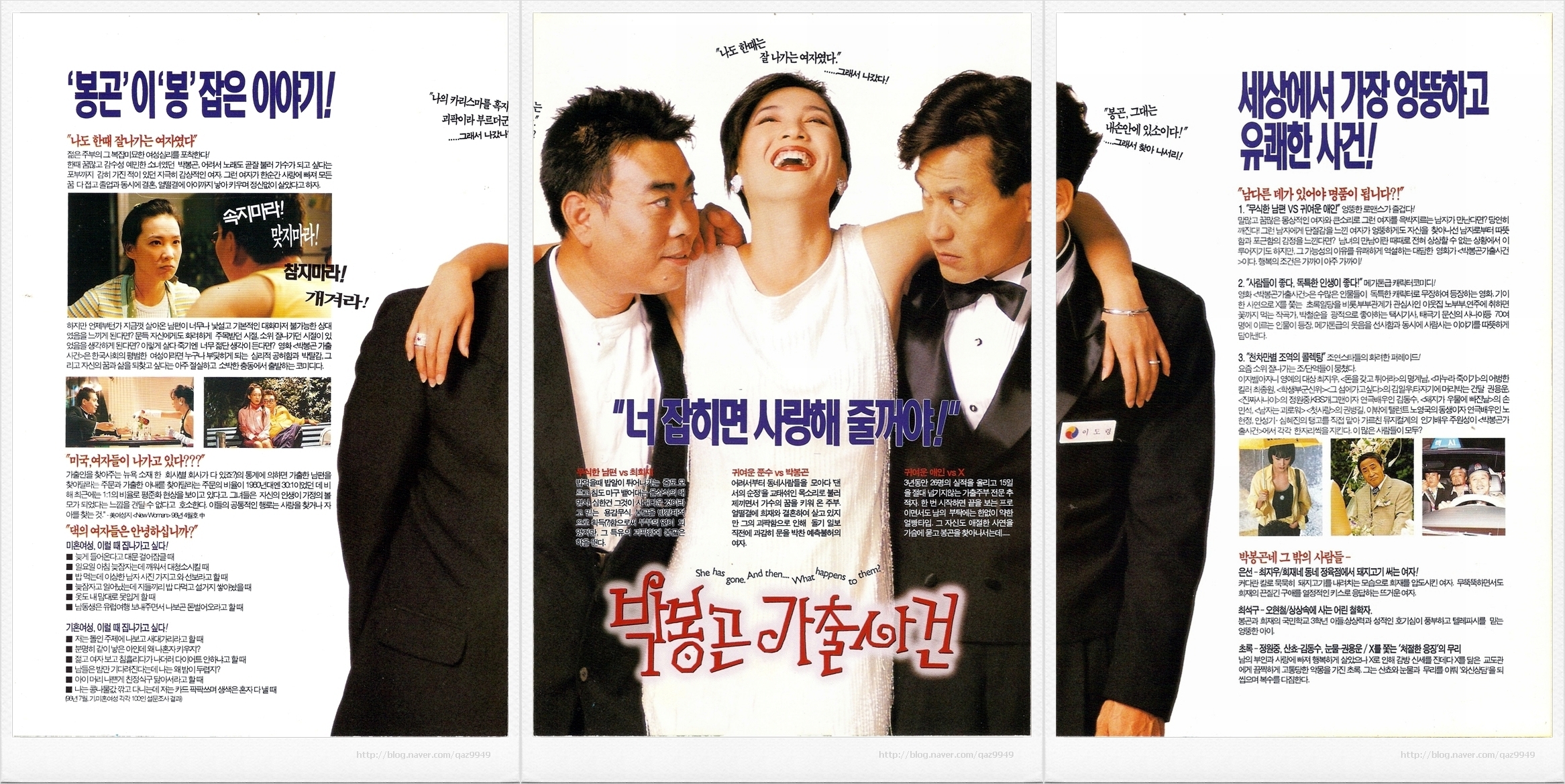

 In January, President Lee Myung-bak was quoted as saying that “the most urgent issue on our hands is to create jobs for the heads of households” (see #2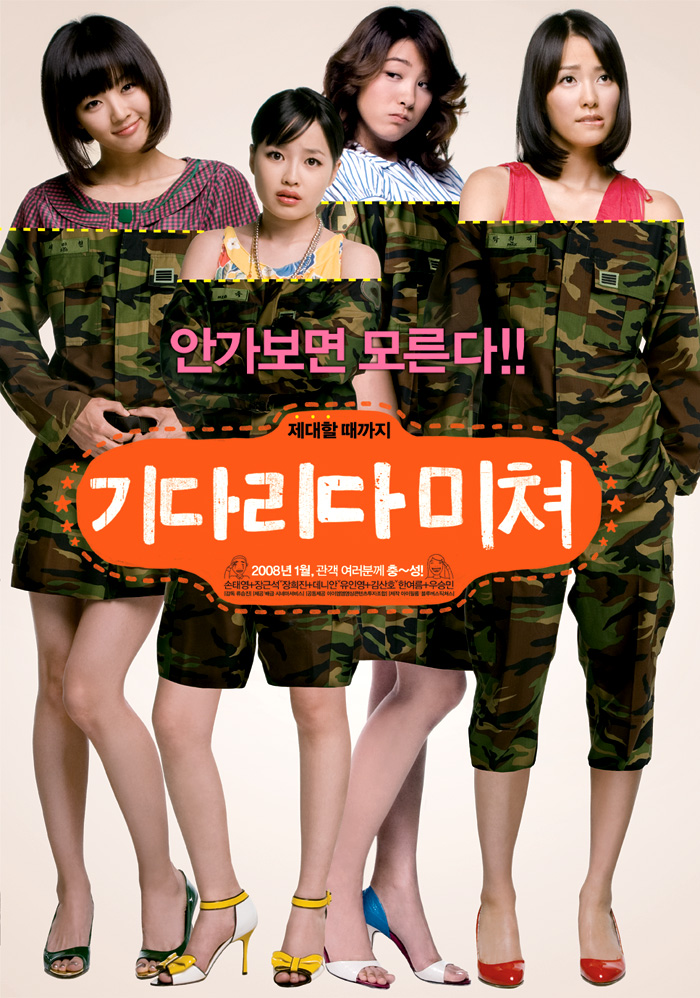
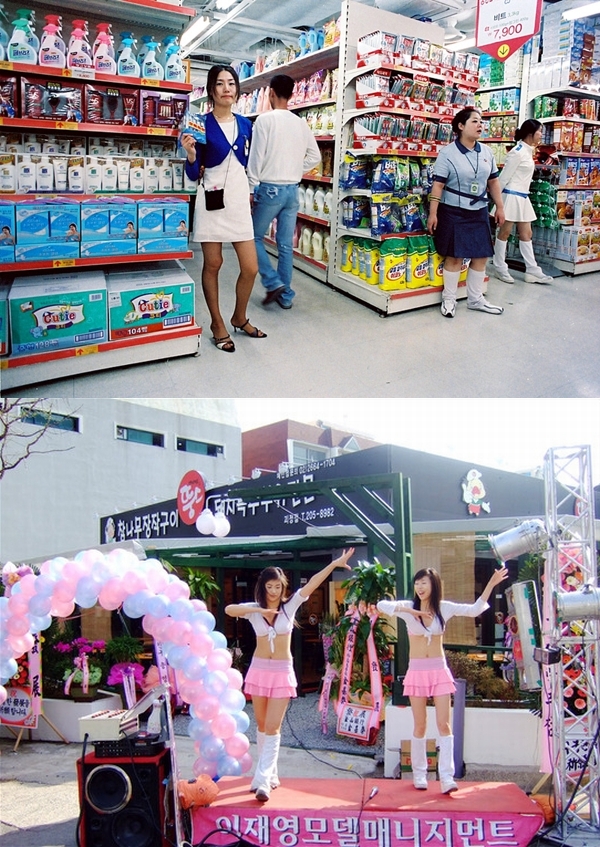

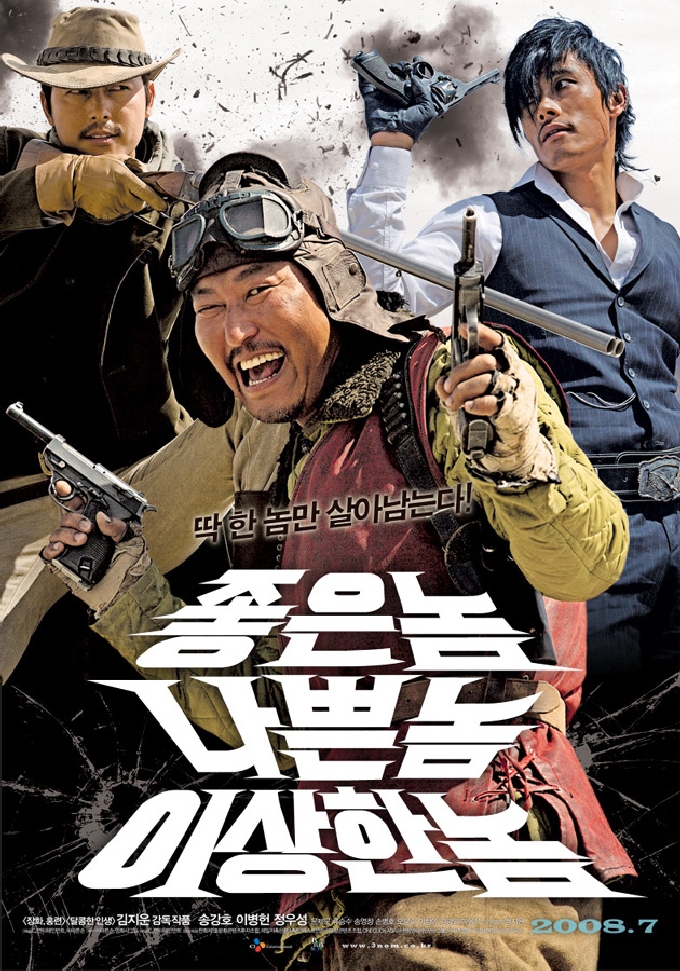
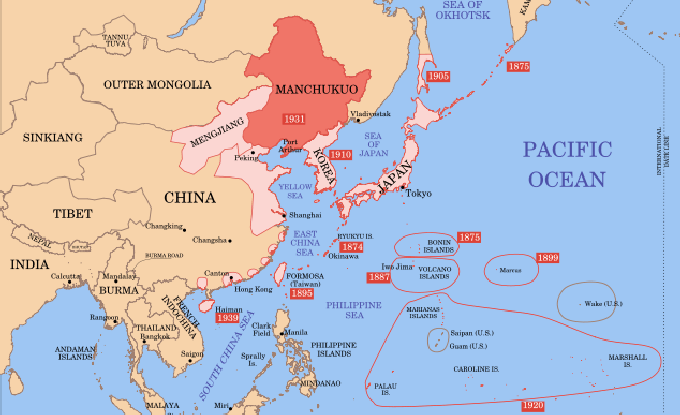 (The Prewar Expansion of the Japanese Empire.


 Perhaps given the dire state of today’s economy, such imperatives will force such a change in Korea? (End)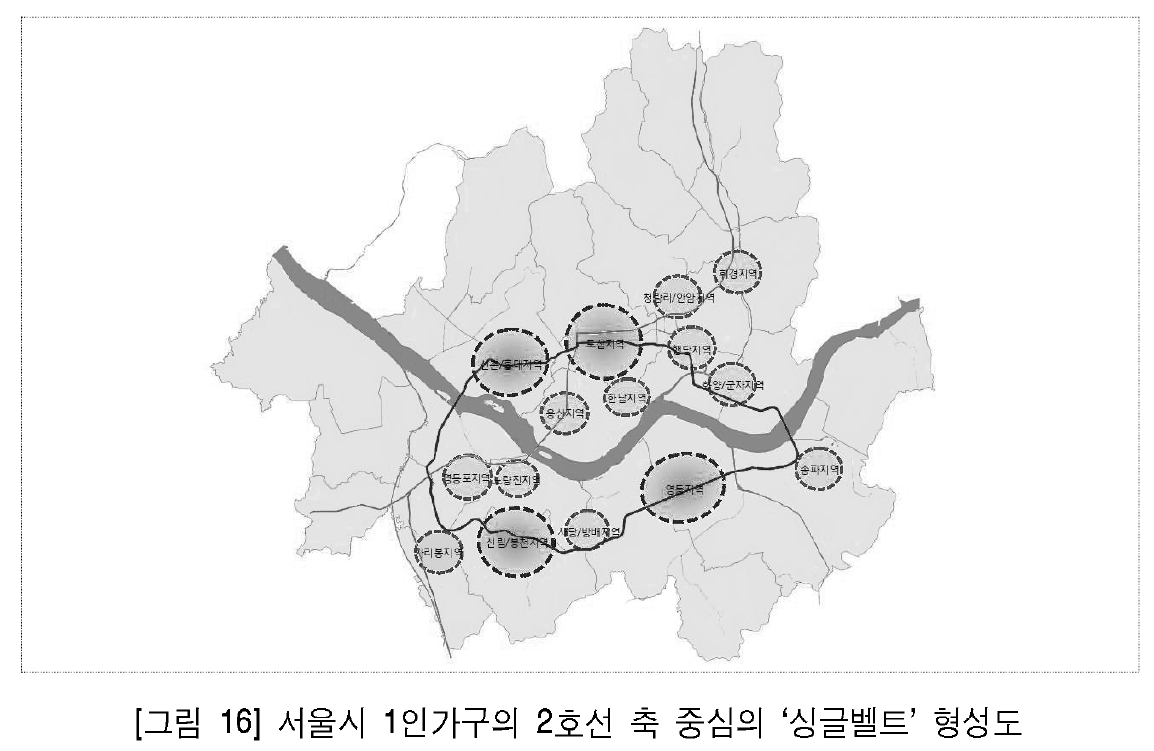


 Finally, enter the 2002 World Cup, which no, I’m definitely not kidding about: while people may not have noticed this particular aspect at the time, anyone that was actually here would readily agree that it was an amazing time to be young and in Korea, and was just as revolutionary in terms of expressions of women’s sexuality as I described. In all seriousness, consider what life was like for unmarried women literally just a week prior to the start of the games: they would often be criticized walking down the street for merely wearing short sleeves – remember that 19 out of 20 women would wear t-shirts over their bikinis at the beaches then – and it was quite taboo to discuss sexual feelings and preferred men’s bodies, even to close friends. Meanwhile, soccer was very much seen as a men’s game – who were originally rather taken aback by women’s sudden interest – and members of the national team(!) made less per year than I made then as an English teacher (source, right: unknown).
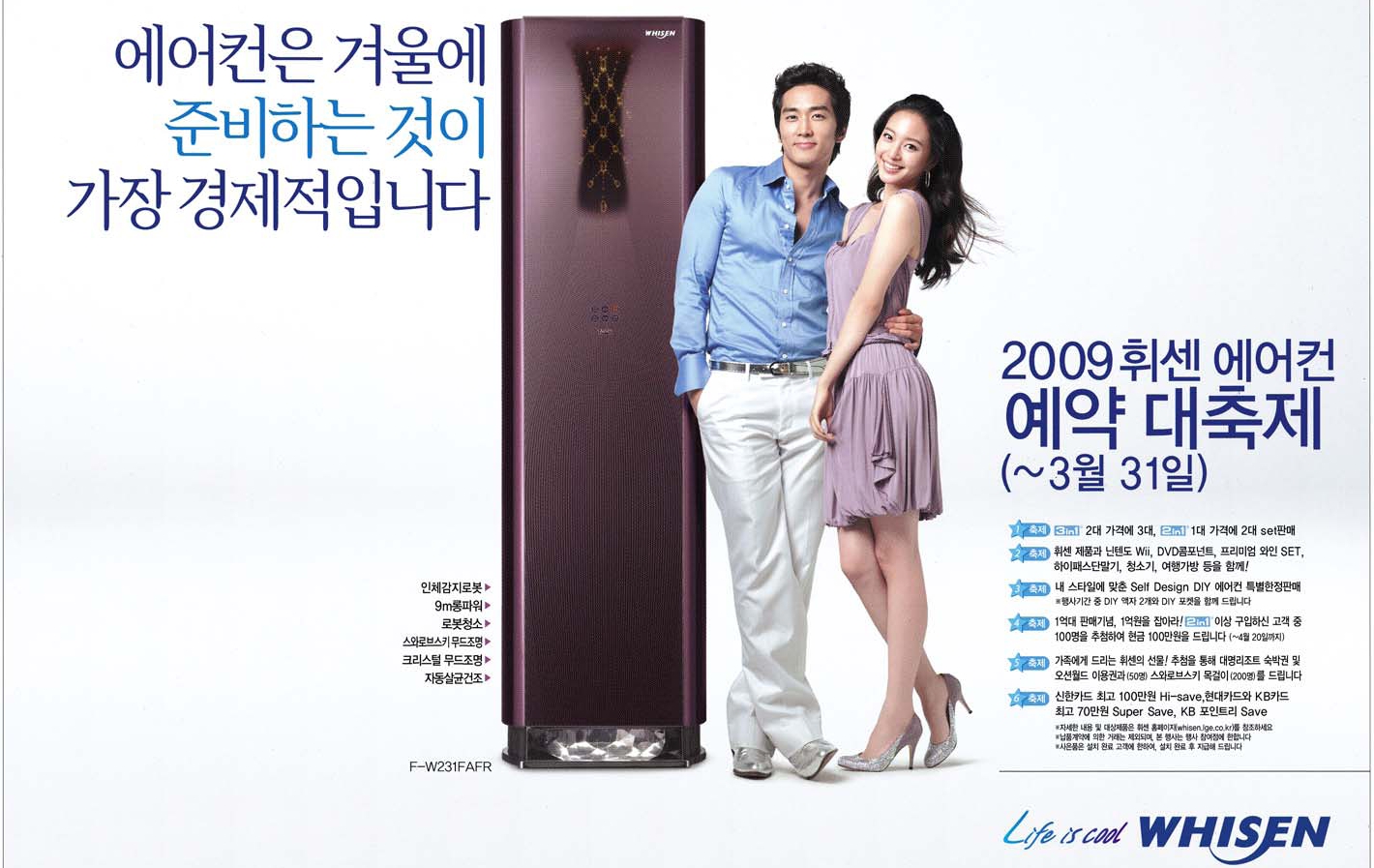

 (Source:

 , which editor-in-chief James provides a quick review of over at the ironically-titled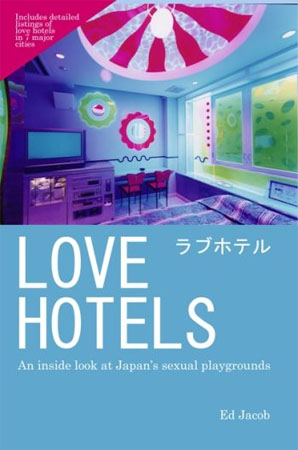

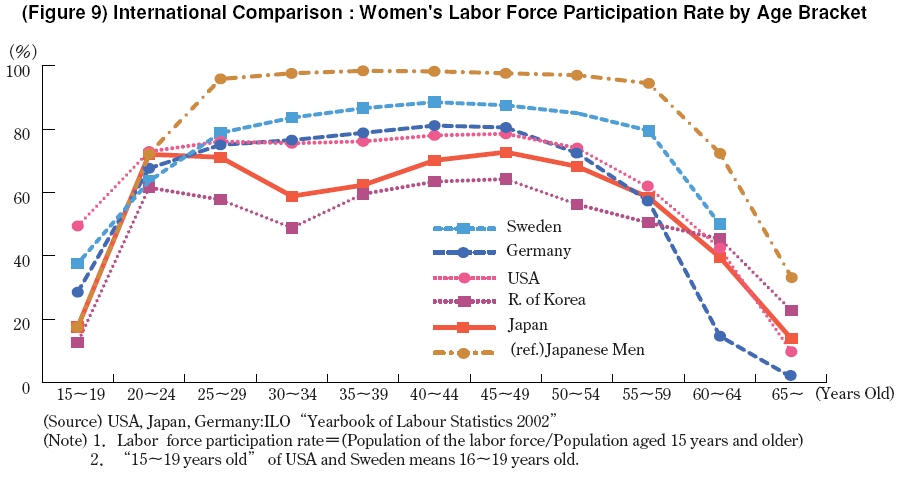
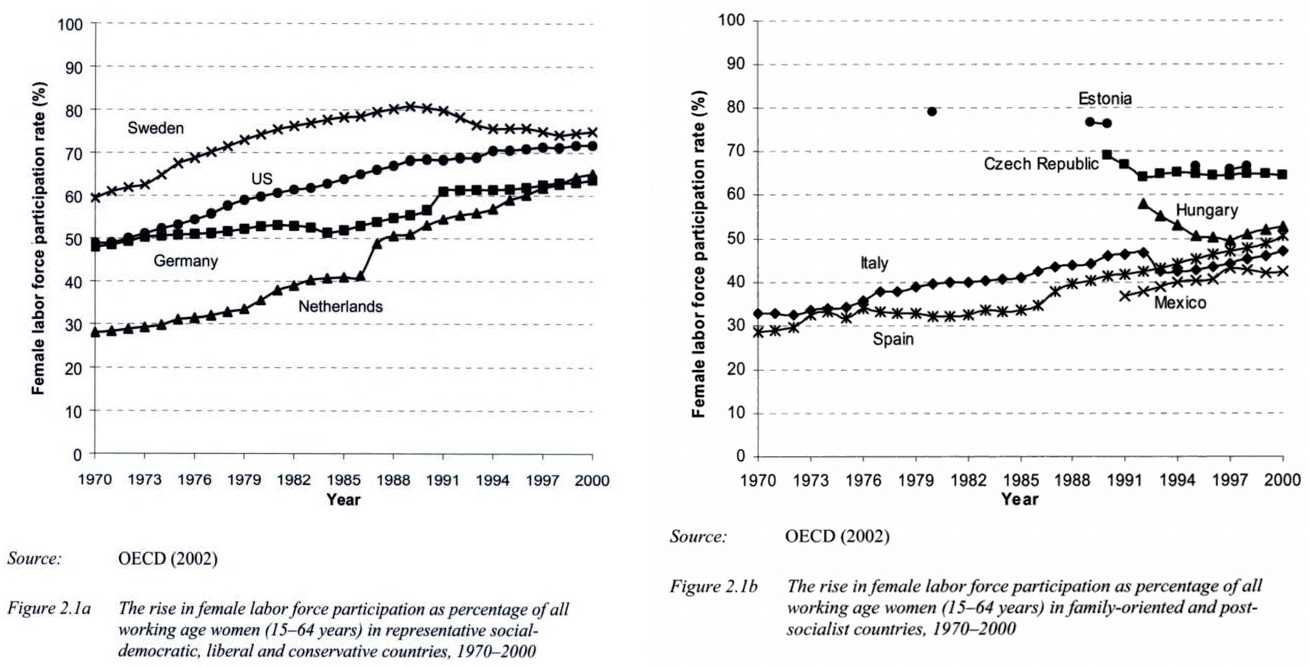


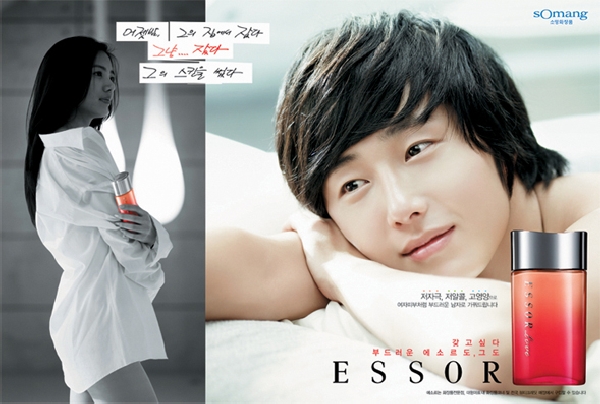 (
(


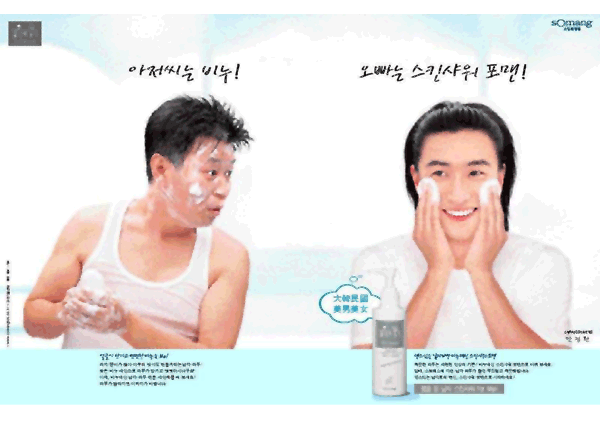


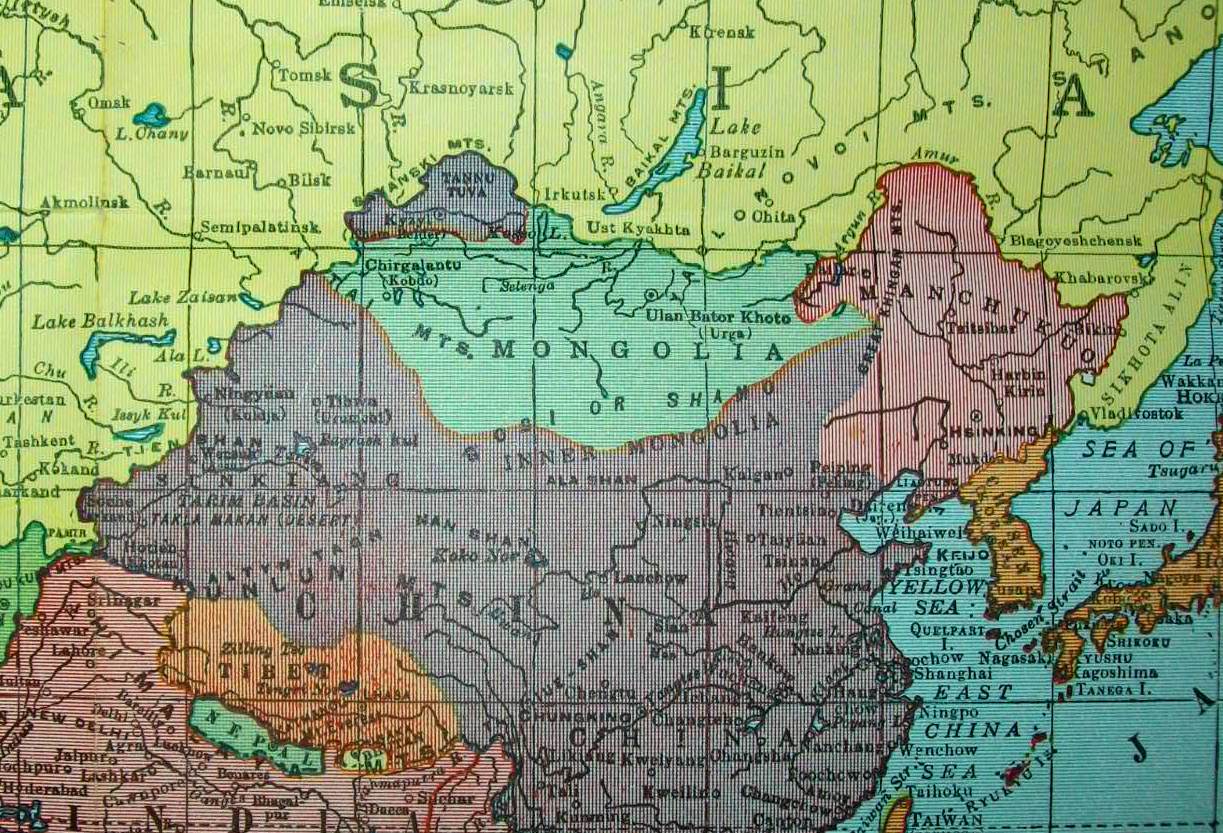
 (Source:
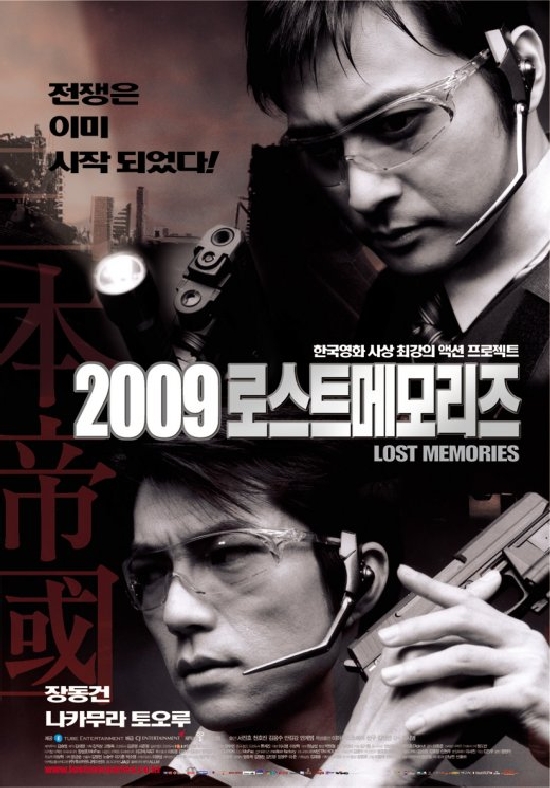 (
(

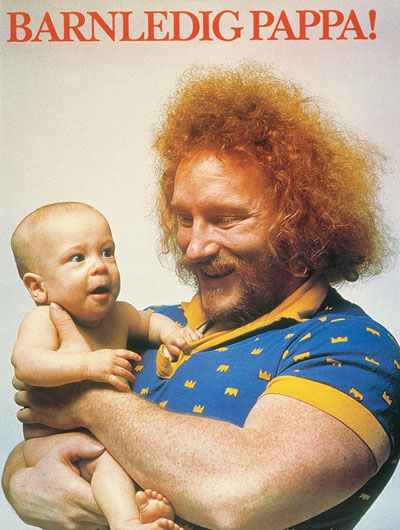
 The Grand Narrative


