Korean Gender Reader

( Source )

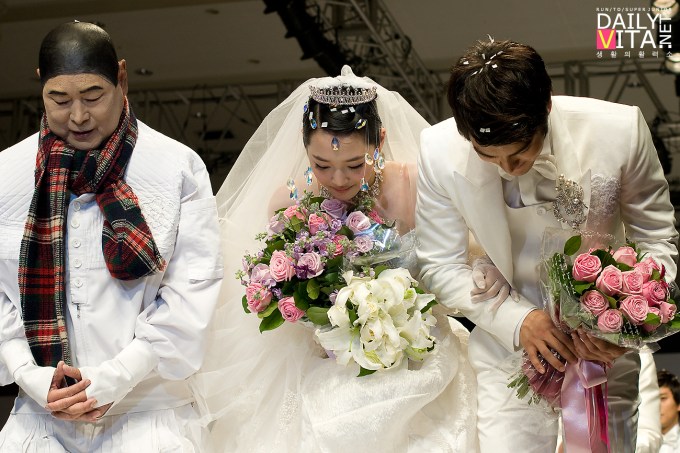
1) Life is Beautiful (인생은 아름다워) cuts out gay vows

Highly commended for being the first Korean drama to feature a gay couple (see #3 here), many viewers have been disappointed and angered at the decision to literally mute a key scene in response to a complaint by the church in which it was filmed. Let alone the actors themselves.

2) Korean military’s ban on gays ruled unconstitutional by the National Human Rights Commission (NHCR)

A welcome contrast to the above news on the surface, in Korea homosexual men are usually merely judged “psychologically unfit” to serve. Homosexual acts that occur between enlisted soldiers nevertheless however, are punishable by up to 1 year in jail, and indeed 3 male soldiers were convicted of it in the years 2004-2007 (out of 176 cases).

Unfortunately however, the Korean military already has a long history of simply ignoring NHCR rulings, and ROK Drop also notes that “gays in Korea do not have the political connections, media backing, and the money of the gay groups in the US.” Moreover, as I explain in detail here, 15.8% of Korea’s new 250,000 conscripts each year already experience sexual violence, so I too expect virtually no changes to come as a result of this ruling.

3) Celebrity couple targeted by crazed anti-fans

Within hours of the announcement that singer Kim Jung-hyun (김종현) and actress Shin Se-kyeong (신세경) were dating:

Preexisting “anti-cafe” sites of  Se-kyeong surged in membership

More were formed

Se-kyeong was forced to close her personal homepage due to the overwhelming number of personal attacks. Later, her main fan-site also had to close

Many of Jung-hyun’s fansites were also closed (albeit because of the disappointment of their owners rather than because of attacks)

And Jung-hyun’s management company SM Entertainment cut off all contact between his group Shinee (샤이니) and the public (source, right)

While excessive, by itself this case doesn’t seem particularly noteworthy compared to most celebrity news. Place it in the context of numerous prior victims of Korea’s “anti-fans” however, the most recent and well-known of whom would probably be singer Tablo (타블로), then suddenly it seems much less like the irrelevant rantings of broken-hearted teenagers, and more a fundamental part of Korea’s wider netizen culture, with very real – and often tragic – effects on people’s lives.

To prevent broken-hearted teenagers growing up to become netizens though, surely it would help if they were actually punished for trashing their classrooms, not simply forgiven because they were so angry with Shin Se-kyeong?

Hell, it’s no wonder most Korean celebrities go to such elaborate lengths as these to hide their relationships.

4) Awwww

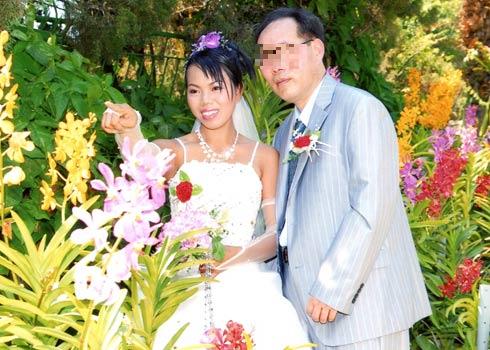
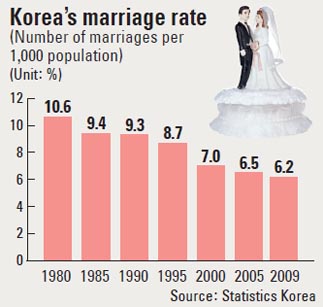
A romantic story? Or, more cynically, a simple reflection of the fact that many Koreans seem to get married very quickly after first meeting?

( Source )

5) HIV-positive 19 year-old prostitute arrested for having sex with 20 men

Possibly a high-school student, reportedly she did actually suggest using condoms, but her clients refused to wear them.

Would such acquiesce be typical for most Korean prostitutes however? It’s difficult to tell: in general, sexually-active Korean women are similarly reluctant to insist on using contraception, but I would have assumed that prostitutes had less qualms about losing their virginal reputations.

Much more interesting though, how on Earth did the police that found her learn about her HIV status? And more worrying, that one third of her classmates would similarly consider exchanging money for sex.

6) Foreign prostitutes no longer required to have AIDS tests to get a visa, but English teachers still do

Like numerous commentators have said, you simply can’t make news like this up, and there is probably no greater testament to the regular scapegoating and stereotyping of foreign teachers by the Korean media here.

In fairness though, the E-6 visa category is a real mess, and by no means are all the “entertainers” that come to Korea under it are prostitutes, as well explained by Benjamin Wagner (who filed a complaint about the tests last year).

7) “Dad? I don’t know why I need him”

It sounds like a gross generalization, but I have heard from numerous personal and written sources that Korean children (and adults) are much closer to their mothers than their fathers. Kim Seong-kon, a professor of English at Seoul National University, explains why here.

( Source )

8) Korea: the hub of cosmetic surgery?

Well of course I hear I you say, but in practice it’s often difficult to find exact numbers. And so, before the financial crisis at least:

…an estimated 30 percent of Korean women aged 20 to 50, or some 2.4 million women, had surgical or nonsurgical cosmetic procedures [in 2008], with many having more than one procedure.

Note that the 30% figure is for women that received procedures just in 2008, and so the figure for all women who have received procedures is likely to be far higher.  See here for more information and counter-arguments that the US is far more deserving of the title; and while we’re on the subject, also see here and here for composites made of female celebrities’ faces from various countries.

9) Ethics teacher fired for sexually harassing his students

Unfortunately, not only is he unlikely to be charged with anything, but commenters point out that his record will be wiped clean and he will be able to teach again in 5 years.

Much of the blame for that lack of punishment can be placed on the Korean Teachers’ and Education Workers’ Union, which apparently believes that verbal abuse is far more heinous.

10) No Sex Please, We’re Korean

Apparently “other than an alarming amount of rape, their is very little sex in Korean fiction.” And this is a big issue for translators and the popularization of Korean fiction overseas too, as even when it is there it is mentioned it is hardly explicit, and “and this means that translations from Korean will not seem ‘natural’ to western readers who expect bodices to be heaving and trousers (and panties) to be dropping.”

Apologies for all the largely negative stories this week folks: please send me in positive ones if you have them!^^

Update: with thanks to London Korean Links, this was nice to see the instant after typing that last line:

Share

Korean Gender Reader

( Source )

After a long hiatus, I’ve finally found a way to continue this series despite my much greater workload (and other commitments) this semester: simply bookmarking stories as soon as they arise, then passing them on the moment I have 10 of them. And in particular, by making sure to dispense with the usual lengthy analysis.

Alas, 1500 words later, I’m still trying to figure out what happened to that last exactly. But in the meantime, here are the stories in the order that I came across them at least, albeit with one exception for the most eye-catching one…

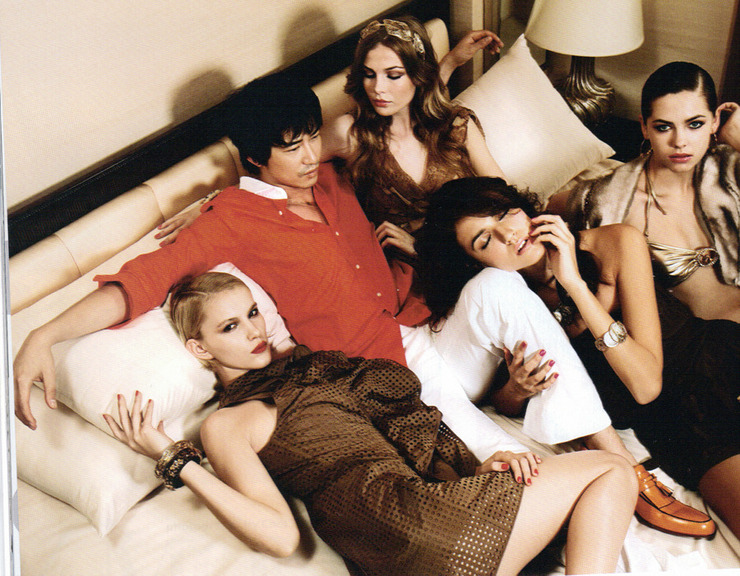
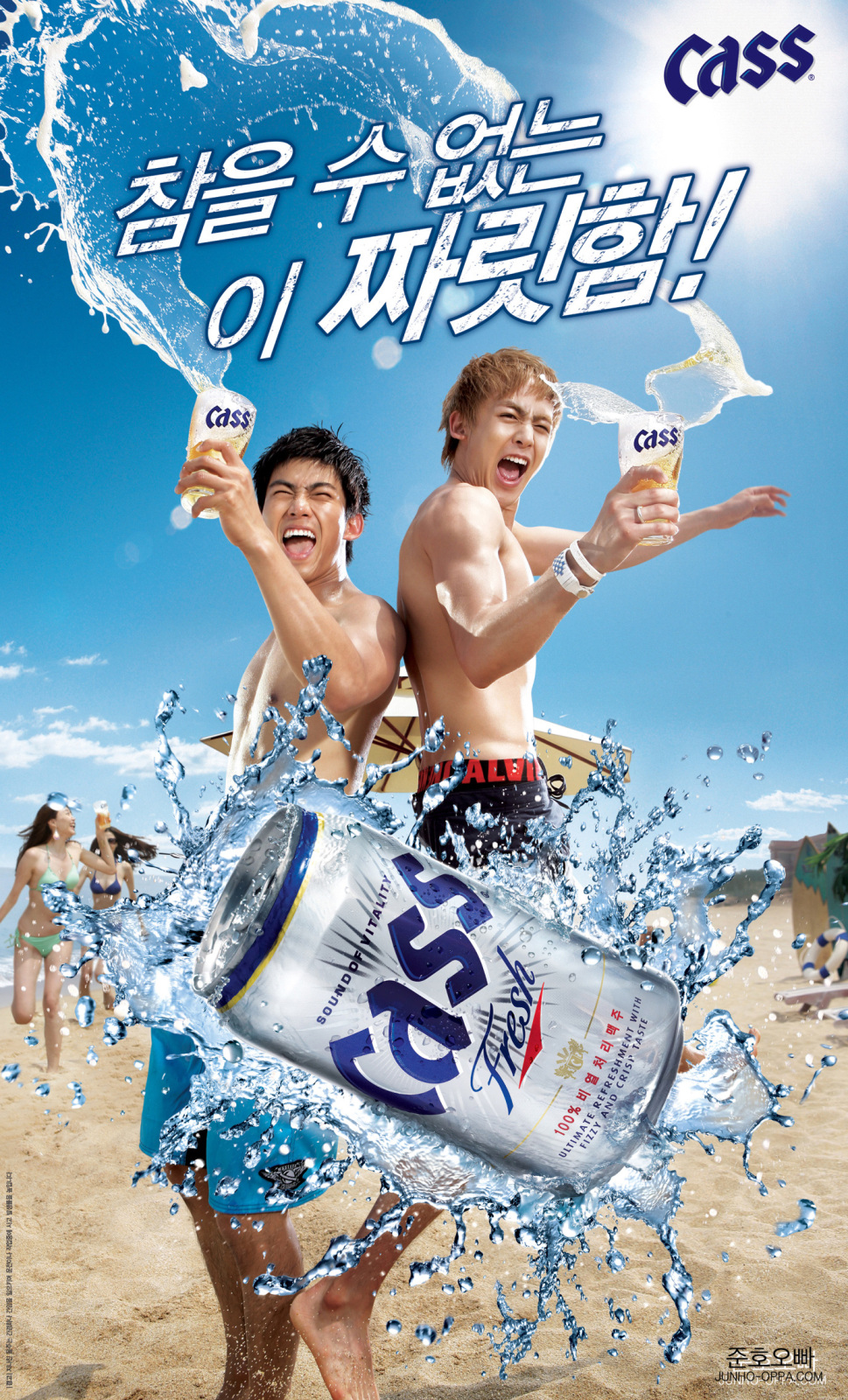
1) Like GirlFriday of Dramabeans said of the above poster for Pretty Romance (쩨쩨한 로맨스), what’s wrong with equal implied-nakedness?

2) South Korean military developing separate uniforms for female soldiers

Was anybody else surprised to learn that there weren’t already female uniforms in use? In 2010?

In the Defense Ministry’s defense though (no pun intended), there are actually only 6000 female soldiers out of a total of 655,000 in the armed forces, so the delay is somewhat understandable.

Which begs the question of why female soldiers in the US have also had to wait then, considering there’s over 160,000 of them!

3) 33 year-old female teacher has sexual relationship with 15 year-old student

See the Korea Times for the basic details, and Gusts of Popular Feeling, Brian in Jeollanam-do, and The Marmot’s Hole for a great deal of analysis and discussion (even the parody site The Dokdo Times has some good points).

In particular, note that while the teacher was fired from her job, she will not actually be charged with anything, as this case has – once and for all – conclusively demonstrated that the age of consent in South Korea is 13, one of the lowest in the world. And if this case has a silver lining, it is that it will at least lead to greater awareness and discussion of that, particularly in the context of a great deal of concern already having been raised about the alleged prostitution of and overly sexual performances of underage entertainers.

Unfortunately however, currently Korea is also in the grip of what is effectively an internet witch-hunt against her, which – however deserved one may feel it is – is not without its problematic elements.

4) Korea’s birthrate is the 3rd lowest in the world

That’s according to the U.N. Population Fund’s State of World Population Report for 2010, although rather confusedly it also says that South Korea’s population is 48.5 million, whereas it has just been widely reported in the Korean press that Korea’s population has in fact reached 50 million.

Update: There are many reasons why Korea’s birthrate is so low of course, but if Mike in Busan’s recent experiences are anything to go by, then the effect of the appalling service provided by some maternity hospitals may also play a large role in that.

For the record, those hospitals my 2 daughters were born at were both fine, although I was rather surprised that the one my first daughter was born at – also a maternity hospital – didn’t have incubators with their own oxygen supply, which meant my 2nd (very premature) daughter had to be born at a general hospital instead. It was not a fun ride in the ambulance going between them at 3am while carrying a sleepy 2 year-old, let alone for my wife.

( Source )

5) Menses celebration day established

Granted, this news sounds a little strange at first, and the young girls themselves look somewhat less than thrilled about it. But I think this idea deserves some definite respect:

Young girls who started menstruation early cut a big rice cake with representatives of medical doctor’s organizations at a convention to announce foundation of “Menses Day” (초경의 날) by the Korean Association of Obstetricians and Gynecologists (KAOG; 대한산부인과의사회) at the Lotte Hotel in Seoul, Oct. 20.

KAOG said that it adopted Oct. 20 as Menses Day to promote the importance of menstruation as a natural part of development, and to improve social awareness.

Alas, perhaps it is unfortunate that this being promoted by KAOG and not by, say, the Ministry of Gender Equality and Family Affairs (여성가족부/MOGEF), which might have indicated that the government is also more sympathetic to addressing the urgent need for sex education here. But of course I have nothing against KAOG itself(!), and I’m happy to report that it is pro-choice too, and not to be confused with the Korean Gynecological Physicians’ Association (GYNOB; 진오비) that supports the Lee Myung-bak Administration’s criminalizing of abortion.

As for Menses Day itself, if it takes off then it may have very positive effects in the long term. For even in the UK, teenagers generally feel that masturbation is natural for boys, but shameful, wrong, and dirty for girls, and my own experience suggests that, if anything, those perceptions are much stronger in Korea. Teach girls that their bodies are in fact something to be celebrated rather than be embarrassed of though, then they’re much more likely to have satisfying sex lives in the future (unlike all too many married Korean women, who effectively have no sex lives).

6) Challenging stereotypes of oversexed foreign women

Charged with negatively impacting Koreans’ perceptions of all foreign women because of their promiscuity, Korean “dating bloggers” and many others have (rightly) responded angrily to accusations. But spread over many posts, blogs, and hundreds of comments though, the ensuing discussion is a little difficult to follow, so I highly recommend reading I’m no Picassos post for an excellent summary of the issues raised, and her own rebuttal.

For further context, see my Korean Sociological Image #18: Sexualizing Caucasian Women also.

( Source: Baby Black )

7) It pays to hire women in countries that won’t

As I have long noted, it is simply crazy to educate women to such world-high standards, only then to fire them and/or make it virtually impossible to work after either turning 30, getting married, or (especially) having children. And indeed, Korea remains the only country in the OECD where the more highly educated a woman is, actually the less likely she is to be employed.

If Korean companies won’t hire them however, then eventually more and more foreign companies will, as recently noted by the Harvard Business School and The Economist.

Update: The Idiot’s Collective also has a post about this.

8) No, morons, a love hotel is not a brothel

A self-explanatory post from Brian in Jeollanam-do, on articles in foreign newspapers over the accommodation provided for the first Korean Grand Prix. Like he says:

Because of my affinity for love motels, I’m sensitive to what’s unsurprisingly a lazy post that gets it wrong—and looks quick to jump on the “news of the weird” theme that runs through so much international news out of Asia in western sources—starting with the photograph that accompanied it.

See his “Motels and Hotels” category for more practical information about them. And for those more interested in the historical and sociological aspects of them, see my A Penetrating New Look at Japanese and Korean Love Hotels for a book on the history of their development.

9) Pink glove charity event in Seoul

Apologies to 10 Magazine for only noticing their post about it 40 minutes before the actual event on Saturday. And I was quite surprised too, as The Korea Times at least argues that Koreans are generally aloof to the Pink Ribbon campaign as a whole.

Did anyone attend? If so, please let me know how it went!

10) Female protester makes big change in the conservative education sector

As I reported in August (see #8 here):

…the civil service remains one of the few institutions after the Asian Financial Crisis of 1997 which still provides  “jobs for life”, unlike the rest of the Korean economy which now has the highest number of irregular workers in the OECD. Consequently, the various exams are extremely competitive, and indeed one of my own sisters-in-law spent over 4 years studying for hers before finally qualifying…for a series of grueling interviews, which many applicants still fail (including a friend of mine), but fortunately she made it through those as well.

Why this is a gender issue is because despite the difficulties, at least it is entirely meritocratic, and as such it has a disproportionate number of female applicants…

Regardless of the exam, the various ministries involved in its administration are legally required to inform the public well in advance of the number of jobs that will ultimately be available for successful applicants. But with one exception: the Teacher Certification Examination (TCE). So, not only was it devastating news for those taking the integrated social studies and the integrated science version yesterday to discover that there were actually no jobs available, thereby rendering years of study (for most of them) essentially meaningless, but only being told 4 weeks ago greatly compounded that blow.

( Source )

Not content to meekly write-off the last 4 years of her life because of bureaucratic indifference however, 28 year-old applicant Cha Young-ran decided to do something about it. As reported in Global Voices, she single-handedly protested in front of the Ministry of Education building, and within 30 minutes was whisked inside to discuss her problem with officials, who brought the TCE  in line with all other examination bodies that are legally required to give 6 months notice a few days later. As Global Voices says:

Cha’s request for change was a demand that anyone with a social conscience could have made. However, Cha was the one who actually took action and with a zest of fresh ideas, a rare change was made in one of the most rigidly bureaucratic areas of Korean life.

Here’s hoping she will be the inspiration for similar challenges to Korea’s “Just Bear It” mentality in the future.

Share

Korean Gender Reader

(Source: Lesion)

1) 60% of underage female entertainers pressured to expose as much skin as possible

Lest that sound like an exaggeration in light of other news articles that state that only 10% are, let me refer you to the relevant section in the Ministry of Gender Equality and Family’s (MOGEF) own report on its survey of 103 teenage entertainers and aspirants (53 males, 50 females), which specifically says:

19세 미만의 청소년 연예인(88명) 응답을 분석한 결과, 연예 활동 시 10.2%가 신체 부위(다리, 가슴, 엉덩이 등) 노출을 경험하였으며, 여성 청소년 연예인의 경우 60%가 강요에 의한 노출이라고 응답하였다.

Or that of the 88 male and female teenage entertainers interviewed (not aspirants), 10.2% said they had the experience of exposing parts of their bodies (legs, breasts, buttocks, and so on) while performing, whereas 60% of the female ones had been pressured to.

Which remains confusing, but I think it’s safe to assume that the 10.2% of cases of exposure by males and females referred to were accidental (albeit because of their clothing?), and that the 60% of females that were coerced to wear skimpy clothing were in little position to refuse. Whatever the true figures however, they belie recent claims that such fashions are somehow intrinsically empowering in a sexual and/or feminist sense, or that it’s the girls themselves that want to wear them (and recall that Girls’ Generation above, for one, was specifically created to appeal to 30 and 40-something men).

Meanwhile, they’re also pressured to go on diets and get cosmetic surgery and so on, and teenagers of both sexes miss out on schooling and work excessively long hours because, bizarrely, entertainers aren’t covered by child labor laws. See the above links and also Extra! Korea and JoongAng Daily for a summary of all the issues raised by the survey, and kudos to MOGEF for finally doing something within its limited budget (0.12% of the government total) that may nevertheless ultimately have a genuine impact on young women’s lives (unlike here, here, here, and here).

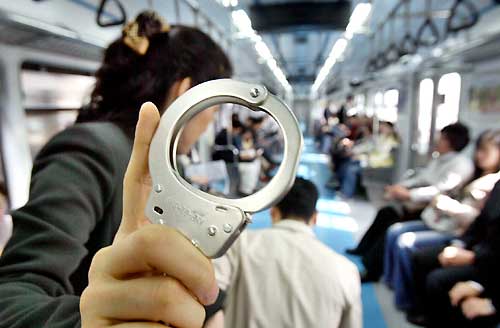
2) Subway groping on the rise

In Seoul at least. By coincidence, Busan Mike saw an incident in Busan last week too, although of course that doesn’t necessarily imply that it’s rising in Busan also.

3) THAT video

Yes, Mamma Mia by Narsha (나르샤) of the Brown Eyed Girls (브라운 아이드 걸스), which a dozen readers passed on to me because it’s so rare to see Korean female/Western male pairings in the Korea media. I can’t really add anything that Mellowyel hasn’t already covered in her own excellent analysis of it though (see here also), but you may be interested in this 2002 S.E.S video that it instantly reminded me of, as the contrast in the treatment of the Western men in it couldn’t be greater:

Despite how it may appear though, Matt at Gusts of Popular Feeling argues that in fact they’re a substitute for Korean men, who wouldn’t have accepted being portrayed so negatively. Why not? See this *cough* 4500 word post of mine on that here, in which I place it into the context of Korean social and sexual norms in the late-1990s and early-2000s.

4) Number of female victims of sexual abuse is 8 times greater than actually reported

Unfortunately no details are given about its methodology, but according to a recent study by Korean Institute of Criminology, about 470 out of every 100,000 women were sexually abused in 2008, which is eight times more than the official figure of 58. Of those, 36 out of 100,000 were raped, 9.5 times the official number.

Like the reader who sent those on to me pointed out, of course it’s not news that most cases go unreported, but it is nice to see this fact getting some attention from the national news agency.

Update: Korea Beat has a little more information on it here, noting that “it has been the general understanding that many more sexual assaults occur than are reported, but this study is the first to produce relatively concrete figures” (my emphasis).

5) Korean Demographic Reader

As always, rather depressing news:

More interesting are two stories about Japan, with very similar problems (and for similar reasons). First, an article entitled “Families dictate Japan’s economic fate” from The Japan Times, which describes how one scholar:

…uses the cases of families collecting dead members’ pensions and the rise of “parasite singles” to point out how a rich, vital economy can sink so far it has no realistic chance of climbing back up. Low birthrate is a problem, but mainly as a consequence of Japan’s “failure to create jobs.” The Japanese media has not ignored this connection, but in general they still blame population contraction on social changes rather than economic ones, as if the two were somehow distinct. Men have become less aggressive, women too choosy; so they don’t marry and procreate.

Many Japanese still believe that the country’s economic and social problems can be solved by regaining so-called traditional values related to family and community…

And as it demonstrates, that is patently not the case. But as for more detail as to why, see the recently published Contemporary Japan: History, Politics and Social Change Since the 1980s by Jeff Kingston, reviewed here by the Economist:

THE modern image of Japan is built on shaky foundations. In the 1980s nearly all Japanese considered themselves middle class. Other abiding beliefs include companies looking after workers through lifetime employment and the yakuza, Japan’s mafia, being guardians of the lost samurai spirit. There is some truth in all this but, as with other national myths, their real importance is in what they reveal about those who hold them dear.

If the Japanese nurse old-fashioned conceptions about their national identity, so do foreigners. Throughout the 1980s Americans gobbled up books that painted a Japan that was poised to surpass the United States by dint of a superior education system, low crime rate, good labor relations, bureaucratic acumen, familial ties and (let it not be forgotten) racial purity. Most foreigners still see Japan in the rear-view mirror, as an egalitarian, socially cohesive society.

“Contemporary Japan” by Jeff Kingston, the director of Asian studies at Temple University in Japan, does sterling service in stripping away or qualifying many of these misconceptions…

(Source: A Muchness of Me)

6) We married Koreans

Unfortunately for us, Diana of Going Places is now back in the US, but she’s still taken the time to write a review of We Married Koreans (2009), “a collection of 12 true stories of interracial, intercultural marriages between American women and Korean men in the 1960s”. A quick excerpt:

…It tells a fascinating history, both personal and cultural, of Korea as it struggled towards democracy (one woman’s husband was imprisoned for anti-government demonstrations in Korea) and America as it struggled towards racial equality (many of the women speak frankly about some of the racial epithets hurled at their children). The couples mostly met, married, and lived in America, but most lived for at least a short time in Korea and one missionary couple spent most of their marriage in the Korean expat community in Brazil. I feel like I just sat down and read 12 very good personal blogs about Korea.

Read the rest here. By coincidence, the World Federation of Korean Intermarried Women’s Association’s 6th annual conference, whose members are Korean women married to foreign men, was just held in Seattle, the first to be held outside of Korea.

7) Korea’s national motto is  “Just Bear It”?

Gord Sellar makes quite a convincing case:

Pretty much every time someone I know is doing something against his or her better judgment, something he or she clearly ought not to be doing — working a job he or she absolutely hates, coddling an abusive or infantile parent, turning down a once-in-a-lifetime opportunity, or studying a subject for which he or she feels no interest — you can usually find a number of people have told the person that it’s important to “just bear it” — ie. bear with it, put up with your dissatisfaction, ignore your instincts, and do the thing you know you shouldn’t.

While I’m sure long-timers especially need little convincing, let me buttress that with the following from the Samsung Economic Research Institute in 2008 (my emphasis):

…In sum, Koreans still regard their jobs principally as a means of livelihood. This mirrors the reality here in Korea where work does little to enrich the life of the people.

Many workers still take it for granted that they have to tolerate anything in return for getting paid. This kind of job atmosphere produces a negative influence on both companies and employees alike. With this in mind, businesses need to make more efforts to develop new programs, aimed at bringing a higher sense of value of work and satisfaction to their employees.

And I can vouch that even my wife finds it surprisingly difficult to conceive of how one’s job can ever be anything but sheer drudgery, let alone something one can enjoy and/or find it fulfilling.

Focusing on the gender dimension here though, Gord was prompted towards the above by a recent encounter in a hospital with a family with an abusive husband and father, and while I concur with his assessment that the wife was at least partially responsible for her situation, his story does provide a very human face to the extreme financial difficulties middle-aged women, most of whom are housewives, have in leaving loveless and/or abusive marriages (although it’s amazing that the divorce rate is so high nevertheless).

(Source: entomol10)

8) Civil service exams to be abolished

While that may sound trivial to Western readers, in Korea it is anything but, as over 200,000 young Koreans are studying for them at any one time.

Why so many? Because the civil service remains one of the few institutions after the Asian Financial Crisis of 1997 which still provides  “jobs for life”, unlike the rest of the Korean economy which now has the highest number of irregular workers in the OECD. Consequently, the various exams are extremely competitive, and indeed one of my own sisters-in-law spent over 4 years studying for hers before finally qualifying…for a series of grueling interviews, which many applicants still fail (including a friend of mine), but fortunately she made it through those as well.

Why this is a gender issue is because despite the difficulties, at least it is entirely meritocratic, and as such it has a disproportionate number of female applicants. Compare the private sector in contrast, where Gord Sellar’s partner was recently required to provide answers like the following in her application for a job at a major Korean company for instance:

  • list your brothers and sisters, and their places of employment
  • how old are your siblings?
  • what is your father’s job?
  • is your mother a housewife?
  • what is your height?
  • what is your weight?
  • what is your religion?
  • are you the descendant of a war veteran?

And don’t forget that a photo is also required, which as you can see above, has led to a flourishing photoshopping industry catering to job applicants.

Korean Gender Reader

( Source )

1) Subways and culture

Yesterday, Busan Mike saw an attempted groping incident on the subway for the first time, and in full sight of a half-full carriage at that. Fortunately, I’ve yet to ever see anything like that myself, but I imagine that just like in his case, I too would find it difficult to know what to do about it exactly. After all, it was only an attempt, and Mike and his wife weren’t sure that the man and woman weren’t a couple until the latter switched seats.

Have any readers also ever seen or experienced anything like that in Korea? What did you do?

Update: By the way, what is “groping” in Korean exactly? My wife says it is seong choo-haeng (성추행), and that certainly did produce a lot of articles on Korean search engines. But according to the dictionary, that term actually covers a multitude of sins, including “sexual molestation, sexual assault, sexual harassment, and rape” and so on. Any ideas, or is it just academic really?

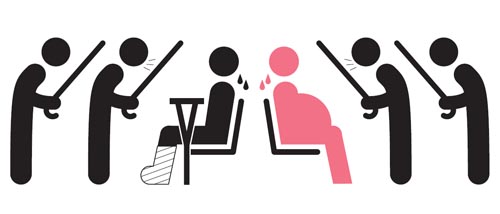
Meanwhile, Gord Sellar ponders what to do about the vocal minority of elderly Koreans who shout and swear at pregnant women for sitting in “their” subway seats (see #5 here for the original story), in the Korean case a traditional Korean deference to old people buttressing the universal human impulse not to get involved.

2) Everything you wanted to know about room salons

Provided by a former addict in an interview by The Three Wise Monkeys. On the bright side, no condom means no sex in any “second rounds” that occurred later in a hotel, unlike for the vast majority of Korean women who seem to feel that they have a virginal reputation to maintain.

Meanwhile, see Korea Beat for more on the perspective of the room salon workers themselves.

3) Female economic activity lowest in 10 years

Unfortunately, these latest dismal figures are quite predictable: not for nothing have I repeatedly described the post-1997 period as a “lost decade” for Korean women (see here, here, and here), even before they were overwhelmingly targeted for layoffs in the recent financial crisis.

Vodpod videos no longer available.

4) Dressing up as a Korean woman

Last week, I learned that not only it is so important for Korean women not to show their bare faces in public that even their fiances may not have seen them without make-up, but also that, counter-intuitively, many married women will get up extra-early to ensure it stays that way; see #6 here, and it also has rather ominous implications for their sex lives. Now, HiExpat also has a list of what else they must do in the morning if they want to look hot, but far from being particularly Korean, is it really just a matter of degree rather than difference? And why do it in the first place? Pondering the latter question over at Sociological Images, one sociologist answers:

…I would argue that the reason women, on average, spend more time on their appearance is because (1) the bare minimum for looking presentable is different for women than for men and (2) the social costs for neglecting their appearance is greater for them than it is for men.  It is not biology, nor socialization, but the realities of social interaction that draw women out of bed earlier than men.  We learn that our appearance matters to others and that others — strangers a little bit, friends more so, and bosses and lovers especially — offer rewards and punishments related to how well we conform to their expectations.  So we make a measured choice.  We primp and preen not because it’s natural, or because we’re socialized robots, but because it’s worth it or, conversely, we don’t want to pay the cost accrued when we do not.

With apologies for quoting so much of that short post, but there is also much to be learned from the 91 comments!^^

5) Every band has a “cute” member

Having so many members in Korean bands these days does mean that few of them get to actually sing, but then that’s not really the idea anyway, and on the plus side the more members, the more chance fans have of identifying with one of them (see #5 here). Which by coincidence, I’ve just read is also the case for Japanese bands, and probably provided the model. As AKB48 members Rino Sashihara and Tomomi Nakatsuka explain in Japanese School Confidential:

“There aren’t just lots of girls in AKB48, there are lot’s of different types of girls,” Rino says. Tomomi, decked out in a tracksuit and sneakers, chimes in. “Yeah, there are cute girls, beautiful girls. Everybody is different. I think that’s really what makes the group unique.” Tomomi, for example, likes manga and video games, and Rino’s hobby is eating udon noodles. Scan the profiles of other AKB48 members and you’ll find girls into professional wrestling, horror movies, or anime. It’s an idol smorgasbord where fans can find at least one idol to his or her taste. The music might be what draws folks in as listeners, but it’s the girls who turn them into fans. (p. 34, emphasis in original)

And hence as allkpop explains:

cute members of female groups tend to generate widespread interest and bump up a group’s popularity singlehandedly. Every member has their own individual role in the group, and every group has a member in charge of being the ‘cute’ one. In Korea, fans call this certain member “Kui-yo-mi (귀요미),” meaning “the girl with the cute image (귀여운 이미지를 가진 이).”  This member is in charge of garnering fanboy love with her cute/lovable/girly charm, which will result in a bigger fanbase for the group.

6) Actor finds empathy in homosexual role

If I had been worried about my image I wouldn’t have taken this role. I hope that the lives of homosexuals will be acknowledged and be a little bit happier through this drama of ours

See The Korea Times for an interview of Song Chang-ui (송창의), currently playing one of the first ever homosexual roles in Korean television (see #8 here for some background).

7) Yes, unmarried Koreans sometimes have children too

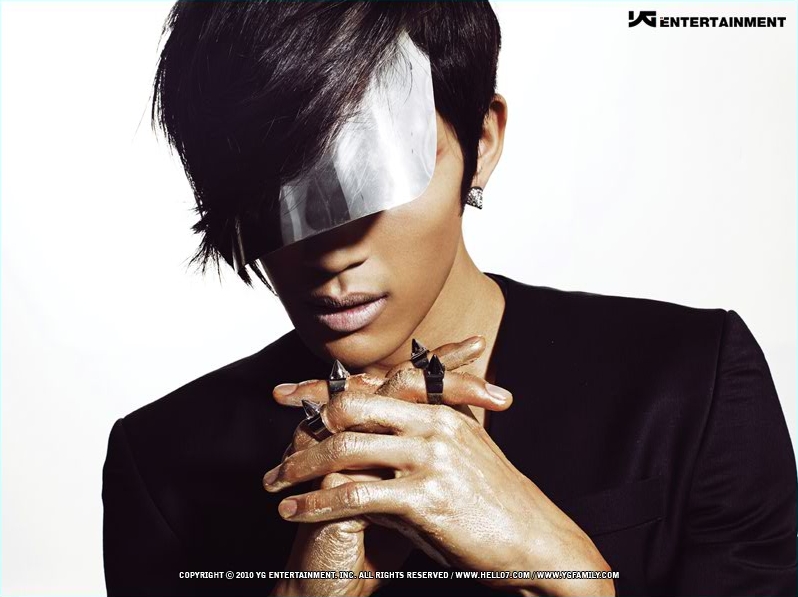
With the news that YG Entertainment head Yang Hyun-seok (양현석) has just had a daughter with long-time (secret) partner Lee Eun-ju (이은주) of the ex-girl band Swi.T, I’ve decided that I’ll no longer report on the fact that Koreans are generally fine with couples of marriageable age having premarital sex, with the important proviso that the participants do actually have plans to get married. Hardly an enlightened modern attitude either, it’s actually been that way for centuries too: see #5 here for more information. (source, right)

8) Officials in Japanese community play Cupid online

As explained at The Boston Globe:

The coastal region of Fukui has Japan’s biggest share of dual-income households, the highest ratio of working women, and the lowest unemployment rate. What it does not have is enough babies.

This month, the provincial government is starting the Fukui Marriage-Hunting Cafe, a website for singles, to help stem the falling birthrate. Couples who agree to marry will get cash or gifts, said Akemi Iwakabe, deputy director of Fukui’s Children and Families division.

“Many of our single residents were telling us that they wanted to get married, but couldn’t because they weren’t meeting anyone,’’ she said.

Japan’s first online dating service organized by a prefectural government follows national measures to extend parental leave that have so far failed to convince women to have more children…

Hey, it certainly can’t harm, and is positively inspired compared to the Korean Ministry for Health, Welfare and Family Affairs (보건복지가족부), in charge of raising the country’s birthrate, insisting earlier this year that its employees go home at the shockingly early 7pm on the third Wednesday of each month, all the better to have sex with their partners and have more babies.

9) “One of the most radical feminist performers working today”

Popmatters has a long article on Korean-American performer Margaret Cho.

( Source )

10) André Kim and attitudes to LGBT in Korea

Michael Hurt ponders the recent passing of Korean fashion designer André Kim (앙드레 김) at Scribblings of the Metropolitician, in passing mentioning public attitudes to his homosexuality:

There is the constant denial of his gayness — which anyone who interacted with him closely knew to be a fact, and not a vicious slur or accusation, but a mere fact — which continues today. In the end, it is additionally a tragedy that someone who was obviously gay, or at least someone out-of-sync with a cultural of heavily enforced heteronormativity, was never able to “come out” lest he pay a heavy social price. He was never able to see a Korea that would accept him for whom he truly was, however he might have defined that identity-wise. Or perhaps he was quite lucky, in that he fit well inside the stereotype of the harmless gay male fashion designer, which allows everyone to kinda “know” but not have to talk about it in polite company.

Share

Korean Gender Reader

( Source )

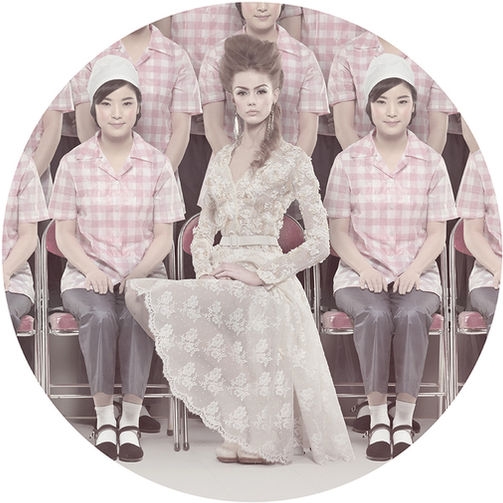
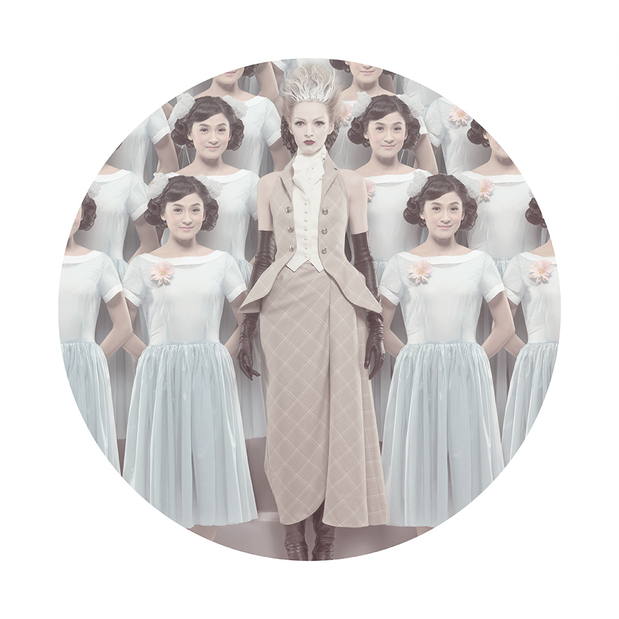
1) As mentioned in #9 last week, Christian Dior has been heavily criticized on the web for the heavily Orientalist imagery of its latest advertising campaign Shanghai Dreams. But it turns out not to be Christian Dior’s own creation, but rather that of Chinese photographer Quentin Shih, who commented in an interview at China Rises that he:

…wanted to express a dialogue between Chinese fashion (60s to 90s) and Western fashion (Dior Haute Couture represents it the most). During that time, China was a country with socialism — people wearing all the same outfits and divided into different groups/identities like workers, students, intellectuals etc.

And that far from being racist, the Caucasian model:

…stands there only to represent the clothes, not herself and not a western people. I was not lucky enough to shoot a Chinese model wearing Dior — if I did I would have put her in my work.

But as commenters there point out, given the obvious potential for misinterpretation then it was still a bad choice on Christian Dior’s part, and in particular Gary Soup says:

I half agree with Shih. The “cloning” of a representation of a Mao-era worker is just a device frequently encountered in contemporary Chinese art. It’s generally used to good effect, and the artist seldom seen as racist. But China certainly has plenty of tall, elegant models who could pull off the generational contrast, and the use of a Caucasian model certainly seems to send the wrong message.

While we’re on the subject of art, see works by Zhang Wei for examples of a common Occidentalist theme in East Asia, particularly Qi BaiShi vs. Marilyn Monroe and Madonna vs. Qi BaiShi (both NSFW).

( Source )

2) Just out of curiosity, I noticed these Bunny Girl-like headbands above all over Haeundae Beach last weekend, and wonder if they are just a Busan thing, or if they are the fashion in the rest of Korea too?

For a photo to compare the above headbands with the originals, see this interesting article about how the “Chick-Lit” label is very frustrating for women authors!

3) A doctor in Gwangju has been arrested for molesting sleep-induced patients, and was ultimately caught when one became suspicious and brought a hidden camera in her bag.

This reminds me of a UK scheme I once read about to prevent such abuses, under which all patient visits were to be recorded by a security camera and automatically deleted perhaps 3 months later, but before which they could be reviewed by authorities if any allegations of abuse are made. Can anyone confirm if that scheme was actually implemented?

4) From this week, sex-offenders and murderers are to be paroled wearing electronic ankle bracelets. See #2 here for more on why now exactly, but regardless it’s about time, as despite its low crime rate in general Korea is in fact becoming one of the worst places in the world for sex crimes against teenagers, outnumbering those in Japan by more than three times and Germany by nearly nine times. Moreover, those high figures are despite a great number of such cases ending up being unsettled because victims are reluctant to undergo police investigations, and also the age of consent in Korea being 13 serving to lower the number of ultimate prosecutions.

Meanwhile, the Korean military has set August up as a special month to reduce sex crimes within the ranks; see my post Sex as Power in the South Korean Military for more background, and also this follow-up.

( Source )

5) Not unsurprisingly, a recent straw poll has shown that most teen mothers quit school. Also, the numbers of miscarriages and infertile couples are rising, as are the numbers of women drinking alcohol during pregnancy, and it probably doesn’t help that some old people are almost literally assaulting pregnant women for sitting in subway seats reserved for both of them either.

Perhaps the government response will again be to devise slogans to encourage childbirth, just like in Taiwan?

On the positive side though, the drama Nanun Jonsol Eeda (I am Legend; 나는전설이다) is currently providing a very positive portrayal of a young single mother. And for positive news in real life, see the New York Times for more on a group that is resisting the Korean stigma for unwed mothers.

6) I haven’t been following the inane “virtual marriages” of various celebrities on Korean variety shows in recent years, but hijinx at SeoulBeats notes that in one, Ga-in of the Brown Eyed Girls has yet to show her bare face to “husband” to Jo-kwon of 2AM, and says that apparently a lot of Korean women do go out of their way to always have make-up on when their boyfriends or even husbands see their faces. Which says a great deal about their relationships if true, but is it?

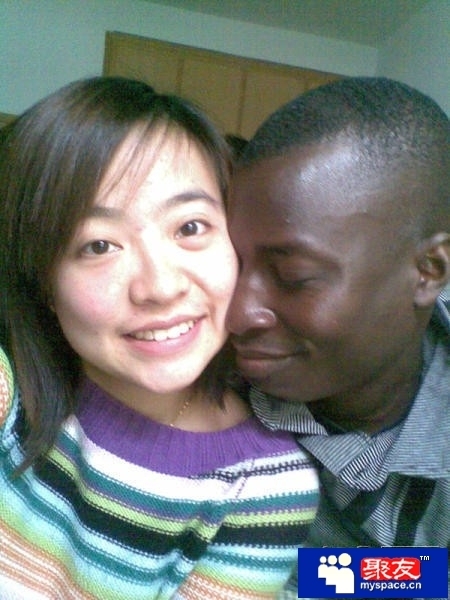
7) Unfortunately the video that spawned it has since been removed from YouTube, but still see Curiosity Killed The Eccentric Yoruba for a great post on relationships between African women and Korean men. And for more practical advice, also see The Three Wise Monkeys and Hot Yellow Fellows for why you can seem to be having a great relationship with a Korean guy…but then all of a sudden he may completely and inexplicably cut off all contact with you.

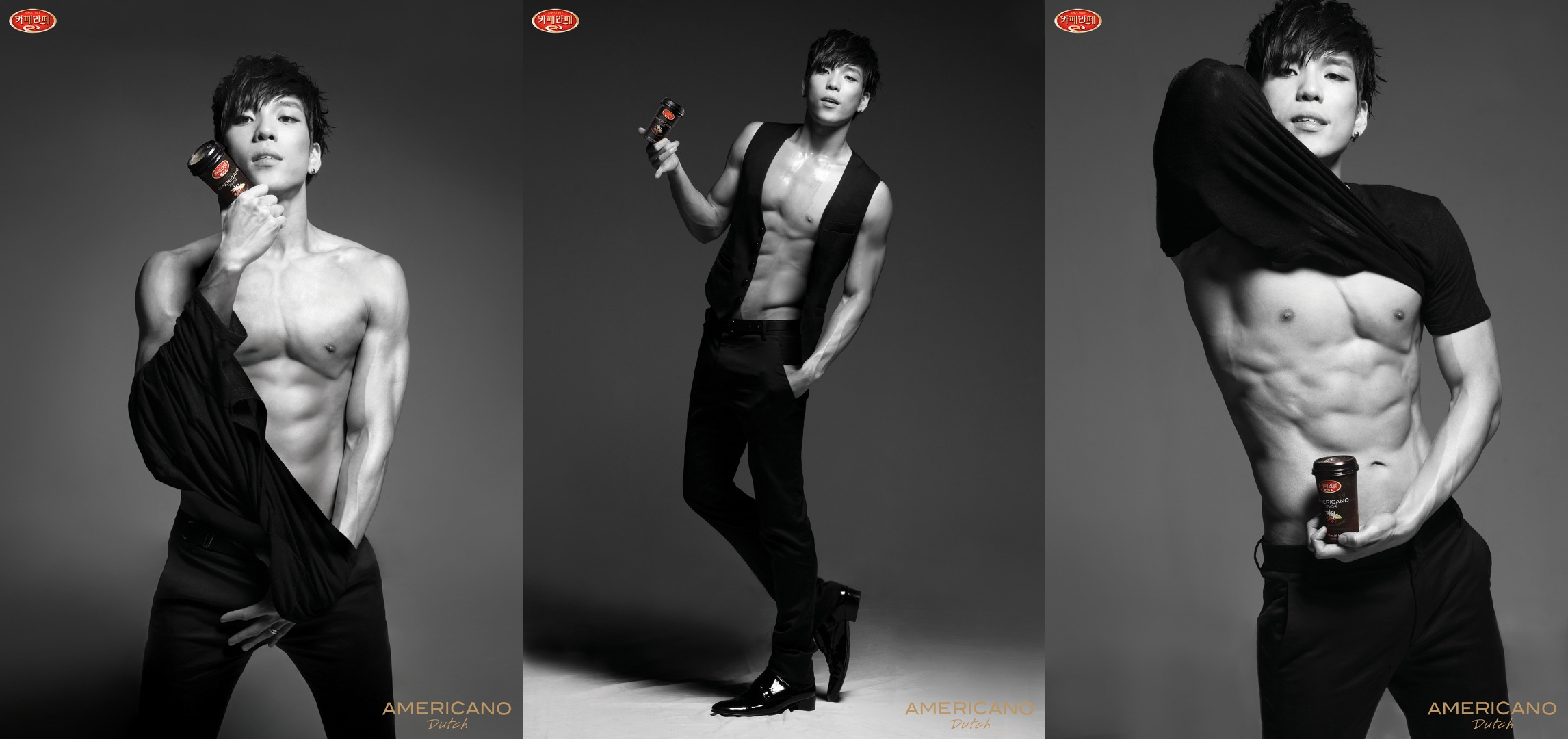
8) Not that he doesn’t still have a great body, but perhaps I was mistaken in thinking that singer Chang-min’s pecs had been badly photoshopped?

( Source )

9) I’ll let Lee’s review of Remembering Koryo, a fascinating book written by S.K. Chae, a Korean French adoptee, speak for itself:

The story of Korean adoption is highly complex and prone to being misunderstood. While I don’t claim to know the whole truth behind the scenes, I do know some things from my own experiences and have heard a lot more from interacting with others in the Korean adoptee community. Making claims for or against adoption is futile unless one first understands that each case is unique and that there are a multitude of societal forces at play.

Remembering Koryo follows the lives of a few Korean adoptees returning to Korea for various reasons. The stories are unique and colourful, easily understood by an adoptee like myself, but perhaps more unfamiliar to the average reader. To appreciate Remembering Koryo in a realistic context, one first needs to know a little more about Korean adoption in general.

Read the rest at Lee’s Korea Blog.

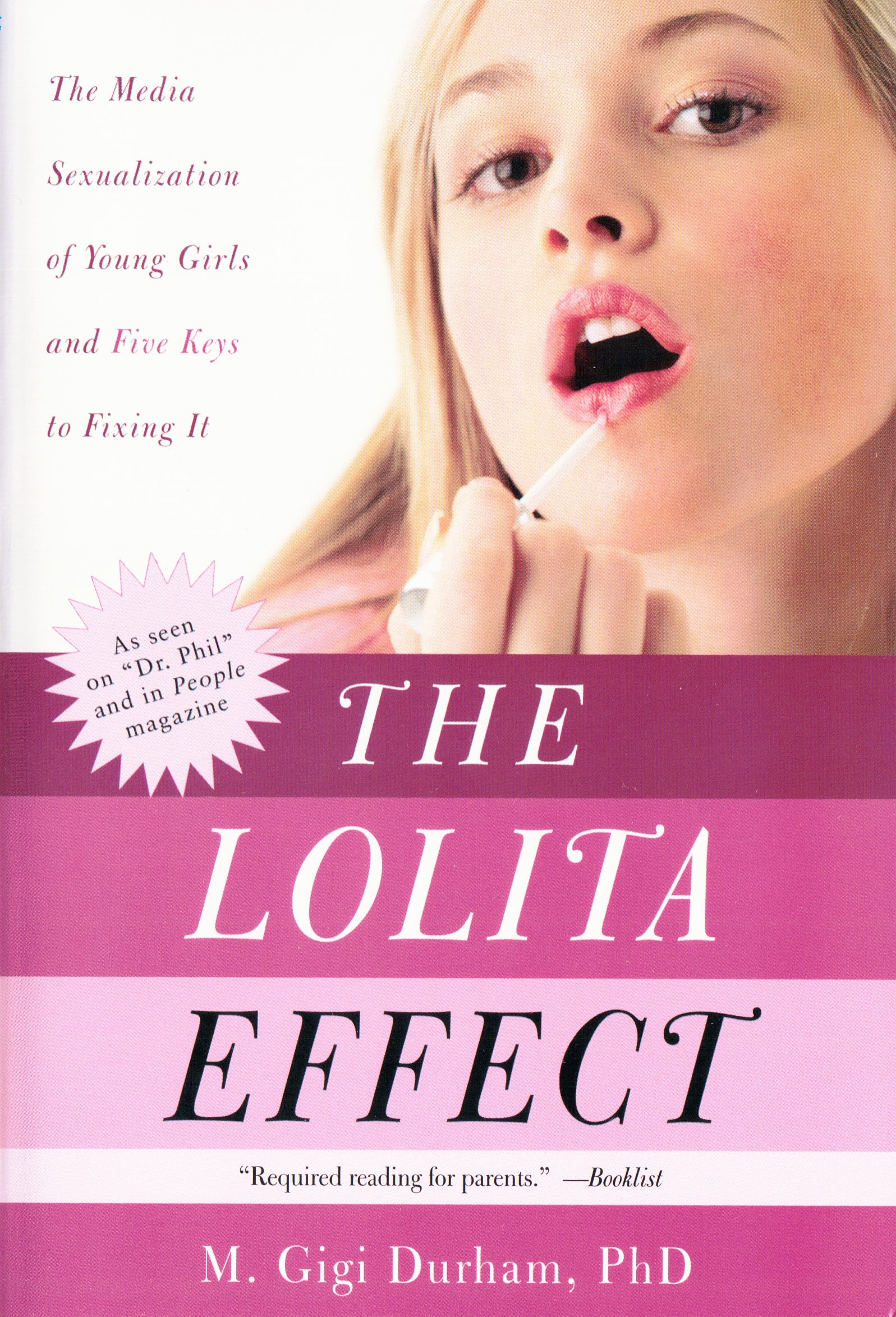
10)As pedotastic as some of us feared” says Extra! Korea of GP Basic’s new video, whom with an average age of just 15 years, are easily Korea’s youngest girlgroup. But is it as bad as that? Take a look for yourself below, and see my posts Reading “The Lolita Effect” in Korea and Ajosshis & Girls’ Generation: The Panic Interface of Korean Sexuality for some context, then two separate posts by hijinx at SeoulBeats here and here for a big debate among its readers:

Share

Korean Gender Reader: Redux

( Source: Panablu )

A quick admin note first: following the advice of a friend, I’ve decided to change the format of the Korean Gender Reader posts, as the previous commentary and information-dense one was often a little overwhelming for many readers (3000 words is not a “summary” of the week’s events!). Instead, this lighter version means more frequent and timely links for you, still leaves me the possibility of expanding upon the more interesting stories in later posts, and, probably most importantly, an extra 8+ hours a week to write!

I hope you like the change, and, following the lead of commenter Tbonetylr who let me know about the above advertisement, this post’s 10 stories (my new maximum) will all be loosely related to the media and pop-culture. Another post later in the week will focus more on sexuality, although of course many stories could easily be in either.

1) First up, Dramabeans discusses the recent trend of absurd age gaps in casting choices in dramas, with one drama having a “mother” only 3 years older than her “daughter” in real life! As described there:

This growing trend has some audiences doubting the believability of such casting choices, and wondering if there’s such a dearth of actresses out there. Personally, I don’t think the general trend is that crazy, given that the 30-something single girl is only lately becoming a viable option, in the last few years. Before, actresses had to go straight from twenty-something maiden to 30-something ajumma. Now there’s more of a range, and it isn’t a new thing for actors to be cast off-age.

2) At an average age of just 15 years old, GP Basic is set to debut as Korea’s youngest girlgroup. As Extra! Korea aptly puts it, “Stop the Madness“, and notes that he is not the only one concerned about their welfare.

3) Just out of curiosity, as anybody seen this new contraceptive pill commercial on TV?

Vodpod videos no longer available.

4) Shin Min-ah (신민아) happily acknowledges that her jean advertisements are heavily photoshopped. Meanwhile, in both a bizarre case and ultimate judgment, 92 netizens sued by SM Entertainment for posting up photos of Girls’ Generation (소녀시대) members’ faces superimposed onto photos of naked women will not be prosecuted, primarily because of a petition by the members themselves.

For anyone further interested, note that SM Entertainment has quite a history of suing people for any negative imagery of Girls’ Generation, even for simple cartoons.

5) Committing the grave faux pas of winning on a dating show in China, expat Benjamin Haas gets censored out of it “because foreign guys aren’t supposed to get the girl“.

6) After School’s (애프터스쿨) UEE gets criticized by netizens for her “bellyfat” again, to which unfortunately she responds with “slim” photos rather than defiance at the absurd weight standards (and required dress) for female idols.

7) In a story that sounds all too familiar, 2PM attracted a lot of criticism for the overly sexual content of their first solo concert last week. But as VixenVarla of SeoulBeats notes however, far from this being a case of Koreans being prudes and/or subject to excessive censorship, it would probably have been fine with a age rating higher than, well, 8 plus. Moreover, would anyone expect anything less from management company owner JYP anyway?

Meanwhile, see KBites for details of the latest batch of K-pop songs to indeed get banned by MBC, this time for mentioning brand names and/or websites (and see here for more on Korea’s draconian indirect advertising laws).

8) After a proposal made in the story last month, there is now the strong possibility of the first gay wedding ceremony to be depicted in a drama soon, and accordingly anti-homosexuality groups have already put out newspaper advertisements in opposition (see #12 here for more on those).

Unfortunately the cast and crew themselves are also a little divided about the possibility, but regardless the drama itself – the first to feature gay characters – remains very popular, and has just been confirmed for a 13-episode extension.

9) Christian Dior gets criticized at Jezebel for the heavily orientalist imagery of its latest advertising campaign, Shanghai Dreamers. See Ampontan also for more on its historical context.

( Source )

10) Finally, in a classic case of the pot calling the kettle black, Korean netizens have criticized a Japanese talk show for excessively focusing on the bodies of members of Korean girl group KARA (카라), currently on a big promotion drive there. Fortunately however, not everyone has joined the hypocritical, nationalist fray, some noting that “When this is done in Korea it’s ok, but when it’s done in Japan it’s wrong?” for instance.

Share

Korean Gender Reader

( Se7en, via Omona! They Didn’t )

With so many stories this week, I’ve decided to organize them by categories to make it easier to keep track.

Pop Culture

1. Social change through comedy?

Not a fan of dramas, normally I’d pay little attention to the news that yet another one is about to premiere. But I did a double-take when I read the following description of Nanun Jonsol Eeda (I am Legend; 나는전설이다) at DramaBeans:

Kim Jung-eun (김정은) plays Jeon Seol-hee (전설희) who leaves her society-wife identity behind after a divorce to front a rock band.

These photos picture her in the early part of the drama, when her character is the put-upon wife of a prestigious lawyer. Jeon Seol-hee was once the popular singer in a band when she was in high school, but over the course of her unhappy marriage, she has learned to speak quietly and act in a manner befitting her uppity in-law family.

Why my interest? Because it sounds a little like the 1996 movie The Adventures of Miss Park (박봉곤 가출 사건), which on the surface was an average romantic comedy, but actually had a radical message for its time. As So-hee Lee notes in her chapter ‘The Concept of Female Sexuality in Korean Popular Culture’ (pp. 141-164) in Under Construction: The Gendering of Modernity, Class and Consumption in the Republic of Korea (ed. by Laruel Kendell, 2002):

…unlike the convention of most films in the genre, this one ends with a women running away from a domineering husband, achieving her dream of becoming a singer, and finally entering into a happy second marriage, “thus subverting a traditional morality that expects the runaway wife to come back home to restore everyone’s happiness and family security”. (p. 156)

And as such, Lee notes the film director was concerned about how a conservative audience might respond to the uncommon story and its unexpected ending, and hence in many ways the movie was a guerrilla attempt to sneak a serious social message into Korean cinema by presenting it as comedy. Not that Nanun Jonsol Eeda necessarily will attempt to of course, but I’ll keep an eye on it. Meanwhile, see my post Women Getting on Top: Korean Sexuality in Flux in the 1990s for more examples and an analysis of “sexually subversive” popular culture from that era.

2. Common Tropes in Korean Popular Culture

Again by Dramabeans, this new and ongoing series is not just indispensable for understanding dramas, but much about Korean daily life and gender roles too.  For starters, try the posts on the meanings of adults giving each other piggyback rides, and then when and where to use jondaemal (polite language) or banmal (informal language). As you might expect, men are allowed to use banmal to women much more than vice-versa, and Korean broadcasters often repeat that practice when dubbing or adding Korean subtitles to foreign movies and dramas too, even though no such distinction is made in the original language.

( Source: Dramabeans )

3. Feminism through Translation

Via Korean Modern Literature in Translation, I’ve found a review of Theresa Hyun’s Writing Women in Korea: Translation and Feminism in the Colonial Period (2003), which begins thus (my emphasis):

Theresa Hyun’s Writing Women in Korea: Translation and Feminism in the Colonial Period takes up the intriguing and fresh theme of the woman translator in colonial Korea. Although it is commonplace to argue that Western notions of feminism were translated into Korea at the turn of the twentieth century, this is the first study to examine this process through the historical figure of the woman translator. Translation here is no metaphor, but a material practice through which women transform themselves and Korean writing. Women, the author argues, made a decisive contribution to the development of modern Korean nationalism and feminism through their translation activities and their own fiction writing, which developed in correlation with their translation practice.

4. The Millennium Trilogy

Not strictly related to Korea, but naturally I became very interested in buying these books after reading the following review at The Global Sociology Blog:

Stieg Larsson’s Millenium Trilogy should be required reading in any sociology of gender course because it is a strong demonstration of the way patriarchy works at all levels of society: individual, interactive, institutional, structural and cultural.

The whole trilogy is a fictional demonstration of what happens to women who don’t know their place and won’t conform to patriarchally-established gender roles and even worse to those who fight back against patriarchal control….

Have any readers read them? I’d really appreciate hearing from you before I buy them!

( “The Woman Who Shaves”. Source )

Body Image

5. Leg Shaving

From Drifting Focus, a blog by a former teacher in Korea:

Women are constantly told by the media, our mothers, and our friends that men don’t like women who don’t shave their legs.  “You won’t find a man that way” they say. I call bullshit.

I would have predicted that it would have been men who had problems with my lack of leg-shaving. Presumably, they’re the ones we shave for, right? Nope.  No man I have ever dated has had much, if any, issue with my shaving preferences.  It’s possible that they’ve just been nice, but from more in-depth conversations I’ve had about that habit with them, that does not seem to be the case.  They simply don’t really care as long as it’s not “totally out of control”.

So where does this “huge amount of flack” that I’ve gotten over the years come from?  Well, that’s the surprising part: other women.

Read the rest here. With the proviso that Northeast Asians don’t tend to have as much body hair as other ethnicities, would readers say that that is also the case in Korea?

6. “What? Use some NORMAL-sized models??? I quit!”

Sociological Images looks at the issues raised when designer Mark Fast decided to use four plus-size models (US sizes 8-10) in his catwalk show at London Fashion Week in February, which prompted his stylist and creative director to quit, leaving him just three days to find replacements. As they explain, it is “possible that they thought being associated with the show could hurt their chances of success in a very competitive career,” but on the other hand it says a great deal about an industry “that stigmatizes fat so powerfully, ” that “it might be terrifying indeed to be seen as endorsing it.”

Can anybody think of any similar initiatives and/or reactions in the Korean fashion industry?

7. Koyote’s Shin-ji has no plans to go on a diet

Nice to see a positive role model for a change:

As is evident through K-pop’s many girl groups, Korea’s entertainment industry consists of a long line of ridiculously thin girls. (It doesn’t help that netizens are hawks when it comes to capturing the slightest bit of belly fat). In a recent interview, Koyote’s (커요태) Shin-ji (신지), who is known in Korea for being more on the chubby side, was asked if she was ever saddened by the harsh comments and jokes she received regarding her weight.

Shin-ji answered:

“I feel blessed to be a singer that older audiences like. In the past when I was thin, many said that it was unattractive. Now, I don’t plan on going on any diets. It really damages your body. Since I debuted when I was in my teens, I received a lot of stress regarding diets. It really weakened my health. These days, if I were to diet I would not be able to endure.“

Read the rest at allkpop. Admittedly the image above is a little old (source), but then much thinner celebrities are also regularly criticized for their weight: see #28 here for instance).

Sexuality

8. Queer in Seoul

The 3 Wise Monkeys pass on a rare 2005 overview of the evolution of the gay community in Seoul over the last few decades.  As explained there, “Gabriel Sylvian, the founder and torch-bearer of the Korean Gay Literature Project at Seoul National University, recommended it for all readers to get an idea of the LGBT life in the capital.”

9. Queer in China

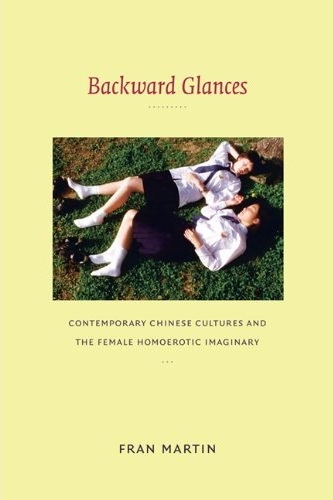
Over at The Peking Duck, Richard discusses an article entitled A modern tragedy: Pressure on Chinese gays to marry that he was surprised to see in his local Arizona(!) newspaper. Meanwhile, Gender Across Borders provides a review of Backward Glances: Contemporary Chinese Cultures and the Female Homoerotic Imaginary by Fran Martin:

…Exploring popular media produced during the twentieth and twenty-first centuries in the People’s Republic of China, Hong Kong, and Taiwan, author Fran Martin addresses the ways in which same-sex love between women is commonly depicted, and the ways in which those depictions simultaneously reinforce and challenge the conventional discourse on homosexuality in China.

On the surface, many of the novels, television dramas, and films Martin analyzes do not appear to be particularly transgressive. A common theme among the media she explores is memory; stories of same-sex desire between women are often presented as a fleeting childhood fantasy, something that perpetually exists in the past and can never be fully realized by adults in the present…

10. Snakes are victim of men’s search for sexual prowess

See The Korea Times for the current mania for snake soup in Korea, openly praised by some celebrities despite snake soup restaurants being illegal and many of the snakes endangered spaces.

While I usually try to avoid generalizing and stereotyping, I can’t help but always be simultaneously amazed and appalled at how virtually anything that’s phallic is considered an aphrodisiac in this part of world.

11. Korea’s Low Birth Rate Continues to Decline

When even government-propaganda channel Arirang begins to report the following, things must indeed have reached crisis proportions (paraphrased slightly):

…according to the government’s internal assessment report on childcare policy, new measures lean too heavily towards childcare support and fail to address other major issues such as the disadvantages women face at work after taking maternity leave. Fear of discontinuities in their careers is currently the second biggest reason why Korean women refuse to have more than one child.

The other major problem with government policies mentioned is that financial aid is heavily targeted towards low-income families, with little funds left over for middle-class families that comprise 65% of the population. This is discussed in more depth in a Chosun Ilbo editorial.

Crime

12. Possible serial killer of sex-workers in Pohang

See Korea Beat for the details.

13. Vietnamese bride killed by mentally-ill husband after only 8 days in Korea

Like the original Dong-A Ilbo report from Monday says, since 2002 the man had been hospitalized or treated for depression and mental illness 57 times, so whether whether the matchmaker had prior knowledge of the man’s condition is crucial for determining wider responsibility. But however unethical, would the matchmaker actually have committed a crime?

Possibly: Extra! Korea mentions that police are investigating, but an editorial in The Chosun Ilbo also says that only from November must they “unveil records of previous marriages, health conditions, occupations and criminal histories of both the brides and grooms,” so the issue of criminal fault remains a little unclear. Regardless though, there will still be no way to check the validity of information about grooms provided from November, and the industry as a whole remains very unregulated, with virtually anyone able to open an international matchmaking business: 44% of the 1250 companies in Korea are staffed by just one person (and 33% by husband and wife teams), the ensuing intense competition not exactly encouraging companies to make their clients look any less marriage-worthy.

On a slight positive note though, the government now requires all prospective Korean grooms to attend “marriage ethics” classes before heading overseas to find wives (image source).

( Source )

14. Curbing Sex-Offenders

From The Korea Herald, an update (see #3 here) on moves to enact retroactive legislation aimed at sex-offenders in the wake of a perceived spate of sex crimes against children and teenagers:

Prosecutors will be able to request that sex offenders who were not already given an electronic anklet be electronically tagged after a legal revision takes effect Friday.

The revision allows authorities to retroactively apply the anklet to criminals convicted before the law took effect in 2008.

However:

Some, however, argue that the anklet is not the answer.

Earlier this year, a convicted rapist cut off his anklet and escaped, though he did not commit any other offense before he was apprehended.

The ministry will introduce stronger anklets by the end of August, said officials.

The new law has met some criticism for the retroactive application of the anklet system.

Meanwhile, KBS announced that the police are also going to enlist the (volunteer) help of community leaders to protect youths, and last month a law for allowing chemical castration as a possible punishment for child sex offenders was passed in South Korea. See The Marmot’s Hole for more details.

Work & Economy

15. Young People Face Continued Employment Crisis

Further compelling young Korean adults to live with their parents until marriage, recent improvements in the economy that have meant that more than 10 million Koreans are legally regular workers for the first time have largely bypassed those in their 20s or 30s, the only demographic still losing jobs. And to add insult to injury, not only was the minimum wage only raised 8 won (US$0.01!) last month, but 4 in 10 young people stuck in irregular and part time work weren’t even getting that anyway.

Hell, no wonder they have to be specially taught to smile at customers (source).

16. “More college girls work part time at massage parlors performing sexual services”

And who can blame them considering the above?

17. S Korea posts lowest employment rate for educated women among OECD countries

See here for details. Also recall from this book that in 1998 at least, the more educated a woman was the less likely she was to be employed, the only country in the OECD in which this phenomenon occurred. As far as I am aware, this is still the case today.

18. Korea lags behind in economic opportunities for women

Not unsurprisingly in light of the above, compare Korea’s latest dismal figures from the Economist Intelligence Unit’s survey with the UNDP’s “gender empowerment measure” last year also (see #2 here), both of which demonstrate that despite living in a developed country, in fact women in many developing countries have far more political and economic power.

This is both cause and effect of Korea being one of the rare exception to the worldwide “mancession”, which prompted headlines like “Is female dominance a success for feminism?” in many US feminism blogs. Also see The Wall Street Journal‘s report on Japan for an alternative sense of perspective, as it is a country with many of the same structural and ideological impediments to women’s employment; as you read how bad it is there, bear in mind that unfortunately the Korea situation is actually much worse!

19. Korea lacks gender-parity in education

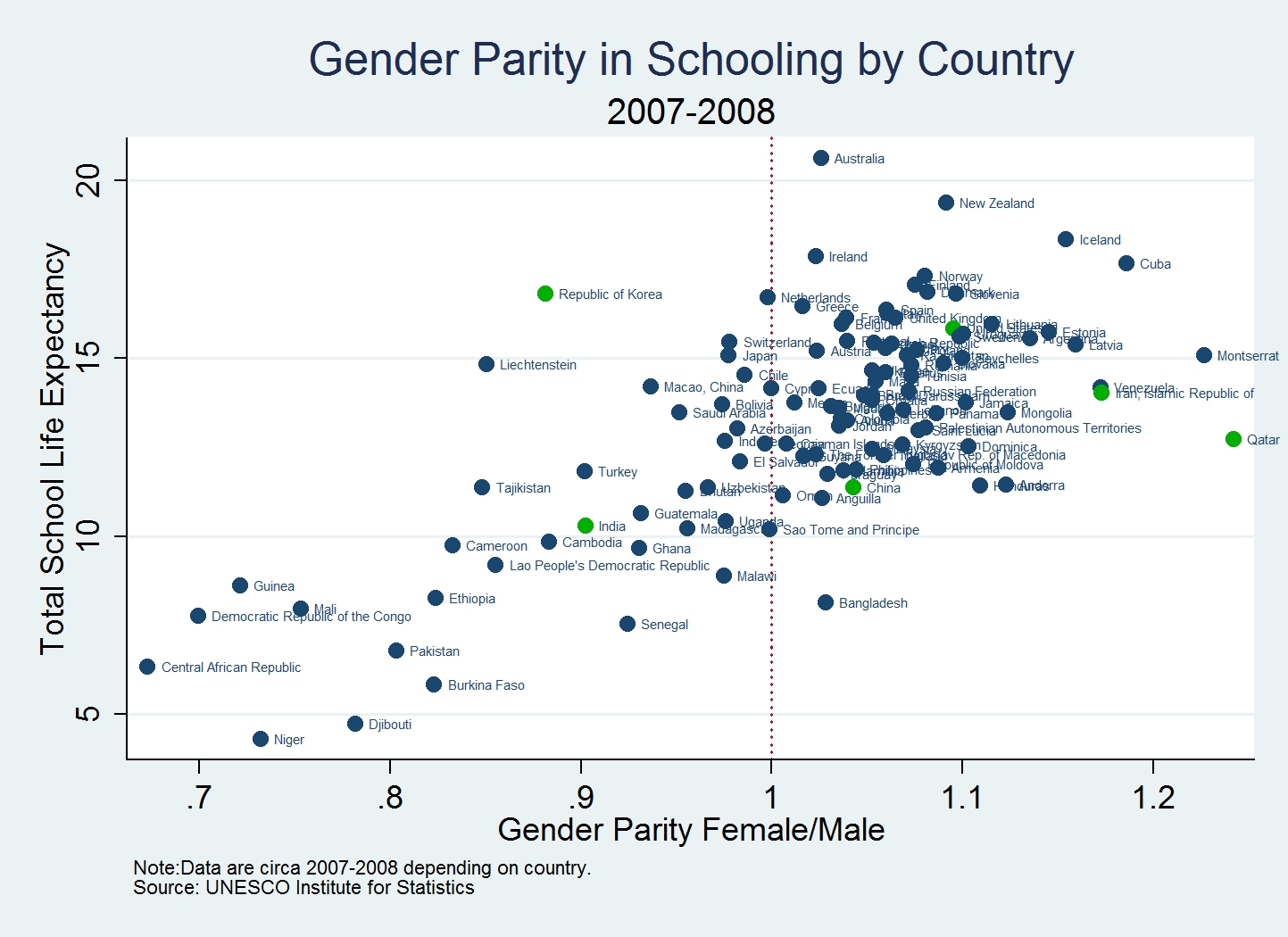
This graph came as a big surprise, as I’ve frequently read that the equal provision of education to both sexes was one of Korea’s crowning achievements of the post-war period:

Originally found via Surprises Aplenty, the graph comes from Marginal Revolution, which unfortunately has only a minimal discussion of it. Assuming that the result is accurate (Korea is the green dot at the top left), then what do you think accounts for the gender difference?

East Asia & Overseas Koreans

20. Twenty-three percent of female homestay students from East Asian countries reported being sexually abused in Canada

Much more complicated than that headline suggests however, see Extra! Korea for an excellent summary for a summary of all the newspapers on the topic, and The Marmot’s Hole’s post for its typically vociferous (but often informative) comments thread.

21. Japan split over granting married women the right to their maiden names

A big difference with Korea, where married women retain their names, unfortunately the Democrats’ plans to allow this have stalled in light of recent political setbacks. See The China Press for more details.

( Source: Korean Lovers Photoblog )

Enjoy the rest of your weekend folks!

Prosecutors will be able to request that sex offenders who were not already given an electronic anklet be electronically tagged after a legal revision takes effect Friday.The revision allows authorities to retroactively apply the anklet to criminals convicted before the law took effect in 2008.

Share

Korean Gender Reader

( Left: source. Right: Change Begins Here, by Self-portrait_Girl )

A slew of negative stories this week I’m afraid.

1. “10-19 is the perfect age to show a lot of skin”

With apologies for copying and pasting so much of it here, but Mellowyel’s post really is a great introduction to this week’s main stories:

…two articles from yesterday peaked my interest: one being the comments of South Korean model Choi Eun-jung (최은정) saying that “10-19 is the perfect age to show a lot of skin” and “Since the sexy concept is the trend, the young idols are carrying it out. Is it really necessary to look at all of this from a negative perspective?” The other was the news that all the music chart shows were upping their age rating from 12 to 15 because of the sexy dancing and clothing.

Of course, Choi Eun-jung’s opinion shouldn’t be dismissed simply because of her occupation, but on the other hand she’s hardly a dispassionate observer of the fashion industry either: until very recently a high school gravure model, she appears to have become famous primarily for appearing semi-nude in the Mnet reality show I Am A Model at 17, albeit overshadowed somewhat by Park Seo-jin (박서진) above who was only 14. And Mellowyel is spot on with the wider issues these stories raise, echoed in The Lolita Effect that I’ve just finished reading (my emphases):

What i find interesting about both of these articles is that what is under consideration is the affect that the exposure of skin has on the public, and no one is talking about how the women themselves feel about it. Do young girls ages 10-19 generally WANT to wear skimpier clothing, and are simply not being allowed to? Do female k-pop idols they feel empowered by being able to wear sexier outfits on stage than Korean culture normally allows? Or do they feel objectified knowing that they’re dressing and dancing that way simply to attract fans? This is a problem that I feel a lot of women performers face, and have to negotiate through their choices of clothing and performance – when they have them….

….Korean rap artist Defconn responded to Choi Eun-jung’s comments with outrage, suggesting that she was not considering the feelings of other young girls, and her comments are improper in light of recent news about sexual offenses against elementary school students. Which wouldn’t bother me if it didn’t remind me of the common thought process of people towards women who have been sexually harassed or assaulted – “They were dressing provocatively so they are complicit in the crime.” I agree completely that young girls dressing provocatively could draw attention of the wrong kind, but I have never heard a sex offender say that he assaulted a woman or girl because she was wearing a short skirt. More often than not, a woman is sexually assaulted simply because she’s at the wrong place at the wrong time, and cannot defend herself successfully. It would be great if people could focus less on what the woman did to get herself assaulted (which is often, nothing) and focus instead on the motivations of the attacker.

I think Defconn’s comments come from the right place, though….

There’s a great deal more where that came from, and I also couldn’t agree more with her point that Choi Eun-jung’s comments that “older women” in bikinis are “disgusting” is infuriating (source above: allkpop).

2. Sex crimes against children put under a microscope by the media

Meanwhile, the recent numerous sexual offenses against elementary students described above are very real, and Matt at Gusts of Popular Feeling provides a typically well-researched and comprehensive summary of them. Probably the most important point to take away from it however, is that in fact this level of attacks is normal:

I found that comment [in this editorial] about the “recent series” of sexual assaults interesting, especially considering the statistics in the next paragraph. Put simply, if 1,017 children and 1,447 teens (between 13 and 15) are victims of sex crimes every year, that adds up to 3 children and 4 teens between 13 and 15 being victimized every day (on average). There is not a “recent series” of such sexual crimes – this is always happening. It’s just that the media has decided – as it does whenever a particular case angers people – to highlight these cases…

On the positive side though, such attention has fat least forced both police and schools to belatedly consider a number of measures to improve their security, although naturally I think some schools’ decisions to completely ban fathers from school grounds was rather misguided. Also the police are to use electronic means to keep track of sex criminals’ whereabouts:

The police will create a nationwide database on sex criminals this month as part of its war to combat sex crimes against children.

An electronic map will be created, marking previous crime sites and the residences of people liable to commit such crimes.

Locations with high odds of such crimes will be flagged and local police will increase their patrol of the sites.

The map will include initial data on 16-hundred convicted sex criminals. The police aim to up that number to 12-thousand over the long term.

Once the map is completed, a warning system, based on data gathered over the past three years, will also be introduced.

The police will also form an exclusive squad on sex crimes targeting children.

Also, see Sociological Images for an innovative but controversial anti-rape campaign in the U.K. (example above) that focuses on men rather than women for a change, with the logic that “stopping predation, harassment, and violence by men requires telling men not to do those things, and telling women to restrict their activities to avoid men who might victimize them is only doubly oppressive.”

3. English teacher in Daegu under suspicion for sexual misconduct with students

In light of the above, it will be interesting to see if this receives a typically disproportionate amount of the media attention. See The Marmot’s Hole for more details, and again Matt provides some historical context.

4. Word of warning

Again (see here, here and #1 here) an expat teacher in Seoul has been sexually attacked, and when she tried to report it to police she was told to leave because they were too busy with other cases.

Read more at Hot Yellow Fellows.

5. Actor Choi Chul-ho (최철호) caught hitting a woman on CCTV

Details in English available at allkpop.

Update: He has since made a public apology.

6. Korea has the highest rate of female suicides in the OECD

So Yonhap News claims:

The suicide rate of South Korean women ranks highest among major advanced nations, data showed Thursday, indicating that they are having difficulty in coping with growing stress from work, marriage and household responsibilities.

According to the data offered by Statistics Korea, 18.7 out of every 100,000 women here committed suicide in 2008, the third leading cause for female deaths in the country after cerebrovascular and heart diseases, whose rates stood at 58.3 and 23.6, respectively.

And this is echoed by Arirang,The Chosun Ilbo, and The Korea Times, the last of which notes that “the figure is higher than traffic accidents, gastric and lung cancer and other causes”, while The Economist also provides the sobering statistic that “an average of around 40 people a day took their own lives in 2009, an increase of nearly 19% on 2008”.

Curiously, The Korea Herald uses the same data, but argues that suicide is only the 5th leading cause of death for women. But regardless of which source is the more correct, it does at least provide the helpful, broad visual comparison between the genders on the right.

Finally, see The Marmot’s Hole for some analysis:

Bernard Rowan, professor of political science at Chicago State University weights in on the question after hearing of the death of Park Yong-Ha, the 33 year old actor found dead in his home last week in an apparent suicide.  Links on his death in the BBC, Wall Street Journal and The Chosun Ilbo.  Given Park’s role in Winter Sonata, there were a number of Japanese fans that mourned his death as well.

Former and current Korean entertainment stars commit suicide with disturbing regularity, but rarely does it attract attention from American professors.  Bernard appears knowledgeable enough about Korea to say a few interesting things, including suicide’s possible link to the concept of “haan”.

7. Poor working conditions for entertainers

Not unrelated to the previous story, probably most readers here are already well aware of the grueling schedules and slave-like contracts of most entertainers, including those hopefuls that train for many years with their respective entertainment companies, with no guarantee that will ever actually be included in a new group. As Extra! Korea reveals however, not only are hopefuls beginning as young as 10 years old, but average entertainers make barely more than minimum wage too. And even KARA (카라), currently one of Korea’s most popular girl groups, live in conditions worse than many university students’.


See here also for the original Straits Times story on young K-pop hopefuls, The JoongAng Daily for more on their working conditions, and Omona! They Didn’t and The Choun Ilbo for one lawmaker’s attempts to clean up the industry.

( Sidelong Glance by Drab Makyo )

8. Divorced husbands from interracial marriages establish rights group

They may have a point here:

“In divorce suits, judges tend to weigh on testimonies from wives, who claim to have been victimized by domestic violence or other mishaps caused by us, Korean husbands. They are untrue from time to time.

However, I seriously doubt that it is Korean husbands that suffer more from a lack of legal representation than their usually non-Korean speaking, penniless wives:

Still, husbands, the majority of those who cannot afford a proper lawyer, are labeled as offenders,” the group’s spokesman Cho, who declined to identify himself further, said.

Read more at The Korea Times.

9. Women working in some previously male-only occupations.

Some good news from The Korea Herald:

…The Statistics Korea report said Monday the number of women entering the field of medicine had increased more than any other field in the past few years. In comparison to a mere 13.6 percent of female dentists in 1980, More than 24.5 percent of Korea’s dentists in 2008 were women.

“Only 2.4 percent of Oriental medicine doctors were female in 1980, but this has increased to 5.9 percent in 1990 and to 15.7 percent by 2008,” the report said…

However, the report is lax in not reporting the wider context: unlike in the U.S., where the financial crisis’s effects on the male-dominated construction and manufacturing industries meant that for the first time in history, more women than men are working there, in Korea women were overwhelmingly targeted for lay-offs, as they comprised the bulk of irregular workers. See almost every previous Korean Gender Reader for more information(!), starting with #1 here and #2 here from early-2009.

10. Keyboard Warriors Against Young Women

Korea is notorious for its increasing internet vigilantism, but until I read this report at Global Voices by Lee Yoo-eun, I’d completely overlooked the gender component to it; in short, it is overwhelmingly done by male netizens against female targets (image source: unknown):

The cyber-vigilantism (or bullying) in Korea, is practiced mostly by men. More reasonable voices online have analyzed this phenomenon as modern witch hunting performed by belligerent netizens, in reaction to Korean women gaining more power while men struggle under heaping social and economic pressure. The ‘girls’ are everyday people who have been caught doing something annoying, mean or idiotic. But unfortunately, by ticking off vocal Korean netizens, it takes only a day for their lives to be mercilessly ruined.

11. Diet pills out of vogue after report on ill effects

Neither food nor medicine, unfortunately diet pills exist in a legal gray area between them that allows Korean companies to brazenly make completely spurious claims of their effects, so this news is encouraging:

Doctors, or at least the less philistinic of them, have been trying to drum home the same message again and again: weight loss drugs can be addictive and harmful and should be regarded as a last resort. Now, the sharply declining sales of slimming pills suggest that consumers have finally begun to listen.

According to industry figures, the local market for weight loss pills was worth around 20.01 billion won (about $16.4 million) during the Jan.-March period, representing close to a 10 percent decline year-on-year. It bears further watching whether the first-quarter slide proves to be more than just a speed bump ― the market’s revenue for the entire year of 2009 reached 101.1 billion won, a dramatic increase from the 60.3 billion won of 2006.

However, with health authorities issuing warnings about possible side effects related to the country’s two best selling slimming pills, it’s reasonable to think that consumers are legitimately scared.

Read more at The Korea Times.

( Source )

12. Gay actor’s lone fight against prejudice

The JoonAng Daily has an inspiring article about Hong Suk-chun’s (홍석천) coming out and eventual financial success, but unfortunately it’s rather telling that no other Korean public figure of his stature has done so in the 10 years since:

…In fact, society is still so closed off to sexual minorities that a recent SBS TV drama, “Life is Beautiful,” which portrays gay characters and romance, caused the People’s Association Against Pro-Homosexuality Laws to run anti-homosexuality advertisements in the country’s biggest conservative newspaper, the Chosun Ilbo, from late May to early June.

“In Korea, public awareness and social backing for gays and lesbians are still extremely far off,” said Li En, an activist at the Korean Sexual Minority Culture and Rights Center. “Although Hong Suk-chun fought the tide and succeeded, we still remember when he was fired by all the broadcasters the day after he came out. In a country where an anti-homosexuality ad runs in the biggest newspaper, how many do you think will actually sacrifice everything they have to come out?”

See here also for a summary of the state of LGBT rights in Korea over the last decade.

Share

Korean Gender Reader

My reading for next week, and good timing in light of this recent photoshoot of Yu-bin’s (유빈) from the Wondergirls (원더걸스). Not that there’s anything wrong per se with a 22 year-old dressing like someone much younger of course, but then the similarities with a photoshoot of then 15 year-old f(x) (에프엑스) member Choi Sul-li (최설리) from February are obvious:

See here for more details of the latter and the issues that it raised (note that Sul-li replicates Yu-bin’s stance in other photos), and #5 below for the news that a recent child rapist was previously arrested (but not convicted) for providing shelter to a homeless 16 year-old girl in exchange for sex. Meanwhile, after The Lolita Effect I’ll probably be ordering Guyland for some balance, although I don’t expect it to be as relevant in the Korean context. Has anybody already read either?

1. The pill turns 50

“The advent of the contraceptive pill is the most important public health intervention we have ever seen for women.”

So said Australian sexual health physician Christine Read while speaking at a press meeting in Seoul last week.

“It has allowed us to control our fertility and to be able to plan when we would have children. It has permitted women to have sex safely, without fear of becoming pregnant,” she said.

And it has over a 99% success rate too, which makes one wonder why less than 2% of Korean couples use it, one of the lowest rates in the developed world. No great surprise to long-term readers of course though, most likely it is due to a combination of:

( Source: Encyber )

Not that misinformation about the pill is the sole purvey of the Korean media however:

Once again, the Telegraph has managed to misinform the shit out of its readers. It’s almost like the Fox News of the UK.

We’ve seen plenty of pieces come out over the last month about The Pill’s 50th anniversary, but none of them were as quite as confused and baseless as this one. (But then again, the Telegraph has a history of publishing inaccurate bullshit regarding feminist issues.)

While the author throws some positive aspects of the form of contraception into the piece at an attempt to convey objectivity, the headline and criticisms are anything but, saying the Pill led to sexual coercion, according to one of their main interviewees, author Libby Purves…

Read the rest at Feministing here.

2. Last week’s LGBT festival

See Chris in South Korea’s write up here (with many pictures), and the Hankyoreh also has an article.

( Source )

3. Japanese women encouraged to marry Korean men in colonial era

I’ve already written a great deal about how exceptional Japanese colonialism was compared to its European and U.S. counterparts, particularly in the degrees to which its colonies were integrated with, developed by, and settled from the home country, but I had no idea that that logic extended this far however:

The lack of discussion on inter-racial marriage by contemporary experts is not the only interesting feature to note. “It is an open secret among Korean scholars,” one professor of modern Korean history said to me the other day, “that there were a significant number of married couples between Korean men and Japanese women but there is so little study on it.” This is another surprise to non-East Asian historians. In other places it is men from the colonizing countries and women from colonized societies that married, and this feminization of colonies is often regarded as an aspect of Orientalism. There were, of course, married couples between Korean women and Japanese men, but as Oguma Eiji has already pointed out, the Government-General in Korea encouraged Japanese women to marry Korean men because, they thought, Japanese mothers were supposed to build the foundations of Japanese culture in the home.

Read the rest at Frog In A Well. And in other Japan-related news, The Japan Times discusses “Vader Ladies”, or middle-aged Japanese women who – like their Korean counterparts – wear excessively-large sun-visors to maintain light complexions; and in the spirit of last week’s opening image, may I present this iconic one of Yukio Mishima on the right also, discussed at Critical Masculinities.

As for dating and/or marrying Koreans, the author of Doing it Korean Style has ironically decided to stop dating Korean men! While that is primarily because of language difficulties however, by coincidence the author of On Becoming a Good Korean (Feminist) Wife has started an enlightening series on why it is much more difficult for 20-something Western women to find compatible Korean men the same age than vice-versa, and hence the huge disparity in the numbers of couples (although this is changing).

4. North Korean women: misfits in the South

A note to Agence France-Presse (AFP): if you want to encourage people to actually watch your otherwise good 2-minute introduction to this subject, then don’t restrict viewing of it to only on the Youtube website itself.

5. Child rapist case demonstrates urgent need for revision of age of consent laws

Convicted last week, child rapist Kim Su-cheol (김수철) was originally unrepentant, but soon began to act differently during a live reenactment of his crime; after all, the Korean judiciary, reflecting social norms, attaches a great deal of weight to expressions of remorse rather than abstract notions like innocence or guilt. Doing some further investigating however, Brian in Jeollanam-do has discovered that Kim Su-cheol is none other than the same person who 2 years earlier paid a 16-year-old runaway:

…to have sex with him about 30 times. The girl, a middle-school dropout who lived with Kim for two months this year, was paid 20,000 won ($16) each time, but was not forced into intercourse, investigators said. Kim reportedly admitted to police that she is pregnant, but said she doesn’t know who the father is.

As Brian mentions, that last point is rather bizarre, and I would add that the JoongAng Daily quoted above is clearly mistaken in reporting that the age of consent in Korea is 19; in a lengthy investigation of my own earlier this year (it is rather harder to determine than it may sound), I demonstrated that in fact it is 13, which is why Kim Su-cheol wasn’t convicted for the above.

I don’t intend to criticize that relatively low age here: not only it is actually on a par with those of many European countries, but in practice any choice of age is somewhat arbitrary, and convictions and/or public sentiment heavily dependent on both the age gap between and sex of the participants. However, in light of that earlier case and 15 other convictions for physical violence and hit and runs since being released from a 15-year prison sentence for rape in 2002, then unfortunately this latest crime of his does seem almost waiting to happen. Short of convicting him in 2008 though, it is difficult to think of how it could have been prevented, although authorities are possibly remiss in allowing him to live within 500m of a school (is there any dwelling in a Korean city that wouldn’t be?).

Meanwhile, K-Bites and AllKpop report that the police have charged a composer with the attempted rape of a female singer, but without revealing the names of either. This may just be an isolated case of course, but bear in mind that in the most comprehensive investigation to date, 62% of current or aspiring actresses surveyed “reported being pressured to have sex with influential figures like producers, directors, businessmen, politicians and advertising executives,” and 6% reported being the victims of rape. See Extra! Korea for more details.

6. State Department’s trafficking in persons report cites “juicy girls” in Korea

See ROK Drop for more details, who:

continues to maintain that the best way to handle the issue of human trafficking is to put clubs that hire third country nationals off limits….If 3rd country nationals aren’t put off limits this issue will not go away because the bar owners will just keep finding different foreign women to traffic in.  By forcing the bars to employ Korean workers it would pretty much make the human trafficking issue go away because Korean nationals would be much harder to traffic in.

7. The Swedish model of childcare

With thanks to the several readers who sent the various links in, this has been receiving a lot of attention in the media recently, prompted by an excellent article in The New York Times that begins thus:

Mikael Karlsson owns a snowmobile, two hunting dogs and five guns. In his spare time, this soldier-turned-game warden shoots moose and trades potty-training tips with other fathers. Cradling 2-month-old Siri in his arms, he can’t imagine not taking baby leave. “Everyone does.”

( Source: Ryo. )

Sadly the polar opposite of Korea, where even maternity-leave laws are routinely broken, and only 1% of fathers take their generous 3 days of paternity leave (see #4 here).  See Gender Across Borders for more commentary, and in Korea’s defense, Femonomics demonstrates that for all its pro-family rhetoric, the U.S. is not much better:

Many Americans would describe Sweden as “Socialist!!” (a big, bad, scary word these days), and they’d be right. But Swedish policies are also much more pro-family than those of the more free-market Capitalist US. At least if we consider parents spending time with their children to be pro-family (I do!). For all of the political rhetoric around our “traditional family values,” US society does not really have a commitment to strengthening the family. Right-wing groups may stand strong against gay marriage and abortions, but where are the rallies for family leave, subsidized childcare, and living wages? The top three results in a Google Search of “Pro Family Advocacy” are homophobic organizations protesting gay marriage. Do Americans just not get it?

Which reminds me of this from a 1995 Time magazine article on evolutionary psychology:

One reason the sinews of community are so hard to restore is that they are at odds with free markets. Capitalism not only spews out cars, TVs and other antisocial technologies; it also sorts people into little vocational boxes and scatters the boxes far and wide. Economic opportunity is what drew farm boys into cities, and it has been fragmenting families ever since. There is thus a tension within conservative ideology between laissez-faire economics and family values, as various people have noted. (The Unabomber complains that conservatives “whine about the decay of traditional values,” yet “enthusiastically support technological progress and economic growth.”)

But I digress. Finally…

8. Of politicking and prostitution

Curiosity Killed the Eccentric Yoruba describes the commotion caused by her being mistaken for a prostitute in a Tokyo an Abuja hotel!^^

Share

Korean Gender Reader

( Source: Sex, Art and Politics )

In a very comfortable-with-my-heterosexuality way, this picture from Tamotsu Yato’s 1972 book OTOKO: Photo-Studies of the Young Japanese Male is really rather good, and the hat reminds me a little of this award-winning shot too. Not so much artistic as soft gay porn however (interestingly, most of the models were heterosexual), then unfortunately the remainder of the book is not really up my alley personally, but you can download it in full from Sex, Art and Politics if you’d like. (via: Doing it Korean Style)

1. LBGT news and events

In related news, and with apologies for the late notice, this weekend there is the 11th Annual Queer Pride Festival in Seoul. See Roboseyo and Busan Haps for more links and event details, and Gusts of Popular Feeling for a more detailed analysis of the public acceptance of LGBT culture in Korea (and also here also for an excellent chronological overview).

Meanwhile, the Constitutional Court is expected to soon decide whether Article 92 of the Military Law stipulating the punishment of homosexual soldiers is a violation of their constitutional rights. Currently soldiers who have a sexual relationship with a member of the same sex are punished with one year’s imprisonment, which – forgive me if this sounds trite – is surely  rather ironic in light of a pervasive culture of sexual abuse in the South Korean military. And probably not by coincidence, I was surprised to learn that apparently gay rape is not considered a crime in Korea also, something which emerged from the news that a male songwriter was sexually assaulted by a male comedian earlier this week.

Finally, The Three Wise Monkeys has a post about Gi Hyeong-do (기형도), “a misunderstood modern gay Korean poet” (via: Korean Modern Literature in Translation); another about a trip to “Homo Hill” in Seoul; and finally, albeit not LGBT-related, also on that blog is this, this, and this post on Korean “room-salon” culture.

2. Parents demand government action on mini-skirted school uniform scandal

Young Korean celebrities may no longer be legally allowed to advertise school uniforms (see #7 here), but apparently that isn’t stopping female students from altering them to be “mini uniforms” or “S-line uniforms” themselves.

I’m reminded of an observation that a friend living in Japan made of their Japanese counterparts, who would attach velco to their skirts to raise them while hanging out in Shibuya, only to lower them while back at school. Has anyone heard of Korean students doing the same?

( Source: unknown )

3. Elementary school student raped in Seoul

See Brian in Jeollanam-do for more details, and I’d echo one commenter’s amazement and incredulity that the alleged rapist was able to wander the hallways unnoticed for an hour before dragging the student from the playground at 10am. Indeed, with two preschool daughters myself, it’s led me to seriously consider homeschooling here for the first time.

(Ironically, that inattention by the school comes at a time when parents in Seoul were outraged to discover that videos and audio of their children’s kindergarten classes were being streamed real-time onto the internet, all without their consultation or consent)

Brian also mentions that “in a very uncommon move in South Korea, the authorities released his name and photograph,” but in fact these were already available due to events set in motion by the rape and murder of a 13-year old girl by Kim Kil-tae (김길태) in Busan in February. Revealed to be a former sex-offender, but whose personal details had been kept anonymous by existing legislation, then the ensuing popular outrage led to the Ministry of Gender Equality and Family Affairs retroactively making all sex-offenders’ whereabouts publicly available on the internet (see #8 & #10 here), and accordingly so too here is the alleged rapist a former sex-offender.

This incident follows that of a 15-year-old middle school girl losing her life after being sexually assaulted and robbed by two 14 and 15 year old boys in Seoul last month. Apologies if the above image seems tasteless in light of that, and I don’t mean to imply a direct relationship between the two. But I did find the juxtaposition of stories interesting, and at the very least it points to a dire need to at least acknowledge the sexuality of teenagers, and hence provide decent sex education and – for want of a better term – awareness of sexual ethics accordingly.

Update: It remains true that as an already registered sex-offender, then the alleged rapist’s details were already public knowledge. But with apologies to Brian, I completely forgot what I wrote back in April:

…the government has now decided to release the names and faces of alleged sex-offenders when there is “strong evidence of guilt and a public demand to know,” and one immediate problem that comes to mind is how open that is to interpretation.

See #9 here for further details.

4. Forced ‘love shot’ constitutes harassment

From The Korea Times:

A court ruled Tuesday that a high school in Gyeonggi Province did not overstep its authority in dismissing a male teacher who forced a group of trainee teachers to drink “love shots” against their will at an evening get-together party.

A “love shot” is when two people drink with arms entwined, a drinking ritual meant to boost teamwork and forge closer relationships but which is often abused by male superiors.

Compare this landmark case from June 2007, in which a female employee successfully sued her boss for being forced to drink at a work dinner.

5. The trials and tribulations of being an unmarried 30+ year-old woman

Not a critical analysis, but another interesting and amusing post from Mental Poo nonetheless.

6. Women in Korea webcast

If you don’t know already, then every Sunday night (usually around 8 or 9) KoreaBridge has a live “women in Korea” webcast. Always interesting, anybody can listen and/or watch the discussion here, and more women are always welcome to join via Skype (but a headset is recommended!).

( Source: Extreme Movie )

7. Drama version of Level 7 Civil Servant (7급 공무원) in the works.

Not that gender-related sorry, but then I have always liked the poster. See Dramabeans for more details, and actually it does sound interesting:

The movie’s plot centered around a woman who hides her spy identity from her slightly bumbling but well-meaning boyfriend. When her stories don’t add up and he gets tired of being shoved aside for odd reasons, he finally leaves her and goes abroad for his job. A few years later, he comes back as a rookie agent and runs into her again, much cooler now but not without a trace of his former dorkiness. (LOVE him!) But of course, neither can let on that they’re both spies, and moreover, their respective teams are working on cases that bring them repeatedly in contact with each other. The plot didn’t always convince — bioweapons, Russian baddies, blah blah — but the humor and the two leads made for an entertaining ride.

(Update: I’m curious. Would you say that this particular image conveys the common media theme “that sex is about male aggression and female submission”? I honestly can’t tell)

8. OMG: a Korean young female idol was not interested in what an elder was saying!

Quickly adding these stories to a draft version of this post as they appear throughout the week, sometimes my original, rather direct titles for them remain the most appropriate! In one of those only-in-Korea moments, see K-Bites and Omona! They Didn’t for more on f(x) (에프엑스) band member Krystal’s supposedly heinous faux pas for which she was roundly criticized by netizens for.

Probably not coincidentally, I’ve only been able to find precisely one actual video of it available unfortunately, and a mirror-reversed one at that. Lest even that be deleted eventually though, then I’ve uploaded it to Youtube so you can see for yourself, but have kept the title vague so as to not get flagged for copyright violation:

9. “Korean ladies refuse to date black men”

So claims the author of a letter to the editor of The Seoul Times, which in turn made it to The Dallas Blog. For some reason it appears to have been deleted at the latter, and unfortunately the former doesn’t allow direct links to articles, so here is the original from Ken Washington:

I am a Black American and I have lived in South Korea for eight years. I have recently been denied several jobs because I am Black.

My father fought and risked his life in the Korean War so Koreans could be free. Free to hate Black people. How ironic?

Several Korean ladies have refused to go out with me because they said that I am Black and when they were young they were made fun of because their skin was darker than most Korean. I then asked them “Would they not date Koreans if someone teased them for being Korean” and they said no because they are Korean and then I said you are also dark skinned so why do not like dark skinned people.

Anyway I began to understand how they felt as I watched Korean TV where all of the people in ads and TV shows are 99% white or light skinned. South Korea has effectively isolated a large majority of their population because they have color in their skin.

I was hoping (The Audacity to Hope) that when Obama became president that maybe the country would change about how they feel about Blacks but I was wrong.

The most disappointing aspect for me is that I really love Korea but I know that it is time for me leave where I know I am not wanted.

South Koreans have a great country with a lot of positives but to exclude so many people, simply because of their skin color, in the 21st century with no end in site is simply limiting the possibility of greater deeds.

Admittedly more interesting for the basic message rather than the quality of the content per se, I’d be very interested to learn more from any Black readers about your dating experiences with Koreans; alas, I’ve only had one Black friend in Korea myself, and he left with his Korean wife to live in Alabama in 2001. But I do know that her parents refused to meet him until the weekend before they left, which was a whole year after their wedding! Would you say that that story was typical, and/or would you say that things have changed since? (Source right: China Smack)

Meanwhile, interracial marriages are soaring in the US, but not evenly. According to CNN (via The Marmot’s Hole):

…About 16 percent of African-Americans overall are in an interracial marriage, but researchers point out a gender difference: It’s more common for black men to marry outside of their race than for black women.

The gender difference was the reverse in the Asian population surveyed. Twice as many newlywed Asian women, about 40 percent, were married outside their race, compared with Asian men, at about 20 percent.

10. What’s in a name?

In case any of you didn’t know already, my wife and I decided to give both our daughters English first names and Korean middle names (actually, my wife’s surname). Here’s why:

When I was a freshman in Auckland University back in the mid-90′s, I took some sociology courses (confusedly for Americans, they were called ‘papers’ in New Zealand, although the terminology may have changed since then). In one, the Maori lecturer explained that like most Maoris born in the 1960s and 1970s, she had an English first name and only a Maori second name because her parents didn’t want her to be discriminated against. Sure, racists may not ultimately have hired her because she was a Maori, but at least her name would have ensured that she at least got an interview.

New Zealand has of course changed a great deal since then, and I doubt Maori parents today would think twice about giving a Maori first name, but instead the problem has shifted towards another group: East Asians. Shortly before I left NZ in 2000 I read in The New Zealand Herald, the biggest paper there, that despite some schooling in the country, qualifications gained there, and near native English fluency, many people with East Asian names were still finding it difficult to find employment because employers, solely based on their names, feared a lack of English ability and/or an inability to ‘fit in’ at work.

In short, this is still a problem there 10 years later, and I mention the subject now because my Korean Twitter friend pompeiigranate recently changed her name partially for that reason, but mostly because of a lifetime of being teased. See here for more on her reasons why, which I’m sure have parallels with many other immigrants’ experiences.

“Give me a job! I don’t even look half-Korean!”

11. Reclaiming the F-word

Not strictly related to Korea sorry, but after 10 years of living here then I’m a little out of touch with the state of feminism in Western countries to compare it against, so once it becomes available at What The Book then I’ll probably be buying the above title, which appears to be an excellent summary of contemporary UK feminism. See here for basic information about it, here for several reviews, and here for more on the book launch earlier this week.

Male songwriter gets sexually assaulted by a male comedian

Share

Korean Gender Reader

( Source )

Not strictly gender-related sorry, but while Vogue Korea’s recent photoshoot of Lee Hyori (이효리) is not without a touch of class, that particular image above is probably the strangest of her’s I’ve ever seen!

1. “What is Aegyo and How Can We Kill It?”

Regularly expressing a disdain for displays of aegyo (애교) by Korean women, or “affected sweetness”, strangely it has never occurred to me to scratch below the surface of the phenomenon, let alone see how it could actually be an empowering tool to navigate a patriarchal society. I highly recommend reading The Joshing Gnome’s short, very readable, 5-part series then, which is rooted in Thorstein Veblen’s The Theory of the Leisure Class:  see here for Part 1, and don’t miss Kelly in Korea’s insights also.

2. “60% of Actresses Accosted for Sex by Bigwigs”

A rather confusing headline, as although the Chosun Ilbo article begins:

Six out of 10 actresses in Korea have been propositioned for sex by influential figures, according to a poll of 111 actresses by the Korean Women’s Development Institute commissioned by the National Human Rights Commission.

In the survey published Tuesday, 60.2 percent of respondents said they had been accosted for sex by senior figures in the broadcast industry or other prominent people. The poll was conducted between September and December last year and involved detailed interviews. Top actresses accounted for around 10 percent of respondents.

…It actually later says that only 21.5% received direct requests, but of course that figure is also unacceptable.

Probably commissioned in the wake of huge public reaction to the suicide of actress Jang Ja-yeon (장자연) in March last year, unfortunately they probably come as no great surprise, but at least attention is being drawn to the scale of the problem. See The Guardian, The Hankyoreh, SeoulBeats, and myself at #13 here for more if that is in the first you’ve heard of that, and which provide some context to the recent news from Korea Beat that a short-track skating coach has been accused of molesting a student, a university professor has been found guilty of sexually harassing one of his students, and a police officer was fired for placing a digital camera under the desk of his female co-worker.

( Source )

3. Gays in current Korean dramas

An excellent summary by Yuna at The Marmot’s Hole. Also, see Ask a Korean! for an interview with Kim Su-hyeon (김수현), writer of the drama Life is Beautiful (인생은 아름다워), actually the first in Korea to depict a gay relationship.

Not to imply that Daniel Henney (다니엘헤니) above is gay of course, but I do have a penchant for close-ups of attractive faces, and I also I just thought that my gay readers and heterosexual women might like it! Does anyone else think he looks a little like Roger Moore did in his James Bond days here? (via: PopSeoul)

4. “If you think that Korean women are fragile eastern flowers, you might want to think again”

Streetwise in Seoul writes brief biographies of Lim Su-jeong (임수정) and Choi Hyun-mi (최현미), a Muay Thai fighter and boxer respectively. See here for a video of the latter in action and for some more information on other Korean female boxers also, and you may also like Living on the Flipside, a blog by an expat boxer (with a Korean husband who is also a boxer!).

5. Go So-young knocked-up

A reminder that Koreans’ public attitudes to sexuality are much more subtle than they may at first appear (let alone considering the wide gap with their private ones), the news that Go So-young (고소영) was already 3 months pregnant upon her recent marriage to Jang Dong-gun (장동건) raised nary an eyebrow in Korea, despite strong taboos against premarital sex and cohabitation (albeit only that against the latter strong enough to dissuade it!). As commenter Oranckay explained, and well worth repeating, the reason is because:

…one needs to take into account that not all pre-marital sex is the same. There is a difference between just having sex and having sex with someone you are going to, or intend to, marry, and traditional/Joseon and even 20th Korea saw this as a big difference. Having sex on the premise of, and as consummation of, commitment, was the normal, socially acceptable way to have pre-marital sex. So valued was a woman’s virginity that a decent man could only sleep with her if he was ready to “take responsibility for her,” as the saying would go, and so on, because that’s what sleeping with her was supposed to imply. Fiction and non-fiction narratives (many known to me personally) are full of this kind of thinking. I know couples that decided not to have sex because they weren’t sure they were getting married, that didn’t have sex because he was going to the military and he wanted to be sure he’d come back alive before permanently “making her his,” as that would be too traumatic for her, and of couples that lived together (and obviously were having sex) before being married and it was acceptable because they were going to marry, had family approval, but couldn’t marry because maybe the girl’s elder sister wasn’t married off yet or they were both still in college but both sets of parents wanted to get them married after graduation, or one of those odd reasons. Maybe no money; whatever…

Read the rest here.

6. Korean Censorship: More Than Meets the Eye?

As watchers of Korean dramas may recall, back in January KBS decided to censor the scene below from the popular drama Chuno (추노), despite the fact that Lee Da-hae (이다해) was clearly fully-clothed. I didn’t comment it on at the time, but had I done so then I too would likely have joined the bandwagon of criticism and described it as absurd, completely unnecessary, and downright bizarre in light of the amount of skin that is displayed 24/7 on KBS, let alone on any city street.

And don’t get me wrong: I still consider it absurd. But via a comment on the French-language Korean cinema blog Dooliblog, I have since learned that it was in fact done to placate disgruntled fans of the show, critical of Lee Da-hae’s flawless skin as being too unrealistic for her role. Granted, how blurring her breasts specifically was supposed to overcome that remains a bit of a mystery, but the new information does at least provide a healthy reminder not to take instances of censorship in Korea at face value, and certainly not to automatically assume that the Korean media’s “default” option is for greater conservatism.

( Source. Note: don’t confuse the proclivity for blurring with that done to avoid indirect advertising )

When it does occur however, it can also easily be circumvented or even exploited, as skillfully done by rapper E.via (이비아), who (in my personal opinion) seems to compensate for a lack of musical talent by seeking controversy with everything she produces (see #1 here, #11 here, and #20 here). I may simply be biased because I’ve never liked rap however(!), and against that interpretation Twitterer David Frazer points out (update: actually regular commenter Gag Halfrunt) she has a penchant for “juxtaposing [an] innocent idol look with explicit lyrics”, and may in fact be “deliberately attacking the pretense that ‘it’s not sexy, it’s cute’ when under-18s do suggestive dance moves”. Can anyone more familiar with her enlighten us?

Regardless, it is curious why her latest music video Shake! (쉐이크!) is likely to be banned from public television…

…while advertisements like this remain completely acceptable:

Vodpod videos no longer available.

Meanwhile, the Korea Times reports that Twitter is providing a means for pornography websites to avoid restrictions placed on them by the Korea Communications Standards Commission, the country’s censorship authority for broadcasting and Internet content.

7. Body Image

I confess, sometimes keeping up with Korean gender issues almost feels like being simply scouring the internet looking for more things to criticize, but then there is so rarely any positive news when it comes to Koreans’ attitudes to women’s body images especially. Accordingly, I’ll simply pass on these links below rather than providing (admittedly increasingly repetitive) commentary also, although do check out this video on cosmetic surgery in Korea posted last week if you missed it:

Shift the focus of attention slightly however, and there have been positive recent developments. In an article in the Los Angeles Times entitled “South Korea’s homemakers don’t want to be pegged” for example, John Glionna explains how “some stay-at-home mothers, known as ajumma, are fed up with being stereotyped as deadbeats who just love to gossip and shop. Kim Yong-sook is helping them forge a new identity”:

( Source: unknown )

Kim Yong-sook is fed up and she’s not going to take it anymore.

She’s weary of women between the ages of 30 and 60 being ridiculed as selfish and unstylish — bossy, gossiping magpies with bad perms who pinch pennies and hog seats on the subway.

They’re known as ajumma, a word long applied to married women with children but which in recent years has taken on a pejorative connotation that irks Kim.

Among many South Koreans, it’s now often used to conjure an image of homemakers who disdain full-time jobs to while away afternoons on park benches, in coffee shops and at social clubs, bragging about their children and, if they’ve got the money, go on shopping sprees.

At 58, Kim has empathy for her fellow ajumma, who she insists have too long been misunderstood and ridiculed. Ajumma are not deadbeats, cracks in Korea’s economic engine.

“Actually, we’re running the nation,” says the mother of one, a son. “We’ve got one foot in the house and one foot in society.”

A decade ago, Kim formed a support group called “Ajumma are the Pillars of the Nation.” Since then, she has attracted thousands to her declaration of independence. She’s written a book and consults with business and government.

Her message: Ajumma unite! Don’t take the snickers, behind-the-back finger-pointing and jibes lying down!

Read the rest here, and you may also be interested in ajummas’ very under-appreciated role in the creation of the kkotminam (꽃미남) phenomenon in the 1990s, and their increasing domination of young male idols’ fan-clubs a decade later.

Update – At risk of contradicting myself and trivializing what Kim Yong-sook is doing, these ajumma cartoons are classic nevertheless: after all, the stereotypes aren’t entirely baseless…

( Source )

8. Despite her protestations to the contrary, I’m no Picasso continues to provide sage advice about dating and sexuality in Korea, here demolishing another expat’s seriously flawed logic and stereotypes about both. Jumping ahead to next week’s Gender Reader, many of these are likely to re-emerge in the news that Single Korean Females Eye Foreign Husbands, so be sure to read her posts first!

9. “Writers and Women Writers”

Over at Korean Modern Literature in Translation, Charles Montgomery passes on an article by literary critic Bruce Fulton, who begins with “an amusing tendency in Korean Literature that all readers eventually catch”:

Readers of an earlier generation who happened upon the anthology Modern Short Stories From Korea, translated into English by In-Sob Zong (Chong In-sop),1 might be forgiven if they gained the impression that two varieties of human beings write fiction in modern Korea: writers and women writers.

10. Less than 1 in 10 executives is female

In a poll conducted by major recruiting service Incruit, it was found that “the larger the company, the less likely it was to employ women as leaders”: of the companies surveyed, those with fewer than 300 employees had 36,666 executives, of whom 3,279, or 8.9 percent, were female, while in bigger companies only 126 out of 2,474 execs, or 5.1 percent, were female.

See The JoonAng Daily for more.

Share

Korean Gender Reader

( Source )

1. “Why I want to be a whore”

Never being interested in gisaeng (기생) previously, I am now intrigued after reading this unorthodox perspective on them at Curiosity Killed the Eccentric Yoruba, with a special emphasis on the 2006 drama Hwang Jin-i (황진이) above. A quick excerpt:

While I do not believe that courtesans largely lived happy lives, I do believe that they were the freest and most independent women in those patriarchal societies. I remember my friend reading me an essay she had written which she called ‘Why I want to be a whore’. She had written that essay for a Latin class she took and the context was ancient Rome. According to my friend the only profession that ensured a woman’s freedom and independence was to be prostitution and I am pretty sure she meant the art of the courtesan.

Anybody know how I can watch Hwang Jin-i with English and/or Korean subtitles?

2. 60% of teens have unprotected sex

Naturally, that headline from The Korea Times actually only refers to sexually-active teens, and whom were only 5.1% of all the 75,238 teens surveyed (so in fact, only “3.06% of teens have unprotected sex”). But regardless, as always I would be very wary of drawing any conclusions from the data with no information provided about the methodology used, although I’d echo the report’s criticism of the woefully inadequate sex education provided at Korean schools.

If you’re interested in finding out more,  please consult the categories on the right for many more posts on Korean teenage sexuality and related issues, or see this one on the age of consent and this one on sex education if you’d rather just have quick introductions.

3. Why is celebrity endorsement so important in Korean commercials?

When even the head of Korea’s largest advertising agency says that much of Korean advertising can be reduced to simply “beautiful people holding a bottle,” then it’s not just your imagination when you see so many idols doing so many commercials these days; now, see Omona! They Didn’t for why.

4. Chick lit in Korea

More from Charles Montgomery at Korean Modern Literature in Translation (see #7 here also), who is currently reading Sung Eun-cho’s journal article The Translation and Appropriation of Chick Lit in Korea:

An interesting read that alternates between literary theory and social history, it details how, in the late 90s and early 2000’s, Chick Lit came from overseas, took Korea by something resembling force, and was then recreated as a domestic product, but one that had internalized many of the messages of the original imports.

5. Cheerleaders helping to reinvigorate pro-baseball

So claims this Chosun Ilbo article, which also says that baseball stadiums are no longer the sole domain of middle-aged men but are now full of both men and women in their 20s.

Not a baseball fan myself, does anyone know if this is just wishful thinking or not?

( Source )

6. Raining on Rain

Kyu, the Korean American, explains why he no longer respects the singer Rain (비).

7. Girls’ Generation members ordered to always wear make-up

Lest the sky fall in if even more pictures of them without it appear on the internet. But on a more serious note, I do have a Korean friend who works in a bank who has told me that she’d be fired if she repeatedly came to work with her face au naturel, although I don’t know how typical that is of Korean companies in general?

8. Korean student commits suicide after being raped during MT

Moreover, if not rape per se, then sexual harassment at least may well be endemic to MT culture:

Not too long ago, Brian (formerly) in Jeollanam-do reported on the university student who committed suicide after being raped on an MT. MT is short for “membership training” and they have nothing to do with any sort of training. Groups of students who are associated in some way (e.g. are members of the same club or have the same major) go somewhere, stay the night, and then return the next day. Participation is supposedly optional, but declining could get you ostracized, which is a big deal in Korea, particularly among university students. What do they do there? Drinking alcohol. Lots of it. Again, you’re pressured to conform and participate. If you don’t drink, or only a little, you will be angrily accused of “spoiling the mood” by your superiors (“seon-bae”). In Korea, subordinates (“hoo-bae”) basically have to do everything that their seonbaes demand, or risk the aforementioned excommunication. It’s common for male seon-baes to try to get female hoo-baes drunk so as to make sexually harassing them easier.

Read the rest at Extra! Korea.

9. Two reactions to recent child sex crimes

First, the good news: child rape victims are no longer required to testify in court when their alleged rapists are tried, although in light of the continuing confusion surrounding the age of consent in Korea I would have preferred it if the Yonhap News report had specified until what age victims are considered children (not academic if 13 year-olds are considered consenting adults).

More ominously however, the government has now decided to release the names and faces of alleged sex-offenders when there is “strong evidence of guilt and a public demand to know,” and one immediate problem that comes to mind is how open that is to interpretation. But as Seamus at Asadal Thought puts however, more crucial is the fact that it is just:

another case of the government trying to just keep the people happy while completely missing the point.

The point is not that people want to see the faces of these people – they’re not a threat once they’re caught. What the people of Korea really want is, one, for better regulations to be put in place to stop these crimes being committed in the first place, and two, for the offenders to be given sufficiently harsh sentences when they’re charged.

Also in crime-related news, Korea Beat reports that an investigation has been opened into a Gwangyang high school teacher who allegedly slapped and beat students.

10. Korea’s gender wage gap in comparative perspective

Mentioning the fact that Korea has the largest gender wage gap in the OECD so many times, I have been remiss in not providing a graph like this earlier (via: Sociological Images):

11. Music videos banned for depicting…jaywalking

About to start writing an MA thesis in which I place:

…the censorship of recent years – invariably quite arbitrary, hypocritical, and inconsistent – into some sort of context, most likely that of the corporate interests of the various ministries and companies involved themselves.

Then I feel quite vindicated in light of hearing the supposed reasons both a recent Rain and Lee Hyori (이효리) music video have been banned from public television for.

( Source )

Meanwhile, despite earlier reports (see #5 here) that singer G-dragon would not be prosecuted for the following sexually-charged performance at a concert attended by minors, this no longer appears to be the case:

With thanks for passing all the links on, see Tenshii’s comment for more information on those and many similar cases.

12. Avoiding Stalkers

I’m no Picasso and Jasmine Taiwo recently had problems with stalkers, and have a lot of good advice for other women in case the same happens to them.  Also, see Roboseyo’s post for links to earlier incidents.

13. Overcoming South Korea’s gay love taboo

( Source: CNNGo)

Best of luck to this couple in Seoul, although unfortunately they’re going to need it considering a Korean newspaper recently placed gay personals on a par with advertising prostitution. Also, see Doing It Korean Style for the recent storm in a teacup over a recent public kiss between 2 male singers.

14. “New university department modeled on the MIT Media Lab to nurture a pool of creative individuals to lead the country’s technology sector”…women need not apply?

Via fellow Twitterer José María Areta, how else is one to interpret the news that male students in master’s and Ph.D. programs there will be exempted from military service?

On the plus side however, one also wonders at its legality: just last month, affirmative action for men who had completed their military service was (again) ruled unconstitutional (see #13 here), and unless female graduates are offered similar benefits for receiving degrees then I’d be surprised if it wasn’t challenged as discriminatory.

15. Dating in Korea

Unable to write last week’s Korea Gender Reader because of computer problems, unfortunately there’s necessarily been a great many stories I’ve not covered this time for the sake of keeping this post to a readable length.

But of course I still have to mention all the recent excellent posts on this topic however, starting with this and then this by I’m no Picasso (a follow-up on those I mentioned at #3 here), the latter of which a Korean reader also weighs in on; next, there is Gord Sellar’s excellent series on “Expat Social Fallacies,” from which I’ve learned a great deal (and, indeed, been a little humbled by realizing how many apply to myself), of which Part 2 is primarily about dating; and finally, for those of you that missed it the first time, I recommend reading the post entitled “Western men in Korea who hate on K-guys: get some new material” at Doing It Korean Style first, in which a lot of regular commenters on this blog contributed to the long comments thread. Enjoy!

Share

Korean Gender Reader

1) Wash your own damn cup!

Is it just middle-aged Korean men that expect their female subordinates to do menial tasks for them at work, or are younger men different? Does being a foreigner always get you out of this gendered hierarchy? Weigh in on this at Going Places by Diana, who also has many interesting posts about life with her new Korean husband.

Unfortunately, the newlyweds are leaving Korea in August, but she has just started a new blog called Feminist Marriage to compensate. For more on Korean corporate life itself though, this time from the perspective of an atypical gyopo woman, then check out Mental Poo.

2) Korean gender wage gap largest in OECD (again)

Not unrelated to the above,  for basic statistics see The Korea Herald, and as a longer analysis in The Korea Times puts it, the basic problem is:

…the extreme imbalance in the “quality of employment.” In other words, men usually take regular, high-income and professional jobs, while women toil in temporary, low-income and non-professional positions. Women account for less than 2 percent of the executives in the nation’s four largest family-controlled conglomerates of Samsung, Hyundai Automotive, LG and SK groups. One can find few ― if any ― female managers in large commercial banks.

To which the Chosun Ilbo adds:

…The low birthrate problem cannot be resolved simply by giving some supportive incentives to women who have children. Women must be allowed to work without worrying about discrimination, and be given equal chances for promotion. With the workforce shrinking as the number of senior citizens rises, one way to deal with the problem is to encourage more women to take jobs.

Korea’s work environment must be changed to allow more women to attain influential positions. The number of female public servants increases each year, but only 7.6 percent of high-ranking positions are held by women. Korea is the only G20 member country where women are virtually nonexistent in top management. As a host country of the G20 Summit, this is something Korea should be ashamed of.

New readers, see this earlier post for more on some of the practical, day-to-day ways in which Korean women are discriminated in the workplace.

3) Likes and dislikes of dating in Korea

Reflections at the I’m no Picasso blog here and here respectively (via Diana).

( Source: Vanity Fair )

4) Diane Farr on all-white Vanity Fair

Daine Farr, an American actress with a Korean husband, laments the lack of diversity on the cover of the March edition of Vanity Fair:

…Here is the real cause for my distress with this Vanity Fair “issue”: I have two daughters, neither of whom is as white as I am. My girls are only 1 year old and a generation away from choosing a profession, yet I already fear the day they consider doing what mommy does. (Nepotism is one of the few perks an actress has to offer her offspring.)

I shudder at the impossibility for my half-Korean women in film — talented, thin, young, beautiful or not — based on Vanity Fair’s cover statement. All the education and experience I could provide my daughters will never make them as lily white as Mary Magdalene. And if auburn hair is the only variation allowed at the next supper of Hollywood’s up-and-coming apostles, then my girls, and a majority of those in America, are still out of luck.

Read the rest in The Chicago Tribune here.

5) 1/3 of Korean adults are overweight

Rather confusing news from The Korea Herald in light of last week’s reports that Koreans were overdosing on diet pills (see #5 here), and as a whole were one of the world’s skinniest populations. Moreover, it also reports that 1 in 7 Seoul school students is overweight, and the Chosun Ilbo adds that Gangwon is the nation’s most obese province, probably because of its high drinking rate and disproportionate number of senior citizens.

Meanwhile, let me pass on the following slightly surreal advertisement for some form of slimming drink I also came across last week; let me know if you’d like a translation and/or want to know more about what on Earth it is selling exactly (via Paranzui):

Vodpod videos no longer available.

6) Multicultural divorce rates soaring across nation

Predictable? Read the Joongang Daily for the details, and also Helen Clark at CNN Go hears from Vietnamese women themselves about what they think about marrying Chinese (and Korean) men. Some excerpts:

…It is true that women from poor areas of Vietnam have been known to marry Chinese, Korean or Taiwanese men, but to say Vietnamese women long to marry them would be news in Vietnam as well. Usually foreign “wife buyers” are poorer, older men from rural areas who cannot land a mate at home. And what respectable woman would long for a man that can’t find a woman except by purchasing one?

“We hate Chinese men,” says bank worker P. Ha, 28, on behalf of herself and her friend. But she concedes that marrying into a better life is an opportunity that some find hard to pass up. Seated opposite central Hoan Kiem Lake where many young Vietnamese couples come to walk in circles hand in hand, she explains: “Many Vietnamese girls need money. They have to escape hardship so they get married for money. I feel so sorry for them.”

She relates the same sordid tales of abuse and exploitation that have been circulating in local and foreign media for years, the ones that may force the government to begin regulating the foreign marriage market racket. That will be especially important if, by 2020, China has 24 million excess bachelors, as has been reported, who will be looking overseas to find partners.

And:

…”I think they (Vietnamese women) prefer Korean men to Chinese men, as they’re richer,” says Nguyen Thi Phuong, a 27-year-old English teacher.

Ha and Ngan don’t agree. Neither are much impressed by Korean or Taiwanese men. “They’re the same. We like Japan, Australia or England. They have a lot of knowledge,” says Ha.

( Sidelong Glance by Drab Makyo )

And finally, and only a little dated, Diana at Going Places also discusses:

…a fascinating piece of research presented at the International Conference on Border Control and Empowerment of Immigrant Brides held in September 2007 in Taipei. Marriage Migrant Women in Korea and Attempts to Organize Them was presented by Lee, Inkyoung. She uses case studies and statistical data to highlight the problems faced by women, mostly from rural China and Vietnam, who come to Korea to marry with the promise of the wealth of a more powerful country. Unfortunately, the reality of such arranged marriages rarely live up to the promise of “The Korean Dream.”

7) What is a housewife’s labor worth?

10,172 won per hour, according to the Chosun Ilbo.

8) Violence, Rape and Hazing in Elementary Schools

As usual, Matt at Gusts of Popular Feeling provides a comprehensive report; and very worrying to me personally, with 2 daughters that will be starting school in a few years.

9) Male idol sexually harassed by men

Garam, a member of a new teenage boy band called D-NA (대국남아), has complained of being sexually harassed by older men.

10) Do U-KISS (유키스) dress like women?

I’ll let the Filipino DJ at the center of the latest storm in K-pop speak for himself:

…Since I posted these comments [on the right], I have received thousands of demands for a public apology and equally large amounts of death threats.

Yeah, right. Like what the fuck are you 12 year olds going to do?

Listen kids, what I wrote was my opinion meant to critique their fashion sense. I felt it’s in the same line as how critics dissect the Best and Worst Dressed at awards night. Look at their photo and be realistic, I am not off on my assessment–those dudes dress and look like chicks.

For the rest, and thousands of comments, see here and here.

11) Japanese rape fantasy videos under fire

From the Huffington Post, which includes a video report from CNN:

In one such game the object is to find and rape the woman who fired the player from his imaginary job. In another, called “Rapelay,” the player stalks a young woman, her mother and her sister on a train, all while being able to grope them with a click of your mouse. They also include much more graphic, interactive scenes that cannot be shown.

Recall that manga that depicts sex with minors is also being banned by the Tokyo Municipal Government; see #13 here.

12) Sexism in Mandarin

With 70% of Korean being derived from Chinese, Chinayouren has also made me interested in unearthing all the sexist expressions in Korean with this post:

In this week’s language post I want to examine the gender implications in the Chinese written and spoken language, and the reactions of the Chinese women to the many discriminatory expressions in use today…

…The old Confucian tradition in China is hardly an example of gender equality, and given the intimate relation between Confucian scholars and the Chinese script over the millennia, it is only natural that the characters should carry some important bias. As we will see, the spoken language is not any better, reflecting a society where the woman had a very limited role even among the masses.

( Source: wit’s )

13) Affirmative action for conscripted men still considered unconstitutional

From The Korea Herald:

…Among the incentives that are being considered to reward those who complete their mandatory military service is awarding bonus points when they apply for jobs. This system of reward was struck down as unconstitutional in 1999 and has been a point of contention ever since. The Military Manpower Administration claims that draft dodgers have been resorting to increasingly sophisticated methods to avoid the military service ever since the bonus points system was scrapped. It argues that reinstating the bonus system would be an incentive to serve. However, women`s rights advocacy groups counter that there is no basis for reviving the system since it has already been ruled unconstitutional. Furthermore, such a system discriminates against women, they argue. Indeed, better ways must be found to reward those who serve the nation than through reintroducing a system that discriminates against women…

Not that I don’t consider mandatory military service an impediment to men’s education and career, but as Ask a Korean! points out, and I further elaborate on in this series:

…military experience becomes fuel for sexism. Remember that Korean men believe that they made an incredible sacrifice by serving in the military. (And to some extent, that is true.) So whenever women demand more equal rights, a standard, pithy answer from men is: “Have you been to the military?” For example, a few years ago Korean government abolished the bonus points given to those who served in the military in hiring government workers, based on the reason that it is unfair to women. The decision nearly caused a riot, and is still a very popular fodder for anti-feminists in Korea…

Consequently, I’d rather have the necessity of the whole system of conscription itself re-examined, or – rather unlikely – women also required to serve, well before men are again legally rewarded for serving.

Korean Gender Reader

( Source: KorAm )

1) “Asian Man Interracial Dating History”

An interesting photographic essay, provided at complex.com (via: The Marmot’s Hole).

2) The Security Implications of Korea’s Low Birthrate

Over at Asian Security and US Foreign Relations Blog, professor Robert Kelly of Pusan National University elaborates on a brief talk on this he had in his weekly segment on Busan e-fm. A very wide-ranging topic, for more information see here for a similar post on my own, albeit more on China, and last week’s Korean Gender Reader for more on recent draconian shifts in government policy on abortion (basically criminalizing it), and only really explicable in light of the above.

In addition, related stories that have emerged this week include: first, the fact that the Korean marriage rate has fallen to an all-time low. According to The Chosun Ilbo:

The rate of newly-registered marriages fell to an all-time low in 2009 amid the economic slump. The number of marriages per 1,000 persons stood at 6.2 last year, down 0.4 from 2008 and the lowest since statistics began in 1970.

The average age for first-time marriages rose as more people are choosing to marry later in life. Men married at an average age of 31.6 last year, up 0.2 years from a year earlier, and women at 28.7, up 0.4 years.

With The Joongang Daily adding the helpful graphic on the right in its own report (via: ROK Drop).

And secondly, and very tellingly, an interview at Oh My News of the OECD economist William Adema, whose job it is to collect and analyze data from all 30-member states on their birthrates and family polices, reveals that:

…[for] the last 8 years of his 16 with the organization, Adema has spent working on the issue, one country has been of particular interest: Korea.

This is in part, he said Tuesday, because Korea is changing so rapidly. It is also obvious that he enjoys a challenge: some of the most basic data he needs to understand Korean families does not exist.

The Korean Bureau of Statistics does not collect the maternal employment rate; it is assumed that once women have children, they will leave the workplace.

Adding to the challenge, the Oxford trained economist explained that it will take far more than government policy to increase Korea’s lowest-in-the-OECD birthrate

My emphasis, and, alas, no great surprise when Korea has the lowest female workforce participation rate in the OECD.

Finally, Brian in Jeollanam-do provides an excellent summary of the politics of recent (see #6 last week) banning of marriages to South Korean men (and only men) by the Cambodian government, the previous huge bride industry an obvious corollary of all the above.

Update 1 : On a rare positive note, albeit still a drop in the ocean compared to what is really required, the government announced increased state subsidies for medical costs related to childbirth from next month, and those for expectant mothers….within 2 years.

Update 2: In a recent interview with US journalists, Minister of Gender Equality and Family Affairs Paik Hee-young (백희영) pointed out that Korea has the largest gender wage gap in the OECD not because women make less money than men in the same position, but because “men hold higher positions.” What a relief!

Update 3: By no means the cause of the Lee Myung-bak Administration’s crackdown on abortion, but not entirely irrelevant either, membership of the Catholic Church is increasing in Korea. With the proviso that the news is coming from a Catholic website, read the details at AsiaNews here.

( Suprise Yr Pregnant by PinkMoose )

3) Women with Children are Less Likely to Commit Suicide

From a Taiwanese survey of 30 years of data on 1.3 million Taiwanese women, and news that quickly went viral around the world: see here for The Daily Mail’s report on it for instance.

Probably the universal appeal of the news lies in that it appears to be common-sense. And indeed, if you can forgive the personal note, and it possibly sounding a little cliched, as a father I can confirm that on off-days (and with 2 toddlers, you get many off-days!), the knowledge that your children are relying on you to do always do your best for them helps you to snap you out of your depression much quicker than you would otherwise. But as the sociologist Kate Fox also points out, whose bestseller Watching the English: The Hidden Rules of English Behaviour (2004) I happen to be reading at the moment:

…it is nonetheless nice, I think, to have our instinctive ‘knowledge’ of such matters properly measured and confirmed by objective research. Being a social scientist is a pretty thankless job, particularly among the ever-cynical English, who generally dismiss all of our findings as either obvious (when they accord with ‘common knowledge’) or rubbish (when they challenge some tenet of popular wisdom) or mumbo-jumbo (when it is not clear which sin has been committed, as the findings are couched in incomprehensible academic jargon). (pp. 200-201)

Regardless, unfortunately Korea has the highest suicide in the OECD again: see Brian in Jeollanam-do for a discussion, to which I would add this Chosun Ilbo editorial.

4) Music Video Banned

Foxy (폭시), a new girl group expected to gain a lot of attention due to Han Jang-hee (한장희) being one the members (the woman who became famous as “Elf Girl” during the 2006 World Cup), has had their music video for Why Are You Doing This to Me (왜 이러니) above banned from SBS, KBS, and MBC for “promoting sexual relationships.”

In light of more provocative music videos that weren’t banned, general reactions at k-pop blogs like allkpop and Omona! They Didn’t range from mild surprise to sheer incredulity; see here, here, and #1 here for more on the seemingly completely arbitrary nature of Korean censorship, which this case reaffirms.

5) Koreans Overdose on Diet Pills

No great surprise to long-term readers of this blog of course, according to The Chosun Ilbo, “Korea’s use of slimming pills and appetite suppressants ranks near the top in the world despite an obesity rate of 3.5 percent, only a quarter of the OECD’s average 14.6 percent.”

It also notes the paradox of one of the skinniest countries in the world consuming the largest amount of diet drugs in the world; but surely these are simply two sides of the same coin?

( See here for a discussion of this advertisement )

In related celebrity news, Nicole Jung (정용주) of the girl-group KARA (카라) revealed early last week that she went on a diet last year because a unidentified member of a boy-group told her she was too fat. But a couple of days later she revealed who he was, before finally breaking down in tears over the harshness of her diet regimen on Friday.

6) “Internet Teen Prostitution Becomes Out of Control”

A bit of hyperbole from a non-native speaker perhaps, especially in light of similar previous cases. But still, I’m glad Youngbee Dale’s article drew my attention to this:

On March 4th, 2010, police arrested a 28 year old man who solicited sex from two sisters. The man met the sisters on the internet chat. He bought a 12 year old victim drink and a pack of cigarettes and taught her how to drive in exchange of sex. He also solicited her 14 year old sister for sex in the same way. According to the report, the perpetrator knew that the victims’ parents were often absent from their lives, and used it to take advantage of them.

7) Korean “Chick-lit” Becoming Popular

A brief survey by Charles Montgomery at Korean Modern Literature in Translation, who notes that (my emphasis):

…chick-lit in Korea is a direct outgrowth of the introduction of chick-lit from the west….this introduction substantially altered Korean publishing, introducing a homegrown, but culturally western, Korean “Chick Lit”…

8) The Tough Life of Wannabees at Korean Star Factories

Extra! Korea and SeoulBeats both provide excellent analyses of this Chousn Ilbo article of the above title, the latter of which begins thus:

In a recent article from the Chosun Ilbo, author Choi Seung-hyun discusses Korea’s newest threat to their obedient, well-structured society: superstardom. It used to be so, that the country’s best and brightest aspired to be scientists and doctors, those time-honored traditional professions that would make any parent beam with pride; this is no longer the case, claims Choi.

“In 1983, a popular children’s magazine conducted a survey of 6,595 schoolchildren asking them what they wanted to be when they grew up. Their top choice was scientist with 23.3 percent, followed by teacher (14.1 percent), judge (11.5 percent), doctor (11 percent) and artist (7.8 percent). When asked what would bring them happiness, 63 percent of them said living a worthwhile life. When those children entered university, the Physics Department at Seoul National University was the preferred choice among applicants that drew the brightest minds from across the country.”

Of course fast-forward twenty years later, and things are a bit different…

9) Man Wanted for Domestic Violence Leads 20 Police Cars, Helicopter on Chase (Japan)

Hopefully evidence of last week’s news (see #13 here) that the Japanese police is getting tougher on domestic violence, and women more likely to report it: see The Mainichi Daily News for the details (via: Lawyer_KOREA)

10) Gays and Lesbians Spotlight Discrimination in the Workforce

With apologies for forgetting to include it last week, Korea Beat translated a Korean article on the subject from OhMyNews:

“No girl(boy)friend? Why don’t you get married?” For gays and lesbians, those questions are light jokes. At work or anywhere else, for sexual minorities they are a torment. They may laugh outwardly for their co-workers, but inwardly they are wounded.

At 7 pm on March 5 a “Sexual Minorities and the Workforce” press conference was held at Women’s Plaza, and brought up several types of workplace discrimination that heterosexuals are unaware of. Solidarity for LGBT Human Rights of Korea (동성애자인권연대) and other organizations for sexual minorities publicized the results of interviews conducted last December with five lesbians and five gay men.

Read the rest here.

11) Korean Women Inventors

The Korea Times interviewed Han Mi-young (한미영), president of the Korea Women Inventors Association (KWIA; 한국여성경제단체연합), and which is preparing its third Korea International Women’s Investors Exposition, which will be held at COEX, southern Seoul, from May 6 to 9.

While I’m on the subject, let me also mention the cool group Girls in Tech Korea, which I follow on Twitter.

12) On Pink…

Finally, in news that will challenge your associations with pink clothes, and of the Korean men therein, Sociological Images provides evidence that in Western countries at least, pink didn’t stabilize itself as a girls-only color until at least the 1960s.

Share

Korean Gender Reader: Abortion Republic No More?

Alice Park es Gogo by Tetsumo ; CC BY 2.0.

Yes, after a long hiatus, I’m starting up this series again, and this time hopefully for good!

For new readers unfamiliar with it, basically this means that for your convenience and interest, each Monday I’ll be providing summaries of the biggest Korean gender-related stories of the week before, with a few related and/or interesting ones from overseas also, especially Northeast Asia. But I may sometimes miss some though, so I’ll still always be grateful if you could pass any on that you come across, either just by writing a comment on any post, or via email, Twitter, or Facebook.

With dire long-term implications however, the first story required rather more than a simple summary:

1) Abortion Republic No More?

Starting late last year, but suddenly getting a lot of attention in the international media, the Lee Myung-bak administration has decided to start enforcing Korea’s abortion laws, basically for the first time since they were enacted in 1953. But while the news that the Korean government is actually enforcing its own laws might usually be cause for celebration, unfortunately its abortion laws are amongst the most restrictive in the world, only allowing it in the case of heredity diseases, incest, rape, and/or danger to the mother’s health.

( Source: Chicago Tribune )

For an excellent overview of the topic, with many links to various English-language stories, see Robert Neff’s post at The Marmot’s Hole; assuming that you’ve read that, here I’d like to highlight some of the few points not covered in it, starting with some statistics on whom exactly is getting abortions and why. From the Hankyoreh:

According to the data released by the Ministry of Health, Welfare and Family Affairs (MHWFA) yesterday, the reasons why married women, who make up 58 percent of the women who have undergone abortion procedures, chose to have abortions are because they do not want children (70 percent) and financial difficulties (17.5 percent). In the case of unmarried women, 93.7 percent said they underwent an abortion procedure because they were not married. They are saying that having children is difficult because of child-rearing and economic burdens in the case of married women, and because of social prejudice and financial difficulties in the case of unmarried women.

A second point is while that data came from the MHWFA on March 3, it actually lost its jurisdiction over family affairs on the 19th, which have returned to the Ministry of Gender Equality (now Ministry of Gender Equality and Family Affairs, or MOGEF). Coming with a big increase in staff and 4 times larger budget (albeit from a base of 0.03%(!) of the government total), and partially dealing with problems of overlapping responsibilities with other ministries, again ostensibly this is good news. But also strange; after all, according to The Korea Times:

As a candidate, President Lee Myung-bak promised to expand the Ministry of Gender Equality, but his transition committee ― led by a woman ― first attempted to abolish the ministry and, faced with fierce opposition from feminists, backed down to sharply downsizing it. Equally problematic was Lee’s choice for its top post, a food and nutrition expert who had no experience at all in the female rights movement, under the excuse of “globalizing Korean food.”

See here and here for more details. Why this is important is because almost every report I’ve read on this subject has directly or implicitly linked the “abortion crackdown” to Lee Myung-bak’s special taskforce of November 2009, charged with finding a means to improve Korea’s birthrate, one of the lowest in the world. And given the above history, and how disastrous his administration has been for Korean women as a whole, then in my opinion quite correctly too, although to be fair, this link has been denied by the government. From The Chicago Tribune:

“Our plan against illegal abortions is entirely separate from our low birthrate countermeasures,” said Rhee Won-hee, chief of the health ministry’s Family Support Division. “The comprehensive plan is to fight rampant disrespect for the sanctity of life.”

Nevertheless, as it was the MHWFA that was responsible for implementing the crackdown, even setting up a hotline to report on law-breaking doctors or pregnant women, and – as far as I am aware – it is these responsibilities that MOGEF has just taken on, then it remains to be seen what genuinely useful initiatives MOGEF will be implementing to help raise the birthrate other than clamping down on abortions. After all, recall that this is the same ministry that paid men not to have sex with prostitutes, and that will be continuing the MHWFA policy of letting them go home early every third Wednesday so that they might, well, fuck their wives, neither of which, to identify a recurring theme, really deal with the fundamentals of why Korean women are having so few children.

Unfortunately, this also proves to be the case for its “purple-job system” of encouraging flexitime for women and men: again ostensibly commendable, and sorely needed with a workplace culture that uselessly confines people to the office until late in the evening, but all essentially useless when a record number of Korean women have lost their jobs in the last year (see below), and they’re still fired for getting pregnant. Perhaps the money might be better spent in conjunction with the Ministry of Labor in ensuring that companies are prosecuted for doing so?

( Source: I Believe in Advertising; adapted from Grazia advertisement )

Third, there are the motivations of the various interest groups themselves, in particular those of the Korean Gynecological Physicians’ Association (GYNOB; 진오비), a new group of 600-700 obstetricians that has sought forgiveness from the public for performing abortions in the past, probably not coincidentally receiving a great deal of media attention at about the same time that Lee Myung-bak’s taskforce was formed. While the New York Times at least emphasizes the religious affiliations of the group, and points out that it doesn’t have the support of the 4000 member Korean Association of Obstetricians and Gynecologists (대한산부인과학회), I suspect that simple corporatist interests will soon increase its support among them, as according to The Korea Herald:

Obstetrical and gynecological clinics in Korea have long struggled from old issues such as low medical fees, ceaseless legal conflicts and a shortage of specialists.

Under the system, most private clinics have given up risk-bearing delivery services. But practicing cheaper gynecological treatment does not make a profit. As a result, a growing number of specialists do abortions or turn to other more favorable departments such as dermatology and plastic surgery.

And indeed the report then makes an explicit, corporatist link:

Young doctors started sensing that they could be the nation’s last generation of gynecologists, resulting in the establishment of GYNOB…

Presumably the idea being that gynecologists and obstetricians did not enter the field simply to perform abortions. Lest the argument that they’re simply looking out for their jobs sound cynical on my part however, consider how last year the Korean Medical Association (대한의사협회) started blatantly scaremongering about the contraceptive pill, despite the fact that already surprisingly low numbers of Korean women use the pill (in no small part due to previous scaremongering), and that it is widely acknowledged (outside of Japan at least) that Japanese gynecologists and obstetricians, for instance, deliberately blocked the introduction of the pill there for over 30 years in order to maintain their own extensive abortion industry. Granted, the KMA is not GYNOB, but it would be interesting to see who exactly in the KMA was responsible for that (needless to say, perhaps some are members of GYNOB?), and to hear alternative explanations for the KMA’s sudden concern.

Meanwhile, the corporatist interests of the Korean state are clear. As Sara Mendkedick at Change.org puts it:

Abortion shouldn’t be the only, desperate choice of women whose voices are silenced by their society, and it shouldn’t be used as a form of population control by the government. It should be one option for women who have the power, education, and awareness to make informed decisions. Unfortunately, it seems South Korea still sees abortion as one more issue for men to deal with, one more choice they make when and how they feel like it.

And for the best source on the history of Korea’s population control policies, almost as draconian as China’s “One Child Policy”, see Militarized Modernity and Gendered Citizenship in South Korea (2005) by Seungsook Moon (see here for a review; source right: Japan Focus), a good illustration of the zealousness of which is the fact that the Marine Corps was mobilized to perform IUD insertions and vasectomies on isolated islanders in the late-1970s (p.84). Moreover:

In the second half of the 1970s, female sterilization was introduced and aggressively applied to fertile women in the form of free one-shot surgical sterilization. Necessary postsurgical care was often ignored. The practice of female sterilization reached its peak in 1979 and then decreased. Perceiving this decrease as a crisis, the state accelerated its sterilization campaign in the 1980s, into what can only be described as sterilization mania. Between 1982 and 1983, 2 million women were sterilized, making up 58% of the total cases of sterilization during the past 25 years. Statistics in 1988 indicated that 48% of all fertile married women were sterilized. Sterilized women also made up 63% of all female contraceptive users. In addition, 83% of these women had been sterilized for free by the state’s agencies, operating primarily in the form of mobile services. The semiforced mass sterilization led to abrupt reductions in the fertility rate and the rate of population growth in the 1980s. According to official statistics, the average number of children an adult woman would bear during her lifetime dropped from 6.3 in the early-1960s to 1.6 in 1988. (pp. 84-85)

Needless to say, I find it appalling that the government of a now supposedly developed, democratic society is applying the mindset of a military dictatorship to population control, and personally this is the straw that broke that broke the camel’s back as far my opinion of the Lee Myung-bak Administration, albeit something I should have expected from someone that saw fit to offer Seoul to God. Seriously, are poor Korean women going to be forced to go overseas or use backstreet abortionists from now on? In 2010?

I’d welcome suggestions as to what us, presumably mostly non-Koreans, can do about this. At the very least, I’ll be following developments closely here, and it’s not all doom and gloom: women’s groups are protesting, albeit at the moment in surprisingly low numbers. Meanwhile, for those of you further interested in the pervasive militarization of daily life in Korea that this policy is a manifestation of, then please consider my Gender and Militarization series, and I also recommend this post by Korea Beat on avoiding compulsory military service, which he and I both think is an anachronism.

( Source: ROK SPOONFUL )

And now, in no particular order, the remainder of last week’s stories…but starting with some good news for a change:

2) Pregnant teenager allowed to graduate from high school

As the Joongang Ilbo reported:

The National Human Rights Commission said yesterday that any school that forces a student to drop out because she is pregnant is being discriminatory and infringing on her right to an education.

The announcement follows the case of Kim Su-hyeon, 19, a teenager who was forced to drop out during her senior year of high school last year because of a pregnancy.

Though many Western countries allow pregnant high school students to complete their educations, Kim’s case is the first of its kind in Korea to be decided by the commission.

Kim agreed to reveal her real name to the JoongAng Ilbo, commenting that she hoped her case would help other teenage mothers who have been forced to end their studies.

See Gusts of Popular Feeling for an overview and the wider context, and ROK Drop also has a brief comments thread in which comparisons to the US are made.

3) Korea to abolish adultery law

Self-explanatory (but good!), much more interesting is some additional information on the abortion issue that I’ve just noticed in the report from The Chosun Ilbo:

The committee is also reportedly discussing permitting abortions, which remain illegal in Korea. “We have not reached any conclusions since it is a very controversial issue,” a committee member said. “But discussions are under way allowing abortions if they are conducted before a certain period of pregnancy and clamping down on those that take place after that phase as seen in advanced countries.”

Hear hear!

4) New shows bring gay love to prime time

Long taboo on Korean television, this month not one but two dramas deal with homosexual relationships: Personal Taste (개인의 취향; also known as Personal Preference) and Life is Beautiful (인생은아름다워). See the JoongAng Daily for an overview, and Dramabeans at the above links for the details.

(Yes, I realize that that’s actually a man and woman on the right: as it turns out, Lee Min-ho (이민호) just pretends to be gay in order to room with Son Ye-jin (손예진) in Personal Preference)

5) G-Dragon Not Guilty

See SeoulBeats for the details, and here for the background.

6) Cambodian Government Temporarily Bans Marriage Between Cambodians and Koreans

Big news of course, but somewhat inevitable considering the treatment many Cambodian women receive in Korea, and hopefully this will prompt both countries to take a closer look at their mutual international marriage industry.

For an overview see The Marmot’s Hole and The Hub of Sparkle, and between them they link to an article at the Deutsche Press-Agentur and another at The Korea Herald that appears to have been written (but not published) just before the ban, which ironically claimed that most migrant women were happy with their marriages! To those I can now add this report from the JoongAng Daily, and an editorial from the (rather embarrassed?) Korea Herald.

7) Plastic surgery clinic accused of violating patients’ privacy

A woman in her 20s who lives in Gwangju has asked police to prosecute a plastic surgery clinic and its owner for placing on the Internet, without her consent, before-and-after photographs of her plastic surgery.

Read the rest at Korea Beat.

8) Sex offenders banned from entering country

And those already in the country will be immediately deported. Not that I’m necessarily against the ends, although using retroactive legislation as the means does seem problematic, as in the case of MOGEF working to make sex-offenders’ details available on the internet also.

Update: Robert Koehler and Brian in Jeollanam-do have more information on the former case here and here.

9) Korean 28 year-old jockey commits suicide

But perhaps a silver lining is provided by the light her death has shone on the harsh practices of the Korean racing industry, the second by a (rare) female jockey at Busan racecourse? See The Korea Times for details, and some additional analysis is provided by Roboseyo and Aaron Bruckhart (source right: Korea Times).

10) Crime

MOGEF’s plans in #8 are undoubtedly in response to the case of alleged rapist and murderer Kim Gil-tae (김길태), over whom there is a great deal of public anger directed towards the government because he was a convicted sex-offender but whose privacy is protected by current legislation. Further details that have emerged in that case since my last post on it are that he claims to have been too drunk to remember his crimes, and that some netizens opened a “cafe” in support of  him before that confession, albeit more in a “groupie” sense than in a genuine belief that he was innocent.

Meanwhile, singer and radio host Kim Beum-soo (김범수) is under fire for shock-jock comments about his stalking of women while he was a student, rather tasteless and alarming even without the above case, and the Hankyoreh accuses the ruling Grand National Party of exploiting the Kim Gil-tae to create a  “climate of fear” to “enact hardline measures”.

And in other crime news:

…two soccer players of Kyunggi University in Suwon, Gyeonggi Province, were arrested for rape, police said. The school is seriously considering disbanding its soccer team to take responsibility for the crime, a school spokesman said.

11) Economy
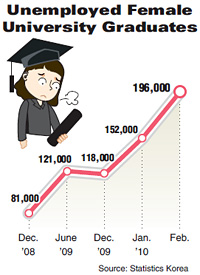
Not only has youth unemployment reached a 10-year high of 10% and is still rising, but the number of jobless female graduates has hit a record high, and the JoongAng Ilbo has a report on the structural and discriminatory practices responsible. Not that it gladdens me to be proved right, but this was somewhat predictable considering the fact that women were overwhelmingly targeted for recession in the financial crisis, as I reported in my very first Korean Gender Reader post in January 2009 (source right: Korea Times).

12) Breaking the myth of Korean homogeneity

While not a gender issue at first glace, actually it’s difficult to think of a gender issue, or rather sexuality issue, in which Korea’s “bloodlines”-based nationalism and its preservation doesn’t play a role, and for more on which I highly recommend Ethnic Nationalism in Korea: Genealogy, Politics, And Legacy (2006) by Gi-Wook Shin. Here, Halfie Trots the Globe translates and discusses the article Indian Ayodhia’s twin-fish motif as evidence of its marriage-based relationship with Gaya by Kim Byeongmo, a professor of Anthropology and Archaeology at Hanyang University, and which demonstrates India and Korea’s historical relationship and evidence of some intermarriage 2000 years ago.

13) Northeast Asia

– Taiwan launches million dollar baby-making slogan search

Alas, while Taiwan has much the same problems as Korea with its low birthrate, it isn’t that desperate, and the prize is for 1 million Taiwanese dollars, or US$30,000. My apologies, but I don’t know if English slogans are acceptable…

– Domestic violence cases souring in Japan

But this may actually be positive, reflecting greater awareness and reporting:

The number of domestic violence cases police recognized in 2009 soared 11.7% from the previous year to 28,158, the highest since an annual survey began in 2002, the National Police Agency said Thursday. An NPA official ascribed the rise to increased reports to police and consultations with them by citizens amid growing awareness of domestic violence in Japan.

See here for links a brief video offering some background, from April 2009. And actually, despite appearances, much the same revolution is occurring in Korea, primarily because of women’s greater willingness to report and prosecute abusers and a sea-change in the police’s attitudes towards it (see here for a long post providing some background also).

– Ex-Prada employee sues Japanese division for discrimination

To be precise, she was fired for refusing to fire staff because they were “ugly”. From New York Magazine:

An ex-retail manager for Prada’s Japanese division, Rina Bovrisse, has followed through on her pledge to file a discrimination lawsuit against the company. Bovrisse claims she was asked to fire store managers and retail staff members whom Prada Japan’s CEO found visually unappealing. After filing a complaint about this with the Tokyo District Court in December, she was fired from the company

– Tokyo municipal government plans to outlaw child-porn manga

According to The Economist:

The Tokyo municipal government plans to vote on March 30th to amend an ordinance against child pornography to include “non-existent minors”. Much Japanese porn comes in forms that escape rules covering photos and videos: manga; anime (cartoons); and video-games. Existing bans are meant to protect the child victims. “Virtual” porn—where there is no harm to a real person—is illegal in some countries to protect public morals and ensure a safe environment for children. Last month an American court sentenced a man to six months in prison for possession of Japanese manga child pornography.

With qualifications for the age of viewers and the context in which it is received, then personally I’m completely against the banning of simple drawings, no matter how morally objectionable the content. But regardless, see here for more on a (belated) crackdown on the photos and DVDs in 2008, and which of course I was completely in support of.

If you reside in South Korea, you can donate via wire transfer: Turnbull James Edward (Kookmin Bank/국민은행, 563401-01-214324)

Korean Gender Reader

Abracadabra Brown Eyed Girls(Source: Ningin)

1) If You’ve Got it, Flaunt it? The Potential Mainstreaming of Assertive Female Sexuality in Korea

As the live performance below demonstrates, even sans the sex scene of the music video, the dance routine for the Brown Eyed Girls’ (브라운아이드걸스) Abracadabra (아브라카다브라) remains compelling viewing. Spoken from the perspective of a heterosexual male of course, but also in the sense that it presents a rare, more assertive side of women’s sexuality to the faux coy, innocent, and inexperienced one that is the standard for the Korean media:

But given that, the original furor it generated, and the fact that many much tamer songs have been censored and/or banned from being broadcast on public television and radio recently, then last month I and VixenVarla at Seoulbeats and I naturally expected the same for what is easily the most sexually explicit Korean music video I’ve ever seen. Instead, and in some rare positive news, quite the opposite has occurred: the Brown Eyed Girls have become very much the darlings of the Korean media (see here, here, here, here, and here for just a handful of their recent television appearances), with their dance routine very much mainstreamed in the process. For which I present as Exhibit A the fact that it is starting to be parodied:

Do such parodies dilute the much-needed message that Korean entertainers – and, by extension, Korean women – can flaunt rather than hide their sexuality? To the extent that there was a deliberate “message” in the first place of course, as the music company involved has proved all too ready to make tamer versions of the video for the sake of quick sales. The question is pertinent in the context of Western dance moves and gestures frequently being parroted by Korean performers without being aware of their sexual connotations, of which Extra Korea! recently gave some examples, although the first he gives may be erroneous, as G-Dragon {G-드래곤} has quite a reputation for gender-bending. But the pelvic thrusts at 2:45 in the next one do indeed seem rather forced and awkward:

For more on the disassociation between sexuality and sexual iconography in Korea, see #7 here, to which I would add this observation by Misuda (미녀들의 수다 ) member Vera Hohleiter (more on her in a moment) on the irony of Korean women wearing mini-skirts, only to cover themselves up constantly while doing so, and also the fact that in Korea any blatantly sexual dance move, gesture and/or piece of clothing is instantly rendered cute and innocent in the public imagination merely by being on a teenage girl, as to view it otherwise would be to acknowledge the uncomfortable reality of their sexuality.

********
I think the criticisms are a little harsh though: if you want to look for dancing that is genuinely “the vertical expression of a horizontal desire” in Korea, then you don’t have to look very hard. And context is very important, as even the most provocative of Western singers would be hard pressed to inject some sultriness into their performance under the harsh, almost antiseptic lights of a Korean talk-show studio, and moreover one in which the 3 year-old above may well have strutted her hips and thrust her non-existent breasts out at the audience 10 minutes earlier (not to condone that by any means, just to point out the myopic asexuality of such shows, which discourages questions of how problematic such performances really are). Finally, there’s the constant repetition and routine that would ultimately render ostensibly sexually provocative dance moves and so on somewhat artificial and forced for any performer. As such, it’s not like they can’t be learned: like I noted in an earlier post, there’s a good reason Singer Son Ga-in (손가인) of the Brown Eyed Girls spreads her legs and rides the stage floor like a porn star in the first video (at 2:06), despite claiming to be a virgin (update: apparently that was all only a rumor).

Son Ga-in2) Misuda: Half of it’s Fake

I haven’t actually seen the show myself, but I get the impression from those that have that the first season of Misuda did have its good points, and in particular sparked a lot of interest by Korean women in—and consequent dialogue with—foreign women living in Korea (easy to overlook if you’re a guy). Unfortunately Vera Hohleiterits more fluent, intelligent and interesting members were replaced in favor of mere photogenic ones and more tabloidish discussion topics in Season 2 though, and in was in this vein that was widely regarded as foreign male-bashing on the show occurred in Season 3 last month, which naturally provoked a vehement response in the Korean blogosphere: see #1 here for links, to which I’d add this commentary at Diffism that I overlooked, which makes the crucial point that much of the vitriol, albeit by no means undeserved, stemmed from from an intentionally skewed Korean newspaper report on the episode.

Among the hundreds of comments on those sites, I’d imagine that some would have argued to the effect that much of what is said on the show was scripted and for the sake of playing to its vacuous audience, and it turns out that that is indeed the case, as revealed in a book by German panelist Vera Hohleiter on the right. Unfortunately though, Korean netizens, albeit hardly representative of Koreans’ opinions as a whole, are concentrating on the few negative comments about Korea in it. Even though, as commenter Martin at Brian in Jeollanam-do’s post on the subject puts it:

….I am German and have read Vera’s book a few weeks back. When I bought it, I thought it would be the usual crap that we normally get from books about Korea but it was a decent read and the picture she draws of Korea is VERY positive. The few negative aspects she points out do not stand out at all, though I’m not surprised that some random Korean netizen picks up on them and the Korea Time publishes a story based on that person’s opinion/interpretation. Unreal….

….Anyway, the whole story is unsubstantiated as the book really doesn’t say much negative about Korea or Koreans.

On a positive note though, for its flaws Misuda is belatedly producing a male version. And Javabeans notes that foreign men are already becoming more prominent in the Korean media in recent months, increasingly portrayed positively and in romantic relationships with Korean women (see this movie also).

Update: And even the negative comments about Korea in Vera’s book may have been deliberately mistranslated and/or taken out of context. For more information, see doggyji and orosee’s comments on this forum thread.

3) Does Korea Need Cheaper Childcare?

Very much so, according to the The Chosun Ilbo (hat tip to WangKon936):

Last year 465,892 babies were born in Korea, 27,297 less than in 2007. As a result, the national fertility rate, which is the average number of babies that a woman gives birth to during her reproductive years between age 15 and 49, has declined from 1.25 children per woman to 1.19. Kim Hee-sun Marie ClaireAfter shooting up in 2006 and 2007 because of the belief that those were auspicious birth years, the rate has fallen again. Moreover, 10,000 fewer babies were born during the first five months of this year compared to the same period a year ago. This has prompted dire projections that Korea’s birth rate could fall to 1.12 this year….

….In order to boost the birth rate we need to create a social environment favorable to child birth and raising. Child-rearing costs must be lowered, while women should not be the only ones responsible for raising children. Corporate practices must also change so that women with babies are not discriminated against. But it will take quite some time and effort as well as a change in public thinking to create such an environment. The most practical measure at present is to provide reliable low-cost, high-quality childcare facilities for parents. In a 2005 report on Korea’s low birth rate, the OECD said that increasing childcare facilities alone could boost the rate by 0.4….(Source above: Naver).

And as someone who’s written about Korea’s exceptionally low birth rate and childcare issues for quite some time (see here, here, and here for some lengthy posts), then my instinctive reaction was to agree, but I have to admit that this response to it had some merit:

That’s a load of crap.

If child care was any cheaper in Korea, it would be free. Most daycare centres and kindergartens receive government subsidies, and for that reason, fees normally hover at around 200 000 won per month. Moreover, the government offers additional subsidies to families whose total income is less than about 3.6 million won per month, granting up to a 50% reduction in fees (so, about 100 000 won per month) and even offers additional subsidies to families that have more than one preschooler enrolled.

Sure, there are many daycare centers and kindergartens that charge more (one of the most popular gimmicks used to double and even triple fees being lessons in English), but they are not the norm.

Let’s be more specific. At the moment my wife and I send our 3 year-old daughter to a kindergarten (유치원) from 9:20 am to 4:40 pm Monday to Friday, and that costs us 420,000 won a month (340,000 if we only sent her until 2), which we consider a small price to pay for the sake of our sanity! Her kindergarten is unusual in that it accepts 3 year-olds instead of the standard 4 years, and also as a kindergarten it provides more of a structured educational program than a daycare center (어린이집), but unfortunately that means that we receive no subsidies from the government. If we sent her to the latter though, on my single income of, well…embarrassingly not much more than a 21 year-old new English teacher would make, then we’d only have to pay something like 50-60% of that. As far as my wife knows, there is actually no threshold on the percentage of subsidies that can be received on even lower incomes.

The Cultural Desert of Childcare(Source: Unknown)

I grant then, that costs are not the issue per se, at least to those on a double income and/or with much higher ones than mine. Recall that Korea has the lowest rate of working women in the OECD though, and that Korea has among the longest hours in the world spent at the workplace (note: not working, which is why Korea’s productivity per hour is only average), and I’d be surprised if there is childcare of any sort available at the late hours required. Or indeed if there ever will be, regardless of how many new facilities are created (albeit still urgently required), and so it behooves me to yet again point out that this aspect of Korea’s workplace culture, presenting a stark choice between motherhood and a career, arguably remains Korean society’s biggest stumbling block to raising its birth rate. In the meantime though, as the 2004 Social Policy and Administration article “A Confucian War over Childcare? Practice and Policy in Childcare and Their Implications for Understanding the Korean Gender Regime” makes clear, just actually enforcing the childcare and maternity legislation already in place would be an important first step:

We ask about the development of childcare policies in Korea and what these mean for our understanding of the gender assumptions of Korean governments. Women’s labour market participation has been increasing rapidly, with married women now much more likely to be in the labour market. The provision and regulation around support for women’s employment, and especially for mothers’ employment, is a key issue and problem for Korean women and for governments. A number of policies give the impression that the Korean government is moving rapidly towards a policy for reconciling work and family based on a dual-earner model of the family. But we argue that a close inspection of these policies suggests that the state is still playing a residual role, legislation is not effectively implemented, and government is giving way to the private sector and to the family in responsibility for childcare. Mothers’ accounts of their lives centre on a childcare war played out beneath the apparently harmonious Confucian surface, with resisting husbands supported by powerful mothers-in-law, and daily struggles over the management of services. The Korean government and its policy-makers, far from moving rapidly towards a dual-earner model of the family, are still rooted in Confucian ideals.

Unfortunately that is just the freely available abstract, as I’ve long since lost my electronic copy of the article (update: thanks to reader John Bush for passing this copy on). But I discuss it in detail here, and provide examples of the regular scandals of poor or even rotten food being provided to school students, and the fact that at the time of publication at least civil servants only had the resources to inspect facilities once a year, if at all, with the net result that finding a reliable facility among the insufficient number available plays no small part to play in Koreans’ decision to (not) have children. Things may well have changed in the 5 years since that article was written of course, but given that the Lee Myung-bak administration originally planned to abolish the then Ministry of Gender, Equality and Family (see here and here), only to retain it as the Ministry of Gender Equality (여성부) at the last moment, handing its family-related responsibilities to what became the Ministry for Health, Welfare and Family Affairs (보건복지가족부), then I highly doubt that there has been the political will to make the necessary changes.

Update: See this Korea Times article on for more recent information on Korea’s declining number of newborns.

Heroine(Source: Unknown)

On that note, apologies for the relative lack of subjects this week, less than I intended, but it’s been extremely difficult to write with both the heat and the 2 Energizer Bunnies masquerading as my daughters. And to be frank, the data-collecting for the Korean Gender Reader posts meant that writing them was becoming more of a tedious chore than something to look forward to – never good for the longevity of a blog and/or readers’ enjoyment of it – so from now on I’ll be sticking to the original format, which lets me both look at things in depth and have my own voice. I hope you enjoy the change!

Korean Gender Reader

Wedding Campaign 2005

( Poster for Wedding Campaign [나의 결혼 원정기 ], a 2005 movie about finding brides in Uzbekistan; Source )

Back to normalcy after the conference.

Demographics

1) “Seoul Increases Support for Muliticultural Families”

Or to be more precise, the Seoul Metropolitan Government is paying Korean men marrying foreigners 1 million won to attend a 20 hour course on multicultural marriages. But it is not available to Korean women.

Obviously this is discriminatory, but as some commenters at The Marmot’s Hole pointed out, not only are (2) Nine in Ten foreign spouses women, mostly Southeast Asian (see Korea Beat also), but it is even at the behest of the Women and Family Affairs department, and is based on preexisting programs run in other parts of Korea by the Ministry of Gender Equality (여성부) in cooperation with local governments. In addition, a crucial difference with this program is that it is targeted at husbands-to-be, with the aim of preventing problems before they occur.

3) Probably not by coincidence, last week all foreign spouses in Korea would have been visited by an official from the Ministry for Health, Welfare and Family Affairs (보건복지가족부), with an individual survey in their own native languages to be completed, although clearly orientated towards Southeast-Asian wives judging by the questions. Here are scans of the covers of information sheet, a Korean sample version, and my own English survey I made while waiting for them to be collected:

A National Survey on Multicultural Families 2009 Korea

Meanwhile, see here for German blogger Madang’s take on his own survey.

4) Divorcees Face Asset Seizure for Neglect of Rearing Children

According to the Korea Times:

A new civil law went into effect Sunday, empowering a court to seize the assets or salary of a spouse failing to share expenses for the raising of their children after divorce.

Under the law, it will be legally binding for divorcees to shoulder the expenses of bringing up children. In the past, there were no legal grounds to enforce payments if a spouse did not keep his or her promise to help pay for the costs.

Good news of course, but on the other hand it’s telling that I’m no longer shocked that no law existed previously.

Sexy Korean Dance5) Seoul is Aging Fast

6) Young Women Suicides Double in Four Years

Mostly attributed to recent economic difficulties.

Sexuality

7) The image on the right is from a popular recent advertisement for a promotion for Nate.com, a Korean portal site, showing how one can learn how to dance seductively (유혹댄스) simply by searching on the internet. I think that that’s debatable myself,  and it begs a lot of commentary on Korean attitudes to sexuality and dance, but Brian in Jeollanam-do has largely already provided that for us. But it’s still amusing, and you may recognize it as part of the series that prompted this post (source).

Update: Perhaps it does work. Singer Son Ga-in (손가인) of the Brown Eyed Girls (브라운아이드걸스), the main character in the music video for Abracadabra (아브라카다브라; see #9 below), claims to be a virgin and to have learned her provocative dance moves simply from watching adult films!

Vodpod videos no longer available.

I think it might have been more effective if it had finished with the women in the pink dress successfully seducing the object of her affections (at some point in the future) though, not him grinding with the better dancer that she resorted to desperate measures to distract him from in the first place!

8) After reading yet another excellent meta-post at Ampontan, this time about why Japan is consistently misrepresented in the foreign media, then I’m inclined to take this article at abc News on “the new trend of Konkatsu, or Marriage Hunting” with a grain of salt, especially over whether it is quite as big a “departure” for Japanese singles as claimed. Is it really only in 2009 that Japanese singles actively sought marriage partners?

9) Yet Another Band Uses Faux-Lesbian Pictures to Market Itself

Like PopSeoul!, I think that this means of getting attention is now probably counter-productive to the groups involved, and has finally run its course. But new readers, please note that I definitely don’t include the Brown Eyed Girls (브라운아이드걸스) in that category for their recent song Abracadabra (아브라카다브라): while it was easily the most erotic Korean music video I’ve ever seen, it was also very creative and refreshing, and more importantly provided a much needed kick against the limits on how women’s sexuality could be presented in the Korean media (see #2 here for a fuller discussion of that).

Ivy 아이비

10) Singer Ivy Finally Ready for her Comeback

I’ve mentioned the false sex-tape scandal that derailed Ivy’s (아이비) career on numerous occasions, so rather then link to all of those here see Dramabeans for a succinct summary of both that and how she’s managed to overcome it recently (source).

11) Students in Conflict Over Stolen Underwear

A slow news day at the Korea Times?

Seriously though, if there has indeed been a spate of thefts as reported, it’s good that a female student finally complained about it publicly, and which got results.

Won-binBody Image

12) Who is the Sexiest Korean Man Over 30?

Voting still open at AllKpop, with extensive galleries and bios available (source).

13) More Taipei Youth Undergoing Cosmetic Surgery This Summer

From the Taipei Times. While I’d be wary of the accuracy of the figures in either report, see #7 here for a July poll of Korean university students, with comparable percentages in both countries.

14) Living with Curly Hair

A Korean woman with naturally curly hair, who spent her childhood in the US, discusses how she was forced to get her hair straightened because of peer pressure when her family came to Korea, and more generally about pressures to conform. To place these into perspective, see here for some historical and religious factors specific to Korea that exacerbate those, especially for women.

15) Young Generation Confused Over What an “Average” Spouse is?

According to a Korea Times poll of 20 and 30-something that is, but I seriously doubt that “91.7 percent of males and 83.7 percent of females want Mr. or Miss Average as their spouse” as the article claims. Is it really much of a surprise then, that both sexes’ ideal partners are much taller and richer than average brides and grooms in reality?

Media

16) Roboseyo rarely writes long posts, but when he does they are invariably worth the wait. See here and here for a much needed sense of perspective on recent racist depictions of foreign males in the Korean media.

17) Saharial at London Korean Links provides a great how-to guide to choosing which Korean drama to watch. And after reading that, make sure to check out the comments to this post for some recommendations made by my readers.

18 Also well worth the wait, Korea Pop Wars has an in-depth post on the slave-like contracts of most Korean stars.

Han Ji-Hye Nude Naked19) Not that she’s the only Korean female celebrity doing so by any means, but literally every time I have seen Han Ji-Hye (한지혜) on television, she has been wearing fewer and fewer clothes (see here and here), and I wouldn’t be surprised if this wasn’t the deliberate policy of her management company.

See Paranzui for her latest commercial.

20) As expected (see #1 here), having made her mark by getting banned from TV because of the sexual innuendo and heavy breathing in the first version of her her song “Oppa, Can I do it?” (오빠! 나 해도 돼?), rookie rapper E.via (이비아) is to release an edited, tamer version of her entire album.

나의 결혼 원정기

Share

Korean Gender Reader

Lee Byung-hun Sienna Miller

( Source. See here for the details )

1) A much needed American woman’s guide to dating Korean men.

2) Transgender model Choi Han-bit (최한빛) reached the final round of competition in the 2009 Asia-Pacific Supermodel Contest in Seoul, which will be held on September 25. See AllKpop for more pictures and videos, and FeetManSeoul translates an article that questions if contest organizers are simply making a poor attempt at imitating the sensation caused by Isis King from America’s Next Top Model.

Meanwhile, Lee Na-young (이나영) will take on a transgender character in her next film role, called Dad Likes Women (아빠는 여자를 좋아해).

3) Sexual harassment on the Seoul subway (such as groping and taking upskirt photos) has risen 26% since last year.

4) According to the latest statistics, 3 out of 4 naturalized Korean are female (hat tip to KimcheeGI). And in other migrant-related news, one Filipino bride was assaulted by her husband and thrown out of their home for becoming pregnant (by him), and also a large number of mixed-race children are withdrawing from school once they reach middle or high-school age.

On a positive note, SBS is investigating both issues (via Diffism).

Finally, looking at the supply-side, Robert Neff discusses Koreans’ role in human-trafficking in Mongolia.

5) Recently, a civil organization called Citizen’s Movement for No Prostitution published an “escort businesses map” of Gangnam, a wealthy part of Seoul; see here for an account of a visit to one.

Chris in South Korea has an inventive solution for what to do with the business cards that such businesses litter the streets with every morning.

6) Mnet, a Korean music channel, is to launch a program for 20-something women called Men Who Come From the Sky Like Rain (하늘에서 남자들이 비처럼 내려와) in which the hosts will find out from the requester the criteria that they are seeking for their ideal man, and then head to the streets themselves to find him. Somehow I doubt that it will “try to solve problems or issues that women in their twenties face” as claimed though.

Lee Hyori Kiss Wilber Pan7) Lee Hyori gave her first on-screen kiss, to American-born Taiwanese pop star Wilber Pan, with whom she is also rumored to be dating. Good for her, on both counts, but given that she is easily Korea’s number one sex symbol, and in a country where – to put it mildly – the media frowns on relationships between Korean women and foreign men, then the relative lack of media attention is quite bizarre really.

But not new: as Korea Beat noted of a 2004 article that waxed lyrical over the Hong Kong media’s fascination with her breasts for example:

…frankly I find it bizarre to see Korea — a nation noted for its dedication to the maintenance of pure bloodlines — going ga-ga over a pretty crude overseas reaction to one of its biggest stars.

Any thoughts on what accounts for the contradiction?

8) Naked News Korea suspends operations after just one month of operation.

9) As Robert Koehler aptly puts it, “Adamu unleashes some fact-checking fury on Lisa Katayama for her piece in NYT Magazine on Japan’s “thriving subculture” of men who prefer 2D women to the real thing.”

10) Unusually for a primetime show, MBC’s new horror drama series Hon (혼, or Soul) is to be given a 19+ rating.

11) A great guide to “Korean attitudes towards being fat, skinny, and everything between” from KoreanClass101.

12) Presumably because of the slave-like contracts which Korean celebrities often have with their management companies, actor and model Yoon Eun-hye (윤은혜) is forming her own managment company.

13) In a warning to never underestimate the power of teenage girls, fans of boy band TVXQ block the street outside the group’s management company, with whom they are having a legal dispute.

14) Both paralleling and the result of women’s reactions to similar groundbreaking movies in the 1990s, the movie My Wife Got Married (아내가 결혼했다; below), about a woman who has two husbands much like a married man might have a mistress, proved to be surprisingly popular among women…especially among those whose husbands have had affairs!

my-wife-got-married-bed-scene

( Source: Unknown )

15) Andrei Lankov writes a potted history of sexuality in North Korea.

16) Two dermatologists in Seoul have been accused of causing facial injuries to 10 women by applying a skin-peeling treatment which they had developed themselves. Not only did were patients not informed of its origins, but it was also non-tested. No mention of the KDFA is mentioned in the article, which implies that mere, biased, in-house testing would have been acceptable?

17) A commentary on the teenage runaways and the recent news that 2 in 3 Korean men feel the urge to flee home as a result of the stress of keeping their jobs during the recession.

18) Baek Young-ok, “a renowned chick lit author, delves into the dark side of diets and women’s fanatical obsession with the slim bodies” with her new novel Queen of Diet.

19) With apologies for the poor quality of the scan, this illustration on the packaging for a food container I bought this evening must be the singularly most unappealing use of Photoshop I’ve ever seen:

Tak 탁 Photoshop

See here for a famous recent example involving a Korean celebrity.

Share

Korean Gender Reader

Photoshop Shoo

One of these pictures from Shoo’s (슈) recent photoshoot is not quite like the others: take a closer look, and if nothing sticks out then see these classics of the genre for hints, or #6 for the solution.

1) In that vein, for me last week really stood out for the number of excellent points raised about the subjects of women’s body images, censorship, and Korean sexuality by Korean bloggers. But first, I should of course mention that a South-African woman was raped in her home in Ulsan by a neighbor earlier in the month, and early indications were that the police were at best lukewarm in handling her case, which naturally provoked lively discussions in the Korean blogosphere about rape in Korea, women’s and foreigner’s safety, and the Korean police ‘s attitudes to both. Lest I appear indifferent by not discussing those subjects in more detail myself though, lengthy but often informative comments threads on these already exist at Korea Beat and The Marmot’s Hole if you’re interested. Moreover, it appears from this Facebook thread devoted to the issue that claims of police indifference were complete fabrications by The Chosun Ilbo, as were quotes from the victim, who hadn’t actually spoken to any news outlets.

2) First up then, in a post I’m embarrassed not to have written myself, VixenVarla of Seoulbeats asks if Korean society is really ready for “women” idols, and thinks not: noting the netizen furor over the above Abracadabra (아브라카다브라) music video by the Brown Eyed Girls (브라운아이드걸스), which features a sex scene (and rather more than the mere lesbian kissing scene I reported last week sorry), she argues that while provocative, both that and Chae-yeon’s (채연) new music video Shake (흔들려) were at least alternative representations of Korean women to the coy, innocent, and sexually inexperienced ones normally presented. But while teenage groups’ blatantly sexual dance moves are usually instantly praised as being “hip”, “sexy”, and “cool,” Abracadabra will probably have to be heavily edited for television (despite protestations that it won’t be), as indeed much tamer Shake was recently (see #1 here).  She concludes:

….when Korean “women” choose to project a more sexualized side of themselves they are looked down upon by censors and neitizens. Is Korea so afraid to show adult women in control of their own sexuality that they would prefer to cast scantily clad little girls in heavy makeup, to play “grown up” in their place?

See here for the full post. But please note that by reiterating it’s main points I (and I’m sure VixenVarla would concur) am not attacking expressions of teenage sexuality per se: rather, I’m just saying that they don’t deserve the kid gloves with which they are treated with by the Korean media (see here for my most recent post on this issue). Possibly Abracadabra was a bad choice with which to make that particular point though, as it’s easily the most sexually-explicit mainstream Korean music video I’ve seen in the whole 9 years I’ve lived here:

Abracadabra Brown Eyed Girls( Source )
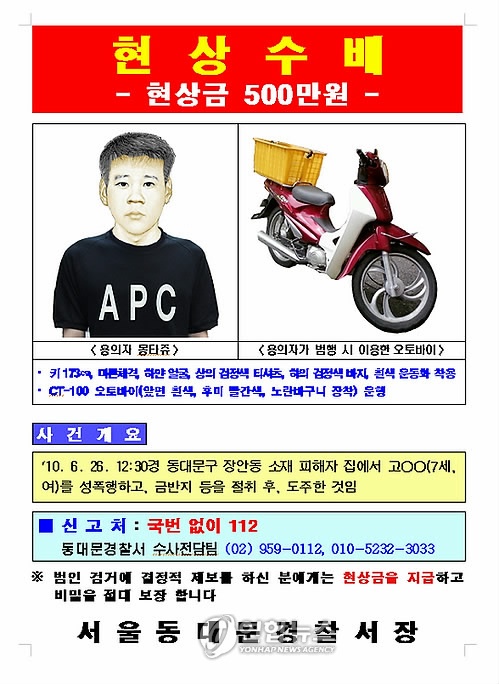
Of course, 9 times out of 10 such a video would be used to disguise the poor quality of the music itself, but this song is actually good, and – I confess – I heard it on the radio and thought it was (forgive the temporary lapse in sophistication) cool well before I saw the video above. Meanwhile, here is a live performance if you’re curious as to how all that translates to the stage (see PopSeoul! for the details):

3) In case you’re confused by the Korean media praising moves by, say, The Wondergirls (원더걸스) or Girls’ Generation (소녀시대) as “sexy” while criticizing, say, Chae-yeon’s dancing as too sexual though, Brian in Jeollanam-do has an excellent post on how Korean uses of the word have become almost entirely divorced from its English meaning.

4) In related news, while discussing a promotion in Seoul involving women dressed as Paris Hilton to celebrate the Korean airing of MTV reality show “Paris Hilton’s My New Best Friends Forever,” Brian also makes the point that:

…while Korean celebrities are held to pretty high moral standards, you have a woman like Paris Hilton regularly on TV and endorsing Fila Korea.

Like he thought, he’s not the first or the last person to mention that (see #18 here), and after reading this post on her by Michael Hurt at Scribblings of the Metropolitician I would also no longer, well, slag off Paris Hilton as readily as most people are inclined to either.  But still, the point stands regardless of the celebrity involved, and is worth remembering.

5) Also making big news were some Southeast-Asian men being arrested for taking pictures of women at Haeundae Beach in Busan, whereas – as numerous bloggers have pointed out, Korean newspaper photographers regularly (and excessively) do so, and particularly of Caucasian women also. See Brian’s post (yes, again – a productive week for him it seems!) and Korean Media Watch for more.

Choi Ji-woo Vidi Vici6) No, that’s not an alien on the right, but Choi Ji-woo (최지우) promoting cosmetics brand Vidi Vici. Speaking of which, if you haven’t figured out what was wrong with the opening image of Shoo, see AllKpop here for the solution.

7) Also on the photography front, many Korean newspapers (and particularly the ones that denounce Western men as sexual predators and deviants: see #1 here) are increasingly posting “upskirt” pictures of celebrities and members of the public on their websites. Apologies for not providing links (even I have my limits), but I mention this because PopSeoul! has raised the point of PR managers and so on increasingly providing only high stools for stars to sit on at press conferences, which there can only be one reason for given that it is now de rigueur for female stars to wear something short and skimpy to them.

8) Spare a thought for North Korean women: among numerous other frustrations of daily life there, they also have to contend with being forced by government to wear skirts at some times of the year, and traditional clothing at others.

9) A while ago I mentioned a post at Sociological Images about the Tokyo City Government’s appointment of three young women as “cute ambassadors” for the city, the better to promote Japanese kawaii (cute) culture and project Japan’s “soft power” abroad. Now Ampontan – my personal choice for the best blog on Japanese society, politics, and culture – has a great meta post on what issues the policy raises, noting, for example:

I’d rather the Japanese had chosen other parts of their culture to present to the rest of the world—festivals, for example—but might there be a bigger picture that we’re missing?

Plug the word kawaii in English into Google and you’ll get 7,590,000 hits. Do the same with cosplay and you’ll get 24,200,000. Yes, I was astonished too. When the words kawaii and cosplay are so commonly known and accepted around the world, I think it’s safe to say we’re dealing with a phenomenon that transcends Japan.

Read the rest here, and you may also be interested in the Korean government’s recent efforts to promote itself overseas, albeit sans Hello Kitty and Gothic Lolita costumes.

10) I’m still generally against cosmetic surgery, but largely through reader’s comments I’m much more sympathetic of it and understanding of people’s reasons for having operations (especially in an appearance-obsessed society as Korea) than I was before I started the blog. In that vein, see AllKpop here for winner of the title of “prettiest celebrity after female surgery,” with the important point that contestants were only those that openly admitted their surgery.

Meanwhile, the Korea Times reports that young Korean men are apparently becoming keener on having cosmetic surgery (see #7 here also).

11) Given the amount of photoshopping that was necessary for him to do so, I possibly was a little harsh in my opinion on Park Ji-sung’s (박지성) appearance in this post on his modelling for Gillette Korea. But I have to say, he looks quite dapper in his latest photoshoot for Gentlemen’s Quarterly (via KP Culture):

Park Ji-sung Gentlemen's Quarterly( Source )
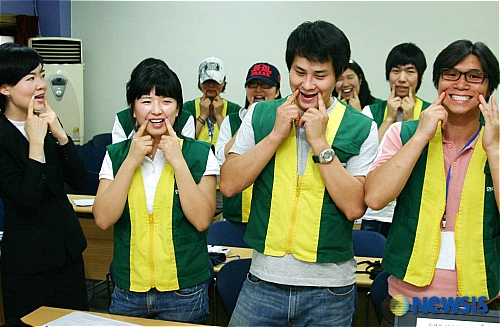
12) While apparently sexual relations with 13 year-olds are okay (see #3 here), Extra Korea! notes that from next year, solitciting teenagers for sex will be punishable, even if no sexual act takes place. Hey, at least it’s consistent with laws for adults…

13) Widely reported in the Korean media, Koreans as a whole are becoming more overweight. Considering that Korean women were among the lest obese women in the OECD (let alone the world) as recently as 2005 though, then the new data needs to be taken with a grain of salt (no pun intended).

Update: Extra Korea has some additional links on the latter.

Ironically, this news comes as North Korea opens its first fast-food restaurant.

Asian Man Redefined 2010 Calander14) With apologies for this being the largest picture I could find, Andrew Lim recommends you buy the (self-explanatory) “Asian Men Redefined 2010 Calendar,” the proceeds of which will go to charity. For the details, see Ningin here.

15) Singer Ivy (아이비) is trying to make a comeback after being forced to put her career on her hold by a sex-tape scandal…which didn’t actually exist. If the latter is news to you, then see DramaBeans for the background.

16) Somewhat predictable, but still sad, the economic recession is resulting in many fathers running away from their families in shame at not being able to get a job and/or support them, and also the number of 2-child families is decreasing as women’s wages decline. Hat tip to Alex for the latter, who makes the following perceptive points about the article:

I’m wondering if they’re insinuating the wage of female workers should decrease to save the national birthrate…

“Working mothers who prefer to offer quality education or living environment rather than having more children has also contributed to the declining number of second children.

The report said the increase in the women’s wages has negative impact the births of a second child but the increase in paychecks from husbands increases the chances of having more than one child. ”

That’s quite the justification for the disparity in salaries.

Meanwhile, see here for Tom Coyner’s article on the effects of the recession on young people, to which he adds in his email on it in his “Korean Economic Reader” mailing list that:

To be candid, one of the ulterior motives to write this column was to plug my firm’s “Rising Star Coaching” program that helps organizations lacking the budgets to go out and hire specialists while needing to recycle bright, younger employees to assume new roles as their employers adjust to new challenges.

Should the reader know of anyone who lacks internal mentors for developing a specific skill set in a younger manager or employee, please let me know.  We can provide senior Korean executives who have been trained in coaching skills to mentor junior employees on a short-term contractual basis.

And in some rare positive news, Korea Beat reports that women are advancing in the government and legal professions.

17) Finally, in news that I should have placed much earlier in the post sorry, Brian notes that a pregnant 18-year old Cambodian woman was given a 4-year sentence for killing her abusive husband, and also that 2 sisters-in-law and a stepdaughter of a Vietnamese immigrant wife were fined for beating her after she allegedly failed to tend to her mother-in-law’s needs. That second link is just factual really, but in the first has many interesting points about Southeast immigration to Korean and the international marriage trade.

Share

Korean Gender Reader

Ha Ji-won Jinro Chamisul

Granted, that soju posters have been becoming increasingly risqué in recent years is by no means news (see #1 here), and it’s also true that advertisers tend to rely more on consumers’ baser instincts during recessions…but still, even I did a double take when I saw this latest one (source) with Ha Ji-won (하지원), and it makes one wonder what the summer of 2010 will bring if present trends continue.

Ironically however, it is actually rather tame compared to what Korean musicians have been doing recently to get themselves noticed, such as the Brown Eyed Girls (브라운아이드걸스) having a lesbian kissing scene in their latest music video, or former “race-queen” Jung Eun-joo (정은주) producing a music video that is literally soft porn, her management agency (not unreasonably) arguing that she wouldn’t get noticed otherwise. And yet while the latter in particular is complete trash that will never make it to Korean screens, and like Chae-yeon’s (채연) new music video Shake (흔들려) for “suggestive dancing” (see #1 here) and  TVXQ’s songs for their “lewd content” (see #2 here), the Brown Eyed Girl’s effort may similarly also end up being banned from television, those represent just a handful of cases that have cropped up just this year, as cultural producers really do seem to be testing the limits these days. Hence, although Korea’s various state bodies involved with censorship certainly do have corporatist interests in exerting their authority, they may well have their hands full at the moment, and I wonder if as a result we might be about to witness a tectonic shift in the liberalization of the Korean media similar to what happened in 2004, when the following commercial for Hong Kong clothing company Giordano with Jun ji-Hyun (전지현) and Jung Woo-sung (정우성) was banned:

But which resulted in so many clones shortly thereafter that censors seemed to give up on them. Here’s an example from the following year for 17차 for instance, again with Jun Ji-hyun:

Vodpod videos no longer available.

True, the former is very sexual, whereas the latter merely glorifies objectifies the female body…a distinction that I’m only just realizing as I type this, and one that I suspect I really haven’t given enough thought to previously: it deserves further exploring. Regardless, lest you think that I’m exaggerating about the potential for a shift, recall that it also occurs in a context where the Lee Myung-bak’s increasingly authoritarian policies towards the media are creating a backlash, and standards for movies have been liberalizing without pause for breath (see #1 here, #8 here, and #7 here for starters).

In other news:

1) Bending over backwards to satisfy his readers, Ask the Expat provides a very comprehensive and clearly well-researched guide to cruising for gay sex in Korean bathhouses.

2) Approaching things from a different angle, Korea Beat translated a lengthy article from The Chosun Weekly about Lesbian clubs in Hongdae, a major night-life area of Seoul.

The Price Of Sin3) Lee Myung-bak pledged Thursday to increase state subsidies for working mothers and provide more nurseries and daycare centers in an effort to boost the country’s birthrate, but given that (among numerous other things) married women have been overwhelmingly targeted for layoffs in the current recession, then I suspect that this will have minimal effect (see numerous past Korean Gender Readers for more information, but best are #1 here, #2 here, and #2 here, and here is the most recent newspaper article on the subject). It also doesn’t help that, with dwindling numbers of newborns, women’s hospitals are blatantly refusing to deliver babies in favor or easier and more profitable skin care and cosmetic surgeries either.

4) Again, Korea’s adultery laws continue to be baffle: apparently one can have sex with others if one is in the process of a divorce, but not if one’s husband or wife puts “proceedings on hold.” As a commenter at Extra! Korea reasonably points out, in this latest case did the husband even know his wife had done so? Indeed, what if the estranged spouse is in the act while being informed? Hopefully, upon hearing that the recipient is otherwise occupied, then the FedEx guy would have the decency to wait for a few minutes before knocking on the door and handing over the legal documents…

No seriously, it’s hypotheticals like this that demonstrate the law’s absurdity, let alone the arbitrariness with which it is by definition applied in a country with one of the world’s largest prostitution industries.

5) The issue is a little old (see here for an earlier discussion), but still, Kim Heung-sook does a good job of summarizing what is problematic about the choice of Sin Saimdang on the new 50,000 won bill.

6) With parallels to affirmative-action politics in the US, some male students preparing to enter law school are preparing to file a petition with the Constitutional Court against Ehwa Womans University Law School for only admitting, well, women. I can see both sides’ arguments, but given that only 17% of the Korean legal judiciary are women, then personally I’m more in favor of retaining the restriction. It is after all, the only law school in the country that has it.

7) I’m usually very wary of articles about polls in Korean newspapers, but for what it’s worth this one of 921 university students revealed that 30% planned to get some form of cosmetic surgery this summer. Broken down by gender, the figures are 40% of women and 19% of men.

Choi Han-bit8) Choi Han-bit (최한빛) on the right (source) has passed the preliminary stage of the 2009 Supermodel Contest. Nothing remarkable about that you might say, except that she was actually born a man, undergoing a sex change in 2006. See here and here for more pictures of her, including when he appeared dressed as a woman on a television show in 2005. To their (rare) credit, the consensus of netizens is that she is no more artificial a woman than all the other contestants that have had cosmetic surgery operations.

9) Korea Beat has translated the Chosun Ilbo’s response to the avalanche of criticism to its week-long attack on foreign teachers, which naturally created some lively discussion (165 comments and counting); don’t miss Korean Media Watch’s take on it also, and for those few of you that all this is news to, see #1 here for many links to get you started.

10) In a strange article that may well have been written – ipso facto – with the intention of actually creating the trend it is ostensibly merely describing, the Chosun Ilbo reports that 30-something salarymen are now avid shoppers and consumers at department stores. I’m not sure I give much credence to an article that prints the opinions of someone who attributes this to the fact that “men in their 30s are for the first time able to go shopping without the help of a woman” though, even if it did come from a professor at SNU.

11) Completing the transitions between the sexes as it were via the images in this post, let me finish here by passing on two photoshoots of Korean men that both made waves last week. First, these pictures of SHINee (샤이니, pronounced “shiny”) from Vogue Girl (source):

Shinee

(Update: Here’s an interview where SHINee explain the concept behind the photoshoot)

And then these of Hyun Bin (현빈), from Cosmopolitan (source):

Hyun Bin Cosmopolitan

While it’s not for me to judge women’s tastes, I am sorely tempted to mention that, lacking pictures of actual transexual men with which to complete the set of woman-transexual woman-transexual man-man, then SHINee certainly provide a pretty decent alternative…!

Share