Ajosshis & Girls’ Generation: The Panic Interface of Korean Sexuality

Girls' Generation's Ajosshi Fans…Gender matters in the ways that it shapes social interaction. Identities, of course, are products of and sustained through interactions with others. Social interaction thus is an important setting in which gender emerges and is enacted. As Ridgeway (p. 219) observes: “It is striking that people are nearly incapable of interacting with one another when they cannot guess the other’s sex.” That the identification of someone as male or female facilitates social interaction testifies to this category’s power in social life. (Amy Wharton, The Sociology of Gender {2005}, p.10)

And throw in my age, ethnicity, and language difficulties into the mix too, then you’d think that discussing gender issues and sexuality with Korean women would be quite a trying experience sometimes (source, above).

Ironically though, I usually find them to be better informed and more willing to talk about them than men.

One reason might be because women the world over tend to be better language learners, and as my Korean speaking ability is much worse than my reading ability, then my conversations with Koreans on abstract subjects are confined to those with relatively good English.

But that doesn’t explain the relative disinterest of Korean men at the same level,¹ and so more much likely is that whatever their degree of interest originally, sooner or later all women are invariably forced to deal with at least the consequences of Korea’s systematic sexual discrimination, perhaps the first time being when they’re deliberately shunted into non-advancing career tracks as they enter the workforce, under the assumption that they’ll no longer work (or be fired) upon marriage or childbirth.

In contrast, such things usually impact men at a much later stage in their life cycles, if at all. Perhaps when trying to decide with his wife if they can afford to have a second child for instance, and/or if it’s worth her returning to work when she will likely only bring home 41% of the wages he does, the highest gender wage gap in the OECD. Indeed, if my wife — a 31 year-old mother of two — wasn’t lucky enough to be able to work from home as a recruiter, then we’re not entirely sure what she could do, and even that is hardly an advancing career.

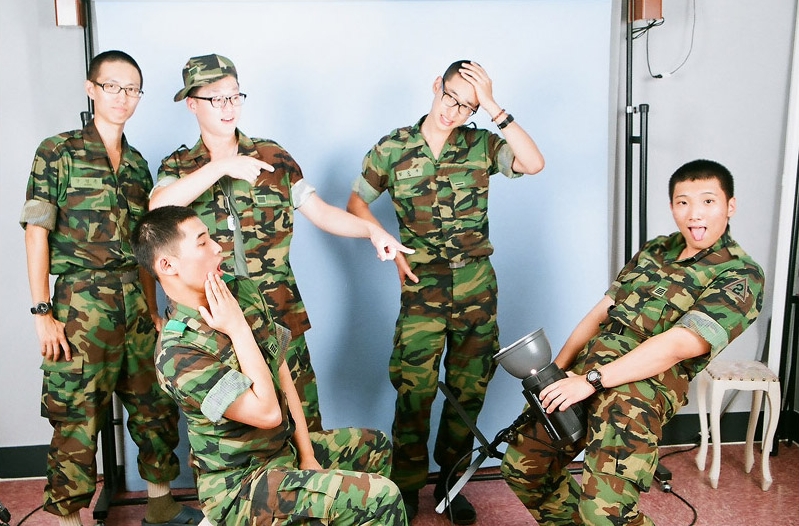
That is not to say that Koreans are only ever interested in issues that directly concern them of course, or that there aren’t parallels in other countries. But there are still yet more factors working against Korean men being interested in gender issues. Most notably the profoundly patriarchal ideology of Neo-Confucianism that is all-pervasive here,² buttressed by the the socialization experience undergone during their mandatory military service.

(Source: unknown)

Admittedly these are generalizations, and to an extent they become self-fulfilling: as I’ve gotten older, I find it more and more difficult to find the effort to befriend Korean men, so different do I expect our work-family priorities and opinions on gender issues to be. This inhibits me from raising such issues in free-talking sessions with advanced students also, although in that case it’s more because I respect that their purpose in attending my classes is not for me to lecture to or argue with them.

But surely there must be some feminist Korean men out there? If you are one, or know of one, then by all means let me know! But unfortunately the differences are real, and a good illustration of the difficulties in finding common ground on gender and sexuality issues are our opinions on — you guessed it — teenage girl groups like Girls’ Generation (소녀시대) and the Wondergirls (원더걸스).

Why the focus on them specifically? It’s a reasonable question, as they’re not the first young girls groups in Korea. What distinguishes them though, is that they are the first groups explicitly created to appeal to men 20 years their senior, and as such they are very much at the forefront of the increasing sexualization of young girls in the Korean media in recent years, setting the tone for the wave of 15, 16 and 17 year-olds following them.

Where I and most 30 and 40-something Korean men — ajosshis — differ on them is that I don’t buy into the collective narrative that we all like these girl groups because we have a brotherly, paternal, or avuncular affection for their members. Instead, while I can’t imagine having any kind of sexual or romantic relationship with them in reality, I’d be lying if I said I didn’t want to bang them whenever I see them on stage…and so would those ajosshis. Try to get one to admit that though, even one you know well and in a bar just with other men like themselves, and you’ll soon realize that not for nothing do I use the term “panic” in the title of this post.

(Source)

I also use “interface,” because acknowledging things like why 15 year-old f(x) band member Sulli’s (최설리) shorts are so high above, for instance, or why she is pulling her dress up in the other pictures in that photoshoot, are very literally where commercialized teenage sexuality and conservative Korean social mores meet. And I seriously doubt that pressing issues of teenage prostitution and abysmal sex education can even begin to be rectified while the collective Korean establishment — read: ajosshis — can’t admit to something so blatantly obvious.

But this is on old, tired theme for regular readers, and not what this post is about. Rather, I’m belatedly concerned with the question of why it is the case.

One possible reason is Occidentalism, for as blogger Michael Hurt argues, this platonic rationalization:

…parallels the notion in idea that in Korea, people are all good, clean Confucians who don’t do dirty things (but just save it for the love motels and leave that “skeleton bone” there – hehe, yes, I meant for a double entendre to be read there!), while Americans apparently hump everybody, according to everybody not American.

And recall that Occidentalism doesn’t actually need a physical Occidental in the room in order to be operating: indeed, it’s better that there isn’t, for greater distance gives greater leeway to imagine an “other” with which to advance a domestic agenda. And that proves to be the crucial point here, for as the following translation of a Korean music columnist’s thoughts reveals, all of this is by no means merely a face-saving device employed to obscure unsavory aspects of Korean society from inquisitive foreigners.

I warn you: the translation is rather long, a little melodramatic in places (less so in the original Korean, my wife assures me), and doesn’t actually offer an answer as to why. But still, I’m glad to have made a start by removing the “wild card” of the foreign observer from the equation:
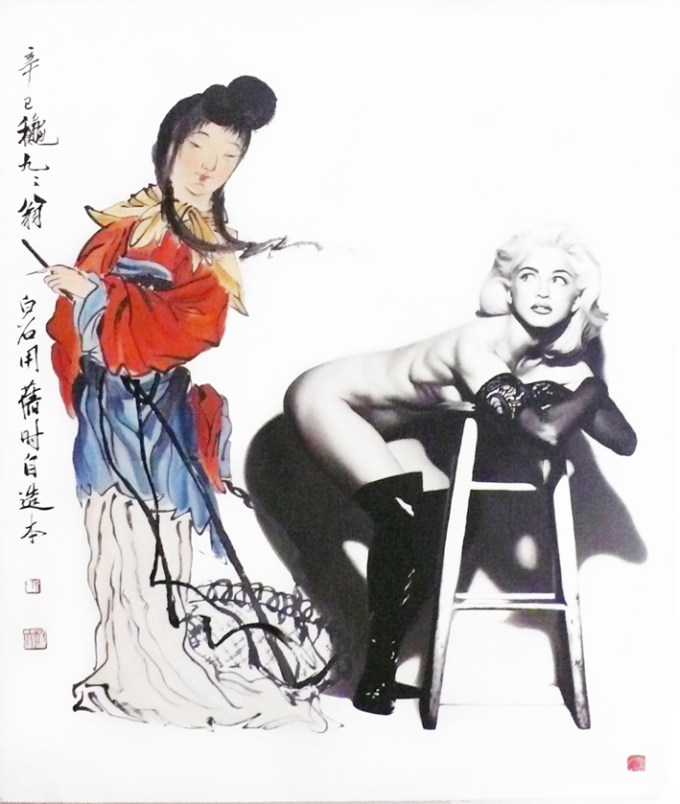
(Zhang Wei, 2006?)

“‘섹 시한소녀시대 좋아하는 죄 인가요?” (or 대한민국평균아저씨소길동 고백)

Is it a Sin to Like Girls’ Generation Because They’re Sexy? (or The Confession of an Average Korean Man)

Kim Bong-hyeon, 4th February 2010

이제 고등학교에 입학하는 조카가 있다. 조카는 ‘소녀시대’의 팬이다. 당연히 이번 달 단독 콘서트 예매도 이미 끝냈다. 조카는 특히 서현을 좋아한다. 한정판 소녀시대 카드 중에서 다른 멤버들 것은 줘도 서현의 것은 끝내 안 준다. 소신이 뚜렷한 녀석이다. 크게 될 놈이다.

내가 글쟁이인 것을 아는 조카는 며칠 전 이번 새 앨범 음악이 어떠냐고 물어왔다. 해줄 말 중에는 좋은 것도, 나쁜 것도 있었다. 어차피 나쁜 말하면 귀담아 듣지 않을 테니 대충 좋은 말만 하고 넘어갔다. 실은 내가 오히려 묻고 싶은 게 하나 있었다. 하지만 묻지 않았다. 이것이었다.

“네가 진짜로 소녀시대를 좋아하는 이유가 뭐야?”

At the moment, I have a nephew entering high school. He’s a fan of Girls’ Generation. Of course, he has already reserved a ticket for their concert this month. His favorite member is Seo-hyeon, and while he will happily exchange picture cards of other members with his classmates and friends, he won’t trade any of her. Clearly he is a man of his own ideas, and is destined for great things!

Knowing that I was a writer, my nephew asked what I thought of their new album. It has good and bad points, but guessing that he wouldn’t have listened to the latter, I just talked about the good things. But actually there was something I wanted to ask him (although I didn’t), which was:

What is the real reason that you like Girls’ Generation?

(Source)

이걸 묻고 싶었던 이유는 간단하다. 나 자신에게 물어봤는데, 나에게서 나온 대답이 정답인 것 같아서 다른 남자(!)에게도 확인해보고 싶었기 때문이다. 한마디로, 나는 소녀시대가 ‘섹시’해서 좋다. 물론 기본적으로 귀여운 매력이 크긴 한데 섹시한 매력도 나에게는 그 정도 크기는 된다.

이게 무슨 뚱딴지같은 소리냐고? 노파심에 말하자면 나는 변태도 아니고 과대망상증 환자도 아니다. 그리고 이제는 자신 있게 말할 수 있다. 소녀시대는 분명히 섹시하다. 정확히 말하자면, ‘섹시하지 않은 척 하면서 섹시’하다.

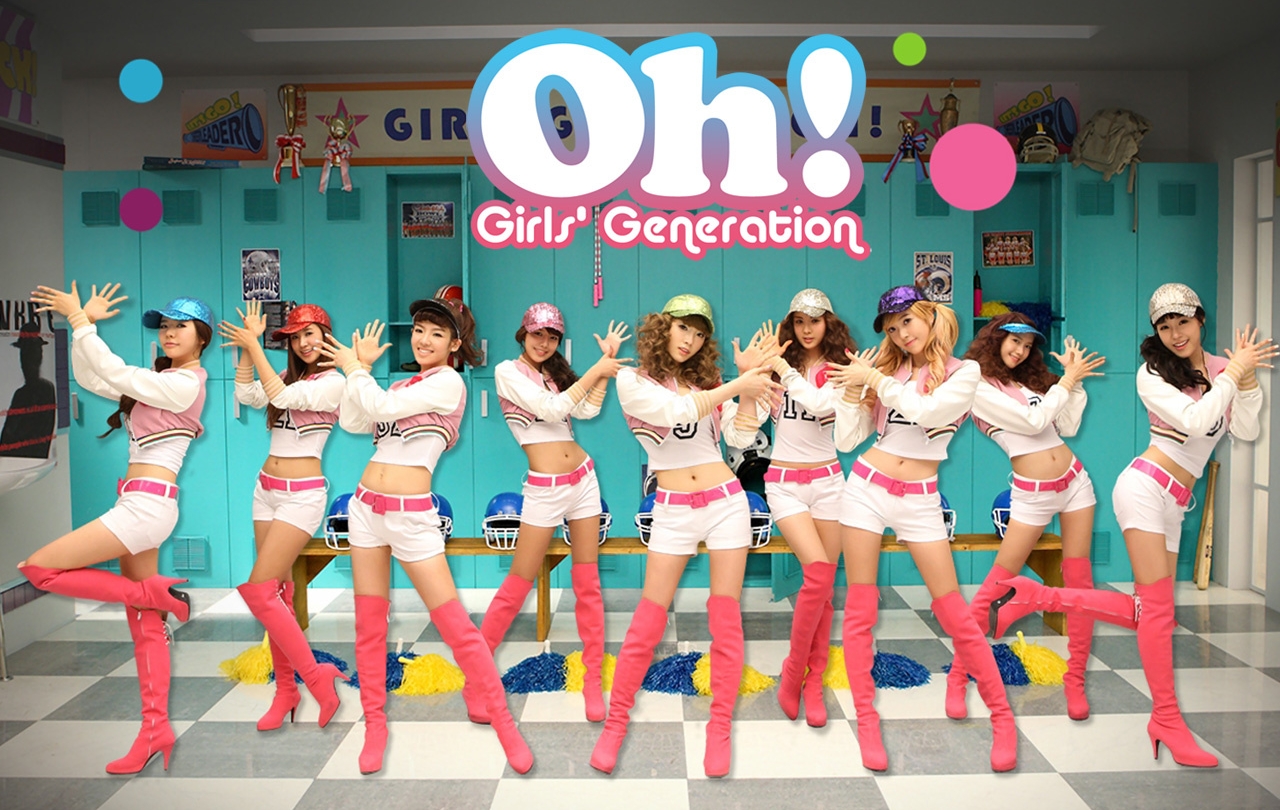
내가 소녀시대에게서 섹시함을 느낀 건 ‘Gee’ 이후였던 것 같다. 그전까지 소녀시대는 나에게 그저 귀여운 여동생에 불과했다. 그러나 소녀시대가 Gee로 컴백해 딱 달라붙는 배꼽티와 스키니진을 입고나오자 ‘소녀’는 ‘그녀’가 되었다. ‘소원을 말해봐’는 ‘Gee’의 심화판이었다. 핫팬츠와 하이힐, 제복을 입고 그녀들이 내게 ‘소원을 말해보라고’ 외쳤다. 신곡 ‘Oh!’는 한술 더 떠 치어리더 콘셉트다. 더 무슨 말이 필요하나.

The reason I wanted to ask this was simple. I knew why I liked them – and all men like them – but I wanted to confirm that he would give the same answer: that it’s because they’re sexy. Of course, they do also have a cute charm about them, but they’re at least as sexy.

What foolish talk is this you ask? But no, asking this does not mean I am a pervert, nor that I’m a mental patient having excessive sexual fantasies about Girls’ Generation. Rather let me say this: of course, Girls’ Generation are sexy. Or to be more accurate, they are sexy while pretending not to be.

It was with their song Gee that Girls’ Generation really started appearing sexy to me; before that, they were merely like little sisters. But then they started wearing tight, clinging croptops and jeans, and the girls had changed to women. This was even more so with their song Tell Me Your Wish, combining hotpants, high-heels, and uniforms while crying “tell me your wish…”. And with their new song Oh!, they continue that theme with a cheerleader concept. What more is there to say? (Source, below).

여기서 중요한 건 섹시 그 자체가 아니다. 소녀시대보다 섹시한 가수들은 얼마든지 있다. 포인트는 소녀들이 ‘더없이 순수한 눈망울’을 하고선 남성의 성적 판타지를 자극하려는 의도가 분명한 옷과 액세서리, 그리고 노랫말과 춤동작을 선보인다는 점이다. 나는 고민에 빠진다. 그 순수한 눈망울들이 나를 죄책감의 구렁텅이로 몰아넣는다. 내가 저 천사 같은 아이들을 두고 대체 무슨 상상을 한 걸까. 나는 변태인가. 난 누군가 또 여긴 어딘가.

분명히 맞는 것 같은데 증명할 방법이 없다. 섹시함을 주 무기로 삼으면서 겉으로는 그렇지 않은 척한다. 그런데 더 가관(?)인 건 그렇지 않은 척하니까 대놓고 그러는 것보다 더 섹시하다는 거다. 낮에는 현모양처, 밤에는 요부를 바라는 어쩔 수 없는 남성의 본능이다. 가히 최악의 상황이다.

이런 상황에서 ‘기획사 너희들! 일단 남성의 성적 판타지를 정확히 자극한 것에는 10점 만점에 10점을 주겠어. 대단히 유효한 전략이었지. 하지만 어린 여자애들 데리고 더 이상 교묘하게 섹스를 팔지 마! 이제 더 이상 당하지 않아!’, 이렇게 외친다면 (비록 속은 다를지라도) ‘아니, 어떻게 이렇게 귀여운 여동생을 보고 그런 천박한 생각을…’, 하며 경멸어린 시선으로 변태 취급당할 가능성이 다분하다.

The important point here is not how sexy they are: there are many female singers sexier than Girls’ Generation (James: I think he means more “sexual” than sexy). Rather, that despite their innocent expressions, Girls’ Generation’s clothes, accessories and lyrics are all designed to provoke men into having sexual fantasies about them. But this leaves me feeling a little perturbed and guilty: how can I think like that when I see those angelic faces? Am I a pervert? Who am I…where am I?

This is all true, but it is impossible to prove. While deliberately being sexy, Girls’ Generation pretend that they aren’t. Which proves to be even sexier than it they just admitted it, for every man’s instinct is to have a woman who is a wise mother and good, virtuous wife by day, but a shameless hussy at night.

This is a very bad situation.

About this, I say “To the people that work at the company! First, I give you 10 out of 10 points for knowing what stimulates men’s sexual fantasies so well. But please stop using these young girls to sell sex so skillfully! I won’t put up with it anymore!”. And I do so even though many people may scorn me and label me as a pervert, asking how I can think such things of such cute, innocent girls.

과연 나만 이런 생각을 하는 걸까? 나만 섹시함을 섹시함이라 말하지 못하는 ‘소길동’의 덫에 걸린 걸까? 아니라고 본다. 모르긴 몰라도 적지 않은 대한민국 성인 남성이 나와 비슷한 고민을 하지 않으려나?

여기서 두 가지 고민이 발생한다. 그리고 그 전에 하나 전제되어야할 것이 있다. 바로 ‘소녀시대의 기획사는 어린 소녀들을 통해 남성의 성적 판타지를 자극해 교묘히 섹스를 판매한다’는 합의다. 물론 이 같은 판단에 소녀시대의 팬이나 어린 학생들, 그리고 여성들은 동의하지 않을 수도 있다.

이유는 여러 가지다. 우선 소녀시대의 팬들에게 이 같은 지적은 소녀들에 대한 모욕일 수 있고, 어린 학생들이나 여성들의 경우에는 진심으로 이러한 부분을 체감하지 못했을 수 있다. 그러나 이것은 엄연히 현존하는 사실이다. 양해를 구한다. 그렇게 사실로 인정하고 넘어가도록 하자.

Well, am I the only person that thinks like that?Am I the only guy to have fallen into the trap of not recognizing sexiness when I see it? I don’t think so. In fact I think that all Korean adults suffer the same.

Based on the premise that Girls’ Generation’s company is skillfully encouraging men to have sexual fantasies about the group and basically selling sex then all this raises two problematic issues to worry about. But I don’t expect many fans, young students and women to agree with me, for many reasons: first, because to Girls’ Generations’ fans, this sort of opinion is considered insulting to the group; and in the case of young students and women, they can’t really understand these physical feelings of men. But while I seek their forgiveness, the facts remain. Let’s continue on that premise (source, left).

첫 번째 고민은, ‘욕망하는 것은 과연 나쁜가’이다. 더 정확히 말하면 ‘의도된 자극에 예상된 욕망으로 반응하는 것은 나쁜가’가 되겠다. 말이야 바른 말이지 은근슬쩍 성적 판타지를 자극해 오는데 모른 척하며 억지로 속으로 눌러야 하나? 오히려 그게 솔직하지 못하고 자신을 속이는 것 아닌가? 남에게 피해를 주지 않는 솔직함은 미덕이라고 배우지 않았나. 굳이 말을 하자면 자극받는 쪽보다 자극하는 쪽이 나쁘지 않느냐는 말이다. 하아, 나는 왜 불필요한 죄책감에 사로잡혀 있었을까. 문제는 개인이 아니라 구조이고 시스템인 것을.

두 번째 고민은, ‘어린 소녀들을 통해 섹스를 파는 행위는 과연 나쁜가’이다(‘미성년자’라는 법적 개념으로도 판단할 수 있겠지만 여기서 논하려는 건 그러한 차원은 아니다). 어떻게 보면 누이 좋고 매부 좋은 거래가 아닌가. 기획사는 돈을 벌고, 소녀들은 스타가 되고, 대중은 욕망을 충족한다. 소녀들이 특별히 공공질서를 저해하는 음란 행위를 하는 것도 아니고, 대중이 소녀들에게 위해를 가하거나 범죄를 저지르는 것도 아니다. 상부상조하는 좋은 거래다.

The first thing to worry about is the question of if desire is a bad thing. Or to be more precise, is getting sexually stimulated bad when that is the deliberate and expected reaction? Does the fact that it is done indirectly and stealthily mean that we have to pretend that we don’t feel aroused? Isn’t that being dishonest and deceiving yourself? We all know that as long as it doesn’t cause harm to others, honesty is a virtue. And surely it is worse to so insidiously arouse men than to feel aroused. Why on Earth was I feeling guilty about this? This is not a problem with myself, but more a systematic thing.

The second worry is that the act of using young girls to sell sex is bad (I don’t want to discuss the legality of using minors for this though). But if you look at it in a different way, it is can actually be a good thing. The company makes money, the girls become stars, and men’s sexual desire is satisfied. Nor are the girls committing indecent acts, or the public harming ordinary girls in any way or commit crimes against them. So in a sense, everybody helps each other.

그러나 이렇게 간단하게 정리하고 넘어갈 문제가 아니라는 게 바로 문제다. 기본적으로 나는 욕망하는 주체다. 그리고 욕망하는 나 자체는 건강하다. 그러나 내 욕망을 충족시켜주는 것들이 모두 옳은 건 아니다. 다시 말해 나는 내 욕망의 정곡을 찔러주는 소녀시대의 무대를 보면서 기획사의 의도대로 욕망을 느낀다.

하지만 그 반대편엔 욕망의 크기만큼이나 커다란 이성 역시 자리 잡고 있다. 나는 소녀시대가 내 성적 판타지를 충족시켜준다는 점을 인정하면서도 동시에 그들 기획사의 전략이 야기할 부정적인 단면들을 고민한다. 즉 나는 끊임없이 욕망하면서 동시에 그 욕망을 충족시켜주는 것의 올바름에 대해 끊임없이 의심한다.

그렇게 의심해본 결과, ‘섹시하지 않은 척 하면서 섹시한’ 소녀시대는 몇 가지 문제점을 내포하고 있다. 먼저, 이것은 기획사의 입장에서는 분명 대단히 효과적인 돈벌이 전략이지만 사회적으로는 성의 이중성을 더욱 공고히 할 뿐이다. 성적 판타지를 자극하도록 설계된 소녀들에게서 당연하게(?) 예정된 욕망을 느끼더라도 남성들은 그것을 제대로 표출할 수 없다. 욕망 표출의 해방감 대신 그들에게 부여되는 것은 일종의 죄책감이다. 욕망은 점점 안으로 파고 들어가고 겉과 속은 달라진다. 그렇게 섹시한 것을 섹시하다고 말하지 못하는 소길동이 되어간다.

Unfortunately, the problem isn’t as simple and easily resolved as that. Basically, because I have sexual desire. And that is healthy and good, not a sin. But not everything that arouses me is correct and proper (James: should be acted on?), and one of those is watching Girls’ Generation dancing on a stage.

On the other hand, while I do have sexual desire, I have just as much logic and rationality to me. So although I admit to at the fact that Girls’ Generation arouses me, at the same time I worry that I am just being manipulated by their company. Or in other words, while I am unceasingly aroused by them at the same time I think seriously about if both that and what the company is doing is correct and appropriate.

As a result, I realize there are many problems to Girls’ Generation being sexy while pretending not to. First, while it is undoubtedly a very effective strategy for the company to make money, to society it reaffirms that there is a public and private face to put on sex. For while the group is designed to stimulate men’s sexual fantasies, they can not admit to this. Rather than expressions of sexual liberation, they must instead have guilt about how differently they feel inside and what they must actually say. This is why you have men like me saying that sexiness is something else entirely.
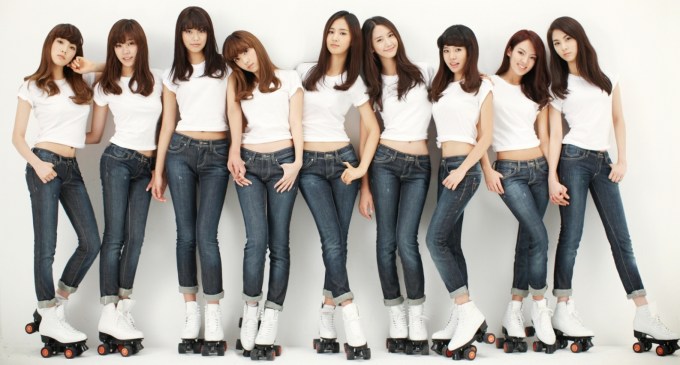
(Source: unknown)

또 하나. 다름 아닌 소녀들 걱정이다. 윤아 걱정, 유리 걱정, 무엇보다 우리 조카를 위해 서현 걱정이다. 어쩌면 이게 제일 중요한 문제일지도 모른다. 나는 소녀시대의 무대를 볼 때마다 매번 이런 생각이 든다. 쟤네들은 자기가 어떻게 소비되는지 과연 알고 있을까? 남성들의 시선과 속마음에 대해서는 얼마나 알까? 만약 알고 있다면 그게 쟤네들이 원하는 걸까? 혹시 기획사의 의도와 속내가 충돌해 괴롭지는 않을까?

이게 무슨 오지랖이냐고 웃을지도 모르겠다. 하지만 ‘소녀들도 이제 엄연한 법적 성인이니까 자기 일은 자기가 알아서 하겠지’라고 안일하게 생각하기에는 아직도 소녀들은 많이 어릴뿐더러 소녀들 개개인의 힘에 비해 시스템의 권력이 너무 크고 거대하다. 또한 ‘자본주의 사회에서 소녀시대 역시 하나의 상품이며 상품이 된 것 역시 소녀들의 선택’이라고 치부하기에는 머릿속에서 ‘인간의 존엄성’이라는 단어가 자꾸만 아른거린다.

서현. 가장 순수할 것 같고 실제로도 가장 어린 서현. 지금, 상처받지 않고 있을까? 그리고 앞으로도 상처받지 않을 수 있을까?

글을 마무리하면서 문득 지금의 내 메신저 대화명을 떠올렸다. ‘소시 앨범 득템! 화보 쩐다.’ 화보가 쩌는 건 사실이지만 아무래도 당장 다른 대화명으로 바꾸어야겠다. 갑자기 이 저열한 욕망의 바다에 물 한 방울 보태기도 싫어졌으니까.

(Source)

One more thing: I worry about the girls of Girls’ Generation themselves. I worry about Yuna, about Yuri, and most of all about my nephew’s favorite Seo-hyeon. This may be the most important issue of all, and whenever I see them on stage I think it: do they know how they are being consumed? Do they know how they are viewed and felt by men? If they do know, is that what they really want? By any chance, do they suffer from their own wishes and their company’s clashing?

People will ask why I worry about them. After all, they are legal adults. Despite that however, the system they operate in is far more powerful. And against the argument that they are in the music industry – just the product of a capitalist society – and that it’s their choice, I still frequently pause to think if it’s not an affront to human dignity.

Seo-hyeon: she looks the most innocent, and in reality she is the youngest too. To her I say are you getting hurt at all now? Or is there any way you can avoid it in the future?

As I was writing this article, I added some words next to my name in my messenger program: “I’ve bought Girls’ Generation new album! Their pictures are fantastic!”. While that is true though, I have to change it. I suddenly really don’t want to add one drop to this ocean of base, vulgar sexual desire. (end)
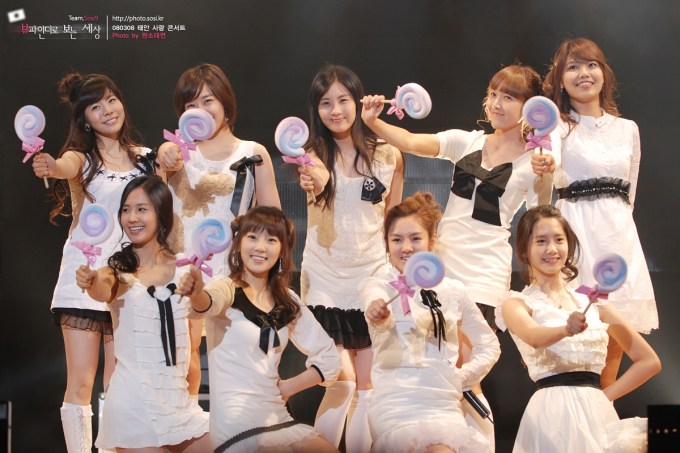
(Source)

As always, apologies for any errors with the translation (there’s bound to be with something of this length), and I’d really appreciate it if you could let me know if you spot any. And what do you make of Kim Byeong-hyeon’s “confession”?

Or, hell, my own? Not that I think that mine is any great surprise to long term readers of course(!), and I don’t mean to imply that I’m embarrassed at only having Korean female friends now. Indeed, most of my Western male friends here also had equal numbers of male and female Korean friends in their first few years here, only to lose the former for much the same reasons I mentioned earlier; or at least, those that like myself came in their early to mid-20s,and have stayed for 5-10 years since. And they’re by no means gender studies geeks either, although I confess that we do still talk mostly about women when we meet! ;)

What is your own experience? How are things similar or different for Western women here also?

Notes:

1) Rereading this in November 2013, nearly 4 years later, I cringe at the numerous generalizations I make based on only my own personal experience; I would be much more careful to avoid those and/or acknowledge my biases were I to write on the same subject today. On the other hand, unfortunately it’s also true that my personal experience remains largely the same.

2) I also try to avoid the “C word” these days. Although this is hardly the most egregious example, Confucianism is very overused as a catch-all, explain anything and everything device in English-language writing about Korea.


Korean Sociological Image #32: Censorship and Indirect Advertising

(Source: unknown)

Ever find yourself wondering at the logic behind some of the blurring and mosaicing on Korean television?

No, I’m not talking about that recent scene from Chuno involving a fully-clothed Lee Da-hae (이다해) I’m afraid. Rather, the proclivity with which Korean broadcasters will disguise the logos of products visible in television programs. Indeed, it’s so taken for granted here that frankly I’ve had trouble finding examples (without simply watching television and waiting for something to pop up that is).

The reason is to prevent indirect advertising, known as ganjeob gwango (간집 광고) in Korean and PPL (Product Placement, or Embedded Marketing) in the industry. But it is usually ineffective, the blurring in the following segment from the talk-show Giboon Joeunnal (기분좋은날) for instance, or A Day That Feels Good, providing little impediment to this Korean blogger in identifying the brand-name and model of the baby monitor and recommending it to her readers (update: see here for a video that provides a collage of much better examples):

Instead of cases like those though, the majority of articles on the subject discuss deliberate, unedited PPL instead, such as this case with the Bon Bibimbap food chain in the drama City Hall (시티홀), this case with actor Jang Hyuk (장혁) and various Canon cameras in an unidentified drama and film below, and especially a recent episode of the comedy show Paemilli-ga Ddottda (패밀리가 떴다), or Family Outing, in which some Nepa (네파) outdoor clothes were used (see here, here, and here).

Family Outing Nepa(Source)

At the end of that last link, the laws regarding PPL are mentioned, the gist of which is that it should not: influence the content or story of the program; be the focus of viewers’ attentions; be mentioned by anyone in the program; and finally, that the program should not persuade you to buy the product in any way. While all sound reasonable however, they are also very open to interpretation, and Korean broadcasters frequently receive warnings or fines from the Korean Broadcasting Communications Committee for falling afoul of them.

Adding even further confusion to the mix, since 2006 PPL of specifically Korean products has been increasingly encouraged as a means to capitalize on the success of the Korean Wave abroad, one recent example being Kia Motor’s deal to provide cars and other paraphernalia for the hugely popular drama IRIS.

Given that context, then broadcasters’ decisions to ban singer J.ae’s (제이) new album from the airwaves simply because of the lyrics of some songs seems particularly hypocritical:

J.ae’s New Album Rejected by TV Stations

Returning to the music business after three long years must not be as easy as she thought. J.ae’s new special album, “Sentimental,” was ruled unfit for broadcasting by KBS and SBS. MBC is currently reviewing the song to announce the result next week. Broadcasting review panels at the leading national networks said that the lyrics of the title song “No.5” contained direct references to commercial brand names, like Chanel and McDonalds. Network stations are concerned that naming certain brands could cause debates over indirect advertising.

“No. 5” was written by Lee Ji-rin of the indie band Humming Urban Stereo, who was inspired to write a song after seeing an ad about Chanel No.5 perfume on a bus. The song may have succeeded in grabbing the interest of listeners with its unique lyrics, but could not escape from the criticism of indirect advertisement. Jae’s agency said that it’s most unfortunate that her year’s work failed to meet the industry standards, but it will apply for another review after changing some parts of the lyrics. J.ae’s latest album will be out on the market on February 10th. (Source: KBS Global, via Omona They Didn’t)

One wonders what they made of Aqua’s Barbie Girl back in 1997?

J.ae Sentimental .For those of you further interested in J.ae herself, you can read two interviews of her (conducted before the banning) here, and listen to one of the problematic songs No. 5 here (source right: unknown).

Meanwhile, unfortunately this is by no means the first time that artists’ songs have been banned in Korea simply because their lyrics could be construed as PPL, a case involving Epik High (에픽하이) back in April showing that even indirect mention of the artists’ own website can be considered problematic. Moreover, against the argument that both cases are merely inane but innocuous, they do add to the essential arbitrariness of censorship in Korea, English song lyrics acceptable on 1950s American television banned because they could sound vaguely sexual to non native speakers for instance (see #2 here), and accordingly it doesn’t take a great leap of imagination to imagine a time when censors will ultimately use PPL as a convenient excuse to ban a disagreeable but otherwise completely legal cultural product.

Or perhaps they already have? If you know of any previous cases of banning based on PPL, then please pass them on, whether the PPL was used as a ruse or otherwise!

(For more posts in the Korean Sociological Images series, see here)

Oh? Oh…!

( Source )

Call me old-fashioned, but although music videos can have a huge effect on my enjoyment of songs, I still try to judge them on their own merits.

By that criteria, all of Girls’ Generation’s hits have fallen flat for me, no matter how photogenic the girls are. But then I found a remix of their latest hit Oh! by the Greek trance DJ “Areia”, and I immediately fell in love with it.

Like he says on his blog, he put a lot of work into it. And it shows.

True, it’s actually the only one of his K-pop remixes that I like, that of Abracadabra (아브라카다브라) by the Brown Eyed Girls being particularly disappointing. But I’ve only listened to a handful so far, and his abilities are definitely improving over time. To any other Korea-based trance fans out there, frequently lamenting at how something so popular in Japan could be so completely absent from the cultural radar here, I’m sure you’ll be just as happy as I was to have found him!

For the lyrics (and a translation) to the song, see Yeeun2Grace here, and if you’re interested and haven’t seen it already, then this video (via Extra! Korea) makes a pretty compelling case that the song has been plagiarized from U.S./Barbadian singer Rihanna’s Shut Up and Drive. If you’re disappointed in my not providing my usual critical analysis on this occasion though, then I apologize(!), and by all means read precisely that at Appears.

But if you’d still like to watch the original video, albeit now with the trance remix, then I do understand:

Click on the video itself to be taken to Ariea’s YouTube page, which has a playlist of his other K-pop remixes.

Update: There’s been a lot of speculation in the comments as to why the video’s concept is of cheerleaders hoping to get the attention of American footballers, simply bizarre considering that the sport has virtually no following here. So I posed the question to my two classes earlier today, and the combination of their explanations proves to be quite compelling.

First, my morning class mentioned the success of the movie Bring it On in 2000, particularly the song Hey Mickey from the soundtrack, and this struck a chord with me because men who would have been in their late-teens and early-twenties back then were precisely the demographic that SM Entertainment created Girls’ Generation for (indeed, Girls’ Generation has performed the song many times). While that may just be coincidence though, they also said that high school footballers dating cheerleaders have been a staple of American movies and dramas they’ve watched ever since, and they were at a loss for an equivalent in Korean pop culture.

My afternoon class disagreed that Bring It On was popular however, and this is borne out by the box office figures for that year. Instead, they pointed out that all Korean cheerleaders are adults, and so although the youngest members of the group are in fact turning 20 this year, to have presented them as Korean cheerleaders pining after Korean baseball or basketball players would have clashed with their image of being precocious teenagers. Recall that the song itself is about unrequited love for an older male too, which the exaggerated youth of the women singing it would help to emphasize.

In short, cheerleaders for high school American footballers were the only possibility because there are no teenage cheerleaders in Korea.

But my two classes’ explanations are not mutually exclusive of course, nor with some of the alternative explanations posted in the comments section here either. While I would like to corroborate them though, unfortunately analysis like that is severely lacking on the Korean internet, so that might have to wait until I investigate next month’s music magazines.

Meanwhile, I’m quite convinced personally, but what do you think? Please let me know, and perhaps I can get a dialogue going with my students!

Update 2: Despite 1 billion won (US$860,000) being spent on Girls’ Generations stage costumes last year, apparently there was little money available for making some props for this music video, so some store-bought ones with the Iowa Hawkeyes logo were used instead. You can just imagine the reaction of Hawkeyes fans

Share

Korean Sociological Image #30: Exploiting Koreans’ Body Insecurities

Like everywhere else, Korea has a long tradition of celebrities endorsing government campaigns.

Unlike everywhere else, a “huge proportion of Korean ads depend on famous people,” says Bruce Haines, head of Korea’s largest ad agency Cheil Worldwide, a tendency which in its crudest form degenerates Korean advertising into merely “beautiful people holding a bottle.” In turn, that leads to a scramble for and subsequent overexposure of whichever Korean stars are most popular at that moment, regardless of their inappropriateness for the product(s).

Government campaigns are no different, to my mind the most notorious case still being the National Election Commission’s (중앙선거관리위원회) choice of The Wondergirls (원더걸스) to encourage people to vote in local elections in April 2008. Needless to say, I can’t think of anyone more inappropriate than teenagers (two of whom were only 15), and their choice of outfits simply beggars belief:

Vodpod videos no longer available.

But again, no different to what they wore in commercials at the time. Which is precisely my point: regardless of their merits, major trends in advertising are bound to be reflected in government campaigns sooner or later.

And as long term readers of this blog will be well aware, one trend is encouraging consumers to associate certain foods and drinks with certain desired body shapes. While it is hardly unique to Korea, it is done to excess here.

Is it any wonder then, that with the decline of the domestic rice industy, and concerns food security as a whole, that the government would do the same when promoting the consumption of domestic foods and drinks?

Last year for instance, I gave the example of how the Korean rice wine Makgeolli (막걸리) was being marketed to women on the basis that it is supposedly good for one’s skin. Now, I’ve found two more examples by the Ministry for Food, Agriculture, Forestry and Fisheries (농림수산식품부; MIFAFF), using the new group 4Minute (포미닛) and the Olympic medalist Park Tae-hwan (박태환) respectively:

Vodpod videos no longer available.

Vodpod videos no longer available.

To be clear, I am not saying that either are inappropriate choices. Actually I think they’re rather good: both are very popular, and it turns out that 4minutes’ egg song is a variation of their recent hit “Hot issue” too. I also fully concede that the connections between consumption of the product and obtaining an attractive body are fleeting (4minute) or merely implied (Park Tae-hwan) at best.

But still, they’re there. And given the long-term problems with Korean agriculture as identified above, then I hereby predict that we’re going to be seeing many more public campaigns like these in 2010. In particular, the links made between the products being advertised and obtaining an “S-line” and so on are going to be made more explicit.

Sound like an exaggeration? Well, recall how quickly commercial incentives have transformed decades-old standards for soju advertisements: just three years ago, they overwhelmingly offered virginal images of women, whereas now it’s rather difficult to find ones that don’t present them as eminently sexually available. Moreover, in an effort to appeal more to women, soju companies too are encouraging them to associate new lower-strength brands with maintaining a good body, however implausibly.

But perhaps an even more appropriate example is soy milk. If you’ll bear with me, being allergic to milk means that I follow developments in the soy milk industry here pretty closely, and Starbucks Korea’s belated decision to add soy to its menu in 2005 had a huge impact on my quality of life here! Not unlike the drinks themselves though (anybody know where I can find these flavored ones?) – or, indeed, government campaigns – soy milk commercials tend to be rather bland, so I certainly sat up and took notice when I first saw this one a few days ago:

Vodpod videos no longer available.

Soy milk companies too then, seem to be adopting the tactics of their more popular counterparts now. Lest I appear overly critical though, consider the scene 0:03 from 0:06 where 17 year-old Kim Hyun-ah’s says “[S]라인을 유지하려면 어쩔 수 없어,” or “If you want to maintain your S-line, you have no choice but to [drink] this.” Despite my constant criticisms of that sort of thing, and my earnest desire that my daughters don’t grow up to repeat it, I have to admit that I can’t help but find her expression and tone of voice, well, extremely cute…

Yes, I know: very hypocritical of me, and I await your counsel. But on a final, more serious note, consider Garaetteok Day (가래떡데이), MIFAFF’s scheme since 2006 to get people to eat stick-shaped rice cakes instead of Pepero chocolate sticks on November 11 each year. Promoted mostly as a romantic event for couples, as are most imported and/or artificially created holidays (Christmas Day, for instance, is the date the most condoms are sold in Korea), is it really too much of a jump to imagine that concerns about one’s appearances will be added to that too? Watch this space!

Update: An alternative way of exploiting Koreans’ associations with November 11 (source):

(For all posts in the Korean Sociological Images series, see here)

Share

Lusting After Teenagers…or the Maturing of Women’s Fan Culture?

Update, September 2013: My original commentary on this article became outdated, so I’ve since removed it. Instead, please see here, here, here, and here for more on the controversial “uncle” or “ajosshi” fandom of teen girl-group members, and here for more on why middle-aged women came to dominate soccer fandom back in 2002 — an important precursor to their fandom of pop stars and actors described here.

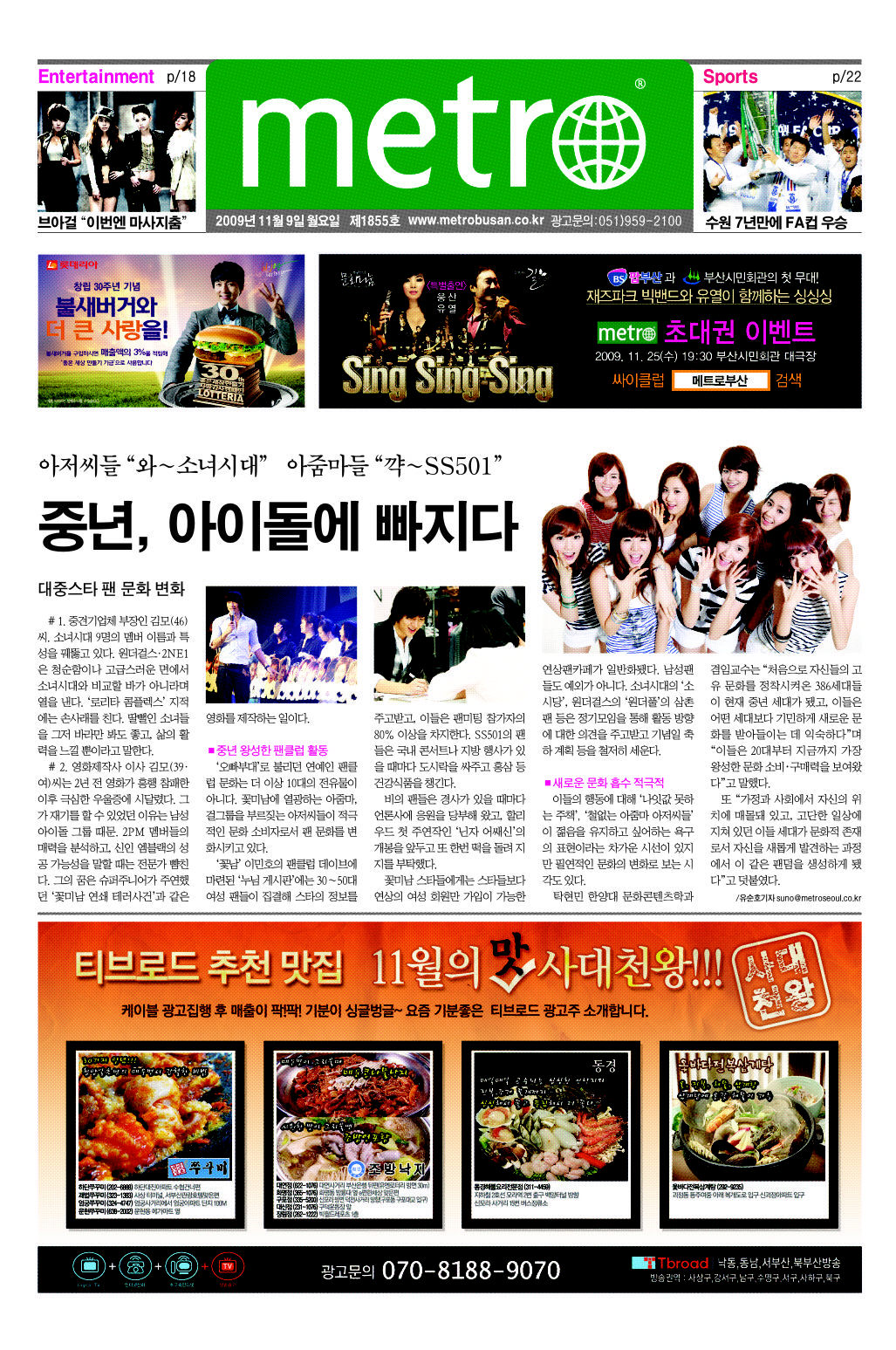
Middle-aged People are Head Over Heels about Young Idols

Fan Culture is Changing

#1. Mr. Kim (46), a department manager of a medium-sized business, knows the names and personalities of all 9 members of Girls’ Generation. He thinks that the Wondergirls and 2NE1 do not even come close in terms of purity and class. He dismisses accusations of having a Lolita complex, and says that watching the girls of Girls’ Generation, who are about the same age as his daughter, give him a feeling of life and vitality.

#2. Film company CEO Mrs. Kim (39), suffered severe depression after her movie did extremely badly 2 years ago. But she was able to recover because of her interest in male idol groups, and when she analyzes the charms of members of 2PM, or discusses the potential for the new group MBLAQ, she is indistinguishable from an expert in the music industry. Her dream is to make a movie like Attack on the Pin-up Boys (2007) that Super Junior starred in.

Middle-aged People Are Actively Participating in Fan Clubs

As the name implies, “older brother” fan club members used to be mainly teenagers, but this is no longer the case. But as active consumers of culture, middle-aged women passionate about flower men‘ and middle-aged men heavily into girl groups are actively changing fan culture.

For instance, on flower man Lee Min-ho’s fan club “Dave,” there is an “older sister” section for 30-50 year old women to exchange information about their star, and when there are fan meetings with him they make up over 80% of the audience. And whenever SS501 [James: if you don’t want to show your age, say “double-ess” rather than “ess-ess”!)] have a concert in Korea or attend some event in their region, their middle-aged female fans prepare packed lunches with healthy foods such as red ginseng for them.

(Source)

And whenever there is an event featuring Rain, his middle-aged female fans call the media and request favorable coverage. Before the release of his first Hollywood movie Ninja Assassin (2009), they even delivered rice-cakes to them, a symbol of good luck for a new venture.

Indeed, it has become quite normal for there to be fan clubs that only allow those older than the flower men themselves to join. And this is true for male-only fan clubs for female idols too. In the Girls’ Generation’s “Girls’ Generation’s Party” and the Wondergirls’ “Wonderful” fan clubs for instance, middle-aged men have regular virtual meetings where they exchange opinions about how the groups can progress and thoroughly how they can celebrate group anniversaries and birthdays and so on.

A New Fan Culture is Actively Forming

Many people have dim views of middle-aged men and women who don’t act their age, dismissing them as merely chasing after their lost youth. But an alternate view is that this demographic shift in membership is an inevitable change.

Professor Tak Hyeon-min, on sabbatical in the Cultural Contents Department of Hanyang University, said “People of the 386 Generation, who have finally established their own unique culture, are used to actively absorbing new things,” and that “from their 20s until now, they have demonstrated that they are the biggest consumers and purchasers of cultural products.”

Also, “members of this generation are stuck with heavy family, home, and/or social responsibilities, so as a means of escapism and renewing themselves, they have created a middle-aged fandom in a sense, fundamentally changing Korean fan-club culture in the process.” (end)

Korean Sociological Image #22: Fresh, Young Meat

Kara Cob Chicken Advertisment Male Objectification

For reasons that will soon become clear, girl-group Kara’s (카라) latest commercial for Cob Chicken (Cob 구어조은닭) is making big waves at the moment.

But probably most men are missing just how ground-breaking it really is. Mainly, because of Nicole’s buttocks thrust into their faces just 2 seconds in:

Part of Kara’s “butt dance” used in the choreography to “Mister” (미스터) though, which is playing in the background, it have been very strange not to have used it here. Indeed, it’s become something of a meme in K-pop, aptly demonstrated by this rather surreal clip of perhaps 25 female singers simultaneously performing it in a recent comedy program:

Korean Butt Dance

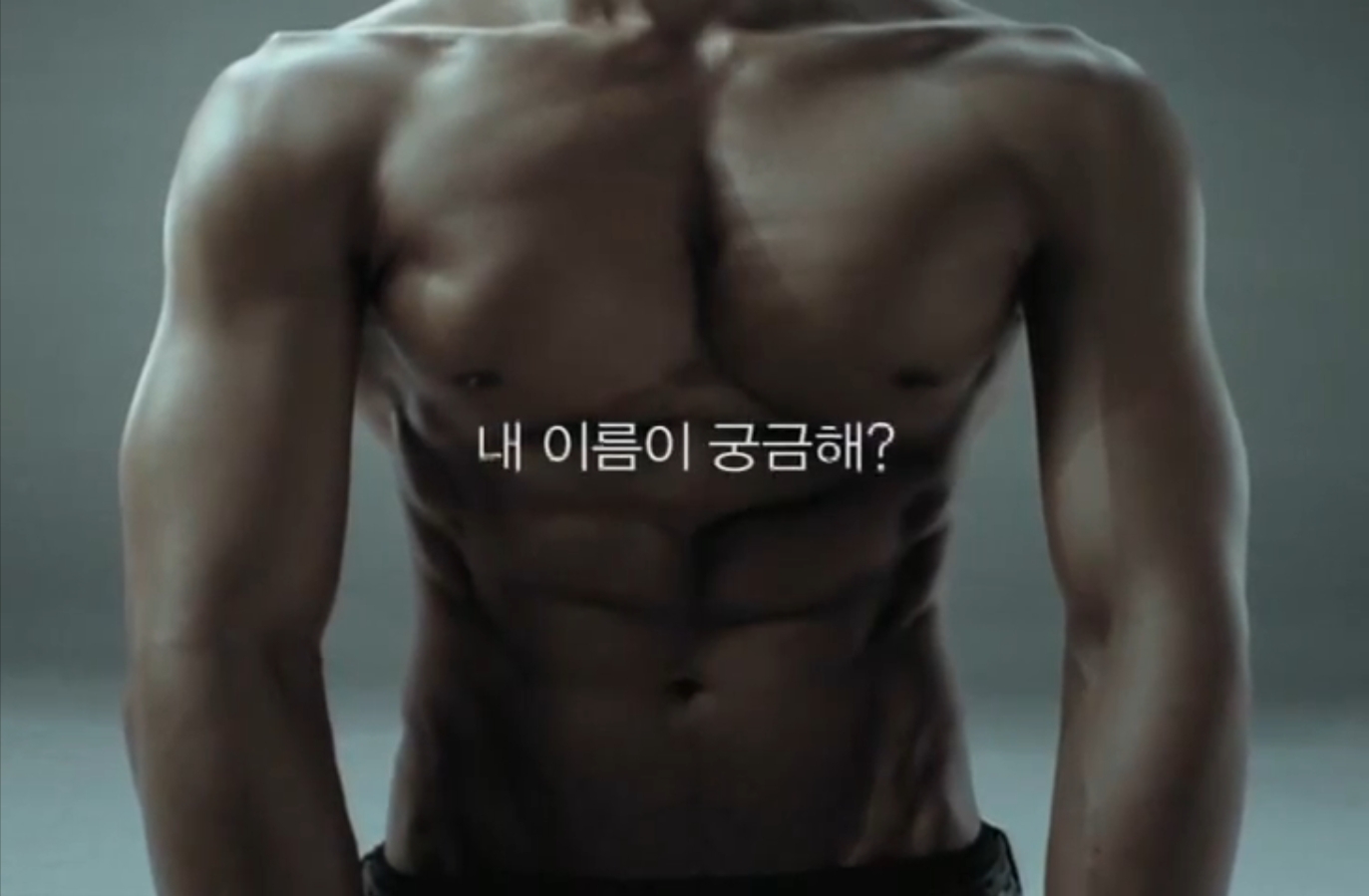
In light of that, it’s actually the sudden entrance of the well-muscled male at 0:17 that’s the most interesting and surprisng. And no, it’s not “groundbreaking” in the sense that it’s an explicit case of male objectification, which is not exactly a first for Korea. Rather, I label it as such because not only is the first time the makers of a Korean commercial have acknowledged their objectification of women and men therein, it’s also the first in which that acknowledgment has become a central, almost satirical theme of the commercial. Consider the screenshot viewers see immediately after the half-naked man for instance:

Kara Cob Chicken Advertisment Objectification

In English, it reads: “Because the chicken is grilled, the fat is removed completely. Chicken’s young taste,” and, judging by the advertisement from the Cob Chicken website below, the association between chicken meat and lithe young bodies isn’t a one-off. Moreover, although the Korean language lacks the associations the English term “meat market” has, it has a close equivalent in “물이 좋다,” or “The water is good”, and of course there are numerous instances of food terms being used for body parts. For the most recent example, consider Matt’s excellent commentary at Gusts of Popular Feeling on the invention of the term “honey thighs” (꿀벅지), and one high-school girl’s laudable rare attempt to demonstrate how sexist and demeaning such language is.

Kara Cob Chicken Advertisment(Source: Cob Chicken)

Granted, lauding a commercial objectifying both sexes is perhaps a strange choice to include in that vein. But recall that the academic studies of gender studies and feminism don’t really seem to have permeated wider Korean society like they did in the 1960s and ’70s in the West, with the result that a Korean language search for, say, “sexist advertisements”, will provide very few Korean examples. Getting the notion that objectification occurs in advertisements and in wider society out by whatever means then, I’d argue, is a very important first step towards rectifying that (however ironic this particular example is!).

Update: For comparison, numerous examples of the sexualizing and/or gendering of food in Western advertisements are available here.

Update 2: An amusing post from Seoulbeats on how appearing in chicken commercials seems to be a rite of passage for up and coming Korean stars.

Update 3: A photoshopped image that has been spreading around the Korean internet in the wake of the advertisement(s). Normally I’d demur from posting this sort of thing, but it seemed appropriate here:

(Source)

(For more posts in the Korea Sociological Images series, see here)

Girls’ Generation’s Secrets Revealed?

Girls' Generation Yoona Photoshop

That advertisements featuring Girl’s Generation (소녀시대) are invariably photoshopped isn’t news of course, and these ones are hardly the most egregious examples either. But in a rare positive step, the before and after pictures for their latest advertisements for the LG Black Label Series Chocolate phone are currently featured on the front page of the “Enter Holic” or “Entertainmentholic” (엔터홀릭) section of the Korean MSN homepage, and so will have been the first thing many people saw when they opened Windows Live Messenger this morning.

Not to imply that most Koreans aren’t aware of photoshopping in advertisements of course. But still, anything that fosters further discussion of that is to be encouraged.

Girls' Generation Chocolate Phone Yoona( Source: goagsu4 )

Or at least, that was my first impression. Looking more closely though, in fact it was the before images that were used in the advertisements.  Unfortunately there is no information about who created the photoshopped images, or why, but with the statement “Wow! Very subtle changes make a big difference” (아주 미묘한 차이가 큰 차이를 만드는구놔), he or she implies that the altered images are to be preferred.

Sigh.

Share

Korean Sociological Image #19: Gee, Gee, Gee…Girls’ Generations’ Latest Ad Speaks Volumes About Korean Gender Roles

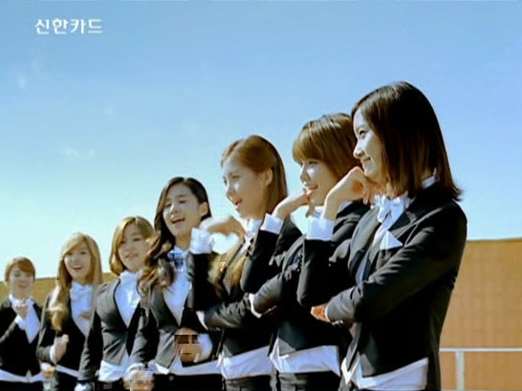
Girls' Generation Shinhan Card Commercial(Source: unknown)

Forget the TED Talks. Instead, use this 16-second commercial for a great introduction to Korean gender roles.

By Girls’ Generation’s for Shinhan Card, it’s completely innocuous at first viewing. Take a second and third look though, and it’s extraordinary in how much it reveals:

First, because of the obvious: those legs. Then, because my students barely seemed to notice them when I asked what they thought of the commercial, let alone considered objectifying only the women to be problematic. Probably, because they’re already used to ubiquitous female “assistants” (doumi;도우미) and scantily-clad “narrator models” (나레이터 머델) being used to sell and promote all manner of products, services, and causes. And girl-groups, effectively, are performing very much the same roles.

Also, that indifference was probably because Girls’ Generation are notorious for wearing hot pants or jeans that are several sizes too small. Indeed, entertainment companies deliberately emphasize girl-group members’ legs to make K-pop more sexually-appealing in conservative East Asian markets, where people generally share Koreans’ taboos about breast exposure. So, it may seem disingenuous to single out this commercial in that regard.

(Source: ZZiixx)

But I’m not—I’m singling it out for what the differences between the men and the women reveal. Because my students would surely have noticed more if the men had also been wearing short-shorts, with the well-muscled legs to pull them off. Or, with more male-specific revealing costumes that showed off their abs.

With just women doing silly dances in revealing clothes though? That’s so normal in advertising that most people don’t think twice about it. See what I mean by looking at these images from A Web Essay on the Male Gaze, Fashion Advertising, and the Pose below. What are your gut reactions to them?

Men Childlike Expressions Ritualization of Subordinationwomen childlike expressions Ritualization of Subordination(“Most viewers find the images of the men odd or laughable. But the images of the women seem charming and attractive…Why should it seem funny to see a picture of adult men striking a pose when the same pose seems normal or charming to us in pictures of adult women?”)

Obviously, this speaks to gender role portrayals in the media worldwide, not just that of Korea. But, with the latter’s tendency towards cuteness and aegyo, it does seem quite extreme here. And, as if to rub that in, in this particular commercial the text and the song also emphasize that the women are very much just for decoration:

First, the text in blue box: “끝없이 ‘고객만족’을 생각하는 카드”.

“The card that unceasingly thinks about customer satisfaction”.

Then what the men are saying while that is visible: “생각, 생각, 생각, 생각”.

“Think, think, think, think.”

Next Girls’ Generation, dancing with their shoulders while sitting on a bench: “어떡하면, 원하는걸, 다 이뤄줄수 있으까?”.

“How shall [the card] achieve everything [the customer] wishes?”.

Girls' Generation Shinhan Card Screenshot(Source, above and below: Paranzui)

Then the men again, while the girls are do their leggy dance, then stand in a line with the men and supposedly sing along with them (but we only hear the men’s voices): “손잡고 힘을 모아 다 함께 생각 생각”.

“Let’s cooperate [with the customer] and collect our energy together and think about all that”.

Finally in the voiceover, with the men sitting in contemplative poses and the girls standing behind them clapping : “카드의 길을 생각하다”.

“What is a card’s purpose? Let’s think about that”.

With this text in the blue box above them: “끝없는 제휴혜택으로 더 큰 고객만족을”.Shinhan Bank Shinhan Credit Card Girl's Generation

“The card that can be used anywhere in order to increase customer satisfaction!”.

Easy to miss on a single viewing, it emerges that it is only the men that do the thinking in this commercial, and by default, for the bank also. Yes, really: even when they all say “How shall [the card] achieve everything [the customer] wishes?,” if you look closely at roughly 0:08 into the commercial when the girls actually finish saying that (see far above), they clearly turn to the men for an answer. Rest assured then, that if you invest your money in this bank, that it will be in the hands of smart people that will take your concerns very seriously. Those people just won’t be women, that’s all.

Exaggeration? Hardly. Consider the facts: according to a recent report in the Korea Times, there are no female CEOs in the entire financial industry here; there are only 2 women out of a total of 220 team managers in the Financial Supervisory Service (and no executives); there are no women with either position in the Bank of Korea. Moreover, one anonymous (male) government official in finance argued that this is somehow justified by “the country’s financial bureaucrats [having] been overwhelmed with too “serious tasks” to pay attention to gender equality” (as in ever since the early 1960’s, not just the recent crisis), and it’s telling that even Rep. Lee Sung-nam (이성남) of the Democratic Party, a woman and former worker at the FSS, feels that women’s weak point in finance is their “competitive edge.”

gender-advertisements-erving-goffmanGranted, given that Korea has one of the lowest women’s workforce participation rates in the OECD, and that Korea has a surprisingly low “Gender Empowerment Measure” relative to its level of development, which is based on “factors such as the number of female legislators, the percentage of women in senior official and managerial positions, the percentage of women in professional and technical positions, and the income differential between men and women,” then it might seem unfair to single out the financial sector for criticism in this regard. But then if I’d wanted to highlight the lack of women there in particular, then I couldn’t have selected a better commercial to illustrate why that might be so.

Nor for explaining “function ranking” either, a common sexist motif in advertisements. A quick summary (source):

Activities can also be expressive and symbolic—who is shown doing what in the image? For example which gender is most likely to shown caring for children? Very commonly when persons in the image have functions, these functions are ranked, with the male carrying out the senior functions, the female the junior functions. Men act, and women help men act. Males are more likely to be shown in the executive or leadership role, with females in the supportive, assistant, or decorative accessory role.

That and other motifs were first outlined by the late sociologist Erving Goffman in his 1979 work Gender Advertisements, and which is still very much the framework by which sociologists study how gender roles are perpetuated in advertising. Let me leave you with one more observation from it (see the sidebar for many more examinations of Korean advertisements using his framework), then another example from Korean banking:

In our society where a man and a woman collaborate face to face in an undertaking, the man—it would seem—is likely to perform the executive role, providing only that one can be fashioned. This arrangement seems widely represented in advertisements, in part, no doubt, to facilitate interpretability at a glance (p.32).

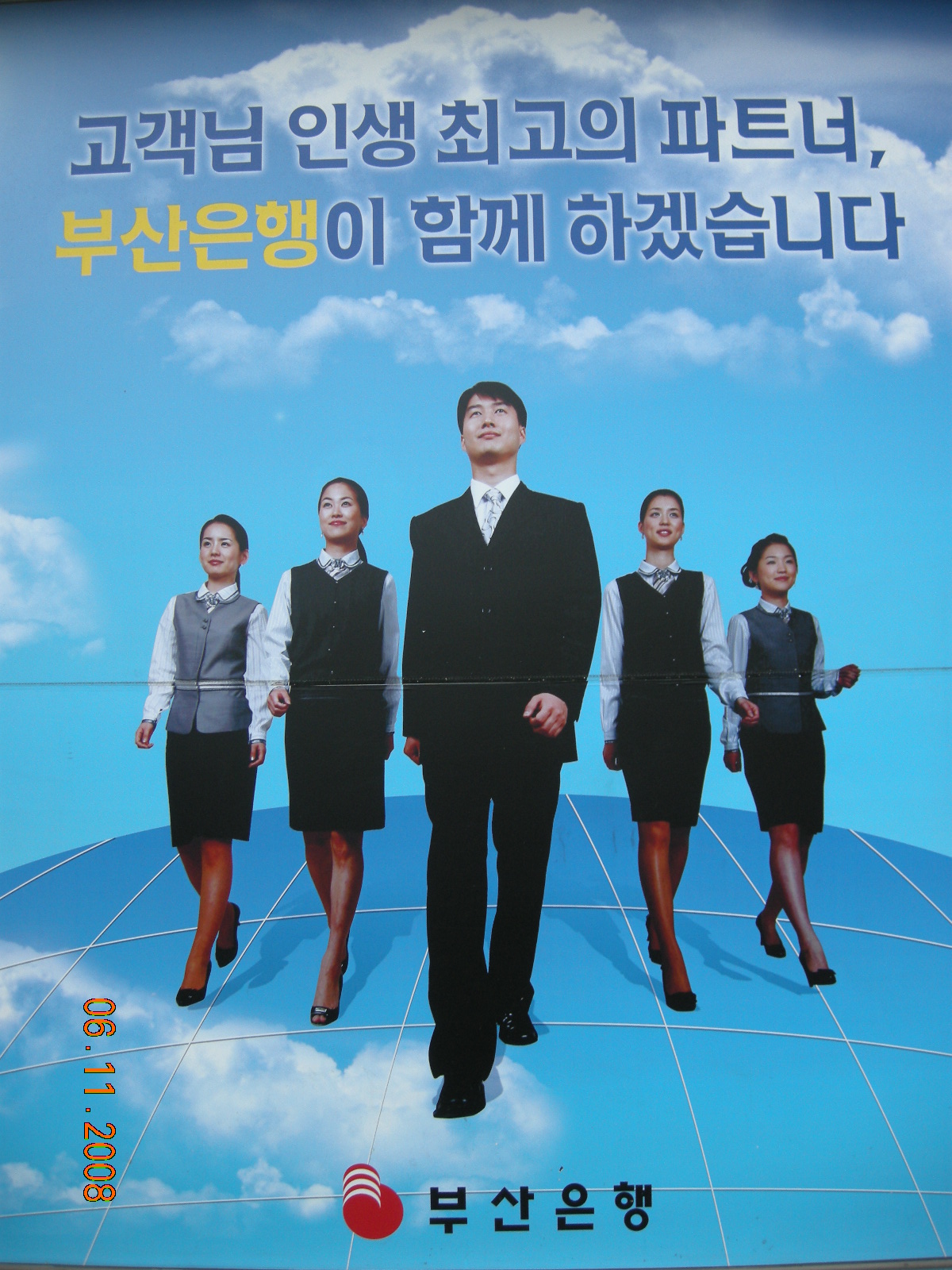
As indeed is the case with this advertisement for a bank I came across last November:

erving-goffman-relative-sizeTechnically, the man is a customer, the women clerks (the text reads: “The customer’s best life partner, with Busan bank”).  It is very telling though, how difficult it is to imagine an ad with the sexes reversed—let alone find an example in real life.

Thoughts?

Update: For comparison, see here for a Shinhan Card commercial with just the men.

(For all posts in the “Korean Sociological Images” series, see here)

Activities can also be expressive and symbolic – who is shown doing what in the image? For example which gender is most likely to shown caring for children? Very commonly when persons in the image have functions, these functions are ranked, with the male carrying out the senior functions, the female the junior functions. Men act, and women help men act. Males are more likely to be shown in the executive or leadership role, with females in the supportive, assistant, or decorative accessory role.

Korean Sociological Image #15: Gendered Health Drinks

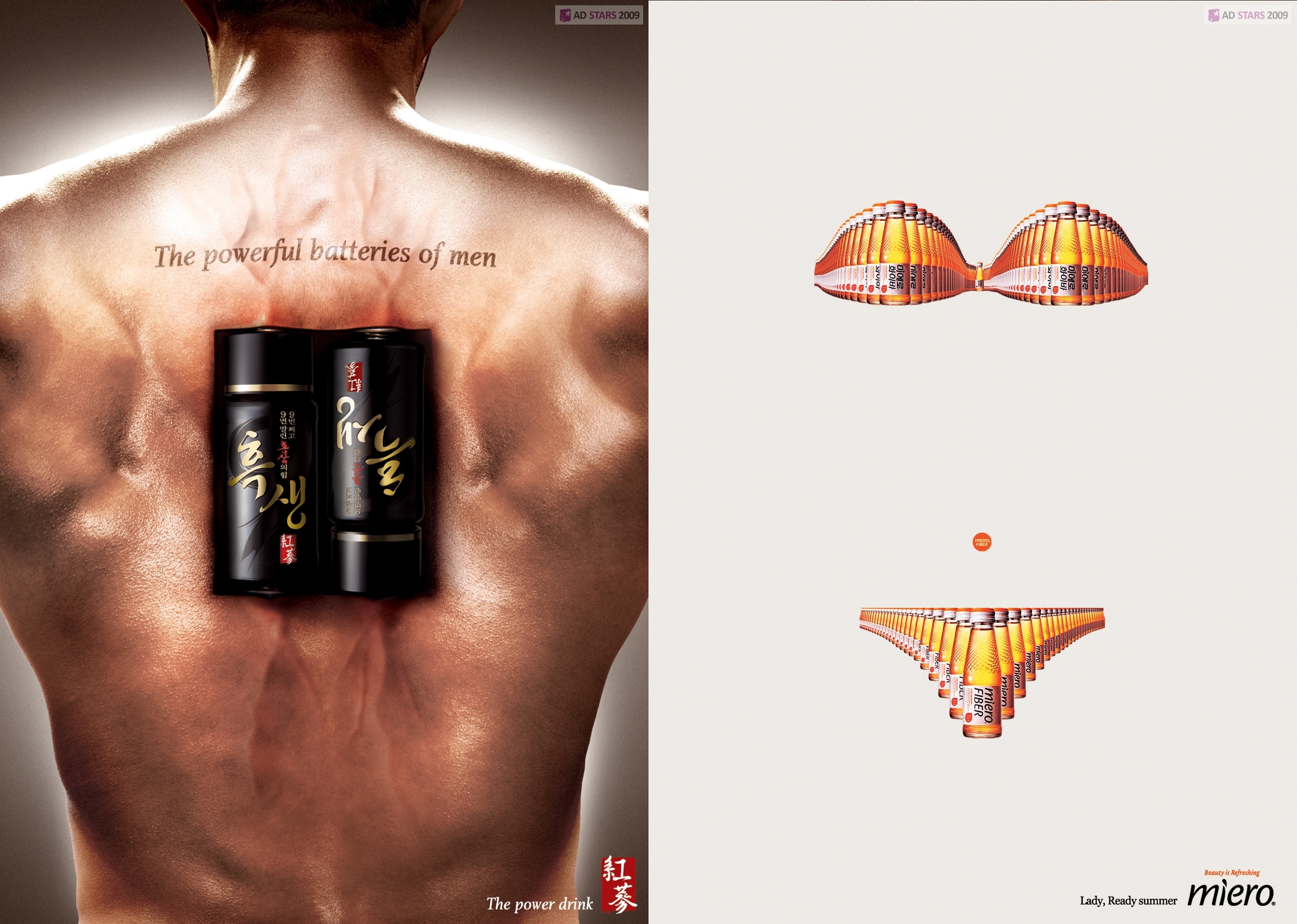
Korean Gendered Advertising( Source: left, right )

What is the first thing that goes through your mind when you hear of a “power drink” for men?

If you live in Korea, then I’d wager some form of aphrodisiac, testament to the large number of drinks claiming to improve “men’s power” or “men’s stamina” that are available here. In the particular case of the advertisement on the left though, that would be quite wrong, as Huksaeng (흑생) is the name of a health drink from Hyundai Pharm (현대약품) made with huksam (흑삼), or black-red ginseng (흑삼), and it has no prior history of being marketed to men specifically. Here you can see a women’s taekwondo team extolling its virtues for instance, albeit that of a different company.

But compare that with Hyundai Pharm’s other product Miero Fiber (미에로화이바) on the right, which in its 20-year history has only ever been marketed towards women. Currently placed alongside each other at the Busan Ad Stars 2009 website, the accidental juxtaposition of the two advertisements provides an interesting contrast. And given Koreans’ overwhelming preference for health drinks over multivitamin pills also, then the insights to be gained have more relevance to Koreans’ body images than may at first appear to overseas observers.

My own first reaction was that I was at a loss to think of an Korean advertisement for a health drink aimed at women that uses the analogy of recharging one’s batteries. This is a minor point though, and by no means do I have an encyclopedic knowledge of Korean advertisements, so I would be grateful if readers could pass on any examples that I may have missed. But with the proviso that Huksaeng is supposed to provide more of a mental and general health boost rather than improving one’s body per se, both that and any counter-examples from readers would not detract from the obvious and correct inference that Korean advertisements for “men’s drinks” generally feature men as sporty, active participants in the process of achieving that perfect body and/or losing weight. With those for women however, it’s genuinely difficult to find any that don’t promote the idea that drinking the product is the only step required.

Girls' Generation Miero Beauty N Advertisement( Source )

Don’t just take my word for it though. Consider recent popular commercials with girl-group Girls’ Generation (소녀시대) for Miero Beauty N (미에로뷰티엔) here and here for instance, and more importantly the evidence provided by the journal article “Content Analysis of Diet Advertisements: A Cross-National Comparison of Korean and U.S. Women’s Magazines” (Clothing and Textiles Research Journal, October 2006), by Minjeong Kim and Sharron Lennon, which I discuss in great detail in parts One, Two, and Three of my series on Korean women’s body images from last year. More recently, I discuss it in passing in this post about an advertisement for a diet clinic and this one about the advertisement below for a slimming tea-drink also:

Unfortunately the article is no longer freely available at the link above, and I’ve long since lost my own copy of the original PDF file. I can scan my copy if anybody requests it though, but in the meantime hopefully the abstract will suffice:

Content analysis of diet advertisements was performed to examine how diet advertisements portray the Western ideal of feminine beauty and promote dieting in Korean women’s magazines in comparison with U.S. women’s magazines. Results showed that the Western cultural ideal of feminine beauty and dieting were prevalent in Korean women’s magazines. Diet advertisements in Korean magazines appear to promote more passive dieting methods (e.g., diet pills, aroma therapy, diet crème, or diet drinks) than active dieting methods (e.g., exercise). Results further indicated that women may be misled to believe that dieting is simple, easy, quick, and effective without pain, if they consume the advertised product. This study suggests that there is an urgent need to establish government regulations or policies about diet products and their claims in Korea. Magazine publishers also need to recognize their role in societal well-being and accept some responsibility for advertisements in their magazines.

In especially part Two of that series above I discuss that passivity in more detail and extend it to Korean exercise culture, further continued in this recent post about a device that electrically massages breasts in order to make them grow bigger. No, really:

Korean Breast Massager Advertisement Caucasian

Let me also pass on this post at Sociological Images about the similar gendering of energy drinks in the US, with more of a focus on those targeted towards men, and this one at Feministing about the fact that laxatives there are almost exclusively marketed towards women, with the implicit purposes of losing weight. To which I’d add that their Korean equivalents are both ubiquitous and completely lacking of the usual euphemisms, instead providing computer graphics of bowel movements that leave little to the imagination. Rather than continuing in that vein though(!), let me close with a question prompted by the latter post: what is the reason that products like these are marketed specifically towards women?

(For all posts in the “Korean Sociological Image” series, see here)

Share

Jackie Lim and The Pimping of Korean Entertainers, 1995

(Source: ITH)

Update, December 2013: A very old post, which I’ve long since removed the original commentary to (and consequently the comments also). But hopefully someone may still find the translation useful!

해외동포 연예인 붐을 일으킨 재키림의 10년 전 사진 / Jackie Lim, The Creator of an Overseas Korean Entertainer Boom

삼성은 하이버네이션 기능 때문에 안정성에 문제가 많은 그린컴퓨터를 얼른 단종시키고 매직스테이션이라는 새로운 브랜드를 선보였는데, 매직스테이션은 꽤 오래 출시되면서 장수 브랜드로 자리 잡았다.

Because the “hibernation” function was causing many problems with stability, Samsung quickly stopped producing “Green computers” in 1995 and launched a new brand called “Magic Station” instead, which became a very successful brand over the next ten years.

매직스테이션III의 광고모델은 당시 새롭게 떠오르던 해외동포 연예인인 재키림이다. 몇 개 국어를 자유자재로 구사할 수 있었던 재키림은 재원이라고 칭찬받으며 화려하게 연예계에 데뷔했다. 재키림은 SBS ‘생방송 TV 가요 20’, KMTV ‘동방특급 비디오자키’ 등을 뛰면서 가수와 비디오자키로 활동했다. 재키림은 비디오자키의 열풍을 일으켰을 뿐만 아니라 오늘날의 해외동포 연예인 붐을 일으킨 불씨가 되었지만, 정작 본인은 한국 연예계에 적응하지 못하고 방황으로 얼룩진 비운의 운명을 걷게 된다.

Jackie Lim was a new and upcoming star when she appeared in the “Magic Station 3” advertisement in 1995. As she was fluent in many languages she received a lot of attention and praise when she made her original debut, both starring as a singer and working as “video jockey” on the SBS program “20 Songs On Air” and KMTV’s “High-Class Eastern Video Jockey”. Ultimately she proved so popular she provided the spark for a boom in interest in overseas Korean entertainers. But she soon found it difficult to adapt to the Korean entertainment industry, and became a bit lost for which direction to take herself and her career.

재키림은 마약을 비롯한 좋지 않은 사건에 휘말리는데, 그녀가 이런 사건에 빠진 이유는 ‘한국에서 실력으로 활동하려 했지만 자신을 성적대상으로만 보면서 높은 사람 자리에 불려나가야 하고, 동료연예인들로부터 왕따당하면서 외로워서 약을 하게 되었다.’고 밝혔다. 재원이라고 떠들었던 뒷편에는 여성 연예인에 대한 여전한 성차별과 고위권의 압력, 동료 연예인의 텃세가 있었던 것이다.

Later, she became disgusted and further disheartened by trying to succeed as a singer in Korea through her own abilities but while facing the virtual prostitution of female entertainers that goes on behind the scenes. Not only was she regularly pressured to entertain and provide sexual services for politicians and business leaders, who saw her merely as yet another trophy girlfriend to be used, but on top of that she was also ostracized by other entertainers too, angered by whom they saw as an uppity overseas Korean whom they intended to put in her place. In the end she became very lonely and depressed and got involved with drugs.

이미지: 1995년 삼성 매직스테이션3 광고에서 밝게 웃는 재키림. 하지만 이 웃음 뒤에는 잘못된 연예게 관행으로 인한 외로움과 고통이 숨어있다.

Photo caption: Jackie Lim smiling brightly in Samsung’s advertisement for the Magic Station 3. But hidden behind the smile there was a great deal of loneliness and pain caused by the Korean entertainment industry’s bad practices (source).