 (Sources: Unknown)
Sorry for the long delay since the last Korean Gender Reader: much as I like to write about the low Korean birth-rate and/or the lack of affordable and trustworthy childcare that effectively stops mothers from working in Korea, I’d rather not personally suffer the side effects of those for the sake of being a better writer. Nor can I see how my sleep-deprivation, lack of exercise, weight-gaining and coming down with regular colds would ever particularly help with that either!
Hence my wife and I have bitten the bullet and will be sending our (nearly) three year-old daughter Alice to a lovely kindergarten down the road come March, 9am-2pm Mon-Fri for 320,000 won a month. On the one hand it’ll naturally be strange and a little sad without her, but on the other it’ll be good to be able to grab some much-needed sleep at the same time that our six-month old baby Elizabeth does, and especially not to have Alice screaming about watching the Korean cartoon “Pororo the Little Penguin” all day, and me constantly worrying that Loopy(!), the only female character in the first series, “likes cooking and the arts” at her home and always seems to be making gifts of food for the boys and/or watching them on the sidelines while they invent stuff and go on adventures. Fortunately the inclusion of active, sports-mad Petty (who thinks of their English names?) somewhat compensates in the next series (update: and it turns out I missed this new positive change too).
This post covers the period since the last one then, or *cough* just over three weeks, and with the stories roughly in chronological order (with the exception of some on domestic violence, which I’ll be covering in the next post or the next). Sorry in advance for 3000 words that that delay meant, and they’ll definitely be weekly from now on.
1. Females hardest hit by economic slump
As I predicted, female workers (and the self-employed) are being the hardest hit by the troubled economy:
According to the National Statistical Office (NSO), the ratio of economically active females recorded 48.8 percent in December, the lowest level since last February. The rate dropped by 1.6 percentage points from November, when it hovered above 50 percent.
Not that this is due to sexism per se, more because of:
…the high ratio of part-timers and contract workers among women, who are the first target when businesses decide to cut their workforce.
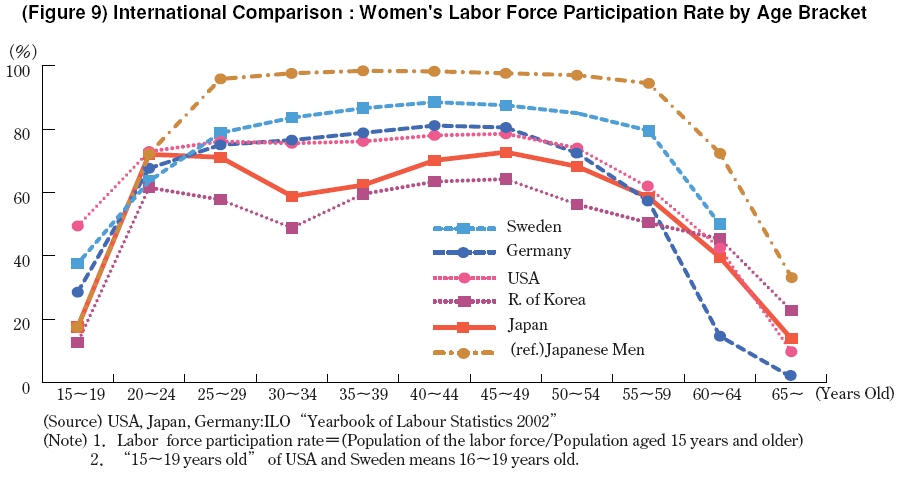
And here and here are two later reports on the number of temporary and daily workers falling. Interestingly, in America the huge layoffs in the male-dominated manufacturing and construction industries means that for the first time in history America may soon have more female than male workers, women tending to work in more stable sectors such as education and health-care instead (see here for a more in-depth look). This split is paralleled in Korea of course: women are disproportionately represented in the civil service for instance, as its exam-based system of entry renders it one of the few genuinely meritocratic employment sectors out there (by coincidence my sister-in-law just qualified, after four years of trying), but with women’s overall labor force participation still being the lowest in the world then men are likely to remain the primary breadwinners for many years to come.
Which is not to say that Korean men aren’t losing their jobs in droves, and many women taking over as the main or only earner: here is a short translation of one Korean man’s take on the resulting change of gender roles for his family, and here and here are two American pieces on the effects on men and women in general (update: and here is one on why the incidence of domestic violence tends to rise with unemployment).
2. Court to decide who will take custody of children
 Prompted by the custody battle between actor Choi Jin-sil’s (최진실) family and her ex-husband Cho Sung-min after her suicide in October last year (see here and here also), the Ministry of Justice has ruled that in the future family courts will decide who will take custody of children when a parent dies.
Under the current law, if a divorced mother or father with custodial rights dies, the surviving former spouse automatically gets the custody, regardless of how ”ill-prepared or inappropriate” a parent they are (source, left: unknown).
3. Economic slump drives more teenage girls into prostitution
Also depressingly predictable, although it’s good that Park Eun-jung, the head official within the Ministry for Health, Welfare and Family Affairs is keen to point out that “it’s not ”girls gone wild” who get involved in prostitution,” and that these days many teenagers have to sell sex simply ”to make ends meet,” although on the other hand I very much doubt her assertion that “teenage prostitution stemmed mostly out of curiosity six months ago.”
For the full report see here, and for some context see here, here. and especially Matt’s posts on teenage prostitution and related subjects at Gusts of Popular Feeling here, here and here.
4. Speaking out against perverted teachers
Korea Beat translates a Hankyoreh columnist on the pervasive culture of sexual harassment and molestation of female teachers and students at Korean schools and the often complete impunity with which male teachers get away with such acts. For a much more in-depth look at the issue and how it pertains to (false) stereotypes of foreign teachers as perverts and molesters, see Michael Hurt’s 2006 post at Scribblings of the Metropolitician here.
(Update: And Matt at Gusts of Popular Feeling has a related post here on a tabloid news documentary from 2005 that did a great deal in helping to shape and perpetuate “the image of English teachers as unqualified, pot-smoking child molesters”)
5. Korean women rush to buy self-defense weapons
The Korea Times reports that many women are rushing to buy self-defense weapons in the wake of the arrest of rapist and serial killer Kang Ho-soon, especially those compact enough to fit into a pocket or purse, and the sales of surveillance cameras, electronic door locks and other security gadgets has also correspondingly increased.
(Update: Korea Beat reports that the numbers of CCTV cameras is exploding in wealthier districts of Seoul especially, and all Seoul schools are also in the process of adding them and hiring security guards)
Much more interesting though, is a later report that women are also rushing home from work these days, fears for their own safety apparently outweighing the extremely wasteful but still deeply ingrained Korean work habit of being seen to be staying at work until the boss leaves, regardless of how much work there actually is – or usually isn’t – to do (see here for more, and here for what many workers are really doing during “work hours”). Hopefully, the reflection on women’s work/life priorities and especially personal safety will lead genuine shift in attitudes, the first target of which will I’d like to think would be the “bikkis” that physically drag young attractive women into nightclubs for the sake of attracting male spenders for instance, but against this optimistic interpretation of events that first Korea Times report mentions similar peaks of spending and interest in the wake of a the last serial killer arrested in 2006, presumably indicating that the change in habits was only temporary unfortunately.
6. Battered Cambodian woman stabs Korean husband
Read the report here. In related news, this report outlines the poor conditions under which many “import brides” live under, one indicator of which is a high rate of miscarriages due to malnutrition, doing heavy work on farms while pregnant, and a lack of access to/and knowledge of public health services.
But in one positive symbolic move that I hope will become official policy, a Japanese man has been banned from entering the Philippines for abusing his Filipino wife in Japan: “A foreigner who beats his wife is a menace to the society and who does not deserve our hospitality,” the Immigration commissioner said.
7. Fetus sex notification to be allowed
Although only after 28 weeks gestation, when ”no doctor would dare to perform an abortion”‘ a Korean Society of Obstetrics and Gynecology spokesman said.
But this is quite strange: presumably the cut-off date means that there are still strong concerns that younger fetuses would be aborted if they were discovered to be female for instance, but in fact the problems of the resulting gender imbalance were acknowledged and dealt with by Koreans over a decade ago, and Koreans have had a genuine positive shift in attitudes towards daughters since (unfortunately this is rarely reported in the foreign media, the Confucian penchant for sons being much more newsworthy apparently). Moreover, the current law banning notification at any age is completely ignored in practice (“Oh! The Baby looks strong/pretty”), so the practical and even symbolic effects of this law will be minimal.
Meanwhile, you (and many Koreans!) may be surprised to hear that abortion is actually technically illegal in Korea, despite Korea having one of the highest per capita rates of abortion in the world.
8. Lee Hyori swearing on TV
If you never watch Korean television then you will probably be unaware that Korean celebrity culture is very unlike its Western counterpart(s), starring in a variety of decidedly unglamorous and down-to-earth game and talkshows being an integral part of the process of acquiring and then maintaining popularity here for instance. While I can’t imagine the likes of Brad Pitt or Beyonce ever rolling around in mud or having trays dropped on their heads on national TV then, Korea’s number one sex symbol Lee Hyori is well-liked by many Koreans for not only appearing to enjoy herself while she does so, but for being so, well, normal too.
Hence personally I find it almost endearing that she said that (guest) “Chang Ui fucking loves women who can cook well” on national TV, although unfortunately many netizens don’t. For the details, see here, and no, she wasn’t advocating the joys of cooking for one’s husband!
True, at first glance this might not appear particularly meaningful in a feminist sense, but as I explain in that first link, the other (negative) difference with Western countries is that female celebrities especially are held to almost impossible moral standards by the Korean public, so any challenge to those attitudes is welcome, no matter how minor.
(Update: In hindsight, the explanation of what she said in that link above isn’t very accurate or even helpful, so after seeing the video here please read my own explanation here)
9. Naver, newspapers spat over lewd ads
In the last Korean Gender Reader I reported on the hypocrisy of Korean newspapers regularly criticizing prostitution in their print editions while having advertisements for and even guides to brothels on their online editions. Rather than removing them however, recent technical changes to Naver – as important to the Korean internet as, say, Google is to the American one – have resulted in some newspapers actually loading their web sites with more adult content and lewd advertisements in order to drive up traffic!
10. HIV cases top 6,000 for first time
From the The Korea Times:
The number of reported HIV cases in the nation topped 6,000 for the first time since 1985, when the country began to compile relevant data, the Korea Center for Disease Control and Prevention said.
The agency reported that the cumulative number of those with HIV had reached 6,120 at the end of December, 1,084 of whom had died.
A total of 797 new HIV cases were reported last year, up 7.1 percent from 744 the previous year.
It said the 99 percent of cases have resulted from sexual intercourse, with those in their 20s and 30s accounting for more than half of the total. Teenagers accounted for 2.5 percent, and those aged over 60 accounted for 7 percent. It said 743, or 94.2, percent were male
On the positive side though, despite the stereotypes it’s actually been a very long time since most Koreans thought that AIDS was a “gay disease” that they didn’t need to be concerned about because it “only affected foreigners.”
11. Son Tae-young has baby boy
Normally I’d pay very little attention to news of celebrity marriages and pregnancies, but after writing this post on Korean women’s concerns about their body image during pregnancy, some 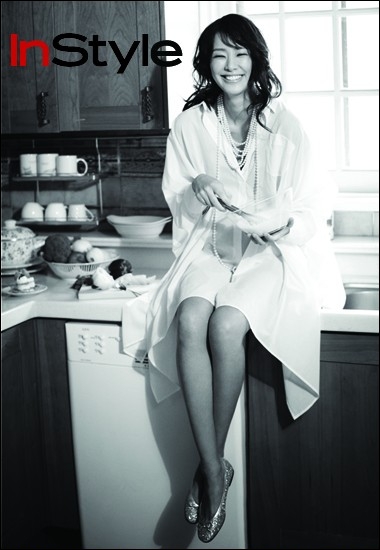 even dieting to remain thin, then I couldn’t help but notice how thin actress and former Miss Korea runner-up Son Tae-young (손태영) looked during hers (see her at 7 months here, and at 8 months here); which is not to say at all that I think she’s dieting herself or that her being thin is her fault somehow(!), but I do cringe to think of any Korean women as whale-like as my wife was when she was pregnant thinking that Son Tae-young is the norm to aspire to rather the exception.
On the plus side, Son Tae-young is breastfeeding her son that was born on the 6th, and hopefully she may well prove to be the slim & beautiful celebrity mom to talk about the benefits of doing so that mother and fellow-blogger Melissa of Expatriate Games noted Korean women so desperately need (source, right: unknown).
12. What Koreans consider fat
You’ll just be amazed at which celebrities have been criticized by netizens for their fatness at some point. See here, here, and here (the last because of these pictures).
(Update: most of those links are from the pop culture blog allkpop, and freyja writes a follow-up post briefly summarizing some of the issues raised by them here)
13. Singles at disadvantage from social system
Not that, say, ending the extremely wasteful practice of staying at work until the boss the leaves (see #5) or actually enforcing existing legislation on maternity leave, the provision of childcare facilities and checking the standards of them (see here and here) wouldn’t be much more effective ways of increasing Korea’s birth rate (currently the lowest in the world) but it is true that the tax breaks for married couples and so forth are now so big as to make single people grumble at least.
Actually, the Korea Times article of that title above is more interesting for its statistics on the numbers of single person households and a brief discussion of some of the reasons that make it difficult to people to live alone in Korea, a recent pet project of mine, so I’ll return to it later this week.
14. Men eye nursing jobs
I think the Korea Herald’s above title was a little of an exaggeration considering that men still only account for 5% of those that passed last week’s national nursing exam, but it’s certainly true that their numbers  have been increasing in recent years. In that exam there were 617 men out of the total of 11,717 successful applicants, and it was only in 2004 that the number exceeded 200 for the first time (source, right: Geoffrey Fairchild; CC BY 2.0).
One of the new male nurses interviewed says that he converted to medical nursing a few years ago as he foresaw problems in securing employment as a computer major, so I imagine there may well be a glut of new entrants in next year’s exam! And as for their impact, here are a few quick excerpts:
These qualified male nurses are highly demanded in hospitals and other medical fields.
“I am glad about the increase of male nurses,” said Han Sang-mal, a nursing supervisor in an orthopedic hospital in Cheongju. “Not only do we need their physical strength, but our male patients often prefer to be tended to by men.”
But the positives go beyond mere practicalities:
“People are dismissing the bias that the nursing job is submissive, a role to be filled mainly by women,” she said. “As the roles of nurses are expanding from hospital jobs to schools, public health centers, and private nursing homes, such wider spectrum of manpower is to be regarded as highly positive.”
The first official male nurse was Cho Sang-moon, who was licensed in 1962 and worked as a leading figure in the nursing field in the 1970s. Before Cho, only women could be qualified as nurses.
15. Divorce suit deals blow to Samsung’s father-to-son succession plan
The size and importance of Samsung to the Korean economy can not be understated, and hence there’s a lot riding on this particular divorce of Samsung’s heir apparent.
16. Four in ten telemarketers suffer sexual harassment
I very much doubt that Korea has a monopoly on this, and it’s probably true that most of the victims(?) of customers moaning or asking about their breast sizes can’t do any more than simply hanging up on them and flagging their number, but unfortunately:
…only 12 percent and 11 percent said they forwarded the calls to managers or took issue with the conversations, respectively. About 90 percent said their companies do not have a protocol for such circumstances, although 45 percent said the companies had preventive measures.
17. Court acknowledges rape of transsexual
It’s been quite an interesting period in Korea for laws regarding rape recently, last month seeing the first man convicted for spousal rape (still not a crime here) and then his suicide, and now this month a provincial court:
…for the first time found a man in his 20s guilty of ”raping” a transsexual, challenging the current law that defines rape to when a man has forcible sex with a woman born a female. The victim’s legal gender still remains man.
Not that presages a radical shift in legislation unfortunately, the judge stating that he based his decision on the facts that:
The victim has acted like woman since he was born. In 1974, when he turned 24, he underwent a gender reassignment program. He once also lived with a male partner for a decade. Given all of these, he can be seen as female.
And so:
Giving the unprecedented ruling, the judge set three criteria to define the precedent – whether the victim had sex change surgery; how long he/she has lived with appearance of the opposite sex; and if he/she has no problems having sexual relations.
I guess this means that homosexual rape (of either sex) isn’t a crime either? And what if a transgender person was raped only a week after his or her operation, or a month, or a year? Is those not long enough to count? To be frank, I don’t get more used or deadened to the sheer arbitrariness of the law the longer I stay in Korea, and it’s judgments like this and that below that prevent me from ever staying in Korea permanently, primarily out of concern for my kids.
18. Vietnamese mother denied custody of biological children
And in the same vein as my comment on the last piece, I’m almost scared at how the Seoul Family Court has virtually rewarded the Korean husband’s use of his unwitting Vietnamese wife as a baby factory for him and his former Korean wife. For all the details and issues involved with that, see Michael Breen’s excellent column here.
(Update: Not to be missed is Matt’s post placing the case in the wider context of Vietnamese brides and immigration to Korea here also, and there’s a substantial forum thread on the case over at Dave’s ESL Cafe here)
19.Women outnumber men amongst newly hired prosecuting attorneys

From Sonagi at the Marmot’s Hole:
An impressive 51% (58 out of 112) of newly hired prosecuting attorneys are women. These 58 new female prosecutors will join 316 women who comprise 18% of the 1716 prosecutors employed nationwide. The increasing number of women is expected to challenge the old boys’ network and change the way domestic violence cases are handled.
For some context to those numbers and the reality of being a female lawyer in Korea, see Korea Law Blog here.


 (Source: Korea Times, 25/02/2009, p. 20; see full advertisement here)
 Min-ho (이민호) makes clear, things have certainly changed a great deal since, having one person on a bed and/or lower than the other also being a common way of showing ranking. Which is not to say that—now that you have it in mind—you won’t still find many many examples of women with the knee bend in advertisements (or, indeed, in a bed).
 (Source:




 (Source:
 , which editor-in-chief James provides a quick review of over at the ironically-titled
 And here’s



 And having an attractive female Korean teacher myself for over a year, then I can personally vouch for the effects of this, even though I was engaged at the beginning of that period and married towards the end, and didn’t for a moment seriously entertain that there was any chance of us getting together even if we’d both been single. My mind did tend to wander, however, when her back was turned, and which I was inordinately pleased that year to discover sometimes happened with me and my own female (adult) students, one of them naively both passing on her and her classmates’ Cyworld addresses one day and assuming that my Korean was much worse than it was (source, right:

 The Grand Narrative
