What a Lovely Big Shiny Purple One My Man Has!

whisen-air-conditioner-advertisement-han-ye-seul-song-seung-hun(Source: Korea Times, 25/02/2009, p. 20; see full advertisement here)

A classic case of sociologist Erving Goffman’s notion of “The Ritualization of Subordination” in depictions of the sexes together, although you don’t need to have heard of either to tell who’s the boss in this particular advertisement!

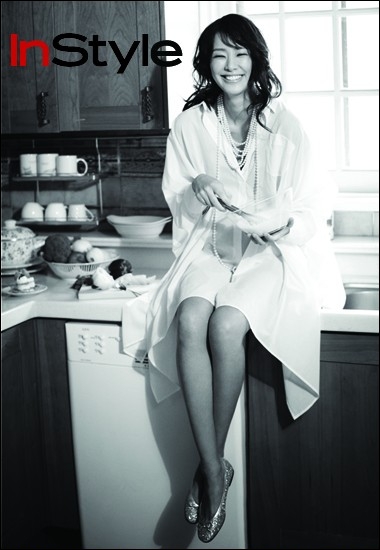
One slightly less obvious point of interest though, is Han Ye-seul’s (한예슬) use of the “bashful knee bend,” a common motif for women in advertisements, and which according to Goffman:

…can be read as a foregoing of full effort to be prepared and on the ready in the current social situation, for the position adds a moment to any effort to fight or flee. Once again one finds a posture that seems to presuppose the goodwill of anyone in the surround who could offer harm. Observe…that a sex-typed subject is not so much involved as a format for constructing a picture (Gender Advertisements, 1976, p. 45).

Which I read as it being used in advertisements to show women feeling safe and secure in the presence of their male protectors, in this case Song Seung-heon (송승헌). And why not? To claim that the depiction of that natural feeling is sexist in itself is absurd, but Goffman’s point was simply that the knee bend, and a host of other means of active/passive dichotomies in depictions of the sexes like that—such as men almost always being portrayed as taller than women, far more than in real life—were still overdone in advertising, and not exactly compensated by images of women as assertive, aggressive and/or as instructors, superiors and leaders either.

Or at least in 1976; as that last link explains and the advertisement on the right (source: popseoul) with Lee lee min ho levisMin-ho (이민호) makes clear, things have certainly changed a great deal since, having one person on a bed and/or lower than the other also being a common way of showing ranking. Which is not to say that—now that you have it in mind—you won’t still find many many examples of women with the knee bend in advertisements (or, indeed, in a bed).

But even more interesting though, is the fact that it is Song Seung-heon at all that is advertising the Whisen (휘센) air-conditioner, for actually I only noticed the ad because is the first Korean one for an air-conditioner that I’ve seen in which a man is the center of attention. Sure, that they’re dominated by women is no surprise, as it’s also true of their Western counterparts, albeit to a much lesser extent (but a difference one would expect given Korea’s deeply patriarchal society). But then bear in mind that the process of  modernization that electronics and electric appliances still epitomize—especially in a society as development-obsessed as Korea—has always involved “housewifization” and the nuclearization of the family, and so while it’s certainly true to say that owning one’s first washing machine in the 1960s in the UK, say, was also a definite signifier of status and upward mobility, Korean advertisements for the same should be placed in the context of a society where consumerism has been equated with national security, and in which the lowest numbers of women in the world work (for a developed society).  Hence not only are Korean examples almost hyperreal advertisements for modernity itself, but so far they’ve overwhelmingly featured female-centered narratives, Korean housewives’ need for the self-fulfillment that Betty Friedan saw that their purchase provided being all that more the greater here, and other manifestations of which would be an obsessive focus on real-estate speculation and on children’s educational achievements.

Which might sound a little to take in all at once, but I assure you, once you’ve seen a few examples like the one below then you’ll get a sense of how surreal they consistently are, and why this deserves explanation (and have also reminded me personally of how advertisements really are a reflection of the zeitgeist of an era). So, why the change in that particular advertisement?

My first thought was because it was for the “Luxury” (럭셔리) model, as the instant I learned that in fact a scene from science-fiction novel I read as a teenager came to mind, which opened with a conversation between a couple in which the woman explained to her fiance that, while women did the bulk of shopping, men still bought the important expensive things like houses and cars. As it happens, the couple were in a decidely backward parallel universe where, among other things, American women had never gained the vote(!), but obviously it still has echoes in real life, and indeed this logic does especially apply to Korea: for instance, while I’m not sure to what extent this tradition is followed, I’ve repeatedly heard that it is expected that before a wedding a new wife’s family must provide for the furniture for their new apartment, whereas the husband’s family must provide the apartment itself. Does the expense of this model then, draw it from the female realm to the male, thereby appealing more to the latter? Or is the advertisement still primarily aimed at women, this supposedly luxurious model possessing a male and/or sophisticated aura that other, cheaper ones lack? Or is there still some other factor that I’m missing?

Unfortunately, the K-pop blogs (see here, here and here) do little more than provide more pictures and links to related commercials, so I’d be happy to hear your own thoughts. And I’ll make sure to keep an eye out for mention of it in next month’s Korean advertising magazines.

Expect More Nudity During This Recession

Apparently, I wasn’t the only one to notice Duoback’s advertisement for its new “Alpha” chair a few days ago. Yes, that one:

korean-duoback-alpha-chair-advertisement-듀오백알파-광고(Source: Metro)

It’s always nice to be proved right. Even if it is true that my earlier observations about the advertisement were common-sense really, and that it just so happens to be a tabloid-style article from Yahoo Korea that provides the first confirmation of them:

Recessions Lead to Nude Advertisements…and Flustered Commuters

인 박인숙 (35세, 가명)씨는 출근 후 회사에 비치된 신문들을 훑어보며 깜짝 놀랐다.

After arriving at work one day, a 35 year-old woman that we’ll call Park In-sook (not her real name) was surprised at what she saw while browsing a newspaper provided by her company.

맨살을 훤히 드러낸 한 여성의 뒷모습이 담긴 광고가 눈에 띄었기 때문. 녹색의 투명한 타올이 엉덩이에 살짝 걸쳐 있을 뿐 전라에 가깝다. 신문에 실린 이 광고의 품목은 여성전용 제품이 아니었다. 기능성 의자 광고였다.

Her eyes were drawn to an advertisement which featured the back side *cough* of a woman, completely naked but for a green transparent towel lightly covering her buttocks. The advertisement wasn’t actually for any product specifically for women, but was for an expensive ergonomic chair instead.

‘인간의 몸을 기억하다’는 메시지를 담고 있는 이 광고는 여성 누드 사진을 이용해 독자들의 눈길을 끌고 있다.

The accompanying message in the advertisement was that “This chair remembers the human form,” and the nude woman was clearly placed in it simply to draw the attention of readers.

duoback-loves-your-body-듀오백또 다른 신문엔 여성의 상체 누드(뒷모습) 사진이 전면광고로 실렸다. 이 광고는 한 아울렛을 소개하는 것으로 역시 여성의 알몸이 등장할 만한 제품과 거리가 멀었다.

A different full-page advertisement for a outlet store featuring only a woman’s nude back has already been in another newspaper, and in that earlier advertisement too the product(s) advertised had little to do with nor required nude women (James: not the one on the right for another Duoback chair, although it seems a strange coincidence that it’s the only other Duoback chair featuring nudity, and that the “outlet store” is unnamed; I think the report made a mistake).

최근 이처럼 일간지에 여성의 누드 사진이 활용된 광고가 눈에 띄게 늘자 독자들은 낯 뜨겁다는 반응이다. 아침부터 신문에 누드 사진과 다름없는 광고를 보게 돼 불쾌하다는 설명이다.

Recently, there has been a spate of advertisements featuring nudity in daily newspapers, and these have been making many readers embarrassed and uncomfortable when they encounter them. But these days, it is almost impossible to escape them.

박인숙씨는 “신문광고에 누드사진이 실리면 시선을 집중시킬 순 있겠지만 너무 선정적인 광고로 인해 불쾌해지는 사람들도 많을 것”이라며 “상쾌한 기분으로 아침을 시작해야하는데 이런 광고는 달갑지 않다”고 토로했다.

According to Park In-sook, “Certainly advertisements featuring nudity will get many reader’s attentions, but sensational and shocking advertisements can also make many people uncomfortable. It is important to start every day with a fresh mind, and advertisements like these aren’t helping.”

한 편으론 독자의 시선을 한 번에 끌어당길 수 있다는 측면에서 광고효과가 극대화된다는 평가다. 특히 요즘같이 불황에는 사람들의 감각을 자극하는 광고기법이 먹힌다는 속설대로 제품을 하나라도 더 팔려고 하는 회사들이 이런 광고를 자주 하고 있다는 분석이 나온다.

On the other hand, advertisements like this are more effective because they attract consumers’ attentions with just one glance. And as both modern analysis and a traditional saying advise, during a recession companies should use dependable advertisement techniques which are well proven to do so.

한 광고회사 PD는 “통상적으로 경제가 어려울 땐 자신의 소득을 기준으로 이성적인 구매를 하기 마련인데 회사 입장에선 조금이라도 자극적인 광고를 통해 소비자를 유혹하려고 한다”며 “섹스어필처럼 감각에 호소하는 광고는 단기적으로 큰 효과가 있다”고 말했다.

According to a spokesperson for the advertisement company PD behind the Duoback advertisement, “People naturally spend rationally and frugally during a recession, so from a company’s perspective it is best to use stimulating and direct advertisements that appeal to basic human senses, and those with sex-appeal especially will certainly get a quick result.”

이어 “많은 돈을 들여 톱스타를 쓰지 못하는 중소기업에서 이런 광고를 선호한다”며 “경기 불황일수록 이런 광고를 더욱 많이 하게 될 것”이라고 덧붙였다.

Moreover, “Small and medium-sized that can’t afford top stars tend to prefer these kinds of advertisements, and as the economy gets worse we can expect to see more like these.”

Because a woman’s legs can NEVER be too thin…

After all, why settle for mere sausage legs when you can have drumsticks instead?

korean-diet-advertisement-for-legsFound in passing while flicking through a discarded copy of the Korean version of the Metro International, a free daily newspaper. While it’s obvious what it’s advertising, I was sufficiently curious to find out what it was saying exactly:

나는 원래 윤아보다 다리가 섹시했다

다만 쥬비스 관리를 몰랐을 뿐!

Originally my legs were sexier than Yoona’s, but the only problem was I didn’t know about the care that Juvis (the name of the diet clinic) could provide.

내 다리는 원레 백만불짜리 다리,

세월의 무게를 견디기위해

점점 두꺼워져 갔지

이제 쥬비스로 관리받아

예전의 각선미를 되찾을거야!

Originally my legs looked like a million dollars, but in order to get through life my legs got thicker and thicker. Now, through Juvis I am going to receive a service that will restore my legs to their former beauty!

더 즐거워진 쥬비스 체험 EVENT

A more enjoyable Juvis experience event

3월부터 쥬비스의 다양한, 관리시스템이 새롭게 시작됩니다! 이벤트 기간 동안 신규 패키지를 동록하시는 고객께 새로운 관리시스템 중 2개의 이벤트 프로그램을 무료로 체험할 수 있는 혜택을 드립니다.

From March, Juvis will introduce a more varied body care system. For those that register, you will receive the benefits of experiencing two event programs for no extra charge.

여자가 꿈꾸던 라인

쥬비스에서 관리하세요 몸이 즐겨운 다이어트

The line that women have dreamt about

Get the care and a diet enjoyable for your body at Juvis

쥬비스 다이어트가 즐거운 이유:

  • 몸이 힘들지 않아서 즐겁다
  • 요요를 완벽히 잡아서 즐겁다
  • 부작용이 없어서 즐겁다
  • 탄력까지 살려줘서 즐겁다
  • 원하는 부위가 빠져서 즐겁다
  • 추가 부담이 없어서 즐겁다

Reasons why a Juvis diet is enjoyable:

  • It is not tiring for the body
  • Your weight will not go up and down like a yoyo
  • There are no side-effects
  • You will revive your body’s elasticity and bounce
  • You can lose weight from the body parts you want to
  • There are no additional charges

Sigh…

Korean Gender Reader

blue-puzzled-pororo-and-pink-happy-loopy-waving(Sources: Unknown)

Sorry for the long delay since the last Korean Gender Reader: much as I like to write about the low Korean birth-rate and/or the lack of affordable and trustworthy childcare that effectively stops mothers from working in Korea, I’d rather not personally suffer the side effects of those for the sake of being a better writer. Nor can I see how my sleep-deprivation, lack of exercise, weight-gaining and coming down with regular colds would ever particularly help with that either!

Hence my wife and I have bitten the bullet and will be sending our (nearly) three year-old daughter Alice to a lovely kindergarten down the road come March, 9am-2pm Mon-Fri for 320,000 won a month. On the one hand it’ll naturally be strange and a little sad without her, but on the other it’ll be good to be able to grab some much-needed sleep at the same time that our six-month old baby Elizabeth does, and especially not to have Alice screaming about watching the Korean cartoon “Pororo the Little Penguin”  all day, and me constantly worrying that Loopy(!), the only female character in the first series, “likes cooking and the arts” at her home and always seems to be making gifts of food for the boys and/or watching them on the sidelines while they invent stuff and go on adventures. Fortunately the inclusion of active, sports-mad Petty (who thinks of their English names?) somewhat compensates in the next series (update: and it turns out I missed this new positive change too).

This post covers the period since the last one then, or *cough* just over three weeks, and with the stories roughly in chronological order (with the exception of some on domestic violence, which I’ll be covering in the next post or the next). Sorry in advance for 3000 words that that delay meant, and they’ll definitely be weekly from now on.

1. Females hardest hit by economic slump

Korean Female University Student(Source: UNC – CFC – USFK; CC BY 2.0)

As I predicted, female workers (and the self-employed) are being the hardest hit by the troubled economy:

According to the National Statistical Office (NSO), the ratio of economically active females recorded 48.8 percent in December, the lowest level since last February. The rate dropped by 1.6 percentage points from November, when it hovered above 50 percent.

Not that this is due to sexism per se, more because of:

…the high ratio of part-timers and contract workers among women, who are the first target when businesses decide to cut their workforce.

And here and here are two later reports on the number of temporary and daily workers falling. Interestingly, in America the huge layoffs in the male-dominated manufacturing and construction industries means that for the first time in history America may soon have more female than male workers, women tending to work in more stable sectors such as education and health-care instead (see here for a more in-depth look). This split is paralleled in Korea of course: women are disproportionately represented in the civil service for instance, as its exam-based system of entry renders it one of the few genuinely meritocratic employment sectors out there (by coincidence my sister-in-law just qualified, after four years of trying), but with women’s overall labor force participation still being the lowest in the world then men are likely to remain the primary breadwinners for many years to come.

Which is not to say that Korean men aren’t losing their jobs in droves, and many women taking over as the main or only earner: here is a short translation of one Korean man’s take on the resulting change of gender roles for his family, and here and here are two American pieces on the effects on men and women in general (update: and here is one on why the incidence of domestic violence tends to rise with unemployment).

2. Court to decide who will take custody of children

choi-jin-sil-최진실-suicide-자살Prompted by the custody battle between actor Choi Jin-sil’s (최진실) family and her ex-husband Cho Sung-min after her suicide in October last year (see here and here also), the Ministry of Justice has ruled that in the future family courts will decide who will take custody of children when a parent dies.

Under the current law, if a divorced mother or father with custodial rights dies, the surviving former spouse automatically gets the custody, regardless of how ”ill-prepared or inappropriate” a parent they are (source, left: unknown).

3. Economic slump drives more teenage girls into prostitution

Also depressingly predictable, although it’s good that Park Eun-jung, the head official within the Ministry for Health, Welfare and Family Affairs is keen to point out that “it’s not ”girls gone wild” who get involved in prostitution,” and that these days many teenagers have to sell sex simply  ”to make ends meet,” although on the other hand I very much doubt her assertion that “teenage prostitution stemmed mostly out of curiosity six months ago.”

For the full report see here, and for some context see here, here. and especially Matt’s posts on teenage prostitution and related subjects at Gusts of Popular Feeling here, here and here.

4. Speaking out against perverted teachers

Korea Beat translates a Hankyoreh columnist on the pervasive culture of sexual harassment and molestation of female teachers and students at Korean schools and the often complete impunity with which male teachers get away with such acts. For a much more in-depth look at the issue and how it pertains to (false) stereotypes of foreign teachers as perverts and molesters,  see Michael Hurt’s 2006 post at Scribblings of the Metropolitician here.

(Update: And Matt at Gusts of Popular Feeling has a related post here on a tabloid news documentary from 2005 that did a great deal in helping to shape and perpetuate “the image of English teachers as unqualified, pot-smoking child molesters”)

5. Korean women rush to buy self-defense weapons

The Korea Times reports that many women are rushing to buy self-defense weapons in the wake of the arrest of rapist and serial killer Kang Ho-soon, especially those compact enough to fit into a pocket or purse, and the sales of surveillance cameras, electronic door locks and other security gadgets has also correspondingly increased.

(Update: Korea Beat reports that the numbers of CCTV cameras is exploding in wealthier districts of Seoul especially, and all Seoul schools are also in the process of adding them and hiring security guards)

Much more interesting though, is a later report that women are also rushing home from work these days, fears for their own safety apparently outweighing the extremely wasteful but still deeply ingrained Korean work habit of being seen to be staying at work until the boss leaves, regardless of how much work there actually is – or usually isn’t – to do (see here for more, and here for what many workers are really doing during “work hours”). Hopefully, the reflection on women’s work/life priorities and especially personal safety will lead genuine shift in attitudes, the first target of which will I’d like to think would be the “bikkis” that physically drag young attractive women into nightclubs for the sake of attracting male spenders for instance, but against this optimistic interpretation of events that first Korea Times report mentions similar peaks of spending and interest in the wake of a the last serial killer arrested in 2006, presumably indicating that the change in habits was only temporary unfortunately.

6. Battered Cambodian woman stabs Korean husband

Read the report here. In related news, this report outlines the poor conditions under which many “import brides” live under, one indicator of which is a high rate of miscarriages due to malnutrition, doing heavy work on farms while pregnant,  and a lack of access to/and knowledge of public health services.

But in one positive symbolic move that I hope will become official policy,  a Japanese man has been banned from entering the Philippines for abusing his Filipino wife in Japan: “A foreigner who beats his wife is a menace to the society and who does not deserve our hospitality,” the Immigration commissioner said.

Korean Father and Son(Source: James Kim; CC BY-SA 2.0)

7. Fetus sex notification to be allowed

Although only after 28 weeks gestation, when ”no doctor would dare to perform an abortion”‘ a Korean Society of Obstetrics and Gynecology spokesman said.

But this is quite strange: presumably the cut-off date means that there are still strong concerns that younger fetuses would be aborted if they were discovered to be female for instance, but in fact the problems of the resulting gender imbalance were acknowledged and dealt with by Koreans over a decade ago, and Koreans have had a genuine positive shift in attitudes towards daughters since (unfortunately this is rarely reported in the foreign media, the Confucian penchant for sons being much more newsworthy apparently). Moreover, the current law banning notification at any age is completely ignored in practice (“Oh! The Baby looks strong/pretty”), so the practical and even symbolic effects of this law will be minimal.

Meanwhile, you (and many Koreans!) may be surprised to hear that abortion is actually technically illegal in Korea, despite Korea having one of the highest per capita rates of abortion in the world.

8. Lee Hyori swearing on TV

If you never watch Korean television then you will probably be unaware that Korean celebrity culture is very unlike its Western counterpart(s), starring in a variety of decidedly unglamorous and down-to-earth game and talkshows being an integral part of the process of acquiring and then maintaining popularity here for instance. While I can’t imagine the likes of Brad Pitt or Beyonce ever rolling around in mud or having trays dropped on their heads on national TV then, Korea’s number one sex symbol Lee Hyori is well-liked by many Koreans for not only appearing to enjoy herself while she does so, but for being so, well, normal too.

Hence personally I find it almost endearing that she said that (guest) “Chang Ui fucking loves women who can cook well” on national TV, although unfortunately many netizens don’t. For the details, see here, and no, she wasn’t advocating the joys of cooking for one’s husband!

True, at first glance this might not appear particularly meaningful in a feminist sense, but as I explain in that first link, the other (negative) difference with Western countries is that female celebrities especially are held to almost impossible moral standards by the Korean public, so any challenge to those attitudes is welcome, no matter how minor.

(Update: In hindsight, the explanation of what she said in that link above isn’t very accurate or even helpful, so after seeing the video here please read my own explanation here)

9. Naver, newspapers spat over lewd ads

In the last Korean Gender Reader I reported on the hypocrisy of Korean newspapers regularly criticizing prostitution in their print editions while having advertisements for and even guides to brothels on their online editions. Rather than removing them however, recent technical changes to Naver – as important to the Korean internet as, say, Google is to the American one – have resulted in some newspapers actually loading their web sites with more adult content and lewd advertisements in order to drive up traffic!

10. HIV cases top 6,000 for first time

From the The Korea Times:

The number of reported HIV cases in the nation topped 6,000 for the first time since 1985, when the country began to compile relevant data, the Korea Center for Disease Control and Prevention said.

The agency reported that the cumulative number of those with HIV had reached 6,120 at the end of December, 1,084 of whom had died.

A total of 797 new HIV cases were reported last year, up 7.1 percent from 744 the previous year.

It said the 99 percent of cases have resulted from sexual intercourse, with those in their 20s and 30s accounting for more than half of the total. Teenagers accounted for 2.5 percent, and those aged over 60 accounted for 7 percent. It said 743, or 94.2, percent were male

On the positive side though, despite the stereotypes it’s actually been a very long time since most Koreans thought that AIDS was a “gay disease” that they didn’t need to be concerned about because it “only affected foreigners.”

11. Son Tae-young has baby boy

Normally I’d pay very little attention to news of celebrity marriages and pregnancies, but after writing this post on Korean women’s concerns about their body image during pregnancy, some pregnant-son-tae-youngeven dieting to remain thin, then I couldn’t help but notice how thin actress and former Miss Korea runner-up Son Tae-young (손태영) looked during hers (see her at 7 months here, and at 8 months here); which is not to say at all that I think she’s dieting herself or that her being thin is her fault somehow(!), but I do cringe to think of any Korean women as whale-like as my wife was when she was pregnant thinking that Son Tae-young is the norm to aspire to rather the exception.
On the plus side, Son Tae-young is breastfeeding her son that was born on the 6th, and hopefully she may well prove to be the slim & beautiful celebrity mom to talk about the benefits of doing so that mother and fellow-blogger Melissa of Expatriate Games noted Korean women so desperately need (source, right: unknown).

12. What Koreans consider fat

You’ll just be amazed at which celebrities have been criticized by netizens for their fatness at some point. See here, here, and here (the last because of these pictures).

(Update: most of those links are from the pop culture blog allkpop, and freyja writes a follow-up post briefly summarizing some of the issues raised by them here)

13. Singles at disadvantage from social system

Not that, say, ending the extremely wasteful practice of staying at work until the boss the leaves (see #5) or actually enforcing existing legislation on maternity leave, the provision of childcare facilities and checking the standards of them (see here and here) wouldn’t be much more effective ways of increasing Korea’s birth rate (currently the lowest in the world) but it is true that the tax breaks for married couples and so forth are now so big as to make single people grumble at least.

Actually, the Korea Times article of that title above is more interesting for its statistics on the numbers of single person households and a brief discussion of some of the reasons that make it difficult to people to live alone in Korea, a recent pet project of mine, so I’ll return to it later this week.

14. Men eye nursing jobs

I think the Korea Herald’s above title was a little of an exaggeration considering that men still only account for 5% of those that passed last week’s national nursing exam, but it’s certainly true that their numbers Male Nurse Action Figurehave been increasing in recent years. In that exam there were 617 men out of the total of 11,717 successful applicants, and it was only in 2004 that the number exceeded 200 for the first time (source, right: Geoffrey Fairchild; CC BY 2.0).

One of the new male nurses interviewed says that he converted to medical nursing a few years ago as he foresaw problems in securing employment as a computer major, so I imagine there may well be a glut of new entrants in next year’s exam! And as for their impact, here are a few quick excerpts:

These qualified male nurses are highly demanded in hospitals and other medical fields.

“I am glad about the increase of male nurses,” said Han Sang-mal, a nursing supervisor in an orthopedic hospital in Cheongju. “Not only do we need their physical strength, but our male patients often prefer to be tended to by men.”

But the positives go beyond mere practicalities:

“People are dismissing the bias that the nursing job is submissive, a role to be filled mainly by women,” she said. “As the roles of nurses are expanding from hospital jobs to schools, public health centers, and private nursing homes, such wider spectrum of manpower is to be regarded as highly positive.”

The first official male nurse was Cho Sang-moon, who was licensed in 1962 and worked as a leading figure in the nursing field in the 1970s. Before Cho, only women could be qualified as nurses.

15. Divorce suit deals blow to Samsung’s father-to-son succession plan

The size and importance of Samsung to the Korean economy can not be understated, and hence there’s a lot riding on this particular divorce of Samsung’s heir apparent.

16. Four in ten telemarketers suffer sexual harassment

I very much doubt that Korea has a monopoly on this, and it’s probably true that most of the victims(?) of customers moaning or asking about their breast sizes can’t do any more than simply hanging up on them and flagging their number, but unfortunately:

…only 12 percent and 11 percent said they forwarded the calls to managers or took issue with the conversations, respectively. About 90 percent said their companies do not have a protocol for such circumstances, although 45 percent said the companies had preventive measures.

17. Court acknowledges rape of transsexual

It’s been quite an interesting period in Korea for laws regarding rape recently, last month seeing the first man convicted for spousal rape (still not a crime here) and then his suicide, and now this month a provincial court:

…for the first time found a man in his 20s guilty of ”raping” a transsexual, challenging the current law that defines rape to when a man has forcible sex with a woman born a female. The victim’s legal gender still remains man.

Not that presages a radical shift in legislation unfortunately, the judge stating that he based his decision on the facts that:

The victim has acted like woman since he was born. In 1974, when he turned 24, he underwent a gender reassignment program. He once also lived with a male partner for a decade. Given all of these, he can be seen as female.

And so:

Giving the unprecedented ruling, the judge set three criteria to define the precedent – whether the victim had sex change surgery; how long he/she has lived with appearance of the opposite sex; and if he/she has no problems having sexual relations.

I guess this means that homosexual rape (of either sex) isn’t a crime either? And what if a transgender person was raped only a week after his or her operation, or a month, or a year? Is those not long enough to count? To be frank, I don’t get more used or deadened to the sheer arbitrariness of the law the longer I stay in Korea, and it’s judgments like this and that below that prevent me from ever staying in Korea permanently, primarily out of concern for my kids.

18. Vietnamese mother denied custody of biological children

And in the same vein as my comment on the last piece, I’m almost scared at how the Seoul Family Court has virtually rewarded the Korean husband’s use of his unwitting Vietnamese wife as a baby factory for him and his former Korean wife. For all the details and issues involved with that, see Michael Breen’s excellent column here.

(Update: Not to be missed is Matt’s post placing the case in the wider context of Vietnamese brides and immigration to Korea here also, and there’s a substantial forum thread on the case over at Dave’s ESL Cafe here)

19.Women outnumber men amongst newly hired prosecuting attorneys

finding-your-career-path-with-sinfest

(Source: Sinfest, May 9 2004)

From Sonagi at the Marmot’s Hole:

An impressive 51% (58 out of 112) of newly hired prosecuting attorneys are women. These 58 new female prosecutors will join 316 women who comprise 18% of the 1716 prosecutors employed nationwide. The increasing number of women is expected to challenge the old boys’ network and change the way domestic violence cases are handled.

For some context to those numbers and the reality of being a female lawyer in Korea, see Korea Law Blog here.

Are Korea’s Women Boxers Good Enough for Adidas?

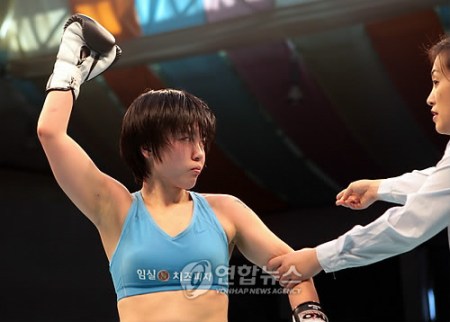
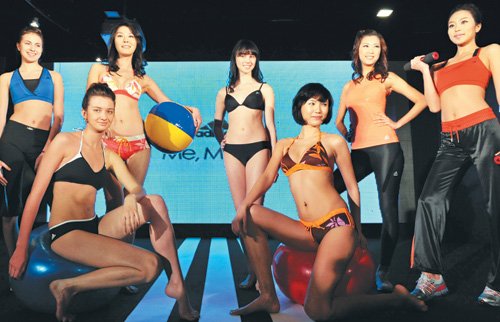
kim-ji-young-twoWriting earlier this month, I was very impressed by the rhetoric of the launch of Adidas Korea’s “Me, Myself” campaign, and especially by the healthy-looking models used. But one fair criticism by frequent commenter Sonagi was that while on the one hand they definitely weren’t “the gaunt-looking models of most fashion shows,” were all “healthy and glowing,” and may well have shown “that women could look stylish while working out at the gym, doing complicated yoga moves or swimming in the pool,” on the other hand they certainly didn’t appear to have anything at all like the physiques of actual athletes either, somewhat diluting the campaign’s supposed message (source, left: Yonhap News).

And it’s not hard to think of attractive athletes who could have—nay, should have—taken their place instead, a point which I was suddenly reminded of earlier today when I was flicking channels and happened to come across IFBA Bantamweight Champion Kim Ji-Young (김지영) in action, her—let’s face it—feminine appearance being so in contrast to the bulk of her counterparts (in both senses of the phrase!) that I immediately sat up and took notice. As it happens, she was in her hometown of Yeongdong City, successfully defending her title for the fourth time (against Dennapa Sukruaangrueng of Thailand).

(Update, September 2014: Reading over this post five years later, I’m cringing at—among other things—my implication that women with bulky physiques are any less feminine than Kim Ji-Young, and the notion that they could never be accepted as endorsement models for sports clothing companies).

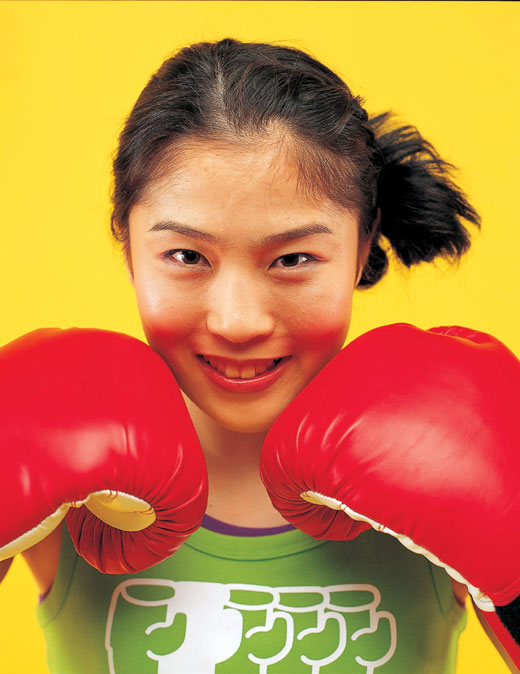
Unfortunately, as images of female athletes tend to be unflattering, taken as they are at instants of extreme pain, anger, passion or even all three (not that those of male athletes aren’t kim-ji-young-oneeither) then in lieu of a video of the fight I saw then that photo of her above and this on the right from 2005 (source: Yonhap News) will have to do for my purpose, which is to ask you if she could realistically be a model for Adidas or any other clothing company? Why or why not? Yes, granted, she does has bigger arms than average (naturally), but although this is not to say that people of either sex can only find athletic role models in those of a similar (or desired) size to them, her diminutive height and weight  (“bantamweight” means 51-54 kg) and small bust do make her very similar physically to a lot of Korean women, albeit having muscle where they usually have fat. Moreover, given that the notions that models “have to” be tall and thin would supposedly be the very antithesis of the Me, Myself campaign, then I can’t think of any reason to reject her for something like that especially.

As it happens, there is already a Korean female boxer who makes a great deal of money through sponsorship, commercial and TV appearances: Choi Shin-hui (최신희), whom I found about via this slightly old but otherwise excellent introduction to female boxing in Korea over at Korea Beat, and it turns out that two years ago at least there was quite a boom in the sport, with Korea having several world champions. I’m almost a little reluctant to post any pictures of her however, as with the vast majority available being modeling shots (including this one below for Vogue magazine in 2004 for example; see here for the article), then they’re naturally going to present her in a much better light than the few and quite frankly rather hideous ones of Kim Ji-young in action out there. So I include a link to this and this other one (scroll down) of Choi Shin-hui from that period too, not to imply that she’s ugly in them—quite the opposite—but more to demonstrate that they’re certainly less flattering than those to be found in advertisements, which just again goes to show that however unglamorous they—or you and I for that matter—can appear in photos of them grunting away at their sport(s) can be, surely Kim Ji-young and/or other athletes like her should have been in consideration for even a one-off, token appearance at a launch for products that are supposedly aimed at athletic women? Even just the minimal consideration towards the campaign’s professed message that that would have demonstrated would have been much better than none at all.

choi-shin-hui-boxing-in-vogue-women-in-2004(Source: DBSD Boxing)

Or am I making too much of it? Do you think athletes weren’t used simply (and perhaps quite legitimately) because of their inexperience with a catwalk? Or is there another simple reason I’m overlooking?

Regardless, if you’ve read this far then you’ll probably also be quite interested in and inspired by this story of 18 year-old Choi Hyun-Mi, who defected with her family from North Korea in 2004 and on whose boxing success they now entirely rely on for financial support (Update: Sorry that the link has died; instead here’s a video below). And I have one final request too: somewhere on this list of expat blogs is one I used to read by a woman in Seoul who happens to be a female boxer and very active in the boxing scene, but I’ve completely forgotten both its and her name, it being a long time since this blog you’re reading turned my own reading of other blogs from pleasure into business (sigh). Writing this post has made me interested again though, and I may well want to pick her brains about some of the issues raised in it too, so if anyone knows who I’m talking about, please pass on her blog address!

A Penetrating New Look at Japanese and Korean Love Hotels

korean-movie-couple-in-passionate-embrace(Source: Unknown)

If you’ve been following my recent discussions on why Koreans generally live at home until marriage, then you’ll have noticed that one gap in those were the ubiquitous love-hotels (러브호텔) that were the obvious corollary of that arrangement, and which would probably have been more interesting topics than demographic data on Korean household types and student loans too. In my defense though, I already covered premarital sex and cohabitation and their relation to Korean capitalism (yes, really) in lengthy posts back in 2007, and besides which love hotels are not only or probably even primarily used by young unmarried couples. The numbers of hotels that are in the middle of the countryside for instance, relatively devoid of that age group, and accessible only after quite some driving, testify to the fact that they are also host to just as many adulterous trysts in practice.

But that the latter occurs doesn’t mean that grown children, parents and even grandparents all under one roof can’t both be faithful to their partners and spouses and still chafe at the lack of space and privacy, and so need to get away for a few hours occasionally. Which is why although I might still balk at opening one next to an elementary school myself, I’m all for love hotels, and see no reason to pretend that both the need and the demand don’t both exist in droves. Hence I’m very interested in reading about the development of both in Ed Jacob’s new book Love Hotels: An Inside Look at Japan’s Sexual Playgrounds, which editor-in-chief James provides a quick review of over at the ironically-titled Japan Probe blog. History-cum-practical guide, I’d be surprised if the general course of events described in the book wasn’t closely paralleled in Korea too, albeit perhaps with a gap of ten to fifteen years as it reached the same level of economic development.

love-hotels-an-inside-look-at-japans-sexual-playgrounds-ed-jacobUnfortunately there the similarities probably end, for in a social environment where women are so concerned about their virginal reputation that they rely on men for contraception (lest a proactive attitude reveal their experience), and in which one of the largest prostitution industries in the world exists and is openly advertised despite periodic crackdowns and extensive legislation banning it (see here also) too, then in Korea love hotels and what occurs in them are like dogs loudly mating in the corner of the garden: an inescapable but otherwise seedy, unspoken part of life that is preferably hidden away from polite society.

In other words, the polar opposite of their hygienic and matter-of-fact Japanese counterparts. The hotels that is, not the dogs.

But having said that, it’s (naturally) been many years since I’ve visited a hotel myself, my daughters and meager family budget preventing much traveling these days.  So, in lieu of more fieldwork on my part, I’d be interested to hear if Korean love hotels are really still as bad as my experience of them in before I was married, when I used to stay in them with my then-girlfriend now-wife while traveling all over Korea. Sigh…

Adidas’ “Me, Myself Campaign”: Refreshing Body Images for Korean Women?

아디다스의-2009-우먼스-캠페인-미, 마이셀프And here’s the other reason I have the focus on the blog that I do!

Seriously though, while I am never lacking for pictures of attractive Korean women in sportswear and bikinis to attract “readers” to the blog with if I do so choose, there is still reason to single out this week’s Korean launch of the global Adidas ”Me, Myself” (미,마이셀프) campaign here. Consider its claimed raison d’être, however perfunctory its sentiments may be in practice (source, right: Naver):

Impossible standards of beauty continue to be foisted on young women today. Flip through any fashion magazine, and you’ll find super skinny supermodels on almost every page. Not to mention on billboards, on television and movies and the Internet. Young women feel pressured to live up to this standard of beauty, often to the detriment of their mental and physical well being.

Instead of pressuring women to conform to this impossible standard of beauty, sportswear giant Adidas wants to inspire women to be themselves.

With its new campaign philosophy, ”Me, Myself,” women are encouraged to be healthy, happy, fit, full of life and be true to who they are. It celebrates women’s individuality, confidence and motivation.

To launch the ”Me, Myself” campaign in Korea, adidas staged a unique fashion show featuring its spring/summer women’s wear line at Kring, Daechi-dong, southern Seoul, Wednesday. Korean celebrities like singer Solbi and girl group Afterschool were spotted at the event.

And crucially (my emphasis):

Unlike in most fashion shows with gaunt-looking models, the Adidas models were healthy and glowing. They showed that women could look stylish while working out at the gym, doing complicated yoga moves or swimming in the pool.

Granted, it comes from a blatant advertorial, but that last is much more important than it may sound at first. As while on the surface modern Korean exercise culture is very similar to its Western counterpart(s), albeit naturally with more of an emphasis on hill-walking and, in turn, free open-air facilities in those hills for its rapidly aging population to use, in practice Korean women have generally interpreted the modern Western imports of gym culture and health consciousness through their preexisting notions of consumption and feminine passivity (see here, here and here), often with quite startling and absurd results.  Indeed, one could argue that their gym-going merely serves to allow many Korean women to feel a certain sweet self-satisfaction in the mere act of doing so, never actually having to face the challenge of exercising to the extent that, say, sweat interferes with the cosmetics that many wear while doing so, or that it burns off excess fat. Instead, a vast and unregulated industry of passive dieting methods (e.g. diet pills, aroma therapy, diet crème, and diet drinks) takes that place, overall giving the impression that dieting is simple, easy, quick, and effective without pain, so long as women consume various products.

아디다스의-2009-우먼스-캠페인-미,마이셀프-tracksuit-bikini

(Sources: 아이뉴스; Artsnews Paran)

Which is not to say that all Western women (or men) don’t also waste a lot of time at gyms, nor that the act of attending one isn’t also de rigeur for the trendy modern urban professional, and much less the quality of the exercise done there. But…well, as those links above make clear, these things — like so many other trappings of modernity here — are just so magnified here, almost like a hyperreal parody of the goals of modernity itself. In this particular case though, lacking an educational background of critical thinking, Korean women are to a certain extent its victims, which again renders any alternative message of self-agency and of being proactive in naturally achieving one’s desired body image worthy of getting out to as wide an audience as possible.

I dare say, however, that that message could have been done somewhat more effectively had anything at all about the campaign been included on Adidas’ Korean website (let alone in Korean), especially as news coverage seems to have concentrated rather more on the celebrities that attended instead. Being in the job-market myself soon though, then I’ll gladly take on that responsibility of ensuring that the site is regularly updated from now on (there’s my contact details in the top-left corner!), but until that point then I guess that this post and these Korean videos of the event will have to do.

Update: I’m afraid those videos didn’t embed very well: try watching here instead.

Update 2: Thanks to commenters, I now realize that the choice of models (specifically, their body types) should have been much more diverse, preferably with some real athletes included. See here for a follow-up post exploring precisely that, focusing on female boxers.

For Every Birth, a Korean Career Dies

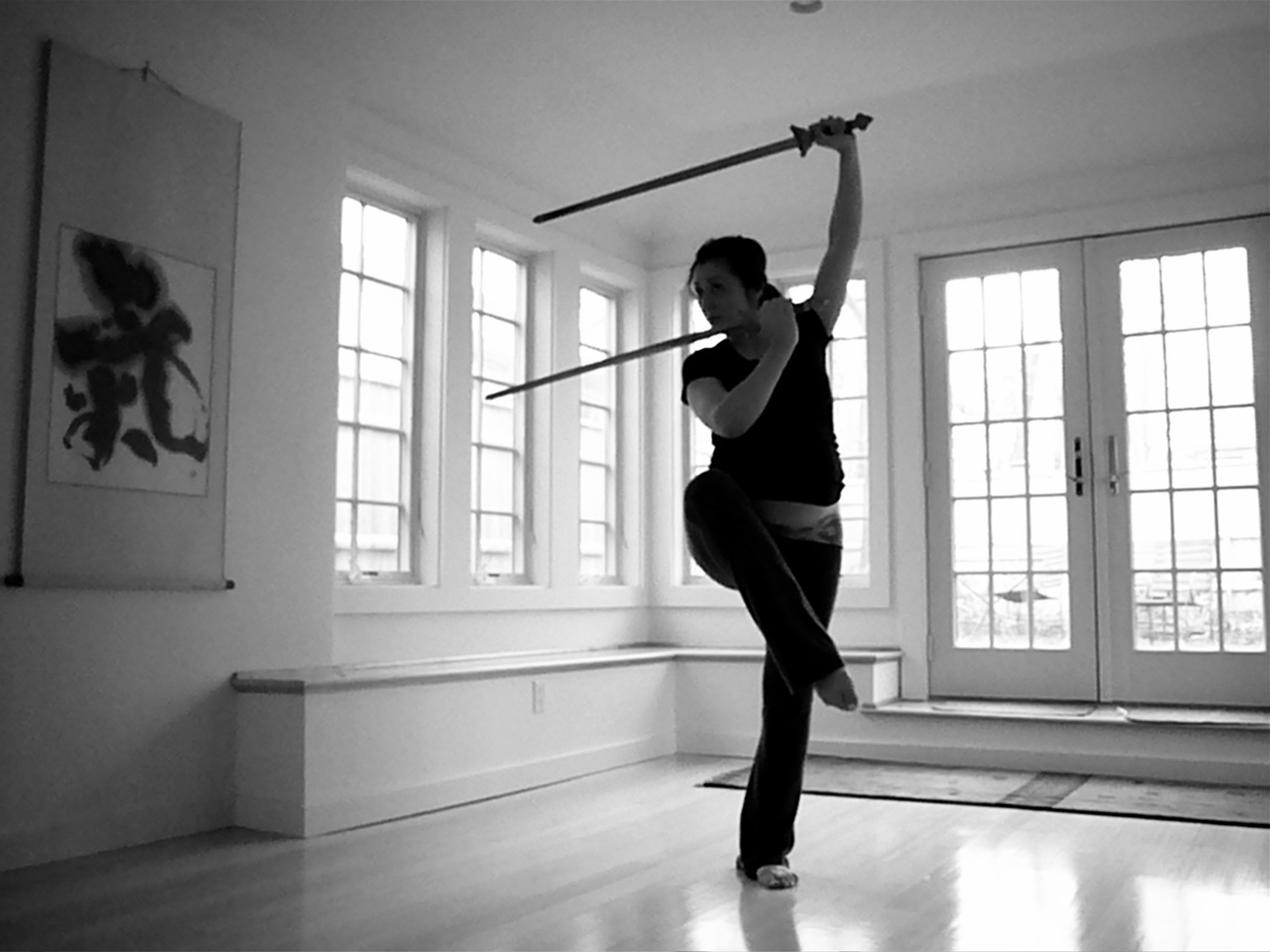
pregnant warrior with one knee up(Source: Bonbon; CC BY 2.0)

Not technically Korean sorry, but it seemed an apt response to the following graph:

international-comparison-of-female-labour-force-participation-rates-in-oecd-2007

(Source: OECD)

Actually I’m surprised that that figure for Korea is so high, regularly hearing that Korea has the lowest rate in the OECD, and which given the high numbers of Koreans in tertiary education and the low wages in the types of jobs open to young women (and men), both of which will only be exacerbated by the current financial crisis, it may still well be if the age range is extended from 25-54 to 15-64. Regardless, it’s very low, and while I’ve written a great deal on the blog over the last two years as to the reasons why (see here and here for starters), a picture really does say a thousand words.

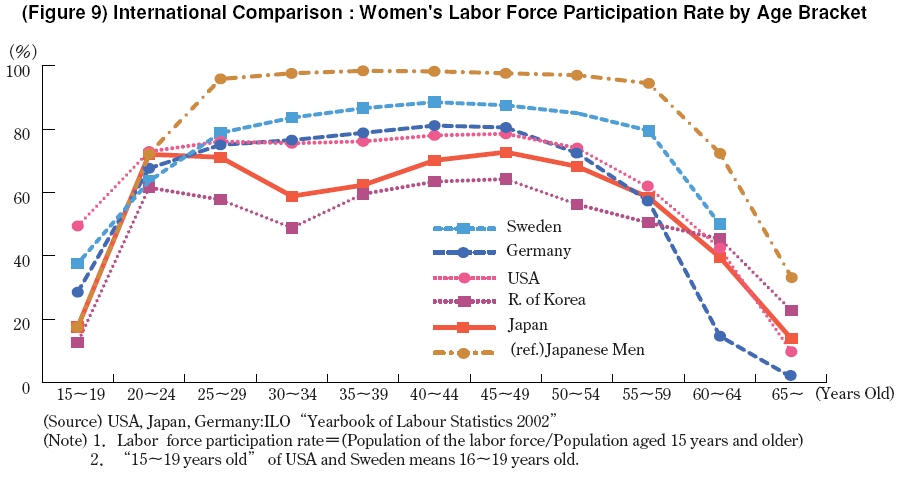
Or more graphs to be precise, the next one below clearly showing Korea’s sharp “M-shaped curve” of women’s labor force participation, the result of women entering the labor force after finishing their schooling, then leaving in droves as they find it impossible to juggle children and work, then returning gradually once the children reach school age, finally to leave again as they retire. This is in contrast to the “upside-down U-curve”  of – let’s face it – more enlightened countries (at least when it comes to the position of women), and the “n-curve” for men, which is usefully included as a comparison:

womens-labor-force-participation-rate-by-age-bracket-2002-south-korea-etc(Source: Gender Equality Bureau Cabinet Office)

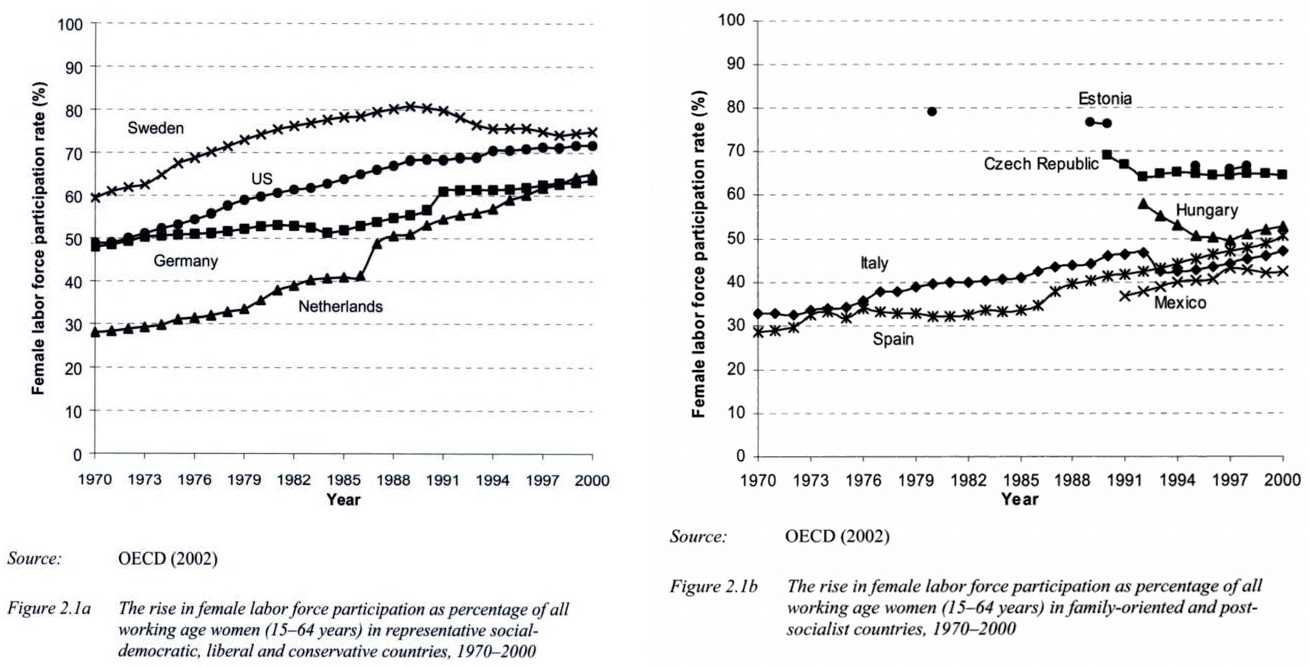
Unfortunately I couldn’t find an online graph showing how Korea’s women’s labor force participation rate has changed over time, but I do have the figures below from page 24 of Working Korea 2007 published by the Korea Labor & Society Institute, which you can compare to the rates of some other countries through these graphs that I could find, luckily for the same age range of 15-64:

  • 1980: 38.2%
  • 1980-84: 38.6%
  • 1985-89: 40.0%
  • 1990-94: 40.%
  • 1995-99: 41.5%
the-rise-in-female-labor-force-participation-as-a-percentage-of-all-working-women-graphs(Source: Pages 36 & 37, Globalization, Uncertainty and Women’s Careers: An International Comparison
edited by Hans-Peter Blossfeld, Heather Anne Hofmeister, 2006)

In this case, Korea’s figures most resemble Mexico’s I guess. For the sake of future reference, here are some more recent, albeit depressingly similar figures:

  • 2005: 41.7%
  • 2006: 41.9%

Being so…er…ripe for it, then ideally this or a similar ad will also appear in Korea sometime soon; either way, I’m sorry if in the past I’ve sounded a little like a stuck record, so regularly lamenting the low position of women in Korea and all, but hopefully all of the above has provided a stark demonstration as to why I have the focus on the blog that I do!

A Small Victory for Independent-Minded Korean Students? (Updated)

Young Korean Woman on Busan Subway(Source: Jinho Jung; CC BY-SA 2.0)

Update: One more reason unfettered access to student loans is so important is because only 60 out of 400 Korean universities allow students to pay their tuition with credit cards. For more on why these odd rules exist, and on Korean student loan rates and information in general, see here.

Why do Koreans generally stay at home until marriage? With some figures on the numbers of different household types in Korea now at hand, then I’ve recently been re-examining that question, but still see no reason to change my view that the combination of high rents and low wages is primarily responsible, or at least much more so that universal panacea for inquisitive foreigners otherwise known as “Korean culture.” But there are other factors of course. Consider this from Monday’s Korea Times:

Student Loan Plan Shelved

By Bae Ji-sook, Staff Reporter

A plan to allow students to get loans without their parents acting as guarantors has been scrapped, the Ministry of Education, Science and Technology said Sunday.

The National Assembly recently withdrew the measure since Korean civil law does not allow adolescents to make legal decisions on their own, the ministry said.

The initial plan aimed to help students who were unable to get loans because their parents were divorced or were from single parent families.

”If necessary, we will seek a revision of respective civil laws. Since its purpose is to help poor students pursue higher education, student loans should be available to more students, without barriers,” a ministry spokesman said.

Why do I suggest that this might be a victory? Well, because while the scrapping of the plan is certainly a tactical defeat so to speak, given the ministry’s apparent attitude as revealed by that last statement of theirs,  then it does look like that university students will ultimately be given the opportunity to secure loans without the approval of their parents.

That students necessarily should take up the offers of loans is of course debatable, and I speak from bitter experience when I say that eighteen and nineteen year-olds of any country are not exactly well-known for their prudence and financial sophistication when given sudden access to lots of money, to be paid back in some distant future. But the only way for young adults to leave the family nest against the wishes of their parents, the move by implication meaning that they’d be – heaven forbid – openly engaging in premarital sex, as opposed to the present-day subterfuge in love-hotels that maintains their (and thus their family’s) reputations? That is of course by having the funds to do so, and sometimes an adult’s simply got to do what an adult’s go to do, debt, reputation or otherwise.

Personally, my father and I are very glad that student loans were available to me as a 19 year-old myself back in New Zealand, as we were literally very close to blows by that point, and it was simply essential for our relationship that I move when I did. Fourteen years later, both that and many other aspects of my life are much much better as a result, so much so that even if I could go back in time I’d still make the move, even with knowledge of my struggling with a mountain of debt today before me. But with no loans available, and so having to have had stayed at home instead? I shudder to think.

On a final note, I have a question for readers, particularly those with Korean partners and/or friends and/or students who are young enough to be university students themselves and/or remember how the Korean student loan system operates. Do all students currently require parental approval, regardless of their age? Obviously that would have quite an impact on their ability to leave home! Or is there a cut-off point, after which even the Korean state acknowledges them to be an adult, and responsible enough for his or her own financial decisions? My wife didn’t get loans herself, which I’m thankful for, but with that and her university days being so long ago then unfortunately she can’t remember how they operate exactly, so I’d be grateful for any information.

Sex and Gender in the Korean ESL Industry: Students on Top?

김사랑-kim-sa-rang-누가-그녀와-잤을끼-who-slept-with-her-sexy-korean-teacher-purple(Who Slept With Her?, 2006. Source: MBTeller)

Ready for a quick quiz? Name three of your high school teachers. Now. No, don’t think, just say the first names which come into your head.

Finished? Okay, assuming you had one, I’m going to wager at least one of them was a particularly attractive member of the opposite sex. And what’s more, that your memories of him or her are much more vivid than those of the others too. Or am I just projecting?

Being in my thirties myself, then most of my teachers are nothing but a complete blur, and only for a select few can I still remember both faces and names. But my memories of one particular female teacher? Sigh. I’ll wisely restrain myself here, but I could wax lyrical about both her and what I learned in her classes, and the contrast between the quality and quantity of those memories and those of the male teachers I remembered — also excellent teachers, and of majors I later took up at university too — is simply too great to pass off as being due to other, asexual factors. But jokes about blood being diverted from the brain aside, what impact did that have on my learning?

wet-dream-2-ebaabdeca095eab8b02-sexy-korean-teacher(Wet Dreams 2, 2005. Source: Naver)

According to this study in Thursday’s Korea Times, in fact it may well have hindered it. As author Thomas Dee demonstrates, based on test scores and self-reported perceptions by teachers and 25,000 eighth-grade students, simply having a teacher of the opposite sex harms a student’s academic progress, attractive or otherwise. In brief:

…having a female teacher instead of a male teacher raised the achievement of girls and lowered that of boys in science, social studies and English. Looked at the other way, when a man led the class, boys did better and girls did worse.

The study found switching up teachers actually could narrow achievement gaps between boys and girls, but one gender would gain at the expense of the other. Dee also contends that gender influences attitudes. For example, with a female teacher, boys were more likely to be seen as disruptive. Girls were less likely to be considered inattentive or disorderly.

In a class taught by a man, girls were more likely to say the subject was not useful for their future. They were less likely to look forward to the class or to ask questions. Dee said he isolated a teacher’s gender as an influence by accounting for several other factors that could affect student performance…

For the record, as there was no variable for a teacher’s attractiveness in the study then the jury remains out on the role of particularly attractive teachers, and Dee is also careful to point out that he is not advocating single-sex schooling, largely just passing on the correlations he noticed without really speculating as to the reasons. To buttress his point that “in a class taught by a man, girls were more likely to say that the subject was not useful for their future” though, I recommend reading this recent study from The Economist, which found the decidedly non-PC result that both men and women were prepared to take considerable cuts in pay at a first job provided that their boss was a man (although of course it wasn’t presented like that to test subjects!). But for some of the (naturally) many criticisms of Dee’s study then please read the article itself, and unfortunately those will have to do too, a suspicious absence of the article at the Korea Times website leading to me finding out that the article is in fact three years old, and so that link (to USA Today) above is the only one I could find that isn’t now dead. My misguided faith in the KT’s reliability as a timely and current news source aside, the subject does still have a certain timeless quality about it, and got me thinking about how the same dynamics operate for adult learners, my just so happening to be writing about marrying a former student of mine at about the same time as I first read that too. Surely they would be even stronger, given that students are more sexually experienced, and can and *cough* do sometimes consummate their relationships with their teachers?

Discussing the same subject here in 2007, Gord Sellar writes:

My first year in Korea, my roommate, a guy who spoke Korean pretty well, advised me that I needed to find a female teacher. Not a sleeping dictionary, mind you — his point was that the teacher didn’t need to be a girlfriend. All that was necessary was that I find an attractive female teacher, because having an attractive instructor of the opposite sex brings out approval-seeking behavior, and in the context of language study, if increased mastery of the language triggers praise from the teacher (as it should), then an autocatalytic cycle will be launched: you’ll study hard because your teacher will praise you, and that will make you study even harder.

lee-hyori-유고걸-you-go-girl-이효리-sexy-schoolteacherAnd having an attractive female Korean teacher myself for over a year, then I can personally vouch for the effects of this, even though I was engaged at the beginning of that period and married towards the end, and didn’t for a moment seriously entertain that there was any chance of us getting together even if we’d both been single. My mind did tend to wander, however, when her back was turned, and which I was inordinately pleased that year to discover sometimes happened with me and my own female (adult) students, one of them naively both passing on her and her classmates’ Cyworld addresses one day and assuming that my Korean was much worse than it was (source, right: akstn88님의블로그).

Fond memories of reading descriptions of my (then) firm, apparently delicious-looking buttocks aside though, you don’t need your wife to be an ex-recruiter to be aware of the blatant racial, sexual and ageist-discrimination that occurs within the ESL industry here, and young college graduates are definitely not only chosen for their relative naivety and willingness to accept bad conditions. Nor — with the proviso that I acknowledge that I’m indirectly justifying discrimination here, but will continue for the sake of argument — can university deans and institute owners be entirely blamed for what the majority of students (or their parents) seem to want, and I’ve personally been on the wrong end of that many times, most notoriously at a place at which students and management blatantly favored the short, shuffling Asterix-like figure among us four foreign teachers, simply on the basis that he drank with his students almost every night. That he: looked closer to fifty than his actual age of thirty-five; often came to class in the same clothes he’d slept in; was regularly to be found passed out on a dirty couch in the hallway next to the staffroom, where he’d be mistaken by students as a homeless guy who’d wandered in for the warmth; and that his lesson prep consisted of grabbing whatever random piece of paper with ten questions about some subject was closest to hand, hastily scribbled years ago in five minutes…all this could not dim his alcohol-fueled stardom. To put it mildly, it was just a tad demotivating to us other teachers to have our teaching ability, qualifications, experience, and hard work constantly thrown in our faces, and so no foreign teachers (but for Asterix) ever ended up renewing their contracts there.

But let’s return to my great buttocks, or more specifically the motivations of the Korean women that I’d wager make up at least 70% of adult language students, or at least of those with the ability and/or inclination to join native speaker’s classes. Speaking about Japanese women specifically, but with observations that could just as readily be applied here, Keiron Bailey notes in Marketing the eikaiwa wonderland: ideology, akogare, and gender alterity in English conversation school advertising in Japan (Environment and Planning D: Society and Space 2006, volume 24, pages 105-130) that:

…there has been a rapid growth in the private English conversation school (eikaiwa) industry in Japan since the 1970s. Inside these eikaiwa, the participants are predominantly women and, in terms of skill and enthusiasm, these women are better students than their male counterparts. Younger women are pursuing English-language learning for three major reasons. The first reason is to enhance their career prospects, either by working for one of the increasing number of foreign-owned companies in Japan, or by moving to an English-speaking country. This trend has been augmented by economic geographies of internationalization that involve a reconfiguration of the Japanese labor market and that have created a demand for more workers with English-language-skills and, simultaneously, by the continuing recalcitrance of domestic social, cultural, and economic institutions to change in ways that reflect the desires of these younger women. The second purpose is to engage in travel, either for vacation purposes or for ryugaku. The third motivation is to actualize what Kelsky calls ”eroticized discourses of new selfhood” by realizing romantic and/or sexual desires with Western males. (pp.105-6, my emphasis)

Before going on, as you can probably see where this is headed, I should point that I am not for a moment suggesting that any more than a very, very small minority of Korean women learning English are there merely for the sake of hooking up with their foreign male teachers. I have to admit though, that I am certainly guilty of suggesting things like that in my first few years in Korea, although in my defense (and I’m sure many male readers can relate) it was very easy and natural to do so given my, well, immediate and much greater dating successes among women here than back in New Zealand. But there is definitely something to the stereotype, my wife and Korean female friends — most of whom were former students of mine — confirming that many Korean women (and indeed some of them too) do indeed ask about the attractiveness and dating availability of the male teachers, and to point out that those aren’t usually their primary concerns about a male teacher doesn’t mean they’re completely irrelevant.

japanese-ecc-advertisement-romance-with-gajin-foreigner-males-spring-2002How might this be exploited by the ESL industry? Well in Japan, to return to Bailey’s journal article:

In this paper I examine the visual promotions of a range of eikaiwa. Through a semiological analysis I argue that these schools seek to create a social space, or a destination, that is designed to appeal to this younger generation of Japanese women with professional, relationship, marriage, or studying abroad aspirations. I argue that the eikaiwa market the activity of English conversation as an eroticized, consumptive practice. Through a complex and heterodoxical engagement with a set of gendered ideological formations, the eikaiwa seek to invoke desire, or yearning (akogare), on the part of these female consumers. They do so by embedding this activity into a logonomic system in which the visual pairing of Japanese women with white males invokes a set of social and professional properties that are radically differentiated from a hegemonic array of gender-stratifying ideologies. This metonymy relies on the properties of the white male signifier being defined in relation to a historical gendered Occidentalist imaginary as an ”agent of women’s professional, romantic and sexual liberation”. However, simultaneously, the symbolic power of the coupling of white male signifiers with Japanese women relies on compliance with a pervasive and highly heteronormative ideology of complementary incompetence.

This logonomic system is supported by an array of nonvisual aspects including the gendered meaning ascribed to English-language use in modern Japan, in which its user is positioned as cosmopolitan, mobile, and desirable. At the same time, the female agency depicted by the eikaiwa articulates with a growing consciousness of female consumer agency, manifested in domestic Japanese product and services advertising and in other social and cultural formations. This trend valorizes and celebrates female erotic subjectivity and positions the white male as an object of consumption for sophisticated, cosmopolitan female consumers. The eikaiwa promotions seek to recruit female clients by actualizing and deepening their akogare through the medium of English-language instruction and use and an associated symbology. (p. 106, my emphases)

Don’t be put off by the postmodernist jargon: I don’t like it either, but while a little heavy in places, the article is still readable (albeit for article in academic journals that is!), and overall a fascinating look at this particular aspect of the Japanese ESL industry. Unfortunately whatever link I downloaded if for free from months ago has since disappeared though, so please just email me if you’d like a copy.

japanese-gaba-advertisement-romance-with-gajin-foreigner-males-spring-2002But why do I quote that article, apart from it being interesting in its own right? Well, I do admit this post has considerably evolved in the telling, and so after making the jump from a study about the effects of a teacher’s gender on children (my only originally intended topic) to what effects both that and their attractiveness might have on adults, then looking at that article was a logical next step. But now having presented the gist of it, what to make of it?

Upon reflection then, for me it has served to highlight the stark differences between the two countries, for despite the same sexual dynamics also operating in the ESL industry here as I’ve demonstrated, with all the mania about maintaining pure “bloodlines,” and hence still grudging public tolerance rather than acceptance (let alone condoning) of foreign male – Korean female sexual relationships and marriages, then you simply won’t find any Korean advertisements like the above, anywhere. Ever. Like I explain and give examples of in a post on a related topic here, there’d likely to be a public outcry. My own personal lesson from writing this post then? A cynical reaffirmation of this pervasive xenophobic streak, and a telling visual sign of it. Or not, as the case happens to be!

But this is probably not news to readers familiar with Korea; perhaps more so to Japan-based readers, who thought they could make the same claims about interracial relationships there? Regardless, apologies if you were expecting more of an examination of the practical role the sex of a teacher plays in the internal dynamics of the ESL classroom here. But never fear, for that earlier post of Gord’s I linked to provides an excellent examination of that, and so one which I wisely decided not to try and improve on!