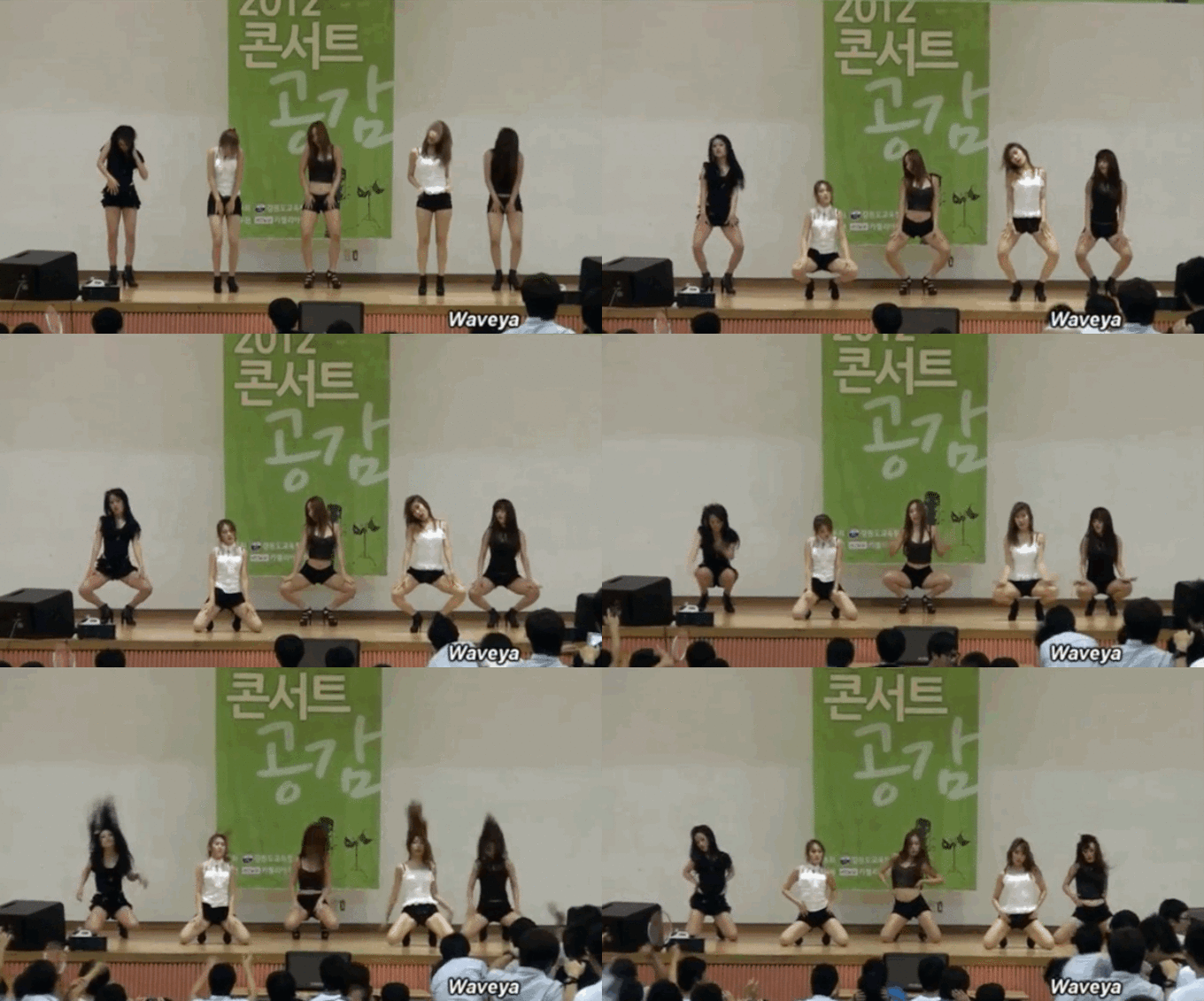
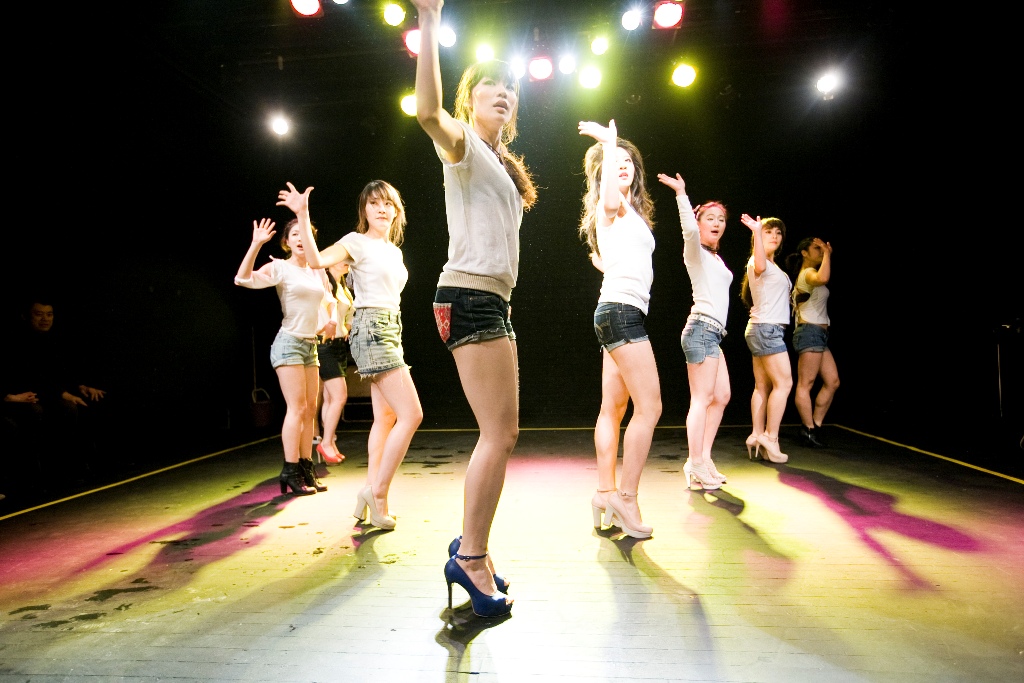
Given that context, then it’s natural that girl-groups — and boy-bands — would also come to regularly perform for schools too, albeit more obviously as a means of self-promotion than as a patriotic service. However, as a performance the next month by dance group Waveya (웨이브야) demonstrated, and today’s commentary on it at BuzzFeed highlights, perhaps they don’t always tone down their choreography for their teenage audiences.
Here’s a just taste of what middle and high-school students (aged 13-18) at the September 2012 Gonggam (Sympathy)Concert witnessed, hosted by the Gangwon Provincial Office of Education:
Naturally, I don’t have anything against Waveya themselves, and of course sexualized performances are just fine with adult audiences. Also, what boy-band or girl-group hasn’t overstepped the line on occasion, whether by accident or as a deliberatepromotion tool?
Nevertheless, this particular performance seems not so much an imitation of some of the more risqué K-pop songs, as a deliberate mash-up of their most provocative choreography. Add that Waveya are a self-styled “sexy dance group,” and include pictures of themselves in skimpy schoolgirl outfits on their homepage, then it’s strange — and very telling — that they so regularly get invited to perform for children:
Should there be restrictions on explicit school performances? Whatever the girl-group or boy-band?
One argument against that is that teenagers can readily — and do — see music videos’ original sexualized choreography on their smartphones (let alone pornography), in which case toning things down would be both naive and pointless. And perhaps there’s some merit to that.
On the other hand, we are talking about adult women spreading their legs just 3 meters in front of teenage boys’ faces, a much more visceral experience than images or video can provide (sure enough, there were some complaints about the September performance). Also, regardless of whether you feel Waveya are being sexually objectified or not, or if that’s even a negative, if performances like this prove to be routine at Korean schools then they’d surely be a powerful socialization agent. Especially for what’s been described as the saturation of costumed, frequently scantily-clad female ‘narrator models‘ and ‘doumi‘ in daily life here.
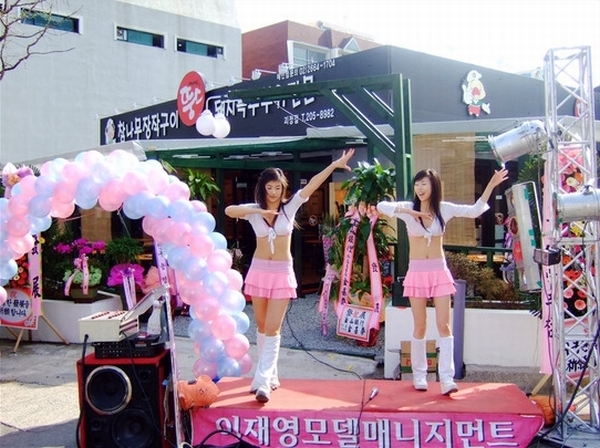
That’s no exaggeration. But it’s also something very difficult to appreciate until you’ve seen it for yourself. To remedy both, please go directly to the source, a 2005 piece from Scribblings of the Metropolitician (my emphasis):
….Some parts of this topic have been covered in previous posts about the social status of women the commodification of their bodies, but I just wanted to point out a few things here visually. When I talk about the 도우미 (doumi – “assistants” who can be found in everything from grocery stores to ones singing rooms), people often ask me why they bother me so much. To reiterate a point I made in a previous post, it’s the saturation of the doumi into the realm of the everyday and mundane that is so insulting – to both the customers and the workers themselves (source, above).
Of course, I am making a value judgement and perhaps seem like I am engaging in a condescending discourse about these women. But I am not irritated because I “feel sorry” for them or I am fighting for some notion of their human rights; I simply think that the simple equation of baring flesh for the sake of selling toothpaste and razor blades just cheapens the whole enterprise for everyone. When I say this, I acknowledge that “sex sells” and that hot models are the standard eye candy of choice for trade, car, and electronics shows the world over. Still, hiring a model who is a larger-than-life figure showcasing a larger-than-life product or prototype somehow seems appropriate, whereas watching dozens of women who look like my cousin or niece hawking the most everyday and mundane of objects just seems ineffective and demeaning….
What do you think? About anything mentioned in today’s post?
But whatever your opinion, please note that the boys in the audience don’t deserve the mockery they’ve been receiving on BuzzFeed and YouTube (remember: we were all teenagers once!), so please don’t repeat it. Also, because it is just a handful of performances by a dance group being discussed here, we should be wary of overgeneralizing to more mainstream music groups based only on their example. So, I’d really appreciate it if readers — especially public school teachers — could confirm how common or exceptional such full-on performances really are.
Update: Based on all your comments, both below (thanks!) and in the wider blogosphere, such sexualized performances are actually quite common in Korean schools (although Waveya’s is still more explicit than most). Here’s some representative commentary, by Party in the R.O.K:
…in every school I’ve worked at, sexy dance moves are totally acceptable in the school environment. Teachers have let the kids watch music videos before or after class that have made me blush, but no one else seems affected by the raunchiness. Also, when I taught at middle school, they would have joint assemblies with the high school girls and often do dance performances. My middle school girls would wear high heels and short skirts (nothing out of normal but still a little risque for school) but one time the high school girls did an After School-inspired dance that involved wearing almost invisible short shorts and high heels and straddling flags and getting low and practically twerking onstage… in front of an audience of parents and siblings and other teachers… while lots of male parents and teachers took videos with their phones… no one acted like it was weird at all. I felt like I was breaking a law just watching it! That is one thing about teaching in Korea that I will never be used to.
See my Reading the Lolita Effect in Korea series below also (especially Part 2), which discusses those issues in greater depth:
From part of an email interview of me (and many other bloggers) at The Korea Blog last month:
….I actually kind of called him out as a Korea hater, which he rebutted thoroughly.
Jon: Reading your site, I get the strong impression that you’re not a fan of a lot of the content you analyse and criticise, especially K-pop. I’m not into it myself, but I don’t spend much time thinking about it. What is your relationship to your subject matter?
James: Well, given the huge time and commitment involved, it’s never a good idea to write about something you don’t even like. So as it turns out, I’m actually a big fan.
That said, there’s always a great deal to criticize K-pop and the Korean media on how they objectify women, encourage unhealthy body ideals, and present such passive gender and sexual roles for them. And with such limited time to write, plus — until very recently — so few writers out there willing to bring any kind of academic research to their own critiques (not that I claim to be an academic myself!), then it was easy for my writing to fall into a certain pattern.
See the link for the rest, and for more on many other bloggers you should be reading. As for Lee Hyori…well, this post is just an excuse to post that picture and indulge in some more of that socially-conscious fanboying really, of which she is just as deserving as Ga-in. But I am looking forward to her comeback (see here for some video teasers), and hope that it’s well received, which would bring much more attention and support to the causes she’s embraced.
Until then, apologies to those who don’t share my love of her, but you are dead to me and I promise more of that cynicism and repetition soon. To everyone else, note that the above edition of Nylon is now available in stores, unlike — grrr — last Wednesday evening (and Thursday morning, and Friday, and…) when I first heard of her inclusion, and — oh, yes — squee!
In Part 4 back in February, I mentioned that Korean women were getting less breast augmentation and more breast reduction procedures than their counterparts in the US and Brazil, despite having a genetic predisposition towards small(er) breasts. Add that North Koreans think busty women are “intentionally and lewdly stressing [their] femininity,” and that Wacoal’s ‘Bra That Makes Big Breasts Look Small’ would probably be just as popular in Korea as in Japan, then I wrote that all signs point to “a big disconnect between ordinary Koreans’ — and even models’ — attitudes to fashion, body image, and sexuality and what you may see on Korean TV.”
As Dr. Roald Maliangkay at the Australian National University points out however, it’s very much the same with men:
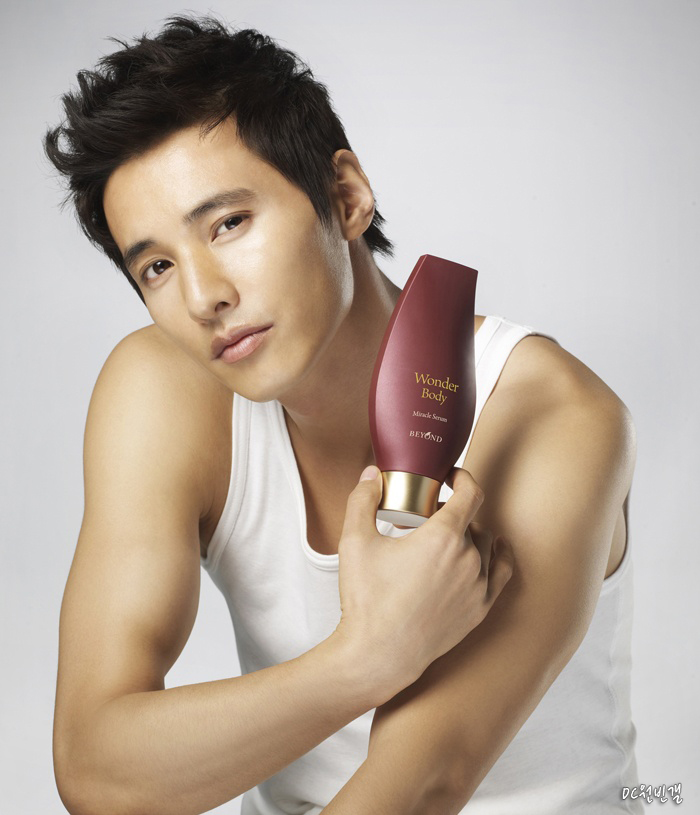
….The majority of men appearing on posters and billboards are celebrities. Although the wide use of cosmetic surgery is making men look increasingly similar, they are often associated not merely with a product, but also with a popular drama, and in some cases, a steamy bed or bathroom scene. That is not something the average worker would ever seek to emulate, nor be able to, as the nation’s corporate dress code remains conservative.
Next, in Part 4 I also discussed how official North Korean attitudes to women’s clothing have been changing in response to women increasingly becoming breadwinners, generally becoming more restrictive. For more on this “Female Face of North Korean Capitalism,” see Andrei Lankov’s recent lecture at the Royal Asiatic Society in Seoul:
…a great short clip instructing women workers newly employed in industrial factories during World War II on how to do their hair to maximize safety. It assumes both ignorance and vanity on the part of women and speaks to the lack of efficiency caused by efforts to remain attractive on the line.
As I pointed out in — yes, again — Part 4, those assumptions about vanity need to be placed in the context of wartime shortages, when attention to beauty and fashion were viewed as extravagant and unpatriotic. But despite that, women’s anxieties about both were still explicitly encouraged, preyed upon, and/or encouraged by industry, and actually even by the government itself. The ensuing contradictions, double-standards, hypocrisy, and backlash are very similar to what has been occurring in South Korea since the 2000s with women’s rapid entrance into the (part-time) workforce, and make comparisons very useful and compelling.
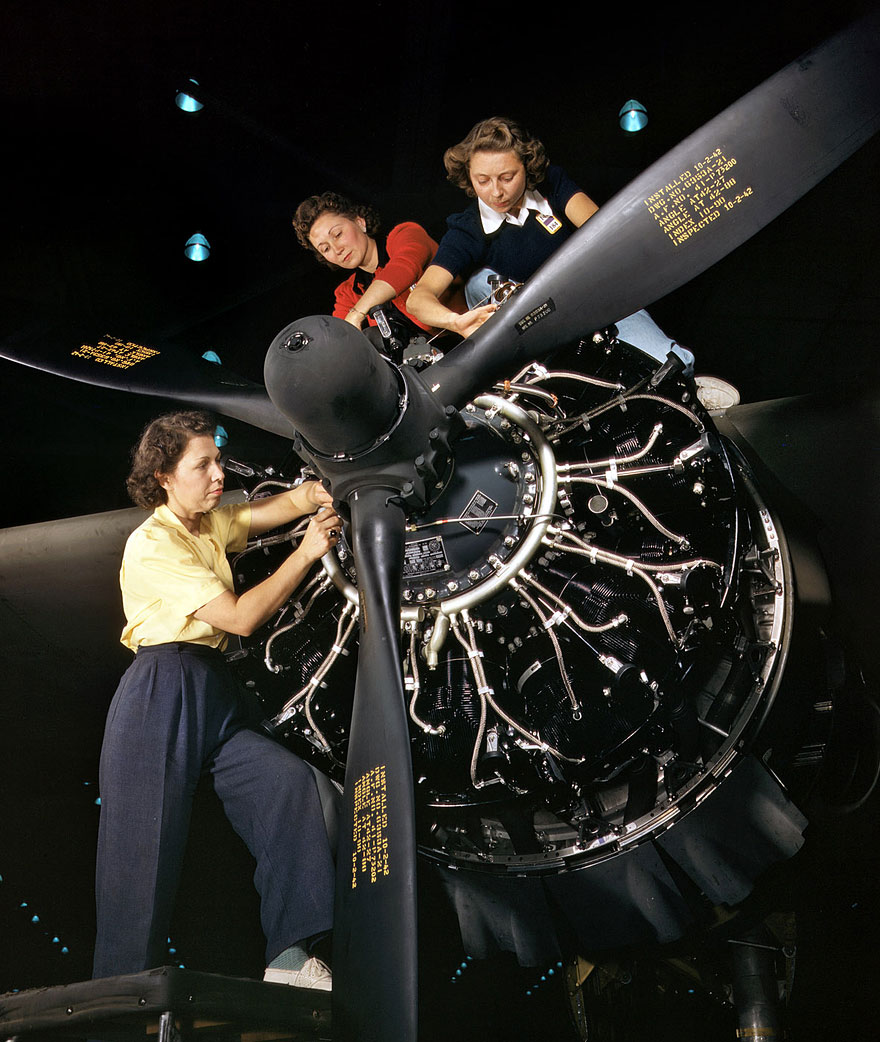
For more on the backlash in Korea specifically, see “The hate underlying the ‘__ Girl series’ and criticism of women’s organizations” at ILDA (in addition to all the links in previous posts in the series). Finally, for more on the wartime US case, first see “The Impact of War on 1940′s Fashion in the USA” at Glamor Daze for a primer on women’s fashions in the period; then, see Bored Panda for rare color photographs of women working in aircraft manufacturing plants in World War Two, taken by:
“Alfred T. Palmer who worked for the Office of War Information (responsible for promoting patriotism, war news management and women recruitment)” whose photos “had to lure young women into the factories by showing women workers as glamorous and even fashionable.” (My emphasis; see example on right).
Update: also see Kathryn M. Brown’s 2010 MA thesis Patriotic Support: The Girdle Pin-up of World War 2 (it can’t be directly linked sorry—type the title into the searchbar) for more on how malleable and adaptable — and, as explained, ultimately hypocritical and contradictory — the language, prevailing standards for, and attitudes towards beauty and fashion proved to be for the needs of government and industry (see Part 3 for modern Korean and earlier US parallels also).
Today, some information about two very worthy causes.
First, on ongoing volunteer opportunities for the Korean Unwed Mothers’ Families Association in Daegu and the 3rd Single Moms’ Day Conference this May. Then, on a Kickstarter campaign for a full length documentary film seeking to help preserve and spread knowledge of the shamanistic practices and shrine religion of Jeju Island:
I. The Korean Unwed Mothers’ Families Association (KUMFA) is an organization that works to promote children’s human rights while addressing systemic discrimination. KUMFA advocates for the human rights of unwed pregnant women, unwed mothers and their children in Korea. KUMFA’s goal is to enable Korean women to have sufficient resources and support to keep their babies if they choose, and thrive in Korean society.
The Daegu Branch of the Korean Unwed Mothers’ Families Association will hold meetings and provide classes for their members. KUMFA Daegu seeks volunteers to provide childcare during the classes. In the future other types of volunteer opportunities may arise. For additional details please visit the KUMFA Facebook Page or contact us directly at kumfa.volunteer@gmail dot com.
Seoul KUMFA Volunteer Opportunities (ongoing):
The Seoul Branch of Korean Unwed Mothers’ Families Association has ongoing volunteer and learning opportunities. Sign up by joining the Facebook group.
II. Seoul Conference (May 10-11, 2013): The 3rd Single Moms’ Day Conference:
SMD advocates for human rights in a number of important ways, in particularly by addressing systemic discrimination by “informing people inside and outside Korea about the factors that pressure unwed mothers to relinquish their children for adoption. Push factors include fathers’ child support obligations being unenforced; lack of adequate social welfare from the Korean government; social discrimination against unwed mothers and their children. Pull factors include the fact that more than half of unwed mothers in facilities are living in unwed mothers’ shelters that are owned and operated by adoption agencies; a money-driven international adoption system that does not conform to the UN CRC or the Hague Convention, i.e., it does not respect children’s humans rights.”
For more information or to make a donation, please visit the SMD event page. Here is some volunteer testimony:
“I have been involved with SMD and related projects for two years. I’ve learned a lot from this really inspiring collaboration of groups that fight for Korean children’s human rights, including: parents whose children were adopted by unethical means; unwed parents who are fighting workplace and social discrimination to raise their children; adult adoptees who campaign for ethical reforms to adoption laws; supporters and volunteers who work to bring policies into the framework of the United Nations Convention on the Rights of the Child.”
Next, on Jeju Documentarian Giuseppe Rositano’s Kickstarter campaign. Please do check the link for additional information, and on why your help is needed:
As a popular tourist destination in South Korea, Jeju Island has risen to fame predominantly for its natural wonders: hiking trails in abundance, scenic ocean views and South Korea’s highest mountain. It is possible to experience these in just a few short days, but staying on the island a bit longer or even making it a home provides the opportunities to get a deeper understanding and appreciation of some of the more interesting aspects of Jeju. Documentarian Giuseppe Rositano, Jeju Island resident of 7 years, explores some of these more interesting aspects of Jeju life, specifically the shamanistic beliefs and shrine religion of Jeju Island that is in danger due to the rapidly declining population of believers.
Spanning the course of 18 months and accumulating more than 500 hours of shamanistic ceremonies and traditional storytelling on film, Rositano captures the spiritual life of 5 villages through exploration of their native deities and traditional oral stories that have been passed down through generations. These stories, which describe the lives of Jeju’s extensive pantheon, are quickly disappearing. At Search is an attempt to preserve these unique indigenous beliefs.
Each village on Jeju Island has several shrines in which local deities specific to the island are ‘seated’. Each of these deities corresponds to a ‘bonpuli’ or oral myth. With an adventurous spirit, this documentary sets out to capture the retelling of these ‘bonpuli’ legends in the voice of what is likely the final generation of elders who received the stories from their parents and grandparents. Sadly, younger generations are seldom aware of these stories which serve as the cornerstones for their grandparents’ spiritual lives and cultural identity. With over 400 shrines on the island and a total of 18,000 gods on Jeju, that’s quite a loss to humanity’s cultural history!
Currently At Search for Spirits on the Island of Rocks, Wind and Women is in post-production. Rositano and team have launched a kickstarter campaign to raise funds to bring the project to completion and to get it out to film festivals around the world.
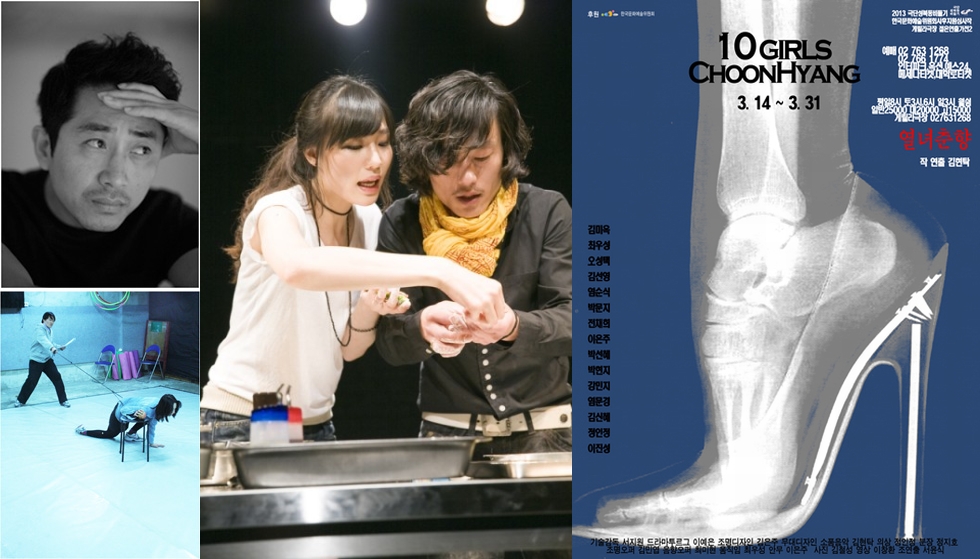
First, watch this short MBN news report about the play. Unfortunately, I can’t embed or save the video, but I can provide a transcript:
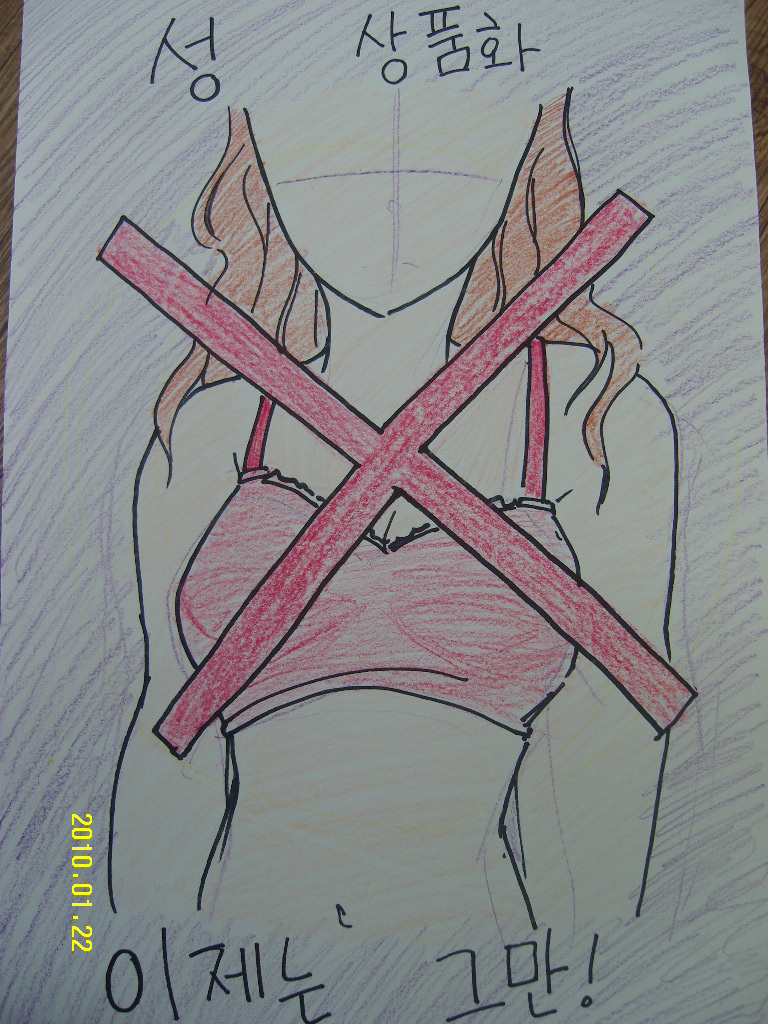
‘열녀춘향‘, 고전비틀기로성상품화고발 / 10 Girls ChoonHyang: A Twist on the Korean Classic to Critique Sexual Objectification
앵커멘트: 요즘 성폭력이 사회적으로 큰 골칫거리인데요. 이러한 풍조에 경종을 울리는 작품이 대학로의 한 소극장에서 공연되고 있습니다. 서주영 기잡니다.
Anchor: In recent days, sexual violence is becoming a very troubling social issue. One play in a theater on Daehangno (“College Street”) is ringing alarm bells about this trend. Seo Ju-yeong reports.
기자: 딱 붙는 셔츠와 핫팬츠를 입은 여성들이 소극장 무대에 잇따라 등장합니다. 어설픈 리듬체조와 몸을 사리지 않는 레슬링은 섹시함을 강조합니다. 지조와 절개의 상징인 춘향을 현대 남성들이 원하는 시선에 빗대 발칙하게 표현합니다.
Reporter: Women wearing tight t-shirts and hot-pants come out in succession onto the stage. Their awkward rhythmical gymnastics and reckless wrestling emphasizes their sexiness. Through ChoonHyang, a [classic] symbol of principles and fidelity, it savagely satirizes the modern male gaze.
인터뷰, 박현지 / ‘열녀춘향’ 강인한 춘향 역: “기본적으로는 춘향을 바라보는 시선 자체가 남성의 시선으로서 바라보는 거잖아요. 그러니까 그 욕망 자체가 그 안에 녹아져있다라는 설정하에서….”
Interview, Park Hyun-ji, ‘Strong ChoonHyang’ character: “Basically, to think about ChoonHyang is to ponder the male gaze. This desire is a strong theme of the play….”
바이올린 연주자를 훔쳐보는 남성들의 모습과 농염한 포즈로 고추전을 만드는 장면은 성상품화를 직접적으로 풍자합니다. 남녀 관객 모두 즐거운 표정이지만, 작품에 대한 시선은 조금 다릅니다.
Scenes in which men secretly watch a female violin player, and in which a women suggestively make pepper pancakes, are direct satires of sexual objectification.
All members of the audience seemed to enjoy the performance, but men and women had slightly different perspectives on it (source, right).
인터뷰 , 정영신 / 서울 성산동: “(너무) 노골적이지도 않고 아주 재미있게 잘 표현해낸 것 같아요.”
Interview, Jeong Yeong-shin, Seoul Seongsan-dong: “The subject wasn’t (too) blunt, and it was expressed well and interestingly,”
인터뷰, 이해림 / 서울 서초동: “남녀 간의 성관계를 주제로 했던 것 자체가 파격적이었어요.”
Interview, Lee Hye-rim, Seoul Seocho-dong: “It was very striking that the play’s theme was sexual relationships between men and women.”
무대에서 펼치는 고전의 비틀기가 성상품화라는 사회문제에 따끔하게 일침을 가하고 있습니다.
By giving a twist on a classic, this play offers stinging criticism of the social problem of sexual objectification (end; source, right).
The theater was the Guerrilla Theater (게릴라극장); the director, Kim Hyeon-tak (김현탁); and the theater group Seongbukdong Beedoolkee (성북동비둘기). Alas, the play actually ended at the end of last month sorry, but I’ll keep an eye out for any more interesting performances by them in the future. And I’m happy to translate much longer, more substantive reviews and/or articles on 10 Girls ChoonHyang if anyone expresses an interest in the comments!
Reading recent discussions about 2NE1tv and the BBC’s Idol, I was reminded of Lee Hyori’s endearing Off The Record series from 2008, which I’ve tried and failed to find online for years. So I checked again, and to my amazement and consternation discovered that blogger 쓰리에스의 한류 Storyhas actually had all 12 episodes up since last May…
Needless to say, all of them were rapidly in my possession, via this Firefox extension. Normally, it doesn’t work for Naver videos, but I lucked out in this case.
For those who’ve never heard of the series though, please note that it’s hardly a critique of the Korean entertainment industry akin to Idol. But, it does provide some insights into the day-to-day practicalities of it, and makes it obvious why Lee Hyori — Korea’s first ethical sex-symbol — was so popular in the 2000s. Also, even in the rare event that you don’t become a fan yourself, it’s still a valuable Korean study tool, providing a rare combination of everyday Korean language and Korean subtitles that isn’t in the form of an inane gameshow or clichéd drama.
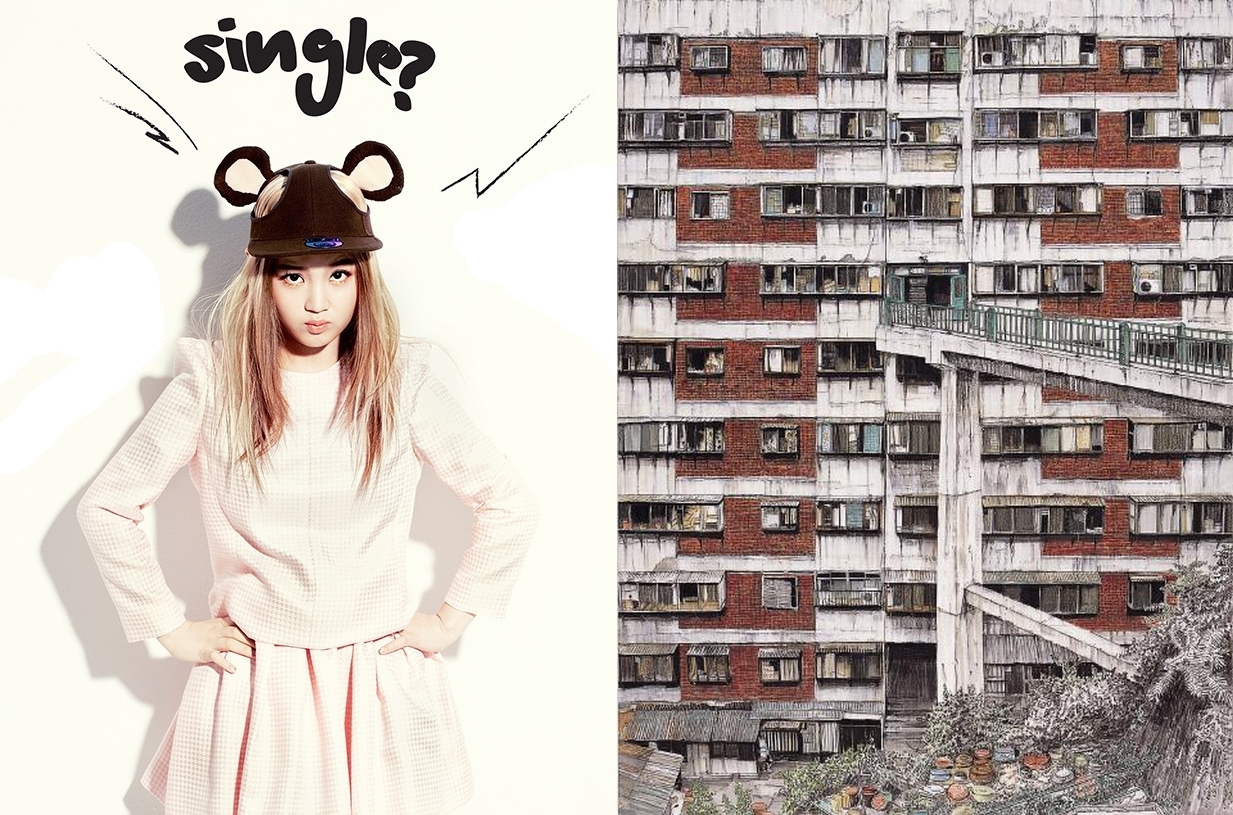
Family may be everything in Korea, but by last year more than 1 in 4 Koreans were living alone, beating rates in (supposedly) more individualistic societies like the US and Australia.
While this provides a lot of opportunities for companies, there’s also a dearth of suitable accommodation. And most of those singles are not carefree youth, but either middle-class 30 and 40-something men, or women in their 60s and above living in poverty. With rates set to become 1 in 3 by 2020, this is set to become a huge political, economic, social, and cultural issue in Korea’s near-future.
For a heads-up, see my latest article for Busan Haps, which includes entirely too much information on why I split up with my first Korean girlfriend…
Update: Also see Sorry, I was drunk for a deconstruction — and demolition — of the oft-cited claim that Korean society is more communal than Western societies.
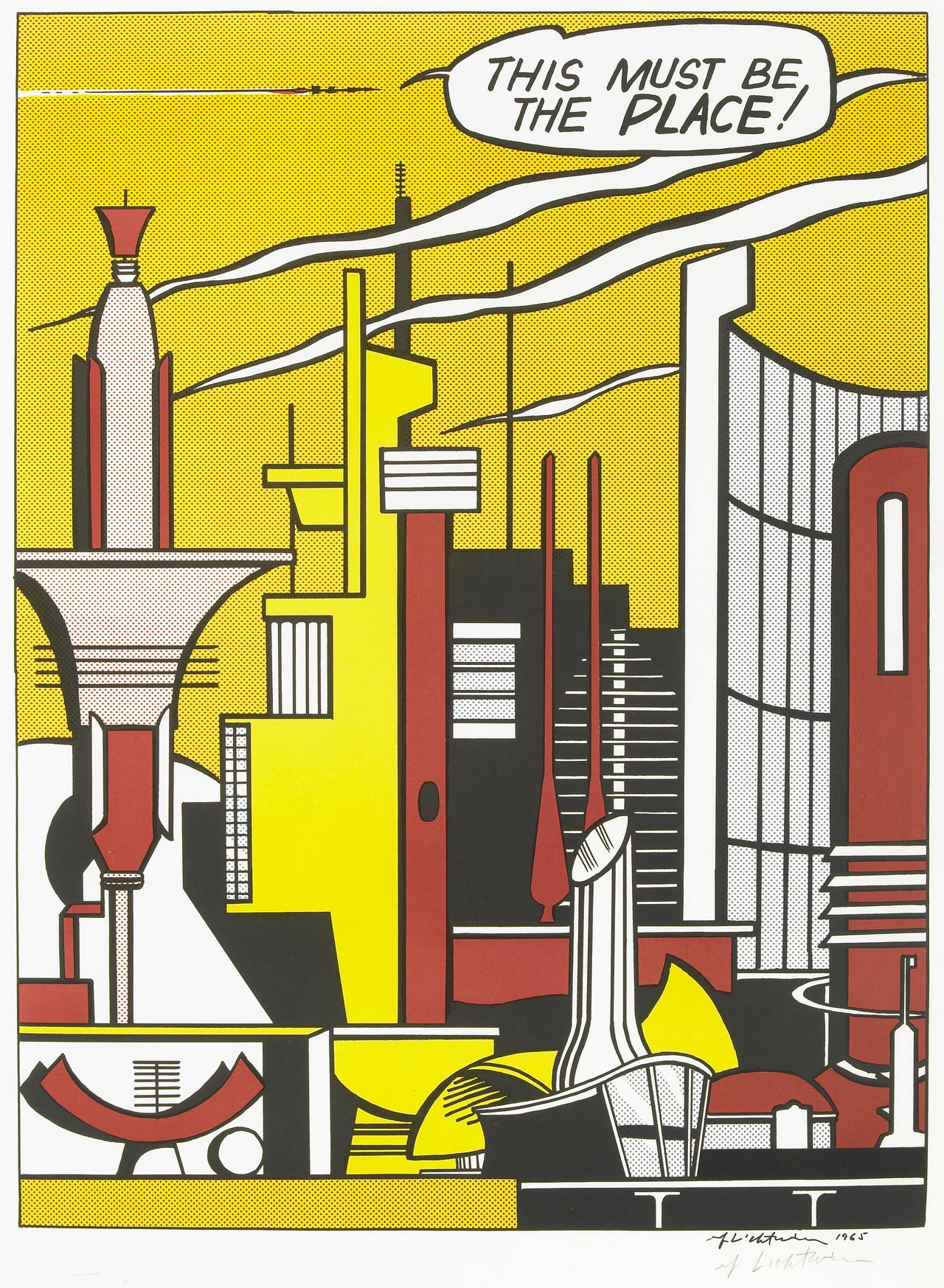
(This Must be the Place, Roy Lichtenstein, 1965. Source)
— First, the next 2 weekends are just jam-packed with V-day related events, culminating in the Vagina Monologues performances. See Busan Haps for those happening in Busan, and KoreaMaria for Gwangju.And if anyone knows of any more events being held in different cities, please let me know!
— Next, a request from Arianna Casarini (almostelse@gmail.com), who is looking for Korean or East Asian artists that reflect on cosmetic surgery and/or body-image. Unfortunately, I don’t know of any myself, so (with permission) I’m reprinting her email here:
I’m an Italian student of the University of Bologna, close to get my first degree.
Very little after I started getting deeper in the study of Korean culture, I discovered your blog and your illuminating articles, and thanks to it I became especially interested in the problem of the pervasiveness of cosmetic surgery in the South Korean reality.
Since I found the subject really deep and stimulating, I decided to make it the subject of my graduation thesis.
In my thesis, I want to focus on the connection between Art (especially Contemporary Art) and cosmetic surgery, both in Eastern and Western countries. I wish to focus on inspecting the interpretations and criticisms that Contemporary Art gives on the problem of cosmetic surgery, and on the mutual influence that Art and aesthetic plastic surgery have on each other, paying attention to all the psychological and sociological matters implied.
Even though I’m quite well informed on the side of contemporary Western artists whose artworks dwell on cosmetic surgery, I lack a deep knowledge of East Asian artists and I wondered if you could help me on this matter.
Could you indicate me Korean/East Asian artists that reflect on cosmetic surgery/body problems or some essay that treats this subjects?
Sadly I can’t read Korean, so I must specifically look for English sources.
I’m really glad I found your blog and that, thanks to it, I have been able to get to know your interesting work.
I thank you in advance for your attention,
— Finally, Ashley Turner is looking looking for people with experience in web design, visual/graphic arts and audio/video editing who may interested in assisting with a Hallyu project:
Our vision is to help bridge the cultural gap between America (and other Western countries) and Korea by bringing all enthusiasts of Korean culture in a social project that encourages cultural exchange between all fans; as well as making conversation about it accessible to everyone by integrating and welcoming international fans. It is about proving the power of cultural exchange to balance the connection between Korean and international fans and bringing culture outside the context of K-pop, as well as using K-pop as gateway to the rest of culture. The project will serve as a casual learning entry point that makes the Hallyu wave accessible, and allows people reflect on their own culture in relation to Korea’s….
….This project is a social media website being funded by the Korean Cultural Center Washington D.C. and KOFICE (Korea Foundation for International Culture Exchange).
The corresponding proposal [ask Ashley for a copy] has further information concerning the individual aspects of the project. Those with experience in web design, graphic arts, and audio/video editing are being actively scouted. This is primarily a volunteer opportunity with potential for compensation later in development. If you are interested in participating, please contact Ashley at ashley.trnr@gmail.com.
Any readers who also have requests and/or would like events publicized, please just email me and I’d be happy to post them on the blog (and apologies for the slight delays with these ones). To make it easier for me though, when you do please just send something I can quickly copy and paste. Thanks!
Misuse feminist rhetoric, and it’s easy to come across as a prude.
The author of this music column, for instance, laments that SISTAR19 are mere victims, forced to objectify themselves by their management agency. But he never provides any evidence of that coercion, nor elaborates on how members Hyorin and Bora “cross a line” with their sexy dances and tight clothes exactly. By the end of his column, he comes across as a borderline slut-shamer.
Had he not also divulged that, “as a man,” he still likes the results, it would be easy to conclude that they really just made him uncomfortable somehow, his claims of objectification a mere rationalization.
As feminists are accused of all the time, regardless of their sex or sexual orientation.
Still, surely we’ve all been guilty of being too liberal with the ‘O’ word on occasion, and/or lost sight of the fact that it’s actually just as complicated as any ‘ism.’ To make sure everyone is on the same page in future discussions, it would be useful to have a list of its various forms to refer to.
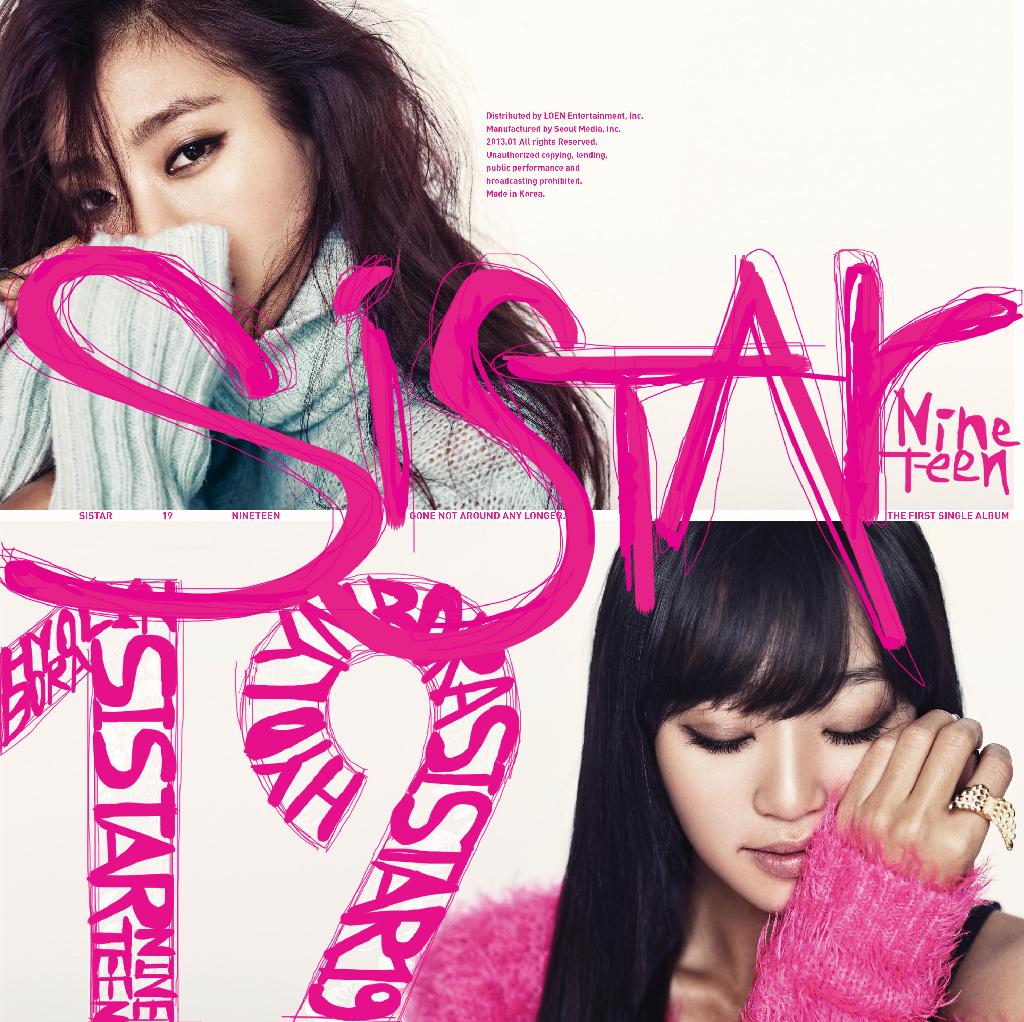
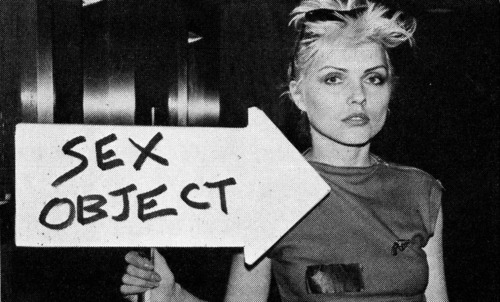
After the translation of the column, I’ll provide two: the Sex Object Test (SOT) devised by Caroline Heldman at Sociological Images, then Evangelia Papadaki’s “Feminist Perspectives on Objectification” in The Stanford Encyclopedia of Philosophy (Winter 2002). As quickly becomes apparent from them, you may well call SISTAR19’s sexy costumes and choreography crude and unoriginal, but objectifying? They don’t register on those criteria at all. And, by extension, neither does a lot of K-pop.
[HStereo의 음악칼럼]씨스타19 있다 없으니까를 통해 본 여자 아이돌의 성 상품화(19금) / [HStereo’s Music Column] Female Idols are Objectified through SISTAR19’s Gone Not Around Any Longer
확실히 통했다. 씨스타19의 이번 있다 없으니까는 요즘 가장 인기있는 노래이고 공중파에서 1위를 차지하며 씨스타의 인기를 유닛그룹인 씨스타19(효린,보라)로도 계속해서 이어나가고 있다. 안타까운 것은, 씨스타 19를 통해 돌아본 대한민국 여자 아이돌 문화가 가면 갈수록 너무 성 상품화 되고 있는것이 아닌가하는 우려가 생기며 이번 칼럼을 쓰게 됬다. 그리고 이번 칼럼은 섹시컨셉의 글을 건드리는 부분인 만큼 19금으로 가게 될것이다. 사실, 필자도 남자인지라 이번 씨스타19, 너무 좋다. SNL의 이엉돈PD가 씨스타19를 본다면 “저도 참 좋아하는데요, 제가 한번..” 하는 섹드립을 치게 될법한 무대이다. 그만큼 섹시하다. 근데 진짜 솔직히 이 정도 선에서 섹시는 끝나야 한다. 사람들은 시간이 지날수록 더 자극적인걸 원하고 더 야한걸 원하게 된다. 어찌보면 이 시작은 섹시 아이돌이라고 하는 컨셉으로 나오는 여자 가수들의 공통적인 특징이고 “내가 더 야해” 라고 말하고 있는것같은 느낌까지 받게 된다.
It definitely worked: SISTAR19’s song Gone Not Around Any Longer is the most popular song these days, getting a number 1 ranking on the main public broadcast channels. This is having a knock-on effect on SISTAR’s own popularity. This is worrying — SISTAR19 has gotten me thinking about how, as time goes by, Korean female idol culture is becoming too full of sexual objectification.
Since this column is about sexual concepts, it is adults-only. And, because the writer is a man, he likes SISTAR19! Indeed, if Lee Yeong-don, the Production Director of SNL Korea saw them, he would make a sexual joke like “Oh, I really like them too. Can I just one time…” — they’re that sexy. [But] if I speak really honestly, they [still] cross a line.
As time goes by, people want to see more stimulating and revealing things. I get the feeling that, perhaps, this sexy idol concept is the start of female singers all having the common trait of announcing “I am more sexual and revealing [than other female singers].”
(씨스타19의 새앨범 타이틀곡 “있다 없으니까”의 MBC 음악중심 무대영상. 뮤직비디오보다 확실히 무대를 보는게 더 섹시를 강조했다. 특히 투명의자에서 추는 “착시댄스”는 보자마자 놀랠정도로 야했다)
(Caption: A video of SISTAR19 performing their new title song Gone Not Around Any Longer on MBC’s [February 2nd] “Music Core” show. It is much more sexual than the song’s actual music video. In particular, it was their ‘Illusion Dance’ performed on a transparent, perspex bench that immediately showed me how lewd it was.)
James: Here is the — choreography and costumes-wise — virtually identical music video:
물론 이들이 잘못했다는 건 아니다. 남자관점에서 보면 이렇게 섹시아이돌이 나와주는건 고마운(?) 일이다. 다만, 앞서 말했듯이 이제는 어느정도의 수위조절이 필요한것은 아닐까? 하는 생각이 들었다. 씨스타19의 효린같은 경우에는 이미 가창력으로도 인정을 받았어서 필자 개인적으로는 이들이 진정으로 “음악성”으로 승부해도 충분한 아이돌이 될텐데, 왜 자꾸 소속사에서는 옷을 못벗겨 안달이 난것마냥 상품화를 시켜버렸다는것이 좀 안타깝게 작용된다.
Of course, I’m not saying that they did anything wrong. From men’s perspective, we’re grateful for the sexy idols. However, as I said before, this level of exposure needs adjusting [reduced]. This is what I think: SISTAR19’s Hyorin has already been acknowledged for her singing ability; if it came to a contest over true musical talent, SISTAR19 would hold their own. Why then, is their agency so eager to make them constantly take their clothes off? I feel bad that they’re sexually-objectified like this.
(최근 논란이 된 소주브랜드 “처음처럼”의 19금 광고영상. 씨스타의 효린, 포미닛의 현아, 카라의 구하라, 이렇게 3명이 광고모델이 됬다. 논란이 된것은, 유튜브를 이용하여 소셜마케팅을 사용했는데, 조회수 공약으로 높아질수록 광고가 더 야해지는 기발한 S코드의 광고를 찍었다. 이를 보며 수많은 사람들은 여자 아이돌을 “벗기기”를 원하고 있고, 이에 계속 여성의 성 상품화가 적당선에서 계속 흔들거리며 위험수위에 오르지 않을까라는 생각이 들었다.)
(Caption: The controversial R18 commercial for the soju brand Like the First Time; SISTAR’s Hyorin, 4Minute’s Hyuna, and KARA’s Gu Hara are the models. The controversy comes from using the ‘Extraordinary S Code’ social marketing strategy of promising an even more revealing commercial the more hits gained on YouTube. Seeing this, many viewers call for female idols to wear less; if this continues, I fear the sexual objectification of women will overstep a line.)
반면, 현재 아이돌에서 가장 성 상품화 되있는 여자 가수는 누굴까? 누가 뭐래도 바로 현아라고 생각한다. 여자에겐 수치일수도, 자부심일수도 있지만, 그녀는 “패왕색기”라는 별명까지 붙어가며 섹시로 밀고 나가게 되었다. 사실 이는, 대중들이 만들어낸 문화적 코드이다. 안타까운건 아직 나이도 어린 그녀가 너무 “섹시”로만 밀고 나가며 정작 실력있는 뮤지션으로 인정받기가 힘들어질것 같다는 생각이 들었다. 사람이 한번 정해진 이미지는 쉽게 바꾸기 힘들기 때문이다.
Who is the most sexually objectified female singer these days? I’d wager most people would answer Hyuna. To [most] women, such a label could be seen as something shameful, or alternatively as a sign of arrogance. But to someone with the nickname of ‘The One and Only Supreme Queen’ however, this only further promotes her sexual image.
On the other hand, this is just the role the public has designated for her. Yet she is still quite young for it. I worry that if she continues to be labelled and promoted this way, she will never be acknowledged as a musician. It is difficult to change one’s image once it has been set in the public imagination.
(여자 아이돌중에 가장 상품화가 많이 된 아이돌은 단연 현아다. 사실 강남스타일에서 같이 나온 덕분에 외국에 많이 알려진 것도 있고 美빌보드 지에서는 현아를 전 세계 섹시한 여자아이돌 17위에 랭크시키며 세계시장 진출에 큰 가능성이 있는 아이돌이라고 극찬을 하였다.)
(Caption, right: Among female idols, the most sexually-objectified one is of course Hyuna. Thanks to Gangnam Style, she has received a lot of attention and praise overseas, ranking 17th in a list of “Sexist Female Idols” in the U.S. Billboard magazine. She now has a lot of potential to make it big internationally.)
헌데 세계적인 문화 코드로 봐서, 섹시컨셉은 결코 야하고 음란한것이 아닌, 대중문화의 한 큰 틀이 되었다. 그렇기에 빌보드에서도 현아를 세계적인 섹시 여가수 17위에 랭크시킨것은 아닐까? 넓게 보자니 세계문화속에 한국 아이돌이 어우러져 좋을수도 있지만 좁게 보자니 시간이 지날수록 도를 심하게 넘을까 우려되는 것도 어쩔수 없는 현상인듯 하다.
By the way, looking at the world cultural code, a sexy concept is [now] never a too risqué or lewd thing, but a fundamental part of popular culture. Isn’t that why Hyuna was [noticed] by Billboard magazine? Looking at the big picture, it is wonderful that Korean idols are integrating so harmoniously into world culture. But looking more narrowly, as time goes by I am also more and more worried by this phenomenon.
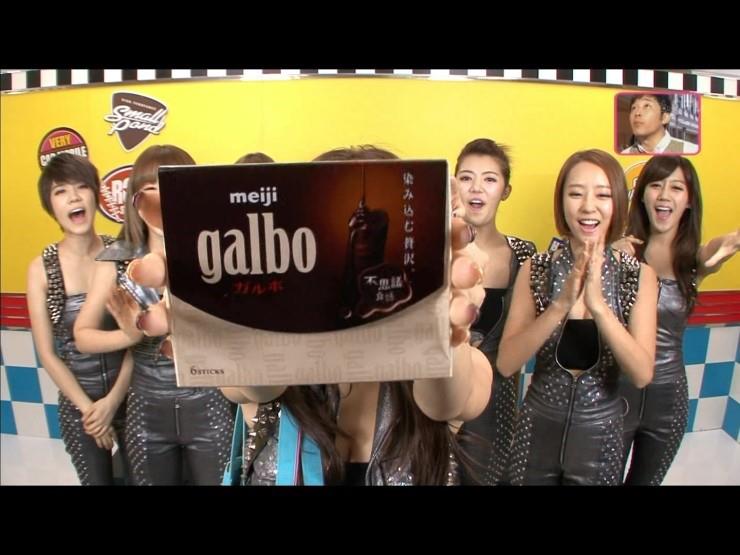
(한류로 인해 수많은 가수들이 일본이나 동남아, 미국으로 진출하고 있다. 그 예로 일본에서 최근 성황리에 활동중인 레인보우. 메이지식품의 “갈보” 초코렛의 광고 모델이 되었는데. 갈보가 일본어로는 “가루보”라고 발음이 되는데, 그게 중요한것이 아니라 왜 하필 한국에서는 정말 입에 담기 힘든 속어인 “갈보”초코렛의 모델이 왜 하필 또 한국 아이돌가수냐는 뜻이다. 그전에, 이들은 이 뜻을 알고는 찍은걸까?)
(Caption: Through Hallyu, many singers are being promoted in Japan, Southeast Asia, and the United States. Take Rainbow for example. Recently successful in Japan, they have become endorsers for Meiji Seika’s “Galbo” chocolate. Whereas in Japanese, it is pronounced “ga-roo-bo,” in Korean “galbo” is a slang word that I can not bring myself to say. Why on Earth are Korean idols endorsing this product? Didn’t they know beforehand?)
한류를 통해 수많은 가수들이 세계로 진출하고 있다. 위의 레인보우 예시처럼, 스스로를 저렇게 “갈보”라고 외칠수 있게 하는 이 대중문화 시장이 이상하게 여기는건 기분탓일수도 있지만, 엄연히 한국의 아이돌이고 갈보라는 뜻은 한국어로는 심하게 안좋은 뜻이다. (뜻을 모르는 사람들을 위해 대놓고 말해서 “걸레창녀”라고 이해하면 된다) 그런 뜻을 알고 이들은 광고를 찍은걸지도 의심되며 기획사 측에서는 파장이 커진다면 어떻게 될지도 생각을 해볼 문제로 판단된다. 문화적 코드로 자리잡은 “한류”에 스스로 먹칠을 가하게 되는 사건이 아닐지, 우려가 되기도 했다. 특히나 레인보우 같은 경우에도 “섹시컨셉”을 밀고 나가는 아이돌가수 아닌가? 이 광고가 과연 19금일까?
Through Hallyu, many singers are promoting themselves overseas. With the above example of Rainbow, it could just be my personal feelings that make me think it strange that the popular culture market makes them yell “galbo” at each other. But they are distinctively Korean idols, and that means something very bad in Korean (for those of you that don’t know, it means “hooker”). Actually, I suspect that they did do, and their agency will view this a problem if news about it spreads further. I also worry that, through such disgrace, they will ruin the established cultural code [image] of Hallyu. Especially in the case of Rainbow, who heavily promote their sexy concept. Is this ad ultimately R18?
(가장 요즘 핫한 댄스인 “착시댄스” 이보다 선을 넘는다면 아이돌에게는 이제 기회보단 위기로 다가올수도 있다)
(Caption: The hottest dance at the moment is this “illusion dance.” But if they cross the line any more, it will become more of a crisis for them than an opportunity [to get noticed])
한류가 계속해서 이어나가고 여자 아이돌 가수가 세계적 진출을 하기 위해선, 섹시컨셉을 버리라는 말은 절대 못하겠다. 허나, 어느정도 선을 유지시켜야 하는것이 맞다고 판단된다. 섹시의 기준을 넘어 싸보이게 가면 안된다는 뜻을 비추는 것이기 때문이다. 좀 심한말로, 섹스를 못해서 안달이 나게 보이면 그건 문제가 있다고 보기 때문이다. 기획사측에게 바라는 것 하나는, 적당한 선의 섹시컨셉과 실력으로 승부할수 있는 아이돌들을 발굴하고 만들어내주길 바랄뿐이다.
In order for Hallyu to continue, and to promote female idols and singers overseas, I can’t bring myself to say they should stop using sexy concepts. But I do think there should be limits: [because] if they overdo it, it emphasizes how cheap that can look. Speaking very harshly, I think it’s a problem if they look too sexually available. One thing I expect from agencies, is that they scout for people who can compete more on ability than on sexual appeal (end).
Whatever our opinion of the author, simply shouting “objectification” doesn’t settle an argument. Instead, he could have used the SOT from Sociological Images, which provides the following suggested criteria to check for (technically only for images, but clearly also applicable to music videos and performances):
1) Does the image show only part(s) of a sexualized person’s body?
2) Does the image present a sexualized person as a stand-in for an object?
3) Does the image show a sexualized person as interchangeable?
4) Does the image affirm the idea of violating the bodily integrity of a sexualized person that can’t consent?
5) Does the image suggest that sexual availability is the defining characteristic of the person?
6) Does the image show a sexualized person as a commodity (something that can be bought and sold)?
7) Does the image treat a sexualized person’s body as a canvas?
For examples and further discussions of each, see the original post, and I highly recommend also reading Parts 2, 3, and 4 on the harm caused by objectification, and the daily rituals to stop and start doing to avoid that respectively. Like GenderAdvertisements by Erving Goffman (1979), it’s one of those rare pieces that immediately changes your view of the world.
In my case, by allowing me to put my finger on how this Makgeollu ad objectifies Kang So-ra for instance, seen — I kid you not — less then 5 minutes after reading the SOT posts in my local Starbucks. It’s #5, by suggesting that sexual availability is her defining characteristic:
Yet however eye-opening, I’d be lying if I didn’t admit that the SOT ultimately only provides a short, really quite superficial introduction to the subject, commenters at Sociological Images questioning categories 3 and 7 in particular. In that vein, despite now further appreciating (via Part 2) that objectification as a whole is harmful, I’m yet to be convinced that this particular example is so, either for her or for viewers.
Instead, also knowing that the missionary position is the most commonly used sex position for heterosexual couples, and that women look sexually attractive lying on beds as a result (heightened here by the virginal white), then I see a simple case of sex being used to sell.
It would be excruciatingly inane not to expect that in ads.
On the other hand, it is hardly original. Or, through overuse, particularly effective either. And indeed, it is precisely these sorts of complaints about Gone Not Around Any Longer that have the most validity, not hollow, dogmatic rhetoric about victimization and objectification (although perhaps the masked background dancers do partially qualify under #3?).
As explained by Nicholas in his review of the song at Seoulbeats for instance (source, right):
The rest of the music video tended to play out like SISTAR videos past: cube-like neon-lighted sets, with army of back-up dancers (a duo group often equates to a lot of empty space) and emotive posturing next to random objects.
There’s also the SISTAR staple of sexy body waves. While the moves do appear overdone after a while, I’m going to stop ranting about them. After all, this brand of synthesised sexy has become very much a part of their identity. And maybe because of its frequent presences, I’ve become desensitised. As much as I’m numb to this, something must be said about the incongruence of a body wave in a song that talks of pining and loss. No?
As far as I know, that body wave (originally by Beyoncé) was first seen in K-pop in their Ma Boy video, released in April 2011. By the next year, that and ‘booty circles’ had become “two staple moves in the SISTAR arsenal”:
Fany Pack echoes Nicholas in finding it overused however:
It might just be because I don’t have a penis, but I’m getting a little bored with presenting Sistar members as just boobs and ass. I realize they have some of the best bods in kpop (esp. Bora and Hyorin), but come on. Can’t the girls do anything other than stand there and touch themselves? Give them something new to do. I don’t even care if they’re still touching themselves but, like, fighting crime in an action-y video. Or touching themselves while exploring new galaxies in some futuristic, space video. This latest song offers an MV with basically no plot, though.
Before the inevitable “But that’s what ‘Ma Boy’ was like. Why don’t you complain about that song?” response, I know “Ma Boy” had a video about sexy ladies being sexy with no plot. That song was better, though, and didn’t copy the main group’s latest hit so much.
The dance (If you can even call it a dance) was a very lazy dance. The choreographer this time around really ran out of ideas so he just threw a bunch of slow movements together to match the tempo. And when that failed, he recycled some old Sistar dances. Shame. Shame. The reason people loved Ma Boy was its odd blend of Cute and Sexy, the fun dance and the catchy song. They had over a year to come back with an equally great concept or better and failed. The editor couldn’t even do his job and edit out Bora’s wardorbe malfunction. I guess they thought if they gave us an overload of sexy, we wouldn’t catch the sloppy editing. This whole video just screams rushed.
Nevertheless, I love the song. The lyrics of the song are very powerful, and the melody is nice….
Finally, it behooves me to mention Dialectofmyown’s take on their above commercial too:
Sistar are the stars of a new Pelicana commercial advertising for chicken and LO AND BEHOLD, that choreographer for Sistar (whoever they are) went and choreo-ed something creative and completely out of the box: body waves. I know a huge shocker, I can’t think of a single other music video in which the majority of Sistar’s dance is composed of body waves and hip rolls and that’s all, well except for all of the music videos they are known for minus Shady Girl….
Without disputing those opinions, it should also be noted that the body waves and hip roles are ultimately no different to any other group’s overused signature move(s), of which there are many (and, seeing as we’re on the subject, here’s an analysis of Rihanna’s “five unique crotch-grabbing techniques” that just appeared in my Twitter feed). Moreover, their admittedly many wardrobemalfunctions aside, I can’t help but wonder if it’s really the double-standards surrounding (asexual) legs and (slutty) large cleavage that are one reason why Hyorin, for one, gets singled out for “sex-instrument talk [and/or] whore-bashing” by netizens “as soon as SISTAR puts out another music video.” Whereas Girls’ Generation, whose legs are so objectified (#1) that they’ve influenced fashion all over Asia, and spawned a medical tourism boom, don’t seem to attract quite the same opprobrium.
In addition, Sophie of J-Popping fame, writing at Selective Hearing, doesn’t think the choreography is as superfluous as it may seem, placing the music video on the same continuum as Ga-in’s Bloom. I think that’s overdrawn myself, but then I think Bloom is one of the most (sexually) radical K-pop songs of the last decade too, so I’m surely the last person that can accuse someone of reading too much into a music video:
I feel guilty for not saying more about the hyper-sexualization in the video. Certainly, it’s heavily influenced by Ga-in’s ”Bloom: from October 2012, and features sensual depictions of the duo’s sexual desire. There are blindfolded women, the striking contrast of black and white, and a sultry watery motif (It’s a metaphor! For renewal! or…sad!).
Ga-in’s video sparked a debate about whether or not it is empowering for women to be intimately expressing their desires. As “Bloom” was released almost contemporaneously with Hyuna’s “Ice Cream,” participants had to defend their point of view in lieu of a radically different but equally carnal expression of sexuality….
….In particular, the dance [in SISTAR19’s video] is captivatingly visceral. It’s clear from the precision that it’s been highly choreographed, but it’s executed with such emotion that it feels motivated from a place of real emotion. The live performance and dance practice videos have fewer distractions, and I highly recommend viewing them as well.
But we were talking about objectification. So, here are the criteria provided by Evangelia Papadaki in her essay “Feminist Perspectives on Objectification,” available online here:
Objectification is a notion central to feminist theory. It can be roughly defined as the seeing and/or treating a person, usually a woman, as an object. In this entry, the focus is primarily on sexual objectification, objectification occurring in the sexual realm. Martha Nussbaum (1995, p.257; opens PDF) has identified seven features that are involved in the idea of treating a person as an object (source, above-right):
instrumentality: the treatment of a person as a tool for the objectifier’s purposes;
denial of autonomy: the treatment of a person as lacking in autonomy and self-determination;
inertness: the treatment of a person as lacking in agency, and perhaps also in activity;
fungibility: the treatment of a person as interchangeable with other objects;
violability: the treatment of a person as lacking in boundary-integrity;
ownership: the treatment of a person as something that is owned by another (can be bought or sold);
denial of subjectivity: the treatment of a person as something whose experiences and feelings (if any) need not be taken into account.
Rae Langton (2009, pp.228–229; unavailable to view online, but here is a related essay) has added three more features to Nussbaum’s list:
reduction to body: the treatment of a person as identified with their body, or body parts;
reduction to appearance: the treatment of a person primarily in terms of how they look, or how they appear to the senses;
silencing: the treatment of a person as if they are silent, lacking the capacity to speak.
Papadaki’s essay is quite thorough and academic, so I’ll wisely leave discussion of it to interested readers in the comments But, to get that discussion started, I’d be grateful for your thoughts on a) if and/or how any of these new criteria apply to SISTAR19, and b) two final observations:
— No matter how trendy it may be to dismiss them these days, I don’t think the works of centuries-dead white guys have absolutely nothing to teach us about modern society. But still, I really do wonder why “Immanuel Kant’s (1724-1804) views on sexual objectification have been particularly influential for contemporary feminist discussions on this topic” especially as, in Papadaki’s words, he ultimately believed that “The only relationship in which two people can exercise their sexuality without the fear of reducing themselves to objects is monogamous marriage,” let alone is someone who wrote well before the development of photography and mass media (italics in original).
— I’m much more persuaded by Nussbaum’s work, especially by the following (my emphasis in bold):
According to Nussbaum, then: ‘In the matter of objectification context is everything. … in many if not all cases, the difference between an objectionable and a benign use of objectification will be made by the overall context of the human relationship (Nussbaum 1995, 271); ‘… objectification has features that may be either good or bad, depending upon the overall context’ (Nussbaum 1995, 251). Objectification is negative, when it takes place in a context where equality, respect and consent are absent. (Among the negative objectification cases she discusses in her article are Hankinson’s Isabelle and Veronique, the magazine Playboy, and James’s The Golden Bowl). And it is benign/positive, when it is compatible with equality, respect and consent. Nussbaum gives an example of benign objectification: ‘If I am lying around with my lover on the bed, and use his stomach as a pillow there seems to be nothing at all baneful about this, provided that I do so with his consent (or, if he is asleep, with a reasonable belief that he would not mind), and without causing him pain, provided as well, that I do so in the context of a relationship in which he is generally treated as more than a pillow’ (Nussbaum 1995, 265).
Sorry everyone, but this will be the last Korean Gender Reader.
It’s not the workload—this new format, decided upon a few months ago, is really quite light. I even enjoy collecting all the links now. And I do realize that many people look forward to these posts and rely on them.
Really, if I could keep doing them, I would.
The problem is that by their nature, they require a regular posting each week. Whereas partially because of my very limited free time, and partially because planned short posts often turn out to need weeks of extra research and writing, my natural posting style is anything but regular.
Try to combine the two? You’ve already been seeing the results—little but Korean Gender Reader posts filling in the gaps between the long ones. It doesn’t look good at all, and has an obvious solution.
And, frankly, it feels great to be able to post on what and whenever I like again, rather than constantly feeling pressured.
I could go on, including mentioning — no joke — developing repetitive strain injury in my right arm last month, but I’m sure you get the idea. Let me just say that it’s reminded me to only work on what I enjoy, while still doing my best to keep you entertained and informed in the process.
Meanwhile, I’ll continue to post links on Twitter (@JamesTurnbull) and on the blog’s FB page, so all the stories that would have been going up will still be quite accessible really. And I’ll still be very happy and grateful to receive ideas and leads from readers, and/or to post announcements of your upcoming events and so on.
Last week, I found Trance Blossom’s remix (download) of 2NE1’s Scream, and have only danced in my room to it (and surreptitiously on the subway) about 20 times since. Unfortunately, the accompanying video was smote by the copyright gods, but, 2NE1 being 2NE1, I was still looking forward to the MV of the orginal…
No, not quite what I was expecting. But hell: the dancing, costumes, and make-up ain’t half bad.
Meanwhile, here is the original Japanese version. I haven’t been able to find one with accompanying lyrics and English translations, but you can see find both here:
Yes, despite the date, this really did happen to me today…I guess I got rickrolled K-pop style. And now, you too!^^

 ….Some parts of this topic have been covered in previous posts about the social status of women the commodification of their bodies, but I just wanted to point out a few things here visually. When I talk about the 도우미 (doumi – “assistants” who can be found in everything from grocery stores to ones singing rooms), people often ask me why they bother me so much. To reiterate a point I made in a previous post, it’s the saturation of the doumi into the realm of the everyday and mundane that is so insulting – to both the customers and the workers themselves (source, above).
 (Source)

















 The Grand Narrative