That advertisements featuring Girl’s Generation (소녀시대) are invariably photoshopped isn’t news of course, and these ones are hardly the most egregious examples either. But in a rare positive step, the before and after pictures for their latest advertisements for the LG Black Label Series Chocolate phone are currently featured on the front page of the “Enter Holic” or “Entertainmentholic” (엔터홀릭) section of the Korean MSN homepage, and so will have been the first thing many people saw when they opened Windows Live Messenger this morning.
Not to imply that most Koreans aren’t aware of photoshopping in advertisements of course. But still, anything that fosters further discussion of that is to be encouraged.
Or at least, that was my first impression. Looking more closely though, in fact it was the before images that were used in the advertisements. Unfortunately there is no information about who created the photoshopped images, or why, but with the statement “Wow! Very subtle changes make a big difference” (아주 미묘한 차이가 큰 차이를 만드는구놔), he or she implies that the altered images are to be preferred.
Watching one of Lotte’s commercials for its new Cheoum Cheoreom Cool (처음처럼 쿨) soju dozens of times…as one does…then many thoughts come to mind, but that it is being effectively marketed towards women isn’t one of them. Yet weren’t they the main reason low-alcohol soju brands were launched in the first place?
As those objectified breasts and buttocks helpfully remind us, Cheoum Cheoreom Cool’s alcohol content is 16.8%, so take the examples of the two closest brands in terms of alcohol content for instance: Daesun’sBom Bom (봄봄, 16.7%) launched in April, and Muhak’sJoeunday (좋은데이, 16.9%) launched in November 2006 (see here for a helpful graphic comparing all three), and both of those were indeed aimed towards women.
Of the two, Bom Bom’s marketing is the most of interest because Daesun took the very rare step of using a young, photogenic male in its advertisements. But while Muhak’s own campaign was ultimately unsuccessful (commercials released after early-2007 are difficult to find, and Joeunday’s website is no longer available, although the drink isstill being produced), its use of then 28 and 36 year-old female and male entertainers Chae Yeon (채연) and Jung Jun-ho (정준호) respectively was also significant as a partial, albeit somewhat ambiguous attempt to appeal to a much older female demographic than all the other campaigns considered here.
Combined with the knowledge that only 30% of soju drinkers are women then, it would be very tempting to interpret the introduction of increasingly weaker soju drinks over the last decade in terms of a women-centered advertising narrative, with all the changes to Korean drinking culture, gender relations, and Korean women’s body-images that that would imply. But that would be quite mistaken however, as simply saving on costly alcohol is just as powerful a motivator for soju companies, and actually the vast majority of new brands are still exclusively targeted towards men (take Bohae’sIpseju (잎새주; 19.5%), which I wrote about in April). In particular though, there is the fact that Lotte and Jinro take up 12.6% and 78% of the country’s soju market respectively, and so regardless of the innovations of other companies, it is the logic behind the marketing campaigns of these companies that is the most important.
In that vein, the case of Jinro’s J (제이, 18.5%) is very interesting: launched in October last year, I praised it for its original marketing, but it was still definitely aimed at 20-somethings of both sexes. In June this year though, a new marketing campaign specifically aimed towards getting women to associate the brand with staying slim was launched. In addition, when Lotte bought Doosan’s liquor arm in January this year (after an unsuccessful attempt to buy Jinro in 2005), it inherited a contract with Lee Hyori (이효리) from November 2007, and the logic to her commercials for Cheoum Cheoreom (처음처럼) was similarly getting (female) consumers to associate the brand with her slim body.
Which is what made this latest effort from Lotte so confusing:
Vodpod videos no longer available.
In hindsight, it’s actually a little derivative of Jinro’s original effort, in which “1032” refers to the depth from which the water used to prepare the drink is taken from the sea:
Vodpod videos no longer available.
Granted, Lotte’s video briefly objectifies men too. Not that that somehow justifies the objectification of women in it of course…or that I’ll feign offense at either. Rather, it aroused me my interest because it reminded me of this:
…some advertisers, aware of the objections of the feminist movement to traditional images of women in ads, have incorporated the criticism into their ads, many of which now present an alternative stereotype of the cool, professional, liberated women…Some agencies trying to accommodate new attitudes in their campaigns, often miss the point and equate ‘liberation’ with a type of aggressive sexuality and very unliberated coy sexiness.
Dyer, G. (1982) Advertising as Communication, pp. 185-186, quoted in Strinati, D. (1995) An Introduction to Theories of Popular Culture, pp. 187-188)
Is that what is occurring here? Deciding to investigate then, I was stuck by the Korean media’s interest in the marketing campaign also, albeit for two entirely different reasons.
First, having an alcohol content under 17% means that commercials can be screened on television after 10pm, and hence that the alcohol content of soju drinks would eventually reach that level has long been predicted by industry analysts. Even more presciently though, back in March one said:
…if you go under 17% you blur the boundary with low-alcohol drinks. Because you gain the ability to have TV ads at less than 17%, you could be promoting drinking cultures and exposing teenagers to it, so the authorities may stop you.”
And as this Korean source reveals, last week the rules were indeed changed. But Joeunday’s commercials wouldn’t have been particularly corrupting of Korean youth, nor Daesun’s commercial below with Kang Dong-won (강원도), on Korean screens since August 1, so this was probably a direct reaction to the launch of Cheoum Cheoreom Cool in late August.
Vodpod videos no longer available.
Only Daeson suffered though, as in anticipation of the negative publicity and the government’s intentions, spokespeople for Lotte said that they never decided not to make television commercials (see here and here). Which brings me to the second reason for the intense media interest in it: Lotte deciding not to use Lee Hyori to endorse the drink, despite her still easily being Korea’s biggest sex-symbol, and notorious for always sexing-up advertisements and pushing the limits of Koreans’ supposed Confucian reserve (see here and here). Apparently, in nearly 2 years promoting Cheoum Cheoreom, she hadn’t brought around the turnaround in fortunes expected(update: these statistics dispute that).
But in fairness to Lee Hyori, Doosan was in the midst of reorganizing itself into a holding company centered around heavy industries when it hired her, and in hindsight the same company that had just bought the world’s biggest maker of construction equipment earlier that year was not necessarily the best one to transform the image of the drinks in the eyes of 20-somethings: see here and here for the ensuing advertising disasters. Hence the consternation caused earlier this week when it was revealed that while she would continue to promote Cheoum Cheoreom, relatively unknown UEE (유이) would be used for Cheoum Cheoreom Cool instead (but not replacing Lee Hyori, as this blog naturally but mistakenly stated), and with the combination of the two Lotte hopes to bring their market share up to 15%.
Which is why it is UEE that graces the front page of all Korean portal sites as I type this, and as it turns out, what I’d seen was merely one of many pre-launch commercials and advertisements based on the theme of “168 ,” most of which were rather inane. Here then, is the commercial Lotte really wants you to remember:
In it, UEE begins with “오빠 나 쿨해, 내가 진짜 처음이야?”, which roughly translates as (to the guys she’s dating) “I’m cool…am I really your first?”. After that, the first guy just mutters nonsense, and later she says “쿨하게 생각해!” or…er…”Think Cooly,” and she finishes with “원샷. 어! 상쾌해!”, or “One shot! Oh! It’s sweet!”.
Consider these accompanying advertisements also, released at the same time:
The text in the first reads: “Q: Honest. 남친이랑 여행할땐, 솔직히 말하는게 Cool 할걸까? MT 간다고 뻥치는게 Cool 할건까? A: Think Casual”, or “When you travel with your boyfriend, which is cooler: admitting it to your parents, or lying and saying you’re going on a trip with your university friends?”. And in the second: “Q : Love 키스할때 눈을 감고 하는게 Cool 하니? 쳐다 보면서 하는게 Cool 하니? A : Think Casual”, or “When you kiss, which is cooler? With your eyes closed or staring at your partner?”. In addition, many bottles of the drink will be sold with blue or pink bottletops, with the above messages or similar ones printed on the labels (see the video here at 0:31 to see those). And despite the former ostensibly being directed towards women, one might speculate that the message with the blue text might actually appeal more to men, and only with the pink or red more to women.
As an aside, severalsources describe the dance as simultaneously sexy and pure and innocent, but without any apparent trace of irony: something that won’t surprise Brian in Jeollanam-do, who has often criticized the bastardization of the word in the Korean language. I wonder though, if that adds to the argument that it is intended for both female and male consumption? Regardless, here’s a video of the making of it also, and although I find personally find that they ruin the fantasy element to commercials myself, they are also important elements to marketing campaigns these days (and I speculate more popular among women than men):
By this stage then, you will probably not be surprised to find that most of the Korean sources I’ve linked to do in fact mention that the drink was aimed at both sexes (although one adds that it would have been more logical to exclusively aim it towards women). But rather than simply provide that information at the beginning, I decided to roughly replicate the process by which I came to find that information for myself, hopefully providing a good overview of the current state of soju advertising in the process (but which should definitely be read in conjunction with this one from June).
And also to resist my temptation to merely assume that the marketing campaign with UEE both reflects and/or is the harbinger of more sexually assertive images of women in Korean advertising. After all, considering that: the recession has already forced advertisers of all stripes to rely on consumers’ basic instincts; soju companies have nothing but the profit incentive in mind; and if they don’t see (hyper)objectification of women for a male gaze as incompatible with the commensurate goal of selling soju to women, confirming the suspicions that first came to mind as discussed, then that doesn’t bode well for reducing Korean women’s excessive worries about their appearances.
And yet regardless of the motivations behind them, one still can’t help but reflect on all the changes to women’s images in soju advertising in recent years, not all of which have been negative. Granted, I have often exaggerated the depth and positive impact of those changes in the past. But let me leave you with the fact that this alternate image of women was the norm less than two years ago:
Vodpod videos no longer available.
At the very least then, we can all agree on the pace of change…just one reason why Korean sociology is so interesting!
An image that simply begs commentary. But what is noteworthy about it exactly?
One thing is the tendency to use women’s bodies to showcase vehicles, well satirized here by replacing women with men in a similar photoshoot. But that is hardly unique to Korea, nor particularly strong here, whereas my general purpose with this series is to highlight interesting features of Korean society. So it’s the use of Caucasian women that I want to discuss here, as they’re so common in Korean advertising that sometimes there’s even more of them than Korean ones.
Before I began writing though, I had a thought: can’t Korean advertisers ever use non-Korean models without overanalysis, and — yes — perhaps implicit criticism from myself for doing so? No, of course they can. And, serendipitously, earlier this week Lisa at Sociological Images provided a fuller response to that charge, indeed an overall rationale that will inform this series in the future also. Here it is, but adapted to this blog:
I often present a single example of a cultural pattern. If you’re a member or observer of the relevant culture, that single example might ring true. That is, you might recognize it as one manifestation of something you see “out there” all the time.
But it’s still just one example and it’s not very convincing to someone who is skeptical that the cultural pattern exists, especially if it’s subtle.
But one advantage of being a niche blogger is that posts on one’s subject(s) are cumulative. I can even put up single manifestations of a cultural pattern and, even if it’s not very convincing at the time, the other evidence on the blog (and the evidence yet to come) may sway even some skeptics.
It is in that spirit that I offer the opening advertisement.
The choice of the models ethnicity may be random, but I am going to suggest that it is not…
And yet there are so many examples of Caucasians in Korean advertisements on this blog to provide, and so many factors involved in the choices of them, that to simply provide dozens of links at this point would be to confuse rather than enlighten readers. Therefore, my purpose with this post is to provide a single definitive guide to the subject that people can refer back to in future, not least myself!
To begin then, consider the empirical evidence for the disproportionate numbers of Caucasian women in Korean advertisements. Surprisingly given their seeming ubiquity though (something I’ll return to), there have actually been very few English-language studies of East Asian advertisements that have incorporated race as a main factor of their inquiries, and I am aware of only three that have done so of Korean ones. Here they are in chronological order of publication, with very brief summaries of their findings and links to the posts where I discuss them in more detail:
• Hovland, R. et.al. “Gender Role Portrayals in American and Korean Advertisements”,(Sex Roles: A Journal of Research, December 2005; open access copy no longer available).
Using various 2000 editions of selected Korean and American women’s magazines, Hovland et. al. found that 30% of Korean advertisements in them featured Caucasian female models, whereas only 1.9% of US advertisements showed Asian female models. Of particular note here, both Korean and US magazines for middle-aged women showed more Korean and Caucasian models than their counterparts for younger women respectively; see here for the details.
• Kim, Minjeong & Lennon, Sharron “Content Analysis of Diet Advertisements: A Cross-National Comparison of Korean and U.S. Women’s Magazines” (Clothing and Textiles Research Journal, October 2006; open access copy no longer available).
As discussed in the second half of this post, the advertisements in the various 2001 editions of selected Korean women’s magazines examined actually had more Caucasian women than Koreans: 52.3% vs. 47.7% respectively, compared to 84.9% Caucasian women in advertisements in U.S. magazines.
• Nam Kyoungtae, Lee, Guiohk & Hwang, Jang-Sun “Gender Role Stereotypes Depicted by Western and Korean Advertising Models in Korean Adolescent Girls’ Magazines“, Paper presented at the annual meeting of the International Communication Association, TBA, San Francisco, CA, May 23, 2007; downloadable here.
Of the total of 644 female models found in selected advertisements (one page or bigger and showing full adults) from selected Korean women’s magazines from 2002 and 2003, 57% were Korean and 43% were Western. Of 299 male models counted, 59.2% were Korean and 40.8% Western. And of particular interest, as I wrote here:
…Western women were more likely to be depicted in revealing clothes and or nude than Korean women, but at the same time they were also likely to be portrayed as independent, self-assured, and assertive than them too, and by no means just in a sexual sense. Again, this finding is true of Western and Korean men too…
To be fair, this at least in part echoes the the hypersexual state of Western advertising today. And rather than supporting the artificial dichotomy between chaste Koreans and oversexualized Caucasian (or Westerners) that at the heart of this post, the internal dynamics of the Korean magazine industry reveal that Korean women are active and willing consumers of the cultural and sexual norms that such advertisements literally embody, the incorporation of which into patriarchal Korea is not without friction. Not to imply that all positive changes in Korea are Western-derived of course, but regardless there are certainly a lot of advertisements with Caucasians out there.
Or are there? I’d wager that many heads would have been nodding with that last statement, and, granted, some Korean clothing labels for instance – Beanpole and Hazzys come instantly to mind – do seem to use exclusively Caucasian models. But then appearances by Caucasians in Korean-made television commercials like the above, for instance, are actually the exception rather than the rule. And with the proviso that White privilege is very much alive in Korea (the existence of which I take for granted that readers agree on), and, without implying that Koreans want to look White, that this still has a strong influence on both Koreans’ preferred cosmetic surgery operations and their huge numbers, in hindsight I’d be hard pressed to think of any segment of the Korean advertising industry that used Caucasian models to the extent researchers found in women’s magazines.
Unless of course, a great many of them were for lingerie that is.
As long-term readers will well know, it turns out that the reason for this is because before the restrictions against the use of foreign models in advertising was lifted in 1994, lingerie modeling in Korea was often done by pornographic actors (update: to be more precise, nude models) This gave it a negative image among Korean female models, the enduring strength of which was revealed recently by these ones who did model lingerie but nevertheless felt compelled to literally disguise themselves while doing so, and all quite ironic considering how willing many are willing to objectify their breasts otherwise (see here, the video here, and here for some notorious examples). Case closed then?
Not quite. Consider what I wrote a few months ago on the subject:
…lingerie advertisements are ubiquitous in Korea, and it’s a rare commute when I don’t have the slightly surreal experience of seeing ones featuring scantily clad Caucasians in one subway car, then seeing others with fully-clothed Koreans like [these] in another when I transfer (sometimes, you can even see both in the same car). Seriously, it’s no exaggeration to say that Koreans’ convoluted and often contradictory notions of sexuality and race literally stare me in the face everyday, and in a form that means that I’m particularly likely to sit up and take notice.
Yes, that is indeed a lingerie advertisement on the right (source). And regardless of the actual reasons for a phenomenon, once we think we’ve found the reasons for it, those shape the filter through which we take in new data. Personally then, I originally thought the use of Caucasian lingerie models demonstrated that Korean women had Caucasian body ideals, which prompted me to write this post on the subject last April. Once the stigma attached to lingerie modeling came to light that June though, then that link I had made was no longer sustainable…but not the Caucasian body ideals themselves, which there’s still a wealth of other evidence for (and see this post again). In that vein, while 4 years ago Michael Hurt was also mistaken in his proffered reasons for the numbers of Caucasian women in lingerie advertisements,writing in his blog Scribblings of the Metropolitician…
One thing that I also notice is that in underwear and other commercials that require people to be scantily-clad, only white people seem to be plastered up on walls in the near-buff. Now, it may be the sense that Korean folks – especially women – would be considered too reserved and above that sort of thing (what I call the “cult of Confucian domesticity”). Maybe that’s linked to the stereotyped expectation that white people always be running around all nasty and hanging out already, as is their “way.” Another possibility has to do with the reaction I hear from Korean people when I mention this, which is that white people just “look better” with less clothes, since Koreans have “short leg” syndrome and gams that look like “radishes.” The men are more “manly” and just look more “natural” with their shirts off. Hmm. The thoughts of the culturally colonialized? Perhaps I’m being too harsh? My hunch is that it’s all of the above. Take a look.
…not only did I heartily agree with his thoughts when I first read them, but I still agree with them, because they are not just based on the numbers of Caucasians in lingerie advertisements.In particular, of the following 2003 advertisement with Ahn Jung-hwan (안정환) he wrote:
A recent favorite, reflecting the relative position of Korean masculinity vis a vis whiteness, specifically white women. I don’t think it’s a coincidence that the relatively greater financial power that has made Korean men an attractive partner – or at least potential plaything – of Eastern European and Russian women, and that many of them now enter the country under the E-6 “entertainment visa.” In any case, this is a fascinating statement on the changing status of “the white” in relation to Korean masculinity. No longer the inaccessible Playboy fantasy held by many men in a developing Korea that had been culturally (and partially symbolically sexually) dominated by the United States – now the tables are turned. The product being sold here is a cream to make/keep one’s skin “white.” Don’t even get me started.
And lest long-time observers of Korea feel that this particular advertisement has become somewhat iconic and overanalyzed by the Korean blogosphere, it is but one of manyexamples.
Before providing a context for those in the remainder of this post though, I should point out that I don’t think that lingerie advertisements by definition sexualize the models featured, and so I disagree with Michael Hurt’s seeing further evidence of the sexualization of Caucasian women in the ridiculous setting of this advertisement for instance, as regardless of the source of the advertisement and/or the ethnicity of the models, worldwide they can similarly have “folks sitting around in their skivvies [that] could just as well be on the veranda of a bistro in the south of France. Eating strawberries in a bathtub in lingerie, with a towel wrapped around one’s head.” Indeed, rare Korean lingerie advertisements with Korean models are no different, and when it comes to sexualizing lingerie – nay, almost any item of woman’s clothing – it often pays to be subtle. Consider this one with Shin Min-a (신민아) that came out this summer for instance: while it is significant because previously one never saw Korean celebrities wearing the lingerie at all when they endorsed it, and is probably a belated reaction to the fact that discreetly showing one’s lingerie off has actually been the fashion for years now, personally I see much more significance in the fact that it seems designed for a male gaze.
As you might vaguely recall, the advertisement that prompted this post wasn’t actually a lingerie advertisement. But having Caucasians in the vast majority of those – for whatever reasons – doesat least feed into the false dichotomy of chaste Koreans and overly-sexualized Caucasians. And although it’s by no means the most blatant example of its kind, the choice of outfits in it still makes it very much Exhibit A in the argument for the existence of those stereotypes (as an aside, see this post for the issues raised when skimpy clothing is donned for a good cause, like women in bikinis washing only hybrid cars). Let’s now consider the other evidence.
First, there were the recent plans to set up a nudist beach on Jeju island specifically in order to attract foreign tourists, especially Caucasians/Westerners. Apparently, this was because many were already regularly stripping off on Jeju beaches despite local sensibilities, but in the absence of anything to support those claims, and considering that Korean reporters regularly simply make stuff up and/or impose their own opinions on a report while attributing them to others (see here and #1 here respectively for recent examples), then when I heard of the idea I was much more inclined to believe that Jeju government officials came up with it completely independently. And why? Probably based on the conflation of nudity at beaches with sex said Brian in Jeollanam-do, “implying that the point of the former is to stimulate one’s appetite for the latter,” and which in turn points to “a pretty base assessment of the tastes of foreigners and foreign tourists.”
To be fair, in many senses exaggerated notions of foreigners sexuality are merely a method by which particularly older Koreans deal with and account for the uncomfortable reality of Koreans’ own sexuality, and so as Michael Hurt points out here, public displays of affection by young Koreans are often rationalized by certain Koreans by claiming that the couples involved are Japanese. No, really. But for a more tangible “other,” you need the Occident of course, which is why Korean public opinion holds Western celebrities to such different standards to Korean ones.
So while it is okay for Korean women to dress up as Paris Hilton in order to promote the Korean airing of her reality show for instance, and she regularly appears on Korean television, endorses Korean products, and literally her every word about Korea is literally lapped up (no matter how inane), on the other hand Korean female’s celebrities careers have been ruined simply for having sex with their boyfriends, or even merely being accused of making a Hiltonesque sex tape. True, Korea’s well-known cultural cringe is very much involved when the attention of Western celebrities – any celebrity – is sought, but the same principles still apply for both less notorious Western stars and Korean celebrities’ less extreme deviations from sexual norms. Hence like Paris Hilton, Lady Gaga above was recently fawned over on her recent visit to Seoul, and yet seemingly every other week: Korean groups are banned from the airwaves for even the most innocuous of lyrics (see #2 here, and the more recent case here); female groups struggle to present female sexuality as something other than dressing and acting like schoolgirls; and international models are criticized for appearing nude in photoshoots (yes, I can admit my mistakes). And that’s just the tip of the iceberg.
But you get the idea. Next then, there is confirmation from the grass roots: Brian provides ample evidence that foreign women in bikinis are heavily targeted by Korean newspaper photographers for instance, and I must also mention that a great many Caucasian female friends have mentioned being groped and otherwise sexually harassed by Korean men to me. Of course, that is merely anecdotal evidence, and not having my blogger’s hat on at the time (I do take it off occasionally), I didn’t think to ask how that compared to experiences in their home countries. Now that I am in that frame of mind though, I’d be grateful if readers could fill me in with their own experiences, and by all means if you haven’t ever faced either problem too, as responders can be somewhat self-selecting sometimes.
But of course Korean women are also frequently photographed at beaches and/or and sexually harassed, and indeed because of that there was a short-lived experiment with women-only subway cars in Seoul a few years ago (but groping is on the rise again). Despite that, there are still good reasons to suppose that Caucasians might be targeted more: in addition to the stereotypes perpetuated by Western media itself of course, there is the ethnic make-up of prostitutes here.
In itself, the Korean prostitution industry is so big, so intimately tied to Korea’s economic development, and with such a pervasive impact on the current low position of women here, it really requires a separate blog devoted to it. Finding a short introduction to point readers towards was a bit of a challenge then, but surprisingly the Wikipedia article on the subject is a good start. Once you’ve read that, I recommend following it up with Matt’s plethora of articles on the subject at his blog Gusts of Popular Feeling by clicking here (if that doesn’t work, simply copy and paste “prostitution site:http://populargusts.blogspot.com/” into Google), and with apologies for not mentioning them myself, other bloggers by all means feel free to promote your own posts on the subject in the comments section. My concern here though, is specifically the fact that it is primarily Russian, presumably Caucasian, women that are trafficked to work in the industry, for which I offer the following links, in roughly chronological order (source right: Korea Discussion Forums):
• Humantrafficking.org, which has a basic introduction to the subject and links to archived articles.
• Robert Koehler’s January 2008 post at The Marmot’s Hole on the fact that a US Congressional Research Service report on human trafficking labeled Korea a major destination for sex tourism.
• GI Korea’s post at ROK Drop a week later on Korea being taken off that list.
• An editorial in The Hankyoreh in February of this year on the fact that it is the victims of human trafficking that are often persecuted for engaging in prostitution, despite being tricked and/or forced into it.
• Finally, a post by Robert Koehler in April on the busting of a brothel in Gangnam, which had several Russian prostitues.
Last but not least, no post on the title topic would be complete without the related subject of the Korean media’s portrayal of Western, Caucasian male teachers as sexual predators, for which I recommend this post by Matt and the links I provide at #1 in this post for getting a grip on. Apologies in advance to Matt in case I’ve covered any of the same material that he does, who also looks at the portrayal of Caucasian women as sex objects in that post.
In closing, again please feel free to link to and/or discuss any related subjects and posts that you think should be included here (my aim is to make the post as inclusive as possible), and I’d be especially grateful for readers passing on any of their own practical experiences with the issues raised in it. And apologies to everyone for the delays to writing this post and responding to comments and emails, as on Wednesday the wifi on my laptop completely stopped working…only to miraculously turn back on the instant the repair guy walked through my front door on Friday!
(For all posts in the “Korean Sociological Images” series, see here)
Photoshopped advertisements are a pervasive feature of modern life of course, but it’s surprisingly rare to find their originals online (or at least close equivalents). Perhaps that’s all the better to hide advertisers’ mistakes though, as a single glance reveals that Yu In-yeong (유인영) looks much more appealing unaltered than in the advertisement on the left. A “disaster” in the sense that YongPyong Resort’s advertising budget might have been better spent then?
To be fair, the advertisement may have looked more rather better in August the 5th’s MetroSeoul itself: strangely, its website only provides rather garishly-colored versions of what goes in the print editions. And although In-yeong’s elongated neck is what first drew my attention to the advertisement’s photoshopping in the first place, it turns out that its rather long in real life too. But naturally I soon noticed her rather sculpted-looking breasts also, followed by her over-defined face, her thin right arm, and finally the absence of her navel. It took the photo above-right though, for me to realize what had been done to her waist.
Granted, she’s in a slightly different stance in the photo, and her finger resting in her shorts makes a big difference to its greater appeal (people tend to subconsciously point to what’s on their minds, which is why models tend to pose with their hands on their waists {source, right}). But this begs the question of if the photoshopping in the advertisement was really necessary in the first place, as I seriously doubt that many busy commuters would have had either the time or the inclination to have paid much attention to the space between her breasts and her crotch. This may well explain why that area is covered by text in the advertisement then, but in the process of also removing the “kinks” on her side, the advertisers went overboard and removed all definition from her front too, which for all the exaggeration of her breasts, ironically leaves the rest of In-yeong’s body looking somewhat like a cardboard cutout. Contrast this to her more curvaceous figure in the photo, which the unlike the advertisement prompts many second (and third, and fourth…) glances by heterosexual men.
(As a side issue, some time in the near future it will be interesting – and yes certainly, also rather pleasant – to investigate the ways in which swimming resorts and so on are advertised in Korea. As one might expect, the vast majority use women’s bodies to do so, but I vaguely recall that at least one commercial this summer featured buff men and women mutually checking out each other’s bodies, and I’d be grateful if readers could pass on the name of the resort if they know. Regardless though, in hindsight that this should be exceptional is really rather strange given that half of the customers at resorts would be female, and besides which I seriously doubt that they are quite the “meat markets” that they’re portrayed as considering their popularity with children and families)
Unfortunately the logic behind those excessive changes made in the advertisement is likely to remain a mystery, but personally I would perhaps have chosen to move the text up and right a little, killing two birds with one stone (I’m not so naive as to pretend that some people wouldn’t be put off by the kinks). I accept that that may have necessitated big design changes though.
In the meantime, for anyone further interested in the subject then I recommend here for more on the photoshopping done on magazine covers, here and here for a guide to the differences between the original image of Faith Hill and the July 2007 cover of Redbook above, and finally here for a potted guide to many famous historical cases of photo manipulation.
Update, September 10: Following up on my plans to research the ways in which swimming resorts are advertised, Commenter Zhi Zhi drew my attention to the following commercial for California Beach, part of GyeongjuWorld. Note the last few seconds especially:
Vodpod videos no longer available.
Such commercials are par for the course in Japan of course, but lest that give any overseas-based readers the wrong impression, I should point out that it’s probably the most blatant case of sexual objectification I’ve ever seen in a Korean commercial. One small redeeming factor it has though, is that it also features men literally performing for a female sexual gaze (although of course objectification of men is also problematic), but unfortunately that is not quite the message one gets by visiting California Beach’s website:
(For more posts in the “Korean Photoshop Disasters” series, see here)
Naturally, the unfortunate name of Anycall’s new phone has already led to a great deal of speculation as to what was meant by it exactly. But as a one-time astronomy major, and considering how stretched and warped poor UEE, Lee Min-ho, and Kim Hyun-joong’s bodies are respectively, then it behooves me to suggest that perhaps “black hole” would have been more appropriate…
Apologies for the poor quality of the above photo, taken while crouched in front of my local phone store earlier this (overcast) afternoon. But it’s probably no coincidence that I haven’t been able to find the full-length version of the advertisement online, even at the MagicHole website (IE required):
A both compelling and rather confusing marketing campaign from Samsung, difficult to avoid on the Korean internet at the moment:
The dancer is actress Han Hyo-joo (한효주), very popular because of her role in the drama Shining Inheritance (찬란한 유산), which finished last month with record ratings. The products being advertised are the VLUU Wink, which features a WIreless liNK for uploading to a computer, and also a small lens in the top-corner of the camera that conceivably looks like an eye, and then the VLUU Mirror, so called because it has an additional small viewing-screen at the front next to the lens for taking pictures of yourself more easily (known as selka {셀카}, from “self-camera”).
I say it’s “compelling” because of the combination of the soporific music from o:13 to o:29 (and then again from 0:55 to 1:19) and the slow motion dancing, albeit both of which actually become rather grating after viewing them the numbers of times I’ve had to for this post. Of course, I grant that Han Hyo-joo is an attractive woman also, and that this sparked an interest in it that a male actor (hopefully doing different dances!) wouldn’t have. But as it turns out, I only know of the single example below of an advertisement of recent years that demonstrated how an electronic product or service could make a man a better dancer, and this discrepancy means that the latter would have been far more deserving of attention:
Vodpod videos no longer available.
But in particular, far from a rare sexy side to Han Hyo-joo being a compelling factor, literally my very first thought upon seeing the the video was that it looked surprisingly similar to “Virtuagirl” screensavers and desktop widgets and so on readily available on the internet, all by definition somewhat seedy. I wouldn’t recommend watching the following example at work:
Now, some translations of the text from the first half of the VLUU video for comparison:
“Be Smart. Hyo-joo’s Ass Dance.” Notice the highlighted “S,” which I’ll discuss in a moment.
“Step 1: Swing/Thrust-out your ass hard! But move your hips softly~”
“Warning: Be careful of moving excessively, or you might expose yourself.” Also note that the word norchool (노출), is one that almost invariably pops up as a suggested search term if you type Korean female celebrities’ names into Korean search engines.
“Step 2: While giving seductive hand gestures towards the viewer, step to the right~”
“Step 3: Quickly but smoothly squat and then stand again”
“Warning: People with big asses can fall/collapse easily”
“Step 4: Do this one more time!! Hip-hop success Yeah~~~”
“Take a picture, send it wirelessly. Samsung VLUU WINK”
Now, of course an “ass dance” on a virtual stripper and on Han Hyo-joo are going to look pretty similar. But that’s my precisely my point: replace the text in the commercial with something more appropriate for a male gaze (“I’d like to spank that” is my helpful suggestion for #1), and the video would be almost indistinguishable from a Virtuagirl screensaver; indeed, the video is available as a screensaver from the VLUU website. What ultimately makes watching the VLUU marketing campaign a simply surreal experience though,is not because of its blatant use of sex to sell a product, but rather because of its clearly trying to present itself as something more sophisticated…and failing miserably.
Hence my confusion with what Samsung was exactly trying to achieve with the marketing campaign, and with whom were the intended audience exactly. Having women doing sexually-arousing dances or wearing skimpy clothing is nothing new in advertising targeted towards women of course, with the logic that men want the women and women want to be them, but even the most vacuous of consumers would soon realize that the products would clearly do nothing whatsoever to help anyone learn the dances. Yet the choice of Han Hyo-joo – by no means known for sexual dances and clothes previously – and the childish imagery of most of the print advertisements suggest that the target audience was indeed women:
Update: I should mention though, that feigned childishness by Korean women also plays a role as an indirect but socially-acceptable means for them to express their sexuality (see here, here, here, and here), so possibly the dance and imagery like the above are not as contradictory as they may at first appear.
Naively, I thought that the following television commercials that went up earlier tonight (Saturday) might help with answering those:
Vodpod videos no longer available.
The voiceover and text, in the rare event that you were paying any attention, say that “There are now 2 Han Hyo-joos. The answer why will be revealed in 15 seconds.” I’ve only seen these online actually, so presumably they’d be back to back on television, or in the same commercial break.
Vodpod videos no longer available.
Alas, all I learned was that this was a commercial for the VLUU Mirror phone, and that in Korean “VLUU” is written as “블루,” which sounds like and would normally be written in English as “blue”: a mistake, or some rare creativity perhaps?
Regardless, it is true that this is ultimately just one…let’s say misguided marketing campaign, so what makes it notable in a sociological sense? Well, with the proviso that it shouldn’t be used in isolation to as an example of any of these, I identify at least 3 (and I invite readers to suggest any more):
• First, the discrepancy between the number of male and female dancers represented in advertisements, as noted earlier. Surely men are just as active dancers at Korean nightclubs as women, and just as in need of technological solutions to help improve their technique? Presumably, but outside of nightclubs women dancers are ubiquitous as either “narrator models” (나레이터 머델) for promoting new stores, as are costumed women known as doh-00-mi (도우미, or “assistants”), used to promote even the most humble and mundane of products at supermarkets, so there is the context of the much greater utility and objectification of women’s bodies in Korea. See the introduction to this post on the militarization of daily life in South Korea for more links on that, including this series on the phenomenon’s foundations in Neo-Confucianism.
• Next, there’s the highlighted “S”s. Granted, it is by Samsung, and given that the title of the next dance in the video is the “S-line dance,” and involves showing off your breasts and buttocks, then it’s by no means the best example of how abstracted the concept has become, what I’ve argued is almost a hypperreal meme now pervasive throughout Korean popular culture and especially advertising, often with little relationship to women’s bodies from which it originally stemmed and yet still highly influential on women’s body images. See here and here for much more on that, and arguably the video is still in that vein, as “smart” and “stylish,” are by no means adjectives that spring to mind when thinking of the phone, and their highlighted “S”s don’t help that much with brand recognition either. But they do remind me of S-lines and/or the meme though.
• Finally, a point brought to mind by the following video, which happened to be just before the two commercials above where I first found them:
Interpark (인터파크) is a Korean internet auction site, and yes, it does indeed open with a line towards Lee Hyori’s buttocks, the text reading “Interpark, do you want to exchange?”. Yes, I too would be prepared to exchange a great deal for access to those, but again the point is that they have nothing to do with the product being advertised:
Lee Hyori has a deserved reputation for sexing-up advertisements, even more so among Korean speakers, so perhaps she isn’t the best example(!) to draw attention to the fact that, like their overseas counterparts, advertisers have been deliberately sexing-up advertisements and commercials recently for the sake of getting consumers’ very limited attentions during the current recession. Given that then, although I disagree with blogger Roboseyo’s take on the alternative representations of Korean women’s sexuality presented by this recent music video for instance, he is correct in saying that the burden of proof is on the person claiming that there is more to any sexualized cultural product, commercial or advertisement than simply the fact that sex sells.
Thoughts?
Update: The attention on Lee Hyori’s buttocks does have a logic in the 30 second version of the commercial below (her shorts are too tight), although it is too long to be played on TV:
Vodpod videos no longer available.
And if you’re interested in that sort of thing, see here for more on Interpark’s reasons to hire her.
(For all posts in the Korean Sociological Images series, see here)
Lest the last email from a reader featured here gives you the wrong first impression, Jacob Lee of California clearly put a lot of thought and attention into this one on the subject of Korean women’s body ideals, and has never ceased to be polite as he patiently waited almost 2 months(!) and many excuses from me before responding to it properly. Given the wait, he may be surprised to learn that I actually agree with most of the points he makes, although we draw very different conclusions from them.
For the sake of both making the email easier to read and distinguishing my interspersed comments from it, I’ve decided to preface the latter with pictures of myself, and, lacking a picture of Jake, one of popular Korean heart-throb Lee Seung-gi (이승기) to represent him. But no means do I mean to give the impression that I’m treating Jake’s email facetiously with that choice though, nor by the format that this was actually a two-way conversation. And I warn you: Jake’s email was over 2500 words long, and my response here brings that up to over 4300, so this post is definitely not for the faint-hearted!
Jake: Hello, Mr. Turnbull. I was browsing through your site the last few days when I came across your post, “From Asian to Caucasian,” at the end of which you wrote:
So although I’m always open to changing my mind, and think I have a pretty good record on this blog for admitting when I’ve been mistaken and/or changing my mind upon hearing new evidence, until someone actually addresses that point at all then I’ll continue to believe that “Caucasianness” is a very strong, albeit usually subconscious and/or indirect, influence on modern Korean women’s cosmetic surgery choices.
Well, hopefully, I can add a new, well… wrinkle to the topic of modern Korean women’s cosmetic surgery choices.
James: For readers’ sakes, let me reiterate that point here, which was that arguments that modern Korean ideals of appearance are merely extensions of historical associations of light skin and so forth, must confront the:
…big, fat, white elephant in the room that is America and the West. You have to consider how having white skin here in Korea is not simply a matter of lightness anymore, of being a sign that one doesn’t have to work outside in a field. The relative pallor of one’s skin is now inevitably linked to notions of civility and class that are also reflected against the very real presence of white people, who are not surprisingly, positively associated with notions of civility and class.
As Michael Hurt wrote in 2005. And so readers know what to expect, my main critique of Jake’s email is that while he does indeed add a great deal of new information to the subject, the points he make are essentially ahistorical, and he certainly doesn’t address that issue above.
Jake: First of all, let me just say that I do appreciate the work you are doing. I may not always agree with your conclusions, or the way you couch your arguments, but I do believe that for the most part, you are doing work that needs to be done, and saying things that need to be said as it pertains to Korean culture.
If you haven’t guessed already, I’m ethnically Korean. I’m a 23 year old guy living in Southern California. In the past few months especially, I’ve been interested in the question of Asians wanting to be Caucasians. Rather, I’m interested in the perspective of Caucasians regarding this topic. I suppose it wasn’t a really big surprise to learn that there are many Caucasians out there who firmly believe, as you do, that Asian women (in your case Korean women) are strongly influenced by “Caucasianness.” And no matter how vehemently these Asian women deny wanting to look white, the response invariably seems to be, “Yes you do. You just don’t know it b/c it’s subconscious, or you don’t want to admit it.” From youtube videos, Tyra Banks, the racist website stormfront.org, the list seems interminable.
To you and other non Asians, it seems that because many Asian women want larger eyes and a straighter nose, this is very strong evidence for their wanting to be white since these are deemed to be white standards of beauty…
James: Let me stop you there for a moment, as I think you’re careless with your choice of words here, unnecessarily and probably unintentionally generalizing myself and other Caucasians. Yes, I have indeed said that Korean women are strongly influenced by Caucasianness, but that’s not quite the same as saying that they subconsciously want to look White, and as far as I’m aware I’ve certainly never intentionally asserted such, either online or in person. I do agree that discussions on the subject by myself and others can certainly seem to have that dynamic you describe though, but in my own experience that’s frequently the result of either a misunderstanding or even a deliberate misrepresentation of non-Asians’ views.
Having said that, I do believe that the plethora of cosmetic surgery advertisements marketed towards Northeast-Asians but featuring Caucasians would suggest that – surely – some Koreans do indeed deliberately or subconsciously “want to look White.” But I’m not going to labor that point: it’s unnecessary. Rather, however cliched it is to do so, consider, say, that women wanting to look sexually aroused (and thereby more arousing) and men’s fondness for phallic symbols undoubtedly had big roles to play in origins of the modern habits of lipstick and tie-wearing respectively, but that doesn’t mean men and women deliberately or even subconsciously do so for those reasons now: instead, they are merely following cultural practices and/or norms surrounding them that have considerably evolved since. And in that vein, I’ll readily admit that the vast majority of Korean women that get lighten their skin and/or get cosmetic surgery operations that, to my eyes, make them look more Caucasian, actually do so to look more like Korean celebrities and/or merely follow Korean cultural norms. But while those certainly built on preexisting Korean ones, especially associations of light skins with an indoor, non-agricultural elite, they have also been heavily influenced by notions of class, civility and wealth literally embodied by Caucasians, as Michael Hurt pointed out.
That may all seem to be mere semantics, but because of the heated and often quite vitriolic debate this subject invariably seems to generate in the blogosphere, I want to remove that emotive element from any discussion immediately: I am not claiming here that Korean women simply want to look White, nor have I ever done so. With that out of the way then:
Jake: …But in the last few months, I’ve found that there has been some significant research done, mostly by evolutionary psychologists, which seem to strongly support the idea that there is, generally speaking, no white standard of beauty, Asian standard of beauty, black standard of beauty, or Hispanic standard of beauty – there is only a universal standard of beauty that is innate, recognizable by most, and aspired to by many.
I highly recommend the book, Survival of the Prettiest: The Science of Beauty by Nancy Etcoff, a psychologist and faculty member of the Harvard Medical School and of Harvard University’s Mind/Brain/Behavior Initiative.
Here’s an excerpt:
Despite racism, misperceptions, and misunderstandings, people have always been attracted to people of other races. Today the world is a global community where international beauty competitions have enormous followings (although many complain that these contests favor Western ideals of beauty). There must be some general understanding of beauty, however vaguely defined, since even three-month-old infants prefer to gaze at faces that adults find attractive, including faces of people from races they had not previously been exposed to. In recent years scientists have taken a deep interest in the universality of beauty.
It turns out that people in the same culture agree strongly about who is beautiful and who is not. In 1960 a London newspaper published pictures of twelve young women’s faces and asked its readers to rate their prettiness. There were over four thousand responses from all over Britain, from all social classes and from ages eight to eighty. This diverse group sent in remarkably consistent ratings. A similar study done five years later in the United States had ten thousand respondents who also showed a great deal of agreement in their ratings. The same result has emerged under more controlled conditions in psychologists’ laboratories. People firmly believe that beauty is in the eye of the beholder, and then they jot down very similar judgments (image right: source).
Our age and sex have little influence on our beauty judgments. As we have seen, three-month-old babies gaze longer at faces that adults find attractive. Seven-year-olds, twelve-year-olds, seventeen-year-olds, and adults do not differ significantly in their ratings of the attractiveness of the faces of children and adults. Women agree with men about which women are beautiful. Although men think they cannot judge another man’s beauty, they agree among themselves and with women about which men are the handsomest.
Although the high level of agreement within cultures may simply reflect the success of Western media in disseminating particular ideals of beauty, cross-cultural research suggests that shared ideals of beauty are not dependent on media images. Perhaps the most far-reaching study on the influence of race and culture on judgments of beauty was conducted by anthropologists Douglas Jones and Kim Hill, who visited two relatively isolated tribes, the Hiwi Indians of Venezuela and the Ache Indians of Paraguay, as well as people in three Western cultures. The Ache and the Hiwi lived as hunters and gatherers until the 1960s and have met only a few Western missionaries and anthropologists. Neither tribe watches television, and they do not have contact with each other: the two cultures have been developing independently for thousands of years. Jones and Hill found that all five cultures had easily tapped local beauty standards. A Hiwi tribesman was as likely to agree with another tribesman about beauty as one American college student was with another. Whatever process leads to a consensus within a culture does not depend on dissemination of media images.
James: Not that this detracts from either the points made in the book or in your email, and in fact I agree with all of those made in this *cough* rather lengthy excerpt, but let me point out here how I’m increasingly skeptical of the validity of any reports on the body and face preferences and so forth of isolated jungle tribes. Primarily, this is because of the way in which they are almost invariably used in the media, literally thrown into the discussion to support almost any hypothesis. Just this June for instance, Newsweek used some other South American tribes to argue the exact opposite, arguing that men’s ideals of women’s hip-to-waist ratios were heavily dependent on women’s economic position in their culture.
Cross-cultural studies have been done with people in Australia, Austria, England, China, India, Japan, Korea, Scotland, and the United States. All show that there is significant agreement among people of different races and different cultures about which faces they consider beautiful, although agreement is stronger for faces of the same race as the perceiver.
In the Jones and Hill study, people in Brazil, the United States, and Russia, as well as the Hiwi and Ache Indians, were presented a multiracial, multicultural set of faces (Indian, African-American, Asian-American, Caucasians, mixed-race Brazilian, and others). There was significant agreement among the five cultures in their beauty ratings and some differences. For example the Hiwi and the Ache agreed more with each other than they did with people in Western cultures. This is not because they share a culture – they don’t – but because they have similar facial features, and they are sensitive to the degree of similarity between their facial features and the features of the people in the photographs. For example, although the Ache had never met an Asian person, they were curious about the Asian-American faces, attracted to them, and aware of a similarity between these faces and their own. The Ache gave less favorable ratings overall to African-American faces, and they called the Caucasian anthropologists “pyta puku”, meaning longnose, behind their backs. One Caucasian anthropologist was given the nickname “anteater”.
Since the Hiwi and the Ache had never encountered Asians and Africans, had met only a few Caucasians, and were not accustomed to using the scientists rating scales, any level of agreement with the Western cultures is intriguing. Jones found a number of points of agreement. People in all five cultures were attracted to similar geometric proportions in the face. They liked female faces with small lower faces (delicate jaws and relatively small chins) and eyes that were large in relation to the length of the face. Jones called these “exaggerated markers of youthfulness”, and they are similar to the features mentioned in other cross-cultural studies of beauty. For example psychologist Michael Cunningham found that beautiful Asian, Hispanic, Afro-Caribbean, and Caucasian women had large, widely spaced eyes, high cheekbones, small chins and full lips.
People tend to agree about which faces are beautiful, and to find similar features attractive across ethnically diverse faces. The role of individual taste is far more insignificant than folk wisdom would have us believe.
Jake: And you can find the NYTimes book review here which offers some more insight (James: free registration required). Her book was even the basis for a discovery channel special which discussed the idea of a universal standard. Popseoul! (which I believe you are familiar with) even talks about it here.
No surprise that Kim Tae-hee (김태희) fits the standard perfectly, eh? Well, it wasn’t for me at least.
There might be the question, Do Caucasians fit the universal standard more than any other race? It doesn’t appear so. I can’t find the study anymore, but I’ll include it anyways just on the chance that you’ve come across similar studies or made comparable observations yourself, however informal. This study (one that was unrelated to this idea of universal beauty) suggested that 3 out of 4 people, regardless of race, were deemed to be either plain or ugly by participants who, themselves, were from various racial backgrounds. And only a very small percentage (less than one percent in each racial group if I recall correctly) was given the highest rating of beautiful.
My interpretation of this data is that since there are roughly 25% of people in each racial group who are considered somewhat attractive or beautiful, all racial groups have about the same proportion of people who fit the universal standard. It’s just that when we miss these standards, we miss them in different ways, e.g., small eyes for Asian women and big noses for Caucasian females.
Since I don’t have the source for this study, I wouldn’t blame you for ignoring it. But even if people want to believe that Caucasians fit the universal standard more than any other race, that still doesn’t change the fact (or at least what I believe to be a fact) that Asian women are trying to reach a universal ideal and not a white ideal.
James: I don’t mind that you don’t have the source for the study – I trust your interpretation of it – and I definitely agree that there are many features of human’s bodies and faces that are universally preferred: worldwide, people find symmetrical faces more trustworthy for instance.
But with that last sentence especially, I really think that you begin to carry the notion of universalism too far, as it leaves little room for what can be very influential culturally-based ideals, however malleable. And who exactly said that Caucasians fit the “universal standard” more than any other race? I know I certainly haven’t, and I challenge you to provide sources. The only sense in which I’d regard them as a universal standard is because of people’s associations of class, civility and wealth with Caucasians as explained, but that’s very different from saying that people have preferences for Caucasian features and so on for innate, biological reasons.
Update: One important thing I should add is that if Caucasian women have noses bigger than the universal standard, one would expect that Caucasian women would be getting operations to have them reduced with the same alacrity that Korean women, say, get double-eyelid surgery. I have no figures at hand and am frankly not inclined to search them out, but I’d wager that that isn’t at all the case. This ties in with the next quote by Michael Hurt I give a little later also.
Jake: So to paraphrase Nancy Etcoff, which is more likely? That a select group of men on Madison Ave. and in Hollywood determined what the ideal beauty should be and was able to influence countless billions of men and women over the next fifty years, even infants as young as one week old, even people living in the remotest parts of the world, such as the jungles of South America, people whom the only Caucasians they’ve seen were the few researchers who contacted them, researchers who were called “anteaters” behind their backs, but because of the stong influence of “Caucasianness, these people from all around the world, consistently chose what you consider to be the white standard of beauty, as their ideal standard of beauty, and they didn’t have the awareness, nor the capabilities, nor the will to resist such an influence, even knowing, perhaps only on a subconscious level, that they will never be able to measure up.
(“Qi BaiShi vs. Marilyn Monroe”, by Zhang Wei, Oil on canvas 2006. Source)
Or, could there be a universal standard of beauty, a certain facial structure that the significant majority of the people from all races and cultures find attractive, something that we are all born with, something we’ve always had even before the “westernization” of the world, just like we’ve always had an innate universal preference for the taste of fat and sugar, and a universal preference for certain sounds, rhythms and smells, and a universal enjoyment for the feeling of a soft fabric on bare skin, and a universal understanding of a smile and expressions of sadness and anger. And perhaps these advertising people on Madison Ave. and in Hollywood were as influenced by these standards as the rest of us?
Now I know that this is a gross simplification of a very complicated issue, and the “westernization” of the world is much more complicated and has many more facets including cultural, political, and economic imperialism, but at its core, the question that Nancy Etcoff poses needs at the very least to be considered….
James: Sorry, but “a gross simplification” is putting it mildly. And what’s to consider? Nancy Etcoff would find no disagreement from me that there are universally appealing facial features and shapes and so on. I’d even concede that double-eyelids, for instance, may not be quite as “Caucasian” as I first thought, and that Korean women may get the operation simply to make their eyes look bigger (and thus more attractive, by universal standards or otherwise) and/or just out of cultural habit…Caucasian ideals be dammed. But there’s so much more to the Caucasianness of the cosmetic surgery choices of Korean women then mere eyelids. As Michael Hurt points out (yes, him again, but then his post would be a adequate critique of your email in itself):
Deference to white skin here is so alive and well [here], how can one deny that it plays any role in the decision to get one’s eyes cut larger, nose Romanized, old-school high cheekbones shaved down to size, breasts enlarged, asses and lips pumped full of silicone, and nerves in the calves snipped? One can say that plastic surgery in the States or the West is also in major effect these days, but the crucial difference is that Westerners aren’t getting their epicanthic fold removed, breasts reduced, cheekbones raised, nose bridges removed, or calves fattened up. Let’s get real here – cultural sadaejuui (사대주의; flunkyism, toadyism, deference) goes in one direction. That’s what makes the case so sad when it comes to one culture trying to attain a beauty standard set by another one.
Moreover, as he eloquently puts it, you’re simply ignoring the big, fat, White elephant in the room that is America and the West:
You have to consider how having white skin here in Korea is not simply a matter of lightness anymore, of being a sign that one doesn’t have to work outside in a field. The relative pallor of one’s skin is now inevitably linked to notions of civility and class that are also reflected against the very real presence of white people, who are not surprisingly, positively associated with notions of civility and class.
In particular, I fail to see how a preference for light skin, taken to such extremes here that Korean women have among the lowest Vitamin D levels in the world, is anything but culturally determined.
Jake: To be sure she and her book are not without their critics, the most prominent being feminists (such as Naomi Wolf) and certain academics who have tried to downplay the importance of beauty for various reasons in the last few decades (James: see Popmatters for a recent feature article on this subject). But no one to my knowledge has been able to dismiss or discredit the significant amount of research she has included in her book. And judging by your other posts and your references to and criticisms of scholarly or journalistic pieces of work, I’m sure this won’t dissuade you from trying, lol. This book came out ten years ago, and since that time much research has been done which have only strengthened her conclusions. A couple of examples: first, from Psychology Today, and the BBC’s The Human Face documentary:
It is very Caucasian centric, but the conclusions Dr. Stephen Marquardt reaches parallels those of Dr. Escott in many ways.
Let me also say that I don’t want to give the impression that I believe “Caucasianness” had no influence on Korean women. Clearly, there has been. I think hair and eye colors are good examples of that. These aren’t universalities, so the fact that Korean women started dying their hair en masse during the eighties and started wearing colored contacts in the 1990’s tell me they were strongly influenced by white standards in this regard.
However, as Nancy Etcoff and others have pointed out, these culture specific standards (e.g. foot binding, lip plates, piercings, etc.) have a way of changing, sometimes very rapidly, to take on an altogether different meaning, such as what happened with the perception of a woman’s weight here in the U.S (source right: Scoubi).
In a similar way, I think the reasons why Korean women started dying their hair also changed along the way. Now, I think they do it for the same reasons Caucasian women do it – simply because they believe it makes them look better and they just want to try a different look. I also believe that they change the color of their hair to look more like Korean female celebrities. I don’t have anything to base my conclusions on because as far as I know, there hasn’t been any studies done on this issue. I’m only going by the word of the Korean women themselves and my understanding of how greatly Korean women admire the beauty of many Korean actresses.
And regarding colored contacts, that fad seems to be largely over.
James: Well, you can’t have it both ways. You’ve certainly made your point that some aspects of women’s facial and/or body ideals are really innate and universal, but like you and Nancy Etcoff say, others can be culturally determined. The onus is now on you to provide a list of which is which, otherwise it’s difficult to continue the discussion.
I strongly suspect though, that most of the cosmetic surgery operations that Korean women undergo (that to my eye make them look more Caucasian) will be extremely difficult to explain in terms of adherence to a universal standard, and which is in itself probably very much open to interpretation. If you do admit that some choices are culturally determined though, then again you really need to address the question posed at the beginning of this post.
Jake: In one of your posts, you wrote:
But I think the point that average Korean women are whitening their skins and undergoing cosmetic surgery because they want to look like rich and famous Korean women is, to be blunt, irrelevant: it merely changes the focus of our attention, but doesn’t answer the question of why rich and famous Korean women (rather than average Korean women) are doing so.
Well, to me, the answer is quite clear.
Anyways, I support what you are trying to do as it relates to women’s and children’s issues in Korea. Even though I’ve lived most of my life in the U.S., I still feel a deep connection to the country of my birth, and I have a great amount of respect for what it has been able to accomplish in such a short amount of time, especially since I sense an earnest attempt to continually improve itself. But that doesn’t blind me to its faults, and unfortunately, there are still too many.
Hope to hear from you soon concerning this topic. Take care.
Jake.
James: Apologies if I ultimately seem a bit dismissive of all your efforts, but I do really appreciate all the time and effort you put into your email, which I learned a great deal from on. And I really hope to keep the discussion going with yourself and other readers, either in the comments or by email. Naturally my preference is for the former, to make it a real discussion and all, but if you or anyone else would like to send further emails to be published here on this subject (or anything else) then by all means please do so. Preferably ones at least *cough* 50% shorter than 2500 words though!
Update:This post at Ask a Korean! about the differences in beauty standards between Koreans and American gyopos (ethnic Koreans living overseas) is a healthy reminder to be more specific about exactly which groups of ethnic Koreans we are discussing in the future. For the record then, I’ve only ever been referring to Korean women in Korea.
What is the first thing that goes through your mind when you hear of a“power drink” for men?
If you live in Korea, then I’d wager some form of aphrodisiac, testament to the large number of drinks claiming to improve “men’s power” or “men’s stamina” that are available here. In the particular case of the advertisement on the left though, that would be quite wrong, as Huksaeng (흑생) is the name of a health drink from Hyundai Pharm (현대약품) made with huksam (흑삼), or black-red ginseng (흑삼), and it has no prior history of being marketed to men specifically. Here you can see a women’s taekwondo team extolling its virtues for instance, albeit that of a different company.
But compare that with Hyundai Pharm’s other product Miero Fiber (미에로화이바) on the right, which in its 20-year history has only ever been marketed towards women. Currently placed alongside each other at the Busan Ad Stars 2009 website, the accidental juxtaposition of the two advertisements provides an interesting contrast. And given Koreans’ overwhelming preference for health drinks over multivitamin pills also, then the insights to be gained have more relevance to Koreans’ body images than may at first appear to overseas observers.
My own first reaction was that I was at a loss to think of an Korean advertisement for a health drink aimed at women that uses the analogy of recharging one’s batteries. This is a minor point though, and by no means do I have an encyclopedic knowledge of Korean advertisements, so I would be grateful if readers could pass on any examples that I may have missed. But with the proviso that Huksaeng is supposed to provide more of a mental and general health boost rather than improving one’s body per se, both that and any counter-examples from readers would not detract from the obvious and correct inference that Korean advertisements for “men’s drinks” generally feature men as sporty, active participants in the process of achieving that perfect body and/or losing weight. With those for women however, it’s genuinely difficult to find any that don’t promote the idea that drinking the product is the only step required.
Don’t just take my word for it though. Consider recent popular commercials with girl-group Girls’ Generation (소녀시대) for Miero Beauty N (미에로뷰티엔) here and here for instance, and more importantly the evidence provided by the journal article “Content Analysis of Diet Advertisements: A Cross-National Comparison of Korean and U.S. Women’s Magazines” (Clothing and Textiles Research Journal, October 2006), by Minjeong Kim and Sharron Lennon, which I discuss in great detail inpartsOne, Two, and Three of my series on Korean women’s body images from last year. More recently, I discuss it in passing in this post about an advertisement for a diet clinic and this one about the advertisement below for a slimming tea-drink also:
Unfortunately the article is no longer freely available at the link above, and I’ve long since lost my own copy of the original PDF file. I can scan my copy if anybody requests it though, but in the meantime hopefully the abstract will suffice:
Content analysis of diet advertisements was performed to examinehow diet advertisements portray the Western ideal of femininebeauty and promote dieting in Korean women’s magazines in comparisonwith U.S. women’s magazines. Results showed that the Westerncultural ideal of feminine beauty and dieting were prevalentin Korean women’s magazines. Diet advertisements in Korean magazinesappear to promote more passive dieting methods (e.g., diet pills,aroma therapy, diet crème, or diet drinks) than activedieting methods (e.g., exercise). Results further indicatedthat women may be misled to believe that dieting is simple,easy, quick, and effective without pain, if they consume theadvertised product. This study suggests that there is an urgentneed to establish government regulations or policies about dietproducts and their claims in Korea. Magazine publishers alsoneed to recognize their role in societal well-being and acceptsome responsibility for advertisements in their magazines.
In especially part Two of that series above I discuss that passivity in more detail and extend it to Korean exercise culture, further continued in this recent post about a device that electrically massages breasts in order to make them grow bigger. No, really:
Let me also pass on this post at Sociological Images about the similar gendering of energy drinks in the US, with more of a focus on those targeted towards men, and this one at Feministing about the fact that laxatives there are almost exclusively marketed towards women, with the implicit purposes of losing weight. To which I’d add that their Korean equivalents are both ubiquitous and completely lacking of the usual euphemisms, instead providing computer graphics of bowel movements that leave little to the imagination. Rather than continuing in that vein though(!), let me close with a question prompted by the latter post: what is the reason that products like these are marketed specifically towards women?
(For all posts in the “Korean Sociological Image” series, see here)
Spare a thought for the hapless LG Cyon marketing department. Because after 12 years in the business, it must be really difficult to think of interesting names for new phones.
No, really: how else to explain the singularly uninspired choice of “Black and White” for the latest, well, black and white LV-7400 phones to come out? Sure, the likes of “Lollipop” and “Ice Cream” may hardly have been all that creative either, but at least they spawned quirky and memorable advertising campaigns, whereas this series of advertisements for the LV-7400 seems dull, uninspired, and above all too literal. In fairness though, they do provide an instant and dramatic representation of the product, and the commercial itself has a mild eroticism and sensuality to it that compels you to look more closely.
But of course, it’s not those that made me sit up and take notice:
Yes, that is indeed not a Black man, but a Caucasian man somehow painted black.
It’s so bizarre, and so difficult to rationalize. Because was it really so difficult to find a genuine Black guy? No of course not, and given the extra time and effort involved in painting a Caucasian one then it must have been a deliberate choice. But if so, wouldn’t it have been far more logical and consistent to have also included a Black woman painted white? If not, then what is the “coloring” supposed to signify? And why, oh why, weren’t these blatantly obvious questions asked by LG Cyon?
Very flawed concept and execution aside though, could the advertisement be construed as racist in any sense?
To answer, my first thought was to turn to Michael Hurt post’s about other Korean examples of the “Blackface” phenomenon at the Scribblings of the Metropolitician, and I broadly agree that the examples he gives are indeed offensive. Moreover, a huge multinational company like LG (of which Cyon is just the name of its mobile phone arm) would almost certainly be aware of the reception they would receive in Western markets, and as such cannot claim ignorance of their racist connotations and history, a parallel of which is Coreana’s use of Nazi imagery in a cosmetics commercial (see Brian in Jeollanam-dohere and here for more on that). Nor do I accept the argument that images that Westerners would find problematic are automatically rendered acceptable simply by virtue or being made by and for Koreans, a culturally-relativist argument that at the very least is highly patronizing to the latter.
But despite all that, my gut reaction to first offenses is to give the various Korean institutions, companies, and/or individuals behind them the benefit of the doubt, and to use them as an opportunity for education. In particular, because Korean society almost completely lacks any sense of political correctness (which can be as refreshing as it is annoying), and as, for instance, the recent controversy over the use of icons of its former Japanese colonizers for Girls’ Generation’s new album cover (see here and here) demonstrate, or the choice of a comfort woman theme for a series of erotic photos, many Korean companies can display a shocking ignorance of what might offend just fellow Koreans, let alone foreigners. Moreover, considering that: until as late as 2006 Korean social-science textbooks stated that Korea was a homogeneous society and that this was a source of national strength (see #1 here); that a great deal of manifestations of supposedly Western culture in the music industry especially are mere imitations of domestic acts that have come before them, sans non-Koreans’ cultural baggage and angst; and finally that, in Japan at least there are:
…teenagers who used to dress up, and maybe still do, in a fashion known as Ganguro (ガングロ), which literally means “black-face.”
According to a Western video report on this phenomenon, this look does not come from people of African descent; instead, its origins are traceable to a Japanese comic’s donning of blackface in order to clown around in a loincloth in the guise of an aboriginal Australian.
With influences on Korea also (again, see Michael’s post), then it’s almost surprising that offensive advertisements and so on don’t crop up more often, and perhaps demonstrate that Korean society is improving in this regard, albeit more slowly than surely (see below).
Also, while intent is not the only consideration in judging such an advertisement, it is still probably the most important, and accordingly I’m at a loss as to how the Cyon advertisements could be construed as a deliberate attempt to demean Black people somehow, regardless of how much offense it may or may not generate: indeed, if that was the intention, then it could certainly have been done much more directly.
That said, I’m reluctant to let Cyon completely off the hook. For take its advertisement from last year for the “mix&match SH-240” series of phones on the right for instance (source). In isolation, then they’re not bad at all (sex sells after all), but again, consistent and logical would have been alternative advertisements with a Caucasian man and a Korean women getting it on also, let alone Koreans with partners of other ethnicities, and I see such a lack as both very deliberate and emblematic of the Korean media’s issues with such relationships even in 2009 (see here, here, here, and here). But that’s another blog post, albeit one which I have to write very soon as part of my preparation for this conference in August!
Update, October 17) See here for another controversial example of “contemporary blackface,” this time from the French version of Vogue magazine.
(For more posts in the “Korean Sociological Image” series, see here)
( The title reads: “A message of hope to all women!” )
If someone had told me years ago that I’d be writing about a Korean infomercial at some point, then I would have wagered good money that it would have been about one for bidets actually, for nothing quite gives you that “We’re not in Kansas anymore” feeling as switching the television on and seeing attractive women holding perspex buttocks over jets of water, waxing lyrical about how well they cleared a strategically placed brown-yellow paste. I could mention the looks of ecstasy and relief on various actors’ faces as they supposedly use the bidets later too…but you get the idea.
Lest I give the wrong impression though, there are certainly many advantages to Koreans’ no-nonsense attitudes to bodily functions, and actually I much prefer them to many Americans’ delicate sensibilities. But what to make of these – for want of a better term – electric breast enlargers?
If you can forgive the pun, then two things really stick out about this infomercial and its accompanying website for me (beware a loud video if you click on the latter):
First, needless to say, since writing this post on the subject a year ago I’ve still seen absolutely no evidence to suggest that doing fuck all is an effective way to lose weight and gain muscle tone and so on, let alone enlarge any specific body part. But while Korea by no means has a monopoly on misleading advertising, it is also true that various loopholes in advertising legislation here mean that there is little to stop producers of “diet-related” products from, well, basically completely lying about the efficacy of their products. For more on this, see the second half of this post where I discuss Minjeong Kim’s and Sharron Lennon’s “Content Analysis of Diet Advertisements: A Cross-National Comparison of Korean and U.S. Women’s Magazines” (Clothing and Textiles Research Journal, October 2006)¹ from which I first learned of it, and if it sounds like I’m exaggerating, then consider the fact that despite supposedly far stricter standards for “normal” food that over 88% of food labeled as organic isn’t, for instance, or that the KFDA is not empowered to tell you, say, which Vitamin C drinks contain carcinogens, but only (and uselessly) how many (see #14 here).
And second, in the strange event that you didn’t look closely enough to notice, then let me point out that it is only the Caucasian model above that you can see in lingerie, whereas her Korean counterparts are all fully clothed. True, that may sound like a strange way to describe a woman in a crop-top, but the difference is more than mere semantics, as many Korean porn stars worked as lingerie models before bans on foreign models working in Korea were lifted in the mid-1990s. This means that even today lingerie modeling still has a certain stigma that even bikini-modeling lacks, and despite the bikinis themselves obviously being just as (if not more) revealing. For more information, see #1 here for the most recent of many posts on that.
Still, Koreans are notoriously savvy consumers, so while I confess that I haven’t bothered to look at this late hour, I imagine that there will be many scathing reviews of this product available online. And, with obvious parallels in many other (more important) aspects of life in a democracy as young as Korea’s, to a certain extent this vibrancy of online Korean life is the result of and compensates for deficient legislation, although on the other hand in this particular case it is also stymieing the development of a healthy Korean consumer culture.
Tempting as it is to continue this post in that vein, let me wisely close here by pointing out that in the product’s defense, it can simply be returned with your money back before 2 weeks. And I seem to recall from my 2 viewings of Dragon: The Bruce Lee Story that actor Jason Scott Lee playing Bruce Lee had two similar things strapped to his pecs in a scene where he was working on a script at home (i.e. not exercising, just like the women in this infomercial). Can anybody enlighten me? Am I dismissing…er…electric shock treatment(?) unfairly? As far as I know though, and to many teenage girls’ chagrin, the size of a woman’s pectoral muscles still has little effect on the ultimate size and look of her breasts, which are mostly connective tissue, “lobules,” and fat.
(For all posts in my “Korean Sociological Image” series, see here)
1. On a technical note, since I wrote that post the PDF of the article is no longer free to download I’m afraid, so I would be grateful if anyone that knows of a free link an/or a copy themselves could pass it on for me to provide to others here. Alternatively, serendipitously my printer broke last week and I’m buying a printer/scanner to replace it, so I’ll be able to scan the copy I printed if anybody asks!
On the face of it, Park Ji-sung (박지성) is a very logical choice to endorse any given Korean company’s products or services. After all, he is easily Korea’s most popular male sports star at the moment, he (naturally) has a good body, and he is so successful that he has even published an autobiography already. Accordingly he has dozens of advertising deals to his name, and – to place his popularity into context – via his numerous Korean fans’ choices of credit cards he has more than financially compensated Manchester United for the loss of David Beckham for instance. Presumably then, Gillette Koreathought it was on to a good thing when it belatedly decided to join his bandwagon.
Nevertheless, while it’s not like I can claim to being all that photogenic myself, Park Ji-sung is actually a *cough* less than inspired choice, and at the very least advertisements like the above probably stretch consumers’ senses of disbelief just a little too far, if they don’t put off Korean men from using Gillette products altogether! If you haven’t already figured out why, then photos like this, this, this and this may help, and as Roboseyopoints out, it’s not just because of her own sudden popularity that Korean companies started signing deals en masse with ice-skater Kim Yu-na (김연아) last year.
Update: Which brings up the side issue that Korean celebrities are notorious for being unconcerned about diluting their own personal brands, but so far this doesn’t appear to have been the case with either Park Ji-sung or Kim Yu-na.
Of course, photoshopping is by no means a recent phenomenon or unique to Korean advertisers, although it’s also true that extreme examples like Amore Pacific’srecent attempt to get women to aspire to a – by definition impossible – photoshopped “X-line” body ideal may well be very hard to find in other countries. With that in mind, I’m always interested in the extent to which Koreans are aware* of the level of photoshopping that occurs in advertisements and their opinions of it, but as I and many commenters have already talked about photoshopping on numerous occasions on the blog already (here’s a very small sample!), then rather than merely rehashing old points here, instead let me ask you how well you think Gillette’s ads will do, what your Korean friends, lovers and/or colleagues think of it, and what they think of photoshopping in general? Commenter Seamus Walsh’s female friends for instance, told him a little while ago that:
…they all were aware of the altering of photos that goes on…but that it is generally ignored because they know the models are attractive anyway, and that they look good after photoshopping, so that’s all that matters. Basically, despite knowing an image isn’t a true representation, they would rather have the altered image. I just wonder if this means that their ideals of beauty are based on the reality or the unnatural and unattainable?
Me too. But how representative are those opinions of average Koreans’ in turn? Please let me know!
* Not to imply that your average Korean consumer is any less intelligent than your average Western one with that statement, but having said that, on the other hand I’m not going to lie and pretend that somehow the Korean education system encourages the same level of critical thinking either.
(For all posts in the “Korean Sociological Image” series, see here)
Given my Feminist pretensions, then usually I’d instinctively feel defensive about my decision to post an ad like this, and in the past this has often prompted me to write lengthy arguments about how, say, exposure of breasts per se shouldn’t be regarded as sexist. But with some notable exceptions (and from which I’ve learned a great deal from), whether through preaching to the converted, most of my readers being men(?), or some other reason, judging by the lack of detracting comments on those occasions then such justifications have probably proved unnecessary.
So, I’ll let it go: readers certainly don’t need me to spell out that on the one hand this ad is definitely objectifying, but on the other that men would behave exactly the same way even if women had achieved complete equality, and can decide for themselves if it’s sexist or not (I’m still happy to discuss that in the comments section though). In the meantime, I’m learning to feel less ashamed about the unabashed grins ads like this put on my face, especially the first ad in this post.
Actually, a much more interesting issue it raises is its directness. Of course objectifying women is hardly new or unique to Korean ads, but I can’t think of any other example that so blatantly incorporates the corresponding (sexual) male gaze into its message, and this makes it more sexual than, say, the sudden spate of couples kissing in Korean advertisements that is making news recently (see here, here, and here). On top of that, it actually went up way back in November 2007 too (see the details here), which raises some interesting questions:
How common was it?
Where was it posted?
Were there any complaints?
If so, was it removed from circulation?
If not, why have there been no similar ads since?
Or perhaps there have been, it’s just that I didn’t notice them?
If any readers can help me with any of those, I’d appreciate it. In the morning, and with apologies for not doing this first, I’ll scour Naver and so on and see if there’s anything in Korean on it.
Update: Unfortunately I couldn’t find anything at all about this ad in Korea, either at Naver or Yahoo! Korea, and which makes me wonder if it was actually released or not? But as for ads featuring the male gaze, I forgot about this one with Han Ye-seul (한예슬) for lingerie company Venus (비너스). From February 2008:
Vodpod videos no longer available.
(For all posts in my “Creative Korean Advertising” series, see here)
Faced with the unenviable task of somehow making soju cool, Jinro (진로) did a pretty good job with the launching of its new “J” (제이) brand back in October, but its latest efforts to associate the brand with losing weight may well require too big a suspension of disbelief from most consumers!
Or at least, that was my first gut reaction. But then if faced with a choice of two equally priced and similar brands of any strong alcohol, probably I would indeed choose the slightly weaker one: I am slightly overweight, and it’s not like 5 per cent less alcohol wouldn’t still have the desired effect on me. How about you?
As you’ll soon see though, it’s not that which made me first notice the ad:
Vodpod videos no longer available.
Look familiar? To put it mildly, commercials featuring female celebrities lounging around in their underwear aren’t exactly common on Korean television, and so I don’t think the similarities with this advertisement with Han Ji-hye (한지혜) from March – actually, the only other example – are any coincidence. Here, the actress and model featured is Shin Min-a (신민아), as it happens in the entertainment news a great deal as I write this for her first screen kiss with Won bin (원빈), and as you can probably tell, the idea is that a 1 per cent reduction in alcohol content (from 19.5 to 18.5) somehow results in the following:
Admittedly I don’t like high heels in the first place, but that last is probably overdoing it, as I can’t see how drinking less alcohol than normal somehow makes you taller as well as thinner? Regardless, below is a accompanying poster for the new, weaker soju that you may have seen around, and for the sake of adding to my conversation with commentator Seamus about Koreans’ (relative) lack of awareness of the amount of photoshopping in everyday advertisements and magazine images, would be grateful if you could show it to your Korean friends, students, colleagues, and/or lovers and so on: among other things, do they think Min-a’s legs have been lengthened and made thinner in it or not?
Update: Sorry, but in hindsight it was sloppy and quite strange of me to write about this ad without translating the voiceover first, and if I had then what I wrote above would have been quite different:
1kg 빠져도, 다른데?
If you lose 1kg, are you different?
1인치만 줄어도, 좋은데
[Even] if you shorten your skirt by only one inch, it looks better.
1cm만 낮아도, 편한데
[Even] if you reduce the length of your high heels by only 1 cm, they’re more comfortable.
그리고 1도만 더 부드러워져도
처음보다 1도 더 부드럽다
And also if you soften [soju] by only one degree, it’s one degree softer from the first sip.
18.5도 진로제이
진로제이처럼 더 부드러워지세요
18.5% Alcohol Jinro J
Like Jinro, please make your life a little softer.
Placing the ad in a wider perspective, as much as 90 per cent of all alcohol consumed in Korea is soju, and Jinro sells 50 per cent of that, so this latest marketing drive may well reflect the saturation of the market more than anything else (no pun intended). In such circumstances, a company can either start selling in new markets or repackage its product in different varieties if it wants to increase profits (or to ensure that they don’t decrease: examples like this are how I learned about the Marxian “inevitable tendency of the rate of profit to fall” at university), a good example of which is the number of different Coca-cola drinks available and their (very very) rough correlation with an economy’s level of capitalistic development and competition, as evidenced by, say, the precisely two available in New Zealand when I entered university in the mid-1990s against the plethora available in the US decades earlier.
And so with equivalents in other Northeast-Asian countries, and little appeal outside of the region, diversification is probably the most logical path for soju producers. True, the above ads in particular reflect a desire to create a new market before reaching that stage – only 30 per cent of soju drinkers are women – but given that…
The word soju to most Korean women produces something approaching a mild panic – an explosive squeal of disgust, a deeply pained expression, head shaking, hand waving. That’s not to say they don’t drink it. It’s just they don’t seem particularly like it, even as they pour it down their throats (source).
…then I have my doubts as to whether that figure will ever go up to 50 per cent. Here’s hoping that the Korean alcohol industry is indeed on the verge of offering more choices and variety then!
Update: Here is a related graphic showing decreases in soju’s alcohol strength over time. For more information (in Korean), see here.
A description of the images above made by Harvard psychologist Richard Russell, who won third prize in the 5th Annual Illusion of the Year Contest for them:
In the Illusion of Sex, two faces are perceived as male and female. However, both faces are actually versions of the same androgynous face. One face was created by increasing the contrast of the androgynous face, while the other face was created by decreasing the contrast. The face with more contrast is perceived as female, while the face with less contrast is perceived as male. The Illusion of Sex demonstrates that contrast is an important cue for perceiving the sex of a face, with greater contrast appearing feminine, and lesser contrast appearing masculine.
What you’re looking at isn’t an optical illusion, but is a play on the basic expected traits of men and women’s faces. The flusher lips of the left pic coincide with our expectations for women’s faces, as does the fairer skin. And it’s not just the illusion of lipstick; even without lipstick, we expect women’s lips to be more red than men’s. The difference in skin tone also brings to mind a recent a study suggesting that, on the whole, men’s faces are more red complected, while women’s are more green. Thus, even in the B&W photo, we infer that the darker complected face has the deeper reddish tone of masculinity; the lighter, the paler, greenish tone of femininity.
Obviously there’s much that’s debatable in that, especially whether those “expected traits” are universal or culturally-determined, but in the meantime I can’t deny that contrast is an important cue for determining the sex of a face, and that this provides more evidence for Korean women’s mania for lightening their skins being influenced by much more than merely wanting to emulate the wealth and sophistication represented by Caucasians.
Update) There is an 11-page PDF about these images available here, and you can find out more about Richard Russel and his research interests here.
(Thanks very much to reader Nicolas for passing this on)
Update, February 2013: Please see here, here, and many other posts in my “Revealing the Korean Body Politic” series for my considerably updated, hopefully much more nuanced thoughts on Korea’s alphabetization trend, especially in light of what I’ve learned about historical Western precedents!
The original version of my article for today’s Korea Times:
Well known for donning corsets on stage since her comeback in May last year, few can deny that there is much to find cute in singer Son Dam-bi (손담비) tightening a miniature one around a bottle of ‘Today’s Tea’ in her latest commercial.
But while modern corsets lack the uncomfortable body-shaping functions of their Victorian counterparts, they remain an enduring symbol of the pressures women can be under to conform to often impossible ideals of appearance. And despite its lightheartedness, this commercial provides an excellent illustration of a distinctly Korean spin on this (source, right: kjutaeng3)
Beverage producer Lotte Chilsung invented the term ‘bellyline’ for use in this commercial, and it is this that the corset and supposedly the drink help with slimming. In itself, doing so is not at all worthy of any criticism, nor is the term dissimilar to, say, the English equivalent of ‘waistline,’ which would actually have been a much more appropriate choice here. But with that perfectly good term existing already, then why invent a new one?
The reason is that the term is merely the latest in a spate of naming particularly female body parts after English letters in recent years, a very curious fashion that seems unique to Korea so far. Consider the following best known examples of this:
M-line (abdominals, for men)
S-line (breasts and buttocks, viewed from the side)
U-line (exposed lower back)
V-line (one for face, and another for the line in-between breasts)
And so integral to Korean pop culture are S-lines and V-lines in particular, that within five minutes of turning on a television you are likely to see either female celebrities strutting them on talk-shows, or prominent ‘S’s and ‘V’s displayed in commercials. Indeed, such is the current mania surrounding them that you can even come across examples completely unrelated to the original body parts involved, including in commercials for cell-phones, school uniforms, and even gas boilers!
Although this practice seems frivolous on the surface, says blogger Javabeans “it actually belies much more pernicious trends in society at large,” and something is surely seriously amiss when, rather than the media, you have a majority of female celebrities “vocally espousing their alphabet-lines and therefore actually objectifying themselves as a conglomeration of “perfect” body parts rather than as whole, genuine people.” But, why their alacrity in doing so? (source, left: 여자가 좋다. 남자는 필요없다.)
A clue is that this quote was made in the context of a breast cancer fund-raising party in October last year, the producers of which saw absolutely no irony in naming ‘Love Your W.’ And if nothing is viewed as untoward in doing so for an event supposedly about empowering women by encouraging them to respect more and take better care of their bodies, then you can imagine that there are few inhibitions for promoting the use of ‘lines’ to teenagers and young girls either.
Accordingly, there are even educational videos that promote healthy food such as fermented bean paste (dwenjang/된장) to elementary-school children that mention that eating it will be good for their S-lines and V-lines also. And one probably direct effect of this is the fact that many Korean middle-school girls have ‘face rollers,’ the repeated application of which is supposed to flatten one’s face towards a desired, angular, ‘V’ shape.
To be sure, the Korean media is not unique in placing undue emphasis on women’s appearances rather than their intelligence — the American media obsession with Michelle Obama’s fashion choices being a notorious recent example — nor is it in providing often unobtainable and unnatural role models and body ideals for women and girls. But the contexts in which those are received are important, and whereas videos like the above would rapidly be banned in schools in many other developed countries, and/or educators that criticized children because of their appearance rapidly fired, unfortunately both are par for the course in Korea.
To an extent, this lack of awareness and/or concern is understandable when a child’s entire life prospects are almost entirely determined by a single exam: parents have other priorities. But on the other hand, when a majority of netizens did not take pride in astronaut Yi Soyeon for being the first Korean to go into space last year, but instead criticized her for her appearance during the flight, then teenage girls will hardly be encouraged to study harder.
And on a wider scale, as Korea again faces an economic crisis, in order to recover it is worth pondering what lies behind Korea long having one of the lowest rates of working women in the OECD. Surely a good start to using this underutilized human resource, one of the best-educated in the world, would be to encourage both sexes to stop judging women, and women expecting to be judged, entirely on their appearance?
My previous commentary on this “Today’s Tea” commercial was woefully out of date, so it’s since been mercifully deleted(!). But many of the themes expressed remain just as potent in the Korean media today, including the encouraging of teenage girls and children to be dissatisfied with their bodies; the constant invention of new, often impossible, body shapes and “lines” for females of all ages to strive for; the over-reliance on celebrity endorsements, to the extent that the one chosen here, Son Dam-bi, is portrayed as somehow having a superior body and face to an equally-attractive, almost identical woman; and finally, albeit admittedly minor here, the reinforcement of gendered dieting roles by portraying the (single) male humorously—confirming that dieting is something only women need should be serious about.
Think I’m exaggerating? Just see for yourself:
Those problems aside, note that the “34-쏙/ssok-34” is a clever wordplay on women’s “vital statistics” (bust/waist/hip measurements), with one use of the word “ssok” being to stress how concave something is. In fairness, it’s quite apt for a slimming product.
(For more posts in the “Korean Sociological Image” series, see here)
In yesterday’sKorea Times. Long-term readers may recognize the topic from this brief report I gave on it back in January, but, as I’ll explain, I’m very glad I decided to take a second look at the science involved:
Why do so many East Asian children wear glasses? Because they don’t get enough exposure to sunlight, according to a study released by the Australian Research Council’s Centre of Excellence in Vision Science earlier this year. Which may well prove to be a damming indictment of education cultures that confine huge numbers of children to institutes when they’re not at school (source, left: unknown).
Rates of myopia (short-sightedness) have dramatically increased in East Asia over recent decades. To pick the best-known example, data on male conscripts in the Singaporean army shows that 40 years ago, roughly 25% of Singaporean children finishing high school had myopia, but now that figure is closer to 90%, despite students being healthier and taller overall. Similar rates are found in Hong Kong, Taiwan, and Guangzhou Province in China.
These general figures belie what is actually a very real threat to public health. Beyond simply consigning 9 in 10 students to eyewear, according to Dr. Ian Morgan of the Vision Centre, up to 20% of students in those regions are in the “high myopia” category, which translates into a roughly 50/50 chance of going completely blind by the time they are middle-aged. Governments across the region are expressing serious concern.
Previous popular explanations for the worsening vision included East Asian children spending more time at their desks and computers (“near work activity”, when the focus of vision is within a short range over an extended period) these days, or alternatively that there is a special East Asian genetic susceptibility. Both theories have been demolished by researchers at the Vision Centre, who compared myopia rates of 6 year-old children of Chinese origin in Singapore and Sydney.
In brief, only 3% of those in Sydney suffered from myopia, compared to 30% in Singapore. That there was any difference undermines a genetic explanation, but whereas most people might have expected it to be accounted for by the latter’s greater amount of near work activity, to researchers’ surprise in fact Sydney children did more, which suggested that the myopia must be triggered by some other environmental factor. Eliminating all other variables, the critical factor appeared to be that Sydney children were spending far more time outdoors. To be precise, 13-14 hours a week compared to 3 or 4.
While the exact mechanism between sunlight exposure and preventing myopia is still to be determined, the researchers believe that the neurotransmitter dopamine is responsible: known to inhibit eyeball growth, sunlight causes the retina to release more of it.
Evolved to literally keep an eye on the horizon, humans are naturally long-sighted (with short eyeballs), but our eyeballs lengthen as we grow and become more accustomed to near work activity. Myopia occurs when the eyeball has grown too long, meaning that the focus of light entering it falls short of the back of the eyeball, requiring corrective lenses to correct it.
That Singaporean children don’t get enough exposure to sunlight may sound counterintuitive, but in fact the hot and sticky climate makes children more inclined to spend time in air-conditioned environments indoors, and just like in many East Asian countries with more agreeable climates there is also a relative lack of parks and open spaces. Regardless, culture is undoubtedly the biggest factor. Australia is well known as a sporty outdoor country and after-school institutes are almost unheard of. In contrast, many East Asian children’s 6-day school and institute schedules deprive them of sleep to levels that would be considered borderline child abuse in Australia, sapping them of the time, energy or inclination to play outdoors in the sun.
There are additional medical problems associated with a lack of sunlight. Light skins are very popular among many East Asian women, evidenced by the plethora of “skin-whitening” pills, lotions and creams available in cosmetics stores, and in Korea it is already a common sight this spring to see women making sure to cover their faces with books and handbags as they cross a sunlit street, even if just for a few seconds.
While there is nothing at all wrong or unhealthy with this in itself – quite the opposite – the sun is avoided to excess by South Korean women. A 2004 endocrinology study by Severance Hospital in Seoul showed that the nation’s women are seriously deficient in Vitamin D, making them more likely to suffer osteoporosis later in life. In fact they posted the lowest Vitamin D levels of all 18 nations surveyed, with 88.2% of the women surveyed failing to reach a healthy threshold (source, right: the Korea Times).
While it is possible to absorb Vitamin D through food, the surest way is through exposure to a few rays of sunlight every day, and Korean women would be well advised to ask themselves if ultra-pallid skin is really worth the price of full health. Just as Korean parents might wonder if higher TOEIC scores are really worth the price of their children’s long-term health (end).
I confess, I struggled with the science in this article. No, not because it was out of my field of expertise: as it so happens, not only do I have very bad eyesight myself (-7.5 for those of you who know what that means), and so am intimately familiar with diagrams of long and short eyeballs and so on from countless visits to opticians, but in fact my original major at university was astronomy too (no, really), and I learned so much about optics instead of actually looking at stars that I ended up dropping that major altogether!
More then, because the authors of the articles I linked to in my original post proved to be much less concerned with how sunlight prevents myopia as explaining that it had been discovered that it did, and so what proved to be the key information about the effect of dopamine on inhibiting the growth of the eyeball was missing from them. Fortunately though, I eventually found it in this press release by the Vision Center itself, and suddenly everything clicked. But without it, those articles and the dozen more I pored over while researching this post simply don’t make sense, and although it’s tempting to forgive those authors that lacked a science background especially, some advice from my (last) high school physics teacher seems apt here: if you can’t explain something to someone else, then odds are you don’t understand it yourself.
Words I’ve lived by for the past 16 years. Meanwhile, my frustrations with science reporting aside, see here for more information on the Severance Hospital study demonstrating Korean women’s severe Vitamin D deficiencies. And I’m too harsh really: this radio interview of Dr. Ian Morgan is still useful and interesting despite everything.
Update) Unfortunately, as parents’ angry complaints against this proposal for a 10pm curfew on hagwon teaching indicate, the norm of keeping children indoors studying until as late as 12:30am(!) five to six nights of the week isn’t going to change anytime soon.
In today’s Korea Times. I’ll chime in here with links and extra information that I couldn’t provide in the 800 words allowed there (source, left: fotoya):
“Men can sweat up to 50% more than women,” or so says deodorant maker Rexona. Yet not only do very few Koreans ever wear deodorant, advertisements for it that have started appearing in recent years have almost exclusively been aimed at women.
Far from being counterintuitive however, a study published last Monday in the journal Flavor and Fragrance demonstrates that women have very good reasons to pay more attention to how they smell.
Researchers at the Monell Chemical Senses Center in Philadelphia asked male and female volunteers to rate the strength of 32 underarm sweat samples collected from both genders, and then 32 more that had been disguised by different fragrances typically used to control or mask underarm odor. While both men and women rated the unadulterated samples as equally strong, 19 fragrances successfully disguised the smell for men, while women were deceived by just two.
Investigating further using only female volunteers’, again the unadulterated samples were rated equally strong, but whereas six fragrances succeeded in disguising the men’s smells, as many as 16 worked on the women’s.
Yes, I also thought that it was strange to test only female volunteers in the second series of tests, and I’m confused about the composition of the sweat samples in the first series too: were they just random samples from men or women, were they mixed together into some form of asexual smell, or what? Unfortunately, the above is the best I could make out from 4 even more confusing and widely divergent reports on the study here, here, here, and here, and with what I’m being paid then my sense of journalistic integrity doesn’t quite extend to paying for access to the study itself I’m afraid!
In other words, while women’s noses are more sensitive than men’s, their own odors are more easily disguised, leading women to wear more deodorant or perfume than men.
Naturally there’s much more to it than men’s worse sense of smell, as I’d wager that — at the moment at least — in most cultures it is much more culturally acceptable for women than men to spend a great deal of time and money investing in how they smell, and express an interest in “smelly things” in general, although this study does at least point to a possible biological basis for that. One commentator on one of those other reports argues that the proportion of male to female chefs suggests otherwise, but others argue that that is more due to discrimination than anything else.
As an aside, in the mating game, this may not always be good strategy: other research has shown that the scent of a woman’s sweat is particularly attractive to men at the most fertile time of her monthly cycle.
(Composite images of women taken with the most (L) and least (R) amounts of estrogen when ovulating. Source: New Scientist)
I’ve lost the link behind that sorry, but with the proviso that what counts as “common sense” and “natural” in gender studies and behavioral science is very much dependent on its era (scroll down a little here for a classic demonstration of that), with so much else about women being the most attractive at the most fertile parts of their cycles then I don’t think that readers will be needing much convincing.
But there is much more than this behind the gender bias in the marketing of deodorant in Korea.
In their low deodorant uptake, Koreans are the exception rather than the rule. While it is true that the first aerosol deodorant was launched as recently as 1965, the first roll-on applicator tested in 1952, and Mum, the first ever commercial product for preventing body odor, only invented in 1888, every major civilization as far back as the ancient Egyptians has left a record of its efforts at disguising underarm body odor. So what makes Koreans so different?
Diet, weight, fitness and climate certainly all play a role in how much one sweats, how smelly it is, and one’s ability to smell others. While explanations involving ethnicity are fraught with danger, it is true that Northeast Asians have fewer of the apocrine sweat glands most associated with odor than average. Famous human behavioralist Desmond Morris (The Naked Woman, 2007) has argued that this makes them less susceptible to body odor. But while Northeast Asians on the whole may smell less than other groups, that does not mean that many individuals – particularly men – can relax about their personal hygiene.
That many do is probably at least partially due to a host of cultural and economic factors: for instance, during much of Korea’s recent history deodorant would have been considered a luxury that few needed and even fewer could afford; a notion that still lingers in the gifting of such basic items as spam and cooking oil for national holidays. Another is Korean men’s mandatory military service, a defining experience forcing youngsters to get used to going without many everyday basics.
With a nod to all the commentators on my earlier big post on deodorant use and its marketing in Korea (source, right)…
On the other hand, given women’s physiological advantages and their dominance of the “smelly industries” worldwide, the very word “perfume” has feminine overtones to many Western male ears. It is reasonable to assume that “deodorant” has similar connotations for most Korean men. Yet looking at the popularity of kkotminam or “flower men” in Korea, challenging traditional notions of masculinity and spending more time and money on their appearance, deodorant manufacturers should be keen to tap into a whole new market.
Unfortunately the timing is bad: while “look at this strange side of the recession!”-type stories are in vogue at the moment, with everything from skirt lengths, alcohol and tobacco consumption, number of breast enlargement surgeries, lipstick sales, and even vasectomies variously being described as going up or down with the economy, experience from the financial crisis of 1997-98 suggests that sales of men’s cosmetics are about to drop. After four years of 10-20% growth from 1992, sales dropped 28.6% the next year, and ad spending by 37%.
Those last figures come from p. 125 of “The Trend of Creating Atypical Male Images in Heterosexist Korean Society” by Lim In-Sook, Korea Journal, Vol. 4 No. 4 Winter 2008, pp. 115-146, available online here. They put paid to any side-notions I had that flower men ideals for men partially came from the need to stand out in the suddenly very competitive job market after the Asian Financial Crisis (which just goes to show that women’s changing tastes probably had more to do with it!), but given their relative popularity now then that may not be what happens to sales of men’s cosmetics during this latest recession though.
When (if) things pick up though, forget about those Korean deodorant advertisements for women that emphasize mother figures and friendships. Expect those for men to associate the right deodorant with sexual success.
Another recent study from the International Journal of Cosmetic Science has demonstrated that how a deodorant makes a man feel is much more important than any changes to his scent. Lest that sound like exaggeration, researchers found that women looking at men through one-way mirrors rated those wearing certain deodorants more attractive than others, due simply to the confident swagger the act of wearing the deodorant had given them!
An annoying, tantalizing way to end an article? That must mean I’m learning the tools of the trade then! For that above study see here, and I discuss it in more detail in that earlier post of mine.
Written at the request of the Korea Times editor yesterday, with the final edited version available online here.
Naturally I think the original is much the more pleasant to read, and so that is what I include below, but I have to concede that the editor both adapted it well to a news format and made it take much less time to get to the point; in hindsight, my thesis topic wasn’t exactly the best of choices for an 800 word article. Any new readers looking for the promised wider discussion of the issues raised in it though, please see here, here, here, and here (for starters!).
Still, one genuine quibble with the Korea Time’s article is the misleading title, as it was actually the last downturn — the Asian Financial Crisis — that was responsible for the “Flower Men Wind” as they put it. But that’s no big deal, and its obvious to anyone who goes on to read it.
On a final note, I suddenly have a newfound appreciation for Michael Breen’s sarcastic article about commentators to Korea Times articles. To wit: “this author is out to lunch and offers nothing to KT readers. men need to work and they should be first in line for jobs.”
“Dynamic Korea” still graces many a Korean government website, and while that slogan has demonstrably failed to stimulate tourism in recent years, it remains a fitting one for such a rapidly changing society. Yet in the midst of such change, how to anchor oneself as a member of it?
In practice, the need for rootedness renders one’s generation in Korea as strong a marker of identity as, say, race is in the US, and one vivid demonstration of this is the sight of grown children alongside their parents: not only are the former often well over a foot taller because of better diets, but in particular the pastel colors of many sons’ clothes, their elaborate hairstyles, their attention to skincare, their “couple-clothes” and so on can be in sharp contrast to the staid appearance of their fathers, many of whom may well be quite perplexed and embarrassed at what they see as their sons’ effeminate looks.
Yet most would probably be surprised and offended to hear themselves being described as such, and, to be fair, such concepts do vary greatly between times and cultures. What their fathers regard as effeminate now were actually the norm in many earlier periods of Korean history for instance, as illustrated by the costumes in the 2005 movie “The King and the Clown,” and — however bizarre this may sound to Western readers — couple-clothes can in fact be worn by both sexes for the sake of rebellion, such visible affection being a stark rejection of their parents’ often arranged marriages, and all that those entailed.
As such, it is important to analyze the origins of current Korean fashions and lifestyle choices in Koreans’ own terms. Unfortunately, this has generally not been the case in English for Korean men’s current “kkotminam” ideals of appearance.
Possibly, this is because its literal translation — “flower men” — sounds awkward, and so the seemingly close equivalent of “metrosexual” is quickly used in its place. This conflation leads writers to attribute the rising popularity of flower men in Korea over the last decade to a mere importing of metrosexuality. This is a mistake.
Among other things, Korea completely lacked — nay, explicitly banned — the mainstreaming and then commodification of gay culture in the 1990s that led to the rise of metrosexuality. Even today there are implicit restrictions against positive portrayals of foreign male-Korean female relationships in the Korea media that have prevented metrosexual symbols like David Beckham from ever acquiring the popularity here that they did in, say, Japan during the 2002 World Cup. Moreover, when focusing on men, it can be easy to lose sight of the fact that it is actually women’s changing tastes in them that drive changes in their fashions and grooming habits, and accordingly it ultimately proves to be married Korean women in the late-1990s that are responsible for flower men’s origins (source, right: ruppy2009).
Why married women? Because it was they who bore the brunt of layoffs during the “IMF crisis,” the logic being that they could be provided for by their husbands instead. But coming after decades of the subservience of feminist goals to wider ones of democratization, and only so recently being given the opportunity to achieve those – not least of which was the right not to be fired upon marriage – they were greatly angered at the sudden loss of a long-awaited opportunity. Moreover, to add insult to injury, they were then encouraged by both government and business to support “Korea’s hardworking men” in order to overcome the crisis.
This shows that Korea remains a deeply patriarchal society, and even today women are heavily circumscribed in the extent to which they can publicly criticize Korean men. Indirect criticism, therefore, took the form of an outright rejection of traditional ideals of men as strong, provider types. A sudden glut of movies appeared featuring romances between older women and younger men, and that this was when the first, identifiable, flower men began appearing in advertising too. And then there was the World Cup of 2002: Korean women themselves were surprised at how as a mass they appropriated such a previously masculine event as their own, in just a few short weeks forever changing standards of dress, discourses of sexuality, and cementing these new ideals of the Korean man.
Certainly, there are many more elements to the story: the term “flower men” actually first appeared in 1999 in the context of imported Japanese manga for instance, and as the teenagers that read those grew up, manga-derived films and dramas have gone mainstream. But it is the supposedly asexual married women known as “ajumma” that deserve major credit as instigators of that process, showing that Korea was not a mere passive vessel for Western trends. It is surely telling that the first mention of the term “metrosexual” in Korean newspapers was not until 2003.
Update)“Mirror, Mirror…”, from TIME in October 2005, is a good example of an article that conflates kkotminam with metrosexuals, and in turn sees no essential differences between them and similar groups in East Asia such as, say, “aimei nanren” (love beauty men) in China. But although I (justifiably) criticize that journalistic tendency, there definitely is what my (likely) thesis supervisor has described as Japanese-inspired, “pan-Asian soft masculinity” out there: I just think that its national differences need more acknowledgement, and that at the very least it was very much through the lens of the IMF Crisis that that was imported it to Korea.
Other than that though, the article is not without its good points. For example:
But is the rise of the Asian Pretty Boy all that revolutionary? Not really, says Romit Dasgupta, who teaches Japanese studies at the University of Western Australia. “It’s not a result of David Beckham that suddenly Asian men are starting to look after themselves,” he says. “The tradition was already there.” During Japan’s peaceful Heian period between 794 and 1185, for example, both men and women powdered their faces white. Chinese University of Hong Kong professor Anthony Fung notes that in the West, maleness typically means “muscles, dark skin and strong bodies.” In Asia, by contrast, definitions of masculinity have traditionally been more flexible. During China’s Ming and Qing dynasties (1368-1911), men were depicted in paintings as ethereal, feminine creatures. That refined ideal is best found in the Chinese classic novel, The Dream of the Red Chamber, in which one of the main characters, Jia Baoyu, applies makeup and writes prose in his study instead of battling enemies. And he gets the girl! “Extreme androgyny is nothing particularly new,” says Fabienne Darling-Wolf, a professor of Japanese studies at Temple University in Pennsylvania. “The 50 or so post-war years during which Japanese men were not androgynous-due to Western influence and the desire to ‘catch up’ economically-is the glitch in history, not the other way around.”
If you’ve followed a link to this post, thank you for your interest in Korean body-image and the alphabetization trend. Unfortunately though, my opinions of both have changed considerably since I wrote this post five years ago, so I’ve decided to delete my commentary (and the comments, which no longer made any sense). Instead, please see here, here, here, and here for much more up to date readings.
For future reference though, I’ll keep my translation of the original Yahoo! Korea article which prompted it, especially as the original is no longer available. I hope readers may still find it useful one day:
스타매력 재발견, 고은아 ‘가슴’-윤은혜 ‘어깨’ 최고 The Rediscovery of Stars’ Beauty
Go Eun-ah’s Breasts and Yun Eun-hye’s Shoulders are the Best
각종 시상식장의 레드카펫은 여배우들에게 좀더 특별하다. 숨겨둔 자신만의 매력을 한껏 과시할 수 있는 기회가 되기 때문이다. 덕분에 팬들은 그녀들의 아름다움에 숨은 매력까지 엿볼 수 있다. 얼마 전 열린 제45회 백상예술대상 시상식에서 고정된 이미지를 깨고 새로운 매력을 보여준 여배우가 있었다. 바로 고은아와 윤은혜이다..두 배우 모두 귀엽고 상큼한 이미지로 그동안 팬들의 사랑을 받아왔다. 하지만 어린 나이임에도 성숙한 상체 라인을 가진 고은아는 지금껏 풋풋했던 이미지를 벗고 ‘제2의 김혜수’라는 찬사를 받았다. 또 윤은혜는 쉽게 찾아볼 수 없었던 둥근 어깨 라인을 드러내 여성스러운 면모를 부각시켰다.
As they are great opportunities to show off previously their previously hidden confidence and beauty, actresses look more and more glamorous on the red carpet at award ceremonies, and fans are eager to get a peek at their idols. A few days ago at the 45th Paeksang Arts Awards many actresses took the opportunity to throw off their old, established images and show off new sides to themselves, particularly Go Eun-ah (right, source) and Yoon Eun-hye. Both were previously well known and popular for their cute and sweet images, but despite her youth Go Eun-ah has become quite buxom, and has been described as the second Kim Hye-su. Also on this occasion, Yoon Eun-hye showed her new womanly side by revealing her round shoulders for the first time.
백상예술대상 레드카펫을 밟은 고은아는 가슴이 깊게 파인 옐로우 슬리브리스 드레스로 플래시 세레를 받았다. 산뜻한 컬러와 과감한 가슴 노출로 다소 쌀쌀한 날씨에도 불구하고 봄의 여신으로 매력을 뽐냈다. 무엇보다 기존 10대 이미지를 과감하게 벗어 던진 그녀는 이제 여성미와 섹시미를 겸비한 여배우로 신고식을 치른 셈이다.
Once Go Eun-ah stepped onto the red carpet she was seen to be wearing a very low-cut sleeveless dress, and was instantly bathed in the flashlights of hundreds of cameras. The bright dress and her boldness in wearing something so revealing, despite the slightly chilly weather, made her seem almost goddess-like. Moreover, she has completely lost her image of a teenager, and has made a big splash as a beautiful and sexy female actress.
고은아의 가장 큰 매력은 레드카펫의 여왕이라 불리며 늘 섹시하고 파격적인 의상으로 화제를 불러 일으킨 대한민국 대표 섹시스타 김혜수를 연상케 하는 상체 라인이다. C 컵 이상의 풍만한 가슴과 글래머러스한 몸매, 그럼에도 선명하게 도드라지는 쇄골이 김혜수와 매우 닮았다. 이는 한국에서 쉽게 찾아볼 수 없었던 우월한 가슴라인으로 ‘제2의 김혜수’라는 극찬이 아깝지 않을 정도. 게다가 고은아는 키 171cm로 170cm의 김혜수에 뒤지지 않는 신체조건을 가졌다. 압구정 에비뉴 성형외과 이백권 원장은 “김혜수와 고은아의 공통점은 넓은 어깨와 C컵 이상의 풍만한 가슴선 등 건강하고 서구적인 체형이다”며 “속옷의 종류에 따라 차이가 있겠지만 두 사람 모두 상부가 불룩한 속칭 윗볼록이 있는 가슴을 가지고 있다”고 말했다.
Go Eun-ah’s most attractive point is her breasts, which remind people of Korean sex-symbol Kim Hye-su (left, source), who regularly wears very revealing clothes at awards ceremonies and is known as the “Queen of the Red Carpet.” Despite the large size of their busts, you can distinctly see both collarbones, and they’re even the same height too. Such a combination is not often found among Korean women, and so because this is so rare people are not embarrassed to regularly praise her as the second Kim Hye-soo. According to Apgujeong Avenue cosmetic surgeon Lee Baek-gwon, “Kim Hye-su and Go Eun-ah’s points in common are their high collarbones, their C-cup (or bigger) breasts, and their healthy Western body shape” and “although they may wear different brands of underwear, they will both be for women who are top-heavy.”
또 다른 화제의 인물 윤은혜는 그 동안 드라마 ‘커피프린스 1호점’과 ‘궁’ 등에서 보여준 중성적이고 발랄한 모습과 다르게 푸른 색 미니 튜브탑을 통해 어깨라인과 각선미를 드러내면서 보다 여성스러운 모습을 과시했다. 특히 윤은혜의 둥근 어깨라인은 16세기 유화 ‘아담과 이브'(알브레히트 뒤러)에 나오는 이브의 어깨라인과 닮아 고전적인 여성미를 보여주었다는 평이다. 이브 이외에 ‘비너스의 탄생'(산드로 보티첼리)에서 비너스의 어깨라인은 물론 15-16세기 명화 속에 등장하는 아름다운 여성들의 체형적 특징 중 하나인 어깨가 매우 흡사해 고전적인 여성의 아름다움을 느끼게 한다. 압구정 에비뉴 성형외과 이백권 원장은 “승모근이 발달한 윤은혜의 어깨는 약간 좁으면서 전체적으로 둥근 느낌을 주며 통통해 보여 여성스러운 느낌을 준다”며 “16세기 서구에서는 이런 곡선이 잘 살려진 몸매를 아름다운 여성의 표준으로 보았다”고 설명했다. 전체적으로 통통하면서 힙 등에 보기 좋게 살집이 있는 윤은혜의 몸매가 서양의 고전적인 아름다움에 가깝다는 것이다. 기존 드라마에서 보여주지 않았던 섹시하거나 우아한 여성스러운 몸매를 백상예술대상 레드카펫에서 공개한 고은아와 윤은혜의 다음 번 레드카펫이 사뭇 기대된다.
An actress also getting attention recently is Yoon Eun-hye, who has been in the dramas “The First Shop of Coffee Prince” and “Princess Hours” but who looked rather androgynous and/or tomboyish in both, showed off her shoulders and legs in a blue mini tube top. Especially, Yoon Eun-hye’s round shoulders were very similar to Eve’s in a 16th Century oil painting “Adam and Eve” by Albrecht Dürer, a well-known symbol with which to evaluate female beauty. Apart from Eve, other symbols used as such have been Venus in “The Birth of Venus” by Sandro Botticelli (1482, above), and she has a remarkable resemblance to the former. Lee Baek-gwon says “On the whole, while the muscle development around Yoon Eun-hye’s shoulders is a little narrow, its roundness give her a very feminine and woman-like appearance” and also that “in the West in the 16th Century, this type of well-developed curve was considered the beauty standard”. And so while a little chubby, her hips and so on are very close to that standard. These two women didn’t previously show this sexy side to themselves in the dramas they appeared in, but people now have high expectations for their next appearance on the red carpet! (end)


 ( Source: goagsu4 )



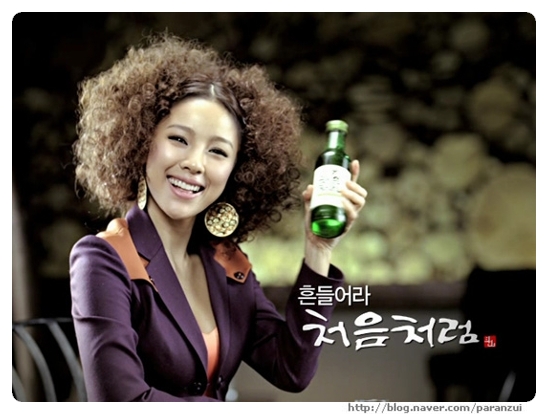 But in fairness to Lee Hyori, Doosan was in the midst of reorganizing itself into a holding company centered around heavy industries when it hired her, and in hindsight the same company that had just bought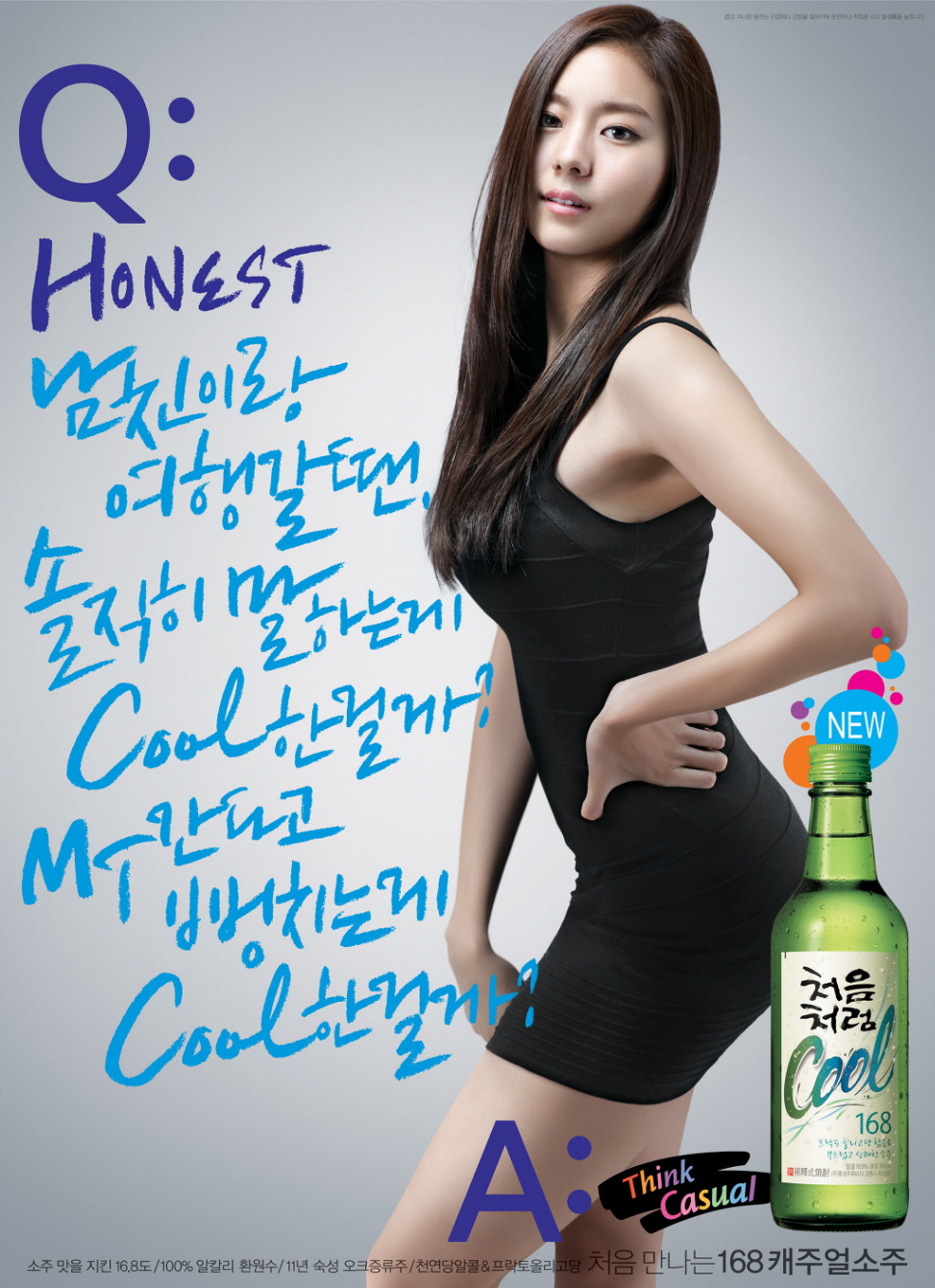
 (Source:
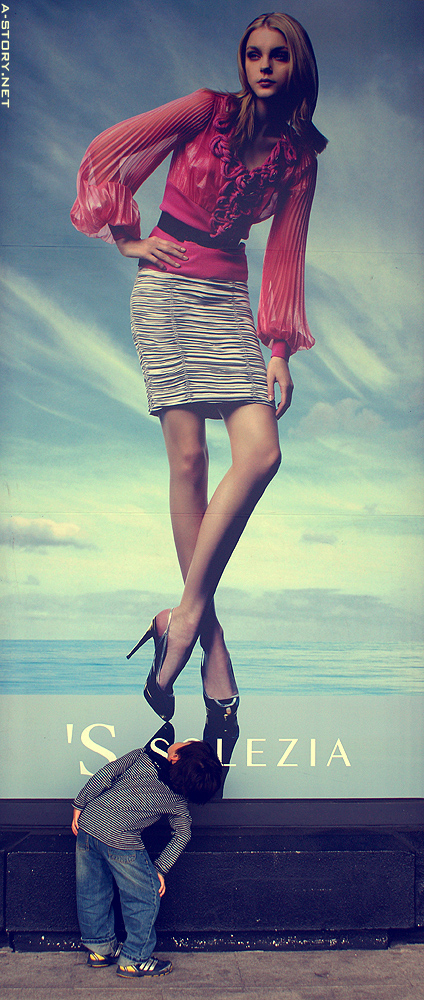
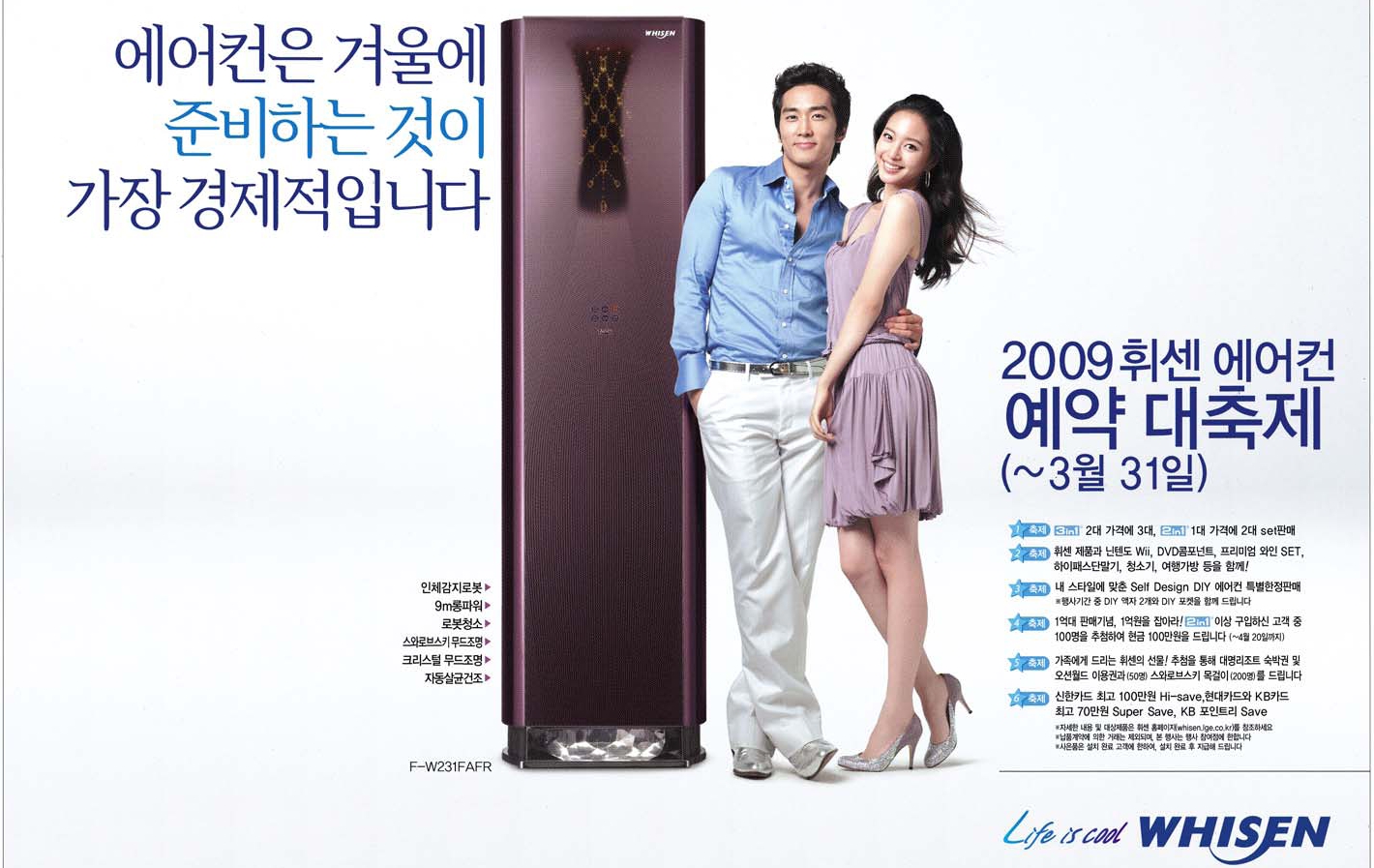
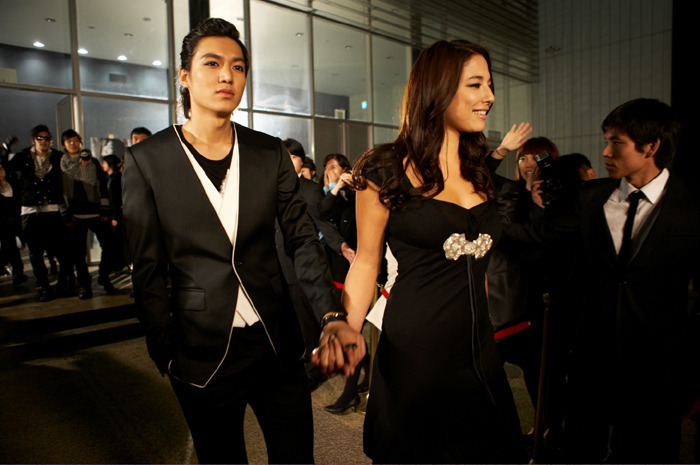
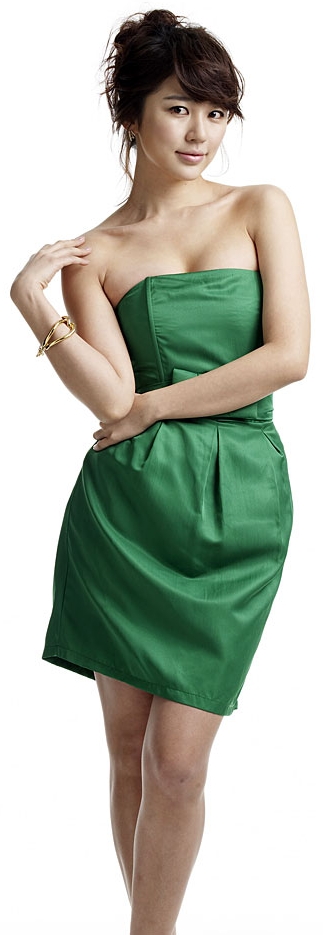

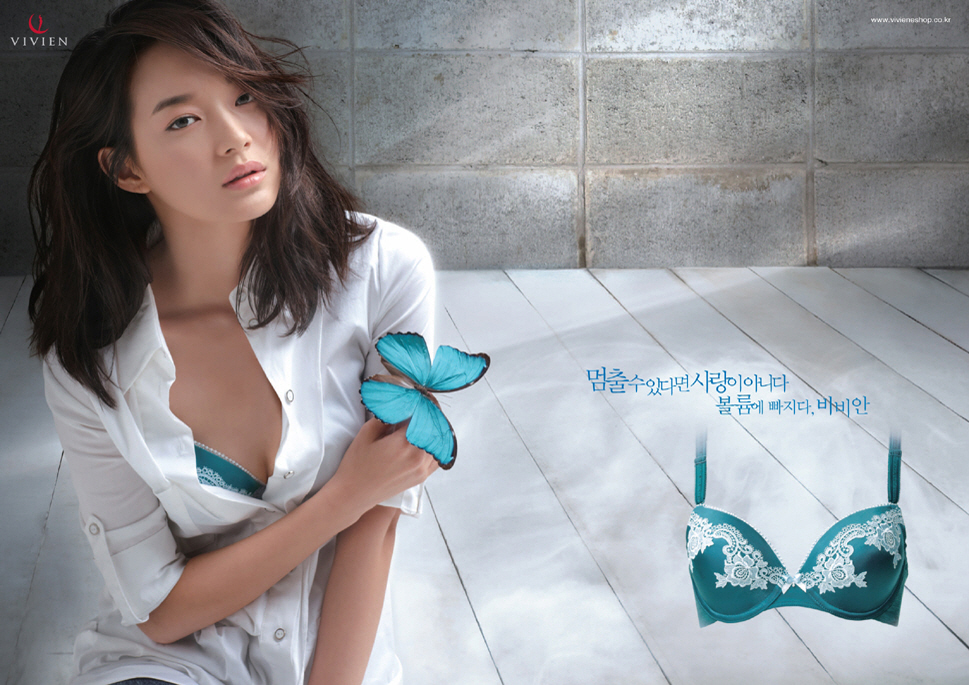

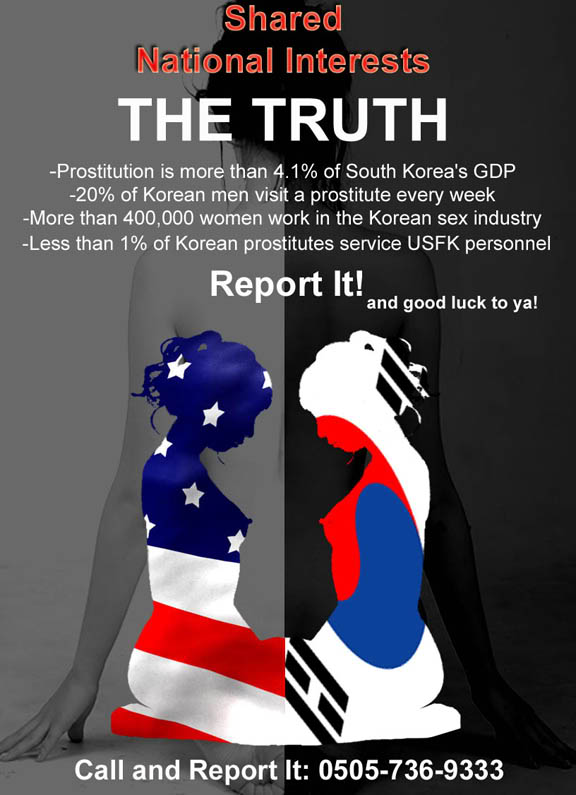
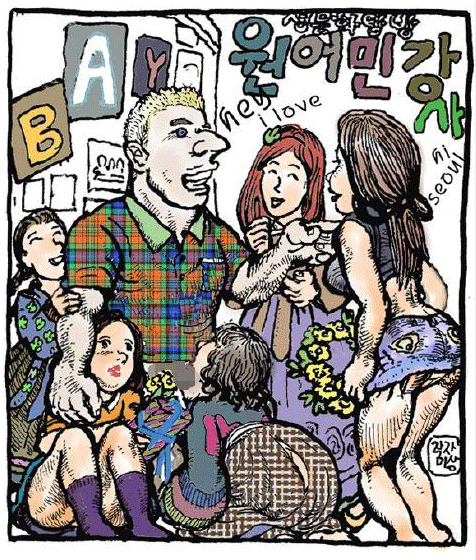 (Source:



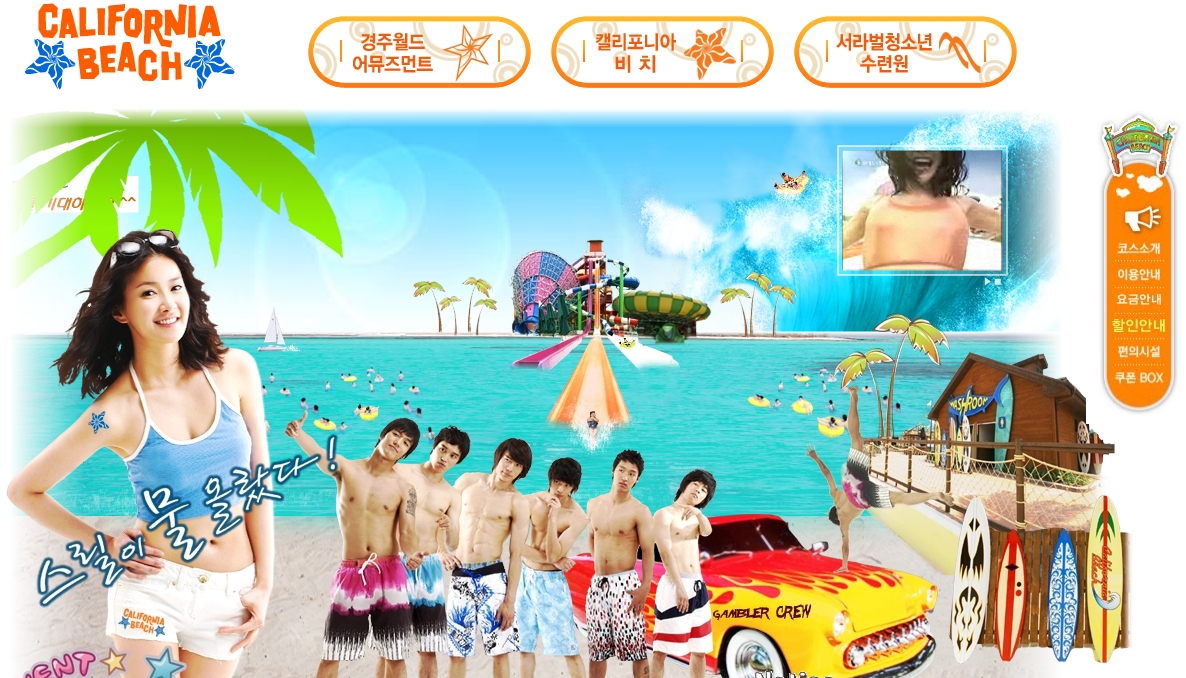
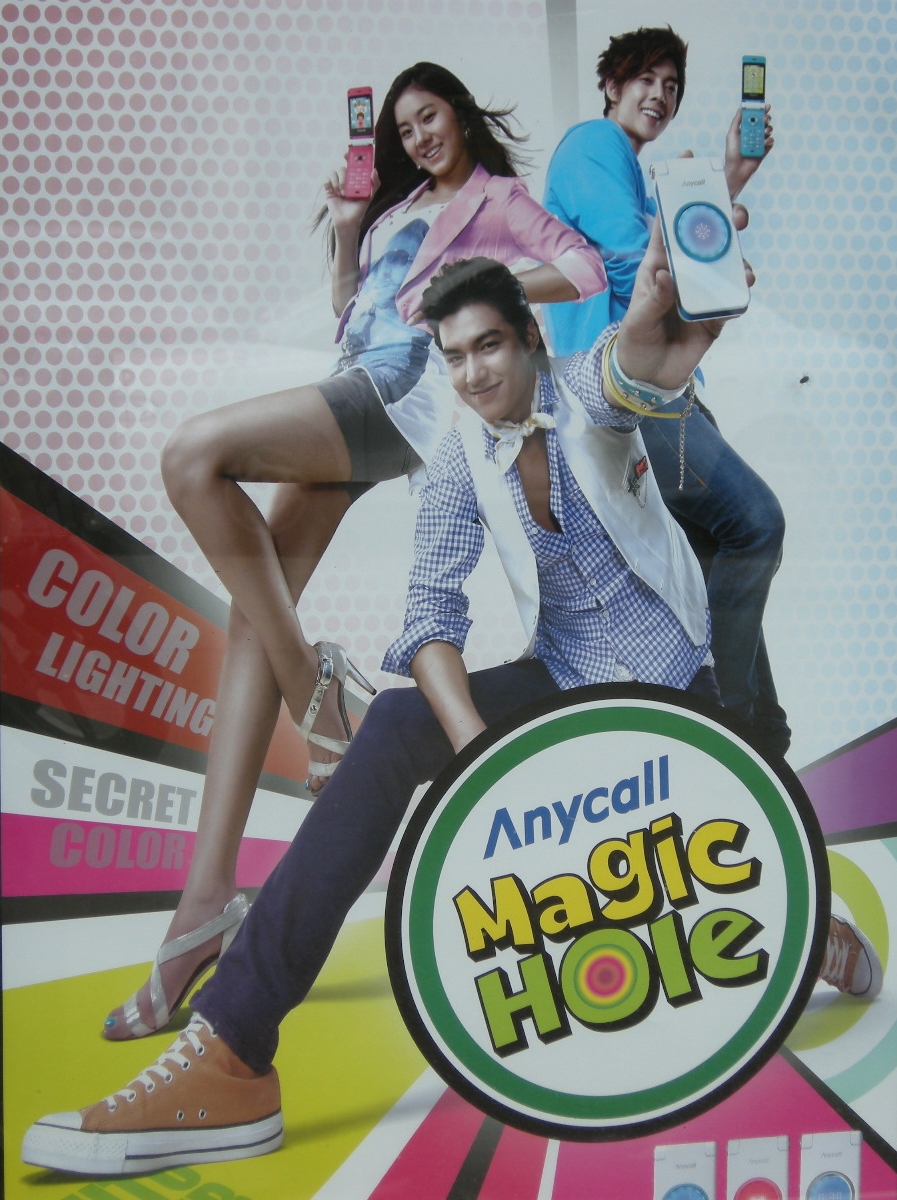

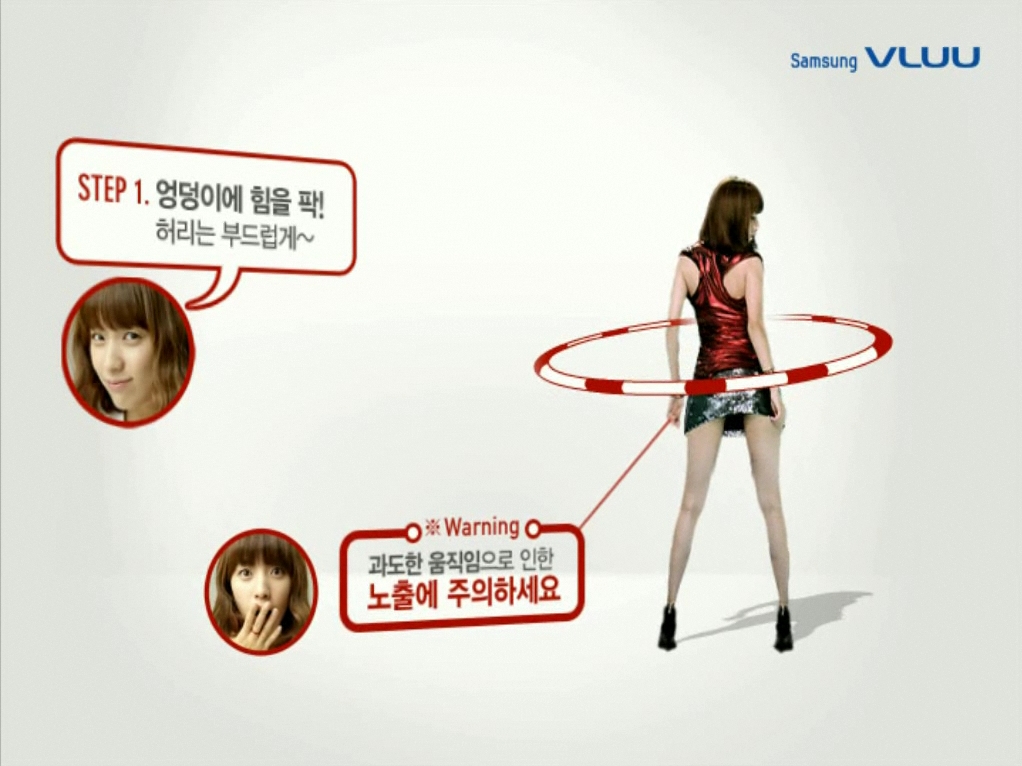

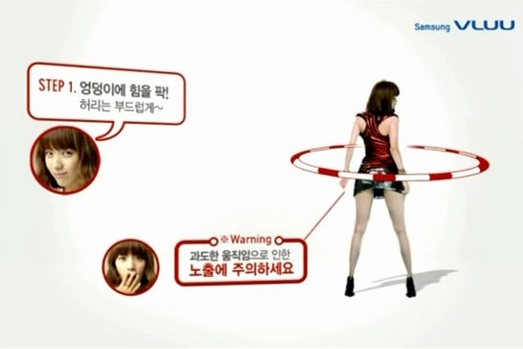

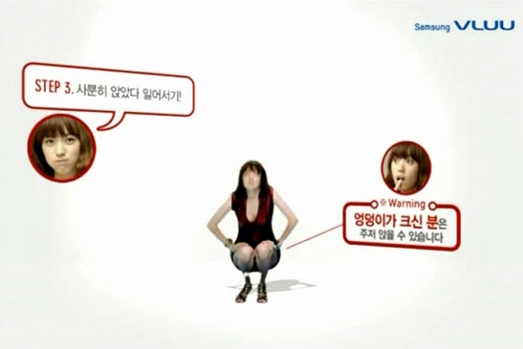
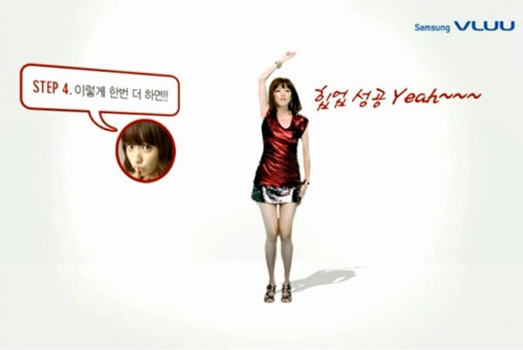






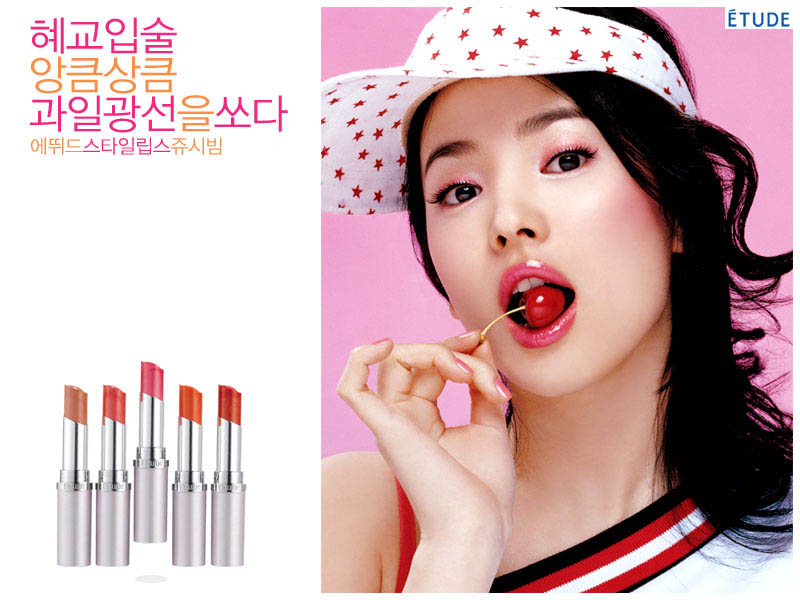


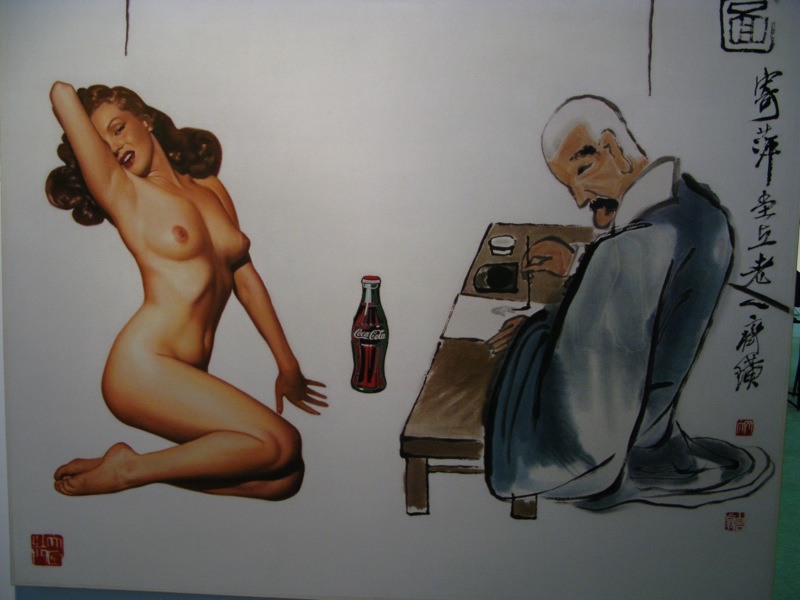

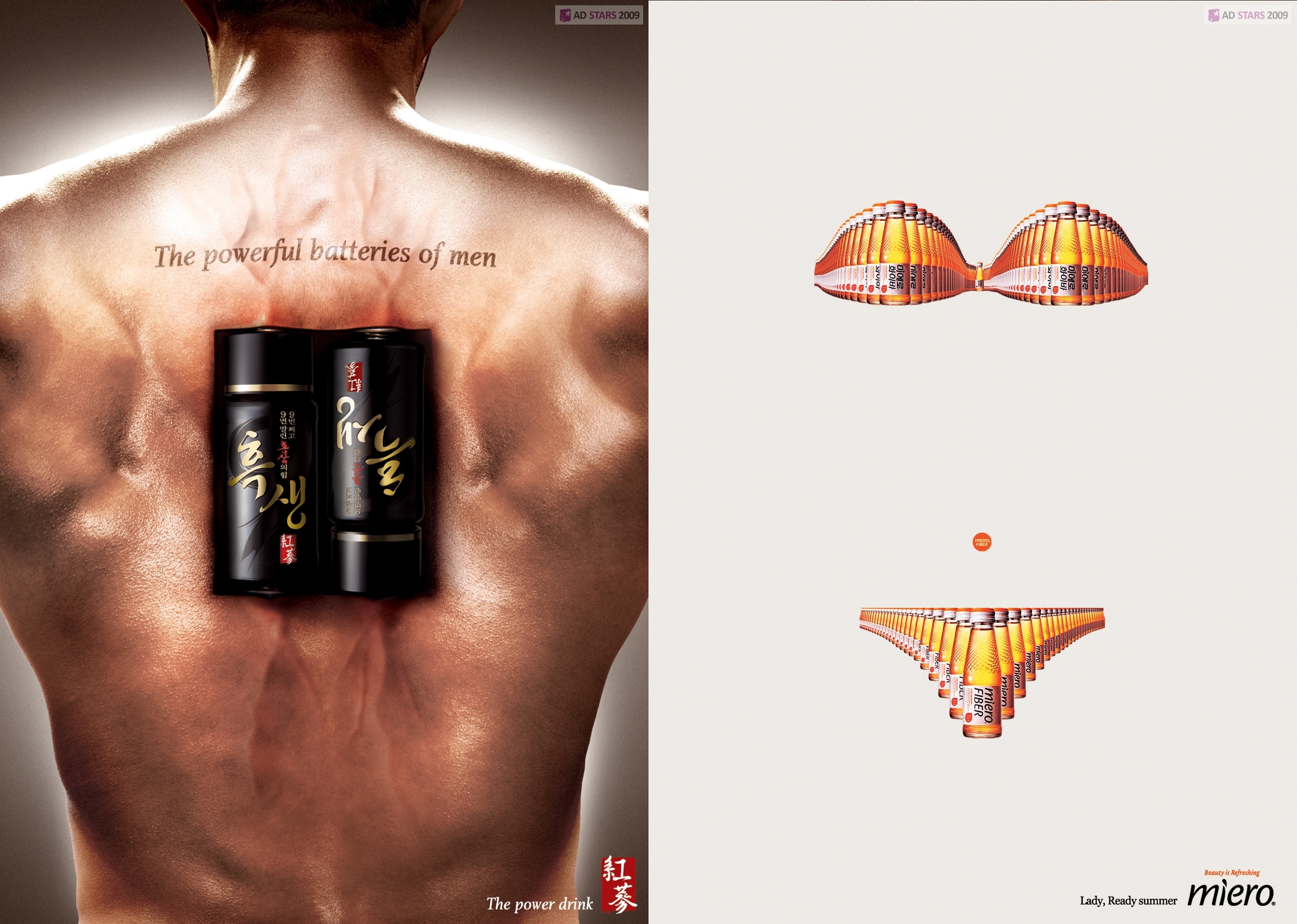


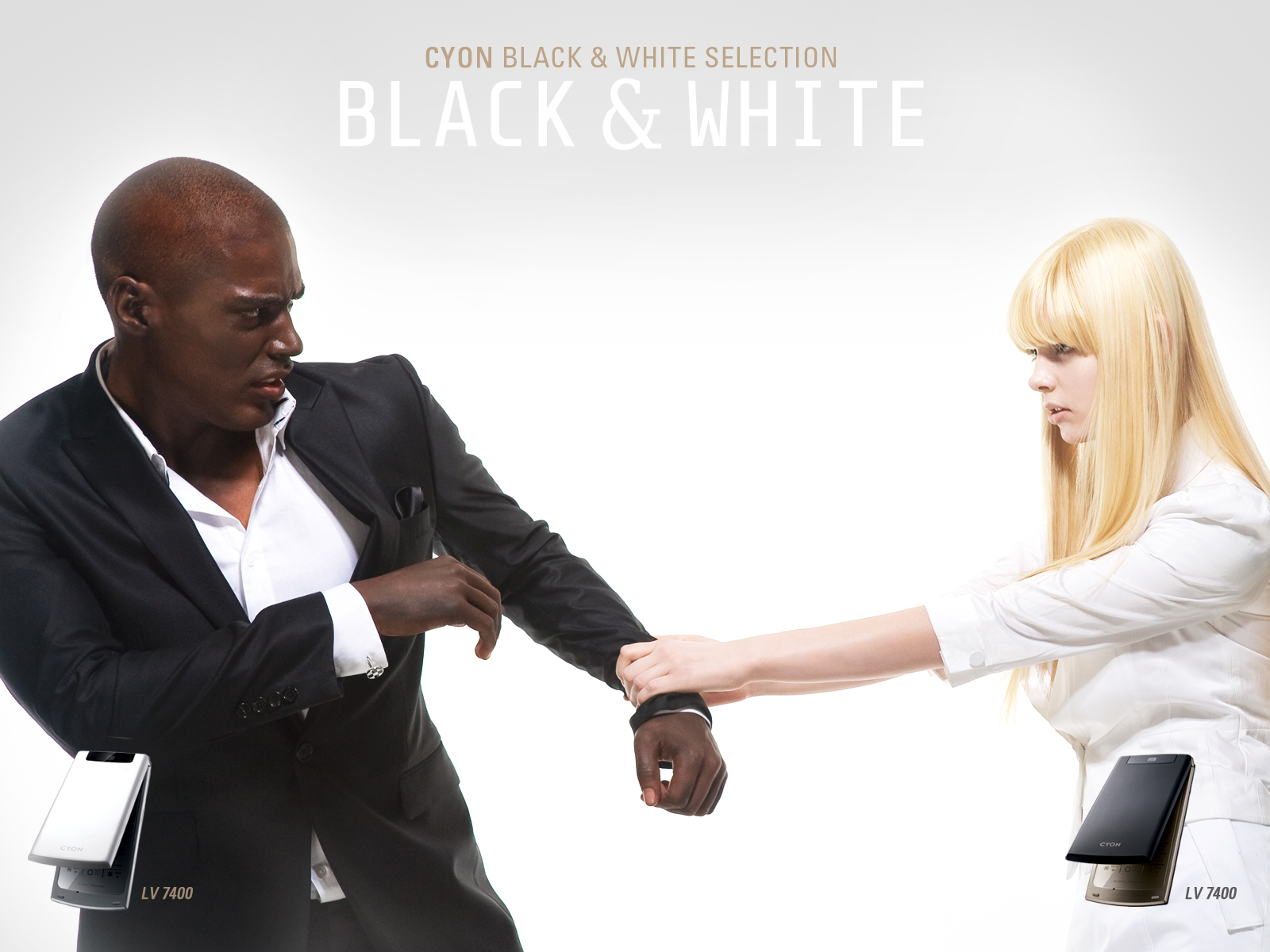

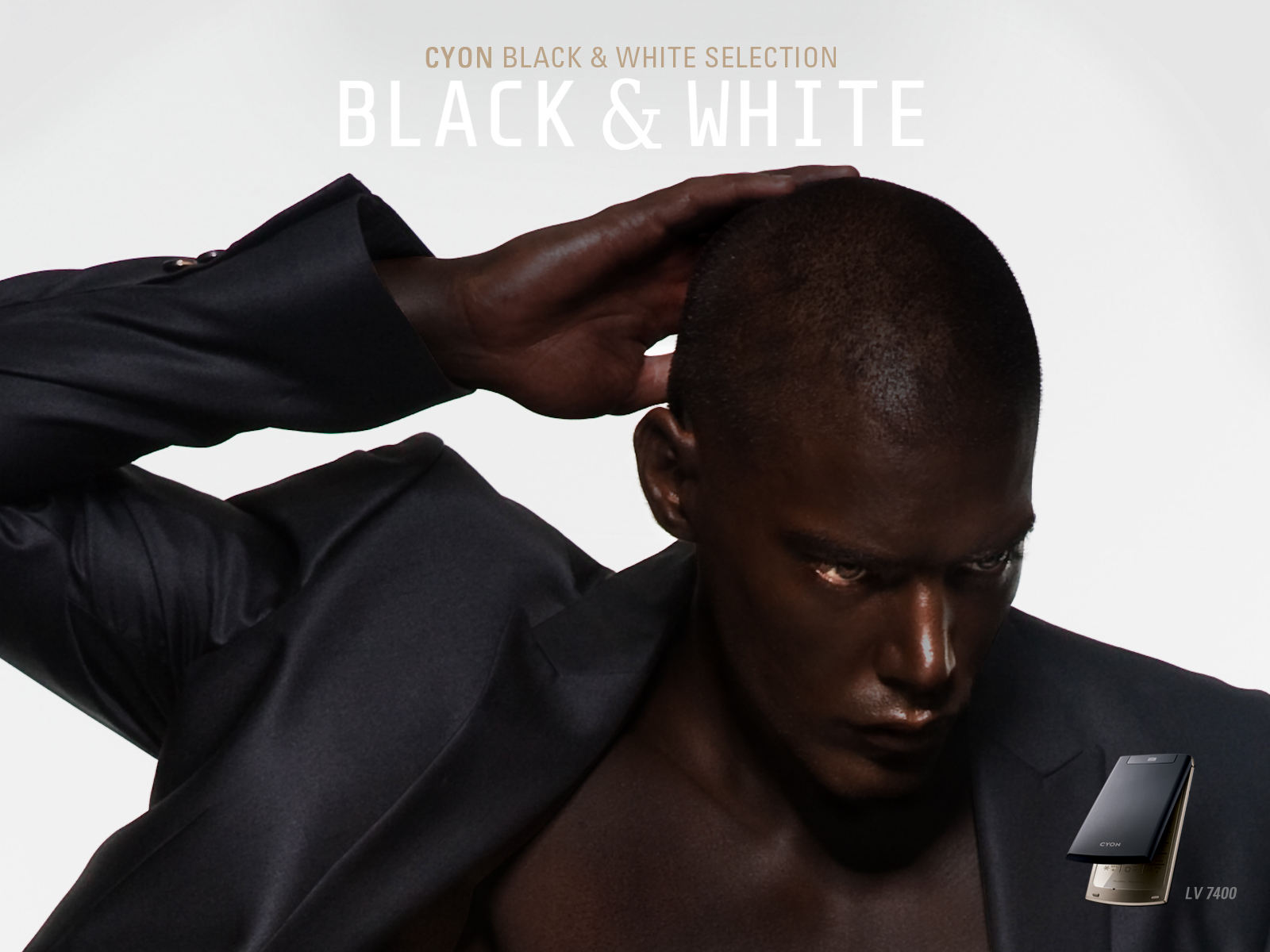
 argument that at the very least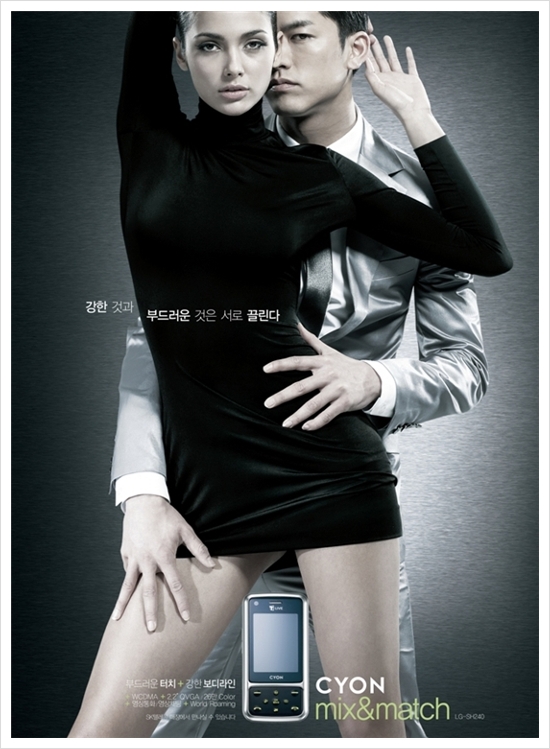
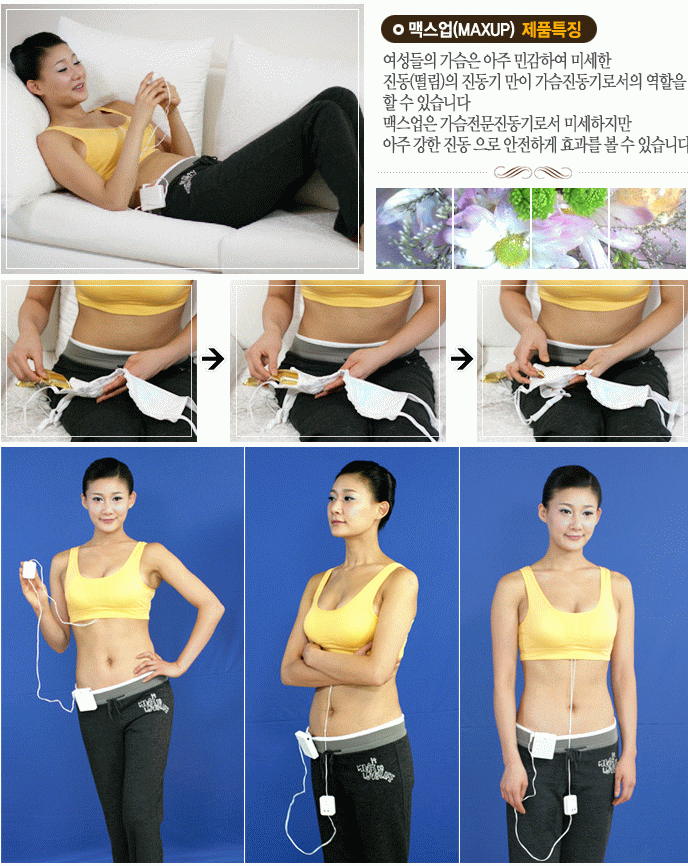


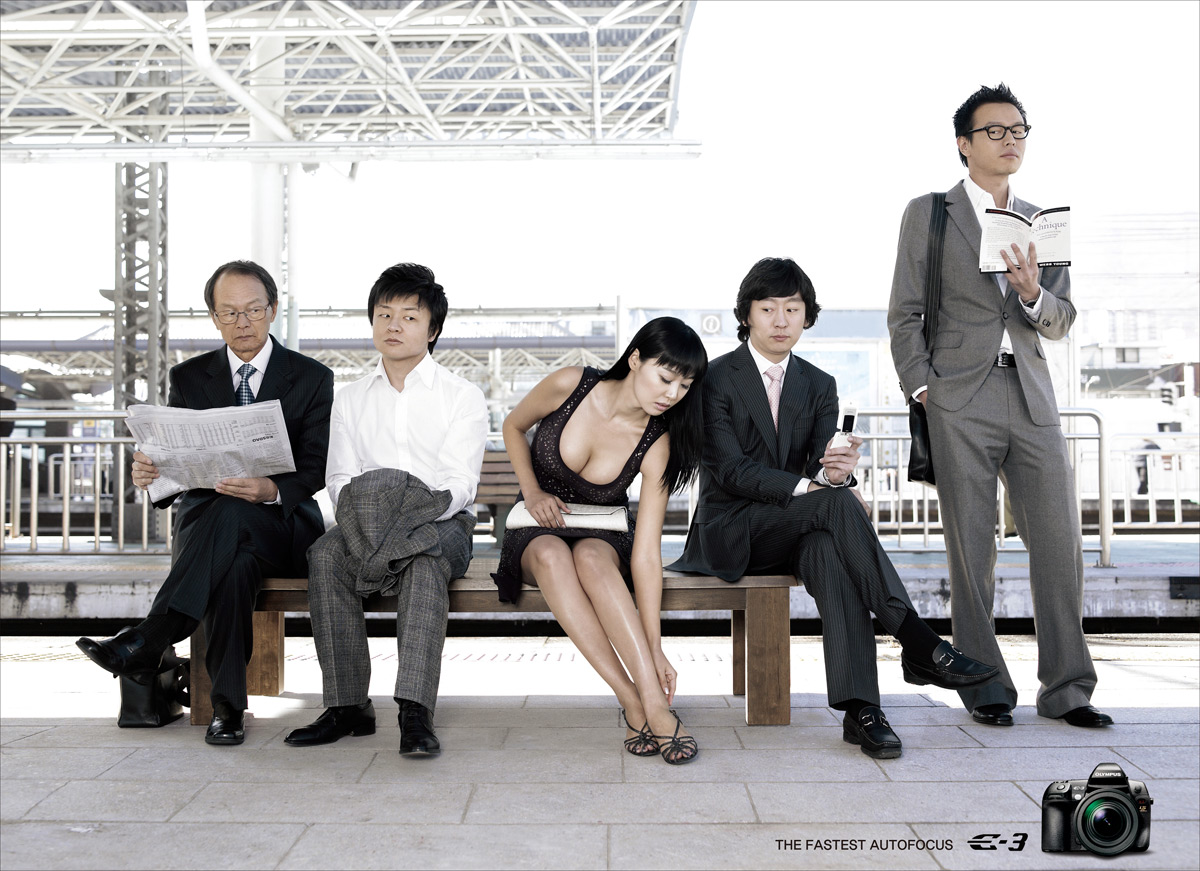


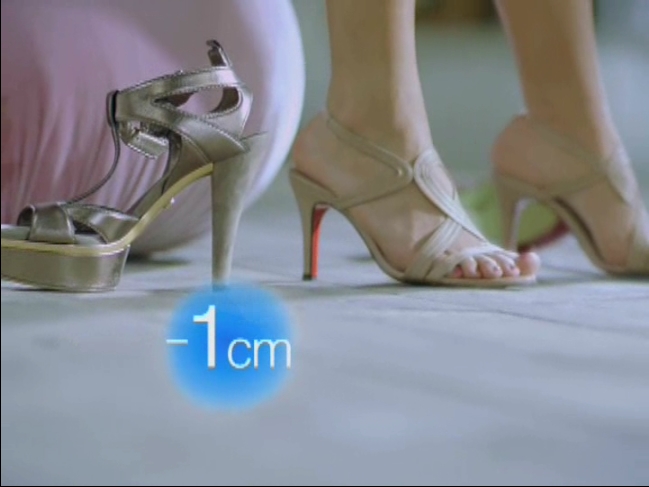

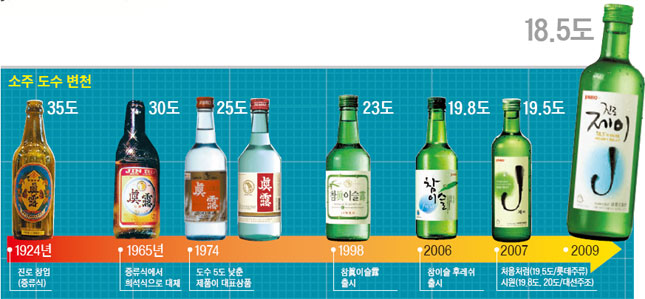
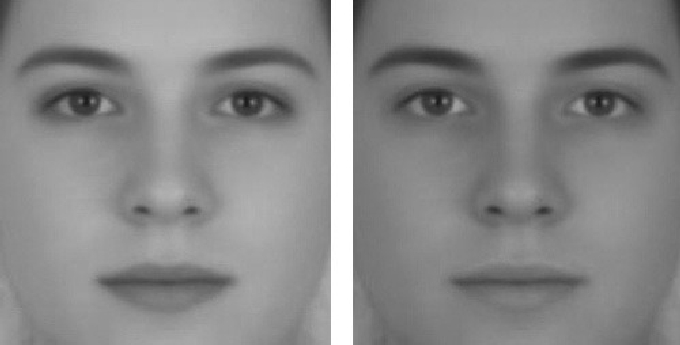

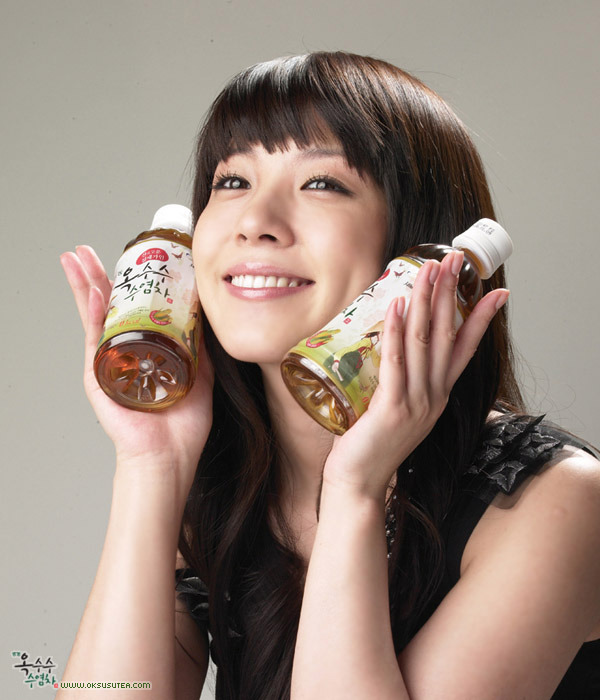
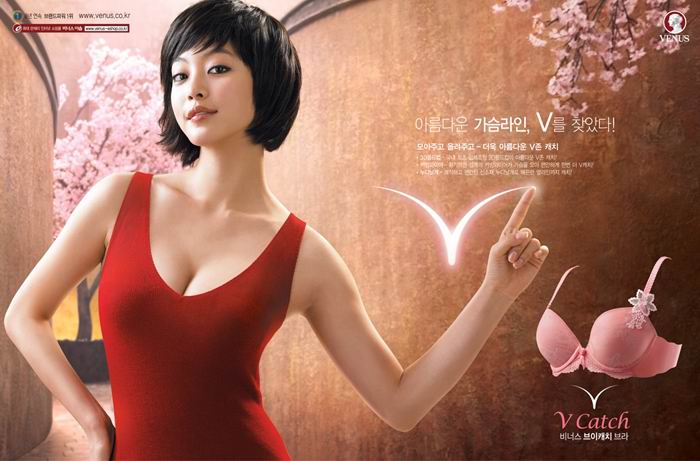
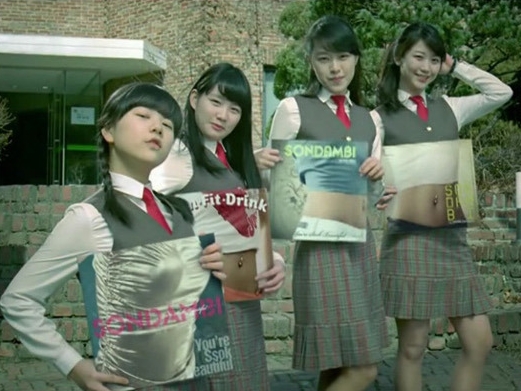

 While it is possible to absorb Vitamin D through food, the surest way is through exposure to a few rays of sunlight every day, and Korean women would be well advised to ask themselves if ultra-pallid skin is really worth the price of full health. Just as Korean parents might wonder if higher TOEIC scores are really worth the price of their children’s long-term health (end).
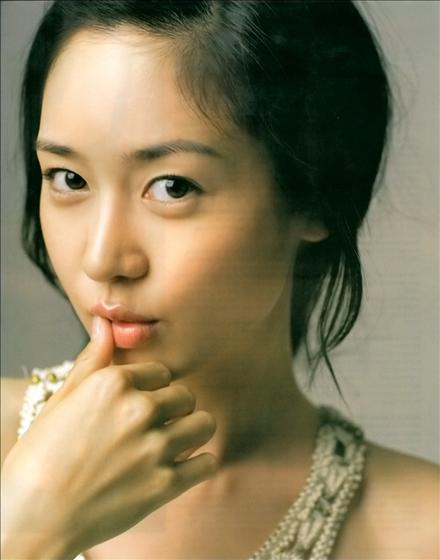 In today’s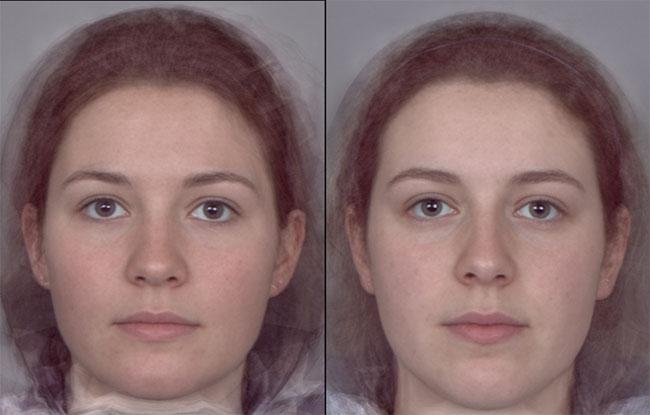
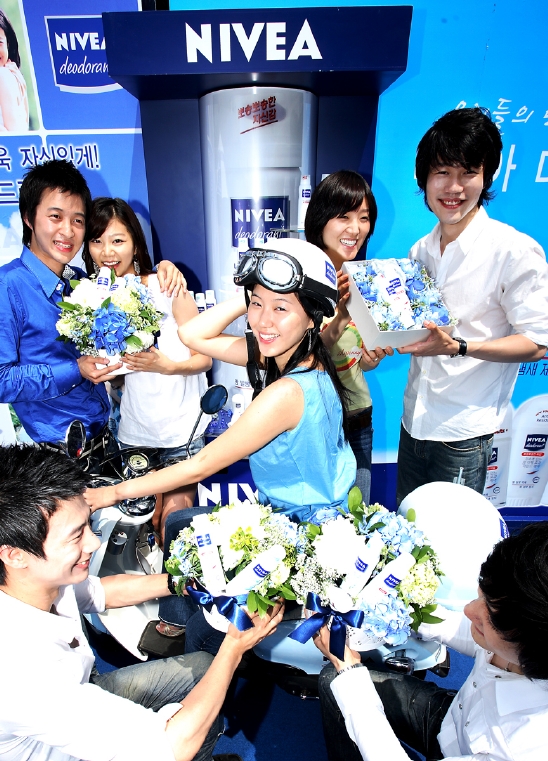


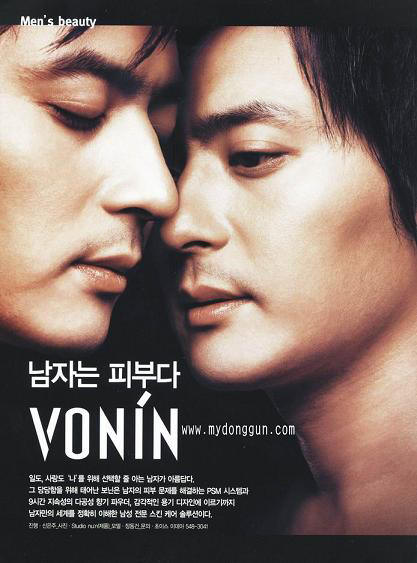 Among other things, Korea completely lacked — nay, explicitly banned — the mainstreaming and then commodification of gay culture in the 1990s that led to the rise of metrosexuality. Even today there are implicit restrictions against positive portrayals of foreign male-Korean female relationships in the Korea media that have prevented metrosexual symbols like David Beckham from ever acquiring the popularity here that they did in, say, Japan during the 2002 World Cup. Moreover, when focusing on men, it can be easy to lose sight of the fact that it is actually women’s changing tastes in them that drive changes in their fashions and grooming habits, and accordingly it ultimately proves to be married Korean women in the late-1990s that are responsible for flower men’s origins (source, right: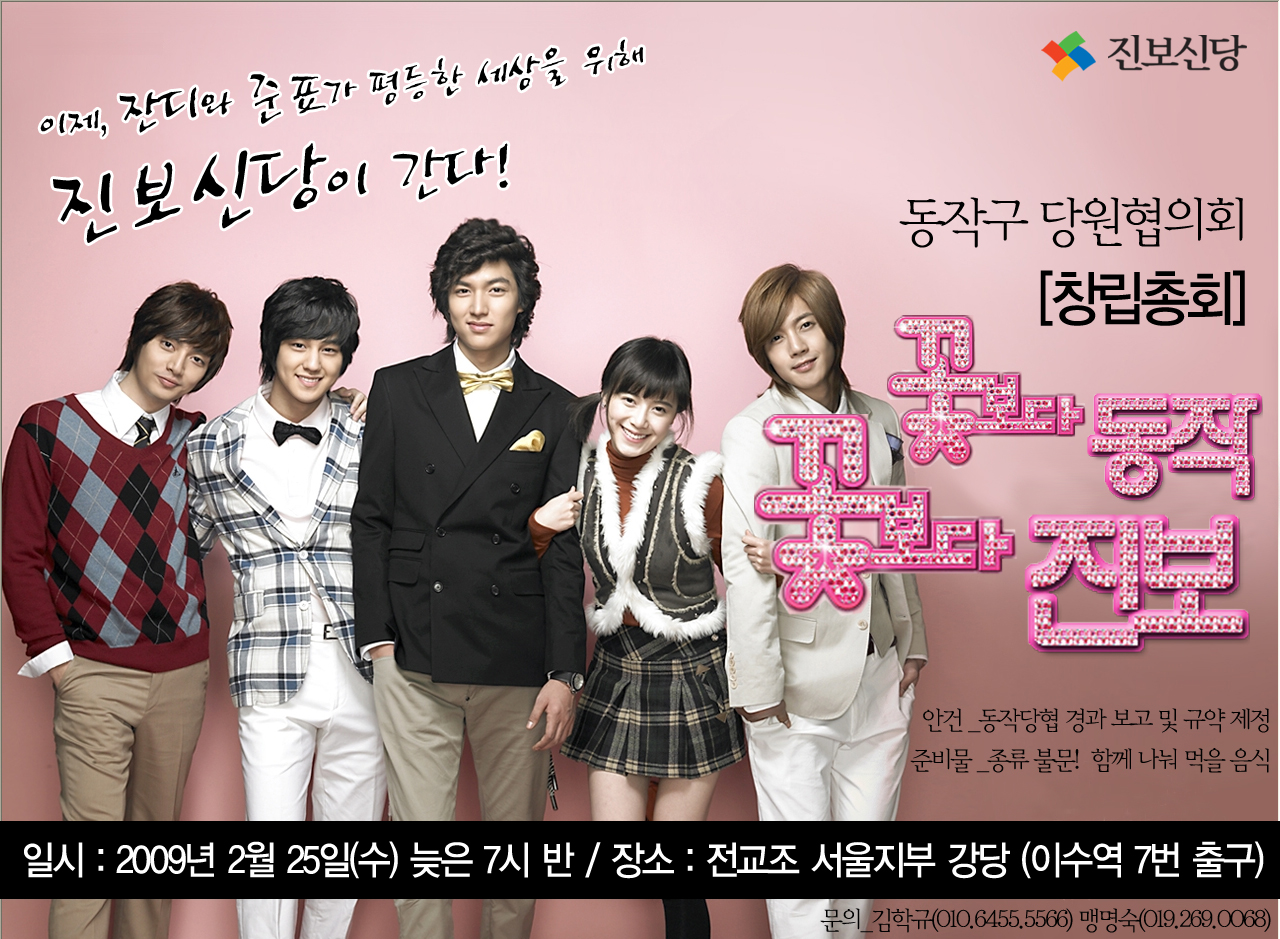
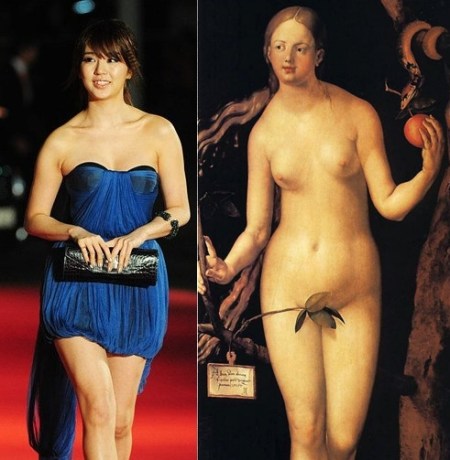
 As they are great opportunities to show off previously their previously hidden confidence and beauty, actresses look more and more glamorous on the red carpet at award ceremonies, and fans are eager to get a peek at their idols. A few days ago at the 45th Paeksang Arts Awards many actresses took the opportunity to throw off their old, established images and show off new sides to themselves, particularly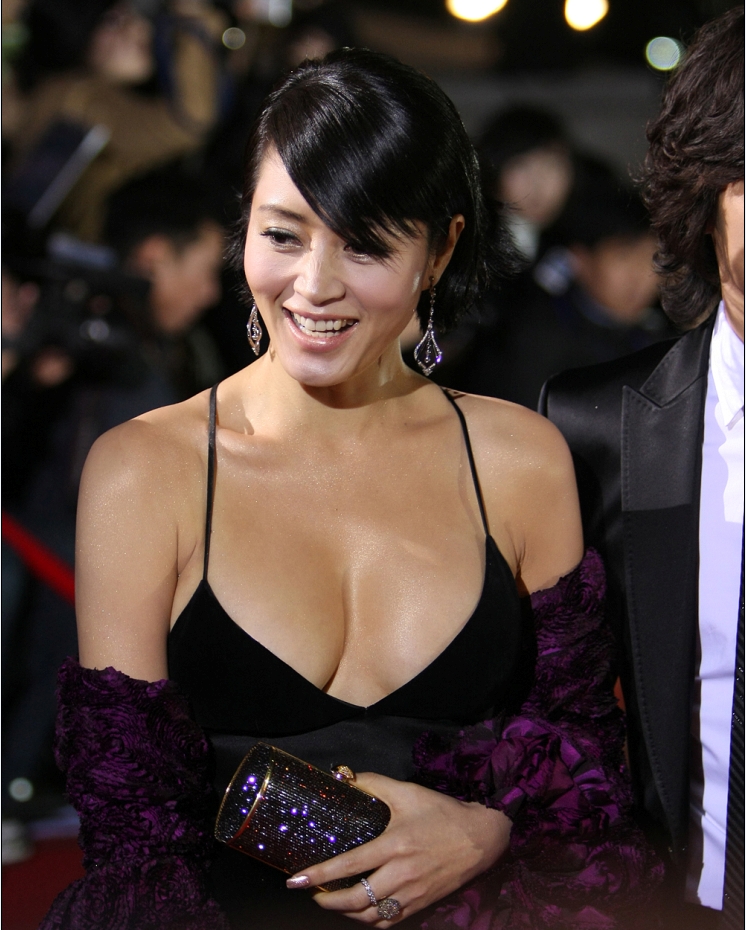

 The Grand Narrative