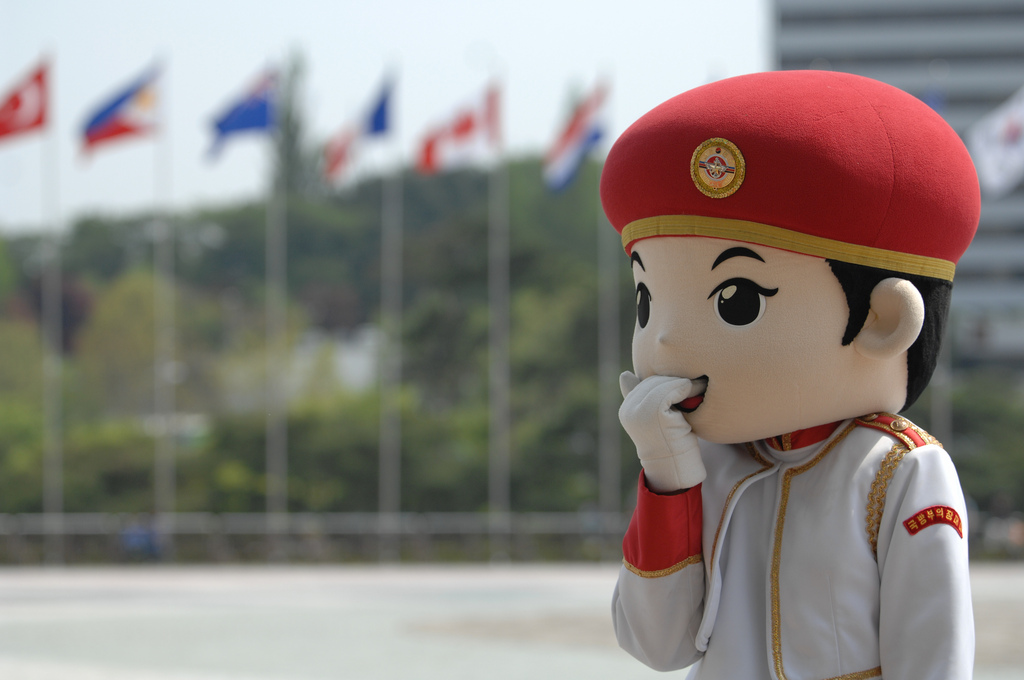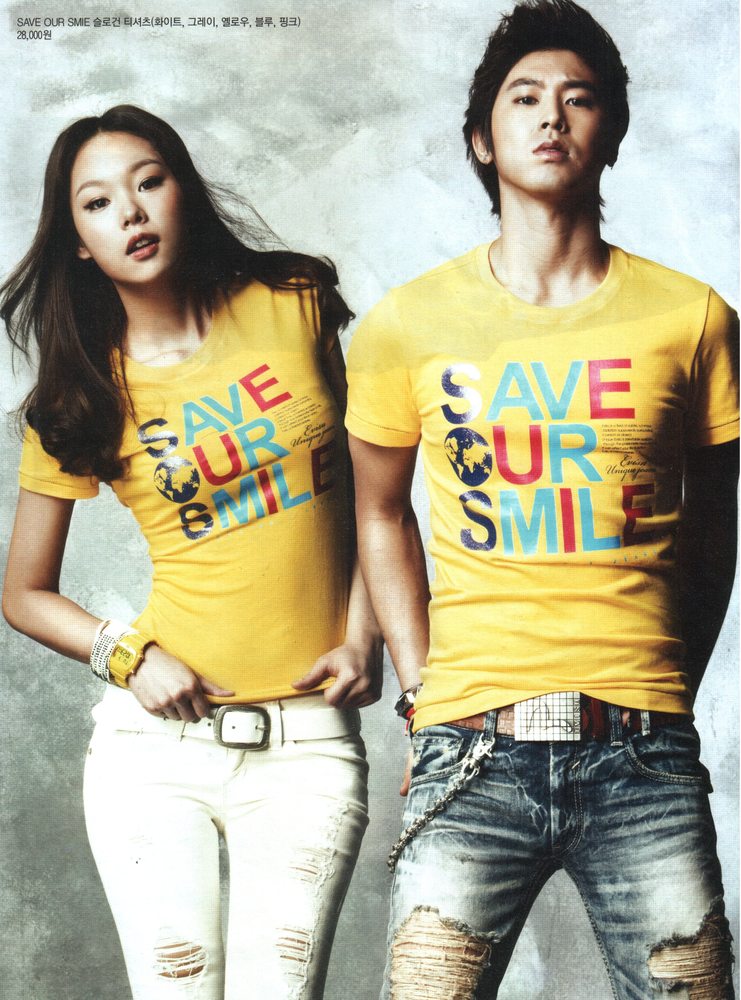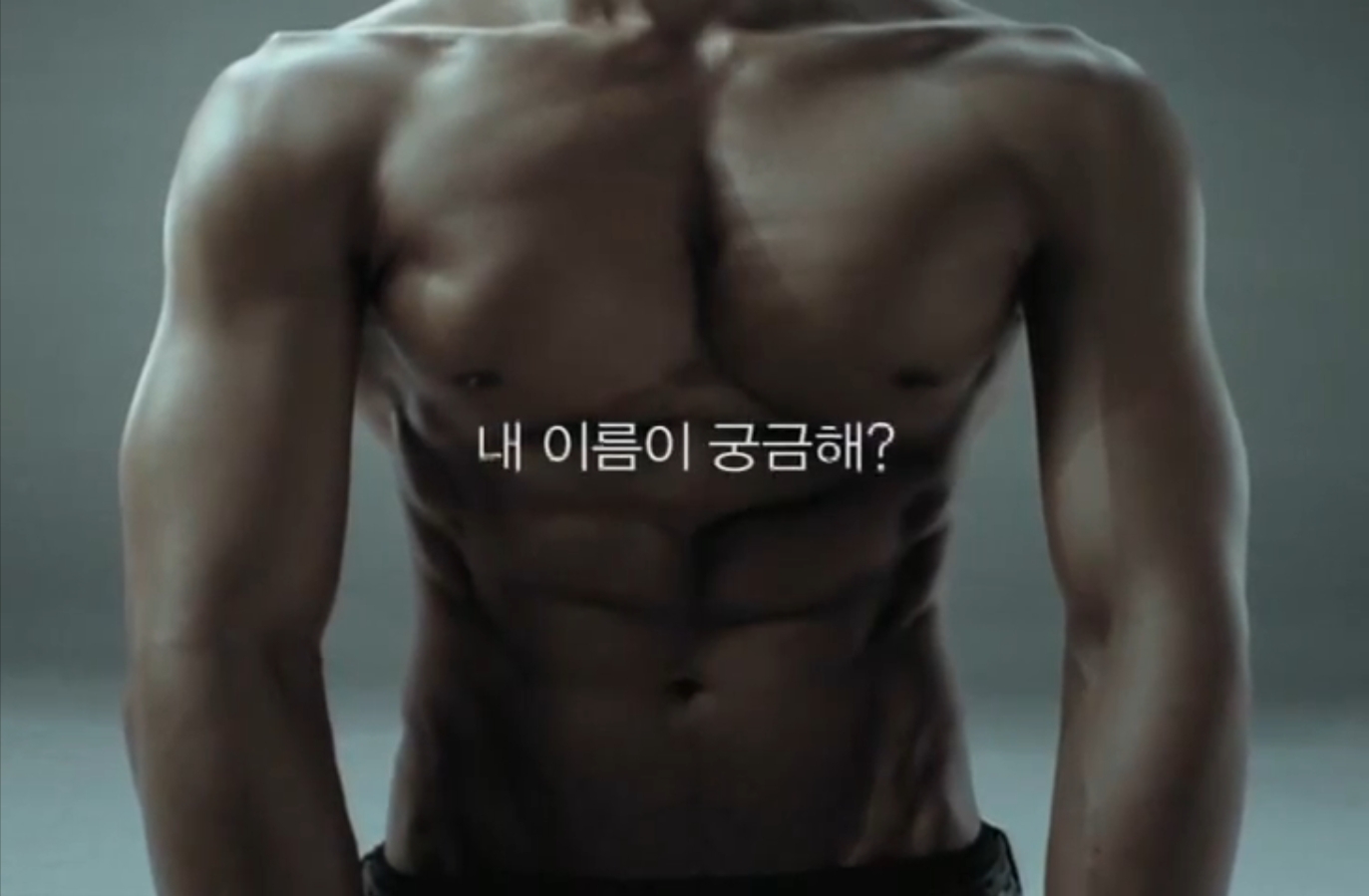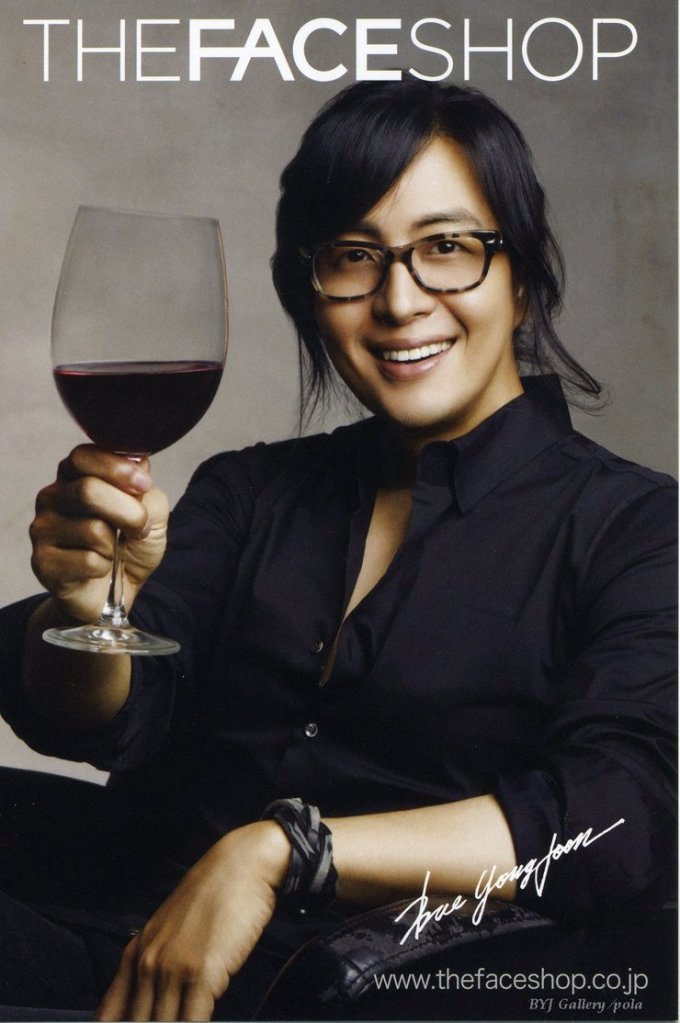
Korean Sociological Image #41: Mothers of Warriors

(Source)

A quick question: who would you choose to sell hormone-treatment and anti-depression medication to middle-aged women?

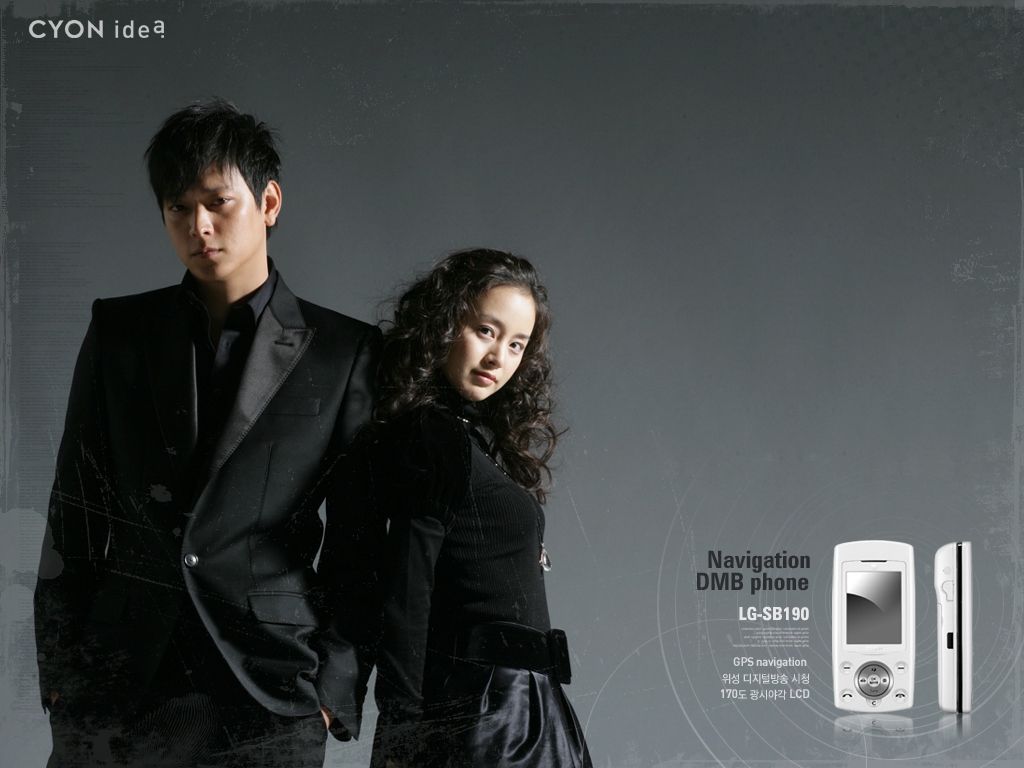
Barring Bae Young-joon (배용준) above, notoriously popular among them, then I’d wager that middle-aged women themselves were your most likely answer. And your least likely? Probably men in their early-20s, which begs the question of why they’re the only ones actually speaking in the following commercial from Dongkook Pharmaceutical (see below for a translation):

Of course, the reason the young men are featured at all is because Korea has universal male conscription, which makes parting scenes like those featured above a normal part of the Korean life-cycle. So while the leaving ceremony itself may be unfamiliar to most Western observers, a company encouraging consumers to associate its product with it is really no different from a bank using imagery of, say, children’s university graduation ceremonies to sell retirement savings plans.

Still, that’s not to say that it’s just any old commercial. For in relying on an emotional event for Korean mothers and sons to sell its products, but quite literally denying only the mothers a voice in that, Dongkook Pharmaceutical has ironically provided an apt illustration of Korean women’s expected role in any public debates about military conscription. Which is in short, to be seen and not heard, their opinions taken for granted by others.

For instance, in 1997 the Korean media revealed that the sons of Lee Hoi-chang (이회창), the then presidential candidate of the then ruling Shinhangukdang (New Korean Party; 신한국당), had been exempted from their military service due to medical grounds; popularly believed to have used his wealth and influence to secure this, the backlash against Lee for failing to fulfill his paternal and nationalist responsibilities was so intense that his political career was soon over. And yet according to Insook Kown in A Feminist Exploration of Military Conscription: The Gendering of the Connections Between Nationalism, Militarism and Citizenship in South Korea (2001), even in the midst of all that:

…women were voiceless. Those who accused Lee, answered the accusations, reported the matter, and contributed articles were all men. In public, the conscription scandal seemed a matter for men only. Sometimes, mothers were used by men as a reference symbolizing a certain group of women only concerned about the welfare of their sons. Many male editorial writers represented the angry emotions of mothers to show South Korean popular opinion. One editorial writer in the JoongAng Daily (22/08/97) described the anger of many mothers of sons. According to him, these mothers wrote a slogan on the calender for Election Day: “Let’s never forget the exemptions of Lee’s sons”.  (p. 43)

(Source: anja_johnson)

And later another editorial writer in the same paper (27/08/97) illustrated the emotional background of the issue by using a motherly perspective:

People did not deal with the exemption by making accusations of immorality or illegal intervention in the exemption, but with emotional anger like, why did your sons not have to go into the army, while my son is suffering in a life-or-death crisis. What made women angrier than anyone else, was caused by this kind emotion. (p. 43)

Kwon argues that the Korean state has always very much had a stake in accepting feminized forms of self-sacrifice in its name, whether as factory workers, prostitutes to the US military or Japanese tourists (a crucial source of foreign exchange in the 1960s and 1970s), or mothers of conscripts. Focusing on the latter here, consequently they have so far lacked:

…room to represent their own sacrifices in public. Mother’s concern and pain over their son’s conscription has remained hidden under the taken-for-granted necessity of military conscription for national security. Their voices have been deprived of a space for expression; and because their emotional attachment to their sons has been translated into a private matter, they have not mobilized as a group. (p. 37; tenses have been changed)

Not that this lack of representation means that mothers are necessarily opposed to conscription. For example, Cynthia Enloe, who has written extensively on the subject of “patriotic motherhood” narratives constructed by militarized states, argues that in fact they can have attractions for women whose mothering role has been evaluated as personal and private. Indeed, it can be a chance for them to completely revalue their maternal duty:

Some women feel deeply validated when some politician goes on the call for mothering to be defined as a vital contribution to the nation’s war effort, because warfare has been imagined by many to be the quintessentially public and national activity. (Maneuvers: The International Politics of Militarizing Women’s Lives, 2000, p. 11, quoted in Kwon p. 46)

Moreover, what are these “sacrifices” referred to exactly? Kwon’s analysis is a little weak on this point, as although she provides a comprehensive and convincing demonstration of how in fact all women suffer from the conscription system (a subject taken up in this series), there is little evidence that mothers specifically suffer beyond that aforementioned “concern and pain over their son’s conscription”. As the commercial demonstrates however, that may be rather more than a Western observer might expect.

At which point it is prudent to provide the translation of it(!). Below, the text featured on the screen is written as normal text below, while everything spoken by the conscripts or in the voiceover I’ve put in quotation marks. I’ve also provided the commercial again to make it easier to follow along:

엄마…..그동안 받기만 해왔습니다

Mother…..(I’ve) only ever received things (from you)

엄마…이제 처음으로 엄마품을 떠나네요

Mother….this is the first time I’ve left my mother’s (your?) bosom”

엄마…고맙습니다

Mother…thank you

듬직한 대한민국 군인이 돼서 엄마가 믿고 의지할 수 있는 아들이 되겠습니다

I will become a reliable, trustworthy Korean soldier whom you can trust and depend on

이제는 우리가 엄마를 도와드릴 차례입니다

Now it’s our (my?) turn to help our mothers

어머니 잘 다녀오겠습니다. 사랑합니다. 사랑해

Mother, I will do well before I return. I love you (formal). I love you (informal)

엄마, 사랑합니다. 충성!

Mother, I love you (formal). Loyalty! (Fealty?) (Devotion?) [James: whatever the exact meaning, it is said when saluting]

대한민국 갱년기 어머니들의 10명 중 8명은 다양한 갱년기 증상으로 힘들어하고 있습니다

Out of every 10 mothers of the Korean public who experience menopause, 8 suffer from various symptoms

(Above, left and right): 여성 갱년기 극복 갬폐인 & 동국제약

Female Menopause Conquest Campaign & Dongkook Pharmaceutical

엄마에게, 사랑의 마음을 전하세요. 훼라민큐가 함께 합니다

Tell your mother the love you feel in your heart. With HeraminQ.

이제, 엄마의 갱년기를 도와주세요. 훼라민Q.

Now, please help with mothers’ menopause. HeraminQ.

(In very fine print): 의사, 약사와 상의하십시오. 부작용이 있을 수 있습니다

Please consult with a doctor or pharmacist. Side effects are possible.

Update: Seamus Walsh has provided a slightly more accurate translation (with explanations) in the comments.

(For another post: the impact on sisters and girlfriends of conscription? Movie poster for The Longest 24 Hours, (기다리다미쳐, 2007), a lighthearted look at military service from the perspective of conscripts’ girlfriends; also known as Crazy4wait. Source)

While this may sound a little hypocritical at first, let me begin my discussion on the subject of the mothers’ feelings by highlighting those of the men; actually, that is the original reason I wanted to write this post, for let me stress that you were seeing men in their early-20s crying at the thought of leaving their mothers. What did that make you think of them?

Well, at risk of sounding insensitive, personally I found them to be pathetic. Not that I was all that mature at the same age of course, and in many senses my reaction may simply be because of cultural differences. Like Brian in Jeollanam-do once put it:

…everything in Korea tries to be cute, in the same way everything in the States is “Xtreme” and too cool for school. Korea uses a cartoon to advertise where the US would have a gravelly stoner voiceover, and Korean videos often feature cuteness exaggerated to a sickening degree where American videos would lots of brooding and feigned indifference.

And not unrelated is how different average Koreans’ and average Westerners’ life-cycles are at that age, although 30-somethings like myself should be wary of projecting their own experiences onto today’s 20-somethings. Nor do I want to make light of the hardships conscripts have to endure either.

(Source: anja_johnson)

But then I’m not:  in that commercial at least, thinking about those hardships is not why they’re crying. Moreover, to describe the crying as a simple cultural difference underplays the extent to which this practice is unique even within Korean culture itself, as beyond obvious cases such as funerals, my (Korean) wife for one could think of no other situations in which it is so socially acceptable for a man of that age to cry publicly. That they can and do then, is partially because a) the vast majority of Koreans don’t actually think of any male as a “man” until he has fulfilled his military service, and b) this uniquely strong bond between mothers and conscript-sons. Indeed, there is:

…a widely held popular belief that a father should encourage his son to go into the army, and to fulfill his national defense duty to achieve real citizenship. In this gendered construction, mothers represent emotional attachment such as compassion and pity toward their conscripted sons. In other words…the emotional part of the work of conscription….

…At the most emotional step of the conscription process, the father disappears. For instance, in two recent guidebooks published for pre-conscripts, the authors, both male, make almost no mention of fathers. The only ‘object’ for whom male soldiers are expected to feel concern about in the family is the mother. (p. 44)
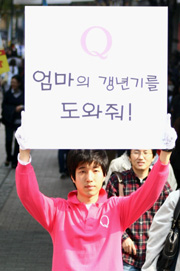
And as you might expect, this is well-represented in popular culture, and in addition to commercials like the above I have frequently seen conscripts brought on to the stage after a girl-group has performed on an army base to wax lyrical about their performance and their attractiveness…only then to break down in tears and leave a very emotional message to their mothers watching back home (indeed, often they’re literally choking on their words so much that Om-ma “mother” is the only word you’re able to discern).

Unfortunately for readers however, this is yet another case of something interesting to outside observers that is unremarkable to Koreans themselves, and so I’ve spent over an hour unsuccessfully looking for examples to post here (videos of girl-group performances typically finish just before the soldiers are brought on stage). If any readers find any I would appreciate it if you could pass them on, but in the meantime let me finish by passing on what Kwon says about the program Ujeongdui Mudae (우정의 무대), or Stage for Friendship, the only program about conscripted soldiers in the 1990s, and which had:

…one famous section, ‘Yearning for Mother’. An unidentified  mother talked about her son from back stage. Following her talk, a lot of soldiers ran on the stage shouting “Mother” and insisted she was their mother. Finally, the mother appeared on stage and hugged her son. Finally, the mother appeared on stage and hugged her son. Accompanied with deeply moving music, both mother and son cried, as did other soldiers and everybody watching the TV show. (p. 44).

For your interest though, I did find this 2008 commercial with Moon Geun-young (문근영) for GS Caltex (칼텍스), which features a mother visiting her son during his military service (and impressed with how much of a man he has become):

And for the record, Dongkook Pharmaceutical did produce more “normal” commercials for HeraminQ with middle-age women, here, here, and here, as well as another one in the “life-cycle” series featuring mothers’ high-school children taking their life-determining university-entrance exams:

Thoughts?

(For all posts in the Korean Sociological Images series, see here; for more on the effect of conscription on Korean society, see here and here)

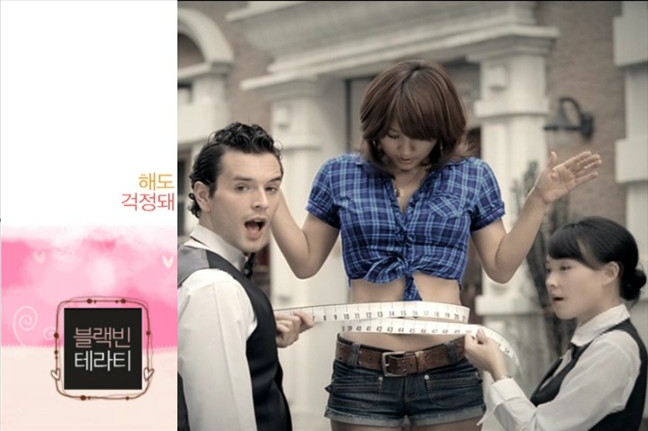
Hot Sweaty Korean Women

What makes this commercial so special?

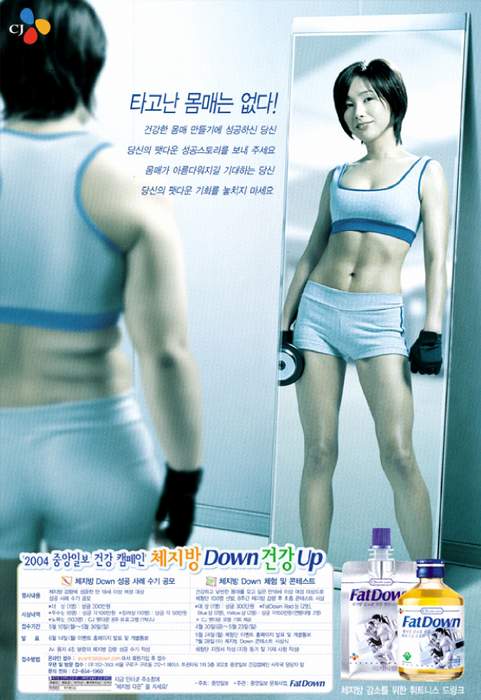
No, it’s not because of Park Ga-hee’s great body, which isn’t unheard of in K-pop. It’s not because she’s leader of the girl-group After School, which I’ve been writing a lot about recently. And it’s not because she’s no manufactured K-pop idol either, once literally penniless on the streets of Seoul after running away from home.

Those do make her more attractive and interesting, but they don’t speak to the commercial.

Rather, it’s special because she’s sweating.

Yes, sweating. Because as I first highlighted over 2 years ago, Korean women generally prefer passive means of losing weight to active ones like exercise. (Update, 2013: post since deleted sorry.) Indeed, even the ones that do attend gyms rarely seem to exert any actual effort while they’re there, and I’ve seen less than a handful dripping with sweat while on a treadmill.

A gross over-generalization? Actually, I very much hope so, and, admittedly not having gone to a Korean gym myself since 2004, then I’d nothing better to learn that things have changed since. But my 2008 post did seem to strike a chord with readers’ own experiences back then, and in turn the underlying attitudes to exercise that they demonstrated were corroborated by one of the few English language studies of the subject: “Content Analysis of Diet Advertisements: A Cross-National Comparison of Korean and U.S. Women’s Magazines” (Clothing and Textiles Research Journal, October 2006), by Minjeong Kim and Sharron Lennon. With apologies to long-term readers for my frequent references to it, but it’s worth (re)highlighting some parts here to remind ourselves just how unique the Fat Down (팻다운) commercial really is:

In his study with Korean female college students, Kim (1998) found that a predominant portion of respondents engaged in dieting for appearance rather than health, and a majority of respondents had previously engaged in dieting. The most common method of dieting was to restrict caloric intake, whereas a similar study with American female college students found that exercise was the most common dieting method among American women (Grunwald, 1985). (p. 350)

(Source: 영원같은 찰나)

Granted, those are old studies. But ponder the fact that one question I posed to my university students for their final vocal tests this week was “What are your plans for the summer?”, and fully 20 out of 55 of the women said they would be dieting to wear a bikini on the beach.* Which not only surely reflects an obsession in itself, but notably none said merely “losing weight” either, and definitely not “exercising” or “working out” (by way of comparison, 1 out of 65 guys said he would be working out). Hence the tests took rather longer than expected, as I felt compelled to step out of my remit as an English teacher and point out that none of them needed to lose weight whatsoever, that Korean women were already the slimmest in the OECD, and that could they at least consider maybe exercising rather than dieting?

(*As readers explained in the comments, I took the word “diet” much too literally. My mistake.)

And there are were plenty more anecdotes like that available in that post from 2008. But I like to be above passing on mere anecdotes these days, so consider some of the empirical evidence provided by Kim and Lennon instead:

The percentage of diet ads in relation to total ads was far greater in Korean women’s magazines than in U.S. magazines. (p.357)

Also (source. right):

A current article in one Korean newspaper (“Half of High School Females Are Not Qualified,” 2002) reported that more than half of Korean high school women suffer from an anemic constitution caused by malnutrition because of dieting. Also half the prospective blood donors from several high schools were not qualified because of deficiencies in nutrition. (p. 357)

Finally:

Content analysis of the types of diet products/programs indicated that there are a variety of diet products easily available in Korean magazines….Diet pills, body attachments such as a diet belt, and oriental diet herbs were three of the more frequently advertised diet products in the Korean magazines sampled. However, none of them was reported as being clinically approved….Korean magazines promote more passive diet methods than active diet methods. Ads for passive diet methods such as diet pills, massage, aroma therapy, diet crème, or diet drinks that one must take, put on the body, or smell to lose weight were more prevalent than diet ads requiring one’s active participation such as exercise equipment or aerobic videotapes. Passive dieting ads reinforce the idea that buying a product will solve weight problems with no effort on the part of the user. (p. 358)

See here, here, and here for examples and further discussion of such advertisements, and you may also find these electric breast massagers and apple-hip seats interesting. Meanwhile, shame again on the Brown Eyed Girls…but please don’t take this post as an endorsement of Fat Down myself: I know nothing about it, and certainly do not know its ingredients or effectiveness. As you can see above though, I do at least recall that Jung Da-yeon also endorsed it, a woman in her early-40s who became famous a few years ago for being a momjjang ajumma (몸짱아주마), literally a “good body married woman”.

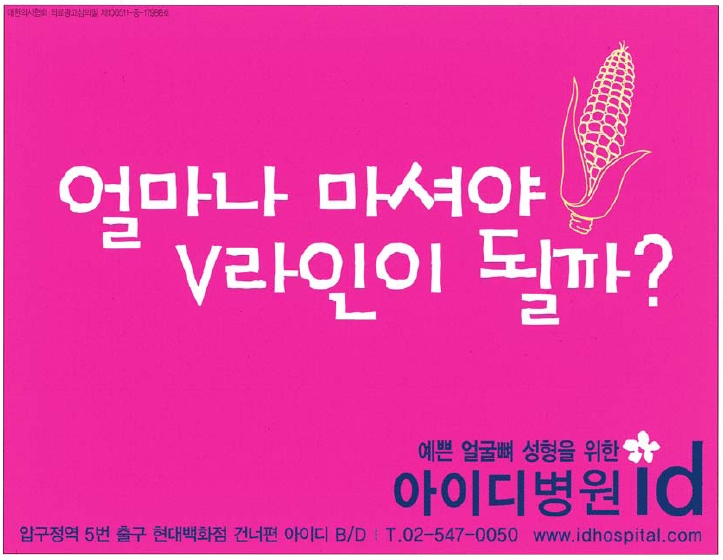
(Update) Related, I like the no-bullshit attitude of this advertisement for a cosmetic surgery in yesterday’s Busan edition of Focus newspaper (p. 6), which reads: “How much will you have to drink before you’ll get a V-line?”, a reference to this drink’s supposed ability to give you that face shape.

(Source: Focus)

The Gender Politics of Smoking in South Korea: Part 2

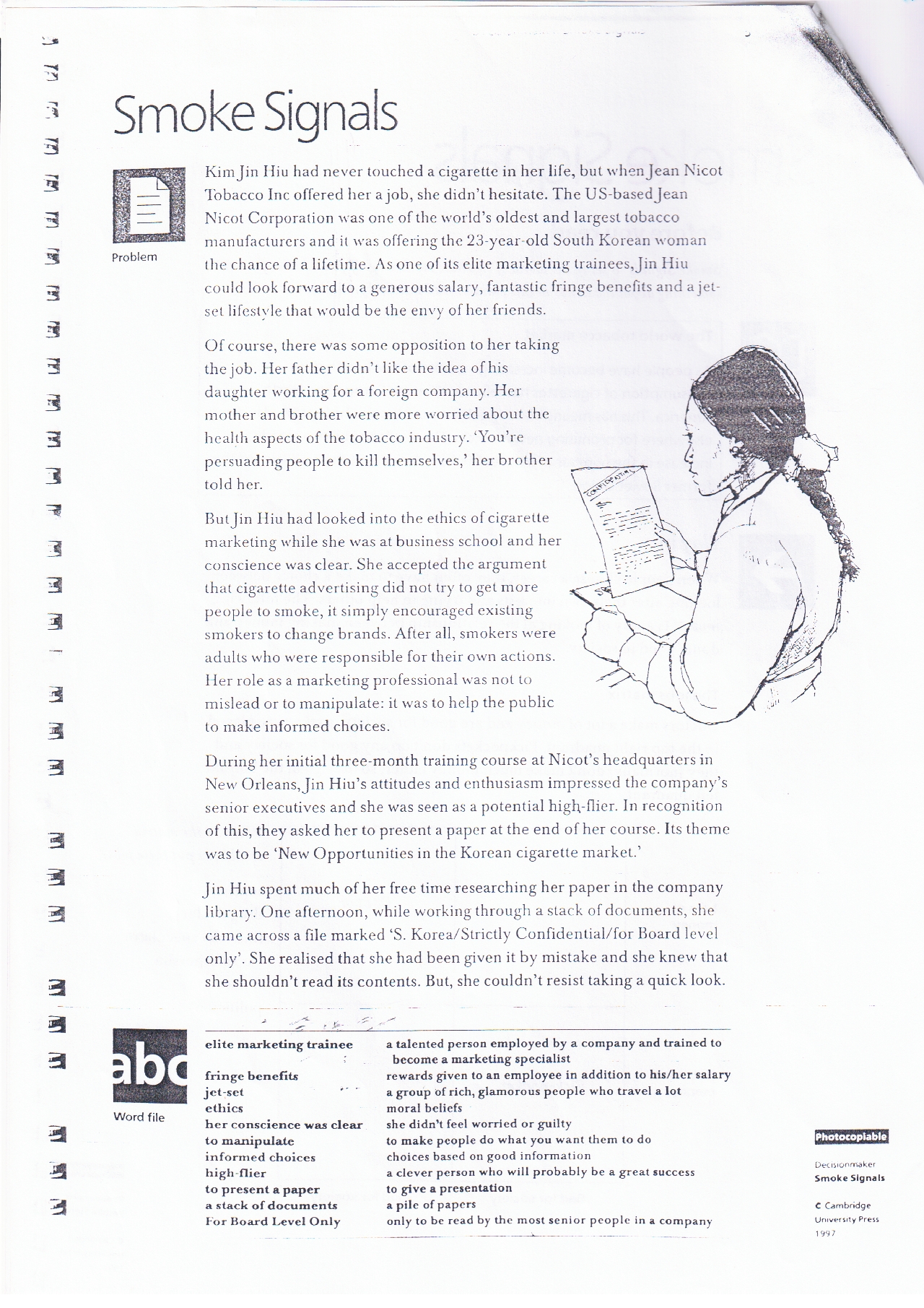
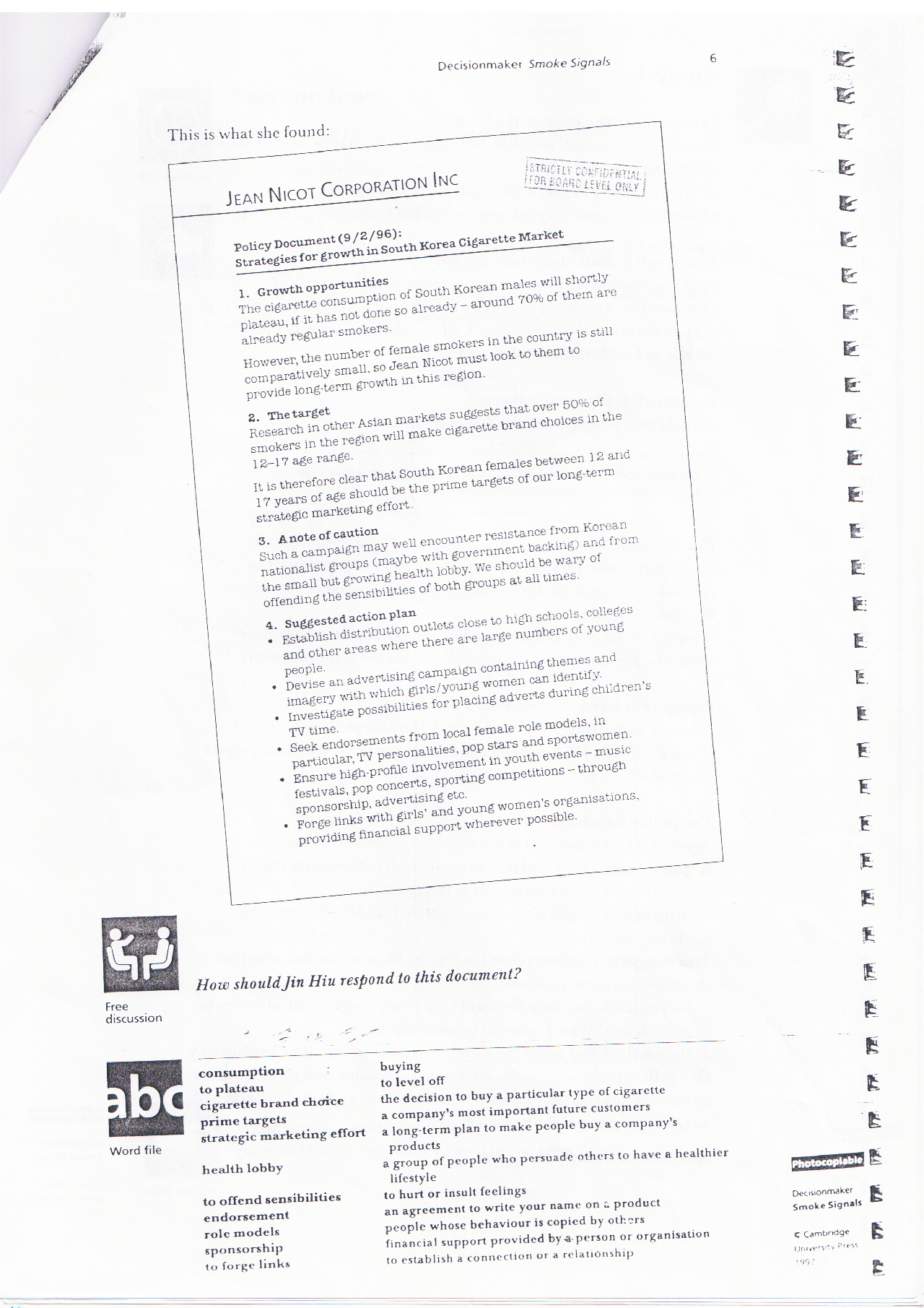
A teaser for the next posts in the series (click to enlarge):

With apologies for the poor quality of the scans, those are from an activity in the ESL activity book Decisionmaker: 14 Business Situations for Analysis and Discussion (1997) by David Evans, which I happened to be doing with my advanced students when a reader sent me the journal articles that inspired this series. It seemed a pity not to mention the interesting coincidence!

Yet another coincidence is that before I moved from Jinju (진주) to Busan in late-2003, I also happened to have a 23-year old female Korean friend who was similarly attracted by the possibility of working for British American Tobacco, which was then setting up a manufacturing plant in Sacheon (사천) just a few kilometers away (it’s still there). We didn’t quite have a conversation like Kim Jin-hiu did with her family, although I did try to discourage her from applying; as I would today too, although I’d have a much better appreciation of her motivations. In the end though, she ignored me and managed to get an interview, but surprisingly wasn’t offered a job.

Meanwhile, as David Evans explains, the marketing plan in the “secret memo” does sound outrageous, but in fact:

…some cigarette companies have undoubtedly targeted children in their marketing strategies. A leaked memo from a Canadian tobacco company listed teenagers as a target group,  and cigarette adverts are regularly shown on children’s TV in Japan (James: is this still true?). In 1991, a study showed that American children as young as six could identify Joe Camel (a cartoon character advertising Camel cigarettes) as easily as Mickey Mouse!

And in Part 4, which I’ll link to below once it’s up next week, I’ll outline how internal industry documents reveal that cigarette companies in Korea (including British American Tobacco) have indeed been using many of the same strategies mentioned above, albeit technically not explicitly to girls (or boys for that matter). Watch this space.

(Links to other posts in the series as they appear: Part 1, Part 3, Newsflash, Part 4, Korea’s Hidden Smokers; Living as a female smoker in Korea)

The Gender Politics of Smoking in South Korea: Part 1

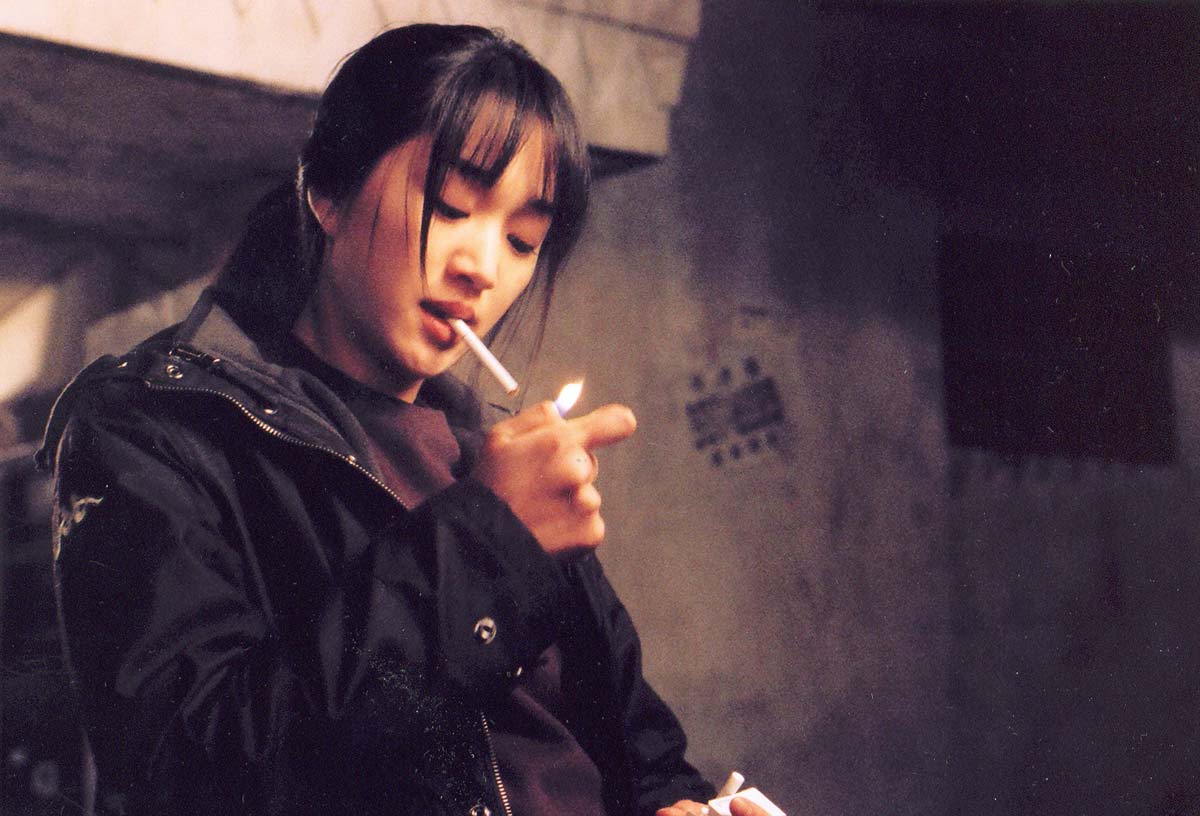
( Park Soo-ae {박수에} in A Family {가족; 2004}; source )

As numerous expats can attest to, coming to live in Korea can be quite a jarring experience sometimes. But probably not as much as you’d expect, for Korea too is a modern, developed country, with institutions and services that match – nay, are often better – than equivalents in your home country. Comparatively speaking, the transition is really rather smooth.

Scratch below the surface however, and decidedly archaic twists to many aspects of daily life do soon emerge, many of which are profoundly gendered too. For example, after a few months here I began teaching a group of highly intelligent women already fluent in English, who attended my class merely as a hobby. All housewives, later I learned that they likely did so because while Korea has been providing an equal education to both sexes for decades now, and indeed as many as 82% of high-school graduates go on to university, just a few years after graduating women are routinely fired and/or are pressured to resign upon getting married or becoming pregnant. Which makes one wonder what the point of women’s higher education was exactly, and accordingly a study conducted just a few years earlier (Women’s education, work, and marriage in Korea: women’s lives under institutional conflicts by Mijeong Lee, 1998, pp. 161-163) found that, à la Jane Austen, it was largely to secure higher-earning husbands.

It is true though, that modernization the world over has invariably entailed such “housewifization” and nuclearization of the family, so in that sense at least Korea is arguably simply repeating the experience of societies that developed earlier.  One way in which Korea does stand out then, is the case of smoking, and you’re probably well aware that it once had the highest male smoking rate in the world, whereas that for women has historically been extremely low. But unless you are already living in the country, then you may not have realized that this is not necessarily by choice, but rather because women can still get slapped for simply smoking in the street, even in 2010. And as testament to the strength of this taboo, it has influenced the smoking habits of at least one female blogger here too for instance, even though most Koreans excuse expats from the vast majority of Korean social norms (source, right).

This brief four-part series is about that gender politics of smoking in Korea, starting in this post with how such an artificial gender binary emerged in the first place; a later one will provide detailed statistics on the number of smokers in Korea, followed by a discussion on the ways in which tobacco companies have (largely successfully) targeted Korean girls and women over the last two decades. As you’ll soon see, it is really a little naive to speak of a “Korean smoking rate” or even “Korean male” or “Korean female” smoking rate when the results differ so widely by age, gender, class, and/or marital status, and the widely perceived notion that Korean women don’t and/or shouldn’t smoke is obscuring the fact that in reality more and more are over time (very roughly 1 in 5), and that success in reducing the number of male smokers comes in the midst of a looming health crisis among female ones.

But first, perhaps “taboo” is not strong enough a word. Consider why the Seoul Metropolitan Council recently proposed banning smoking in public spaces for instance:

“I suggested the bill to protect pregnant women and children from second-hand smoke on streets and at other public spaces” Park Hee-sung, a city councilor, said. “It also secures the right to smoke by designating smoking areas.”

No mere slip of the tongue, this is really a bizarre rationale for banning public smoking: don’t men and non-pregnant women also suffer from passive smoking? But place it in the context of decades-old legislation that posits both children and all women alike as in need of protection however, as mentioned in Kelley Lee et. al. in “The strategic targeting of females by transnational tobacco companies in South Korea following trade liberalisation”, Globalization and Health 2009; 5: 2 (download here), then it does begin to make some sense:

The National Health Promotion Law Enforcement Ordinance, adopted in 1989, bans all tobacco advertising, marketing and sponsorship aimed at women and children including both print and broadcast media.

Although as I’ll explain in Part 4, cigarette companies have largely managed to circumvent this restriction. In the meantime, how did the gender ideology behind the law come about?

( Source: iMorpheus )

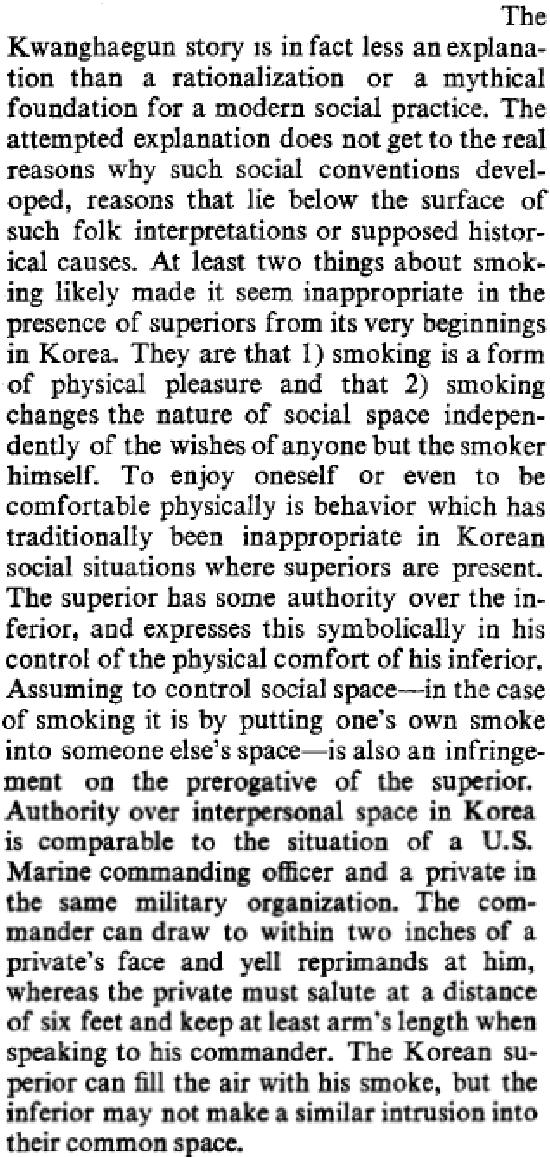
Well, consider the thoughts of C. Paul Dredge in “Smoking in Korea” published in the Korea Journal back in April 1980, (downloadable here), which are worth quoting at some length. From page 28:

With a clear logic rooted in Neo-confucianism, this explanation intuitively makes sense, and I feel confident that I speak for almost everyone when I say that if that excerpt was all of Dredge’s article that was still available, then we’d be more than satisfied with it.

You can imagine how I felt then, when I read on and learned that that was actually bullshit. From pages 28-29:

A good lesson to remember when trying to understand any society better, and indeed I’ve previously made a similar point in the context of how authority and/or hierarchical relationships are portrayed differently in Korean and Western advertisements, so I should have given it a little more thought myself.

With a newfound respect for Dredge then (does anyone know more about him?), I highly recommend reading his article for yourself to learn more (it’s only 11 pages long), in which he goes on to discuss how the above affected Korean women’s smoking habits (at least in 1980). Also analyzing how they differed in the context of the aforementioned divisions of age, class, and marital status however, then I’ll leave that discussion for Part 3 next week.

For now, I’d be more interested in hearing about your own experiences and opinions of smoking in Korea. Alas, although I’ve never lectured anyone about smoking, I confess that I’m an anti-smoking Nazi myself, and possibly for that reason I only have 2 very occasional smokers among my friends to ask. So I would really appreciate it!^^

Update 1: For those interested in smoking culture in North Korea also, see here.

Update 2: An interesting response to this post by a Korean blogger (in English) is available here.

(Other posts in the series: Part 2, Part 3, Newsflash, Part 4, Korea’s Hidden Smokers, Quick Hit: Living as a female smoker in Korea)

Gender Advertisements: What, boys can drink girly drinks now?

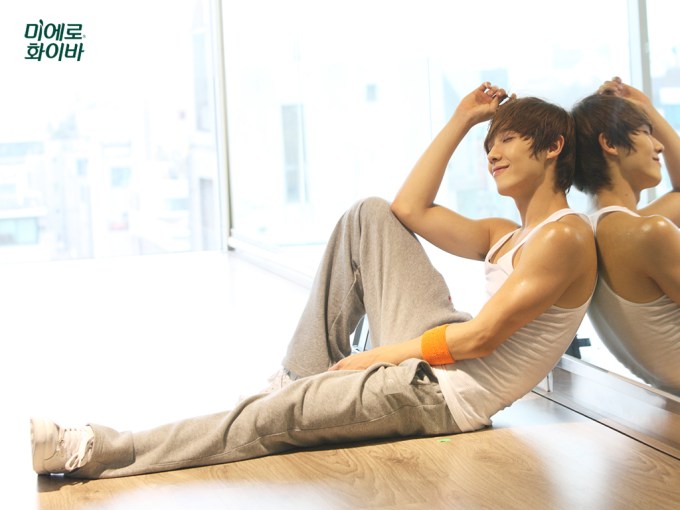
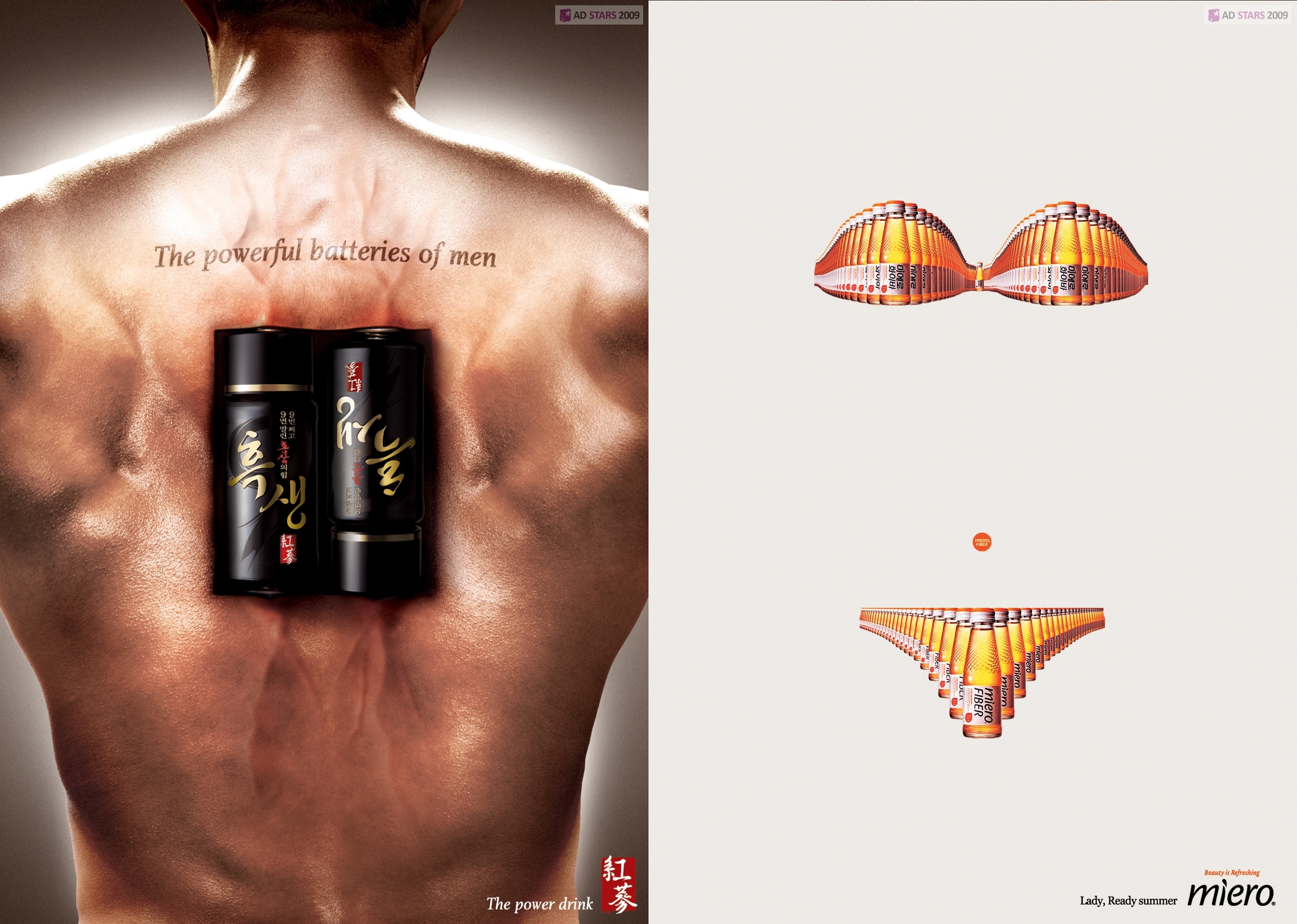
Regularly criticizing food and drink companies for marketing their products so differently to either sex, or even exclusively just to one, then I’m surprised to find I have mixed feelings about the news that one company has actually chosen to stop doing so for a change: Hyundai Pharm (현대약픔), whose Miero Fiber (미에로화이바) “diet drink” for women was ironically the first of its kind in Korea, but for which a new campaign has been launched featuring Lee Joon (이준), a member of boy band MBLAQ (엠블랙), and Kwak Min-jung (곽민정), a figure skater:

제 2의 비라 불리며 초콜릿 복근으로 팬들의 마음을 사로잡고 있는 엠블랙 이준과 밴쿠버 동계올림픽에서 괄목할만한 성장으로 모두를 놀라게 한, 제2의 피겨여왕을 꿈꾸는 피겨스케이팅 선수 곽민정, 이 두 사람이 만난다면 어떤 모습일까?

엠블랙 이준과 곽민정 선수가 기능성 식이섬유 음료의 대표 주자인 현대약품 미에로화이바의 새모델로 발탁됐다.

Called the second Rain (비), and gaining a lot of fans through his chocolate abs, Lee Joon of MBLAQ is with Kwak Min-jung, a figure skater who startled everyone with her remarkable growth as a skater at the Winter Olympics in Vancouver, and who dreams of becoming the second figure skating queen [after Kim Yuna (김연아)]. What are they doing meeting together?

Lee Joon of MBLAQ and Kwak Min-jung the skilled athlete have been chosen as the representatives of the diet fiber drink Miero Fiber by producers Hyundai Pharm.

미에로화이바는 1989년에 출시되어 20년 넘게 많은 사람들의 사랑을 받아온 국내 최초의 식이섬유 기능성 음료로, 그 동안 이소라, 김혜수, 박민영, 고아라, 신민아 등 미에로화이바를 거쳐 간 여자 연예인들은 최고의 인기를 구사한다는 소문을 낳을 만큼, S라인 여자 연예인들의 매력이 돋보이는 CF를 선보여왔다.

이에 이준과 곽민정 선수의 모델 발탁이 더욱 신선할 것이라는 것이 현대약품 측의 설명. 서로 다른 분야에서 떠오르는 신예로 맹활약 중인 이 두 사람은 이번 CF를 통해 2010년, 모두가 부러워하는 워너비 몸짱으로 등극할 예정이라고.

Miero Fiber has received a lot of love since being launched as the first diet drink in Korea in 1989, and indeed [previously unknown] female entertainers that have showed off their S-lines and attractiveness in commercials for it have included the likes of Lee So-ra, Kim Hye-su, Park Min-young, Go-ara, and Shin Min-a, to the extent that there is a rumor that appearing in one is very helpful for a female entertainer’s career!

James – That is probably just the typical hyperbole of Korean news stories, but then I did personally first learn of Shin Min-a in 2000 and Go-ara in 2006 through their Meiro Fiber commercials:

Lee Joon and Kwak Min-jung were chosen by Hyundai Pharm because the company wanted a strong, fresh image, and because both are rising stars in their respective fields. It is hoped that through this commercial, in 2010 many people will become jealous of them and also try to get good bodies.

현대약품 관계자는 “이준과 곽민정 의 건강미와 무한한 가능성에 주목했다”며 “이준의 강하고 섹시한 이미지와 곽민정 선수의 건강하고 귀여운 매력을 통해 미에로화이바가 상징하는 건강한 아름다움의 컨셉이 효과적으로 전달될 것”이라며 새로운 모델에 대한 기대감을 선보였다.

한편, 지난 달 세계선수권대회를 마치고 귀국한 곽민정 은 국내에서 한 달간 머물며 휴식을 취한 뒤 다시 캐나다 토론토로 돌아가 오서코치와 함께 훈련에 전념할 계획이며, 이준은 최근 짧은 헤어스타일로 변신해 스승인 비와 붕어빵 외모로 화제를 일으키며 본격적인 컴백에 대한 팬들의 기대감이 한껏 고조되고 있다.

According to a Hyundai Pharm spokesperson, “It has often been remarked that Lee Joon and Kwak Min-jung both have a kind of healthy beauty and unlimited potential,” and that “with Lee Joon’s strong and sexy image and Kwak Min-jung’s healthy and cute one, they will be effective as symbols of Miero Fiber’s healthy and beautiful concept,” which is why they were chosen as new models and why Hyundai Pharm has high expectations of them.

In the meantime, after the 2010 World Figure Skating Championships concluded last month, Kwak Min-jung returned to Korea for a month of rest, but has since returned to Toronto in Canada to concentrate on training with coach Brian Orser, while Lee-Joon has recently changed his hairstyle to look almost like a twin of his mentor Rain, raising a lot of interest and expectations among fans as to what the theme of MBLAQ’s comeback will be. (source)

Granted, not an explicit admission that Hyundai Pharm now hopes to sell to men what it previously wanted consumers to believe was only for women. But that message is pretty clear in the commercial itself:

언니만큼 잘하고싶어요. 라인도 신경써야죠.

Like my older sister [Kim Yuna], I want to do well. I also have to pay attention to my S-line, yes?

마시는것도 관리해야죠. 형! 딱 기다려!

I too have to think about what I drink. Older brother [Rain]! Just you wait for me!

내일이 기다려집니다. 미에로 화이버.

We can’t wait for tomorrow. Miero Fiber.

And on that note, it’s a pity that, yet again, athletes that have gained great bodies through exercise are endorsing a product that encourages people to think that merely slugging a diet drink is all that is required. But I do think that selling it to both sexes is still a positive step: after all, as I discuss here, unfortunately it is by no means an exaggeration to say that there is a widespread belief among Korean women that “obtaining the perfect body is possible provided one merely buys and passively uses, applies or digests various products,” and one which strangely coexists alongside a belief by men that they must do active exercise instead. Introduce the notion that men and women can obtain their desired bodies through the same means however, and you begin to challenge that false dichotomy.

On the other hand, it is a diet drink being sold, and so there is also the possibility that ads like these will simply encourage men to forgo exercise in favor of dieting (and so on) also. Which do you think is the more likely scenario?

Either way, Korean energy drinks are off to a good start!

Share

Gender Advertisements in the Korean Context: The Mile High Club

( Source )

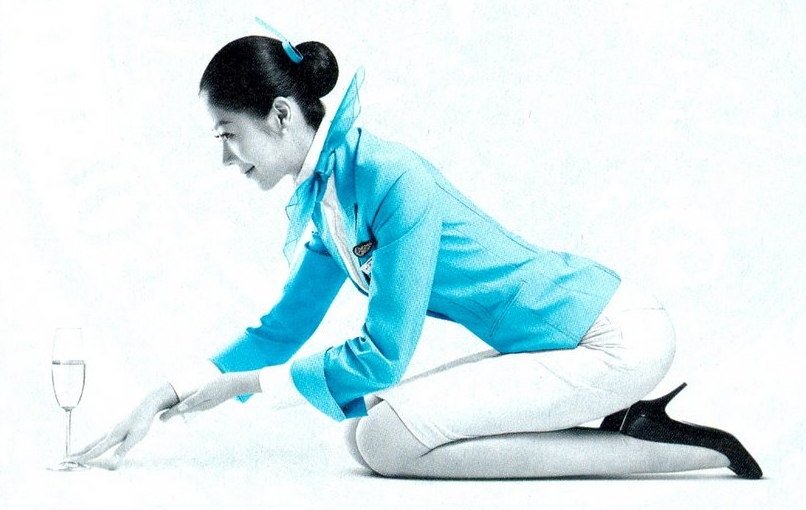
Quick question: for want of a better word, what vibe do you get from the above image? How does it make you feel?

Part of this Korean Air advertisement, how about with the caption:

From departure to arrival, only dignified services for our dignified guests.

Or with the fine print:

When you land, you should be in the same delicate condition as you were during take-off. That’s why our delicate service with a smile remains constant throughout the flight until you reach your destination.

In particular, do you find it demeaning to the steward in any way, or women in general?

Does the fact that only 11% of Korean Air stewards are men influence you in any way, Korean Air only hiring men from within its own ground staff since 1997, but women also from the general public?

And finally, do you get the same vibe from this Gucci advertisement? Why or why not?

( Source: the Fashion Spot {NSFW})

Alas, I have no information about the Gucci advertisement unfortunately (I would be grateful if any readers could enlighten me), but the Korean Air advertisement at least ran in magazines and newspapers worldwide in March 2008, and I recall finding it vaguely disturbing when I saw it in the Asian edition of The Economist at the time, but not quite being able to put my finger on why exactly.

And as it turns out, I wasn’t the only one, commentators from Singapore to London either baffled by it, finding it “hilarious that Korean Air published it in a Western magazine,” thinking it demeaning to women, and/or hoping that in Korea itself “it’s some kind of image of empowerment.” But I didn’t personally see anything sexual in it however, and so – forgive my naivety – originally didn’t quite get this unspecified newspaper author who commented that they were “glad that she is wearing a scarf, which is part of her uniform, and not something else.” Moreover, I certainly didn’t think it looked like she was about to perform fellatio either, unlike the author of Copyranter:

KOREAN AIR: How May We Service You?

Korean Air: You think our turbines have suction power…

The ad copy (click image) reads, in part: “That’s why our delicate service (no teeth!) with a smile remains constant throughout the flight…” Now, the ad was scanned from the March 31st Asian edition of Newsweek. And as tipster Juditha wrote, there certainly is a cultural difference with how female flight attendants (and really, all females) are perceived in Asian culture. But. Still. If the airline keeps running ads in this vein (sorry!), their male passengers are not going to stop at unbuckling just their seat belts.

But hey, we all make mistakes, and it’s not like there weren’t some distinctly sexual overtones to the advertising campaign as a whole; with thanks to fellow blogger Logan Row for pointing it out, note the symbolism at 0:19 in the commercial below for instance (and quite a common theme in wine advertisements!):

What is the logic of the Korean Air advertisement then? Well, as commentators in those above links pointed out, what Korean Air is trying to say in it is:

…that their attendants will go the extra mile for their guests. The pose that the flight attendant is striking is how traditional Korean hostesses would serve guests in their own homes. It is a traditional Korean (and to an extent Japanese) form of humility and hospitality

And that it’s a reference to the:

…Korean (and Asian) custom of bowing in front of your elders, parents, to people you respect, or in general to show deference to someone and submission. (ie students serve their teachers drinks/food on their knees) Its a position of servitude not necessarily the same ‘on your knees’ sexual connotation we have in the US. Obviously all of this still is problematic as far as the the female subjugation at the will of the Korean Air clients and basically almost just as offensive. But I thought that cultural reference was probably really important as well, as Korean, and other Asian cultures would read it with that in mind.

And finally that:

it conjures up being treated like royalty – in the old days the servants of royalty had to kneel and bow at all times when presenting the king with food/drinks/documents and then scoot out the door, never showing their backs. it is a sign of respect. with that said, this should not run anywhere outside East Asia as it can be misconstrued by everyone else.

( Source: the Fashion Spot {NSFW})

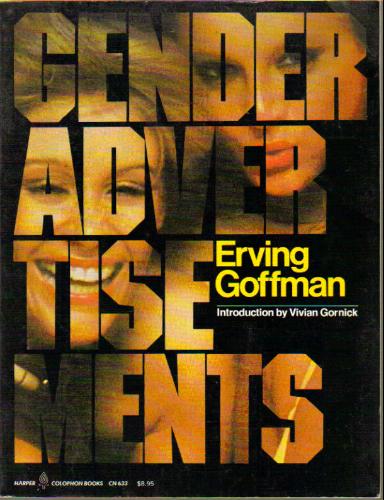
However, unfortunately it was. And unlike in Korea where cultural factors mean that the advertisement is not necessarily demeaning to women, a person’s social status usually trumping factors like how (literally) highly they are placed in an advertisement (see here, here, and here), having any group regularly placed lower than another in advertisements tends to be problematic in Western culture, for reasons the late sociologist Erving Goffman outlined in Gender Advertisements (1979):

Although less so than in some, elevation seems to be employed indicatively in our society, high physical place symbolizing high social place. (Courtrooms provide an example) In contrived scenes in advertisements, men tend to be located higher than women, this allowing elevation to be exploited as a delineative resources. A certain amount of contortion may be required. Note, this arrangement is supported by the understanding in our society that courtesy obliges men to favor women with first claim on whatever is available by way of a seat. (p. 43)

And also:

Beds and floors provide places in social situations where incumbent persons will be lower than anyone sitting on a chair or standing. Floors are also associated with the less clean, less pure, less exalted parts of the room – for example, the place to keep dogs, baskets of soiled clothes, street footwear, and the like. And a recumbent position is one from which physical defense of oneself can least well be initiated and therefore one which renders very dependent on the benignness of the surround. (Of course, lying on the floor or on a sofa or bed seems also to be a conventionalized expression of sexual availability) The point here is that it appears that children and women are pictured on floors and beds more than men. (p. 41)

Granted, the Gucci and Calvin Klein examples of this above are particularly provocative, but you can see more normal ones in this “Ritualization of Subordination” category of Goffman’s framework at The Gender Ads Project if you’re interested. Moreover, in light of those, I’m no longer entirely convinced that the Korean Air advertisement isn’t still problematic despite its cultural context: after all, with the proviso that men usually look rather awkward in poses that are sexually appealing on women (as hilariously demonstrated here), I personally find it very difficult to imagine a man in place of a woman in the Korean Air advertisement, although I fully concede that that may be due to my own socialization process leading me to believe that it is more “natural” with a woman, or even simply my familiarity with the advertisement, that happened to feature a woman rather than a man. Or is it not just me?

( Source: WallyWorld )

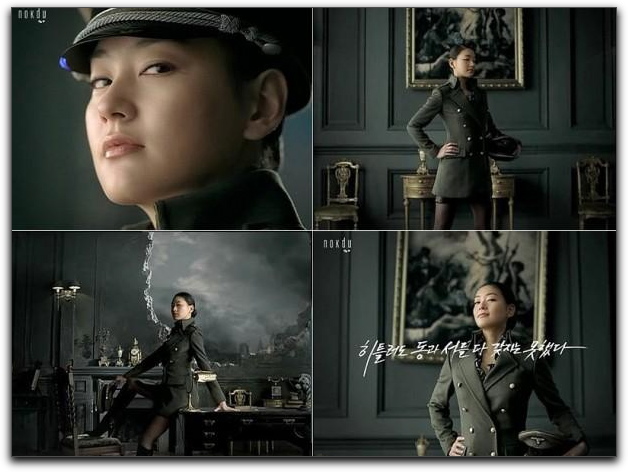
Regardless, this is by no means the first time that Korean advertisers or advertising agencies have produced advertisements that are appropriate for and/or logical to Koreans, but completely confusing and even offensive overseas. Not that only Korean companies are guilty of doing so of course, but they are the focus here, so let me leave you with 2 examples, the most notorious of which is probably Korean cosmetic maker Coreana’s (코리아나) use of Nazi imagery in 2008, about which you can read more at Brian in Jeollanam-do here, here, and then here (and the video is still available at Adland.TV).

Next, slightly more benign, there is that for the Samsung Sens notebook computer from September last year:

The logic of those with other, non-Sens notebooks having pig noses is that Korean 2-plug electrical sockets do indeed look a little similar, and I’ve heard that that’s traditionally what they were called too (but perhaps only by children?).  Regardless however, one wonders why they act like bafoons, and particularly why they’re all Caucasian when the commercial was filmed in a city as racially diverse as Sydney?

But a crucial difference between those and the Korean Air advertisement was that only the latter was intended for a global audience, and so the advertiser or advertising agency responsible should really should have known better. And now I’m curious: can anyone think of other cases where Korean advertisers or advertising agencies have made similar mistakes overseas? Alas, given the insular nature of the Korean advertising industry, probably not!

Update: Compare this advertisement for ANA airlines’ flights to Japan, from the February 2010 Hemisphere magazine (the in-flight United Airlines mag).

(For more posts in the “Gender Advertisements in the Korean Context” series, see here, here, here, here, and here)

Share

Korean Sociological Image #37: Like a Virgin?

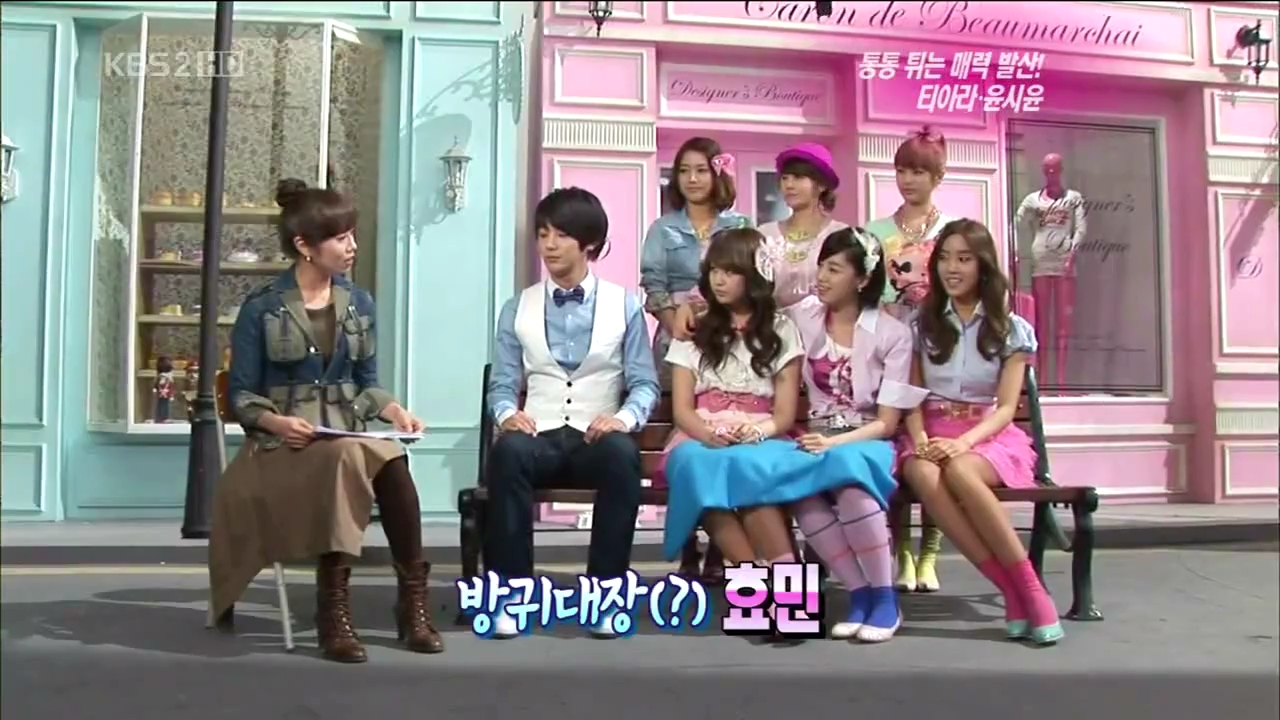
As they say, first impressions are everything. And so, with apologies to those of you unwise enough to read this blog at work, let me share mine of girl group T-ara (티아라) from their music video of Like the First Time (처음처럼) before proceeding: namely, that they were confident, sexy women, not at all embarrassed to perform risqué dance moves like the above in front of large audiences.

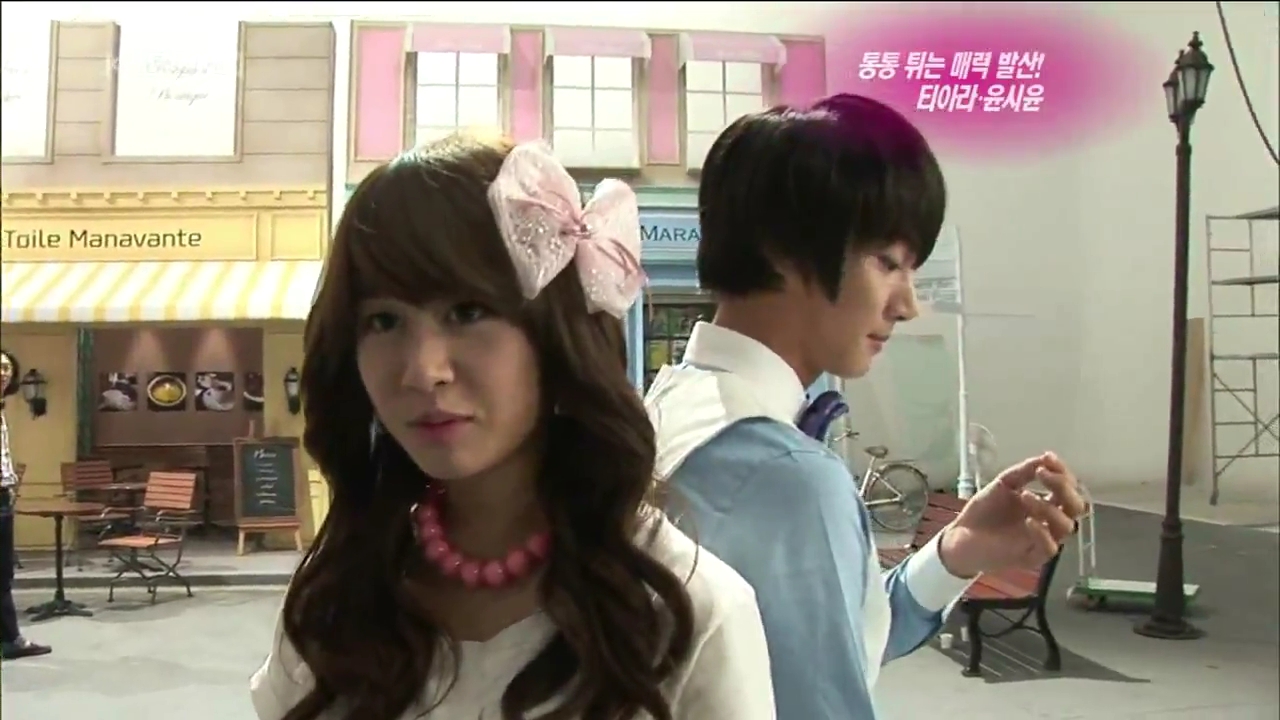
However, it was difficult to square that impression with their shyness in the following brief interview for Entertainment Tonight (연예가 중계) last month, conducted while making (rather bizarre) commercials for a mobile phone, and I would interested in hearing your thoughts on possible reasons for the differences, and how representative the interview is as whole of the way 20-something women especially are portrayed in Korean entertainment programs.

The most important point first: from roughly 1:00 t0 1:30, the interview focuses on group leader Ham Eun-jeong (함은정) feeling embarrassed about repeatedly hugging actor Yoon Si-yoon (윤시윤) for their commercial, despite having just met in the studio. In particular, at 1:10 below she says “어떡해”, or “How” as in “How can I do this?” while making an exaggerated expression of embarrassment, about which the reporter comments “굉장히 부끄러워하죠?”, or “She’s very shy, yes?”. Note also the addition of “근심” and “걱정” on the screen too for added context and atmosphere, (a habit of entertainment programs picked up from Japan), although rather confusedly they both mean anxiety, or worry.

Then at 1:25, she’s asked how she feels from hugging Si-yoon for so long, to which she replies “솔직히말해도…떨려요!”, or “To be honest…I’m shaking/trembling!”.

Natural feelings? Of course. But then recall her music video, in which she – not to put too fine a point on it – repeatedly bends over and thrusts out her bottom, jiggles her breasts, and runs her hands over her breasts and crotch while singing about how her body was on fire. Indeed, even the interviewer herself later (3:08) highlights the complete contrast:

Moreover, while I’ve never personally strutted my stuff on stage like Eun-jeong, I am actually quite comfortable – nay, somewhat notorious for – acting in front of large groups of adult students (I’m tempted to mention faking an orgasm in class once in my first year of teaching, but I’d better not), and doubt that I’d be embarrassed repeatedly hugging an attractive woman in front of others. Yes, I would be if I ended up having a large visible erection as a result, but that’s besides the point: if Eun-jeong was embarrassed, it wasn’t because she was visibly turned on.

And I stress “if”: my wife, for instance, also watched the interview, and at first told me her embarrassment was perfectly natural, but then readily conceded it was rather strange in light of her performances in music videos and on stage. Which leads me to my first question: do you think Eun-jeong was genuinely embarrassed?

One commentator at Omona! They Didn’t did at least:

…Eunjung lost her composure while filming a hugging scene with Yoon Si Yoon….It’s funny how Eunjung was so flustered and shy around a guy because she exudes such a powerful and charismatic presence on stage. I guess we are all prone to weakness in front of the opposite sex.

And I do remain open to the possibility. However, I’d argue that either subconsciously or deliberately, she’s much more likely to be playing to expectations and norms of the Korean media that she present herself as cute and innocent, regardless of her true personality; well illustrated, I think, by this 2007 commercial with Kim Tae-hee (김태희):

As PopSeoul! explains:

She acts all sugar and spice in wide-eyed innocence as she sips her drink carefully, but as soon as her date turns away, she lets loose her inner diva to strike a pose for the camera. Her date discovers the saved pictures on his Olympus and accuses her of being “nae-soong”.

Nae-soong (내숭) being the:

…inconsistency between a girl’s true personality (i.e. extroverted), and external (i.e. introverted, shy and innocent) personality. In other words, trying to hide your true intentions self by acting sweet and innocent.

And indeed the interview is full of demonstrations of how sweet and innocent they are. For instance, at 1:47 Park Ji-yeon (박지연) is embarrassed to learn that she is Si-yoon’s favorite of all the T-ara members (although you may be surprised to learn that she’s only 16, and hence her embarrassment arguably the most likely to be genuine):

And at 3:17, Eun-jeong feigns (I don’t think anyone would dispute this!) being upset at the other group members selecting her as looking the most different (read: uglier) before putting on make-up:

One music video and and one interview are by no means sufficient to get an idea of their true personalities however (to the extent that one sees any celebrities’ true personalities in front of a camera at all that is), and so I also briefly looked at some episodes of T-ara Dot Com (티아라닷컴), a quasi-reality show about them setting up an internet clothes shopping mall of that name. Here’s a brief segment of one episode, with English subtitles:

And in which their behavior is no different to that in the interview. Hence, while I do still feel that Eun-jeong’s embarrassment at hugging Si-yoon at least was completely feigned, I concede that T-ara’s cutesy behavior overall probably wasn’t an act, and not unrepresentative of Koreans their age either (for reasons explained here).

If that behavior is still a definite expectation or norm of Korean entertainment programs however, depends on such factors as how other women are portrayed in them; if there’s a large difference between men and women; and to what extent such programs offer opportunities for entertainers to present alternate, more serious sides of themselves if they wish to do so.

Unfortunately, I can’t personally say: even when I first arrived in Korea at the tender age of 24, I soon chose never to watch these sorts of programs because I had better things to do than seeing grown men and women acting like children on them. Now, at 34, I’m more concerned about the influence they will have on my own daughters, and to be frank would consider myself a failure as a father if they grew up to behave like members of T-ara do when they reach the same age.

However, in contrast to when I was 24, in fact there’s also some things I like about the Korean media which are on display in the interview, and which I’ll devote the remainder of the post to.

First, in a meta-sense, the practice of providing subtitles and/or commentary on them is simply great for studying Korean, especially considering the huge gap in real-life learning material for Korean learners, let alone intermediate level material. And if dramas aren’t your thing, then studying a 10 minute segment of an episode of T-ara Dot Com everyday is probably quite a tolerable alternative:

More to the point of this post however, there is the very human side of stars presented, a stark contrast to the pedestals Western medias tend to place their own celebrities on. For instance, not only does the interviewer ask at 3:39, which member of T-ara farts the most:

But at 3:49, we even get to watch the evidence:

And, lest he feel left out, Si-yoon is asked if he also farts, to which he replies at 3:57 that yes, he enjoys it:

Compared to that, watching him pick his nose and examine the contents at 2:30 was nothing. And hey, a guy’s got to do what a guy’s got to do, but in any other country I’d be surprised his agent didn’t want that cut out:

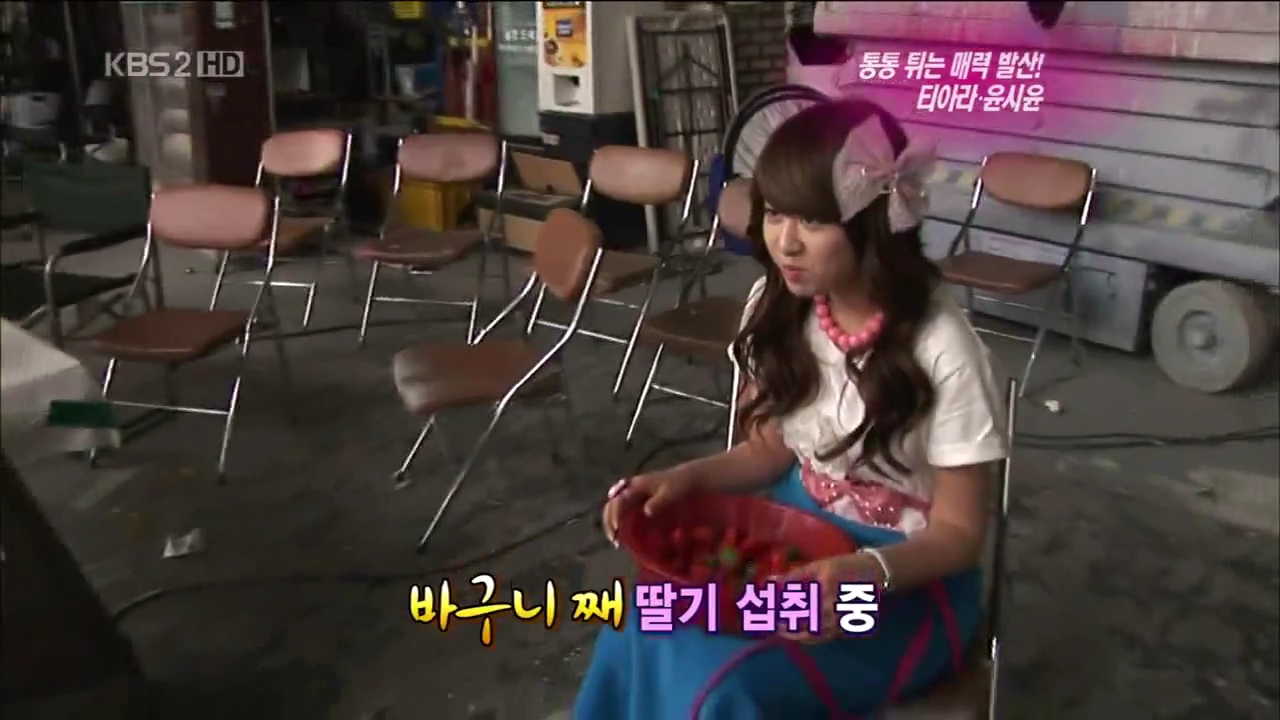
But not that showing that celebrities fart and pick their noses like the rest of us mere mortals are the only positives of course. I also love how the interview highlights Ji-yeon stuffing her face with strawberries at 2:57 for instance, and particularly from a basket that looks like it was bought from the back of a food truck, to be found in literally every Korean neighborhood at almost any time of day (for instance, selling salt at 5:30 in the morning). You see, something that looks like it could have been bought in my wife’s home village in 1970 is somewhat incongruous on the set of a commercial for probably one of the most technologically sophisticated products on the planet, and reminds me that constantly seeing such juxtapositions is one reason I love living here:

Finally, there’s the standard happy, bubbly ending of such shows, usually accompanied by cries of Hwaiting! (화이팅); if you’re not smiling yourself at least a little when you see one on TV, that’s probably because you’re being carried out of the room on a stretcher with blanket over your head:

To recap, I would love to hear: your own opinions on how genuine Eun-jeong’s embarrassment was; how representative of young women’s behavior on entertainment shows T-ara’s was; and whether they were simply being themselves or if they were fulfilling expectations and norms of how 20-something women should act on them (I realize that the last is a bit of a false dichotomy though, and should be considered more as a feedback loop). Are there any Korean entertainment shows where women don’t have to be cute? And how about 20-something men, or older women?

Alternatively, do you have any more pet peeves about Korean shows not covered here, or reasons that you really like them?

(For all posts in the Korean Sociological Images series, see here)
Share

Korean Sociological Image #35: Ready for some Hot 6iX?

(Source)

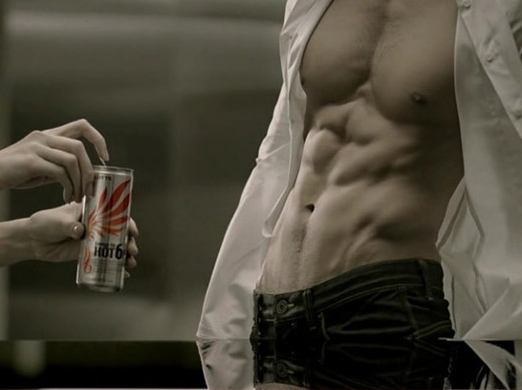
For all the misreadings of the title that undoubtedly brought many of you to this post(!), “Hot 6iX” (핫식스) is just a simple energy drink really, albeit a deliberate attempt by Lotte Chilsung (롯데칠성음료) to produce a Korean equivalent of Red Bull for the domestic market. And ultimately to belatedly tap into the global market too, currently worth 1.4 billion dollars and growing 20% every year despite the recession.

An avid drinker of “V” back when I lived in New Zealand, I think it’s about time. Much more interesting than the drink itself though, are what the 4 advertisements produced so far tell us about how quickly the Korean media is changing, and especially how men and women are presented therein. With apologies for giving the game away somewhat with the opening image, here they are:

Although my wife and I laughed at the joke in the first one too, I confess that I was already well into writing this post after only seeing the two featuring women. For they confirmed a strong and enduring division in the marketing of health, energy, and/or sports drinks whereby those aimed at men tend to promote the idea that the drink will give them extra energy for work, exercise, or even sex, but those at women that it will simply help them to lose weight. A phenomenon by no means confined only to Korea, you can imagine my surprise then, when I learned of the 6iX ad aimed at female drinkers also.

(Sources: left, right)

And although it sounds rather awkward, my delight too. For with the proviso that the objectification of men can be just as problematic as that of women, and its occurrence in the media in numbers comparable to that of women a bizarre and somewhat unlikely “solution” for the latter, I’d like to throw open for discussion the notion that any objections any of you may have – or imagine that others may have – to those first 2 advertisements are somewhat mollified by having an advertisement featuring a man also.  Or alternatively is that just me, and/or are the advertisements with women not all that objectionable in the first place?

Meanwhile, expect to see many more advertisements like them in coming months: the 4 above all have random numbers assigned to them, much like what were ultimately 30 or so in this “Confessions of 20-somethings” (스무살의 고백) advertising series of Maxwell House (맥스웰하우스) that started last year (see #2 here). And on a final note, it’s difficult to believe that advertisements objectifying men like this only really started in earnest last year, yes?

Update, July 2012: Alas, my prediction was completely wrong. There were no new commercials for over 2 years, and the new ones released this month don’t objectify either sex at all (although they do still target both men and women). See here for all the 2012 and 2010 ones.

(For more posts in the Korean Sociological Images series, see here)

“Gender Advertisements” in the Korean Context: Part 1

(Source: SeoulBeats)

Be warned: Gender Advertisements, by the late sociologist Erving Goffman, is one of those books that changes your life forever.

Well, not life-changing like reading The Communist Manifesto inspired an Argentine ex-lecturer of mine to start shooting police officers. But you will pay much more attention to advertising messages, of which you already receive between 500 and 1000 every day. (Yes, it’s really that many.)

Of course, advertisements have changed considerably since the book was published in 1979, and are much less sexist overall. But indeed that’s precisely because of the attention given to them. Moreover, some elements have actually gotten worse, advertising to children for instance now an embarrassment compared to the relatively gender-neutral tone of the early-1980s (compare these to this, this, and this), and also there is now so much partial nudity in advertisements that several researchers argue that a new category has had to be added to Goffman’s framework to analyze it.

However, partial nudity isn’t objectifying or sexist per se: rather, it is the manner and context in which it is applied. And if that is the case, then you can imagine how problematic applying Goffman’s framework as a whole to Korean advertisements is, in which such different cultural codes operate.

Or do they? In at least one case, yes: social status usually trumps all other considerations in Korea, and so having one person (usually a man) elevated above another (usually a woman) in an advertisement, perhaps by him sitting and her reclining on the floor in front of him, by no means implies superiority, rendering that subcategory of Goffman’s “Ritualization of Subordination” category problematic (see here and here for examples). Still others, such as cute and/or childlike depictions of women, or having them staring off into the distance rather than directly back at the viewer (a subcategory of “Licensed Withdrawal”), are not necessarily sexist in light of East Asian notions of metrosexuality and politeness respectively, as helpfully pointed out by reader Melissa. And in point of fact the only analysis (Nam et al, 2007) that has looked at men as well as women in Korean magazine advertisements did find that Korean men were depicted much more childishly and “withdrawn” than Western men in them.

Still, while this point is easy to miss in posts that necessarily give only a few illustrative examples, surveys of depictions of men and women in advertisements using Goffman’s framework are made to determine if there are statistically significant differences between them as a whole. And, if those are found, then there are a number of different cultural and anthropological explanations that can be suggested in addition to feminist ones: Occidentalism, for instance, may have played a role in the above result, or the fact that it is quite acceptable for Korean 20-somethings of both sexes to behave in a manner that many Westerners might consider childish (see here for possible reasons for this). Alternatively, Nam et al (2007) found that Western women were much more likely than Korean women to be depicted in a lower physical position than men, such as by him standing and her reclining in a chair on on the floor, but while this could be interpreted positively (for Korean women), much more likely is the fact that status trumps all other considerations in Korea, and so to be physically lower than someone else by no means implies that one is the inferior. Accordingly, there were no statistical differences between Korean men and women in this regard.

Other differences however, like the fact that regardless of the social norms I’ve discussed, Korean women are still depicted childishly or withdrawn more often than Korean men for instance, are extremely difficult to account for other than in terms of their inferior social and economic status in Korea. Or in other words, while an individual advertisement depicting a woman like a child isn’t necessarily sexist in itself, that there’s more of them than there are of men is certainly evidence of sexism. Moreover, I fail to see how noticing discrepancies like this is somehow Eurocentric of me, or “looking at Korean society through Western eyes.” Which is not at all to say that Melissa argued that, but others have.

Update: Specifically, aegyo is often claimed as a form of empowerment that Westerners fail to appreciate. In which case, guilty as charged: when (usually) women act like children to manipulate (usually older, higher-ranked, and/or richer) men, how is that anything but wholly accommodating to a patriarchal system?

(Source: Unknown)

In response, in what was originally intended to be a single post here I wanted to discuss the problems Kang (1997), Hovland et al (2005), and Nam et al (2007) had with Goffman’s framework, the alterations they made to it, and the latter two’s discussion of how appropriate various categories of it were to the Korean context.

In particular, the last found that Western men and women were more likely to be depicted as partially nude than their Korean counterparts, but with allowances again for Occidentalism, and the fact that Korean female models will rarely appear in lingerie advertisements (of which the authors were unaware, and so didn’t account for), they argue that this is again evidence of sexism because in fact “many scantily garbed women [emit] a sense of independence and confidence.” While I’d be a bit more circumspect than that myself, fortunately having long since on moved on from the days when I automatically equated bikinis with feminist liberation, they do have a point, particularly in a society where the majority of women were too scared to wear them 5-10 years ago.

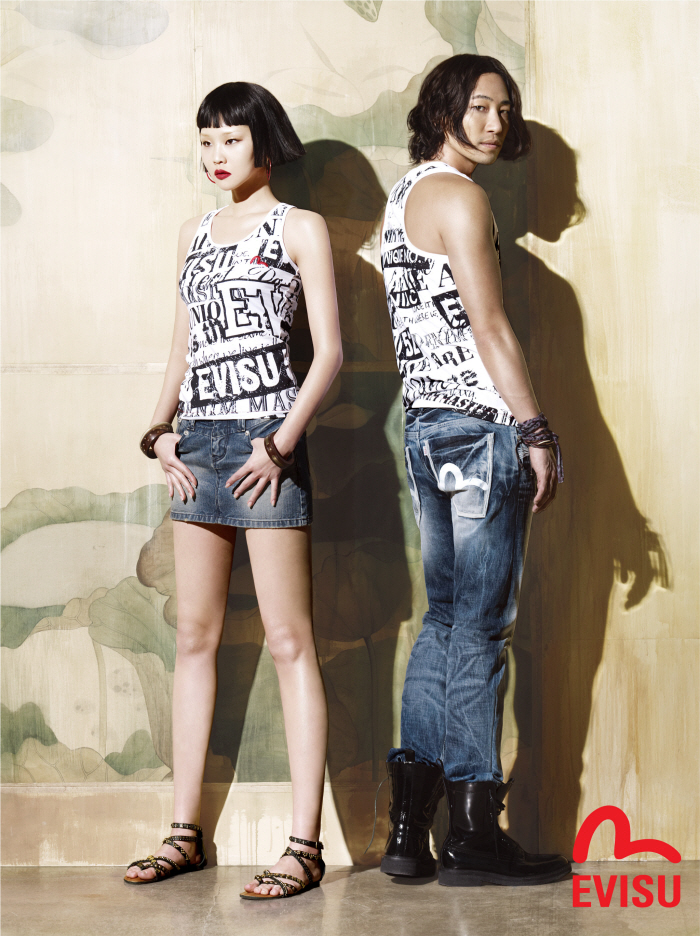
Also, I wanted to discuss the “female-stereotypical” depictions of Korean men in advertisements like Melissa identified, posing a challenge as they do to especially Western men’s notions of masculinity. Unfortunately however, for reasons of space and ease of reading those will have to wait for Part 2 and perhaps even a Part 3. Instead, having provided a grounding in this post, let me devote the rest of it to a practical example of another discrepancy in the ways men and women are portrayed in advertisements, one that I stumbled onto by accident in the process of investigating the Evisu (에비수) advertisement at the beginning of the post.

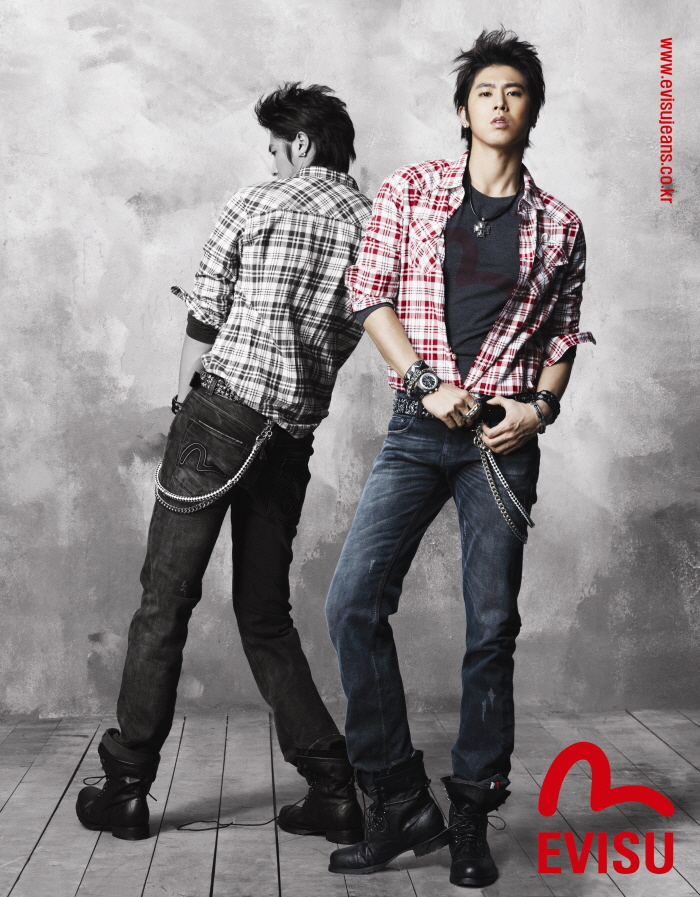
Featuring Jung Yun-ho (정윤호; also know as “U-know”) of the boy band TVXQ (I don’t know who the woman is sorry), the first thing it reminded me of was this:

(Source: Shine So Cold)

Of which I wrote this back in November 2008 (update: since edited out sorry):

Personally, it took me a few moments to figure out what this advertisement is supposed to represent exactly: were the couple prisoners? No…why would their sunglasses be tied up too? How apart parts from a model kit then? No…then they’d be disassembled, and besides which the man appears to be raised from the white background a little, a rather awkward position for a model component. And then I realized that he’s actually standing, which would mean that the woman is too, although I can surely be forgiven for thinking that she’s lying down.

So probably they’re supposed to be like a Barbie and Ken doll set in a box, like you find in a toy store. But then why is the women tied down so helplessly, whereas the man, ostensibly also tied down, looks – as the photographer points out – firmly grounded and in control? I haven’t been looking (sorry!), but I dare say that Barbie and Ken dolls don’t leave the Mattel factory like that in real life. So why would the advertisers choose to depict them like that?

Granted, it’s a much more extreme example than the own with Yun-ho. But while I don’t mean to equate the two, that is indeed what it reminded me of, and the final question I pose is just as relevant.

But in terms of Goffman’s framework itself, probably this is more similar:

(Source: Tech Fatale)

And with that, let me add “participation shields,” a subcategory of Licensed Withdrawal, to add to all those others I’ve already elaborated on here, here, here, and here as well as those in this post. This is what Goffman (1979) had to say about it:

It is possible to look in on a social situation from a distance or from a one-way panel—a “participation shield”—and be little seen oneself, in which case one can, in effect, partake of the the events but not be exposed to scrutiny or address. A splitting up this results between some of the gains and some of the costs of face-to-face interaction. I might note that when one’s participation is thus shielded, simultaneous maintenance of dissociated side involvements would seem to be facilitated, since these could hardly intrude between oneself and one’s availability to the others in the situation – one not being available at all.

A ritualization of participation shielding occurs when one presents oneself as if on the edge of the situation or otherwise shielded from it physically, when in fact one is quite accessible to those in it. Still further ritualization is found in commercial posings. (p.70)

Then he gives examples of using walls as shields, then window frames, then various objects, then animals, and finally people:

…with the consequent opportunity to overlay distance with a differentiating expression, in the extreme, collusive betrayal of one’s shield. (p. 72)

Here are some examples he provides, from my scan of page 73:

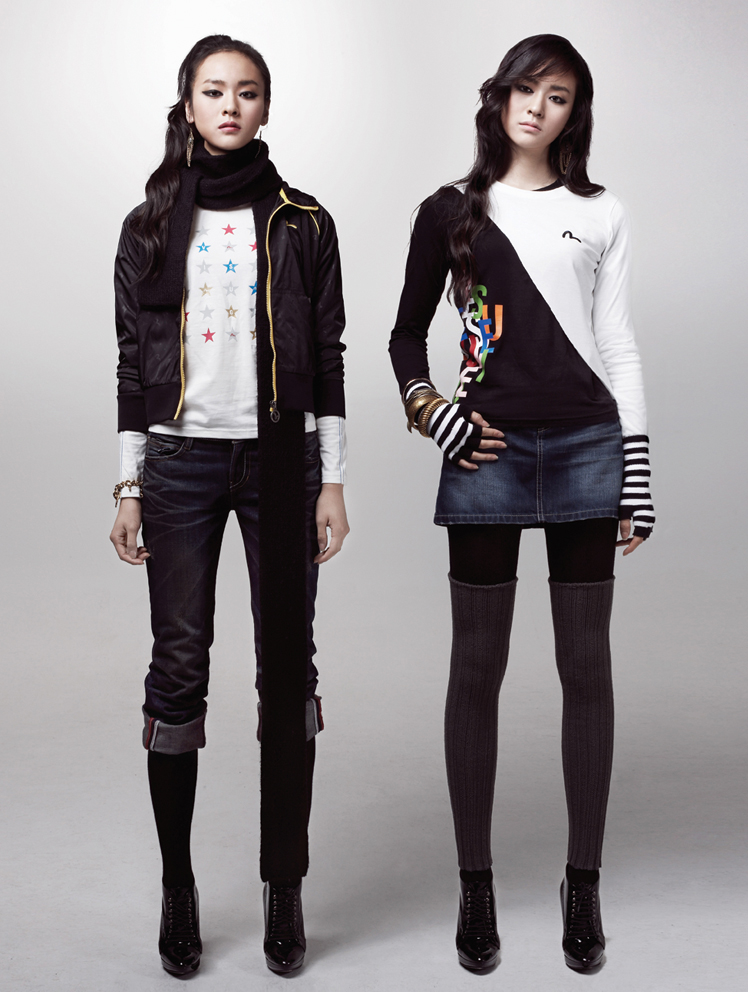
And I think the Evisu advertisement is a good example of that last point, as Jung Yun-ho’s aggressive, confrontational stance is betrayed by that of the inquisitive, unconcerned expression of the woman partially hiding behind him. But lest I contradict myself and read too much into one image (and I’ll grant that those above are deliberately much more extreme cases), again let’s consider the discrepancies among the advertisements currently on the Evisu website. In particular, when the woman and Jung Yun-ho are by themselves, both have strong, confident stances, good examples of the “Independence/Self-Assurance” category first suggested by Kang (1997) and expanded on Nam (2007) which I’ll be discussing in Part 2:

(Source, all remaining images: Evisu)

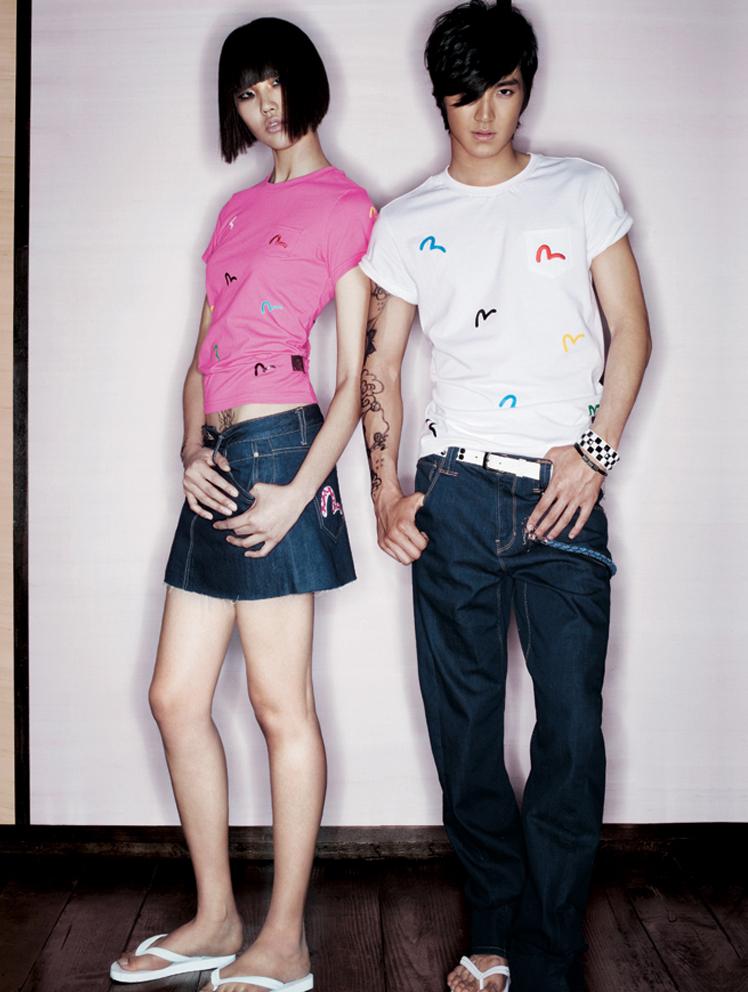
So why then, in most of the few Evisu advertisements that have a man and a woman together, are the women relegated so to speak? But don’t just take my word for it. Instead, see all of them for yourself, starting from the most glaring example to the least:

Note also that only the woman has the “head cant” in each, which I discuss here.

But here is one example that is the complete opposite to all the above:

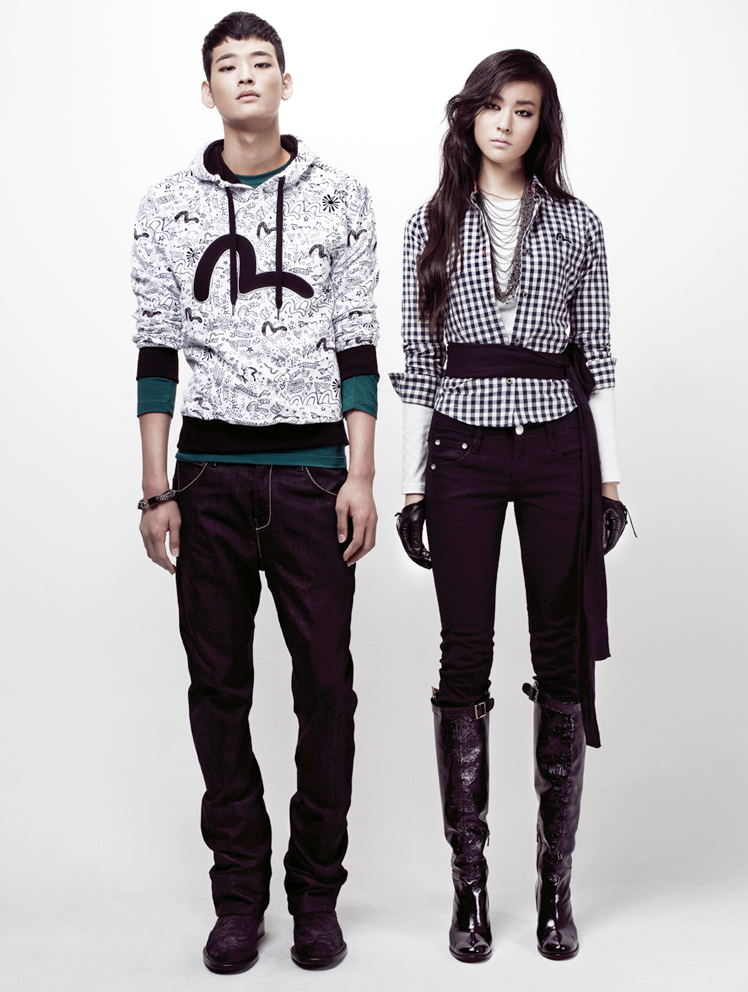
And I include this one also as it’s the only other one with two people, although strictly speaking it shouldn’t be counted:

Personally I think that the woman on the right above is not quite as “out of it” as she in her advertisements with a man, but I’ll grant that that’s open to debate, as is how much she is using the man as a participation shield in that second advertisement in which she is wearing black gloves. But that’s precisely the point: again, those are all the advertisements with more than one person in them on the Evisu website as a I type this (please note that the first one with Jung Yun-ho isn’t on the website though), and so please make your own minds up about whether there is a discrepancy in the way the men and women are depicted in them. Naturally, I think it’s obvious that there is, but if you agree and yet have a non-feminist, culturally-based argument for its existence however, then I’m all ears.

Meanwhile, a note on the sources for this post: if they look very familiar to regular readers, then that’s because there have been so few surveys of Korean advertisements made using Goffman’s framework. Moreover, even Nam et al’s (2007) is based on magazines from 2002 and 2003, hopelessly out of date for a society as fast-changing as Korea, and so I’ve long wanted to conduct my own survey(s) to compensate. That would involve far too much work for just one person unfortunately, and so if any readers are interested in co-authoring a conference paper and/or journal article on the topic, please let me know!^^

Goffman, E. (1979), Gender Advertisements.

Hovland, R. et.al. (2005) ‘Gender Role Portrayals in American and Korean Advertisements’, Sex Roles: A Journal of Research December 2005, pp. 887-899 (although I have a physical copy, unfortunately this is no longer downloadable; I’d appreciate it if anyone with library access could email a PDF).

Kang, M. (1997) ‘The Portrayal of Women’s Images in Magazine Advertisements: Goffman’s Gender Analysis Revisited’, Sex Roles: A Journal of Research December 1997 (ditto on downloading)

Nam, K. et. al. (2007)  ‘Gender Role Stereotypes Depicted by Western and Korean Advertising Models in Korean Adolescent Girls’ Magazines‘, Paper presented at the annual meeting of the International Communication Association, TBA, San Francisco, CA Online (2007), pp. 1-31.

Update: If you’ve enjoyed this post, then you may also be interested in this one at Sociological Images that describes how even the “physiology and anatomy” theme of a university website also genders the stances of the physiological representation of both sexes, the man standing straight, looking ahead, and having even weight distribution, but the female form being “almost classically passive, hands held behind her back, weight distribution uneven” in contrast.

Beauties and the Beast? Understanding and Subverting the Male Gaze through Soju Advertisements

It’s not often that I laugh at soju advertisements.

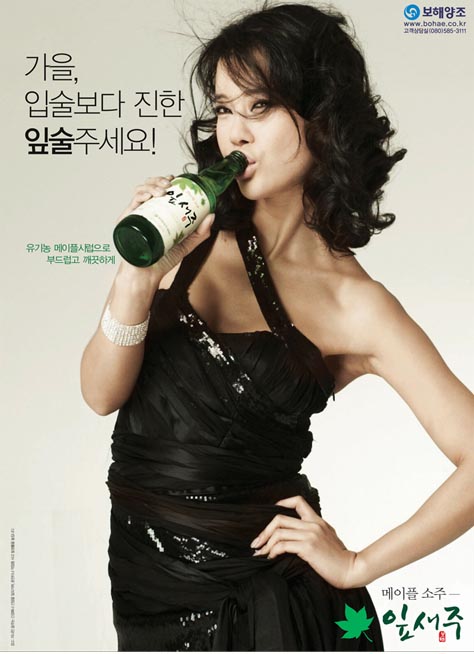
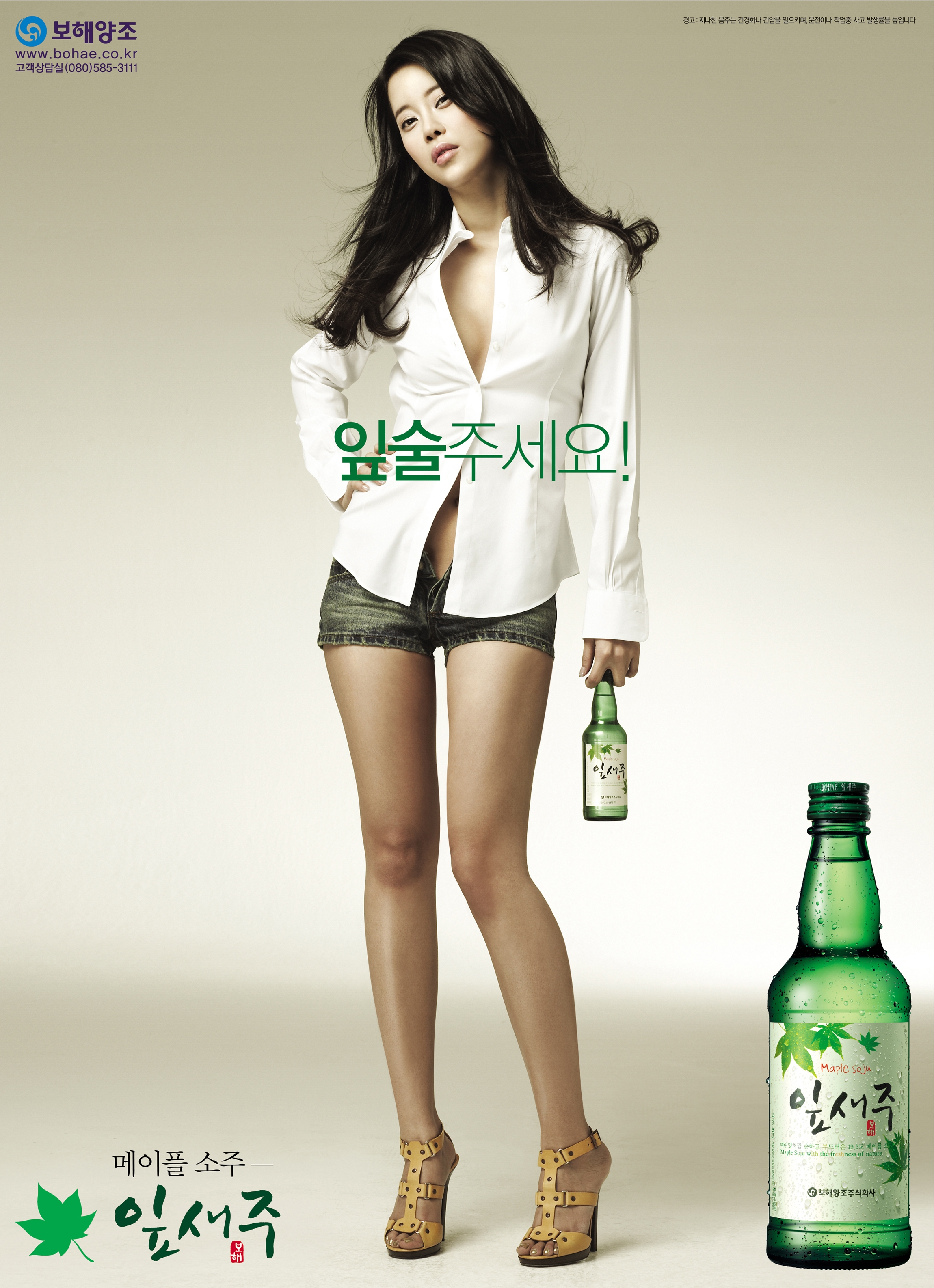
Flying in the face of decades-old traditions that they should feature demure and virginal-looking women though, this one with singer Baek Ji-young (백지영) for Yipsejoo (잎새주) literally had me in tears.

Indeed, if it’s not a deliberate satire, then it at least prompted me to reexamine those traditions, making me realize just how ridiculous many are. And being exclusively designed for a “male gaze” too, they also prove to be a very good guide to it, giving pointers to the ways in which a wide range of advertisements seem to be based on the assumption that their audience are entirely heterosexual men, especially by focusing on and sexualizing women’s bodies.

Even when the products are aimed at women.

But first, the humor of this one, which is on several levels. First there is the caption, which reads “In autumn, rather than your lips (kiss), please give me some strong-tasting Yipsejoo!,” (가을, 입술보다 진한 잎술주세요!), and is a pun based on the fact that yibsool (입술), or lips, sounds very similar to yipsool (잎술), shorthand for Yipsejoo.

And as an added inside-joke for fans, a popular song on Baek Ji-young’s 7th album Sensibility, released five months before she was hired by Yipsejoo’s parent company Bohae (보해양조), even had the name Give Me Your Lips (입술을 주고) too.

But context is everything.

Previously on a fast track to stardom, Baek Ji-young was the innocent victim of a sex-scandal in 2000, and had to fight hard against Korea’s double-standards in order to revive her career. But while this severely limited her advertising options, perhaps one silver lining was the ability to disregard the high moral standards Koreans usually apply to their celebrities (especially women), and indeed it is very difficult to imagine anyone else appearing in advertisements like those she has so far for Yipsejoo.

For instance, recall that when she was chosen in an online poll to model for Yipsejoo in March last year, I remarked that her first advertisement for the company below was:

…not to put too fine a point on it, literally the sluttiest soju ad I’ve ever seen….

With apologies for sounding crass (then), but I still can’t think of a better way to describe it:

I also discussed the fact that while she did mention how happy she was to have been chosen to appear in soju advertisements like top stars Lee Hyori and Song Hye-gyo, one still sensed that they wouldn’t have consented to appearing bra-less and with an open zipper in them, which smacked of desperation. Judging by the soju advertisements that emerged that summer however, I was quite wrong, but then I’d already concluded of Beak Ji-young that:

however unfair or unwarranted, she’ll always be stuck with her promiscuous image, so she may as well play into it.

Still, I didn’t realize that she would take my advice quite so literally!

To be precise, I laughed so hard when I saw the opening image because I thought she looked like a prostitute who’d been plying her trade for rather too long now, and which were quite a contrast to, say, these earlier ones for Yipsejoo featuring Jeong Ryeo-won (정려원), for whom her evening of drinking soju with her male partner will be her first time in more ways than one:

But this post is not about that shift, which I’ve more than adequately covered elsewhere, although I do want to stress 2 things about it here before moving on: that however impressed I was by the changes when I first noticed them back in 2007, it was still extremely naive of me to have ever equated it with (female) sexual liberation(!); and that while an empirical study would undoubtedly demonstrate an increase in soju advertisements with – in the sociological framework that I’ll be using below – “body display” – in recent years, there is by no means an linear progression of racier advertisements over time.

Even just Yipseejo itself for instance, makes both forms of advertisements with the same models, and/or seems to alternate which ones it primarily makes with them, such as traditional, virginal ones with Jeong Ryeo-won and Han Ji-min (한지민) in 2006 and 2008 respectively, but then racier ones with Kim Ok-bin in 2007 and Baek Ji-young in 2009.

Regardless, both types are still designed for the male gaze. In the interests of full disclosure however, I have never studied that formally, and so here I shall be quoting liberally from the excellent A Web Essay on the Male Gaze, Fashion Advertising, and the Pose, part of the Semiotics and Advertising Web Site of the University of Vermont, and I also highly recommend this post by Michael Hurt at the Scribblings of the Metropolitician after that for an analysis of Korean women’s body images using that perspective.

But it does dovetail nicely with the work done by the late sociologist Erving Goffman in his 1979 work Gender Advertisements, still very much the framework by which sociologists study how gender roles are perpetuated in advertising (and indeed referred to repeatedly in A Web Essay). In earlier posts, I’ve already analyzed Korean advertisements using one motif of that: “Relative Size”, or how and why it is extremely rare to see women taller than men in advertisements despite being women being taller than men in 1 out of 6 randomly matched pairs. It’s high time to start using others, beginning with “Ritualization of Subordination”:

Under this broad category, Goffman actually described a great number of symbolic ways in which the women’s behavior in advertisements displays the subordination of females to males, many of which involve women acting like children. Why this is more problematic than it may sound is because:

Given the subordinated and indulged position of children in regard to adults, it would appear that to present oneself in puckish styling is to encourage the corresponding treatment. How much of this guise is found in real life is an open question; but found it is in advertisements. (Goffman, p. 48)

And indeed Korean society strongly encourages grown women to act like children, so it is probably not surprising to hear that in Korean adolescent girl’s magazines for instance, Korean female models are portrayed in such ways much more often than Western ones. From Gender Role Stereotypes Depicted by Western and Korean Advertising Models in Korean Adolescent Girls’ Magazines by Nam, Kyoungtae., Lee, Guiohk. and Hwang, Jang-Sun (2007):

Korean women were more likely to be portrayed in smiling, pouting and childlike or cute expressions than Western women. This result is similar to the findings of [this 1999 study] in which many Japanese girls in magazine advertising were portrayed as happy, playful and childlike. Understanding that gender displays in advertising reflect cultural orientation in a society, these findings indicate that in Korea and Japan, cuteness is an important virtue for women. (p. 18)

And yet to complain about those advertisements with Yoo In-young (유인영) and Shin Min-a (신민아) above, especially when they’re aimed at men, might still seem a little excessive. But then consider the following images from A Web Essay, which poses the questions “What do they suggest to you about these men? Do they seem silly?”

“What about these images?”

And as you probably expected:

Most viewers find the images of the men odd or laughable. But the images of the women seem charming and attractive…Why should it seem funny to see a picture of adult men striking a pose when the same pose seems normal or charming to us in pictures of adult women?

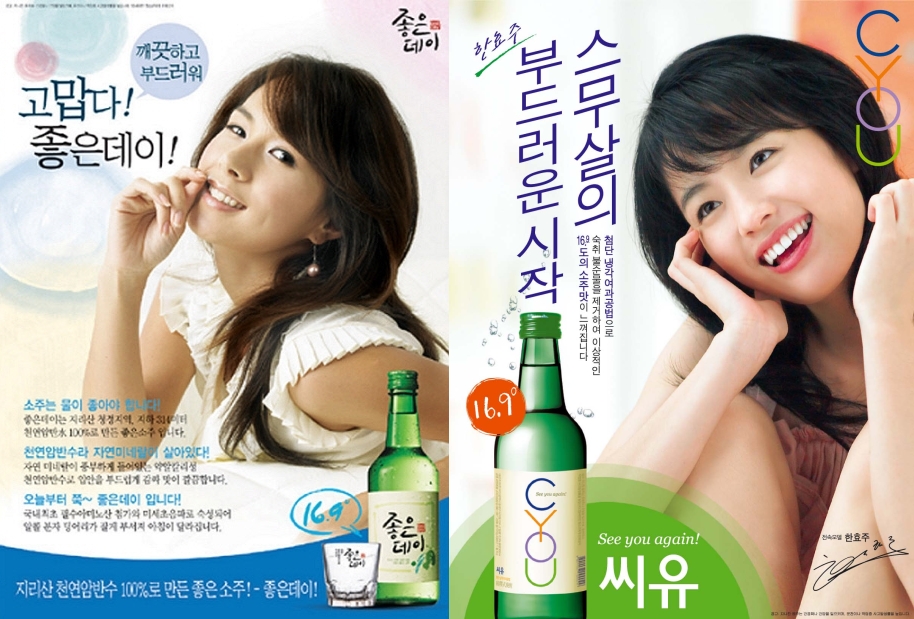
Not childlike per se, but as the next part points out, such expressions are often done with a head cant, for instance by Chae Yeon (채연) and Han Hyo-Joo (한효주) below:

The effect of the head cant is to lower the level of the head:

“…relative to that of others, including, indirectly, the viewer of the picture. The resulting configuration can be read as an acceptance of subordination, and expression of ingratiation, submissiveness, and appeasement.” (Goffman, p. 46)

And A Web Essay adds that it is often combined with putting a finger in the mouth or otherwise touching the face in a childlike way, and so common in advertising as to be barely noticed:

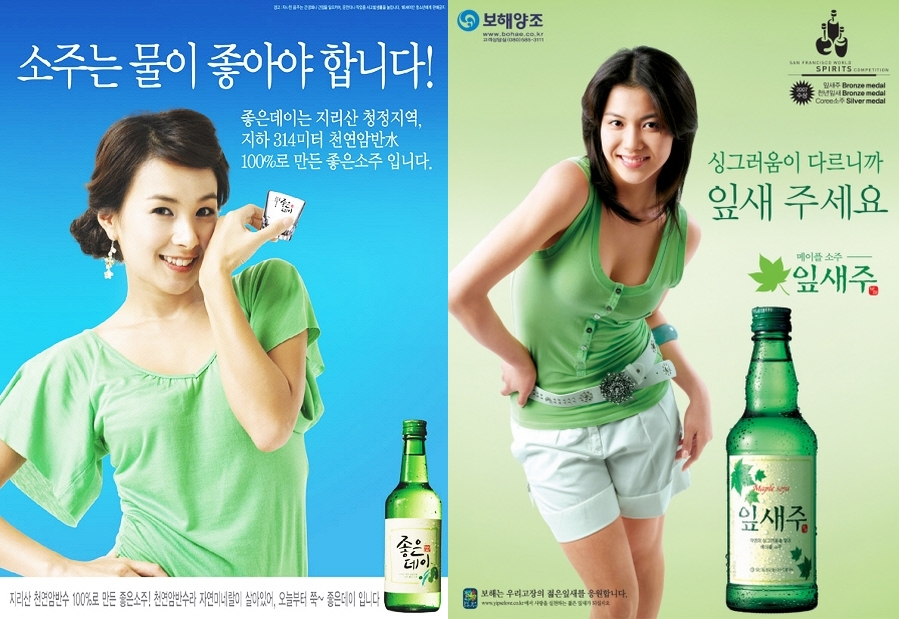
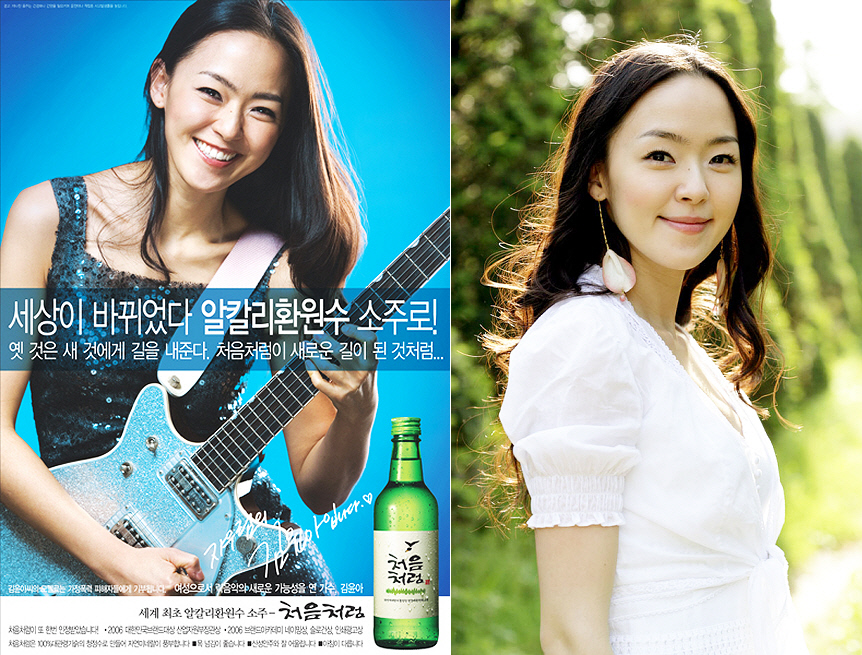
The difference between those and the soju advertisements however, is that they’re all from women’s magazines and presumably aimed at women, and so what is actually going on in those is:

…not that the viewer is looking at a woman who is actually subordinate or childish. Rather, the models are posed so as to show that they know that they are being looked at — belying the otherwise childlike pose — and they are controlling or mastering this act of being looked at. The childish, submissive postures are represented as strategic, as a sign of control of the gaze.

This mastery and control over the gaze might explain why the highly accomplished and wealthy women you see above would strike submissive, deferential poses for the camera that no accomplished man would strike. For in so doing:

…[they are] not at all signaling to others that [they are] actually subordinate; on the contrary, [they are] showing that [they], too, can be successful in this arena, the arena where the goal is to attract and control the power of the gaze by striking a subordinate pose. And were this an occasional event, if we regularly saw images of women that were of a different sort, the effect might be innocuous.

The problem is, however, that most women make less money and have less power than most men, and the message that goes out to women without power is that to get some, you need to gain control of a male view of women — which means to get power through male power, rather than on your own.

This is where the theory of the male gaze becomes important…

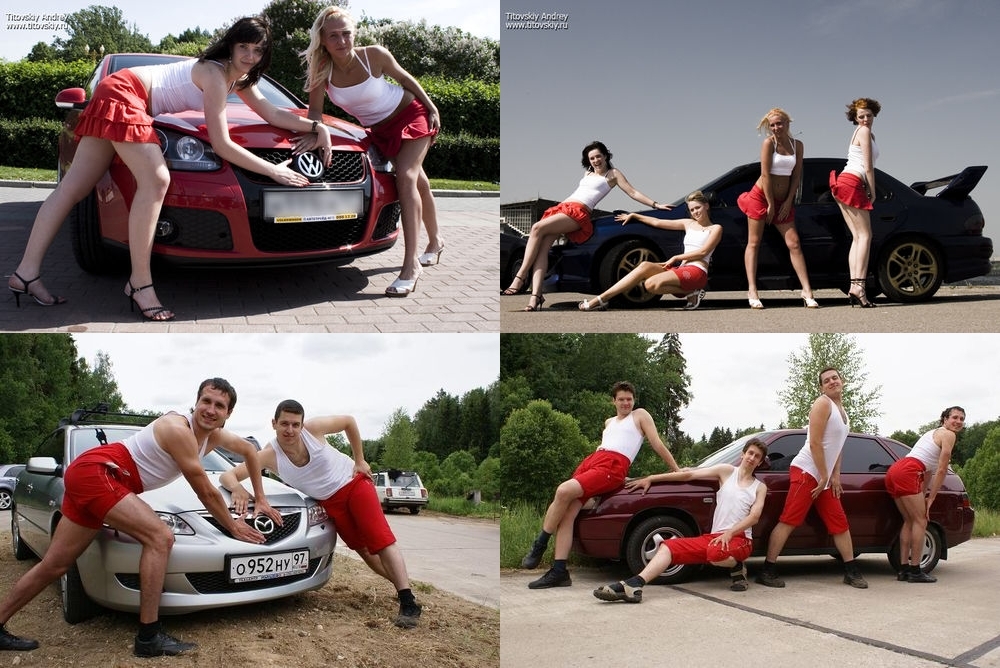
A Web Essay also briefly mentions women’s typical advertising poses in much the same vein. But I think that that’s a little misguided, as a distinction needs to be made between those that are sexually appealing to heterosexual men and others, the basic physiology of sexual reproduction ensuring that men will almost always look ridiculous in the former. Hilariously demonstrated by these pictures from English Russia for instance:

See Sociological Images for a wider discussion of those. Of course, by no means are women (or men) always placed in sexually appealing poses in advertisements, but for some reason women in particular frequently are placed in completely bizarre, often comical ones instead. Goffman notes of them that:

The note of unseriousness struck by a childlike guise is struck by another styling of the self, this one perhaps entirely restricted to advertisements, namely, the use of the entire body as a playful gesticulative device, a sort of body clowning. (Goffman p. 50)

With the possible exception of that with Kim Ok-bin, admittedly these following examples from soju advertisements can not really be described as “childlike.” But however natural they may appear though (again because of our frequent exposure to them), in fact some are extremely awkward to perform: just try them and see!

Starting with Kim Ah-joong (김아중) and Song Hye-gyo (송혜교):

Then Chae Yeon and Kim Ok-bin:

And finally Shin Min-a and Lee Hyori (이효리):

Those with Chae Yeon, Kim Ok-bin, and particularly Shin Min-a also display the “bashful knee bend,” which women frequently but men only infrequently are posed in a display of. Whatever else, it:

…can be read as a forgoing of full effort to be prepared and on the ready in the current social situation, for the position adds a moment to any effort to fight or flee. Once again one finds a posture that seems to presuppose the goodwill of anyone in the surround who could offer harm. (Goffman, p. 45)

But I’ll wisely move on to the second and last motif for this post, that of “Licensed Withdrawal.” In the words of Images of Women in Advertising:


[One] way in which women are disempowered is by displaying them as withdrawn from active participation in the social scene and therefore dependent on others.  This involvement with some inner emotional processing, whether anxiety, ecstasy or introspection, can be symbolized by turning the face away, looking dreamy and introverted, or by covering the face, particularly the mouth, with the hands….

….Rather than being portrayed as active, powerful and in charge, females are commonly shown in this licensed withdrawal mode, removed into internal involvements, overcome with emotions, or symbolically silenced with hand over the mouth….

….In another variation, females are frequently shown withdrawn inwards into some dreamy introverted state;  they pose, become things for others to gaze at and desire.  Males will stereotypically be shown active, engaged, and in charge of the situation.  They are not so much objects for others’ to gaze at, as actors with occupations and professions….

But I’d never given it much thought until I saw this composite of four soju advertisements with Jang Yun-jeong (장윤정), which I also laughed out loud at. What on Earth is she looking at?

More examples with Kim Tae-hee (김태희), and Ku Hye-sun (구혜선):

And to which can be added Han Hyo-joo’s from earlier. Arguably Ku Hye-sun is merely lost in her enjoyment of her drink though, and in that sense the advertisement could even be used to appeal to women(?). But then with the possible exception of the second one of Baek Ji-young’s, no advertisement featured here is particularly objectionable in itself; rather, this post has been about noting recurring features of soju advertisements that – if I may be so presumptuous – now that you’re more aware of, are likely to see across the entire Korean (and Western) media.

It is the pervasiveness of these features that is objectionable, and so rarely countered by alternative images of women.

But on that note, I should point out that I notice and pay attention to soju advertisements with skin just as much as the next guy; actually probably more so (call it an occupational hazard). Still, based on the opinions of the men and women in my classes at least, this one with Song Hye-gyo has the greatest universal appeal, although that is probably simply because of her attractiveness:

And after writing this post, in fact this one with Kim Yoon-ah (김윤아; not the skater) of the rock band Jaurim (자우림) is my favorite: it’s the only one I’ve seen in which the woman depicted is actually doing something of her own accord and enjoying herself, rather than waiting to be seduced by a man. Baek Ji-young’s does come close of course, but then it’s even more unflattering, and all she is doing is drinking!

Finally, while it’s technically out of place, I would be remiss in not providing the one which, well, literally had my female students squealing in delight when they saw it. Featuring Kang Dong-won (강동원) for Bom Bom (봄봄; “Spring Spring”), that will be music to the ears of manufacturer Daesun (대선주조), creators of one of the first ever soju brands aimed at women:

See here for more information on the consequences of that for soju advertisements so far; given all the above, it is perhaps no surprise that most soju advertisers still can’t restrain themselves from using womens’ bodies!

(Soju advertisement sources: Shootar.net, or directly from manufacturers’ websites)

Korean Sociological Image #31: Gender Roles & Korean Holidays

With apologies to teachers of Korean children everywhere, tired of their Korea Gender Lunar New Yearproclivity for repeating the nonsensical foreign words found in Korean advertisements, there is actually much to be admired in KT’s recent olleh (올레) campaign. For under the rubric da gu-rae-rul dwee-jeeb-ora (다 그래를 뒤집어라), or “turn the things that bug you on their heads,” it has a definite self-depreciating streak, poking fun at various groups of Koreans and their habits in a way that feels curiously similar to British humor (source, right: Paranzui).

Coming from a society notorious for always presenting itself in the best possible light, this is very refreshing.

Examples on TV so far have included: elderly women being encouraged not to all have the same boring, monotonous hairstyle; men to nap on travel rugs in parks with their children playing next to them rather than always lazing around at home on weekends; Koreans not to always say the same reflexive English phrases to foreigners that they learned at school; and employees to choose their own meals rather than meekly ordering whatever the boss is having.

And there are many more like it. But all pale in comparison to the directness of the latest in the series, which targets the disproportionate burden placed women during “holidays” like Seollal (설날), coming up this weekend:

Incidentally, it shows another interesting aspect of Korean society: their lack of embarrassment (some would say alacrity) in showing bodily functions. Already having rather too much of that sort of thing at home with 2 young daughters to look after though, then I’ll wisely refrain from further commentary on that here.

Instead, I’ll look forward to possibly seeing another that covers a second reason many women hate Seollal: if they’re in their late-20s or older, being pestered by their relatives to find a partner and get married, and indeed I have a 29 year-old friend and a 32 year-old sister-in-law that will be staying well away from home because of precisely that. A phenomenon hardly confined to Korea of course, as is women doing more domestic work than men, but then I’d wager that many foreign women at similar ages reading this can attest to the sheer amazement Koreans experience when they learn that they’re not married!

On that note, apologies if all this sounds familiar to many readers. But while the Korean media will be full of similar commentary this week, this is the first time I’ve seen something like it in a Korean advertisement, and as part of a particularly popular series at that. And as they say, a picture tells a thousand words…

Or perhaps there have been earlier ones that I missed, or alternatively others by different companies playing at the moment? Please let me know!

(For more posts in the Korean Sociological Image series, see here)
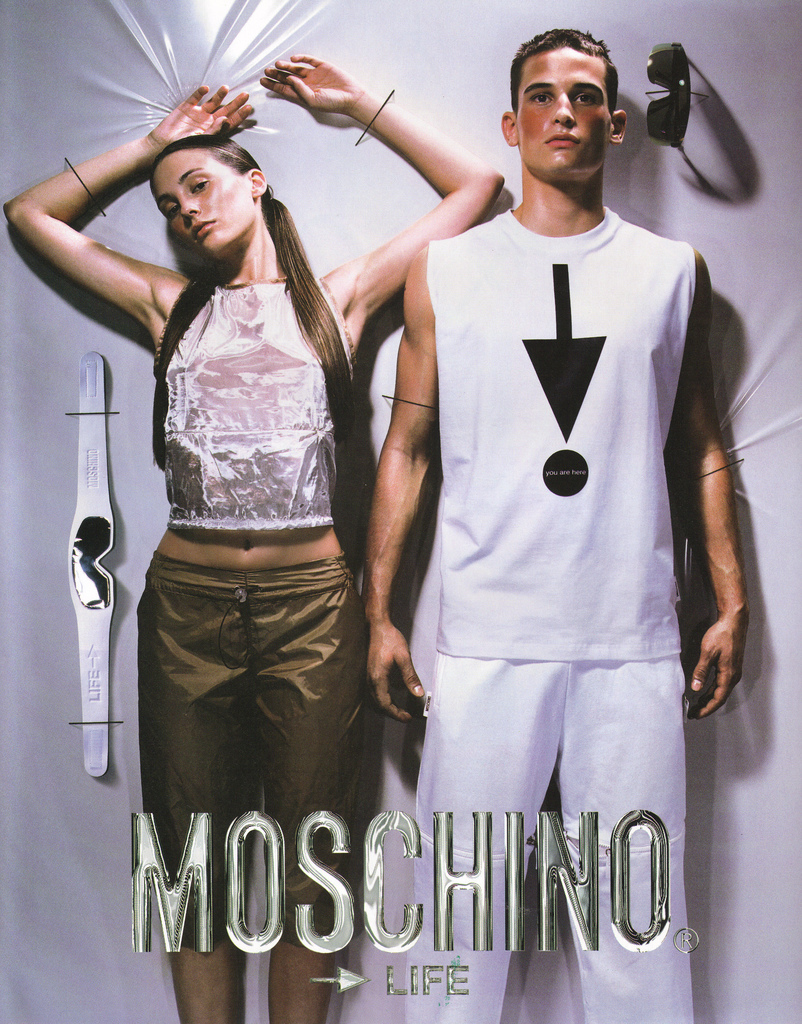
Korean Sociological Image #22: Fresh, Young Meat

Kara Cob Chicken Advertisment Male Objectification

For reasons that will soon become clear, girl-group Kara’s (카라) latest commercial for Cob Chicken (Cob 구어조은닭) is making big waves at the moment.

But probably most men are missing just how ground-breaking it really is. Mainly, because of Nicole’s buttocks thrust into their faces just 2 seconds in:

Part of Kara’s “butt dance” used in the choreography to “Mister” (미스터) though, which is playing in the background, it have been very strange not to have used it here. Indeed, it’s become something of a meme in K-pop, aptly demonstrated by this rather surreal clip of perhaps 25 female singers simultaneously performing it in a recent comedy program:

Korean Butt Dance

In light of that, it’s actually the sudden entrance of the well-muscled male at 0:17 that’s the most interesting and surprisng. And no, it’s not “groundbreaking” in the sense that it’s an explicit case of male objectification, which is not exactly a first for Korea. Rather, I label it as such because not only is the first time the makers of a Korean commercial have acknowledged their objectification of women and men therein, it’s also the first in which that acknowledgment has become a central, almost satirical theme of the commercial. Consider the screenshot viewers see immediately after the half-naked man for instance:

Kara Cob Chicken Advertisment Objectification

In English, it reads: “Because the chicken is grilled, the fat is removed completely. Chicken’s young taste,” and, judging by the advertisement from the Cob Chicken website below, the association between chicken meat and lithe young bodies isn’t a one-off. Moreover, although the Korean language lacks the associations the English term “meat market” has, it has a close equivalent in “물이 좋다,” or “The water is good”, and of course there are numerous instances of food terms being used for body parts. For the most recent example, consider Matt’s excellent commentary at Gusts of Popular Feeling on the invention of the term “honey thighs” (꿀벅지), and one high-school girl’s laudable rare attempt to demonstrate how sexist and demeaning such language is.

Kara Cob Chicken Advertisment(Source: Cob Chicken)

Granted, lauding a commercial objectifying both sexes is perhaps a strange choice to include in that vein. But recall that the academic studies of gender studies and feminism don’t really seem to have permeated wider Korean society like they did in the 1960s and ’70s in the West, with the result that a Korean language search for, say, “sexist advertisements”, will provide very few Korean examples. Getting the notion that objectification occurs in advertisements and in wider society out by whatever means then, I’d argue, is a very important first step towards rectifying that (however ironic this particular example is!).

Update: For comparison, numerous examples of the sexualizing and/or gendering of food in Western advertisements are available here.

Update 2: An amusing post from Seoulbeats on how appearing in chicken commercials seems to be a rite of passage for up and coming Korean stars.

Update 3: A photoshopped image that has been spreading around the Korean internet in the wake of the advertisement(s). Normally I’d demur from posting this sort of thing, but it seemed appropriate here:

(Source)

(For more posts in the Korea Sociological Images series, see here)
Korean Sociological Image #19: Gee, Gee, Gee…Girls’ Generations’ Latest Ad Speaks Volumes About Korean Gender Roles

Girls' Generation Shinhan Card Commercial(Source: unknown)

Forget the TED Talks. Instead, use this 16-second commercial for a great introduction to Korean gender roles.

By Girls’ Generation’s for Shinhan Card, it’s completely innocuous at first viewing. Take a second and third look though, and it’s extraordinary in how much it reveals:

First, because of the obvious: those legs. Then, because my students barely seemed to notice them when I asked what they thought of the commercial, let alone considered objectifying only the women to be problematic. Probably, because they’re already used to ubiquitous female “assistants” (doumi;도우미) and scantily-clad “narrator models” (나레이터 머델) being used to sell and promote all manner of products, services, and causes. And girl-groups, effectively, are performing very much the same roles.

Also, that indifference was probably because Girls’ Generation are notorious for wearing hot pants or jeans that are several sizes too small. Indeed, entertainment companies deliberately emphasize girl-group members’ legs to make K-pop more sexually-appealing in conservative East Asian markets, where people generally share Koreans’ taboos about breast exposure. So, it may seem disingenuous to single out this commercial in that regard.

(Source: ZZiixx)

But I’m not—I’m singling it out for what the differences between the men and the women reveal. Because my students would surely have noticed more if the men had also been wearing short-shorts, with the well-muscled legs to pull them off. Or, with more male-specific revealing costumes that showed off their abs.

With just women doing silly dances in revealing clothes though? That’s so normal in advertising that most people don’t think twice about it. See what I mean by looking at these images from A Web Essay on the Male Gaze, Fashion Advertising, and the Pose below. What are your gut reactions to them?

Men Childlike Expressions Ritualization of Subordinationwomen childlike expressions Ritualization of Subordination(“Most viewers find the images of the men odd or laughable. But the images of the women seem charming and attractive…Why should it seem funny to see a picture of adult men striking a pose when the same pose seems normal or charming to us in pictures of adult women?”)

Obviously, this speaks to gender role portrayals in the media worldwide, not just that of Korea. But, with the latter’s tendency towards cuteness and aegyo, it does seem quite extreme here. And, as if to rub that in, in this particular commercial the text and the song also emphasize that the women are very much just for decoration:

First, the text in blue box: “끝없이 ‘고객만족’을 생각하는 카드”.

“The card that unceasingly thinks about customer satisfaction”.

Then what the men are saying while that is visible: “생각, 생각, 생각, 생각”.

“Think, think, think, think.”

Next Girls’ Generation, dancing with their shoulders while sitting on a bench: “어떡하면, 원하는걸, 다 이뤄줄수 있으까?”.

“How shall [the card] achieve everything [the customer] wishes?”.

Girls' Generation Shinhan Card Screenshot(Source, above and below: Paranzui)

Then the men again, while the girls are do their leggy dance, then stand in a line with the men and supposedly sing along with them (but we only hear the men’s voices): “손잡고 힘을 모아 다 함께 생각 생각”.

“Let’s cooperate [with the customer] and collect our energy together and think about all that”.

Finally in the voiceover, with the men sitting in contemplative poses and the girls standing behind them clapping : “카드의 길을 생각하다”.

“What is a card’s purpose? Let’s think about that”.

With this text in the blue box above them: “끝없는 제휴혜택으로 더 큰 고객만족을”.Shinhan Bank Shinhan Credit Card Girl's Generation

“The card that can be used anywhere in order to increase customer satisfaction!”.

Easy to miss on a single viewing, it emerges that it is only the men that do the thinking in this commercial, and by default, for the bank also. Yes, really: even when they all say “How shall [the card] achieve everything [the customer] wishes?,” if you look closely at roughly 0:08 into the commercial when the girls actually finish saying that (see far above), they clearly turn to the men for an answer. Rest assured then, that if you invest your money in this bank, that it will be in the hands of smart people that will take your concerns very seriously. Those people just won’t be women, that’s all.

Exaggeration? Hardly. Consider the facts: according to a recent report in the Korea Times, there are no female CEOs in the entire financial industry here; there are only 2 women out of a total of 220 team managers in the Financial Supervisory Service (and no executives); there are no women with either position in the Bank of Korea. Moreover, one anonymous (male) government official in finance argued that this is somehow justified by “the country’s financial bureaucrats [having] been overwhelmed with too “serious tasks” to pay attention to gender equality” (as in ever since the early 1960’s, not just the recent crisis), and it’s telling that even Rep. Lee Sung-nam (이성남) of the Democratic Party, a woman and former worker at the FSS, feels that women’s weak point in finance is their “competitive edge.”
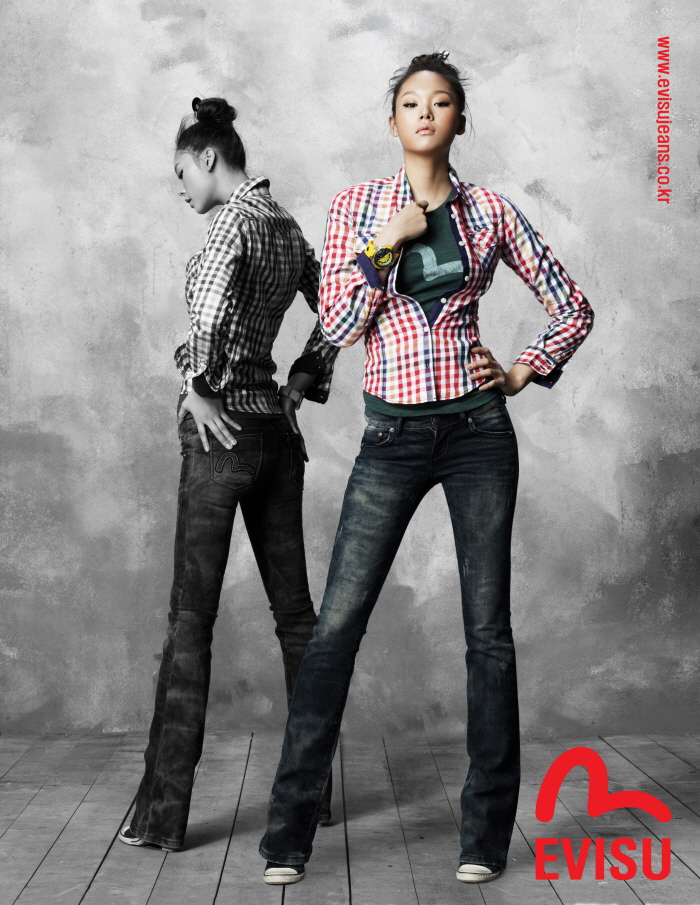
gender-advertisements-erving-goffmanGranted, given that Korea has one of the lowest women’s workforce participation rates in the OECD, and that Korea has a surprisingly low “Gender Empowerment Measure” relative to its level of development, which is based on “factors such as the number of female legislators, the percentage of women in senior official and managerial positions, the percentage of women in professional and technical positions, and the income differential between men and women,” then it might seem unfair to single out the financial sector for criticism in this regard. But then if I’d wanted to highlight the lack of women there in particular, then I couldn’t have selected a better commercial to illustrate why that might be so.

Nor for explaining “function ranking” either, a common sexist motif in advertisements. A quick summary (source):

Activities can also be expressive and symbolic—who is shown doing what in the image? For example which gender is most likely to shown caring for children? Very commonly when persons in the image have functions, these functions are ranked, with the male carrying out the senior functions, the female the junior functions. Men act, and women help men act. Males are more likely to be shown in the executive or leadership role, with females in the supportive, assistant, or decorative accessory role.

That and other motifs were first outlined by the late sociologist Erving Goffman in his 1979 work Gender Advertisements, and which is still very much the framework by which sociologists study how gender roles are perpetuated in advertising. Let me leave you with one more observation from it (see the sidebar for many more examinations of Korean advertisements using his framework), then another example from Korean banking:

In our society where a man and a woman collaborate face to face in an undertaking, the man—it would seem—is likely to perform the executive role, providing only that one can be fashioned. This arrangement seems widely represented in advertisements, in part, no doubt, to facilitate interpretability at a glance (p.32).

As indeed is the case with this advertisement for a bank I came across last November:

erving-goffman-relative-sizeTechnically, the man is a customer, the women clerks (the text reads: “The customer’s best life partner, with Busan bank”).  It is very telling though, how difficult it is to imagine an ad with the sexes reversed—let alone find an example in real life.

Thoughts?

Update: For comparison, see here for a Shinhan Card commercial with just the men.

(For all posts in the “Korean Sociological Images” series, see here)

Activities can also be expressive and symbolic – who is shown doing what in the image? For example which gender is most likely to shown caring for children? Very commonly when persons in the image have functions, these functions are ranked, with the male carrying out the senior functions, the female the junior functions. Men act, and women help men act. Males are more likely to be shown in the executive or leadership role, with females in the supportive, assistant, or decorative accessory role.

No Skin Required: Healthy Images of Couples in the Korean Media

Han Ji-hye So Ji-sub Bang BangMuch as I’d like to always present a sophisticated and hard-hitting persona on the blog, I’d have to admit that the following two commercials from Bang Bang (뱅뱅) are very sweet and endearing, and put big smiles on my wife’s and my faces.

More to the point though, they also provide a timely reminder that if presenting healthy images of couples is the deliberate intention, and (much needed) ones of romantically assertive women in particular, then you don’t need to have them lounging around in their underwear or “accidentally” falling into awkward sexual poses to do so. Ironically however, the first two commercials in this series with Han Ji-hye (한지혜) and So Ji-sub (소지섭) featured precisely that, which makes one wonder if Bang Bang mixed the order up.

Here’s what was said in the first video, a little stranger than it looks:

용감한 데님

[Her] Brave Denim Jeans

난 아직 그녀를 안아줄 용기가 없습니다.

Ji-sub: I haven’t had the courage to hug her yet.

이때 그녀의 데님이 내게 속삭입니다.

But this time, her denim jeans whispered to me.

대신 나를 살짝 잡는거예요.

Ji-hye’s jeans (to Ji-sub): Instead, [you should] softly grab me (the jeans).

그녀의 친구는 나보다 용감합니다.

Ji-sub: Her friend [the jeans] is braver than me!

Be my best, 뱅뱅

Be my best, Bang Bang.

And in the second one from Ji-hye’s perspective, which came out at the same time:

친절한 셔츠

[His] Friendly, Warm-hearted Shirt

이 남자, 아직 내 손도 잡지는 못해요.

Ji-Hye: This man, he hasn’t [even] been able to hold my hand yet...

이때 그의 셔츠가 내게 말합니다.

But then, his shirt spoke to me.

“먼저 내 소매를 잡아봐요.”

Ji-sub’s shirt: First, try grabbing his sleeve.

그의 친구는 내게 친절합니다.

Ji-hye: His friend [the shirt] is very friendly to me!

“Be my best, 뱅뱅”

Be my best, Bang Bang.

So Ji-sub Han Ji-hye Bang Bang(Image Sources: Paranzui)

All together now: awwwwwww! But seriously, are any readers aware of any earlier Korean commercials featuring couples in which the woman…or her clothes…took the lead in becoming (slightly) more intimate with her partner, like in the first one here? Not that it’s that radical of course, nor – even if it is the first of its kind – that by itself it will make serious dents in Korean social expectations of romantically meek and passive women. Hopefully it is the start of a trend though, and that would indeed make a difference.

Or am I projecting too much from Koreans’ sexual behavior onto their dating behavior? It is true that many Korean women are so concerned about maintaining virginal appearances as to make them feign lack of knowledge of contraception for instance, and so either not provide nor insist on their partners using it, so it seems reasonable to suppose that this passivity would also be the case at earlier stages in their relationships. But this is a generalization of course (which didn’t even apply to my own wife and former girlfriends), and I haven’t actually dated in 9 years either (sigh), so I may be a little out of touch. I’d appreciate it then, if more experienced readers could pass on their own impressions!

Korean Sociological Image #15: Gendered Health Drinks

Korean Gendered Advertising( Source: left, right )

What is the first thing that goes through your mind when you hear of a “power drink” for men?

If you live in Korea, then I’d wager some form of aphrodisiac, testament to the large number of drinks claiming to improve “men’s power” or “men’s stamina” that are available here. In the particular case of the advertisement on the left though, that would be quite wrong, as Huksaeng (흑생) is the name of a health drink from Hyundai Pharm (현대약품) made with huksam (흑삼), or black-red ginseng (흑삼), and it has no prior history of being marketed to men specifically. Here you can see a women’s taekwondo team extolling its virtues for instance, albeit that of a different company.

But compare that with Hyundai Pharm’s other product Miero Fiber (미에로화이바) on the right, which in its 20-year history has only ever been marketed towards women. Currently placed alongside each other at the Busan Ad Stars 2009 website, the accidental juxtaposition of the two advertisements provides an interesting contrast. And given Koreans’ overwhelming preference for health drinks over multivitamin pills also, then the insights to be gained have more relevance to Koreans’ body images than may at first appear to overseas observers.

My own first reaction was that I was at a loss to think of an Korean advertisement for a health drink aimed at women that uses the analogy of recharging one’s batteries. This is a minor point though, and by no means do I have an encyclopedic knowledge of Korean advertisements, so I would be grateful if readers could pass on any examples that I may have missed. But with the proviso that Huksaeng is supposed to provide more of a mental and general health boost rather than improving one’s body per se, both that and any counter-examples from readers would not detract from the obvious and correct inference that Korean advertisements for “men’s drinks” generally feature men as sporty, active participants in the process of achieving that perfect body and/or losing weight. With those for women however, it’s genuinely difficult to find any that don’t promote the idea that drinking the product is the only step required.

Girls' Generation Miero Beauty N Advertisement( Source )

Don’t just take my word for it though. Consider recent popular commercials with girl-group Girls’ Generation (소녀시대) for Miero Beauty N (미에로뷰티엔) here and here for instance, and more importantly the evidence provided by the journal article “Content Analysis of Diet Advertisements: A Cross-National Comparison of Korean and U.S. Women’s Magazines” (Clothing and Textiles Research Journal, October 2006), by Minjeong Kim and Sharron Lennon, which I discuss in great detail in parts One, Two, and Three of my series on Korean women’s body images from last year. More recently, I discuss it in passing in this post about an advertisement for a diet clinic and this one about the advertisement below for a slimming tea-drink also:

Unfortunately the article is no longer freely available at the link above, and I’ve long since lost my own copy of the original PDF file. I can scan my copy if anybody requests it though, but in the meantime hopefully the abstract will suffice:

Content analysis of diet advertisements was performed to examine how diet advertisements portray the Western ideal of feminine beauty and promote dieting in Korean women’s magazines in comparison with U.S. women’s magazines. Results showed that the Western cultural ideal of feminine beauty and dieting were prevalent in Korean women’s magazines. Diet advertisements in Korean magazines appear to promote more passive dieting methods (e.g., diet pills, aroma therapy, diet crème, or diet drinks) than active dieting methods (e.g., exercise). Results further indicated that women may be misled to believe that dieting is simple, easy, quick, and effective without pain, if they consume the advertised product. This study suggests that there is an urgent need to establish government regulations or policies about diet products and their claims in Korea. Magazine publishers also need to recognize their role in societal well-being and accept some responsibility for advertisements in their magazines.

In especially part Two of that series above I discuss that passivity in more detail and extend it to Korean exercise culture, further continued in this recent post about a device that electrically massages breasts in order to make them grow bigger. No, really:

Korean Breast Massager Advertisement Caucasian

Let me also pass on this post at Sociological Images about the similar gendering of energy drinks in the US, with more of a focus on those targeted towards men, and this one at Feministing about the fact that laxatives there are almost exclusively marketed towards women, with the implicit purposes of losing weight. To which I’d add that their Korean equivalents are both ubiquitous and completely lacking of the usual euphemisms, instead providing computer graphics of bowel movements that leave little to the imagination. Rather than continuing in that vein though(!), let me close with a question prompted by the latter post: what is the reason that products like these are marketed specifically towards women?

(For all posts in the “Korean Sociological Image” series, see here)

Share

Korean Sociological Image #11: When you REALLY need a man…

Any Man Advertisement A recent report on Korea’s delivery cum odd-job men by Jane Han of the Korea Times, who unfortunately reinforces many gender stereotypes as she explains the interesting new service:

Is ‘Substitute Man’ Modern White Knight?

For 27-year-old Lim Ji-ae, battling cockroaches in her studio apartment has been a constant nightmare. At least one or two encounters with the insect per week put her on edge. That is, until she recently hired someone to be her personal pest control agent for 5,000 won per occasion.

He arrives at her house within 10 minutes of her call, and sometimes even picks up toilet paper, toothpaste and other urgent grocery items on his way. In fact, whatever Lim needs, he does―most of the time.

WonderWoman falls for her knight in shining armour“He’s my new best friend,” says Lim, who was actually referring to a plural group of service providers, the so-called substitute men, an emerging beck-and-call squad that evolved from the common “quick delivery service,” which simply shuttled goods from point A to point B. (Image source, right: Silver Age Comics.)

But the upgraded version exceeds far beyond expectations, as substitute men do everything from delivering food, moving heavy furniture, picking up laundry and walking dogs to escorting children to and from school.

For those of you that don’t live here and may be unaware, one of the good…nay, great things about Korea is that in addition to providing cheap and healthy food, many restaurants provide delivery for no extra charge too; suffice to say, I probably did more cooking in my last year in New Zealand than in the entire 9 years I’ve lived here. So while I am unaware of how long companies offering “quick delivery services” of other goods have been around, they’re obviously a natural extension of this service culture. If you live in an urban area and check your junk mail, then you’ll probably find that there’s at least 2 or 3 available in your area.

Delivery Man AdvertismentIn fairness then, it is good that the article mentioned this context. And, as the image available on AnyMan’s website above indicates, neither company mentioned disguises the fact that they are still mainly simple delivery companies. Continuing:

As long as nothing illegal and morally wrong is involved, almost everything is possible, says Yoon Joo-yeol, who runs Any Man, a service based in southern Seoul.

“We had someone calling for toilet paper while on the toilet,” he said, “while one man called from the U.S. to have porridge and medicine delivered to his girlfriend ill in bed.”

One picky customer, who couldn’t trust local seafood restaurants, even requested a substitute man to videotape himself catch a fish in the ocean before having the fresh catch prepared as sashimi, Yoon recounted.

“There is never a dull day,” he said, adding that services typically cost anywhere from 5,000 won to 300,000 won, considering the labor intensity of the task.

Hell, nothing wrong with any of that, nor in the list of people (e.g., single households, old people, workaholics, and so on) that Anyman’s website suggests would benefit from using their services. (Life Manager’s lists are basically the same.) It would be reading far too much into things to see fault in, say, the fact that Anyman suggests it can deliver food to sick girlfriends but not boyfriends. However, like the slave man who apparently arrives at a woman’s beck and call kills bugs however, it is very tempting to do so once you read the last part of the article:

Lee Jae-hong, the owner of Life Manager, another service provider, explains that the do-it-all service is picking up quick traction nationwide from men and women of all ages, but the best business is in the Gangnam, southern Seoul, district.

He said the large single female population in the area leads to high demand for frequent services such as food delivery, grocery shopping and simple repair work.

“The competition is becoming fierce as more and more customers are learning about the service,” said Lee said, who competes with almost 15 rivals in the area.

Experienced customers like Lim says the cost is “friendly,” but advised users to be cautious and not to expose too much personal information to the substitutes.

Sigh. Where to start?

First, the article instantly reminded me of a Sociological Images post about a New Orleans business called The Occasional Wife. Because as author Lisa explains there:

The Occasional Wife

…the business relies on and reproduces the very idea of “wife.”  As the website makes clear, wives are people who (a) make your life more pleasurable by taking care of details and daily life-maintenance (such as running errands), (b) organize special events in your life (such as holidays), and (c) deal with work-intensive home-related burdens (such as moving), all in while perfectly coiffed and in high heels!

Like commenters on that post mentioned, services that rely on and reinforce a stereotypical notion of appropriate gender roles texist throughout the Western world. Indeed, the first thing I thought of when I saw that post was the New Zealand Hire a Hubby service which started a few years before I left in 2000, and which I was curious to see if it was still in business. Apparently so:

Hire A Hubby Website ScreenshotBut, secondly, I think a crucial difference is that the services of these two companies at least are premised on sharply delineated notions of “wifes” and “hubbies,” whereas with the Korean “Deliveryman 2.0,” they’re so new that social conventions on typical clients and services offered seem very much in flux. Or are they? Take the videos of typical clients and services from the Life Manager and Anyman websites for instance (apologies for the poor quality):

Tellingly, neither video promotes the company as the purveyor of the services of big burley men to hapless single females, and the former especially portrays quite a range of clients, including—shock, horror—some men. Which raises questions as to why the author chose to portray them as such.

Korean Alpha GirlsOn the other hand, there is indeed a large population of singles in the Gangnam area (see this post on Seoul demographics as for why), and I grant that there is a possibility—but only a possibility—that there is something special about single women that live in Gangnam that means that they disproportionately use such services. After all, it is the most expensive and sought-after area to live in whole country, so presumably there would be a large number of rich single women there quite used to paying others for the basic services us mere mortals have to do our ourselves.

However, the same logic would also apply to the rich single men that live in the area.

That said, it has been suggested that all the single women are not rich but rather work in the numerous bars and brothels there, which may well have a grain of truth in it; if so, among singles at least, there may well be a disproportionate number of women in that area. (The report discussed in that earlier post of mine doesn’t provide that level of detail.) Not living in Seoul myself though, I’d be grateful if Seoul-based readers can confirm if there is something to that possibility or not.

For a moment then, I thought that discomfort with the article was unjustified. Perhaps the owner of Life Manager is an angel, who just so happens to have a great deal of business catering to single females in the Gangnam area— nothing wrong with that. But still, I’m unwilling to let him or perhaps author Jane Han entirely off the hook. In particular, although I shouldn’t jump to any conclusions without seeing the original Korean transcript of the interview, the former does say:

…the large single female population in the area leads to high demand for frequent services such as food delivery, grocery shopping and simple repair work.

Ergo, needs for help with those tasks—and, apparently, killing cockroaches—are inherent to the single female, regardless of where they live. Which reminds me of last year’s report on “Alpha Girls” by The Chosun Ilbo, which depicted single women living with their parents as both incapable of and unwilling to do housework, as well as being basically selfish and useless overall; whereas a discussion with virtually any 20-something Korean can confirm that the reality is that they are expected to, can, and generally do do a disproportionate amount of housework, unlike their brothers. Of course, we have all met single women like the article describes, but just as many single men too, and similarly there was no objective reason for Jane Han to give this article the passive, useless female/knight in shining armour tone to it that she did.

Why did she then? I’ll leave that up to the reader. But as blogger Gord Sellar points out in this excellent post on Korean consumerism here, there does seem to be quite a backlash among certain groups of Korean men against single, independent women, and it would be no surprise if this was increasingly reflected in the Korean media. It’ll certainly be something to keep an eye on in the future.

(Hat tip: Roboseyo. For more posts in the “Korean Sociological Image” series, see here.)

Korean Sociological Image #8: America…Fuck Yeah!

Korean Advertisement Sungshin Women's University Relative Size Racism Caucasian

An advertisement from today’s Korea Times, which immediately grabbed my attention for 3 reasons:

  • It’s for a women’s university, but not only does it feature men, it has more men than women.
  • It has a Caucasian man in it, whereas the target audience would overwhelmingly be Korean.
  • The Caucasian man is easily the most prominent feature in it, and is looking at the viewer rather than into the distance like the Korean students.

After just a few minutes thought though, obvious reasons emerge for all of those: men are and should be featured because the program is available to both men and women (well technically, the website doesn’t mention anything about the sex of applicants) for instance, and for all their ethnic diversity Caucasians are still an instant and logical signifier of Western countries. And dealing face to face with an American colleague at an American hospital – ie, having a job at one – is precisely the goal of students that will enter this program too, which in turn is well represented by the Koreans in the advertisement looking towards their futures as it were. As the male Korean is wearing a tie, then I’m a bit unsure as to whether the Koreans are supposed to be students in the program or graduates with jobs looking for better opportunities, but other than that slight confusion then the advertisement appears logical as a whole.

Still, despite myself it gives me misgivings.

One minor reason is because the doctor is male. Nothing wrong with that of course, but it seems strange to have a male role-model in an advertisement for a women’s university. Yes, I know I just said that the doctor is supposed to be a future colleague, yet in addition to representing both that and a life in America he does still have a job that students entering into the program would aspire to. If the primary target of the advertisement is women then, not choosing a female doctor seems like a wasted opportunity to kill three birds with one stone.

kim-tae-hee-kang-dong-won-cyon-phone-advertisement-relative-size-eab980ed839ced9dac-eab095eb8f99ec9b90( Source )

But dammit, why’d he have to be so big? As I discuss at great length here, relative size is one of the most powerful tools in advertising, not only making certain features more prominent than others but also – especially when it’s used to contrast two or more people of different sexes, ethnicities, jobs, ages, and so on – both determining and conforming to social norms of ranking, status, and appropriate social roles. For instance, if you take a random man and woman then in 1 in 6 cases the woman will be of equal height or taller, but in advertisements the figure is closer to 1 in 20 or even less. Not that that is evidence of sexism per se though, as women overwhelmingly prefer men that are taller than themselves, and it’s natural that many advertisements would reflect this. Moreover, if you’ve chosen specific celebrities with a significant height difference, say Kang Dong-won (강동원) and Kim Tae-hee (김태희) above, then it would be difficult to engineer a realistic-looking advertisement in which he somehow appears shorter than her.

kim-tae-hee-kang-dong-won-cyon-phone-advertisement-eab491eab3a0-relative-size-eab980ed839ced9dac-eab095eb8f99ec9b90But then consider this advertisement on the right with the exact same couple (source), in which the height difference has been significantly reduced. Sure, it’s not the only reason why the advertisement has a completely different, more egalitarian vibe than the first, but I’d argue that it’s the most important one. And to hammer that point home, consider how simply bizarre everyone would find the above, gangsterish one if Kim Tae-hee were just a little bigger, let alone if a woman taller than Kang Dong-won had been used.

Ergo, size matters, and so while my concern with Sunghin Women’s University’s advertisement may well only stem from the inherent angst of being a socially-aware Caucasian male, guilty at living in a country where being such undeniably confers certain advantages, it still leaves me feeling a little uncomfortable. I would have much preferred one that focused more on the Korean students themselves, and how the program empowered them, but while retaining the signifiers of America, the job, and so on. Not something that basically says:

Oooh, do this course, and you can talk to and work with White people! In America!!! What more could you ever want?

Okay, that specific vocalization may just be me. Or is it? That’s a rather indelicate way to put it above, but it is certainly true that living and working (and being educated) in America conveys a lot of status in Korean society, so far from me implying that any Korean is a passive dupe for responding positively to advertisements like this it is logical and intelligent for them to do so. Moreover, my wife, who is Korean, pointed out that most Koreans wouldn’t think twice about the Caucasian in this ad. Perhaps my concerns are misplaced then.

What do you think? Mere overanalysis and liberal-arts major angst on my part? Or a legitimate concern? Regardless, admit that the doctor is the first person you noticed too though!

(For all posts in the “Korean Sociological Image” series, see here)

Share

Choi Jin-sil Sued For Being Beaten by Her Husband: Update

Choi Jin-sil holding back tearsWhen hearing last week about something as appalling as an actress being sued for daring to show her bruises and black eyes to the media, it’s only human nature to assume the worst of Korean society.

But while Korea certainly does have a great deal of work to do in combating domestic violence—and criminalizing spousal rape would be an essential first step (see #2 here)—it’s also true that police and legal attitudes towards it have considerably hardened in recent years, both cause and effect of a law change in 2007 that requires police to forward all cases of domestic violence to a prosecutor (the previous 1998 law just left it up to their own discretion). In addition, Korean women are now more likely than ever to divorce on the basis of verbal or physical abuse, rather than suffering silently as in past decades.

Indeed, what stands out more than anything else about the court decision is how much it goes against the grain of trends within Korean society, and certainly does not reflect the will of all Koreans. Some quick excerpts from today’s Korea Times for instance:

Women’s groups are angry over the top court’s ruling that ordered the late actress Choi Jin-sil (최진실) to compensate a builder for failing to maintain “dignity” as a model representing its products.

They censured the Supreme Court for not realizing the suffering of domestic violence victims, which included Choi.

Korean Womenlink, the Korea Women’s Hot Line, and the Korea Women’s Association United issued a joint statement Wednesday lambasting the ruling.

On June 4, the court reversed a high court ruling that decided in favor of Choi in a compensation suit filed by Shinhan Engineering and Construction in 2004 against the actress, who was the model for its apartments.

The advertiser claims she did not keep her contractual obligation to “maintain dignity,” because she disclosed to the public her bruised and swollen face which was caused by the violence of her then husband, former baseball player Cho Sung-min. They divorced soon afterward.

For the rest, see here. Also, see here for my original post on this issue and information about similar cases in the past, and here for a quick primer on the numerical rates of domestic violence in Korea (albeit in 2004), with many graphs and tables.

(By the way, although it was already common knowledge, it’s good that the Korean media is now naming the company. But I wonder if it was originally kept anonymous by a court order, or just by convention?)

Firm Sues Dead Actress For Being Beaten by Her Husband – And Wins

Choi Jin-sil holding back tearsA simply outrageous story, that couldn’t really wait for my “Korean Gender Reader” on Monday.

But, given the similar case of the singer Ivy (아이비), whose reputation was ruined by her ex-boyfriend threatening to release a sex-video of her to the media in late 2007, and who was later sued by advertisers for this despite the video never actually existing, then this latest case with Choi Jin-sil (최진실) is exceptional only in degree really.

However, in suing an actress that committed suicide, the unnamed construction company (Update: It’s Shinhan/신한건설) below may well have pushed the limits of public acceptability, and this will hopefully incur a backlash that will far outweigh the relatively small gains now to be provided by her estate.

To play Devil’s Advocate for the moment though, the appeal was probably submitted to the Supreme Court well before Choi Jin-sil’s death in October last year (Update: Indeed, it was submitted 5 years ago). But even so, of course it is deplorable that the company submitted the original suit in the first place, and I’m sure that it would have still been possible to withdraw it afterwards.

Models who failed to maintain appropriate dignity as representatives of the products they represent should compensate for the damages caused to their advertiser, the top court ruled.

The Supreme Court reversed the original ruling and ruled in favor of a construction company that filed a suit against the deceased actress Choi Jin-sil, who committed suicide last October.

The company, upon hiring the top actress as their representing model in March 2004, concluded a contract stating Choi’s duties to pay back 500 million won ($399,361), should she depreciate the company’s social reputation.

However, in August, Choi appeared on television and newspapers with her face full of bruises, allegedly caused by the violence of her then husband and retired baseball player Cho Sung-min.

Choi and Cho, who had been living apart since 2002, divorced soon after the incident.

The advertiser company thus filed a suit against the actress, requesting for 3 billion won as compensation. The amount included the 500 million won in damages as stated in the contract, additional compensation of 400 million won and 210 million won in advertising costs spent by the company.

“The purpose of the brand model contract is to use the model’s social reputation and images to draw the customers’ interest,” said the Supreme Court in the ruling. “The model’s failure to maintain an adequate image constitutes a breach of the hiring contract.”

The concept of the apartment Choi was supposed to advertise was dignity and happiness, and Choi, as its model, was under the obligation to act accordingly, said the court.

A lower court said in an earlier ruling that Choi could not be held responsible for depreciating the image of the apartment or the company as she had not been proven guilty of causing her former husband’s violence.

Choi’s mother presented herself at court, as legal representative of her two children who succeeded their mother’s duties and became defendants of the case.

The estimated value of Choi’s estate is about 5 billion won, including real estate and bank savings, according to her family.

(Source: Korea Herald)

See here for more information about domestic violence in Korea, and #2 here for more on a custody battle which Choi Jin-sil’s family also had to face in October 2008, but which her ex-husband was persuaded to give up (see here and here), and which in turn ushered in positive changes in the Korean legal system. Here’s hoping this latest case will similarly have a silver lining, and force Korean companies to rethink the ethics and long-term financial value of insisting on compensation for events beyond celebrities’ control.

The Illusion of Sex

The Illusion of Sex.

A description of the images above made by Harvard psychologist Richard Russell, who won third prize in the 5th Annual Illusion of the Year Contest for them:

In the Illusion of Sex, two faces are perceived as male and female. However, both faces are actually versions of the same androgynous face. One face was created by increasing the contrast of the androgynous face, while the other face was created by decreasing the contrast. The face with more contrast is perceived as female, while the face with less contrast is perceived as male. The Illusion of Sex demonstrates that contrast is an important cue for perceiving the sex of a face, with greater contrast appearing feminine, and lesser contrast appearing masculine.

I found the following explanation much more useful and interesting though:

What you’re looking at isn’t an optical illusion, but is a play on the basic expected traits of men and women’s faces. The flusher lips of the left pic coincide with our expectations for women’s faces, as does the fairer skin. And it’s not just the illusion of lipstick; even without lipstick, we expect women’s lips to be more red than men’s. The difference in skin tone also brings to mind a recent a study suggesting that, on the whole, men’s faces are more red complected, while women’s are more green. Thus, even in the B&W photo, we infer that the darker complected face has the deeper reddish tone of masculinity; the lighter, the paler, greenish tone of femininity.

Obviously there’s much that’s debatable in that, especially whether those “expected traits” are universal or culturally-determined, but in the meantime I can’t deny that contrast is an important cue for determining the sex of a face, and that this provides more evidence for Korean women’s mania for lightening their skins being influenced by much more than merely wanting to emulate the wealth and sophistication represented by Caucasians.

Update) There is an 11-page PDF about these images available here, and you can find out more about Richard Russel and his research interests here.

(Thanks very much to reader Nicolas for passing this on)