Korean Sociological Image #37: Like a Virgin?

As they say, first impressions are everything. And so, with apologies to those of you unwise enough to read this blog at work, let me share mine of girl group T-ara (티아라) from their music video of Like the First Time (처음처럼) before proceeding: namely, that they were confident, sexy women, not at all embarrassed to perform risqué dance moves like the above in front of large audiences.

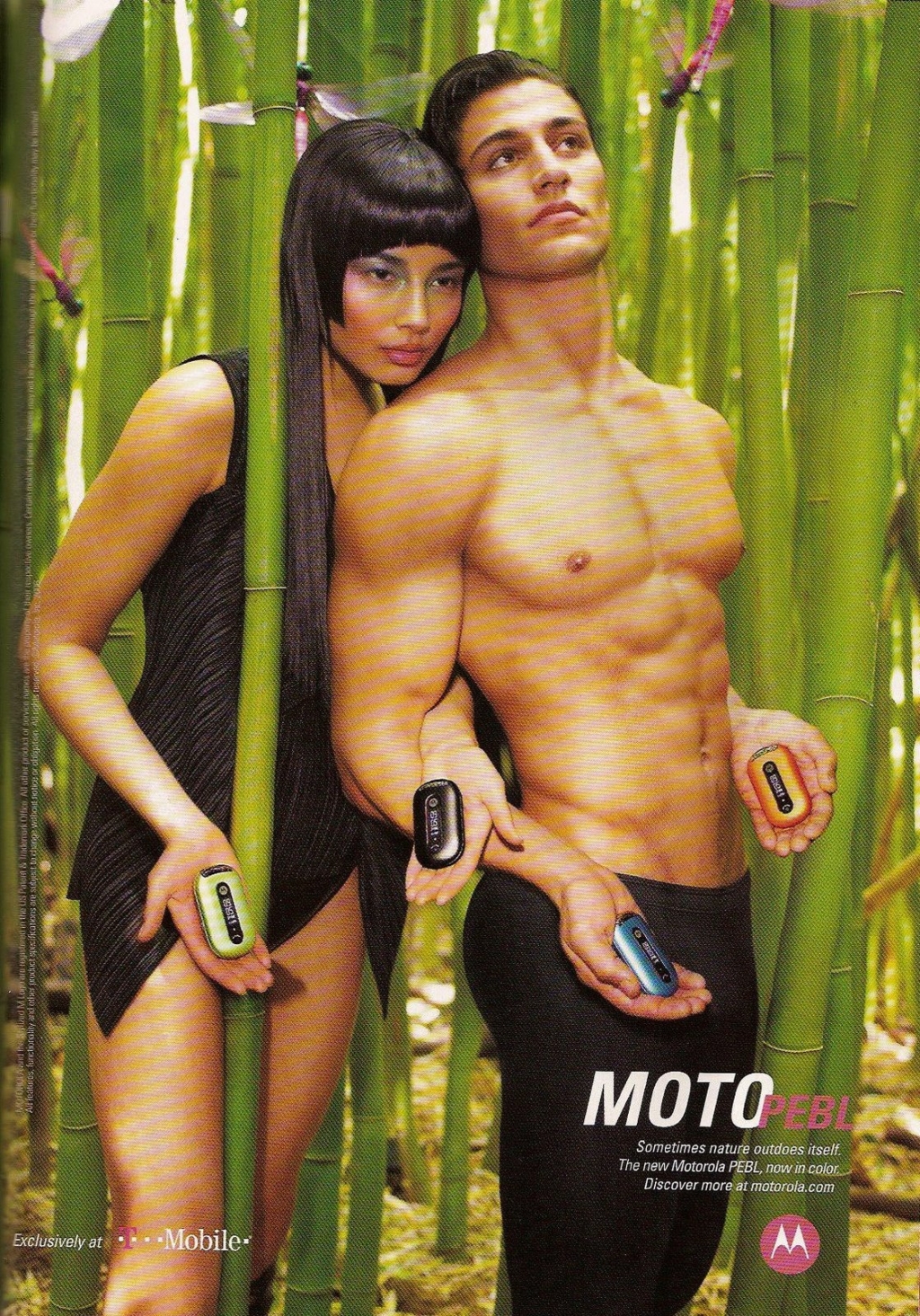
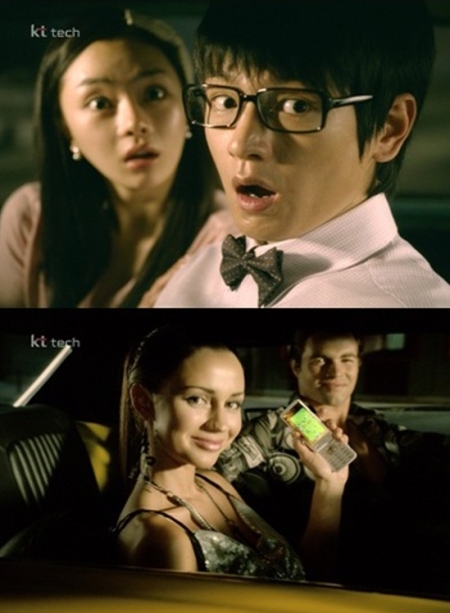
However, it was difficult to square that impression with their shyness in the following brief interview for Entertainment Tonight (연예가 중계) last month, conducted while making (rather bizarre) commercials for a mobile phone, and I would interested in hearing your thoughts on possible reasons for the differences, and how representative the interview is as whole of the way 20-something women especially are portrayed in Korean entertainment programs.

The most important point first: from roughly 1:00 t0 1:30, the interview focuses on group leader Ham Eun-jeong (함은정) feeling embarrassed about repeatedly hugging actor Yoon Si-yoon (윤시윤) for their commercial, despite having just met in the studio. In particular, at 1:10 below she says “어떡해”, or “How” as in “How can I do this?” while making an exaggerated expression of embarrassment, about which the reporter comments “굉장히 부끄러워하죠?”, or “She’s very shy, yes?”. Note also the addition of “근심” and “걱정” on the screen too for added context and atmosphere, (a habit of entertainment programs picked up from Japan), although rather confusedly they both mean anxiety, or worry.

Then at 1:25, she’s asked how she feels from hugging Si-yoon for so long, to which she replies “솔직히말해도…떨려요!”, or “To be honest…I’m shaking/trembling!”.

Natural feelings? Of course. But then recall her music video, in which she – not to put too fine a point on it – repeatedly bends over and thrusts out her bottom, jiggles her breasts, and runs her hands over her breasts and crotch while singing about how her body was on fire. Indeed, even the interviewer herself later (3:08) highlights the complete contrast:

Moreover, while I’ve never personally strutted my stuff on stage like Eun-jeong, I am actually quite comfortable – nay, somewhat notorious for – acting in front of large groups of adult students (I’m tempted to mention faking an orgasm in class once in my first year of teaching, but I’d better not), and doubt that I’d be embarrassed repeatedly hugging an attractive woman in front of others. Yes, I would be if I ended up having a large visible erection as a result, but that’s besides the point: if Eun-jeong was embarrassed, it wasn’t because she was visibly turned on.

And I stress “if”: my wife, for instance, also watched the interview, and at first told me her embarrassment was perfectly natural, but then readily conceded it was rather strange in light of her performances in music videos and on stage. Which leads me to my first question: do you think Eun-jeong was genuinely embarrassed?

One commentator at Omona! They Didn’t did at least:

…Eunjung lost her composure while filming a hugging scene with Yoon Si Yoon….It’s funny how Eunjung was so flustered and shy around a guy because she exudes such a powerful and charismatic presence on stage. I guess we are all prone to weakness in front of the opposite sex.

And I do remain open to the possibility. However, I’d argue that either subconsciously or deliberately, she’s much more likely to be playing to expectations and norms of the Korean media that she present herself as cute and innocent, regardless of her true personality; well illustrated, I think, by this 2007 commercial with Kim Tae-hee (김태희):

As PopSeoul! explains:

She acts all sugar and spice in wide-eyed innocence as she sips her drink carefully, but as soon as her date turns away, she lets loose her inner diva to strike a pose for the camera. Her date discovers the saved pictures on his Olympus and accuses her of being “nae-soong”.

Nae-soong (내숭) being the:

…inconsistency between a girl’s true personality (i.e. extroverted), and external (i.e. introverted, shy and innocent) personality. In other words, trying to hide your true intentions self by acting sweet and innocent.

And indeed the interview is full of demonstrations of how sweet and innocent they are. For instance, at 1:47 Park Ji-yeon (박지연) is embarrassed to learn that she is Si-yoon’s favorite of all the T-ara members (although you may be surprised to learn that she’s only 16, and hence her embarrassment arguably the most likely to be genuine):

And at 3:17, Eun-jeong feigns (I don’t think anyone would dispute this!) being upset at the other group members selecting her as looking the most different (read: uglier) before putting on make-up:

One music video and and one interview are by no means sufficient to get an idea of their true personalities however (to the extent that one sees any celebrities’ true personalities in front of a camera at all that is), and so I also briefly looked at some episodes of T-ara Dot Com (티아라닷컴), a quasi-reality show about them setting up an internet clothes shopping mall of that name. Here’s a brief segment of one episode, with English subtitles:

And in which their behavior is no different to that in the interview. Hence, while I do still feel that Eun-jeong’s embarrassment at hugging Si-yoon at least was completely feigned, I concede that T-ara’s cutesy behavior overall probably wasn’t an act, and not unrepresentative of Koreans their age either (for reasons explained here).

If that behavior is still a definite expectation or norm of Korean entertainment programs however, depends on such factors as how other women are portrayed in them; if there’s a large difference between men and women; and to what extent such programs offer opportunities for entertainers to present alternate, more serious sides of themselves if they wish to do so.

Unfortunately, I can’t personally say: even when I first arrived in Korea at the tender age of 24, I soon chose never to watch these sorts of programs because I had better things to do than seeing grown men and women acting like children on them. Now, at 34, I’m more concerned about the influence they will have on my own daughters, and to be frank would consider myself a failure as a father if they grew up to behave like members of T-ara do when they reach the same age.

However, in contrast to when I was 24, in fact there’s also some things I like about the Korean media which are on display in the interview, and which I’ll devote the remainder of the post to.

First, in a meta-sense, the practice of providing subtitles and/or commentary on them is simply great for studying Korean, especially considering the huge gap in real-life learning material for Korean learners, let alone intermediate level material. And if dramas aren’t your thing, then studying a 10 minute segment of an episode of T-ara Dot Com everyday is probably quite a tolerable alternative:

More to the point of this post however, there is the very human side of stars presented, a stark contrast to the pedestals Western medias tend to place their own celebrities on. For instance, not only does the interviewer ask at 3:39, which member of T-ara farts the most:
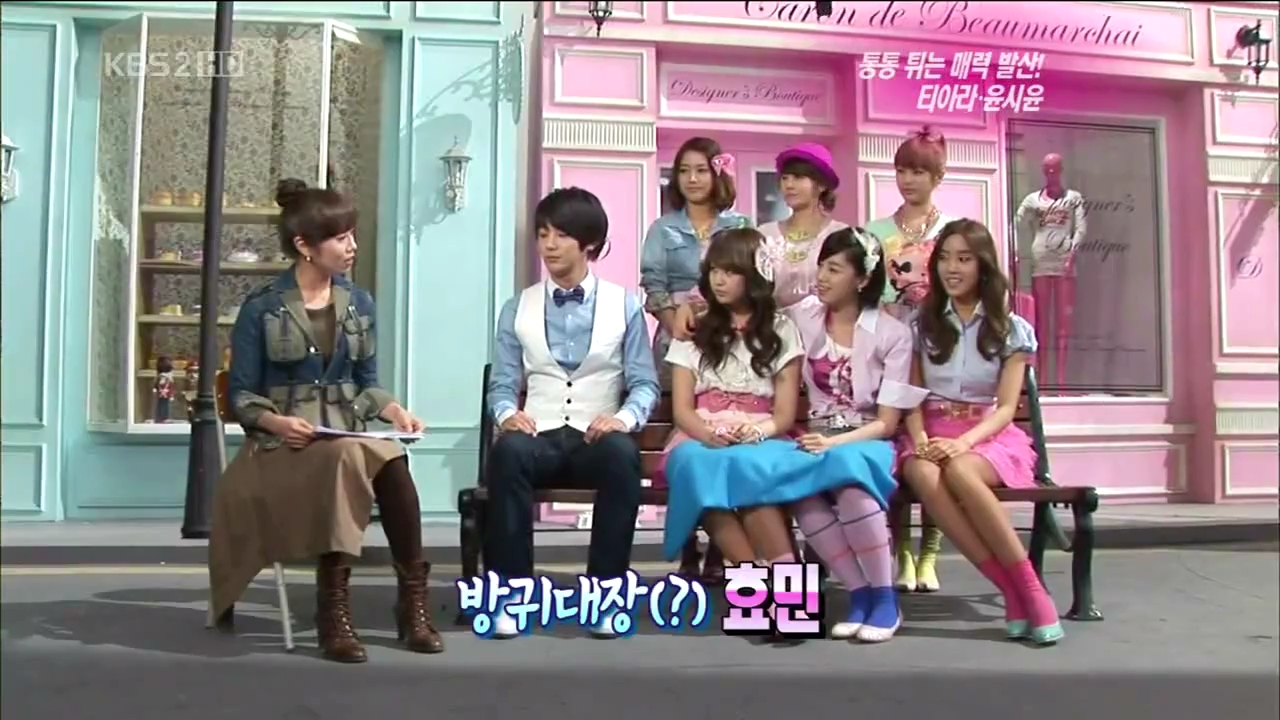
But at 3:49, we even get to watch the evidence:

And, lest he feel left out, Si-yoon is asked if he also farts, to which he replies at 3:57 that yes, he enjoys it:

Compared to that, watching him pick his nose and examine the contents at 2:30 was nothing. And hey, a guy’s got to do what a guy’s got to do, but in any other country I’d be surprised his agent didn’t want that cut out:
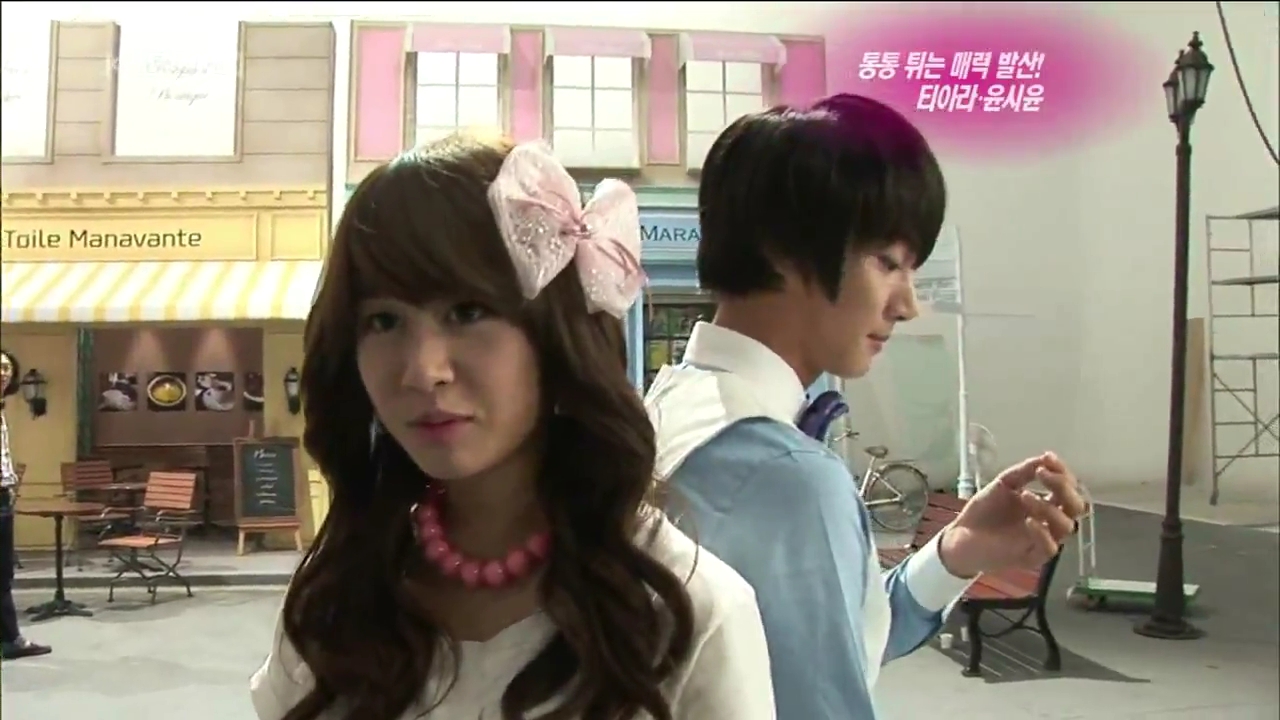
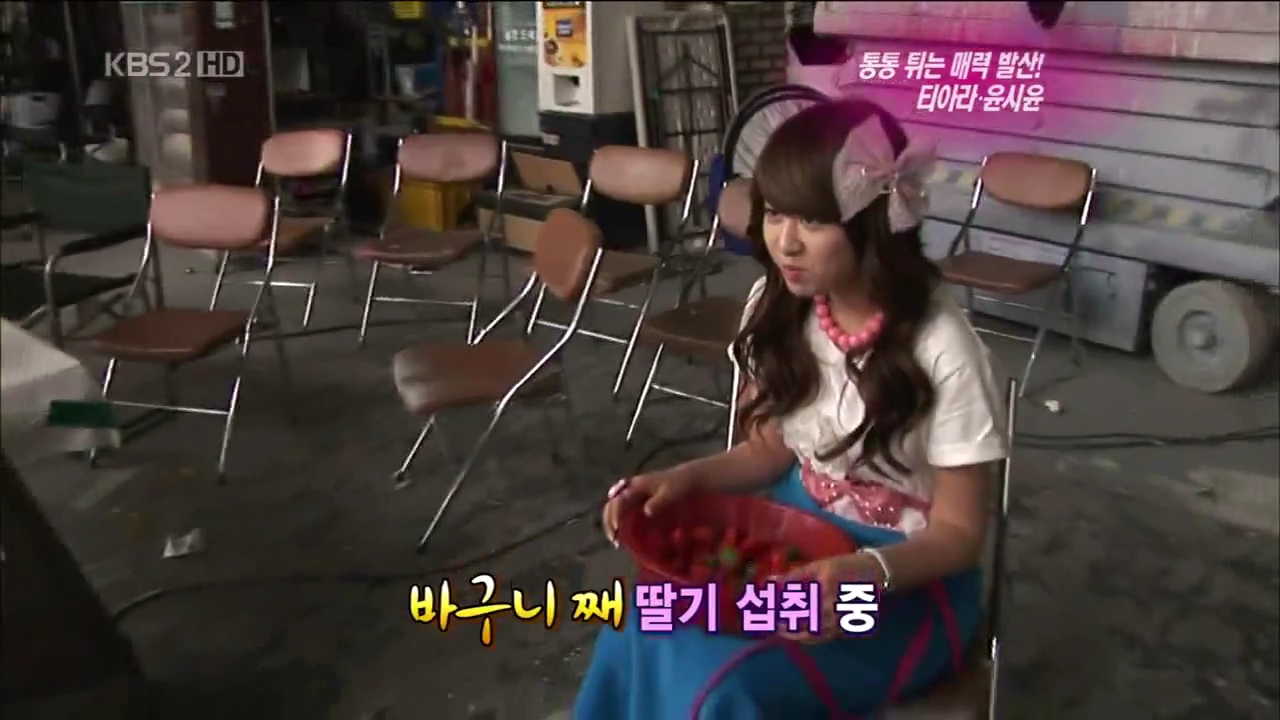
But not that showing that celebrities fart and pick their noses like the rest of us mere mortals are the only positives of course. I also love how the interview highlights Ji-yeon stuffing her face with strawberries at 2:57 for instance, and particularly from a basket that looks like it was bought from the back of a food truck, to be found in literally every Korean neighborhood at almost any time of day (for instance, selling salt at 5:30 in the morning). You see, something that looks like it could have been bought in my wife’s home village in 1970 is somewhat incongruous on the set of a commercial for probably one of the most technologically sophisticated products on the planet, and reminds me that constantly seeing such juxtapositions is one reason I love living here:
Finally, there’s the standard happy, bubbly ending of such shows, usually accompanied by cries of Hwaiting! (화이팅); if you’re not smiling yourself at least a little when you see one on TV, that’s probably because you’re being carried out of the room on a stretcher with blanket over your head:

To recap, I would love to hear: your own opinions on how genuine Eun-jeong’s embarrassment was; how representative of young women’s behavior on entertainment shows T-ara’s was; and whether they were simply being themselves or if they were fulfilling expectations and norms of how 20-something women should act on them (I realize that the last is a bit of a false dichotomy though, and should be considered more as a feedback loop). Are there any Korean entertainment shows where women don’t have to be cute? And how about 20-something men, or older women?

Alternatively, do you have any more pet peeves about Korean shows not covered here, or reasons that you really like them?

(For all posts in the Korean Sociological Images series, see here)

Share

Korean Sociological Image #36: Beauty and the Beast

( Sources – left; right: K-popped! )

A pair of brief but revealing juxtapositions to ponder this weekend.

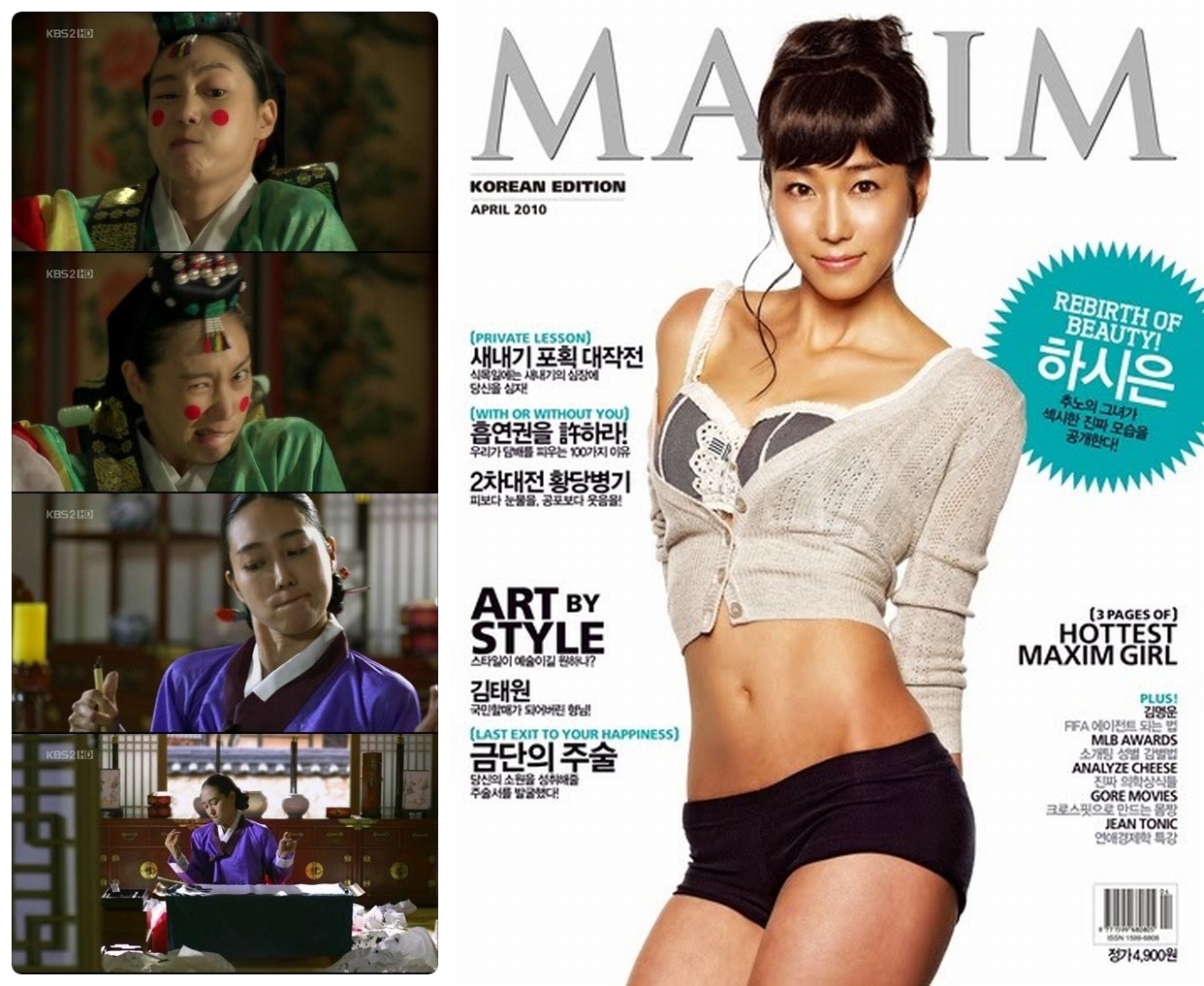
First, earlier in the week it was reported that Ha Si-eun’s (하시은) performance as a character with cerebral palsy in the popular historical drama Chuno (추노) was so convincing, it persuaded her representatives to arrange a photoshoot with Maxim, lest “it affect her career.”

My first reaction to this news? Naturally, that I’m never averse to seeing an attractive woman posing in her underwear…but heaven forbid that she become better known for her acting skills. To play devil’s advocate however, in my experience Korean actors do tend to be typecast by the public rather easily, and indeed a representative did express concerns that fans would be unable to dissociate Ha Si-eun’s image in the drama from real life:

하시은 측 한 관계자는 3월 29일 오전 뉴스엔과의 전화통화에서 “‘추노’의 뇌성마비 이미지가 너무 강했던 터라 하시은의 평소 모습과 작품 속 모습을 연결시키지 못하는 이들이 많았다”며 “부족한 점이 많지만 새로운 모습을 선보이고자 이번 화보를 촬영하게 됐다”고 밝혔다.

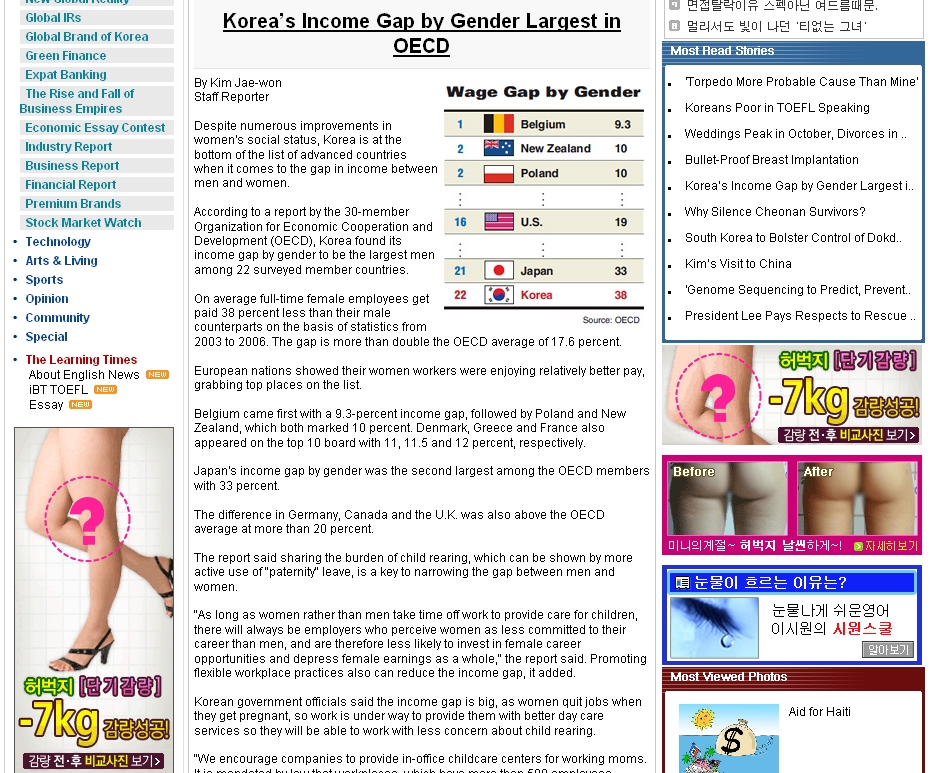
Given the frame of mind that put me in though, I couldn’t help but laugh at the irony of the advertisements accompanying this article in the Korea Times that I read 5 minutes later:

Part and parcel of the tabloidish tone of that newspaper in recent months, those advertisements are not confined to just that article of course. But still, it’s almost worthy of FAIL Blog, yes?

(For all posts in the Korean Sociological Image series, see here)

Share

Everybody Bubi!

( Source: KBites )

While “Bubi Bubi” (부비부비) doesn’t quite mean what it sounds like in English, these will still probably be the most surreal advertisements you’ll see in your entire life:

Featuring girl-group T-ara (티아라), whom I talked about recently here, and actor Yoon Shi-yoon (윤시윤), 2 of the advertisements at least seem to show that bubibubihada (부비부비하다) means to touch, or rub 2 things against each other. Curiously however, that’s proving quite difficult to confirm, as even though it appears to be rather old, with references here and here in The Marmot’s Hole going back to early-2008, and a query at Naver on the meaning from late-2006, there’s still no mention of the term in print or online dictionaries.

From a reading of the former though, and K-pop blogs today, “grind” appears to be a much better translation, and indeed there’s even a 2008(?) Banana Girl (바나나걸) song called Bubi Bubi on that theme:

But then “Grind Grind” is a rather crude and unlikely name for a phone, and especially for one that KTF itself claims is aimed at teenagers. Hence the most likely explanation is that KTF is exploiting a double-entendre, and which Korean advertisers as a whole have a surprising proclivity for, especially sexual ones. But it would be appreciated if anyone more familiar with the term could confirm that; alas, married in 2004, and with two children after that, then it’s been a while since I’ve done any grinding in Korean nightclubs myself, and am unlikely to begin again soon!

Share

Korean Sociological Image #35: Ready for some Hot 6iX?

(Source)

For all the misreadings of the title that undoubtedly brought many of you to this post(!), “Hot 6iX” (핫식스) is just a simple energy drink really, albeit a deliberate attempt by Lotte Chilsung (롯데칠성음료) to produce a Korean equivalent of Red Bull for the domestic market. And ultimately to belatedly tap into the global market too, currently worth 1.4 billion dollars and growing 20% every year despite the recession.

An avid drinker of “V” back when I lived in New Zealand, I think it’s about time. Much more interesting than the drink itself though, are what the 4 advertisements produced so far tell us about how quickly the Korean media is changing, and especially how men and women are presented therein. With apologies for giving the game away somewhat with the opening image, here they are:

Although my wife and I laughed at the joke in the first one too, I confess that I was already well into writing this post after only seeing the two featuring women. For they confirmed a strong and enduring division in the marketing of health, energy, and/or sports drinks whereby those aimed at men tend to promote the idea that the drink will give them extra energy for work, exercise, or even sex, but those at women that it will simply help them to lose weight. A phenomenon by no means confined only to Korea, you can imagine my surprise then, when I learned of the 6iX ad aimed at female drinkers also.

(Sources: left, right)

And although it sounds rather awkward, my delight too. For with the proviso that the objectification of men can be just as problematic as that of women, and its occurrence in the media in numbers comparable to that of women a bizarre and somewhat unlikely “solution” for the latter, I’d like to throw open for discussion the notion that any objections any of you may have – or imagine that others may have – to those first 2 advertisements are somewhat mollified by having an advertisement featuring a man also.  Or alternatively is that just me, and/or are the advertisements with women not all that objectionable in the first place?

Meanwhile, expect to see many more advertisements like them in coming months: the 4 above all have random numbers assigned to them, much like what were ultimately 30 or so in this “Confessions of 20-somethings” (스무살의 고백) advertising series of Maxwell House (맥스웰하우스) that started last year (see #2 here). And on a final note, it’s difficult to believe that advertisements objectifying men like this only really started in earnest last year, yes?

Update, July 2012: Alas, my prediction was completely wrong. There were no new commercials for over 2 years, and the new ones released this month don’t objectify either sex at all (although they do still target both men and women). See here for all the 2012 and 2010 ones.

(For more posts in the Korean Sociological Images series, see here)
“Gender Advertisements” in the Korean Context: A Request

( Source )

If you’d told me a week ago that I’d be spending much of my birthday looking for images of Korean men touching themselves, I’d probably have politely told you never to comment on my blog again.

Prompted by this analysis of Korean magazine advertisements that found that Korean men were significantly more likely to be shown doing so than Western men in them however, that’s precisely what I’ve been doing. But for all their supposed ubiquity, it’s proving surprisingly difficult to find examples, throwing off my schedule for the next posts in this series.

To be specific, I’m after advertisements like these, but featuring Korean men rather than women, and would really appreciate any help. Seriously, what search terms would you suggest, in English or Korean?^^

Of course I do have some examples, and will continue looking: my planned post will simply take longer than expected. In the meantime then, let me briefly offer some amusing and/or interesting advertisements that have cropped up recently instead, starting with that for Coca Cola Korea (한국 코카콜라) above featuring Thai-American Nichkhun (닉쿤) of the Korean band 2PM. I think its humor speaks for itself, but in the unlikely event that you feel I’m reading too much into it, please see those featuring other…er…members of the band here, of which Junho (준호) in particular seems to be enjoying holding his miniCoke bottle entirely too much!

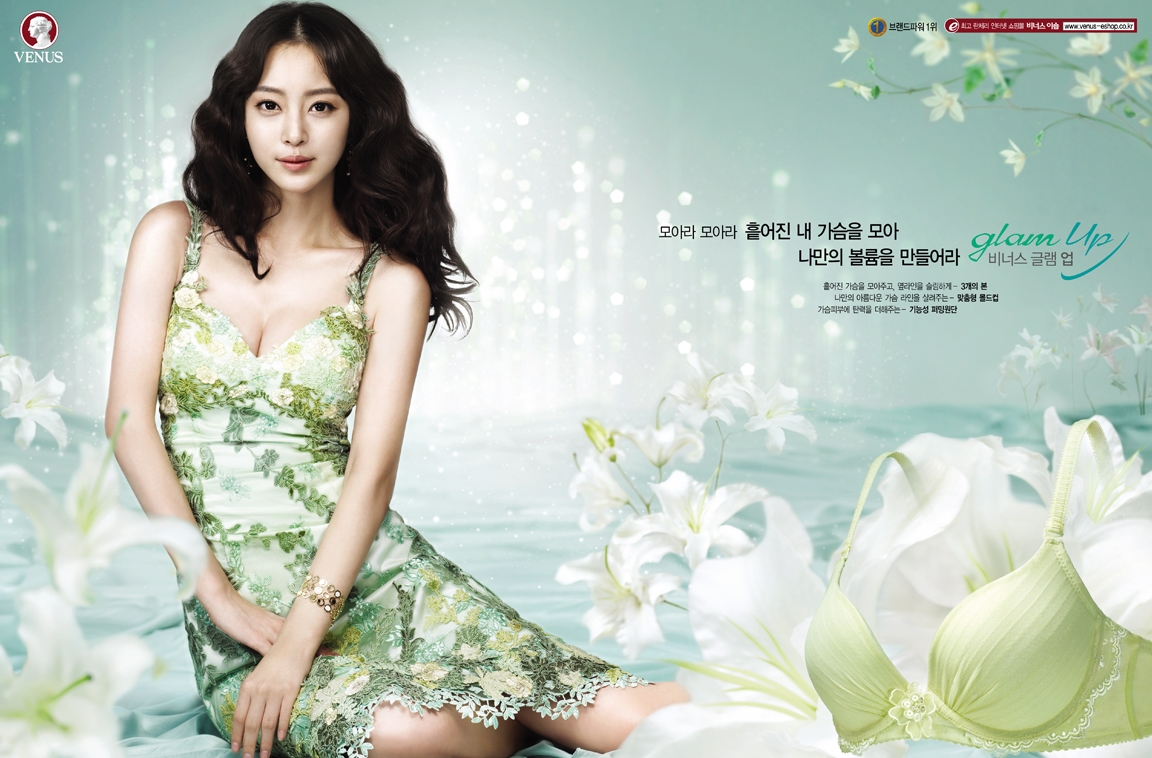
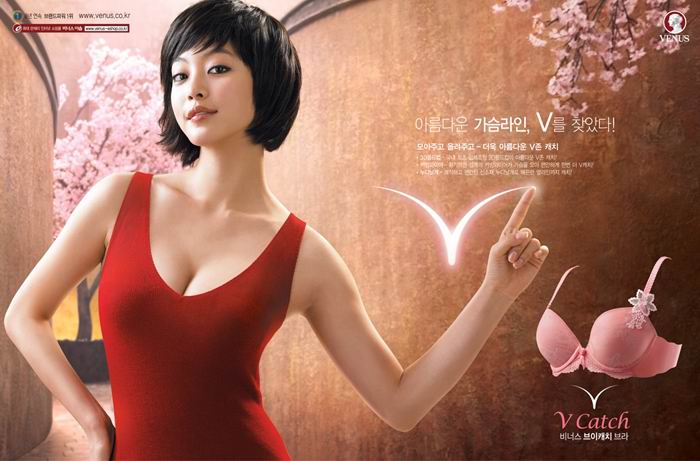
Next is this one for Venus lingerie (비너스) featuring Han Ye-seul (한예슬), featured on the front page of Korea’s main portal site Naver (네이버) as I type this. Why it’s interesting is because of the English name “Glam Up” for the bra featured, which, making little sense otherwise, supports the argument that the English word “glamor” has somehow come to mean “voluptuous” or “curvaceous” in Korean:

( Source )

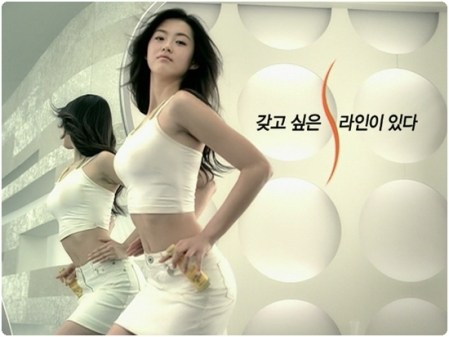
In turn, it demonstrates the ridiculousness of the new Korean phrase cheongsoon-gullaemor (청순글래머; or “innocent glamor”), but which is nevertheless very much in vogue in the Korean media at the moment. But that is no great surprise in view of the enduring popularity of older ones for women’s bodies like “S-line” (S라인) perhaps, and so, lest I begin to sound too serious here, let me move on to this advertisement for Nike Korea (나이키) featuring ice skater Kim Yu-na (김연아):

( Source: korean lovers photoblog )

One of the most endearing athletes I’ve ever seen (well before she won her gold medal), it’s difficult not to simply adore Yuna, but I confess I still had to to laugh at what Matt at Gusts of Popular Feeling wrote about this ad last month:

By the way, does anyone find Kim’s expression in this ad to be, uh, ecstatic?

Perhaps there’s a reason the left hand side was cut off where it was. Just do it, indeed.

Okay, perhaps that was reading too much into it, and I’m sure you can understand my reluctance in not posting it earlier, the image of her at #10 here alone receiving thousands of hits in the last week of February, presumably most of them from fans…

Either way, I hope you at least one of those advertisements made you smile and/or think. And again, if anyone can help find examples of the sorts of advertisements I’m looking for, I would very much appreciate it; even if it’s only because you feel guilty for forgetting my birthday!^^

Share

“Gender Advertisements” in the Korean Context: Part 1

(Source: SeoulBeats)

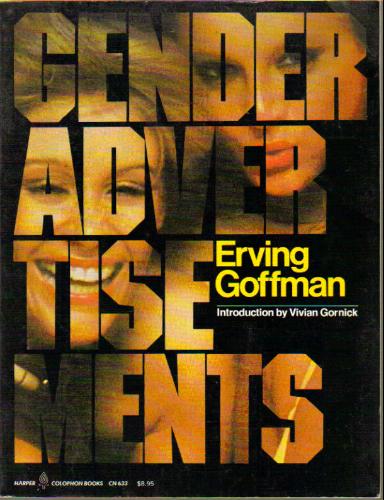
Be warned: Gender Advertisements, by the late sociologist Erving Goffman, is one of those books that changes your life forever.

Well, not life-changing like reading The Communist Manifesto inspired an Argentine ex-lecturer of mine to start shooting police officers. But you will pay much more attention to advertising messages, of which you already receive between 500 and 1000 every day. (Yes, it’s really that many.)

Of course, advertisements have changed considerably since the book was published in 1979, and are much less sexist overall. But indeed that’s precisely because of the attention given to them. Moreover, some elements have actually gotten worse, advertising to children for instance now an embarrassment compared to the relatively gender-neutral tone of the early-1980s (compare these to this, this, and this), and also there is now so much partial nudity in advertisements that several researchers argue that a new category has had to be added to Goffman’s framework to analyze it.

However, partial nudity isn’t objectifying or sexist per se: rather, it is the manner and context in which it is applied. And if that is the case, then you can imagine how problematic applying Goffman’s framework as a whole to Korean advertisements is, in which such different cultural codes operate.

Or do they? In at least one case, yes: social status usually trumps all other considerations in Korea, and so having one person (usually a man) elevated above another (usually a woman) in an advertisement, perhaps by him sitting and her reclining on the floor in front of him, by no means implies superiority, rendering that subcategory of Goffman’s “Ritualization of Subordination” category problematic (see here and here for examples). Still others, such as cute and/or childlike depictions of women, or having them staring off into the distance rather than directly back at the viewer (a subcategory of “Licensed Withdrawal”), are not necessarily sexist in light of East Asian notions of metrosexuality and politeness respectively, as helpfully pointed out by reader Melissa. And in point of fact the only analysis (Nam et al, 2007) that has looked at men as well as women in Korean magazine advertisements did find that Korean men were depicted much more childishly and “withdrawn” than Western men in them.

Still, while this point is easy to miss in posts that necessarily give only a few illustrative examples, surveys of depictions of men and women in advertisements using Goffman’s framework are made to determine if there are statistically significant differences between them as a whole. And, if those are found, then there are a number of different cultural and anthropological explanations that can be suggested in addition to feminist ones: Occidentalism, for instance, may have played a role in the above result, or the fact that it is quite acceptable for Korean 20-somethings of both sexes to behave in a manner that many Westerners might consider childish (see here for possible reasons for this). Alternatively, Nam et al (2007) found that Western women were much more likely than Korean women to be depicted in a lower physical position than men, such as by him standing and her reclining in a chair on on the floor, but while this could be interpreted positively (for Korean women), much more likely is the fact that status trumps all other considerations in Korea, and so to be physically lower than someone else by no means implies that one is the inferior. Accordingly, there were no statistical differences between Korean men and women in this regard.

Other differences however, like the fact that regardless of the social norms I’ve discussed, Korean women are still depicted childishly or withdrawn more often than Korean men for instance, are extremely difficult to account for other than in terms of their inferior social and economic status in Korea. Or in other words, while an individual advertisement depicting a woman like a child isn’t necessarily sexist in itself, that there’s more of them than there are of men is certainly evidence of sexism. Moreover, I fail to see how noticing discrepancies like this is somehow Eurocentric of me, or “looking at Korean society through Western eyes.” Which is not at all to say that Melissa argued that, but others have.

Update: Specifically, aegyo is often claimed as a form of empowerment that Westerners fail to appreciate. In which case, guilty as charged: when (usually) women act like children to manipulate (usually older, higher-ranked, and/or richer) men, how is that anything but wholly accommodating to a patriarchal system?

(Source: Unknown)

In response, in what was originally intended to be a single post here I wanted to discuss the problems Kang (1997), Hovland et al (2005), and Nam et al (2007) had with Goffman’s framework, the alterations they made to it, and the latter two’s discussion of how appropriate various categories of it were to the Korean context.

In particular, the last found that Western men and women were more likely to be depicted as partially nude than their Korean counterparts, but with allowances again for Occidentalism, and the fact that Korean female models will rarely appear in lingerie advertisements (of which the authors were unaware, and so didn’t account for), they argue that this is again evidence of sexism because in fact “many scantily garbed women [emit] a sense of independence and confidence.” While I’d be a bit more circumspect than that myself, fortunately having long since on moved on from the days when I automatically equated bikinis with feminist liberation, they do have a point, particularly in a society where the majority of women were too scared to wear them 5-10 years ago.

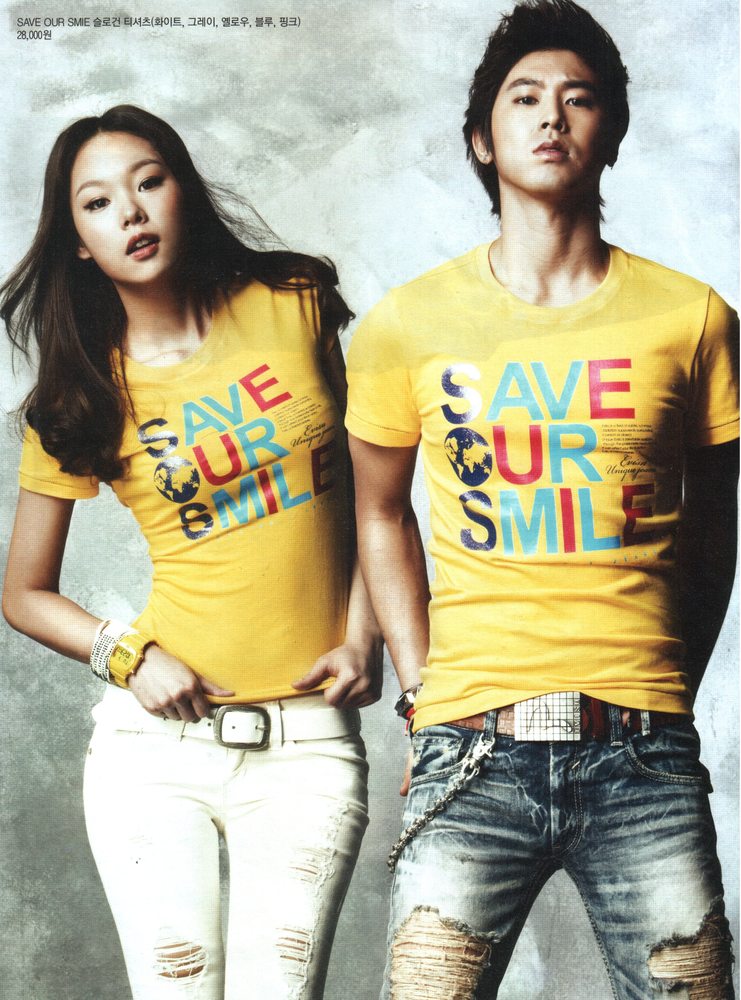
Also, I wanted to discuss the “female-stereotypical” depictions of Korean men in advertisements like Melissa identified, posing a challenge as they do to especially Western men’s notions of masculinity. Unfortunately however, for reasons of space and ease of reading those will have to wait for Part 2 and perhaps even a Part 3. Instead, having provided a grounding in this post, let me devote the rest of it to a practical example of another discrepancy in the ways men and women are portrayed in advertisements, one that I stumbled onto by accident in the process of investigating the Evisu (에비수) advertisement at the beginning of the post.

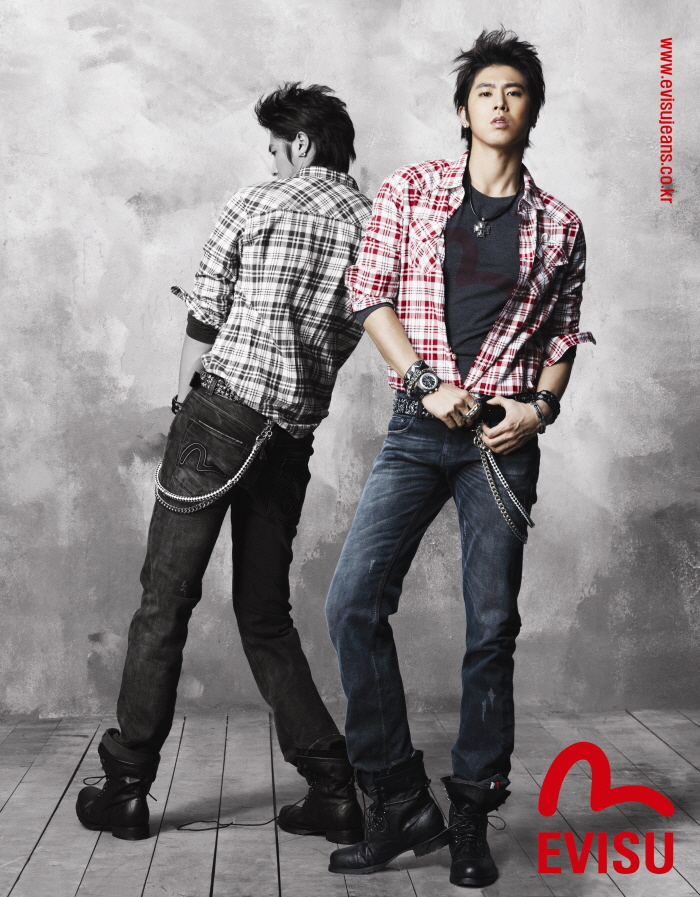
Featuring Jung Yun-ho (정윤호; also know as “U-know”) of the boy band TVXQ (I don’t know who the woman is sorry), the first thing it reminded me of was this:

(Source: Shine So Cold)

Of which I wrote this back in November 2008 (update: since edited out sorry):

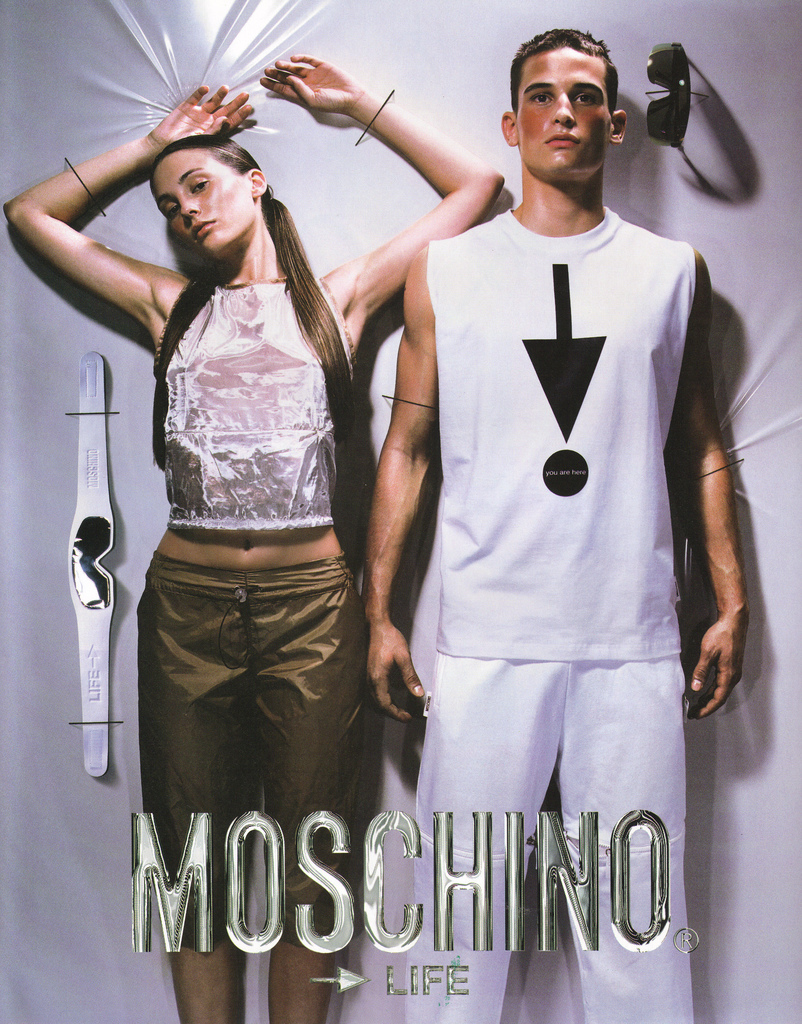
Personally, it took me a few moments to figure out what this advertisement is supposed to represent exactly: were the couple prisoners? No…why would their sunglasses be tied up too? How apart parts from a model kit then? No…then they’d be disassembled, and besides which the man appears to be raised from the white background a little, a rather awkward position for a model component. And then I realized that he’s actually standing, which would mean that the woman is too, although I can surely be forgiven for thinking that she’s lying down.

So probably they’re supposed to be like a Barbie and Ken doll set in a box, like you find in a toy store. But then why is the women tied down so helplessly, whereas the man, ostensibly also tied down, looks – as the photographer points out – firmly grounded and in control? I haven’t been looking (sorry!), but I dare say that Barbie and Ken dolls don’t leave the Mattel factory like that in real life. So why would the advertisers choose to depict them like that?

Granted, it’s a much more extreme example than the own with Yun-ho. But while I don’t mean to equate the two, that is indeed what it reminded me of, and the final question I pose is just as relevant.

But in terms of Goffman’s framework itself, probably this is more similar:

(Source: Tech Fatale)

And with that, let me add “participation shields,” a subcategory of Licensed Withdrawal, to add to all those others I’ve already elaborated on here, here, here, and here as well as those in this post. This is what Goffman (1979) had to say about it:

It is possible to look in on a social situation from a distance or from a one-way panel—a “participation shield”—and be little seen oneself, in which case one can, in effect, partake of the the events but not be exposed to scrutiny or address. A splitting up this results between some of the gains and some of the costs of face-to-face interaction. I might note that when one’s participation is thus shielded, simultaneous maintenance of dissociated side involvements would seem to be facilitated, since these could hardly intrude between oneself and one’s availability to the others in the situation – one not being available at all.

A ritualization of participation shielding occurs when one presents oneself as if on the edge of the situation or otherwise shielded from it physically, when in fact one is quite accessible to those in it. Still further ritualization is found in commercial posings. (p.70)

Then he gives examples of using walls as shields, then window frames, then various objects, then animals, and finally people:

…with the consequent opportunity to overlay distance with a differentiating expression, in the extreme, collusive betrayal of one’s shield. (p. 72)

Here are some examples he provides, from my scan of page 73:

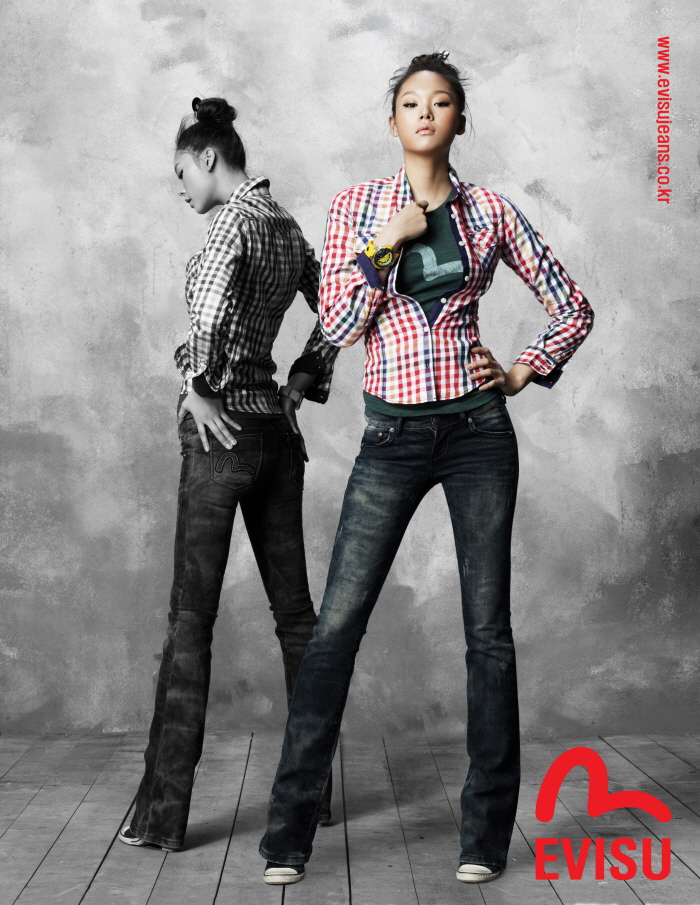
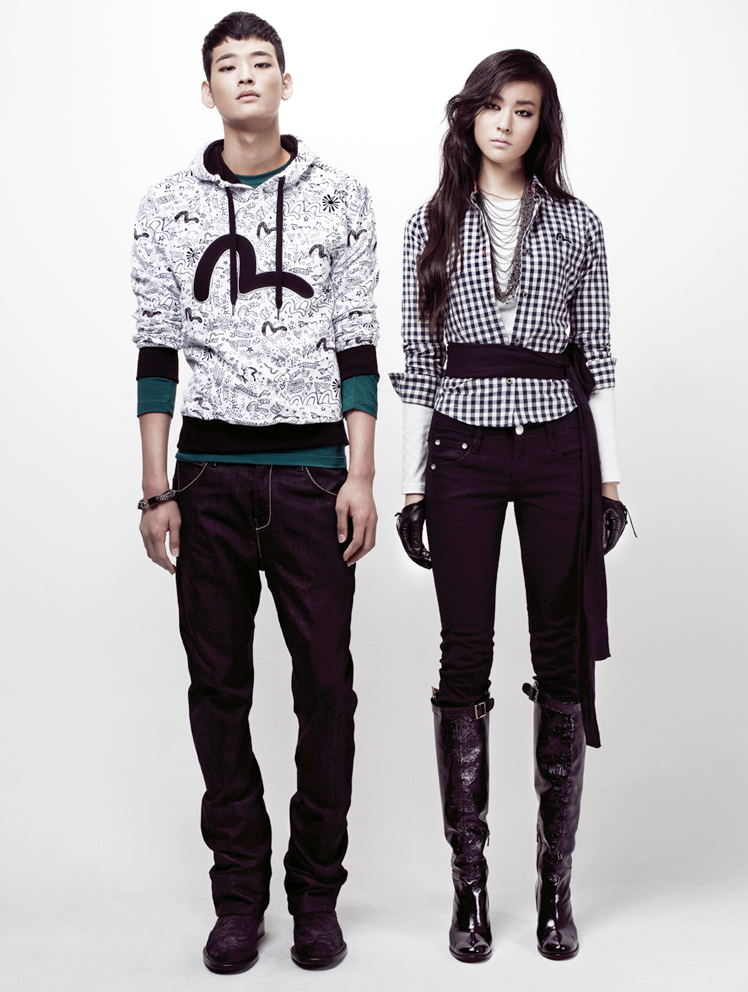
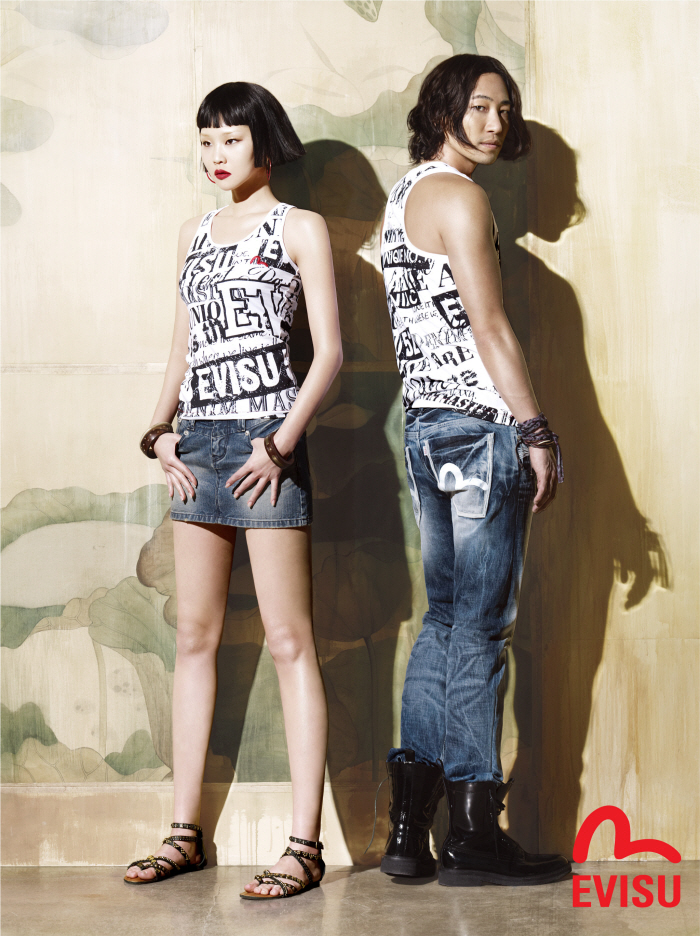
And I think the Evisu advertisement is a good example of that last point, as Jung Yun-ho’s aggressive, confrontational stance is betrayed by that of the inquisitive, unconcerned expression of the woman partially hiding behind him. But lest I contradict myself and read too much into one image (and I’ll grant that those above are deliberately much more extreme cases), again let’s consider the discrepancies among the advertisements currently on the Evisu website. In particular, when the woman and Jung Yun-ho are by themselves, both have strong, confident stances, good examples of the “Independence/Self-Assurance” category first suggested by Kang (1997) and expanded on Nam (2007) which I’ll be discussing in Part 2:

(Source, all remaining images: Evisu)

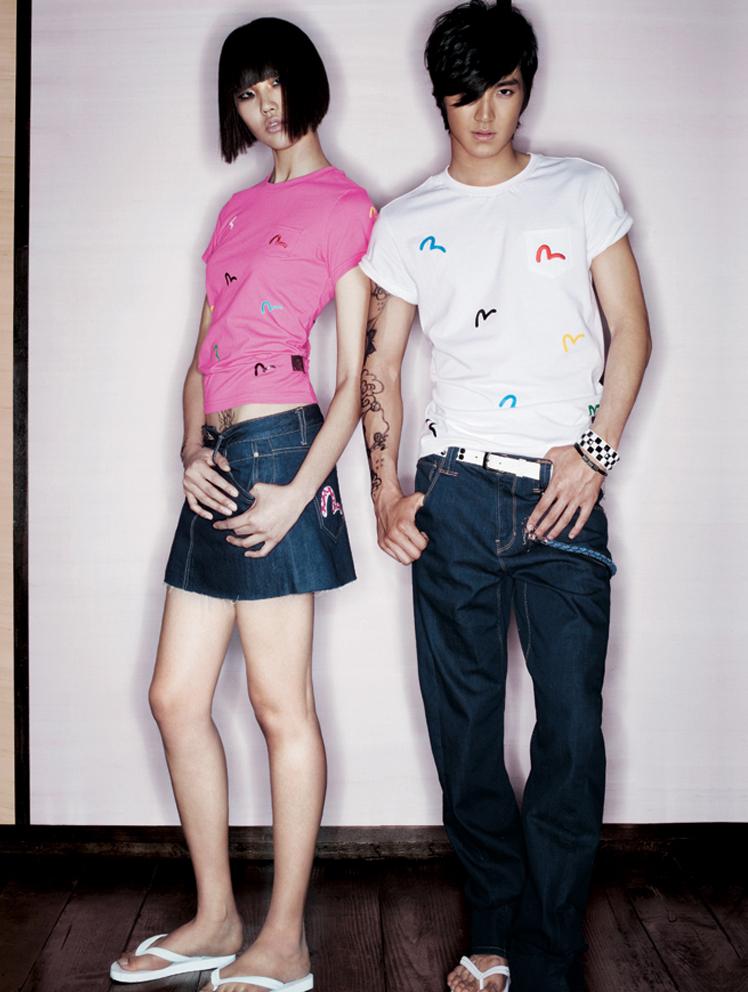
So why then, in most of the few Evisu advertisements that have a man and a woman together, are the women relegated so to speak? But don’t just take my word for it. Instead, see all of them for yourself, starting from the most glaring example to the least:

Note also that only the woman has the “head cant” in each, which I discuss here.

But here is one example that is the complete opposite to all the above:

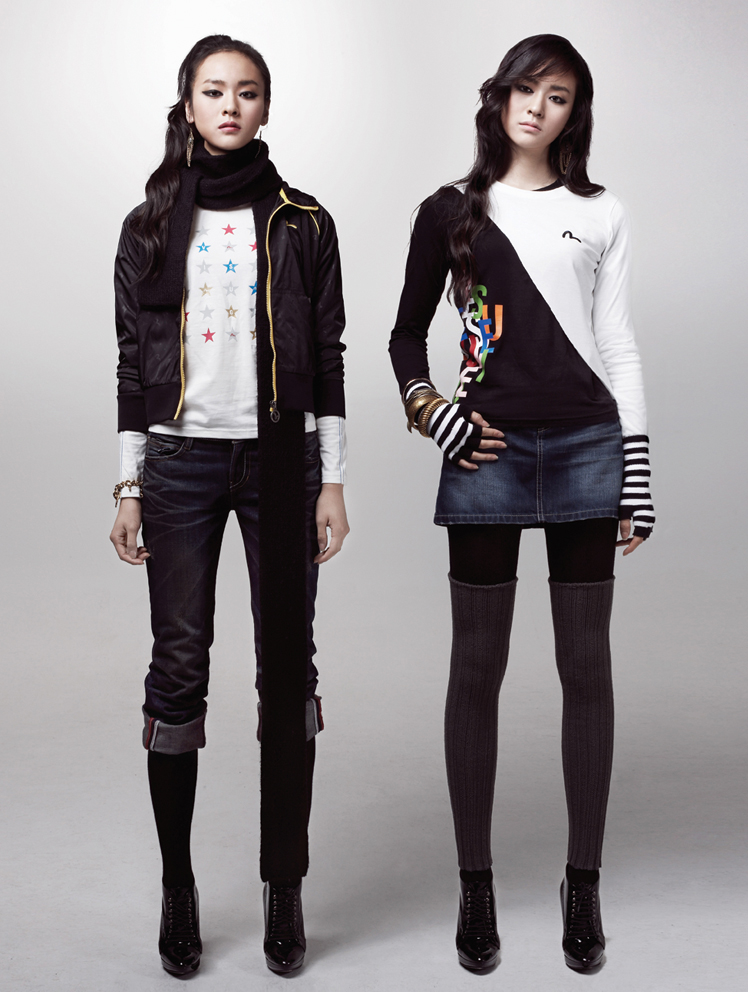
And I include this one also as it’s the only other one with two people, although strictly speaking it shouldn’t be counted:

Personally I think that the woman on the right above is not quite as “out of it” as she in her advertisements with a man, but I’ll grant that that’s open to debate, as is how much she is using the man as a participation shield in that second advertisement in which she is wearing black gloves. But that’s precisely the point: again, those are all the advertisements with more than one person in them on the Evisu website as a I type this (please note that the first one with Jung Yun-ho isn’t on the website though), and so please make your own minds up about whether there is a discrepancy in the way the men and women are depicted in them. Naturally, I think it’s obvious that there is, but if you agree and yet have a non-feminist, culturally-based argument for its existence however, then I’m all ears.

Meanwhile, a note on the sources for this post: if they look very familiar to regular readers, then that’s because there have been so few surveys of Korean advertisements made using Goffman’s framework. Moreover, even Nam et al’s (2007) is based on magazines from 2002 and 2003, hopelessly out of date for a society as fast-changing as Korea, and so I’ve long wanted to conduct my own survey(s) to compensate. That would involve far too much work for just one person unfortunately, and so if any readers are interested in co-authoring a conference paper and/or journal article on the topic, please let me know!^^

Goffman, E. (1979), Gender Advertisements.

Hovland, R. et.al. (2005) ‘Gender Role Portrayals in American and Korean Advertisements’, Sex Roles: A Journal of Research December 2005, pp. 887-899 (although I have a physical copy, unfortunately this is no longer downloadable; I’d appreciate it if anyone with library access could email a PDF).

Kang, M. (1997) ‘The Portrayal of Women’s Images in Magazine Advertisements: Goffman’s Gender Analysis Revisited’, Sex Roles: A Journal of Research December 1997 (ditto on downloading)

Nam, K. et. al. (2007)  ‘Gender Role Stereotypes Depicted by Western and Korean Advertising Models in Korean Adolescent Girls’ Magazines‘, Paper presented at the annual meeting of the International Communication Association, TBA, San Francisco, CA Online (2007), pp. 1-31.

Update: If you’ve enjoyed this post, then you may also be interested in this one at Sociological Images that describes how even the “physiology and anatomy” theme of a university website also genders the stances of the physiological representation of both sexes, the man standing straight, looking ahead, and having even weight distribution, but the female form being “almost classically passive, hands held behind her back, weight distribution uneven” in contrast.

Beauties and the Beast? Understanding and Subverting the Male Gaze through Soju Advertisements

It’s not often that I laugh at soju advertisements.

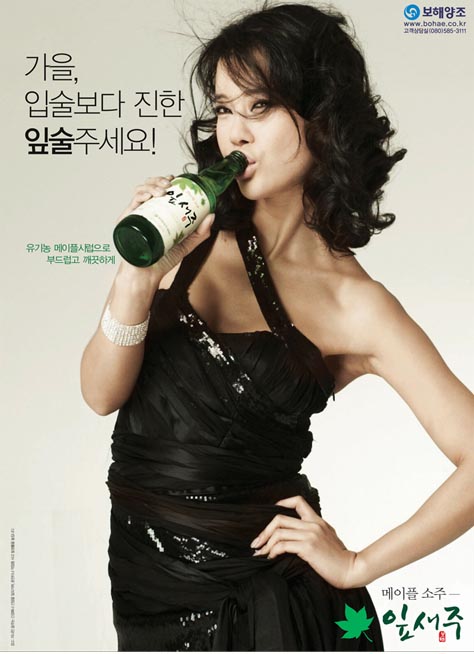
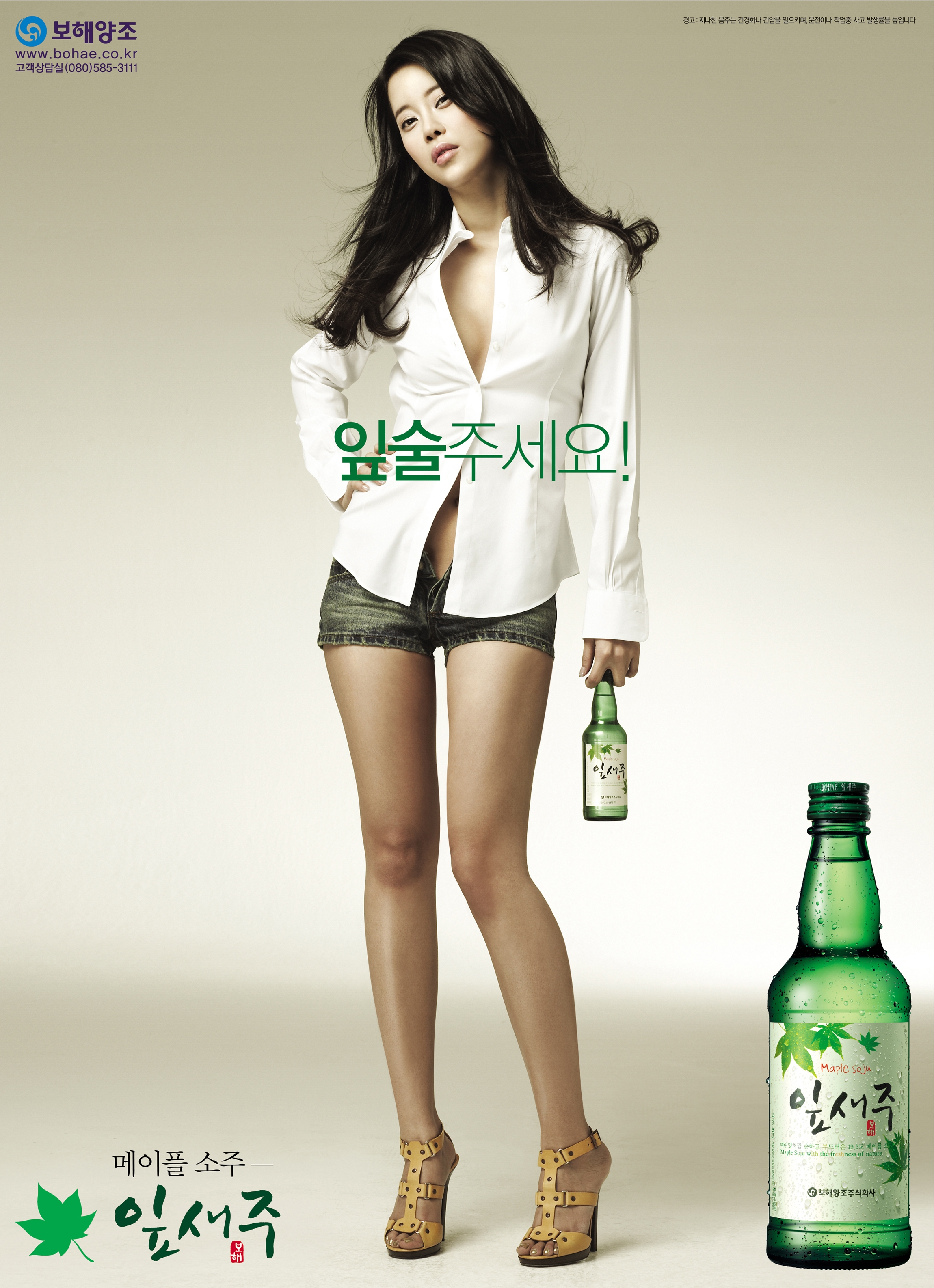
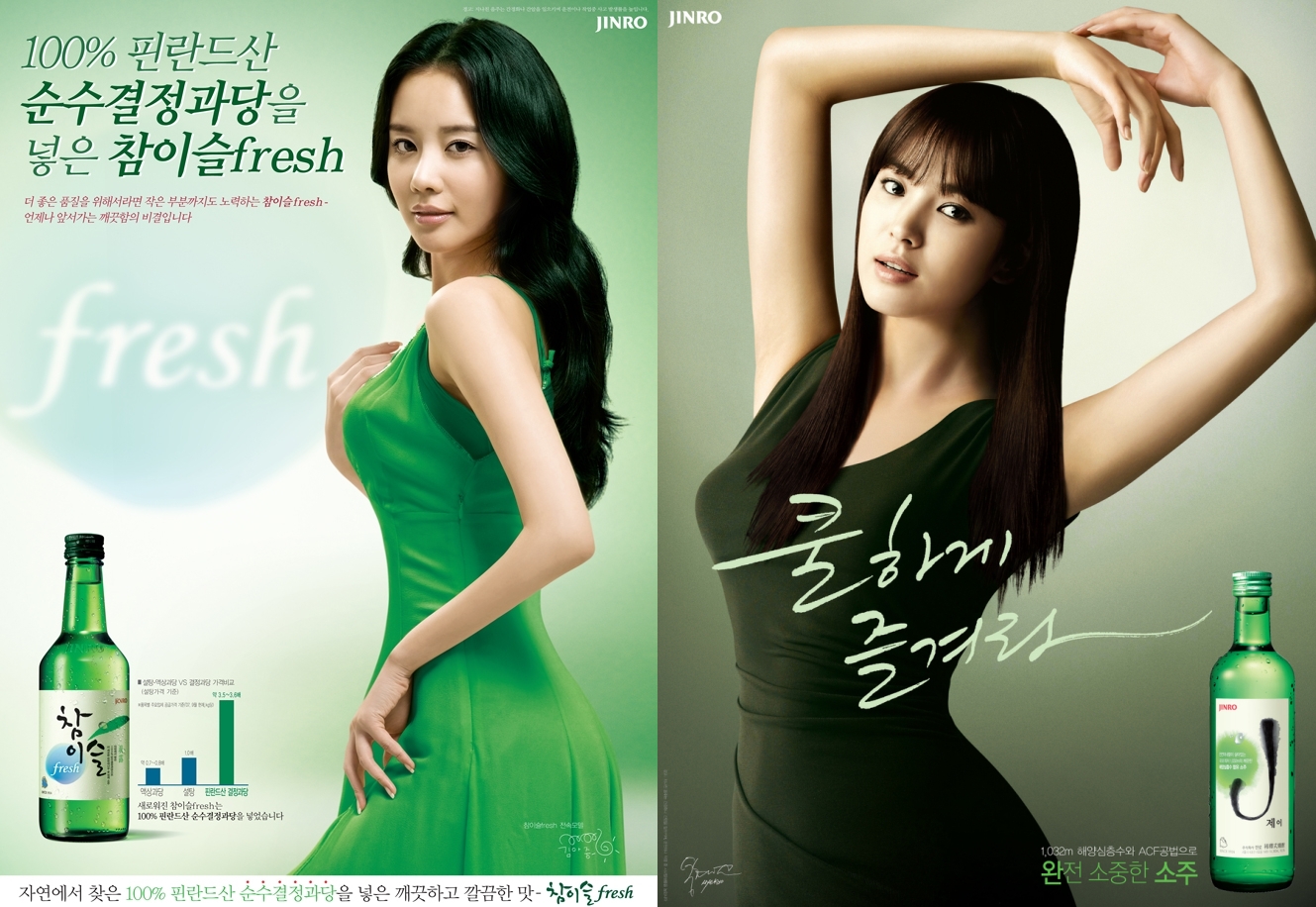
Flying in the face of decades-old traditions that they should feature demure and virginal-looking women though, this one with singer Baek Ji-young (백지영) for Yipsejoo (잎새주) literally had me in tears.

Indeed, if it’s not a deliberate satire, then it at least prompted me to reexamine those traditions, making me realize just how ridiculous many are. And being exclusively designed for a “male gaze” too, they also prove to be a very good guide to it, giving pointers to the ways in which a wide range of advertisements seem to be based on the assumption that their audience are entirely heterosexual men, especially by focusing on and sexualizing women’s bodies.

Even when the products are aimed at women.

But first, the humor of this one, which is on several levels. First there is the caption, which reads “In autumn, rather than your lips (kiss), please give me some strong-tasting Yipsejoo!,” (가을, 입술보다 진한 잎술주세요!), and is a pun based on the fact that yibsool (입술), or lips, sounds very similar to yipsool (잎술), shorthand for Yipsejoo.

And as an added inside-joke for fans, a popular song on Baek Ji-young’s 7th album Sensibility, released five months before she was hired by Yipsejoo’s parent company Bohae (보해양조), even had the name Give Me Your Lips (입술을 주고) too.

But context is everything.

Previously on a fast track to stardom, Baek Ji-young was the innocent victim of a sex-scandal in 2000, and had to fight hard against Korea’s double-standards in order to revive her career. But while this severely limited her advertising options, perhaps one silver lining was the ability to disregard the high moral standards Koreans usually apply to their celebrities (especially women), and indeed it is very difficult to imagine anyone else appearing in advertisements like those she has so far for Yipsejoo.

For instance, recall that when she was chosen in an online poll to model for Yipsejoo in March last year, I remarked that her first advertisement for the company below was:

…not to put too fine a point on it, literally the sluttiest soju ad I’ve ever seen….

With apologies for sounding crass (then), but I still can’t think of a better way to describe it:

I also discussed the fact that while she did mention how happy she was to have been chosen to appear in soju advertisements like top stars Lee Hyori and Song Hye-gyo, one still sensed that they wouldn’t have consented to appearing bra-less and with an open zipper in them, which smacked of desperation. Judging by the soju advertisements that emerged that summer however, I was quite wrong, but then I’d already concluded of Beak Ji-young that:

however unfair or unwarranted, she’ll always be stuck with her promiscuous image, so she may as well play into it.

Still, I didn’t realize that she would take my advice quite so literally!

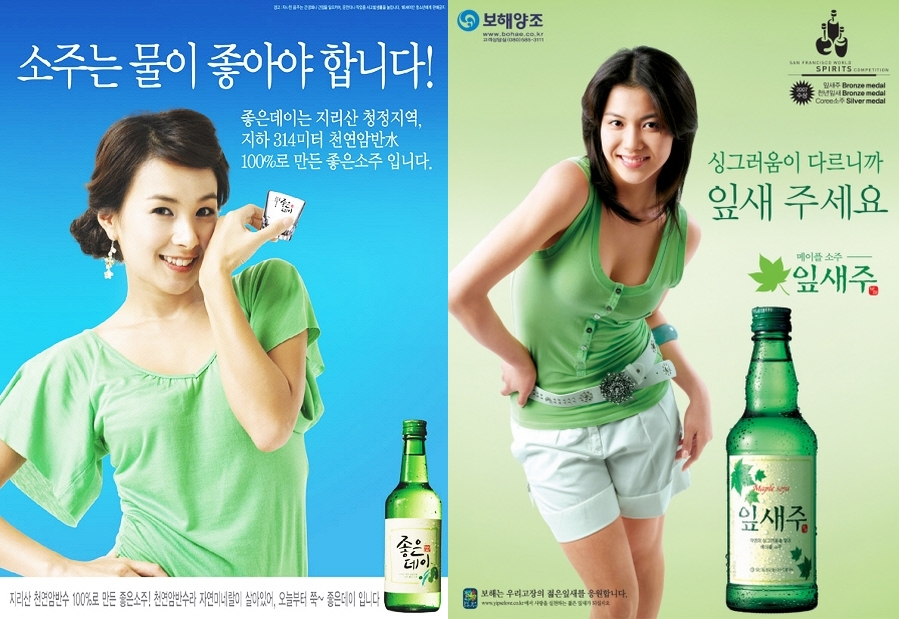
To be precise, I laughed so hard when I saw the opening image because I thought she looked like a prostitute who’d been plying her trade for rather too long now, and which were quite a contrast to, say, these earlier ones for Yipsejoo featuring Jeong Ryeo-won (정려원), for whom her evening of drinking soju with her male partner will be her first time in more ways than one:

But this post is not about that shift, which I’ve more than adequately covered elsewhere, although I do want to stress 2 things about it here before moving on: that however impressed I was by the changes when I first noticed them back in 2007, it was still extremely naive of me to have ever equated it with (female) sexual liberation(!); and that while an empirical study would undoubtedly demonstrate an increase in soju advertisements with – in the sociological framework that I’ll be using below – “body display” – in recent years, there is by no means an linear progression of racier advertisements over time.

Even just Yipseejo itself for instance, makes both forms of advertisements with the same models, and/or seems to alternate which ones it primarily makes with them, such as traditional, virginal ones with Jeong Ryeo-won and Han Ji-min (한지민) in 2006 and 2008 respectively, but then racier ones with Kim Ok-bin in 2007 and Baek Ji-young in 2009.

Regardless, both types are still designed for the male gaze. In the interests of full disclosure however, I have never studied that formally, and so here I shall be quoting liberally from the excellent A Web Essay on the Male Gaze, Fashion Advertising, and the Pose, part of the Semiotics and Advertising Web Site of the University of Vermont, and I also highly recommend this post by Michael Hurt at the Scribblings of the Metropolitician after that for an analysis of Korean women’s body images using that perspective.

But it does dovetail nicely with the work done by the late sociologist Erving Goffman in his 1979 work Gender Advertisements, still very much the framework by which sociologists study how gender roles are perpetuated in advertising (and indeed referred to repeatedly in A Web Essay). In earlier posts, I’ve already analyzed Korean advertisements using one motif of that: “Relative Size”, or how and why it is extremely rare to see women taller than men in advertisements despite being women being taller than men in 1 out of 6 randomly matched pairs. It’s high time to start using others, beginning with “Ritualization of Subordination”:

Under this broad category, Goffman actually described a great number of symbolic ways in which the women’s behavior in advertisements displays the subordination of females to males, many of which involve women acting like children. Why this is more problematic than it may sound is because:

Given the subordinated and indulged position of children in regard to adults, it would appear that to present oneself in puckish styling is to encourage the corresponding treatment. How much of this guise is found in real life is an open question; but found it is in advertisements. (Goffman, p. 48)

And indeed Korean society strongly encourages grown women to act like children, so it is probably not surprising to hear that in Korean adolescent girl’s magazines for instance, Korean female models are portrayed in such ways much more often than Western ones. From Gender Role Stereotypes Depicted by Western and Korean Advertising Models in Korean Adolescent Girls’ Magazines by Nam, Kyoungtae., Lee, Guiohk. and Hwang, Jang-Sun (2007):

Korean women were more likely to be portrayed in smiling, pouting and childlike or cute expressions than Western women. This result is similar to the findings of [this 1999 study] in which many Japanese girls in magazine advertising were portrayed as happy, playful and childlike. Understanding that gender displays in advertising reflect cultural orientation in a society, these findings indicate that in Korea and Japan, cuteness is an important virtue for women. (p. 18)

And yet to complain about those advertisements with Yoo In-young (유인영) and Shin Min-a (신민아) above, especially when they’re aimed at men, might still seem a little excessive. But then consider the following images from A Web Essay, which poses the questions “What do they suggest to you about these men? Do they seem silly?”

“What about these images?”

And as you probably expected:

Most viewers find the images of the men odd or laughable. But the images of the women seem charming and attractive…Why should it seem funny to see a picture of adult men striking a pose when the same pose seems normal or charming to us in pictures of adult women?

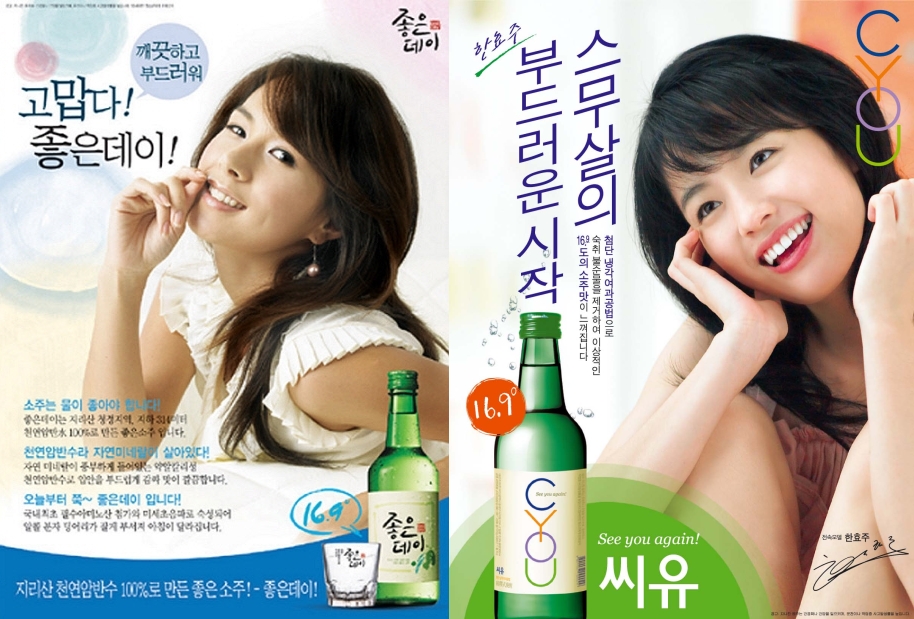
Not childlike per se, but as the next part points out, such expressions are often done with a head cant, for instance by Chae Yeon (채연) and Han Hyo-Joo (한효주) below:

The effect of the head cant is to lower the level of the head:

“…relative to that of others, including, indirectly, the viewer of the picture. The resulting configuration can be read as an acceptance of subordination, and expression of ingratiation, submissiveness, and appeasement.” (Goffman, p. 46)

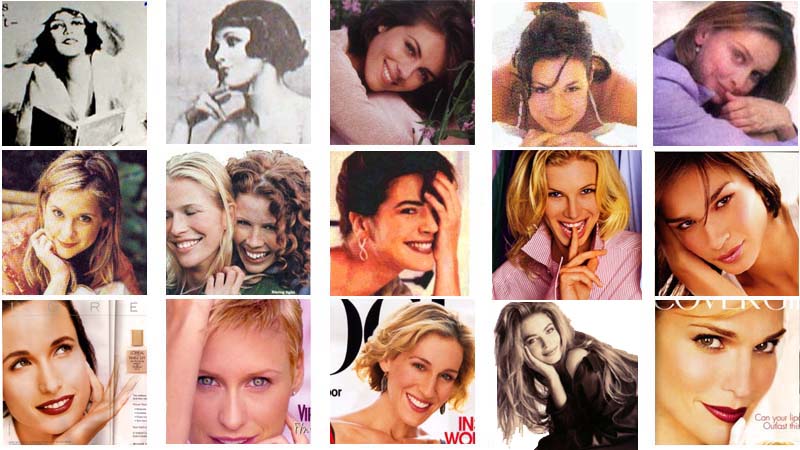
And A Web Essay adds that it is often combined with putting a finger in the mouth or otherwise touching the face in a childlike way, and so common in advertising as to be barely noticed:

The difference between those and the soju advertisements however, is that they’re all from women’s magazines and presumably aimed at women, and so what is actually going on in those is:

…not that the viewer is looking at a woman who is actually subordinate or childish. Rather, the models are posed so as to show that they know that they are being looked at — belying the otherwise childlike pose — and they are controlling or mastering this act of being looked at. The childish, submissive postures are represented as strategic, as a sign of control of the gaze.

This mastery and control over the gaze might explain why the highly accomplished and wealthy women you see above would strike submissive, deferential poses for the camera that no accomplished man would strike. For in so doing:

…[they are] not at all signaling to others that [they are] actually subordinate; on the contrary, [they are] showing that [they], too, can be successful in this arena, the arena where the goal is to attract and control the power of the gaze by striking a subordinate pose. And were this an occasional event, if we regularly saw images of women that were of a different sort, the effect might be innocuous.

The problem is, however, that most women make less money and have less power than most men, and the message that goes out to women without power is that to get some, you need to gain control of a male view of women — which means to get power through male power, rather than on your own.

This is where the theory of the male gaze becomes important…

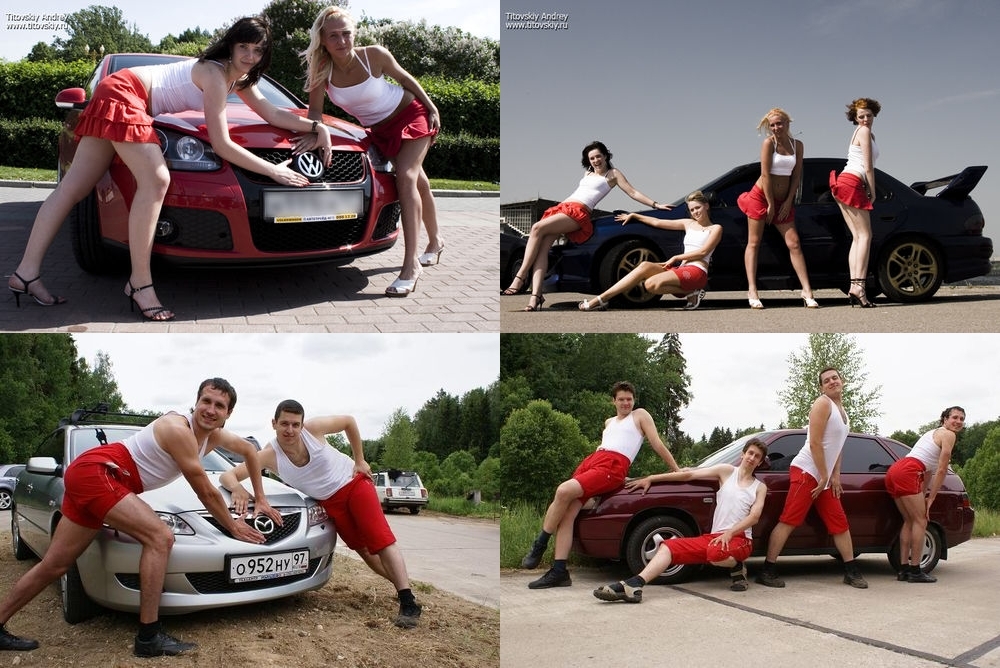
A Web Essay also briefly mentions women’s typical advertising poses in much the same vein. But I think that that’s a little misguided, as a distinction needs to be made between those that are sexually appealing to heterosexual men and others, the basic physiology of sexual reproduction ensuring that men will almost always look ridiculous in the former. Hilariously demonstrated by these pictures from English Russia for instance:

See Sociological Images for a wider discussion of those. Of course, by no means are women (or men) always placed in sexually appealing poses in advertisements, but for some reason women in particular frequently are placed in completely bizarre, often comical ones instead. Goffman notes of them that:

The note of unseriousness struck by a childlike guise is struck by another styling of the self, this one perhaps entirely restricted to advertisements, namely, the use of the entire body as a playful gesticulative device, a sort of body clowning. (Goffman p. 50)

With the possible exception of that with Kim Ok-bin, admittedly these following examples from soju advertisements can not really be described as “childlike.” But however natural they may appear though (again because of our frequent exposure to them), in fact some are extremely awkward to perform: just try them and see!

Starting with Kim Ah-joong (김아중) and Song Hye-gyo (송혜교):

Then Chae Yeon and Kim Ok-bin:

And finally Shin Min-a and Lee Hyori (이효리):

Those with Chae Yeon, Kim Ok-bin, and particularly Shin Min-a also display the “bashful knee bend,” which women frequently but men only infrequently are posed in a display of. Whatever else, it:

…can be read as a forgoing of full effort to be prepared and on the ready in the current social situation, for the position adds a moment to any effort to fight or flee. Once again one finds a posture that seems to presuppose the goodwill of anyone in the surround who could offer harm. (Goffman, p. 45)

But I’ll wisely move on to the second and last motif for this post, that of “Licensed Withdrawal.” In the words of Images of Women in Advertising:


[One] way in which women are disempowered is by displaying them as withdrawn from active participation in the social scene and therefore dependent on others.  This involvement with some inner emotional processing, whether anxiety, ecstasy or introspection, can be symbolized by turning the face away, looking dreamy and introverted, or by covering the face, particularly the mouth, with the hands….

….Rather than being portrayed as active, powerful and in charge, females are commonly shown in this licensed withdrawal mode, removed into internal involvements, overcome with emotions, or symbolically silenced with hand over the mouth….

….In another variation, females are frequently shown withdrawn inwards into some dreamy introverted state;  they pose, become things for others to gaze at and desire.  Males will stereotypically be shown active, engaged, and in charge of the situation.  They are not so much objects for others’ to gaze at, as actors with occupations and professions….

But I’d never given it much thought until I saw this composite of four soju advertisements with Jang Yun-jeong (장윤정), which I also laughed out loud at. What on Earth is she looking at?

More examples with Kim Tae-hee (김태희), and Ku Hye-sun (구혜선):

And to which can be added Han Hyo-joo’s from earlier. Arguably Ku Hye-sun is merely lost in her enjoyment of her drink though, and in that sense the advertisement could even be used to appeal to women(?). But then with the possible exception of the second one of Baek Ji-young’s, no advertisement featured here is particularly objectionable in itself; rather, this post has been about noting recurring features of soju advertisements that – if I may be so presumptuous – now that you’re more aware of, are likely to see across the entire Korean (and Western) media.

It is the pervasiveness of these features that is objectionable, and so rarely countered by alternative images of women.

But on that note, I should point out that I notice and pay attention to soju advertisements with skin just as much as the next guy; actually probably more so (call it an occupational hazard). Still, based on the opinions of the men and women in my classes at least, this one with Song Hye-gyo has the greatest universal appeal, although that is probably simply because of her attractiveness:

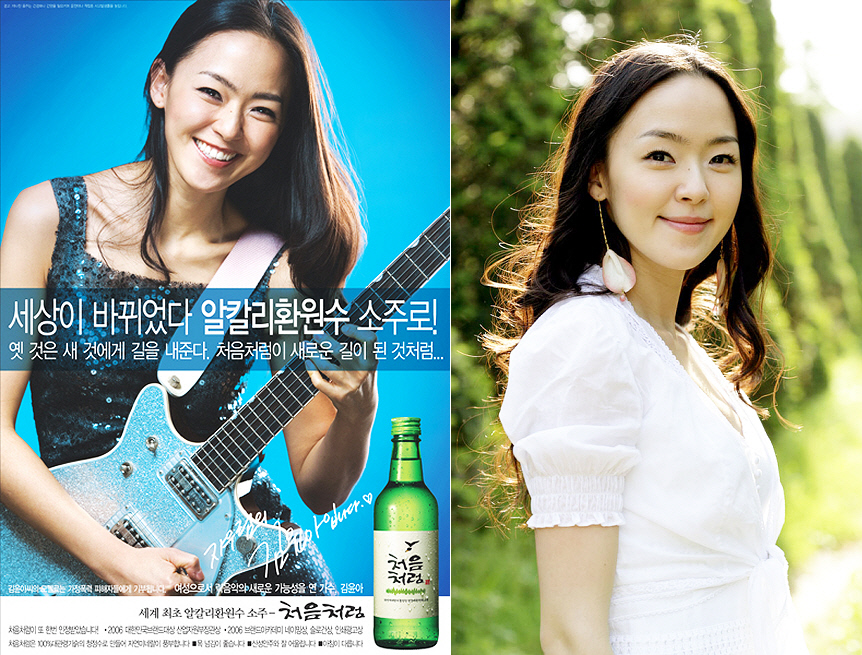
And after writing this post, in fact this one with Kim Yoon-ah (김윤아; not the skater) of the rock band Jaurim (자우림) is my favorite: it’s the only one I’ve seen in which the woman depicted is actually doing something of her own accord and enjoying herself, rather than waiting to be seduced by a man. Baek Ji-young’s does come close of course, but then it’s even more unflattering, and all she is doing is drinking!

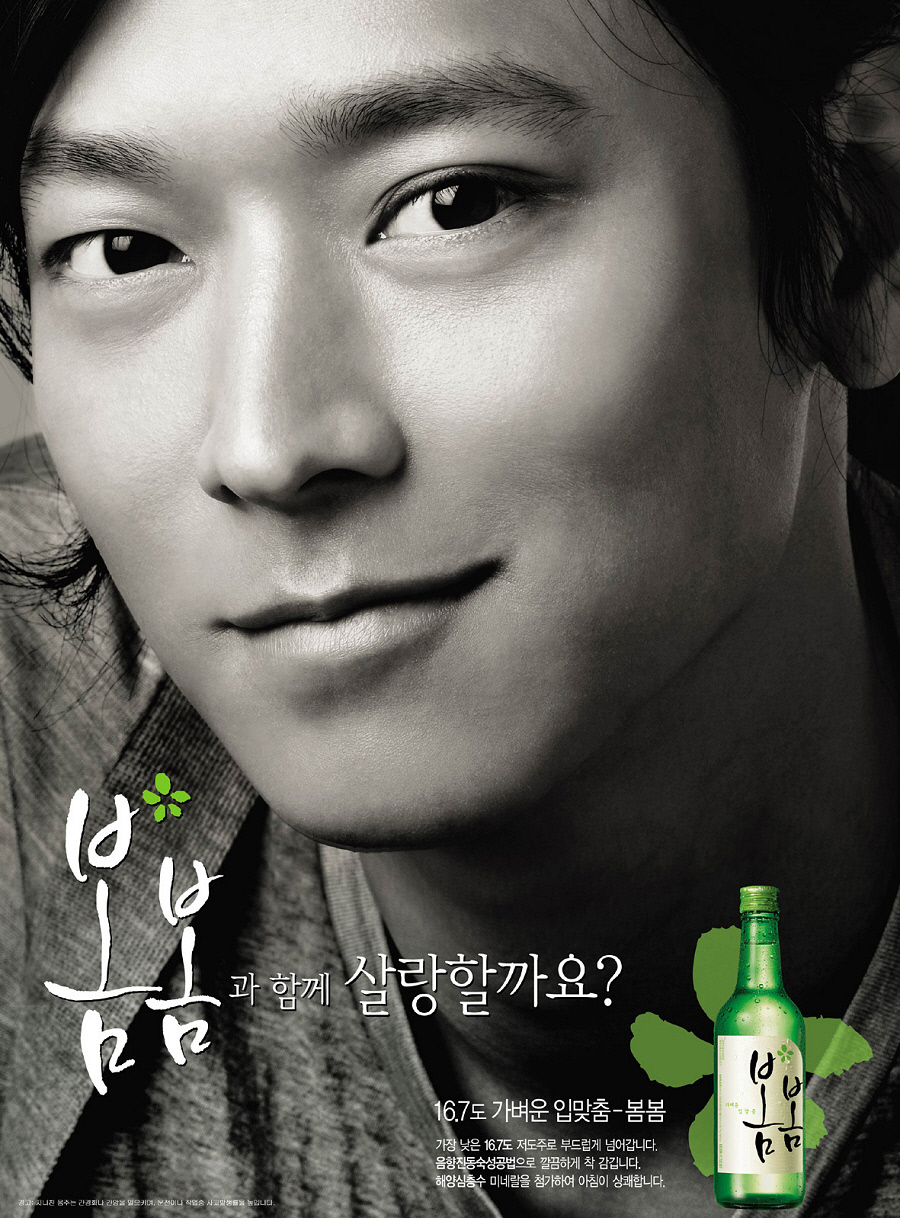
Finally, while it’s technically out of place, I would be remiss in not providing the one which, well, literally had my female students squealing in delight when they saw it. Featuring Kang Dong-won (강동원) for Bom Bom (봄봄; “Spring Spring”), that will be music to the ears of manufacturer Daesun (대선주조), creators of one of the first ever soju brands aimed at women:

See here for more information on the consequences of that for soju advertisements so far; given all the above, it is perhaps no surprise that most soju advertisers still can’t restrain themselves from using womens’ bodies!

(Soju advertisement sources: Shootar.net, or directly from manufacturers’ websites)

Korean Sociological Image #32: Censorship and Indirect Advertising

(Source: unknown)

Ever find yourself wondering at the logic behind some of the blurring and mosaicing on Korean television?

No, I’m not talking about that recent scene from Chuno involving a fully-clothed Lee Da-hae (이다해) I’m afraid. Rather, the proclivity with which Korean broadcasters will disguise the logos of products visible in television programs. Indeed, it’s so taken for granted here that frankly I’ve had trouble finding examples (without simply watching television and waiting for something to pop up that is).

The reason is to prevent indirect advertising, known as ganjeob gwango (간집 광고) in Korean and PPL (Product Placement, or Embedded Marketing) in the industry. But it is usually ineffective, the blurring in the following segment from the talk-show Giboon Joeunnal (기분좋은날) for instance, or A Day That Feels Good, providing little impediment to this Korean blogger in identifying the brand-name and model of the baby monitor and recommending it to her readers (update: see here for a video that provides a collage of much better examples):

Instead of cases like those though, the majority of articles on the subject discuss deliberate, unedited PPL instead, such as this case with the Bon Bibimbap food chain in the drama City Hall (시티홀), this case with actor Jang Hyuk (장혁) and various Canon cameras in an unidentified drama and film below, and especially a recent episode of the comedy show Paemilli-ga Ddottda (패밀리가 떴다), or Family Outing, in which some Nepa (네파) outdoor clothes were used (see here, here, and here).

Family Outing Nepa(Source)

At the end of that last link, the laws regarding PPL are mentioned, the gist of which is that it should not: influence the content or story of the program; be the focus of viewers’ attentions; be mentioned by anyone in the program; and finally, that the program should not persuade you to buy the product in any way. While all sound reasonable however, they are also very open to interpretation, and Korean broadcasters frequently receive warnings or fines from the Korean Broadcasting Communications Committee for falling afoul of them.

Adding even further confusion to the mix, since 2006 PPL of specifically Korean products has been increasingly encouraged as a means to capitalize on the success of the Korean Wave abroad, one recent example being Kia Motor’s deal to provide cars and other paraphernalia for the hugely popular drama IRIS.

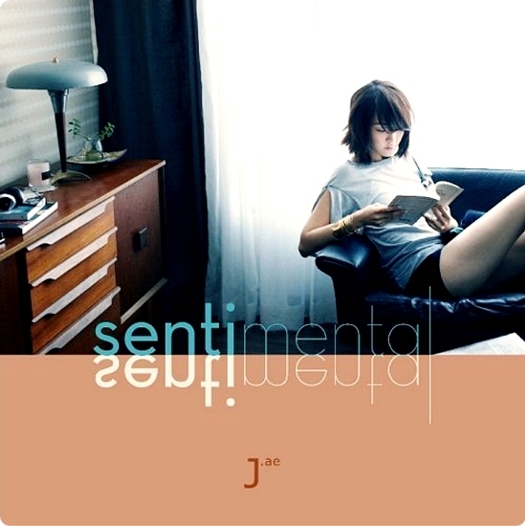
Given that context, then broadcasters’ decisions to ban singer J.ae’s (제이) new album from the airwaves simply because of the lyrics of some songs seems particularly hypocritical:

J.ae’s New Album Rejected by TV Stations

Returning to the music business after three long years must not be as easy as she thought. J.ae’s new special album, “Sentimental,” was ruled unfit for broadcasting by KBS and SBS. MBC is currently reviewing the song to announce the result next week. Broadcasting review panels at the leading national networks said that the lyrics of the title song “No.5” contained direct references to commercial brand names, like Chanel and McDonalds. Network stations are concerned that naming certain brands could cause debates over indirect advertising.

“No. 5” was written by Lee Ji-rin of the indie band Humming Urban Stereo, who was inspired to write a song after seeing an ad about Chanel No.5 perfume on a bus. The song may have succeeded in grabbing the interest of listeners with its unique lyrics, but could not escape from the criticism of indirect advertisement. Jae’s agency said that it’s most unfortunate that her year’s work failed to meet the industry standards, but it will apply for another review after changing some parts of the lyrics. J.ae’s latest album will be out on the market on February 10th. (Source: KBS Global, via Omona They Didn’t)

One wonders what they made of Aqua’s Barbie Girl back in 1997?

J.ae Sentimental .For those of you further interested in J.ae herself, you can read two interviews of her (conducted before the banning) here, and listen to one of the problematic songs No. 5 here (source right: unknown).

Meanwhile, unfortunately this is by no means the first time that artists’ songs have been banned in Korea simply because their lyrics could be construed as PPL, a case involving Epik High (에픽하이) back in April showing that even indirect mention of the artists’ own website can be considered problematic. Moreover, against the argument that both cases are merely inane but innocuous, they do add to the essential arbitrariness of censorship in Korea, English song lyrics acceptable on 1950s American television banned because they could sound vaguely sexual to non native speakers for instance (see #2 here), and accordingly it doesn’t take a great leap of imagination to imagine a time when censors will ultimately use PPL as a convenient excuse to ban a disagreeable but otherwise completely legal cultural product.

Or perhaps they already have? If you know of any previous cases of banning based on PPL, then please pass them on, whether the PPL was used as a ruse or otherwise!

(For more posts in the Korean Sociological Images series, see here)
Korean Sociological Image #31: Gender Roles & Korean Holidays

With apologies to teachers of Korean children everywhere, tired of their Korea Gender Lunar New Yearproclivity for repeating the nonsensical foreign words found in Korean advertisements, there is actually much to be admired in KT’s recent olleh (올레) campaign. For under the rubric da gu-rae-rul dwee-jeeb-ora (다 그래를 뒤집어라), or “turn the things that bug you on their heads,” it has a definite self-depreciating streak, poking fun at various groups of Koreans and their habits in a way that feels curiously similar to British humor (source, right: Paranzui).

Coming from a society notorious for always presenting itself in the best possible light, this is very refreshing.

Examples on TV so far have included: elderly women being encouraged not to all have the same boring, monotonous hairstyle; men to nap on travel rugs in parks with their children playing next to them rather than always lazing around at home on weekends; Koreans not to always say the same reflexive English phrases to foreigners that they learned at school; and employees to choose their own meals rather than meekly ordering whatever the boss is having.

And there are many more like it. But all pale in comparison to the directness of the latest in the series, which targets the disproportionate burden placed women during “holidays” like Seollal (설날), coming up this weekend:

Incidentally, it shows another interesting aspect of Korean society: their lack of embarrassment (some would say alacrity) in showing bodily functions. Already having rather too much of that sort of thing at home with 2 young daughters to look after though, then I’ll wisely refrain from further commentary on that here.

Instead, I’ll look forward to possibly seeing another that covers a second reason many women hate Seollal: if they’re in their late-20s or older, being pestered by their relatives to find a partner and get married, and indeed I have a 29 year-old friend and a 32 year-old sister-in-law that will be staying well away from home because of precisely that. A phenomenon hardly confined to Korea of course, as is women doing more domestic work than men, but then I’d wager that many foreign women at similar ages reading this can attest to the sheer amazement Koreans experience when they learn that they’re not married!

On that note, apologies if all this sounds familiar to many readers. But while the Korean media will be full of similar commentary this week, this is the first time I’ve seen something like it in a Korean advertisement, and as part of a particularly popular series at that. And as they say, a picture tells a thousand words…

Or perhaps there have been earlier ones that I missed, or alternatively others by different companies playing at the moment? Please let me know!

(For more posts in the Korean Sociological Image series, see here)

Korean Sociological Image #30: Exploiting Koreans’ Body Insecurities

Like everywhere else, Korea has a long tradition of celebrities endorsing government campaigns.

Unlike everywhere else, a “huge proportion of Korean ads depend on famous people,” says Bruce Haines, head of Korea’s largest ad agency Cheil Worldwide, a tendency which in its crudest form degenerates Korean advertising into merely “beautiful people holding a bottle.” In turn, that leads to a scramble for and subsequent overexposure of whichever Korean stars are most popular at that moment, regardless of their inappropriateness for the product(s).

Government campaigns are no different, to my mind the most notorious case still being the National Election Commission’s (중앙선거관리위원회) choice of The Wondergirls (원더걸스) to encourage people to vote in local elections in April 2008. Needless to say, I can’t think of anyone more inappropriate than teenagers (two of whom were only 15), and their choice of outfits simply beggars belief:

Vodpod videos no longer available.

But again, no different to what they wore in commercials at the time. Which is precisely my point: regardless of their merits, major trends in advertising are bound to be reflected in government campaigns sooner or later.

And as long term readers of this blog will be well aware, one trend is encouraging consumers to associate certain foods and drinks with certain desired body shapes. While it is hardly unique to Korea, it is done to excess here.

Is it any wonder then, that with the decline of the domestic rice industy, and concerns food security as a whole, that the government would do the same when promoting the consumption of domestic foods and drinks?

Last year for instance, I gave the example of how the Korean rice wine Makgeolli (막걸리) was being marketed to women on the basis that it is supposedly good for one’s skin. Now, I’ve found two more examples by the Ministry for Food, Agriculture, Forestry and Fisheries (농림수산식품부; MIFAFF), using the new group 4Minute (포미닛) and the Olympic medalist Park Tae-hwan (박태환) respectively:

Vodpod videos no longer available.

Vodpod videos no longer available.

To be clear, I am not saying that either are inappropriate choices. Actually I think they’re rather good: both are very popular, and it turns out that 4minutes’ egg song is a variation of their recent hit “Hot issue” too. I also fully concede that the connections between consumption of the product and obtaining an attractive body are fleeting (4minute) or merely implied (Park Tae-hwan) at best.

But still, they’re there. And given the long-term problems with Korean agriculture as identified above, then I hereby predict that we’re going to be seeing many more public campaigns like these in 2010. In particular, the links made between the products being advertised and obtaining an “S-line” and so on are going to be made more explicit.

Sound like an exaggeration? Well, recall how quickly commercial incentives have transformed decades-old standards for soju advertisements: just three years ago, they overwhelmingly offered virginal images of women, whereas now it’s rather difficult to find ones that don’t present them as eminently sexually available. Moreover, in an effort to appeal more to women, soju companies too are encouraging them to associate new lower-strength brands with maintaining a good body, however implausibly.

But perhaps an even more appropriate example is soy milk. If you’ll bear with me, being allergic to milk means that I follow developments in the soy milk industry here pretty closely, and Starbucks Korea’s belated decision to add soy to its menu in 2005 had a huge impact on my quality of life here! Not unlike the drinks themselves though (anybody know where I can find these flavored ones?) – or, indeed, government campaigns – soy milk commercials tend to be rather bland, so I certainly sat up and took notice when I first saw this one a few days ago:

Vodpod videos no longer available.

Soy milk companies too then, seem to be adopting the tactics of their more popular counterparts now. Lest I appear overly critical though, consider the scene 0:03 from 0:06 where 17 year-old Kim Hyun-ah’s says “[S]라인을 유지하려면 어쩔 수 없어,” or “If you want to maintain your S-line, you have no choice but to [drink] this.” Despite my constant criticisms of that sort of thing, and my earnest desire that my daughters don’t grow up to repeat it, I have to admit that I can’t help but find her expression and tone of voice, well, extremely cute…

Yes, I know: very hypocritical of me, and I await your counsel. But on a final, more serious note, consider Garaetteok Day (가래떡데이), MIFAFF’s scheme since 2006 to get people to eat stick-shaped rice cakes instead of Pepero chocolate sticks on November 11 each year. Promoted mostly as a romantic event for couples, as are most imported and/or artificially created holidays (Christmas Day, for instance, is the date the most condoms are sold in Korea), is it really too much of a jump to imagine that concerns about one’s appearances will be added to that too? Watch this space!

Update: An alternative way of exploiting Koreans’ associations with November 11 (source):

(For all posts in the Korean Sociological Images series, see here)

Share

Open Thread #3

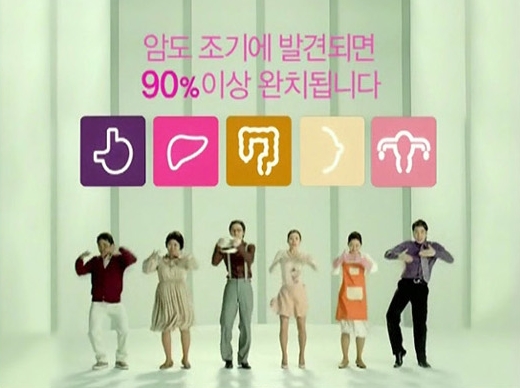
I may be wrong in assuming that public service announcements in Western countries still don’t feature stylized breasts and vaginas(?),  but regardless I love Korea’s no-nonsense attitudes to the body and bodily functions, in this case at least easily trumping any qualms that the Ministry for Health, Welfare and Family Affairs (보건복지가족부) may have had about featuring them in its campaign for people to get regularly checked for cancer.

What I really love though, is that it has been turned into the song and dance below:

Vodpod videos no longer available.

Easily to laugh at perhaps, but are more serious but otherwise rather dull campaigns in Western countries really more effective?

Meanwhile, apologies to all those readers who were looking forward to my promised restarting of the Korean Gender Reader series in the new year,  but after much soul-searching this week – prompted by my catching a cold after writing the last two posts until the small hours – I’ve been forced to admit that I still don’t have the time. I may have next month if some anticipated changes are made to my job, but until then, please feel free to pass on and discuss any Korean gender, media and sexuality-related stories yourselves here!

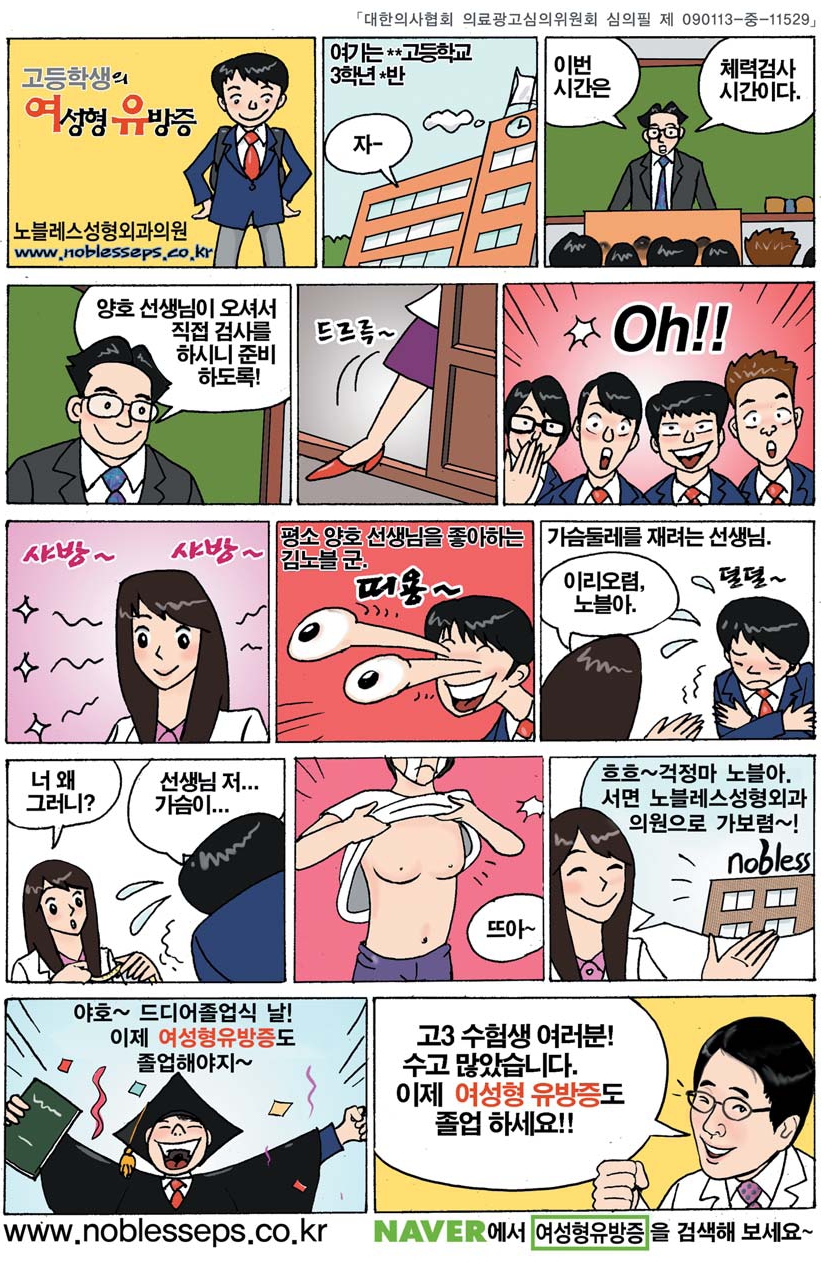
Update – Seeing as we’re talking about Korean oddities, consider the following advertisement for a cosmetic surgery clinic here in Busan:

From page 18 of the 4th of January Busan edition of Focus newspaper – the entertainment section no less. And don’t get me wrong: with the proviso that Noblesse has a vested interest in fostering insecurities about one’s body image, I’d image that female-like breasts are no laughing matter for the high-school boys with the misfortune of having them.

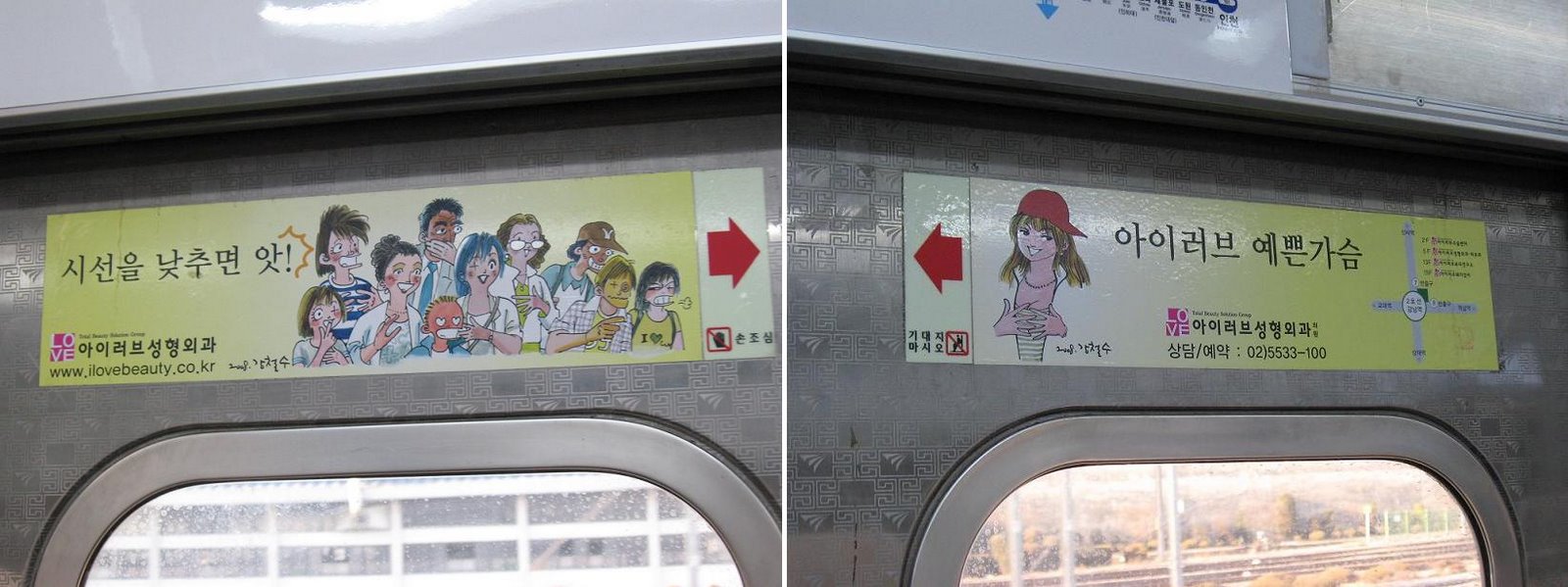
It is also common for Korean cosmetic surgery clinics to use comics in their advertisements, one that readily comes to mind consisting of a group of people gaping in either awe, lust, or jealousy at a woman who has just received breast implants. You may have seen it on the Seoul subway:

Thanks to reader Marilyn for passing on the photo. And again it is unsophisticated perhaps, but regardless of one’s opinion of cosmetic surgery in general, it was probably effective: it got both Marilyn’s and my own attentions at least!

Granted that the Noblesse advertisement remains just plain bizarre though, albeit a little less so when you realize that the woman featured was either the school nurse or a visiting government health inspector, not simply a new teacher.

Finally, while we’re on the subject of cartoons, here’s one I couldn’t help smiling at a couple of days later (from Focus newspaper again):

In case you don’t get it, the young man is living with his older sister but has to find his own place. At first, he thinks the place the real estate agent shows him is too old for the rent being asked, but he changes his mind when he sees the view from his window. In the final panel, the real estate agent crumbles about how difficult his job is these days…

More problematic in Japan than in Korea perhaps, where I hear that voyeurism is so taken for granted that women can expect their underwear to be stolen if it is hung from the first or even the second floor, or is that just an exaggeration? Alternatively, is it a problem in Korea too?

Share

Korean Sociological Image #29: JYP’s Objectification of Women

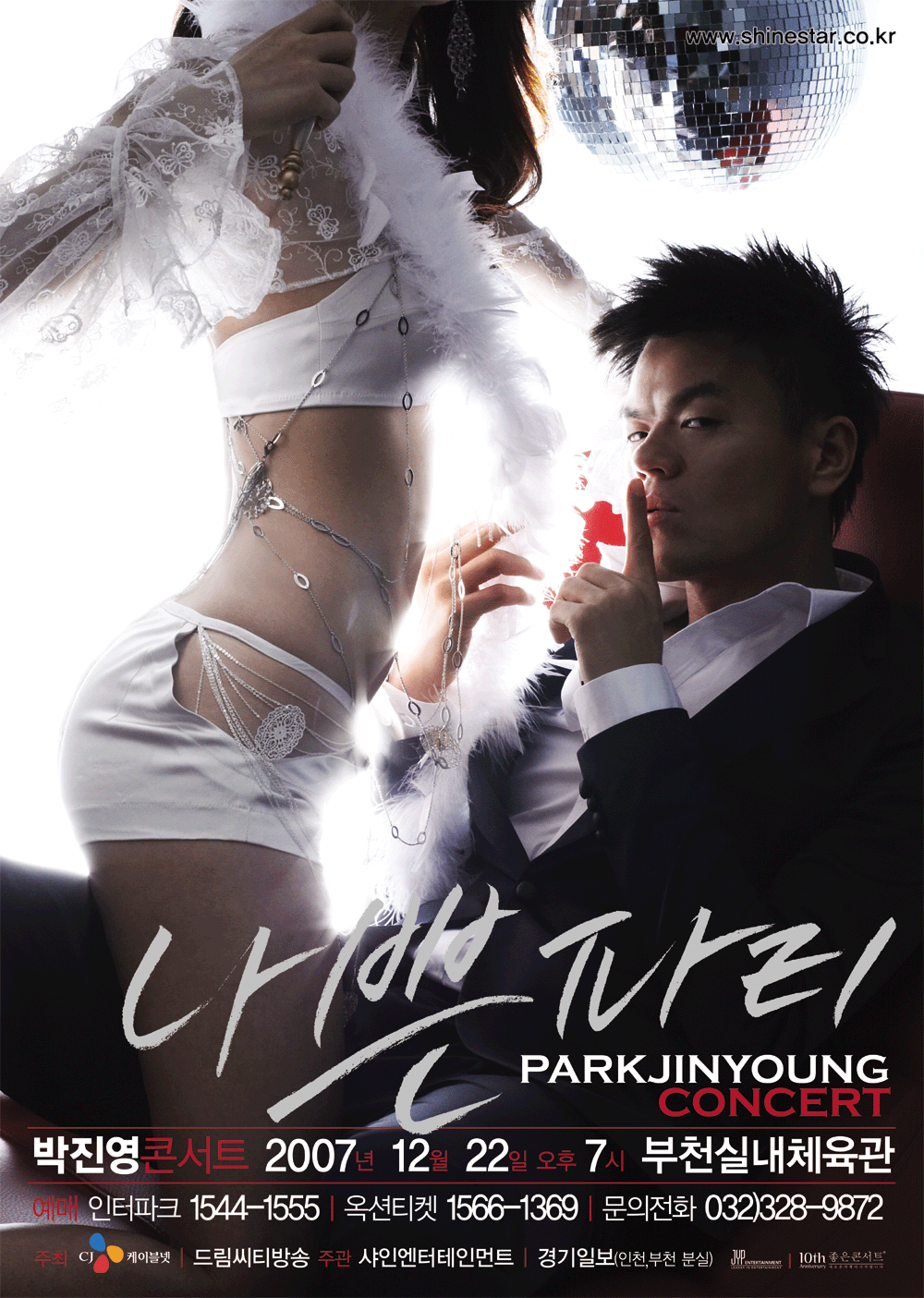
(Source)

What’s wrong with this advertisement?

When I first saw it, I couldn’t really put my finger on it, other than noting the similarity to some iconic but controversial music videos by Robert Palmer. Which was kind of ironic, considering what Park Jin-young (박진영) is putting his fingers on.

With thanks to an anonymous reader for passing it on, both these problematic elements and more are present in his new music video No Love, No More (노러브노모어), the main subject of this post. But first, a quick explanation of what was so controversial about those Robert Palmer videos exactly, for many of my younger readers may not even have heard of him.

As Alyx Vesey explains in Feminist Music Geek, the crucial one was “Addicted to Love” from 1986, and as a feminist she had trouble with it:

…for one big, obvious, highlighter-yellow reason. It’s so blatantly sexist. The models who comprise Palmer’s backing band are normatively beautiful, musically inept, interchangeable, ornamental, passive, and blankly spectacular. They’re kinda like a Busby Berkeley chorus line, only on sedatives and with visible nipples.

And while it’s a little off-topic for a post ostensibly about JYP, I think it’s worth quoting her a little more:

And yet. I can’t let this one go so easily. It’s an indelible image that is simple and yet iconic in design (it’s so effective that ”Simply Irresistible” and “I Didn’t Mean to Turn You On” only mildly revise the concept). Thus, it’s also easily replicable. When you put “Addicted to Love” alongside another lexicon 1980s video like, say, Michael Jackson’s “Thriller,” it’s much easier to match (many people, including Jackson, tried and failed to reach or exceed that video’s epic proportions).

It’s also an easy concept to subvert, which is my primary interest. I’d like to highlight a few instances where women take on “Addicted to Love” and, in the process of recasting and reconfiguration, potentially disrupt the original music video’s sexist aims.

Which I highly encourage you to check out. Meanwhile, let me also present the Simply Irresistible music video here, for I think that with the women dancing in the background, it is the most similar of the three to No Love No More:

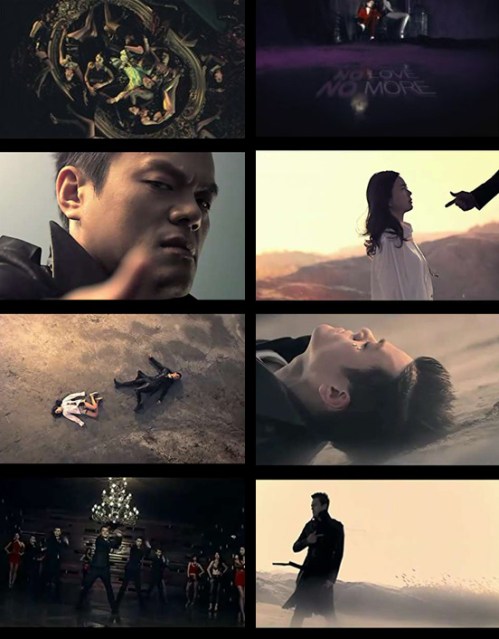
Finally, No Love No More itself. Regardless of the criticisms in this post, it probably has the best picture quality of any music video I’ve ever watched on Youtube, so make sure to click on “HD”:

Clearly not a carbon copy of Robert Palmer’s videos then, and JYP, or whomever was responsible for them, might reasonably claim not to have been at all influenced by those. But whatever the origins, the women in the barn (and in the poster) are indeed extremely similar, and almost all are objectified.

And yet there are still more problematic elements in it, pointed out to me by the reader who passed the video on. Unfortunately, I didn’t have time to ask permission to quote her email before writing (apologies for my over-enthusiasm), so she’ll have to remain anonymous:

…the video infuriates me. Maybe it’s because I come from a country where explicit violence against women is not only extremely taboo but also illegal to portray in music videos. Still, given that domestic violence is such a formidable problem in this country, I find it mind-blowingly irresponsible that the most powerful man in Korean music at the moment puts out a video like this (source, right: unknown).

Shooting his girlfriend execution-style (apparently it’s okay to show her blood spraying out as her body crumples to the ground but it’s not okay to show an actual gun doing the shooting)… he then turns the “gun” on himself, and we’re expected to sympathize with him as a tear runs down his cheek as he takes his last breath. He executed his girlfriend, but the poor guy must have felt immense pain to have been driven to do such a thing. Break to the rest of the video, which simply consists of JYP dancing while dozens of women stand around or grope him as sexual props. JYP’s entire image seems to rely on the objectification of women, as demonstrated by [that poster], for one example…

…in which he is fingering a woman’s breasts, “playing her” as if she was a musical instrument. Now I’m definitely no fan of K-pop, and normally have nothing to do with it, but this video of his has been playing over and over on TV, and I can’t help but fear the message it sends young Koreans. JYP is, after all, immensely popular and influential in the K-music world, as he owns one of the most successful music labels in Korea and appears on countless TV shows and commercials. I find it surprising that no one seems to take offense to this video, which romanticizes violent “crimes of passion” (end).

(Source)

I agree, and as that reader is almost entirely responsible for this post, I encourage her to give me permission to print her name so that she can receive the credit for it!

But I would of course appreciate it if any other readers had more to add, on either the music video, the poster, and/or JYP’s marketing in general. And I confess, I know little about JYP’s music. So, to any fans of his in particular, would you say that that characterization of him is fair?

(For more posts in the Korean Sociological Image series, see here)

Mise En Scène: The Sexiest Korean Commercial Ever?

It’s much easier to say than do, but it’s true: sexiness is an attitude. To whomever is responsible for the spate of “sexy dances” in the Korean media in 2009, the vast majority of which have been anything but, let me counter with this 2005 Mis en scène commercial featuring Ha Ji-won (하지원), whose smoldering gaze at Jo In-sung (조인성) has burned in my memory ever since:

Granted, perhaps you had to be there: something really is lost in the transition to your smaller computer screen. And apologies for the poor quality, but this is now the only copy of the 30-second version available that I am aware of. Still, it’s worth preserving, even if only for myself.

I didn’t realize just how much however, until I saw this alternate 16-second version. While this particular copy – again, the only one –  has better video quality, and is worth watching just for that reason, it ultimately falls flat because it lacks the build-up of the music:

By the way, it’s actually her gaze at 0:21 (or 0:09) that really did it for me in 2005, but I’m certainly warming to her long lingering one at the beginning. Meanwhile, like it or loathe it, can anyone suggest any more genuinely sexy Korean commercials, subtle or otherwise? Perhaps I should start a new series…

Update: This was part of a series of several with the couple, most of which you can find here or on Youtube. Considering how easy those were to find though, I was surprised and disappointed at how this one slipped through the net so to speak (no pun intended).

Share

The Alphabetization of Korean Women’s Body Types: Origins

(Update, 2013: See here and here for much more up to date posts on this topic, and for similar cases in English-speaking countries in the 1910s-1930s and 1940s.)

That the female body has occupied a central place in the Western cultural imagination hardly comes as news, says comparative literature writer Susan Suleiman. And while I lack knowledge of Korean counterparts to the historical examples in the visual arts, literature, and religion that she mentions, I don’t doubt that they exist.

But what to make of the recent Korean trend towards categorizing the female body and/or body parts into a plethora of different romanized “lines”? Where do they fit in?

It’s been easy enough to prove that they have become a pervasive feature of Korean popular culture; so much so, that many have acquired a life of their own, bearing little resemblance to the (idealized) women’s bodies they were first used to describe. But those earlier observations of mine were devoid of context, something which began troubling me once I paused to consider the source of the above article on the most recent manifestations of the trend, about Korean cosmetic surgeons classifying woman’s buttocks into four types. To be precise, it raised two questions, which I would appreciate readers’ help with.

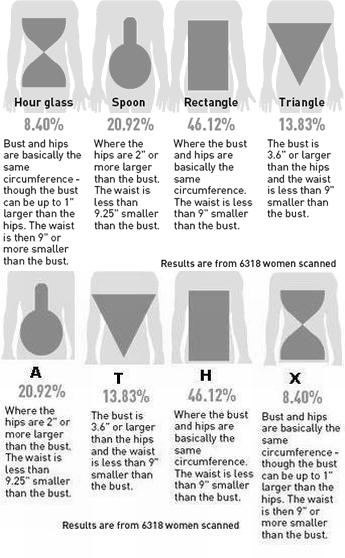
The first is that is this trend of categorization qualitatively and/or quantitatively different to that which occurs in the Western media? As to the former, probably not: I need hardly point out the similar obsession with women’s bodies there, or that it also provides often impossible ideals to live up to. And however much English speakers may find Koreans’ romanization habit in this particular case both curious and amusing (and thereby memorable), arguably it merely reflects Koreans’ general obsession with English, grafted on to an interest in women’s body forms that is not dissimilar to that of the West. Indeed, even some native English sources are beginning to describe women’s bodies in terms of letters (see below), and while that failed to catch on, are they really different to describing women’s bodies in terms of bananas and hourglasses and so forth?

(Image sources: top; bottom. The results are from this 2005 study)

Forgive me for stating the obvious perhaps, and I mention all that not to exonerate the Korean media for the ways in which it warps and distorts women’s body images. Rather, that if I still feel that it does so more than its Western counterparts nevertheless (and I do), then that something more than my gut feeling is necessary to convince skeptics. And perhaps the difference simply lies in the much greater extent to which S-lines and V-lines and so forth are mentioned? After all, not for nothing do I describe them as a “pervasive feature of Korean popular culture.”

Unfortunately however, providing empirical proof of that is rather difficult, at least for a humble blogger. But I can provide indirect evidence in the meantime, which I would very grateful if any readers could add to.

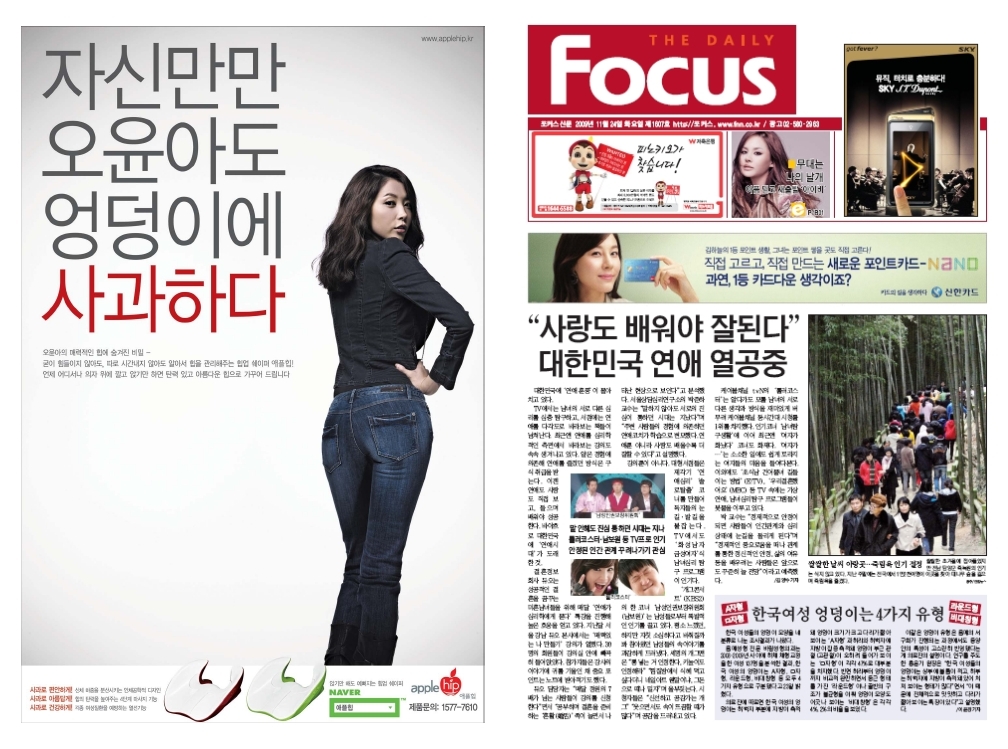
The first is the source of the article on women’s buttocks I’ve translated at the end of this post. While it may not be obvious from the opening image, it’s actually on the front page of Focus, a free daily newspaper: the image on its left, not coincidentally an advertisement for a chair which supposedly shapes one’s buttocks, part of an accompanying cover.

To your average Westerner, I’d wager that this choice would immediately single out the newspaper as a tabloid—”Women have four kinds of ass! Read all about it!”—but I’ve been asking my 20-something students’ opinions of Focus and other newspapers over the past week, and only a minority considered it such. And why would they, considering that the article was also covered by numerous other news sources (see here, here, and here), including the authoritative Hanguk Kyeongjae, a business newspaper, and which even had a helpful graphic?

Ergo, the bar for tabloid journalism is rather lower in Korea, and this extends to mainstream Korean portal sites, about which I wrote the following in my last post:

Unlike their English counterparts, you have roughly a 50% chance of opening Naver, Daum, Nate, Yahoo!Korea and kr.msn.com to be greeted with headlines and thumbnail pictures about sex scandals, accidental exposures (no-chool;노출) of female celebrities, and/or crazed nude Westerners.

To which I should have added—of course—numerous thumbnail pictures of female celebrities’ S-lines, and also a warning to never look at any of the otherwise innocuous images in the “image gallery” at the bottom of Yahoo!Korea in particular, for if you do you’ll frequently be greeted with advertisements for videos of celebrities’ nipple-slips and so on alongside those birds, flowers, and interesting landscapes.

What’s more, if portal sites are fair game, is it any wonder that children are also encouraged to be concerned about their S-lines and so on? And don’t get me started on ubiquitous narrator models.

Finally, consider what Javabeans wrote on the subject, a blogger on Korean dramas who is a much more authoritative source on Korean television than I will ever be:

…while this [romanization] practice is seemingly frivolous on the surface, it actually belies much more pernicious trends in society at large, when you have celebrities vocally espousing their alphabet-lines and therefore actually objectifying themselves as a conglomeration of “perfect” body parts rather than as whole, genuine people. (my emphasis)

With that combination, something has finally clicked for me: why it is so difficult to find Korean language sources on sexism in the media, and on advertisements in particular? I’ve been looking on and off for years now, and while I accept (and would be more than happy to learn) that perhaps I’ve simply been using the wrong search terms and/or looking in the wrong places, that it is so difficult in the first place is surely telling. A solution though, is perhaps provided by Daniel Jonah Goldhagen in Hitler’s Willing Executioners: Ordinary Germans and the Holocaust – no, really – who had this to say about anti-Semitism in Nazi Germany:

A general problem in uncovering lost cultural axioms and cognitive orientations of societies since gone or transformed is that they are often not articulated as clearly, frequently, or loudly as their importance for the life of a given society and its individual members might suggest. In the words of one student of German attitudes during the Nazi period, “to be an anti-Semite in Hitler’s Germany was so commonplace as to go practically unnoticed.” Notions fundamental to the dominant worldview and operation of a society, precisely because they are taken for granted, often are not expressed in a manner commensurate with their prominence and significance or, when uttered, seen as worthy by others to be noted and recorded. (Vintage Books Edition, Feb. 1997; p.32)

Not lost or transformed, but equally obtuse to someone from another culture perhaps, and which I’m still only just starting to make a dent in.

But a good grounding for that would be the origins of Koreans’ obsession with romanizing women’s bodies, the second question the article raised for me. Or to be honest, an element of the subject I realized I’d paid little attention to when, serendipitously, Korean reader Chorahan provided this extremely informative comment on the subject on another post. With permission, I am happy to now place readers in her more than capable hands:

…I think the specifics of the alphabetization of Korean women are best approached in the context of the classification of women into certain rigid subtypes (read: simplified stereotypes) of women. The S-line and V-line are part of the ‘formula’ for the ‘pretty girl’ here, as are humongous pupils in big double-lidded eyes, cosmetically unaided pallor, bone-tight ligaments, etc. I would suggest that people here perpetuate this mind-boggling state of sheeple-ness precisely because this ‘formula’ serves as helpful, socially constructed and ordained criteria – with which to deduce the type of woman being dealt with, and to adjust manners to suit.

Manners are adjusted according to the woman’s ‘type’ because it is widely taken as a given that certain things can/cannot be said/thought about women depending on how they look (value-judgment wise). The socially ‘accepted’ or ‘conceivable’ scenario that follows any such encounter is rigidly stratified into according variations. My take on this phenomenon is that this is directly derived from a warped and popularized Confucian principle popularized in the Chosun dynasty called 정명론 (正名論), or literally ‘right name idea’, in which the ‘father should be fatherlike and the son sonlike etc.’ A beauty should be treated as a beauty, or a ‘talking flower’; an ugly girl can be laughed at/with (hence the ‘ugly’—or, as I like to put it, ‘uglified’—comedian typification.)

I’m a Korean girl and I’ve lived in Seoul nearly all my life, going through the average Korean educational system to enter the undergraduate level here. Inferring from the numerous social contexts in which I’ve encountered such blunt references to conventionally ugly/pretty features, I would venture the possibility that in originally familial, communal societies where everyone had to stick together whether they liked it or not, the ‘insult’ was not only an insult per se, but also employed as a form of veiled endearment. This is widely considered the ideal sort of 부담없는 (easygoing) interaction between two close individuals—dialogue employing insult as endearment, or ‘constructively realistic advice to help you in the real world’—and is often the most commonly resorted-to excuse for horrific verbal abuse. (Coloring vacuous praise according to these featural types is also just such a form of ordained interaction, considered honest and respectful and completely normal.)

I do not, however, think that this should simply be chalked up to individual stupidity on the part of people that blindly follow this line of thought/action—quite the contrary. I think it’s very telling that the homogenizing retardation of the populace in this regard is and has always been spearheaded by *the commercial/entertainment media sector,* which is—big surprise— notoriously homogenized/stereotyped! It has even resorted to homogenizing certain snapshots of stereotyped ‘diversity’ or ‘unconventionality’ in the form of teen idols that are held up on pedestals as somehow being harbingers of Korea’s ‘openness’ and ‘creativity of the youth’.

As a twenty-something Korean woman towards whom those commercials are directly marketed, I find all this very sad and disgusting and lame, and I am very troubled by the thought that people actually think Korean society is improving/ has improved in its bridging of (sexual or gender-based, if that’s your cup of tea, though I don’t think that’s all) dichotomies (if dichotomies are indeed criteria on which to issue any normative judgment.)

I think it is not people being stupid, but the other way around (stupid being people, or stupidity donning the guise of specific individual avatars): the root of the problem (of not seeing people for the people they are, and adjusting social perception/performance according to formulas hammered in by peer pressure since birth) is a sort of warped ‘commodification of human beings’ + ‘Confucian backwash’ that is only being exacerbated as people constantly look to external/ international solutions to symptoms that stem from an overlooked, simplified, but inherently endogenous disease that must be addressed within its own context.

I definitely think something fundamental has to give. This isn’t just an odd cultural quirk to cluck tongues over – this S-line, this V-line trope, this alphabetization of women just as much as the stereotyping of men – it’s seriously symptomatic of some skewed rift in the goodness and saneness and kindness of people here vs. the expressed, contorted manifestations of such potential strengths.

Not exactly concise, but this is my very understandably strong opinion regarding the topic of this post. But I’m no sociologist, so I wouldn’t know.

p.s. In first paragraph—sorry, this could be misunderstood, i don’t propose any normative suggestion—I’m suggesting as an explanation that people ‘are perpetuating’ etc. (end)

Despite all that context however, one still shudders at the thought that the following was the first thing millions of Koreans read one November morning:

Korean Women Have 4 Types of Buttocks

The results of a survey about the different types of Korean women’s buttocks have just been released.

Baram (wind) Cosmetic Surgery Clinic, which focuses on operations on the body rather than the face, performed operations on the lower bodies of 137 female patients in 2008-2009. An analysis of their different types of buttocks was performed, and the results released on the 23rd of November. All in all, Korean women have 4 types: “A”, “ㅁ,” “Round,” and “Asymmetrical/Imbalanced.”

According to the team of doctors there, women with type A have a lot of accumulated fat in their thighs, making buttocks look big and their legs short, and those with type ㅁ, a lot of accumulated fat in their thighs and around their waists, making their hips look relatively narrow. Both comprise 47% of Korean women each. On the other hand, those with relatively smooth and curved hips and buttocks have a Round type, and those with an asymmetrical or imbalanced pelvis have an asymmetrical or imbalanced type, compromising 4% and 2% of Korean women respectively.

As the doctors explain, even though Korean women’s bodies are Westernizing, Korean women still have these 4 East-Asian types of buttocks.  According to the doctor in charge of this study, Hong Yun-gi, “because Korean women’s buttocks don’t have much volume at the top, but have a lot of accumulated fat at the bottom, they look a little droopy” and so overall “their buttocks look boring overall, and their legs short.” (end)

No, the extrapolation from 137 cosmetic surgery patients to all Korean women was not a mistranslation I’m afraid. And I beg to differ on Korean women’s buttocks looking boring also, but that discussion is probably best avoided. Instead consider, first, Jezebel’s take on “the ridiculousness of dressing for your shape,” many guides to which came up as I researched this post, especially this one from The Daily Mail, a UK tabloid. Next, another case of Korean romanization gone mad that I originally planned to look at alongside the above, albeit of women’s dresses rather than their bodies per se:

And finally, literally the very first thing that came to mind when I saw the Korean article on women’s buttocks: the following picture from a post on male objectification from Sociological Images, because I wondered if men’s buttocks would ever similarly be categorized. But given that a page exists on Wikipedia for “female body shape” for instance, but not on male’s, then I suspect not in the near future.

On a side note, and not that I want to repeat the experience anytime soon, but searching for images of Korean men’s buttocks instead proved impossible, at least on Korean portal sites. But perhaps again…*cough*…I’m not looking in the right places?

Korean Sociological Image #27: What, Koreans Can Do The Love Shake Too?

Something that manages to combine both the best and the worst of the Korean media.

Go to the Korean portal site Nate at the moment, and you’ll see a small advertisement with an old VW Beetle on it with the words “흔들리는 자동차 안에선 무슨일이?” or “What is happening inside the shaking car?”. And if you’re using Internet Explorer – this is Korea after all – then it will invite you to move your cursor over it. If you do, then the screen above will pop up, with the following commercial:

Vodpod videos no longer available.

The good point about the commercial is the joke about having sex in a car…and just a few days after I wrote that you never see that sort of thing in the Korean media too; hopefully, this shows how much attitudes are changing. Not that there wasn’t already a great deal of sexual innuendo and increasing amounts of skin in the Korean media of course, but the latter especially is by no means a reflection of open and healthy attitudes to sex per se.

If any readers can think of any similar references to sex in the media before it though, then I’d be happy to be proved wrong. And if you do, then I’d wager that you too first found them on a mainstream Korean portal site. Unlike their English-language counterparts, you have roughly a 50% chance of opening Naver, Daum, Nate, Yahoo!Korea and kr.msn.com to be greeted with headlines and thumbnail pictures about sex scandals, accidental exposures (no-chool;노출) of female celebrities, and/or crazed nude Westerners. Which brings me to the commercial’s bad point.

I first saw this advertisement on a work computer during a break this afternoon, already thinking of writing about it here as soon as I saw the shaking car (and as a side-benefit, it meant I could put off the translation for the post I originally planned!).  But when I saw who the occupants were I was simply floored. For in a supreme irony, just two minutes earlier I had been doing a free-talking activity with my students about national stereotypes.

Don’t believe me? Sure, I admit I’m not averse to embellishing details for a good story on occasion. But I really had been doing page 22-23 of my edition of Taboos and Issues with them (which I highly recommend by the way, and I was surprised that my students shared many of my stereotypes about European nationalities). And regardless, I would still have been sat there thinking why, oh why, did the second couple have to be Westerners?

Now, I’ve already written a great deal about how many Koreans have stereotypes of Westerners as being much more sexually liberal and promiscuous than Koreans (especially women), so I won’t rehash that here. And of course there’s a certain element of truth in that (most Koreans live with their parents remember), and it’s not meant entirely negatively and/or without a sense of envy either, although I have heard from some Western female friends that it can lead to some Korean men expecting guaranteed sex on a first date, and so on. Examples like this commercial though, demonstrate why that stereotype is unlikely to disappear anytime soon.

Against that, I grant that it appears to have been filmed in a Western city, and that if you watch the video to its conclusion, then you see the Korean couple deciding to get wholeheartedly into the “Love Shake”™ too. But to which I reply a) Why not a Korean city? and b) wouldn’t the Korean couple have appeared more confident and prouder of their nationality if, instead of the Westerners, it had been them in the shaking car, with the Westerners later copying them?

Seriously, how to explain not having either without some serious Occidentalism going on, of which artificial sexual dichotomies have always been a core component? I’m open to suggestions.

Update: On a side note, I know little about the actors Seo Woo (서우) and Im Joo-hwan (임주환) sorry (see Dramabeans for more information on both), but I can confirm that this innocent(ish) looking image of Seo Woo is consistent with her role in both Tamna the Island (탐나는도다), ironically groundbreaking in that it featured a romance between a Korean woman and a foreign male (I think – I only watched the first few episodes sorry), and also Paju (파주; see #7 here)…or at least consistent with the way it was advertised. I just mention that because many Korean celebrities appear in so many commercials that their brand easily gets diluted so to speak, so I couldn’t help but notice that she doesn’t appear to be making the same mistake.

(For all posts in the Korean Sociological Image series, see here)

Share

Korean Advertising: Just Beautiful Women Holding Bottles?

Source: Wonder Nostalgia.

Some words of wisdom from Londoner Bruce Haines, currently head of Korea’s largest ad agency Cheil Worldwide (my emphasis):

Q) What’s one big difference between advertising in Korea and the UK?

A) Celebrity endorsement – a huge proportion of Korean ads depend on famous people. Of course, it’s not uncommon in the West for stars to endorse a product, but generally the ad has a core idea and makes use of the celebrity endorsement to enhance the original concept. Not so in Korea. In its crudest form, Korean advertising degenerates to beautiful people holding a bottle. This is one of the things holding back the reputation of Korean advertising worldwide.  (10 Magazine)

At first, I thought “Korean advertising degenerates to celebrities holding a bottle” would have been more accurate myself. And regardless of the rather unflattering picture of Wondergirls singer Sohee (안소희) I chose above!^^

But Haines’s wording does have a nice ring to it. And however obvious his point may be to readers, I confess that it would never have occurred to me personally. Spending most of my adult life in Korea, he made me realize that I fail to notice Korean advertising’s peculiarities sometimes.

Which got me thinking about others. An obvious one, at least to a blogger forcing himself to include more images of men in his posts(!), was that although male celebrities are increasingly used to advertise alcohol in Korea, I really struggled to find any men endorsing a soft drink to illustrate this post with.

Yes: even after half an hour spent flicking through my old Korean advertising magazines, this was still the only one I could think of (although as I write this, this recent one for Powerade is coming to mind; but the actors are not celebrities and thanks to Seri for pointing out that it features the group Epik High). If anyone can think of any more, then please let me know.* But if not, then overwhelmingly having women in Korean soft drink commercials aimed at women seems to provides additional evidence for their preference for passive approaches to losing weight, in the sense that “drink this and get a body like mine” – rather than, say, “drink this as part of a balanced, healthy lifestyle” – is the only narrative offered.

Source: unknown

Of course, soft drink commercials would say that. But the point is that this narrative of passivity is echoed in Korean advertising for a surprising array of products aimed at women.

In particular, as reader Seamus Walsh recently commented, it’s strange (and a pity) just how many Korean female singers get great bodies by dancing, only then to appear in advertisements claiming that it was all the result of drinking, say, a watery tea. A good illustration of which is the Brown Eyed Girls (브라운아이드걸스; above), who – to my great dismay – recently choose to endorse the diet company Juvis (쥬비스), a company I’d already criticized back in February.

And for alternatives? Again I’d struggle, as female celebrities advocating something involving mere exercise instead are unfortunately very rare, either personally or via endorsing related products like exercise equipment or sports clothing. BoA (보아) is one, but can anyone think of any others?

Lest you feel that I’m overemphasizing and/or exaggerating Korean differences regardless though, none of that is to deny that marketing to Korean women does indeed still share many similarities with that of Western countries for instance. And apologies for rehashing a topic already familiar to many readers, albeit from a new and – to me – rather unexpected angle.

But the differences are real, and as a final surprising demonstration of this, consider how gendered yogurt is in Western countries for instance, as demonstrated hilariously by American comedian Sarah Haskins below (see here for many more videos like it). As far as I can tell though, so far yogurt has yet to become “the official food of women” in Korea:

Is that difference because the idea of, well, “drinking” for health is so ingrained in the Korean psyche? Or perhaps for some other reason?

If you reside in South Korea, you can donate via wire transfer: Turnbull James Edward (Kookmin Bank/국민은행, 563401-01-214324)

p.s. For examples of what Korean advertising does have to offer the world, see my “Creative Korean Advertising” series here.

*As soon as my head hit the pillow, a few more examples came to mind, and I realized I needed to make a greater distinction between different kinds of soft drinks: advertisements for tea-drinks at least do indeed almost exclusively feature women, but those for sodas are more mixed, and – with the exception of laxatives – the more medicine-like a health-drink is marketed as, and to be found in a pharmacy, the more likely it is to feature and be intended for men. But I think the distinction I identify in the text is still generally true, and as further evidence for that I suggest thinking of what celebrities you know of that have regularly endorsed any form of soft-drink. I’d wager that while several women will come to mind, you’d still be hard-pressed to think of any men!

Korean Sociological Image #25 – Women: Apologize to your Bottoms!

(Source)

After all, even actress Oh Yoon-ah (오윤아) does. Or at least according to the black text in the advertisement above.

It also proclaims that her buttocks are worthy of being described as part of a “쭉쭉빵빵” figure, so presumably the logic is that she needs the product being advertised to maintain that figure, with apologies to her buttocks for having used different methods previously.

Yet that’s based on the assumption that, in Korea too, it is a legal requirement for endorsers of products to have already used or be using what they’re advertising. But perhaps that would be applying too much logic here:

Compelling viewing for sure. But then Applehip Korea is essentially arguing that sitting on your ass all day is all you need to get “apple hips” (애플힙) like those of the women above, so possibly the aim of the commercial is more to distract you from that non-sequitur?

To be more precise, at least two hours of sitting in the seat a day are necessary according to this Korean “news” article, preferably with three uses of the massage function. See here and here for instructions, and all yours for a mere 338,000 won (US$288)!

Of course, by no means is South Korea the only country in the world where essentially useless exercise equipment is sold, and the seat may well improve one’s posture. But as this Korean source (refreshingly) laments, while Korean women’s interest in their appearance is excessively high, their interest in exercise is very limited. Indeed the entire beauty, diet, and exercise industries here are predicated on a widespread belief that obtaining the perfect body is possible provided one merely buys and passively uses, applies or digests various products.

Lest that sound like exaggeration, see here and here for further examples and links to studies providing empirical evidence. And, unfortunately, because of a loophole in legislation regarding “health-related” products specifically, there is little to prevent Korean advertisers continuing to make such absurd claims of their products.

On a final note, did anyone else find having a guy standing with a sign saying “Women! Apologize to your bottoms!” a little creepy? How about several of them, standing on a street with placards and a shopping cart full of apples?

Update: Not really related — the buttock-dancing in the commercials is not as much of a jump for Korea as it may at first appear — but the commercials instantly reminded of these ones from Reebok that have created so much controversy in the US recently. For those of you unfamiliar with them, see the ensuing discussion here, here, and here.

(For more posts in the Korean Sociological Images series, see here)
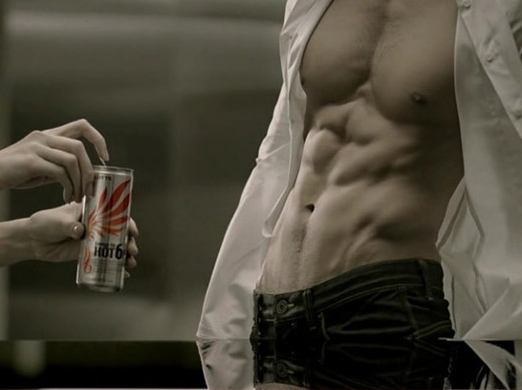
Related Posts:

Selling Wine to Korean Women

Writing about sexual symbolism in advertisements for so long, it takes a lot to shock or surprise me these days.

Still, I confess I burst out laughing at this one.

Lest you feel that my sense of humor is a little crass however, then perhaps you need the context. Last week, I was skimming an article in the Korea Times about the rivalry between the French wine Beaujolais Nouveau (보졸레누보) above and the Korean rice wine Makgeolli (막걸리), and suddenly noticed this:

Recognized as a simply old-fashioned drink for a long time, Makgeolli is popular with trend-savvy young female customers in the current boom. The biggest group is women in their 20s and 30s, and some of them ended up placing orders for [the new] Makgeolli Nouveau (막걸리누보) when they came to reserve its Beaujolais counterpart, according to Hyundai Department Store.

Now I’ve written a lot on gender-based Korean advertising in recent months, including that of tea-drinks, health-drinks, and attempts to make soju more appealing to women, so I was interested in finding out if that preference was partially the result of (or led to) similar marketing: after all, gender-based advertising is often more indicative of advertisers’ stereotypes and prejudices rather than any empirical evidence that it actually works. And in the case of that for “girly” Korean drinks in particular?

Well, recently at least that has meant nothing more sophisticated than either the use of a lot of pastel colors and/or the breaking of the convention that bottles must be pointing straight-up and in the bottom right-corner of advertisements. Instead, they pop up in a most satisfying manner almost anywhere, and usually at somewhat less than a 90-degree angle (see here and the bottom of here).

Obviously I can see the humor, and even like this one (aimed at men), but I’m beginning to find its repetitiveness kind of patronizing too.

Refreshingly, I actually saw little evidence of either feature in the marketing for Makgeolli Nouveau (see here and here for examples) though. But you can imagine what frame of mind I was in then, when I finally turned my attention to advertisements for Beaujolais Nouveau instead, and was greeted with the magnificent specimen above!

( Source )

In fairness to Korean advertisers, Beaujolais Nouveau certainly seems to be considered a girly drink worldwide also. In Japan it is poured into spas and promoted as giving smooth skin for instance, and the (presumably) international labeling of previous years’ wines similarly featured pastel colors and flowers and so on.

This possibly explains why the “Peninsula Beaujolais Nouveau Party” at Lotte Hotel in Seoul last Friday boasted a lingerie fashion show too.

But more to the point, the text “신의물방울”, in the top-left corner of the advertisement, translates as “The Water Drops of God” or Kami no Shizuku, a Japanese comic book about wine. Extremely popular, and not just in North-east Asia, there is a wealth of commentary on it, so for interested readers I suggest this post at the manga blog Precocious Curmudgeon for the best summary, with many links to longer news articles. Focusing on the original advertisement here though, in one of those links it is argued that the comic’s greatest impact has in fact been on South Korea, with over 1 million copies sold, and the authors were “stunned to be greeted like stars”  on their first visit there in 2007, even finding themselves introduced to candidates during the presidential election.

You can imagine then, the effect on sales here (and worldwide) when Beaujolais Nouveau was featured in it a few years ago, and accordingly in 2007 Japanese distributor Mercian hired the illustrator to design new labels for the drink. Presumably, a Korean language version of that is what we are seeing here.

For those of you more interested the wines themselves though, I recommend this article from Slate more information on Beaujolais Nouveau itself, albeit not a very flattering one (indeed, a rival Japanese food and drink comic book to Kami no Shizuku describes the drink as “little more than a French prank that the Japanese have fallen for hook, line and sinker”), and the recession has recently forced it to be sold there 10% cheaper than in previous years and in plastic bottles.

( Source: unknown )

Meanwhile, for more information on Makgeolli Nouveau I recommend two articles in turn recommended by connoisseur Tom Coyner: the first from early November on the reasons for Makgeolli’s renaissance, and which mentions that women make up only 10% of drinkers of regular Makgeolli but 30% of the fruit-flavored ones; and the second from Wednesday on the difficulties of expanding the market from its current 3.6% of all alcohol sales. In addition, you may also find this article from February about the Japanese role in its resurgence interesting, and finally all of the above should be placed into the context of the Korean government wanting to promote more domestic rice consumption, as evidenced by its attempts to promote “Garaetteok (가래떡) Day,” named after stick-shaped rice cakes, over the more commonly recognized “Pepero Day” earlier this month.

But has anyone actually tried either? Despite writing all that, I actually only started drinking wine and beer myself about 3 months ago(!) at the tender age of 33 (I preferred various cocktails), but if it tastes okay then I certainly wouldn’t mind trying something sweet and cheap like Beaujolais Nouveau. Any variety of Makgeolli however, would be just too weird: I have tried it, and concluded that something that looks like milk should not taste like wine!^^

Update 1: Water Drops of God is being made into a Korean Japanese drama series featuring Bae Yong-jun (배용준), and is scheduled to start next month.

Update 2: As Gomushin Girl has pointed out in the comments, labeling Makgeolli as rice “wine” is probably incorrect. Adding to that, this post at The Marmot’s Hole makes is clear that serving it in a wine glass is particularly inappropriate.

Update 3: Unfortunately, Bae Yong-jun’s drama series has been canceled.

Share

Korean Sociological Image #23: Male Objectification

Acutely aware of the role my heterosexual male gaze can play in my choice of subjects and images for this blog sometimes, ironically I spend more time looking for those involving men these days, hoping to find something of note with which to achieve a balance.

In itself, this new commercial with boy-band 2PM hardly qualifies. But not only is male objectification an increasingly common theme in Korean advertising in recent months (see here and here for two examples featuring Lee Byung-hun {이병헌} and JYP {박진영} respectively), this would easily be one of the most audacious examples I’m aware of.

And coming so soon after this one for Cob Chicken (Cob 구어조은닭) too, then perhaps, like kissing, male objectification will be yet another advertising taboo discarded in 2009?

Granted, this may sound like exaggeration to readers based outside of Korea: all of the above examples are rather tame compared to their Western counterparts (NSFW) for instance, and the frequency of male objectification in the Korean media is easily paled by that of women, whom are also subject to excessive objectification and commodification in daily life here.

Nichkhun's Abs Real Brownie CommercialBut that media imbalance is hardly confined to Korea, and the speed of change is particularly remarkable. After all, however unbelievable it may sound today, recall that social norms prohibited Korean women from publicly admiring men’s bodies until as recently as 2002!

Meanwhile, apologies for not providing a translation for the commercial, but given the product’s name then I think you’ll quickly get the idea!^^ And I would very much appreciate it if readers could tell me of any more examples like it that I may have missed.

(For all posts in the Korean Sociological Images series, see here)
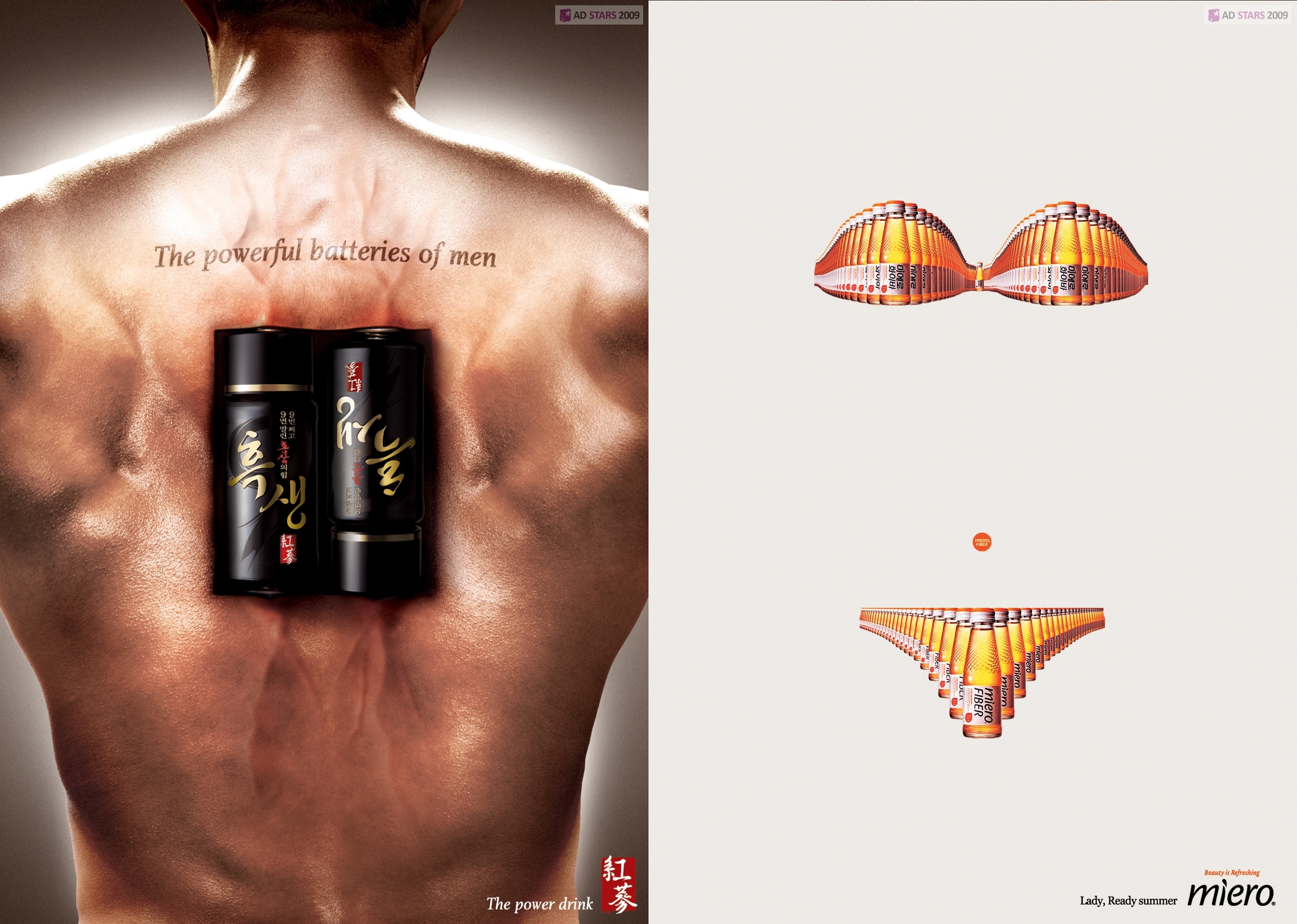
Gendered Tea-drink Advertising in South Korea

Lee Hyori Black Bean Tea(Source)

Granted, Marxism might not be the first thing one thinks of when one sees Lee Hyori’s navel. But as it turns out, it’s a perfect fit.

If you’ll bear with me for a moment, once a market is saturated, I learned at university in New Zealand, there is a inherent tendency for a company’s rate of profit to fall. But this can be offset by re-marketing and/or making new varieties of the original product, and accordingly my lecturer posited the plethora of varieties of Coca-Cola available in the U.S. as a reflection of the greater capitalistic development of its economy (read: saturation of its domestic market) compared to New Zealand’s, which then only had two. Indeed, advertising culture in New Zealand in the late-1990s, he suggested, was only akin to that of the US in the 1950s in its scale and intensity, no matter how brash and “American” New Zealanders regarded it.

It comes as a great surprise then, that even in the U.S. sports drinks are still “wildly skewed towards men”, and only within the last couple of years were drinks developed that took into account their (usually) lower-intensity exercise and dislike of the salty, high-calorie drinks available.

But one seriously wonders if equivalents will ever be available for Korean women. As the following summary of this 2006 study explains:

Diet advertisements in Korean magazines appear to promote more passive dieting methods (e.g., diet pills,aroma therapy, diet crème, or diet drinks) than active dieting methods (e.g., exercise). Results further indicated that women may be misled to believe that dieting is simple,easy, quick, and effective without pain, if they consume the advertised product. This study suggests that there is an urgent need to establish government regulations or policies about diet products and their claims in Korea. Magazine publishers alsoneed to recognize their role in societal well-being and accept some responsibility for advertisements in their magazines.

Korean Diet AdvertismentNaturally, I’ve discussed that study a great deal on the blog (see here for all the links), and it is primarily in that context that I want to examine the burgeoning Korean tea-drink market. But the economics of the industry still matter of course, and so this post is my translation of an article on the subject from the August 2008 edition of IM AD (아이엠애드; Korea’s only remaining advertising magazine), to be used as a resource for that analysis at a later date (or your own).

It’s rather long, so I’ve decided to provide each part in stages over the next week to give readers a better chance to digest them (particularly those interested in the original Korean). As you read this then, I will have just posted part two of three!

블랙빈테라티의 본격 웰빙 마케팅 Full-scale Black Bean Tea Well-being Marketing

음료 시장에서 탄산음료는 서서히 김이 빠지고, 과즙음료는 단맛을 잃었다. 차음료는 백 번을 우려도 남을 만큼 꾸준한 성장을 기록하고 있다. 또 동아오츠카의 블랙빈테라티는 시장에서 검은콩 음료를 새로운 트렌드로 만들어냈다. 그리고 이번에 진행한 온라인 캠페인은 신선한 ‘광고 테라피’라고 불러도 좋다.

While the market for carbonated drinks is slowly losing its fizz over time, and that for fruit drinks is losing its sweetness, the market for tea drinks remains as hot as the first time they are brewed, with the entrance of Donga-Otsuka’s ‘Black Bean Terra’ drink in particular creating a whole new trend. You could call the accompanying online advertisement campaign fresh “Advertisement Therapy” too.

음료 시장의 트랜드 ‘윌빙 + 디이어트’

Drink Market Trends of  “Well-being and Diet”

최근 한국의 음료 시장에는 몇 년 전부터 지속되고 있는 웰빙 트렌드에 맞춰 새로운 브랜드가 끊임없이 등장하고 있다. 소비자의 건강 증시 풍조에 따라 최근 3년간 탄산음료 시장은 6-7%대의 마이너스 성장늘 기록했다. 탄산음료는 2006년 월드컵 특수 등으로 반짝 성장률을 보였지만, 플레이버 음료 및 유성 탄산 브랜드의 매출이 급격히 줄어들면서 현재까지 하향 곡선을 그리고 있다. 과즙음료 또한 2006년 초에 출시된 ‘미녀는 석규를 촣아해’가 인기를 끈 것을 제외하면 대부분 주스 브랜드가 부진에 빠졌다.

Since the beginning of the well-being trend several years ago, new brands taking advantage of it haven’t stopped appearing. In accordance with consumers’ new focus on their health, the consumption of carbonated drinks has decreased 6-7% since 2006, although there was a brief spike in consumption during the 2006 World Cup. The consumption of flavored drinks and milky drinks has shown definite decreases too, and with the exception of the “미녀는 석규를 촣아해” drink popular at the beginning of 2006, the consumption of fruit juice drinks has stagnated.

Black Bean Thera Tea이처럼 대부분의 탄산/과즙음료가 마이너스 곡선을 그렸던 반면, 차 음료는 시장에서 지속적으로 성장하면서 지난해에도 전년 대비 30%에 달하는 신장세를 기록했다. 2000년을 전후로 녹차 제품은 차 음료 시장을 주도하고 있었다. 지나치게 달거나 자극적인 탄산/과즙 음료에 비해 담백한 맛을 지닌 녹차는 고정적인 소비자층을 형성하면서 2004년 당시 차음료 시장의 80%를 차지할 만큼 인기가 높았다. 하지만 녹차가 가진 떫은 맛은 10~20대 소비자들에게 어필하는 데 한계가 있었다. 또한 웰빙은 물론 다이어트와 미용에 관심이 많은 20대 여성이 시장의 핵심 소비자로 떠오르면서 맛과 성분을 개선한 혼합차를 선보이기 시작했다.

Like this, most carbonated and fruit juice drinks have a minus growth curve, but on the other hand the consumption of tea drinks grew by 30% in 2007. Green tea was the most popular tea drink around 2000. Compared to excessively sweet and stimulating carbonated and fruit juice drinks, consumers began to prefer plain green tea drinks and so a market was formed, comprising 80% of the tea-drink market by 2004. But green tea is very astringent, so it had limited appeal to consumers in their teens and 20s. Hence companies have started to develop new, more pleasant blended tea-drinks to be marketed to women in their 20s, who naturally have a lot of interest in dieting and their appearance.

처음 혼합차 시장에서 두각을 나타낸 것은 남양유업의 ‘몸이 가벼워지는 시간 17차’ 였다. 이후 광독제약이 ‘광동 옥수수수염차’를 내놓으면서 경챙은 가열됐고, 현재 옥수수수염 원료 제품만 30여 가지가 넘는다. 한 가지 눈에 띄는 점은 이들 제품의 공통적인 특징이 노화방지와 피부미용 효과가 있는 한약재를 비롯, L-카르티닌 등 지방 연소 기능이 있는 성분을 첨가해 젊은 여성들에게 폭발적인 호응을 얻고 있다는 사실이다. 또 각 업체들은 여성 연예인들 활용한 스타 마케팅에도 공을 들이고 있다. 이들은 전지현 (남양유업), 김태희 (광동제약)와 김아중 (해태음료) 등의 톱 모델을 자사 브랜드 이미지와 접목시켜 여성 소비자들의 구매욕구를 자극하고 있다.

Originally, Namyang’s “Make Your Body Lighter Time 17 Tea” stood out in the blended tea drink market. But a little later, an intense rivalry developed between that and with Gwangdong’s “Gwangdong Corn Cob Roots” drinks, and now there are as many as 30 products with that ingredient on the market. One noticeable point is that all these products contain both some traditional Korean medicine, which helps to prevent aging and maintain skin’s youthful appearance, and also L-Keratin, which helps to burn fat, both of which make these drinks have a very strong appeal to young women. Each company is putting a lot of effort into using famous stars to market their products, such as Jun Ji-hyun for Namyang, Kim Tae Hee for GwangDong, Kim Ah-joong for Haetai, and each hopes to have them and their images firmly associated with their brands by consumers.

독자적인 시장을 형성한 검은콩 음료

A Market for Black Bean Drinks Has Been Formed

외연의 확대는 여기서 그치지 않은다. 지난해부터는 곡물과 한약재 등을 섞은 혼합차 시장에서 검은콩이라는 단일 원료를 부각시킨 제품들이 출시되디 시작했다.

This market has not stopped expanding, and from last year, companies have started developing new blended tea drinks mixed with grains and/or Korean medicinal products. It was in this context that drinks with black beans as the sole ingredient were launched.

지난해 5월 해태음료는 검은콩을 ㅇ뤈료로 한 ‘차온 까만콩차(이하 까만 콩차)’를 선보였다. 한때 일화의 ‘햇살 가득한 까만콩차’가 브랜드명과 용기 디자인 흡사해 미투 (me too) 마케팅 논쟁이 일었을 정도로 검은콩 음료는 단기간에 시장에서 영역을 확장해나갔다.

Jun Ji-hyun Son Dam-bi Tea Advertisments(Source)

The market share of Black Bean drinks has increased rapidly, resulting in many cases of “me too marketing”. Haetai’s “Cha-eon Dark Black Bean Tea” (Dark Bean Tea) for instance, introduced last May, was quickly involved in heated competition with Ilhwa’s similar-sounding “Dark Bean Tea full of Sunshine,” which even had a similar design of bottle too.

까만콩차보다 한 달 앞서 동아오츠카가 론칭한 ‘블랙빈테라티’ 역시 블랙음료 시장을 빠르게 장악했다. 100% 검은콩을 우려냈음을 강조함과 동시에 차카테킨과 L-카르티닌을 함유한 제품 특징으로 기존차 음료의 핵심 타깃인 20 대 여성을 확보한다.

Donga-Otsuka’s “Black Bean Terra Tea” was launched one month before Dark Black Bean Tea, and also quickly established a foothold in the market. It is made entirely of the juices from crushed and squeezed black beans, and its catechin and L-keratin make it especially appealing to its core market of women in their twenties.

사실 무주공산과 다름없던 블랙음료 시장에서 결과적으로 ‘생존’과 ‘성공’을 동시에 달성한 브랜드는 까만콩차와 블랙빈테라티 뿐이라고 할 수 있다. 이 둘은 제품의 내외적인 측면에서 대동소이하면서도 명확한 차이를 보이며 경쟁하고 있다. 까만콩차가 국산 서리태만을 사용하는데 비해 블랙빈테라티 서리태와 서목태를 섞어 맛이 서로 다르다.

Actually, the black bean drink was entirely new, and so the only brands which came to survive and succeed were Dark Black Bean Tea and Black Bean Terra Tea. These two products are very similar, but do have some differences. Dark Black Bean Tea is made from Korean seoritae beans, which are blue inside, while Black Bean Terra Tea is made from seoritae beans and seomogtae (Rhynchosia Nulubilis) beans, and so they taste different.

Ji Hyun-woo Tea또 까만콩차와 영화배우 정우성과 지현우를 CF 모델로 선정해 고정 타깃인 여성뿐 아니라 차 음료시장에서 소외되다시피 했던 남성들을 아울렀던 반면, 블랙빈테라티는 이효리를 브랜드 모델로 선정해 젊은 여성층에게 제품 홍보와 마케팅을 집중시컸던 점 역시 차이를 봉ㄴ다. 물론 오프라인 여역을 토대로 한 무료 시음행사와 가종 이벤트 전략은 두 제품 외에 대부분의 음료 브랜드에서도 볼 수 있는 전통적인 프로모션 형태이다.

Also, Dark Black Bean Tea has used Jung Woo-sung and Ji Hyun-woo (right) in its commercials, indicating that its target consumers are not just women but also men who reject the notion that only women drink tea drinks. On the other hand, Black Bean Terra Tera has used Lee Hyori to market itself exclusively to young women. Of course, just like for other drinks, offline they are also used to market their products in various free-drinking events and so on (end).

보이는 라디오, 끌리는 캠페인

Visual Radio: A Campaign That Draws You In

Lee Hyori Black Bean Tea Online Campaign

(Source)

이번 블랙빈테라티의 온라인 캠페인 (블랙빈FM 이벤트)은 브랜드 론칭 1년여 만에 처음 진행된 것이다. 이전까지는 웹사이트 내에서의 자체 홍보 외에 TV CF와 오프라인 프로므션 위주로 마케팅을 실시했다. 온라인 캠페인을 담당했던 다츠커뮤니케이션의 허정 대리는 “블랙빈테라티의 경쟁 브랜드는 크게 차 음료와 검은콩 음료로 분류된다. 하지만 17차를 비롯한 대부분이 스타마케팅에 의지해 온라인에서는 이밴트와 제품 자체의 홍보에 주력했다면, 블락빈테라티 캠페인은 코어 타깃은 1929여성들이 즐길 수 있는 다양한 콘텐츠를 만들어 자연스럽게 브랜드 인지도를 높이는 것이 목적”이라고 설명했다.

While the Black Bean Terra Tea drink was launched over a year ago, “this Black Bean FM Event” was the first time it has had a big online campaign; previously, minor website promotions, television commercials, and offline promotions were the main methods of promoting the drink. As Heo-jeong, representative for Dartz Communications (in charge of the online campaign) explained, “Black Bean Thera Tea’s competing brands can be categorized into either tea-drinks or black-bean drinks. But while most (including 17 tea) concentrated their efforts on either star-marketing, online events, and promotions of the products itself, the aim of Black Bean Terra Tea’s campaign was to focus on more varied events, so as to better increase brand awareness among its core target of 19-29 year old women.”

실제로 블랙빈 FM이벤트는 이름에서 드러나듯 라디오 동영상과 CM송을 캠페인의 킬러 콘텐츠로 활용하고 있다. 보이는 라디오는 브랜드 모델인 이효리가 DJ로 출연해 미용과 패션, 다이트 등의 다양한 소재로 진행하는 형식으로 구성돼 있으며, 유저들은 라디오를 ‘시청’하면서 댓글을 등록할 수 있다. 때문에 TV광고 제작 당시에 이미 촬영됐었던 이 영상은 마치 사이트에서 실시간으로 유저들과 대화를 나누는 듯한 인상을 주기도 한다. 허정 대리는 “사이트의 커뮤니케션 콘셉트가 ‘젊은 여성들끼리 수다를 떠는것’이었기 때문에 그들의 주된 관심사를 이효리는 통해 전달함으로써 자연스럽게 브랜드와 모델레 대한 호감도가 증가할 수 있었다”고 말했다.

Vodpod videos no longer available.

As is obvious from the name, the Black Bean FM Event’s killer content was the use of radio, videos, and advertising jingles, or a “visual radio.” In addition to model Lee Hyori performing as its DJ, it also consisted of information about various things such as beauty, fashion, and dieting (and so on), which users could register and leave comments about. As Heo-jeong explains, the choice of Lee Hyori as a model naturally encouraged discussion of these topics among young-women – the core of the site’s communication concept – and because of this, a Black Bean FM Event video that gives the impression of Lee Hyori interacting with the user was produced for the website in advance of the TV commercials. Thus, the strategy greatly increased the chances for brand recognition to rise amongst young women.

CM송을 활용한 ‘블랙빈테라티 CM송 콘테스트’ 이벤트 또한 눈에 띄는 부분이다. 최근 CM송을 활용한 이동통신사 광고가 화제를 모으고 있지만, 음료 광고에서는 보기 드문 사례이기 때문이다. 이미 TV 광고와 사이트의 인트로를 통해 CM의 원곡을 감상한 유저들은 이벤트 페이지에서 힙합과 R&B, 트로트 등 4가지 버전의 CM송을 모두 감상한 후 순위를 매긴다. 이벤트에 참여한 유저들은 추첨을 통해 경품을 지급받게 되며, 동영상을 다운로드 또는 스크랩해 미니홈피와 블로그 등에 등록한 경우 재차 경품 기회가 제공된다. 허 데리는 “블랙빈테라티의 CM송을 버전별로 반복 감상함으로써 소비자들에게 브랜드와 제품에 대한 긍정적인 이미지를 형성하게 된다”고 설명하며 “콘테스트 동영상의 다운로드/스크랩을 유도한 전략은 소비자들 스스로 웹사이트의 홍보는 물론 블랙빈 FM과 이벤트 내용을 바이럴하는 ‘MGM (Member Get Member, 일명 ‘권유마케팅’으로 불리며 고객을 통해 또 다른 신규 고객을 확보하는 마케팅 방법)’ 효과를 거둘 수 있었다”고 덧붙였다. 이외에도 지난 5월 1일부터 한달간 진행했던 ‘CF모델 까메오 이벤트’ 역시 소비자들의 적극적인 참여를 유도했다.

Vodpod videos no longer available.

The “Black Bean Terra Tea Advertising Song Contest” event was also a prominent feature of the website. While using advertising jingles is common for advertisements on mobile phones, it is very rare for tea-drinks. But here, users who have had already heard the jingles used in Black Bean Terra Tea’s TV advertisements and website could listen to different versions of them in different music styles such as hip-hop, R&B, trot, and so on, and personally rank them. They could also enter into a lottery and win prizes, and increase the number the times they entered by downloading videos and posting them on their blogs and websites. As Heo-jeong explained, “through being able to listen to the various versions of the jingles, users acquired a positive image of the brand and the product” and ” the viral PR strategy of getting consumers themselves to download and post videos to their own websites, known as ‘MGM,’ (Member Get Member, also called ‘Persuasive Marketing,’ a method by which customers attract new customers themselves) was very effective.” Besides this, from May the 1st there was also a month-long ‘Commercial Model Cameo Event’ which similarly encouraged consumers to actively participate (end).

And the third and final part, which discusses cross-media marketing, will hopefully be up later this week. In the meantime, if this post has piqued your interest in gendered advertising in Korea, then you may also enjoy this post on the evolving images of women in soju advertisements.