Estimated reading time: 5 minutes. All screenshots: MV via Visualazn.
The “Queen of Charisma” deserves so much better than an 18MB, 240p MV for Tum, one of her classic hits:
To remedy that, go to Visualazn for a 428MB, 720p version to download posthaste. (I’d upload it myself, weren’t YouTube to instantly ban the copyright violation.) Watch that once, then come back here.
(If you’re pressed for time, this 1080p MBC Music Camp performance will have to suffice, which has some clips from the MV. But if it’s your first time especially, I really do recommend experiencing it through the high quality MV.)
I’m only so demanding, because to understand how people really feel about their pop culture, you need to appreciate the circumstances in which they consume it. Especially of when they first encountered it, and the technology that was used.
With Tum (a.k.a. Teum, Crack, Gap), for me it was late-2000, in the small southern city of Jinju. I had no cable or satellite TV, so I was reliant on free-to-air channels. It would still be a year before I had internet on my home computer for the first time, and five more before YouTube even existed. Trance music, my first love, was literally unheard of outside of far distant Seoul. I didn’t even have a radio, feeling there’d be no point given Korea’s surprisingly few genre-specific stations. So, in terms of discovering any new music at all, it felt like I was a child in the U.K. again, frustrated at the long, weekly waits for Thursday night’s Top of the Pops.
Then one night while casually surfing those few channels, out of nowhere Uhm Jung-hwa dancing to her riff starting at 1:53/1:05 appeared, and my terrible, sleepless first year in Korea was instantly transformed into the stuff of fantasy again.
Of course the showcasing of Uhm Jung-hwa’s voluptuous body was integral to that. That’s why the CD I quickly purchased just didn’t cut it. It wasn’t like today, when you’re always just a click away from replaying your own favorite combination of amazing music sung and performed by incredibly attractive people. Back then, even with cable, a second viewing would have involved many tedious hours of watching music channels for those few precious minutes; without it, it was next to impossible. Instead, I had to content myself with the song alone, and accept that once the it left the charts and the music shows on the free-to-air channels, I’d likely never see the MV again.
That’s simply how it was with much of popular culture before the internet, no matter how meaningful it may have been to you. You just had to learn to live with it.*
Yet I don’t mean to elevate or privilege my outdated, distance-makes-the-heart-grow-fonder perspective. It’s neither superior, nor somehow more authentic than that of anyone encountering it for the first time today. It’s just mine, and part of my motivation for writing.
Indeed, the fresh perspective YouTube offers only motivated me further.
This was unexpected. Typically, the replay button is cruel to our most cherished pop-culture memories, and I didn’t expect scrutiny of Tum to be any kinder. Take the above scene from 3:51-3:54 (2:28-2:31 in the performance video) for instance. For the last 20 years, that moment of Uhm Jung-hwa looking glamorous as fuck while being mistress of all she surveys, has been indelibly burned into my brain. Only now though, can I take the time to notice all the hair in her face, which would have obscured her vision. The spell of my willing disbelief has been irrevocably broken—let alone totally ruining my long sought after screenshot.
Yet, truthfully, I’m genuinely stumped at locating any other similar oversights in the MV. It’s not perfect—the pauses are unnecessary and long, and the King Kong theme is only loosely tied to the lyrics—but there are many other objectively charismatic moments of Uhm Jung-hwa moments remaining to latch on to. If anything, being able to see it in such detail now has only further convinced me of how it much holds up after 20 years, and it’s this renewed appreciation that compels me to write. For it deserves far greater recognition as the classic it is, many more dance remixes than the single, terrible one I refuse to link to, and, again, at the very least, a decent quality video on YouTube.
Alas, that last I can’t provide. But I did put several days into finding that download for you. And I can give what is, as far as I know, the world’s very first English translation of the lyrics:
Uhm Jung-hwa—Tum
Track 2, Queen of Charisma, released November 2000.
I waited for you like you thought I would, I only had eyes for you
Don’t leave me alone for a long time for just no reason, I can’t take it anymore
Didn’t you have any feelings for me as I was changing?
Even if there were a lot of different reasons for doing what you did, it is so frustrating to think about you
Chorus:
제발 이젠 내게 말해줘 너의 힘없는 얼굴이 내 생각엔
아무런 느낌 없는 너처럼 그저 희미해질 뿐이야 난 이제
더 이상 기다리지 않아 나를 언제나 바라본 널 이렇게
아무런 감동 없는 나처럼 매일 같은 날 일 뿐이야 오 제발
Please tell me now; your powerless face, I think,
is fading away, as if you have no feelings for me
I’m not waiting anymore, as you have always looked at me like this
Every day is just the same, emotionless like me, oh please
그렇게 말도 없이 나만을 쳐다보면 너무나 힘이 들어 이렇게 우린
오래도록 지쳐있긴 하지만 언젠가 끝낼 수 있는 날 있잖아
이젠 모든 걸 버리고 우리만의 기억을 생각해봐
너와 나의 사인 아주 가까웠지만 언제부터 이렇게 멀어졌니?
Gazing at me without saying a word leaves me feeling so tired, we’ve
been so frustrated for a long time— there are so many times when I want to just end things
Please put everything aside and focus only on our shared memories
You and I were once very close, when did you drift away?
(Chorus repeats and end)
I appreciate any corrections—while these lyrics were quite simple, you’ll notice I didn’t provide literal translations, as I felt that would diminish from their intended meaning. Please also do tell me your own rants or raves about Tum, or about any other of Uhm Jung-hwa’s songs (Festival is another favorite of mine!), whenever or however you first encountered them :)
*VCRs were a possibility of course, but their bulk and expense meant few 20-somethings had them.
If you reside in South Korea, you can donate via wire transfer: Turnbull James Edward (Kookmin Bank/국민은행, 563401-01-214324)
Spring Girls, by singer-songwriter SunwooJung-a, is literally dripping with sex.
For starters, take the word cheonyeo (처녀) in its Korean title. Many sources do give “young unmarried woman” as one meaning, so “girls” seems fine for the English. (When they’re obvious, Korean usually omits plurals.) But most translate it as “virgin” first.
Why would Sunwoo choose something so loaded? The neutral term agasshi (아가씨) is far more common.
Possibly, she simply hoped to capitalize on the name-recognition, as she acknowledges being inspired by a well-known folk song of the same title. It’s also true that the lyrics are really quite chaste.
Possibly, I just have a dirty mind.
But then there’s the MV. Watch it, and by its end you’ll have a dirty mind too. Add that there’s no connection to the folk-song whatsoever, and it’s difficult not to think that Sunwoo deliberately primed Korean listeners with a blatant double entendre:
In that vein, I’m tempted to describe the MV as a continuation of this cultivated ambiguity. But that would be to underplay its sheer spunk, and to detract from how refreshing that feels compared to the bland, repetitive, profoundly unarousing “sexy concepts” of most K-pop. For suggestive and full of symbolism it is, but “ambiguous” those symbols are not. Add the frequent shots of partially-exposed breasts, the luscious lips, and the hands pulling up skirts and dresses, then I’d be hard-pressed to think of such a striking and shocking depiction of female bodies and sexuality since Bloomby Ga-in (2012).
To pretend otherwise is to willingly ignore the obvious. Like Arirang TV once did for instance, with hilarious results:
But audacity aside, are scenes like that something to celebrate? Perhaps as much as a third of the MV is of headless women (especially if you count scenes that only go up to models’ mouths), the camera by definition focusing on their body parts. Which, you don’t need me to explain, is widelyconsideredone of the most basic and common forms of dehumanizing, sexual objectification.
On the face of it then, shouldn’t it be criticized, rather than applauded?
미국 코미디언 벨스키는 SNS 프로젝트 ‘할리우드의 머리 없는 여성들’을 시작했다. “얼굴이 잘린 채 등장한 여성은 남성의 시선에서 수동적인 대상, 익명의 존재가 돼버리고 남성에 대한 성적 어필만으로 표현된다”https://t.co/JQKrZLibQB
각색각양 다가오는 몸짓 Gestures are coming in all kinds of colors and shapes
가지가지 처치곤란한 밤 Nights are hard in so many ways
뒤죽박죽 도시의 봄이라 This city’s spring is so mixed
(hmm hmm hmm hmm hmm)
(0:49)
볼엔 진달래 An azalea on the cheek
눈은 민들레 A dandelion on the eye
입술은 쭉 철쭉 A rhododendron on the lips
(hmm hmm hmm hmm hmm)
목련 파우더 Magnolia powder
라일락 칙칙 A spray of lilac
마무리는 에이취 Rounding off with “H”~ [I don’t get this part sorry!]
(hmm hmm hmm hmm hmm)
속눈썹 위로 봄바람 A spring wind over eyelashes
머리카락에 봄바람 A spring wind in your hair
옷깃을 펼쳐 봄바람 A spring wind with collars opening
걸음은 좀 더 가볍게 (x3) Our steps become lighter
(3:11)
Chorus (x2)
♥
Next, another crucial part of that context would be some background provided by its songwriter, lyricist, arranger, guitarist, and mixer Sunwoo Jung-a, who very much owns the room in the MV too. But very few interviewers ever ask her about Spring Girls specifically. In fact, surprisingly little about it has been said about it at all, in Korean let alone in English, and much of what does exist only focuses on the fact of Sandara Park’sparticipation inthe MV.
That said, there is one more common theme to what I have found. That is, whenever it is featured or discussed, it seems to gets stripped of all meaning:
For non-Korean speakers, what Sunwoo was actually doing there was promoting Earth Day last spring, as well as an environmentally-themed music event she was to perform in. But the only connection whatsoever was the song title. And, perhaps learning from Arirang’s mistake three weeks earlier, KTV made sure to avoid showing the naughty bits of the MV too.
I don’t bemoan Sunwoo taking advantage of the opportunity for more publicity. Yet even in her very own self-interview, featured on her YouTube channel and Facebook page, she only really discusses the lyrics to the song. Which as you’ve already seen, are quite chaste compared to the MV:
Apologies for lacking the time to provide and translate a transcript, but I find she adds little there to, say, Rachel’s brief description of the song already at Seoulbeats:
Spring Girls is just a cool song, plain and simple. It’s got sass, a little jazz, and a dash of funk thrown in, feeling both old and new at the same time…The lyrics talk about seeing and being seen as the girls of spring come out “dressed in fresh new clothes.” Variety is really emphasized in the lyrics, with four Korean synonyms for “all kinds” being used to describe the flood of different spring girls in the “mixed-up” city. Each girl has her own charm which can light a spark. Like the song, the video also feels old yet new at the same time. It has some different spring girls, each with her own style, personality, and flower.
“BUT WHAT ABOUT ALL THE TITS??” I want to tweet at Sunwoo, but wisely I started by asking her if she has a link to an interview about the MV instead, and I’ll update you if she responds. In the meantime, my eyes briefly lit up at the “instinctive” in the (awkward) title of this Genie article—”Sunwoo Jung-a’s Spring Girls Taps the Beat of Women’s Instinctive Spring” (여자들의 본능적인 봄을 두드리는, 선우정아 ‘봄처녀’)—but it too waxes lyrical about banalities. Desperate, I turned to Sportsworld, a tabloid that is not exactly shy about discussing female body parts, and indeed it did prove to have the most substantial interview of her I’ve found so far. Alas, yet again with no real mention of the MV.
Still, it does give some extra background. She at least hints at the tone of the MV. And frankly, it’s only through this interview at all that I learned there’s a very well-known folk song of the same name:
…현대적이라고 표현하는, 그런 봄의 여자들을 보이고 싶었다. 이 노래는 되게 현대적이다. 비트나 사운드도 일렉의 느낌이 느껴진다. 시종일관 여기 저기서 ‘모던’을 찾았다. 자칫 방심하면 구수해질 수 있어서 회의 때도, 편곡 때도 계속 ‘모던’ 타령을 했다. 정말 세련된 한국팝의 느낌을 보여드리고 싶었다.
…I wanted to show spring women who express modernity. This song is very modern. You can really feel that the beat and sounds are electronic. In every aspect of it, I tried to insert an element of modernity. If we hadn’t taken great care with it, it could have sounded old, so I made sure to mention the “modern” constantly while we were working on it. I really wanted to show a new, very sophisticated version of K-pop.
Q) ‘봄처녀’를 만들게 된 계기가 있나? What was your motive in making the song?
A) 어린 시절부터 좋아하는 곡이었다. 그때부터 클래식 피아노를 쳤는데 악보 보는 걸 좋아했다. 남들이 만화책 볼 때 나는 악보를 보면서 곡을 재생해보는 취미가 있었던 것 같다. 그러던 중 어머니의 가곡집을 보게 됐다. 클래식보다 간단한데 가사가 있어서 재밌었다. 특히 ‘봄처녀’는 가사가 정말 예뻤다. 그러다 어른이 되고 기타치고 놀다가 비트를 만들고 ‘음음’ 까지 붙인 곡이 만들어졌다. 야하기도 하고 귀엽기도 하고 여자의 걸음걸이가 생각나면서 문득 ‘봄처녀’ 가사가 생각이 났다. 다행히 써도 된다고 허락을 해주셔서 ‘봄처녀’가 탄생됐다.
This is an old folk song that I’ve liked ever since my childhood. That’s when I started learning to play the piano and read music. When other children were reading comic books, I read music—that was my hobby. During that time, I once find my mother’s book of folk songs. Compared to learning classic music, the songs in it were much more fun because they had lyrics. In particular, Spring Girls had pretty ones.
Later, when I grew up, one day I just sort of played with the beat of the song on my guitar; as I did, I added some “hmmm”s as I did, and one thing led to another. Later still, I got thinking about women walking in a sexy and cute style, and that’s what led to the lyrics. Fortunately, the composer of the original song said it was okay to use the same title [and a couple of words in the lyrics]
If readers scoff at my perennial struggles with searching for substantive Korean articles about the MV, and can instantly provide a dozen to show just how pathetic my skills are, then nothing could make me happier. Until then though, or until Sunwoo replies to my tweet, we’ll just have to settle for the further context of the rest of the MV.
♥
Let’s start with a collage of the models’ faces and names, to make scenes easier to discuss:
(Women appearing in the MV, clockwise from top-left: Model Lee-seon/이선, Model Su-hyeon/수현, Tattooist Nini/니니, 2NE1 Member Sandara Park/산다라박, Model Ji-eun/지은, Model Jaejae/제제. Not shown: Sonwoo Jung-a. Source of names: By. Yeees.)
But really, most of that context is obvious, and already semi-covered through the numerous screenshots provided above. So I’ll just provide highlights here, as well as point out some things that readers with less dirty minds who haven’t watched the MV 30 times may have missed:
(0.01)
1) First, the identity of this model stumped me for a looong time. I thought it might even be a secret cameo of half African-American Insooni, known for looking much more youthful than her age.
It turns out to be Jaejae, seen wearing that black mesh top and gold earrings for just for a (very easily-missed) split second later:
(0.49)
2) Poor Ji-eun barely appears, literally getting no facetime at all:
(1.58)
3) This flower is a vulva, and gets ejaculated on. What, you didn’t see that? Don’t worry, you will now. Like I said, literally dripping with sex:
(0:45)
4) This flower though, almost seeming to pulse when shown, doesn’t look all that yonic…
(2:01)
Especially in light of all those bowling pins earlier, standing tall and proud…
(1:02)
As well as the phallic-looking, rapidly-engorging shadow of a statue of a (headless!) nude woman, with the breasts conveniently highlighted:
(1:42)
(1:43)
Not to mention that Su-hyeon gets her mouth covered in white icing sugar or flour in between those shots (and don’t forget Nini’s lollipop-sucking either):
(1:42)
5) I’ll address a potential criticism of that in #7. But, not unrelated, a potential criticism of all of the skin-exposure in the MV is qualified by the fact that almost all of it is actually done by just one person:
(One NSFW image appearing after this one.)
(1:30)
Certainly, you could argue that Nini has been brainwashed, and internalized the values of the patriarchy. You could also argue that she wears so little in the MV simply because she has the largest breasts of all the models, just like what happened with Yang Ji-won of Spica in their MV for Tonight.
But you shouldn’t, because Nini is atattoo artist who dresses much the same way in real life, and especially in all her magazine photoshoots. Her tattoo designs tend towards the revealing too:
By all means, her brand may just be a persona, carefully-crafted on Instagram. But it’s a much more consistent, much more convincing one than that of the K-pop stars usually presented as girl-power icons. It’s also very, very difficult to believe that Sunwoo or MV director Lee Sang-deok is forcing her to wear clothes that are more revealing that she’d like, which is something that happens to girl-group members all the time.
6) Yet while Nini stands out, that is not to say that the other models aren’t just as haughty in the MV. Jaejae for example:
(1:05)
7) Finally, whether in defiance, whether they’re caught up in the joy of spring, and/or whether they’re relishing the attention, crucially all the models (but Ji-eun) return the gaze at many points:
(3:18)
Lee-seon in particular, seems determined to confront the viewer (again, there’s many more examples above):
(1:22)
(2:05)
(2:08)
I’m so impressed, I’m tempted to veer into hyperbole and cliches at this point—that these models “own the gaze,” and so on. (Although they totally do.)
But I want to avoid that, because we all bring a lot of baggage to the concept of the male gaze, which can make for a lot of misunderstandings and talking past each other.
Instead, let me be very specific with my praise, and why.
Whenever *I* talk about the male gaze, I simply mean the way heterosexual men tend to look at women. That way is, of course, vastly overrepresented in just about all forms of media, and those representations of the male gaze usually degrade and diminish the sexualities of both the viewer and the viewed—let alone vastly underrepesent people of different body types, ethnicities, sexual orientations, and ages. And, because of those problems, for many commentators the term “male gaze” has become a pejorative for all sexism and objectification in the media.
But the mere act of heterosexual men looking at women is not responsible for those problems—the people in those industries are. Rather, it is a integral feature of human (hetero)sexuality, and one that can be represented while retaining complete respect for the viewed, recognizing them as sexual subjects just as much as objects.
Spring Girls does that.
♥
And, to reinforce that point, but also raise some uncomfortable and inconvenient questions, let me conclude by briefly contrasting the MV with the similar “Double Exposure” series of paintings by Korean artist Horyon Lee (이호련):
Originally, my intention for this post was to give equal attention to Sunwoo and Lee. But Spring Girls rapidly proved to be a more deserving subject, and not just because Lee’s work has had enough written about it to fill volumes, both in English (#1, #2, #3, #4), and in Korean (#1, #2, #3, #4, #5, #6, #7, #8, #9). Rather, it’s because whereas individual paintings of his may strongly resemble some screenshots from the MV, a crucial difference is that Lee has made a whole series (NSFW) of almost nothing but such headless images of women, most of which are much more sexually explicit than the examples given here. Whats more, and very unusually for an artist, Lee provides no titles or descriptions of those paintings either, as if to even further stress the dehumanization and objectification of the women in his work.
Fred McCoy, a rare critic of Lee’s, has written at CF Magazine about the artificial andharmful distinctions the art world maintains between erotica and pornography that he feels Lee exploits, which I recommend reading. Especially damming is his discussion of the similarities between one of Lee’s painting and one of American Apparel’s (many) notorious ads:
What stands out is the purposeful removal of the female’s face in both the advertisements and paintings. If you were to include the face, you would then place the viewer in a precarious spot where they would have to make a conscious decision as to whether or not they wanted to objectify the woman. By removing the face, as well as any emotion it might carry, objectification becomes easy. We are simply looking at a dressed up piece of flesh and bear no responsibility in how we choose to engage it.
Yet without disagreeing with the sentiment, it is more correct to say it is easier. As I discussed at length in my review of Tonight, removing a face does not make negative objectification and disrespect of that person inevitable, nor does including a face automatically ward off both. In Spring Girls, objectification is certainly occurring, but it is not negative objectification because of the context of the rest of the MV. And, because so many screenshots from that MV so closely resemble Lee’s paintings, I can’t prima facie proclaim all the latter to be “disgusting,” as McCoy and his colleague do:
“[His Work] is dirty and uncomfortable [as well as] is grotesque and demeaning. I think what makes it worse than just portraying women as a piece of meat is that he felt the need to make an entire series out of it.”
(Zola Paulse)
“Dirty”? “Grotesque”? “Piece of Meat”? This too is hyperbole. His work is repetitive, certainly. It is baffling that he never paints pictures of women with faces, and he may well do so because he really does think of women as sex objects.
Yet compare that painting of a woman in red above for example, with this (NSFW) photograph of a real woman in a very similar pose. Evidently, the latter is very happy with her sexualization.
I don’t need to ask which one you prefer, whatever your sex or sexuality. You don’t need to hear about why I love it so much either.
But to dismiss the other one as disgusting, because it lacks a face? That feels much too simplistic.
On the other hand, perhaps I’m just creating strawmen here. Also, if I’m arguing that we can judge similar screenshots from Spring Girls by looking at the context of the rest of the MV, then surely we can judge a painting of Lee’s by the context provided by his series as a whole. In which case, he abjectly fails his test.
So far so good. Yet still, somehow I can’t bring myself to outrage.
How about you? If you can, why?
I admit I feel hypocritical. And I do find it troubling that Lee’s received so many accolades, and so many invitations to exhibit. Again, McCoy is a good read on what that implies about the art world.
I’m strongly reminded of my series and lectures on GenderAdvertisements too, in which I’ve often pointed out that it’s the trends towards sexism and gender stereotyping in advertising that are problematic. Those trends should be called out. With individual ads though? Unless they’re really egregious examples, especially of unnecessary (and negative) sexual objectification, often it’s simply incorrect to label them as sexist, and unhelpful to do so.
(It is harmful that men tend to be depicted more actively than women in advertisements, and that Caucasians are given such prominence over POC. But it’s implausible to describe these individual examples as sexist and racist respectively.)
But I’ve spent many years on Gender Advertisements. Perhaps too long, and it’s high time I learned more about other conceptual approaches, especially of different media like music videos and art (I’d appreciate suggestions and recommendations). Alternatively, perhaps I’m untroubled by Lee because it’s “just” esoteric art we’re talking about, so a painting of his would never have the impact that a similar ad would.
What do you think? Of my dilemma, or about any other interesting questions raised by Sunwoo and Lee? Please let me know in the comments!
♥
Song Credits
Songwriter, Lyricist, Arranger: Sunwoo Jung-a; Guitar: Sunwoo Jung-a; Bass: Baek Gyeong-jin; Mixing: Brad Wheeler, Sunwoo Jung-a @ Union studio; Mastering: bk! of Astro Bits @ AB room; Special thanks to: The Barberettes, realmeee, chch.
Music Video Credits
Director: Lee Sang-deok; Assistant Director: Kim Hoon; Director of Cinematography: Lee Han-gyeol; Cinematography Team: Park Chi-hwa, Oh Min-shik, Im Hee-joo; Lighting Director: Lee Jung-ook; Lighting Team: Lee Ji-min, Ji Hyeon-jong; Colorist: Jo Hye-rim; 2D: Lee Sung-hoon; Art Directing/styling: Gu Song-ee; Photography: Rie; Design: Seo-ro; Marketing: Jo Eun-bi, An Seong-moon.
Tonight is a strikingly sensuous MV about a time of freedom and female friendship. But to what extent is it undermined or enhanced by its many erotic moments? To what extent are those just plain sexual objectification?
Time to answer the big questions that have been on your mind since Part 1 and Part 2:
“Wait…is that Lee Hyo-ri? Or is THAT Lee Hyo-ri?”
Tonight may be a great song, but it’s a real headache keeping track of who’s who in the MV, and the one guide I found had two big mistakes. So, let’s clear up the five Spica members’ names first:
Partially, the difficulty is because many sites use Park Si-hyun’s old name of Park Ju-hyun (박주현; she legally changed it). Partially, it’s because Park Na-rae (L) and Park Bo-hyung (R) look so similar in it:
(1:12)
But mainly, it’s because there’s so many different costume, hairstyle, and hair color changes throughout, and much throwing of colored chalk dust. Also, it’s because there’s actually six people in the MV: Lee Hyo-ri features in many scenes in the first half especially, and looks a lot like Na-rae (or rather, Na-rae looked a lot like her then, but doesn’t in 2016):
(0:01)
(0:37)
Adding to that confusion, it doesn’t help that Na-rae was wearing that same white mesh cardigan just a little earlier (or that Yang Ji-won was wearing a very similar one at 0:47):
(0:23)
The giveaway is Hyo-ri’s tattoo though:
(0:38)
(2:28)
Compare this picture from Netizen Buzz last month:
As for what she’s doing in the MV, I’ll let Zander Stachniak of Critical Kpop explain (with the tweet and video inserted by me):
In 2013, B2M organized a mentorship between labelmates Lee Hyori and Spcia, the latter benefiting tremendously. The single, “Tonight,” was a return to vocally powerful music, and their first top ten song on the Gaon chart. Hyori and husband collaborated and produced the song, and Spica also seemed to take a page out of Hyori’s book with more of a “sexy” concept…
…It seemed as though B2M saw the Lee Hyori connection as the way forward. Finally they were getting somewhere. In 2014, Spica realeased “You Don’t Love Me,” a ‘60s style jazz number unlike anything they had ever done before, but very much like Hyori’s most recent album. An extension, almost. The song was brilliant, quirky, a joy to listen to. But Spica’s identity was becoming harder and harder to locate. Which might explain why their best song since debuting only reached 16 on the Gaon charts. Somehow, Spica had slid backwards. (End.)
I’m a huge fanof Hyo-ri’s: hearing about her role is what motivated me to check out Tonight in the first place, and the MV’s sensuality is very characteristic of her. But appearing in it herself was surely too much. Let alone being the very first person the viewer sees:
And by coincidence, that was the first time I’ve seen the MV myself for several weeks. Seeing it with fresh eyes, now I realize I may have given the wrong impression in Part 1 and Part 2 sorry: it is not just an endless parade of female flesh. It is very much a sweet, sentimental memory of close female friends on some kind of trip, told in a non-linear, dream-like fashion. It feels almost churlish of me to critique it, when so many women have responded so positively to its charms.
Then I take another look at the following scenes, and don’t feel guilty at all.
The “Passive and Unthreatening Recipients of the Male Gaze” in Tonight
(0:17)
If all you knew of Tonight was girl-power hipster road-trip, then this might be the first scene that made you suspect there was a little more to it than that.
Not that I’m going to criticize it mind you. That teddy Yang Ji-won is wearing is supposed to be very form fitting. She does happen to have the largest bust of all the Spica members, but so what? If we start tut-tutting just because she’s in the scene, but wouldn’t if it featured a different member with smaller breasts, then that’s just body-shaming.
Instead, let me point out that you can’t unsee the ejaculation imagery in the suddenly rising balloon. (You’re welcome.) And, that although we get very brief glimpses of Kim Bo-a also wearing a teddy at the slumber party shown much later, it’s only Ji-won that we get to see like this there:
(1:40)
Thinking about why that was the case, and why the other three members were wearing such loose-fitting clothing at that party, I suddenly realized something obvious.
You know all those lying down scenes I made such a big deal of in Part 1 and 2? It turns out, it’s only Ji-won in most of them. And it’s her chest that we get to see the most of too.
I can’t believe I only just noticed. This is what staring at breasts for 10 weeks does to you…
(0:24)
(0:31)
(0:34)
(0:36)
(0:47)
(1:00; for a change, this time it’s Bo-a.)
(1:03)
Of this shot of Ji-won falling back into the pool, I’m thinking that on the one hand it’s a great metaphor for the viewer abandoning themself to their dream. But on the other that…boy, those are some great boobs. And you’ve got to appreciate the shots of her body too.
I’m not normally so crass. But however sensual, this element of the MV isn’t exactly subtle. Sometimes you’ve just got to call it.
As indeed with this next, very awkward scene with Si-hyun on her back, in which she’s wearing completely normal summer attire for a young Korean woman…if she were almost anywhere except in a swimming pool that is. And whose idea was it to bring a surfboard to a pool anyway, if not to give Si-hyun something to lie on for me to better admire her legs?
(1:17)
Yet for all its flaws, it was only through working out this scene that I realized the MV is supposed to be a dream. (Although I acknowledge that was already mentioned by other reviewers.) It was tough, because I took it very literally at first. Who the hell are the five of them supposed to be looking at, I wondered. How could that person be floating several meters above the pool? It only makes any sense if that person is the dreamer, who isn’t really there at all.
Should that context change our interpretation and/or criticism of any of the above scenes? I’d love to hear your thoughts. I do wonder and worry though, how accurately my screenshots are conveying that context, because of something I read recently:
My Women’s Studies class were watching Not a Love Story armed with Ruby Rich’s attack on the film. [It] is a documentary about pornography directed by Bonnie Klein which includes interviews with porn stars and feminist critics…Because Klein deployed traditional cinematic practices, Rich claims that the film cannot be feminist since it uses a camera ‘gaze’ which simulates, through intimate zooms, the typical vantage point of a male consumer of pornography. Rich deplores Klein’s use of a male cameraman and shots which turn the ‘viewer into a male customer normally occupying that vantage point’ (p. 408)…
My class largely rejected Rich’s reading, not because they disagreed with her technical deconstruction, but because, for them, the film’s meaning was lodged in the moving stories told by the women interviewed as much as in the camera movements. A purely visual reading, in other words, did not satisfy these women students. The voices of fascinating and independent women (however problematically presented) won out over the visual construction of spectator relations. The problem, then, for feminist criticism is that cinema identifications are not so easily and simply defined. Any attempt simply to deny that viewers are moved by what they hear, as well as by what they see, will create an imbalance.
Which I didn’t provide just to sound lurn-ed, but also because it’s a reminder that context is crucial for judging sexual objectification. Which there’s a lot more of to come in the MV.
According to Nussbaum, then: “In the matter of objectification context is everything. … in many if not all cases, the difference between an objectionable and a benign use of objectification will be made by the overall context of the human relationship” (Nussbaum 1995, 271) …Objectification is negative, when it takes place in a context where equality, respect and consent are absent…And it is benign/positive, when it is compatible with equality, respect and consent…
Nussbaum believes that ‘Lawrentian objectification’ (objectification occurring between the lovers in D. H. Lawrence’s novels) is a clear example of positive objectification. The passage from Lady Chatterley’s Lover that she quotes in her article describes a sex scene between two lovers. Connie and Mellor, in a context characterised by rough social equality and respect, identify each other with their body parts, they “… put aside their individuality and become identified with their bodily organs. They see one another in terms of those organs” (Nussbaum 1995, 275). Consequently, the two lovers deny each other’s autonomy and subjectivity, when engaging in the sex act.
However, Nussbaum explains, “when there is loss of autonomy in sex, the context is… one in which on the whole, autonomy is respected and promoted. … Again, when there is loss of subjectivity in the moment of lovemaking, this can be and frequently is accompanied by an intense concern for the subjectivity of the partner at other moments…” (Nussbaum 1995, 274–6) …Furthermore, Connie and Mellor do not treat each other merely as means for their purposes, according to Nussbaum. Even though they treat each other as tools for sexual pleasure, they generally regard each other as more than that. The two lovers, then, are equal and they treat one another as objects in a way that is consistent with respecting each other as human beings.
(Papadaki, Evangelia (Lina), “Feminist Perspectives on Objectification”, The Stanford Encyclopedia of Philosophy (Winter 2015 Edition, available online)).
Of course, gratuitous, disembodied jiggly body parts are lecture one of sexual objectification 101; by all means, we can discuss Nussbaum’s perspective on that in the comments, or in that earlier post. But my main intention in quoting her is not quite so lofty.
Rather, it’s to explain why my initial reaction to the MV was so visceral. Nussbaum speaks to how, when I’m in the mood, I almost can’t help but stare at certain body parts of my wife’s. Yet far from feeling objectified, my wife mostly finds it amusing, and relishes the exclusive attention and focus given to those body parts later. Seeing Ji-won lying down in that tent in the MV, the camera gaze lingers on her body very much like I would on my wife’s, as I luxuriate in the feel of her skin and savor her scent. Say, on a rare lazy Sunday afternoon, before we both suddenly realize the kids will be in the playground for—OMG—a whole half hour.
I imagine something similar explains why some lesbian commentators’ appreciation of the MV is so strong too. It’s what makes it so evocative, and explains how what would otherwise strikingly sensuous MV—arousing the senses without the sexual connotation—is really much more of a sensual one, “gratifying the carnal, especially sexual, senses“.
And that’s great. I applaud the sensuality. I scoff at the notion that because men may be more visual creatures than women, that context and atmosphere and—heaven forbid—our actual relationships with the objects of our desire somehow aren’t important too.* Which is not to say I don’t also appreciate me some T&A of course, but then that’s all there seems to be to most “sexy concepts” in K-pop these days, which is why they tend to be quickly forgotten. Unlike, say, Bloom, which we’ll still be talking about 30 years from now.
(*Update: Further corroboration of that is demonstrated by users’ reactions to VR porn, which transforms them “from being a voyeur to a participant”, and tricks them “into experiencing something like intimacy.”)
Working definition of the erotic: that which you cannot ignore
But wait. With great difficulty, let me tear my eyes from away those screenshots with Ji-won for a moment, and start thinking properly again.
Because while Tonight does have romantic lyrics, the MV itself was about a girl-power hipster road-trip, right? If so, what are those scenes with Ji-won doing there? Why almost only her? And what about all these headless shots coming up too?
The Objectification in Tonight (and THAT Lesbian Scene)
Whose body parts belong to whom? I could find out, but that laborious process would be much less fun than it sounds. Besides which, the point is I shouldn’t need to.
(0:40)
(0:53)
(0:55)
(0:57)
Again, in an MV actually about relationships and/or sex, all those examples might be fine. Like I said, I often look at my wife that way, and at least I don’t feel evil when I do. But being so gratuitous here, they do appear to be classic examples to add to that sexual objectification 101 lecture, and strongly remind me of the recent “Headless Womenof Hollywood” meme.
미국 코미디언 벨스키는 SNS 프로젝트 ‘할리우드의 머리 없는 여성들’을 시작했다. “얼굴이 잘린 채 등장한 여성은 남성의 시선에서 수동적인 대상, 익명의 존재가 돼버리고 남성에 대한 성적 어필만으로 표현된다”https://t.co/JQKrZLibQB
If any scene can be said to be for a lesbian gaze, this is it. But it’s a terrible execution.
Among other things, Na-rae and Si-hyun are in completely different rooms. So when I first saw it, I didn’t think Na-rae’s undressing was even for Si-hyun at all, but that it was just for the heterosexual male viewer instead, with Si-hyun reacting to the audacity of Na-rae’s action. (My opinion is kind of moving back in that direction, TBH.)
Crucially, it just comes out of nowhere too. The only other one scene I can think of that hints at a romantic interest between two women—and I stress only hinting—is this one with Hyo-ri and (I think!) Na-rae:
(0:39)
And for sure, Hyo-ri pushes Na-rae down in it, who tumbles onto the bed in a most delightful fashion:
(0:46)
Or at least she would, were the MV not to segue into an awkward tumbling of Ji-won onto some grass instead:
(0:47)
And that’s it. Yes, really, with these next, final scenes most notable for that absence. Because again, they’re very sensual, and I’d venture that lesbian viewers can certainly appreciate them, for the same reasons as heterosexual men can. (See Part 1 for more discussion of reactions by lesbian viewers.) But we see no “intra-diegetic gaze” of a woman in the MV admiring another woman’s body in the same way, despite the many titillating opportunities provided.
(Bo-hyung at 1:08)
(1:09)
(2:14)
(2:15)
(2:16)
(2:44)
Conclusion
When I showed Tonight to a perceptive friend of mine two years ago, he told me it strongly reminded him of I’ve Gotta Feeling (2009) by the Black Eyed Peas. That would indeed be a very interesting comparison to make: both are great songs, and both MVs are very sensual, but with many problematic depictions of the women therein. And both, ironically, seem to have been relatively overlooked by pop-culture writers, at least in that latter respect. That’s no big surprise for Tonight of course, which wasn’t very successful as explained, but it comes as a strange oversight for I’ve Gotta Feeling, which reached #1 on numerous charts worldwide.
The main difference though, is that the MV to I’ve Gotta Feeling matches its lyrics. Perhaps Tonight would have been more successful if it too had embraced its sensuality, rather than making that feel so blatantly pervy and tacked on?
Because, ultimately, it was?
What do you think?
Either way, I’d hate to end on such a despondent note, almost as if I didn’t even like the song and MV, let alone still love both. Let me part with you instead then, by choosing from one of its many charms that I alluded to earlier. This scene, say, from 1:12, about which Laverne at Seoulbeats wrote (source, right: Yellow Slug Reviews):
The scene where Spica sway facing the wall (leaving us with a view of their backsides) is an example of a liberating and empowering direction; It’s not framed sexually at all. But the ice cream scene was and the MV would have been improved if it was eliminated.
For comparisons’ sake, a must read is I’m No Picasso’s thoughts about a similar Simone de Beauvoir nude.
And for even more fun, here’s the “male” version of the song:
And here’s the Areia trance remix. I still prefer the original, but I enjoy the slower tempo of this one too, which may be more apt for the MV:
Song Credits
Lyricists: Lee Hyori, Kim Bo-a; Composers: Nermin Harambasic, Anne Judith Wik (both worked on many songs on Lee Hyori’s Bad Girls album), Henri Jouni Kristian Lanz, William Robert Rappaport; Arrangers: 양시온, 김태현(also did Bang! by After School). (Source: Naver Music.)
Music Video Credits
Director: Yong Seok Choi; Assistant Directors: Edie Ko, Jungwoo Yoo, Oui Kim, Wonju Lee; Cinematographer: HyunWoo Nam (GDW); Art Director: Mina Jo; Cast: SPICA, Hyori Lee. (Source: LUMPENS; see here for a list of the many other MVs they’ve worked on.)
“The thing is, it’s patriarchy that says men are stupid and monolithic and unchanging and incapable. It’s patriarchy that says men have animalistic instincts and just can’t stop themselves from harassing and assaulting. It’s patriarchy that says men can only be attracted by certain qualities, can only have particular kinds of responses, can only experience the world in narrow ways. Feminism holds that men are capable of more—are more than that.”
Or as the phrase goes, “Patriarchy hurts men too.” Let’s continue that conversation started by Chally, focusing on the very narrow visions of female sexuality and body types that patriarchy deems attractive—and for women to aspire to.
But first, a quick recap. In Part 1, I mentioned being very surprised at other reviewers’ and commenters’ reactions to the MV for Spica’s Tonight. Because generally, they described it as sexually liberating, and/or with definite lesbian undertones. Whereas all I took away from it was the breasts.
And I mean lots of breasts.
I’m serious. Every other scene seemed to consist of Spica members lying in their tent, lying on some grass, or lying in a pool, the camera lingering on their chests. And that ogling continues in many of the scenes with the women on their feet too, often with no indication of who the breasts actually belong to.
Don’t get me wrong: breasts are awesome. But you do have to wonder why an MV about a girl-power road trip looks like it was filmed by a heterosexual 15 year-old boy. So too, why something so sexually liberating would feature so many languid women on their backs, when it’s so rare to see men posed like that?
Especially when, if pandering to the male gaze is the idea, I concluded in Part 1, there are many more active alternatives that are just as effective. Let’s explore some of those in this post, after which the screenshots of the MV for Tonight in Part 3 should almost speak for themselves.
The Male Gaze is NOT Monolithic
If you figured one obvious improvement would be to have women standing on their feet, then you’re in good company:
In Provocateur: Images of Women and Minorities in Advertising, a book written by Anthony Joseph Paul Cortese, he quotes [sociologist Erving Goffman] saying “People in charge of their own lives typically stand upright, alert and ready to meet the world. In contrast, the bending of the body conveys unpreparedness, submissiveness and appeasement”.
I’m thinking “people in charge of their own lives” don’t stand around picking their noses and looking at their watches though, wondering what to do. Probably, they stand much more like this, especially when their busy schedule suddenly includes bedding the person who just came into view:
Those images come via Body Language by Allan Pease (1981; link is to a PDF), who explains of Figure 99 that:
The aggressive-readiness [body language combinations] are used by professional models to give the impression that their clothing is for the modem, aggressive, forward-thinking woman. Occasionally the gesture may be done with only one hand on the hip and the other displaying another gesture.
pp. 79-82.
It’s this next one on the right though, that instantly came to mind when I read that quote of Goffman’s (#sociologyissexy):
Here’s Pease’s explanation of both:
Thumbs tucked into the belt or the tops of the pockets is the gesture display used to show a sexually aggressive attitude. It is one of the most common gestures used in television Westerns to show viewers the virility of their favourite gunslinger (Figure 103). The arms take the readiness position and the hands serve as central indicators, highlighting the genital region. Men use this gesture to stake their territory or to show other men that they are unafraid. When it is used in the presence of females, the gesture can be interpreted as, ‘I am virile, I can dominate you’.
This gesture, combined with expanded pupils and one foot pointing toward a female, is easily decoded by most women. It is this gesture that non-verbally gives the game away for most men, as they unwittingly tell the woman what is on their mind. This [body language combination] has always been predominantly male, but the fact that women wear jeans and trousers has allowed them to [also use it] (Figure 104), although they usually only do it when wearing pants or trousers. When wearing dresses or the like, the sexually aggressive female displays one thumb tucked into a belt or pocket (Figure 104).
pp. 83-84.
But why would “a hands on hip gesture [be] used to make clothing seem more appealing,” and why would a cowboy stance “unwittingly tell the woman what is on their mind”? Good questions:
Not only do the feet serve as pointers, indicating the direction in which a person would like to go, but they are also used to point at people who are interesting or attractive. Imagine that you are at a social function and you notice a group of three men and one very attractive woman (Figure 146). The conversation seems to be dominated by the men and the woman is just listening. Then you notice something interesting—the men all have one foot pointing towards the woman. With this simple non-verbal cue, the men are all telling the woman that they are interested in her. Subconsciously, the woman sees the foot gestures and is likely to remain with the group for as long as she is receiving this attention. In Figure 146 she is standing with both feet together in the neutral position and she may eventually point one foot toward the man whom she finds the most attractive or interesting. You will also notice that she is giving a sideways glance to the man who is using the thumbs-in-belt gesture.
p. 120.
By all means, decoding body language like this may seem very subjective, and more amusing than hard science. But things I learnt from Pease’s book helped me overcome difficulties I was having with my Taiwanese classmates at high school. Then a few years later, it was really unnerving at a meeting once when I suddenly realized I was making obvious lying gestures as I was, well, lying. Anyone with a basic knowledge of body language could have seen right through me—but my audience were none the wiser.
I’ve been a true believer ever since.
And, having read my mother’s copy at about the same time as I was discovering girls, have always been at the utter mercy of confident, sassy women with their hands on their hips. This woman in particular, because she’s been stalking me on the Busan subway for the last two years:
One NSFW image follows.
Informing the viewer of the confident, dignified, awe-inspiring beauty you can dream about by enrolling at Busan Women’s College (which sounds much more inspiring in the original Korean), it’s no less appealing to my male gaze for only being aimed at women.
And, if I’ve finally been given a legitimate excuse to post that, then I should get on a roll and also post Leena McCall’s magnificent “Portrait of Ms Ruby May, Standing” (2014) too. In which the model is so sure of herself, and her gaze so mesmerizing, that you almost don’t notice her brazen nakedness:
But as always, really I’m being quite serious. I include it because it was in fact removed from the Society of Women Artists’ 153rd annual exhibition at the Mall Galleries in the UK. (Ironic, I know.) As Rowan Pelling at The Guardian explains, this reaction was quite telling:
When I tracked down the painting online I was so flummoxed as to the likely cause of disgust that I thought it must be the fact Ms May was depicted smoking a pipe. Few things cause more umbrage now than someone wantonly enjoying tobacco. But further investigation revealed it was the way the sitter’s short waistcoat and undone breeches framed a luxuriant dark V of pubic hair – not to mention, the “Come hither, if you dare!” expression on May’s face, as she coolly scrutinises the viewer – that seemed to be the problem. The painting smacks of Isherwood’s Berlin with its cabaret noir sensibility: Ruby May is a demi-clad femme fatale in pantomime boy’s clothing, channelling Liza Minnelli and EF Benson’s Quaint Irene – as alluring to women as she is to men. You can just about see how it might épater la bourgeoisie, without feeling for a second any outrage is justified.
Supposedly, it was removed for being unsuitable for children. Yet:
You can’t help wondering if the affronted viewers frequenting Mall Galleries have ever sauntered over to the National Gallery, where Bronzino’s erotically charged Allegory with Cupid and Venus (showing the boy archer fondling the naked goddess’s breast) is on display to visiting school parties; or whether they feel the Tate should dispose of Sir Stanley Spencer’s Double Nude Portrait, with its unsparing depiction of the artist’s flaccid penis and his wife’s hirsute mons pubis.
Mind you, the Society of Women Artists was permitted to replace McCall’s work with another less provocative nude: one where the model wasn’t tattooed and standing hand-on-hip, all unbuttoned. It seems the Mall Galleries’ clientele can cope with nudes, so long as the model is a more passive and unthreatening recipient of the wandering viewer’s gaze.
In light of that, the contrast between these recent pictures of the girl-group Sistar is interesting. On left, via Imgur, (much, much leggier in the unedited originals) is one of the teaser photos for their summer comeback; on the right, via soooo_you on Instagram, who’s on the far right and left of the pictures respectively:
Also, with these two advertisements of So-hee’s:
My fetish aside however, of course I’m not saying the solution to overthrowing the patriarchy is simply for women to stand up and point at their vaginas. Nor, that it’s a betrayal of that struggle to also like or even prefer examples where “the model is a more passive and unthreatening recipient of the wandering viewer’s gaze,” whether that liking is based on a sexual attraction, admiring their hair (à laSuzy’s contact lens ad in Part 1), or for whatever reason you like. But I do know which ones have more sass, and that they appeal to my male gaze just as much as those with women contorting themselves to sexual positions at my feet.
Surely I’m not the only guy? Surely many female readers prefer them too?
But wait, I hear you cry: there’s plenty of ads like that out there. Or is there? Maybe it’s “midriff advertising” that you’re thinking of, which has indeed become quite a trend worldwide. Especially in Korea, where there’s still taboos about breast exposure but not of legs, as is also the case in most of the Asian markets that the K-pop industry is reliant on:
Source: 숭실 총여학생회 다락 Facebook Page. The fan reads “You’re different because you’re beautiful. Don’t feel bad or uncomfortable about your precious body based on other people’s stereotypes. Because you are you, you are beautiful. The 23rd Soongsil University Female Students’ Association: we are different, and we respect you.”
It tends to exclude non-white, LGBTQ, and “non-attractive” individuals.
The considerable difficulties of obtaining and maintaining those flat midriffs are rendered invisible.
It frames women’s agency as something that is tied to their appearance, and exercised through consumerism.
It frames liberation feminism as the fulfillment of a male fantasy.
It morphs an external, male-judging gaze into a self-policing, narcissistic one.
Also, as the first image in that series above and this next one shows, I’d add that it’s disproportionately required of female models and K-pop stars. (Without disputing for a moment that young male celebrities—both WesternandKorean—are also increasingly required to have six-packs.) See Seoulbeats for a wider discussion of those points in relation to K-pop specifically.
But confidence doesn’t require any one specific body part or type. Nor even body exposure at all:
Of examples like this though, Erving Goffman notes that to an extent the women’s sass is—sigh–only possible because she is “shielded” by her much warier male companion. See “Gender Advertisements” in the Korean Context: Part 1” for more discussion of this surprisingly common motif.
I’ll also add that of course there’s much, much more to these wonderful things called sexuality and sexual attraction than whats been seen in the examples given so far in this post. For instance, consider:
Tonight has been interpreted as an uplifting, carefree song about female friendship, maybe even about a lesbian awakening. So why is the MV so male-gazey?
Released in August 2013, Tonight by Spica is the perfect short summer song. It’s fun, breezy, and simple to understand for a Korean learner too. Just take a listen for yourself:
Though most K-pop songs don’t age well for me, I do still soo love the music and vocals of this one. But its sales were poor, and it won no prizes on music shows. Itreceivedfewsubstantivereviews. Then the same happened again with You Don’t Love Me, which came out in January 2014. Crestfallen, I lost track of Spica after that, but I remember being further disappointed by their misguided US debut that summer, then the news in November 2015 that a manager of their former entertainment company was being sued for embezzlement, which derailed their planned comeback. Add that they haven’t uploaded a video to Youtube in over a year, then I started this post half-expecting they’d disband before I finished it.
Spica, it seems, have always been plagued with bad luck.
But there’s hope on the horizon. I soon learned that they’d switched entertainment companies in December, and that they’d quickly followed that with the announcement that a mini-album would be released in April, later cancelled in favor of the release of a full album in June. Also, while their Twitter,Facebook page, various Instagram accounts, and (Korean) fan cafe were only being updated every few days, they were still being updated. An hiatus on those updates since April was cause for alarm, but it was likely only because the group is very busy working on the album.
Sure enough, soon after I wrote that they’ve since resumed posting, and have just reconfirmed their comeback and released new member photos. So, I’m optimistic that they’ll announce a firm release date any day now. Which makes them a perfect choice for my own return to writing about K-pop.
Who could write a simple review after watching that MV though?
There’s only so much that can be said about the generic lyrics of the song, or added to what other reviewers have already written about the dreamy, memory-like atmosphere. Who has time for such banalities, when the MV is so sensual, but also soo blatantly aimed at heterosexual men? When the first half mostly consists of the Spica members lying on their backs in bikinis or tight clothes, the camera constantly lingering on their breasts? And much of the rest, just that lingering gaze, with only occasional shots of the actual faces of the various body parts’ owners?
I’m serious. For teaching the concept of the male gaze, and the rights and wrongs of objectification, this MV is the perfect K-pop example.
(0:31)
(0:53)
No, I’m not a prude, I don’t think those are negatives (necessarily), and I’m not complaining. No way in hell, did I plan to spend six weeks on researching the male gaze before I got a post out either.
But I felt I had an obligation to discuss what no-one else was. Because when I first saw the MV three years ago, it was on my phone while I was on the subway; I had to stop watching, lest other commuters think of me as just another typical, sweaty uncle fan. When I showed the MV to a coworker to get a second opinion, he burst out laughing at how shameless it was; when I showed it to my wife, she just rolled her eyes. When I went online for fourth and fifth opinions though…?
Of scenes like the above, almost every other reviewer and commenter only mentions the ice cream one, if at all; instead, they talk about the strong vibe of sexual freedom they get from the MV, and/or the lesbian undertones. For instance, Alexandra Swords at Music Matters:
[The MV is] just plain fun to watch. It’s also incredibly sexy, the sensual movements, the outfits, the skinship . . . all of it contributes to a great idea of personal liberation, including sexual freedom and comfort with that sexual freedom. It’s great because very few music videos period, let alone the ones in Korea, express that not only is it okay to be a sexual creature, but that being so is not strange or special, it just is and we can just accept it with ease and comfort as an aspect of the world in which we live.
And commenters at Seoulbeats, after reviewer Laverne originally mentioned she found the sexual undertones of the ice cream scene unnecessary and distracting:
All of which is still cool of course: we’re all free to interpret the MV however we like, and a male gaze isn’t mutually exclusive with their reading of it. I should have made more of an effort to look for Korean reviews too.
But…sexual freedom? Tasteful lesbian undertones?
I’m just not seeing them. If a lesbian coming-of-age story was the intention, then it seems poorly executed at best, as I can identify only two scenes that hint at potential romantic interest between the members, and just barely at that. (Frankly, I think it’s just wishful thinking really. And, just off the top of my head, think Because of Youby After School is a much, much better K-pop example.) In the absence of that narrative though, what I’m seeing in its place is the presentation of a very passive, come-hither version of female sexuality, much like that which already overwhelmingly dominates the media.
Again, that’s not necessarily bad, in the right context. Nor, as Womantic’s and ChencingMachine’s comments demonstrate, are the resulting scenes necessarily for the exclusive pleasure of heterosexual men. Yet while a lesbian appreciation of this MV is no less valid than a male heterosexual one, I still think it’s only incidental.
But I’m not a lesbian. As you’ll see, I still have lots to learn about the (heterosexual) female and lesbian gaze too. And, whatever your sex or sexuality, I can’t and won’t presume to lecture you that any feelings of sexual empowerment to be gained from the MV are simply a form of false consciousness either. Instead, let me just present my own biases and intellectual baggage first then, to show you why I interpret the MV the way I do.
That makes for a very, very long post, almost a presentation really, which readability dictates that I split into three. Also, for an uneasy segue into a discussion of men and women in advertising next, to be continued in Part 2, and ironically not returning to the MV again until Part 3. But if that’s what it takes to demonstrate the very narrow vision of female sexuality being presented by the MV, and of male tastes in turn, then so be it.
Hopefully, you’ll be too intrigued by the hundred or so images to notice the length anyway. And, ultimately agree or disagree with my interpretations, maybe we’ll still have a fun discussion about the male gaze and/or Tonight too, and both learn a lot in the process.
Here goes…
The Male Gaze: A Gender Advertisements Perspective
Whatever your experience with analyzing advertisements, you can appreciate that the sizing and placing of people in them is a fundamental part of photographers’ and designers’ jobs. With that in mind, consider these images of Prince Charles and the late Princess Diana:
Most people wouldn’t think twice about them. Unless, they already knew that Diana was actually the same height as Charles, or even slightly taller:
This effort to make Charles appear taller is a social commitment to the idea that men are taller and women shorter. When our own bodies, and our chosen mates, don’t follow this rule, sometimes we’ll go to great lengths to preserve the illusion.
Is that social commitment also operating in these Korean advertisements? You be the judge:
Now, those examples were pretty obvious. However, that social commitment to men’s greater height can be said to be part of a wider commitment to presenting conventional, in many ways unequal gender roles by the media. Which may sound like hyperbole, but literally just about any survey looking at how the sexes are portrayed can confirm.
In advertisements, that commitment is usually achieved in much more subtle ways than simply giving high stools to short men though. Fortunately for us, the late Erving Goffman outlined many of those ways in Gender Advertisements (1979), and his framework has been considerably expanded upon and modified by scholars since.
Concentrating on the two ways most relevant to the Tonight MV here, the first is by positioning men and women (and races) differently, which comes under the “Relative Size” category in Goffman’s framework. (Note that in addition to being positioned differently, they are frequently doing different things and/or have different jobs too, which comes under “Function Ranking”). For example:
None of those examples are particularly objectionable in themselves, nor is there a real case to be made that the teams behind them were deliberately or even subconsciously sexist: there could have been any number of legitimate aesthetic reasons and other considerations which came into play when they placed the men and women (and Koreans and Caucasians) the way they did. It’s also true that I deliberately selected all the advertisements in this post to make certain points, which in turn are necessary generalizations; of course you see men standing in the back sometimes, and so on. That said, do surveys of multiple advertisements, and, for whatever reasons, men tend to be front and center more often than women, and tend to have better jobs and/or take more active roles than the women behind them.
In that vein, take a look at these two:
In the left (technically only half of the advertisement), of course the mother is taller and of a higher social status than her young daughter. Also of course, there’s no implication that the teenage boy in the advertisement on the right is of a higher social status or in any other way superior to the teenage girls in any way simply because he’s standing while they’re sitting.
Look at multiple advertisements however, and it turns there’s a lot more ads like the one on the right than vice-versa. Or, of ones that elevate the men above the women in some other way:
Alternatively, if the men themselves are sitting, then the women end up on lower furniture (remember the stools earlier?), in beds, or even on the floor or ground:
This is the part of second category of Goffman’s to bear in mind for the MV, which he termed the “Ritualization of Subordination” (but with obvious overlaps with “Relative Size”). He explained it thus:
Although less so than in some, elevation seems to be employed indicatively in our society, high physical place symbolizing high social place. (Courtrooms provide an example.) In contrived scenes in advertisements, men tend to be located higher than women, this allowing elevation to be exploited as a delineative resources. A certain amount of contortion may be required. Note, this arrangement is supported by the understanding in our society that courtesy obliges men to favor women with first claim on whatever is available by way of a seat. (p. 43)
And in particular:
Beds and floors provide places in social situations where incumbent persons will be lower than anyone sitting on a chair or standing. Floors are also associated with the less clean, less pure, less exalted parts of the room – for example, the place to keep dogs, baskets of soiled clothes, street footwear, and the like. And a recumbent position is one from which physical defense of oneself can least well be initiated and therefore one which renders very dependent on the benignness of the surround. (Of course, lying on the floor or on a sofa or bed seems also to be a conventionalized expression of sexual availability) The point here is that it appears that children and women are pictured on floors and beds more than men. (p. 41)
A note of caution. In lectures in the past, I’ve explained that Korea provides an interesting counterpoint to such interpretations. As in this part of the world, age and status trumps everything:
And indeed maybe it does. But after rereading the original book, I found that Goffman had already indirectly addressed this:
An interesting contrast is to be found in turn-of-the-century portrait poses of couple [example above], wherein the effect was often achieved of displaying the man as the central figure and the woman as backup support, somewhat in the manner of a chief lieutenant. (p. 40)
Which is to say, it’s important to bear advertisements’ contexts in mind, and not interpret them dogmatically. But whether they’re Korean or from Goffman’s native Canada, examples like these seem to be the exceptions that prove the general rule.
Another thing to bear in mind is one of the biggest changes since Goffman’s day: that fewer and fewer couples and mixed groups are depicted in advertisements. Despite that, women are still less likely to be standing in them than men:
The sides of buses, I’ve noticed, are frequently used for full-length shots of people on their sides. It’s just that those people rarely seem to be men:
And finally, some examples of women on the floor, in beds, and/or lying down. Which, like Goffman said, are considered to be expressions of sexual availability:
Sources: FM Korea; Imgur. Ironically, there was some controversy about the one on the left. But only because of its supposed resemblance to BDSM.
This next example with Bae Su-ji for Clalens contact lenses below is particularly interesting. When I showed it to a female friend, who’s very au fait with overthrowing the patriarchy, I pointed out that it looked like I was hovering over her as we lay together in some sunny, secluded glade. (Su-ji that is, not my female friend; let’s not go there.) That didn’t occur to her at all though, and instead she admired what the advertisers had done with her hair, the black lines serving to highlight the clarity of vision brought about by the contact lenses (although in hindsight, I think the intention was to highlight that they’re colorlenses):
I include it then, partially as an example of where my background is possibly clouding my judgement. Also, as a reminder that I’m not the target audience of most of the advertisements I critique.
But still: with this ad, I think my friend wasn’t seeing the forest for the trees.
Because consider the similar one in the middle below too. At that more usual scale, only a blogger with a bone to pick would notice the black lines at all. Add the slightly scared expression on her face, which seems out of place for a contact lens ad, and I’m right back to my original interpretation. Neither exactly scream “Now that I can see properly, I can finally do shit and get on with my life!” either, which is why I much prefer the one on the left. (Even Seol-hyun’s on the right is an improvement.)
Apologies for the reflection of some ugly bald guy in the picture on the right.
But okay, so what? So we see many more women than men in beds and on floors in advertisements, frequently in sexualized poses. Is that problematic?
Well, if we put aside for a moment that not every ad needs to be sexualized, and that when it is, it’s usually the sexualization of women by and for heterosexual men? Then not so long ago, I would have said no. Not necessarily.
Yes, I know I say that word a lot. But hear me out.
In my lectures, I used to point out that basic biology meant that heterosexual men found women in beds more sexually attractive than vice-versa. Whereas you have lots of time, energy, and most importantly no kids, I would wistfully explain to my 20-something audience members, so you make it a point of personal pride to try new and exciting sex positions everyday, the reality is that the missionary position is overwhelmingly the most popular male-female one. (And besides which, if we’re talking about penis-in-vagina, all those new and exciting sex positions are all just variations of the same six basic positions anyway.) Ergo, if sex sells, and, rightly or wrongly, sex is always going to be used to sell, then that sexual difference is always going to be reflected in advertising.
To reinforce that point, and get some laughs, I would show some photos of men parodying women’s typical poses:
But sometimes after the lectures, women would point out that the men above weren’t as (conventionally) attractive as the women they’re mimicking. And they had a point. So too, if they’d asked how come I’d just enthralled them with numerous images of scantily-clad women in beds or lying down, for which they were eternally grateful, yet failed to provide any examples with men to prove my original point? Like some from two Instagramcollections recently featured at Bored Panda say, which have a much wider range of guys than normal too?
Ewww, men on their backs. How unmanly and unattractive. Source: @brosbeingbasic; left, right. One NSFW image follows.
What they really should have done though, is told me to just shut the hell up. Because what the fuck would I know about what poses turn women on?
I like to think I know a little. This blog is about sexuality after all. I do have lots of books about sexuality in my bookshelves to impress guests at my cocktail parties with, and have even read some of them too. Obviously, I have no qualms about talking explicitly about sex. Obviously, I do so with my wife and did with my former partners. Probably, you can guess, that lack of inhibitions extends to conversations with my friends too. (Consider that a heads-up, if any readers want to hang out.)
But had I really talked to my female friends about what turns them on? Exactly what turns them on? Had I really talked to enough heterosexual women, or read enough about female sexual desire written by them? Could I really stand there as a cisgender, heterosexual guy and tell heterosexual women that I know they aren’t as attracted to men in beds as men are to women, which is why we don’t see men in beds so much in ads?
No.
Instead, it took the following image to make me finally realize my utter foolishness. Seen back while I was still naively expecting this post to just be a normal review, this image is a big reason for the way it developed the way it did. Because just between you and me, I can see the attraction…
Source: Paper.
I’m sure it would have been more to the point to post a picture of a eager, expectant-looking guy in bed, with a much prouder erection; alas, it’s that picture that really, really does it for me. I mean did it for me. Enlightened me I mean.
Anyyyway…
If it doesn’t enlighten you personally though, then here’s some eye-opening links I was also reading at the time, which provided the thousands of words of background that picture told me:
Explainer: what does the ‘male gaze’ mean, and what about a female gaze? (The Conversation; make sure to read the comments also)
Gaze Upon Me, and Despair!: Tropes vs. Women in Video Games, S2E2 (The Learned Fangirl)
How music videos challenged the male gaze in 2015 (Dazed)
How is this painting ‘pornographic’ and ‘disgusting’? (The Guardian)
‘Neighbors 2’ is a middle finger to anyone who thinks feminism can’t be funny (Fusion)
Hollywood Men: It’s No Longer About Your Acting, It’s About Your Abs (Jezebel)
NSFW: See Images From “Bare Men,” A New Photo Book on Male Nudity (Paper)
A New Tumblr Calls Attention to “Headless Women” in Film & TV Marketing (Bitch, Feministing)
NSFW: 10 Images That Take The Female Nude Back From The Male Gaze (Bust; my Twitter and Facebook conversations about them)
Empowered Young Women Star In These Portraits Of Chinese Girlhood (The Huffington Post)
How did ‘Playgirl’ magazine go from feminist force to flaccid failure? (Fusion)
An Earl in the Streets and a Wild Man in the Sheets: Tarzan and Women’s Sexuality (Bitch)
That said, of course there’s still many differences in what heterosexual men and women find sexually attractive in the other; it’s just that I’m no longer convinced that lying in bed (etc.) is one of them. And if I’m right, that social commitment to literally keep women in their place seems to be the biggest reason for the discrepancy in the media.
Especially when, if pandering to the male gaze is the modus operandi, there are many more active alternatives, and/or alternative body types, that are just as effective…
Which I’ll present in Part 2, before discussing the MV proper in Part 3. Thanks very much for reading this far, and I’d love to hear your thoughts. (By all means, feel free to jump ahead and talk about the MV too!)
Do Korean censors disproportionately target female singers?
No, not just those shameless hussies that sing about what they’d actually like to do with their love-interests I mean, and/or dance and show some skin to that effect. Because despite someobviousexceptions, I’d wager that Korean censors are generally equal-opportunity prudes.
Rather, I also mean those female singers that promote such harmful ideas as, say, that romance involves more than just sitting around looking pretty, waiting for a guy to notice you. Or that when you’re angry with your partner, you should say so. As whatever the actual rationales given for the banning of their work, be they indirect advertising, mention of alcohol, not wearing seatbelts while driving, or alleged double entendres in completely innocuous English phrases, somehow it seems to happen to women’s songs much more than it does to guys’.
Or maybe I just get that impression because I only ever pay attention to the women’s songs.
So, starting today, and hopefully finishing over the summer break, I’m going to painstakingly go over every banned song and music video from January 1 2011, noting the whos, hows, and whys, then moving on to the next…all the way until December 31. As I finish each month, I’ll write up the results and my analysis here.
I guess the next songs I’ll be looking at will be G-Dragon (지-드래곤) and T.O.P.’s (탑) Knockout and Don’t Go Home then, banned on the 4th and 5th of January respectively (with the latter banned a second time on the 12th!). But before I do, let’s jump ahead to July, when the Youth Protection Commission (청소년보호위원회) of the Ministry of Gender Equality and Family (MOGEF; 여성가족부) banned After School’s (애프터수쿨) Funky Man (펑키맨) for its “sexually suggestive” lyrics.
Not just because I’m a big After School fan, or because the recent news that it’s been unbanned is what finally inspired me to do this little project. But also because the muddled way the banned lyrics are being reported on Soompi (and just about everywhere else) clouds the slight girl-power theme of the song as a whole, and in turn possible — but I stress, only possible — alternate reasons for its banning.
Originally, I copied and pasted the lyrics from Naverhere, which still requires ID despite the unbanning. Realizing I was struggling with the translation because of the essentially arbitrary choice of line breaks made in that though, I decided to reformat them all, to better fit how they’re actually sung. And once I did, then in particular the question of who wants to have whom in line 8 — 갖고 싶다면 — suddenly made sense: if he wants to have her, the singer, then he has to ring ring ring her bell.
Also, if that “ring ring ring my bell” is just not the random, unrelated Konglish that it first appears, but actually an integral part of the song, then that opens the possibility that some of the other Konglish may be important too. Bearing that in mind, then the “slogan” in the last line for instance, isn’t so much lame as a handy rhyming device for the “건/geon” at the end of the line that precedes it.
But in that case, what exactly does the the “try to seduce me, keep it as you want so that I will fall for you” of line 4 mean? Does it mean that, very very literally, being shamelessly dominated is what is going to ring ring ring her bell, my surprising ultimate reading of the first verse?
You can imagine that it was with some trepidation then, that I turned my attention to the chorus…
Great — that was the very opposite message in fact, and one which is continued in the the rest of the song too. But first, consider the way the banned lyrics are being described on Soompi:
The controversy was caused over the following lyrics from “Funky Man”:
“Oooh Ooh, a little deeper / shake me around / try and seduce me / for my chest that is pumping / OK make me tingle like that oh oh oh”
What do you think? Are the lyrics explicit?
Now that we’ve covered all of those particular lyrics, then you can see that they’re actually cobbled together from verse 1 and the chorus, whereas Soompi makes them look like a direct quotation of just two lines*. Why this difference is important, is because already they’re clearly not the only “sexually suggestive” lyrics throughout the song, which raises the question of why only those ones above were singled out by MOGEF. Let alone why this song was banned when others with equally or even more explicit lyrics weren’t.
Could the censors at MOGEF, perchance, have had different, unspoken motivations? Were they, in fact, just annoyed at how “You are just a dancing puppet for me” belittled men, and so banned it using the sexually suggestive lyrics as an excuse? Or alternatively, were they perhaps a little unsettled by what turns out to be a song not about a woman who wants to be dominated, but rather one very much on top?
Alas, all that is mere speculation at this stage, and arguably reading far too much into it — indeed, there’s been at least one occasion when MOGEF was actually quite explicit about banning a song for belittling men. Also, how much of an alpha girl does the woman in this song really come across as? Not just because of that first verse, but also because, whatever the song, being assertive and confident doesn’t necessarily mean that the woman demands that the guy come to her. Rather, shouldn’t she really be going after him herself?
*I translated “OK 짜릿짜릿하게” as “Ok, thrillingly”, rather than “OK make me tingle like that”, as quoted at Soompi. But I can’t tell if it’s an adverb or a causative, so either is possible.
Finally, there’s the chorus, the first two lines of the first verse, the third verse, then the first two lines of the first verse again. To make it easier to follow along, I’ll put them all together:
commin oh ma funkyman uh woo 좀더 깊숙히
fallin I I I I I can break U down!
…
가슴 뛰는 나를 향해
O.K 짜릿짜릿하게
그렇게 오오오 (오오오) 내게 다가와 DON`T STOP
지금 내가 원하는건
O.K 아찔아찔한 Game (어떻게)
오오오 (오오오) 어서 달려와, 소리쳐봐
난난나 Crack Crack Funky Man! 오 baby baby baby shout
난난나 Rock Rock on Funky Man! 오 내게 내게 미쳐봐
오늘밤 너와 단둘이, 너무나 달콤한 story
나만을 위해 춤추는 puppet
말해봐 boy
모든걸 보여줘
서둘러 boy
이밤이 끝나기전에
매일 꿈같은 이야기
해주고픈 이맘 Crazy
오 가져봐
오 느껴봐
commin oh ma funkyman uh woo 좀더 깊숙히
fallin I I I I I can break U down!
Commin, oh ma funky man, uh woo deeper
Fallin, I I I I I can break u down!
…
My heart is thumping, come to me
OK thrillingly
Like that oh oh oh (oh oh oh), come to me DON’T STOP
What I do take away from the song though, is a lack of substance and logic to the official reasons for its banning, which at least opens the possibility that the official reasons are not the real ones. And while mere possibilities are not evidence of course, if the biggest gaps between official denunciations of songs and their reality consistently occur in those about assertive females (sexually or otherwise), then, well, maybe that’s something.
Yes, I realize that that’s a little subjective, so I welcome alternative suggestions for judging this sort of thing. But either way, there’ll be far too many songs to cover to do much analysis. Instead, my aim is that all of the evidence I’ll present over the next few months will enable you to decide for yourselves.
Honestly though, as I type this I’m no longer so sure that the double-standards are quite as big as many people assume, not least myself. What do you think?
It feels like a long time since I’ve posted something here simply because I liked it. So, let me put what I had planned aside for a moment and remedy that, starting by passing on this video of “internet DJ” Lee Jeong-hyeon (이정현), covering the 2000 hit Give it to me (줄래) by the singer of the same name. The next time I’m harping on about the evils of aegyo and female infantilization in Korea popular culture, please remind me of how much I love this video despite myself, and that being cute definitely does have its time and place:
Unfortunately, I wasn’t able to find much information about her when I first saw the video on Mongdori back in 2008, and I can’t find anything at all now. But I did find the music video of the song itself to compare (update: see here for a higher quality version):
And as it turns out, it was covered that same year by the Wondergirls (원더걸스), then by KARA (카라) the year after that:
Given that popularity; an English title that reminded me of double entendres like the “get into my core” from Girls’ Generation’s (소녀시대) Visual Dreams (비주얼드림); a doll in the music video that surely symbolized something; and the fact that Lee Jeong-hyeon was selected by Lady Gaga to open her Seoul concert in 2009, then — you guessed it — I just had to translate it!
(Lee Jeong-hyeon opening for Lady Gaga, 2009. Source)
뒤돌아 날 본다…넌 내가 셋을 셀동안
홧김에 끝내잔 얘길 넌 던진 것 뿐야
이대로 날 두고 갈 생각 전혀 없어 넌
거봐 너! 지금 너! 또 오잖아
Look back and you see me…while I count to three
You said that you only broke up with me because you were angry
You don’t want to leave me like this
See, look at you now. You’re coming back.
불안해 왜 불안해 내 말을 왜 못믿어
그렇게 겪어봐도 나를 몰라 왜 몰라줘
니몸에 날 묶을까? 내 옷에 써 붙힐까?
난 바로 니 여자라고…
Nervous? Why are you nervous? Why can’t you believe what I say?
Don’t you know me by now, after going through life so much together?
Shall I tie myself to you? Shall I write your name on my clothes?
I’m the woman for you
처음엔 좋댔잖아
섹시한 눈웃음도 감았다 살짝 뜬 우아한 내 윙크도
너 만을 위한거야
딴데선 난 안그래 왜 맘 좁게 날 의심해
At first, you said you liked my sexy eyes and my elegant, subtle wink
It was all for you
I don’t do that to other guys
Why are you so shallow and suspicious?
[CHORUS BEGINS]
톡 쏘는 콜라처럼 난 니 마음 속에 들어갈꺼야
지금은 화난척해도
또 풀릴걸 내가 안기면
Like a cola fizzing, I’ll rise to be in your heart
Now, you’re only pretending to be angry really
I know that will go away if I hold you
모든걸 가질래 아무도 안줄래
나 니 마음을 다 사로잡을래
나 오늘은 순결한 백합처럼
나 때로는 붉은 장미처럼
모든걸 다줄래 너에게 다줄래
나의 관심은 언제나 너뿐야
언제나 나만 사랑해줘 날 안아줘 너는 내꺼야
I’m going to have it all, I’m not going to give anything [of you] to anyone
I’m going to grab all your heart again
Today, like a pure lily, and sometimes like a red rose
I’m going to give everything to you
It’s always been just you
Please love and hold me always, you are mine
[CHORUS ENDS]
우리가 그동안 함께한 날이 얼만데
난 알아 널 알아 널 알아
너무나 잘 알고있지
하나에 하나반 둘에 또 둘에 반에 셋!
거봐 너! 지금 너!
또 오잖아…
A long time has passed since we were together
I know you, I know you, I know you
I know you so well
One, one and a half, two, two and a half, three!
See, look at you now, you’re coming back to me again
오늘은 뭐했는지 누구를 만났는지
핸드폰 왜 껐는지 물어볼래
간섭할래 사랑은 구속인걸 난 너무 잘 알지만
때로는…난 숨이 막혀…
I’m going to ask you what you did today, who you met, why your phone was off
I am going to interfere like that, because I know well that love is a prison
Sometimes it means I can’t breathe
할수만 있다면 넌 날 작게 만들어서
주머니 속에 날 넣고 다니겠다고
그게 소원이라고 그렇게 말하는 널
나 어떻게 미워하니
You said that if you could, you would make me smaller
So that you can put me in your pocket
That was your wish
How can I not love you when you’re like that?
[CHORUS REPEATS]
아무리 차가운 척해도 소용없어
넌 가득찬 내 작은 손을 넌 못벗어나
이대로 널 두고 갈생각 전혀없어 난
하나 또 둘에 반 셋…거봐 너 또 오잖아…
날줄래, 날줄래, 날줄래, 날줄래
There is no reason for you to pretend to be cold
You’re stuck with me
I won’t break up with you like this
One, one and a half, two, two and a half, three!
Look at you, you’re coming back again
I want to give myself to you (x4)
What do you think? Naturally, the feminist in me rebels against a woman loving that her boyfriend literally wants her to be his doll, but on the other hand the lyrics indicate that she’s by no means the submissive partner in the relationship. Even if she does uses a lot of aegyo to achieve that, which is the impression I get from Lee Jeong-hyeon seemingly going through her entire repertoire in the music video!
Meanwhile, apologies for the quick translation (I’m sure there’s many mistakes), and I’m more than happy to be corrected and/or explain any of it. But I do think I have the gist of it!
(See here for Lee Jeong-hyeon’s website [there’s an English section], and here for her Twitter feed)
…Sunny Hill have shaken things up in K-Pop by releasing unconventional music – at least as far as Korean pop is concerned – and they’ve garnered a new following by doing so. Sunny Hill is a talented group and they’re in the hands of creative people who understand the purpose of a concept, in that a concept not only melds visuals with music, but is designed to evoke a powerful response from their audience (Allkpop, September 2011).
Hey, I do like what I’ve heard of Sunny Hill (써니힐) so far, but still: nothing about their music really strikes me as really different. Rather, to me they stand out for their collaboration in in Mamma Mia (맘마미아) by Narsha (나르샤), the first(?) and only(?) Korean music video to feature a Korean woman kissing a Caucasian man, and then for their rare critique of the Korean rat race in The Grasshopper Song (베짱이 찬가). And I’d love to hear of any more such “socially-conscious K-pop” by them.
Pray (기도) though, doesn’t really qualify. But it is one of the darkest music videos I’ve ever seen (for which it was banned on MBC and KBS), and can be very moving. As the reader who asked me to translate it admitted:
Seriously. . . I was crying within the first 15 seconds. I was a WRECK by the end. My roommate came in and asked ‘Who died?’ Me? ‘The *hiccup* man in the *hiccup* videooooooo!’ The main character is the type that truly tugs at my heart strings. Of course, Joseph Merrick comes to mind, but the character has such an. . .how do I put it…almost unspoiled nature. Innocent in the most pure sense of the work – like the innocence of a child (that’s getting much harder to find today). What I truly loved, though, is that it fit with the tone of the song but wasn’t melodramatic. Dramatic, yes, but not melodramatic.
See here for an excellent discussion of all the symbolism in it. Meanwhile, the “mutant” is played by veteran movie actor Lee Jae-yong, and fans have noticed that only three of the five members of the group actually sing, although all of them are featured in the music video:
Save me from broken time
라라라 라라라 라라라 라라라
그 어떤 누군가가 기도하라 꿈꿔라
이뤄진다 했던가 어떤 모든 것들도
다 내게 말해 넌 나를 보고 말해 이젠 제발 멈추라고
한숨은 잔혹하게 거칠게만 들리네
허나 들리지 않아 어떤 구원의 소리
난 기도하네 또 나는 소리치네 누가 나를 꺼내주길
Did someone say your dreams would be achieved if you prayed?
Tell me everything
Now you look at me and tell me to stop
A sigh sounds so cold-hearted and coarse
But I can’t hear the sound of a rescue
I pray, I scream out, I hope someone will help me break out
The chorus is next:
Stand by me and necessary
점점 깊어만가 너를 앓을수록
라라라 라라라 라라라 라라라
Cry for me and I’m sorry
점점 패여만가 너를 잃을수록
제발 다시 안아달라고
멈춰 있던 나를 깨워줘 멈춰 있던 시간 돌려놔
어제처럼 그렇게 나에게만 웃어 보여줘
감춰 있던 슬픔 조여와 감춰 있던 아픔 올라와
헤어지잔 그 말은 아니 아니 아니 아니야
Stand by me, and necessary (pronounced “nesary”)
The more I long for you, the deeper I get
La la la, la la la, la la la, la la la
Cry for me, and I’m sorry
The more I lose you the more empty I am
Please, I beg you, hold me again
Please wake me from my paralysis, please give me back my frozen time
You showed me your laugh like that yesterday
Hidden sorrow is strangling me, hidden pain is rising
“Let’s break up” – those words, no no no
그 어떤 누군가가 사는 게 다 그렇다
무뎌진다 했던가 어떤 모든 것들도
다 내게 말해 넌 나를 보고 말해 제발 정신 차려 좀 달라고
눈물은 빗물 되어 내 몸을 다 적시고
온몸이 얼어붙어 땅에 늘어뜨리고
몸서리치네 또 나는 울부짖네
따라라라 라라라라
Did someone say that life is like that, that you just get used to it?
Tell me everything
You look at me and tell me to hang in there
My tears become like rainwater, I get drenched
I lie down, my whole body frozen to the ground
Dah la la la, la la la la
The chorus is repeated, then finally:
간절히 난 기도하네 listen to the song
대답은 또 나를 울리네
날아가는 나를 잡아줘 날아가는 우릴 돌려놔
떠다니며 잡히지 않아 너를 붙잡지 못해
하루만 더 살아보려고 깨물었던 나의 입술을
사라져가 이제는 아니 아니 아니 아니야.
Save me from broken time
라라라 라라라 라라라 라라라
I sincerely pray, listen to the song
And the answer makes me cry again
Grab me from flying away, turn back our fleeting relationship
It flouts around but cannot be grasped, I cannot grasp you
Just to live one more day, I bite down on my lips
But now it’s vanishing, and it’s not not not not there
A confession: just before I started translating the final verse, I stumbled across this translation on Youtube (embedding on blogs isn’t allowed sorry), and, finding nothing wrong with it, decided to use it for the final verse here too. Also, I have to admit that the whole translation is much more elegant than mine, so I strongly encourage readers to check it out, especially if you want to read the lyrics as you watch.
But there are some differences though, so I’d be happy to elaborate on those, and/or any other parts of the translation if Korean learners are interested. Alternatively, by all means please correct me if you think I’ve made a mistake!^^
아, 짱나! Why’d you always choose songs with such bloody strange lyrics?!!
While I’m very grateful to my long-suffering wife for her help, somebody had to redeem this song’s reputation among English speakers. For it definitely deserves praise for its empowering lyrics, especially when people may be put off from hearing the song at all through reviews like this, this, and this that don’t even consider them. Or translations like these that don’t give enough thought to resolving their ambiguity.
Yet who can blame those writers? With an official title of One More Chance (나 좀 봐줘), and lyrics that sometimes mention a guy, then it’s only natural to assume it’s basically about one more chance with that guy. In which case, SM Entertainment has done Dana & Sunday (다나 & 선데) a great disservice, for that English title doesn’t just dilute the song’s message, but positively subverts it.
If I’m going to argue that other people allowed their preconceptions to color their judgement of a song though, then first let me disclose my own, which I gained through readers’ emails like this one:
There seems to be 2 camps about the lyrics: It’s either stupid or the lyrics are quite ingenious. Is this a girl-anthem lite or is it a true empowerment song?
What I can only pick out is: “Amazon” “Adam & Eve” “Soju” “Bridget Jones” From the translations I have already read, there seems to be more metaphors than the usual k-pop songs.
And then from Jessica in the comments section to a post on underlying messages in girl-group songs:
…SM Ent just brought back one of their older K-pop groups, originally a 4 piece harmony group called The Grace as a duo.
I’m showing you this because the lyrics were written by SM Ent’s inhouse songwriter, Kenzie. Unlike her lyrics for Oh!’, though, the lyrics in this song seem pretty different and a bit strange compared to your average K-Pop single. I think they would be pretty interesting to dissect because at the moment I kind of feel like it could be a female-empowerment song, but the lyrics just don’t make any sense to me, even when translated! (Could be a bad translation? I don’t know..)
It’s not perfect in the translation department (“give me one more chance, my strength’s coming out” is pretty loosely translated, ha!), but the lyrics are pretty explicitly meant to be empowering. They complain about the emphasis on being pretty and acting feminine. I thought the bit about how she didn’t like to drink soju because it made her face look big (for those of you not in Korea, having a “small face” is a mark of beauty) and she’d prefer the (ungentrified, rural, masculine) unfiltered rice wine – which comes in a bigger cup. The lyrics also reject certain standards of masculine beauty, saying that they’re fine with guys with big heads (in this case, it’s NOT figurative and saying he’s full of himself but literally that his head is big and therefore unattractive) – albeit partially because it makes her look smaller by comparison! So yeah, it’s pretty straight up critique of Korea’s beauty culture and cult of femininity.
That said, what’s really problematic for me is that the video images don’t do anything to reinforce the girl power message. I mean, it’s a pretty lame video – there’s absolutely nothing to it beyond having them dressed up and dancing – but it also plays right into the mainstream image of women in Kpop. You could put in totally different lyrics about how they’re waiting for their 오빠 to come and rescue them and it’d work fine.
Indeed! It’s a shame. These are probably the only lyrics I’ve seen from a girl group outside of 2NE1 and (perhaps) 4Minute that are empowering, it’s just a shame that the music video is so conflicting. I think they should’ve atleast dressed them differently. I feel that this song would’ve been betetr suited to labelmate, f(x). I’d hardly say that the group is empowering, but you have unconventional (well, by typical Korean standards, I guess) beauties like Amber that could atleast give the lyrics *some* sort of meaning.
I’m more interested in the songwriters views over Dana and Sunday’s, though, who I’m guessing had no input with regards to the lyrics in this song. I have to wonder what Kenzie’s views really are; it seems she’s trying to raise the issues women have to deal with in Korean society, and yet she seems to have no problem writing songs such as Oh! for SNSD. If only I could have a discussion with this woman. haha
I’d still say it’s a step forward though, and it feels less like a contrived marketing ploy to me than say BoA’s ‘Girls On Top’, and I do commend Kenzie for not going down the typical lyrical route as seen in most ‘female empowerment’ pop songs and making some sort of statement, even if the words are lost on the poor video.
Only after reading those, I confess, did I really investigate who Dana and Sunday were (those threereviewsabove remain excellent introductions to them btw, and of course there’s also their Wikipedia page), and then get stuck into the video:
And in the interests of full disclosure, One More Chance happened to be the first song I’ve ever translated that I needed my wife’s ID to get the lyrics from Naver for, as it turned out that it had been banned for public broadcast for the heinous crime of mentioning alcohol, which you can read more about here or here (and more about increasing opposition to such inane censorship here, here, or here). Not that I seriously think that that biased me of course, although I did realize later that the song would make little sense without the alcohol in it.
But at the very least, I was clearly expecting a message of female empowerment in the lyrics, and – surprise, surprise – got one. Albeit only after giving up on it in frustration late last night, then realizing in the light of day that that narrative was the only way to resolve its many ambiguities. Was I just projecting though, reaching for a solution? Please judge for yourselves if the following explanations objectively justify that conclusion then, and why I ultimately think the song should actually be called Hear Me instead!
Update – With my eternal gratitude, reader Seamus Walsh has spent a great deal of time in the comments analyzing the lyrics himself, including noting many minor and some major mistakes with my translation. Starting here, please make sure to read those also!
아담의 갈비뼈를 뺐다고? 진짜 빼야 될 사람 난데
내 허리 통뼈 이대론 안 돼 웃지 마라 진짜 진지하다고
소주는 싫어 잔이 작아 얼굴 더 커 보이잖아
막걸리 가자 잔도 크고 양도 많아 내 스타일이야
오늘 끝까지 한번 달린다 Let’s Go
It’s said Adam’s rib was pulled out? Really, I’m the person who needs things taken out.
I can’t endure my big-boned waist as it is. Don’t laugh, I said I’m serious.
I hate soju, its little shot glass makes my face look bigger
Let’s go drink makkoli, its glass is big and holds a lot, that’s my style
Tonight, let’s run until the end, Let’s go
In line 2, “뼈” by itself means “bone”, and “통” means…well, it has 8 entries in my dictionary. But “통뼈” together is a euphemism meaning “big-boned” (e.g. “난 통뼈야!).
In line 4, I think there’s an unspoken “in order to drink” between “makkoli” and “let’s go” (e.g. “막걸리 먹으로 가자”), but my wife says that adding saying “[a drink]” with just “가자” is also common slang for emphasizing how much you really want to have that particular drink (not that our explanations are mutually exclusive of course).
Finally, in line 5 I think “tonight” makes much more sense than “오늘/today” for most non-alcoholics.
Next, there’s the (sort-of) chorus:
아마조네스 시대엔 내가 왕인데
남자가 언제부터 우릴 먹여 살렸니?
나! 나 좀! 놔줘! 먹여 살렸니
나! 나 좀! 놔줘! 먹여 살렸니
지금이 최고로 마른 건데 살쪘대
오늘만 마셔 낼부터 다이어트 쭉쭉 간다
나! 나 좀! 봐줘! 아 쭉쭉 간다
나! 나 좀! 봐줘! 아 기운 없어
In the Age of the Amazons, I am the queen
From when have men supported us?
Me! Please me! Let me go! When have men supported us…
Me! Please me! Let me go! When have men supported us…
I’m the thinnest right now, but people say I’ve become fat
I’ll only drink today, from tomorrow I’ll diet properly
Me! Please me! Pay attention to me! Ah…I’ll do it properly
Me! Please me! Pay attention to me! Ah…I have no energy
The first two lines are simple enough here, but the third and fourth are very vague and frustrating. Partially, that’s because I didn’t know “놓다” could mean “release” (I usually use it as “put”), but after that who or what are the “먹여 사렸니” referring to exactly? Other translators think the whole line means “Let me go, I can feed myself”, which is certainly logical, but then there’s not only no indication of the object and subject like I said, but the verb is in the past tense too. So, my wife thinks they’re actually just repeating line 2 really, but which is too long itself to repeat all of it.
In line 6, “쭉” will always be difficult to forget for me personally because the term “쭉쭉빵빵” was the precursor to “S-line”, although here it means “utterly/completely/entirely” rather than “a straight line [tall]”. Meanwhile, the “간다” means it’s something that’s going to happen in the future, as explained in depth in my discussion of T-Ara’s Like the First Time.
Finally, in lines 7 and 8, again other translators give – all together – “나 좀 봐줘” as “give me one more chance”, and sure enough, that’s the English name of the song too (although I don’t know who came up with that). But I’m going to have to dissent, as not only is “chance” not mentioned whatsoever (although I acknowledge there’s a [slim] possibility that it’s unspoken) but a verb plus ‘줘” means “please [do the verb] for me”, and so in this case “봐줘” would be “please look at me”, or indeed “please pay attention to me”. And this is corroborated by in the video when Dana says it again at 2:10 (see below), as she both looks at the viewer the entire time and is stared at intensely by Sunday, albeit only partially because Sunday does exactly the same when she says “Let me go” too, as in the fourth picture up.
However, if there was a (conjugated) verb before the “봐줘”, like, say, “해봐줘”, then that would be quite different, as the “봐” stops being “see” but becomes part of the form “[verb] + [try to do the verb]” (e.g. “해봐” means “try to do it”). But as you can see, there’s nothing.
Whether it’s “give me one more chance” or “pay attention to me” though, saying “Ah [as in “sigh”]…I have no strength” straight afterwards is still a bit of a contradiction.
(Author’s screencapture)
브리짓존스는 짝을 만났지
내가 걔보다 뭐가 못해?
선배들 얘기, 솔직히 반대
‘눈을 낮춰야 남자가 보여?’ 흥!
좋은 녀석이 있어 머리가 좀 사실 많이 크지
그 옆에 서면 내 얼굴 진짜 작아 보이더라구
그것 땜에 만난다는 건 아냐, 진짜
아담이 이브, 만난 정돈 아니고
죽도록 걔한테 목매는 나도 아닌데
나! 나 좀! 봐줘! 자꾸 생각나
나! 나 좀! 봐줘! 자꾸 생각나
Bridget Jones met her other half, right?
What can’t I do compared to her?
My seniors’ stories, honestly I disagree
Do I have to lower my standards to meet men? Hmmpth!
I have a boyfriend, actually his head is quite big
People say that next to him my face looks small
That’s not the real reason I met him
We not close like Adam and Eve were
I’m never going to be so in love with a guy
Me! Please me! Pay attention to me! This consumes me
Me! Please me! Pay attention to me! This consumes me
Easy enough to translate, but frustratingly vague towards the end. First, the “걔” in line 2 means “그” or “that”, in this case Bridget Jones, mentioned in line 1. Then in line 6, “더라구” is slang for “더라도”, which I scanned an explanation of (from p. 150 of 100 Korean Grammar Patterns/한국어 문형 표현 100) for you below (basically, it’s used for emphasis when you’ve telling someone about something you’ve directly experienced, but the listener hasn’t).
In lines 10 and 11 though, we’ve already established that the first part means “pay attention to me”, but the while the “자꾸 생각나” easily translates to (literally) “frequently think” or “unceasingly think”, what is the singer thinking about exactly? Late last night, my wife and I thought it was about the guy mentioned earlier, but (again) that’s a contradiction. If the next verse was about a guy though, as it certainly appears at first glance, then it could retroactively be about him though, but…well, we’ll get to that.
For now then, if we just take for the sake of argument that it isn’t about a guy, then it must be about the issue of people saying she just chose to date him because he made her face look smaller, or the wider issue of paying attention to her, letting her do her own thing. In which case, as that is the main theme of the song, then I think my own rendition of it as “this consumes me” is quite eloquent(!), even if I do only say so myself.
Of course, the lyricist may be just have been having an off-day too…
Show me! Show me! 어쩜 좋니
토크는 안 끝나고 우린 더욱 아쉽고
이 밤을 불태워버릴 우리만의 100분 토론
나! 나 좀! 놔줘! Yo! 100분 토론
나! 나 좀! 놔줘! 100분 토론
난 먹고 자고 울고 웃고 사랑하고
다 저울질하고 때로는 미워하고
오 매일 매일 난 큰 꿈을 꾸고 있는데
이 놈의 통 큰 갈비뼈를 빼서라도 날아갈 거라고!
Show me, show me, how
We got more to say, it’s sad that we have to stop
Our 100 minutes of talking will burn this night
Me! Please me! Let me go! Yo! 100 minutes of talking
Me! Please me! Let me go! 100 minutes of talking
I want to eat, sleep, cry, laugh, and love
I hate having to weigh everything up
Oh! Every day I dream a big dream
Even if I have to take out this big rib of mine, I will fly!
Ironically for all the time spent on the translations of previous verses, I didn’t really see have any problems of note in translating that. And by coincidence, it’s here that the fundamental message of the song becomes clear too.
Just a few lines ago, the singer was talking about her (literally) big-headed boyfriend, so it’s only natural to assume that she is still talking about him in this verse. But just think back to the situation: she opened the song talking to her (probably female) friend, she suggested that they go get a drink together…and until there’s anything to suggest otherwise, then she’s still talking to that friend here. So no, she isn’t sad about having limited time to talk to her boyfriend, and she certainly doesn’t want “one more chance” to be with him.
Indeed, only when you remove that assumed longing for a guy from the song, does it finally begin to make some sort of sense.
Unfortunately, the last verse below has (to my mind) a throwaway line about love which potentially confuses it, but again only if you have the preconceived notion that the song is about love between a man and a woman. Love her friend listening to her though, platonically or otherwise, and there’s nothing to be confused about.
아마조네스 시대엔 내가 왕인데
남자가 언제부터 우릴 먹여 살렸니?
나! 나 좀! 놔줘! 먹여 살렸니
나! 나 좀! 놔줘! 먹여 살렸니
아담이 이브, 만난 정돈 아니고
죽도록 걔한테 목매는 나도 아닌데
왜 자꾸 자꾸 네가 생각나니 이상해
들어봐 온 가슴이 그렇게 말해 이게 사랑이래 I got you baby
나! 나 좀! 봐줘! 자, 기운 내서
나! 나 좀! 봐줘! 가는 거야
나! 나 좀! 봐줘! 자, 기운 내서
나! 나 좀! 봐줘! 자, 가는 거야
In the Age of the Amazons, I am the queen
From when have men supported us?
Me! Please me! Let me go! When have men supported us…
Me! Please me! Let me go! When have men supported us…
We’re not close like Adam and Eve were
I’m never going to be so in love with a guy
Why am I so consumed like this? It’s strange
Try listening to me, my whole heart is saying this is love, I got you baby
Me! Please me! Pay attention to me! Cheer up!
Me! Please me! Pay attention to me! I’m going to go
Me! Please me! Pay attention to me! Cheer up!
Me! Please me! Pay attention to me! I’m going to go
And on that note, “Pay attention to me!” doesn’t roll of the tongue very easily, so I hereby retroactively change all instances of that to “Hear me!” instead, and submit that as a new song title!
What do you think? Am I simply projecting my own narrative onto the song, or am I onto something? As always, I defer to readers’ greater knowledge of the group and/or Korean abilities. Perhaps especially the latter in this case, as my epiphany about how much the song has been misinterpreted is so dependent on my alternate translation of just a few lines. On the other hand, from what I’ve read they’ve been known for grrrl-power from the outset, so surely the burden of proof is more on those who claim that this is such an uncharacteristic romantic love-song?
Update – Again, and especially if you’ve read this far, please make sure to read Seamus’s comments also!
(For more Korean song translations, please see here)
Way back when the internet was just for emails, getting on a plane was pretty much the only way to immerse yourself in another country’s pop-culture. But there were instant insights to be gained if you did.
Take the first Korean music videos I saw. Certainly, they were confusing at first: the hairstyles and clothing were downright bizarre, and I couldn’t understand a word of the language. But seeing the same dance moves, facial expressions, and hand gestures on Korean singers as those back home? I suddenly gained a profound sense of how manufactured pop music was in both countries, which I’d never been able to get from my hapless media studies lecturer.
And that was in May 2000. Fast forward to 2011, and it’s great having 24/7 access to K-pop, wherever you are in the world. But what would it be like encountering the K-pop assembly-line for the first time today?
Enter Chocolat’s (쇼콜라) music video for Syndrome (신드롬), offering similar quick insights into Korean girl-groups specifically, in this case through seeing girls doing things you normally only see women do. In particular, cutesy aegyo is bad enough coming from a 21 year-old singer, but simply surreal when you see it done by a 14 year-old.
Yes, surreal, not merely awkward and inexperienced. Essentially, you’re watching a child pretending to be an adult pretending to be a child.
Likewise, de rigueur sexy wistful stares at the viewer, hinting at hidden pain and heartbreak, while walking aimlessly in moodily-lit rooms? Receiving one from someone not yet old enough to date, only seems to highlight the pretentiousness of the device all the more. So much so, that I’m not sure I won’t be able to simply laugh at the next one I see now, unless it’s coming from a genuinely worldly-wise diva like, say, Uhm Jung-hwa (엄정화).
Oops: Juliane (줄리앤) above, is actually 18, albeit—if you’ll indulge someone twice her age—still far too young to pull the look off. But that’s not her fault, and I’m sure her and other members will improve with experience. Call it an occupational hazard of teenage groups: No More Perfume on You (향수뿌리지마) by Teen Top (틴탑), for instance, relies on a similar suspension of disbelief, as we’re supposed to pretend that all the boys are playas in a nightclub, despite none being old enough to even get in one:
Rather than dwelling on how teenage girls dancing in tight clothes made me think of teenage boys though, let’s wisely turn to the issue of Chocolat’s marketing instead. First, some quick context.
One inevitable development then, is the increasing sexualization of K-pop, as I discuss in the Korea Heraldhere. Another, much more recent one, is explicitly using what’s known in advertising as a “unique selling point” (USP), such as the Swing Girls (스윙걸즈) highlighting the fact that all members have D-cup breasts, or the Piggy Dolls (피기돌스) that they are—or rather were—much heavier than most other female stars.
(Update – Megan at Seoulbeats explores this more in her post about the very similar—and increasingly tiresome—use of “concepts”)
As for Chocolat, their own USP is that 3 members are biracial, with Korean mothers and US Caucasian fathers. Not the first Korean group with biracial or foreign members by any means, but certainly the first to emphasize it so (although as an aside, it would be interesting to see how SM Entertainment handled the issue of Kim Isak’s {김이삭} mixed race back in 2002).
Whereas the media hypersexualization of children is pretty much accepted—if not admitted—in Korean society, and the media hypersexualization of white women is all but de rigeur now, I think the idea that the media sexualization of biracially white/Korean children might not turn out to be as profitable an enterprise in Korea.
The band seems to be getting a pretty negative reception online, and it’s not hard to see why: the particular anxieties regarding race in Korea that the group’s promoters are trying to exploit—ambiguities of race, and the permissible exoticism of the non-Korean female—take on a life of their own when there is not a Korean male in the picture to “own” her (and, likewise, to “pwn” her).
Put that mixed race woman in a group of Korean women, without a man in the mix, and I think you might find what I’ve seen in reality: she gets ostracized, because she is the one who’s enviably different. And then, if you take a few of them and put them together, make them dominate a group, and let media out where they could remotely be understood (or misunderstood, or willfully misunderstood even) as looking down on Korean girls, and…
Well, I don’t know what will happen. But I expect a lot of negative press, a lot of anti-fans. Korean girls are not going to like this very much. What remains to be seen is whether the appeal to middle-aged men is going to be enough to outweigh that narrowing of audience.
(Update—Related, also see Hello Korea!’s discussion of SuperStarK’s judges recently hesitating to approve a Caucasian entrant, as they anticipated “that the Korean people would be reluctant to let him win over a Korean”)
With the benefit of an extra month’s hindsight though, I’m going to wager that they will actually become popular, for several reasons.
First, because they have not just one USP but two: their race and their youth. Two of the three biracial members, Tia (티아) and Melanie (멜라니), are only 14 (the other biracial member is 18 year-old Juliane, mentioned earlier). From the perspective of management agency Paramount Music, this makes great sense both in the long-term and the short term.
In the long-term, because the younger a girl-group member becomes popular, the greater the range of consumers she can appeal to: ergo, both teens and young children andthe uncle/ajoshhi fans. And she will have a much longer shelf-life so to speak.
This is the heart of “The Lolita Effect”, and why performers—especially female performers—are becoming younger worldwide, not just in Korea.
In the short term, while Girl Story (걸스토리) and GP Basic (지피 베이직) have even younger members, both groups seem to have quickly dropped off the radar, leaving – correct me if I’m wrong – Chocolat with the youngest girls currently active in K-pop. This presents a great opportunity for Paramount Music to gain notoriety for them by pushing the Korean public’s toleration of the hypersexualization of Tia and Melanie to the limit.
Call me projecting my own narratives onto K-pop, but, sure enough, Tia at least has already been in a romantic couple photoshoot with 27 year-old actor Ji Hyun-woo (지현우), even before Chocolat officially debuted. You could argue that that was simply one small part of their overall marketing strategy rather than presaging a focus on sexualization per se, but my money’s still on them following the footsteps of So-hee (안소희) of the Wondergirls (원더걸스); Sulli (최설리) of f(x) (에프엑스; see here also); HyunA (김현아) of 4Minute (포미닛); arguably Suzy (배수지) of Miss A (미쓰에이); just about all of Girls’ Generation; and so on. As like Gord Sellar has said elsewhere, it’s not sex itself that sells, but more sexuality and sexual relationships only just on the fringe of public acceptance:
…we westerners also have a lot of weirdness in our entertainment media floating around that grey area of the age of consent. We’re profoundly uncomfortable with — and at the same time fascinated by — the period where sexuality begins to form in the mind of people, and the moment at which that sexuality becomes permissible. Straight-laced objectionability is, in fact, the greatest determinant in whether you’ll see a sex scene between two characters in a film. This is why we so rarely see plain, slightly overweight forty-year-olds having marital sex in a film. Doubtless, there must be some plain-looking middle-aged married couples out there who have passionate, enviable sex lives, but you’ll never see that in more than a few films, because it’s the most permissible sex on the planet. It’s when sex becomes imaginably objectionable—transgressive—that it becomes worthy of depiction…
Second, USPs aside, another thing in Chocolat’s favor is how they’re already behaving like better established girl-groups, already dieting and claiming that they haven’t had any cosmetic surgery(!). But more seriously, it also didn’t take long for Tia at least to secure a cosmetics endorsement deal, according to Paramount Music precisely because of her exoticism (albeit hardly an objective source).
Next, you might reasonably expect me to also present the photoshoot with Ji Hyun-woo as an example of a Korean male “owning her”, but honestly I’m not sure what Gord is driving at there, and invite him to elaborate either in the comments or on his own blog. I will grant though, that while it’s difficult to generalize, I do get the impression that the more Caucasian women you see in Korean-produced ads, the more they’re depicted with a Korean romantic male interest, as is also the case for music videos (see two examples below). Not that there’s anything wrong with that of course (although it would be nice if the opposite were also true), and I’d be grateful if any readers could fill me in on how they fare in dramas and movies.
Also, it’s certainly true that, sometimes, Korean girl-groups’ music videos have a completely unnecessary, often distracting and confusing male presence. To my mind, the most notorious example would be Because of You (너 때문에) by After School (애프터스쿨; discussed here), which inexplicably features a male in it despite clearly being about a lesbian relationship between two of the members (although technically the lyrics leave the gender{s} open):
Finally, it’s only indirectly related, but it’s one of the first things I thought of when I read Gord’s take on Chocolat (so what the hell): while the “policing” of women in K-pop is constantly in flux, with many backward steps, generally I’d say its slowly but surely liberalizing over time. In particular, whereas S.E.S (에스이에스) was forced to make Caucasian rather than Korean men the target of their wrath for their music video for U back in 2002, lest Korean men be offended (see here and here), now Korean men are fair game, with Miss A’s music videos in particular coming to mind.
Moreover, the debut of a girl group focused on its biracial members provides a great opportunity to do away with convention.
It’s such a pity then, that the music video for Syndrome has such a cookie-cutter feel about it instead, although that is of course what you’d expect from something so representative of the genre. For an analysis, see Quynh’s breakdown of it at Seoulbeats, while I’ll finally—belatedly—provide a translation of the lyrics for the remainder of this post:
Oh yeah~
그 얼굴 닳아질라 널 자꾸 보게 돼 baby baby
너 귀가 따가울라 여기저기서 니 얘기뿐야
Woo~그 hair, fashion 모든 게 it style 닮고 싶은 hot style
Boo 떠오른 new icon uh huh
Oh yeah~
Your face is fading, but I want to see it often
Your ears are burning, everyone is talking about only you
Woo~ that hair, fashion everything it style, a hot style I want to resemble
Boo a rising icon uh huh
Mercifully after a such a long discussion, Syndrome is probably the shortest, most repetitive song I’ve ever translated. Unfortunately though, just like the music video lacks any story, so too do the lyrics too seem disjointed and thrown together, chosen more for their sound than their meaning. Add an excessive amount of English nonsense, even by K-pop standards, then I’m going to forgo discussing my translation on this occasion, although I’d be quite happy to in the comments if people have alternative translations and/or think I’ve made a mistake.
Next, there’s the chorus:
빠 빠 빠 빠 빠져 버린 걸 헤 헤 헤 헤 헤어날 수 없게
너땜에 앓고 있잖아 모두 다 la la la la like me
폐 폐 폐 폐 폐인이 된걸 너 너 너 너에게 중독돼
이순간 Shake me up Fill me up Heal me again
I’ve so fa- fa- fa- fa- fallen for you, I can’t escape
I’m suffering because of you, everything la la la la like me
You’ve cr- cr- cr- cr- crippled me, I’m addicted to you you you
This moment, shake me up, fill me up, heal me again
널 새겨 놓은 my eye eye eye eye 멋진 그 목소리 in my headset
어떡해 미쳤나봐 낮이나 밤이나 니 생각뿐야
Woo 그 ment, motion 모든 게 issue 폭풍눈물 tissue
Boo 빛나는 new idol uh huh
You’re engraved into my eye eye eye eye, your cool voice in my headset
What am I supposed to do, I only think about you every day and night
Woo, that ment, motion everything issue, storm tears tissue
Boo, shiny new idol, uh huh
빠빠빠빠빠져버린걸헤헤헤헤헤어날수없게
너땜에앓고있잖아모두다 la la la la like me
폐폐폐폐폐인이된걸너너너너에게중독돼
이순간 Shake me up Fill me up Heal me again
I’ve so fa- fa- fa- fa- fallen for you, I can’t escape
I’m suffering because of you, everything la la la la like me
You’ve cr- cr- cr- cr- crippled me, I’m addicted to you you you
This moment, shake me up, fill me up, heal me again
내가 어쩌다 이렇게 됐나 몰라 몰라 몰라 몰라
내겐너무먼별같은걸
내맘을알아줘 baby 맘을알아줘 baby You never break break my heart
날잊지말아줘 baby 잊지말아줘 baby la la la la like me
내맘을알아줘 baby 맘을알아줘 baby You never break break my heart
이순간 Shake me up Fill me up Heal me again
How did I become like this, I don’t know I don’t know I don’t know I don’t know
To me, you’re like an unreachable star
Please know my heart baby, please know my heart baby, you never break break my heart
Please don’t forget me baby, please don’t forget me baby, la la la la like me
Please know my heart baby, please know my heart baby, you never break break my heart
This moment, shake me up, fill me up, heal me again
빠 빠 빠 빠 빠져 버린 걸 헤 헤 헤 헤 헤어날 수 없게
너땜에 앓고 있잖아 모두 다 la la la la like me
폐 폐 폐 폐 폐인이 된걸 너 너 너 너에게 중독돼
이순간 Shake me up Fill me up Heal me again
Never break break my hearta
I’ve so fa- fa- fa- fa- fallen for you, I can’t escape
I’m suffering because of you, everything la la la la like me
You’ve cr- cr- cr- cr- crippled me, I’m addicted to you you you
This moment, shake me up, fill me up, heal me again
Never break break my hearta
Make sure you see ellieAsia‘s short video (“Chocolat Scares Me”) for her rendition of the way Tia says that last line—it’s hilarious.
And on that note, apologies for the long delay with this post: blame an editing job at work that took much longer than expected, and then a cold from the lack of sleep. Also, no vote for next week’s song this time sorry, as One More Chance (나 좀 봐줘) by Dana & Sunday (다나&선데이), sub-unit of The Grace (천상지희 더 그레이스), came a very very close second to Syndrome when votes closed on Friday at 5pm (or were supposed to close sorry – PollDaddy doesn’t seem to be working very well):
The “Reading the Lolita Effect in South Korea” series:
Unlike From Noona With Love, the more K-pop idols I listen to, the more I find that can’t actually sing(!). But still, we can definitely agree on the abilities of Lim Jeong-hee (임정희), and I’m really glad I found out about her via Noona’s post.
As the lyrics reveal, I’m a Golden Lady is a short but sweet grrrl power piece, about a woman splitting up with her boyfriend and kicking him out of her apartment. Yet while the music video does follow this narrative at first, then I think undermines it by singer G.NA (지나) all too readily accepting comedian Park Hwi-soon (박휘순) back whenever he brings her gifts later, even if she does literally beat him up immediately afterwards for trying to kiss her, hug her, or stroke her hair. Indeed, as that affection would surely be natural for a reconciled couple that used to share a bed, then, however comic, G.NA appears not so much empowered as a bit of a user.
But with such a beautiful voice, especially those nasal twangs in the chorus (see about 1:14 for instance), then I’ll more than forgive Jeong-hee for the MV. Liking her voice so much though, then you’d think I would have realized sooner that it’s not actually her that does the rap section from 2:29 to 2:49, but rather another (much more famous) Korean singer. See if you guess who, before all is revealed down the page…
Update – Also check out this version with an orchestra, to hear Jeong-hee’s voice away from the recording studio:
너 없이 어떻게 살아가냐고 바보 같은 질문 말아
나는 알아 너 같은 남자는 널려 있단걸
너 같은 남자가 아니더라도 전화 한 통에 달려올
그런 남자 나만 기다리는 남자는 많아
벌써 그 사람의 자동차 소리가 들려
이젠 내 집에서 좀 나가주겠니
아예 없던것처럼
Stop asking stupid questions, like how can I live without you
I know so many men like you
No matter how much they’d be like you, with just one phone call I’d have so many men chasing after me, only waiting for me
Just focusing on those few things which I personally had difficulty with, although I’d be quite happy to explain anything more if anyone requests (and grateful to readers for pointing out any mistakes), the first is the “~날려 있다” in line 2. With no relationship with the numerous meanings of the verb “날리다”, and not being in any grammar books of mine, I would never have guessed that it meant “lots of [something]” without the help of my wife.
Other than that, the only other thing I briefly struggled with was the verb ending “~겠니” in line 6, which means “aren’t you going to [verb] for me?”. I’d forgotten that – ahem – I’d already covered that in my translation of After School’s Ah! last June.
Next, it’s the chorus:
Hey I’m a golden lady 구차하게 왜 이래
내 내 내 내가 말로 해야만 알겠니
Hey I’m a golden lady 불쌍한 My baby
빼 빼 빼 이젠 발을 빼줘야 할 때야
야~ 이 집도 내가 산 거야 이 차도 내가 산거야
난 이런 여자 야~ 날 위해 살아온거야 그래서 소중한거야
Hey I’m a golden lady, why are you begging like this?
I, I, I…can you only understand if I have to say it?
Hey, I’m a golden lady, my poor, pitiful baby
Go, go, go…Hey, it’s time for you to step out for me
I bought this house too, and this car
Hey, I’m that kind of woman, I have been living for myself, so they’re valuable to me
In lines 1 and 3, both “구차하다” and “불쌍하다” translate as “poor, pitiful, wretched, humiliating” (and so on) according to my dictionary, but my wife says that it’s only the former that more means humiliating and pathetic, and the latter used for someone or thing you should feel sorry for.
열쇠는 놓고가 항상 놔두던 현관 입구 바구니에
안보이게 괜히 숨겨 갈 생각 하지 말고
니 옷은 챙겨줘 남기지 말고 내가 선물한 옷들도
그냥 줄게 남김 없이 싹 다 가지고 가줘
걸리적 거리니까 옆으로 비켜주겠니
이젠 현관에서 퇴장해 주겠니
아예 없던것처럼
Put your keys in the basket in the porch that you always put keys in
Don’t even think about hiding them
Take your clothes, even the ones I bought for you
I don’t want anything to remain, just take everything
You’re in the way, move!
Now, leave from the porch
As if you were never here
In line 5, “걸리적 거리다” is sort of slang for “you’re in way”, again courtesy of my wife.
Next, there’s a short version of the chorus, then the rap section. If you’re reading as you listen, scroll down very slowly if you want to guess who’s singing it before reaching the end:
Hey I’m a golden lady 구차하게 왜 이래
내 내 내 내가 말로 해야만 알겠니
Hey I’m a golden lady 불쌍한 My baby
빼 빼 빼 이젠 발을 빼줘야 할 때야
Hey I’m a golden lady, why are you begging like this?
I, I, I…can you only understand if I have to say it?
Hey, I’m a golden lady, my poor, pitiful baby
Go, go, go…Hey, it’s time for you to step out for me
불쌍한척 애교 좀 떨지마
지루한 너의 유먼 이젠 내겐 철 지난
옷과 같애 몇번을 또 말해야만
알아 듣고 내 앞에서 꺼지겠어? 이젠 안돼
나지막히 얘기할 때 나를 떠나줘
마지막이 아름답게 말을 말아 더
지긋지긋한 너의 어리광
차비라도 달라고 나 참 어이가 없어 Good bye
Don’t do that pretending-to-be-poor aegyo
Your tedious humor is now like last season’s clothes
Do I have to tell you time and time again?
Figure it out…will you get the hell away from in front of me? No more!
Now I’m telling you in a serious voice to leave me
To not ruin this end, say no more
I’m tired of your childishness
You’re even asking for a bus fare? I’ve had it with you! Goodbye!
With apologies to Korean learners, I didn’t have any troubles at all with that section, although I’m sure I’ll come to rue those words as soon as better speakers than I get their teeth stuck into it!
As for the source of the rap, if you’d guessed HyunA (현아) of 4Minute (포미닛) then I’m impressed, as I had no idea until halfway through writing this post, when I stumbled across it by accident on some Kpop site…then belatedly noticed it mentioned in the title of the YouTube video I was originally using.
After that, it’s the full version of the chorus again, and already that’s the entire song. Like I said, short and sweet:
Hey I’m a golden lady 구차하게 왜 이래
내 내 내 내가 말로 해야만 알겠니
Hey I’m a golden lady 불쌍한 My baby
빼 빼 빼 이젠 발을 빼줘야 할 때야
야~ 이 집도 내가 산 거야 이 차도 내가 산거야
난 이런 여자 야~ 날 위해 살아온거야 그래서 소중한거야
Hey I’m a golden lady, why are you begging like this?
I, I, I…can you only understand if I have to say it?
Hey, I’m a golden lady, my poor, pitiful baby
Go, go, go…Hey, it’s time for you to step out for me
I bought this house too, and this car
Hey, I’m that kind of woman, I have been living for myself, so they’re valuable to me
Originally, I aimed to do much more background research on Jeong-hee before posting here (one of many resolutions made over my short blogging break), in her case checking out her other music videos to see if any more of her music features similar grrrl power themes. But as just this one example illustrates, music videos can often give a very misleading impression of a song’s lyrics, so unfortunately that project is going to require many more time-consuming translations, rather than a lazy afternoon spent in front of Youtube. Until those are completed then, I’ll happily defer to readers’ greater knowledge of her (and/or recommendations on which of her other songs to start with), and will begin posting readers’ requests for other songs that I’ve been working on. Rather than putting some readers off in advance by choosing next week’s one myself though, please let me know which of those you’d like instead!^^
Update, 5pm Friday – Unfortunately, PollDaddy doesn’t give you a 5-day option for closing your poll (the closest is a week), but now is when I really need to start working on your selection for it to be ready for Monday. Thanks for you votes then, and Syndrome by Chocolat it is!
(For more Korean song translations, please see here)
It’s a strange feeling, being disappointed by the release of a 2NE1 music video.
Perhaps the closest analogy would be a few weeks after you first leave home, when the excitement of non-stop partying wears off. Suddenly, you realize that it’s up to you to do the housework, take care of yourself, and somehow pay the bills. Maybe even—heaven forbid—go to bed at 10 like your parents did.
Likewise, Areia’s trance remixes of Follow Me (날 따라 해봐요) and especially Can’t Nobody are how I personally came to love 2NE1, and they’re such epics that I couldn’t help but be taken along for the ride. But, once the magic had worn off a little, I had to admit that their music videos made little sense really, placing the onus on YG Entertainment to produce something more original and coherent this time.
And in the same style as the above image, the teasers did make me hopeful, especially given the constant delays to its release. Like Ashley at Seoulbeats said:
Is it too much to hope for an entirely animated MV with with the girls clearing out a warehouse, Tomb Raider style? They’ve got guns!
But instead we got a veritable smorgasbord of images and props again:
Let’s see… CL the boxer (or wrestler, take your pick) and the mental patient in a straightjacket and later on with a kitten that looks suspiciously like one of my kittens; Bom in skintight leather and studs rocking the dominatrix look with a poodle; Dara in a sports car and later with a hat with two ice creams in metal; Minzi in armor (which reminds me of Joan of Arc) who shows off her nifty dance moves…and all the girls with guns shooting glass. Nice!
What can I say? Well, nothing much but yeah, the world is theirs to conquer.
Much as I’d like to deconstruct Bom’s BDSM side then, or ponder the symbolism of CL stroking her pussy, the incoherence of the video defies such efforts, so I’ll wisely just concentrate on the lyrics here. But don’t get me wrong: disappointment at missed opportunities aside, the video is still very addictive(!), and I love the song itself so much that it’s no less than my second ever MP3 purchase! (600won/US$0.55 from Naver, if you’re curious)
Update – My First Love Story puts my love-hate relationship with the video very well:
“I Am The Best” is the title of the new 2NE1 single. Fitting, as 2NE1 may in fact be the best girl group in the world at this very moment. And this is taking into account that the above video is rather typical 2NE1. It’s flashy, sleek, and professional, but it’s not like we haven’t seen this type of look-book video from them time and again. Thankfully, a typical 2NE1 video is still worlds better than an amazing video by approximately 99% of other girl groups in the game right now.
Update 2 – And Subi at Seoulbeats discusses the question of if this music video means that 2NE1 is really as original and unique as they seem.
You follow behind me, but I look ahead and race forward
I jump around on the table you sit at, I don’t care
If you touch me you won’t be able to bear it
Someone stop me before I go crazy
I’m surprised to learn that this is actually only the second 2NE1 song I’ve translated on the blog, and so will try to speed up the other 2 or 3 almost-completed ones I have floating around on my hard drive somewhere. Until then, please take my word for it that the brevity of their lyrics tends to belie their vagueness and contradictions, and in particular that subjects and objects are so often omitted in this song that—lest they make the translation unreadable—I decided to forgo all the extra square brackets to indicate my guesses (but I think I’ve got most of them right!).
That caveat aside, in line 4 “killing hot” is my wife’s literal translation, but which I’m sure you can make more natural-sounding in English (“looks to die for”? “looks that kill”?). Likewise, I thought the “a little” (좀) detracted from, maybe even flatly contradicted the point that she was very attractive, but as it’s in the original Korean then there you have it.
Fortunately the rest is just a matter of getting the dictionary out, as is the next verse, so I’ll pass it on without comment. But as always, please feel free to ask any questions about anything I don’t cover (and I’ll add my explanations in the corresponding sections of the post).
옷장을 열어 가장 상큼한 옷을 걸치고
거울에 비친 내 얼굴을 꼼꼼히 살피고
지금은 여덟 시 약속시간은 여덟 시 반
도도한 걸음으로 나선 이 밤
내가 제일 잘 나가 (x4)
I open my wardrobe and throw on my sweetest clothes, then
meticulously inspect my face shining in the mirror
Now it’s 8, my appointment is at half past
I leave this night with a proud, arrogant step
I am the best (x4)
내가 봐도 내가 좀 끝내주잖아
네가 나라도 이 몸이 부럽잖아
남자들은 날 돌아보고 여자들은 따라해
내가 앉은 이 자리를 매일 넘봐 피곤해
선수인척 폼만 잡는 어리버리한 Playa
넌 바람 빠진 타이어처럼 보기 좋게 차여
어떤 비교도 난 거부해 이건 겸손한 얘기
가치를 논하자면 나는 Billion dollar baby
뭘 쫌 아는 사람들은 다 알아서 알아봐
아무나 잡고 물어봐 누가 제일 잘 나가?
내가 제일 잘 나가 (x4)
Whoever sees me thinks my look is the end
Even if you were me, you would be envious of my body
Men turn their heads and look at me, women follow me
I am tired of people trying to take my place [as number one] everyday
A stupid, naive playa who only poses like one
Like a tire that’s had it’s air let out, you look well rejected
I don’t accept some comparison, this is my modest story
If you planned to guess my worth, then I’m a billion dollar baby
People who know about stuff, recognize all this by themselves
Grab anyone and ask: who is the best?
Lulled into a false sense of security by the previous verses, this one frankly had me wanting to rip my hair out. Fortunately, I don’t actually have any, but you get the idea!
In line 1, as you can probably guess “my look is the end” is a literal translation, but note that it means exactly the same thing as “I’m a little killing hot” in the corresponding line in Verse 1.
If you’re confused by line 2, because you think that if you were one of the 2NE1 members then surely you wouldn’t be jealous of their body because it was now yours, then you’re not alone. So please don’t shoot the messenger!
In line 3, don’t misread the “돌아보다” like I originally did: it’s not “돌보다”, which means “to look after”.
Line 4 is literally “athlete-pretend-form/pose[only]-grab[that]-stupid/naive-playa”…after reading which I seriously began to despair. But my wife telling me that “선수” (athlete) also means “playa” in many contexts helped, and our final “a stupid, naive playa who only poses like one” does make some sense: the guy referred to is a poser rather than a genuine playa perhaps?
Line 7 would be better translated to “Nobody compares to me” in English, but what’s up there is closer to the original Korean. No, I don’t think that that’s a “modest story” either.
Line 9 I couldn’t make any head or tail of, and so the translation is entirely my wife’s. I throw myself on the mercy of the court!
In compensation for the difficulty I had with all that though, fortunately the song is already almost over:
누가? 네가 나보다 더 잘 나가?
No no no no!
Na na na na! (x4)
Bam Ratatata Tatatatata (x4)
Oh my god
Who? You are better than me?
No no no no!
Na na na na! (x4)
Bam Ratatata Tatatatata (x4)
Oh my god
And on that note, apologies for the slight delay with this post. But for my severest critics demanding to get involved however, then it would have been up several hours ago:
Why open a post about music with a mascara ad? Good question, to which the simple answer would be that Girls on Top came out nearly 6 years ago, and high-quality, eye-catching images of BoA from back then are hard to find. But also, serendipitously, it helps focus our minds on just how unconventional the song is.
In particular, ponder how “sexy” she appears in it. With her exposed navel; navel piercing; hand thrust in jeans; tight clothes; confident gaze at the viewer; hole in her clothes deliberately revealing her chest; and long windswept hair, then she’s every inch the sexually-empowered and assertive female, or at least modern advertising’s definition of one.
But still, that slight bodycant does look a little awkward. And with her head raised back, accentuated by the BDSM-like clothing that covers her neck, then surely I’m not the only one reminded of poses you usually only see done by porn stars?
And just how sexy do those porn stars themselves feel doing them? Take Alex Arden for instance, a former Penthouse “Pet of the Month” (July 2001, if you’re curious):
When you get yourself into the really contortionist position that you’ve got to hold up and your back hurts and you’ve got to suck in your stomach, you’ve got to stick your hips out, you’ve got to arch your back and you’ve got to stick your butt out all at the same time and suck in and hold your breath, you don’t feel sexy. You feel pain. And you feel like you want to kill [the photographer].
Like Ariel Levy says in Female Chauvinist Pigs: Women and the Rise of Raunch Culture, from which that was taken (p. 42), “if sexy means passionate or invested in one’s own fantasies and sexual proclivities, then the pictorials [in Penthouse] don’t quite do it.” Nor, I’d wager, that ad.
Now compare the back and front covers of BoA’s Girls on Topalbum from 2005:
BoA reinvented her image on her fourth Korean album, My Name (2004); she left the “cute” and “youthful” style that had characterized previous years and presented herself as “sexy” and “sultry”.[7][19] The album was the beginning of a foray into the Chinese market and contained two songs sung in Mandarin Chinese.[19] The sales of BoA’s Korean albums began to decline: the album sold 191,000 units and became the eleventh-best-selling South Korean album of the year.[20] Her fifth Korean album, Girls on Top, continued her image change. The album portrayed the singer as more “mature and self-confident” and was a “declaration of war on male chauvinism”; the “bohemian” look of the cover photograph represented “freedom and depth”, while music videos and album photographs that portrayed BoA in traditional Korean dress brought the “idea of Korean womanhood” into her music. The album also continued BoA’s foray into the Chinese market and, like the previous album, contained Mandarin Chinese songs.[21] The album sold less than the previous album; it was the fourteenth-best-selling record of the year in South Korea with 113,000 units sold.[22]
Granted, the album covers don’t set out to present a sexy image of BoA per se. But if one considers the subjects themselves feeling sexy to be essential to them looking attractive (and hey, it’s important enough to affect the way women rate men at least), then those covers win by default (my weakness for smouldering stares notwithstanding).
Which leads me to the song itself, which I chose to look at because a reader sent me the following intriguing email:
…I have been following your girl group lyric translations but there’s one song I am really curious about, mostly because I’d like to know if it’s as overtly feminist as I suspect it is…
…It’s not only the gold lamé and skull ring that’s tough but the part at the end where she fake kicks her male dancers into submission in a Take Back the Night inspired bit of of pop choreography. I know you’re focusing mostly on girl groups, but I think this one’s interesting in the context of K-pop because it seems to fall outside the two ever present concepts of “sexy” and “cute.” I have tried to find the lyrics in English but most of them are poorly done. What I’ve gleaned so far is that she may be talking about the myriad conflicting expectations a modern girl must fulfill and might even be bemoaning the constant pressure to embody male views of sexiness (!). Or it could be a girl power-lite anthem conceived by greedy business men; but either way I’d like to hear your views.
Whereas the concept of “cute” really needs no explanation, it’s the mascara ad that helped me realize what version of “sexy” BoA might have been trying to avoid – and challenge – in Girls on Top (although I beg to differ on that being a “male view of [female] sexiness,” and would argue that it’s more a media one). Certainly the choreography and costumes give that impression:
As do the lyrics in this English version, although unfortunately they don’t at all match the Korean ones (and, call me picky, but that picture of her is actually from 2010!):
Or at least, what I think the Korean ones are. Maybe I’m just rusty, as it’s been 2 months since I last translated any song lyrics, but even my wife and sister-in-law really struggled with understanding some of these ones, let alone with what they might be in English. I apologize in advance for the numerous mistakes then, and would really appreciate any corrections:
모든게 나에게 여자가 여자다운 것을 강요해
날 바라보는 네 야릇한 시선들이 난 싫어
(약한 여자 사랑에 약한 여자)
내게 강요하지마 틀에 갇혀버릴 내가 아닌 걸
(내뜻대로) 전부 나의 뜻대로
Everything forces me to be feminine
I hate your strange stares as you gaze at me
(A woman that goes crazy in love, a woman that goes crazy in love)
Line 1 is literally “everything-to me-woman-womanly-thing-force”, which hopefully gives you an inkling of how open to interpretation these song lyrics are. Next, in line 2, “야릇하다” means “odd; queer; strange; peculiar; curious; mysterious” according to my electronic dictionary, but I’d be interested in hearing from someone who gets much more everyday speaking practice than me (probably most of you!) if it has connotations of “sleazy” or something like that, which sounds more appropriate for the song. Either way, in line 3 by “crazy in love” I mean someone who gets distracted and/or can’t think straight when in love rather than being deeply in love, and finally in line 4 “틀” is technically a “frame” that she’s confined to, but – after being distracted by the “think outside of the box” idiom for a while – I think “cage” works better in English.
Two things in this verse, I couldn’t have understood without a native speaker to help. The first in line 1 – “나는 나인걸”, literally “I am myself” – probably because my Korean isn’t remotely as good as I like to think, but “넘어가다” in line 2 has no less than 11 meanings, only the last of which “be swallowed; be choked down; be taken/got down; be drunk in” sounds remotely like the “let go [take/endure it]” that my wife said it means.
Yeah, I liked the “get it up” too, a barb very appropriate for the tone of this song, but the level of the Konglish in the rest of the song means it’s probably accidental. And any humor I found in it was soon ruined by trying to figure out those god-awful opening couple of lines, which I wish I’d realized much earlier (and have consequently presented as) were actually just the one.
In a nutshell, they say “sexy-quiet/calm-eternally-one-man only-know-boredom/weariness-that-directly-illusion-all-man’s-affair/interest”. After half an hour’s discussion between my wife, sister-in-law, and I (and – for good measure – my daughters trying to get us to talk about farting instead), we think that “The boring notion [that women] want forever to be with only one sexy, quiet man is a direct illusion that all men are under” is what is meant, but accept that – repeated distracting farting sounds aside – it doesn’t really make sense in the context of the song, and so are more than open to alternatives.
Meanwhile, it’s my significant other that says that “말이 되지 않잖아” means “doesn’t make sense”. And on that note – lest we’ve made mistakes with those also – that from “Get it up” to the final “맞게” was originally 3 lines, but I’ve rearranged them so that they make sense for you at least!
Next is the chorus again, then the next verse. But I don’t think there’s really anything to explain in it, although I’m quite happy to if anyone wants me to:
Spoken with the confidence of someone with 2 bilingual speakers helping him, but that was refreshingly easy!
First, in line 1 I wrote “say/think” because which one it is isn’t actually mentioned in the indirect speech (there’s nothing after “법칙이라고”). Then in line 3, “웃기시네” is slang for “Yeah, right” (with or without the “아주”), and finally in line 5 “눈이 멀어” literally means “eyes far”, but combined with “[something]에” then it means “only have eyes for [something]”.
Again I got a little distracted by the first line, originally thinking it was an allusion to Mao-Zedong’s quote that “women hold up half the sky”, but apart from that then there’s not much of note language-wise there. And with just the chorus after that, then now it’s time to ponder the original question of whether BoA is “talking about the myriad conflicting expectations a modern girl must fulfill, [maybe even] bemoaning the constant pressure to embody male views of sexiness”, or if the song is merely “a girl power-lite anthem conceived by greedy business men”?
What do you think?
The cynic in me says the latter, as it’s just too incoherent to justify the former, no matter how much I’d like to. But some things may well be be lost in translation, and as this is in fact the very first song of BoA’s I’ve ever really listened to — let alone translated — then I’ll give her the benefit of the doubt. Indeed, although frankly I don’t particularly like it, it’s definitely piqued my interest in both the development of her image over the last 10 years, especially in her American debut with Eat You Up in 2008 (covered extensively in “Playing the Race and Sexuality Cards in the Transnational Pop Game: Korean Music Videos for the US Market” by Eun-Young Jung in Journal of Popular Music Studies Volume 22, Issue 2, pages 219–236, June 2010; email me for a copy), and also in how female singers and girl groups use sexuality to rebrand themselves (and for more on that, see “‘What’s Your Definition of Dirty, Baby?’: Sex in Music Video” by Andsager, J. & Roe, K. in Sexuality and Culture, 2003, Vol 7; PART 3, pages 79-97; again, email me for a copy).
So, needless to say, I’ll be covering some more BoA songs this summer!^^
For many Korean girl groups, debuting a new song on a music program seems to follow a set script these days:
First, it will include some provocative lyrics, choreography, and/or outfits that deliberately push the envelope
Then, despite presumably knowing that well in advance, the producers of the program will still allow the song to be performed, only then to disassociate themselves from it and claim shock and surprise at the ensuing reaction
Next, those songs will be will be banned from future broadcasts unless changes to the offending parts are made
Equally absurdly, the performers themselves or their entertainment companies will claim shock and surprise that people find them sexually suggestive at all
Finally, despite those protestations, the groups will have modified versions of the song available to be used suspiciously quickly
It’s really quite a farcical process, and very patronizing to viewers.
Nevertheless, while nobody emerges unblemished from all that, it’s the entertainment companies that I’m most critical of. For rather than actually admitting to the sexuality in their groups’ performances, thereby placing the onus on the music program producers and public to explain just what is it that is so problematic about that exactly, instead they even force their own performers to be complicit in a long–held narrative of female virginity and innocence in K-pop.
Granted, they may lack the clout to challenge terrestrial broadcasters on that point, nor is there much evidence that they possess the feminist motivations to do so. However, even just for financial reasons one would expect more of a challenge to systematicdoublestandards in the Korean music industry, as the various restrictions on girl group performances can often be quite costly.
As for how that all recently played out with Mirror Mirror (거울아 거울아) by 4Minute (포미닛), see the links in the list above, while Mixtapes and Liner Notes has more on Rania’s (라니아) performance of Dr. Feel Good (닥터 필 굿) specifically. Two of the three controversial songs that debuted on Music Bank on April the 8th (the other was Do You Know/아나요 by the Brave Girls/브레이브 걸스), unfortunately Mirror Mirror is the only one of them I like enough to listen to – yes, sans eye-candy – on my MP3 player!
Yes, however crass, it does indeed sound like Hyuna is saying “4 minute slut” at the beginning. As for the translation, the vocabulary and grammar were relatively easy for a change, and the song mercifully short and repetitive too. But some unclear breaks between sentences and strange word orders definitely complicated things:
Let’s go
4minutes left 4minutes left Ah! Ah!
4minutes left 4minutes left Ah! Ah!
대체 왜 그땐 날 거들떠 보지 않고
매일 날 그대만 바라보게 만들고
오늘은 좀더 예쁘게 나 나 나 날 (오늘도)
보여줘 너무 멋진 너 너 너 너 너에게
거울아 거울아 이 세상에 누가 제일 예쁘니?
거울아 거울아 이 세상에 내가 제일 예쁘니?
오늘만은 내가 제일 예쁘다고 말해줘 봐
Let’s go
4minutes left 4minutes left Ah! Ah!
4minutes left 4minutes left Ah! Ah!
Why on Earth didn’t you notice me back then?
Everyday, you made me gaze only at you
Today, show me me me me a little more prettily (today too)
To very cool you you you you
Hey Mirror, hey Mirror, who is the prettiest in the world?
Hey Mirror, hey Mirror, am I the prettiest in the world?
Just for today, please try saying I’m the prettiest
Here, “대체” is short for “도대체” (on Earth), and a new one for me was “거들떠보다” (not even notice/look). Otherwise:
the “바라보게 만들다” in line 4 is a long causative, which there’s a lot of in this song (see p. 368 of Korean Grammar for International Learners [KGIL] for more information)
See Seamus Walsh’s comment here for more on the “니” ending in lines 7 and 8
And of course the last line is some simple indirect speech. Although it’s awkward in English, I include a “try” in it (and similar sentences in later verses) because technically, “보다” added to a verb stem does indeed mean “try to do [the verb]”
All basic stuff by this, my twelfth song translation for the blog. But lines 3 and 4 were a bit of a stumbling block until my wife pointed out that actually a break falls between “오늘은 좀더 예쁘게 나 나 나 날 (오늘도) 보여줘” and “너무 멋진 너 너 너 너 너에게”.
너를 생각하면 더 거울에 비친 내 모습은 마치
너무 예쁜데 너는 자꾸 왜 다른 생각만 하는지
왜 날 보지 않는건데
내 거울아 (거울아 거울아 거울아 거울아)
거울아 (거울아 거울아 거울아 거울아)
내 거울아 (거울아 거울아 거울아 거울아)
거울아 (거울아 거울아 거울아 거울아)
It’s as if my reflection becomes prettier the more I think of you
Why do you frequently think differently?
Why do you not look at me?
My mirror (Hey Mirror Hey Mirror Hey Mirror Hey Mirror)
Again, Lines 1 & 2 become much easier if you know there’s a break between “너를 생각하면 더 거울에 비친 내 모습은 마치 너무 예쁜데” and “너는 자꾸 왜 다른 생각만 하는지”, but this time the location of the “더” complicates things even further. Ideally, it should be placed before the “예쁜데” in line 2.
Update: With thanks to J.Goard for pointing out it, actually that pattern is perfectly acceptable in Korean, and quite common.
대체 왜 언제나 본 체 만 체만 하고
매일 밤 너는 날 가슴 뛰게 만들어
언제나 너무 멋진 너 너 너 너 너
내게로 다가오게 더 더 더 더 더 Ma boy
거울아 거울아 이 세상에 누가 제일 예쁘니?
거울아 거울아 이 세상에 내가 제일 예쁘니?
처음부터 마음에 들었다고 내게 말해줘 봐
Why on Earth do you always pretend not to see me, and
make my heart pound every night?
Always so cool you you you you you
Come more more more more and more closer to me Ma boy
Hey Mirror, hey Mirror, who is the prettiest in the world?
Hey Mirror, hey Mirror, am I the prettiest in the world?
Please try to say that from the beginning, I was the one for you
And here, again there’s a long causative in line 2 – “가슴 뛰게 만들어” – but the “날” before that (me [object]) is I think ungrammatical, and it should really say “내” (my) instead. Before that, the phrase “본 체 만 체” (pretend not to see; show indifference to; slight) was a new one on me, and it didn’t help that I forgot that “[verb] + (으)ㄴ/는 체하다” was the same as “[verb] + (으)ㄴ/는 척하다” (to pretend to [verb])”! (see p. 58 of KGIL)
Next, it’s just the chorus again.
너를 생각하면 더 거울에 비친 내 모습은 마치
너무 예쁜데 너는 자꾸 왜 다른 생각만 하는지
왜 날 보지 않는건데 예~
내 거울아 (거울아 거울아 거울아 거울아)
거울아 (거울아 거울아 거울아 거울아)
내 거울아 (거울아 거울아 거울아 거울아)
거울아 (거울아 거울아 거울아 거울아)
It’s as if my reflection becomes prettier the more I think of you
Why do you frequently think differently?
Why do you not look at me?
My mirror (Hey Mirror Hey Mirror Hey Mirror Hey Mirror)
Hey Mirror, hey Mirror, who is the prettiest in the world? It’s me
In line 5, I was confused by how “빠져들어” is different to “빠지다” (to fall into/for), and the best explanation my wife could provide was that it means “become fallen for”. Which is just fine with me, but it does sound a little awkward. Can anybody do any better?
Update: With thanks again to J.Goard, see here for a much fuller description of how they’re different exactly.
And suddenly it’s already the last verse:
좀더 너에게 다가가서 난 1,2 step 1,2 step 1,2 step
Let’s live it up Let’s make it up
나를 보면 니 마음 흔들릴수 있게
내 거울아 (거울아 거울아 거울아 거울아)
거울아 (거울아 거울아 거울아 거울아)
내 거울아 (거울아 거울아 거울아 거울아)
거울아 (거울아 거울아 거울아 거울아)
거울아 거울아 거울아 거울아
I’ll come a little closer to you, I 1,2 step 1,2 step 1,2 step
Let’s live it up Let’s make it up
If you see me I can make your heart shake
My mirror (Hey Mirror Hey Mirror Hey Mirror Hey Mirror)
And on that note, here is an alternate translation by Chris @4-minute.com, which you can use to follow-along with the video:
As you can see, fortunately our versions seem pretty much the same, although his(?) sounds rather better because he hasn’t been quite so literal with his choice of words!
Meanwhile, apologies to any readers that may have been expecting a promised(?) translation of Can’t Nobody by 2NE1 (투애니원) instead today, but unfortunately my finally getting tired of that after listening to it for probably the 100th time(!) coincided with me getting heavily into this one, and besides which I wanted to do something more recent for a change. Having said that, next I’ll actually be doing the 2005 song Girls on Top by BoA (보아), because a reader sent me the following intriguing email:
…I have been following your girl group lyric translations but there’s one song I am really curious about, mostly because I’d like to know if it’s as overtly feminist as I suspect it is. The song would be Boa’s “Girls on Top”…
…It’s not only the gold lamé and skull ring that’s tough but the part at the end where she fake kicks her male dancers into submission in a Take Back the Night inspired bit of of pop choreography. I know you’re focusing mostly on girl groups, but I think this one’s interesting in the context of K-pop because it seems to fall outside the two ever present concepts of “sexy” and “cute.” I have tried to find the lyrics in English but most of them are poorly done. What I’ve gleaned so far is that she may be talking about the myriad conflicting expectations a modern girl must fulfill and might even be bemoaning the constant pressure to embody male views of sexiness (!). Or it could be a girl power-lite anthem conceived by greedy business men; but either way I’d like to hear your views.
Until then, I hope you a good weekend, and as always I’d appreciate any feedback on the translation and/or your thoughts on the song!^^
Update: I’ve just found these profiles of the group members on korean lovers photoblog, and thought they might be useful for future reference:
(For more Korean song translations, please see here)
It’s been a long time since I’ve thought much about the Wonder Girls (원더걸스).
To be precise, not since writing theseposts back in April 2008. And in which I was pretty critical of manager JYP’s (박진영) overly sexual marketing of them, and especially of the Korean public’s collective refusal to acknowledge that. After all, band member Ahn So-hee (안소희) was only 15 at the time.
Maybe too critical though, and since then I’ve written much more nuanced posts on the issues that that raised, partially in response to reading excellent alternative perspectives by Gord Sellar and Matt at Gusts of Popular Feeling. But still, I did feel vindicated when So Hot came out just a few weeks later, especially as it was advertised on mainstream Korean portal sites with GIFs of the music video like these on their front pages. One of which, like Matt wrote, comes from the same point (0:17) as a breathy “Oh! Oh!” in the track, and “if you looped it, you’d have a porn soundtrack.”
Feeling a little smug then, and not particularly liking any of their songs either – they’re generally much too slow for my tastes – I’ve deliberately avoided listening to the Wondergirls ever since. Yet nearly 3 years later, not only do I suddenly find that, like them or not, I have to research them, but literally just as I started MellowYel at Mixtapes and Linear Notes wrote a compelling post in which she argues that, basically, “most South Korean girl group concepts since 2007 have been determined by the Wonder Girls”, and that this points to JYP being simply “great at finding formulas that work”. And she’s by no means the first person to make those arguments to me either, although she is the first to pass on such convincing evidence.
So hey, while I’ll always consider JYP a sexist pig, I can still acknowledge his musical and marketing skills. And in light of those, then it’s high time for me to reconsider the Wondergirls, and I’d be very interested in and would appreciate hearing readers’ own takes on So Hot to start. Particularly on what you think it’s about really, as it seems so narcissistic that it may even be a satire, especially considering the comic elements in the video.
Having just praised JYP’s marketing skills though, then I’m really surprised at the poor quality of the official one available:
For the sake of getting the gist, here’s another one with subtitles, although there’s a few basic mistakes with the English:
Finally, the lyrics themselves, most of which are so easy that they could be featured in lower-intermediate Korean textbooks at least. Certainly they’d make for more interesting classes than discussions of temple visits and making kimchee that are the normal fare:
왜 자꾸 쳐다보니 왜에에
내가 그렇게 예쁘니 이이
아무리 그렇다고 그렇게 쳐다보면
내가 좀 쑥스럽잖니 이이
내가 지나갈 때 마다 아아
고갤 돌리는 남자들 을을
뒤에서 느껴지는 뜨거운 시선들
어떻게 하면 좋을지 이이
Why do you look at me so often? Why~?
Am I that pretty?
No matter how pretty I am, if you look at me like that
Here, the frequent “니” endings are a short, informal version of the very formal “~ㅁ니까” ones for asking questions, which is why I added a question mark to them in lines 1 and 2. Line 4 though, is a little more complicated, because there’s a “잖” (short for “잖아”) in the “쑥스럽다” (“embarrassed”), which is used a lot in daily speech when the listener (albeit only an equal or someone of lower status) already knows well – or should know well – what the speaker is saying, as explained in my scan of pages 130-131 from 한국어 문형 표현 100 below (a wonderful book, which teaches Korean learners the differences between 100 commonly confused grammar points). Having that in a question form though, sounds really strange, and so my wife and I think the nuance of the “잖니” ending is effectively that of a tag question, i.e. “지”. It also implies that she’s really talking to herself too.
Before that, in line 3 the “아무리 그렇다고” basically means “no matter [the previous sentences]”. Then in line 7, “고갤” (short for “고개를”) literally translates as “scruff off the neck”, which can be misleading in this video in particular because, in English, “to take something by the scruff of the neck” means to completely control it (i.e. precisely what the girls in the video seem to be doing of the men), whereas it really just means “head”.
Next, in line 8, the “지” in “좋을지” is very strange, and I’m not sure that it is a actually a tag question, as I first thought. Either way, my wife assures me that here at least it basically means “~ㄹ까”, an ending you use when you’re asking someone’s opinion, which means she’s literally asking “what is good?”. Hence my “what’s best to do?”.
Finally, although the chorus is very short and easy, I’ll add it separately below, just to make it easier to find. In it, I’ve translated “너무” as “so”, as even though the dictionary gives “too”, in my experience it’s used as “very” (or, indeed, “so”) just as often. I was a little confused by “너무 매력 있어” in line 2 though, because I’ve always learned that “매력” meant “attractiveness”, with “매력적이다” meaning “attractive”. By itself, “매력(이) 있어”, literately “attractiveness have” seems fine too, but what on Earth is the “very’ before that doing there? Is “매력” a noun, an adjective, or what?
It didn’t seem very important, so I gave up and just went with “I’m so attractive”!
First in line 3 – “익숙해 질 때도 된 것 같은데” – I confess I don’t know what the “도” (again? also? too?) is doing there exactly, and am open to suggestions, but meanwhile I was “cough” happy to notice the past tense marker “ㄴ” in “된”, giving, literally, “get useㅇ to it – time – 도? – has come – I guess”.
Next, in line 7, “나놨지” had me completely stumped, and no wonder: my wife explained it was a combination of “낳다” (to be born) and “놓다” (to be put). Knowing that, and with the mother mentioned at the beginning, then I think the intention was “Why did my mother make me like this”, as indeed most other translations have put it. That was really tempting, but then at the very least my awkward “Why did my mother give birth to me like this?” does sort of acknowledge the “born” element to the sentence for learners. And, who knows? Maybe the original Korean does indeed more mean she was born the way she was (due to genes), as opposed to being made a certain way (which in English, implies more one’s personality has).
Finally, line 8 is made easier if you know there’s an unspoken “모르겠다” at the end. And as for “피곤하게”, I identified it as a causative construction, as discussed by commenter dogdyedblack here.
Moving on then, next there’s just an extended version of the chorus again:
My beautiful legs [are a] little [like] Ha Ji-won’s
What should I do to make things good? I guess everybody loves me
Oh no, please leave me alone
All the boys be loving me, girls be hating me
They will never stop, cause they know I’m so hot hot
(Helpful picture of Go So-young’s “sexy eyes”. Source)
First up, in lines 1 & 2, I’m a little confused as to why “this spotlight” (이 스포트라이트), which is modified by the relative clause “that follows me” (날 따라 다니는), is later described as chasing her (쫓아오지, with the “지” probably being a tag question), which seems to be unnecessary repetition; but it’s there, so hence the awkward English.
Next, the “어야” ending at the end of line 3 had me stumped for a while, as while it’s clearly not the same as the “이야” described on page 181 of Korean Grammar for International Learners (KGIL), as discussed in the last song translation, I wasn’t entirely sure that it was the very basic “~어/아/야 하다” form, which means having to do something. Eventually though, I discovered something on pages 307-308, which not only doesn’t require a “하다”, but connects it much better to the next sentence:
Line 4 after that has the wonderful “이놈의”, which means “damn”, and the final “원” in it is rarely found in written form, but basically means “sigh”. The meaning of the “지” in “시그러들다” though (to wither), I confess left my wife and I completely stumped.
Finally, at first I though the “어쩌면” in line 7 was simply the dictionary definition of “어쩌다” (1 – occasionally; 2) accidentally, unexpectedly) plus “면” (usually “if”), but my wife told me that the full phrase “어쩌면 좋아” means “What should I do to make [it, things] good”, which makes it very similar to the “어쩌지” of the last song translation (see #3 here for more on that).
And but for one final round of the chorus, that’s that!
(Likewise, of one of Ha Ji-won’s “beautiful legs”. Source)
I′m so hot 난 너무 예뻐요
I′m so fine 난 너무 매력 있어
I′m so cool 난 너무 멋져
I’m so so so hot hot
I’m so hot, I’m so pretty
I’m so fine, I’m so attractive
I’m so cool, I’m so cool
I’m so so so hot hot
As always, thanks in advance for pointing out any mistakes, and or giving alternate translations – I really learn a lot from them. And with this particular song, like I said I’m a little stumped as to what its about really, so thanks also for any insights you can give me!
Apologies for not providing the lyrics for Girls’ Generation’s (소녀시대) 2010 hit Oh!(오!) as promised, but then I’m much too addicted to DJ Areia’s remix of this one at the moment. And just like that of Oh!, which instantly got me into mainstream K-pop despite a whole decade of simply loathing it, this one has rendered an otherwise mediocre song into, well, something magical for me.
Music quality aside though, a much more striking parallel with Oh!is its narrative of helplessness, passivity, and sexual desire but both inexperience and inability to act on it, in turn very similar to Like the First Time (처음처럼) by T-ara (티아라) and Breathe (비리드) by Miss A (미쓰에이) as already discussed in previous posts. Which is not to say that all songs by Girls’ Generation or those other groups are like that of course, and in particular I’ve heard that Run Devil Run and Hoot! are quite different. But still, jumping ahead to the conclusion of a project I’m working on at the moment, there does seem to be a definite paucity of song themes for popular Korean girl groups these days.
Alternatively, you could argue that this isn’t really an official song of theirs at all, but rather part of an Asia-wide marketing campaign for Intel’s 2nd Generation Core™ processors, and in which case it should possibly be viewed more as something aimed at a very techie audience, and therefore assumed to be a largely male one. If so, then that might also explain all the obvious double entendres in it, which although not surprising in themselves (Koreanadvertising and popularculture are full of them), are most definitely aimed at men here.
Either way, but for their regulation hot pants (which have less sexual connotations in Korea than they do in Western countries anyway), actually you might never have realized this from the music video itself, in which all 9 women appear even more cute and innocent than normal. Those of you who would still like to maintain that rather naive image of them then (and there’s an awful lot of you, both in Korea and in Western countries!), by all means feel free to watch the video with DJ Areia’s remix below, followed by the slow – nay, appalling – original under that, as well as all the screenshots provided courtesy of this 26MB(!) zip file from Red and Rosy. As for the lyrics though…well, read them at your peril!
Update: I’ve rewritten some of the lyrics in response to a commenter’s suggestions, many of which require a great deal of extra explanation. Rather than add those explanations to the post though (which would mean completely rewriting it), I’ve indicated the changes with an asterisk, with a number next to that to indicate what part of this comment to refer to for the explanation:
One Two Three Four, I want to tell you all my honest feelings, I want them to be discovered (*2)
Yes, oh, come come come to my sweet, moist lips
Tic Tac Toe, Oh, you make me hot and giddy…Despite myself, I’ve deeply fallen and melted for you (*4,6)
First up in what turns out to be the chorus, in line 1 the “게” in”짜릿하게” make the word look like an adverb, which would give…er….”tinglingly”, but following theadvice of commenters on the last translation then I’ve wisely tried to sever the mental link I’ve long had between “-게” forms and adverbs (especially as “짜릿하다” could just as well be “thrilling” say). Meanwhile, “어머나” is an expression of surprise that is almost exclusively used by women, the closest English equivalent I could think of being “Oh my!”, although in practice it’s usually said very quickly (and so just “Oh!” might be better).
Next, in line 3, “들켜버릴래” is a combination of “들키다” (to be found out, discovered, caught etc.), “버리다” (literally to throw away, but when added to another verb gives a sense of relief and/or completeness in finishing the act”, and then “~ㄹ래” (to want to do the verb). And so after all that, then, “I want to tell you all my honest feelings” seems more than sufficient, but nevertheless the Korean includes the superfluous “들려줄래”, or “I want them to be discovered”. Possibly it just makes the words flow better, and indeed there does seem to be a lot of nonsense words in the song as a whole for that reason.
Finally, line 5 – “Tic Tac Toe 오 아찔하게 네게 푹 빠져버린걸 녹아버린걸” – is literally “Tic Tac Toe – oh – dizzily – to you – fall + 버리다 + thing – melt + 버리다 + thing”. As you can see, I thought “dizzily” was fine in this case (although probably “I’m dizzy” is okay), but really don’t understand why the fall and melt parts were in the “~ㄴ걸” (thing) form.
This is the first time I’ve had this feeling My Deep Love Core
My face is getting hotter and hotter, and at this moment I can’t breathe. What should I do? (*3, 5)
I’m trembling
Boy boy boy boy bo bo bo boy boy boy boy
I don’t know what to do no matter how much I agonize (*see below)
No matter how I think through it over again and again, I’m just not sure. I truly have no idea, from just imagining [it], how to do my first kiss (*7)
Just wait a minute?
Boy boy boy boy bo bo bo boy boy boy boy
Don’t hesitate my love, get into my core
An awkward verse.
My first problem was with “어쩌지” in line 2, which I mistook for “어쩐지”. That means “so that’s why!”, which made no sense here. Once I realized my mistake though, “어쩌지” wasn’t in my dictionary, and so I turned to my long suffering wife, who said it means “what am I going to do?”.
Next was “고민고민 해봐도 모르겠어” in line 5, which, although I’m sure my translation of “Even though I worry and worry about this, I just can’t solve it” is fine, I was stuck on it for a while because it doesn’t seem to make much sense in the context of the song (learners, note there’s a missing “아무리” at the beginning).
*(Update: with thanks to commenter dogdyedblack, probably “I don’t know what to do no matter how much I agonize” is better).
Both were a doddle though, compared to line 6, “상상만으론 정말로 하나도 오 how to do my first kiss”, literally “imagination – only – through – as for – really – through – one more again – oh”. But my wife said that there should be a “모르겠다” after “하나도”, and that together “하다도 모르겠다” means “I really don’t know”, and with that knowledge and the context then we cobbled “I can’t really do it only in my imagination, I have to do for real, oh how to do my first kiss”. I admit that that might not be the final word though!
Finally, the English “just a minute” in line 7 seems very strange next to the “don’t hesitate” in line 9, but that is definitely what both say. Perhaps the English in line 7 is just something essentially random by the song writers, which happens all the time in K-pop, but then much of the English in the rest of the song suggests otherwise. Get into her core indeed…
Ahem. Anyway, next is the chorus again:
One Two Three Four 짜릿하게 어머나
One Two Three Four 너를 원해 이미 난
One Two Three Four 솔직한 내 맘을 다 들켜버릴래 다 들려줄래
촉촉촉 오 달콤한 내 입술에 Come Come Come 천천히 그래 다가와
Tic Tac Toe 오 아찔하게 네게 푹 빠져버린걸 녹아버린걸
One Two Three Four Oh, how exciting
One Two Three Four, I already want you
One Two Three Four, I want to tell you all my honest feelings, I want them to be discovered
Yes, oh, come come come to my sweet, moist lips
Tic Tac Toe, Oh, you make me hot and giddy…Despite myself, I’ve deeply fallen and melted for you
내 맘 속 visual 너무 완벽해
네 가지 고민 언제 어디서 무엇을 어떻게만 빼고 헤매고 있어
Core Core Core Core Co Co Co Core Core Core Core
우물쭈물 하단 놓칠지 몰라
망설임 the end 여길 봐 두근두근 pop pop 들리지 어때
Core of my love
Core Core Core Core Co Co Co Core Core Core Core
지금이야 바로 start! jump into love core
[When I imagine the scene of our first kiss in my mind, with images pulled from the movies, comics and TV programs I have watched ever since I was little] the visual images in my mind are so perfect (*9)
But for 4 kinds of things not to worry about – when, where, what and how – I’m puzzled
Core Core Core Core Co Co Co Core Core Core Core
If you keep hesitating, you might miss [lose] me
Hesitation, the end, look [listen] here: how is the throb throb pop pop sound [of my heart]?
Core of my love
Core Core Core Core Co Co Co Core Core Core Core
Yes, of course, start right now, jump into love core
The final verse already, unfortunately much of it is completely non-nonsensical. Starting with line 1: “내 맘 속 visual 너무 완벽해” which gives “Inside my heart the visuals are perfect”, which means…well, God knows, but probably alludes to the functions of the chip more than it continues the romantic narrative of the song. But anyway, note that “맘”, short for “마음”, really means something between heart and mind (a phrase difficult to sing well), and in my experience “너무” means “very” just as often as the dictionary definition of “too [much]”.
Next, my wife said that “가지” in line 2 is just another form of the counter word “게”, or “thing”, but I beg to differ: my dictionary gives “a kind, a sort; a variety”. But which is not to say that line 2 – “But for 4 kinds of things to worry about – when, where, what and how – I’m puzzled” – actually makes any sense of course.
After that, line 4 was really tough. But then my wife told me that “하단”, was short for “하다가는”, which fortunately was in KGIL. Which I’ll let you read for yourself (p.280):
As for the rest of line 4, naturally I’m assuming that it’s the object of the female narrator’s affections that shouldn’t hesitate rather than vice-versa, as clearly she doesn’t want to make the first move despite what she repeatedly says she wants him to do to her core. The same goes for line 5, although note that she does say “look here” (“여길 봐”) when “listen to this” would be better, with the “this” surely being her heart.
Finally, the “이야” in line 8 was interesting, which, seeing as I still have my KGIL next to me as I type this and have already cleared the junk off my scanner, I may as well give you page 181 of too (but sorry that I can never seem to get the book straight!):
Note that KGIL gives 4 more meanings for “이야” depending on what comes immediately after it by the way, but if you want to know those too, then buy the damn book yourself already fortunately none of those apply here.
Finally, there’s the chorus again, the first part of which is repeated twice, and with the addition of 3 extra English lines:
One Two Three Four 짜릿하게 어머나
One Two Three Four 너를 원해 이미 난
One Two Three Four 솔직한 내 맘을 다 들켜버릴래 다 들려줄래
Take you higher / oh my love ooh yeah
visual dreams / 느껴봐 beating of my heart
One Two Three Four 짜릿하게 어머나
One Two Three Four 너를 원해 이미 난
One Two Three Four 솔직한 내 맘을 다 들켜버릴래 다 들려줄래
촉촉촉 오 달콤한 내 입술에
Come Come Come 천천히 그래 다가와
Tic Tac Toe 오 아찔하게 네게 푹 빠져버린걸 녹아버린걸
ooh yeah visualize my love oh yeah
One Two Three Four Oh, how exciting
One Two Three Four, I already want you
One Two Three Four, I want to tell you all my honest feelings, I want them to be discovered
Take you higher / oh my love ooh yeah
visual dreams / try feeling the beating of my heart
One Two Three Four Oh, how exciting
One Two Three Four, I already want you
One Two Three Four, I want to tell you all my honest feelings, I want them to be discovered
Yes, oh, come come come to my sweet, moist lips
Tic Tac Toe, Oh, you make me hot and giddy…Despite myself, I’ve deeply fallen and melted for you
ooh yeah visualize my love oh yeah
Sigh: if only all song translations could be so quick and easy! Still, I have many more to do this month nevertheless, and so expect at least 2 or 3 a week in addition to other posts, starting with So Hot by the Wonder Girrls (원더걸스) on Wednesday or Thursday Sunday, followed by Can’t Nobody by 2NE1 (투애니원) on Friday next week.
Meanwhile, apologies to Girls’ Generation fans, but Oh! will have to wait until next week I’m afraid, as one Girls’ Generation song a week is probably more than enough for many people!
With lyrics designed to stoke any guy’s ego, and a music video full of eye-candy to boot, Like the First Time (처음처럼) by T-ara (티아라) is a very embarrassing song for a pro-feminist blogger to admit to liking.
Let alone have as his ringtone.
One of the handful of songs that got me addicted to K-pop though, then I’m guess I’m stuck with this peccadillo of mine. But in fairness, I wouldn’t have had it on my old, audio-only iPod for the past year if that’s all it could be be reduced to.
And in hindsight, is it really all that different to, say, You Look So Fine (1999) by Garbage, who to the best of my recollection have never been described as projecting an image of weakness and passivity?
Either way, here’s the remix by DJ Areia that originally got me hooked (downloadable here):
And here’s the original, which for a change I like almost as much:
And here goes with the translation:
왜 자꾸 두근두근대죠 이 내 가슴이
왜 자꾸만 터 터질것 같죠 왜 자꾸만
왜 자꾸 숨이 가빠오죠 미칠것같이
왜 자꾸만 수 숨이 막히죠 왜 자꾸만
첫 사랑도 아닌데 순진한 건 아닌데
그댄 자꾸만 또 자꾸만 또 느끼게 해줘요
Why does my heart throb so often? Why does my chest
often feel like it’s going to burst? Why do I often keep
running out of breath? It’s like I will go crazy
Why do I often feel like I’m suffocating? Why so often?
This is not the first time I’ve fallen in love, I’m not innocent
You often again and again make me feel this way
Nothing too difficult here. First, as we’ve seen in just about every other song translation, again “만” doesn’t mean “only” but is just added for emphasis. Next, “죠”, short for “지요” is an ending meaning “right” that turns the sentence into a tag question, but I haven’t put it like that in the text because just like in English, tag questions often aren’t real questions, and clearly aren’t here (again, they just seem to be for emphasis). Finally, there’s the construction “~ㄹ 것 같다” which is used twice, and literally means ” [future tense]-thing-same [as]”, or effectively “it seems like/looks like/appears that … will do/be”; hence “Why does my chest often feel like it’s going to burst?” and “It’s like I will go crazy”, although admittedly the latter doesn’t sound that great in English.
One thing of great interest to me personally though, because it sort of came up in another translation, is the “오다” added to “가쁘다” in 3, with a tag question at the end added on top of that giving “가빠오죠”. Now “가쁘다” means “gasping [panting] for breath; difficulty in breathing”, but what does the “오다” (“come”) added to that do to it? Well, this is what I originally learned, from page 16 of the grammar and vocabulary guidebook that comes with 5A of the Sogang Korean series:
When [“오다” & “가다” are] expressed as auxiliary verbs, they signify that an action is carried out continuously and repeatedly over a period of time. In keeping with the original meaning of these verbs, the patterns [above] mean “continuous performance of an action over time in the past as one comes toward the ‘present and continuous’ performance of an action over time into the future (away from the present)” respectively.
Quite a mouthful unfortunately, which I think it could be better edited (I’m sure an “and” is missing in it), and I think the above diagram is a must to make any sense of it! But hopefully, now you can see why I chose “Why do I often keep running out of breath?” for “왜 자꾸 숨이 가빠오죠” at least, rather than “Why do I often run of breath?”. Granted, they effectively mean the same thing, and “Why do I keep running out of breath” would sound better in English (like in the translation in the video). But with the “자꾸” is still in the Korean unfortunately, then I’ll allow it to awkwardly remain in the English too (and same logic goes for line 6).
그댄 나를 기쁘게 해요 그댄 나를 느끼게 해요
처 처음처럼 처 처음처럼 처 처음처럼
그댄 나를 미치게 해요 자꾸자꾸 원하게 해요
처 처음처럼 처 처음처럼 처 처음처럼
처 처음처럼처럼처럼 처럼처럼처럼처럼
처 처음처럼처럼처럼 처럼처럼처럼처럼
처 처음처럼처럼 처처처처럼처럼
처럼처럼처럼처럼 처처처처처음처럼
You make me feel happy You make me feel you
Like the first time Like the first time Like the first time
You make me feel crazy I want you again and again
Like the first time, like the first time…(etc)
Easy as, but it’s just impossible for me to do a literal translation and keep a straight face sorry: for instance the first line would be “As for you – me – joyfully – do” then “As for you – me – feelingly – do”…gotta love the way Korean uses adverbs. More seriously though, I don’t think “기쁘다” should ever be translated as “joyfully” in English (the first entry in Korean dictionaries, but used by precisely zero native speakers), and it’s a red flag for me for any translator that does.
After that, I think “again and again” is more appropriate than the literal Korean “often often”.
왜 자꾸 열이 나는 거죠 온몸이 자꾸
왜 자꾸만 다 달아오르죠 왜 자꾸만
왜 자꾸 아찔아찔 하죠 정신이 없어
왜 자꾸만 주 죽을것 같죠 왜 자꾸만
사랑 사랑 지금껏 말로만 했던건지
그댈 만나고 난 느껴요 난 진짜 사랑이 뭔지
Why do I often get this fever, Why does my whole body
often burn, Why do I often
get so dizzy and lightheaded, It’s crazy
Why is it often like I’m going to die, Why did I often
love through only words before now
After meeting you I feel it, I [know] what real love is
Again easy, but it’s difficult to know where one clause and/or sentence begins and the other ends, although of course the resulting numerous translations would all pretty much amount to the same thing.
Just 3 things of note. First, that although “정신이 없어” on line 3 is literally “without a mind”, “mindless”, or “absent-minded”, and that it’s especially tempting to translate it in that vein given the context of the “왜 자꾸 아찔아찔 하죠” before it (“Why do I often get so dizzy and lightheaded”), in reality it’s most often said to express one’s annoyance at some crazy and/or untenable situation. Like me trying to write this post with two toddlers literally climbing all over me and the desk demanding to listen to KARA for instance, or both of them bawling their eyes out when I tell them 5 times every other night is quite enough.
Next, the “주” in “왜 자꾸만 주 죽을것 같죠” on line 3 (“Why is it often like I’m going to die”) is just to emphasize to the “death” part (“죽다”).
Finally, in line 6 the “건지” in “했던건지” had me stumped for a little while. The “던”, of course, refers to “recollection of a state in the past, or of a repeated, habitual, or uncompleted action in the past”, and the “~았/었/였” form before that “gives clearer expression to the notion of ‘completeness’ and also expresses experience” (KGIL, pp. 318-19), but “건지”? Then I realized it was short for “것인지”, or literally “thing-is-yes?”, another way of saying “I guess”.
그댄 나를 기쁘게 해요 그댄 나를 느끼게 해요
처 처음처럼 처 처음처럼 처 처음처럼
그댄 나를 미치게 해요 자꾸자꾸 원하게 해요
처 처음처럼 처 처음처럼 처 처음처럼
처 처음처럼처럼처럼 처럼처럼처럼처럼
처 처음처럼처럼처럼 처럼처럼처럼처럼
처 처음처럼처럼 처처처처럼처럼
You make me feel happy You make me feel you
Like the first time Like the first time Like the first time
Finishing the translation of this song late last night, and composing an introduction to (hopefully) pique your interest as I fell asleep, then that was the first thing I wrote this morning. In hindsight though, it’s a little frivolous for how provocative this verse is.
In particular, lines 2 & 3. But as they were also the hardest parts of the song to translate, then I’ll keep the introduction as it is for now just in case I’ve misinterpreted them.
The difficulty was because at first, little things meant that they were quite different to what you’d expect given the rest of the song. For instance, there’s a phrase “사랑에 목을 메다” which means you’re very in love with someone, so much so that you’re sort of hanging around their neck all the time. But then in line 2 it’s not actually “목이” but “목을”, and “목을 메다” means “choke”.
With that in mind, then “나를 원해 목이 메인 그런 남자” literally gives “me-want-choke-kind of-man”, which was very very easy to interpret as “a man that wants to choke me”. But to put it mildly, that raised alarm bells. Instead, there’s really 2 clauses here “나를 원해” and “목이 메인 그런 남자”, giving “me-want” and “choke-kind of-man”, and cobbling those together I came up with “I don’t want a man who wants me so badly he chokes”.
That seemed out of place, but it made sense in the context of line 3, “항상 발길에 채이는 그런 남잔” literally being “always-a kick-get kicked-kind-of-man”, but which I interpreted as “always-gets kicked [pushed around]-kind of-man”, and presumably by his female partner. The English “just pain” cobbled on the end of that though, is probably just virtually random English, and too much shouldn’t be read into it.
Taken all together then, then there’s a huge double standard: the female protagonist is free to feel powerless in wake of her desire for her man, but a man that feels the same way about her, and is prepared to spend a lot of money on and get pushed around by her to win her heart? That’s unacceptable.
Which is fine I suppose. But why I say the verse is provocative though, is that given the context of the woman’s weakness and passivity in the song as a whole, then I’m left with the uneasy feeling that she at least wouldn’t mind if things were reversed. That she wants to be dominated by him.
What do you think? Is there something to that, or should I reconsider after having my second coffee?
Like the first time Like the first time Like the first time
You make me feel crazy I want you again and again
Like the first time, like the first time…(etc)
For more on T-ara and (indirectly) this song and the surreal ads above, see here and here. Meanwhile, for those of you that like your K-pop gossip, netizens are very concerned about Hyo-min’s (효민) recent excessive weightloss, the main character in the music video.
Seems like everyone was really disappointed with Korean girl groups in 2010, and for good reason.
It’s kind of embarrassing then, that it was also the year that I first got into them. But still, I too was struck by how many of their members couldn’t even sing, and soon resolved to stick to the original tracks and official music videos rather than watch any live performances again.
It was with some trepidation then, that after I discovered I Don’t Care by 2NE1 (투애니원), I immediately thought to describe their voices as, well, simply beautiful, especially Park Sandara’s (박산다라). Fortunately however, they don’t seem too different on stage either, and I think I’d enjoy listening to them singing even without any accompanying music.
Here is the original music video that got me hooked:
A live performance for the sake of comparison:
Next, a video which already has English lyrics. Some are very strange and/or completely wrong though, but otherwise they’re mostly correct, and good for getting the gist:
Yeah, I don’t think a Playboy bunny costume is apt either, even for an anime version of – I think – Park Bom (박봄).
But next, a reggae mix that I hate myself, but you might like it, and I think it actually became more popular than the original in Korea:
Finally, a not bad dance remix, although I’m not really sure who the “Baek Kyoung” referred to is sorry:
Meanwhile, I’m just as surprised as you are to find myself describing the “bad girls” of K-pop as having beautiful voices. But now that I think about it, why can’t they go together?
If I did have to find a flaw with the song though, it would be that the lyrics are a little inconsistent with what stage of the relationship the couple is in exactly: as you’ll soon see, in one line the girlfriend can appear to have just split up with the boyfriend, then in the next they seem to be together but she’s thinking about it, and then in yet another they sound like they split up a long time ago!
It would be very very tempting just to have assumed that they’re in one of those stages and translated accordingly (like in the video with English lyrics above), but I don’t think the lyrics justify that, and so ended up stumbling along accordingly. But with just a bit more thought by the writers, all that unnecessary confusion could easily have been avoided.
Update – In hindsight, the final verse does indeed resolve their relationship: they’re together, but about to split up. But please forgive me though, for declining to rewrite all 2400 words of translations and explanations accordingly!^^
Hey playboy, it’s about time and your time’s up
I had to do this one for my girls you know
Sometimes you gotta act like you don’t care
That’s the only way you boys learn
Oh oh oh oh oh oh 2ne1 이야이야
Oh oh oh oh oh oh 2ne1 이야이야
니 옷깃에 묻은 립스틱들 나는 절대로 용서못해
매일 하루에 수십번 꺼져있는 핸드폰
변하지 않을것만 같아 oh oh
I absolutely can’t forgive your collar being stained with lipsticks
Line 1 of the Korean is a pretty basic, literal translation, although personally I was pretty surprised to learn that “묻다” means “stain” as well as “dig”. I’m more familiar with”얼룩지다”, easier to remember because “zebra” is “어룩말”, or literally “stain horse”.
Line 2 was more difficult though. First, because “매일” means “every day”, but then “하루” means “a day,” or “one day”, so already there’s some either unnecessary and/or nonsensical repetition (not to be confused with that about the relationship though). Not being able to figure out what the combination meant, then I decided to plump for the former, although I was tempted to put “all day long” in there instead, or “하루정일”, as given the next part then that would make sense in English at least.
That next part was “수십번”, rather confusedly “several” and/or “many times” according to my dictionary, but clearly the latter is more appropriate in the context of the song. Then, “꺼져있다” was a little confusing for a moment, as it has many meanings. And for a while, I thought that the 2 most suitable here – “fade/die out/extinguish” and “be turned off” give slightly different nuances to the song: does the boyfriend’s phone “keep on dying”, like the lyrics in one of the videos above gives, or is it turned off, presumably deliberately in order to avoid the girlfriend? But either way, note that it’s actually “꺼지다” + “있다”, meaning that the phone is left in the state of dying and/or being turned off for a long time…and I guess that the 2 meanings actually amount to pretty much the same thing in the end.
Finally, the “만” in line 3 doesn’t mean “only”, but is just used for emphasis, as we’ve seen in many previous song translations.
Pretty easy, although my wife said that “그저” in line 1 meant “just”, which wasn’t one of the meanings in my dictionary, and that “한땐” in line 4 was “한때” + “는”, or “once”.
But as for the jump in the middle of the song, between sounding like they’re still together and she’s working at improving the relationship, to sounding like she, well, just doesn’t care, presumably them having split up? I’m just as stuck as you!
Update: In hindsight, it’s strange that she wants to be more than just one of his female friends? I thought that she already was, and the problem was that all of those female friends of his were actually women he’s cheated on her with?
A long section, but pretty easy. Just a couple of points: first, don’t be confused by the “걸다” in “전활를 걸다” (shortened to “전활 걸어” here), as I often used to be; although by itself it does mean “hang”, “”전활를 걸다” does not mean “hang up the phone” but rather “to make a phone call”, the complete opposite.
Next, my wife says “이제와” is short for “이제와서”, which means “suddenly”. Frankly I don’t get that, so I’ll have to take her word for it, but if anybody else has an explanation then that would be appreciated!
Meanwhile, the next part is very easy, so I’ll skip an explanation:
And as if to make up for the easy part, that was quite difficult. True, the basic translations are easy enough, but an important part was unspoken, then yet again some sentences seem to contradict the others, then finally one way of saying something in English is said completely the opposite way in Korean!
Dealing with each in turn, line 1 is literally “you-absolutely-not-many-my friends”, but the “not” part is a relative clause incorporating the “many-my friends”. But what is the boyfriend “not”? Presumably, right for her, and presumably they said that to her too.
Next, I don’t how on Earth losing all her friends was “차라리 흘가분해”, literally “rather [a] relief” but that’s what it says: maybe because they weren’t really her friends or something.
Finally, just after that you have literally “you-to-me-unworthy”. Which sounds fine in English when put like that, but then the “me” is the subject here, as indicated by the addition of the “ㄴ”, short for “는”, and Korean is made much easier by thinking of “는” and “은” as meaning “as for” in English. So with those qualifications, now you have “you-to-as for me-unworthy”, which would be best re-ordered in English to “as for me-to-you-unworthy”. But rest assured, it is definitely still he that is unworthy of her in the Korean nonetheless…
There are only 2 new lines in the next section, and they’re pretty easy, so again I’ll skip an explanation. Yeah, I ‘m beginning to notice a pattern too:
As per the pattern, you’d expect this verse to be difficult. And indeed, although line 1 was fine, frankly I can’t make head or tail of line 2 especially, and invite alternative translations.
Literally, it is “more-regret [will]-think [if]-my heart & mind-relief”. But regret what? Not splitting up? And if you think? Arrgh!
As you can see, I came up with something for line 2 that certainly sounds okay, but it’s largely guesswork really. Line 3 and 4 at least though, were simple enough, with my wife telling me that the “있을때 잘하지” in the latter (when you have [them], you have to do well) is often used to express regret about relationships.
With great relief, the pattern was maintained with this last verse(!), and so it was quite easy, only the “속아준” in line 1 throwing me off a little. Normally, saying a verb + “주다” means to do the verb for the speaker, i.e. a request, but how do you be tricked” for someone (note that “속다” means “be tricked”, wheres “속이다” means ” to trick”)? I gave up, but the native speaker in the other room told me that it basically means that, she, the singer, knows or knew she was being tricked.
I’ll take my wife’s word for it. Other pearls of wisdom from her include “오늘 이후로” in line 2 meaning “as of today”, and “잘못을 뉘우쳐” in line 5 as a whole meaning “repent”, my dictionary just giving the 2nd word.
And not before time, there’s just the chorus after that:
I don’t care 그만할래 니가 어디에서 뭘 하던
이제 정말 상관 안할게 비켜줄래
이제와 울고불고 매달리지마
you know I don`t care e e e e e
I don`t care e e e e e
you know I just don`t care e e e e e
I don`t care e e e e e
Boy I don`t care
And on that note, I hope you enjoyed it, and as always I’m open to and grateful for any help and suggestions for anything you think I made a mistake with, and/or – in this case – simply couldn’t understand.
Before I wrap this up though, one thing I was very surprised about in it was that no matter how bad her boyfriend has been, and no matter how much of a “bad girl” the singer supposedly is now, that she would still take him back if he did indeed repent. Granted, confession and expression of remorse carries considerably more weight in Korean (and Japanese) society than in Western ones. But still, perhaps 2ne1 is not quite as “bad” as I’ve been led to believe all these years then (or only is by restrictive Korean standards for female performers), and it’ll be very interesting to see just how provocative (or not) their lyrics in their other songs are now.
But first, I’ll be translating Like The First Time (처음처럼), by T-ara (티아라):
Now as you’re probably aware, I simply love this song, and must have listened to it well over a hundred times. And the music video is amazing too.
But now that I’ve actually studied the lyrics? Hell, but for the word “2010” at the beginning, I actually had no idea that so much of the song was in English.
On the positive side though, that’s given me a renewed appreciation for the difficulties many Koreans have in realizing that a (frustrated) foreigner is actually speaking Korean to them, albeit in a strange accent. And I don’t mind how nonsensical all the English in the song is either, as that’s quite normal for K-pop.
But unfortunately the Korean too seems literally thrown together in many places, which made it difficult for even my Korean wife to understand. And as you’ll soon see, the small amount of it below belies how much time and effort went into translating it.
And knowing all that about the song now? To be frank, it’s made it lose just a bit of its magic for me.
Lest the same happen to you, read on at your peril!
The first part obviously doesn’t need an explanation, although I’d be interested in learning what “la couture” means exactly:
Sing it with me now
2010, We bringing new love to the floor
Rocking what’s real la couture
We opening new doors new show new world new control
Most of that was pretty basic, provided you know that adding “보다” to the end of a verb, and conjugated in banmal (반말; informal speech) as “봐”, simply means try to do the verb. At the end of line 2, it’s added to “지켜보다” (to keep watch), hence the “지켜봐봐”.
But I don’t understand line 3 at all: “탐난다” means “be desirable” (not “burn” as given everywhereelse: that’s “타다”), which is simple enough, but then it’s given as indirect speech, as indicated by the “~ㄴ다고” ending. But who said what is desirable? And what’s the connection to “서두르다” (hurry) after that for that matter, and while we’re at it what’s the “ㄴ” doing at the end of that too?
To make sense of it then, I suggested to my wife that possibly something like “탐나더라도” was intended, the “더라더” being a grammar pattern meaning “no matter how much, even though, I don’t care if”, and so on, and she concurred.
Finally, line 4 is literally “flexibly act/behave-try-to”.
Next, there’s the main chorus. As you can see though, there’s just one Korean line in it, and its simply “Go/climb high, try to grab/take all the world”:
In Line 1 (of the Korean), “한눈” is literally “one eye”, and “팔다” sell, but hopefully it’s not too much of a jump to see that “selling one eye” means “look (or glance) away”, especially as the listener was already told to keep watch in the last verse.
Then, next to “기회” (chance, opportunity) there is the grammar pattern “조차”, which basically means “even, to boot, in addition”, as in “목이 아파서 밥은커녕 물한 잔조차 마실 수 없다” for example, or “My throat is so sore that I can’t even drink a glass of water, let alone eat rice”.
But with the next, “뱃기다” (be dispossessed of) plus the grammar pattern “버리다” added to it, which adds a sense of completely ruining or throwing away something, then in English the “even” seemed a bit awkward. So I came up with “If you so much as glance away, you’ll throw away your chance” instead.
Then line 2 is literally “who than- one step – first – approach try to”, so I think “You should take the first step and try to approach” gets the gist of that. And the “who” (or rather “they”) referred to is the “남들” in line 3, which I originally thought was an abbreviation for men (“남자” plus the plural marker “들”), but it turns out to mean “other people” instead. But note though, that that’s not in the sense that the male is used the default for both genders like in Spanish(?), as they’re different words: the “남” in “남들” has no hanja (Chinese character) root, whereas that for “남자” does, and indeed you’ll often see it – 男 – on doors to toilets and men’s changing rooms and so on (and while we’re on the topic, here’s the one for women {여} too: 女).
Finally, in line 3 “티내다” wasn’t in my electronic dictionary, but “티” can mean “an air”, and pulling a thick print dictionary from my bookcase with more examples of that usage confirmed it.
First up, in line 1, “차근차근” can mean “scrupulously”, “methodically”, “systematically”, and so on, but the final, more literal meaning of “step by step” seems most appropriate here. But then “Step out step by step” sounds awkward in English though, so I changed it to “slowly and carefully” instead. That does seem to contradict the carpe diem spirit of the song a little unfortunately, but I think that’s the fault of the original Korean!
Then you have “걸어나가다”, which was annoying for me as a beginner (Yet another word for “walk”?? And Koreans complain about learning English!), but is quite easy to understand really. You see, “걷다”, which is irregular and so conjugates as “걸어~”, is your basic “walk”. But then you can have things like “가다” and “오다” added to them, giving “걸어오다” and “걸어가다”, and which simply mean “walk” plus “come” and “go” respectively, or “walk towards [the speaker]” and “walk away from [the speaker]” in English. And with “걸어나가다” in the song, “나가다” simply means “go/step out”, giving “walk out”. Granted, it can also mean “walk towards, approach” according to the dictionary, (and don’t forget that “다가가다” from the last verse means “approach” too!), but “walk out” seems much more appropriate given the context of the previous verses.
Line 2 was very annoying though. Literally, it is “world – one by one – all parts/whole – full – fill/put in try to”, which can probably be translated many different ways (but not one by one as in separate worlds though), and “Try to fill in each and every part of the whole world” was the best I could do.
But that was a doddle compared to line 3. First up, “특별하다” means “to be special”, but then adding “기” at the end changes it to a noun, and then the “ㄹ” makes it the object. So, “specialness”, with the “원하다” being “want” plus the “니” at the end being an informal question form, and usually implying that the speaker places themself slightly higher than the listener – usually determined by age, as explained by Seamus Walsh in his comments to a translation of another song (a belated thanks for those by the way!). Which gives “Do you want specialness”, or “Do you want to be special?”.
Then you have “것이길 바라니”. “바라다” means “desire”, “hope for”, and “look forward to” (you’ll often see the formal form “바랍니다” at the end of signs on the subway and so on), and it includes the “니” form at the end as just explained. But “것이길”? I guess it’s “것” (thing) plus “이다” (to be) plus “기” to make it a noun, then “ㄹ” to make all that an object. So literally “your thing – the act of beingness – hope for”!
And that’s it, but for the 2nd half of the chorus again:
높이 올라 가 (Ye Ye Ye) 세상을 다 가져 봐 (Uh yeah)
Never back it up Back it it up (it it up)
Never turn it up Turn it it up (uh yeah, yeah!!)
As a reward for slogging your way through all that, let me present you with the DJ Amaya vs Groovebot Hard Club Edit, which reminds me a lot of what I used to dance to in clubs 10-15 years ago (wistful sigh):
Originally, this particular KARA fan didn’t like it much. But it rapidly grew on her, and you can see how she felt when it finally finished:
Like Bad Girl, Good Girl (배드걸 굿걸) translated last week, Miss A’s (미쓰에이) Breathe (브리드) is also a song which very quickly grows on you. But seeming to lack a real climax though, then ultimately it proves somewhat less satisfying…a double entendre you’d do well keep in mind if you’re likely to be shocked by all the panting and heavy-breathing in it, let alone Meng Jia’s (멍지아, 孟佳) helpful demonstration of what might cause her to do that at 2:47.
Hell, Korean may well lack the “th” sound, but even the Hangulization of the title actually sounds more like “breed” too.
You’d probably never suspect then, that its central narrative is actually one of complete passivity towards the desired guy, with the music video full of aegyo and childish impressions to boot. Indeed, in that sense it’s much more in the vein of, say, Girls’ Generation’s Oh, T-ara’s Like the First Time, and KARA’s Mister then anything you’d ever expect from the same group that just did Bad Girl, Good Girl.
Not that that’s necessarily bad of course, and may we all meet someone that makes us that weak at the knees. But it was certainly a slight disappointment after just becoming a fan of theirs for being so different.
Still, I do like it, and especially the music video. And not just because of the eye-candy either. Rather, because with the backgrounds and the women’s sometimes deliberately stilted dance movements, in fact it reminds me a little of the 1989 Fine Young Cannibals’ number 1 hit She Drives Me Crazy, which was nominated for best video at the MTV Music Video Awards that year:
Minor quibbles are the small size of the room with the stripes that you can see in the screenshot below, which makes the fantasy element to the video a little harder to sustain, and Wang Fei Fei’s (왕페이페이, 王霏霏) simply bizarre hairstyle in the segments in which she’s wearing a red top (you’ll soon see what I mean). But I can easily forgive those considering how easy the excessive repetition made translating the lyrics!
너 땜에 자꾸만 내 가슴이 (hot hot hot hot)
너 땜에 자꾸만 내 몸이 (hot hot hot hot)
니가 날 볼 때마다, 니 생각 할 때마다
너 땜에 자꾸만 내 가슴이
no oh no oh no oh oh, I can’t breathe
no oh no oh no oh oh, I can’t breathe
no oh no oh no oh oh, I can’t breathe
no oh no oh no oh no oh no oh
Because of you my chest [is] often (hot hot hot hot)
Because of you my body [is] often (hot hot hot hot)
Whenever you look at me
Whenever I think of you
Because of you my chest [is] often…
( Source: unknown )
In Line 1, “땜” is short for “때문에”, or “because”, and there’s a lot of contractions like that in this song.
Next “만” after “자꾸” in several lines could have been a little confusing, as it usually means “only,” which would give the stange “frequently only” in the text. But in songs especially, it’s also used just for emphasis, and it’s usually very easy to tell by context which meaning is intended. You’ll see it again later.
Finally, yes, “가슴” does indeed mean “breasts”, but outside of Naver image searches then it’s probably more commonly used as the gender-neutral “chest”.
In line 2, “어쩜” is short for “어쩌면”, which I was surprised wasn’t simply the verb “어쩌다” plus “면” (if) but was an entirely different word of its own, my dictionary giving:
(감탄사로; admiration, wonder, exclamation) what, how
(아마) possibly, maybe, perhaps
And I’m inordinately proud to say that while my Korean wife thought number 2 was correct, I argued that only number 1 made any sense, giving “Wow, you’re so cool.” And if so,then it must be him that pretends not to look at her.
In line 4, “구하다” means:
seek, look for, want, hunt
ask for, call for, solicit for
get, have, obtain, find (out), buy, purchase
But this time I did defer to my wife, who said that “save me” was much more accurate than my original “have me,” no matter how tempted I was to go with that instead because of all the heavy breathing.
Easy enough, but I’ve taken a few liberties to make it sound better in English. In line 2 for instance, “말을 해볼까” is literally “shall I try to talk,” and in line 5 “싫다면 어쩌나” would literally be “hate [me] – hypothetically speaking – if [you] – what would [I] do”.
Fellow Korean learners, give me a buzz if you’d like me to explain any of the grammar above, but otherwise, that in line 6 was most interesting for me. In particular, I wondered why “이렇게 기다리는것이 미치겠어” couldn’t be used instead, much easier for me because of how I learned Korean, and literally “this way – the act of waiting – crazy – will be.” But my wife says that that would mean more “it is crazy to wait like this”, not the song’s intended “waiting like this is driving me crazy”. Granted it may sound like a trivial difference, but there you have it.
For the sake of keeping track later, let’s call all that the chorus. For now though, next there’s the Korean half of the opening segment again, then after that:
This part was much harder to translate than I thought it would be!
First, for the grammar form “~고야 말다” in line 1, my trusty Korean Grammar for International Learners came to the rescue, saying that, first on page 181, the “~(이)야” grammar pattern it is part of means “only if it be, if it is just (no more than); when it comes to; taking ··· for granted; even, indeed.” Then it gets to “~고야 말다” specifically on the next page, saying:
The auxiliary particle can be used in conjunction with the pattern in ~고 in two different ways. The combination ~고야 means “only after ··· ing” or “only under the circumstance that / under the unique circumstance that.” ··· Added to the patter ~고 말다 meaning “finish up doing it, get it done, finally do it,” the ~이(야) in the resulting pattern in ~고야 말다 lends added emphasis to the finality inherent in the pattern.
Next, it’s important to realize that line 4 follows straight on from line 1, with the English in lines 2 and 3 being an aside really (otherwise the future tense form of indirect speech – “ㄹ 거라고” – at the end of line 1 makes no sense). Then the “다가” added to “생각하다” line 4 means “think, and then.” Immediately after that, the “도” should really be “더라도”, or “no matter how much,” then the “만” after that is just for emphasis again.
Finally all that makes “오늘은 난 꼭(꼭) 고백을 하고야 말 거라고 생각하다가도 너만 나타나면” become literally “today – I – definitely (definitely) – confess [finally] – think [will] [after] [no matter how much I] – you – show up [if],” with the grammar points in square brackets. I hope that all makes sense!
After the “if” section, then the “굳다” in line 5 means “become hard, stiffen” or “hard, solid” according to my dictionary, which I’ll confess certainly got my mind wandering, but “tense up” would be a better translation. Finally, the “버리다” after both that and the “forget” at the end would be in the sense of to one’s disappointment or regret (another grammar form), not literally throwing something away.
Then there’s the chorus again…then the entire opening segment again…then:
In line 1, I couldn’t really see any difference between “눈을 맞춰” from earlier and “눈이 마주치다” here, so note it could just be “whenever we make eye contact” again. Next, in line 2 “덮치다” is “to hold something down” or to “attack, assault, raid, strike,” so “I am struck with sadness” felt appropriate.
What probably wouldn’t have been appropriate though, would be “pant pant” just after that, even that that’s much closer to what Meng Jia was actually doing. But as that sounds awkward even for lyrics for English songs, then I erred on the side of the dictionary definition of “흑흑,” or “sob sob” instead.
In line 3, the grammar form “[verb] + 아/어/여 있다” usually just means the thing that has been acted on (by the verb) remains in that state, and only “[verb] + 아/어/여 두다” means that it’s been left in that state for a long time, but I’d argue that in English at least the latter is more natural for this situation, and so stuck with “my love that has been left trapped for so long.”
Finally, I confess to having no idea what that (to me) nonsensical “이” is doing in the middle of it though, but unfortunately it’s not a typo. Sigh.
After that, the opening segment, and then, well already that’s it!
As always, I’d be very interested in hearing what you thought of the song and/or aspects of the translation, and if you’d like to sing and read along at the same time then I suggest this video above. To be frank though, I haven’t looked at it myself for comparison’s sake yet, nor this admittedly much easier to read translation at Yeeun2Grace either, although I will.
It’s just that after an unplanned 2-3 hours of dancing to K-pop songs with my 2 and 4 year-old daughters tonight, simultaneously worrying about the effects of watching music videos like this on them…then, well, I’d just rather have it up rather than delay another day!

 Estimated reading time: 5 minutes. All screenshots: MV via Visualazn.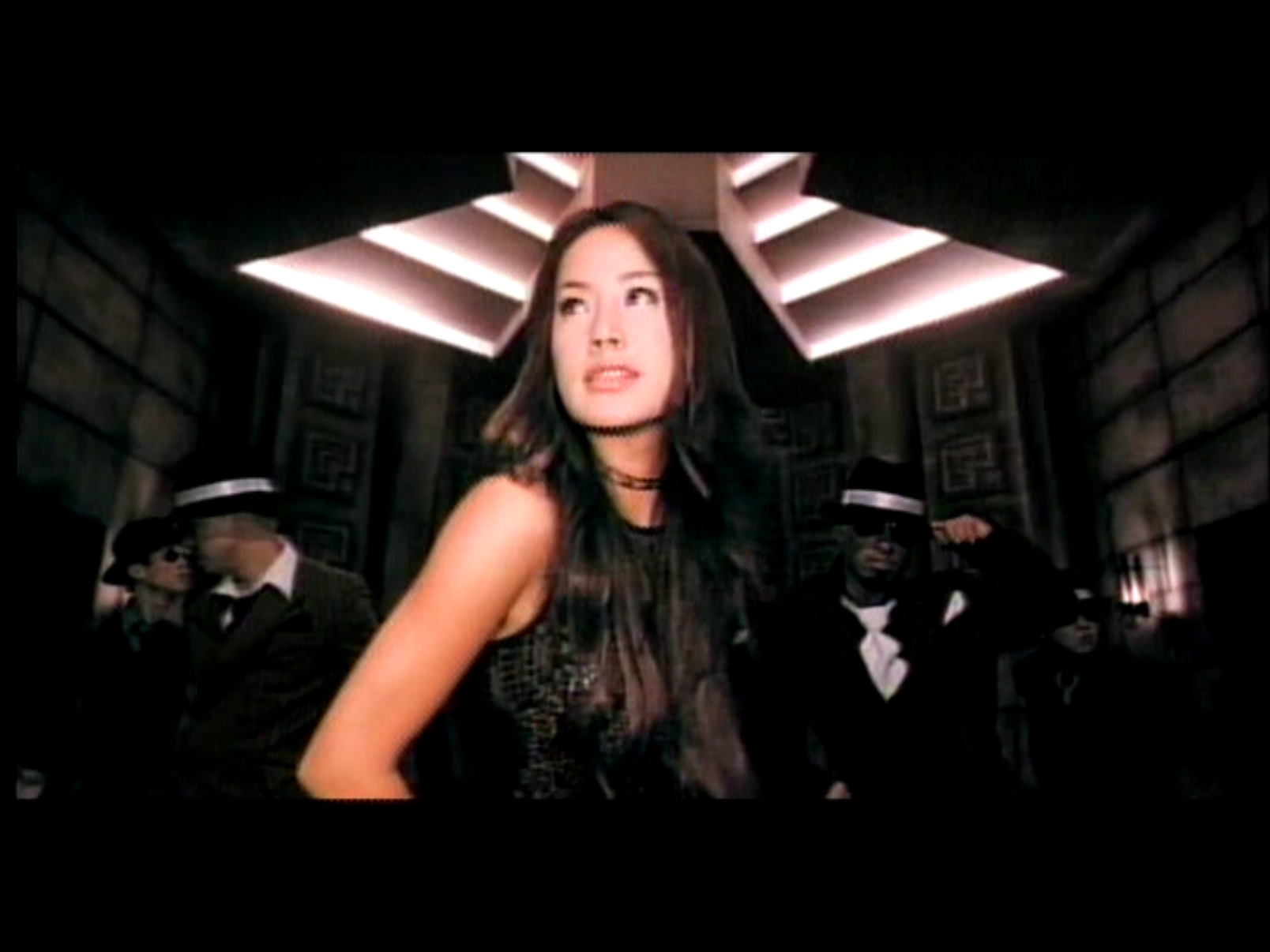
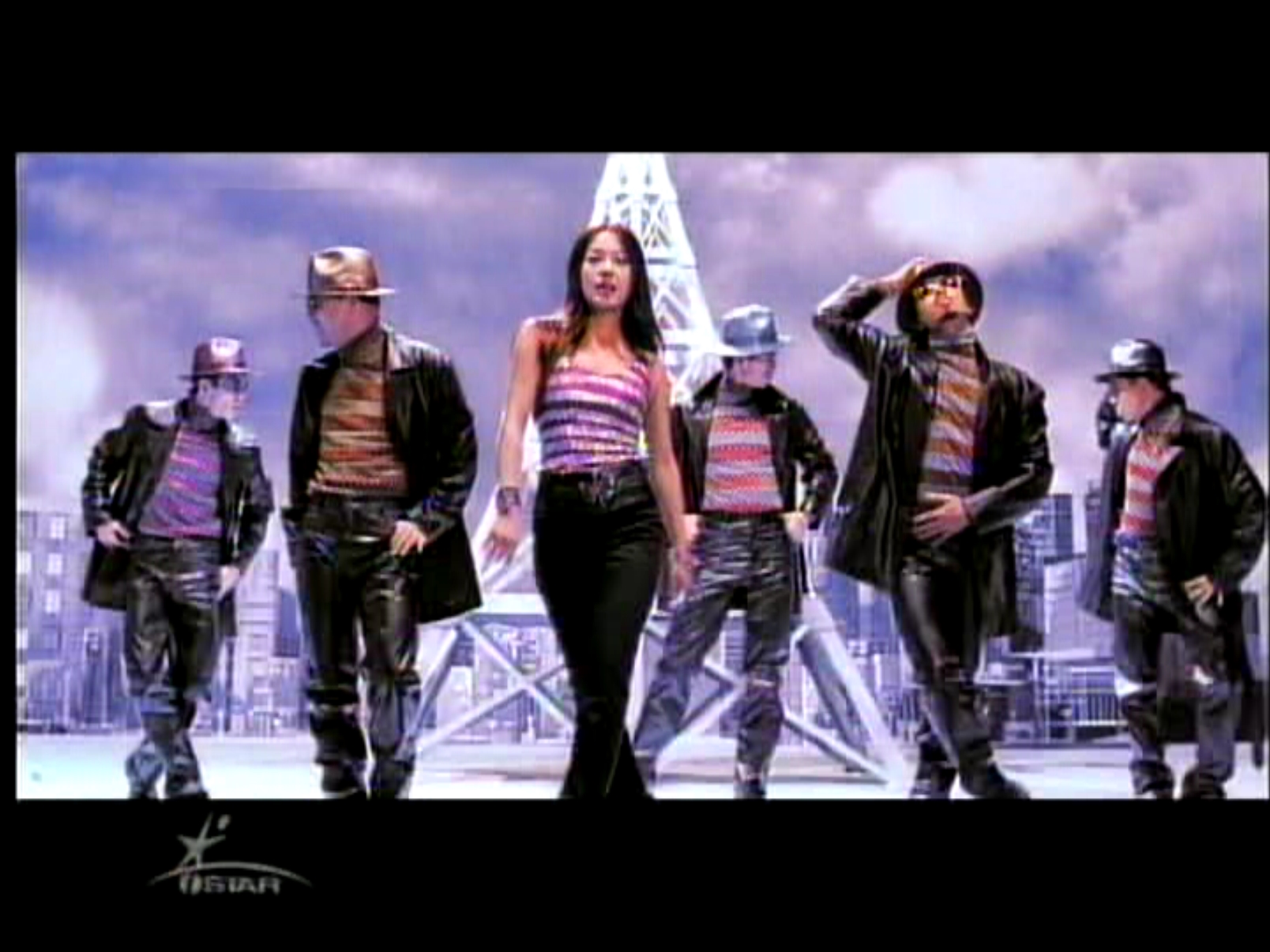
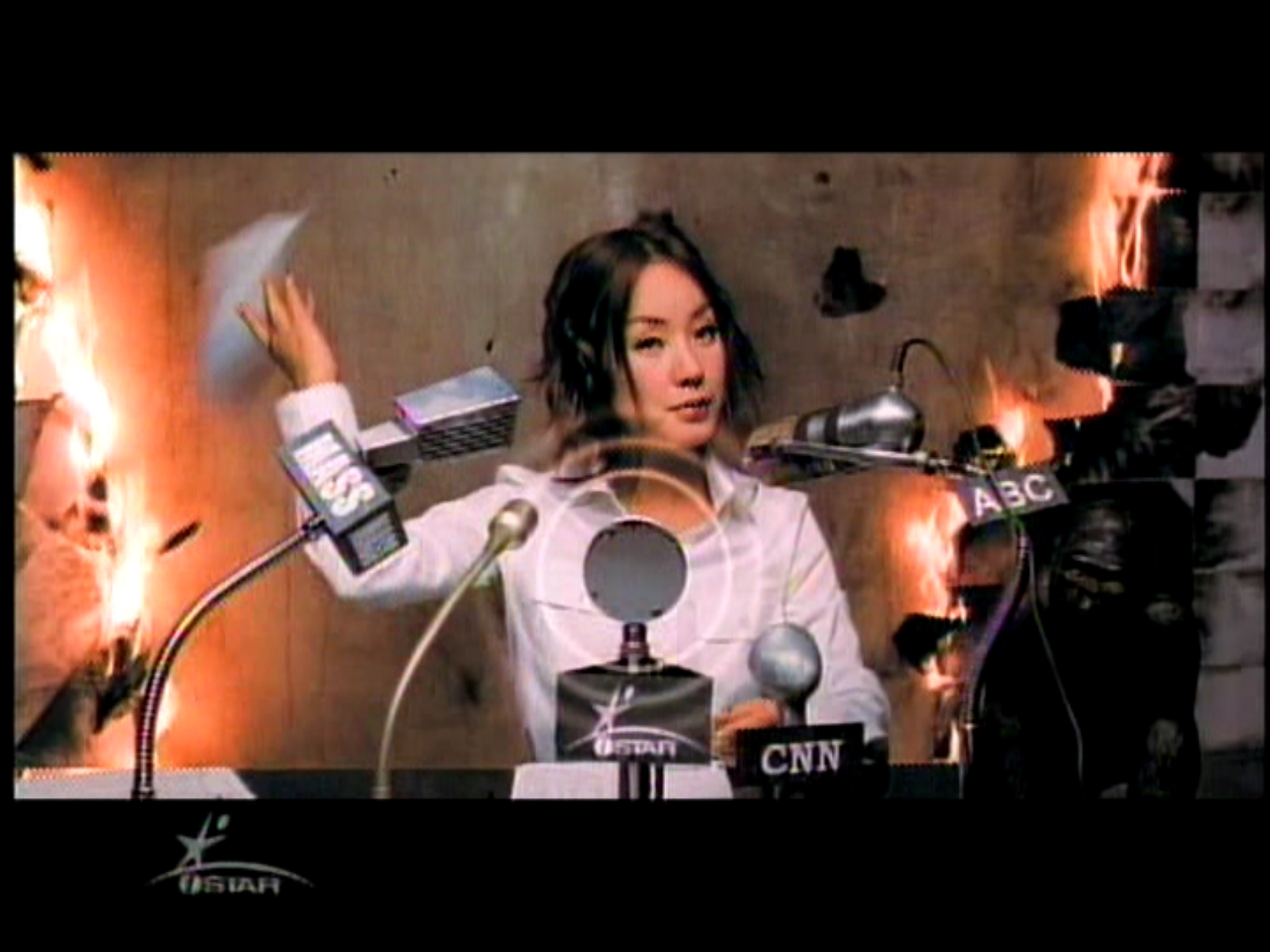


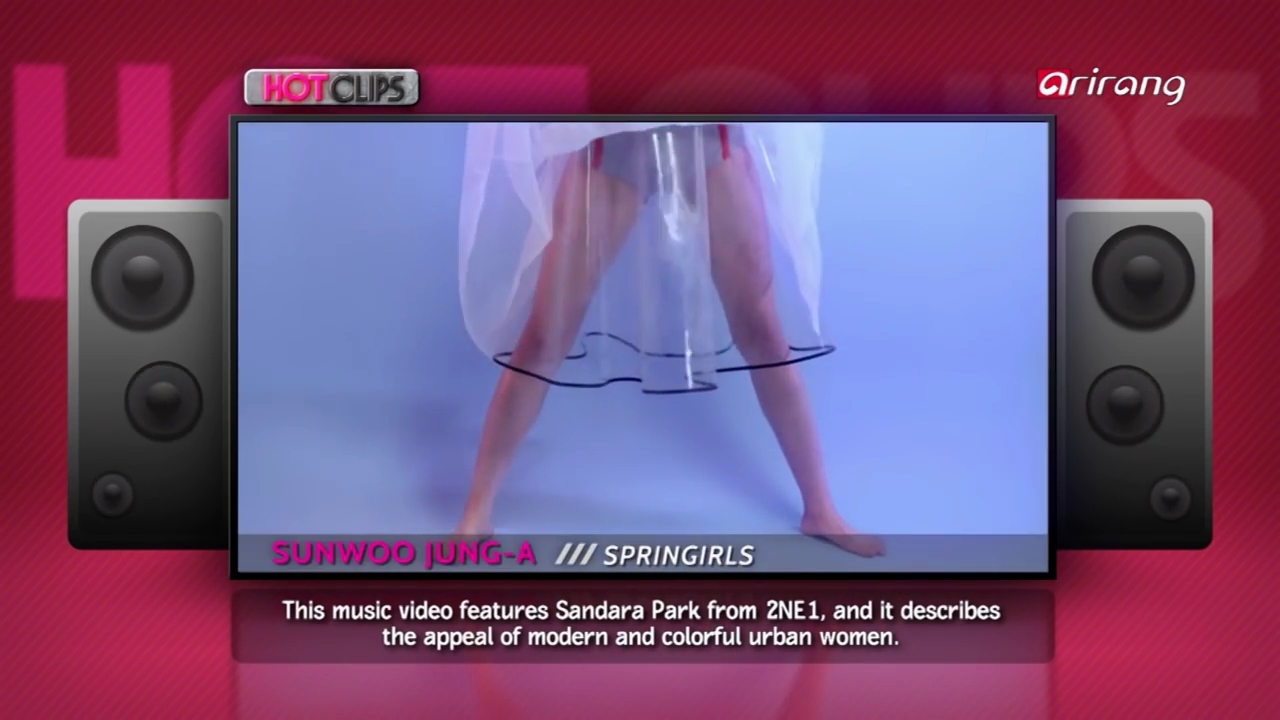
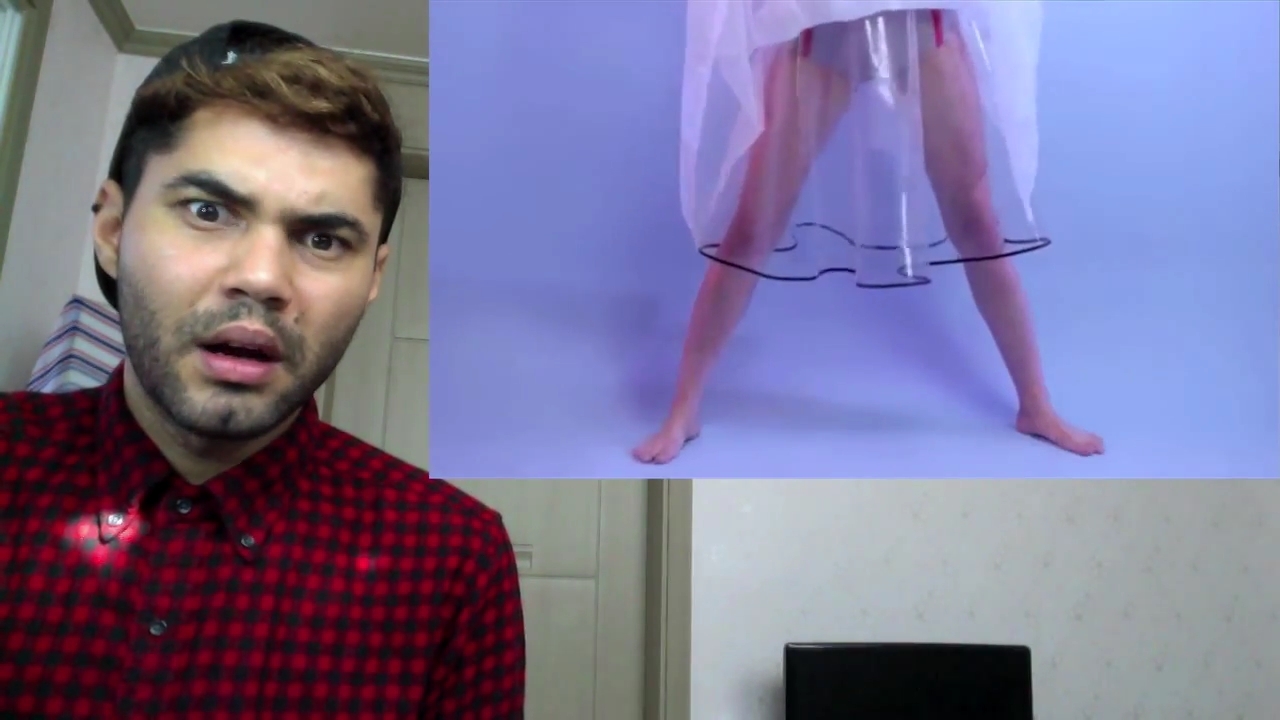
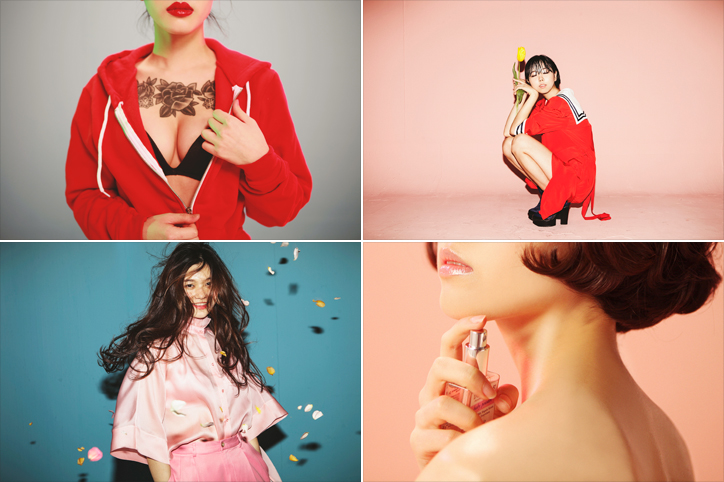
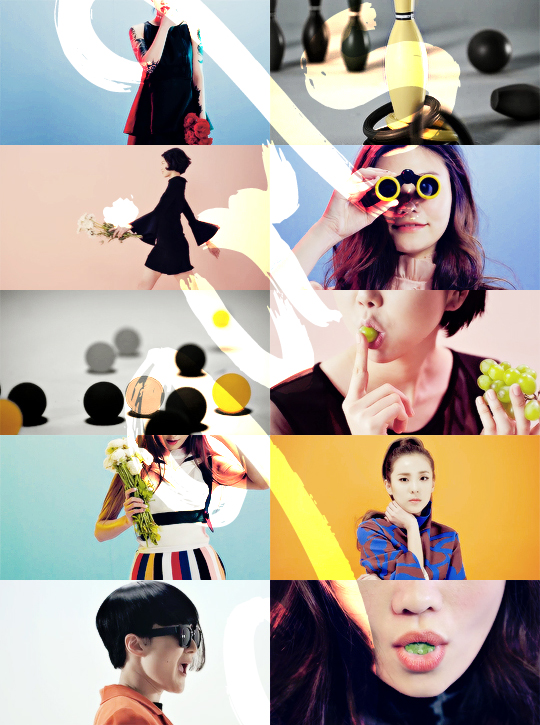
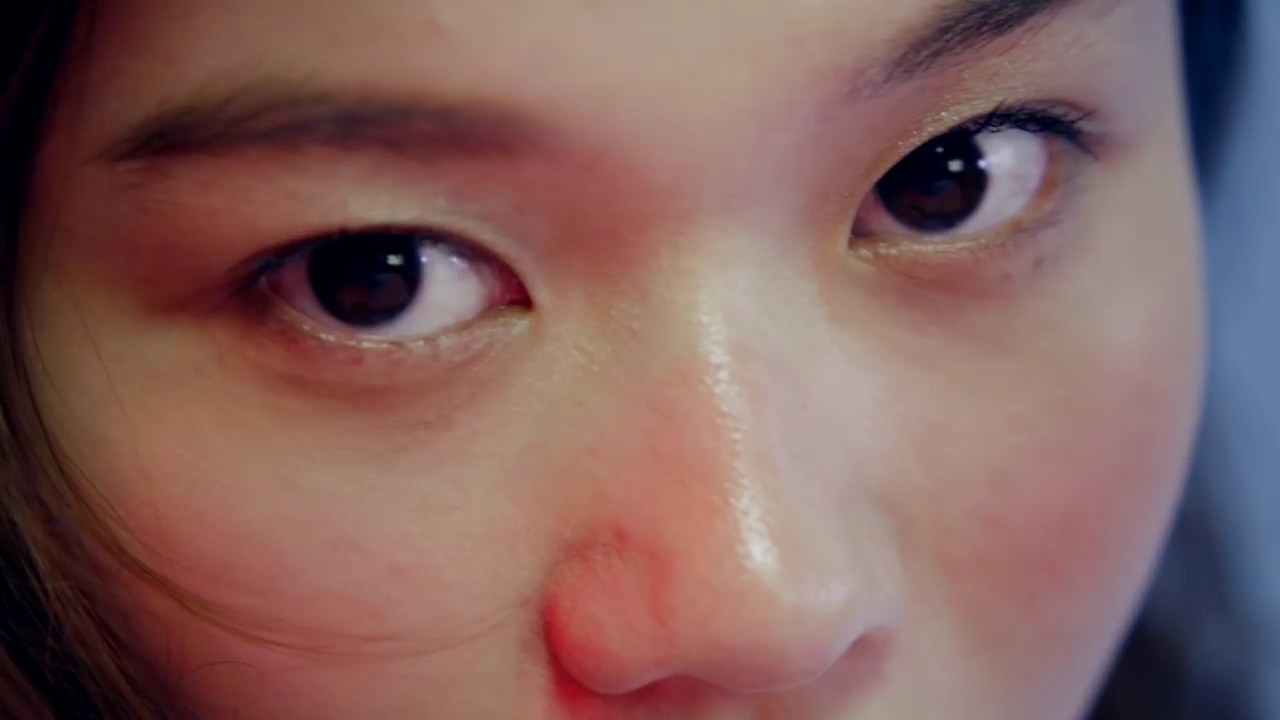
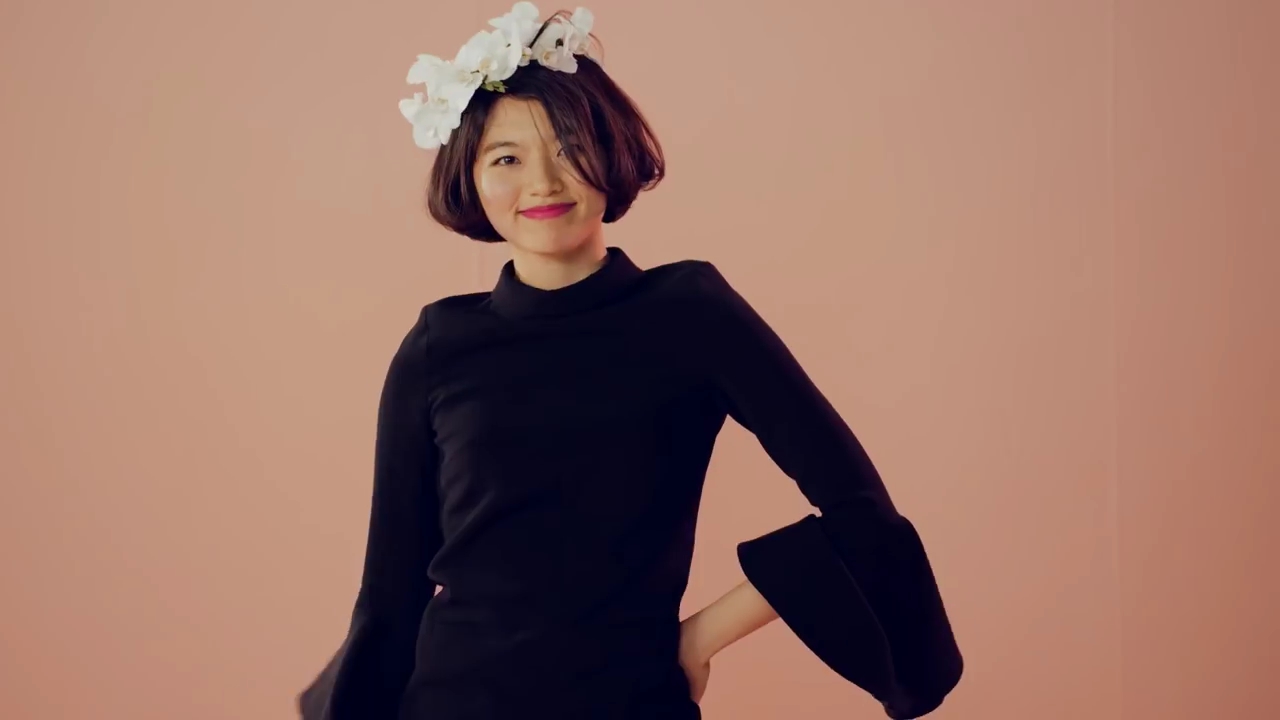
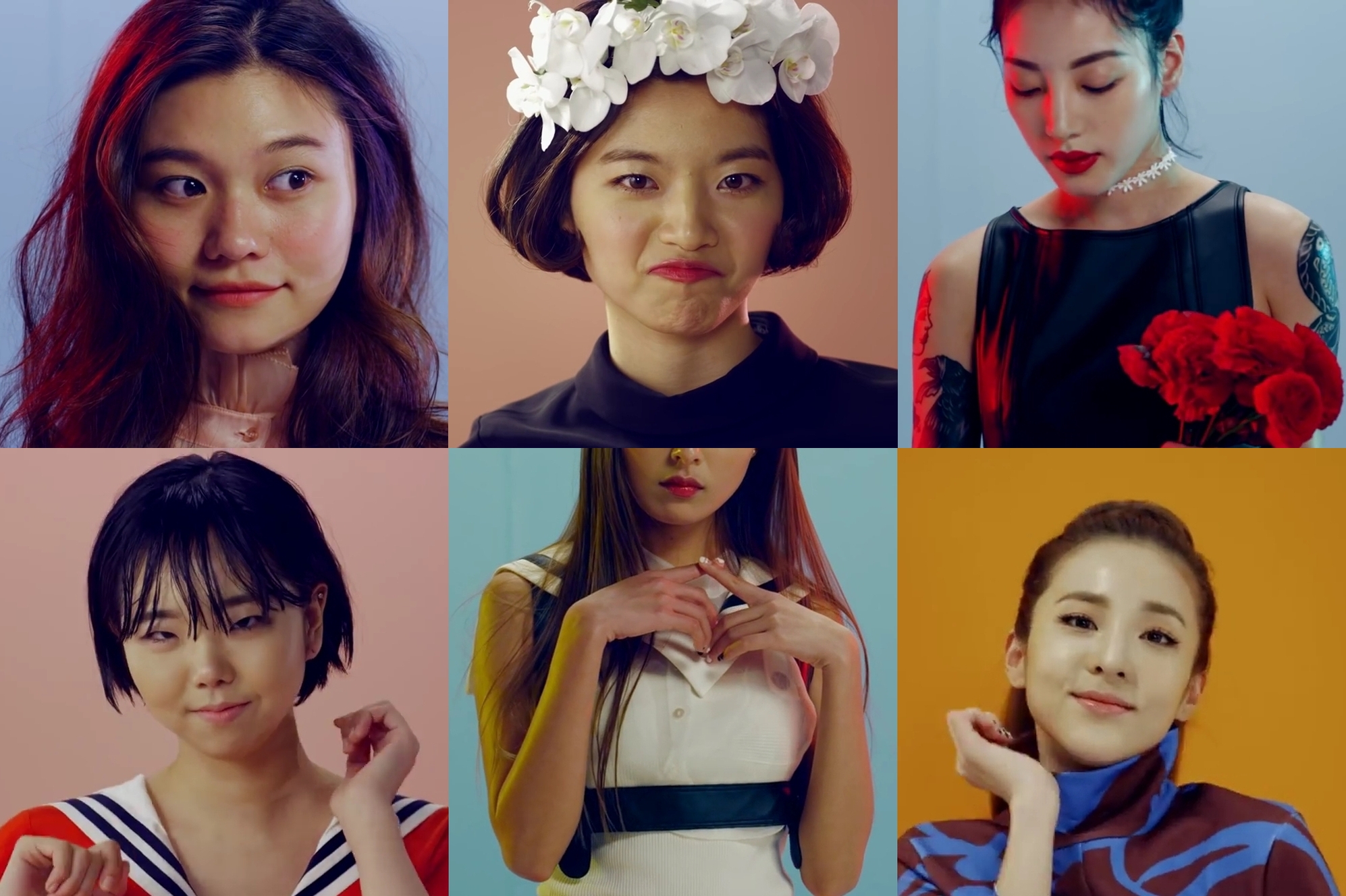
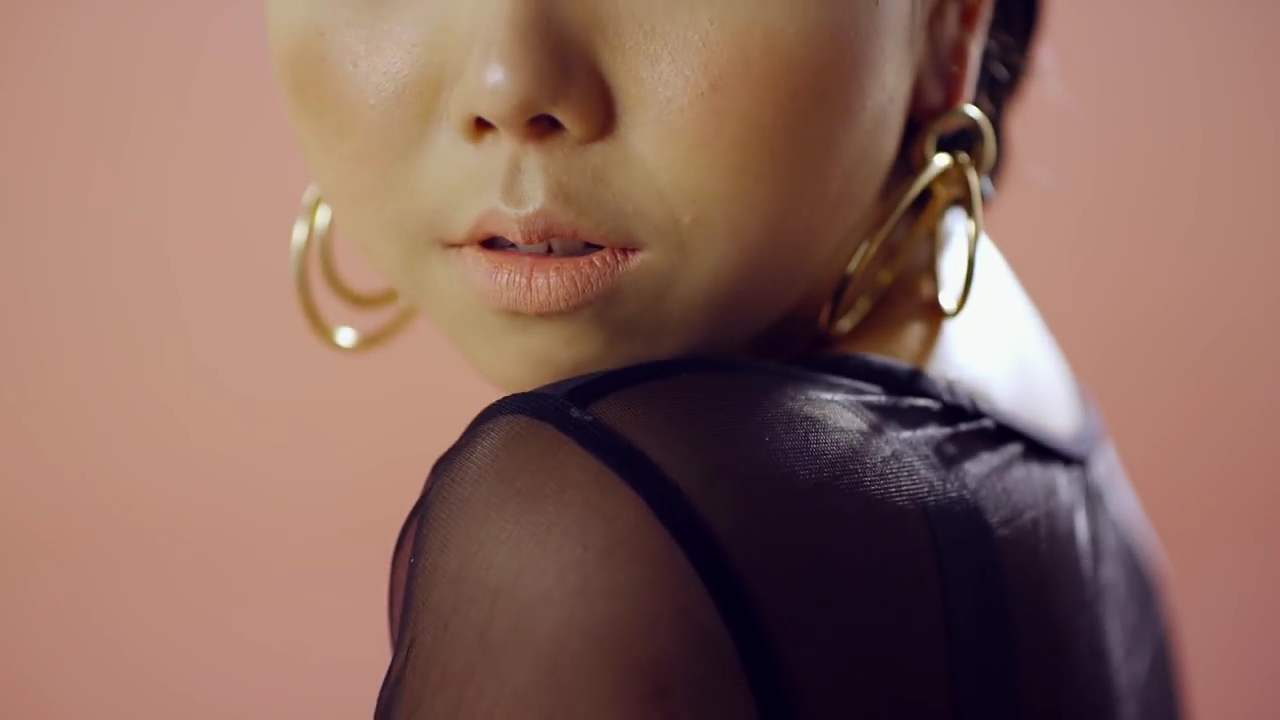
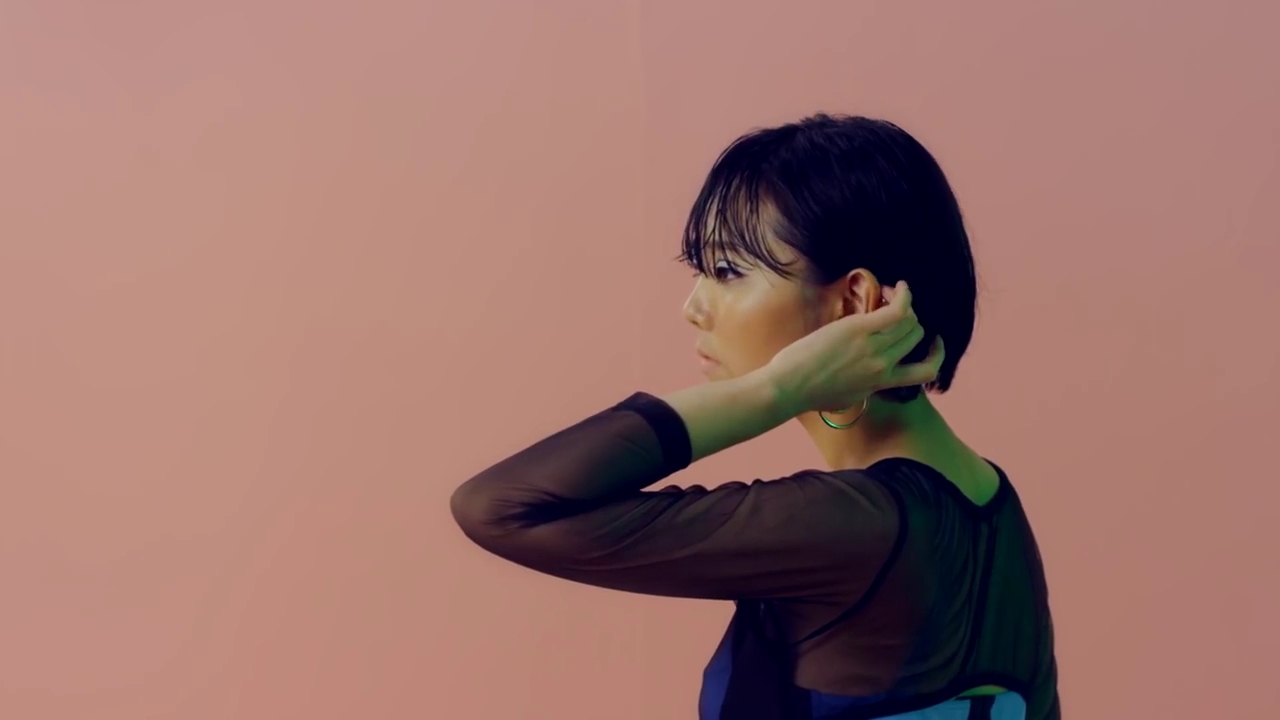
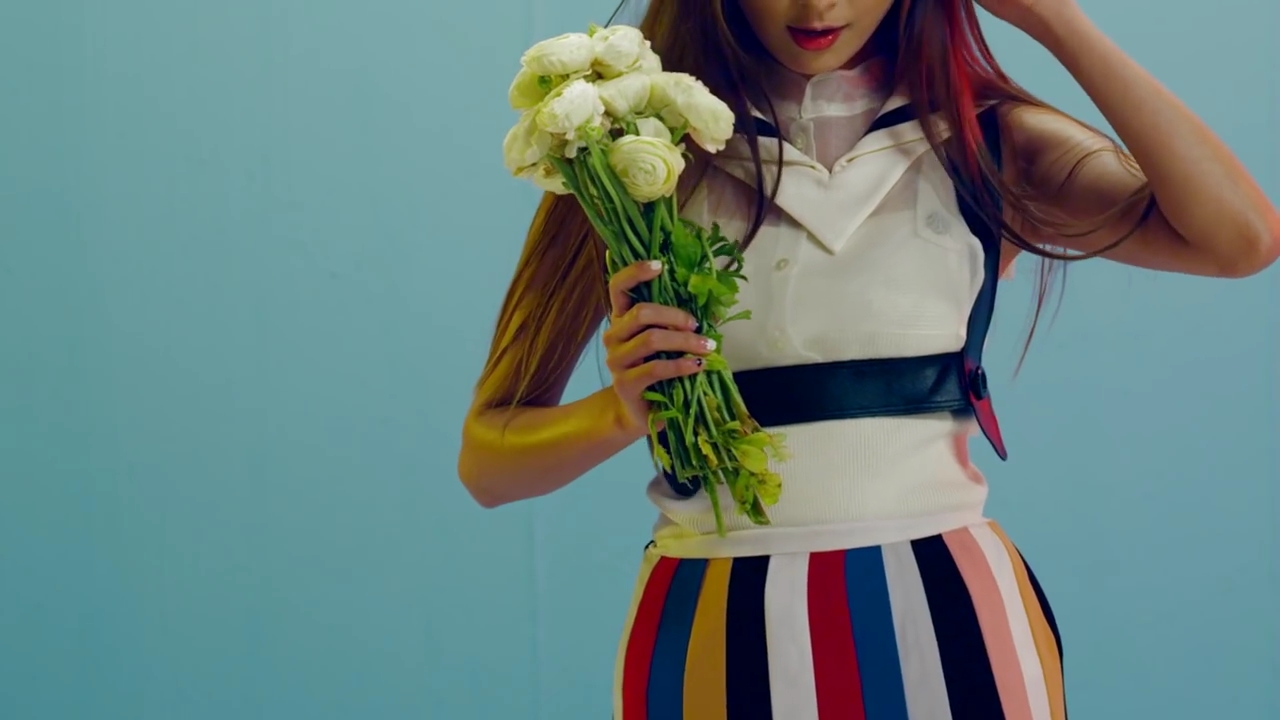


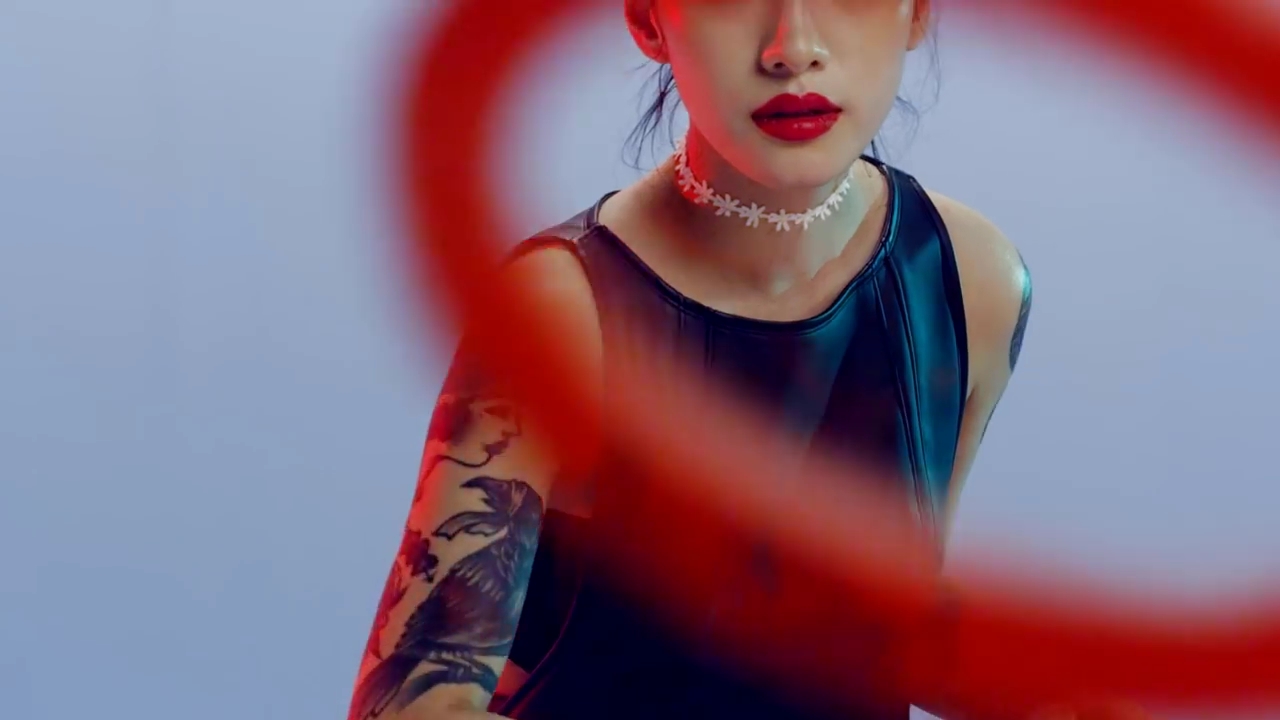
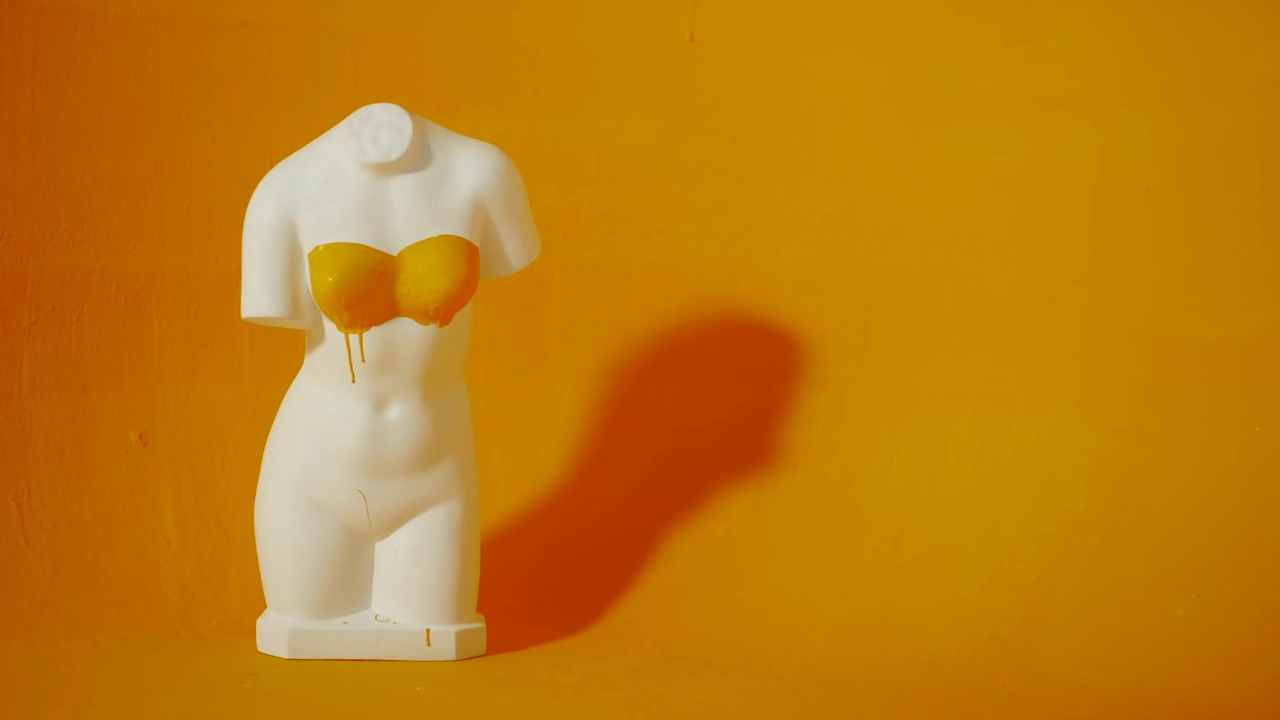
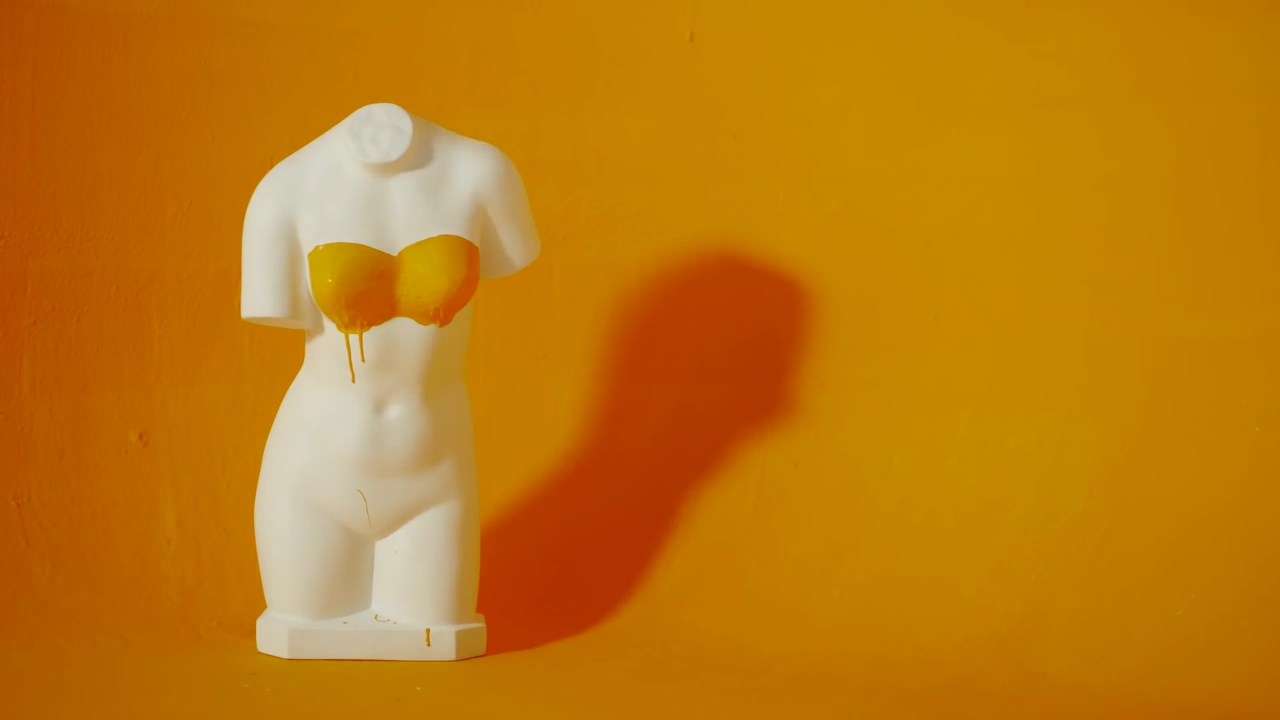
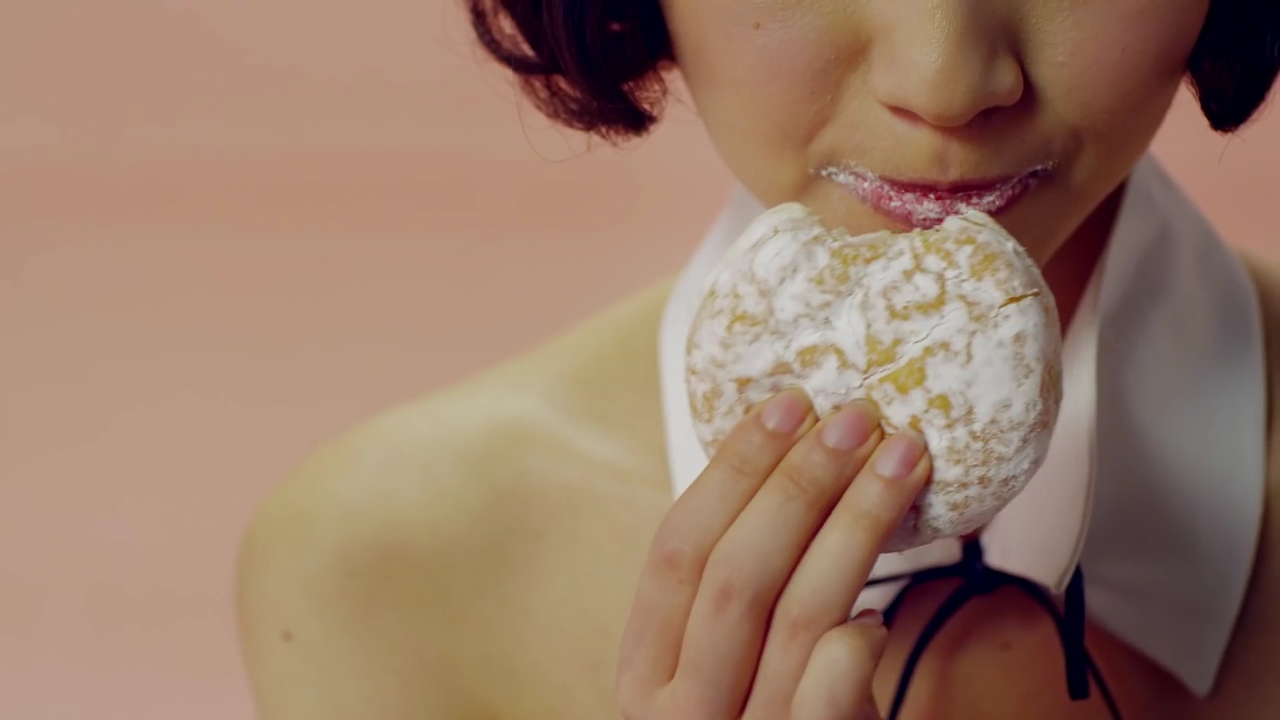
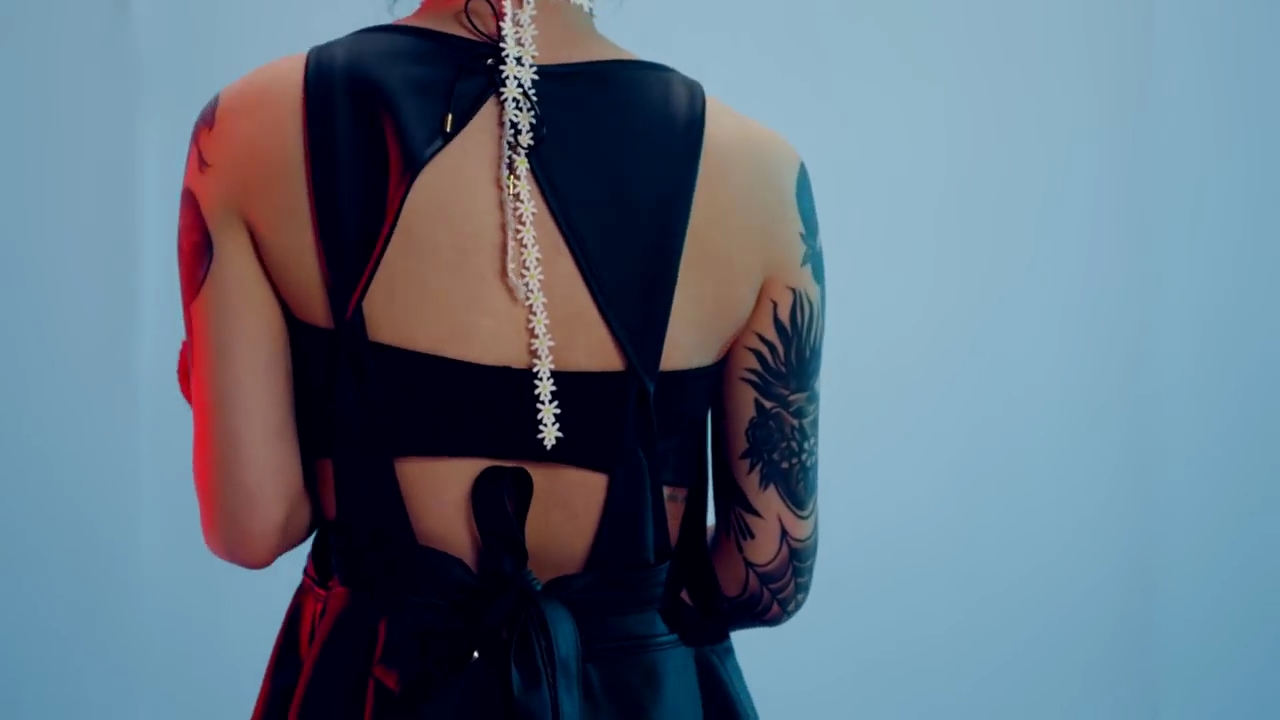
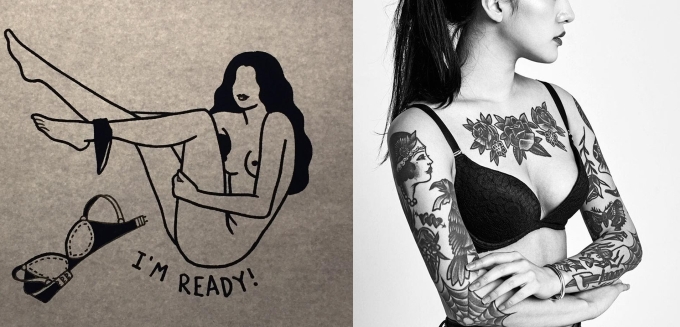

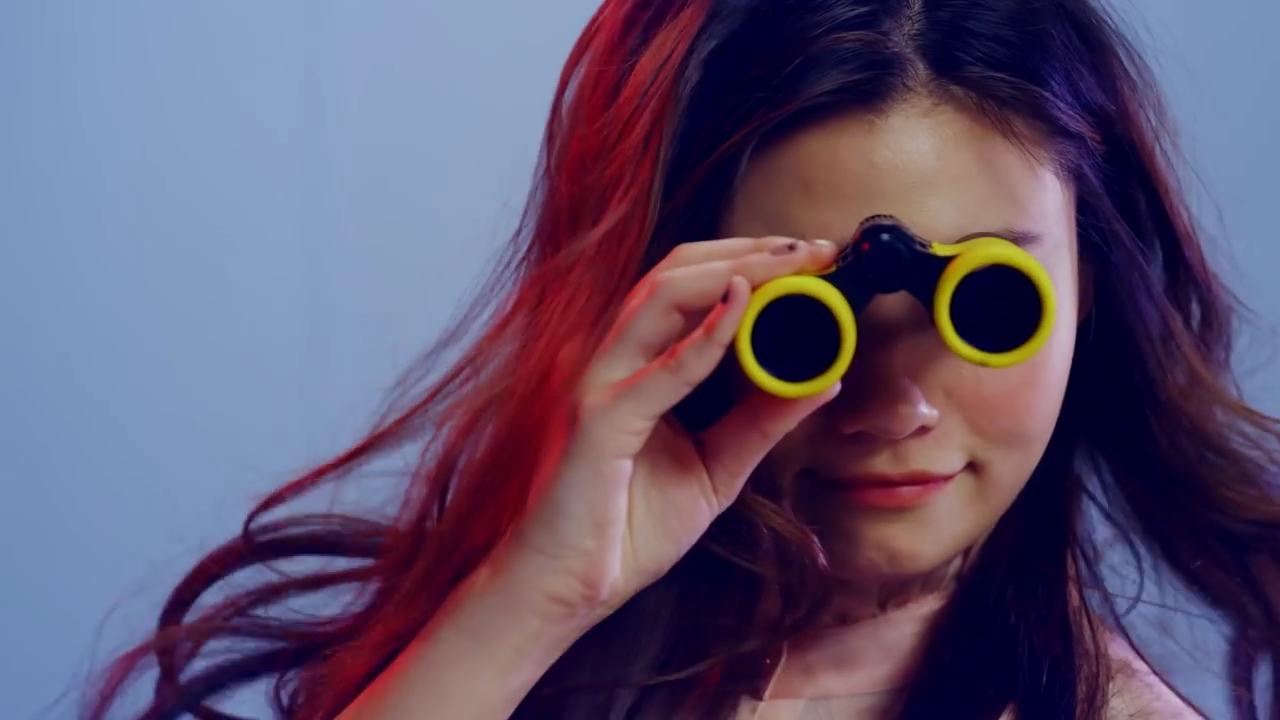
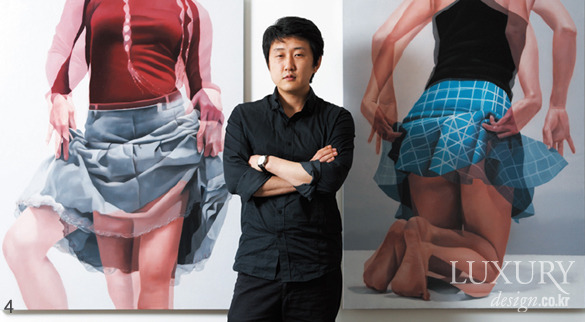
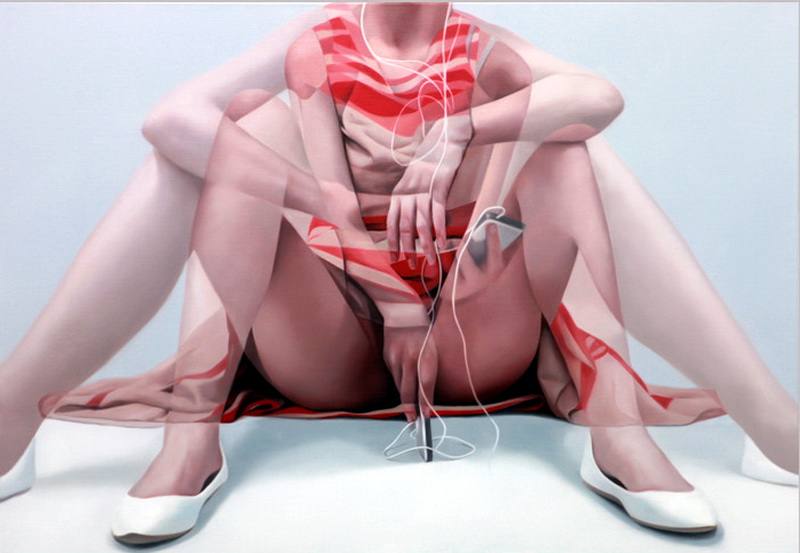
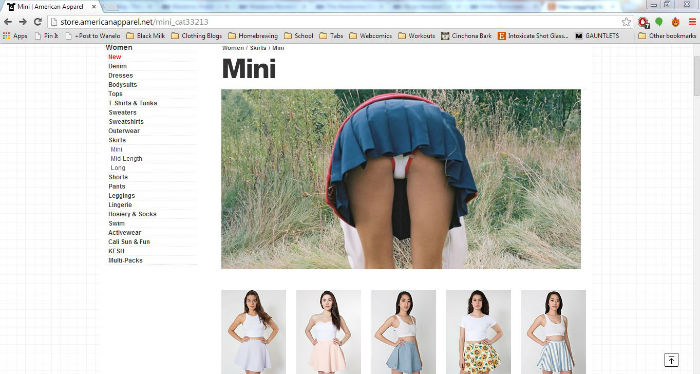
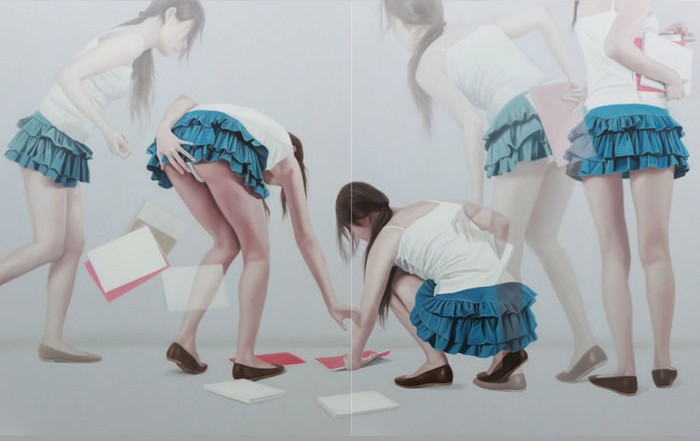
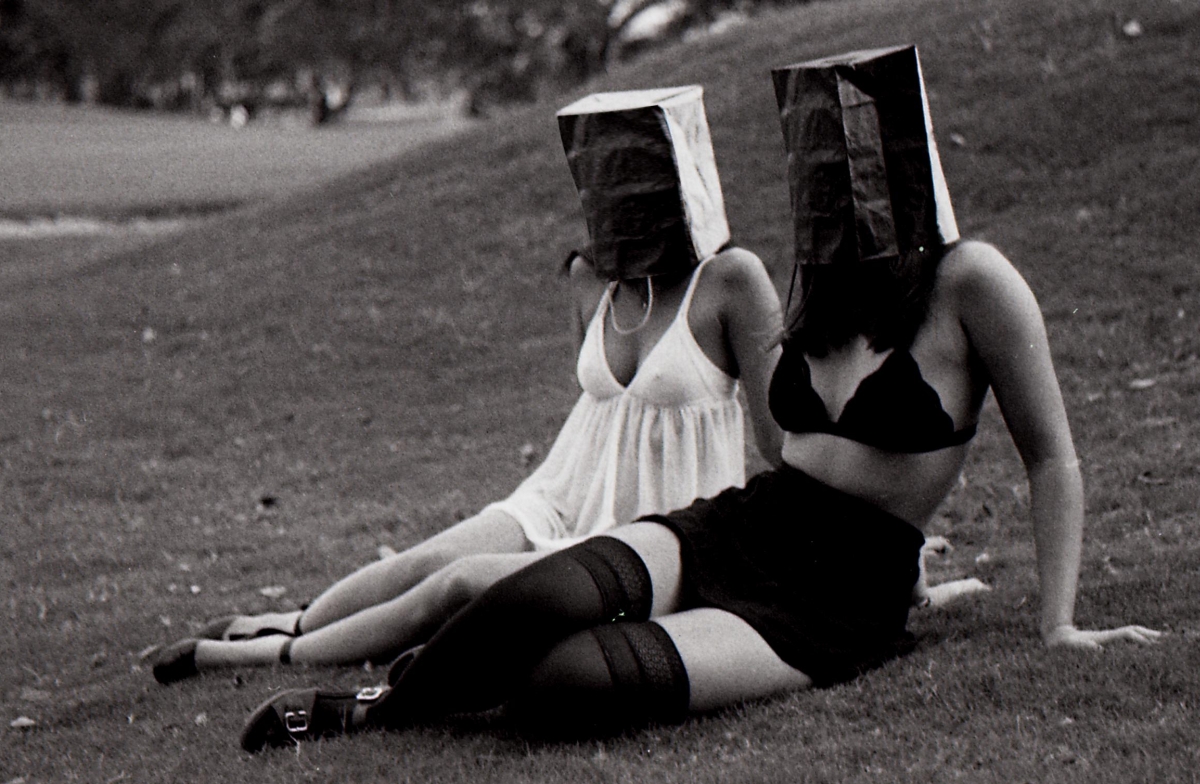



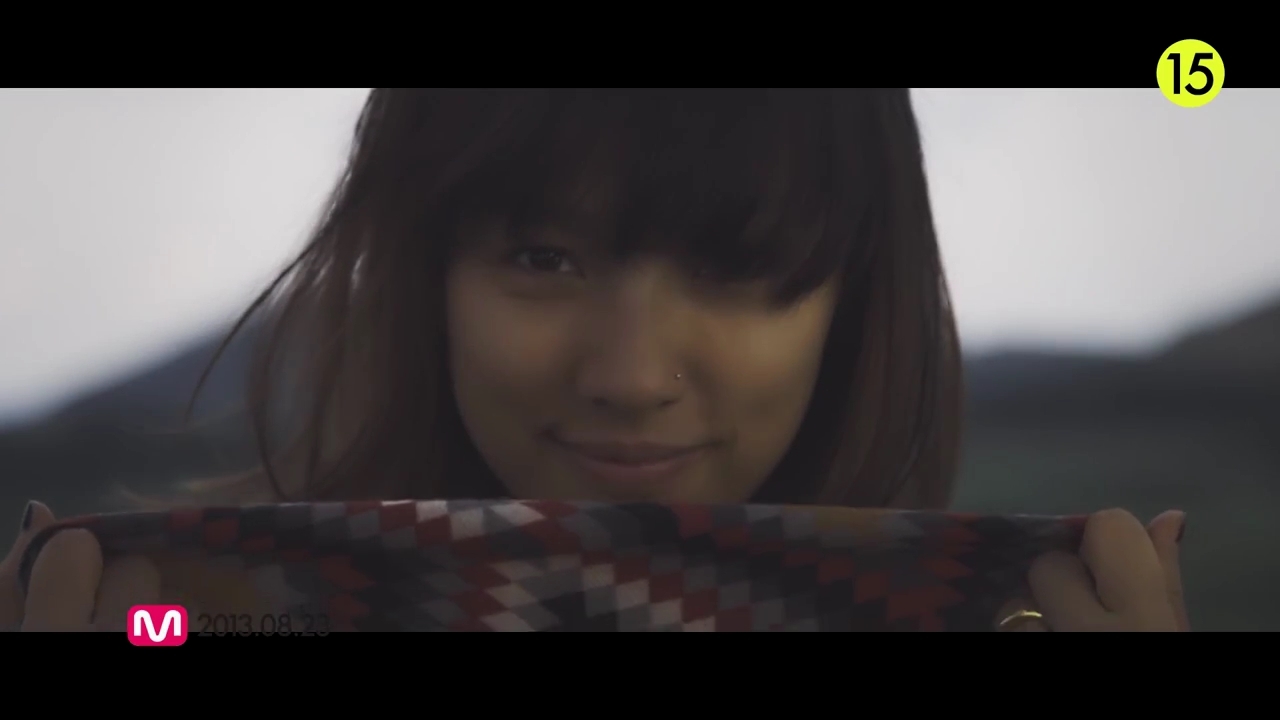

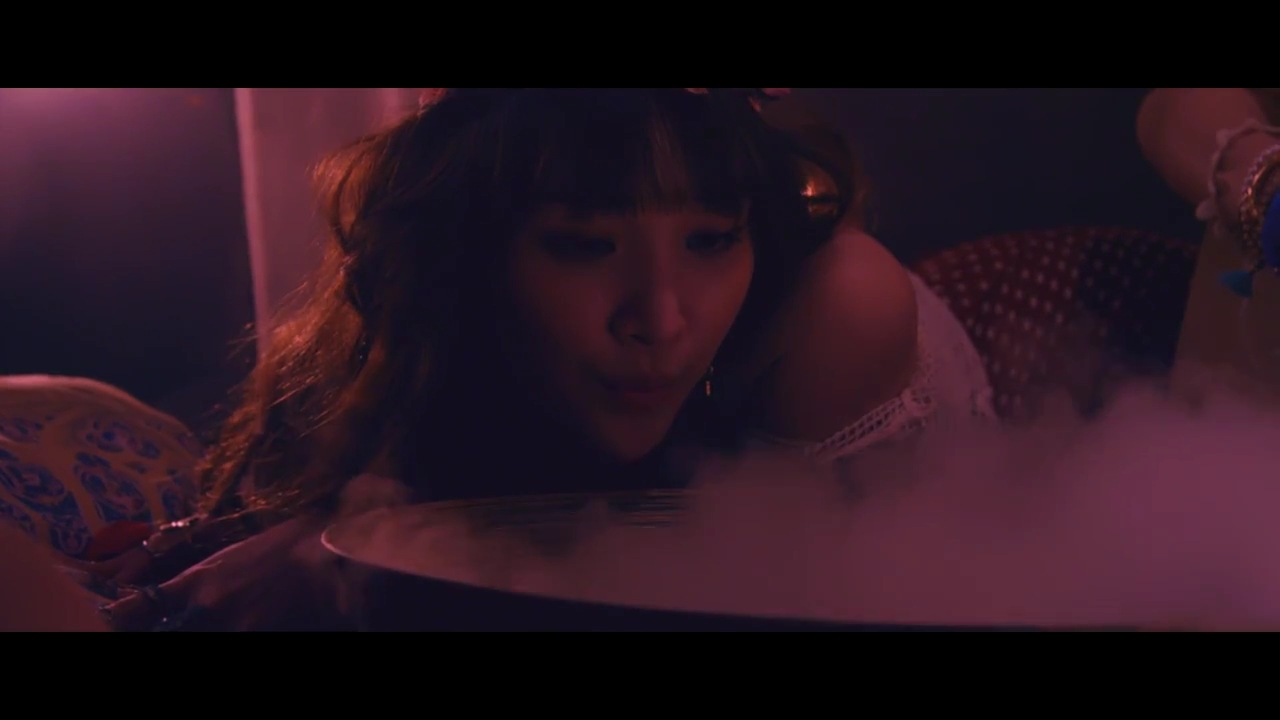





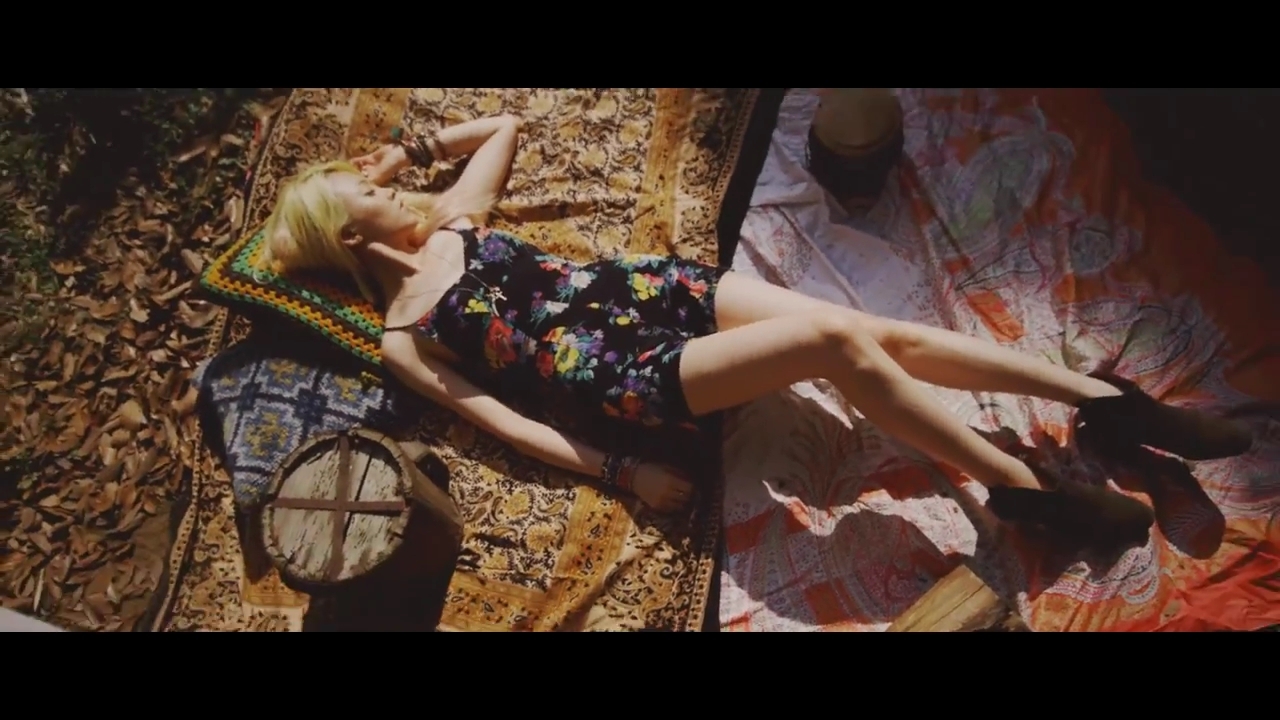

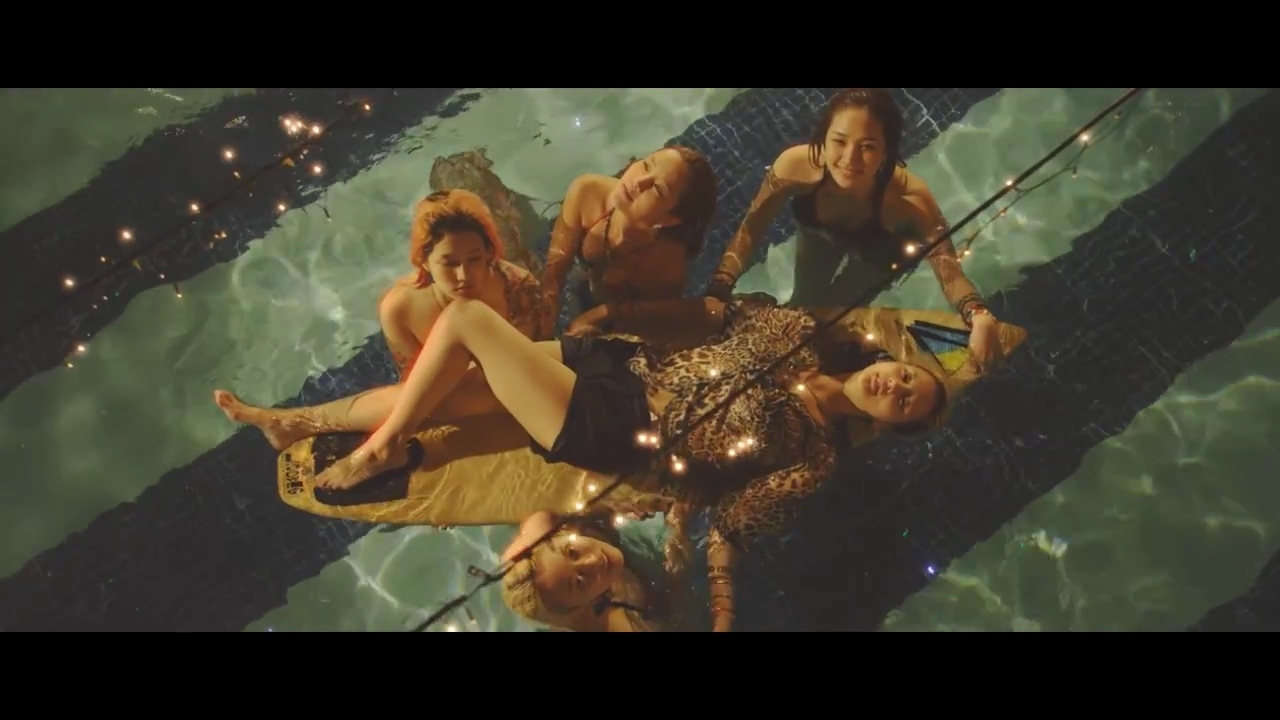





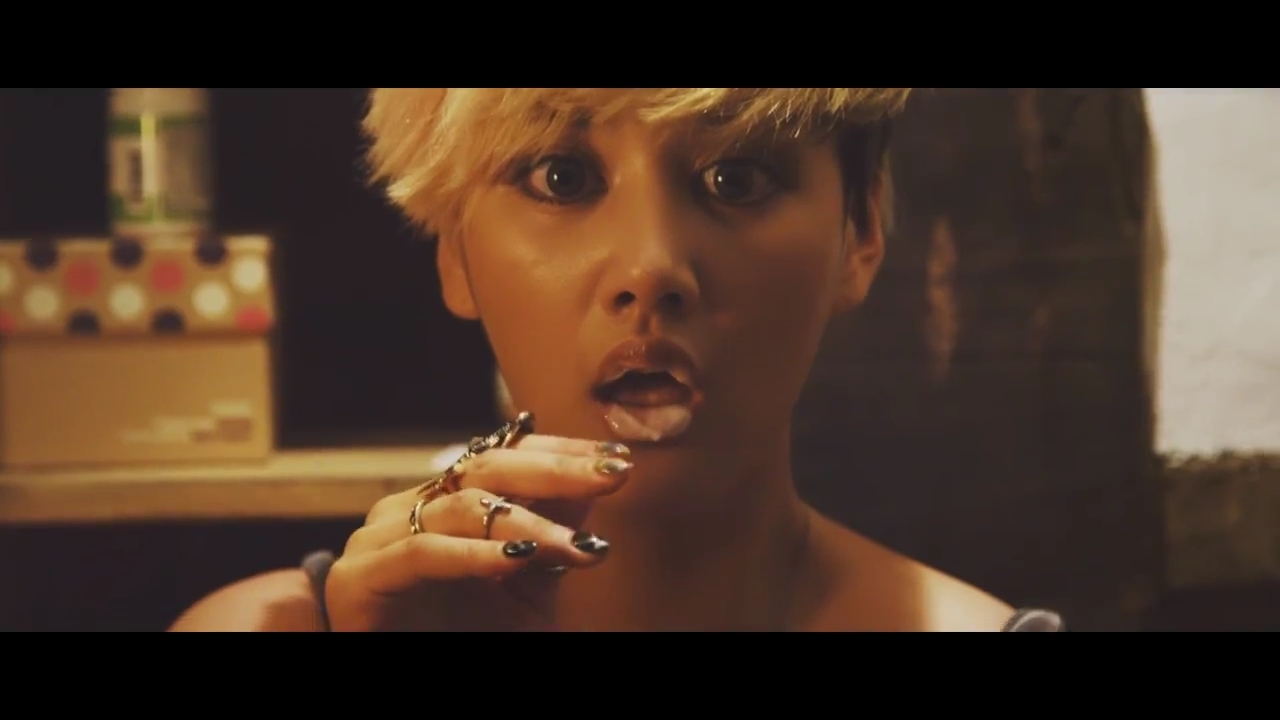


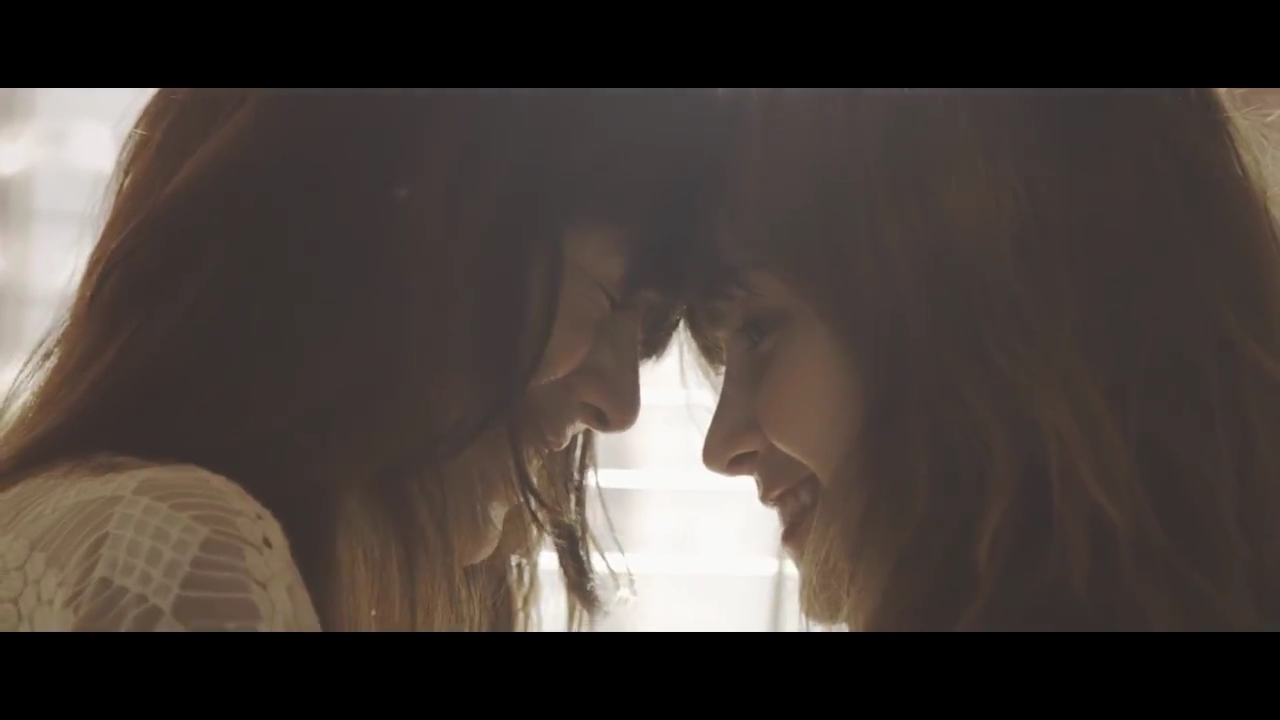
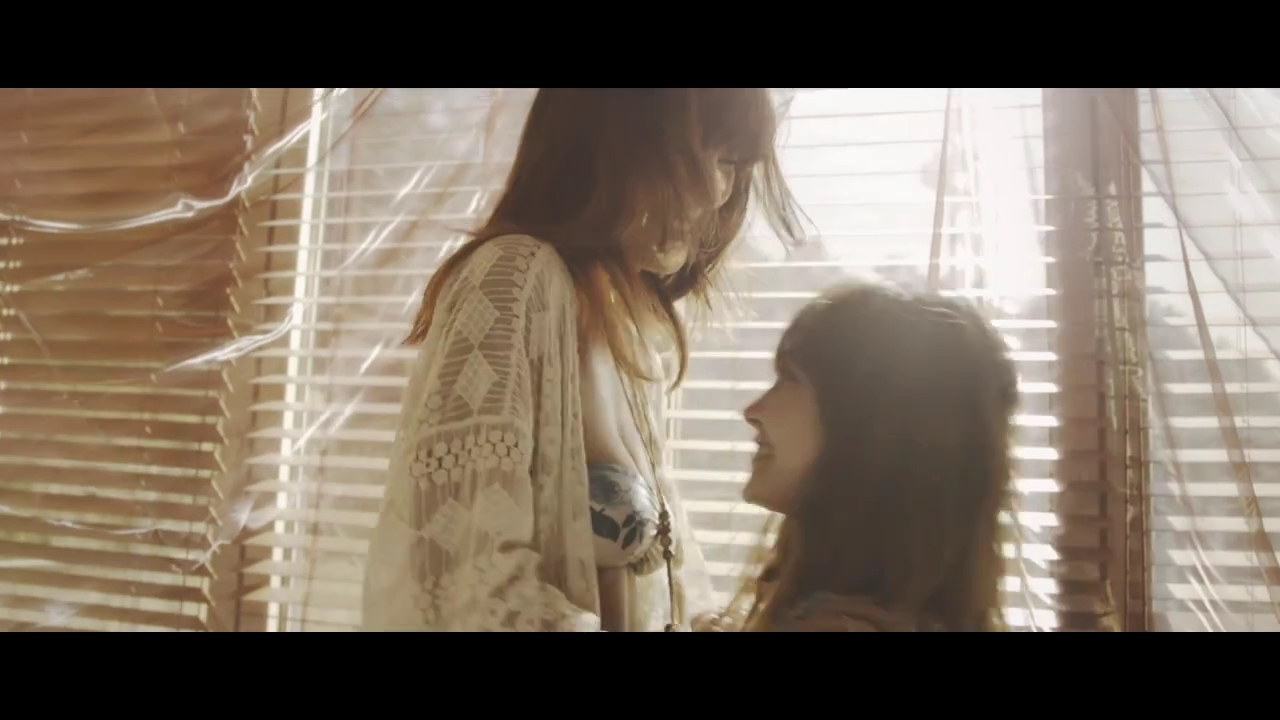
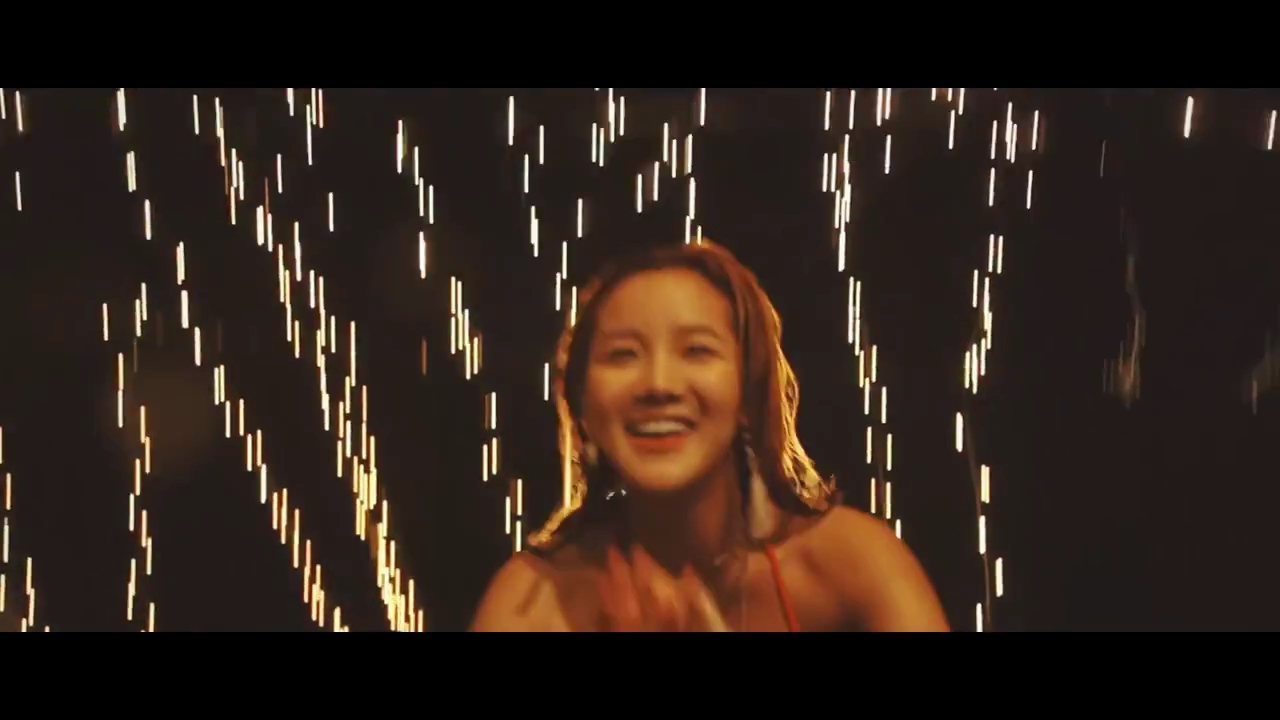



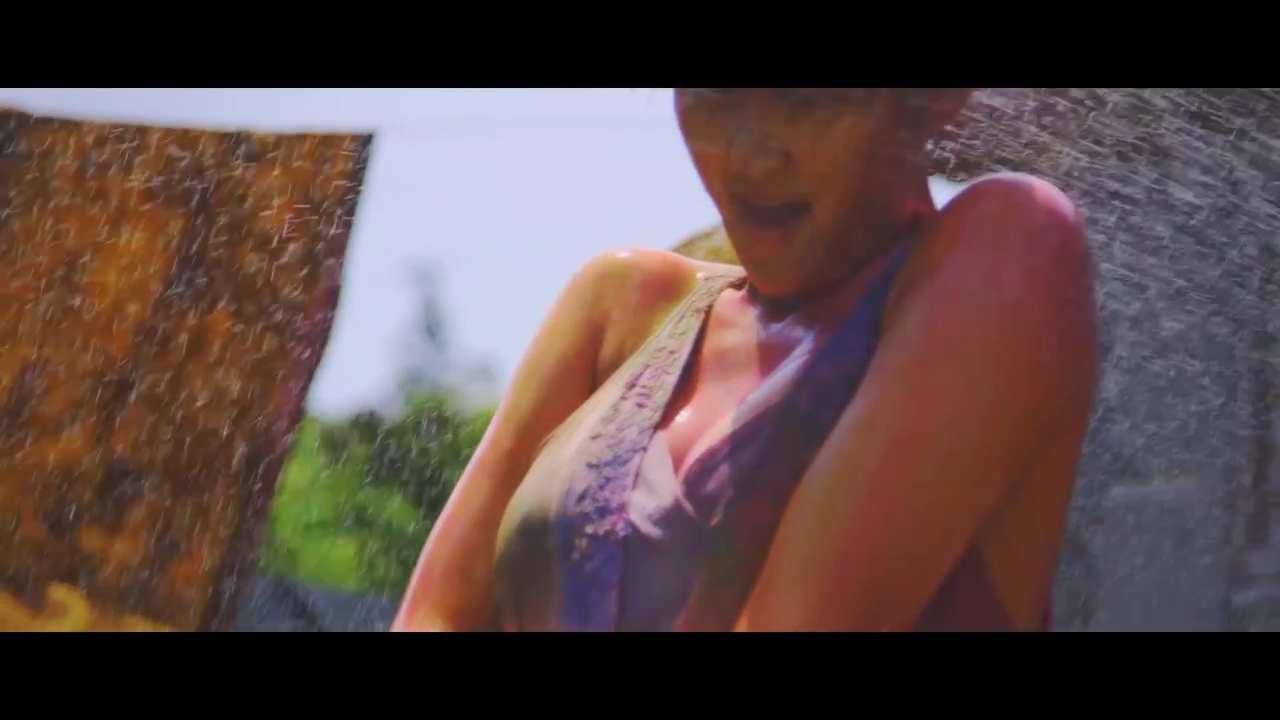
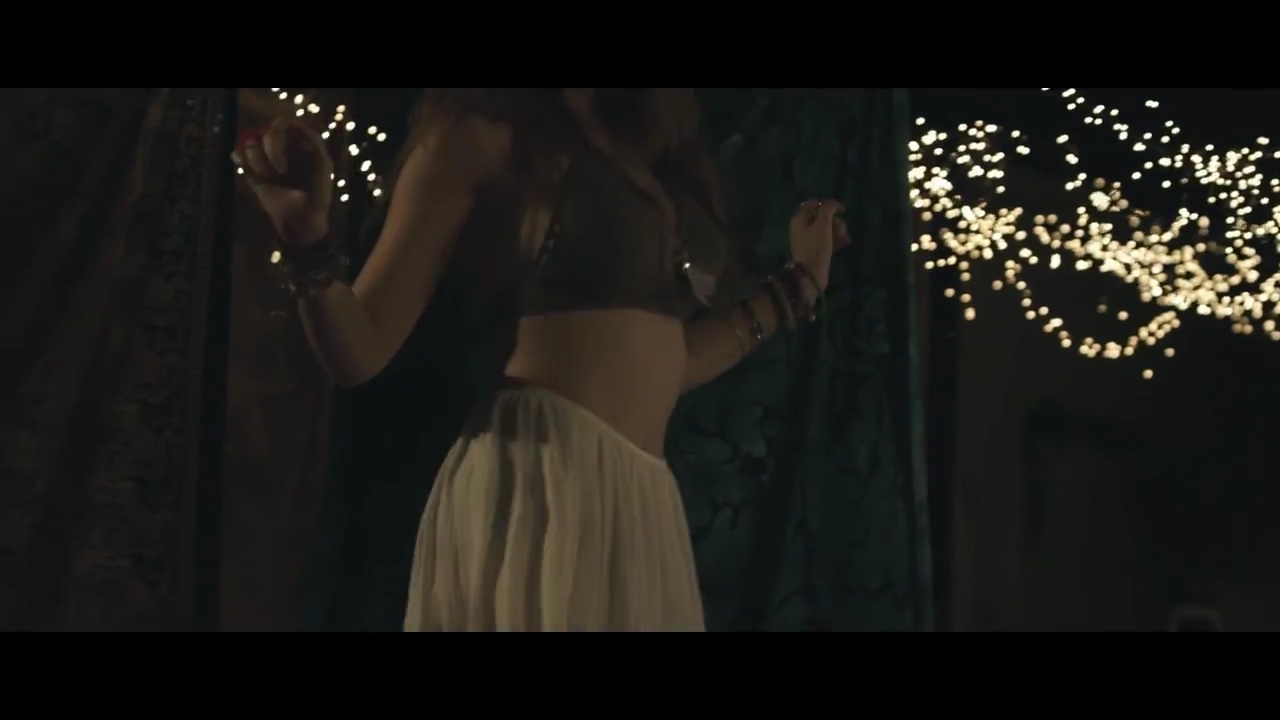



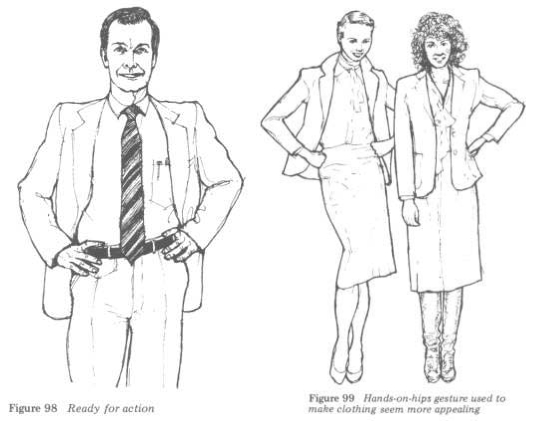
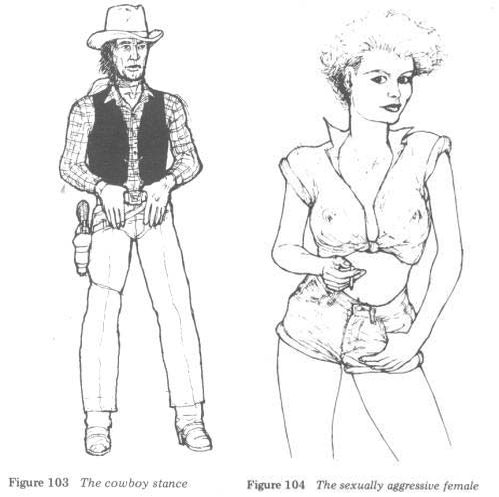
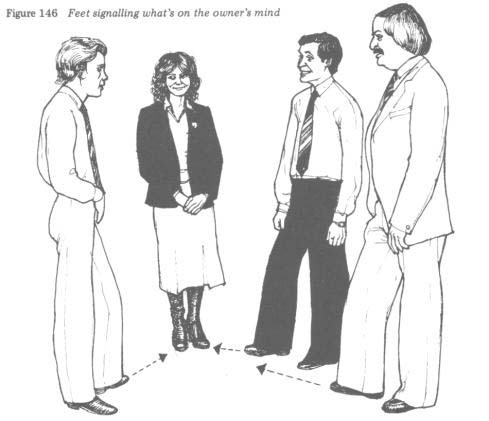

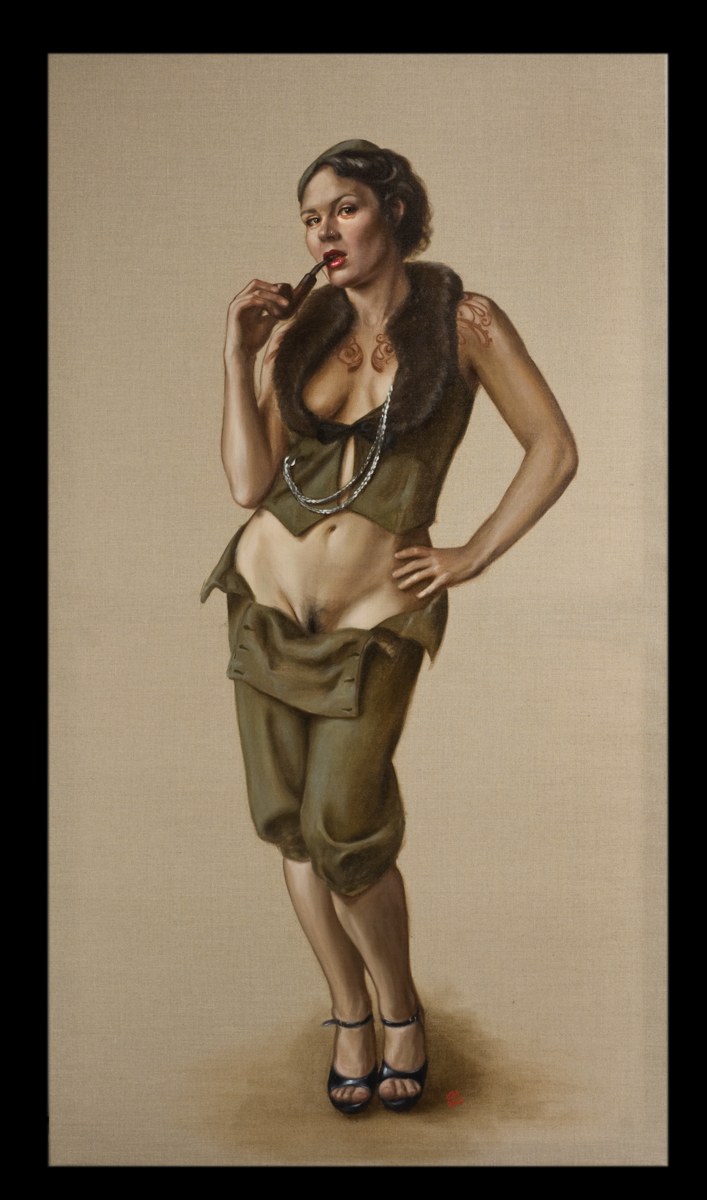

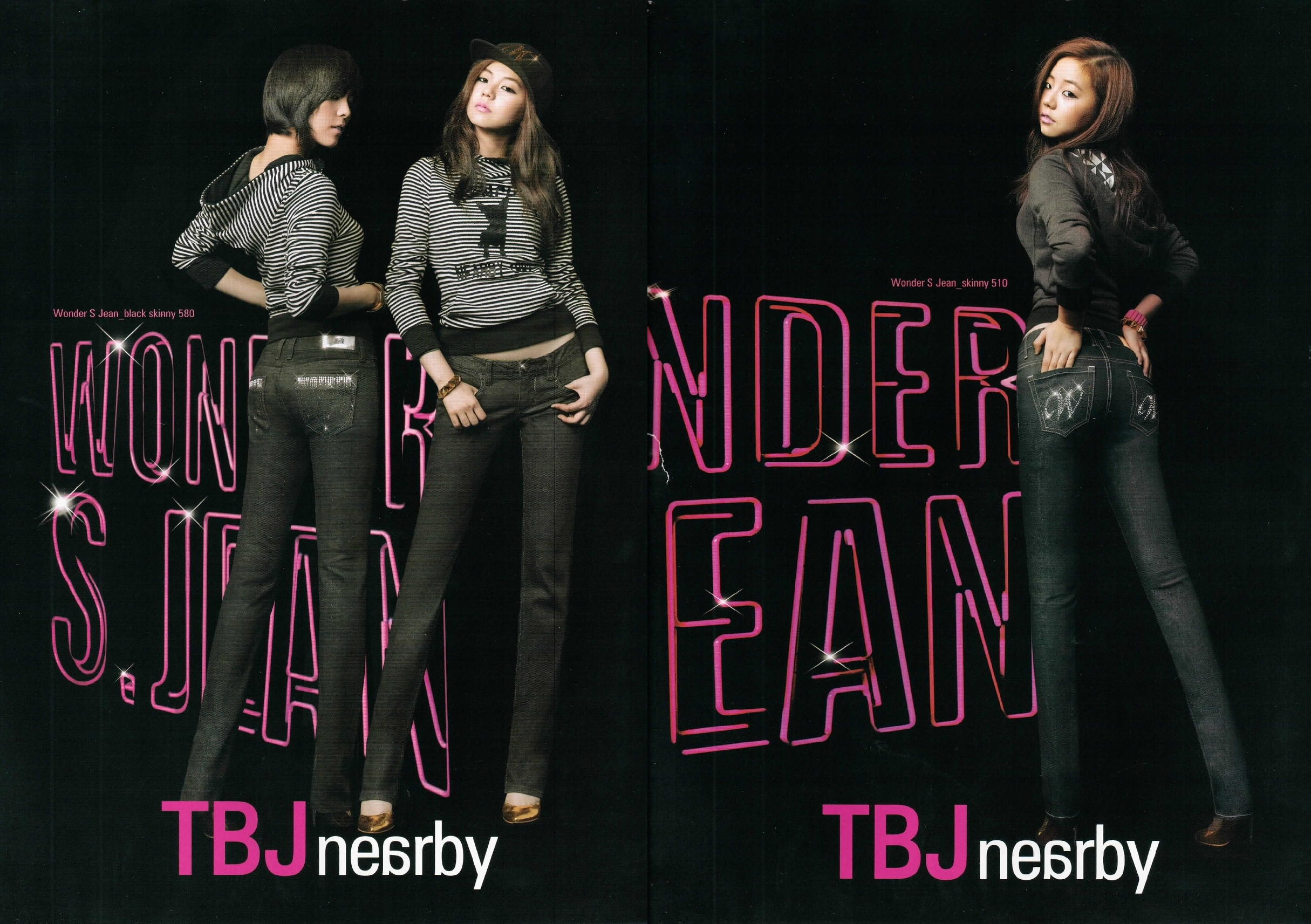

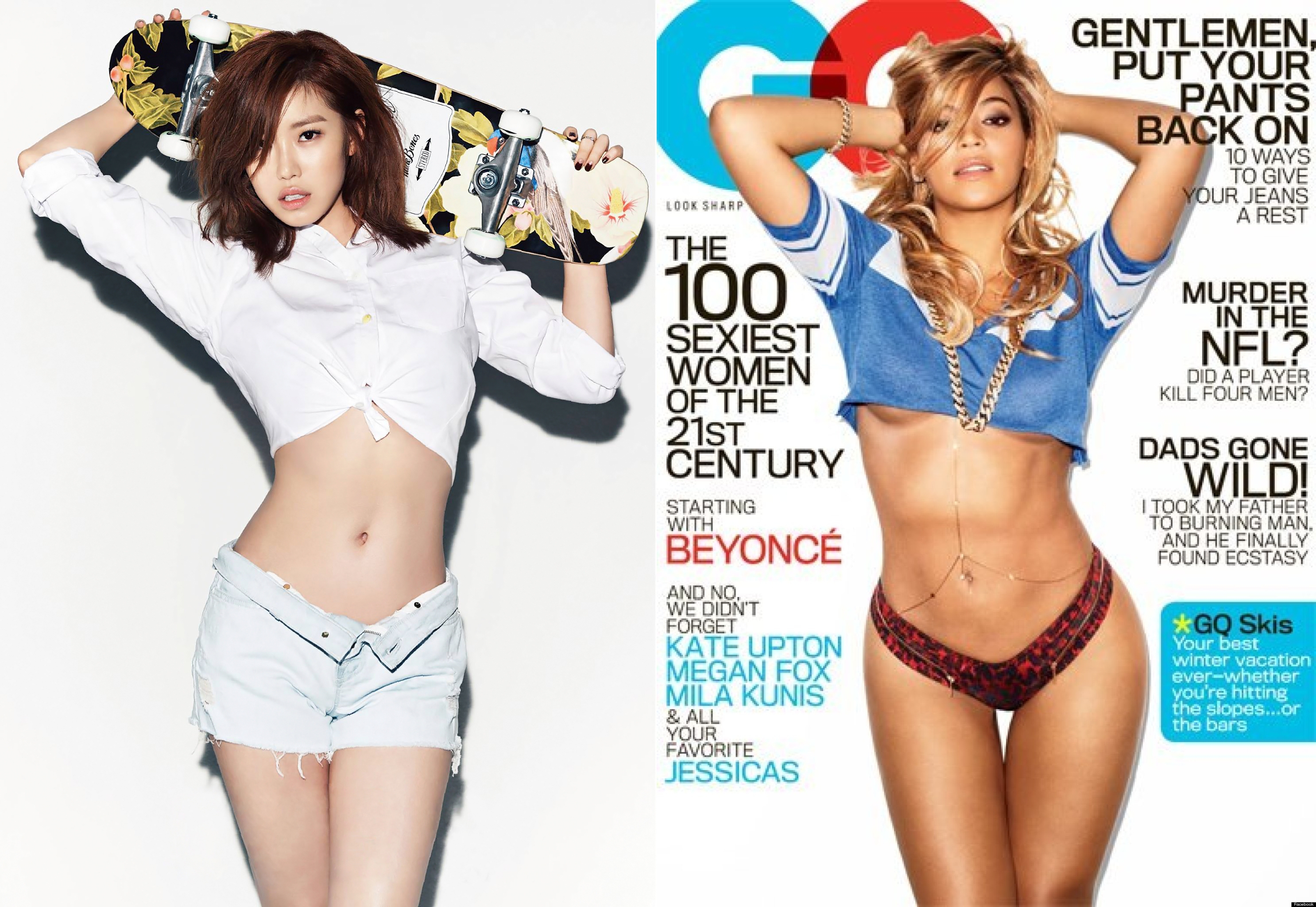
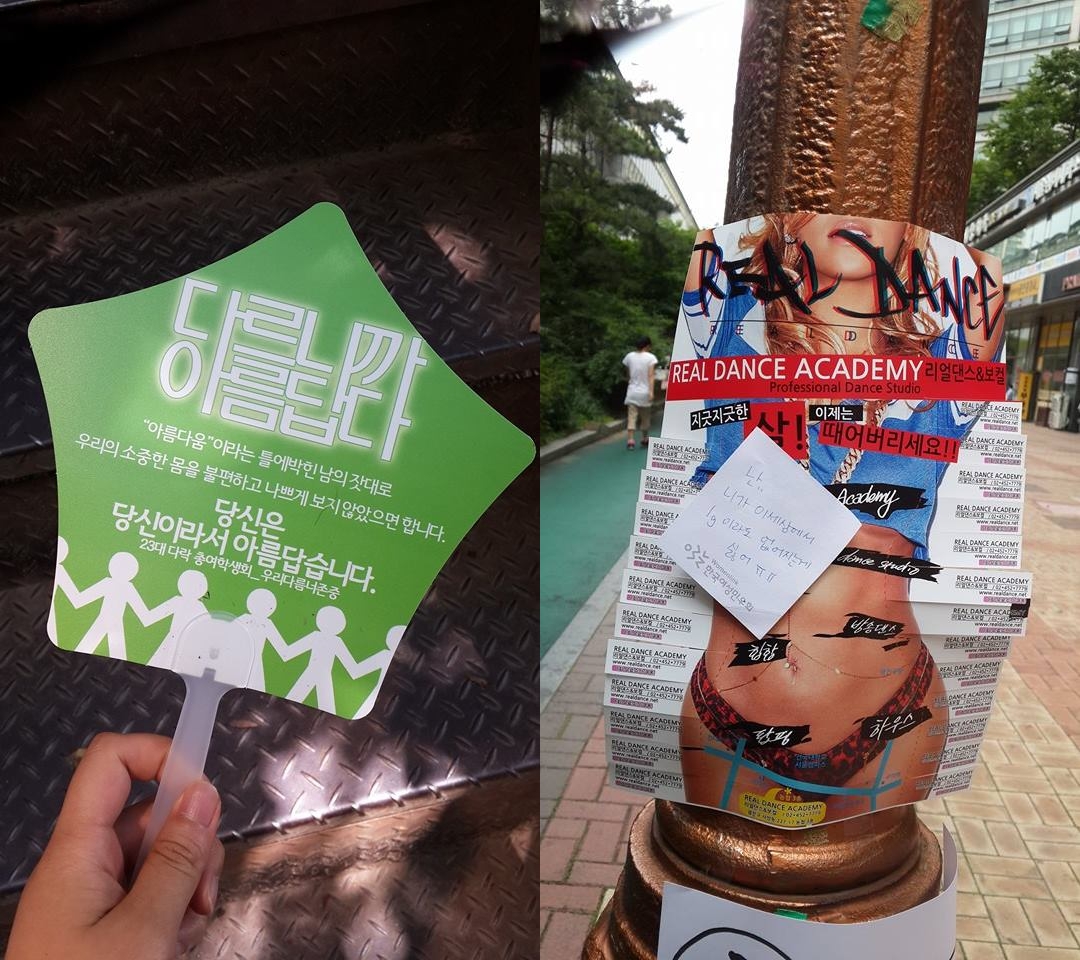

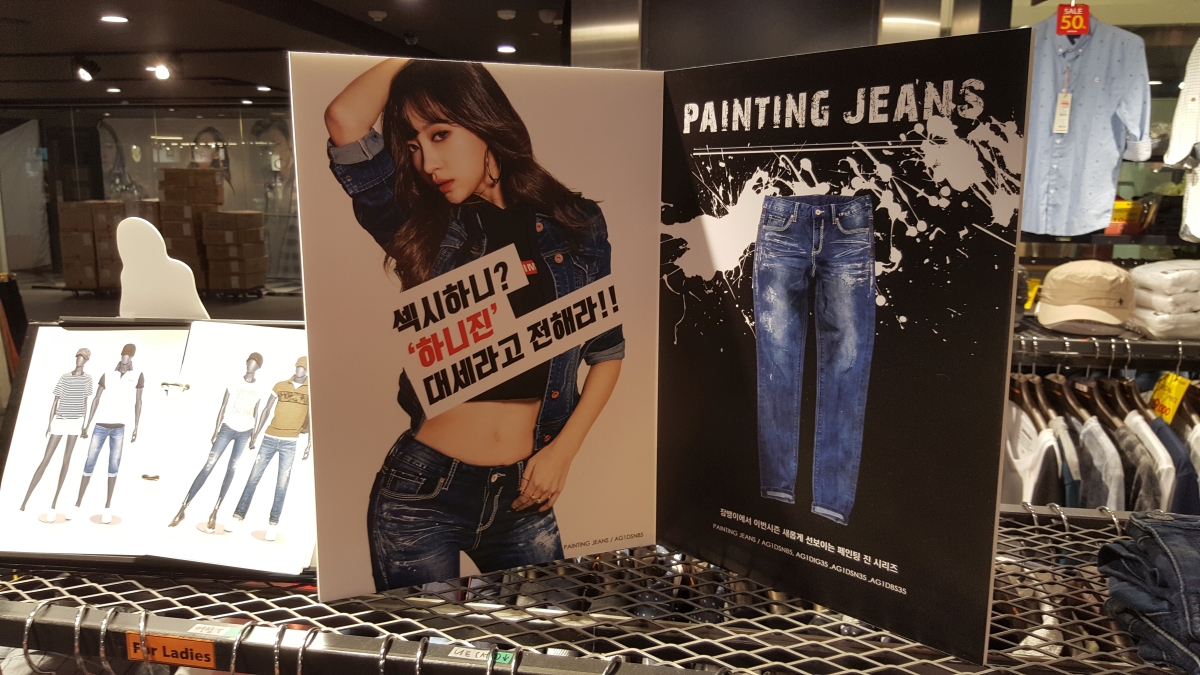


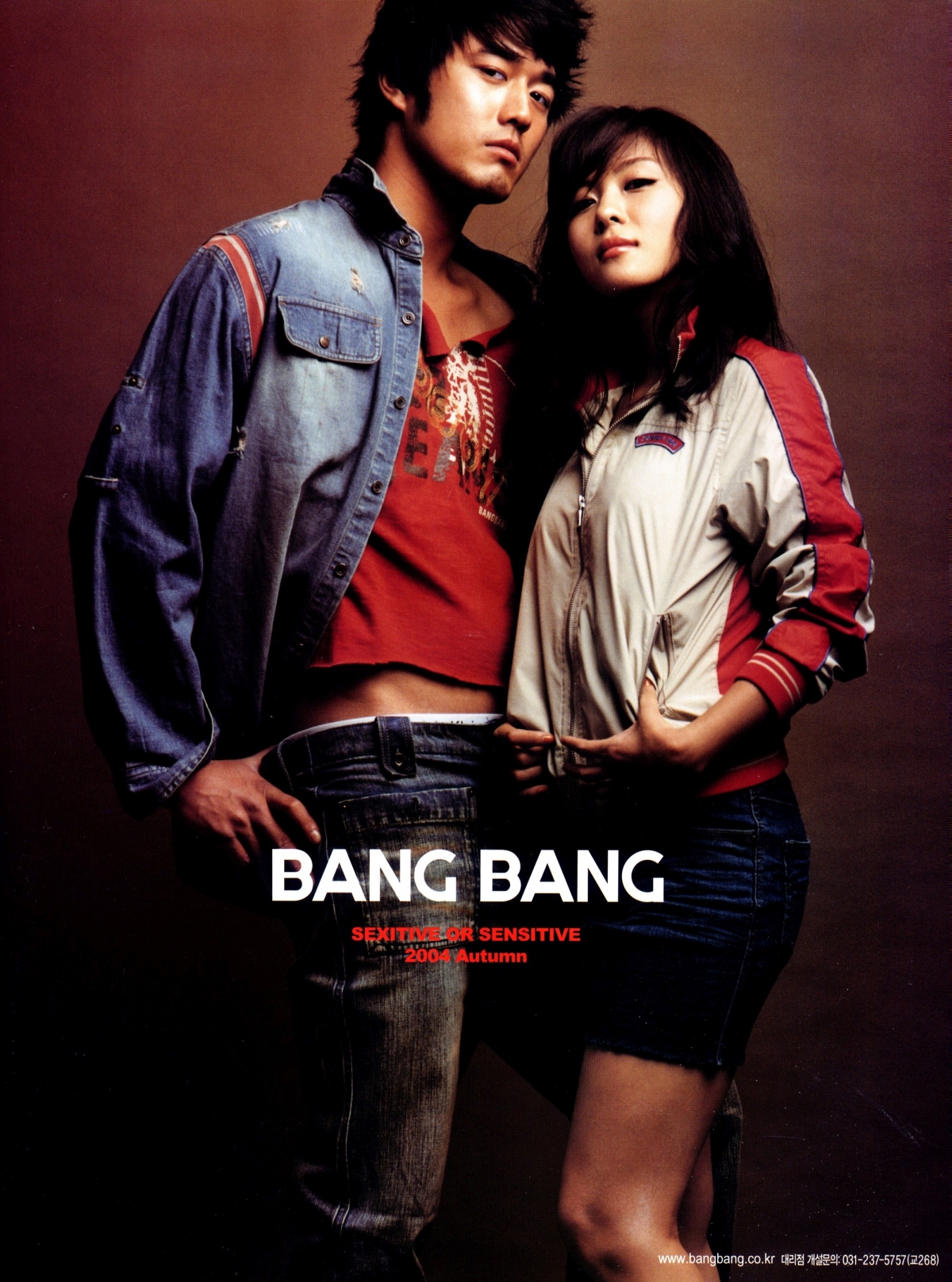
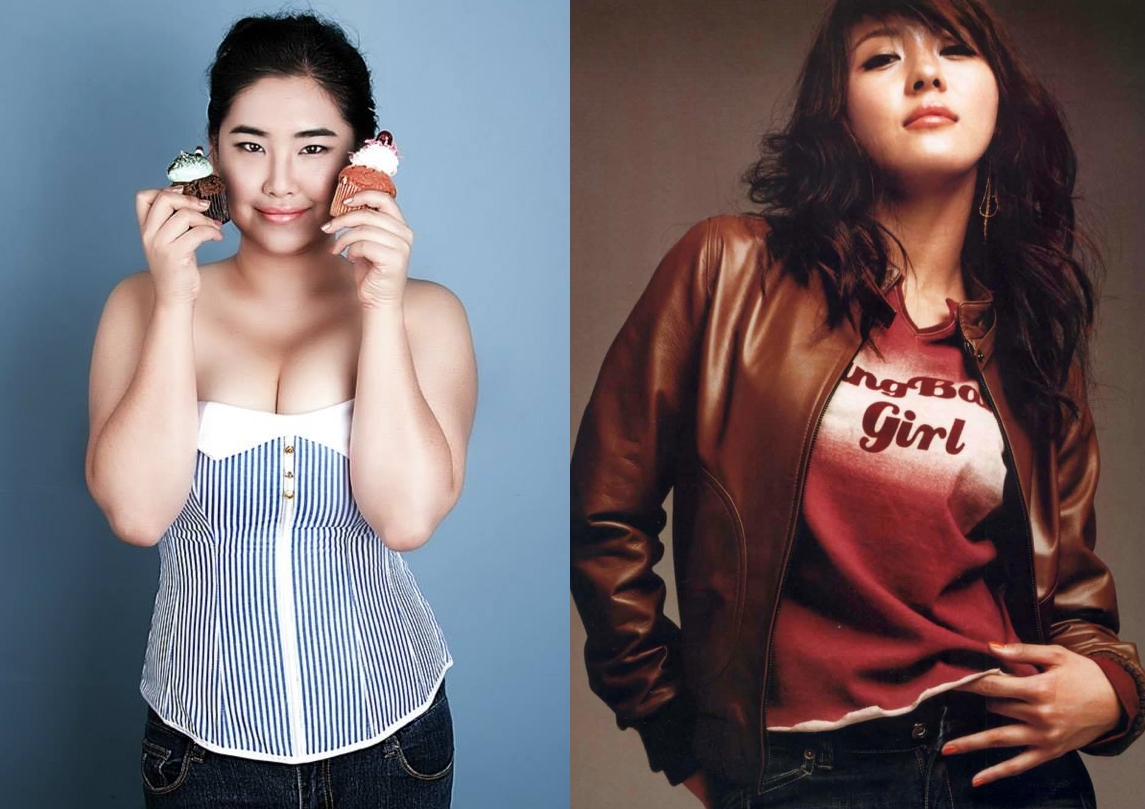

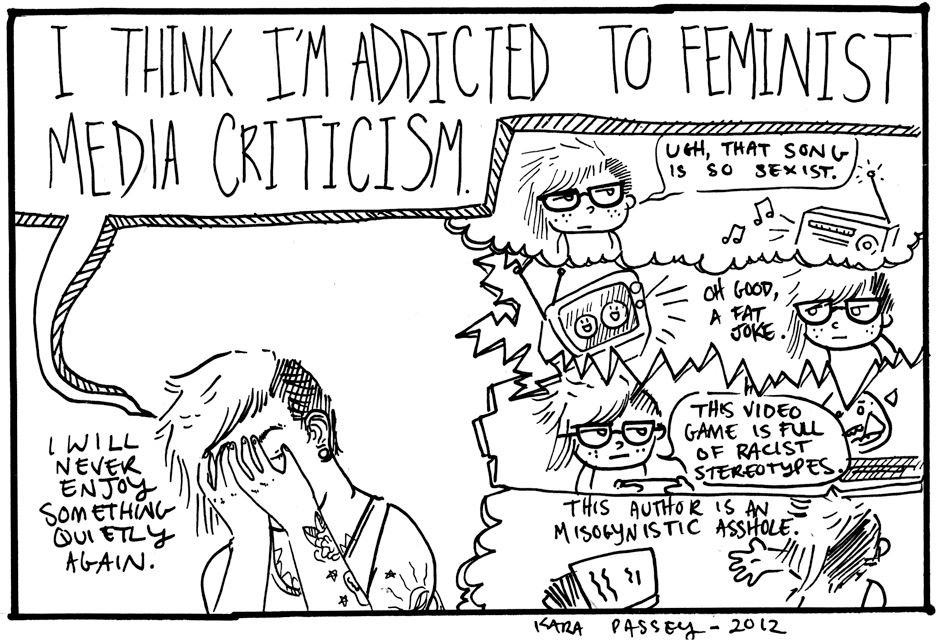
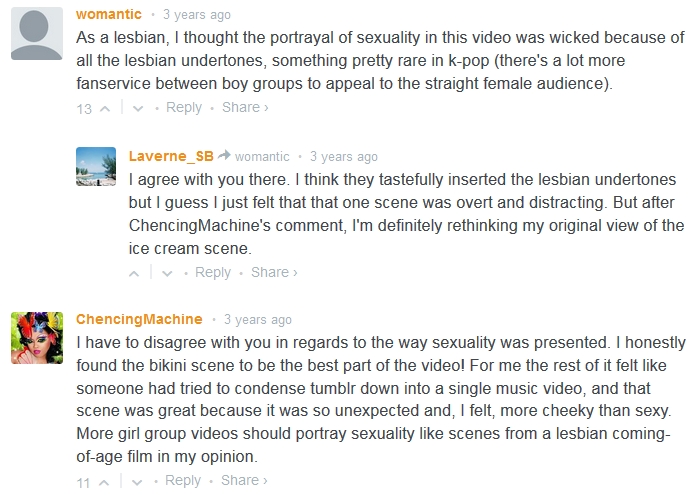
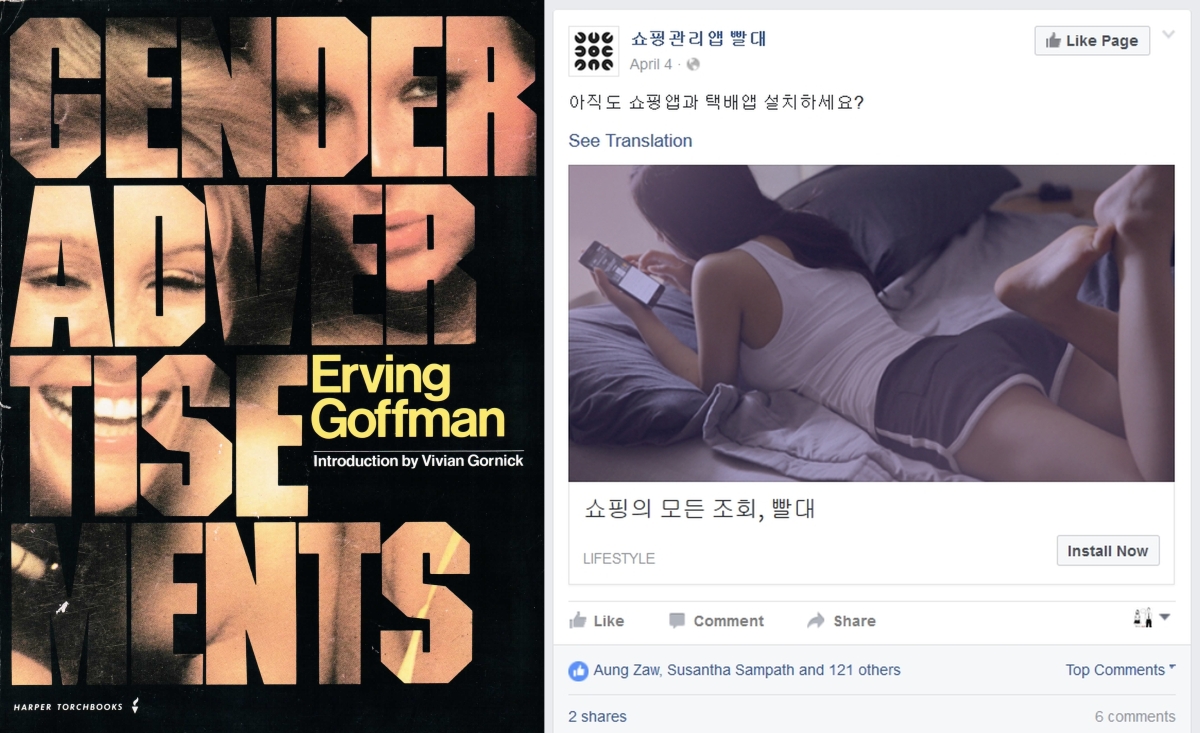
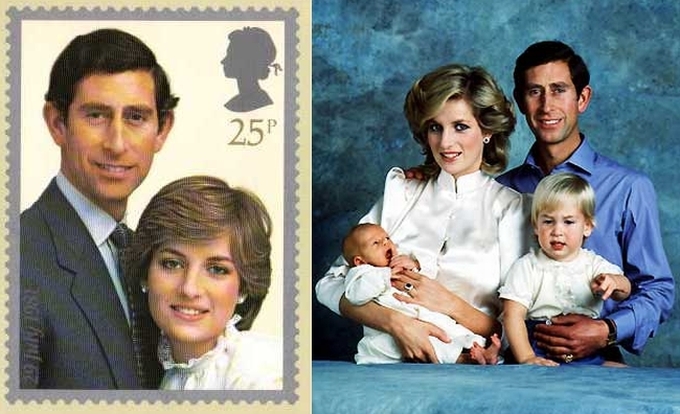
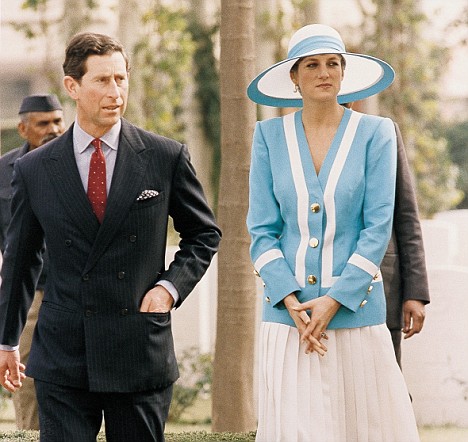




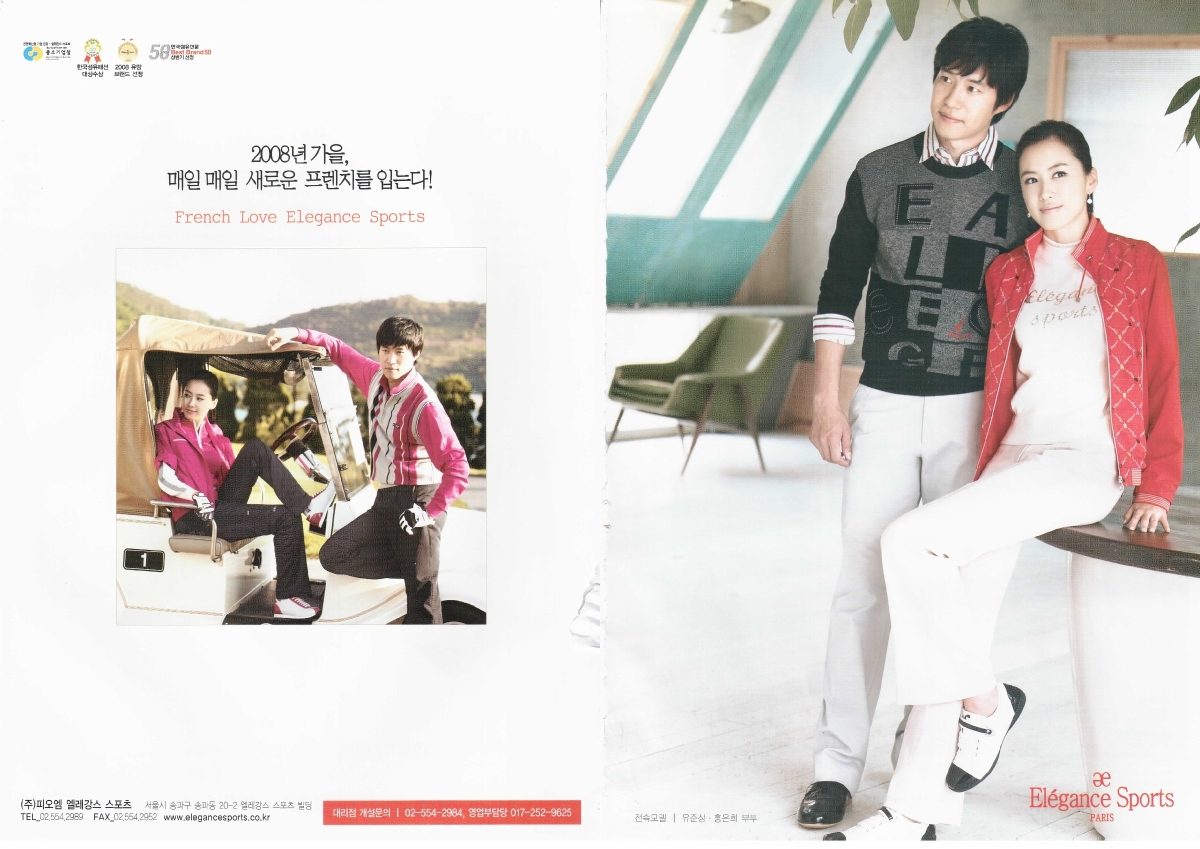

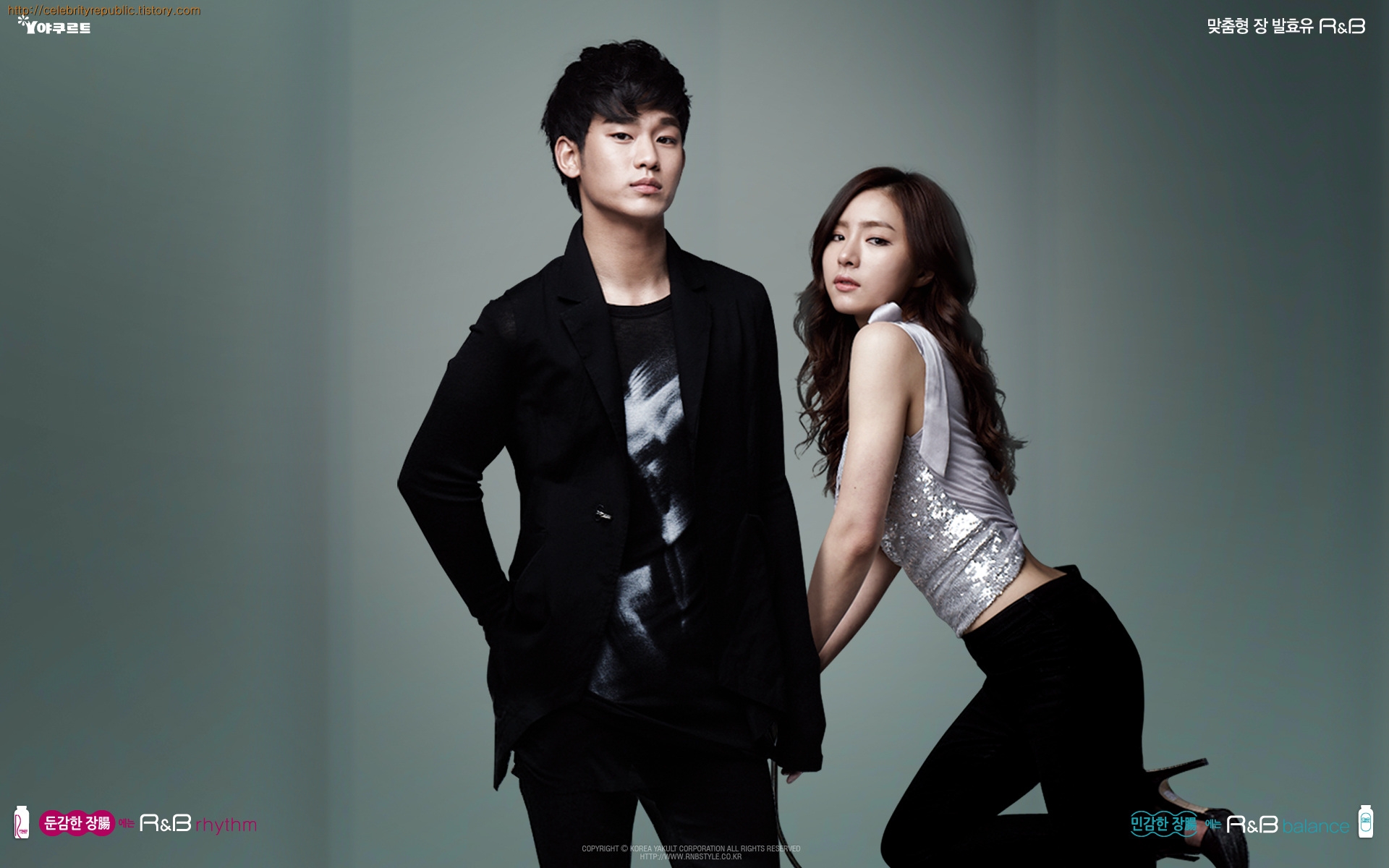

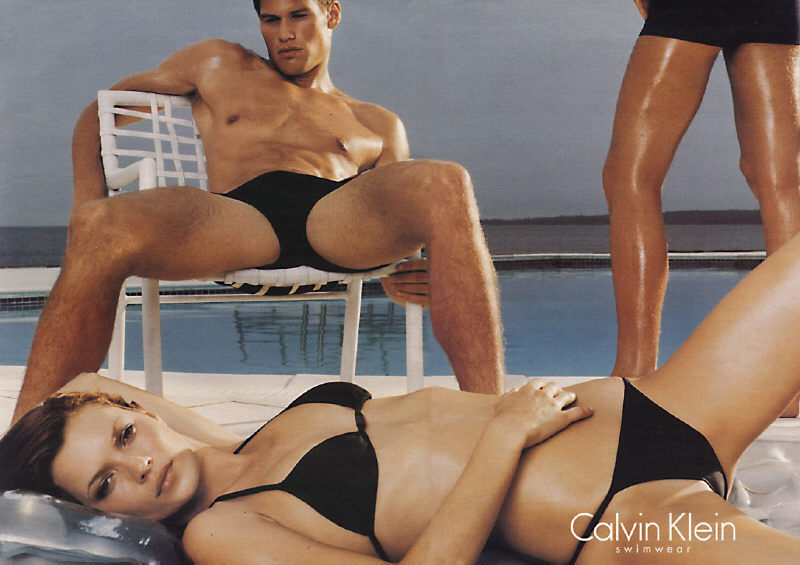
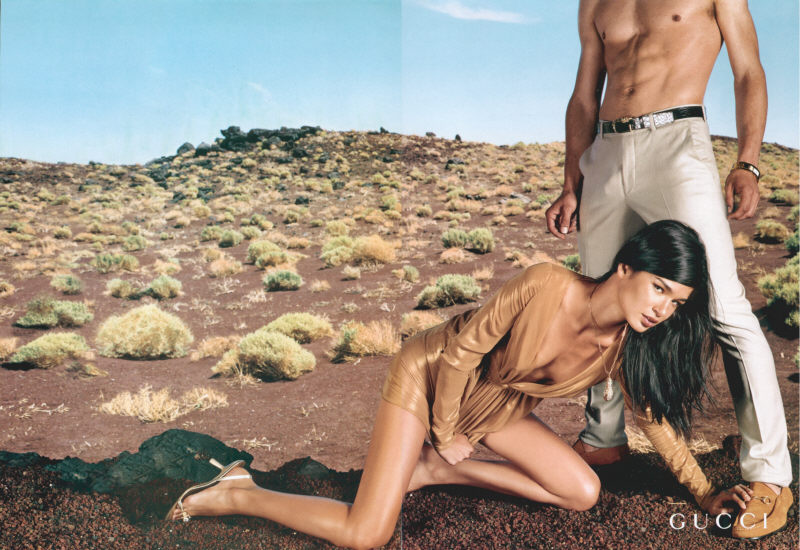
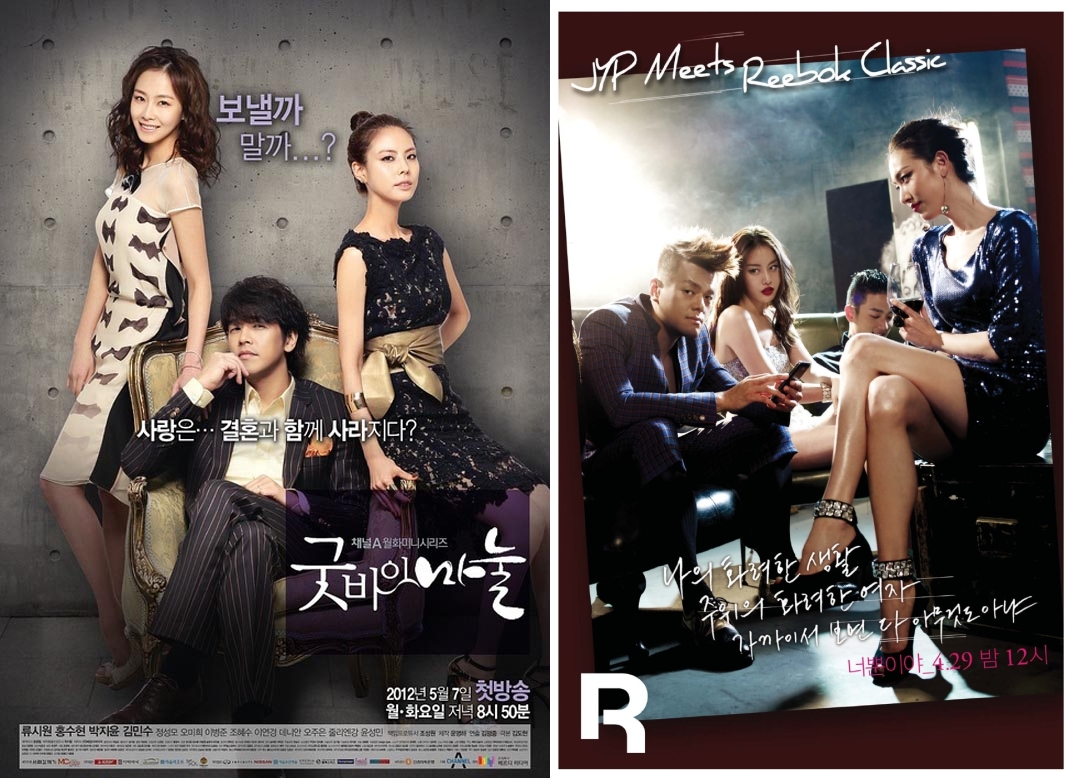

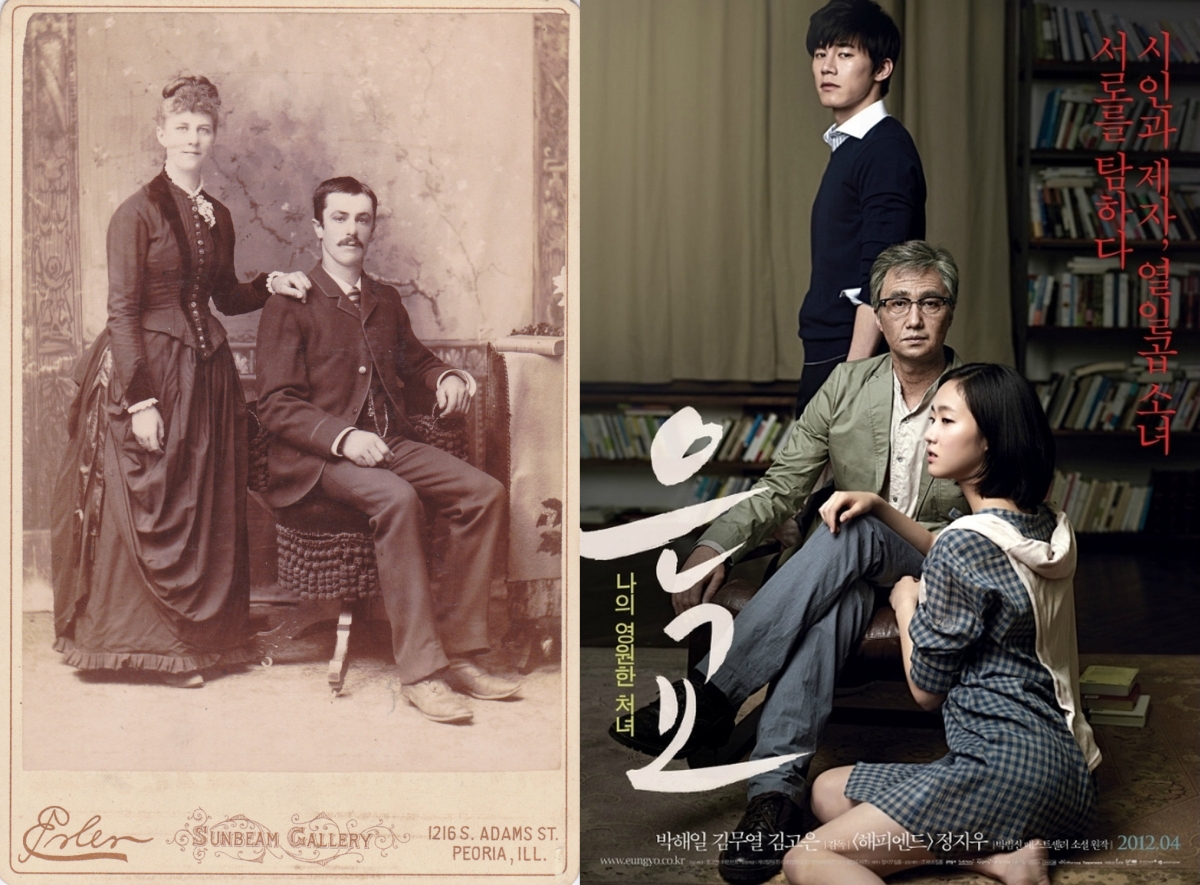
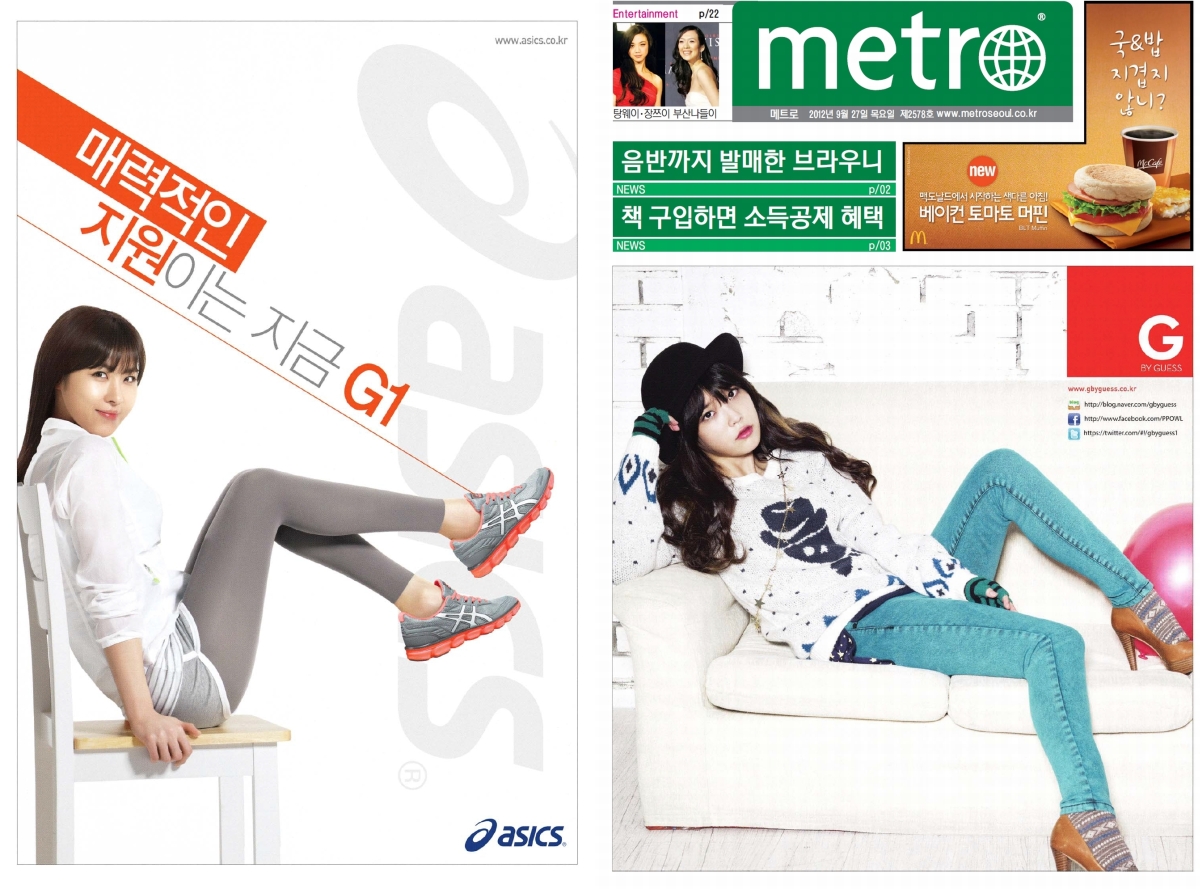
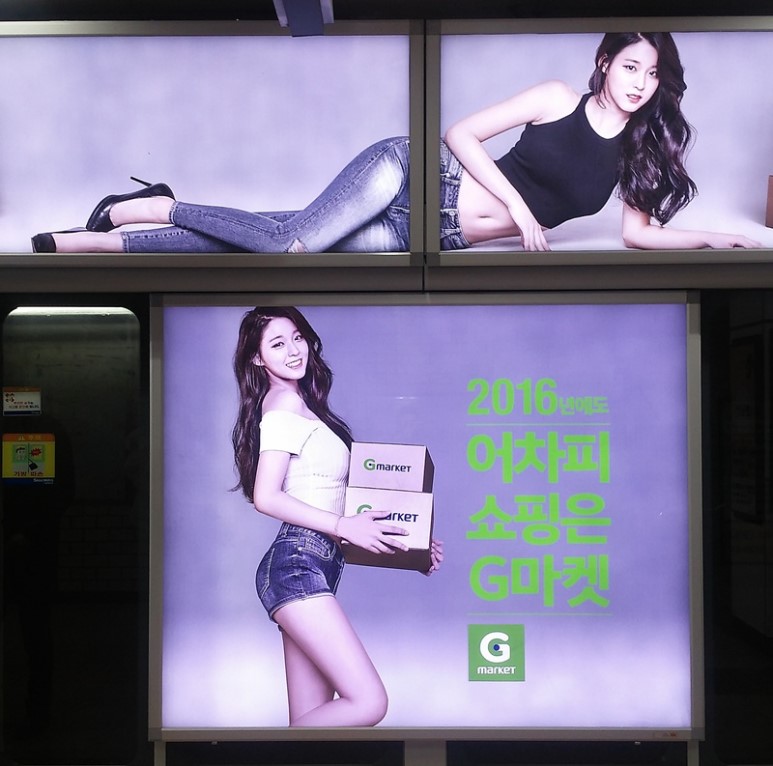




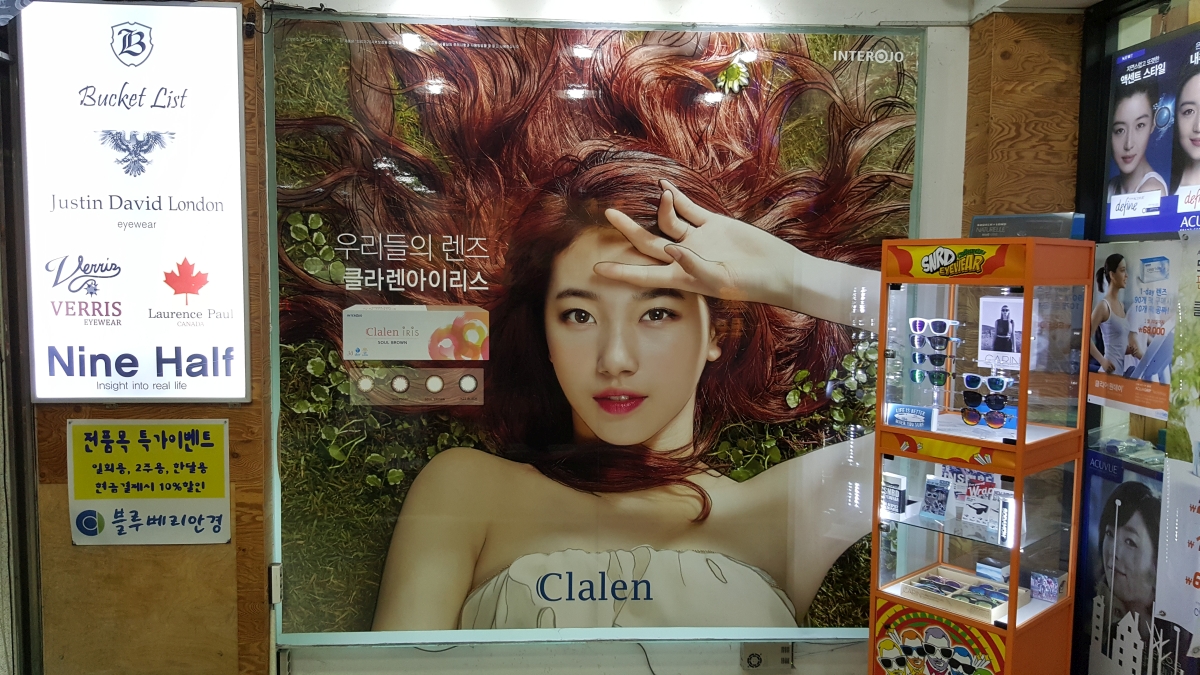
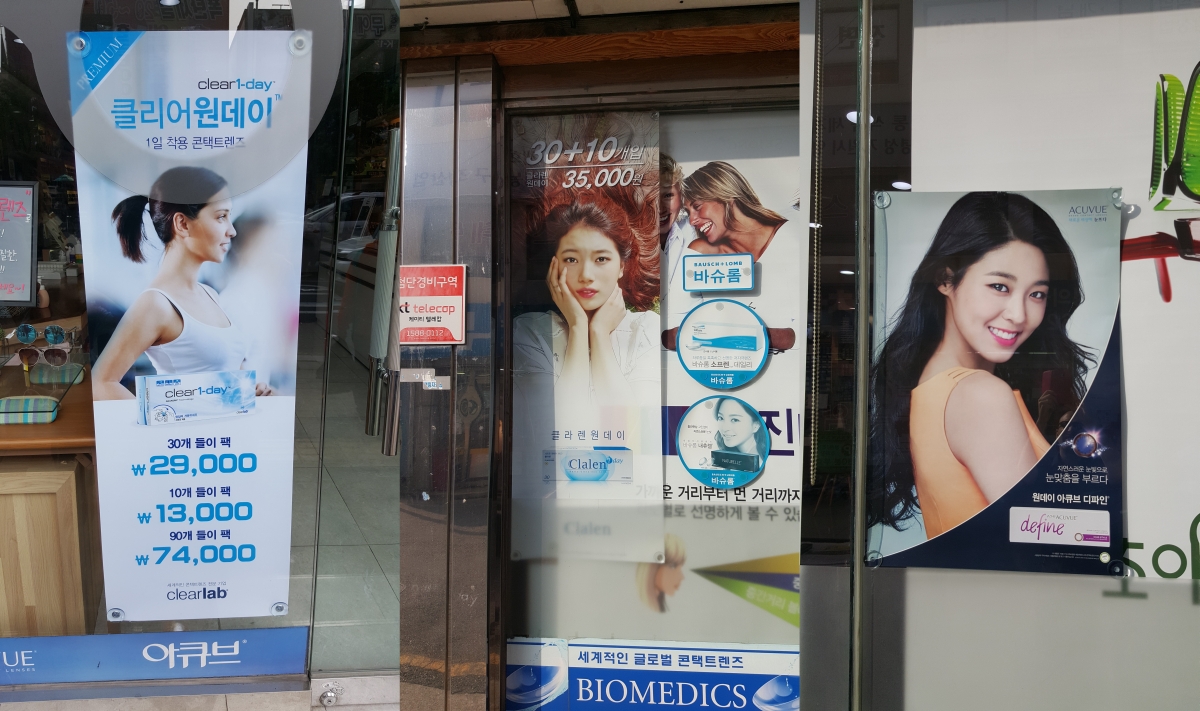
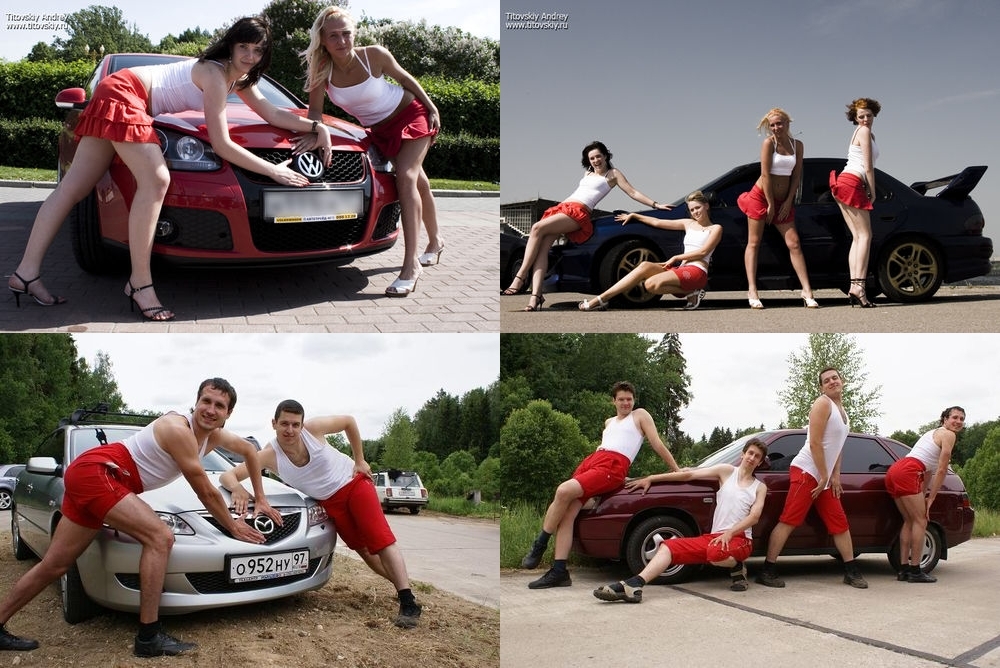




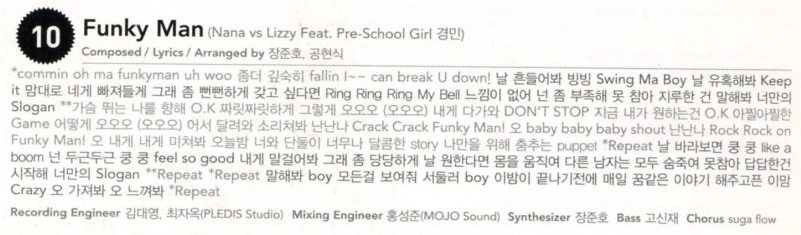

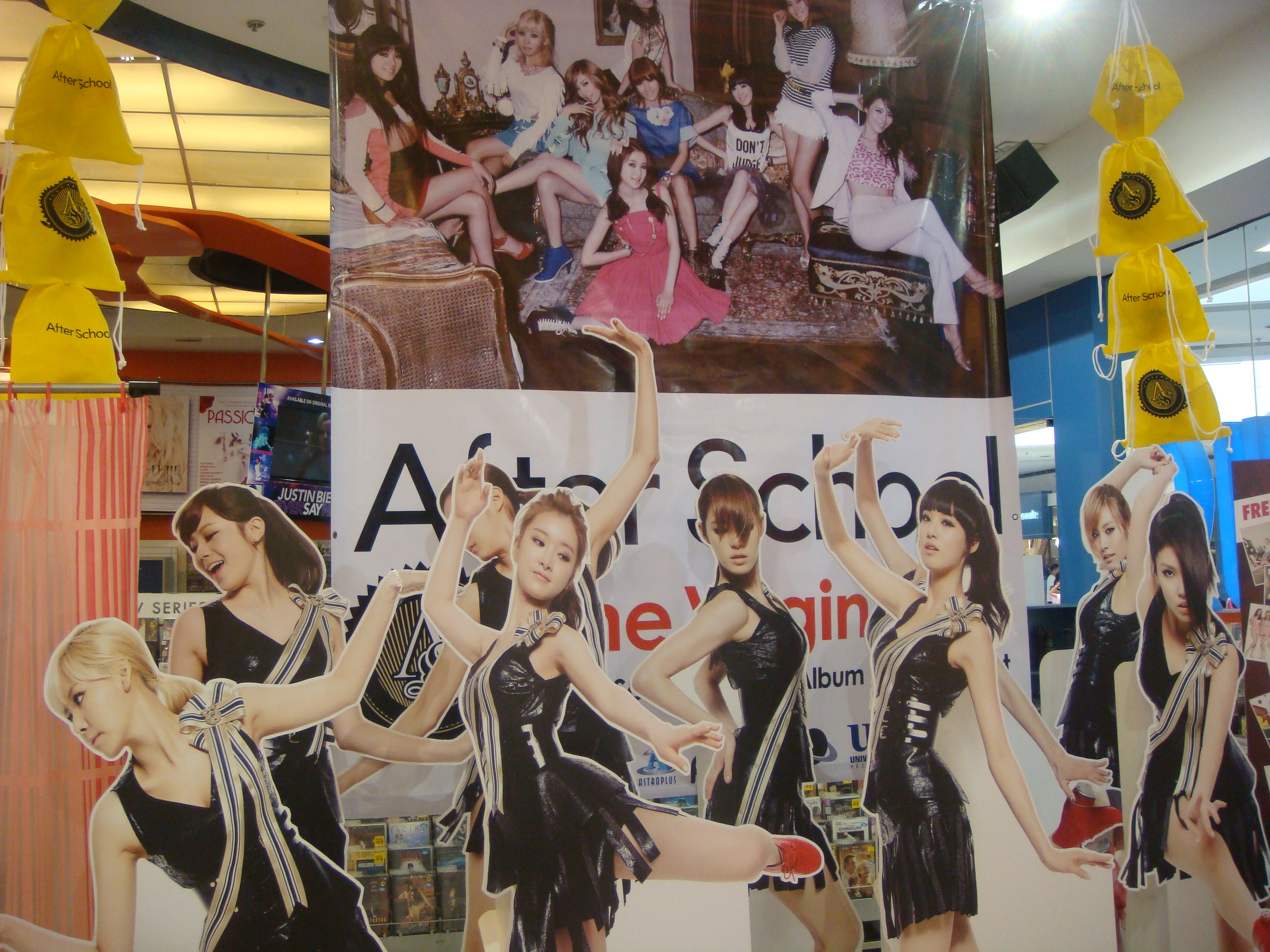



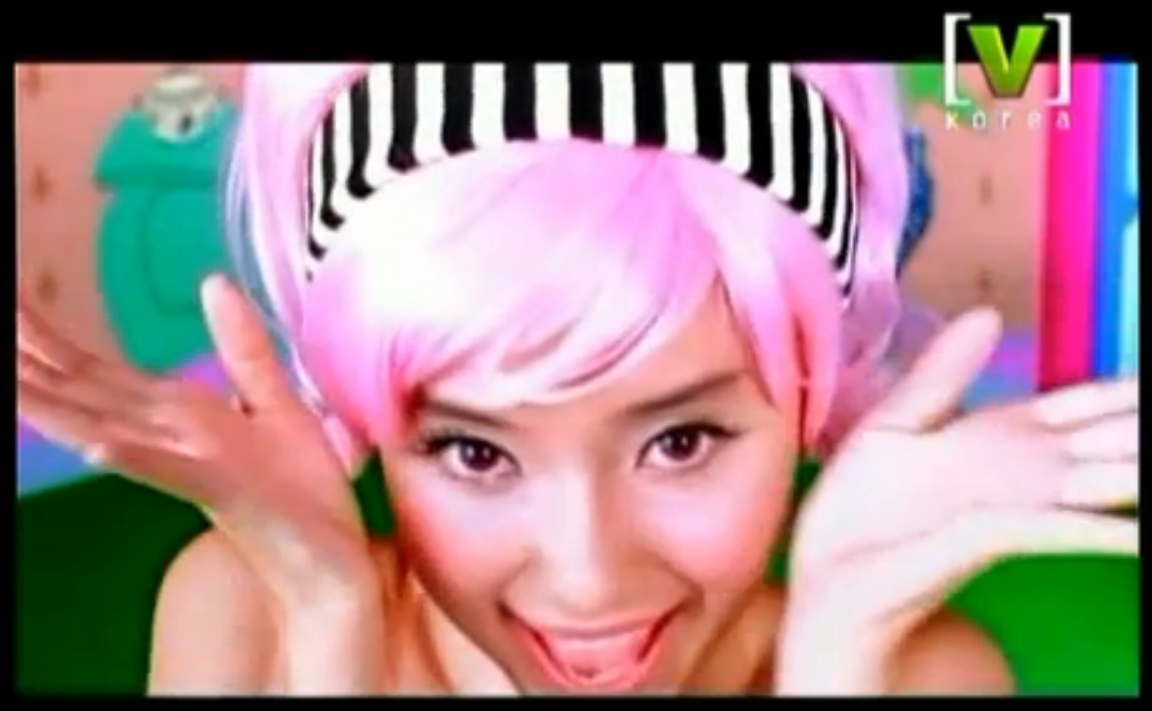

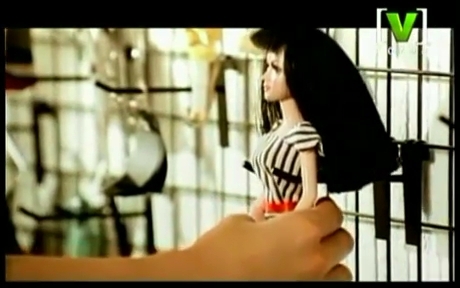



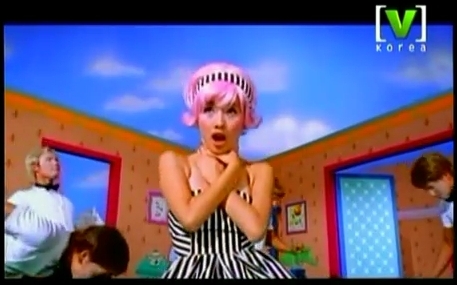






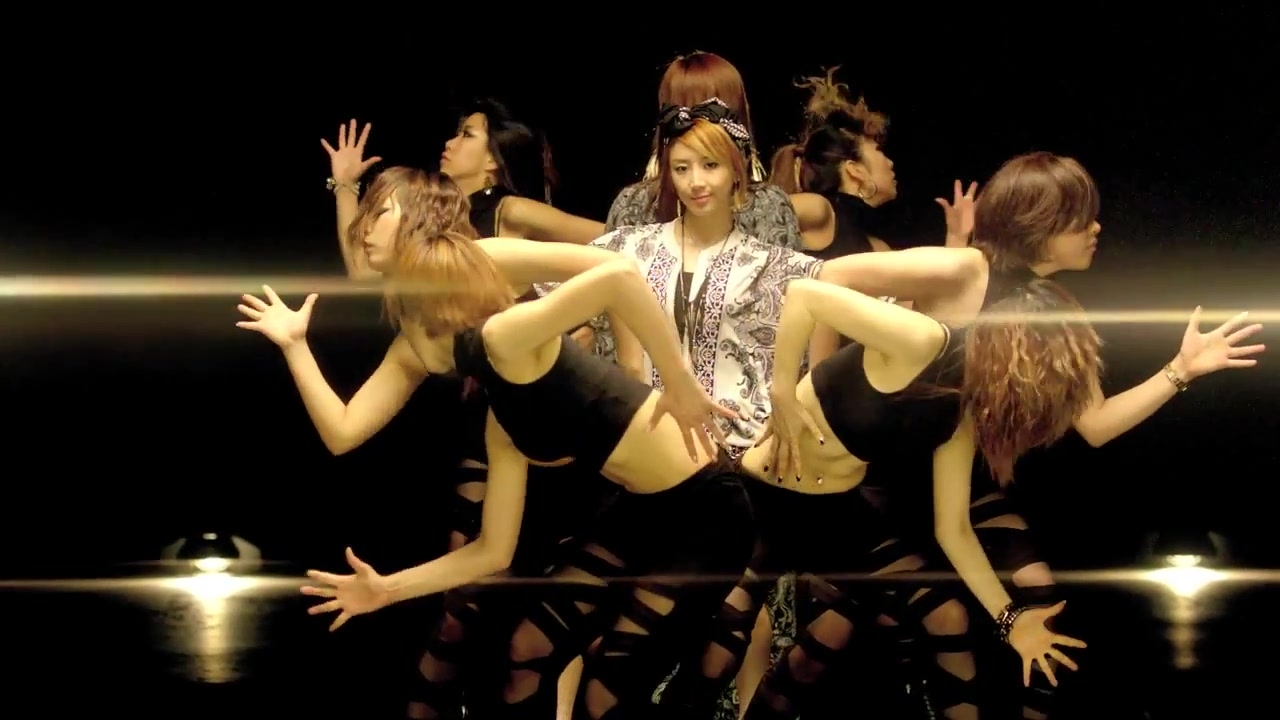


















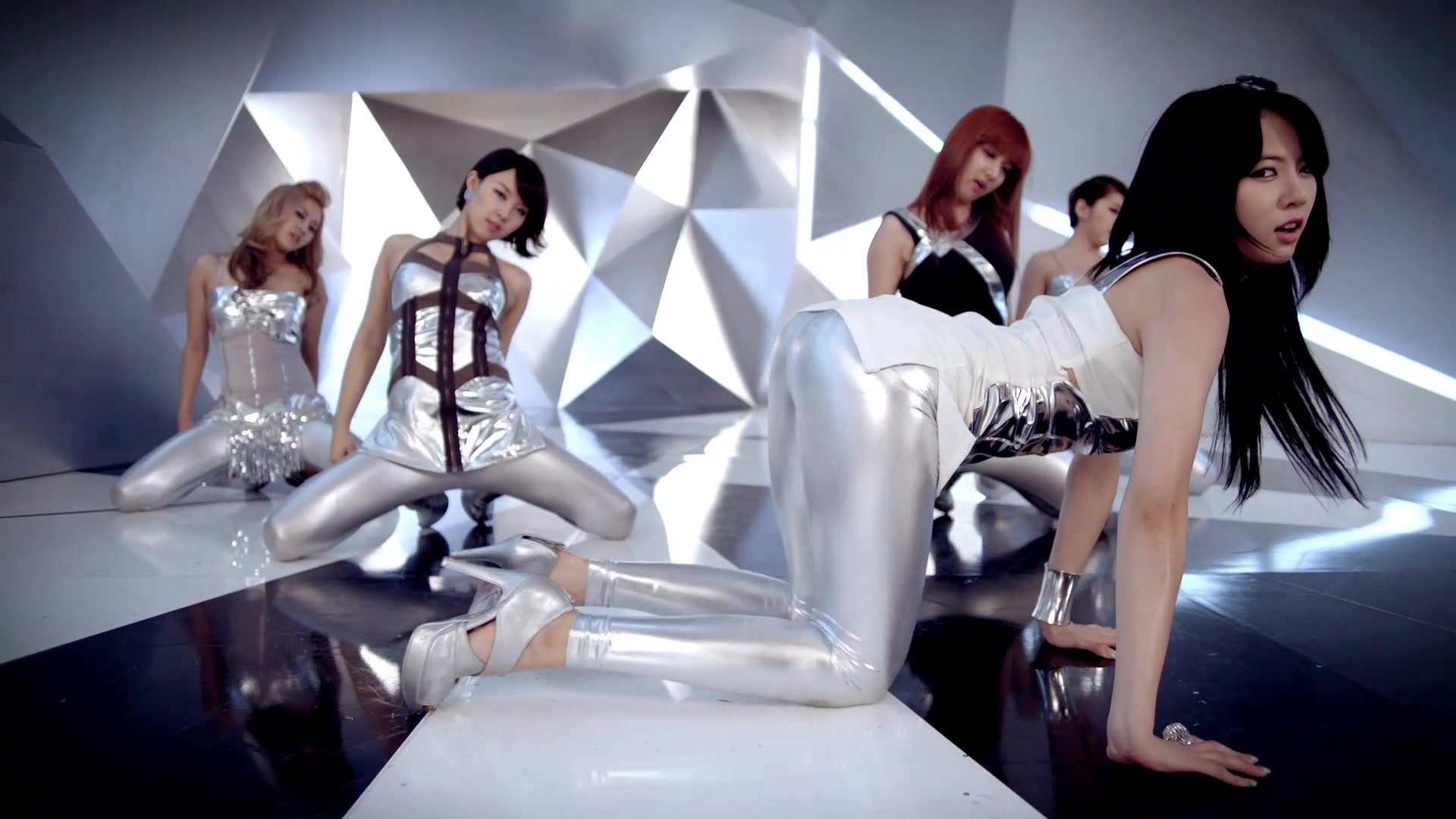
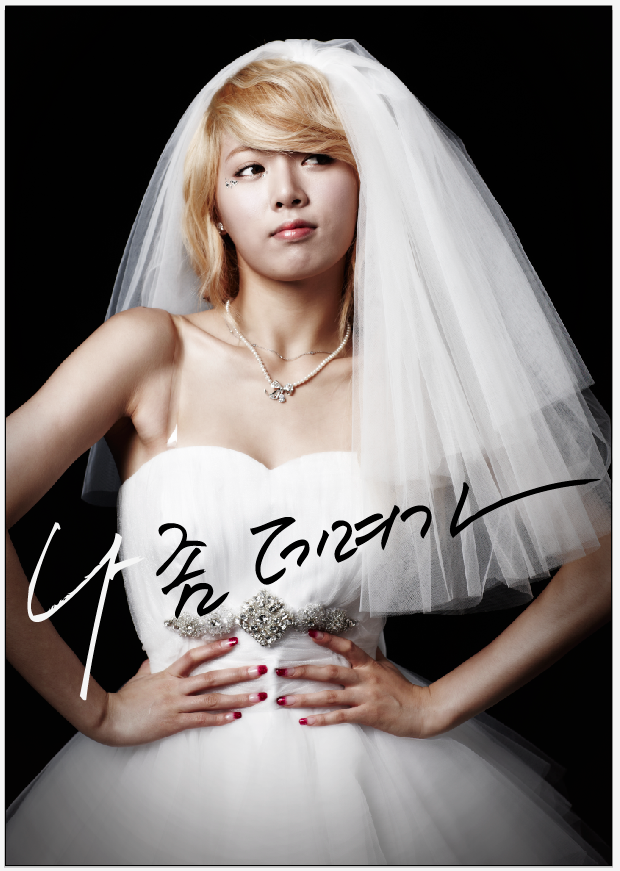
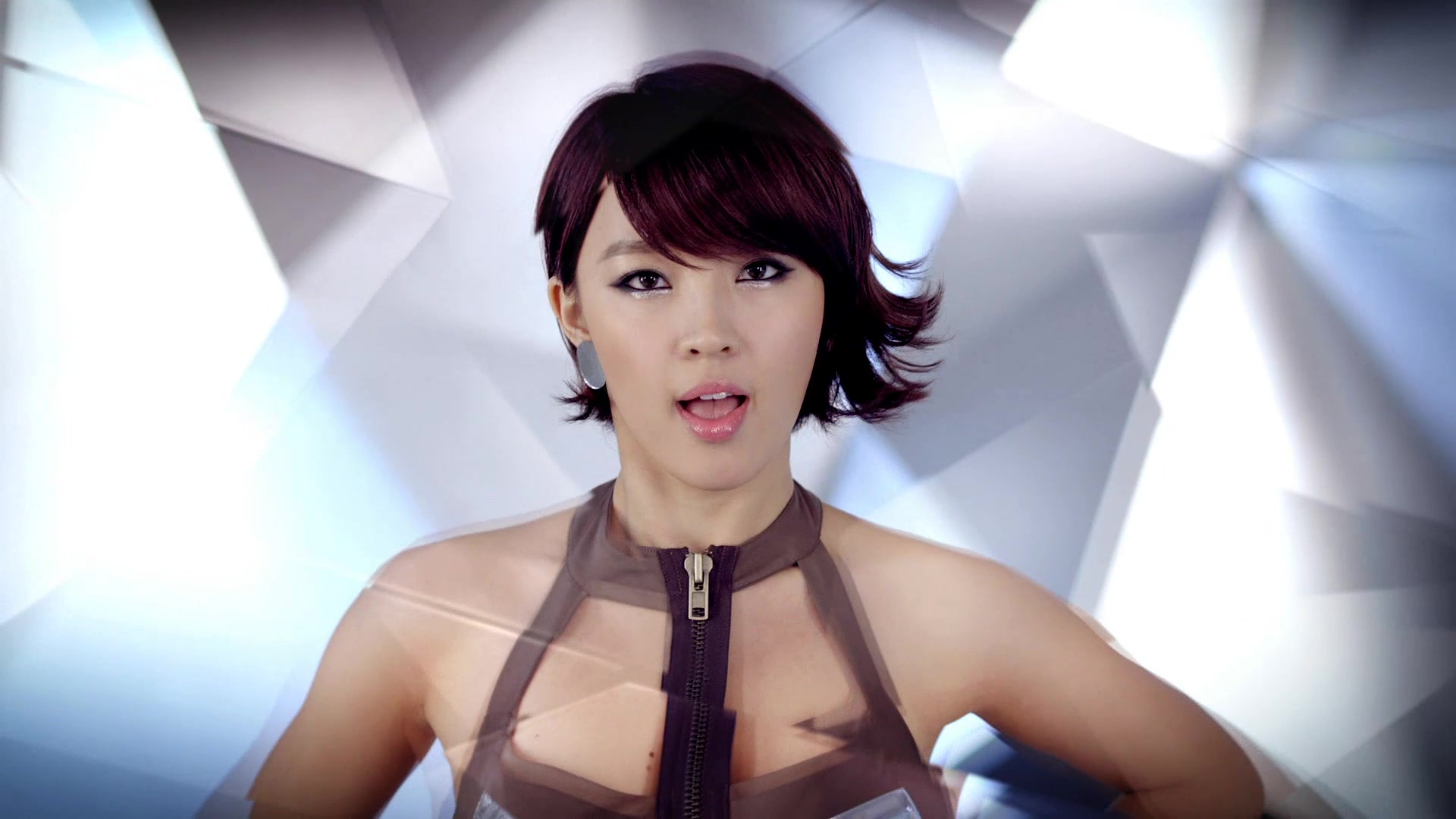
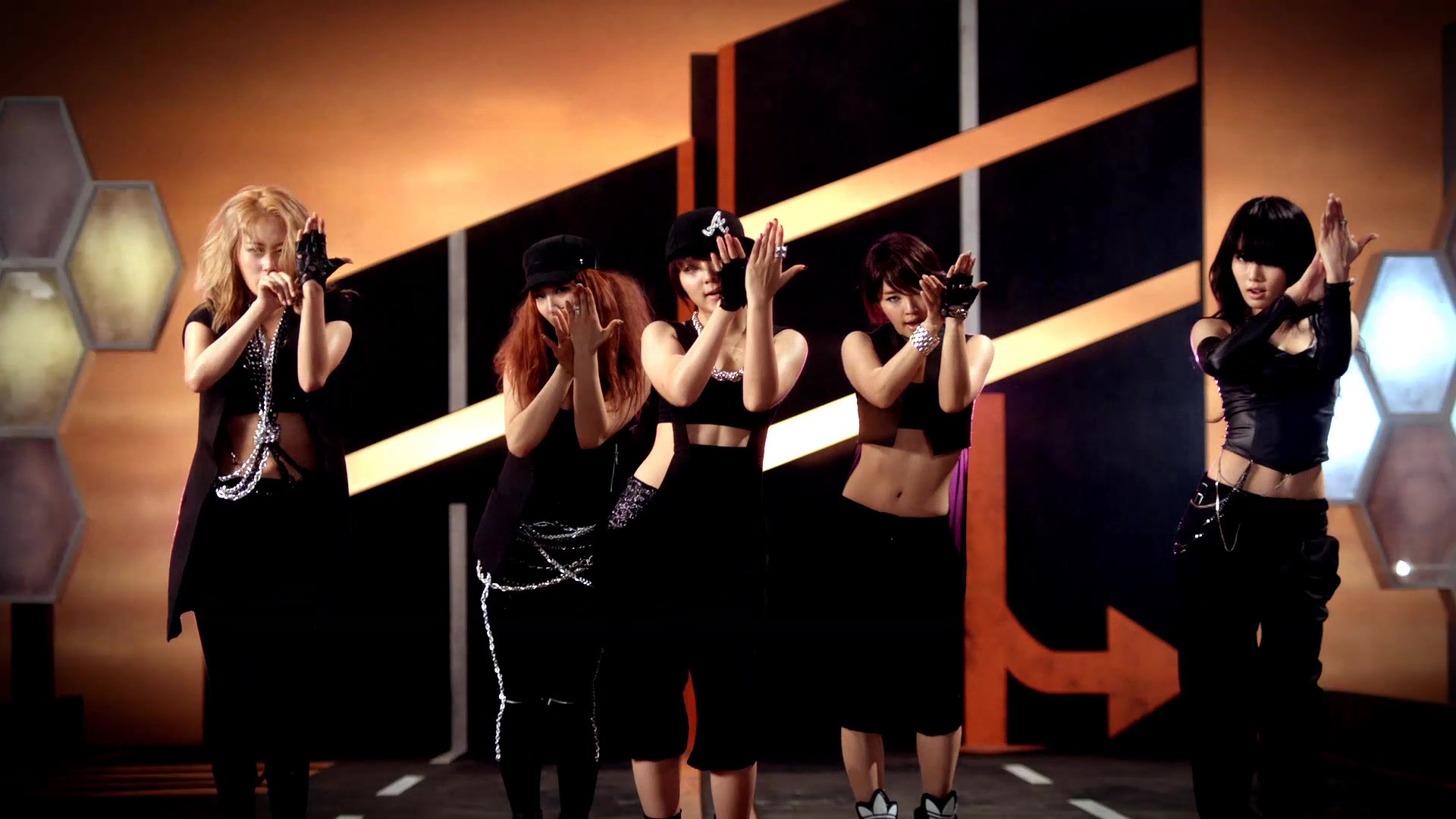

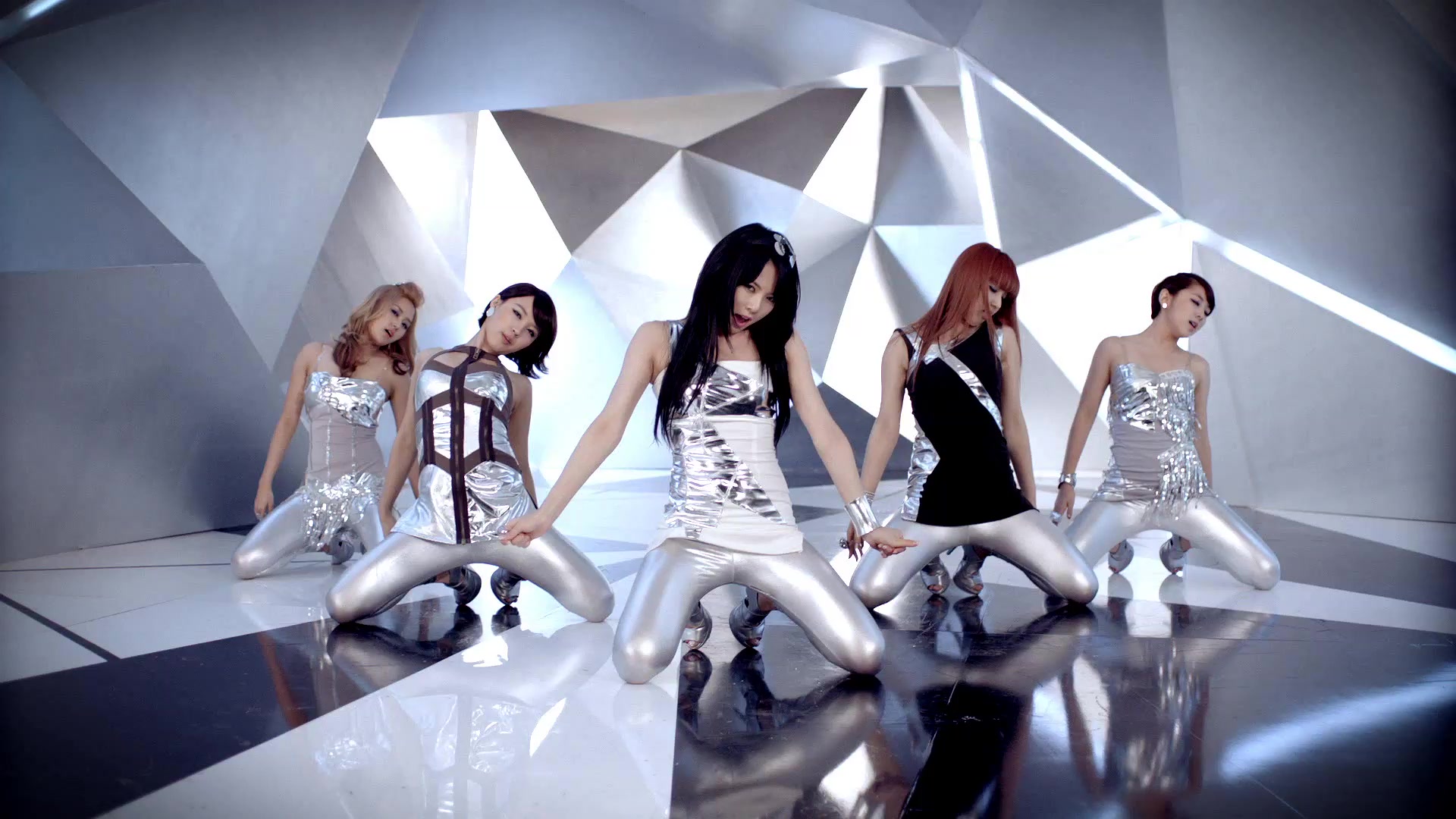

















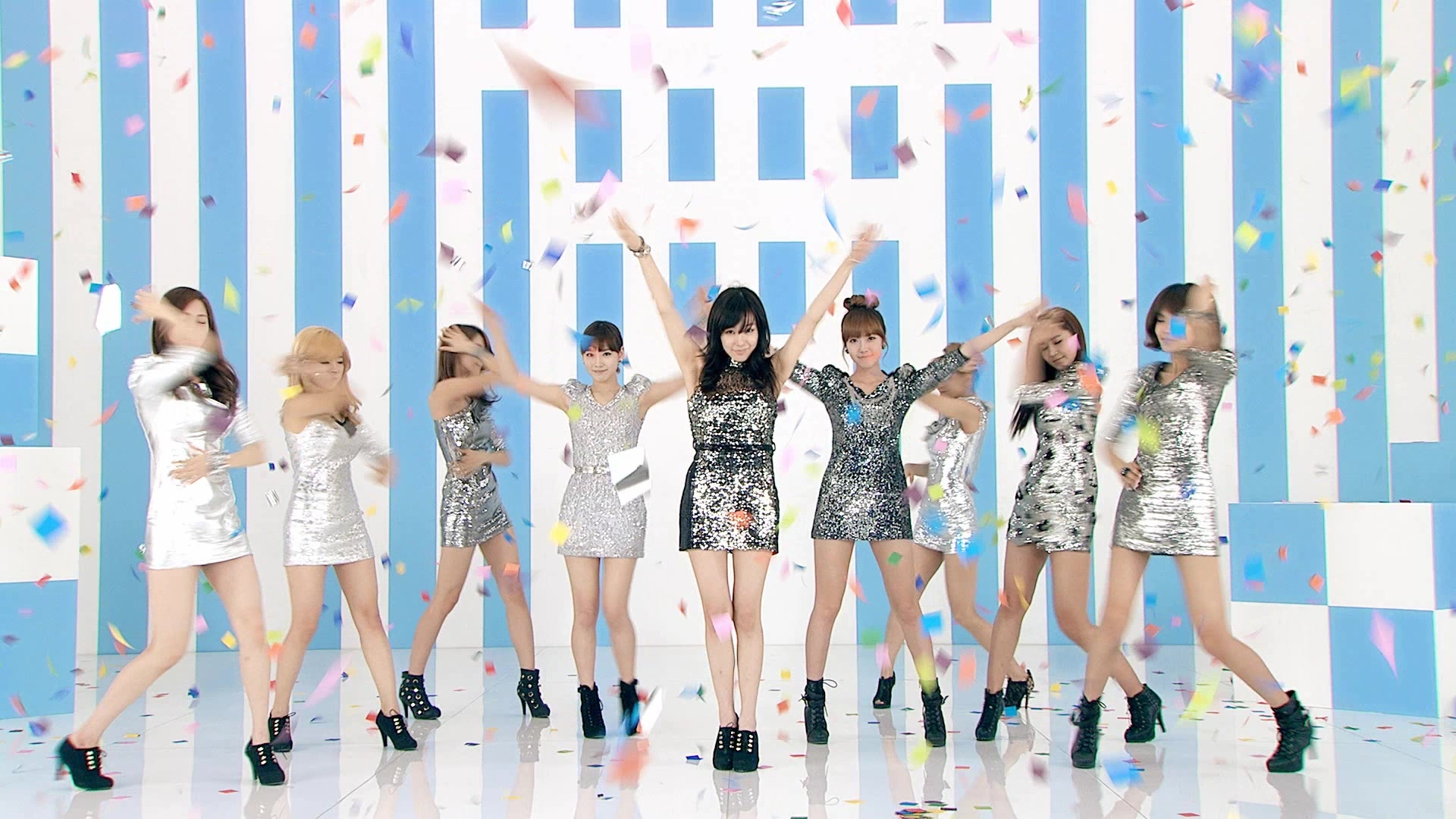








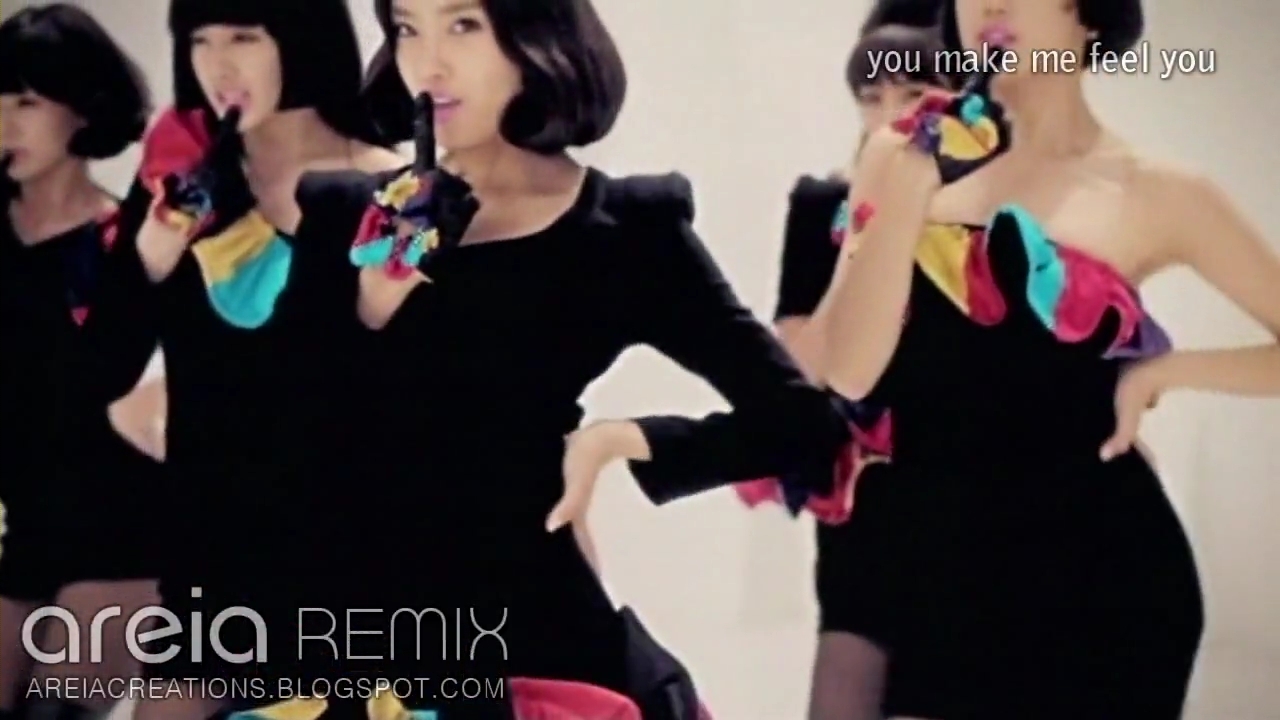
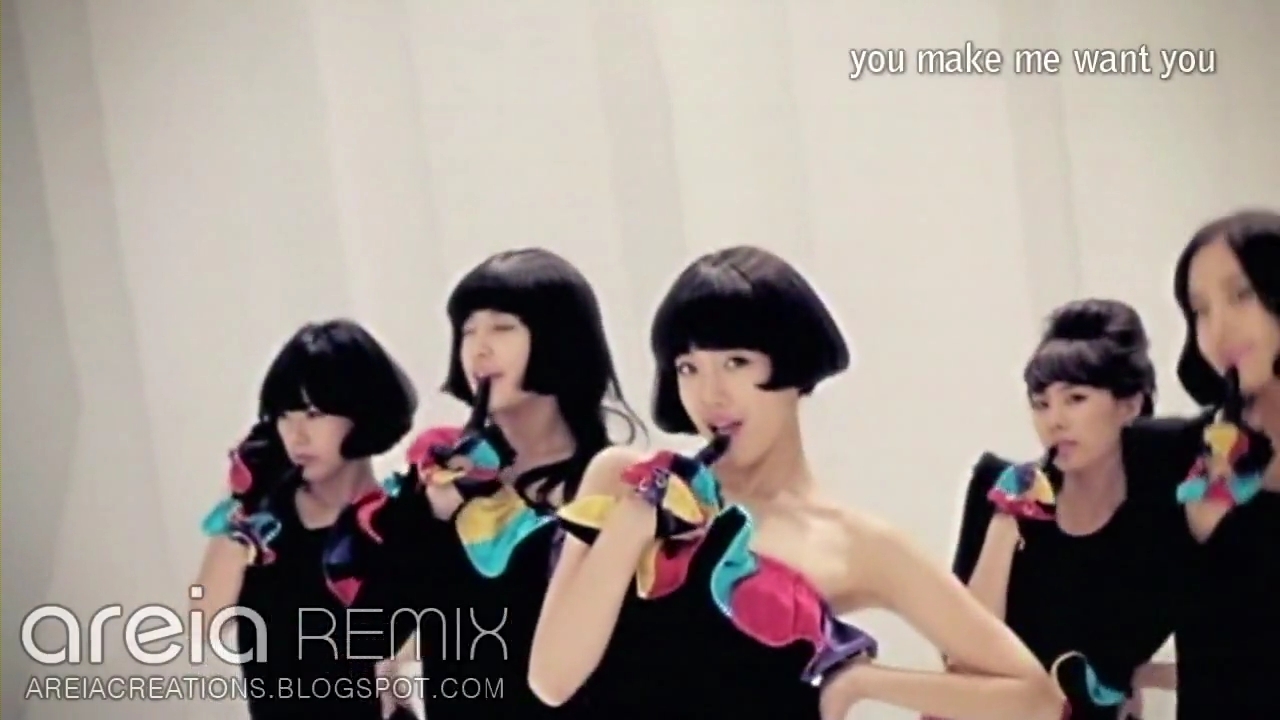


















 The Grand Narrative