
 Spot the Korean condom! Photo by Min An from Pexels. Estimated reading time: 5 minutes.
Korea has only ever had three condom commercials on TV since a ban was lifted in 2006, and none at all for the last six years. Korean women generally rely on men to purchase and use condoms too, and less than 3% use the monthly contraceptive pill, despite rare over-the-counter access. Women’s access to the prescription-only morning-after pill is very much only in name also.
In the midst of this, last year saw an awesome, much-needed commercial for Common Day condoms produced for social media, which focused on how empowering they are for women. Tellingly however, the notion that women could buy condoms triggered a backlash. Nor did the small company ever actually feature its condoms on its site either, although they are available to buy from online shopping malls.
You’ll appreciate then, why this recent fourth sighting of a condom on Korean screens was so important. And the hints its presence gives about the novel approach of the Senseday contraceptive pill commercial in which it can be found:
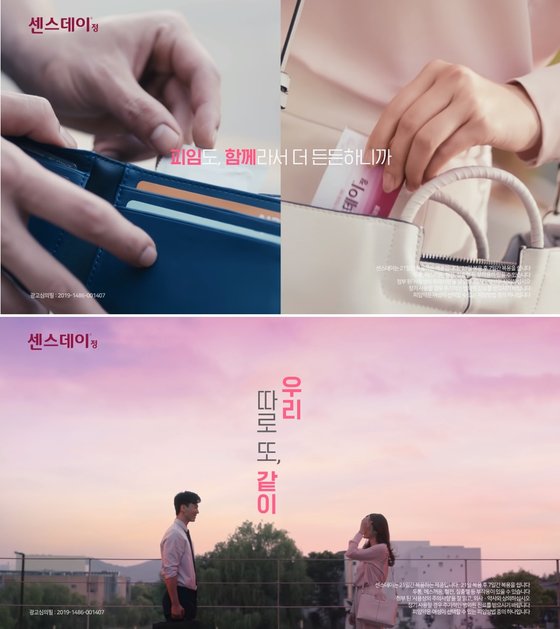
Released on June 19, a spokesperson for Yuhan (which produces the Senseday pill) said about the appearance of the condom:
…“피임은 남녀가 함께 하는 것임에도 콘돔 광고는 전무하고, 피임약 광고도 여성들에게만 피임을 권장하는 식으로 흘러가는 것이 아쉬웠다”며 “둘이 함께 책임지는 성숙한 피임 문화에 대해 화두를 던지고 싶었다”고 전했다.
JoongAng Ilbo, July 30 2019.
…[R]egardless of whether it’s men or women using the contraceptives, it is lamentable that there is no condom advertising at all, and that contraceptive pill advertising stresses only women’s responsibility for contraception. With this commercial, we want to raise the notion that contraception is the responsibility of both partners, and encourage the development of a more mature contraceptive culture.
Journalist Kim Jeong-min at the JoongAng Ilbo notes it follows a pill commercial released in March by Mercilon (produced in Korea by Alvogen Korea), which too is a breakaway from the cutesy pill commercials of the past:
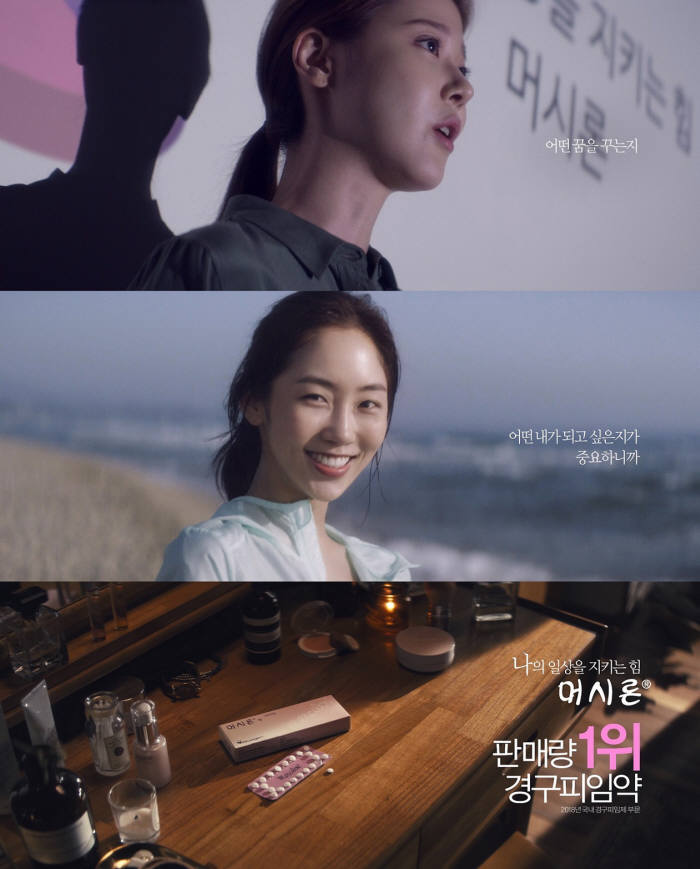
비슷한 시기에 공개된 두 광고는 과거의 피임약 광고와는 여러모로 달라 화제를 모으고 있다. ‘어떤 내가 되고 싶은지’ 고민하는 주체적 여성상을 내세운 점, 피임약 광고 최초로 남성용 피임 도구인 콘돔이 등장한 점 등에서다. 기존 피임약 광고가 수줍은 20대 여성의 이미지를 강조(2013년 머시론 광고 ‘스무살의 서툰 사랑’ 등)하거나 피임을 여성의 몫으로 표현한 것과는 다른 문법이다.
JoongAng Ilbo, July 30 2019.
Both commercials…are gaining attention for being very different from the contraceptive pill advertisements of the past. [Mercilon’s] cry of “Whatever I want to be” stressing women asserting themselves and being independent as they think about their future, combined with the first appearance of…condoms [in Senseday’s commercial], present very different messages to that of existing contraceptive pill commercials that feature shy, bashful 20-somethings (such as Mercilon’s “Clumsy 20’s Love” from 2013 below) and/or which perpetuate the notion that contraception is women’s sole responsibility. [James—Alas, generally Korean women believe it is actually men’s sole responsibility, as noted earlier.]
An inaccuracy: the first appearance of a condom on Korean TV was in 2013, not counting a pre-ban HIV/AIDs prevention campaign in 2004. But I share Kim Jeong-min’s optimism about the potential for a sea change in Korean contraceptive advertising. Both because Yuhan and Alvogen are competing more vigorously now, due to various changes made to their licensing agreements as Kim goes on to explain, and because she wasn’t kidding about how twee Korean contraceptive pill commercials used to be. As I noted as recently as 2016, if you didn’t know any better then it was entirely possible to watch them and assume that the pill was actually a medicine, and had nothing whatsoever to do with sex and pregnancy:
“…Korea remains one of the few developed countries where the monthly pill is over-the-counter. Which makes we wonder: in terms of attitudes towards and use of the pill, in what other ways does Korea stand out?
With that in mind, I was struck by the emphasis on appearance in the following recent commercial:
The voiceover says ‘My body? ‘A.’ My personality? ‘A.’ My style? ‘A.’ [The reason for?] my success? Alesse contraceptive pills,” followed by the text also mentioning it’s a good treatment for acne.
Should women with only “normal” bodies try something else then? What about those with only so-so fashion sense?
That can’t compare with the Koreanness of this next one though, with its mention of “bagel girls” and use of aegyo:
So much so, it may actually be a satire: its title [in the original 2016 video was] “Pill Ads These Days,” and I can’t find any mention of the company. Either way, it stresses that even women who look great in a white one-piece, women on a diet, women with great bodies, and women who do aegyo with their boyfriends…all get mood swings and PMT. And all of which can be solved by rearranging their cycles with the pill.
Which I’m sure is indeed empowering. Yet, watching these, you could be forgiven for forgetting that the pill is sometimes used to prevent pregnancy too.”
What do you think? How do they compare to contraceptive pill and condom commercials in your own countries? Please let me know in the comments!
Related Posts:
- “I am a Woman Who Buys Condoms.”
- (Still) Empowering Korean Women: Over-the-counter contraceptive pills
- “The Secret to a Perfect Vacation? The Oral Contraceptive Pill!”
- Korean Women’s Sexual Histories: Still a slippery subject
- Morning-after Pill Remains Prescription Only
- Korean Sociological Image #89: On Getting Knocked up in South Korea
- Learning From Korean Family Planning Advertisements of the 1960s-1980s
- Korean Sociological Image #83: Vintage Contraceptive Pill Commercials
- Ministry of Health and Welfare: “Unwed Mothers are Ignorant Whores”
- Why Korean Girls Don’t Say No: Contraception Commercials, Condom Use, and Double Standards in South Korea
- Korean Family Planning Advertisements, 1960s-1980s — Are Today’s Young Couples Less Informed than Their Parents Were?
- Quick Hit: “Don’t Leave the Responsibility for Contraception to Men”
- Korean Medical Association: Don’t Take the Pill!

If you reside in South Korea, you can donate via wire transfer: Turnbull James Edward (Kookmin Bank/국민은행, 563401-01-214324)
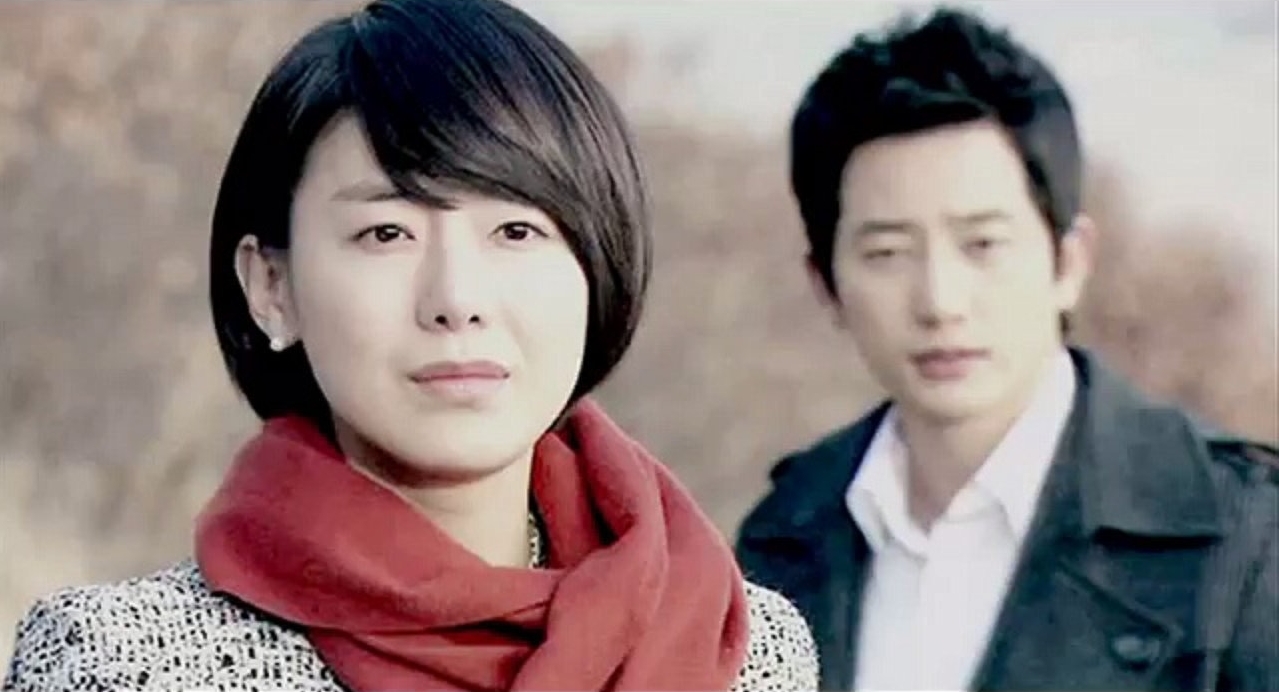



 Mr Kang, reporter: “As women are actively making advances in Korean society, so too are women becoming more open and assertive about sexual matters.”
 Mr Kang: “I will ask about modern women’s opinions on sex and love…Nice to meet you Ms Kim. Ms Kim, I heard that you have very liberal and open attitudes to love. Is that true?”
 Mr Kang: “Since you are old enough, I assume that you have sex with your boyfriends. Do you take the initiative and/or insist on using contraception?”




 (Updated, January 2014)



 Korean women taking responsibility for contraception…only in the movies?
 The Grand Narrative
