After all, why settle for mere sausage legs when you can have drumsticks instead?
Found in passing while flicking through a discarded copy of the Korean version of the Metro International, a free daily newspaper. While it’s obvious what it’s advertising, I was sufficiently curious to find out what it was saying exactly:
나는 원래 윤아보다 다리가 섹시했다
다만 쥬비스 관리를 몰랐을 뿐!
Originally my legs were sexier than Yoona’s, but the only problem was I didn’t know about the care that Juvis (the name of the diet clinic) could provide.
내 다리는 원레 백만불짜리 다리,
세월의 무게를 견디기위해
점점 두꺼워져 갔지
이제 쥬비스로 관리받아
예전의 각선미를 되찾을거야!
Originally my legs looked like a million dollars, but in order to get through life my legs got thicker and thicker. Now, through Juvis I am going to receive a service that will restore my legs to their former beauty!
더 즐거워진 쥬비스 체험 EVENT
A more enjoyable Juvis experience event
3월부터 쥬비스의 다양한, 관리시스템이 새롭게 시작됩니다! 이벤트 기간 동안 신규 패키지를 동록하시는 고객께 새로운 관리시스템 중 2개의 이벤트 프로그램을 무료로 체험할 수 있는 혜택을 드립니다.
From March, Juvis will introduce a more varied body care system. For those that register, you will receive the benefits of experiencing two event programs for no extra charge.
여자가 꿈꾸던 라인
쥬비스에서 관리하세요 몸이 즐겨운 다이어트
The line that women have dreamt about
Get the care and a diet enjoyable for your body at Juvis
쥬비스 다이어트가 즐거운 이유:
몸이 힘들지 않아서 즐겁다
요요를 완벽히 잡아서 즐겁다
부작용이 없어서 즐겁다
탄력까지 살려줘서 즐겁다
원하는 부위가 빠져서 즐겁다
추가 부담이 없어서 즐겁다
Reasons why a Juvis diet is enjoyable:
It is not tiring for the body
Your weight will not go up and down like a yoyo
There are no side-effects
You will revive your body’s elasticity and bounce
You can lose weight from the body parts you want to
Writing earlier this month, I was very impressed by the rhetoric of the launch of Adidas Korea’s “Me, Myself” campaign, and especially by the healthy-looking models used. But one fair criticism by frequent commenter Sonagi was that while on the one hand they definitely weren’t “the gaunt-looking models of most fashion shows,” were all “healthy and glowing,” and may well have shown “that women could look stylish while working out at the gym, doing complicated yoga moves or swimming in the pool,” on the other hand they certainly didn’t appear to have anything at all like the physiques of actual athleteseither, somewhat diluting the campaign’s supposed message (source, left: Yonhap News).
And it’s not hard to think of attractive athletes who could have—nay, should have—taken their place instead, a point which I was suddenly reminded of earlier today when I was flicking channels and happened to come across IFBA Bantamweight Champion Kim Ji-Young (김지영) in action, her—let’s face it—feminine appearance being so in contrast to the bulk of her counterparts (in both senses of the phrase!) that I immediately sat up and took notice. As it happens, she was in her hometown of Yeongdong City, successfully defending her title for the fourth time (against Dennapa Sukruaangrueng of Thailand).
(Update, September 2014: Reading over this post five years later, I’m cringing at—among other things—my implication that women with bulky physiques are any less feminine than Kim Ji-Young, and the notion that they could never be accepted as endorsement models for sports clothing companies).
Unfortunately, as images of female athletes tend to be unflattering, taken as they are at instants of extreme pain, anger, passion or even all three (not that those of male athletes aren’t either) then in lieu of a video of the fight I saw then that photo of her above and this on the right from 2005 (source: Yonhap News) will have to do for my purpose, which is to ask you if she could realistically be a model for Adidas or any other clothing company? Why or why not? Yes, granted, she does has bigger arms than average (naturally), but although this is not to say that people of either sex can only find athletic role models in those of a similar (or desired) size to them, her diminutive height and weight (“bantamweight” means 51-54 kg) and small bust do make her very similar physically to a lot of Korean women, albeit having muscle where they usually have fat. Moreover, given that the notions that models “have to” be tall and thin would supposedly be the very antithesis of the Me, Myself campaign, then I can’t think of any reason to reject her for something like that especially.
As it happens, there is already a Korean female boxer who makes a great deal of money through sponsorship, commercial and TV appearances: Choi Shin-hui (최신희), whom I found about via this slightly old but otherwise excellent introduction to female boxing in Korea over at Korea Beat, and it turns out that two years ago at least there was quite a boom in the sport, with Korea having several world champions. I’m almost a little reluctant to post any pictures of her however, as with the vast majority available being modeling shots (including this one below for Vogue magazine in 2004 for example; see here for the article), then they’re naturally going to present her in a much better light than the few and quite frankly rather hideous ones of Kim Ji-young in action out there. So I include a link to this and this other one (scroll down) of Choi Shin-hui from that period too, not to imply that she’s ugly in them—quite the opposite—but more to demonstrate that they’re certainly less flattering than those to be found in advertisements, which just again goes to show that however unglamorous they—or you and I for that matter—can appear in photos of them grunting away at their sport(s) can be, surely Kim Ji-young and/or other athletes like her should have been in consideration for even a one-off, token appearance at a launch for products that are supposedly aimed at athletic women? Even just the minimal consideration towards the campaign’s professed message that that would have demonstrated would have been much better than none at all.
Or am I making too much of it? Do you think athletes weren’t used simply (and perhaps quite legitimately) because of their inexperience with a catwalk? Or is there another simple reason I’m overlooking?
Regardless, if you’ve read this far then you’ll probably also be quite interested in and inspired by this story of 18 year-old Choi Hyun-Mi, who defected with her family from North Korea in 2004 and on whose boxing success they now entirely rely on for financial support (Update: Sorry that the link has died; instead here’s a video below). And I have one final request too: somewhere on this list of expat blogs is one I used to read by a woman in Seoul who happens to be a female boxer and very active in the boxing scene, but I’ve completely forgotten both its and her name, it being a long time since this blog you’re reading turned my own reading of other blogs from pleasure into business (sigh). Writing this post has made me interested again though, and I may well want to pick her brains about some of the issues raised in it too, so if anyone knows who I’m talking about, please pass on her blog address!
And here’s the other reason I have the focus on the blog that I do!
Seriously though, while I am never lacking for pictures of attractive Korean women in sportswear and bikinis to attract “readers” to the blog with if I do so choose, there is still reason to single out this week’s Korean launch of the global Adidas ”Me, Myself” (미,마이셀프) campaign here. Consider its claimed raison d’être, however perfunctory its sentiments may be in practice (source, right: Naver):
Impossible standards of beauty continue to be foisted on young women today. Flip through any fashion magazine, and you’ll find super skinny supermodels on almost every page. Not to mention on billboards, on television and movies and the Internet. Young women feel pressured to live up to this standard of beauty, often to the detriment of their mental and physical well being.
Instead of pressuring women to conform to this impossible standard of beauty, sportswear giant Adidas wants to inspire women to be themselves.
With its new campaign philosophy, ”Me, Myself,” women are encouraged to be healthy, happy, fit, full of life and be true to who they are. It celebrates women’s individuality, confidence and motivation.
To launch the ”Me, Myself” campaign in Korea, adidas staged a unique fashion show featuring its spring/summer women’s wear line at Kring, Daechi-dong, southern Seoul, Wednesday. Korean celebrities like singer Solbi and girl group Afterschool were spotted at the event.
And crucially (my emphasis):
Unlike in most fashion shows with gaunt-looking models, the Adidas models were healthy and glowing. They showed that women could look stylish while working out at the gym, doing complicated yoga moves or swimming in the pool.
Granted, it comes from a blatant advertorial, but that last is much more important than it may sound at first. As while on the surface modern Korean exercise culture is very similar to its Western counterpart(s), albeit naturally with more of an emphasis on hill-walking and, in turn, free open-air facilities in those hills for its rapidly aging population to use, in practice Korean women have generally interpreted the modern Western imports of gym culture and health consciousness through their preexisting notions of consumption and feminine passivity (see here, here and here), often with quite startling and absurd results. Indeed, one could argue that their gym-going merely serves to allow many Korean women to feel a certain sweet self-satisfaction in the mere act of doing so, never actually having to face the challenge of exercising to the extent that, say, sweat interferes with the cosmetics that many wear while doing so, or that it burns off excess fat. Instead, a vast and unregulated industry of passive dieting methods (e.g. diet pills, aroma therapy, diet crème, and diet drinks) takes that place, overall giving the impression that dieting is simple, easy, quick, and effective without pain, so long as women consume various products.
Which is not to say that all Western women (or men) don’t also waste a lot of time at gyms, nor that the act of attending one isn’t also de rigeur for the trendy modern urban professional, and much less the quality of the exercise done there. But…well, as those links above make clear, these things — like so many other trappings of modernity here — are just so magnified here, almost like a hyperreal parody of the goals of modernity itself. In this particular case though, lacking an educational background of critical thinking, Korean women are to a certain extent its victims, which again renders any alternative message of self-agency and of being proactive in naturally achieving one’s desired body image worthy of getting out to as wide an audience as possible.
I dare say, however, that that message could have been done somewhat more effectively had anything at all about the campaign been included on Adidas’ Korean website (let alone in Korean), especially as news coverage seems to have concentrated rather more on the celebrities that attended instead. Being in the job-market myself soon though, then I’ll gladly take on that responsibility of ensuring that the site is regularly updated from now on (there’s my contact details in the top-left corner!), but until that point then I guess that this post and these Korean videos of the event will have to do.
Update: I’m afraid those videos didn’t embed very well: try watching here instead.
Update 2: Thanks to commenters, I now realize that the choice of models (specifically, their body types) should have been much more diverse, preferably with some real athletes included. See here for a follow-up post exploring precisely that, focusing on female boxers.
Update, April 2009: In hindsight, I didn’t cover this subject thoroughly enough here, leaving some questions unanswered. For a more comprehensive overview, see this article I wrote for the Korea Times.
Update 2, June 2013: And for a much more up-to-date overview, see this article I wrote for Busan Haps.
If I’d been asked this question yesterday, then I too would have answered that it was because they were always hunched over their books, or staring at computer screens. But the surprising result of this Australian study was that those are only correlated but not causative factors.
In fact, it’s because they don’t get enough exposure to sunlight.
I confess, before I read the details of the survey, I was very sympathetic to such a result: young Korean women, for instance, have among the lowest Vitamin D levels in the world because of avoiding the sun for the sake of light skins, and given how the required behavior and body images that lead to such extremes are inculcated very early in Korean children’s lives, then if a lack of sunlight does indeed lead to myopia (short-sightedness) I’d wager money on rates being higher among Korean teenage girls than boys. Not much higher, no, but I’d still expect a statistically significant difference between them.
But technically the study never looked at Korean children specifically. And while Korea certainly shares other developed East Asian countries’ skyrocketing rates of myopia among children — virtually all my middle-school students wear glasses or contact lenses, and I bet yours do too — I was confused when I heard that the study was primarily based on Singaporean children.
How on Earth do children that live on the equator not get enough sun?
Actually, partially it’s precisely because they live there. As head researcher Dr. Ian Morgan explains in an Australian radio interview, the heat meant that:
The children in Singapore were spending about three hours a week outside, so very, very limited periods of time outside, excluding the school hours. Basically they went to school, they went home, they did their homework and then they watched television and that was life.
But this issue of climate wouldn’t apply so much to children in other East Asian countries, where the same education culture of going to school during the day and then cram schools in the evenings prevails, although that does also mean that they’re not outdoors much of course. But how to tease apart the effects of that lifestyle from a lack of sunlight specifically? Things like diet, and, say, the not insignificant fact that Korean children get the least sleep in the world, would presumably have some effect too.
Here’s the key part of the radio interview that reveals how and why researchers did that. Without it, basic summaries of the study like this and this that are all over the news wires are good introductions, but raise more questions than answers really:
DR IAN MORGAN:….we have been able to compare the prevalence of myopia in Chinese kids in Singapore, as compared to kids of Chinese origin growing up in Sydney. And at the age of six, the kids in Singapore — the Chinese kids in Singapore are ten times more myopic than the kids of Chinese origin in Australia.
INTERVIWER: But did the Singaporean children spend more time in near-work activity than the Sydney children?
DR IAN MORGAN: If anything, they spent a little bit less and this is what led in part to us looking for what other factors could be important. And the striking difference that came across was that these kids — remember they’re matched for age and they’re matched for ethnicity, they’re all of Chinese origin. The kids of Chinese origin in Sydney were spending a lot more time outdoors than the kids of Chinese origin in Singapore.
For more details, including the debunking of alternative theories that there is some genetic susceptibility to myopia among East Asian populations, and why it is specifically light intensity that is important, then I highly recommend reading the radio interview in full.
I don’t have the time to translate anything myself unfortunately, but it’ll be interesting to see how the Korea media interprets the results of this study. While it would be just one of a very long list of serious social and health problems among young Koreans resulting from Korea’s after-school institute or hagwon (학원) culture, and so unlikely to lead to any huge changes overnight, all the various English-language articles on the study point out that governments across the region already do have serious concerns about the issue. So, this may well provide just enough of a shove for Korean schools to, say, provide more outdoor physical education and field trips for students. Granted that it’s rather cold at the moment though!
The 14-year old girl is Park Seo-jin, the controversial photoshoot from the Mnet reality show I Am A Model. It’s already covered in numerous “news” articles though, so let me just quickly highlight one element of it here: that for all the recent and historical mania about protecting underage girls against foreign pedophiles, the Korean police seem strangely reluctant to respect their own laws banning the nude photos of minors that would (presumably) encourage them. The most obvious examples being one of the promotion posters for—let alone various scenes in—Samaritan Girl/Samaria (2004), all shot when actress Kwak Ji-min was still in high school, and therefore legally a minor.
Like with those, no-one will ever be prosecuted for Park Seo-jin’s photos. Unlike those though, they do seem to be creating much more negative reaction. Most likely, simply because she is just sooo young.
What do you think?
Update: In case of any confusion, note that while she’s 16 according to the (strange) Korean age system, her birth date is actually 11 March 1994.
As the message boards of numerous expat forums will attest, Koreans simply don’t wear deodorant, except for a few young urban sophisticates in the summer. What’s more, it’s likely almost all of those young urban sophisticates are women, as there have been no deodorant commercials aimed at Korean men yet (although Nivea did start using men alongside women for in-store promotions from 2007).
But why on Earth not? While I disagree with most prevailing explanations for the origins of Korea’s own, distinct brand of metrosexuality, that doesn’t mean that in the last decade or so there hasn’t been an explosive growth in sales of men’s skincare, cosmetic and grooming products to accompany that. It seems strange that Korean men prepared to spend the money and time on, say, wearing “masculine” sunblock for ten months of the year, wouldn’t also be concerned about how they smelled.
Explanations of why both sexes don’t wear deodorant usually focus on their (allegedly) sweating less than the average Westerner and the different kinds of foods that they eat. But personally, I give much more credence to the notion that — to the extent that most Koreans had even heard of the stuff until very recently — it was considered a luxury that few could afford, Korean consumerism in general still being trapped in the mentality of four decades ago. Back then, basic items were scarce, food barely adequate and lacking in quality or variety, and domestic monopolies and the restrictions on the imports of consumer meant that the customer was expected to be grateful for whatever he or she was given, as evidenced today by, for example: the gifting of soap, spam, cooking oil and/or shampoo (examples) on the two biggest holidays of Chuseok (추석) and Seollal (설날); a cuisine culture that — frankly — seems to consist of little more than throwing everything available together and then smothering the combination with salt, sugar or spicy pepper paste; and the often appalling customer service that still prevails in 2008 respectively.
Only slightly tongue-in-cheek, one could also argue that with virtually no-one wearing it and everyone used to the bad smell of each other to the extent that they don’t notice it, then the very minimal benefits of an individual wearing it mirror, say, the economics of my recently purchasing a videocall-capable phone: initially very expensive to myself, completely useless if others don’t have one also, but with increasing benefits to me as others do buy and use them (i.e. I can both talk to more and more people and services will probably become cheaper). Similarly, in the case of expensive Korean deodorant, as the number of users increased then Korean noses would become more and more sensitive to distinguishing between those who did and didn’t use it, and then later to lower prices and people having positive associations with and assumptions about the former group (source, left: cjswoxodwk).
Seemingly regardless of that background however, while it is true that early deodorant commercials featured – in a quintessentially Korean fashion – having a motherly figure explaining the benefits to respectfully attentive and nodding young Korean women (but which unfortunately predate the YouTube era), and that the first commercial below from just two years ago seemed to emphasize friendship more than anything else, commercials aimed at women are increasing in quantity and sophistication every summer, most like these two here and here (I can’t seem to embed them unfortunately) emphasizing deodorant’s supposed benefits in attracting the opposite sex just like their Western counterparts. Moreover, while for various reasons I personally hate any dubbed commercials, you don’t have to speak Korean to understand that the woman in the the second video opens with “What part of my body do you like the best? My legs? My ass? Or my hands?”, which, to put it mildly, you don’t otherwise hear all too often on Korean daytime television. Any wonder that it’s still the most popular deodorant commercial in Korea a year later?
But still, why aren’t deodorants marketed to men here? Actually there isa very detailed report on the Korean deodorant market available on the internet which may have the answer, and I’m quite happy to receive donations towards the US$753(!) required to purchase it and to pass on its conclusions when I do. But in the meantime, via this article on perfume science from the Economist magazine I’ve found, if perhaps not a perfect solution to the conundrum, then at least pointers towards further investigation. Here’s the gist of it, with my emphases throughout:
THE very word “perfume” has feminine overtones to many male ears. Men can be sold “deodorant” and possibly “aftershave”, but the idea of all those dinky little bottles with their fussy paraphernalia is too much for the sensitive male ego. Yet no industry can afford to neglect half its potential market, and perfume-makers are ever keen to crack the shell of male reticence. Now they may know how to do so.
Craig Roberts of the University of Liverpool and his colleagues-working with a team from Unilever’s research laboratory at nearby Port Sunlight-have been investigating the problem. They already knew that appropriate scents can improve the mood of those who wear them. What they discovered, though, as they will describe in a forthcoming edition of the International Journal of Cosmetic Science, is that when a man changes his natural body odor it can alter his self-confidence to such an extent that it also changes how attractive women find him.
Half of Dr Roberts’s volunteers were given an aerosol spray containing a commercial formulation of fragrance and antimicrobial agents. The other half were given a spray identical in appearance but lacking active ingredients. The study was arranged so that the researchers did not know who had received the scent and who the dummy. Each participant obviously knew what he was spraying on himself, since he could smell it. But since no one was told the true purpose of the experiment, those who got the dummy did not realize they were being matched against people with a properly smelly aerosol.
Over the course of several days, Dr Roberts’s team conducted a battery of psychological tests on both groups of volunteers. They found that those who had been given the commercial fragrance showed an increase in self-confidence. Not that surprising, perhaps. What was surprising was that their self-confidence improved to such an extent that women who could watch them but not smell them noticed. The women in question were shown short, silent videos of the volunteers. They deemed the men wearing the deodorant more attractive. They were, however, unable to distinguish between the groups when shown only still photographs of the men, suggesting it was the men’s movement and bearing, rather than their physical appearance, that was making the difference.
For Unilever and other manufacturers of men’s scent, this is an important discovery. The firm’s marketing of its main product in this area, a deodorant called Lynx, plays up the so-called “Lynx Effect” – which is supposed to make men irresistibly attractive to women. Dr Roberts’s experiment, however, suggests that the advertised “Born chicka wah wah” of the product may have nothing to do with a woman’s appreciation of the smell, and everything to do with its psychological effect on the man wearing it.
The rest of the article focuses on the scientific theories of smell and attractiveness, not uninteresting in themselves, and I highly recommend you read the full article, especially the comments. Finally, a quick excerpt from the conclusion:
There are many useful inferences that might be drawn from this research. One would be that a woman’s choice of perfume will resist the vagaries of fashion. This may explain why most innovation in the industry involves changes in packaging and marketing, producing all that fussy paraphernalia, rather than changing what is in the bottle.
In hindsight of course, all quite obvious: I’m sure that we can all appreciate how, say, going through the process of our “date preparation routine” — showering listening to your favorite music, wearing more expensive clothes than usual, and finally putting on your expensive perfume/cologne/deodorant strictly reserved for special occasions, and so on – was a very important factor in getting into the mood for it, even though in hindsight showering immediately beforehand would have washed off natural pheromones crucial for the date’s success.
Hence my dismal record.
Also, while the reasons were unknown until know, manufacturers have undoubtedly long been aware of the effects of the phenomenon, but if not then the basic mechanics of capitalism alone — the inevitable saturation of markets and the rates of profit to fall — would constantly compel them to rebrand and repackage their products, the latest manifestations of which seem to be a decidely “Arctic” theme of absolutely any cosmetic marketed towards Western men.
But what does this tell us about the absence of such commercials in Korea?
For a time, I was planning to look at the origins of Korean metrosexuality for my MA thesis (summary here), put wisely rejected that topic after necessarily watching hundreds of Korean cosmetics commercials aimed at men. Only now though, can I see that a surprising common theme of them is the almost complete absence of women in them. Or to be more precise, with exceptions such as the notorious, multi-layered one with Ahn Jung-hwan (안정환) from 2003 above (video, alas, unavailable), of the relatively few times women are featured in them most of the time they are not at all there to demonstrate the product’s alleged effects on women. Rather, generally they are effectively mere props in narratives very much focused on the men themselves.
Some examples, with and without women, starting with…yes, that one with Ahn and Kim Jae-won (김재원) that unfortunately utterly defined Korean masculinity to a generation of expats in 2002, (update: while I’m at it, I’ve added a parody by some Seoul students also) then with Ahn again and Hyun-bin (현빈) in 2006, unfortunately cutting prematurely his distinctive gesture and facial expression at the end:
Now two more commercials, both with Hyun-bin and from 2006, and the second with Kim Hye-su (김혜수). While they appear at first glance to feature women lusting after Hyun, in fact both commercials are actually for women’s cosmetics:
And finally, a exception from late 2007 with Jung Il-woo (정일우) that proves the rule: that wearing cosmetics=more hot sex with lots of women was not a theme of Korean commercials until — to the extent that there are international standards — very late in the development of metrosexuality compared to other countries:
Why is this significant? Well, because when I wondered in a previous post about why so few commercials for women’s cosmetics featured men — naively thinking attracting them was the sole reason women ever used them — I was very surprised and much impressed by Gomushin Girl’s answer (my emphasis):
…I think the main reason for male absence is the convention of putting the product itself in the ad. While some advertisements focus primarily on the made-up faces, most want to show the packaging and look of the product itself, be it lipstick, mascara, or what have you. This means that a lot of advertisements focus on the process of application, or the period just after the makeup has been put on. This process of being made up is strongly associated with the private sphere, and thus excludes men. Men are present when the results (fully made up and dressed) are there, and so can be part and parcel of clothing and other advertisements, but a make up advertisement needs to feature a woman in a private space, preparing herself for going into the public sphere. If the man were there, it would be subverting the purposes of her putting the makeup on in the first place.
And from which I now take away the conclusion that, very generally speaking, Korean cosmetic commercials for men are much closer to those of Korean (and Western) women’s cosmetics than they are of those of the “wear this and women will want to rape you” style that overwhelmingly dominate the equivalent ones Western men.
Why? We can speculate on any number of reasons. But whatever is ultimately responsible, I would argue that the difference shows that:
Korean cosmetic companies were never in the driving seat behind the rise of metrosexuality in Korea over the last decade or so (which is not to say that they ever were in Western metrosexuality either)
And that the development of Korean metrosexuality at least was always driven by and for women, and thus the manifestations of it in consumer culture have been heavily influenced by preexisting narratives in previously exclusively women-focused industries. Or in other words, it’s like cosmetic companies didn’t realize that they were actually supposed to be advertising to men now.
Both of which buttress(ed) my hypothesis in my thesisproposal…
Lest that sound a little abstract though, let me conclude by stressing that, just like you’d expect, Korean men always have and always will strive for appearances and modes of behavior that are most likely to get them laid. My thesis proposal was really just about some of the possible reasons why thee, well, requirements of Korean women for them to have a greater chance to do so changed in Korea in the late-1990s.
As for why those didn’t include wearing deodorant? Well, given that women didn’t themselves, then there was hardly the demand by them that men did. And I strongly suspect that it will be at least 10 years before a tipping point of deodorant-wearing Korean women is reached and it is seen as standard, after which men will increasingly be expected to wear it too,.
In the meantime, I’ll continue to have my parents send batches of cheap roll-ons from home every few months. But if you’re a single male in Korea? Then it sounds like it can’t harm to pamper yourself!
Just some quick good news that my presentation proposal “Backlash: The Role of the Asian Financial Crisis in the Feminization of Korean Ideals of Male Beauty”has been accepted for the sixth International Convention of Asia Scholars (ICAS) conference at Chungnam National University in Daejeon in August next year. I understand if you won’t be penciling anything in your 2009 diary quite yet though, so I’ll make sure to post a reminder closer to the date—it would be nice to meet any readers while I’m there, and to receive feedback.
In the meantime, here’s the abstract, based on this (5100 word!) post from earlier in the year:
In the mid-1990s, the dominant images of men in Korean popular culture were of strong, masculine figures that protected and provided for women, mirroring the male breadwinner ethos that underlay Korea’s then prevalent salaryman system and which, by dint of being much larger and more integral to the Korean economy than the Japanese one with which it is most often associated, had a correspondingly larger hold on the Korean psyche. Despite this, in accounting for the complete switch of dominant images of men to effeminate, youthful “kkotminam” in just a few short years after the Asian Financial Crisis of 1997-98, what limited literature exists on evolving Korean sexuality and gender roles in the last decade seems to exhibit a curious blind spot as to possible economic and employment-related factors, instead attributing it to, variously, a rising general “pan-Asian soft masculinity”, the import of Western notions of metrosexuality, and particularly of Japanese ones of “bishōnen”.
In this paper, I begin by acknowledging the validity of these factors but argue that the dominance of Japan in East Asian cultural studies has led scholars to overemphasize the latter, in turn ascribing too much agency to Korean women in their late-teens and early-twenties that were the primary recipients of such Japanese cultural products as “yaoi” fan-fiction. This is anachronistic, as public displays and discussions of female sexuality and ideals of male beauty were in reality very much proscribed in Korea for unmarried women before the 2002 World Cup, the locus of which was primarily married women instead. Indeed, as I will next discuss, in the mid-1990s there was an sudden and intense public discourse on both generated by increasingly radical depictions of married women’s sex lives in books and films, partially reflecting the coming of the age of the first generation of Korean women to receive democratic notions of gender and family life through their schooling but then encountering the reality of Korean patriarchy in their marriages, and partially also the concomitant liberation represented by increased numbers of Korean women entering the workforce: small, but growing, and symbolically significant in that they vindicated decades of the relegation of feminist concerns to the wider aims of the democratization movement as a whole, with the understanding that they would be addressed upon its success.
It is in these contexts that the Asian Financial Crisis struck Korea, and married women in particular would be the first to be laid-off as part of restructuring efforts, with the explicit justification that they would be supported by their husbands. Rather than retaining and reaffirming breadwinner ideals of male beauty as encouraged however, in the final part of this paper I demonstrate how images of men in Korean popular culture were suddenly dominated by kkotminam and such indirect criticisms of salarymen as were permitted under prevailing public opinion. This was a natural reaction to circumstances, and I conclude that explanations for the shift that do not consequently take the role of the crisis as a catalyst into account are inadequate.
In hindsight, my overall argument about the increasing popularity of feminine ideals of Korean male beauty—that it at least partially stemmed from a sense of backlash and anger by Korean married women at their mass lay-offs and so forth—could possibly have been made a little clearer in that last paragraph, but then I was only just shy of the 500 word limit, and I’m not sure that I could have fitted everything necessary in otherwise. But it did the job! :D
벗겨라, 팔리리라! Undress the Models and the Products Will Sell!”
에로틱 광고, 잡지에서 거리로 나왔다…예술과 외설 사이 아슬아슬한 줄타기” 광고 속 에로스. Borderline indecent advertisements formerly only found in magazines are now on the streets (16 December 2006).
▶근육질의 남성과 섹시한 여성이 반라 차림으로 서로를 그윽하게 바라보는 속옷 광고 (서울 지하철 2호선 삼성역). A muscular, semi-nude man and sexy woman furtively looking at each other in this underwear advertisement (Samseong Station, Seoul Subway Line 2).
브래지어와 팬티 차림의 여성이 거리를 점령했다. 잘록한 허리에 배꼽을 드러내다 못해 엉덩이까지 절반쯤 나온 섹시한 여성의 눈빛이 버스 정류장에서 혹은 지하철 역사에서 남성들의 시선을 붙잡는다. 예술과 외설 사이를 아슬아슬하게 넘나드는 속옷 광고들이다.
Advertisements with women in just their bras and panties are to be found on streets everywhere these days, but presenting narrow, slender waists and navels are no longer enough for advertisers, and so many at bus stops and subways stations now reveal women’s buttocks too, which naturally gain the attention of more men than women. Many are not so much artistic, as bordering on the indecent.
과거 잡지 속에서나 볼 수 있었을 만한 아찔한 속옷 광고들이 당당히 거리로 나왔다. 속옷 광고뿐만이 아니다. 녹차 광고나 심지어 커피숍 광고도 일단 벗고 본다. 에로틱한 분위기의 광고는 제품과 관계없이 일단 사람들의 호기심을 불러 일으키는 법. 이것을 광고 제작자들이 놓칠 리 없다. 그러나 너무 많이 벗은 탓일까? 반라의 남녀가 넘쳐나는 거리를 행인들은 무심히 지나간다.
Such revealing advertisements used to be only found in magazines, but now you can find them on the street. It’s not just lingerie advertisements which have such revealing images either: even tea drink companies and coffee shops use them also, trying to attract the curiosity of passers-by with sexual images that have no actual relation to the products being sold. Other advertisers can’t help but notice this trend and be sucked in by it, but don’t you think it’s too much? Indeed, there are so many images of semi-nude men and women on our streets these days that in fact people may be taking less and not more notice of them.
▶위 : (주)좋은사람들이 지난해 8월 20대 후반 여성을 타깃으로 런칭한 속옷 브랜드 ‘섹시쿠키(Sexy Cookie)’의 지면 광고. 아래 : 국내 속옷시장에 패션 바람을 몰고 온 이랜드 계열의 속옷 브랜드 ‘에블린’의 광고판 (서울 지하철 2호선 삼성역). Left: An advertisement for a new kind of lingerie from “Eblin”, set to be quite a trend in the national lingerie fashion market. Right: An advertisement from August 2005 launching Korean company “Good People”‘s new lingerie brand “Sexy Cookie”, targeted at women in their late twenties (both advertisements from Samseong Station, Seoul Subway Line 2).
▶좌 : 반라차림의 여인을 전면에 내세운 속옷 광고판 앞을 한 남성이 무심히 지나가고 있다 (서울 지하철 4호선 명동역). 우 : 여성만 벗는 것이 아니다. 남성도 벗는다. 근육질의 남성 모델을 내세운 ‘코데스콤바인’의 지면 광고. Left: A man absentmindedly walks by a lingerie advertisement. Right: A muscular man in a Korean “Codes Combine” underwear advertisement (both advertisements from Myeong-dong Station, Seoul Subway Line 4).
▶좌 : 반라의 여성모델을 내세우는 것은 속옷 광고만이 아니다. 전지현의 S라인을 전면에 내세운 ‘17차’의 광고판.(서울 지하철 2호선 강남역). 우 : 화장품 광고라고 해서 얼굴만 대문짝만 하게 찍는 것은 아니다. 살짝쿵 벗어 주는 센스를 보여준 ‘라네즈’의 거리 광고 (서울 홍대앞). Left: The semi-nude women in this advertisement is not advertising lingerie, but is actually the actress Jun Ji-hyun advertising a tea drink (Gangnam Station, Seoul Subway Line 2). Right: An advertisement for Laneige cosmetics in which the model’s face has been greatly enlarged, but with which we somehow get the impression of her being semi-nude (Hongdae University area, Seoul).
▶좌 : 홍대앞 속옷가게 앞에 걸린 광고판을 뚫어져라 바라보고 있는 두 남자. 우 : 벗는 것만이 에로스는 아니다. 살며시 눈을 감은 여인의 얼굴에서 살포시 읽히는 에로틱함으로 행인을 유혹하는 커피숍 광고 (서울 홍대앞). Left: Two men’s gazes penetrate a lingerie advertisement in the Hongdae University area. Right: This women’s softly closed eyes while reading a book give a slightly erotic and seductive impression to this coffee shop advertisement, persuading passers-by to come inside (Hongdae University area, Seoul).
▶풍만한 여인의 가슴을 그대로 노출한 속옷 브랜드 ‘ Yes’의 거리 광고 (서울 홍대앞). A “Yes” lingerie advertisement exposing a woman’s voluptuous breasts (Hongdae University area, Seoul; End)
As a further example, contrast two recent bra commercials with Han Ye-seul (한예슬) for Venus (비너스) with I think a 2003 one with Go So-young (고소영). Whereas Han Ye-seul’s unabashedly presents herself — or rather, her breasts — as an object for the male gaze, Go So-young advertised the ‘Nudy Bra’ on the basis of bra-straps and lines not being visible, and therefore unlikely to attract any unwanted attention from men.
Finally, another article from the JoongAng Daily on the rapid change in fashions and attitudes:
Underwear emerges from the shadows
(September 04, 2007)
Underwear has been an integral part of the fashion industry for so long that saying “underwear is outerwear” now feels trite.
Ever since the 1990s, when Courtney Love sported a rag-doll look, wearing nothing but big red lips and a stark white slip, the boundary separating underwear from outerwear has become very thin. It now seems like the line will vanish altogether.
Looking through a rack of neon-colored swimsuits at the Galleria department store, Kim Ji-eun, 27, revealed her own summer fashion tip. “I’ve been wearing halter-style bikini tops in pretty colors under summer dresses. The little bow on the back [of the swimsuit, made when she ties the loose ends around the neck] makes a great accent and it does double duty as a bra.”
Kim, a fashion-hungry Seoul girl, went on to disclose more underwear secrets as she walked out of the department store. “Do you remember when Winona Ryder wore a bright red bra under a white tank top during an award show and the straps showed?” she said, with a smile. “To tell the truth, I’ve been copying that look all summer.”
Looking around the Apgujeong area recently, it seemed that Kim wasn’t the only one. Han Hye-seong, 25, was wearing a flowy peasant skirt with a loose top, under which her colorful bra straps were strategically placed to be noticed. “Five years ago, these [straps] would have been clear. But now, I hardly ever see clear straps being sold,” she said.
Until recently, Kim and Han did their underwear shopping at Internet sites which stock foreign underwear labels like Victoria’s Secret. “I couldn’t find underwear made by Korean labels which had any pretty patterns, bold colors or high-fashion elements,” said Kim.
It seems as though Korean companies are finally catching up. The triad of underwear brands – Try Brands, BYC and Taechang, have faltered, making room for new names.The triad’s standard white, black and beige selections with a small variety of designs couldn’t withstand the new wave of outer/inner wear. By 2005, Try Brands’ sales had fallen from 220 billion won ($24.2 million) in 2003 to 129 billion won. BYC’s sales also went down significantly, from 182.5 billion won in 2003 to 151 billion won in 2005. Taechang sold their underwear division to E-Land in 2005.
In their place, a new triad have emerged, including E-Land World (with brands like Roem, Who.A.U and Hunt), Yeshin Persons (including brands like Maru, Codes Combine and Noton) and Good People (with Bodyguard and James Dean). Yeshin Persons was in the forefront of this new group with Maru Underwear (a domestic sportswear brand) in 2004. “Maru Underwear features casual lingerie with a bit of a fashion edge and it targets women from 19 to 25,” said Lim Sae-un, a Maru media representative. Following the initial success of this brand, the company made another underwear line – Codes Combine – which also stems from one of their sportswear brands. This line, targeting people in their 20s and 30s, includes underwear with bohemian and vintage-inspired elements like fringes and neutral tones. The two underwear lines alone made the company 45 billion won in 2005.
E-Land World has been following a similar path. Besides Hunt Underwear and The Day Underwear, they launched Body Pop and Petite Lin, the former for teenagers and the latter for kids under 10. Both have been a great success. Good People launched underwear lines which target women in their late teens to 20s, including Sugar Free and Sexy Cookie.
One factor behind the success of these lines is their affordability. Along with the growing popularity of affordable cosmetics lines like Missha and The Face Shop, these underwear lines provide a sense of adventure at prices that do not involve the risk of a big investment. “Customers feel free to take risks and buy colorful items with patterns instead of your basic white or skin-colored underwear because these items are so affordable,” said an E-Land representative.
Along with domestic brands, underwear brands from other countries have also been selling well. Women’s Secret, an underwear brand from Spain, was introduced in late 2005, with its first shop in Apgujeong-dong. “Underwear is no longer hidden beneath clothes and consumers are now more daring and wear colorful, showy underwear. We decided to bring in this brand to meet these needs,” said Kim Hyun-hwa, the brand’s assistant marketing manager. “Customers are smarter as well. They don’t want cheap material or poor tailoring. Underwear nowadays has to be fashionable and practical with a reasonable price tag.”
Choi Young-jip, head of Princess TamTam Korea, an underwear brand based in France, agrees. “Customers not only look for good designs, but also for underwear that is a good fit for their body. So material and cut are very important.”
These factors have led to some adjustments in tailoring. “We have introduced a line of bras and panties just for the Asian market for this fall/winter season,” said Kim Hyeon-hwa at Women’s Secret. “The panties in this line support the hips, with more coverage, as opposed to thongs or Brazilian-style pieces which are popular in Europe.”
Actress Park Jeong-su launched Sooanae last year, an underwear line targeting middle-aged women which offers stylish yet form-flattering foundation garments. Next was actress Hwang Shin-hae with Elypry, which was first offered through Hyundai home shopping but branched out to CJ home shopping this year. Actress Hyeon Yeong and actress/singer Um Jeong-hwa both used their sexy image to full advantage by launching underwear lines this year. “Finally, there are now lots of choices [for underwear] in Korea.” said Kim Ji-eun as she flipped her hair and continued to search for the perfect bikini/bras to match her new shoes.
As long-term readers will (hopefully) recall, in my last major post in this series I put forward the hypothesis that an increasingly feminized ideal of Korean male beauty was not a mere import of foreign notions of metrosexuality, as is often claimed, but more the result of a subconscious or deliberate act of defiance by Korean women, angered at being the first to lose their jobs during the economic crisis of the late-1990s. Given that these small inroads into Korean business had been only recently made too, Korean feminism very much taking a back-seat to the wider goals of the democratization movement previously, then it’s not unreasonable to suppose that Korean women would have angrily rejected their previous ideals of men as strong, masculine providers in response, particularly as the male-dominated government and media chose to urge them to support their hardworking fathers and husbands rather than air their complaints.
Unfortunately, there is not quite the same level of academic interest in evolving Korean ideals of men’s beauty as there is in women’s…*cough*…and in the case of English-language studies of Korean men especially I suspect that I’m entering into almost completely uncharted territory.
But in addition to some that I linked to that earlier post, one more English resource that I did find recently was a paper titled “Dual Dominating Strategies of the Korean Hegemonic Masculinity: Advertisements for Men’s Cosmetics” by Park Seung-min, downloadable here. If the title gives you misgivings however, then so it should, for unfortunately it badly needs a major rewrite by a native speaker, preferably one with some background in social sciences too; at the very least, simple terms should have been chosen over rather abstract academic ones which even specialists disagree on the precise meanings of. Otherwise you end up with ditties like this:
According to R. Barthes, creating any meaning of the advertising goes through two stages in the process of action in its meaning. The first stage is a process representing things with symbols, having the denotative meanings. Since the expression of one symbol only has the content of one symbol, the symbol merely has ‘monosemic meaning’ in the action of meaning at the first stage…
But the paper’s images of advertisements from 1970-2006 alone make it worth viewing, and despite everything it is still possible to follow, something which can’t be said of a great deal I’ve read on postmodernism that that passage is reminiscent of. Meanwhile, to add my own contribution, here is my translation of an article from the July edition of Korea Ad Times (코리아애드타임즈) about a recent commercial for men’s sunblock:
라네즈 옴므 ‘선블록 로션’ 편: 그루밍족을 위한 스타일리쉬 선블록
Laneíge Homme ‘Sunblock Lotion’: Stylish Sunblock for Men Concerned about Personal Grooming
‘자외선은 피부의 적’ 이라는 사실은 누구나 알고 있을 것이다. 자외선의 UVB파장은 진피층의 콜라겐과 엘라스틴 파괴시키고 색소 침착을 증가 시키기 때문.
Everybody knows that UV rays are the enemy of youthful-looking skin. This is because the UVB ray components of it destroy the collagen and the elastin in the dermis layer and increase the amount of pigment.
피부 노화의 주범이 자외선이라는 사실이 밝혀지면서 여름은 물론 사시사철 자외선 차단제의 중요성이 강조되고 있다. 하지만 남성들은 끈적이고 바르면 하얗게 뭉쳐 귀찮아서라는 이유는 선블록을 평소에는 바르지 않는다.
Ultraviolet rays are the main cause of aging of the skin, and people are beginning to realize the importance of using sunblock all year round. But men ordinarily don’t wear it, as they don’t like its sticky, greasy feeling or the fact that it tends to clump together in white lumps.
선블록은 단지 야외에서 운동할 때 여름 휴가 때 겨울의 스키장에서만 바르는 특수한 용도의 화장품이라고 여기고 있기 때문이다. 남성들의 이런 생각 때문에 남성 피부는 항상 자외선에 무비방 상태로 놓여있다.
Men tend to think of sunblock as something only to be used when exercising or traveling in the summer or skiing in winter, and so normally their skin has no protection at all against the sun.
하지만 이런 남성들 사이에도 변화의 바람이 불기 시작했다. 바로 ‘그루밍족’의 탄생이다. 이는 몸을 칭찬한다는 뜻의 ‘Groom’에서 나온 말로 패션과 미용에 아낌없이 투자하는 남성을 지칭한다. 이러한 그루밍족을 위해 탄생한 라네즈 옴므, 라네즈 옴므에서 제안하는 피부관리의 첫단계는 바로 ‘선블록’ 이다.
But men are changing their attitudes, and some are prepared to invest a lot of time and money in their appearance, becoming known as “Groomers” by advertisers. Laneíge Homme’s “Sunblock Lotion” is specifically designed for this new group, and advises men that sunblock is the essential first step in adequate skincare.
갈색으로 그을린 구릿빛 피부는 보기에는 멋지고 건강해 보이지만 실제로는 자외선에 의해 피부가 손상됐을 가능성이 높다. 이 CF는 이점에 착안, 스타일을 생각한다면 스킨과 로션 후, 손질를 마무리하는 단계에서 자외선을 차단하면서 피부톤까지 살려주는 라네즈 옴므 선블록 로션을 잊지 말아야 한다는 것을 강조한다.
Brown skin may look attractive and healthy, but it actually means that the possibility of it being damaged by the sun is very high. This commercial draws attention to this, and also emphasizes that you should not forget to apply the product after applying skin lotion and toner.
라네즈 옴므 선블록 로션TVCF는 ‘스타일리쉬’ 그 자체라고 할 수 있다. 심플하고 모던한 실내 세트장은 그 압도적인 규모뿐 아니라 브라운관들로 이루어진 천정이 눈길을 끈다. 모던한 세트장과 조화를 이루는 절제된 소품들은 고급스러움을 한층 더하고 있다.
Laneíge Homme’s new commercial is very stylish. The simple and modern room interior it was shot in is not just big, but viewers’ eyes are drawn to the ceiling, which has many TV monitors. The commercial has much finesse and many subtle points which combine to produce a high quality piece of work.
그루밍족을 위한 카리스마 강조, Emphasizing the Charisma of Groomers
무엇보다 ‘그루밍’ 의 워너비로 등장하는 배우 김지훈은 그만이 가진 세련된 실루엣과 카리스마로 남성뿐 아니라 여성들의 시선을 사조잡고 있다. 어두운 공간에 홀로 앉아 있는 멋진 남자와 천정에 설치된 작은 브라운관들에 남자의 다양한 표정들이 보여진다. 이 때 부라운관에서 자외선이 강렬하게 내리쬐며 남자를 비추고 강렬한 빛에도 당당한 모습을 잃지 않은 남자, 그의 손에는 라네즈 옴므 선블록 로션이 들려있다.
More than anything else, actor Kim Ji-hoon (김지훈) – Groomers’ ideal type – attracts the interest of both men and women with his charisma and stylishly-cut body shape. In the commercial, a man is sitting alone in a dark space and his various expressions are shown on the TV monitors. Then, on the TV monitors there’s a sudden strong flash of sunshine against him, but he still holds himself confident and strong against it, all the while holding a bottle of Laneíge Homme Sunblock Lotion.
내리쬐는 빛으로 점점 환해지는 실내, 자외선마저도 자유롭게 연출 할 수 있는 당당하고 스타일리쉬한 남자, 바로 모두가 꿈꾸는 진정한 ‘그루밍족’ 이 아닐까?
The sunshine gradually makes the room bright, but the stylish and confident man is unaffected by it and free to do as he wishes. He is the quintessential grooming man, the envy of consumers.
선블록 로션TVCF의 또 다른 매력은 바로BGM과 영상의 조화가 돋보인다는 점이다. 이번 광고를 위해 BGM이 특별히 제작했다. 젊은 남성 타겟의 취향을 고려하여 파워플하면서도 세련된 사운드가 돋보이는 Rock 스타일로 만들어진 것.
Another charm of this sunblock lotion commercial is that is in exceptional harmony with BGM’s background music. BGM produced the music especially for this commercial, and it has a powerful and sophisticated rock-style sound, in consideration of young men’s tastes.
이로써 TV CF의 하이라이트 부분과 BGM의 클라이막스가 완벽하게 맞아 떨어지면서 한층 임팩트 있는 광고가 됐다.
The climax of the music is in perfect synchronization with the climax of the commercial and combines to give a very powerful impact on viewers.
(A 2007 Laneíge Homme advertisement featuring Jo In-sung {조인성}, the first aimed at men. Source:Laniege)
Perhaps not a great contribution sorry, and I really expected rather better from a 15,000 won specialist magazine; given how much my wife was laughing out loud at the original Korean version, then I’m not sure how I could have made it more natural-sounding in English either. On the other hand, at least I do now know about “Groomers”, whom I expect to hear much more about in Korean advertising literature in the future.
Seriously, it’s great that the makers of this video are trying to encourage children to eat healthy foods with fermented bean paste (된장) rather than candy. But do they really need to be told that it’s good for their “S-lines” and “V-lines” too? For those few of you that don’t know what either are, this next commercial in particular makes the former pretty clear:
Note that Go Ara, the actress in the commercial, is actually much younger (16) than she may appear above. Meanwhile, here are some commercials for a tea-drink which supposedly gives you a V-line chin, which at least have actual grown women (BoA, 22; Kim Tae-Hee, 28) endorsing the product:
Not by coincidence, here are some “face rollers” which started to appear all over Korea not long after I first heard of V-lines. I’ve read that they’ve been used for many years in Japan and Taiwan too, so Korean women too may well have been using for a long time before they started worrying about their V-lines specifically. But then they weren’t popular enough for me to have noticed them at all until last year, and certainly sellers of them have been making explicit references to V-lines ever since the concept first appeared:
Alas, I’m not entirely certain why an ad explicitly for women opens with some not particularly flattering shots of men either (Lee Seung-gi and comedian Kang Ho-dong), but I guess I’m not the target market. That they do so humorously though, does help reinforce the notion that dieting (etc.) is only something for women to be serious about.
Or perhaps just girls, as I’ve never actually seen a woman using one. My 13 year-old students, however, use them every other break…(sigh).
Update: See here, here, here, and here for much more on the constant invention of new, often impossible body shapes and “lines” for Korean women to strive for, and for North American and European parallels.
Update, November 2013: My views on skin-whitening have changed considerably since this post was written five years ago, so I’ve removed my original commentary to this commercial, and consequently the comments also. But I’ll keep my translation up, just in case any readers still find this post useful (original article: page 52, July 2008 edition of the now-defunct Korea Ad Times / 코리아애드타임스):
더페이스샵 ‘내추럴 선블럭’ 편 / The Face Shop’s ‘Natural Sunblock’ Commercial
“해빛을 맘껏 즐겨봐” / “Enjoy the Sunshine to Your Heart’s Content”
더페이스샵의 광고가 전파를 타고 있다. 이번 광고는 햇빛을 차단해주는 기존 자외선 차단제의 수동적인 발상에서 벗어나 오히려 햇빛을 즐길 수 있게 만들어준다는 능동적인 역할로 선블록의 개념을 변화시키고 있다.
Currently on air, this commercial marks a move away from the traditional notion that one has to protect one’s skin from the sun passively by wearing sunblock and avoiding the sun, and encourages consumers to enjoy the sunshine.
자외선은 피부 노화를 앞당기는 주범으로 많은 여성들은 최대한 자외선으로부터 멀어지려 갖은 노력을 하고 있다. 특히 자외선 양이 급격히 증가하는 여름철에는 손으로 얼굴을 가리고 빠른 걸음으로 햇빛을 피해가는 여성들을 도시의 길거리에서 흔히 볼 수 있다. 심지어 휴양지에서도 긴팔옷과 모자 등으로 최대한 자외선에 노출을 막고 햇빛 아래로 나오지 않으려고 한다. 왜냐면 자외선은 피부를 위해 경계해야 할 대상 ‘제1호’ 이기 때문이다.
Because ultraviolet rays are the number one cause of aging skin, women in particular try very hard to stay out of the sun. As the amount of potential UV exposure rises dramatically in the summer, these days in cities you can see many women both shielding their faces with books or handbags and walking very quickly across the street to avoid having their skin damaged by it. Even at beach resorts women will often wear long sleeves and hats to avoid exposure, or even stay entirely indoors.
그렇기 때문에 지금껏 자외선 이번 자외선차단제 광고는 흔히 자외선을 가장 효과적으로 ‘방어(Block Sun)’ 해준다는 개념으로 접근해왔다. 하지만 이번 더페이스샵의 내추럴 선블록 광고는 이러한 자외선 차단체의 개념을 새롭게 정의해 주목받고 있다. 이유는 소비자들이 선블록을 바르는 이유는 햇빛을 피하고 싶어서가 아니라 햇빛 속에서도 오랫동안 즐기고 싶어서라는 인사이트(Insight)에 초점을 맞췄기 때문이다.
Because of this, up until now the makers of sunblocks have tended to emphasize how effective their products are at stopping UV rays in commercials. By introducing the new notion that consumers can use sunblock to enjoy the sun rather than avoid it instead, this commercial has gathered a lot of attention.
해빛을 즐기는 미남과 미녀
An Attractive Couple Enjoying the Sun
이번 광고는 태국 파타야 근방의 아름다운 무인도를 배경으로 제작됐다. 자연의 수수함이 살아있는 해변에서 눈부시게 쏟아지는 햇빛을 즐기는 두 남녀의 모습이 비쳐진다. 남자모델은 4년간 더페에스샵의 전속모델로 활동하고 있는권상우이고 여자모델은 이번 광고부터 더페이스샵의 얼굴로 새롭게 합류하게 된 배우 이보영이다. 권상우는 데뷔 이래 광고에서 최초로 상반신을 노출하는 파격읗 보여줬다. 그는 햇빛을 즐기는 모습을 담기에 꼭 필요한 노출이라 생각해 기꺼이 응해줬다는 후문이다. 권상우는 익히 알려진 ‘몸짱’ 스타답게 건강하고 멋진 몸매를 과시해 시청자들의 눈길을 단번에 사로잡고 있다. 광고가 전파를 타기 전부터 관광객이 찍은 것으로 보이는 촬영 한장 사진들이 인터넷상을 뜨겁게 달구기도 했다.
This commercial was shot on a beautiful deserted island in Pattaya, Thailand, a natural and pure setting in which to show an attractive couple enjoying the glistening sea. Kwon Sang Woo, the male model, has been modeling for The Face Shop for four years, but although this is the first time that he’s ever appeared half-naked in a commercial, it’s rumored that that he was happy to do it because he felt it was necessary to show how he was enjoying the sun while using the product. Of course, he is well known for his good body, and not only has this helped to attract viewers’ attentions, even before the commercial was aired it received a lot of publicity through Korean tourists taking pictures of it being produced and then uploading them onto the internet.
이보영은 그동안 여러 영화와 광고를 통해 깨끗하고 청순한 모습을 보여왔는데 이런 순수한 이미지가 더페이스샵과 잘 맞아떨어져 새롭게 광고모델로 발탁됐다. 이번 광고에서는 물에 젖은 머리칼을 휘날리며 기존의 순수한 모습 속에 섹시함이 묻어나는 모습으로 그녀의 색다른 모습을 만나볼 수 있다.
As for the actor Lee Bo Young, this is the first time that she has modeled for The Face Shop. As she already has a pure and innocent image from her previous movies and commercials, it was felt that she would be a perfect new face for the company. But with her wet hair fluttering in the breeze in this commercial, viewers get to see a sexy new side to her too.
You can’t blame overseas reporters for just calling them metrosexuals: kkotminam (꽃미남), literally “flower beauty man,” sounds a little strange even in Korean, let alone English.
Done too often though, it’s easy to lose sight of the differences. Combined with scholarship that (over)emphasizes the trend’s roots in popular yaoi manga from Japan, one can easily be forgiven for thinking that Korean men are doing no more than imitating what they see overseas.
This needs rectifying. Not least, because when men suddenly adopt some new fashion en masse, it’s invariably with the specific purpose of getting laid. But what was so special about the 2002 World Cup that made Korean women demand hitherto “effeminate” clothing, personal-grooming, and behaviors from them, if they wanted any hope of doing so?
To answer, you need to consider what happened in the 5 years preceding it, which was a tumultuous period for Korean society. Especially for Korean women, something which tends to get ignored in most accounts of events.
In brief, once democratization began in the late-1980s, women were finally rewarded with the drafting, implementation, and — yes — even enforcement of a wealth of sexual equality legislation, after years of having such concerns ignored or deferred by the military authorities and democracy movement respectively. Also, the female workforce participation rate slowly but surely increased, despite the predominance of the salaryman system and the attendant male-breadwinner ideology. In more ways than one, women could feel justified that their patience was being rewarded.
Then the Asian Financial Crisis of 1997-8 struck. Not only was “expensive” sexual equality legislation indefinitely postponed, but the government-business “solution” was to disproportionately lay off women, the logic being that young single ones, largely living with their parents, would be provided for by their fathers, whereas married women (and their children) would be provided for by their husbands. More advanced in their careers, and thus more expensive, the latter would be particularly targeted, to the extent that many would do their utmost to keep their marriages a secret from their employers, a theme subsequently explored in many dramas.
Lest anyone feel that this overview is a wild generalization, note that, tellingly, president Lee Myung-bak would repeat the same solution in the next financial crisis in 2008, although by that stage there was more of a pure financial logic: by having the most irregular workers in the OECD, which women would form the vast majority of. Back in 1998 though, and coming so soon after supposedly liberating and empowering democratization, which actually only really, qualitatively, began upon the administration of the first civilian president Kim Young-sam (김영삼) from 1993, then I’m going to take a wild guess that women were, in short, pissed off.
And with that prickly conclusion in mind is precisely how one should view the following music video by the Korean girl-group SES, made in 2002:
About which Matt at Gusts of Popular Feeling gives the following insightful commentary, starting with:
Taken at face value, the SES video seems to be about getting revenge on some boorish (white) men and humiliating them, but I think there are other ways to look at this video than just as a representation of Korean anti-Americanism. A very simple question would be: How many working women in Korea interact with foreign bosses, foreign colleagues, or foreign customers? I would imagine that the vast majority of working women never have to deal with foreigners in the workplace. So, for working Korean women…who would the sexist or rude bosses, colleagues, or customers really be?
And a little later:
…could this be seen as a “liberating” narrative of women standing up to boorish, disrespectful men in positions of power over them and humiliating them or otherwise getting revenge on them and asserting their power. In this case, the use of foreign actors to portray these men acts as the spoonful of sugar which makes the medicine go down because images of Korean men being humiliated would never be approved.
Whatever the answer, what’s clear is that, especially in 2002, on TV, Korean men could never have been treated like this, unless it was done with a lot of humor (and probably not even then). It needs to be asked, of course, why it would be acceptable to portray foreign men the way they are in this video, but not Korean men.
Lest you feel that Matt exaggerates the restrictions on how Korean men could be — and still can be — portrayed in popular culture, see here for a wealth of further examples. Yet, despite those, there were other ways women could express their anger. And a lot more besides.
While I should always resist the temptation to generalize my own experiences to the rest of Korea, it is still remarkable just in its own right that, in one of my first ever classes here in 2000, some of my female students mentioned that they were regularly chastised by middle-aged women on the street for — wait for it — wearing short sleeves. For just 2 years later, it would be a point of patriotic pride for them to wear a crop-top made out of the previously sacred national flag during the 2002 World Cup, and very much encouraged by their elders. As Hyun-Mee Kim (see the footnotes) puts it:
Stripping the Korean national flag of its heavy solemnity and nationalism, [women] brought change with their white, red, blue, and black sports bras, scarves, tank tops, and skirts. And the young Korean women who had been the target of criticism by the media every summer for their “excessive spending” and “oversexed outfits” were praised as original and attractive fashion leaders at the soccer scenes (Hyun-mee Kim: 228-229)
To clarify, I am not (yet) making a connection between this and previous events: merely pointing out the speed of the change. But, how to explain that pace? What on earth did soccer — of all things — have to do with the way women chose to dress?
Perceptive readers may already be thinking that all the skin was publicly encouraged to show support of the Korean soccer players, not the first time women’s bodies and sexuality have quite literally been used in service of the South Korean state (see Sex Among Allies by Katharine Moon, or my own series on gender and militarism). And, indeed, the media did soon describe it as such.
But Hyun-mee Kim notes that Korean women were already on the streets wearing sexier and/or more comfortable clothing that summer, well before public perceptions caught up with and condoned the new standards of dress that they had created. Moreover, and crucially, they were also simultaneously publicly discussing, idolizing and objectifying the Korean players and their bodies in ways that would have been previously thought of as shocking. And, as one does not salivate over a guy’s pecs simply by government decree (please correct me if I’m wrong), then it’s difficult to deny that both were definitely initiated by and for women.
Also, that much more was going on than simply women showing more skin, questioning public standards of decency, or talking more about men that they found attractive. Indeed, the process had already begun in popular culture in the mid-1990s.
Writing in 2002, So-hee Lee mentions that in 1995, “the most popular topics among university students were sexuality, sexual identity, and other sexual subjects” but that in 2002 “there is still no broad popular social discourse on female sexuality outside of marriage”. Partially that was because the term barely existed in Korea then as explained, but primarily it was because – for all the stereotypes of married Korean women or ajumma (아주마) having gender but not sex – precisely they that were at the forefront of a veritable sexual revolution in Korea beginning in the mid-1990s. As she explains, many Korean women novelists confessed that it was in marriage that they had begun to recognize their repression as women for the very first time”, and this was because:
Looking at their mother’s lives, Korean women in their early thirties believed that their marriages would be different. Because the Korean standard of living and patterns of Korean life changed very quickly, they believed that Korean ways of thinking had been transformed with the same speed. This is where their tragedy begins. As [a character in a mid-1990s novel discussed] says, “mothers teach daughters to live differently from themselves but teach sons to live like their fathers”….During sixteen years of schooling, they had learned that equality is an important democratic value, but nowhere had they been taught that women experience the institution of marriage as a condition of inequality. Many married women of this generation have [thus] experienced a process of self-awakening…(Lee: 144)
Lee’s chapter is about a succession of novels, movies and TV dramas that suddenly appeared between 1993-1996 which, with their blunt depictions of Korean women’s sexual desires, sexual repression, sexual frustrations within marriage, direct challenges to sexual double standards and so forth, were direct challenges to those stereotypes and provoked intense discussions throughout Korea. Unfortunately, a detailed discussion of them will have to wait for another post (update: and here that is!), but it can be said here that Lee concludes from her study of them that:
Looking back at Korean culture with a certain detachment [in 2002], I can imagine that the years 1995 and 1996 will be remembered as a critical period for the emergence of social discourse on sexuality, especially female sexuality. The year 1995 was particularly remarkable in that housewives began, on their own initiative, to speak in public about wives’ subjective sexuality (Lee: 160).
And that, in a comparison with the US in the 1970s:
My reading of the concept of female sexuality in Korean popular culture might suggest that Korean society is now at a stage of development comparable to America in the 1970s, when every kind of women’s issue appeared in realistic novel form….If this parallel holds, then what kind of story is unfolding in twenty-first-century Korea? Is it not difficult to image that a viable revolution against sexual repression might take place? (158)
With even greater benefit of hindsight, I’m not all that sure that the mid-1990s are remembered quite like that in 2008, and Lee did acknowledge that her discussion possibly:
…gives the impression that Korean women now are marching to demand their sexual subjectivity, in reality, most Korean women are marching only as the passive consumers of the sorts of cultural products described previously, not as their active cultural producers (159).
But quite presciently, she continues:
When women are able to intervene in the process of cultural production as subjective consumers with a feminist point of view, the Korean concept of female sexuality can be transformed more rapidly than before (159, my emphasis).
And of course, just like the 2008 Olympics that are coming in up in 3 weeks time, the World Cup is no longer merely or even primarily a competition for victory between nations, but is a prominent global cultural product. Part of that cultural product is the bodies of the the players themselves, and Korean women in 2002 definitely fundamentally changed the ways in which they “consumed” those.
The Rise of Kkotminam: A backlash against salarymen?
The first change they made was in confirming the dominance of feminized ideals of male beauty that had first begun evolving in the mid-1990s. Consider this description of the previous ideals:
The streets of Seoul are now filled with girlish women. Some look fragile, as if calling for protection. Women of this generation say that want to be protected rather than to protect. Young girls who used to favor gentle “mama’s boys” now turn their backs on them. They are anxious to fall in love with “tough guys” who look strong and even violent, like Choi Min-su and Lee Cheong-jae, who played tough gangsters in the explosively popular 1995 television drama Sand Clock (모레시계). Besides having a “tough guy” as a boyfriend, the women of this emerging generation want a pet. A pretty and coquettish girl, with a tiny, cute dog, beside a tough guy is part of this emergent new image. (Cho Haejoang: 182)
Although the book that was from was published in 2002, by the reference to the television drama and by the focus of other chapters I get the impression she is really writing about the mid to late-1990s. Later in the chapter, she mentions how the country as a whole reverted to a justifying male breadwinner mentality under the banner of “Let’s protect the our fathers who have lost their vitality” or “Let’s restore the authority of the family head” as a result of the IMF Crisis as I’ve discussed, and presumably the natural result would have been that those “tough guy” preferences of Korean women would have been reinforced, or at least the protective elements of them. But in fact, quite the opposite occurred. For instance, by 2000 there was:
…a new type of male emerging albeit in a small number of music videos. It is a de-gendered image of men which is a contrast to the macho image. Male groups such as Y2K, H.O.T., ITYM, and Shinhwa, whose fans are mostly teenage girls, portray this image. They wear make-up and a lot of jewelry and ornaments – which are all considered feminine – and take of their shirts to show off their bodies. This indicates that the male body is also sexually objectified as the female body….The style of the video is similar to that used to show female [bodies] with extreme close-ups to fill the screen with a face, and medium range or full body shots for dances. Although there is a risk of overstating the phenomenon, this image could be interpreted as a signal indicating the possibility of breaking the binary boundaries of men and women that have been formed in a patriarchal culture (Hoon-soon Kim: 207)
And this is corroborated by the fact, as early as the mid-1990s, there were already distinctly feminine advertisements for cosmetics aimed at men. These following ones are all from the Somang Cosmetics website (update: they’ve since been taken down), but I can’t imagine that those of other cosmetics companies would have been significantly different.
1998, with Kim Sung-woo (김승우):
1999, when soccer player Ahn Jung-hwan (안정한) must have signed a modeling contract with them:
And then of course the notorious television advertisement for “Color Lotion” from 2002, featuring Kim Jae-won (김재원) on the left:
Regardless of what women made of that particular homoerotic advertisement, the establishment of distinctly feminine ideals of male attractiveness were at least partially sealed by Ahn Jung-Hwan’s success in the World Cup, when Somang Cosmetics must have thought that all its Christmases had come at once:
Although the Earth must surely have shifted as Korean women collectively put their hands to their chests and sighed as Ahn Jung-hwan kissed his wedding ring every time he scored a goal, I’m not for an instant placing the blame(!) for what came to be known as the “Flower Men” (꽃미남) phenomenon solely on his shoulders. Where does it come from then?
Of course there is some international basis for it. While Taiwan, for instance, both survived the IMF Crisis relatively unscathed and didn’t host the World Cup, much the same phenomenon still happened there:
Josephine Ho (2001: 63-86), a feminist from Taiwan, points out that most of the recent idols of teenage girls are no longer buff and tough men but rather “feminine men” who evoke a sense of sympathy, saying that there is a “clear contrast between teenage girls of enormous strength and their idols of somewhat weak image.” This illustrates that women in their teens are breaking away from the typical framework of heterosexual romance in which women long for me who will devote themselves to, and take care of them, and have started to express their sexuality in an active manner. The preference for men with the capability and personality of the breadwinner as the “most attractive” is being undermined. (Hyun-Mee Kim: 235)
I don’t know enough about modern Taiwanese society to judge the accuracy of that, but I have no reason to doubt that it’s true. But I have many problems with international comparisons.
Firstly, because they mean that the Western notion of “metrosexuality” invariably comes to dominate discussions, years of repetitive comparisons between An Jung-hwan and David Beckham in the Korean English-language media (and, by extension, by foreign observers too) ultimately seeming to absolve Korean women of any ability to determine their own tastes in men. And just like it does to be told personally that my liking any Korean women at all is mere “yellow fever”, it must surely rankle Korean women to be told that them liking say any Korean idol is no different to, say, a British teenage girl liking a member of Westlife.
On top of that, for all their new assertiveness, there were still definite limits on how far women’s new freedoms could go, and they did not extend to publicly praising and/or objectifying non-Korean men. Obviously that’s a crucial point, but as this post approaches (ahem) 4500 words I realize that a discussion of that would be better placed in Part Three; meanwhile, accounting for changes by a simple importation of foreign ideals of male attractiveness portrays Korean women as, well, mindless, uncritical, and passive consumers and again as Part Three will more fully reveal, this was anything but the case.
As the title suggests, I pose a more proactive explanation, and herein (finally) lies the revelation that has so preoccupied me for the past two weeks. First, consider this statement:
When gender discrimination in public areas such as the labor market and politics is still powerfully all pervasive, Korean women often feel helpless in thinking that change won’t come easily. Their sense of devastation leads to displays of resistance and subversiveness in “private areas such as sexuality. Sexuality and intimacy lend themselves to being viewed as the only arena where the women can affect a measure of change through their will or emotions. In this respect, Korean women’s rapid sexual subjectification demonstrates, on the one hand, the power to transform and, on the other, a collective sense of powerlessness (Hyun-Mee Kim: 240).
The first things that came to mind when I read that were the scene in either La Femme Nikita or Point of No Return (I can’t remember which) when, after receiving her training to become an assassin, the main character is placed in a sort of finishing school where her female tutor reveals the existence of “this power” that women have over men. After that was a line from some sex and/or relationship advice book that I read once, which said that women should not consider sex as something to be given to or withheld from partners as a form of reward and punishment.
Yes, considering the virtual gender apartheid that exists in Korea, then an alleged asexuality of ajummas as a form of resistance to patriarchy was one of the first things that came to mind too. But then the next thing was that, maybe, just maybe, flower men became their new ideal of male attractiveness as a act of at least subconscious resistance to the men that had denied them of the opportunity for children and careers that they’d (finally) come to expect? That still maintained that women didn’t even have sexual feelings, but at the same time taking advantage of one of the biggest prostitution industries in Asia? That had the gall, after doing all that, to expect Korean women to continue to hold breadwinners like them on a pedestal? Like I said, they were pissed off, andKorean men that came up with the aforementioned slogans were surely naive to think that things could have gone on simply as before.
Of course, I acknowledge that it will be much more complicated than that in reality. Like I said, I haven’t looked at the 1990s in any great detail here, but in addition to the sexually radical new books, movies and dramas that came out in 1993-96 that Cho Haejeong discusses, there’s a whole host of developments like the “Missy” phenomenon beginning in 1994 and the “Samonim” (사모님) one before that: in other words, things weren’t quite as simplistic as how I’ve depicted them. I haven’t paid enough attention to generational differences either, even though Hyun-mee Kim quite correctly claims that they are as strong markers of identity in Korea as race is in the US, so much so that most chapters in the books used here us them as their base units of analysis, and increasingly books on Korean politics are too.
As I type this, I realize that no description is complete without those, and so they’ll require an unplanned additional post before I talk about the 2002 World Cup proper in now Part Four (or Five)…which is not to imply that this post hasn’t considerably evolved and mutated itself since I first began writing on this, now somewhat amorphous subject.
Another thing I realize is that until recently I’ve been so enamored of my associations of Korea with futurism (see here and especially here for instance) that I’ve mistakenly disdained studying the 1990s previously, feeling that as I looked further and further back in time in Korea then the people become more conservative and unlikeable, the clothes and hairstyles more bizarre, the women less attractive, and the country as a whole much less modern…and so on. That’s not unreasonable given Korea’s breakneck speed of development, but considering that I arrived in Korea as long ago as 2000, and that I first went to university in 1994, then in hindsight my disinterest has been very strange. After all, to understand me, you’d have to understand New Zealand in my formative years as an adult, and indeed just on the bus home yesterday I listened to a Korea Society Podcast on president Lee Myung-bak’s first 100 days in office, in which one panelist argued that the experience of the IMF crisis defines Koreans of my generation. All obvious certainly, but I’ve got some catching up to do.
Regardless of all that though, I think my notion of flower men becoming popular because of a backlash is a definitely a valid one, and I think original too; certainly no-one that I’ve read recently makes a link like that. At the very least, it needs further exploring.
Only having just begun examining the 1990s myself then, I can’t confirm or disprove Gord Sellar’s suggestion that cross-fertilization from some elements of Japanese popular culture may also have played a role in the rising appeal of flower men, and while my gut instinct tells me that it was mostly home grown and that that would only have had a marginal role at best, I still highly recommend his post just for its discussion of the ways in which the phenomenon has evolved and be sustained since 2002 alone. Given that I end my discussion on them in 2002 (for now), then our two posts nicely compliment each other on that score.
Ho, Josephine, “From ‘Spice Girls’ to ‘compensated dating’: sexualization of Taiwanese teenage girls,” Yonsei Women’s Journal, 7, (2001), pp. 63-86.
Hoon-Soon Kim, “Korean Music Videos, Postmodernism, and Gender Politics” in Feminist Cultural Politics in Korea, ed. by Jung-Hwa Oh, 2005, p. 207 pp. 195-227.
Hyun-Mee Kim, “Feminization of the 2002 World Cup and Women’s Fandom” in Feminist Cultural Politics in Korea, ed. by Jung-Hwa Oh, 2005, pp. 228-243.
So-hee Lee, “Female Sexuality in Popular Culture” in Under Construction: The Gendering of Modernity, Class, and Consumption in the Republic of Korea, edited by Laurel Kendall, pp. 141-164.
That’s not really a criticism: in the 16 pages available to her, Kim does an excellent job of explaining how the 19th Century Joseon Dynasty’s Neo-Confucianist views of the female body were warped by, adapted to, and ultimately cam to survive and proper in the 20th Century. And that endurance does go a long way towards explaining the question I first posted in Part 1 — namely, why are Koreans so conformist in their fashion choices?
But what Moon’s book has also made me realize is that, however outlandish the connection sounds at first, today’s Korean fashion can’t be explained fully without mention of the postwar Korean state’s anti-communist ideology too.
Let me run with this for a moment. In a nutshell, Moon’s book gave me a more bottom-up perspective on life in postwar Korea than what I’m used to (decidedly top-down Troubled Tiger is one of my favorite books), and the more I read about it, the more I learned just how pervasive that ideology was in people’s everyday lives, and how almost any form of legitimate dissent or creative difference was often regarded by the state as nothing short of “leftist” subversion. I could give you examples, like Korean men with long hair being publicly shaved in the 1970s, or the police checking that women’s skirts were long enough (albeit more as an excuse to simply harass women), but you get the drift (source, right: theturninggate).
These attitudes didn’t suddenly disappear upon democratization in 1987. In hindsight, it’s incredibly naive for me (or anyone else) to account for conformity in modern Korean life without reference to it. Yes, even in something as innocuous-sounding as fashion.
(Update: I suddenly remembered this ad. But while it’s a good play on how the “rule” for miniskirts has completely reversed since the 1970s, the conformity remains the same. How else to explain wearing miniskirts in winter? An otherwise extremely wasteful use of the body’s resources to demonstrate one’s physical prowess to mates, just like a peacock’s tail?)
But that will be the subject of later posts. First, let’s finish Kim’s article, sans political ideologies (Update: after reading it, I recommend this recent post of the Metropolitician’s on Korean fashion, lest you feel that I give too pessimistic and conformist an image of Koreans; honorable mention should be made of this post of Roboseyo’s post too). The second part starts by placing the endurance of Neo-Confucian images of women’s bodies in modern times in the context of the endurance of Neo-Confucianism in Korean society as a whole:
Confucian Fundamentalism and Korean Identity
The first thing of note is that, despite how it may at first appear, the endurance of Neo-Confucianism in modern Korea is probably more because of Korea’s turbulent 20th Century rather than despite it, as fundamentalism of any stripe is usually a reaction against painful, forced transitions to modernity. As Kim says, in Korea’s case Japanese colonization and then civil war and division meant that its postwar search for national identity (source, right):
“…became essential to Korea’s postcolonial and post-war project for national reconstruction. Neo-Confucianism came to stand for essential ‘Koreanness’ and was quickly embraced as the authentic culture of Korea – so much so that challenges to Neo-Confucian principles were branded as threats to national integrity. Neo-Confucianism also maintained its gloss as part of the elite culture, and as more and more Koreans were becoming upwardly mobile, many strove to identify themselves with the former [elites], making what was originally an ideology and culture of the elite minority into the culture of all Koreans” (pp.102-103).
Some other consequences of that quest for self-identity include Korea’s bloodline-based nationalism (although the origins of that were closer to 1900 than 1953), and military regimes deliberately nurturing the idea that Korea has suffered invasions more than most, both now counter-productive (to put it mildly). Ironically though, for women it also ultimately meant a reaffirmation of the ideals of taegyo (태교), despite women’s entrance into the workforce for the first time and the nuclearization of the Korean family. There are two reasons for this, one speculative and one more concrete.
First, one increasingly under-appreciated aspect of postwar Korea was overcoming the psychological trauma of the physical dislocation and separation of Korean families due to the war, and until I started today’s post I didn’t realize that that may have affected Korean’s women’s postwar lives much more than men — remember that, under Neo-Confucianism, they weren’t really thought of as of as individuals in the Joseon Dynasty, and thus their families had been the primary source of their identity. But then, not only were they suddenly and violently brought out of the inner, private sanctum of those families and homes by the war, and then into the public sphere of schools and factories for the first time, those families also moved from the farm to the cities, and nuclearized in the process. Given those circumstances, it is natural to suppose that women might yearn for the good old days of certainty, especially former upper-class women to whom Neo-Confucian tenets had been most vigorously applied.
Second, while for a time women’s physical labour in factories came to be regarded (rhetorically at least) as just as important and useful as their traditional domestic work in the home (as was, I might also add, their equally “needed”, expanded roles as sex workers too; I’ll save that for a later post), ultimately (source, right: Mike Beauregard; CC BY 2.0):
with the advent of a post-industrial, consumer capitalist society in the 1980s, women became more important as consumers than as factory workers, shifting the utility of their bodies from national labor production to national consumption, becoming, in effect, what Byran S. Turner (1996) calls the capitalist body. (p. 102)
Later, I feel that Kim exaggerates how “post-industrial” Korea is, but that doesn’t detract from the basic point that women, once exhorted and educated to work in the factories, were once again extorted to stay at home upon marriage, and to then focus on producing and raising children. Seeing as a good third or so of the blog is about how the Korean economy and minimalist welfare system is predicated on that fact, then I don’t feel the need to elaborate on and justify that here. Instead, of note is how they are also urged to consume as housewives and mothers, both for the sake of national development, and for the sake of obtaining the items necessary to secure and advance their family’s social status, as explained in Part 2. Ergo, it’s taegyo all over again, although I’ll admit that it sounds neither particularly Korean or even Neo-Confucian at the moment.
The Ensuing Social Malaise
But just like in Western countries after World War Two, you can’t expose most women to working life and equal education and then expect them to meekly return to the home once the economy and/or national emergency no longer requires their economic services; the contradiction leads to the appearance of various social malaises, such as the “housewives’ syndrome” that Betty Friedan so adroitly recognised in 1963. In Western countries, that recognition and the civil-rights movement led to Second-wave Feminism. But Korea has so far lacked the former, and is only just beginning to experience a form of latter, often more because of the signing and implementing of UN conventions on gender issues and so forth rather than domestic pressures. What unresolved social malaises then, have arisen in Korea?
Kim argues that uprooted Korean women naturally found solace in new, postwar media images of women, and following the new rules of fashion was certainly easier and more personally satisfying to most women then embracing new, entirely alien concepts of liberalism, individualism and feminism to which Korea’s new relationship with America exposed them to. Hence:
The Neo-Confucian values of harmonizing as one, proper behaviour and self-cultivation, [re-emerged] in the guise of conformity, propriety and self-improvement. (p. 107)
But as we’ve seen, while self-improvement for men involved training of the mind, resulting in transcendence of the individual self, women were considered incapable of this. Hence women’s primary means of self-improvement came to center on the physical body instead, and this ultimately explains the why of today’s social malaises in Korea today, notably that:
Many young Korean women feel compelled to wear mini-skirts in winter. Think with your head for a moment, and realise its not a good thing.
Many Korean women have to wear make-up to work, upon fear of being fired.
Korea has one of the biggest plastic-surgery industries in the world
Hence taegyois Korean and/or Neo-Confucian, because while plenty, if not most, Western women consider getting plastic surgery for the sake of bettering their chances in job interviews and marriage prospects so forth, very few do explicitly for the sake of their father’s and or husband’s families.
I’ve already explained that Korean women tend to embrace conformity rather than individuality in their fashion choices, and articles about fashion in women’s magazines too are less “Western” than they may first appear. While opening paragraphs seem to promise articles “promoting liberation from the edicts of fashion, and self-expression over blind conformity,” for instance, what they actually do is set up strict guidelines for Korean women to follow, the authors often failing to recognise that their exhortations not to follow fashion magazines’ fashions, but their tastes and styles instead, actually amount to the same thing. Indeed:
What is right for [the authors] must be right for everyone else, for there is a blurry distinction between [the authors] and others, a legacy of the subjectlessness of the Korean woman. (p. 104, emphasis in original)
Sure, much the same can be said of Western women’s magazines, which Kim should have acknowledged. But remember the importance of the notion of “subjectless bodies” in Kim’s article (see Part 1), and that for Korean women the philosophical concept of the individual self, defined not by ki and the family but by the physical limitations of the corporeal body, is very new. Hence Korean authors and readers may not see the contradiction that their Western counterparts may. Moreover, articles often present:
…what [they] consider to be particular features of the Korean women – short legs, big face, yellow skin – as problem features that can be corrected by certain types of clothing and colours….[they] imply that the imperfect Korean body is disordered but can be put back in order through the tricks of fashion. The body is something to be rearranged so its apparent flaws are concealed or eliminated. These flaws themselves stand out as imperfections because they are features unique to Koreans and absent in white models (p. 104, emphasis in original)
I could go on to discuss the details of huge plastic surgery industry in Korea, but it’s been done to death elsewhere, and I think the above photo and this article sum it up better than any virtual ink spilt on the subject. Having said that, numerous sources have claimed that Korean women’s desires to look Caucasian are the result of an inferiority complex towards and cultural colonization by the West, but I think that both that desire and those influences have been grossly exaggerated. Consider this:
All three elements, the Neo-Confucian woman’s subjectlessness, the perception of Korean bodies as imperfect, and fashion’s function to re-order the disordered Korean bodies, make Korean women’s bodies particularly prone to alterations, rearrangements and re-creations of the body. (p. 104)
The biggest thing I’ve gained from these writing this series of posts (and I just so happen to think that it’s quite an original point too), is that in that statement above you can replace “Korea” with China, Japan, and/or Taiwan, and that argument would still be just as valid. Arguing that their shared plastic surgery mania is because all four countries share a history of cultural colonization and have inferiority complexes towards the West is tenuous at best, and if even if true, surely it would mean that Korean men too, say, would aim to look more Western? But no, they don’t, and not even with the huge size of the Korean male beauty industry today. But all four countries do share a history of Neo-Confucianism. On that basis, is it too much of a jump to argue that the Neo-Confucianist combination above is precisely why plastic surgery is so popular amongst women in this part of the world?

 Found in passing while flicking through a discarded copy of the Korean version of the Metro International, a free daily newspaper. While it’s obvious what it’s advertising, I was sufficiently curious to find out what it was saying exactly:
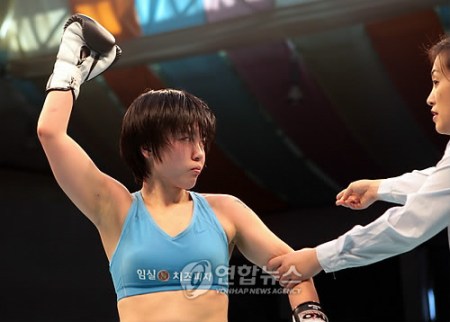
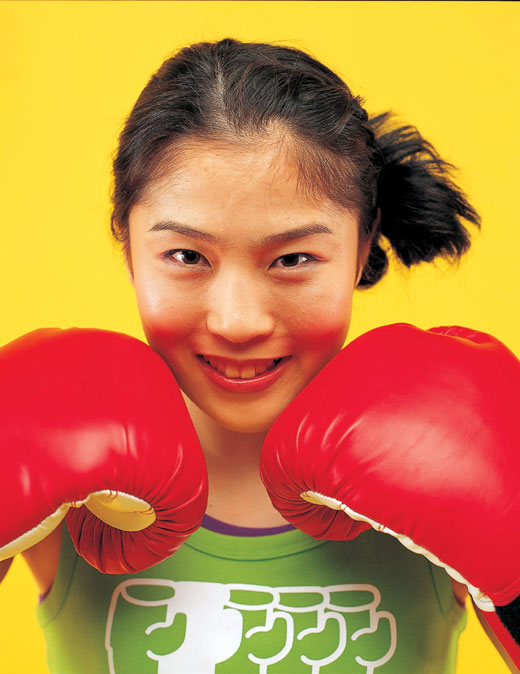
 (Source:
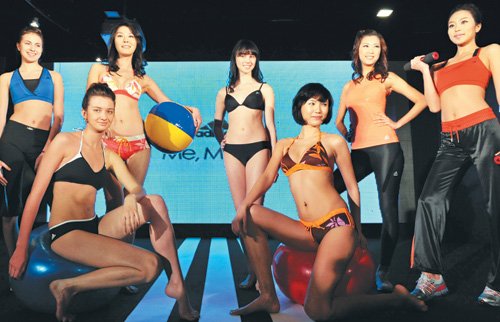 And here’s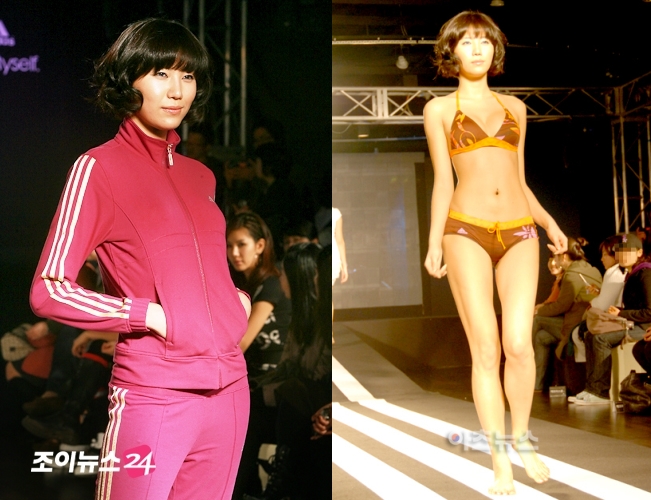
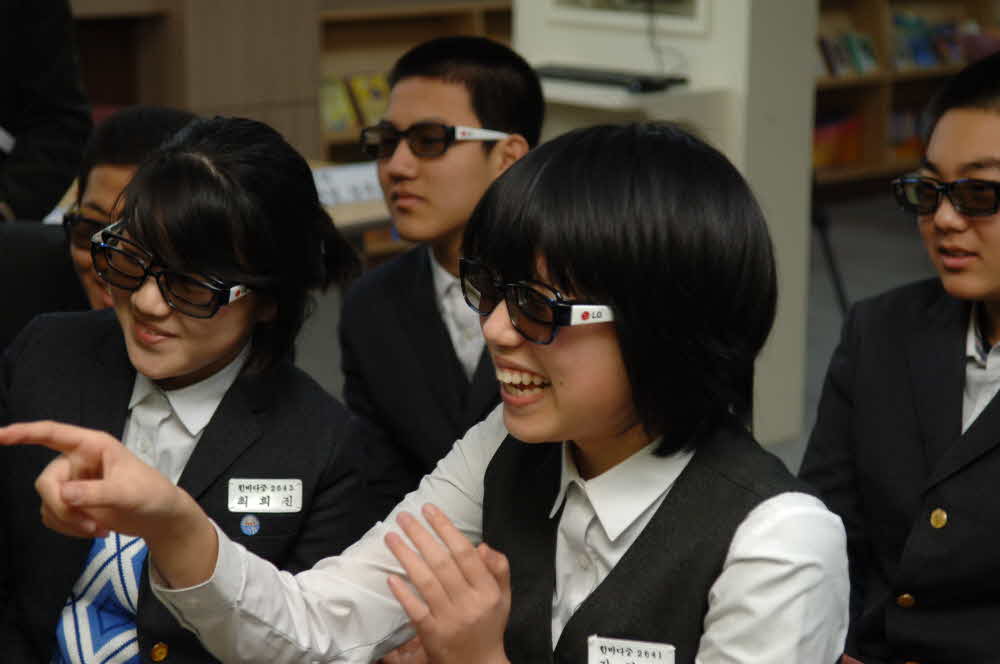




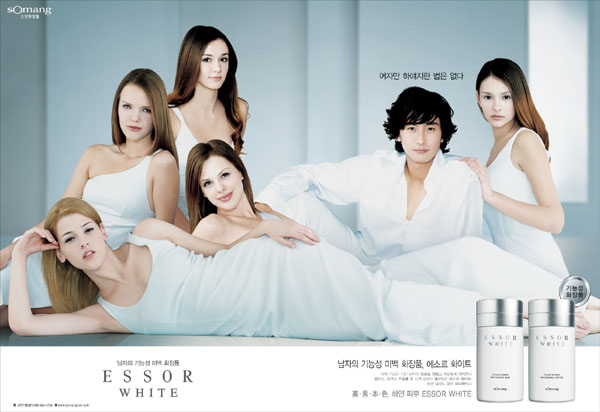 (Source:
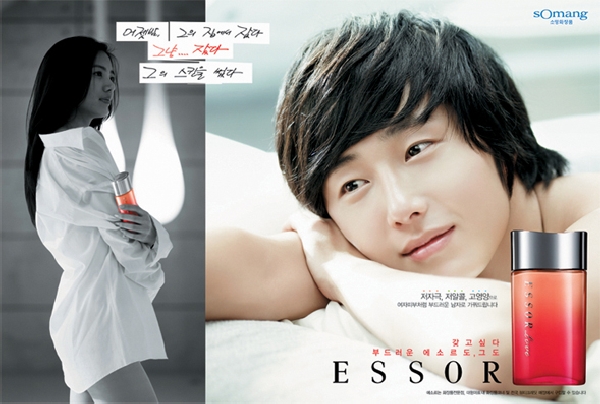 (
(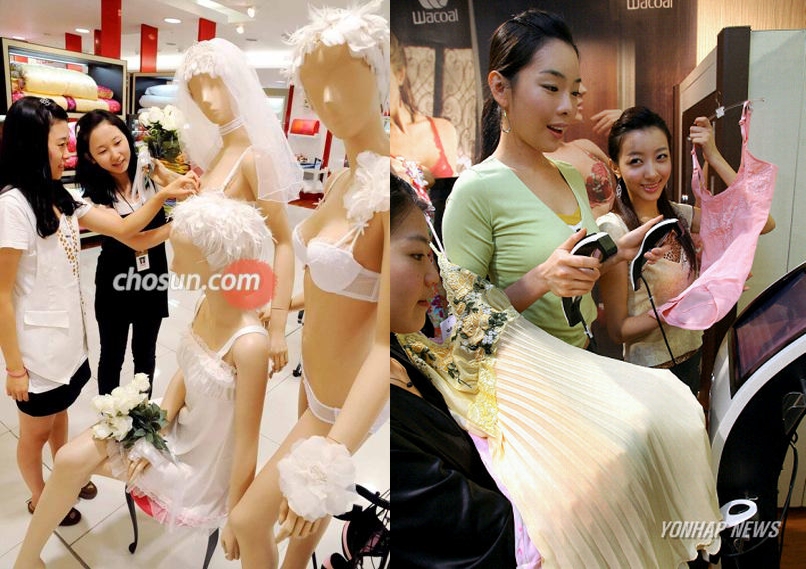
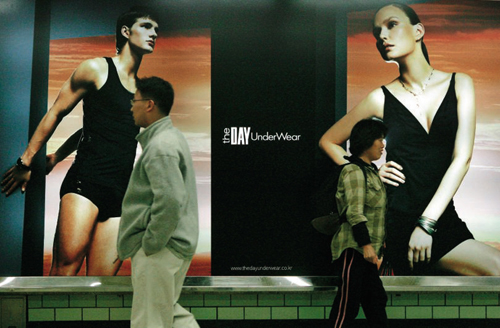
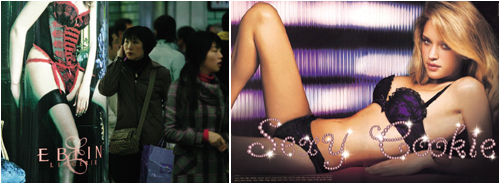
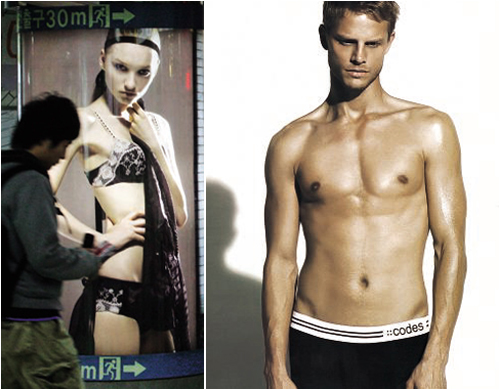
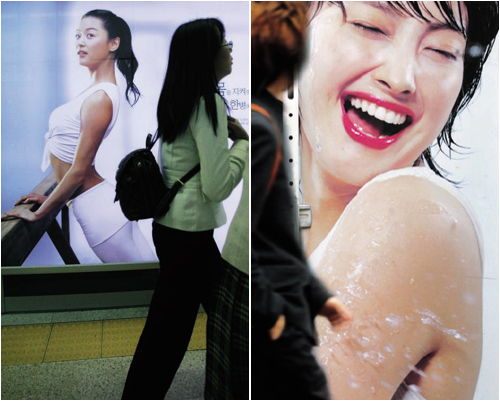
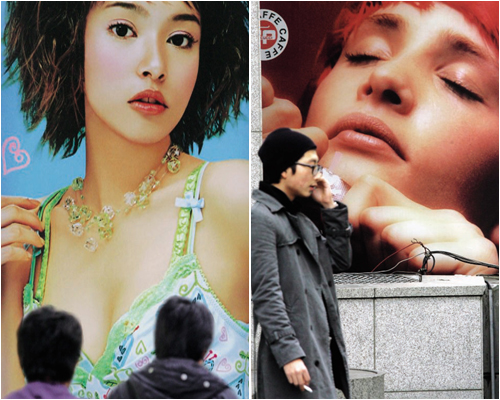
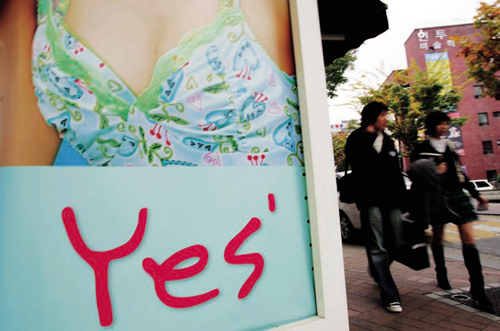
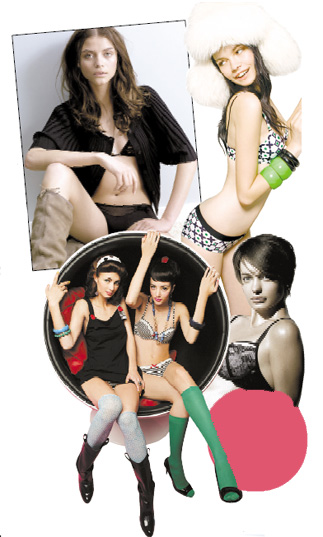
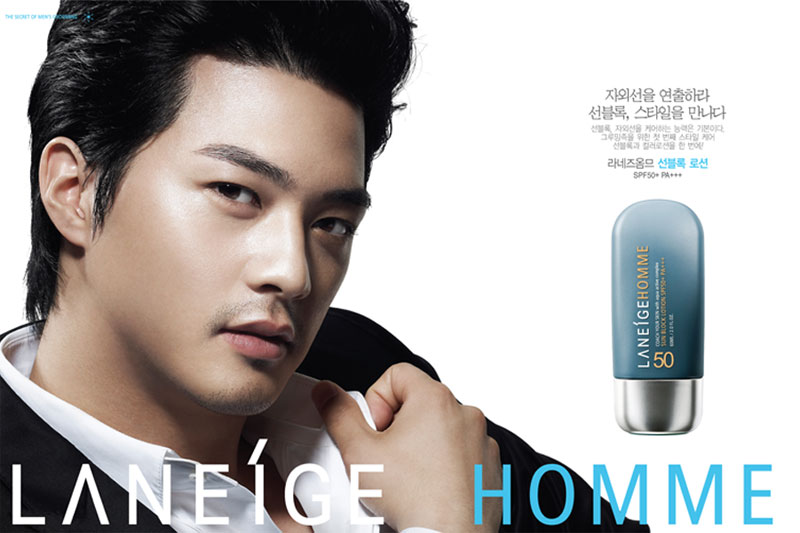
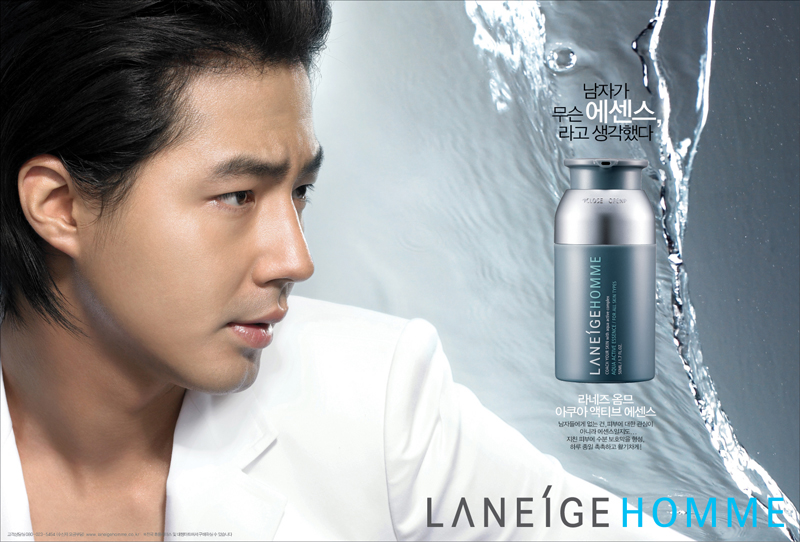
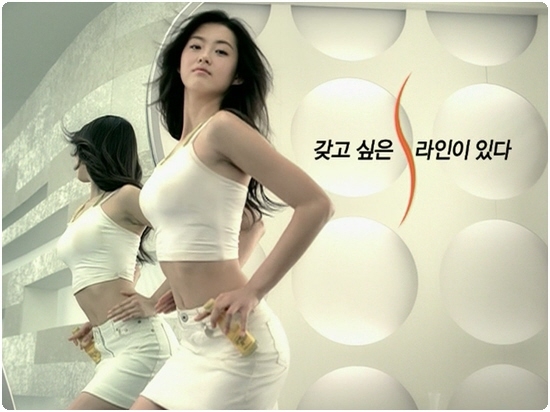
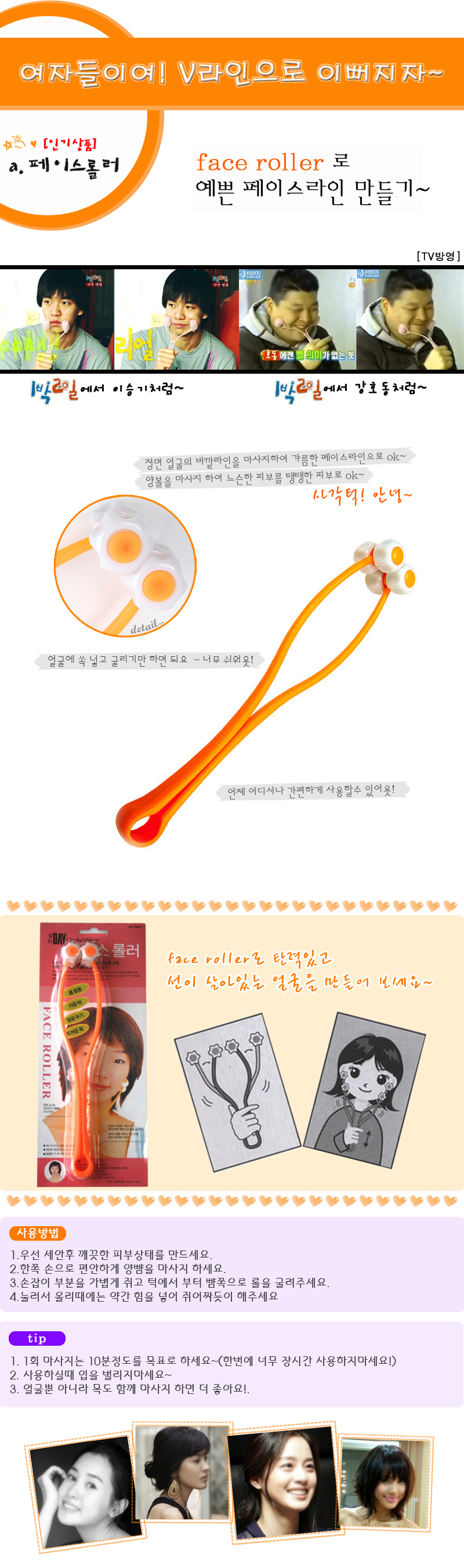


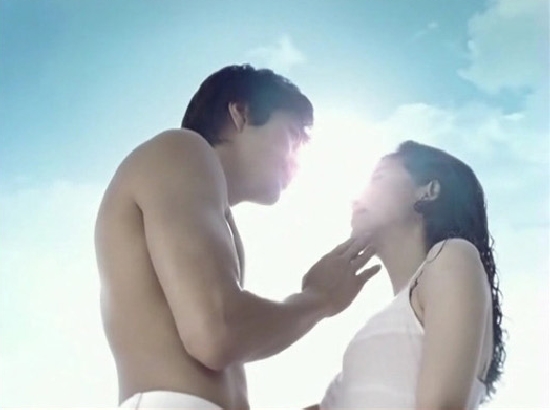
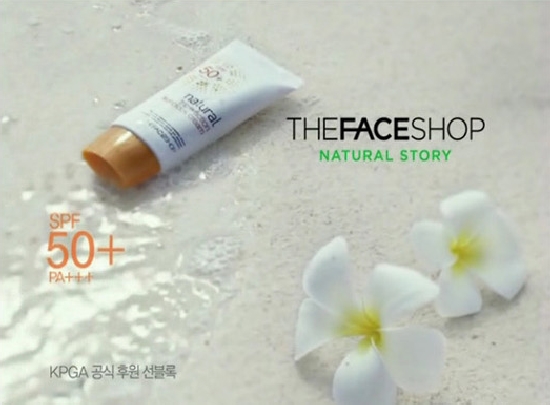


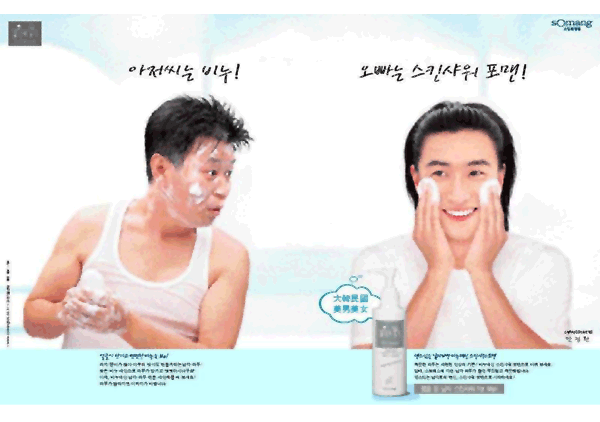



 The Grand Narrative