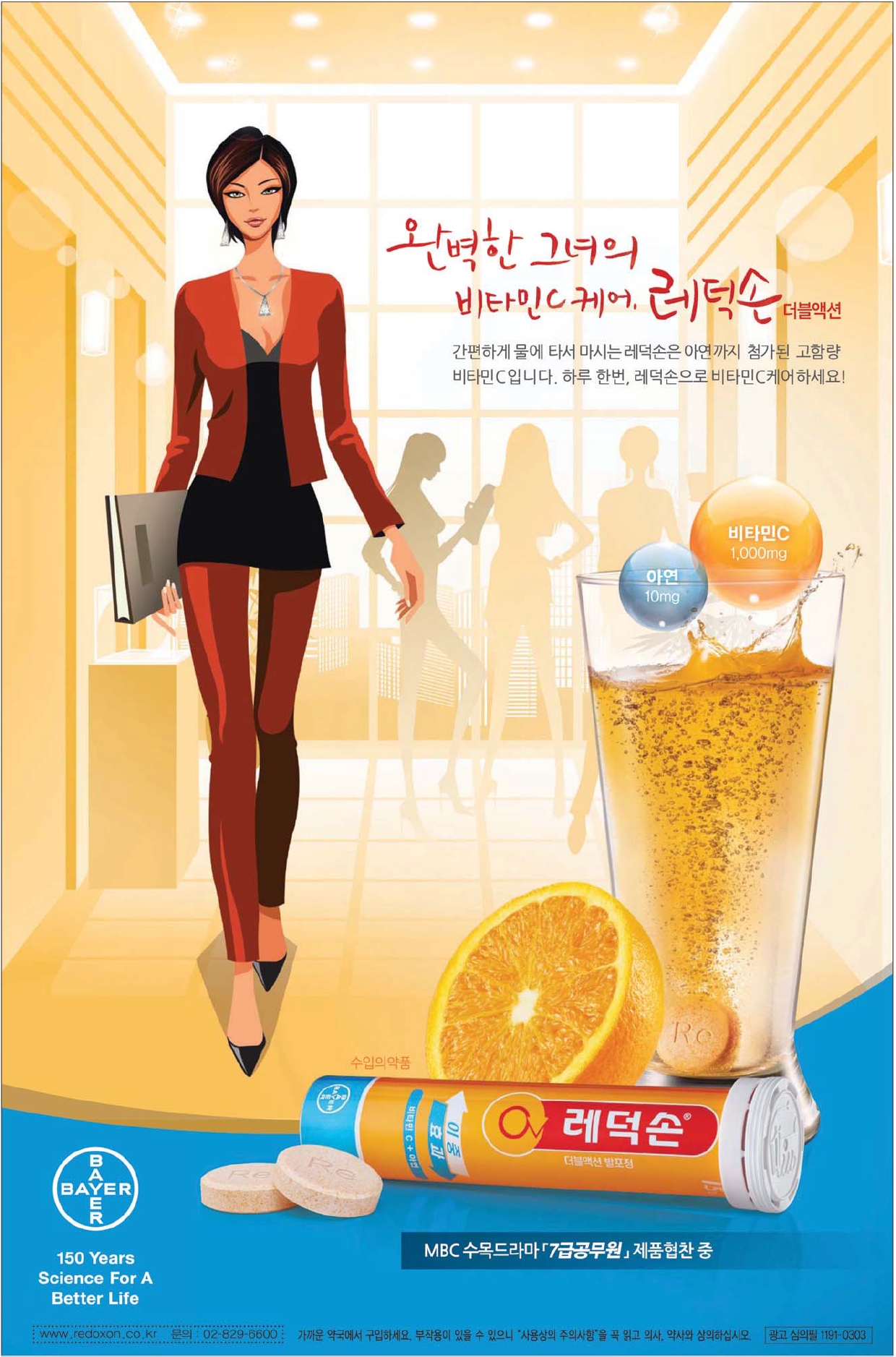
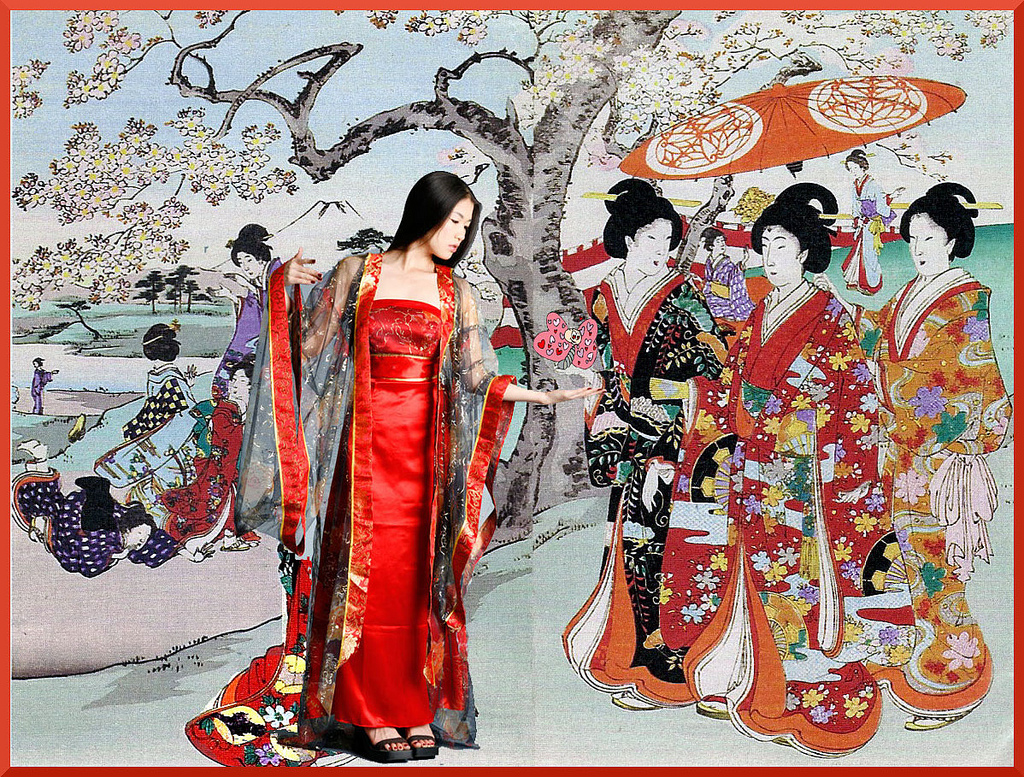
Sex as Power in the South Korean Military: A Follow-up

( Source )

As I discussed back in March, the first ever survey on the issue of sexual violence in the Korean military discovered endemic levels of abuse, with roughly 15% of 250,000 conscripts each year experiencing it as either victims or perpetrators. A hugely important socialization experience for Korean men, this had grave implications for Korean society.

On a slight positive note however, I was happy to also read that much of the researchers’ data was obtained by interviews with soldiers in their barracks with the official cooperation of the Ministry of Defense. A sign of changing attitudes towards acknowledging and dealing with the problem?

Alas, I’ve just discovered that that was far too optimistic, as the military still remains one of the least transparent institutions in Korea:

When the Cheonan sank [in March], the initial reaction was shock and sadness, which quickly gave way to rage: with a government accused of dragging its feet, but also with a military that seemed unprepared for a North Korean attack.

But anger with the military runs deeper than over a single event. Mistrust of the institution is widespread because it has failed to open itself up, using the excuse of national security, while the rest of the country has embraced democracy.

South Korea’s military dictatorship may be a thing of the past, but the North’s constant saber rattling in the form of nuclear tests, missile launches, spy incidents and the occasional skirmish continue to give Korea’s men at arms an immediate relevance – and an excuse to conceal things from the public. That right to secrecy is enshrined in the National Security Law, which places restrictions even on regular citizens’ freedom of speech for the sake of preventing enemy subversion, but is even more of a cloak for the armed forces. It’s the legal manifestation of the bubble in which the military operates, isolating it from the massive changes the rest of Korean society has undergone. To date, for example, no civilian has ever been named defense minister.

Every year, a report is quietly released titled, “Military deaths caused by accidents.” In 2008, there were 134 names on that list, including 75 suicides. The suicides are usually explained by a “failure to adjust to military life.”

That explanation is unacceptable for Joo Jong-woo, whose son, Pvt. Joo Jung-wook, committed suicide in 2001 at age 22…

Read the rest at The JoongAng Ilbo, including about “its emphasis on tight ideological control of its conscripts” resulting in its banning of left-wing books like the works of Noam Chomsky, and the expulsion of military legal officers for “arguing that the military’s regulations are unconstitutional”. Meanwhile, the Korean military still refuses to recognize conscientious objectors and so imprisons them (see here also for a podcast on the development of the concept of conscientious objection in the West), the National Human Rights Commission is ineffective, and the maintenance of the conscription system as a whole is one reason why the Korean Military remains  “a 1970-vintage force structure, designed around a 1970-vintage threat, equipped with 1970-vintage weapons.”

( Source: anja_johnson )

As for the images of mascots, please note that I post them not to be facetious though(!), but rather to show how facile such attempts to soften the image of institutions like the police and military are in light of reports like this. But nothing against the mascots themselves of course, and see here, here, and here for more information about Podori (포도리) in the riot gear!^^

Update, October 2010: Unfortunately, this recent incident demonstrates that little progress has been made since this post was written.

Share

Sex as Power in the South Korean Military

Source: anja_johnson

“All men are rapists,” I read on the back cover of Susan Brownmiller’s Against Our Will: Men, Women, and Rape in the student bookstore. Determined to impress women with my intellectual and feminist prowess by debunking that quote, I bought the book and doggedly read all 480 pages trying to find it. Twice.

Yes, I was rather naive about the whole dating game. Even worse, you can imagine how I felt years later, when I learned that she never actually said that. Rather, it was a big misinterpretation of her statement that rape “is nothing more or less than a conscious process of intimidation, by which all men keep all women in a state of fear” (p. 5), albeit an understandable one. Indeed, it’s probably what she’s become best known for, an enduring catch-phrase of pop-feminism that publishers would knowingly exploit to sell the book to me 2 decades later.

Which is a shame, because along with Menachem Amir, she was instrumental in overturning long-held conventions that rape was simply a spontaneous act of lust, instead demonstrating that it is more “a deliberate, hostile, violent act of degradation and possession on the part of a would-be conqueror, designed to intimidate and inspire fear…” (p. 439). Or in short, it’s due to her that surely all reading this are aware that sexual violence is all about power, and not surprised to hear this reaffirmed by the survey “Sexual Violence Among Men in the Military in South Korea” by Insook Kwon et. al., Journal of Interpersonal Violence, Vol. 22, No. 8, 1024-1042 (2007), the subject of today’s post.

The first comprehensive survey of its kind, in English or Korean, it was prompted by the suicide of a Korean soldier in July 2003, which received tremendous attention in the media because sexual violence by his superiors seemed to have played a role; after all, with 250,000 men forcibly conscripted each year, any implication that it wasn’t an isolated incident meant that there were far more victims. And in point of fact, with the proviso that the authors’ (undefined) notion of “sexual violence” appears to be much broader than a layperson’s as I’ll explain, they did indeed find that 15.8% of respondents experienced it during their time in the military, either as perpetrators or victims.

But before discussing the implications of that however, and especially what it says about the role of the military in the socialization of Korean men, let first provide an overview of the survey so you can make your minds (with a nod to copyright, I won’t upload the survey itself here sorry, but please feel free to email me if you’d like your own copy). And so, without any further ado:

The survey was conducted from November 2003 to February 2004, with researchers meeting 2 groups: 362 postconscripts, then students, at 6 different colleges; and 409 current conscripts, 115 at bus and train stations while they were on leave, and 294 in visits to their barracks with the official cooperation of the Ministry of Defense. From each group, there were 266, 111, and 294 valid samples respectively, giving a total of 671 valid samples out of 771 soldiers surveyed (the bulk excluded being postconscripts, and because more than 3 years had passed since their military service). They also conducted in-depth interviews of 8 perpetrators in army prison, and 3 victims.

Highlights of the results include (all emphases mine):

Of 671 valid respondents who participated in this survey of victimization, perpetration, and observation, a total of 103 people (15.4%) answered that they were directly victimized, 48 people (7.2%) answered that they had direct experience as perpetrators, and 166 people (24.7%) answered that they witnessed sexual violence in the military.

Excluding eyewitnesses, a total of 106 soldiers (15.8%) directly experienced physical sexual violence, either as perpetrators or victims in the military. A very high number of soldiers also indicated they experienced sexual violence as perpetrators and as victims: 59 soldiers (55.7%) were victims only, 39 soldiers (36.8%) were victims and perpetrators, and only 8 soldiers (7.5%) were exclusively perpetrators. Among perpetrators, 83% had experienced sexual violence in the military when they had been lower ranked soldiers. This feature of high number of perpetrators having previously experienced victimization themselves could be seen as the most unique feature of sexual violence among men in the military. (p. 1028)

(Source: anja_johnson)

And:

Victims named higher ranking soldiers (71.1%), junior officers (7%), and officers (3.1%) as their perpetrators, totaling 81.2% of victims who responded that someone of a higher rank forcibly imposed sexual contact….

Also, the eight perpetrators and three victims who agreed to be interviewed, as well as six cases recorded by the Korean Sexual Violence Relief Center and reports by military judiciary officers, confirmed that victims of sexual abuse were in lower ranks than their perpetrators. All victims had been victimized by higher ranking soldiers, and eyewitnesses reported likewise. In sum, sexual violence among men in the military in South Korea was committed primarily by a higher ranking solider against a lower ranking soldier. (p. 1029)

The types of abuse, as reported by victims and witnesses (p. 1031; multiple answers permitted):

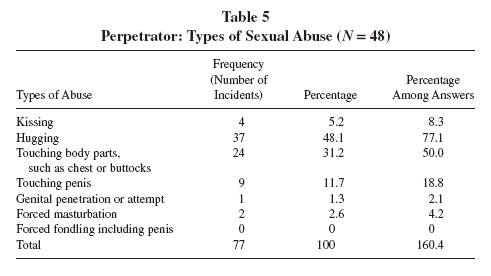
As reported by the perpetrators (p. 1033):

Also note that 22.1% of victims (but only 7% of perpetrators) reported that physical violence accompanied the sexual violence, and that 71.8% of victims and 90.7% of perpetrators responded that the acts of sexual violence when others were watching (I’ll return to the latter point shortly).  And in particular, eyewitnesses reported that 22.5% of the sexual violence they saw involved touching genitals, and 5.1% involving anal penetration (or the attempt), nearly 2 and 5 times higher than victims reported respectively.

Reflecting on the discrepancies, Kwon et al. found that:

…people tended to feel more comfortable talking about what might be considered part of a general sexual culture—such as kissing, hugging, and telling sexually explicit jokes—but answers were less forthcoming when concerning sexual violence of a more serious degree. (p. 1032)

Which for a long time I simply didn’t understand: how on Earth was that the “general sexual culture” of the military? Well, first consider that:

When asked, “In the military, have you ever been forced to talk about sexual experiences, even when you did not want to?” almost one third (32.7%) of the 667 respondents answered affirmatively. To the question, “Have you ever experienced negative consequences either because you did not have any sexual experiences or because you refused to discuss your sexual experiences?” a total of 218 soldiers (32.7%) answered that they had been forced to talk about sexual experience. (p. 1028)

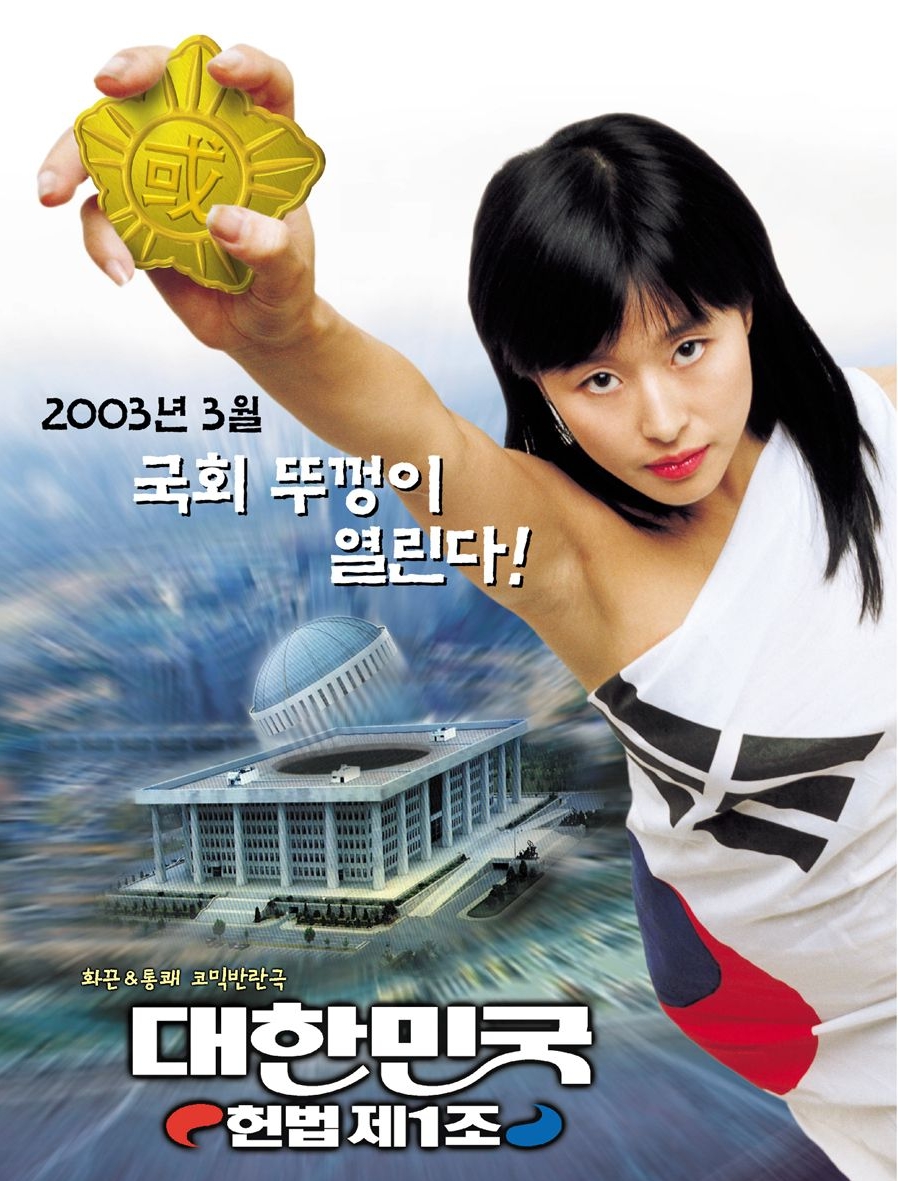
And that this mandatory disclosure of sexual experience has long been regarded as “an essential part of sexual culture in the military” is corroborated by numerous references in Korean movies to the practice of virgins visiting a prostitute before starting one’s military service, of which I highly recommend the satirical comedy The First Amendment of Korea below.

(Source)

Next, there is the fact that victims of sexual violence tended to interpret it as:

…intimacy or playfulness, because identification as a victim of sexual violence would imply one’s fragility and vulnerability. This tendency to minimize and trivialize injury was clear in cases where abuse continued for a long time, and in situations where a clear power dynamic between the perpetrator and the victim made resistance much more difficult for the victim. (p. 1033)

Moreover, perpetrators:

…did not force sexual contact on their peers with whom they had even closer relationships [than inferiors]. The intimacy in question was strictly an intimacy from the position of the higher ranking soldier.

Kwon et al. further discuss the natural difficulties victims had in refusing advances by a superior, and crucially, why the third most common form of sexual violence was touching a victim’s genitals. But why, particularly when only 5.4% of victims thought that their perpetrators were genuinely homosexual? Well, as one victim noted:

…unlike in the general society where one could not treat another person with complete disregard for age, educational level, or class, in the military, higher ranking soldiers could treat lower ranking soldiers as one pleased—including touching their genitals. (p. 1035)

And after a discussion of the right to control and abuse the body being a very useful method for militaries to reaffirm its hierarchical order, and of the role of the penis as a symbol of power and authority throughout history, they note that, hence:

…teasing or forceful contact with one’s penis becomes a way to prove the victim’s lack of power.

(Source: Journey to Perplexity)

Needless to say, the effects of this are amplified if done in public settings, and indeed 90.7% of perpetrators responded that people were watching when their sexual violence occurred, with the vast majority of witnesses either actively engaging in it in some way (23.7%), passively consenting by simply watching (57.9%), or pretending not to see (10.5%) rather than attempting to stop it: hence a “general sexual culture.”

But continuing with why:

…violence feminizes victims of sexual violence in two ways. The victim is reduced to a sexual object, like many women typically face in society, and as the powerless victim of violence, he is further feminized. Men who are victimized by sexual violence, then, become someone whose masculinity is lacking or damaged. Hierarchical order reasserts itself amid all this, and men collectively try to be on the offensive to affirm their aggressive masculinity. (pp. 1035-36)

And finally, the testimony of a perpetrator himself on why he did it, who said that he used sexual violence in lieu of physical violence sometimes, forcing sexual contact by “not hitting every time, and not joking around but harassing them”:

[Like harassing them…] Yes, I can’t hit them every time . . . and it’s not just joking around, but harassing them. . . . For instance, making them clean things repeatedly. Stuff like that. . . . If they were from wealthy families . . . or had a lot of education themselves . . . the superiors are ahead only because they came to the military before them . . . honestly . . . when you don’t have much to show for, and if they kiss ass to superiors who intimidate them . . . and if they think you’re not all that . . . well, you can’t beat them and so I kept thinking about ways to give them hell in the military, legal ways . . . and that’s how I ended up. (pp. 1036-37)

({2-365} Tick Tock by Dee’lite)

But what to make of all this?

At this point, it seems appropriate to point out my own complete lack of experience with the Korean military, as well as not even having any close relationships with any Korean men from whom I could learn about their military service, and so I would be very grateful to hear from those that have either. But then my own inexperience is essentially irrelevant here, as I’m largely passing on the results of renowned experts in the field (scroll down to note #32 here for more information on Kwon for instance); moreover, my own interest in on what is implied for Korean culture and sexuality as a whole, and so let me pass on the following description of military life provided by Ask a Korean, in his own excellent series on military service in Korea:

For some of today’s Korean young men, who have gone soft since the days of their fathers, military experience can be unbearable. Physical exercise is grueling, the superiors can be arbitrary and insulting, and your squad mates could shun you if you are responsible for putting the whole squad in trouble. Given that these guys, just like any other soldiers in Korea, can access guns and grenades, it should be no surprise that recently there has been a string of incidents in which a draftee shoots up his squad or toss a grenade in the squad room, killing many….

….[But there are definitely good life lessons to be learned from the experience, although it may be debatable whether learning those lessons is a good use of 2 to 3 years of young men in their prime. To put it bluntly, the military experience builds Korean men’s tolerance for all the life’s bullshit. As the Korean described so far, there is no shortage of bullshit – some of them perhaps the worst to be encountered in life – in the military. Exhausting physical training, insults and condescension from the superiors, and wasting time on arbitrary and trivial errands are all part of the experience. For young Korean men in the military, there is no choice but to simply grin and bear them. Once they finish bearing it, they know that most difficulties in life would be easier than what they already went through. The combination of such tolerance and insight, some may call it maturity – because, as anyone who has had a regular job can tell you, life as an adult has a lot of crap that we must simply grin and bear.

(Band of Brothers by The U.S. Army Photostream)

And in the next post in that series (my emphasis):

…one can argue that the military culture neatly coincides with traditional Korean culture – in both cultures, seniority automatically commands respect and loyalty. It is not surprising, then, that Korean workplaces are often run just like a squad in the military. You do what your boss tells you to do, and you are supposed to grin and bear it. Your time will come because Korea, like Japan, had automatic advancement by seniority at least until 1990s. Once you are the boss, you can order people around, much like the way you can order people around once you put in the time and became a sergeant.

I happened to work in such a place when I wrote the first post in my own series on gender and militarization in South Korea, and in which I noted that Korean corporate life often requires such a level of personal sacrifice for one’s superiors that, tellingly, even the Samsung Economic Research Institute acknowledges that “many workers…take it for granted that they have to tolerate anything in return for getting paid.” I should note however, that many readers thought my workplace was the exception rather than the rule, but be that as it may, the purpose of many of those things to be tolerated there boiled down to no more than the demonstration (and abuse) of superiors’ authority…and so too does sexual violence clearly emerge as one means – albeit, and I stress, only one, uncommon means – of doing so in the Korean military.

But I will further cover the effects on Korean gender relations and sexuality in great detail as I belatedly continue that series next month. In the meantime, let me leave you with the following passage from Shadows of Forgotten Ancestors: A Search For Who We Are (1993) by Carl Sagan and Ann Druyan to ponder, a book which had a great effect on my worldview and which frequently came to mind as I was writing this post (via Viraj’s Weblog):

(Source)

We go to great lengths to deny our animal heritage, and not just in scientific and philosophical discourse. You can glimpse the denial in the shaving of men’s faces; in clothing and other adornments; in the great lengths gone to in the preparation of meat to disguise the fact that an animal is being killed, flayed, and eaten. The common primate practice of pseudosexual mounting of males by males to express dominance is not widespread in humans, and some have taken comfort from this fact. But the most potent form of verbal abuse in English and many other languages is “Fuck you,” with the pronoun “I” implicit at the beginning. The speaker is vividly asserting his claim to higher status, and his contempt for those he considers subordinate. Characteristically, humans have converted a postural image into a linguistic one with barely a change in nuance. The phrase is uttered millions of times each day, all over the planet, with hardly anyone stopping to think what it means. Often, it escapes our lips unbidden. It is satisfying to say. It serves its purpose. It is a badge of the primate order, revealing something of our nature despite all our denials and pretensions.

Update 1, February 2013: See The Chosun Ilbo and ROK Drop for some more recent statistics on sexual assault in the Korean military.

Update 2, February 2013: See Sociological Images for more on sexualized insults.

Sex, Marriage, and Sex Work in South Korea

Korean Wedding Sidelong Glance(Source: Matt Scott; CC BY 2.0)

With my considerable gratitude to its author for passing it on, I’ll let the following email speak for itself:

…As a foreign woman married to a Korean man, myself and my husband face a unique set of cultural obstacles in our marriage. It can be trying at times, but we are usually able to work out our differences through a serious commitment to communication. However, there is one aspect of being married to a Korean man that I continually struggle with. From what I have observed throughout my time in Korea (and please correct me if I’m wrong), it seems that frequenting prostitutes is an accepted part of life for Korean married men. In fact, it is often required of businessmen if they want to be successful and accepted among their coworkers. For example, I have a friend who was offered a highly coveted position with a certain large corporation. While working there, he was required to regularly go out drinking and visiting prostitutes with his team. Given the strong hierarchical nature of Korean society, he felt unable to say no to his superiors, yet his religious beliefs compelled him to reject this lifestyle. As a result, he had no other choice but to quit and try to find another line of work.

I am told by Korean friends that going out drinking and womanizing with coworkers is an integral part of business in Korea (and, I imagine, another way that female employees are excluded and held back in business). Although this was shocking to me at first, it wasn’t hard to believe once I became more familiar with the language and more observant of my surroundings. It’s impossible to go anywhere in this country without being faced with a constant barrage of prostitution venues. Of course, they often masquerade as something else- massage parlors, karaoke rooms, barber shops, tea shops, PC rooms, bars, rest houses, etc., but they all offer at least the possibility of sex. It’s not exactly comforting to walk around in the middle of the day and see middle-aged men in business suits going into cheap motels on their lunch breaks or after work before returning home to their families. Although I know my husband is a good man and he has assured me that he’ll never engage in that type of behavior, I find it hard to trust him completely when every man in his life, including his father, his friends, and his mentors, sets this kind of example.

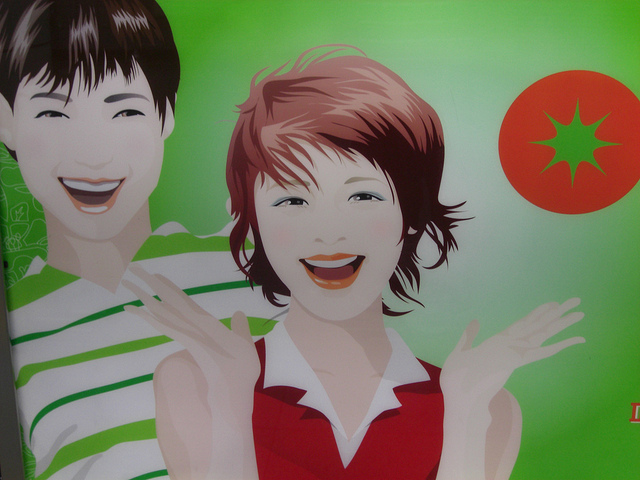
When I ask my female friends how Korean women put up with this from their husbands, they tell me that it’s what the men must do if they are to be successful. One said that even though the husbands stay out all night with prostitutes, drink with them, touch their bodies, etc., it is their choice whether or not they go all Korean Tomato Couplethe way. I simply can’t wrap my head around this rationalization. Where I come from, if a spouse cheats, it is expected that the couple will either get divorced or go into some serious marriage counseling. It is not simply tolerated, or at least not by those who have any self-respect. As I love my husband deeply, my greatest fear is that he will give in to his peers and join them some time, resulting in the end of our marriage. I can’t conceive of how Korean men can not only hurt and disrespect their wives like this, but also spend all their time fraternizing with coworkers and women rather than spending it with their children. This aspect of Korean culture is toxic to families, and is one of the reasons I don’t believe I could raise a family in Korea. I am truly interested to hear how other married women – both Korean and foreigners – deal with this problem. Have they experienced the same fears that I have, or have their experiences been different? Do they tolerate their husbands going out with coworkers and meeting women, and if so, why? Finally, for those like me who are greatly disturbed by this aspect of the culture, how do they overcome these anxieties and learn to trust their husbands? (end)

Korean Businessman Playing Guitar(Source: Simon Helle Nielsen; source above: Shawn Perez. Both CC BY 2.0)

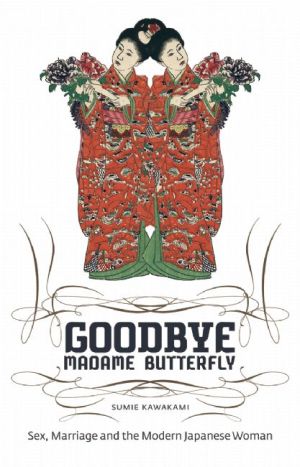
As I too would soon quit any job that required regularly drinking with colleagues, let alone visiting prostitutes, then I don’t have anything to add to the email I’m afraid. But I can point you towards my discussion of the effects on married couples’ sex lives, based around my review of Goodbye Madame Butterfly: Sex, Marriage and the Modern Japanese Woman by Sumie Kawakami (2007); as I explain there, the experiences and attitudes described there are very relevant to Korean couples, largely because both countries share the same salaryman working culture, with husbands (and indeed wives) working late most evenings.

Also, by coincidence Michael Hurt at the Scribblings of the Metropolitician has just written a post on Korean society’s denial of the pervasiveness, ubiquity, and above all systematic nature of prostitution that is highly relevant to the discussion here. A snippet:

…I posit that the resistance to what every outsider observes as KOREAN SOCIAL REALITY in terms of the commodification and subjugation of women in this society, especially as embodied in the rampant institutionalized prostitution that is as observable in terms of the sheer numbers and types of such places of business (room salons, business clubs, barber shops, massage parlors, handjob rooms, juicy bars, miin-chon, 단란주점, 도우미 노래방, which goes without even mentioning the vast numbers of red-light districts in every part of Seoul and every city in Korea) NARY REQUIRES statistics, either.

What I see as the frequent resistance of people to believe something that is OBVIOUS in observed reality if one simply COUNTS the number of houses of prostitution on a single city block in any part of this city — Kangnam Station to Shinchon to City Hall to Apkujeong to Chungdam to nearly any neighborhood after midnight, when the plastic balloons, mini-trucks, and neon signs come on that aren’t on during the day — is partially a denial of obvious reality, coupled with the urge to throw out the many statistics that bolster easy observation because they make one very uncomfortable.

But I’m a human being. I understand emotions. But what makes it so easy for me to recognize that the US brutally kidnapped, displaced, and murdered MILLIONS of human beings for the sake of material gain, which has resulted in creating some negative aspects to my culture, i.e. discrimination and institutionalized racism? But when I mention institutionalized prostitution as a legacy of compressed and authoritarian development in the Korean context, people instantly start equivocating and dismissing my argument, while holding it to such an abnormally high bar of scrutiny, one would be hard-pressed to assert ANYTHING particular about Korean society….(end)

Read the rest there.

Related Posts:

(NSFW) Korean Movie Review #2: Samaritan Girl/Samaria (2004)

(Source: Naver영화)

To my surprise, there can actually be some advantages to being a fledgling movie reviewer.

For instance, lacking the knowledge of experts, I can drop all pretense of objectivity. And indeed, my long-held preconceptions of this movie did have a profound effect on my ultimate enjoyment of it.

Also, only having seen one other of director Kim Ki-duk’s (김기덕) earlier works in passing – The Isle (2000) –  then I am in no position to analyze Samaritan Girl/Samaria (사마라아) in the context of his movies as a whole.

Well of course, I hear you say. But this is more important than it may at first appear.

This is because of the plethora of reviews already available, I have noticed that positive ones tend to include extensive references to Kim’s Spring, Summer, Fall, Winter…and Spring (2003) in particular, while negative ones are more likely to analyze the movie in isolation. Not exclusively of course, but the division is noticeable. Rather than implying a potential forest for the trees phenomenon here though, I mention it because I have also heard Kim’s movies are very hit and miss, and hence that your opinion of them can be heavily affected by which film you watch first.

And therein lies the problem, for much about Samartian Girl is vague, confused and/or simply incomprehensible, and not in the positive sense that this encourages you to engage more with the movie in order to fill in the blanks. And while I strongly suspect that watching his earlier movies would clarify a great deal, by itself this movie would not encourage most viewers to do so.

samaria-korean-teenage-prostitution(Source: Naver영화)

In fairness though, I did set myself up for being disappointed.

I first heard of it two years ago, via a newspaper article I translated about how 3 in 10 internet dating sites were being used to arrange teenage prostitution. While I haven’t really pursued the subject since, deferring to the excellent work done by Matt at Gusts of Popular Feeling on it instead, the post was picked up by Shinsano at the East Windup Chronicle (as well as by Matt himself), and the back and forth I had with him there gave me the impression that Kim was a much-needed Korean social critic, welcome overseas but ostracized at home because of his constant airing of Korea’s dirty laundry.

That image of him is by no means incorrect. But despite not having seen it, somehow it also inflated the quality of the movie in my mind over the next two years, especially as the blog came to acquire its present focus. Suffice to say that by the time I finally began to watch it last week, I fully expected a fierce and piercing critique of the teenage prostitution industry here.

But just the marketing of the movie itself should have given me pause.

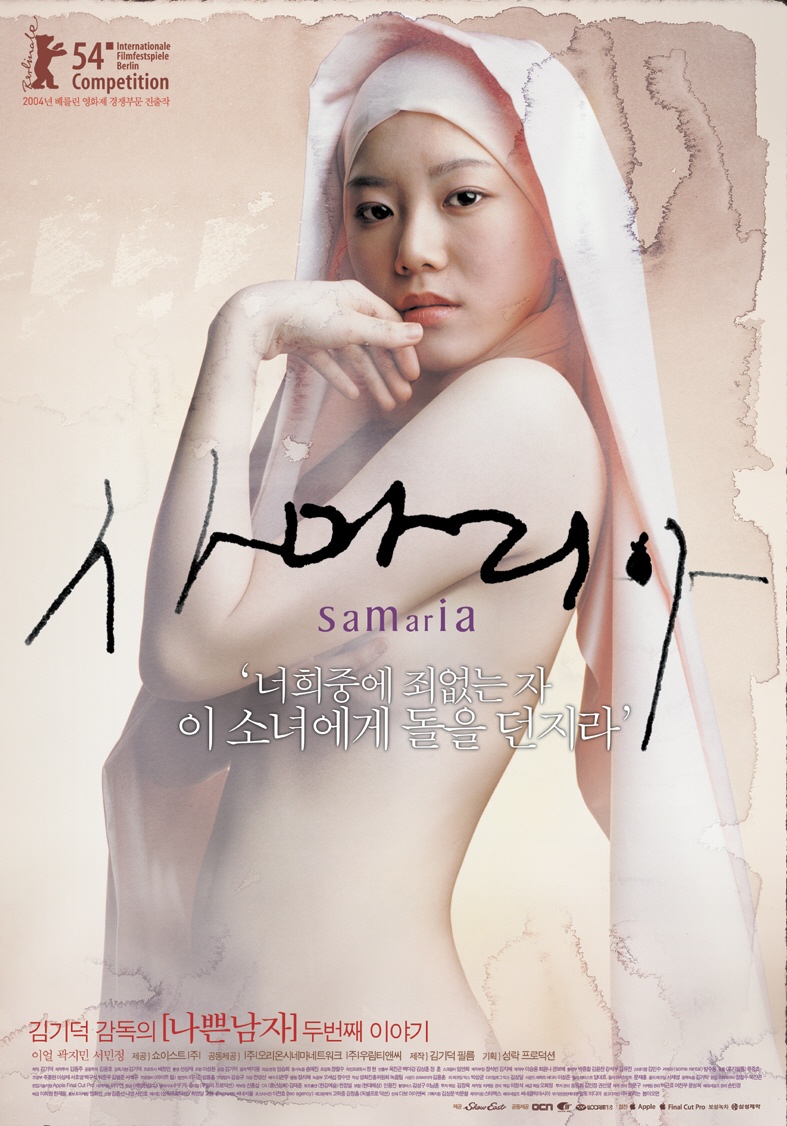
Consider the two promotional posters above from 2004, featuring Kwak Ji-min (곽지민) and Han Yeo-reum (한려름) respectively. Never mind that Kwak is topless, and as a minor when the picture was taken, meant that it was technically illegal; as this case with a 14 year-old in January and this case with an 18 year-old earlier this month demonstrate, the Korean authorities still seem strangely reluctant to prosecute this sort of thing. Rather, the point is that far from discouraging one from having sex with minors, both posters seem to be positively encouraging it.

True, as author of this blog, I can hardly fault someone for using such images for the sake of popularity, even if they send mixed messages. Also, at risk of sounding hypocritical, I’m not going to feign outrage at topless photos of someone just a few months shy of the legal age to pose for them either. But I do have my limits:

samaritan-girl-bathhouse(Source: Celebrity Movie Archive)

This is the second of two bathhouse scenes in the movie, at just 6 minutes and 16 minutes into it respectively. Neither is entirely pointless: the implied lesbian relationship is central to understanding why Kwak Ji-min, pimping for Han Yeo-reum as they save money for permanently escaping to Europe, clearly becomes distressed when Han shows signs of enjoying her work, in particular becoming attached to one of her clients, a music composer. Derek Elly at Variety also notes that:

Wisely, Kim has opted not to show the sex scenes [with clients], and there’s tenderness (with gently lyrical music) in those sequences sketching the girls’ friendship — playing in a park together, or bonding in a Korean-style bathhouse.

Apparently so much tenderness though, that it put blinders on this unnamed reviewer at Asian Film Reviews:

There is minimal nudity in this movie, which is surprising considering the subject matter. The lack of nudity preserves the girls’ innocence and reinforces the integrity of the movie. If Samaritan Girl featured explicit sex, it would seem trashy and the message would be lost in all of the excess. Instead, this movie is a tender, touching story about shattered dreams and lost innocence.

TR at TimeOut London puts it rather differently however:

The actual paedophile sex is kept offscreen, but Kim’s enraptured gaze at the two naked girls washing each other in a public bath is as prurient as they come.

And while both scenes were certainly compelling viewing at the time, I was left wondering if it was really necessary to see them naked to appreciate their bond?

(Source: Naver영화)

Probably not, and this adds a certain poignancy to what Adam Hartzel writes about Ki Ki-duk at KoreanFilm.org:

In tag-lining his Silver Berlin Bear award-winning film Samaritan Girl with the biblical reference, “He who is without sin, throw the first stone,” director Kim Ki-duk has allowed himself cover from critics. Such a tagline deflects any negative criticism before the critic has even criticized. It argues that only the critic who is without criticism themselves should throw damning words at Kim’s film, otherwise, the critic should remain silent. And who among us is without “sin”, hypocrites that we all are? Such underscores the marketing acumen, if not directorial skill, of Kim, a man who has quickly risen, justified or not, to become one of the most recognizable Korean directors throughout the world…

In combination with the posters then, those scenes were arguably far more for commercial reasons rather than the artistic ones Kim Ki-duk is better known for. While that does not make Samaritan Girl a bad movie in itself though, it does point to an emphasis on style over substance that plagues the entire movie, and after just 6 minutes into it to boot.

To a certain extent, this criticism is just personal taste. Friends that recommended Peppermint Candy to me for instance, only to be dismayed by my scathing review of it later, have since pointed out my preference seems to be for movies where everything is explained to viewers. That’s a fair assessment, and indeed my incomprehension at Kwak’s bizarre decision to sleep with all of Han’s former clients after her death, returning their money as some form of atonement (hence the title), means that I would have been unlikely to have ever warmed to Samaritan Girl. And in hindsight, being aware of that element of the plot is what put me off from watching it for two years too.

But I can still acknowledge the benefits of such an approach, and indeed to have provided more detail would probably have detracted from the haunting, slight surreal tone of the film, with occasional combinations of long, drawn-out, but otherwise compelling scenes and stunning cinematography that reminded a newbie like me of, well, the Italian movie Il conformista (1970). There is also a lot of symbolism and references to Christianity, redemption, and – most notably in my book – there is the decision by Kwak and one client to have a liaison on the riverbank in front of the National Assembly Building. A metaphor for something deeper perhaps? A thinly-veiled political message?

(Source: Naver영화)

Alas, probably not. While it would be unfair of me to criticize Samaritan Girl for completely lacking the piercing critique of teenage prostitution I had projected onto it (albeit not unreasonably given Kim’s reputation),  I certainly didn’t expect the movie to almost glamorize it instead. But this is no exaggeration: with the exception of the composer Han became attached to, all of Kim’s clients treat her with (paternalistic) respect and kindness for instance (one can understand Han’s affection for them), most liasons take place in immaculate hotel rooms, and some immediately see the error of their ways after Kim surprises them by giving money back to them afterward.

There is no violence, no refusals to wear condoms, no STDs, no pregnancies and abortions, and apparently no impacts whatsoever on Kim herself, who someone manages to sleep with dozens of men in the afternoons despite being an otherwise ordinary middle-school student.

Indeed, the only unwelcome element in this fantasy is the police, first in the form of the officers raiding the hotel, forcing Han to jump to her death from a hotel window in order to escape, and later in Kim’s detective father Lee Eol (이얼), who discovers what she is doing but who chooses to confront Kim’s clients – in increasingly violent episodes – rather than confronting her.

Of course, Samaritan Girl does have some redeeming qualities. Kwak in particular seems to mature as an actor literally over the course of movie, and the tension between her and Lee – an excellent casting choice – that is the focus of the last third of the movie is both palpable and compelling. But both positive and negative reviews of the movie mention that Kim never quite manages a balance between surrealism and providing a convincing story, and even for those that don’t like to be spoon-fed all the details of a story like myself(!), there are simply too many gaps to make the necessary leaps of faith.

(Source: Naver영화)

Instead of Samaritan Girl then, I heartily recommend You Are My Sunshine (2005) for an examination of the unsavory reality of the Korean prostitution industry, albeit only in passing. But I would appreciate any other suggestions.

Next review: My Wife is a Gangster (조폭 마느라; 2001).

(For all my Korean Movie Reviews, see here)

Korean Sociological Image #18: Sexualizing Caucasian Women

Sexist Korean advertisment caucasian women(Source: Busan Metro, 2 September 2009)

An image that simply begs commentary. But what is noteworthy about it exactly?

One thing is the tendency to use women’s bodies to showcase vehicles, well satirized here by replacing women with men in a similar photoshoot. But that is hardly unique to Korea, nor particularly strong here, whereas my general purpose with this series is to highlight interesting features of Korean society. So it’s the use of Caucasian women that I want to discuss here, as they’re so common in Korean advertising that sometimes there’s even more of them than Korean ones.

Before I began writing though, I had a thought: can’t Korean advertisers ever use non-Korean models without overanalysis, and — yes — perhaps implicit criticism from myself for doing so? No, of course they can. And, serendipitously, earlier this week Lisa at Sociological Images provided a fuller response to that charge, indeed an overall rationale that will inform this series in the future also. Here it is, but adapted to this blog:
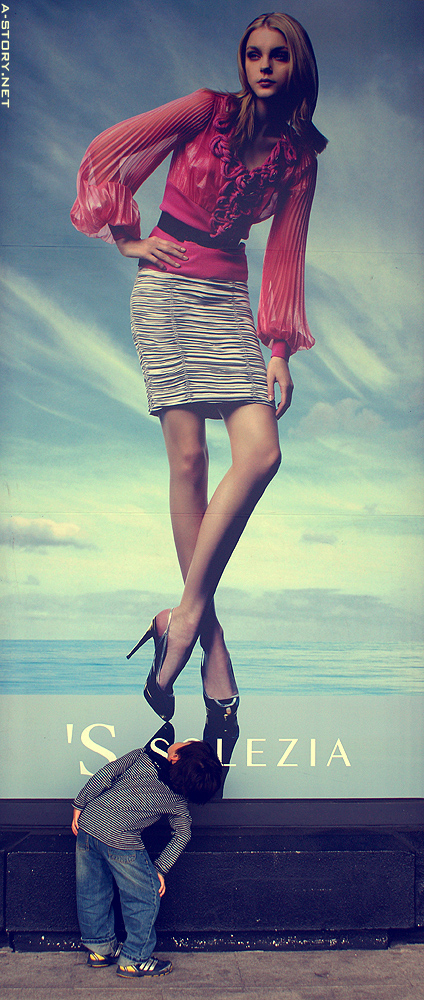
korean-boy-looking-up-caucasian-womens-skirtI often present a single example of a cultural pattern. If you’re a member or observer of the relevant culture, that single example might ring true.  That is, you might recognize it as one manifestation of something you see “out there” all the time.

But it’s still just one example and it’s not very convincing to someone who is skeptical that the cultural pattern exists, especially if it’s subtle.

But one advantage of being a niche blogger is that posts on one’s subject(s) are cumulative.  I can even put up single manifestations of a cultural pattern and, even if it’s not very convincing at the time, the other evidence on the blog (and the evidence yet to come) may sway even some skeptics.

It is in that spirit that I offer the opening advertisement.

The choice of the models ethnicity may be random, but I am going to suggest that it is not…

And yet there are so many examples of Caucasians in Korean advertisements on this blog to provide, and so many factors involved in the choices of them, that to simply provide dozens of links at this point would be to confuse rather than enlighten readers. Therefore, my purpose with this post is to provide a single definitive guide to the subject that people can refer back to in future, not least myself!

To begin then, consider the empirical evidence for the disproportionate numbers of Caucasian women in Korean advertisements. Surprisingly given their seeming ubiquity though (something I’ll return to), there have actually been very few English-language studies of East Asian advertisements that have incorporated race as a main factor of their inquiries, and I am aware of only three that have done so of Korean ones. Here they are in chronological order of publication, with very brief summaries of their findings and links to the posts where I discuss them in more detail:

• Hovland, R. et.al. “Gender Role Portrayals in American and Korean Advertisements”, (Sex Roles: A Journal of Research, December 2005; open access copy no longer available).

Using various 2000 editions of selected Korean and American women’s magazines, Hovland  et. al. found that 30% of Korean advertisements in them featured Caucasian female models, whereas only 1.9% of US advertisements showed Asian female models. Of particular note here, both Korean and US magazines for middle-aged women showed more Korean and Caucasian models than their counterparts for younger women respectively; see here for the details.

• Kim, Minjeong & Lennon, Sharron “Content Analysis of Diet Advertisements: A Cross-National Comparison of Korean and U.S. Women’s Magazines” (Clothing and Textiles Research Journal, October 2006; open access copy no longer available).

As discussed in the second half of this post, the advertisements in the various 2001 editions of selected Korean women’s magazines examined actually had more Caucasian women than Koreans: 52.3% vs. 47.7% respectively, compared to 84.9% Caucasian women in advertisements in U.S. magazines.

• Nam Kyoungtae, Lee, Guiohk & Hwang, Jang-Sun “Gender Role Stereotypes Depicted by Western and Korean Advertising Models in Korean Adolescent Girls’ Magazines“, Paper presented at the annual meeting of the International Communication Association, TBA, San Francisco, CA, May 23, 2007; downloadable here.

whisen-air-conditioner-advertisement-han-ye-seul-song-seung-hun(Source: Korea Times)

Of the total of 644 female models found in selected advertisements (one page or bigger and showing full adults) from selected Korean women’s magazines from 2002 and 2003, 57% were Korean and 43% were Western. Of 299 male models counted, 59.2% were Korean and 40.8% Western. And of particular interest, as I wrote here:

…Western women were more likely to be depicted in revealing clothes and or nude than Korean women, but at the same time they were also likely to be portrayed as independent, self-assured, and assertive than them too, and by no means just in a sexual sense. Again, this finding is true of Western and Korean men too…

To be fair, this at least in part echoes the the hypersexual state of Western advertising today. And rather than supporting the artificial dichotomy between chaste Koreans and oversexualized Caucasian (or Westerners) that at the heart of this post, the internal dynamics of the Korean magazine industry reveal that Korean women are active and willing consumers of the cultural and sexual norms that such advertisements literally embody, the incorporation of which into patriarchal Korea is not without friction. Not to imply that all positive changes in Korea are Western-derived of course, but regardless there are certainly a lot of advertisements with Caucasians out there.
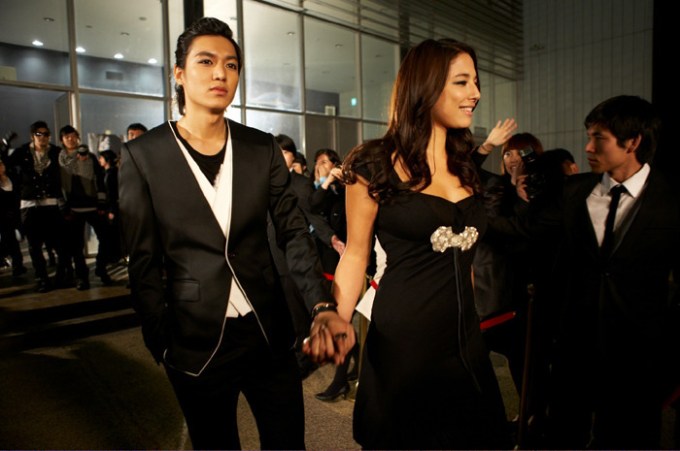
lee min-ho cass jessica gomes( Source: Naver )

Or are there? I’d wager that many heads would have been nodding with that last statement, and, granted, some Korean clothing labels for instance – Beanpole and Hazzys come instantly to mind – do seem to use exclusively Caucasian models. But then appearances by Caucasians in Korean-made television commercials like the above, for instance, are actually the exception rather than the rule. And with the proviso that White privilege is very much alive in Korea (the existence of which I take for granted that readers agree on), and, without implying that Koreans want to look White,  that this still has a strong influence on both Koreans’ preferred cosmetic surgery operations and their huge numbers, in hindsight I’d be hard pressed to think of any segment of the Korean advertising industry that used Caucasian models to the extent researchers found in women’s magazines.

Unless of course, a great many of them were for lingerie that is.

As long-term readers will well know, it turns out that the reason for this is because before the restrictions against the use of foreign models in advertising was lifted in 1994, lingerie modeling in Korea was often done by pornographic actors (update: to be more precise, nude models) This gave it a negative image among Korean female models, the enduring strength of which was revealed recently by these ones who did model lingerie but nevertheless felt compelled to literally disguise themselves while doing so, and all quite ironic considering how willing many are willing to objectify their breasts otherwise (see here, the video here, and here for some notorious examples). Case closed then?
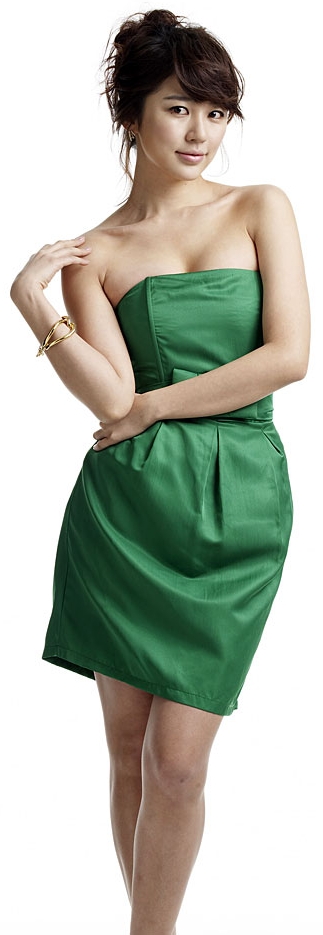
Yoon Eun-hye Vivien's Summer CollectionNot quite. Consider what I wrote a few months ago on the subject:

…lingerie advertisements are ubiquitous in Korea, and it’s a rare commute when I don’t have the slightly surreal experience of seeing ones featuring scantily clad Caucasians in one subway car, then seeing others with fully-clothed Koreans like [these] in another when I transfer (sometimes, you can even see both in the same car). Seriously, it’s no exaggeration to say that Koreans’ convoluted and often contradictory notions of sexuality and race literally stare me in the face everyday, and in a form that means that I’m particularly likely to sit up and take notice.

Yes, that is indeed a lingerie advertisement on the right (source). And regardless of the actual reasons for a phenomenon, once we think we’ve found the reasons for it, those shape the filter through which we take in new data. Personally then, I originally thought the use of Caucasian lingerie models demonstrated that Korean women had Caucasian body ideals, which prompted me to write this post on the subject last April. Once the stigma attached to lingerie modeling came to light that June though, then that link I had made was no longer sustainable…but not the Caucasian body ideals themselves, which there’s still a wealth of other evidence for (and see this post again). In that vein, while 4 years ago Michael Hurt was also mistaken in his proffered reasons for the numbers of Caucasian women in lingerie advertisements, writing in his blog Scribblings of the Metropolitician

One thing that I also notice is that in underwear and other commercials that require people to be scantily-clad, only white people seem to be plastered up on walls in the near-buff. Now, it may be the sense that Korean folks – especially women – would be considered too reserved and above that sort of thing (what I call the “cult of Confucian domesticity”). Maybe that’s linked to the stereotyped expectation that white people always be running around all nasty and hanging out already, as is their “way.” Another possibility has to do with the reaction I hear from Korean people when I mention this, which is that white people just “look better” with less clothes, since Koreans have “short leg” syndrome and gams that look like “radishes.” The men are more “manly” and just look more “natural” with their shirts off. Hmm. The thoughts of the culturally colonialized? Perhaps I’m being too harsh? My hunch is that it’s all of the above. Take a look.

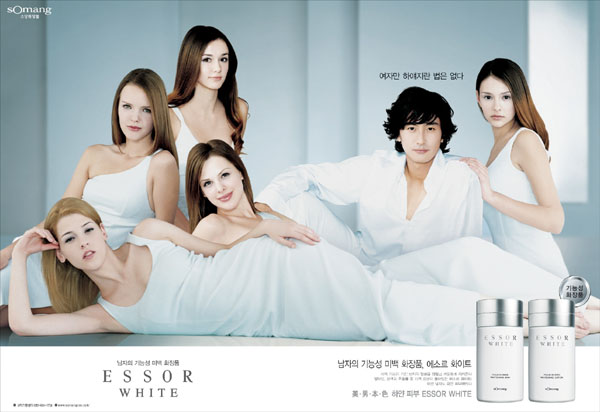
…not only did I heartily agree with his thoughts when I first read them, but I still agree with them, because they are not just based on the numbers of Caucasians in lingerie advertisements. In particular, of the following 2003 advertisement with Ahn Jung-hwan (안정환) he wrote:

A recent favorite, reflecting the relative position of Korean masculinity vis a vis whiteness, specifically white women. I don’t think it’s a coincidence that the relatively greater financial power that has made Korean men an attractive partner – or at least potential plaything – of Eastern European and Russian women, and that many of them now enter the country under the E-6 “entertainment visa.” In any case, this is a fascinating statement on the changing status of “the white” in relation to Korean masculinity. No longer the inaccessible Playboy fantasy held by many men in a developing Korea that had been culturally (and partially symbolically sexually) dominated by the United States – now the tables are turned. The product being sold here is a cream to make/keep one’s skin “white.” Don’t even get me started.

And lest long-time observers of Korea feel that this particular advertisement has become somewhat iconic and overanalyzed by the Korean blogosphere, it is but one of many examples.

essor-white-advertisement-ahn-jung-hwan( Source: Somang Cosmetics )

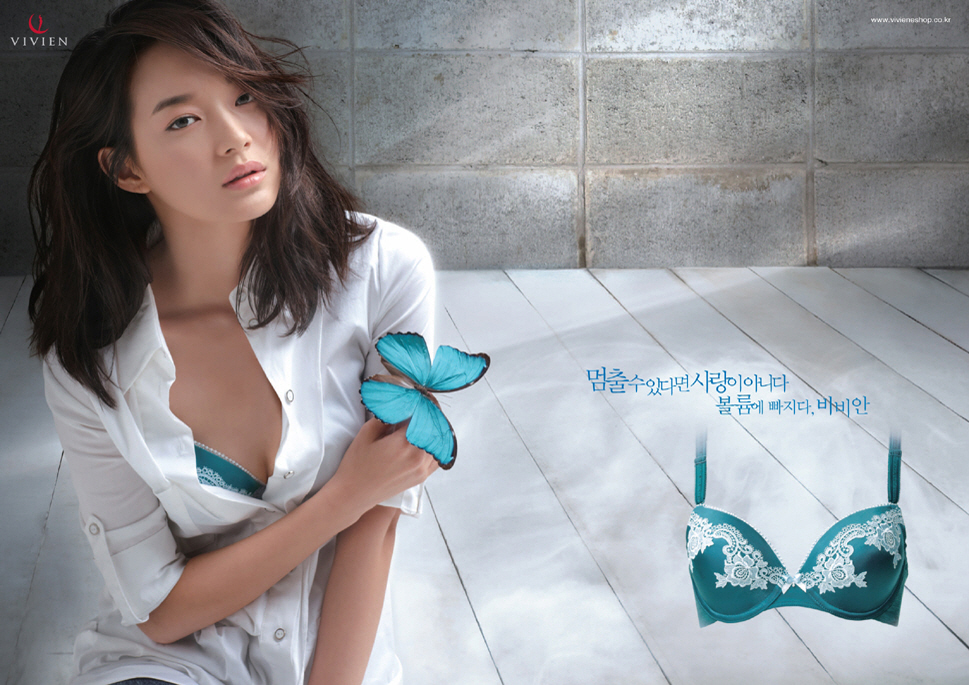
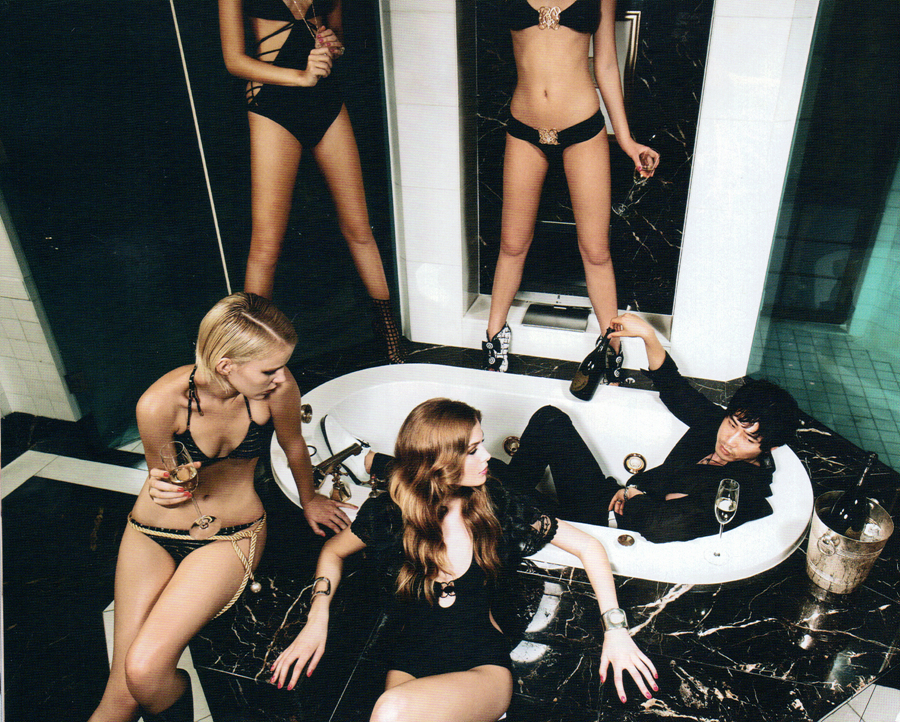
Before providing a context for those in the remainder of this post though, I should point out that I don’t think that lingerie advertisements by definition sexualize the models featured, and so I disagree with Michael Hurt’s seeing further evidence of the sexualization of Caucasian women in the ridiculous setting of this advertisement for instance, as regardless of the source of the advertisement and/or the ethnicity of the models, worldwide they can similarly have “folks sitting around in their skivvies [that] could just as well be on the veranda of a bistro in the south of France. Eating strawberries in a bathtub in lingerie, with a towel wrapped around one’s head.” Indeed, rare Korean lingerie advertisements with Korean models are no different, and when it comes to sexualizing lingerie – nay, almost any item of woman’s clothing – it often pays to be subtle. Consider this one with Shin Min-a (신민아) that came out this summer for instance: while it is significant because previously one never saw Korean celebrities wearing the lingerie at all when they endorsed it, and is probably a belated reaction to the fact that discreetly showing one’s lingerie off has actually been the fashion for years now, personally I see much more significance in the fact that it seems designed for a male gaze.

Shin Mina Vivian Bra Lingerie Advertisement( Source: Zziixx )

As you might vaguely recall, the advertisement that prompted this post wasn’t actually a lingerie advertisement. But having Caucasians in the vast majority of those – for whatever reasons – does at least feed into the false dichotomy of chaste Koreans and overly-sexualized Caucasians. And although it’s by no means the most blatant example of its kind, the choice of outfits in it still makes it very much Exhibit A in the argument for the existence of those stereotypes (as an aside, see this post for the issues raised when skimpy clothing is donned for a good cause, like women in bikinis washing only hybrid cars). Let’s now consider the other evidence.

First, there were the recent plans to set up a nudist beach on Jeju island specifically in order to attract foreign tourists, especially Caucasians/Westerners. Apparently, this was because many were already regularly stripping off on Jeju beaches despite local sensibilities, but in the absence of anything to support those claims, and considering that Korean reporters regularly simply make stuff up and/or impose their own opinions on a report while attributing them to others (see here and #1 here respectively for recent examples), then when I heard of the idea I was much more inclined to believe that Jeju government officials came up with it completely independently. And why? Probably based on the conflation of nudity at beaches with sex said Brian in Jeollanam-do, “implying that the point of the former is to stimulate one’s appetite for the latter,” and which in turn points to “a pretty base assessment of the tastes of foreigners and foreign tourists.”

To be fair, in many senses exaggerated notions of foreigners sexuality are merely a method by which particularly older Koreans deal with and account for the uncomfortable reality of Koreans’ own sexuality, and so as Michael Hurt points out here, public displays of affection by young Koreans are often rationalized by certain Koreans by claiming that the couples involved are Japanese. No, really. But for a more tangible “other,” you need the Occident of course, which is why Korean public opinion holds Western celebrities to such different standards to Korean ones.

Lady Gaga Seoul( Source: Naver )

So while it is okay for Korean women to dress up as Paris Hilton in order to promote the Korean airing of her reality show for instance, and she regularly appears on Korean television, endorses Korean products, and literally her every word about Korea is literally lapped up (no matter how inane), on the other hand Korean female’s celebrities careers have been ruined simply for having sex with their boyfriends, or even merely being accused of making a Hiltonesque sex tape. True, Korea’s well-known cultural cringe is very much involved when the attention of Western celebrities – any celebrity – is sought, but the same principles still apply for both less notorious Western stars and Korean celebrities’ less extreme deviations from sexual norms. Hence like Paris Hilton, Lady Gaga above was recently fawned over on her recent visit to Seoul, and yet seemingly every other week: Korean groups are banned from the airwaves for even the most innocuous of lyrics (see #2 here, and the more recent case here); female groups struggle to present female sexuality as something other than dressing and acting like schoolgirls; and international models are criticized for appearing nude in photoshoots (yes, I can admit my mistakes). And that’s just the tip of the iceberg.

But you get the idea. Next then, there is confirmation from the grass roots: Brian provides ample evidence that foreign women in bikinis are heavily targeted by Korean newspaper photographers for instance, and I must also mention that a great many Caucasian female friends have mentioned being groped and otherwise sexually harassed by Korean men to me. Of course, that is merely anecdotal evidence, and not having my blogger’s hat on at the time (I do take it off occasionally), I didn’t think to ask how that compared to experiences in their home countries. Now that I am in that frame of mind though, I’d be grateful if readers could fill me in with their own experiences, and by all means if you haven’t ever faced either problem too, as responders can be somewhat self-selecting sometimes.

But of course Korean women are also frequently photographed at beaches and/or and sexually harassed, and indeed because of that there was a short-lived experiment with women-only subway cars in Seoul a few years ago (but groping is on the rise again). Despite that, there are still good reasons to suppose that Caucasians might be targeted more:  in addition to the stereotypes perpetuated by Western media itself of course, there is the ethnic make-up of prostitutes here.
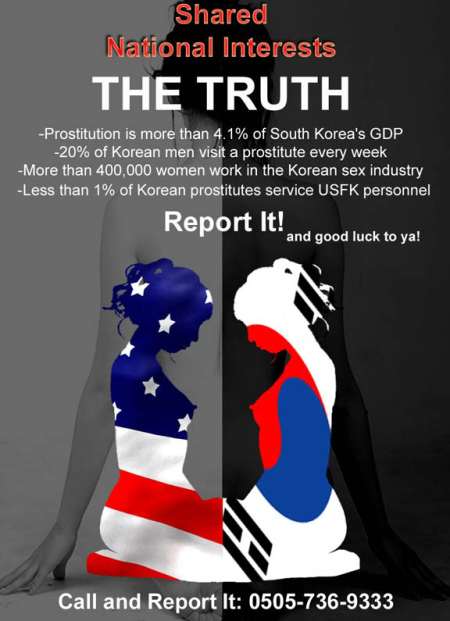
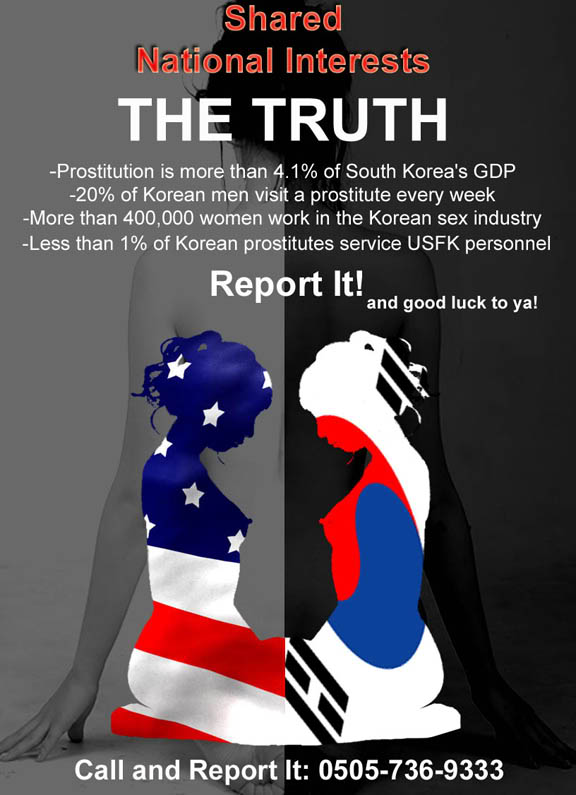
Korean Prostitution StatisticsIn itself, the Korean prostitution industry is so big, so intimately tied to Korea’s economic development, and with such a pervasive impact on the current low position of women here, it really requires a separate blog devoted to it. Finding a short introduction to point readers towards was a bit of a challenge then, but surprisingly the Wikipedia article on the subject is a good start. Once you’ve read that, I recommend following it up with Matt’s plethora of articles on the subject at his blog Gusts of Popular Feeling by clicking here (if that doesn’t work, simply copy and paste “prostitution site:http://populargusts.blogspot.com/” into Google), and with apologies for not mentioning them myself, other bloggers by all means feel free to promote your own posts on the subject in the comments section. My concern here though, is specifically the fact that it is primarily Russian, presumably Caucasian, women that are trafficked to work in the industry, for which I offer the following links, in roughly chronological order (source right: Korea Discussion Forums):

Humantrafficking.org, which has a basic introduction to the subject and links to archived articles.

Human Trafficking & Modern-day Slavery, with a similar archive.

Michael Hurt’s October 2006 post on the subject, with many links itself.

• A May 2007 article from the JoongAng Daily.

• Robert Koehler’s January 2008 post at The Marmot’s Hole on the fact that a US Congressional Research Service report on human trafficking labeled Korea a major destination for sex tourism.

• GI Korea’s post at ROK Drop a week later on Korea being taken off that list.

• An editorial in The Hankyoreh in February of this year on the fact that it is the victims of human trafficking that are often persecuted for engaging in prostitution, despite being tricked and/or forced into it.

• Finally, a post by Robert Koehler in April on the busting of a brothel in Gangnam, which had several Russian prostitues.

Korean Charisma Man(Source: Gusts of Popular Feeling)

Last but not least, no post on the title topic would be complete without the related subject of the Korean media’s portrayal of Western, Caucasian male teachers as sexual predators, for which I recommend this post by Matt and the links I provide at #1 in this post for getting a grip on. Apologies in advance to Matt in case I’ve covered any of the same material that he does, who also looks at the portrayal of Caucasian women as sex objects in that post.

In closing, again please feel free to link to and/or discuss any related subjects and posts that you think should be included here (my aim is to make the post as inclusive as possible), and I’d be especially grateful for readers passing on any of their own practical experiences with the issues raised in it. And apologies to everyone for the delays to writing this post and responding to comments and emails, as on Wednesday the wifi on my laptop completely stopped working…only to miraculously turn back on the instant the repair guy walked through my front door on Friday!

(For all posts in the “Korean Sociological Images” series, see here)

Koreans, Westerners…and Sex (Again)

Kang Ji-hwan Esquire Korea July 2009 Bikinis

Apologies for the light posting and not responding to comments and emails, but my 50-hour weeks are having their toll. Fortunately, this is the last one, and as I type this I’ve just finished a long post that will be up by tomorrow.

Until then, let me quickly mention this post over at The Marmot’s Hole about a short video cum picture-documentary on the hypocrisy of the Korean media’s stereotypes of Western men as sexual predators and – to the extent that they’re portrayed at all – very negative and sexist images of the Korean women who enter into relationships with them, but at the same time readily (and increasingly) presenting images of Korean men with Western (read: Caucasian) women, albeit with the latter also usually portrayed in an similarly sexist and degrading fashion. To which I present as Exhibit A actor Kang Ji-Hwan’s (강지환) latest photoshoot for Esquire Korea above, which you can see more of here, and as Exhibit B this Somang Cosmetics advertisement below (source) with Ahn Jung-hwan (안정환) from 2003 that it instantly reminded me of, which I discuss a little here. Naturally, I’d be the last person to be offended by women in bikinis in particular, but still, there are alternatives to depicting Korean male-Caucasian female relationships with the latter as something other than mere trophy girlfriends. Yet I can only think of a handful of examples.

essor-white-ahn-jung-hwan-advertisement-2003-somang

But being an understandably large and ongoing concern of the (overwhelmingly male-dominated) Korean blogosphere (see the links at the end of this post), then normally I choose to blog about other aspects of gender-relationships in Korea, but a) I confess that with this post I was *cough* glad to finally find an excuse to post the Esquire pictures sans lengthy analysis, and b) as the creator of the video took a dozen or so images from this blog to make it, then other readers may well find it interesting just for that reason. All the same, I link to the video rather than providing it here myself, as I’m more interested in the issues it raises rather than the video per se.  But if you are, then you can certainly depend on a lively discussion of it at The Marmot’s Hole.

With all due respect to the creator of the video though,  I would agree with critics there that: to a large extent it is preaching to the choir; it has a confusing message; the reference to the Virginia Tech massacre was completely unnecessary; and, above all, it needs to have Korean subtitles if it has to have any effect at all on most Koreans. But still, a picture does say a thousand words, and despite those handicaps it will probably get much more attention from them then this English-language blog has. Hmmm…

Update: A second, much better video has been made. See here for my post and many comments on it.

Share

Koreans, Criticism, and the Korean Language

(Taking too close a look at the frogs in the well? Source: FARK)

For those of you that don’t already know, yours truly was briefly mentioned in an article on how Koreans handle criticism by foreigners by Bart Schaneman in The Korea Herald on Monday. It resulted in a lot of hits on the day, and even some offers of being paid to write from some other sources, so all in all pretty good for something that I originally declined to respond to. Citing his space restrictions, I thought that replies of mine to Bart’s email questions would be reduced to mere one-liners, but obviously I relented, and to his credit he did manage to get a lot of information into the article. You can see a full PDF of that here; in this post I’ll just clarify and expand upon some of the points in my own short contribution to it:

…We’re not that different

New Zealander James Turnbull runs The Grand Narrative. He calls it “An irreverent look at social issues.” Much of his work deals with Korean advertising and media as well as social commentary. In his eighth year in Korea, Turnbull teaches English in Busan.

“I find the notion that only Koreans are ‘permitted’ to speak about Korean problems simply absurd,” he said. “That isn’t to say that all foreigners’ opinions on them are equally valid, but if the roles were reversed then I’d be quite happy to hear the opinions of, say, a Korean person who had spent some time in New Zealand and who made an active effort to study and know New Zealand society and learn the language. In fact, probably more so than someone who was merely born there.

(I should really give credit to Gomushin Girl for at least the inspiration for that last point).

One thing I would add to that, albeit too egotistical sounding for me to have offered to Bart, is that I think that I’d probably be more likely to feel that way more than most New Zealanders themselves, or indeed the natives of any country. As a teenager I moved around a lot, at one point going to six different high schools in three countries in three years(!), and while it was a difficult and much resented experience at the time, it did at least mean that as an adult I’ve tended to be a bit more objective about a country’s good points and bad points than the natives. The flip side of that, though, is that to a greater or lesser extent I’ve always felt like an outsider in all of the four countries I’ve lived in, which goes some way towards explaining my newfound sympathies for the experiences and opinions of Koreans living there.

But neither that ability, nor the fact that I’ve been here for eight years automatically makes my opinions on things Korean more accurate or helpful than a newbie’s; actually, they’re just as likely to be simply more cynical and jaded instead. My point in the article then, admittedly not very subtle, is that the right to have one’s opinions about Korea to be taken seriously has to be earned, regardless of whether you’re a newbie, old-timer, or even Korean yourself. It’s true that that process takes a little more work in Korea than in many countries, but still, I wasn’t lying when I said the next:

“The majority of netizens aside, I’ve actually found a significant number of Koreans to feel much the same way about the opinions of non-Koreans.

The following though, really does suffer from lack of the example I gave to justify it, but once you read my expanded version of that below then you’ll understand why Bart left it out.

“Another advantage to using and considering Korean-language sources as much as possible is that it makes you realize how much you may stereotype and generalize Koreans yourself without being aware of it.

I wrote that because a few years ago, I realized that I was very guilty of both myself. Not despite me being a Korea studies geek; actually, probably precisely because of it.

The occasion was listening to the radio on the bus home one night in 2005. Frustrated with never getting any Korean listening or conversation practice, and being unable to find a Korean drama to watch that I didn’t find nauseating and/or wholly unrealistic, I spent my commuting time those days listening to the traffic channel on my small hand-held radio (94.9FM in Busan). Not an obvious first choice, no, but there was minimal music, and it did have a lot of interviews and talkback callers whose conservations I could usually at least get the gist of. That day, a woman from the Ministry of Health and Welfare was on, and she was explaining the numbers of HIV positive and AIDS cases in Korea and how they contracted the disease.

Naturally my ears pricked up at that, because, as we all know, not only do all Koreans think that both are “foreign diseases”, but they also believe that there are absolutely no Korean homosexuals. So how on Earth were she and the interviewer going to work around those?

Korea LGBT(Source: InSapphoWeTrust; CC BY-SA 2.0)

In short, they didn’t. She calmly and patiently explained the number of cases contracted from drug users, mother to foetus transmission, homosexual partners, heterosexual partners, homosexual prostitutes….and so on, in a matter-of-fact manner that indicated that there was nothing exceptional or noteworthy about the subject. Neither did the interviewer nor later callers question the figures nor get into any racist hysterics about “foreign gay contamination of Korean blood” either. What the hell was going on? It was just as sedate as any similar discussion in any Western country.

And then I realized that in fact I’d only ever read that Koreans thought like that, and I’d never actually asked a single Korean about homosexual Koreans and/or AIDs myself. That may sound strange, but then I saw no reason not to believe the books, and I can think of more appropriate free-talking topics for conversation classes.

Why did the books say that then? Well, because undoubtedly a majority of Koreans once did once think like that once, and, as this recent case of teenage prostitution illustrates, some still do, but despite that clearly most Koreans had long since moved on from whatever book on that particular aspect of Korean society I’d read was published. Hence my next and final point, and kudos to Bart for also retaining my (indirect) criticism of the very paper the article was printed in:

“Without any Korean ability, foreigners are usually forced to rely on either the limited English language media or books for the bulk of their information, and both have problems: the former for often presenting a rose-tinted version of Korea to the world, and the latter for being quickly out of date in a country as rapidly changing as Korea.”

It sounds obvious, but it took me five years to realize that, like I said probably because I’m more of a Korea studies geek/bookworm than most. But I’m glad I did, and on the plus side – although my Western and Korean friends will scoff at this – it has made me a bit more humble and circumspect in my comments and criticisms about Koreans and Koreans ever since.

Update: Anyone further interested in the numbers of HIV and AIDS cases in South Korea, please see here and here

Jackie Lim and The Pimping of Korean Entertainers, 1995

(Source: ITH)

Update, December 2013: A very old post, which I’ve long since removed the original commentary to (and consequently the comments also). But hopefully someone may still find the translation useful!

해외동포 연예인 붐을 일으킨 재키림의 10년 전 사진 / Jackie Lim, The Creator of an Overseas Korean Entertainer Boom

삼성은 하이버네이션 기능 때문에 안정성에 문제가 많은 그린컴퓨터를 얼른 단종시키고 매직스테이션이라는 새로운 브랜드를 선보였는데, 매직스테이션은 꽤 오래 출시되면서 장수 브랜드로 자리 잡았다.

Because the “hibernation” function was causing many problems with stability, Samsung quickly stopped producing “Green computers” in 1995 and launched a new brand called “Magic Station” instead, which became a very successful brand over the next ten years.

매직스테이션III의 광고모델은 당시 새롭게 떠오르던 해외동포 연예인인 재키림이다. 몇 개 국어를 자유자재로 구사할 수 있었던 재키림은 재원이라고 칭찬받으며 화려하게 연예계에 데뷔했다. 재키림은 SBS ‘생방송 TV 가요 20’, KMTV ‘동방특급 비디오자키’ 등을 뛰면서 가수와 비디오자키로 활동했다. 재키림은 비디오자키의 열풍을 일으켰을 뿐만 아니라 오늘날의 해외동포 연예인 붐을 일으킨 불씨가 되었지만, 정작 본인은 한국 연예계에 적응하지 못하고 방황으로 얼룩진 비운의 운명을 걷게 된다.

Jackie Lim was a new and upcoming star when she appeared in the “Magic Station 3” advertisement in 1995. As she was fluent in many languages she received a lot of attention and praise when she made her original debut, both starring as a singer and working as “video jockey” on the SBS program “20 Songs On Air” and KMTV’s “High-Class Eastern Video Jockey”. Ultimately she proved so popular she provided the spark for a boom in interest in overseas Korean entertainers. But she soon found it difficult to adapt to the Korean entertainment industry, and became a bit lost for which direction to take herself and her career.

재키림은 마약을 비롯한 좋지 않은 사건에 휘말리는데, 그녀가 이런 사건에 빠진 이유는 ‘한국에서 실력으로 활동하려 했지만 자신을 성적대상으로만 보면서 높은 사람 자리에 불려나가야 하고, 동료연예인들로부터 왕따당하면서 외로워서 약을 하게 되었다.’고 밝혔다. 재원이라고 떠들었던 뒷편에는 여성 연예인에 대한 여전한 성차별과 고위권의 압력, 동료 연예인의 텃세가 있었던 것이다.

Later, she became disgusted and further disheartened by trying to succeed as a singer in Korea through her own abilities but while facing the virtual prostitution of female entertainers that goes on behind the scenes. Not only was she regularly pressured to entertain and provide sexual services for politicians and business leaders, who saw her merely as yet another trophy girlfriend to be used, but on top of that she was also ostracized by other entertainers too, angered by whom they saw as an uppity overseas Korean whom they intended to put in her place. In the end she became very lonely and depressed and got involved with drugs.

이미지: 1995년 삼성 매직스테이션3 광고에서 밝게 웃는 재키림. 하지만 이 웃음 뒤에는 잘못된 연예게 관행으로 인한 외로움과 고통이 숨어있다.

Photo caption: Jackie Lim smiling brightly in Samsung’s advertisement for the Magic Station 3. But hidden behind the smile there was a great deal of loneliness and pain caused by the Korean entertainment industry’s bad practices (source).

Women’s Bodies in Korea’s Consumer Society, Part 3 (Final): Nation, Family, Self

busan-focus-06-03-2013-p-5(Source: Focus, Busan ed.)

Anti-Communist Fashion

As promised in Part 2, in just a moment I’ll jump straight into outlining and discussing the the second part of Taeyeon Kim’s 2003 journal article Neo-Confucian Body Techniques: Women’s Bodies in Korea’s Consumer Society.But before I do, I should mention that I’ve also started reading SeungSook Moon’s book Militarized Modernity and Gendered Citizenship in South Korea (2005), and it’s made me realize just how narrow a focus Kim’s article has.

That’s not really a criticism: in the 16 pages available to her, Kim does an excellent job of explaining how the 19th Century Joseon Dynasty’s Neo-Confucianist views of the female body were warped by, adapted to, and ultimately cam to survive and proper in the 20th Century. And that endurance does go a long way towards explaining the question I first posted in Part 1 — namely, why are Koreans so conformist in their fashion choices?

korean-anti-communist-posterBut what Moon’s book has also made me realize is that, however outlandish the connection sounds at first, today’s Korean fashion can’t be explained fully without mention of the postwar Korean state’s anti-communist ideology too.

Let me run with this for a moment. In a nutshell, Moon’s book gave me a more bottom-up perspective on life in postwar Korea than what I’m used to (decidedly top-down Troubled Tiger is one of my favorite books), and the more I read about it, the more I learned just how pervasive that ideology was in people’s everyday lives, and how almost any form of legitimate dissent or creative difference was often regarded by the state as nothing short of “leftist” subversion. I could give you examples, like Korean men with long hair being publicly shaved in the 1970s, or the police checking that women’s skirts were long enough (albeit more as an excuse to simply harass women), but you get the drift (source, right: theturninggate).

These attitudes didn’t suddenly disappear upon democratization in 1987. In hindsight, it’s incredibly naive for me (or anyone else) to account for conformity in modern Korean life without reference to it. Yes, even in something as innocuous-sounding as fashion.

(Update: I suddenly remembered this ad. But while it’s a good play on how the “rule” for miniskirts has completely reversed since the 1970s, the conformity remains the same. How else to explain wearing miniskirts in winter? An otherwise extremely wasteful use of the body’s resources to demonstrate one’s physical prowess to mates, just like a peacock’s tail?)

But that will be the subject of later posts. First, let’s finish Kim’s article, sans political ideologies (Update: after reading it, I recommend this recent post of the Metropolitician’s on Korean fashion, lest you feel that I give too pessimistic and conformist an image of Koreans; honorable mention should be made of this post of Roboseyo’s post too). The second part starts by placing the endurance of Neo-Confucian images of women’s bodies in modern times in the context of the endurance of Neo-Confucianism in Korean society as a whole:

Confucian Fundamentalism and Korean Identity

The first thing of note is that, despite how it may at first appear, the endurance of Neo-Confucianism in modern Korea is probably more because of Korea’s turbulent 20th Century rather than despite it, as 余 涵 彌fundamentalism of any stripe is usually a reaction against painful, forced transitions to modernity. As Kim says, in Korea’s case Japanese colonization and then civil war and division meant that its postwar search for national identity (source, right):

“…became essential to Korea’s postcolonial and post-war project for national reconstruction. Neo-Confucianism came to stand for essential ‘Koreanness’ and was quickly embraced as the authentic culture of Korea – so much so that challenges to Neo-Confucian principles were branded as threats to national integrity. Neo-Confucianism also maintained its gloss as part of the elite culture, and as more and more Koreans were becoming upwardly mobile, many strove to identify themselves with the former [elites], making what was originally an ideology and culture of the elite minority into the culture of all Koreans” (pp.102-103).

Some other consequences of that quest for self-identity include Korea’s bloodline-based nationalism (although the origins of that were closer to 1900 than 1953), and military regimes deliberately nurturing the idea that Korea has suffered invasions more than most, both now counter-productive (to put it mildly). Ironically though, for women it also ultimately meant a reaffirmation of the ideals of taegyo (태교), despite women’s entrance into the workforce for the first time and the nuclearization of the Korean family. There are two reasons for this, one speculative and one more concrete.

First, one increasingly under-appreciated aspect of postwar Korea was overcoming the psychological trauma of the physical dislocation and separation of Korean families due to the war, and until I started today’s post I didn’t realize that that may have affected Korean’s women’s postwar lives much more than men — remember that, under Neo-Confucianism, they weren’t really thought of as of as individuals in the Joseon Dynasty, and thus their families had been the primary source of their identity. But then, not only were they suddenly and violently brought out of the inner, private sanctum of those families and homes by the war, and then into the public sphere of schools and factories for the first time, those families also moved from the farm to the cities, and nuclearized in the process. Given those circumstances, it is natural to suppose that women might yearn for the good old days of certainty, especially former upper-class women to whom Neo-Confucian tenets had been most vigorously applied.

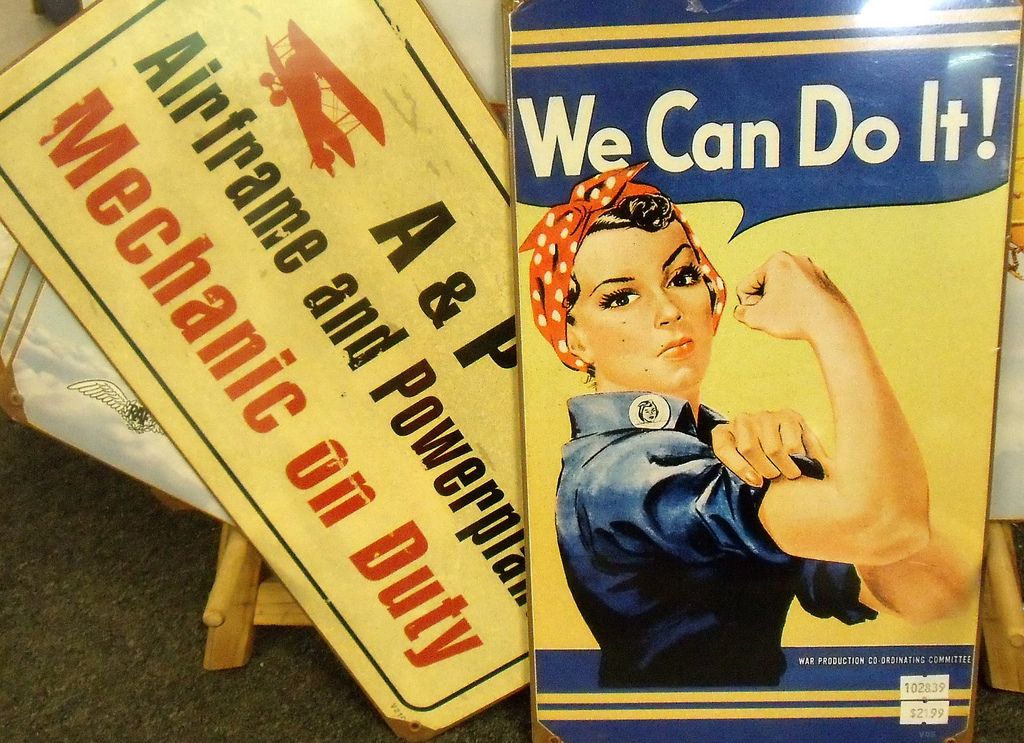
Rosie the Riveter We Can Do ItSecond, while for a time women’s physical labour in factories came to be regarded (rhetorically at least) as just as important and useful as their traditional domestic work in the home (as was, I might also add, their equally “needed”, expanded roles as sex workers too; I’ll save that for a later post), ultimately (source, right: Mike Beauregard; CC BY 2.0):

with the advent of a post-industrial, consumer capitalist society in the 1980s, women became more important as consumers than as factory workers, shifting the utility of their bodies from national labor production to national consumption, becoming, in effect, what Byran S. Turner (1996) calls the capitalist body. (p. 102)

Later, I feel that Kim exaggerates how “post-industrial” Korea is, but that doesn’t detract from the basic point that women, once exhorted and educated to work in the factories, were once again extorted to stay at home upon marriage, and to then focus on producing and raising children. Seeing as a good third or so of the blog is about how the Korean economy and minimalist welfare system is predicated on that fact, then I don’t feel the need to elaborate on and justify that here. Instead, of note is how they are also urged to consume as housewives and mothers, both for the sake of national development, and for the sake of obtaining the items necessary to secure and advance their family’s social status, as explained in Part 2. Ergo, it’s taegyo all over again, although I’ll admit that it sounds neither particularly Korean or even Neo-Confucian at the moment.

The Ensuing Social Malaise

But just like in Western countries after World War Two, you can’t expose most women to working life and equal education and then expect them to meekly return to the home once the economy and/or national emergency no longer requires their economic services; the contradiction leads to the appearance of various social malaises, such as the “housewives’ syndrome” that Betty Friedan so adroitly recognised in 1963. In Western countries, that recognition and the civil-rights movement led to Second-wave Feminism. But Korea has so far lacked the former, and is only just beginning to experience a form of latter, often more because of the signing and implementing of UN conventions on gender issues and so forth rather than domestic pressures. What unresolved social malaises then, have arisen in Korea?

Kim argues that uprooted Korean women naturally found solace in new, postwar media images of women, and following the new rules of fashion was certainly easier and more personally satisfying to most women then embracing new, entirely alien concepts of liberalism, individualism and feminism to which Korea’s new relationship with America exposed them to. Hence:

The Neo-Confucian values of harmonizing as one, proper behaviour and self-cultivation, [re-emerged] in the guise of conformity, propriety and self-improvement. (p. 107)

But as we’ve seen, while self-improvement for men involved training of the mind, resulting in transcendence of the individual self, women were considered incapable of this. Hence women’s primary means of self-improvement came to center on the physical body instead, and this ultimately explains the why of today’s social malaises in Korea today, notably that:

Hence taegyo is Korean and/or Neo-Confucian, because while plenty, if not most, Western women consider getting plastic surgery for the sake of bettering their chances in job interviews and marriage prospects so forth, very few do explicitly for the sake of their father’s and or husband’s families.

Finally, now for the how.

Correcting the Flawed Eastern Female

Oriental Girls(Source: Joel Ormsby)

I’ve already explained that Korean women tend to embrace conformity rather than individuality in their fashion choices, and articles about fashion in women’s magazines too are less “Western” than they may first appear. While opening paragraphs seem to promise articles “promoting liberation from the edicts of fashion, and self-expression over blind conformity,” for instance, what they actually do is set up strict guidelines for Korean women to follow, the authors often failing to recognise that their exhortations not to follow fashion magazines’ fashions, but their tastes and styles instead, actually amount to the same thing. Indeed:

What is right for [the authors] must be right for everyone else, for there is a blurry distinction between [the authors] and others, a legacy of the subjectlessness of the Korean woman. (p. 104, emphasis in original)

Sure, much the same can be said of Western women’s magazines, which Kim should have acknowledged. But remember the importance of the notion of “subjectless bodies” in Kim’s article (see Part 1), and that for Korean women the philosophical concept of the individual self, defined not by ki and the family but by the physical limitations of the corporeal body, is very new. Hence Korean authors and readers may not see the contradiction that their Western counterparts may. Moreover, articles often present:

…what [they] consider to be particular features of the Korean women – short legs, big face, yellow skin – as problem features that can be corrected by certain types of clothing and colours….[they] imply that the imperfect Korean body is disordered but can be put back in order through the tricks of fashion. The body is something to be rearranged so its apparent flaws are concealed or eliminated. These flaws themselves stand out as imperfections because they are features unique to Koreans and absent in white models (p. 104, emphasis in original)

I could go on to discuss the details of huge plastic surgery industry in Korea, but it’s been done to death elsewhere, and I think the above photo and this article sum it up better than any virtual ink spilt on the subject. Having said that, numerous sources have claimed that Korean women’s desires to look Caucasian are the result of an inferiority complex towards and cultural colonization by the West, but I think that both that desire and those influences have been grossly exaggerated. Consider this:

All three elements, the Neo-Confucian woman’s subjectlessness, the perception of Korean bodies as imperfect, and fashion’s function to re-order the disordered Korean bodies, make Korean women’s bodies particularly prone to alterations, rearrangements and re-creations of the body. (p. 104)

The biggest thing I’ve gained from these writing this series of posts (and I just so happen to think that it’s quite an original point too), is that in that statement above you can replace “Korea” with China, Japan, and/or Taiwan, and that argument would still be just as valid. Arguing that their shared plastic surgery mania is because all four countries share a history of cultural colonization and have inferiority complexes towards the West is tenuous at best, and if even if true, surely it would mean that Korean men too, say, would aim to look more Western? But no, they don’t, and not even with the huge size of the Korean male beauty industry today. But all four countries do share a history of Neo-Confucianism. On that basis, is it too much of a jump to argue that the Neo-Confucianist combination above is precisely why plastic surgery is so popular amongst women in this part of the world?

3 in 10 Korean Dating Sites are Used for Teenage Sex Work?

samaria-korean-teenage-prostitutionMovie poster for Samaritan Girl/Samaria (2004), a Korean movie about teenage prostitution; see here for my review. Source: Naver영화.
애인대행 사이트 10 3청소년도 받아요‘ (3 out of every 10 dating sites are being used by teenage prostitutes to find clients)

“전 17세 여. 경제적으로 큰 도움 주실 분 연락주세요”

애인 대행 사이트 10개 중 3개 이상은 청소년 가입이 가능하고 이중 아르바이트생을 구하는 의뢰인 50% 이상이 성매매(불건전 만남)를 요구하고 있는 것으로 나타났다.

“I am a 17 year old girl. If you can help me financially, please contact me.”

More than 3 out of 10 dating sites allow teenagers to register, and more than 50 percent of these registered teenagers are using the site immorally to solicit sexual services.

국가청소년위원회는 최근 대구YWCA에 의뢰, 인터넷 포털을 통해 접근 가능한 69개 애인 대행 사이트를 모니터링 한 결과 이같이 나타났다고 22일 밝혔다. 청소위는 “애인대행 사이트에서 성매매 유인행위가 많이 일어나고 있어 청소년의 접근을 차단할 필요성이 있다”며 “성매매 등 불법ㆍ불건전 만남을 조장하는 애인대행 사이트에 청소년이 접속할 수 없도록 청소년 유해 매체물 지정을 추진하겠다”고 밝혔다.

청소년위의 조사 결과에 따르면 애인대행 사이트의 청소년의 가입이 가능한 경우는 23개로 33.3%를 차지했다. 이어 청소년의 가입은 불가지만 청소년 유해매체물 표시가 없는 경우가 42개(60.9%)였다. 청소년 연령 확인 및 접근 제한 장치가 있는 경우는 4개(5.8%)에 불과했다.

Recently, the Government Youth Comission asked Daegu YWCA to investigate to what extent teenagers were using 69 adult dating sites that can be found through major internet portals, and today they reported their findings. According to the Commission, “Making money through prostitution via these sites is a very alluring and attractive proposition for teenagers,” and that “the government needs to make greater effort to ensure that teenagers are prevented from gaining access to these sites which promote illegal prostitution and ‘unconditional meetings’.”

According to the Commission, 23 sites of the 69 sites (33.3%) allowed teenagers to register. 42 (60.9%) did not allow teenagers to join, but lacked a special warning indicating this; in the end, only 4 (5.8%) both didn’t allow teenagers to join and had the required software to prevent them from doing so (James – does this mean that teenagers could still join those 42 or not?)

애인대행사이트에 게시된 내용은 ‘강남 지금 만나요’ ‘2:1 대행이요’ ‘경제적으로 큰 도움 주실 분’ ‘술 한잔 하실 분’ ‘밤새 놀려고 하는데 50만원 가지고 뭐하나’ 등 성매매 및 불건전 만남을 조장하는 내용이 대부분이었다.

또 대구YWCA가 2시간 동안 대화방을 개설한 결과 48명의 남성 이용자가 접근, 역할 대행을 의뢰했다. 이 중 성매매 요구가 25건(52%)으로 가장 많았고 홍보 및 대화가 19건(40%), 건전 대행 요구가 4건(8%) 등이었다.

Amongst the chat rooms and message boards of the 23 sites that did allow teenagers to register, you come across personal ads of teenagers, and men seeking them, with titles such as “Let’s meet in Gangnam now,” “2 for 1,” (James – your guess is as good as mine) “Seeking a sugar-daddy,” “Someone to have one drink with,” “I have 500,000 won, what am I going to do all night?,” and so forth, of which the vast majority are obviously for prostitution.

In addition, Daegu YWCA opened a chatroom on one site for 2 hours, and of 48 male users that entered, 25 were blatantly looked for teenage prostitutes, 19 chatted about sexual acts, and only 4 chatted about non-sexual subjects.

주요 포털사이트는 ‘애인대행’ 단어를 금칙어로 적용, 성인인증 및 연령확인을 요구하고 있으나 ‘대행 알바’ ‘애인 알바’ 등 변칙적인 방법으로 올라오는 애인 대행 사이트에 대해서는 개별적인 조치를 취하고 있다.

청소년위는 “69개 애인대행사이트에 대해 청소년 유해성 여부를 심의하도록 정보통신윤리위원회에 요청할 것”이라며 “포털사이트에 대해서도 애인대행 등 금칙어 적용 및 성인인증을 요구할 계획”이라고 밝혔다.

Major portal sites do not allow you to type in obvious search terms for teenage prostitutes, and require proof of your age. But both prostitutes and clients are adapting and choosing new terms to direct each other to their various chatrooms and sites instead.

The Commission concluded that they are going to request that the Korea Internet Safety Commission look more closely at these 69 sites for the sake of teenager’s welfare, and they will also ask the owners of the 69 sites studied to not allow the search terms used for prostitution that are already banned on internet portals to be used on their sites also (end).

(See Joins News for the original article, or here for the same at the author’s own site)