It’s one thing to be aware of the popularity of calf-reduction surgery on an abstract level, but quite another to see the results in the flesh.
Or rather, the reduction thereof. And, while I’m aghast at the notion of voluntarily having one’s nerves cut and muscle removed for any cosmetic surgery procedure, in this particular case the mind simply boggles at how anybody can consider the “after” picture as an improvement.
Unfortunately though, it is neither a mistake nor a satire, but is instead from a genuine advertisement in this month’s Busan edition ofCocofun (코코펀), a free local entertainment guide available in major cities. Here is the full version:
For the record, I’m not labeling skinny calves as unattractive by definition, particularly if a woman—and it’s almost exclusively women who undergo calf-reduction surgery—has such legs naturally; as it happens, the difficulty of finding food I wasn’t allergic to when I was young meant that my own calves probably weren’t much bigger until my mid-teens. Buffing-up in my early-20s to compensate for my own body image issues then, naturally I also prefer healthy and active women over sedentary, thin ones today. But regardless of my background, I think I would always have struggled to understand how the muscle development naturally ensuing from an active lifestyle could ever be considered unattractive.
That isn’t the case in Korea and the rest of Northeast Asia however. For a good introduction as to why, I recommend this post at FeetManSeoul for starters, while some other sources, such as the following English guide to the procedure from this cosmetic surgery clinic in Seoul for instance, also mention the fact that “Asian women have shorter legs and thicker calves than Caucasian women.” But, lest one is tempted to read too much into that curious racial comparison though, by no means do all commentators on the subject indirectly refer to some alleged Caucasian ideal, and actually even this more direct description of the procedure from the same site fails to mention it.
However, there may also generational differences to consider. Take 38 year-old singer and actor Uhm Jung-hwa below for instance, appearing in a press conference with 29 year-old actor Han Chae-young for their movie Are you living with the person you love? (지금 사랑하는 사람과 살고 있습니까?) in July 2007. Ironically, both are well-known for having received extensive cosmetic surgery, but as you can see, only Uhm Jung-hwa has retained her muscular legs. I find her much the more attractive for that reason, and—assuming that she had the procedure done herself—seriously wonder how much physical exertion Han Chae-young is capable of; did I mention that calf-reduction patients have to learn how to walk again?
But while its voluntary nature may may mean that it’s too extreme of me to compare calf-reduction surgery akin to foot-binding at this point (although both do involve the physical disablement of women for the sake of a wholly artificial beauty ideal), I will go so far as to invoke Mary Wollstonecraft’s A Vindication of the Rights of Woman: with Strictures on Political and Moral Subjects(1792) here. For not only did she note that women being considered “too susceptible to sensibility and too fragile to be able to think clearly” was partially the consequence of not receiving the physical education that boys did (see here also), tellingly she also wrote that women are “taught from their infancy that beauty is woman’s sceptre, the mind shapes itself to the body, and, roaming round its gilt cage, only seeks to adorn its prison,” implying that if young women weren’t so encouraged to focus their attention on beauty and outward accomplishments, they could achieve just us much as men do.
Pity the hapless commentator on hidden themes in advertising. Not only is he or she often accused of overanalysis, but men in particular can be labeled as positively perverted in seeing sexual symbols in otherwise inanimate objects.
Granted, sometimes a bottle is just a bottle, and Cheoum Cheoreom Cool (처음처럼 쿨), a new brand of soju, is not the only commercial to have an animated example of its product moving across the screen below it on Yahoo! Korea at the moment. But I do wonder why the bottle is tilted the way it is though, particularly as the long-held convention in Korean alcohol advertising is that bottles should always be displayed standing upright?
As it happens, that convention is still adhered to on Cheoum Cheoreom Cool’s website, but with the soju bottle springing-up in a most satisfying manner in the corner of the screen once you click on the “over 19” button. That wasn’t the case when I wrote about its marketing campaign last month.
Naturally, I don’t think it’s a coincidence.
But I’m not against this latest twist per se, and indeed this advertisement for bokbunja (복분자) below with a similar theme still puts a smile on my face 4 months after first noticing it (see here for more like it). And yet Cheoum Cheoreom Cool’sversion isn’t quite so, well, elegant, and smacks of desperation given that the campaign already so excessively focuses on female body parts. Perhaps like Lee Hyori before her, UEE (유이) isn’t bringing Lotte the increased market share anticipated?
As they say, first impressions last, and my own first introduction to Korean sexual politics came with a bang when the scandal over the Baek Ji-young (백지영) sex tape erupted in late-2000. The way she was treated by the Korean media was hypocritical and shocking, and confirmed what I’d learned at university: Korea was a deeply patriarchal and sexually-conservative society.
Or at least, as the “Korean Gender Guy,”™ that’s what I’d like to pretend informed my first year in Korea. The truth is, I barely noticed at the time, being rather more concerned with getting into my Korean girlfriend’s pants. But they also say that the best way to learn a new culture is to sleep with the locals, and what I learned about sexual politics that way was no less important for being so base: the books were simply wrong about how prudish Koreans were. I’ve been poking fun at the huge gap between image and reality ever since.
But with a nod of appreciation to the advice of this regular commenter, it’s high time to move on from that extremely simplistic conception of the subject.
Just like it is misguided to think of, say, all American voters as mere “conservatives” or “liberals,” the reality is that Korean society is both profoundly sexually-liberal in some instances and sexually-conservative in others. For instance: most Koreans have sex before marriage; Korea has one of the largest prostitution industries in the world; Korean teenagers increasingly dance extremelyprovocatively on television; Korean women are increasinglyobjectified in advertisements; and, overall, censorship of sexual content in movies is rapidly easing.
And yet that combination by no means implies that Korean men and women are equally able to express and enjoy their sexuality in 2009, let alone that, like almost a decade ago, a female celebrity secretly filmed while having sex with her boyfriend wouldn’t again be ostracized by the Korean media. Indeed, one can argue that to describe Korean society as simply “sexual-conservative” is merely to gloss over its profound double-standards.
One such double-standard is the need for sexually-active women to appear inexperienced and virginal to their partners, and in that vein, this survey of condom use and sexual activity in Korea – probably the most comprehensive of its kind – found that a majority of them did so to the extent that they regarded contraception as entirely men’s responsibility, as I discussed last December. Either they didn’t provide it themselves, they didn’t insist on their partners using condoms, and/or they would even feign complete ignorance of all contraceptive methods.
Again, that’s to be expected from a “sexually-conservative” society. But bear in mind the fact that love hotels are ubiquitous here, and – as that survey demonstrates – are well used. So while this particular double-standard is hardly confined to Korea, it is particularly severe in its effects on Korean women.
In light of that, the fact that rates of oral contraceptive pill usage are extremely low in Korea (3%) shouldn’t have been a surprise to me when I learned it from this recent Korean blog post, which I’ve translated below. But while I was certainly aware of the scare-tactics used – for various reasons – by Japanese medical authorities to dissuade women from using the pill there for instance, and which meant that it was only legalized as late as 1999 (see here, here and here), in hindsight perhaps I was too optimistic about Korean women’s reaction to similar tactics used here in January. So I was taken aback:
피임에 보수적인 여자들 – When it Comes to Contraception, Korean Women Are Conservative
Mr Kang, reporter: “As women are actively making advances in Korean society, so too are women becoming more open and assertive about sexual matters.”
Mr Kang: “Today, we are going to meet Ms. Kim, a cool, forward-thinking woman with free and open attitudes to love.”
Ms Kim, caption: “I have 900 intimate male-friends…but that’s what happens if you’re as pretty as I. It’s not a crime!”
Mr Kang: “I will ask about modern women’s opinions on sex and love…Nice to meet you Ms Kim. Ms Kim, I heard that you have very liberal and open attitudes to love. Is that true?”
Ms Kim: ” Yes. I don’t care about men that leave me, and I don’t say no to men that approach me…I’m so cool!”
Mr Kang: “Since you are old enough, I assume that you have sex with your boyfriends. Do you take the initiative and/or insist on using contraception?”
Ms Kim: “Contraception? Surely that is men’s responsibility, yes?”
Mr Kang (gray text): “I’m surprised that you’re so conservative.”
Ms. Kim (gray text): “It is totally men’s responsibility!”
Granted, a bizarre cartoon, and probably one that detracts from rather than evinces the following points made by the blogger:
이전보다 자유로와진 미혼남녀의 성생활이나 성 담론에 비해 아직도 피임에 대한 인식은 무척 보수적이죠. 게다가 아직까지 수많은 여성들은 ‘피임=남자의 책임’이라는 구시대적 사고방식을 가지고 있는 듯 합니다. 한국 여성 피임 인식 조사에 따르면, 여성의 60%는 성관계 시 피임을 하지 않는 것으로 나타났는데 이는 ‘설마~’와 ‘막연함’ 때문이라고 합니다.
“Compared to the past, people are much more sexually active these days, and talk about sexual matters much more openly. But they are still surprisingly conservative when it comes to using contraception. In particular, many women stick to the traditional line that it is entirely men’s responsibility. According to a survey by the WHO, 60% of Korean women don’t use any contraception at all, maintaining an “it won’t happen to me” attitude.”
물론, 남자에게도 책임은 있겠지만 여성들 역시 능동적일 필요가 있다고 보는데요, 통계에 따르면 남자들의 피임 방식인 “CONDOM”은 피임에 성공할 확률이 85%에 지나지 않는다고 합니다. 반면에 여성들이 준비할 수 있는 ‘먹는 피임약’인 경우, 성공 확률이 무려 99%에 이른다고 하네요.
“Of course men also have a responsibility to use contraception, but it seems that women are not fulfilling theirs. According to statistics, whereas condoms are 85% effective in preventing pregnancy, the use of the oral contraceptive pill is done entirely by women and is as much as 99% effective.”
더치페이의 나라 네덜란드에서는 피임에 대해서도 서로를 배려하기 위해 CONDOM과 피임약을 모두 사용하는 이른바 ‘더치피임’이 널리 퍼지고 있다고 합니다. 또한 요즘 나오는 먹는 피임약(야즈)은 피임 뿐만 아니라 여드름 및 월경전불쾌장애(심한 형태의 월경전 증후군)에도 치료 효과를 인정받았다고 하니 여성 스스로를 위해서라도 꼭 한번 고려해볼 수 있길 바랍니다.
“In the Netherlands, when it comes to contraception people combine condoms with the use of the pill in order to be safer, and this is known as “Dutch [Style] Contraception.” In addition, a new form of the pill called “Yaz” is coming onto the market, which combines a contraceptive function with helping to prevent skin problems and PMT. Women should consider this new product as an option.”
And I’m afraid that that is all, although it attracted a great many commenters, most of whom agree that contraception is also women’s responsibility. But they take issue with the blogger’s description of women that don’t use the pill as “conservative,” citing concerns about side-effects, to which my response would be to direct them to this comment.
Meanwhile, if you haven’t already read my earlier post on condom use and rates of sexual activity in Korea then I strongly recommend you do so to place this new information in context, and you may also be interested in the recent appointment of a minor Korean-American celebrity being named “goodwill ambassador for the Korean Association of Obstetricians and Gynecologists to promote a campaign teaching young Korean women about sex and reduce abortions.” This has many positives of course, but I’d echo Brian in Jeollanam-do’s concerns that this may be “a product of, and will contribute to the perpetuation of, the belief that Americans and Westerners alone can be open about sex,” to which I’d add the stereotype that Westerners and especially Caucasians are overall much “more sexual” than Koreans. Finally, for a very frank discussion from the front-line as it were (an American woman dating Korean men), make sure to check out Doing it Korean Style!
That advertisements featuring Girl’s Generation (소녀시대) are invariably photoshopped isn’t news of course, and these ones are hardly the most egregious examples either. But in a rare positive step, the before and after pictures for their latest advertisements for the LG Black Label Series Chocolate phone are currently featured on the front page of the “Enter Holic” or “Entertainmentholic” (엔터홀릭) section of the Korean MSN homepage, and so will have been the first thing many people saw when they opened Windows Live Messenger this morning.
Not to imply that most Koreans aren’t aware of photoshopping in advertisements of course. But still, anything that fosters further discussion of that is to be encouraged.
Or at least, that was my first impression. Looking more closely though, in fact it was the before images that were used in the advertisements. Unfortunately there is no information about who created the photoshopped images, or why, but with the statement “Wow! Very subtle changes make a big difference” (아주 미묘한 차이가 큰 차이를 만드는구놔), he or she implies that the altered images are to be preferred.
Forget the TED Talks. Instead, use this 16-second commercial for a great introduction to Korean gender roles.
By Girls’ Generation’s for Shinhan Card, it’s completely innocuous at first viewing. Take a second and third look though, and it’s extraordinary in how much it reveals:
First, because of the obvious: those legs. Then, because my students barely seemed to notice them when I asked what they thought of the commercial, let alone considered objectifying only the women to be problematic. Probably, because they’re already used to ubiquitous female “assistants” (doumi;도우미) and scantily-clad “narrator models” (나레이터 머델) being used to sell and promote all manner of products, services, and causes. And girl-groups, effectively, are performingvery muchthe sameroles.
But I’m not—I’m singling it out for what the differences between the men and the women reveal. Because my students would surely have noticed more if the men had also been wearing short-shorts, with the well-muscled legs to pull them off. Or, with more male-specific revealing costumes that showed off their abs.
With just women doing silly dances in revealing clothes though? That’s so normal in advertising that most people don’t think twice about it. See what I mean by looking at these images from A Web Essay on the Male Gaze, Fashion Advertising, and the Pose below. What are your gut reactions to them?
(“Most viewers find the images of the men odd or laughable. But the images of the women seem charming and attractive…Why should it seem funny to see a picture of adult men striking a pose when the same pose seems normal or charming to us in pictures of adult women?”)
Obviously, this speaks to gender role portrayals in the media worldwide, not just that of Korea. But, with the latter’s tendency towards cuteness and aegyo, it does seem quite extreme here. And, as if to rub that in, in this particular commercial the text and the song also emphasize that the women are very much just for decoration:
First, the text in blue box: “끝없이 ‘고객만족’을 생각하는 카드”.
“The card that unceasingly thinks about customer satisfaction”.
Then what the men are saying while that is visible: “생각, 생각, 생각, 생각”.
“Think, think, think, think.”
Next Girls’ Generation, dancing with their shoulders while sitting on a bench: “어떡하면, 원하는걸, 다 이뤄줄수 있으까?”.
Then the men again, while the girls are do their leggy dance, then stand in a line with the men and supposedly sing along with them (but we only hear the men’s voices): “손잡고 힘을 모아 다 함께 생각 생각”.
“Let’s cooperate [with the customer] and collect our energy together and think about all that”.
Finally in the voiceover, with the men sitting in contemplative poses and the girls standing behind them clapping : “카드의 길을 생각하다”.
“What is a card’s purpose? Let’s think about that”.
With this text in the blue box above them: “끝없는 제휴혜택으로 더 큰 고객만족을”.
“The card that can be used anywhere in order to increase customer satisfaction!”.
Easy to miss on a single viewing, it emerges that it is only the men that do the thinking in this commercial, and by default, for the bank also. Yes, really: even when they all say “How shall [the card] achieve everything [the customer] wishes?,” if you look closely at roughly 0:08 into the commercial when the girls actually finish saying that (see far above), they clearly turn to the men for an answer. Rest assured then, that if you invest your money in this bank, that it will be in the hands of smart people that will take your concerns very seriously. Those people just won’t be women, that’s all.
Exaggeration? Hardly. Consider the facts: according to a recent report in the Korea Times, there are no female CEOs in the entire financial industry here; there are only 2 women out of a total of 220 team managers in the Financial Supervisory Service (and no executives); there are no women with either position in the Bank of Korea. Moreover, one anonymous (male) government official in finance argued that this is somehow justified by “the country’s financial bureaucrats [having] been overwhelmed with too “serious tasks” to pay attention to gender equality” (as in ever since the early 1960’s, not just the recent crisis), and it’s telling that even Rep. Lee Sung-nam (이성남) of the Democratic Party, a woman and former worker at the FSS, feels that women’s weak point in finance is their “competitive edge.”
Granted, given that Korea has one of the lowest women’s workforce participation rates in the OECD, and that Korea has a surprisingly low “Gender Empowerment Measure” relative to its level of development, which is based on “factors such as the number of female legislators, the percentage of women in senior official and managerial positions, the percentage of women in professional and technical positions, and the income differential between men and women,” then it might seem unfair to single out the financial sector for criticism in this regard. But then if I’d wanted to highlight the lack of women there in particular, then I couldn’t have selected a better commercial to illustrate why that might be so.
Nor for explaining “function ranking” either, a common sexist motif in advertisements. A quick summary (source):
Activities can also be expressive and symbolic—who is shown doing what in the image? For example which gender is most likely to shown caring for children? Very commonly when persons in the image have functions, these functions are ranked, with the male carrying out the senior functions, the female the junior functions. Men act, and women help men act. Males are more likely to be shown in the executive or leadership role, with females in the supportive, assistant, or decorative accessory role.
That and other motifs were first outlined by the late sociologist Erving Goffman in his 1979 work Gender Advertisements, and which is still very much the framework by which sociologists study how gender roles are perpetuated in advertising. Let me leave you with one more observation from it (see the sidebar for many more examinations of Korean advertisements using his framework), then another example from Korean banking:
In our society where a man and a woman collaborate face to face in an undertaking, the man—it would seem—is likely to perform the executive role, providing only that one can be fashioned. This arrangement seems widely represented in advertisements, in part, no doubt, to facilitate interpretability at a glance (p.32).
As indeed is the case with this advertisement for a bank I came across last November:
Technically, the man is a customer, the women clerks (the text reads: “The customer’s best life partner, with Busan bank”). It is very telling though, how difficult it is to imagine an ad with the sexes reversed—let alone find an example in real life.
Thoughts?
Update: For comparison, see here for a Shinhan Card commercial with just the men.
(For all posts in the “Korean Sociological Images” series, see here)
Activities can also be expressive and symbolic – who is shown doing what in the image? For example which gender is most likely to shown caring for children? Very commonly when persons in the image have functions, these functions are ranked, with the male carrying out the senior functions, the female the junior functions. Men act, and women help men act. Males are more likely to be shown in the executive or leadership role, with females in the supportive, assistant, or decorative accessory role.
Watching one of Lotte’s commercials for its new Cheoum Cheoreom Cool (처음처럼 쿨) soju dozens of times…as one does…then many thoughts come to mind, but that it is being effectively marketed towards women isn’t one of them. Yet weren’t they the main reason low-alcohol soju brands were launched in the first place?
As those objectified breasts and buttocks helpfully remind us, Cheoum Cheoreom Cool’s alcohol content is 16.8%, so take the examples of the two closest brands in terms of alcohol content for instance: Daesun’sBom Bom (봄봄, 16.7%) launched in April, and Muhak’sJoeunday (좋은데이, 16.9%) launched in November 2006 (see here for a helpful graphic comparing all three), and both of those were indeed aimed towards women.
Of the two, Bom Bom’s marketing is the most of interest because Daesun took the very rare step of using a young, photogenic male in its advertisements. But while Muhak’s own campaign was ultimately unsuccessful (commercials released after early-2007 are difficult to find, and Joeunday’s website is no longer available, although the drink isstill being produced), its use of then 28 and 36 year-old female and male entertainers Chae Yeon (채연) and Jung Jun-ho (정준호) respectively was also significant as a partial, albeit somewhat ambiguous attempt to appeal to a much older female demographic than all the other campaigns considered here.
Combined with the knowledge that only 30% of soju drinkers are women then, it would be very tempting to interpret the introduction of increasingly weaker soju drinks over the last decade in terms of a women-centered advertising narrative, with all the changes to Korean drinking culture, gender relations, and Korean women’s body-images that that would imply. But that would be quite mistaken however, as simply saving on costly alcohol is just as powerful a motivator for soju companies, and actually the vast majority of new brands are still exclusively targeted towards men (take Bohae’sIpseju (잎새주; 19.5%), which I wrote about in April). In particular though, there is the fact that Lotte and Jinro take up 12.6% and 78% of the country’s soju market respectively, and so regardless of the innovations of other companies, it is the logic behind the marketing campaigns of these companies that is the most important.
In that vein, the case of Jinro’s J (제이, 18.5%) is very interesting: launched in October last year, I praised it for its original marketing, but it was still definitely aimed at 20-somethings of both sexes. In June this year though, a new marketing campaign specifically aimed towards getting women to associate the brand with staying slim was launched. In addition, when Lotte bought Doosan’s liquor arm in January this year (after an unsuccessful attempt to buy Jinro in 2005), it inherited a contract with Lee Hyori (이효리) from November 2007, and the logic to her commercials for Cheoum Cheoreom (처음처럼) was similarly getting (female) consumers to associate the brand with her slim body.
Which is what made this latest effort from Lotte so confusing:
Vodpod videos no longer available.
In hindsight, it’s actually a little derivative of Jinro’s original effort, in which “1032” refers to the depth from which the water used to prepare the drink is taken from the sea:
Vodpod videos no longer available.
Granted, Lotte’s video briefly objectifies men too. Not that that somehow justifies the objectification of women in it of course…or that I’ll feign offense at either. Rather, it aroused me my interest because it reminded me of this:
…some advertisers, aware of the objections of the feminist movement to traditional images of women in ads, have incorporated the criticism into their ads, many of which now present an alternative stereotype of the cool, professional, liberated women…Some agencies trying to accommodate new attitudes in their campaigns, often miss the point and equate ‘liberation’ with a type of aggressive sexuality and very unliberated coy sexiness.
Dyer, G. (1982) Advertising as Communication, pp. 185-186, quoted in Strinati, D. (1995) An Introduction to Theories of Popular Culture, pp. 187-188)
Is that what is occurring here? Deciding to investigate then, I was stuck by the Korean media’s interest in the marketing campaign also, albeit for two entirely different reasons.
First, having an alcohol content under 17% means that commercials can be screened on television after 10pm, and hence that the alcohol content of soju drinks would eventually reach that level has long been predicted by industry analysts. Even more presciently though, back in March one said:
…if you go under 17% you blur the boundary with low-alcohol drinks. Because you gain the ability to have TV ads at less than 17%, you could be promoting drinking cultures and exposing teenagers to it, so the authorities may stop you.”
And as this Korean source reveals, last week the rules were indeed changed. But Joeunday’s commercials wouldn’t have been particularly corrupting of Korean youth, nor Daesun’s commercial below with Kang Dong-won (강원도), on Korean screens since August 1, so this was probably a direct reaction to the launch of Cheoum Cheoreom Cool in late August.
Vodpod videos no longer available.
Only Daeson suffered though, as in anticipation of the negative publicity and the government’s intentions, spokespeople for Lotte said that they never decided not to make television commercials (see here and here). Which brings me to the second reason for the intense media interest in it: Lotte deciding not to use Lee Hyori to endorse the drink, despite her still easily being Korea’s biggest sex-symbol, and notorious for always sexing-up advertisements and pushing the limits of Koreans’ supposed Confucian reserve (see here and here). Apparently, in nearly 2 years promoting Cheoum Cheoreom, she hadn’t brought around the turnaround in fortunes expected(update: these statistics dispute that).
But in fairness to Lee Hyori, Doosan was in the midst of reorganizing itself into a holding company centered around heavy industries when it hired her, and in hindsight the same company that had just bought the world’s biggest maker of construction equipment earlier that year was not necessarily the best one to transform the image of the drinks in the eyes of 20-somethings: see here and here for the ensuing advertising disasters. Hence the consternation caused earlier this week when it was revealed that while she would continue to promote Cheoum Cheoreom, relatively unknown UEE (유이) would be used for Cheoum Cheoreom Cool instead (but not replacing Lee Hyori, as this blog naturally but mistakenly stated), and with the combination of the two Lotte hopes to bring their market share up to 15%.
Which is why it is UEE that graces the front page of all Korean portal sites as I type this, and as it turns out, what I’d seen was merely one of many pre-launch commercials and advertisements based on the theme of “168 ,” most of which were rather inane. Here then, is the commercial Lotte really wants you to remember:
In it, UEE begins with “오빠 나 쿨해, 내가 진짜 처음이야?”, which roughly translates as (to the guys she’s dating) “I’m cool…am I really your first?”. After that, the first guy just mutters nonsense, and later she says “쿨하게 생각해!” or…er…”Think Cooly,” and she finishes with “원샷. 어! 상쾌해!”, or “One shot! Oh! It’s sweet!”.
Consider these accompanying advertisements also, released at the same time:
The text in the first reads: “Q: Honest. 남친이랑 여행할땐, 솔직히 말하는게 Cool 할걸까? MT 간다고 뻥치는게 Cool 할건까? A: Think Casual”, or “When you travel with your boyfriend, which is cooler: admitting it to your parents, or lying and saying you’re going on a trip with your university friends?”. And in the second: “Q : Love 키스할때 눈을 감고 하는게 Cool 하니? 쳐다 보면서 하는게 Cool 하니? A : Think Casual”, or “When you kiss, which is cooler? With your eyes closed or staring at your partner?”. In addition, many bottles of the drink will be sold with blue or pink bottletops, with the above messages or similar ones printed on the labels (see the video here at 0:31 to see those). And despite the former ostensibly being directed towards women, one might speculate that the message with the blue text might actually appeal more to men, and only with the pink or red more to women.
As an aside, severalsources describe the dance as simultaneously sexy and pure and innocent, but without any apparent trace of irony: something that won’t surprise Brian in Jeollanam-do, who has often criticized the bastardization of the word in the Korean language. I wonder though, if that adds to the argument that it is intended for both female and male consumption? Regardless, here’s a video of the making of it also, and although I find personally find that they ruin the fantasy element to commercials myself, they are also important elements to marketing campaigns these days (and I speculate more popular among women than men):
By this stage then, you will probably not be surprised to find that most of the Korean sources I’ve linked to do in fact mention that the drink was aimed at both sexes (although one adds that it would have been more logical to exclusively aim it towards women). But rather than simply provide that information at the beginning, I decided to roughly replicate the process by which I came to find that information for myself, hopefully providing a good overview of the current state of soju advertising in the process (but which should definitely be read in conjunction with this one from June).
And also to resist my temptation to merely assume that the marketing campaign with UEE both reflects and/or is the harbinger of more sexually assertive images of women in Korean advertising. After all, considering that: the recession has already forced advertisers of all stripes to rely on consumers’ basic instincts; soju companies have nothing but the profit incentive in mind; and if they don’t see (hyper)objectification of women for a male gaze as incompatible with the commensurate goal of selling soju to women, confirming the suspicions that first came to mind as discussed, then that doesn’t bode well for reducing Korean women’s excessive worries about their appearances.
And yet regardless of the motivations behind them, one still can’t help but reflect on all the changes to women’s images in soju advertising in recent years, not all of which have been negative. Granted, I have often exaggerated the depth and positive impact of those changes in the past. But let me leave you with the fact that this alternate image of women was the norm less than two years ago:
Vodpod videos no longer available.
At the very least then, we can all agree on the pace of change…just one reason why Korean sociology is so interesting!
An image that simply begs commentary. But what is noteworthy about it exactly?
One thing is the tendency to use women’s bodies to showcase vehicles, well satirized here by replacing women with men in a similar photoshoot. But that is hardly unique to Korea, nor particularly strong here, whereas my general purpose with this series is to highlight interesting features of Korean society. So it’s the use of Caucasian women that I want to discuss here, as they’re so common in Korean advertising that sometimes there’s even more of them than Korean ones.
Before I began writing though, I had a thought: can’t Korean advertisers ever use non-Korean models without overanalysis, and — yes — perhaps implicit criticism from myself for doing so? No, of course they can. And, serendipitously, earlier this week Lisa at Sociological Images provided a fuller response to that charge, indeed an overall rationale that will inform this series in the future also. Here it is, but adapted to this blog:
I often present a single example of a cultural pattern. If you’re a member or observer of the relevant culture, that single example might ring true. That is, you might recognize it as one manifestation of something you see “out there” all the time.
But it’s still just one example and it’s not very convincing to someone who is skeptical that the cultural pattern exists, especially if it’s subtle.
But one advantage of being a niche blogger is that posts on one’s subject(s) are cumulative. I can even put up single manifestations of a cultural pattern and, even if it’s not very convincing at the time, the other evidence on the blog (and the evidence yet to come) may sway even some skeptics.
It is in that spirit that I offer the opening advertisement.
The choice of the models ethnicity may be random, but I am going to suggest that it is not…
And yet there are so many examples of Caucasians in Korean advertisements on this blog to provide, and so many factors involved in the choices of them, that to simply provide dozens of links at this point would be to confuse rather than enlighten readers. Therefore, my purpose with this post is to provide a single definitive guide to the subject that people can refer back to in future, not least myself!
To begin then, consider the empirical evidence for the disproportionate numbers of Caucasian women in Korean advertisements. Surprisingly given their seeming ubiquity though (something I’ll return to), there have actually been very few English-language studies of East Asian advertisements that have incorporated race as a main factor of their inquiries, and I am aware of only three that have done so of Korean ones. Here they are in chronological order of publication, with very brief summaries of their findings and links to the posts where I discuss them in more detail:
• Hovland, R. et.al. “Gender Role Portrayals in American and Korean Advertisements”,(Sex Roles: A Journal of Research, December 2005; open access copy no longer available).
Using various 2000 editions of selected Korean and American women’s magazines, Hovland et. al. found that 30% of Korean advertisements in them featured Caucasian female models, whereas only 1.9% of US advertisements showed Asian female models. Of particular note here, both Korean and US magazines for middle-aged women showed more Korean and Caucasian models than their counterparts for younger women respectively; see here for the details.
• Kim, Minjeong & Lennon, Sharron “Content Analysis of Diet Advertisements: A Cross-National Comparison of Korean and U.S. Women’s Magazines” (Clothing and Textiles Research Journal, October 2006; open access copy no longer available).
As discussed in the second half of this post, the advertisements in the various 2001 editions of selected Korean women’s magazines examined actually had more Caucasian women than Koreans: 52.3% vs. 47.7% respectively, compared to 84.9% Caucasian women in advertisements in U.S. magazines.
• Nam Kyoungtae, Lee, Guiohk & Hwang, Jang-Sun “Gender Role Stereotypes Depicted by Western and Korean Advertising Models in Korean Adolescent Girls’ Magazines“, Paper presented at the annual meeting of the International Communication Association, TBA, San Francisco, CA, May 23, 2007; downloadable here.
Of the total of 644 female models found in selected advertisements (one page or bigger and showing full adults) from selected Korean women’s magazines from 2002 and 2003, 57% were Korean and 43% were Western. Of 299 male models counted, 59.2% were Korean and 40.8% Western. And of particular interest, as I wrote here:
…Western women were more likely to be depicted in revealing clothes and or nude than Korean women, but at the same time they were also likely to be portrayed as independent, self-assured, and assertive than them too, and by no means just in a sexual sense. Again, this finding is true of Western and Korean men too…
To be fair, this at least in part echoes the the hypersexual state of Western advertising today. And rather than supporting the artificial dichotomy between chaste Koreans and oversexualized Caucasian (or Westerners) that at the heart of this post, the internal dynamics of the Korean magazine industry reveal that Korean women are active and willing consumers of the cultural and sexual norms that such advertisements literally embody, the incorporation of which into patriarchal Korea is not without friction. Not to imply that all positive changes in Korea are Western-derived of course, but regardless there are certainly a lot of advertisements with Caucasians out there.
Or are there? I’d wager that many heads would have been nodding with that last statement, and, granted, some Korean clothing labels for instance – Beanpole and Hazzys come instantly to mind – do seem to use exclusively Caucasian models. But then appearances by Caucasians in Korean-made television commercials like the above, for instance, are actually the exception rather than the rule. And with the proviso that White privilege is very much alive in Korea (the existence of which I take for granted that readers agree on), and, without implying that Koreans want to look White, that this still has a strong influence on both Koreans’ preferred cosmetic surgery operations and their huge numbers, in hindsight I’d be hard pressed to think of any segment of the Korean advertising industry that used Caucasian models to the extent researchers found in women’s magazines.
Unless of course, a great many of them were for lingerie that is.
As long-term readers will well know, it turns out that the reason for this is because before the restrictions against the use of foreign models in advertising was lifted in 1994, lingerie modeling in Korea was often done by pornographic actors (update: to be more precise, nude models) This gave it a negative image among Korean female models, the enduring strength of which was revealed recently by these ones who did model lingerie but nevertheless felt compelled to literally disguise themselves while doing so, and all quite ironic considering how willing many are willing to objectify their breasts otherwise (see here, the video here, and here for some notorious examples). Case closed then?
Not quite. Consider what I wrote a few months ago on the subject:
…lingerie advertisements are ubiquitous in Korea, and it’s a rare commute when I don’t have the slightly surreal experience of seeing ones featuring scantily clad Caucasians in one subway car, then seeing others with fully-clothed Koreans like [these] in another when I transfer (sometimes, you can even see both in the same car). Seriously, it’s no exaggeration to say that Koreans’ convoluted and often contradictory notions of sexuality and race literally stare me in the face everyday, and in a form that means that I’m particularly likely to sit up and take notice.
Yes, that is indeed a lingerie advertisement on the right (source). And regardless of the actual reasons for a phenomenon, once we think we’ve found the reasons for it, those shape the filter through which we take in new data. Personally then, I originally thought the use of Caucasian lingerie models demonstrated that Korean women had Caucasian body ideals, which prompted me to write this post on the subject last April. Once the stigma attached to lingerie modeling came to light that June though, then that link I had made was no longer sustainable…but not the Caucasian body ideals themselves, which there’s still a wealth of other evidence for (and see this post again). In that vein, while 4 years ago Michael Hurt was also mistaken in his proffered reasons for the numbers of Caucasian women in lingerie advertisements,writing in his blog Scribblings of the Metropolitician…
One thing that I also notice is that in underwear and other commercials that require people to be scantily-clad, only white people seem to be plastered up on walls in the near-buff. Now, it may be the sense that Korean folks – especially women – would be considered too reserved and above that sort of thing (what I call the “cult of Confucian domesticity”). Maybe that’s linked to the stereotyped expectation that white people always be running around all nasty and hanging out already, as is their “way.” Another possibility has to do with the reaction I hear from Korean people when I mention this, which is that white people just “look better” with less clothes, since Koreans have “short leg” syndrome and gams that look like “radishes.” The men are more “manly” and just look more “natural” with their shirts off. Hmm. The thoughts of the culturally colonialized? Perhaps I’m being too harsh? My hunch is that it’s all of the above. Take a look.
…not only did I heartily agree with his thoughts when I first read them, but I still agree with them, because they are not just based on the numbers of Caucasians in lingerie advertisements.In particular, of the following 2003 advertisement with Ahn Jung-hwan (안정환) he wrote:
A recent favorite, reflecting the relative position of Korean masculinity vis a vis whiteness, specifically white women. I don’t think it’s a coincidence that the relatively greater financial power that has made Korean men an attractive partner – or at least potential plaything – of Eastern European and Russian women, and that many of them now enter the country under the E-6 “entertainment visa.” In any case, this is a fascinating statement on the changing status of “the white” in relation to Korean masculinity. No longer the inaccessible Playboy fantasy held by many men in a developing Korea that had been culturally (and partially symbolically sexually) dominated by the United States – now the tables are turned. The product being sold here is a cream to make/keep one’s skin “white.” Don’t even get me started.
And lest long-time observers of Korea feel that this particular advertisement has become somewhat iconic and overanalyzed by the Korean blogosphere, it is but one of manyexamples.
Before providing a context for those in the remainder of this post though, I should point out that I don’t think that lingerie advertisements by definition sexualize the models featured, and so I disagree with Michael Hurt’s seeing further evidence of the sexualization of Caucasian women in the ridiculous setting of this advertisement for instance, as regardless of the source of the advertisement and/or the ethnicity of the models, worldwide they can similarly have “folks sitting around in their skivvies [that] could just as well be on the veranda of a bistro in the south of France. Eating strawberries in a bathtub in lingerie, with a towel wrapped around one’s head.” Indeed, rare Korean lingerie advertisements with Korean models are no different, and when it comes to sexualizing lingerie – nay, almost any item of woman’s clothing – it often pays to be subtle. Consider this one with Shin Min-a (신민아) that came out this summer for instance: while it is significant because previously one never saw Korean celebrities wearing the lingerie at all when they endorsed it, and is probably a belated reaction to the fact that discreetly showing one’s lingerie off has actually been the fashion for years now, personally I see much more significance in the fact that it seems designed for a male gaze.
As you might vaguely recall, the advertisement that prompted this post wasn’t actually a lingerie advertisement. But having Caucasians in the vast majority of those – for whatever reasons – doesat least feed into the false dichotomy of chaste Koreans and overly-sexualized Caucasians. And although it’s by no means the most blatant example of its kind, the choice of outfits in it still makes it very much Exhibit A in the argument for the existence of those stereotypes (as an aside, see this post for the issues raised when skimpy clothing is donned for a good cause, like women in bikinis washing only hybrid cars). Let’s now consider the other evidence.
First, there were the recent plans to set up a nudist beach on Jeju island specifically in order to attract foreign tourists, especially Caucasians/Westerners. Apparently, this was because many were already regularly stripping off on Jeju beaches despite local sensibilities, but in the absence of anything to support those claims, and considering that Korean reporters regularly simply make stuff up and/or impose their own opinions on a report while attributing them to others (see here and #1 here respectively for recent examples), then when I heard of the idea I was much more inclined to believe that Jeju government officials came up with it completely independently. And why? Probably based on the conflation of nudity at beaches with sex said Brian in Jeollanam-do, “implying that the point of the former is to stimulate one’s appetite for the latter,” and which in turn points to “a pretty base assessment of the tastes of foreigners and foreign tourists.”
To be fair, in many senses exaggerated notions of foreigners sexuality are merely a method by which particularly older Koreans deal with and account for the uncomfortable reality of Koreans’ own sexuality, and so as Michael Hurt points out here, public displays of affection by young Koreans are often rationalized by certain Koreans by claiming that the couples involved are Japanese. No, really. But for a more tangible “other,” you need the Occident of course, which is why Korean public opinion holds Western celebrities to such different standards to Korean ones.
So while it is okay for Korean women to dress up as Paris Hilton in order to promote the Korean airing of her reality show for instance, and she regularly appears on Korean television, endorses Korean products, and literally her every word about Korea is literally lapped up (no matter how inane), on the other hand Korean female’s celebrities careers have been ruined simply for having sex with their boyfriends, or even merely being accused of making a Hiltonesque sex tape. True, Korea’s well-known cultural cringe is very much involved when the attention of Western celebrities – any celebrity – is sought, but the same principles still apply for both less notorious Western stars and Korean celebrities’ less extreme deviations from sexual norms. Hence like Paris Hilton, Lady Gaga above was recently fawned over on her recent visit to Seoul, and yet seemingly every other week: Korean groups are banned from the airwaves for even the most innocuous of lyrics (see #2 here, and the more recent case here); female groups struggle to present female sexuality as something other than dressing and acting like schoolgirls; and international models are criticized for appearing nude in photoshoots (yes, I can admit my mistakes). And that’s just the tip of the iceberg.
But you get the idea. Next then, there is confirmation from the grass roots: Brian provides ample evidence that foreign women in bikinis are heavily targeted by Korean newspaper photographers for instance, and I must also mention that a great many Caucasian female friends have mentioned being groped and otherwise sexually harassed by Korean men to me. Of course, that is merely anecdotal evidence, and not having my blogger’s hat on at the time (I do take it off occasionally), I didn’t think to ask how that compared to experiences in their home countries. Now that I am in that frame of mind though, I’d be grateful if readers could fill me in with their own experiences, and by all means if you haven’t ever faced either problem too, as responders can be somewhat self-selecting sometimes.
But of course Korean women are also frequently photographed at beaches and/or and sexually harassed, and indeed because of that there was a short-lived experiment with women-only subway cars in Seoul a few years ago (but groping is on the rise again). Despite that, there are still good reasons to suppose that Caucasians might be targeted more: in addition to the stereotypes perpetuated by Western media itself of course, there is the ethnic make-up of prostitutes here.
In itself, the Korean prostitution industry is so big, so intimately tied to Korea’s economic development, and with such a pervasive impact on the current low position of women here, it really requires a separate blog devoted to it. Finding a short introduction to point readers towards was a bit of a challenge then, but surprisingly the Wikipedia article on the subject is a good start. Once you’ve read that, I recommend following it up with Matt’s plethora of articles on the subject at his blog Gusts of Popular Feeling by clicking here (if that doesn’t work, simply copy and paste “prostitution site:http://populargusts.blogspot.com/” into Google), and with apologies for not mentioning them myself, other bloggers by all means feel free to promote your own posts on the subject in the comments section. My concern here though, is specifically the fact that it is primarily Russian, presumably Caucasian, women that are trafficked to work in the industry, for which I offer the following links, in roughly chronological order (source right: Korea Discussion Forums):
• Humantrafficking.org, which has a basic introduction to the subject and links to archived articles.
• Robert Koehler’s January 2008 post at The Marmot’s Hole on the fact that a US Congressional Research Service report on human trafficking labeled Korea a major destination for sex tourism.
• GI Korea’s post at ROK Drop a week later on Korea being taken off that list.
• An editorial in The Hankyoreh in February of this year on the fact that it is the victims of human trafficking that are often persecuted for engaging in prostitution, despite being tricked and/or forced into it.
• Finally, a post by Robert Koehler in April on the busting of a brothel in Gangnam, which had several Russian prostitues.
Last but not least, no post on the title topic would be complete without the related subject of the Korean media’s portrayal of Western, Caucasian male teachers as sexual predators, for which I recommend this post by Matt and the links I provide at #1 in this post for getting a grip on. Apologies in advance to Matt in case I’ve covered any of the same material that he does, who also looks at the portrayal of Caucasian women as sex objects in that post.
In closing, again please feel free to link to and/or discuss any related subjects and posts that you think should be included here (my aim is to make the post as inclusive as possible), and I’d be especially grateful for readers passing on any of their own practical experiences with the issues raised in it. And apologies to everyone for the delays to writing this post and responding to comments and emails, as on Wednesday the wifi on my laptop completely stopped working…only to miraculously turn back on the instant the repair guy walked through my front door on Friday!
(For all posts in the “Korean Sociological Images” series, see here)
Photoshopped advertisements are a pervasive feature of modern life of course, but it’s surprisingly rare to find their originals online (or at least close equivalents). Perhaps that’s all the better to hide advertisers’ mistakes though, as a single glance reveals that Yu In-yeong (유인영) looks much more appealing unaltered than in the advertisement on the left. A “disaster” in the sense that YongPyong Resort’s advertising budget might have been better spent then?
To be fair, the advertisement may have looked more rather better in August the 5th’s MetroSeoul itself: strangely, its website only provides rather garishly-colored versions of what goes in the print editions. And although In-yeong’s elongated neck is what first drew my attention to the advertisement’s photoshopping in the first place, it turns out that its rather long in real life too. But naturally I soon noticed her rather sculpted-looking breasts also, followed by her over-defined face, her thin right arm, and finally the absence of her navel. It took the photo above-right though, for me to realize what had been done to her waist.
Granted, she’s in a slightly different stance in the photo, and her finger resting in her shorts makes a big difference to its greater appeal (people tend to subconsciously point to what’s on their minds, which is why models tend to pose with their hands on their waists {source, right}). But this begs the question of if the photoshopping in the advertisement was really necessary in the first place, as I seriously doubt that many busy commuters would have had either the time or the inclination to have paid much attention to the space between her breasts and her crotch. This may well explain why that area is covered by text in the advertisement then, but in the process of also removing the “kinks” on her side, the advertisers went overboard and removed all definition from her front too, which for all the exaggeration of her breasts, ironically leaves the rest of In-yeong’s body looking somewhat like a cardboard cutout. Contrast this to her more curvaceous figure in the photo, which the unlike the advertisement prompts many second (and third, and fourth…) glances by heterosexual men.
(As a side issue, some time in the near future it will be interesting – and yes certainly, also rather pleasant – to investigate the ways in which swimming resorts and so on are advertised in Korea. As one might expect, the vast majority use women’s bodies to do so, but I vaguely recall that at least one commercial this summer featured buff men and women mutually checking out each other’s bodies, and I’d be grateful if readers could pass on the name of the resort if they know. Regardless though, in hindsight that this should be exceptional is really rather strange given that half of the customers at resorts would be female, and besides which I seriously doubt that they are quite the “meat markets” that they’re portrayed as considering their popularity with children and families)
Unfortunately the logic behind those excessive changes made in the advertisement is likely to remain a mystery, but personally I would perhaps have chosen to move the text up and right a little, killing two birds with one stone (I’m not so naive as to pretend that some people wouldn’t be put off by the kinks). I accept that that may have necessitated big design changes though.
In the meantime, for anyone further interested in the subject then I recommend here for more on the photoshopping done on magazine covers, here and here for a guide to the differences between the original image of Faith Hill and the July 2007 cover of Redbook above, and finally here for a potted guide to many famous historical cases of photo manipulation.
Update, September 10: Following up on my plans to research the ways in which swimming resorts are advertised, Commenter Zhi Zhi drew my attention to the following commercial for California Beach, part of GyeongjuWorld. Note the last few seconds especially:
Vodpod videos no longer available.
Such commercials are par for the course in Japan of course, but lest that give any overseas-based readers the wrong impression, I should point out that it’s probably the most blatant case of sexual objectification I’ve ever seen in a Korean commercial. One small redeeming factor it has though, is that it also features men literally performing for a female sexual gaze (although of course objectification of men is also problematic), but unfortunately that is not quite the message one gets by visiting California Beach’s website:
(For more posts in the “Korean Photoshop Disasters” series, see here)
Much as I’d like to always present a sophisticated and hard-hitting persona on the blog, I’d have to admit that the following two commercials from Bang Bang (뱅뱅) are very sweet and endearing, and put big smiles on my wife’s and my faces.
More to the point though, they also provide a timely reminder that if presenting healthy images of couples is the deliberate intention, and (much needed) ones of romantically assertive women in particular, then you don’t need to have them lounging around in their underwear or “accidentally” falling into awkward sexual poses to do so. Ironically however, the first two commercials in this series with Han Ji-hye (한지혜) and So Ji-sub (소지섭) featured precisely that, which makes one wonder if Bang Bang mixed the order up.
Here’s what was said in the first video, a little stranger than it looks:
용감한 데님
[Her] Brave Denim Jeans
난 아직 그녀를 안아줄 용기가 없습니다.
Ji-sub: I haven’t had the courage to hug her yet.
이때 그녀의 데님이 내게 속삭입니다.
But this time, her denim jeans whispered to me.
대신 나를 살짝 잡는거예요.
Ji-hye’s jeans (to Ji-sub): Instead, [you should] softly grab me (the jeans).
그녀의 친구는 나보다 용감합니다.
Ji-sub: Her friend [the jeans] is braver than me!
Be my best, 뱅뱅
Be my best, Bang Bang.
And in the second one from Ji-hye’s perspective, which came out at the same time:
친절한 셔츠
[His] Friendly, Warm-hearted Shirt
이 남자, 아직 내 손도 잡지는 못해요.
Ji-Hye: This man, he hasn’t [even] been able to hold my hand yet...
이때 그의 셔츠가 내게 말합니다.
But then, his shirt spoke to me.
“먼저 내 소매를 잡아봐요.”
Ji-sub’s shirt: First, try grabbing his sleeve.
그의 친구는 내게 친절합니다.
Ji-hye: His friend [the shirt] is very friendly to me!
All together now: awwwwwww! But seriously, are any readers aware of any earlier Korean commercials featuring couples in which the woman…or her clothes…took the lead in becoming (slightly) more intimate with her partner, like in the first one here? Not that it’s that radical of course, nor – even if it is the first of its kind – that by itself it will make serious dents in Korean social expectations of romantically meek and passive women. Hopefully it is the start of a trend though, and that would indeed make a difference.
Or am I projecting too much from Koreans’ sexual behavior onto their dating behavior? It is true that many Korean women are so concerned about maintaining virginal appearances as to make them feign lack of knowledge of contraception for instance, and so either not provide nor insist on their partners using it, so it seems reasonable to suppose that this passivity would also be the case at earlier stages in their relationships. But this is a generalization of course (which didn’t even apply to my own wife and former girlfriends), and I haven’t actually dated in 9 years either (sigh), so I may be a little out of touch. I’d appreciate it then, if more experienced readers could pass on their own impressions!
Naturally, the unfortunate name of Anycall’s new phone has already led to a great deal of speculation as to what was meant by it exactly. But as a one-time astronomy major, and considering how stretched and warped poor UEE, Lee Min-ho, and Kim Hyun-joong’s bodies are respectively, then it behooves me to suggest that perhaps “black hole” would have been more appropriate…
Apologies for the poor quality of the above photo, taken while crouched in front of my local phone store earlier this (overcast) afternoon. But it’s probably no coincidence that I haven’t been able to find the full-length version of the advertisement online, even at the MagicHole website (IE required):
A both compelling and rather confusing marketing campaign from Samsung, difficult to avoid on the Korean internet at the moment:
The dancer is actress Han Hyo-joo (한효주), very popular because of her role in the drama Shining Inheritance (찬란한 유산), which finished last month with record ratings. The products being advertised are the VLUU Wink, which features a WIreless liNK for uploading to a computer, and also a small lens in the top-corner of the camera that conceivably looks like an eye, and then the VLUU Mirror, so called because it has an additional small viewing-screen at the front next to the lens for taking pictures of yourself more easily (known as selka {셀카}, from “self-camera”).
I say it’s “compelling” because of the combination of the soporific music from o:13 to o:29 (and then again from 0:55 to 1:19) and the slow motion dancing, albeit both of which actually become rather grating after viewing them the numbers of times I’ve had to for this post. Of course, I grant that Han Hyo-joo is an attractive woman also, and that this sparked an interest in it that a male actor (hopefully doing different dances!) wouldn’t have. But as it turns out, I only know of the single example below of an advertisement of recent years that demonstrated how an electronic product or service could make a man a better dancer, and this discrepancy means that the latter would have been far more deserving of attention:
Vodpod videos no longer available.
But in particular, far from a rare sexy side to Han Hyo-joo being a compelling factor, literally my very first thought upon seeing the the video was that it looked surprisingly similar to “Virtuagirl” screensavers and desktop widgets and so on readily available on the internet, all by definition somewhat seedy. I wouldn’t recommend watching the following example at work:
Now, some translations of the text from the first half of the VLUU video for comparison:
“Be Smart. Hyo-joo’s Ass Dance.” Notice the highlighted “S,” which I’ll discuss in a moment.
“Step 1: Swing/Thrust-out your ass hard! But move your hips softly~”
“Warning: Be careful of moving excessively, or you might expose yourself.” Also note that the word norchool (노출), is one that almost invariably pops up as a suggested search term if you type Korean female celebrities’ names into Korean search engines.
“Step 2: While giving seductive hand gestures towards the viewer, step to the right~”
“Step 3: Quickly but smoothly squat and then stand again”
“Warning: People with big asses can fall/collapse easily”
“Step 4: Do this one more time!! Hip-hop success Yeah~~~”
“Take a picture, send it wirelessly. Samsung VLUU WINK”
Now, of course an “ass dance” on a virtual stripper and on Han Hyo-joo are going to look pretty similar. But that’s my precisely my point: replace the text in the commercial with something more appropriate for a male gaze (“I’d like to spank that” is my helpful suggestion for #1), and the video would be almost indistinguishable from a Virtuagirl screensaver; indeed, the video is available as a screensaver from the VLUU website. What ultimately makes watching the VLUU marketing campaign a simply surreal experience though,is not because of its blatant use of sex to sell a product, but rather because of its clearly trying to present itself as something more sophisticated…and failing miserably.
Hence my confusion with what Samsung was exactly trying to achieve with the marketing campaign, and with whom were the intended audience exactly. Having women doing sexually-arousing dances or wearing skimpy clothing is nothing new in advertising targeted towards women of course, with the logic that men want the women and women want to be them, but even the most vacuous of consumers would soon realize that the products would clearly do nothing whatsoever to help anyone learn the dances. Yet the choice of Han Hyo-joo – by no means known for sexual dances and clothes previously – and the childish imagery of most of the print advertisements suggest that the target audience was indeed women:
Update: I should mention though, that feigned childishness by Korean women also plays a role as an indirect but socially-acceptable means for them to express their sexuality (see here, here, here, and here), so possibly the dance and imagery like the above are not as contradictory as they may at first appear.
Naively, I thought that the following television commercials that went up earlier tonight (Saturday) might help with answering those:
Vodpod videos no longer available.
The voiceover and text, in the rare event that you were paying any attention, say that “There are now 2 Han Hyo-joos. The answer why will be revealed in 15 seconds.” I’ve only seen these online actually, so presumably they’d be back to back on television, or in the same commercial break.
Vodpod videos no longer available.
Alas, all I learned was that this was a commercial for the VLUU Mirror phone, and that in Korean “VLUU” is written as “블루,” which sounds like and would normally be written in English as “blue”: a mistake, or some rare creativity perhaps?
Regardless, it is true that this is ultimately just one…let’s say misguided marketing campaign, so what makes it notable in a sociological sense? Well, with the proviso that it shouldn’t be used in isolation to as an example of any of these, I identify at least 3 (and I invite readers to suggest any more):
• First, the discrepancy between the number of male and female dancers represented in advertisements, as noted earlier. Surely men are just as active dancers at Korean nightclubs as women, and just as in need of technological solutions to help improve their technique? Presumably, but outside of nightclubs women dancers are ubiquitous as either “narrator models” (나레이터 머델) for promoting new stores, as are costumed women known as doh-00-mi (도우미, or “assistants”), used to promote even the most humble and mundane of products at supermarkets, so there is the context of the much greater utility and objectification of women’s bodies in Korea. See the introduction to this post on the militarization of daily life in South Korea for more links on that, including this series on the phenomenon’s foundations in Neo-Confucianism.
• Next, there’s the highlighted “S”s. Granted, it is by Samsung, and given that the title of the next dance in the video is the “S-line dance,” and involves showing off your breasts and buttocks, then it’s by no means the best example of how abstracted the concept has become, what I’ve argued is almost a hypperreal meme now pervasive throughout Korean popular culture and especially advertising, often with little relationship to women’s bodies from which it originally stemmed and yet still highly influential on women’s body images. See here and here for much more on that, and arguably the video is still in that vein, as “smart” and “stylish,” are by no means adjectives that spring to mind when thinking of the phone, and their highlighted “S”s don’t help that much with brand recognition either. But they do remind me of S-lines and/or the meme though.
• Finally, a point brought to mind by the following video, which happened to be just before the two commercials above where I first found them:
Interpark (인터파크) is a Korean internet auction site, and yes, it does indeed open with a line towards Lee Hyori’s buttocks, the text reading “Interpark, do you want to exchange?”. Yes, I too would be prepared to exchange a great deal for access to those, but again the point is that they have nothing to do with the product being advertised:
Lee Hyori has a deserved reputation for sexing-up advertisements, even more so among Korean speakers, so perhaps she isn’t the best example(!) to draw attention to the fact that, like their overseas counterparts, advertisers have been deliberately sexing-up advertisements and commercials recently for the sake of getting consumers’ very limited attentions during the current recession. Given that then, although I disagree with blogger Roboseyo’s take on the alternative representations of Korean women’s sexuality presented by this recent music video for instance, he is correct in saying that the burden of proof is on the person claiming that there is more to any sexualized cultural product, commercial or advertisement than simply the fact that sex sells.
Thoughts?
Update: The attention on Lee Hyori’s buttocks does have a logic in the 30 second version of the commercial below (her shorts are too tight), although it is too long to be played on TV:
Vodpod videos no longer available.
And if you’re interested in that sort of thing, see here for more on Interpark’s reasons to hire her.
(For all posts in the Korean Sociological Images series, see here)
Korea has a deserved reputation for plagiarism, but it can surprisingly hard to provide definitive reasons for why this is the case. For example, had I been asked, I would have ventured that it was a combination of:
• the discouraging of creativity and the overwhelming use of rote-learning in Korean schools.
• the emphasis on results rather than processes, as evidenced by the university you attend being considered more important than what you learn there, or alternatively TOEIC scores being used by companies to select new recruits regardless of their actual spoken English ability, or if the job even requires it.
• the reality that university is widely regarded as a brief respite between studying for the entrance exam and corporate life, with much less of a workload than high school.
• a chronic lack of funds meaning that universities are extremely reluctant to expel students.
• and the Korean route to academic advancement, which far from having the egalitarian relationships that prevail in the West, can involve an almost slave-like dependency on professors by postgraduate students. The tasks they can be expected to perform for them can range from the mundane – like making their coffee – to doing the bulk of professors’ actual work, such as the marking of undergraduate essays, and usually for little or even no financial compensation. In such circumstances, it is no surprise to learn that Korean newspapers regularly feature cases of prominent academics being caught plagiarizing their students’ work.
And for more on most of those points you can see this earlier post of mine on the Korean education system, and also this one by Seamus Walsh on the role of Confucianism in it. But they are all very much open to debate (and I encourage you to do so in the comments), and most importantly can probably be added to: the nature of the Korean music industry, for instance, is probably the real main factor behind this recent alleged case by Korean singer G-Dragon (G-드래곤). And so it proves that there is also a quirk specific to the advertising industry that encourages it there too.
Naturally, after two years of writing about Korean advertisements I’ve already discovered an example of plagiarism by a Korean advertising company, but that one pales by comparison with this on the right by Lotte Chilsung (롯데칠성음료) for its Scotch Blue Whiskey, which a spokesperson had the audacity to claim was only inspired by Louis Vuitton’s advertisement with Sean Connery above (with the tagline “There are journeys that turn into legends. Bahama Islands. 10:07”). It has since been withdrawn, but the Korea Times notes that “according to the Korea Advertising Board (KAB), companies accused of plagiarism are subject to penalty only when the original creator files a request for review.” Moreover, and herein lies the quirk, “in most cases, companies see the plagiarism of commercials as a win-win situation. They like their commercials to be copied and replayed by other companies, because it reminds consumers of their products,” said Kim Se-won of the KAB in 2006.
One wonders in this case though, as the single example available on the internet suggests that it must have been withdrawn rather quickly, perhaps indeed because of threatened legal action. But regardless, do you think the association of Scotch Blue with Louis Vuitton does detract from the latter? How about only in Korea specifically?
Update: With thanks to Florian for making it, here is the original Louis Vuitton advertisement resized and superimposed onto the Lotte Scotch Blue one:
Like he says, at this level of similarity it’s more accurate to talk of copyright infringement rather than plagiarism!
(For all posts in the “Korean Sociological Images series, see here)
1) If You’ve Got it, Flaunt it? The Potential Mainstreaming of Assertive Female Sexuality in Korea
As the live performance below demonstrates, even sans the sex scene of the music video, the dance routine for the Brown Eyed Girls’ (브라운아이드걸스) Abracadabra (아브라카다브라) remains compelling viewing. Spoken from the perspective of a heterosexual male of course, but also in the sense that it presents a rare, more assertive side of women’s sexuality to the faux coy, innocent, and inexperienced one that is the standard for the Korean media:
But given that, the original furor it generated, and the fact that many much tamer songs have been censored and/or banned from being broadcast on public television and radio recently, then last month I and VixenVarla at Seoulbeatsand I naturally expected the same for what is easily the most sexually explicit Korean music video I’ve ever seen. Instead, and in some rare positive news, quite the opposite has occurred: the Brown Eyed Girls have become very much the darlings of the Korean media (see here, here, here, here, and here for just a handful of their recent television appearances), with their dance routine very much mainstreamed in the process. For which I present as Exhibit A the fact that it is starting to be parodied:
Do such parodies dilute the much-needed message that Korean entertainers – and, by extension, Korean women – can flaunt rather than hide their sexuality? To the extent that there was a deliberate “message” in the first place of course, as the music company involved has proved all too ready to make tamer versions of the video for the sake of quick sales. The question is pertinent in the context of Western dance moves and gestures frequently being parroted by Korean performers without being aware of their sexual connotations, of which Extra Korea! recently gave some examples, although the first he gives may be erroneous, as G-Dragon {G-드래곤} has quite a reputation for gender-bending. But the pelvic thrusts at 2:45 in the next one do indeed seem rather forced and awkward:
For more on the disassociation between sexuality and sexual iconography in Korea, see #7 here, to which I would add this observation by Misuda (미녀들의 수다 ) member Vera Hohleiter (more on her in a moment) on the irony of Korean women wearing mini-skirts, only to cover themselves up constantly while doing so, and also the fact that in Korea any blatantly sexual dance move, gesture and/or piece of clothing is instantly rendered cute and innocent in the public imagination merely by being on a teenage girl, as to view it otherwise would be to acknowledge the uncomfortable reality of their sexuality.
********
I think the criticisms are a little harsh though: if you want to look for dancing that is genuinely “the vertical expression of a horizontal desire” in Korea, then you don’t have to look very hard. And context is very important, as even the most provocative of Western singers would be hard pressed to inject some sultriness into their performance under the harsh, almost antiseptic lights of a Korean talk-show studio, and moreover one in which the 3 year-old above may well have strutted her hips and thrust her non-existent breasts out at the audience 10 minutes earlier (not to condone that by any means, just to point out the myopic asexuality of such shows, which discourages questions of how problematic such performances really are). Finally, there’s the constant repetition and routine that would ultimately render ostensibly sexually provocative dance moves and so on somewhat artificial and forced for any performer. As such, it’s not like they can’t be learned: like I noted in an earlier post, there’s a good reason Singer Son Ga-in (손가인) of the Brown Eyed Girls spreads her legs and rides the stage floor like a porn star in the first video (at 2:06), despite claiming to be a virgin (update: apparently that was all only a rumor).
2) Misuda: Half of it’s Fake
I haven’t actually seen the show myself, but I get the impression from those that have that the first season of Misuda did have its good points, and in particular sparked a lot of interest by Korean women in—and consequent dialogue with—foreign women living in Korea (easy to overlook if you’re a guy). Unfortunately its more fluent, intelligent and interesting members were replaced in favor of mere photogenic ones and more tabloidish discussion topics in Season 2 though, and in was in this vein that was widely regarded as foreign male-bashing on the show occurred in Season 3 last month, which naturally provoked a vehement response in the Korean blogosphere: see #1 here for links, to which I’d add this commentary at Diffism that I overlooked, which makes the crucial point that much of the vitriol, albeit by no means undeserved, stemmed from from an intentionally skewed Korean newspaper report on the episode.
Among the hundreds of comments on those sites, I’d imagine that some would have argued to the effect that much of what is said on the show was scripted and for the sake of playing to its vacuous audience, and it turns out that that is indeed the case, as revealed in a book by German panelist Vera Hohleiter on the right. Unfortunately though, Korean netizens, albeit hardly representative of Koreans’ opinions as a whole, are concentrating on the few negative comments about Korea in it. Even though, as commenter Martin at Brian in Jeollanam-do’spost on the subject puts it:
….I am German and have read Vera’s book a few weeks back. When I bought it, I thought it would be the usual crap that we normally get from books about Korea but it was a decent read and the picture she draws of Korea is VERY positive. The few negative aspects she points out do not stand out at all, though I’m not surprised that some random Korean netizen picks up on them and the Korea Time publishes a story based on that person’s opinion/interpretation. Unreal….
….Anyway, the whole story is unsubstantiated as the book really doesn’t say much negative about Korea or Koreans.
On a positive note though, for its flaws Misuda is belatedly producing a male version. And Javabeans notes that foreign men are already becoming more prominent in the Korean media in recent months, increasingly portrayed positively and in romantic relationships with Korean women (see this movie also).
Update: And even the negative comments about Korea in Vera’s book may have been deliberately mistranslated and/or taken out of context. For more information, see doggyji and orosee’s comments on this forum thread.
Last year 465,892 babies were born in Korea, 27,297 less than in 2007. As a result, the national fertility rate, which is the average number of babies that a woman gives birth to during her reproductive years between age 15 and 49, has declined from 1.25 children per woman to 1.19. After shooting up in 2006 and 2007 because of the belief that those were auspicious birth years, the rate has fallen again. Moreover, 10,000 fewer babies were born during the first five months of this year compared to the same period a year ago. This has prompted dire projections that Korea’s birth rate could fall to 1.12 this year….
….In order to boost the birth rate we need to create a social environment favorable to child birth and raising. Child-rearing costs must be lowered, while women should not be the only ones responsible for raising children. Corporate practices must also change so that women with babies are not discriminated against. But it will take quite some time and effort as well as a change in public thinking to create such an environment. The most practical measure at present is to provide reliable low-cost, high-quality childcare facilities for parents. In a 2005 report on Korea’s low birth rate, the OECD said that increasing childcare facilities alone could boost the rate by 0.4….(Source above: Naver).
And as someone who’s written about Korea’s exceptionally low birth rate and childcare issues for quite some time (see here, here, and here for some lengthy posts), then my instinctive reaction was to agree, but I have to admit that this response to it had some merit:
That’s a load of crap.
If child care was any cheaper in Korea, it would be free. Most daycare centres and kindergartens receive government subsidies, and for that reason, fees normally hover at around 200 000 won per month. Moreover, the government offers additional subsidies to families whose total income is less than about 3.6 million won per month, granting up to a 50% reduction in fees (so, about 100 000 won per month) and even offers additional subsidies to families that have more than one preschooler enrolled.
Sure, there are many daycare centers and kindergartens that charge more (one of the most popular gimmicks used to double and even triple fees being lessons in English), but they are not the norm.
Let’s be more specific. At the moment my wife and I send our 3 year-old daughter to a kindergarten (유치원) from 9:20 am to 4:40 pm Monday to Friday, and that costs us 420,000 won a month (340,000 if we only sent her until 2), which we consider a small price to pay for the sake of our sanity! Her kindergarten is unusual in that it accepts 3 year-olds instead of the standard 4 years, and also as a kindergarten it provides more of a structured educational program than a daycare center (어린이집), but unfortunately that means that we receive no subsidies from the government. If we sent her to the latter though, on my single income of, well…embarrassingly not much more than a 21 year-old new English teacher would make, then we’d only have to pay something like 50-60% of that. As far as my wife knows, there is actually no threshold on the percentage of subsidies that can be received on even lower incomes.
(Source: Unknown)
I grant then, that costs are not the issue per se, at least to those on a double income and/or with much higher ones than mine. Recall that Korea has the lowest rate of working women in the OECD though, and that Korea has among the longest hours in the world spent at the workplace (note: not working, which is why Korea’s productivity per hour is only average), and I’d be surprised if there is childcare of any sort available at the late hours required. Or indeed if there ever will be, regardless of how many new facilities are created (albeit still urgently required), and so it behooves me to yet again point out that this aspect of Korea’s workplace culture, presenting a stark choice between motherhood and a career, arguably remains Korean society’s biggest stumbling block to raising its birth rate. In the meantime though, as the 2004 Social Policy and Administrationarticle “A Confucian War over Childcare? Practice and Policy in Childcare and Their Implications for Understanding the Korean Gender Regime” makes clear, just actually enforcing the childcare and maternity legislation already in place would be an important first step:
We ask about the development of childcare policies in Korea and what these mean for our understanding of the gender assumptions of Korean governments. Women’s labour market participation has been increasing rapidly, with married women now much more likely to be in the labour market. The provision and regulation around support for women’s employment, and especially for mothers’ employment, is a key issue and problem for Korean women and for governments. A number of policies give the impression that the Korean government is moving rapidly towards a policy for reconciling work and family based on a dual-earner model of the family. But we argue that a close inspection of these policies suggests that the state is still playing a residual role, legislation is not effectively implemented, and government is giving way to the private sector and to the family in responsibility for childcare. Mothers’ accounts of their lives centre on a childcare war played out beneath the apparently harmonious Confucian surface, with resisting husbands supported by powerful mothers-in-law, and daily struggles over the management of services. The Korean government and its policy-makers, far from moving rapidly towards a dual-earner model of the family, are still rooted in Confucian ideals.
Unfortunately that is just the freely available abstract, as I’ve long since lost my electronic copy of the article (update: thanks to reader John Bush for passing this copy on). But I discuss it in detail here, and provide examples of the regular scandals of poor or even rotten food being provided to school students, and the fact that at the time of publication at least civil servants only had the resources to inspect facilities once a year, if at all, with the net result that finding a reliable facility among the insufficient number available plays no small part to play in Koreans’ decision to (not) have children. Things may well have changed in the 5 years since that article was written of course, but given that the Lee Myung-bak administration originally planned to abolish the then Ministry of Gender, Equality and Family (see here and here), only to retain it as the Ministry of Gender Equality (여성부) at the last moment, handing its family-related responsibilities to what became the Ministry for Health, Welfare and Family Affairs (보건복지가족부), then I highly doubt that there has been the political will to make the necessary changes.
Update: See thisKorea Times article on for more recent information on Korea’s declining number of newborns.
(Source: Unknown)
On that note, apologies for the relative lack of subjects this week, less than I intended, but it’s been extremely difficult to write with both the heat and the 2 Energizer Bunnies masquerading as my daughters. And to be frank, the data-collecting for the Korean Gender Reader posts meant that writing them was becoming more of a tedious chore than something to look forward to – never good for the longevity of a blog and/or readers’ enjoyment of it – so from now on I’ll be sticking to the original format, which lets me both look at things in depth and have my own voice. I hope you enjoy the change!
Lest the last email from a reader featured here gives you the wrong first impression, Jacob Lee of California clearly put a lot of thought and attention into this one on the subject of Korean women’s body ideals, and has never ceased to be polite as he patiently waited almost 2 months(!) and many excuses from me before responding to it properly. Given the wait, he may be surprised to learn that I actually agree with most of the points he makes, although we draw very different conclusions from them.
For the sake of both making the email easier to read and distinguishing my interspersed comments from it, I’ve decided to preface the latter with pictures of myself, and, lacking a picture of Jake, one of popular Korean heart-throb Lee Seung-gi (이승기) to represent him. But no means do I mean to give the impression that I’m treating Jake’s email facetiously with that choice though, nor by the format that this was actually a two-way conversation. And I warn you: Jake’s email was over 2500 words long, and my response here brings that up to over 4300, so this post is definitely not for the faint-hearted!
Jake: Hello, Mr. Turnbull. I was browsing through your site the last few days when I came across your post, “From Asian to Caucasian,” at the end of which you wrote:
So although I’m always open to changing my mind, and think I have a pretty good record on this blog for admitting when I’ve been mistaken and/or changing my mind upon hearing new evidence, until someone actually addresses that point at all then I’ll continue to believe that “Caucasianness” is a very strong, albeit usually subconscious and/or indirect, influence on modern Korean women’s cosmetic surgery choices.
Well, hopefully, I can add a new, well… wrinkle to the topic of modern Korean women’s cosmetic surgery choices.
James: For readers’ sakes, let me reiterate that point here, which was that arguments that modern Korean ideals of appearance are merely extensions of historical associations of light skin and so forth, must confront the:
…big, fat, white elephant in the room that is America and the West. You have to consider how having white skin here in Korea is not simply a matter of lightness anymore, of being a sign that one doesn’t have to work outside in a field. The relative pallor of one’s skin is now inevitably linked to notions of civility and class that are also reflected against the very real presence of white people, who are not surprisingly, positively associated with notions of civility and class.
As Michael Hurt wrote in 2005. And so readers know what to expect, my main critique of Jake’s email is that while he does indeed add a great deal of new information to the subject, the points he make are essentially ahistorical, and he certainly doesn’t address that issue above.
Jake: First of all, let me just say that I do appreciate the work you are doing. I may not always agree with your conclusions, or the way you couch your arguments, but I do believe that for the most part, you are doing work that needs to be done, and saying things that need to be said as it pertains to Korean culture.
If you haven’t guessed already, I’m ethnically Korean. I’m a 23 year old guy living in Southern California. In the past few months especially, I’ve been interested in the question of Asians wanting to be Caucasians. Rather, I’m interested in the perspective of Caucasians regarding this topic. I suppose it wasn’t a really big surprise to learn that there are many Caucasians out there who firmly believe, as you do, that Asian women (in your case Korean women) are strongly influenced by “Caucasianness.” And no matter how vehemently these Asian women deny wanting to look white, the response invariably seems to be, “Yes you do. You just don’t know it b/c it’s subconscious, or you don’t want to admit it.” From youtube videos, Tyra Banks, the racist website stormfront.org, the list seems interminable.
To you and other non Asians, it seems that because many Asian women want larger eyes and a straighter nose, this is very strong evidence for their wanting to be white since these are deemed to be white standards of beauty…
James: Let me stop you there for a moment, as I think you’re careless with your choice of words here, unnecessarily and probably unintentionally generalizing myself and other Caucasians. Yes, I have indeed said that Korean women are strongly influenced by Caucasianness, but that’s not quite the same as saying that they subconsciously want to look White, and as far as I’m aware I’ve certainly never intentionally asserted such, either online or in person. I do agree that discussions on the subject by myself and others can certainly seem to have that dynamic you describe though, but in my own experience that’s frequently the result of either a misunderstanding or even a deliberate misrepresentation of non-Asians’ views.
Having said that, I do believe that the plethora of cosmetic surgery advertisements marketed towards Northeast-Asians but featuring Caucasians would suggest that – surely – some Koreans do indeed deliberately or subconsciously “want to look White.” But I’m not going to labor that point: it’s unnecessary. Rather, however cliched it is to do so, consider, say, that women wanting to look sexually aroused (and thereby more arousing) and men’s fondness for phallic symbols undoubtedly had big roles to play in origins of the modern habits of lipstick and tie-wearing respectively, but that doesn’t mean men and women deliberately or even subconsciously do so for those reasons now: instead, they are merely following cultural practices and/or norms surrounding them that have considerably evolved since. And in that vein, I’ll readily admit that the vast majority of Korean women that get lighten their skin and/or get cosmetic surgery operations that, to my eyes, make them look more Caucasian, actually do so to look more like Korean celebrities and/or merely follow Korean cultural norms. But while those certainly built on preexisting Korean ones, especially associations of light skins with an indoor, non-agricultural elite, they have also been heavily influenced by notions of class, civility and wealth literally embodied by Caucasians, as Michael Hurt pointed out.
That may all seem to be mere semantics, but because of the heated and often quite vitriolic debate this subject invariably seems to generate in the blogosphere, I want to remove that emotive element from any discussion immediately: I am not claiming here that Korean women simply want to look White, nor have I ever done so. With that out of the way then:
Jake: …But in the last few months, I’ve found that there has been some significant research done, mostly by evolutionary psychologists, which seem to strongly support the idea that there is, generally speaking, no white standard of beauty, Asian standard of beauty, black standard of beauty, or Hispanic standard of beauty – there is only a universal standard of beauty that is innate, recognizable by most, and aspired to by many.
I highly recommend the book, Survival of the Prettiest: The Science of Beauty by Nancy Etcoff, a psychologist and faculty member of the Harvard Medical School and of Harvard University’s Mind/Brain/Behavior Initiative.
Here’s an excerpt:
Despite racism, misperceptions, and misunderstandings, people have always been attracted to people of other races. Today the world is a global community where international beauty competitions have enormous followings (although many complain that these contests favor Western ideals of beauty). There must be some general understanding of beauty, however vaguely defined, since even three-month-old infants prefer to gaze at faces that adults find attractive, including faces of people from races they had not previously been exposed to. In recent years scientists have taken a deep interest in the universality of beauty.
It turns out that people in the same culture agree strongly about who is beautiful and who is not. In 1960 a London newspaper published pictures of twelve young women’s faces and asked its readers to rate their prettiness. There were over four thousand responses from all over Britain, from all social classes and from ages eight to eighty. This diverse group sent in remarkably consistent ratings. A similar study done five years later in the United States had ten thousand respondents who also showed a great deal of agreement in their ratings. The same result has emerged under more controlled conditions in psychologists’ laboratories. People firmly believe that beauty is in the eye of the beholder, and then they jot down very similar judgments (image right: source).
Our age and sex have little influence on our beauty judgments. As we have seen, three-month-old babies gaze longer at faces that adults find attractive. Seven-year-olds, twelve-year-olds, seventeen-year-olds, and adults do not differ significantly in their ratings of the attractiveness of the faces of children and adults. Women agree with men about which women are beautiful. Although men think they cannot judge another man’s beauty, they agree among themselves and with women about which men are the handsomest.
Although the high level of agreement within cultures may simply reflect the success of Western media in disseminating particular ideals of beauty, cross-cultural research suggests that shared ideals of beauty are not dependent on media images. Perhaps the most far-reaching study on the influence of race and culture on judgments of beauty was conducted by anthropologists Douglas Jones and Kim Hill, who visited two relatively isolated tribes, the Hiwi Indians of Venezuela and the Ache Indians of Paraguay, as well as people in three Western cultures. The Ache and the Hiwi lived as hunters and gatherers until the 1960s and have met only a few Western missionaries and anthropologists. Neither tribe watches television, and they do not have contact with each other: the two cultures have been developing independently for thousands of years. Jones and Hill found that all five cultures had easily tapped local beauty standards. A Hiwi tribesman was as likely to agree with another tribesman about beauty as one American college student was with another. Whatever process leads to a consensus within a culture does not depend on dissemination of media images.
James: Not that this detracts from either the points made in the book or in your email, and in fact I agree with all of those made in this *cough* rather lengthy excerpt, but let me point out here how I’m increasingly skeptical of the validity of any reports on the body and face preferences and so forth of isolated jungle tribes. Primarily, this is because of the way in which they are almost invariably used in the media, literally thrown into the discussion to support almost any hypothesis. Just this June for instance, Newsweek used some other South American tribes to argue the exact opposite, arguing that men’s ideals of women’s hip-to-waist ratios were heavily dependent on women’s economic position in their culture.
Cross-cultural studies have been done with people in Australia, Austria, England, China, India, Japan, Korea, Scotland, and the United States. All show that there is significant agreement among people of different races and different cultures about which faces they consider beautiful, although agreement is stronger for faces of the same race as the perceiver.
In the Jones and Hill study, people in Brazil, the United States, and Russia, as well as the Hiwi and Ache Indians, were presented a multiracial, multicultural set of faces (Indian, African-American, Asian-American, Caucasians, mixed-race Brazilian, and others). There was significant agreement among the five cultures in their beauty ratings and some differences. For example the Hiwi and the Ache agreed more with each other than they did with people in Western cultures. This is not because they share a culture – they don’t – but because they have similar facial features, and they are sensitive to the degree of similarity between their facial features and the features of the people in the photographs. For example, although the Ache had never met an Asian person, they were curious about the Asian-American faces, attracted to them, and aware of a similarity between these faces and their own. The Ache gave less favorable ratings overall to African-American faces, and they called the Caucasian anthropologists “pyta puku”, meaning longnose, behind their backs. One Caucasian anthropologist was given the nickname “anteater”.
Since the Hiwi and the Ache had never encountered Asians and Africans, had met only a few Caucasians, and were not accustomed to using the scientists rating scales, any level of agreement with the Western cultures is intriguing. Jones found a number of points of agreement. People in all five cultures were attracted to similar geometric proportions in the face. They liked female faces with small lower faces (delicate jaws and relatively small chins) and eyes that were large in relation to the length of the face. Jones called these “exaggerated markers of youthfulness”, and they are similar to the features mentioned in other cross-cultural studies of beauty. For example psychologist Michael Cunningham found that beautiful Asian, Hispanic, Afro-Caribbean, and Caucasian women had large, widely spaced eyes, high cheekbones, small chins and full lips.
People tend to agree about which faces are beautiful, and to find similar features attractive across ethnically diverse faces. The role of individual taste is far more insignificant than folk wisdom would have us believe.
Jake: And you can find the NYTimes book review here which offers some more insight (James: free registration required). Her book was even the basis for a discovery channel special which discussed the idea of a universal standard. Popseoul! (which I believe you are familiar with) even talks about it here.
No surprise that Kim Tae-hee (김태희) fits the standard perfectly, eh? Well, it wasn’t for me at least.
There might be the question, Do Caucasians fit the universal standard more than any other race? It doesn’t appear so. I can’t find the study anymore, but I’ll include it anyways just on the chance that you’ve come across similar studies or made comparable observations yourself, however informal. This study (one that was unrelated to this idea of universal beauty) suggested that 3 out of 4 people, regardless of race, were deemed to be either plain or ugly by participants who, themselves, were from various racial backgrounds. And only a very small percentage (less than one percent in each racial group if I recall correctly) was given the highest rating of beautiful.
My interpretation of this data is that since there are roughly 25% of people in each racial group who are considered somewhat attractive or beautiful, all racial groups have about the same proportion of people who fit the universal standard. It’s just that when we miss these standards, we miss them in different ways, e.g., small eyes for Asian women and big noses for Caucasian females.
Since I don’t have the source for this study, I wouldn’t blame you for ignoring it. But even if people want to believe that Caucasians fit the universal standard more than any other race, that still doesn’t change the fact (or at least what I believe to be a fact) that Asian women are trying to reach a universal ideal and not a white ideal.
James: I don’t mind that you don’t have the source for the study – I trust your interpretation of it – and I definitely agree that there are many features of human’s bodies and faces that are universally preferred: worldwide, people find symmetrical faces more trustworthy for instance.
But with that last sentence especially, I really think that you begin to carry the notion of universalism too far, as it leaves little room for what can be very influential culturally-based ideals, however malleable. And who exactly said that Caucasians fit the “universal standard” more than any other race? I know I certainly haven’t, and I challenge you to provide sources. The only sense in which I’d regard them as a universal standard is because of people’s associations of class, civility and wealth with Caucasians as explained, but that’s very different from saying that people have preferences for Caucasian features and so on for innate, biological reasons.
Update: One important thing I should add is that if Caucasian women have noses bigger than the universal standard, one would expect that Caucasian women would be getting operations to have them reduced with the same alacrity that Korean women, say, get double-eyelid surgery. I have no figures at hand and am frankly not inclined to search them out, but I’d wager that that isn’t at all the case. This ties in with the next quote by Michael Hurt I give a little later also.
Jake: So to paraphrase Nancy Etcoff, which is more likely? That a select group of men on Madison Ave. and in Hollywood determined what the ideal beauty should be and was able to influence countless billions of men and women over the next fifty years, even infants as young as one week old, even people living in the remotest parts of the world, such as the jungles of South America, people whom the only Caucasians they’ve seen were the few researchers who contacted them, researchers who were called “anteaters” behind their backs, but because of the stong influence of “Caucasianness, these people from all around the world, consistently chose what you consider to be the white standard of beauty, as their ideal standard of beauty, and they didn’t have the awareness, nor the capabilities, nor the will to resist such an influence, even knowing, perhaps only on a subconscious level, that they will never be able to measure up.
(“Qi BaiShi vs. Marilyn Monroe”, by Zhang Wei, Oil on canvas 2006. Source)
Or, could there be a universal standard of beauty, a certain facial structure that the significant majority of the people from all races and cultures find attractive, something that we are all born with, something we’ve always had even before the “westernization” of the world, just like we’ve always had an innate universal preference for the taste of fat and sugar, and a universal preference for certain sounds, rhythms and smells, and a universal enjoyment for the feeling of a soft fabric on bare skin, and a universal understanding of a smile and expressions of sadness and anger. And perhaps these advertising people on Madison Ave. and in Hollywood were as influenced by these standards as the rest of us?
Now I know that this is a gross simplification of a very complicated issue, and the “westernization” of the world is much more complicated and has many more facets including cultural, political, and economic imperialism, but at its core, the question that Nancy Etcoff poses needs at the very least to be considered….
James: Sorry, but “a gross simplification” is putting it mildly. And what’s to consider? Nancy Etcoff would find no disagreement from me that there are universally appealing facial features and shapes and so on. I’d even concede that double-eyelids, for instance, may not be quite as “Caucasian” as I first thought, and that Korean women may get the operation simply to make their eyes look bigger (and thus more attractive, by universal standards or otherwise) and/or just out of cultural habit…Caucasian ideals be dammed. But there’s so much more to the Caucasianness of the cosmetic surgery choices of Korean women then mere eyelids. As Michael Hurt points out (yes, him again, but then his post would be a adequate critique of your email in itself):
Deference to white skin here is so alive and well [here], how can one deny that it plays any role in the decision to get one’s eyes cut larger, nose Romanized, old-school high cheekbones shaved down to size, breasts enlarged, asses and lips pumped full of silicone, and nerves in the calves snipped? One can say that plastic surgery in the States or the West is also in major effect these days, but the crucial difference is that Westerners aren’t getting their epicanthic fold removed, breasts reduced, cheekbones raised, nose bridges removed, or calves fattened up. Let’s get real here – cultural sadaejuui (사대주의; flunkyism, toadyism, deference) goes in one direction. That’s what makes the case so sad when it comes to one culture trying to attain a beauty standard set by another one.
Moreover, as he eloquently puts it, you’re simply ignoring the big, fat, White elephant in the room that is America and the West:
You have to consider how having white skin here in Korea is not simply a matter of lightness anymore, of being a sign that one doesn’t have to work outside in a field. The relative pallor of one’s skin is now inevitably linked to notions of civility and class that are also reflected against the very real presence of white people, who are not surprisingly, positively associated with notions of civility and class.
In particular, I fail to see how a preference for light skin, taken to such extremes here that Korean women have among the lowest Vitamin D levels in the world, is anything but culturally determined.
Jake: To be sure she and her book are not without their critics, the most prominent being feminists (such as Naomi Wolf) and certain academics who have tried to downplay the importance of beauty for various reasons in the last few decades (James: see Popmatters for a recent feature article on this subject). But no one to my knowledge has been able to dismiss or discredit the significant amount of research she has included in her book. And judging by your other posts and your references to and criticisms of scholarly or journalistic pieces of work, I’m sure this won’t dissuade you from trying, lol. This book came out ten years ago, and since that time much research has been done which have only strengthened her conclusions. A couple of examples: first, from Psychology Today, and the BBC’s The Human Face documentary:
It is very Caucasian centric, but the conclusions Dr. Stephen Marquardt reaches parallels those of Dr. Escott in many ways.
Let me also say that I don’t want to give the impression that I believe “Caucasianness” had no influence on Korean women. Clearly, there has been. I think hair and eye colors are good examples of that. These aren’t universalities, so the fact that Korean women started dying their hair en masse during the eighties and started wearing colored contacts in the 1990’s tell me they were strongly influenced by white standards in this regard.
However, as Nancy Etcoff and others have pointed out, these culture specific standards (e.g. foot binding, lip plates, piercings, etc.) have a way of changing, sometimes very rapidly, to take on an altogether different meaning, such as what happened with the perception of a woman’s weight here in the U.S (source right: Scoubi).
In a similar way, I think the reasons why Korean women started dying their hair also changed along the way. Now, I think they do it for the same reasons Caucasian women do it – simply because they believe it makes them look better and they just want to try a different look. I also believe that they change the color of their hair to look more like Korean female celebrities. I don’t have anything to base my conclusions on because as far as I know, there hasn’t been any studies done on this issue. I’m only going by the word of the Korean women themselves and my understanding of how greatly Korean women admire the beauty of many Korean actresses.
And regarding colored contacts, that fad seems to be largely over.
James: Well, you can’t have it both ways. You’ve certainly made your point that some aspects of women’s facial and/or body ideals are really innate and universal, but like you and Nancy Etcoff say, others can be culturally determined. The onus is now on you to provide a list of which is which, otherwise it’s difficult to continue the discussion.
I strongly suspect though, that most of the cosmetic surgery operations that Korean women undergo (that to my eye make them look more Caucasian) will be extremely difficult to explain in terms of adherence to a universal standard, and which is in itself probably very much open to interpretation. If you do admit that some choices are culturally determined though, then again you really need to address the question posed at the beginning of this post.
Jake: In one of your posts, you wrote:
But I think the point that average Korean women are whitening their skins and undergoing cosmetic surgery because they want to look like rich and famous Korean women is, to be blunt, irrelevant: it merely changes the focus of our attention, but doesn’t answer the question of why rich and famous Korean women (rather than average Korean women) are doing so.
Well, to me, the answer is quite clear.
Anyways, I support what you are trying to do as it relates to women’s and children’s issues in Korea. Even though I’ve lived most of my life in the U.S., I still feel a deep connection to the country of my birth, and I have a great amount of respect for what it has been able to accomplish in such a short amount of time, especially since I sense an earnest attempt to continually improve itself. But that doesn’t blind me to its faults, and unfortunately, there are still too many.
Hope to hear from you soon concerning this topic. Take care.
Jake.
James: Apologies if I ultimately seem a bit dismissive of all your efforts, but I do really appreciate all the time and effort you put into your email, which I learned a great deal from on. And I really hope to keep the discussion going with yourself and other readers, either in the comments or by email. Naturally my preference is for the former, to make it a real discussion and all, but if you or anyone else would like to send further emails to be published here on this subject (or anything else) then by all means please do so. Preferably ones at least *cough* 50% shorter than 2500 words though!
Update:This post at Ask a Korean! about the differences in beauty standards between Koreans and American gyopos (ethnic Koreans living overseas) is a healthy reminder to be more specific about exactly which groups of ethnic Koreans we are discussing in the future. For the record then, I’ve only ever been referring to Korean women in Korea.
What is the first thing that goes through your mind when you hear of a“power drink” for men?
If you live in Korea, then I’d wager some form of aphrodisiac, testament to the large number of drinks claiming to improve “men’s power” or “men’s stamina” that are available here. In the particular case of the advertisement on the left though, that would be quite wrong, as Huksaeng (흑생) is the name of a health drink from Hyundai Pharm (현대약품) made with huksam (흑삼), or black-red ginseng (흑삼), and it has no prior history of being marketed to men specifically. Here you can see a women’s taekwondo team extolling its virtues for instance, albeit that of a different company.
But compare that with Hyundai Pharm’s other product Miero Fiber (미에로화이바) on the right, which in its 20-year history has only ever been marketed towards women. Currently placed alongside each other at the Busan Ad Stars 2009 website, the accidental juxtaposition of the two advertisements provides an interesting contrast. And given Koreans’ overwhelming preference for health drinks over multivitamin pills also, then the insights to be gained have more relevance to Koreans’ body images than may at first appear to overseas observers.
My own first reaction was that I was at a loss to think of an Korean advertisement for a health drink aimed at women that uses the analogy of recharging one’s batteries. This is a minor point though, and by no means do I have an encyclopedic knowledge of Korean advertisements, so I would be grateful if readers could pass on any examples that I may have missed. But with the proviso that Huksaeng is supposed to provide more of a mental and general health boost rather than improving one’s body per se, both that and any counter-examples from readers would not detract from the obvious and correct inference that Korean advertisements for “men’s drinks” generally feature men as sporty, active participants in the process of achieving that perfect body and/or losing weight. With those for women however, it’s genuinely difficult to find any that don’t promote the idea that drinking the product is the only step required.
Don’t just take my word for it though. Consider recent popular commercials with girl-group Girls’ Generation (소녀시대) for Miero Beauty N (미에로뷰티엔) here and here for instance, and more importantly the evidence provided by the journal article “Content Analysis of Diet Advertisements: A Cross-National Comparison of Korean and U.S. Women’s Magazines” (Clothing and Textiles Research Journal, October 2006), by Minjeong Kim and Sharron Lennon, which I discuss in great detail inpartsOne, Two, and Three of my series on Korean women’s body images from last year. More recently, I discuss it in passing in this post about an advertisement for a diet clinic and this one about the advertisement below for a slimming tea-drink also:
Unfortunately the article is no longer freely available at the link above, and I’ve long since lost my own copy of the original PDF file. I can scan my copy if anybody requests it though, but in the meantime hopefully the abstract will suffice:
Content analysis of diet advertisements was performed to examinehow diet advertisements portray the Western ideal of femininebeauty and promote dieting in Korean women’s magazines in comparisonwith U.S. women’s magazines. Results showed that the Westerncultural ideal of feminine beauty and dieting were prevalentin Korean women’s magazines. Diet advertisements in Korean magazinesappear to promote more passive dieting methods (e.g., diet pills,aroma therapy, diet crème, or diet drinks) than activedieting methods (e.g., exercise). Results further indicatedthat women may be misled to believe that dieting is simple,easy, quick, and effective without pain, if they consume theadvertised product. This study suggests that there is an urgentneed to establish government regulations or policies about dietproducts and their claims in Korea. Magazine publishers alsoneed to recognize their role in societal well-being and acceptsome responsibility for advertisements in their magazines.
In especially part Two of that series above I discuss that passivity in more detail and extend it to Korean exercise culture, further continued in this recent post about a device that electrically massages breasts in order to make them grow bigger. No, really:
Let me also pass on this post at Sociological Images about the similar gendering of energy drinks in the US, with more of a focus on those targeted towards men, and this one at Feministing about the fact that laxatives there are almost exclusively marketed towards women, with the implicit purposes of losing weight. To which I’d add that their Korean equivalents are both ubiquitous and completely lacking of the usual euphemisms, instead providing computer graphics of bowel movements that leave little to the imagination. Rather than continuing in that vein though(!), let me close with a question prompted by the latter post: what is the reason that products like these are marketed specifically towards women?
(For all posts in the “Korean Sociological Image” series, see here)
Being at 8:30am on Sunday morning, then my presentation at the ICAS 6 Conference in Daejeon last weekend wasn’t exactly well attended, but at least I did get to meet Professor Douglas Sanders of the University of British Colombia, a noted author on human rights and LGBT issues, and as it happens also the first openly gay person to speak at the UN. He later passed on a paper he has just written on the development of LGBT issues and activism in Korea in the 1990s and 2000s, and I recommend it for the chronological overview of the subject it especially, and which I wish had been available before I read the rather denser (but also excellent) article on the subject in the Autumn 2005 Korea Journalarticle “Intersectionality Revealed: Sexual Politics in Post-IMF Korea” by Cho Ju-hyun. Combined, you probably couldn’t ask for a more comprehensive look at the subject, although of course please pass on any more resources if you know of them!
Not to imply that G-Dragon (G-드래곤) of the Korean boy-band Big Bang (빅뱅) above is anything but heterosexual by the way, but that’s certainly an interesting photo of him above (source), and which as someone growing up in the UK in the 1980s instantly reminded of noted LGBT celebrities Boy George and Julian Clary. For the story behind the photoshoot, see here.
With thanks to reader Ezra de Leon for passing the news on, a new Korean drama called Tamna the Island (탐나는도다) appeared over the weekend, and for readers of this blog especially it is noteworthy in many important respects.
The most obvious is for having a foreigner in the lead role, a 24-year-old French model named Pierre Deporte, who has already appeared on Korean screens in the one-off male version of the Misuda (미녀들의 수다; Chatting With Beautiful Women) talk show. Here, he plays a 17th-Century Englishman who washes up on the shores of Jeju Island, and crucially he has some form of love relationship with the local female diver (haenyo/해녀) who finds him, played by teenager Jang Beo-jin (장버진). This is nothing short of revolutionary for Korean screens.
I haven’t found any confirmation of that relationship beyond thisKorea Herald article unfortunately, but the first episode did feature an underwater kiss between them, albeit for the sake of giving him oxygen while hiding. But regardless of the ultimate form of their relationship though, Extra Korea! is correct in noting that it will probably be the first non-negative portrayal of a Western male on Korean television in a long time.* In addition,Javabeans,a rare non-tabloidish source on Korean dramas, also appreciates the drama’s reversal of gender roles:
…in Tamna, the women are hard-working and tough, at all ages from moms down to young girls. The men are painted a little more cartoonishly, but I think there’s potential for more than just comic relief in the setup that shows them as the weak ones in terms of the gender balance. They cower and defer to the ladies, who, while not quite Amazonian, have agency over their own lives and families. I hope the drama explores that dynamic a little more — they don’t have to make a big issue of it, but it’s a refreshing change.
Unfortunately I missed the first two episodes, which played on MBC at 7:55 on Saturday and Sunday night. But never fear, for in that above link a description of the first is provided that is so detailed it will surely take as long to read as it would have to have watched the episode itself!
Personally, I’ve been more than convinced to watch the 20-episode series in full, and I plan to download the first two episodes from the MBC website and watch them for myself before this Saturday. Admittedly, the descriptions of the “excruciating English” and “very silly, goofy” style of the drama would normally have put me off, but then I’ve recently learned that it’ s also true that “progressive” Korean directors have a habit of introducing radical social themes through comedy, and I’ve realized that I’ve probably been too dismissive of the genre previously. Certainly that may be reading too much into this particular drama though, so I’ll try to watch it with an open mind.
In the meantime, have any reader seen episodes 1 and 2 already? What did you think?
Update: My wife and I watched Episode 1, and we agreed that it was not without its charm: in particular Jang Beo-jin’s character was very cute, and difficult not to take an instant liking to. And I confess, it was difficult not to keep my eye off her lithe body also, which we got to see rather a lot of. Not to imply that the producers sexed her costume up by any means, but presumably a haenyo’s clothes would indeed have been more functional than modest, and so not without reason have generations of (male) Koreans grown up to images of scantily-clad Jeju divers!
Unfortunately though, the Jeju slang used in the drama was so thick and frequently used that explanations were given for mainland Korean speakers(!), and this rendered the drama very bad for studying Korean, which was my other main aim with watching it. I’ll still follow it via Javabeans then, but personally I’m going to switch to Brilliant Legacy (찬란한 유산) instead, which just finished with record ratings.
Update 2: Invariably a mere ploy to create interest in a drama, I usually never pay attention to rumors of its stars dating, but for what it’s worth Jang Beo-jin was rumored to be dating Im Joo-hwan (임주환) before Tamna aired. He’s the third member of its anticipated love-triangle with Pierre Deporte.
*See here for a positive portrayal of a Southeast Asian man on the big screen recently. Unfortunately those are equally rare, and ironically the movie also features the typical negative stereotypes of Western male English teachers.
( Poster for Wedding Campaign [나의 결혼 원정기 ], a 2005 movie about finding brides in Uzbekistan; Source )
Back to normalcy after the conference.
Demographics
1) “Seoul Increases Support for Muliticultural Families”
Or to be more precise, the Seoul Metropolitan Government is paying Korean men marrying foreigners 1 million won to attend a 20 hour course on multicultural marriages. But it is not available to Korean women.
Obviously this is discriminatory, but as some commenters at The Marmot’s Hole pointed out, not only are (2)Nine in Ten foreign spouses women, mostly Southeast Asian (see Korea Beat also), but it is even at the behest of the Women and Family Affairs department, and is based on preexisting programs run in other parts of Korea by the Ministry of Gender Equality (여성부) in cooperation with local governments. In addition, a crucial difference with this program is that it is targeted at husbands-to-be, with the aim of preventing problems before they occur.
3) Probably not by coincidence, last week all foreign spouses in Korea would have been visited by an official from the Ministry for Health, Welfare and Family Affairs (보건복지가족부), with an individual survey in their own native languages to be completed, although clearly orientated towards Southeast-Asian wives judging by the questions. Here are scans of the covers of information sheet, a Korean sample version, and my own English survey I made while waiting for them to be collected:
Meanwhile, see here for German blogger Madang’s take on his own survey.
4)Divorcees Face Asset Seizure for Neglect of Rearing Children
A new civil law went into effect Sunday, empowering a court to seize the assets or salary of a spouse failing to share expenses for the raising of their children after divorce.
Under the law, it will be legally binding for divorcees to shoulder the expenses of bringing up children. In the past, there were no legal grounds to enforce payments if a spouse did not keep his or her promise to help pay for the costs.
Good news of course, but on the other hand it’s telling that I’m no longer shocked that no law existed previously.
Mostly attributed to recent economic difficulties.
Sexuality
7) The image on the right is from a popular recent advertisement for a promotion for Nate.com, a Korean portal site, showing how one can learn how to dance seductively (유혹댄스) simply by searching on the internet. I think that that’s debatable myself, and it begs a lot of commentary on Korean attitudes to sexuality and dance, but Brian in Jeollanam-do has largely already provided that for us. But it’s still amusing, and you may recognize it as part of the series that prompted this post (source).
Update: Perhaps it does work. Singer Son Ga-in (손가인) of the Brown Eyed Girls (브라운아이드걸스), the main character in the music video for Abracadabra (아브라카다브라; see #9 below), claims to be a virgin and to have learned her provocative dance moves simply from watching adult films!
Vodpod videos no longer available.
I think it might have been more effective if it had finished with the women in the pink dress successfully seducing the object of her affections (at some point in the future) though, not him grinding with the better dancer that she resorted to desperate measures to distract him from in the first place!
8) After reading yet another excellent meta-post at Ampontan, this time about why Japan is consistently misrepresented in the foreign media, then I’m inclined to take this article at abc News on “the new trend of Konkatsu, or Marriage Hunting” with a grain of salt, especially over whether it is quite as big a “departure” for Japanese singles as claimed. Is it really only in 2009 that Japanese singles actively sought marriage partners?
9) Yet Another Band Uses Faux-Lesbian Pictures to Market Itself
Like PopSeoul!, I think that this means of getting attention is now probably counter-productive to the groups involved, and has finally run its course. But new readers, please note that I definitely don’t include the Brown Eyed Girls (브라운아이드걸스) in that category for their recent song Abracadabra (아브라카다브라): while it was easily the most erotic Korean music video I’ve ever seen, it was also very creative and refreshing, and more importantly provided a much needed kick against the limits on how women’s sexuality could be presented in the Korean media (see #2 here for a fuller discussion of that).
10) Singer Ivy Finally Ready for her Comeback
I’ve mentioned the false sex-tape scandal that derailed Ivy’s (아이비) career on numerous occasions, so rather then link to all of those here see Dramabeans for a succinct summary of both that and how she’s managed to overcome it recently (source).
Seriously though, if there has indeed been a spate of thefts as reported, it’s good that a female student finally complained about it publicly, and which got results.
Body Image
12) Who is the Sexiest Korean Man Over 30?
Voting still open at AllKpop, with extensive galleries and bios available (source).
13) More Taipei Youth Undergoing Cosmetic Surgery This Summer
From the Taipei Times. While I’d be wary of the accuracy of the figures in either report, see #7 here for a July poll of Korean university students, with comparable percentages in both countries.
14) Living with Curly Hair
A Korean woman with naturally curly hair, who spent her childhood in the US, discusses how she was forced to get her hair straightened because of peer pressure when her family came to Korea, and more generally about pressures to conform. To place these into perspective, see here for some historical and religious factors specific to Korea that exacerbate those, especially for women.
15) Young Generation Confused Over What an “Average” Spouse is?
According to a Korea Times poll of 20 and 30-something that is, but I seriously doubt that “91.7 percent of males and 83.7 percent of females want Mr. or Miss Average as their spouse” as the article claims. Is it really much of a surprise then, that both sexes’ ideal partners are much taller and richer than average brides and grooms in reality?
Media
16)Roboseyo rarely writes long posts, but when he does they are invariably worth the wait. See here and here for a much needed sense of perspective on recent racist depictions of foreign males in the Korean media.
17) Saharial at London Korean Links provides a great how-to guide to choosing which Korean drama to watch. And after reading that, make sure to check out the comments to this post for some recommendations made by my readers.
18 Also well worth the wait, Korea Pop Wars has an in-depth post on the slave-like contracts of most Korean stars.
19) Not that she’s the only Korean female celebrity doing so by any means, but literally every time I have seen Han Ji-Hye (한지혜) on television, she has been wearing fewer and fewer clothes (see here and here), and I wouldn’t be surprised if this wasn’t the deliberate policy of her management company.
20) As expected (see #1 here), having made her mark by getting banned from TV because of the sexual innuendo and heavy breathing in the first version of her her song “Oppa, Can I do it?” (오빠! 나 해도 돼?), rookie rapper E.via (이비아) is to releasean edited, tamer versionof her entire album.
For the article in full, on Seoul Mayor Oh Se-hoon’s “Happy Women, Happy Seoul” plan involving more women’s toilets and the notorious pink parking spaces, see here. Meanwhile, for readers coming from there, see #2 here for the specific quote of Lee Myung-bak’s for which the blog was mentioned, and #2 here for more information on Korea’s disproportionately low Gender Empowerment Measure.
I would also add—with no offense to reporter Veronica Zaragovia, who necessarily had to omit most of what was said in our interview—that the argument that “the plan may end up reasserting South Korean women’s secondary status more than boosting it” is also one that I made in our phone conversation. I based it on the knowledge that the pink parking spaces were made wider in order to better accommodate loading and unloading pushchairs and so on (see #3 here), which had reminded me of this post from Sociological Images about the images in our daily lives that serve to subtly reaffirm the notion that childcare is primarily women’s responsibility. In that vein, while the extra space may well be appreciated by mothers, consider that if I were to park in one of those spaces myself, with just as pressing a need for the space to deal with my two young daughters in the back as my wife would have, then as a man I would be likely either be fined or shooed away.
I grant you, it sounds innocuous. But place that into the context of Korean women having the lowest workforce participation rate in the OECD, the result of a combination of a lack of childcare facilities and an enduring male-breadwinner mentality that forces a stark choice between motherhood or a career, then the underlying sexist logic becomes apparent. Moreover, with Korea in turn having the lowest birthrate in the world, the economic effects of which will be felt soon, then one might reasonably ask if the money could have been better spent.
p.s. Apologies in advance for some light blogging this week; I have a conference presentation to give this weekend.
Update, January 19 2010: See TheJoongAng Dailyhere for all the ways in which programs like this have been considerably expanded since this post was written, now including pink spaces for women at bus stops, on buses, in parking lots and special pink taxis under the rubric of improving women’s safety (via: The Marmot’s Hole).
2) Transgender model Choi Han-bit (최한빛) reached the final round of competition in the 2009 Asia-Pacific Supermodel Contest in Seoul, which will be held on September 25. See AllKpop for more pictures and videos, and FeetManSeoul translates an article that questions if contest organizers are simply making a poor attempt at imitating the sensation caused by Isis King from America’s Next Top Model.
Meanwhile, Lee Na-young (이나영) will take on a transgender character in her next film role, called Dad Likes Women (아빠는 여자를 좋아해).
5) Recently, a civil organization called Citizen’s Movement for No Prostitution published an “escort businesses map” of Gangnam, a wealthy part of Seoul; see here for an account of a visit to one.
Chris in South Korea has an inventive solution for what to do with the business cards that such businesses litter the streets with every morning.
6)Mnet, a Korean music channel, is to launch a program for 20-something women called Men Who Come From the Sky Like Rain (하늘에서 남자들이 비처럼 내려와) in which the hosts will find out from the requester the criteria that they are seeking for their ideal man, and then head to the streets themselves to find him. Somehow I doubt that it will “try to solve problems or issues that women in their twenties face” as claimed though.
7)Lee Hyori gave her first on-screen kiss, to American-born Taiwanese pop star Wilber Pan, with whom she is also rumored to be dating. Good for her, on both counts, but given that she is easily Korea’s number one sex symbol, and in a country where – to put it mildly – the media frowns on relationships between Korean women and foreign men, then the relative lack of media attention is quite bizarre really.
…frankly I find it bizarre to see Korea — a nation noted for its dedication to the maintenance of pure bloodlines — going ga-ga over a pretty crude overseas reaction to one of its biggest stars.
Any thoughts on what accounts for the contradiction?
8)Naked News Korea suspends operations after just one month of operation.
12) Presumably because of the slave-like contracts which Korean celebrities often have with their management companies, actor and model Yoon Eun-hye (윤은혜) is forming her own managment company.
13) In a warning to never underestimate the power of teenage girls, fans of boy band TVXQblock the street outside the group’s management company, with whom they are having a legal dispute.
16) Two dermatologists in Seoul have been accused of causing facial injuries to 10 women by applying a skin-peeling treatment which they had developed themselves. Not only did were patients not informed of its origins, but it was also non-tested. No mention of the KDFA is mentioned in the article, which implies that mere, biased, in-house testing would have been acceptable?
17) A commentary on the teenage runaways and the recent news that 2 in 3 Korean men feel the urge to flee home as a result of the stress of keeping their jobs during the recession.
19) With apologies for the poor quality of the scan, this illustration on the packaging for a food container I bought this evening must be the singularly most unappealing use of Photoshop I’ve ever seen:
See here for a famous recent example involving a Korean celebrity.

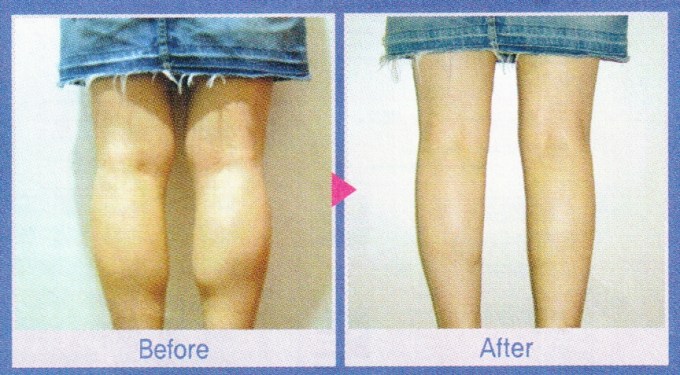 Estimated reading time: 4 minutes.
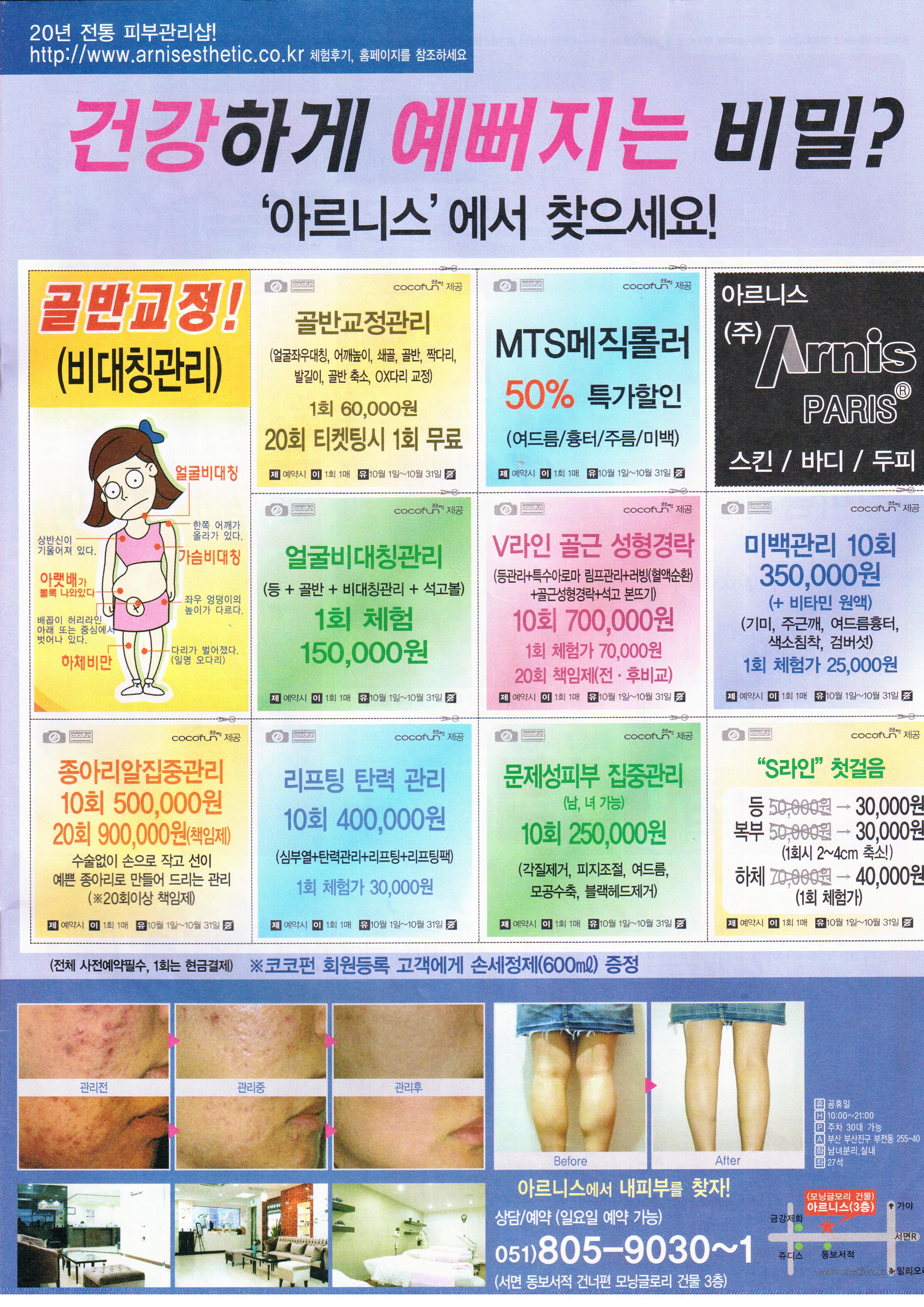 For the record, I’m not labeling skinny calves as unattractive by definition, particularly if a woman—and it’s almost exclusively women who undergo calf-reduction surgery—has such legs naturally; as it happens, the difficulty of finding food I wasn’t allergic to when I was young meant that my own calves probably weren’t much bigger until my mid-teens. Buffing-up in my early-20s to compensate for my own body image issues then, naturally I also prefer healthy and active women over sedentary, thin ones today. But regardless of my background, I think I would always have struggled to understand how the muscle development naturally ensuing from an active lifestyle could ever be considered unattractive.
 (Source)
 But while its voluntary nature may may mean that it’s too extreme of me to compare calf-reduction surgery akin to foot-binding at this point (although both do involve the physical disablement of women for the sake of a wholly artificial beauty ideal), I will go so far as to invoke Mary Wollstonecraft’s A Vindication of the Rights of Woman: with Strictures on Political and Moral Subjects (1792) here. For not only did she note that women being considered “too susceptible to sensibility and too fragile to be able to think clearly” was partially the consequence of not receiving the physical education that boys did (see here also), tellingly she also wrote that women are “taught from their infancy that beauty is woman’s sceptre, the mind shapes itself to the body, and, roaming round its gilt cage, only seeks to adorn its prison,” implying that if young women weren’t so encouraged to focus their attention on beauty and outward accomplishments, they could achieve just us much as men do.


 Mr Kang, reporter: “As women are actively making advances in Korean society, so too are women becoming more open and assertive about sexual matters.”
 Mr Kang: “I will ask about modern women’s opinions on sex and love…Nice to meet you Ms Kim. Ms Kim, I heard that you have very liberal and open attitudes to love. Is that true?”
 Mr Kang: “Since you are old enough, I assume that you have sex with your boyfriends. Do you take the initiative and/or insist on using contraception?”


 (Source:
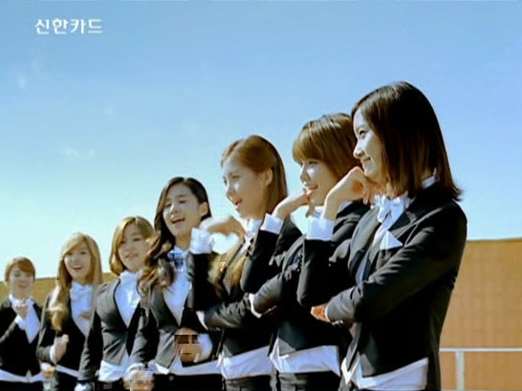 (Source, above and below:
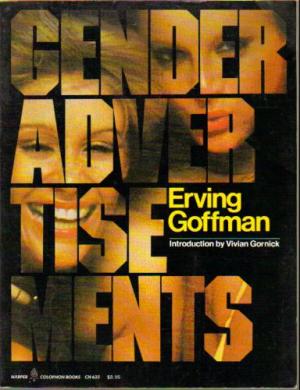
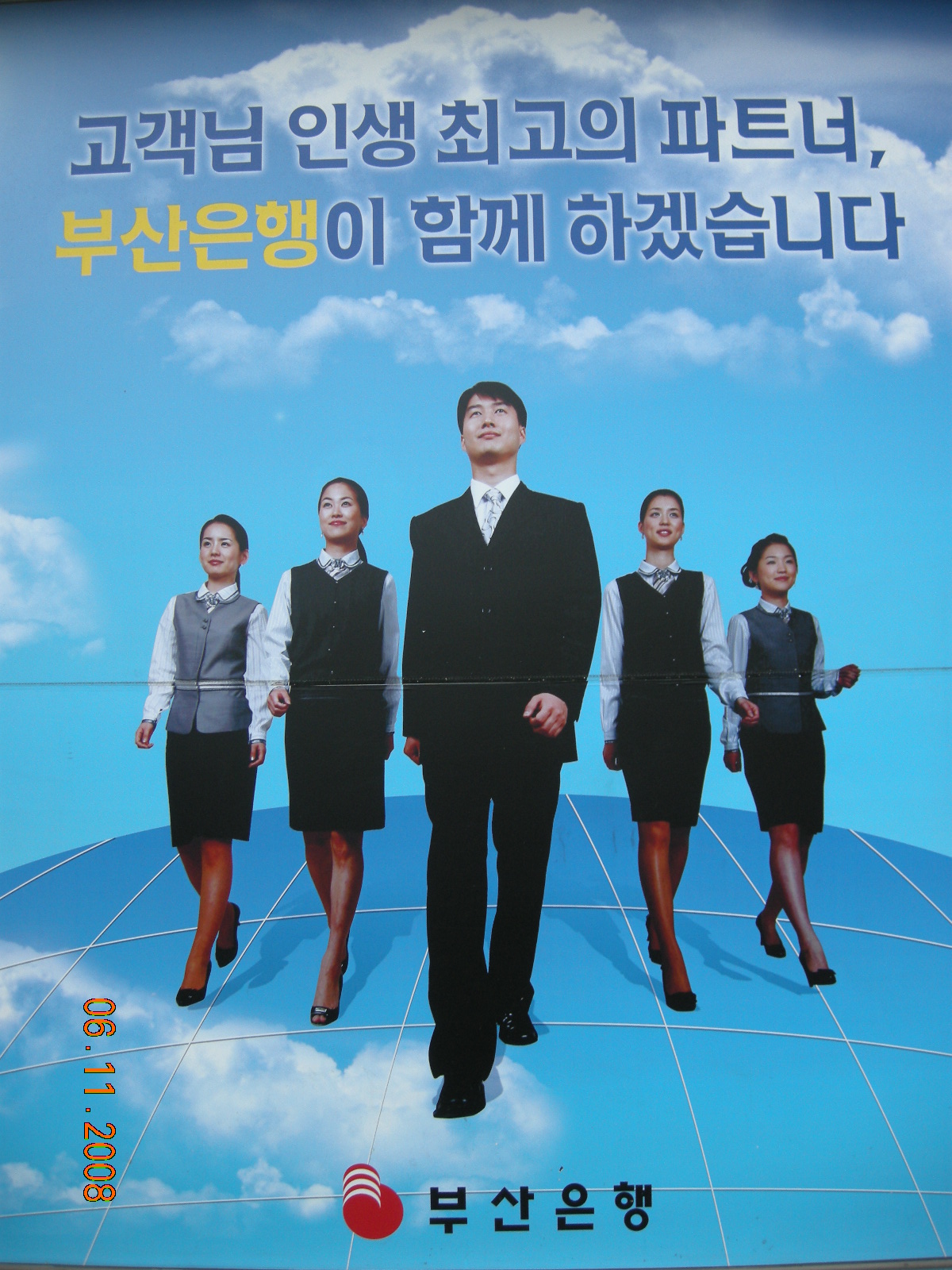



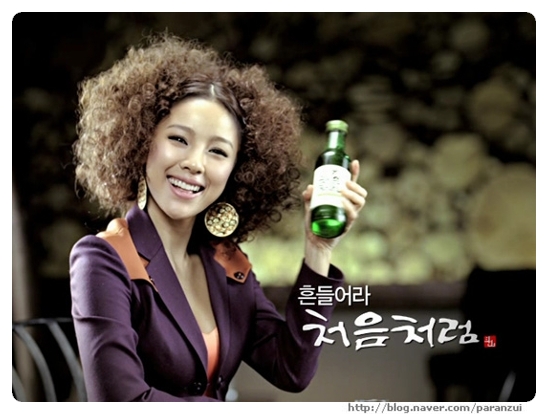 But in fairness to Lee Hyori, Doosan was in the midst of reorganizing itself into a holding company centered around heavy industries when it hired her, and in hindsight the same company that had just bought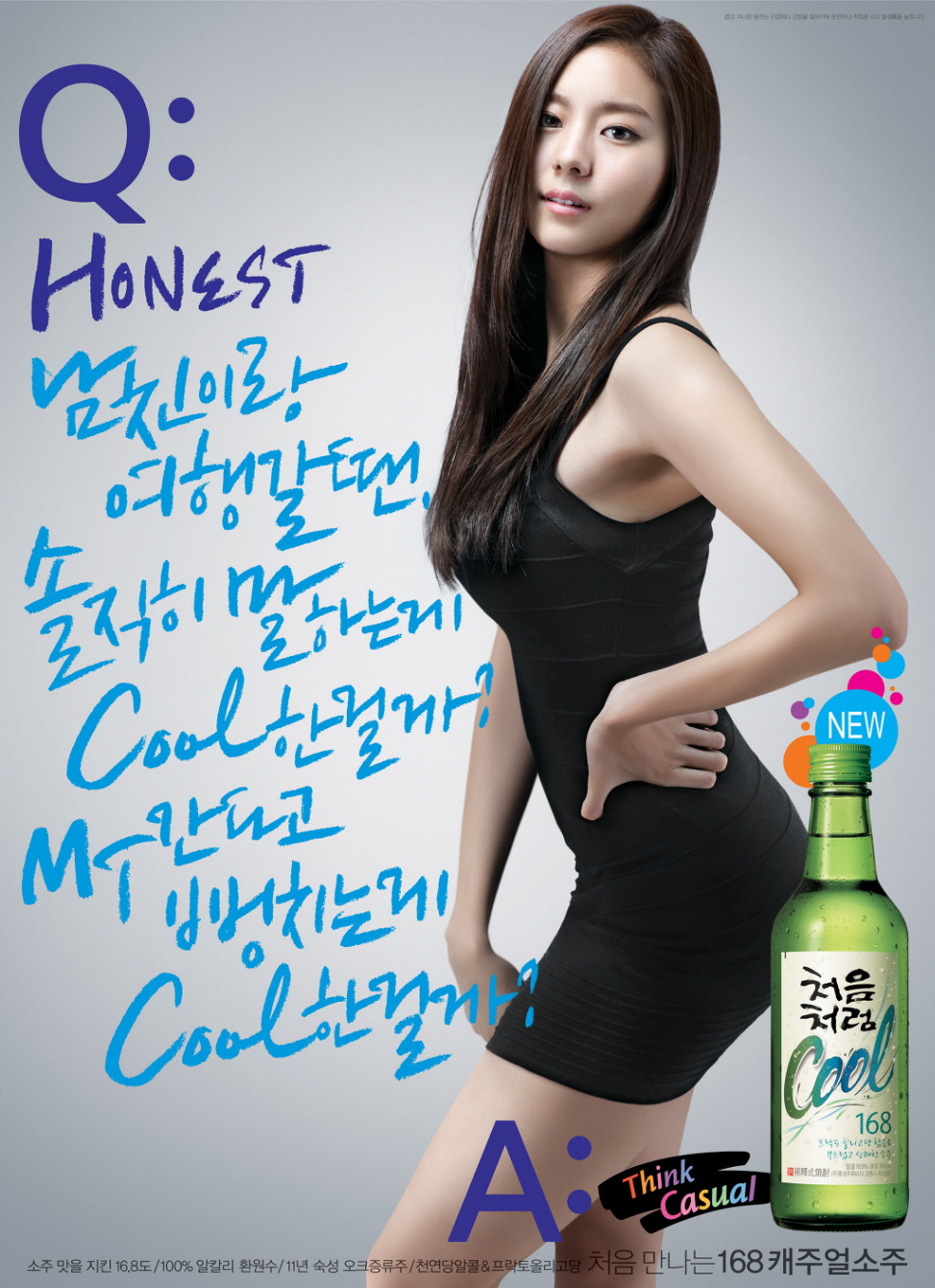
 (Source:
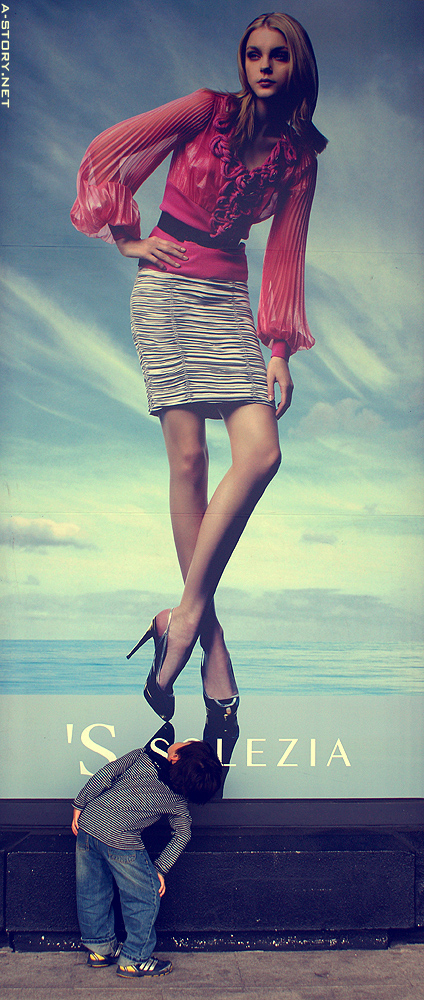

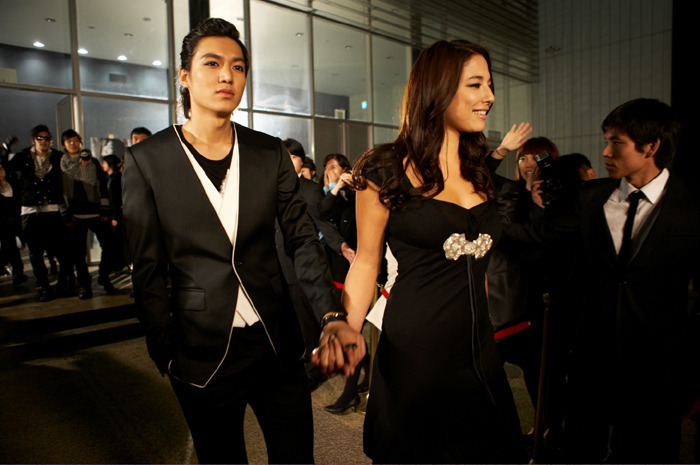
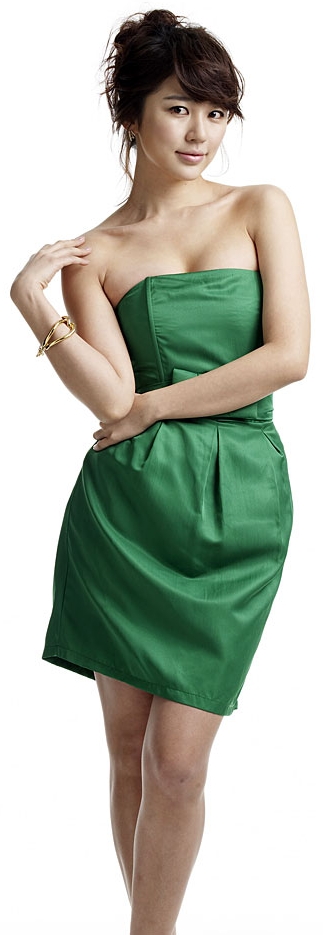

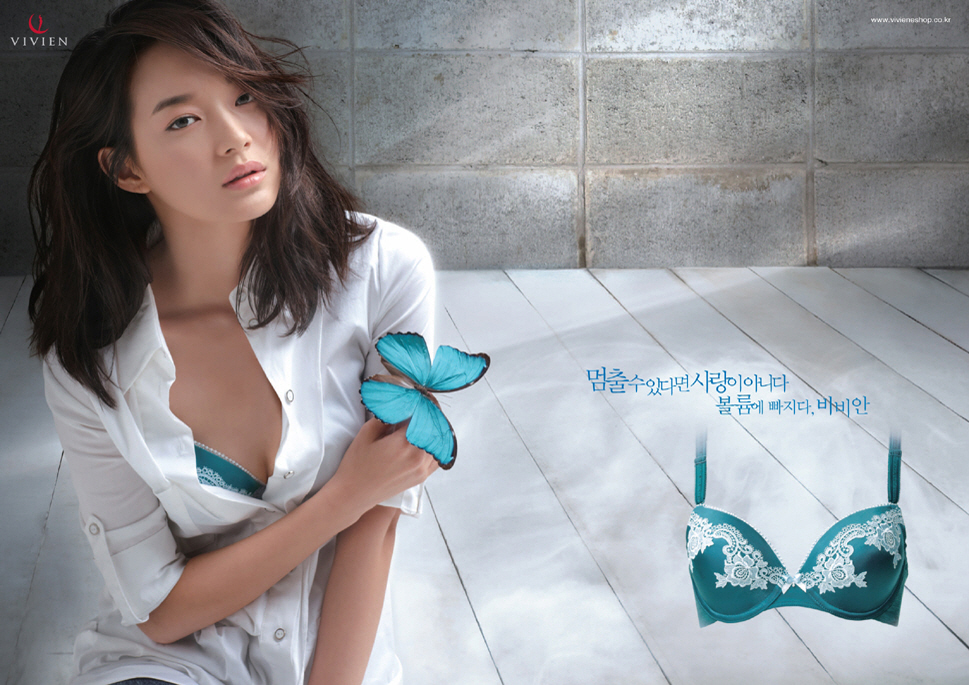

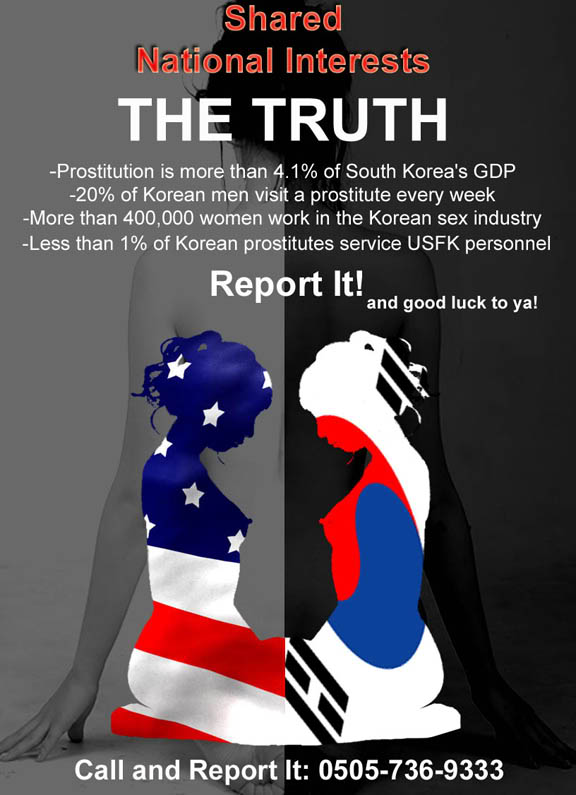
 (Source:


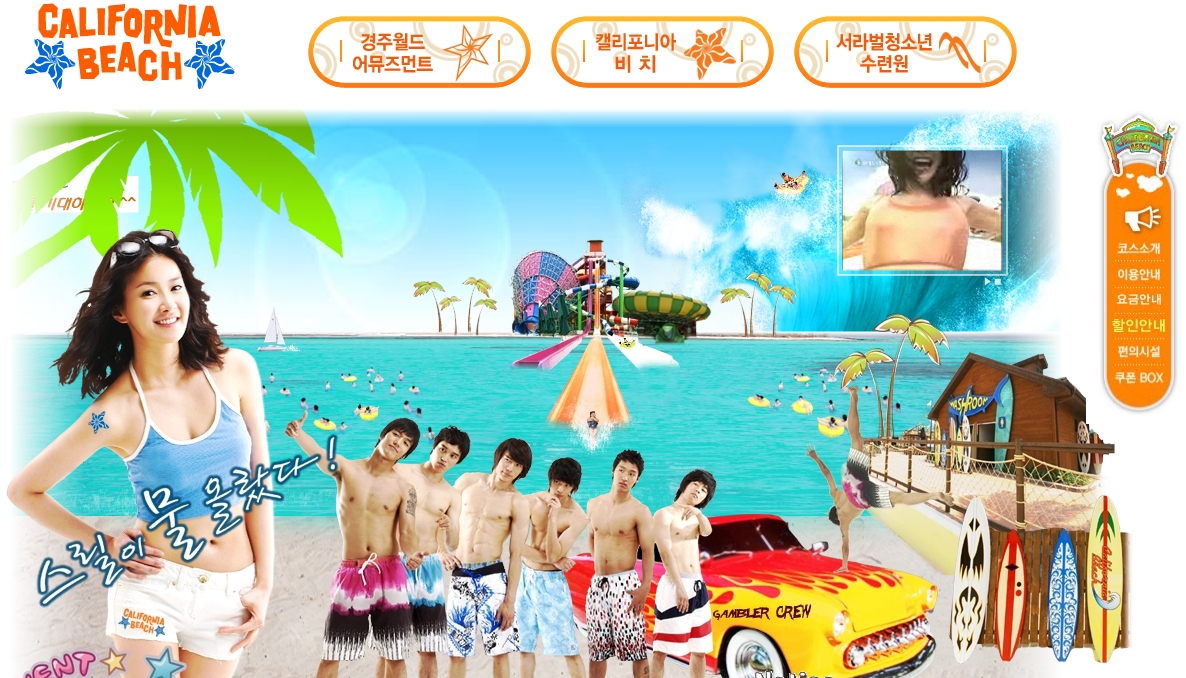
 Much as I’d like to always present a sophisticated and hard-hitting persona on the blog, I’d have to admit that the following two commercials from
  (Image Sources: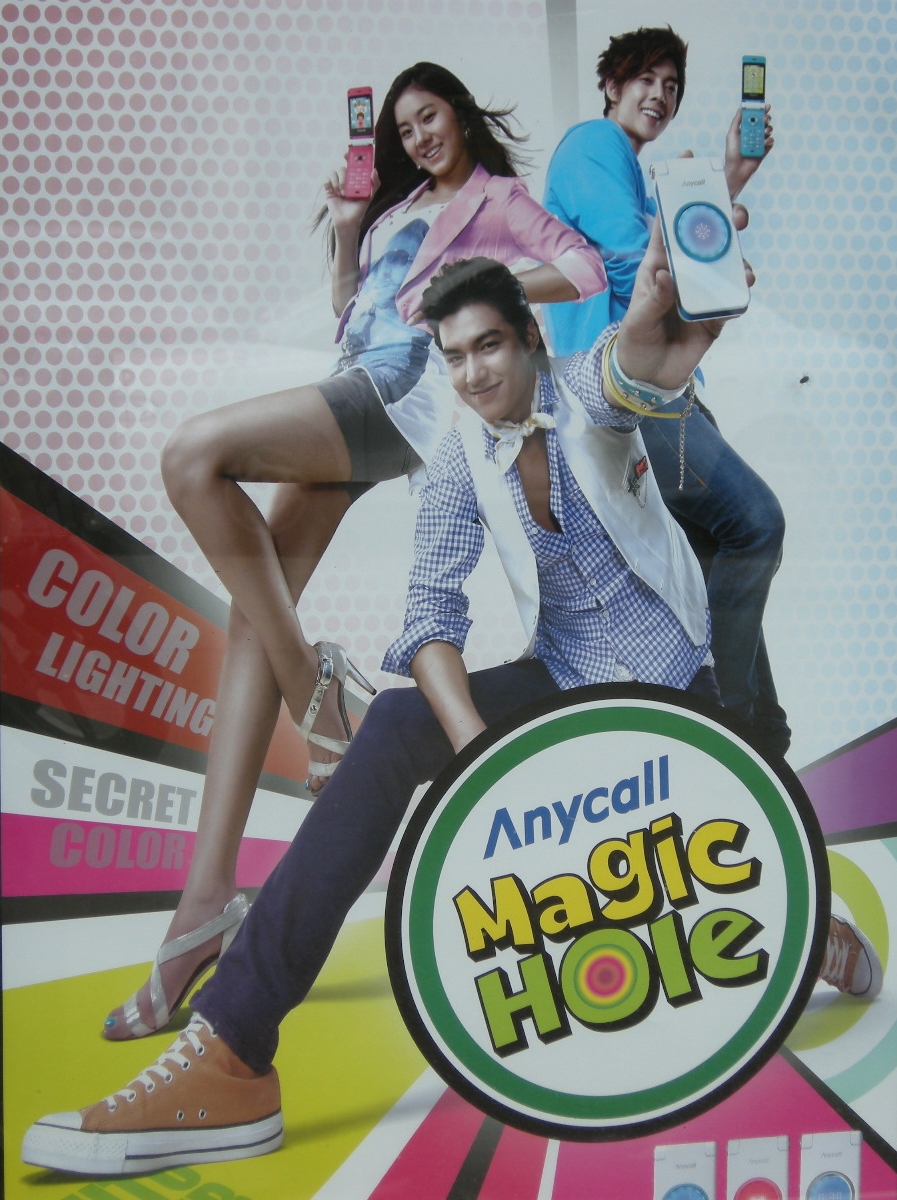

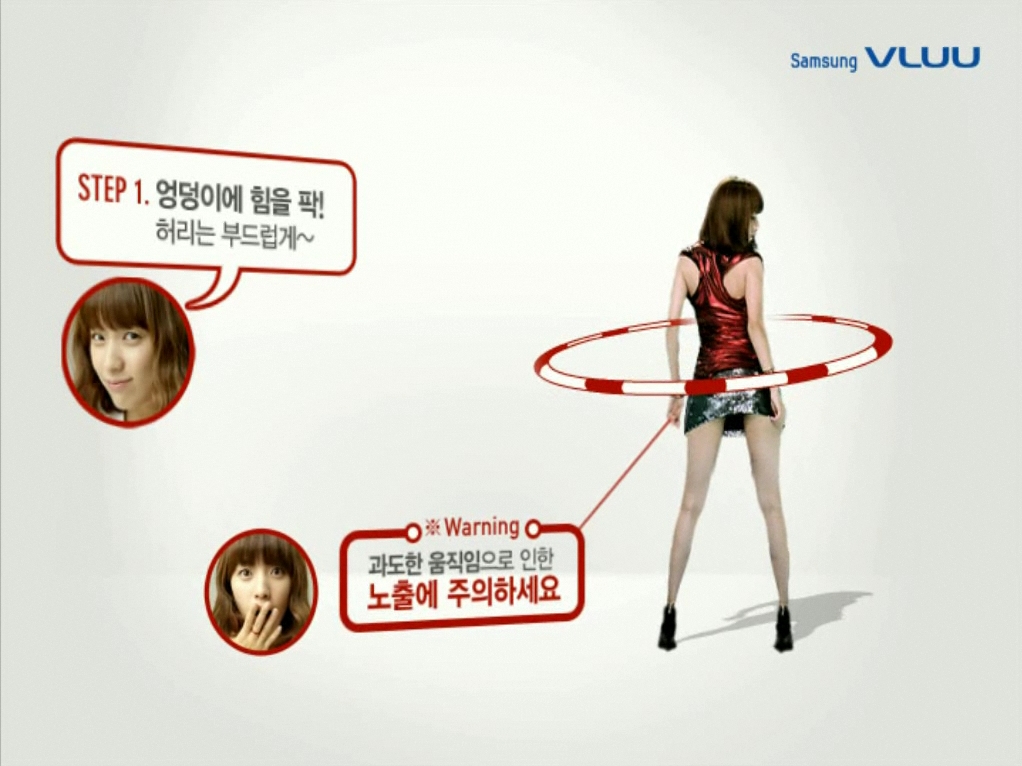


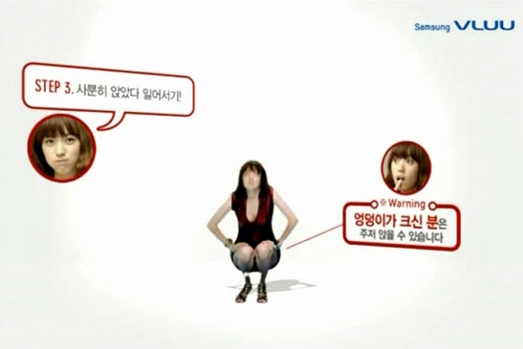
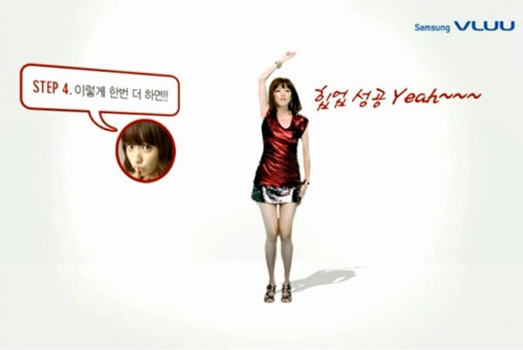




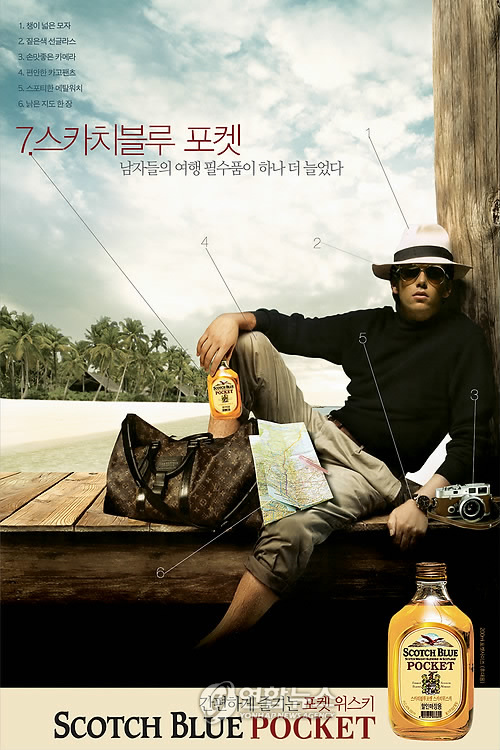
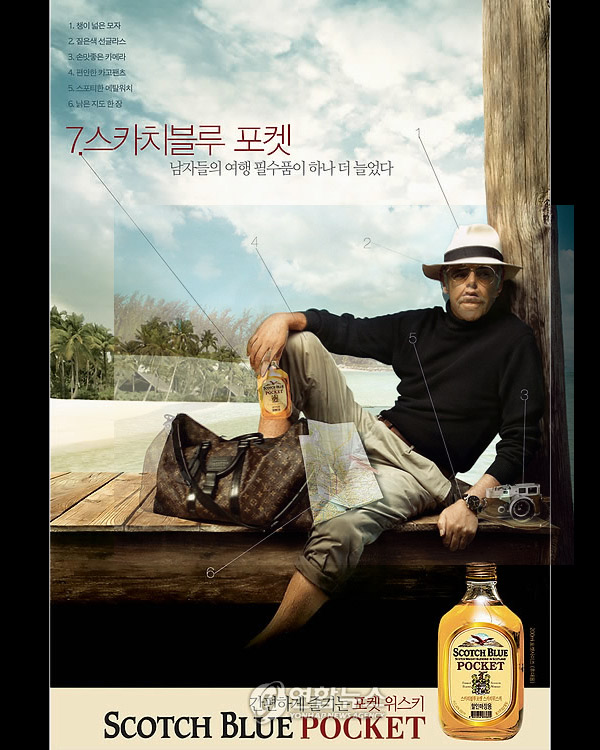


 its more fluent, intelligent and interesting members were replaced in favor of mere photogenic ones and more tabloidish discussion topics in Season 2 though, and in was in this vein that was widely regarded as foreign male-bashing on the show occurred in Season 3 last month, which naturally provoked a vehement response in the Korean blogosphere: see #1
  After shooting up in 2006 and 2007 because of the belief that those were auspicious birth years, the rate has fallen again. Moreover, 10,000 fewer babies were born during the first five months of this year compared to the same period a year ago. This has prompted dire projections that Korea’s birth rate could fall to 1.12 this year….






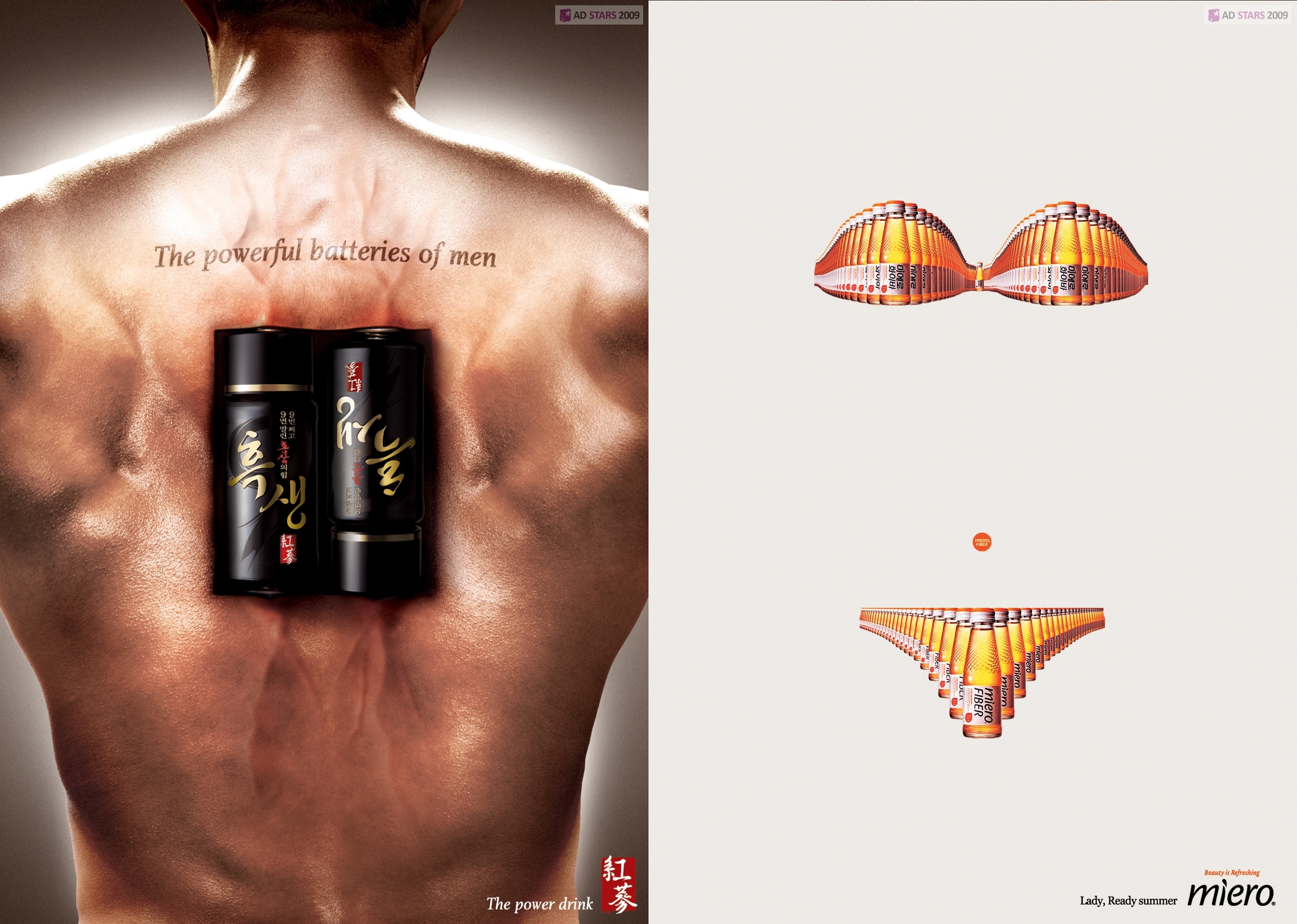






 5)
5) 
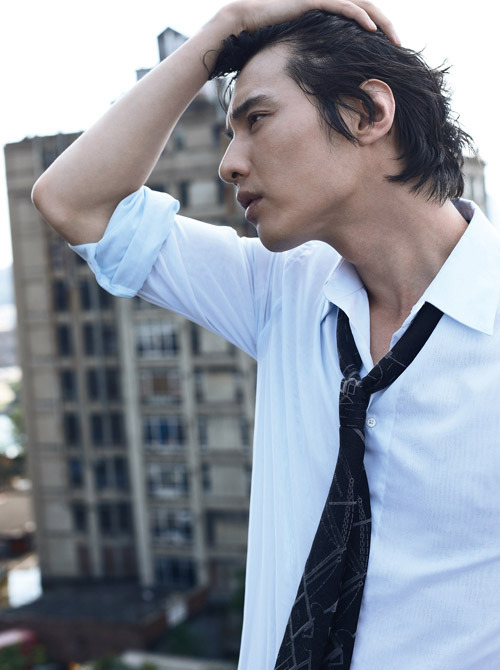
 19) Not that she’s the only Korean female celebrity doing so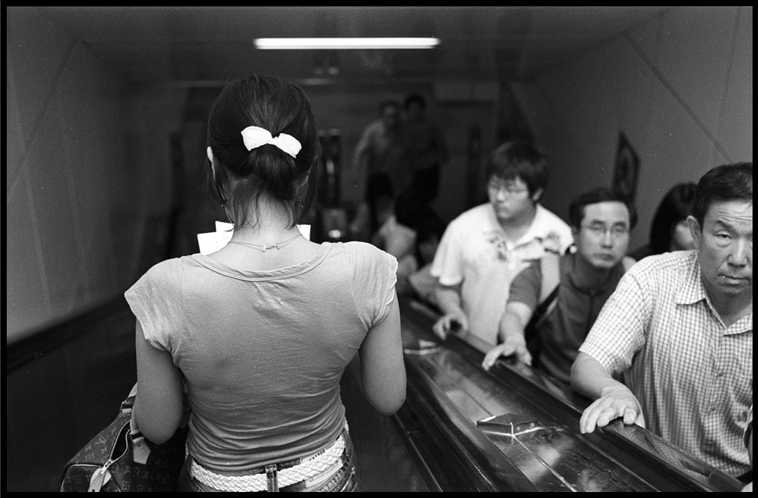
 7)
7) 
 The Grand Narrative