Do you think Arirang should have removed its Twist in Figures video from YouTube?
Shocked and outraged at something that castigated healthy, attractive women for not having legs like the manhwa figure above, then my initial reaction was to insist on it. Preferably, the original film burned and the ashes buried too.
However, reading the reaction from the Korea Studies community at the Korea Studies Discussion List later, now I think that actually it may have been more useful had it remained up. Certainly, the issues raised by the video are far more complex than they may at first appear.
Here’s some selected comments from the discussion thread that make that clear. First, from Stephen Epstein:
I don’t usually send out links to the list, but the below piece from Arirang is one of the most absolutely reprehensible items of journalism that I ever seen and deserves wide circulation, as it offers an opportunity to combat the attitudes it reflects. The piece takes examples of female pop stars in Korea with “healthy” legs (yes, “healthy” is their word) but tries to suggest that “healthy” (i.e. anything but very nalsshinhada) is, in fact, bad. The promotion of extremely unhealthy body images and eating disorders is the logical outcome here.
The piece is getting hammered on YouTube (it’s only been up a day so far and running 15 to 1 dislike to like, maybe more, a ratio I’ve never seen, and the comments have all been appropriately scathing.). In any case, for those of you who ever have to teach anything about body image or plastic surgery in Korea, this will be eye-opening for students; you may want to download it as I suspect it will be taken down soon. Hopefully this piece will get wide attention (my own aim in sending this out) and Arirang will be forced into issuing a high-profile apology.
A surprising and disappointing reaction from Don Kirk:
Thank you for posting this piece back on you-tube. It’s quite an amusing commentary, actually, on Korean fashion, “girl groups,” models and society. There’s no reason to carry on a crusade about it. Arirang has a right to run such a feature. It seems extremely odd that academics, the first to defend freedom of speech and democratic rights, should attempt, in the name of political correctness, to want to suppress a simple feature piece that has colorful, fun, appealing images, pleasant and interesting commentary and actually something to say about current fashions and thinking.
There are views other than those of like-minded academics, who are not necessarily correct in all their political correctness. Shame on you, in the name of PC, for this disgraceful effort at suppression of free speech, free idea and free reporting.
A reply from Stephen:
I am willing to accept that suppressing the video is perhaps not the right tactic, and may infringe on expression of free speech. In fact, in retrospect, it probably would be better for the original to be up on the Arirang channel to allow it to take the scathing criticism it deserves and to encourage debate and draw attention to a serious problem in Korean society. I hardly wish to be part of a PC censorship brigade.
I also accept that the piece says something about current fashion and thinking. But it clearly crosses the line into promoting and not just reflecting that thinking. If you or anyone else really believes that this is a ” simple feature piece that has colorful, fun, appealing images, pleasant and interesting commentary”, without real world consequences, then I merely ask that you read some of the comments from YouTube users, hardly “politically correct academics”, on the original post from Arirang (I made sure to save them before the video might be taken down) and reconsider (source, below):
• Since when was being “healthy” a flaw? Healthy legs are not a good thing to have? tons of women would kill to have the women on that list’s legs!! This is disgusting: the girls you mentioned have fantastic figures. Note also that Suzy and Sulli are not even 18 yet! :|
• Again, I am highly disappointed in the way Arirang is encouraging UNHEALTHY body images. These girls have nice legs, with well-developed muscles. Why is that so wrong? Are girls supposed to project a helpless, useless image so that men will like them, is that it?
Shame on you, Arirang, for all of these stories. Help promote healthy, positive images for women in Korea and the rest of the world and stop telling them that “healthy” or “sturdy” or “muscular” is a bad thing.
• This is dumb. You’re promoting a ridiculous body image that will only make millions of girls insecure. These female celebs are perfect as they are. They don’t need a stick thin legs to support their upper bodies. As a broadcast station that goes international to promote South Korea and its culture, this only shows how ridiculous the standard of beauty and body image in Korea. Please re-evaluate the content of your programs and scripts before airing it. Avoid offensive contents like this.
• This is an awful message. Arirang you are promoting body shaming and purporting that healthy body images (actually all of the ladies in this video are probably TOO skinny) are wrong or unfashionable.
As someone who has had to deal with body issues and faced extreme pain over it, I hope you know that this video harms those in it and those watching it. Suzy is only turning 17 this year. As a teenage girl, Arirang, you have disgusted me with your lack of respect to the celebrities and ignorance.
• Do you realize how disgusting and twisted and WRONG it is for you to describe what you call imperfections in their lower bodies as “healthy.” If they are healthy, that means that don’t need to improve because they’re already perfect the way they are! The fact that you describe their supposedly imperfect legs as “healthy” implies that if they were to make the improvements you suggest, they would then become unhealthy. It’s this logic that pushes already beautiful women into eating disorders.
Thanks, guys, for taking the conversation public. Is it being debated likewise in Korea? Therein lies the clue to why the video and its free-wheeling commodification of women’s bodies are considered enough of a norm to be created and aired at all. It’s easier to study the culture (and others like it) from afar, but to willfully live in country gives this feminist pause for concern about a quality of life.
Then from Michelle Cho:
I agree that it’s important to think about the cultural norms that this video reflects, rather than isolating Arirang as the source of the problem (though I agree that the media should be held responsible for their integral role in circulating these sorts of images and “reports”). Many of the commenters on the Arirang youtube channel reserved their ire for Arirang and its tone-deafness, without mentioning the public’s appetite for the manufacture of celebrity bodies whose “perfection” is precisely not “healthy” because, in many ways, it’s not supposed to be human.
And this seems a good point to mention that, in fact, Arirang gave a very good report on excessively high rates of cosmetic surgery in Korea back in April 2010, as I wrote about (but forgot) here. Stressing how some women wanted cosmetic surgery for a slimmer figure, despite already being slimmer than average, it’s both a pity and genuinely strange that Arirang would post a report with such a radically different message less than a year later:
Continuing with Michelle Cho’s comment:
As a bilingual researcher, I found [the original video] especially illuminating for the sense of estrangement it elicited in me, precisely because the report was delivered *in English*. This makes me wonder whether Arirang international simply translated and rerecorded the narration for an entertainment story that ran in Korean. (I don’t know much about the English language Arirang channel and whether it produces its own content). Stories like this are not uncommon on Korean language television; it’s likely that “healthy” was a poor translation (I can think of a couple words that can connote both “stocky” and “healthy” in Korean). But the main point I’m trying to make here is that the politics of language are certainly at play here and shouldn’t be minimized.
Update: With thanks to commenter dogdeyedblack for finding it, it was indeed originally from a Korean entertainment program, which can be seen (with a Korean transcript) here.
Finally, another aspect of the report that I found quite interesting had to do with the latent discourse of proportionality and phenotype, which came through in one of the “expert commentators” analysis of one of the celebrities’ decision to wear ankle boots with a mini-dress. The commentator explains that it is difficult for East Asian women to pull off this fashion, because of their proportions, so the stakes of the standardization of correct proportions could also be read as an expression of anxiety regarding Western beauty ideals, at the same time that it signifies a desire to erase “East Asian” characteristics. (I hope I won’t be misunderstood here–I’m not suggesting that any of these putatively ethnic characteristics be given any legitimacy, I’m just pointing out the way the discourse seems to be operating).
Echoing Lauren, my thanks for bringing this discussion to the list. I believe it’s far more complex than it may seem at first glance, and I hope we can take this beyond criticisms of Arirang (though I think that was a good place to start.)
I posted the video on Facebook and the Koreans liked it while the foreigners abhorred it, I guess that says enough.
Finally, from Tommy Vorst:
Obviously, the piece is offensive to many. But that’s not a crime. And it’s certainly not out of step with the entire fashion-celebrity industry, in any country. I can’t think of one that *doesn’t* consistently send out misogynist, unhealthy messages. The idea that any of these women were “in need of improvement” is ludicrous, of course. But they have chosen a profession in which such scrutiny is understood, expected and even appreciated. As a feminist, I cannot suggest that they are unwilling victims of such media criticism: they play the game voluntarily.
Arirang is no different from any other media outlet in its reporting: one need only look at any supermarket magazine rack or entertainment reporting programme to see that. What is surprising is the (IMO disingenuous) shock some are expressing. There is nothing shocking about such reports. Arirang may be the self-appointed face of Korea outside Korea (though I dispute this), but looking at popular Hollywood websites suggests Arirang is more in-step with their western counterparts than it is likely to be ‘an embarrassment:’
This discussion is a valuable one. One of our duties as academics is to shine the light on the cockroaches. But let’s not pretend this is anything out of the ordinary: this is an example of endemic sexism, not a shocking outlier. It’s appalling because of its normalcy.
What do you think? Was it indeed disingenuous to be shocked by the report, as Vorst suggests? Or, does the video clearly cross a line into promoting and not just reflecting on a current fashion trend, and a pernicious one at that?
Meanwhile, in the event that YouTube does remove the video again (but with thanks to Roald Maliangkay for reuploading it), please note that it can be downloaded here.
Normally, I’d reserve something like this for the next Korean Gender Reader. But then as a friend aptly put it, this video is “totally fucking reprehensible”, and deserves highlighting. And indeed, if it’s not removed from Youtube soon, then we’ll both be contacting ArirangWorld to complain about it.
A quick language note before you begin watching though: a mistake many Korean learners make, including myself, is to complement someone by saying “건강해 보여요”, or literally “healthy [you] look”, not realizing that “healthy” often has connotations of being fat in Korea. And as you’ll soon see, this is carried to simply absurd proportions in the video.
Update 1: I wrote the following in 2 comments on the ArirangWorld YouTube channel. Or rather, I tried to, as although they registered in the comment count, they never actually appeared. Creating a new account and trying again, for some reason still only the 2nd paragraph squeaked through. Sigh.
As the author of thegrandnarrative.com, the most well-read English language source for information on Korean gender issues, almost every day I learn of the often tragic consequences of the incredibly damaging messages about health, weight, and body image that the Korean media promotes, and have very real concerns about raising my two young daughters here. Will they never exercise, because videos like “Twist in Figures” tell them that toned, healthy legs are unattractive? Will they too, like fully HALF of Korean high school girls, end up so malnourished and anemic from dieting that they are unable to give blood?
I implore ArirangWorld to remove this video immediately, and suggest that an alternative video outlining Korea’s problems in this regard, but also – crucially – demonstrating what positive steps various groups, organizations, and individuals are doing to correct these, would be a far better way of promoting Korea to the outside world.
For more on the shocking statistic about high school girls, see here. And you may also find this advertisement from 2009 interesting:
Update 2: The video has been made private. Which does mean that it can’t be watched at least, but on the other hand choosing to do that rather than simply deleting it could be construed as refusing to admit how problematic it was. Certainly ArirangWorld has yet to make any kind of formal apology for it.
If anyone would still like to see it, then I did save the video before it was made private, but unfortunately at 55MB it’s much too big to send via email. I can send it via Skype though, so please feel free to add me to your list of contacts and request it (my id is “Jtur001”).
Update 3: Although I’d wager I’m a much more pleasant middleman than most(!), you can now avoid me and download the video directly here.
Update 4: See here for the Korea Studies community’s reaction to the video.
(For all posts in the Korean Sociological Image series, see here)
A simply surreal video making the rounds at the moment. As explained by Lisa at Sociological Images, it:
…beautifully illustrates the socialization of children into particular kinds of worship. With hand motions, body movements, and facial expressions, this child is doing a wonderful job learning the culturally-specific rules guiding the performance of devotion.
Which led to a great deal of discussion at that site. But I’ll confine myself here to echoing Jason’s comment that it simply reminds him of his son picking up his own behaviors such as sweeping, and that the young girl:
…certainly isn’t worshiping here, but is just mimicking her parents and the other people around her. I can guarantee she has no concept of a deity.
But what has all that got to do with K-pop, let alone Meenakshi Durham’s The Lolita Effect? Well, because after reading all that, it was very interesting comparing my daughters’ own reactions to KARA’sLupin just half an hour later. First, those of four and a half year-old Alice:
Then with her two and a half year-old sister Elizabeth:
Granted, perhaps you had to be there…and in which case I probably would have removed my dirty laundry from the floor first (sorry). But I didn’t notice it myself, because at the time I was simply transfixed.
You see, along with dozens of other K-pop music videos, Alice and Elizabeth must have watched and “danced” to Lupin at least 20 times before that night. But that was the first time that Alice at least seemed to demonstrate that she not only remembered it, but actually knew it very well, and was performing repetitive actions that were recognizably part of the same dance…which she’d demand to do seven more times before going to bed.
Unfortunately for my paternal pride though, in hindsight she was neither simply copying the music video nor giving her own original interpretation of it: as confirmed by her teacher later, she’s preparing for a Christmas performance at her kindergarten soon, and—yes—she’ll be dancing to Lupin.
So what’s the big deal? After all, while I’m still translating the lyrics myself (or at least I was until my “study” got invaded), they seem harmless enough:
But what if the kindergarten teachers had chosen Mister instead?
Or something by the Wondergirls perhaps? Two weeks from now, might I have looked on in abject horror as my 4 year-old kept thrusting her bottom out at me while singing I’m So Hot?
(See here for the video; the owner has disabled embedding)
No, because first, no matter how much WonderBaby’s appearances on national television could be construed as widespread public acceptance of that sort of thing, my wife confirms that many other Korean parents would also have complained well before then.
But second, and most importantly, actually Alice has already been thrusting her bottom out at me like the Wondergirls, for about three months now.
Seriously: several times a day, she’d suddenly run up to me giggling when I was at my desk, quickly thrust her bottom out at me a few times, then she’d run away in hysterics. Fortunately, she seems to have largely grown out of it now, but not through any discouragement on my part, which just seemed to make doing it all the more amusing for her.
Why did she start in the first place? I’ve no idea, as although she could have seen that dance move virtually anywhere, she wouldn’t have had any idea what it represented, or what adults would think of it. Perhaps one of her teachers overreacted to her or one of her classmates doing it or something, after which it became fun.
But whatever the reason, does that mean that it’s hypocritical to have any misgivings about Wonderbaby then?
Hell no. But to counter the argument that it’s just clean harmless fun, let’s be very specific about what the problems with her dancing to So Hot on national television are exactly. I can identify two main ones.
First, there’s the fact that Wonderbaby quite literally invites the viewer to view her as a sexual person. Of course, she probably has virtually no idea of the meanings of what she’s singing, let alone the consequences. In which case, one might already reasonably ask what she’s doing there in the first place, and in cases like this it is usually this naive, unknowing projection of sexuality that adults tend to be most concerned with. As explained by Durham in The Lolita Effect:
…the signals that girls send out about their sexuality, often naively, in response to the prevailing media and marketing trends, [are] signals that adults fear will attract harmful sexual attention. As the columnist Rosa Brooks lamented in the Los Angeles Times, “old fashioned American capitalism…is busy serving our children up to pedophiles on a corporate platter”….
….These charges open up quite a can of worms. Can marketers in fact “serve” children up to pedophiles? Is there any real danger in young girls wearing low-cut, skimpy, or “trashy” clothes, or is this just a harmless fashion trend designed to raise parental hackles, like so many others in the past? Could it even be seen as a feminist moves towards embracing a femininity or “girliness” scorned by previous generations and linking it to power rather than passivity? (p. 69)
I’ll return to the last point later. But before I do, from the outset I want to put paid to the notion that even children that young are completely neuter and/or are unaffected by sex in the media:
For children to take an interest in sex is not out-of-the-ordinary or scandalous. Even toddlers “play doctor” to explore each others’ bodies and mimic intercourse, though scholars are still debating what constitutes “normal” sexual behavior in young children. Sex is a part of life, so it is bound to surface in different ways at different developmental stages; it is not cause for alarm unless there is harm or abuse involved. Of course, sexuality needs to be dealt with in ways that are appropriate for the age and maturity of the child, the cultural and social context, and above all, the ethical implications of the situation, but sex per se cannot reasonably be viewed as harmful to minors. (p. 68)
And in particular:
The conventional wisdom is that interest in sex escalates as children approach adolescence; this is a biological viewpoint that connects the hormonal shifts and physical maturation of puberty with an increased interest in sex. But now sexuality marks preadolescence and childhood, too, and for many adults, this is justifiable cause for alarm. In today’s world, children as young as eight report worrying about being popular with the opposite sex; first graders describe being sexually-harassed by classmates; and by middle school, kids are steeped in sexual jargon, images, and exploration. Sex educator Deborah Roffman argues that little girls start wanting to look good for others at age four….(p. 65)
Very few—if any—cultures have found ways of adequately and appropriately dealing with the inconvenient fact of child sexuality (let alone the media) but surely Wonderbaby’s example doesn’t help. Nor do the music videos discussed below with slightly older girls either, but which I only realized thanks to Barry Raymond, a friend of mine that used to live in Korea (and now with 3 daughters himself):
No, that’s not them: rather, it’s a screenshot from the music video for Bang! (뱅!) by After School (애프터스쿨), which I translated back in June. One of my favorite Korean songs, I was originally a little miffed when Barry criticized it because the inclusion of the young girls, to which I replied on Facebook:
I’m usually quite wary of that too Barry, especially in Korea, where people are generally very reluctant to admit that things like that can be problematic. But in this particular case I think their presence is fine personally, because they’re gone within the first 20 seconds or so, and don’t perform any dance moves that can be considered remotely sexual. So they’re clearly supposed to be decorations at the beginning, considered quite separate to the grown-up (sexual) women of the group.
His response:
The lyrics and dancing that make up the song and video are all about sex. To place a child at the beginning of that exploits them in a sexual way. How would you feel about a child appearing at the beginning of Bad Romance or some other Lady Gaga song. It’s a girl group exploiting itself on the basis of sexuality, at least in this song. That is their choice, don’t force it upon the clearly underaged girls that appear in the video or try to make it appealing to an underage audience.
Me:
Hmmm, you may well have a point there, which I admit I wouldn’t have considered if you hadn’t brought up imagining the same in Bad Romance; I wonder if that shows just how used to that sort of thing I am here?
(15 year-old f(x) band member Sulli in Oh! Boy Magazine; source)
And finally, albeit admittedly after my asking if I could post it here at some point(!):
According to Wikipedia… See More’s typology of child pornography, the type described as posing involves (allow me to paraphrase) ‘deliberately posed pictures (video) of children fully clothed, partially clothed etc. where the context and/or organization suggests sexual interest’.
The”Bang” video places two clothed girls wearing the exact same attire as the older models at the beginning of the video. The girls dance alongside the older models where the older models are dancing in a sexually provocative manner (the younger girls are not in my opinion dancing in a sexually provocative manner). It should also be noted that while the girls wear the same outfits as the older models the fitting of their outfits is not alarmingly provocative although the same outfit on the older models is certainly sexually provocative. So we have a situation where several sexually provocative models are juxtaposed with what appears to be virtually identical under-aged girls. This to me would constitute a context of sexual interest where the line between the older models and the younger models is intentionally blurred.
Further to this context would be the lyrics….and the title of the song, “After School” along with the school oriented marching parade uniforms. To me this video is unambiguous contextualized sexual exploitation of children.
Is judging the Korean media and Korean music videos with an assessment system developed by the Paedophile Unit of the London Metropolitan Police merely imposing a Western value system on Korea? You decide, although I’d wager that in fact the Korean police have a very similar system.
Either way, not much later one of After School’s subgroups – Orange Caramel – did the same again with their music video for A~ing (아잉):
For the sake of providing sufficient warning of the slightly NSFW image coming up in a moment, let me take the opportunity here to point out that it’s not so much the lyrics and dance moves that are the issue this time (see here for a video with them), but more having a child in a music video “sugar-coated with sexual undertones,” with an “obviously pedobaittastic tone,” and with “kinky cosplay lolita outfits”, all as noted by Johnelle at SeoulBeats. And so much so, that this next screenshot…
…instantly reminded of this next image, which I’ve had on my hard drive for years, from God knows where. Not looking very closely at the small print before then, I’d always assumed that it was the cover of an erotic fiction book, but it actually turns out to be a poster for a pornographic cartoon:
(Source: unknown)
Continuing with A~ing though, just in case you think Johnelle and I are exaggerating:
And in particular, these costumes, which—correct me if I’m wrong—seem to serve no other purpose than to have one’s breasts spill out of them:
All good wholesome stuff. So, like Johnelle notes, what’s with having a little girl dressed up in the same kind of vinyl red riding hood get-up as the women at the end?
So, does all the above mean I’m advocating that girls should never be allowed to appear in sexually-themed music videos (and so on) then? Yes, I guess so.
But how to set a minimum age for that? After all, the upshot of everything I’ve written so far that any age limit would be somewhat arbitrary and artificial.
If I did have to to set an age though (and it would be very unrealistic not to have one), then I’d say that the age of consent would be the most logical choice. Unfortunately however, in Korea that happens to be as low as 13 (see here and here), even though the age at which one can view and perform in sexually-related material and/or have reliable access to contraception is 18.
Yeah, I don’t see the reason for the huge discrepancy in age limits either…which is not quite the same as arguing that any of them should be 13.
But that’s a subject for another post. In the meantime, one argument against any age limit on appearances is that the average age at which girls begin to menstruate has been dropping steadily since 1850, so much so that – in developed countries at least – they now enter puberty between the ages of 8 and 13. It would be a pity to deny girls the right to express their ensuing sexuality in popular culture, especially with female sexuality in general being repressed and/or literally viewed as evil for so much of human history.
Yet the notion that the feminist sexual empowerment of girls and women is what primarily motivated the appearances of Wonderbaby, the girls in the After School videos, the tight pants of 15 year-old Sulli, and 16 year old Bae Su-ji’s pose above is simply absurd, and indeed there is solid evidence that most young female entertainers are in fact pressured to wear their supposedly empowering skimpy clothing (and dance provocatively) rather than doing so out of choice. But although such arguments have still been made in Korea nevertheless, the overwhelming public attitude is to stick one’s head in the sand and deny the existence of teenage sexuality at all (let alone child sexuality), as this Korean commentator complains himself.
And in a sense, this is the official Korean government position too, if the article “Swept up by Girl Groups” by Jeong Deok-hyun is anything to go by. You can find it on pages 44-48 of the March 2010 edition of Korea Magazine, the official magazine of the Korean Culture and Information Service (downloadable here), and about this specific part on page 48…
“The shadow of recession and nostalgia: Some are so surprised by the elder generations’ enthusiasm for girl groups that they cannot help but mention the Lolita complex. Nevertheless, that would be an example of an exaggerated principle that remains from the past authoritarian era. In the course of shifting from a masculine-dominated era to one of feminine equality, the imposing frames of age and gender are being slowly torn down. The time has come in pop culture where a man in his 40s can cheer for teenage girl groups without being looked at suspiciously.”
…my friend Dr. Stephen Epstein, Director of the Asian Studies Institute at Victoria University wrote to me:
The logic here is almost comical: the empowerment present is not that it brings young women to a heightened sense of their own possibilities in the world (which is mentioned nowhere in the piece), but rather that pop culture commodification of sexuality has reached the point that middle-aged men now have the privilege of ogling teenage girls in bands without fear of embarrassment. Now that’s what I call empowerment….
But again—and this bears repeating—its not girls’ sexuality itself that is the problem. Rather it is that:
…the expression of girls’ sexuality seems to be possible only within an extremely restrictive framework. Girls’ sexuality, it seems, has to comply with the markers of sexuality that we recognize, and it cannot be manifested, recognized, or mobilized in other, potentially more empowering and supportive, ways.
This is a form of mythmaking. When a concept as complicated, multilayered, and diverse as sex is reduced to expression through a single channel – the one involving lacy lingerie, skintight clothing, and the rest of what Ariel Levy calls “the caricature of female hotness” – it has to be seen as construction or a fabrication, in which the complexities of the subject are flattened into a single, authoritative dimension, and in which all other possibilities are erased.
So it is important to think about the ways in which girls are being coached to aspire to “hotness” by popular culture, and how the commercialized definitions of “hot” offer beguiling but problematic representations of sex that limit its vast and vital potential. (pp. 70-71, emphasis in original).
And that is the second major problem with WonderBaby’s appearance: how it already sets her on that path, and/or provides an example for others to follow. And while that is by no means a problem confined to Korea – Durham’s book alone is testament to that – it is taken to extremes here. As like I explain in Part 1, it is near impossible for a young aspiring female singer or actress to advance her career without doing “sexy dances” on numerous talk shows and entertainment programs:
And yet strangely, when 30-somethings (and above) do the same it is usually only as part of a big joke, as if they were suddenly neuter. Moreover, whenever a girl group’s music video features sexy dancing and lyrics that aren’t exclusively designed for a male gaze, then they have a very good chance of being banned from television, as anyone with even just a passing familiarity with K-pop can attest to.
But on a final note, one frequent complaint I have about most articles and blog posts on this subject is that they rarely explain why this is the case, nor why younger and younger women and girls are becoming more involved over time. And indeed, for all its popularity, even Durham isn’t as clear about this as I would like either, and I had to read her book several times to figure out what she actually means by “The Lolita Effect” exactly.
In short, it is the natural consequence of various industries’ (fashion, cosmetics, cosmetic surgery, diet-related, food, and so on) need to build, expand, and maintain markets for their products, which obviously they would do best by – with their symbiotic relationship with the media through advertising – creating the impression that one’s appearance and/or ability to perform for the male gaze is the most important criteria that one should be judged on. And the younger that girls learn that lesson and consume their products, the better.
Simplistic? You bet, and I’d be the last person to deny the role of a whole host of other factors, including – for one – the fact that basic biology makes women’s physical attractiveness a muchmore important factor in choosing a mate for men than vice-versa.
But do consider that: there is not a single country that did not also experience “housewifization” as a consequence of development; that in economic terms at least Korea is now officially the most consumerist country in the world, and much more so than the US (no, really); that comsumerism was explicitly conflated with national-security and anti-communism by the Park Chung-hee (박정희) regime of 1961-1979 (and very much still is); and finally that Korean women played a crucial role in that last, as that last link makes clear.
Given all that, then is anyone surprised that Korean women the thinnestin the developed world, yet actually consider themselves the fattest, and act and spend accordingly?
Correlation not always implying causation be dammed. And if nothing else, I hope I have at least persuaded you of that link with this long post!
With thanks to author Roald Maliangkay for the kind words about this blog in it, see here for his short and very readable article of that title in the latest International Institute for Asian Studies newsletter, which I also highly recommend taking 2 minutes to subscribe to. (Email me for a PDF if the link doesn’t work).
For the specific post of mine he refers to, and many more on the kkotminam (꽃미남) phenomenon in general (literally “flower-beautiful-man”), scroll down to the sidebar on the right until you come to the “My Constantly Evolving Thesis Topic” section.
(Update: that’s been removed after a change in theme. Please see here for a list of recommended posts instead)
True, he actually argues that the factors I cite are just some of many that were ultimately responsible for the emergence of that, but then my own views have considerably evolved since first writing about the subject over 2 years ago, and I think we’re in broad agreement really.
Alternatively, perhaps that just reflects how persuasive his own article is?^^ What do you think of it?
Well, bottom half of her body to be precise. But then she is Korean after all, so what on Earth does that make her top half?
“Western,” according to her. And while she’s quite happy with that at least, in contrast she’s dissatisfied with her “Asian” legs, claiming that she has to always wear high heels to compensate for them (source, right).
However, despite my original shock at hearing her describe herself in such terms, ironically I find myself defending her statements.
Singer Lee Hyori is drawing lots of attention for saying “While I have a Western top half, on the other hand the bottom half of my body is Asian.”
지난 20일 방송된 MBC ‘섹션TV 연예통신’에 출연한 이효리는 서구적인 상체를 가지고 있는데 반면 “동양적인 하체를 가지고 있다”며 “하이힐은 생명과도 같다”고 말해 주위를 웃음바다로 만들었다.
Appearing on the MBC show “Section TV Entertainment Report” on the 20th of August, she then said that “High heels are as important as life itself!”, which turned the audience into a sea of laughter.
이날 이효리는 “샵에서 효리씨가 입어주면 옷이 잘 팔린다며 옷을 공짜로 준다”며 “옷을 잘 입는 방법은 얼마나 자신의 체형을 잘 커버하느냐인 것 같다”고 설명했다.
She also explained that “When I go into a shop, the owners give me clothes for free because they will sell well if I wear them”, and that “How well you wear clothes depends on how much of your body shape you cover up.”
이효리에게 ‘숨기고 싶은 신체적 단점’에 대해 질문하자 “상체는 서구적인 반면 하체는 동양적이다”라고 말했다.
When asked what were bad points about her body she wanted to hide, she replied that “I have a Western top half, but an Asian bottom half”.
이어 동양적인 하체를 커버하기 위한 해결책으로 “절대로 하이힐을 벗지 않는 것”이라고 강조하며 “10cm 이하 하이힐은 쳐다보지도 않고 잠을 잘 때도 하이힐은 신고 잔다”고 말해 주위를 폭소케 했다.
Accordingly, she emphasized that the solution for covering(?) her Asian bottom half was “never taking high heels off”, and that “not only will I not look at high heels with a heel less than 10cm high, but I even sleep in high heels”, producing hysterics in the audience.
Apologies for the terrible quality of that “news report”, but as I type this unfortunately I’m only able to find minor variations of it on the Korean internet. But lots of them, albeit only because Korea’s top female sex-symbol is admitting to having (self-perceived) flaws, and definitely not because of her views on different races’ body shapes.
And why should they be news? Are they really as strange as they first sound?
In short, no, for three main reasons.
Firstly, as some commenters at K-pop blogs allkpop and Omona! They Didn’t have pointed out, she probably merely meant that she had larger than average breasts and short legs instead, and was not necessarily denigrating women cursed with the latter, nor Asians in general. And that’s probably true.
Still, why not just say that instead?
But would you? In English, we describe people by their races all the time; much less so, the specific features that make us characterize them as such. Moreover, I’ve certainly met many people with a blend of racial features too, let alone the two I’ve fathered myself!
So although it sounds extreme and even amusing in English, I’d be very surprised if Lee Hyori wasn’t indeed just referring to certain body features when she said she had a seogujeogin (서구적인) top half and dongyangjeogin (동양적인) bottom half. Indeed, and finally, it behooves non-native speakers like myself not to take the Korean language too literally.
I learned this lesson myself back in February, through trying to understand the 2009 buzzword cheongsoon-glaemor (청순글래머). Meaning “innocent” or “pure”, then cheongsoon at least was easy enough, but glaemor (글래머)? Naturally I assumed it meant the same as the English, but as several readers pointed out, it’s a false cognate, actually meaning “large breasts” instead. So cheongsoon-glaemor means “innocent and busty” in English.
Yes, that does indeed sound inane in any language, but the point is that it’s rather different to “innocent and pure-looking but while still having a rich and glamorous celebrity lifestyle”, which is what I originally thought. And just in light of a mistake like that alone, then surely Lee Hyori should be given the benefit of the doubt in this case, rather than instantly being accused of racism and/or – ironically – feelings of racial inferiority.
Still, after almost spitting out my coffee while reading about the story this morning, I admit I’m a little reluctant to let her entirely off the hook.
And indeed, just like the term glaemor originally came from a mistranslation by the Japanese, stemming from the well-endowed busts of glamorous Hollywood starlets in the 1950s, the notion that all Korean women should envy the large breasts and long legs of their Western counterparts seems simply absurd considering what their bodies are like 60 years later. So it is high time more Koreans challenged this stereotype, and pondered what sustains it nevertheless.
Perhaps a good place to start would be ubiquitous cosmetic-surgery advertisements, which seem to have an inordinate number of Caucasians in them? What do you think?
This time, a live phone-interview on tomorrow’s This Morning show onTBS e-FM, Busan e-FM’ssister station in Seoul. Hosted by Dr Hans Schattle, a political science professor at Yonsei University, I’ll be talking alongside Dr. Robert Kushner of Northwestern University on the overuse of diet pills in Korea, with me focused on the sociological aspects of dieting and body image in general. Catch me there from roughly 8:40am either before, together with, or after Dr. Kushner, and there’ll be an opportunity for listeners to call in also.
Meanwhile, you may find the text in this related cartoon I’ve just found amusing! For non-Korean speakers, the man is saying:
“Young woman! You seem to be fat. You should register in this diet program, yes? [Just look at this] We never exaggerate or do false advertising!”
And the woman is thinking:
“The nerve of that A-hole: he’s fatter than me! And who gets fooled by those sorts of photos these days anyway? Are people’s bodies like balloons?”
Alas, as Ill explain tomorrow, this is by no means an unlikely conversation in Korea. But at least he’s not actually lying about the advertising: as the next panel reveals, it’s two sisters in the pictures!^^
As long-term readers will be well aware, I’m a big fan of evolutionary psychology. And why not? It usually provides both simple and extremely compelling explanations for many universal cultural features and human behaviors, such as that of the evil stepmother or the fact that 95% of killers are males respectively for instance. So when research in 2004 found that women with hourglass body shapes are 30% more likely to become pregnant than others, it was no great surprise that men worldwide have always tended to find this body type the most attractive.
But even congenitally blind men too?
Yes, it’s true, and while critics have frequently pointed out the sexist and/or (ironically) culturally-based assumptions to many of evolutionary psychologists’ conclusions, this latest news definitely buttresses the “nature” rather than the “nurture” side of the debate:
…Notwithstanding the significant scientific evidence in support for the ubiquitous male preference for the hourglass figure [a waist-to-hip ratio of 0.68 to 0.72], social constructivists doggedly hang on to the position that our preferences are due to arbitrary socialization (e.g., advertising teaches men to prefer a particular body type). Well, in today’s post, I discuss a new study that yet again kills the apparently immortal socialization dragon!
In a recent paper published in Evolution and Human Behavior, Johan C. Karremans, Willem, E. Frankenhuis, and Sander Arons explored men’s WHR preferences with one twist: the men in question were congenitally blind! Needless to say, this largely removes the possibility that these men were taught via media images to prefer a particular female body type. You might wonder how one would go about eliciting such preferences from blind men…via touch of course! The researchers had two mannequins dressed in exactly the same way but who varied in terms of their WHR (0.70 or 0.84)…
Read the details at Homo Consumericus, and the typically acerbic comments section there is also interesting. Meanwhile, on the same day I read that I happened to pick up the June 2010 edition (no.21) of cosmetic store Aritaum’s (아리따움; “Charm”) free advertorial magazine (as one does), and the contrast with the wholly photoshopped, physically impossible “X-line” body type being promoted in it couldn’t have been any greater:
( “Find your X-line”? Good luck! )
I’ve already discussed the X-line concept in an earlier post, almost literally tearing to shreds a Korea Times report – nay, also an advertorial – that uncritically reported on the “new body trend” in the process. But you may also be curious to read the advertising copy for the X-line slimming drink above however: what does persuade Korean women to buy such things?
아리따움 슬리머
울여름, 꿈에 그리는 비키니를 위한 당신의 다이어트 플랜은? 운동하기엔 많은 시간과 노력이 필요하고, 어디서 왔는지 모를 다이어트 방법은 믿을 수 가 없다. 그렇다면 올해도 무조건 굶는 것이 최고? 굶어서 빼는 다이어트는 단기간의 체중 감소는 느끼겠지만 얼굴 혈색을 나쁘게 하고 피부 탄력을 떨어뜨리며, 얼마 지나지 않아 요요 현상을 불러온다.
슬리머 DX는 간편하고 즐겹게 이용할 수 있는 슬리밍 제품으로 식약청으로부터 체지방 감소 기능을 인정 받아 믿고 섭취할 수 있다. 또한 휴대가 편한 앰플 형태라 언제, 어디서든 자신의 라이프스타일에 따라 쉽고 간편하게 다이어트가 가능하다. 아리따움 슬리머 DX라면 올 균형 있는 X라인으로 비키니를 입는 데 주저함은 없을 듯!
Edited slightly, to make it sound better in English:
Aritaum Slimmer
This summer, what is your diet plan for getting into your dream bikini? Exercising takes a lot of time and effort, and you can’t believe in diets if you don’t who came up with them. This year, is simply being hungry the best solution? If you diet this way, it is true that you will soon feel that you’ve lost some weight, but at the same time your complexion will become bad and your skin will lose its elasticity and bounce, almost inevitably resulting in a yo-yo effect as you crave foods again.
Slimmer DX is a simple, convenient, and enjoyable to use slimming product that you can take with the confidence that the Korean FDA has recognized and approved it as a slimming product. Also, it is portable and in a bottle that has more than enough for any occasion, ensuring you can easily use it to diet whenever and wherever you choose according to your lifestyle. This summer, you shouldn’t have any hesitation to use Aritaum Slimmer DX to wear a bikini that shows off your balanced X-line!
Diet advertisements in Korean magazinesappear to promote more passive dieting methods (e.g., diet pills,aroma therapy, diet crème, or diet drinks) than activedieting methods (e.g., exercise). Results further indicatedthat women may be misled to believe that dieting is simple,easy, quick, and effective without pain, if they consume theadvertised product. This study suggests that there is an urgentneed to establish government regulations or policies about dietproducts and their claims in Korea. Magazine publishers alsoneed to recognize their role in societal well-being and acceptsome responsibility for advertisements in their magazines.
Finally, a question for readers: I picked up the Aritaum magazine partially because I couldn’t tell if Lee Na-young’s (이나영) neck above in a bus-shelter advertisement near my apartment had been lengthened or not? She’s a tall woman; I honestly can’t tell. Meanwhile, the woman in the first picture is Shin Se-kyeong (신세경) for those that you that are curious (whom I’m well aware will also have been extensively photoshopped; in the original image, her legs appear to have been lengthened), but, alas, the identity of the ant-like figure with the X-line escapes me I’m afraid!^^
But if we accept that obsession as a given, then, whatever its pernicious effects on women (and, of course, it does primarily affect women), it doesn’t mean that Korean consumers are simply dupes. A woman who decides to get breast-enlargement surgery, for instance, isn’t necessarily suffering from something like gong-ju byeong (공주병), or “princess disease.” More likely, she’s making a very rational, informed choice that has a dramatic positive effect on her career opportunities and confidence, more than paying back the initial investment.
And indeed, short of becoming some form of activist, and a poor and frustrated one at that, what exactly can people do when prospective employers require photos with resumes?
Still, as regular commenter Gomushin Girl pointed out in an earlier post:
You can say that an individual’s decision to participate in a socially normative activity may be rational, but that doesn’t make it either healthy for the individual or a rational norm for society to perpetuate. Female genital mutilation makes rational sense to the parents who inflict it on their daughters, who thereby ensure their daughter’s ability to participate as a normative member of society. However, few people would argue that submitting a child or young woman to a painful, permanently physically debilitating, possibly lethal, and medically unnecessary surgery is a healthy decision for either the individual and the society, no matter how established.
Add to this that the decision to get plastic surgery is not an uncoerced one and focused almost entirely on policing the looks of a single gender, and you have a deeply problematic social custom. It’s also a social custom under considerable debate among Koreans themselves, so it’s not like the big bad Westerners are coming by just to tsk tsk at the silly Asian custom. (My emphasis.)
With those negatives in mind, I’m glad to pass on the news that at least one politician is trying to do something about resume photographs:
On the 8th, Grand National Party (한나라당) National Assembly member Jeong Ok-im (photo) pushed for a revision to existing anti-sexual discrimination legislation for it to also prohibit the attachment of photographs to resumes and/or application forms.
According to existing legislation, if employers ask female applicants for details of their looks, height, weight, and other bodily-related facts, and also such things as their marital status, then they can face of a fine of 5 million won.
Jeong aims to add two extra clauses to this. First, that it should not be confined only to “female workers” but should be instead be made applicable to all “workers”; and also, that employers can not demand photos with applications. The reason is that such questions are not just a problem for women, but in fact affect both sexes.
Moreover, Jeong explained that this requirement for photos, reflecting a long-seated overemphasis on appearance, is not to be found in developed countries like the U.K., U.S., Australia, and Canada. In fact, in the O.E.C.D., only Korea and Japan follow this practice.
Indeed, from the outset employers in those other countries do not request information about such things as your sex, age, body size, weight, and so on, as these are irrelvent to your ability.
Jeong says that “this ‘Perfect Face Culture’ has deep roots in tradition and our patriarchal culture, and it continually distorts the employment market. Hence I have proposed these changes to the legislation to put a stop to it.”
What do you think? Have any readers, and perhaps particularly Gyopo readers, had any negative experiences of being asked questions like the above in interviews, which they would be much less likely to by Western employers?
Of course, I’m not so naive or biased to assume that Western employers don’t sometimes ask inappropriate and/or illegal questions either, but then I doubt they would ever ask details of applicants’ family histories and parents’ jobs for instance, and I imagine that I would be very uncomfortable working for an employer for whom the answers to such questions were important. Indeed, it behooves me to remember how my own work-life as foreign English teacher is really quite isolated from the rest of Korean society in that regard.
But regardless, even if the legislation is revised, it remains to be seen if it is actually enforced: women are still regularly fired for getting pregnant or requesting their legally mandated maternity leave for instance, despite already comprehensive anti-sexual discrimination legislation. But hey: at least it’s a start!
Alas, I’m still taking a break from blogging for another week or so(!), so let me just quickly pass on a Korea Timesarticle on “X-lines” and women’s body images that I’m quoted in today. New readers who want to learn more about them, please see:
Here for a quick summary of all the various “lines” used to describe women’s bodies at the moment
Here for a much longer analysis and a discussion of how and why they’ve developed from being mere fads to become enduring parts of Korean media culture
Here for the ways in which even prepubescent girls are socialized to develop a concern for achieving such lines in the future
Here for the deep roots this Alphabetization craze has in various Korean philosophical and linguistic traditions, rendering it qualitatively different to similar sounding name-assigning in English.
And finally here, here, and here for more on the fact that Korean women are the slimmest in the OECD, but still consume the most diet drugs.
Meanwhile, I’m very grateful to author Cathy Rose A. Garcia for asking for my input, and for then including so much of what I wrote in our email exchange. It seems almost churlish of me to critique it so severely after that, but I’m afraid I must, for it seems rather naive, almost disingenuous to write an article about how popular X-lines are when the only evidence for that comes from a company that has a vested interest in making people think so:
Three out of four female college students consider X-line, a term referring to a slim waist with ample breasts and hips, to be the ideal body shape, according to a survey by Amore Pacific’s V=B Program. The survey covered 1,000 female college students from Ewha Woman’s University and Dongduk Women’s University from May 13 and 17.
Granted, Cathy does mention later:
Amore Pacific’s V=B Program, which sponsored the survey of college students, offers a line of herbal Oriental beauty supplements. It recently introduced the “S-line slim DX,” which claims to reduce body fat and abdominal fat.
But the conflict of interest should have been made more explicit, and indeed is rather ironic in light of one of my quotes:
“Companies do have a vested interest in creating new, artificial body ideals that purchasing their products can supposedly help you achieve. And given the media’s overwhelmingly uncritical reporting and active dissemination of these ideals, then it is difficult not to conclude that the media is at least passively colluding with its advertisers in this regard,” Turnbull said.
Moreover, as I explain here, the X-line is by no means a “new” obsession of Korean women, but is at least 2 years old, originally created by – you guessed it – Amore Pacific, who created the monstrosity on a computer when Yoon Eun-hye’s (윤은혜) actual body failed to deliver:
In fairness, Amore Pacific did use more human-like realistic images of her body in some of its advertisements for the V=B Program that year, but those in no way compensate for encouraging women to obtain a literally impossible body shape in the first place. And call me picky, but any news article on X-lines is severely remiss in not mentioning that.
What do you think? Are my critiques of the article fair?
Probably both a driving force and reflection of the increasing amount of maleobjectification in the Korean media since last year, then you may have noticed that female authors and commenters on K-pop blogs have become increasingly vocal in their admirationofmale celebrities’ bodies these days. And with the provisos that such objectification can be problematic, and more of one sex by no means nullifying the negative effects of that of another, then all power to them, but it does increasingly tempt me to indulge myself a little too!
Hence I was considering presenting some pictures for Lee Hyori’s (이효리) recentphotoshoot for Elle Korea here earlier today, but paused when I thought about how to describe her in them: after all, heaven forbid that a male blogger shift from simply using banalities like “she is sexy” when expressing admiration for a woman’s body, to discussing her body parts in the same manner that female bloggers now can and do of a man’s. Or is that just me?
Either way, the sky didn’t fall in the last time I posted a picture of a woman simply because I liked it, and so ultimately I probably would have done so this time too. Well before getting to that stage however, I happened to quickly click between the picture from Elle Korea itself above and that from MSN Korea below, and something much more interesting literally jumped out at me:
In case you’ve missed it, this GIF I’ve created shows how that switch looked:
Yes, not only did MSN Korea feel the need to enlarge her breasts, apparently they also thought that she was too fat too. Anybody else find the change simply more patronizing than sexy however?
Either way, it certainly makes yesterday’s video on Korean women’s perceived need for cosmetic surgery and weight reduction all the more poignant!
(For all posts in the Korean Photoshop Disasters series, see here)
Arirang TV (아리랑 TV) has a deserved reputation for presenting an overly positive image of Korea to the world, so I was pleasantly surprised by this segment from Monday’s Arirang Today thatacknowledges the huge pressures Korean women face to have unnecessary cosmetic surgery for job interviews and marriage prospects, and without presenting them as mere mindless followers of fashions in the process. Only 7 minutes long, it’s a good short introduction to the topic (via: pompeiigranate).
(For all posts in the Korean Sociological Images series, see here)
Alas, it’s no longer my planned thesis topic, but I’m still very interested in theorigins of the kkotminam (꽃미남) phenomenon, and so naturally I”m intrigued by the notion that the physically healthier a society, the more women in it tend to prefer “feminine” men as mates. From The Economist:
A disease-free society helps effeminate men attract women
IT IS not just a sense of fairness that seems to be calibrated to social circumstances (see article). Mating preferences, too, vary with a society’s level of economic development. That, at least, is the conclusion of a study by Ben Jones and Lisa DeBruine [themselves a married couple] of Aberdeen University, in Scotland, published this week in the Proceedings of the Royal Society.
….In a man, the craggy physical characteristics associated with masculinity [James: because of testosterone] often indicate a strong immune system and thus a likelihood of his producing healthier offspring than his softer-featured confrères will. But such men are also more promiscuous and do not care as much about long-term relationships, leaving women to raise their kids alone.
Nowadays, sound parenting is often more important to the viability of a man’s offspring than Herculean strength. That, some researchers suspect, may be changing the physical traits that women look for in a mate, at least in some societies. A study carried out in 2004, for example, discovered that women in rural Jamaica found manly types more desirable than did women in Britain, which led to questions about whether those preferences were arbitrary or whether women in different parts of the world might be adapting to circumstances that place different emphasis on manliness in the competitive calculus.
Dr Jones and Dr DeBruine therefore looked to see if there is an inverse relationship between women’s preference for masculine features and national health. Sure enough, they found one…
With a nod towards copyright, see the article itself for the rest, and particularly for the methodology used, which did account for cultural and racial differences (image right: Hot Girl Remix by geishaboy500). Still, my first reaction was that this earlier study seemed to completely contradict those findings, as it demonstrated that for much of human history women had good reason to prefer skinny guys over muscled ones, the latter being less likely to survive in (frequent) times of scarcity, but that this no longer applied in the overabundance of modern times.
However, just like the kkotminam phenomenon itself forces many Westerners to reconsider their previously held notions of masculinity and femininity (not least myself), one should be very specific about what one means by those terms, and so note that this study was purely based on face shapes, which are heavily influenced by hormones. Accordingly, it makes a great deal of sense that with good access to modern medicine, women would be more interested in other factors than simply passing on a good immune system to her children, as evidenced by a masculine jaw.
Hence, with the proviso that what makes “a great deal of sense” is very culturally and period specific however (evolutionary psychologists, for example, guilty of once thinking that all women in prehistoric tribes stayed in the camp to look after children and/or do some gathering while the men went off to hunt each day!), and that the specific timing of the popularity of the kkotminam and metrosexual phenomenons (and various permutations thereof) were/are/will be heavily dependent on a whole range of factors, not least the interests of the cosmetic industry, do you think that there’s a certain inevitability in them? Or are they merely passing fads? After all, given the above logic, then they’re here to stay.
Regardless, if it were possible, it would be fascinating to see if women’s tastes in men in a various society varied over time according to the health of its members. Alas, isolating everything but preference in face shape is probably impossible, and while it’s fair to say that in all historical societies men’s (and women’s) clothing probably tended to become more flamboyant and colorful in times of prosperity, I can’t stress often enough that neither characteristic is “feminine” per se!
A pair of brief but revealing juxtapositions to ponder this weekend.
First, earlier in the week it was reported that Ha Si-eun’s (하시은) performance as a character with cerebral palsy in the popular historical drama Chuno (추노) was so convincing, it persuaded her representatives to arrange a photoshoot with Maxim, lest “it affect her career.”
My first reaction to this news? Naturally, that I’m never averse to seeing an attractive woman posing in her underwear…but heaven forbid that she become better known for her acting skills. To play devil’s advocate however, in my experience Korean actors do tend to be typecast by the public rather easily, and indeed a representative did express concerns that fans would be unable to dissociate Ha Si-eun’s image in the drama from real life:
하시은 측 한 관계자는 3월 29일 오전 뉴스엔과의 전화통화에서 “‘추노’의 뇌성마비 이미지가 너무 강했던 터라 하시은의 평소 모습과 작품 속 모습을 연결시키지 못하는 이들이 많았다”며 “부족한 점이 많지만 새로운 모습을 선보이고자 이번 화보를 촬영하게 됐다”고 밝혔다.
Given the frame of mind that put me in though, I couldn’t help but laugh at the irony of the advertisements accompanying this article in the Korea Times that I read 5 minutes later:
Part and parcel of the tabloidishtone of that newspaper in recent months, those advertisements are not confined to just that article of course. But still, it’s almost worthy of FAIL Blog, yes?
(For all posts in the Korean Sociological Image series, see here)
A recent comment on my post From Asian to Caucasian: Response From a Reader from last year, and which I’m sure you’ll all agree is worth highlighting here rather than having it wasted unread in obscurity on an old post!
With permission, in a moment I’ll place you in the capable hands of Anna then, to whom I’m extremely grateful for the time and effort she put into this. But first, because I haven’t really made it clear previously, I should mention that I’m always open to guest posts (which this 2500+ word ‘comment’ has surely become), as for reasons of time, resources, and/or personal interest, I am simply never able to write as many posts on as many subjects as I like. If you’re ever interested, and please don’t be put off by thinking that there is a minimum word-limit(!), then please just drop me a line.
Now, without any further ado:
…Hey James,
Your work is fascinating and is quite hilarious at times. I am currently writing a thesis on cosmetic surgery in South Korea and your blog really caught my interest. I wanted to just add to the comments here and to also add to your discussion. Beware, this might get a little long.
First of all, I know people can get quite defensive when people say Korean women are undergoing cosmetic surgery to become “white.” (evidence of the comments above). I mean honestly, nobody would like to hear that. Also, Korean women, as was mentioned in your blog and in other people’s comments, don’t go around piping that they did their eyes to look white. One of the driving factors in contemporary society as to why Korean women go under the knife is because 1) cosmetic surgery is a marker for upper class wealth 2) social mobility and 3) economic stability. Women get their faces done or whatever part they deem necessary to look prettier because beauty gets jobs and husbands in an extremely competitive market, and I mean both the market for jobs and husbands.
Furthermore, If you take the time to read Korean forums on cosmetic surgery, a majority of women undergo cosmetic surgery to gain self confidence. It is quite interesting and tragic as well that many of the Korean women who post on these forums talk about how cosmetic surgery will bring a new stage in their lives. Beauty is everything. And they talk about searching for self-esteem like they never had it in the first place and the only way to be “reborn”, “transformed” or to gain their lost self-esteem is through cosmetic surgery. Some of these Korean women are aware of the pressures on them from society to get cosmetic surgery as well and they complain about those reasons too. Korean society is not only very conscious about appearances but how those appearances conform with what the cultural norms are. Therefore, if one girl gets a job because of a pretty nose or eye job, then there will be tons of women who will go get that nose job in the hopes that their chances for getting the next job will be increased. Its a dog eat dog world.
Now set that all aside. I believe that everything has a historical context and cosmetic surgery in South Korea is no exception. Cosmetic surgery in South Korea didn’t just appear in the 1990s to attain a “universal beauty standard.” Nor is the pervasive popularity of specific procedures just because of modernization and the consumer culture it brings. First of all, I take issue with the claim of a “universal beauty standard”. Modernization and globalization has complicated a lot of things so what may seem true now may not ring true when societies were isolated from each other. Korea, for example, was known as the hermit kingdom due to their refusal to open up to foreign influences until they were basically pried open. BEAUTY STANDARDS THEN did not fall in line with “universal” beauty standards now, to say the least. An oval and round face as well as small features were considered beautiful. If you look at old portraits of Korean women, do you see women with overly sized dopey eyes and shaved V-line chins? Or whatever the damn letter is? It is quite the opposite.
Beauty standards may all seem the same way now but that is because we have been socialized to think a certain way due to overwhelming western influences. I know this is an argument that some people get tired of hearing but that is just the truth. Modern history was dominated by our Western/European counterparts and as globalization is rapidly changing the way information is disseminated, such beauty ideals are able to really influence the individual sitting in the living room in any part of the world privy to a TV or any other popular media outlet and those channels in their native language that send such messages. Korean media is no exception. As we all know the Korean media is largely responsible for the beauty standards that Korean women consume.
Now, lets talk about history some more. Since each country has a different history, such history should be used to help explain why certain practices become widespread. Yes, cosmetic surgery is a universal phenomenon in that people do it all over the world. But depending on the place, certain plastic surgery procedures are preferred over others. The question here that we need to ask, in which James has been eloquently trying to answer, is why do women go for such particular procedures?? To attain a universal beauty standard?? Well that answer would make everything too easy now wouldn’t it? And I already said that in Korea, beauty was quite different until they were confronted with different bodies such as the west.
Korean people are first and foremost going to do cosmetic surgery on their eyes, nose, and chin. The most popular being the Double eyelid surgery. Now James emphasizes why the double-eyelid??? Why is this procedure the most popular?? Just because the SUPPOSEDLY universal standard dictates this? Or because Asian women just want to be white?? We really need to probe a lot deeper. WHY, to Korean women, is the big dopey double eye lid considered beautiful when arguably before the infiltration of the west, it wasn’t?
Now, I know there is a percentage of Korean people who already have the double eyelid, so whats the big deal? Well the big deal is that those who didn’t have the double eyelid were considered just as good looking until this ideal changed. The fact that the single lid was problematized after a certain point in Korean history is telling of the fact that perceptions in Korean society began to change. Beauty standards is not in fact universal. Something was influencing Koreans to change their mind. Now what was it??
I look at Korean history in the past century as a whole bunch of successive traumatic events which modernization has just served to confuse and exacerbate Korean society. You have Japanese colonization, then independence which was short-lived with the U.S. occupation, then the split of the peninsula, the fratricidal Korean War, and the ensuing U.S. dominance that followed afterwards. Then without much time in between Koreans were caught in a nationalistic frenzy to economically develop, then democratization happened, and then market forces opened up and voila! in a matter of 30 years Korea is not only a democracy, it is one of the biggest economies in the world, and is still experiencing the onslaught of modernization. What does this equal?? A very confused and unstable society. I honestly think the Korean people have not been able to properly digest their traumatic past. Now what does this have to do with cosmetic surgery? Read on if you haven’t been bored out of your mind yet.
Now starting from Japanese colonization, Koreans were taught to believe they were inferior. Since the Japanese didn’t look too different from Koreans, they couldn’t really harp on the whole racially different argument to establish their superiority. However, it was a traumatic experience nonetheless, in which the Korean people were subjected to mental and psychological degradation where they were made to believe, they were not “good enough.”
Now with the entrance of the Americans during and after the Korean War, this is where I believe Koreans began to see their bodies, their PHYSICAL FEATURES as defected and flawed. Other scholars such as Tae Yon Kim and David Palumbo-liu discuss this affect on the Korean people as they were confronted with an overwhelming presence of American bodies. The Americans, upon coming to Korea to “help” the “poor people”, were confronted with a curious looking bunch. One of those Americans, by the name of Dr. Millard, set out to fix such faces in order to “read” the Koreans better. Dr. Millard was a military surgeon who was sent to Korea on a good will mission to reconstruct war-damaged bodies. Dr. Millard, in addition, to reconstructing such “war damaged bodies” became obsessed with making the Korean or “oriental” legible for the American people. He thought the single lid made Koreans look lazy, sneaky, untrustworthy and basically dumb. He became the first white person to create a double-eyelid surgery for the Asian face. This is monumental. Although double-eyelid surgery was present in Japan before the introduction of cosmetic surgery in Korea, what David Palumbo-liu states and other authors also cite him, is that cosmetic surgery actually reached its popular high point in Korea during this time frame. Dr. Millard began to “treat” Korean patients and he has photos of his first Korean patients in his original work, Oriental Peregrinations. It’s fascinating and extremely disturbing at the same time. Basically the Korean people were mentally brainwashed to view their eyes, their facial shape as inherently flawed. Their natural features were a defect meant to be fixed. The introduction of Dr. Millard’s double eyelid surgery during the Korean War really shows how cosmetic surgery is tied up with trauma, war, and foreign domination. The words he used to describe Korean eyes in his articles, are used in Korean websites, in present day Korean websites to describe natural single lidded Korean eyes. Why is it that the words used to describe Korean eyes by a an American military surgeon during the Korean War, used to describe Korean eyes in modern day society?? Korean websites are carrying on the tradition of passing on this idea that Korean eyes are naturally defected, if you have the single-lid that is. And the only difference is that now, double eyelid surgery is cloaked under the label for women to look more beautiful.
There are more linguistic connections in descriptions of the Asian eye that harks back to Korea’s traumatic history but I won’t go into it.
So Korean women undergo cosmetic surgery to look more beautiful and yes we can just stop it at there. They just want to look beautiful. But why I ask again, those CERTAIN aspects? Why did those certain aspects become what was “Beautiful?” when it wasn’t before? Although Korean women may not know that they are changing their eyes based on white standards of beauty, (in fact many wholeheartedly believe the double eyelid surgery is tailored to make Asian eyes more beautiful) single-lidded eyes were problematized because of confrontations with the West and now it has become so commonplace in Korea that these origins have been forgotten and it is now a natural thing to think. That single lidded small eyes are ugly and big dopey eyes are pretty and that is just the way it is because they are told that and they consume that every day of their lives.
I think, saying Korean people are fixing their eyes to become more Caucasian is not the right way to put it. In my opinion, Korean people are fixing their eyes because they are naturally made to believe that it is flawed, a legacy that was left by Korea’s historical trauma. I see cosmetic surgery in Korean society as a way Korean people are trying to reconcile their “flawed bodies” and “fix” themselves. I look at cosmetic surgery a bit differently and it might seem a bit far fetched but when you keep digging, sometimes you can’t help but think this way.
This is where trauma comes into the picture. My argument, basically sees unresolved trauma as a major factor in the pervasive practice of cosmetic surgery, especially the double eyelid. I won’t go in depth there because that would require me to talk about trauma and how trauma can last for generations. But anyways I hope that my comments show cosmetic surgery in Korea is wrapped up in a lot of complex issues.
IT IS NOT just about attaining a beauty standard or to look white. There are historical consequences that explain as well as add to the modern picture of why Korean women flock to clinics to get their eyes done.
This message probably won’t be read but this was a really great exercise for me to keep my mind active and up to date with all the stuff I have to read for my research. I know it was quite selfish of me to post such a long entry so my apologies.
But hopefully somebody learns something and gains or at least thinks again when discussing this subject.
Also, I read my post again and I didn’t specify what kind of Korean websites, I meant Korean cosmetic surgery websites.
Also another piece of interesting information is that cosmetic surgery originally had a bad reputation due to its associations with prostitution during and after the Korean War. Basically cosmetic surgery was seen as disreputable because Korean war brides were the ones who mostly underwent cosmetic surgery in order to better assimilate into their new American husband’s life. These Korean War Brides were seen as prostitutes and some of them really were. So another little interesting piece to the whole picture –> forwarding now 50 years later cosmetic surgery is such a pervasive practice that it is now quite the cultural norm.
I have provided some readings that briefly talk about this, because cosmetic surgery in Korea is such a little explored subject in Academia, and the majority of the articles just skim the surface, the literature below I believe has done some justice on the topic as well as how U.S. domination has affected Korean society.
• Dissertation called the “The Moving Eye: From Cold War Racial Subject to Middle Class Cosmopolitan, Korean cosmetic Eyelid Surgery, 1955-2001″ by Taeyon Kim
James: I haven’t been able to find a copy of that online unfortunately, but in case the name sounds familiar, I discuss her 2003 journal article “Neo-Confucian Body Techniques: Women’s Bodies in Korea’s Consumer Society” at great length in my series entitled journal article “Women’s Bodies in Korea’s Consumer Society”, starting here.
I was just doing some more reading and I realized that I had written incorrect information about the Japanese not being able to use racist ideologies during Korea’s colonization. In fact they did, in terms of Japan being the superior blood race–>a focus on ethnonationality. Japan differentiated itself from Korea by focusing mainly on the centrality of blood. Although Japan outwardly promoted a Pan-Asian ideology where the Japanese would protect their Asian neighbors from Western imperialism, the brutality of the Japanese towards the Koreans obviously showed that this was all bullshit. The oppression of Japan towards Korea also helped Korean individuals foment Korea as a “nation” around blood as well. Nadia Kim says this is connected to why Koreans are so obsessed with blood types…pretty funny. So “race” for Koreans originally focused on ethnonationality and purity of blood and blood ties. Then the West came in and complicated the picture with their own racial ideologies of black and white which also the Koreans were pretty primed to accept due to their already hierarchical associations to the lighter skin/darker skin complex.
Also, I won’t go into detail too much because I have probably lost you already, but it seems like the concept of lighter skin and the color white as pure and good was a pretty salient concept in Korea before the West. Koreans and the Japanese have seemed to have an obsession with white for a while.
Kim writes, “The country has valorized white as representatives of its people’s purity and desire for peace since the Three Kingdoms Period of 57 B.C. to A.D. 668. One manifestation was Koreans’ primarily white clothing, earning them the moniker the “white-clad nation.” Because the Koreans continued to wear solely white clothing through the middle twentieth century, Western visitors would be captivated by the “enormous white waves sweeping the streets” (27).
(Korean War Museum and Memorial – Seoul 090501, by anja_johnson)
She then goes on and talks about how lighter skin/dark skin also corresponded to where you stood in the rigid neo-confucian hierarchies of Korean society. But basically, this shows how Koreans were pretty well “primed” to accept the White/Black dichotomy that was brought by its relations with the US/West.
So to wrap up and reiterate again, the Japanese did use racial ideologies but focused mainly on blood purity, the superior “blood race”, although I’m sure they also used other things to establish their superiority.
I really really recommend reading her book its pretty awesome.
I may be wrong in assuming that public service announcements in Western countries still don’t feature stylized breasts and vaginas(?), but regardless I love Korea’s no-nonsense attitudes to the body and bodily functions, in this case at least easily trumping any qualms that the Ministry for Health, Welfare and Family Affairs (보건복지가족부) may have had about featuring them in its campaign for people to get regularly checked for cancer.
What I really love though, is that it has been turned into the song and dance below:
Vodpod videos no longer available.
Easily to laugh at perhaps, but are more serious but otherwise rather dull campaigns in Western countries really more effective?
Meanwhile, apologies to all those readers who were looking forward to my promised restarting of the Korean Gender Reader series in the new year, but after much soul-searching this week – prompted by my catching a cold after writing the last two posts until the small hours – I’ve been forced to admit that I still don’t have the time. I may have next month if some anticipated changes are made to my job, but until then, please feel free to pass on and discuss any Korean gender, media and sexuality-related stories yourselves here!
Update – Seeing as we’re talking about Korean oddities, consider the following advertisement for a cosmetic surgery clinic here in Busan:
From page 18 of the 4th of January Busan edition of Focus newspaper – the entertainment section no less. And don’t get me wrong: with the proviso that Noblesse has a vested interest in fostering insecurities about one’s body image, I’d image that female-like breasts are no laughing matter for the high-school boys with the misfortune of having them.
It is also common for Korean cosmetic surgery clinics to use comics in their advertisements, one that readily comes to mind consisting of a group of people gaping in either awe, lust, or jealousy at a woman who has just received breast implants. You may have seen it on the Seoul subway:
Thanks to reader Marilyn for passing on the photo. And again it is unsophisticated perhaps, but regardless of one’s opinion of cosmetic surgery in general, it was probably effective: it got both Marilyn’s and my own attentions at least!
Granted that the Noblesse advertisement remains just plain bizarre though, albeit a little less so when you realize that the woman featured was either the school nurse or a visiting government health inspector, not simply a new teacher.
Finally, while we’re on the subject of cartoons, here’s one I couldn’t help smiling at a couple of days later (from Focus newspaper again):
In case you don’t get it, the young man is living with his older sister but has to find his own place. At first, he thinks the place the real estate agent shows him is too old for the rent being asked, but he changes his mind when he sees the view from his window. In the final panel, the real estate agent crumbles about how difficult his job is these days…
More problematic in Japan than in Korea perhaps, where I hear that voyeurism is so taken for granted that women can expect their underwear to be stolen if it is hung from the first or even the second floor, or is that just an exaggeration? Alternatively, is it a problem in Korea too?
I’ve never done any systematic study of advertisements for Korean cosmetic surgery clinics. But still, I’d wager that the overwhelming majority do not feature Caucasians.
And why should they? Like frequent commenter Whatsonthemenu pointed out in an email to me, she has never seen a tanning product advertisement in North America, for instance, that used a model of African descent, and most models look European or possibly Hispanic. Similarly, advertisements for hair straightening products, generally aimed at Black women, always use Black models (usually light-skinned ones), never Caucasian or Asian.
One reason for this is that correlation does not imply causation, and that tanned Caucasians happen to look darker does not necessarily mean that they want to look like Africans. Rather, the consensus view of tanning’s origins is that it developed as a status symbol, implying the wealth to take vacations to warmer climes.
In the case of hair-straighteners however, let me pass on Whatsonthemenu’s comment that “the desire for straight hair almost certainly originates in the desire to look closer to Caucasians,” and that this stems from back when house slaves, who were more likely to have Caucasian fathers or grandfathers, had higher status than field slaves. Which leads one to ask what Caucasians’ absence in advertisements implies?
Perhaps that when it comes to something as personal as dramatically altering one’s body and/or appearance in particular, there is a universal tendency to deny one might be imitating some aspect of another culture, race and/or ethnicity? After all, not to implies acknowledging a (perceived) flaw with your own, unlikely to go down well with other members of it.
Which is what makes Koreas’ exception to the rules so interesting.
(Source: unknown)
Whatsonthemenu noticed this advertisement for the BeautyMe Clinic on The Chosun Ilbo’s website last weekend, clicking on which took you to their homepage above. The Caucasian woman you see there is featured quite prominently throughout the site, and, judging by the the single page discussing double-eyelid surgery for men also featuring a Caucasian man, the choice of her race is not due to mere laziness or accident on the web designer’s part.
So why?
One obvious answer is that some Korean cosmetic surgery patients genuinely do want to look more Caucasian. But I think that they’d be a very small minority, even among those getting only those procedures that ultimately have that effect. Meanwhile, probably the vast majority don’t have that goal, either explicitly or subconsciously, and would justifiably take great offense at the suggestion.
However, clearly the intended customers would have no problems with associating cosmetic surgery in general and/or specific operations with Caucasians, nor find the choice of the model’s ethnicity strange. If they did, then presumably the proprietor of BeautyMe Clinic and others with similar advertisements (see here and here) would have chosen a Korean woman instead, as most do.
Yet they didn’t, and that those (positive or neutral) associations presumably existed prior to exposure to the advertisement puts paid to any notion that “Caucasianness” has had absolutely no role in Koreans’ modern ideals of beauty. And, in turn, to the notion that Koreans finding light skins and double-eyelids and so on attractive today are merely continuations of unaltered historical Korean tastes that existed prior to contact with Caucasians. Indeed, like blogger Michael Hurt wrote in 2005, it’s high time to acknowledge:
…the big, fat, white elephant in the room that is America and the West. You have to consider how having white skin here in Korea is not simply a matter of lightness anymore, of being a sign that one doesn’t have to work outside in a field. The relative pallor of one’s skin is now inevitably linked to notions of civility and class that are also reflected against the very real presence of white people, who are not surprisingly, positively associated with notions of civility and class.
But, and I stress, to do so is not to deny a role – and probably a much greater role – for historical Korean beauty ideals (and definitely not to claim that Koreans just “want to look White”). For a sense of the weight of the respective roles of each, and their possible mechanisms, please see the debate in previous posts.
(For more posts in the Korean Sociological Images series, see here)
(Update, 2013: See here and here for much more up to date posts on this topic, and for similar cases in English-speaking countries in the 1910s-1930s and 1940s.)
That the female body has occupied a central place in the Western cultural imagination hardly comes as news, says comparative literature writer Susan Suleiman. And while I lack knowledge of Korean counterparts to the historical examples in the visual arts, literature, and religion that she mentions, I don’t doubt that they exist.
But what to make of the recent Korean trend towards categorizing the female body and/or body parts into a plethora of different romanized “lines”? Where do they fit in?
It’s been easy enough to prove that they have become a pervasivefeature of Korean popular culture; so much so, that many have acquired a life of their own, bearing littleresemblance to the (idealized) women’s bodies they were first used to describe. But those earlier observations of mine were devoid of context, something which began troubling me once I paused to consider the source of the above article on the most recent manifestations of the trend, about Korean cosmetic surgeons classifying woman’s buttocks into four types. To be precise, it raised two questions, which I would appreciate readers’ help with.
The first is that is this trend of categorization qualitatively and/or quantitatively different to that which occurs in the Western media? As to the former, probably not: I need hardly point out the similar obsession with women’s bodies there, or that it also provides often impossible ideals to live up to. And however much English speakers may find Koreans’ romanization habit in this particular case both curious and amusing (and thereby memorable), arguably it merely reflects Koreans’ general obsession with English, grafted on to an interest in women’s body forms that is not dissimilar to that of the West. Indeed, even some native English sources are beginning to describe women’s bodies in terms of letters (see below), and while that failed to catch on, are they really different to describing women’s bodies in terms of bananas and hourglasses and so forth?
(Image sources: top; bottom. The results are from this 2005 study)
Forgive me for stating the obvious perhaps, and I mention all that not to exonerate the Korean media for the ways in which it warps and distorts women’s body images. Rather, that if I still feel that it does so more than its Western counterparts nevertheless (and I do), then that something more than my gut feeling is necessary to convince skeptics. And perhaps the difference simply lies in the much greater extent to which S-lines and V-lines and so forth are mentioned? After all, not for nothing do I describe them as a “pervasive feature of Korean popular culture.”
Unfortunately however, providing empirical proof of that is rather difficult, at least for a humble blogger. But I can provide indirect evidence in the meantime, which I would very grateful if any readers could add to.
The first is the source of the article on women’s buttocks I’ve translated at the end of this post. While it may not be obvious from the opening image, it’s actually on the front page of Focus, a free daily newspaper: the image on its left, not coincidentally an advertisement for a chair which supposedly shapes one’s buttocks, part of an accompanying cover.
To your average Westerner, I’d wager that this choice would immediately single out the newspaper as a tabloid—”Women have four kinds of ass! Read all about it!”—but I’ve been asking my 20-something students’ opinions of Focus and other newspapers over the past week, and only a minority considered it such. And why would they, considering that the article was also covered by numerous other news sources (see here, here, and here), including the authoritative Hanguk Kyeongjae, a business newspaper, and which even had a helpful graphic?
Ergo, the bar for tabloid journalism is rather lower in Korea, and this extends to mainstream Korean portal sites, about which I wrote the following in my last post:
Unlike their English counterparts, you have roughly a 50% chance of opening Naver, Daum,Nate, Yahoo!Korea and kr.msn.com to be greeted with headlines and thumbnail pictures about sex scandals, accidental exposures (no-chool;노출) of female celebrities, and/or crazed nude Westerners.
To which I should have added—of course—numerous thumbnail pictures of female celebrities’ S-lines, and also a warning to never look at any of the otherwise innocuous images in the “image gallery” at the bottom of Yahoo!Korea in particular, for if you do you’ll frequently be greeted with advertisements for videos of celebrities’ nipple-slips and so on alongside those birds, flowers, and interesting landscapes.
Finally, consider what Javabeanswrote on the subject, a blogger on Korean dramas who is a much more authoritative source on Korean television than I will ever be:
…while this [romanization] practice is seemingly frivolous on the surface, it actually belies much more pernicious trends in society at large, when you have celebrities vocally espousing their alphabet-lines and therefore actually objectifying themselves as a conglomeration of “perfect” body parts rather than as whole, genuine people. (my emphasis)
With that combination, something has finally clicked for me: why it is so difficult to find Korean language sources on sexism in the media, and on advertisements in particular? I’ve been looking on and off for years now, and while I accept (and would be more than happy to learn) that perhaps I’ve simply been using the wrong search terms and/or looking in the wrong places, that it is so difficult in the first place is surely telling. A solution though, is perhaps provided by Daniel Jonah Goldhagen in Hitler’s Willing Executioners: Ordinary Germans and the Holocaust – no, really – who had this to say about anti-Semitism in Nazi Germany:
A general problem in uncovering lost cultural axioms and cognitive orientations of societies since gone or transformed is that they are often not articulated as clearly, frequently, or loudly as their importance for the life of a given society and its individual members might suggest. In the words of one student of German attitudes during the Nazi period, “to be an anti-Semite in Hitler’s Germany was so commonplace as to go practically unnoticed.” Notions fundamental to the dominant worldview and operation of a society, precisely because they are taken for granted, often are not expressed in a manner commensurate with their prominence and significance or, when uttered, seen as worthy by others to be noted and recorded. (Vintage Books Edition, Feb. 1997; p.32)
Not lost or transformed, but equally obtuse to someone from another culture perhaps, and which I’m still only just starting to make a dent in.
But a good grounding for that would be the origins of Koreans’ obsession with romanizing women’s bodies, the second question the article raised for me. Or to be honest, an element of the subject I realized I’d paid little attention to when, serendipitously, Korean reader Chorahan provided this extremely informative comment on the subject on another post. With permission, I am happy to now place readers in her more than capable hands:
…I think the specifics of the alphabetization of Korean women are best approached in the context of the classification of women into certain rigid subtypes (read: simplified stereotypes) of women. The S-line and V-line are part of the ‘formula’ for the ‘pretty girl’ here, as are humongous pupils in big double-lidded eyes, cosmetically unaided pallor, bone-tight ligaments, etc. I would suggest that people here perpetuate this mind-boggling state of sheeple-ness precisely because this ‘formula’ serves as helpful, socially constructed and ordained criteria – with which to deduce the type of woman being dealt with, and to adjust manners to suit.
Manners are adjusted according to the woman’s ‘type’ because it is widely taken as a given that certain things can/cannot be said/thought about women depending on how they look (value-judgment wise). The socially ‘accepted’ or ‘conceivable’ scenario that follows any such encounter is rigidly stratified into according variations. My take on this phenomenon is that this is directly derived from a warped and popularized Confucian principle popularized in the Chosun dynasty called 정명론 (正名論), or literally ‘right name idea’, in which the ‘father should be fatherlike and the son sonlike etc.’ A beauty should be treated as a beauty, or a ‘talking flower’; an ugly girl can be laughed at/with (hence the ‘ugly’—or, as I like to put it, ‘uglified’—comedian typification.)
I’m a Korean girl and I’ve lived in Seoul nearly all my life, going through the average Korean educational system to enter the undergraduate level here. Inferring from the numerous social contexts in which I’ve encountered such blunt references to conventionally ugly/pretty features, I would venture the possibility that in originally familial, communal societies where everyone had to stick together whether they liked it or not, the ‘insult’ was not only an insult per se, but also employed as a form of veiled endearment. This is widely considered the ideal sort of 부담없는 (easygoing) interaction between two close individuals—dialogue employing insult as endearment, or ‘constructively realistic advice to help you in the real world’—and is often the most commonly resorted-to excuse for horrific verbal abuse. (Coloring vacuous praise according to these featural types is also just such a form of ordained interaction, considered honest and respectful and completely normal.)
I do not, however, think that this should simply be chalked up to individual stupidity on the part of people that blindly follow this line of thought/action—quite the contrary. I think it’s very telling that the homogenizing retardation of the populace in this regard is and has always been spearheaded by *the commercial/entertainment media sector,* which is—big surprise— notoriously homogenized/stereotyped! It has even resorted to homogenizing certain snapshots of stereotyped ‘diversity’ or ‘unconventionality’ in the form of teen idols that are held up on pedestals as somehow being harbingers of Korea’s ‘openness’ and ‘creativity of the youth’.
As a twenty-something Korean woman towards whom those commercials are directly marketed, I find all this very sad and disgusting and lame, and I am very troubled by the thought that people actually think Korean society is improving/ has improved in its bridging of (sexual or gender-based, if that’s your cup of tea, though I don’t think that’s all) dichotomies (if dichotomies are indeed criteria on which to issue any normative judgment.)
I think it is not people being stupid, but the other way around (stupid being people, or stupidity donning the guise of specific individual avatars): the root of the problem (of not seeing people for the people they are, and adjusting social perception/performance according to formulas hammered in by peer pressure since birth) is a sort of warped ‘commodification of human beings’ + ‘Confucian backwash’ that is only being exacerbated as people constantly look to external/ international solutions to symptoms that stem from an overlooked, simplified, but inherently endogenous disease that must be addressed within its own context.
I definitely think something fundamental has to give. This isn’t just an odd cultural quirk to cluck tongues over – this S-line, this V-line trope, this alphabetization of women just as much as the stereotyping of men – it’s seriously symptomatic of some skewed rift in the goodness and saneness and kindness of people here vs. the expressed, contorted manifestations of such potential strengths.
Not exactly concise, but this is my very understandably strong opinion regarding the topic of this post. But I’m no sociologist, so I wouldn’t know.
p.s. In first paragraph—sorry, this could be misunderstood, i don’t propose any normative suggestion—I’m suggesting as an explanation that people ‘are perpetuating’ etc. (end)
Despite all that context however, one still shudders at the thought that the following was the first thing millions of Koreans read one November morning:
Korean Women Have 4 Types of Buttocks
The results of a survey about the different types of Korean women’s buttocks have just been released.
Baram (wind) Cosmetic Surgery Clinic, which focuses on operations on the body rather than the face, performed operations on the lower bodies of 137 female patients in 2008-2009. An analysis of their different types of buttocks was performed, and the results released on the 23rd of November. All in all, Korean women have 4 types: “A”, “ㅁ,” “Round,” and “Asymmetrical/Imbalanced.”
According to the team of doctors there, women with type A have a lot of accumulated fat in their thighs, making buttocks look big and their legs short, and those with type ㅁ, a lot of accumulated fat in their thighs and around their waists, making their hips look relatively narrow. Both comprise 47% of Korean women each. On the other hand, those with relatively smooth and curved hips and buttocks have a Round type, and those with an asymmetrical or imbalanced pelvis have an asymmetrical or imbalanced type, compromising 4% and 2% of Korean women respectively.
As the doctors explain, even though Korean women’s bodies are Westernizing, Korean women still have these 4 East-Asian types of buttocks. According to the doctor in charge of this study, Hong Yun-gi, “because Korean women’s buttocks don’t have much volume at the top, but have a lot of accumulated fat at the bottom, they look a little droopy” and so overall “their buttocks look boring overall, and their legs short.” (end)
No, the extrapolation from 137 cosmetic surgery patients to all Korean women was not a mistranslation I’m afraid. And I beg to differ on Korean women’s buttocks looking boring also, but that discussion is probably best avoided. Instead consider, first, Jezebel’s take on “the ridiculousness of dressing for your shape,” many guides to which came up as I researched this post, especially this one from The Daily Mail, a UK tabloid. Next, another case of Korean romanization gone mad that I originally planned to look at alongside the above, albeit of women’s dresses rather than their bodies per se:
And finally, literally the very first thing that came to mind when I saw the Korean article on women’s buttocks: the following picture from a post on male objectification from Sociological Images, because I wondered if men’s buttocks would ever similarly be categorized. But given that a page exists on Wikipedia for “female body shape” for instance, but not on male’s, then I suspect not in the near future.
On a side note, and not that I want to repeat the experience anytime soon, but searching for images of Korean men’s buttocks instead proved impossible, at least on Korean portal sites. But perhaps again…*cough*…I’m not looking in the right places?
It’s one thing to be aware of the popularity of calf-reduction surgery on an abstract level, but quite another to see the results in the flesh.
Or rather, the reduction thereof. And, while I’m aghast at the notion of voluntarily having one’s nerves cut and muscle removed for any cosmetic surgery procedure, in this particular case the mind simply boggles at how anybody can consider the “after” picture as an improvement.
Unfortunately though, it is neither a mistake nor a satire, but is instead from a genuine advertisement in this month’s Busan edition ofCocofun (코코펀), a free local entertainment guide available in major cities. Here is the full version:
For the record, I’m not labeling skinny calves as unattractive by definition, particularly if a woman—and it’s almost exclusively women who undergo calf-reduction surgery—has such legs naturally; as it happens, the difficulty of finding food I wasn’t allergic to when I was young meant that my own calves probably weren’t much bigger until my mid-teens. Buffing-up in my early-20s to compensate for my own body image issues then, naturally I also prefer healthy and active women over sedentary, thin ones today. But regardless of my background, I think I would always have struggled to understand how the muscle development naturally ensuing from an active lifestyle could ever be considered unattractive.
That isn’t the case in Korea and the rest of Northeast Asia however. For a good introduction as to why, I recommend this post at FeetManSeoul for starters, while some other sources, such as the following English guide to the procedure from this cosmetic surgery clinic in Seoul for instance, also mention the fact that “Asian women have shorter legs and thicker calves than Caucasian women.” But, lest one is tempted to read too much into that curious racial comparison though, by no means do all commentators on the subject indirectly refer to some alleged Caucasian ideal, and actually even this more direct description of the procedure from the same site fails to mention it.
However, there may also generational differences to consider. Take 38 year-old singer and actor Uhm Jung-hwa below for instance, appearing in a press conference with 29 year-old actor Han Chae-young for their movie Are you living with the person you love? (지금 사랑하는 사람과 살고 있습니까?) in July 2007. Ironically, both are well-known for having received extensive cosmetic surgery, but as you can see, only Uhm Jung-hwa has retained her muscular legs. I find her much the more attractive for that reason, and—assuming that she had the procedure done herself—seriously wonder how much physical exertion Han Chae-young is capable of; did I mention that calf-reduction patients have to learn how to walk again?
But while its voluntary nature may may mean that it’s too extreme of me to compare calf-reduction surgery akin to foot-binding at this point (although both do involve the physical disablement of women for the sake of a wholly artificial beauty ideal), I will go so far as to invoke Mary Wollstonecraft’s A Vindication of the Rights of Woman: with Strictures on Political and Moral Subjects(1792) here. For not only did she note that women being considered “too susceptible to sensibility and too fragile to be able to think clearly” was partially the consequence of not receiving the physical education that boys did (see here also), tellingly she also wrote that women are “taught from their infancy that beauty is woman’s sceptre, the mind shapes itself to the body, and, roaming round its gilt cage, only seeks to adorn its prison,” implying that if young women weren’t so encouraged to focus their attention on beauty and outward accomplishments, they could achieve just us much as men do.
Lest the last email from a reader featured here gives you the wrong first impression, Jacob Lee of California clearly put a lot of thought and attention into this one on the subject of Korean women’s body ideals, and has never ceased to be polite as he patiently waited almost 2 months(!) and many excuses from me before responding to it properly. Given the wait, he may be surprised to learn that I actually agree with most of the points he makes, although we draw very different conclusions from them.
For the sake of both making the email easier to read and distinguishing my interspersed comments from it, I’ve decided to preface the latter with pictures of myself, and, lacking a picture of Jake, one of popular Korean heart-throb Lee Seung-gi (이승기) to represent him. But no means do I mean to give the impression that I’m treating Jake’s email facetiously with that choice though, nor by the format that this was actually a two-way conversation. And I warn you: Jake’s email was over 2500 words long, and my response here brings that up to over 4300, so this post is definitely not for the faint-hearted!
Jake: Hello, Mr. Turnbull. I was browsing through your site the last few days when I came across your post, “From Asian to Caucasian,” at the end of which you wrote:
So although I’m always open to changing my mind, and think I have a pretty good record on this blog for admitting when I’ve been mistaken and/or changing my mind upon hearing new evidence, until someone actually addresses that point at all then I’ll continue to believe that “Caucasianness” is a very strong, albeit usually subconscious and/or indirect, influence on modern Korean women’s cosmetic surgery choices.
Well, hopefully, I can add a new, well… wrinkle to the topic of modern Korean women’s cosmetic surgery choices.
James: For readers’ sakes, let me reiterate that point here, which was that arguments that modern Korean ideals of appearance are merely extensions of historical associations of light skin and so forth, must confront the:
…big, fat, white elephant in the room that is America and the West. You have to consider how having white skin here in Korea is not simply a matter of lightness anymore, of being a sign that one doesn’t have to work outside in a field. The relative pallor of one’s skin is now inevitably linked to notions of civility and class that are also reflected against the very real presence of white people, who are not surprisingly, positively associated with notions of civility and class.
As Michael Hurt wrote in 2005. And so readers know what to expect, my main critique of Jake’s email is that while he does indeed add a great deal of new information to the subject, the points he make are essentially ahistorical, and he certainly doesn’t address that issue above.
Jake: First of all, let me just say that I do appreciate the work you are doing. I may not always agree with your conclusions, or the way you couch your arguments, but I do believe that for the most part, you are doing work that needs to be done, and saying things that need to be said as it pertains to Korean culture.
If you haven’t guessed already, I’m ethnically Korean. I’m a 23 year old guy living in Southern California. In the past few months especially, I’ve been interested in the question of Asians wanting to be Caucasians. Rather, I’m interested in the perspective of Caucasians regarding this topic. I suppose it wasn’t a really big surprise to learn that there are many Caucasians out there who firmly believe, as you do, that Asian women (in your case Korean women) are strongly influenced by “Caucasianness.” And no matter how vehemently these Asian women deny wanting to look white, the response invariably seems to be, “Yes you do. You just don’t know it b/c it’s subconscious, or you don’t want to admit it.” From youtube videos, Tyra Banks, the racist website stormfront.org, the list seems interminable.
To you and other non Asians, it seems that because many Asian women want larger eyes and a straighter nose, this is very strong evidence for their wanting to be white since these are deemed to be white standards of beauty…
James: Let me stop you there for a moment, as I think you’re careless with your choice of words here, unnecessarily and probably unintentionally generalizing myself and other Caucasians. Yes, I have indeed said that Korean women are strongly influenced by Caucasianness, but that’s not quite the same as saying that they subconsciously want to look White, and as far as I’m aware I’ve certainly never intentionally asserted such, either online or in person. I do agree that discussions on the subject by myself and others can certainly seem to have that dynamic you describe though, but in my own experience that’s frequently the result of either a misunderstanding or even a deliberate misrepresentation of non-Asians’ views.
Having said that, I do believe that the plethora of cosmetic surgery advertisements marketed towards Northeast-Asians but featuring Caucasians would suggest that – surely – some Koreans do indeed deliberately or subconsciously “want to look White.” But I’m not going to labor that point: it’s unnecessary. Rather, however cliched it is to do so, consider, say, that women wanting to look sexually aroused (and thereby more arousing) and men’s fondness for phallic symbols undoubtedly had big roles to play in origins of the modern habits of lipstick and tie-wearing respectively, but that doesn’t mean men and women deliberately or even subconsciously do so for those reasons now: instead, they are merely following cultural practices and/or norms surrounding them that have considerably evolved since. And in that vein, I’ll readily admit that the vast majority of Korean women that get lighten their skin and/or get cosmetic surgery operations that, to my eyes, make them look more Caucasian, actually do so to look more like Korean celebrities and/or merely follow Korean cultural norms. But while those certainly built on preexisting Korean ones, especially associations of light skins with an indoor, non-agricultural elite, they have also been heavily influenced by notions of class, civility and wealth literally embodied by Caucasians, as Michael Hurt pointed out.
That may all seem to be mere semantics, but because of the heated and often quite vitriolic debate this subject invariably seems to generate in the blogosphere, I want to remove that emotive element from any discussion immediately: I am not claiming here that Korean women simply want to look White, nor have I ever done so. With that out of the way then:
Jake: …But in the last few months, I’ve found that there has been some significant research done, mostly by evolutionary psychologists, which seem to strongly support the idea that there is, generally speaking, no white standard of beauty, Asian standard of beauty, black standard of beauty, or Hispanic standard of beauty – there is only a universal standard of beauty that is innate, recognizable by most, and aspired to by many.
I highly recommend the book, Survival of the Prettiest: The Science of Beauty by Nancy Etcoff, a psychologist and faculty member of the Harvard Medical School and of Harvard University’s Mind/Brain/Behavior Initiative.
Here’s an excerpt:
Despite racism, misperceptions, and misunderstandings, people have always been attracted to people of other races. Today the world is a global community where international beauty competitions have enormous followings (although many complain that these contests favor Western ideals of beauty). There must be some general understanding of beauty, however vaguely defined, since even three-month-old infants prefer to gaze at faces that adults find attractive, including faces of people from races they had not previously been exposed to. In recent years scientists have taken a deep interest in the universality of beauty.
It turns out that people in the same culture agree strongly about who is beautiful and who is not. In 1960 a London newspaper published pictures of twelve young women’s faces and asked its readers to rate their prettiness. There were over four thousand responses from all over Britain, from all social classes and from ages eight to eighty. This diverse group sent in remarkably consistent ratings. A similar study done five years later in the United States had ten thousand respondents who also showed a great deal of agreement in their ratings. The same result has emerged under more controlled conditions in psychologists’ laboratories. People firmly believe that beauty is in the eye of the beholder, and then they jot down very similar judgments (image right: source).
Our age and sex have little influence on our beauty judgments. As we have seen, three-month-old babies gaze longer at faces that adults find attractive. Seven-year-olds, twelve-year-olds, seventeen-year-olds, and adults do not differ significantly in their ratings of the attractiveness of the faces of children and adults. Women agree with men about which women are beautiful. Although men think they cannot judge another man’s beauty, they agree among themselves and with women about which men are the handsomest.
Although the high level of agreement within cultures may simply reflect the success of Western media in disseminating particular ideals of beauty, cross-cultural research suggests that shared ideals of beauty are not dependent on media images. Perhaps the most far-reaching study on the influence of race and culture on judgments of beauty was conducted by anthropologists Douglas Jones and Kim Hill, who visited two relatively isolated tribes, the Hiwi Indians of Venezuela and the Ache Indians of Paraguay, as well as people in three Western cultures. The Ache and the Hiwi lived as hunters and gatherers until the 1960s and have met only a few Western missionaries and anthropologists. Neither tribe watches television, and they do not have contact with each other: the two cultures have been developing independently for thousands of years. Jones and Hill found that all five cultures had easily tapped local beauty standards. A Hiwi tribesman was as likely to agree with another tribesman about beauty as one American college student was with another. Whatever process leads to a consensus within a culture does not depend on dissemination of media images.
James: Not that this detracts from either the points made in the book or in your email, and in fact I agree with all of those made in this *cough* rather lengthy excerpt, but let me point out here how I’m increasingly skeptical of the validity of any reports on the body and face preferences and so forth of isolated jungle tribes. Primarily, this is because of the way in which they are almost invariably used in the media, literally thrown into the discussion to support almost any hypothesis. Just this June for instance, Newsweek used some other South American tribes to argue the exact opposite, arguing that men’s ideals of women’s hip-to-waist ratios were heavily dependent on women’s economic position in their culture.
Cross-cultural studies have been done with people in Australia, Austria, England, China, India, Japan, Korea, Scotland, and the United States. All show that there is significant agreement among people of different races and different cultures about which faces they consider beautiful, although agreement is stronger for faces of the same race as the perceiver.
In the Jones and Hill study, people in Brazil, the United States, and Russia, as well as the Hiwi and Ache Indians, were presented a multiracial, multicultural set of faces (Indian, African-American, Asian-American, Caucasians, mixed-race Brazilian, and others). There was significant agreement among the five cultures in their beauty ratings and some differences. For example the Hiwi and the Ache agreed more with each other than they did with people in Western cultures. This is not because they share a culture – they don’t – but because they have similar facial features, and they are sensitive to the degree of similarity between their facial features and the features of the people in the photographs. For example, although the Ache had never met an Asian person, they were curious about the Asian-American faces, attracted to them, and aware of a similarity between these faces and their own. The Ache gave less favorable ratings overall to African-American faces, and they called the Caucasian anthropologists “pyta puku”, meaning longnose, behind their backs. One Caucasian anthropologist was given the nickname “anteater”.
Since the Hiwi and the Ache had never encountered Asians and Africans, had met only a few Caucasians, and were not accustomed to using the scientists rating scales, any level of agreement with the Western cultures is intriguing. Jones found a number of points of agreement. People in all five cultures were attracted to similar geometric proportions in the face. They liked female faces with small lower faces (delicate jaws and relatively small chins) and eyes that were large in relation to the length of the face. Jones called these “exaggerated markers of youthfulness”, and they are similar to the features mentioned in other cross-cultural studies of beauty. For example psychologist Michael Cunningham found that beautiful Asian, Hispanic, Afro-Caribbean, and Caucasian women had large, widely spaced eyes, high cheekbones, small chins and full lips.
People tend to agree about which faces are beautiful, and to find similar features attractive across ethnically diverse faces. The role of individual taste is far more insignificant than folk wisdom would have us believe.
Jake: And you can find the NYTimes book review here which offers some more insight (James: free registration required). Her book was even the basis for a discovery channel special which discussed the idea of a universal standard. Popseoul! (which I believe you are familiar with) even talks about it here.
No surprise that Kim Tae-hee (김태희) fits the standard perfectly, eh? Well, it wasn’t for me at least.
There might be the question, Do Caucasians fit the universal standard more than any other race? It doesn’t appear so. I can’t find the study anymore, but I’ll include it anyways just on the chance that you’ve come across similar studies or made comparable observations yourself, however informal. This study (one that was unrelated to this idea of universal beauty) suggested that 3 out of 4 people, regardless of race, were deemed to be either plain or ugly by participants who, themselves, were from various racial backgrounds. And only a very small percentage (less than one percent in each racial group if I recall correctly) was given the highest rating of beautiful.
My interpretation of this data is that since there are roughly 25% of people in each racial group who are considered somewhat attractive or beautiful, all racial groups have about the same proportion of people who fit the universal standard. It’s just that when we miss these standards, we miss them in different ways, e.g., small eyes for Asian women and big noses for Caucasian females.
Since I don’t have the source for this study, I wouldn’t blame you for ignoring it. But even if people want to believe that Caucasians fit the universal standard more than any other race, that still doesn’t change the fact (or at least what I believe to be a fact) that Asian women are trying to reach a universal ideal and not a white ideal.
James: I don’t mind that you don’t have the source for the study – I trust your interpretation of it – and I definitely agree that there are many features of human’s bodies and faces that are universally preferred: worldwide, people find symmetrical faces more trustworthy for instance.
But with that last sentence especially, I really think that you begin to carry the notion of universalism too far, as it leaves little room for what can be very influential culturally-based ideals, however malleable. And who exactly said that Caucasians fit the “universal standard” more than any other race? I know I certainly haven’t, and I challenge you to provide sources. The only sense in which I’d regard them as a universal standard is because of people’s associations of class, civility and wealth with Caucasians as explained, but that’s very different from saying that people have preferences for Caucasian features and so on for innate, biological reasons.
Update: One important thing I should add is that if Caucasian women have noses bigger than the universal standard, one would expect that Caucasian women would be getting operations to have them reduced with the same alacrity that Korean women, say, get double-eyelid surgery. I have no figures at hand and am frankly not inclined to search them out, but I’d wager that that isn’t at all the case. This ties in with the next quote by Michael Hurt I give a little later also.
Jake: So to paraphrase Nancy Etcoff, which is more likely? That a select group of men on Madison Ave. and in Hollywood determined what the ideal beauty should be and was able to influence countless billions of men and women over the next fifty years, even infants as young as one week old, even people living in the remotest parts of the world, such as the jungles of South America, people whom the only Caucasians they’ve seen were the few researchers who contacted them, researchers who were called “anteaters” behind their backs, but because of the stong influence of “Caucasianness, these people from all around the world, consistently chose what you consider to be the white standard of beauty, as their ideal standard of beauty, and they didn’t have the awareness, nor the capabilities, nor the will to resist such an influence, even knowing, perhaps only on a subconscious level, that they will never be able to measure up.
(“Qi BaiShi vs. Marilyn Monroe”, by Zhang Wei, Oil on canvas 2006. Source)
Or, could there be a universal standard of beauty, a certain facial structure that the significant majority of the people from all races and cultures find attractive, something that we are all born with, something we’ve always had even before the “westernization” of the world, just like we’ve always had an innate universal preference for the taste of fat and sugar, and a universal preference for certain sounds, rhythms and smells, and a universal enjoyment for the feeling of a soft fabric on bare skin, and a universal understanding of a smile and expressions of sadness and anger. And perhaps these advertising people on Madison Ave. and in Hollywood were as influenced by these standards as the rest of us?
Now I know that this is a gross simplification of a very complicated issue, and the “westernization” of the world is much more complicated and has many more facets including cultural, political, and economic imperialism, but at its core, the question that Nancy Etcoff poses needs at the very least to be considered….
James: Sorry, but “a gross simplification” is putting it mildly. And what’s to consider? Nancy Etcoff would find no disagreement from me that there are universally appealing facial features and shapes and so on. I’d even concede that double-eyelids, for instance, may not be quite as “Caucasian” as I first thought, and that Korean women may get the operation simply to make their eyes look bigger (and thus more attractive, by universal standards or otherwise) and/or just out of cultural habit…Caucasian ideals be dammed. But there’s so much more to the Caucasianness of the cosmetic surgery choices of Korean women then mere eyelids. As Michael Hurt points out (yes, him again, but then his post would be a adequate critique of your email in itself):
Deference to white skin here is so alive and well [here], how can one deny that it plays any role in the decision to get one’s eyes cut larger, nose Romanized, old-school high cheekbones shaved down to size, breasts enlarged, asses and lips pumped full of silicone, and nerves in the calves snipped? One can say that plastic surgery in the States or the West is also in major effect these days, but the crucial difference is that Westerners aren’t getting their epicanthic fold removed, breasts reduced, cheekbones raised, nose bridges removed, or calves fattened up. Let’s get real here – cultural sadaejuui (사대주의; flunkyism, toadyism, deference) goes in one direction. That’s what makes the case so sad when it comes to one culture trying to attain a beauty standard set by another one.
Moreover, as he eloquently puts it, you’re simply ignoring the big, fat, White elephant in the room that is America and the West:
You have to consider how having white skin here in Korea is not simply a matter of lightness anymore, of being a sign that one doesn’t have to work outside in a field. The relative pallor of one’s skin is now inevitably linked to notions of civility and class that are also reflected against the very real presence of white people, who are not surprisingly, positively associated with notions of civility and class.
In particular, I fail to see how a preference for light skin, taken to such extremes here that Korean women have among the lowest Vitamin D levels in the world, is anything but culturally determined.
Jake: To be sure she and her book are not without their critics, the most prominent being feminists (such as Naomi Wolf) and certain academics who have tried to downplay the importance of beauty for various reasons in the last few decades (James: see Popmatters for a recent feature article on this subject). But no one to my knowledge has been able to dismiss or discredit the significant amount of research she has included in her book. And judging by your other posts and your references to and criticisms of scholarly or journalistic pieces of work, I’m sure this won’t dissuade you from trying, lol. This book came out ten years ago, and since that time much research has been done which have only strengthened her conclusions. A couple of examples: first, from Psychology Today, and the BBC’s The Human Face documentary:
It is very Caucasian centric, but the conclusions Dr. Stephen Marquardt reaches parallels those of Dr. Escott in many ways.
Let me also say that I don’t want to give the impression that I believe “Caucasianness” had no influence on Korean women. Clearly, there has been. I think hair and eye colors are good examples of that. These aren’t universalities, so the fact that Korean women started dying their hair en masse during the eighties and started wearing colored contacts in the 1990’s tell me they were strongly influenced by white standards in this regard.
However, as Nancy Etcoff and others have pointed out, these culture specific standards (e.g. foot binding, lip plates, piercings, etc.) have a way of changing, sometimes very rapidly, to take on an altogether different meaning, such as what happened with the perception of a woman’s weight here in the U.S (source right: Scoubi).
In a similar way, I think the reasons why Korean women started dying their hair also changed along the way. Now, I think they do it for the same reasons Caucasian women do it – simply because they believe it makes them look better and they just want to try a different look. I also believe that they change the color of their hair to look more like Korean female celebrities. I don’t have anything to base my conclusions on because as far as I know, there hasn’t been any studies done on this issue. I’m only going by the word of the Korean women themselves and my understanding of how greatly Korean women admire the beauty of many Korean actresses.
And regarding colored contacts, that fad seems to be largely over.
James: Well, you can’t have it both ways. You’ve certainly made your point that some aspects of women’s facial and/or body ideals are really innate and universal, but like you and Nancy Etcoff say, others can be culturally determined. The onus is now on you to provide a list of which is which, otherwise it’s difficult to continue the discussion.
I strongly suspect though, that most of the cosmetic surgery operations that Korean women undergo (that to my eye make them look more Caucasian) will be extremely difficult to explain in terms of adherence to a universal standard, and which is in itself probably very much open to interpretation. If you do admit that some choices are culturally determined though, then again you really need to address the question posed at the beginning of this post.
Jake: In one of your posts, you wrote:
But I think the point that average Korean women are whitening their skins and undergoing cosmetic surgery because they want to look like rich and famous Korean women is, to be blunt, irrelevant: it merely changes the focus of our attention, but doesn’t answer the question of why rich and famous Korean women (rather than average Korean women) are doing so.
Well, to me, the answer is quite clear.
Anyways, I support what you are trying to do as it relates to women’s and children’s issues in Korea. Even though I’ve lived most of my life in the U.S., I still feel a deep connection to the country of my birth, and I have a great amount of respect for what it has been able to accomplish in such a short amount of time, especially since I sense an earnest attempt to continually improve itself. But that doesn’t blind me to its faults, and unfortunately, there are still too many.
Hope to hear from you soon concerning this topic. Take care.
Jake.
James: Apologies if I ultimately seem a bit dismissive of all your efforts, but I do really appreciate all the time and effort you put into your email, which I learned a great deal from on. And I really hope to keep the discussion going with yourself and other readers, either in the comments or by email. Naturally my preference is for the former, to make it a real discussion and all, but if you or anyone else would like to send further emails to be published here on this subject (or anything else) then by all means please do so. Preferably ones at least *cough* 50% shorter than 2500 words though!
Update:This post at Ask a Korean! about the differences in beauty standards between Koreans and American gyopos (ethnic Koreans living overseas) is a healthy reminder to be more specific about exactly which groups of ethnic Koreans we are discussing in the future. For the record then, I’ve only ever been referring to Korean women in Korea.
( The title reads: “A message of hope to all women!” )
If someone had told me years ago that I’d be writing about a Korean infomercial at some point, then I would have wagered good money that it would have been about one for bidets actually, for nothing quite gives you that “We’re not in Kansas anymore” feeling as switching the television on and seeing attractive women holding perspex buttocks over jets of water, waxing lyrical about how well they cleared a strategically placed brown-yellow paste. I could mention the looks of ecstasy and relief on various actors’ faces as they supposedly use the bidets later too…but you get the idea.
Lest I give the wrong impression though, there are certainly many advantages to Koreans’ no-nonsense attitudes to bodily functions, and actually I much prefer them to many Americans’ delicate sensibilities. But what to make of these – for want of a better term – electric breast enlargers?
If you can forgive the pun, then two things really stick out about this infomercial and its accompanying website for me (beware a loud video if you click on the latter):
First, needless to say, since writing this post on the subject a year ago I’ve still seen absolutely no evidence to suggest that doing fuck all is an effective way to lose weight and gain muscle tone and so on, let alone enlarge any specific body part. But while Korea by no means has a monopoly on misleading advertising, it is also true that various loopholes in advertising legislation here mean that there is little to stop producers of “diet-related” products from, well, basically completely lying about the efficacy of their products. For more on this, see the second half of this post where I discuss Minjeong Kim’s and Sharron Lennon’s “Content Analysis of Diet Advertisements: A Cross-National Comparison of Korean and U.S. Women’s Magazines” (Clothing and Textiles Research Journal, October 2006)¹ from which I first learned of it, and if it sounds like I’m exaggerating, then consider the fact that despite supposedly far stricter standards for “normal” food that over 88% of food labeled as organic isn’t, for instance, or that the KFDA is not empowered to tell you, say, which Vitamin C drinks contain carcinogens, but only (and uselessly) how many (see #14 here).
And second, in the strange event that you didn’t look closely enough to notice, then let me point out that it is only the Caucasian model above that you can see in lingerie, whereas her Korean counterparts are all fully clothed. True, that may sound like a strange way to describe a woman in a crop-top, but the difference is more than mere semantics, as many Korean porn stars worked as lingerie models before bans on foreign models working in Korea were lifted in the mid-1990s. This means that even today lingerie modeling still has a certain stigma that even bikini-modeling lacks, and despite the bikinis themselves obviously being just as (if not more) revealing. For more information, see #1 here for the most recent of many posts on that.
Still, Koreans are notoriously savvy consumers, so while I confess that I haven’t bothered to look at this late hour, I imagine that there will be many scathing reviews of this product available online. And, with obvious parallels in many other (more important) aspects of life in a democracy as young as Korea’s, to a certain extent this vibrancy of online Korean life is the result of and compensates for deficient legislation, although on the other hand in this particular case it is also stymieing the development of a healthy Korean consumer culture.
Tempting as it is to continue this post in that vein, let me wisely close here by pointing out that in the product’s defense, it can simply be returned with your money back before 2 weeks. And I seem to recall from my 2 viewings of Dragon: The Bruce Lee Story that actor Jason Scott Lee playing Bruce Lee had two similar things strapped to his pecs in a scene where he was working on a script at home (i.e. not exercising, just like the women in this infomercial). Can anybody enlighten me? Am I dismissing…er…electric shock treatment(?) unfairly? As far as I know though, and to many teenage girls’ chagrin, the size of a woman’s pectoral muscles still has little effect on the ultimate size and look of her breasts, which are mostly connective tissue, “lobules,” and fat.
(For all posts in my “Korean Sociological Image” series, see here)
1. On a technical note, since I wrote that post the PDF of the article is no longer free to download I’m afraid, so I would be grateful if anyone that knows of a free link an/or a copy themselves could pass it on for me to provide to others here. Alternatively, serendipitously my printer broke last week and I’m buying a printer/scanner to replace it, so I’ll be able to scan the copy I printed if anybody asks!

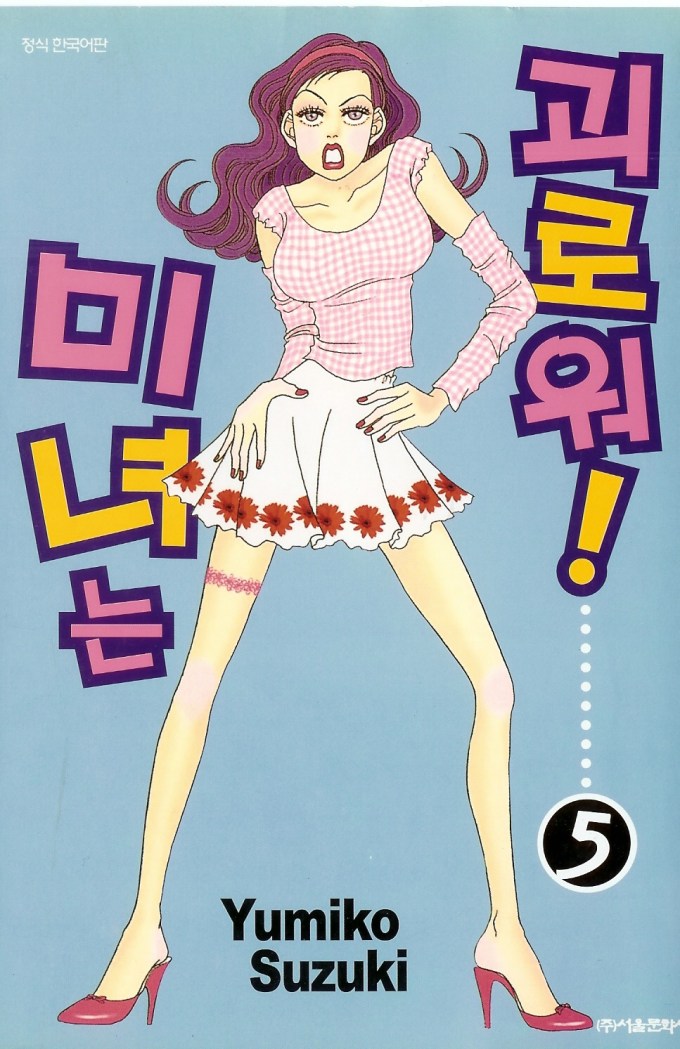 (Source)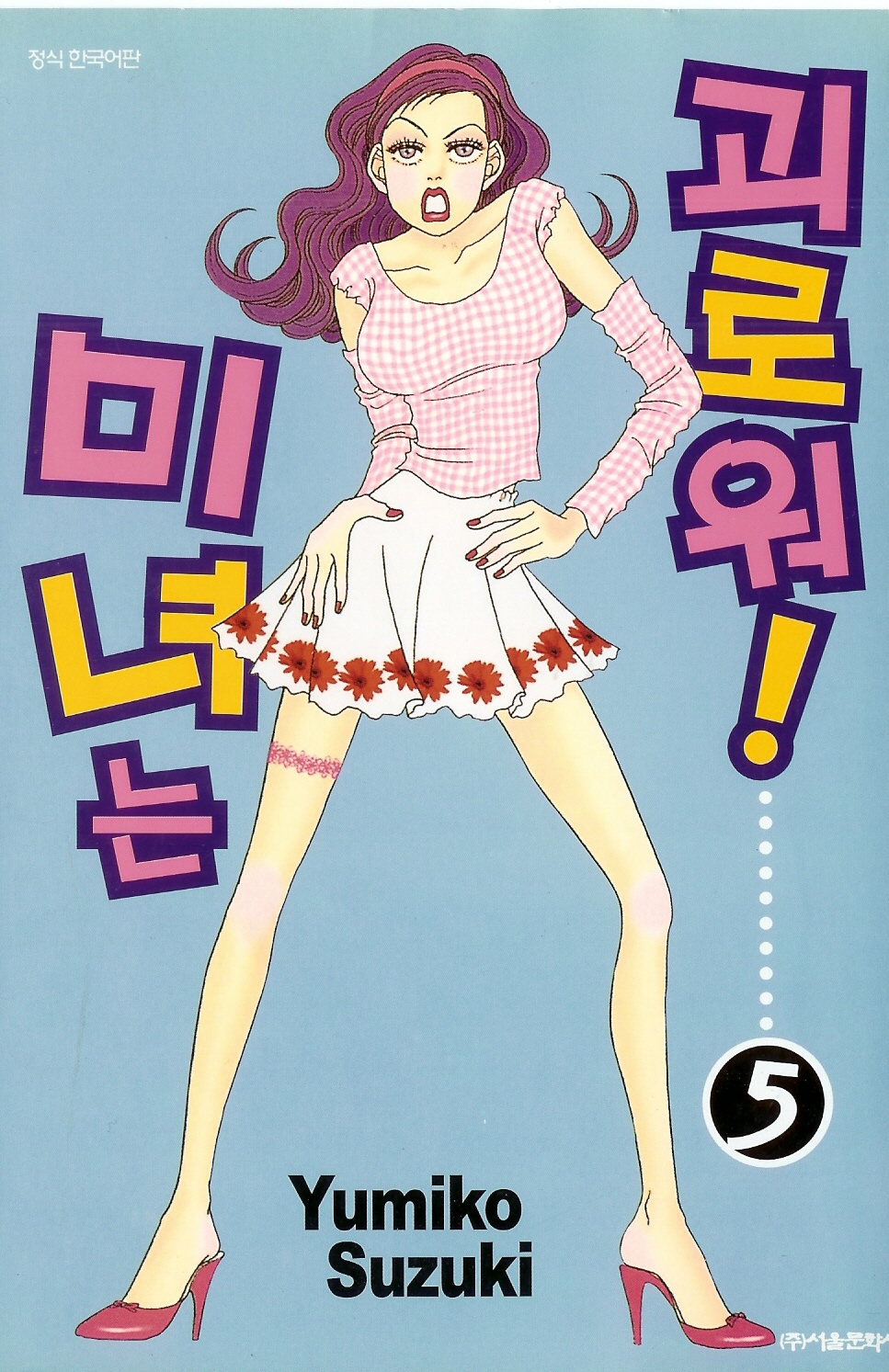
 (Source)
• Since when was being “healthy” a flaw? Healthy legs are not a good thing to have? tons of women would kill to have the women on that list’s legs!! This is disgusting: the girls you mentioned have fantastic figures. Note also that Suzy and Sulli are not even 18 yet! :|
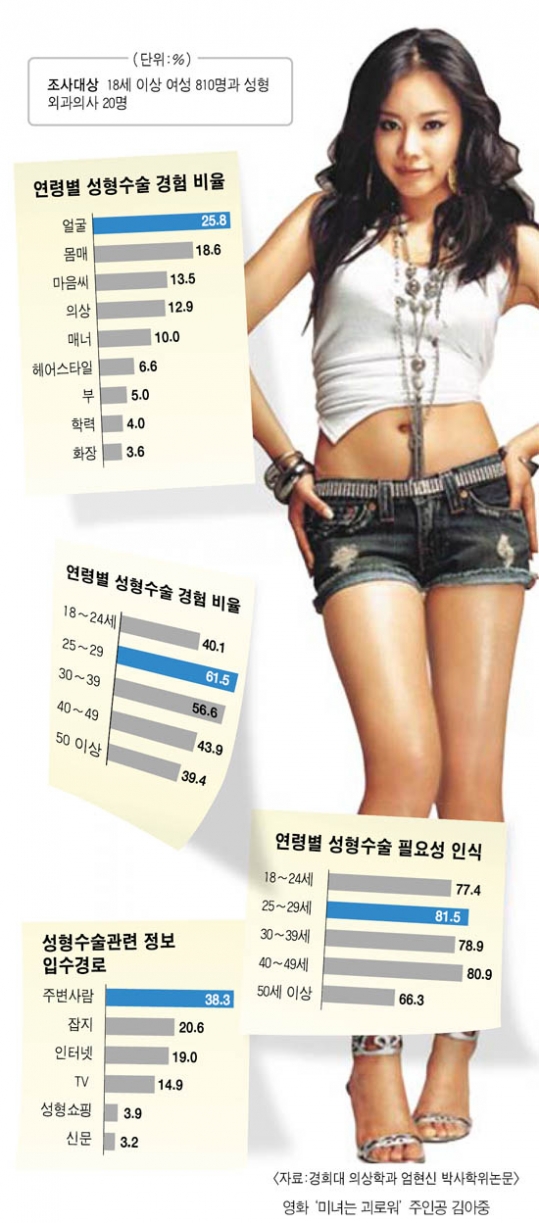
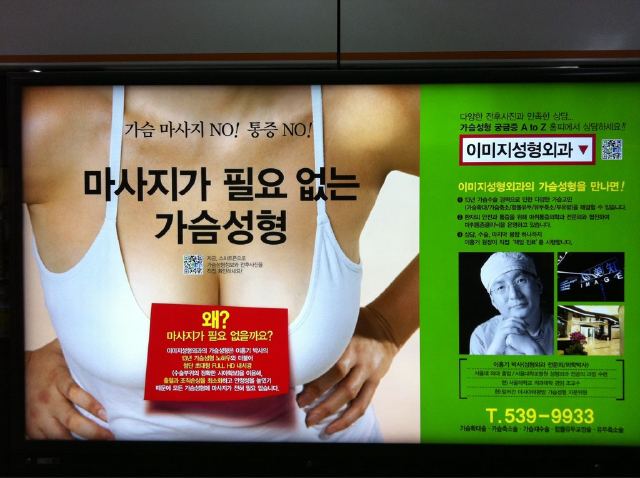 (Source: @ornamentity)
 (Source: @ornamentity)
 (Source)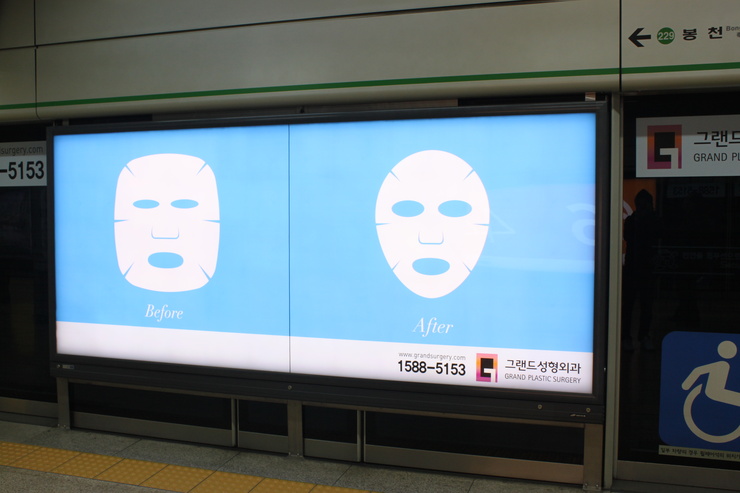








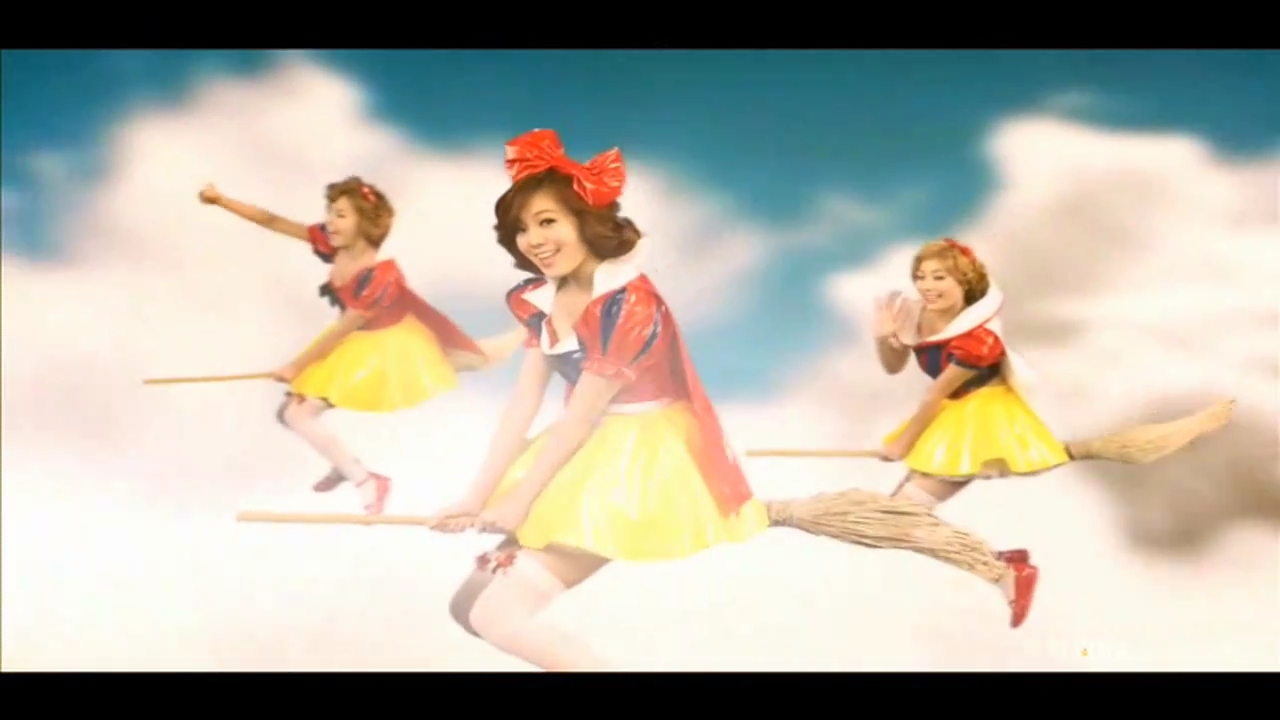








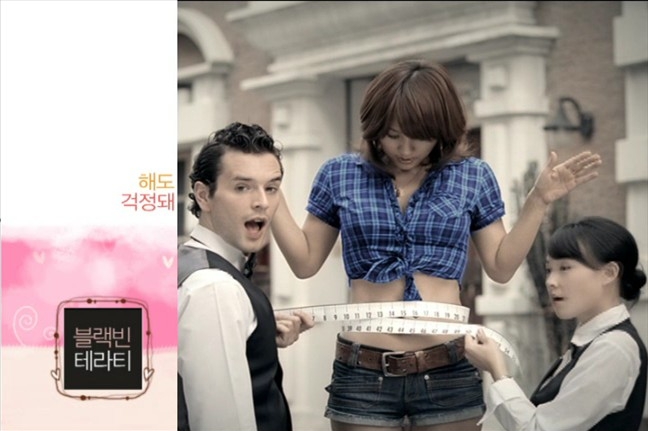

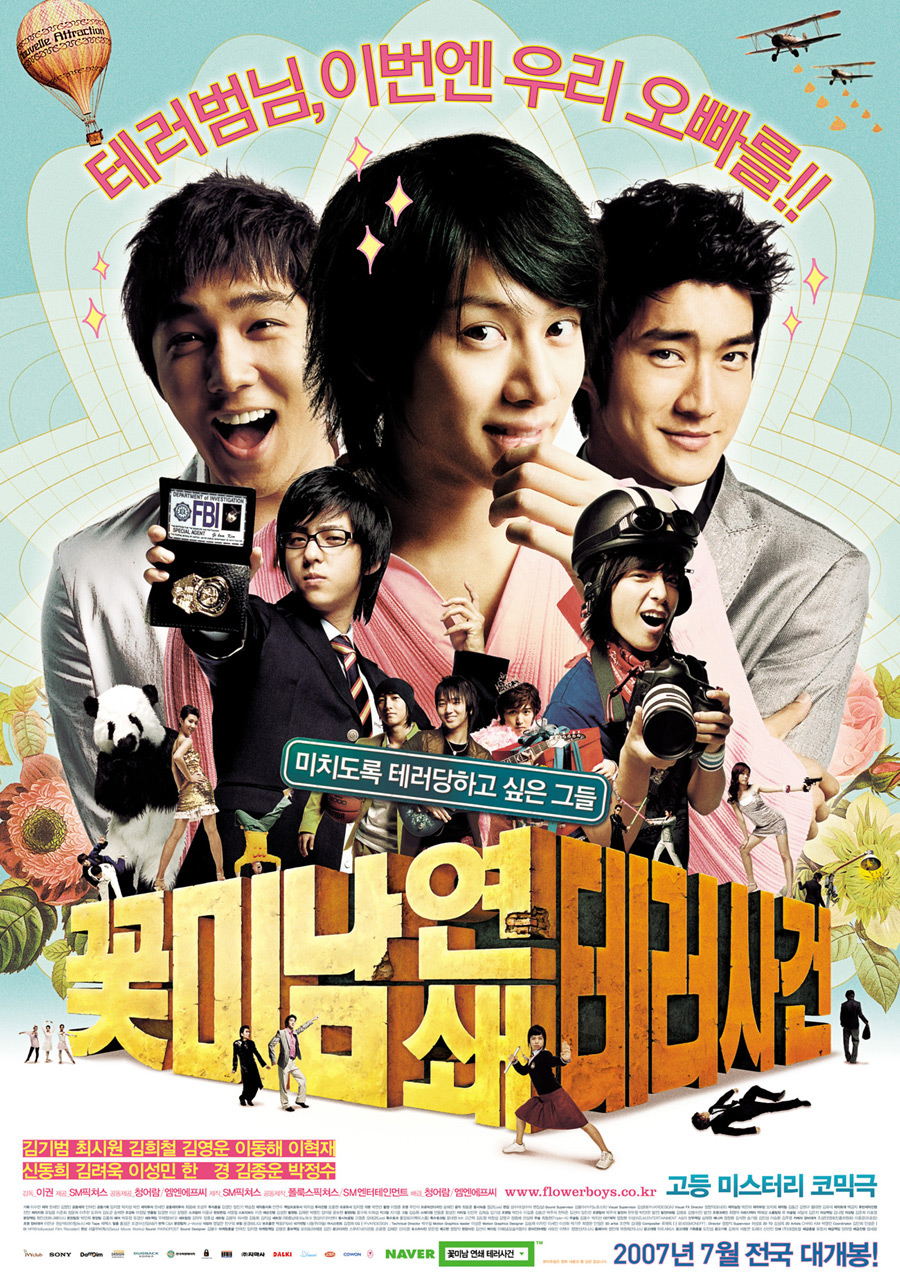





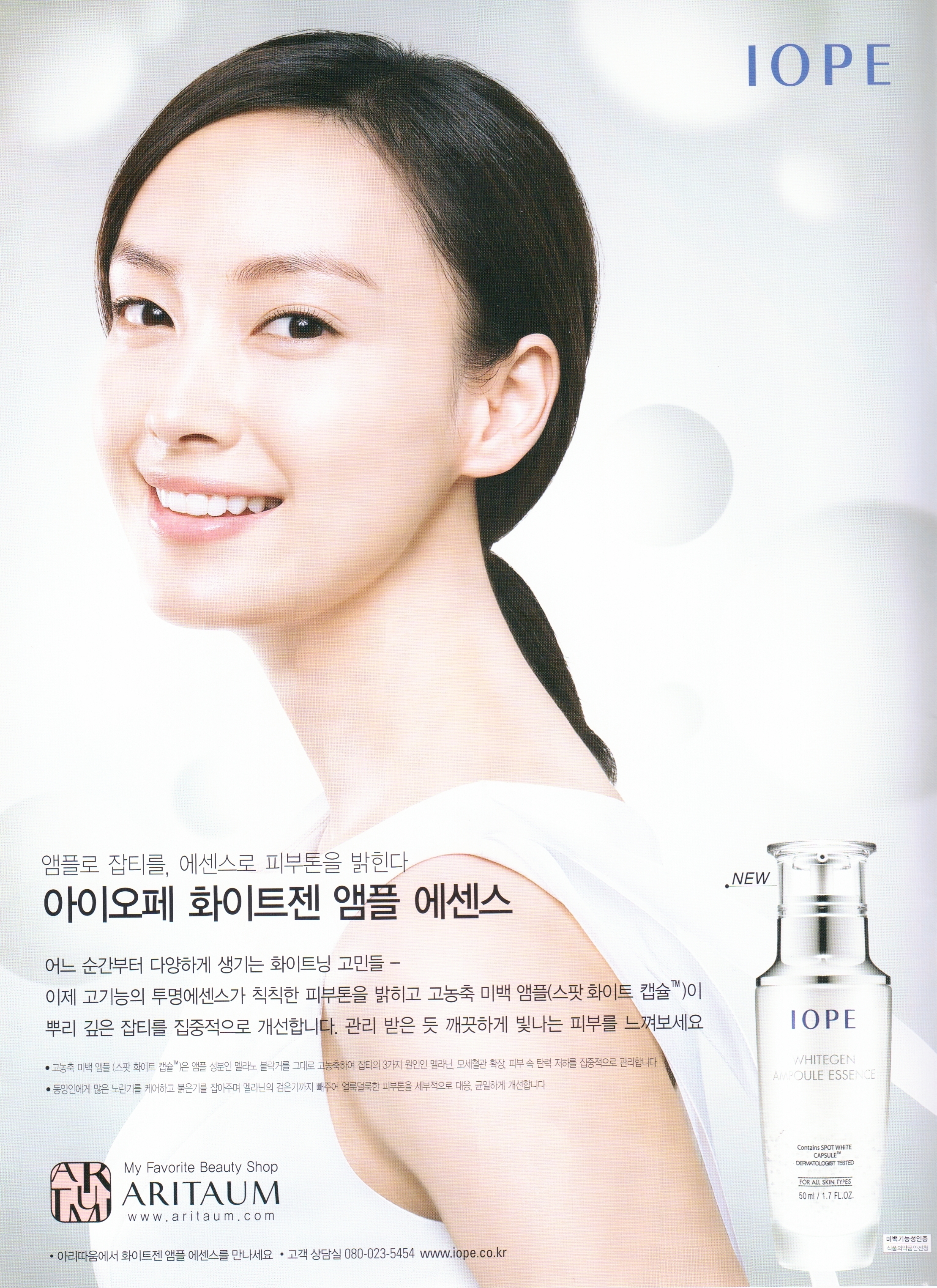



 Three out of four female college students consider X-line, a term referring to a slim waist with ample breasts and hips, to be the ideal body shape, according to a survey by




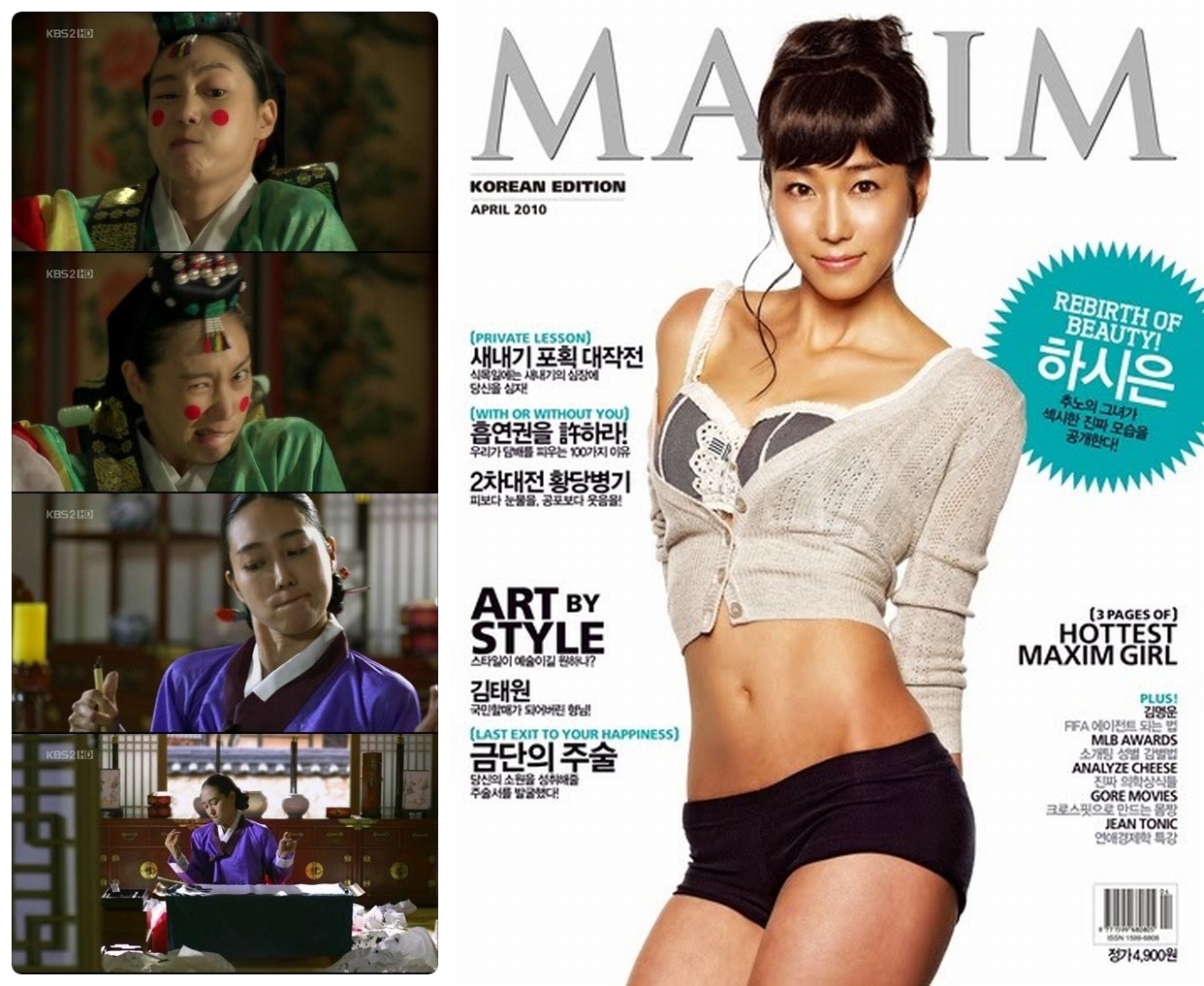
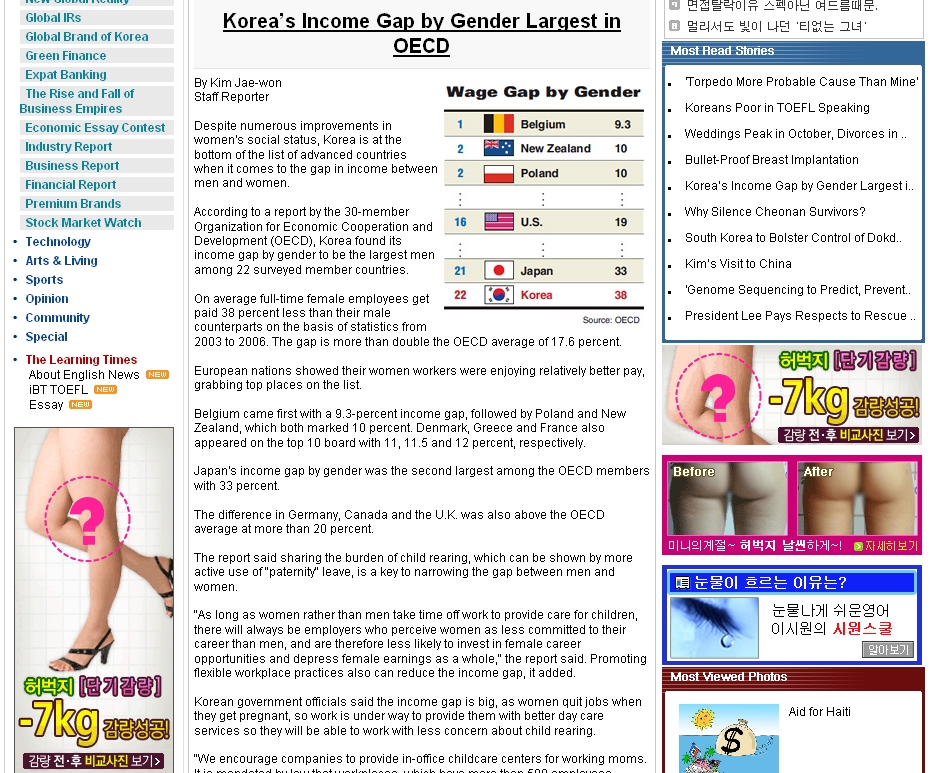


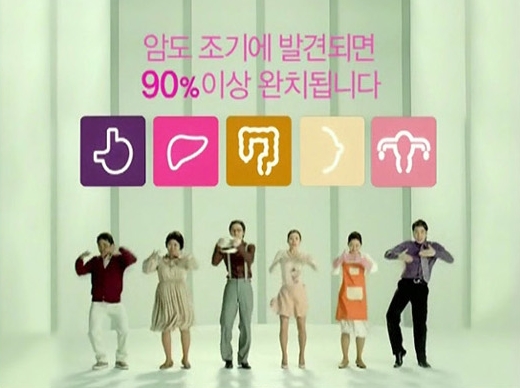
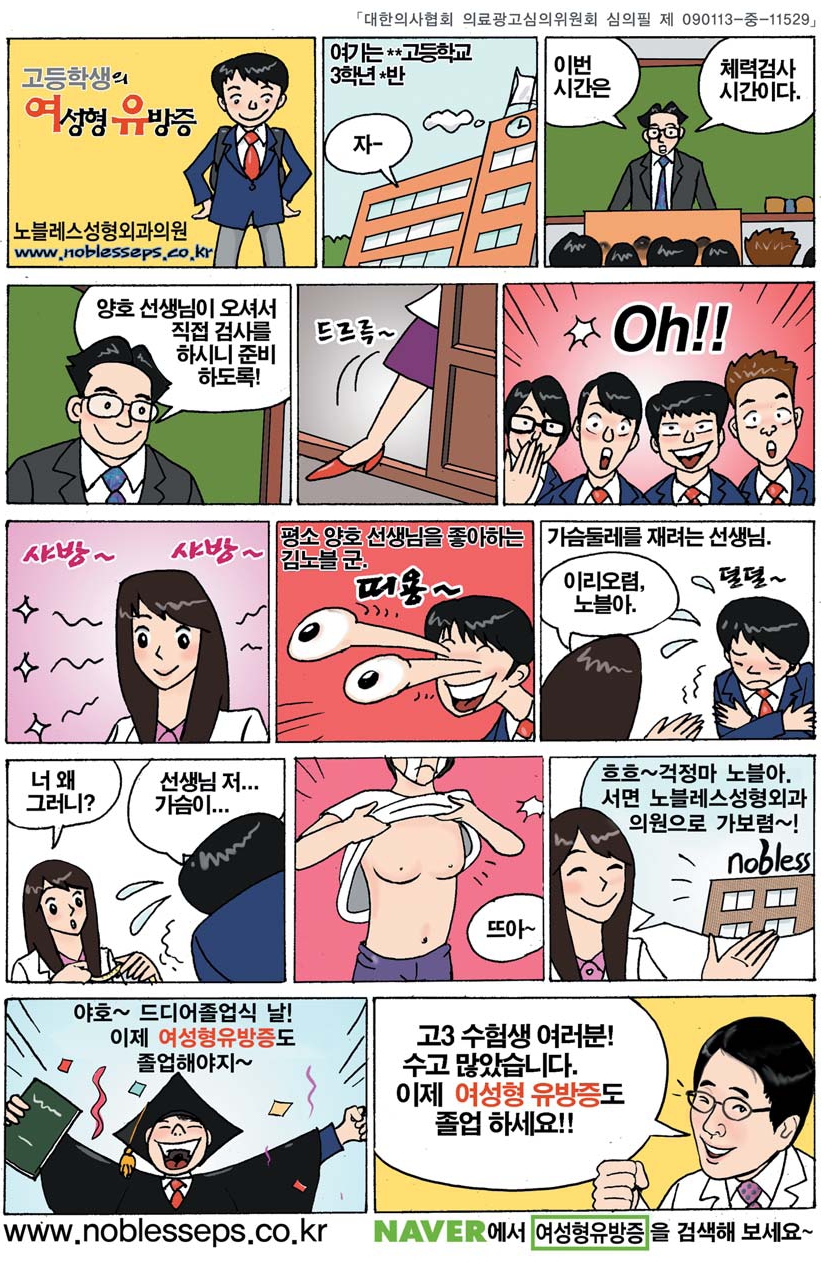
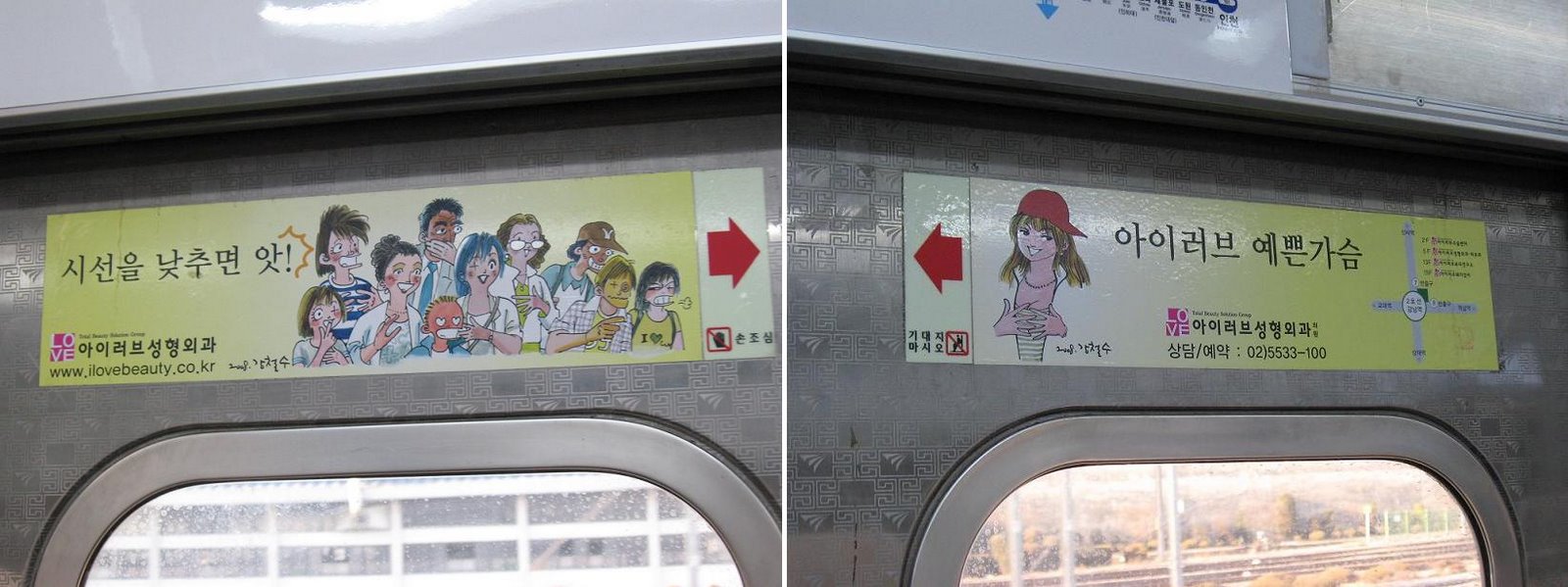

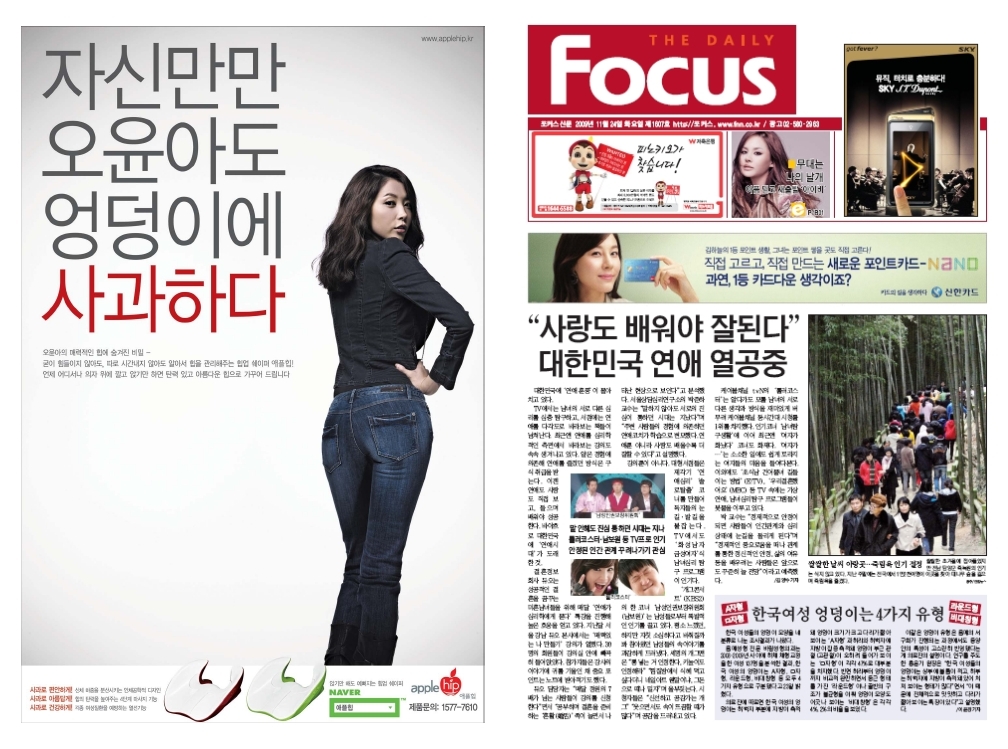
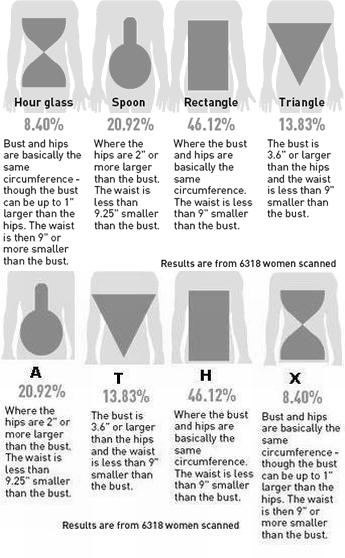 (Image sources: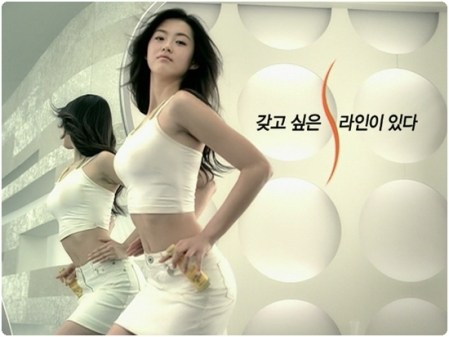
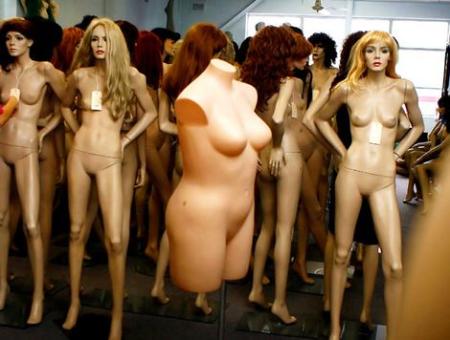

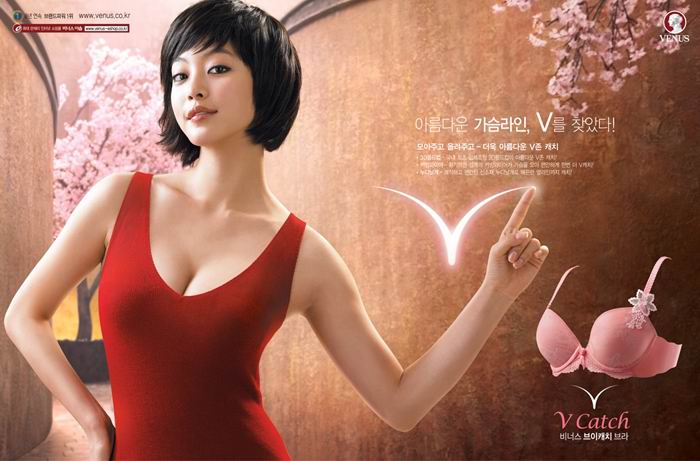

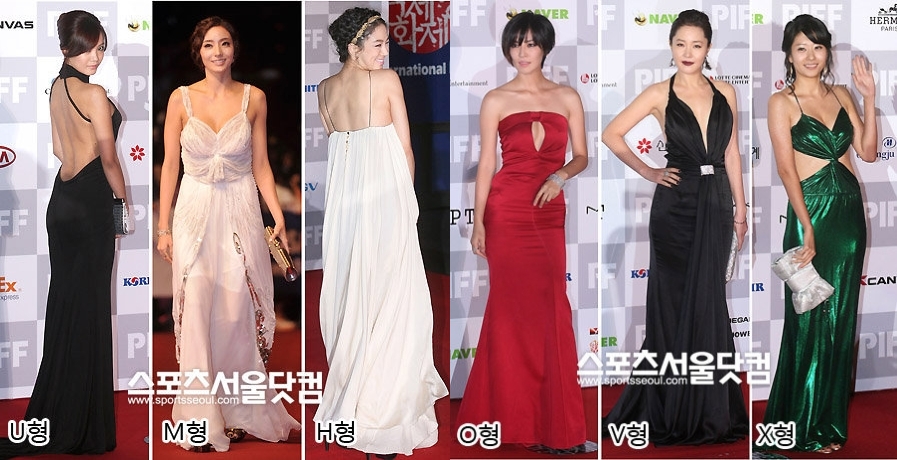
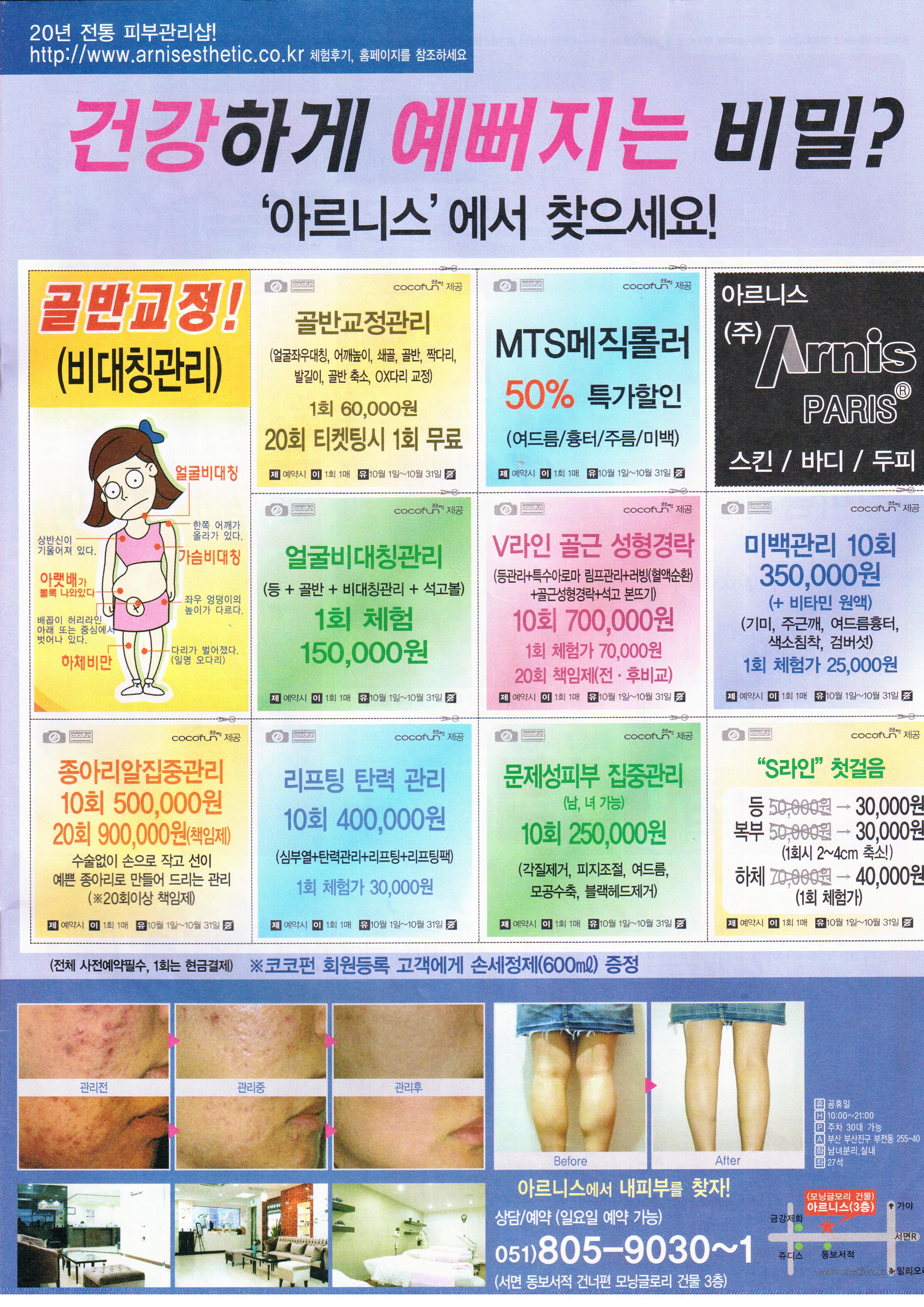
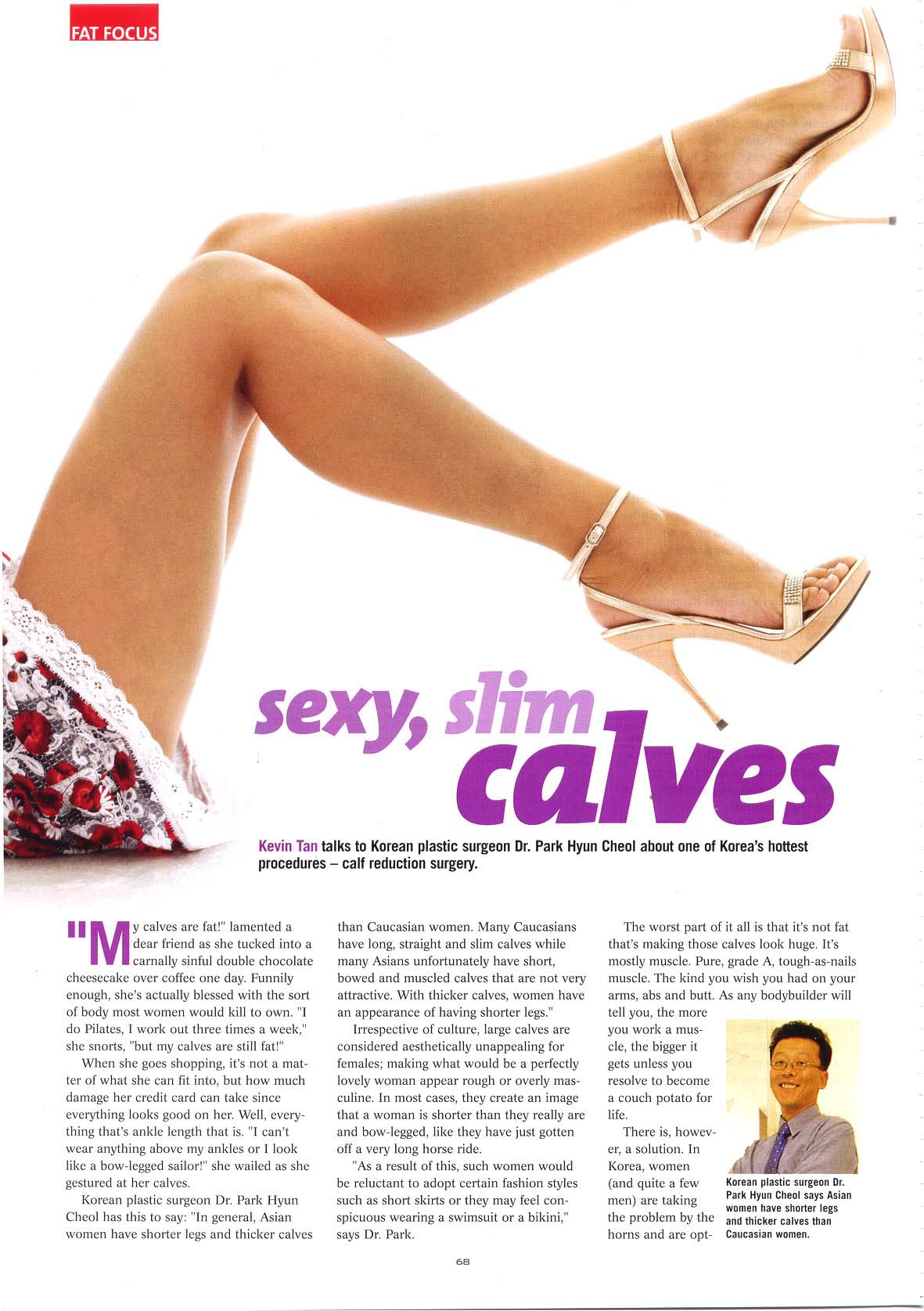




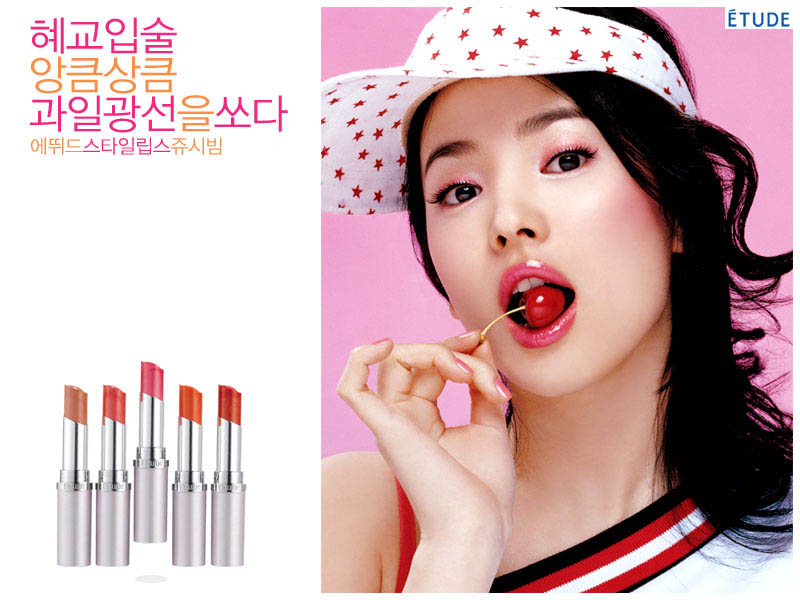




 The Grand Narrative