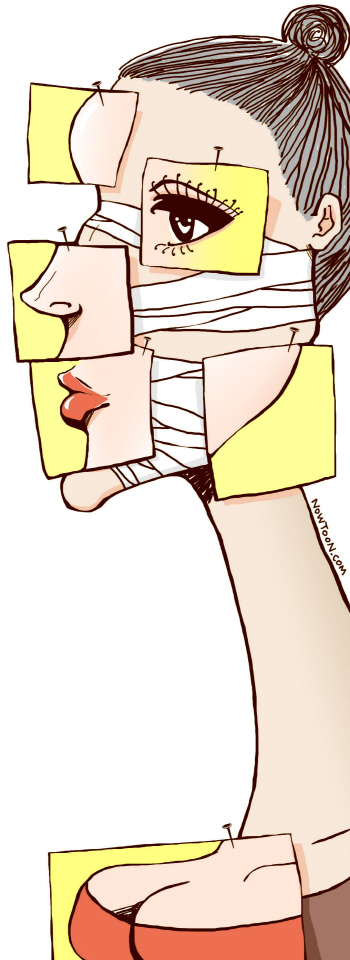
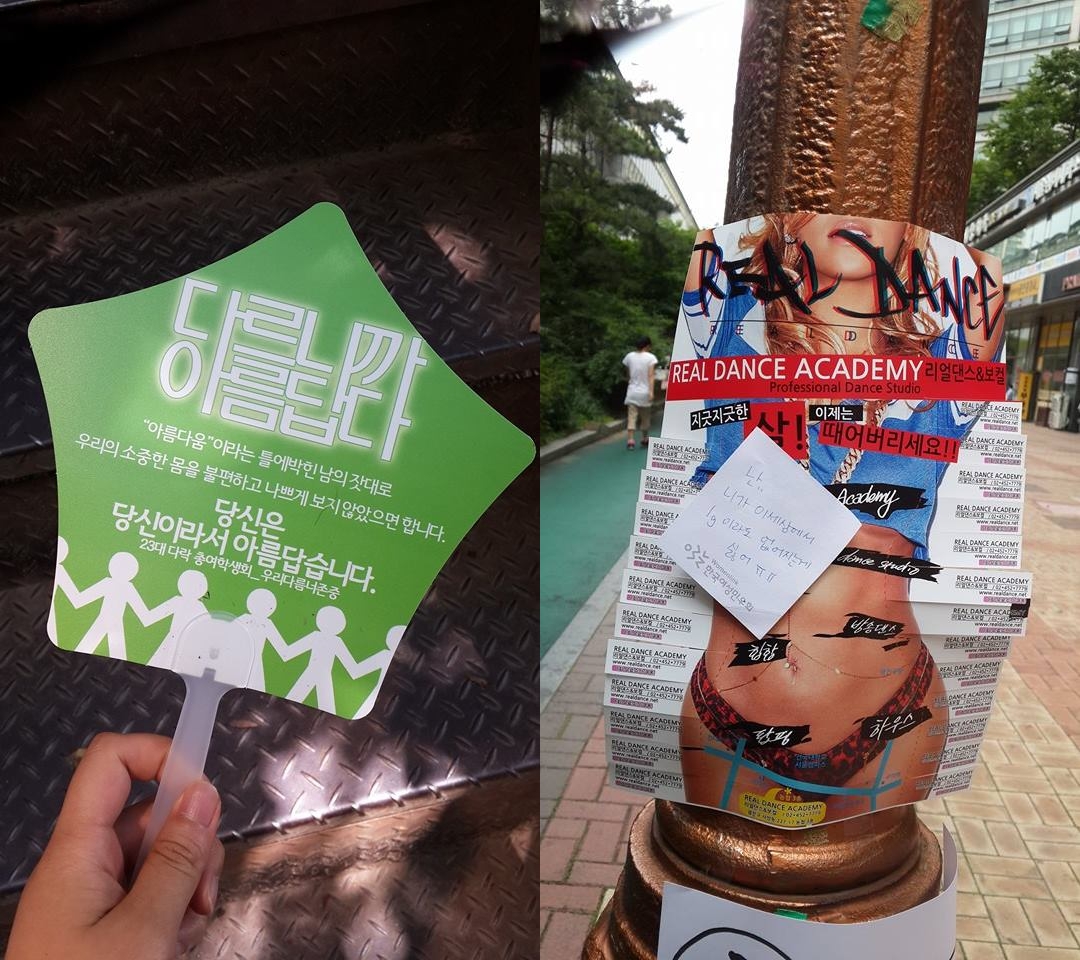
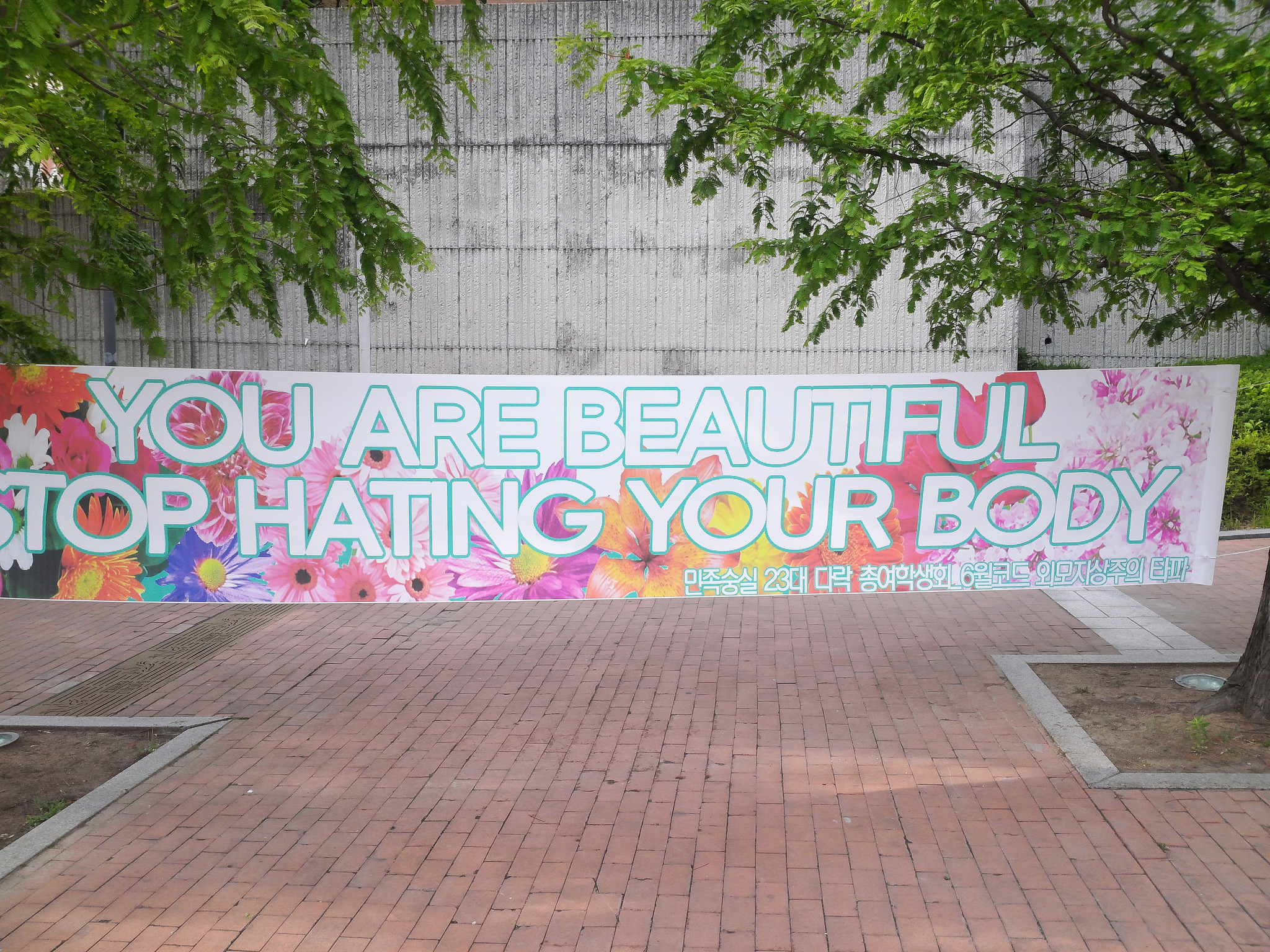
노출이 강간 유혹?…허튼소리 말라 Wearing Revealing Clothes Leads to Rape? Don’t Be Absurd

(Revealing the Korean Body Politic, Part 11)
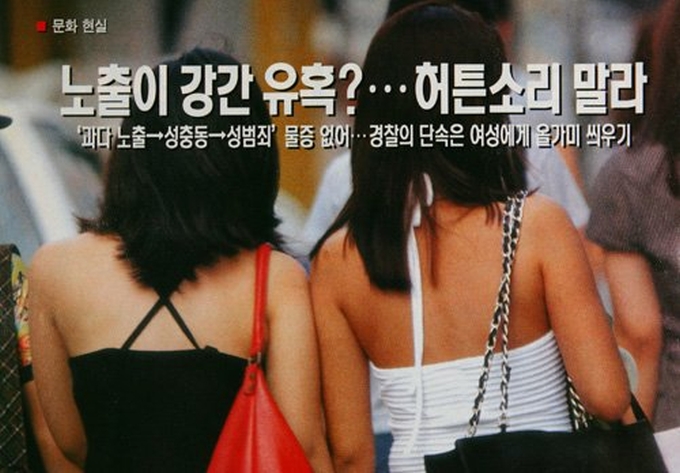
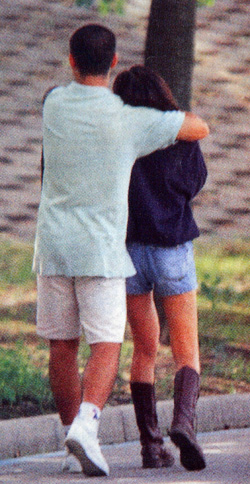
%eb%85%b8%ec%b6%9c%ec%9d%b4-%ea%b0%95%ea%b0%84-%ec%9c%a0%ed%98%b9-%ed%97%88%ed%8a%bc%ec%86%8c%eb%a6%ac-%eb%a7%90%eb%9d%bc(Caption: 이렇게 입으면 혼난다?: 경찰청의 과다 노출 단속 지침은 그 기준이 애매해 단속 경찰관과 대상자들 간에 갈등이 생길 것으로 예상된다. If you dress like this, you’ll get a telling-off? Police guidelines for cracking down on excessive exposure are vague; disputes between the police and public are expected)

I react pretty strongly when people claim I have no place writing about Korean feminism.

Partially, simply from turning 40. Because when you do, you realize that half of your life has passed, and that you probably have less than half remaining. Suddenly, you have zero time and patience for other people’s bullshit.

It’s quite liberating, frankly.

The second reason is more personal. I’ve emigrated five times. The first time, from the U.K. to New Zealand with my family, when I was 11. Which means that for nearly 30 years now, I’ve had people lecturing me about how I couldn’t possibly ever understand some things about where I lived, simply because I wasn’t born and raised there.

So, I was already sick and tired of that before I came to Korea. Once I got my bearings, I was never going to put up with it for very long.

Where Korea differs from other countries I’ve lived in though, is that I didn’t really need to with Koreans. Not after a couple of years here, anyway. Maybe it’s just because I’m writing in English, but it’s always been more other expats and people outside of the country who would place limits on what are appropriate subjects for me to write about, solely based on my sex and ethnicity.

That’s not to say I don’t have many limitations with being a white, middle-aged, cisgender, heterosexual man working on the subjects I cover. Of course I do. When those raise legitimate issues in my writing, I can but do my best to overcome them, and to constantly remind myself of the importance of listening and research.

It’s also important to remember to sometimes write provocative and unusual introductions too, to make sure I’m actually read.

In that vein, this one, I hope, explains why I am so interested in “framing” with regards to Korean feminism, sexuality, and pop-culture, and why I chafe so much when their many gatekeepers tell me I can’t ask questions.

Which brings me to this week’s post: a magazine article from 1996(!), about a police crackdown on women’s revealing clothing that summer. Originally, I just planned to translate it for its own sake, for reasons I’ll explain later. I was also tempted to trick you by only revealing its age at the end, to highlight just how little victim-blaming attitudes have changed in 21 years. But, knowing that dominant media and governmental discourses about women’s bodies and revealing clothing would change so radically just 6 years later, and especially with the second, K-pop-led Korean wave from 2006, I realized the contrast served as a chilling reminder of how brazen and manipulative our designated authorities can be, and how quickly they can make a volte-face when it serves their interests.

What will you take away from it?

The Chosun Ilbo August 7 2015 Korean Women Korean Flag Korean Nationalism(Korean Sociological Image #92: Patriotic Marketing Through Sexual Objectification. Source: The Chosun Ilbo, August 7 2015.)

[문화현실] 노출이 강간 유혹?…허튼소리 말라 Wearing Revealing Clothes Leads to Rape? Don’t Be Absurd.

과다 노출→성충동→성범죄’ 물증 없어…경찰의 단속은 여성에게 올가미 씌우기. There is no evidence for the notion that revealing clothing leads to sexual urges, leads to sexual assaults. This police crackdown is victim-blaming.

by Seong Woo-jae, Sisa Journal, 12 September 1996

지난 여름은 여성의 노출이 그 어느 때보다 심했다. 80년대 말부터 불기 시작한 60~70년대풍 복고 바람에다, ‘육체도 패션의 한 요소’라는 새로운 인식이 덧붙었기 때문이다. 젊은 여성들의 거리 패션은 육체 그 자체와 육체의 선을 선명하게 드러내는 특징을 보였다. 광적인 다이어트 열풍도 여기에 합세해 날씬한 몸매를 과시하는 노출을 한껏 부채질했다.

This summer, women have been wearing more revealing clothing than ever before. This is because of the drive, since the late-1980s, to restore the freedom of the fashions of the 1960s to the [early-]1970s, and because of the new belief that one’s body is also a fashion item. Young women’s street fashions now emphasize and clearly display their figures. A fanatical dieting boom is also adding to this desire to display one’s body.

그런데 여름이 다 가고 가을이 오는 마당에 노출의 계절이 ‘연장’되고 있다. 국가 공권력도 복고풍의 영향을 받은 것일까. 지난 8월25일 경찰청은 70년대에 ‘유행’했던 복장 단속을 실시하겠다고 발표했다. 경범죄처벌법 제1조 제41항 ‘과다 노출’ 규정을 적용해 불특정 다수 또는 다수인의 눈에 띄는 장소에서 ‘알몸을 지나치게 내놓은 행위’등을 단속하라는 지침을 일선 파출소에 보냈다.

But the summer is almost over, and the autumn is coming. Yet still, the season for showing off one’s body seems never-ending. In response, the government’s zeal to crackdown on such fashions has also risen. On the 25th of August, the police announced that they will be invoking Clothing Misdemeanor Law, Chapter 1, Clause 41, to launch a crackdown on clothes, with guidelines sent to regional departments. (Just like in the 1970s.)

경찰청은 △여성의 신체 노출이 점점 과다해지는 추세인데, 유림 및 시민단체에서 강력히 단속해 달라는 건의가 있고 △과다 노출이 풍기 문란 및 성범죄의 원인이 되고 있는 실정이며 △배꼽 및 상반신 과다 노출에 대해 무죄가 선고되어 소극적 단속을 해왔다는 사실이 이번 단속의 배경이라고 설명했다.

Explaining the background to this crackdown, the police stated:

  1. Women’s body exposure is increasing, and civic groups’ suggestions and requests to counter this have increased in response.
  2. Excessive exposure is becoming a cause of excessive PDA and sexual crimes
  3. Exposing the navel and more of the breasts have so far been considered publicly acceptable, and so the police have not actively cracked down on it. [Attitudes are hardening however.]

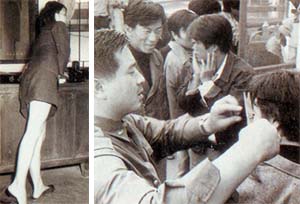
70%eb%85%84%eb%8c%80-%eb%af%b8%eb%8b%88-%ec%8a%a4%ec%bb%a4%ed%8a%b8%ec%99%80-%ec%9e%98%eb%a6%ac%eb%8a%94-%ec%9e%a5%eb%b0%9c-70%eb%85%84%eb%8c%80-%ec%b4%88-%ec%82%ac%ec%a7%84%ec%9d%b4%eb%8b%a4(Caption: 70년대 미니 스커트와 잘리는 장발: 70년대 초 사진이다. 당시 경찰관들은 30cm 자를 들고 다니며 여성들의 치마 길이를 쟀고, 짧은 치마를 입지 못하도록 무릎 위를 때려 빨갛게 만들기도 했다. 장발은 당시 젊은이들이 정권의 물리적 위협에 반발하는 일종의 문화적 저항 행위이기도 했다. 90년대 들어 남성들은 경찰관이 머리를 자르지 않아도 머리를 깎는 경찰관(위 사진 왼쪽)과 같은 머리 모양을 하고 있다.)

(A woman wearing a mini-skirt and men’s hair being forcibly cut in the eary-1970s. Back then, the police carried 30cm rulers with them and measured women’s skirt lengths; if they were too short, they hit the women above the knees until they were red. Meanwhile, young men grew their hair long as a rebellious act of defiance against the government. [Prompting the police to cut it off.] In the 1990s, however, young men tend to have the same hairstyles as the police.)

경찰의 뒤늦은 단속을 지켜보며 풍기 문란을 염려해오던 쪽에서는 잘한 일이라며 응원을 보내고 있지만, 또 한쪽에서는 ‘시대착오적인 발상’이라며 비판을 서슴지 않는다.

There have generally been two kinds of responses to this crackdown from the public. On the one hand, people are relieved that the police are dealing with the excessive exposure. On the other, that this is a big step backward, which is completely out of touch with the changing times.

한국은 92년부터 스웨덴을 제치고, 미국에 이어 성폭력 세계 2위라는 오명을 안고 있다. 성범죄를 예방하기 위한 당국의 고육책인지 모르지만, 경찰청의 단속 지침은 예방보다는 성범죄와 관련한 통념, 즉 ‘여성의 몸가짐에도 잘못이 있다’는 고정 관념을 더욱 고착화할 것이라는 우려를 낳고 있다.

Since 1992, Korea has had the second highest rate of sexual assaults in the world, overtaking Sweden [James: I think the author actually meant in the OECD. Either way, both Korea and Sweden’s high rankings beg further investigation, but unfortunately no source is given for them]. This crackdown may be a desperate response to that, but the police guidelines have more to do with laying the blame on women and their bodies than with genuine preventive measures. There is a worry that the crackdown will lead to greater victim-blaming and bias against and stereotyping of women.

문제는 과다 노출이 성 ‘충동’이 아닌 성 ‘범죄’의 직접적인 원인이 되고 있느냐 하는 점이다. 한국여성의전화•한국성폭력상담소 등 관련 단체에 따르면, 노출 패션이 성범죄와 직접 관련이 있다는 근거는 없다. 조사 자료를 살펴보면, 성폭행을 당한 여성 중 19세 미만이 50% 이상(13세 미만은 전체의 30%)으로 노출 패션과 거의 관련이 없는 학생층이 절반 이상을 차지하고 있다.

The issue here is that while greater exposure does greater sexual urges, but does it lead to greater sexual crimes? This needs to be determined. According to the Korea Women’s Hot Line and the Korea Sexual Violence Relief Center, there is no evidence of a relationship. A survey of female rape victims (50% of whom were under 19, 30% of whom were under 13), shows that they were not wearing revealing clothes at their time of their rape.

다음은, 성폭력이 계절과 관련이 있다고 보는 인식의 문제이다. 노출의 계절이라고 해서 성폭력이 증가하는 것은 아니다. 성폭력 발생 빈도는 계절과 관련이 없다. 게다가 성범죄에서 가해자와 피해자의 관계를 보면, 친인척•직장 상사•데이트 상대•교사•동네 사람 등 아는 사람이 70% 이상을 차지하고, 모르는 사람의 경우도 대부분 계획된 범죄를 저지른다. 노출 패션이 성 충동을 불러일으킬지는 몰라도, 성폭력과 직접적인 관련이 있다는 근거는 없는 것이다.

Next, the notion that sexual violence is related to the season is also problematic. In fact, they are completely unrelated; so, just because it is the summer, it doesn’t mean there will be a spike in sex crimes. Moreover, if you break down the statistics of sex crimes based on the relationship between the perpetrators and victims, more than 70% are relatives, coworkers, dates, teachers, neighbors, and so on. Also, in the cases of perpetrators unknown to the victims, their crimes tend to premeditated. In other words, they are planned and executed regardless of the clothing of the victim at the time. So, there is no evidence for a direct relationship between exposure and sex crimes.

“경찰력 과다 노출이 노출 패션보다 심각” “The Excessive Use of Police Power is a More Serious Problem then Excessive Exposure”

성충동, 곧 성욕이 성폭력을 낳는 것도 아니다. 한국여성의전화 정춘숙 부장은 “성폭력은 여성을 성적 대상으로 삼아 지배하는 행위이지, 성욕과는 별 관계가 없다. 성폭력의 대상이 반항하지 못하는 어린 연령층으로 자꾸 내려가는 추세는 이 때문이다”라고 말했다. 일반적으로 성폭행은, 자기가 처한 환경에 대해 분노나 소외감을 갖는 이들이 자기보다 약한 사람을 지배하거나 통제력을 행사하는 차원에서 이루어지는, 철저한 권력의 문제인 것으로 알려져 있다.”

Sexual desire doesn’t a role in sex crimes. Jeong Choon-sook, the director of the Korean Women’s Hot Line, said, “Sex crimes are a case of dominance targeting women sexually; they are little related to sexual urges. This is why the targets of sexual crimes are getting younger over time.” In general, sex crimes are known to be power games. So those who have feelings of loneliness or anger about their situation, they want to control those [they consider] weaker than themselves.

경찰청이 단속의 근거로 내세운 ‘과다 노출→성충동→성범죄’화살표 공식은, 단순한 심증만 있을 뿐 확실한 물증이 없다. 경찰청의 단속은, 노출 패션을 성범죄의 원인으로 간주함으로써 1차적 책임을 가해자가 아닌 피해자에게 돌릴 개연성을 안고 있다. 또 과다 노출을 성범죄와 연관시킴으로써 여성뿐 아니라 남성들마저 모욕하고 있다는 비판을 받고 있다.

There is little evidence to support the police’s logic that excessive exposure leads to sex crimes. Consequently, their crackdown has a strong possibility of victim-blaming, based solely on the victims’ clothing. The police have also received complaints that men can not control themselves in the face of excessive exposure belittles men also.

“경찰이 여전히 ‘여성 유발론’이라는 통념을 갖고 있다는 사실을 보여주는 단속이다. 여성에게 1차적 책임을 묻는 것은 가해자인 남성에게 면죄부를 주는 일이자, 피해자인 여성에게는 또 하나의 올가미를 씌우는 일이다.” 한국성폭력상담소 최영애 소장의 말이다.

According to Choi Yeong-ae, director of the Korea Sexual Violence Relief Center, “This crackdown clearly shows that the police still subscribe to the conventional wisdom that women can be partially responsible for their rape. This indulges male perpetrators, and frames women.”

%eb%aa%a8%ed%98%b8%ed%95%9c-%eb%8b%a8%ec%86%8d-%ea%b8%b0%ec%a4%80-%ec%a7%80%eb%82%98%ec%b9%9c-%ec%95%a0%ec%a0%95-%ed%91%9c%ed%98%84%eb%8f%84-%ea%b2%bd%ec%b0%b0%ec%9d%98-%eb%8b%a8패션, 그 가운데서도 거리 패션은 한 시대의 정치•사회•문화 환경과 그로 인한 심리를 민감하게 반영한다고 알려져 있다. 신경정신과 전문의 신승철씨(광혜병원 원장)의 분석을 들어 보자. “정신분석학으로 보면, 노출 패션은 단순해지는 인간 관계에서 말미암는 것으로 보인다. 인간 관계에서 자꾸 소외되다 보면 몸을 통한 자기 표현 욕구가 극대화한다.”

Considering fashion, street fashion represents people’s feelings and thoughts about the politics, society, culture, and environment of its era. Neuro-psychologist Shin Sung-cheol, head of Gwanghye Hospital in Seoul, said, “According to psychoanalytic research, wearing revealing clothing comes from a need for relationships. People experiencing loneliness and/or who feel left out a lot experience an increased urge to express themselves through their bodies.”

[James: This is just as bizarre as the notion that revealing clothing is a cause of rape, and it hardly advances the author’s argument. Nevertheless, I don’t think it’s a mistake with my translation.]

경찰청의 단속 발표를 시대착오적인 발상이라고 비판하는 정유성 교수(서강대•교육학)는, 문제는 결국 여성의 노출이 아니라 성을 지배하고 소유하려는 남성들의 음험한 눈이라고 말했다. 어떻게 보이느냐가 중요한 것이 아니라, 어떻게 보느냐가 중요하다는 지적이다.

Education professor Jeong Yoo-seong of Sogang University, who criticized the police’s crackdown, described it as outdated, and that the problem is not women’s exposure, but rather an insidious desire of men to control and police women’s bodies. The issue is not with attracting the male gaze, but with the male gazers.

(Caption: 모호한 단속 기준:‘지나친 애정 표현’도 경찰의 단속 대상이다. Vague crackdown guidelines; public displays of affection are also a target.)

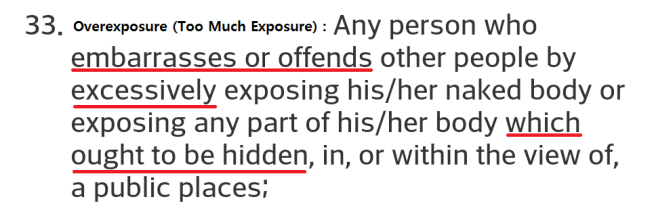
경찰청이 정한 단속 기준은 대부분 모호하다. ‘알몸을 지나치게 내놓은 행위’ ‘보는 사람으로 하여금 수치심을 느끼게 하는 행위’‘불쾌감을 주는 행위’등 단속 경찰관의 주관적·개인적 판단에 맡길 수밖에 없는 기준들이다.

The majority of the police’s guidelines are rather vague. Things like “revealing one’s body excessively,” “acts which make people feel embarrassed and humiliated,” “acts that cause discomfort among others,” and so on are extremely subjective.

korean-overexposure-laws(Image not in original article. Source: KLAWGURU)

“70년대의 장발 단속이 지금은 웃음거리가 된 것처럼, 이번 경우도 나중에 웃음거리밖에 안되는 단속이 될 것이다. 데모대에 총기 사용을 불사하겠다, 고무 총탄을 쓰겠다는 발표와 더불어 민주화 이후의 개방 분위기에 역행하는 조처로 보인다”라고 전상인 교수(한림대·사회학)는 말했다. 전교수는 시민 사회에서 숨어 있어야 할 경찰의 ‘과다 노출’이 ‘패션 노출’보다 더 심각한 문제라고 지적했다.

Just like crackdowns on long hair in the 1970s are now considered laughable, this one will be too. Sociology Professor Jeon Sang-in of Hallym University said “This crackdown is an anti-democratic step backward, on a par with statements like ‘We will shoot protestors.'” He pointed out “Police excessive use of power is more serious than excessive exposure. Police are supposed to blend in seamlessly into civil society.”

“과다 노출이 비록 눈살을 찌푸리게 하는 일이더라도, 그것은 개인이 결정하는 자기 표현의 한 방법이므로 그 나름으로 존중해 줘야 한다. 성폭력을 방지하는 길은, 이런 유치한 수준의 단속이 아니라 성 태도 교육을 비롯해 사회 전체가 성문화에 대해 공개적이고 진지하게 성찰해야 가능하다” 라고 정유성 교수는 말했다.

“Even though excessive exposure can be something to frown upon, it is an individual’s decision to make as well as a way of expressing oneself. This is something to be respected,” continued Jeong Yoo-seong. “In order to prevent sex crimes, the public should be educated about sexual attitudes and public sex culture. Not endure childish crackdowns like this.”

경찰청의 노출 단속은 촌극으로 끝날 가능성이 많다. 일간지의 독자투고 난과 컴퓨터 통신을 통해 반대 여론이 거세지자 ‘주의를 환기하자는 뜻에서 발표했다’고 경찰청 관계자가 밝히고 있거니와, 무엇보다 노출의 계절이 지나갔기 때문이다. 게다가 패션 주기가 급격하게 짧아지고 있는 만큼 내년 여름이면 또 다른 유행이 거리 패션을 휩쓸지도 모른다.

The police’s crackdown is more likely to end in comedy than anything else. Because, as opposition has increased among the public, the police have since responded that “The announcement of the crackdown was just intended to make people more cautious.” The season of excessive exposure is almost over, and fashions change rapidly. Maybe next summer, even modesty might come back in style. (End.)

https://twitter.com/ssuerm/status/694726668741529600

That extra reason I just wanted to post this translation just for the sake of it? Simply because it came from one of many popular tweets I’ve saved, from my Hootsuite Twitter feeds for “페미니즘,” “여성주의,” and so on, where I’m constantly finding interesting new stuff to read instead of writing. Whats more, unlike gender studies as an academic discipline here, which my professor friends lament is still grappling with second-wave feminism, I’ve found the Korean feminist Twitterverse to be really quite vibrant and progressive. I highly recommend following it, even if your Korean isn’t fluent enough to follow the links—just the tweets themselves provide convenient, bite-sized Korean practice.

I highly recommend following KLAWGURU too, who wrote about a change that has actually been made since 1996. In November last year, Korea’s exposure law was found unconstitutional, because its wording was too vague and subjective (see above). Ironically and perhaps tellingly however, it was a man contesting his fine for being half-naked in public that led to it being re-examined:

Thoughts?

The Revealing the Korean Body Politic series:

“An epic battle between feminism and deep-seated misogyny is under way in South Korea”

(Revealing the Korean Body Politic, Part 10)
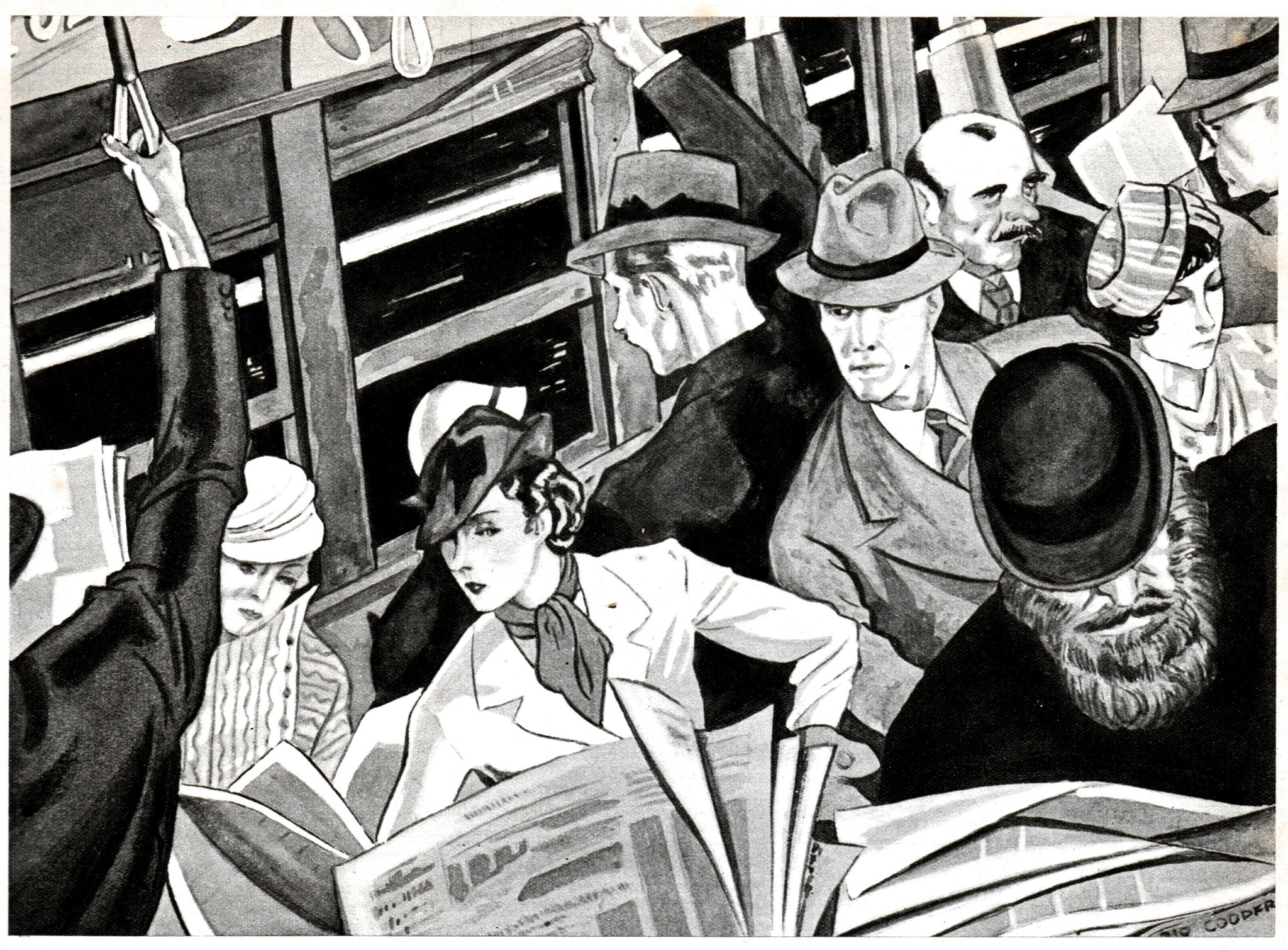
panorama-stad-amsterdam-1935-verhaal-ill-trampassagiers(Source: janwillemsen; CC BY-NC-SA 2.0)

Update: See @lookslikechloe’s blog for a Korean translation of the entire article.

Back in August, I was interviewed by reporter Isabella Steger for her article “An epic battle between feminism and deep-seated misogyny is under way in South Korea”, which came out at Quartz today. It’s a good introduction to current trends and conditions, as well as being a great read. So for this post, let me just add a few links and extra context to those segments attributed to me. Starting with:

In the late 1990s, the Asian financial crisis upended the stability of the Korean “salaryman.” Many men who lost their jobs started to compete with women for work. “A lot of the negative stereotypes about women, a lot of very gendered labels, started appearing in the early 2000s,” says James Turnbull, a long-time resident in the southern city of Busan who writes about feminism.

To be more precise, a large cohort of men lost their regular, full-time jobs between 2002-2004, and started having to compete for irregular work with women, who’d already lost their own regular, full-time jobs five years earlier in the wake of the Asian financial crisis (under the rationale that they would be provided for by their husbands or fathers). Then another point of friction came in 2013, when the percentage of women in their 20s that were working began to slightly surpass that of men.

Tellingly, the media portrayed achieving equality with men as a “tornado” of female power.

For the exact statistics, and my analysis of their implications, see part 6 of this series in the links below. As for those negative labels and gendered stereotypes, see Parts 3 and 4, or Part 7 for a summary.

Next:

While overall crime and homicide rates in Korea remain very low, more women in Korea are murdered than men, which is unusual in a developed country, says Turnbull. The United Nations singles out Japan, Hong Kong, and Korea as places with some of the lowest homicide rates in the world but where the share of male and female victims is near parity, with intimate partner violence also an acute problem in Japan (pdf, p.54-56).

In addition to the extra information on that provided in Isabella’s article, see this Facebook post by a friend of mine (which he generously made public) for a breakdown and analyses of the statistics involved, which was originally prompted by the blog post “Women Are More Likely To Be Murdered In South Korea Than The U.S.” by Matt Pressberg.

Reporter John Power also provides some things to think about:

https://twitter.com/jetpack/status/651567370247364608 https://twitter.com/jetpack/status/651572168346611712

Finally:

While women have gained some power and independence in Korea, a preference for male children in the 1970s and 1980s has resulted in an excess of men–and the disparity in numbers contributes to tensions. In 1990, thanks to the availability of selective abortion, Korea’s sex ratio at birth was 116.5, meaning 116.5 boys were born per 100 girls, a ratio that since has evened out (paywall). Many of those 1990 male babies are now grown men unable to find girlfriends and wives, says Turnbull. At the same time, more Korean women are choosing not to marry at all.

Again, see Part 6 for more detailed information on those statistics and their implications (also see the tweet below, which graphically shows the number of excess men by age group.) By a huge coincidence, the Korean media would only finally begin reporting on the potential consequences of this imbalance in April this year, just a month before the murder in Gangnam.

Thoughts?

Guidelines for a Beautiful Penis

'Atomic Avenue #1', by Glen Orbik(“Atomic Avenue #1” by Glen Orbik, detail. Via: Dark Roasted Blend)

Remember the Ministry of Health and Welfare’s guidelines forbeautiful breasts“?

By definition absurd, the reaction was vociferous, and the Ministry scrambled to remove the offending post from its website.

Somehow amongst all the commotion though, a response by cartoonist and illustrator @ickjong got overlooked, at least by the English-language media.

That just won’t do. So, for phallus-lovers and/or owners everywhere, let me hereby present his “guidelines for a beautiful penis“. Or as I like to think of it, the “P-line/피라인” (you heard it here first):

Guidelines for a beautiful penis 1

When viewed from the front, it should look like Mr. Elephant, who has a nice personality. [And is from a well-known children’s song.]

Guidelines for a beautiful penis 2When viewed from the side, the head of the penis should be lower than the approximate position of the anus. [“Approximate” because it’s difficult to see from the side I guess. No, I’ve never really thought about it either.]

A response:

https://twitter.com/ickjong/status/761040256627900417

“Wouldn’t this be hurtful to someone who couldn’t get it lower?”

“That’s why it’s important to squat. If you squat properly, and maintain it, it’s possible to raise your anus.”

Good to know. Continuing:

Guidelines for a beautiful penis 3Left, top: The number of wrinkles on each testicle should be three times your age.

Left, bottom: As the length of “C’ is the source of men’s pride, it should be measured from somewhere between the belly-botton and the sternum to the tip.

Right: Testicles are different sizes, and are extremely sensitive. You have to take good care of them!

But…THREE times your age? Even for teens, that’s going to require a lot of counting. So, make sure to ask your nearest and dearest to lend a hand, and I guarantee you’ll both have a good day! ;)

Radio Interview on Korean Feminism and the Media, Tonight at 7:30

The Year of the PenisAt 7:30 tonight, I’ll be briefly appearing on Inside Out Busan at Busan e-FM, to talk about Korean feminism and the media. Please tune in if you can, and feel free to ask me here to expand upon or clarify anything I mention in the interview. I’ll also post a link to a download once it becomes available.

(Update: Voilà!)

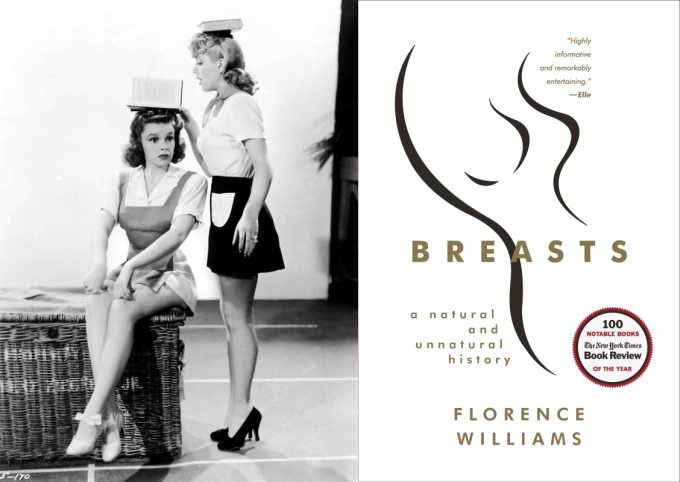
(Review) Breasts: A Natural and Unnatural History by Florence Williams (2013)

Judy Garland & Lana Turner, Breasts Florence Williams(Source, left: Bombshell Bettie. Source right: unknown)

Many years ago, I was perusing the “Last Word” section of a New Scientist magazine, where readers submit and answer each others’ science questions. If memory serves, that week the questions were about why men are soooo attracted to breasts, and why human females’ are disproportionately large compared to other primates’. Much commentary ensued, in hindsight entirely by men. (And, entirely British men at that—but that’s a subject for another review.) Then, someone who actually had breasts stepped in, and said something along the lines of:

 “It occurs to me that few of the previous commenters have ever suckled a baby. If they had, they’d realize how important the shape is to prevent babies from suffocating while nursing.”

All of a sudden, I realized that much—probably most—of what I’d ever read about the evolution of breasts had been written by men, centered around sexual selection and the all-important male gaze. This lack of women’s voices meant I’d missed out on many obvious observations and insights, which strongly challenged theories I’d long taken for granted.

Much the same experience can be had from the first chapter of Breasts, greatly aided by Florence Williams’ similar, no-nonsense style of writing. For instance, from pages 22-23:

…there are problems with making sweeping statements about evolution based on studies about male behavior in pubs. For one thing, I am still hung up on the nubility hypothesis, which might as well be called the sag hypothesis [that age, gravity, and successive pregnancies take their toll on breasts, signalling to other men that younger women with perkier breasts might be more suitable mates]. But speaking from personal experience, I can report my breasts actually got bigger and fuller after pregnancy. I really can’t say they are sagging, not yet anyway. I am well past the age of what anthropologists call “peak reproductive value.” Does a man really need breasts to tell him a women is getting on in years? Aren’t there more obvious signs that don’t require awkward social glances? And as anyone who’s been to a public shower or springtime college campus can tell you, there is an enormous, and I mean enormous, variety of breast sizes out there. I’m talking 300 to 500 percent differences in volume, and these are in women of roughly the same age. What other body part is so variable, I ask? If breasts were such important communicators, wouldn’t they be more on the same page?

Further complicating the picture, there is also great variety in men’s tastes. [A male scientist interviewed] conceded that male preferences aren’t as universal as he’d hoped…

Nor does she simply critique such theories, but discusses several other equally plausible ones centered around health, fat deposition, and suckling babies. Indeed, “With breasts,” one anthropologist she interviews concludes, “men are just loading culturally a set of symbolizations onto something that really evolved for more direct reasons. We’ve got to be more scientific about it.” That’s a refreshing new perspective, and much-needed imperative, given all the misinformation about breasts out there.

Yet she overcompensates I think, in ending that chapter by rejecting the combined, complimentary roles of natural and sexual selection. Instead, she goes to the opposite extreme, completely dismissing the (literally snowballing) role of breasts’ sexual attraction to men in their greater and greater size over time (pages 34-35):

What if instead of men selecting breasts, the breasts selected the men? It’s possible that…Early Man loved lots of different specimens of Early Woman, some with no breasts, some with small breasts, some with hairy breasts, whatever. Man, for all we know, is sometimes not that picky. Then, for the [physiological] reasons described earlier…the women with the enlarged breasts and their infants gradually outlasted the others…

Consequently, the people who could talk and sing and have the biggest, best-fed brains were the ones born of women with breasts. It makes perfect sense that we would grow up to appreciate and enjoy breasts, eventually putting pictures of them in eye-trackers machines in universities.

Perhaps, all along, the breasts were calling the shots.

It’s just an off-the-cuff conclusion really, but it reminded me that with a breezy, persuasive writing style, tends to come arguments and examples that are often much more debatable than authors make them appear. It also felt alienating, because here she seems less concerned about scientific plausibility than in playing to her likely overwhelmingly female audience, justifiably sick of men lecturing to them about breasts.

To understand what I mean, imagine, say, a male author dismissing women’s preferences for tall men as having had no influence on humans getting taller over time. Rather, tall men just happened to do better in the competition for mates because of physically defeating shorter, weaker rivals for sexual access to passively awaiting women.

As for women’s own sexual preferences, and what they had to say about who they had children with? Or how those sexual preferences arose in the first place? Pfft.

Maybe I’m just making mountains out of molehills. But it helped me realize her book is only a starting point really.

On a first reading though, you’ll be much too busy enjoying it to care.

First, because of the wide variety of topics she covers. I’ve only concentrated on the first chapter here, because of the strong impression it left on me. But, if curves don’t do it for you personally, there’s 13 more topics on various aspects of breasts which may have have a similar impact on you, such as changes during pregnancy, feeding, development in puberty, toxins, cancer, and so on.

Those strongly reflect Williams’ background as a science journalist, so readers hoping for in-depth discussions about fashion, lingerie, and/or cultural attitudes may be disappointed to encounter mentions only in passing (albeit frequent mentions). But I’d still encourage them to buy the book. Because these are breasts we’re talking about. Whatever your sex or sexuality, you do have an interest in and/or some opinion about them, in which case there will be something—probably many things—in this book in for you. (I have so many post-its in my The best moments in reading -- Alan Bennettown copy, it looks like I read it during a ticker-tape parade.)

Also, because however science-focused, it’s so humorous that you won’t want to put it down. For instance, take how she describes undergoing an examination in a cosmetic surgery clinic, to better understand what it’s like for patients (page 60):

The robe came off, and [the surgeon] pulled out a small tape measure, He measured me from collarbone to nipple, from nipple to under-breast fold, and from nipple to nipple, calling out numbers to [the assistant]. He took a step back and mashed my breasts together with his hands, then squeezed each one like a club sandwich. I felt like I was awaiting the word of St. Peter. I was secretly hoping one of the world’s foremost experts on flawed breasts would be so vexed by my nice, very normal breasts that he’d tell me he had nothing to offer.

That also stood out for me because while reading the first sentence, I had a feeling that if I had breasts, I’d like to walk into a cosmetic surgery and be told that mine were different, better somehow. Maybe even exceptional.

Then with the last sentence, Florence Williams literally spoke my mind.

As well as being funny, it gave me a simultaneously eerie and warmly empathetic feeling. One which I hope I’ve sometimes given my own readers in my own writing.

Or, if not, that’s something to aspire to. Helped along, by also providing much more readable—i.e., shorter—and relevant posts for you in 2016. Starting with reviewing only the books I think TGN readers would be interested in, instead of every book I read.

Any thoughts or questions on Breasts? How about on breasts in general? Anything you’ve been meaning to get off your chest? Please let me know in the comments.

Next Review: Nightwork: Sexuality, Pleasure, and Corporate Masculinity in a Tokyo Hostess Club, by Anne Allison (1994).

Related Posts:

One Size Fits All in South Korea, As Long as That Size Is Small

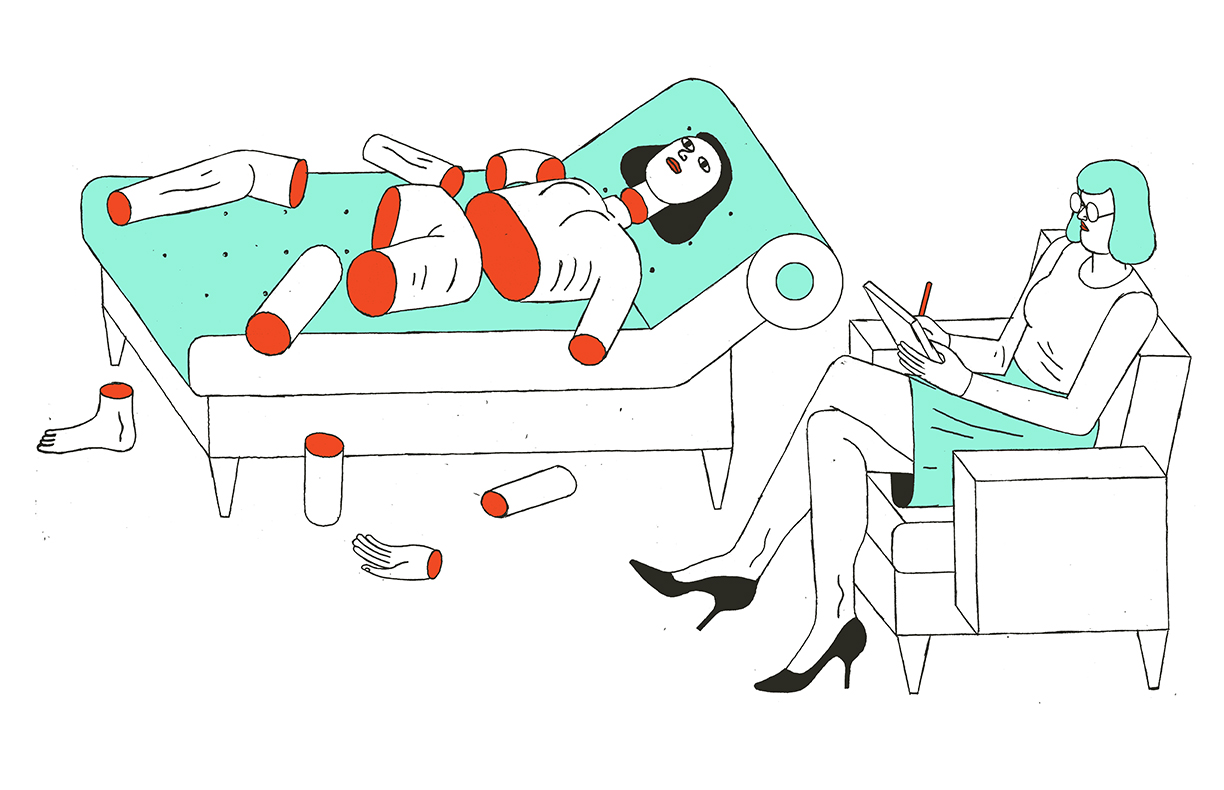
body parts psychologist couch(“Une illustration pour cet article sur le site d’Urbania.” Source: Pierre-Nicolas Riou, via
Illustration-ilustración
)

Sorry for the slow posting everyone: exploring some interesting side-possibilities revealed after embarking on last month’s project, I tumbled headlong into an aegyo-filled labyrinth, from which I’ve only just emerged. (Also, I’ve been grading.) Rather than present the treasures I’ve discovered now though, when everyone’s busy with Christmas and New Year’s, let me round off the year with some shorter posts instead.

This first is a link to Maxine Builder’s article of the above title at Racked, which I was interviewed for. It’s a good read, and quite thorough. So, assuming you’ve read it, I’ll just elaborate on my own comments:

According to James Turnbull…”There are almost no average-sized female K-pop stars.” This matters when these idols’ images are plastered on every TV screen and billboard. Turnbull estimates that approximately half to three-quarters of all advertisements are celebrity endorsements.

“Time and time again, I see opportunities for Korean entertainment companies to take some plus-size woman… or just someone different, and celebrate their difference. But they just don’t do it,” said Turnbull — because that skinny, sexy look sells. “It doesn’t give them any incentive to take that risk, and that’s why we get the same again and again.”

Frankly, I was worried that my comment about no average-sized female K-pop stars might have been a bit of an overgeneralization, and/or revealed that I’m out of touch with new groups. But if Omona commenters didn’t call me out on that, then I guess it still holds true. (Yay?)

Amber Sulli(Source: Pinterest)

As for not celebrating difference, I was mostly thinking of the Piggy Dolls debacle, and S.M. Entertainment’s and advertisers’ overuse of the very young, very thin Sulli—despite f(x) also including Amber, just about the only “tomboyish,” non-thin, and frequently mistaken as lesbian woman in K-pop, who appeals to many demographics otherwise completely ignored. Although I haven’t really followed the group in a while (partially because of that, partially because of poor Luna’s dramatic, ongoing weight loss and excessive cosmetic surgery), I’ve always been struck by the waste, and would be happy to hear she’s finally been receiving more endorsements and greater attention now that Sulli has left.

And/or, of any other entertainment companies that are diversifying their groups’ make-ups, however tentatively. One I do know of is DR Music, who added half-Caucasian, half-Black Alexandra from the US to Rania last month. Does anyone know of any more?

Korean Sociological Image #93: Korea’s Dark Circles

Very busy with work and deadlines these days (sorry), I picked up these daily planner post-its to try to make more efficient use of my time:

Daily Planner(Source: ebay)

Korean Sleep Deprivation 1I don’t recommend them: at 8cm in diameter, they’re much too small to write in, whatever language you use. Much more interesting than my frustrations with my pudgy fingers though, is that example daily plan provided. It reads:

  • 11:30pm to 6am: Sleep
  • 7-9: Prepare for Conference
  • 9-12pm: Attend Conference
  • 12-1: Lunch
  • 1-3:30: Attend Exhibition
  • 3:30-6: Attend Hagwon (Institute)
  • 6-7:30: Skip 300 times
  • 7:30-9: Memorize English Vocabulary
  • 9-11:30: Watch Online Lectures

Did the copywriters consider that a typical worker’s daily plan? Or more as one the ambitious professional should aspire to, starting with the strategic investment of 1500 won for a pack of 30?

Either way, it’s an interesting example of how Korea’s study-hard, work-hard, sleep-when-you’re-dead norm gets manifested and perpetuated in daily life, and one that would probably be little changed for consumers in other (developed) East Asian countries. In contrast, US adults, for instance, may also get less than seven hours daily sleep in practice, but the eight-hours ideal is an enduring myth. And very, very few aren’t achieving that ideal due to attending hagwons.

Korean high school students sleepAnother manifestation of Koreans’ attitudes to sleep comes from a high school teacher friend of mine, who says a common saying students there goes something like “Four hours sleep, go to a SKY university; five hours sleep, you fail.” I was recently reminded of it by the second “dark circle” on the right, which you can read more about at the Hankyroreh.

In both cases, frankly I’m surprised that the sleeping time is so high

How about you?

Update: Some statistics, via The Korea Bizwire:

Toz, a business that rents meeting rooms, conducted a survey on 1,800 high school seniors who used their study center. Results showed that 31 percent of the respondents slept five to six hours a night, and 30 percent answered that they slept four to five hours.

In other words, six out of 10 high school seniors were only getting five hours of sleep every night. Those who slept more than seven hours represented only five percent of the respondents.

(For more posts in the Korean Sociological Image Series, see here)

Addicted to Feminist Media Criticism Monday

In which I almost get carried away with my narratives about body-image and the Korean media—but discover an amazing role model instead.
Ok Tae-cyeon Lee Gook-joo My Ear's Pig(Source: SBS)

Remember My Ear’s Candy by Baek Ji-young, featuring 2PM’s Ok Taec-yeon? It was one of the songs that made me fall in love with K-pop, way back in 2010:

And I’m still quite fond of K-pop, although we’ve long since agreed to see other people. But, thinking about old flames over a drink last night, one thing led to another, and soon the whole family would be dancing to My Ear’s Pig, a parody performed with comedian Gang Ho-dong on the February 21, 2010 episode of 1 Night 2 Days. With lines like “My ear’s pig, number 1 rated wild pig…put it on top of lettuce”, it’s the perfect antidote to a rainy Monday (especially the guy at 1:48), 100% guaranteed to leave you grinning from ear to ear:

Here’s a longer version, which includes scenes from Gang-ho Dong’s month-long preparation for the performance:

But then I saw a 2014 version with fellow comedian Lee Guk-joo, and quickly sobered up:

Why? Because while Gang-ho Dong is often the butt of jokes because of his weight and size, he is also a former ssireum champion, and retains an image as a genuinely strong ex-wrestler…

…whereas Lee Guk-joo is overweight, in a country where a lot of television humor revolves around female comedians’ supposed ugliness and obesity. So, not knowing anything about her, and watching her perform for the first time above, it suddenly felt like I was joining in that all too common chorus of laughing at the fat girl; My Ear’s Pig, suddenly rendered a guilty pleasure at best, until I see Baek Ji-young perform it with people of a range of body types.*

But first impressions can be mistaken. Because Lee Guk-joo, it turns out, is the very last person in need of my pity:

Lee Gook-joo positive body image role model korea(Sources: Hikpop, Naesushi)

To learn why, read more about her cosmetic endorsements, her other cover songs, and her general, all-round spunkiness at Seoulbeats, in a post which I can’t possibly do justice to here. Sorry for the abrupt ending, but it’s true.

To further persuade you (my emphasis):

She is not allowing her weight to pigeonhole her personality, which she has expressed in an interview. Unlike what some would have you believe, she is fully capable of expressing her true self without apology and refuses to be discriminated for superficial reasons. Her physical makeup will neither hinder nor propel her for the simple fact that she has made up her mind not to be marketed through purely visceral means.

Having someone like this come into the market as a new role model for women is a welcome change in Korean entertainment. Lee Gook-joo doesn’t shy away from the spotlight because others would deem her unworthy, but rather she exhibits a glowing confidence that isn’t to be underestimated. She is a role model for those of us who appreciate a fun, outspoken woman who isn’t afraid to work her way to the top…

I’ve never been so happy to be so mistaken.

And how was your Monday? ;)

Related Posts:

  • Are Gorgeous Comediennes Really That Rare? Your Thoughts (The Atlantic)
  • What Donald Duck, Hani, and Big Tits Taught Me About Body-Image in Korean Comedy (The Grand Narrative)
  • “I am a plus sized girl living in Korea and I feel so unattractive.” (Life)

*The lyrics do require meat-lovers, but not necessarily those with the girth to match. And that applies to Baek Ji-young’s lines just as much as her partner(s)’.

Two Must-Listens About Korean Popular Culture

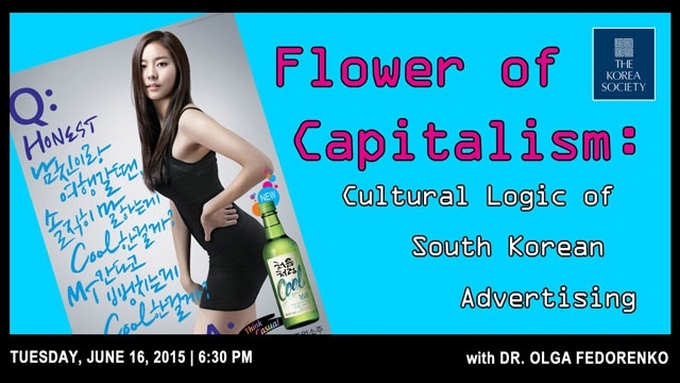
Flower of Capitalism Olga Fedorenko(Source: The Korea Society)

First up, I wouldn’t usually make an announcement about an event in far-off New York, but I have no hesitation in making an exception for friend and fellow Korean Popular Culture Reader contributor Dr. Olga Fedorenko, who’s lecturing at the Korea Society on Tuesday evening. As the FB event page and Korea Society website explain:

Advertising in South Korea is often referred to as a “flower of capitalism.” Rather than calling attention to the inherent links between commercial advertising and capitalism, this clichéd metaphor presents advertising as a wholesome, creative medium of public good and positive contribution to society. South Korean’s consume advertising as a product of popular culture and celebrate it for the humanist societal ideals it often promotes, instead of viewing it as an intrusive commercial message. Dr. Fedorenko explores the origins of such attitudes toward advertising through some notable contemporary examples, and considers challenges of using advertising for public good in the twenty-first century South Korea.

I owe a lot to Olga for much of what I’ve written about Korean advertising over the years, most recently referencing her work in my post “Sex, Self-Confidence, and Social Activism: When Women Made Soju Ads” about Korean femvertising, so you have my personal guarantee that her lecture will be very interesting. (You may also find this review of her dissertation interesting, let alone her dissertation itself.)

As I type this I’m unsure if her lecture will be recorded unfortunately, but it probably will—most Korea Society lectures are made into podcasts, and increasingly online videos are provided too. Either way, I’ll provide a link once her’s is/are ready later this week.

Update: Here is the video. It is also available as a podcast here or here.

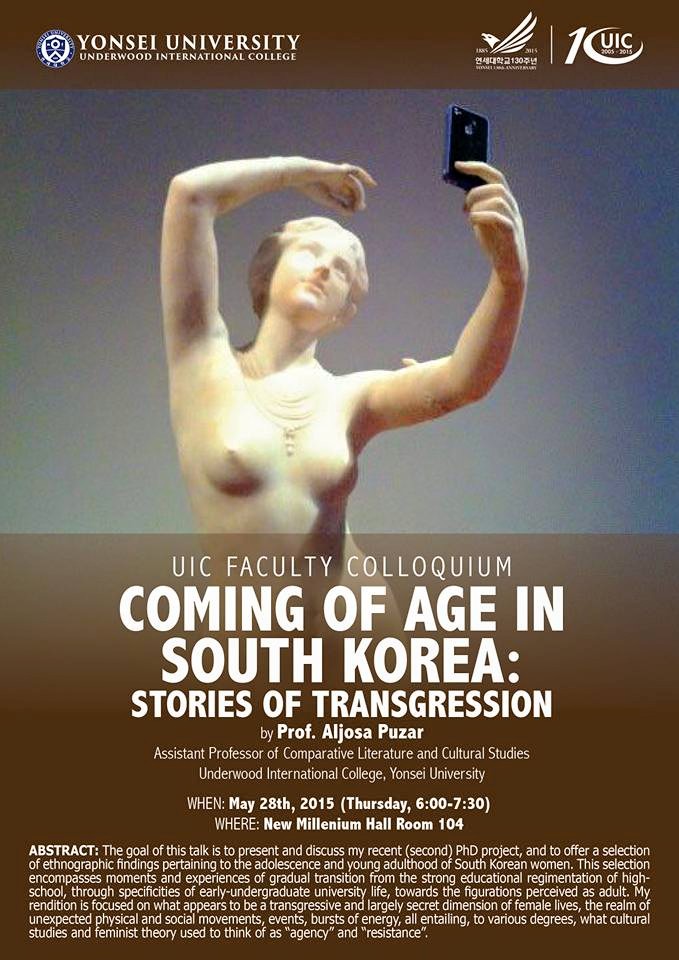
Next, for those of you who were unable to attend Aliosa Puzar’s lecture in Seoul last month, and frustrated that it wasn’t recorded, I’m very happy to announce that he has just been interviewed on the same topic(s) by the Korea and the World team. (Full disclosure: they’re the cool guys who also interviewed me back in November). Make sure to visit Beyond Hallyu for an excellent review of his podcast first, then you can listen to it directly on the Korea and the World website. (It’s also available on iTunes.)

Aljosa Puzar Coming of Age in South Korea(Source: Facebook)

Once again: what are you waiting for? ;)

Guest Post: So JYP Wants to Know Who My Mama Is

For those of you who watched the music video of JYP’s latest hit, Who’s Your Mama, you’ll know exactly what I’m talking about.

The entire song is a tribute to big booties. When I first read the song title, I immediately remembered Will.i.Am’s song, I Got It From My Mama, which—surprise, surpriseis also a worship song for killer female bods.

Although the feminist in me wants to point out the fact that JYP’s entire song revolves around sexual harassment at the gym, that’s not what I’m going to talk about today.

But first, I need to quickly introduce myself. I’m a half-Korean hapa, who mostly identifies as a Korean. Although I was born in Seoul, the majority of my childhood was spent in Hong Kong because my parents decided to move there when I was 3. But thanks to my mother’s fear of me getting out of touch with my Korean roots, I spent almost every single vacation with my grandmother in Seoul.

Having grown up with in an interracial household, and in a cultural hub like Hong Kong, I considered myself to be pretty open-minded. Literally all of my Korean friends have often told me that my personality was “so American,” and I agreed with them (never mind the fact that I’ve never even lived in the States until I was 18).

But I was still very much tied to Korean culture whether I liked it or not. For example, up until high school, I was naturally skinny. And by skinny, I mean that I was basically skin and bones. But everyone in Korea always commented how my thigh gap was so nice, and how bony my arms were. A friend once casually commented on this by saying, “You have the ideal body—it’s like you have limb anorexia.”

Limb anorexia? Really?

But because the thin ideal is so prevalent in Korean society, I embraced it. I was so glad that I never gained any weight despite eating so much junk. However this “privilege” stopped in high school, when my metabolism completely slowed to a halt. I started gaining weight from my bad eating habits. Having been only used to wearing size 2 clothing, I cried the first time I wasn’t able to fit into my skinny jeans.

The funny thing is, I was never “fat.” It was the fact that I lost my thigh gap and “limb-anorexia look” that upset me. This led me to doing what any normal Korean female would do. I looked up dieting tips on Google and religiously researched any and every diet program I came across.

But this all changed when I chose to attend university in America.

Upon my arrival in the States, I realized that the standard for a “hot body” was much different. Sure, people thought thin people had nice figures, but for the most part—it was all about the curves. Fast forward to Sophomore year, I started feeling so much more comfortable in my own skin. I started weight training at the gym, which led me to discover the amazing sport of powerlifting. Watching my strength and endurance increase with each passing week allowed me to stay religiously devoted to my workout regimen. People started commenting on how “fit” I looked. The best part about weight training was that I could eat a lot more calories without worrying about looking fat. Hello restaurant deliveries.

After committing to a year of serious weight training, I went back to Korea to spend the summer. It was hilarious to hear my family and friends gasp and exclaim at how “big” I looked. My grandma said I looked obese. I tried to explain that it was muscle not fat—but she wasn’t convinced.

I thought I’d find more peace of mind at a gym, so I joined my neighborhood gym right away. It was a rather large chain, so their trainers were all “experienced.” On my first day at the gym, a few trainers came up to me and commented that I was lifting “too heavy.” I just brushed them off.

At least twice a week, some other gym-goer would come up to me to say that I was “lifting too heavy for a girl.” I didn’t care what anyone said. Their comments fueled my workouts. I loved that I was able to deadlift and squat more than most of the men at my gym.

I’d often have ahjussis or ajummas come up to me to say that I was really strong for a girl and that I should probably stop working out too much because I’d likely “hurt myself.”

My girl friends kept commenting on my “huge bicep” and “horse-like thighs” whenever we hung out. They weren’t trying to be mean—they just couldn’t understand why a skinny person wanted to get muscular.

I was in no way large. I finally reached a healthy BMI instead of being underweight. I was finally toned and healthy, and I was getting criticized for it. It’s funny to think that Koreans praise gool-bok-ji, or honey thighs (AKA healthy and toned thighs), but they’re only interested in seeing them on celebrities instead of normal people.

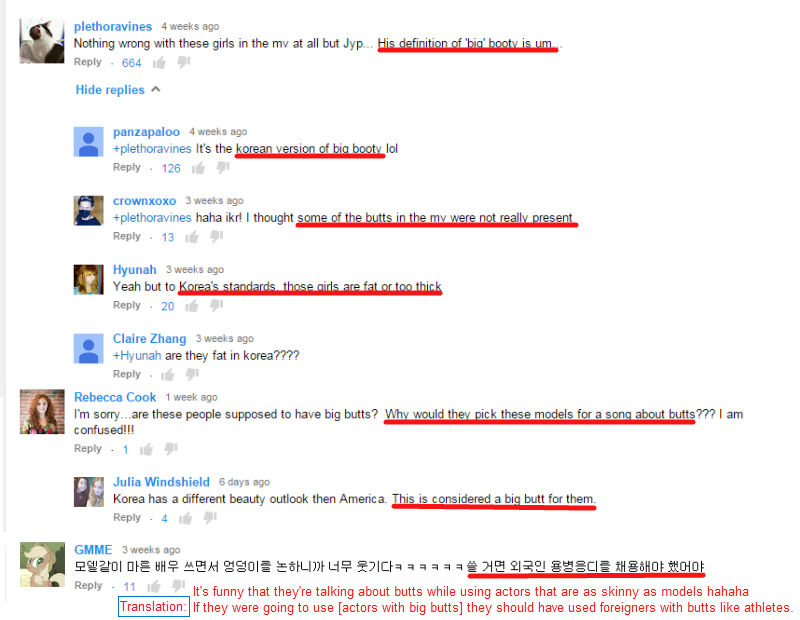
The standard of a fit body for Korea and the rest of the world is vastly different. Let’s refer back to the JYP video—the YouTube comment sections were all filled with non-Koreans exclaiming that none of the girls in the M/V were fit/curvy enough.

JYP Big BootyWhat do you think about these standards? Do you agree with my experience and observations? I’d love to hear your thoughts through the comment section below!

Anum Yoon hails from Korea, where she was raised on spam and eggs (with sesame oil and gochujang of course). She spent the last 4 years in America, tackling her cultural identity crisis, one awkward moment at a time. She’s currently blogging over at Current On Currency.

Update, James: Via Omona! They Didn’t, here’s a video showing model Eom Sang-mi’s reaction to her role in Jay Park’s Mommae MV, which is similarly objectifying. Alas, it’s not about JYP, as I misread when I first saw it, and it’s pretty laddish overall, but Sang-mi’s comments—e.g., “Why are they only showing my boobs?!”—are quite amusing and telling:

Related Posts:

Listen to This Korean Girl’s Perspective on Korean Men’s Absurd Body-Image Standards

왕쥬 가슴 비법 ABCDE(Source: YouTube. See there for her secret method!)

Remember my last post on assessing celebrities’ impact on Korean body-image standards? Where I stressed that it was crucial to listen to what ordinary Koreans thought of them?

I’m going to start with 여신왕쥬 (Goddess Wang-ju), who doesn’t mince words about what impact they’ve had on her. Or, more precisely, about what impact they’ve had on Korean men, who constantly compare her to slim, big-busted K-pop stars.

That’s a sweeping generalization about the men of course (my apologies), but you’ll soon understand her need to rant once you listen. NSFW warning for the Korean swearing:

Wang-ju is a little difficult to pin down: she’s made hundreds of videos, on a wide variety of subjects. Generally though, she seems refreshingly outspoken, and funny, a combination which has won her hundreds of thousands of subscribers on YouTube, Facebook, and Afreeca TV.

Unfortunately, this video seems to be the only one a fan has added English subtitles to, so I’ll have to let readers know if I find any more (or please let me know!). In the meantime, for Korean speakers, here’s her most recent one on body-image, from two days ago:

Update: Some great news!

The Skinny on the Thigh Gap

Mannequins with jeans(Source: Lion Hirth @Wikimedia, CC BY-SA 3.0)

My latest article for Busan Haps, on (mostly) US teenage girls’ latest body image obsession, and why, to my great dismay, they themselves prove to be largely responsible for its success. Researching it taught me a lot about how people negotiate the messages about body image perpetuated by the media — read: never assume any groups are simply passive consumers — and how crucial it is to examine the role of social media to understand body image in 2015.

Also, I mention that, in December, the UK’s Advertising Standards Authority forced Urban Outfitters to remove a photo of a model with a thigh gap; since writing, France’s Parliament has also moved to make it a crime to use models below a certain BMI. I’m still not convinced that demonizing one body type (or part) is necessarily the answer though.

What do you think? Please let me know in the comments, either here or in the article.

What Donald Duck, Hani, and Big Tits Taught Me About Body-Image in Korean Comedy

Exid Hani Vitamin(Source: Euri)

“That’s Problematic!”

Many smart people loathe the word “problematic.” Others, because it’s “frequently used in progressive political settings among White People of a Certain Education,” or because they think they’re the best judges of what the rest of us should concern ourselves with. And maybe they have a point. I do often use the word; I am indeed White; I’ve had a “certain education” I guess; and, if it’s both “progressive” and perverse for someone like me to be troubled about body-image in Korea, then guilty as charged.

That is to say, I couldn’t give a rat’s ass about the dictates of any self-appointed arbiters of cultural criticism. So let me shout it from the rooftops, loud and proud: Korean comedy’s body-policing is damned problematic sometimes. This post, very much a #longread, is about several recent cases in point.

But before I got to work on what was all set to be my usual diatribe, I came across some comments made by Lizzie Parker of Beyond Hallyu, someone I do pay attention to. Learning that she too dislikes the word, I realized with that great power of not giving a rat’s ass, comes great responsibility:

It’s such a cop out…problematic is just lazy-speak for ‘there is something bad about this and I can’t be bothered to figure out what’. It’s bad writing.

Lizzie’s comment was made in a different context, but it resonated with what I’d just been reading in Cultural Imperialism: A Critical Introduction by John Tomlinson (1991), and I’ll take my muses in whatever guises they appear, thank you very much. Specifically, it clicked because Tomlinson discussed scholars’ tendency to assume the nefarious impacts of Western consumer products on local cultures, but reluctance to explain the actual means by which those products (allegedly) do so. If I just confine myself to one illustrative example from the book here, about How to Read Donald Duck: Imperialist Ideology in the Disney Comic by Ariel Dorfman and Armand Mattelart (English ed.,1975; quoted in italics):

To service our ‘monoproduct’ economies and provide urban paraphernalia, we send copper, and they send the machines to extract copper and, of course, Coca Cola. Behind the Coca Cola stands a whole superstructure of expectations and models of behavior, and with it, a particular kind of present and future society and an interpretation of the past. (p. 97.)

So, imported cultural goods — Coke, Disney — somehow ‘contain’ the values of American consumer capitalism and offer an implicit interpretation of the good life. Still, we have yet to see how these cultural goods are supposed to transmit the values they contain and the social vision they ‘offer’. When the explanation comes, it is frankly disappointing:

The housewife in the slums is incited to buy the latest refrigerator or washing machine; the impoverished industrial worker lives bombarded with the images of the Fiat 125. [in the same way]….Underdeveloped peoples take the comics at second hand, as instruction in the way they are supposed to live and relate to the foreign power center. (p. 98)

When it comes to the crucial question of ideological effects, Dorfman and Mattelart can only offer an unproblematized notion of the manipulative power of the media text. They simply assume that reading American comics, seeing adverts, watching pictures of the affluent yanquí lifestyle has a direct pedagogic effect. (p. 44.)

Tomlinson may well be another White Person of a Certain Education, but his book is easily one of the most enlightening and well-explained cultural studies texts I’ve read in years, and provides an obvious solution to the challenge presented by Lizzie. Yet in my bid to look smart, I quote him at my peril. For now I’m obliged to demonstrate just how exactly Korean comedy teaches such harmful messages about body image, and why its constant, egregious examples can’t be dismissed as just harmless fun—all without patronizing Korean audiences in the process.

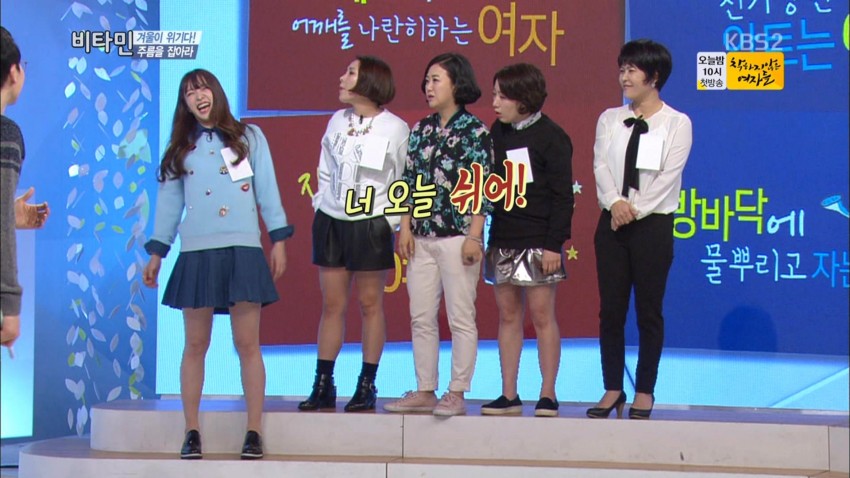
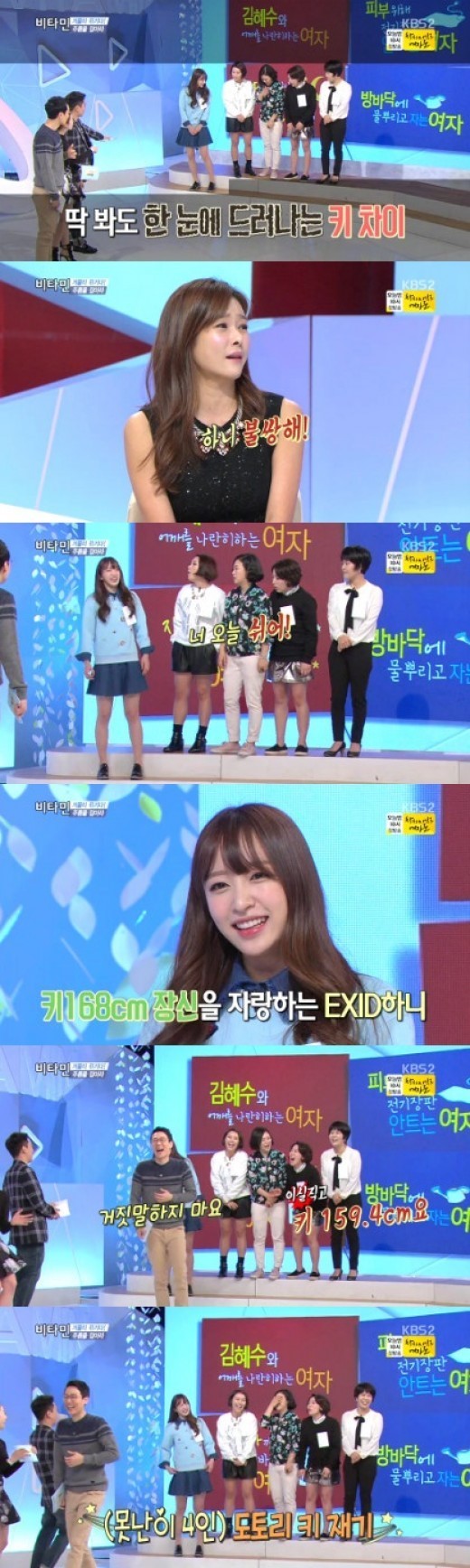
It’s a tall order. So, to set the stage, let’s see what happened when long-limbed Hani recently stepped onto that of Vitamin, a health-cum-variety show on KBS:

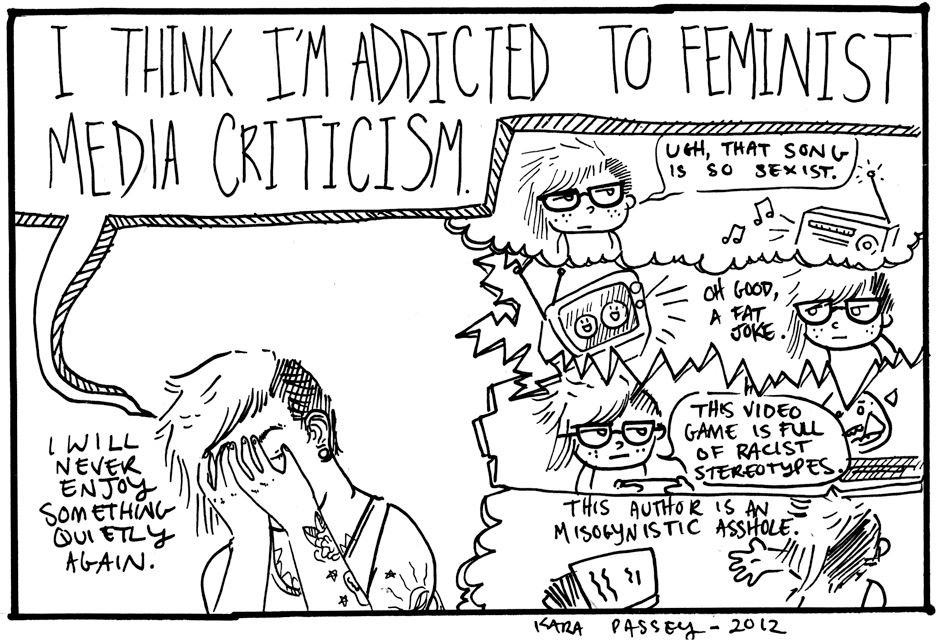
I think I'm addicted to feminist media criticism(Source: Social Justice For All)

걸그룹 옆에 ‘못난이’…이 장면이 웃긴가요 The Ugly Sisters Next to a Girl-group Member…A Scene to be Laughed at

[TV리뷰] 예능 프로그램 속 외모 비하, 여전히 개선되지 않는 문제점

[TV Review] An entertainment program criticizes women’s bodies: why has this problem still not improved?

OhmyStar, 27 February 2015, 우동균/Woo Dong-gyoon

큰 키의 미녀가 한 계단 위에 올라서 있는 키 작고 통통한 여성들과 비교대상이 된다. 그리고 ‘못난이 삼형제’라는 자막이 버젓이 표시된다. 비웃는 패널들의 표정은 덤이다. 미스코리아 선발대회의 한 장면이 아니다. KBS 건강 프로그램 <비타민>에서 등장한 장면이다.

A tall beauty stands to the side; some short, tubby women stand on a step next to her to be compared. “The 3 Ugly Sisters” appears in the captions, with a shot of [the beauty’s?] fans laughing thrown in too. But this is not a scene from the Miss Korea contest. It’s from Vitamin, a health program on KBS.

미녀로 등장한 것은 대세로 떠오른 그룹 EXID의 하니이고, 못난이로 묶인 연예인들은 신봉선, 김숙, 김영희, 조혜련 등 개그우먼이다.

In this example of the trend, the girl-group member is Hani from EXID, and the four gagwomen are Shin Bong-seon, Kim-sook, Kim Yeong-hee, and Jo Hye-ryeon.

개그맨들의 단골 소재도 외모에 관한 것이다. 외모가 개성적이거나 뚱뚱한 개그맨은 자신의 얼굴이나 몸을 희화화해서 웃기기 일쑤다. 이런 현상은 예능에서 쉽게 찾아볼 수 있다. 예쁜 게스트들이 나오면 환호하고 상대적으로 외모가 떨어지는 개그맨들과 비교선상에 놓는다. 남자고 여자고 할 것 없이 같은 취급을 받는 것이다.

Comedians regularly use the subject of appearance for joke material. They will routinely make fun of their own bodies and faces if they are tubby, or in any way unique; examples are very easy to find in entertainment programs. So, if an attractive guest appears on their show, the guest will be cheered by the audience, and their bodies will be compared to the inferior ones of the comedians. This is done to both men and women.

Vitamin Hani<비타민>의 한 장면, 여성들의 키와 몸매가 비교당하는 장면이 공중파에서 버젓이 방영되고 있다 In a scene from Vitamin, women’s heights and bodies are openly compared on air.

외모에 관한 차별은 우리 사회에 뿌리 깊게 박혀 있다. 예쁘면 좋고, 못생기면 나쁘다는 식의 고정관념은 단순히 성형외과 광고에만 있지 않다. 이미 2015년 현재 TV속에서 벌어지고 있는 현실이다.

Discriminating against people on the basis of looks is something deeply rooted in our society. The notion that if you’re attractive, you’re good, and if you’re ugly, you’re bad, is not something that you only find expressed in advertisements for cosmetic surgery clinics. Rather, it is the reality of our television screens in 2015.

작년 여름 <1박2일>에서도 난데없는 외모 차별 논란이 일었다. 예쁜 여성들과 데이트하는 ‘상’과는 반대로 개그우먼들과 데이트해야 하는 ‘벌’이 주어졌기 때문이다. 많은 사람들은 이 장면을 두고 갑론을박을 벌였다. ‘분명한 외모 차별’ ‘여성의 성 상품화’라는 이야기부터 ‘외모가 부족한 남성 패널들이 같은 취급을 당하는 것은 왜 묵과하느냐’ ‘이정도는 용인 될 수준’이라는 이야기까지 설전이 벌어졌지만 결국 명확한 결론은 나지 않았다.

Last summer, some controversy arose over the body discrimination displayed on the show 1 Night, 2 Days. In one episode [aired July 27th; a clip is below — James], dates with attractive women were offered as prizes [to the all male cast] while dates with female comedians were provided as punishments, leading to charges that this was a clear case of both body discrimination and sexual objectification of women, as well as a double-standard in that the less desirable male comedians on the show weren’t treated in the same manner as the female ones were. This provoked a lot of heated discussion, but no clear conclusions.

그러나 이런 논란이 일어나는 것 자체가 아직까지 한국에서 외모를 두고 비난할 수 있는 환경이 얼마나 자연스럽게 이루어지고 있는지를 보여준다. 예능 프로그램에서 이영자나 이국주는 단순히 ‘잘 먹는’ 캐릭터가 아니라 ‘뚱땡이’ ‘과체중’이라는 캐릭터로 각인되어 있고 상대적으로 외모가 부족한 여성들은 예쁜 연예인들과 비교 선상에 놓이고 무시당해도 당연하게 받아들여야 한다. 그렇지 못하면 쿨하지 못한 것이 되기 때문이다.

The fact that this incident occurred shows that openly criticizing people on the basis of appearance is seen as natural in Korea. On entertainment programs, the comedians Lee Young-ja and Lee Guk-ju are not recognized simply as ‘characters that eat well,’ but are instead known as ‘fatties’ and for being overweight. [Also,] ordinary women that appear on the shows are unfavorably compared to pretty entertainers, and are expected to just roll with the criticisms and disrespect, lest they be considered uncool [and putting a damper on things].

이 같은 현상은 공개 코미디에서 더욱 심화되어 나타난다. 개성적인 외모가 주를 이루는 개그맨들은 외모를 무기로 코미디를 하려는 경향이 강하다 보니 이런 패턴에서 벗어나기가 쉽지 않다. 특히 개성적인 외모와 과체중의 소유자라면 그런 경향은 반복된다.

This trend is most evident in comedy programs. On them, it is the norm for comedians to take advantage of some very obvious bodily feature or aspect of their appearance to make jokes, and it is not easy to break out of this trend.

현재 <개그콘서트>에서도 ‘크레이지 러브’나 ‘속상해’ 같은 코너는 외모의 비교라는 전제를 두고 진행된다. ‘크레이지 러브’는 이 공식을 살짝 비틀긴 했지만 여전히 웃음 포인트는 박지선이 김나희에게 못생겼다고 독설을 퍼붓는 역설적인 형식으로 표현된다. ‘속상해’는 이 희화화의 대상을 여성에서 여장을 한 남자 정태호로 바꾸기는 했지만 외모 때문에 무시 당하는 노처녀라는 설정은 이전과 크게 다르지 않다.

One example on TV screens at the moment is Gag Concert, which has two regular skits called ‘Crazy Love’ and ‘I’m Hurt’ that are both based on comparing people’s appearances. In the former, the humor revolves around Park Ji-song berating Kim Na-hee for her ugliness, despite Park actually being the uglier of the two; while in the latter it’s about Jeong Tae-ho dressing as an old maid, who’s always ignored by suitors because of her ugliness.

이제까지 <개그콘서트>에서는 이런 코미디가 반복돼왔다. 단순히 못생긴 여성이 무시당한다는 설정보다 더 심각한 문제는 외모가 부족한 여성들이 잘생긴 남성에게 집착하며 눈치도 없어 남성들에게 쉽게 여겨지고 비아냥을 당해도 좋은 여성으로 묘사된다는 점이다.

This comedic theme is normal for Gag Concert. But more serious than unattractive women getting ignored, is the notion that if they obsess over attractive men, they can be treated tactlessly and thought little of, as if their only value is their potential for sarcasm and ridicule.

이는 코미디의 소재 부족을 여실히 느끼게 한다. 현재 <개그콘서트>는 예전에 비해 히트작이 나오지 못하고 있다. 코미디의 패턴이 반복되고 있는 와중에 그들의 웃음 포인트가 단순히 외모나 분장을 활용하는 것 이상으로 흐르지 못하고 있기 때문이다. 통렬한 풍자나 패러디는 물 건너 간지 오래다. 대표 코미디 프로그램인 <개그콘서트>가 이 정도면 다른 프로그램들은 더욱 심각하다. 단순한 패턴도 지겨워지는데 외모적인 특징으로 하는 1차원적인 개그는 어느 순간 불편한 지경에까지 이르렀다. 그들의 개성적인 외모가 개그맨이는 새로운 길을 열어주었을지는 모르지만 그 외모로 발산하는 에너지가 긍정적이지 못하다면 그들의 코미디에 마음 놓고 웃을 수는 없는 노릇이다.

This dramatically shows how lacking comedy is these days. Compared to the past, Gag Concert no longer has any really popular skits. Its humor is repetitive, relying on little more than laughing at costumes or appearance. It no longer has any biting satire or parody. [What’s more,] if a representative comedy program like Gag Concert is like this, you can imagine what other comedy programs are like. Their simplistic patterns are getting tedious, and the gags poking fun at some special aspect of people’s appearance have become uncomfortable and embarrassing. While that focus can open the door for comedians, as an audience it feels insincere to still laugh at such things.

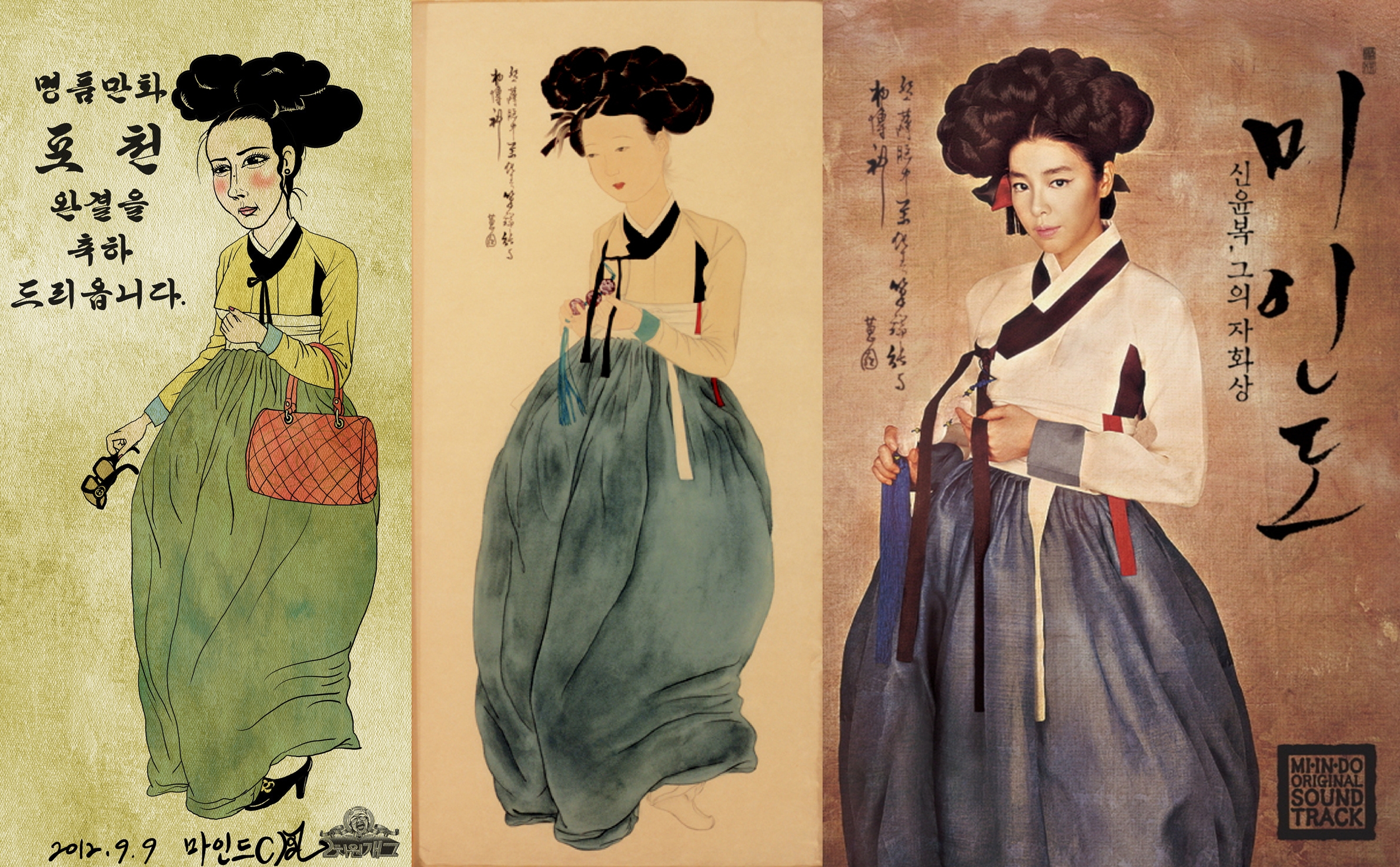
외모가 예쁘면 물론 좋다. 그러나 누구나 다 예쁘게 태어나지는 않는다. 외모의 다양성과 개성을 존중하지 않고 단순히 ‘이렇게 생겨야 한다’는 고정관념 속에서 사람들은 지쳐간다. ‘강남 미인도’ 같은 풍자가 나오는 것이 이런 분위기와 무관하지 않다. 그러나 여전히 대한민국은 지금 ‘외모’ 하나만으로 사람을 판단하는 경향이 강하다. 단순히 못생긴 얼굴을 무시하는 경향이 문제가 아니다. 예쁜 얼굴이라 할지라도 ‘자연미인’이냐는 시험대에 놓인다. 예쁜 것을 원하면서도 성형을 한 얼굴이나 화장으로 달라진 얼굴에 뭔가 하자가 있는 것처럼 묘사되는 것은 아이러니다.

[Of course,] it’s good to look pretty. But not everybody is born that way. There is a great deal of variety among people really, and we are exhausted by strong prejudices in Korea against those that don’t live up to the ideal, which is partially related to the ‘Gangnam beauty’ stereotype. [See here for a classic satire of that by SNL Korea— James]. This is not just a problem of people being ignored if they have an ugly face though, because even if you’re pretty, you’ll always be on the judgement table over whether you’re a ‘natural beauty’ or not—it is such an irony that, even while judging people based on their appearance, we’ll criticize them if they use cosmetic surgery or cosmetics to look prettier.

Gangnam Miindo(L-R: a ‘Gangnam beauty’; the original Miindo/Portrait of a Beauty by Sin Yun-bok (b. 1758); and a poster of the 2008 movie of the same name. Sources: Awesome Pick; 기냥 보는 재미…원미동통신; and 연예계 뒷담화)

단순히 못생긴 여성이나 남성에 대한 무시뿐 아니라 자연적으로 예쁘게 태어난 여성이나 남성에 대한 지나친 환호 역시 우리 사회가 외모 지상주의에 멍드는 현실을 여실히 나타내 준다.

The issue here is not just that ugly women and men are ignored, but that we so loudly cheer those of us that are naturally born attractive, showing how broken our present society is.

외모는 타고 난다. 성형한 외모가 아무 노력없이 얻은 것이라 비판할 수 있다면 자연미인 역시 그 외모를 가지려고 노력한 것은 아니다. ‘뚱땡이’ ‘못난이’ 등의 캐릭터가 버젓이 TV에서 통하고 그 외모로 사람을 평가하는 분위기는 김치와 한국인을 비하했다는 할리우드 영화 <버드맨>보다 훨씬 더 심각하게 생각해야 할 문제가 아닐까.

Our appearance is something that we’re born with. But if you criticize those who get cosmetic surgery to look attractive as doing it without any hardship or effort, [then you’re being hypocritical,] for natural Beauties didn’t expend any effort also. Surely the characters like ‘fatties’ and ‘uglies’ that appear on TV shows, and the atmosphere created by judging people so harshly on their appearance, are some things much more important to think about and criticize, than a character in a Hollywood movie saying that kimchi smells? (End.)

Ajummification

Woo Dong-gyoon’s article starts well with its raising of an important issue, but disappoints with its repetitive platitudes. Also, in a mental note not to repeat the EXID HANI Vitaminsame mistake myself, he probably makes few converts among Korean comedy fans with his sweeping denunciations of the entire genre. (Edit: In fairness, it’s more of an op-ed than an article really.)

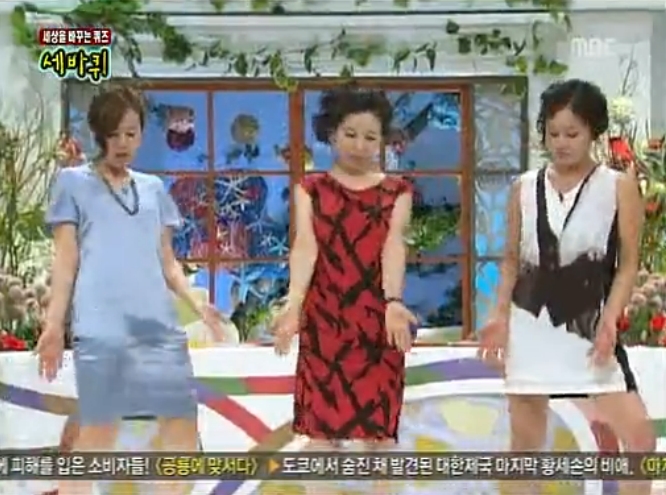

His greatest and most surprising sins though, were ones of omission. First, what of the comedians jokingly imitating Hani’s (now famous) dance move?

Yes, in isolation it was all good fun, and yes, even Hani herself comes across as pretty goofy here, and shy and endearing on the episode overall. (The contrast with her on-stage presence is really quite remarkable.) In the context of body-shaming the comedians because they don’t match the very narrow height and weight range of typical girl-group members however, it adds insult to injury by suggesting that women of their ages and body-types couldn’t possibly be sexy either, the notion that they could get their groove on being self-evidently absurd.

If all this sounds familiar, that may be because I wrote about a very similar example nearly five years ago, in which Hyuna of 4Minute performed her own ‘sexy pelvic dance’ on the MBC variety show Quiz That Changes The World. Unfortunately, I’ve long since deleted the post sorry, and remaining copies of the full episode (#62, 10 July 2010) are behind paywalls, but I can tell you that after Hyuna performed:

First, then 51 year-old male singer KIm Heung-gook would get up and parody her:

Kim Heung-gook Quiz That Changes the World(Source: KBS Conting. Technically, this is from an earlier part of the show, but you get the idea.)

Then host Park Mi-sun (then 43), actress Im Ye-jin (50), and actress Lee Kyung-shil (44):

Copying Hyuna's Pelvic Dance(Update: I was able to find a low resolution copy of the episode here, from which I took the above screenshot.)

Then finally the 12 year-old daughter of retired footballer Yoo Sang-chul, the guest in the yellow t-shirt (the “13” in the video was likely her ‘Korean age’):

As you might expect, the episode quickly generated a lot of controversy for its sexualization of an adolescent girl. Alas, that ‘girl’ would actually be 18 year-old Hyuna, a bizarre blind spot that I went on to explore in my Reading the Lolita Effect in Korea series. More to the point here though, if viewers had few qualms about laughing to a 12 year-old thrusting her crotch in their faces, then presumably they’d have even less about the stereotypes of asexual, unattractive ajummas perpetuated by almost always only having 20-something women doing the sexy dances on such shows, every 30+ woman only the goofy parodies.

Yes, they’re not solely responsible for widespread perceptions that women lose their sex drives after having children, and consequently that its only fair that men should visit prostitutes to meet their needs. But they certainly don’t help either, and it’s surely very telling that I’m seeing the exact same, apparently still fucking hilarious joke 5 years later.

Rather than outrage though, I was strongly reminded of a (very) old skit by the UK comedian Ben Elton instead, in which he laments he can never be a great comedian because he lacks…

Big Tits

And it’s worth quoting him at length, because replace all the “big tits” below with “he/she’s fat/ugly/unsexy/too old” jokes, then I feel exactly the same way about the Korean comedy programs I’ve just described. From An Approach to Traditions of British Stand-up Comedy by Oliver John Double (PhD thesis, University of Sheffield, 1991, pp. 298-299):

In another of his routines, Elton makes a more political attack on clichéd comic style, satirizing the British tradition of smutty humor. A hypothetical situation comedy is described, which contains a number of covert references to breasts. Elton deconstructs these jokes, and adds ironic laughter:

I saw this sitcom, working title: Can You Show Me the Way to Oldham?. That was the first laugh: Oldham sounds a bit like “hold ’em” doesn’t it, very very funny, well done BBC, well worth sixty five quid a year license money I don’t think. I watched ’em all, Benny Hill…laugh? I nearly did, fantastic. And in this sitcom, there was Gloria, behind the bar, she’s a big woman, bring in the camera, steam up the lens, everybody loves it, big tits, best gag in the world, that’s the one for the British punter. In comes Tom, he’s an amicable northern stereotype, ‘e says, “By ‘eck, you don’t get many of those to the pound”, ‘e gets a laaauuuugh!! Nice one Tom, ‘cos she’s got big tits, oh ho ho ho ho! ‘E says, ‘By ‘eck, I wish I were her doctor’, yes Tom, second laugh, same pair o’ tits, I couldn’t believe it, it’s happening in front of me. ‘E says, “By ‘eck, no wonder they built the extension,” go on Tom, you’re winning, ‘e says, “By ‘eck, that’s the loveliest pair of…eyes I ever saw!”. Oh, amazing Tom, we thought he was gonna say “tits'” didn’t we? Faaantastic!

After ridiculing the simplicity of the joke-structures of breast innuendo humor, Elton then tackles the root of the problem. Jokes which make covert references to breasts rely on the idea that breasts are rude, naughty objects of desire, which cannot be overtly mentioned. Elton destroys this conception, by reincorporating the jokes from his hypothetical situation comedy in the context of a woman’s getting dressed in the morning. This robs the breasts of their naughty connotations, restoring their status as ordinary physiological features, and thus making the jokes laughably unfunny:

Come on girls, how do you get dressed in the morning, dear me ladies, you must die!! Bathroom mirror, up with the nightie, there’s my tits! Fuckin”ell, these are funny!! I’ll ‘ave a good laugh at my tits while I’m brushing my teeth! Ooh, I wish I were my doctor, ho ha ho ho ho!! I’m glad I built the extension, tee hee. These are the loveliest pair of… eyes I ever saw…! Fuck me, I nearly said I ‘ad big tits!!

Ben Elton, alas, is also a White Person of a Certain Education. Be that as it may, I remember laughing so hard I was crying as I first listened to him 20 years ago, and, once the tears dried, how surprising and refreshing it felt to hear comedy deconstructed so. It’s even more impressive when you learn that he first performed this particular skit way back in 1981, and that it was a deliberate reaction to the virulently racist, sexist, homophobic jokes that were standard for UK comedy in the 1970s (see 10:55-12:45, and 1:35:00 here).

Update — I was able to find a video of that first performance from 1981, but have to admit that it hasn’t aged well, partially because his delivery was much too fast (in fairness, he was only 22; he improved as he got older):

Elton’s skit clicked with me because in my experience, Korean comedy is very physical and slapstick, and seems to repeat many of the same childish jokes, as described above. Friends and colleagues I’ve discussed this with though, chosen because they’ve watched much more Korean comedy than me, say that my characterization is unfair, with sitcoms like High Kick, for instance, being just as sophisticated as the likes of Friends. And they’re probably right. Rather than discussing Korean comedy then, which I’ve already stated that I can’t and shouldn’t generalize, I think it’s more correct to say that, as a whole, Korean television is very comical, primarily because it has an unusually large number of variety programs—which include shows like Vitamin and Quiz That Changes The World:

“Much of Japanese television content, including even what is aired during [prime time], consists of ‘infotainment’ on subjects that range from science and diet to current affairs and travel. Rather than being broadcast as straightforward factual television, these shows are often bifurcated into segments that involve a panel of celebrities who discuss and interpret the informational content in an entertaining way. By cutting back and forth between factual and entertaining content, celebrities remain central to Japanese televisual discourse. As opposed to a continuum defined by fact and fiction, Japanese variety TV generally alternates between fact and celebrity.”

Patrick Galbriath and Jason Karlin (ed.s), “Introduction: The Mirror of Idols and Celebrity,” in Idols and Celebrity in Japanese Media Culture, (2012, p. 17.)

Yes, that quote was actually about Japan. But if I was so desperate for sources that I still used it in my recent conference paper on the disproportionate role of celebrities in Korean popular culture, then I’m just going to go right ahead and extrapolate from it here too. Because seriously, it does sum up Korean television rather well, and serves to suggest that the compulsion for panels of celebrities to “interpret informational content in an entertaining way” is a strong one, for which crude body-shaming and physical, slapstick jokes would be easy methods to rely on. (Not to mention racist jokes.)

Julien and Ga-hee(Source: Think Different)

Moreover, whatever the explanation, I suspect that all these examples are just the tip of the iceberg. For instance, in the very next episode of Quiz That Changes the World, Ga-hee opined that because she was tall, she preferred to date men over 183cm, prompting her and fellow tall guest Juilen Kang to line up against much older and shorter hosts Kim Gu-ra and Jo Hyung-gi. (Never fear: afterwards, she did some completely spontaneous sexy dances to make them feel better.) Also, here’s three more examples from 2012; another from this February; another from March; and God knows how many more I’d find if I actually watched the damn things…

I Should Really Be Doing More Interviews by Now, Dammit…

But do such examples have “a direct pedagogic effect” on Korean girls and women watching though? Or on Korean boys, on Korean men, or on pretty much anyone that watches them for that matter? Or do they instead see them as merely harmless fun, are fully aware of their damaging messages about body-image and sexuality, and reject them completely? After all, the second main take-away point of Tomlinson’s book, and which should surely be a mantra for all cultural-studies students, is the question of “who speaks?”, the necessity of acknowledging and analyzing (supposed) victims’ negotiation of ‘texts’ they’re confronted with being Tomlinson’s very next point:

Any advance in [an approach to cultural imperialism based on texts rather than institutions] is dependent on an analysis of the relationship between text and audience. This is something that, as Boyd-Barrett points out, few critiques of cultural imperialism have addressed (pp. 44-45):

The orthodox view of audiences in the West is now one that stresses the social context in which communications are received, and which stresses the individual’s capacity for active selection and selective retention. This view does not seem to have carried over sufficiently to Third World contexts….Individual capacity for psychological compartmentalization and rationalization is underestimated to an extraordinary degree. Much more attention needs to be given to the processes by which individuals and groups interpret, translate, and transform their experiences of foreign culture to relate to more familiar experiences.

(J.O. Boyd-Barrett “Cultural Dependency and the Mass Media”, in M. Gurevitch et al. (eds) Culture, Society, and the Media, London, Methuen, (1982, p. 193.)

In light of that, the second failing of Woo Dong-gyoon’s article on Hani and the 3 ugly sisters is that he doesn’t attempt this, not interviewing a single person. By extension though, it is also my own for relying on such articles, rather than scouring Korean academic journals and/or conducting my own ethnographic research, and consequently failing the challenge I set myself in the introduction. But this is just a blog sorry, academic Korean is tough, and the approximately $10 a year in donations I receive these days don’t allow for much fieldwork. (Yes, it does feel a little awkward and distasteful to mention that; but doing so could hardly lead to less donations, right?!) Given those constraints, I would be very interested in and grateful for readers’ own interpretations of any of the examples mentioned here, of what they know of Koreans’ interpretations of them, and/or for links or any other sources with more.

Also, necessity being the mother of invention, for your help in establishing a second means to fulfill the challenge. Because if Korean popular culture is actually just bursting with positive representations of non-skinny, non-tall, and/or 30+ women looking and feeling sexy, and rare proud girl-groups with larger than average members don’t feel compelled to slim down…then sure, maybe it’s all just harmless fun. If not though, then maybe, just maybe, those fat jokes are indeed—yes—problematic.

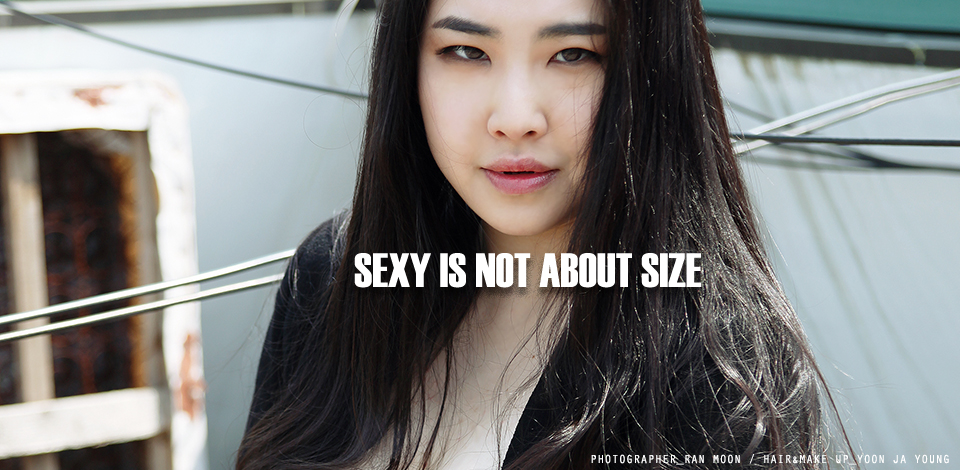
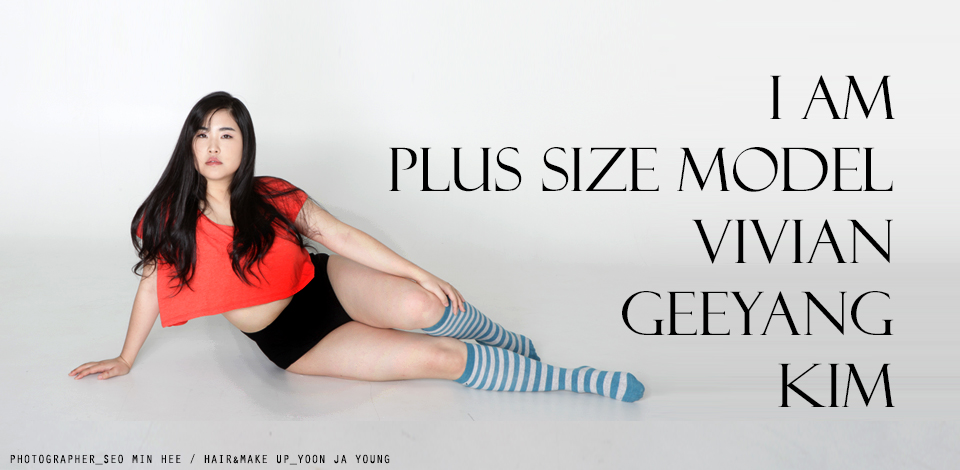
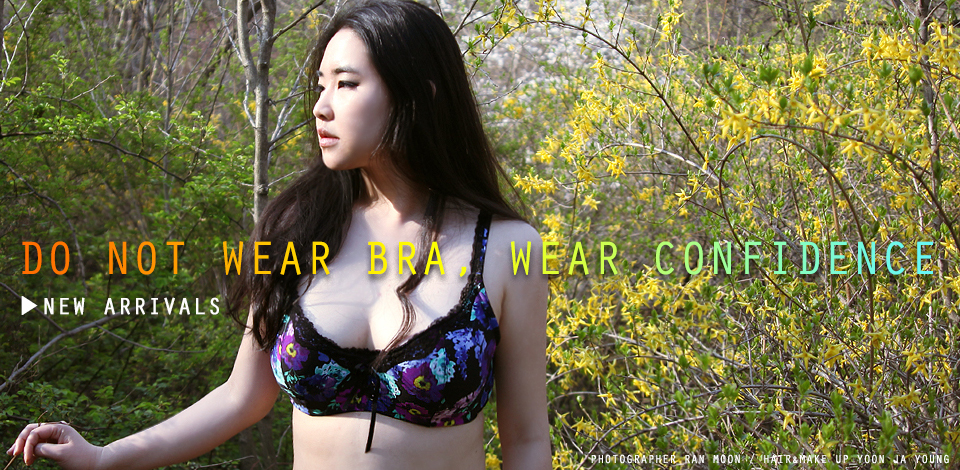
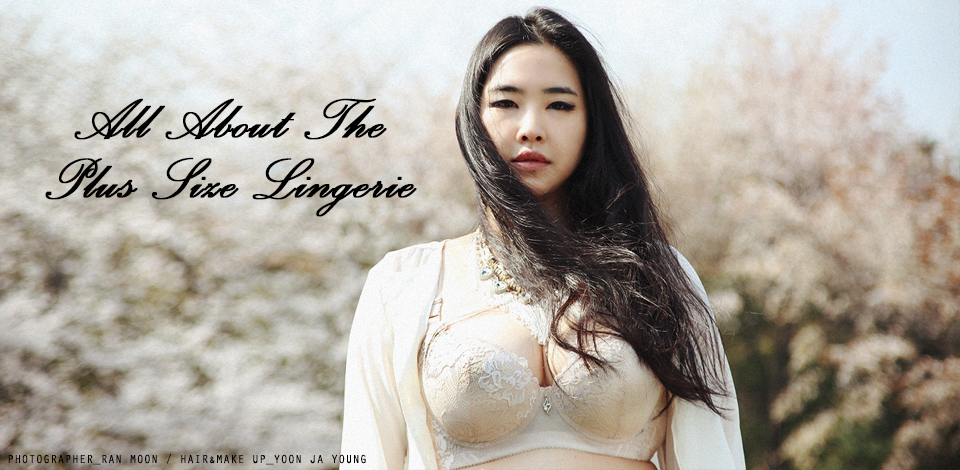
To get the ball rolling, let me present all the examples of ‘plus-size’ Korean models I know:

Sexy is not about size(Source: All Tha+ Plus)
Sexy is not about size 2(Source: All Tha+ Plus)
Sexy is not about size 3(Source: All Tha+ Plus)
Sexy is not about size 4(Source: All Tha+ Plus)
Sexy is not about size 5(Source: All Tha+ Plus)

Did I get them all? Did I miss anyone? WHAT DO YOU MEAN, THEY’RE ALL THE SAME WOMAN?!!

Brains & Beauty: With Korean women achieving higher education, why do so many rely on the scalpel?

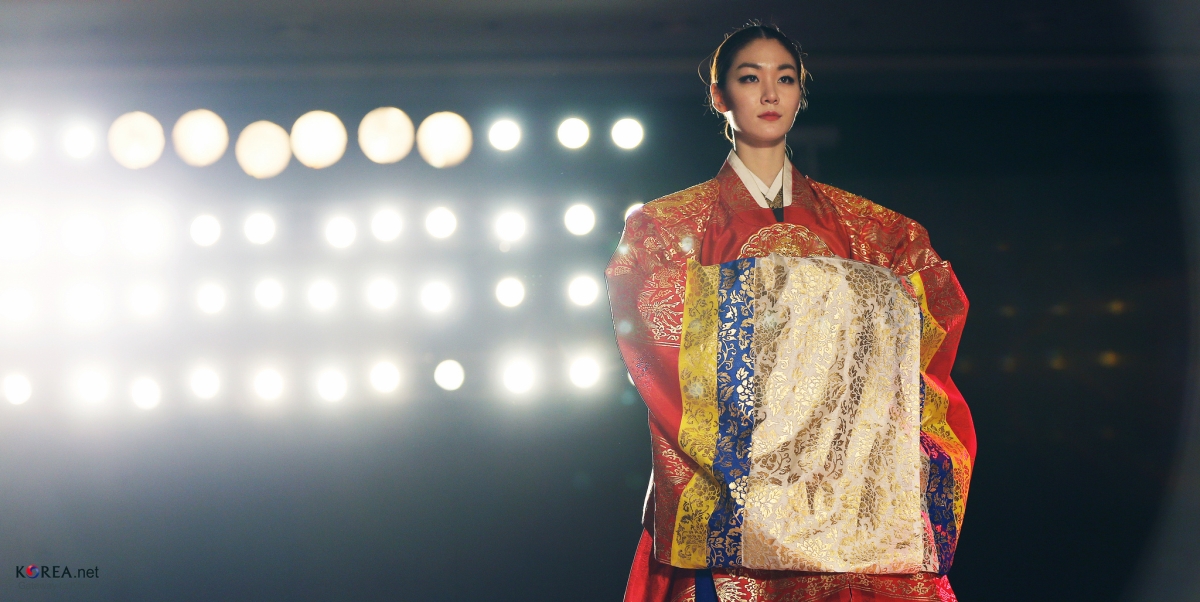
Hanbok Fashion Show(Source: Republic of Korea; CC BY-SA 2.0)

“I believe in equality and love the Free the Nipple movement. After four years in Korea, I am still intrigued by its thirst for modernity mixed with its fear of losing its cultural past, sometimes to the point of schizophrenia.”

And with that self-introduction, how could I not accept Manouchka Elefant’s proposed guest post?

As well as being a long-time reader, she’s also a Swiss recipient of the NIIED scholarship, and has just completed her Master’s in finance at Yonsei University (see here for her LinkedIn bio). She adds:

“Anyways, a few friends read my paper [for my Modern Korean Society & Culture class] and found it very interesting and suggested I publish it. Since your blog is my reference on the subject I thought I’d send it to you.”

Flattery will get readers everywhere. So, without any further ado, let me present her post:

Introduction

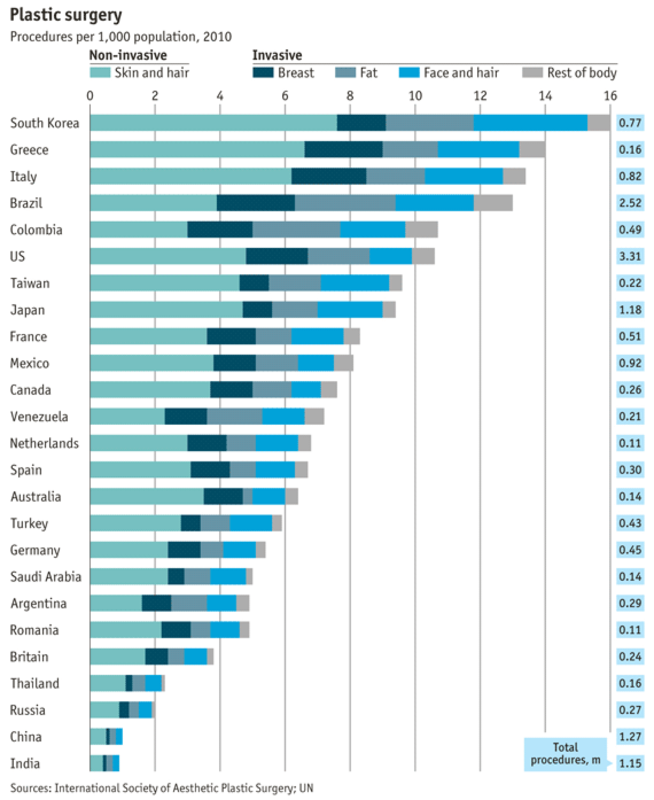
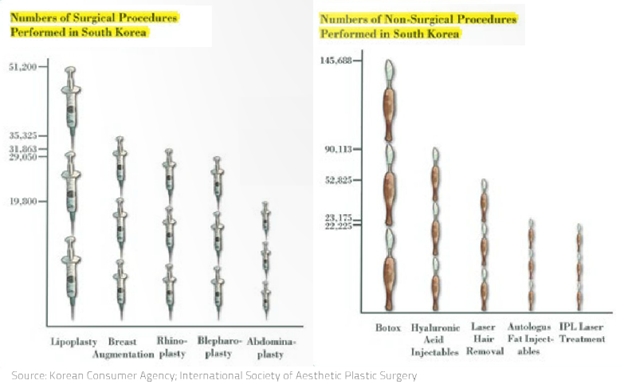
Women in Korea have come a long way since the beginning of the century. They have more freedom, greater access to education, and higher spending power thanks to their increasing participation in the workforce. This emancipation of women has been accompanied by a seemingly paradoxical phenomenon: the explosion of the beauty industry and in particular the normalization of plastic surgery procedures. Per capita, South Korea is the number one country for non-invasive and invasive plastic surgery performed and counts the highest number of plastic surgeons (Raitt 2014). The peninsula’s history and Confucian heritage has a tremendous impact on women’s growth in society as well as on contemporary beauty ideals. Today cosmetic surgery can be seen as the two sides of a same coin, it is both an appropriation of one’s body and conformation to society’s expectations of women in Korea.

Historical heritage

Analyzing womanhood in Korea requires us to understand the country’s Confucian heritage and its revolutions. Typically, the contemporary obsession for beauty in Korea is seen as “conformity to patriarchal version of femininity in order to maximize women’s chances of success in marriage and the economy” (Ruth Holliday 2012). However, in a relatively short period, the Confucian ideal has gone through a lot of transformations, notably in the 1930’s and after the Japanese occupation.

Confucian Ideal

Confucian scholars would be quite surprised to see that Korean people no longer appreciate women with beautiful moon faces. In their time, “virtuous femininity” meant that upper class women conformed to an exacting Confucian decorum (Ruth Holliday 2012). Whether a wife, mother, or daughter, a woman’s self was fully dependent on that of men. They were restricted to the domestic sphere, and their success was in their “ability to mimic a concealed and deferential ideal, defined by virginity or maternity” (Ruth Holliday 2012).  Chastity and modesty were highly valued and expected of women from a young age (Lee 2014). To some extent, Korean women are still expected to portray an image of innocence and modesty no matter their age.

Also inherited from the Choson dynasty is the concept of embodying one’s social class through one’s appearance, with the “practice of displaying social status through class-appropriate clothing and decorum, and the ways in which they are interpolated in neoliberal discourses of self-improvement and class mobility are evident in the ways in which cosmopolitan subjectivity is embodied through cosmetic surgery as a sign of a desired class, social or gendered identity” (Elfving-Hwang 2013), leading to one of the theories behind cosmetic surgery as a way to achieve social class identity, which seems to be only part of the phenomenon.

Modern Girl

The 1920-1930’s with its fun flapper girls in the West, dancing to jazz and smoking were in stark contrasts to the Confucian doctrine, yet this new “modern girl” had a strong impact on Korean women and their an seok-ju modern womanaspiration to emancipate themselves from constraining paternalism (appendix 1, source: Gusts of Popular Feeling; rather than in the original separate appendix, I’ve posted images and tables as they came up—James). The modern girl’s short hair was in direct clash with Confucian values and was seen by many as a sexual revolution (Chung 2012). However, the modern girl was associated to decadence, bourgeoisie, and conspicuous consumption.  “A woman drawing attention to her own sexuality – body and desire- was frowned upon in traditional Korea” and the modern girl came to symbolize more than women’s freedom, but also the “fracturing of class [poor versus bourgeois] and citizenship [Korean versus Japanese]” (Chung 2012).

Furthermore, the modern girl was not a mere imitation of Japanese or American influences, it went deeper than hair and clothes, “it mirrored the changing social consciousness, the collective identity of traditional womanhood as an aspect of modernity and modern conditions in colonial Korea” (Chung 2012).

Additionally, the modern girl “challenged the traditional gender roles and centuries of Confucian morality by accumulating products that enhanced female beauty and sexuality” (Chung 2012), which also meant that one was able to alter their appearance and other’s perception of them through consumption. We can wonder if it was a precursor to contemporary Korea’s constant availability of cosmetics and clothing shops.

However, in the context of occupied Korea, the modern girl was highly criticized for being influenced by the Japanese media and to some extent for supporting the colonial agenda. It was seen as another way in which Japan attempted to impose itself as a modernizer over Korea and that “the modern girl phenomenon evolved in the framework of this cultural and economic subordination of the era, which led to its conflicting popular reception” (Chung 2012). Paradoxically, people were attracted to this new image of femininity, spurring their “voyeuristic participation in mass culture, titillating the public while inviting condemnation at the same time” (Chung 2012). It can be similarly observed with today’s pop-culture idols, with the public simultaneously attracted by these sophisticated girl bands while criticizing their over-sexualized image.

Wise Mother Good Wife

At the other end of the spectrum is the ideal of wise mother good wife and although it also served to empower women, its motivations were quite distinct from the modern girl. This concept was at the complicated “intersections of patriarchy, colonialism, nationalism, and western modernity” under which women followed, fought back, or appropriated the predominant male dominated world (Choi 2009).

The wise mother good wife ideology was used by different groups, each with its agenda. Korean nationalists reinforced the role of mothers as educators of Korean children and as supporters for their husbands. Japan’s gender program used it both at home and in colonial Korea “with the aim of producing obedient imperial subjects and an efficient, submissive workforce” (Choi 2009), while protestant missionaries saw it as a way to spread their faith with a “pious mother and wife as a moral guide in the Christian family” (Choi 2009). All of this contributed to the education of women in Korea.

This ideology was deeply rooted in a patrilineal social structure, promoting chastity, marriage and motherhood. It was in direct clash with the modern girl, which was highly criticized for her vanity, her consumption, and her relatively open sexuality. Nevertheless, wise mother good wife also served as a platform to empower women, even if within a restricted domain. The women who “benefited from this education centered in domesticity paved the way to new domains for career women” (Choi 2009). Women were however, not educated for their own benefit and advancement as individual beings, but rather for what they brought to men and society, therefore not for their emancipation. Nonetheless, it set the path towards higher education and more freedom for Korean women.

Women’s Growth in Korean Society

Women’s Education

As we saw, there were several different movements promoting women’s education in Korea, from the protestant missionaries to the Japanese regime. However, some Confucian scholars, influenced by the West, also associated the advancement of women as a sign of a modernized society. They thought that “woman is the foundation of human society and the girder of the house and thus if she is weak or ignorant, she would not be able to fulfill her central role” (Choi 2009).

With Korea’s independence and its efforts towards development, education became widely available to both genders. Educating women therefore was modernizing Korean society, as well as increasing the Higher Education trend for men and women in Koreaworkforces’ overall education level to achieve economic development. In 1966, only 33% of girls went from elementary school to middle school. Similarly, 20% continued to high school and 4% to university. However, by 1998, 61.6% went from middle school to high school and 61.6% to university (Korean Overseas Information Service n.d.). By 2006, the number of women reaching higher education was as high as that of men, with 81.1% and 82.9% respectively entering college and university (table 1)  (Ou-Byung Chae 2008).

This remarkable progress in the number of women achieving higher education also came with its own challenges. Although women achieve higher education there is still a strong gender bias both in the educational curriculum, in the family sphere, and in the workplace.

Women’s Employment

Today, Korea is known for its high educational standards but also for the high inequalities between men and women in the workplace. Last years’ World Economic Forum ranked Korea 111th out of 136 nations in its Global Gender Gap report. While in 2012, the Organization for Economic Cooperation and Development’s (OECD) pay gap report placed Korea in the top of the list with a 39% differences between men and women’s pay (McKay 2014).

Although women have made a lot of progress in Korea’s work environment, according to Statistics Korea’s latest figures, they still only participate for about 50% in the workforce, whereas men reach over 73% participation. Furthermore, the market research firm CEOScore found that in 2013 about 1 out of 1,430 employed women reached a corporate management job against 1 out of every 90 men (McKay 2014). On top of it, Korea also shows the poorest level of female graduate employment among the OECD countries (McKay 2014).

Granting the Korean government has made it part of its objectives to change the situation, a number of factors create this tense work environment for women. It is commonly perceived that women in Korea suffer from higher job discrimination, starting from the hiring process all the way to corporate advancement. The Korean work culture and social expectations of gender roles both have an important effect. High unemployment further reduces women’s chances of finding good jobs, with the economy feeling global pressures and a staggering number of overqualified job hunters, women are often passed over for men in an environment where youth unemployment has been around 8% since 2010 (Park 2014). Both women and men, see being good looking as the next level to compete in the job market and “employment cosmetic surgery” is growing in popularity with both genders (Korean Overseas Information Service n.d.).

Furthermore, preconception of women’s gender roles as mothers and wives results in discrimination in the workplace. The government’s policies to increase women’s participation in the workforce are not “working well because companies still view men and women’s societal duties as different” (McKay 2014). Additionally, the prevalent perception that women are supposed to quit working after getting married to focus on raising children means that “women are being forced to choose between having a career or having a family” (McKay 2014). Very few women go back to work after having had children in Korea, not necessarily by choice. During recruiting, a lot of companies prefer male recruits over young women, apprehensive at the prospect of them getting pregnant (maternity leave cost). As a result, a lot of women choose to delay having a family (Lee 2014).

Breaking the glass ceiling is particularly difficult, with a male dominated work culture. After-work bonding, involving copious amount of alcohol, can improve work relationships and even impact promotions. However, these are not widely considered as appropriate for women, especially if they have children, and whom often don’t want to drink as much as their male colleagues. With numerous reports of male colleagues using alcoholic intoxication as an excuse for sexual harassment, it also puts women in a vulnerable position. Of reported workplace sexual harassment 44.5% of them happened at a hoesik (McKay 2014).

Additionally, there is a strong form of blatant sexism in the workplace. Taking the form of pressure against women not to take roles with responsibilities, to their abilities being questioned on the basis of their gender. Today’s sexism “arises from […] subordination for male authority, especially in the current capitalist environment where women are gradually gaining influence” to the point that some men feel threatened by women taking jobs they consider as being theirs (Lee 2014). Even more, “powerful women are facing negative sentiment among people in general” (Lee 2014).

On top of it all, women are expected to be feminine and complacent, to conform to social expectations (Lee 2014). In Korea, this usually means conforming to the rigid code of beauty.

The Female Ideal of Beauty

In all cultures and societies, beauty norms and representations are not frozen in time, but are constantly changing. The place of women in society has a very strong impact on what is deemed appropriate for their appearance. “Historically, Korea is a nation founded on Confucianism that places women at the bottom of the hierarchy and that treats women as inferior to men” (Lee 2014). Furthermore, Korea seems to be special in the way that the traditional model of beauty from the Choseon era lasted a long time without drastic changes until the country opened up to external influences (voluntarily and involuntarily) and at which point it was completely transformed. During the colonial period new beauty ideals started to emerge, but it is from the 1960’s on that a beauty revolution took place and accelerated with the country’s development.

Korean Beauty Standards

With the rapid transformation of Korea from a rural economy to a developed one, the role of women in society tremendously changed and with it the norms and customs of beauty. Looking back at pictures from the first part of the 20th century (appendix 2, below), we can see women with round faces, often with a center part in their hair. For many centuries, thick glossy hair, fair skin, thin eyebrows and small lips were the symbols of beauty. Make-up was often home-made from spices and plants and used minimally to enhance features. It was only acceptable for entertainment ladies to wear white powder or colorful products. In the 1930’s the Korean garb still was the norm and only very wealthy women would occasionally wear western clothing. Since the Choseon period (1392-1919) a simple yet elegant appearance, associated with a dignified behavior and humble manners, were considered the quintessence of beauty and elegance following Confucian standards. However, as the country suffered from poverty, most women did not have the means to spend on their appearance, only wealthy women could. Western fashions were for the wealthy and city folks while the average person still wore traditional clothes. “Korea was not a strong country, and people’s efforts to protect and preserve their identity served to strengthen their conservative values” (Lee 2014), which also translated in the way they portrayed themselves. This shifted slowly until the 1980s when Korean clothes started being reserved for special occasions and western fashion became the norm.

Examples of Korean women in the 1900’s(Appendix 2, L-R: Portrait of four women, Peng Yang, Korea, 1924; Bride, Gishu, Korea, 1926; A young ‘kisaeng’ in full Korean traditional dress, ca. 1904. Source: University of Southern California Library)

After the war, Korea opened up further to western culture, which became synonymous with development and modernity. Until the 1987 Democracy Movement “Confucian tradition was largely responsible for dictating the roles of women” (Lee 2014) and with it the way they should present themselves in society, but The 'S' Shapethis new era transformed both the role of women, bringing them from the home to the workplace, and the perception of beauty. “Under consumer capitalism Korean women’s bodies have entered the public sphere, no longer hidden away but now available for scrutiny and consumption” (Ruth Holliday 2012).

In Korea, there is tremendous pressure on women to conform, and most women are conscious of the “harsh criticism that comes when [they] deviate from the norm” (Lee 2014), leading to a strictly defined beauty ideal. The contemporary beauty ideal is quite far from the prevalent model of only 20 years ago. Nowadays, the Korean ideal of beauty looks nothing like the moon-shaped beauties of the past. Fair skin is still admired, but beautiful features are singularly different than in the past. Eyes should be big and open, the bridge of the nose should be high and its tip slender, the face should be small with a narrow jaw, the body should be very slight yet show an “S” shaped curves (appendix 3, source: The Grand Narrative). To some extent, this new ideal looks more like a comic book character than a realistic image of women, and can rarely be achieved without constraining one’s body or altering it drastically through cosmetic procedures. Yet it is omnipresent in the media, advertising, and in the messages directed to children from an early age (appendix 4).

Bean paste S-line V-line(Appendix 4: Messages directed to young children carry messages of beauty, physiognomy and conformity, here in an advertisement for bean paste. Source: The Grand Narrative)

This standardization of beauty is especially strong among young women who want to emulate celebrities and are constantly being reminded by the media and society that showing good care for one’s appearance is essential for achieving a good marriage and a successful life. The popularity of cosmetic surgery is such that it is considered normal for celebrities to be redone and still represent role models. It is hence no wonder that Korea is the countries with the highest number of children having plastic surgery and double eyelid surgery is a common gift for graduation from parents.

The paradox goes even further, asking women to embody simultaneously images of innocence and purity, while being glamourous and exciting to the male gaze. However, “expressions of sexual subjectivity remain a big taboo in Korea” where we “can have a 25 year-old’s S-line quite literally highlighted for a heterosexual male gaze, but heaven forbid she admit to having sexual feelings and experience herself” (Turnbull 2012).

Standardization of beauty is also spread through the assignment of different letters to exemplify the ideal shape, “while this practice is seemingly frivolous on the surface, it actually belies much more pernicious trends in society at large, when you have celebrities vocally espousing their alphabet-lines and therefore actually objectifying themselves as a conglomeration of “perfect” body parts rather than as whole, genuine people” (Turnbull 2013).

Fueling the Korean cosmetic industry’s steady growth of more than 10% per year for the last few years, the beauty obsession is constant, from adds for plastic surgery and dieting in public transportation to the “mushrooming cosmetic shops, which have increased 37% a year on average” (Raitt 2014). In a patriarchal society where women are not yet treated as equals, these all reinforce the belief that “pretty girls are more valuable” (Lee 2014) and push for conformity. It is a new way to impose the demure Confucian-influenced image that is wanted and anticipated of women.

Conforming to the Ideal

Some researchers assign plastic surgery in the “Neo-Confucian ‘culture of conformity’, where the unity of the whole is more important than the individuality of the one, producing beauty as a new requirement of decorum’ for women” leading to an environment where women are “obsessed with their appearance” (Ruth Holliday 2012).

Furthermore, the backlash in Korea can be very strong and according to scholar Lee Sang-Wha three factors have “helped uphold Korean society and eventually led to the demure girl image of today: gender segregation, division of gender-assigned labor and the subordination of women” (Lee 2014). It left no place for feminism in Korea’s Confucian heritage where the old values still push them to “appear subordinate and innocent” (Lee 2014).

However, important changes in Korean society can offer another reason behind contemporary beauty trends. The political and economic transformations of the past 30 years, accompanied by an incredible speed of democratization and industrialization, offered new social opportunities for women. As we have seen earlier, university attendance is extremely high, and Korea actually has one of the highest rate for women’s enrollment in college globally according to the OECD.  Some sociologists argue that this “recent upsurge in female societal empowerment may be associated with an oppressive backlash in media portrayals of gender ideals” (Turnbull 2013). This unrealistic expectation on women has also been observed in other regions and “historical data suggest that societal shifts toward gender equality are often accompanied by increased media portrayal of unrealistic gender norms as a reactive “tool of oppression” by mainstream society” (Turnbull 2013) further pressuring women to conform to the beauty ideal.

All of these negative forces appear in the private and the public spheres. The “care of self and cosmetic surgery increasingly link notions of ‘correct’ or ‘appropriate’ appearance with performing adequately in society as a social subject” (Elfving-Hwang 2013).

Plastic Surgery’s Normalization

The numbers speak for themselves, the International Society of Aesthetic Plastic Surgeons’ global ranking places Korea number one in procedures per capita in 2010 (table 2, below), ahead of the United States and Brazil, and also tops the list with the biggest number of registered cosmetic surgeons per capita (Elfving-Hwang 2013). According to the Korean Association for Plastic Surgery, “1 in every 77 people in South Korea has had [at least one] plastic surgery (Raitt 2014). The Fair Trade Commission also stated that one quarter of the world’s plastic surgeries take place in Korea, representing a 500 billion won industry (Raitt 2014).

Plastic Surgery Procedures per 1000 population, 2010There are two categories of cosmetic procedures. For the non-surgical procedures, the most popular ones are in order of importance: Botox, hyaluronic acid injectables, laser hair removal, autologous fat injectables, and IPL laser treatments (Raitt 2014). These petite surgeries are highly popular as they are non-invasive, cheaper, and require no down-time, exemplified by Botox which counted 145,688 procedures in 2012. On the other hand, the surgical procedures in order of popularity are: lipoplasty, breast augmentation, rhinoplasty, blepharoplasty (double eyelid), and abdominalplasty (table 3, source: source: the Korean Consumer Agency).

Top plastic surgery procedures in 2010As shown by these statistics, plastic surgery in Korea is increasingly normal, with more and more women, and men too, opting to go under the knife. However it is important to point out that women are not passive consumers of beauty, on the contrary they are “highly informed, active agents in their engagements with cosmetic surgeons” (Ruth Holliday 2012). Cosmetic surgery is seen as something positive, that enables access to a desired social status and becomes a symbol of middle class and gendered identity (Elfving-Hwang 2013). Furthermore, the liberalization of cosmetic surgery is also seen as “democratizing practice” and the high growth rate of complex surgeries with high risks, such as the chin and mandibular reduction operation, reflect the trivialization of the practice (Elfving-Hwang 2013).

Confirming earlier arguments about the culture of appearance, plastic surgery has become a marker of consumer middle class identity, of wealth and social status. In turn it “emerges as a highly effective force encouraging individuals to perceive aesthetic surgical intervention as a practical and normative option for self-improvement” (Elfving-Hwang 2013). However, it carries an important weight as well, creating an internalization of patriarchal beauty standards, where “women constantly examine their bodies in a negative and pathological light” (Ruth Holliday 2012) in their insatiable quest to an unrealistic body image.

Conclusion

Women’s place in Korean society, their assigned gender role and idealized representation, is the fruit of the country’s Confucian heritage as well as external influences from the West and Japan. Korean women have not yet reached emancipation as shown by the fact that they still do not own they own body and image and that they are subjected to the paternalistic ideal of beauty. Women’s higher education level is met by tough sexism in the workplace, and although they have more freedom and spending power they still suffer from the constant pressure to conform to beauty standards and expected behavioral traits. The strong backlash against those who do not conform also serves as a way to keep women in check and limit their emancipation.

However, all is not negative. With the new generation coming of age, more and more women are fighting against the system to gain recognition and equal rights in the workforce and it ripples to the private sphere through their increased independence. Korean gender roles are still changing and women will find a way to reconcile their need belonging to the group and their want for self-determination.

References

Choi, Hyaeweol. 2009. “”Wise Mother, Good Wife”: A Transcultural Discursive Construct in Modern Korea.” Journal of Korean Studies, Vol.14(1) , pp.1-33.

Chung, Yeon Shim. 2012. “The Modern Girl (Modeon Geol) as a Contested Symbol in Colonial Korea.” In Visualizing Beauty: Gender and Ideology in Modern East Asia, by Aida Yuen Wong. Hong Kong University Press.

Elfving-Hwang, Joanna. 2013. “Cosmetic Surgery and Embodying the Moral Self in South Korean Popular Makeover Culture.” The Asia-Pacific Journal, Vol. 11, Issue 24, No. 2.

Kim, Taeyon. 2003. “Neo-Confucian Body Techniques: Women’s Bodies in Korea’s Consumer Society.” Body & Society 9(3): 97–113.

Korean Overseas Information Service. n.d. “Women’s Role in Contemporary Korea.”

Lee, Annie Narae. 2014. “The Fight for Equality: Women’s Struggle to Defy Prejudice, Stereotypes and Tradition.” Groove, Issue 91, pp.58-65.

McKay, Anita. 2014. “The Working Woman: Is Korea Ready for Women in the Workplace?” Groove, Issue 91.

Ou-Byung Chae, Jung-Hae Choi. 2008. “Korean Society in Change: Statistics and Sources (I, II, III, IV).” Korean Journal of Sociology 42.

Park, Hyejin. 2014. “Qualified, trained and nowhere to go.” Groove, Issue n.91.

Raitt, Remy. 2014. “The Big Bucks in Beauty: From cosmetics to eyelid surgery, vanity spurs Korea’s economy.” Groove, Issue n. 91.

Ruth Holliday, Joanna Elfving-hwang,. 2012. “Gender, Globalization and Aesthetic Surgery in South Korea.” Body & Society, Vol.18(2), pp.58-81.

Turnbull, James. 2012. “Bikinis, Breasts, and Backlash: Revealing the Korean Body Politic in 2012.” The Grand Narrative, Korean Feminism, Sexuality, and Popular Culture.

—. 2013. “Revealing the Korean Body Politic, Part 3: Historical precedents for Korea’s modern beauty myth.” The Grand Narrative, Korean Feminism, Sexuality, and Popular Culture.

“Sexy Concepts with James Turnbull”

Lee Hyori Bad Girls SBS Inkigayo 인기가요 25 May 2013(Source)

Ahem. But really, they’re just a very small part of my July interview with Colin Marshall for the Notebook on Cities and Culture podcast, where we also discuss:

…what Westerners find so unappealing about Korean plastic surgery; the associations of the “double eyelids” so often surgically created; why he used to believe that Koreans “want to look white”; the meaning of such mystifying terms as “V-line,” “S-line,” and “small face”; the uncommon seriousness about the Western-invented concept of the “thigh gap”; how corn tea became publicly associated with the shape of the drinker’s jaw; Korea’s status as the only OECD country with young women getting thinner, not fatter; Korean advertising culture and the extent of its involvement with the “minefield” of Korean irony; the prominence of celebrities in Korean ads, and why the advertisers don’t like it; how long it takes to get tired of the pop industry’s increasingly provocative “sexy concepts”; the result of Korea’s lack of Western-style reality television; how making-of documentaries about 15-second commercials make the viewers feel closer to the celebrities acting in them; why he doesn’t want his daughters internalizing the Korean sense of hierarchy; why an expat hates Korea one day and loves it the next; how much homework his daughters do versus how much homework he did; the true role of private academies in Korea, and what he learned when he taught at one himself; the issues with English education in Korea and the oft-heard calls for its reform; the parallels between English test scores and cosmetic surgery procedures; the incomprehension that greets students of the Korean language introduced to the concept of “pretending to be pretty”; and how to describe the way Korean superficiality differs from the Western variety.

Apologies in advance for not being much more succinct when I spoke (I’m, well…er..uhm…working on that), and by all means please feel free to ask me to clarify or elaborate on any of those topics.

Also note that Colin has interviewed over 30(?) other expats and Koreans, men and women, and Korea and overseas-based speakers for the Korean component of his series, all most of whom are much more articulate and entertaining than myself, so I strongly encourage you to browse his site. I myself was blown away by Brian Myers’ interview yesterday, which was full of insights and observations that all long-term expats will be able to relate to (and will be very useful listening for those thinking they may become one), and Bernio Cho’s is essential if you want to understand the Korean music industry better. And those are just the two I’ve listened to so far!

A Weighty Matter: Deconstructing the Korean Media’s Messages about Body Image, Cosmetic Surgery, and Obesity

Korean Drama Screenshot(Source)

I was quoted in the Korea Times today, on “Korean primetime’s ‘lookism’ problem”. Due to my sloppy wording though, the fact that I was actually paraphrasing someone else(!) got lost in the final article. So, to give credit where credit’s due, and to use the opportunity to provide some helpful links to further reading, here’s my original email quote:

As researcher Sarah Grogan pointed out in Body Image: Understanding Body Dissatisfaction in Men, Women and Children (2007), watching more television doesn’t necessarily lead to greater dissatisfaction with one’s body—it’s the messages it gives that are what’s important. So, whether it’s a variety program, a music video, an advertisement, or whatever, if what you’re watching stresses being thin, if it encourages viewers to compares themselves with the ideal men and women presented, and/or if it makes you feel like there’s such a huge gap between your own body and theirs, then you’re just going be left feeling ugly. Television everywhere is guilty of that. Korean television though, really stands out with the sheer amount of programming time devoted to appearance and dieting, with its uncritical narratives that cosmetic surgery is a safe and reliable means to financial and romantic success, and with the seeming unconcern with, even positive encouragement of passing those messages on to children. Call that a gross generalization if you wish, but consider this: although Korean children (of both sexes) are only about average weight compared to other OECD countries, Korea is the only country where 20-39 year-old women are getting thinner. Is it really so strange to suppose that the Korean media might have had something to do with that? So unreasonable to suggest that it could sometimes present more realistic images of women?

To be precise, it’s the 2nd half of the 2nd sentence (from “if what you’re watching” to “feeling ugly”) where I’m paraphrasing Sarah Grogan again (p. 112). But, without my making that clear, then it’s no wonder that reporter Kim Bo-eun didn’t realize, and so didn’t mention Grogran. My fault sorry, and, not just because I’m feeling guilty at the *cough* inadvertent plagiarism, naturally I highly recommend Grogans’ book, although frankly I’d wait to see if a third edition is coming out before you consider purchasing it yourself.

Most the of the subsequent links are self-explanatory, so I’ll just highlight a couple. First, the one to Joanna Elfving-Hwang’s “Cosmetic Surgery and Embodying the Moral Self in South Korean Popular Makeover Culture” at the Asia-Pacific Journal, because it’s a must-read. At best, I can only supplement it myself with this recent translation of mine (with links to many more articles) on how scarily unregulated—and genuinely dangerous—the Korean cosmetic surgery industry is, with a Chinese patient dying just last week.

Next, my latest article for Busan Haps, where I debunk recent alarmist reports about—yes, really—a ‘Korean Obesity Epidemic’, especially among children. To quickly sum up my findings for you here, despite the definite improvements that can be made to Korean children’s health, they are actually only about average weight for the OECD (which I suppose is news for Korea), and Korean adults are still the 5th thinnest overall. Like with smoking however, it is both misguided and unhelpful to think in terms of overall rates rather than specific demographics, two extreme cases in point being young, urban women who are getting more underweight, and elderly, rural, poor women who do indeed tend to be (slightly) more obese than ‘average’. World-Changing Quiz ShowSomething to consider the next time a columnist or show host lectures Korean women on eating less—which will probably be as soon as next week, in the run-up to Seolnal on the 18th (source, right: Entermedia).

Finally, another clarification. By “Korean television…really [standing] out with the sheer amount of programming time devoted to appearance and dieting”, I don’t mean shows explicitly devoted to those subjects as such (although I’m sure that, comparatively speaking, their numbers would still be quite high). Rather, it’s that those subjects pervade Korean programming content, with hosts on Korea’s disproportionately high number of variety and guest shows, for example, frequently commenting on especially female guests’ appearances, either by jokingly fat-shaming those that don’t fit the ideal, or by prompting ‘impromptu’ skits, dance performances, or testimonials about dieting and miracle fat-reduction products by those that do, to the extent that such body-policing becomes an integral component of the entertainment (Kim Bo-eun also mentions some examples in Korean comedy shows).

This is just my strong impression though, which I admit I can’t offer any content analysis to back-up, and which I doubt even exists anyway (would anyone like to do some with me?). If any readers have a different impression of Korean television then, and feel that I’m mistaken, by all means please tell me why!

Korea and the World: My Podcast Interview

Brown Eyed Girls Japan(Source: Danny Choo; CC BY-SA 2.0)

“Korea’s entertainment industry has become extremely popular abroad and conveys the image of a modern and attractive country. Watch any K-Pop video and you see plenty of skin and sexiness; but look into Korean culture as a whole, and you witness the dominance of traditional values. Does the way women are depicted in Korean popular culture tell us something about gender politics in Korean society? How persistent are traditional gender roles? Does the entertainment industry empower women or does it merely represent the reality of gender patterns in Korea’s conservative society? To answer these questions and more, we sat down with media specialist James Turnbull in Busan.”

A big thank you to the good folks of Korea and the World, for being such pleasant podcast hosts back in November. Unfortunately though, frankly I had a terrible cold at the time, so apologies in advance if I sometimes sound a little incoherent during the interview!

Either way, make sure to also check out the interviews of Robert Kelly, Daniel Tudor, and Andrei Lankov, with many more to be added in coming weeks.

Update: If you’re interested in hearing more about K-pop specifically, also check out the first episode of Anonymous Said, a new podcast series in which the host aims to “talk to anonymous guests each week, and together…comment on recent events in Korea, and the experiences the guests have from behind-the-scenes of entertainment and life here.” This blog gets a brief mention at 21:50 (squee!).

Thinking About Getting Cosmetic Surgery in Korea? Make Sure You Read This First

Korea Cosmetic SurgeryEstimated reading time: 11 minutes. Sources: left, dongA; right, The Kyunghyang Shinmun.

The more operations, the more possibilities for complications, mistakes, and patient deaths. So, with the highest per capita number of cosmetic surgery operations in the world, you’re always going to hear a lot of harrowing, even terrifying experiences of going under the knife in Korea. Korean cosmetic surgeons, who are no more unethical or incompetent than those from any other country, shouldn’t be singled out for horror stories that can happen anywhere.

But it’s more than just numbers. With so many clinics lacking even basic first-aid equipment; doctors clamoring to break into the lucrative cosmetic surgery market whatever their training and specialization; patients receiving little to no warnings of side-effects; little regulation by the Ministry of Health and Welfare; insufficient support staff because they’re too expensive; and patients doped-up to disguise the fact that the hot-shot surgeons they’ve hired have been replaced with cheaper ones, then the whole industry is well overdue for a makeover. In hindsight, it’s amazing that such an important growth market, and symbol of Korean skill and technological prowess, is really such a cowboy industry.

I learnt how bad things were from translating and following-up on the following article, but frankly it’s not the best source in itself. Feel free to skip through to the links at the end instead, which I hope provide a valuable resource for readers:

성괴 대신 내면미인 뜨는 세상 꿈꾼다 / I Dream of a World of Inside Beauty, Instead of Cosmetic Surgery Monsters

The Kyunghyang Shinmun, 22.05.13, by 이보람 / Lee Bo-ram (boram@k-health.com)

‘성형대한민국’에서 벗어나려면… / How to change this cosmetic surgery republic…

2013년 대한민국의 성형은 과열양상을 넘어 광(狂)적인 면까지 보이고 있다. 이를 잘 나타내는 말이 ‘성괴(성형괴물의 줄임말)’다. 최근 젊은 층에서 유행하는 말인데 똑같은 얼굴의 여성들이 강남거리를 활보하고 있다는 한 웹툰 작가의 만화에서 비롯됐다. 이러한 현상을 없애고 올바른 성형문화가 자리 잡기 위해 선행돼야 할 것은 무엇일까. 전문가들은 무엇보다 ‘내면의 아름다움이 평가받는 나라’가 돼야 한다고 입을 모은다. 특히 우리 사회에 만연된 외모지상주의가 먼저 타파돼야 한다는 지적이다.

In 2013, cosmetic surgery has just gotten crazy in Korea. This is shown in the arrival of a new term, ‘cosmetic surgery monster.’ Popular among young people, it originated from a webtoon about women on the streets of Gangnam all strutting about with the same face. What things have to be done in order to resolve this situation, and cultivate a proper cosmetic surgery culture? Experts say we have to be a country where inner beauty is also evaluated. In particular, we have to do away with the lookism that is deeply entrenched in Korean society.

SNL Korea Plastic Face 1Source: Roshiel. See also: “SNL 코리아 Satirizes Korea’s Cosmetic Surgery Craze.

외모 편견·차별 사라져야 사회정의 구현 / Social Justice Requires the End of Judging and Discrimination based on Appearance

미국 스탠퍼드대 데버러 로우드 법대교수는 저서 ‘아름다움이란 이름의 편견’에서 외모지상주의의 문제점을 꼬집었다. 그는 전반적으로 외모가 떨어지는 사람은 고용이나 승진가능성이 외모가 뛰어난 사람보다 낮았으며 매력적인 외모를 가진 정치인은 그렇지 않은 정치인보다 두 배 이상 많은 표를 얻었다고 말한다. 또 외모를 법적·정치적인 평등의 문제로 바라볼 때 비로소 외모로 인한 편견과 차별을 없애고 진정한 사회적 정의를 구현할 수 있다고 강조한다.

Stanford University Law professor Deborah Rhode pointed out the problems of lookism in her article “Prejudiced Toward Pretty” (2010). She said that, overall, chances of employment and promotion decrease with one’s appearance. Attractive politicians also receive twice as many votes as uglier opponents. Also, she emphasized that in order to realize social justice and end discrimination, it is necessary to think of differences of appearance as a legal and political issue.

건강과 대안 이상윤 책임연구원은 “요즘 우리 사회를 보면 외모에 의해 성과나 능력이 평가되는 것이 도를 넘어섰다”며 “중장기적으로 외모지상주의에 대한 국민적 인식전환이 필요하고 개인의 능력과 성과로 평가받을 수 있는 사회가 돼야겠지만 지금 상황에서는 성형에 대한 피해와 규제부분 등을 보다 정확하게 알리고 천편일률적이고 획일화된 아름다움의 기준이 변할 수 있도록 모두가 노력해야한다”고 지적했다. 전문가들은 이와 함께 성형수술에서 나타날 수 있는 의료분쟁은 물론 의료사고에 대한 인식수준을 높이는 것이 필요하다고 강조했다. 즉 수술을 원하는 이들이 수술에 대한 위험성과 후유증 등을 정확히 알 수 있게 하는 통로가 필요하다는 것이다.

Lee Sang-yoon, chief researcher at the Center for Health and Social Change, said that “When we look at our society these days, it’s ridiculous how much ability and achievements are based on appearance,” and pointed out that “In the mid to long-term, we need to change our attitudes to lookism. We have to become a society in which people are evaluated based on their own individual abilities and achievements. But for now, it is more important to make people aware of the dangers of cosmetic surgery, to regulate it more, and to promote the idea that there is more than just one, monotonous beauty standard to aspire to.”

Experts emphasize that people considering cosmetic surgery should educate themselves more about side-effects and their legal options should problems arise. Both should be made easier for prospective patients.

실제 의료분쟁조정 신청이 매년 증가하는 가운데 성형외과와 관련된 의료분쟁도 큰 축을 차지하고 있다. 한국소비자원 소비자분쟁조정위원회 의료분쟁조정 신청조사 결과 올해 1분기에 신청된 의료분쟁조정사건은 233건으로 전년 동기(73건) 대비 약 3배 이상 증가했다. 진료과목별로는 내과, 정형외과·성형외과, 치과, 신경외과 순이었다.

한국소비자원 관계자는 “치료방법의 장단점을 숙지하고 고령이나 수술병력이 있는 환자의 경우 치료방법에 따른 효과나 부작용, 비용 등을 충분히 고려한 후 수술은 최후에 신중하게 결정해야한다”고 말했다.

Medical malpractice suits are increasing every year, a large proportion of which are cosmetic surgery-related. According to a survey by the Korea Consumer Agency, in the first quarter of 2013 there were 233 suits, over three times those in the same period the year before (73). In order of ranking, most were internal medicine related, followed equally by orthopedic surgery and cosmetic surgery, then dental, and finally neurology.

A spokesperson [A guess—literally, the term is “person connected to”] from the Korea Consumer Agency said “People have to weigh the good points against the costs and possible side-effects of cosmetic surgery very carefully. Older patients and those with preexisting conditions and medical histories should really consider if it is necessary at all.”

성형수술피해자 ‘인권·구제’ 사각지대서 방황 / Cosmetic Surgery Victims Are at a Loss

또 성형에 대한 ‘정확하고 올바른 정보 제공’이 필요하다는 지적도 이어졌다. 사실 지금으로선 성형외과수술에 대한 정보는 일부 병원이나 업체에서 운영 중인 포털사이트 카페나 관련 블로그 글들이 대부분이다.

Accurate and unbiased information about cosmetic surgery is also required. At the moment, information is mostly available from portal sites and blogs run by hospitals and the medical industry.

한국환자단체연합회 안기종 대표는 “사실 성형수술피해자들은 인권이나 구제 부분에서 사각지대에 놓여있는 상태”라며 “아무래도 본인이 원한 수술이었기 때문에 수술 후 의사에게서도, 가족에게서도, 나아가 사회에서도 외면 받는 상태”라고 말했다. 안 대표는 “본인이 예뻐지고 외모적인 만족을 얻기 위해 수술을 했지만 수술 후 부작용이 생겼거나 의료사고가 발생했다면 당연히 그에 합당한 법적 보호를 받아야한다”며 “정부가 정확한 성형피해자 실태조사에 나서 적극적으로 보호받을 수 있는 통로가 마련돼야한다”고 주장했다.

An Gi-jong, a spokesperson for the Korea Alliance of Patients Organization, said “In fact, cosmetic surgery victims are in a bit of a blindspot in terms of their support and legal rights,” as “because the surgeries are voluntary, when things go wrong they receive little sympathy from society, their doctors, and even their families.” He insisted that “even if the victim underwent surgery to improve their appearance, if malpractice occurs they should still receive legal protection,” and “the government should look into the current status of cosmetic surgery malpractice cases and implement a more proactive way of safeguarding their rights.”

현장에선 성형진료 허용 놓고 ‘갑론을박’만…. / The Pros and Cons of Limiting Cosmetic Surgery Licenses

이처럼 성형수술이 과열양상이 보이면서 일각에서는 성형진료를 성형외과 전문의에게만 받을 수 있도록 한다든지 전문의와 비전문의를 보다 확실하게 구분할 수 있도록 하는 대안이 필요하다는 목소리도 나오고 있다.

As explained, cosmetic surgery is getting out of control. So, one school of thought holds that only specialists should be permitted to perform operations.

대한성형외과의사회 이상목 회장은 “성형외과가 난립하고 각종 성형과 관련된 의료사고가 빈번하게 발생하는 이유는 전문의가 아닌 이들이 성형관련 진료와 수술을 하기 때문”이라며 “정부는 보다 확실하게 성형 전문의와 비전문의를 차별화해 국민들이 제대로 선택할 수 있게 하는 방안을 강구해야한다”고 말했다.

Lee Sang-mok, chairperson of the Korean Society of Plastic and Reconstructive Surgeons, said “One reason there are so many clinics popping-up and the number of malpractice suits is increasing is because so many non-specialists are performing surgeries.” Consequently “The government should make a division between specialists and non-specialists and help patients to choose doctors appropriately.”

하지만 전문의와 비전문의를 차별화하고 전문의에 대한 정보만 제공할 경우 오히려 일부 전문의에게만 시장독점권이 부여돼 비용이 높아지는 문제가 생길 수 있다는 반론도 만만치 않다.

However, if such a division is made, and patients are directed only towards specialists, there is a danger of monopolization and increased costs for consumers.

보건복지부 보건의료정책과 관계자는 “현재 의료법상에서 의사면허를 취득한 이들은 성형이나 피부 등의 의료행위를 할 수 있다”며 “전문의와 비전문의를 나누는 등의 규제는 오히려 한쪽에 독점적인 권한을 주게 돼 가격심화현상이 빚어지게 될 것”이라고 말했다.

A spokesperson [Again, technically a person connected to] from the Ministry of Health and Welfare’s medical welfare department said “According to current laws, anybody with a medical license can perform cosmetic surgery or dermatological operations,” and agreed that “a division between specialists and non-specialists would result in monopolization and higher costs.”

여기에 과도한 병원광고나 마케팅 등을 규제하고 제지할 필요가 있다는 의견도 꾸준하게 제기되고 있다. 이에 정부는 과열된 미용성형수술 오·남용 사안을 점검하고 예방대책을 강구하기 위한 ‘보건의료안전관리대책협의회’를 꾸린 상태다. 정부는 협의회를 통해 무분별한 미용성형광고를 제지하고 이용을 부추기는 부분에 대한 규제를 검토 중인 것으로 알려졌다.

In addition, there are an increasing number of voices raised against excessive hospital advertising and marketing, and are calling for their regulation. In response, the government established the Health Safety and Prevention Association in order to investigate how to cool down the cosmetic surgery fever, its marketing, and to and prevent abuse and excesses within the industry (end).

Korean Cosmetic Surgery CartoonHere are some links for further reading, in chronological order. Naturally, most cover much of the same material as each other, so for busy readers I’ve highlighted some of the most important points from them here (source, right: 헬스경향):

A very old article of course, but its description of the industry could easily pass for 2014.

Cut throat competition among the growing number of plastic surgeons has driven some to promote more radical procedures that others might not offer…

…A doctor with the Korean Society of Plastic and Reconstructive Surgeons said the procedure took off around four years ago when a Seoul dental clinic ran a major ad campaign promoting the cosmetic benefits.

As it became popular, plastic surgeons began offering the surgery, causing the price to fall and making it more affordable to more people.

“If we are seeing more complications, that’s largely because the sheer number of people getting the surgery has increased rapidly in such a short period of time,” said the doctor, who declined to be identified.

As the number of plastic surgeries has risen in Korea, so too has the risk for accidents. According to the International Society of Aesthetic Plastic Surgery, 650,000 plastic surgeries were performed in Korea in 2011. But experts also point to lax regulations and inadequate facilities as cause for concern.

About 839 out of 1,091 cosmetic surgery clinics nationwide lack proper emergency medical equipment, according to an assessment by the Health Insurance Review and Assessment Service. And many clinics go without hiring anesthesiologists or trained professionals to cut costs.

By law, any doctor with a medical license can perform a cosmetic surgery, even if he or she does not specialize in the field. The clinic in North Chungcheong, where one patient died in March, did not have a specialist.

Experts point out that clinics should be equipped with appropriate medical equipment to deal with emergencies that can occur during a surgery.

However, most do not have this or any other measures in place.

In data provided to Rep. Choi Dong-ik of the main opposition Democratic Party (DP), 77 percent out of 1,100 clinics performing cosmetic surgery were not equipped with defibrillators or ventilators, which are mandatory devices for first aid. Only 1.2 percent of such clinics in Gangnam have emergency equipment…

…Laws governing medical advertizing state that such billboards must have warnings included details of the potential side effects of surgery, but most have these in such small lettering that it is barely legible. An abundance of plastic surgery ads appeared after the government allowed medical institutions to set up promotions outside their premises in 2012.

…the Ministry of Health and Welfare has been taking a hands-off approach to plastic surgery because it is not covered by national health insurance.

“The Ministry of Health and Welfare does not guarantee the appropriateness of medical activity or the safety of new medical technology,” said Kim Jun-hyun, a member of the policy board for the Health Right Network. “The Ministry should at least assess the safety of operations offered by plastic surgery clinics through an official investigation.”

The number of complaints involving botched procedures almost tripled from 1,698 in 2008 to 4,806 last year, according to the Korea Consumer Agency. Among the 71 people who got help from the KCA in settling disputes over botched plastic surgery in the first half of 2013, only 15 percent said their surgeons warned them of the risks and potential side effects in advance.

Lee Sang-mok, the president of the association who also led the probe, said that his team had discovered instances of ghost surgery among doctors, which is the practice of substituting one surgeon for another without the patient’s knowledge.

The association also acknowledged that some doctors would administer to patients large doses of sleeping pills in order to conceal the fact that a different surgeon was performing the operation.

The president attributed such cases to excessive competition in the industry and low moral standards among surgeons.

Related Posts:

(Hat tip to Hong Kong Law Blog for some of the links)

If you reside in South Korea, you can donate via wire transfer: Turnbull James Edward (Kookmin Bank/국민은행, 563401-01-214324)

You are Beautiful, Stop Hating Your Body

You are beautiful, stop hating your body(Source: 숭실 총여학생회 다락 Facebook Page)

Oops, I haven’t written in a while. Time to find something about body-image, the media, or popular culture to complain about then.

Seriously(?) though, there’s only so many times you can mention that young Korean women are chronically underweight, and the likely reasons for that. Better to highlight groups actually doing something about it instead.

One group is the Soongsil University Female Students’ Association, which recently encouraged women to stop excessive dieting by offering them free snacks, and passing on stickers and fans with messages like the one on the left above. It reads, “You’re different because you’re beautiful. Don’t feel bad or uncomfortable about your precious body based on other people’s stereotypes. Because you are you, you are beautiful. The 23rd Soongsil University Female Students’ Association: we are different, and we respect you.”

Those small efforts may seem futile in the face of the barrage of body-shaming messages women receive every day, but with three in five 19-24 year-old Korean women regularly skipping breakfast (nearly one in five, lunch and/or dinner too), then surely the growls in their stomachs at least got some questioning whether it was really worth it. As for the messages, body-image activist Minji Kim pointed out they’re surprisingly effective, and are now used by a number of organizations working on body-image issues:

“These messages create solidarity among people whose issues may have seemed daunting, because they were struggling alone. But when people share their stories and start talking about them? Then immediately they feel less lonely and empowered by knowing that there are other people like them out there and that they do have a support system.”

More specifically, Minji was talking about post-its like the one on the right, which reads “I would hate for you to lose even one gram in this world.” I’m unsure if it was placed there by the Soongsil students, by Korea Womenlink (remember their cool subway posters?), or if it was part of a collaborative effort, but the effect is the same!

You are Beautiful(Source: lunacharsky; used with permission)

Hat tip to the The Rootless Metropolitician, who led me to the group via the above photo.

Revealing the Korean Body Politic, Part 8: The Bare-Leg Bars of 1942

Liquid stockings nylon world war two(Source, above and below: Rare Historical Photos)

Back in the early-1940s, newly-invented nylon stockings were the must-have fashion item in the US. But supply could never meet up with demand, with 4 million pairs once selling in just 4 days.

Then the US entered the war, and all the nylon available was suddenly needed for parachutes, ropes, and bomber tires. Dupont, the sole manufacturer, retooled all its stocking machines.

Still desperate for the look though, women improvised with ‘liquid stockings’ instead, using foundation, black eyeliner, and eyebrow pencils to draw them on their legs. Stores soon began catering to the demand, adding more sophisticated lotions, creams, and sprays. Specialist ‘bare-leg bars’ followed.

So I read via this great book when I was 15, (although unfortunately that panel didn’t get scanned for the online version), and I’d like to pretend that I was taken aback by the lengths some would go to the sake of vanity, and precocious enough to realize that people were no different in 1991. In reality though, I simply thought that the women were crazy (hey, I was 15!), and didn’t understand how anyone could have been fooled by such a poor substitute.

More likely, women ‘wore’ them because liquid stockings became a pseudo-fashion in their own right—or at least until nylons became liquid stockingsavailable again (sparking the ‘nylon riots‘ of 1945). Either way, they’re another good example of the genuine concerns women had about maintaining a feminine appearance when they started working in factories in World War Two, as well as their cheap solutions (although this particular one would have been used off the factory floor). I’m glad to finally have a name for them, and a wealth of photographs to use in my presentations :D

Anybody know of any similar shortages and improvisations by women (or men!) in Korean fashion history though, which may resonate more with Korean audiences? Thanks!

The Revealing the Korean Body Politic Series: