Korean Gender Reader

(Sources: Top, Bottom)

1) Professionalism in K-pop: A Double Standard?

For those of you unaware of the latest storm in a K-pop teacup, Yoona (임유나) and Taeyeon (김태연) of Girls’ Generation (소녀시대) were heavily criticized by netizens last week for appearing tired and bored in an American MTV interview. But while that may well have been “unprofessional” of them though, Chloe of Seoulbeats points out that women tend to be called out on it much more than men, with the rudeness and unprofessionalism of Heechul (김희철) of Super Junior (슈퍼쥬니어) in particular usually simply dismissed as good harmless fun instead.

2) Why the Huge Disparity in Korean Rape Sentences?

I’ve never read Stars and Stripes before, naturally assuming it to be a little partisan. But if the following article is any guide, I’ve been misjudging it:

From a distance, it appears a travesty of justice has occurred.

In hearings held just 12 days apart in the same courtroom, the same three-judge Uijeongbu District Court panel sentenced a Korean man in his 20s to 3.5 years in prison for the rape of a U.S. soldier in her late teens, and sentenced a U.S. soldier in his 20s to 10 years in prison for the rape of a Korean girl in her late teens.

The disparity in prison terms prompted a flurry of emails and Internet message board posts suggesting that the soldier-rapist was unfairly punished for his crimes and that the Korean man who raped the female service member was given a relatively light sentence because the Korean judges were biased toward their countrymen or against the U.S. military.

But a closer look at the situation reveals that while some believe publicity surrounding the soldier’s rape of the Korean teenager might have played a role in the disparity, there were a number of other factors that could explain why one rapist was sentenced to almost three times as much prison time.

Read the rest here.

3) What to make of IBM Korea’s Pro-LGBT Ad?

At first, it sounded great:

IN LATE September, the South Korean arm of IBM, an American computing multinational, put out an advertisement soliciting applicants for a round of job vacancies. The text was standard fare in every aspect except one: sexual minorities—gays, lesbians, bisexuals, and transgendered people—were to be given “extra points” in the screening process, according to Asia Kyeongjae, a South Korean financial newspaper.

Such a policy might raise eyebrows in many places….

But later:

IBM Korea thus looked to be at the cutting edge of South Korean social change. However, the firm is now backtracking and has changed the wording of its original advertisement. Public-relations staff say there was a misunderstanding and that the firm simply wants to offer equal opportunities to all.

Read the rest at the Economist. Whether because of a genuine mistake or negative publicity though, I think IBM Korea’s retraction will have done it no favors with more liberal Koreans.

See Asian Correspondent also for, sadly, parents and teachers’ opposition to The Seoul Office of Education’s attempts to safeguard gay students’ rights, and here for a good historical guide to Korean LGBT issues up to 2009 (source, above).

4) The “Good Girls Marry Doctors” Project

In its own words:

Many times, Asian parents in the diaspora have a sharpened sense of what family or society in the “home” country might expect of them. Even if they left Asia decades ago, the older community rules by which they grew up is what is replicated as a model of behavior for their daughters, even if things in the “home” country have changed quite a bit with the times. Most importantly, it is made clear to women in particular that they are the bearers of their culture, and that if they fail to impart tradition to the next generation, they will have failed in their duties. The stress this creates often leads to these girls loving and feeling totally loyal to their parents, but also feeling like their parents don’t necessarily understand them.

Read the rest at the F-Word Blog. But just to be clear though, the project is NOT about “backward” Asia-bashing:

…this project’s goal is not to chastise culture for limiting women’s choices, but rather we hope [it] will give strategies and ideas of how girls can find new ways of finding their own path while still being able to honor our cultural background.

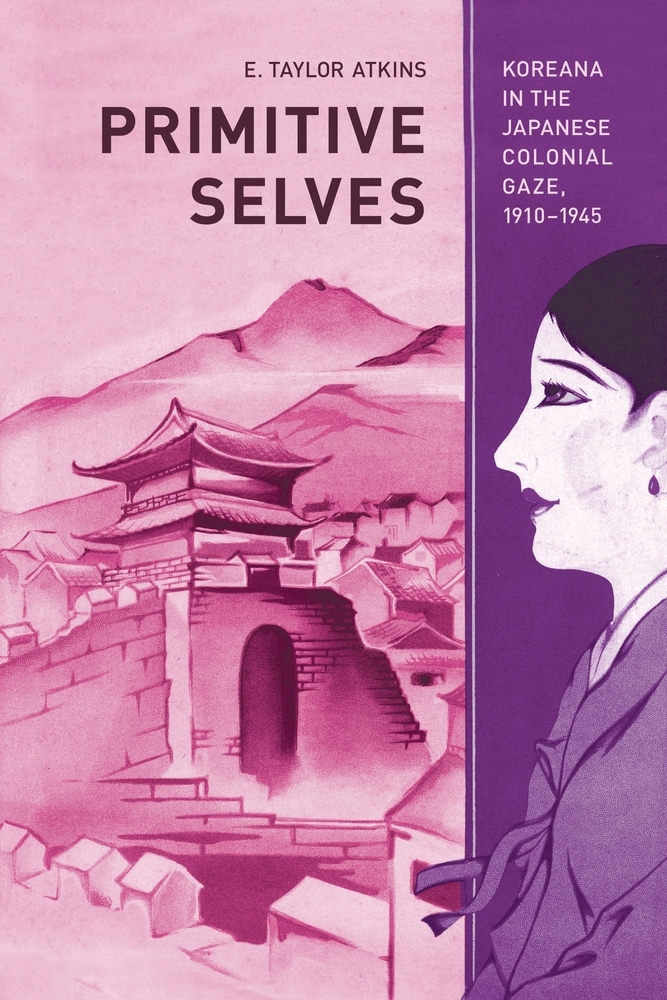
(Not technically related to the above story sorry, but this book I stumbled across while looking for an accompanying image does look quite interesting!)

5) Ultrasound Images Posted Without Parents’ Knowledge

Which is more concerning than it probably sounds:

The images, which can be used to determine a child’s sex and check for abnormalities, were found to have been posted on a web page where anyone with a membership could see them.

MediNBiz, which began ultrasound imaging of fetuses in 2003, is the top-ranked company in its industry, with partnerships with some 300 hospitals, or more than 70% of birthing hospitals nationwide. An examination of its SayBebe website (saybebe.com) by the Hankyoreh found that 2.82 million fetus ultrasound images for 400 thousand members were posted on the site as of Nov. 2, with the mother’s name, the birth date, and the hospital where the child was born. The images were available for viewing by anyone with a membership.

Read the rest at the Hankyoreh. On the plus side, all images were immediately made private as a result of the newspaper’s investigation.
(Source)

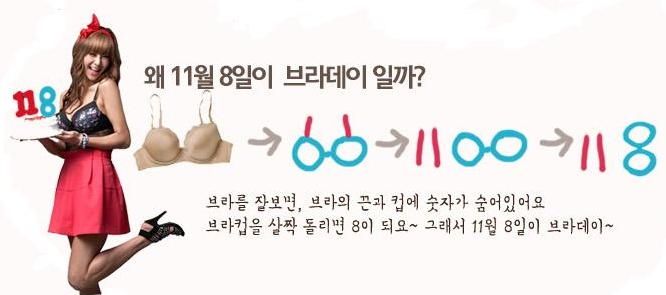
Finally, it behooves me to mention that today is “Bra Day” (브라데이) in South Korea, on which men are encouraged to buy lingerie for their girlfriends and/or or wives. See the helpful graphic above for an explanation of why November the 8th was chosen for it, and especially Brian in Jeollanamdo’s post for more on this and similar fabricated Korean consumer holidays.

Update – For any single readers traveling to Shanghai this week, don’t forget that the 11th is “Bachelor Day” there! (via: @AdamMinter)

Korean Gender Reader

(Source)

To make these Korean Gender Reader posts more timely and readable for you, from now on I’ll be reducing the number of links in them from 5 to 10, which will allow me to put new posts up more often. I hope you all like the change, and, sure enough, the next KGR will be up on Tuesday evening!

1) Korean Men’s Group Demands Ban of Movie You’re my Pet (너는 펫)

As translated at Soompi:

The Korean Men’s Association has filed a petition for an injunction against the film, “You’re My Pet.”

The Korean Men’s Association posted a link on their homepage to a legal petition that will force “You’re My Pet” to cease from playing in theaters. They voiced that the film is degrading to men and the concept of a female “owner” and a male “dog” is sexist and inhumane. They also emphasize their point by asking how people would react if the role was reversed and it was a male owner and a female dog. They ended the note by saying that these kinds of concepts should not be treaded upon, even if it is for entertainment.

Read the rest there.

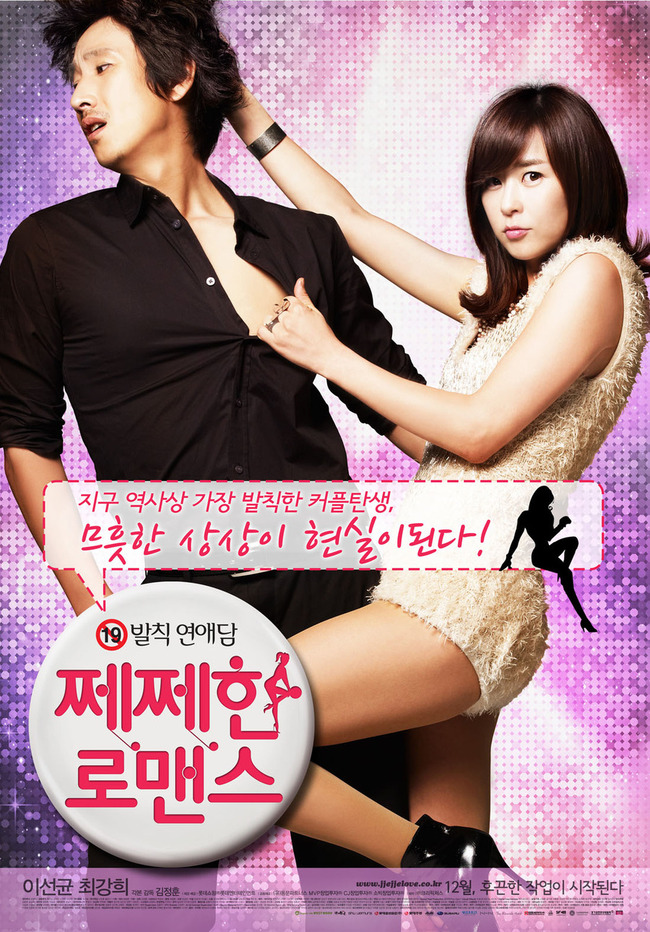
What do you think? Hat tip to @suzyinseoul and @john_F_power on Twitter for the story, and you can see here, here, here, and here for their own thoughts on it. Also, see here, here, here, and here for some discussion of the differences in the way the male and female actors are portrayed in the posters, which relates to some sexual overtones to the movie that are absent in the original manga.

2) In Korea, Pregnancy Can be a Career-killer

Which I’m sure readers are well aware of (see here if not), but it’s very different hearing it first hand. Make sure to read Groove Korea magazine here then (quickly jump to the last page), for an article by John Lincoln about how an excessive workload forced upon his pregnant wife likely caused their baby’s premature(?) birth, and also about the tactics her company used to effectively force her to resign thereafter.

Update – A much easier to read version is now available on the Groove Korea website here.

(Source)

3) Slutwalk Korea Having an Impact on Korean Men?

Sure, technically they may not be related (and see here and here if you’ve never heard of Slutwalk), but regardless it’s still great to hear a Korean male celebrity saying that preventing rape is men’s responsibility. As BadMoonRise explains of the above image:

This really caught me as a surprise.

I was watching Strong Heart (a Korean variety talk show)

Dana was talking about her experience in almost being kidnapped as a middle schooler. At the end of the story, one of the other guests asked KHJ “How do you think someone(women) can prevent sexual predators?”

and he responds “Men need to get their act together (a long the lines of “Men need to think clearly” as in “Men need to stop”)”

With apologies, after 45 minutes I’ve been unable to find a clip of that scene itself, although I did find the one of Dana that preceded it:

Badmoonrise reports that the other guests laughed in response to Kim Hyun-joong’s (김현중) comment, which sounds disappointing and confusing: like many people have said, what’s funny about it? But to play Devil’s Advocate, that may more be just have been because of the style of the show, where laughter and overacting is pretty much constant (especially after something as serious as Dana’s story).

Hat tip to I’m No Picasso, and to everyone on Twitter who *ahem* told me who “KJH” was. Also, if anyone knows of any more Korean celebrities – male or female – speaking out against victim-blaming for rape, please let me know.

Update – See Thrive for a more exact translation of what KJH said.

4) “In South Korea, Plastic Surgery Comes Out of the Closet”

A good introductory article from the New York Times, although personally I’m a little skeptical of the claims it makes. While I’ll grant that HDTV and netizens’ sleuthing means that celebrities can no longer hide it, I’m still unaware of any Korean celebrities loudly and proudly admitting that they had any procedures done, at least beyond minimal ones like double-eyelid surgery (but please correct me if you do know of any). Also, the NYT makes a big omission in not mentioning that Korea is one of the only two countries in the OECD where it is legal to require photographs on resumes (the other is Japan), and indeed this leads me to believe that greater acceptance and acknowledgment of cosmetic surgery is probably much more of a bottom-up phenomenon than the NYT makes out.

Update – Make sure to see Johnnie and Angela for some examples of the ensuing numerous Before and After advertisements.

5) Taiwan Legalizes Prostitution

Which sounds great, but most Taiwanese women’s rights groups are opposed. Whether that’s because of genuine concerns with the specific legislation though, or because – like many Korean women’s groups – they have a blanket opposition to prostitution, I’m afraid I can’t say, but I’m sure it’s covered in this 25 minute documentary on it (please don’t be put off by the black screen below; it’s working):

I’ll update this post and let readers know later tonight, once I’ve had a chance to watch it myself!

Update – Fortunately, it’s more problems with the legislation than because of a blanket opposition. In brief, those problems include:

  • Prostitution is quite literally a mobile industry, and confining it to special zones ignores reality.
  • Brothels in Taiwan are actually quite spread out (often next to temples), and well integrated into their neighborhood economies. So zoning penalizes some and not others, and by no means just the prostitutes and pimps themselves.
  • Prostitutes and clients that give or receive sex services outside those zones will receive the same monetary fines. This not just ignores the huge income gap between them, but could be devastating for the prostitutes, who tend to be economically-disadvantaged.
  • Prostitutes themselves haven’t been consulted enough, and the legislation appears rushed.
  • While local governments will be charged with designating and running prostitution zones, all are opposed in a NIMBY sense (and echo the criticism that it’s rushed), and are widely considered much less capable and more vulnerable to corruption than the central government.
  • The legalization is not accompanied by an increase in welfare services and government resources available to deal with the side-effects of prostitution that would be brought to light (although that exposure would be a good thing in itself).
  • And finally, some groups worry that it would lead to an increase in trafficking and sex-tourism. But I’m a little doubtful of that myself, and indeed it’s also questioned by some people interviewed on the program, even though they’re still against the legislation as a whole.

Share

Korean Gender Reader

(Sources: left, right)

1) Oh! Boy (오! 보이) Audition Reality Show Premieres

Does anybody else have misgivings about such a show being explicitly aimed at teens? And that its first two episodes featured high school students? After all, despite the feminine name, the “Lolita Effect” can certainly apply to boys too.  Recall my summary of it from last December:

[The Lolita Effect] is the natural consequence of various industries’ (fashion, cosmetics, cosmetic surgery, diet-related, food, and so on) need to build, expand, and maintain markets for their products, which obviously they would do best by – with their symbiotic relationship with the media through advertising – creating the impression that one’s appearance and/or ability to perform for the male gaze is the most important criteria that one should be judged on. And the younger that girls learn that lesson and consume their products, the better.

Just replace “male gaze” with, say, “opposite sex’s gaze”, then I think Oh! Boy serves as a great example of “the younger that boys learn that lesson”.

2) Sexism in the Korean Literary Establishment?

Granted, it was published back in 1996, and Korean Modern Literature in Translation’s charge comes with many qualifications. But still: it’s just remarkable that less than 1 in 1o of the writers in Who’s Who in Korean Literature were women.

3) Pognae Baby Carriers Rock!

As Geek in Heels explains:

Baby carriers are big in Asia. This is especially the case in urban areas where there is limited space and the majority of the population choose to take public transportation rather than drive.

And where there is demand, there is supply. A great variety of quality supply, I might add.

The Pognae is one such baby carrier. Made in, and popularized in Korea, the Pognae is currently one of the most popular soft structured baby carriers in Asia and Europe.

Read the rest there. If pognae are not to your liking though, then consider modernized Korean podaegi (포대기) instead, discussed in the second half of this post.

(Source: unknown)

4) On Being a Dating Blogger

Dating in Korea ponders her third year of blogging.

Semi-related, see here and here for two Korea Herald articles on what single Korean men and women want from dating these days.

5) Everything You Ever Wanted to Know about Becoming a Stewardess in Korea

It’s easy to criticize an industry that – in Korea at least – so needlessly stresses age and appearance, and to consider the young women that aspire to it as hopelessly vain and naive. However, despite these stereotypes, not only do the limited options available to Korean women (see #6 below) arguably make stewardessing a rational, adventurous, and even quite rebellious career choice, but Korean airlines even require university degrees from applicants too (and some cabin crew actually have Ph.Ds!).

See the Korea Herald here for more information. Guaranteed, you’ll be much more sympathetic to Korean stewardesses (and hopefuls) after reading it!

6) Should Korean Firms Have Quotas for Women?

Full disclosure: I’ve been a firm advocate of these ever since I wrote an undergraduate essay on the subject back in *cough* 1996. But still, I do think Shin Dong-youb, management professor at Yonsei School of Business, makes a good case for them here. Certainly his opponent Kim Joon-gi, a professor at Yonsei Law School, lacks all credibility when he fails to mention how alleged gains in female employment through  “informal government prodding” of companies, for instance, would prevent the same government encouraging the mass-firing of women again when it felt it was expedient, like it did in 1997 and 2008.

Having said that, one point Shin makes is that women are necessary to bring “feminine values”, such as “openness, diversity, sensitivity, emotional intelligence, nurturing, cooperation, horizontal community spirit, and innovation advantage” to the creative 21st Century economy. Not only do I find that notion repetitive and tiresome, but I’d question whether those are particularly “feminine” values at all, and would argue that the gender stereotypes they are based on not just flawed but actually positively unhelpful in getting women into the workplace. In particular, however modern-sounding, his argument sounds suspiciously like the logic that was used to justify giving women the vote in New Zealand in 1893(!), which, while successful (and the first in the world at that), was actually very much a backward step for New Zealand women, ossifying the Feminist movement there for at least the next 4 decades.

(Source)

7) “The more feminine you look, the more children you want. Wait, what?”

Not strictly about Korea sorry, but long-term readers will recognize the above image from my post “Sex and the Red-Blooded Woman“, about how the redder a women’s cheeks, the sexier. Which is still quite a valid conclusion from the study discussed there, but for this post at I09 though, instead the image was used to illustrate a:

study published in the latest issue of Hormones and Behavior, [that] concluded that women’s facial features and estrogen levels correlate with their self-reported desire to have children — where higher estradiol concentrations and more “feminine” facial features both correspond with higher maternal tendencies (i.e. wanting more kids, sooner).

As Io9 correctly points out however:

Of course, the findings of the paper are what they are: correlations. Correlation, as most of us know, does not imply causation. That said, correlative results do have a nasty habit of turning into soundbites…”The more feminine you look, the more children you want,” for example.

In the interest of cutting these types of soundbites off at the pass, Scientific American bloggers Scicurious and Kate Clancy have taken the liberty of engaging in a little pre-emptive debunkery.

Read that thoroughly deserved debunking there!

8) The Constitutional Court Rules on the Vandom Case

Which if you’ve never heard of before, was Andrea Vandom’s petition to find mandatory in-country HIV tests for non-Korean non-citizens on E-2 visas unconstitutional. For more background, see the list of articles mentioned at the start of Matt’s usual thoroughly-researched post at Gusts of Popular Feeling.

Unfortunately, the petition was ultimately rejected.  But, as Matt explains, some positive things did still emerge from the ruling.

9) Illict Sex in North Korea

As explained at Clever Turtles, there are a few things that should be kept in mind whenever reading stories “from” North Korea:

Pretty much all news comes through a few anti-North Korean activists who cultivate communication channels with dissidents inside North Korea and refugees who have recently run the border. Several of them have religious motivations and ties with the South Korean evangelical community, who remain the most actively interested audience for news from North Korea. This is transparently obvious in this article.

That said, it is an interesting window into the daily lives of the people of North Korea, and a reminder that they are no more or less than human.

For more commentary, and the article itself (“about how North Korea is becoming a pit of sexual decadence), see here.

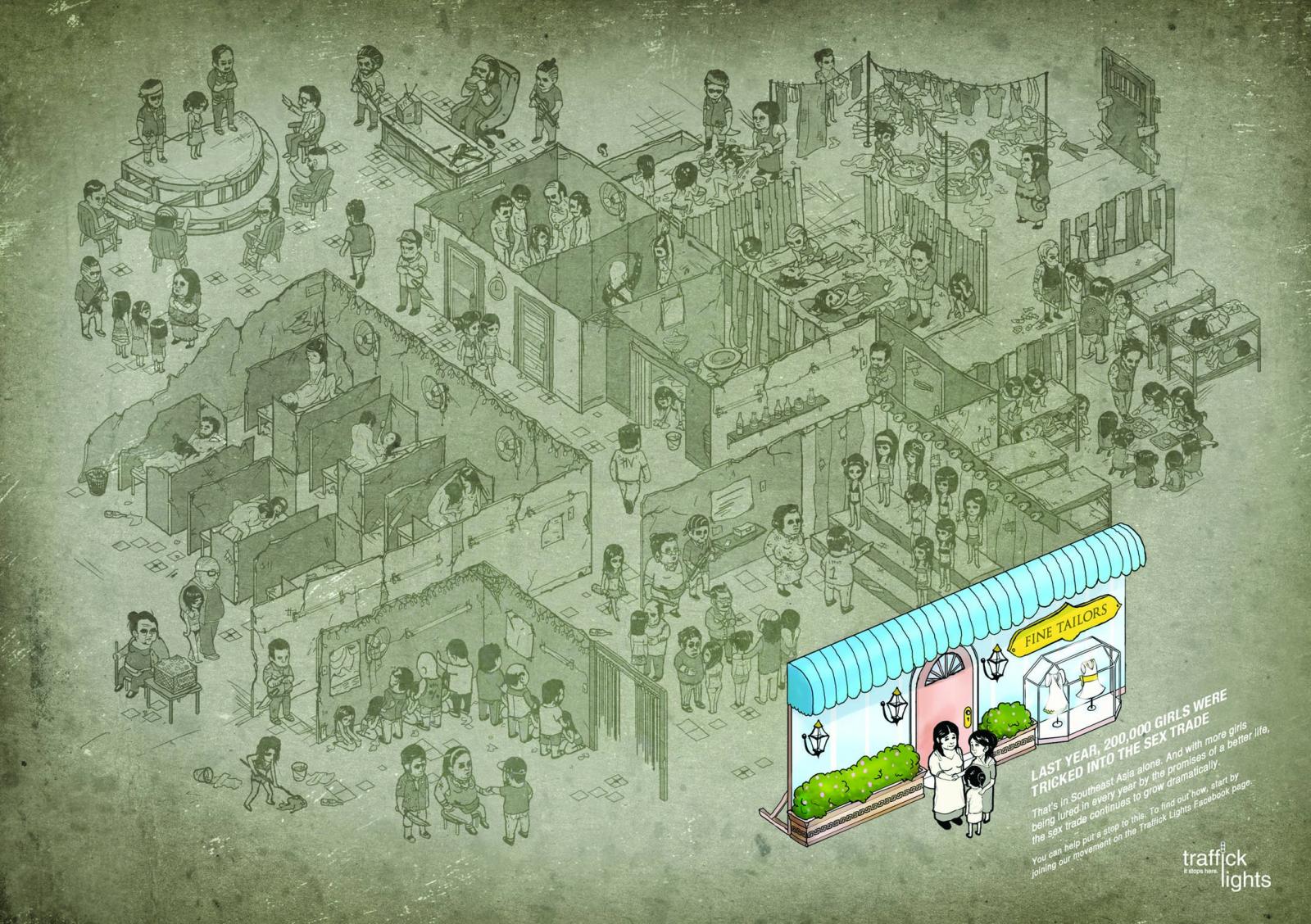
10) Sex-trafficking Awareness Ads a Little too Graphic

Again not technically Korean sorry, but from Singapore, and definitely NSFW if viewed at full size. But in light of the fact that 1 in 4 sex-trafficking victims in the US are Korean (see #3 here), and this recent horrific Australian case involving Koreans, then certainly such shocking ads couldn’t do any harm to the anti-trafficking cause here:

(Source)
(Source)

See CopyRanter for more details.

Share

Korean Gender Reader

(Source)

1) Abortion rate falls by half in last 5 years

According to a survey by the Ministry of Health and Welfare late last year. While that figure may well be true, it’s simply astounding that the Chosun Ilbo’s brief report doesn’t mention the huge role the criminalization of abortion undoubtedly played in that, instead quoting unnamed experts that attribute the drop simply to “a change in the social perception of abortion, the wide range of contraception available, and a rise in planned pregnancies”.

2) Less than 1 in 4 elementary school teachers are male

Anybody know how this figure compares internationally?

3) South Koreans account for 1 in 4 sex-trafficking victims in the US

To the best of my knowledge, sex-trafficking victims in a developed country usually come from much poorer ones. Why then, in the case of the US, are there more from South Korea than anywhere else? See this excellent report in the Washington Times by Youngbee Dale for an explanation, who argues that it needs to be understood in the context of Korea’s loosely-regulated credit-card mania and the limited financial opportunities available for women here.

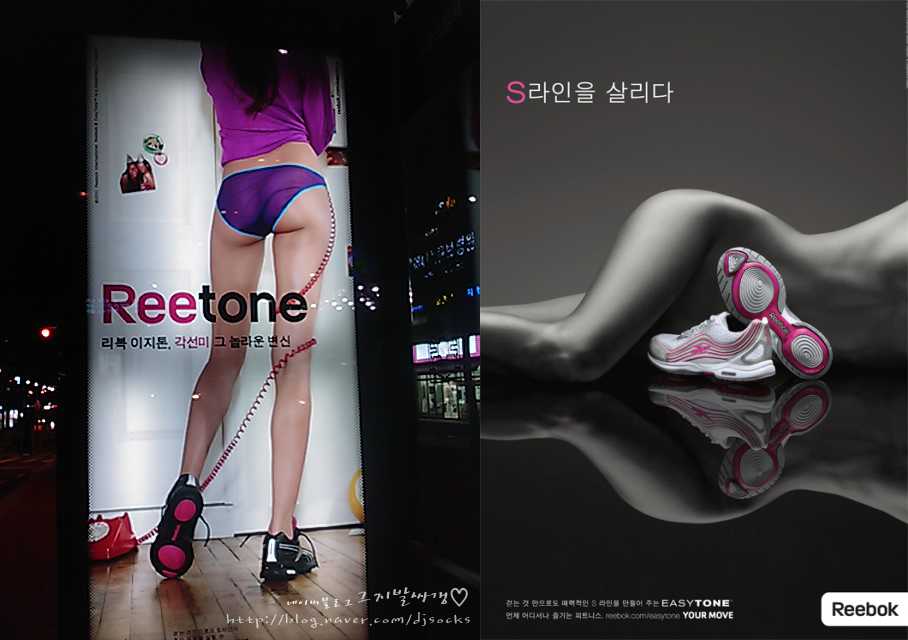
(Sources: left, right)

4) Reebok forced to refund over $25,000,000 to gullible Easytone buyers

Strictly speaking, not (yet) Korean news. But as you can see from the assvertisements above, they’re also sold here, so it’ll be interesting to see what the Korean reaction to this order by the US Federal Trade Commission will be.

Hopefully a wake-up call, as it has been empirically proven that Korea has far more ads promoting passive methods of losing weight than active ones, such as this one that encourages women to literally sit on their asses all day…

5) Women 3 times more likely to be sexually-assaulted in Korea than in the US (Continued)

Some recent reports demonstrating the attitudes that underpin that surprising discovery, as discussed in last week’s Korean Gender Reader:

– First, the Korea Herald reported that the number of reported rapes has surged 33% in the last 3 years. This is bad enough in itself (although it may be positive, reflecting a greater willingness to report them), but unfortunately ended its first paragraph with the line “though the country moves toward harsher punishment for the crime, a report showed Monday”, which rings somewhat hollow upon hearing about the following from Asian Correspondent:

On Wednesday the ninth criminal division of the Seoul High Court (Judge Choi Sang-yeol presiding) sentenced 20-year-old Mr. B and three other young men, all convicted of sexually assaulting 12-year-old middle school student A over a period of hours, to three years in prison and four years of probation. This is a lesser punishment than that imposed by the trial court, which sentenced them to six years in prison and ten years of offender registry.

The judge wrote in the opinion that “viewing the situation as a whole there is no evidence that the victim lacked the ability to resist… The trial court misunderstood the facts”. The opinion continued that “as Mr. B and the others acknowledged their crime, regret their error,  have reached an agreement with the victim, and do not want to be punished, and as the defendants are young and this was their first crime, having no prior offenses rising to the level of a fine or higher, so we find this to be an appropriate sentence”.

– Next, also at Asian Correspondent, is the news that students that sexually abuse disabled students receive minimal punishment, in contrast to abusers of non-disabled victims. Partially, this is because disabled students are often unable to provide accounts of what happened, but it is also because many parents of disabled students, thankful that their children are in a mainstream school at all, do not want to rock the boat.

(For related news, also see #10)

– Finally, for those who weren’t already aware, spousal rape still isn’t a crime in Korea, with the Seoul High Court only ruling that it can be prosecuted at all just this week (a similar case in Busan 2 years ago was dismissed when the defendant committed suicide; see my post on that here). While this development is very good news then, which you can read more about at the Korea Joongang Daily here, if editorials like this one at the Korea Times are any indication (“rape” in inverted commas??) then unfortunately public and media attitudes have a long way to go before following suit.

(Source)

6) New Zealand “goose mothers” network to avoid loneliness, depression

Not counting those who leave the family nest through marriage, as many as 1 in 8 Korean families have at least one immediate family member living away from home. The vast majority are men, either forced to live in a different city because of work, or remaining in the same city while their wives move their families to Seoul to try and take advantage of the educational opportunities there. While many are effectively forced to do so, others do so voluntarily, and in either case there are naturally large knock-on effects on their perceptions of “normal” family life and marriage, as I discuss in depth here and here. Either way, most hate it, particularly those wives and families who live overseas, while their husbands and fathers – known as  “lonely geese” (외기러기) continue to support them by working in Korea.

I confess, I haven’t given them much thought since writing those earlier posts 3 years ago, but I was still (naively) surprised to learn that technology isn’t really making the separation any easier for such families, as this report from Stuff makes clear.

(Also see those earlier posts for information about “weekend couples” {주말부부}, to whom many of the same conclusions apply)

(Source: Busan Focus, 08.09.2011, p.22)

7) Korea is world’s largest male skincare market

This will probably come as no surprise to most readers! But bear in mind that Korea isn’t exactly the most populous country in the world, which makes its 18% of global sales all the more impressive.

8) Korea to put more women on front-line

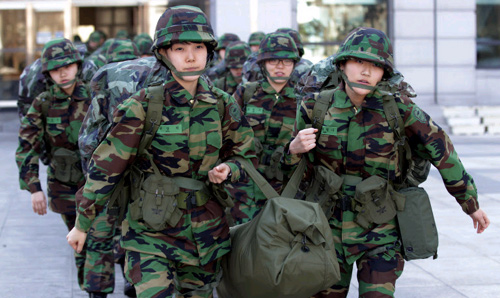
See the AFP for the details. In sum, the Defense Ministry said 6,957 women currently serve in the army, navy, air force and Marine corps, but the total was expected to reach 11,500 by 2020.

This compares to figure of 6000 women out of a total of 655,000 soldiers in the armed forces given by the Ministry last October, when it announced that it was going to produces uniforms specifically for women for the first time.

9) “Women to lead S. Korea’s foreign policy in 10 years’ time”

Which is great news. But as Subject Object Verb explains, unfortunately they’ll actually be “leading” by being diplomats’ wives and playing golf…

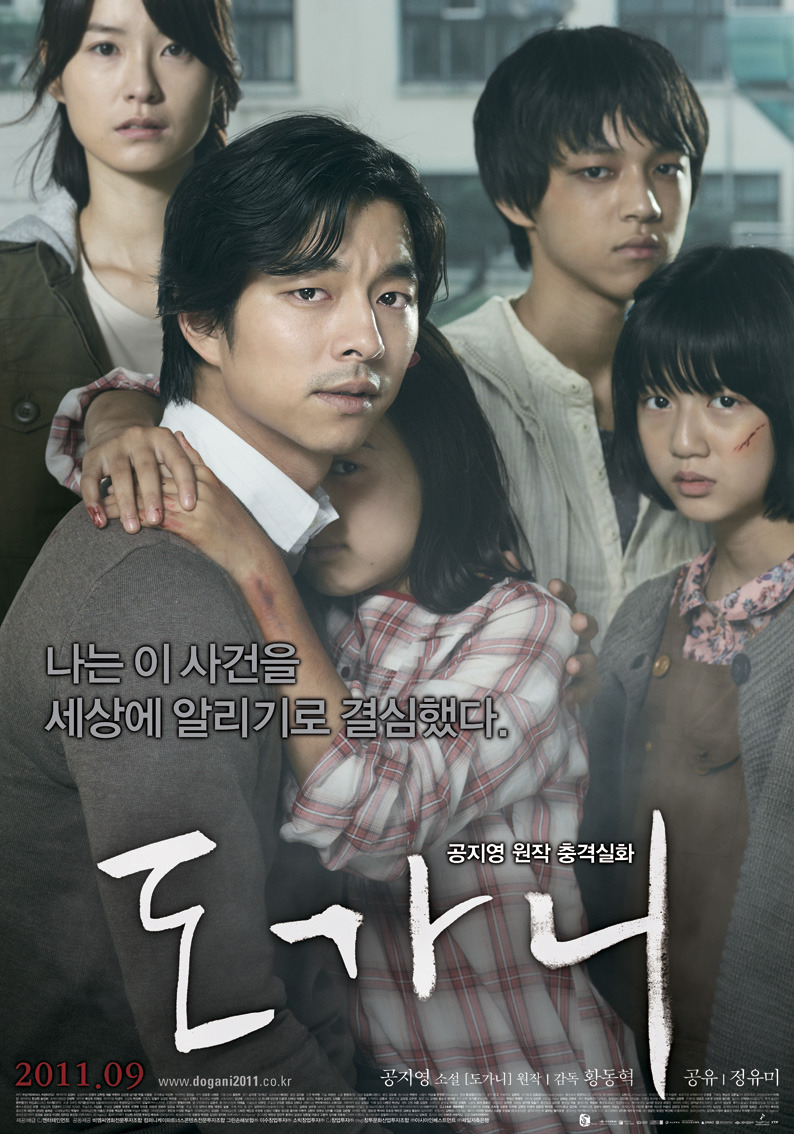
10) The Crucible (도가니/Dogani) surpasses 1 million viewers at box office

As described at Korea Real Time, the movie:

…is adopted from the bestselling book of the same name by Gong Ji-young, one of the most prominent and respected female writers in Korea. The book is about serial rapes of students by the headmaster and other adults in a school for the hearing-impaired in Gwangju, a city about 180 miles southwest of Seoul. The crimes went on for five years.

With a bungled and inadequate prosecution thereafter however, the subsequent public outrage is forcing a new investigation by the National Police Agency, and calls for better monitoring of private schools.

Anybody seen it yet? Has plans to?

Share

Korean Gender Reader

(Slightly risque, slightly awkward, and very badly photoshopped poster for upcoming movie You’re My Pet. See Dramabeans and Seoulbeats for more details)

1) Women 3 times more likely to be sexually-assaulted in Korea than in the US?

From The Washington Times, as part of an article on plans to revive women-only subway cars in Seoul:

In South Korea, women are more often victims of sexual assault than their counterparts in the United States. Reports from the Ministry of Gender and Family show that in 2008, the latest year data were available, 5.1 of every 1,000 adult women in South Korea were the victims of rape or attempted rape.

In the U.S. in 2007, also the most recent year data were available, that number is 1.8 per 1,000 females.

While that’s just one source, and needs to consider possible different definitions of “sexual assault” and methods of data collection used, it is at least based on official statistics. If the comparison holds true, then this news shatters widely-held perceptions that Korea is much the safer country in this regard.

Meanwhile, see the comments here for an extensive earlier discussion on merits and demerits of women-only subway cars; #2 here for more on increasing sexual assault rates in Seoul; here for more on new groups of “sheriffs” set up to patrol Seoul subways; here for more on a new smartphone app that makes it very quick and easy to alert police when being harassed (and has already been successfully used); here for which Seoul subway station has seen the most sexual assaults; and finally here for some context, on how bad groping is in Korea.

Update – The Hankyoreh is also reporting high sexual harassment rates for irregular workers.

2) Teens involved in 1 in 10 cases of prostitution

Being such a short report from Yonhap though, let me quote it in full here:

Minors have accounted for one out of 10 prostitution cases, police said Tuesday, prompting calls for proper measures to discipline and protect youth.

According to the data collected by the National Police Agency, 1,184 adolescents aged 13-19 were caught for buying or selling sex in the first seven months of this year, accounting for 9.7 percent of the total of 12,212 offenders.

3) How to hit on an Asian girl How not to harass an Asian-American woman

As Sociological Images explains (and later taken up by Jezebel), this is a video made:

…at Sweet.Sour.Satire [to] highlight the specific kinds of comments Asian American women often face from strangers and even acquaintances. These experiences, both on the street and on dates, represent the intersection of generic sexism and the stereotype of the submissive, hyper-feminized Asian woman, plus…

Read the rest there.

4) Blog recommendation: Quibbling Jottings

With thanks to Diana Sung (a.k.a Going Places) for passing it on, let me heartily recommend Jeanny Lee’s blog. A Korean-American woman from LA that does visual effects for films (but in Korea at the moment), I particularly liked her long analysis of a recent Economist article on Asian women’s increasing rejection of marriage (which I’d overlooked because of this slightly shorter, teaser version of the article that I commented on), and especially her take on “Korean Vanity”. To wit:

What…can one do, when one is fast approaching 30 with no sign of improvement in one’s skin?

Turns out, one spends money. Korean women use time and money to get their skin to be better than it really is, and I was rather taken aback by the sheer amount of products and propaganda that bombards me from all angles.

Advertising is pervasive, especially in such a wired country, to the point that I have a hard time remembering that when I was back home, I wasn’t too perturbed about my skin’s condition. Here in Korea, there are commercials, billboards, and constant reminders that YOUR SKIN IS NOT GOOD ENOUGH.

Read the rest here.

(Source)

(Also on the subject of recommendations, the British F-Word Blog has a list of good feminist podcasts available here, albeit none of which are Korea or even Asia-related sorry)

5) Getting an abortion in Seoul: a foreigner’s story

See here for some very detailed and useful information, with contact details for a friendly, non-judgmental, English-speaking abortion-provider in Seoul (via: Hot Yellow Fellows).

6) Quick links on gender inequality in Korea:

Fostering female CEOs (The Korea Herald editorial)

Gender inequality remains prevalent in Korean workplaces (The Korea Herald)

For women, a nearly impervious glass ceiling at major corporations (The Hankyoreh)

Glass ceiling remains in S.Korea’s firms (Yonhap)

Korean women struggle to break glass ceiling (Korea JoongAng Daily)

Thanks very much to John Power of The Korea Herald for passing this one on to me, who pointed out that unlike The Hankyoreh article above (and I’d add most others), this article at least mentioned the important fact that the lack of women in top management positions in turn means that women do not aspire to them. In short, things are not entirely companies’ fault.

Korean paternity leave to be extended from three to five days (Arirang)

Employment rate for women in their 50s at highest in decades (The Hankyoreh)

Korean women use invention to jump over gender gap (Yohhap)

Japan’s sexist labour market: hit the road (The Economist, for the sake of comparison)

(Source: unknown)

7) Yet another K-pop idol has a dramatic weight loss

Seoulbeats discusses Ji-young of Kara’s recent weight loss in the context of the extraordinary pressures on Korean female stars to be (dangerously) skinny.

Also, see Allkpop for a rare (male) vocalist who spurns cosmetic surgery despite his eyes being the butt of many jokes; The Marmot’s Hole on how people that once bought brand items to fit in the crowd are now buying them to stand out instead; and Sociological Images on how most cosmetic surgery patients in the US undergo procedures because they felt ugly or strange, but which I don’t think is quite as important a consideration for Koreans as aiding in job interviews etc. is (for reasons like these).

8) On being a female teacher in the Korean English classroom

From bitter personal experience, there are many factors that render an ESL career in Korea ultimately unfulfilling, unrewarding, and frustrating. But unlike female teachers, at least I don’t have to be constantly cute and/or use aegyo to gain some respect from students, if indeed “respect” is the right term for it!

9) A round-up of stuff from the rest of Northeast Asia:

Gender, obentos, and the state in Japan

Durex overcomes Taiwanese youths’ reluctance to talk about sex by building an old-school fortune booth to distribute condoms and warnings about unsafe sex (see video above)

China is losing the war against porn, according to sex scholar Katrien Jacobs

Chinese Law Could Make Divorced Women Homeless

– The Puffy Shoes: NOT your average Japanese girl-group

Complex attitudes to breastfeeding in China

10) Sticking it to the Ministry of Gender Equality and Family (MOGEF)

The Ministry does do a lot of good work on very limited resources (only 0.12% of the government total), but in addition to criminalizing abortion in order to increase the birth rate, at the moment it’s best known in Korea for banning pop songs every other week for being “harmful to youth”, but usually for completely inane, contradictory, and arbitrary reasons (and in one recent case, 3 years after the song had been released!). Very much speaking for their entire generation then, Phantom, a new project trio under Brand New Music, has released a stunning medley arrangement of songs banned by MOGEF in response:

As explained at AllKPop:

Members Hanhae, Sanchez, and Kiggen (HybRefine) delivered a song titled “19 Song (Love Songs That Teens Cannot Listen To)”, which contains lyrics by popular banned songs like TVXQ‘s “Mirotic“, DJ DOC‘s “I’m This Kind of Person“, Vibe’s “I’m Always Drinking“, GD&TOP‘s “Knock Out” and “Don’t Go Home“, 10cm‘s “Americano“, and 2PM‘s “Hands Up“.

At the end, they rewrote the lyrics of “Americano” to say, “Elementary, junior high, and high school students, don’t listen to this!”  To further emphasize their jab at the MOGEF, the staff brought in students with their eyes and ears covered for the video.

Finally, apologies in advance, but work commitments mean that next week’s song translation may have to go up on Tuesday or Wednesday rather than Monday. Sorry!

Share

Korean Gender Reader

(Source)

1) The difference between “sexuality” and “sexualization”

Angry K-pop Fan and I both love a recent post at Sociological Images for so succinctly explaining that:

I’m no prude.  I think that children are – and have a right to be – sexual beings.  However, there is a difference between sexuality (feeling sexual) and sexualization (being seen as sexy). I (and many other like-minded feminists) believe that girls should be sexual; but, sexualization (and its concomitant focus on appearance instead of desire) is bad because it denies girls’ sexual subjectivity in favor of sexual objectification.

2) International AIDS conference in Busan this weekend

See Busan Haps or the conference website for more details. Unfortunately though, it’s not really aimed at the public (it’s much too late to register, and was prohibitively expensive anyway).

Meanwhile, to any foreign readers that may be under the understandable but false impression that the Korean public doesn’t believe that AIDS exists here, let me point you to this eye-opening experience I had about that back in 2005 (scroll down to just before the “Lesbos” picture).

3) More babies!

– Congratulations to Roboseyo and Wifeoseyo, who are having a Miniseyo in October.

– Congratulations again to Shotgun Korea, who had Desmond William Wolfie Kim on August 18.

– And finally belated congratulations to Going Places, having a baby in November.

Dragon Korea, having a boy next March February (see last week’s post), ponders how to give a kid solid White-Western and Korean identities. And her husband designer diaper bags!

– Over at Busan Haps, Roy Early ponders how to keep strangers from constantly touching his children. I can’t say that I’ve had that problem myself, but we are both tired of our children constantly being given candy, which non-parents may be amazed to learn just how many Koreans seem to always have on their person.

(Source. It is just me, or does A-ran’s {아란} face on the far left seem very badly photoshopped?)

4) Please objectify us! Pleeease……

Hey, I’ve always maintained that it’s largely the current glut of girl-groups that is driving their increasing sexualization. So, to play Devil’s Advocate, Swing Girls (스윙걸즈) differentiating themselves on the basis of all members having D-cup breasts(!) are really just being explicit about something that other girl-groups have already been doing for years.

And boy-bands too of course. Two weeks ago for instance, Lee Joon (이준) of MBLAQ (엠블랙) helpfully reminded us of what’s really needed for a guy to succeed in K-pop these days:

(Source)

Update: Angry K-pop Fan provides a more comprehensive analysis of the Swing Girl’s branding plans here.

5) Does Jung Ryo-won (정려원) have anorexia, or are netizens overreacting?

I’d be one of those netizens I guess, mentioning those anorexia speculations back in March and May 2009 (see #3 here), and adding that I wasn’t personally convinced by her explanation that she lost the weight for a movie role. While I do sympathize with her frustration with netizens though, I’m afraid that 2 years later I’m similarly unconvinced by her new explanation that she’s one of those voracious eaters that never seems to put on weight, especially as I used to be one myself (albeit 20 years ago!).

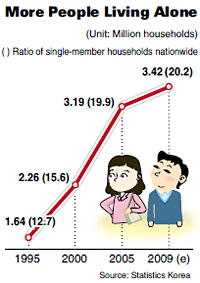
6) Singles eclipse nuclear families in Seoul

It’s a slightly inaccurate headline – two parents and any number of children constitutes a nuclear family, not just two – but it’s certainly true that more and more people are living alone: 24.4% in Seoul according to the JoongAng Daily, and 23.9% nationally according to Real Time Korea. These are only slightly below rates for Western developed countries, as this graph from 2006 indicates (I have more detailed statistics in my bookcase, but most are over a decade old sorry!).

See here for more background, and here for more on the industries that were already springing up to cater to the increasing numbers of singles way back in 2009. (The latter also happened to have that handy graph on the right)

7) Korean students with make-up

Under fear of being sued by parents, at least one teacher is no longer enforcing school rules that require them to wash it off (via: Yahae!)

For some context, see here.

8) Taiwanese woman sexually assaulted in Hahoe Folk Village

See the details at Asian Correspondent here. Also in Taiwan-related news, Gender Across Borders reports that a mass same-sex wedding is planned there later this month.

(Source)

9) Korea not ready for a group like Chocolat (쇼콜라)?

An interesting angle on them from Gord Sellar:

…Whereas the media hypersexualization of children is pretty much accepted — if not admitted — in Korean society, and the media hypersexualization of white women is all but de rigeur now, I think the idea that the media sexualization of biracially white/Korean children might not turn out to be as profitable an enterprise in Korea.

The band seems to be getting a pretty negative reception online, and it’s not hard to see why: the particular anxieties regarding race in Korea that the group’s promoters are trying to exploit — ambiguities of race, and the permissible exoticism of the non-Korean female — take on a life of their own when there is not a Korean male in the picture to “own” her (and, likewise, to “pwn” her)…

See here for the full post, and here (and possibly here) for my own on the issues Gord alludes to with that last sentence. Also, Angry K-pop Fan makes some interesting comparisons between Chocolat and pan-Asian band Blush.

10) 16 year-old Suzy (수지) of Miss A (미쓰에이) endorses French Lolita Lempicka perfume

(Source)

A friend of mine, a close watcher of K-pop, believes that manager JYP has tended to make Suzy wear more conservative costumes and do slightly less risque dances than her adult co-members of Miss A, nor made her the focus of the group, all quite unlike what he did for So-hee of the Wondergirls when she was a minor (a practice replicated by other entertainment companies, such as: SM Entertainment with Sulli of f(x); Cube Entertainment with HyunA of 4Minute; and indeed Paramount Music of {at least} Tia of Chocolat in #8 above). With this loaded endorsement however, that may all be about to change, as indeed a similar one (“Lolita Sexy”) early last year arguably symbolized a great deal about his past and future marketing of the Wondergirls.

Share

Korean Gender Reader

(Source)

Some interesting pictures of G-Dragon, even by his standards (via: Noona Blog).

1) Cory at Banana Milk unimpressed with Project Obaeksang’s “Speed So-Getting Contest”

2) Curfews for 20-something Korean women

How common are they? And like YOUNique, does getting a job mean that parents no longer enforce it?

I had big problems with my first Korean girlfriend’s one 11 years ago, while dating my future wife later was made much easier by her living away from home. What have your own experiences been? Has anyone ever met a 20-something Korean man that had a curfew?

3) Babies!

Congratulations to A Good Korean (Feminist) Wife on her impending Dragon baby, and congratulations in advance to Shotgun Korea, whose baby is due any day now.

(Source)

4) Sex in Korean cinema vs. sex on Korean television:

YAM Magazine ponders the differences

– The Korean Film Archive is highlighting the theme “[A History of] Eroticism in Korean Movies” in August, with all(?) movies featured available for free viewing after signing up

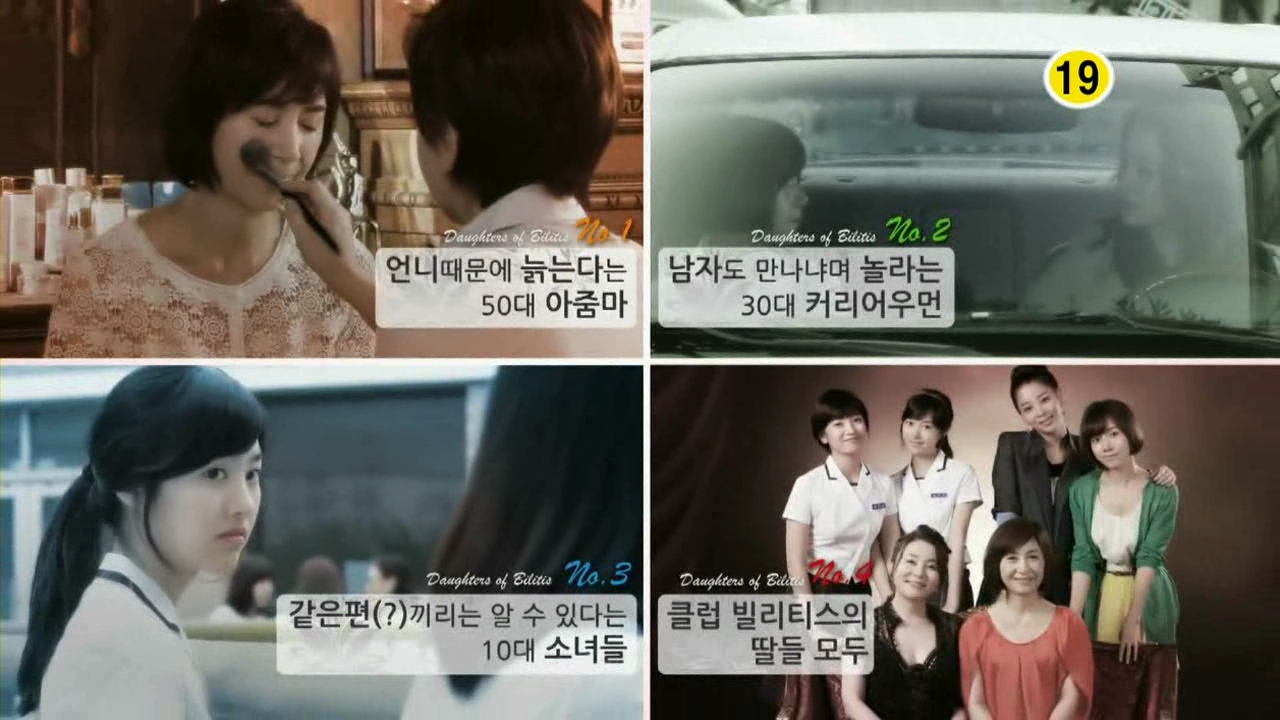
– KBS has come under fire for its screening of the single-episode lesbian drama “Daughters of Bilitis Club” (클럽 빌리티스의 딸들) . Thanks to all the people who passed that news on, and also see YAM Magazine for a potted history of how LGBT issues have been covered on Korean television.

– KBS’s “Dream Team 2” has also come under under fire for, well, showing women in bikinis, even though I could go and see the same 10 minutes walk away at Gwanganli Beach. For more information, see Angry KPop Fan, who – unlike 99% of commenters at Omona! They Didn’t! and Allkpop – actually watched the segment of the show in question, and points out that internet portal Nate basically lies in reporting that cameras gave repeated close-ups of the women’s breasts (which would have justified the complaints).

Having said that, the offending objects were still pretty difficult to avoid, as tends to happen in an inane show featuring women in bikinis having a race in a swimming pool. But what else did complainers expect from something titled “Dream Girls Summer Special“?

5) B2ST, G.NA, and 4Minute help teenagers prevent crimes

While lame, it’s no more so than public service announcements in other countries, and I particularly liked the part at roughly 2:18 in the first video that says “음란물에서의 성은 잘못된 성입니다”, or literally “Sex in pornography isn’t good sex”. Rather than expanding upon that point however, a trying to look stern – but ending up looking cute instead – HyunA and G.NA unhelpfully simply say “Absolutely stay far away from 18+ things”.

See Angry KpopFan for more commentary on the pornography segment.

6) HyunA revealed to weigh 39 kg during her “Bubble Pop!” promotions

A man well over twice that, I’m not very familiar with healthy weight ranges for 164cm tall women. But the consensus of women that are appears to be that that is much too low, and – given how she looks in the music video – that that figure is exaggerated by Cube Entertainment, if not an outright lie.

7 Westin Chosun hotel tries to inject some fun into stuffy Korean weddings

Starting at $140,000 however, then I don’ t think wedding halls will be put out of business anytime soon! (via: @hanbae and @a_ahmad)

8) The more you learn about China’s One-child policy, the uglier it gets

What’s more, while Chinese proponents claim that it has avoided 400 million extra mouths to feed, most likely China’s rising wealth means that they would never have been born anyway.

9) “Cute and lovely” Korean S&M movie gets warm reception in Montreal’s 2011 Fantasia Film Festival

10) Korean couple fighting

This may make for uncomfortable viewing, but I include it for the reasons I give here:

Share

Korean Gender Reader

(Source)

소녀시대야! 900칼로리만 먹고, 이것 할 수있겠니? ㅋㅋㅋ

1) Miss A members scoff at other girl-groups’ starvation diets, and reveal that they eat healthily and normally.

For why this is such wonderful news, see here. I hereby appoint them as honorary ambassadors for this blog!

2) Three reports of sex crimes at Korean schools.

3) Can a Feminist diet?

4) More Korean married couples living with the wife’s parents

5) Korean women: please, for goodness’ sake, develop a personality! And men: get more comfortable with yourselves!

Complete generalizations of course, as the author happily admits, but still: I really appreciated this post in a “from the mouths of babes newbies” sense (no offense).

How accurate do you think her descriptions of Korean dating couples are?

6) Piggy Dolls “piggy” no more?

Turns out, their weight loss was for a diet advertisement (see #10 here for some background).

7) Same sex couple-tees?

We’ve all seen couple-tees of course, perhaps even worn them. But clothes designed to be worn by you and your friend?

(Source)

8) Ministry of Gender Equality and Family Affairs urges teenagers not to use binge drinking as a study method.

After all, Korean teenagers are notorious for their alcohol problems, yes? Or was this supposed fad, of drinking baek-il ju (백일주) from 100 days (baek-il) before the university entrance exams, actually only highlighted by the Ministry in order to raise its profile and help justify its continued existence?

Not that I think the Ministry should be abolished by any means (despite its anti-abortion stance). But then it is notorious for some simply bizarre initiatives, and especially arbitrary, completely ineffective censorship in the name of protecting Korean youth. Neither of which I can see anything but corporatist reasons for.

9) Public protest scuppers plans for nudist forest.

Naturally however, the Korean media is still widely describing it as a nudist forest anyway.

Compare this similarly cancelled planned nudist beach on Jeju Island two years ago, which had been intended only to be open to non-Koreans.

10) New girl-group Chocolat set to debut on August 17. Has 3 bi-racial members (and 2 Koreans).

For which it’s been receiving a lot of attention, although it’s not the first to have bi-racial members (all 3 have American fathers and Korean mothers btw). Probably even more noteworthy and ominous though, is the fact that 2 members of the group are only 14 (the others are 17, 18, and {I think} 19).

See the following video for them introducing themselves. Note that the title says “Korean”, but it’s actually all in English:

Update: Ashley at SeoulBeats discusses them more here.

Share

Korean Gender Reader

(Sources: left, right)

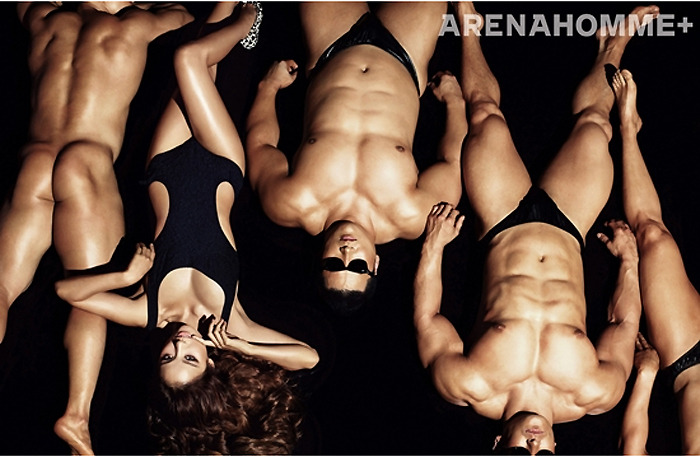
On the left, a virile healthy reminder that men are also increasingly being objectified by the Korean media these days (via Kiss My Kimchi). On the right, that SM Entertainment were also clearly on drugs when they made those teaser images for Super Junior’s latest album…

Meanwhile, a minimalist Korean Gender Reader this time, which will have to be the norm from now on (I’m very busy this summer!). But on the plus side, they’ll also be much more frequent and up-to-date:

1) South Korea becomes the first Asian country to chemically castrate sex offenders

2) More Korean women are marrying younger men

3) Can bikini-clad foreign women at Cheonggyecheon be punished? Should they?

Update: See On Becoming a Good Korean (Feminist) Wife also

4) Do Asian women with white men suck?

Christine Han discusses reactions to her earlier post (see #5 here)

5) Korean HRC issues guidelines on sports and human rights

In reaction to scandals that emerged in 2008 regarding sexual assaults of student-athletes and professional athletes by their coaches

6) Dear K-pop: down with Playboy bunny ears! (See #1 here and #5 here also)

7) 3 Jeju teenagers arrested for prostitution

8) China’s most populous province launches a public criticism of the one-child policy

9) 2011: The Year of the Chinese Woman?

10) Piggy Dolls “piggy” no more? (See #10 here for some background)

(Source)

Share

Korean Gender Reader

(Source)

1) Why smart Korean girls can’t find guys

In a nutshell, because there’s not enough of them with the same level of education, as this comprehensive report from the Joongang Daily makes clear. Call it a side-effect of the number of women in universities doubling over the last 10 years (at least in Seoul).

Lest foreign readers also give up on ever finding a Korean man though, I’m No Picasso (posting at Ask a Korean!) has a lot of sage advice on how to do so, and then Suzy Chung at The Korea Blog provides a rundown of all the coupley things you have to in Korea do once you’re successful.

For those not in Korea, please consult Ask a Korean! again, who also has two posts on interracial dating from an American perspective.

2) Sexual assault on the rise in Seoul

For the details, see The Three Wise Monkeys here, to which Michael Hurt of Scribblings of the Metropolitican adds that it’s good that the Korean press is finally noticing. Unfortunately however, the news from Asian Correspondent that police harassment of a sexual harassment victim drove her to attempt suicide isn’t a good sign, nor that a rape victim successfully did so after being insulted by the judge (although this latter may actually be a fabrication by the Korean media).

Meanwhile, The Marmot’s Hole reports that sexual harassment of female teachers by students is also a big (and increasing) problem.

(Source)

3) Finally, a female singer for my daughters look up to!

Like Busan Haps says, what’s not to like about Velvet Geena, and I’ll direct you to her interview there post haste.

After you’ve read that, contrast the role model one of Korea’s “official” female idols is providing, which apparently involves starving oneself:

4) Korea’s skincare obsession

Hey, I’ve said it myself many times myself, but then I’m a fat, bald, white guy that doesn’t exactly scream “skincare expert” to most. Hearing it from an actual model though, then I think I can now rest my case(!):

Growing up in Sweden, I have learned that the best way to take care of your skin is to eat healthy food, drink a lot of water, not to smoke or drink too much alcohol, and to protect your skin from too much sun. Even if it’s good to use moisturizer and other sorts of skin care products, that’s not the most important thing. Furthermore, how your skin changes with age also has to do with genetics, and that you cannot control.

In Korea, and I don’t quite know why that is, people seem to think that the most important thing is to use the right skin care products…

Read the rest at Noona Blog: Seoul here.

(Source)

5) Kim Yu-na drinks!

No, really!

6) My abortion in Korea

As you probably know, I’ve written a lot about abortion in Korea, particularly the Lee Myung-bak administration’s decision to criminalize it in order to raise Korea’s world-low birthrate (yes, really). But still, nothing compares to Melissa Salvatore’s description of going through the process of getting one here:

This is a story of my experience with abortion as an expat in Busan, South Korea. I understand this is a controversial issue, and I am neither trying to encourage nor discourage abortion to other women. I simply want to use my story as an example of having this experience here and to provide other women with options and resources available to them. It is said that abortion is one of the loneliest experiences a woman can ever go through. I want women here to know that they are not alone, and have support.

Read on at Koreabridge.

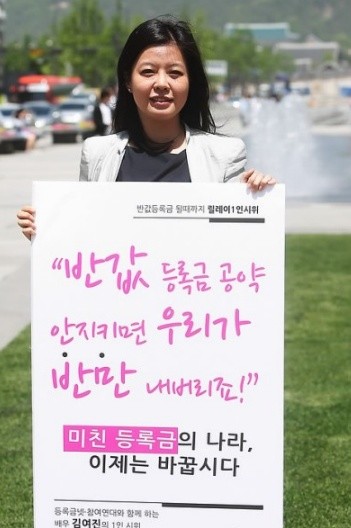
7) Actress’s support draws public attention to female laborer’s fight

Likewise something that deserves to be much better known (source, right):

Actress Kim Yoh-jin’s open support of a female labor activist is drawing fresh public attention on the otherwise unnoticed struggle the laborer stages on a 35-meter-high crane in a shipyard in the southeastern part of the country.

Kim’s appeal for the union member is pitting netizens and civic groups against the police and management of the company.

The 39-year-old actress is making headlines almost daily as she is not only actively expressing her opinions through Twitter on a number of sensitive social issues but by actually visiting strike locations where various struggles are taking place as well.

Read the rest at the Korea Times here, and kudos to Kim Rahn for drawing attention to it.

Update 1: For further information and updates, see the Three Wise Monkeys here.

Update 2: Evan Ramstad provides an alternative, much less positive view of the protest here.

8) Ask not what Korea can do for Mini Han…

From subject object verb:

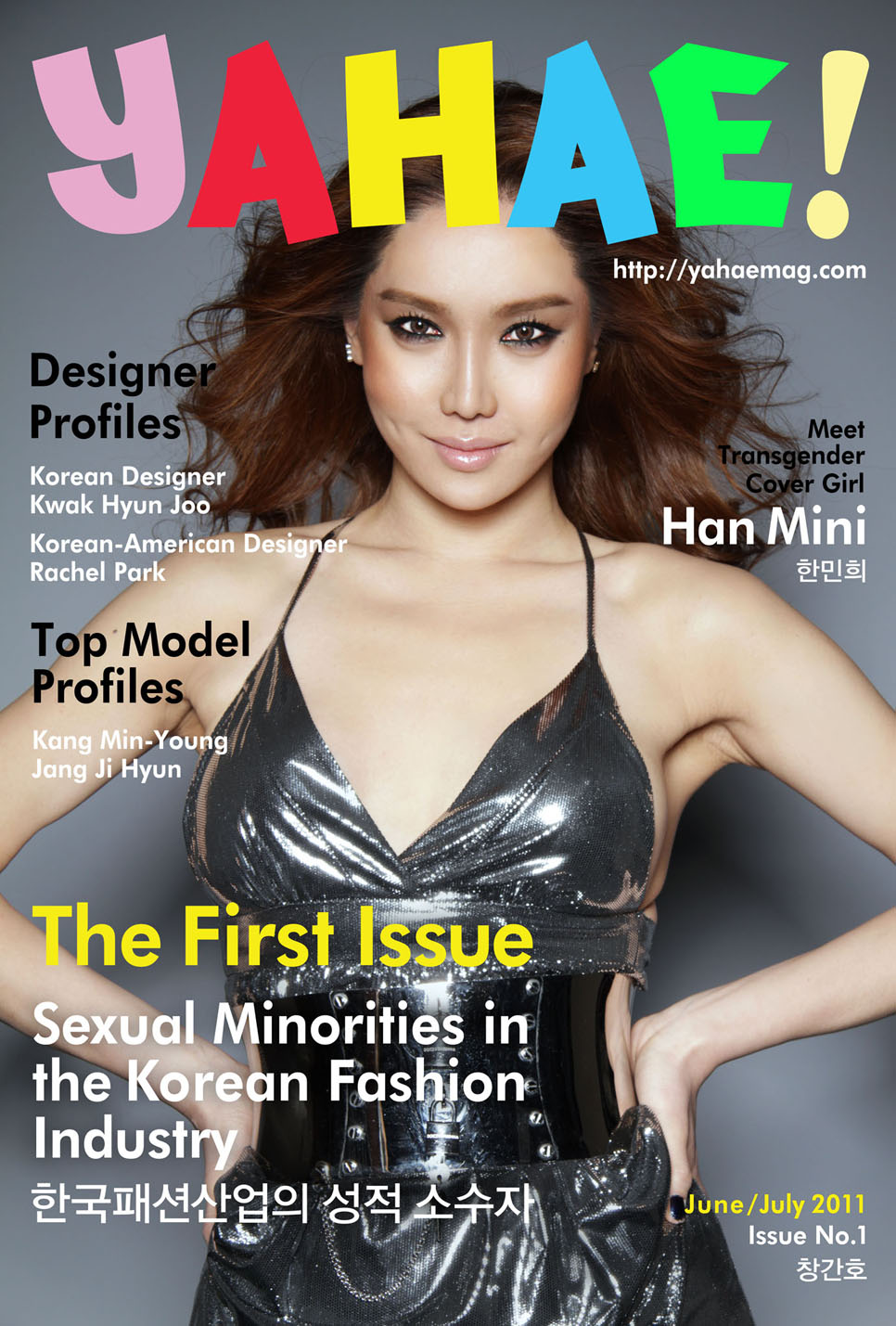
In [the June 4] edition of OhmyNews.com, Michael Hurt…contributed an excellent piece (titled “‘Korean Beauty’ Wins International Competition Only To Be Cast Aside By Korea”) on Mini Han (한민희), who won the 2010 Miss Internaional Queen pageant. He uses the pageant to raise awareness about the still widely held attitude of prejudice and fear regarding non-heteronormative sexual identity in Korea.

Speaking of Michael, let me pass on a belated congratulations for the launching of the Yahae! fashion magazine!

(Source)

9) And you thought I was exaggerating about the abysmal state of sex-education here…

Okay, maybe not you specifically! But to anyone that did, let me point them in the direction of 유♥웃’s boyfriend’s friend’s first sexual experience.

Update: With thanks, here and here are more examples passed on to me by From Noona With Love.

10) Yonsei University students on sex and the media

Last but not least, the English-language Korean blogosphere can never have enough input from Koreans themselves. See here, here, and here for their opinions on sex stereotypes in the Korean media; the media’s effects on women’s body images; and overlooked sexism in the media respectively!

Share

Korean Gender Reader

(Source)

1) Because one can never talk too much about Playboy…

Admittedly it’s only tangentially related to Korea, but then Playboy bunny ears were very popular with Korean women last summer, and then in January you also had American film critic Roger Ebert criticizing Korean groups for not really understanding all the Playboy references they were using. So, it was really interesting to hear just this podcast from the British sociology program Thinking Allowed (previously mentioned here), which in its own words says:

Carrie Pitzulo, the author of a new history of Playboy claims it has “a surprisingly strong record of support for women’s rights and the modernisation of sexual and gender roles”. Are Bunny Girls and Playmates of the Month really allies of the feminist cause? [Host] Laurie is joined by the author Carrie Pitzulo and the sociologist Angela McRobbie to discuss the secret and surprises of the bunny brand.

Continuing with the tangents, I’ve ironically become much more interested in Western pop-culture since presenting at the Korean Pop Culture Conference 2011 in LA last month, and so on Gord Sellar’s recommendation have just ordered Strange Days Indeed: The Golden Age of Paranoia by Francis Wheen, on “general culture across the Anglophone world in the 1970s”. To any 30-somethings like myself especially, who were too young to really know anything about that decade, it sounds like riveting reading (and it would be good to hear our parents’ takes on it too).

2) The pitfalls of being pregnant in Korea

Any other “Western” women with Korean husbands get stared at by old men? More so than before they were pregnant that is? Shotgun Korea is about to explode, in more ways than one!^^

Update: Shotgun Korea also has a post on a strange virus that seems to be killing pregnant women in Korea.

(Source: Sinfest, one of my favorite comics. Hope that was okay!)

3) Funny or offensive? Sports show asks why Korean women are good at golf

Judge for yourself at CNNgo. Not being a golf fan, then normally I wouldn’t pay much attention to this sort of thing, but Rachael Miyung Joo of Middlebury College piqued my interest in them with her presentation Traveling Ladies: Korean Female Athletes and Global Korea at the Korean Popular Culture conference. A quick excerpt from the abstract:

…Within the context of U.S. nationalist discourses, Korean female athletes exist as a “yellow peril” threat to the elite white traditions of professional golf. The extraordinary growth of Korean and Korean Americans within the Ladies Professional Golf Association have produced racist responses to Korean golfers including an attempt to institute an English Only policy in the league. Nevertheless, the LPGA has grown due to the celebrity of Korean golfers, and their impact on the growth of the LPGA has translated into policies that work to get all female golfers to emphasize female charm for the pleasure of male fans. Furthermore, hypersexualized Korean female golfers work to assuage anxieties around lesbianism in professional women’s sport…

Read the rest here. Unfortunately there’s not much information about it, but I’m also looking forward to her book Transnational Sport: Gender, Athletes, and the Making of Global Korea that’s coming out sometime this year.

4) Reading the Lolita Effect in South Korea, Part 5

Or rather, the news that Girl’s Day (걸스데이) recently performed in costumes so high that their panties were exposed could easily have been the next post in that series (one member only turns 17 tomorrow). But I don’t really have anything to add to what Michael Hurt says at Yahae! about it except to say that, unfortunately, I feel somewhat vindicated by it(!):

…this is a bridge too far. The skirts have now come up above the panties. I mean, I know that competition from the many girl groups that now exist must force some serious marketing decisions such as the one to make underage girls truss around in skirts that don’t cover their jibblies, but you gotta draw a line somewhere!

See Part 2 for more on the issues raised by performers dancing and/or dressing in sexual ways when the age of consent is as low as 13.

(Source)

5) Discussing cosmetic surgery With Koreans

Is it also your experience that you just can’t win? See On Becoming a Good Korean (Feminist) Wife for a long and thoughtful post on the subject.

Related, see Sociological Images for the self-explanatory recent post “Race and the Problems of Measuring Beauty Objectively“, and you may also like the “Ethnic Comparisons” section of the Feminine Beauty site (NSFW).

6) Foreign children sexually and physically abused at Haeundae Beach

See Koreabridge for the details. Also, while I’m always prepared to give the police the benefit of the doubt considering how the Korean media will simply make up stories about their incompetence, they do indeed seem to have acted extremely unprofessionally in their handling of this case.

7) Corporate life in Korea

…is no picnic for women, who tend to be lower on the totem-pole, but it’s important to remember that it can be pretty bad for men too.  See these posts by I’m No Picasso and New Yorker in Seoul for some first-hand experiences.

8) I like big butts and I can not lie…

Usually I’m loathe to quote entire posts, but then everyone on Tumblr is doing it so I can too. Here then, are some very wise words from American actress Tina Fey (found via Hot Yellow Fellows):

But I think the first real change in women’s body image came when J.Lo turned it butt-style. That was the first time that having a large-scale situation in the back was part of mainstream American beauty. Girls wanted butts now. Men were free to admit that they had always enjoyed them. And then, what felt like moments later, boom—Beyoncé brought the leg meat. A back porch and thick muscular legs were now widely admired. And from that day forward, women embraced their diversity and realized that all shapes and sizes are beautiful. Ah ha ha. No. I’m totally messing with you. All Beyonce and J.Lo have done is add to the laundry list of attributes women must have to qualify as beautiful. Now every girl is expected to have Caucasian blue eyes, full Spanish lips, a classic button nose, hairless Asian skin with a California tan, a Jamaican dance hall ass, long Swedish legs, small Japanese feet, the abs of a lesbian gym owner, the hips of a nine-year-old boy, the arms of Michelle Obama, and doll tits.

Much the same can be said of Korean women of course, but with an important possible exception:  the doll-tits. Not because Korean women tend to be less busty than their Western counterparts though, but rather because there seems to be a genuine taboo against breast exposure which even the Korean media is wary of. Lest that sound simply absurd however, then consider the case of G.Na (지나), whose – to put it bluntly – most marketable assets seem strangely underplayed by the otherwise extremely exploitative and objectifying Korean music industry.

(Source)

9) “Secret (시크릿) will show off their innocent and cute selves with a sexy and powerful dance in Japan through Madonna

As it turns out, that was a mistranslation of the original Korean – “청순과 귀여움은 물론 섹시미와 파워풀한 댄스를 모두 겸비한 시크릿은 일본 시장에서도 충분히 통할 수 있다는 전망이다” – by Koreaboo, and something like “They’lll show off an innocent and cute image of course, but combine it with sexiness and powerful dancing” would be much more accurate. But the Korean media does indeed say such things all the time, which speaks volumes about how female sexuality is presented by Korean girl-groups, and of course the sentance still remains a bit of an oxymoron (but kudos to Koreaboo for at least providing a link to the original article to check, unlike – grrr – allkpop).

For more on that, see, well, just about all of this blog(!), but if you’re after something more specific then this and this recent post at SeoulBeats are good introductions (and for some background to the latter, see here).

10) Essential reading on Korean Feminism

Even if I’m No Picasso hadn’t *cough* praised this blog in it, I’d still describe this as one of the best posts I’ve ever read on the subject (or technically speaking, English discussions of the subject). And it behooves me to say that I have certainly been (and probably still occasionally am) guilty of discussing Korean women, feminism, and/or gender issues through an overly generalizing, patronizing, and – for want of a better word – Orientalist lens, and so this post of hers will seriously provide a checklist for me for maybe years to come! (And Roboseyo’s post on “Mansplaining” is very helpful too).

Share

Korean Gender Reader

(Source)

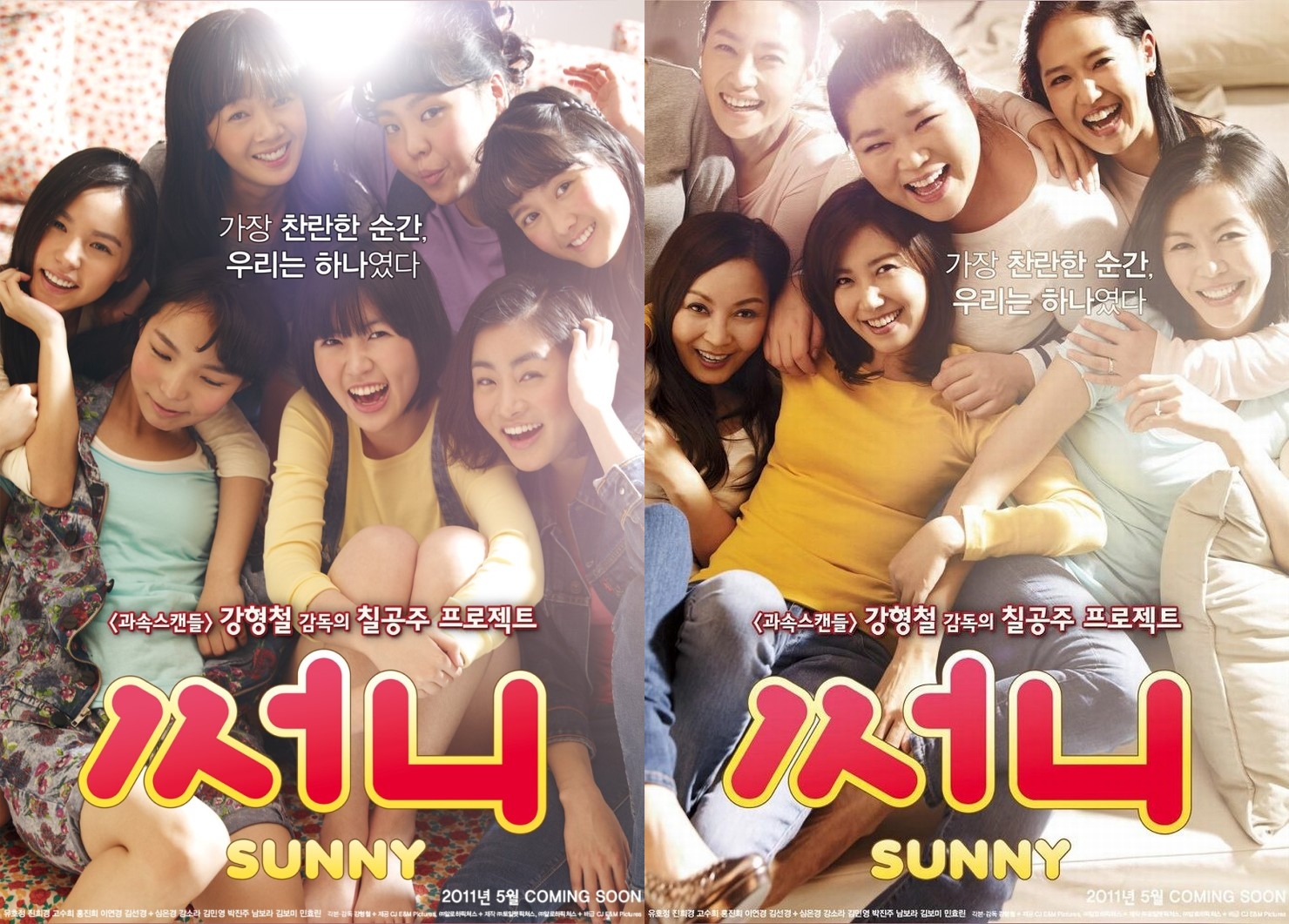
1) Sunny (써니) Now Playing in Theaters

And all about girl power, according to Dramabeans. Judging by the trailer, my first impression is of a comic version of the excellent Take Care of my Cat (2001; 고양이를 부탁해).

Meanwhile, does anybody know of any similar coming-of-age movies for guys? Other than the violent and overrated Friend (2001; 친구) or pornographic Plum Blossom (2000; 청춘) that is?

2) May 11th was 6th Annual Adoption Day in Korea

See Ask a Korean! for the details. Also, Korea Real Time has more on the controversy created by soon to be aired commercials encouraging more domestic adoption.

Update: Yesterday was also the first Korean Single Moms’ Day, Busan Haps had a good photo-essay on adoption last month, and the Korean Unwed Mothers Support Network has translated a December article on how unwed mothers are not necessarily poor, but society ultimately forces them to become so.

3) Only Foreign Staff Made to Attend Sexual Harassment Seminar at Korean University

After all, it was actually a Korean professor that was fired for having a sexual relationship with one of his students, so I’m sure you can see the logic. What’s more, the seminar was given by a completely unqualified speaker too, according to blogger Supplanter clearly both uncomfortable with and clueless about the subject he was presenting.

Ironically, the very next week after enduring that, Supplanter himself would be accused of sexual harassment at his local swimming pool.

4) A Normal Night Out in Seoul?

See Banana Milk to learn more about it. Call me sentimental and/or trying to (mentally) relive my twenties, but I subscribe to a lot of Seoul social, fashion, nightclubbing, and/or dance-music sites like it (in particular, M.S Photography always has *ahem* very interesting pictures), and am thoroughly jealous of people unencumbered by kids that get to actually enjoy it!

Speaking of which, tomorrow Paul Van Dyk will be performing in Seoul, only…sigh…10 years too late. See 10Magazine for the details.

Update:

5) Ending Bias Against White Male and Asian Female Couples

Like Shanghai Shiok! says:

Women with a preference for black men get a thumbs up. Women with a preference for Asian men get a thumbs up. Women with a preference for Middle Eastern men get a thumbs up. Women with a preference for white men get a thumbs down. Generally true?

Unfortunately, yes, and it took a lot of persuasion from her readers to get her to open the comments on that post!

6) “Prostitution Thrives on Twisted Entertainment Culture”

While I don’t mean to sound facetious, particularly not in light of seven bar hostesses committing suicide since last July, this is an unusually good article on the subject for the otherwise appalling Korea Times, and I look forward to reading more articles from author  Kim Tae-jong (see Extra! Korea also).

7) Korea: Sex Criminals Easily Become Taxi Drivers

Again I don’t mean to sound facetious, but, like Asian Correspondent explains, the fact that taxi-driving is one of the few occupations open to ex-convicts in Korea does explain a lot about their wild reputation.

(Source)

8) Desert: A Movie About Kiwi-Asian Marriages

If you’re living in Auckland, New Zealand, make sure to see Desert while you still can. First shown at PIFF last year, it:

…reveals the untold story behind many Kiwi-Asian marriages….Based on real life events, Desert follows the story of Jenny, a young pregnant Asian girl living in Auckland who is left to fend for herself; when she is abandoned by her Kiwi boyfriend just before they are about to get married. Jenny is rejected by her Asian community for getting pregnant to a westerner out of wed-lock and after unsuccessfully searching for her run away boyfriend; she is forced to look inside herself to find a positive solution for her and her unborn baby.

Jenny’s story is a reality for the growing number of Asian women in New Zealand. The Asia NZ Foundation recently recorded that there are 26 per cent more Asian women than Asian men, aged 25 to 49, living in New Zealand and nearly a quarter came to New Zealand to get married. [Director Stephen Kang’s] inspiration for the film came from observing the struggles facing many Asian women living in New Zealand and Desert is the first film of its kind to give a platform and voice to these common challenges and personal stories.

While I take exception to the title of the article that that’s from, the movie itself sounds really interesting, and you can see its Facebook page for more details, interviews, and a trailer. There’s also its webpage of course, but unfortunately the designers made a big mistake not providing a mute button(!),  and the trailer should really have been uploaded onto YouTube too.

9) The Changing Face of Cosmetic Surgery

As always, South Koreans have the highest rate of cosmetic surgeries per person in the world, but an increasing number of people receiving them are from China and Japan: 80,000 per year in fact, with many of the most famous clinics reporting 20% growth rates in their numbers of medical tourists.

As The Economist notes, Korea is a “nation that often struggles to attract foreign visitors, [so] it is hardly surprising that the authorities have begun actively encouraging this trade. It is now aiming at a target of 400,000 such visitors in 2015”.

The author BTW, also has a fine Korean blog of his own here.

10) Skirting the Issue

For those few of you that don’t know by now, a local education board in Gangwon-do is confronting the “issue” of female school students wearing shorter and shorter skirts by…spending $700,000 installing new desks with boards to stop teachers and male students being distracted by them.

For much more on this, see (in no particular order): Gusts of Popular Feeling; the BBC; Extra! Korea; and BusanHaps. But in particular, see Michael Hurt’s comments on Facebook here (roughly the 12th down), who notes the glaring absence of the opinions of the girls themselves in most discussions.

Share

Korean Gender Reader

(Source)

1) How to find a good Korean man

Excellent dating advice from I’m No Picasso, although like she says, of course most of her advice would apply to any group of men!

Update: Is it harder for women to date in South Korea? From Noona with love answers a (frustratingly vague!) reader’s question.

2) 14% of Korean men subject to sexual abuse as children

To put it mildly, I’ll have to see a lot more detail about the methodology and definitions used before I accept that figure. But I do look forward to finding out more about this survey.

3) Condoms in hotels

In Chinese hotels to be precise. As Shanghai Shiok! explains:

Should hotels provide condoms in guest rooms, whether complimentary or for sale? It’s a question still debated in the hotel industry. In China, condoms in hotels are quite common (after Beijing ordered it), but some foreigners have averse reactions to the foil-wrapped rubbers in their rooms, like my dad who angrily declared the hotel condoms “an embarrassment!” before hiding them away from our eyes.

For me, whether condoms should be there or not just really… depends.

Depends on what? Find out here!

(Source)

4) Native speaker English teacher sexually assaulted in Anyang

See the details at Gusts of Popular Feeling here. Like a commenter there says, I’m amazed at the attitude of the proprietor of the yogwan (motel) where the assault occurred, who apparently didn’t so much as bat an eyelid when 3 male university students carried an unconscious woman to their room.

Update: Asian Correspondent has more details here.

5) Why so few fathers take paternity leave

An excellent, comprehensive report from The JoongAng Daily, in contrast to The Chosun Ilbo one that waxes lyrical about changing attitudes and the fact that a grand total of 819 men took it last year, an increase of 63% from last year.

Note that seeing as this particular paternity leave seems to have been available since at least 2001 however, then it can’t refer to the 3 day one made available in 2008, so at the very least some clarification about the original Korean terms is required. Unfortunately, I don’t have time to do any further investigating myself at the moment, but if anyone’s further interested then I recommend this, this, this, and this to get you started! (and if you clicked on any of those, then I think you’ll find this book fascinating too)

(Source)

6) Korean documentary on ajummas and ajoshis

No, really. As New Yorker in Seoul described it:

I watched this program with JS, my German-Korean friend, and she and I both had similar reactions. First, here’s how WE perceived what the program was doing:

1-First, it showed the bad perceptions of ajuma and ajoshi.
2-Then it explained how these figures are actually good members of society, thereby reaffirming these roles in society.

There was much to appreciate in the documentary–the interviews, the claymation snippets (from the Arari Show), the surveys. But the way the program was constructed entirely, at least for many Western viewers, seemed pretty cheesy. Or at least, heavy-handed in its delivering of the message of why society actually NEEDS the ajuma and ajoshi figures.

Granted, it was designed for a Korean audience. But I wonder: do any Korean viewers broach programs constructed in this way with at least a modicum of cynicism? Does such a program bear a whiff of sentimentality for Korean viewers?

7) A South Korean farm, a brother & sister, a forbidden love

Found via The Three Wise Monkeys, I confess I’m not quite sure what to make of this:

The video shoot took place on a small farm in Jeollabuk-do province, South Korea in February 2011. The storyline was conceived in response to the song lyrics which tell of an unrequited love or a longing that can’t be satisfied or consummated. We came up with the concept of a brother and sister who are twins who have grown up lived and worked together on their parents’ small farm. They are confused and disturbed by the fact that their closeness has developed into a kind of sexual longing that they know they must hide away deep inside.

8) Korean men do least housework in OECD

To play Devil’s advocate however, it’s somewhat natural considering that women do the least paid work in the OECD, as noted by The Korean Herald article.

See Sociological Images also for some more perspective, and handy graphs of how various countries compare.

9) Protecting Korean women from foreign devils, circa late-1940s

I believe that most resentment towards and/or stereotyping of foreign men in Korea stems naturally from having millions stuck in unemployment or low-paid and/irregular work, and it certainly doesn’t help that – as far as I know – boys born at the peak of Korea’s phase of aborting female fetuses in the early-1990s are now becoming adults (while long since resolved, soon there’s going to be something like 116 eighteen-year old men for every 100 women).

But as this post at Gusts of Popular Feelings reveals however, neither factor explains the harassment some Korean women received as early as the late-1940s, even just for working with American men.

(Source)

10) Amber returns to f(x)

Like Dora says at SeoulBeats, it’s good that she’s back:

…the moment I set eyes on Amber, I knew I was a goner. Pardon me, but it was during an era whereby K-pop was being flooded with Barbie dolls everywhere, all right? All the Korean girl group members were armed with the typical Bambi eyes, long swishing hair and legs half the width and twice the length of my own. I was desperate for a change; my self-esteem couldn’t take any more beatings. So once Amber popped into the scene, all the other girls who felt the same way as I did went crazy. With her androgynous hotness (oh gosh, the floppy fringe that can totally rival Justin Bieber’s!), Amber has confused poor females everywhere, and became the new obsession of fangirls.

(Source)

Share

Korean Gender Reader

(“Alice {The Devil’s Bride}” by Stephen Fabian; source)

1) Rape and “Blood Money”

In essential reading for all expats, Ask a Korean! clears up misunderstandings about how and why victims of crimes are often offered the choice of quick financial compensation from perpetrators, rather than the latter automatically being prosecuted by the state. With a lot of pros in practice, unfortunately there are also some big cons in relation to sex crimes specifically:

Probably the biggest flaw is that often, a victim of a crime cannot properly assess the extent of her loss through the crime. If a person is beat up, the person might suffer a lingering damage that does not flare up until the settlement amount was computed. Also, sometimes it is not the victim herself who enters into the settlement. This used to lead to an incredibly outrageous situation in case of child molestation. As noted above, rape is a private crime. Since a child does not have the legal decision-making authority, the parents would handle the private crime process. And often, a molested child would come from a broken home, in which the parent would rather take a lump sum of cash right away rather than ensuring that the child rapist would go to jail. (Fortunately, this situation was redressed in 2008 by a new law that made child molestation a public crime.) Also, the inclusion of rape as a private crime is roundly criticized by many legal scholars, as it puts a burden on the victim to pursue what is a very serious crime that significantly threatens the social order. (To be sure, rape with battery, i.e. a violent case of rape, is a public crime. But, for example, a date rape involving drugs is a private crime.)

2) Non-Asians in Korean Music Videos: A Response

(Source)

3) A Place of Refuge: The Sae Gil Shelter

A very welcome follow up to its February article on the Busan performance of the Vagina Monologues (videos below), BusanHaps tells us more about the  Sae Gil Shelter for victims of domestic violence, which the show managed to raise 3.4 million won for.

While the funds are desperately needed of course, fortunately great strides have been made in combating domestic violence in recent years, primarily due to a 2007 law change that requires police to forward all cases of domestic violence to a prosecutor (the previous 1998 law just left it up to their own discretion). For more details, see here.

(Via: Koreabridge)

4) South Korea Keeps Its Military Ban On Gay Sex

In a 5-4 decision last month, the Constitutional Court ruled that a 39 year-old military law criminally punishing homosexual soldiers for performing sexual acts in military barracks is constitutional. As the AFP reports:

“The legal code cannot be seen as discrimination against gays because such behavior, if left unchecked, might result in subordinates being harassed by superiors in military barracks,” it said in a statement. The law’s purpose was to ensure discipline within the whole military organization, the court said. The ruling came after an army military court filed a petition with the Constitutional Court. It asked whether the military criminal code, written in 1962, was discriminatory against gay soldiers and thus unconstitutional. Homosexuality is not illegal under the civil legal code.”

A somewhat hollow-sounding defense considering overwhelming evidence of systematic and widespread sexual harassment and abuse already occurring, as outlined here and here. Also, OnTop Magazine adds that “The Military Penal Code further punishes gay troops by lumping together consensual and non-consensual gay sex as sexual harassment”, and the The Korea Times that ‘offenders’ are also given a dishonorable discharge after leaving jail. This effectively punishes them for life in a society where military service is widely regarded as a de facto requirement for “real” citizenship.

Meanwhile, in other LGBT-related news, gay filmmaker Kim Jho Kwang-soo – only the second man in the entertainment industry to come out of the closet – has announced his marriage (alas, not legally recognized). And I’m No Picasso discusses the unfortunate consequences for one her students of Korean society denying and/or marginalizing homosexuality.

(Source: Barry Deutsch)

5) International Comparison of Gender and Unpaid Labor

For a pleasant change, Korea is only slightly worse than the OECD average for the extra unpaid labor women do compared to men.

Also, for a very interesting new book on the subject that I look forward to buying when it’s available at WhatTheBook? (hint hint), see Shattered: Modern Motherhood and the Illusion of Equality by Rebecca Asher.

6) The Female Writer in Korea

Charles at Korean Modern Literature in Translation on the first two chapters of Ideology, Culture, and Han by Younghee Lee, which are “a brief but quite interesting analysis of women writers in the Joseon and early Modern periods”.

7) Banned Music Video of the Week: Mirror Mirror (거울거울) by 4Minute (포미닛)

Or at least, the consensus is that one particular dance move in it soon will be. If the song itself is not to your liking, then skip ahead to 2:16.

8) Booking Clubs

Perspectives on Korean and Los Angeles Booking Clubs from Blog in a Tea Cup and Hyphen Magazine respectively.

9) The Jang Ja-yeon Tragedy: Making it all go away

Committing suicide 2 years ago because of forced prostitution by her managers, alleged letters by Jang Ja-yeon (장자연) detailing the string of VIPs, including directors, media executives and CEOs she was forced to have sex with have (naturally) been getting a lot of attention recently. See The Three Wise Monkeys for the definitive guide to all the latest developments in that case.

10) Cosmetic Surgery on the cheap

GeekinHeels discusses some sort of tape used for creating “V-lines” she was given as a gift, while Martina and Simon of EatYourKimchi are a little braver and try the ones for double-eyelids for themselves:

Share

Korean Gender Reader

(Source)

1) Reebok capitalizes on and perpetuates cute-sexy-I’m-so-innocent-make-me-squeal stereotype of Asian women

Well, I’d be lying if I said I didn’t always enjoy seeing attractive women in their underwear. But I can still certainly understand objections to the way in which Reebok appropriated The No Pants Subway Ride in Taiwan last month. Like  commenter Riff complained:

Oh, lovely, thanks, my fellow Asian women, for perpetuating our cute-sexy-I’m-so-innocent-make-me-squeal stereotype, which somehow just gets worse when a whole crowd of you clones take off your pants for an advertisement to capitalize on the sexualization of women in Asia. Great job, girls. Continue being cute.

And Doug:

As usual for East Asia, they’ve taken the wacky and fun American version, and made it aggressively sexual and really creepy.

And Jedd Oliver noted that the original Chinese-language marketing indicated that Reebok was very much taking advantage of the “liberating the lower body” slogan of the unisex, New York-based Improv Everywhere original. Which strongly reminded me of the following point about the way the advertising industry sometimes deals with feminist criticism:

…some advertisers, aware of the objections of the feminist movement to traditional images of women in ads, have incorporated the criticism into their ads, many of which now present an alternative stereotype of the cool, professional, liberated women…Some agencies trying to accommodate new attitudes in their campaigns, often miss the point and equate ‘liberation’ with a type of aggressive sexuality and very unliberated coy sexiness (G. Dyer, Advertising as Communication, 1982, pp. 185-186)

(Sources: left, right)

But to play devil’s advocate, Reebok has already been using such “assvertising” for its EasyTones for a long time, as have other companies with similar products (which as you can see above, includes the obligatory reference to one’s “S-line” in Korean versions). So, while I remain dismayed that, yet again, something that uses false advertising to encourage women not to exercise has become so popular, arguably this campaign is just a flesh and blood version of what people have already been seeing on subway trains for years.

What do you think? (via SeoulPodcast)

2) Newest phenomenon in South Korean prostitution: hug rooms

Ho-bba, jeong-bba, d-bba (all forms of host bars) yesterday, and now this. Frankly, it’s becoming difficult to keep track of all the ways brothel-owners easily circumvent Korea’s asinine prostitution laws.

3) KoreAm interviews Lisa Lee, founder of Thick Dumpling Skin, “the new community website focused on Asian Americans, eating disorders and body image”

4) “Not all population trends are bad in Korea”

Or are they? While I’d like to report on good news if and whenever possible, I’m not sure that the recent revelation that the Korean “sandwich generation” – those financially responsible for both children and parents – isn’t as big as expected is quite enough to compensate for Korea’s coming demographic crunch. As, indeed, the World Street Journal tacitly admits in its conclusion to its own report:

After 2016, though, things start to get really, really rough for South Korea. That’s when the working-age population starts to fall. Then, the number of people saving and paying taxes and contributing to the asset base will start to decline while the number of people drawing from the asset base will start to rise.

5) Former president Kim Young-sam invited to kophino center in Philippines

Hopefully he will actually go, thereby drawing some much needed attention to the plight of fatherless Korean-Filipino children there.

As Robert Neff mentions, as of last year Koreans have replaced Americans as the biggest group of foreigners to visit the Philippines. And a 2009 Korea Times article also explains that the rise in numbers of Kophinos is:

…a product of the mindset of Koreans who were visiting the Philippines to enjoy life but not to get married to Filipino women. Enjoying life, of course, means hitting strip bars, paying for sex and getting temporary Filipina girlfriends.

They never think of marrying Filipino women and just enjoy their lives here, she said.

But, for some Filipino women, they consider relationships with foreigners as their ticket out of poverty. Unfortunately, this often turns out to be wishful thinking as Korean men quickly abandon the women after a night of sex or when they learn they are pregnant.

Son explained that the Korean cultural history of disapproving of mixed marriages has been a factor in the abandoning of Filipino children.

6) Japanese trains equipped with anti-groping cameras

7) Sex eduction in the spotlight

While it’s slightly old, this December 2009 JoongAng Daily article provides an excellent summary of the dismal state of sex education in Korea, and which unfortunately is probably little different today. The caption to the picture on the right, for instance, mentions that “most of the nation’s practical sex education programs are only available outside the classroom”, and later the article discusses how progressive teachers’ efforts are frequently thwarted by parents’ complaints that showing students how to use the pill or put on condoms correctly, say, simply encourages them to be promiscuous.

Sigh.

8) Life at a Korean University

Strictly speaking, not a gender issue, but of course a knowledge of Korean university life is essential for understanding Korean 20-somethings. See here for a handy quick guide by The Three Wise Monkeys then, with 1 bad – but many good – anecdotes from the related “MT” (membership training) mentioned by Joe Seoulman here.

Meanwhile, the Hankyoreh reports that, unfortunately, living costs for university students are skyrocketing these days. And, to make things worse, they’re being excessively targeted by Christian evangelicals while on campus!

9) Seoul government extends location-tracing service for elementary school children

Although it’s a little difficult to keep track of all the pilot schemes that preceded this, Hanpolis provides a good summary of them in a September article here. And like that says, already the plan then was to have 75% of the city under the “U-Seoul Children Safety Zone” by 2014.

With one daughter of mine just 2 years from starting school, I’m beginning to take a great interest in this, and am wondering if other cities are going to follow suit. And especially because of the rape of a middle school girl by 4 of her classmates in Busan last month, which occurred just a couple of subway stops from my apartment.

(Sources: left, right)

10) The Jang Ja-yeon Letters

Two years after actress Jang Ja-yeon (장자연) committed suicide over being forced by her management companies to have sex with various entertainment, media, and business executives, the revelation that 50 handwritten letters have emerged in which she names them – 31 in all – has rocked the Korean public. Like the Wall Street Journal explains:

Reaction on Internet forums and micro-blogging site Twitter show that people are seething. An unverified list of the men purportedly identified in the letters has been widely circulated via Twitter, causing concerns that some can be falsely accused.

And the police who originally investigated are under fire for glossing over the case. South Korea’s media, who dropped the story shortly after rumors spread that some of the industry’s leading executives had liaisons with Ms. Jang, is also under scrutiny.

See there and Global Voices for excellent summaries, the latter of which discusses some of those reactions on Twitter in more detail. Also, Omona! They Didn’t has a quick list of some of those names, as well as the International Forensic Science Laboratory’s refutation of claims that the letters were fabricated.

Meanwhile, actress Yoo In-na (유인나), who rose to prominence after her supporting role in the popular drama High Kick Through The Roof (지붕뚫고 하이킥), has alleged that she was sexually harassed by her former entertainment agency CEO. And Asian Correspondent has translated an article that says that according to the National Human Rights Commission (국가인권위원회), “cases of sex discrimination and sexual harassment have increased 25-fold in the past eight years, from 13 cases in 2002 to 336 cases in 2010”.

Share

Korean Gender Reader

(Source)

1) Kiss of the Spider Woman (거미연인의 키스) comes to Korea

From HanCinema:

A Korean version of “Kiss of the Spider Woman“, a theatrical adaptation of Argentine playwright Manuel Puig’s novel, will take to the stage from Feb. 11 to April 24.

Set in a cell in Buenos Aires in 1976, the play revolves around two inmates _ the revolutionary Valentin and homosexual Molina. The play has sparked controversy over the relationship between the two main characters, but it has been widely produced in film and musical form. The musical version swept seven Tony Awards in 1992, receiving rave reviews both from critics and fans.

Lee Ji-na directs the Korean adaptation. She has built her reputation with the play “The Vagina Monologues” and musicals “Hedwig and the Angry Inch” and “Gwanghwanmun Yeonga”. “I will create new characters suited to each actor”, said Lee.

2) Fatherhood in the ROK

Over at Busan Haps, writer and father Roy Early talks about the challenges of raising a kid abroad; which as I can personally attest to, are (usually) much greater than raising a child at home.

See also Oh, Baby! by Daegu Pocket’s Craig White.

3) How to deal with ajoshi, or middle-aged Korean men

Found via her recent column in the New York Times on the shortage of single men there, how can one not love Patricia Park’s observations about Korean life:

All day I patiently swallow the comments ajoshi make about my appearance, my bad Korean (even though, ironically, we can carry on whole conversations in the language and we understand each other 100%), how ethnic Koreans who move to America are “living the good life” (aka they sold out), or how I should be able to buy the more expensive item because I am “rich” because I am from America. The taxi ajoshi grumble about how you (as the customer) inefficiently stood on the wrong side of the street and so they are forced to do a U-turn. They get mad if you are going somewhere (still in central Seoul) that they don’t feel like going.

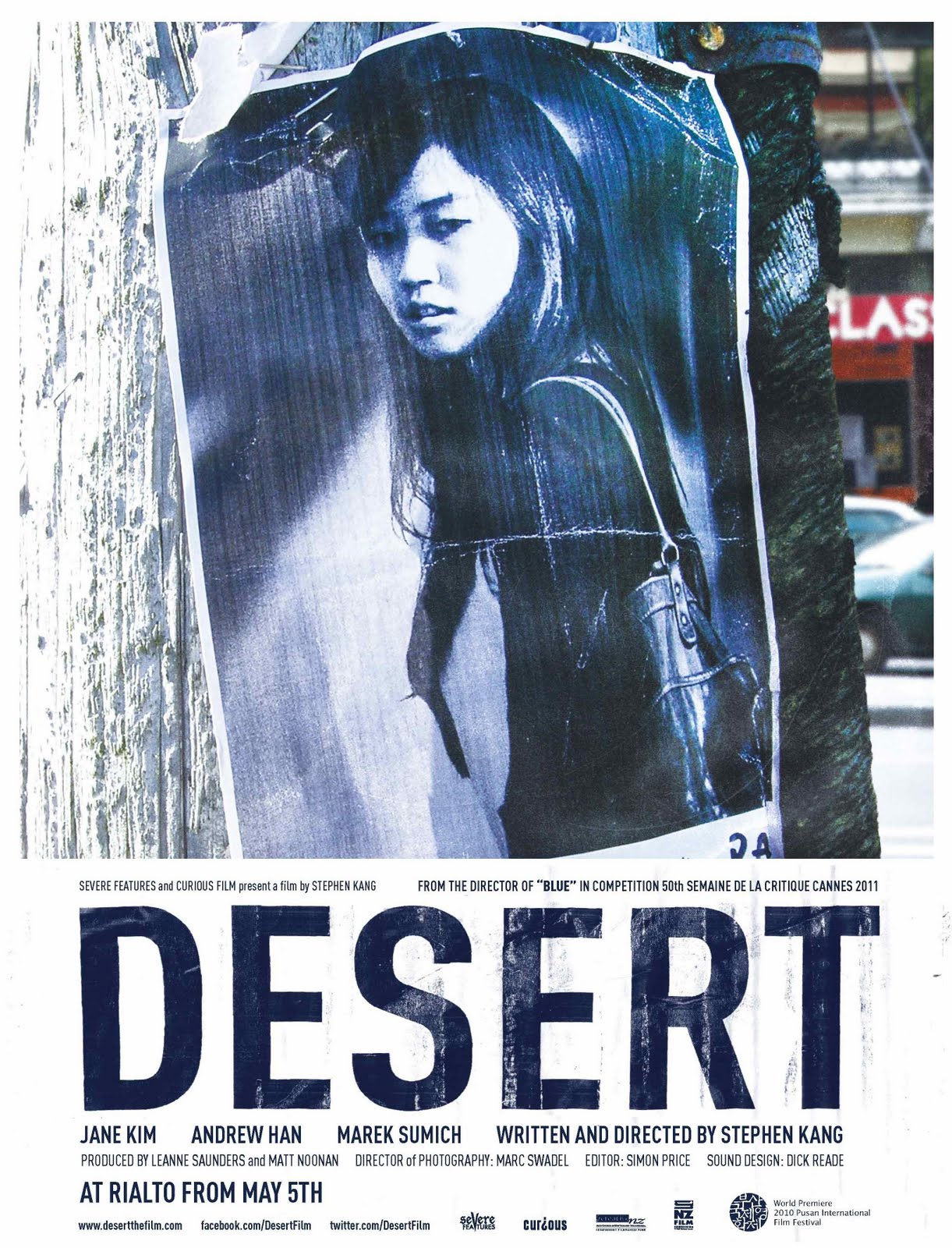
At night, all that piled up frustration gets released in the drunken cab ride back to my apt, and there have been moments where I have shouted back things like: “Eat well and live well!” (the K-equivalent to “F— you”), “I’m writing down your ID# to report you to the authorities!”, “Why else do you think Korean men have fallen in popularity?” and just, simply, “Why are you so mean?”

Needless to say, these tactics hardly work, and they only alienate you from the ajoshi. I learned this the hard way. I’m still learning; I’m still pissing off ajoshi who piss me off left and right. Because even though my father is an ajoshi, forty years of living in America has softened him up and he lets his children have opinions about things. But hopefully you can learn from my mistakes with the following tutorial.

For that tutorial, by no means only relevant for Korean-American women, see her blog New Yorker in Seoul here. Also, see here for why you might find landlords refusing to rent to you in areas with lots of coffeeshops and sooljeep (술집)!

4) Organization helps single moms

The Wall Street Journal interviews Dr. Richard Boas, who started and funds the Korean Unwed Mothers Support Network.

Also, see #12 here for another interview just after he founded it in early 2009.

5) People Who Eat Darkness: The Fate of Lucie Blackman by Richard Lloyd Parry

A review from the Economist:

EVERY foreign correspondent has stories that get under his or her skin—the ones for which the only hope of securing enough column-inches is to write a book. For Richard Lloyd Parry, who has spent 15 years in Tokyo for two British newspapers, the Independent and then the Times, it was one which linked his homeland with his adopted home: the death of Lucie Blackman, a 21-year-old Briton who was killed in Japan in 2000.

All of the review is interesting, but these last parts in particular caught my eye:

…shocking are the failings of the policing and judicial system. Mr Lloyd Parry partly blames the prejudices of the Japanese police about the foreign women who work in the [hostess] trade for their failure for so long to catch a serial rapist who used chloroform and knockout drugs to subdue his victims and filmed himself raping them…(source, above)

“People Who Eat Darkness” may fuel a Western prejudice that Mr Lloyd Parry himself tries to counter: that such crimes are peculiarly “Japanese”—perpetrated by desperate, repressed men infatuated with a myth about Caucasian sexual availability. Already, her case is often confused with the rape and murder of another British woman, Lindsay Hawker, in 2007. But in fact, violent crime is far rarer in Japan than elsewhere. The “Japaneseness” may lie in the illusion of safety which induced the two women to let their guard down. It is not Japan that is weird and terrifying, nor is it the Japanese alone who “eat darkness”; it is simply “people”.

Fortunately no comparable Korean cases quickly come to mind, but then there are definitely similar myths about Caucasian women here, and as I type I can vaguely recall something about the death of a female English teacher(?) in Itaewon at about the same time that also wasn’t investigated properly (but not to be confused with this case). Does anybody know more about that ?

6) Why the crackdown on “Kiss Rooms” (키스방)?

In a follow-up to the last article on them (see #5 here), Asian Correspondent explains why the owners of these brothels are only being prosecuted for their advertising, not for what goes on inside them.

(Source)

7) Korean lesbian film Ashamed (창피해) plays at Berlin International Festival

While the film “pushes the envelope for same-sex eroticism, a narrative first in South Korean cinema” according to Variety, surprisingly I can find little information about it in English other than this synopsis at Dramabeans, and this (albeit interesting) comment at Asian Media Wiki. Can anybody add anything?

8) Most divorcees dodge child support payments

Some basic, albeit shocking figures from the Chosun Ilbo:

Some 64 percent of divorcees ordered by a court to pay child support fail to do so, government statistics show. And of them, 70.4 percent fall behind out of spite rather than because they do not have the money…

…countries like Sweden and Germany try to avoid such problems by making the government pay first and then collect the money from the divorced parent.

Does anyone know how these compare internationally?

(“Some forms of prostitution – in particular [these] ‘pan pan’ teenage amateurs – were the direct result of the presence of GIs as sources of income and images of liberation.” Source)

9) Feminism and the Cold War in the U.S. Occupation of Japan, 1945 – 1952

An essential article for anyone looking at the origins of the current “Yellow Fever”  stereotype, and which I’m sure has many parallels to the Korean experience after the Korean War:

It was within this context of the American project to civilize and democratize a racially inferior other that Japanese women as gendered subjects emerged as centrally important figures. Seen by the occupation authorities as victims for centuries of “Oriental male chauvinism,” Japanese women embodied feudal tradition, backwardness, and lack of civilization. As helpless women of color, they became ideal candidates for American salvation and emancipation. The occupier’s zeal for liberation of Japanese women from indigenous male domination was all-consuming and multifaceted. MacArthur granted suffrage to Japanese women and praised their “progress” under U.S. tutelage as setting an example for the world. Other male occupiers “emancipated” Japanese women by initiating various constitutional and legal changes and policies. Following a familiar colonial trope of heterosexual rescue and romance, some American men expressed their desire to save Japanese women in more personal ways: Earnest Hoberecht, a correspondent for United Press International, advocated kissing as a path to liberation’ Raymond Higgins, the military governor stationed in Hiroshima, married his Japanese maid to “save” her from the aftermath of the atomic bomb and her abusive husband.

Read more at Japan Focus.

10) A Shanghai Scrap Valentine’s Day Exclusive Interview: East-West Relations(hip) Blogging with Shanghai Shiok!

In Shanghai Scrap’s own words:

Well. It has long been my observation that some of the best and most trenchant observations on East-West relations come from those who have – or have had – East-West relations. Which is to say: you might just have a keener appreciation for the different ways in which China and, say, the United States resolve differences if you’re an American who’s had to resolve who gets to do the dishes with your Chinese partner. Obviously, there’s limits to this kind of wisdom, but you sort of get my point. The regrettable thing, though, is that this kind of thinking is seriously devalued, if not outright ignored, by most so-called “serious” thinkers about China and the West (many of whom are in such relationships).

So today, Valentine’s Day, Shanghai Scrap is going to strike a blow in favor of changing that. Enter Christine H. Tan [above], author of the relatively new but already much celebrated Shanghai Shiok! blog to discuss East-West relation(ship) blogs…

Meanwhile, I know of and have linked to many Korean-Western relationship blogs here, but I confess I’ve lost track since writing this magazine article on the subject last year. Does anybody know of a convenient list of them somewhere?

Share

Korean Gender Reader

(Source: unknown)

1) Street harassment and respect in Korea

After a terrible Korean New Year’s, It’s Daejeon, darling! wrote the following:

I am tired of feeling so fucking vulnerable in Korea. I am tired of inappropriate bosses and groups of drunk guys who yell awful things in the street. I am tired of guys who think No means Maybe! or Just keep trying! I’m tired of fighting with men about wearing condoms. I’m tired of the fucking cat-and-mouse game where even if they do wear one, you have the exhausting task of making sure they keep it on. I’m tired of men who don’t respect my personal space and try shit with me that they would never attempt with a Korean women. I’m tired of taxi drivers who hit on me and give me their business card, men who leer and intimidate me. I’m tired of feeling like there’s a significant group of people out there who don’t view me as an equal, and it’s because I’m foreign. I’m tired of people expecting that I should be fucking pleased by the “attention”. I’m tired of the people who pass this shit off as a “cultural difference”. I am tired of feeling so fucking vulnerable in Korea.

See here for a follow-up on the condoms issue, and here for more on groping and street harassment in Korea.

Update: a recent survey of 1500 men and women by the Korea Transport Institute and the Korean Women’s Development Institute found that “about 26 percent of the women said they experienced sexual harassment on buses and 21 percent on the subway, compared to 2.3 percent and 2.4 percent of men respectively”.

2) Hot sweaty Korean women

In his review of E. Taylor Atkins’ Primitive Selves: Koreana in the Japanese Colonial Gaze, 1910-1945 for the Japan Times, Gord Sellar noted that:

One of the things that grabbed me, while reading this book, was how much of the stuff Westerners in Korea complain about, that Japanese were complaining about back in the colonial era.

An example of this is clothing. Japanese anthropologists especially liked to complain about Koreans’ clothing, which if you will think back to the early 20th century was quite different from what most people wear today–it was mostly white ramie fiber clothing. Because it was all-white, it tended to get dirty quite easily, and as a result, according to those Japanese anthropologists…Koreans, especially women, tended to avoid any kind of exercise or physical activity as it presented the risk of dirtying their white clothing

And which reminded him of comments made by many expats including myself, that Korean women don’t tend to exercise very hard in gyms here. Granted, a lot can change in 100 years of course, but still: modern Korean attitudes to exercise may have deeper roots than we think (Source above: Gord Sellar).

3) Japan custody heartache for foreign fathers

From the BBC :

In Japan, the courts normally give custody to one parent after a marriage breakdown and it is up to that parent if they let the other parent have any access.

Many separating couples come to amicable agreements, but it is not unusual for one parent to be cut out of their children’s lives forever.

And the article gives the example of one foreign father who, as things stand, will effectively never see his children again, and the numbers of similar cases are growing with the rising number of marriages to foreigners.

But without any other evidence though, then observers should resist the temptation to assume that custody rulings are automatically made in favor of the Japanese parent. And although there is definite pressure for change, note that the system does have some logic, being based on “the expectation that families should largely work things out for themselves”, rather than “the state enforcing agreements on access and child-support payments” (source, right: BBC).

Does anybody have more information on how foreign parents usually fare, and/or know what the Korean system is like? And speaking of the latter, now 1 in 10 Korean marriages are with foreigners.

4) Cambodian wife cuts off husband’s member in Sunchang, Jeollabuk-do.

Yes, I think this will be the most clicked link this week too.

(Source)

5) “Kiss Rooms” raided because of their…advertising

As reported by Asian Correspondant:

Police have begun a harsh crackdown on “kiss rooms” and other varieties of prostitution that until now existed under legal loopholes.

The Ilsan Police Station in Gyeonggi-do announced on January 20 that it conducted a two-day crackdown on the 17th and 18th against kiss rooms and internet prostitution in Ilsan New City, and arrested without detention 32 people, including 38-year old “B”, the owner of a kiss room, on charges of [their advertising] violating the law on the protection of teenagers (청소년보호법).

As hinted at there, this seems to be very arbitrary use of the law, as it’s difficult to so much as step out of one’s apartment in Korea without coming across numerous advertisements for brothels. Or, indeed, peacefully sitting by the river in beautiful Jinju in September 2003, enjoying your last morning there before moving to Busan later that afternoon…only to be suddenly presented with this business card by a passing local:

6) South Korea: online haven for gays

When Suh Eun-pil was being harassed at school last year because of rumors he was gay, the internet was one of the few places he felt safe. One website in particular, called Rateen, provided a haven from critical eyes and verbal abuse.

Suh began visiting Rateen regularly, and six months later his life had completely changed — for the better.

On a recent Friday afternoon, Suh, 18, was surrounded by friends, everyone chatting and laughing. The small group of friends — all whom met through Rateen — was planning a social event for gay and lesbian teens, with games, prizes and special speakers…

Read the rest at globalpost.

7) Seo-hyeon (서현) of Girls’ Generation (소녀시대) revealed to be 9kg underweight

But this is no great surprise given the group’s 1500 calories a day dietary regime of course, and belies claims by their gym instructor that “otherwise they love snacks and eat well.”

Later, netizens worked out her exact weight to be 51kg (source, right).

8) The perils of trusting oppa

A hotshot young app developer, a great idea, and technology that lets you know where your loved ones are. What could possibly go wrong?

Plenty, as it turns out.

9) Korean dermatologists assume that unmarried women don’t have sex

More insights gained the hard way by It’s Daejeon, darling!:

The doctor…put me on Accutane. Hella cheaper than the states but the health oversight is SHITTY. Accutane carries a lot of serious health risks and I researched quite a bit on my own because the derm didn’t tell me dick about it. All he asked was, “Are you married?” No. “Then no problem. You can take this.” I’m guessing that question was to assess if there was any reason to warn me about the dangers of getting pregnant while on the drug. The US has the iPledge program, Korea has the ‘Let’s believe that unmarried women are practicing abstinence, so there’s no reason to discuss this and that’s that thankyouverymuch’ program.

For the record, she does mention that this may just be her dermatologist, but she’d probably agree – and have the experiences to back-up – that such attitudes exist throughout the Korean medical establishment. But note that this frequently doesn’t apply to foreign women though, whom hospital staff often assume that their visit is simply because they want the morning-after pill, and it can take a lot to convince them otherwise (see here and here as to why).

(Source)

10) The Piggy Dolls (피기돌스) finally explain their name, and why they don’t think it’s degrading

If this is the first you’ve heard of them though, first see #10 here and #8 here on why there’s such an interest in them.

Share

Korean Gender Reader

(Source)

1) Cuban Boyfriend playing in theaters

According to HanCinema, it’s a documentary about a Cuban man who falls in love with a Korean woman 10 years his senior. Unfortunately there’s little information available about it in English, but it does looks interesting.

2) Economic burdens prompting Koreans to delay marriage

3) Mandatory 3-hour training class for Korean men importing Asian brides

(Source)

4) Advice to male idols: don’t you dare avoid your military service!

Roboseyo discusses actor and singer Hyun Bin’s (현빈) decision to join the marines for his 24 months of compulsory military service, unlike most entertainers who prefer comfortable military PR-type positions.

But celebrities aside, Korea has 250,000 ordinary men conscripted each year, and this has a profound effect on Korean life. For more on that, see here, here, and here.

5) Picture of Day: ROK Army Female Cadets Head Out for Training

Like it says, its just a picture (source), but one commenter over at ROK Drop raised some interesting points about it:

ROK women in the military? Big deal. FYI, they’ve been serving alongside their male counterparts ever since 1948. The embarrassingly unjustified attention these Sookdae chicks are getting just b/c they’re in the first women’s ROTC outfit is disgraceful. Korean women have been getting commissions through OCS since the Korean War, the ROK service academies since 1998, and are serving in all ranks and branches (excluding Armor, Artillery and ADA) for decades. (Also, the reason they look so cute in their BDU’s is b/c the Gender Equality Ministry many years ago forced the Defense Ministry to provide tailored utilities specifically cut for women — e.g., female BDU pants have a more flattering cut around the hips, and micro-sizes they offer are small enough to qualify for junior misses or girls’ sizes back in the U.S.)

I disagree about some of the details about that last: the uniforms for women were only first tested last September (and won’t be fully introduced until July), and there’s no evidence to suggest that the Ministry of Gender Equality and Family Affairs (여성가족부) was originally behind the decision (see #2 here).

But although less then 1% of Korean soldiers are women, I have no reason to doubt that they’ve been serving for over 60 years, so the commenter is right to query the attention. And recall that The Chosun Ilbo is notorious for finding literally any excuse to post pictures of women and girls!

6) CEO of entertainment agency charged for sexually harassing a trainee

For the details, see allkpop, and see here and here for some context. Meanwhile, in other crime-related stories, Korea Beat reports that a serial child-molester was let off lightly by a judge for quitting his teaching job. And on the plus-side, albeit prompted by a tragic event, Global Voices passes on the news that:

A posting by the mother of the victim has mobilized net users to file an online petition and drawn media attention to a questionable murder case. The mother claimed her daughter was beaten to death while resisting being raped. The police has decided to reinvestigate the case.

7) Who are all these White chicks?

I’m no Picasso adds her insights to Mixtapes and Linear Notes’ post on G-Dragon (지드래곤) and T.O.P.’s recent High High music video.

(Source)

8) Who are all these fat chicks?

And in turn, Hot Yellow Fellows does to my own on the “Piggy Dolls”  (피기돌스). Whom, in addition to everything else, now netizens are also calling too old-looking.

9) Hating the Korean Wave (NSFW)

I’ll let SeoulBeats summarize this one (The Marmot’s Hole also has a little on it):

Netizens have been in an uproar over a Japanese internet manga, created by otakus, which fetishizes a rather unflattering side of the Hallyu Wave that has recently invaded Japan.

The story is told by a fictional former Korean pop idol, working as a hostess, who gives an expose about the “real” inner workings of the K-pop industry to a journalist. The comic presents the Korean entertainment industry as extremely manipulative and seedy in which female idols are forced to give sexual favors to their bosses and their coworkers for fame. In the comic both SNSD and KARA are accused of performing such favors.The manga features highly sexualized images of SNSD and KARA members performing their hit songs “Genie” and “Mister.” Poor KARA has even been drawn performing naked.

10) New Gisaeng Story (신기생뎐) premieres this weekend

(Source)

And for more on gisaeng (기생), the Korean equivalent of geisha, see here and here.

Share

Korean Gender Reader

(Source)

1) 1 in 10 elderly have unsafe sex.

And for more on many elderly men’s reliance on prostitution, the Korean public’s attitudes to elderly sexuality, and depictions of that in popular culture, see here.

2) Gender inversion in K-pop.

Why do you find so many male groups imitating female ones, but never the other way round?

3) 50-year-old member of Japanese parliament and prominent reproduction-rights advocate gives birth.

As explained at The Wall Street Journal, that has prompted a lively debate on maternity issues there, as:

Despite Japan’s embrace of innovative medical technologies, egg donation is virtually banned, and the practice of using a surrogate mother is forbidden by the Japan Society of Obstetrics and Gynecology, an official doctors organization. However, artificial reproduction using sperm donation is allowed.

In comparison, laws in Korea are probably much more liberal, as the notorious case of Hwang Woo-suk’s (황우석) faked stem-cell research illustrates.

4) Bus driver sentenced to jail for injuring a male student who molested a female passenger and then attacked a female escort on a school bus.

Like Brian in Jeollanamdo says, examples like this show why “don’t interfere” is an unfortunate necessity of living in Korea, and which is ultimately self-destructive for Korean society.

Fortunately though, the 2 year sentence was suspended, so the bus driver will not actually go to jail.

(Source)

5) American film critic Roger Ebert thinks Korean groups don’t really understand all the Playboy references they’re using

To put it mildly, and it doesn’t help that the same-sounding Korean word (플레이보이) literally only means a guy who has many girlfriends.

In fairness though, I’ve heard that the Playbody bunny logo is popular across much of the rest of Asia, so this isn’t just a Korean thing. But still, I’ve been amazed at the numbers of women sporting the bunny ears on Korean TV recently, and was about to write a post about it myself before this came up.

6) Sex and Chinese Men

The latest in the “Ask the Yangxifu” series from Speaking of China, a blog by a Western woman with a Chinese husband.

7) The science of getting men to take off their shirts in Korean dramas

(Source)

8) What is Confucianism?

Essential reading from Ask a Korean! for anyone wanting to understand Korean gender issues.

9) Casting couch still has huge role in Korean entertainment industry

As explained by John Glionna at The Los Angeles Times, nearly 2 years since the suicdie of Jang Ja-yeon (장자연) for being forced to prostitute herself by her managers, unfortunately:

…little has changed in the cutthroat “Korean Wave” of TV, film and music that each year draws thousands of young hopefuls ready to endure whatever it takes — including sexual abuse and exploitation — to make it big.

And in particular:

An April 2010 survey conducted by a human rights group here found that 60% of South Korean actresses polled said they had been pressured to have sex to further their careers. In interviews with 111 actresses and 240 aspiring actresses, one in five said they were “forced or requested” by their agents to provide sexual favors, nearly half said they were forced to drink with influential figures, and a third said they experienced unwanted physical contact or sexual harassment.

10) New girl-group “Piggy Dolls”  (피기돌스) debuts with Trend (트렌드)

And so unusual is it for members of girl groups to be anything but skinny, there has already been a lot written about his group. But for the basic details, then I’d recommend allkpop or Popseoul!, and then I’d suggest Seoulbeats for more commentary and analysis (and extra clips). Last but not least, I’d share Mellowyel’s critique of their marketing at Mixtapes and Liner Notes, and am happy to report that, as she hoped, the news report in it is indeed (sort of) about young girls feeling alienated because of their weight, and that the song as a whole is about them breaking stereotypes. See for yourself by clicking on the video above and accessing the subtitles over at Youtube.

Meanwhile, thanks to reader @izzysangtae for first passing the news of them on!

Share

Korean Gender Reader

( Source )

1) Double-standards when marketing sex-themed movies?

Anybody else looking forward to seeing the comedy Pretty Romance (쩨쩨한 로맨스) next month?

I think it looks like fun myself. And with a very egalitarian first couple of promotional posters, featuring both “sexperts” in their underwear, then I’d hesitate to begin describing the promoters as sexist bigots.

But still, the above is the second poster now to have actress Choi Kang-hee (최강희) wearing a much more risqué costume and/or showing much more skin than actor Lee Seon-gyun (이선견). And this imbalance is repeated across most of the adults-only section of the movie website too:

( Source )

Sure, it’s hardly the most egregious case out there, and javabeans does give kudos to the movie for at least “letting the girl be the aggressor”. But it does raise the interesting issue of how sex-themed movies (presumably) aimed at both sexes seem to be marketed as if they were just for a male gaze, and not just in Korea.

Recall some of the posters for Ogamdo (오감도; see #8 here) last year for instance, which led some female commenters over at DramaBeans to worry that watching it would simply be a waste of time for them:

( Source )

But regardless of if that did turn out to be the case or not (I haven’t seen it myself), can anyone think of any promotional material for similar sex-themed films that fetishized the male form just as much as the female one? Or is only the latter effectively the default and almost universal choice?

2) Filipino student kicked out of Korean university for being gay

Read the details at KoreaBeat. To be precise, he is being kicked out of his dormitory, which effectively means he is being kicked out of the university because his scholarship is contingent upon his residence there.

3) “Life is Beautiful” broke barriers for gays

The JoongAng Daily interviews veteran television writer Kim Soo-hyun (김수현), whose drama Life is Beautiful (인생은 아름다워) was the first to portray a gay couple on Korean prime-time television.

Also see #3 here for more information about depictions of homosexual relationships on Korean television in general (or rather the lack thereof), and #1 here for a recent controversy surrounding the shooting of the drama in a church.

4) Korean schools’ rules on dating and physical contact between students of the opposite sex

I kid you not: not only did 81% of middle and high-schools surveyed have them, but they’re both very detailed and regularly enforced, recently “a male and female student of a high school in Ansan, Gyeonggi Province, [receiving] a penalty of three-day service in school for their standing within 50 centimeters of each other at a bus stop” for instance.

See The Hankyoreh for further details. Naturally, there’s no mention of any rules for dating and physical contact between students of the same sex.

5) What socializes and sustains deferential behavior in Koreans?

Neo-Confucian deference to males is at the core of Korea’s poor gender relations, and to outside observers it is often both frustrating and confounding how it persists despite its fundamental conflict with most other ideologies that Koreans espouse to, such as democracy, liberalism, and feminism.

As Gord Sellar discusses here though, recent studies show that part of the answer may be because what one is socialized to at an early age literally becomes hardwired into the brain.

Take this quick quote from Tufts Magazine’s article on the studies, with Gord Sellar’s emphases. And at the very least, I am now intrigued by the implications for understanding Korean advertising:

… what accounts for strong differences in preferences, leading to very different actions in the real world?

Part of the answer might lie in a similar set of studies done by Freeman. He measured the brainwaves of American and Japanese subjects who were shown silhouettes of bodies in postures categorized as “dominant” and “subordinate” (for example, one of someone standing tall with arms crossed and another of someone with head bowed and arms hanging). “It’s been known for a long time that Western cultures encourage dominance and Japanese cultures more subordination in line with collectivist thinking,” Freeman says. “I was looking to see if these East Asians and Westerners perceive dominant and subservient bodies in a different way.”

The results, published in the journal Neuroimage in April 2009, indicate that here, too, people often travel the same route yet end up at destinations miles apart. The silhouettes matching cultural preferences activated another distinct area of the brain in both groups: the limbic reward system. This is the system that releases dopamine into the bloodstream in response to pleasurable stimuli such as drugs, sex, or food. But it’s also engaged whenever the brain wants to tell the body to go after something in the outside world—to pick up a desired cup of coffee or grab a favorite magazine off the rack.

( Source: Pink Tentacle )

7) Top 60 popular Japanese words/phrases of 2010

This selection from Pink Tentacle may seem like a strange choice here at first. But like our discussion of 2009 Korean buzzwords demonstrates, many do ulitmately make it over to Korea.

Here’s my vote for the first of those 60 to do so:

28. Yama girl [yama gaaru – 山ガール]: Yama girl (“mountain girl”) refers to a new breed of fashion-conscious outdoor women who wear cute yet functional mountain skirts, colorful leggings and stylish boots while hiking, camping and communing with nature.

7) The dashed dreams of a Gyopo woman

An interesting, if somewhat bitter-sounding take on dating in Korea from the perspective of a Gyopo woman. Anybody have an opinion on how representative her experiences are?

8) Divine proportions in male nipple re-positioning

Not strictly related to Korea sorry, but from what I can gather from the article at io9 says, this is a very underdeveloped field that is only set to grow as societies become more obese. And given existing Korean expertise in cosmetic surgery and its ambitions for medical tourism, then it wouldn’t surprise me if this was a procedure regularly offered in Korea within the next 5 years.

9) Jessica of Girls’ Generation most popular celebrity among Korean lesbians

That’s according to an article in Come Together, a magazine published by Yonsei University’s LGBT club which claims to be “Korea’s first campus association for gay college students.”

Yes, I think it’s an interesting name for a magazine too.

10) Midnight Sun (미드나잇 선) music video by F.CUZ (포커즈) released

But more notable for the way it was promoted, which was by the now standard practice of pre-releasing an overtly sexual teaser of it with the aim of gaining publicity for it by getting it banned and/or generating controversy:

I am unsure if it was actually banned sorry – I’ve been a little distracted the last few weeks – but the finished product is definitively much tamer:

Like Johnelle at SeoulBeats notes of it though, “it’s funny how in almost every Korean (and Japanese) MV that has a sexy concept they have only (or mostly) foreign girls/models tramping it up”. Do you think that’s true, or is it an exaggeration? I can say that it’s definitely the case for advertisements and the print media, but unfortunately I find it difficult to keep up with most K-pop these days.

Update: Gord Sellar saw Pretty Romance, and wishes he’d walked out after 20 minutes!

p.s. Good to be blogging again!^^

Share