Reading the Lolita Effect in South Korea, Part 1: The role of K-pop and the Korean media in sexual socialization and the formation of body image

A simply surreal video making the rounds at the moment. As explained by Lisa at Sociological Images, it:

…beautifully illustrates the socialization of children into particular kinds of worship. With hand motions, body movements, and facial expressions, this child is doing a wonderful job learning the culturally-specific rules guiding the performance of devotion.

Which led to a great deal of discussion at that site. But I’ll confine myself here to echoing Jason’s comment that it simply reminds him of his son picking up his own behaviors such as sweeping, and that the young girl:

…certainly isn’t worshiping here, but is just mimicking her parents and the other people around her. I can guarantee she has no concept of a deity.

But what has all that got to do with K-pop, let alone Meenakshi Durham’s The Lolita Effect? Well, because after reading all that, it was very interesting comparing my daughters’ own reactions to KARA’s Lupin just half an hour later. First, those of four and a half year-old Alice:

Then with her two and a half year-old sister Elizabeth:

Granted, perhaps you had to be there…and in which case I probably would have removed my dirty laundry from the floor first (sorry). But I didn’t notice it myself, because at the time I was simply transfixed.

You see, along with dozens of other K-pop music videos, Alice and Elizabeth must have watched and “danced” to Lupin at least 20 times before that night. But that was the first time that Alice at least seemed to demonstrate that she not only remembered it, but actually knew it very well, and was performing repetitive actions that were recognizably part of the same dance…which she’d demand to do seven more times before going to bed.

Unfortunately for my paternal pride though, in hindsight she was neither simply copying the music video nor giving her own original interpretation of it: as confirmed by her teacher later, she’s preparing for a Christmas performance at her kindergarten soon, and—yes—she’ll be dancing to Lupin.

So what’s the big deal? After all, while I’m still translating the lyrics myself (or at least I was until my “study” got invaded), they seem harmless enough:

But what if the kindergarten teachers had chosen Mister instead?

Or something by the Wondergirls perhaps? Two weeks from now, might I have looked on in abject horror as my 4 year-old kept thrusting her bottom out at me while singing I’m So Hot?

(See here for the video; the owner has disabled embedding)
No, because first, no matter how much WonderBaby’s appearances on national television could be construed as widespread public acceptance of that sort of thing, my wife confirms that many other Korean parents would also have complained well before then.

But second, and most importantly, actually Alice has already been thrusting her bottom out at me like the Wondergirls, for about three months now.

Seriously: several times a day, she’d suddenly run up to me giggling when I was at my desk, quickly thrust her bottom out at me a few times, then she’d run away in hysterics. Fortunately, she seems to have largely grown out of it now, but not through any discouragement on my part, which just seemed to make doing it all the more amusing for her.

Why did she start in the first place? I’ve no idea, as although she could have seen that dance move virtually anywhere, she wouldn’t have had any idea what it represented, or what adults would think of it. Perhaps one of her teachers overreacted to her or one of her classmates doing it or something, after which it became fun.

But whatever the reason, does that mean that it’s hypocritical to have any misgivings about Wonderbaby then?

Hell no. But to counter the argument that it’s just clean harmless fun, let’s be very specific about what the problems with her dancing to So Hot on national television are exactly. I can identify two main ones.

First, there’s the fact that Wonderbaby quite literally invites the viewer to view her as a sexual person. Of course, she probably has virtually no idea of the meanings of what she’s singing, let alone the consequences. In which case, one might already reasonably ask what she’s doing there in the first place, and in cases like this it is usually this naive, unknowing projection of sexuality that adults tend to be most concerned with. As explained by Durham in The Lolita Effect:

…the signals that girls send out about their sexuality, often naively, in response to the prevailing media and marketing trends, [are] signals that adults fear will attract harmful sexual attention. As the columnist Rosa Brooks lamented in the Los Angeles Times, “old fashioned American capitalism…is busy serving our children up to pedophiles on a corporate platter”….

….These charges open up quite a can of worms. Can marketers in fact “serve” children up to pedophiles? Is there any real danger in young girls wearing low-cut, skimpy, or “trashy” clothes, or is this just a harmless fashion trend designed to raise parental hackles, like so many others in the past? Could it even be seen as a feminist moves towards embracing a femininity or “girliness” scorned by previous generations and linking it to power rather than passivity? (p. 69)

I’ll return to the last point later. But before I do, from the outset I want to put paid to the notion that even children that young are completely neuter and/or are unaffected by sex in the media:

For children to take an interest in sex is not out-of-the-ordinary or scandalous. Even toddlers “play doctor” to explore each others’ bodies and mimic intercourse, though scholars are still debating what constitutes “normal” sexual behavior in young children. Sex is a part of life, so it is bound to surface in different ways at different developmental stages; it is not cause for alarm unless there is harm or abuse involved. Of course, sexuality needs to be dealt with in ways that are appropriate for the age and maturity of the child, the cultural and social context, and above all, the ethical implications of the situation, but sex per se cannot reasonably be viewed as harmful to minors. (p. 68)

And in particular:

The conventional wisdom is that interest in sex escalates as children approach adolescence; this is a biological viewpoint that connects the hormonal shifts and physical maturation of puberty with an increased interest in sex. But now sexuality marks preadolescence and childhood, too, and for many adults, this is justifiable cause for alarm. In today’s world, children as young as eight report worrying about being popular with the opposite sex; first graders describe being sexually-harassed by classmates; and by middle school, kids are steeped in sexual jargon, images, and exploration. Sex educator Deborah Roffman argues that little girls start wanting to look good for others at age four….(p. 65)

Very few—if any—cultures have found ways of adequately and appropriately dealing with the inconvenient fact of child sexuality (let alone the media) but surely Wonderbaby’s example doesn’t help. Nor do the music videos discussed below with slightly older girls either, but which I only realized thanks to Barry Raymond, a friend of mine that used to live in Korea (and now with 3 daughters himself):

No, that’s not them: rather, it’s a screenshot from the music video for Bang! (뱅!) by After School (애프터스쿨), which I translated back in June. One of my favorite Korean songs, I was originally a little miffed when Barry criticized it because the inclusion of the young girls, to which I replied on Facebook:

I’m usually quite wary of that too Barry, especially in Korea, where people are generally very reluctant to admit that things like that can be problematic. But in this particular case I think their presence is fine personally, because they’re gone within the first 20 seconds or so, and don’t perform any dance moves that can be considered remotely sexual. So they’re clearly supposed to be decorations at the beginning, considered quite separate to the grown-up (sexual) women of the group.

His response:

The lyrics and dancing that make up the song and video are all about sex. To place a child at the beginning of that exploits them in a sexual way. How would you feel about a child appearing at the beginning of Bad Romance or some other Lady Gaga song. It’s a girl group exploiting itself on the basis of sexuality, at least in this song. That is their choice, don’t force it upon the clearly underaged girls that appear in the video or try to make it appealing to an underage audience.

Me:

Hmmm, you may well have a point there, which I admit I wouldn’t have considered if you hadn’t brought up imagining the same in Bad Romance; I wonder if that shows just how used to that sort of thing I am here?

(15 year-old f(x) band member Sulli in Oh! Boy Magazine; source)

And finally, albeit admittedly after my asking if I could post it here at some point(!):

According to Wikipedia… See More’s typology of child pornography, the type described as posing involves (allow me to paraphrase) ‘deliberately posed pictures (video) of children fully clothed, partially clothed etc. where the context and/or organization suggests sexual interest’.

The”Bang” video places two clothed girls wearing the exact same attire as the older models at the beginning of the video. The girls dance alongside the older models where the older models are dancing in a sexually provocative manner (the younger girls are not in my opinion dancing in a sexually provocative manner). It should also be noted that while the girls wear the same outfits as the older models the fitting of their outfits is not alarmingly provocative although the same outfit on the older models is certainly sexually provocative. So we have a situation where several sexually provocative models are juxtaposed with what appears to be virtually identical under-aged girls. This to me would constitute a context of sexual interest where the line between the older models and the younger models is intentionally blurred.

Further to this context would be the lyrics….and the title of the song, “After School” along with the school oriented marching parade uniforms. To me this video is unambiguous contextualized sexual exploitation of children.

Is judging the Korean media and Korean music videos with an assessment system developed by the Paedophile Unit of the London Metropolitan Police merely imposing a Western value system on Korea? You decide, although I’d wager that in fact the Korean police have a very similar system.

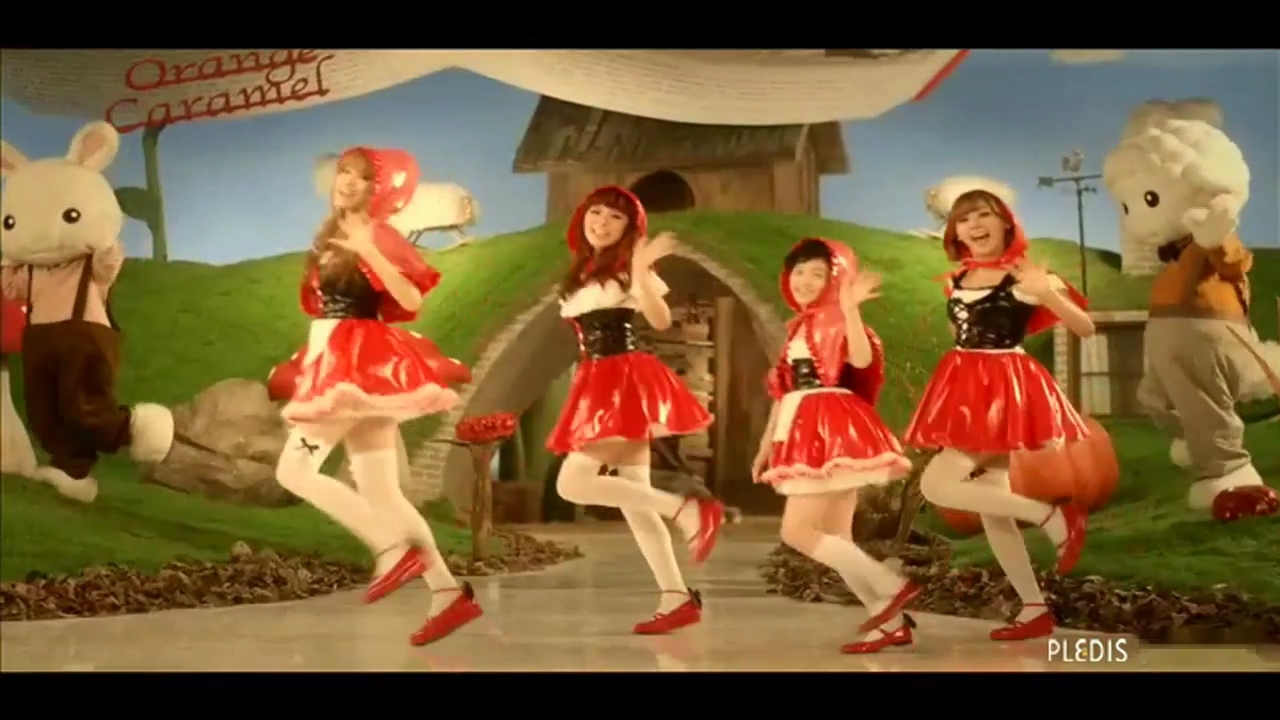
Either way, not much later one of After School’s subgroups – Orange Caramel –  did the same again with their music video for A~ing (아잉):
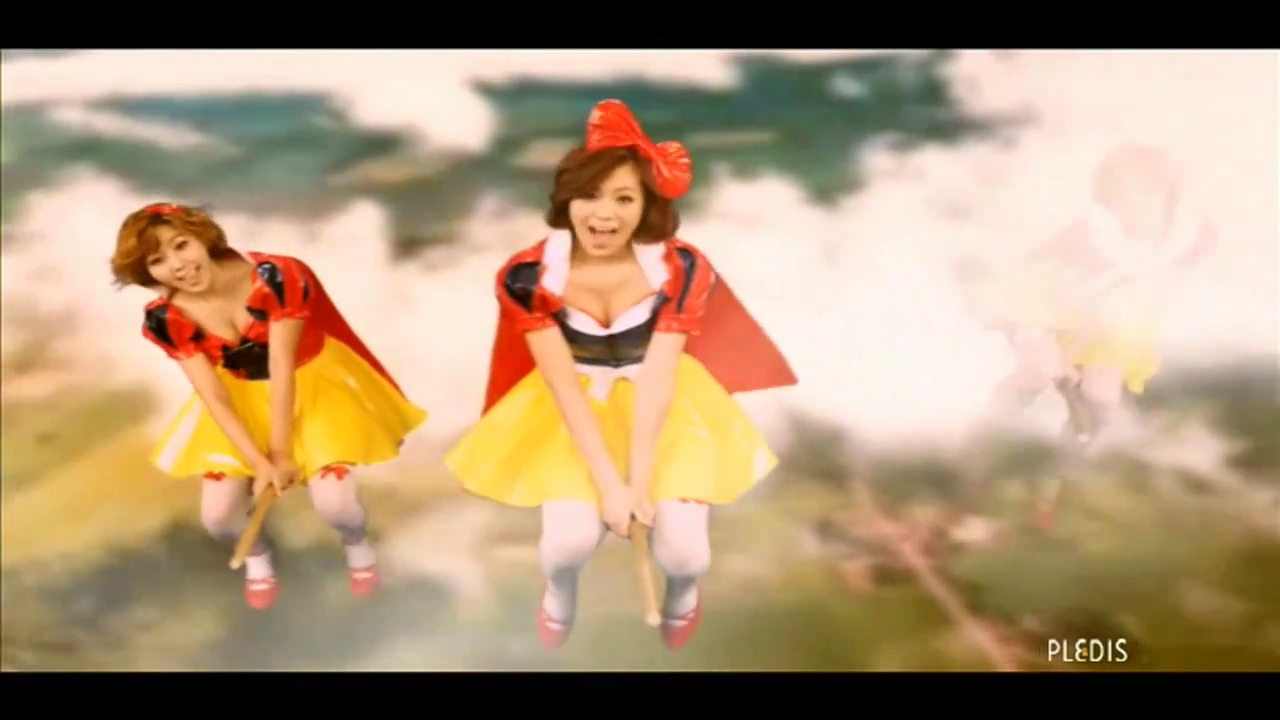
For the sake of providing sufficient warning of the slightly NSFW image coming up in a moment, let me take the opportunity here to point out that it’s not so much the lyrics and dance moves that are the issue this time (see here for a video with them), but more having a child in a music video “sugar-coated with sexual undertones,” with an “obviously pedobaittastic tone,” and with “kinky cosplay lolita outfits”, all as noted by Johnelle at SeoulBeats. And so much so, that this next screenshot…
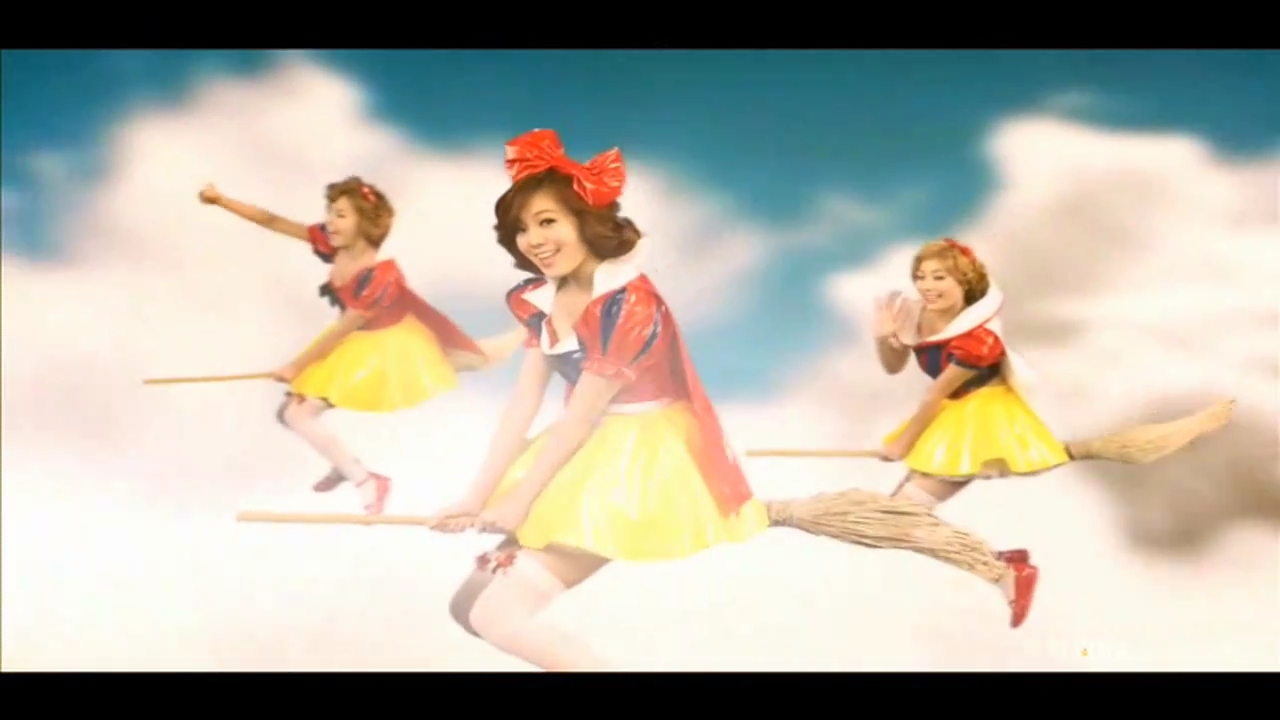
…instantly reminded of this next image, which I’ve had on my hard drive for years, from God knows where. Not looking very closely at the small print before then, I’d always assumed that it was the cover of an erotic fiction book, but it actually turns out to be a poster for a pornographic cartoon:

(Source: unknown)

Continuing with A~ing though, just in case you think Johnelle and I are exaggerating:

And in particular, these costumes, which—correct me if I’m wrong—seem to serve no other purpose than to have one’s breasts spill out of them:
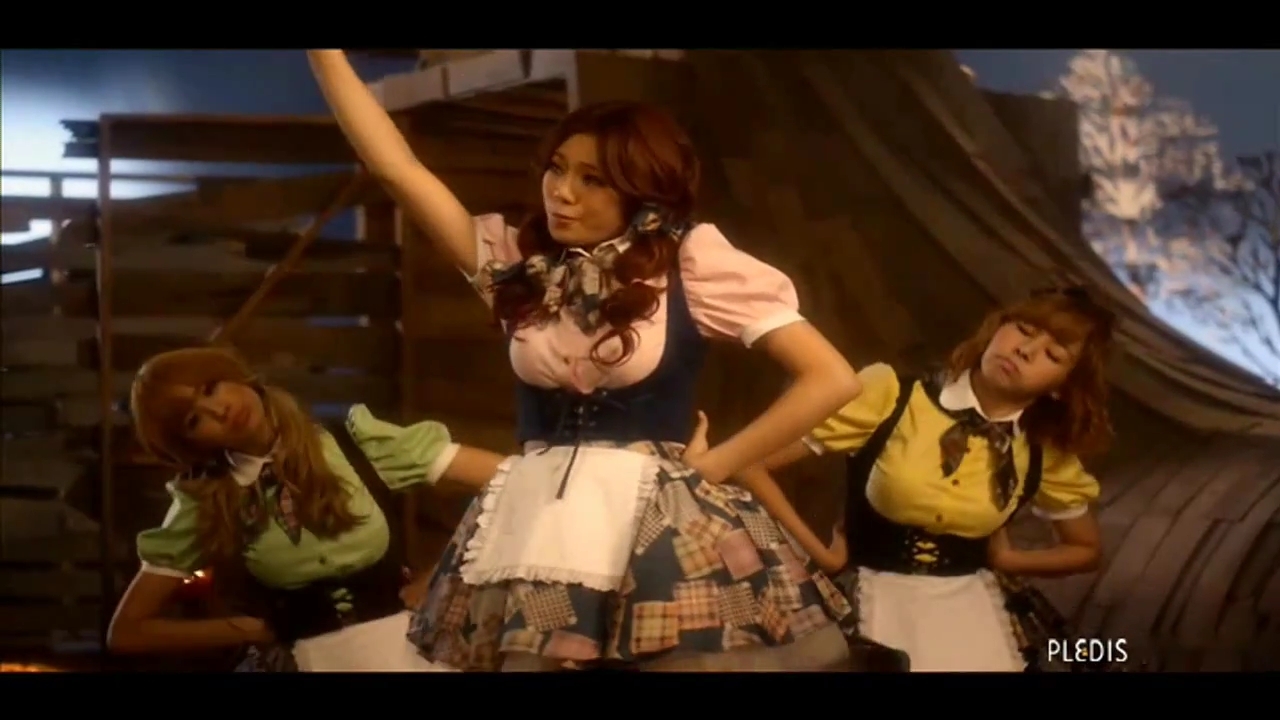
All good wholesome stuff. So, like Johnelle notes, what’s with having a little girl dressed up in the same kind of vinyl red riding hood get-up as the women at the end?

So, does all the above mean I’m advocating that girls should never be allowed to appear in sexually-themed music videos (and so on) then? Yes, I guess so.

But how to set a minimum age for that? After all, the upshot of everything I’ve written so far that any age limit would be somewhat arbitrary and artificial.

If I did have to to set an age though (and it would be very unrealistic not to have one), then I’d say that the age of consent would be the most logical choice. Unfortunately however, in Korea that happens to be as low as 13 (see here and here), even though the age at which one can view and perform in sexually-related material and/or have reliable access to contraception is 18.

Yeah, I don’t see the reason for the huge discrepancy in age limits either…which is not quite the same as arguing that any of them should be 13.

But that’s a subject for another post. In the meantime, one argument against any age limit on appearances is that the average age at which girls begin to menstruate has been dropping steadily since 1850, so much so that – in developed countries at least – they now enter puberty between the ages of 8 and 13. It would be a pity to deny girls the right to express their ensuing sexuality in popular culture, especially with female sexuality in general being repressed and/or literally viewed as evil for so much of human history.
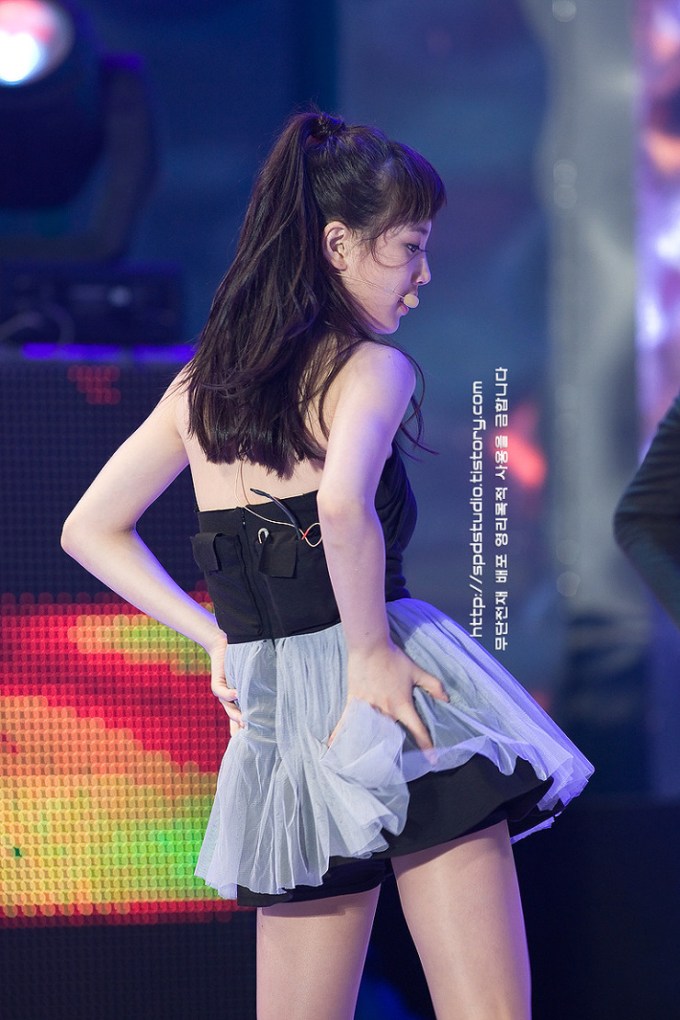
(16 year-old Bae Su-ji of Miss A; source)

Yet the notion that the feminist sexual empowerment of girls and women is what primarily motivated the appearances of Wonderbaby, the girls in the After School videos, the tight pants of 15 year-old Sulli, and 16 year old Bae Su-ji’s pose above is simply absurd, and indeed there is solid evidence that most young female entertainers are in fact pressured to wear their supposedly empowering skimpy clothing (and dance provocatively) rather than doing so out of choice. But although such arguments have still been made in Korea nevertheless, the overwhelming public attitude is to stick one’s head in the sand and deny the existence of teenage sexuality at all (let alone child sexuality), as this Korean commentator complains himself.

And in a sense, this is the official Korean government position too, if the article “Swept up by Girl Groups” by Jeong Deok-hyun is anything to go by. You can find it on pages 44-48 of the March 2010 edition of Korea Magazine, the official magazine of the Korean Culture and Information Service (downloadable here), and about this specific part on page 48…

“The shadow of recession and nostalgia:  Some are so surprised by the elder generations’ enthusiasm for girl groups that they cannot help but mention the Lolita complex. Nevertheless, that would be an example of an exaggerated principle that remains from the past authoritarian era. In the course of shifting from a masculine-dominated era to one of feminine equality, the imposing frames of age and gender are being slowly torn down. The time has come in pop culture where a man in his 40s can cheer for teenage girl groups without being looked at suspiciously.”

…my friend Dr. Stephen Epstein, Director of the Asian Studies Institute at Victoria University wrote to me:

The logic here is almost comical: the empowerment present is not that it brings young women to a heightened sense of their own possibilities in the world (which is mentioned nowhere in the piece), but rather that pop culture commodification of sexuality has reached the point that middle-aged men now have the privilege of ogling teenage girls in bands without fear of embarrassment. Now that’s what I call empowerment….
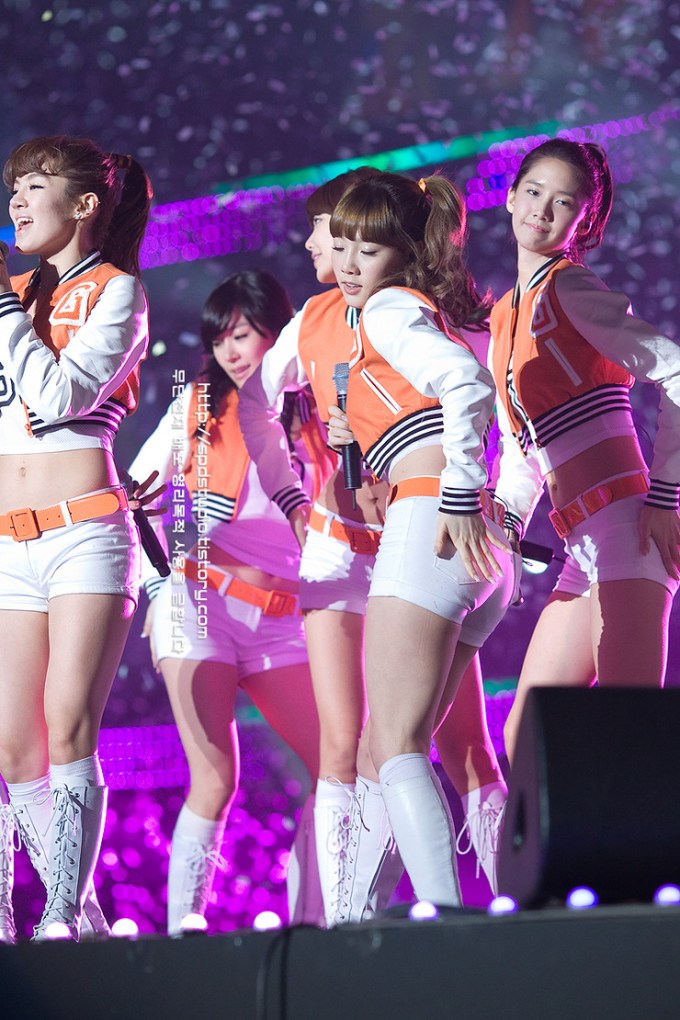
(Source)

But again—and this bears repeating—its not girls’ sexuality itself that is the problem. Rather it is that:

…the expression of girls’ sexuality seems to be possible only within an extremely restrictive framework. Girls’ sexuality, it seems, has to comply with the markers of sexuality that we recognize, and it cannot be manifested, recognized, or mobilized in other, potentially more empowering and supportive, ways.

This is a form of mythmaking. When a concept as complicated, multilayered, and diverse as sex is reduced to expression through a single channel – the one involving lacy lingerie, skintight clothing, and the rest of what Ariel Levy calls “the caricature of female hotness” – it has to be seen as construction or a fabrication, in which the complexities of the subject are flattened into a single, authoritative dimension, and in which all other possibilities are erased.

So it is important to think about the ways in which girls are being coached to aspire to “hotness” by popular culture, and how the commercialized definitions of “hot” offer beguiling but problematic representations of sex that limit its vast and vital potential. (pp. 70-71, emphasis in original).

And that is the second major problem with WonderBaby’s appearance: how it already sets her on that path, and/or provides an example for others to follow. And while that is by no means a problem confined to Korea – Durham’s book alone is testament to that – it is taken to extremes here. As like I explain in Part 1, it is near impossible for a young aspiring female singer or actress to advance her career without doing “sexy dances” on numerous talk shows and entertainment programs:

And yet strangely, when 30-somethings (and above) do the same it is usually only as part of a big joke, as if they were suddenly neuter. Moreover, whenever a girl group’s music video features sexy dancing and lyrics that aren’t exclusively designed for a male gaze, then they have a very good chance of being banned from television, as anyone with even just a passing familiarity with K-pop can attest to.

But on a final note, one frequent complaint I have about most articles and blog posts on this subject is that they rarely explain why this is the case, nor why younger and younger women and girls are becoming more involved over time. And indeed, for all its popularity, even Durham isn’t as clear about this as I would like either, and I had to read her book several times to figure out what she actually means by “The Lolita Effect” exactly.

In short, it is the natural consequence of various industries’ (fashion, cosmetics, cosmetic surgery, diet-related, food, and so on) need to build, expand, and maintain markets for their products, which obviously they would do best by – with their symbiotic relationship with the media through advertising – creating the impression that one’s appearance and/or ability to perform for the male gaze is the most important criteria that one should be judged on. And the younger that girls learn that lesson and consume their products, the better.

Simplistic? You bet, and I’d be the last person to deny the role of a whole host of other factors, including – for one – the fact that basic biology makes women’s physical attractiveness a much more important factor in choosing a mate for men than vice-versa.

But do consider that: there is not a single country that did not also experience “housewifization” as a consequence of development; that in economic terms at least Korea is now officially the most consumerist country in the world, and much more so than the US (no, really); that comsumerism was explicitly conflated with national-security and anti-communism by the Park Chung-hee (박정희) regime of 1961-1979 (and very much still is); and finally that Korean women played a crucial role in that last, as that last link makes clear.

Given all that, then is anyone surprised that Korean women the thinnest in the developed world, yet actually consider themselves the fattest, and act and spend accordingly?

Correlation not always implying causation be dammed. And if nothing else, I hope I have at least persuaded you of that link with this long post!
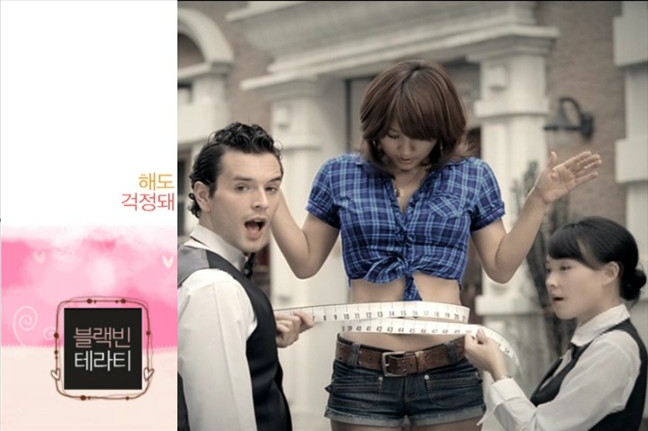
(Source)

The “Reading the Lolita Effect in South Korea” series:

Ah! (아!) by After School (애프터스쿨): Lyrics & Translation

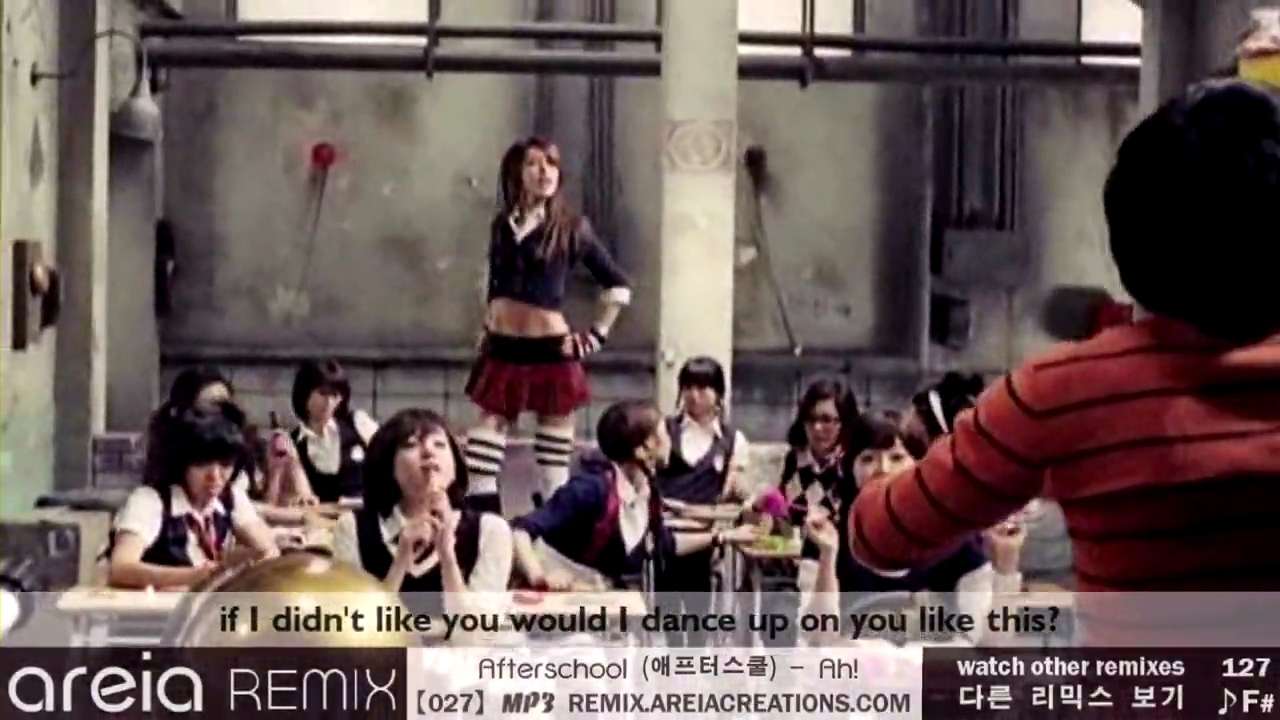
After School’s (애프터스쿨) debut track from last year, of which I again include both DJ Areia’s remix above and the original below for you to enjoy while I explain the lyrics. But note that the remix is not actually trance this time, but rather the disco-like “vibrating analog synthesizer sounds and the helicopter-like basslines” of the late-1980s and early-1990s, so please do give it a try if you’re normally put off by dance music.

As for the music video itself, its theme is a little strange: schoolgirls in skimpy clothing coming on to their increasingly flustered young teacher, whom they are very happy to have ‘accidentally’ burst into their locker room later? It sounds…nay, looks like Japanese manga, and reminds me that student-teacher relationships (including dating and marriage) are a common trope of mainstream Korean popular culture (see here, here, and here for example), which only serves to both glamorize and normalize them.

Still, overly hormonal school students do sometimes have crushes on their teachers, and there’s nothing wrong in itself with portraying those in a music video. But while this one does obviously cater more to men’s sexual fantasies than to women’s (would having the group members vying for the affections of a handsome male student instead appeal more to women?), the lyrics demonstrate that there is much more to the song than meets the eye…

Again, for reasons outlined last time, I’ll provide very literal translations:

이렇게 둘이, 너와 단 둘이
언제나 둘이, 달콤한 이야길 하고파 둘이
둘이, 오늘밤 둘이, 사랑해 우리 둘이 둘이 baby

This way the two of us, with you only the two of us

All the time the two of us, I want us to tell a sweet story

The two of us, tonight the two of us, I love you we the two of us the two of us baby

“단” in the first line confused me for a while: it has a dozen meanings, including “bunch” or “bundle” which would (sort of) go with “the two of us”, but ultimately the meaning “only” is the most appropriate here. After that, the “~ㄹ 고파 하다” verb ending in the second line was the first time I’ve ever come across it personally, nor is it in any of my grammar books, but my wife says it simply means “~하고 싶다”, or “want to”.

잘빠진 다리와 외모 너는 내게 반하지
그대를 향한 윙크 한번 내게 빠지지
니 높은 콧대, 내 몸맨 어때
내 앞에선 니 모든게 무너지고 말껄

You have fallen in love with my slender legs and outward appearance

If I wink towards you one time you will fall (further)

The bridge of your nose is high (you have high standards)

How is my body?

Everything about you is going to crumble in front of me anyway

It feels a little hypocritical of me to critique other translations of songs here, as I very much rely on them to try and understand anything I might be having difficulty with myself, and especially because the translators may lack my increasingly annoyed Korean wife to constantly ask questions of in the next room. Nevertheless, those of whomever DJ Areia uses in his remixes (Yeeun2Grace perhaps?) really do seem a little sloppy sometimes (recall the big mistake in the 5th line of Bang!), and certainly disguise the subtlety of the original.

Take the first line for instance: “빠지다” has 13 meanings according to my dictionary, but “sexy” isn’t one of them; rather “잘빠진 다리” are “legs that have lost a lot of weight”, or “slender”. Sure, you could argue that this is just being picky, but it’s just as plausible to think that there is something culturally significant in the fact that “legs that have lost a lot of weight” was said rather than “섹시한다리” for instance, or more literally “sexy legs”. Also, “외모” is not “face”, but is actually the “outward appearance” of your entire body.

Next, putting line 4 as “I know you’ll crumble in my presence” completely ignores the “모든게” (or “모든것” + “이”) in it, or “everything”, and although “I know you’ll fall for me” is fine I guess, the verb ending “~고 말껄” (annoyingly not in any of my grammar books) means more “[the verb] is going to happen anyway”. Hence “everything about you is revealed in front of me” seems much better, as per the translation available on the AfterSchoolPlay fansite (registration required)

Finally, not a translation mistake, but in line 2 annoyingly the meaning of “빠지다” is different to that in line 1; and learners of English complain about the multiple meanings of words!

사랑한다 말만 말고 보여 주겠니
나도 니가 맘에 들어 춤을 추겠니
너와 난 왠지, 자꾸만 왠지
통할 것만 같아, 너를 사랑 할것 같아

Don’t just say you love me, aren’t you going to show me?

I like you too, aren’t you going to dance for me?

You and me for some reason, only again and again for some reason

I think we will only be connected, I think I will love you

My wife tells me that the verb ending “~겠니” in line 1 and 2, again not in any of my grammar books(!), means “aren’t you going to [verb] for me?”, So where on Earth “If I didn’t like you would I dance up on you like this?” below comes from I have no idea, no matter how appealing the thought!

(chorus)

짧은 시간 가까워진 우리 둘 사이
그대와 난 이제 하늘이 맺어준 사이
두말 할 필요 없어, 다가와 내게 어서
조명이 나를 번쩍 비추면
그댈 유혹하는 내 눈빛이 뜨거워지지
다른 남자들은 니가 너무 부러워지지
말은 안해도 난 알잖아 표현 안해도 다 알아
빨개진 니 얼굴이 다 말을 해주잖아

In just a short time we have become close

We are a match made in heaven

We don’t need to say it twice, come to me

If a light suddenly shines on me

It heats up the light of my eyes that is seductive to you

And other men become very jealous of you

You don’t have to say it or show it in your expression, I know everything

You red face shows it all

Not much to say here actually, other than both the translators at Yeeun2Grace and AfterSchoolPlay separated the above into two verses between lines 4 and 5. But I think that was mistaken, as line 4 ends in “비추면” or “if the light shines (on me)”, which is why the singer’s seductive eyes light up in the line 5. Lacking that connector, then I think that their own versions of line 4 and line 5 – “I’ve been illuminated by the light… You see my burning seductive eyes” and “When the lightning strikes me…My eyes which are putting him into temptation are becoming hotter”  respectively – don’t really make any sense.

(chorus)

나나나~

After school in the house, 모두 같이 make it bounce
들어봐 지금 내 말, 오늘밤 tonight
다가와 말못했던 얘기, 우리 둘만의 작고 작은 속삭임
그래 넌 지금 날 너무 원하지, 가벼운건 싫어 내 모습이
다른 장소 after party, 걱정마 이런 내 스타일에
오늘밤은 후회안해, 내 맘을 뺏어봐 baby boy

(chorus)

Na na na~

After School in the house, everybody together make it bounce

Hear my words now, this night tonight

Come to me, and all the things you (we?) couldn’t say, all the little whispers we said only to each other

Yes, you really want me now, I (you?) don’t want just light stuff

Different place after party, don’t worry this is my style

Don’t regret tonight, try to take my heart baby boy

Again, the Korean seems pretty straightforward here. On a final note then, given how targeted it is towards male audiences I was very surprised not to find any screenshots of the music video either via Korean or English search engines, leaving me with the onerous task of producing my own. Despite the visuals however, the lyrics in this debut song are clearly just as much about girl-power and being confident and assertive as they were in Bang! a year later, so the possibility remains open that After School may actually have a sizable female fan base (and I rather hope that they do).

In light of that then, you imagine what I thought of three members’ most recent song in which they pour on the aegyo (애교), basically looking and behaving like 12 year-old girls. Like I said in the comments to a post about it at SeoulBeats:

I’d have to give it a thumbs down. Not so much for the music in itself, but because I’ve always liked After School for the assertive, confident, girl-power theme of their songs, and so this “candy coated aegyo overload” as you well put it really seems to dilute their brand.

And most other commenters there agreed with me. But what do you think of it? Feel free to disagree with me of course, and diversity is the spice of life and all, even for music groups. But still…

(Source)

As always, thanks in advance for pointing out any mistakes I may have made or providing alternative translations!

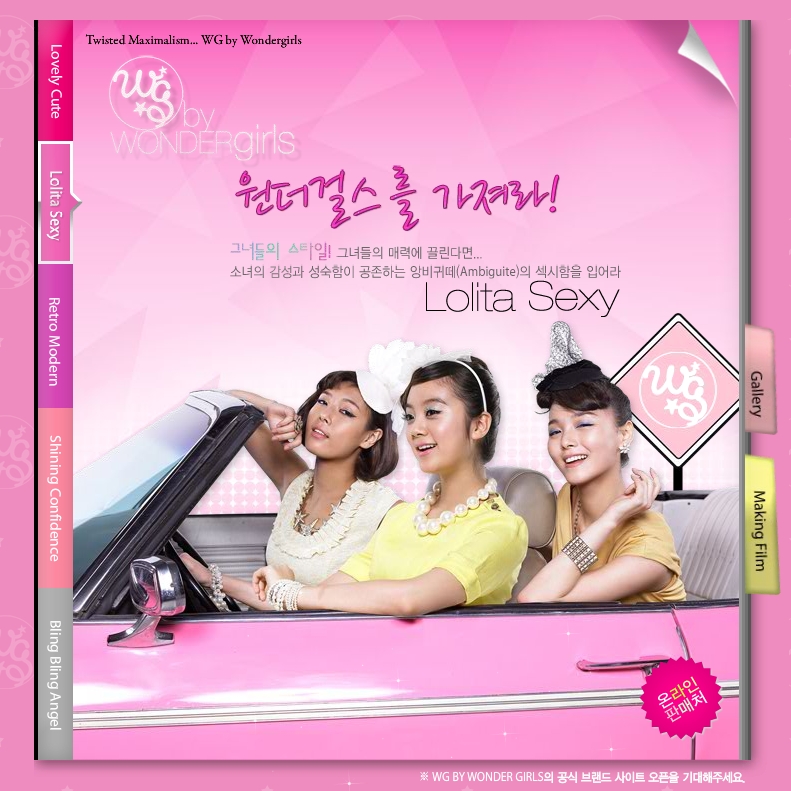
Korean Sociological Image #33: Take the Wondergirls, Lolita Sexy Style!

Source: Wgby

Well, that is literally what it says:

원더걸스를 가져라! 그녀들의 스타일! 그녀를의 매렬에 끌린다면…소녀의 감성과 성숙함이 공존하는 앙비귀때(Ambiguite) 섹시함을 입어라

Take the Wondergirls [with you]! Their style! If you are attracted to their charm…wear Ambiguity’s sexiness, which has both girls’ sense and maturity.

But lest I give the wrong impression, it’s just the name of one line of JYP Entertainment’s new Wondergirls-themed cosmetics brand. And given the essential randomness of the names of the others too, and the fact that English terms routinely get incororated into Korean almost completely devoid of their original meaning, then I doubt that much thought went into it. Certainly it’s difficult to argue for nefarious intent in this case at least.

Still, it’s inappropriate.

Debuting in early-2007 when 3 of the 5 members were only 14 years old, the Wondergirls have been routinely described as Lolitas by the Korean media ever since; as were Girls’ Generation, and presumably as all the teen members of the new girl groups following them will be too. Using that term while simultaneously denying the sexual connotations to it however, is an oxymoron, and part and parcel of the Korean public’s wider refusal to acknowledge the sexual ways in which they’re marketed.

Hence the name is problematic. But granted: this is a tired theme, so for a change, it was very encouraging to see music columnist Kim Bong-hyeon (김병현) challenging that myopia earlier this month. And now I’ve also learned of a famous essayist and surgeon named Park Kyung-chul (박경철) too, who asked probing questions to Girls’ Generation members themselves in an interview nearly 2 years ago. Thanks very much to “A Korean Student” for passing on a partial translation, which I’ve posted with their commentary below:

Source: AsianPopcorn

…[In an interview] ironically subtitled: THEY ALWAYS ASK IF WE REHEARSED OUR ANSWERS. WHY CAN’T YOU BELIEVE OUR WORDS?, Park deliberately asks “difficult” questions and gets guarded and somewhat obtuse/hostile answers in return. Park is an ajusshi but definitely not a fan of entertainment industry, and there was also a chaperon/manager present. Here’s a translated excerpt:

QUESTION: Let me ask you some questions that might be uncomfortable. Do you think the word ‘Girls’ Generation’ is really innocent as it sounds? Don’t you think there’s a disguised sexy code [sic] behind the mask of innocence?

ANSWER: Anyhow we are not the ones who created that code. We know there are people who see it that way. It hurts to read ogling comments about us on the internet sometimes. But presenting the innocent girls’ image as it is—that is what has made us [successful.] We’ve shown you an image of girls who are growing up, and we will continue to do so in the future. Of course when we get older, it will be different. But that time hasn’t come yet. If they choose to see us like that, that is not really our problem. Why do you/they want to do it anyway? We are still kids. Don’t you think the real problem lies not in the way we show ourselves as we are, but in the fact that you/they compulsively see what us kids don’t actually possess?

Source: Unknown

And here Park thinks to himself:

But the girls’ rather uniform make-up style, obvious traces (to my trained surgeon’s eyes, that is) of cosmetic surgeries, their miniskirts, and the way they sit and dress—-all this “processed” feel leads me to think of the unknowingly worn facade of ‘ladies,’ not ‘girls.’

Whew. Talking about double entendres. Frankly, the girls react like hard-bitten soldiers who live in barracks. (Like most teenage idol groups, they’ve actually lived together in a dorm-apartment for many years.) Park even likens them to slippery politicians. So I guess you can throw away the notion of naivete, at least in GG’s case. I’d say they are fully aware, perhaps more so than the others, of the contexts surrounding them. Not sure about the interviewer though. The guy’s kind of ambivalent, though not as unreflective as the music columnist.

Imagine that, next we’ll be hearing that they eat and fart too!

You are not too far off the mark, but probably not in the way you mean. LoL (end)

James: Thanks again for the translation, and very much a healthy reminder to myself of how much I may have missed before I started regularly using Korean-language sources on this blog!^^

(For all posts in the Korean Sociological Images series, see here)

If you reside in South Korea, you can donate via wire transfer: Turnbull James Edward (Kookmin Bank/국민은행, 563401-01-214324)

Ajosshis & Girls’ Generation: The Panic Interface of Korean Sexuality

Girls' Generation's Ajosshi Fans…Gender matters in the ways that it shapes social interaction. Identities, of course, are products of and sustained through interactions with others. Social interaction thus is an important setting in which gender emerges and is enacted. As Ridgeway (p. 219) observes: “It is striking that people are nearly incapable of interacting with one another when they cannot guess the other’s sex.” That the identification of someone as male or female facilitates social interaction testifies to this category’s power in social life. (Amy Wharton, The Sociology of Gender {2005}, p.10)

And throw in my age, ethnicity, and language difficulties into the mix too, then you’d think that discussing gender issues and sexuality with Korean women would be quite a trying experience sometimes (source, above).

Ironically though, I usually find them to be better informed and more willing to talk about them than men.

One reason might be because women the world over tend to be better language learners, and as my Korean speaking ability is much worse than my reading ability, then my conversations with Koreans on abstract subjects are confined to those with relatively good English.

But that doesn’t explain the relative disinterest of Korean men at the same level,¹ and so more much likely is that whatever their degree of interest originally, sooner or later all women are invariably forced to deal with at least the consequences of Korea’s systematic sexual discrimination, perhaps the first time being when they’re deliberately shunted into non-advancing career tracks as they enter the workforce, under the assumption that they’ll no longer work (or be fired) upon marriage or childbirth.

In contrast, such things usually impact men at a much later stage in their life cycles, if at all. Perhaps when trying to decide with his wife if they can afford to have a second child for instance, and/or if it’s worth her returning to work when she will likely only bring home 41% of the wages he does, the highest gender wage gap in the OECD. Indeed, if my wife — a 31 year-old mother of two — wasn’t lucky enough to be able to work from home as a recruiter, then we’re not entirely sure what she could do, and even that is hardly an advancing career.

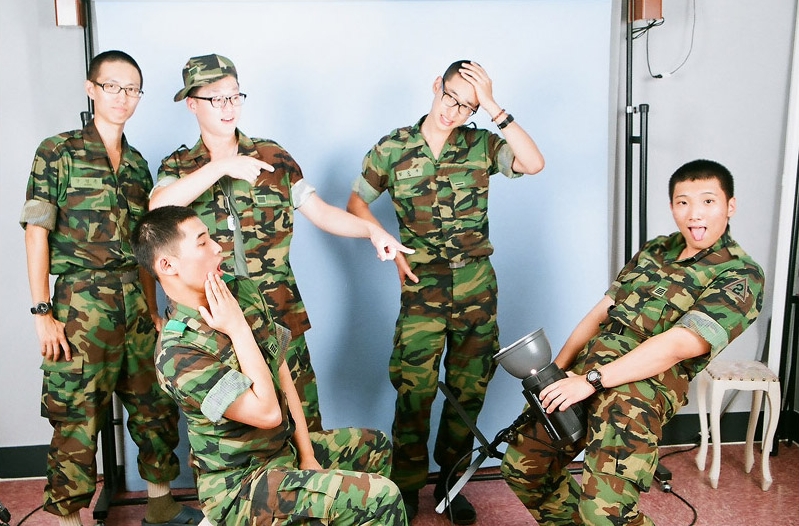
That is not to say that Koreans are only ever interested in issues that directly concern them of course, or that there aren’t parallels in other countries. But there are still yet more factors working against Korean men being interested in gender issues. Most notably the profoundly patriarchal ideology of Neo-Confucianism that is all-pervasive here,² buttressed by the the socialization experience undergone during their mandatory military service.

(Source: unknown)

Admittedly these are generalizations, and to an extent they become self-fulfilling: as I’ve gotten older, I find it more and more difficult to find the effort to befriend Korean men, so different do I expect our work-family priorities and opinions on gender issues to be. This inhibits me from raising such issues in free-talking sessions with advanced students also, although in that case it’s more because I respect that their purpose in attending my classes is not for me to lecture to or argue with them.

But surely there must be some feminist Korean men out there? If you are one, or know of one, then by all means let me know! But unfortunately the differences are real, and a good illustration of the difficulties in finding common ground on gender and sexuality issues are our opinions on — you guessed it — teenage girl groups like Girls’ Generation (소녀시대) and the Wondergirls (원더걸스).

Why the focus on them specifically? It’s a reasonable question, as they’re not the first young girls groups in Korea. What distinguishes them though, is that they are the first groups explicitly created to appeal to men 20 years their senior, and as such they are very much at the forefront of the increasing sexualization of young girls in the Korean media in recent years, setting the tone for the wave of 15, 16 and 17 year-olds following them.

Where I and most 30 and 40-something Korean men — ajosshis — differ on them is that I don’t buy into the collective narrative that we all like these girl groups because we have a brotherly, paternal, or avuncular affection for their members. Instead, while I can’t imagine having any kind of sexual or romantic relationship with them in reality, I’d be lying if I said I didn’t want to bang them whenever I see them on stage…and so would those ajosshis. Try to get one to admit that though, even one you know well and in a bar just with other men like themselves, and you’ll soon realize that not for nothing do I use the term “panic” in the title of this post.

(Source)

I also use “interface,” because acknowledging things like why 15 year-old f(x) band member Sulli’s (최설리) shorts are so high above, for instance, or why she is pulling her dress up in the other pictures in that photoshoot, are very literally where commercialized teenage sexuality and conservative Korean social mores meet. And I seriously doubt that pressing issues of teenage prostitution and abysmal sex education can even begin to be rectified while the collective Korean establishment — read: ajosshis — can’t admit to something so blatantly obvious.

But this is on old, tired theme for regular readers, and not what this post is about. Rather, I’m belatedly concerned with the question of why it is the case.

One possible reason is Occidentalism, for as blogger Michael Hurt argues, this platonic rationalization:

…parallels the notion in idea that in Korea, people are all good, clean Confucians who don’t do dirty things (but just save it for the love motels and leave that “skeleton bone” there – hehe, yes, I meant for a double entendre to be read there!), while Americans apparently hump everybody, according to everybody not American.

And recall that Occidentalism doesn’t actually need a physical Occidental in the room in order to be operating: indeed, it’s better that there isn’t, for greater distance gives greater leeway to imagine an “other” with which to advance a domestic agenda. And that proves to be the crucial point here, for as the following translation of a Korean music columnist’s thoughts reveals, all of this is by no means merely a face-saving device employed to obscure unsavory aspects of Korean society from inquisitive foreigners.

I warn you: the translation is rather long, a little melodramatic in places (less so in the original Korean, my wife assures me), and doesn’t actually offer an answer as to why. But still, I’m glad to have made a start by removing the “wild card” of the foreign observer from the equation:

(Zhang Wei, 2006?)

“‘섹 시한소녀시대 좋아하는 죄 인가요?” (or 대한민국평균아저씨소길동 고백)

Is it a Sin to Like Girls’ Generation Because They’re Sexy? (or The Confession of an Average Korean Man)

Kim Bong-hyeon, 4th February 2010

이제 고등학교에 입학하는 조카가 있다. 조카는 ‘소녀시대’의 팬이다. 당연히 이번 달 단독 콘서트 예매도 이미 끝냈다. 조카는 특히 서현을 좋아한다. 한정판 소녀시대 카드 중에서 다른 멤버들 것은 줘도 서현의 것은 끝내 안 준다. 소신이 뚜렷한 녀석이다. 크게 될 놈이다.

내가 글쟁이인 것을 아는 조카는 며칠 전 이번 새 앨범 음악이 어떠냐고 물어왔다. 해줄 말 중에는 좋은 것도, 나쁜 것도 있었다. 어차피 나쁜 말하면 귀담아 듣지 않을 테니 대충 좋은 말만 하고 넘어갔다. 실은 내가 오히려 묻고 싶은 게 하나 있었다. 하지만 묻지 않았다. 이것이었다.

“네가 진짜로 소녀시대를 좋아하는 이유가 뭐야?”

At the moment, I have a nephew entering high school. He’s a fan of Girls’ Generation. Of course, he has already reserved a ticket for their concert this month. His favorite member is Seo-hyeon, and while he will happily exchange picture cards of other members with his classmates and friends, he won’t trade any of her. Clearly he is a man of his own ideas, and is destined for great things!

Knowing that I was a writer, my nephew asked what I thought of their new album. It has good and bad points, but guessing that he wouldn’t have listened to the latter, I just talked about the good things. But actually there was something I wanted to ask him (although I didn’t), which was:

What is the real reason that you like Girls’ Generation?

(Source)

이걸 묻고 싶었던 이유는 간단하다. 나 자신에게 물어봤는데, 나에게서 나온 대답이 정답인 것 같아서 다른 남자(!)에게도 확인해보고 싶었기 때문이다. 한마디로, 나는 소녀시대가 ‘섹시’해서 좋다. 물론 기본적으로 귀여운 매력이 크긴 한데 섹시한 매력도 나에게는 그 정도 크기는 된다.

이게 무슨 뚱딴지같은 소리냐고? 노파심에 말하자면 나는 변태도 아니고 과대망상증 환자도 아니다. 그리고 이제는 자신 있게 말할 수 있다. 소녀시대는 분명히 섹시하다. 정확히 말하자면, ‘섹시하지 않은 척 하면서 섹시’하다.

내가 소녀시대에게서 섹시함을 느낀 건 ‘Gee’ 이후였던 것 같다. 그전까지 소녀시대는 나에게 그저 귀여운 여동생에 불과했다. 그러나 소녀시대가 Gee로 컴백해 딱 달라붙는 배꼽티와 스키니진을 입고나오자 ‘소녀’는 ‘그녀’가 되었다. ‘소원을 말해봐’는 ‘Gee’의 심화판이었다. 핫팬츠와 하이힐, 제복을 입고 그녀들이 내게 ‘소원을 말해보라고’ 외쳤다. 신곡 ‘Oh!’는 한술 더 떠 치어리더 콘셉트다. 더 무슨 말이 필요하나.

The reason I wanted to ask this was simple. I knew why I liked them – and all men like them – but I wanted to confirm that he would give the same answer: that it’s because they’re sexy. Of course, they do also have a cute charm about them, but they’re at least as sexy.

What foolish talk is this you ask? But no, asking this does not mean I am a pervert, nor that I’m a mental patient having excessive sexual fantasies about Girls’ Generation. Rather let me say this: of course, Girls’ Generation are sexy. Or to be more accurate, they are sexy while pretending not to be.

It was with their song Gee that Girls’ Generation really started appearing sexy to me; before that, they were merely like little sisters. But then they started wearing tight, clinging croptops and jeans, and the girls had changed to women. This was even more so with their song Tell Me Your Wish, combining hotpants, high-heels, and uniforms while crying “tell me your wish…”. And with their new song Oh!, they continue that theme with a cheerleader concept. What more is there to say? (Source, below).

여기서 중요한 건 섹시 그 자체가 아니다. 소녀시대보다 섹시한 가수들은 얼마든지 있다. 포인트는 소녀들이 ‘더없이 순수한 눈망울’을 하고선 남성의 성적 판타지를 자극하려는 의도가 분명한 옷과 액세서리, 그리고 노랫말과 춤동작을 선보인다는 점이다. 나는 고민에 빠진다. 그 순수한 눈망울들이 나를 죄책감의 구렁텅이로 몰아넣는다. 내가 저 천사 같은 아이들을 두고 대체 무슨 상상을 한 걸까. 나는 변태인가. 난 누군가 또 여긴 어딘가.

분명히 맞는 것 같은데 증명할 방법이 없다. 섹시함을 주 무기로 삼으면서 겉으로는 그렇지 않은 척한다. 그런데 더 가관(?)인 건 그렇지 않은 척하니까 대놓고 그러는 것보다 더 섹시하다는 거다. 낮에는 현모양처, 밤에는 요부를 바라는 어쩔 수 없는 남성의 본능이다. 가히 최악의 상황이다.

이런 상황에서 ‘기획사 너희들! 일단 남성의 성적 판타지를 정확히 자극한 것에는 10점 만점에 10점을 주겠어. 대단히 유효한 전략이었지. 하지만 어린 여자애들 데리고 더 이상 교묘하게 섹스를 팔지 마! 이제 더 이상 당하지 않아!’, 이렇게 외친다면 (비록 속은 다를지라도) ‘아니, 어떻게 이렇게 귀여운 여동생을 보고 그런 천박한 생각을…’, 하며 경멸어린 시선으로 변태 취급당할 가능성이 다분하다.

The important point here is not how sexy they are: there are many female singers sexier than Girls’ Generation (James: I think he means more “sexual” than sexy). Rather, that despite their innocent expressions, Girls’ Generation’s clothes, accessories and lyrics are all designed to provoke men into having sexual fantasies about them. But this leaves me feeling a little perturbed and guilty: how can I think like that when I see those angelic faces? Am I a pervert? Who am I…where am I?

This is all true, but it is impossible to prove. While deliberately being sexy, Girls’ Generation pretend that they aren’t. Which proves to be even sexier than it they just admitted it, for every man’s instinct is to have a woman who is a wise mother and good, virtuous wife by day, but a shameless hussy at night.

This is a very bad situation.

About this, I say “To the people that work at the company! First, I give you 10 out of 10 points for knowing what stimulates men’s sexual fantasies so well. But please stop using these young girls to sell sex so skillfully! I won’t put up with it anymore!”. And I do so even though many people may scorn me and label me as a pervert, asking how I can think such things of such cute, innocent girls.

과연 나만 이런 생각을 하는 걸까? 나만 섹시함을 섹시함이라 말하지 못하는 ‘소길동’의 덫에 걸린 걸까? 아니라고 본다. 모르긴 몰라도 적지 않은 대한민국 성인 남성이 나와 비슷한 고민을 하지 않으려나?

여기서 두 가지 고민이 발생한다. 그리고 그 전에 하나 전제되어야할 것이 있다. 바로 ‘소녀시대의 기획사는 어린 소녀들을 통해 남성의 성적 판타지를 자극해 교묘히 섹스를 판매한다’는 합의다. 물론 이 같은 판단에 소녀시대의 팬이나 어린 학생들, 그리고 여성들은 동의하지 않을 수도 있다.

이유는 여러 가지다. 우선 소녀시대의 팬들에게 이 같은 지적은 소녀들에 대한 모욕일 수 있고, 어린 학생들이나 여성들의 경우에는 진심으로 이러한 부분을 체감하지 못했을 수 있다. 그러나 이것은 엄연히 현존하는 사실이다. 양해를 구한다. 그렇게 사실로 인정하고 넘어가도록 하자.

Well, am I the only person that thinks like that?Am I the only guy to have fallen into the trap of not recognizing sexiness when I see it? I don’t think so. In fact I think that all Korean adults suffer the same.

Based on the premise that Girls’ Generation’s company is skillfully encouraging men to have sexual fantasies about the group and basically selling sex then all this raises two problematic issues to worry about. But I don’t expect many fans, young students and women to agree with me, for many reasons: first, because to Girls’ Generations’ fans, this sort of opinion is considered insulting to the group; and in the case of young students and women, they can’t really understand these physical feelings of men. But while I seek their forgiveness, the facts remain. Let’s continue on that premise (source, left).

첫 번째 고민은, ‘욕망하는 것은 과연 나쁜가’이다. 더 정확히 말하면 ‘의도된 자극에 예상된 욕망으로 반응하는 것은 나쁜가’가 되겠다. 말이야 바른 말이지 은근슬쩍 성적 판타지를 자극해 오는데 모른 척하며 억지로 속으로 눌러야 하나? 오히려 그게 솔직하지 못하고 자신을 속이는 것 아닌가? 남에게 피해를 주지 않는 솔직함은 미덕이라고 배우지 않았나. 굳이 말을 하자면 자극받는 쪽보다 자극하는 쪽이 나쁘지 않느냐는 말이다. 하아, 나는 왜 불필요한 죄책감에 사로잡혀 있었을까. 문제는 개인이 아니라 구조이고 시스템인 것을.

두 번째 고민은, ‘어린 소녀들을 통해 섹스를 파는 행위는 과연 나쁜가’이다(‘미성년자’라는 법적 개념으로도 판단할 수 있겠지만 여기서 논하려는 건 그러한 차원은 아니다). 어떻게 보면 누이 좋고 매부 좋은 거래가 아닌가. 기획사는 돈을 벌고, 소녀들은 스타가 되고, 대중은 욕망을 충족한다. 소녀들이 특별히 공공질서를 저해하는 음란 행위를 하는 것도 아니고, 대중이 소녀들에게 위해를 가하거나 범죄를 저지르는 것도 아니다. 상부상조하는 좋은 거래다.

The first thing to worry about is the question of if desire is a bad thing. Or to be more precise, is getting sexually stimulated bad when that is the deliberate and expected reaction? Does the fact that it is done indirectly and stealthily mean that we have to pretend that we don’t feel aroused? Isn’t that being dishonest and deceiving yourself? We all know that as long as it doesn’t cause harm to others, honesty is a virtue. And surely it is worse to so insidiously arouse men than to feel aroused. Why on Earth was I feeling guilty about this? This is not a problem with myself, but more a systematic thing.

The second worry is that the act of using young girls to sell sex is bad (I don’t want to discuss the legality of using minors for this though). But if you look at it in a different way, it is can actually be a good thing. The company makes money, the girls become stars, and men’s sexual desire is satisfied. Nor are the girls committing indecent acts, or the public harming ordinary girls in any way or commit crimes against them. So in a sense, everybody helps each other.

그러나 이렇게 간단하게 정리하고 넘어갈 문제가 아니라는 게 바로 문제다. 기본적으로 나는 욕망하는 주체다. 그리고 욕망하는 나 자체는 건강하다. 그러나 내 욕망을 충족시켜주는 것들이 모두 옳은 건 아니다. 다시 말해 나는 내 욕망의 정곡을 찔러주는 소녀시대의 무대를 보면서 기획사의 의도대로 욕망을 느낀다.

하지만 그 반대편엔 욕망의 크기만큼이나 커다란 이성 역시 자리 잡고 있다. 나는 소녀시대가 내 성적 판타지를 충족시켜준다는 점을 인정하면서도 동시에 그들 기획사의 전략이 야기할 부정적인 단면들을 고민한다. 즉 나는 끊임없이 욕망하면서 동시에 그 욕망을 충족시켜주는 것의 올바름에 대해 끊임없이 의심한다.

그렇게 의심해본 결과, ‘섹시하지 않은 척 하면서 섹시한’ 소녀시대는 몇 가지 문제점을 내포하고 있다. 먼저, 이것은 기획사의 입장에서는 분명 대단히 효과적인 돈벌이 전략이지만 사회적으로는 성의 이중성을 더욱 공고히 할 뿐이다. 성적 판타지를 자극하도록 설계된 소녀들에게서 당연하게(?) 예정된 욕망을 느끼더라도 남성들은 그것을 제대로 표출할 수 없다. 욕망 표출의 해방감 대신 그들에게 부여되는 것은 일종의 죄책감이다. 욕망은 점점 안으로 파고 들어가고 겉과 속은 달라진다. 그렇게 섹시한 것을 섹시하다고 말하지 못하는 소길동이 되어간다.

Unfortunately, the problem isn’t as simple and easily resolved as that. Basically, because I have sexual desire. And that is healthy and good, not a sin. But not everything that arouses me is correct and proper (James: should be acted on?), and one of those is watching Girls’ Generation dancing on a stage.

On the other hand, while I do have sexual desire, I have just as much logic and rationality to me. So although I admit to at the fact that Girls’ Generation arouses me, at the same time I worry that I am just being manipulated by their company. Or in other words, while I am unceasingly aroused by them at the same time I think seriously about if both that and what the company is doing is correct and appropriate.

As a result, I realize there are many problems to Girls’ Generation being sexy while pretending not to. First, while it is undoubtedly a very effective strategy for the company to make money, to society it reaffirms that there is a public and private face to put on sex. For while the group is designed to stimulate men’s sexual fantasies, they can not admit to this. Rather than expressions of sexual liberation, they must instead have guilt about how differently they feel inside and what they must actually say. This is why you have men like me saying that sexiness is something else entirely.

(Source: unknown)

또 하나. 다름 아닌 소녀들 걱정이다. 윤아 걱정, 유리 걱정, 무엇보다 우리 조카를 위해 서현 걱정이다. 어쩌면 이게 제일 중요한 문제일지도 모른다. 나는 소녀시대의 무대를 볼 때마다 매번 이런 생각이 든다. 쟤네들은 자기가 어떻게 소비되는지 과연 알고 있을까? 남성들의 시선과 속마음에 대해서는 얼마나 알까? 만약 알고 있다면 그게 쟤네들이 원하는 걸까? 혹시 기획사의 의도와 속내가 충돌해 괴롭지는 않을까?

이게 무슨 오지랖이냐고 웃을지도 모르겠다. 하지만 ‘소녀들도 이제 엄연한 법적 성인이니까 자기 일은 자기가 알아서 하겠지’라고 안일하게 생각하기에는 아직도 소녀들은 많이 어릴뿐더러 소녀들 개개인의 힘에 비해 시스템의 권력이 너무 크고 거대하다. 또한 ‘자본주의 사회에서 소녀시대 역시 하나의 상품이며 상품이 된 것 역시 소녀들의 선택’이라고 치부하기에는 머릿속에서 ‘인간의 존엄성’이라는 단어가 자꾸만 아른거린다.

서현. 가장 순수할 것 같고 실제로도 가장 어린 서현. 지금, 상처받지 않고 있을까? 그리고 앞으로도 상처받지 않을 수 있을까?

글을 마무리하면서 문득 지금의 내 메신저 대화명을 떠올렸다. ‘소시 앨범 득템! 화보 쩐다.’ 화보가 쩌는 건 사실이지만 아무래도 당장 다른 대화명으로 바꾸어야겠다. 갑자기 이 저열한 욕망의 바다에 물 한 방울 보태기도 싫어졌으니까.

(Source)

One more thing: I worry about the girls of Girls’ Generation themselves. I worry about Yuna, about Yuri, and most of all about my nephew’s favorite Seo-hyeon. This may be the most important issue of all, and whenever I see them on stage I think it: do they know how they are being consumed? Do they know how they are viewed and felt by men? If they do know, is that what they really want? By any chance, do they suffer from their own wishes and their company’s clashing?

People will ask why I worry about them. After all, they are legal adults. Despite that however, the system they operate in is far more powerful. And against the argument that they are in the music industry – just the product of a capitalist society – and that it’s their choice, I still frequently pause to think if it’s not an affront to human dignity.

Seo-hyeon: she looks the most innocent, and in reality she is the youngest too. To her I say are you getting hurt at all now? Or is there any way you can avoid it in the future?

As I was writing this article, I added some words next to my name in my messenger program: “I’ve bought Girls’ Generation new album! Their pictures are fantastic!”. While that is true though, I have to change it. I suddenly really don’t want to add one drop to this ocean of base, vulgar sexual desire. (end)

(Source)

As always, apologies for any errors with the translation (there’s bound to be with something of this length), and I’d really appreciate it if you could let me know if you spot any. And what do you make of Kim Byeong-hyeon’s “confession”?

Or, hell, my own? Not that I think that mine is any great surprise to long term readers of course(!), and I don’t mean to imply that I’m embarrassed at only having Korean female friends now. Indeed, most of my Western male friends here also had equal numbers of male and female Korean friends in their first few years here, only to lose the former for much the same reasons I mentioned earlier; or at least, those that like myself came in their early to mid-20s,and have stayed for 5-10 years since. And they’re by no means gender studies geeks either, although I confess that we do still talk mostly about women when we meet! ;)

What is your own experience? How are things similar or different for Western women here also?

Notes:

1) Rereading this in November 2013, nearly 4 years later, I cringe at the numerous generalizations I make based on only my own personal experience; I would be much more careful to avoid those and/or acknowledge my biases were I to write on the same subject today. On the other hand, unfortunately it’s also true that my personal experience remains largely the same.

2) I also try to avoid the “C word” these days. Although this is hardly the most egregious example, Confucianism is very overused as a catch-all, explain anything and everything device in English-language writing about Korea.

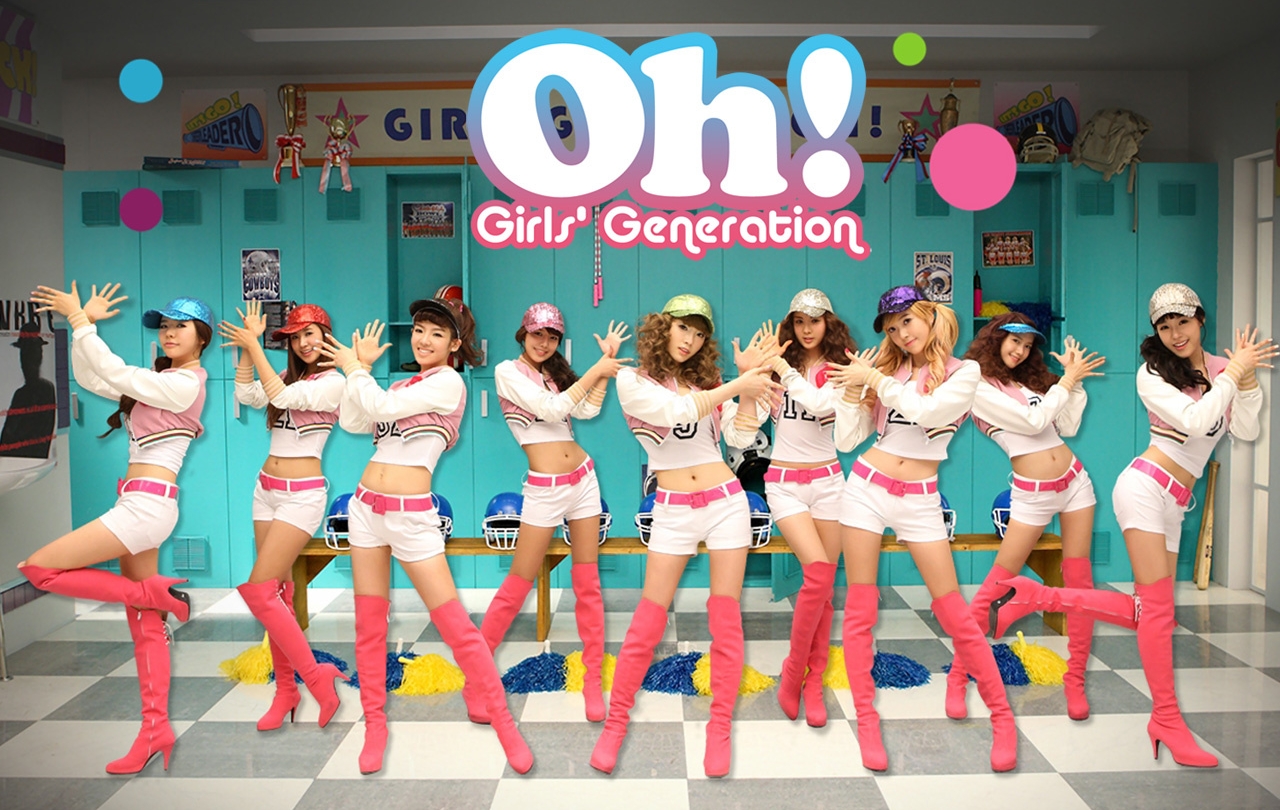
Oh? Oh…!

( Source )

Call me old-fashioned, but although music videos can have a huge effect on my enjoyment of songs, I still try to judge them on their own merits.

By that criteria, all of Girls’ Generation’s hits have fallen flat for me, no matter how photogenic the girls are. But then I found a remix of their latest hit Oh! by the Greek trance DJ “Areia”, and I immediately fell in love with it.

Like he says on his blog, he put a lot of work into it. And it shows.

True, it’s actually the only one of his K-pop remixes that I like, that of Abracadabra (아브라카다브라) by the Brown Eyed Girls being particularly disappointing. But I’ve only listened to a handful so far, and his abilities are definitely improving over time. To any other Korea-based trance fans out there, frequently lamenting at how something so popular in Japan could be so completely absent from the cultural radar here, I’m sure you’ll be just as happy as I was to have found him!

For the lyrics (and a translation) to the song, see Yeeun2Grace here, and if you’re interested and haven’t seen it already, then this video (via Extra! Korea) makes a pretty compelling case that the song has been plagiarized from U.S./Barbadian singer Rihanna’s Shut Up and Drive. If you’re disappointed in my not providing my usual critical analysis on this occasion though, then I apologize(!), and by all means read precisely that at Appears.

But if you’d still like to watch the original video, albeit now with the trance remix, then I do understand:

Click on the video itself to be taken to Ariea’s YouTube page, which has a playlist of his other K-pop remixes.

Update: There’s been a lot of speculation in the comments as to why the video’s concept is of cheerleaders hoping to get the attention of American footballers, simply bizarre considering that the sport has virtually no following here. So I posed the question to my two classes earlier today, and the combination of their explanations proves to be quite compelling.

First, my morning class mentioned the success of the movie Bring it On in 2000, particularly the song Hey Mickey from the soundtrack, and this struck a chord with me because men who would have been in their late-teens and early-twenties back then were precisely the demographic that SM Entertainment created Girls’ Generation for (indeed, Girls’ Generation has performed the song many times). While that may just be coincidence though, they also said that high school footballers dating cheerleaders have been a staple of American movies and dramas they’ve watched ever since, and they were at a loss for an equivalent in Korean pop culture.

My afternoon class disagreed that Bring It On was popular however, and this is borne out by the box office figures for that year. Instead, they pointed out that all Korean cheerleaders are adults, and so although the youngest members of the group are in fact turning 20 this year, to have presented them as Korean cheerleaders pining after Korean baseball or basketball players would have clashed with their image of being precocious teenagers. Recall that the song itself is about unrequited love for an older male too, which the exaggerated youth of the women singing it would help to emphasize.

In short, cheerleaders for high school American footballers were the only possibility because there are no teenage cheerleaders in Korea.

But my two classes’ explanations are not mutually exclusive of course, nor with some of the alternative explanations posted in the comments section here either. While I would like to corroborate them though, unfortunately analysis like that is severely lacking on the Korean internet, so that might have to wait until I investigate next month’s music magazines.

Meanwhile, I’m quite convinced personally, but what do you think? Please let me know, and perhaps I can get a dialogue going with my students!

Update 2: Despite 1 billion won (US$860,000) being spent on Girls’ Generations stage costumes last year, apparently there was little money available for making some props for this music video, so some store-bought ones with the Iowa Hawkeyes logo were used instead. You can just imagine the reaction of Hawkeyes fans

Share

The Dire Need for Sex Education in South Korea

(Source)

As you probably suspected, only a very small percentage of Korean teenagers are having sex. The average age that they started though, was as young as 14, and that doesn’t just affect them academically.

Or at least, that’s the take-away message of the news article below, which I was pleasantly surprised to see on the front page of Yahoo! Korea last week. Unfortunately it is rather sloppily written, raises more questions than answers, seems to ignore teenage prostitution and – in a typical irony – required age verification to search for it again the next day, but I’m cautiously optimistic that the information will lead to more calls for improved sex education at Korean schools. After all, it can hardly get any worse.

이른 성관계가 아이들에게 미치는 영향 – The Effects of Having Sex at an Early Age

“어린나이에 갖는 성관계는 아이들에게 어떤 영향을 끼칠까?”

얼마 전 청소년들이 성관계를 시작하는 평균 연령이 14.2세며 피임율은 38%에 불과하다는 조사결과가 발표되면서 우리나라 청소년들의 성 노출 연령이 점차 낮아지고 있음이 드러나면서 청소년의 성 문제가 다시 한 번 대두되고 있다.

대한산부인과학회지에 실린 ‘한국 청소년들을 대상으로 한 성행태 조사’에 따르면 2006년 9월 13~18세 중·고등학생 7만1404명 (남 3만7420명, 여 3만4200명) 을 조사한 결과 청소년의 성관계 시작 연령은 중학교 2학년인 14.2세(남 14.0세, 여 14.5세)였다고 밝혔다.

이들의 성관계 경험률은 5.1% (남 6.7%, 여 3.4%) 였으며 성경험자의 피임률은 38%에 불과했다. 또한 성관계 경험 여학생의 14%는 임신 경험이 있었으며 이 중 85%가 임신중절수술 경험을 했다.

청소년의 생식기는 생물학적으로 완전히 성숙된 단계가 아니기 때문에 바이러스가 침투하면 대항할 힘이 부족해 이른 성경험은 자칫 자궁과 생식기의 건강을 위협할 수 있고 여자의 경우 자궁경부암의 발병확률이 급증 할 수 있음을 전문가들은 충고했다.

“What are the effects of having sex at an early age?”

The results of a survey on adolescent sexuality released some time ago shows that the average age that adolescents are exposed to sex is gradually lowering over time. Of adolescents that have already had sex, the average age that they lost their virginity was 14.2, and only 38% of them used contraception. This is making teenage sexuality become a pressing social issue again.

According to the “Survey of Korean Adolescents’ Sexual Activity” published in The Korean Gynecological Journal, of the 71,404 13~18 year-old middle and high school students surveyed in September 2006 (37, 420 boys and 34,200 girls), the average age that they lost their virginity was 14.2, which is the second year of middle school (boys at 14.0, and girls at 14.5).

Of those students surveyed, 5.1% had sexual experience (boys: 6.7%, girls 3.4%), but only 38% of them had used contraception. Also, 14.1% of those girls had gotten pregnant, 85% of whom had an abortion.

Having sex before the genitals are fully developed means that the body’s ability to fight off viruses and repair damage to them is insufficient, and in particular girls have a much greater chance of developing cervical cancer.

이른 나이에 성관계 갖은 아이들, 대학 못간다 – Adolescents That Have Sex Don’t Want to go to University

완벽하게 몸이 성장하지 못한 상태에서 갖는 성관계는 신체적인 악영향을 끼치기도 하지만 더 심각한 것은 심리적인 부작용이다.

영국 글래스고대학이 지난 6년 동안 5000명의 학생들을 대상으로 성관계와 학업성취도의 상관관계를 조사한 결과 남녀 청소년 모두 이른 성경험이 자신을 어른처럼 느끼게 만들어 학업 등에 소홀해지는 경향을 보였다는 연구결과를 사춘기저널(Journal of Adolescence)에 발표했다.

연구는 14~18세 사이의 청소년들에게 성관계를 가진 그룹과 그렇지 않은 그룹을 나누어 계속 학교를 다닐 의향과 장래희망의 변화여부 등에 대해 묻는 방식으로 진행됐다.

연구결과 16세 이전에 이미 섹스를 경험한 청소년 중 39%가 대학 진학 등 학업을 더 연장하고 싶은 생각이 없다고 대답했으며 성경험이 없는 학생들은 24%만이 학업연장에 대한 뜻이 없는 것으로 나타났다.

앨리슨 파크스는 “청소년기에 성경험을 가지게 되면 더욱 이성과 함께 있는 시간을 원하는 것으로 나타났다”며 “일찍 성을 경험한 남녀 모두 마치 자신이 선구자인 것처럼 행동하는 경향을 보였다”고 말했다.

(Source)

While having sex before one’s body is fully developed is bad physically, the mental side effects are far greater.

A study of the sexual experiences and academic accomplishments of 5000 adolescent boys and girls conducted for the last 6 years by the University of Glasgow, published in the Journal of Adolescence, shows a negative relationship between the two. In short, adolescents with sexual experience tended to feel that they were already adults, and so paid less attention to their studies.

The study’s method involved dividing 14~18 year-olds into two groups: those with sexual experiences and those without, and asking each about their plans for the future. Of the 16 year-olds that had already had sex, 39% said that they had had enough of schooling and did not plan to go on to university, but only 24% of virgins felt the same way. According to Alison Parkson, this was partially because “those adolescents that first had sex at an early age wanted to spend more and more time with members of the opposite sex,” and that they “felt that they were pioneers.”

성관계 그 후, 밀려오는 불안감 – Anxiety and Depression After Having Sex

충동 에 이끌려 성관계를 맺은 후 정신적으로 미성숙한 아이들에게는 그제 서야 불안감이 물밀 듯이 밀려온다.

우리나라에서 청소년 시절에 성관계는 물론 이성교제 역시 불건전하고 몰래해야한다는 인식이 사회전반에 깔려 있다.

즉 아이들에게 이성과의 관계는 일종의 ‘죄’라는 이미지가 강하기 때문에 이성교제나 성관계가 이뤄지는 것은 단연 어른들의 눈을 피한 탈선의 상황에서가 주를 이루게 된다.

게다가 신체적으로는 임신이 충분히 가능한 나이고 또 그것을 본인들도 인지하고 있기 때문에 심한 불안감을 겪게 되는 것이다.

상담21성건강연구소 유외숙 박사는 “아이들은 무방비하게 인터넷에 노출되다보니 실제적인 것이 어떤 느낌을 줄까 하는 호기심과 욕구에 사로잡히게 된다”며 “그러나 섹스를 하고 돌아서자 마자 ‘임신했을까, 만족을 못시켰을까, 부모님에게 알려질까’ 등의 불안감이 찾아오기 때문에 자기평가가 상당히 낮아지게 된다”고 설명했다.

유 박사는 이어 “게다가 이런 고민들을 해결 할 곳이 필요한데 실제 청소년들이 문제를 들고 찾아갈 만한 곳이 없어 혼자 앓게 되는 경우가 많다”며 “이런 불안감이 심해지면 대인기피증이 생기거나 정말 성관계가 필요한 시기가 됐을 때 제대로 된 성생활을 못하게 되는 경우도 있다”고 덧붙였다.

(Source)

Adolescents that act on their urges to have sex before they are mentally ready for it tend to have feelings of anxiety, uneasiness and depression afterward.

In Korean society, there is almost a universal taboo against adolescents dating, meaning that they have to do it secretly. Indeed, having sexual relationships or even dating the opposite sex is virtually considered a crime by adolescents here, and hence that that which does occur is in places far from the eyes of adults.

In addition, as the girls are aware that there is a chance that they might get pregnant, then they in particular suffer a great deal of anxiety and depression.

According to Dr. Yu Wae-sook at Consult 21 Sexual Health Research Institute, “adolescents are defenseless against what they see on the internet, and naturally get caught up in and want to physically experience those things for themselves,” but also that once they do, “they worry about such things as if they are pregnant, if they were good enough and if their parents will somehow find out. This causes them a great deal of anxiety, and lowers their self-worth and confidence.”

Moreover, “adolescents don’t really have anywhere or anyone to go to for answers, and so have to continue worrying about them alone” and “that these worries can become so serious that they become reclusive. This can have grave consequences for their future sex lives once they reach an age when they would normally be physically and emotionally mature enough to start one.” (end)

(Source: Unknown)

As always, please feel free to correct any mistakes above, which is by no means a literal translation.

For more information about the issues raised, see here for a related survey conducted in 2003 and my analysis, and Matt at Gusts of Popular Feeling here for his on similar surveys conducted in late 2008; you may also find this recent post of mine on the Korean age of consent interesting. Meanwhile, I will try to find out more information about the survey itself in the next few days, particularly the methodology used!

What IS the Age of Consent in South Korea?

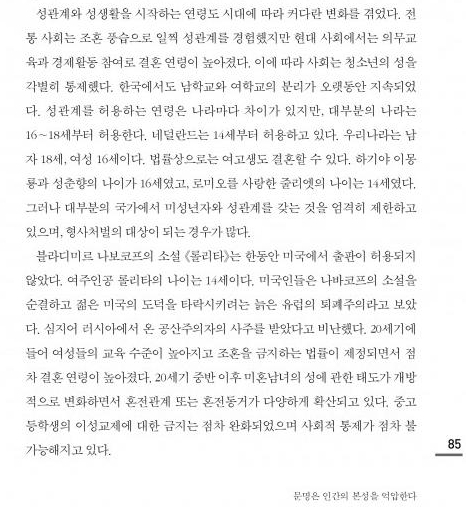
Considering the abysmal state of sex education in Korea, part and parcel of a society reluctant to admit that teenagers have sex or even sexuality, then the notion that it’s only thirteen sounds simply absurd.

Despite myself though, that’s precisely what I’m going to argue.

Not because that’s the consensus of English-language materials on the subject however. The vast majority never provide a source for their information on South Korea specifically (see here, here, here and here for some examples), and following the trail of those of that do almost invariably leads to a chart of the age of consent in various countries on Wikipedia, itself unsourced (but which has recently been edited as I’ll explain). Indeed, highlighting how problematic that makes them was my original intention in writing this post.

But first, the catalyst was this post at Omona They Didn’t!, a popular K-pop site. There, commenters discussed singer G-Dragon’s (지드래곤) concert performance below that featured simulated sex scenes, and which he is now being investigated for (but not yet prosecuted) because it had been rated suitable only for ages twelve and above (see here, here, here, here and here for the latest developments). Arguably somewhat arbitrary and hypocritical considering similar performances by other singers that haven’t been, the outrage is even stranger if the age of consent is thirteen, as pointed out there by a commenter with the handle “hallerness.”

(Update: See here for a detailed explanation of what exactly happened at the concert and the legal response, including an interview with the performer on the bed)

Queried on that low age by other commenters though, this blog got mentioned, and she emailed me asking for clarification. With apologies for the delay, this post is my response.

The first step in preparing it was simply to ask my students. But although their confusion was not entirely unexpected (whereas I’ve been writing about Korean sexuality for a long time now!), it still took a great deal of time and effort to explain what the concept was.

Not to imply that they’re stupid and/or ignorant of course, but that Korean adults needed an explanation at all is surely indicative of how alien the notion of teenage sexuality is here (or at least public discussion of it).

Once that was out of the way, then all said it was 18, like I also thought: after all, almost everything else sex-related is, including buying contraception, having access to or appearing in pornographic materials, and working in de facto sex-related industries. But they had no idea of what the Korean term was, hesitant suggestions including 법정나이 (literally “correct age”) and 법적나이제한 (correct age limit).

Turning to an online dictionary next then, I found 성관계 승낙 연령 (sexual relationship consent age) instead, with the explanation 합법적으로 성관계를 승낙할 수 있는 연령 (legally sexual relationship can consent to age). Paste it into Korean search engines, and you do get some results, although most appear to be about Canada (see a little later for why). Rather than wading through those though, I had no hesitation in turning to Matt at Gusts of Popular Feeling instead, who has written a great deal about teenage prostitution. And fortunately he does have a post in which he discusses this issue.

To be specific, it is about controversial rulings in two teenage prostitution cases in July 2001 and July 2009 (known in Korean as wonjo gyoje; 원조 교제). And while technically The Korea Times articles he quotes also do not mention any specific law, the age of consent being thirteen proved crucial in both cases, and I recommend reading his post in full to understand why.

From the 2001 article (link broken):

Under related laws, those who have sex with minors younger than 13 should be punished, regardless of whether the minors agreed or whether there was a financial deal. However, having sex with minors aged 13 or older, which does not involve financial deals, is not punishable if the minor consents.

And from the 2009 one:

In Korea, a person is not guilty of any crime for having sex with a minor aged 13 and over unless it is paid for or forced. Sex with those under the age of 13 is punishable even if it is carried out under mutual consent.

And Matt’s reaction was exactly the same as mine would have been. In particular:

….I found the age of consent shocking because I’d heard for so long that it was 19. Keep in mind that in the 1990s I think Canada’s age of consent went from 16 to 14 (or 12, if the other person was 14) which I also thought was quite low. It recently was put back up to 16 due to people considered predators on MySpace, etc. finding young girls to sleep with [James: which is what most Korean articles on 성관계 승낙 연령 were about]. Considering Korea’s internet culture and the fact so much wonjo gyoje is organized online, you’d think more would have been done by now….

…I’m surprised that the age of consent hasn’t been raised here, considering, as I mentioned, how much online activity is to be found with men looking to have sex with underaged girls, and how it’s routinely stated (even by the police on their website) that the age of consent is actually 19. Also, considering how in the late 1990s how youth sexuality and changing youth behavior (and rising crime, including sex crimes) was discussed as if teens were a virus infecting society, the low age of consent is perplexing – not looked at through a moral lens, but through the discourse in the media surrounding teens at the time (and to a lesser extent now).

(Source)

Six months earlier, he wrote the following on this post of mine about a 14 year-old Korean model that posed nude, and I’d be interested if the second case in 2009 changed his mind:

…“However, having sex with minors aged 13 or older, which does not involve financial deals, is not punishable if the minor consents.” That contradicts the 19 year old age of consent the police say they adhere to, but if I have to choose between the police and a 7 year-old KT article, I’ll go with the police.

And when I wrote that post, the Wikipedia entry on the age of consent in South Korea gave it as 13n, citing this chart as a source but which in turn implies that the entry for South Korea comes only from “verified information from our correspondents,” given that the other sources cited there have no information about South Korea. Very recently though, the Wikipedia entry has been edited to “The age of consent in South Korea is not currently known,” and if you go on to examine the discussion about that this is what you find:

I’d hoped that that link to the Seoul Metropolitan Police Agency would save me the trouble of following up Matt’s mentions of it myself, but unfortunately it doesn’t appear to be working, and besides which might be unreliable like “Truthfulchat” pointed out.

So, if Matt doesn’t read this post for himself first, then I’ll contact him for help with that source from the Korean police (I’ve given up trying to navigate their various sites), and besides which would be very grateful for his input. As I type this however, I’ve had my long-suffering wife looking on her computer for more Korean sources (her Korean is rather better than mine!), and yet after twenty minutes she has only been able to find this page from a 2007 book entitled Gyoyanginul Ouihan Saegyaesa (교양인을 위한 세계사), or World History for Civilized People by Kim Yun-tae:

With apologies for the small size, that states that in Korea the age of consent is 18 for men, and 16 for women!

In conclusion then, to put it mildly the jury is still out on what the age of consent in Korea is, and so this seems an opportune moment to throw open the floor to suggestions on how to continue from readers, which would be very much appreciated (not least by my wife!).

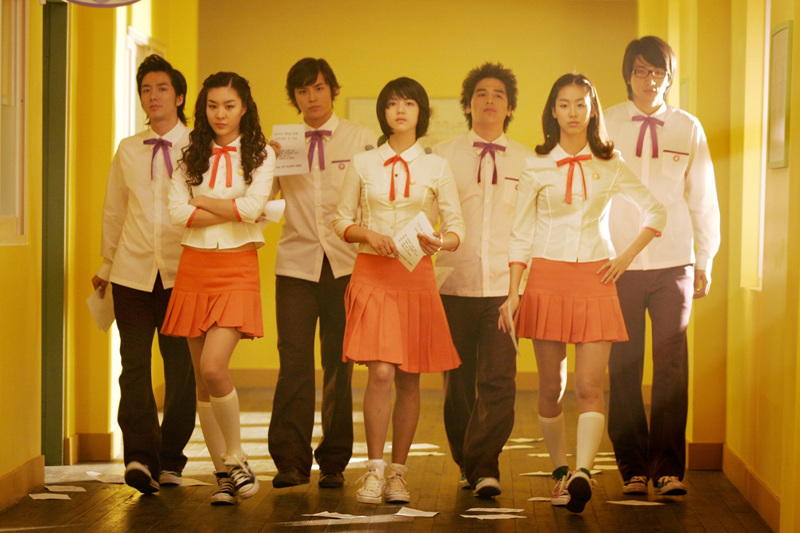
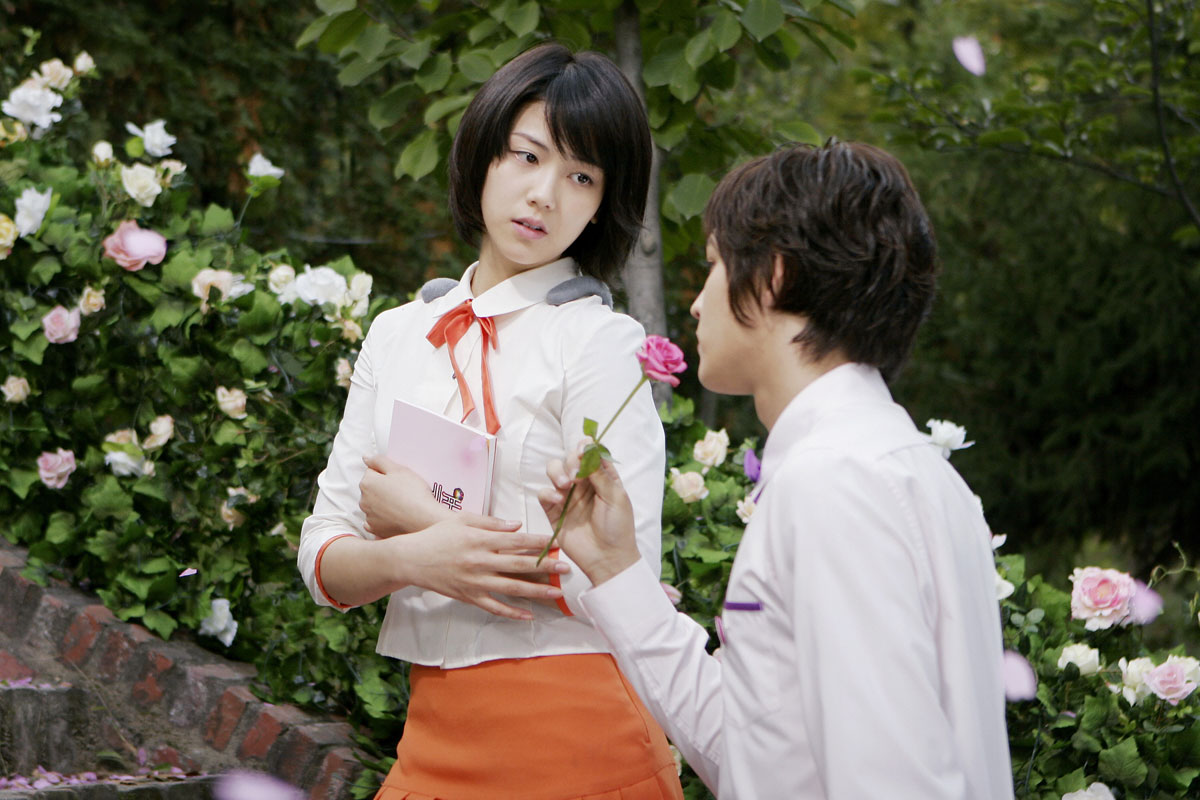
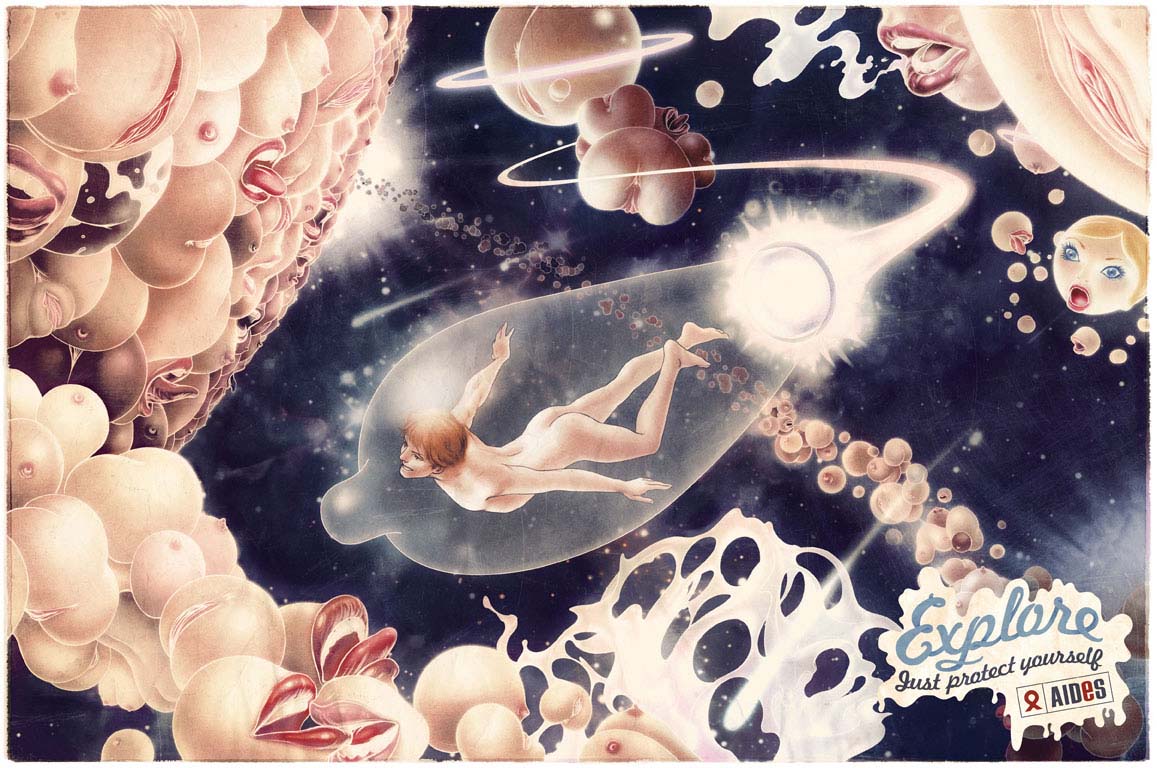
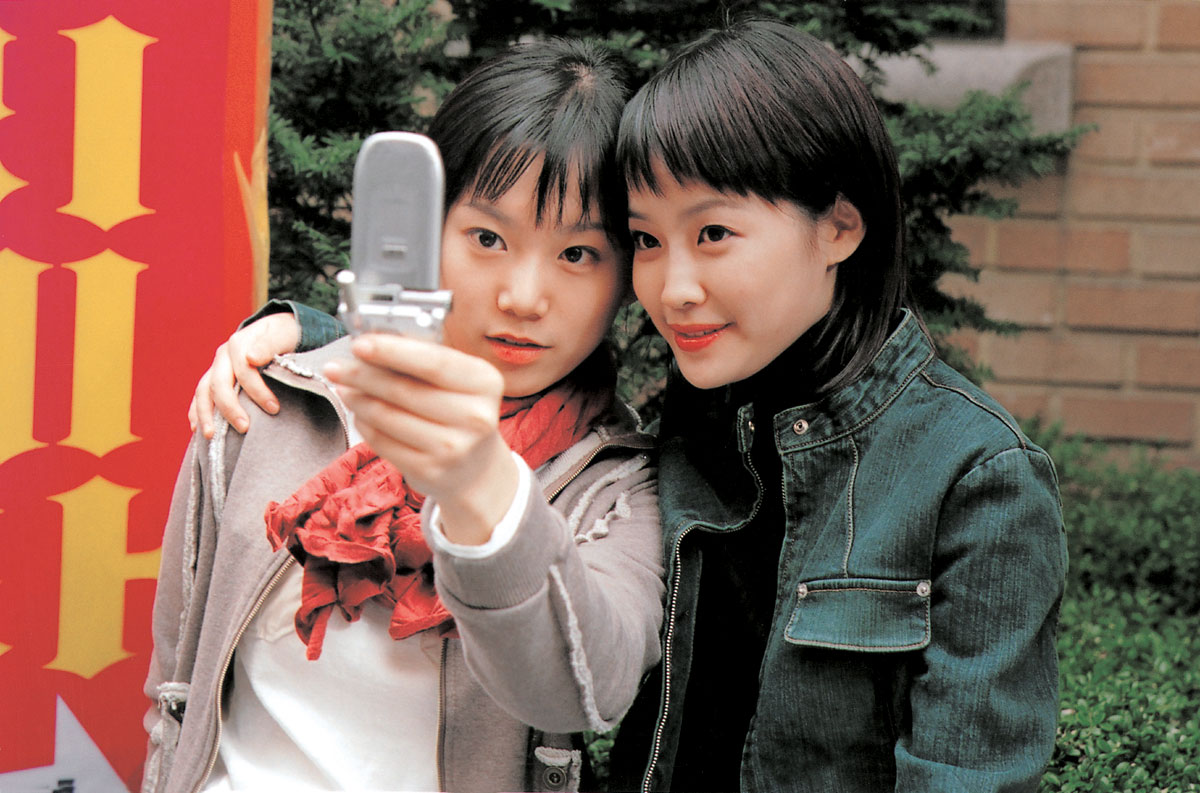
Before I do though, if you’re curious then the first two images above (source), then they are from the 2006 movie Dasepo Naughty Girls (다세포 소녀), which appears to be an excellent satire on Korean sexual mores; see here for an extensive review by – who else? – Matt. And finally, although they’re not related at all sorry, the more I wrote this post the more the following safe sex posters (NSFW) by James Jean kept coming to mind:

(Source: I Believe in ADV)

See BoingBoing for an extensive comments thread about them.

(NSFW) Korean Movie Review #2: Samaritan Girl/Samaria (2004)

(Source: Naver영화)

To my surprise, there can actually be some advantages to being a fledgling movie reviewer.

For instance, lacking the knowledge of experts, I can drop all pretense of objectivity. And indeed, my long-held preconceptions of this movie did have a profound effect on my ultimate enjoyment of it.

Also, only having seen one other of director Kim Ki-duk’s (김기덕) earlier works in passing – The Isle (2000) –  then I am in no position to analyze Samaritan Girl/Samaria (사마라아) in the context of his movies as a whole.

Well of course, I hear you say. But this is more important than it may at first appear.

This is because of the plethora of reviews already available, I have noticed that positive ones tend to include extensive references to Kim’s Spring, Summer, Fall, Winter…and Spring (2003) in particular, while negative ones are more likely to analyze the movie in isolation. Not exclusively of course, but the division is noticeable. Rather than implying a potential forest for the trees phenomenon here though, I mention it because I have also heard Kim’s movies are very hit and miss, and hence that your opinion of them can be heavily affected by which film you watch first.

And therein lies the problem, for much about Samartian Girl is vague, confused and/or simply incomprehensible, and not in the positive sense that this encourages you to engage more with the movie in order to fill in the blanks. And while I strongly suspect that watching his earlier movies would clarify a great deal, by itself this movie would not encourage most viewers to do so.

samaria-korean-teenage-prostitution(Source: Naver영화)

In fairness though, I did set myself up for being disappointed.

I first heard of it two years ago, via a newspaper article I translated about how 3 in 10 internet dating sites were being used to arrange teenage prostitution. While I haven’t really pursued the subject since, deferring to the excellent work done by Matt at Gusts of Popular Feeling on it instead, the post was picked up by Shinsano at the East Windup Chronicle (as well as by Matt himself), and the back and forth I had with him there gave me the impression that Kim was a much-needed Korean social critic, welcome overseas but ostracized at home because of his constant airing of Korea’s dirty laundry.

That image of him is by no means incorrect. But despite not having seen it, somehow it also inflated the quality of the movie in my mind over the next two years, especially as the blog came to acquire its present focus. Suffice to say that by the time I finally began to watch it last week, I fully expected a fierce and piercing critique of the teenage prostitution industry here.

But just the marketing of the movie itself should have given me pause.

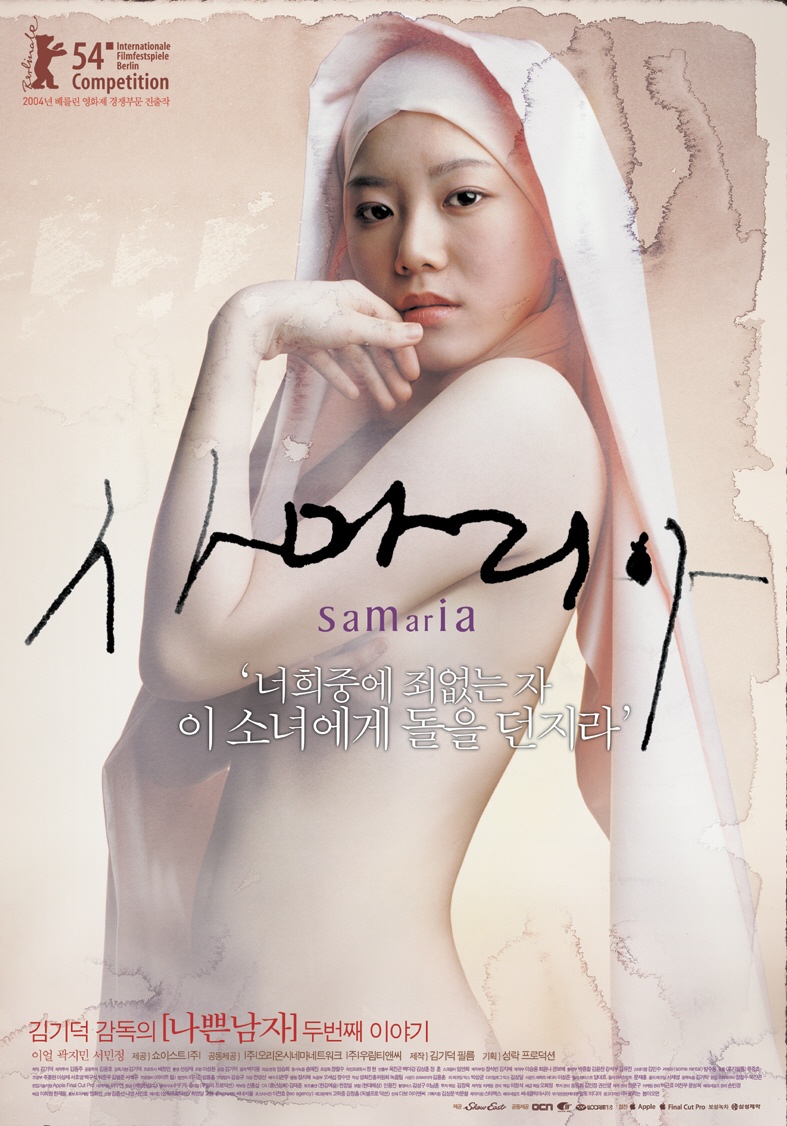
Consider the two promotional posters above from 2004, featuring Kwak Ji-min (곽지민) and Han Yeo-reum (한려름) respectively. Never mind that Kwak is topless, and as a minor when the picture was taken, meant that it was technically illegal; as this case with a 14 year-old in January and this case with an 18 year-old earlier this month demonstrate, the Korean authorities still seem strangely reluctant to prosecute this sort of thing. Rather, the point is that far from discouraging one from having sex with minors, both posters seem to be positively encouraging it.

True, as author of this blog, I can hardly fault someone for using such images for the sake of popularity, even if they send mixed messages. Also, at risk of sounding hypocritical, I’m not going to feign outrage at topless photos of someone just a few months shy of the legal age to pose for them either. But I do have my limits:

samaritan-girl-bathhouse(Source: Celebrity Movie Archive)

This is the second of two bathhouse scenes in the movie, at just 6 minutes and 16 minutes into it respectively. Neither is entirely pointless: the implied lesbian relationship is central to understanding why Kwak Ji-min, pimping for Han Yeo-reum as they save money for permanently escaping to Europe, clearly becomes distressed when Han shows signs of enjoying her work, in particular becoming attached to one of her clients, a music composer. Derek Elly at Variety also notes that:

Wisely, Kim has opted not to show the sex scenes [with clients], and there’s tenderness (with gently lyrical music) in those sequences sketching the girls’ friendship — playing in a park together, or bonding in a Korean-style bathhouse.

Apparently so much tenderness though, that it put blinders on this unnamed reviewer at Asian Film Reviews:

There is minimal nudity in this movie, which is surprising considering the subject matter. The lack of nudity preserves the girls’ innocence and reinforces the integrity of the movie. If Samaritan Girl featured explicit sex, it would seem trashy and the message would be lost in all of the excess. Instead, this movie is a tender, touching story about shattered dreams and lost innocence.

TR at TimeOut London puts it rather differently however:

The actual paedophile sex is kept offscreen, but Kim’s enraptured gaze at the two naked girls washing each other in a public bath is as prurient as they come.

And while both scenes were certainly compelling viewing at the time, I was left wondering if it was really necessary to see them naked to appreciate their bond?

(Source: Naver영화)

Probably not, and this adds a certain poignancy to what Adam Hartzel writes about Ki Ki-duk at KoreanFilm.org:

In tag-lining his Silver Berlin Bear award-winning film Samaritan Girl with the biblical reference, “He who is without sin, throw the first stone,” director Kim Ki-duk has allowed himself cover from critics. Such a tagline deflects any negative criticism before the critic has even criticized. It argues that only the critic who is without criticism themselves should throw damning words at Kim’s film, otherwise, the critic should remain silent. And who among us is without “sin”, hypocrites that we all are? Such underscores the marketing acumen, if not directorial skill, of Kim, a man who has quickly risen, justified or not, to become one of the most recognizable Korean directors throughout the world…

In combination with the posters then, those scenes were arguably far more for commercial reasons rather than the artistic ones Kim Ki-duk is better known for. While that does not make Samaritan Girl a bad movie in itself though, it does point to an emphasis on style over substance that plagues the entire movie, and after just 6 minutes into it to boot.

To a certain extent, this criticism is just personal taste. Friends that recommended Peppermint Candy to me for instance, only to be dismayed by my scathing review of it later, have since pointed out my preference seems to be for movies where everything is explained to viewers. That’s a fair assessment, and indeed my incomprehension at Kwak’s bizarre decision to sleep with all of Han’s former clients after her death, returning their money as some form of atonement (hence the title), means that I would have been unlikely to have ever warmed to Samaritan Girl. And in hindsight, being aware of that element of the plot is what put me off from watching it for two years too.

But I can still acknowledge the benefits of such an approach, and indeed to have provided more detail would probably have detracted from the haunting, slight surreal tone of the film, with occasional combinations of long, drawn-out, but otherwise compelling scenes and stunning cinematography that reminded a newbie like me of, well, the Italian movie Il conformista (1970). There is also a lot of symbolism and references to Christianity, redemption, and – most notably in my book – there is the decision by Kwak and one client to have a liaison on the riverbank in front of the National Assembly Building. A metaphor for something deeper perhaps? A thinly-veiled political message?

(Source: Naver영화)

Alas, probably not. While it would be unfair of me to criticize Samaritan Girl for completely lacking the piercing critique of teenage prostitution I had projected onto it (albeit not unreasonably given Kim’s reputation),  I certainly didn’t expect the movie to almost glamorize it instead. But this is no exaggeration: with the exception of the composer Han became attached to, all of Kim’s clients treat her with (paternalistic) respect and kindness for instance (one can understand Han’s affection for them), most liasons take place in immaculate hotel rooms, and some immediately see the error of their ways after Kim surprises them by giving money back to them afterward.

There is no violence, no refusals to wear condoms, no STDs, no pregnancies and abortions, and apparently no impacts whatsoever on Kim herself, who someone manages to sleep with dozens of men in the afternoons despite being an otherwise ordinary middle-school student.

Indeed, the only unwelcome element in this fantasy is the police, first in the form of the officers raiding the hotel, forcing Han to jump to her death from a hotel window in order to escape, and later in Kim’s detective father Lee Eol (이얼), who discovers what she is doing but who chooses to confront Kim’s clients – in increasingly violent episodes – rather than confronting her.

Of course, Samaritan Girl does have some redeeming qualities. Kwak in particular seems to mature as an actor literally over the course of movie, and the tension between her and Lee – an excellent casting choice – that is the focus of the last third of the movie is both palpable and compelling. But both positive and negative reviews of the movie mention that Kim never quite manages a balance between surrealism and providing a convincing story, and even for those that don’t like to be spoon-fed all the details of a story like myself(!), there are simply too many gaps to make the necessary leaps of faith.

(Source: Naver영화)

Instead of Samaritan Girl then, I heartily recommend You Are My Sunshine (2005) for an examination of the unsavory reality of the Korean prostitution industry, albeit only in passing. But I would appreciate any other suggestions.

Next review: My Wife is a Gangster (조폭 마느라; 2001).

(For all my Korean Movie Reviews, see here)

Bandhobi: The Most Interesting Korean Movie You’ll See This Year

Bandhobi

Well, it certainly sounds like it will be, although I admit I have some reservations about Bandhobi‘s (반두비) “crude political satire,” and especially of its portrayal of an American English teacher as an “occasional rotten apple.” Given that it otherwise aims to transcend and/or educate viewers about such issues as racism, illegal immigration, and possibly even teenage sexuality, then it would be both ironic and quite a pity if it resorted to gross stereotypes of foreign male English teachers in the process.

(In passing, as I probably won’t get to mention them otherwise then reviews of the book “The East, The West, and Sex” by Richard Bernstein here, here, here, and here may help to put those stereotypes in comparative perspective, and are interesting in their own rights)

Still, Korea Times’s movie critic Lee Hyo-won, whose excellent movie reviews I’ve sung the praises of before, has easily persuaded me to go and watch it this weekend. Here is her(?) full review below:

In “Bandhobi,” director Shin Dong-il translates to screen “uncomfortable” issues of illegal immigration, racism and social toadyism through the universal languages of ticklish humor, teenage angst and priceless friendship.

It’s a story about growing pains and the meeting point of different cultures _ the title “Bandohbi” roughly means “female friend” in Bengali. It’s an indie flick that, while comfortably feigning mainstream superficiality, is inlaid with some gem-like scenes that show why Shim was dubbed “the Korean Woody Allen” (Berlin International Film Festival, “Host & Guest,” 2005).

Teenage actress Bae Jin-hui portrays the cheeky 17-year-old Min-seo with sure-fire articulation. One of the thousands of girls who took part in political candlelit vigils, Min-seo relentlessly speaks her mind at home – “you’re just my mom’s sex partner,” she shouts at her single mother’s incompetent boyfriend (Here, the film could have made the man despicable and turned it into something more noir, but he truly wants to get a job and become part of the family).

But she isn’t entirely the hardball rebel she pretends be. Not wanting to be a burden, she even takes up an illicit part-time job to raise money for English lessons.

Bandhobi First Meeting( Source )

One day, she decides to treat herself to the spoils of a misplaced wallet, but is caught by the owner, a migrant worker from Bangladesh. Mahbub Alam, a migrant worker-turned-documentary filmmaker who played a minor part in Shin’s “My Friend & His Wife,” shows off his fluent Korean to play the 29-year-old intellectual struggling to support his family back home.

Update: It turns out that Matt at Gusts of Popular Feeling actually knows Mahbub Alam. See here for a little more on his work with the Migrant Workers’ Union and with Migrant Workers’ Television.

Min-seo tries to dissuade Karim from reporting her to the police by offering to grant him a favor, and reluctantly agrees to help track down his former boss that owes one year’s pay. As the unlikely pair pose as loan sharks, they find themselves transforming each other’s worlds in unexpected ways but Karim’s visa will not last forever.

American English Teacher in Bandhobi( Source )

The sometimes-shaky handheld camera keeps a rather ironic distance from the characters; for Min-seo, the world is a piece of cake while for Karim it is a cruel battlefield. They slowly form a mutual understanding, with the girl asking indiscreet questions and the gentleman preaching about problems in Korean society. Yet the most affecting scenes do not involve words, but rather the simple act of crying, listening and eating.

The blatant mockery of traditionally right-wing institutions including the President Lee Myung-bak administration and the daily Chosun Ilbo are actually funny, but at times are not limited to character portrayal as they ought to, and are rather vulgarly laid into the mise en scene. Another questionable aspect of the film, which aims to highlight the foreign community in Korea, is that the American teacher was not convincing as the occasional rotten apple he was supposed to represent, let alone his “atypical” American English accent.

The crude political satire will throw some into fits of laughter while offending others, and contrived narrative elements are bound to irritate picky viewers. But just as the film’s hero Karim says, “open your mind,” and discover the film’s redeeming – and inspiring – qualities.

Bandhobi Hmmm....( Source )

It is unfortunate that the film, which could nevertheless reach out to teenagers, was rated 19 and over for some candid depictions of a girl’s sexual awakening. In theaters June 25. Distributed by Indiestory.

Moviegoers can also look forward to the Migrant Worker Film Festival, of which Allum is festival director. It will be held in July in Seoul and through September in other parts of the country. Visit www.mwff.or.kr.

I’m assuming that that “sexual awakening” involves Min-seo becoming attracted to Karim, and if so it would be quite radical for a Korean movie, as I’m at a loss to think of any portrayals of romantic relationships between Korean women and Western men in Korean cinema, let alone with men from an ‘undesirable’ country like Bangladesh (can anyone fill me in please?). Given everything that I’ve written about teenage sexuality in Korea though – in short, that Korean teenagers are having sex, but the Korean public’s unwillingness to acknowledge this is severely restricting teenagers’ access to contraception and reliable information – then that rating is indeed a pity. But on the plus side, presumably Korean teenagers will be able to find a way to watch it nevertheless, and the restrictions will make them even more inclined to do so!

Share

3 in 10 Korean Dating Sites are Used for Teenage Sex Work?

samaria-korean-teenage-prostitutionMovie poster for Samaritan Girl/Samaria (2004), a Korean movie about teenage prostitution; see here for my review. Source: Naver영화.

애인대행 사이트 10 3청소년도 받아요‘ (3 out of every 10 dating sites are being used by teenage prostitutes to find clients)

“전 17세 여. 경제적으로 큰 도움 주실 분 연락주세요”

애인 대행 사이트 10개 중 3개 이상은 청소년 가입이 가능하고 이중 아르바이트생을 구하는 의뢰인 50% 이상이 성매매(불건전 만남)를 요구하고 있는 것으로 나타났다.

“I am a 17 year old girl. If you can help me financially, please contact me.”

More than 3 out of 10 dating sites allow teenagers to register, and more than 50 percent of these registered teenagers are using the site immorally to solicit sexual services.

국가청소년위원회는 최근 대구YWCA에 의뢰, 인터넷 포털을 통해 접근 가능한 69개 애인 대행 사이트를 모니터링 한 결과 이같이 나타났다고 22일 밝혔다. 청소위는 “애인대행 사이트에서 성매매 유인행위가 많이 일어나고 있어 청소년의 접근을 차단할 필요성이 있다”며 “성매매 등 불법ㆍ불건전 만남을 조장하는 애인대행 사이트에 청소년이 접속할 수 없도록 청소년 유해 매체물 지정을 추진하겠다”고 밝혔다.

청소년위의 조사 결과에 따르면 애인대행 사이트의 청소년의 가입이 가능한 경우는 23개로 33.3%를 차지했다. 이어 청소년의 가입은 불가지만 청소년 유해매체물 표시가 없는 경우가 42개(60.9%)였다. 청소년 연령 확인 및 접근 제한 장치가 있는 경우는 4개(5.8%)에 불과했다.

Recently, the Government Youth Comission asked Daegu YWCA to investigate to what extent teenagers were using 69 adult dating sites that can be found through major internet portals, and today they reported their findings. According to the Commission, “Making money through prostitution via these sites is a very alluring and attractive proposition for teenagers,” and that “the government needs to make greater effort to ensure that teenagers are prevented from gaining access to these sites which promote illegal prostitution and ‘unconditional meetings’.”

According to the Commission, 23 sites of the 69 sites (33.3%) allowed teenagers to register. 42 (60.9%) did not allow teenagers to join, but lacked a special warning indicating this; in the end, only 4 (5.8%) both didn’t allow teenagers to join and had the required software to prevent them from doing so (James – does this mean that teenagers could still join those 42 or not?)

애인대행사이트에 게시된 내용은 ‘강남 지금 만나요’ ‘2:1 대행이요’ ‘경제적으로 큰 도움 주실 분’ ‘술 한잔 하실 분’ ‘밤새 놀려고 하는데 50만원 가지고 뭐하나’ 등 성매매 및 불건전 만남을 조장하는 내용이 대부분이었다.

또 대구YWCA가 2시간 동안 대화방을 개설한 결과 48명의 남성 이용자가 접근, 역할 대행을 의뢰했다. 이 중 성매매 요구가 25건(52%)으로 가장 많았고 홍보 및 대화가 19건(40%), 건전 대행 요구가 4건(8%) 등이었다.

Amongst the chat rooms and message boards of the 23 sites that did allow teenagers to register, you come across personal ads of teenagers, and men seeking them, with titles such as “Let’s meet in Gangnam now,” “2 for 1,” (James – your guess is as good as mine) “Seeking a sugar-daddy,” “Someone to have one drink with,” “I have 500,000 won, what am I going to do all night?,” and so forth, of which the vast majority are obviously for prostitution.

In addition, Daegu YWCA opened a chatroom on one site for 2 hours, and of 48 male users that entered, 25 were blatantly looked for teenage prostitutes, 19 chatted about sexual acts, and only 4 chatted about non-sexual subjects.

주요 포털사이트는 ‘애인대행’ 단어를 금칙어로 적용, 성인인증 및 연령확인을 요구하고 있으나 ‘대행 알바’ ‘애인 알바’ 등 변칙적인 방법으로 올라오는 애인 대행 사이트에 대해서는 개별적인 조치를 취하고 있다.

청소년위는 “69개 애인대행사이트에 대해 청소년 유해성 여부를 심의하도록 정보통신윤리위원회에 요청할 것”이라며 “포털사이트에 대해서도 애인대행 등 금칙어 적용 및 성인인증을 요구할 계획”이라고 밝혔다.

Major portal sites do not allow you to type in obvious search terms for teenage prostitutes, and require proof of your age. But both prostitutes and clients are adapting and choosing new terms to direct each other to their various chatrooms and sites instead.

The Commission concluded that they are going to request that the Korea Internet Safety Commission look more closely at these 69 sites for the sake of teenager’s welfare, and they will also ask the owners of the 69 sites studied to not allow the search terms used for prostitution that are already banned on internet portals to be used on their sites also (end).

(See Joins News for the original article, or here for the same at the author’s own site)