The Grand Narrative

Challenging Stereotypes about Abortion

Posted in Abortion, Contraception, Korean Sexuality, Pregnancy, Sex Education, Sexual Relationships by James Turnbull on February 20, 2012
(Source)

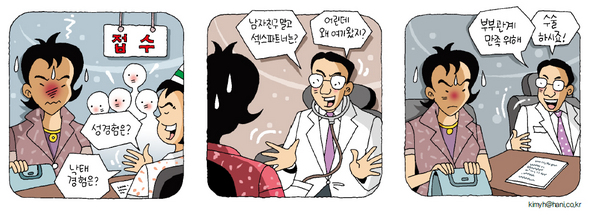
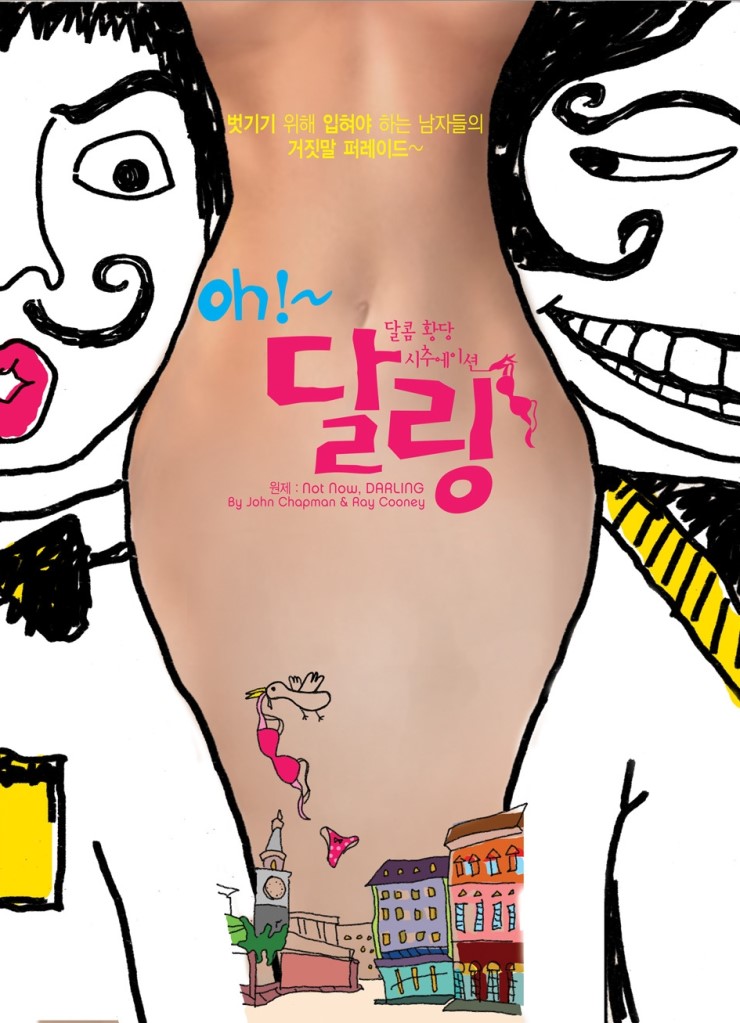
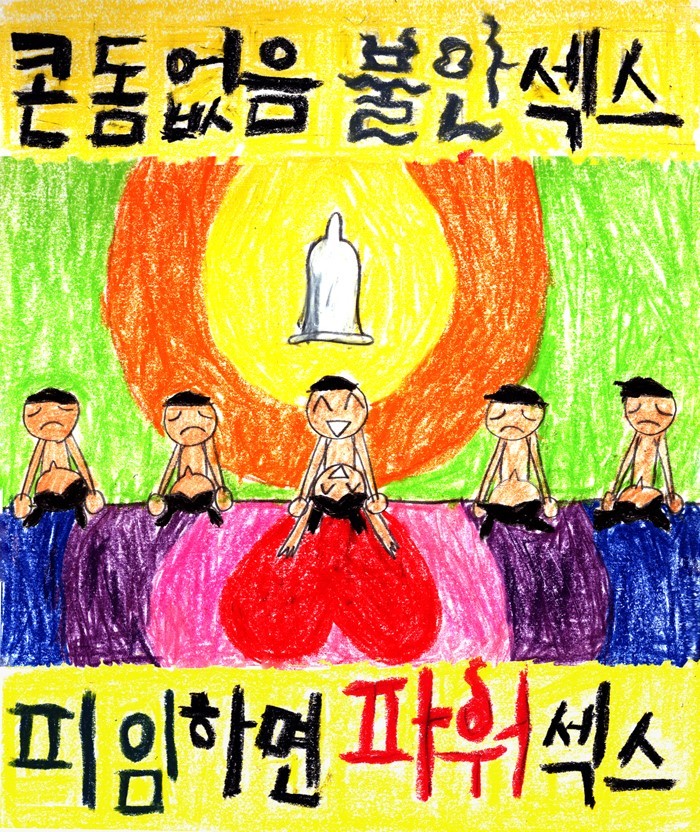
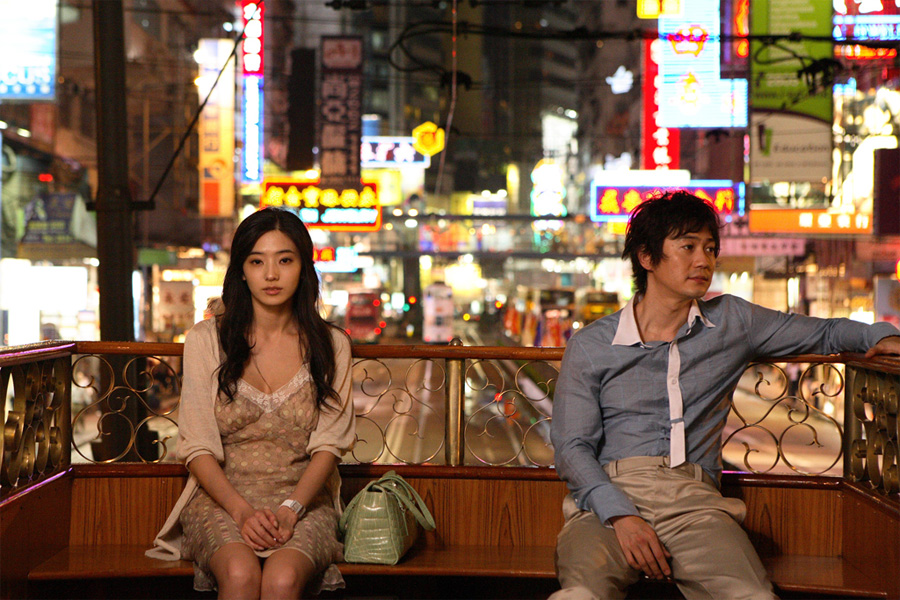
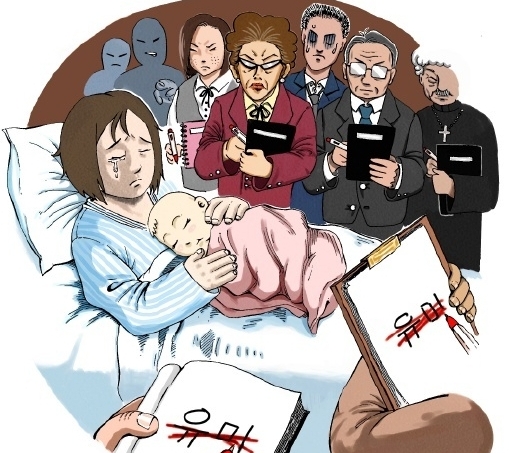
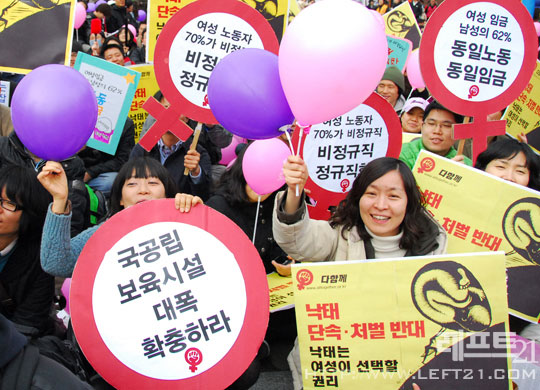
Okay, maybe I have overdone it a little with that above image. Because I certainly I don’t mean to appear flippant about the subject of abortion.

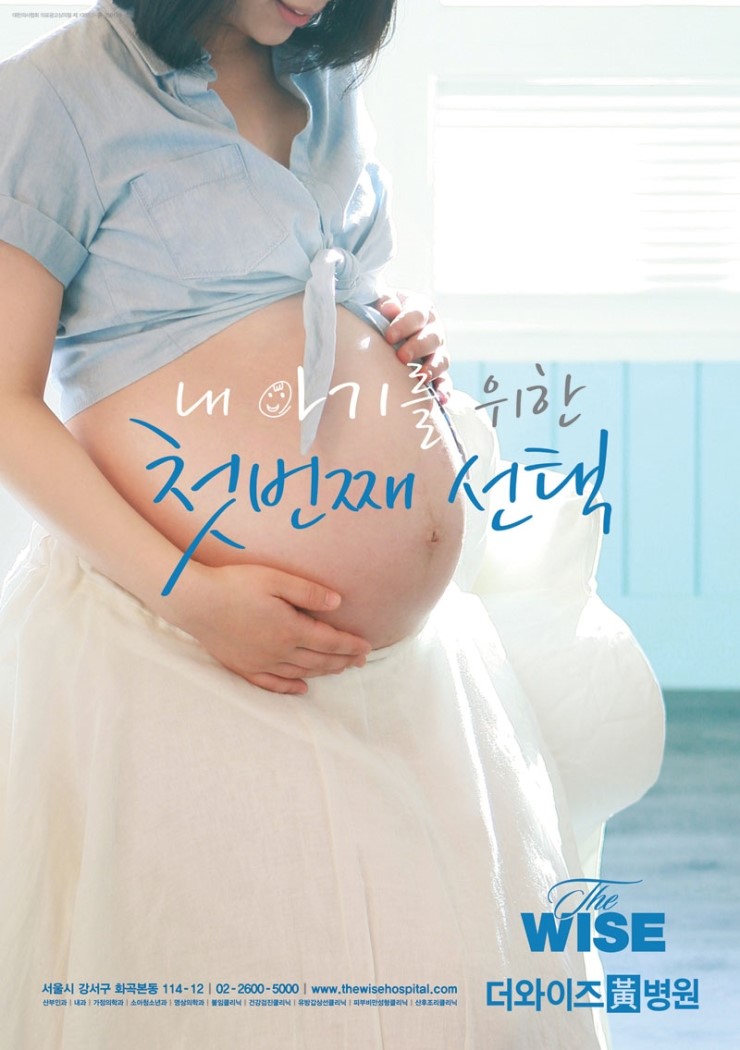
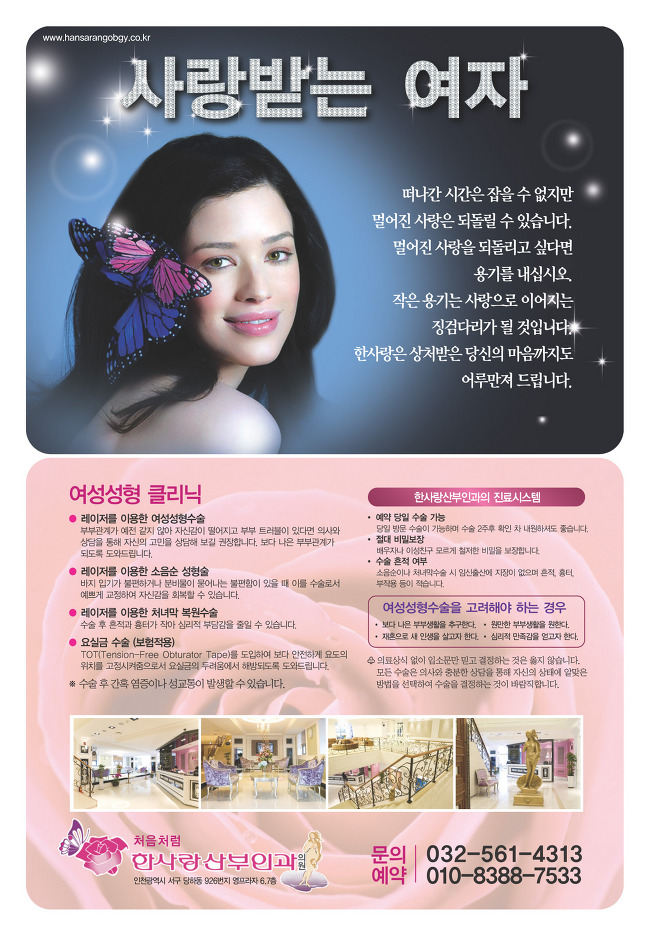
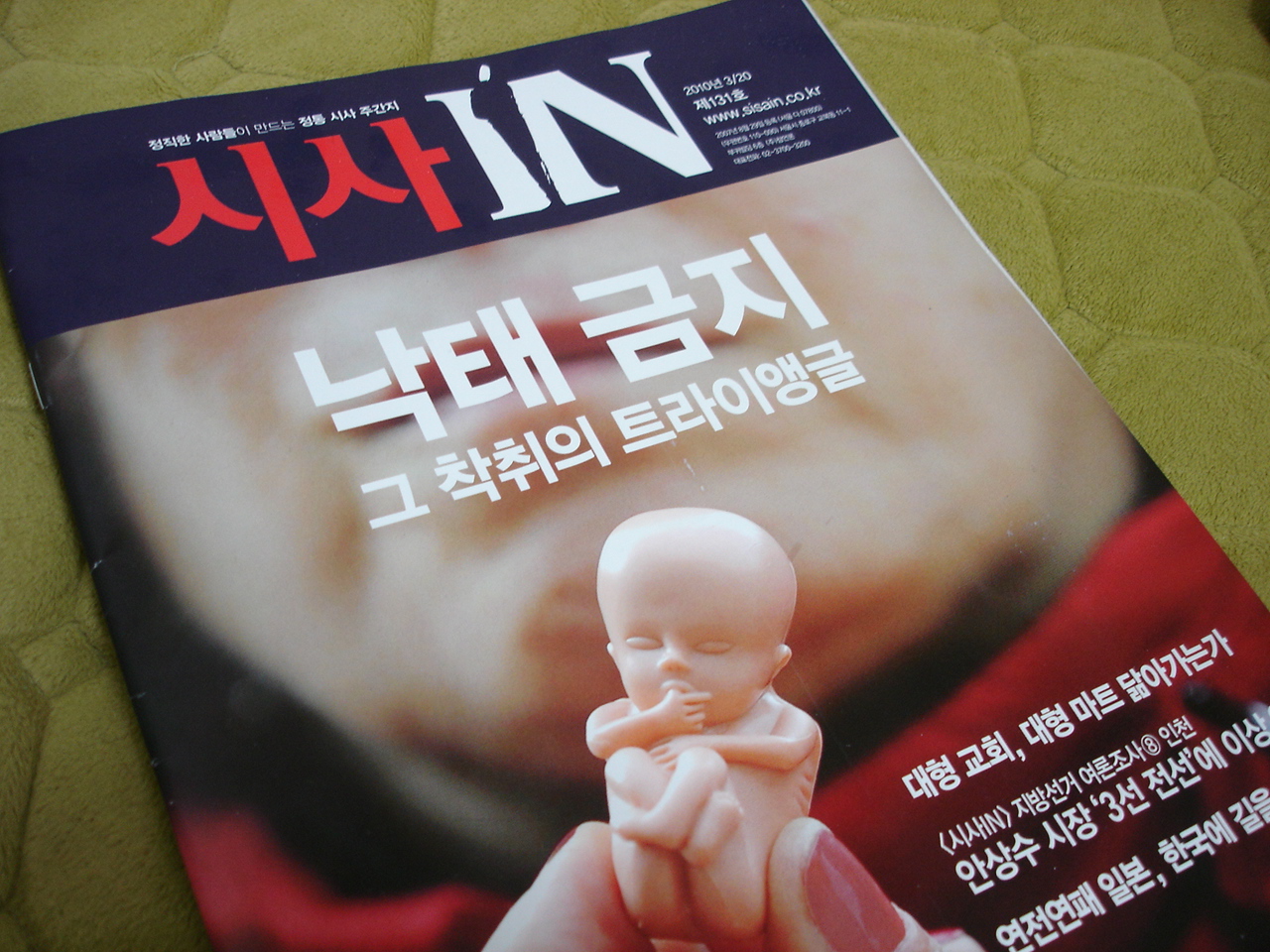
But hear me out — something just snapped in me when I saw the unnecessarily sombre cover (and tone) of Womenlink’s new book on abortion below. Because in reality, most abortion patients and their partners report feeling more relieved than depressed and regretful, despite what you usually read about them in the media.

So, the humor of the Yoda-like, oddly-appropriate Engrish above felt like a very welcome antidote. As did the additional images of happy couples you’ll find throughout this post, used in lieu of much harder to find “relieved” (안심했다? 안심이다?) ones.

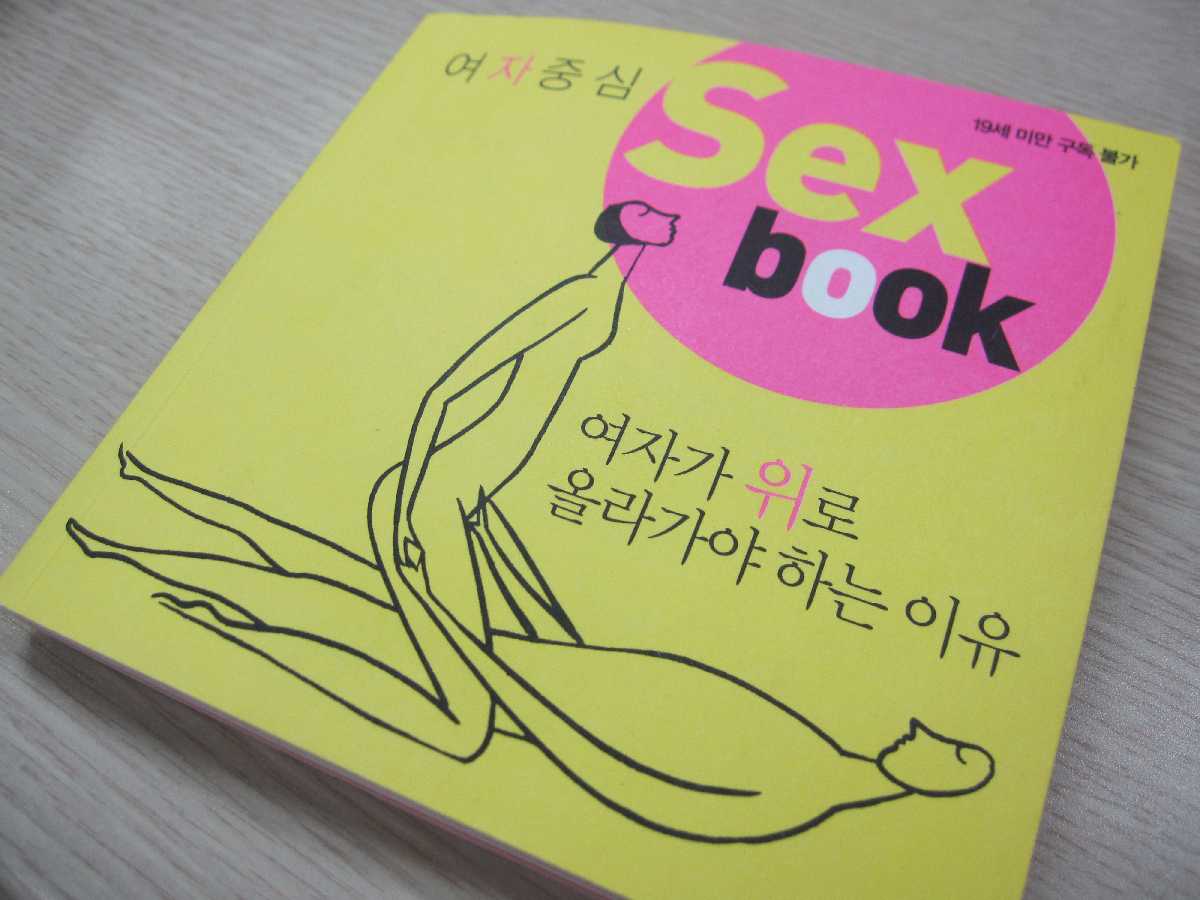
Also, it was ironic that something that set out to challenge stereotypes would confirm so many of my own in the process. Namely, that all too many Koreans are forced to seek abortions because of a lack of basic knowledge about contraception, and that women are still wary of keeping condoms on hand and/or insisting their partners use them, lest they “be regarded as a slut or an experienced and impure woman” (which in turn leads to the perception that contraception is only men’s responsibility).

But don’t get me wrong — these are minor quibbles really, and otherwise I have nothing but praise for the book!

(Source)

‘낙태’ 사회적 배경을 이야기하는 이유, The reason why we talk about the social background of ‘abortion’

Ildaro, November 15th 2011

민우회, 낙태 사례집 <당신이 생각하는 낙태는 없다> 발간 의의, The Significance of the Publication of Womenlink’s Abortion Casebook There’s no such thing as the abortion you’re thinking of

필자 회색연필님은 비혼 페미니스트 방송 ‘야성의 꽃다방’ 활동가로, 현재 대학원에서 보건학을 전공하고 있습니다. [편집자 주]

The author, Grey Pencil, is a graduate student in health science and activist who is part of the unmarried feminist radio program “Wild Nature’s Flower Tea Room.” [Editor’s Note]

낙태 금지한 형법은 위헌‘ 헌법재판소 공개 변론, Constitutional Court public proceeding ‘for the criminal law that prohibits abortion’

지 난 10일 헌법재판소에서는 ‘낙태죄’의 위헌 여부를 두고 첫 공개 변론이 열렸다. 이번 소송은 2010년 부산에서 인공임신중절시술을 시행한 혐의로 기소된 조산사가 ‘낙태를 금지하는 형법 조항은 임부의 인간으로서의 존엄과 가치, 행복추구권, 평등권, 신체의 자유, 사생활의 자유, 혼인과 가족생활의 존엄 등을 침해하여 위헌’이라며 소송을 청구한 것에서 시작됐다.

On November 10, the first public arguments over criminal abortion began at the Constitutional Court. This case began after a midwife who was indicted on the charge of carrying out a procedure to terminate a pregnancy in Busan in 2010 filed suit, saying, “The criminal law clause that prohibits abortion violates a pregnant woman’s dignity and value as a human, her right to pursue happiness, right to equality, bodily freedom, privacy, and the dignity of her marriage and family life, and thus is a violation of the constitution” (source, right).

형법 270조 1항(업무상 동의낙태죄)은 임산부의 동의를 얻어 낙태시술을 한 의사, 조산사 등을 형사처벌하도록 규정하고 있다.

Criminal Law Article 270 Clause 1 (Professional Abortion with Consent) stipulates that doctors or midwives who receive the pregnant woman’s consent and perform an abortion will receive a criminal penalty.

이날 변론에서 청구인과 법무부는 낙태죄의 실효성 여부와 임산부의 자율권 침해 여부 등 쟁점을 두고 첨예한 의견 대립을 보였다. 청구인 측은 임부의 자기결정권을 주장했고, 법무부 측은 태아의 생명권 존중을 내세웠다.

At the proceeding on this day, the claimant and the Ministry of Justice showed sharply conflicting opinions on the issues of the effectiveness of the abortion law and the violation of the autonomy of pregnant women.  The claimant’s side insisted on the right to self-determination of a pregnant woman, and the Ministry’s side advocated respect for the right to life of a fetus.

현재 대한민국에서 낙태(인공임신중절)는 ‘불법’이다. 그러나 지난 몇 십년 간 낙태는 암암리에 이뤄져왔고, 사회적으로 큰 문제가 되지 않았다. 그러나 ‘저출산 문제’가 대두되면서 정부는 낙태율을 줄이기 위해 지금까지 쉬쉬하던 ‘불법’ 행위를 집중적으로 단속하기 시작했다. 그리고 작년, 낙태 근절 운동을 벌여온 프로라이프 의사회의 고발로 몇몇 병원과 조산원이 검찰에 고발돼 징계를 받으면서, 낙태를 둘러싼 찬반 논쟁이 촉발되었다.

Currently, abortion (the artificial termination of a pregnancy) is “illegal” in the Republic of Korea.  However, for the past few decades abortion has been done in secret, and it hasn’t become a big societal problem.  As the low birth rate problem comes to the fore, however, the government has begun to intensively crack down on this formerly covered-up ”illegal” activity in order to reduce the rate of abortions.    Also, last year, as several hospitals and maternity clinics were reported to prosecutors and punished through the accusations of a pro-life medical association that has campaigned for the eradication of abortion, controversy has been sparked surrounding the pros and cons of abortion (source, right).

이러한 시점에서 한국여성민우회는 낙태의 당사자이면서도 정작 논쟁에서는 배제되었던 여성들의 목소리를 모으기 시작했다. 그렇게 모인 22명의 여성의 이야기를 엮어 올 가을, 낙태 관련 사례집 <당신이 생각하는 낙태는 없다> 발간되었다.

At this time, Korean Womenlink began to gather the voices of women, who, though they are the actual people whom abortion directly concerns, had been excluded from the argument.  The stories of women gathered like this were woven together and this autumn, the abortion casebook “There’s no such thing as the abortion you’re thinking of” was published.

여성들이 말하는낙태란 무엇인가’, What women say “abortion” is

사 례집은 낙태 경험이 있는 여성들을 인터뷰하고, 그 내용을 바탕으로 총 22명의 여성들의 이야기를 낙태 결정의 순간과 낙태를 하는 순간, 낙태 그 이후의 경험들 그리고 피임에 관련된 부분과 상대(남성)의 이야기 등으로 구분하여 엮었다.

Women who’ve had an abortion were interviewed, and from that material, a total of 22 women’s stories are divided up into the moment they decided to get an abortion, the moment they got it, their experiences afterwards, and a section about birth control and their (male) partner’s story, and these parts are woven together in the casebook.

사례집에 실린 각양각색의 배경을 가진 22명의 여성들의 이야기는 모두 다 다르면서도 같았다. 낙태를 하게 된 상황이나 상대에 대한 생각 등은 모두 다 달랐지만, 다들 ‘낙태는 어쩔 수 없는 선택이었다.’는 점과 ‘다른 여성들에게 힘이 되고 싶다’는 마음은 같았다. 그랬기에 이 어려운 이야기들을 선뜻 나서서 이야기할 수 있었던 것이리라 생각한다.
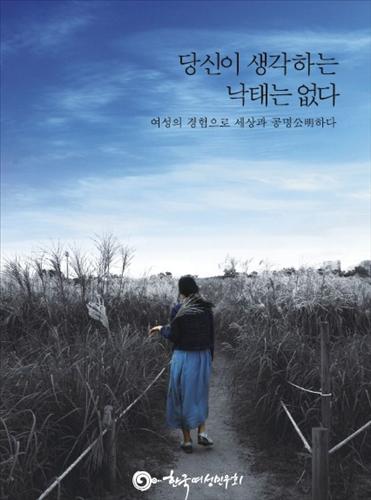
The stories of the 22 women of various backgrounds in the casebook are all different yet the same.  The situation in which they chose abortion or their thoughts about their partners are different, but all of them had the same feeling that, ”Abortion was the only option,” and, “I want to be a source of strength to other women.”  I think that may be the reason that they were able to come forward and tell their difficult stories willingly (Caption, right: 한국여성민우회에서 발간한 낙태 관련 사례집 <당신이 생각하는 낙태는 없다>; The abortion-related casebook published at Womenlink {source}).

태아를 생명권으로 보아 생명을 우선시하느냐, 아니면 산모의 선택을 존중하느냐는 논쟁은 단순히 ‘낳을 것인가, 낳지 않을 것인가’의 ‘낙태’ 행위에만 초점이 맞춰져 있다.

The debate over whether to put life first out of consideration for the right to life of a fetus, or to respect the choice of a pregnant woman, is focused into the act of abortion as simply, “have the baby, or not.”

보건의료학적 측면에서 보면 태아=생명이기 때문에 낙태는 비난받아야 한다는 결론이 난다. 그런데 보통 보건영역에서 정책을 결정할 때 단순히 건강만을 위한 것 외에도 사회경제적 요인도 같이 고려하여 판단한다. 여성의 낙태 문제 역시 보건 영역에 속하는 것으로 볼 수 있지만 희한하게도 ‘낙태’만큼은 사회-경제적 요인은 간과하여 판단하고 있다. 윤리적인 이슈가 이미 형성되어 있어, 낙태 행위 그 자체만을 놓고 이야기하려 하는 것이다.

From a health-care perspective, because a fetus = life, one comes to the conclusion that abortion must be criticized.  However, in the usual domain of health care, when making policy decisions, other socioeconomic factors besides simple health must be considered when making a judgment. Women’s abortion question could of course be considered in the domain of health care, but strangely, only in abortion’s case, socioeconomic factors are being ignored when making a judgment.   The ethical side of the issue is already formed in people’s minds, so the casebook attempts to discuss the act of abortion itself.

그렇기에 이번에 민우회에서 발간한 낙태 사례집은 이러한 ‘낙태’ 행위만을 보지 않고, 낙태를 둘러싼 ‘사회적’ 배경이 그녀들에게 어떤 영향을 미쳤는지를 당사자들의 목소리를 통해 잘 보여주고 있다는 점에서 큰 의미를 갖는다고 본다.

That’s why the abortion casebook that Womenlink published doesn’t just look at the act of abortion, it shows what kind of effect the societal background that surrounds abortion has on these women through the voices of the people involved; for this reason, it is meaningful.

흔히, 낙태를 하는 사람들은 ‘성적으로 문란하다.’, ‘순결하지 못하다.’, ‘미혼 여성들이 많을 것이다.’라고 생각하는데, 사례집에서 드러난 바로는 그렇지 않았다. 모두 우리 주변에서 볼 수 있는 평범한 사람들이었고, 비혼 여성이 많을 것이라는 생각과는 달리 오히려 기혼 여성들의 낙태경험이 많았다.

Commonly, people that have an abortion are thought of as ”sexually promiscuous,” ”impure”, or “probably mostly unmarried women,” but according to the casebook, that isn’t true.  They are all average people we can see around us, and different from the unmarried women that were expected, many married women had experiences with abortion.

(Source)

혼인 유무를 떠나, 그들에겐 낙태는 어쩔 수 없는 ‘강요된 선택’의 문제였다. 기혼 여성의 경우, 육아를 둘러싼 경제적, 사회적 여건에 때문에 낙태를 선택할 수밖에 없었지만, 자식들을 기르면서도 마음의 상처를 안고 살아간다. 비혼의 경우 역시 크게 다르지 않다. 역시 젊은 나이라 경제적인 기반 등 아이를 낳아 기를 준비가 되어있지 않을뿐더러, 사회적 ‘낙인’ 때문에 산부인과에서도 애초부터 아이를 낳을 선택권이 주어지지 않는 경우가 많았다.

Whether or not they were married, abortion was an unavoidable “forced choice” to them.  For married women, because of the economic and social conditions surrounding raising a child, they couldn’t choose anything but abortion, but they live with that pain in their heart even as they raise their other children.  Unmarried women are also not very different.  They are young, of course, and so lack a financial base, so not only are they not prepared to have and raise a child, but there are many cases in which, because of their social label, they are not even given the right to choose to have the baby, even at an ob-gyn.

사례집에 실린 여성들 모두, ‘낳고 싶었지만 낳을 수 없는 상황’이 문제였다고 이야기한다. 낙태는 개인의 기호가 담긴 선택이 아니라 사회가 강요한 ‘선택’이었던 것이다. 사회는 저출산을 문제 삼으면서도 왜 여성들이 아이를 낳지 않으려하는지를 보지 않고 그저 낙태를 선택한 여성에게만 손가락질 한다.

The women in the casebook all say the problem was that they “wanted to have the baby but couldn’t in that situation.”  Abortion was not a matter of personal preference, but a “choice” forced by society.  Even as society makes an issue of the low birth rate, it doesn’t ask why women don’t want to have children, it just points the finger at women who have chosen abortion.

임신은 남녀가 함께 관여해서 발생하는 문제이고, 해결 역시 남녀가 같이 풀어야 될 문제이다. 하지만, 원치 않은 임신이 닥쳤을 때, 결국 책임지는 사람은 ‘여성’이 된다. 그렇기 때문에 여성에게는 임신이 갖는 의미가 굉장히 크다. 그럼에도 불구하고 사회는 이러한 임신의 문제가 단순히 여성이 10개월짜리의 고생으로 인식되고, 거의 대부분의 여성들이 감당하는 향후 20년간의 양육문제는 인식조차 하지 않는다.

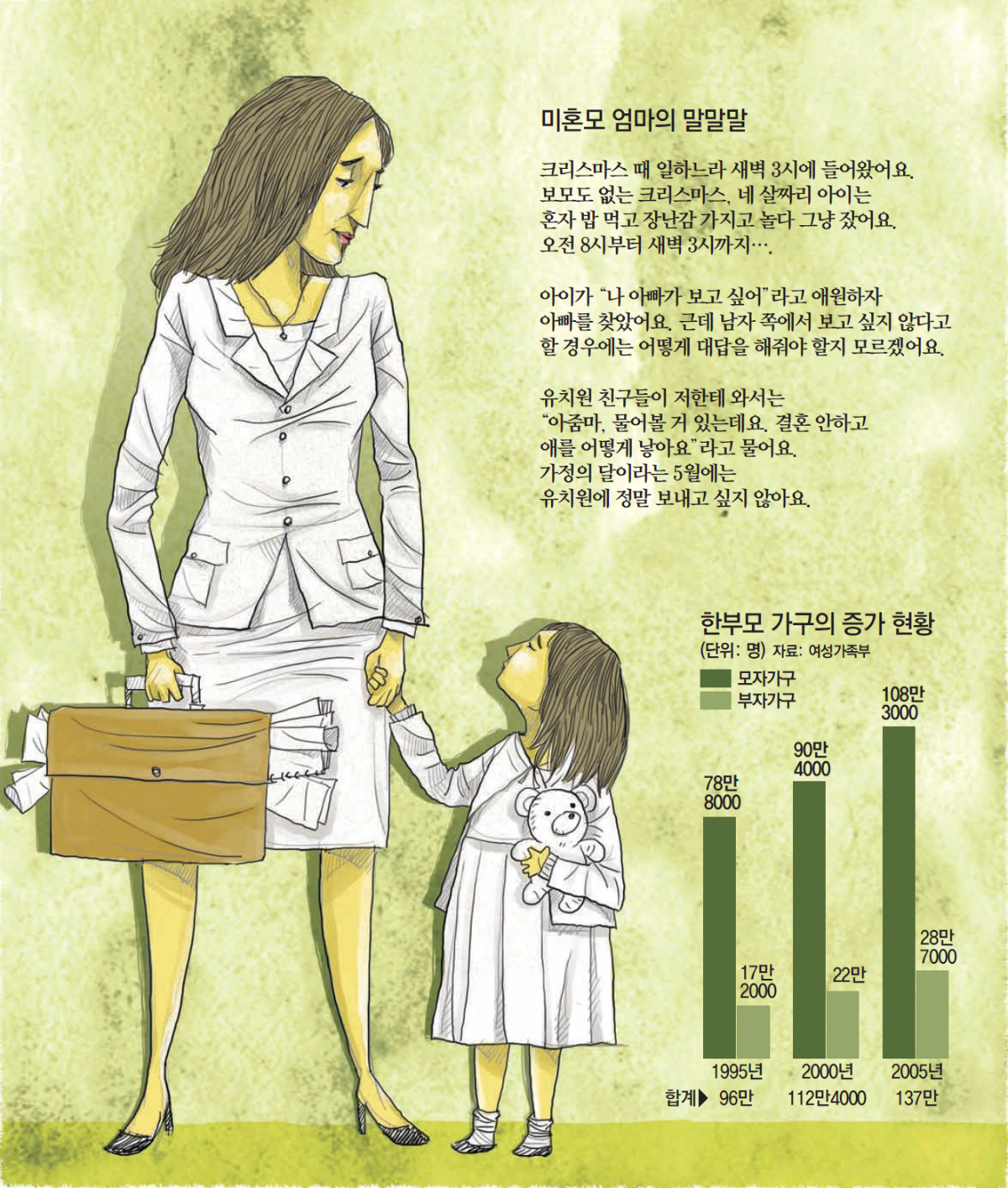
Pregnancy is a problem that occurs with both men and women’s participation, and its solution should also be an issue that a man and woman resolve together.  However, when an unwanted pregnancy happens, the woman becomes the person who takes responsibility.  Because of this, pregnancy is very significant for women.  Despite this, society considers this issue of pregnancy as simply 10 months of hardship for a woman, and doesn’t even recognize the following 20 years of raising the child that is mostly done by women (source, right).

이로 인해, 임신 사실 조차 달갑지 않은 여성들도 많을 것이다. 미혼의 임신은 순결이데올로기와 맞물려 미혼모라는 이유만으로 손가락질 당하고, 그 자식마저도 편견으로부터 자유로울 수 없다. 그 뿐 아니라 경제적인 뒷받침도 미비하다. 기혼 여성이라도 크게 다르지 않다. 육아는 전업주부든, 직장여성이든 누구에게나 가벼운 문제가 아니다.

For this reason, there will be many women to whom the very fact of their pregnancy is unwelcome.  Unwed pregnancy is [negatively] connected to the ideology of purity, and so they are scorned just for being unwed mothers, and even their children are not free from prejudice.  Not only that, economic support is also inadequate.  Even married women are not much different.  Child-rearing is not an easy problem for anyone, full-time homemaker or career woman.

직 장여성의 경우는 더 버거운 문제이다. 임신과 동시에 직장에서는 그만두기를 강요당하고, 출산 이후 재취업이 쉽지 않아 임신을 더 꺼리게 만든다. 그 뿐인가, 맞벌이가 대세인 요즘에도 탁아시설 등의 인프라는 갖춰주지도 않고 여성 개개인에게 모성만을 강요하여 워킹맘이 슈퍼맘이 되도록 요구한다. 이런 상황에서 사회적으로나 경제적으로나 열악한 상황일 경우 누가 낳아 기르려고 하겠는가.

In career women’s case, it is a more unmanageable problem.  When pregnant, they are forced to quit, and re-entering the workforce after giving birth is not easy, so they are reluctant to become pregnant.  Not only that, even in this time in which dual-income families are the general trend, infrastructure like day-care facilities are not provided and each woman is pressured to be maternal, and so working  moms are asked to become super moms. In this kind of situation, when both the social and financial situations are inadequate, who would want to have and raise a child?

(Source)

남자들도 수술대에 앉아 본다면…If men also tried sitting on that operating table

무엇보다 낙태에 대한 정부의 태도가 여성을 재생산의 측면에서 보고 있다는 점은 무례하고 후진적이다. 출산율을 올리기 위해 낙태를 금지하는 정책을 편다는 것은, 여성을 자아실현 등의 욕구가 있는 한 개인이 아니라, 아이를 낳는 존재로서  ‘관리’해야 하는 대상으로 간주하는 것이다.

More than anything, the government’s attitude towards abortion looks at women from a reproductive aspect, which is disrespectful and backwards.  Implementing a policy that prohibits abortion in order to raise the birth rate is considering women not as individuals with desires like that of self-realization, but as beings that give birth and thus objects [in the sense that they are the targets of an action] that need to be managed

과거의 인구조절정책을 봐도 그렇다. 인구가 많았던 시절에는 낙태를 쉬쉬했으며, 남녀 모두 정관수술이나 난관수술 등을 권장하고 강요했다. 그러던 정부가 20~30여년이 지난 지금, 이제는 출산률을 올리기 위해 ‘낙태’를 금지하겠다는 것이다.

Past population-control policies show this as well.    At the time when the population was large, abortion was done quietly, and men and women were encouraged or compelled to have vasectomies or tubal ligations.  Twenty or thirty years have passed and now the government that did that has resolved to prohibit abortion in order to raise the birth rate.

사실, 낙태를 반대하는 입장에서는 ‘낙태는 피임만 잘 하면 줄일 수 있다’고 말하는데 나는 일부는 동의한다. 사례들을 살펴봐도 남녀 모두 피임법을 잘 몰랐던 경우가 많았다. ‘피임’이라는 개념 자체를 몰라서 덜컥 임신이 된 경우들도 있었고, ‘질외사정법’이던가 ‘체온주기법’과 같은 피임 성공률이 낮은 방법을 사용하고 있었다는 점이다.

In truth, I agree in part with the anti-abortion position that says, “We can reduce abortions just by using birth control well.”  Looking at the casebook, there were many instances in which neither the man nor the woman knew much about birth control.  There were cases in which they didn’t know of the very concept of ”birth control” and so unexpectedly became pregnant, and also those who were using types of birth control with a low success rate, like the “withdrawal method” or the “body-temperature cycle method.”

(Source)

최근에 성교육이 많이 보급되었다고 하지만, 위의 사례들을 보면 아직도 성교육이 부족하다는 생각이 든다. 한편으로, 피임이 완벽히 성공할 것이라는 우리의 생각과는 달리 실제로 100% 피임은 불가능하다는 사실도 인정해야 한다.

Sex education has become quite widespread these days, but looking at the cases above, one gets the impression that sex education is still deficient.  On the other hand, different from our belief that birth control will be perfectly effective, we must recognize the fact that 100%-effective birth control is not truly possible.

성관계 시 작용하는 남녀 간의 권력구도 역시 짚고 넘어갈 필요가 있다. 사례들을 보면 여성이 피임도구 사용에 대해 이야기할 수 없는 상황이 많았다. 피임 성공률이 가장 높은 콘돔을 사용하자고 이야기 할 때 ‘헤픈 여자’, ‘경험 있는 순결하지 못한 여자’로 치부될까봐 말하지 못하거나 남성 쪽에서 콘돔 사용을 꺼려한다는 이유로 사용하지 못하는 식이다.

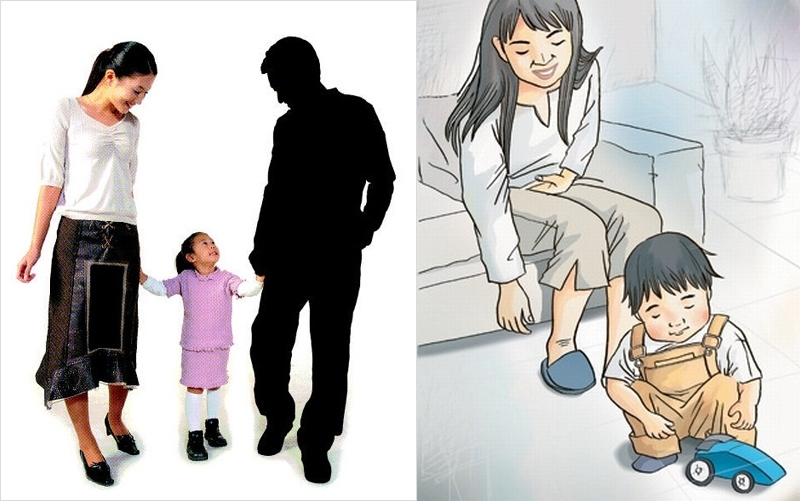
There is also a need to deal with the power structure between a man and woman who start to have sex. Among the cases, there were many in which the woman was in a situation in which she couldn’t talk about using birth control.  She couldn’t say anything because she was afraid that if she suggested using a condom – the birth control with the highest success rate -she would be regarded as a ”slut” or an “experienced and impure woman”, or she didn’t use a condom because the man was reluctant to (source, right: unknown).

자신이 준비되지 않았음에도 불구하고 남성의 요구를 차마 거절하지 못하고 성관계를 맺은 사례도 많았다. 그리고 심지어 부인에게 정관수술 했다고 거짓말하는 남편들도 있었다.

There were also many cases in which the woman couldn’t bear to refuse the man’s demand and so had sex even though she wasn’t ready. There were even men who lied and told their wives that they had had vasectomies.

이처럼 가부장제하에서 ‘순결이데올로기’와 맞물린 남녀 간의 권력구도가 여성에게 상당히 불리하게 작용함을 알 수 있었다. 그러나 사례집에서 나타난 여성의 임신 상황에 대처하는 남자들의 태도는 미숙하기만 했다. 걱정해주고 함께 고민하는 남자들도 있었지만, 나 몰라라 하고 사라지는 경우도 적지 않았다. 그런 남성을 만난 어떤 여성은 ‘남자들도 그 수술대에 앉아 보면 좋겠다.’고 말한다. 오죽하면 그런 이야기를 했을까 싶다.

In this way, we see that in a patriarchal system, the power structure between men and women, which is connected to the “purity ideology,” is considerably disadvantageous to women.  However, in the casebook, the attitude of the men who are dealing with the women’s pregnancies is merely one of inexperience.  There were men who were anxious and who worried with the woman, but there are also not a few instances in which the man did nothing and disappeared.  One woman who met a man like that said, “I wish that men would try being on that operating table.”  She must have had a hard time, for her to say that.

낙태, 말할 있게 하라, Make it possible to talk about abortion

아직도 우리사회에서는 낙태에 대한 인식이 좋지 않다. 사례집의 몇몇 사례들에서 이야기한 ‘낙태 경험’에서 심지어 낙태를 시술하는 의료인까지도 사회적 통념의 틀을 벗어나지 못하고 있음을 잘 보여준다.

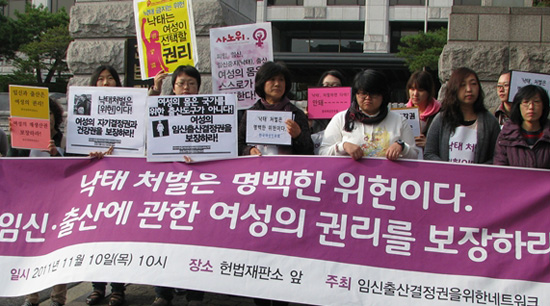
In our society, the perception of abortion is still not good.  The “abortion experience” section of several of the cases in the casebook shows that even some of the doctors who perform abortions can’t think outside the box of societal norms (Caption, above: 임신출산결정권을 위한 네트워크는 헌번재판소 공개변론일에 맞추어 ’낙태 처벌 반대’를 주장하며 집회를 가졌다; A network for pregnancy and childbirth decision-making rights holds a gathering and argues for ”opposition to abortion punishments” to address the public proceedings at the Constitutional Court).

낙태를 결심하고 병원을 찾은 여성들 역시 죄책감에 시달리고 말 못할 비밀을 갖게 되는데, 미혼이니 당연히 낙태를 선택할 것이라 생각한 의사며, 헤픈 여자라는 시선으로 싸늘하게 대한 간호사의 태도는 그들에게 낙태에 대한 부정적인 인식을 더욱 강화하게 만든다. 낙태는 축복받을 일도 아니지만, 어떤 측면에서는 ‘시선의 폭력’이라는 생각이 든다. 그리고 이런 식의 ‘낙인’들이 낙태 경험을 가진 여성을 더욱 더 말할 수 없는 존재로 만들어버린다.

Women who decide to have an abortion and find a hospital suffer from a sense of guilt and acquire a secret they can’t tell, of course, and while there are doctors who think that it’s natural to get an abortion because a woman is unmarried, the attitude of nurses who consider them sluts and treat them coldly further reinforces to them the negative perception of abortion.  Abortion isn’t a blessed event, but in some ways, this [attitude] seems like a “violence of perception”.  Also, those kinds of labels make women who’ve had abortions more unable to speak.

(Source)

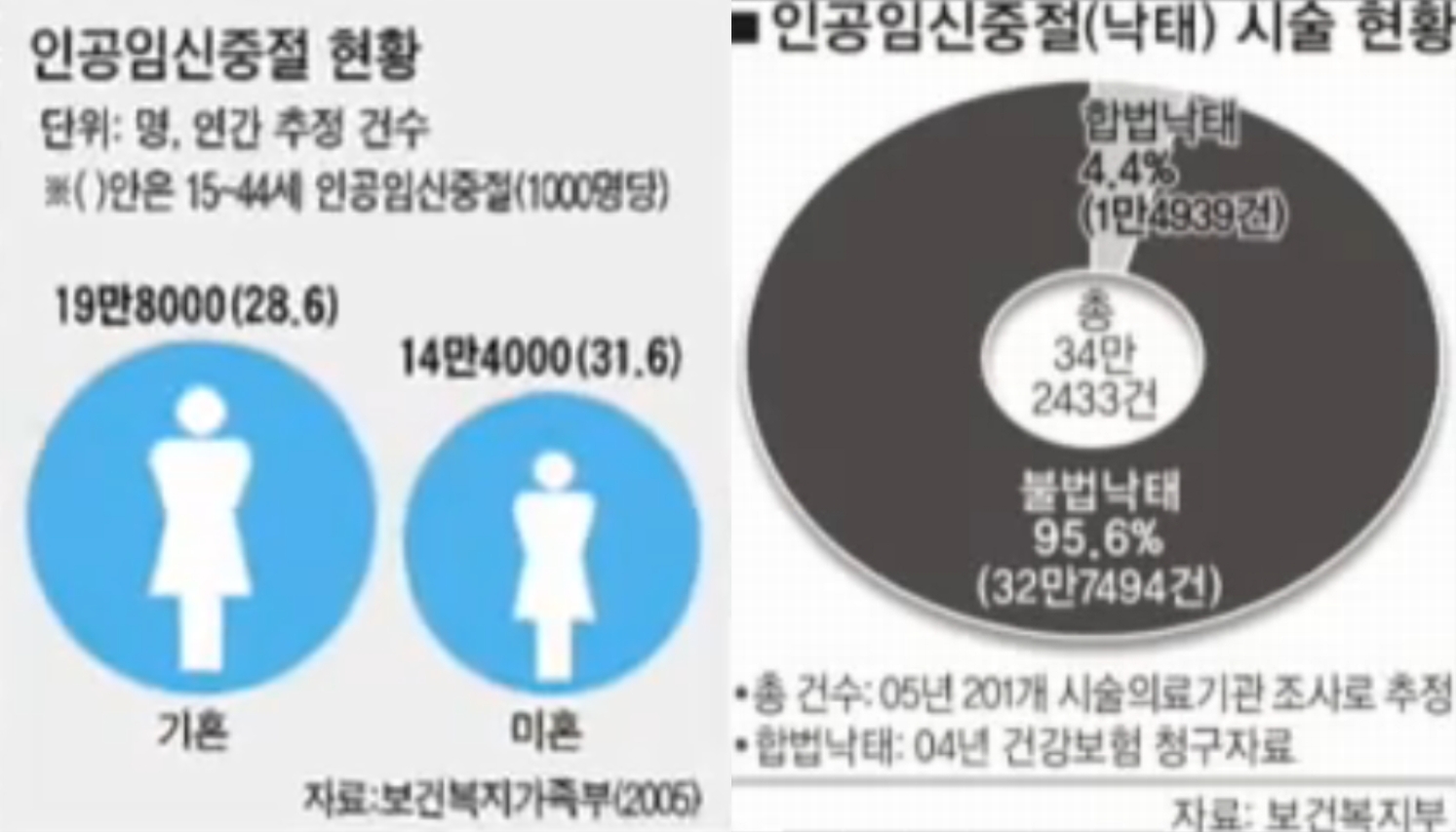
사실, 국내에서 낙태에 대한 정확한 수치를 파악조차 하기 힘들다고 한다. 국가에서 의료인과 일반 여성들을 대상으로 인공임신중절 실태조사를 했지만, 생각보다 적은 수로 나온다. 그만큼 낙태는 음성적으로 행해져왔고, 대책을 세우기도 쉽지 않은 상황이다. 여성의 낙태 경험을 이야기 할 수없는 사회적 분위기가 낙태를 ‘비현실적인 것’으로 만들어버린다. 하지만 낙태는 여성에게 ‘일어날 수 있는 사건’이다.

Truthfully, it is said to be difficult to even figure out the exact number of domestic abortions. Research on the artificial termination of pregnancy has been done targeting the country’s health care providers and average women, but the numbers were smaller than expected.  Abortion has been done that secretly; also, it is not easy to establish measures.  The social atmosphere in which women can’t talk about their abortion experiences has made abortion an “unreal thing.”  However, abortion is an event that can happen to women.

낙 태 경험을 드러냄으로써 낙태가 단순한 것이 아니라 복잡한 상황 속에서 내린 매우 어려운 선택이었고 큰 고통이었음을 세상에 이야기하는 것이 중요한 의미가 있다는 생각이 든다. 나 역시도 사례집을 읽기 전까지는 낙태를 경험했던 내 친구가 겪었을 고통을 깨닫지 못했으니까. 내 주변에는 낙태 경험이 없다고 생각했었다. 적어도 사례집을 읽기 전까지는 친구가 내게 낙태 경험을 이야기했다는 사실 조차 기억하고 있지 못했다.

Through the disclosure of experiences with abortion, it occurs to me that abortion is not a simple thing, but a very difficult choice made in a complicated situation, and telling of that great pain to the world has important meaning.  That’s because before reading the casebook, I too did not realize the pain that my friend who had an abortion went through.  I had thought that no one around me had had an abortion.  Before reading the casebook, at least, I hadn’t even remembered the fact that my friend had told me she’d had an abortion.

(Source)

몇년 전, 방학이라 한동안 연락이 끊어졌던 친구가 개강 후 만난 내게 가볍게 ‘애 떼러 갔다 왔다’고 웃으며 이야기했던 적이 있었다. 그 당시의 나는 ‘아, 그랬구나’ 대수롭지 않게 넘겼지만, 사례집을 읽으면서 뒤늦게 그 친구가 내게 그렇게 이야기하기까지 얼마나 힘들었을지, 웃음 뒤에 숨겨진 그 친구의 아픔을 이제야 이해하고 공감할 수 있었다. 이런 낙태 경험을 공유함으로써 어쩌면 여성들끼리의 연대가 형성되고, 또 그렇게 여성들이 뭉칠 필요가 있지 않을까 하는 생각이 든다. 그런 의미에서 이 사례집 발간은 연대의 시발점이 되지 않을까 싶다.

A few years ago, a friend who I hadn’t been in contact with during a [university] break said to me, when we met after the start of classes,  “I went to have a baby removed,” lightly and with a smile.  “Oh, I see,” I said, passing over it as not a big deal, but while reading the casebook, I can finally understand and sympathize, belatedly, with how hard it must have been for her to tell me that, and the pain that was hidden behind her smile.   I think that through sharing these kinds of experiences, solidarity may be formed between women, and that women standing together in that way might be necessary.   In this kind of meaning, the publishing of the casebook could become a starting point for solidarity.

인간은 사회적 동물이기에 사회가 인간에게 미치는 영향력은 굉장하다. 그 맥락에서 낙태를 여성 개인의 한 문제로 볼 수 없을 뿐더러, 여성 개인의 문제로 국한시켜서 책임을 지울 수도 없다. 낙태를 금지(pro-life)냐 허용(pro-choice)이냐로 먼저 따지기 전에, 낙태를 둘러싼 입체적인 사회적 배경을 먼저 읽어야 할 것이다.

Because humans are social animals, the influence that society has on people is tremendous.  In that context, not only can we not look at abortion as an individual woman’s problem, but we also can’t limit it to an individual woman’s problem and thus saddle her with the responsibility.  Before quibbling over being pro-life or pro-choice, we need to first read about the multi-dimensional, societal background that surrounds abortion.

(Many thanks to Marilyn for the mammoth translation)

Korean Family Planning Advertisements, 1960s-1980s — Are Today’s Young Couples Less Informed than Their Parents Were?

…American military officers helped make abortion the population control tool of choice in those Asian countries where they wielded influence, first in Japan in the late 1940s and 1950s, then South Korea in the 1960s. USAID, America’s aid agency, provided Jeeps for mobile clinics which roamed South Korea performing abortions. At one point, a quarter of the country’s health budget was going on population control and the number of abortions hit an all-time record in Seoul, where, in 1977, there were 2.75 abortions for every live birth. “What would have happened if the government hadn’t allowed for such easy abortion?” asks one sociologist. “I don’t think sex-selective abortion would have become so popular.”

Apropos of the above quote, from The Economist’s review of Mara Hvistendahl’s Unnatural Selection: Choosing Boys Over Girls, and the Consequences of a World Full of Men (2011), let me present some government advertisements of the period to give you a better impression of that amazing zeal for population control back then.  More specifically, they also show that whereas couples were encouraged to have two children in the 1970s, and not to favor boys over girls, this would be reduced to only one child by the 1980s, and messages about the sex-ratio invariably diluted.

Obviously, these would come to play a huge role in today’s world-low birthrate, the difficulty many Korean men are now having in finding wives (although fortunately the sex-ratio among newborns has since been normalized), and the ensuing massive influx of overseas brides. Less obviously, they defy stereotypes about Koreans’ squeamishness when it comes to sexual matters, as I’ll explain.

But first, some context. All 30 or so advertisements I’ve been able to find were produced by the Planned Parenthood Federation of Korea (대한가족계획협회; now known as the Planned Population Federation of Korea {PPFK; 인구보선복지협회}) and/or the now defunct Ministry of Health and Social Affairs (보건사회부), and can be found here, here, here, and here, as well as (best) on the PPFK’s website.

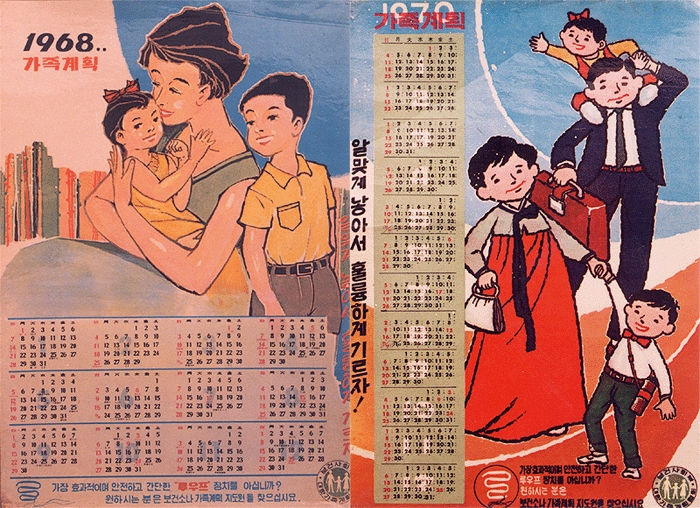
Text, both calenders — Did you know that the most effective, safest, and simplest device is the loop (IUD)? People who want one, please go to a welfare or family planning center / Black headline, right calender — Let's have the proper number of babies, and raise them well!

Formed in April 1961 just before the coup, the PPFK would soon have the strong support of the military government. But according to Seungsook Moon in Militarized Modernity and Gendered Citizenship in South Korea (2005; pp. 81-2), its activities wouldn’t really take off until the 1970s, which possibly explains its rather uninspired efforts above (but note though, that the government itself was extremely active in population control well before then):

The modernizing state had to launch aggressive propaganda for family planning because the idea of contraception was foreign to most Koreans, who tended to believe that having many children meant good luck and that every child would bring his or her own food into the world….

….The state…worked closely with the PPFK to change the public perception of birth control, establishing a department of public relations in 1970 to make the idea and practice of contraception familiar to the populace. The PPFK increasingly relied on mass media (radio, television, newspapers, magazines and education texts of its own) to disseminate positive images and information about families with a small number of children. To encourage popular participation, the PPFK organized popular contests of various kinds, ranging from posters, songs, and slogans to stories of personal experiences by mothers and wives concerning contraception.

A fascinating book, it’s difficult not to quote much more here, as the next few pages make it clear that Korea’s population policies were just as systematic and draconian as China’s. In light of what is revealed in Hvistendahl’s more recent book though, it is strange that it doesn’t also discuss abortions, but it does mention that while IUDs insertions were offered freely in the 1960s (with the Marine Corps mobilized to provide them to isolated islanders), and considered the “patriotic” and “ideal” form of contraception (but with the pill also introduced in 1968 to alleviate their effects, in stark contrast to Japan), by the second half of the 1970s it would be female sterilization that was offered and aggressively applied, becoming “what can only be described as a sterilization mania” by the 1980s. Between 1982 and 1987, over 2 million Korean women would be sterilized, a “semiforced mass sterilization” that “led to abrupt reductions in the fertility rate and the rate of population growth in the 1980s” (p. 85).
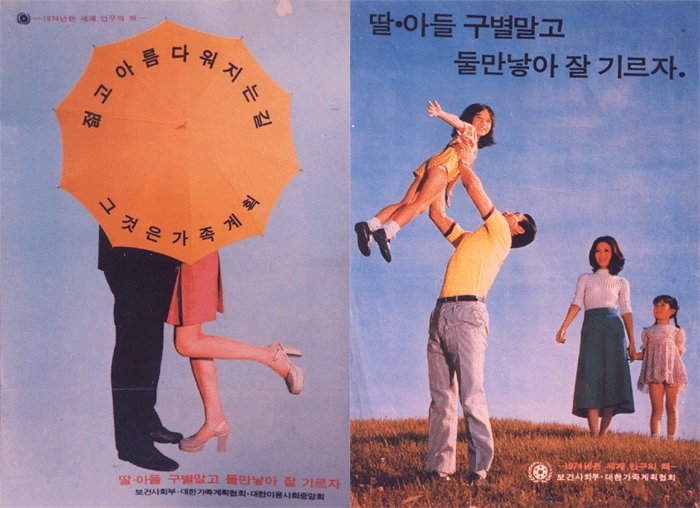
Left, umbrella — The path to youth and beauty is family planning / Both posters — Don't discriminate between boys and girls, have only two children and raise them well (This slogan can be seen on many 1970s posters)

Left, headline — Which method is good?; cup — Family planning consultations; man, text — "I'll do it"; text, bottom — 1975 is International Women's Year / Right, 19th Family Weekly Magazine May 5-12 1974 — The World has One Destiny; NCC= The National Council of Churches in Korea (한국기독교교회협의회)

This poster on the left above is particularly interesting, and not just because that was the year that March 8 — which *cough* happens to be my birthday — was made International Women’s Day (alas, I was born a year later). Rather, it’s because of the guy saying “I’ll do it”, which couldn’t help but remind me of young Koreans’ surprising attitude that contraception is exclusively men’s responsibility (as indeed the Japanese think too). However, women were overwhemingly the focus of population control drives back then (Moon notes that only 1 vasectomy was performed for every 10 IUD insertions, although I think the ratio to female sterilizations would have been more useful), and women’s organizations co-opted or specifically created by the state to carry them out, so it seems anachronistic to see a connection between young Koreans’ attitudes today and those of their parents at the same age.
Indeed, this one on the left below turns out not to be about family-planning at all, but rather women’s rights (update: unfortunately, I’m having formatting problems sorry, so let me translate here instead):

Left, headline — We are all [the same] human; Man (clockwise from hat) — Family registry rights, parental rights, inheritance, children, estate; Text — Women’s Family Law Change Committee / Right, arrow — The path to a Gross National Income of of $1000 in 1981; Text, below — (Previous 1970s’ slogan)

Next, before moving on to posters from the 1980s, note that sterilization campaigns would come to be complimented by various economic incentives (p. 85):

In 1981, confronting negative economic growth for the first time since 1982, along with a decrease in the number of sterilization acceptors, the state issued “Countermeasures to Population Growth.” These measures were characterized by incentives to a family with one or two [James - ?] children; priority in getting housing loans and business loans, monetary support of low-income families, and free medical service for the first visit. During the 1980s, variations of these kinds of incentives were introduced almost every year.

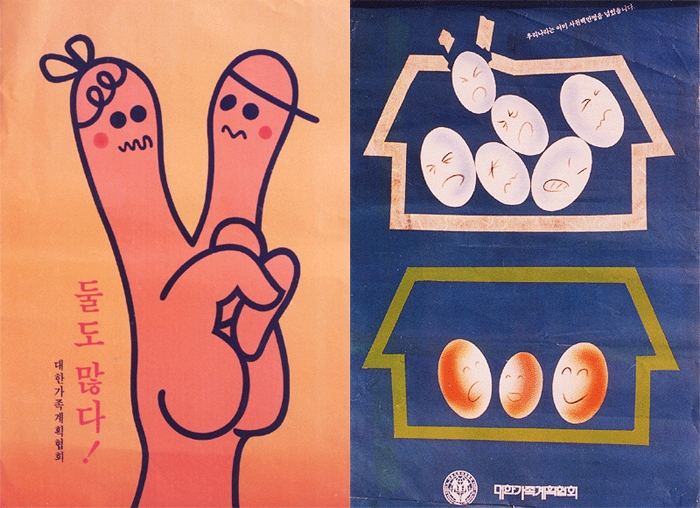
Left — Two children is many too! / Right — Korea's population has already exceeded 40 million

And here are two posters with sons, and then two with daughters. But note that, confusedly, there were also some with two children like those in the 1970s though, and that clearly the government and PPFK were still very much concerned about the sex-ratio.

However, like I said that message was surely somewhat diluted by having some posters featuring and explicitly praising having a son, and it would be interesting to do a content analysis to determine the ratio of those that depicted sons to daughters, two children, or (preferably) a sex-neutral image like the eggs above:

Left — One family, full of love. One child, full of health / Right, headline — Because of one son; Text — Overpopulation is everybody's responsibility

Again, apologies for having formatting problems above:

Top — A blessing of one child, loved strongly / Bottom — Raise one daughter well, and you won’t envy [those who have] ten sons

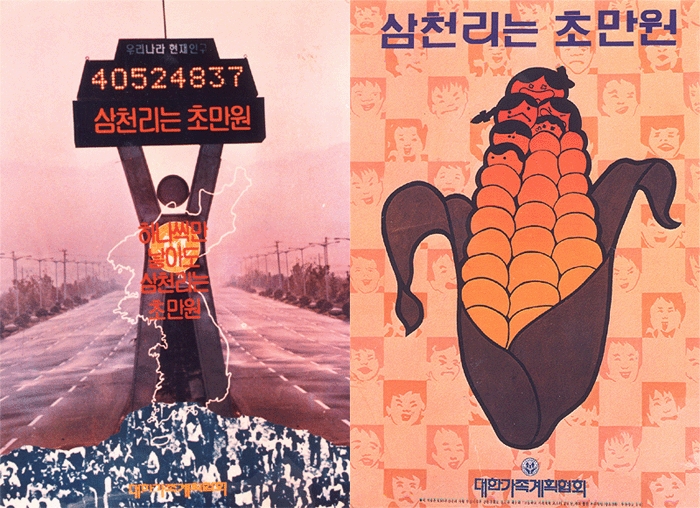
Left, sign — Korea's current population: 40,524,837, Korea is overflowing; Text in map — Even if you only have one child, Korea is overflowing / Right — Korea is already overflowing

Finally, please note that these posters are just a handful of those available on the PPFK website, and which in turn must be a small sample of all that were produced. But in combination with what I’ve learnt from Militarized Modernity, they’ve still lead me to an interesting conclusion. Which is that, bearing in mind Koreans’ reputation for procrastination, yet doing things with outstanding zeal and efficiency once they set their minds to them (albeit usually precisely because of putting them off for so long), sexual matters are no exception, despite Koreans’ conservative reputation. Moreover, and intriguingly, it appears that young Korean couples of the 1970s and 1980s were likely to have been much better educated and informed than their children are now.

Assuming it does exist, what on Earth happened in the 1990s and 2000s to account for this curious generation gap? And why, even though technically adults rather than children were the target of government campaigns in the 1970s and 1980s, is sex education in Korea today so appalling?

Question from a Reader — Help Sought for Pregnant Rape Victim

Posted in Abortion, Korean Sexuality, Pregnancy, Rape, Women's Groups by James Turnbull on February 14, 2012
(Source: unknown)

For obvious reasons, the reader that submitted this email would like to remain anonymous. Unfortunately I’m unable to think of any organizations that can help myself (especially after the baffling responses from the ones the couple has tried), so he would greatly appreciate any help or information readers can give:

xxxxxMy wife (Korean) was recently raped and became pregnant. We had been trying to get pregnant for a few months, so due to the timing of the attack, she assumed it would be impossible for it to be the attacker’s baby and decided to keep it a secret until recently when she finally told me about what happened. It turns out that she was misguided and it is actually very possible, though not probable, that the rapist impregnated her.

Every avenue we have explored for getting support has been a non-starter. We have gone through the police, rape hotlines, and the Seoul Global Center. Everyone seems to have never heard of a situation like ours, does not have the answers to our questions, and is unwilling to help us find the answers to our questions (mostly they just seem like they’re uncomfortable and try to get us off the phone as soon as possible). We briefly thought we might qualify for free counseling services for my wife, but we were later told that she is not eligible because she didn’t make a report. The police won’t take a report because she cannot identify her attacker.

We are unable to undergo any genetic testing (via amniocentesis or CVS) to determine if the baby is mine. We have been told there was a recent change in Korean law because of Dr. Hwang Woo-Suk that made it illegal to perform any tests on fetuses in the womb. This sounds ridiculous considering the ease with which one is able to procure an abortion. This is critical information for us, as I am a Caucasian-American and the child is likely to face questions its whole life about why it looks totally Korean (depending on if we decide to continue with the pregnancy), not to mention the strange looks from family and friends. We will all have a lifetime of reliving this horrible experience. I’m also thinking about possible issues that might come up with trying to get the child American citizenship, and my wife her permanent residency.

We are currently looking at going overseas to undergo the testing that needs to be done, but the information on that seems sketchy as well. I’m hoping that you might be able to put us in contact with an organization (preferably non-governmental) that would be informative, non-judgmental and understanding. Suffice it to say, this has been an incredibly difficult time for us. All we want is to know what the actual odds are that the child is mine, and perhaps some assistance in finding the best overseas options for genetic testing. So far it has been a dead end, although I know it is possible.

It seems like this may be a tall order, but I greatly appreciate any information you might be able to send my way.

Ministry of Health and Welfare: “Unwed Mothers are Ignorant Whores”

(Source)

What? It said that? In 2011??

No, hopefully not so recently, especially with the increasing criminalization of abortion since last year. But as you’ll soon see, the Ministry of Health and Welfare (보건복지부) certainly did once define unwed mothers as such, and I’d wager within at least the last decade.

It was just in 2008, for instance, that singer Ivy (아이비) was vilified in the media for the heinous crime of having sex with her boyfriend, so by those standards the Ministry’s comments were not particularly outlandish. And while Ivy did eventually rehabilitate her reputation, unfortunately Korean society is still far from accepting women being so sexually “open and impulsive”, let alone so blatantly so as to have a child out of wedlock.

Whatever the date though, when even the organization charged with helping unwed mothers once stigmatized them, then you can imagine how badly they fare in society today.

Despite that, abortion opponents seem to have quite a sanguine image of what it’s like to raise a child as a single mother. Which is what prompted this anonymous Korean woman, who kindly recently wrote on TGN about how and why she got an abortion, to post a link to this imomNews article outlining how the reality is anything but. With thanks to Marilyn for translating it, here it is in full:

(Update – To my shock and disappointment, the Ministry’s appalling definition was on its website until as recently as May 2010)

‘동성애자’ 다음으로 차별 받는 집단 ‘미혼모 / Unwed Mothers Most Discriminated Group after Homosexuals

인식 개선 선행…정부지원 확대 /[With] improvement in perception as precedent. . . expansion of government aid

Image Caption: 최근 정치권을 중심으로 ‘미혼모’ 지원방안이 활발히 이루어지고 있다. 지난 3일 서울 여의도 국회에서는 ‘미혼모 지원정책 개선방안’ 포럼이 개최됐다 /Currently, political methods for supporting unwed mothers are actively becoming reality.  On Aug. 3, at the National Assembly in Yeouido, Seoul, an “Unwed Mothers Support Measures Improvement” forum was held.

‘학력이 대체로 낮고, 불안정한 직업에 종사한다. 자취나 하숙을 하고, 성에 대한 가치관이 개방적이고 충동적이다. 사회경제적 상태가 낮고 부모와 떨어져 사는 사람’이라고 과거 보건복지부가 운영하는 웹사이트 건강길라잡이는 미혼모에 대한 정의를 이렇게 내렸다.

“Usually low levels of education, with an unstable job. Lives by herself or in a boarding house, has open and impulsive sexual values.  A person whose socioeconomic situation is low, and who lives apart from her parents,” is how a website health guide operated by the past Ministry of Health and Welfare defined unwed mothers.

이처럼 사회의 부정적인 시선 탓에 미혼모에 대한 관심과 지원은 일부 사회복지시설을 제외하곤 전무후무한 것이 사실이었다.

Because of society’s negative views like these, it was true that, as for interest in and support for unwed mothers, a few social welfare facilities were the first and seemed like they would be the last.

특히, 1990년대 이후 정부와 시민단체 등의 노력으로 조손가정, 다문화 가정, 한부모 가정 등은 상당부분 인식개선이 이루어 졌으나 미혼모 가족만은 사회의 편견 속에 여전히 ‘눈총’의 대상이 되고 있다.

In particular, through the efforts of the government and civic organizations since the 1990s, perception of grandparent-grandchild families, multicultural families, and single-parent families has improved; among society’s prejudices, only unwed-mother families continue to be the target of stares.

때문에 형편이 좋지 않아 자립이 힘든 미혼모들은 자연히 입양을 생각하거나 권유받게 되고, 우리사회도 ‘낳아 기르는 쪽’ 보다는 입양을 암묵적으로 유도했다.

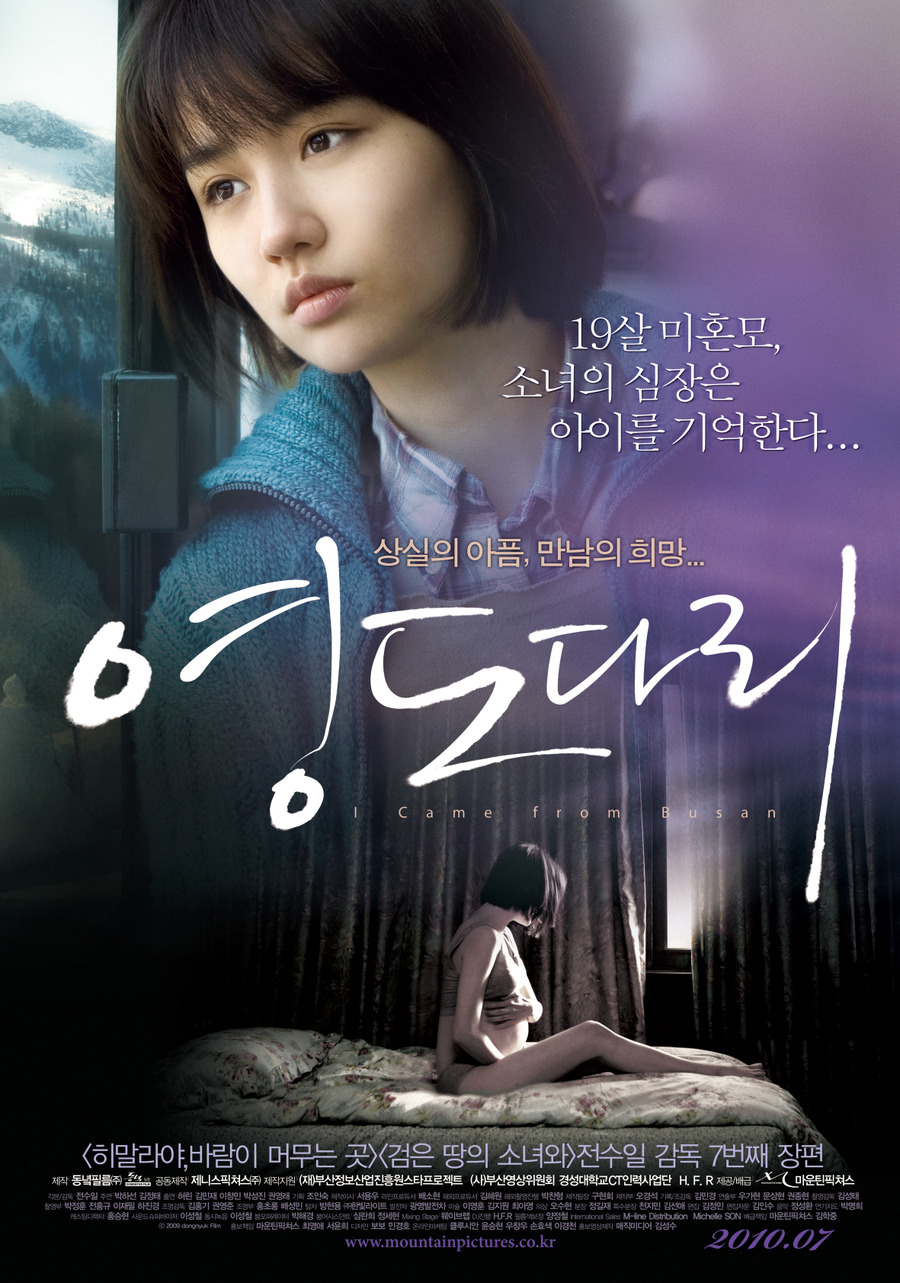
(I Came From Busan, 2009. Source)

Because of that, unwed mothers, whose circumstances are not good and so have difficulty supporting themselves, think of adoption of their own accord or are induced to adopt, and our society also implicitly supports the “have and raise side” less than it does adoption.

사정이 이렇다 보니 지난해 우리나라의 해외입양아는 미혼모의 자녀가 90%를 차지한 것으로 나타났다. 그러나 최근 이들에 대한 지원방안이 정치권과 시민단체, 기업 등을 중심으로 활발하게 논의되면서 미혼모 가족에 대한 관심이 일고 있다.

Because of this situation, last year it emerged that 90% of internationally adopted children from our country were the children of unwed mothers.  However, as ways to support them are currently being actively discussed in political circles, civic organizations, and businesses, interest in unwed-mother families is rising.

Image Caption: 던킨도너츠는 미혼모 정소향(21세) 씨를 정규사원으로 채용하면서 미혼모 채용에 적극 나서기로 했다 /By hiring unwed mother Jeong So-Hyang (21) as a permanent employee, Dunkin Donuts is actively taking a stand for the hiring of unwed mothers.

미혼모 인식 개선이 우선 / Improvement of perception of unwed mothers the priority

미혼모에게 가장 필요한 부분은 부정적인 사회의 시선이 관심과 보호의 시선으로 바뀌어야 하는 것이라고 전문가들은 지적했다.

Experts indicate that the most important thing unwed mothers must do is change negative societal views into feelings of interest and protection.

실제 지난 2009년 한국미혼모지원네트워크와 한국여성정책연구원이 실시한 ‘미혼모ㆍ부에 대한 한국인의 태도와 인식’ 설문조사에 따르면 미혼모는 동성애자 다음으로 가장 많은 차별을 경험한 집단으로 조사됐다.

In fact, according to the survey “Koreans’ attitudes toward and perception of unwed mothers and fathers,” carried out in 2009 by the Korean Unwed Mothers Support Network and the Korean Women’s Development Institute, unwed mothers were found to be the group that experienced the most prejudice, after homosexuals.

또한 설문에 참가한 2,000명 중 60% 이상이 미혼모에 대해 ‘판단력과 책임감이 부족한 사람’이라고 답변했다.

Also, of the 2,000 people who participated in the survey, over 60% answered that unwed mothers “are people who lack judgment and a sense of responsibility.”

김혜영 한국여성정책연구원 연구위원은 “미혼모의 경우 일종의 일탈자로 낙인 받고 있다”며 “미혼 부모에 대한 과감한 지원정책이 필요하다”고 지적했다.

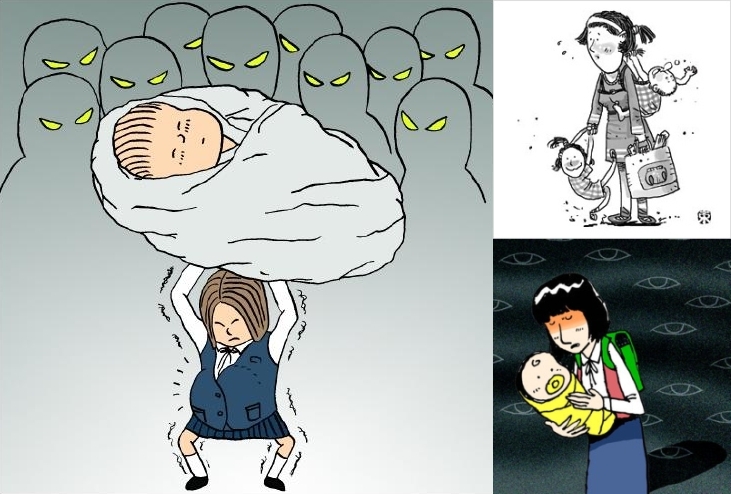
(Sources: left, top-right, bottom-right)

Kim Hye-young, a senior researcher at the Korean Women’s Development Institute, said, “An unwed mother is branded as a kind of deviant.  We need bold support policies for unwed parents.”

이영호 서울시 한부모가족지원센터장도 “우리사회는 다양한 가족이 있고 모든 가족은 행복할 권리가 있다”면서 “그러나 우리 사회에서 미혼모가 아기를 키우면서 자랑스럽게 또는 당당하게 양육의 경험을 공유하고 그 안에서 성장할 수 있을까란 의문이 들때가 많다”고 아쉬움을 드러냈다.

Lee Young-ho, head of the Seoul City Single Parent Family Support Center, also showed frustration:  “There are diverse families in our society, and all families have a right to be happy.  However, there are many times when I question whether unwed mothers, while raising their children, can proudly or confidently share their child-rearing experiences and develop in that [kind of environment], in our society.”

이에 최근 여성단체와 미혼모 보호 시설은 미혼모 인신 개선 사업을 적 극 펼치고 있다.

Accordingly, women’s organizations and unwed-mother shelters are currently actively engaging in a project to improve the perception of unwed mothers.

지난달 28일 서울시한부모가족지원센터와 20여 곳의 미혼모관련 단체들은 ‘미혼모지원단체협의체’를 발족하고 미혼모 인식 개선을 위한 다양한 논의를 시작했다.

On July 28, the Seoul City Single Parent Family Support Center and about twenty organizations for unwed mothers started the ‘Unwed Mother Support Organization Council” and began a variety of discussions designed to improve the perception of unwed mothers.

그 첫 번째 사업으로 사람들에게 부정적 이미지가 강했던 ‘미혼모’를 공모를 통해 ‘두리모’로 대체하기로 했다. 두리모란 ‘둥근’이라는 뜻과 둘이라는 숫자를 의미하는 방언 ‘둘레’가 조합된 것이다.

For their first project, they agreed through a public contest to replace “unwed mother”, which had a strong negative image, with “doo-ree mother.” “Doo-ree mother” combines the meaning “round” [doong-geun] with the regional dialect word dool-leh, which means “two people.”

(Source)

정치권ㆍ기업, 미혼모 자립위해 노력 / Efforts by political groups, business for unwed mothers’ independence [ability to support themselves]

정치권에선 ‘미혼모 자립’을 위해 관련법을 정비하고, 토론회를 통해 다양한 의견을 청취하고 있다. 기업들도 미혼모를 우선 채용하는 등 이들의 자립을 위해 힘을 쏟고 있다.

Political groups are modifying laws in order for ‘independence for unwed mothers,’ and through panels, they are listening to diverse opinions.  Through actions like prioritizing hiring unwed mothers, businesses are also devoting themselves to the cause of their independence.

특히 민주당 최영희 의원(국회 여성가족위원회)은 미혼모에 대한 지원을 확대하는 내용을 담은 ‘입양촉진 및 절차에 관한 특례법 전부개정안’ 등 관련법을 최근 국회에 제출하는 등 법 만들기에 앞장서고 있다.

Democratic Party Assemblywoman Choi Young-hee (National Assembly Gender Equality and Family Committee), in particular, is leading the way in making laws, some of which are currently submitted to the National Assembly, like “Overall Revision Bill for the Special Act Relating to Promotion and Procedure of Adoption,” the contents of which expand support for unwed mothers.

또한 지난 3일에는 한국미혼모가족협회·한국여성정책연구원와 공동주최로 ‘미혼모 지원정책 개선방안’ 포럼을 개최했다.

(Source)

Also, on June 3, the Korean Unwed Mother Families Association and the Korean Womens Development Institute co-hosted the “Unwed Mothers Support-Policy Improvement Measures” forum.

이날 최 의원은 “해외입양의 90%가 미혼모의  자녀라는 점은 우리 사회의 아픈 현실을 반영하는 것”이라며 “직접 양육하기를 원하는 미혼모가 늘어나고 있는 만큼 양육비 지원을 현실화 하고 지역사회에서 안정적인 생활을 할 수 있도록 정부의 적극적인 지원이 시급하다”고 지적했다.

On that day, Assemblywoman Choi said, “That 90% of international adoption is the children of unwed mothers reflects our society’s painful reality.  As the number of unwed mothers who want to raise their children themselves rises, the government’s active support is urgently needed to actualize aid for child-raising expenses for a stable life in a community.”

한편 이날 포럼에서 김혜영 한국여성정책연구원 박사는 ‘양육미혼모의 자립기반실태와 지원방안’에 대한 연구결과를 발표했다.

Also at this forum, Dr. Kim Hye-young, researcher at the Korean Women’s Development Institute, revealed the results of a study on the “Current State of Groundwork for Independence of and Ways to Support Unwed Mothers Raising Children.”

김 연구원은 “60%가 넘는 미혼모가 양육비와 교육비의 문제로 어려움을 겪고 있고, 80%이상은 월세와 같은 불안정적인 주거생활을 하는 것으로 나타났다”면서 “안정적인 자립기반 구축을 위해 미혼모 가족에 대한 조기 개입의 필요성과 함께 지원의 폭을 보다 확대할 필요가 있다”고 주장했다.

Dr. Kim said, “It showed that over 60% of unwed mothers are struggling because of the costs of child-rearing and education, and more than 80% live in unstable housing situations like [those requiring] monthly rent. In order to build stable foundations for independence, early intervention for unwed-mother families, together with an expansion of the range of support, is necessary.” (Source, right)

또 목경화 한국미혼모가족협회 대표도 “우리나라의 미혼모정책은 시설에만 초점이 맞춰져 있어 시설에서 벗어나 자립을 하려는 미혼모들은 빈곤 상황을 쉽게 개선하지 못하는 실정이다”고 지적했다.

Furthermore, Mok Gyeong-hwa, a representative from the Korean Unwed Mothers and Families Association, pointed out, “Policies regarding unwed mothers in our country only focus on facilities, so unwed mothers who want to break free from facilities and live independently can’t easily improve their state of poverty.”

최 의원은 이날 논의된 내용을 바탕으로 ‘한부모가족지원법 개정안’과 ‘국민기초생활보장법 개정안’을 제출할 예정이다.

Assemblywoman Choi will present the “Single-Parent Family Support Law Amendment” and “National Basic Living Security Law Amendment” based on the discussions of that day.

기업들도 미혼모 자립을 위해 적극적으로 나서고 있다. 던킨도너츠와 배스킨라빈스를 운영하는 비알코리아는 미혼모 시설인 사회복지법인 동방사회복지회와 함께 미혼모 고용지원 협약을 체결하고, 던킨도너츠 매장에서 파트타임으로 근무하던 미혼모 정소향(21세) 씨를 정식 사원을 채용했다

Businesses are also actively taking a stand for the independence of unwed mothers.  BR Korea, which operates Dunkin Donuts and Baskin Robbins, together with the  Eastern Social Welfare Society, a welfare corporation that is an unwed mother [support] facility, signed the Unwed Mothers Employment Support Agreement and recruited unwed mother Jeong So-hyang (21), who had been a part-time employee at a Dunkin Donuts shop,  as a permanent employee.

June 16, 2011.

Reporter: Cheon Won-gi (천원기, 000wonki@hanmail.net)

Share

Getting an Abortion in Korea

Posted in Abortion, Contraception, Korean Feminism, Korean Sexuality, Sexual Relationships by James Turnbull on September 19, 2011
(Source: unknown)

Thanks again to this university student for taking the time to write about her recent experience. Naturally, she’d like to remain anonymous, but she’d be happy to answer any questions readers may have in the comments (provided they’re not too intrusive):

……For me it started when I didn’t get my period. I was a bit worried as two weeks ago, during intercourse, my boyfriend’s condom slipped and so we had to change in the middle to a new one. Anyways, the pregnancy test kit came out with two visible lines. I was surprised and was stunned for about two minutes. Then, reality hit me: I didn’t cry, I immediately called my boyfriend, and we talked about this together, which I think was, for me, a better way to relax and calm down than crying.

We accessed the situation and decided to get an abortion, as we were both university students and thus didn’t have any ability to support ourselves. For me, having a baby in Korea meant that any chances of you getting a professional job was over, and I just couldn’t face that, not only because of my dreams but also because of the huge demands that my parents bore to put me in college. Even if we had the baby, I reasoned, we wouldn’t be able to raise him/her in a high-quality environment, as both of us would probably be working at low paid jobs w/ long hours just to support our family. We began to search up abortion clinics in our area and was lucky to find one with ease.

However, due to the government regulating abortions with more severity, we were worried about the price of an abortion. We searched up and found that (I was 4 weeks pregnant, or 2 weeks past from the initial fertilization) about 3 yrs ago, before the minister of health had said that stupid comment about abortion and fertility rates, it was about 400,000 won for women who were 4 weeks pregnant like me. But, more current searches showed that it could now be anywhere from 1 to 2 million won – basically it depends on what the hospital says, as there is no set price, and with the new regulations doctors can lose their license if it’s proved that they’ve done it more than 3 times. We were very stressed over this issue, as prices tend to skyrocket with each passing week (source, right).

Anyways, we entered the clinic, and I got an ultrasound. The doctor said that the fetus at that stage was too small, and that I should visit the next week. I was initially skeptical as I wasn’t sure if the doctor was telling the truth or if she wanted me to pay a bit more, but I had no choice, and did as the doctor told me. The following week I re-visited the clinic but this time a different doctor checked the fetus. And what she said made me upset. Basically, she told me that I shouldn’t have such a loose lifestyle, that I should care more about contraception, why I had waited so long before coming to visit, and so on and so forth. But I had no choice, since if I go to a different clinic I have to pay for the ultrasound again. After that dismal lecture, I went to discuss the pay and other things with another person (I don’t know what her job is exactly-maybe some sort of consultant?). The pay was 800,000 won, which was a relief. The consultant explained everything: how I shouldn’t eat anything 6 hrs before the operation, how I might not be able to have a baby ever again, how much it costs, what the aftereffects were, how I needed my boyfriend (who’s a bit older than I was) to act as a guardian and so I needed him to come with me on the day of the operation, and so forth.

During the next day, we desperately raised some money; I was worried as well not because of the money but because of the guilt. I tried to assuage my feelings – after all, a 5 week old baby doesn’t have its cerebrum developed yet; it doesn’t have feelings – but it was a bit hard. But in the end, the day came, and I went to the clinic, signed everything (the abortion was to be called a missed abortion, and since it’s outlawed I can’t demand any sort of papers from them), paid (in cash), and got ready for the operation. When I went into the operation room, it frightened me. There was this bed, and there was a little metal bowl right under it-that’s when it hit me the most that something that could potentially grow into a being with feelings would be erased forever, never to appear again, and it made me quite sad, but I had no choice – I couldn’t back out. They strapped me onto the bed, and I was knocked out. The next thing I remember is being back in the little ward (it’s very small-about the size of a small elevator, and is for one person only) with my boyfriend right next to me; apparently I had just cried, hugged the nurse and said “sorry” and “thank you”, and then had thrown up. After about 30 minutes of lying down and talking with my boyfriend, the dizziness subsided, the cramp in my stomach had went away, and I walked out of the ward. The lady at the counter said that I had to re-visit about 2 days from now, and then every 3~4 days to check up for the next two weeks (the price was all included in the initial payment) and gave me some medicine.

Overall, it was not that much of a traumatic experience, but I won’t ever be able to forget the little bowl. It saddens me even now (end).

(Source)

See here and here for two more accounts of getting an abortion, in Seoul and Busan respectively, and here for more context on the criminalization of abortion in Korea in recent years (or, technically, the sudden enforcement of existing laws, after being ignored for 60 years).

Update – See here for a thoughtful response to this post by Roboseyo.

Update 2 – And here for another by Angry K-pop Fan. Just to clarify something mentioned in both though, while my wife, for instance, was once unfortunate enough to come across a very judgmental pharmacist when buying the pill, that was over a decade ago. Indeed, as Gomushin Girl and many other commenters here have pointed out, that is extremely rare these days (especially in the cities), and regardless they did (and do) still sell it nevertheless, unlike some US pharmacists that refuse to for religious reasons.

Share