Rather than have it hidden unanswered on an old post, and ironically one rather critical of the Yaz (야즈) contraceptive pill at that(!), let me post this question from a reader here:
This may seem strange after reading the comments but I am a Yaz user and I really like it and I am new to Korea and next month my last pack of Yaz will finish. Does anyone know where I can find Yaz in Korea? Is it even available in Korea or perhaps does it go by a different name. Any help would be much appreciated.
Hey, whatever works for her, and I’ll take a look at Korean websites for more information if necessary. But can any readers with more practical knowledge help?^^
As long-term readers will be well aware, I’m a big fan of evolutionary psychology. And why not? It usually provides both simple and extremely compelling explanations for many universal cultural features and human behaviors, such as that of the evil stepmother or the fact that 95% of killers are males respectively for instance. So when research in 2004 found that women with hourglass body shapes are 30% more likely to become pregnant than others, it was no great surprise that men worldwide have always tended to find this body type the most attractive.
But even congenitally blind men too?
Yes, it’s true, and while critics have frequently pointed out the sexist and/or (ironically) culturally-based assumptions to many of evolutionary psychologists’ conclusions, this latest news definitely buttresses the “nature” rather than the “nurture” side of the debate:
…Notwithstanding the significant scientific evidence in support for the ubiquitous male preference for the hourglass figure [a waist-to-hip ratio of 0.68 to 0.72], social constructivists doggedly hang on to the position that our preferences are due to arbitrary socialization (e.g., advertising teaches men to prefer a particular body type). Well, in today’s post, I discuss a new study that yet again kills the apparently immortal socialization dragon!
In a recent paper published in Evolution and Human Behavior, Johan C. Karremans, Willem, E. Frankenhuis, and Sander Arons explored men’s WHR preferences with one twist: the men in question were congenitally blind! Needless to say, this largely removes the possibility that these men were taught via media images to prefer a particular female body type. You might wonder how one would go about eliciting such preferences from blind men…via touch of course! The researchers had two mannequins dressed in exactly the same way but who varied in terms of their WHR (0.70 or 0.84)…
Read the details at Homo Consumericus, and the typically acerbic comments section there is also interesting. Meanwhile, on the same day I read that I happened to pick up the June 2010 edition (no.21) of cosmetic store Aritaum’s (아리따움; “Charm”) free advertorial magazine (as one does), and the contrast with the wholly photoshopped, physically impossible “X-line” body type being promoted in it couldn’t have been any greater:
( “Find your X-line”? Good luck! )
I’ve already discussed the X-line concept in an earlier post, almost literally tearing to shreds a Korea Times report – nay, also an advertorial – that uncritically reported on the “new body trend” in the process. But you may also be curious to read the advertising copy for the X-line slimming drink above however: what does persuade Korean women to buy such things?
아리따움 슬리머
울여름, 꿈에 그리는 비키니를 위한 당신의 다이어트 플랜은? 운동하기엔 많은 시간과 노력이 필요하고, 어디서 왔는지 모를 다이어트 방법은 믿을 수 가 없다. 그렇다면 올해도 무조건 굶는 것이 최고? 굶어서 빼는 다이어트는 단기간의 체중 감소는 느끼겠지만 얼굴 혈색을 나쁘게 하고 피부 탄력을 떨어뜨리며, 얼마 지나지 않아 요요 현상을 불러온다.
슬리머 DX는 간편하고 즐겹게 이용할 수 있는 슬리밍 제품으로 식약청으로부터 체지방 감소 기능을 인정 받아 믿고 섭취할 수 있다. 또한 휴대가 편한 앰플 형태라 언제, 어디서든 자신의 라이프스타일에 따라 쉽고 간편하게 다이어트가 가능하다. 아리따움 슬리머 DX라면 올 균형 있는 X라인으로 비키니를 입는 데 주저함은 없을 듯!
Edited slightly, to make it sound better in English:
Aritaum Slimmer
This summer, what is your diet plan for getting into your dream bikini? Exercising takes a lot of time and effort, and you can’t believe in diets if you don’t who came up with them. This year, is simply being hungry the best solution? If you diet this way, it is true that you will soon feel that you’ve lost some weight, but at the same time your complexion will become bad and your skin will lose its elasticity and bounce, almost inevitably resulting in a yo-yo effect as you crave foods again.
Slimmer DX is a simple, convenient, and enjoyable to use slimming product that you can take with the confidence that the Korean FDA has recognized and approved it as a slimming product. Also, it is portable and in a bottle that has more than enough for any occasion, ensuring you can easily use it to diet whenever and wherever you choose according to your lifestyle. This summer, you shouldn’t have any hesitation to use Aritaum Slimmer DX to wear a bikini that shows off your balanced X-line!
Diet advertisements in Korean magazinesappear to promote more passive dieting methods (e.g., diet pills,aroma therapy, diet crème, or diet drinks) than activedieting methods (e.g., exercise). Results further indicatedthat women may be misled to believe that dieting is simple,easy, quick, and effective without pain, if they consume theadvertised product. This study suggests that there is an urgentneed to establish government regulations or policies about dietproducts and their claims in Korea. Magazine publishers alsoneed to recognize their role in societal well-being and acceptsome responsibility for advertisements in their magazines.
Finally, a question for readers: I picked up the Aritaum magazine partially because I couldn’t tell if Lee Na-young’s (이나영) neck above in a bus-shelter advertisement near my apartment had been lengthened or not? She’s a tall woman; I honestly can’t tell. Meanwhile, the woman in the first picture is Shin Se-kyeong (신세경) for those that you that are curious (whom I’m well aware will also have been extensively photoshopped; in the original image, her legs appear to have been lengthened), but, alas, the identity of the ant-like figure with the X-line escapes me I’m afraid!^^
Barring Bae Young-joon (배용준) above, notoriously popular among them, then I’d wager that middle-aged women themselves were your most likely answer. And your least likely? Probably men in their early-20s, which begs the question of why they’re the only ones actually speaking in the following commercial from Dongkook Pharmaceutical (see below for a translation):
Of course, the reason the young men are featured at all is because Korea has universal male conscription, which makes parting scenes like those featured above a normal part of the Korean life-cycle. So while the leaving ceremony itself may be unfamiliar to most Western observers, a company encouraging consumers to associate its product with it is really no different from a bank using imagery of, say, children’s university graduation ceremonies to sell retirement savings plans.
Still, that’s not to say that it’s just any old commercial. For in relying on an emotional event for Korean mothers and sons to sell its products, but quite literally denying only the mothers a voice in that, Dongkook Pharmaceutical has ironically provided an apt illustration of Korean women’s expected role in any public debates about military conscription. Which is in short, to be seen and not heard, their opinions taken for granted by others.
For instance, in 1997 the Korean media revealed that the sons of Lee Hoi-chang (이회창), the then presidential candidate of the then ruling Shinhangukdang (New Korean Party; 신한국당), had been exempted from their military service due to medical grounds; popularly believed to have used his wealth and influence to secure this, the backlash against Lee for failing to fulfill his paternal and nationalist responsibilities was so intense that his political career was soon over. And yet according to Insook Kown in A Feminist Exploration of Military Conscription: The Gendering of the Connections Between Nationalism, Militarism and Citizenship in South Korea (2001), even in the midst of all that:
…women were voiceless. Those who accused Lee, answered the accusations, reported the matter, and contributed articles were all men. In public, the conscription scandal seemed a matter for men only. Sometimes, mothers were used by men as a reference symbolizing a certain group of women only concerned about the welfare of their sons. Many male editorial writers represented the angry emotions of mothers to show South Korean popular opinion. One editorial writer in the JoongAng Daily (22/08/97) described the anger of many mothers of sons. According to him, these mothers wrote a slogan on the calender for Election Day: “Let’s never forget the exemptions of Lee’s sons”. (p. 43)
And later another editorial writer in the same paper (27/08/97) illustrated the emotional background of the issue by using a motherly perspective:
People did not deal with the exemption by making accusations of immorality or illegal intervention in the exemption, but with emotional anger like, why did your sons not have to go into the army, while my son is suffering in a life-or-death crisis. What made women angrier than anyone else, was caused by this kind emotion. (p. 43)
Kwon argues that the Korean state has always very much had a stake in accepting feminized forms of self-sacrifice in its name, whether as factory workers, prostitutes to the US military or Japanese tourists (a crucial source of foreign exchange in the 1960s and 1970s), or mothers of conscripts. Focusing on the latter here, consequently they have so far lacked:
…room to represent their own sacrifices in public. Mother’s concern and pain over their son’s conscription has remained hidden under the taken-for-granted necessity of military conscription for national security. Their voices have been deprived of a space for expression; and because their emotional attachment to their sons has been translated into a private matter, they have not mobilized as a group. (p. 37; tenses have been changed)
Not that this lack of representation means that mothers are necessarily opposed to conscription. For example, Cynthia Enloe, who has written extensively on the subject of “patriotic motherhood” narratives constructed by militarized states, argues that in fact they can have attractions for women whose mothering role has been evaluated as personal and private. Indeed, it can be a chance for them to completely revalue their maternal duty:
Some women feel deeply validated when some politician goes on the call for mothering to be defined as a vital contribution to the nation’s war effort, because warfare has been imagined by many to be the quintessentially public and national activity. (Maneuvers: The International Politics of Militarizing Women’s Lives, 2000, p. 11, quoted in Kwon p. 46)
Moreover, what are these “sacrifices” referred to exactly? Kwon’s analysis is a little weak on this point, as although she provides a comprehensive and convincing demonstration of how in fact all women suffer from the conscription system (a subject taken up in this series), there is little evidence that mothers specifically suffer beyond that aforementioned “concern and pain over their son’s conscription”. As the commercial demonstrates however, that may be rather more than a Western observer might expect.
At which point it is prudent to provide the translation of it(!). Below, the text featured on the screen is written as normal text below, while everything spoken by the conscripts or in the voiceover I’ve put in quotation marks. I’ve also provided the commercial again to make it easier to follow along:
엄마…..그동안 받기만 해왔습니다
Mother…..(I’ve) only ever received things (from you)
엄마…이제 처음으로 엄마품을 떠나네요
Mother….this is the first time I’ve left my mother’s (your?) bosom”
엄마…고맙습니다
Mother…thank you
듬직한 대한민국 군인이 돼서 엄마가 믿고 의지할 수 있는 아들이 되겠습니다
I will become a reliable, trustworthy Korean soldier whom you can trust and depend on
이제는 우리가 엄마를 도와드릴 차례입니다
Now it’s our (my?) turn to help our mothers
어머니 잘 다녀오겠습니다. 사랑합니다. 사랑해
Mother, I will do well before I return. I love you (formal). I love you (informal)
엄마, 사랑합니다. 충성!
Mother, I love you (formal). Loyalty! (Fealty?) (Devotion?) [James: whatever the exact meaning, it is said when saluting]
대한민국 갱년기 어머니들의 10명 중 8명은 다양한 갱년기 증상으로 힘들어하고 있습니다
Out of every 10 mothers of the Korean public who experience menopause, 8 suffer from various symptoms
Tell your mother the love you feel in your heart. With HeraminQ.
이제, 엄마의 갱년기를 도와주세요. 훼라민Q.
Now, please help with mothers’ menopause. HeraminQ.
(In very fine print): 의사, 약사와 상의하십시오. 부작용이 있을 수 있습니다
Please consult with a doctor or pharmacist. Side effects are possible.
Update: Seamus Walsh has provided a slightly more accurate translation (with explanations) in the comments.
(For another post: the impact on sisters and girlfriends of conscription? Movie poster for The Longest 24 Hours, (기다리다미쳐, 2007), a lighthearted look at military service from the perspective of conscripts’ girlfriends; also known as Crazy4wait. Source)
While this may sound a little hypocritical at first, let me begin my discussion on the subject of the mothers’ feelings by highlighting those of the men; actually, that is the original reason I wanted to write this post, for let me stress that you were seeing men in their early-20s crying at the thought of leaving their mothers. What did that make you think of them?
Well, at risk of sounding insensitive, personally I found them to be pathetic. Not that I was all that mature at the same age of course, and in many senses my reaction may simply be because of cultural differences. Like Brian in Jeollanam-do once put it:
…everything in Korea tries to be cute, in the same way everything in the States is “Xtreme” and too cool for school. Korea uses a cartoon to advertise where the US would have a gravelly stoner voiceover, and Korean videos often feature cuteness exaggerated to a sickening degree where American videos would lots of brooding and feigned indifference.
And not unrelated is how different average Koreans’ and average Westerners’ life-cycles are at that age, although 30-somethings like myself should be wary of projecting their own experiences onto today’s 20-somethings. Nor do I want to make light of the hardships conscripts have to endure either.
But then I’m not: in that commercial at least, thinking about those hardships is not why they’re crying. Moreover, to describe the crying as a simple cultural difference underplays the extent to which this practice is unique even within Korean culture itself, as beyond obvious cases such as funerals, my (Korean) wife for one could think of no other situations in which it is so socially acceptable for a man of that age to cry publicly. That they can and do then, is partially because a) the vast majority of Koreans don’t actually think of any male as a “man” until he has fulfilled his military service, and b) this uniquely strong bond between mothers and conscript-sons. Indeed, there is:
…a widely held popular belief that a father should encourage his son to go into the army, and to fulfill his national defense duty to achieve real citizenship. In this gendered construction, mothers represent emotional attachment such as compassion and pity toward their conscripted sons. In other words…the emotional part of the work of conscription….
…At the most emotional step of the conscription process, the father disappears. For instance, in two recent guidebooks published for pre-conscripts, the authors, both male, make almost no mention of fathers. The only ‘object’ for whom male soldiers are expected to feel concern about in the family is the mother. (p. 44)
And as you might expect, this is well-represented in popular culture, and in addition to commercials like the above I have frequently seen conscripts brought on to the stage after a girl-group has performed on an army base to wax lyrical about their performance and their attractiveness…only then to break down in tears and leave a very emotional message to their mothers watching back home (indeed, often they’re literally choking on their words so much that Om-ma “mother” is the only word you’re able to discern).
Unfortunately for readers however, this is yet another case of something interesting to outside observers that is unremarkable to Koreans themselves, and so I’ve spent over an hour unsuccessfully looking for examples to post here (videos of girl-group performances typically finish just before the soldiers are brought on stage). If any readers find any I would appreciate it if you could pass them on, but in the meantime let me finish by passing on what Kwon says about the program Ujeongdui Mudae (우정의 무대), or Stage for Friendship, the only program about conscripted soldiers in the 1990s, and which had:
…one famous section, ‘Yearning for Mother’. An unidentified mother talked about her son from back stage. Following her talk, a lot of soldiers ran on the stage shouting “Mother” and insisted she was their mother. Finally, the mother appeared on stage and hugged her son. Finally, the mother appeared on stage and hugged her son. Accompanied with deeply moving music, both mother and son cried, as did other soldiers and everybody watching the TV show. (p. 44).
For your interest though, I did find this 2008 commercial with Moon Geun-young (문근영) for GS Caltex (칼텍스), which features a mother visiting her son during his military service (and impressed with how much of a man he has become):
And for the record, Dongkook Pharmaceutical did produce more “normal” commercials for HeraminQ with middle-age women, here, here, and here, as well as another one in the “life-cycle” series featuring mothers’ high-school children taking their life-determining university-entrance exams:
Thoughts?
(For all posts in the Korean Sociological Images series, see here; for more on the effect of conscription on Korean society, see here and here)
After School’s (애프터스쿨) debut track from last year, of which I again include both DJ Areia’s remix above and the original below for you to enjoy while I explain the lyrics. But note that the remix is not actually trance this time, but rather the disco-like “vibrating analog synthesizer sounds and the helicopter-like basslines” of the late-1980s and early-1990s, so please do give it a try if you’re normally put off by dance music.
As for the music video itself, its theme is a little strange: schoolgirls in skimpy clothing coming on to their increasingly flustered young teacher, whom they are very happy to have ‘accidentally’ burst into their locker room later? It sounds…nay, looks like Japanese manga, and reminds me that student-teacher relationships (including dating and marriage) are a common trope of mainstream Korean popular culture (see here, here, and here for example), which only serves to both glamorize and normalize them.
Still, overly hormonal school students do sometimes have crushes on their teachers, and there’s nothing wrong in itself with portraying those in a music video. But while this one does obviously cater more to men’s sexual fantasies than to women’s (would having the group members vying for the affections of a handsome male student instead appeal more to women?), the lyrics demonstrate that there is much more to the song than meets the eye…
Again, for reasons outlined last time, I’ll provide very literal translations:
이렇게 둘이, 너와 단 둘이
언제나 둘이, 달콤한 이야길 하고파 둘이
둘이, 오늘밤 둘이, 사랑해 우리 둘이 둘이 baby
This way the two of us, with you only the two of us
All the time the two of us, I want us to tell a sweet story
The two of us, tonight the two of us, I love you we the two of us the two of us baby
“단” in the first line confused me for a while: it has a dozen meanings, including “bunch” or “bundle” which would (sort of) go with “the two of us”, but ultimately the meaning “only” is the most appropriate here. After that, the “~ㄹ 고파 하다” verb ending in the second line was the first time I’ve ever come across it personally, nor is it in any of my grammar books, but my wife says it simply means “~하고 싶다”, or “want to”.
잘빠진 다리와 외모 너는 내게 반하지
그대를 향한 윙크 한번 내게 빠지지
니 높은 콧대, 내 몸맨 어때
내 앞에선 니 모든게 무너지고 말껄
You have fallen in love with my slender legs and outward appearance
If I wink towards you one time you will fall (further)
The bridge of your nose is high (you have high standards)
How is my body?
Everything about you is going to crumble in front of me anyway
It feels a little hypocritical of me to critique other translations of songs here, as I very much rely on them to try and understand anything I might be having difficulty with myself, and especially because the translators may lack my increasingly annoyed Korean wife to constantly ask questions of in the next room. Nevertheless, those of whomever DJ Areia uses in his remixes (Yeeun2Grace perhaps?) really do seem a little sloppy sometimes (recall the big mistake in the 5th line of Bang!), and certainly disguise the subtlety of the original.
Take the first line for instance: “빠지다” has 13 meanings according to my dictionary, but “sexy” isn’t one of them; rather “잘빠진 다리” are “legs that have lost a lot of weight”, or “slender”. Sure, you could argue that this is just being picky, but it’s just as plausible to think that there is something culturally significant in the fact that “legs that have lost a lot of weight” was said rather than “섹시한다리” for instance, or more literally “sexy legs”. Also, “외모” is not “face”, but is actually the “outward appearance” of your entire body.
Next, putting line 4 as “I know you’ll crumble in my presence” completely ignores the “모든게” (or “모든것” + “이”) in it, or “everything”, and although “I know you’ll fall for me” is fine I guess, the verb ending “~고 말껄” (annoyingly not in any of my grammar books) means more “[the verb] is going to happen anyway”. Hence “everything about you is revealed in front of me” seems much better, as per the translation available on the AfterSchoolPlay fansite (registration required)
Finally, not a translation mistake, but in line 2 annoyingly the meaning of “빠지다” is different to that in line 1; and learners of English complain about the multiple meanings of words!
사랑한다 말만 말고 보여 주겠니
나도 니가 맘에 들어 춤을 추겠니
너와 난 왠지, 자꾸만 왠지
통할 것만 같아, 너를 사랑 할것 같아
Don’t just say you love me, aren’t you going to show me?
I like you too, aren’t you going to dance for me?
You and me for some reason, only again and again for some reason
I think we will only be connected, I think I will love you
My wife tells me that the verb ending “~겠니” in line 1 and 2, again not in any of my grammar books(!), means “aren’t you going to [verb] for me?”, So where on Earth “If I didn’t like you would I dance up on you like this?” below comes from I have no idea, no matter how appealing the thought!
(chorus)
짧은 시간 가까워진 우리 둘 사이
그대와 난 이제 하늘이 맺어준 사이
두말 할 필요 없어, 다가와 내게 어서
조명이 나를 번쩍 비추면
그댈 유혹하는 내 눈빛이 뜨거워지지
다른 남자들은 니가 너무 부러워지지
말은 안해도 난 알잖아 표현 안해도 다 알아
빨개진 니 얼굴이 다 말을 해주잖아
In just a short time we have become close
We are a match made in heaven
We don’t need to say it twice, come to me
If a light suddenly shines on me
It heats up the light of my eyes that is seductive to you
And other men become very jealous of you
You don’t have to say it or show it in your expression, I know everything
You red face shows it all
Not much to say here actually, other than both the translators at Yeeun2Grace and AfterSchoolPlay separated the above into two verses between lines 4 and 5. But I think that was mistaken, as line 4 ends in “비추면” or “if the light shines (on me)”, which is why the singer’s seductive eyes light up in the line 5. Lacking that connector, then I think that their own versions of line 4 and line 5 – “I’ve been illuminated by the light… You see my burning seductive eyes” and “When the lightning strikes me…My eyes which are putting him into temptation are becoming hotter” respectively – don’t really make any sense.
(chorus)
나나나~
After school in the house, 모두 같이 make it bounce
들어봐 지금 내 말, 오늘밤 tonight
다가와 말못했던 얘기, 우리 둘만의 작고 작은 속삭임
그래 넌 지금 날 너무 원하지, 가벼운건 싫어 내 모습이
다른 장소 after party, 걱정마 이런 내 스타일에
오늘밤은 후회안해, 내 맘을 뺏어봐 baby boy
(chorus)
Na na na~
After School in the house, everybody together make it bounce
Hear my words now, this night tonight
Come to me, and all the things you (we?) couldn’t say, all the little whispers we said only to each other
Yes, you really want me now, I (you?) don’t want just light stuff
Different place after party, don’t worry this is my style
Don’t regret tonight, try to take my heart baby boy
Again, the Korean seems pretty straightforward here. On a final note then, given how targeted it is towards male audiences I was very surprised not to find any screenshots of the music video either via Korean or English search engines, leaving me with the onerous task of producing my own. Despite the visuals however, the lyrics in this debut song are clearly just as much about girl-power and being confident and assertive as they were in Bang! a year later, so the possibility remains open that After School may actually have a sizable female fan base (and I rather hope that they do).
In light of that then, you imagine what I thought of three members’ most recent song in which they pour on the aegyo (애교), basically looking and behaving like 12 year-old girls. Like I said in the comments to a post about it at SeoulBeats:
I’d have to give it a thumbs down. Not so much for the music in itself, but because I’ve always liked After School for the assertive, confident, girl-power theme of their songs, and so this “candy coated aegyo overload” as you well put it really seems to dilute their brand.
And most other commenters there agreed with me. But what do you think of it? Feel free to disagree with me of course, and diversity is the spice of life and all, even for music groups. But still…
Given the clear artistic license applied to the other main image in this series, would you say that here too, the graphic designer deliberately intended for members of Girls’ Generation (소녀시대) to look like virtual caricatures of themselves?
My reading for next week, and good timing in light of this recent photoshoot of Yu-bin’s (유빈) from the Wondergirls (원더걸스). Not that there’s anything wrong per se with a 22 year-old dressing like someone much younger of course, but then the similarities with a photoshoot of then 15 year-old f(x) (에프엑스) member Choi Sul-li (최설리) from February are obvious:
See here for more details of the latter and the issues that it raised (note that Sul-li replicates Yu-bin’s stance in other photos), and #5 below for the news that a recent child rapist was previously arrested (but not convicted) for providing shelter to a homeless 16 year-old girl in exchange for sex. Meanwhile, after The Lolita Effect I’ll probably be ordering Guyland for some balance, although I don’t expect it to be as relevant in the Korean context. Has anybody already read either?
1. The pill turns 50
“The advent of the contraceptive pill is the most important public health intervention we have ever seen for women.”
So said Australian sexual health physician Christine Read while speaking at a press meeting in Seoul last week.
“It has allowed us to control our fertility and to be able to plan when we would have children. It has permitted women to have sex safely, without fear of becoming pregnant,” she said.
And it has over a 99% success rate too, which makes one wonder why less than 2% of Korean couples use it, one of the lowest rates in the developed world. No great surprise to long-term readers of course though, most likely it is due to a combination of:
A sexual culture that elevates female virginity and chastity to the extent that many women either feign lack of knowledge of contraception, and/or rely on men to provide it
And finally scare-mongering by the Korean medical industry as recently as last year (despite overwhelming evidence of the pill’s safety and effectiveness being readily available in Korean), which until recently had vested interests in maintaining one of the largest abortion industries in the world.
While the author throws some positive aspects of the form of contraception into the piece at an attempt to convey objectivity, the headline and criticisms are anything but, saying the Pill led to sexual coercion, according to one of their main interviewees, author Libby Purves…
3. Japanese women encouraged to marry Korean men in colonial era
I’ve already written a greatdeal about how exceptional Japanese colonialism was compared to its European and U.S. counterparts, particularly in the degrees to which its colonies were integrated with, developed by, and settled from the home country, but I had no idea that that logic extended this far however:
The lack of discussion on inter-racial marriage by contemporary experts is not the only interesting feature to note. “It is an open secret among Korean scholars,” one professor of modern Korean history said to me the other day, “that there were a significant number of married couples between Korean men and Japanese women but there is so little study on it.” This is another surprise to non-East Asian historians. In other places it is men from the colonizing countries and women from colonized societies that married, and this feminization of colonies is often regarded as an aspect of Orientalism. There were, of course, married couples between Korean women and Japanese men, but as Oguma Eiji has already pointed out, the Government-General in Korea encouraged Japanese women to marry Korean men because, they thought, Japanese mothers were supposed to build the foundations of Japanese culture in the home.
As for dating and/or marrying Koreans, the author of Doing it Korean Style has ironically decided to stop dating Korean men! While that is primarily because of language difficulties however, by coincidence the author of On Becoming a Good Korean (Feminist) Wife has started an enlightening series on why it is much more difficult for 20-something Western women to find compatible Korean men the same age than vice-versa, and hence the huge disparity in the numbers of couples (although this is changing).
4. North Korean women: misfits in the South
A note to Agence France-Presse (AFP): if you want to encourage people to actually watch your otherwise good 2-minute introduction to this subject, then don’t restrict viewing of it to only on the Youtube website itself.
5. Child rapist case demonstrates urgent need for revision of age of consent laws
Convicted last week, child rapist Kim Su-cheol (김수철) was originally unrepentant, but soon began to act differently during a live reenactment of his crime; after all, the Korean judiciary, reflecting social norms, attaches a great deal of weight to expressions of remorse rather than abstract notions like innocence or guilt. Doing some further investigating however, Brian in Jeollanam-do has discovered that Kim Su-cheol is none other than the same person who 2 years earlier paid a 16-year-old runaway:
…to have sex with him about 30 times. The girl, a middle-school dropout who lived with Kim for two months this year, was paid 20,000 won ($16) each time, but was not forced into intercourse, investigators said. Kim reportedly admitted to police that she is pregnant, but said she doesn’t know who the father is.
As Brian mentions, that last point is rather bizarre, and I would add that the JoongAng Daily quoted above is clearly mistaken in reporting that the age of consent in Korea is 19; in a lengthy investigation of my own earlier this year (it is rather harder to determine than it may sound), I demonstrated that in fact it is 13, which is why Kim Su-cheol wasn’t convicted for the above.
I don’t intend to criticize that relatively low age here: not only it is actually on a par with those of many European countries, but in practice any choice of age is somewhat arbitrary, and convictions and/or public sentiment heavily dependent on both the age gap between and sex of the participants. However, in light of that earlier case and 15 other convictions for physical violence and hit and runs since being released from a 15-year prison sentence for rape in 2002, then unfortunately this latest crime of his does seem almost waiting to happen. Short of convicting him in 2008 though, it is difficult to think of how it could have been prevented, although authorities are possibly remiss in allowing him to live within 500m of a school (is there any dwelling in a Korean city that wouldn’t be?).
Meanwhile, K-Bites and AllKpop report that the police have charged a composer with the attempted rape of a female singer, but without revealing the names of either. This may just be an isolated case of course, but bear in mind that in the most comprehensive investigation to date, 62% of current or aspiring actresses surveyed “reported being pressured to have sex with influential figures like producers, directors, businessmen, politicians and advertising executives,” and 6% reported being the victims of rape. See Extra! Korea for more details.
6. State Department’s trafficking in persons report cites “juicy girls” in Korea
…continues to maintain that the best way to handle the issue of human trafficking is to put clubs that hire third country nationals off limits….If 3rd country nationals aren’t put off limits this issue will not go away because the bar owners will just keep finding different foreign women to traffic in. By forcing the bars to employ Korean workers it would pretty much make the human trafficking issue go away because Korean nationals would be much harder to traffic in.
7. The Swedish model of childcare
With thanks to the several readers who sent the various links in, this has been receiving a lot of attention in the media recently, prompted by an excellent article in The New York Times that begins thus:
Mikael Karlsson owns a snowmobile, two hunting dogs and five guns. In his spare time, this soldier-turned-game warden shoots moose and trades potty-training tips with other fathers. Cradling 2-month-old Siri in his arms, he can’t imagine not taking baby leave. “Everyone does.”
Sadly the polar opposite of Korea, where even maternity-leave laws are routinely broken, and only 1% of fathers take their generous 3 days of paternity leave (see #4 here). See Gender Across Borders for more commentary, and in Korea’s defense, Femonomics demonstrates that for all its pro-family rhetoric, the U.S. is not much better:
Many Americans would describe Sweden as “Socialist!!” (a big, bad, scary word these days), and they’d be right. But Swedish policies are also much more pro-family than those of the more free-market Capitalist US. At least if we consider parents spending time with their children to be pro-family (I do!). For all of the political rhetoric around our “traditional family values,” US society does not really have a commitment to strengthening the family. Right-wing groups may stand strong against gay marriage and abortions, but where are the rallies for family leave, subsidized childcare, and living wages? The top three results in a Google Search of “Pro Family Advocacy” are homophobic organizations protesting gay marriage. Do Americans just not get it?
Which reminds me of this from a 1995 Time magazine article on evolutionary psychology:
One reason the sinews of community are so hard to restore is that they are at odds with free markets. Capitalism not only spews out cars, TVs and other antisocial technologies; it also sorts people into little vocational boxes and scatters the boxes far and wide. Economic opportunity is what drew farm boys into cities, and it has been fragmenting families ever since. There is thus a tension within conservative ideology between laissez-faire economics and family values, as various people have noted. (The Unabomber complains that conservatives “whine about the decay of traditional values,” yet “enthusiastically support technological progress and economic growth.”)
But I digress. Finally…
8. Of politicking and prostitution
Curiosity Killed the Eccentric Yoruba describes the commotion caused by her being mistaken for a prostitute in a Tokyo an Abuja hotel!^^
With apologies for not being able to mention more of you in the 800 word limit, here is my article in Busan Haps magazine based on your thoughts on the sudden increase in the number of bloggers discussing dating and marrying Korean men. Thanks again for your help!
Update: Ironically, just 2 days after that went up, Hot Yellow Fellows reports a lull in the number of new blogs on the subject, and most of the rest going “into dating hibernation, either due to leaving Korea (what’s up.), having gotten into relationships, or running into bad luck/apathy”!
(If you’d like to leave any comments, please do so on the Busan Haps website)
But if we accept that obsession as a given, then, whatever its pernicious effects on women (and, of course, it does primarily affect women), it doesn’t mean that Korean consumers are simply dupes. A woman who decides to get breast-enlargement surgery, for instance, isn’t necessarily suffering from something like gong-ju byeong (공주병), or “princess disease.” More likely, she’s making a very rational, informed choice that has a dramatic positive effect on her career opportunities and confidence, more than paying back the initial investment.
And indeed, short of becoming some form of activist, and a poor and frustrated one at that, what exactly can people do when prospective employers require photos with resumes?
Still, as regular commenter Gomushin Girl pointed out in an earlier post:
You can say that an individual’s decision to participate in a socially normative activity may be rational, but that doesn’t make it either healthy for the individual or a rational norm for society to perpetuate. Female genital mutilation makes rational sense to the parents who inflict it on their daughters, who thereby ensure their daughter’s ability to participate as a normative member of society. However, few people would argue that submitting a child or young woman to a painful, permanently physically debilitating, possibly lethal, and medically unnecessary surgery is a healthy decision for either the individual and the society, no matter how established.
Add to this that the decision to get plastic surgery is not an uncoerced one and focused almost entirely on policing the looks of a single gender, and you have a deeply problematic social custom. It’s also a social custom under considerable debate among Koreans themselves, so it’s not like the big bad Westerners are coming by just to tsk tsk at the silly Asian custom. (My emphasis.)
With those negatives in mind, I’m glad to pass on the news that at least one politician is trying to do something about resume photographs:
On the 8th, Grand National Party (한나라당) National Assembly member Jeong Ok-im (photo) pushed for a revision to existing anti-sexual discrimination legislation for it to also prohibit the attachment of photographs to resumes and/or application forms.
According to existing legislation, if employers ask female applicants for details of their looks, height, weight, and other bodily-related facts, and also such things as their marital status, then they can face of a fine of 5 million won.
Jeong aims to add two extra clauses to this. First, that it should not be confined only to “female workers” but should be instead be made applicable to all “workers”; and also, that employers can not demand photos with applications. The reason is that such questions are not just a problem for women, but in fact affect both sexes.
Moreover, Jeong explained that this requirement for photos, reflecting a long-seated overemphasis on appearance, is not to be found in developed countries like the U.K., U.S., Australia, and Canada. In fact, in the O.E.C.D., only Korea and Japan follow this practice.
Indeed, from the outset employers in those other countries do not request information about such things as your sex, age, body size, weight, and so on, as these are irrelvent to your ability.
Jeong says that “this ‘Perfect Face Culture’ has deep roots in tradition and our patriarchal culture, and it continually distorts the employment market. Hence I have proposed these changes to the legislation to put a stop to it.”
What do you think? Have any readers, and perhaps particularly Gyopo readers, had any negative experiences of being asked questions like the above in interviews, which they would be much less likely to by Western employers?
Of course, I’m not so naive or biased to assume that Western employers don’t sometimes ask inappropriate and/or illegal questions either, but then I doubt they would ever ask details of applicants’ family histories and parents’ jobs for instance, and I imagine that I would be very uncomfortable working for an employer for whom the answers to such questions were important. Indeed, it behooves me to remember how my own work-life as foreign English teacher is really quite isolated from the rest of Korean society in that regard.
But regardless, even if the legislation is revised, it remains to be seen if it is actually enforced: women are still regularly fired for getting pregnant or requesting their legally mandated maternity leave for instance, despite already comprehensive anti-sexual discrimination legislation. But hey: at least it’s a start!
Three things of interest I came across all in the space of this morning…
First up, a recent edition of the BBC4 podcast Thinking Allowed, which – paraphrasing slightly – discusses the contention of cultural critic Paul Gilroy that:
From Curtis Mayfield to 50 Cent, from Nina Simone to JayZ, black music has declined in its quality and lost its moral stance. Outlined in his essay “Troubadours, Warriors, and Diplomats” in his book Darker Than Blue: On the Moral Economies of Black Atlantic Culture(2010), he joins host Laurie Taylor and music journalist Caspar Melville to discuss the counter-cultural stance that black popular music once had, and explore whether it really has been destroyed.
On the surface only tangentially-related to Korea, in that modern K-pop has strong hip-hop roots (in contrast to J-pop, which are more in rock), this 28 minute, very accessible synopsis it is still surely required listening for all those interested in music and cultural studies. And indeed, the second half of the discussion in which they talk more about the impact of technological developments on music, and especially the reality that precious few young people are prepared to pay for it anymore, is perhaps more pertinent to the Korean music industry than most.
Next, an Icelandic reader passed on a link (thanks!) to the journal article “Crazy About You: Reflections on the Meanings of Contemporary Teen Pop Music” in the Electronic Journal of Sociology (2002), by Phillip Vannini and Scott M. Myers, in which the highlighted part below immediately leaped out at me. With apologies for the long quote for the sake of context (actually, only 2/3rds of the paragraph!):
…Centralized corporate production insures continued consumption through pervasive distribution, vast output volume, and structured product obsolescence (Gitlin, 1981) while strategies of careful manufacturing of the image and sound of pop icons ascertain that audiences are treated as ‘targets’ and ‘market-segments’. Take for example the case of Britney Spears. Her image and sound had been first controlled by Disney as a pre-teen Britney worked as a host of the Mickey Mouse Club. Subsequently her schoolgirl image was spiced up to appeal to the 12-16 age group and her videos were made to occupy a steady spot in the rotation of Zoog ABC and the Disney Network. Now, with her continued biological growth her image has been recreated as sensual and provocative and formatted to meet the demands of MTV. As this takes place new ‘Britney’s’ mushroom on the market to appeal to different targets: Jessica Simpson to Christian teenagers, Mandy Moore to preteens, Jennifer Lopez to Latinas and older fans. Producers’ control extends from songwriting to image-packaging and personality development (Frith, 1978). Any boy-band act is put together to appeal to various personalities and life outlooks of fans as each band includes a member portrayed as cute and sweet, one funny, one good-looking and mysterious, one creative and goofy, one talented and motivated, one dark and tough, and such. Bands are created with the consumers’ demand in mind4, for example LFO target through MTV an older adolescent urban audience with their hip-hopish sound and sexual innuendos, while S Club 7 and Aaron Carter target preteens through Fox Family and ABC Family. This is an example of the diversification of products that allow producers the broadest appeal possible and the highest profit margin.
In passing, footnote 4 from that is also interesting:
4. The structure of consumer demand is an important concept to keep in mind. As Frith (1978) suggested producers’ ability to shape needs is limited. Why or when a style becomes popular or unpopular remains a conundrum for the music industry. It is much easier for any producer to stay with one genre or act after it has become popular and produce endless imitations than experiment with new formats or shape consumer demand. Record industries still find very few acts highly profitable, while the majority of albums produced and distributed hardly bring any profit at all (Burnett, 1996).
But the highlighted part caught my eye because of what I’d read in the post Thoughts on K-Pop Vol. 1: So Addictive at the blog Multi, which is definitely required reading for those interested in Korean music specifically:
Another important thing to note is that the Korean music industry is populated mainly by groups of at least five members. With a main audience of between 10 and 19, this is a brilliant idea because all the kids will have at least one person they like in every band, are enthralled by their personalities as seen on numerous TV shows, and will not hesitate to buy their albums and merchandise. This works for other industries as well, as phone, food and clothing companies almost solely hire celebrities to star in their commercials. They also record songs and shoot music videos (and short films) for these products and then endorse them on their numerous TV appearances. Basically, the celebrities become the only people you see on screen and in print. They become ridiculously popular really quickly, and then are sent around Asia to maximize their worth because all the other countries have succumbed to the “hallyu wave”.
Naively, I hadn’t been aware that the same logic also existed outside of East Asia. But having said that, it is still much more marked in K-pop. For not only it is exaggerated by the overwhelmingly celebrity-focused nature of advertising here, but that in turn is further exaggerated by the need to sell singers rather than their music per se, for reasons mentioned earlier. And there’s less space for independent artists that don’t subscribe to that logic to emerge too.
Finally, all the photos of KARA (카라) in this post are from their performance at (unfortunately spelt) Wonkwang University (원광대학교)* last month, in which it started to rain halfway through their song but – seemingly without so much as batting an eye – they kept performing nonetheless (see video below). Found via Omona They Didn’t!, admittedly I probably wouldn’t have given the photos a second glance if they had been of a boy-band instead, but once I had then I really responded to them, well-aware of how refreshing and especially liberating it can feel to continue exercising – or indeed, dancing – in a downpour.
More to the point though, not only are the photos themselves stunning, which this blog theme doesn’t really do justice to (click on the images themselves for more detail, or see Diaboliquehere and here for more), but in particular KARA happened to be performing Lupin (루팡), in which as Multi – who else? – puts it:
…From what I gleaned from Youtube translations of the songs, they sing about being confident (in love?) and not being afraid…as opposed to simply trying to get a guy’s attention in “Mister” (미스터); check here and here for respective lyrics, and it shows in their performances. They shine in “Lupin”, but bore with “Mister”. It might just be that “Lupin” is fresher, and they’re bored of performing Mister (side effect of weekly live performances, a.k.a overkill, of songs in k-pop) but I doubt it’s just that…
She tends to prefer performances to the music itself, and presumably to the music videos too, but for what it’s worth here they are to compare:
And finally a fan cam of the performance, although unfortunately it’s of very poor quality. The rain starts falling about at about 1:20:
Thoughts?
p.s. I’d been under the impression for many years that the term “Black Music” wasn’t particularly PC, and consequently have sometimes discouraged my Korean students from using it, but the Thinking Allowed podcast made me realize I may have been mistaken. Was I, or is there perhaps a difference between American and British English?
In a very comfortable-with-my-heterosexuality way, this picture from Tamotsu Yato’s 1972 book OTOKO: Photo-Studies of the Young Japanese Male is really rather good, and the hat reminds me a little of this award-winning shot too. Not so much artistic as soft gay porn however (interestingly, most of the models were heterosexual), then unfortunately the remainder of the book is not really up my alley personally, but you can download it in full from Sex, Art and Politics if you’d like. (via: Doing it Korean Style)
1. LBGT news and events
In related news, and with apologies for the late notice, this weekend there is the 11th Annual Queer Pride Festival in Seoul. See Roboseyo and Busan Haps for more links and event details, and Gusts of Popular Feeling for a more detailed analysis of the public acceptance of LGBT culture in Korea (and also here also for an excellent chronological overview).
Meanwhile, the Constitutional Court is expected to soon decide whether Article 92 of the Military Law stipulating the punishment of homosexual soldiers is a violation of their constitutional rights. Currently soldiers who have a sexual relationship with a member of the same sex are punished with one year’s imprisonment, which – forgive me if this sounds trite – is surely rather ironic in light of a pervasive culture of sexual abuse in the South Korean military. And probably not by coincidence, I was surprised to learn that apparently gay rape is not considered a crime in Korea also, something which emerged from the news that a male songwriter was sexually assaulted by a male comedian earlier this week.
Finally, The Three Wise Monkeys has a post about Gi Hyeong-do (기형도), “a misunderstood modern gay Korean poet” (via: Korean Modern Literature in Translation); another abouta trip to “Homo Hill” in Seoul; and finally, albeit not LGBT-related, also on that blog is this, this, and this post on Korean “room-salon” culture.
2. Parents demand government action on mini-skirted school uniform scandal
Young Korean celebrities may no longer be legally allowed to advertise school uniforms (see #7 here), but apparently that isn’t stopping female students from altering them to be “mini uniforms” or “S-line uniforms” themselves.
I’m reminded of an observation that a friend living in Japan made of their Japanese counterparts, who would attach velco to their skirts to raise them while hanging out in Shibuya, only to lower them while back at school. Has anyone heard of Korean students doing the same?
( Source: unknown )
3. Elementary school student raped in Seoul
See Brian in Jeollanam-do for more details, and I’d echo one commenter’s amazement and incredulity that the alleged rapist was able to wander the hallways unnoticed for an hour before dragging the student from the playground at 10am. Indeed, with two preschool daughters myself, it’s led me to seriously consider homeschooling here for the first time.
(Ironically, that inattention by the school comes at a time when parents in Seoul were outraged to discover that videos and audio of their children’s kindergarten classes were being streamed real-time onto the internet, all without their consultation or consent)
Brian also mentions that “in a very uncommon move in South Korea, the authorities released his name and photograph,” but in fact these were already available due to events set in motion by the rape and murder of a 13-year old girl by Kim Kil-tae (김길태) in Busan in February. Revealed to be a former sex-offender, but whose personal details had been kept anonymous by existing legislation, then the ensuing popular outrage led to the Ministry of Gender Equality and Family Affairs retroactively making all sex-offenders’ whereabouts publicly available on the internet (see #8 & #10 here), and accordingly so too here is the alleged rapist a former sex-offender.
This incident follows that of a 15-year-old middle school girl losing her life after being sexually assaulted and robbed by two 14 and 15 year old boys in Seoul last month. Apologies if the above image seems tasteless in light of that, and I don’t mean to imply a direct relationship between the two. But I did find the juxtaposition of stories interesting, and at the very least it points to a dire need to at least acknowledge the sexuality of teenagers, and hence provide decent sex education and – for want of a better term – awareness of sexual ethics accordingly.
Update: It remains true that as an already registered sex-offender, then the alleged rapist’s details were already public knowledge. But with apologies to Brian, I completely forgot what I wrote back in April:
…the government has now decided to release the names and faces of alleged sex-offenders when there is “strong evidence of guilt and a public demand to know,” and one immediate problem that comes to mind is how open that is to interpretation.
A court ruled Tuesday that a high school in Gyeonggi Province did not overstep its authority in dismissing a male teacher who forced a group of trainee teachers to drink “love shots” against their will at an evening get-together party.
A “love shot” is when two people drink with arms entwined, a drinking ritual meant to boost teamwork and forge closer relationships but which is often abused by male superiors.
Compare this landmark case from June 2007, in which a female employee successfully sued her boss for being forced to drink at a work dinner.
5. The trials and tribulations of being an unmarried 30+ year-old woman
Not a critical analysis, but another interesting and amusing post from Mental Poo nonetheless.
6. Women in Korea webcast
If you don’t know already, then every Sunday night (usually around 8 or 9) KoreaBridge has a live “women in Korea” webcast. Always interesting, anybody can listen and/or watch the discussion here, and more women are always welcome to join via Skype (but a headset is recommended!).
7. Drama version of Level 7 Civil Servant (7급 공무원) in the works.
Not that gender-related sorry, but then I have always liked the poster. See Dramabeans for more details, and actually it does sound interesting:
The movie’s plot centered around a woman who hides her spy identity from her slightly bumbling but well-meaning boyfriend. When her stories don’t add up and he gets tired of being shoved aside for odd reasons, he finally leaves her and goes abroad for his job. A few years later, he comes back as a rookie agent and runs into her again, much cooler now but not without a trace of his former dorkiness. (LOVE him!) But of course, neither can let on that they’re both spies, and moreover, their respective teams are working on cases that bring them repeatedly in contact with each other. The plot didn’t always convince — bioweapons, Russian baddies, blah blah — but the humor and the two leads made for an entertaining ride.
(Update: I’m curious. Would you say that this particular image conveys the common media theme “that sex is about male aggression and female submission”? I honestly can’t tell)
8. OMG: a Korean young female idol was not interested in what an elder was saying!
Quickly adding these stories to a draft version of this post as they appear throughout the week, sometimes my original, rather direct titles for them remain the most appropriate! In one of those only-in-Korea moments, see K-Bites and Omona! They Didn’t for more on f(x) (에프엑스) band member Krystal’s supposedly heinous faux pas for which she was roundly criticized by netizens for.
Probably not coincidentally, I’ve only been able to find precisely one actual video of it available unfortunately, and a mirror-reversed one at that. Lest even that be deleted eventually though, then I’ve uploaded it to Youtube so you can see for yourself, but have kept the title vague so as to not get flagged for copyright violation:
9. “Korean ladies refuse to date black men”
So claims the author of a letter to the editor of The Seoul Times, which in turn made it to The Dallas Blog. For some reason it appears to have been deleted at the latter, and unfortunately the former doesn’t allow direct links to articles, so here is the original from Ken Washington:
I am a Black American and I have lived in South Korea for eight years. I have recently been denied several jobs because I am Black.
My father fought and risked his life in the Korean War so Koreans could be free. Free to hate Black people. How ironic?
Several Korean ladies have refused to go out with me because they said that I am Black and when they were young they were made fun of because their skin was darker than most Korean. I then asked them “Would they not date Koreans if someone teased them for being Korean” and they said no because they are Korean and then I said you are also dark skinned so why do not like dark skinned people.
Anyway I began to understand how they felt as I watched Korean TV where all of the people in ads and TV shows are 99% white or light skinned. South Korea has effectively isolated a large majority of their population because they have color in their skin.
I was hoping (The Audacity to Hope) that when Obama became president that maybe the country would change about how they feel about Blacks but I was wrong.
The most disappointing aspect for me is that I really love Korea but I know that it is time for me leave where I know I am not wanted.
South Koreans have a great country with a lot of positives but to exclude so many people, simply because of their skin color, in the 21st century with no end in site is simply limiting the possibility of greater deeds.
Admittedly more interesting for the basic message rather than the quality of the content per se, I’d be very interested to learn more from any Black readers about your dating experiences with Koreans; alas, I’ve only had one Black friend in Korea myself, and he left with his Korean wife to live in Alabama in 2001. But I do know that her parents refused to meet him until the weekend before they left, which was a whole year after their wedding! Would you say that that story was typical, and/or would you say that things have changed since? (Source right: China Smack)
Meanwhile, interracial marriages are soaring in the US, but not evenly. According to CNN (via The Marmot’s Hole):
…About 16 percent of African-Americans overall are in an interracial marriage, but researchers point out a gender difference: It’s more common for black men to marry outside of their race than for black women.
The gender difference was the reverse in the Asian population surveyed. Twice as many newlywed Asian women, about 40 percent, were married outside their race, compared with Asian men, at about 20 percent.
10. What’s in a name?
In case any of you didn’t know already, my wife and I decided to give both our daughters English first names and Korean middle names (actually, my wife’s surname). Here’s why:
When I was a freshman in Auckland University back in the mid-90′s, I took some sociology courses (confusedly for Americans, they were called ‘papers’ in New Zealand, although the terminology may have changed since then). In one, the Maori lecturer explained that like most Maoris born in the 1960s and 1970s, she had an English first name and only a Maori second name because her parents didn’t want her to be discriminated against. Sure, racists may not ultimately have hired her because she was a Maori, but at least her name would have ensured that she at least got an interview.
New Zealand has of course changed a great deal since then, and I doubt Maori parents today would think twice about giving a Maori first name, but instead the problem has shifted towards another group: East Asians. Shortly before I left NZ in 2000 I read in The New Zealand Herald, the biggest paper there, that despite some schooling in the country, qualifications gained there, and near native English fluency, many people with East Asian names were still finding it difficult to find employment because employers, solely based on their names, feared a lack of English ability and/or an inability to ‘fit in’ at work.
In short, this is still a problem there 10 years later, and I mention the subject now because my Korean Twitter friend pompeiigranate recently changed her name partially for that reason, but mostly because of a lifetime of being teased. See here for more on her reasons why, which I’m sure have parallels with many other immigrants’ experiences.
“Give me a job! I don’t even look half-Korean!”
11. Reclaiming the F-word
Not strictly related to Korea sorry, but after 10 years of living here then I’m a little out of touch with the state of feminism in Western countries to compare it against, so once it becomes available at What The Book then I’ll probably be buying the above title, which appears to be an excellent summary of contemporary UK feminism. See here for basic information about it, here for several reviews, and here for more on the book launch earlier this week.
Male songwriter gets sexually assaulted by a male comedian
No, it’s not because of Park Ga-hee’s great body, which isn’t unheard of in K-pop. It’s not because she’s leader of the girl-group After School, which I’ve been writing a lot about recently. And it’s not because she’s no manufactured K-pop idol either, once literally penniless on the streets of Seoul after running away from home.
Those do make her more attractive and interesting, but they don’t speak to the commercial.
Rather, it’s special because she’s sweating.
Yes, sweating. Because as I first highlighted over 2 years ago, Korean women generally prefer passive means of losing weight to active ones like exercise. (Update, 2013: post since deleted sorry.) Indeed, even the ones that do attend gyms rarely seem to exert any actual effort while they’re there, and I’ve seen less than a handful dripping with sweat while on a treadmill.
A gross over-generalization? Actually, I very much hope so, and, admittedly not having gone to a Korean gym myself since 2004, then I’d nothing better to learn that things have changed since. But my 2008 post did seem to strike a chord with readers’ own experiences back then, and in turn the underlying attitudes to exercise that they demonstrated were corroborated by one of the few English language studies of the subject: “Content Analysis of Diet Advertisements: A Cross-National Comparison of Korean and U.S. Women’s Magazines” (Clothing and Textiles Research Journal, October 2006), by Minjeong Kim and Sharron Lennon. With apologies to long-term readers for my frequent references to it, but it’s worth (re)highlighting some parts here to remind ourselves just how unique the Fat Down (팻다운) commercial really is:
In his study with Korean female college students, Kim (1998) found that a predominant portion of respondents engaged in dieting for appearance rather than health, and a majority of respondents had previously engaged in dieting. The most common method of dieting was to restrict caloric intake, whereas a similar study with American female college students found that exercise was the most common dieting method among American women (Grunwald, 1985). (p. 350)
Granted, those are old studies. But ponder the fact that one question I posed to my university students for their final vocal tests this week was “What are your plans for the summer?”, and fully 20 out of 55 of the women said they would be dieting to wear a bikini on the beach.* Which not only surely reflects an obsession in itself, but notably none said merely “losing weight” either, and definitely not “exercising” or “working out” (by way of comparison, 1 out of 65 guys said he would be working out). Hence the tests took rather longer than expected, as I felt compelled to step out of my remit as an English teacher and point out that none of them needed to lose weight whatsoever, that Korean women were already the slimmest in the OECD, and that could they at least consider maybe exercising rather than dieting?
And there are were plenty more anecdotes like that available in that post from 2008. But I like to be above passing on mere anecdotes these days, so consider some of the empirical evidence provided by Kim and Lennon instead:
The percentage of diet ads in relation to total ads was far greater in Korean women’s magazines than in U.S. magazines. (p.357)
A current article in one Korean newspaper (“Half of High School Females Are Not Qualified,” 2002) reported that more than half of Korean high school women suffer from an anemic constitution caused by malnutrition because of dieting. Also half the prospective blood donors from several high schools were not qualified because of deficiencies in nutrition. (p. 357)
Finally:
Content analysis of the types of diet products/programs indicated that there are a variety of diet products easily available in Korean magazines….Diet pills, body attachments such as a diet belt, and oriental diet herbs were three of the more frequently advertised diet products in the Korean magazines sampled. However, none of them was reported as being clinically approved….Korean magazines promote more passive diet methods than active diet methods. Ads for passive diet methods such as diet pills, massage, aroma therapy, diet crème, or diet drinks that one must take, put on the body, or smell to lose weight were more prevalent than diet ads requiring one’s active participation such as exercise equipment or aerobic videotapes. Passive dieting ads reinforce the idea that buying a product will solve weight problems with no effort on the part of the user. (p. 358)
See here, here, and here for examples and further discussion of such advertisements, and you may also find these electric breast massagers and apple-hip seats interesting. Meanwhile, shame again on the Brown Eyed Girls…but please don’t take this post as an endorsement of Fat Down myself: I know nothing about it, and certainly do not know its ingredients or effectiveness. As you can see above though, I do at least recall that Jung Da-yeon also endorsed it, a woman in her early-40s who became famous a few years ago for being a momjjang ajumma (몸짱아주마), literally a “good body married woman”.
(Update) Related, I like the no-bullshit attitude of this advertisement for a cosmetic surgery in yesterday’s Busan edition of Focus newspaper (p. 6), which reads: “How much will you have to drink before you’ll get a V-line?”, a reference to this drink’s supposed ability to give you that face shape.
A teaser for the next posts in the series (click to enlarge):
With apologies for the poor quality of the scans, those are from an activity in the ESL activity book Decisionmaker: 14 Business Situations for Analysis and Discussion (1997) by David Evans, which I happened to be doing with my advanced students when a reader sent me the journal articles that inspired this series. It seemed a pity not to mention the interesting coincidence!
Yet another coincidence is that before I moved from Jinju (진주) to Busan in late-2003, I also happened to have a 23-year old female Korean friend who was similarly attracted by the possibility of working for British American Tobacco, which was then setting up a manufacturing plant in Sacheon (사천) just a few kilometers away (it’s still there). We didn’t quite have a conversation like Kim Jin-hiu did with her family, although I did try to discourage her from applying; as I would today too, although I’d have a much better appreciation of her motivations. In the end though, she ignored me and managed to get an interview, but surprisingly wasn’t offered a job.
Meanwhile, as David Evans explains, the marketing plan in the “secret memo” does sound outrageous, but in fact:
…some cigarette companies have undoubtedly targeted children in their marketing strategies. A leaked memo from a Canadian tobacco company listed teenagers as a target group, and cigarette adverts are regularly shown on children’s TV in Japan (James: is this still true?). In 1991, a study showed that American children as young as six could identify Joe Camel (a cartoon character advertising Camel cigarettes) as easily as Mickey Mouse!
And in Part 4, which I’ll link to below once it’s up next week, I’ll outline how internal industry documents reveal that cigarette companies in Korea (including British American Tobacco) have indeed been using many of the same strategies mentioned above, albeit technically not explicitly to girls (or boys for that matter). Watch this space.
Remember my plan last month “to find out how actual fans respond to various girl groups’ song lyrics, music videos, and on and off-stage behavior and so on, rather than simply speculating like I’ve done previously”? Alas, I haven’t been able to do any as much work on that as I would have liked to by now, but I have completed a necessary first step: translating After School’s (애프터스쿨) songs into English, so as to get a better grip on what is actually being discussed. Starting with Bang! (뱅!) here, I’ll be passing on the results over the next few weeks, before moving on to 2NE1’s songs.
Actually, there are already numerous translations of the song available, so you may wonder what the point of adding one more is. But then song lyrics in any language can be very ambiguous even to native speakers, and so some of those translations can ultimately differ quite widely. And as you’ll soon see, a mistranslation of just a single line can have a huge impact on the perceived character of a song too, so I’m glad I decided to engage with the original Korean instead.
A quick note on the music itself first. While my predilection for trance music is already well known to regular readers (not that this really qualifies as such), I do genuinely believe that, objectively speaking, DJ Areia’s remix above is far superior to the original below. For not only does it have a faster tempo (134 bpm vs. 120) that is much more appropriate for its youthful, energetic theme, but more importantly because it has a clear climax at 1:29-1:43 which flows well into the melodic, dreamlike sequence from 1:43-2:15. In contrast, the original seems to be almost, well, passing the time at the equivalent period of 1:39-1:54, in a sense waiting for the climax that never comes; instead, you merely get the melodic sequence at 1:54-2:27. This ends up leaving me feeling very unfulfilled, and many fans have also commented that it seems somewhat out of place (but not that I dislike that segment in itself).
Hence the original literally feels somewhat lacking to me, and the first time I heard it I was reminded of playing my father’s singles at 33½rpm rather than 45rpm for fun when I was a kid. Here it is if you prefer it though, and I’ll be briefly referring to the some of the translations in this particular video of it in the text:
T.R.Y. Do it now! Can you follow me? Yes!! Uh-ha~!!
T.R.Y. Pick it up! You’ll never catch me!! Oh~ No!!
눈부시게 빛나는 나를 따라 Oh! Oh! Oh!
가식적인 말들은 비웃어버려 Ha! Ha! Ha!
예쁘기만 한 너는 더 이상은 No! No! No!
짜릿한 음악 속에 던져버려 Bang! Bang! Bang!
Follow my dazzlingly shining self Oh! Oh! Oh!
Laugh out your pretentious, affected words
You only being pretty, no longer
Throw yourself/it into the thrilling music
As you can see, I’ve decided to stick to very literal translations this time: partially because I’m sure readers can already think of phrases that would be more appropriate for English audiences, and partially because with all the ambiguity and different translations as mentioned, then knowing the gist of the song is more important.
Indeed, this helped me to overcome the difficulties which I had as soon as line 3, very literally “prettiness-only-(having)-you-more-more-(than) No! No! No!”. Not unreasonably I first translated that as “you have no more than your prettiness”, but I found that a little cynical and odd in light of the girl-power vibe of the song as a whole, so I checked out the translations that DJ Areia used, but which also came up with “the only thing you have is being pretty, you’re no more”. Still dissatisfied, I eventually found the video above at NME.com then (which has many more translated K-pop videos), and it had “All you do is being pretty, no more No! No! No!”, which seems much more logical. And later, my wife also confirmed that “더 이상은” is almost always used in a negative sentence, and means “no longer” in a time sense.
Hence, detailed translations of songs often belie how open to interpretation they really are, and so never take them for granted (including mine!): it would be a pity if anybody got entirely the wrong impression of After School because of something like that. Meanwhile, is one supposed to throw that attitude or oneself into the thrilling music in line 4? The original Korean doesn’t say, but like much of the song, I suspect that it doesn’t really matter.
우리는!! Oh~ After!! School Up!! 너흰 모두 비켜라!! Check it out!! 다 가져봐!! A-ha! A-ha! A-ha!
Right now!! Oh~ After!! School Up!! 모두 미쳐라!! 외쳐라!! 또 이렇게!! A-ha! A-ha! A-ha!
Us!! Oh~ After!! School Up!! All of you get out of the way!! Check it out!! Take it all!! A-ha! A-ha! A-ha!
Right now!! Oh~ After!! School Up!! Everybody be crazy!! Shout!! Do it like this again!! A-ha! A-ha! A-ha!
Those seem quite straightforward, but a quick cultural point: while it is perfectly normal to say “비켜” to children, literally “Get out of the way”, my wife has advised me that adding a respectful “주세요” at the end like with most verbs doesn’t make it an acceptable request to strangers, just like “Could you please get out of the way” isn’t that bad(!) but still wouldn’t always be the most appropriate thing to say in English either. Instead, simply “실례합니다” is best.
T.R.Y. Do it now! Can you follow me? Yes!! Uh-ha~!!
T.R.Y. Pick it up! You’ll never catch me!! Oh~ No!!
가슴 뛰는 이 밤을 내 맘은 Oh! Oh! Oh!
불타는 네 눈길은 내 몸을 타고 Ha! Ha! Ha!
거칠어진 숨소리 멈추진 마 No! No! No!
심장이 이 리듬을 따라가게 쿵! 쿵! 쿵!
This chest-throbbing night is mine Oh! Oh! Oh!
Your burning gaze climbs/burns my body Ha! Ha! Ha!
Don’t stop your breath (that has turned wild and rough) No! No! No!
Let your heart follow the rhythm Bang! Bang! Bang!
Again, I’m sure you get the gist above, but let me just highlight 2 points. First, line 3 is translated as the slightly perverse-sounding “the sound of your breath gets rougher, don’t stop” or “don’t stop the sound your heavy breathing” respectively in the videos above, but that’s not at all obvious from “거칠다”, which is “coarse/rough (skin); rude (behavior)/wild (nature)/harsh (tone)/violent (language); rough/slovenly/slipshod/loose; or rough/wild/raging/furious/turbulent” according my electronic dictionary, and indeed “heavy (breathing)” seems far removed from the “rough (skin)” meant in one of my daughters’ books in the first picture (in case you’re wondering, the girl is pondering what could be hiding under the blankets).
Similarly, like you can see in the bottom 2 pictures, “쿵” in line 4 is an onomatopoeia for the sound of something hitting something else, so probably “bump” in the bottom video is better than the “bang” of the first. Still, the English “bang bang bang” does seem quite apt considering band member Kim Jung-ah (김정아) dances to that part of the song by repeatedly thrusting her chest out at the viewer(!), and on a side note I’ve often wondered if advertisers for the Korean clothes company Bang Bang (뱅뱅) are aware of the double-entendre:
But carrying on:
우리는!! Oh~ After!! School Up!! 너흰 모두 비켜라!! Check it out!! 다 가져봐!! A-ha! A-ha! A-ha!
Right now!! Oh~ After!! School Up!! 모두 미쳐라!! 외쳐라!! 또 이렇게!! A-ha! A-ha! A-ha!
(rap) Bringin’ it to you daily It’s only from the best
After School Playgirlz know how to get fresh
So cool, So right, just so tasty
We bring it fast forward the fellows go crazy
좀더 과감하게 보여 주는 거야 너~ (To be raised for my life)
좀더 특별하게 춤을 추는 거야 너~ (To be raised for my life)
Show yourself dancing a little more boldly (To be raised for my life)
Dance a little more specially (To be raised for my life)
And “과감하다” means “resolute/determined/bold/daring”, so I’d say the first video’s “you should show it more dangerously” is a little off.
One! Two!! Three!!!
음악에 널 맡겨 주문을 걸어봐 Yeah~ (To be raised for my life)
(rap) Crisp clean original new quality is what we give to you.
(Check it out) a new generation and a whole new start (check it out) collaboration with a brand new heart
조금 더 다가와 이순간을 Catch Up!! Oh~
(rap) On your mark set ready to go, can you feel it in your body this A.S. flow…
Hey hey what you want ! Let’s go…!!
Entrust yourself (your body) to the music, and try casting a spell Yeah~ (To be raised for my life)
And:
Approach this moment a little more
That first line is one of those cases which would just be impossible without a native speaker: “주문을 걸다” means “cast a spell”, but naturally that compound verb isn’t mentioned in any of my dictionaries. Instead, I was struggling with “주문” as “order”, “spell”, or “request/demand/desire” and “걸다” which has 10 meanings, but usually “hook”, “put into position”, or “install”, before giving up and consulting the videos.
And that’s about it, but here is the remainder for the sake of completeness:
우리는!! Oh~ After!! School Up!! 너흰 모두 비켜라!! Check it out!! 다 가져봐!! A-ha! A-ha! A-ha!
Right now!! Oh~ After!! School Up!! 모두 미쳐라!! 외쳐라!! 또 이렇게!! A-ha! A-ha! A-ha!
T.R.Y. Do it now! Can you follow me? Yes!! Uh-ha~!!
T.R.Y. Pick it up! You’ll never catch me!! Oh~ No!!
A-ha! A-ha! A-ha! T.R.Y. Do it now!!.
A-ha! A-ha! A-ha! Can you follow me? Yes!! Uh-ha~!!
A-ha! A-ha! A-ha!
A-ha! A-ha! A-ha!
And on that note, I hope you enjoyed the song, and/or learned a little about After School and/or some Korean in the process. As always, please feel free to correct any mistakes I may have made, and thanks in advance to those that do!
As numerous expats can attest to, coming to live in Korea can be quite a jarring experience sometimes. But probably not as much as you’d expect, for Korea too is a modern, developed country, with institutions and services that match – nay, are often better – than equivalents in your home country. Comparatively speaking, the transition is really rather smooth.
Scratch below the surface however, and decidedly archaic twists to many aspects of daily life do soon emerge, many of which are profoundly gendered too. For example, after a few months here I began teaching a group of highly intelligent women already fluent in English, who attended my class merely as a hobby. All housewives, later I learned that they likely did so because while Korea has been providing an equal education to both sexes for decades now, and indeed as many as 82% of high-school graduates go on to university, just a few years after graduating women are routinely fired and/or are pressured to resign upon getting married or becoming pregnant. Which makes one wonder what the point of women’s higher education was exactly, and accordingly a study conducted just a few years earlier (Women’s education, work, and marriage in Korea: women’s lives under institutional conflicts by Mijeong Lee, 1998, pp. 161-163) found that, à la Jane Austen, it was largely to secure higher-earning husbands.
It is true though, that modernization the world over has invariably entailed such “housewifization” and nuclearization of the family, so in that sense at least Korea is arguably simply repeating the experience of societies that developed earlier. One way in which Korea does stand out then, is the case of smoking, and you’re probably well aware that it once had the highest male smoking rate in the world, whereas that for women has historically been extremely low. But unless you are already living in the country, then you may not have realized that this is not necessarily by choice, but rather because women can still get slapped for simply smoking in the street, even in 2010. And as testament to the strength of this taboo, it has influenced the smoking habits of at least one female blogger here too for instance, even though most Koreans excuse expats from the vast majority of Korean social norms (source, right).
This brief four-part series is about that gender politics of smoking in Korea, starting in this post with how such an artificial gender binary emerged in the first place; a later one will provide detailed statistics on the number of smokers in Korea, followed by a discussion on the ways in which tobacco companies have (largely successfully) targeted Korean girls and women over the last two decades. As you’ll soon see, it is really a little naive to speak of a “Korean smoking rate” or even “Korean male” or “Korean female” smoking rate when the results differ so widely by age, gender, class, and/or marital status, and the widely perceived notion that Korean women don’t and/or shouldn’t smoke is obscuring the fact that in reality more and more are over time (very roughly 1 in 5), and that success in reducing the number of male smokers comes in the midst of a looming health crisis among female ones.
But first, perhaps “taboo” is not strong enough a word. Consider why the Seoul Metropolitan Council recently proposed banning smoking in public spaces for instance:
“I suggested the bill to protect pregnant women and children from second-hand smoke on streets and at other public spaces” Park Hee-sung, a city councilor, said. “It also secures the right to smoke by designating smoking areas.”
No mere slip of the tongue, this is really a bizarre rationale for banning public smoking: don’t men and non-pregnant women also suffer from passive smoking? But place it in the context of decades-old legislation that posits both children and all women alike as in need of protection however, as mentioned in Kelley Lee et. al. in “The strategic targeting of females by transnational tobacco companies in South Korea following trade liberalisation”, Globalization and Health 2009; 5: 2 (download here), then it does begin to make some sense:
The National Health Promotion Law Enforcement Ordinance, adopted in 1989, bans all tobacco advertising, marketing and sponsorship aimed at women and children including both print and broadcast media.
Although as I’ll explain in Part 4, cigarette companies have largely managed to circumvent this restriction. In the meantime, how did the gender ideology behind the law come about?
Well, consider the thoughts of C. Paul Dredge in “Smoking in Korea” published in the Korea Journal back in April 1980, (downloadable here), which are worth quoting at some length. From page 28:
With a clear logic rooted in Neo-confucianism, this explanation intuitively makes sense, and I feel confident that I speak for almost everyone when I say that if that excerpt was all of Dredge’s article that was still available, then we’d be more than satisfied with it.
You can imagine how I felt then, when I read on and learned that that was actually bullshit. From pages 28-29:
A good lesson to remember when trying to understand any society better, and indeed I’ve previously made a similar point in the context of how authority and/or hierarchical relationships are portrayed differently in Korean and Western advertisements, so I should have given it a little more thought myself.
With a newfound respect for Dredge then (does anyone know more about him?), I highly recommend reading his article for yourself to learn more (it’s only 11 pages long), in which he goes on to discuss how the above affected Korean women’s smoking habits (at least in 1980). Also analyzing how they differed in the context of the aforementioned divisions of age, class, and marital status however, then I’ll leave that discussion for Part 3 next week.
For now, I’d be more interested in hearing about your own experiences and opinions of smoking in Korea. Alas, although I’ve never lectured anyone about smoking, I confess that I’m an anti-smoking Nazi myself, and possibly for that reason I only have 2 very occasional smokers among my friends to ask. So I would really appreciate it!^^
Update 1: For those interested in smoking culture in North Korea also, see here.
Update 2: An interesting response to this post by a Korean blogger (in English) is available here.

 ( Source )


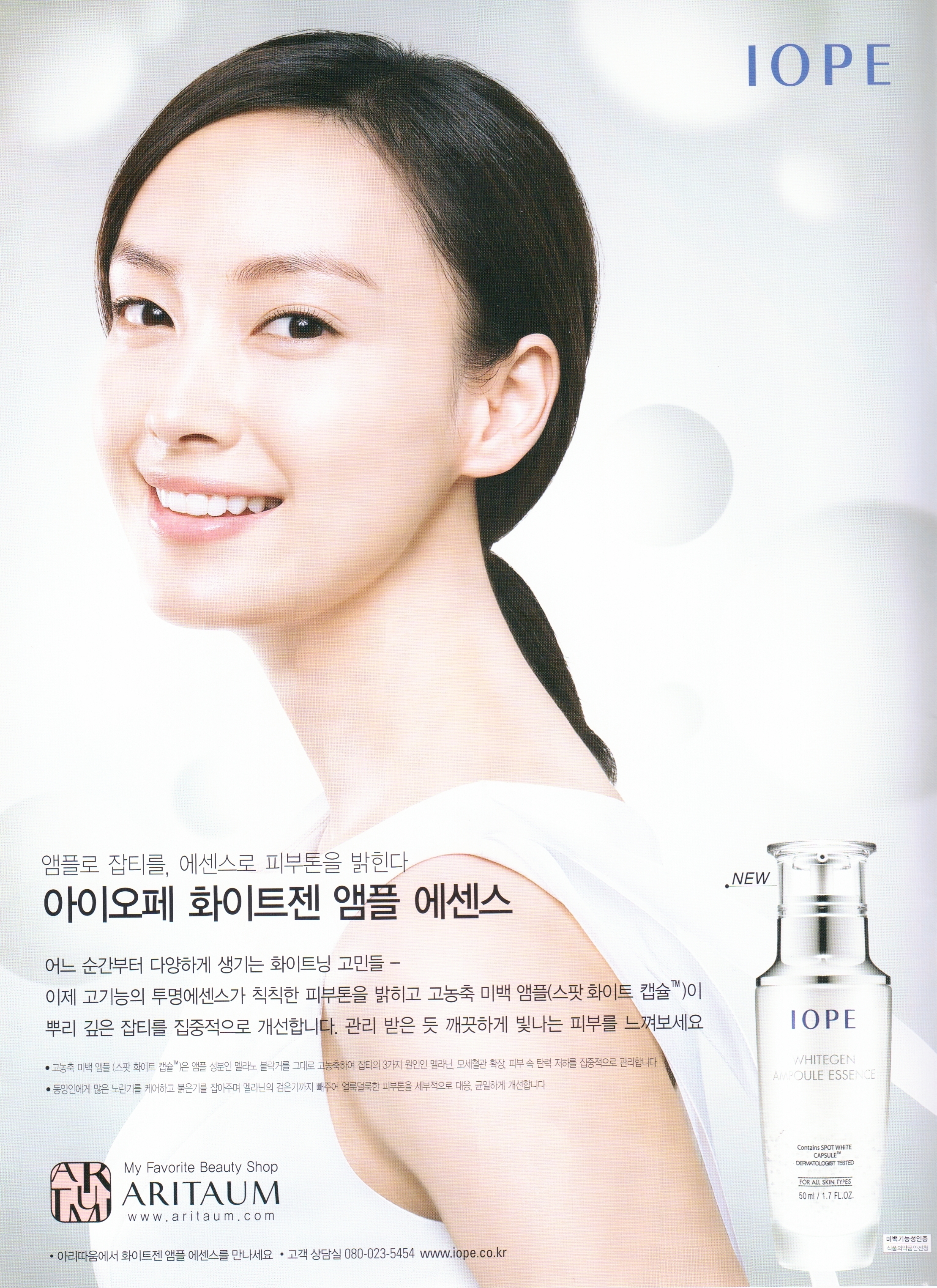

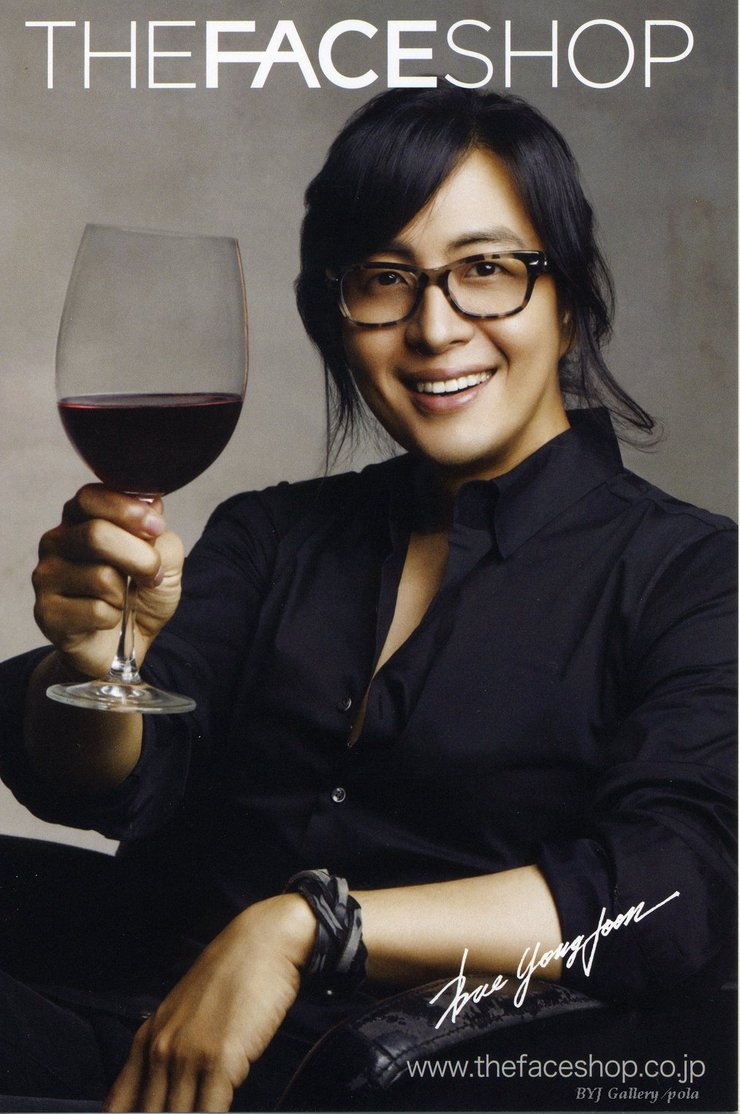

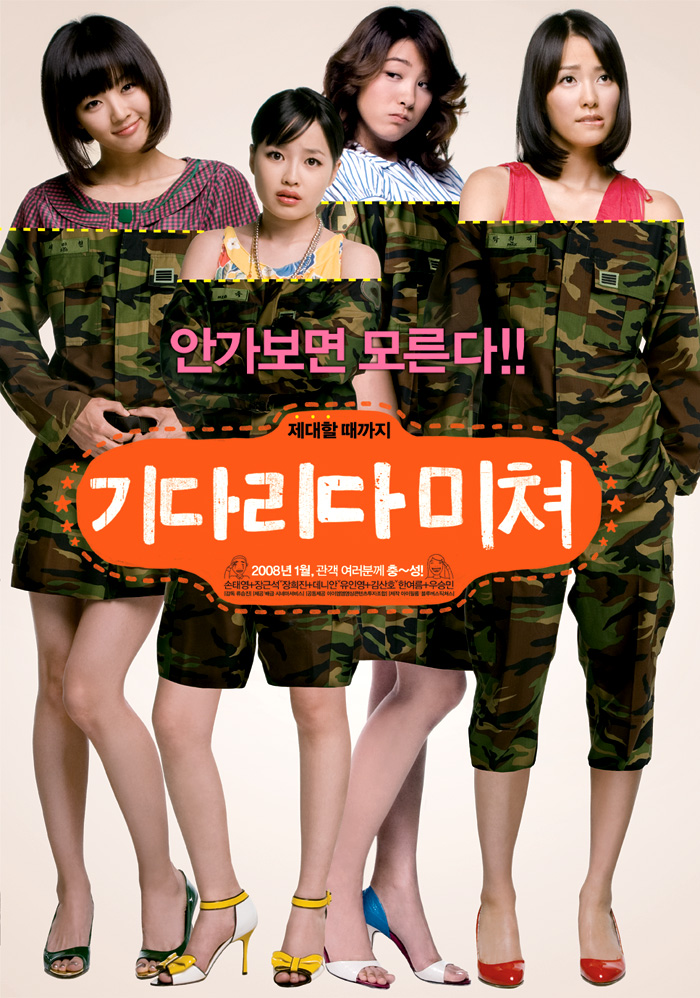
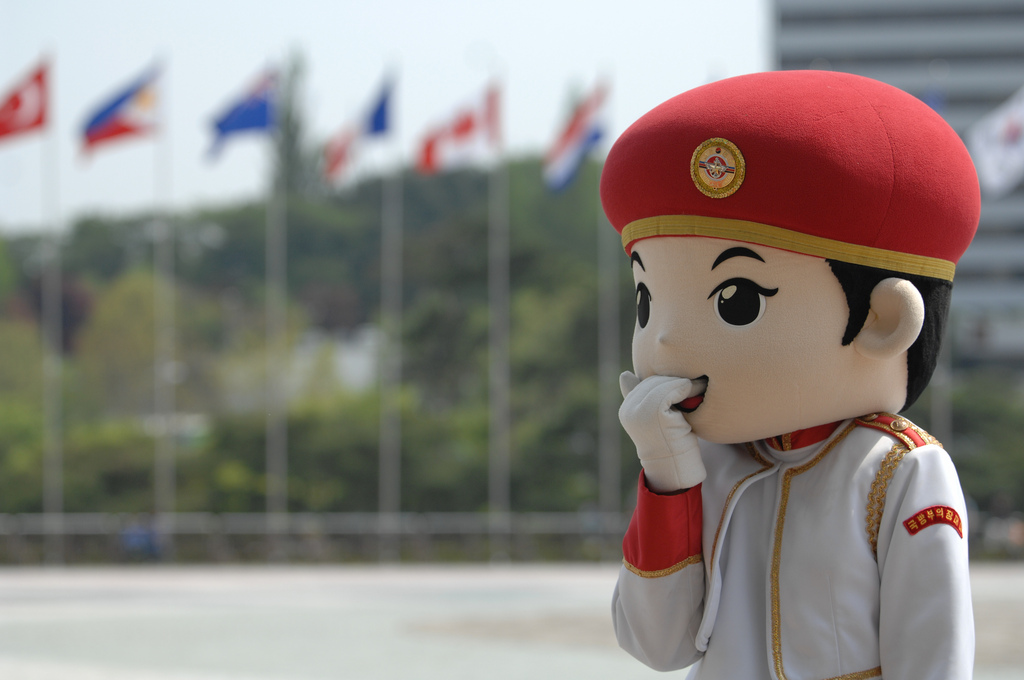
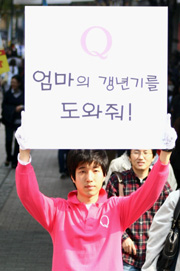








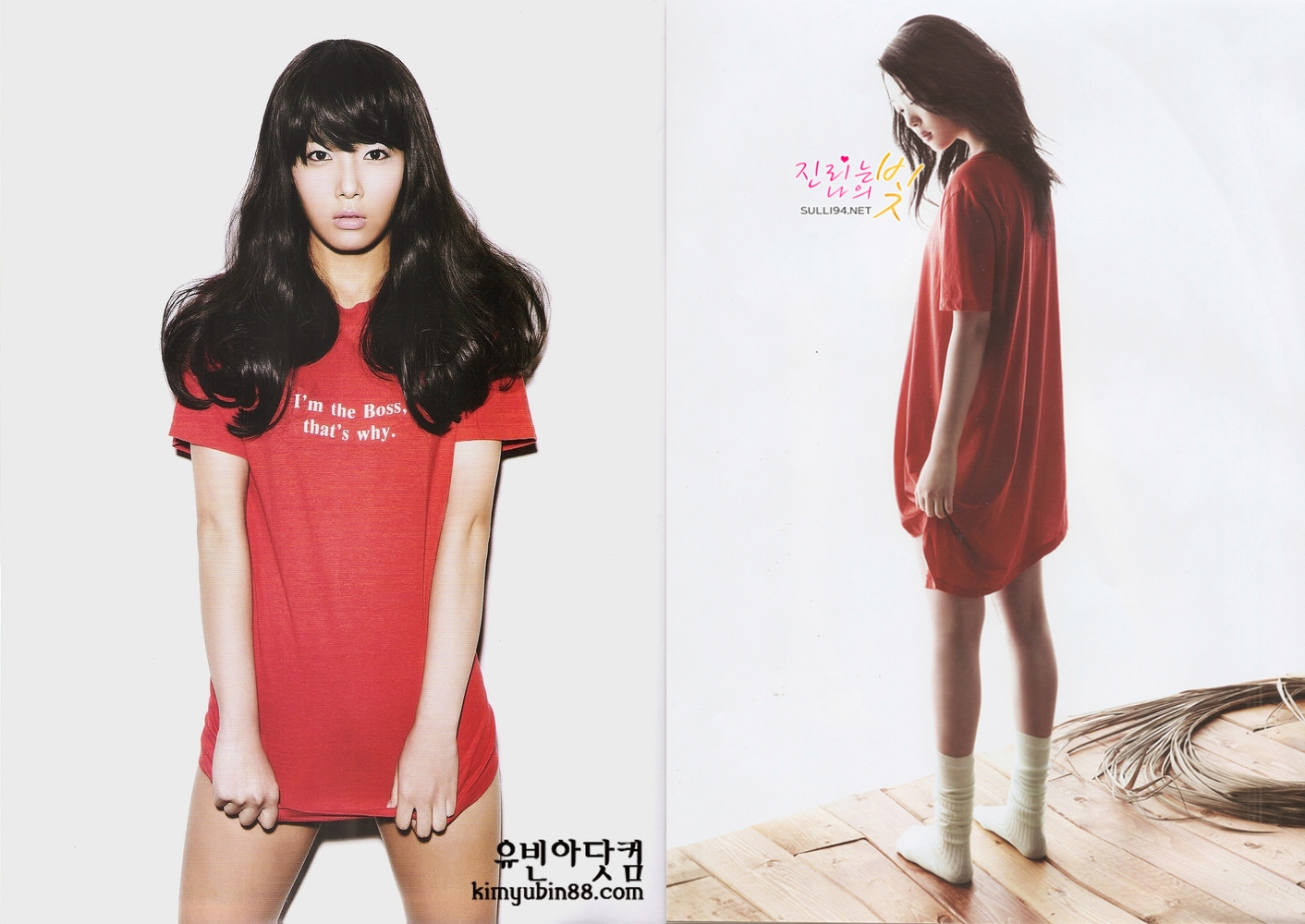





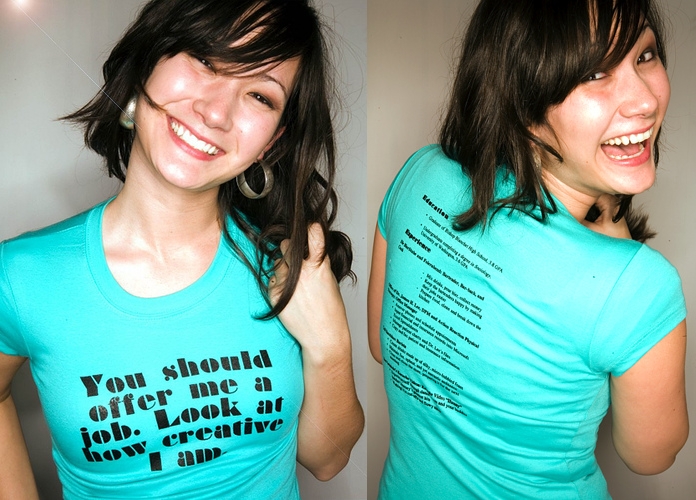










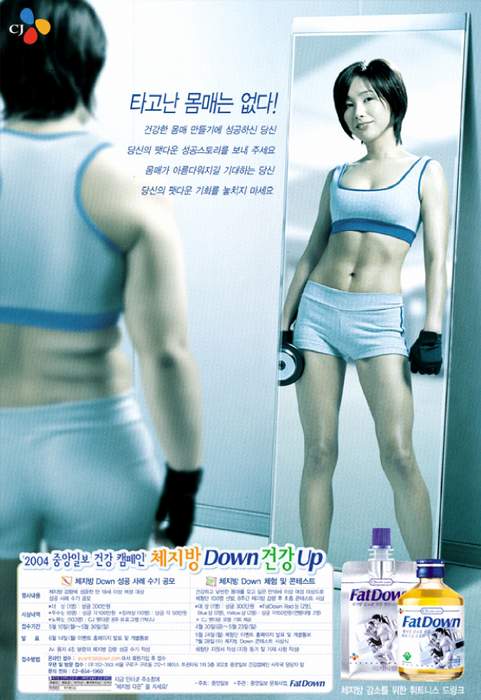
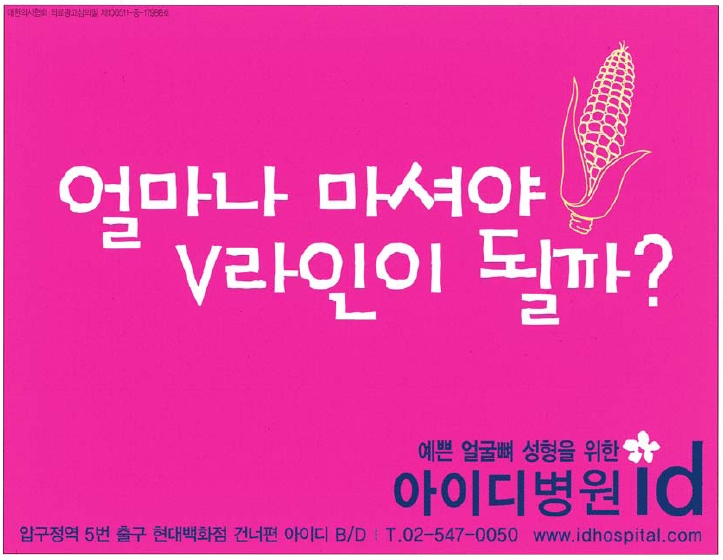
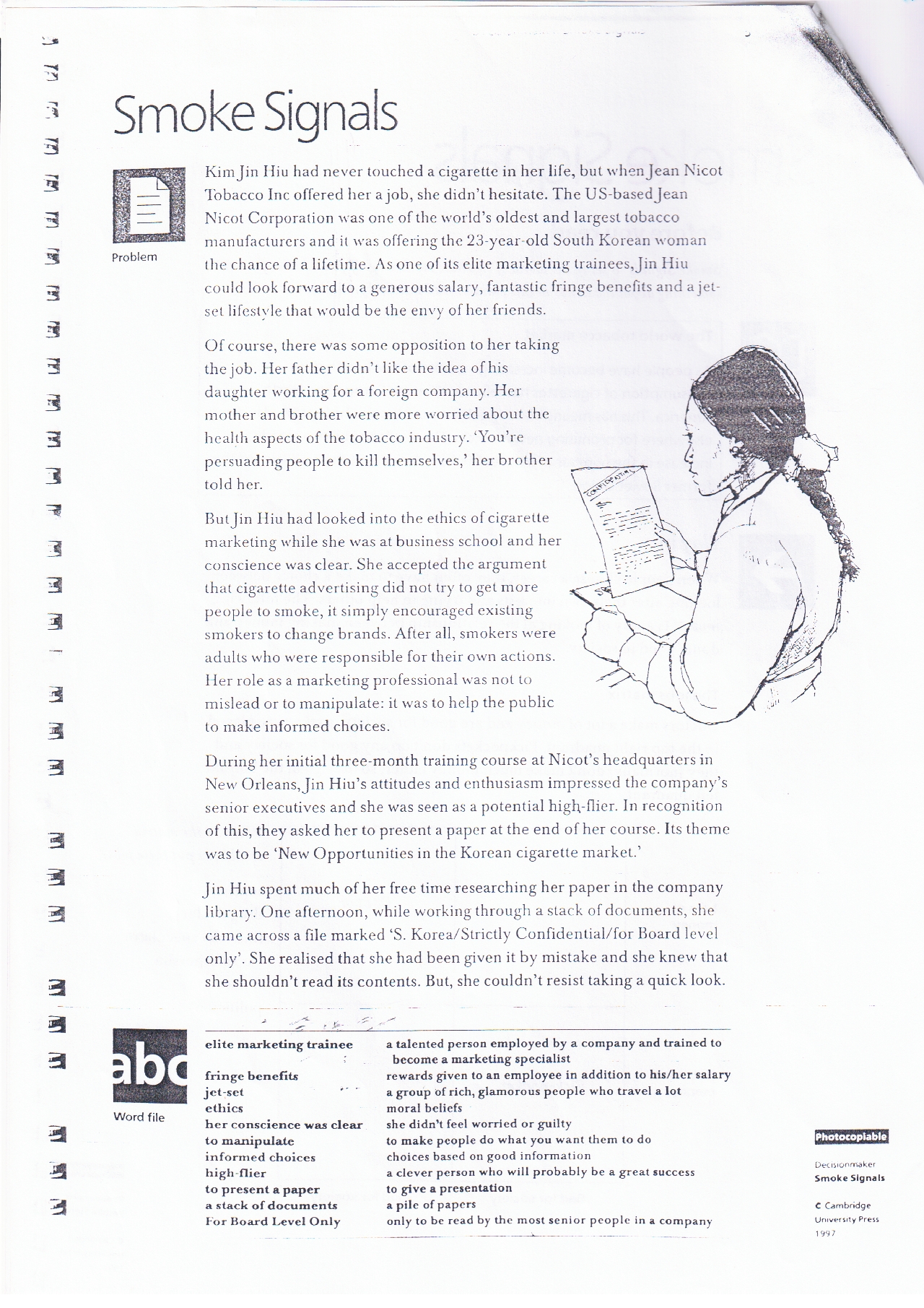
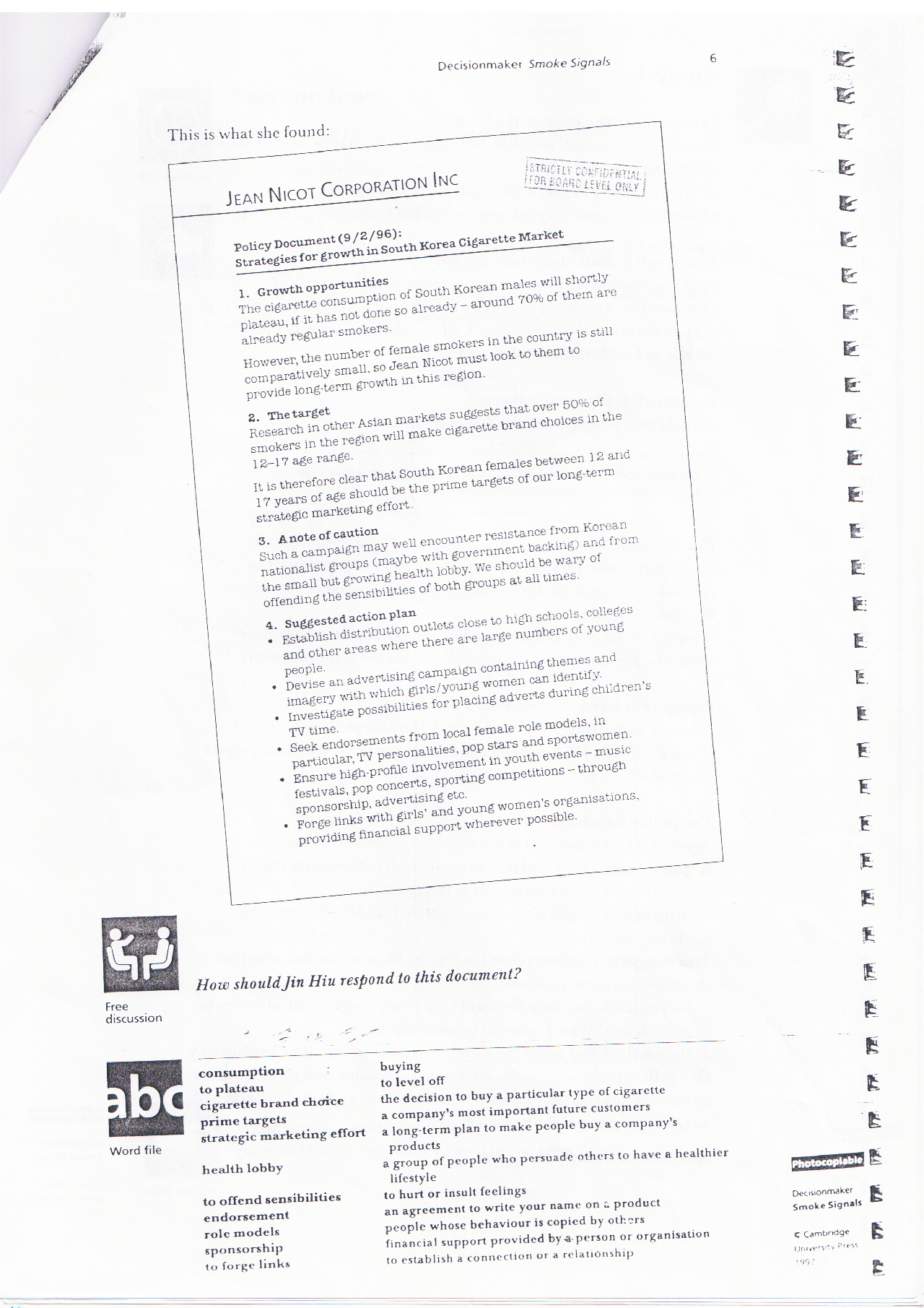


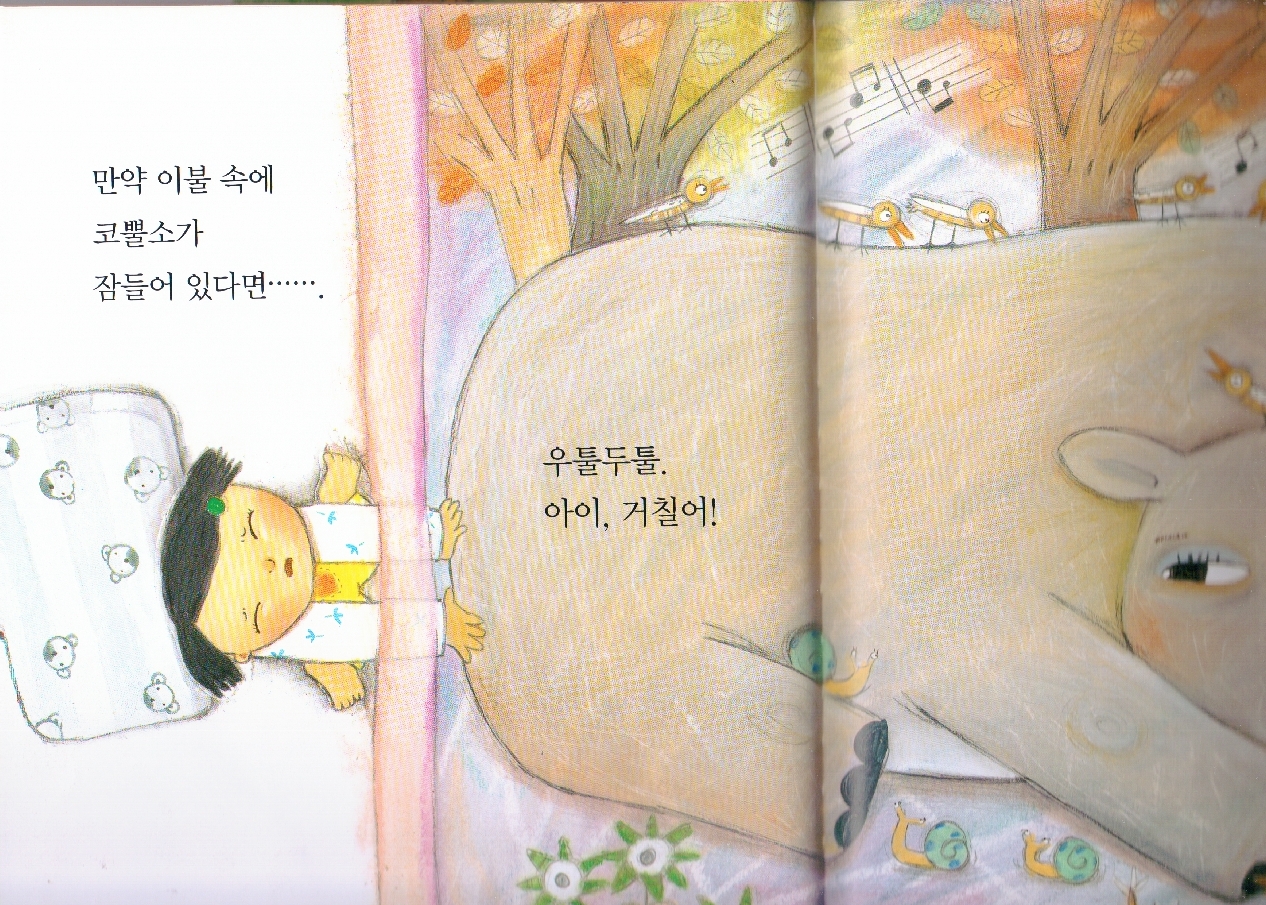


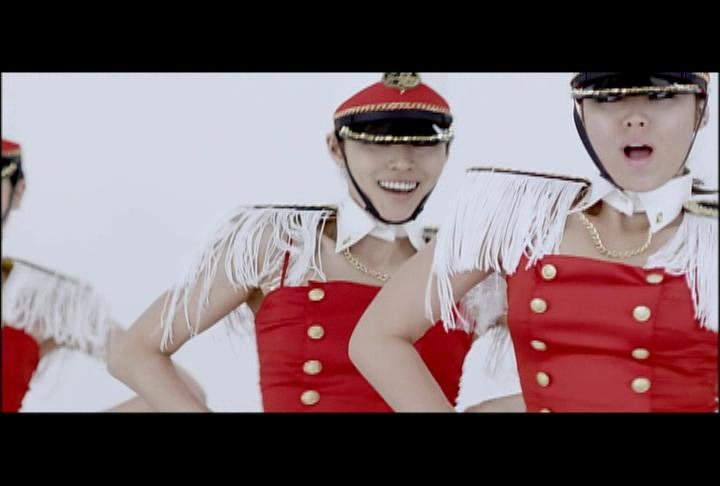



 The Grand Narrative
