Gangnam Style Minus Gangnam Style

As The Daily What put it:

It seems now that we’ve moved beyond parodies and imitation for Gangnam Style, descending into bizarre postmodern art.

Not unrelated, earlier today I saw a Klingon parody…

…and when I did, I seriously had to sit down for a moment, and just marvel at how weird, wonderful, and utterly surreal and sublime it was to be living in 2012. How could I ever have imagined that, one morning, I’d be dancing along to people dressed in Star Trek uniforms (of all things), imitating a South Korean music video, that over 320 million people had seen? Then in the same evening, staring in horrified fascination — and laughing myself silly — at another version that had no actual music?!!

Best Chuseok EVER!

(Via: My Current Insanities)

Korean Gender Reader

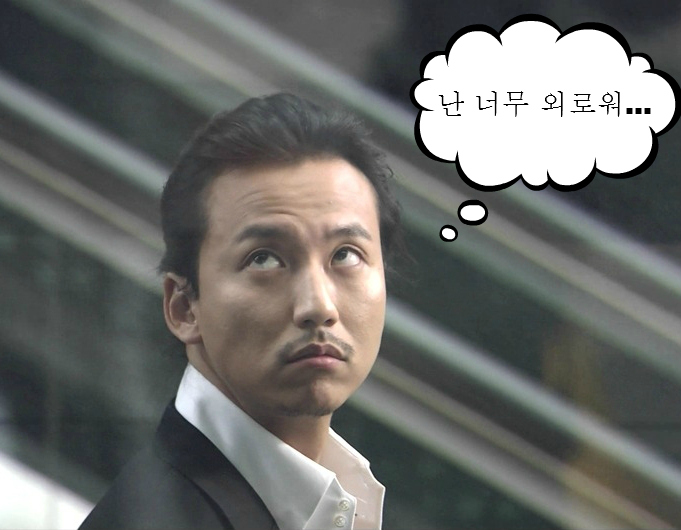
(“Oohlala Spouses makes best poster ever” — Dramabeans. Source)

This new theme is AWESOME, yes?^^ Have a happy Chuseok everybody!

Body Image, Health

Seoul Cosmetic Surgery Clinic Looking for (Naked) Before and After Models (The Marmot’s Hole)

Why the Rise of Asia In Fashion Isn’t As Beautiful As It Seems (Speakeasy)

Korean eunuchs reveal clues to why women live longer than men (BBC; see also Science)

What rejuvenates my vagina?!?! Not Lasers!!! (Korean Gender Cafe)

It takes hundreds of employees, thousands of hours and millions of dollars to launch a mass market lingerie line. And one blogger to take it all down. (Racebending; see also Bitch)

How do you explain the Gramscian concept of hegemony to a 10 year old? (Tales of Wonderlost)

Censorship, Media

Teen sexualization on TV faces stronger censorship (The Korea Times; see also The Korea Herald)

New Term: “White Endorsement Monkey” and “White Defamation Monkey” (Gord Sellar)

Men finally behave badly (The Korea Times)

“Unqualified foreign instructor” problem…in 1973 (Gusts of Popular Feeling)

Crime

I cannot remember a period of time in my life when I was not scared by older ahjussis (Lost in Traffic Lights)

Dating, Relationships, Marriage

Culture and Language Issues in Foreign/Korean Relationships (I’m No Picasso II)

Dating Asian Women When You’re an Asian Guy (Radical Ramblings)

Marriages between North American(?) men, Korean women top 2,000 in 2011 (The Korea Times)

Male writer and I have a Korea / dating column starting in October’s 10mag (Meet me at the wall)

What’s the REAL appeal of a Samsung or LG guy? (Dating in Korea)

SECRET’s Hyosung says her ideal type is a stalker … great (Asian Junkie)

Ask the Yangxifu: Chinese Parents Refuse to Meet Me (Speaking of China)

Why I have no female Chinese friends (Seeing Red in China)

Are Yangxifu (The Western Wives of Chinese Men) More Difficult Wives? (Speaking of China)

Education, Parenting, Demographics

Breaking the promise of universal day care (The Hankyoreh; see also Korea Joongang Daily)

Funny, sad, and revealing answers to questions from Korean students (South Korea)

Adventures in Parenting Abroad Pt. 3: The End is Just the Beginning (The Three Wise Monkeys)

“The Challenges of Korean Education in Historical Perspective” Asia Institute Seminar with Professor Michael Seth (Korea: Circles and Squares)

A Trojan Wall of Separation: The Battle Over South Korean Textbooks (Busan Haps)

South Korea to probe corruption in international high schools (Asian Correspondent)

Economics, Politics, Workplaces

Low Unemployment Rates, But No Jobs for Youths or Women (The Korea Economic Daily)

Park Geun-hye: Female President, Patriarchal Society? (Roboseyo)

Feeling the pinch: The housewives of Japan are giving less spending money to their husbands (The Economist)

Asia Institute Seminar on ‘Women in Science’ in Seoul (Korea: Circles and Squares)

Gangnam Style

The Obligatory Gangnam Style Post (Ask a Korean!)

PSY And The Acceptable Asian Man (Racialicious)

Is “Gangnam Style” a Hit Because of Our Asian Stereotypes? (Mother Jones)

Growing Up Gangnam-Style: What the Seoul Neighborhood Was Really Like (The Atlantic)

Dead horse (Liminality)

Gangnam Style’s Irony is Missed b/c of the Publicity Wave (Asian Security Blog)

On Gangnam Style (The Korea Times)

What’s so funny about Gangnam Style? (The Guardian)

Why Psy and not JYP? (The Korea Times)

A Few Things JYP Can Learn From Psy for Wonder Girls’ American Venture (Seoulbeats)

The Gangnam Phenom (Foreign Policy)

LGBT, Sexuality

A Different Color of Sexual Identity (The Yonsei Annals)

Former senior police officer: “Registered brothels needed” (The Korea Times)

Queering Korean Literature: Author and Activist Yi Gwang-su (The Three Wise Monkeys)

Beware of people asking you for 키알 / 섹알 (Hangukdrama and Korean)

Why are men so obsessed with breasts? (io9)

Reading List: Mapping the Vicissitudes of Homosexual Identities in South Korea (The Kimchi Queen)

Dirty Little Secrets: A variety of Korean Sex Links (The Marmot’s Hole)

Miscellaneous

The death of the red ink taboo in Korea (The Marmot’s Hole)

Meeting the Mannam Cult: My Korean volunteerism at an end (Travel Blog)

Crazy beautiful: Understanding the Korean mind (WND Diversions)

Pop Culture

The Korean Wave and the Question of Soft Power (Seoulbeats)

Nice Guy: Han Jae Hee Character Analysis (Idle Revelry)

“Courtship is usually portrayed (in heterosexual pairings) as something a man does; it’s an act he performs, while the woman is passive and simply receives his love. If she rejects him, it doesn’t mean he should stop, it simply means he has to try harder.”

Review: Words of Farewell Fiction by Korean female writers (Korean Modern Literature in Translation)

Revisiting the women who changed Korea with their pens (Yahoo!)

I ain’t here to make you honkies laugh! (The Marmot’s Hole)

Review: “Style” by RaNia (Mixtapes and Liner Notes)

Review: T-ara’s “Sexy Love” is the sound of the girl group in crisis, and the song’s mock-seductive chorus goes just a step too far (Occupied Territories)

Nothing like a healthy dose of fangirling (Hangukdrama and Korean)

This is why you can’t lump “Asia” together (SNSD Free For All)

How to make sure there are more “Pieta”s for the Korean film business (The Hankyoreh; see also this interview of Cho Min-soo)

(Links are not necessarily endorsements)

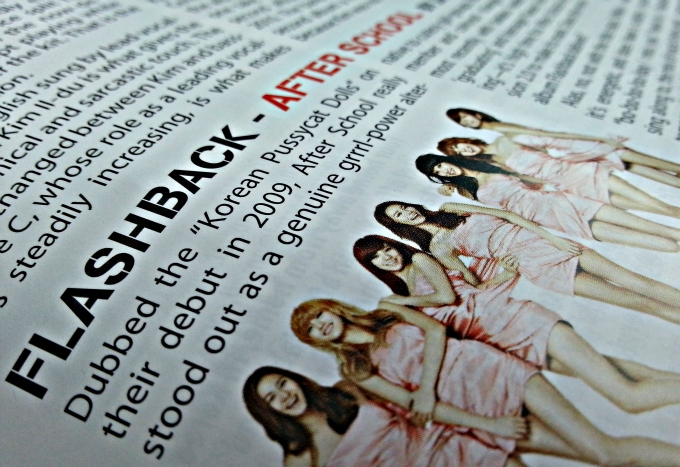
Open Thread: Flashback by After School

Just a quick note to let you know that in addition to my regular feature articles at Busan Haps, I now have a K-pop music column too. See page 41 of the latest issue here (scroll down to “current issue”) for my first review of After School’s Flashback, before it’s replaced next week with my second of Secret’s Poison in the October edition.

At just 200 words though (thank God for mini-albums!), unfortunately it’s difficult to say much more than the bare minimum.  So, please feel free to add any rants or raves here, and, to get the ball rolling, I think that Eyeliner is much better than the title track, and singer Nana vastly underrated by most other reviewers. But, since first writing, I’m beginning to see what people mean about Rania and Jungah complimenting each other in Timeless too, although the song itself still leaves me feeling rather empty.

Here’s all the songs in the mini-album (and the Japanese version of Rip Off), in the order I mention them in the review:


Related Posts:

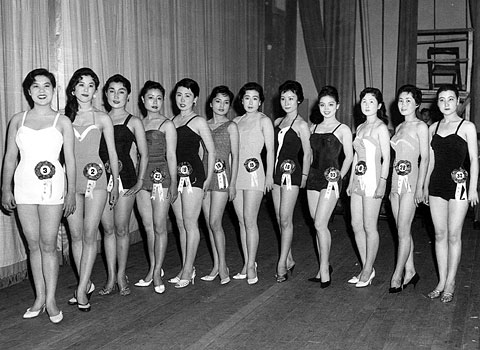
No V-lines Required: Miss Korea in the 1960s

(Source: Munhwa Ilbo)

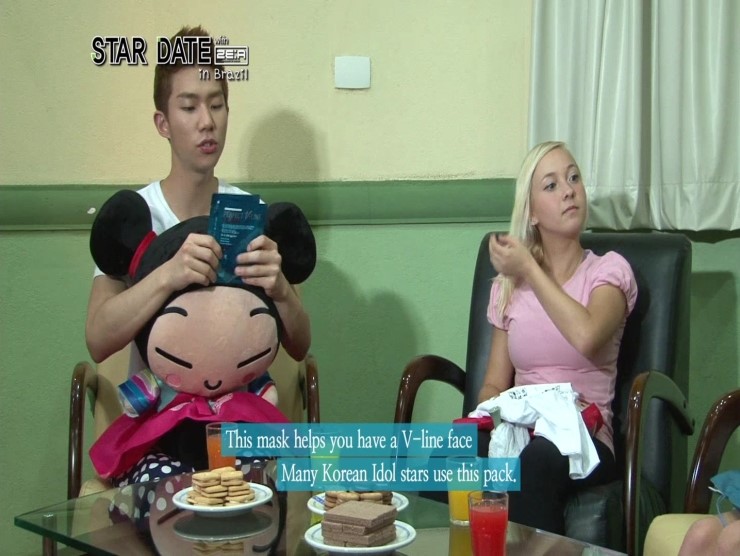
Alas, this brief article from today’s Munhwa Ilbo isn’t exactly a scathing critique of Korea’s body-labeling craze, and I don’t mean to imply that there aren’t much more substantial ones out there. But still, it’s good to be quickly reminded that perhaps “V-lines” aren’t as necessary as pop-culture icons would like us to think (e.g., see ZE:A in Brazil below), and I hope the photo makes it to the front page of major Korean portal sites.

See here or here for better quality versions, or here and here for pictures of the 1957 and various 1970s contestants respectively.

60년대 미스코리아는 ‘V라인 아닌 건강미’ / In the 1960s, Miss Korea Had a Healthy Beauty, not a V-line.

‘미인’의 기준은 문화와 관습에 따라 다르지만 시대에 따라서도 변합니다.

The criteria for a beautiful woman depend on time, culture, and customs.

사진을 보면 1960년 미스코리아 선발대회에 나온 여성들은 건강미가 넘쳤습니다. 당시에는 서구적인 마스크를 선호했다고 하죠. 1980년대 이후 한동안 도시형 미인이 인기를 끌었고, 요즘은 ‘V라인’의 작은 얼굴과 뚜렷한 이목구비가 대세라고 합니다. 성형미인도 많아졌고요.

If you look at this photo of the 1960 Miss Korea contest, you see women overflowing with healthy beauty, [even though] it is said that people preferred Western masks [looks?] then. [But] from the 1980s, for a while urban beauties were preferred, and these days having a V-line and distinct facial characteristics are huge trends. There are many cosmetic surgery beauties.

1957년 시작된 미스코리아 선발대회는 초창기 큰 인기를 모았습니다. 공중파 TV를 통해 전국에 생중계됐고, 수상자들은 카퍼레이드까지 하며 미를 뽐내기도 했었죠. 그러다 여성단체 등의 ‘성상품화 조장’ 반발로 2002년 이후 공중파에서는 중계를 하지 않고 있습니다.

(Source: Yufit)

Starting in 1957, from the beginning the Miss Korea contest was very popular. From being shown live on TV, to winners taking part in car parades, their beauty was shown off. However, later women’s groups denounced it as promoting sexual objectification, and from 2002 it was only allowed to be shown live on cable.

예전에는 미스코리아 선발대회를 통해 연예계로 진출하는 경우도 많았지만 요즘은 오디션 프로그램 등 연예계로 나설 방법이 다양하게 생겨났습니다. 그래서인지 대회의 인기가 예전만 못합니다.

In the past, there were many cases of Miss Korea contest participants entering into the entertainment industry through the competition, but these days there are a variety of audition programs that provide the same opportunity. Because of that, the contest can’t reach the level of popularity that it enjoyed in the past. (End.)

Update: Here’s a video of the 1981 to 2008 winners. As one of the commenters on YouTube put it, it’s interesting to see how much their faces seem to change from the late-1990s onwards.

Korean Gender Reader and TGN Meetup

(Source)

Yes, my KTX tickets and hotel are all booked. Hope to see you at Gyeongbokgung Station (경복궁), exit 3, at 6pm tomorrow! :D

Announcements

Korean Unwed Mothers Families’ Association looking for 10 volunteers to go on this year’s Chuseok camp to Yeoncheon (Tales of Wonderlost; see also What is KUMFA)

Body Image,Health

Pandora by KARA: Appropriate for Playing on City Buses? (Alleyways)

Hands, Hips, Legs and Butts: Girl Groups’ Dances (Seoulbeats)

Beautiful Genes? But ‘Idol’ Looks Good On Everyone (Seoulbeats)

G-Dragon receives attention for his womanly curves in “Crayon” MV (Allkpop; see also Occupied Territories)

Censorship, Media

Does Secret Need To Change Their Choreography? (Seoulbeats; see also What’s Your Poison and SB Exchange #25: It’s Secret Time)

Sadism, incest, bestiality, oh my! (The Marmot’s Hole; see also The Herald Voice on Facebook)

Regulation of Users Required to Use Real Name Online Abolished (Human Rights Monitor)

New Regulations on Downloading Porn Confuse Netizens (Korea BANG)

Crime

More sex offenders to be chemically castrated (The Hankyoreh)

Sexual Assault Against Children (Human Rights Monitor)

Random Stabbings in Seoul Brings Social Instability (Human Rights Monitor)

So, did banning prostitution lead to increase in sex crimes? (The Marmot’s Hole)

Sex Criminal Escapes from Jail In Daegu (ROK Drop)

Amy Arrested for Illegally Using Propofol (Omona They Didn’t!)

Foreign teacher sent to prison for molesting students (Gusts of Popular Feeling)

Dating, Relationships, Marriage

Comparing Marriage in the Middle Ages and Korea’s Choson Dynasty: 서양의 중세 초기와 조선의 결혼비교 (Korean Gender Cafe)

Marry my Asian Daughter: For all the sassified, successfully single sisters who are in constant disappointment to their loving Asian mothers

Craigslist ad (Dating in Korea)

Guy Talk: I Date Outside My Race Because My Race Doesn’t Want To Date Me (The Frisky)

Education, Parenting, Demographics

Tiger mothers in Singapore: The prime minister goes into battle against pushy parents (The Economist)

Non-traditional families on the rise in South Korea (Asian Correspondent)

Why the Korean School System Is Not Superior (New Politics)

Korean-Australian woman finds she was falsely adopted (Tales of Wonderlost)

Went to see 미쓰마마 (Bittersweet Joke), a documentary about unwed mothers in Korea (Tales of Wonderlost)

Babies’ Lead Levels: Who knew baby-proofing could reach such heights? (Shotgun Adventures)

Schools successfully experimenting with vegetarian meals (The Hankyoreh)

Multicultural students jump 5-fold over past 6 years (The Korea Times)

Economics, Politics, Workplaces

Mother’s Job Most Important Factor in Having 2nd Child (The Chosun Ilbo)

Mistreatment of Part-time Workers (Human Rights Monitor)

Nobody Told Asia About “The End of Men”: Mara Hvistendahl takes on Hanna Rosin (Foreign Policy)

Directing all my rage at Slate’s logrolling of “The End of Men” (Feminéma)

The-End-of-Men-Richer-Sex Reality Check #6 (Sociological Images)

What is Violence in the Workplace? 2-Page Guide Translated into Korean (Worksafe BC; PDF)

LGBT, Sexuality

Reading List: Korean Lesbians and Heteronormativity: From the Experiences of Six South Korean Lesbians (The Kimchi Queen)

Queer Offerings at the Busan International Film Festival (The Kimchi Queen)

Survey: Japanese school girls having less sex (Asian Correspondent)

South Korean host bars – for women (BBC)

What is a Room Salon? (Korea Law Today)

S Korea transgender show scrapped after protests (The Hong Kong Standard; Korea Joongang Daily)

Pop Culture

Koreans Have No Idea Why Americans Love Psy But They Can Learn From It (Asian Junkie)

Commentary: Psy and the Acceptable Asian Man (Init_Music)

Viral Video Gets North Korean Propaganda Treatment (The New York Times)

Korean wave and the Gangnam style (ABC Radio Australia; radio program)

Graphic: Number of views of K-pop Videos on Youtube, 2011 (SERI World)

An Ode to the Stellar Females in Variety (Seoulbeats)

Why have Korean dramas eclipsed even Mexican or Latin American serials and long-running American soaps? (Philippine Daily Inquirer)

Review: Wayfarer: New Fiction By Korean Women (Korean Modern Literature in Translation)

Social Problems

The Truth Behind Students’ Suicide (Human Rights Monitor)

September Issue: Opening the Dialogue on Suicide (KoreAm)

Runaways flee abuse at home, end up in prostitution (The Hankyoreh)

South Korea: Golden Lion Winner ‘Pieta’ Reveals Society’s Dark Side (Global Voices)

(Links are not necessarily endorsements)

For S. Korean men, makeup a foundation for success

(Source)

In The Associated Press today. Please see here if you would like a fuller explanation of my comments in it though — naturally, author Foster Klug had to miss out a great deal of what was discussed in our interview!

Update: By popular demand, here is the quintessential kkotminam commercial, from 2003:

The black-haired man is now retired soccer player Ahn Jung-hwan (안정환), the blonde actor Kim Jae-won (김재원).

Korean Gender Reader

(Source)

On the 27th of September, at 7:45 pm, there is a gay short-film festival taking place at the Seoul Art Cinema in Jongno, with all the films recorded on cell phones. See The Kimchi Queen for further details.

Meanwhile, I’ve rejigged the categories a little to make things easier to find, although of course there is still a lot of overlap: please let me know what you think. Also, with 1/3rd to 1/2 of the stories coming from outside of Korea, and with most not really being about “gender issues” per se (or maybe they are — it’s a very vague term really), I’ve been thinking of renaming these posts for a while now. If anyone has any suggestions for a new name, please let me know!

Update: Please let me know if you have any suggestions for Korean dating and relationship blogs to follow too. Not that Speaking of China isn’t a great site of course, but I would like to include some more Korean links here!

Body Image/Health/Socialization

Female Restaurant Workers Tell Customers ‘Don’t Call Us Ajumma’ (Korea BANG)

A Racist Little Outfit: Victoria’s Secret’s “Sexy Little Geisha” Lingerie (Bust)

Korean Movie: Beautiful/아름답다 (Journey Into the Well)

Thinking Pink: A History of Products “For Her” (Bitch)

Fat For an Asian: The pressure to be naturally perfect (Escher Girls)

Boys Throw Better Than Girls. Good Job? (XX Factor)

The Omniscient Breasts: The Male Gaze Through Female Eyes (SF Signal)

Censorship

Sex and Censorship During the Occupation of Japan (The Asia-Pacific Journal)

More on vice. Eminem, Lady Gaga, and more. (Korea Law Today)

S. Korea to beef up age-rating system for music videos (10Asia)

China/Taiwan

Feminism Around the World: Awesome Activists Protest in China (Bust)

Internal child trafficking in China (International Institute for Asian Studies)

Surge in demand for British milk from China (The Telegraph)

Crime

Street harassment in Incheon (I’m No Picasso II)

Only 1/3 of Child Sex Crime Victims File Charges (The Chosun Ilbo)

Government to toughen penalty for raping minors (The Korea Times)

Crackdown alone can’t solve child abuse issue (The Korea Times)

Amy was Threatened by an Attempted Rapist (ENewsWorld)

Does the ROK Army Have A Sexual Assault Problem? (ROK Drop)

Physical and Sexual Absuse in the ROK Military: A conscript’s perspective (Sorry, I was drunk)

SKorea: Govt moves to expand prosecution of sex offenses (Asian Correspondent)

How should Korea combat pedophilia? (The Korea Herald)

Child Rape Survivor Sends Stuffed Toy to Naju Rape Victim (Korea Bang)

Castration would reduce sex crimes: Saenuri reps (Korea Joongang Daily)

Dating/Relationships/Marriage

From the Archives: On Finding Courage in Love (Speaking of China)

Double Happiness: The Volunteer Who Went to China and Found Her True Love (Speaking of China)

Demographics/Multiculturalism

One-child Policy Encourages Trafficking of NK Women (Mercator Net)

10 myths of the UK’s far right (The Guardian)

Ignorance breeds racism (The Korea Times)

The Gender Politics of Moving Back Home (The F-word)

Grown Korean adoptees return to birth country to fill in the missing gap (Alleyways)

Education/Pregnancy/Childbirth/Parenting

No. of Elementary School Students Hits Record Low (KBS World)

South Korea will keep evolution in its high school textbooks! (io9)

Grandmother gives birth to her own grandchild (io9)

Why do fathers’ testosterone levels drop when sleeping near their children? (io9)

History

Namsan: Of vanished history and unfulfilled plans (Gusts of Popular Feeling)

LGBT/Sexuality

Sexually aroused women find everything less disgusting (io9)

Reading List: En-gendering re-gendered romance of multiple lives: reincarnation in Bungee Jumping of Their Own (The Kimchi Queen)

17 Euphemisms for Sex From the 1800s (Mental Floss)

Getting Tested for HIV/AIDS in Korea (The Kimchi Queen)

Study Reveals Teens’ Warped Perceptions of Sex (The Chosun Ilbo)

The problem with Naomi Wolf’s vagina (New Statesman)

Men Like Heavier Women…Especially When Stressed Out! (Psychology Today)

First Comes Love, Then Comes Marriage: A Night at the Drive-in (Nursing Clio)

Video: Gay in Korea (ROK On!)

MBLAQ’s Lee Joon reveals his mom gifted him with birth control for college entrance (Omona They Didn’t)

North Korea

Jennifer Lind on the DPRK government’s resilience (and women in IR) (Korean Kontext)

Professor Robert Kelly’s Trip to North Korea (Asian Security Blog; continued in part 2, part 3, part 4, and part 5)

Politics/Economics/Workplaces

For 40-something women, jobs scarce (Korea Joongang Daily)

Korean women buy large, imported cars to avoid being bullied by male drivers (The Star)

Pop Culture

Is It Too Soon for T-ara to Come Back? (Seoulbeats)

Hallyu Tsunami: The Unstoppable (and Terrifying) Rise of K-Pop Fandom (Grantland)

Roundtable: The Broken Fountain of Youth (Seoulbeats)

Parade’s End director says sexism is still rife in [UK] drama world (The Guardian)

Golden Time ponders extension — dude, you have one episode left (Dramabeans; see also “Golden Time confirms three-episode extension)

Tough Ladies Report to the Dance Floor (Seoulbeats)

Social Problems

South Korea’s Blight: Suicide Gets Worse (Korea Real Time)

Solbi speaks against suicide on World Suicide Prevention Day 2012 (AllKpop)

Celebrity Suicides: An Unfortunate Trend (Seoulbeats)

Suicides among Japanese students hit record level in 2011 (The Japan Times)

Killing Yourself To Make A Living: In Japan Financial Incentives Reward Suicide (Japanese Subculture Research Center)

89% of US Army Suicides Are By Soldiers Who Never Saw Combat (ROK Drop)

Living in a closet, tape a window to the wall (The Hankyoreh)

Everyday Sexism: It isn’t restricted to adults – even young girls in school uniform share their experiences (The Telegraph)

Ilyo Sisa denounces the barbarity of white men against Korean women (Gusts of Popular Feeling)

Chuseok and 차례 and sexist traditions (I’m no Picasso)

Korea’s new war on vice (Alleyways)

Seoul adopts rights ordinance (The Korea Times)

(Links don’t necessarily imply endorsements)

TGN Meetup in Seoul, Saturday September 22nd

(Source)

Yes — I’m happy to announce that next Saturday, I’ll be coming up to Seoul for an interview by Nele Hecht, a German documentary-maker based in the UK, when I’ll talk about things like S-lines and the appalling photoshopping in that poster. And, as I so rarely get the chance to come to Seoul (the last time was last summer, also for an interview), it would be great to make most of the opportunity and meet old and new TGN fans while I’m there too.

The plan is, we’ll all meet at Gyeongbokgung Station (경복궁; at the center of this map), exit 3, and take it from there (the time hasn’t been decided yet; probably 5 or 6 Update: it’s 6). If by any chance you miss us or want to join later, just email or tweet me. Hope to see you there!

Meanwhile, here is a short bio of Nele Hecht, who will hopefully also be joining us:

Nele Hecht is a German filmmaker working in the UK. She has made several short films, trailers for books and music videos. She is currently working on a documentary about gender identification.

The documentary will be following few individuals and investigate their struggle with the traditionally set norms of gender. Simultaneously it will feature different voices discussing the issue from various angles, particularly the role of feminism in regards to gender perception.

The aim is to stress and support the individual interpretation of gender, challenge traditional perceptions of male and female roles and portrait a picture of a diverse society outside those boundaries.

This documentary is independently funded. Seoul is the start of the filming progress, which will carry on in London and Berlin.

As it’s independently funded, that means I’ll be paying my own way (about 180,000 won all up), so let me again remind readers (for just the second — and final!— time this year) that any donations towards that, or running the blog in general, are much appreciated, no matter how small. Forgive me for asking, and of course I’ll still come regardless, but unfortunately the reality is that only one person (thank you!) has clicked on those donate buttons since I last asked in April!

(For the record, I’ve received about $190 in donations so far this year, minus Paypal commissions)

Korean Poster: ETIQUETTE FOR MEN AT NIGHT

(Source)

Via Tales of Wonderlost, who also passes on a translation by Opress-Crackatron3000:

Protesting sexual harassment and violence against women

ETIQUETTE FOR MEN AT NIGHT

1. Remember that your presence can be threatening to women walking alone at night

2. If a woman is walking in front of you alone at night, slow down. You walking quickly or speeding up can be and in most cases is threatening

3. If you’ve been drinking and are drunk, go straight home.

4. Do not pick a fight or aggravate women walking at night

5. Do not take off your clothes or publicly urinate

6. Be careful to make sure you do not touch or hit someone, even on accident.

7. If, late at night, you come to a situation in which you and a woman have to ride an elevator together, let her go up first and wait for the elevator to come back down.

8. If there’s a woman in a public restroom (There are Korean public restrooms with no gender or sex markings that are open to all people), wait for her to finish and come out first before using the restroom.

9. Report broken streetlights to the police

10. Tell other men about these rules and that they have a responsibility to not threaten women walking at night

Please share as much as possible!

Related Post: Groping in Korea: Just How Bad Is It?

The Chosun Ilbo: Hollister Models Liable for “Excessive Exposure”

(Source*)

Always interested in how objectification is portrayed by the Korean media, here’s my translation of a brief article about the opening of Hollister’s first Korea branch last month, written just before the news emerged of how reprehensibly some of its models acted during their stay here.

While short, I found it strange that the article would raise the absurd possibility that the half-naked models were guilty of any offense, which could be interpreted as implied criticism of the event. But on the other hand, the author may well have mentioned that just for the sake of creating a story; after all, keeping the company’s name anonymous throughout the article, but including it in a photo caption from another news service, isn’t exactly stellar journalism.

Anybody that finds a better source on the objectification angle in the story, please let me know!

Update: Apparently, Hollister has used this shirtless stud gimmick in Asia several times. And, as Nathan McMurray of Korea Law Today puts it, it “always seems to drum up some controversy. That is likely their objective.”

해외 브랜드 개점 이벤트… 모델 끌어안고 촬영까지 “낯 뜨겁다” vs “신선하다”

Foreign Brand Opening Event…From Hugging Models to Being Photographed with Them: Just Embarrassing, or a Fresh Marketing Method?

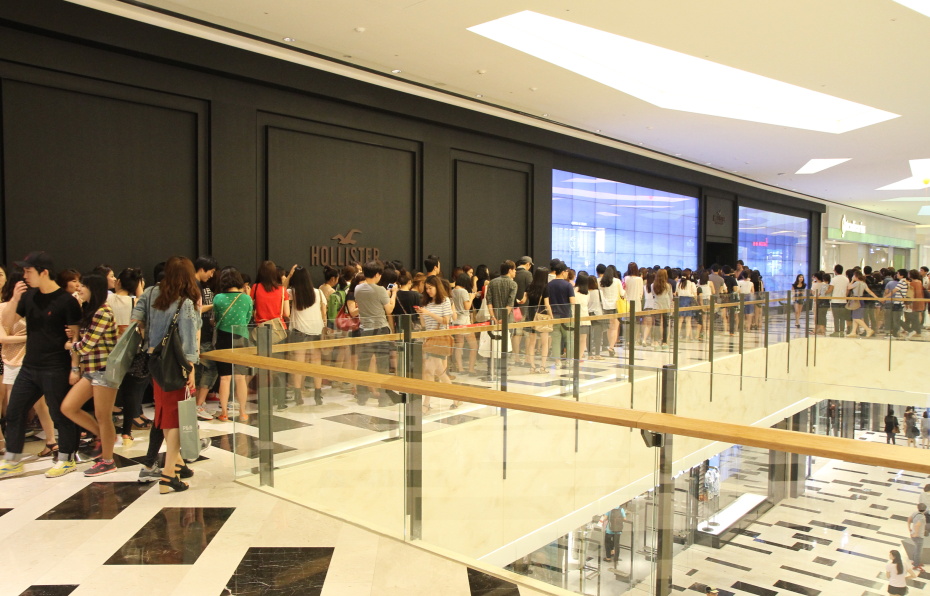
31일 낮 12시쯤 서울 여의도 복합쇼핑센터 IFC몰의 해외 의류 브랜드 H사 매장 앞에서 직원 안내에 따라 20∼30대 여성 20여명이 긴 줄을 섰다. 그들 앞에는 근육질 외국 모델 2명이 웃통을 벗은 채 서 있었다. 한 20대 여성은 반바지만 입은 두 모델 사이에서 한 손으로 모델의 허리를 감고 다른 한 손으로는 ‘V’자를 그리며 사진을 찍었다. 구경꾼 30여명은 매장 앞에서 그들을 에워싼 채 연방 휴대전화 카메라 셔터를 눌렀다.

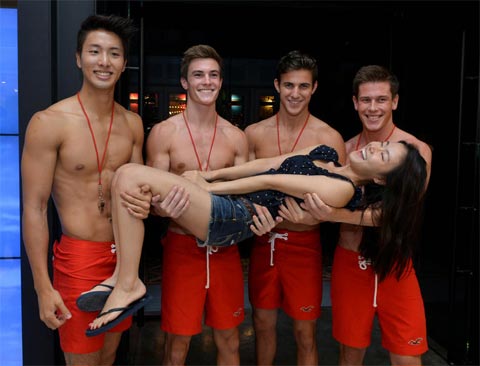
At about midday on the 31st of August, about twenty women in their twenties and thirties were standing in a line in front of foreign clothing brand “H” company’s new store at the multi-shopping center International Finance Center Mall in Yeouido in Seoul. Two half-naked, muscular foreign models were standing there. One twenty-something woman stood between the two men, who were only wearing shorts, and had her picture taken while making a V-sign with one hand and wrapping the other around the waist of one of the models. Thirty other women surrounded them and took more pictures of the scene with their cellphone cameras.

이 ‘조각 미남’ 모델들은 H사 본사에서 마케팅을 위해 기용한 이른바 ‘판촉사원’이다. 지난 30일 IFC몰 개장과 동시에 국내에 처음 들어온 H사 매장은 입점 기념 이벤트로 매장 앞을 지나는 이들에게 반라(半裸)의 모델과 함께 사진 찍는 기회를 제공하고 있다.

Described as “sales promoters” by the company, these ‘beautiful male sculptures’ were employed by the head office to market the opening of the store, the company’s first in Korea. On the 30th, the day of the IFC mall itself opened, they stood outside to attract the attention of passers-by and give them an opportunity to be photographed with them.

Caption: 30일 오전 서울 영등포구 여의도동 서울국제금융센터(IFC 서울)에서 열린 IFC몰 오픈 행사에서 국내 첫 입점한 홀리스터의 모델들이 해양구조대 복장으로 점포를 찾은 고객과 사진을 찍는 이벤트를 진행하고 있다./뉴시스

Caption: On the morning of the 30th, at the opening of the Seoul International Finance Center in Yeouido, Yeongdeungpo-gu, Hollister models dressed in lifeguard style stand outside the Hollister store to mark the opening of the company’s first branch in Korea

이날 같은 층의 다른 매장과 달리 H사 매장 앞은 손님들로 붐볐다. 모델과 함께 사진 촬영을 한 대학생 김수영(24)씨는 “모델이 멋있어서 친구까지 데리고 왔는데, 신선하고 재미있었다”고 했다. 회사원 박미정(35)씨도 “점심시간에 짬을 내 쇼핑도 하고 사진도 찍으니 기분 전환이 된다”며 좋아했다.

Unlike different stores on the same floor, on that day the outside of H comany’s store was crowded with onlookers. University student Kim Su-yong (24), who came to have her picture taken with the models, said “Because the models were so cool I even brought my friends. It was fresh and fun,” while company worker Park Mi-jong (35), also explained that “I made time in my lunch break to so some shopping and have my picture taken, I feel great now!”

하지만 “공개된 장소에서 뭐 하는 짓이냐”며 문제를 제기하는 목소리도 많았다. 회사원 조모(39)씨는 “(여성들이) 팔짱을 끼는 것은 예사고, 아예 대놓고 모델을 끌어안기도 한다”며 “아무리 마케팅이라지만, 남성의 성을 이렇게 상품화해도 되는 거냐”고 했다.

But voices of complaint were raised over its appropriateness in a public place. Company worker “Mo” (39) [James’s wife: “Probably a man”] said “[Women] wanting to hold arms with the models is just trashy, as is shamelessly hugging them,” and added “It may well be a marketing stunt, but isn’t using male sexuality like that simply objectification?”

(Source)

일각에서는 이런 이벤트가 현행법 위반 아니냐는 지적도 나온다. 경범죄처벌법상 ‘몸을 지나치게 내보여 다른 사람에게 부끄러움이나 불쾌감을 준 경우’는 과다노출죄를 물어 10만원 이하의 벌금을 부과하거나 교도소 등에 최장 29일까지 수감할 수 있다. 또 형법에서는 ‘공공장소 등에서 음란한 행위를 해 다른 사람에게 수치감과 혐오감을 주는 경우’ 공연음란죄로 1년 이하 징역이나 500만원 이하 벌금 등에 처하도록 규정하고 있다. 서울남부지법 황승태 공보판사는 “이번 사례의 경우 두 법 모두 적용될 여지는 있는데, 정도를 따져볼 때 과다노출죄에 더 가깝다고 볼 수 있다”고 말했다.

From one perspective, this event breaks the law. According to the Misdemeanor Punishment Law, if someone “shows an excessive amount of their body to people, and causes them to feel embarrassed or upset as a result,” that person can be charged with excessive exposure and face a fine of up to 100,000 won and/or a jail term of up to twenty-nine days. Also, according to criminal law, if someone “commits a lewd act in a public place and causes feelings of shame or repulsion to others,” that person can be charged with public lewdness and face a fine of up to five million won and/or a jail term of up to one year. According to Seoul Southern District Court information officer Hwang Sung-tae, “In this case both laws apply, but based on the degree of the offense the Misdemeanor Punishment Law is the most applicable.”

모델을 매장 앞에 세우는 마케팅은 실제로 미국·일본 등 해외에서는 성행한다. H사 측은 2일까지만 이벤트를 계속한다는 계획이다.

This type of marketing which uses models in front of stores is common in the US, Japan, and other foreign countries. H company plans to continue this event until the 2nd of September. (End.)

*Apologies for the creative license, but the first image actually comes form the opening of Hollister’s Beijing store in May.

Korean Gender Reader

Not really related to Korea sorry, but Derek Kim and Les McClaine, two of my favorite cartoonists, do need to sell 8-10,000 physical copies of the first chapter of Tune to keep the excellent web-series going. Just $9.86 on Amazon, or — I’m very happy to report for Korea-based readers — 20, 390 won at What The Book, I’m just about to order a copy for myself and (hopefully) my daughters. See here for the details, and please: don’t click on page 1 of Chapter 1 unless you’ve got a few hours to spare!

Announcements

Video: Girls’ Generation? Gender, (Dis)Empowerment and K-pop by Dr. Stephen Epstein (Royal Asiatic Society)

Busan Biennale 2012, September 22 – November 24 (Busan Haps)

Body Image/Health:

Breast in show: the art of plastic surgeon Han Xiao (Want China Times)

Queer Corner: Gendered Beauty Standards (Korean Gender Cafe)

Plastic-Fantastic or Robotronic-Loverholic? (Seoulbeats)

How Savvy Chinese People Avoid Toxic Food, Goods Produced in China (Asia Society)

German magazine rethinking ‘no models’ policy (The Korea Herald)

Objectifying Cyclist Jenny Fletcher (Sociological Images)

Firms focus more on employees’ health (The Korea Times)

Breasts: A Natural and Unnatural History by Florence Williams (The Guardian)

The Daegu International Body Painting Festival 2012 in South Korea (The Telegraph)

Look at Me! I’m on a Diet! The Girls Generation Diet!! (The Unlikely Expat)

The Mosquito Truck (Ask a Korean!)

Censorship/Protest:

G-Dragon new MV ‘That beeeeep’ will be censored with lots of annoying beeeeeeeeeeeps (Omona They Didnt)

Protecting Sources & Risking Lives: The Ethical Dilemmas of Japanese Journalism (Japan Subculture Research Center)

Constitutional Court of Korea Declares Internet Real-Name Online Identification System Unconstitutional (The Korea Law Blog)

Military’s moral education has a political agenda (The Hankyoreh)

Protests, public space in Seoul, and cyberspace – Part 5 (Gusts of Popular Feeling)

Filming curtailed in ‘suicide forest’ (Visual Anthropology of Japan)

Crime:

Suspect in Naju’s child abduction-rape case admits to crime (Yonhap)

Drunk Man Kidnaps, Rapes and Leaves Girl with Internal Injuries (Korea Bang)

Police request arrest warrant against child rape suspect (The Korea Times)

Police revive stop and search to help fight violent crimes (The Korea Herald; The Korea Times)

Need systematic crackdown on child pornography; South Korea is world’s sixth largest distributor of child porn (The Hankyoreh)

Courts slammed for light sentences on sex offenders (The Korea Times)

The War on Crime (The Marmot’s Hole)

Crimes rekindle debate over capital punishment (The Korea Herald; The Korea Times; The Hankyoreh; Korea Real Time)

SKorean juries give sex offenders harsher punishments (Asian Correspondent)

Ex-doctor proposes surgical castration (The Korea Herald)

Government to recruit 1,250 more police, probation officers (The Korea Times)

Korea’s new war on vice (Korea Law Today)

Dating/Relationships/Marriage:

Ask the Yangxifu: Should I Wear a Qipao in My Chinese Wedding? (Speaking of China)

Korean Hugs vs American Hugs (Gyopo Keith)

Reply to “I’M AN ASIAN WOMAN AND I REFUSE TO EVER DATE AN ASIAN MAN” (AMWW Magazine)

A Story of Sexism, Chinese Men and Who Should Wash the Dishes (Speaking of China)

Does Waiting Six Months To Have Sex Improve Relationships? (XX Factor)

A love letter from the past (The Marmot’s Hole)

Yangxifu Pride: Pinterest Boards on Chinese Men and Western Women in Love (Speaking of China)

History:

The Anti-Rising Sun Flag:Are the ghosts of the past still haunting us? (The Marmot’s Hole)

LGBT/Sexuality:

Tokyo women weigh in on the possibility of participating in porn pictures (The Tokyo Reporter)

K-dramas and “Pseudo-Homosexuality”: What Gives? (Seoulbeats)

Gay groups up in arms over sexuality education textbook in Hangzhou (Shanghaiist)

Reading List- Remembered Branches: Towards a Future of Korean Homosexual Film (The Kimchi Queen)

K-Drama’s More Literal (And Laudable) Takes On Homosexuality (Seoulbeats)

Queer Corner: Violence in a Label – 마짜, 때짜, 올 (Korean Gender Cafe)

More to learn about LGBT travel trends from South Korea (Travel Daily News)

Gayspeak: 떼박/Orgy (The Kimchi Queen)

Gender-bendy hijinks from Oohlala Spouses (Dramabeans)

Miscellaneous:

A Culture of Copying (ZenKimchi)

In the Victorian Age, astronomy and nudity went hand in hand (io9; NSFW)

Paper Tigers: What happens to all the Asian-American overachievers when the test-taking ends? (New York Magazine)

Goodbye Reverend Moon (1920-2012). Let’s consider what happens next. (Korea Law Today)

Do men and women really (literally) see the world differently? (io9)

Naomi Wolf’s Vagina:

Ariel Levy on Naomi Wolf’s “Vagina” (Bitch)

Neuroscientists take aim at Naomi Wolf’s theory of the “conscious vagina” (io9)

Naomi Wolf: ‘Neural wiring explained vaginal v clitoral orgasms. Not culture. Not Freud’ (The Guardian)

Naomi Wolf’s book Vagina: self-help marketed as feminism (The Guardian)

Tunnel of Love (The Economist)

Politics/Economics/Workplaces:

For ‘losers’, Korean society is unforgiving (The Hankyoreh)

In Japan, Retirees Go On Working (Bloomberg Business Week)

How the 5-day workweek changed Korean employment (The Hankyoreh)

Cancer, Death and Samsung’s Semiconductor Factories (The Three Wise Monkeys)

Inside Korean Work Culture: Overworked and Underappreciated (The Three Wise Monkeys)

The Greying Radicals in Korea and How they May Harm Your Korean Business (The Korean Law Blog)

Female muscle: Now is not a good time to be a man (The Economist)

Pop Culture:

Unpopular Opinion: Psy Isn’t Doing K-pop Any Favors (Seoulbeats)

Gangnam Style: After 100 million downloads, maybe I should say something (Korea Law Today)

There is No Such Thing as ‘Gangnam Style’ (The Three Wise Monkeys)

What does Gangnam Style mean? (Cute in Korea)

Why do the opinions of netizens bear so much weight on the K-Pop industry? (Netizen Buzz)

Korean Culture Through K-pop 102: Will You Marry Me? (Seoulbeats)

Why It Makes Me Sorry That Hwayoung Is Sorry (Seoulbeats)

Netizens label YG Entertainment’s Jennie Kim a bullying bitch based on … uh … nothing (Asian Junkie)

G-Dragon, “One of a Kind”: a 3-and-a-half-minute ego trip (My First Love Story)

Is K-Pop Sustainable? Tom Coyner by IPG’s Senior Adviser (The Korean Law Blog)

Pregnancy/Abortion/Childbirth/Demographics/Parenting/Education/Multiculturalism:

For the Love of All That’s Holy: You Don’t Lose Your Identity When You Become a Parent, You Lose Your Minutes (Jezebel)

South Korea Struggles With Fewer Troops; U.S. Military With Fewer Dollars (Real Clear Politics)

Dinosaurs and indoor pools – the lighter side of childhood in China (Seeing Red in China)

Grown Korean adoptees return to birth country to fill in the missing gap (The Korea Times)

More Or Less: Why, as people get richer, do they have fewer children? (The Economist)

As education levels rise, fertility drops (Korea Joongang Daily)

Number of women giving birth over 40 doubles in a decade (The Korea Times)

Statistics on foreigners in Korea, and the ROK before the CERD (Gusts of Popular Feeling)

On Feeding (On Becoming a Good Korean (Feminist) Wife)

Multiracial families and military service (The Korea Times)

Korean scientists counter creationists on textbook controversy (The Hankyoreh)

(Links are not necessarily endorsements)

From the Archives: Bagel Girls, Banking, and Babies!

(Source)

…[the character of] Chi-Yong’s mother sees marriage as a way to achieve social advancement and material prosperity, as it was in the Victorian era. These ambitions have come to the forefront in Korea since the 1970s, due to rapid economic development and consequent aspirations to class mobility and consolidation during the last thirty years. This novel [Marriage/결혼 by Kim Su-hyeon, 1993] is a good illustration of how, given the pace of change of change in Korea, everybody has a different point of view on marriage, depending on their gender, class, and generation. The issue of communication across generations has become a serious matter. Generation is an important attribute of identity in Korea, like race in the United States. (My emphases.)

(So-hee Lee, “The Concept of Female Sexuality in Popular Culture” in Under Construction: The gendering of modernity, class, and consumption in the Republic of Korea, ed. by Laurel Kendell, 2002; page 146 of 141-164)

With apologies to So-hee Lee for variously attributing that quote to either her editor, to Hyun-Mee Kim, or to Nancy Abelmann over the years, it still very much applies 10 years later. It’s also why studying and living in Korean society can be so exciting sometimes.

For someone who’s been writing about the place for over 5 years though, it means that many of my posts need updating. Let alone mercifully deleted as reader feedback, further research, and greater use of Korean sources have exposed gaping holes in my knowledge and confident preconceptions. And from a practical standpoint too, links will die, embedded videos will get deleted, and my theme will always highlight recent posts at the expense of older ones, no matter how good they may be after going through my culling process.

With all that in mind, once a month I’ll be highlighting posts from the corresponding month in previous years. Not all of them of course (hey, I’ll still like some material to work with in September 2013 and 2014), and to some there’s no new news to add; I include them just to draw attention to for new and old readers, especially as they’ve since been slightly edited for this post with the benefit of several year’s of hindsight. Others though, I’m adding a great deal of new news and commentary below, as you’ll see.

Please let me know what you think!

2011

Alas, not really my own article, but about Grace Duggan’s for Bust Magazine. While I’d often criticized the body-labeling craze in South Korea previously, I didn’t realize just how offensive this particular term was until she pointed it out (source, right):

Sexualizing young women for having childlike features sets off all kinds of alarms, regardless of whether or not they are over 18. The “bagel girl” label does more than infantilize women. It compartmentalizes them by applying two irreconcilable ideals: looking like a baby and a full-grown woman at the same time.

Granted, that may make it sound no more harmful than any other “line.” But, as I explain in a later comment, in the context of how it’s actually used it ends up sounding almost pedophilic:

…there’s nothing wrong with looking young per se.

But consider who the label is applied to: not, say, women in their 30s and 40s and older, for whom – let’s be real – wanting to look younger than they are is understandable (hell, for a 35 year-old guy like me too), but rather it’s women barely on the threshold of adulthood that are being praised for looking like children. And, not to put too fine a point on it, what the FUCK is great about a 21 year-old looking younger than she is? And when her body is simultaneously praised for being developed? That is a seriously flawed ideal to aspire to, and, moreover – as I hint at in the post – it’s no coincidence that it occurs in an environment with strong expectations of childish behavior from women too. Indeed, the end result strongly reminds me of child and teenage female manga characters, with personalities appropriate for their age, but somehow the sex drives and physiological development to act on them of women 10-15 years older.

(Source)

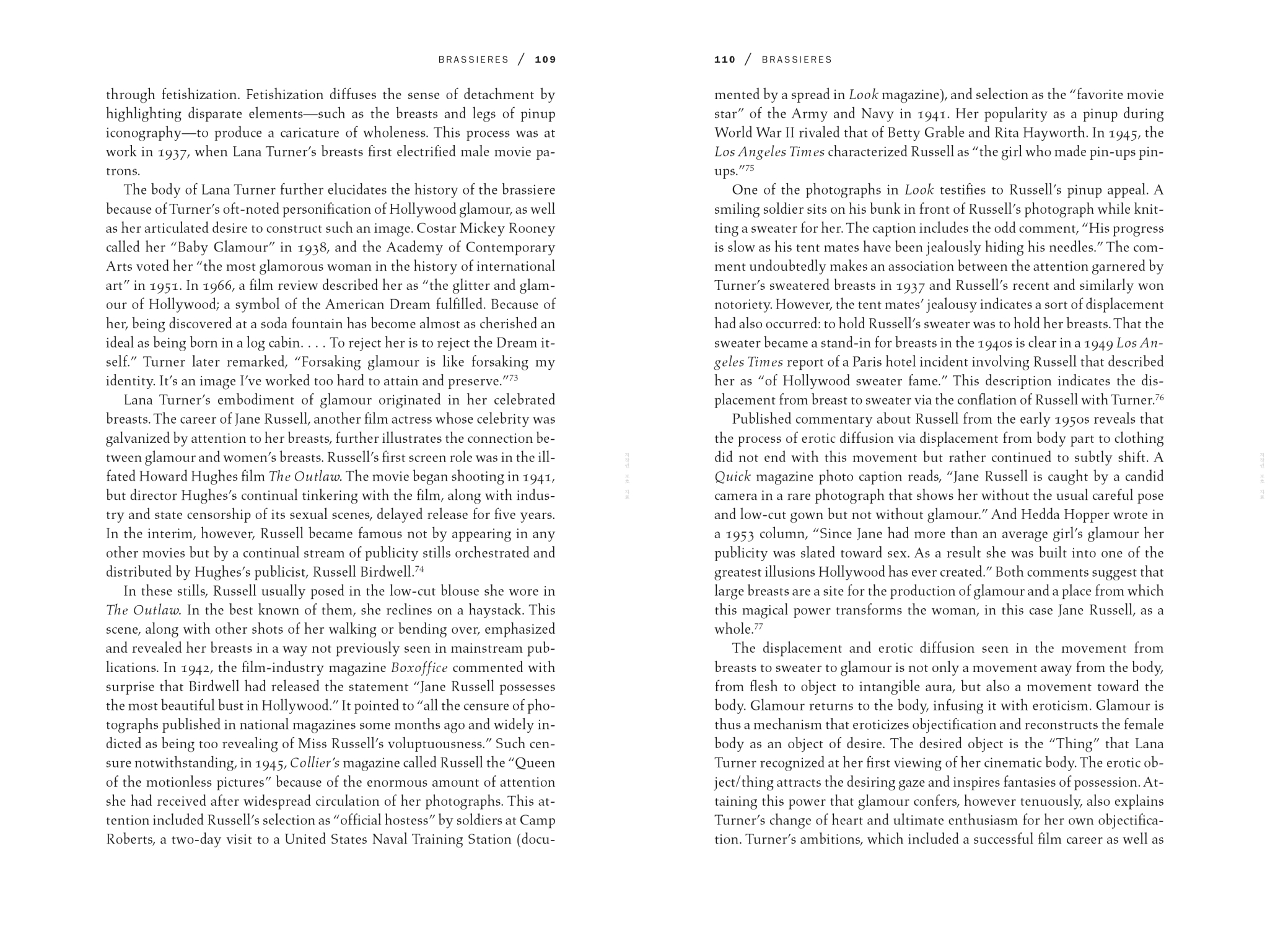
Meanwhile, by coincidence just yesterday I finished the excellent An Intimate Affair: Women, Lingerie, and Sexuality by Jill Fields (2007), which explains how the word “glamour” — where the “gul/글” in Bagel Girl comes from — came to be closely associated with large breasts by Hollywood in the 1930s to 1950s. Something I’d previously chalked up to a Japanese and then Korean mistranslation of the word, see the above pages for more on that, or all of Chapter 3 on brassieres at Google Books here.

If I do say so myself, I’m very proud of the way I describe my feelings when child singers do aegyo:

…cutesy aegyo is bad enough coming from a 21 year-old singer, but simply surreal when you see it done by a 14 year-old.

Yes, surreal, not merely awkward and inexperienced: essentially, you’re watching a child pretending to be an adult pretending to be a child.

Thank you very much.

Thanks again to the (necessarily anonymous) reader who wrote about her experiences, and I’ve had dozens of inquires about the Seoul clinic she used since. Please just email me if you ever need to know the details yourself.

(Source)

2010

Once someone points out the “head cant” to you, it just can’t be unseen. Usually inoffensive in itself though, and frequently done simply for photographic and stylistic reasons (which I’ve under-acknowledged in the past), it’s the fact that it’s overwhelmingly women it that makes it problematic. Just one of a number of typical poses for women in ads, ultimately it serves to reinforce gender stereotypes.

Probably, that’s why these recent Giordano ads stood out to me: in the example above for instance, Shin Min-a (신민아) is the one in control, staring at the viewer, while So Ji-sub (소지섭) is distracted (it’s usually the guys that are presented as more focused). And, desperately seeking examples of pro-feminist advertisements for a TED presentation I may be giving next month, in which I have to — grrr — conclude with a positive message rather than just criticize, this made me realize that feminists and advertisers don’t necessarily have to be at odds with each other. Just a sense of balance by the latter would be a huge step forward.

Really about “lewd” advertisements, 2 years later (this June) I translated another article about how their numbers had surged 3 times over the previous 12 months. With no apparent sense of irony, just about every news site that reported on that had so many examples themselves that the text was difficult to read.

One of my most popular posts, anybody (especially men) who thinks street harassment isn’t a problem should just reflect on the opening cartoon, let alone female readers’ comments about their own negative experiences.

(Source: unknown)

2009

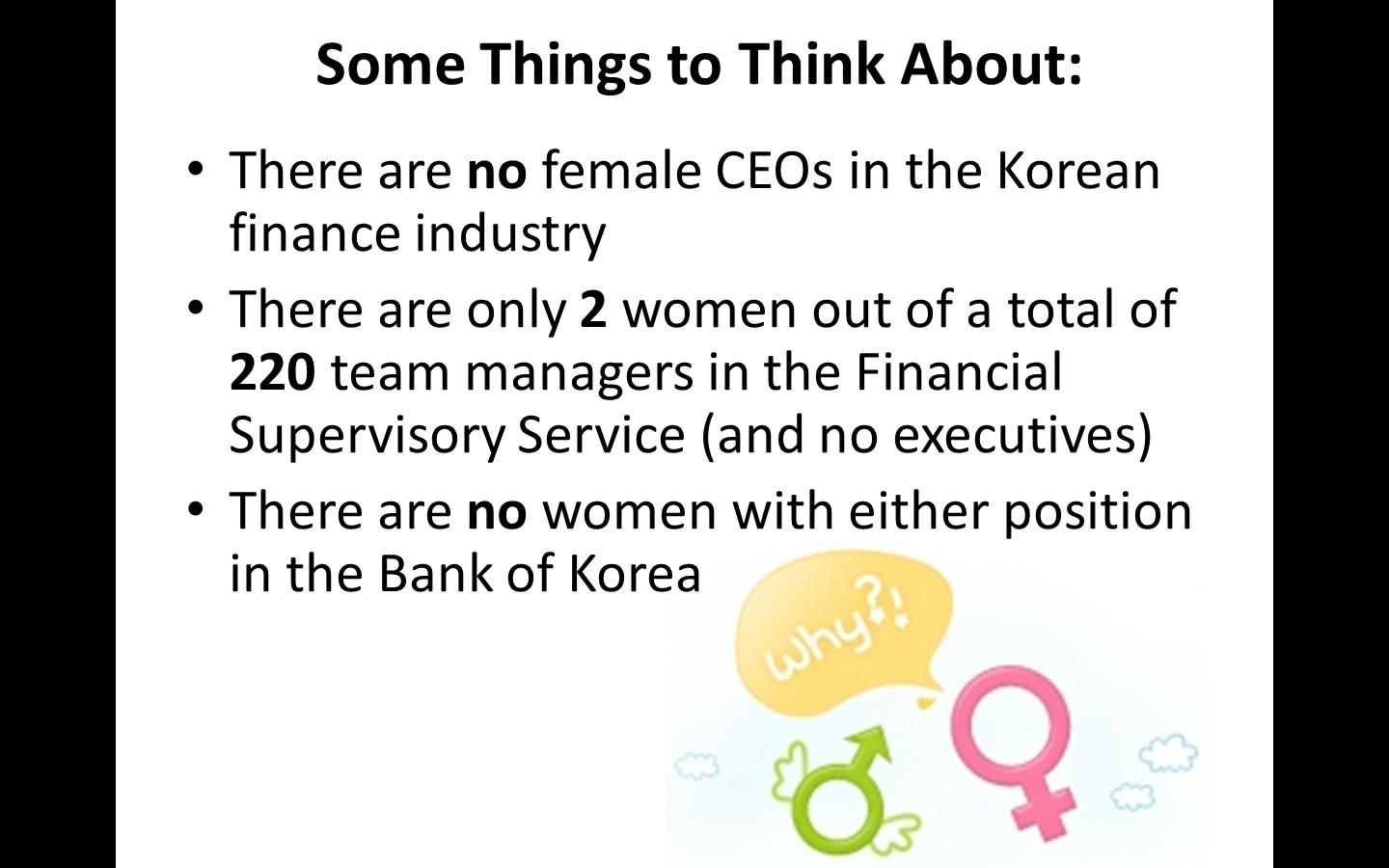
A short, harmless commercial for Shinhan Bank at first glance. But, once you take the time to analyze it, it has a clear message that men do the thinking at Shinhan while the women simply look good. Indeed, it’s such a classic example of gender stereotyping that I’m still using it in presentations today.

Here’s the slide I would present after providing that analysis:
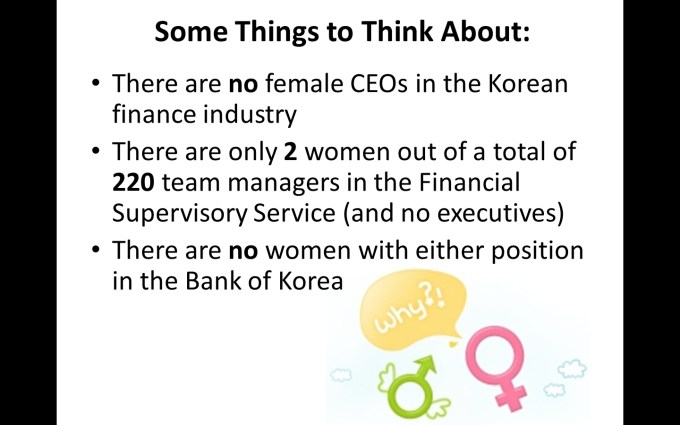
But in the next presentation, I’ll be updating it with the recent news that the banking industry still has the largest gender pay gap in Korea, with women making an average of only 57% of what men make.

Not that I’m against skin by any means. But these remain very sweet ads!

Again one of my most popular posts, ironically soon after writing it trends in the Korean entertainment and music industries meant that Koreans would replace Caucasians in many of the modelling roles that sustained those Occidentalist stereotypes. Also, in my own (admittedly limited) experience, there’s far fewer Korean male – Western (invariably Caucasian) female pairings in popular culture now, after a spate of them in the years after Misuda first appeared. (There were never very many of the opposite.)

However, of course many of the stereotypes still do remain.

(Sources: left, right)

2008

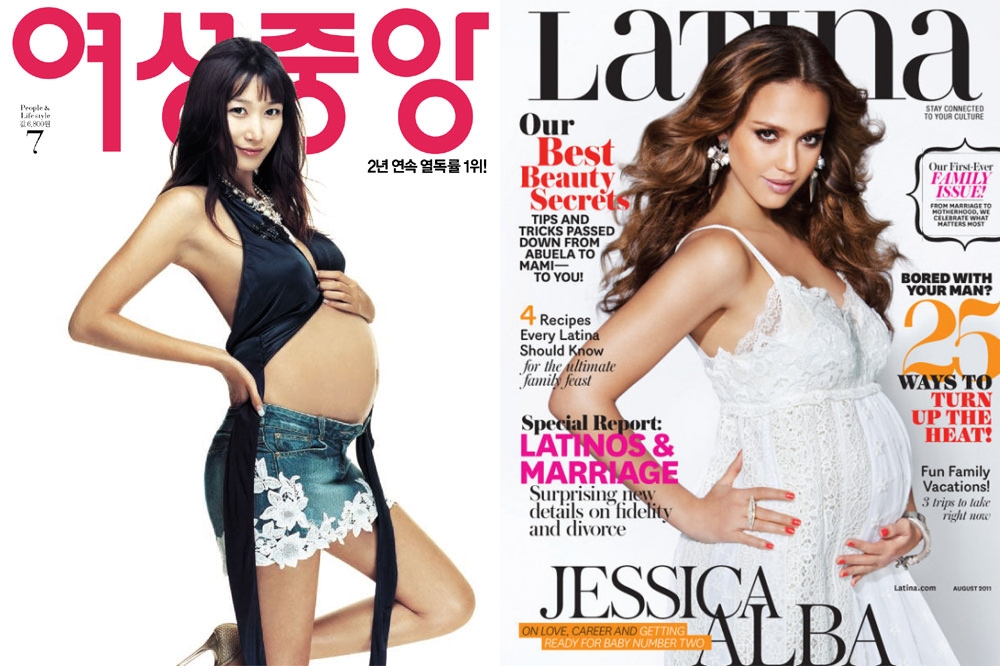
When I read on Yahoo! Korea this week about pregnant Hollywood star’s “D-lines”, for a moment I did try to hold my tongue about seeing the label.

After all, this, for example, is just an advertisement for an event for expecting mothers (albeit one where likely body-shaping products are promoted); these D-line fashion shows were surely perfectly harmless; many of those Hollywood stars were indeed glowing, as was pregnant Moon So-ri (문소리) in Cosmopolitan last year; and finally, yes, I can see the humorous side — it is often applied to extremely obese men.

But although the Western media too promotes pampered celebrity mothers-to-be as ideals to follow, and I can certainly accept that pregnant women overseas may likewise feel under some indirect pressure to watch their weight, that post is about how pregnant Korean women were dieting as early as the late-1990s. One can only shudder at what things are probably like now.

Suddenly, talk of D-lines sounds a lot less funny.

One of my first attempts to grapple with the origins of the kkotminam phenomenon (꽃미남; lit. flower-beauty-man), which culminated in this piece by friend and ANU professor Roald Maliangkay 2 years later.

By coincidence, both of us will be quoted in a related news article to be published next week. Watch this space! (Update: and here it is!)

2007

And indeed there was. Unfortunately however, attitudes didn’t change with it, so fathers feel compelled by management to either ignore it entirely or to come back to work early, despite it only being 3 days (source right: unknown).

Note though, that the “paternity leave” in the original article I translated was a bit of a misnomer, it really meaning time off for a child’s birth. “Real,” paid paternity leave has been available since 2001 (or possibly 1995), but sources vary on specifics. Sung So-young in the Korean Joongang Daily, for instance, wrote in April 2011 that:

According to Korean law, all employees with a child under the age of 3 are eligible to take a year off to care for their children. Up to 1 million won ($919) in salary is provided monthly.”

But that is contradicted by a slightly later report in the Chosun Ilbo, which states that:

…those on leave can get up to 40 percent of their salary, or a minimum of W500,000 and a maximum of W1 million, and parents can take leave until the child is 6 years old.

And both in turn are contradicted by Lee Hyo-sik’s earlier report in the March 4 2011 Korea Times, which says:

Regardless of income levels, both male and female salaried workers are currently given 500,000 won per month during parental leave. This is expected to go up to one million won next year.

As for the maximum age of the children in order to be eligible, the same article states that it was 6 rather than 3. This is confirmed by an earlier February 2010 article by Kwon Mee-yoo, again in the Korea Times, which stated:

The Ministry of Labor passed a revision on Wednesday to the Act on Equal Employment and Support for Work-Family Reconciliation, or the Employment Equity Act for short, which will expand the range of workers eligible for parental leave. Now parents with preschoolers under six years old can benefit.

The leave allows employees to take a certain number of paid days off from work to care for their children. The parents can also take unpaid leave if they use up all of their paid days. This includes maternity, paternity and adoption leave. Currently, at private firms only workers with children 3 years old or less qualify for the leave.

Surprisingly, parents with adopted children weren’t eligible before this revision, and still, “only those who gave birth to or adopted children after Jan. 1, 2008 [were to be allowed] parental leave,” despite those (then) 2 to 6 year-olds obviously being of age. Which all sounds very tight-fisted, although logical during the worst of the financial crisis.

Kwon Mee-yoo also notes that it was in 2008 that the government increased the age restriction for (only) public servants, allowing them “to take time off for parental purposes if their children were under 6 years old.” I’ll assume that it previously only applied if their children were under 3 years old, like Kwon notes was the case for employees at private firms.

Finally, quibbles over details aside, Sung So-young’s and Lee Hyo-sik’s articles in particular remain excellent discussions of why Korean fathers are forced to avoid taking paternity leave, despite wanting to spend much more time with their kids. Against that though, just like in most other countries there’s still a pervasive attitude that childcare is primarily women’s work, with insidious manifestations in our daily lives.

And on that note, have a good weekend, and the Korean Gender Reader post will be up on Sunday!

What’s Wrong With Marrying First-born Sons?

(Source; edited)

As every Korean woman looking for a husband knows, hapless first-born sons are best avoided. After all, customarily moving in with — or very close to — his parents, she would just have too many responsibilities for their care, let alone arguments with his overbearing mother:

The old lady often follows her daughter-in-law around, criticizing every bit of housework. They compete for the attention of their son/husband. In addition, because the old lady went through the same process when younger, she feels entitled to make her daughter-in-law’s life miserable. (Here is an old post touching upon this subject.)

Of course, not all eldest sons’ households would be so bad, let alone that of Ask a Korean’s who wrote that. Or would they? In Japan at least, with very similar living arrangements to Korea, they’re so stressful that married Japanese women living with in-laws are three times more likely to suffer a heart attack than those just living with their husbands.

(Source; edited)

Perhaps it’s no wonder then, that “not a first-born son” was one of the common “specs” (스펙) for a husband in this recent list I translated?

But, despite everything I’ve written above, I’d always thought that their extra responsibilities were simply a cultural preference, and one rapidly eroding at that. So, it came as a real surprise to learn they were so formalized as to be enshrined in the government’s social welfare policy, as explained in passing in this recent Hankyoreh article about an elderly woman who committed suicide after losing her eligibility for benefits (my emphasis):

…According to the Ministry of Health and Welfare and Geoje City Hall in South Gyeongsang province, Lee was stripped of her National Basic Living Security assistance qualification because a confirmation study of recipients conducted in June revealed that her son-in-law’s income had increased.

This is to say, the “sustenance allowance” in accordance with support obligation standards (lineal blood relatives or spouse) had been exceeded [James – by a grand total of 7000 won (US$6.18)]. The recently increased income of her daughter and son-in-law, who work for a subcontractor of a major corporation, was about 8 million won a month.

The “mandatory sustenance allowance” is computed by taking the income of the lineal blood relative or spouse, removing a total equal to 130% of the minimum cost of living for a family obligated to support a relative, and multiplying that by 15% in the case of a daughter (30% in the case of a son)…

…When beneficiaries lose their qualification, they also lose their housing assistance, stipend and medical benefits. The standards determining family members who must provide support is tied to a contrived system that dumps the state’s responsibility onto the family.

(Source)

If any readers familiar with the Korean social welfare system could elaborate on this, or any other gendered aspects of it, I would be very grateful. Unfortunately, all I can further bring to the discussion is my copy of The Politics of Social Welfare Policy in South Korea: Growth and Citizenship by Myungsook Woo (2004), a very top-down and theoretical overview that lacks mention of anything at the grass-roots level, let alone of gender. But of course it does still have some insights though, which I’ll pass on in a later post!