Bandhobi: The Most Interesting Korean Movie You’ll See This Year

Bandhobi

Well, it certainly sounds like it will be, although I admit I have some reservations about Bandhobi‘s (반두비) “crude political satire,” and especially of its portrayal of an American English teacher as an “occasional rotten apple.” Given that it otherwise aims to transcend and/or educate viewers about such issues as racism, illegal immigration, and possibly even teenage sexuality, then it would be both ironic and quite a pity if it resorted to gross stereotypes of foreign male English teachers in the process.

(In passing, as I probably won’t get to mention them otherwise then reviews of the book “The East, The West, and Sex” by Richard Bernstein here, here, here, and here may help to put those stereotypes in comparative perspective, and are interesting in their own rights)

Still, Korea Times’s movie critic Lee Hyo-won, whose excellent movie reviews I’ve sung the praises of before, has easily persuaded me to go and watch it this weekend. Here is her(?) full review below:

In “Bandhobi,” director Shin Dong-il translates to screen “uncomfortable” issues of illegal immigration, racism and social toadyism through the universal languages of ticklish humor, teenage angst and priceless friendship.

It’s a story about growing pains and the meeting point of different cultures _ the title “Bandohbi” roughly means “female friend” in Bengali. It’s an indie flick that, while comfortably feigning mainstream superficiality, is inlaid with some gem-like scenes that show why Shim was dubbed “the Korean Woody Allen” (Berlin International Film Festival, “Host & Guest,” 2005).

Teenage actress Bae Jin-hui portrays the cheeky 17-year-old Min-seo with sure-fire articulation. One of the thousands of girls who took part in political candlelit vigils, Min-seo relentlessly speaks her mind at home – “you’re just my mom’s sex partner,” she shouts at her single mother’s incompetent boyfriend (Here, the film could have made the man despicable and turned it into something more noir, but he truly wants to get a job and become part of the family).

But she isn’t entirely the hardball rebel she pretends be. Not wanting to be a burden, she even takes up an illicit part-time job to raise money for English lessons.

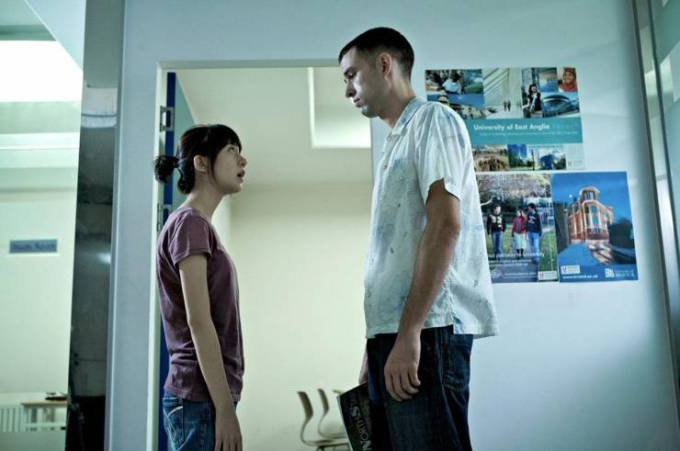
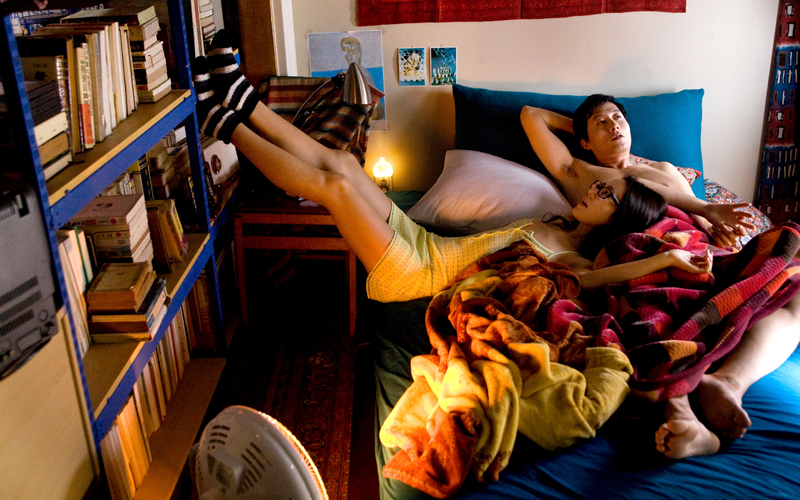
Bandhobi First Meeting( Source )

One day, she decides to treat herself to the spoils of a misplaced wallet, but is caught by the owner, a migrant worker from Bangladesh. Mahbub Alam, a migrant worker-turned-documentary filmmaker who played a minor part in Shin’s “My Friend & His Wife,” shows off his fluent Korean to play the 29-year-old intellectual struggling to support his family back home.

Update: It turns out that Matt at Gusts of Popular Feeling actually knows Mahbub Alam. See here for a little more on his work with the Migrant Workers’ Union and with Migrant Workers’ Television.

Min-seo tries to dissuade Karim from reporting her to the police by offering to grant him a favor, and reluctantly agrees to help track down his former boss that owes one year’s pay. As the unlikely pair pose as loan sharks, they find themselves transforming each other’s worlds in unexpected ways but Karim’s visa will not last forever.

American English Teacher in Bandhobi( Source )

The sometimes-shaky handheld camera keeps a rather ironic distance from the characters; for Min-seo, the world is a piece of cake while for Karim it is a cruel battlefield. They slowly form a mutual understanding, with the girl asking indiscreet questions and the gentleman preaching about problems in Korean society. Yet the most affecting scenes do not involve words, but rather the simple act of crying, listening and eating.

The blatant mockery of traditionally right-wing institutions including the President Lee Myung-bak administration and the daily Chosun Ilbo are actually funny, but at times are not limited to character portrayal as they ought to, and are rather vulgarly laid into the mise en scene. Another questionable aspect of the film, which aims to highlight the foreign community in Korea, is that the American teacher was not convincing as the occasional rotten apple he was supposed to represent, let alone his “atypical” American English accent.

The crude political satire will throw some into fits of laughter while offending others, and contrived narrative elements are bound to irritate picky viewers. But just as the film’s hero Karim says, “open your mind,” and discover the film’s redeeming – and inspiring – qualities.

Bandhobi Hmmm....( Source )

It is unfortunate that the film, which could nevertheless reach out to teenagers, was rated 19 and over for some candid depictions of a girl’s sexual awakening. In theaters June 25. Distributed by Indiestory.

Moviegoers can also look forward to the Migrant Worker Film Festival, of which Allum is festival director. It will be held in July in Seoul and through September in other parts of the country. Visit www.mwff.or.kr.

I’m assuming that that “sexual awakening” involves Min-seo becoming attracted to Karim, and if so it would be quite radical for a Korean movie, as I’m at a loss to think of any portrayals of romantic relationships between Korean women and Western men in Korean cinema, let alone with men from an ‘undesirable’ country like Bangladesh (can anyone fill me in please?). Given everything that I’ve written about teenage sexuality in Korea though – in short, that Korean teenagers are having sex, but the Korean public’s unwillingness to acknowledge this is severely restricting teenagers’ access to contraception and reliable information – then that rating is indeed a pity. But on the plus side, presumably Korean teenagers will be able to find a way to watch it nevertheless, and the restrictions will make them even more inclined to do so!

Share

Women Getting on Top: Korean Sexuality in Flux in the 1990s

Jule Nav Wedding day(Source: Sunghwan Yoon; CC BY-SA 2.0)

Of course, a society’s accepted norms of sexuality are always in flux, and popular culture both reflections of and a huge catalyst for that. But while you and I will undoubtedly be able to name individual dramas, movies, novels, and so on that have been deeply influential in that regard (yes, Sex and the City was the first thing that came my mind too), it is probably much harder to think of a recent period which had many in rapid succession, fundamentally and forever changing a society as a result. But according to So-hee Lee, who wrote ‘The Concept of Female Sexuality in Korean Popular Culture’ (pp. 141-164) in Under Construction: The Gendering of Modernity, Class and Consumption in the Republic of Korea (ed. by Laruel Kendell, 2002) and the must-read text for Korean gender studies, this is precisely what occurred in Korea in the mid-1990s.

Which is not to say that equivalent periods in Western, English-speaking societies don’t exist: it’s just that with having spent most of my adult life in Korea, then none really spring to mind, although I am interested in learning about any that readers can think of. And there are certainly many instances of Western-Korean cultural transmission too, with Friends and (again) Sex and the City in particular arguably having surprising impacts on Korean consumerism and gender relations here despite – nay, because of – the much more sexually repressed and sexist context in which they were received. But these earlier works Lee discusses were definitely home-grown, and:

…should be considered not only as illustrations of contemporary concerns but also as generating social discourse on female sexuality….each publication and each media screening provoked intense discussions throughout Korea (p. 142).

But although this post is ostensibly about popular culture, even some of my friends in academia that specialize in it admit that the three novels, three films, two dramas, and one play Lee discusses would probably be too dated for them to enjoy watching, let alone worth going to the time and trouble to find. Moreover, my own aim in looking at this subject is primarily to demonstrate that on the eve of the Asian Financial Crisis of 1997-98, Korean women were already very open to challenging sexual stereotypes and their ideals of men, and that this partially explains their alacrity in doing so afterward, as I’ll be arguing in this conference presentation I’ll be giving in Daejeon in August (but which has evolved a lot since I first submitted that abstract many months ago: see here for my latest, hopefully much more nuanced thoughts on the subject, and to which I owe a great deal of credit to commenters on this blog). Hence, with apologies to culture buffs, this post is much more about those “intense discussions” than in the cultural works themselves.
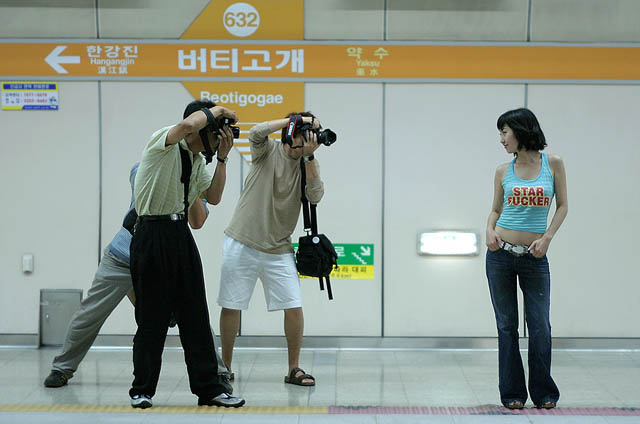
Korean woman wearing Star Fucker t-shirt(Source: Unknown)

Naturally enough, Lee starts with the context in which these cultural works were received, recalling her embarrassment and confusion when she attended some English literature lectures at Cambridge University in the mid-1980s:

My topic was “Women Characters in Victorian Novels”. During the lectures and seminars, I was acutely embarrassed by what I heard. Why was everyone talking about sexuality, masculinity, and femininity?…

In those days, Koreans did not have exact counterpart terms for “sex”, “sexuality”, “sexual intercourse”, and “gender”. I was very confused as I struggled to determine the appropriate meanings. In Korean, one very general term “seong” (성) could be used for these four concepts, its particular meaning dependent on the speaking and listening context….

It’s actually a little more complicated than that, “성” really being the chinese character that means “nature” and “life” as well as “sex”, but that probably adds to rather than detracts from her point.

….Korean society in the mid-1980s did not find it necessary to make sharp distinctions between these concepts. At the annual Korean Women’s Studies Association Conference in 1989, the issue of sex language was raised and discussed. More recently, the Korean counterpart of the term “sexual intercourse” (성교) has gained wide usage, accompanied by the frequent use of the a Korean counterpart for the term “sexual violence” (성폭행)….Sexual violence has now become a recognized issue in need of a discourse.

Korean concepts of sexuality have changed profoundly since the Democratic Revolution of 1987….In 1995, the most popular topics among university students were sexuality, sexual identity, and other sexual subjects. There are many reasons for this…In Korea, there is still no broad popular social discourse on female sexuality outside of marriage.

Which changed a great deal as a result of the 2002 World Cup, as I wrote here, but I’m getting ahead of myself. All of the above I originally typed from the book when I wrote this post about the (literal) Korean language of sex and sexuality, and in which based on my own largely unsuccessful attempts to find Korean-language internet sources on such issues as “sexist advertisements” and “sexual discrimination,” I argued that the change Lee noted was more apparent then real, and that Korean gender studies as an academic discipline clearly somewhat lagged its Western counterparts. Ironically however, that may well add to rather than detract from her arguments for the explosive impacts of the movies and so on that she discusses, for they would have been all the more exceptional and unprecedented at the time.

On top of that, something that can be said with some certainty was how exceptional Korean women (then) in their late-20s and early-30s were in themselves, as they were really the first ever Korean generation to have grown up going to school en masse, alongside their brothers, and while doing so to have learned as an abstract, academic concept the notions of democracy, liberty, and equality. Indeed, Lee is by no means the only author to note Korean military regimes’ curious desire for at least the trappings of democratic legitimacy through (tightly-controlled) elections, and a reflection of this in the education system, replete with references to Thomas Jefferson, the Magna Carta, the French Revolution, and so on. But, this meant that in the 1990s:

Looking at their mother’s lives, Korean women in their early thirties believed that their marriages would be different. Because the Korean standard of living and patterns of material life changed very quickly, they believed that Korean ways of thinking had been transformed with the same speed. This is where their tragedy begins….[this] generation experiences an enormous conflict between the real and the ideal. During sixteen years of schooling, they have learned that equality is an important democratic value, but nowhere have they been taught that women experience the institution of marriage as a condition of inequality. Many married women of this generation have [thus] experienced a process of self-awakening….(p. 144)

And another way in which that process is a novel one is because women of their mothers’ and grandmothers’ generation:

…would have had an entirely different concept of female sexuality. [They] accepted the sexual double-standard as a women’s fate and put their sexual energy into rearing children, identifying themselves as asexual, strong mother figures. [But] Korean women [of this] generation give priority to their identities as sexual beings, struggling to conceptualize a sense of individual selfhood while the mystified ideology of mothering and family obligation, which has repressed Korean women for so long, collapses. (p. 145)

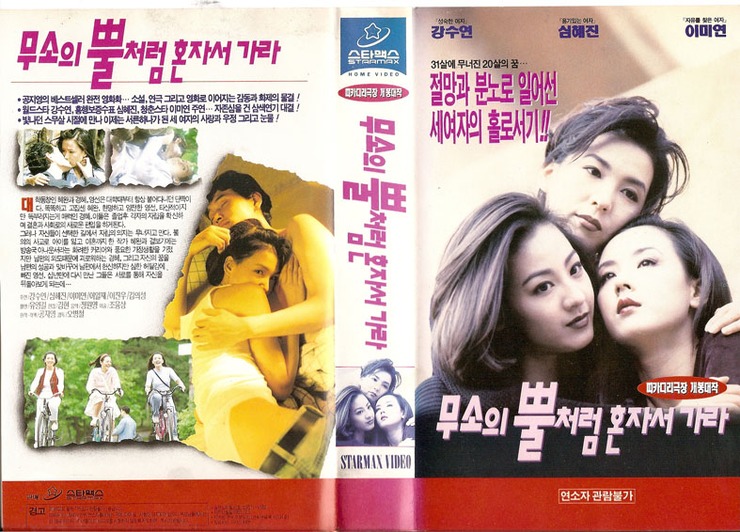
Go Alone Like the Rhinoceros's Horn(Source: Dreamday)

The novel Go Alone Like the Rhinoceros’s Horn (also know as Go Alone Like Musso’s Horn) (무소의 뿔처럼 혼자서 가라, 1993) by Gong Ji-Yeong (공지영) , produced as a play that performed for several months in 1994, and released as a film in 1995 (both adaptations were successful), is about the lives of three married women friends, all 31, and all of whom deal with that process in different ways. Another is the widely-read novel Marriage (결혼) by Kim Su-hyeon (김수현) in 1993, which was made into an even more successful television drama the following year, and about the marriages of three sisters (aged 25, 32, and 34) and their different perceptions of the institution based on their different ages, and indeed it is in Lee’s discussion of it that I first came across the quote that I’ve used repeatedly in this blog:

Generation is an important attribute of identity in Korea, like race in the United States. (p. 146)

But in this section of the chapter I think Lee disproportionately blames Korean husbands seeing their wives as asexual, unattractive ajumma (아주마) for their sexless marriages (and finding their own sexual relief with mistresses and prostitutes and so on), whereas in reality just as many Korean women share widely-held stereotypes and expectations of rarely having sex after getting married or having children, even in 2009 (I am not exaggerating: see here).

Sex is Zero 2 sex scene( Source: KoreanMovie)

Probably by coincidence, at about the time that these were making waves, the new term “Missy” (미시) was invented, which when Lee wrote (it’s not so common these days) was used widely as:

…an expression of the strong desire of young Korean wives in their late twenties for an alternative way of life. The term was first used…in the marketing advertisement of a grand department store in Seoul. As soon as it came out, it was adopted widely to indicate a particular kind of housewife, a married woman who still looks like a single woman. Even the copywriter was surprised at the speed with which this term took on social meaning and evoked specific images of women and femininity. “Missy” rapidly permeated the Korean language once the advertising industry recognized the consumerist implications of this target age group’s flamboyant desires (pp. 149-150).

I think Lee ascribes too much importance to the Missy concept, as both Cho Haejoang in the same book that Lee writes in, and Dennis Hart in this book on Korean consumerism, have written about a steady series of (mostly negative) terms invented in the 1980s and 1990s for different kinds of women that “Missy” is just one example of, culminating in this crass one used today and which in hindsight make Koreans’ recent predilection for naming women’s body-parts and shapes after letters of the alphabet a little more explicable (but still absurd). I also think she exaggerates its novelty, as the Korean advertising industry, buttressed as it was by Neo-Confucianism and associations of the development of a consumer industry with national security (see this series), had developed a profound and intimate relationship with Korean housewives well before 1994. But, regardless, I’m sure you can already see how well the Missy concept meshed with the provocative novels and films I’ve described. Moreover:

The essential condition of being a Missy is a preoccupation with being looked at….Film, as a visual medium, has provided the best representation of this kind of social desire, not confined to material possessions but inclusive of an active and blatant sexuality. While [some characters] in Go Alone Like the Rhinoceros’s Horn and…Marriage decide to have lovers in reaction to their husbands’ relationships with mistresses, the Missy jumps into affairs to satisfy her own needs and desires (p. 150).

And another fundamental condition of being a Missy is having a professional job, yet another reason why women being the first to be fired a few years later during the Asian Financial Crisis would have had a big psychological and cultural impact.

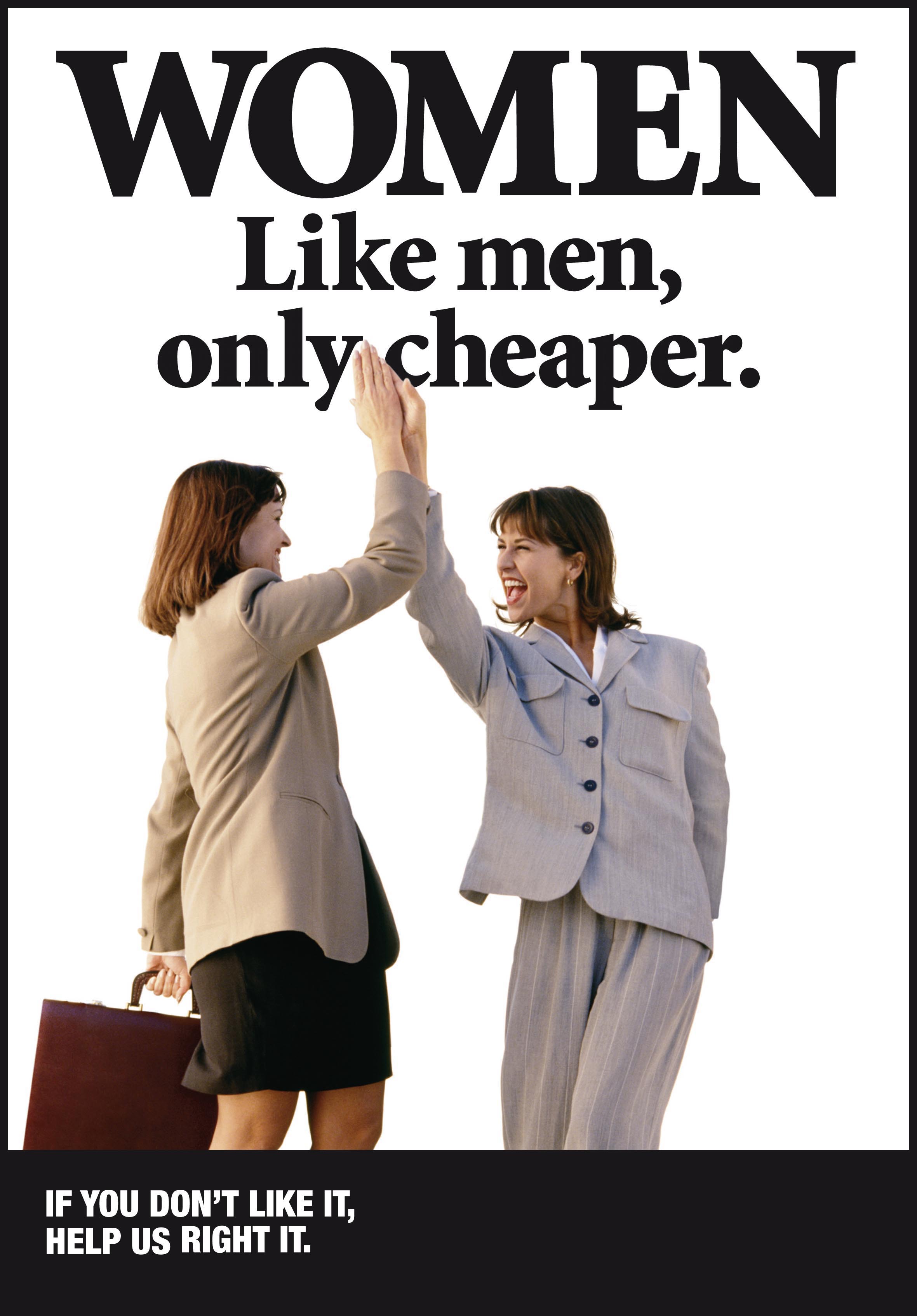
Women Like Men Only Cheaper(Source: Equal Writes)

The film Mommy Has a Lover (also known as Mom Has a New Boyfriend) (엄마에게 애인에 생겼어요, 1995), was about two Missys, and was exceptional in doing away with the previous film conventions of portraying women as reluctant and ashamed when they intentionally or unintentionally had a lover outside of marriage, nor of having a woman somehow punished for her “fall”. At its first screening, reactions were divided along gender lines, men complaining about the ending because it seemed to glorify wives having affairs, whereas no women expressed any complaints. Probably a more influential work involving the development of a late twenty-something’s sexual identity though (and not about a Missy per se, but in a similar vein), was the novel of the same year called The Pornography in my Mind (내마음의포르노), by then only 26 years-old Kim Byeol-ah (김별아), and whom:

…bravely deals with a previously forbidden theme. The novel rebels against the sexual double-standard, insisting on the existence of female sexual desire in contemporary Korea, where adultery is still illegal (p. 143).

Hence:

This novel [played] an important part in an emergent sexual politics by bringing the forbidden theme of sexuality into the public sphere via television talk shows and other media events. However, this public discussion has been confined to the experiences of married women (p. 151).

And which paved the way for the even more provocative and controversial drama The Lover (애인) and the film The Adventures of Miss Park (박봉곤 가출 사건), both of which came out in September the following year. In particular, the drama’s depiction of an extramarital love story between two highly successful professionals in their mid-30s hit Korean society like a bombshell, primarily because television tends to be conservative because of its wide audience of course, but also because both the ages of the characters meant that the drama had to confront the all-important issue of familial duties and roles. Indeed, by October it reached 36.3% of television viewers, and it:

…even was discussed in the National Assembly because of the social implications of its theme, a challenging portrayal of a married woman’s sexuality. This response reveals how powerful the television is in subverting the traditional ideology of female sexuality (p. 154).

my-wife-got-married-bed-scene-ec9584eb82b4eab080-eab2b0ed98bced9688eb8ba4-ecb9a8eb8c80-ec9ea5eba9b4-eb85b8ecb69c(Above: Screenshot from My Wife got Married)

An important point for me to remember, although I would have liked to have also learned more about the contents of that discussion in the National Assembly! There is, however, also a third possibility for its success that Lee does not really mention, and that is that in many senses both characters ostensibly had perfect and desirable lives, with no apparent reason to have affairs, and yet they did anyway: it must have been quite confounding to many, and which may also play a role in “many married men in their 40s and 50s  [calling] the broadcasting company to protest this drama, demanding ‘What is it trying to say?’ (p. 155).”

Rather then getting into details here, for a very thorough examination at The Lover see this lengthy presentation by Kim Sumi entitled “Popular Feminism and the Hegemonic Practice of Mass Media: A study of two South Korean TV dramas, Lovers [The Lover] and The Woman Next Door,” which was presented at the annual meeting of the International Communication Association in New York in May this year, and in passing let me note a point not unimportant to my presentation, which is that like in Mommy Has a Lover, the man that the lead female character has an affair with “has a soft, gentle, and sweet personality, reflecting the new masculinity of 1990s Korea” (p. 155). Meanwhile, Lee sees the drama as having:

…accomplished a great deal in bringing into public discourse the issue of a middle-aged wife’s sexuality. Until recently [which is 2002 at the latest, but I think she’s actually writing in early 1998 – James], the wife’s subjective sexuality has been elided by the web of obligations spun by the husband’s family or by the terms of a wife’s subordination to her husband, as in [one character’s] case in Go Alone like the Rhinoceros’s Horn. However, in the mid-1990s, as the wife’s subjective sexuality emerged through the weakening of Korean familism, a sympathetic rapport between a man and a woman became more important than the functional element of role obligations between a husband and wife, or of a father and mother to their children (pp. 155-156).

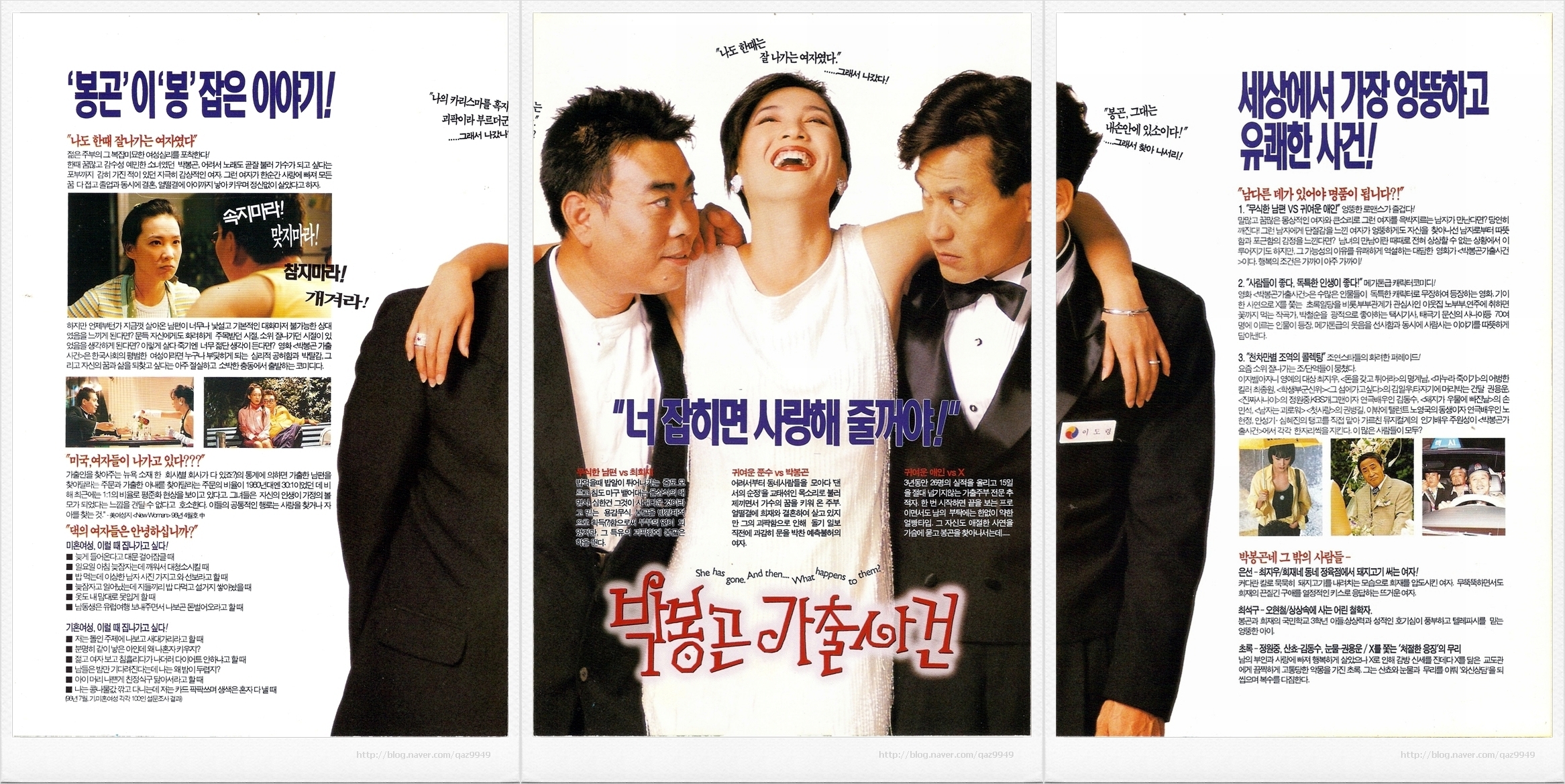
Coming out at the same time as The Lover, on the surface The Adventures of Mrs. Park is an average romantic comedy, albeit a very successful one, but Lee notes that unlike the convention of most films in the genre, this one ends with a women running away from a domineering husband, achieving her dream of becoming a singer, and finally entering into a happy second marriage, “thus subverting a traditional morality that expects the runaway wife to come back home to restore everyone’s happiness and family security (p. 156).”
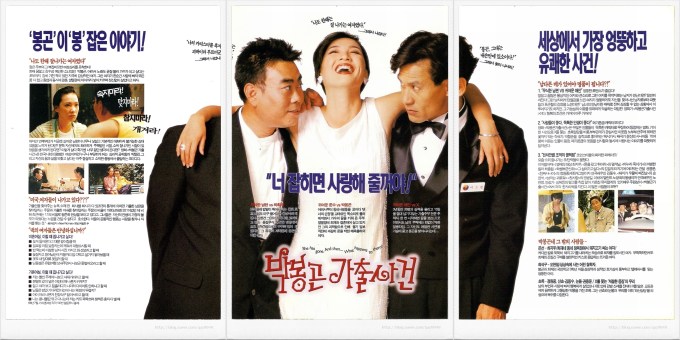
The Adventures of Mrs. Park(Source: Unknown)

As such, Lee notes the film director was concerned about how a conservative audience might respond to the uncommon story and its unexpected ending, and in many ways the movie presents a guerrilla attempt to sneak a serious social message into Korean cinema by presenting it as comedy. In the poster above for instance, it appears that the female character is in possession of two men simultaneously, and what’s more she is bursting into laughter while her soon to be ex-husband and the detective he hires to find her (who falls in love with her instead) stare fiercely at each other, whereas in reality women less wealthy than the Missys described earlier (and the characters in Mommy Has a Lover and The Lover) tended to be (and still are) very economically dependent on their husbands and therefore very submissive to them, and hence that is how they tended to be portrayed in previous Korean movies. Moreover, the happy ending made possible by the comedy genre here implicitly highlighted the grim reality that such an act would entail for most women in that position…and which probably explains much of its success, for it articulated their feelings.

And that marks the end of the works that Lee looks at. By way of conclusion, let me mention just two things that she mentions in her final section of the chapter, entitled “Prospects for the Social Concept of Sexuality in Twenty-First Century Korea”. First:

Looking at Korean culture with a certain detachment, I can imagine that the years 1995 and 1996 will be remembered as a critical period for the emergence of a social discourse on sexuality, particularly female sexuality (p. 160). The year 1995 was particularly remarkable in that housewives began, on their own initiative, to speak in public about wives’ subjective sexuality (p. 160).

Although the book this chapter is in was published in 2002, I strongly suspect that Lee actually wrote this in late-1997 at the latest, as only 2 out of 50 or so references are from sources later than 1996, and she writes in the next paragraph that “even with the economic downturn since November 1997, this tide is still in motion.” Unfortunately, when the true extent of Korea’s economic crisis became apparent just a few months later, and in particular its profoundly gendered nature (women, particularly married women, were overwhelmingly targeted for layoffs, under the explicit presumption that they would be provided for by their husbands or fathers), then this “tide” was to proved to be at best a mere ripple against new economic realities.

On the other hand, she proved to be remarkably prescient with the following:

…while this discussion of the changing process of female sexuality in the popular culture from 1993 to 1996 gives the impression that Korean women now are marching to demand their sexual subjectivity, in reality, most Korean women are marching only as the passive consumers of the sorts of cultural products described previously, not as their active cultural producers. When women are able to intervene in the process of cultural production as subjective consumers with a feminist point of view, the Korean concept of female sexuality can be transformed more rapidly than before (p. 159, my emphasis).

And as I explain here in great detail, such an opportunity was provided by the 2002 World Cup, and Korean women more than took advantage of it. That will be the focus of a follow-up post, hopefully to be written well before the conference!

Update) For those of you fluent in Korean, this short essay also discusses some of the movies mentioned here, and adds many more from the 2000s that in the same vein)

Where do Ajosshis Come From? Part 3: Manchukuo and The Militarization of Daily Life in South Korea

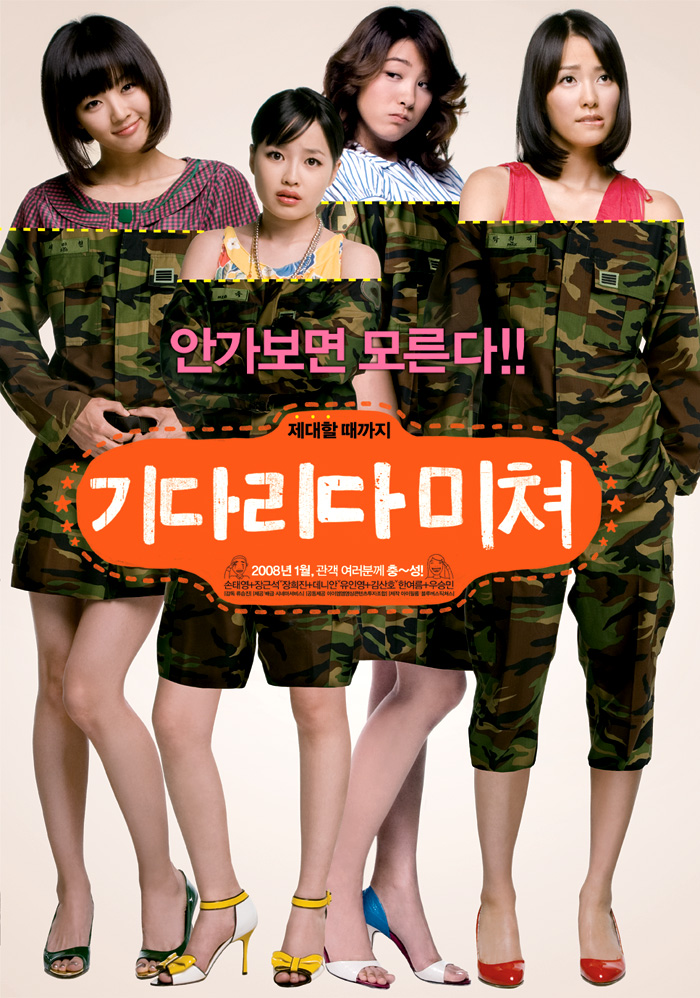
(Movie poster for “The Longest 24 Hours,” (기다리다미쳐, 2007), a lighthearted look at military service from the perspective of conscripts’ girlfriends; also known as “Crazy4wait.” Source: 여자도 모른는 여자이야기)

It’s been quite a while, so to remind readers, in Part One of this series I argued that a virtual gender apartheid existed in modern Korea, with women excluded from economic and political life here to an extent much more reminiscent of Middle Eastern countries than what one would expect in a modern liberal democracy. If that sounds like mere hyperbole to new readers, then sure, it probably would to me too(!), but by all means examine the evidence given there, to which I would now add that Korea has the lowest number of working women of all developed countries also, and that spousal rape isn’t even a crime here (see #2 here).

(Update, February 2014: Part One has since been deleted sorry)

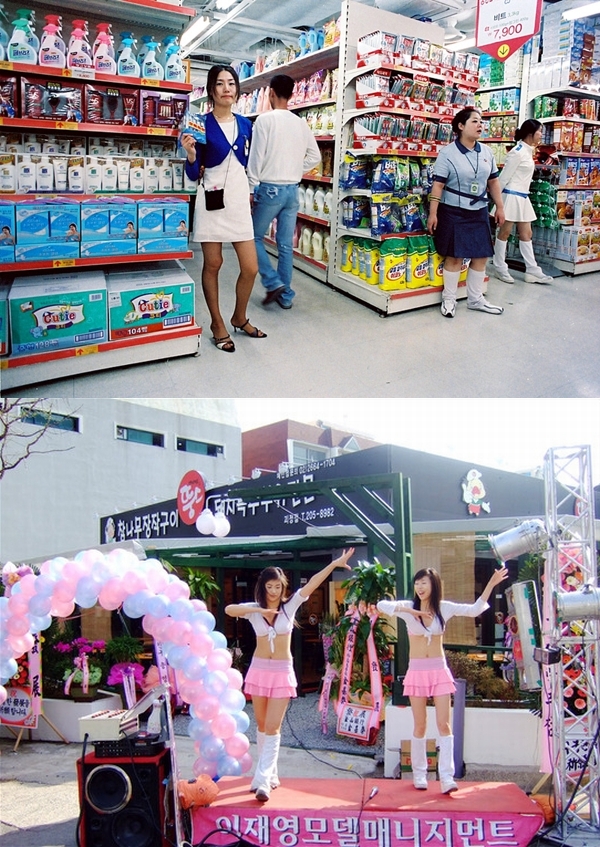
How to explain this? Well, naturally many specific elements of Korean women’s disadvantaged position in Korean society are no great mysteries: decades of salaryman male-breadwinner forms of employment for instance, explain a great deal about the lack of women in senior positions in companies (a parallel is how the Cultural Revolution four decades ago resulted in an “intellectual skills gap” that still affects the Chinese economy), and deeply hierarchical and sexist Neo-Confucianism has had a profound influence on Koreans’ worldviews, even extending to how men’s and women’s bodies are perceived and valued differently, and from which it is no great leap of the imagination to see echoes of in – amongst other things –  the widespread use of doumi (도우미) or female “assistants” and scantily-clad “narrator models” (나레이터 머델) here to sell mundane household items or open even the humblest of new stores and restaurants respectively.

korean-doumi-shop-assistants-and-narrator-models-도우미0-나레이터-모델(With apologies to Michael Hurt for the use of the top image, but like he says, despite their ubiquity most doumi are embarrassed by their jobs and very reluctant to have their photos taken; after half an hour of looking (in Korean!), this is the only similar one I could find. Bottom image taken from shytiny)

But both those and many other factors commonly cited are by no means confined to Korea, and while going into greater detail would undoubtedly tease out plausible reasons why Korean women are worse off than, say, their counterparts in Japan or even China (hardly well-known for gender equality in themselves), here I am more concerned with the systematic nature of women’s exclusion in Korea. Ergo, however cliched it sounds, this series is all about seeing the forest rather than the trees.

With that in mind, based on my readings of especially Kwon (2001) and Moon (2005) and on my own nine years’ experience of the militarism that is still inherent to many Korean institutions (especially schools) in particular, then I laid the blame for that exclusion squarely on the continuation of and widespread public acceptance of the universal male conscription system, and all that that entails: nothing else seems adequate to explain so widespread and pervasive a phenomenon.

Again, that may well sound somewhat exaggerated at first: after all, South Korea is by no means the only country in the world to have conscription, and while I’d venture that a cross-country comparison would undoubtedly demonstrate at least a tendency towards lower levels of women’s empowerment in those countries that had it, that the “feminist paradises” of Sweden and Norway also have it, for instance, shows that any link would by no means be clear-cut. But then for most of the brief history of South Korea the military has had a uniquely pervasive role in society, one not revealed by any casual comparisons with other military regimes, and this really needs to be fully appreciated and understood before some of my more outlandish sounding claims about the effects of conscription on gender roles here can be assessed objectively. Hence, while it will take us far in time and space from what would normally come under the rubric of “Korean gender issues” – and which explains the 9 month hiatus, for unfortunately my beginning to write the series coincided with my wanting to examine more “traditional” aspects of that subject – I realized that the Korean military itself needed to be studied first, and so Part Two was about its origins in the Japanese colonial state, again much greater in size, scope and ambitions than a simple conflation with its European and US counterparts would suggest.

This post continues where that left off, focusing on the short-lived Japanese colonial state of Manchukuo (Manchuria region, 1932-1945), which eventual nreturnees to Korea among the  720,000 Korean immigrants there (from 1932-1940) and a sizable proportion of the South Korean bureaucracy, armed forces, and police of the 1950s and 1960s had some first-hand experience of living in and working for. In particular, Manchukuo was where president Park Chung-hee (1963-1979) above (source) spent most of his formative years as an officer in the army (even going so far as to sign an oath of loyalty to it in his own blood), and, as we shall see, is what he would effectively recreate in South Korea in the 1960s and 70s.

Korea’s Wild Wild West?

(Source: 이것저것 연습장)

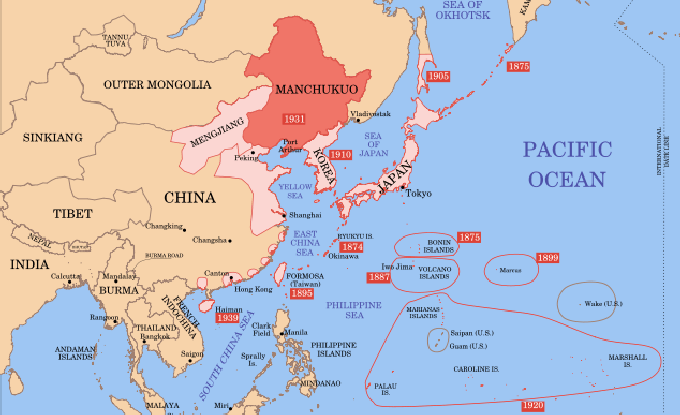
Okay, first the big picture:  what were Japanese motives in occupying what was to become Manchukuo? Well, primarily because it greatly expanded the Japanese imperial empire, still much smaller, weaker, and younger than its European and American counterparts as explained in Part Two. But more practically speaking, it also provided:

  • A bridgehead for the invasion of China, well connected by rail and road links to Korea even before the 1930s
  • A buffer-zone between the USSR and both the more developed and crucial colony of Korea, and indeed there would be several clashes between the two on the Machukuo border in the late 1930s
  • An important source of particularly mineral resources in its own right, without which the later invasion of Southeast Asia wouldn’t have been possible
  • And finally, an escape valve to ease Japanese (and Korean) domestic agrarian population pressures and poverty, exacerbated by the depression.
(The Prewar Expansion of the Japanese Empire. Source: Wikipedia)

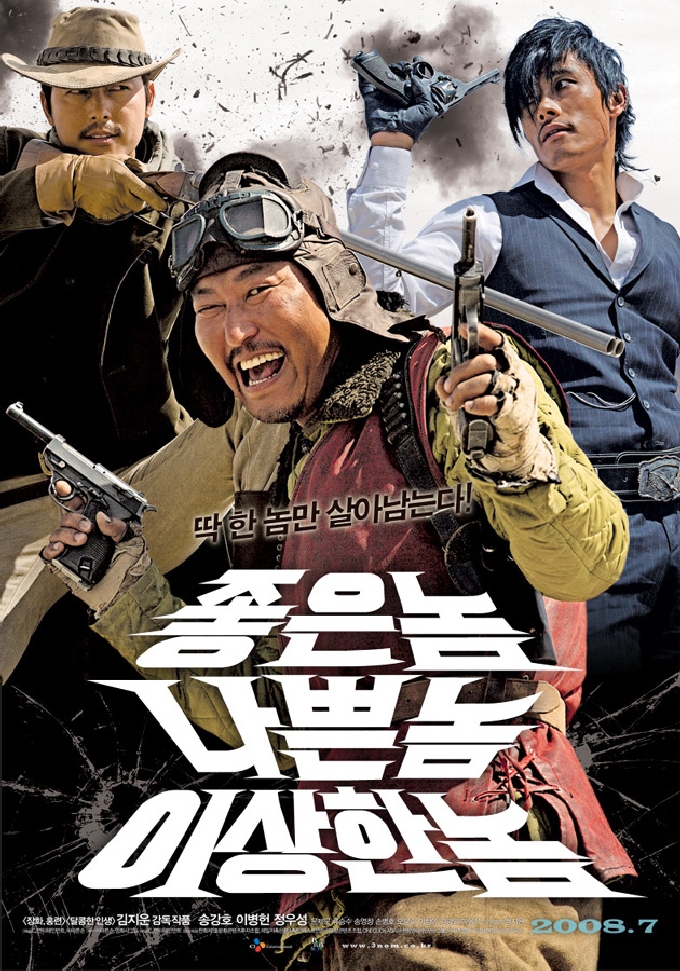
The 2008 movie The Good, The Bad, The Weird (좋은 놈, 나쁜 놈, 이상한 놈) in the poster above happens to be set there, and by all accounts it is fun to watch, but unfortunately its depiction of life there in the 1930s as Korea’s version of the Wild West is probably exaggerated at best. While it’s true that the Chinese Warlord Era as a whole is not exactly well known for the stability or internal coherence of its various regimes, and that things would have been quite chaotic around the period when warlord Zhang Xueliang withdrew his forces from the region and ceded it to the elite Kwangtung Japanese Imperial Army after the Mukden Incident of September 18 1931, that strategic retreat was largely dictated by forces beyond his control, such as Chiang Kai-Shek being unable to provide assistance. In fact, his regime was far more coherent than most of that era, being able to effectively wipe out opium-trafficking and internal corruption in the previous decade for instance. Moreover, much of the state bureaucracy was bequeathed to the new Japanese colonial state, and as soon as April of 1932, it was one of the most controlled, regimented regimes in Northeast Asian history.

Don’t worry if that was all above your head: suffice to say that Manchukuo state organs were in many senses grafted onto the preexisting ones of Zhang Xueliang’s regime, but with the crucial difference that recent events meant that there were no longer any substantial non-state actors like a business or landed class to impede them in instilling notions of loyalty and nationalism in their new pool of workers and soldiers.

And whom were by no means unwilling victims of the process either. For example, writing about the Korean “Truth Commission on Forced Mobilization under the Japanese Imperialism (sic)” in 2006, Michael Breen said:

The Truth Commission on Forced Mobilization under the Japanese Imperialism (sic) announced on Monday that 83 of the 148 Koreans convicted of war crimes were victims of Japan and should not be blamed….

[But they] were not tried as soldiers or POW camp guards who had done their jobs. They were tried for over-zealousness, for decisions and actions over and above the call of duty. They were the thugs, the brutes, the monsters, the most horrible of the ”horrible people”….By what authority does the Truth Commission have to remove their individual responsibility with its class act defense of nationality? Such skewed morality led to the crimes against the lowest class– ”prisoners” — in the first place. People who committed crimes against humanity are not innocent by virtue of being Korean any more than Japanese who brutalized Koreans are innocent by virtue of being Japanese.

….[the Truth Commission] should recognize that the idea that Koreans were all unhappy citizens of imperialism bar a few collaborators is a myth. Koreans were Japanese citizens, and it did not occur to many to support the allies against their own country. Ask anyone who lived in that period, and they will tell you that the political correctness of the post-colonial generation is distorted.

They will also tell you that from 1937-42, Koreans in the Japanese army were volunteers — who included King Kojong’s son, an army general — and that large-scale forced conscription only started in 1944. The Commission should know that those rounding up comfort women were Koreans and those torturing people in police stations were mostly Koreans. Koreans, in other words, were more ”horrible” to Koreans in many cases than the Japanese were. The solution to this dilemma is to accept the notion of individual responsibility.

And according to Suk-Jung Han in his July 2005 Japan Focus article “Imitating the Colonizers: The Legacy of the Disciplining State from Manchukuo to South Korea,”  similar senses of citizenship were instilled in new Manchukuo citizens by means of:

  • State-Sponsored Confucianism
  • Mourning Rituals and Ancestor Worship
  • State-foundation Gymnastics
  • Anti-Communist Rallies

A combination which will probably sound very familiar to those of you even with just the most basic of knowledge of South Korea’s history. Indeed, as Han’s article is only 14 pages long and very readable in its own right, rather than provide a detailed discussion of what you many of you will go on to read there regardless, it’s probably wiser if I just provide some excerpts here, starting with:

The legacy of Manchukuo can be seen in numerous “naturalized” events in South and North Korea. So-called “national ceremonies,” such as paying a one minute silent tribute to the war dead in front of monuments, marching, lectures on the “current emergency situation”, movie-showing, poster making, student speech contests, rallies, big athletic meetings, and so on- largely related to anti-communism, and all too familiar to South Koreans for several decades from the 1950s- were originally national events of Manchukuo in the 1930s.

For state-sponsored Confucianism, some crucial clues as for how South Korea has come to be known as “More Confucian than China”:

South Koreans grew accustomed to the Confucian ideology of loyalty and filiality (choong-hyo) stressed by Syngman Rhee’s regime (1948-1960) as well as Park Chung Hee’s (1961-1979). The post-liberation ideology was different from the Confucianism of the Chosun dynasty, which had been not only the official ideology but also the basis of ethics and cosmic philosophy. The former was less intense than the latter. But Confucianism was still influential in the post-liberation era. Important Confucian concepts, like loyalty to the nation, were instilled in students. It was Manchukuo that energetically patronized Confucianism. Manchukuo differed from mainland China where Confucianism was severely attacked by the May 4th intellectuals and their heirs. Also, Manchukuo differed from Japan in the 1930s when Shinto was deployed as the state religion.

About the importance of mourning rituals and ancestor worship, which might sound outlandish to many outside of Korea, but intimately familiar to anyone who’s ever experienced either of the two biggest occasions of the year Seollal or Chuseok in an actual Korean home, and learned first-hand just how morbid they can be, at least symbolically:

Although monuments for the war dead began to supplement Confucian shrines as the site of important ceremonies, the mourning ceremony, either for ancestors or soldiers, was long essential to Confucian practice inside and outside the home. In April, 1935, officials and army officers attended a great mourning ceremony (zhaohunji, shokonsai), held at the newly built monument in the capital. The assembly, opening ceremony, invocation of the spirits, enshrining of the dead, offering of food, and tributary speech solemnly proceeded. This was simply one example of numerous mourning ceremonies of subsequent years, particularly after the outbreak of the Sino-Japanese war.

The mourning ceremony for dead officials, policemen and soldiers was an important an event, next only to one worshipping Confucius. Although prewar Japanese society also had ceremonies for the war dead at Yasukuni shrine, they were not equal to those in Manchukuo. In Japan, all the war dead (except those who died in hospitals, rather than at the front) were enshrined at Yasukuni. Ceremonies for all were held there at fixed dates. In Manchukuo, by contrast, ceremonies were held at numerous places and at various times. Each ministry of the central government, central police board, army district, province, and county office organized a committee for constructing monuments. Monuments and plazas for the war dead were built across the nation.

seollal-shrine(Offerings of food and drink at a temporary mini-shrine devoted to the spirits of dead ancestors, to whom male members of the family must bow to in ceremonies on Seollal and Chuseok. Source: DiscoverKorea)

For state-foundation gymnastics:

Most middle-aged and older South Koreans remember Jaegun gymnastics from the 1960s. “Jaegun chejo shiijak (let’s start Jaegun gymnastics), one, two, three, four!” The song was broadcast in the early morning across the country in the 1960s following Park’s military coup. [9] Most family members woke up to this song-like command and practiced Jaegun gymnastics, still practically asleep. Jaegun, meaning reconstruction (of the state or nation), was the catch phrase of Park’s regime. Several other songs about Jaegun were written and propagated for citizens and students to memorize. The model for Jaegun gymnastics was the Jianguo (state foundation or construction of the nation) gymnastics of Manchukuo. Jianguo and Jaegun had the common Chinese character of foundation or construction (“jian” in Chinese, “gun” in Korean). Jianguo was the essential word in Manchukuo, from “Jianguo spirit”, “Jianguo celebration day” to “Jianguo University” and “Jianguo exercise.” Hence, construction and reconstruction were the key words for Manchukuo and South Korea.

And still as big a part of the collective Korean psyche that there are still many references to it in popular culture, even that explicitly catering to young people that would barely remember it, if at all. One recent example of which was in a commercial for an eyeliner, as I discuss here:

Also of note:

In Manchukuo, exercise and sanitation were important fields in which the regime invested. There were special weeks of exercise and street cleaning. During this time, the human body came under the jurisdiction of the state. One month after its foundation, the regime prepared an athletic meeting….Imitating the German fascists, the rulers of Manchukuo were interested in the physical training of citizens….Through sports, Manchukuo sought international approval, for which the regime was so thirsty.

This importance of this will become apparent in later posts when I discuss Korea’s population control policies of the 1960s and 1970s, only marginally less rigorously pursued and personally invasive than their Chinese counterparts, and a good illustration of which is the withdrawal troops from the DMZ at the height of tensions with North Korea in order to implant IUDs and perform (voluntary, but rather highly encouraged) sterilizations on citizens in remote rural areas and islands. No, really.

crimson-dawn-by-spargett(“Crimson Dawn” by Spargett. Source: A Muchness of Me)

And finally, for anti-Communist rallies:

South Koreans became sick and tired of anti-communist rallies (bangongdaehue) or “Great gathering for destroying communists” (myulgongdaehue) under Syngman Rhee’s and Park Chung Hee’s regimes. Old folks and housewives were led by officials of city districts and neighborhood districts, and students led by teachers gathered in great stadiums and shouted anti-communist phrases. Again, the model was Manchukuo. In prewar Japan, of course, there was mass mobilization (through such organizations as the Military reservist association and National youth association). After the Manchurian Incident, in particular, jingoism spread among news media, magazines, movies, and literature. According to Louise Young, however, neither government repression nor market pressures can entirely explain the enthusiasm in the 1930s. It was voluntary. Journalists of Asahi or Mainichi supported the army, because they had conviction (Young 1998: 79). Also, the main enemy in Japanese society was not necessarily communist Russia (although it may have been for the Japanese army). Hence, there were no anti-communist rallies in Japan. By contrast, there were myriad anti-communist rallies in Manchukuo. Also, Manchukuo had many more occasions for rallies. Manchukuo was a pioneering place of maximum mobilization, summoning people day and night. The fascist gatherings of Germany and Italy flowed to both North Korea and South Korea through Manchukuo.

Hell, for all its anti-Japanese rhetoric, even at least one of South Korea’s national holidays (until 2005) ultimately comes from Manchukuo too:

In 1936, “tree-planting day” was added. There were other celebrations such as, those for Japan’s withdrawal from the League of Nations, the entry of Japanese soldiers to Manchuria, the visit of Japanese royal family members, and the abolition of Japanese privilege, even one for the founding of the post office.

For a little more on the national-security mania of South Korean military regimes, see here, but that will be the main topic of *cough* a much bigger Part Four.

But let me stop this post here, for Han’s section on “Inheritors in the 1970s,” in which South Korea sounds like a carbon copy of all the above, really needs to be read in its entirety, and my amount of copying and pasting has already become a little excessive. Apologies for that, and I don’t like looking lazy either, but I confess that the question of how to summarize an article that most readers would go on to read regardless proved such a stumbling block for me that it’s taken me nine months to return to it. And that was despite the fact that the next post in the series will be about something I read in 1997 which – in no uncertain terms – was such a revelation to me that without having done so I literally wouldn’t be in Korea or even East Asia today too, let alone have started this blog (but hence its title). Better then, to be a little lazy in this one post then to procrastinate any longer!

democracy-park-monument-busan(Source: Brian Yap (葉); CC BY-NC 2.0)

“Breathless”: A New Korean Movie on Domestic Violence

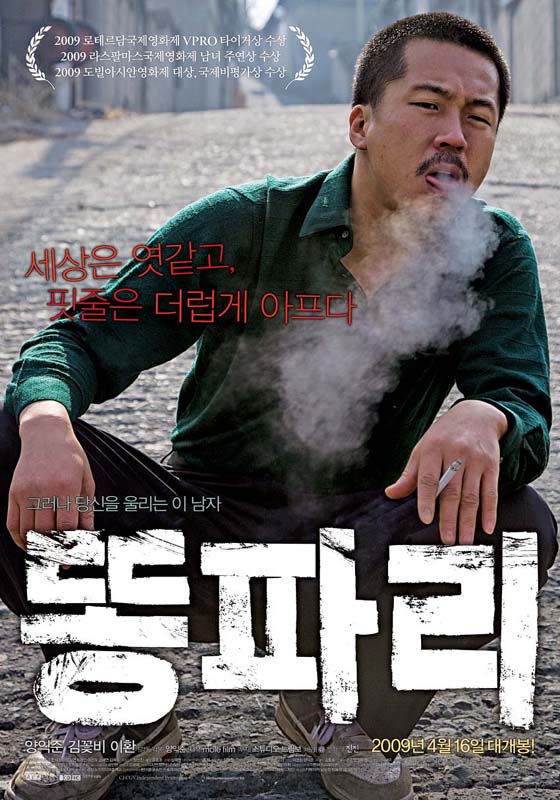
breathlessMy own series of posts on domestic violence in Korea is on temporary hiatus as I realize I should finish others first, but in the meantime the new movie “Breathless” (똥파리, or “shit fly” in typically earthy Korean) on that theme looks like something I should definitely take some time to watch. In the words of Korea Times reporter Lee Hyo-won, whose film reviews are of such high quality that I confess I cut out and keep most of them (source, left: KoreaFilm):

…”Breathless” explores the murky gray zone between compassion and cruelty, redemption and revenge, and the blessings and curses of family bonds. In a nutshell, it’s a family drama that’s inappropriate for children. While harrowingly violent, however, the multiple-award winning film by director-lead actor-producer Yang Ik-june seethes with warmth and humor.

The film is making headlines for entering almost 20 international film events and picking up top prizes, including, most recently, the SIGNIS Prize and the Audience Award, Wednesday, at the Buenos Aires International Independent Film Festival. And the movie does not disappoint, and establishes Yang as a name to watch out for.

Read here for the remainder, and here for an interview and short biography of producer, director and lead actor(!) Yang Ik-june (양익준), who sounds like a bit of maverick:

”I want to say ‘ – you’ to the world through my films,” he said. He also wants to show the male private parts onscreen someday. ”Koreans think it’s artistic when they see it in a foreign film, but here they censor it. We feel unstable in this world because we want things to be safe all the time, but we need to be courageous,” said the director, who respects cineastes like John Cameron Mitchell (”Shortbus”). ”Sex is part of life,” he said.

For more on the recent decision to allow Shortbus to be screened, see here. I definitely share his sentiments, and, as someone notorious among my friends for never shying away from sexual topics myself, I very much look forward to more films from him!

Korea’s “Flower Men”: Where’s the Beef?

gong-yoo-공유-몸짱(Korean Actor Gong Yoo (공유). Source: Unknown)

A commentator on my recent post on the origins of Korea’s kkotminams (꽃미남), or “flower men”:

Is there anything to back up your assertions in this essay? I’m just curious, because I’ve never run into anything that would suggest such a mass reaction to the IMF crisis from the married women of korea. There very could have been, but I’ve never seen anything to suggest it and I’m curious as to how you developed this conclusion.

“in just a few short weeks forever changing standards of dress, discourses of sexuality, and cementing these new ideals of the Korean man.” – you’re kidding right? A few weeks? Unless you’re talking a bloody revolution, or something similiarly radical, I”m not aware of any social movements that can change societies that quickly. I highly doubt a soccer tourney ranks like that.

Your essay overall suggests something pivotal occured in the gender relations in South Korea due to the IMF crisis, but you just make some bald assertions without even giving examples. It’s a little tough to swallow, especially to people who are not in South Korea to see what you are talking about, if indeed there is anything to support your assertions.

I thought that last point was a little harsh, but still, those are some valid criticisms. Hence my lengthy response below, which I decided to make a post of rather than burying it in the comments section to a post that most people were unlikely to reread!

I do have evidence, but I admit that the charge that I “make some bald assertions without even giving examples” is fair. The lack is partially because I wrote this too much in the style of an opinion piece, and partially because regardless it would have been virtually impossible to provide satisfactory evidence in only 800 words. Like I said in that post, in hindsight this was a very bad choice of subject for a newspaper article.

But that doesn’t mean that what I wrote is somehow all just wild conjecture on my part.

I will be giving a presentation on this subject at a conference in a few months, for which I have to write an accompanying paper first, so if you can wait I will be beginning to present the evidence on the blog in a few weeks. But here’s the gist of what it will include below, and my problems with some of your criticisms.

To start, a discussion of a series of films, novels and plays of the mid-1990s that dealt with married women’s sex lives for the first time. Very controversial when they first appeared, they challenged the widely-accepted notions that women suddenly became asexual upon marriage and that they should simply acquiesce to husband’s affairs and frequent visits to prostitutes, and so many portrayed women (angrily) having affairs of their own as a form of revenge.

내마음의포르노-김별아-kim-byeol-ah-the-pornography-in-my-mind-1995Left: Kim Byeol-ah, author of the 1995 novel “The Pornography in my Mind” (내마음의포르노); interview in Korean here (source).

Well before the period of the Asian Financial Crisis (AFC) then, women’s frustrations with popular notions of Korean sexuality were already being articulated, and they were very receptive to new ideals of Korean Men. It is in this context that the Asian Financial Crisis occurred.

Next, that very rapidly after the AFC, there were many dramas indirectly criticizing the fact that married women were overwhelmingly targeted for layoffs (to the extent that they worked hard to keep their marital status a secret from their employers), and there was a sudden spate of movies depicting relationships between older Korean women and younger men. Thinking that there might be some connection is what got me started on this line on research.

Yes, correlation does not imply causation, and while logical, to claim that the changes were primarily a reflection of women’s anger does require a leap of faith to a certain extent. I am working on finding more concrete evidence for that, but unfortunately, occurring in (still) a largely pre-internet era, and with me having a family of four to provide for(!), then practically speaking that is proving quite difficult. So I have been concentrating my research on other aspects of the origins of flower men first.

But of course, even if I am fully correct, am I ever going to find bold, unequivocal statements saying “Fuck those previous ideals of strong provider types. I’m going to fantasize about weaker, effeminate ones to get back at them” to prove the link? And yet even subtler expressions of this sentiment are still going to be few and far between, and more open to (biased) interpretation. True, these days internet forums and so on are indeed full of bold expressions of anger at women, again, being the first to be laid off in the current crisis (see #1 here), but beyond these the reality is that Korean women are still under severe restrictions as to how explicitly they can challenge the current state of gender relations in more traditional forms of media, of which I can provide dozens of examples just off the top of my head (see here for one of the best examples). You can imagine how much more restricted they were in 1998.

Update) In hindsight, of course people don’t really change their tastes so willingly and knowingly like that, do they? Ultimately, it may be quite misguided and pointless of me to seek out explicit confirmations of the shift. Particular events can certainly make people more receptive to new things though, so long as those are available and/or fashionable already…hmmm…

Which begs the question of what would be “sufficient” evidence for my argument exactly? I’m at a loss as to what more evidence than a spate of indirect critiques in popular culture and increased popularity of other ideals there could be really. But then there is the important counter-argument that flower men ideals were primarily, say, the result of imported manga instead, which I will deal with next.

azuma-kiyohiko(Manga Illustrator: Kiyohiko Azuma. Source: Unknown)

For the record, although I did do this when I first started researching this subject a year ago, now I will never deny that manga did played a large role — hell, the primary role — in the fact that Korean women’s new ideals of men came to be flower men rather than, say metrosexuals, and indeed I was at pains to allude to that in the article in the last paragraph of the article. For that reason had the AFC not occurred, then I admit that it is entirely possible that some new forms of flower men or similar ideals would have eventually emerged in Korea regardless. But it did, and the timing is crucial, as it renders any claim that the teens that read it then were somehow responsible for the movies and dramas of the late-1990s I describe as naïve and anachronistic at best.

Only just now, in 2009, are there signs of a critical mass of Koreans that are prepared to admit that Koreans have pre- and extramarital sex, and lots of it, and that women’s sexual desires in particular are not just miraculously turned on like a light on their wedding night—nor just as quickly turned off after the birth of their first child. But still very much today, and sure as hell back in the late-1990s, what public discourses on women’s sexuality that existed were very much confined to married women and that it should and only occur within the confines of marriage. So in short, young unmarried women, very defensive of their virginal reputations, were in no great position to make demands of and/or have their sexual desires reflected in popular culture.

korean-red-devil-in-croptopFinally, enter the 2002 World Cup, which no, I’m definitely not kidding about: while people may not have noticed this particular aspect at the time, anyone that was actually here would readily agree that it was an amazing time to be young and in Korea, and was just as revolutionary in terms of expressions of women’s sexuality as I described. In all seriousness, consider what life was like for unmarried women literally just a week prior to the start of the games: they would often be criticized walking down the street for merely wearing short sleeves – remember that 19 out of 20 women would wear t-shirts over their bikinis at the beaches then – and it was quite taboo to discuss sexual feelings and preferred men’s bodies, even to close friends. Meanwhile, soccer was very much seen as a men’s game – who were originally rather taken aback by women’s sudden interest – and members of the national team(!) made less per year than I made then as an English teacher (source, right: unknown).
And yet four weeks later – yes really, just four weeks – literally millions of women had made soccer their own, often outnumbering men in attendance at games and mass viewings of them on big screens in city streets and then celebrations and rallies and, as it was done in the context of a national event, “allowed” and praised by the media to wear crop tops and so on too, just so long as it was in the context of being “Red Devils,” or supporters for the soccer players, and whose bodies they could now suddenly wax lyrical over (and whom were suddenly making millions in advertising deals). Lest you think that I’m exaggerating about how free women were to do either before though, note that women still came under harsh criticism for doing the same to any foreign players, and that the Korean media basically, well, laughed at Japanese women for doing so. Moreover, although it is not making too much of events to characterize all this as unmarried women taking rapid advantage of an outlet for their frustrations, none of it would have been possible without married women taking part in equal if nor more numbers.

It is certainly true that after the World Cup is when the flower men “wave” really started, spearheaded by attractive soccer player An Jung-hwan who sent Korean women’s hearts aflutter ever time he kissed his wedding ring upon scoring a goal and so on, but as I outline in that earlier post I mention (and which I go into these aspects of the  World Cup in much more detail), he’d already been appearing in male cosmetics commercials, for instance, years earlier. So the ground for the wave was paved, so to speak, by married women in the half-decade earlier, and that is why “in just a few short weeks” the World Cup ”forever chang[ed] standards of dress, discourses of sexuality…cementing these new ideals of the Korean man.”

korean-mother-and-daughter-red-devils(Source: Louis Theran)

To sum up then, if the AFC has not occurred then we probably still would have flower men today: like I say in the article, the tastes of teenage readers of manga in the late-1990s are now having a strong impact on popular culture.  But it did, and without five years of angry, frustrated, and disappointed married women expressing their displeasure in the only (indirect) ways that were permissible in Korea’s deeply patriarchal society to precede it, then flower men ideals for Korean men would not be as entrenched as they are now. And in particular, the 2002 World Cup would not have had the revolutionizing effect on expressions of women’s sexuality that it did, and today Korea as a whole would be a much less liberal place than it is.

Korea is a Conservative Country: Redux

(Source: 1023sheep)

Sorry for the delay, but my article for the Korea Times — my big news — is finally in today’s paper. The subject is loosely how Korea’s reputation as a conservative country is very outdated, that advertisements are a good reflection of its rapidly changing sexual mores, and that…well, there wasn’t too much else to say in the 800 word limit really. Nothing new in there for regular readers then, but the editor has hinted that the better the response it gets, the more likely I will get my own regular column, so *cough* please do go on to read it regardless.

One minor complaint with the KT’s editing is having all my italics replaced by quotation marks in it — they’re not quite the same — and I don’t find the choice of title particularly eye-catching either. But on the other hand, not a word was changed from the original, which is probably quite rare.

Seriously though, I won’t put my foot in my mouth again by giving a specific date for future articles, but naturally I’ll let you all know as soon as they’re up.

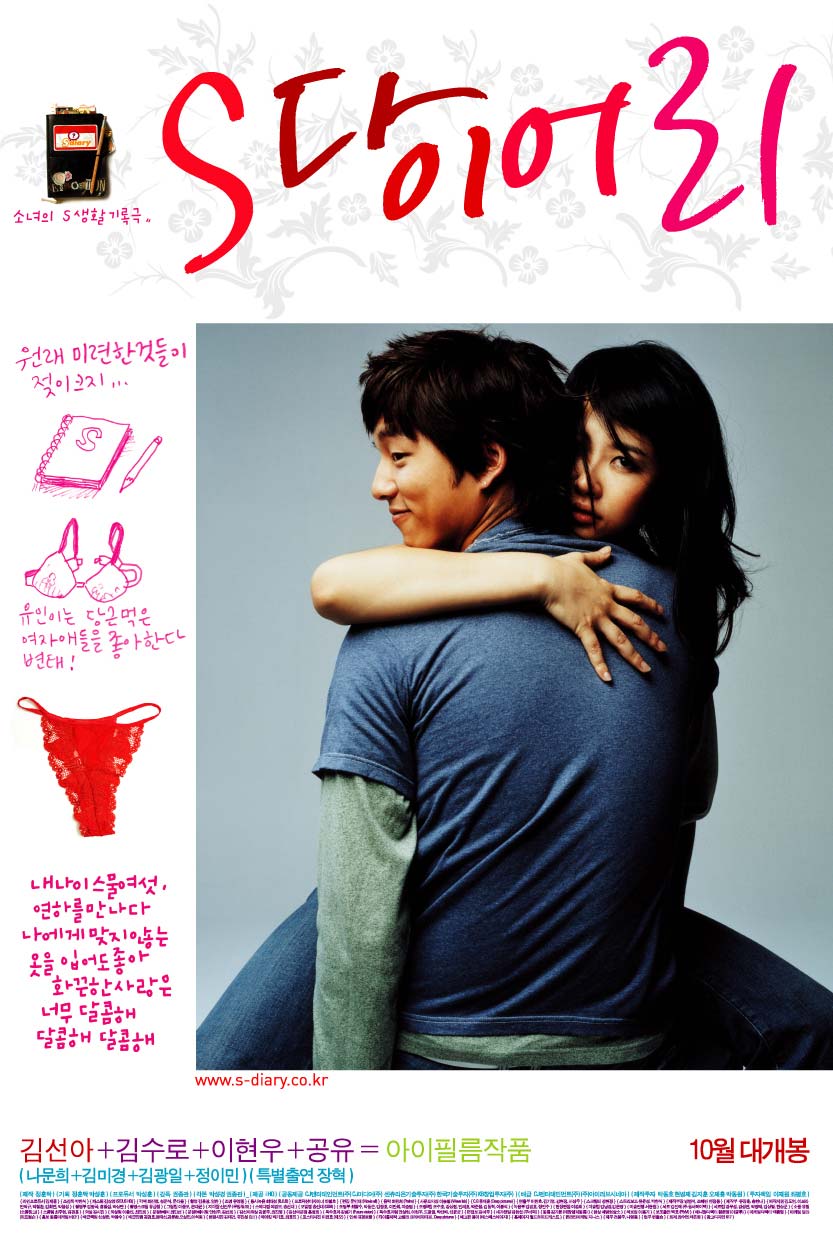
The poster, by the way, is for the 2004 Movie S-Diary (에스다이어리), which was considered pretty raunchy when it came it out, but would be very tame by today’s standards. Just like I mention in the article, things change very quickly in Korea, and at the risk of sounding like I’m merely ingratiating myself with new Korean readers, that is one of the fascinating things about the place. It’s good to remind oneself every now and then.

Update 1) Before I forget, I should give full credit to Sonagi for my point in the second last paragraph of the article, about revealing images of women being sexist by virtue of the sheer weight of them, and the same tired women-sexually submissive/men-dominant roles portrayed in most of them. I didn’t fully appreciate it at the time, but realize now that she had a point.

Update 2) Actually, I’ve just noticed that in the very first line(!) of my article the word “that” was removed from “…that such an impression can easily be forgiven”, ruining that sentence and hardly giving a great first impression of the remainder of the article either. Sigh. I don’t think I’ll read it again, lest I find any more editing mistakes…

Resources on Evolving Korean Ideals of Male Beauty

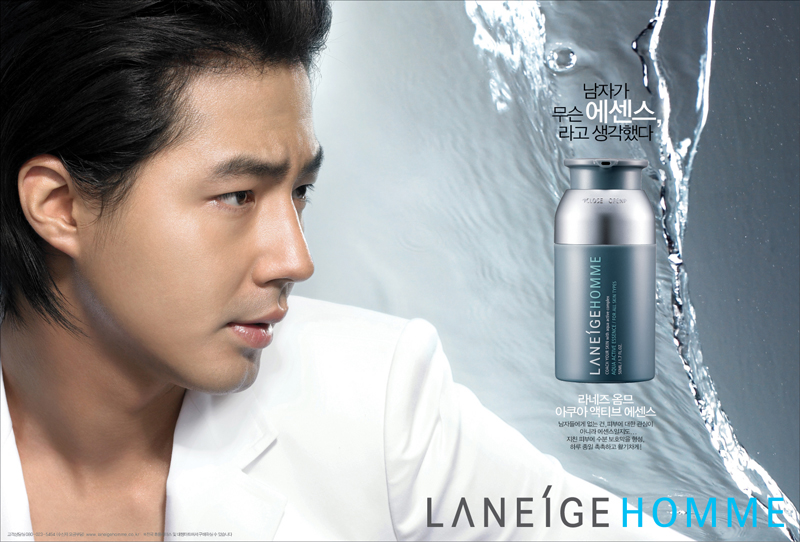
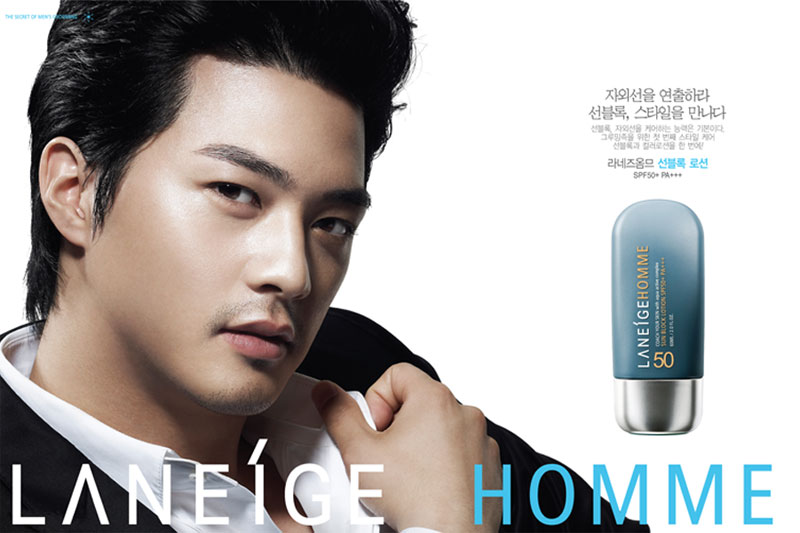
(Source: Laneíge)

As long-term readers will (hopefully) recall, in my last major post in this series I put forward the hypothesis that an increasingly feminized ideal of Korean male beauty was not a mere import of foreign notions of metrosexuality, as is often claimed, but more the result of a subconscious or deliberate act of defiance by Korean women, angered at being the first to lose their jobs during the economic crisis of the late-1990s. Given that these small inroads into Korean business had been only recently made too, Korean feminism very much taking a back-seat to the wider goals of the democratization movement previously, then it’s not unreasonable to suppose that Korean women would have angrily rejected their previous ideals of men as strong, masculine providers in response, particularly as the male-dominated government and media chose to urge them to support their hardworking fathers and husbands rather than air their complaints.

Unfortunately, there is not quite the same level of academic interest in evolving Korean ideals of men’s beauty as there is in women’s…*cough*…and in the case of English-language studies of Korean men especially I suspect that I’m entering into almost completely uncharted territory.

But in addition to some that I linked to that earlier post, one more English resource that I did find recently was a paper titled “Dual Dominating Strategies of the Korean Hegemonic Masculinity: Advertisements for Men’s Cosmetics” by Park Seung-min, downloadable here. If the title gives you misgivings however, then so it should, for unfortunately it badly needs a major rewrite by a native speaker, preferably one with some background in social sciences too; at the very least, simple terms should have been chosen over rather abstract academic ones which even specialists disagree on the precise meanings of. Otherwise you end up with ditties like this:

According to R. Barthes, creating any meaning of the advertising goes through two stages in the process of action in its meaning. The first stage is a process representing things with symbols, having the denotative meanings. Since the expression of one symbol only has the content of one symbol, the symbol merely has ‘monosemic meaning’ in the action of meaning at the first stage…

But the paper’s images of advertisements from 1970-2006 alone make it worth viewing, and despite everything it is still possible to follow, something which can’t be said of a great deal I’ve read on postmodernism that that passage is reminiscent of. Meanwhile, to add my own contribution, here is my translation of an article from the July edition of Korea Ad Times (코리아애드타임즈) about a recent commercial for men’s sunblock:

라네즈 옴므 ‘선블록 로션’ 편: 그루밍족을 위한 스타일리쉬 선블록

Laneíge Homme ‘Sunblock Lotion’: Stylish Sunblock for Men Concerned about Personal Grooming

‘자외선은 피부의 적’ 이라는 사실은 누구나 알고 있을 것이다. 자외선의 UVB파장은 진피층의 콜라겐과 엘라스틴 파괴시키고 색소 침착을 증가 시키기 때문.

Everybody knows that UV rays are the enemy of youthful-looking skin. This is because the UVB ray components of it destroy the collagen and the elastin in the dermis layer and increase the amount of pigment.

피부 노화의 주범이 자외선이라는 사실이 밝혀지면서 여름은 물론 사시사철 자외선 차단제의 중요성이 강조되고 있다. 하지만 남성들은 끈적이고 바르면 하얗게 뭉쳐 귀찮아서라는 이유는 선블록을 평소에는 바르지 않는다.

Ultraviolet rays are the main cause of aging of the skin, and people are beginning to realize the importance of using sunblock all year round. But men ordinarily don’t wear it, as they don’t like its sticky, greasy feeling or the fact that it tends to clump together in white lumps.

선블록은 단지 야외에서 운동할 때 여름 휴가 때 겨울의 스키장에서만 바르는 특수한 용도의 화장품이라고 여기고 있기 때문이다. 남성들의 이런 생각 때문에 남성 피부는 항상 자외선에 무비방 상태로 놓여있다.

Men tend to think of sunblock as something only to be used when exercising or traveling in the summer or skiing in winter, and so normally their skin has no protection at all against the sun.

하지만 이런 남성들 사이에도 변화의 바람이 불기 시작했다. 바로 ‘그루밍족’의 탄생이다. 이는 몸을 칭찬한다는 뜻의 ‘Groom’에서 나온 말로 패션과 미용에 아낌없이 투자하는 남성을 지칭한다. 이러한 그루밍족을 위해 탄생한 라네즈 옴므, 라네즈 옴므에서 제안하는 피부관리의 첫단계는 바로 ‘선블록’ 이다.

But men are changing their attitudes, and some are prepared to invest a lot of time and money in their appearance, becoming known as “Groomers” by advertisers. Laneíge Homme’s “Sunblock Lotion” is specifically designed for this new group, and advises men that sunblock is the essential first step in adequate skincare.

갈색으로 그을린 구릿빛 피부는 보기에는 멋지고 건강해 보이지만 실제로는 자외선에 의해 피부가 손상됐을 가능성이 높다. 이 CF는 이점에 착안, 스타일을 생각한다면 스킨과 로션 후, 손질를 마무리하는 단계에서 자외선을 차단하면서 피부톤까지 살려주는 라네즈 옴므 선블록 로션을 잊지 말아야 한다는 것을 강조한다.

Brown skin may look attractive and healthy, but it actually means that the possibility of it being damaged by the sun is very high. This commercial draws attention to this, and also emphasizes that you should not forget to apply the product after applying skin lotion and toner.

라네즈 옴므 선블록 로션TVCF는 ‘스타일리쉬’ 그 자체라고 할 수 있다. 심플하고 모던한 실내 세트장은 그 압도적인 규모뿐 아니라 브라운관들로 이루어진 천정이 눈길을 끈다. 모던한 세트장과 조화를 이루는 절제된 소품들은 고급스러움을 한층 더하고 있다.

Laneíge Homme’s new commercial is very stylish. The simple and modern room interior it was shot in is not just big, but viewers’ eyes are drawn to the ceiling, which has many TV monitors. The commercial has much finesse and many subtle points which combine to produce a high quality piece of work.

그루밍족을 위한 카리스마 강조, Emphasizing the Charisma of Groomers

무엇보다 ‘그루밍’ 의 워너비로 등장하는 배우 김지훈은 그만이 가진 세련된 실루엣과 카리스마로 남성뿐 아니라 여성들의 시선을 사조잡고 있다. 어두운 공간에 홀로 앉아 있는 멋진 남자와 천정에 설치된 작은 브라운관들에 남자의 다양한 표정들이 보여진다. 이 때 부라운관에서 자외선이 강렬하게 내리쬐며 남자를 비추고 강렬한 빛에도 당당한 모습을 잃지 않은 남자, 그의 손에는 라네즈 옴므 선블록 로션이 들려있다.

More than anything else, actor Kim Ji-hoon (김지훈) – Groomers’ ideal type – attracts the interest of both men and women with his charisma and stylishly-cut body shape. In the commercial, a man is sitting alone in a dark space and his various expressions are shown on the TV monitors. Then, on the TV monitors there’s a sudden strong flash of sunshine against him, but he still holds himself confident and strong against it, all the while holding a bottle of Laneíge Homme Sunblock Lotion.

내리쬐는 빛으로 점점 환해지는 실내, 자외선마저도 자유롭게 연출 할 수 있는 당당하고 스타일리쉬한 남자, 바로 모두가 꿈꾸는 진정한 ‘그루밍족’ 이 아닐까?

The sunshine gradually makes the room bright, but the stylish and confident man is unaffected by it and free to do as he wishes. He is the quintessential grooming man, the envy of consumers.

선블록 로션TVCF의 또 다른 매력은 바로BGM과 영상의 조화가 돋보인다는 점이다. 이번 광고를 위해 BGM이 특별히 제작했다. 젊은 남성 타겟의 취향을 고려하여 파워플하면서도 세련된 사운드가 돋보이는 Rock 스타일로 만들어진 것.

Another charm of this sunblock lotion commercial is that is in exceptional harmony with BGM’s background music. BGM produced the music especially for this commercial, and it has a powerful and sophisticated rock-style sound, in consideration of young men’s tastes.

이로써 TV CF의 하이라이트 부분과 BGM의 클라이막스가 완벽하게 맞아 떨어지면서 한층 임팩트 있는 광고가 됐다.

The climax of the music is in perfect synchronization with the climax of the commercial and combines to give a very powerful impact on viewers.

(A 2007 Laneíge Homme advertisement featuring Jo In-sung {조인성}, the first aimed at men.  Source: Laniege)

Perhaps not a great contribution sorry, and I really expected rather better from a 15,000 won specialist magazine; given how much my wife was laughing out loud at the original Korean version, then I’m not sure how I could have made it more natural-sounding in English either. On the other hand, at least I do now know about “Groomers”, whom I expect to hear much more about in Korean advertising literature in the future.