Are commercials for this product really the same the world over? Put that to the test by quickly trying to guess what is being advertised above, before all is revealed at o:10.
For non-Korean speakers, the powder shown is a combination of ganghwa-yagssoog (강화약쑥), or “medicinally strengthening” mugwort, and hongsam-paoodeo (홍삼파우더), or red ginseng powder. And surely there is no greater testament to believing in its health benefits than by being prepared to use it in the most intimate of places?
Lest my bashful euphemism for VAGINAS detract from that point however, do recall that during the 2008 protests against US beef imports for instance, many Koreans genuinely believed baseless rumors that Mad Cow Disease could be caught via the gelatin used in sanitary napkins. So it makes perfect sense for aptly-named manufacturer Body Fit (바디피트) to capitalize on the belief that what’s inside sanitary napkins can have direct effects on the wearer’s health.
Still, you could also argue that it actually smacks of desperation by ginseng producers. For – with apologies for the inadvertent pun – one of the first things the commercial reminded me of was the fact that:
…once a market is saturated, I learned at university in New Zealand, there is a inherent tendency for a company’s rate of profit to fall. But this can be offset by re-marketing and/or making new varieties of the original product, and accordingly my lecturer posited the plethora of varieties of Coca-Cola available in the U.S. as a reflection of the greater capitalistic development of its economy (read: saturation of its domestic market) compared to New Zealand’s, which then only had two. Indeed, advertising culture in New Zealand in the late-1990s, he suggested, was only akin to that of the US in the 1950s in its scale and intensity, no matter how brash and “American” New Zealanders regarded it.
( Source: unknown )
And the second was either a Metro or Focus newspaper cartoon I remember from 2005, a satire of the “well being” (웰빙) craze that showed that simply adding a sprinkle of green tea powder to a product seemed to give it health benefits in consumers’ minds, and for which they were prepared to pay a premium for. In particular, the last panel had me laughing out loud on a crowded subway car, for its ads for extremely expensive “Well Being Apartments” built with green tea concrete really hit the spot.
And which just goes to show that not all Korean consumers are gullible as the mad cow disease connection above suggests. And – seeing as we’re talking about vaginas after all – then the latest Western craze for “labiaplasties” for instance, sounds far far worse (see a NSFW video here too).
But hey, if a misguided belief in the health benefits of a product exists, then you can guarantee that companies will exploit it and/or encourage it. And so it seems very strange then, that actually neither sexual potency or health benefits are the stated logic of the commercial, which is rather that the combination of mugwort and red ginseng would eliminate odor. And which my wife assures me is a genuine concern for women, and not an invented concern as I first thought.
But still, would they really be the most appropriate substances for doing so? How about green tea powder, which – you guessed it – is also found in feminine hygiene products in Korea?
Let’s just say I have my doubts. Meanwhile, can anyone also think of any red ginseng (or green tea) products specifically aimed at men? Or, aphrodisiac-wise, is red ginseng actually only supposed to work on men anyway?
Update:Here’s a collection of amusing and/or bizarre “care down there” ads from around the world. Enjoy!
(For all posts in the Korean Sociological Images series, see here)
Something about Kong Hyo-jin (공효진) got me all hot and bothered last week. And no, I don’t mean her lingerie photoshoot for Calvin Klein.
Rather, it was her ads for Uniqlo (유니클로), all over Busan at the moment. Surely, I thought, the creative team could have anticipated how their ads would look on the side of buses, and designed something that didn’t look like she was literally squashed into them?
But then I caught a subway train on Line 2, every carriage of which was decked out like this:
And suddenly I realized that her squashed appearance wasn’t an accident:
Still, what’s the big deal?
Well, just try it for yourself. Assuming that you have, and that your neck no longer hurts, then now you too may be wondering why her head was placed so awkwardly. Moreover, why is it overwhelmingly women that have this “head cant” in advertisements too, albeit not usually tilted quite so much?
(Sources: unknown)
Sociologist Erving Goffman believed it made women look subordinate, and hence that the disparity was evidence of sexism. But as I already discussed that back in February, my original aim here was just to pass on further evidence of the sociological pattern.
Yet the more I looked at the ad, the more I liked it despite myself. And I wanted to know why.
One possible reason, I thought, was Kong Hyo-jin’s luxuriant, flowing hair, another recurring theme of advertisements. Combined with her hands on her hips, it reminded of this ad with Kim Ah-joong (김아중) especially:
(Source: unknown)
And in particular, the wind effect:
…makes it look as though whatever she is looking at (presumably a male viewer) is powerful enough to nearly blow her away while she marvels at him and waits for his approach. She doesn’t look like she intends to act, but rather like she hopes to be acted upon–sexual but still submissive.
As discussed in detail here. But of course that wouldn’t apply to all cases of women with windswept hair in advertisements, and so I did a little investigating. And just guess what I found was #1 in “The 13 Most Common Female Courtship Signals and Gestures” in my Korean edition of The Definitive Book of Body Language (p. 290)?
Basically, that says that when women see a man they are interested in, the first thing they tend to do is start touching their hair, as raising their arms allows them to more easily give off pheromones via their armpits. I’m surprised that it doesn’t also mention that it would also serve to thrust their chests out a little too, and that as women tend to have longer hair than men then touching it also shows off that secondary sexual characteristic; but it does note that even women with short hair do it, so that latter may not be all that important really.
The head cant though? It’s more complicated, and for a little while I confused it with number 7 on that list (pp. 293-4):
But which is not actually referring to the head cant, but rather how women will raise their shoulders and look at the object of their affection while he’s preoccupied, suddenly looking away when he looks at them (which in turn makes him secretly look at them afterward, according to the book). Apparently, the round shape of their shoulders is suggestive of breasts also, which is not as ludicrous as it sounds considering breasts themselves likely evolved (to such a disproportionately large size for primates) through looking similar to buttocks.
Still, I did know that a tilted head showed interest in something or someone though (sexual or otherwise), and sure enough I soon found this (pp. 231-2):
Apologies for lacking the time to properly translate all of the above scans; if anyone would like me to, I’m quite happy to later in the week. In the meantime, it basically says that in addition being an expression of interest, tilting the head also serves to expose the neck, the obvious submissiveness of which is exaggerated by also having the effect of making the person shorter and/or smaller, which is quite the opposite of standing up straight to emphasize our height when we want to compete or fight with others in some sense.
Finally, it notes that it is often seen on women in advertisements, although it doesn’t say why. Upon reading that though, I finally realized what many of you probably knew all along: Kong Hyo-jin is in that pose because it’s sexually appealing to men, as easily confirmed by this, this, and this article on dating advice, and that’s why I was drawn to it I guess.
Hell, even knowing all that, I still like it!
But that doesn’t mean it isn’t problematic. Or rather, that seeing that pose so often on women in advertisements isn’t. After all, there are many many other ways to appeal to heterosexual men, some quite the opposite of looking submissive, so it’s strange that that particular one would be so common (and, related, that you find women taller than accompanying men in ads muchless than in real life). Moreover, why is the ad designed for a male gaze too, when presumably the intended consumers of the women’s clothes advertised are women?
But I started this post because Kong Hyo-jin’s pose looked so strange, and just because it did ultimately prove to have a logic is not to say that women in advertisements aren’t still frequently placed in some bizarre, awkward poses nevertheless. Consider the other Uniqlo advertisement in the series on the bus for instance:
Now, despite deconstructing advertisements for over 3 years, just like everyone else in a developed country I too am exposed to 500-1000 advertising messages a day. So some common advertising themes I just simply get used to, a sure sign of which is that I originally thought that this was the more normal and natural-looking of the 2 advertisements, and hence had no intention of writing about it.
But in fact, it’s anything but “natural”. Again, I invite you to adopt Kong Hyo-jin’s pose for yourself just to see how strange it really is.
The crucial thing is her arms: one folded over the other, it reminds me most of a gesture that you’ll frequently see on new students and colleagues and so on on their first days at schools and workplaces. Just like on the woman below on page 103 of The Definitive Book of Body Language:
As I first mentioned here, the logic behind it is that when someone is nervous, then their instinctive reaction is to protect their exposed fronts using whatever comes to hand, be they bags, books, folders…or of course their own arms. Meeting people with folded arms doesn’t exactly create a warm and open first impression though, and so with the other partially open, hanging arm, they try to express that at the same time.
Yes, it is indeed an awkward compromise, but even having read the 1989 edition of Body Language above at the age of 13, and being perfectly aware of what I was doing (and why) thereafter, nevertheless I still couldn’t stop putting my arms like that on my first days at all 6 of my high schools (in 3 years in 3 countries). For those lacking self-confidence, as I did back then, it is an amazingly powerful instinct.
In Kong Hyo-jin’s case however, while I guess the expression of nervousness does accentuate an image of submissiveness, it’s just too much of a compromise to expose one part of the body – the neck – while protecting others with the arms. It also contradicts her “bashful knee bend” too, which I discuss here.
But why? I confess I simply don’t know, being a little mentally subdued after having to reconsider my original opinions about the first ad so much. Now seems as good a time as any then, to throw the floor open to readers, who may see something that I’ve missed and/or have alternative explanations!^^
Well, bottom half of her body to be precise. But then she is Korean after all, so what on Earth does that make her top half?
“Western,” according to her. And while she’s quite happy with that at least, in contrast she’s dissatisfied with her “Asian” legs, claiming that she has to always wear high heels to compensate for them (source, right).
However, despite my original shock at hearing her describe herself in such terms, ironically I find myself defending her statements.
Singer Lee Hyori is drawing lots of attention for saying “While I have a Western top half, on the other hand the bottom half of my body is Asian.”
지난 20일 방송된 MBC ‘섹션TV 연예통신’에 출연한 이효리는 서구적인 상체를 가지고 있는데 반면 “동양적인 하체를 가지고 있다”며 “하이힐은 생명과도 같다”고 말해 주위를 웃음바다로 만들었다.
Appearing on the MBC show “Section TV Entertainment Report” on the 20th of August, she then said that “High heels are as important as life itself!”, which turned the audience into a sea of laughter.
이날 이효리는 “샵에서 효리씨가 입어주면 옷이 잘 팔린다며 옷을 공짜로 준다”며 “옷을 잘 입는 방법은 얼마나 자신의 체형을 잘 커버하느냐인 것 같다”고 설명했다.
She also explained that “When I go into a shop, the owners give me clothes for free because they will sell well if I wear them”, and that “How well you wear clothes depends on how much of your body shape you cover up.”
이효리에게 ‘숨기고 싶은 신체적 단점’에 대해 질문하자 “상체는 서구적인 반면 하체는 동양적이다”라고 말했다.
When asked what were bad points about her body she wanted to hide, she replied that “I have a Western top half, but an Asian bottom half”.
이어 동양적인 하체를 커버하기 위한 해결책으로 “절대로 하이힐을 벗지 않는 것”이라고 강조하며 “10cm 이하 하이힐은 쳐다보지도 않고 잠을 잘 때도 하이힐은 신고 잔다”고 말해 주위를 폭소케 했다.
Accordingly, she emphasized that the solution for covering(?) her Asian bottom half was “never taking high heels off”, and that “not only will I not look at high heels with a heel less than 10cm high, but I even sleep in high heels”, producing hysterics in the audience.
Apologies for the terrible quality of that “news report”, but as I type this unfortunately I’m only able to find minor variations of it on the Korean internet. But lots of them, albeit only because Korea’s top female sex-symbol is admitting to having (self-perceived) flaws, and definitely not because of her views on different races’ body shapes.
And why should they be news? Are they really as strange as they first sound?
In short, no, for three main reasons.
Firstly, as some commenters at K-pop blogs allkpop and Omona! They Didn’t have pointed out, she probably merely meant that she had larger than average breasts and short legs instead, and was not necessarily denigrating women cursed with the latter, nor Asians in general. And that’s probably true.
Still, why not just say that instead?
But would you? In English, we describe people by their races all the time; much less so, the specific features that make us characterize them as such. Moreover, I’ve certainly met many people with a blend of racial features too, let alone the two I’ve fathered myself!
So although it sounds extreme and even amusing in English, I’d be very surprised if Lee Hyori wasn’t indeed just referring to certain body features when she said she had a seogujeogin (서구적인) top half and dongyangjeogin (동양적인) bottom half. Indeed, and finally, it behooves non-native speakers like myself not to take the Korean language too literally.
I learned this lesson myself back in February, through trying to understand the 2009 buzzword cheongsoon-glaemor (청순글래머). Meaning “innocent” or “pure”, then cheongsoon at least was easy enough, but glaemor (글래머)? Naturally I assumed it meant the same as the English, but as several readers pointed out, it’s a false cognate, actually meaning “large breasts” instead. So cheongsoon-glaemor means “innocent and busty” in English.
Yes, that does indeed sound inane in any language, but the point is that it’s rather different to “innocent and pure-looking but while still having a rich and glamorous celebrity lifestyle”, which is what I originally thought. And just in light of a mistake like that alone, then surely Lee Hyori should be given the benefit of the doubt in this case, rather than instantly being accused of racism and/or – ironically – feelings of racial inferiority.
Still, after almost spitting out my coffee while reading about the story this morning, I admit I’m a little reluctant to let her entirely off the hook.
And indeed, just like the term glaemor originally came from a mistranslation by the Japanese, stemming from the well-endowed busts of glamorous Hollywood starlets in the 1950s, the notion that all Korean women should envy the large breasts and long legs of their Western counterparts seems simply absurd considering what their bodies are like 60 years later. So it is high time more Koreans challenged this stereotype, and pondered what sustains it nevertheless.
Perhaps a good place to start would be ubiquitous cosmetic-surgery advertisements, which seem to have an inordinate number of Caucasians in them? What do you think?
Do men pay more attention to men’s chests than women?
As a gym addict 10-15 years ago, I read somewhere in a newspaper that they do. And with my self-confidence back then wholly tied to how much I buffed up, it certainly matched my own experience.
Unfortunately for the sake of objectivity though, it’s been difficult not to remember that every time I’ve seen a topless man ever since. One look at Changmim of 2AM half-naked and holding his crotch in a coffee ad then, and all I could think about was the large, firm package that used to be the weekend edition of the New Zealand Herald.
Naturally enough, most commenters at allkpop and Omona! They Didn’t focused on the one that Changmin was allegedly holding in his left hand instead, and I’m going to take a wild guess that most of those were heterosexual women. Perhaps that explains why so few noticed the appalling photoshop job on his chest?^^
Yet despite men’s greater interest in those in a competitive sense, in reality not only is bilateral symmetry a good indicator of genetic health for both sexes, and hence a heavily favored trait in mates, but even women’s own breasts become more symmetrical during the most fertile period of their menstrual cycle too. So it’s a strange oversight.
And of course for the photoshopper too, who presumably originally aimed to create some sort of languid, fluid-like effect, and I expect the mistake will be corrected before the full ad campaign for Maeil’s “Cafe Latte Americano Dutch” is launched on the 13th (source, above). But regardless, and on a more serious note now, it still has to be the first of the recent spate of Korean advertisements to objectify men that I’ve positively disliked, rather than be merely nonplussed or amused by.
For it is just as lame as it is provocative.
Putting aside how problematic the slogan “Find Your Black” is to English speakers, as described at allkpop the campaign’s basic concept is that various members of 2AM represent “Chic Black”, “Luxury Black”, “Tough Black”, and Changmin as “Sexy Black,” and the first major problem with the ad is also the most obvious: what does a topless idol grabbing his genitalia has to with coffee exactly?
Or indeed, with being “sexy”, and it that sense it also reduces to and perpetuates the notion that sexiness is only a matter of skin exposure, whether for men or for women. A problem which is hardly unique to the Korea media of course, but it is exaggerated here, and so unfortunately I’m wasn’t all that surprised that that was the best that the creative team could come up with.
And yet, would the same ad have actually been possible with a woman? Specifically, one with her hand placed on her crotch, a pretty blatant gesture of intent in anyone’s language?
( Source: unknown )
But why so specific? Well, if there’s one consistent theme to emerge out of writing about Korean advertisements for 3 years, that would be being witness to a long line of firsts: the first erect nipples; the first portrayal of Korean female – foreign male relationships; the first kiss; the first spoof of objectification within ads(!); the first soju ad to portray a woman as, well, really rather slutty, as opposed to decades of portraying them as virgins; and so on. And no matter how difficult it may be to believe for recent visitors to the country, in fact some of those emerged just within the last 3 weeks, let alone the last 3 years.
So, it’s natural to write as if I have almost a perverted fixation on things like crotches sometimes! And indeed, if there’s one thing to take away from Changmin’s ad, it’s the realization that however permissible grabbing one’s crotch is in passing in brief dances on talk shows and in music videos and so on in Korea, I don’t think I’ve ever seen it in a print advertisement. On women or on men, and hence netizens’ intense interest in Changmin’s ad.
But of course I may be wrong, and so as always, please pass on any earlier ads that you are aware of. But for various reasons, I really do think that an equivalent ad with a woman would have aroused far more controversy.
How about you? Let me finish by providing two related examples to help get you thinking.
First, the the above one with Kim Ah-joong (김아중) from 2006, which at first glance is sexually-assertive enough. But as commenter “huncamunca” pointed out to me 2 years ago (in a post I ironically deleted yesterday!), it is definitely not an example of the sexually aggressive “cowboy stance” that I first interpreted it as:
…I agree that the “cowboy” thumbs in the belt loops make the picture sexual, but other elements of the stance make it sexual AND DEMURE, not aggressive. Usually, in the cowboy stance, the shoulders are relaxed and legs are slightly apart, with weight more on one foot than the other (see for example the picture of the woman on page 240 of the Pease book) [on body language]. However, Kim Ah-jung’s shoulders are raised, as if she is shrugging slightly in a demure way. Her elbows are straight and held close to her body to take up as little space as possible, which is not typical of the relaxed cowboy stance. Her legs are also tightly closed to take up as little space as possible, and they don’t look like they are about to take her toward what she wants. Her head is tilted down so she can look up demurely at the viewer. The combination of raised shoulders and lowered head is similar to the “Head Duck” in the Pease book (p. 235), which shows submissiveness. Also the wind effect makes it look as though whatever she is looking at (presumably a male viewer) is powerful enough to nearly blow her away while she marvels at him and waits for his approach. She doesn’t look like she intends to act, but rather like she hopes to be acted upon–sexual but still submissive.
Not that Changmin looks all that sexually aggressive either of course: indeed, he appears to be protecting himself more than anything else, but either way the ambiguity again points to a lack of thought behind the campaign.
Finally, a female equivalent of gratuitous objectification and/or nudity in a coffee ad provided by Italian coffee company Lavazza, also in 2006:
Sweden’s Ethical Council has a lower tolerance for the use of scantily clad women to advertise products than comparable regulatory bodies in other countries…
…ERK judged “that the woman is used as an eye catcher without any connection to the advertised products, and that it is insulting towards women”.In its defence Lavazza wrote that the 2006 calendar from which the images were taken used humour and irony to recreate a 1950s feel. The company claimed that the images depicted glamour, style and a lust for life and were in no way discriminatory.
[ERK Secretary] Jan Fager disagrees. In his opinion it is not acceptable for an advertisement for coffee to be sexy in the same way as, for example, an underwear ad. He noted that while H&M has come in for much criticism from the general public the company’s Christmas campaigns have never been found in breach of ethical standards…
…In its written judgment the ERK maintained that Lavazza had not lived up to the principle “that advertising should be formed with due regard for social responsibility”
Good for ERK, and yes, I rather like that acronym too!^^ But one wonders what they would make of Changmin?
Update – Unfortunately my English copy is in New Zealand, but see below for more on the cowboy stance, and how intimately sexual and physical aggression can be linked. From pages 236 and 237 of the Korean edition of The Definitive Book of Body Language by Alan and Barbara Pease (2006), it’s easily one of the most helpful book purchases you’ll ever make, although I did much prefer the realistic line drawings in the 1989(?) edition to the cartoon-like ones and photos of famous people in the new one:
And for comparison’s sake, here’s a less disastrously photoshopped image of Changmin:
This time, a live phone-interview on tomorrow’s This Morning show onTBS e-FM, Busan e-FM’ssister station in Seoul. Hosted by Dr Hans Schattle, a political science professor at Yonsei University, I’ll be talking alongside Dr. Robert Kushner of Northwestern University on the overuse of diet pills in Korea, with me focused on the sociological aspects of dieting and body image in general. Catch me there from roughly 8:40am either before, together with, or after Dr. Kushner, and there’ll be an opportunity for listeners to call in also.
Meanwhile, you may find the text in this related cartoon I’ve just found amusing! For non-Korean speakers, the man is saying:
“Young woman! You seem to be fat. You should register in this diet program, yes? [Just look at this] We never exaggerate or do false advertising!”
And the woman is thinking:
“The nerve of that A-hole: he’s fatter than me! And who gets fooled by those sorts of photos these days anyway? Are people’s bodies like balloons?”
Alas, as Ill explain tomorrow, this is by no means an unlikely conversation in Korea. But at least he’s not actually lying about the advertising: as the next panel reveals, it’s two sisters in the pictures!^^
For all my love of Korean culture, I’ve never really understood the appeal of modern hanbok (한복).
Primarily, because of their impracticality: after performing the ancestor worship rites known as cha-ryae (차례) in mine at my parents-in-laws’ house on various Korean holidays for instance, I find it very difficult to eat the traditional breakfasts that follow with such baggy sleeves getting in the way, especially at the low tables that most Koreans use. It also has no pockets, no zipper, and can get uncomfortably hot very easily, especially during Chuseok (추석) when the weather can still be quite warm. And my wife has similar problems with hers too, adding that women also seem to find their slightly more elaborate version more uncomfortable than men do theirs.
For those reasons, I fully expected the Wikipedia article on hanbok to mention that despite popular perceptions, only the small elite known as the yangban (양반) ever really wore them historically, who were notorious for being resolutely opposed to performing anything that smacked of physical labor. Was Koreans’ pride in their “national dress” a little misplaced then, and just another inventedtradition like the kilt in Scotland?
Alas, it doesn’t say, although it does seem reasonable to suppose that practical considerations were undoubtedly more important for the bulk of the population. But what the article does demonstrate though, is that the hanbok has as rich and varied a history as, say, the Western suit (it was naive of me to be surprised at that), and the frequent changes in the various forms and usages of the garment over time indicate that its role as a signifier of class, status, and occupation was much more complicated than I first thought.
Still, I can’t think of a more unflattering garment for women.
No, I’m not so uncouth as to think that women can only be attractive in clothes that are form-fitting and/or show some skin. But then from the neck down, the hanbok is almost like a burqa in that it’s impossible to tell if there’s a man or woman under it, so I certainly can’t imagine anyone ever describing as a woman as sexy in it. Beautiful, yes. Pretty, cute, charming, handsome—sure, you name it. But sexy? Judge for yourselves at Flickr, or from the hanbok sections of recent Miss Korea pageants:
Of course, possibly I’m being too harsh, and by all means feel free to disagree with me: these two bloggers here and here certainly do for instance. (Update: in turn, I disagree with this blogger’s response that being “traditional” means that the clothes shouldn’t be sexy, and that only “a non-Korean male writer” would think they could be both. I’d also point out that they were once considered everyday clothes, with many different purposes. So why should how they now “honor [one’s] tradition and culture” be the only criteria we evaluate them on?). But regardless, hopefully now at least you can understand why I did a double-take when I saw the following new designs last week:
Unfortunately, the only information about them are in clumsily-written advertorials from the company that makes them (see here, here, here, and here), but at least they do explain a little about the logic to the new designs. Here’s my rough translation of the first of them, which incidentally also has the best quality version of the image on the left(!):
한국의 아름다움을 오롯이 담고 있는 우리의 옷, 한복. 복을 부르고 화를 쫒는다는 뜻을 담고 있는 한복은, 인생의 중요한 순간마다 반드시 갖춰 입어야 하는 우리 생활의 일부이자 소중한 문화유산이다.
The hanbok is the item of clothing that completely and harmoniously shows Korea’s beauty. It has the meaning of bringing good luck and dispelling anger, and at every important event in your life you should wear this vital part of our cultural inheritance.
한복을 아름답게 입기 위해서는 속적삼과 속치마는 물론이고 긴 치마와 저고리까지 제대로 갖춰야 하지만, 시대가 변하고 젊은 층의 안목도 새로워지면서 한복은 어느새 고리타분하고 촌스러운 옷으로 전락하는 듯 했다. 그러나 명품 한복 브랜드들을 위시해 전통한복을 계승하고 퓨전한복과 한복 드레스를 내놓으며 젊은 층은 물론이고 나아가 세계인의 시선까지 사로잡는 상품을 개발함으로서, 한복은 다시금 아름다운 우리의 옷으로 발돋움하고 있다.
In order to beautifully wear the hanbok, of course you need to the undershirt, petticoat, long skirt, and top and to properly wear them, but as times change the hanbok is become old-fashioned and rustic in young people’s eyes. However, the hanbok is currently taking a big step in becoming all Koreans’ beautiful clothing again by the entrance on the market of a new brand which has developed a fusion style of traditional hanbok and long skirts that will appeal to everyone from the young generation to globalized people.
한복 알리기와 보급에 주력해 온 명품 브랜드 <안근배 한복 대여> 역시 초미니 한복 드레스와 퓨전 한복 등, 차별화된 디자인과 소재 개발로 고객들의 다양한 요구를 충족시키고 있다. 최근 2010/2011 신상품 70여개를 출시한 <안근배 한복 대여>는 높은 퀄리티의 전통 한복뿐만 아니라 파격적인 초미니 한복 드레스와 퓨전 한복등을 선보이며 화제를 모으는 한편, 우리 고유의 멋을 계승하며 신세대 고객들의 입맛까지 사로잡았다는 평가를 받고 있다. 특히 <안근배 한복 대여>는 전통 한복의 아름다움은 그대로 살리면서도, 더운 여름철에 쾌적하게 한복을 입고 싶어 하는 고객의 구미에 맞는 상품을 전략적으로 출시해 눈길을 끌었다.
Angunbae Hanbok Rentals (AHR) is a company that has concentrated on supplying and letting people know about this new style of hanbok, and in addition to having one fusion type with and ultra-short miniskirt, is differentiating its designs and materials in order to satisfy the varied demands and requirements of customers. Recently, AHR has launched 70 new designs for the 2010/2011 season, and these have been attracting lots of attention not just for their high quality traditional forms but also their fusion with unconventional ultra-short miniskirts, and have been gaining a lot of praise for their coolness that satisfies customers’ modern tastes. In particular, AHR has been noticed for strategically providing customers with hanbok that, while showing off the garments’ traditional beauty, are also a comfortable choice for their summer tastes.
<안근배 한복 대여>는 초미니 한복뿐만 아니라 전통 한복과 한복 드레스 등 다양한 상품으로 인기몰이중이며, 업계 1위의 브랜드답게 전문화된 콜센터 운영과 홈페이지 운영으로 고객들을 만족시키고 있다. 특히 공식홈페이지 http://www.hanbokrent.kr에서는 7월 한 달 간 진행되는 신랑 신부 커플 한복 20% 할인 행사 안내와 다양한 신상품들을 확인할 수 있다.
AHR doesn’t just provide hanbok with ultra-short mini-skirts, but is also popular for its traditional hanbok and hanbok dresses and so on, and provides a wide variety of products to rent; as the top brand in the business, it operates a call center staffed by experts and a homepage to make sure to fully satisfy customers’ needs. And please note: any couples about to get married, visit www.hanbokrent.kr to get a 20% discount on couple hanbok and/or a variety of new products.
Is 300,000 won reasonable to rent the first ones? Regardless, see many more examples at the “Fusion” section of AHR’s website, and I’m all for changes to any popular item of clothing that make it more comfortable, cooler to wear in the summer, and a little sexier and more elegant too.
But this post wasn’t intended to be only about hanbok. In fact, the humble podaegi (포대기), or traditional Korean baby sling, may ultimately be much more interesting:
Quite simple to put on once you get the knack, it’s very easy to see why Korean mothers would use these while working in fields, or even just the kitchen (scroll down here a little for a picture). Hell, if I had to carry a baby for hours while doing manual labor, then I’d probably choose something that comfortable and tight too, and so I wasn’t surprised to hear from my father’s Nigerian colleagues that my wife’s was just like Nigerian ones, where, naturally enough, they’re called “wrappers,” and the act of wearing one “backing.” (Thanks to reader eccentricyoruba for the terms.)
Still, note that the shoulder straps are a recent adaptation carried over from Western baby harnesses, and there weren’t many versions with them available in 2006 when my first daughter was born; wearing a version like this without them then, my wife’s back got tired quickly, and she speculates that perhaps that would have been less of a problem had she been bending over in a field in it like her mother and grandmother did (she eventually got a Western-style baby harness). Also, as you can imagine they can get extremely hot in the summer, which is why these modern mesh types are now available (and I’m sure ones with shoulder-straps are available too):
Clearly then, podaegi manufacturers are also quite capable of adapting their products to modern tastes. But still, one big, possibly insurmountable problem with them remains.
Men usually refuse to wear them.
(Source: unknown)
At this point, I should probably mention that I don’t wear anything to carry either of my 2 daughters myself: when Alice was born in June 2006, I was working long hours and my wife became a housewife, so it was only natural that she carry her while I carried groceries and so on; when Elizabeth was born in August 2008, my wife carried her whereas I had Alice to either walk with me, chase after, and/or only briefly carry when crossing roads. Sometimes I wish I had used a Western style baby carrier though: both daughters refuse to sleep or be carried in my left arm, often crying until I put them in my right one, and I’m sure that I now have a slightly crooked spine as a result.
Still, of course I did wear my wife’s poedagi at home sometimes, especially when she was out and I had to put them to sleep in the way that they were used to. But in public? Never, for I think I’m safe in assuming that the vast majority of Koreans consider the podaegi as inappropriate on a men as a bra, and which is why you’ll only ever see pictures of them in podaegi if they’re posed in comical situations like the above.
Western-style harnesses however, you’ll see plenty of Korean men wearing them, which leads me to a question I’d like to throw open to readers: are podaegi then, in a sense an impediment to changing people’s beliefs that childcare is only a women’s job?
Yes, of course popular perceptions of clothes and senses of appropriate fashions are constantly changing, and of course there are also a myriad of reasons completely unrelated to clothing that explain why Korea has the highest number of housewives in the OECD. But recall that throughout our daily lives, we are in fact constantly bombarded with subtlemessages that reinforce the notion that parenting is women’s job, so it doesn’t seem unreasonable to suppose that this may also have an impact.
Alternatively, look at it this way: if you were a woman expecting a baby soon, which style would you buy if you wanted your male partner to take equal responsibility for carrying the baby after it arrived?^^
Update: See FeetManSeoul (or The Marmot’s Hole) for a post about upcoming fashion shows featuring Jung Jun Hong and Lee Young Hee, the latter of whom:
…is considered the greatest living hanbok designer. And her stuff is smoking, every season. It’s one of the classiest shows of the season, consistently. She really does hanboks like they should be done — who knew hanbok style was still evolving, and evolving quite stylishly? The former, designer Jung, has a more modern take on the hanboks and always has some of the most colorful shows out there.
ung Jun Hong and Lee Young Hee, the latter of whom is considered the greatest living hanbok designer. And her stuff is smoking, every season. It’s one of the classiest shows of the season, consistently. She really does hanboks like they should be done — who knew hanbok style was still evolving, and evolving quite stylishly? The former, designer Jung, has a more modern take on the hanboks and always has some of the most colorful shows out there.
Estimated reading time: 3 minutes. Article source: Metro, Busan edition, 8 July 2010, p. 3.
A quick newspaper report on Korean smoking rates that caught my eye.
Of course, I was a little disappointed that it discussed “average” rates for men and women, as these are essentially useless pieces of information given the huge diversity within each gender in Korea, and doubly so for women because of chronic underreporting. But that is to be expected for a free daily, and at least it takes a step in the right direction by mentioning that female teenagers tend to start smoking much earlier than males, which will hopefully result in some much-needed attention being given to this burgeoning group:
People Would Consider Quitting if Cigarettes Cost 8500 won a Packet
At 42.6%, Korea has the highest adult male smoking rate in the OECD
Although the general social trend is for people to stop smoking, Korea retains its position as the country with the highest adult male smoking rate in the Organisation for Economic Co-operation and Development (OECD).
According to a survey of 3000 men and women over the age of 19 conducted by the Ministry of Health and Welfare last month, 42.6% of Korean men smoked in the first half of this year, a decrease of 0.5% from the second half of last year, and a break in continuous increases for the past 2 years from August 2008, when it was 40.4%. However, a large gap between this and the average OECD rate of 28.4% (2007) is apparent.
Of particular interest, the survey also revealed that compared to men, women are starting to smoke at earlier ages. Of those smokers under 29 surveyed, the average age both sexes started was 18.1, but the average age of women was 16.5 and that for men was 18.3, showing women started roughly 2 years earlier.
However, of non-smokers surveyed, 21.4% replied that they did once smoke, but 62% of those were successful in quitting on their first time, showing that it is becoming easier and the social norm to do so. Indeed, 59.4% of smokers replied that they intended to quit.
Accordingly, when asked what the most effective method of quitting would be, the most popular choice [James – among current smokers?] was “increasing the numbers of no-smoking zones” at 22.8%, followed by raising the price of cigarettes (18.7%), increasing penalties for smokers (18%), and launching public campaigns (16.3%). In particular, when asked “How much would the price of cigarettes have to be raised to be effective in making you quit?”, the average answer was 8510.8 won a packet, or 3-4 times higher than current prices.
Next week, after Part 4 is completed, I’ll translate this much longer Korean article that looks at female smoking more specifically.
( Source: Metro, July 8 2010, p. 7. Cropped slightly)
It’s amazing what pops up in Korean newspapers these days.
Yes, however difficult it may be for overseas readers to believe, that is the actually the first nipple my Korean wife, friends, and I have ever seen in a Korean advertisement. Moreover, it’s probably no coincidence that it belongs to a Caucasian model too, and one that looks like she’s about to get involved in a ménage à trois at that.
Focusing on the nipple first though (as one does), let me provide some context: with the important exception of ubiquitous single-sex bathhouses, Koreans are generally more conservative than Anglophones when it comes to public nudity; topless males are extremely rare away from beaches, swimming pools, and concert stages for instance, and topless females unheard of, let alone full nudists of either sex (recall also that just 5-10 years ago, women even covered their swimsuits with t-shirts too). In addition, while female celebrities have been showing a lot of cleavage in recent years, this trend has yet to be adopted by ordinary women, whom can expect just as much unwanted attention if they accidentally leave home bra-less.
However, breast-feeding is generally fine if done discreetly, and indeed one of the first things I noticed in my first time in a Korean supermarket 10 years ago was a brand of milk (or soy milk) that prominently featured a large breast and a suckling baby on its packaging. Unfortunately I can’t remember the name to find an image, but I do also recall that it was by no means hidden away in any sense.
I doubt that that would have been considered acceptable in New Zealand from which I’d just left, and in that vein note that the current trend for visible nipples in the Western media at least remains precisely that: a trend, and certainly not an liberal, progressive ideal that Korean social mores will somehow inexorably shift towards in the future. For all its eroticism, it pales compared to the standards of the 1970s for instance (see this NSFW example from a 1976 Cosmopolitan), while in Korea no less an authority than Tom Coyner points out (also NSFW) that 60 years ago Korean mothers in the countryside dressed with readily visible breasts “with pride if they had just given birth to a son.”
So why the nipple now? Unfortunately, little about the advertisement or the drink provides a clue: “That’s Y” (댓츠와이) is merely a wine cooler (or alcopop?) produced by Lotte Chilsung (롯데칠성음료) since 2008, like wine coolers everywhere primarily marketed to 20-somethings. Judging by its moribund website though, then it hasn’t been selling very successfully (probably why there was a shift to selling it in more stylish bottles rather than cans last month), so one can speculate that Lotte Chilsung was desperate to draw people’s attention to it. Judging by the complete absence of reaction from netizens and the media so far however, strangely that “sex sells” strategy doesn’t appear to have worked.
Ultimately more significant then, is the race of the models in the advertisement in which it appears. Why are they Caucasian? And are Koreans ever portrayed in such brazenly sexual situations as that?
Again, Lotte Chilsung provides no clue: in fact only one more print advertisement for the drink is available online in addition to what you see here. That did also only feature Caucasian women, but then the above one has Korean women in it, and the only television commercial below also only has Koreans too (of both sexes). But looking at the wider context however, then of course there is overwhelming evidence that Caucasians are indeed portrayed more sexually than Koreans in the media here, and particularly women.
Why? Well, assuming that you’ve read that last link, then for one consider how well an artificial dichotomy between virginal, sexually passive Korean women and hypersexual, promiscuous Caucasian ones buttresses extensive human-trafficking in East European and Russian women here. And as for the guys, the notion that foreign male English teachers are oversexed, and thus more likely to be pedophiles than their Korean counterparts, certainly does serve to deflect attention away from the latter. Although one wonders why the Korean media bothers sometimes; after all, just this week apparently even politicians feel perfectly justified in presenting a completelyimaginary “wave” of sexual crimes by them to justify ever more stringent visa regulations.
Vodpod videos no longer available.
And I could go on, but I’d be much more interested in hearing readers’ own ideas. In the case of this particular advertisement though, I acknowledge that it may not in fact be the first nipple out there(!), but regardless let me pose the question of if you think Korean models instead would have aroused more or less controversy to get you started.
Against the argument that there are plenty of risqué ads with Koreans these days though, and so I’m making a mountain out of a molehill, then for sure, and you don’t have to look very far on this blog to find numerous discussions of how much things have changed just in the last 2 years. But look again: a threesome? And virtually in flagrante delicto on the sofa at that? By all means *ahem* pass on any Korean examples you’ve come across, but in the meantime I’d argue that while the goalposts for what is considered a “shocking advertisement” in Korea do indeed change over time, somehow Caucasians still seem to be in the majority of them!
Update – With thanks to Dave for passing it on, who apparently had much sharper eyes than I did back then, in fact there was a commercial with erect nipples as early as 2006. And yes, you guessed it: that had Caucasians too!
(For all posts in the Korean Sociological Images series, see here)
( Source: ROKetship. Reproduced with permission. )
Like Joe McPherson of ZenKimchi fame says of the above cartoon, either way, it’s a win for my gender, so I was surprised that this was the first time I’d ever really noticed this curious Korean social more.
For those of you still at a loss however, yahada (야하다) generally means “too revealing” if it’s about clothes, and “too sexual” if it’s about anything else, like a conversation topic; alternatively, nomu pa-ee-da (너무 파이다) could have been used instead, which literally means “dug too much”. So, it’s a commentary on the difference in what is considered revealing clothing by Koreans and Western expats, and something which of course expat women have long been well aware of, congratulating ROKetship artist Luke Martin for his astuteness in droves on his Facebook page. One of them, Kelly in Korea, wrote on her blog:
So true. Showing your shoulders or chest will definitely get you stares from the older crowd and young men, while lotsa leg is okay. That being said, I feel like I see more Korean girls showing shoulder this summer than last—is that just me? Regardless, now that the full heat of summer is upon us, I have stopped worrying so much about societal dress codes and just wear whatever keeps me from passing out in the midday sun.
And for all my lapses, I think that there’s definitely something to that change. How long-lasting it is however, literally remains to be seen.
Why? Because as I’ve written here, here, here, and here (for starters), squads of daring female soccer fans known as oppa budae (오빠 부대) did have a dramatic and permanent effect on what were considered acceptable standards of dress for Korean women during the 2002 World Cup. But then it’s also true that many people that had tolerated their croptops, say, were much less willing to do so the next summer once they were no longer in the service of a national cause, which again just goes to show that revealing clothing (or suggestive dancing) should never be taken as a proxy for female sexual liberation.
In that vein, I’ve often wanted to do an empirical study of advertisements in various men’s and women’s Korean magazines for the summers before, during, and after the 2002, 2006, and 2010 World Cups, hypothesizing that there would be definite peaks in World Cup years. But note that those would not just be because of young women hoping to emulate Shin Mina and “Elf Girl’s” examples, who become famous overnight for, well, little more than having good bodies and wearing skimpy “Red Devil” (붉은악마) costumes like those above (source): that isn’t why oppa budae women were wearing them in 2002, and surely only accounted for very few in 2006 and 2010 too.*
Moreover, for anyone lucky enough to have been in Korea during any of the summers of 2002, 2006, and now 2010, you don’t need me to tell you that Koreans tend to let their inhibitions go during the World Cup, and that at the very least the normal standards for clothing didn’t apply; indeed, it would be very strange if – à la Rosie the Riveter – Korean women returned to their formally conservative ways afterwards. Accordingly, I’d also expect that study to show an increase in revealing advertisements for the period overall (although of course many factors would be responsible), and so while I don’t expect to see many croptops on Korean streets in the summer of 2011 unfortunately, I wouldn’t be surprised if they were the fashion in, say, 2015, or 2016. After all, recall that women didn’t even use to wear bikinis at the beach just 8 years ago!
What do you think? Either way, I’m perfectly serious about that study, in which I would using Erving Goffman’s 1979 Gender Advertisements framework (see here, here, and here), and would publish the results in a journal article; unfortunately I can’t do it alone though, so any Korea Studies geeks, please contact me if you’re interested (but be warned it would be rather more tedious than it sounds!). Meanwhile, see here, here, here, here, here, and here for more insights from ROKetship about Korean attitudes to fashion and body-image, (the last may be a little confusing though: see Scribblings of the Metropolitican for an explanation), and of course there’s many more about other aspects of Korean life that all expats will identify with!
* That’s unlikely to be repeated in light of entertainment companies using it to market their female stars in 2010, prompting a backlash)
(For all posts in the Korean Sociological Images series, see here)
Apparently, Korea is pretty unique in its huge difference in smoking rates between the sexes: up to 10 times more Korean men smoke than women. Or do they?
In short, probably not: considering that a 2007 Gallup Korea study found that 83.4% of Koreans thought that women should not smoke, then the accuracy of almost all figures are undermined by chronic underreporting by women. Moreover, it is misguided to speak of male or female smoking rates in the first place when those within each gender differ so widely by age, socioeconomic position, and/or marital status. Even unhelpful too, as low perceived rates for women overall have encouraged Korean medical authorities to almost exclusively focus on reducing smoking rates among men instead, overlooking rapidly rising rates among young women especially.
But for all their flaws, it is only natural to want to have some numbers to work with. And so, when I wrote Part 1, my original intention here was to pass on all those provided by 3 recent journal articles on the subject, hopefully providing readers with enough information to get at least a rough idea of the true numbers in the process. Numerous failed drafts later however, I now realize that that approach was a mistake, and should have paid much more attention to the following points by Lee et .al. (2009):
…the limited data available on female smoking prevalence and behaviour in South Korea must be urgently addressed. Data from the Korean National Health and Nutrition Survey (Table 2) suggests female smoking rates have fluctuated significantly between 1980 and 2003, with variations within age groups by year that are difficult to explain. There are also inconsistencies across different data sources which prevent clear understanding of smoking behaviour within specific cohorts by age, location, socio-economic group and other variables.
Based on a huge sample population from 5 Social Statistical Surveys from the Korea National Statistical Office, it does at least provide a good illustration of overall smoking trends for both sexes over the period covered. A quick summary:
Results show that for men, smoking rates decreased in all age groups…For women aged 45+, smoking rates decreased…while those for younger age groups either remained stable (25-44) or increased (20-24). In addition, the decreasing pattern of smoking among women aged 45+ was not the same as that of men. For women aged 45+… reductions began earlier than for men. (p. 418, paraphrased)
And they believe that the decreases were primarily due to legislation; in particular, the 1995 Health Promotion Act, which restricted smoking in public buildings and places. Unfortunately however, it was not very effective on young women, nor on the inverse relationship between educational level and rates of smoking, which was generally true in all age groups and both genders. They speculate that that was partially because:
…most policy efforts have been aimed at the dissemination of information about the hazardous health impacts of smoking while policy efforts on work site smoking cessation programs or economic measures (i.e., taxation) to discourage smoking were minimal. (p. 421)
Khang and Cho do provide further details of how women’s smoking rates differ by their socioeconomic position, but to be frank I found that jargon-filled part of the article rather poorly written, and don’t understand it despite several rereadings. Whether that’s my fault or theirs, I’ll have to skip covering that topic here regardless, and instead will focus on the following point that you may already have noticed yourself:
Unlike many developed Western countries, this study showed greater smoking rates in older women compared to younger women. This is consistent with studies conducted in Asian countries such as China, Vietnam, and India….Age differences in power relations by gender and social pressure toward young women may explain the difference in female smoking prevalence between Western countries and less developed Asian countries. However, further studies are needed to elucidate the causes of the difference. (p. 420, my emphasis)
And probably not by coincidence, in Hong-Jun Cho, Young-Ho Khang, Hee-Jin Jun, and Ichiro Kawachi, “Marital status and smoking in Korea: The influence of gender and age“, Social Science & Medicine, Volume 66, Issue 3, February 2008, Pages 609-619, they provided exactly that, from which an intriguing finding was:
…that the difference in the effect of marital status on smoking rate varied according to gender….smoking rates for unmarried women compared with married women were generally much greater than comparable [rates] for men across all age groups, and were particularly high in younger women. This finding differs from many previous Western studies that reported either no gender difference in the influence of marriage on smoking, or greater difference between married versus unmarried rates in married men compared to married women. (pp. 613-14, my emphasis)
Some details:
The smoking rate for unmarried women was approximately 2-8 times higher than for married women depending upon the age group. In contrast, the smoking rate for unmarried men was not higher than the married men for the 25-34 and 65-74 year-old age groups…
…In the 35-54 year-old age range, the smoking rate in divorced women was more than twice that of the widowed women. This difference was smaller for men…
…the present study found that the smoking rate was higher in unmarried compared to married people. This finding is consistent with those of many Western studies of both men and women…(p. 613)
Women’s smoking can be underreported in societies where there is a strong social norm against young women adopting such behavior. Such a reporting bias may have affected the findings of this study. Nonetheless, it is not clear whether reporting bias would have produced the differential patterns of smoking rate according to marital status…
…a definite casual relationship between marital status and smoking could not be established [in this study]. Selection is also possible. The divorce rate for smokers is twice that for non-smokers, and men who continue smoking have a lower probability of getting married. But, because the effect of marital status on smoking is stronger in men than women, this cannot explain the gender-related difference in the present study. (p. 616 & 617, my emphases)
And they identify many reasons why unmarried Korean women may smoke more than married ones, and particularly divorced or widowed ones. Some are positive:
…smoking by women, and especially married women, can be restricted by social pressure applied from both inside and outside the family. In such cases, becoming divorced or widowed may release women from the force of sanctions and expectations. (p. 611).
And see here and here for more on those social pressures married women face. Unfortunately however, newly-single women are much more likely to smoke from stress rather than a feeling of liberation:
Higher smoking rates in the unmarried may be a reflection of coping in response to stress brought on my marital disruption. Marital disruption can create two types of stress – that which is directly associated with the disruption, and that which is indirectly associated, such as role change, financial difficulties, and child caring responsibilities. Women suffer greater financial hardship following marital disruption compared to men, especially in societies where the gender age gap is high [James – and Korea’s is among the highest the world; see #10 here]….[in 2002], the income of a woman-headed single-parent family was 83% of a man-headed single-parent family.
Above: “A Woman Smoking” (여자가 담배피는게) by Im Su-bin (임수빈), which according to allkpop “tells of a sad story of how a woman resorts to smoking and drinking after being heartbroken and why there’s nothing wrong with that”.
On a final note however, it is also true that widowed or divorced women also tend to older than average, and in Korea particularly the effects of that are difficult to separate from their marital status because:
…older women may find it easier to smoke due to less social pressure on this age group stemming from the general respect shown for the elderly in Confucian traditions. (p. 611)
With a nod to copyright, if any readers interested in reading the articles for themselves, please email me if you like me to send copies (and thanks again to the reader who sent them to me in the first place!). Meanwhile, as those turned out to be much more closely linked than I first realized (indeed, they even use the same data), then I’ve decided to discuss the third article – Kelley Lee, Carrie Carpenter, Chaitanya Challa, Sungkyu Lee, Gregory N Connolly, and Howard K Koh, “The strategic targeting of females by transnational tobacco companies in South Korea following trade liberalisation”, Globalization and Health 2009, Volume 5, Issue 2) – in a separate post (Part 4) rather than carry on here. The final Part 5 though, will still be a “discussion on the ways in which tobacco companies have (largely successfully) targeted Korean girls and women over the last two decades” from that however!^^
Update 1 – For anyone interested, a recent survey found that Seoul residents endure 50 minutes of passive smoking a day.
As long-term readers will be well aware, I’m a big fan of evolutionary psychology. And why not? It usually provides both simple and extremely compelling explanations for many universal cultural features and human behaviors, such as that of the evil stepmother or the fact that 95% of killers are males respectively for instance. So when research in 2004 found that women with hourglass body shapes are 30% more likely to become pregnant than others, it was no great surprise that men worldwide have always tended to find this body type the most attractive.
But even congenitally blind men too?
Yes, it’s true, and while critics have frequently pointed out the sexist and/or (ironically) culturally-based assumptions to many of evolutionary psychologists’ conclusions, this latest news definitely buttresses the “nature” rather than the “nurture” side of the debate:
…Notwithstanding the significant scientific evidence in support for the ubiquitous male preference for the hourglass figure [a waist-to-hip ratio of 0.68 to 0.72], social constructivists doggedly hang on to the position that our preferences are due to arbitrary socialization (e.g., advertising teaches men to prefer a particular body type). Well, in today’s post, I discuss a new study that yet again kills the apparently immortal socialization dragon!
In a recent paper published in Evolution and Human Behavior, Johan C. Karremans, Willem, E. Frankenhuis, and Sander Arons explored men’s WHR preferences with one twist: the men in question were congenitally blind! Needless to say, this largely removes the possibility that these men were taught via media images to prefer a particular female body type. You might wonder how one would go about eliciting such preferences from blind men…via touch of course! The researchers had two mannequins dressed in exactly the same way but who varied in terms of their WHR (0.70 or 0.84)…
Read the details at Homo Consumericus, and the typically acerbic comments section there is also interesting. Meanwhile, on the same day I read that I happened to pick up the June 2010 edition (no.21) of cosmetic store Aritaum’s (아리따움; “Charm”) free advertorial magazine (as one does), and the contrast with the wholly photoshopped, physically impossible “X-line” body type being promoted in it couldn’t have been any greater:
( “Find your X-line”? Good luck! )
I’ve already discussed the X-line concept in an earlier post, almost literally tearing to shreds a Korea Times report – nay, also an advertorial – that uncritically reported on the “new body trend” in the process. But you may also be curious to read the advertising copy for the X-line slimming drink above however: what does persuade Korean women to buy such things?
아리따움 슬리머
울여름, 꿈에 그리는 비키니를 위한 당신의 다이어트 플랜은? 운동하기엔 많은 시간과 노력이 필요하고, 어디서 왔는지 모를 다이어트 방법은 믿을 수 가 없다. 그렇다면 올해도 무조건 굶는 것이 최고? 굶어서 빼는 다이어트는 단기간의 체중 감소는 느끼겠지만 얼굴 혈색을 나쁘게 하고 피부 탄력을 떨어뜨리며, 얼마 지나지 않아 요요 현상을 불러온다.
슬리머 DX는 간편하고 즐겹게 이용할 수 있는 슬리밍 제품으로 식약청으로부터 체지방 감소 기능을 인정 받아 믿고 섭취할 수 있다. 또한 휴대가 편한 앰플 형태라 언제, 어디서든 자신의 라이프스타일에 따라 쉽고 간편하게 다이어트가 가능하다. 아리따움 슬리머 DX라면 올 균형 있는 X라인으로 비키니를 입는 데 주저함은 없을 듯!
Edited slightly, to make it sound better in English:
Aritaum Slimmer
This summer, what is your diet plan for getting into your dream bikini? Exercising takes a lot of time and effort, and you can’t believe in diets if you don’t who came up with them. This year, is simply being hungry the best solution? If you diet this way, it is true that you will soon feel that you’ve lost some weight, but at the same time your complexion will become bad and your skin will lose its elasticity and bounce, almost inevitably resulting in a yo-yo effect as you crave foods again.
Slimmer DX is a simple, convenient, and enjoyable to use slimming product that you can take with the confidence that the Korean FDA has recognized and approved it as a slimming product. Also, it is portable and in a bottle that has more than enough for any occasion, ensuring you can easily use it to diet whenever and wherever you choose according to your lifestyle. This summer, you shouldn’t have any hesitation to use Aritaum Slimmer DX to wear a bikini that shows off your balanced X-line!
Diet advertisements in Korean magazinesappear to promote more passive dieting methods (e.g., diet pills,aroma therapy, diet crème, or diet drinks) than activedieting methods (e.g., exercise). Results further indicatedthat women may be misled to believe that dieting is simple,easy, quick, and effective without pain, if they consume theadvertised product. This study suggests that there is an urgentneed to establish government regulations or policies about dietproducts and their claims in Korea. Magazine publishers alsoneed to recognize their role in societal well-being and acceptsome responsibility for advertisements in their magazines.
Finally, a question for readers: I picked up the Aritaum magazine partially because I couldn’t tell if Lee Na-young’s (이나영) neck above in a bus-shelter advertisement near my apartment had been lengthened or not? She’s a tall woman; I honestly can’t tell. Meanwhile, the woman in the first picture is Shin Se-kyeong (신세경) for those that you that are curious (whom I’m well aware will also have been extensively photoshopped; in the original image, her legs appear to have been lengthened), but, alas, the identity of the ant-like figure with the X-line escapes me I’m afraid!^^
Given the clear artistic license applied to the other main image in this series, would you say that here too, the graphic designer deliberately intended for members of Girls’ Generation (소녀시대) to look like virtual caricatures of themselves?
But if we accept that obsession as a given, then, whatever its pernicious effects on women (and, of course, it does primarily affect women), it doesn’t mean that Korean consumers are simply dupes. A woman who decides to get breast-enlargement surgery, for instance, isn’t necessarily suffering from something like gong-ju byeong (공주병), or “princess disease.” More likely, she’s making a very rational, informed choice that has a dramatic positive effect on her career opportunities and confidence, more than paying back the initial investment.
And indeed, short of becoming some form of activist, and a poor and frustrated one at that, what exactly can people do when prospective employers require photos with resumes?
Still, as regular commenter Gomushin Girl pointed out in an earlier post:
You can say that an individual’s decision to participate in a socially normative activity may be rational, but that doesn’t make it either healthy for the individual or a rational norm for society to perpetuate. Female genital mutilation makes rational sense to the parents who inflict it on their daughters, who thereby ensure their daughter’s ability to participate as a normative member of society. However, few people would argue that submitting a child or young woman to a painful, permanently physically debilitating, possibly lethal, and medically unnecessary surgery is a healthy decision for either the individual and the society, no matter how established.
Add to this that the decision to get plastic surgery is not an uncoerced one and focused almost entirely on policing the looks of a single gender, and you have a deeply problematic social custom. It’s also a social custom under considerable debate among Koreans themselves, so it’s not like the big bad Westerners are coming by just to tsk tsk at the silly Asian custom. (My emphasis.)
With those negatives in mind, I’m glad to pass on the news that at least one politician is trying to do something about resume photographs:
On the 8th, Grand National Party (한나라당) National Assembly member Jeong Ok-im (photo) pushed for a revision to existing anti-sexual discrimination legislation for it to also prohibit the attachment of photographs to resumes and/or application forms.
According to existing legislation, if employers ask female applicants for details of their looks, height, weight, and other bodily-related facts, and also such things as their marital status, then they can face of a fine of 5 million won.
Jeong aims to add two extra clauses to this. First, that it should not be confined only to “female workers” but should be instead be made applicable to all “workers”; and also, that employers can not demand photos with applications. The reason is that such questions are not just a problem for women, but in fact affect both sexes.
Moreover, Jeong explained that this requirement for photos, reflecting a long-seated overemphasis on appearance, is not to be found in developed countries like the U.K., U.S., Australia, and Canada. In fact, in the O.E.C.D., only Korea and Japan follow this practice.
Indeed, from the outset employers in those other countries do not request information about such things as your sex, age, body size, weight, and so on, as these are irrelvent to your ability.
Jeong says that “this ‘Perfect Face Culture’ has deep roots in tradition and our patriarchal culture, and it continually distorts the employment market. Hence I have proposed these changes to the legislation to put a stop to it.”
What do you think? Have any readers, and perhaps particularly Gyopo readers, had any negative experiences of being asked questions like the above in interviews, which they would be much less likely to by Western employers?
Of course, I’m not so naive or biased to assume that Western employers don’t sometimes ask inappropriate and/or illegal questions either, but then I doubt they would ever ask details of applicants’ family histories and parents’ jobs for instance, and I imagine that I would be very uncomfortable working for an employer for whom the answers to such questions were important. Indeed, it behooves me to remember how my own work-life as foreign English teacher is really quite isolated from the rest of Korean society in that regard.
But regardless, even if the legislation is revised, it remains to be seen if it is actually enforced: women are still regularly fired for getting pregnant or requesting their legally mandated maternity leave for instance, despite already comprehensive anti-sexual discrimination legislation. But hey: at least it’s a start!
No, it’s not because of Park Ga-hee’s great body, which isn’t unheard of in K-pop. It’s not because she’s leader of the girl-group After School, which I’ve been writing a lot about recently. And it’s not because she’s no manufactured K-pop idol either, once literally penniless on the streets of Seoul after running away from home.
Those do make her more attractive and interesting, but they don’t speak to the commercial.
Rather, it’s special because she’s sweating.
Yes, sweating. Because as I first highlighted over 2 years ago, Korean women generally prefer passive means of losing weight to active ones like exercise. (Update, 2013: post since deleted sorry.) Indeed, even the ones that do attend gyms rarely seem to exert any actual effort while they’re there, and I’ve seen less than a handful dripping with sweat while on a treadmill.
A gross over-generalization? Actually, I very much hope so, and, admittedly not having gone to a Korean gym myself since 2004, then I’d nothing better to learn that things have changed since. But my 2008 post did seem to strike a chord with readers’ own experiences back then, and in turn the underlying attitudes to exercise that they demonstrated were corroborated by one of the few English language studies of the subject: “Content Analysis of Diet Advertisements: A Cross-National Comparison of Korean and U.S. Women’s Magazines” (Clothing and Textiles Research Journal, October 2006), by Minjeong Kim and Sharron Lennon. With apologies to long-term readers for my frequent references to it, but it’s worth (re)highlighting some parts here to remind ourselves just how unique the Fat Down (팻다운) commercial really is:
In his study with Korean female college students, Kim (1998) found that a predominant portion of respondents engaged in dieting for appearance rather than health, and a majority of respondents had previously engaged in dieting. The most common method of dieting was to restrict caloric intake, whereas a similar study with American female college students found that exercise was the most common dieting method among American women (Grunwald, 1985). (p. 350)
Granted, those are old studies. But ponder the fact that one question I posed to my university students for their final vocal tests this week was “What are your plans for the summer?”, and fully 20 out of 55 of the women said they would be dieting to wear a bikini on the beach.* Which not only surely reflects an obsession in itself, but notably none said merely “losing weight” either, and definitely not “exercising” or “working out” (by way of comparison, 1 out of 65 guys said he would be working out). Hence the tests took rather longer than expected, as I felt compelled to step out of my remit as an English teacher and point out that none of them needed to lose weight whatsoever, that Korean women were already the slimmest in the OECD, and that could they at least consider maybe exercising rather than dieting?
And there are were plenty more anecdotes like that available in that post from 2008. But I like to be above passing on mere anecdotes these days, so consider some of the empirical evidence provided by Kim and Lennon instead:
The percentage of diet ads in relation to total ads was far greater in Korean women’s magazines than in U.S. magazines. (p.357)
A current article in one Korean newspaper (“Half of High School Females Are Not Qualified,” 2002) reported that more than half of Korean high school women suffer from an anemic constitution caused by malnutrition because of dieting. Also half the prospective blood donors from several high schools were not qualified because of deficiencies in nutrition. (p. 357)
Finally:
Content analysis of the types of diet products/programs indicated that there are a variety of diet products easily available in Korean magazines….Diet pills, body attachments such as a diet belt, and oriental diet herbs were three of the more frequently advertised diet products in the Korean magazines sampled. However, none of them was reported as being clinically approved….Korean magazines promote more passive diet methods than active diet methods. Ads for passive diet methods such as diet pills, massage, aroma therapy, diet crème, or diet drinks that one must take, put on the body, or smell to lose weight were more prevalent than diet ads requiring one’s active participation such as exercise equipment or aerobic videotapes. Passive dieting ads reinforce the idea that buying a product will solve weight problems with no effort on the part of the user. (p. 358)
See here, here, and here for examples and further discussion of such advertisements, and you may also find these electric breast massagers and apple-hip seats interesting. Meanwhile, shame again on the Brown Eyed Girls…but please don’t take this post as an endorsement of Fat Down myself: I know nothing about it, and certainly do not know its ingredients or effectiveness. As you can see above though, I do at least recall that Jung Da-yeon also endorsed it, a woman in her early-40s who became famous a few years ago for being a momjjang ajumma (몸짱아주마), literally a “good body married woman”.
(Update) Related, I like the no-bullshit attitude of this advertisement for a cosmetic surgery in yesterday’s Busan edition of Focus newspaper (p. 6), which reads: “How much will you have to drink before you’ll get a V-line?”, a reference to this drink’s supposed ability to give you that face shape.
A teaser for the next posts in the series (click to enlarge):
With apologies for the poor quality of the scans, those are from an activity in the ESL activity book Decisionmaker: 14 Business Situations for Analysis and Discussion (1997) by David Evans, which I happened to be doing with my advanced students when a reader sent me the journal articles that inspired this series. It seemed a pity not to mention the interesting coincidence!
Yet another coincidence is that before I moved from Jinju (진주) to Busan in late-2003, I also happened to have a 23-year old female Korean friend who was similarly attracted by the possibility of working for British American Tobacco, which was then setting up a manufacturing plant in Sacheon (사천) just a few kilometers away (it’s still there). We didn’t quite have a conversation like Kim Jin-hiu did with her family, although I did try to discourage her from applying; as I would today too, although I’d have a much better appreciation of her motivations. In the end though, she ignored me and managed to get an interview, but surprisingly wasn’t offered a job.
Meanwhile, as David Evans explains, the marketing plan in the “secret memo” does sound outrageous, but in fact:
…some cigarette companies have undoubtedly targeted children in their marketing strategies. A leaked memo from a Canadian tobacco company listed teenagers as a target group, and cigarette adverts are regularly shown on children’s TV in Japan (James: is this still true?). In 1991, a study showed that American children as young as six could identify Joe Camel (a cartoon character advertising Camel cigarettes) as easily as Mickey Mouse!
And in Part 4, which I’ll link to below once it’s up next week, I’ll outline how internal industry documents reveal that cigarette companies in Korea (including British American Tobacco) have indeed been using many of the same strategies mentioned above, albeit technically not explicitly to girls (or boys for that matter). Watch this space.
Alas, I’m still taking a break from blogging for another week or so(!), so let me just quickly pass on a Korea Timesarticle on “X-lines” and women’s body images that I’m quoted in today. New readers who want to learn more about them, please see:
Here for a quick summary of all the various “lines” used to describe women’s bodies at the moment
Here for a much longer analysis and a discussion of how and why they’ve developed from being mere fads to become enduring parts of Korean media culture
Here for the ways in which even prepubescent girls are socialized to develop a concern for achieving such lines in the future
Here for the deep roots this Alphabetization craze has in various Korean philosophical and linguistic traditions, rendering it qualitatively different to similar sounding name-assigning in English.
And finally here, here, and here for more on the fact that Korean women are the slimmest in the OECD, but still consume the most diet drugs.
Meanwhile, I’m very grateful to author Cathy Rose A. Garcia for asking for my input, and for then including so much of what I wrote in our email exchange. It seems almost churlish of me to critique it so severely after that, but I’m afraid I must, for it seems rather naive, almost disingenuous to write an article about how popular X-lines are when the only evidence for that comes from a company that has a vested interest in making people think so:
Three out of four female college students consider X-line, a term referring to a slim waist with ample breasts and hips, to be the ideal body shape, according to a survey by Amore Pacific’s V=B Program. The survey covered 1,000 female college students from Ewha Woman’s University and Dongduk Women’s University from May 13 and 17.
Granted, Cathy does mention later:
Amore Pacific’s V=B Program, which sponsored the survey of college students, offers a line of herbal Oriental beauty supplements. It recently introduced the “S-line slim DX,” which claims to reduce body fat and abdominal fat.
But the conflict of interest should have been made more explicit, and indeed is rather ironic in light of one of my quotes:
“Companies do have a vested interest in creating new, artificial body ideals that purchasing their products can supposedly help you achieve. And given the media’s overwhelmingly uncritical reporting and active dissemination of these ideals, then it is difficult not to conclude that the media is at least passively colluding with its advertisers in this regard,” Turnbull said.
Moreover, as I explain here, the X-line is by no means a “new” obsession of Korean women, but is at least 2 years old, originally created by – you guessed it – Amore Pacific, who created the monstrosity on a computer when Yoon Eun-hye’s (윤은혜) actual body failed to deliver:
In fairness, Amore Pacific did use more human-like realistic images of her body in some of its advertisements for the V=B Program that year, but those in no way compensate for encouraging women to obtain a literally impossible body shape in the first place. And call me picky, but any news article on X-lines is severely remiss in not mentioning that.
What do you think? Are my critiques of the article fair?
Probably both a driving force and reflection of the increasing amount of maleobjectification in the Korean media since last year, then you may have noticed that female authors and commenters on K-pop blogs have become increasingly vocal in their admirationofmale celebrities’ bodies these days. And with the provisos that such objectification can be problematic, and more of one sex by no means nullifying the negative effects of that of another, then all power to them, but it does increasingly tempt me to indulge myself a little too!
Hence I was considering presenting some pictures for Lee Hyori’s (이효리) recentphotoshoot for Elle Korea here earlier today, but paused when I thought about how to describe her in them: after all, heaven forbid that a male blogger shift from simply using banalities like “she is sexy” when expressing admiration for a woman’s body, to discussing her body parts in the same manner that female bloggers now can and do of a man’s. Or is that just me?
Either way, the sky didn’t fall in the last time I posted a picture of a woman simply because I liked it, and so ultimately I probably would have done so this time too. Well before getting to that stage however, I happened to quickly click between the picture from Elle Korea itself above and that from MSN Korea below, and something much more interesting literally jumped out at me:
In case you’ve missed it, this GIF I’ve created shows how that switch looked:
Yes, not only did MSN Korea feel the need to enlarge her breasts, apparently they also thought that she was too fat too. Anybody else find the change simply more patronizing than sexy however?
Either way, it certainly makes yesterday’s video on Korean women’s perceived need for cosmetic surgery and weight reduction all the more poignant!
(For all posts in the Korean Photoshop Disasters series, see here)
Arirang TV (아리랑 TV) has a deserved reputation for presenting an overly positive image of Korea to the world, so I was pleasantly surprised by this segment from Monday’s Arirang Today thatacknowledges the huge pressures Korean women face to have unnecessary cosmetic surgery for job interviews and marriage prospects, and without presenting them as mere mindless followers of fashions in the process. Only 7 minutes long, it’s a good short introduction to the topic (via: pompeiigranate).
(For all posts in the Korean Sociological Images series, see here)
Regularly criticizing food and drink companies for marketing their products so differently to either sex, or even exclusively just to one, then I’m surprised to find I have mixed feelings about the news that one company has actually chosen to stop doing so for a change: Hyundai Pharm (현대약픔), whose Miero Fiber (미에로화이바) “diet drink” for women was ironically the first of its kind in Korea, but for which a new campaign has been launched featuring Lee Joon (이준), a member of boy band MBLAQ (엠블랙), and Kwak Min-jung (곽민정), a figure skater:
제 2의 비라 불리며 초콜릿 복근으로 팬들의 마음을 사로잡고 있는 엠블랙 이준과 밴쿠버 동계올림픽에서 괄목할만한 성장으로 모두를 놀라게 한, 제2의 피겨여왕을 꿈꾸는 피겨스케이팅 선수 곽민정, 이 두 사람이 만난다면 어떤 모습일까?
엠블랙 이준과 곽민정 선수가 기능성 식이섬유 음료의 대표 주자인 현대약품 미에로화이바의 새모델로 발탁됐다.
Called the second Rain (비), and gaining a lot of fans through his chocolate abs, Lee Joon of MBLAQ is with Kwak Min-jung, a figure skater who startled everyone with her remarkable growth as a skater at the Winter Olympics in Vancouver, and who dreams of becoming the second figure skating queen [after Kim Yuna (김연아)]. What are they doing meeting together?
Lee Joon of MBLAQ and Kwak Min-jung the skilled athlete have been chosen as the representatives of the diet fiber drink Miero Fiber by producers Hyundai Pharm.
미에로화이바는 1989년에 출시되어 20년 넘게 많은 사람들의 사랑을 받아온 국내 최초의 식이섬유 기능성 음료로, 그 동안 이소라, 김혜수, 박민영, 고아라, 신민아 등 미에로화이바를 거쳐 간 여자 연예인들은 최고의 인기를 구사한다는 소문을 낳을 만큼, S라인 여자 연예인들의 매력이 돋보이는 CF를 선보여왔다.
이에 이준과 곽민정 선수의 모델 발탁이 더욱 신선할 것이라는 것이 현대약품 측의 설명. 서로 다른 분야에서 떠오르는 신예로 맹활약 중인 이 두 사람은 이번 CF를 통해 2010년, 모두가 부러워하는 워너비 몸짱으로 등극할 예정이라고.
Miero Fiber has received a lot of love since being launched as the first diet drink in Korea in 1989, and indeed [previously unknown] female entertainers that have showed off their S-lines and attractiveness in commercials for it have included the likes of Lee So-ra, Kim Hye-su, Park Min-young, Go-ara, and Shin Min-a, to the extent that there is a rumor that appearing in one is very helpful for a female entertainer’s career!
James – That is probably just the typical hyperbole of Korean news stories, but then I did personally first learn of Shin Min-a in 2000 and Go-ara in 2006 through their Meiro Fiber commercials:
Lee Joon and Kwak Min-jung were chosen by Hyundai Pharm because the company wanted a strong, fresh image, and because both are rising stars in their respective fields. It is hoped that through this commercial, in 2010 many people will become jealous of them and also try to get good bodies.
현대약품 관계자는 “이준과 곽민정 의 건강미와 무한한 가능성에 주목했다”며 “이준의 강하고 섹시한 이미지와 곽민정 선수의 건강하고 귀여운 매력을 통해 미에로화이바가 상징하는 건강한 아름다움의 컨셉이 효과적으로 전달될 것”이라며 새로운 모델에 대한 기대감을 선보였다.
한편, 지난 달 세계선수권대회를 마치고 귀국한 곽민정 은 국내에서 한 달간 머물며 휴식을 취한 뒤 다시 캐나다 토론토로 돌아가 오서코치와 함께 훈련에 전념할 계획이며, 이준은 최근 짧은 헤어스타일로 변신해 스승인 비와 붕어빵 외모로 화제를 일으키며 본격적인 컴백에 대한 팬들의 기대감이 한껏 고조되고 있다.
According to a Hyundai Pharm spokesperson, “It has often been remarked that Lee Joon and Kwak Min-jung both have a kind of healthy beauty and unlimited potential,” and that “with Lee Joon’s strong and sexy image and Kwak Min-jung’s healthy and cute one, they will be effective as symbols of Miero Fiber’s healthy and beautiful concept,” which is why they were chosen as new models and why Hyundai Pharm has high expectations of them.
In the meantime, after the 2010 World Figure Skating Championships concluded last month, Kwak Min-jung returned to Korea for a month of rest, but has since returned to Toronto in Canada to concentrate on training with coach Brian Orser, while Lee-Joon has recently changed his hairstyle to look almost like a twin of his mentor Rain, raising a lot of interest and expectations among fans as to what the theme of MBLAQ’s comeback will be. (source)
Granted, not an explicit admission that Hyundai Pharm now hopes to sell to men what it previously wanted consumers to believe was only for women. But that message is pretty clear in the commercial itself:
언니만큼 잘하고싶어요. 라인도 신경써야죠.
Like my older sister [Kim Yuna], I want to do well. I also have to pay attention to my S-line, yes?
마시는것도 관리해야죠. 형! 딱 기다려!
I too have to think about what I drink. Older brother [Rain]! Just you wait for me!
내일이 기다려집니다. 미에로 화이버.
We can’t wait for tomorrow. Miero Fiber.
And on that note, it’s a pity that, yet again, athletes that have gained great bodies through exercise are endorsing a product that encourages people to think that merely slugging a diet drink is all that is required. But I do think that selling it to both sexes is still a positive step: after all, as I discuss here, unfortunately it is by no means an exaggeration to say that there is a widespread belief among Korean women that “obtaining the perfect body is possible provided one merely buys and passively uses, applies or digests various products,” and one which strangely coexists alongside a belief by men that they must do active exercise instead. Introduce the notion that men and women can obtain their desired bodies through the same means however, and you begin to challenge that false dichotomy.
On the other hand, it is a diet drink being sold, and so there is also the possibility that ads like these will simply encourage men to forgo exercise in favor of dieting (and so on) also. Which do you think is the more likely scenario?
Either way, Korean energy drinks are off to a good start!

 ( Source: unknown )


 (
(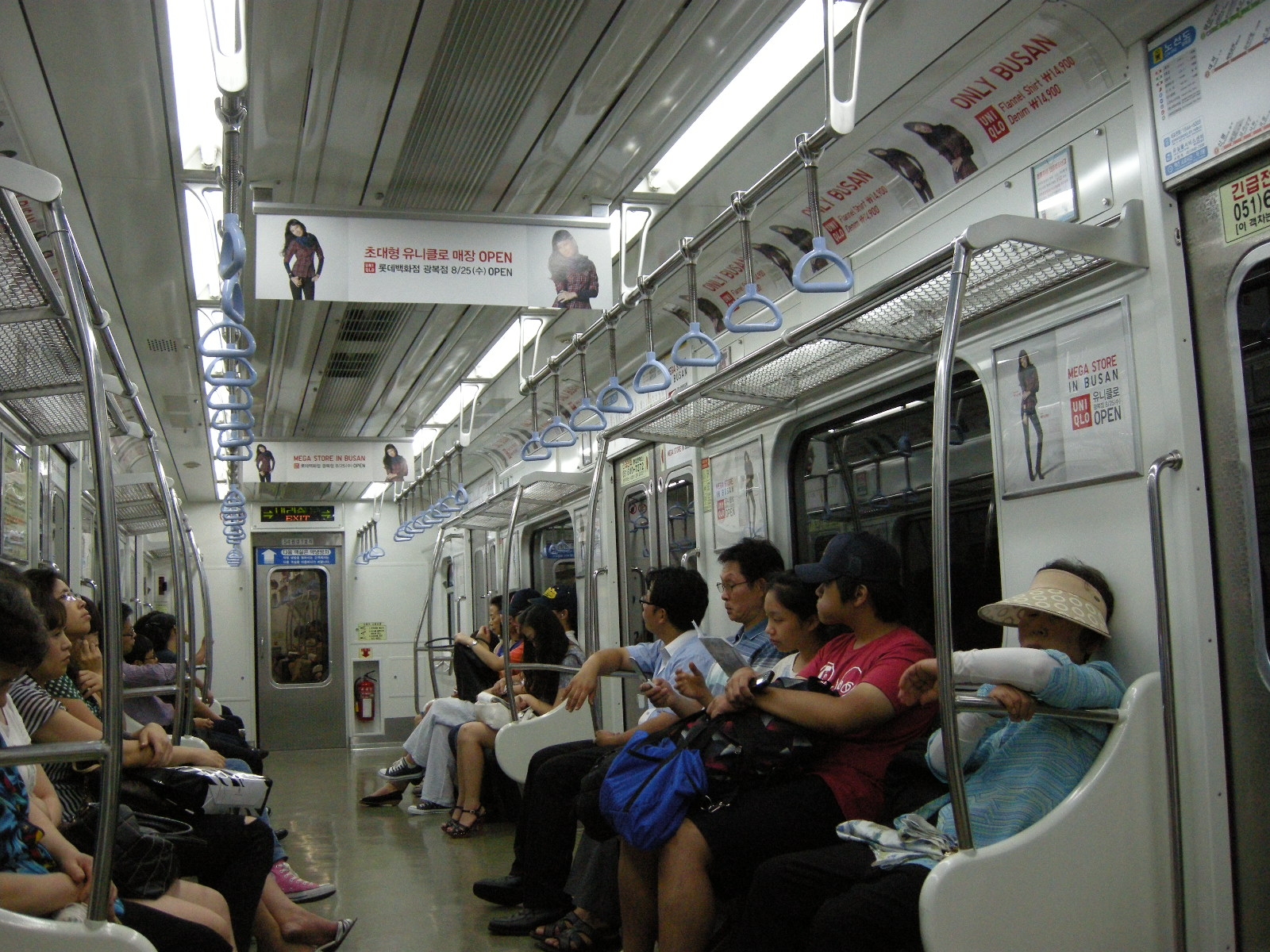


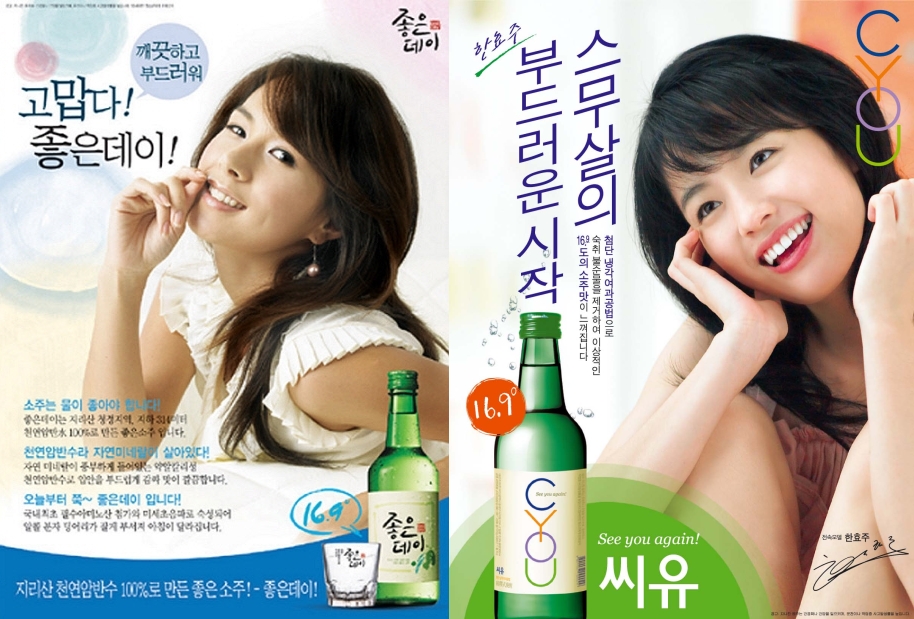


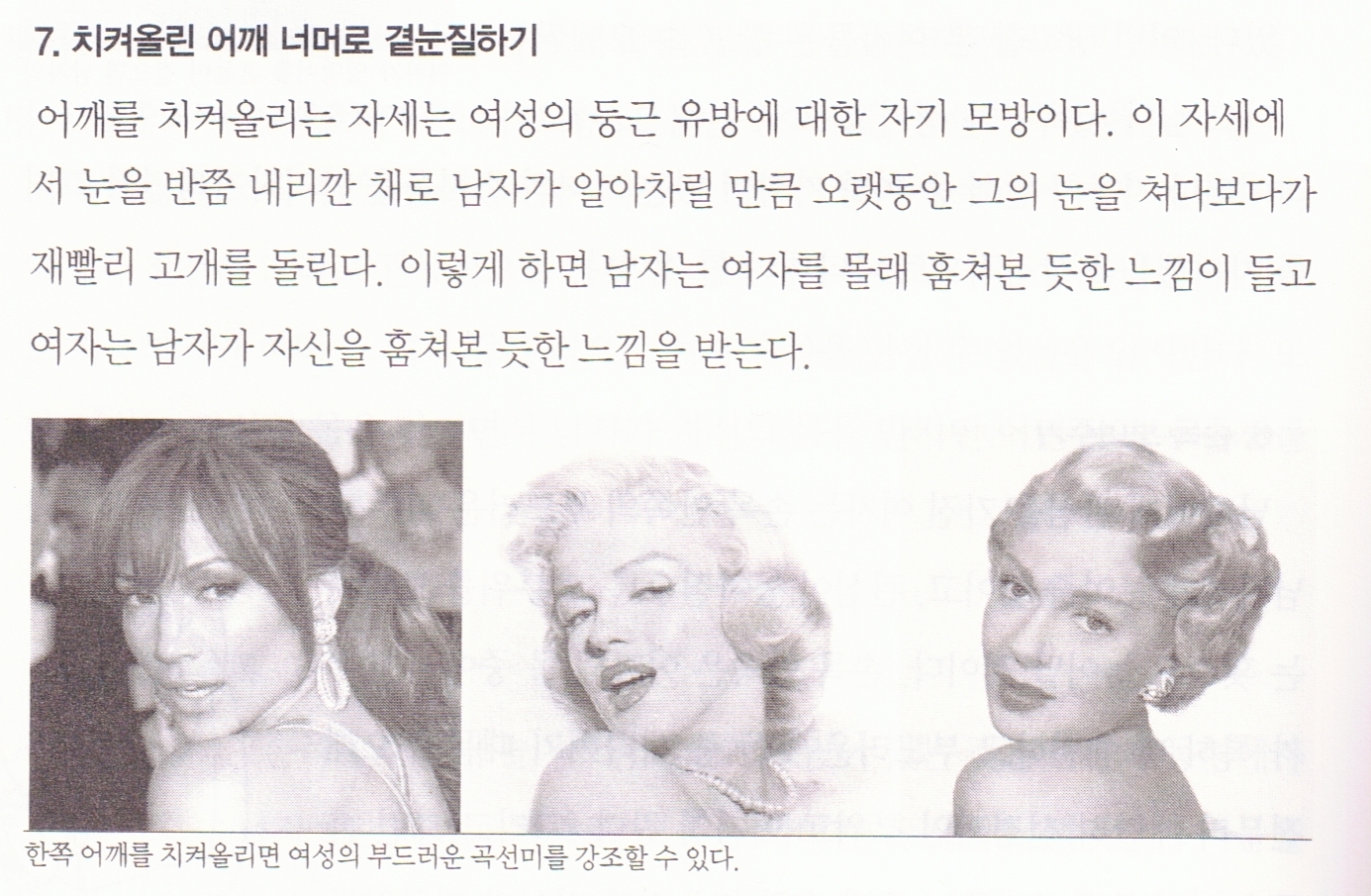
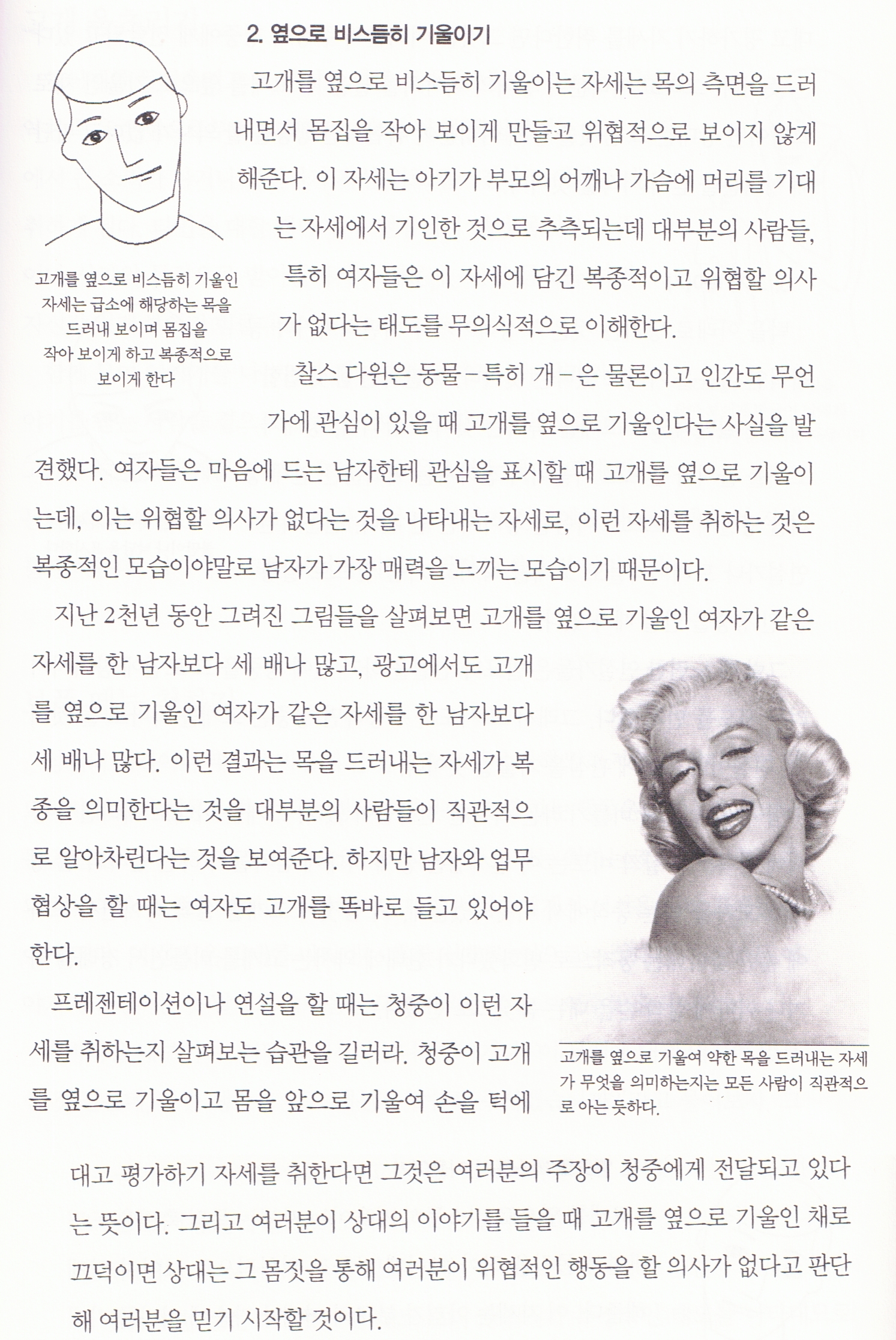
 (
(
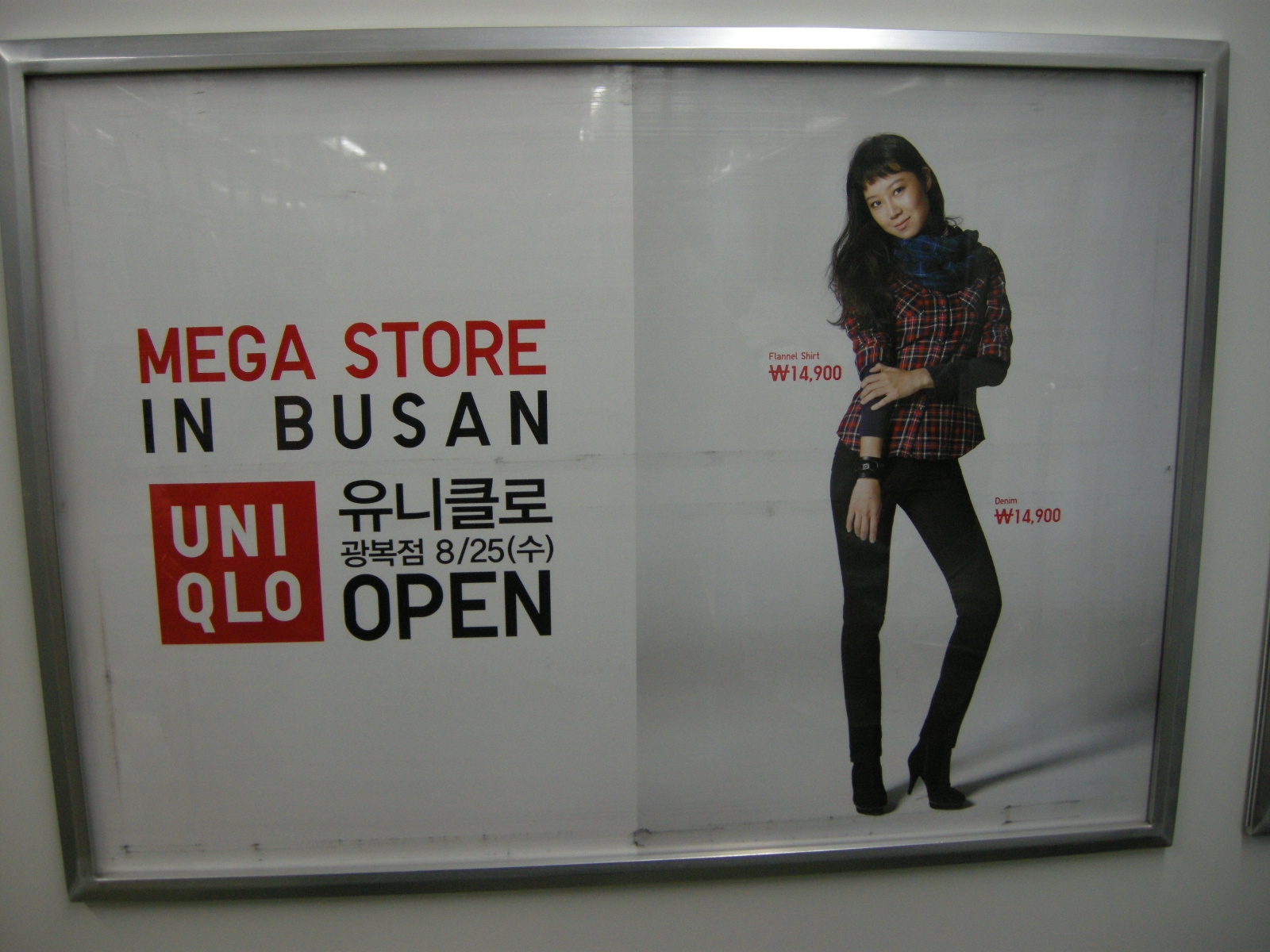



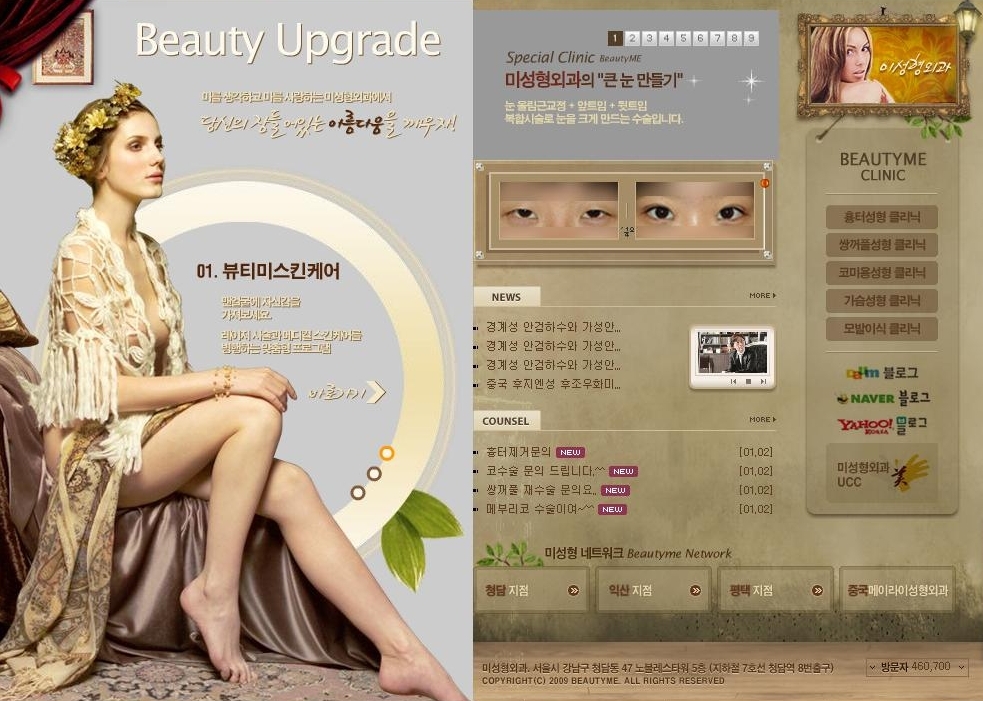
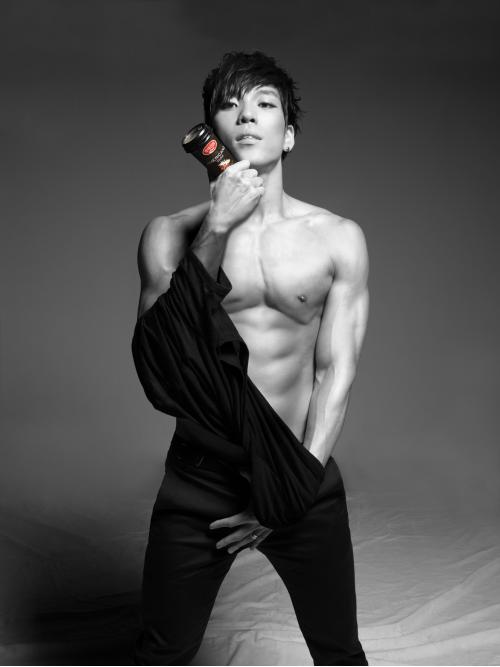
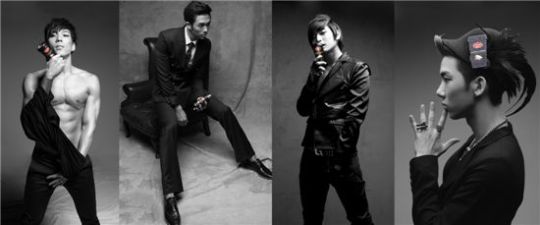
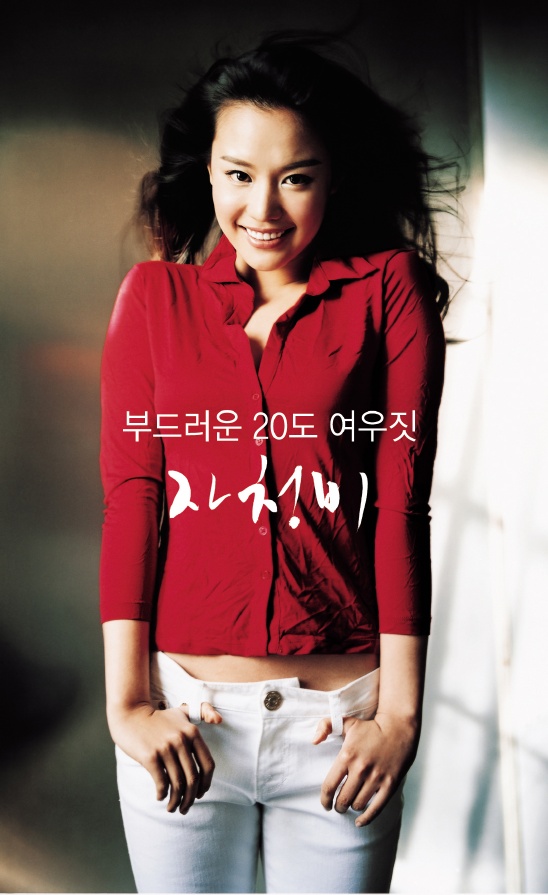
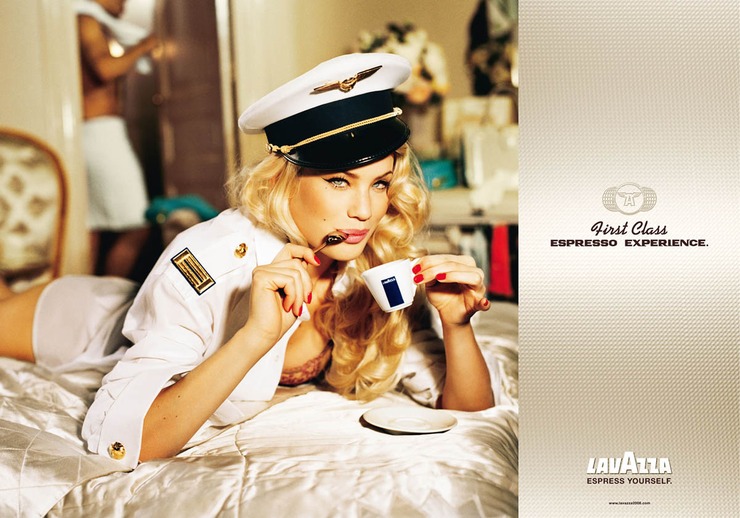
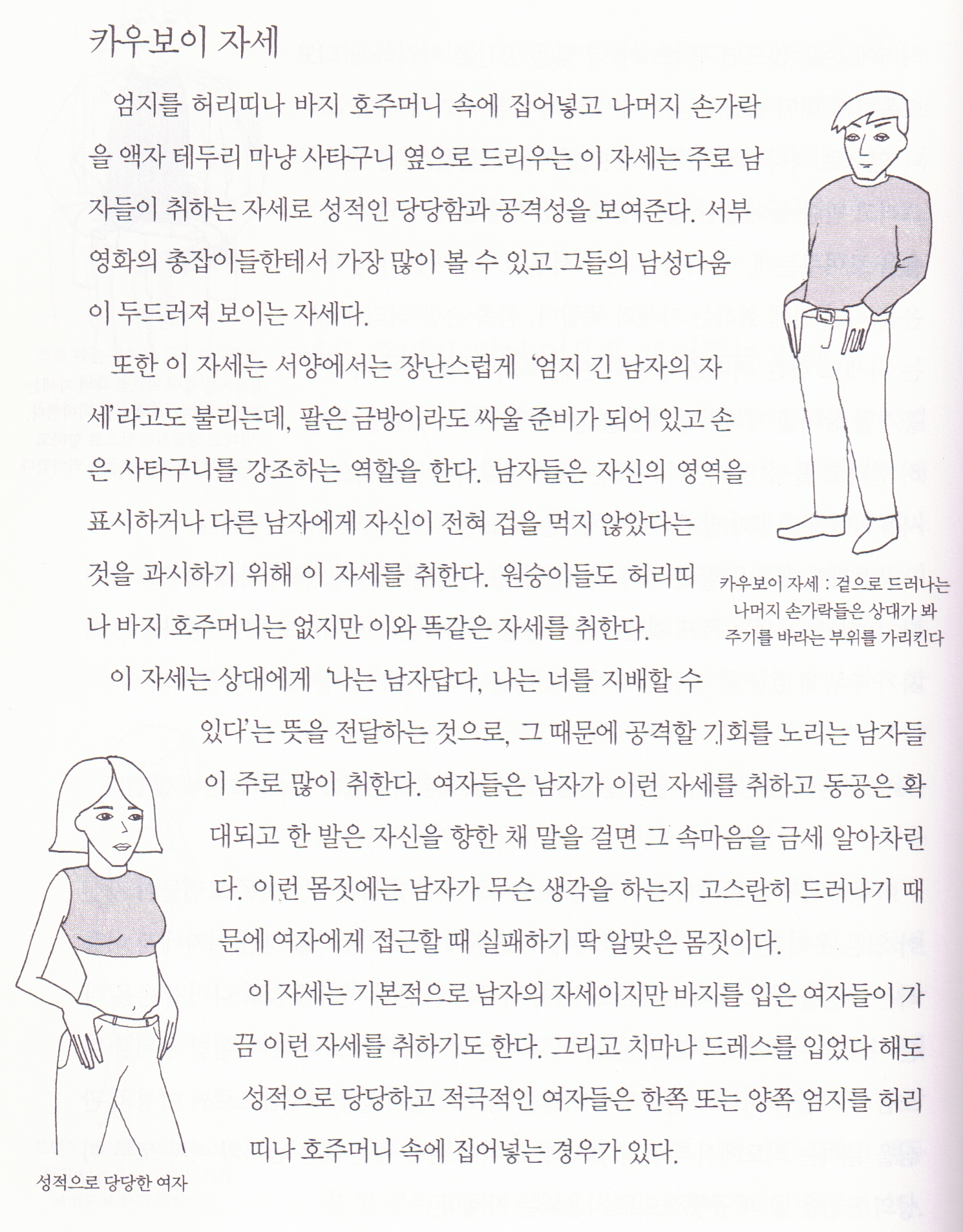

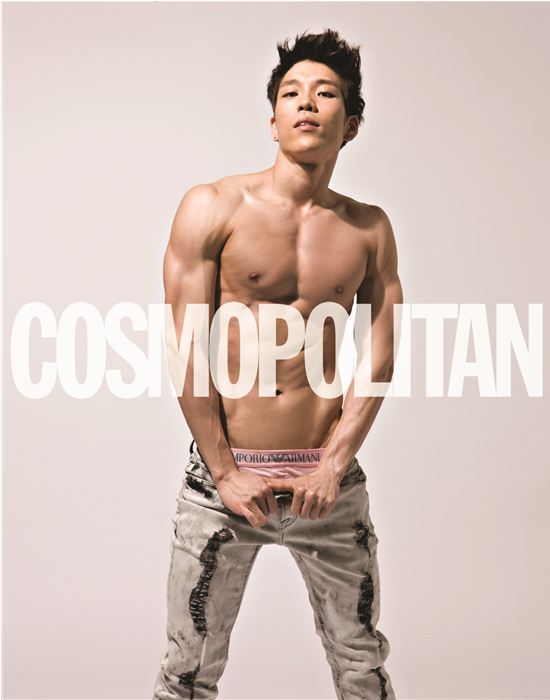


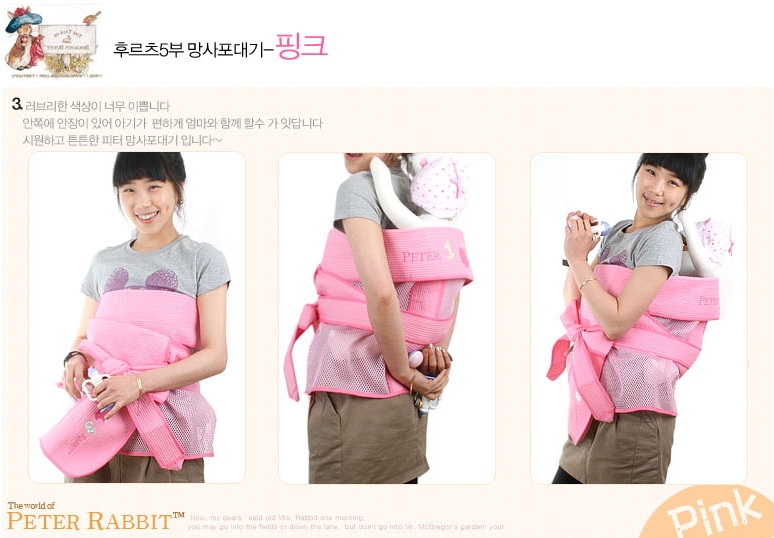

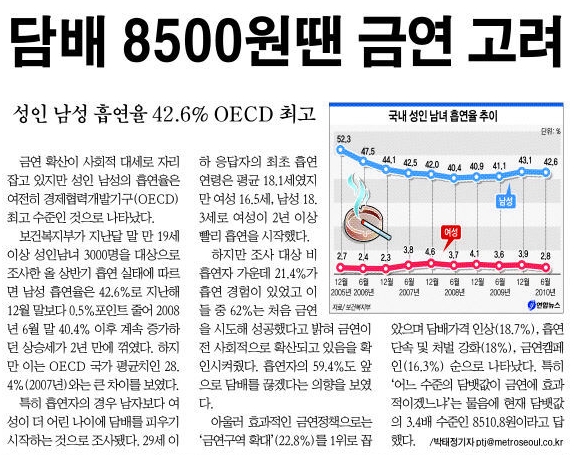
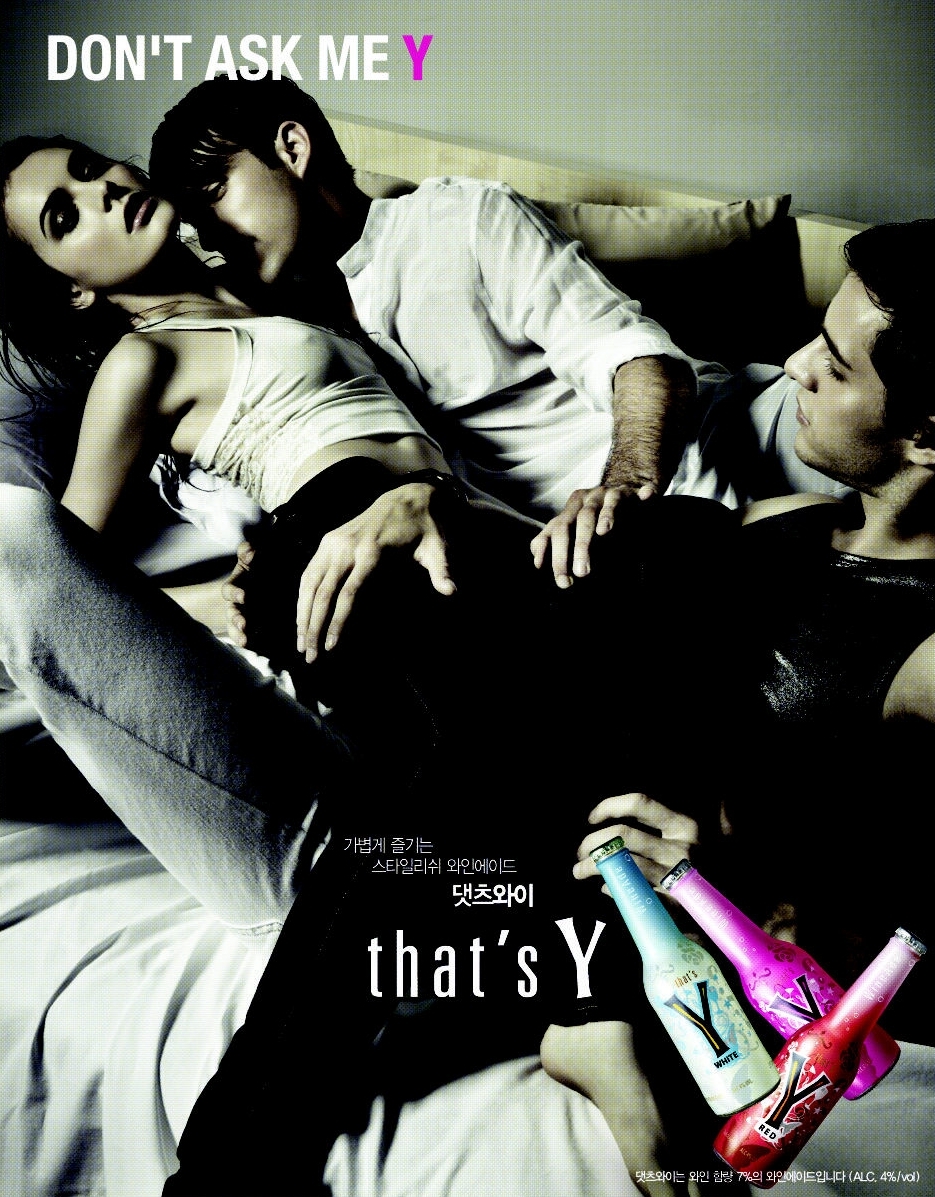
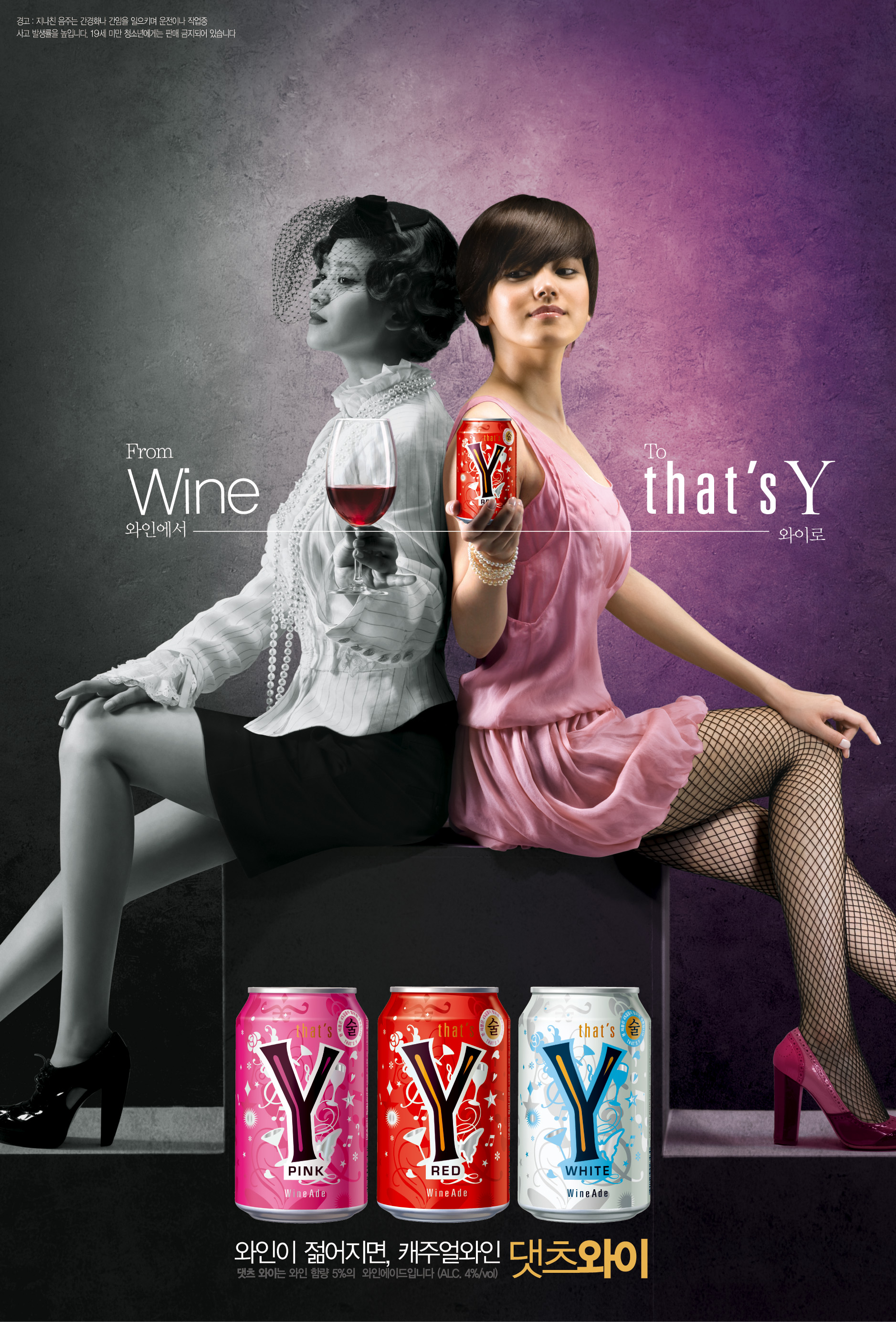
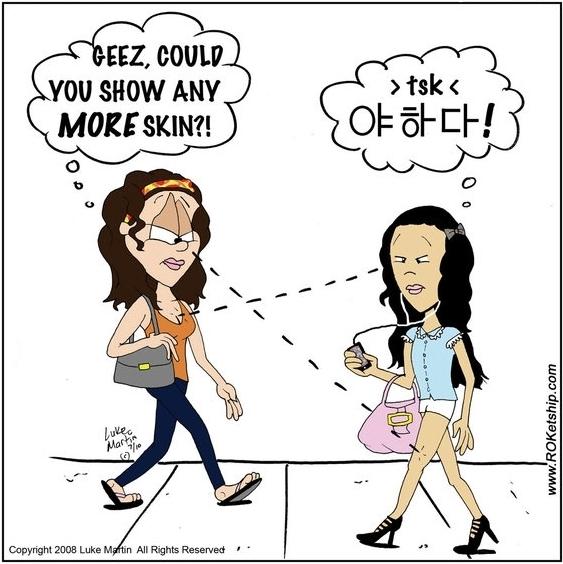
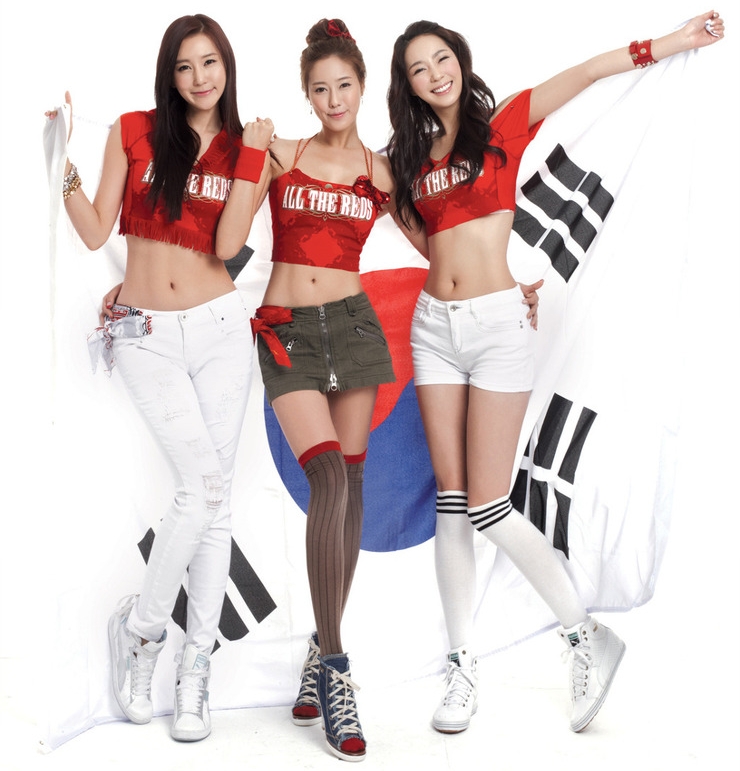
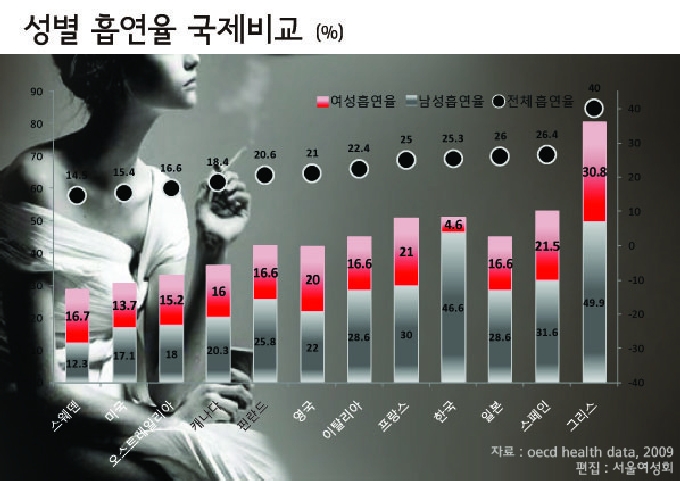
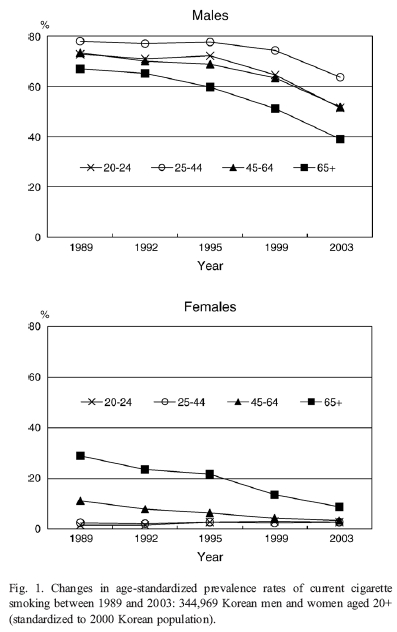
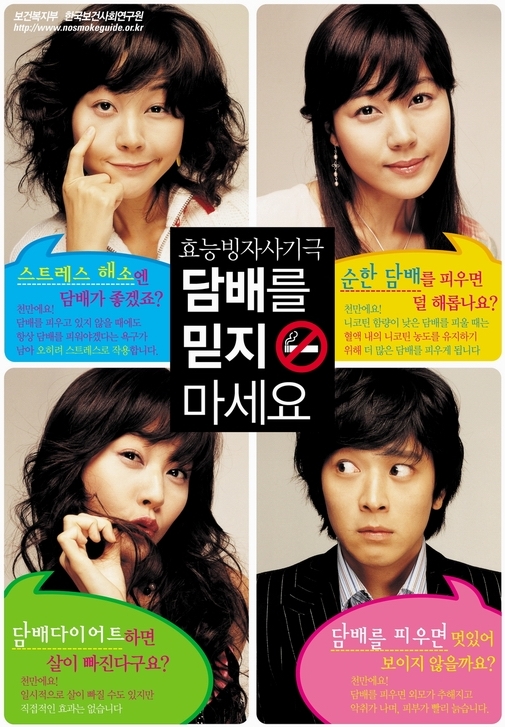

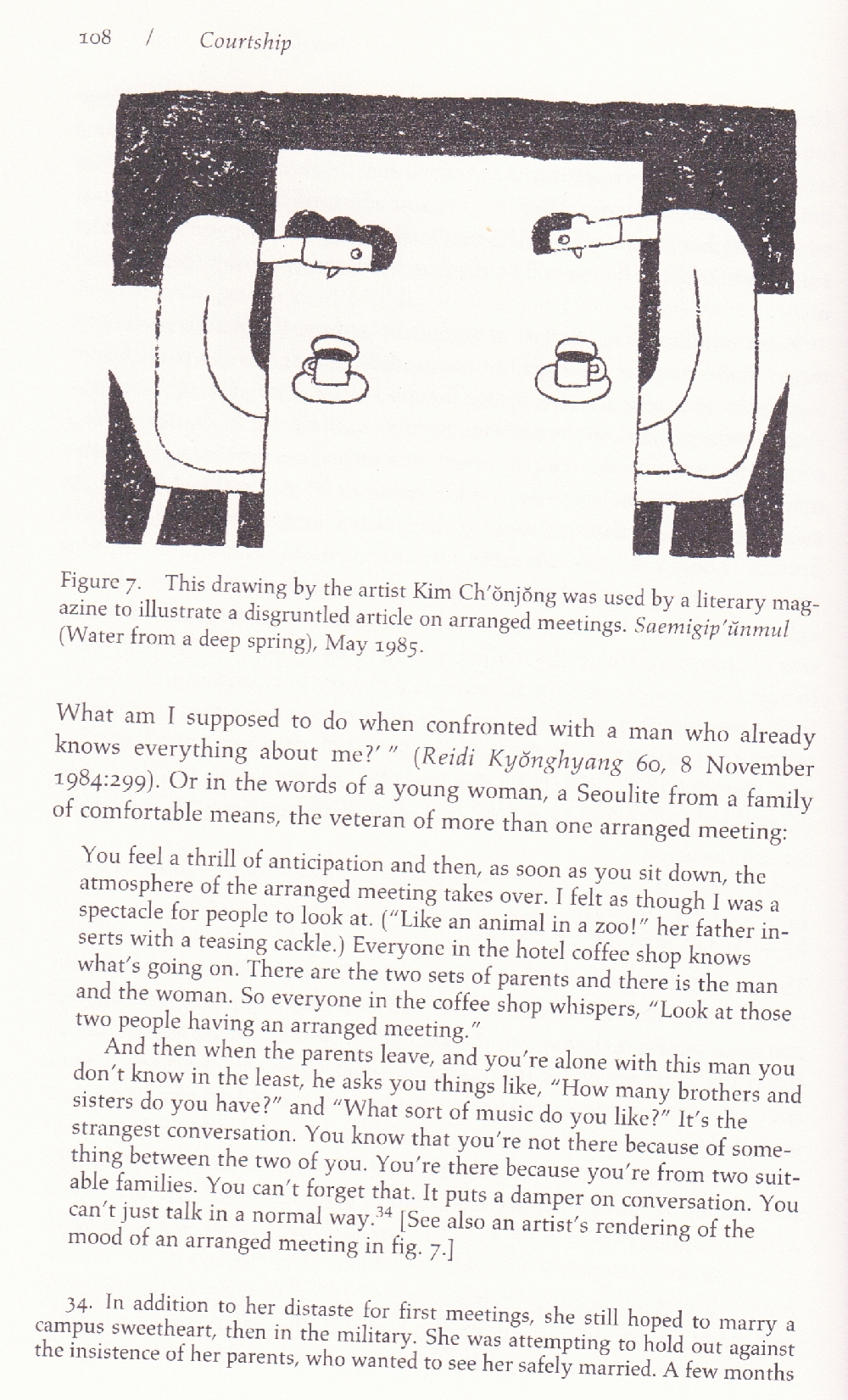


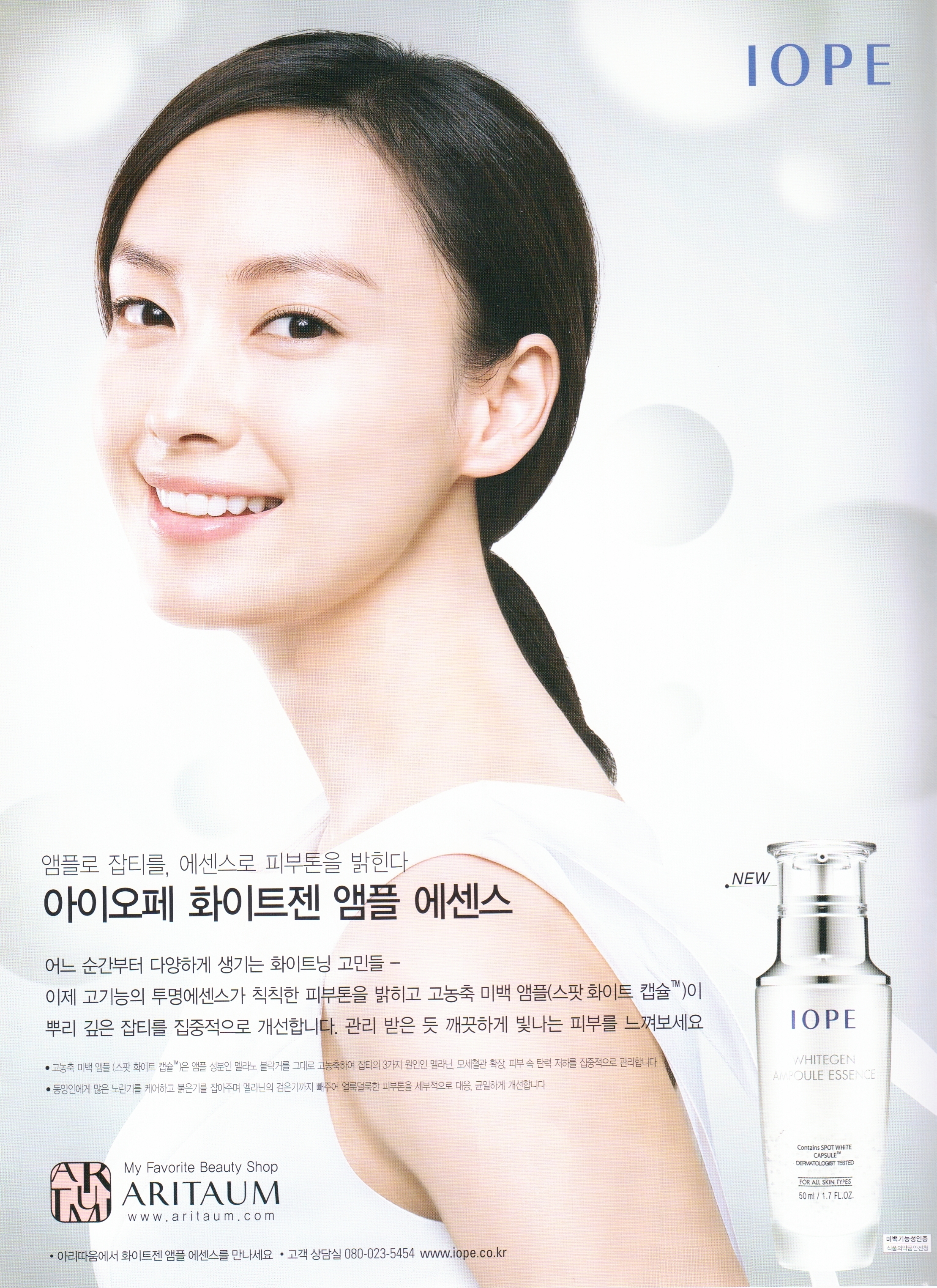


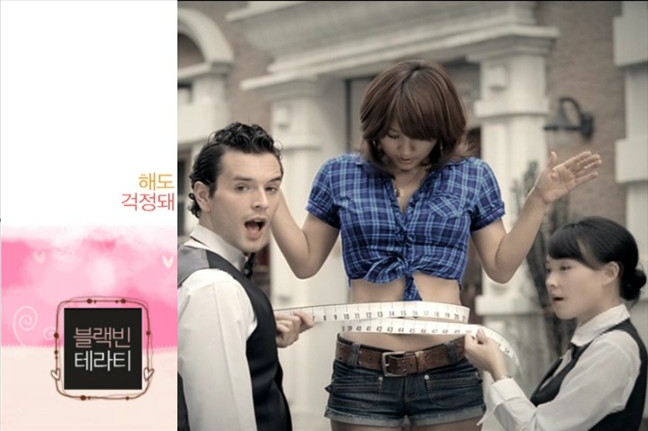
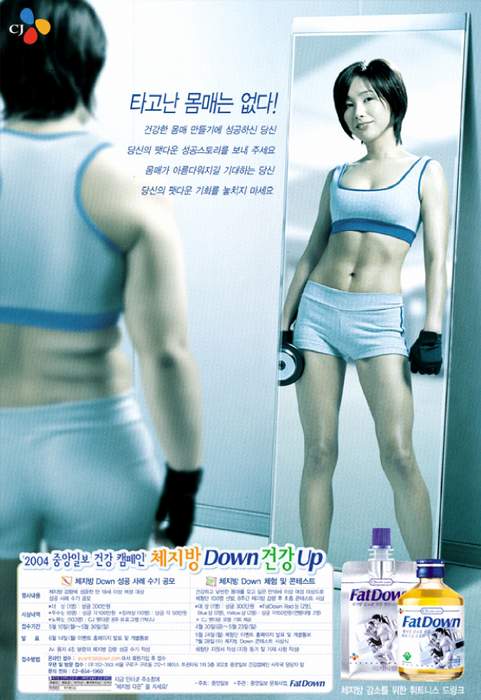
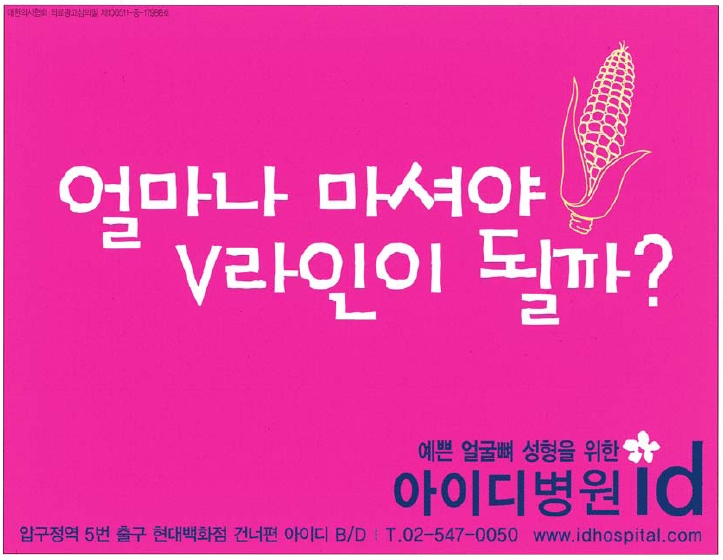
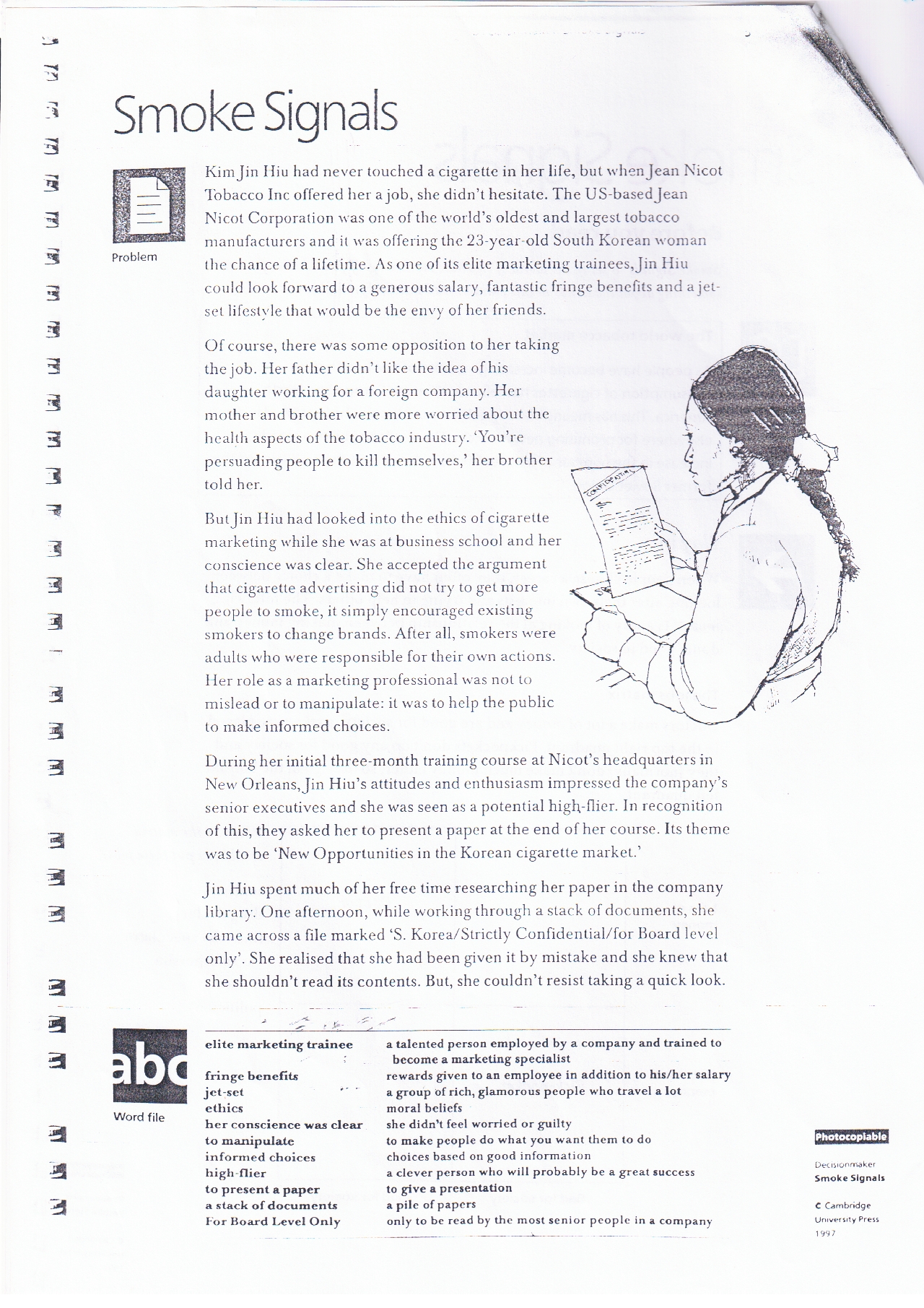
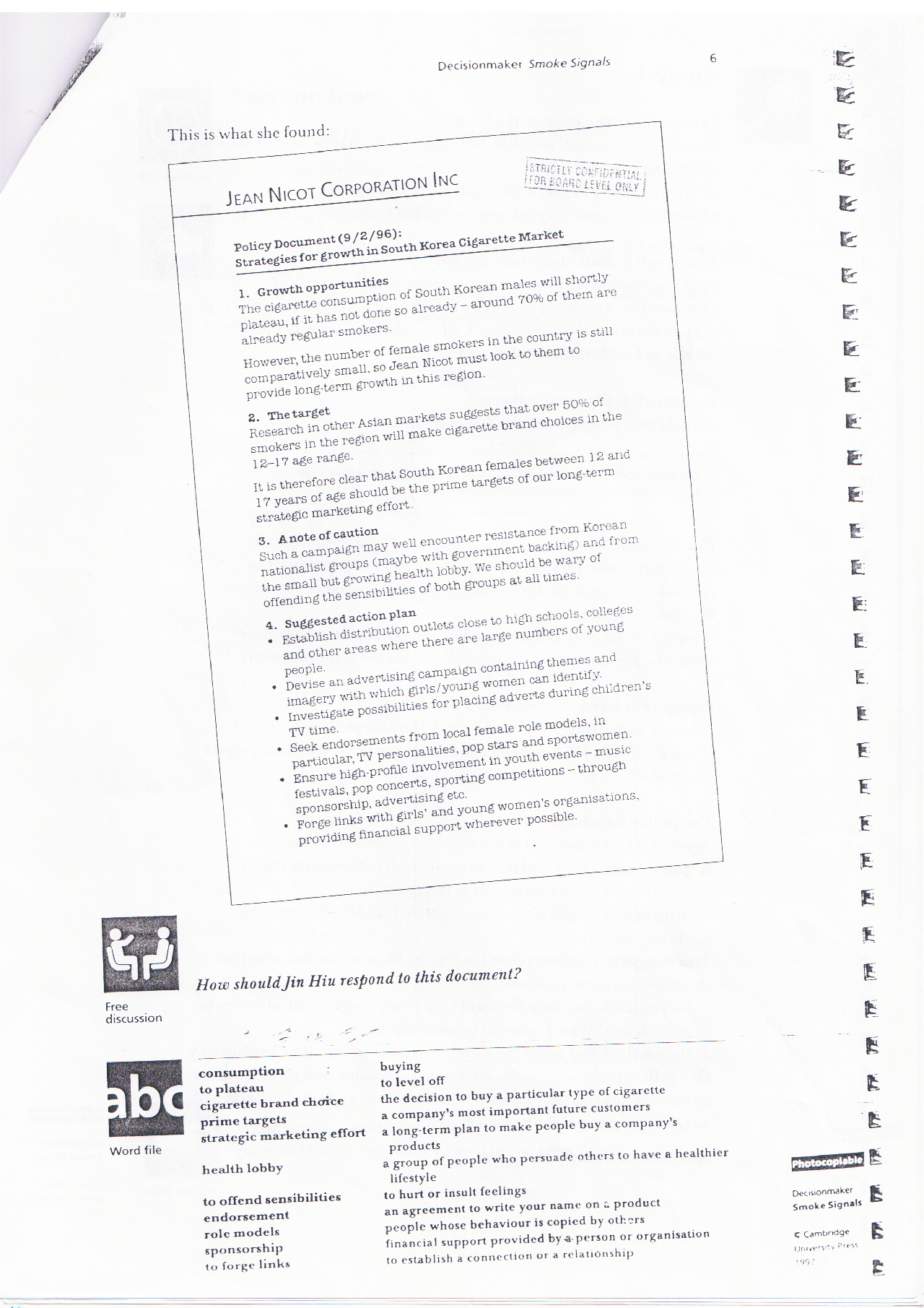

 Three out of four female college students consider X-line, a term referring to a slim waist with ample breasts and hips, to be the ideal body shape, according to a survey by



 The Grand Narrative
