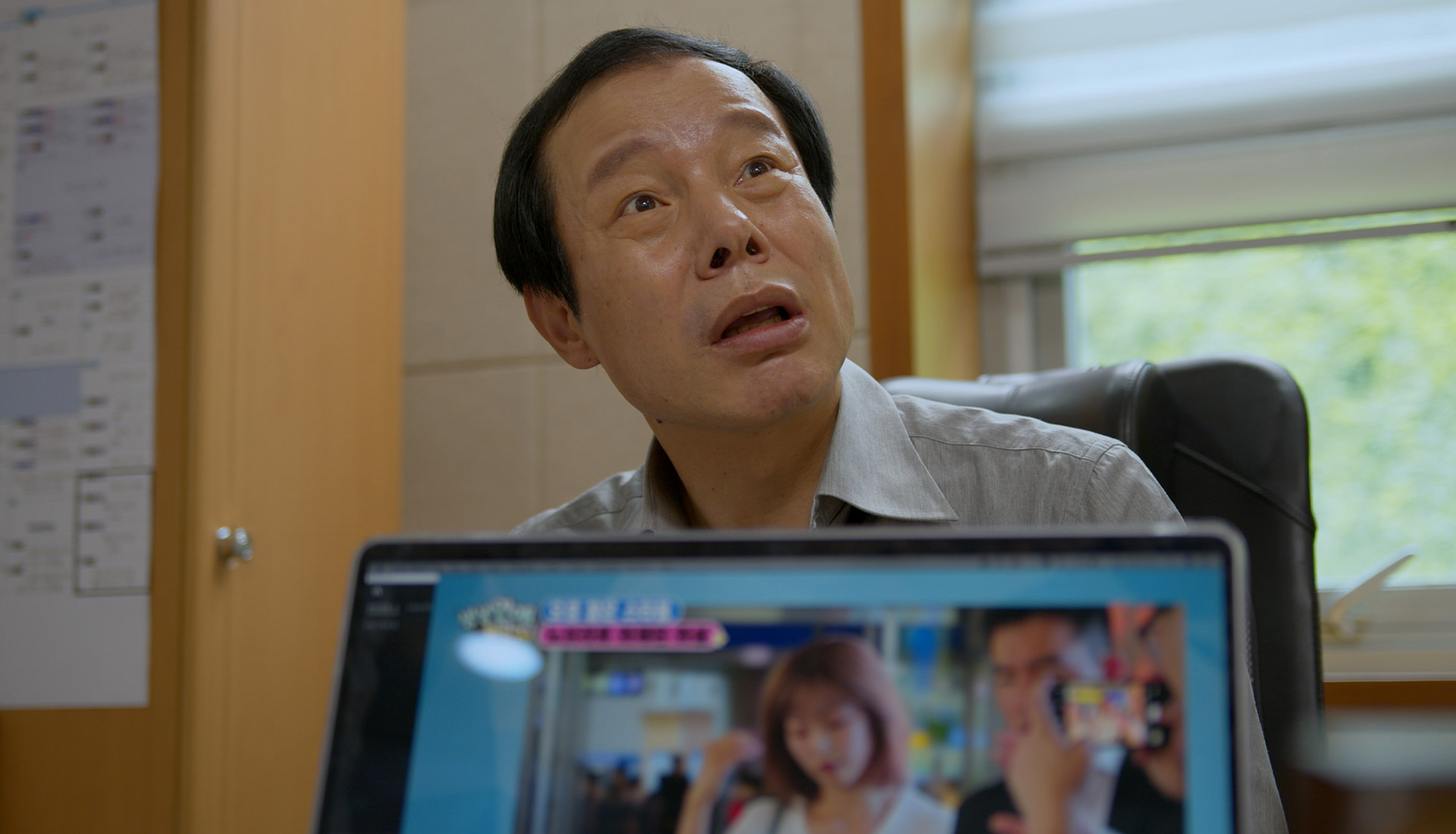
Maverick Film Reviewer Confirms all my Biases about the Orientalism in Past Lives (2023). Is He Right?

“There’s a word in Korean—inyeon (인연). It means providence, or fate.” Well so what?

Estimated reading time: 4 minutes. Image source: Naver.

To be clear, I haven’t actually seen Past Lives yet. In most of the world, everyone was able to watch it last summer; in Korea, it’s only finally coming out this March. But that opening line in the trailer is a huge red flag:

I realize I’m completely projecting, my title necessarily provocative. It’s just one line, devoid of context. I don’t know if its Orientalist undertone is the exception, or if it suffuses the whole film. But ugh.

Because why say something like that at all, if not to then stress some fundamental difference between the English and Korean concepts? It already feels like right up there with gatekeeping, essentializing discussions of how han, or jeong, or nunchi are timeless, immutable, untranslatable qualities that define all Koreans, which Westerners just could never fully understand:

Source left: Absolutely not going to give this book any traffic. Source right: @RachelMinhee.
Source: Stolen from a Korean Facebook friend.

And definitely make sure to read about how the concept of “saving face” is a complete Western invention, and Minsoo Kang’s “The problem with ‘han’ 한 恨” article at Aeon:

Some people insist that han is a uniquely Korean idea that only Koreans can truly grasp. Yet it is about as useful at explaining everything Korean as the term ‘rugged individualism’ is at explaining everything American or the ‘Samurai’ is in capturing all that is Japanese. It is true that all the calamities and traumas of the modern era have provided Koreans with a great well of powerful emotional experiences from which to draw. But intense emotionality is hardly unique to Korean narratives, and the notion of a specific kind of sorrow/regret/frustration/rage that only Koreans can feel is absurd.

Despite the film’s almost universal acclaim then, and smart overseas friends’ glowing reviews, I was already feeling ambivalent about eventually watching it. I have to admit I’m just a natural contrarian too, especially when it comes to Korean and Korea-related films. Not at all because I think I know better than everyone somehow, but because it seems the more people that sing their praises, the more likely those films are to tick various boxes that turn me off. And, once I do voice any negativity, that my friends will become completely insufferable too, writing me off as a plebeian rather than admit their latest bestest film ever might be anything less than perfect.

Elaine knows exactly what I mean:

So, not going to lie, I felt vindicated over the winter as more and more Asian-American friends in particular also expressed their misgivings about the film. Then, finally, one linked to maverick Ian Wang‘s provocatively-titled “The Critics Are Wrong About ‘Past Lives” at ArtReview, its introduction alone confirming all my suspicions:

You’re watching a contemporary drama about East Asians who’ve immigrated to the West. The narrative can vary, but often depicts a conflict between an older first generation (stern, repressed) and a younger second generation (independent, rebellious). Its characters are honourable and decent. Despite their disagreements, you get the sense that the film doesn’t want you to think any of them have done anything wrong. In fact, they can feel less like real people and more like proxies for certain ‘types’: the tiger mother, the Westernised child. Peppered throughout are glib ethnic signifiers: lingering shots of kimchi-jjigae or jiaozi, a hackneyed reference to not wearing shoes in the house. You can feel the director ticking off boxes as they go, soliciting high relatability with low effort. It is a polite, earnest film, one that will surely receive awards attention. And yet you can’t help but walk away feeling dissatisfied – this was sold to you as a complex, nuanced story about immigration, so why does its view of immigrant life feel so shallow?

I’m tempted to say I rest my case. But on the contrary—unlike most of my film snob, probably soon to be ex-friends, I’m not going to dismiss anyone’s continued love for this film as some irredeemable intellectual failing on their part. So, whether you want to send me a rant or a rave, thanks in advance to those of you who have seen the film and who do take the time to share their thoughts on Yang’s critique. For who knows? I’m already inclined to see the film anyway, just to make up my own mind about it—and being able to debate you afterwards may be all the final persuasion I need!

Related Posts:

If you reside in South Korea, you can donate via wire transfer: Turnbull James Edward (Kookmin Bank/국민은행, 563401-01-214324)

WOMEN WE LOVE Bookclub Event—Sunday, February 11, 2-4pm

Estimated reading time: 2 minutes.

Just a heads-up to let you all know about this upcoming event, to give you time to order and read the excellent Women We Love: Femininities and the Korean Wave (2023) before we zoom!

(My copy arrives tomorrow! Squeeeee~)

Organized again by Rhea Metituk (rhealm@gmail.com) of the KOTESOL Women and Gender Equality Special Interest Group, at the moment there’s absolutely no agenda other than everyone being welcome to join, that it won’t be recorded, and that you can rest assured that Rhea will be graciously but ruthlessly ensuring the KOTESOL Code of Conduct is followed by all participants. So please do get in touch with myself or Rhea if you’d like to be on the list to receive the private Zoom link closer to the event, and we’d appreciate any ideas for discussion questions before the day. Thanks!

See you there!

If you reside in South Korea, you can donate via wire transfer: Turnbull James Edward (Kookmin Bank/국민은행, 563401-01-214324)

Why, oh Why, do we Need Mosaics on Women’s Nipples?

Well, we don’t, actually. But for those who want to learn more about why not, and laugh themselves silly in the process, Nipple War 3 (젖꼭지 3차대전) is available for streaming on indieground until July 30!

Estimated reading time: 5 minutes. Image source: indieground.

“Nipple World War 3″ it should really say, otherwise the “3” makes no sense. After appearances in over 30 film festivals though, the misguided English title has stuck, so I’ll roll with it.

It’s very crude and slapstick too. But I’m not complaining about that either.

For there’s nothing subtle about the absurd double standards regarding male and female nipple exposure, in Korea or anywhere else for that matter. But it’s only relatively recently it’s become a real issue here, as explained by Jo Yeong-joon in her column about the 2021 film yesterday at Oh My Star:

2019년쯤이었나. 여성 연예인들의 노브라가 사회적인 이슈가 된 적이 있었다. PD 출신인 백시원 감독도 당시 방송에서 이 문제를 다루는 방식을 놓고 상사와 의견을 나눈 적이 있었다고 한다. 당시에 상사는 두드러지는 여성의 젖꼭지에 모자이크를 처리하라고 했지만 취지에 옳지 않다고 생각한 감독은 극 중 인물처럼 적극적인 행동을 하지는 못했지만 속으로 불편함 감정을 느꼈다고 한다. 이 영화 <젖꼭지 3차 대전>은 그런 사실적 상황 속에서 태어나게 되었다. 코미디적 연출과 다양한 상황을 제시하기 위해 결과적으로 많은 부분이 각색되고 픽션화되기는 했지만 당시에 경험했던 사회에 만연해 있던 은근한 성차별에 대해 들여다보고자 한 것이다.

“Was it around 2019, when female celebrities not wearing bras in public became a social issue? [Theno-bramovement?] Director Baek Si-won, a former producer, said that the ‘problem’ of a woman not wearing a bra came up in a program she was working on at the time; after discussing with her boss about how to deal with it, she followed his instructions to use mosaics to cover the women’s prominent nipples. But she was uncomfortable with doing so, and, although she didn’t object quite as actively as the characters do in her short film, it was from that real example that Nipple War 3 came about. Indeed, although much of the film is heavily dramatized and fictionalized for the sake of comedic affect, and for presenting a wider variety of scenes and situations, the intention in doing so was to better highlight the subtle sexism and double standards that were—still are—experienced every day in Korean society.”

영화는 연예인의 젖꼭지가 도드라지는 방송 화면을 모자이크 하라는 마정도 부장(정인기 분)에 맞서 자신의 의견을 피력하는 용 피디(최성은 분)의 모습을 다루고 있다. 영화의 구조도 그리 복잡하지 않다. 서로 다른 의견을 가진 두 사람이 총 세 차례에 걸쳐 부딪히는 것이 뼈대의 전부다. 대신 각각의 지점이 (영화의 표현을 빌리자면 세 번의 대전) 던지는 문제의 화두는 모두 다르다. 갈등의 중심에 놓인 매개는 여성의 젖꼭지 하나이지만, 감독은 이 과정을 통해 여성의 특정한 신체 부위가 드러나는 것에 (실제로는 여성의 자유와 권리, 평등을 보장하는 일에) 반감을 가지는 이들의 주장이 얼마나 차별적이고 비합리적인지를 드러내고자 한다.

“[As can be seen the opening scene above, which has English subtitles], the movie deals with Producer Yong (played by Choi Seong-eun) who disagrees with her manager Ma Jeong-do (played by Jeong In-gi) when he asks her to mosaic out a female celebrity’s prominent nipples under her t-shirt. From then, the film is structured around people with different opinions having an argument (having a ‘battle,’ to borrow the parlance of the film) a total of three times, each on a different aspect of women’s nipples—the central characters if you will. Through this variety of situations and arguments, Director Baek wants to make that it clear that only allowing men to expose certain parts of their body is extremely discriminatory and irrational, and ultimately fundamentally undermines their guarantees of freedom, rights, and equality.” (My emphasis and slight embellishments—James)

Image source: indieground.

I’d just love to translate the full column. But unfortunately copyright is a thing, translation apps and plugins are more than adequate, and the reality is that if you don’t understand the Korean yourself, then you’ll struggle to make much sense of the film dialogue either, which has no Korean or English subtitles. (Sorry—I’m disappointed too.) I would like to highlight just a few more points from her column though, just in the remote case that you’re not already convinced to watch the film whenever and in whatever language you do get the chance:

  • Part of the the reason for Yong’s clash with her manager is because of the ambiguity of the Korea Communications Commission’s regulations. While they do say male and female genitalia [and pubic hair] are strictly forbidden, the criterion for excluding female nipples—and only female nipples—are far more open to interpretation. In the film, this is highlighting by showing a screenshot of topless African women from a previously-aired documentary, but one of Venus’s nipples in the famous Sandro Botticelli painting being mosaiced in another. Not only are—James here again—these examples probably real, but they also raise the element of racial hypocrisy and double standards, which are by no means confined to Korea.
  • Amidst all their handwringing about some women not wearing bras for their health and/or comfort, few self-appointed guardians of Korean morals seem to recall that even exposing navels on TV was technically banned when singer Park Ji-yoon‘s song Coming of Age Ceremony (성인식) was released in 2000, resulting in said body part sometimes getting mosaiced (or—James—I’m guessing, covered in a mesh, like in the second video below.) Similarly, singer Kim Wan-seon had the same problems with her ripped jeans in the late-1980s and early-1990s.

  • The film is absolutely not intended to inflame Korea’s “gender wars.” It’s a comedy. The men are not at all universally portrayed as dogmatic, conservative sexists, nor the women as universally progressive and beyond reproach. In particular, Ma is clearly very much in a bind, Yong is somewhat stubborn and self-righteous, and her male assistant is completely sympathetic and helpful to her cause.
Tired of feminazis pushing their nipples in your face? Don’t understand the big deal? Recall that female newsreaders couldn’t even wear glasses on Korean TV until 2018…

Honestly, with this topic I feel a personal connection to my first few years in Korea, in the early-2000s. Which I realize sounds…let’s generously say “somewhat odd.” But that’s when I was single just like now, but unlike now coming home after midnight a lot. And often when I did, I wouldn’t be sleepy, but would be somewhat at a loss with no computer, no 1500+ books, nor yet to be invented smartphone. So I’d turn on the TV to suddenly find…Las Vegas cabaret shows featuring topless dancers. Naturally, their breasts would be misted over. Only, there was so much dancing involved, so many breasts, and so many cuts between different dancers and different cameras, that the hapless censors (misters?) just couldn’t keep up. So, the misted circles would quite literally be chasing the dancers’ breasts across the TV.

If I’d had a cat, its eyes would have popped out of its head. But it’s probably best I didn’t then—I probably would have injured it, rolling around on the floor laughing too much. And, having just arrived from New Zealand, where I’d rarely had to think about censorship at all, I’ve continued laughing at its hypocrisy and ridiculousness ever since.

Much kudos to director Baek Si-won for continuing that tradition then, while also providing some much needed social commentary that won’t make any viewer feel like they’re being made fun of—or laughing too much to care even if they did.

Related Posts:

If you reside in South Korea, you can donate via wire transfer: Turnbull James Edward (Kookmin Bank/국민은행, 563401-01-214324)

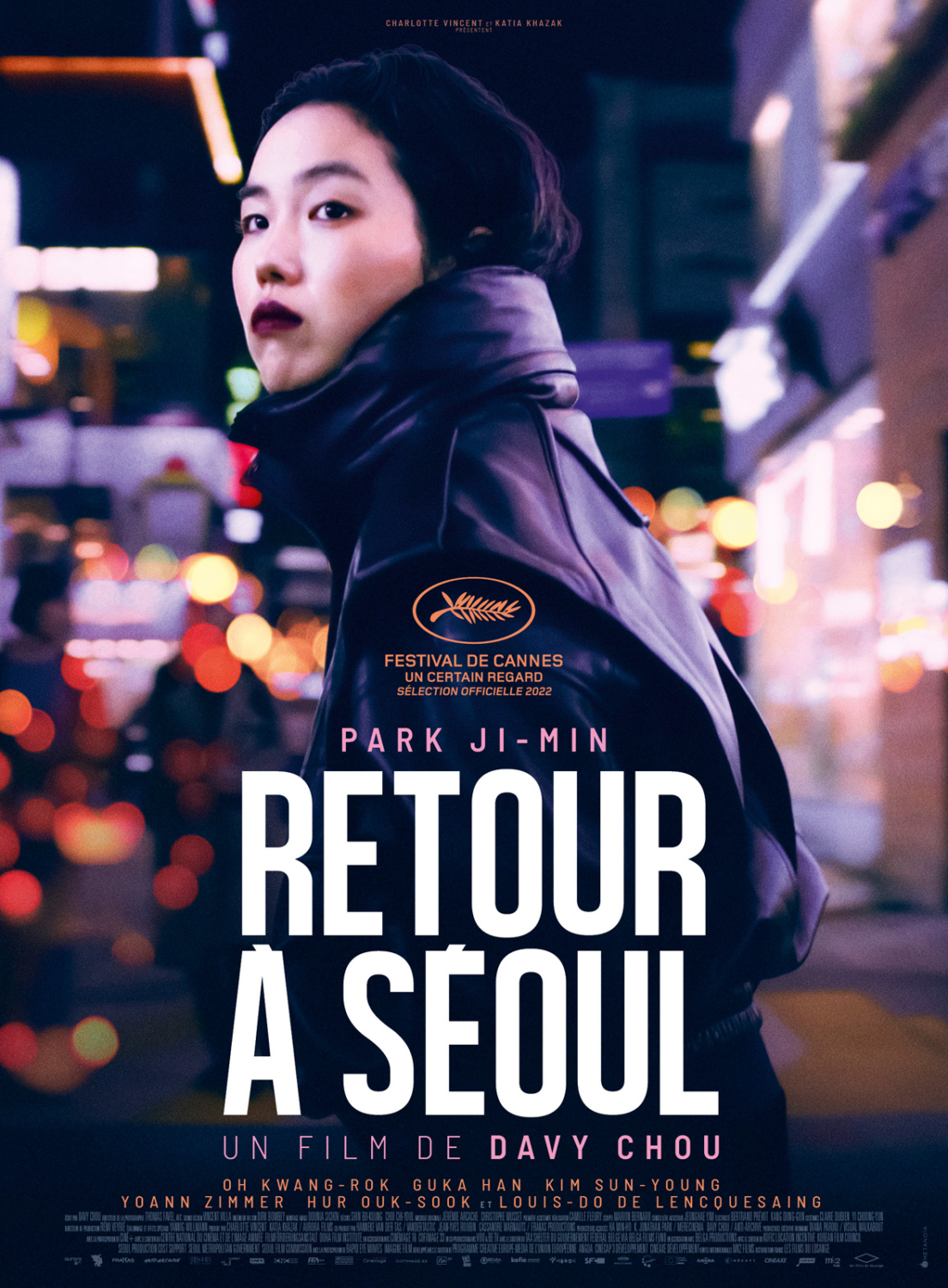
“Return to Seoul” (리턴 투 서울, Retour à Séoul) Now Playing in Korean Cinemas

Estimated reading & viewing time: 5 minutes.

Now, the most important thing to take away from this post is to appreciate what good taste I have. For *I* decided I liked this film, and booked a ticket, weeks before it became cool.

Next most important is the secret of how I learned of it: by subscribing to the YouTube channel 문다무비. Focusing on trailers of arthouse films with limited runs, and/or of repeat screenings of popular movies, if you live in Korea then it’s an absolute must.* How else, after all, can you persuade your dates that you’re smart and sophisticated? Other than by showing them selfies of you in empty theaters that is?

Unfortunately for my otherwise carefully-crafted persona, I am an alcoholic, so was much too busy to post about the film while it was still under most people’s radar. Fortunately for you though, it’s only just been released, so there’s still a week or so to see it. Also, in addition to glowing reviews by overseas critics, as well as a surprising amount of coverage in the Korean media, there’s Jia H. Jung’s Korea Times interview of Korean French adoptee Laure Badufle, co-writer and inspiration and inspiration for the film, which will do a much better job of persuading you to watch the film than I ever could have.

Especially when I haven’t actually mentioned the trifling detail of what the film is actually about yet:

Again unfortunately for my persona, I can’t hide how giddy with excitement I am to learn that Laure Badufle was born in the small town of Sacheon in South Gyeongsang Province before she was adopted, where I taught from 2001-2003; that will likely feature in the film, while neighboring Jinju, where I lived, definitely will. Also, because of the mixture of English, French, and Korean used, I’m relieved to see that Korean subtitles will be used, which will frankly make watching it much easier for me (I don’t know of anywhere with English subtitles sorry).

Yet despite all the recent attention, there’s still only 6 CGVs screening the film in Seoul, only 1 in Busan, and, ironically, none at all in Jinju. My fellow sophisticated Busanites at least though, will appreciate the perks that come with their fine tastes—in the form of an exclusive 44-person theater, with luxury armchairs!

*Update: I’ve just discovered artninecinema/아트나인 (Twitter, Instagram, Facebook), which is even more focused on arthouse films, and also hosts various related events. Unfortunately most for Return to Seoul are already over, but on Tuesday the 16th there’s a screening with critic Jeong Seong-il in Seoul.

Related Posts:

If you reside in South Korea, you can donate via wire transfer: Turnbull James Edward (Kookmin Bank/국민은행, 563401-01-214324)

Unpopular Opinion: “Kim Jiyoung: Born 1982” Didn’t Hit Hard Enough

Kim Jiyoung: Born 1982 scores points for its raising of numerous feminist issues, but its treatment of them is frequently quite superficial. Here’s how one scene should have been handled differently, shattering stereotypes and suggesting solutions in the process.

Estimated reading time: 8 minutes. Photo by Gabe Pierce on Unsplash.

I didn’t like the novel Kim Jiyoung: Born 1982 much at all. There, I said it.

It’s basically a Korean Feminism 101 compendium, which means it didn’t really teach me anything new. Its constant shoehorning of facts and statistics into the narrative ruined it as a work of fiction too. But the biggest flaw was Jiyoung’s constant, infuriating lack of agency, with its flipside that author Cho Nam-joo didn’t really offer any solutions to the numerous hardships she faces either.

That doesn’t mean those hardships aren’t well-described. Like I said in my earlier review, I don’t think it’s a bad book at all. If you personally learned a great deal from it, and/or laughed, cried, and seethed in anger alongside Jiyoung, then I’m hardly going to claim that my own disappointment and frustration mean I’m somehow a much better, more knowledgeable feminist than you.

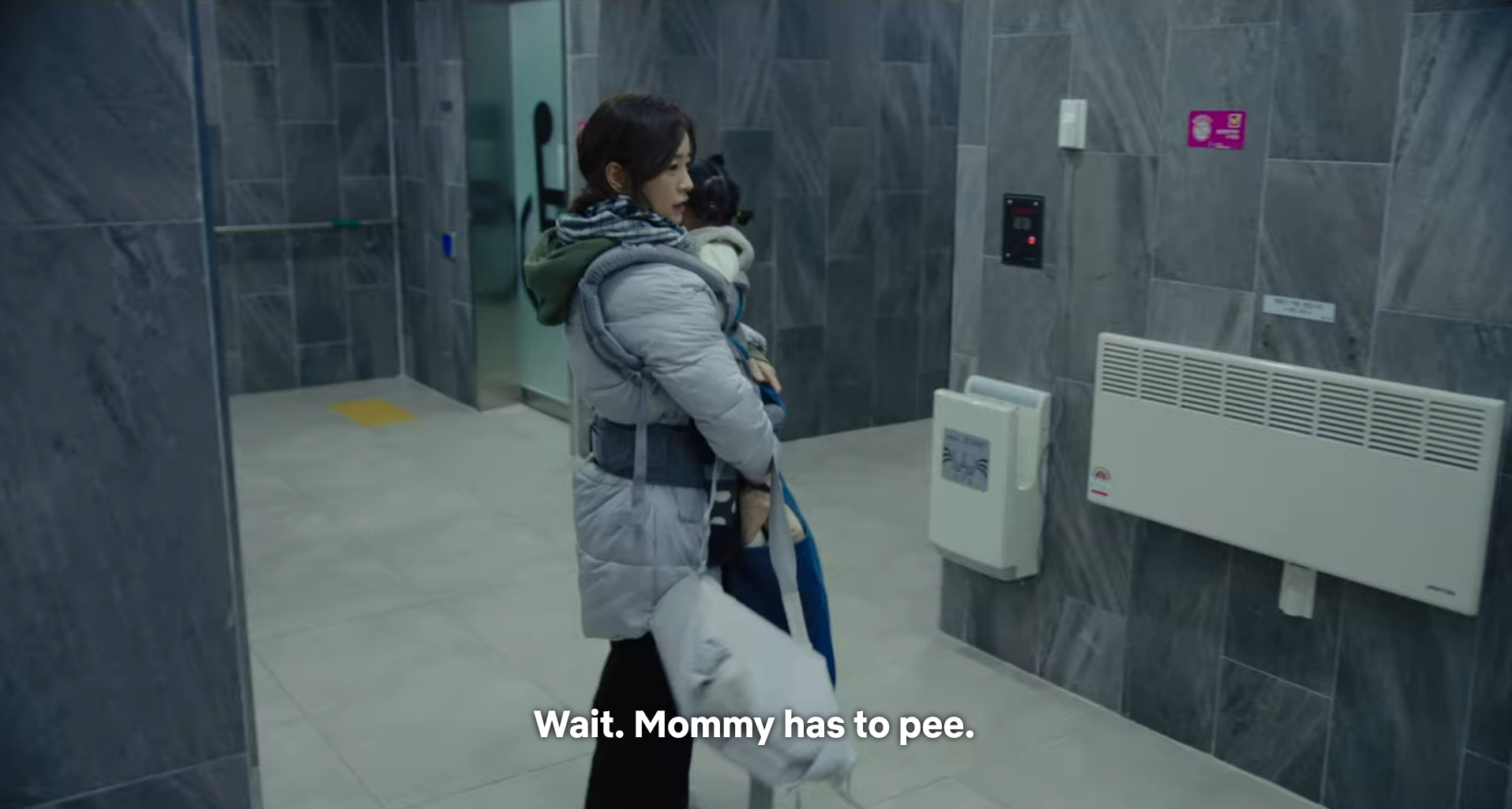
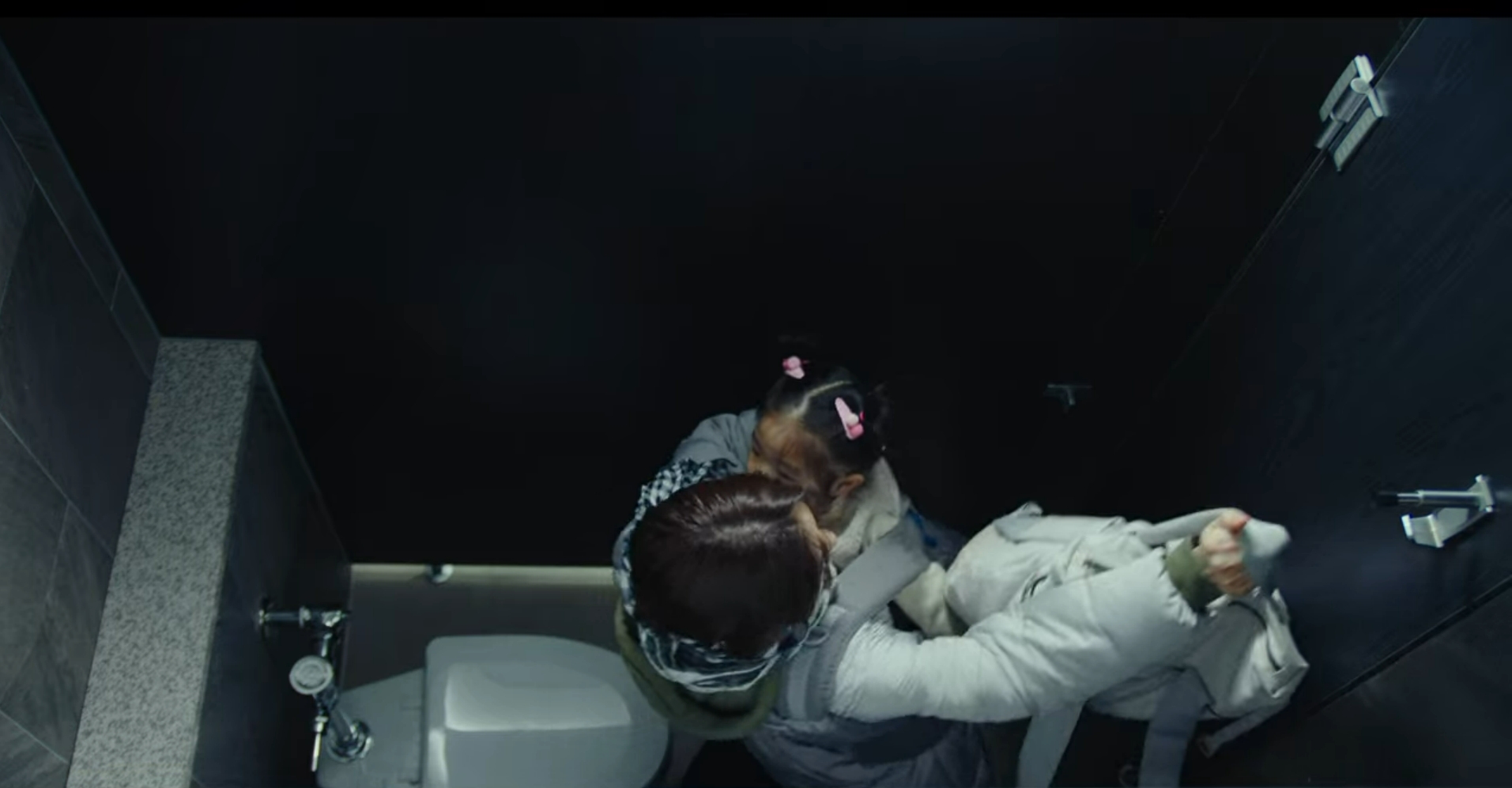
But Jiyoung’s lack of agency, and Cho’s lack of solutions, are absolutely a hill I’m prepared to die on. One scene in the film set in a subway toilet, albeit not mentioned in the book, illustrates both very well.

In it (55-56:00), Jiyoung (played by Jung Yu-mi) has to get off the subway to change her bawling infant daughter. Once that’s done, she realizes she needs to pee herself, but struggles in the narrow cubicle to hang up her heavy bag with her daughter strapped to her chest. Then, before she attempts again, she eyes the walls and lock nervously, remembering a recent molka (spycam) incident at the place she used to work. The scene then shifts to her home, implying she gave up and went there instead.

At first viewing, it’s difficult to find any fault here at all. Given that the burden of childcare falls overwhelmingly on women, then more men—or, indeed, more unsympathetic childless women—sometimes really do need to be literally shown just how much effort that actually involves. So too, do more men need to realize how stressful it is having to worry about being secretly filmed literally every single time you used any toilets outside of your home, as well as the potential health consequences if you understandably chose to avoid them.

Admittedly, that may seem like a lot to ask of a one-minute scene. Yet with just a little tweaking, it could have achieved those aims very effectively and forcefully. Instead, it largely fails, for three reasons.

The first is because, ironically, guys can relate to the practical difficulties. The indignity of using a cubicle while wearing a suit and carrying a backpack, desperately trying to prevent either from touching all the urine and smokers’ spittle on the floor, is absolutely no joke. As for childcare specifically, my ex-wife would naturally take our daughters with her to the female toilets when they were young, but it’s not like I wasn’t often in just as awkward and uncomfortable situations with them in other cramped locations.

Devoid of any wider context then, which I’ll provide myself in a moment, men’s own issues with using cubicles can mean women’s complaints fall on deaf ears, let alone calls to make women’s toilets bigger than men’s. (In fact, some men even consider the proposal to be reverse-sexism.) This lack of sympathy is misguided, of course, but I can understand it—unless men are flat out told or shown why not, it’s perfectly reasonable to assume that more cubicles in place of urinals suffice for women’s need to sit down. That women somehow still have to queue nonetheless, delaying everyone? Pop culture reveals that’s just their own fault, thanks to all the primping, preening, and gossiping that really goes on in there.

Next, the scene doesn’t do enough to convey the visceral fear of spy cameras. This is indeed much harder for men to relate to, because they never have to think about them when using public toilets. So, something much more forceful than Jiyoung’s brief nervous glances was required.

Best would have been a tweak to an earlier scene, which I’ll outline in a moment. But as an emphasis in this one, a more realistic cubicle should have been shown, with every nook, cranny, screw, bolt, and indent jammed with toilet paper and gum. Rather than the toilet the scene was actually shot in, which, complete with a rare heater, was easily the most pristine in Korea, seeing what it’s actually like in women’s toilets would surely have rammed home just how big of a problem spycams are in Korea—in a way that abstract news reports never could.

Image source: The Fact.

That earlier scene (44:30-47:30) is where Jiyoung’s former coworkers discover a spycam had been set up in one of the female toilets, and that their male coworkers had been sharing the videos, followed by meeting Jiyoung in a coffee shop to let her know. In hindsight, it’s all over surprisingly quickly. Whereas in the book, the incident is dealt with over three pages, and among the many grave consequences the coworkers reveal in those is that one victim overdosed on meds—possibly intentionally. This is omitted entirely in the film, but fits with the film’s much more kid-gloves, family-friendly tone overall (In particular, Jiyoung’s husband, played by Gong Yoo, is a vastly more sympathetic and likeable character than in the book. Perhaps a truer portrayal was rejected as harmful to his image?). In its place, the coworkers are not so much in tears as almost laugh off the affair, one joking about borrowing Jiyoung’s daughter’s diapers from now on.

Not only would I have absolutely kept that line about the coworker’s potential suicide instead, I would have devoted a minute to visiting her in hospital too. Was that not worth it to show that spycams have very real, devastating effects on people’s lives?

But if I only had an extra minute’s grace, I would use it to shift Jiyoung’s toilet scene to a few years earlier in her life, before she stopped working to have her daughter. She would be in her smart workclothes and high heels at a hweshik, an (effectively mandatory) after-work dinner with her boss and coworkers, and have to go to the toilet as everyone was preparing to leave to go to a second round at a bar. She would take longer than many of the men would like, because—and herein lies that context, as explained by Sora Chemaly in Time. Because, yes, it really does need explaining, as it’s not at all just about sitting vs. standing:

Women need to use bathrooms more often and for longer periods of time because: we sit to urinate (urinals effectively double the space in men’s rooms) [note also, “Women empty their bladders more frequently than men and take longer – an average start-to-finish time of 60 seconds for men, but 90 for women”—James], we menstruate, we are responsible for reproducing the species (which makes us pee more), we continue to have greater responsibility for children (who have to use bathrooms with us), and we breastfeed (frequently in grotty bathroom stalls). Additionally, women tend to wear more binding and cumbersome clothes, whereas men’s clothing provides significantly speedier access. But in a classic example of the difference between surface “equality” and genuine equity, many public restrooms continue to be facilities that are equal in physical space, while favoring men’s bodies, experiences, and needs.

So when Jiyoung did rejoin the group, one of those impatient men could have made an all too common complaint or joke about holding everyone up for the sake of putting on her lipstick. To which she could have angrily pointed out it wasn’t her fault, for any number of the above reasons she could have chosen to highlight (and/or by having to spend time ramming toilet paper into all those potential camera holes, would have killed two birds with one stone). She could have followed that the obvious solution of “potty parity”—mandating 2:1 or 3:1 female to male toilet size ratios in all new building plans, and/or building more shared toilets—wasn’t at all reverse-sexism, but would benefit both women and the men who had to wait for them.

Indeed, this scene would not be unlike the—MILD SPOILER—final scene in the film, in which Jiyoung actually does confront a guy who accuses her of being a “mom roach,” living the high life gossiping in coffee shops, a parasite on her rich husband and the hard workers who pay the taxes for her holiday of maternity leave. Which is a rare credit to the film, and certainly a better alternative to her just slinking away in shame like in the book, then getting gaslighted by her husband when she complains about it. However, as it’s the conclusion to what’s actually an extremely saccharine-feeling film overall as discussed, it’s somewhat underwhelming as a climax—SPOILER ENDS.

With an extra minute still, I would also add a scene of her as a teenager, suffering from bladder and dehydration problems that her much fawned-over brother avoided, because he could obviously better endure Korean schools’ notoriously dirty and outdated toilets. But I digress. The point is, Jiyoung in the subway toilet with her daughter is just one scene of many that could have been dramatically improved. I curse having read the book Feminist City: Claiming Space in a Man-made World by Leslie Kern (2020) in particular, which means I can just no longer unsee the flaws in the scenes in either the book or film. Although, given the former’s popularity, now I do appreciate the value of seeing one’s own lived experiences represented in print, even if Cho neither presents Jiyoung as a role model nor offers any potential solutions to what she faces.

Those responsible for the film however, could have and should have responded to the backlash by taking up that mantle, exploiting the potential of the new visual medium to shock and shame. Instead, they wasted the opportunity by making it as saccharine as possible, all for the sake of people who had probably never actually read the book and were even less likely to watch the film.

Related Posts:

If you reside in South Korea, you can donate via wire transfer: Turnbull James Edward (Kookmin Bank/국민은행, 563401-01-214324)

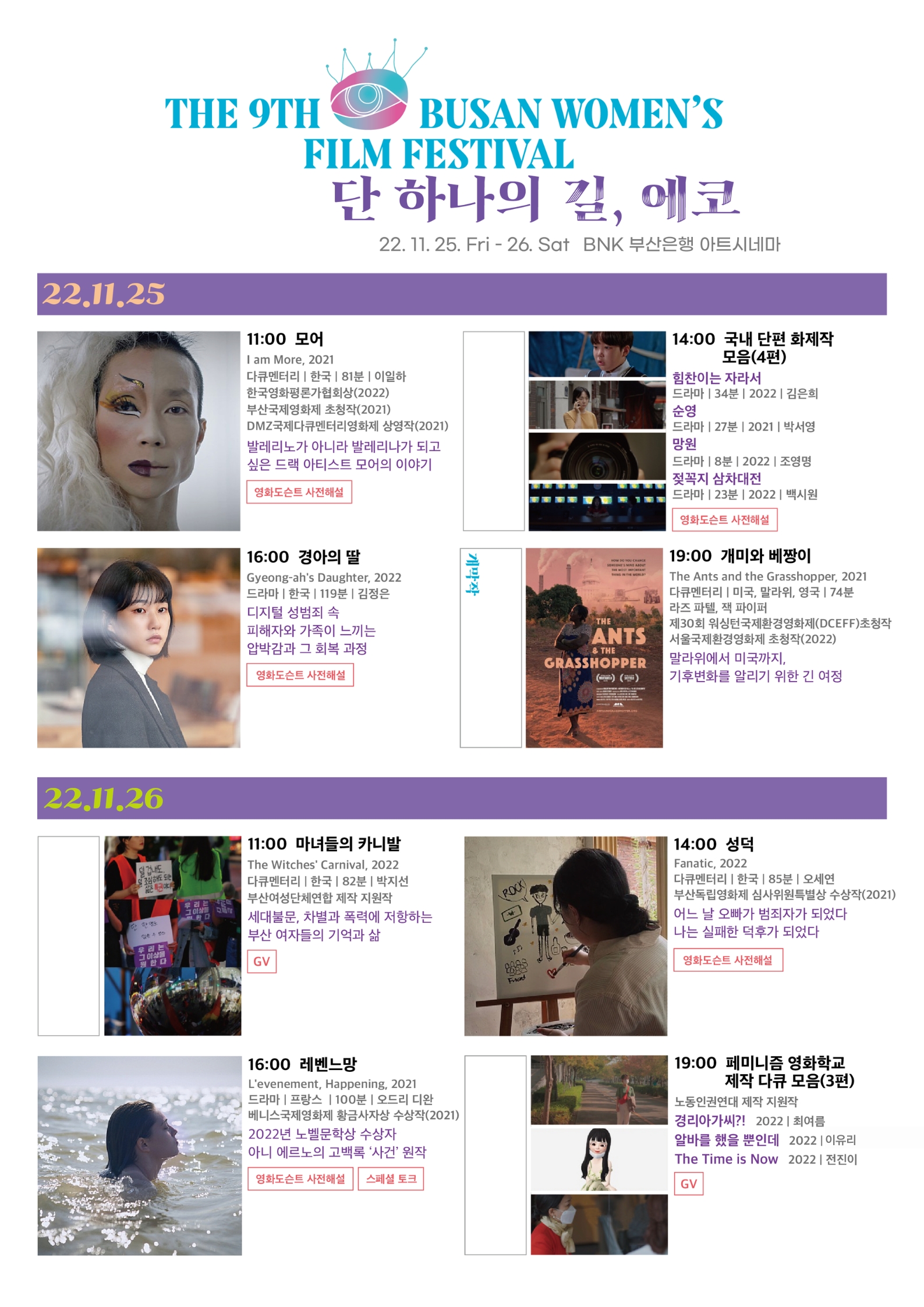
9th Busan Women’s Film Festival to be Held This Friday and Saturday

Estimated reading time: 2 minutes.

Curiously unconcerned about consulting with me first (I know, right?), the organizers of the Busan Women’s Film Festival scheduled this year’s event to open on the day of my divorce hearing.

This somewhat complicates my own attendance. But don’t let that stop you!

Obviously if your Korean is good, then you’re spoilt for choice. As for non-Korean speakers though, unfortunately I’ve yet to hear if any of the Korean films will have English (or even hangul) subtitles available, and frankly doubt there will be. (Update: The organizers have confirmed only the two foreign films will have subtitles.)

However, there is the English-language The Ants and the Grasshopper screening on Friday night, and the French-language L’événement on Saturday afternoon. With translation apps or plugins, reserving tickets for either and arranging the bank transfers seem pretty straightforward.

So what are you waiting for? ;)

If you reside in South Korea, you can donate via wire transfer: Turnbull James Edward (Kookmin Bank/국민은행, 563401-01-214324)

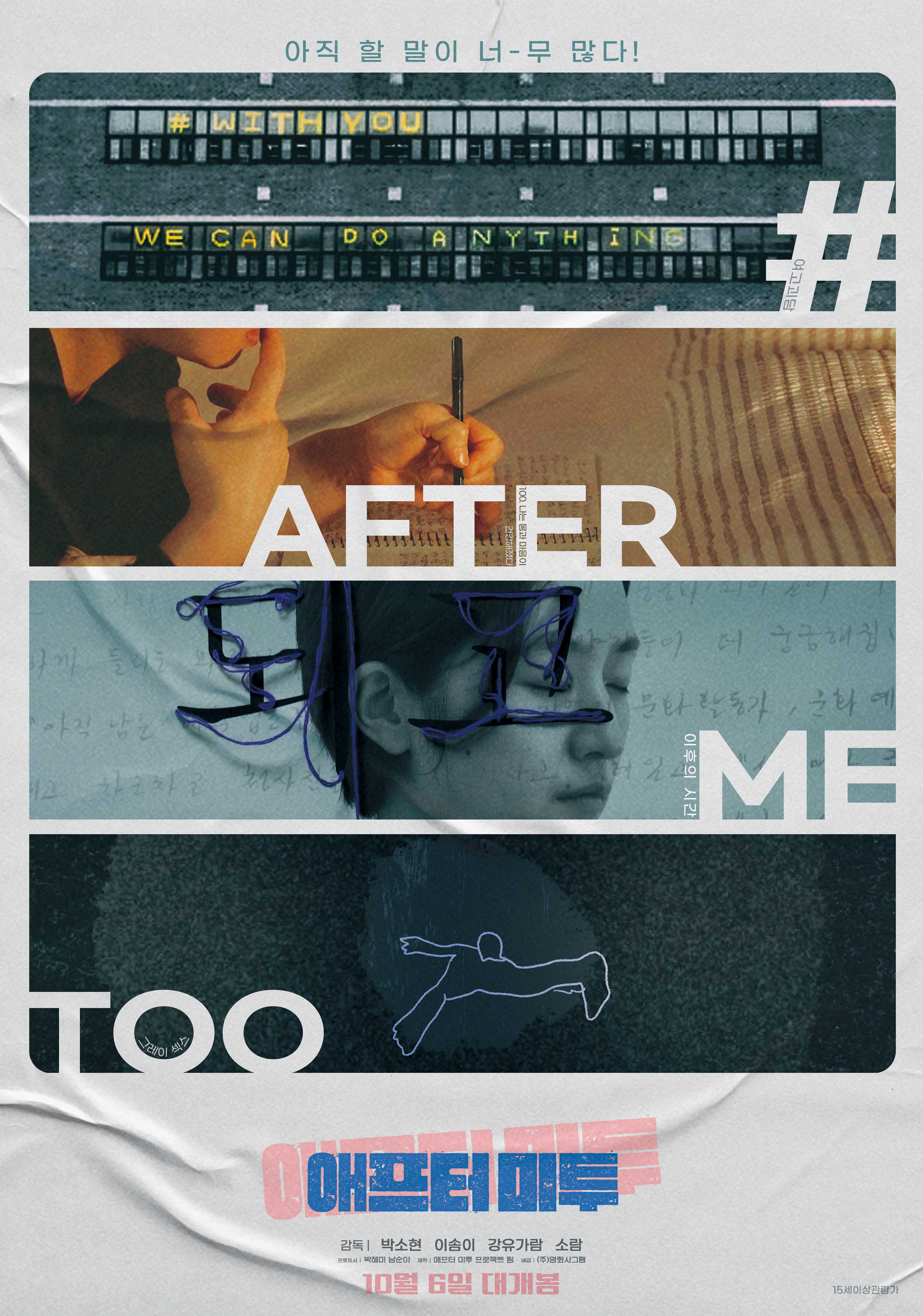
If You Understand Korean, Please Don’t Miss Out: “After Me Too” (애프터 미투, 2021) is Screening October 6-9!

Estimated reading time: 3 minutes.

The clincher:

가장 도발적인 작품은 소람 감독의 ‘그레이 섹스’다. 흑백으로 구분할 수 없는 회색지대처럼 성폭력은 아니지만 그렇다고 즐거운 섹스도 아닌 성 경험을 말한다. 여성의 성적 욕망 자체에 조명을 비추는 작품이기도 하다. 내가 무엇을 원하는지 정확히 알아야, 피해 아니면 가해라는 이분법의 언어를 벗어나 자신이 느끼는 혼란과 모호함의 정체를 붙들 수 있다고 말하는 듯 하다. ‘미투’ 운동에 대한 다큐멘터리라기보단 말 그대로 ‘미투 그 이후’, 새로운 장으로 넘어가기 위한 고민이다. 네 작품 중 가장 마지막으로 배치됐지만, 매끈한 결론 대신 오히려 생각할 거리를 안고 극장을 나서게 한다.

“The most provocative [of the four mini-documentaries] is director Soram’s Grey Sex. It refers to sexual experiences that can be considered to be in a grey area—not outright sexual assault, but not exactly pleasurable, enjoyable sex either. It is also a work that shines on a light on the nature of women’s sexual desire itself. It seems to be saying that if you know exactly what you want, you can break free of the binary, dichotomous language of victim and aggressor, thereby taking control of and overcoming any confusion and ambiguity you may feel. Rather than a documentary about the ‘Me Too’ movement per se [like the previous mini-documentaries], it’s literally ‘After #MeToo,’ illuminating a path on how to move on to a new chapter. By being placed last of the four, rather than providing a smooth conclusion to the documentary as a whole, it give viewers something to think about as they leave the theater.”

See here for more information about this documentary as a whole, or these two trailers:

Not going to lie, I’m expecting a few curious looks when I attend myself later this week. Will I be the only non-Korean person in the theater? The only man?*

What if that curiosity leads to—horror of horrors—someone actually striking up a conversation afterwards, forcing me to brush off my rusty spoken Korean skills as I explain why I came?

The peculiarities of my glorious visage aside, it would seem odd I was there. After all, my job is actually almost entirely devoid of office politics, because of reasons. True, there’s interacting with my young Korean students, which I admit will indeed always be overshadowed by my privilege of being a middle-aged cishet white man, not to mention the power over them which comes with conferring grades. Yet if you really knew anything my utterly lowly job, you’d laugh at the notion that such power was sufficient to seriously consider abusing it.

(Update—In hindsight, I realize my privilege in being a middle-aged cishet white man may have clouded my judgement about the lack of office politics. Sigh.)

Then there’s dating (etc.), which I’ve recently become painfully aware I haven’t pursued in nearly 22 years. Those few genuine offers I’ve received in all that time, that I like to pretend weren’t entirely just wishful thinking on my part (but do know I always turned down with nothing but grace and respect), don’t provide much of a foundation to navigate the choppy sexual politics of dating in the 2020s.

Gaining one then, is one good enough reason alone to watch this documentary. As is learning about the subject in general. There’s also simply showing financial (and moral) support for a worthy cause, which not everyone who feels the same way has the privilege to bestow. And finally, there’s reading that paragraph at the start of this post, through which I discovered that one of four mini-documentaries contained within speaks so profoundly to what I’ve read recently about #Metoo in these two excellent books, which I’ll be discussing at a later date:

I completely share your frustrations though, that in Busan at least, Korea’s second-biggest city, in CGV cinemas it will only play for a total of 12 times over 4 days, As in, literally only a single theater, let alone having no subtitles available.** Still, for those of you with the Korean ability and time, I do hope you consider supporting it by attending.

Who knows, maybe I’ll see you in Seomyeon? ;)

*(To my surprise, as I type this there’s only a 56%-44% women to men split among people who’ve pre-purchased tickets at CGV. Finally, this feature of Korean cinema websites actually proved interesting!)

**Update—Actually, it screened for much longer than expected, and did include Korean subtitles. Both of which were great of course, but it still seems odd not to mention the subtitles on the movie’s information page.

If you reside in South Korea, you can donate via wire transfer: Turnbull James Edward (Kookmin Bank/국민은행, 563401-01-214324)

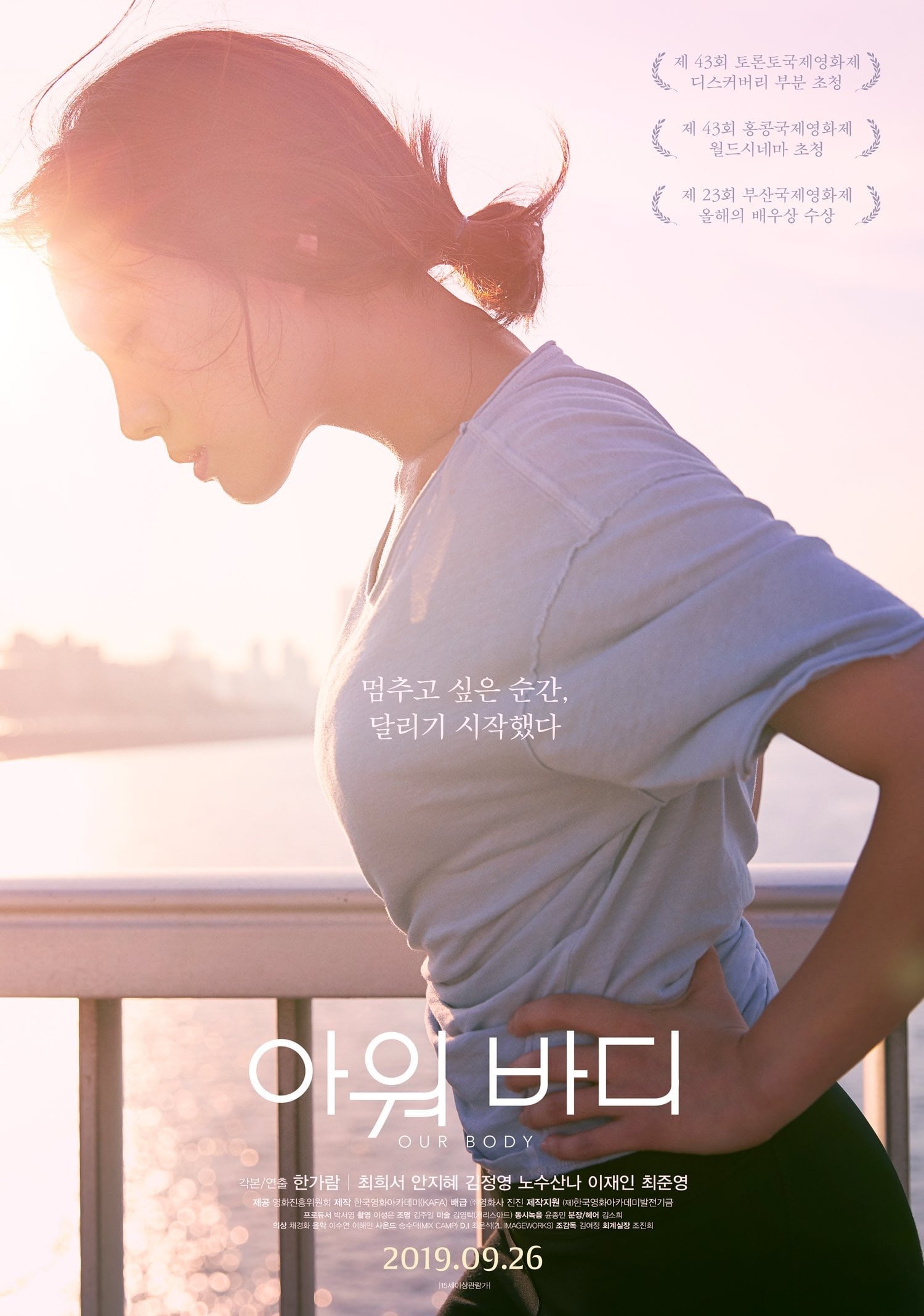
Movie Review: Our Body/아워 바디 (2019)

What’s it like to meet someone who embodies a purpose? How do you cope when that person moves on?

“The moment I wanted to stop, is the moment I started running.” Estimated reading time: 5 minutes. Spoilers for first half of film. Source, all images: Naver Movies.

What main character Yun Ja-yeong (Choi Hee-seo) does stop at the beginning of this film is studying for years alone in her small, dingy apartment for the civil service examinations, the path to securing a rare stable job in Korea. Her goal was—is—depressingly normal, shared by as many as half a million young Koreans at a time.

What makes Ja-yeong different to them is that she’s done nothing else since graduating. That she chose this path despite having attended a prestigious university, which would have made her a shoo-in for most other jobs. But now she’s too old for those at 31, which also means she kept at her goal long after most would have wisely given up. Her inexplicable failure is further compounded by her briefly-seen boyfriend pointing out that she has no life or ambitions outside of studying and passing. (After some unenthusiastic sex, he leaves her for precisely this reason. She seems surprised—already we’re not.) Even her fateful decision not to take the latest round of exams is taken more out of apathy and resignation than resolve about what to do next.

But when the enormity of having wasted her entire adult life does hit her, it hits hard. She collapses in tears in a local park, the cheap convenience store food she lives off tumbling down the steps.

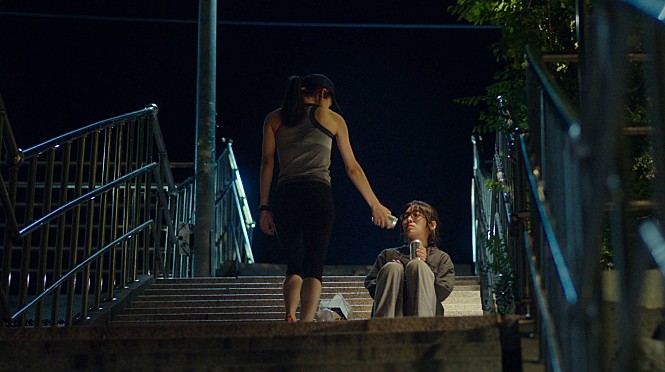
Then as if in a vision, the figure of jogger Gang Hyeon-ju (Ahn Ji-hye) suddenly materializes to hand her dropped items back to her, before vanishing out of her life again just as quickly. Looking poised, confident, athletic, and driven in her expensive athleisure wear, she is everything Ja-yeong is not.

Drawn like a moth to the flame, over the next few weeks Ja-yeong watches YouTube videos about jogging and struggles to put them into practice, shuffling and wheezing around a school track in old sneakers and clothes, all for the sake of a chance to meet Hyeon-ju again. She must also get a job—it’s implied that her mother (a much too young for the role Kim Jeong-yeong) has been paying all her rent and living expenses all this time, but, bitterly disappointed with Ja-yeong’s decision, may not do so indefinitely.

Finding the job search difficult because of Korea’s blatant ageism however, middle-school friend Min-ji (Noh Susanna) takes pity on Ja-yeong and manages to get her a basic, entry-level admin job in the company she works at. Yet she’s awkward there, unable to relate to her much younger coworkers, nor sharing their ambition. You sense that her time there will be short.

Then she does find Hyeon-ju. Soon, Hyeon-ju’s brought her into her large jogging club, then later lets her go on group runs with her and two other male members once she’s improved. Yet for all the viewer’s anticipation of their meeting again, the development of their relationship is glossed over, the focus going on Ja-yeong’s ensuing physical and mental transformation instead. Suffice to say, she becomes every bit as confident of herself and proud of her body as Hyeon-ju. This reflects in her job too, where she realizes the opportunities that are open to her, and even plans on a career.

Yet still her mentor remains frustratingly private. Only after running together for months does Ja-yeong even learn that she works in the publishing industry, and is a fledgling author.

That admission does presage a greater level of intimacy to follow, with more sudden phone calls from Hyeon-ju for personal midnight and sunrise runs together, and invites to drink at her place. In the first, after pointedly asking Ja-yeong what her sexual fantasies are, a very drunk Hyeon-ju strips to her underwear due to the heat. It sounds cliched, and is, but despite yourself you also yearn for them to begin a sexual relationship then—not only because of the camera’s focus on their bodies throughout this deeply sensual film, which makes it feel somewhat inevitable, but also simply for the opportunity to learn anything about Hyeon-ju at all. What makes her tick? What is she getting out of their relationship? What made her take Ja-yeong under her wing, a seeming basket-case who chased after her literally bawling her eyes out the second time she saw her, a complete stranger?

It doesn’t happen. Nor in the next visit, when Ja-young, concerned she’s missing their group runs and not answering her phone, waits outside her door until Hyeon-ju stumbles home drunk. Ja-young knows the reason is because her novel was rejected by a publisher, but doesn’t reveal this. Then after more drinks together inside, Hyeon-ju, in a rare moment of vulnerability, asks if she wants to read it—but Ja-yeong has already passed out.

Two minutes later of screentime later, Hyeon-ju’s dead, hit offscreen by a car during their next run together. It’s strongly implied she stepped in front of it deliberately.

Believe me, I debated over whether to reveal that spoiler.

I plead that after her death, exactly halfway in, Our Body feels like a different film entirely, impossible to discuss further without mentioning the circumstances that precipitated the change. For in that second half, the focus moves to her job, where Ja-young must deal with the conflicting demands of her grief, office politics, and her mother’s and friend’s expectations. Suddenly, she is every young Korean woman, chafing at her assigned place in a deeply hierarchical, status-obsessed, and sexist society.

Watch the film primarily for that last element, and you’ll be rewarded; I’ll wrap up my brief review here for so as not to spoil it.

But do not necessarily expect to be able to answer the question many other reviewers raise, of if Ja-young wants to be Hyeon-ju, be with Hyeon-ju, or both.

If forced, I’d argue the former. Primarily, because despite her growing confidence, Ja-yeong never initiates contact beyond that desperate chase at the beginning. Indeed, perhaps because Hyeon-ju comes across as somewhat of a ghostlike figure throughout, aloof and distant to the end, never giving Ja-young much to grasp on to with which to develop any potential platonic or romantic desire. Yet being the intense focus of the main character for all that, for this reason the underdevelopment of Hyeon-ju’s own story is my main frustration with this otherwise softly subtle, thoughtful film. So too that of Ja-yeong’s middle-school sister Hwa-yeong (Lee Jae-in), whom you suspect by the film’s end is the only other character who has any real sense of how Ja-yeong has changed and what she’s going through—but those conversations Ja-yeong needs with her never happen.

There are many torrents available; alternatively, it can be watched online with subs at DramaCool. Please tell me your thoughts!

If you reside in South Korea, you can donate via wire transfer: Turnbull James Edward (Kookmin Bank/국민은행, 563401-01-214324)

Related Posts:

Was 21 Year-old Jeon In-hwa *Forced* to Appear on TV in a Swimsuit?

The #MeToo era may be the first time that older models and actors have ever been able to open up about their own experiences. When they do, the media should listen.

Estimated reading time: 5 minutes. Source: YouTube.

Sometimes you have to state the obvious to show just how absurd and unfair an everyday situation is.

One such is the constant stream of movie posters featuring women with no heads. So, comedian Marcia Belsky countered that with the ‘Headless Women Of Hollywood’ project, pointing out that heads are “first and foremost the thinking part of the human body, where our motivations and feelings are located.” It naturally follows that the headless images of women “we are bombarded with on a daily basis, tell us persistently that [their] thoughts, feelings and personal agency either don’t exist or are of no interest. Further, facial features are the way we recognize other people. It’s the face that makes us individuals. That too is taken away.”

Source: Extreme Movie (left, right).

Smiling faces then, and the consent implied within, seem obvious counters to charges of objectification. Again, it naturally follows that the world would be a better place if everyone bore that in mind in their production and consumption of popular culture.

Yet ultimately they can only be a guide too. And one which often falls under the weight of its numerous exceptions.

The MV for Spring Girls by Sunwoo Jung-a is replete with headless, ostensibly objectifying imagery. Yet it remains “both feminist and as sexy as hell.” Source: YouTube.

I’ve covered many of those exceptions elsewhere, as well as US philosopher and law and ethics professor Martha Nussbaum’s argument for necessary distinctions between ‘positive’ and ‘negative objectification.’ And yet another is the reality that actors’ and models’ smiles are often plastic, belying their unpleasant experiences with the photoshoots themselves.

No-one reading this would suppose otherwise. But again, it’s sometimes necessary to be reminded of the obvious. Because without the giveaway of the title, no-one would have ever suspected there’d been anything untoward about the following, utterly innocuous-looking commercial:

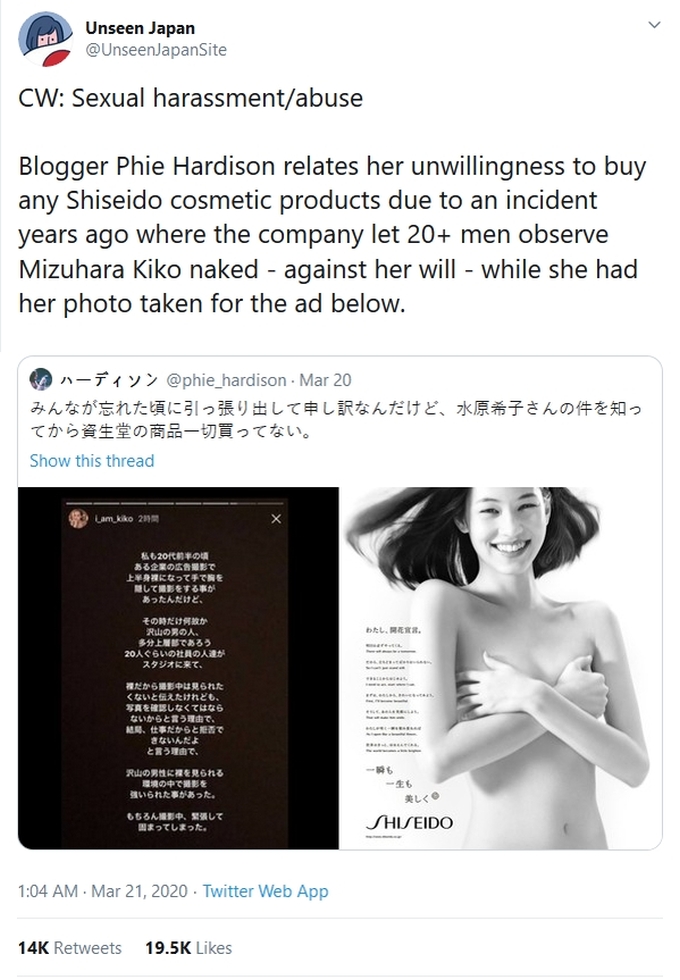
Featuring now well-known drama star Jeon In-hwa (54), it was her first for Julia Cosmetics’ ‘two-way cake,’ way back when she was 21. I only read about it at all, because first, a few days earlier I’d learned what happened to then 22 year-old Japanese actor and model Kiko Mizuhara in 2013:

Source: @UnseenJapanSite

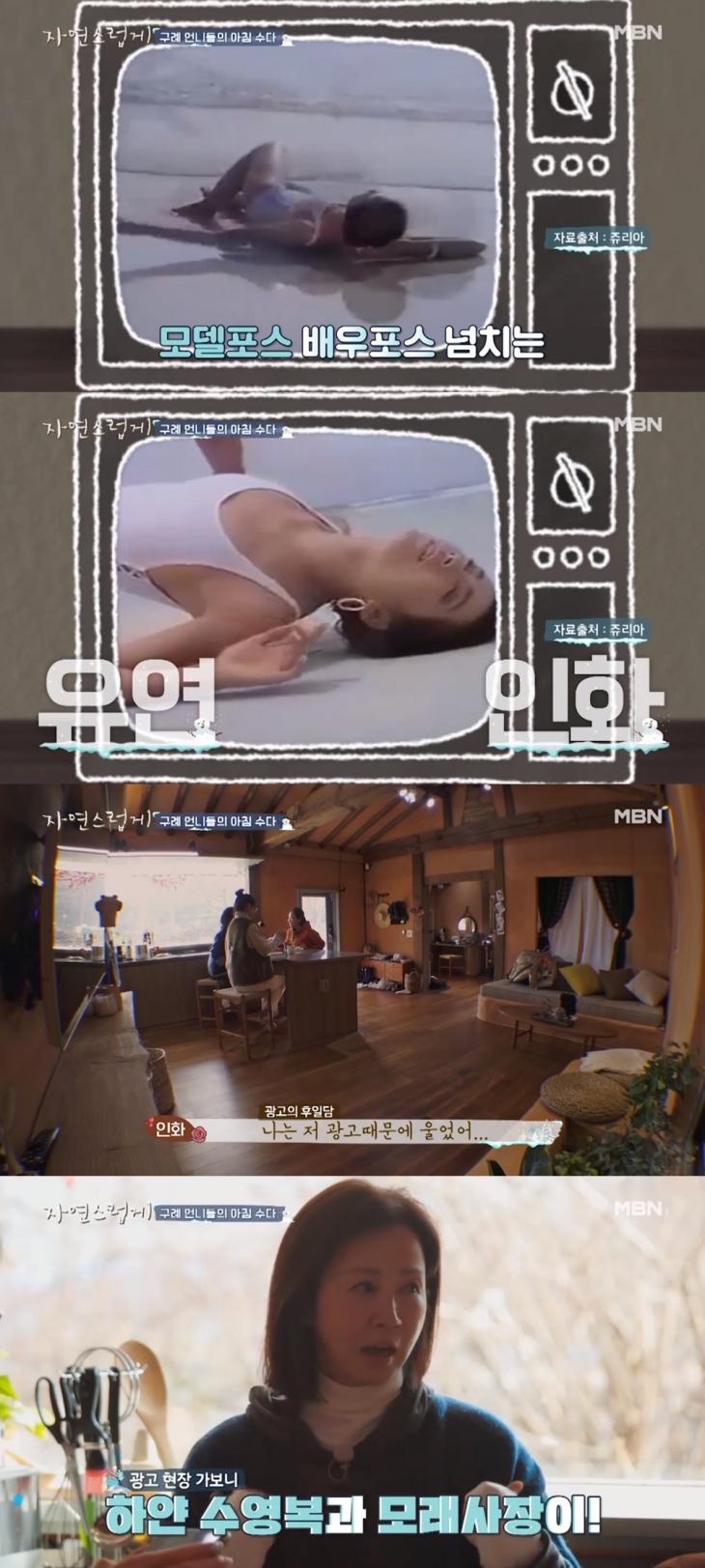
And next, only because that prompted a double-take when I stumbled across the following segment of the January 20, 2020 episode of Naturally, in which Jeon In-hwa explains her own similar negative experience with that commercial, when she was about the same age:

Source: YouTube.

Specifically, from the 1:00 mark, Jeon In-hwa, Han Ji-hye, and So Yoo-jin begin talking about the former’s commercials in her youth:

And from 1:20, her issues with the one of her wearing a swimsuit (my emphases):

지난 20일 방송된 MBN ‘자연스럽게’에는 전인화가 출연해 처음이자 마지막 수영복 차림 광고에 대한 이야기를 언급했다.

…전인화는 “저 광고 때문에 울었다”며 “그 때는 절대 방송에서 파인 옷이나 수영복을 안 입으려고 했는데 현장에 가니 수영복이 준비돼 있었다”고 말했다. 이어 “너무 안 하고 싶어서 울었지만 결국 설득돼서 찍었다”고 덧붙였다.

On [yesterday’s] episode of Naturally, Jeon In-hwa’s ad was mentioned, her first and last appearance in a swimsuit.

…”I cried because of that commercial,” Jeon In-hwa said. “I had absolutely no intention of ever wearing revealing clothes or a swimsuit on TV then. But once we got to the shooting location, [I saw that] a swimsuit had been prepared [for me].” She added “I cried that I really didn’t want to do it, but in the end I was persuaded to, and the shooting went ahead.”

Jeong So-yeong, MoneyS, 21/01/2020.

All over in a few seconds, I admit I lay myself open to charges that I’m blowing things out of proportion. My title—maybe a little clickbaity. Jeon In-hwa doesn’t seem particularly wrought over the memory. She humorously—but explicitly—doesn’t want to talk about it (much) either. And the potential downer is quickly passed over by her costars.

“Persuasion” potentially covers a wide range of sins too, but doesn’t automatically mean “coercion.” What point then, is there in dwelling further on a young, inexperienced actor and model overcoming their nerves 34 years ago?

Alternatively, even if something more sinister did occur, there would be little possibility of legal recourse after all this time. Moreover, Korea has draconian libel and defamation laws, which are regularly used to silence sexual harassment and rape victims—and both Julia Cosmetics and Korea’s largest advertising agency Cheil Worldwide are very much still around.

I would tend to agree with letting it go then, if Jeon had gone on to do more commercials in swimsuits and/or revealing clothes. But she didn’t. For a young, attractive female model and actor destined to become a huge drama star, ultimately with 24 more years of endorsement deals ahead of her, that avoidance borders on remarkable.

Unless her first experience was genuinely traumatic?

Jeon In-hwa in 2016, reminiscing about being a reporter at 20 before she got her break as an actor and model. Source: Seoul Economic Daily.

The possibility means she at least deserves to be (gently) asked what happened in 1986 exactly. Yet not a single media outlet has followed up on her unburdening. Believe me, I’ve looked.

Yes, legal issues remain a concern. But if it’s not possible to talk about her experience in the #MeToo era, then when?

Without asking the questions, her costars, the producers of Naturally, and/or the media missed a golden opportunity. At the very least, for encouraging others to come forward, and for fostering a small moment of solidarity with different generations of victims.

Instead, their collective nonchalance perpetuates the absurdity and unfairness of another everyday occurrence. That crying your eyes out and then being forced to smile as you wear revealing clothes in front of strangers? It’s just what women have always needed to do, and always will need to do to secure that modelling gig, right? It’s certainly not something newsworthy.

I’m just saying I think maybe it should be.

What do you think?

If you reside in South Korea, you can donate via wire transfer: Turnbull James Edward (Kookmin Bank/국민은행, 563401-01-214324)

I’m Ready to Pay for Korean Feminist Films!

Estimated reading time: 2 minutes. Image source: MediaUs

And have started doing so via the newly-launched streaming service Purplay (Twitter, Facebook), which focuses on short films about Korean gender issues and those by and about Korean women.

Alas, you’re going to need considerable Korean skills to enjoy the service. There are no Korean or foreign subtitles available, and just to pay 1500 won (US$1.28) for 72 hours’ access to one film took my long suffering wife and me about 45 minutes of navigating Korea’s kafkaesque internet payment systems, by which stage we were considering simply strapping some coins to a carrier pigeon instead.

Those Korea-wide problems are no fault of the site though. And, now that everything’s installed, a simple password should suffice for future payments.

In the meantime, my first film choice of 은하비디오 below is getting me all nostalgic over the video store I used to visit in my first year in Korea in Jinju in 2000. I’m also especially enjoying the warm buzz that comes with encouraging the creation of content I like by actually paying for it, rather than just complaining about what I don’t like as per usual. I recommend it!

If you reside in South Korea, you can donate via wire transfer: Turnbull James Edward (Kookmin Bank/국민은행, 563401-01-214324)

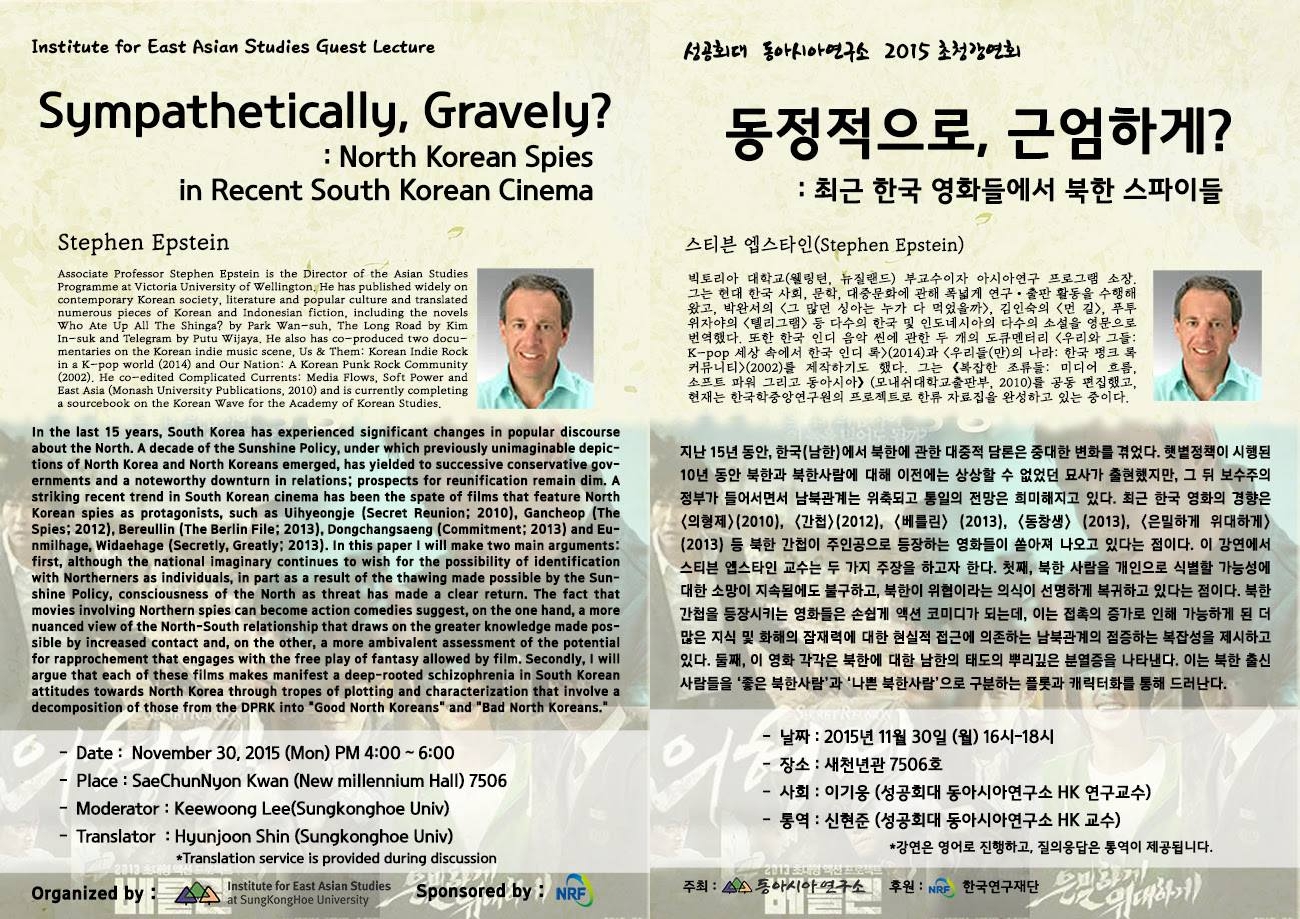
Talk: Sympathetically, Gravely? North Korean Spies in Recent South Korean Cinema (SungKongHoe University, Monday 4pm)
North Korean Spies in Recent South Korean Cinema -- Stephen EpsteinSorry for the short notice. Please check out the posters for the details (click to enlarge).

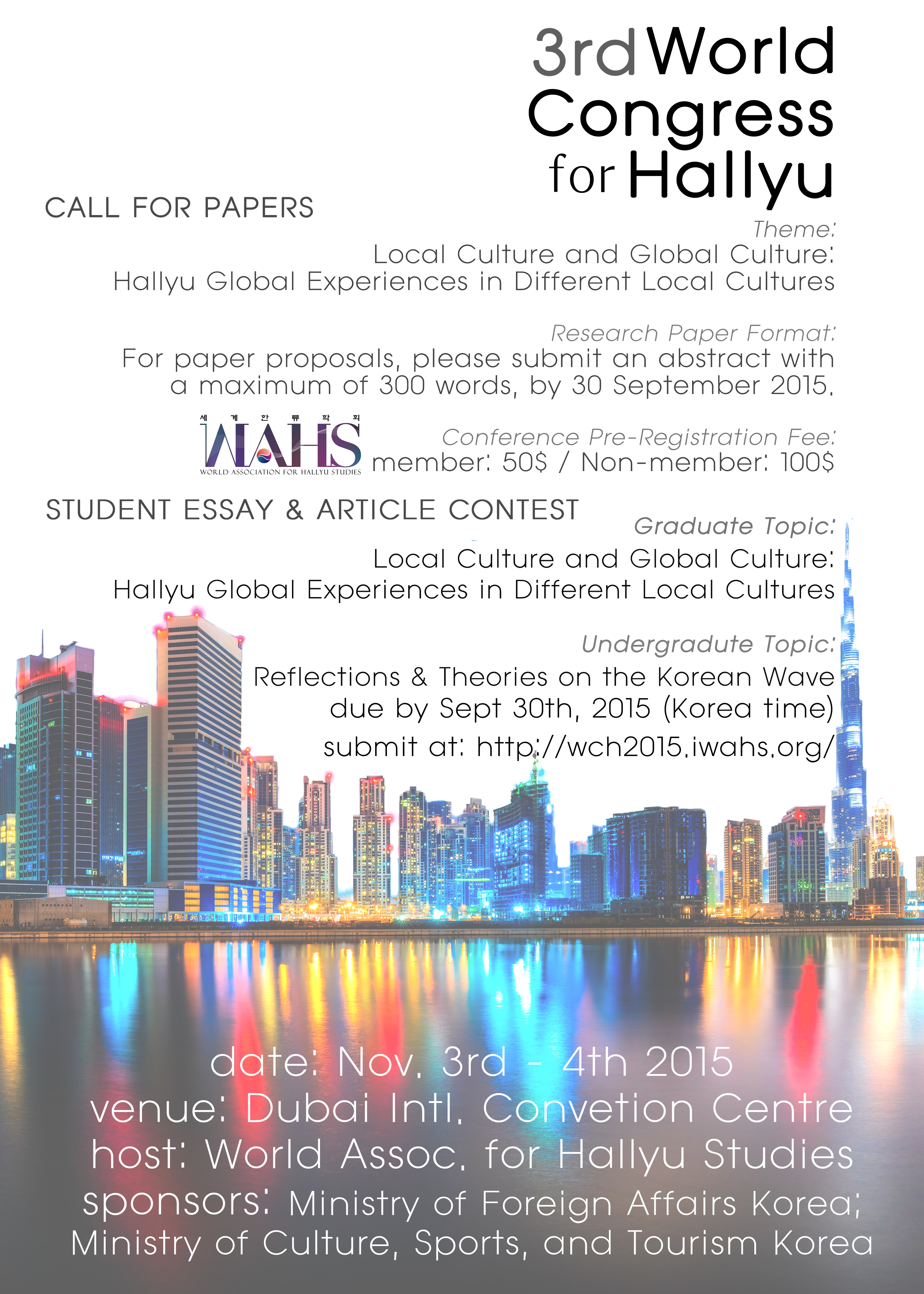
Call for Papers: The 3rd World Congress for Hallyu

I’ve been asked to pass on the following:

wahs call for papers and contest flyerFrom the accompanying email (slightly edited by me):

…I am emailing on behalf of WAHS to inform you of an upcoming international conference in Dubai on Hallyu Studies. The conference, World Congress on Hallyu, is the third of its kind and aims to bring together academics, students, and organizations who have an interest in the phenomenon of the Korean wave, known as Hallyu. Currently, we have branches of research in the Middle East, Southeast Asia, North America, and Europe.

I have a attached a flyer for an official “call for papers” for undergraduate and graduate students. I hope that you can pass it along to students who would be interested in submitting to the conference or contest. The undergraduate student essay winners are eligible to win a cash prize for their research, while graduate students are eligible for free airfare and accommodation to the conference to present their research. Graduate students seriously interested in attending are urged to sign up for a WAHS membership to receive a discount conference entrance fee and possible stipends for our future spring conference.

More information can be found at the official conference website, via the Facebook page, or via Twitter.

Meanwhile, apologies that a bad flu and the start of the new semester has delayed the follow-up to my last post, and I’ll try to have it up soon :)

Korean Sociological Image #90: Watch Out For Those Italian Men…

Two back-to-back YouTube commercials for SK Telecom’s “T Roaming” Service, which have a blatant double standard:

In the first, actor Son Ho-jun freaks out when his girlfriend tells him she’s going on an overseas trip with her old college friends. First, he asks if any men are coming with her, but relaxes when she reminds him that she went to a women’s college. Only to freak out again when he learns she’s going to Italy:

T Roaming Italian MenMy immediate reaction? Whatever your gender or sexuality, if your partner can’t trust you not to bang your friends or the natives when you’re more than a few days away from each other, then in my book that’s your excuse to move on and do precisely that.

But I’ll grant that it’s just a commercial, and that Son Ho-jun’s reactions are exaggerated for comedic effect. Also, provided you’re not too clingy, there’s nothing wrong at all with staying in touch while your partner’s away.

The double-standard lies in the huge contrast with the second commercial, which shows what Ho-jun would need the roaming service for when he’s overseas: access to a translation app, without which he doesn’t realize the local women are throwing themselves at him.

T Roaming French WomanOr, once he does realize that “With T Roaming, [he] can translate, take pictures, and do anything [he likes]”, that he can set up his own harem:

Foreign Women T RoamingAgain, it’s innocuous in itself, and I’m all for taking advantage of technology to make sure people don’t miss out on any potential liaisons. Given the selling point of the first commercial though, it’s a bizarre choice of follow-up.

Instead, I would have plumped for a more provocative, much more memorable version with his girlfriend and foreign men, showing Ho-jun exactly what she thinks of insecure boyfriends who want to keep electronic tabs on her.

Or, if that was indeed deemed too provocative, then simply two more commercials with the sexes reversed. As the only extra costs would have been the additional male actors and the extra shooting time, then you really have to wonder why not.

Because without those versions, these ones not only seem entirely aimed at men, but it’s very difficult not to contrast his Korean girlfriend’s childishness in the first—and lack of an angry response to his question about her male friends—with the boldness and confidence of the foreign women in the second. It’s also difficult not to place the commercials in the Korean media’s long history of depicting foreign women as sexual conquests, but foreign men as something to defend Korean women against. (Although this has been improving in recent years.)

What do you think?

(For more posts in the Korean Sociological Image Series, see here)

Korean Sociological Image #84: What’s that old, fat, bald, white guy doing here?

S Diary Busan Play Audience(Sources, edited: Interpark, Miscellaneous Maddness)

GLASGOW (n.): The feeling of infinite sadness engendered when walking through a place filled with happy people fifteen years younger than yourself.

The Meaning of Liff, Douglas Adams and John Lloyd (1983)

Ever been tempted to watch S Diary, because of its eye-catching posters? Don’t. It’s decidedly less raunchy than it looks, even by 2004 standards, and it’s strangely serious for a romantic comedy. Instead, watch it for what it is: “a simple exploration of a woman’s past romantic relationships and how they influenced her,” and for the insights — and confidence in future relationships — that can be gained from doing so. (Also, for Kim Sun-a‘s suburb acting.)

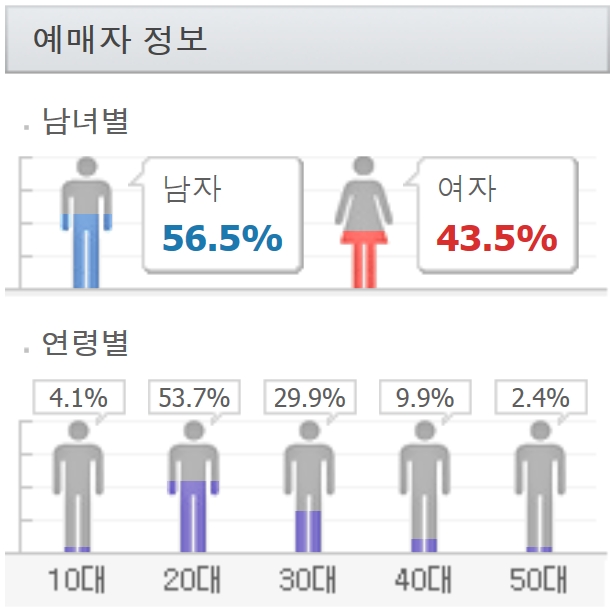
Customer Demographics BusanAs my first Korean play then, and the first night out my wife and I will have had together since we had kids, we could do much worse. But we noticed something strange when we went to check the dates and times: scroll down the page on the ticketing site, and you’ll notice an age and sex breakdown of those customers who’ve already bought tickets online, as seen on the right.

This one is for the Busan play; interestingly, the sex ratio is reversed for the Seoul one (click here if you are reading this after its run has ended). Also, the data may not be entirely accurate: when my wife does buy two tickets, will those be counted as two 35 year-old women in the data (which would make no sense), or will she be asked to—possibly even required to—provide more information about the other attendee?

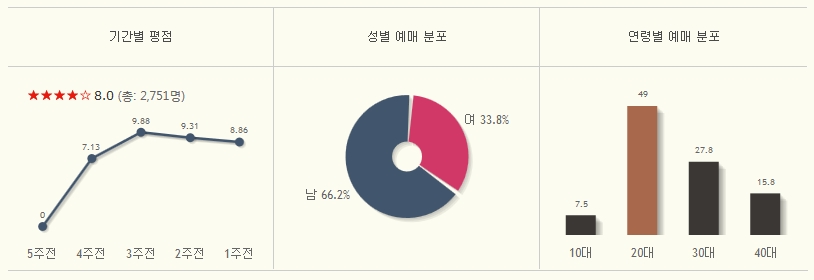
We’ll let you know, once my sister-in-law tells us when she’s available to babysit(!). (Update: All booked. My wife wasn’t asked for information about the second ticket holder.) Either way, it turns out that providing these statistics may be standard for online booking sites in Korea, as indicated by a similar breakdown for online tickets to the The Fault in Our Stars movie on the CGV website. It gives the same results regardless of the cinema chosen, so I presume that they’re nationwide figures (again interestingly, the male to female ratio is the exact opposite of what you’d expect for a romance movie):

The Fault in Our Stars -- Customer Demographics(Source: CGV)

I’d appreciate it if readers can send any more examples, and/or let me know if they’re also available when booking tickets online in other countries. If not, and they turn out to be unique to Korea and/or (I suspect) the East Asian region, what significance do you think that has? Does it speak to any wider feature of Korean society or culture?

Of course, Koreans are not alone in tending to avoid events where they’re likely to be significantly older or younger than the majority of other participants or audience members. The main question is, why do Korean companies make this information available to them? Is it simply testament to the importance of age in Korean relationships? Is it because more people would go if they felt the audience matched their own demographic, than be dissuaded because it didn’t? Or it is just useful extra information given on a whim, which shouldn’t be overanalyzed? Please let me know your thoughts.

(For more posts in the Korean Sociological Image series, see here.)

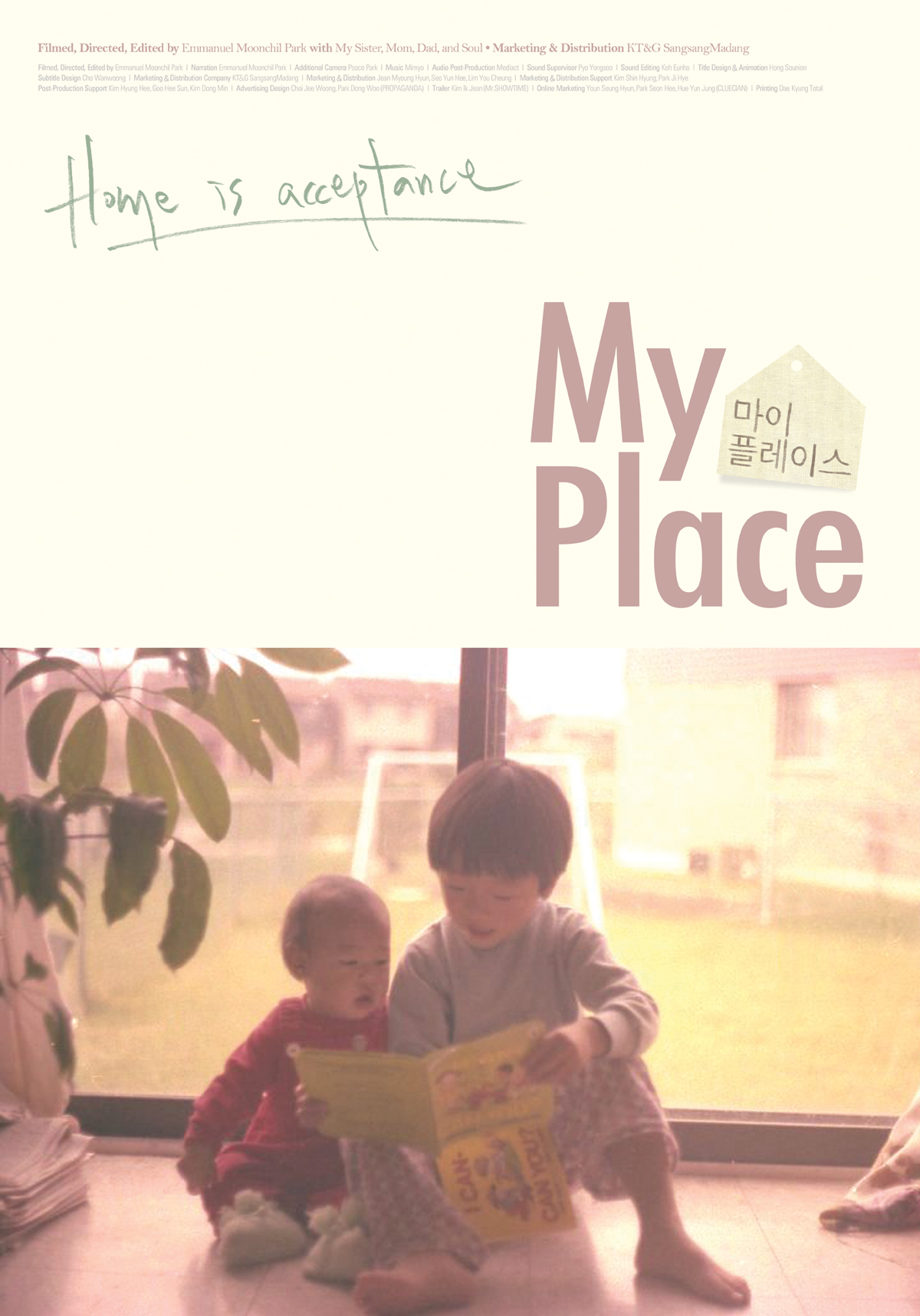
Finding a place to call your own – My Place

My Place Eng Poster

I’ve been asked to pass on the following:

[Press statement]

Finding a place to call your own – My Place

Foreigners in Korea often find themselves caught between cultures. Whether you are adjusting to your new English teaching job, working with Korean colleagues, in a relationship with a Korean partner, or even just travelling as a tourist, you are sometimes baffled, at times intrigued, and certainly trying to navigate through the differences you encounter. For people who find themselves in a transnational context, the documentary <My Place> will speak volumes.

The heart-felt film, <My Place>, depicts an intimate portrait of the director’s own family struggling to overcome past wounds of reverse migration from Canada to Korea. Family members, each in a different way, had to deal with the hurdles of societal norms, a repressive education system, and gender inequality dealt to them by the Korean society. This illuminating film explores clashes between Western and Eastern cultures, traditional values versus the contemporary, and broader themes of societal normalcy, identity, and belonging.

The film begins when the director’s little sister decides to become an unwed single mom. The little sister decides to raise the child in Canada as she never felt welcome in her parent’s homeland, South Korea. As the film progresses, the lives of parents, intertwined with Korea’s modern history is discovered, while family members try to come together to face the challenges of raising a new baby outside of the traditional family form. While following the trajectories of family members, constantly on the move in search of their own place, the film seemingly concludes that ‘My place’ isn’t so much a spot on the map, but a place that lies in the relationships that one holds close to their heart.

After touring the film festival circuit, while winning numerous awards on its way (among others, Jeonju International Film Festival – Audience Critics’ Prize, Seoul Independent Film Festival – Jury Prize) the film is now preparing for its theatrical release on January 30th. The film has also won the Audience Award, at last year’s Chewsock Film Festival – as the name implies, a film festival for expats bored during the Chuseok holiday in Korea – proving that the honesty of this deeply personal documentary and universal theme of yearning for a place in this world, transcends language barriers and cultural differences, while its subtle commentary on the differences between Eastern and Western cultures seem to speak to the experiences of expats in Korea.

To cater to the needs of foreigners, English subtitles will be provided for all screenings at the KT&G Sangsang Madang Theater in Hongdae district, and Indieplus near Sinsa Station. One other theater in Seoul ― IndieSpace near Gwanghwamun Station ― will also provide English subs for screenings from Jan. 29 to Feb. 1, during the Lunar New Year Holiday(Sulnal).

*KT&G SangsangMadang Cinema (Hongdae) : 02-330-6200 http://www.sangsangmadang.com/cinema/

*INDIEPLUS (Sinsa) : 02-3447-0650 http://www.indieplus.or.kr/jsp2/index.jsp

*INDIESPACE (Gwangwhamoon) : 02-738-0366 http://indiespace.tistory.com/1715

*For more info on Screenings with English subtitles : https://www.facebook.com/AllInKoreanWithEnglishSubsPlease

*More info on film:

https://www.facebook.com/DocumentaryMyPlace (Korean with some English)

https://www.facebook.com/ssmadangcinema (Korean)

https://twitter.com/sangsangfilm (Korean)

A Queer Week in Seoul!

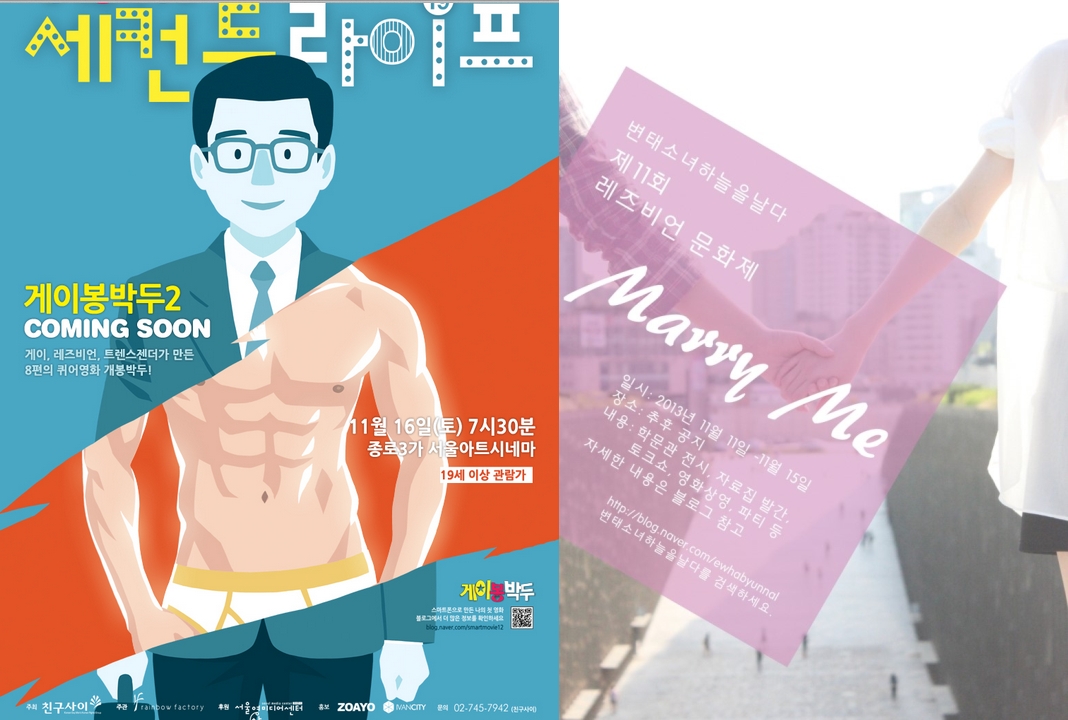
Gay Short Film Festival plus 11th Annual Queer (Lesbian) Culture Festival(Sources: left, right)

Sorry for the late notice, but this week features the both the 11th Annual Queer (Lesbian) Culture Festival and the 2nd Gay Short Film Festival, both in Seoul (I’m unsure if they’re related). See Psyched in S.Korea and The Kimchi Queen respectively for further details.

Update: The Kimchi Queen has expanded upon the information about the Queer (Lesbian) Culture Festival also.

Why the Japanese Don’t Illegally Download Music. Much.

Bodacious Space Pirates(Source)

For all their passion, home-grown fans are not paying enough for K-Pop.

The CD industry is stagnant, and digital music sites are seen as vastly underpriced, with some charging just a few cents a song.

Bernie Cho, head of music distribution label DFSB Kollective, says online music sellers have dropped their prices too low in a bid to compete with pirated music sites….

….With downward pressure on music prices at home, “Many top artists make more money from one week in Japan than they do in one year in Korea.”

(BBC, June 2011)

With many implications for the Korean music industry, and raising many questions about the curious preferential treatment given Korean fans over international ones, I’ve been quoting Bernie ever since. So too Sony Pictures chief Michael Lynton and Paramount Vice Chairman Rob Moore on movies, the latter of whom suggested that cultural differences are the main reason that Koreans illegally download so much more of them than the Japanese:

…governments around the world are subsidizing and promoting the ubiquity of high speed broadband to make their economies more efficient and competitive. With this increase in speed, content will travel that much more easily on the Internet. But without restraints, much of that content will be contraband.

I’ve already seen it happen in South Korea, which has one of the most highly developed broadband networks in the world. But piracy has also become so highly developed there that we and virtually every other studio has recently had to curtail or close down our home entertainment businesses. It’s hard to sell a legal DVD when it can be stolen without any repercussions.

(Michael Lynton, The Telegraph, May 2009; source, below)

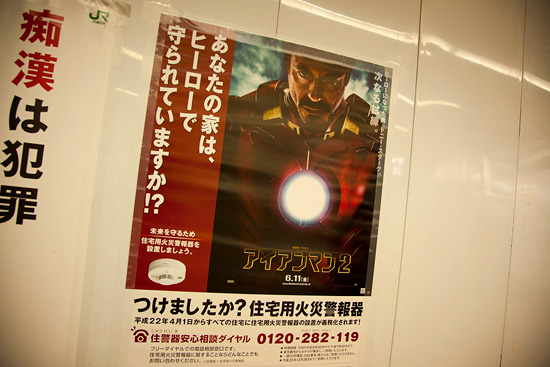
Iron Man 2 Japanese Poster…Paramount is holding back the release of “Iron Man 2” in Japan for several weeks, having little fear about the country being swamped with bootleg copies of the film.

However, when it comes to Korea, it’s a different story. “For better or worse, there are certain countries — notably like Korea — where it’s culturally acceptable to download movies online pretty much right away,” said Moore. “By the third week of a movie’s release, you’re starting to see a large part of the audience who will start consuming the film online. It’s why Korea has almost no home video business anymore.”

(Rob Moore, Los Angeles Times, May 2010; via The Marmot’s Hole)

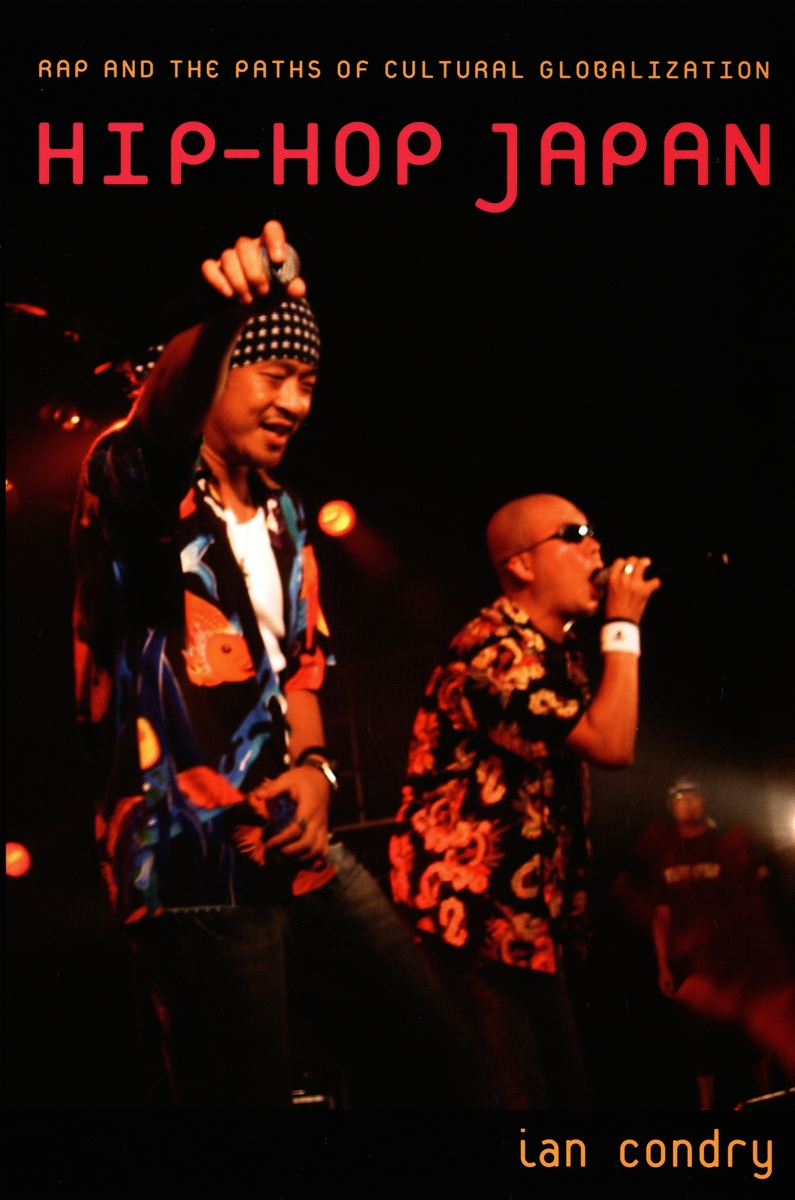
Given Lynton and Moore’s frustrations, readers — and myself — can be forgiven for accepting that culture must have something to do with it, and that this would necessarily apply to music too. However, I’ve just finished reading Ian Condry’s brilliant Hip-Hop Japan: Rap and the Paths of Cultural Globalization (2006), a must-read for all Japanese and — yes — Korean music fans (I’ll explain in a review later this month), who adds two crucial economic and technological reasons that few outsiders to Japan would be aware of:

Ian Condry Hip-Hop Japan(Source)

Two other aspects that distinguish Japan’s music market are rental CD shops and low rates of online piracy. These characteristics further demonstrate that abstract markets do not operate separately from their concrete settings. In Japan, recorded music sale rose steadily during the postwar period, peaked in 1998, and then began a sharp decline that continued through 2004. The start of the decline coincided with the emergence of Napster in 1999, but there are reason to think that online piracy offers only a partial explanation for the decline in sales. As I discuss elsewhere, online piracy is less prevalent in Japan than in the United States. In Japan, most young people access the Internet using cell phones, which as yet tend to have neither broadband connections not substantial hard drives. In addition, ubiquitous CD rental shops make it relatively easy and inexpensive to sample new music without relying on unauthorized downloads. CD prices are high in Japan, generally between ¥2,500 and ¥3000 (US $23-27), but renting a CD is very cheap, generally around ¥300 ($3). The widening availability of CD burners contributes to this “sneaker net” for passing around music and also limits the attractiveness of online file sharing. This suggests that the lack of online piracy arises less from a national respect for copyright than from the combination of a business setting in which rental shops make it easy for consumers to sample music cheaply and a technology environment dominated by Internet-ready cell phones that make downloading over peer-to-peer networks unfeasible.

(pages 190-191; my emphasis)

Written well before smartphones had made their debut, clearly that description is a little dated. Indeed, by 2012, the Recording Industry Association of Japan estimated that only 1 in 10 music downloads were legally purchased, prompting the Japanese government to introduce harsh fines and jail times* for — uniquely — the illegal downloading (rather than the more usual uploading) of content, which in turn provoked an attack on government websites by Anonymous.

However, the Japanese are notorious for stubbornly sticking to outdated technology. Common-sense dictates that looking only at digital downloads would give a very skewed impression of the Japanese music market, which is still the second biggest in the world.

Japan Smartphone(Source)

For just last week, Japan Realtime reported that CD sales are booming:

“The Japanese market is very different from the rest of the world,” said Mr. Minewaki [CEO of Tower Records Japan]…

….While global sales of physical CDs have been plunging under pressure from the digital download market, Japanese CD sales bucked this trend in 2012 with a 9% rise from a year earlier, according to the Recording Industry Association of Japan. Tower Records Japan is majority-owned by Japan’s largest wireless carrier NTT DoCoMo Inc.

Mr. Minewaki said CDs continue to do well in Japan because of legal constraints that curbs rapid discounting, a lag in consumers switching from feature phones to smartphones, and the popularity of rental CD shops where consumers can rent then copy music, a cheaper alternative than buying songs or albums online.

But the compact disc business isn’t completely immune to the marching popularity of digital downloads…

Meanwhile, here in Korea, I don’t think I’ve even touched a CD in the last year. Although I do have hundreds, being 37 years old and all…

How about yourself? Are CD rental stores also still around in Japan?

*Like most articles praising the rapid rise of the Korean digital music market and the supposed success of Korean anti-piracy efforts, this article completely fails to mention how absurdly cheap Korean digital tracks are, as noted by Bernie Cho in the opening quote.

Raising the Dead: The Future of Advertising?

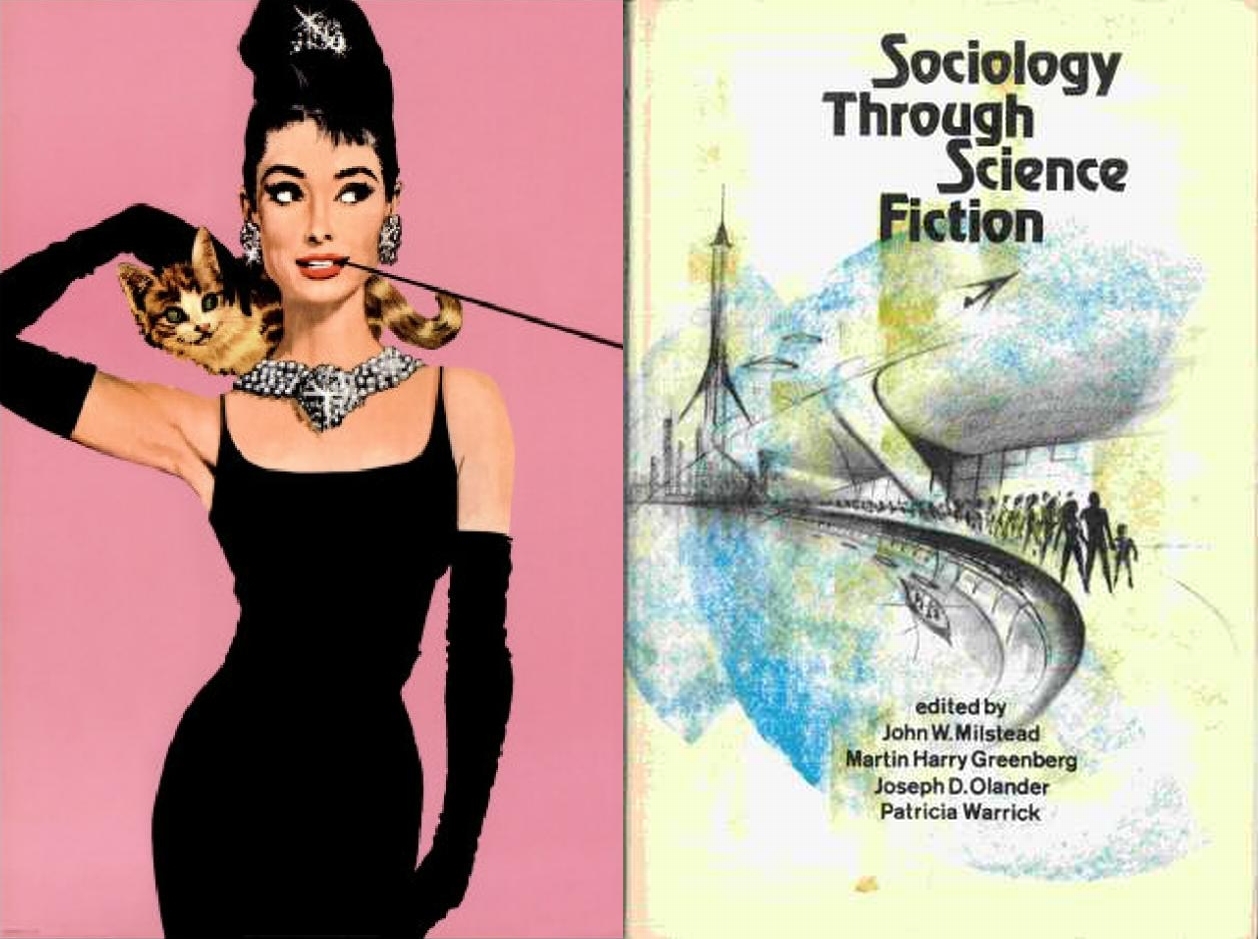
Audrey Hepburn Sociology Through Science Fiction(Sources: left{edited}, right)

Via Phenomenology/Intervention:

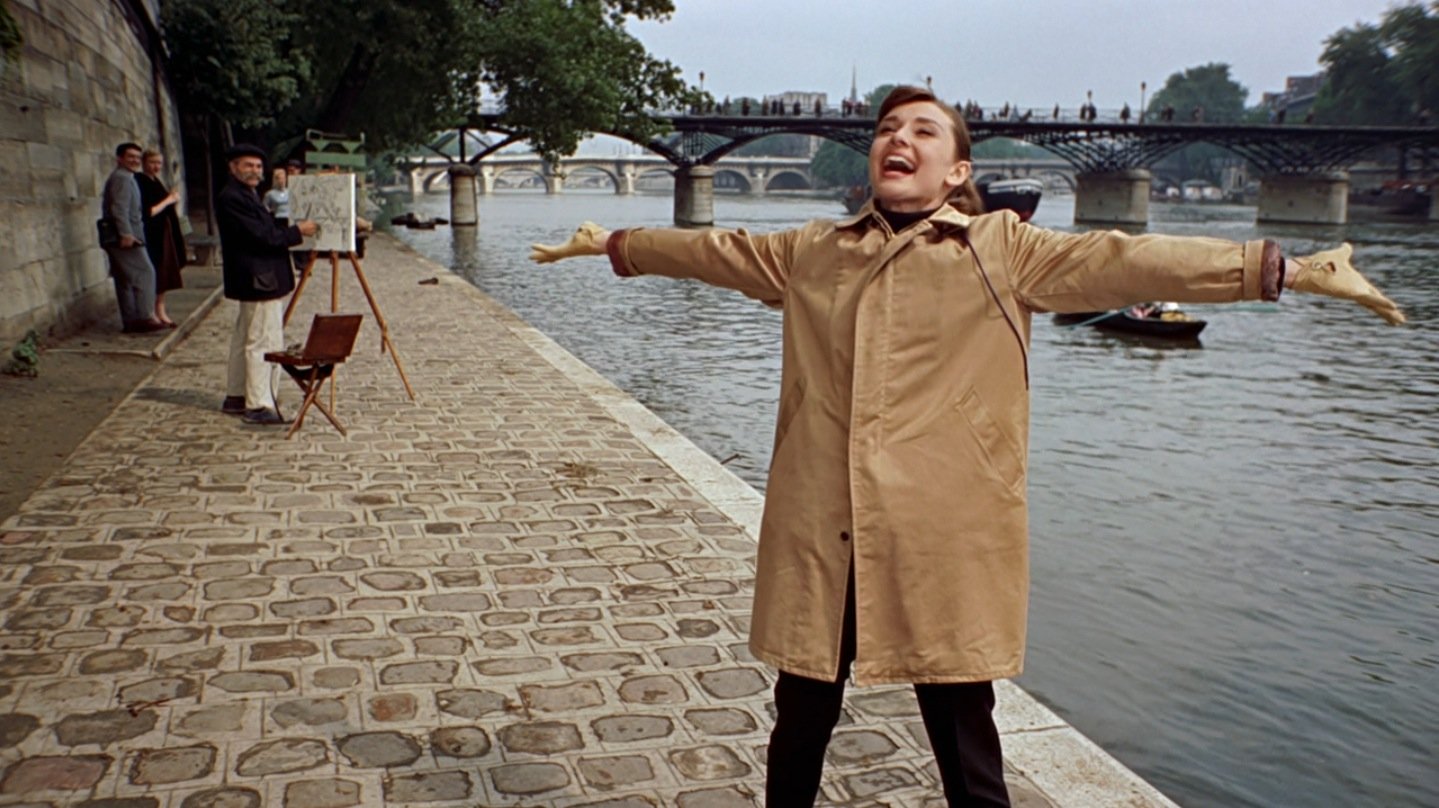
CGI technology has brought the late Audrey Hepburn back to the screen, as she stars in a TV advertisement for the chocolate company, Galaxy. Hepburn’s sons, Sean Ferrer and Luca Dotti, said regarding the project: “Our mother often spoke about her love of chocolate and how it lifted her spirit, so we’re sure she would have been proud of her role as the face of Galaxy.”

It made the author a little queasy, and reminded her(?) of “Pat Metheny’s rant on ‘musical necrophilia,’” which is “the technique of overdubbing on the preexisting tracks of already dead performers.” For those more interested in the likely impact on entertainment and politics as the technology becomes more widely available though, I recommend the 2008 short story “Fenneman’s Mouth” available at the science-fiction podcast Escape Pod, which explores the making of a new Groucho Marx (1890-1977) movie, and then the rewriting of a senator’s comment on television.

Iran Missle Launch PhotoshopCommenter k23 said of it (source, right):

While not too big on the action, it did get me thinking about the plausibility of the story. While I understand the concept of manufactured memories, I think that if we were aware of the technology that could alter videos to that advanced degree, it will spawn a contingent that will publicly question, research, and often discredit every video that is produced. It’s happening right now with still photographically, like when the blogosphere was quick to research and discredit Iran’s missile launch photos.

And DaveNJ:

I love this story from a sci-fi and personal perspective….You’ve got a story where a group of people create a new piece of technology and use it originally for entertainment purposes, but during the course of the story the technology changes the face of politics as we know it…

Against that, Meercat commented that the technology was already very much in use:

Granted, we are led to believe the characters have improved the technology to the point that it appears real, but current real-life animation, sophisticated voice over, etc. does the same thing. These things have been used for several years to sell products, complete films and I would guess even fabricate more than a few factual accounts. A couple of years ago, a product, Coca-cola I think, had a series of advertisements featuring Bing Crosby and other dead celebrities. It was pretty rough, but the concept and execution is there.

Indeed, it is in this sense that one of the first links to this part of the world emerges. For according to Joe Joseph in The Japanese: Strange But Not Strangers (1993), print advertisements of dead celebrities were used there for many decades (pp.112-3; source, right):

James Dead Japanese AdJapan first began hoovering up American film stars in the 1950s, a golden age when America stood for baseball, hamburgers, Hollywood, and everything else that a still poor Japan yearned for. Some of the starts from that golden age are still winking from commercials and hoardings across Japan, even though they died years ago. Irritatingly for the estates of these actors, Japanese law does not oblige Japanese firms to pay royalties for ‘portrait rights’ of dead stars. So James Dean promotes just about everything in Japan from hygienic rubber gloves to high-tech robots. He is infinitely obliging. You only have to ask and he will personally endorse your noodle restaurant or petrol station. Marilyn Monroe’s face also peers out of the unlikeliest posters in the unlikeliest places.

I would be grateful if any readers can tell me if that is still the case, and/or whether they were also used in Korea (I haven’t seen any in the last thirteen years here). Either way, the second link emerges in that given that Korea is a society not just lagging in implementing legislation on advertisers disclosing the use of Photoshop, but arguably one that positively embraces its use, then I fully expect Koreans to be at the forefront of using such technology in the future.

And soon. Recall how quick and easy it already is to do extensive digital manipulation of video — not just images — these days, as demonstrated in the following video (hat tip to maitretya). It takes no great leap to see how dead celebrities could be used instead of living actors:

And that video was from 2010, just after a similar technology was used for a Georgia coffee commercial (see here for a discussion and more examples):

The money shot:

Jessica Gomes Georgia Coffee Photoshop(Sources: left, right)

But while there is definite cause for concern, especially given that the Korean media and advertisers already present physically-impossible, computer-generated body shapes for consumers to aspire to, I shouldn’t deny that there are also benefits to photo and video-manipulation, or that retouching has existed just as long as both technologies themselves. These considerations are well covered in the following short Off Book video (which in turn is further discussed at PetaPixel):

Accordingly, I’m more fascinated than left queasy by the Audrey Hepburn commercial, and particularly enthused by the similarities to an SF story I read just five years ago. For those of you similarly inspired by such a connection, I highly recommend Sociology Through Science Fiction (1974), edited by John Milsted and Martin Greenberg, for further reading if you can ever get a hold of a copy (see a review here), or “Expanding the Sociological Imagination: Teaching Sociology with Speculative Fiction” at The Sociological Cinema for something (much) more recent and accessible.

Funny Face 1957(Source)

Thoughts? Any more examples, or suggestions for further reading?

Update: John from Daejeon provides some great — and really quite old — examples here. In hindsight, the Galaxy commercial only stands out for its technological sophistication, not its concept.

Korean Movie Review #7: My Wife Got Married (아내가 결혼했다; 2008)

My Wife Got Married 2(Source)

Starring: Son Yae-jin (Joo In-Ah), Kim Ju-Hyeok (Noh Deok-Hoon), and Joo Sang-Wook (Han Jae-Kyeong). Written by Song Hye-Jin (original novel by Park Hyun-Wook) and directed by Jeong Yoon-soo.119 minutes.

Before the mid-1990s, very few Korean movies featured a wife leaving an unhappy marriage. Of those that did, either she would ultimately return to her husband, tail between her legs, or she would face an untimely death, so great was the inevitable spiral into destitution and despair.

So, when Kim Tae-kyun (김태균) directed The Adventures of Mrs. Park (박봉곤 가출사건; 1996), who not just successfully pursued her lifelong dreams of becoming a singer, but found new romance with a second husband too, he softened the subversive social message by making the movie into a romantic comedy. But even then, he would later confess to Cine 21 magazine, he was extremely concerned at how audiences might react to such “an unexpected ending”.

Fast forward to 2008, and My Wife Got Married, about a woman who demands 2 husbands, was one of the most popular movies of the year, and even won Son Ye-jin the Blue Dragon Film Award for best actress. Not quite a comedy, and sparking minimal complaint or controversy (although women were careful not to publicly identify too closely with her character), it’s difficult not to see it as a sign of how quickly and irrevocably Korean attitudes had changed in the preceding decade. I’ve projected feminist empowerment onto it ever since.

It’s somewhat ironic then, that it turns out that the movie is *ahem* actually told exclusively from the perspective of the main male character, Noh Deok-Hoon…

*Minor spoliers follow*

Opening in Spring 2002 with Deok-Hoon bumping into Joo In-Ah on the subway, next they’re at a coffee shop, where he reminisces about missing his chance to ask her out back when they worked together, and speculating with his male coworkers about whether she wore a bra or not (as one does). Discovering a shared love of football, specifically the rivals Real Madrid (him) and FC Barcelona (her; expect many ensuing football/relationship metaphors in the movie), soon they’re having drinks, then sex at her place.

My Wife Got Married 3In a surprisingly erotic scene, Deok-Hoon has the best sex of his life, and instantly makes such an emotional, almost spiritual connection to In-Ah that it’s easy to see how wounded he would be by what audiences already know will come. But, by no means does she merely humor him in response. So, even without that benefit of hindsight, it’s no surprise that they do genuinely fall in love.

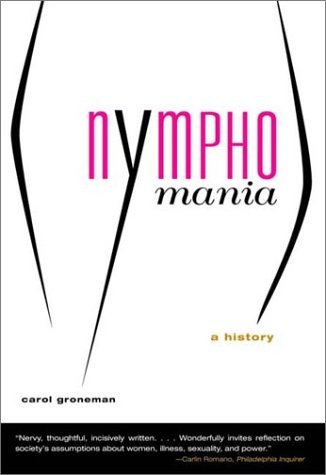
Nymphomania a historyThis is more important than it may sound. Because, before falling in love, first they are lovers (what an oxymoron!), with one scene in which she encourages him to very explicitly talk about his sexual fantasies — he struggles; she’s well aware of hers — hinting at her much greater sexual subjectivity, and willingness to act on it. Considering that just 13 minutes in, audiences were — à la Basic Instinct — reflexively craning their necks to get a better glimpse of her exposed(?) nipples, it would have been very natural and easy for writer Song Hye-Jin to have continued on that salacious, titillating basis, portraying In-Ah as a emotionally manipulative nymphomaniac that can’t be satisfied with just one man, with all the double standards that that implies.

Instead, as soon as we’re shown that they’re in love, In-Ah also says that despite that, she can’t guarantee that Deok-Hoon will be the only person she loves for her entire life. Her surprise at his umbrage with that seems both authentic and naive (a constant theme), as is her not realizing how he might feel at her continuing to drink and socialize until all hours as if she were still single.

Not that she can’t or shouldn’t mind you. Rather, it’s how secretive she is about it that is the problem, never answering her phone; it’s only when he eventually, desperately confronts her at her apartment after one such session that it seems to click. Only slightly drunk and still impeccably dressed, you sense maybe she is only testing him when she retorts that she was sleeping with someone. Either way, he leaves her.

After a month of moping around, he’s encouraged by a friend to forgive her, but also to ensure it doesn’t happen again by marrying her and then knocking her up. Surprised at his call, let alone his marriage proposal, she takes a lot of persuading, only finally acquiescing during a World Cup game.

Those that were here that magical summer, will surely understand.

My Wife Got Married 1(Source)

Domestic bliss ensues, only briefly interrupted by her moving to a different city for 4 days a week for the sake of her job; after all, such arrangements are completely normal for millions of Koreans. This movie being what is though, soon his world comes crashing down when she reveals that she’s not just fallen in love with a second man — Han Jae-Kyeong — there, but she would like him to also be her husband — not just boyfriend — just as Deok-Hoon is in Seoul. Angry, emotional, and this time also physical confrontations follow, with Deok-Hoon resolving not to let her to “win” by divorcing her.

Let’s pause for a moment here, as many viewers may well have needed to take a deep breath at this point in the movie. Because, victim or perpetrator, likely most would also been affected by cheating spouses, partners, or parents at least once in their lives. Equally likely, they resolved to never let it happen again, or to them. So, if Deok-Hoon returning to In-Ah the first time didn’t already, his acquiescing to this new arrangement surely brought many of those same feelings of rage, hurt, impotence, and frustration back to the surface.

Or perhaps I’m just projecting? Either way, frankly, if I wasn’t already committed to a review, I would have stopped watching at that point, for the same reasons I turn off most Korean dramas within 10 minutes: it’s difficult to be sympathetic to — or interested in — a character you constantly want to grab by the shoulders and just shake some damn sense into.

My Wife Got Married 6(Source)

Yet, for a time, the trio — well, technically two duos — does seem to work, providing one takeaway message that polygamy (technically, polyandry) is neither as absurd nor as evil as it’s usually assumed to be. Moreover, in the process the movie pointedly questions many of Korean society’s double standards regarding marriage, especially how prostitutes and mistresses are tolerated for men while many wives languish at home, resigned to continuing their — by their own admission — loveless, sexless marriages out of financial dependence and fears they will lose custody of their children. Many reviewers erroneously claim these are shared by Deok-Hoon; however, but for sneaking glimpses of In-ah’s breasts at work, then complaining of her not wearing a bra in public (after sleeping together just one time!), he’s only guilty of firmly believing in monogamy. Indeed, he’s the one that repeatedly lashes out at his male friend’s hypocrisy, although it’s true that he could have done so with much greater gusto at his brother’s.

However, no matter how positively it portrays polyandry, the movie also demonstrates how unfeasible it is in a society where it’s both illegal and there’s strong social prejudices against it. And, coming from a movie which can be described as a romance only by default (to those reviewers that call it a comedy, I’m perplexed at what they laughed at), you’re left wondering what the point of the 2 hours was exactly.

*Major spoilers follow*

My Wife Got Married 7 (Source)

Specifically, it’s the birth of a daughter that starkly demonstrates how the trio’s arrangement simply can’t be sustained in the face of family and official obligations. Questions of paternity aside (In-Ah wants him to love the child regardless of the who is the father, so never reveals that. Later, it’s Jae-Kyeong that reveals that they always used contraception when they were together), it soon becomes apparent that Deok-Hoon and Jae-Kyeong’s families are none the wiser.

This facade comes tumbling down when Deok-Hoon’s colleagues in Seoul see In-Ah, Jae-Kyeong, and daughter in a magazine article written by (unknowingly to them) the latter’s cousin, and assume that he’s secretly gotten a divorce. Fearing he’s slowly but surely losing both wife and daughter, and partially out of spite (really, he hasn’t felt in control of his life since the start of the movie), he responds by crashing the first birthday party Jae-Kyeong’s family has for “their” daughter.

My Wife Got Married 5(Source)

In response, In-ah disappears with her daughter, and her two husbands — this is much more believable than it may sound — come to live together and even become friends; as they say, they have nowhere else to go. When a postcard from Spain arrives 5 months later, the movie ends with both of them joining her there to watch football games and live happily ever after, as if somehow questions of employment, visas, schooling, custody rights, and social prejudice didn’t also apply there.

*Spoilers End*

Was it too much to ask that the movie delved a little more into some of those questions? Do any movies know any Korean movies that do cover alternative living arrangements a little more realistically, but are still entertaining? Thanks!

Update, Feb. 3: By coincidence, today The Atlantic had an interesting article titled “When Taking Multiple Husbands Makes Sense,” with the byline “Historically, polyandry was much more common than we thought.”

Update, January 3 2014: And today, Salon one titled “My Two Husbands.”

Announcement: Red Maria (레드마리아) Screening Saturday, December 8

I’ve been asked to pass on the following:

★ YOU MUST RSVP via Email: womens.global.solidarity@gmail.com ★

In Korea, Japan and The Philippines, there are many women with diverse jobs and her stories. Among them, this film focuses on women who are called housewives, sex workers, dispatched workers, migrant workers, comfort women, homeless and so on. The camera tracks them as they go about their everyday lives. These women have never met one another, and their lives look quite different from one another. However, their lives are connected across national borders by the one thing they have in common. That’s their bodies and labor. How can such different forms of labor be linked to the women’s bodies in such a similar way? As we search for answers to this question, we are forced to confront another question: ‘the meaning of labor’ as an ideology that is reproduced in society.

* Entrance Fee: by donation at the door

* Languages: Korean, Japanese, Tagalog and English with English subtitles

* Naver map: http://me2.do/GDOEbSP

Facebook: https://www.facebook.com/events/370272919729052/

The screening will be held at the Colombian Mission Center.
Please note the center is very close to exit 4, and not on the University’s campus.

To get to the center:
1) Take line 4 to the Sungshin Women’s University Entrance 성신여자대학교입구) stop.
2) Go out exit 4 and a building with a traditional Korean roof (hanok) will be in front of you.
3) Go into the building and up to the second floor.

★ Due to a limited number of seats, you must RSVP to womens.global.solidarity@gmail.com and you will receive confirmation when your seat has been reserved.