The Grand Narrative

Korean Gender Reader

(Source)

1) Everything You Ever Wanted to Know About Circumcision in Korea

Whether you’re for or against male circumcision, there’s no sugarcoating some shocking facts about the practice in Korea.

First, consider why it is was taken up so enthusiastically after the Korean War. Not so much for its perceived health benefits, but more because it was seen a way to catch up with the medical practices of the developed world (i.e., the U.S.). Indeed, it was done so wholeheartedly that now more than 90% of Korean men between the ages of about 12 and 40 are circumcised, far higher than the U.S. rate.

Despite being world-leaders in numbers of procedures performed however, unfortunately Korean doctors are actually woefully ignorant about the practice, as Seamus Walsh explains at Asadal Thought:

What I find truly incredible is that the same misconceptions and outright false beliefs that were held about circumcision in the 50s – effects on sexual performance, prevention of STDs, cleanliness etc – are still so prevalent in Korea today, regardless of the fact that the rest of the developed world has moved on in its attitudes and knowledge, making such beliefs redundant.

Also, one of the journal articles he examines concludes that:

The mistaken and outdated notions of South Korean doctors about circumcision…seem to be a leading contributory factor to the extraordinarily high rate of circumcision [there].

Next, as most English teachers in Korea are probably well aware, Korean parents (painfully) get their sons circumcised in their early-teens rather than as babies. And finally, in what I regard as the most damning indictment of the practice, those parents often do so for no more compelling reason than the fact that all their sons’ friends are getting it done, as surveys of the parents make clear.

(Source)

Update: By a wonderful coincidence, a related article from the Canadian medical website CMAJ appeared in my Google News Alerts as I was typing the above. Here’s what it says about South Korea:

…South Korea…may be the only country on earth where the majority of men are circumcised but not as infants, and do so for reasons unrelated to health, religion or aesthetics. According to one paper, almost 85% of males 16–39 years old are circumcised in South Korea, the vast majority around the age of 12 (BJUI1999;83:28-33).

No one can say for certain how the country came to embrace circumcision so quickly — the procedure was basically unheard of there in the 1940s — though the prevailing theory is that South Korean men were influenced by circumcised American soldiers during the Korean War in the 1950s. “Within a decade, South Koreans came to believe that practicing circumcision was ‘advanced and modern,’ just like the American soldiers,” US sexologist Robert Francoeur wrote (http://gkorea.nayana.com/s1.html). “If Americans did it, it must be good.”

In the 1960s, South Korea’s doctors made a big push for circumcision, launching a widespread media campaign promoting it as better for hygiene and health. Since then, the practice had become the cultural norm. “Korea has no religious background, it is nevertheless practiced during adolescence, largely initiated by peer pressure,” states the South Korean study. “Therefore, it has partly become a ‘rite of passage’ and is fully integrated into present Korea culture.”

(Taken by a friend of mine at Hongdae Station this summer. Is it still there?)

2. Homophobia in K-pop

No, really. As Megan at Seoulbeats explains:

Just take a little time and browse some K-pop videos on YouTube. Odds are, on at least one video by a boy group, you’re going to see a comment along these lines:”See, this is why K-pop and Korea are superior to America! Because boys can look and act like this and not be accused of being gay!” This is hardly anything to celebrate. In fact, this is precisely the problem. People pretend that homosexuality doesn’t exist. It wouldn’t matter if a boy group member snogged his bandmates in public (ahem, Heechul), because it’s nothing. It’s just fanservice, they’re just close like brothers, is all. No way my oppas are gay! Even if an idol was to stand up on a table and scream at the top of their lungs that they were gay, it would mean nothing. This acceptance of behavior commonly pegged as gay in the West isn’t acceptance at all. It’s discrimination so strong it assumes that homosexuality doesn’t even really exist.

Maybe I’m just prejudiced by coming from New Zealand, where the only time men touch is when they’re fighting or playing rugby, and where if a guy doesn’t don’t like beer, cricket, or rugby then both the men and the women will think he’s gay, but still: I think the physical affection and pink clothes are something to celebrate. Also, please correct me if I wrong, but I’d argue that it’s overwhelmingly foreign audiences that are making such comments about Korean male singers, whereas the question of their sexuality wouldn’t be an issue in Korea itself.

I definitely agree with Megan though, that the corollary of allowing such a wide range of gender-bending (skillfully exploited by G-Dragon [지드래곤] throughout his career; hence the sticker above!) considerably narrows the range of what is regarded as genuinely homosexual behavior, although I think she’s putting it much too strongly when she says that people deny that possibility altogether (despite what the foreign media says, few Koreans now deny that homosexuals exist). Indeed, that that possibility is still very much open is evidenced by so many male celebrities making a lot of homophobic comments recently, lest their clothes and behavior cause people to question their sexual orientation (which to be fair, Megan also discusses).

(Source)

3) Science Blogging at its Finest

Remember last month, when one of my favorite blogs I09 told you about a study published in the latest issue of Hormones and Behavior, that concluded that women’s facial features and estrogen levels correlate with their self-reported desire to have children? Since then, two science bloggers wrote even-handed critiques of the study, to which the author of it responded with a blog post of her own.

In short, this was the internet was invented for, and you can read more about those exchanges at a follow-up post at I09 here.

4) The More Egalitarian the Society is, the More “Innate” Biological Differences Disappear

Back when I was an undergraduate student, I read The New Sexual Revolution by Robert Poole (1994), which would come to have a big influence on how I viewed the nature/nurture debate regarding differences between the sexes. As the introduction on Amazon explains:

In this controversial study of gender differences, Robert Poole outlines the recent research which has strongly challenged the notion that men and women would be equal if only they were brought up in the same way. The research has revealed that the brains of men and women are different in distinct ways and that it is these differences which account for much of the mental, emotional and psychological variation between the sexes.

To be sure, after four years of writing about gender issues I’m much more in the nurture camp now, and indeed I regularly make arguments about the influence of one’s environment in gender socialization myself. However, I do still think that there are some innate – not learned – differences between the sexes, especially men’s greater hand-eye coordination and spatial ability mentioned in the book’s introduction, which Poole suggested may be why men prefer playing computer games to women.

(Source)

Then I read on Sociological Images about spatial ability tests given to two tribes in Northern India, the Karbi and the Khasi. As the post explains:

- The Karbi are patrilineal.  Only the men own property, and they pass that property to their sons.  Males get more education.

- Khasi society is matrilineal.  Men turn their earnings over to their wives.  Only women own property, which is passed along only to daughters.  Males and females have similar levels of education.

And whereas the Karbi men were much better at spatial ability than the women, the difference between the Khasi men and women was negligible.

For sure, it’s just one study, and there are also methodological issues to consider. But if the result holds true, and the relationship can be confirmed by a wide range of other groups, then it will definitely force me to reassess some beliefs about male/female differences I’ve held dear for the last 17 years!

(Source)

5) Gay-Han-Min-Guk: Gay Culture in Korea

For the last two years, I’ve been referring readers wanting a good quick history of Korean LGBT issues to a paper by Professor Douglas Sanders of the University of British Colombia, a noted author on human rights and LGBT issues, and as it happens also the first openly gay person to speak at the UN. And I still will, but now I’ll also link to this post by Michael Hurt and Josh Forman at Groove Korea, which does a good job of filling in the last two years (and much more).

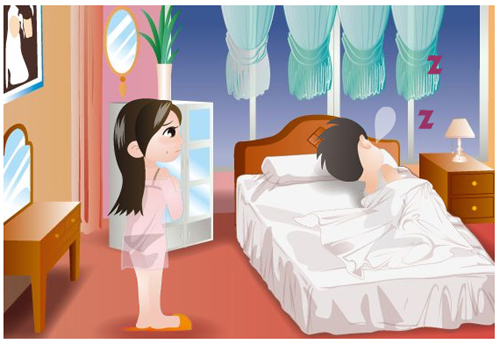
Sex and the University, Part 4: A Scared 19 Year-Old’s Ob-Gyn Experience

Posted in Abortion, Childbirth, Contraception, Korean Sexuality, Pregnancy, Sex Education, Sexual Relationships, STDs by James Turnbull on March 30, 2011
( Source: Dramabeans )

With thanks to Marilyn for translating it, allow me to present the fourth and final article in the Sex and the University series:

겁많은 스무살 기자의 산부인과 검진 체험기 / A scared 20 year-old reporter’s ob-gyn exam experience (19 in Western age)

대한산부인과학회는 지난 5월 ‘퍼플리본 캠페인’을 시작했다. 올해부터 매년 5월 셋째 주에 진행될 예정인 이 캠페인은 여성암 중 사망률 2위를 차지하고 있지만 비교적 잘 알려지지 않은 자궁경부암에 대해 알리고 검진율이 낮은 20~30대 여성들의 관심을 유도하기 위한 것이다. 김상운 사무총장은 “많은 여성질환들이 젊을 때부터 정기검진을 하면 예방효과가 크다”며 대학생들도 산부인과 검진을 받을 것을 권했다. 그러나 이러한 필요성에도 불구하고 많은 여대생들이 병원을 찾기를 꺼린다. 산부인과는 임신한 여성들만 찾는 다는 인식이 미혼 여성들로 하여금 산부인과 문턱을 넘는 일을 어렵게 만들기 때문이다.

Last May, the Korean Society of Obstetrics and Gynecology started the “purple ribbon” campaign.   This purposes of this campaign, planned to take place during the third week of May from this year [2010] on, are to raise awareness of cervical cancer, which, though the second deadliest of cancers that only affect women, is not well known, and to increase interest among women in their 20s and 30s, who rarely get screenings.  Secretary-general  Kim Sang-woon said, “If many female patients get regular screenings from a young age, there will be great preventative effects,” and recommended that university students get ob-gyn exams as well.  However, despite such necessity, many female college students are reluctant to visit a clinic.  This is because the belief that only pregnant women go there makes entering the ob-gyn’s office difficult for unmarried women.

(Source)

이런 상황에 놓인 여대생들을 대표해 10학번 새내기 기자가 직접 산부인과를 방문해 검진을 받아보기로 했다. 미혼여성을 대상으로 한 가장 기본적인 검진은 초음파 검사와 혈액검사라고 한다. 기자는 인터넷을 통해 신촌의 산부인과를 수소문한 끝에 신촌역 근처 S산부인과로 결정했다. 방문 전 인터넷사이트의 예약 게시판에 평소 생리통이 심했던 기자의 고충을 적고 예약을 완료했다.

Representing college women put in this kind of situation, this freshman reporter, who entered university in 2010, agreed to personally visit an ob-gyn and get an exam.  It is said that the most basic exam for unmarried women is an ultrasound and a blood test.  After asking around about Sinchon-area obstetrician-gynecologists on the Internet, I chose ‘S’ Obstetrics-Gynecology, near Sinchon Station.  Before going, I wrote on the appointment board on the clinic’s website that my problem was severe menstrual pain and booked my appointment.

예약한 날짜가 다가와 초조한 마음으로 병원을 찾았다. 산부인과와의 인연은 20년 전 태어나며 맺었던 것이 마지막이라 그곳에서 무슨 일이 생길지 도무지 감이 잡히지 않았다. 잠시 기다리자 접수대에서 이름이 호명됐고 전문의와 오늘 받을 검진의 기본적인 사항에 대한 이야기를 나눴다. 혈액검사는 난소암 유무를 가리기 위한 것이고, 초음파 검사는 자궁에 근종이나 난소에 혹이 있는지를 알아보기 위한 것인데 항문 또는 질을 통해 검사한다고 했다. 검진 받는 여성의 성관계 여부에 따라 추가적인 암 검사가 더해진다. 그렇게 접수를 마치고 이유 모를 공포에 휩싸여 호명되기를 기다렸다. 내 나이 꽃다운 스무살, 산부인과에 있다는 사실만으로도 이미 부인과 질병에 걸려버린 느낌이라 불안감은 점점 더 증폭됐다 (source, below).

The appointment date approached and I went to the clinic with an anxious heart.  My last connection to the ob-gyn had been made when I was being born twenty years ago, so I had no clue what was about to happen there.   After waiting a moment, my name was called by the front desk and I talked with the specialist [prob. the doctor] about the basics of the exam I would receive that day.  The specialist said the blood test would detect ovarian cancer, and the ultrasound would check for uterine fibroids and ovarian cysts; the exam would be done through the anal passage or vagina.  Contingent upon the sexual activity of the woman receiving the exam, additional cancer screenings are added.   In that manner, I completed my registration and then, filled with fear without knowing why, I waited for my name to be called.  I am a 20-year-old in the bloom of youth, but just the fact that I was at the ob-gyn gave me the feeling that I already had a gynecological disease, and my discomfort continued to increase.

먼저 초음파 검사를 받기 위해 탈의실로 가 아래를 모두 벗고 발목까지 오는 긴 치마를 입었다. 두려운 마음으로 검진실 문을 열자 특이한 모양의 의자가 보였다. 치과 의자처럼 생겼는데 다리를 벌려 고정하는 받침대가 추가된 형태였다. 좋지 않은 예감이 든다. 예감적중, 간호사가 의자에 누워 다리를 벌리라고 한다. 겁에 질려 검사가 아프냐고 묻자 간호사는 태연하게 “불편할 수 있어요”라고 대답한다.

First, in order to get the ultrasound exam, I went to a changing room, took off all of my lower-body clothing and put on a long skirt that reached to my ankles.  Fearfully, I opened the exam room door and saw a specially-shaped chair.  It looked like a dentist’s chair but with the addition of a rack to which spread legs could be fastened.  I had a bad feeling about that.  My feeling was right – the nurse told me to lay down on the chair and spread my legs.  Scared, I asked if the exam would hurt; the nurse calmly answered, “It may be uncomfortable.”

이윽고 냉철한 표정의 여의사가 들어와 초음파 검사 도구를 항문에 집어넣는다. 간호사 말대로다. 아프지는 않지만 확실히 ‘불편’했다. 마치 배변을 보고 있는 듯한 느낌이 몰려왔다가 사라졌다. 윤활제를 바른 탓에 시원한 느낌이 들었다. 기분이 묘하다. 이 와중에 그나마 여의사라 다행이라는 생각을 한다.

(Sources: left, right)

Before long, the female doctor entered with a dispassionate expression and put the ultrasound exam instrument in my anal passage.  It was as the nurse had said.  It didn’t hurt, but it was certainly uncomfortable.  A strong feeling that I was about to have a bowel movement came and disappeared.   Because of the lubricant spread [on the instrument], there was a cool sensation.  I felt strange.  At that time, I thought it was at least fortunate that it was a woman doctor.

누워서 눈앞의 스크린을 보자 나의 자궁과 난소가 보인다. 혹이나 다른 이상은 발견되지 않았다. 스크린을 보던 의사가 “생리하실 때 아플 것처럼 생긴 자궁이네요”라고 말했다. 산부인과에 온 목적이 해결되는 감동적인 순간, 내 몸에는 전혀 이상이 없으며 단지 ‘자궁 모양’ 문제였음을 깨닫는다. 산부인과에 진작 왔으면 불안에 떨지 않아도 되었을 것을. 며칠 뒤에는 “난소암 혈액검사 결과, 정상입니다”라는 간략한 문자가 도착했다. 모든 검사 종료, 이제야 안도했다.

(Source)

As I lay and looked at the screen in front of me, my cervix and ovaries were visible.  No cysts or other irregularities were detected.  The doctor, looking at the screen, said, “Your cervix looks like it would hurt during menstruation.”  At this emotional moment in which my purpose for coming to the ob-gyn was resolved, I realized that there was nothing wrong with my body, only a problem with “cervix shape.”  Also, that had I come to the ob-gyn earlier, I wouldn’t have needed to be anxious [about the pain].  A few days later, the brief text message, “Your ovarian cancer blood test results were normal” arrived.   At the end of all the exams, I finally felt relieved.

스무살 기자에게 산부인과 검사는 약간의 수치와 6만원이라는 비용을 수반한다는 점에서 그리 유쾌한 경험은 아니었다. 하지만 자신의 몸을 위해 한 번은 가볼 필요가 있는 것 같다. 기자의 경우 마침 결과가 좋아 적어도 5년 동안은 다시 이 경험을 하지 않아도 되겠다 싶어 안심했다. 그러나 부인과 질병에 가족력이 있거나 성관계 경험이 있을 경우 1년에 한 번씩은 산부인과에 가는 것이 좋다고 하니, 참고하면 되겠다.

Considering the slight shame and the 60,000 Won fee, the ob-gyn exam was not a very pleasant experience for this 20 year-old reporter.  However, it does seem that going once is necessary, for the sake of one’s body.  I felt relieved that I wouldn’t have to have this experience again for at least five years because the results happened to be good in my case.  Just know that if you have a family history of gynecological diseases or have sexual experience, though, they said that going to the ob-gyn once a year is good (end).

(Source)

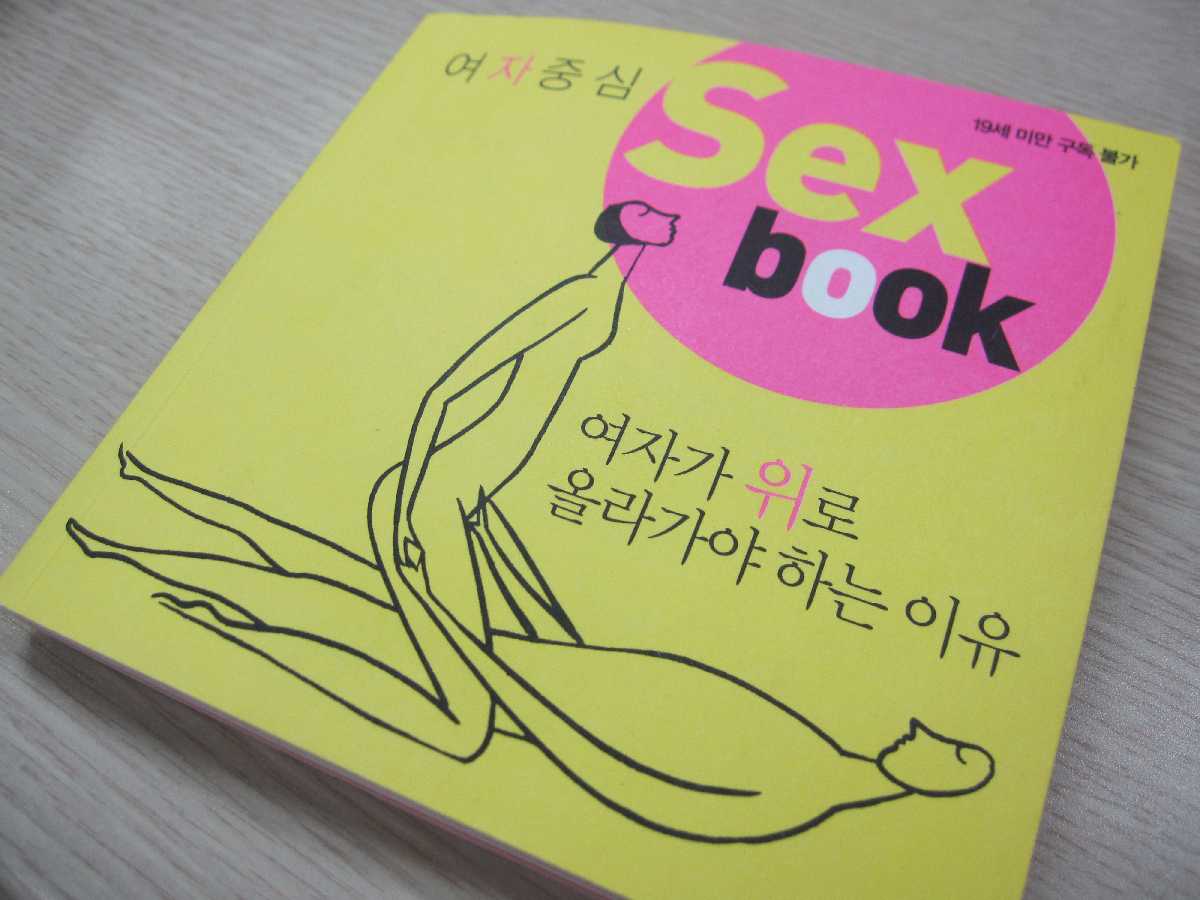
A little disappointed with the reporter’s plan not to lose her virginity in the next 5 year however, a genuine waste of one’s youth(!), then let me end on a rather more lecherous note via the above image, found in passing while preparing this post. Indeed, with a cover that says “Reasons Women Have To Get On Top“, the book sounds intriguing, and now I feel like doing some translating of my own next week!^^

(For more in the Sex and the University series, please see Parts 1-3 on students’ levels of sexual experience and activity, on an interview with a sex columnist, and on students’ cohabitation culture respectively)

Share

Tagged with: ,

Rubber Soul 2010

Posted in Announcements, Contraception, Korean Sexuality, LGBT, Prostitution, Sex Education, Sexual Relationships, STDs by James Turnbull on December 3, 2010
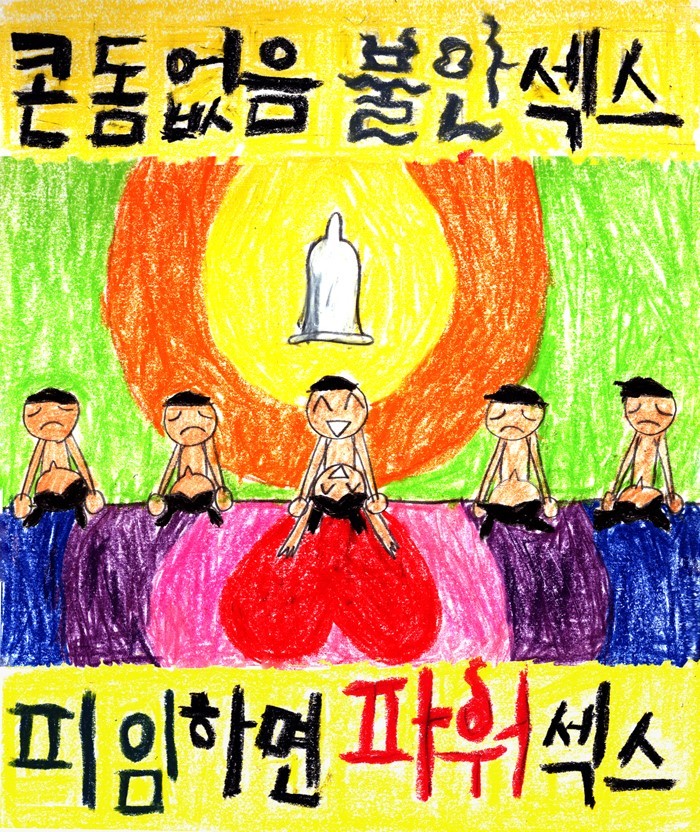
( Sources: left, unknown; right, Rubber Soul 2010 )

Apologies for the late notice, and also to Roboseyo for swiping his own post on the event:

December 4 is World AIDS Day.  Starting at 9PM, in Hongdae, at Ting Tings, Club TA, Club FF and DGBD, you can attend parties at all four spots for a 15000 won cover.  All the cover fees go to Hillcrest AIDS center in South Africa.

You can learn more at the Facebook event page, or at the Rubber Soul Blog.

And don’t forget that there’s a prize for the best condom costume!^^

Share

Tagged with:

Blood Type Condoms?

With thanks to Cate Newton of phlebotomist.net for passing it on, here is her handy infographic on the practice of blood typing, which notes the wide variety of blood type-themed products in Japan despite there being no scientific validity to the practice whatsoever.

Known as hyeolaek-hyeong in Korean (혈액형), the practice is also popular here, and definitely a common theme in advertising (such as for kiwifruit and soft drinks). But there are far less actual products available though, and certainly not condoms.

Perhaps because people would be confused? After all, is the required condom type determined by the blood-type of the wearer, or of his partner?

Putting aside the fact that the question itself reveals how completely inane the product is, then I’m guessing the former. Otherwise, some pretty big wallets would be required when heading out for a night on the town…

Any Japan-based readers that can confirm that though, then do please fill me in!^^

Update: See here for a blood-type condom vending machine in Japan.

Share

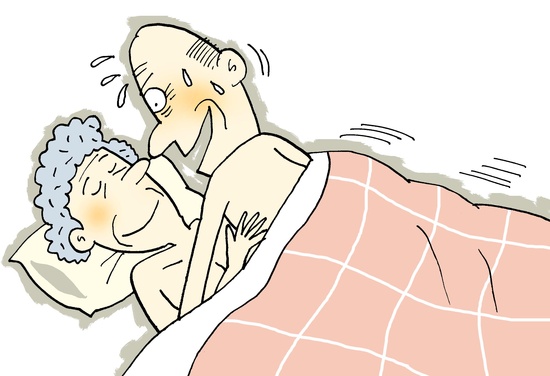
Yes, Old Korean People Have Sex Too…

Posted in Contraception, Korean Demographics, LGBT, Prostitution, Sex Education, Sexual Relationships, STDs by James Turnbull on September 30, 2010
( Source )

But perhaps as you’d expect, they’re generally not using protection. A quick report from The Daily Focus on Wednesday:

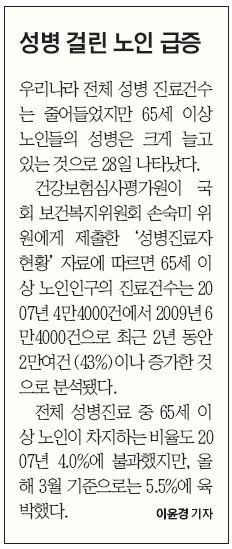
Number of STD Cases Among Old People Rising

While the national total number of STD cases has dropped overall, the numbers of people aged 65 and over contracting STDs has risen sharply, it emerged on the 28th.

The Health Insurance Review and Assessment Service presented its “Current Situation Regarded STD Treatment Recipients” report to Assemblywoman Son Sook-mee of the National Assembly Health Welfare Committee, according to the data of which the number of cases of people aged 65 and older receiving treatment for STDs was 44,000 in 2007 and 64,000 in 2009, a rise of 43% in just 2 years.

In 2007, people 65 years and older accounted for 4.0% of all cases of people treated for STDs, but this has risen to 5.5% as of March this year.

Little information to go on unfortunately, but Seoul residents may be interested in placing that into the context of the prostitution culture around Jongmyo Park in Jongno, which caters to the thousands of male retirees that spend their days there. From story #13 in a “Korean Gender Reader” post from March last year:

Prostitution Answers Sexual Needs of Senior Citizens?

The first time I visited in Jongmyo Park in Seoul in 2000, naturally I remarked on the hundreds of mostly male retirees there to my friend visiting from Japan, who rightly pointed out that they “didn’t particularly have much to do nor anywhere in particular to do it,” so why not play Korean chess all day there? In hindsight though, many would much rather be doing something else, and it’s almost surprising that it took so long for prostitutes to encroach on this captive and – let’s call a spade a spade – somewhat desperate market.

Here, the Korea Times reports on the ensuing problems of unsafe sex, the sale of fake Viagra and “men’s stamina” products, and the general increasing seediness of the area. You can also read discussions about it at ROK Drop and The Marmot’s Hole.

One surprising omission in the Korea Times article though, was the fact that the area between Jongmyo and Tapgol Park is also “packed full with gay bars and hotels catering to gay clients”, as noted by regular commenter Gomushin Girl.  Still it does end with the pertinent point that:

…the social atmosphere of viewing senior citizen’s sexual desire as a nasty matter has worsened the situation. “Sexual desire is a desire not only shared among young people but also old people. But our society is sill stuck in the obsolete Confucian-based perception that labels desire as an undesirable state, playing a major hurdle in setting a sound sexual culture for the aged,” said Prof. Lim Choon-sik at Hannam University’s social welfare department.

( Source )

And accordingly, probably the most notable if not the only “recent” Korean film to depict the sexuality of the aged – Too Young to Die (죽어도 좋아; 2002) – was heavily censored. As noted at KoreanFilm.org:

The filmic career of this independent digital feature about an elderly couple in love has followed an unusual arc. It began at the pinnacle of respectability, being selected to screen in the Critics’ Week section at the 2002 Cannes International Film Festival. After receiving a number of very positive reviews, it went on to be selected for the Toronto International Film Festival’s showcase of Korean cinema, and then received a special grant from the government-supported Korean Film Commission to help finance the film’s transfer to 35mm film for a release in Korea. Then, alas, the film was submitted to the nation’s Media Ratings Board, where it was judged unfit for public viewing and banned from release in ordinary theaters.

Too Young To Die is based on the true story of Park Chi-gyu and Lee Soon-ye, a man and woman in their early seventies who met, fell in love, and then rediscovered sex. The couple, who play themselves in the movie, seem little different from a couple in their twenties. They tease each other, fret about their hair, take snapshots of themselves, argue over trifles, and leap into bed with unabashed frequency. Indeed, watching them forces you to rethink all your stereotypes of what it is to be old.

In particular, as Gomushin Girl mentioned in the context of the excessive censorship of women’s sexuality in general:

…the key scene of fellatio was darkened and shortened significantly before it could be released. I would suggest that it was not just the fact that the couple was elderly that made the sex scenes so controversial, but the gusto and relish that the woman took in the acts.

Which raises the question of if there have been any other depictions of aged sexuality in Korean popular culture in the past 8 years (positive or otherwise), as perhaps that experience put directors off? If you know of any, then please let know, but regardless I’d wager that we’re likely to see more soon; after all, with Korea rapidly becoming the most aged society in the world, then audiences (and rating boards) can only become more sympathetic to the subject over time.

In the meantime, can anyone think of any areas in other Korean cities where retirees and prostitutes regularly meet?

Share