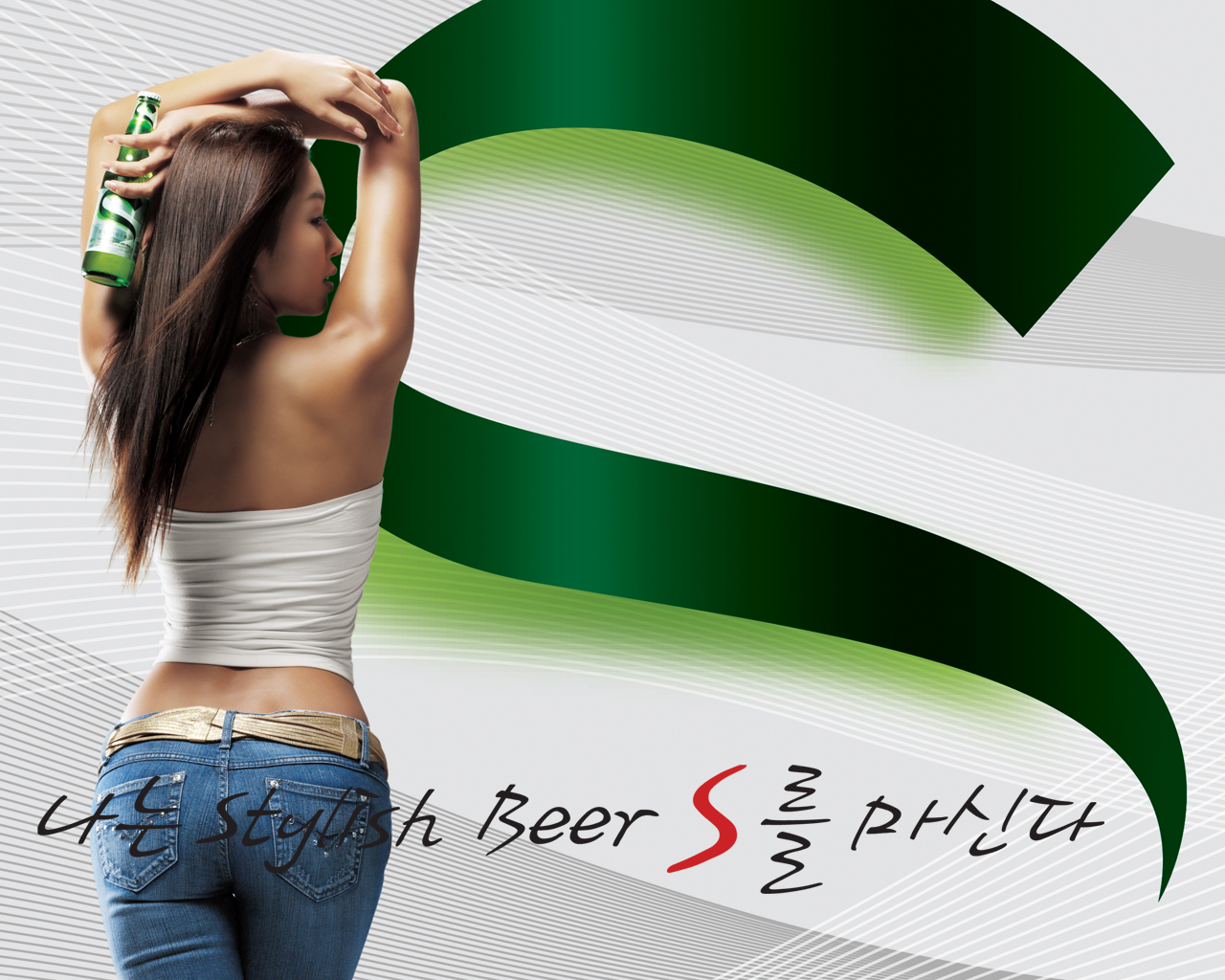
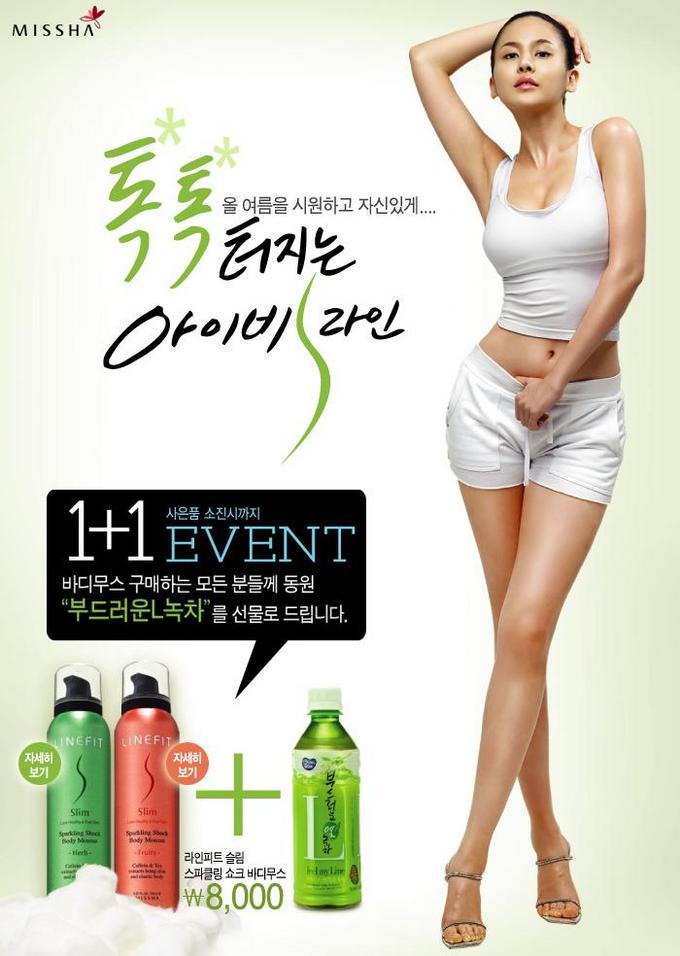
Via 10 Confessions, here is a short but quite rare “expo on the focus of the mass media and internet news sites on superficial looks of the entertainers in the industry, and how this trend needs to change.” Sorry that it’s all in Korean, but 10 Confessions provides a good (English) description of it, and it’s the least I can do to pass on the videos themselves (especially after spending half an hour looking for them!).
To see the segment, jump ahead to 2:30 in the first video. It lasts until 4:10 in the second.
For readers’ sakes, wisely I’ve tended to avoid discussing my tastes in women’s body types on this blog. And don’t worry: I’m not going to start now.
But probably I’m deluding myself in thinking that they’re not already obvious from the images I use. Also, surely my occasional posts about hourglass figures are a dead giveaway. After all, why else would I argue that they’re universally-attractive, if not to feel smug about my own preferences?
Seriously though, while I do think there is solid evidence for that universal attraction, I’m always open to debating it, and would be the first to admit that such evidence is often misrepresented in the media. In turn, when it lacks any caveats and qualifications, at the very least it doesn’t challenge the public’s preexisting beliefs about body types. Say, those held by people in the fashion and clothing industries particularly, whose usual fashion advice for women with different body types is:
…”almost always aimed at getting women’s bodies, whatever shape they might be, to conform with the [ideal (skinny) hourglass figure]. The advice video below, sent in by Tara C. and aimed at women with “pear-shaped” bodies, does exactly this:
See Sociological Images for excerpts and commentary. And indeed, one additional way in which women are subtly(?) reminded that the hourglass figure is an ideal to be conformed to, is by altering the shape of the bottles of drinks aimed at them:
You’d think I would have noticed years ago, but then I’m afraid I don’t buy them. As for not noticing it in their advertisements however, I confess that possibly I was simply too fixated on the accompanying models’ navels to ever pay attention.
Apologies if that makes me sound crass. But unlike with Shin-se kyung (신세경) above, for some reason it genuinely took the less exposed example of f(x)’s Victoria (빅토리아) below for me to see the hourglass packaging for the first time:
Yet once I did, then suddenly I realized that you saw it on a lot of drinks aimed at women, whether explicitly “diet” ones or otherwise. In addition to the “G2” and the grape juice for instance, to the right of Victoria there’s the “Black Bean Thera Tea” endorsed by Lee Hyori (이효리) in the opening image (discussed in detail here). Then below those: “Matcho”, “I’m Bori”, and finally “Today’s Tea”, discussed way back in Korean Sociological Image #2.
And I could certainly go on. But on the other hand, I don’t want to exaggerate the extent of the trend either.
For starters, by no means are all or even most drinks aimed at women hourglass-shaped, and indeed in this image of the drinks section of what looks like a small supermarket, actually only those aimed at children have anything that even remotely resembles an hourglass shape. Also, there is possibly just as strong or even stronger a trend to make women’s drink bottles skinny rather than any specific shape, as explained here. Finally, making bottles more masculine-shaped may make them quite impractical to hold,* whereas hourglass shapes lend themselves to it.
Given the context of how deeply gendered drink marketing is though, then I’m not entirely convinced that practical considerations provide sufficient explanation for the gender imbalance in those drinks that do have “body shaped” bottles. It seems entirely possible, for instance, to add the contours of a six-pack to drink bottles aimed at men. Yet even in the unlikely event that readers have actually come across that(?), or something like it, it would still be the exception that proves the rule.
But whatever the reasons, and whether it’s a skinny or hourglass bottle (or, indeed, a skinny hourglass bottle!), it’s definitely yet another way in which advertisers try to subtly influence our body type ideals.
Something to bear in mind next time you find yourself in the drinks section!
*It’s only tangentially related, but you may find it interesting. Back when I was doing freshman calculus (yes, I was an astronomy major before I switched to East Asian Studies), once we looked at the the problem of what shape of Coke can would use the least amount of aluminum for the greatest volume of Coke contained, which – if I remember correctly – turned out to be a can the same diameter as its height. As the lecturer explained though, cans the shape of toilet rolls don’t exactly look cool, let alone fit in the hand well!
Update: Gotta love this alternative design by Chinese designer Le Jin!
“Speed”, as the New York Timesrecently intoned, is an “obsession” of Koreans. It’s a cliche, like most labels the foreign media applies to them, but it’s one of the few I’d generally agree with.
Another is that they’re hardworking. While they don’t work quite as many hours as foreign observers tend to think, nobody can deny that they’re always prepared to roll their sleeves up when the boss demands it.
Perhaps then, their boss should consider reviving the 1980s custom of having employees doing traditional national gymnastics together (googminchaejo; 국민체조) before the start of work? For when it comes to losing weight by themselves, Koreans’ obsession with speed easily trumps the resolve they have when they’re on the job.
In short, Korea is simply bursting at the seams with ads promising quick fixes.
To be fair though, I haven’t lived outside of Korea for 11 years, so I can’t reliably claim there’s any more of them here than in, say, the US. The one study I’m aware of that did compare diet ads in both countries however, found that US ones tended to promote more active ways of losing weight, whereas Korean ones tended to promote the idea that if one simply ate, drank, applied, or even sat on the advertised product or service, then that perfect body was simply guaranteed.
That isn’t mere hyperbole. Technically neither foods nor medicines, dieting-related products are a little-regulated, legal gray area in Korea, essentially allowing manufacturers to pretty much make up any claims about them that they like.
It is no wonder then, that Koreans consume them in droves. And I can empathize: once a former gym addict concerned with bulking up, ironically now I have a good 10kg to lose. But with two children, I lack the time, energy, and enthusiasm I had for exercising in my twenties. If only I could just drink something like “Fat-Down” instead, or even this beer (well, actually I have started drinking that). Or sit in this special seat all day. Or use this when I shower. Or, indeed, wear shoes that automatically toned my fat ass just by my walking to and from the subway station each day…
Alas, the online Reebok store lists only 5 male versions to 47 female ones, and they’re all a little pricey for me. Perhaps, just like Coke Zero (which has replaced Pepsi in my Black Russians) was so named because men associate the word “diet” with women too much, the disparity is because Reebok felt that men would ultimately reject the idea. And who can blame them? For as just those examples above (and especiallytheseones) demonstrate, all aimed at women, to say that US advertisements tend to promote active methods of losing weight, Koreans passive ones, is a little simplistic. Instead, it would be much more accurate to say that in both countries, it’s the active methods that get promoted to men, the passive ones to women.
Despite half the population not buying them though, toning shoes are the fastest growing shoe market in Korea at the moment, with ReeTones alone making up half of Reebok’s total sales.
It was with great interest then, that I recently read that the US Federal Trade Commission (FTC) had ordered Reebok to refund 25 million dollars to (gullible) US purchasers of its EasyTone (이지톤) sneakers, finding that its notorious assvertising claims were nothing more than hot air. Would Reebok Korea also be providing refunds? What about other Korean companies offering similar products? Would this be a wake-up call for Korean consumers? What do they think about the news? Read on to find out.
First, from Money Today (머니토다에), taking up from when it starts talking about the effect on Korea:
우리나라에서도 리복은 지난 5월 이지톤 토닝화의 몸매 보정 효과를 대대적으로 홍보하며 판매에 들어갔다. 때문에 업계에서는 공정거래위원회가 어떤 조치를 취할지 주목하고 있다.
In Korea too, there has been an immense marketing drive for EasyTone shoes since May, so the industry has taken a great deal of interest in what measures the FTC would enact.
국내시장에서는 리복 뿐 아니라 뉴발란스, 르까프, 스케쳐스, 휠라, 머렐 등에서 몸매 보정기능을 강조한 토닝화를 시판중이며 시장도 매년 급성장 중이다. 업계 추산에 따르면 국내 신발시장의 전체 규모는 약 4조원. 그중 워킹화와 토닝화 시장 규모는 연간 6000억~7000억원, 브랜드만 총 20여 개다. 매년 40~50%대의 폭발적인 성장세를 보이고 있다.
In the domestic market, it is not just Reebok that sells toning shoes, but also New Balance, Sketchers, Fila, and Merrel, and this market is rapidly growing. According to industry estimates, the size of the entire Korean shoe market is 4 trillion won (US$3.37 billion), of which walking shoes and toning shoes make up 6-7 billion won. More than 20 brands sell them, and each year the market for them has seen explosive growth of 40-50%.
업계 관계자는 “걷기열풍과 함께 워킹화와 토닝화 수요가 2~3년 전부터 급격히 증가하기 시작했다”며 “최근 들어 기능성 운동화는 브랜드별 전체 신발 매출의 70% 이상을 차지할 정도로 잘 나간다”라고 말했다. 그는 이어 “그간 업체들의 광고가 국내 소비자들의 구매의욕을 자극해왔기 때문에 이번 미국 공정위의 조치는 국내시장에도 상당한 영향을 미칠 것”이라고 내다봤다.
An industry insider said “With the new walking craze, the demand for walking and toning shoes started dramatically increasing from 2 to 3 years ago”, and that “these days, sales of ‘functional shoes’ make up over 70% of the total sales of those companies that sell them”. Accordingly, “because [Korean] shoe advertisements [likewise] stimulate Korean consumers’ desire to purchase them, the FTC’s decision is expected to have a considerable effect [on the Korean market]”.
리복 코리아는 미국에서 문제가 된 광고를 그대로 가져와 쓰지는 않았으나 토닝화의 몸매 보정 효과를 홍보해왔기 때문에 국내 광고도 논란이 일 것으로 예상된다. 리복 코리아는 미스코리아 출신 이하늬씨를 광고모델로 기용하고 “움직이는 것만으로 바디라인이 살아납니다”라는 홍보문구를 내걸며 몸매 보정 효과를 강조해왔다.
While the problematic US advertisements were not used in Korea, as the marketing here has likewise emphasized the toning effects of the shoes, Reebok Korea is expected to come under a lot of criticism. [Specifically], Rebook Korea hired former Miss Korea (2006) Lee Ha-nui to emphasize their [claimed] toning effects, using the catchphrase “Just by moving, you’ll get a bodyline”.
(James – I’m not so sure that the US advertisements weren’t used in Korea. Not only were untranslated versions widely available on the Korean internet from the outset, but many – like the example below – were indeed translated [albeit not literally: “S-line” isn’t English], including the notorious one of a [faceless] women’s breasts griping about all the attention her newly toned buttocks were getting)
국내에서는 2~3년 전부터 걷기 열풍이 불면서 리복, 프로스펙스, 뉴발란스, 르까프, 휠라 등이 기능성 신발을 내놨다. 이 시장은 2005년 500억원에서 지난해 6000억원(삼성경제연구소 추정치)으로 5년 만에 10배 이상 커졌다. 이 가운데 대표적인 기능성 신발이 토닝화다. 토닝화는 올들어 워킹화와 러닝화에 밀리기는 했지만 기능화 시장의 성장을 주도했다.
As a walking craze has developed over the last 2-3 years, a number of companies have started producing functional shoes, including Reebok, Prospecs, New Balance, LeCaf, and Fila. According to estimates by the Samsung Economic Research Institute (SERI), the market has grown from 50 billion won in 2005 to 600 billion won in 2010, more than a ten-fold increase in only 5 years.
Of these functional shoes, toning shoes are representative [most popular?], their sales still trailing those of walking and running shoes but leading the growth of the functional shoe market.
국내 한 백화점에서 12만9000~16만9000원에 팔리고 있는 리복 이지톤 시리즈는 지난해 리복 매출의 50%를 차지했다. 리복의 과장광고가 미국 당국의 제재를 받았다는 사실이 알려진 뒤 온라인상에서는 “미국에서 허위광고로 거액을 물게 됐다는데 국내에서는 환불을 해주지 않느냐”는 소비자들의 주문이 이어지고 있다. 리복 코리아 측은 국내 광고 중단이나 환불에 대한 공식 입장을 내놓지 않은 채 “아직 내부적으로 대응방안을 논의하는 중”이라고만 밝혔다. 미국의 유명한 기능화인 스케쳐스도 FTC 조사를 받고 있는 것으로 알려졌다.
In Korean department stores, EasyTone sell for between 129,000 and 169,000 won, and last year made up 50% of Reebok’s total sales. Online, Korean consumers have been asking “In America, Reebok had to pay back a lot of money for its false advertising. Will we receive refunds too?”. But as of yet, Reebok Korea has made no official announcement as to whether its Korean advertisements will be suspended, other than to say “We are still formulating a plan on how to deal with this domestically”.
[Meanwhile], in the US the FTC is also investigating the famous functional shoe manufacturer Sketchers.
스케쳐스 국내 판매업체인 LS네트웍스 관계자는 “미국 스케쳐스에 대한 FTC 조사는 아직 진행 중인 것으로 알고 있다”며 “올해부터 본사 차원에서 토닝화보다는 워킹·러닝 겸용화를 주력 상품으로 밀고 있다”고 말했다.
Sketchers are sold in Korea via LS Networks. A person in the industry said they were aware of the FTC investigation, and that “from last year, Sketchers head office has focused its efforts more on combination walking and running shoes than on toning shoes”.
리복은 지금 한국에서도 몸매 보정 효과를 스타를 앞세워 홍보하며 판매에 들어갔기 때문에 공정거래위원회가 소비자 보호를 위해서 미국처럼 어떤 조치를 취할 지 궁금해지네요. 지금 엄청 잘 팔리고 있잖아요.
Because of exaggerated advertisements, Rebook has had to refund 30 billion won in Korean money, and suspend such advertisements for them. Look at the CBS report below [available on the blog], LOL. The expensive price of the shoes was unnecessary. Um…
In Korea too, because Reebok has used stars to wax lyrical about the toning effects of the shoes, I wonder what measures will be taken here. They’ve been selling unbelievably well these days.
사실 리복 뿐인가요?
벌써 여러 브랜드에서 난리가 났죠. 이런 토닝화는 뉴 밸런스 및 스케처스, 아식스,프로스펙스 등 많은 업체에서 생산되고 있으며 켤레당 좀 비싼 편에 속하죠.
Is it just Reebok? No, already many brands are involved in the boom, like New Balance, Sketcher, Asics, Prospecs, and so on. All of their toning shoes are really expensive too, yes?
미국에서 는 FTC 발표에 대해서 뉴 밸런스는 아무 말도 없었고 논평 요청에 응하지 않았지만 스케처스는 지난 8월 미 증권관리위원회(SEC)에 대한 보고에서 FTC가 ‘쉐이크 업’ 등 자사 토닝화 광고를 조사하고 있다고 밝 혔다네요.
과학적 기능이 아주 조금 들어갔다가 뻥튀기고 되어 나온 걸까요?
저도 스케쳐스 이전 버젼이 있는 데요. 꽤 편하거든요. 어떤 효과가 있는 지는 아직도 못느끼고 있지만 ㅎㅎ :)
암튼 과대 광고로 돈 벌 생각만 한 기업주들은 이번에 제대로 사과하셔야 할 듯하네요. 소비자들도 너무 믿으면 안될 것 같아요.
In America, New Balance made no statement about the FTC’s decision, but Sketchers said that toning shoe advertisements were [already?] under investigation in the August report of the Securities and Exchange Commission (SEC), in a shake-up of the industry.
Have the scientific functions of the shoes been completely exaggerated?
I have an old version of Sketchers toning shoes. They’re actually really comfortable. [Although] I haven’t noticed any benefit from them yet… LOL :)
Anyway, if companies make exaggerated claims in ads, only thinking about making money, then they should properly apologize. And consumers shouldn’t be so gullible.
일단 돈 조금 더 벌려다가 기업 이미지 나빠지고 고객들에게 미움 받고 돈도 돌려줘야 할 판이 되어 버렸네요.
토닝화 중에서 리복이랑 아식스가 제일 이쁘던데,,,,,음…..그게 과학의 값이 아니라 스타 광고와 디자인 값이었나봐요. 일반 운동화와 별 차이가 없다면 가격을 더 내려야 할 듯…한국 리복은 여전히 광고하고 온라인 샵 할인판매 하던데요?
By the way, I heard a civil suit is in progress [in America?]. In Korea too, there will be many people planning to do the same…um…
For starters, the shoe companies were making a little more money, but are now getting a bad image and receiving a lot of hatred from consumers, so they have to pay the consumers back.
Out of toning shoes, I think Reebok’s and Asics’ are the prettiest…um…but I guess the high prices were not for anything scientific in them, but their star ads and their design. If there’s no difference with normal exercise shoes though, then their price should be lowered. How on Earth can Reebok Korea still have ads for them and sell them on their online shop?
앞으로~~~~
한국은 어찌 처리 하려나?? 궁금해집니다.
아식스스포츠, 리복, 나이키, 뉴발란스, 푸마, 프로스펙스, 르까프, 스케쳐스 등등 너무 많은 브랜드의 기능화들,,,,
소비자에게 양심을 지키고 있을 지 기대됩니다.
From now on…
What will happen in Korea? I’m curious.
Asics, Reebok, Nike, New Balance, Puma, Prospecs, LeCaf, Sketchers…there’s so many brands selling functional shoes…I look forward to them keeping their conscience towards consumers
환불 보상 TIP: 현재 리복 코리아는 말이 없지만 리복 본사 사이트에 가셔서 구입한 영수증 등의 자료를 영어로 문서화해서
구입을 증명할 경우 보상 받을 수 있다고 합니다. *^_^* 아래 동영상 < sbs 5분 경제 >맨 마지막부분에서 언급합니다.
동영상 03분 50초 정도 맞추세요.
“일단 우리 소비자들도 리복 본사 홈페이지에 들어가면, 인터넷을 통해서 환불 접수를 할 수 있습니다.
다만 영어로 구매를 증명해야하고, 또 번거로운 절차를 밟아야 하는데, 리복 코리아측.
소비자들의 궁금증에 대해서 제품을 판매할 때처럼 적극적으로 책임있는 답변 내놔야 하겠습니다.”
Here’s a tip for getting a refund: at the moment, Reebok Korea hasn’t said anything about it, but if you go the main [English] Reebok site, and convert your proof of purchase documents into English, then you can receive one. *^_^* See the “SBS 5 Minute Economy” news video here [like the last one, stubbornly resisting embedding or recording sorry!] at about 3:50 for more information. As it says:
“First, Korean consumers have to go to the English Reebok site [James – or via the FTC itself here]. From there, they can apply to receive a refund. However, this is a troubling and annoying procedure, as it has to be done entirely in English.
Producers that so aggressively sold such shoes, should be equally proactive and aggressive in fulfilling their responsibilities to consumers”. (end)
As I type this a week after the news first broke, unfortunately both the Korean media and consumers seem relatively aloof, with only a handful of stories about it, and fewer still going beyond simply stating the facts of the US case: those 3 above cover pretty much everything I’ve been able to find about the impact on Korea. While that was disheartening, I do think the FTC’s shake-up of the industry means toning shoes’ days are numbered. And that if manufacturers continue to pretend US rulings didn’t occur, then ultimately Korean consumers will express their displeasure with their wallets.
On the other hand, I also find the blogger’s (and SBS news reporters’) sentiments a little naive: with 2/3rds of EasyTones sold outside of the US (and I’d wager a good many of those in Korea), as explained in The Consumeristhere and here, then, ironically, Reebok may be just as concerned about the Korean government’s reaction as it was the FTC’s. In which case, it’s no wonder that Reebok Korea hasn’t even acknowledged the FTC ruling, and I certainly don’t expect them to do even that unless Korean consumers force them!
What do you think will happen next? Anybody have EasyTone shoes (hey, we’ve all bought stupid things!), or know somebody that does?
Noticed playing on the televisions on the KTX train, on my trip to Seoul on Wednesday.
Granted, technically it’s only one female athlete being described as a “beaut(iful) bird” (미녀새) here. And arguably that – or rather, beautiful soaring bird – is indeed an apt metaphor for any pole vaulter. Let alone Yelena Isinbayeva, “widely considered the greatest female pole-vaulter of all time”.
But still, can you imagine it actually being applied to a male pole vaulter? Or a male athlete of any sport ever, first and foremost, being described as “handsome”?
It’s said that the fashion industry has favored skinnier and skinnier female models over the years because it’s dominated by gay men, right?
But since when are all, or even most gay men attracted to such androgynous figures? In reality, their tastes are just as diverse as heterosexuals’, and you don’t need my own experience of living with gay prostitutes to know that. Or that one’s sexuality doesn’t preclude an aesthetic appreciation of healthy curves either.
On the other hand, it’s also true that there’s a price to be paid for challenging the waiflike norms for models in the fashion industry, the corollary of which would be that it attracts people who share those norms. But how did those norms arise in the first place? And again: why the trend towards thin?
Taking for granted a symbiotic relationship between fashion and consumerism, then a better explanation for both is the constant financial imperative of related cosmetics, clothing, and dieting companies to create false needs in the minds of consumers, all the better to sell new products to them that (supposedly) help them fulfill those needs.
I concede that that may sound simplistic, even conspiratorial. But take the classic Korean example of the “X-line” for instance: a body-shape completely impossible outside of Photoshop, but which creators Amore-Pacific will sell products to help you attain nevertheless, aided by articles like this from the Korea Times that cheerfully reported that the X-line was hugely popular among young Korean women.
Despite the only “evidence” for that coming from Amore-Pacific itself.
Are these women both personification and culmination of the trends mentioned above? It’s certainly tempting to think so (and just between you and me, I do). But it’s also true that while Girl’s Generation, for instance, have indeed endorsed beauty products, even going so far as to prominently display one in a music video, they’ve also endorsed pizzas and fried chicken. So if there is a relationship between those celebrities’ weights and consumerism, in Korea it’s clouded by management companies relying heavily on endorsements – any endorsements – to make profits.
Nor are they often challenged, let alone by celebrities themselves.
Which is why it was so exceptional last week for Uee of After School to not only reveal that she was eating enough, but to also pass on the common-sense that:
Many people starve themselves when they are on a diet, but that doesn’t help. You have to eat well in order to lose weight more easily.
And on that note, hopefully you can appreciate why I felt some context was necessary before passing on the news (UEE EATS FOOD! READ ALL ABOUT IT!). But is she indeed the first celebrity to speak out like that? Or can any readers think of any others? By all means, please prove me wrong!
Update 1 – While she’s not quite as well-known, I forgot about the example set by Koyote’sShin-ji last year (see #7 here).
Update 3 – And to Seri, for mentioning Hwang Jung-eum. She’s not exactly my favorite celebrity, as she’s endorsed Sketcher’s completely useless “Shape-ups”, but I suppose that’s no worse than UEE reveling in the attention given to her “honey thighs”.
Update 4 – YG Entertainment’s exclusive trainer, Hwang Sung Chan, briefly discusses Park Bom’s diet here. While it’s good that he mentions how the media often distorts information about celebrities’ diets, widely reporting that she only ate watermelon rather than a lot of watermelon for instance, unfortunately he doesn’t give any details about what she does eat.
With apologies to the guinea pigs that were the first to receive it, but I’m constantly updating my public lecture on gender and Korean advertising as I get more practice with it—and indeed I’ve just realized I’ve been making a big oversight by not mentioning Koreans’ exceptionally tolerant attitudes towards photoshopping in it previously. Deciding to remedy that in the latest version then, naturally I decided to include one of the most notorious recent examples: singer G.Na‘s ubiquitous advertisements for “Juvis Professional Diet“, which I discussed here. Surely, I thought, there was no greater demonstration than making such an attractive woman look like a virtual alien (or at least her legs).
Then I opened today’s paper…
If you reside in South Korea, you can donate via wire transfer: Turnbull James Edward (Kookmin Bank/국민은행, 563401-01-214324)
Call me paranoid, but usually I quickly turn the page when I see newspaper ads like this on my commute. After all, as the only foreigner, I’ll already be the only guy on the subway carriage red-faced and sweating at this time of year. And I don’t want to fulfill stereotypes of oversexed Western males by blatantly staring at singer G.Na‘s legs either.
But, dammit, there’s something wrong with them here. Rather than hearing me harp on about unnecessary photoshopping though, it was with great relief that I found some rare critical Korean commentary on this ad. Or at least, so I thought before I began translating properly…
지나 신이내린 몸매, 포토샵을 거부한 아찔한 비주얼 G.Na’s God-given Body Doesn’t Need Photoshop
활발한 활동을 하고 있는 가수 지나가 하루가 다르게 예뻐지는 모습을 보이고 있습니다. 원조 베이글녀 이제니도 안 부러울 정도의 글래머스한 몸매를 가진 지나는 신세경에 이어 가장 매력적인 여성에 속하기도 한데요. 여기에 타고난 가창력은 더욱더 지나를 빛나게 하는 부분이 아닐까 합니다.
G.Na, a very active singer, is becoming prettier every day. Counted as one of the most attractive women [in Korea?] after Shin Se-kyung, with her glamorous body she has no need to be jealous of original Bagel Girl Jenny Lee. Add the singing ability she was born with too, and she shines all the more.
[James – for what a “Bagel Girl” is, see here. Also, bear in mind that “glamorous” actually means “voluptuous” in Korean. And say “Jeena”, not “Jee-en-ay” like I first did!]
현재는 인기를 끌었던 Black & White 활동을 마치고 자신의 가창력을 그대로 보여줄 수 있는 후속곡 ‘벌써 보고 싶어’로 활동 중인데요. 역시 댄스곡이나 발라드 곡 모두를 다 완벽히 소화해 내는 지나의 모습을 보면 정말 뛰어난 솔로 가스로서 능력을 타고난 가수가 아닐까 생각합니다. 그리고 이런 인기 덕분인지 지나는 프로농구 챔피언결정전 5차전에까지 초청받아 시구하는 등 나날이 달라지는 위상을 실감하고 있습니다.
Having just finished the song Black and White [above], which is gathering a lot of popularity, G.Na is continuing to demonstrate her singing ability with her next song, I Already Miss You. Able to adopt [new] styles like dance and ballad music perfectly, if you see [hear?] her you will have no doubt that she was destined to become a brilliant solo singer. Indeed, because of her popularity she was even invited to make the ceremonial opening pitch at a pro-baseball championship game [below], and her image is soaring.
그런데 이런 지나가 최근에 가장 완벽한 몸매를 드러낸 모습이 있어 화제가 되었죠. 그것도 무보정 몸매로 있는 그대로의 환상적인 모습을 보여줘 감탄사를 연발하게 만들었습니다. 이 사진은 일명 직찍 사진으로 광고촬영 중에 지나의 모습을 그대로 담아 낸 사진인데요. 지나의 완벽한 몸매에 정말 감탄사가 절로 나올 정도로 아찔함을 주는 모습이라고 할 수 있습니다.
By the way, showing her most perfect body has become a bit of an issue, right? So perfect that it needs no corrections, seeing her fantasy-like body makes people exclaim in rapid succession. And indeed in this everyday, unaltered picture of her doing her advertisement photoshoot, we just see her appearance how it is. But her body is so perfect and mesmerizing that she makes people automatically exclaim.
하지만, 이런 지나의 무보정 사진과 과연 정식으로 광고에 사용된 사진이 얼마나 다를까 궁금해지는데요. 최근에 지나의 모습이 공개되었는데 역시나 별반 다를 것 없는 모습에 또 한 번 놀라게 되고 말았습니다. 정말 포토샵을 거부한 몸매라고 받게 할 수 없는데요. 워낙 타고난 몸매 종결자이다 보니 실제로 쓰인 광고 사진과 별반 다를 게 없더군요.
But I was curious as to how much the photos used in the advertisement differed from the untouched ones. And again I was surprised at how they’re not particularly different…surely this can be called a body that rejects photoshop? As she was born with this “terminator” body, the final picture actually used in the advertisement doesn’t really have any differences.
[James – “Terminator”, as in a person, is some new Korean slang. I think by itself it means someone is so good that he or she is the final, “terminating” word on the issue. Update: with thanks to Milton at The Marmot’s Hole, a much better explanation is that “In slang, a 종결자 is some who is the absolute best at something. You can affix it to other words besides 몸매, like 색시종결자 In this case, it means that G.Na has the absolute best body.”]
일단 왼쪽 사진은 포토샵을 하지 않은 지나의 몸매 그대로 모습이고 오른쪽이 최종 사진 보정을 해서 공개된 사진 컷입니다. 보여지는 표정의 각도가 조금은 다른 스타일이지만 무보정 상태의 지나와 보정 상태의 지나가 별반 다를 게 없는 것을 확연히 느낄 수 있는데요. 왜 지나의 몸매가 찬사를 받는지 알 수 있는 부분이 아닐까 합니다.
On the right is a untouched picture of G.Na, on the left is the final one that was released, with photoshop corrections. The angle and her expression are a little different, but otherwise I get a definite feeling that there was little photoshopping done. Now we see why G.Na receives such praise for her body.
그러나 지나는 광고 촬영 외에는 주로 이런 스타일의 옷은 잘 입고 다니질 않죠. 몸매가 뛰어나지만, 사람들이 색안경을 끼고 몸으로만 승부한다는 비난을 하기 때문에 많은 상처를 받았기 때문인데요. 최근에 오락프로나 다른 방송에 나오는 지나의 모습을 보면 상체를 거의 노출한 적이 없을 정도입니다. 그래서 말이지만 지나가 글래머스한 몸매를 가지고 있다고 해서 왜 비난을 하는 일은 그만두었으면 하는데요. 이번 가창력도 어느 정도 인정받은 가수이기 때문에 이제는 실력으로 승부하는 지나의 모습으로 바라봐 주었으면 좋겠다는 생각입니다.
By the way, with the exception of this advertisement photoshoot, G.Na doesn’t really wear these kinds of clothes. Her body is amazing, but she has been hurt by many people having a prejudice about it, thinking that that is all she is good for. Because of this, whenever she appears on comedy shows or other programs, she always wears clothes that cover most of her upper body. So, I wish people would stop criticizing her for having a glamorous body, and think that as her singing abilities have been acknowledged, people should respect her as a singer (end).
Writing ability aside, the author does have a point about the Korean media’sobsession with G.Na’s breasts. Indeed, it strongly reminds me of journalist Amanda Hess’s classic article With Great Cleavage Comes Great Responsibility, in which she argues that ultimately it’s not really busty women’s clothes that people have a problem with. Rather, it’s large breasts themselves that are somehow considered “indecent”.
On the other hand, I beg to differ on the relative lack of photoshopping by Juvis (see here for a close-up of the last image if you’re still not convinced yourself). It speaks volumes about Koreans’ attitudes to photoshop, I’m tempted to say, that someone would consider that to be a sign of an attractive body, rather than simply one that required no photoshopping at all. Fortunately for such (over)generalizations however, actually many Korean netizens agree with me, or at least on G.Na and this particular photoshoot.
Meanwhile, does anybody else recall this ad from Juvis that I wrote about 2 years ago?
To those that still maintain I’m reading too much into things, I now rest my case!
Update: As a commenter on blogger Michael Hurt’s Facebook pointed out, the ad above is actually about:
…a special treatment program to fix bowed legs. The girl who endorses [it] was famous for her bowed legs as much as her pretty face, but seems ok now due to the treament. Many Korean girls are interested in this kind of program thank to the ‘girl group’ phenomenon since few years ago.
Technically speaking then, the ad isn’t advocating excessively skinny legs. On the other hand though, it’s hardly discouraging them either, and Juvis has a strong track record of doing so in other ads too. (Like the one with G.Na.)
Sigh. I beg to differ on Cup Noodles being a “diet food” made for “people who want to get themselves into shape”, but it’s no great surprise that that’s how they’re being marketed in Korea.
Nor that it’s a Caucasian female model who loses her skirt either, rather than Korean model Jang Yun-ju (장윤주) who’s the one actually endorsing it:
Both familiar themes of Korean advertising, for more on body image in Korea see especially Korean Sociological Image #57 and this follow-up, or #18, 27, and 52 for more the sexualization of Western (especially Caucasian) women in the Korean media, and here for some of the negative effects of that.
Meanwhile, of course I do realize that Korea is by no means the only country where noodles are sometimes marketed as a diet food. But the campaign is very different to what you would see in New Zealand for instance, where my sister – who found the ad here – tells me that, these days, instant noodles are increasingly being marketed to children instead. And as for the falling skirt advertisement, that “would immediately be set upon and torched by militant lesbians”!
Also, as it happens I’ve actually liked Jang Yun-ju ever since I read this, and so consider it both ironic and a pity that such an atypical Korean model agreed to be part of something that displays some of the worst habits of the Korean advertising industry. Moreover, she’s also one of the rare Korean models not ashamed of doing lingerie advertisements (although their numbers have been increasing recently), which again raises the question of what a Caucasian woman is doing, well, bending over on that lamppost instead of her.
What do you think? Has anybody actually seen the ad themselves?
Update: I’m glad I’m not the only one that noticed that it’s male passersby that seemed to most appreciate the ad, whereas women can be seen walking by in embarrassment!
Do you think Arirang should have removed its Twist in Figures video from YouTube?
Shocked and outraged at something that castigated healthy, attractive women for not having legs like the manhwa figure above, then my initial reaction was to insist on it. Preferably, the original film burned and the ashes buried too.
However, reading the reaction from the Korea Studies community at the Korea Studies Discussion List later, now I think that actually it may have been more useful had it remained up. Certainly, the issues raised by the video are far more complex than they may at first appear.
Here’s some selected comments from the discussion thread that make that clear. First, from Stephen Epstein:
I don’t usually send out links to the list, but the below piece from Arirang is one of the most absolutely reprehensible items of journalism that I ever seen and deserves wide circulation, as it offers an opportunity to combat the attitudes it reflects. The piece takes examples of female pop stars in Korea with “healthy” legs (yes, “healthy” is their word) but tries to suggest that “healthy” (i.e. anything but very nalsshinhada) is, in fact, bad. The promotion of extremely unhealthy body images and eating disorders is the logical outcome here.
The piece is getting hammered on YouTube (it’s only been up a day so far and running 15 to 1 dislike to like, maybe more, a ratio I’ve never seen, and the comments have all been appropriately scathing.). In any case, for those of you who ever have to teach anything about body image or plastic surgery in Korea, this will be eye-opening for students; you may want to download it as I suspect it will be taken down soon. Hopefully this piece will get wide attention (my own aim in sending this out) and Arirang will be forced into issuing a high-profile apology.
A surprising and disappointing reaction from Don Kirk:
Thank you for posting this piece back on you-tube. It’s quite an amusing commentary, actually, on Korean fashion, “girl groups,” models and society. There’s no reason to carry on a crusade about it. Arirang has a right to run such a feature. It seems extremely odd that academics, the first to defend freedom of speech and democratic rights, should attempt, in the name of political correctness, to want to suppress a simple feature piece that has colorful, fun, appealing images, pleasant and interesting commentary and actually something to say about current fashions and thinking.
There are views other than those of like-minded academics, who are not necessarily correct in all their political correctness. Shame on you, in the name of PC, for this disgraceful effort at suppression of free speech, free idea and free reporting.
A reply from Stephen:
I am willing to accept that suppressing the video is perhaps not the right tactic, and may infringe on expression of free speech. In fact, in retrospect, it probably would be better for the original to be up on the Arirang channel to allow it to take the scathing criticism it deserves and to encourage debate and draw attention to a serious problem in Korean society. I hardly wish to be part of a PC censorship brigade.
I also accept that the piece says something about current fashion and thinking. But it clearly crosses the line into promoting and not just reflecting that thinking. If you or anyone else really believes that this is a ” simple feature piece that has colorful, fun, appealing images, pleasant and interesting commentary”, without real world consequences, then I merely ask that you read some of the comments from YouTube users, hardly “politically correct academics”, on the original post from Arirang (I made sure to save them before the video might be taken down) and reconsider (source, below):
• Since when was being “healthy” a flaw? Healthy legs are not a good thing to have? tons of women would kill to have the women on that list’s legs!! This is disgusting: the girls you mentioned have fantastic figures. Note also that Suzy and Sulli are not even 18 yet! :|
• Again, I am highly disappointed in the way Arirang is encouraging UNHEALTHY body images. These girls have nice legs, with well-developed muscles. Why is that so wrong? Are girls supposed to project a helpless, useless image so that men will like them, is that it?
Shame on you, Arirang, for all of these stories. Help promote healthy, positive images for women in Korea and the rest of the world and stop telling them that “healthy” or “sturdy” or “muscular” is a bad thing.
• This is dumb. You’re promoting a ridiculous body image that will only make millions of girls insecure. These female celebs are perfect as they are. They don’t need a stick thin legs to support their upper bodies. As a broadcast station that goes international to promote South Korea and its culture, this only shows how ridiculous the standard of beauty and body image in Korea. Please re-evaluate the content of your programs and scripts before airing it. Avoid offensive contents like this.
• This is an awful message. Arirang you are promoting body shaming and purporting that healthy body images (actually all of the ladies in this video are probably TOO skinny) are wrong or unfashionable.
As someone who has had to deal with body issues and faced extreme pain over it, I hope you know that this video harms those in it and those watching it. Suzy is only turning 17 this year. As a teenage girl, Arirang, you have disgusted me with your lack of respect to the celebrities and ignorance.
• Do you realize how disgusting and twisted and WRONG it is for you to describe what you call imperfections in their lower bodies as “healthy.” If they are healthy, that means that don’t need to improve because they’re already perfect the way they are! The fact that you describe their supposedly imperfect legs as “healthy” implies that if they were to make the improvements you suggest, they would then become unhealthy. It’s this logic that pushes already beautiful women into eating disorders.
Thanks, guys, for taking the conversation public. Is it being debated likewise in Korea? Therein lies the clue to why the video and its free-wheeling commodification of women’s bodies are considered enough of a norm to be created and aired at all. It’s easier to study the culture (and others like it) from afar, but to willfully live in country gives this feminist pause for concern about a quality of life.
Then from Michelle Cho:
I agree that it’s important to think about the cultural norms that this video reflects, rather than isolating Arirang as the source of the problem (though I agree that the media should be held responsible for their integral role in circulating these sorts of images and “reports”). Many of the commenters on the Arirang youtube channel reserved their ire for Arirang and its tone-deafness, without mentioning the public’s appetite for the manufacture of celebrity bodies whose “perfection” is precisely not “healthy” because, in many ways, it’s not supposed to be human.
And this seems a good point to mention that, in fact, Arirang gave a very good report on excessively high rates of cosmetic surgery in Korea back in April 2010, as I wrote about (but forgot) here. Stressing how some women wanted cosmetic surgery for a slimmer figure, despite already being slimmer than average, it’s both a pity and genuinely strange that Arirang would post a report with such a radically different message less than a year later:
Continuing with Michelle Cho’s comment:
As a bilingual researcher, I found [the original video] especially illuminating for the sense of estrangement it elicited in me, precisely because the report was delivered *in English*. This makes me wonder whether Arirang international simply translated and rerecorded the narration for an entertainment story that ran in Korean. (I don’t know much about the English language Arirang channel and whether it produces its own content). Stories like this are not uncommon on Korean language television; it’s likely that “healthy” was a poor translation (I can think of a couple words that can connote both “stocky” and “healthy” in Korean). But the main point I’m trying to make here is that the politics of language are certainly at play here and shouldn’t be minimized.
Update: With thanks to commenter dogdeyedblack for finding it, it was indeed originally from a Korean entertainment program, which can be seen (with a Korean transcript) here.
Finally, another aspect of the report that I found quite interesting had to do with the latent discourse of proportionality and phenotype, which came through in one of the “expert commentators” analysis of one of the celebrities’ decision to wear ankle boots with a mini-dress. The commentator explains that it is difficult for East Asian women to pull off this fashion, because of their proportions, so the stakes of the standardization of correct proportions could also be read as an expression of anxiety regarding Western beauty ideals, at the same time that it signifies a desire to erase “East Asian” characteristics. (I hope I won’t be misunderstood here–I’m not suggesting that any of these putatively ethnic characteristics be given any legitimacy, I’m just pointing out the way the discourse seems to be operating).
Echoing Lauren, my thanks for bringing this discussion to the list. I believe it’s far more complex than it may seem at first glance, and I hope we can take this beyond criticisms of Arirang (though I think that was a good place to start.)
I posted the video on Facebook and the Koreans liked it while the foreigners abhorred it, I guess that says enough.
Finally, from Tommy Vorst:
Obviously, the piece is offensive to many. But that’s not a crime. And it’s certainly not out of step with the entire fashion-celebrity industry, in any country. I can’t think of one that *doesn’t* consistently send out misogynist, unhealthy messages. The idea that any of these women were “in need of improvement” is ludicrous, of course. But they have chosen a profession in which such scrutiny is understood, expected and even appreciated. As a feminist, I cannot suggest that they are unwilling victims of such media criticism: they play the game voluntarily.
Arirang is no different from any other media outlet in its reporting: one need only look at any supermarket magazine rack or entertainment reporting programme to see that. What is surprising is the (IMO disingenuous) shock some are expressing. There is nothing shocking about such reports. Arirang may be the self-appointed face of Korea outside Korea (though I dispute this), but looking at popular Hollywood websites suggests Arirang is more in-step with their western counterparts than it is likely to be ‘an embarrassment:’
This discussion is a valuable one. One of our duties as academics is to shine the light on the cockroaches. But let’s not pretend this is anything out of the ordinary: this is an example of endemic sexism, not a shocking outlier. It’s appalling because of its normalcy.
What do you think? Was it indeed disingenuous to be shocked by the report, as Vorst suggests? Or, does the video clearly cross a line into promoting and not just reflecting on a current fashion trend, and a pernicious one at that?
Meanwhile, in the event that YouTube does remove the video again (but with thanks to Roald Maliangkay for reuploading it), please note that it can be downloaded here.
Normally, I’d reserve something like this for the next Korean Gender Reader. But then as a friend aptly put it, this video is “totally fucking reprehensible”, and deserves highlighting. And indeed, if it’s not removed from Youtube soon, then we’ll both be contacting ArirangWorld to complain about it.
A quick language note before you begin watching though: a mistake many Korean learners make, including myself, is to complement someone by saying “건강해 보여요”, or literally “healthy [you] look”, not realizing that “healthy” often has connotations of being fat in Korea. And as you’ll soon see, this is carried to simply absurd proportions in the video.
Update 1: I wrote the following in 2 comments on the ArirangWorld YouTube channel. Or rather, I tried to, as although they registered in the comment count, they never actually appeared. Creating a new account and trying again, for some reason still only the 2nd paragraph squeaked through. Sigh.
As the author of thegrandnarrative.com, the most well-read English language source for information on Korean gender issues, almost every day I learn of the often tragic consequences of the incredibly damaging messages about health, weight, and body image that the Korean media promotes, and have very real concerns about raising my two young daughters here. Will they never exercise, because videos like “Twist in Figures” tell them that toned, healthy legs are unattractive? Will they too, like fully HALF of Korean high school girls, end up so malnourished and anemic from dieting that they are unable to give blood?
I implore ArirangWorld to remove this video immediately, and suggest that an alternative video outlining Korea’s problems in this regard, but also – crucially – demonstrating what positive steps various groups, organizations, and individuals are doing to correct these, would be a far better way of promoting Korea to the outside world.
For more on the shocking statistic about high school girls, see here. And you may also find this advertisement from 2009 interesting:
Update 2: The video has been made private. Which does mean that it can’t be watched at least, but on the other hand choosing to do that rather than simply deleting it could be construed as refusing to admit how problematic it was. Certainly ArirangWorld has yet to make any kind of formal apology for it.
If anyone would still like to see it, then I did save the video before it was made private, but unfortunately at 55MB it’s much too big to send via email. I can send it via Skype though, so please feel free to add me to your list of contacts and request it (my id is “Jtur001”).
Update 3: Although I’d wager I’m a much more pleasant middleman than most(!), you can now avoid me and download the video directly here.
Update 4: See here for the Korea Studies community’s reaction to the video.
(For all posts in the Korean Sociological Image series, see here)
With thanks to author Roald Maliangkay for the kind words about this blog in it, see here for his short and very readable article of that title in the latest International Institute for Asian Studies newsletter, which I also highly recommend taking 2 minutes to subscribe to. (Email me for a PDF if the link doesn’t work).
For the specific post of mine he refers to, and many more on the kkotminam (꽃미남) phenomenon in general (literally “flower-beautiful-man”), scroll down to the sidebar on the right until you come to the “My Constantly Evolving Thesis Topic” section.
(Update: that’s been removed after a change in theme. Please see here for a list of recommended posts instead)
True, he actually argues that the factors I cite are just some of many that were ultimately responsible for the emergence of that, but then my own views have considerably evolved since first writing about the subject over 2 years ago, and I think we’re in broad agreement really.
Alternatively, perhaps that just reflects how persuasive his own article is?^^ What do you think of it?
No, I don’t really. But, after eating Special K (스페셜K) for years thinking that it was low-fat, only to just discover that it actually has more fat than regular cornflakes, then it’s high time to call Kellogg’s out on the appalling photoshopping of her that’s been greeting me every morning.
See how she compares in real life to the Barbie dolls above:
Don’t get me wrong though: while she could certainly do with a bit more sun, I still find her attractive (and just love her expression at the top-left!). Yet, lacking even a hint of an hourglass figure, why on Earth was she chosen to be the model for a product purporting to give you one? Because of Korean advertising’s over-reliance on star appeal perhaps?
Alas, more likely it’s because Korean consumers aren’t actually all that concerned with photoshopping. For not only do they regularly have it done on their own resume photos for instance, but there are even products on the market claiming to give women an “X-line” too, despite the inconvenient fact that it is physically impossible for a human to ever possess such a body shape:
Of course, photoshopping of print advertisements is hardly new, let alone confined to Korea. What is new however, is that whether through technical improvements and/or decreases in costs, photoshop-like manipulation is increasingly common in commercials too. And this is far more insidious.
Why? Well first, consider Amore Pacific’s commercial for its V=B Program for instance, in which it is difficult to tell if the model’s X-line at 0:23 is the result of digital manipulation, or simply clever lighting, camera angles, and/or the model’s pose. Even after repeated viewings too, which your average consumer isn’t likely to do:
In contrast, lacking real-life photos of the model in the first commercial to compare and contrast at one’s leisure, then it would be much easier to be deceived into thinking that – God forbid – an X-line was actually real, and hence something to aspire to.
Likewise, that Lee Soo-kyeong had an hourglass waist because of eating Special K:
Granted, that example from March is only borderline (see here for a closer look {source}). But if you also take this example from August though, shot at same time those photos of her on the beach above were, then like me you may find yourself both amazed and appalled that it’s actually the same person:
How did it make you feel? And have you ever come across any other examples like that yourself, either in Korea or overseas? If so, then please pass them on!
(For more posts in the Korean Photoshop Disasters series, see here)
This time, a live phone-interview on tomorrow’s This Morning show onTBS e-FM, Busan e-FM’ssister station in Seoul. Hosted by Dr Hans Schattle, a political science professor at Yonsei University, I’ll be talking alongside Dr. Robert Kushner of Northwestern University on the overuse of diet pills in Korea, with me focused on the sociological aspects of dieting and body image in general. Catch me there from roughly 8:40am either before, together with, or after Dr. Kushner, and there’ll be an opportunity for listeners to call in also.
Meanwhile, you may find the text in this related cartoon I’ve just found amusing! For non-Korean speakers, the man is saying:
“Young woman! You seem to be fat. You should register in this diet program, yes? [Just look at this] We never exaggerate or do false advertising!”
And the woman is thinking:
“The nerve of that A-hole: he’s fatter than me! And who gets fooled by those sorts of photos these days anyway? Are people’s bodies like balloons?”
Alas, as Ill explain tomorrow, this is by no means an unlikely conversation in Korea. But at least he’s not actually lying about the advertising: as the next panel reveals, it’s two sisters in the pictures!^^
As long-term readers will be well aware, I’m a big fan of evolutionary psychology. And why not? It usually provides both simple and extremely compelling explanations for many universal cultural features and human behaviors, such as that of the evil stepmother or the fact that 95% of killers are males respectively for instance. So when research in 2004 found that women with hourglass body shapes are 30% more likely to become pregnant than others, it was no great surprise that men worldwide have always tended to find this body type the most attractive.
But even congenitally blind men too?
Yes, it’s true, and while critics have frequently pointed out the sexist and/or (ironically) culturally-based assumptions to many of evolutionary psychologists’ conclusions, this latest news definitely buttresses the “nature” rather than the “nurture” side of the debate:
…Notwithstanding the significant scientific evidence in support for the ubiquitous male preference for the hourglass figure [a waist-to-hip ratio of 0.68 to 0.72], social constructivists doggedly hang on to the position that our preferences are due to arbitrary socialization (e.g., advertising teaches men to prefer a particular body type). Well, in today’s post, I discuss a new study that yet again kills the apparently immortal socialization dragon!
In a recent paper published in Evolution and Human Behavior, Johan C. Karremans, Willem, E. Frankenhuis, and Sander Arons explored men’s WHR preferences with one twist: the men in question were congenitally blind! Needless to say, this largely removes the possibility that these men were taught via media images to prefer a particular female body type. You might wonder how one would go about eliciting such preferences from blind men…via touch of course! The researchers had two mannequins dressed in exactly the same way but who varied in terms of their WHR (0.70 or 0.84)…
Read the details at Homo Consumericus, and the typically acerbic comments section there is also interesting. Meanwhile, on the same day I read that I happened to pick up the June 2010 edition (no.21) of cosmetic store Aritaum’s (아리따움; “Charm”) free advertorial magazine (as one does), and the contrast with the wholly photoshopped, physically impossible “X-line” body type being promoted in it couldn’t have been any greater:
( “Find your X-line”? Good luck! )
I’ve already discussed the X-line concept in an earlier post, almost literally tearing to shreds a Korea Times report – nay, also an advertorial – that uncritically reported on the “new body trend” in the process. But you may also be curious to read the advertising copy for the X-line slimming drink above however: what does persuade Korean women to buy such things?
아리따움 슬리머
울여름, 꿈에 그리는 비키니를 위한 당신의 다이어트 플랜은? 운동하기엔 많은 시간과 노력이 필요하고, 어디서 왔는지 모를 다이어트 방법은 믿을 수 가 없다. 그렇다면 올해도 무조건 굶는 것이 최고? 굶어서 빼는 다이어트는 단기간의 체중 감소는 느끼겠지만 얼굴 혈색을 나쁘게 하고 피부 탄력을 떨어뜨리며, 얼마 지나지 않아 요요 현상을 불러온다.
슬리머 DX는 간편하고 즐겹게 이용할 수 있는 슬리밍 제품으로 식약청으로부터 체지방 감소 기능을 인정 받아 믿고 섭취할 수 있다. 또한 휴대가 편한 앰플 형태라 언제, 어디서든 자신의 라이프스타일에 따라 쉽고 간편하게 다이어트가 가능하다. 아리따움 슬리머 DX라면 올 균형 있는 X라인으로 비키니를 입는 데 주저함은 없을 듯!
Edited slightly, to make it sound better in English:
Aritaum Slimmer
This summer, what is your diet plan for getting into your dream bikini? Exercising takes a lot of time and effort, and you can’t believe in diets if you don’t who came up with them. This year, is simply being hungry the best solution? If you diet this way, it is true that you will soon feel that you’ve lost some weight, but at the same time your complexion will become bad and your skin will lose its elasticity and bounce, almost inevitably resulting in a yo-yo effect as you crave foods again.
Slimmer DX is a simple, convenient, and enjoyable to use slimming product that you can take with the confidence that the Korean FDA has recognized and approved it as a slimming product. Also, it is portable and in a bottle that has more than enough for any occasion, ensuring you can easily use it to diet whenever and wherever you choose according to your lifestyle. This summer, you shouldn’t have any hesitation to use Aritaum Slimmer DX to wear a bikini that shows off your balanced X-line!
Diet advertisements in Korean magazinesappear to promote more passive dieting methods (e.g., diet pills,aroma therapy, diet crème, or diet drinks) than activedieting methods (e.g., exercise). Results further indicatedthat women may be misled to believe that dieting is simple,easy, quick, and effective without pain, if they consume theadvertised product. This study suggests that there is an urgentneed to establish government regulations or policies about dietproducts and their claims in Korea. Magazine publishers alsoneed to recognize their role in societal well-being and acceptsome responsibility for advertisements in their magazines.
Finally, a question for readers: I picked up the Aritaum magazine partially because I couldn’t tell if Lee Na-young’s (이나영) neck above in a bus-shelter advertisement near my apartment had been lengthened or not? She’s a tall woman; I honestly can’t tell. Meanwhile, the woman in the first picture is Shin Se-kyeong (신세경) for those that you that are curious (whom I’m well aware will also have been extensively photoshopped; in the original image, her legs appear to have been lengthened), but, alas, the identity of the ant-like figure with the X-line escapes me I’m afraid!^^
No, it’s not because of Park Ga-hee’s great body, which isn’t unheard of in K-pop. It’s not because she’s leader of the girl-group After School, which I’ve been writing a lot about recently. And it’s not because she’s no manufactured K-pop idol either, once literally penniless on the streets of Seoul after running away from home.
Those do make her more attractive and interesting, but they don’t speak to the commercial.
Rather, it’s special because she’s sweating.
Yes, sweating. Because as I first highlighted over 2 years ago, Korean women generally prefer passive means of losing weight to active ones like exercise. (Update, 2013: post since deleted sorry.) Indeed, even the ones that do attend gyms rarely seem to exert any actual effort while they’re there, and I’ve seen less than a handful dripping with sweat while on a treadmill.
A gross over-generalization? Actually, I very much hope so, and, admittedly not having gone to a Korean gym myself since 2004, then I’d nothing better to learn that things have changed since. But my 2008 post did seem to strike a chord with readers’ own experiences back then, and in turn the underlying attitudes to exercise that they demonstrated were corroborated by one of the few English language studies of the subject: “Content Analysis of Diet Advertisements: A Cross-National Comparison of Korean and U.S. Women’s Magazines” (Clothing and Textiles Research Journal, October 2006), by Minjeong Kim and Sharron Lennon. With apologies to long-term readers for my frequent references to it, but it’s worth (re)highlighting some parts here to remind ourselves just how unique the Fat Down (팻다운) commercial really is:
In his study with Korean female college students, Kim (1998) found that a predominant portion of respondents engaged in dieting for appearance rather than health, and a majority of respondents had previously engaged in dieting. The most common method of dieting was to restrict caloric intake, whereas a similar study with American female college students found that exercise was the most common dieting method among American women (Grunwald, 1985). (p. 350)
Granted, those are old studies. But ponder the fact that one question I posed to my university students for their final vocal tests this week was “What are your plans for the summer?”, and fully 20 out of 55 of the women said they would be dieting to wear a bikini on the beach.* Which not only surely reflects an obsession in itself, but notably none said merely “losing weight” either, and definitely not “exercising” or “working out” (by way of comparison, 1 out of 65 guys said he would be working out). Hence the tests took rather longer than expected, as I felt compelled to step out of my remit as an English teacher and point out that none of them needed to lose weight whatsoever, that Korean women were already the slimmest in the OECD, and that could they at least consider maybe exercising rather than dieting?
And there are were plenty more anecdotes like that available in that post from 2008. But I like to be above passing on mere anecdotes these days, so consider some of the empirical evidence provided by Kim and Lennon instead:
The percentage of diet ads in relation to total ads was far greater in Korean women’s magazines than in U.S. magazines. (p.357)
A current article in one Korean newspaper (“Half of High School Females Are Not Qualified,” 2002) reported that more than half of Korean high school women suffer from an anemic constitution caused by malnutrition because of dieting. Also half the prospective blood donors from several high schools were not qualified because of deficiencies in nutrition. (p. 357)
Finally:
Content analysis of the types of diet products/programs indicated that there are a variety of diet products easily available in Korean magazines….Diet pills, body attachments such as a diet belt, and oriental diet herbs were three of the more frequently advertised diet products in the Korean magazines sampled. However, none of them was reported as being clinically approved….Korean magazines promote more passive diet methods than active diet methods. Ads for passive diet methods such as diet pills, massage, aroma therapy, diet crème, or diet drinks that one must take, put on the body, or smell to lose weight were more prevalent than diet ads requiring one’s active participation such as exercise equipment or aerobic videotapes. Passive dieting ads reinforce the idea that buying a product will solve weight problems with no effort on the part of the user. (p. 358)
See here, here, and here for examples and further discussion of such advertisements, and you may also find these electric breast massagers and apple-hip seats interesting. Meanwhile, shame again on the Brown Eyed Girls…but please don’t take this post as an endorsement of Fat Down myself: I know nothing about it, and certainly do not know its ingredients or effectiveness. As you can see above though, I do at least recall that Jung Da-yeon also endorsed it, a woman in her early-40s who became famous a few years ago for being a momjjang ajumma (몸짱아주마), literally a “good body married woman”.
(Update) Related, I like the no-bullshit attitude of this advertisement for a cosmetic surgery in yesterday’s Busan edition of Focus newspaper (p. 6), which reads: “How much will you have to drink before you’ll get a V-line?”, a reference to this drink’s supposed ability to give you that face shape.
Alas, I’m still taking a break from blogging for another week or so(!), so let me just quickly pass on a Korea Timesarticle on “X-lines” and women’s body images that I’m quoted in today. New readers who want to learn more about them, please see:
Here for a quick summary of all the various “lines” used to describe women’s bodies at the moment
Here for a much longer analysis and a discussion of how and why they’ve developed from being mere fads to become enduring parts of Korean media culture
Here for the ways in which even prepubescent girls are socialized to develop a concern for achieving such lines in the future
Here for the deep roots this Alphabetization craze has in various Korean philosophical and linguistic traditions, rendering it qualitatively different to similar sounding name-assigning in English.
And finally here, here, and here for more on the fact that Korean women are the slimmest in the OECD, but still consume the most diet drugs.
Meanwhile, I’m very grateful to author Cathy Rose A. Garcia for asking for my input, and for then including so much of what I wrote in our email exchange. It seems almost churlish of me to critique it so severely after that, but I’m afraid I must, for it seems rather naive, almost disingenuous to write an article about how popular X-lines are when the only evidence for that comes from a company that has a vested interest in making people think so:
Three out of four female college students consider X-line, a term referring to a slim waist with ample breasts and hips, to be the ideal body shape, according to a survey by Amore Pacific’s V=B Program. The survey covered 1,000 female college students from Ewha Woman’s University and Dongduk Women’s University from May 13 and 17.
Granted, Cathy does mention later:
Amore Pacific’s V=B Program, which sponsored the survey of college students, offers a line of herbal Oriental beauty supplements. It recently introduced the “S-line slim DX,” which claims to reduce body fat and abdominal fat.
But the conflict of interest should have been made more explicit, and indeed is rather ironic in light of one of my quotes:
“Companies do have a vested interest in creating new, artificial body ideals that purchasing their products can supposedly help you achieve. And given the media’s overwhelmingly uncritical reporting and active dissemination of these ideals, then it is difficult not to conclude that the media is at least passively colluding with its advertisers in this regard,” Turnbull said.
Moreover, as I explain here, the X-line is by no means a “new” obsession of Korean women, but is at least 2 years old, originally created by – you guessed it – Amore Pacific, who created the monstrosity on a computer when Yoon Eun-hye’s (윤은혜) actual body failed to deliver:
In fairness, Amore Pacific did use more human-like realistic images of her body in some of its advertisements for the V=B Program that year, but those in no way compensate for encouraging women to obtain a literally impossible body shape in the first place. And call me picky, but any news article on X-lines is severely remiss in not mentioning that.
What do you think? Are my critiques of the article fair?
Arirang TV (아리랑 TV) has a deserved reputation for presenting an overly positive image of Korea to the world, so I was pleasantly surprised by this segment from Monday’s Arirang Today thatacknowledges the huge pressures Korean women face to have unnecessary cosmetic surgery for job interviews and marriage prospects, and without presenting them as mere mindless followers of fashions in the process. Only 7 minutes long, it’s a good short introduction to the topic (via: pompeiigranate).
(For all posts in the Korean Sociological Images series, see here)
Regularly criticizing food and drink companies for marketing their products so differently to either sex, or even exclusively just to one, then I’m surprised to find I have mixed feelings about the news that one company has actually chosen to stop doing so for a change: Hyundai Pharm (현대약픔), whose Miero Fiber (미에로화이바) “diet drink” for women was ironically the first of its kind in Korea, but for which a new campaign has been launched featuring Lee Joon (이준), a member of boy band MBLAQ (엠블랙), and Kwak Min-jung (곽민정), a figure skater:
제 2의 비라 불리며 초콜릿 복근으로 팬들의 마음을 사로잡고 있는 엠블랙 이준과 밴쿠버 동계올림픽에서 괄목할만한 성장으로 모두를 놀라게 한, 제2의 피겨여왕을 꿈꾸는 피겨스케이팅 선수 곽민정, 이 두 사람이 만난다면 어떤 모습일까?
엠블랙 이준과 곽민정 선수가 기능성 식이섬유 음료의 대표 주자인 현대약품 미에로화이바의 새모델로 발탁됐다.
Called the second Rain (비), and gaining a lot of fans through his chocolate abs, Lee Joon of MBLAQ is with Kwak Min-jung, a figure skater who startled everyone with her remarkable growth as a skater at the Winter Olympics in Vancouver, and who dreams of becoming the second figure skating queen [after Kim Yuna (김연아)]. What are they doing meeting together?
Lee Joon of MBLAQ and Kwak Min-jung the skilled athlete have been chosen as the representatives of the diet fiber drink Miero Fiber by producers Hyundai Pharm.
미에로화이바는 1989년에 출시되어 20년 넘게 많은 사람들의 사랑을 받아온 국내 최초의 식이섬유 기능성 음료로, 그 동안 이소라, 김혜수, 박민영, 고아라, 신민아 등 미에로화이바를 거쳐 간 여자 연예인들은 최고의 인기를 구사한다는 소문을 낳을 만큼, S라인 여자 연예인들의 매력이 돋보이는 CF를 선보여왔다.
이에 이준과 곽민정 선수의 모델 발탁이 더욱 신선할 것이라는 것이 현대약품 측의 설명. 서로 다른 분야에서 떠오르는 신예로 맹활약 중인 이 두 사람은 이번 CF를 통해 2010년, 모두가 부러워하는 워너비 몸짱으로 등극할 예정이라고.
Miero Fiber has received a lot of love since being launched as the first diet drink in Korea in 1989, and indeed [previously unknown] female entertainers that have showed off their S-lines and attractiveness in commercials for it have included the likes of Lee So-ra, Kim Hye-su, Park Min-young, Go-ara, and Shin Min-a, to the extent that there is a rumor that appearing in one is very helpful for a female entertainer’s career!
James – That is probably just the typical hyperbole of Korean news stories, but then I did personally first learn of Shin Min-a in 2000 and Go-ara in 2006 through their Meiro Fiber commercials:
Lee Joon and Kwak Min-jung were chosen by Hyundai Pharm because the company wanted a strong, fresh image, and because both are rising stars in their respective fields. It is hoped that through this commercial, in 2010 many people will become jealous of them and also try to get good bodies.
현대약품 관계자는 “이준과 곽민정 의 건강미와 무한한 가능성에 주목했다”며 “이준의 강하고 섹시한 이미지와 곽민정 선수의 건강하고 귀여운 매력을 통해 미에로화이바가 상징하는 건강한 아름다움의 컨셉이 효과적으로 전달될 것”이라며 새로운 모델에 대한 기대감을 선보였다.
한편, 지난 달 세계선수권대회를 마치고 귀국한 곽민정 은 국내에서 한 달간 머물며 휴식을 취한 뒤 다시 캐나다 토론토로 돌아가 오서코치와 함께 훈련에 전념할 계획이며, 이준은 최근 짧은 헤어스타일로 변신해 스승인 비와 붕어빵 외모로 화제를 일으키며 본격적인 컴백에 대한 팬들의 기대감이 한껏 고조되고 있다.
According to a Hyundai Pharm spokesperson, “It has often been remarked that Lee Joon and Kwak Min-jung both have a kind of healthy beauty and unlimited potential,” and that “with Lee Joon’s strong and sexy image and Kwak Min-jung’s healthy and cute one, they will be effective as symbols of Miero Fiber’s healthy and beautiful concept,” which is why they were chosen as new models and why Hyundai Pharm has high expectations of them.
In the meantime, after the 2010 World Figure Skating Championships concluded last month, Kwak Min-jung returned to Korea for a month of rest, but has since returned to Toronto in Canada to concentrate on training with coach Brian Orser, while Lee-Joon has recently changed his hairstyle to look almost like a twin of his mentor Rain, raising a lot of interest and expectations among fans as to what the theme of MBLAQ’s comeback will be. (source)
Granted, not an explicit admission that Hyundai Pharm now hopes to sell to men what it previously wanted consumers to believe was only for women. But that message is pretty clear in the commercial itself:
언니만큼 잘하고싶어요. 라인도 신경써야죠.
Like my older sister [Kim Yuna], I want to do well. I also have to pay attention to my S-line, yes?
마시는것도 관리해야죠. 형! 딱 기다려!
I too have to think about what I drink. Older brother [Rain]! Just you wait for me!
내일이 기다려집니다. 미에로 화이버.
We can’t wait for tomorrow. Miero Fiber.
And on that note, it’s a pity that, yet again, athletes that have gained great bodies through exercise are endorsing a product that encourages people to think that merely slugging a diet drink is all that is required. But I do think that selling it to both sexes is still a positive step: after all, as I discuss here, unfortunately it is by no means an exaggeration to say that there is a widespread belief among Korean women that “obtaining the perfect body is possible provided one merely buys and passively uses, applies or digests various products,” and one which strangely coexists alongside a belief by men that they must do active exercise instead. Introduce the notion that men and women can obtain their desired bodies through the same means however, and you begin to challenge that false dichotomy.
On the other hand, it is a diet drink being sold, and so there is also the possibility that ads like these will simply encourage men to forgo exercise in favor of dieting (and so on) also. Which do you think is the more likely scenario?
Either way, Korean energy drinks are off to a good start!
Some words of wisdom from Londoner Bruce Haines, currently head of Korea’s largest ad agency Cheil Worldwide (my emphasis):
Q) What’s one big difference between advertising in Korea and the UK?
A) Celebrity endorsement – a huge proportion of Korean ads depend on famous people. Of course, it’s not uncommon in the West for stars to endorse a product, but generally the ad has a core idea and makes use of the celebrity endorsement to enhance the original concept. Not so in Korea. In its crudest form, Korean advertising degenerates to beautiful people holding a bottle. This is one of the things holding back the reputation of Korean advertising worldwide. (10 Magazine)
At first, I thought “Korean advertising degenerates to celebrities holding a bottle” would have been more accurate myself. And regardless of the rather unflattering picture of Wondergirls singer Sohee (안소희) I chose above!^^
But Haines’s wording does have a nice ring to it. And however obvious his point may be to readers, I confess that it would never have occurred to me personally. Spending most of my adult life in Korea, he made me realize that I fail to notice Korean advertising’s peculiarities sometimes.
Which got me thinking about others. An obvious one, at least to a blogger forcing himself to include more images of men in his posts(!), was that although male celebrities are increasingly used to advertise alcohol in Korea, I really struggled to find any men endorsing a soft drink to illustrate this post with.
Yes: even after half an hour spent flicking through my old Korean advertising magazines, this was still the only one I could think of (although as I write this, this recent one for Powerade is coming to mind; but the actors are not celebrities and thanks to Seri for pointing out that it features the group Epik High). If anyone can think of any more, then please let me know.* But if not, then overwhelmingly having women in Korean soft drink commercials aimed at women seems to provides additional evidence for their preference for passive approaches to losing weight, in the sense that “drink this and get a body like mine” – rather than, say, “drink this as part of a balanced, healthy lifestyle” – is the only narrative offered.
Source: unknown
Of course, soft drink commercials would say that. But the point is that this narrative of passivity is echoed in Korean advertising for a surprising array of products aimed at women.
In particular, as reader Seamus Walsh recently commented, it’s strange (and a pity) just how many Korean female singers get great bodies by dancing, only then to appear in advertisements claiming that it was all the result of drinking, say, a watery tea. A good illustration of which is the Brown Eyed Girls (브라운아이드걸스; above), who – to my great dismay – recently choose to endorse the diet company Juvis (쥬비스), a company I’d already criticized back in February.
And for alternatives? Again I’d struggle, as female celebrities advocating something involving mere exercise instead are unfortunately very rare, either personally or via endorsing related products like exercise equipment or sports clothing. BoA (보아) is one, but can anyone think of any others?
Lest you feel that I’m overemphasizing and/or exaggerating Korean differences regardless though, none of that is to deny that marketing to Korean women does indeed still share many similarities with that of Western countries for instance. And apologies for rehashing a topic already familiar to many readers, albeit from a new and – to me – rather unexpected angle.
But the differences are real, and as a final surprising demonstration of this, consider how gendered yogurt is in Western countries for instance, as demonstrated hilariously by American comedian Sarah Haskins below (see here for many more videos like it). As far as I can tell though, so far yogurt has yet to become “the official food of women” in Korea:
Is that difference because the idea of, well, “drinking” for health is so ingrained in the Korean psyche? Or perhaps for some other reason?
If you reside in South Korea, you can donate via wire transfer: Turnbull James Edward (Kookmin Bank/국민은행, 563401-01-214324)
p.s. For examples of what Korean advertising does have to offer the world, see my “Creative Korean Advertising” series here.
*As soon as my head hit the pillow, a few more examples came to mind, and I realized I needed to make a greater distinction between different kinds of soft drinks: advertisements for tea-drinks at least do indeed almost exclusively feature women, but those for sodas are more mixed, and – with the exception of laxatives – the more medicine-like a health-drink is marketed as, and to be found in a pharmacy, the more likely it is to feature and be intended for men. But I think the distinction I identify in the text is still generally true, and as further evidence for that I suggest thinking of what celebrities you know of that have regularly endorsed any form of soft-drink. I’d wager that while several women will come to mind, you’d still be hard-pressed to think of any men!
After all, even actress Oh Yoon-ah (오윤아) does. Or at least according to the black text in the advertisement above.
It also proclaims that her buttocks are worthy of being described as part of a “쭉쭉빵빵” figure, so presumably the logic is that she needs the product being advertised to maintain that figure, with apologies to her buttocks for having used different methods previously.
Yet that’s based on the assumption that, in Korea too, it is a legal requirement for endorsers of products to have already used or be using what they’re advertising. But perhaps that would be applying too much logic here:
Compelling viewing for sure. But then Applehip Korea is essentially arguing that sitting on your ass all day is all you need to get “apple hips” (애플힙) like those of the women above, so possibly the aim of the commercial is more to distract you from that non-sequitur?
To be more precise, at least two hours of sitting in the seat a day are necessary according to this Korean “news” article, preferably with three uses of the massage function. See here and here for instructions, and all yours for a mere 338,000 won (US$288)!
Of course, by no means is South Korea the only country in the world where essentially useless exercise equipment is sold, and the seat may well improve one’s posture. But as this Korean source (refreshingly) laments, while Korean women’s interest in their appearance is excessively high, their interest in exercise is very limited. Indeed the entire beauty, diet, and exercise industries here are predicated on a widespread belief that obtaining the perfect body is possible provided one merely buys and passively uses, applies or digests various products.
Lest that sound like exaggeration, see here and here for further examples and links to studies providing empirical evidence. And, unfortunately, because of a loophole in legislation regarding “health-related” products specifically, there is little to prevent Korean advertisers continuing to make such absurd claims of their products.
On a final note, did anyone else find having a guy standing with a sign saying “Women! Apologize to your bottoms!” a little creepy? How about several of them, standing on a street with placards and a shopping cart full of apples?
Update: Not really related — the buttock-dancing in the commercials is not as much of a jump for Korea as it may at first appear — but the commercials instantly reminded of these ones from Reebok that have created so much controversy in the US recently. For those of you unfamiliar with them, see the ensuing discussion here, here, and here.
(For more posts in the Korean Sociological Images series, see here)





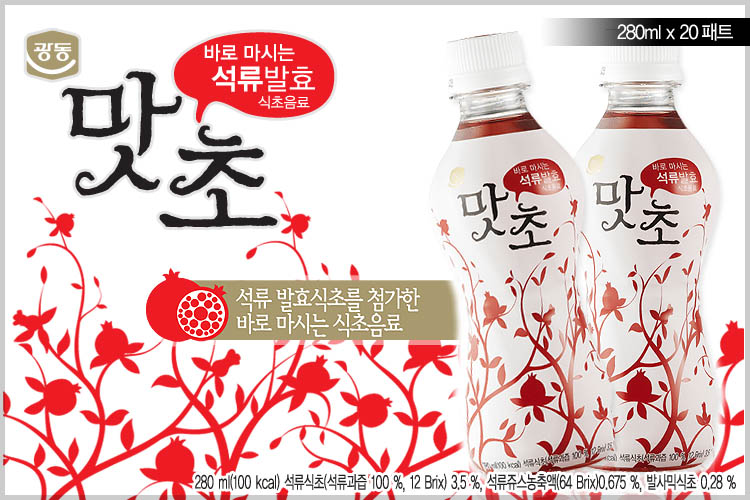
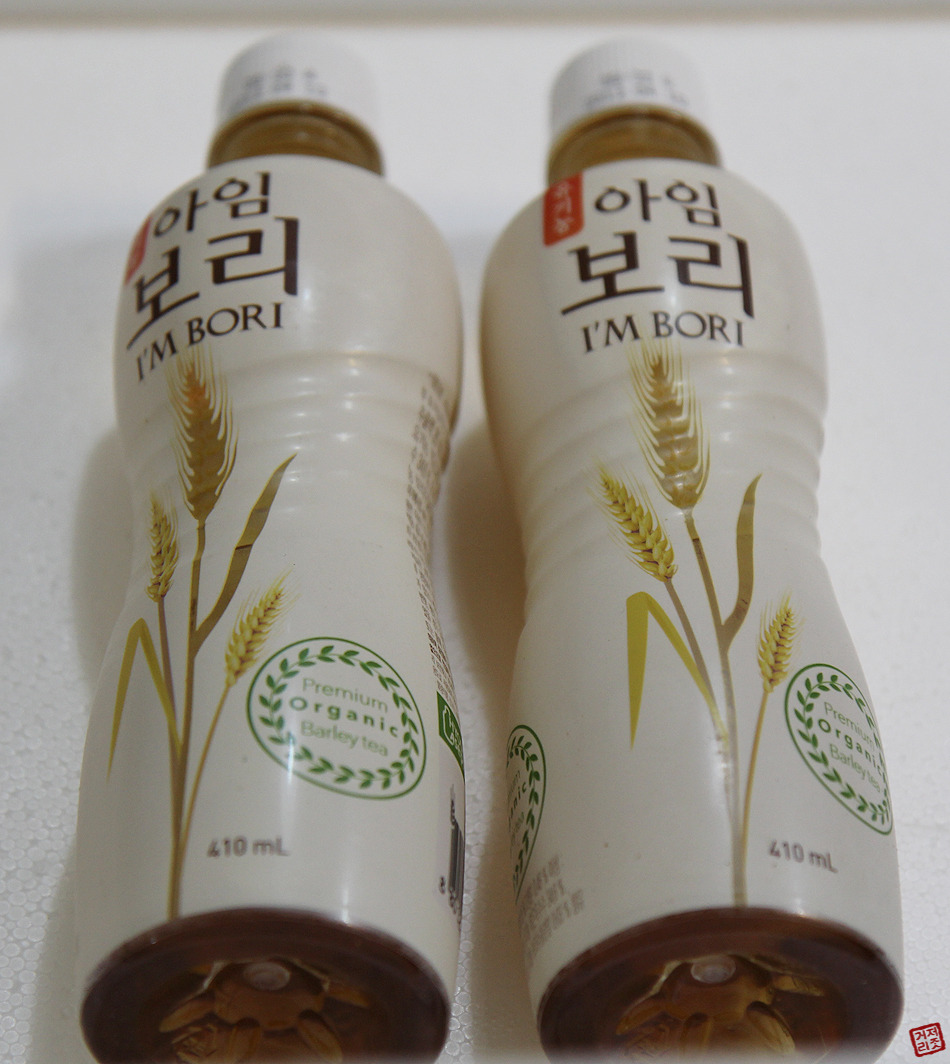
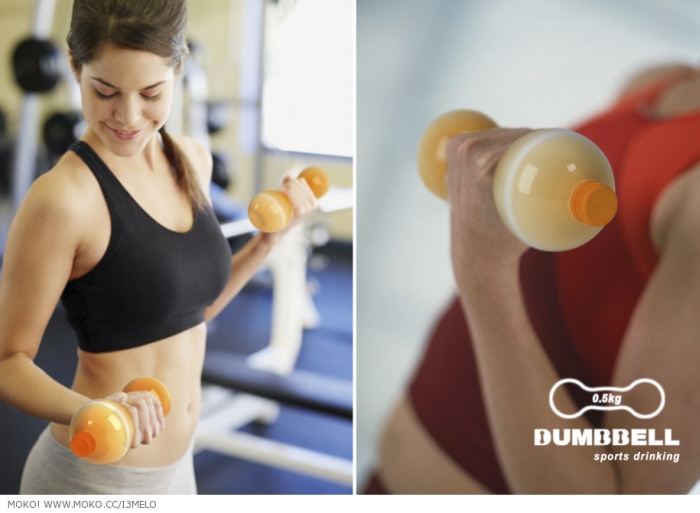
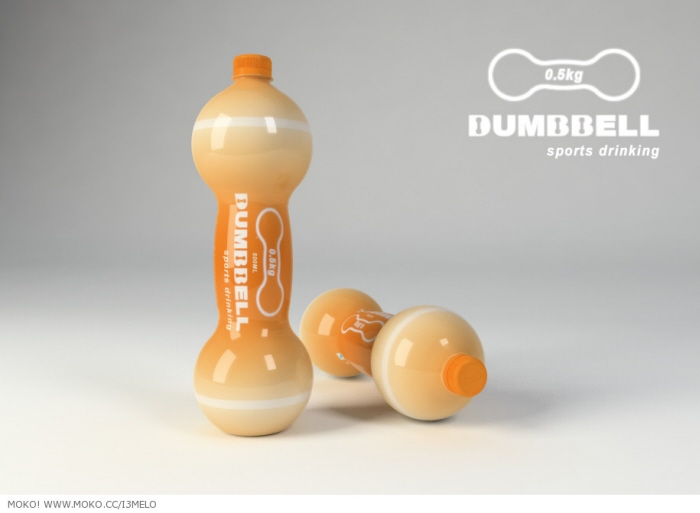

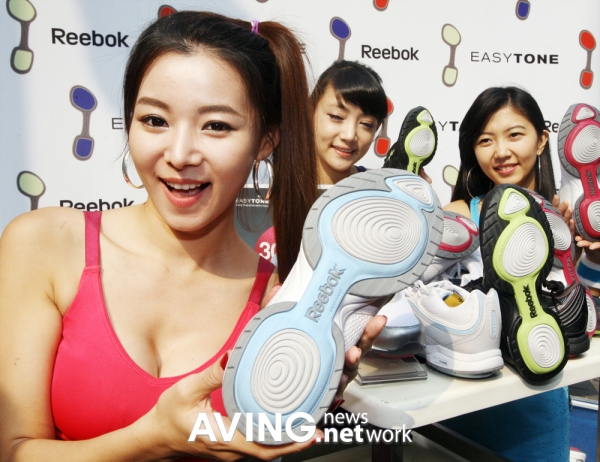
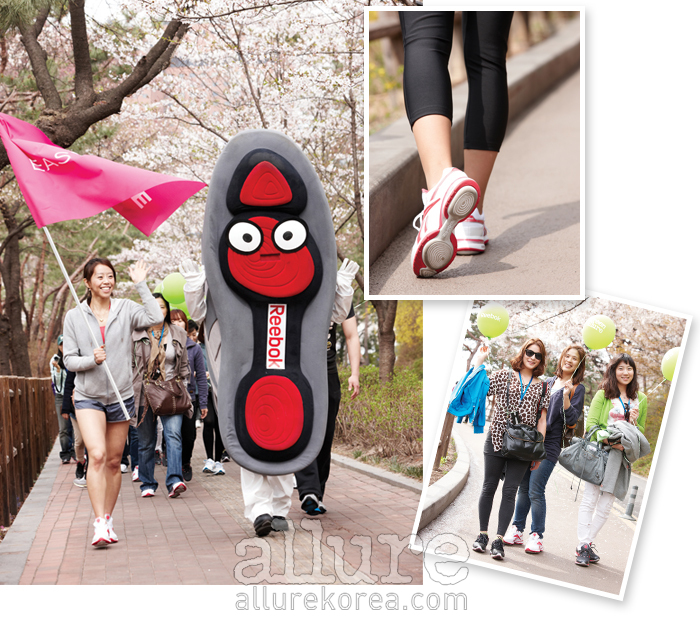

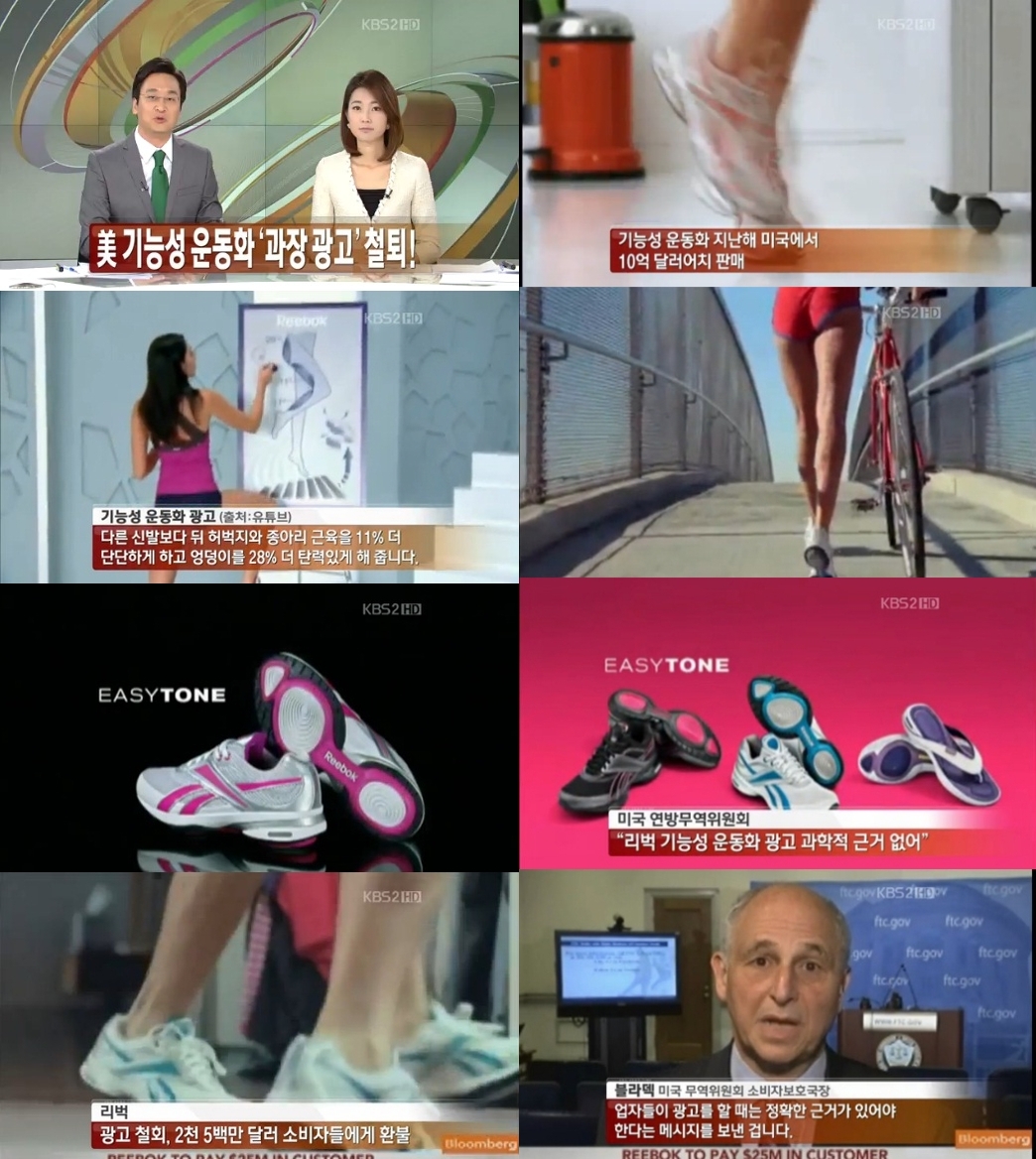
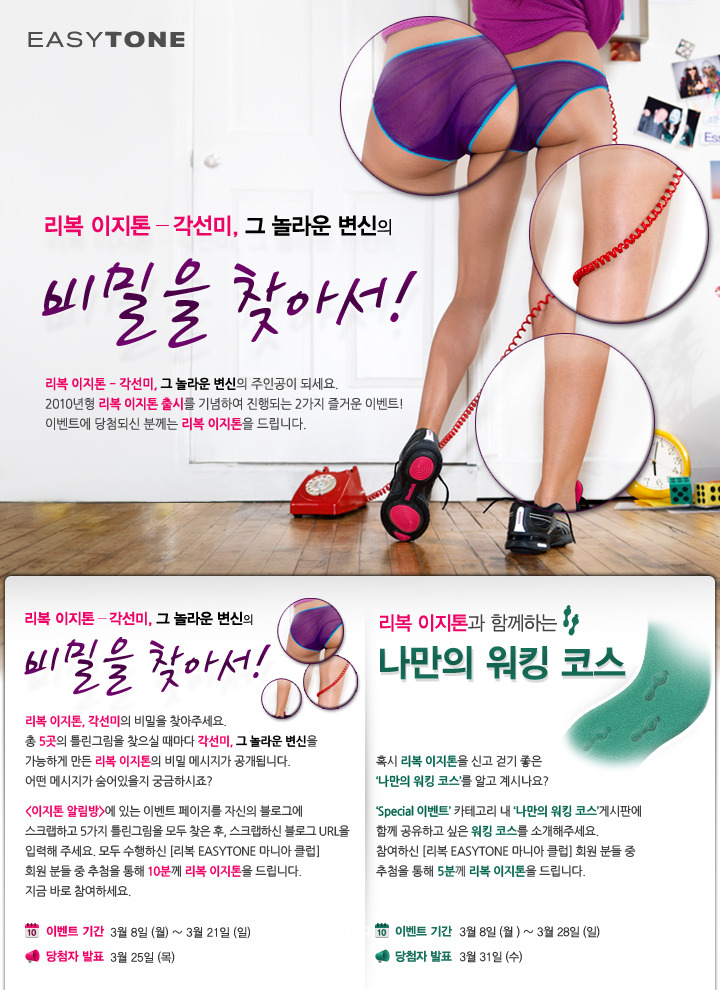
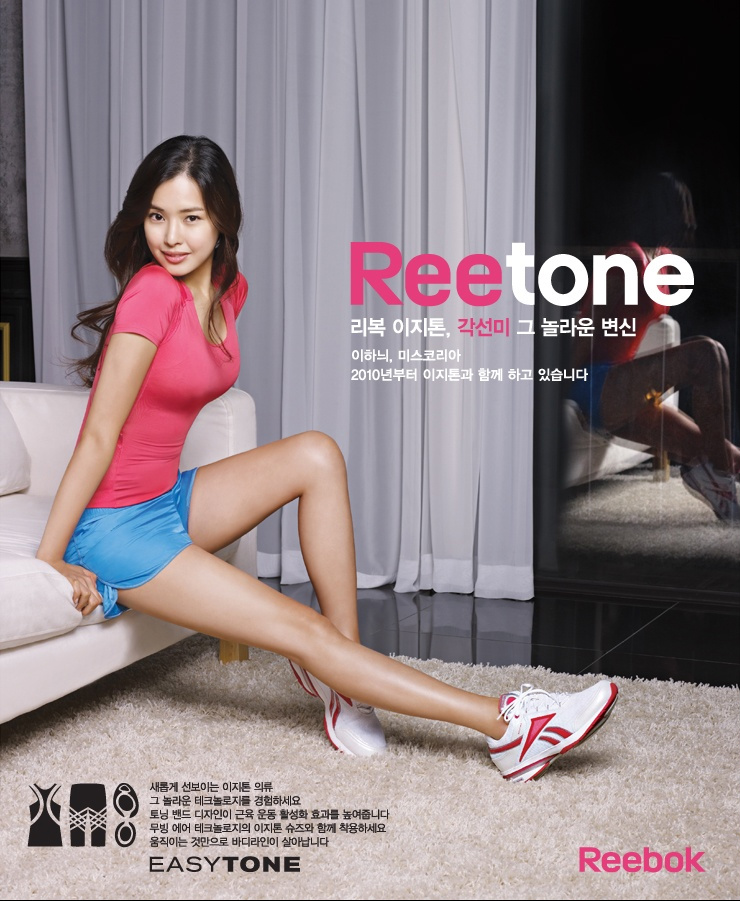
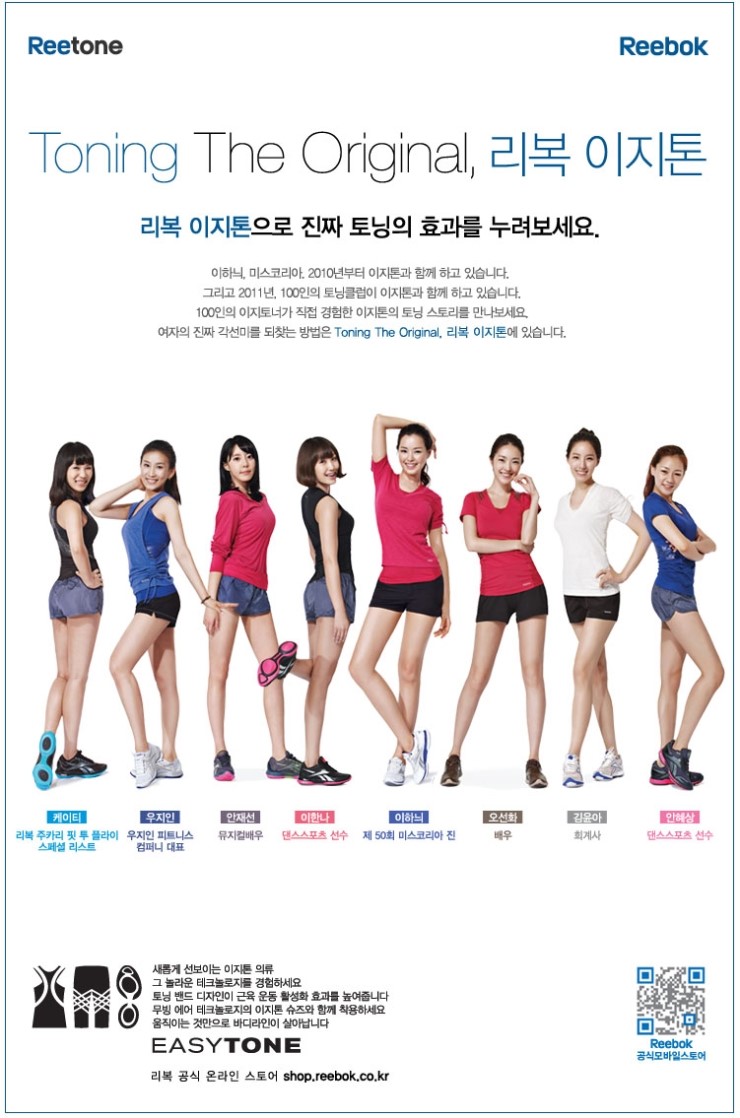
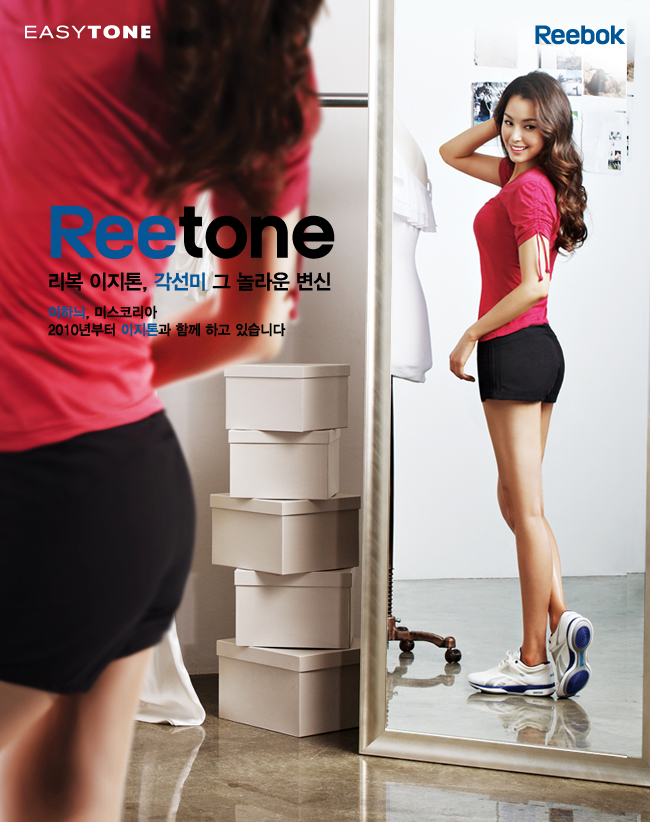




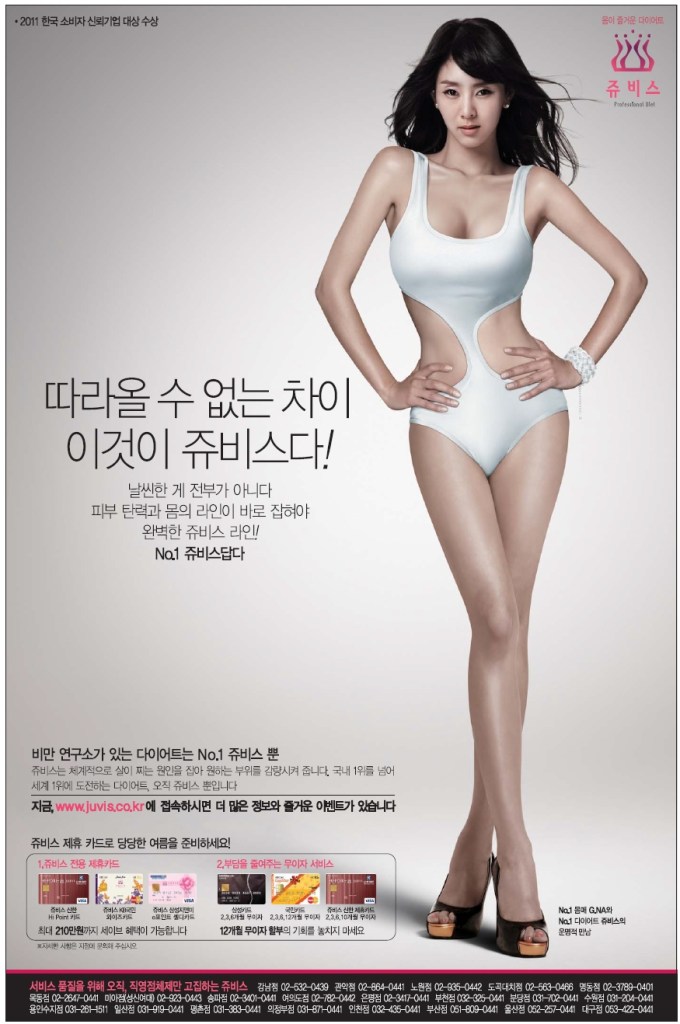



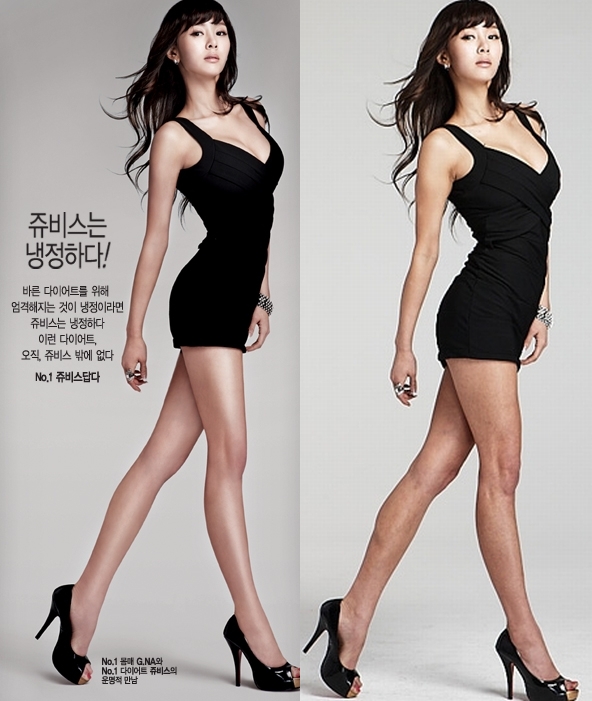

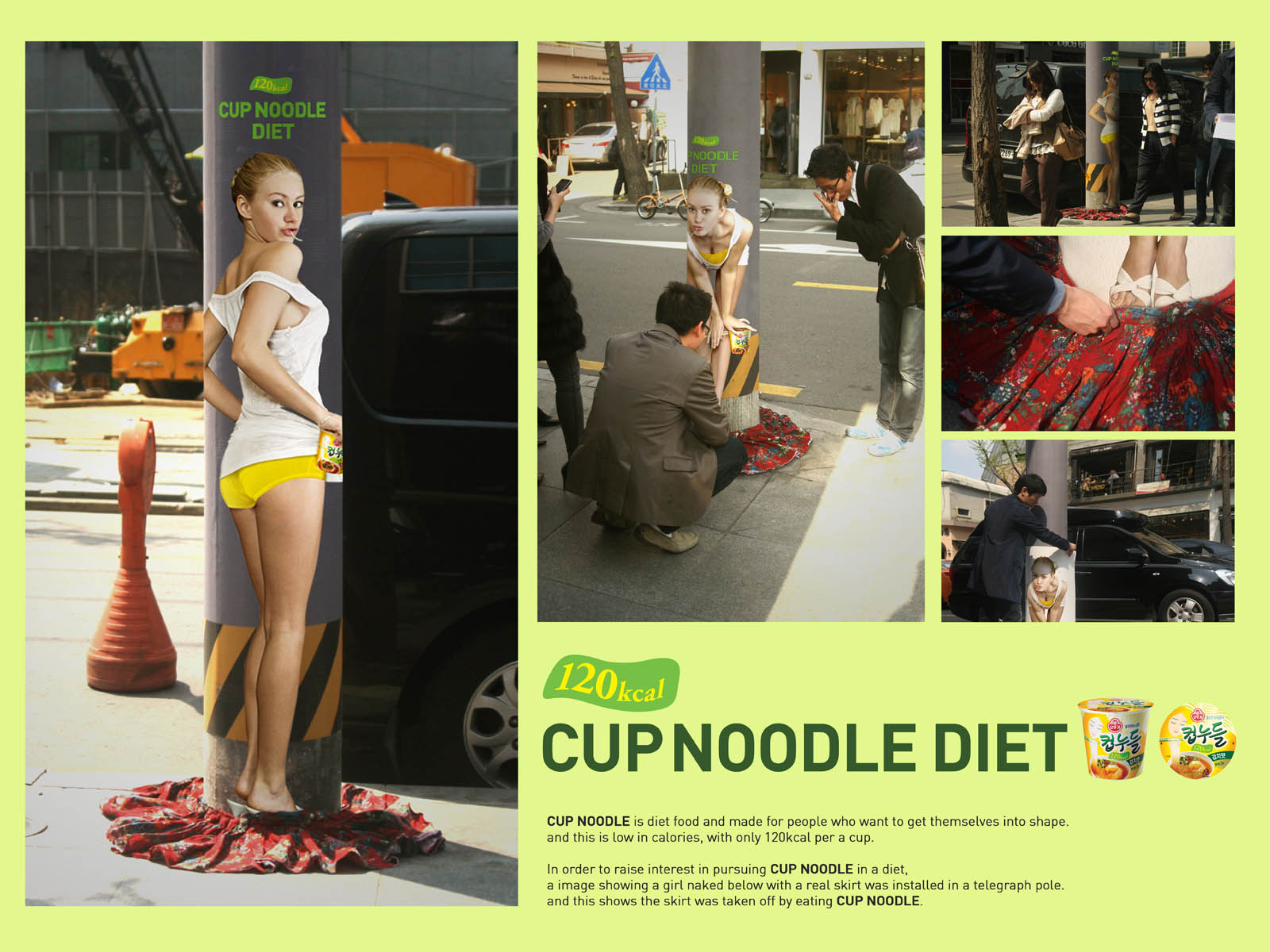

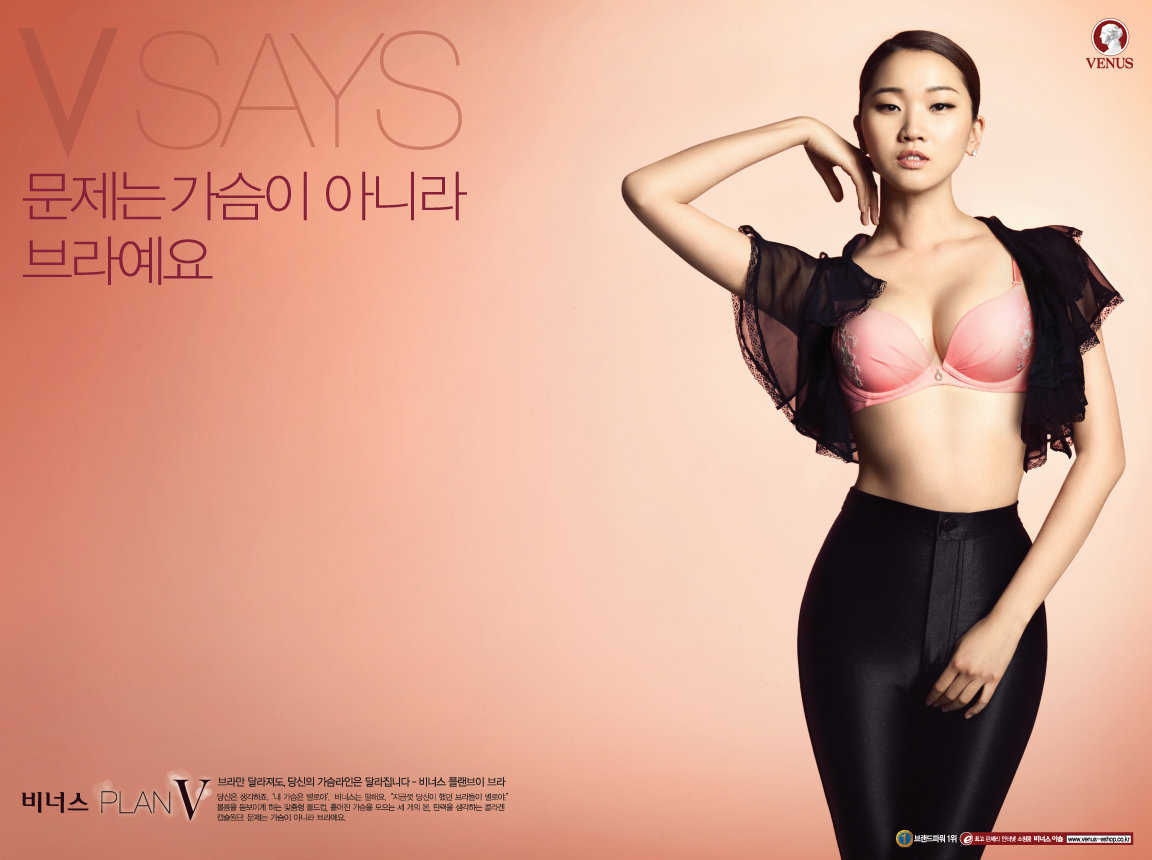

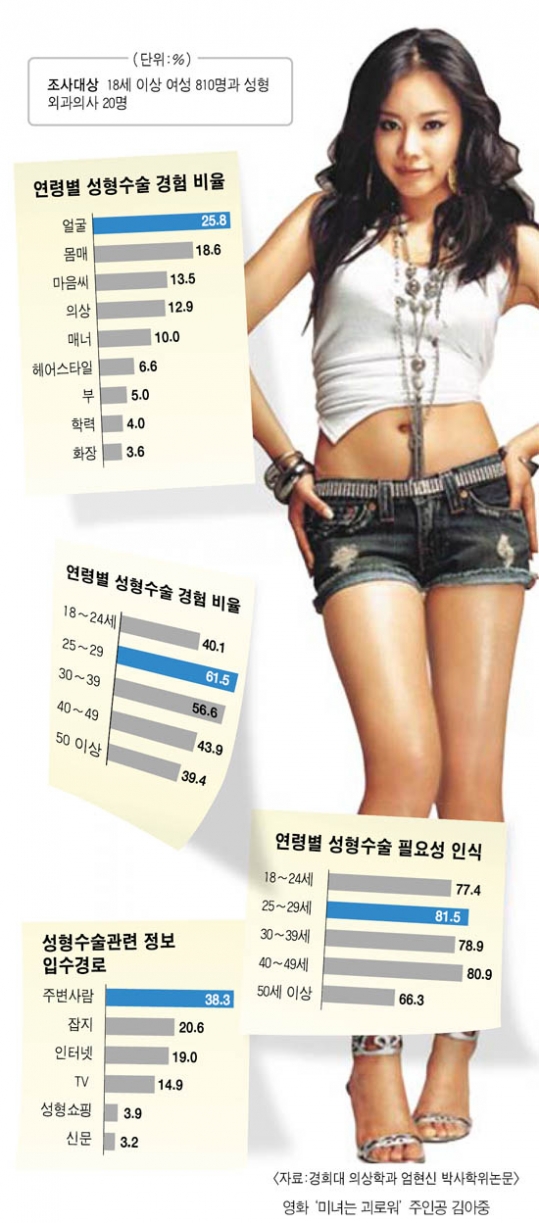
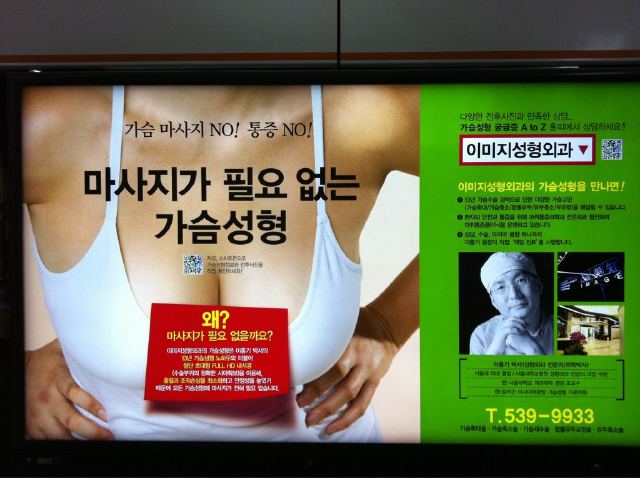







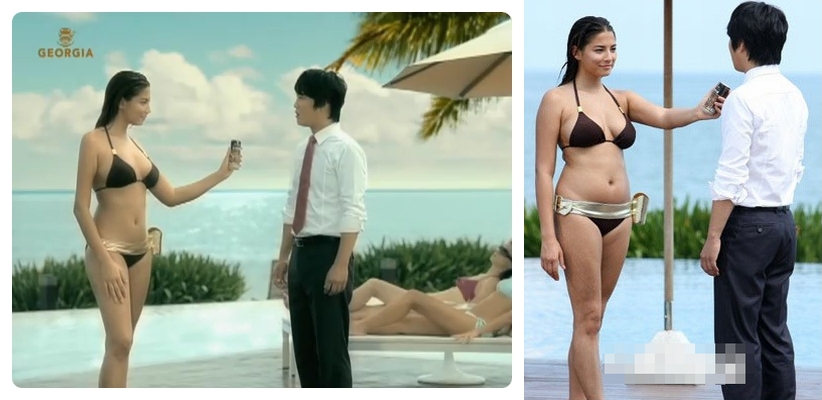



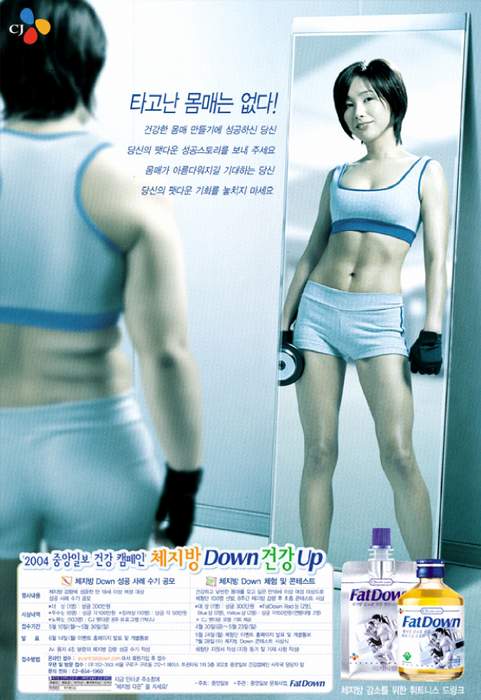

 Three out of four female college students consider X-line, a term referring to a slim waist with ample breasts and hips, to be the ideal body shape, according to a survey by



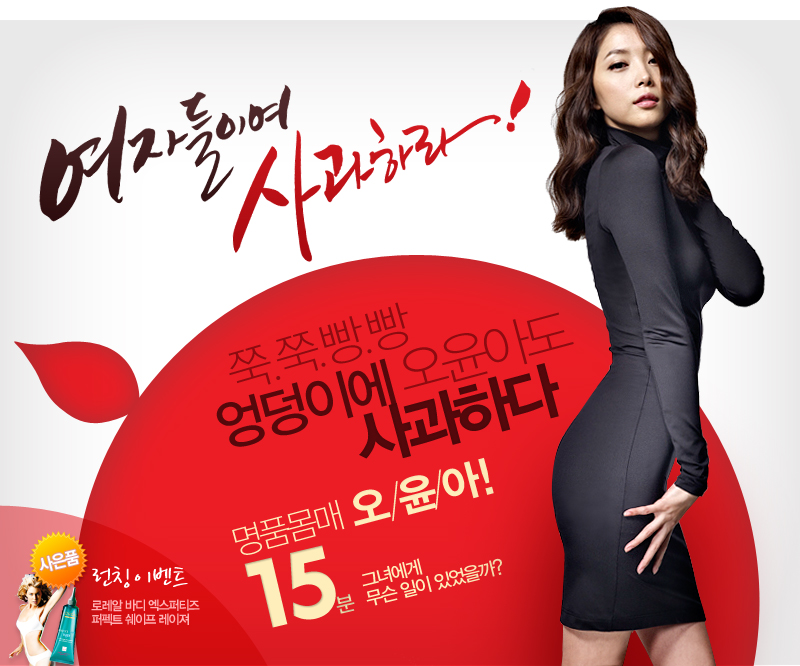
 The Grand Narrative