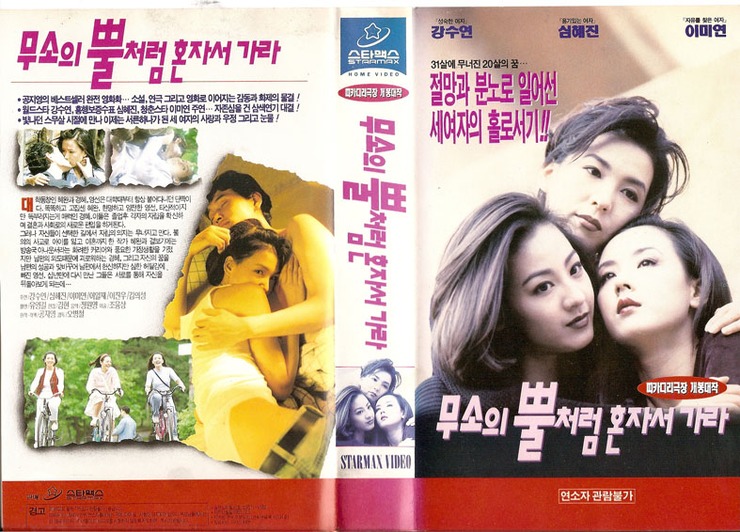
WOMEN WE LOVE Bookclub Event—Sunday, February 11, 2-4pm

Estimated reading time: 2 minutes.

Just a heads-up to let you all know about this upcoming event, to give you time to order and read the excellent Women We Love: Femininities and the Korean Wave (2023) before we zoom!

(My copy arrives tomorrow! Squeeeee~)

Organized again by Rhea Metituk (rhealm@gmail.com) of the KOTESOL Women and Gender Equality Special Interest Group, at the moment there’s absolutely no agenda other than everyone being welcome to join, that it won’t be recorded, and that you can rest assured that Rhea will be graciously but ruthlessly ensuring the KOTESOL Code of Conduct is followed by all participants. So please do get in touch with myself or Rhea if you’d like to be on the list to receive the private Zoom link closer to the event, and we’d appreciate any ideas for discussion questions before the day. Thanks!

See you there!

If you reside in South Korea, you can donate via wire transfer: Turnbull James Edward (Kookmin Bank/국민은행, 563401-01-214324)

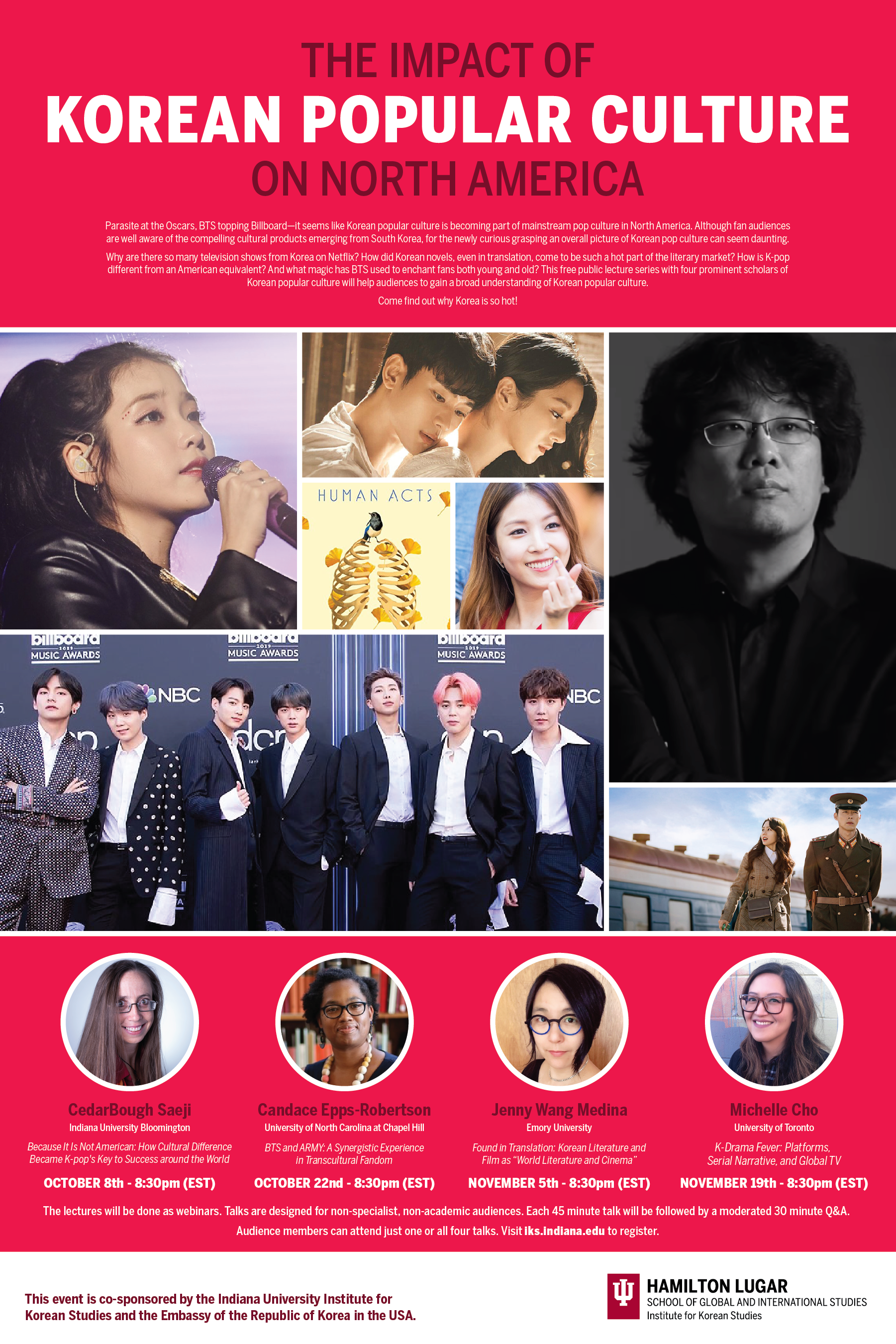
Webinar Series: The Impact of Korean Popular Culture on North America

Please see here for more information and links for registering.

If you reside in South Korea, you can donate via wire transfer: Turnbull James Edward (Kookmin Bank/국민은행, 563401-01-214324)

Being Able to Wear Glasses Was a Crucial Step for Korea’s Anchorwomen. Now, Let’s Give Them a Chance to SPEAK as Much as Anchormen Too.

Korean entertainment programs are notorious for perpetuating traditional gender roles, let alone for normalizing body-shaming and sexual violence. But news programs can be just as big offenders.

Estimated reading time: 5 minutes. Image source: YouTube.

Back in April, MBC anchorwoman Lim Hyeon-ju caused a sensation by being the first Korean female news anchor to wear glasses on the job, sparking a national conversation about double standards in dress codes. Shortly thereafter, the results of two studies on gender biases in the Korean media were released.

That you clicked on this post means you’re probably already aware of the Korean media’s widespread sexism. The romanticized depictions of dating violence in dramas for instance. The pervasive body-shaming. Subtitles for other languages usually depicting women talking to men in deferential speech, regardless of what was actually used by the speakers. And so on.

Yet the raw figures can still make for some alarming reading.

The first study, conducted in March by the Korean Institute for Gender Equality Promotion and Education (KIGEPE), focused on entertainment programs, the results of which can be read in The Korea Bizwire and The Korea Herald. The second, conducted in 2015 and 2017 by the National Human Rights Commission of Korea (NHRCK), covered both entertainment and news programs. About the former, it found similar results to the KIGEPE’s study. As for news programs, men and women’s roles on them were revealed to be dramatically different. I haven’t been able to find any news about the study in English however, so here’s a quick breakdown from an article at Youth Daily (청년일보):

…국가인권위원회는 한국방송학회에 의뢰해 지난해 지상파와 종합편성채널에서 방영된 드라마·뉴스·생활교양·시사토크·오락 프로그램을 대상으로 미디어 성차별 실태를 모니터링한 결과를 1일 발표했다.

…The NHRCK has released the results of its study of gender discrimination in dramas, news programs, lifestyle programs, current affairs shows, and other entertainment programs shown on public broadcast channels and cable channels last year. The study was commissioned by the Korea Broadcasting Commission.

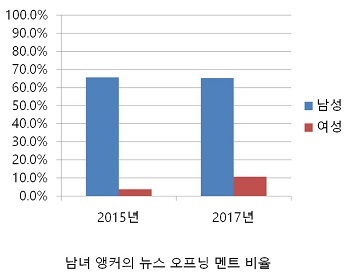
먼저 뉴스 프로그램 앵커의 경우 오프닝 멘트와 그 날 가장 중요한 기사인 첫 다섯 꼭지를 남성 앵커가 소화하는 비율은 2015년과 2017년 모두 60%를 넘었다.

First, in the case of news program anchors, the rate in the number of occasions in which the male anchor made the opening remarks and announced all of the first five news segments exceeded 60% in 2015 and 2017 [see chart, right].

주요 아이템 소개는 남성 앵커가 맡고, 중반 이후의 아이템 소개는 여성 앵커가 맡는 경우가 많았다.

Indeed, most of the biggest, major news items of each program were introduced by male anchors, while female anchors predominated with lesser news items introduced after half-way into the programs.

앵커가 소개하는 기사의 내용도 성별에 따라 달랐다. 정치·국방·북한 관련 등 딱딱한 ‘경성’ 뉴스는 남성 앵커가 소개하고, 경제·사회·생활정보·해외뉴스·날씨 관련 등 부드러운 ‘연성’ 뉴스는 여성 앵커가 소개하는 비율이 높았다.

The contents of anchors’ articles also tended to be differentiated by sex. While male anchors would introduce news items in “hard” areas such as politics, defense, and North Korea, female anchors tended to introduce those in “soft” areas such the economy, society-related topics, day-to-day information, overseas news, and the weather.

취재기자의 경우 전체 뉴스 아이템의 64%를 남성이 보도하고, 여성은 31%만 보도한 것으로 나타났다. 기자도 앵커처럼 남성 기자가 경성 뉴스를, 여성 기자는 연성 뉴스를 보도하는 경향이 강했다.

There was a discrepancy in the sexes of news reporters also, 64 percent of all news items being reported by men, and only 31 percent by women [I don’t know why these don’t add up to 100—James]. Hard news stories introduced by male anchors were also more likely to feature male reporters, and vice-versa with soft news stories and female anchors and reporters.

인터뷰 대상자 역시 남성이 73%였고 여성은 26%에 그쳤다. 전체 대상자 중에서 남성 전문직은 20.8%였던 반면 여성 전문직은 5.8%에 불과했다.

There were big differences in the sexes of interviewees also, 73 percent being men and 26 percent being women [again, no explanation for why they don’t add up to 100 sorry—James]. In addition, 20.8 percent of the male interviewees were considered experts in their various fields, but only 5.8 percent of the female ones were.

The lack of any mention of methodology is frustrating, so please hit me up in me up in the comments section if you’d like me to dig deeper, or about anything else raised. Personally, my first impression was that however sexist the contents, fortunately the impact of traditional news is increasingly limited. Even in the US for instance, where people still watch an astonishing 7 hours and 50 minutes of TV a day, only 50% of adults regularly get news from television, most of them in older demographics. Surely in wired Korea, that figure would be far lower?

But that would be missing the point. Just because a news video is more likely watched on Facebook on a smartphone than on the 6 o’clock news on TV, doesn’t mean a traditional news organization wasn’t the most likely producer. Ergo, the differences revealed by this study still have real impacts and still need fixing, as evidenced by the scale and enthusiasm of the reaction to Lim Hyeon-ju donning her glasses.

If you reside in South Korea, you can donate via wire transfer: Turnbull James Edward (Kookmin Bank/국민은행, 563401-01-214324)

Korean Media Misogyny: Not worth monitoring?

korean-media-misogyny(Source, edited: tiffany terry; CC BY 2.0)

You know the media plays some role in perpetuating misogyny—let’s just take that as a given.

Let’s also take it as a given that the first step in dealing with a problem is determining how big it is. For a government that wants to show it’s serious about misogyny, that means setting up an organization tasked with monitoring it in the media, rather than simply relying on the public and NGOs. It means actually acting on what that organization finds too, challenging instances as they occur.

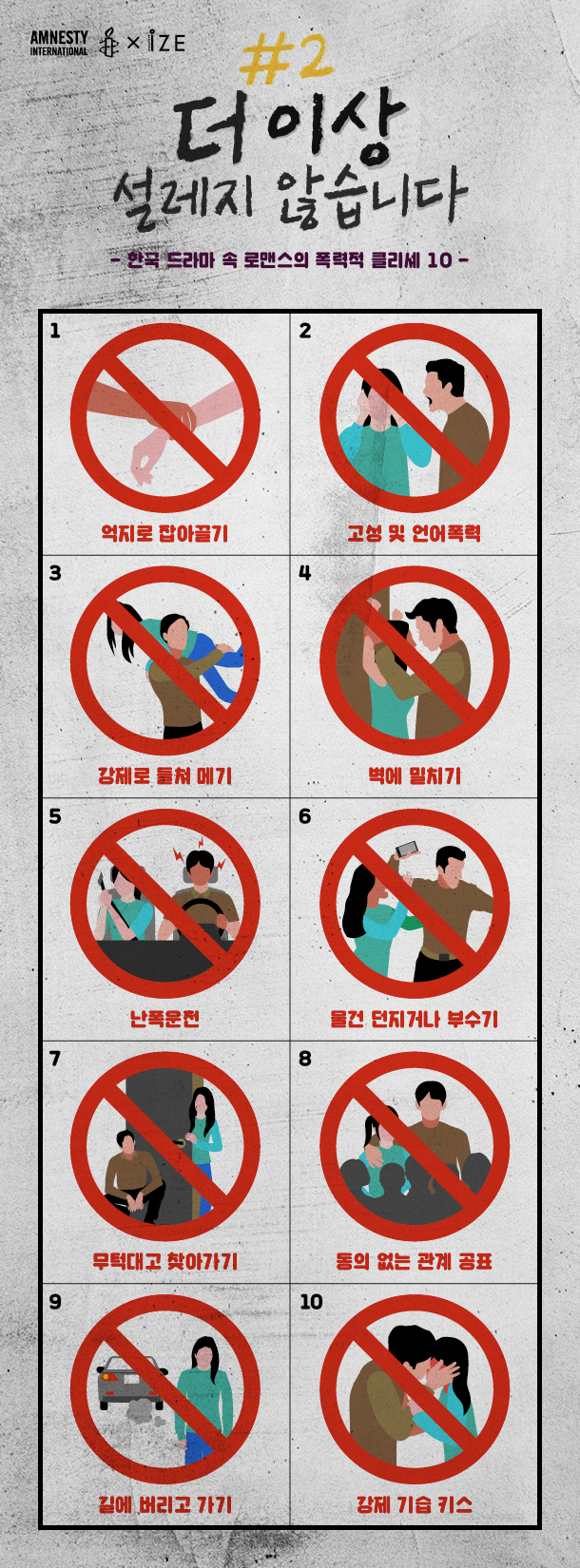
In Korea, the Korean Institute for Gender Equality Promotion and Education (KIGEPE) is given those responsibilities, under the auspices of the Ministry of Gender Equality and Family’s Mass Media Sexual Equality Monitoring Project. And, judging by social media these days, its hands must be full:

korean-media-violence-misogyny(Source: IZE Magazine)

https://twitter.com/suzyinseoul/status/763976395278004225

https://twitter.com/GermanCoffee/status/779446454440095745

Unfortunately however, today’s story below is not so much about the heroic KIGEPE doing a sterling job under difficult circumstances, as about it not being given enough resources to do its job whatsoever. In short, the government just seems to be going through the motions, rather than really grappling with some of the underlying causes of misogyny.

Perhaps that same attitude also explains why there has been a rise in sex crimes and gender inequality under the Park Geun-hye administration, as well as its repeated attacks on women’s reproductive rights?

여성가족부, 대중매체 성차별 표현 개선요청 6년 간 단 21건

Ministry of Gender Equality and Family Monitors Sexual Discrimination in Mass Media for 6 Years, But Makes Only 21 Requests to Challenge Cases in That Time

공감신문, 04.11.2016, 김송현 기자 By Kim Song-hyeon, GoKorea.

지난 2일 박주민 국회의원(더불어민주당/서울 은평갑)이 여성가족부로부터 제출받은 자료에 따르면 여가부는 2010년부터 “대중매체 양성평등 모니터링 사업”을 실시한 이후 6년 간 진행한 개선요청이 21건에 불과하다고 밝혔다. 이 가운데 권고 등 시정조치가 이루어진 경우는 4건에 그쳤다.

This November 2, Congressperson Park Ju-min (Seoul Unpyeong District, Democratic Party of Korea), claimed that, according to materials provided by the Ministry of Gender Equality and Family, its Mass Media Sexual Equality Monitoring Project has only made 21 requests to remove or adapt offending segments in over 6 years of operation. Out of these requests, only 4 resulted in action actually being taken.

한국양성평등교육진흥원은 여가부로부터 예산 지원을 받아 2010년부터 대중매체를 모니터링해 성차별·편견·비하를 드러낸 내용에 대해 개선을 요청하는 사업을 진행해왔다. 그러나 모니터링 기간은 짧았고 그 대상범위도 협소하였다.

The Korean Institute for Gender Equality Promotion and Education is responsible for the monitoring, under the auspices of the Ministry. From 2010 onwards, the institute has been monitoring mass media for cases of sexual discrimination, sexual prejudice, and sexual insults. But the actual monitoring period each year is very short.

지난해 대중매체 양성평등 모니터링은 방송의 경우 단 1-2주의 기간 동안 10개 방송사에 대해서 이루어졌으며, 인터넷 포털사이트 내의 언론기사의 경우 35개 매체에 대해 단 1주일만 모니터링이 이루어졌다. 신문의 경우 월마다 신문사를 지정하여 6개월 간 6개의 신문을 모니터링했다.

Last year, the institute’s monitoring period of the 10 main television channels was only 1-2 weeks long, and 1 week for 35 news portal websites. For newspapers, 1 newspaper is chosen to be examined per month, up to a total of 6 newspapers in 6 months.

2016년 9월 기준으로 언론중재법에 따라 등록된 언론사의 수는 지상파 48개, 종합유선(위성)방송 31개, 방송채널 241개, 신문 등 간행물 16,520개에 이르고 있다. 최근 인터넷을 통한 개인방송이 늘어나는 실정까지 감안하면 여성가족부의 사업 규모가 지나치게 작다는 지적이 나오는 이유이다.

However, as of September the number of mass media-related outlets includes 48 main TV channels, 31 satellite channels, 241 cable channels, and 16,520 print publications. Considering the recent rapid growth of personal broadcasting on the internet also, the institute’s monitoring of the media is clearly inadequate.

여가부는 모니터링 사업에 지난 2014년부터 매년 3,600만원의 예산을 지원해왔다. 최근 온라인상 각종 혐오 문제가 대두되면서 이 사업의 확대실시와 내실화를 위해 예산을 늘려야한다는 목소리가 정치권에서 제기되었음에도, 여성가족부는 2017년 예산안으로 전년도와 동일한 3,600만원을 편성하였다.

From 2014, each year the Ministry has provided 36 million won in funds to the institute. [James: To get a sense of how much that is, that’s the annual salary of a completely hypothetical lowly assistant professor.] This amount has continued at this level despite the increasing problems of misogyny in Korea society however, and the growing calls to expand the monitoring project and funds made available.

박주민 의원은 “대중매체에 실린 혐오 표현은 부지불식간에 확산되기 쉽기 때문에 성평등한 문화 조성을 방해하는 심각한 요인으로 작용할 수 있다”고 지적했다. 또한 “갈수록 늘어나는 온라인 매체를 고려하면 예산을 증액하여 사업을 내실화할 필요가 있다”이라고 지적했다.

Congressperson Park Ju-min pointed out that “Expressions of misogyny in the mass media can easily spread and negatively impact on efforts to achieve sexual equality.” Also, “Considering the increasing growth of the online mass media, a reorganization of the project and more funds are urgently needed.” (End.)

kang-yong-suk-international-marriage(Source: MLBPark)

Another article gives a few more details about those 4 cases that were acted upon:

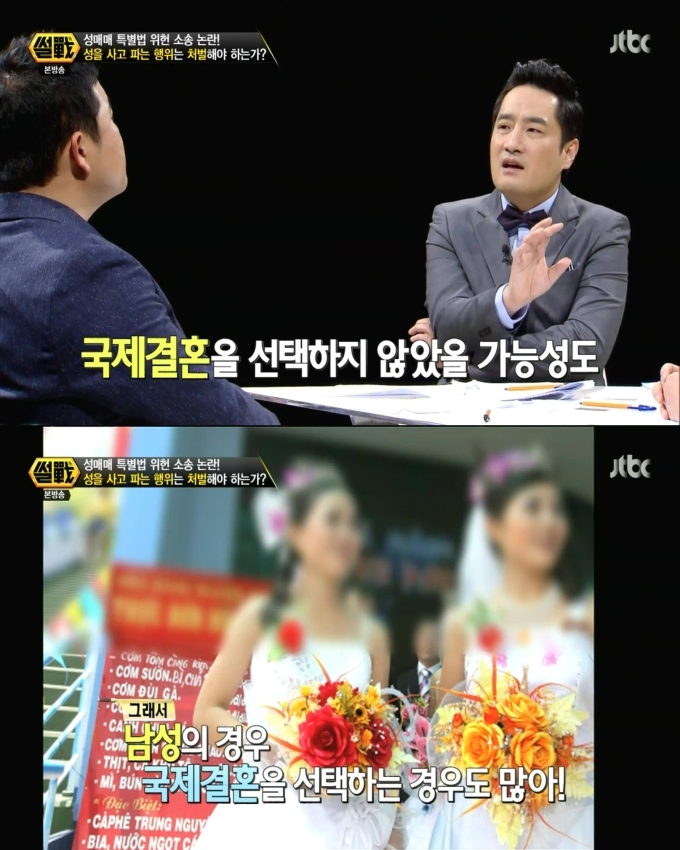
지난해 한 예능 프로그램에서 방송인 강용석 씨가 “외국신부를 데리고 와서 결혼하는 바람에 사회적인 문제로 번질 가능성이 굉장히 높다”는 내용의 발언을 하는 장면에 대해 방통심의위원회가 권고 조치를 내고, 한 음악 프로그램에서는 그룹가수 출신 위너 송민호가 “딸내미 저격 산부인과처럼 다 벌려”라는 가사로 랩을 해 방심위가 과징금을 부과했다.

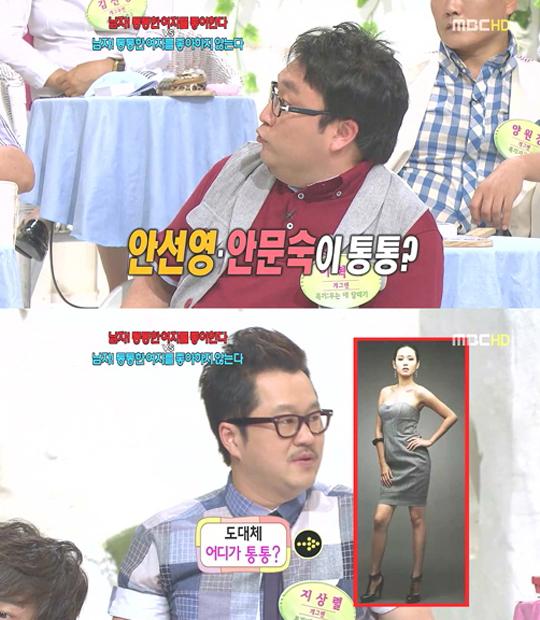
Last year, on one entertainment program [above], the [controversial] panel-member Gang yong-seok said “The more marriages there are to foreign women, the more social problems Korea will have.” However, The Korea Communications Standards Commission simply let him off with a warning. Next, the singer Song Min-ho was fined for rapping, “I’m targeting your daughters; [they’ll] spread their legs like they’re at a gyno’s'” on a music program.

또 한 신문사는 특정 외국배우의 신체부위를 필요 이상으로 세밀하게 표현하고 선정적인 사진을 게시해 한국신문윤리위원회로부터 ‘주의’ 조치를 받았다.

한 드라마에서는 여성에게 술잔을 던지며 폭력을 행사하는 장면에 대해 방심위가 의견을 제시하는 등 2건의 조치가 이루어졌다.

Also, one newspaper received a warning for posting unnecessarily revealing pictures of a foreign actress. And finally, in one drama, they suggested alternatives to a scene in which a male character attacked a female one by throwing a glass of alcohol at her. (End.)

I’ve been unable to find out which newspaper and which drama sorry; if you do, please let me know thanks, and I’ll consider translating this (frankly) much more interesting related article, which provides some positive examples of combating sexual inequality and stereotypes too.

Update: Korea Bizwire reported back in September that the “The Korea Communications Standards Commission announced…[it] will be revising its regulations on broadcasting deliberation in an effort to promote gender equality on television programs and for online video content.” Given that it already said something similar in April however, as did the Ministry in January, then you can understand Park Ju-min for raising a fuss.

Related Reading:

(Guest Post) Misogyny is Sexy: The power structure of sex

korean-misogyny-k-pop(Source, left: Isabel Santos Pilot; CC BY-NC-SA 2.0. Source, right: SenseiAlan; CC BY 2.0. Both pictures edited.)

The 2016 US presidential election can be viewed as a struggle for power. Not only was it a struggle for political power, but there was a very basic struggle that permeated throughout the entire election season — the struggle between men and women. Late into last Tuesday night, we saw Donald Trump, a man with a history of misogyny, triumph over Hillary Clinton and dashing the hopes of those wishing to see the first female president in US history. As I sat in my living room watching the results unfold, I couldn’t help but think to myself, “Misogyny is sexy.”

Misogyny, defined as an ingrained prejudice against women, is at its core an ideology which allows the man to assert power and dominance over the woman. This can be manifested in many variations, a prominent form of which is portrayed through the culture of sex. Misogyny is highly embedded into the culture of sex in that sex is often times presented as a power trip for men. Under the context of misogyny, women are the gatekeepers of sex and men are the conquerors who must get past the gatekeeper in order to claim the prize. By viewing sex as a competition of man versus woman, misogyny is inherently at play. In this cat and mouse game, the woman is initially presented as having the upper hand and the man’s goal is to shift the balance of power by conquering the woman through obtaining sex. In essence, misogyny is normalized in this kind of relationship and, in turn, a man’s dominance over a woman is at the very center of this culture of sex.

As with any form of culture, its inherent values are often highlighted in the media, and K-pop is no exception. Misogyny is widely at play in many concepts, storylines, and character tropes of our favorite groups and idols. It’s the normalization of misogyny, and its influence on our perception of sex, which makes some of these examples so subtle and hard to distinguish. However, it’s important to recognize misogyny in the things we consume and to identify the difference between what’s sexy and what’s sexist.

The roots of misogyny appear in many forms among a wide variety of cultures. Many civilizations have a popular mythology which represents the female embodiment of wrongdoing in which the foundation of misogyny resides. The most well-known of these mythological scapegoats among Christian societies is the story of Eve and the Original Sin which resulted in man’s exile from the Garden of Eden. Under the influence of the snake, Eve bites the apple despite God’s specific instructions not to and, as a result, Adam and Eve are booted from paradise. By listening to the treacherous snake and indulging in the Tree of Knowledge, Eve decided that knowledge was worth the price of utopia, and her female descendants have had to bear the scorn of her mistake ever since. The characteristics of the snake, the embodiment of deceit and evil, also happen to be attributed to Eve.

Ancient Greece introduced the idea of women as dangerous creatures who lured unknowing male seamen into shipwreck by their irresistible song. The Sirens of Homer’s The Odyssey are a prominent example of the demonization of women in popular mythology. They are the classic representation of a trope which depicts women as duplicitous, treacherous, and all the while irresistible to their male victims. The song sung by the Sirens introduces an element of temptation. The allure of their song can easily be interpreted as the irresistible offer of sex which draws in unsuspecting men. Very much like Eve’s snake, the Siren’s song is another embodiment of the deceitful and ill-intent female. In the case of the Sirens, these females are directly portrayed as villains and their ill-intent is specifically targeted at men.

Korea is not without its share of misogynistic roots in its popular mythology, the most prevalent of which is the Kumiho. As legend would have it, a nine-tailed fox that lives for a thousand years turns into a shapeshifting creature who’s out to ingest men. One of its most poignant tricks is to change into the shape of a seductive woman in order to attract men and devour them. While comparisons to the Sirens can be easily drawn, the Kumiho is certainly much more vicious in her deceit. The premise of shapeshifting, the ability to look like anyone or anything, can be truly horrifying when the creature is clearly a predator out for the blood of men. At best it’s a trope which adds to the element of deceit introduced by the Sirens, but at worst it may also be viewed as a painstaking metaphor for women who seem insincere, double-dealing, and generally untrustworthy — terms which happen to be associated with Hillary Clinton.

Not surprisingly, the Kumiho is often depicted as the Korean version of the treacherous, man-hating woman whenever she appears in K-dramas and in K-pop MVs. T-ara’s “Bo Peep Bo Peep” depicts the Kumiho as a seductive woman who frequents nightclubs to lure her prey, not unlike the monster in the Species franchise. There’s also this A-Jax MV which combines an odd mishmash of mythologies.

Woori, formerly of girl group Rainbow, plays a villainous mix of Eve, Siren, and Kumiho all at once. The boys are on some deserted island which may indicate that they were shipwrecked at some point. They happen upon the lifeless body of Woori who eventually awakens to entrap and devour each A-Jax member one by one. She’s constantly shown biting into an apple and there’s even a sequence of shots which shows five skulls by her feet, one for each victim. Then the screen flashes and the skulls turn into apples. As if the heavy imagery was not enough to drive home the point, the English title of the song is somehow translated into “Snake.” The tone of the MV is silly yet it hits upon many subtle points that are associated with this trope — women are lying evildoers who are dangerous because they possess the power of attraction.

Despite what these tropes may implicate, they alone do not indicate misogyny. However, these tropes point to a perceived suspicion of women and the power that men believe women have over them due to their ability to use attraction as a form of deception. This correlates with the notion that women are the gatekeepers of sex and that they hold all the power in deciding who gets to have sex. By equating sex with power, it creates a power structure where women have all the power and men must gain it back by obtaining sex from women. And thus misogyny rears its ugly head as it is used as a tool for men to regain the power they feel they have lost due to the perceived imbalance of power in their pursuit of obtaining sex.

Under this notion, men become naturally drawn to mediums which reassure them of their power, and nowhere is this balance of power so skewed, so unevenly distorted in the favor of men as it is in porn. As explained in this brilliant Ted Talk, porn is often a misogynistic power fantasy for men which reaffirms the “male domination of women, [the] subordinance of women, not only as a sexual preference [but] as a way of being, a genderial hierarchy of this world.” Porn has the power to dictate what is sexy by giving men what they truly crave and wish to reclaim — power. As a result, because corporations know that sex sells, mainstream media has imitated the imagery of porn in order to appeal to men. In other words, what is sexy becomes influenced and ultimately defined by porn. And because porn is influenced by misogyny, it’s easy to cut out porn as the middleman and make the logical leap that what is sexy is defined by misogyny.

There are a ton of examples of how mainstream media, particularly girl group imagery, imitates porn but, since we’re cutting out the middleman, let’s focus on how popular culture induces misogyny into its products in order to make them sexier. Sailor Moon is an underrated example of misogynistic depictions because, although the show has its share of feminist supporters citing examples of strong bonds between female characters, the autonomous decision-making of its female protagonist, and even its willingness to explore gender roles, the show’s underlying misogyny rests in the particular method in which it sexualizes the show’s cast of underage girls.

Aside from the skimpy fetishized uniforms that Sailor Moon and her team of Sailors transform into, there is a gendered power structure which the show very subtly exploits to further insatiate the sexual appetite of its male audience. On the surface, the Sailors are presented as powerful women with extraordinary powers which allow them to overcome obstacles and destroy their enemies. Despite their powerful demeanor, however, there are many incidences where they fall for some sort of trap laid out by the villain, get tied up, and require the rescue of the show’s male protagonist, Tuxedo Mask. In these moments where strong female characters are shown to be physically vulnerable and in need of a man’s rescue, there’s a shift in power which reaffirms the man’s dominance. Despite all the time the show spends displaying the strength of its female characters, they still must rely on a stronger male character to save them. Combined with the sexual imagery of underage girls in fetishized costumes, the shift in power from the powerful women to the more powerful man invites the male viewer to take further sexual pleasure in the show’s underlying message.

It’s not too dissimilar from the Women in Refrigerators trope which uses the murder of a strong female character to motivate a male character into action, subtly implying that the strength of the female character is inferior when juxtaposed against the power of the male character, reaffirming the shift in power which once again favors that of the man.

In similar fashion, the idea that even an empowered woman can be conquered by the sexual desires of a man makes it so alluring, so provocative, and so misogynistic all at the same time. Not only is it sexy to depict a strong and confident woman as being physically and sexually subordinate to a powerful male figure, it’s even sexier to depict her as being physically and sexually resistant to the man’s advances before eventually succumbing to them. This is the ultimate shift in power that caters to the male viewer’s delicate ego and fuels his power-hungry libido. Under this context, sexual assault can even be viewed as sexy, as is conveyed by Mamamoo’s “Decalcomanie” beginning at the 3:14 mark.

As mentioned in Qing’s review at Seoulbeats, the encounters depicted during a sequence of scenes are borderline displays of sexual assault against each member, deploying wrist grabs and wall slams in order for the male figure to secure a kiss, and possibly more depending on how one interprets the symbolism of the bursting fruit and blindfold removing imagery. The MV subtly builds to this climactic moment by portraying the male in each scene as a stranger to each of the members and implying that these are completely random encounters in very isolated and vulnerable environments for the victim, such as the side of the road, an empty hallway, and inside an elevator. Not to mention that there was an actual struggle depicted between Solar and the man in the elevator which was quickly edited out after Mamamoo’s agency received a litany of complaints from upset viewers.

mamamoo-decalcomanie(Source: Asian Junkie)

Furthermore, we’ve come to know Mamamoo as a strong and confident girl group through their powerful singing and rapping voices, funny and confident variety personalities, and elegant yet non-exploitative concepts. “Decalcomanie” seemed to follow the same pattern until scenes of sexual assault were seemingly strung in for none other than to satiate the sexual appetites of its male audience. The shots of Solar struggling against her male assailant (I was unfortunate enough to see the original MV before the edits) is in the same vein of Sailor Moon getting tied up and Barbara Gordon, aka Batgirl, falling victim to the Joker in The Killing Joke — it’s a form of misogyny meant to satisfy the male libido by demeaning a strong female persona.

In a culture where misogynistic portrayals of women are considered sexy to the point where sexual assault, entrapment, and even murder is used to stimulate a man’s sexual desires, is it really that surprising that the same narrative occurred in this year’s presidential election? A woman with decades of political experience was defeated by a man who’s never held a political office. With the odds heavily in his disfavor, the man was able to shift the balance of power and triumph over the woman to reaffirm for all men that the gender hierarchy is still in their favor.

Like the men who feel disempowered by the culture of sex, many voters gravitated towards Donald Trump because he was misogynistic. They turned to him because his narrative is one they can understand and are familiar with. They turned to him because misogyny is sexy while acceptance and inclusion is not. The misogynistic culture of sex which exemplifies the degradation of women as a form of sexual arousal is harmful, distasteful, and discomforting. It also provides insight into how a misogynist was elected into the highest political office in the US.

Mark is a writer and editor at Seoulbeats. If you’d like to be a guest contributor, you can send your regards to recruiting@seoulbeats.com. Otherwise, you can follow Seoulbeats on Twitter, Facebook, and Tumblr.

(Guest posts reflect the opinions of the author{s}, and do not necessarily reflect those of The Grand Narrative. Please get in touch if you’d like to make your own contribution.)

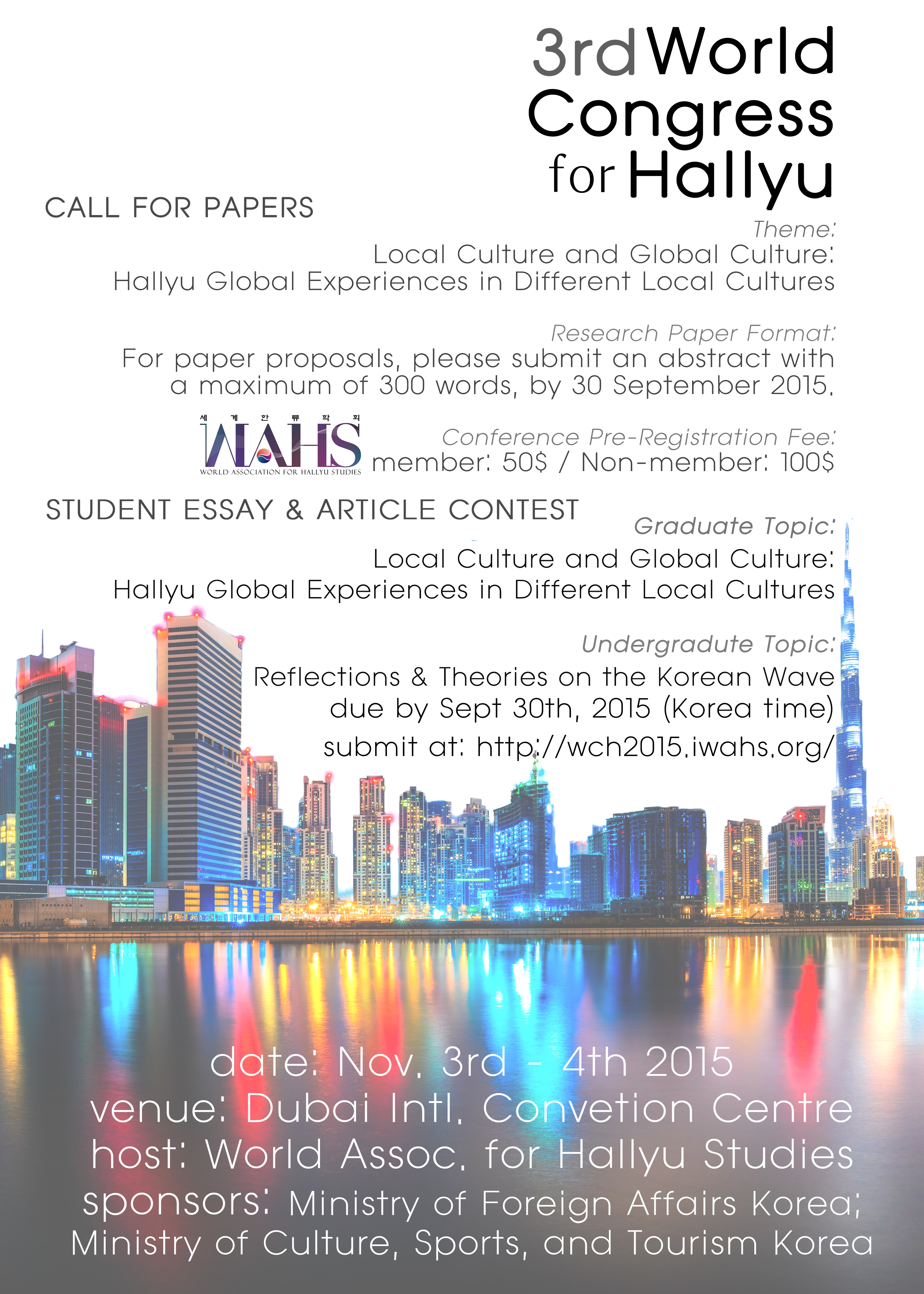
Call for Papers: The 3rd World Congress for Hallyu

I’ve been asked to pass on the following:

wahs call for papers and contest flyerFrom the accompanying email (slightly edited by me):

…I am emailing on behalf of WAHS to inform you of an upcoming international conference in Dubai on Hallyu Studies. The conference, World Congress on Hallyu, is the third of its kind and aims to bring together academics, students, and organizations who have an interest in the phenomenon of the Korean wave, known as Hallyu. Currently, we have branches of research in the Middle East, Southeast Asia, North America, and Europe.

I have a attached a flyer for an official “call for papers” for undergraduate and graduate students. I hope that you can pass it along to students who would be interested in submitting to the conference or contest. The undergraduate student essay winners are eligible to win a cash prize for their research, while graduate students are eligible for free airfare and accommodation to the conference to present their research. Graduate students seriously interested in attending are urged to sign up for a WAHS membership to receive a discount conference entrance fee and possible stipends for our future spring conference.

More information can be found at the official conference website, via the Facebook page, or via Twitter.

Meanwhile, apologies that a bad flu and the start of the new semester has delayed the follow-up to my last post, and I’ll try to have it up soon :)

On Grandly Narrating…Korean Dramas?

Misaeng(Source: The Huffington Post Korea)

Sorry for the slow blogging everyone. Not just for the last few weeks, but for the last few months. Many of you have noticed and have been wondering, so I thought I should offer a quick explanation.

Long story short, I’ve got much less time than I had in 2014.

I’m doing a Master’s again. I’m teaching more classes this semester. I’m working on my first academic journal article. My daughters have started a (lovely) alternative school for multiracial children, which is a long commute away; it’s nice spending the extra time with them, but that’s another 10 hours a week that I used to spend on other things. And so on.

Still, I could and did work on the blog a little. But then I caught an on-off, debilitating flu for over a month. As you can imagine, now I’m behind on just about everything.

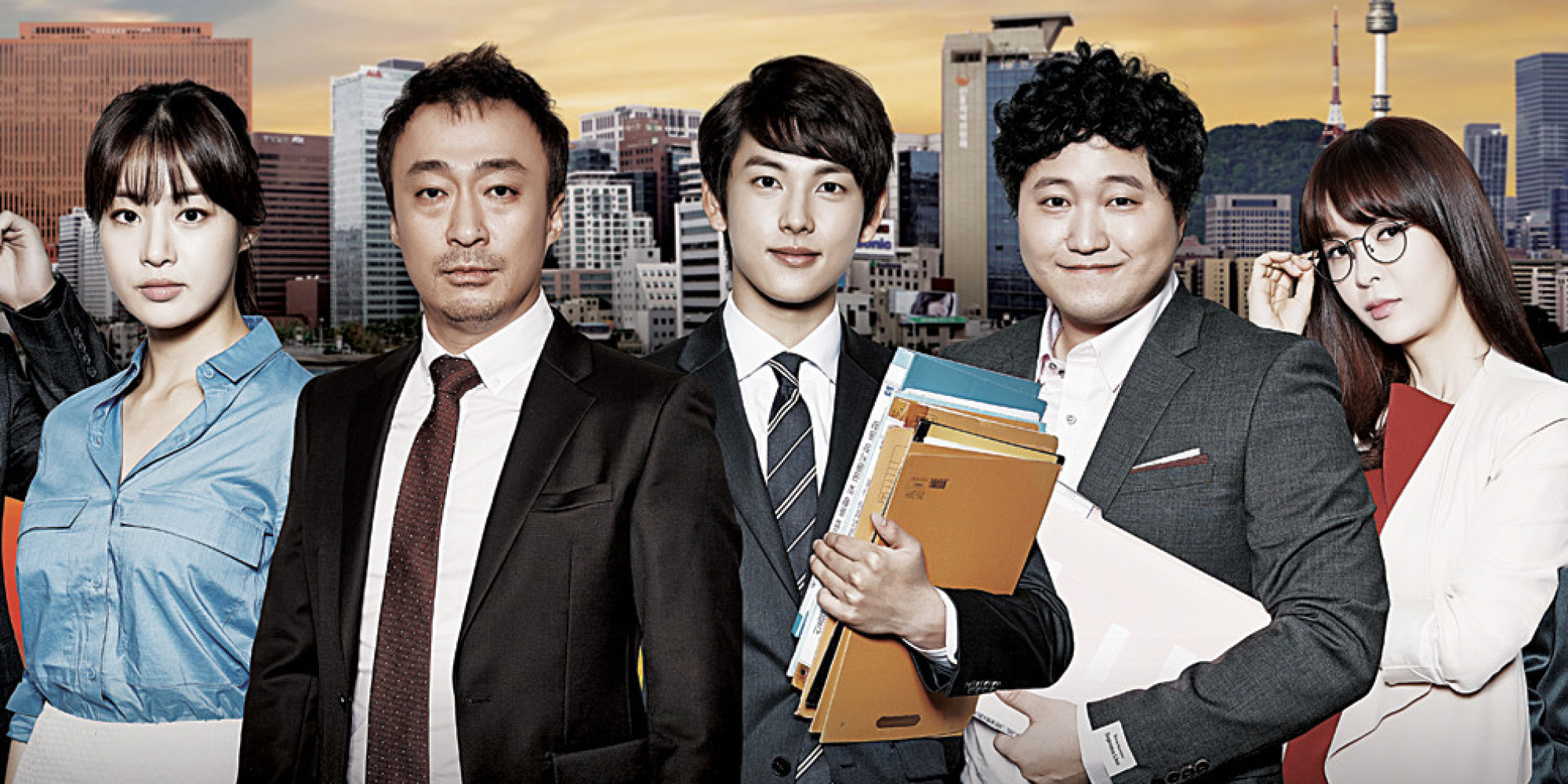
All that said, after 8 years of blogging, I am in a bit of a rut with regards to topics and style, and am looking for new ideas to motivate myself—and hopefully to interest and entertain you too. One possibility might be an episode by episode discussion of the recent(ish) drama Misaeng, which I’ve heard was a very realistic portrayal of Korean corporate life, and especially of the position of women therein. I’ve already watched the first episode, and, although it wasn’t earth-shattering, it was refreshingly free of K-Drama cliches, especially the childish female roles. If, like me, you’ve been disappointed with “progressive” Korean dramas before, this might finally be one worth getting stuck into.

If you’re interested in following along with me, at the pace of one episode per week say, please let me know in the comments. And/or, about anything else you’d like to see more of on the blog. Thanks!

Update (July): Thanks for the comments everyone, and sorry for the false starts in June. I’ll start sometime this month.

p.s. Three Cheers for Halcion, the only way I managed to finally get a good night’s sleep last night!

A Weighty Matter: Deconstructing the Korean Media’s Messages about Body Image, Cosmetic Surgery, and Obesity

Korean Drama Screenshot(Source)

I was quoted in the Korea Times today, on “Korean primetime’s ‘lookism’ problem”. Due to my sloppy wording though, the fact that I was actually paraphrasing someone else(!) got lost in the final article. So, to give credit where credit’s due, and to use the opportunity to provide some helpful links to further reading, here’s my original email quote:

As researcher Sarah Grogan pointed out in Body Image: Understanding Body Dissatisfaction in Men, Women and Children (2007), watching more television doesn’t necessarily lead to greater dissatisfaction with one’s body—it’s the messages it gives that are what’s important. So, whether it’s a variety program, a music video, an advertisement, or whatever, if what you’re watching stresses being thin, if it encourages viewers to compares themselves with the ideal men and women presented, and/or if it makes you feel like there’s such a huge gap between your own body and theirs, then you’re just going be left feeling ugly. Television everywhere is guilty of that. Korean television though, really stands out with the sheer amount of programming time devoted to appearance and dieting, with its uncritical narratives that cosmetic surgery is a safe and reliable means to financial and romantic success, and with the seeming unconcern with, even positive encouragement of passing those messages on to children. Call that a gross generalization if you wish, but consider this: although Korean children (of both sexes) are only about average weight compared to other OECD countries, Korea is the only country where 20-39 year-old women are getting thinner. Is it really so strange to suppose that the Korean media might have had something to do with that? So unreasonable to suggest that it could sometimes present more realistic images of women?

To be precise, it’s the 2nd half of the 2nd sentence (from “if what you’re watching” to “feeling ugly”) where I’m paraphrasing Sarah Grogan again (p. 112). But, without my making that clear, then it’s no wonder that reporter Kim Bo-eun didn’t realize, and so didn’t mention Grogran. My fault sorry, and, not just because I’m feeling guilty at the *cough* inadvertent plagiarism, naturally I highly recommend Grogans’ book, although frankly I’d wait to see if a third edition is coming out before you consider purchasing it yourself.

Most the of the subsequent links are self-explanatory, so I’ll just highlight a couple. First, the one to Joanna Elfving-Hwang’s “Cosmetic Surgery and Embodying the Moral Self in South Korean Popular Makeover Culture” at the Asia-Pacific Journal, because it’s a must-read. At best, I can only supplement it myself with this recent translation of mine (with links to many more articles) on how scarily unregulated—and genuinely dangerous—the Korean cosmetic surgery industry is, with a Chinese patient dying just last week.

Next, my latest article for Busan Haps, where I debunk recent alarmist reports about—yes, really—a ‘Korean Obesity Epidemic’, especially among children. To quickly sum up my findings for you here, despite the definite improvements that can be made to Korean children’s health, they are actually only about average weight for the OECD (which I suppose is news for Korea), and Korean adults are still the 5th thinnest overall. Like with smoking however, it is both misguided and unhelpful to think in terms of overall rates rather than specific demographics, two extreme cases in point being young, urban women who are getting more underweight, and elderly, rural, poor women who do indeed tend to be (slightly) more obese than ‘average’. World-Changing Quiz ShowSomething to consider the next time a columnist or show host lectures Korean women on eating less—which will probably be as soon as next week, in the run-up to Seolnal on the 18th (source, right: Entermedia).

Finally, another clarification. By “Korean television…really [standing] out with the sheer amount of programming time devoted to appearance and dieting”, I don’t mean shows explicitly devoted to those subjects as such (although I’m sure that, comparatively speaking, their numbers would still be quite high). Rather, it’s that those subjects pervade Korean programming content, with hosts on Korea’s disproportionately high number of variety and guest shows, for example, frequently commenting on especially female guests’ appearances, either by jokingly fat-shaming those that don’t fit the ideal, or by prompting ‘impromptu’ skits, dance performances, or testimonials about dieting and miracle fat-reduction products by those that do, to the extent that such body-policing becomes an integral component of the entertainment (Kim Bo-eun also mentions some examples in Korean comedy shows).

This is just my strong impression though, which I admit I can’t offer any content analysis to back-up, and which I doubt even exists anyway (would anyone like to do some with me?). If any readers have a different impression of Korean television then, and feel that I’m mistaken, by all means please tell me why!

Help a Korean Wave Researcher!

Korean Drama Relationships(“And you thought *you* had relationship issues”. Source: Sanctu; CC BY-NC-SA 2.0)

This request comes from a friend of mine. So, you already know she’s awesome, and very deserving of your help!

Hi, my name is Marilyn, and I’m a graduate student researching the Korean Wave in the U.S. Specifically, I’m hoping to interview K-drama fans about why they like dramas, how they started watching them, etc. If you are a K-drama fan (even a casual one!), have lived all or most of your life in the U.S., are not of Korean descent, and have never lived in Korea, then I would really like to talk to you about K-dramas. Please email me at kdrama.research@gmail.com if you can help me out.

What are you waiting for? ;)

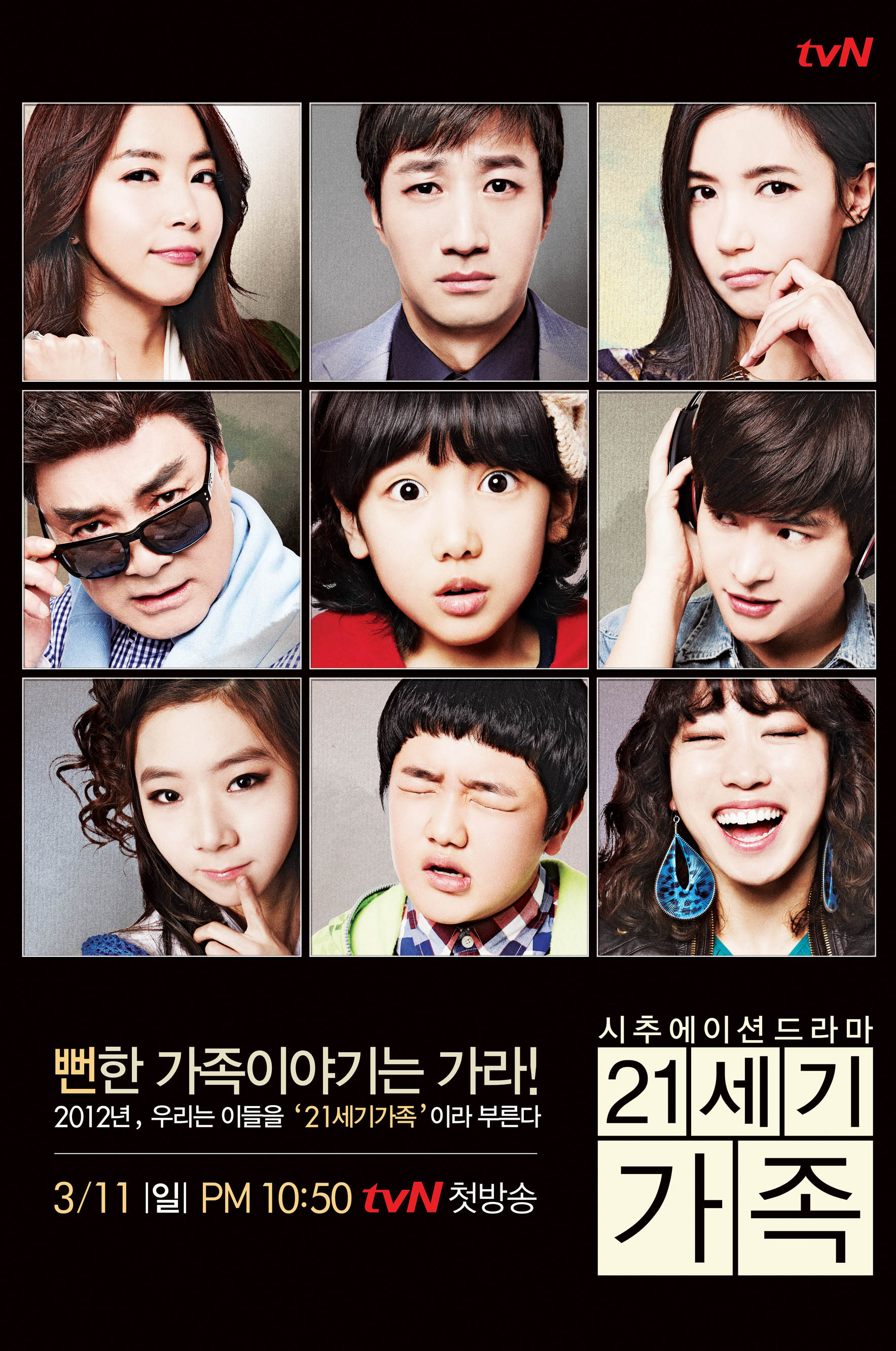
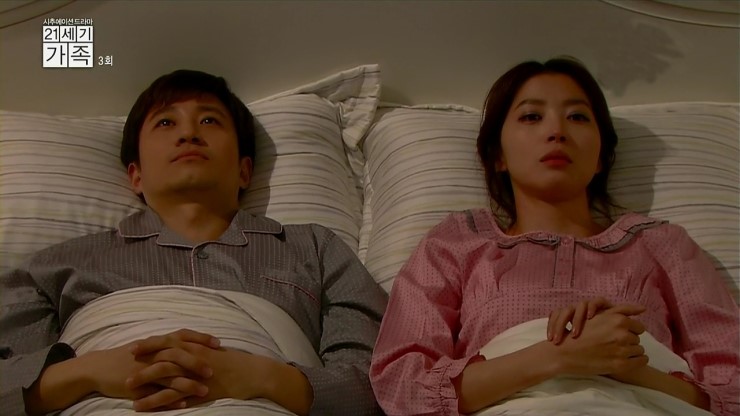
Must See Korean TV: 21st Century Family (21세기가족)

(Source)

Thank you very much to Maria, whose synopsis instantly sold me on this recent drama:

…I’ve seen a lot of Korean dramas and they almost always find a way to disappoint me in the way they portray women, sexuality or both. This little drama is quite refreshing. Unusual in that it’s only 8 episodes long, it openly talks about issues like teenage sex, puberty, the difficulty married couples have getting sex regularly, and even one episode about viagra. To be fair, I have taken the last nearly 9 months away from watching dramas, so maybe things have heated up out there when I wasn’t looking. But this is the first time I’ve seen sexually related issues being dealt with so frankly and humorously…

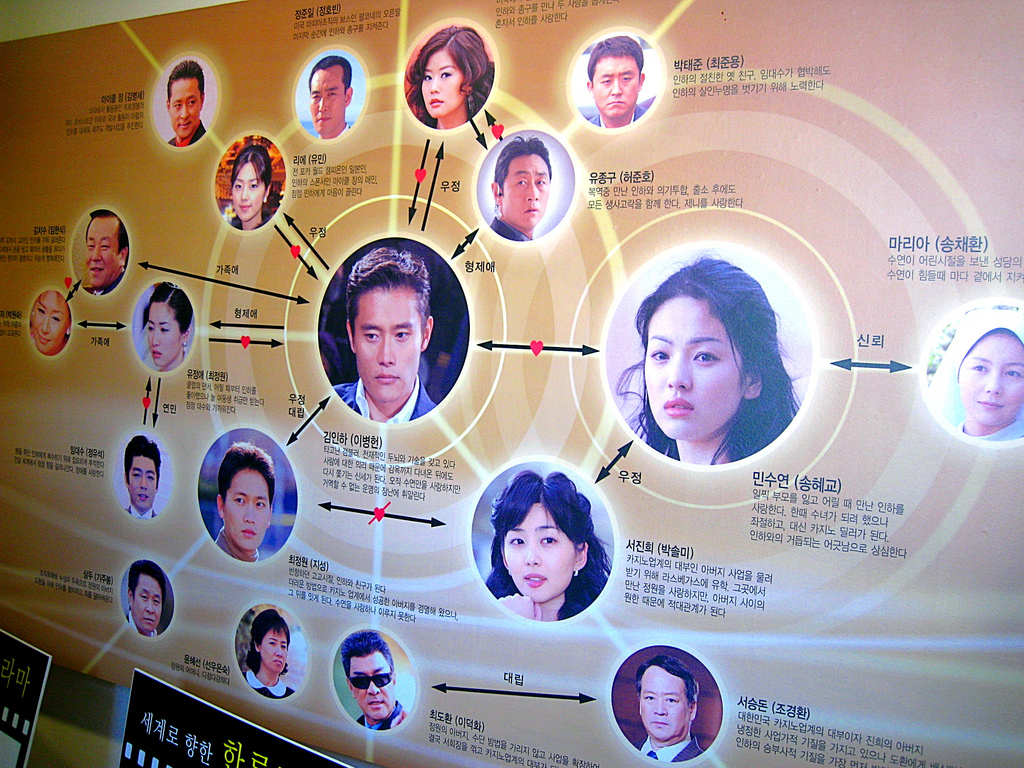
If you think it already sounds a lot like Modern Family, you’d be quite right — it’s explicitly modeled on it, albeit without a gay family. See here for a helpful family tree, starting with Lee Deok-hwa (이덕화) playing the father role that Ed O’Neill does in the US original, and DramaTic for some historical context on Korean sitcoms, which helps you better understand what makes this one so different. In particular:

…the word comedy [was removed] from the show’s promotion to avoid all the implications it brings to the table, at least in Korea – namely, the idea that sitcoms should all be about a relentless succession of mindless gags punctuated by the good old laugh track. It’s an intelligent expedient, which highlights this show’s priorities better than any trailer or presentation would. This, in other words, is a back-to-basics approach, while at the same time exploring different answers to the usual formula.

(Source)

Perhaps it’s no surprise that it’s so easy to find with English subtitles then — I just watched episode 1 here, and although frankly I found it a little slow after all that build-up, it was still quite enjoyable. Also, crucially, it only had precisely one cringe-worthy moment for me, when Oh Yoon-ah (오윤아) behaves quite childishly in the police-station towards the end. Considering how routinely women behave that way in most Korean dramas, making me turn the TV off in disgust within 5 minutes of watching, it was very refreshing not to see it for a whole 40 minutes here.

Anybody else seen the show, and/or like a detailed episode by episode discussion (à la Dramabeans) over the next 8 weeks? Please let me know!

FINALLY, a Way to Study Korean Through Dramas!

(Source)

If you’re a Western student of Korean, then probably you’ve experienced the same dilemma I have: you’d like to watch dramas to improve your listening ability and get a handle on everyday language, but are put off by their excessive melodrama, cliches, and often poor quality. Which is not to say that all of them are bad of course, but when you do find one you like, then you can struggle in vain to find Korean subtitles to them. For Korean torrent sites naturally don’t bother to provide them, and Koreans’ rampant illegal downloading means that it’s extremely difficult to find DVDs of Korean dramas (if they even exist).

So, either you have to watch dramas with distracting English subtitles, or struggle to understand the stories with none at all. If only there were some alternate way to study the dialogue in advance, or read it as you go along. Sure, Dramabeans’ detailed synopses of each episode of most dramas are very helpful for the gist, but I think I speak for most when I say we’re really after something more akin to transcripts…

Enter “드라마사진만화”, or “드라마영상만화”: a little like manhwa books, but with photo stills from the drama, rather than hand-drawn pictures. Please see Shanna’s post about them at Hangkukdrama and Korean here for more information, and which so impressed me that I immediately ordered some for Secret Garden. And you can just imagine how I felt when I read that she’s had some for over 3 years, when this is the first I’ve ever heard of them!

Does anybody else already used them? What did you think?

“I’m a Korean Girl”

Despite its title, this is simply a classic rendition of the way young women typically behave in Korean dramas.

The flip-side of the aegyo (애교) phenomenon, that behavior is precisely why I don’t watch them too, and have a real concern about the effects on my 2 daughters as they grow up seeing it every time they turn on the TV.

But don’t get me wrong: the video’s hilarious, and thanks very much to @Mentalpoo for passing it on!^^

Real & Presumed Causes of Racism Against Interracial Couples in Korea

(Sources – left: GR X Hermark; right)

Over at a recent post on Noona Blog: Seoul, an excellent blog written by a Swedish woman in a relationship with a Korean man, currently there’s several interesting comments about the sources of racism often directed against Korean female – Caucasian male (KF-CM) couples in Korea.

Many of which were written by Jake of Asian Male Revolutions, who has the admirable and very necessary goal of challenging the racist and emasculating images of Asian men in the US media through that website.

But in the process of – in my view – very much contriving to paint racism against KF-CM couples in Korea in those terms, as well as global racial power relations, I found he made many extremely sexist assumptions about Korean women, which I’d like to challenge. As technical issues prevent me from doing so at Noona Blog directly however,* then – assuming that you’ve already read his comments – I’ll post my original response here instead:

Dear Jake,

it’s difficult not to sound offensive when critiquing someone’s opinions so harshly. But still, however legitimate your concerns about representations of Asian men in the US media are, it’s incredibly naive of you to assume that that these would exist in the same form and degree in the Korean media, or indeed at all.

Argue that they still have a role in expressions of racism against KF-CM couples in Korea nevertheless though, and you end up simply sounding like an apologist.

Much more seriously however, in so doing you also rely heavily on some extremely patronizing and sexist assumptions about Korean women, let alone racist ones against Caucasian men. Let me explain.

I’ll start with your acknowledgment that “there’s no denying that simple male jealousy plays a role in the bellyaching white men…encounter as one part of an interracial couple in Korea.” Naturally I fully agree, and while I consider it a little harsh to dismiss treating that “as simple jealousy from a bunch of Korean/Asian losers” as a “pretty foolish assumption” – after all, you get jerks like that the world over – I also agree that it is wise “to consider the historical and political implications and undertones of various types and permutations of interracial dating” to understand that bellyaching more fully (source, bellyaching pun above).

But what is that historical and political context you identify?

The Western media has a much longer reach than Korean media; in fact all Asian media is to an extent influenced strongly by Euro-centric beauty standards. This has been well-documented by all the plastic surgery, and by the glorification of media figures (singers, actresses) who are selected first and foremost for their vaguely euro-Asian looks (as opposed to supposedly ‘ugly’ Korean features) and then groomed by a team of trainers and managers to become media superstars like Girls Generation, Son Dam-Bi, and all the ‘flavors du jour’ pop-tarts you see on Korean TV shows.

And again I largely agree, having written many posts saying pretty much the same thing myself. But crucially not the “The Western media has a much longer reach than Korean media” part; and as we’ll see in a moment, I feel you have an extremely inflated view of the Western media’s power in Korea.

So given the fact that an embedded system of euro/white-worship permeates South Korean pop-culture, white males have more elbow room to work with in the global dating scene. Many come to the shores of Korea and Asia and have relatively little trouble finding willing women who having seen and internalized images of white beauty standards, would like nothing more than to experience the thrill of dating the mythic “white boy”. And white men who come to Korea are only too happy to take advantage of this fact.

Okaaay…I’ll deal with your warped view of the interracial dating scene in Korea in a moment too (source above: Gusts of Popular Feeling). But first, let’s focus on your views of Korean women which it relies on, which you expand upon in your next comment:

Asian female/white male relationships cannot happen unless both parties are willing to participate in it.

This can only mean one thing – that Korean women, having internalized media messages glorifying white men, are also actively seeking them out to satisfy their own ‘white fetish’. Therefore, we cannot simply categorize white men as “predators” for Asian flesh: instead, a significant number of Asian women are willing collaborators.

Interesting choices of terms you’re using, especially that last. Continuing:

Or at the very least, they are passively open to it – that is, they might not go out of their way to seek white men, but if one does hit on them they are psychologically “primed” to be much more open to their sexual and romantic advances, as opposed to a black or even Korean man.

This is just more evidence of the pervasive white worship in Korean society, and it illustrates just how thoroughly and totally many Korean women internalize this message.

You’ve seen them in the bars and clubs and lounges of Seoul. To them, white boys on their arm are the ultimate accessory to their personal crusade to be the “coolest” chick on the block.

They’re commodifying race – and according to their rather twisted logic, being seen with a white guy the equivalent of having the latest handbag or shoes.

(Source)

They ought to stop and think about the implications of their choices. To them it’s a confirmation of their own belief that “being with a white man = COOL + URBANE + COSMOPOLITAN + TRENDY”… but it’s actually an expression of a colonial mindset – they are psychologically and mentally colonized, dominated, and enslaved.

They’re not setting the tone on what is cool – they’re doing the exact opposite: setting the tone on what is sick, twisted, and unwholesome.

Disclaimer: I am in no way claiming that ALL Korean women with white men are like this. But there is also no denying that a significant number of these women do exist. So please take my comments for what they are, and don’t take them out of context. Thanks.

Hey, no-one is denying that there are some Korean women who seek a White boyfriend for much the same reasons they would a Gucci handbag (or various types of Korean men either for that matter). But a “significant” number of Korean women with White men are like this you say? What percentage of them do you mean by that term roughly? 10? 25? And do you actually have any evidence whatsoever that they represent anything but the tiniest fraction of all KF-CM relationships?

Also, I’m rather confused: what percentage don’t want a White boyfriend as an accessory, but like you say just want to experience the thrill of dating one instead (which apparently is bad, even though we’re all attracted to the exotic)? What percentage are simply psychologically “primed” to spread their legs more readily for a White man “as opposed to a Black or even Korean” one? And finally, presuming you even allow for the possibility, what percentage of Korean women would you say aren’t passive, unthinking dupes of media messages of White male supremacy and are thus able to have genuine loving relationships with White men?

More to the point, have you asked so much as a single Korean woman of what she thinks of your characterization of them above?

I have asked one myself actually, my wife, and I’d wager that her reaction to you on the right is pretty representative. But I’ve asked many many more about interracial dating (including many who only speak Korean), and I think you’d be rather surprised at the far greater numbers of Korean women who have little interest, even a positive distaste at the possibility of dating White men.

Moreover, while global racial patterns of hegemony and privilege certainly ensure that more White guys end up in South Korea than, say, Indian guys, and that  stereotypes of both exist that encourage and discourage Korean women to form relationships with them respectively, it doesn’t automatically follow that Korean women assessing them as potential partners don’t do so by pretty much the same criteria that they do for any men, including Koreans.

Most South Asian men in Korea, for instance, are laborers, which obviously puts them at a big disadvantage to middle-class White teachers. Also, as one Korean female friend put it to me, while White guys tending to be taller has a great deal to do with their attraction to some Korean women (albeit a disparity that is rapidly disappearing), that still isn’t enough to overcome the anticipated language and/or cultural difficulties for most others. And another acknowledged that while White men in Korean tended to have more money (and freedom) than Korean guys in their early-20s, with the ESL industry in Korea being the joke that is, then, financially-speaking, in fact Koreans make much better partners by their late-20s and early-30s.

In short, while the specific mixture of the fish in the sea may well be determined by forces beyond their control, women are very much the arbiters of which ones they reel in so to speak.

To be fair, you do somewhat acknowledge this in your next comment, and which I admit I misinterpreted in the first draft of this post. But still, it is interesting how you force that into a narrative of Korean female submissiveness and White men’s sexual colonialism nevertheless. You say of the relationship between one commenter’s German father and Korean mother’s relationship, for instance:

…until Korean male/German female relationships become just as commonplace as what’s already out there (that is, WM/AF relationships), you can’t exactly hold that up as a ’shining example’ of “colorblindness”. It’s not — it’s more of an expression of racialized power structures and a neo-colonial history.

No, actually it can be colorblind, and both relationships and the people behind them are more then mere expressions of vast, impersonal forces. But if you’d like a more specific critique of your twisting facts to suit your narrative however:

(Source: Baby Black)

It’s the German man’s knowledge when he goes abroad that his country is wealthier and more powerful, compounded with the Korean woman’s knowledge that her’s is less wealthy (particularly back in those days), that makes the Western-male/Asian female (WM-AF) relationship so numerous.

And since women generally look to marry “up” while men look to marry “down” (socially and economically), you can see why the inequality between the white and Asian races makes the WM-AF relationship so easy to forge.

Put simply, I call bullshit on women marrying up and men marrying down: in virtually every society, both historically and today, the vast majority of men and women marry someone within the same socioeconomic group as themselves. Earning much more money than women however, then men are certainly freer to marry down, but that doesn’t at all mean that they aim to do so, or that they don’t aim to marry up any less than women.

But this critique pales in comparison to your reaction to the commenter after that, who wonders where the inconvenient reality of increasing number of Korean male – Caucasian female pairings like her own fits into your diatribe?

If you take some time to analyze our message instead of reacting emotionally, you’ll see just how out of line your thinking is, and how little time and effort you put into trying to understand something that is admittedly *highly, highly* complex. It’s a difficult concept for anyone to wrap his or her head around, so I guess I can’t blame you for taking the lazy way out with convenient and disjointed logic.

But then I said I’d talk about the Western media’s influence in Korea, and so I’ll do so now by contrasting the different impacts you feel it has on Korean men and women (my emphasis):

But the rub for Korean men (in general) is that men in places like Madison Avenue in New York City and Hollywood who control the images that go up on billboards and on TV and movie-screens are white – and they invariably make those images in their own image: White, Male, and BLOWN WAY OUT OF PROPORTION. In short: welcome to the world of Hollywood and the White Male Action Hero.

Keep in mind that while this is happening, Asian males are either completely excluded or used as a foil to make the white male look better in comparison. So Asian males in America or Korean males living in Korea internalize this subliminal message in the media and think that they can’t possibly step up to a blonde girl (or whatever white chick). They live their entire lives being psychologically castrated, in sharp contrast to a white male from where ever, who is emboldened or even arrogantly empowered by the jumbo-sized images made in his likeness, in the embrace of gorgeous white, black, latin, and of course Asian women in movie theatres all over the world.

(Source: Somang Cosmetics, 2003)

Hey, again I completely agree about the representations of Korean and Asian men in the US media. But I’m curious as to how you think this affects Korean males in Korea exactly, and what’s more upon whom you – very tellingly – imply that there is an equal effect as on Asian males in America. Pray, have you actually watched or read any Korean television, movies, magazines, or websites recently? It’s not like they’re lacking for strong, macho images of Korean men getting the Korean girl; or indeed, frequently getting the White girl these days, creating hypersexual stereotypes of them in the process.

Moreover, for a domestic media supposedly at the mercy of the global/Western media and its emasculating imagery of Korean men, it’s just bizarre how nevertheless it still has the ability to effectively censor all expressions of women’s sexual interest in foreign players during the 2002 World Cup; to not allow a single positive representation of KF-CM relationships in advertisements until July this year; to give a free voice to groups that, under the belief that Western men are all diseased sexual predatorswill literally stalk them with the aim of catching them doing illegal tutoring, thereby getting them deported; producing “documentaries” that show that Korean women will invariably get raped if they date White men; and so on.

Am I also “emotionally reacting” in pointing that out?

And simultaneously (being human and all) many white women are conditioned to shoot for white men as the “gold standard”, since all the glorified images of ‘male sex appeal’ feature only white males. Some even view Asian males with contempt or pity, and this of course spills over when white chicks go abroad – though to be fair, I’ve noticed this racist bias more in North American white females than European ones. So it is any wonder we see a “global sexual marketplace” that is DOMINATED by white males (figuratively) ‘raping’ and exploiting these loopholes to their sexual advantage?

Given the above dynamics of a GLOBAL system of media brainwashing that favors white males, is it any wonder that some people in Korea or elsewhere might secretly (or openly, in some cases) resent a white male for doing what he does? It’s not unreasonable, or completely out of the realm of possibility.

Ah. So while Korean women are mere passive dupes of the Western media, in contrast Korean men are savvy, knowledgeable consumers of it, and for whom calling a Korean woman walking down the street with Caucasian male a whore, say, is hence a justified response to their symbolic castrations and emasculation therein? As is the way the Korean media treats Western men?

(See Gusts of Popular Feeling for an explanation of the above video)

To put it mildly, that sounds rather apologist to me. But then considering what you write about White guys in Korea, then what would I know, right?

But here’s the funny thing: to him, he’s just ‘innocently’ going about his personal life – but of course he also doesn’t see (well, probably chooses not to see, that is, ignore) that the entire System is built for HIS personal advantage. It’s custom-built for his white male needs – and that is very racist, no doubt.

And on that note, I’ll put this response to rest. Regular readers may well wonder why I devoted so much time to it: after all, its flaws speak for themselves. But then I’m only human, and I reacted partially because it reminded me of how a commentator on this blog also conflated the 2 issues in an earlier post for instance, and whom I simply gave up reasoning with. Much more though, because it was annoying to spend 60 minutes on a comment only to have it disappear (see below), and finally especially because I was angered by comments on a similar post on Noona Blog not only gushing with enthusiasm for Jake’s comments but also implying that he had “a fact-based academic writing style”, when if anything it’s marked by their complete absence.

Combine that with being a White man married to a Korean woman blogging about gender issues in Korea too, who as a result has had trolls insulting the both of us incessantly for 3 years, or even being sent 3000 word emails patiently explaining that the vast majority of  White men in Korea (but always excluding myself of course) have yellow fever, and that I’m just being emotional in not acknowledging that…then hopefully you can see why I get very tired and angry at hearing that sort of thing sometimes!^^

Update: See I’m No Picasso and Roboseyo for two excellent posts written in response to this one.

Update 2: And now Gusts of Popular Feeling too.

You’ve seen them in the bars and clubs and lounges of Seoul. To them, white boys on their arm are the ultimate accessory to their personal crusade to be the “coolest” chick on the block.

They’re commodifying race – and according to their rather twisted logic, being seen with a white guy the equivalent of having the latest handbag or shoes.

They ought to stop and think about the implications of their choices. To them it’s a confirmation of their own belief that “being with a white man = COOL + URBANE + COSMOPOLITAN + TRENDY”… but it’s actually an expression of a colonial mindset – they are psychologically and mentally colonized, dominated, and enslaved.

They’re not setting the tone on what is cool – they’re doing the exact opposite: setting the tone on what is sick, twisted, and unwholesome.

Disclaimer: I am in no way claiming that ALL Korean women with white men are like this. But there is also no denying that a significant number of these women do exist. So please take my comments for what they are, and don’t take them out of context. Thanks.

*Actually, my original intention was just to leave a comment at Noona Blog, but as soon as I hit “submit reply” then it disappeared into the ether. As the same thing happened on a different post last week however (my first there), then wisely I’d saved it first. Of course, it’s annoying that I can’t seem to comment at all there then, but normally I’d just chalk that up to the idiosyncrasies of  the individual website. Yet then the same thing happened on Seoul Beats yesterday too (thanks for the link guys!), which I have successfully commented on before. Do any technically-minded readers have any possible explanations?  A plugin issue perhaps, or something to do with the most recent version of WordPress? (Switching from Firefox to I.E. didn’t help) Thanks in advance!

Ah! (아!) by After School (애프터스쿨): Lyrics & Translation

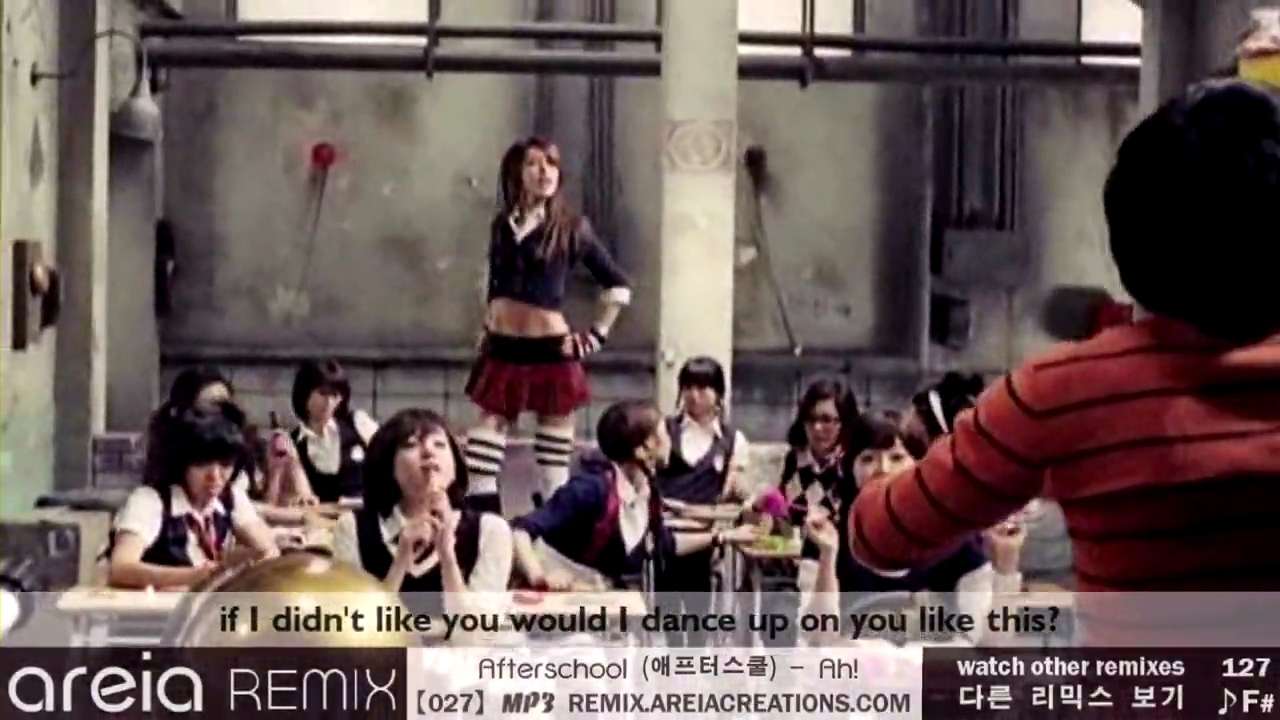
After School’s (애프터스쿨) debut track from last year, of which I again include both DJ Areia’s remix above and the original below for you to enjoy while I explain the lyrics. But note that the remix is not actually trance this time, but rather the disco-like “vibrating analog synthesizer sounds and the helicopter-like basslines” of the late-1980s and early-1990s, so please do give it a try if you’re normally put off by dance music.

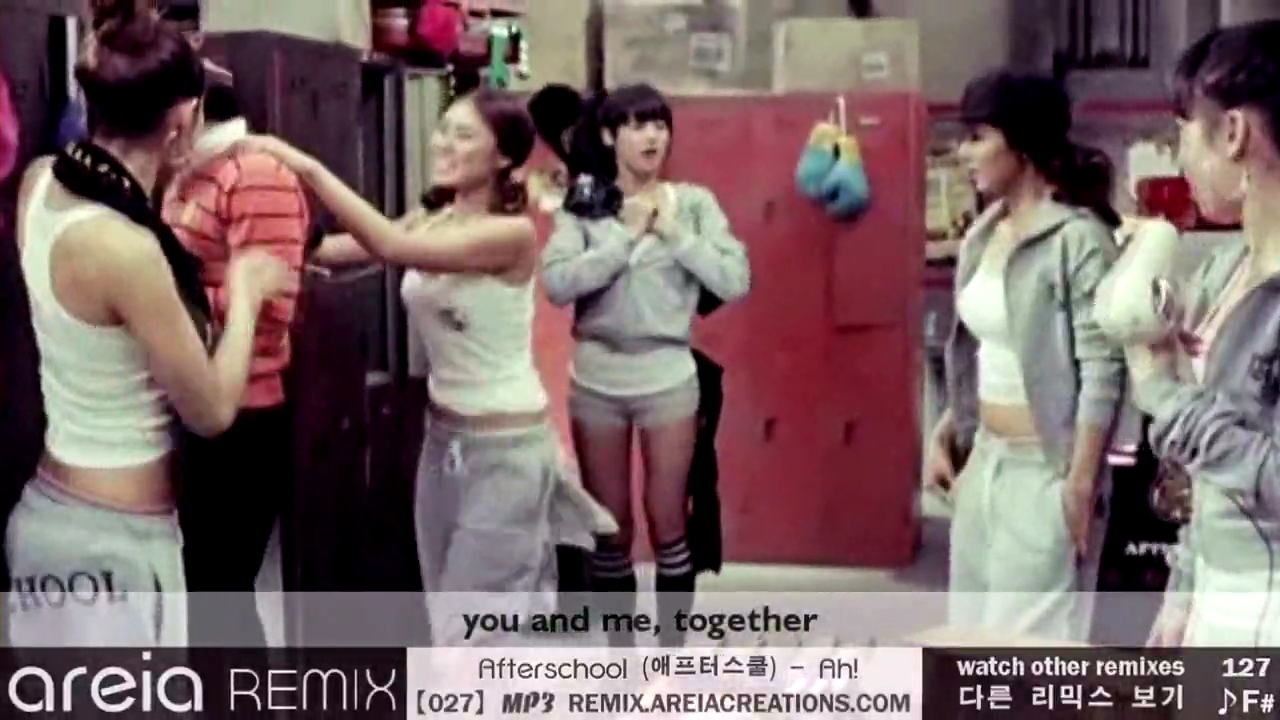
As for the music video itself, its theme is a little strange: schoolgirls in skimpy clothing coming on to their increasingly flustered young teacher, whom they are very happy to have ‘accidentally’ burst into their locker room later? It sounds…nay, looks like Japanese manga, and reminds me that student-teacher relationships (including dating and marriage) are a common trope of mainstream Korean popular culture (see here, here, and here for example), which only serves to both glamorize and normalize them.

Still, overly hormonal school students do sometimes have crushes on their teachers, and there’s nothing wrong in itself with portraying those in a music video. But while this one does obviously cater more to men’s sexual fantasies than to women’s (would having the group members vying for the affections of a handsome male student instead appeal more to women?), the lyrics demonstrate that there is much more to the song than meets the eye…

Again, for reasons outlined last time, I’ll provide very literal translations:

이렇게 둘이, 너와 단 둘이
언제나 둘이, 달콤한 이야길 하고파 둘이
둘이, 오늘밤 둘이, 사랑해 우리 둘이 둘이 baby

This way the two of us, with you only the two of us

All the time the two of us, I want us to tell a sweet story

The two of us, tonight the two of us, I love you we the two of us the two of us baby

“단” in the first line confused me for a while: it has a dozen meanings, including “bunch” or “bundle” which would (sort of) go with “the two of us”, but ultimately the meaning “only” is the most appropriate here. After that, the “~ㄹ 고파 하다” verb ending in the second line was the first time I’ve ever come across it personally, nor is it in any of my grammar books, but my wife says it simply means “~하고 싶다”, or “want to”.

잘빠진 다리와 외모 너는 내게 반하지
그대를 향한 윙크 한번 내게 빠지지
니 높은 콧대, 내 몸맨 어때
내 앞에선 니 모든게 무너지고 말껄

You have fallen in love with my slender legs and outward appearance

If I wink towards you one time you will fall (further)

The bridge of your nose is high (you have high standards)

How is my body?

Everything about you is going to crumble in front of me anyway

It feels a little hypocritical of me to critique other translations of songs here, as I very much rely on them to try and understand anything I might be having difficulty with myself, and especially because the translators may lack my increasingly annoyed Korean wife to constantly ask questions of in the next room. Nevertheless, those of whomever DJ Areia uses in his remixes (Yeeun2Grace perhaps?) really do seem a little sloppy sometimes (recall the big mistake in the 5th line of Bang!), and certainly disguise the subtlety of the original.

Take the first line for instance: “빠지다” has 13 meanings according to my dictionary, but “sexy” isn’t one of them; rather “잘빠진 다리” are “legs that have lost a lot of weight”, or “slender”. Sure, you could argue that this is just being picky, but it’s just as plausible to think that there is something culturally significant in the fact that “legs that have lost a lot of weight” was said rather than “섹시한다리” for instance, or more literally “sexy legs”. Also, “외모” is not “face”, but is actually the “outward appearance” of your entire body.

Next, putting line 4 as “I know you’ll crumble in my presence” completely ignores the “모든게” (or “모든것” + “이”) in it, or “everything”, and although “I know you’ll fall for me” is fine I guess, the verb ending “~고 말껄” (annoyingly not in any of my grammar books) means more “[the verb] is going to happen anyway”. Hence “everything about you is revealed in front of me” seems much better, as per the translation available on the AfterSchoolPlay fansite (registration required)

Finally, not a translation mistake, but in line 2 annoyingly the meaning of “빠지다” is different to that in line 1; and learners of English complain about the multiple meanings of words!

사랑한다 말만 말고 보여 주겠니
나도 니가 맘에 들어 춤을 추겠니
너와 난 왠지, 자꾸만 왠지
통할 것만 같아, 너를 사랑 할것 같아

Don’t just say you love me, aren’t you going to show me?

I like you too, aren’t you going to dance for me?

You and me for some reason, only again and again for some reason

I think we will only be connected, I think I will love you

My wife tells me that the verb ending “~겠니” in line 1 and 2, again not in any of my grammar books(!), means “aren’t you going to [verb] for me?”, So where on Earth “If I didn’t like you would I dance up on you like this?” below comes from I have no idea, no matter how appealing the thought!

(chorus)

짧은 시간 가까워진 우리 둘 사이
그대와 난 이제 하늘이 맺어준 사이
두말 할 필요 없어, 다가와 내게 어서
조명이 나를 번쩍 비추면
그댈 유혹하는 내 눈빛이 뜨거워지지
다른 남자들은 니가 너무 부러워지지
말은 안해도 난 알잖아 표현 안해도 다 알아
빨개진 니 얼굴이 다 말을 해주잖아

In just a short time we have become close

We are a match made in heaven

We don’t need to say it twice, come to me

If a light suddenly shines on me

It heats up the light of my eyes that is seductive to you

And other men become very jealous of you

You don’t have to say it or show it in your expression, I know everything

You red face shows it all

Not much to say here actually, other than both the translators at Yeeun2Grace and AfterSchoolPlay separated the above into two verses between lines 4 and 5. But I think that was mistaken, as line 4 ends in “비추면” or “if the light shines (on me)”, which is why the singer’s seductive eyes light up in the line 5. Lacking that connector, then I think that their own versions of line 4 and line 5 – “I’ve been illuminated by the light… You see my burning seductive eyes” and “When the lightning strikes me…My eyes which are putting him into temptation are becoming hotter”  respectively – don’t really make any sense.

(chorus)

나나나~

After school in the house, 모두 같이 make it bounce
들어봐 지금 내 말, 오늘밤 tonight
다가와 말못했던 얘기, 우리 둘만의 작고 작은 속삭임
그래 넌 지금 날 너무 원하지, 가벼운건 싫어 내 모습이
다른 장소 after party, 걱정마 이런 내 스타일에
오늘밤은 후회안해, 내 맘을 뺏어봐 baby boy

(chorus)

Na na na~

After School in the house, everybody together make it bounce

Hear my words now, this night tonight

Come to me, and all the things you (we?) couldn’t say, all the little whispers we said only to each other

Yes, you really want me now, I (you?) don’t want just light stuff

Different place after party, don’t worry this is my style

Don’t regret tonight, try to take my heart baby boy

Again, the Korean seems pretty straightforward here. On a final note then, given how targeted it is towards male audiences I was very surprised not to find any screenshots of the music video either via Korean or English search engines, leaving me with the onerous task of producing my own. Despite the visuals however, the lyrics in this debut song are clearly just as much about girl-power and being confident and assertive as they were in Bang! a year later, so the possibility remains open that After School may actually have a sizable female fan base (and I rather hope that they do).

In light of that then, you imagine what I thought of three members’ most recent song in which they pour on the aegyo (애교), basically looking and behaving like 12 year-old girls. Like I said in the comments to a post about it at SeoulBeats:

I’d have to give it a thumbs down. Not so much for the music in itself, but because I’ve always liked After School for the assertive, confident, girl-power theme of their songs, and so this “candy coated aegyo overload” as you well put it really seems to dilute their brand.

And most other commenters there agreed with me. But what do you think of it? Feel free to disagree with me of course, and diversity is the spice of life and all, even for music groups. But still…

(Source)

As always, thanks in advance for pointing out any mistakes I may have made or providing alternative translations!

What a Difference a Region Makes

( Source: The Japan Foundation )

With thanks to Philip Gowman of London Korean Links for bringing it to everyone’s attention, I’m literally ordering this book as I type this just for the Korea-related chapters alone!

UK-based readers, note the book-launch in London next Wednesday: see the The Japan Foundation for more details, and make sure to email jd.mackintosh@bbk.ac.uk by Monday if you’d like to attend.

Share

The Kafkaesque Korean Beauty Trends of 2009

(Source: Unknown)

Confused about all the new buzzwords used to describe Koreans’ bodies these days? Here’s my translation of an article that gives a quick guide.

The author implies that most of them arose organically from the public’s interest in certain actors in Korean dramas. Whereas in reality, it’s companies and the media that are overwhelmingly responsible, as they’re in a constant quest to create new consumer trends (read: new reasons for people to feel dissatisfied with themselves). Yet while most of these have no basis in reality, are essentially useless, and/or are so contrived as to be quickly forgotten or ignored, some do stick.

Of those that do though, if they have some English in them then it often makes them more interesting from a sociological standpoint. For whether by accident, mistranslation or design, they both reflect the way the term is already usually misused in Korean and further influence they way in which related English-language popular culture gets filtered into its Korean counterpart.

A good example from this article would be chongsoon-glaemor (청순글래머), or “innocent glamor,” which at first glance doesn’t seem all that strange: in her television commercials for instance, the ice-skater Kim Yuna (김연아) below manages to project an innocent image while having a seemingly glamorous lifestyle (I wonder if she’ll find the former stifling as she grows older however, like actress Moon Geun-young?). But it emerges that “sexy” would be a much better translation of the English word “glamor(ous),” and although I’m sure readers are well aware of the number of ways  in which women are presented as pure and innocent but somehow also lustful in Western popular culture, and effectively are in Korean, there are still problems with assuming that that is what the term means, as the word “sexy” isn’t construed quite the same way here. Instead, we seem to be left with an obscure term for Korean women that look more virginal than normal(?), but yet still do the mechanical “sexy dances” virtually required of them on Korean talk shows.

Anybody with more familiarity with the term and/or the actress Shin Se-kyung that supposedly spawned it, please feel free to correct me on my interpretation: after all, this is the first time I’ve looked at its origins, and just based on one article at that (Update — with thanks to Seamus Walsh for pointing it out, I did indeed make a mistake: “glamor” actually means “busty” in Korean). But with the proviso that the next means I may be cherry-picking the facts to suit my own views, it does still seem very consistent with the Korean media’s overall trend towards discouraging or outright banning of assertive displays of women’s sexuality, i.e. genuinely sexy behavior.

꿀벅지·미중년·꽃남…2009년 연예계 뷰티 트렌드는? 2009-12-31 by 두정아

올해 연예계 트렌드를 이끈 핫 키워드는 무엇일까. 꽃남과 미중년, 꿀벅지, 베이비페이스, 청순글래머 등 어느 해보다 개성있고 다양한 트렌드가 공존했던 한 해였다.

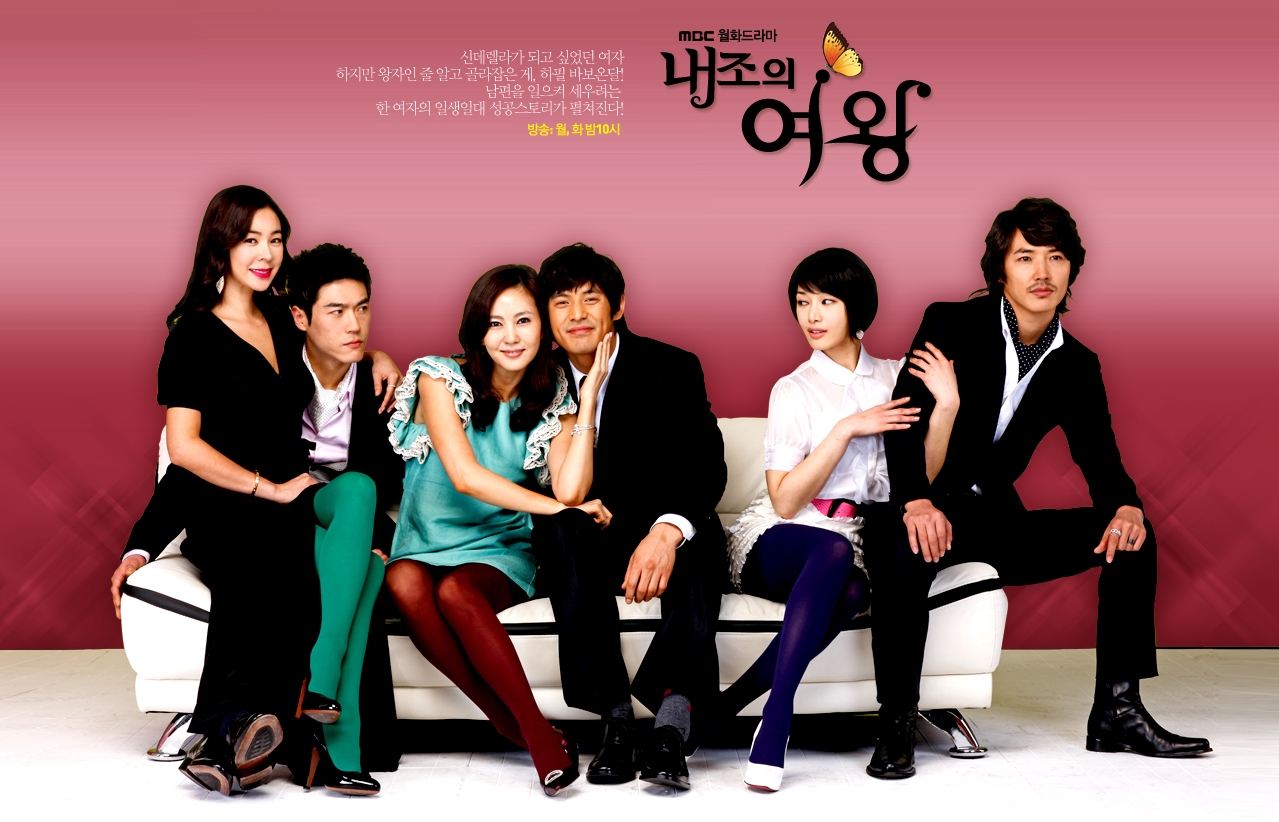
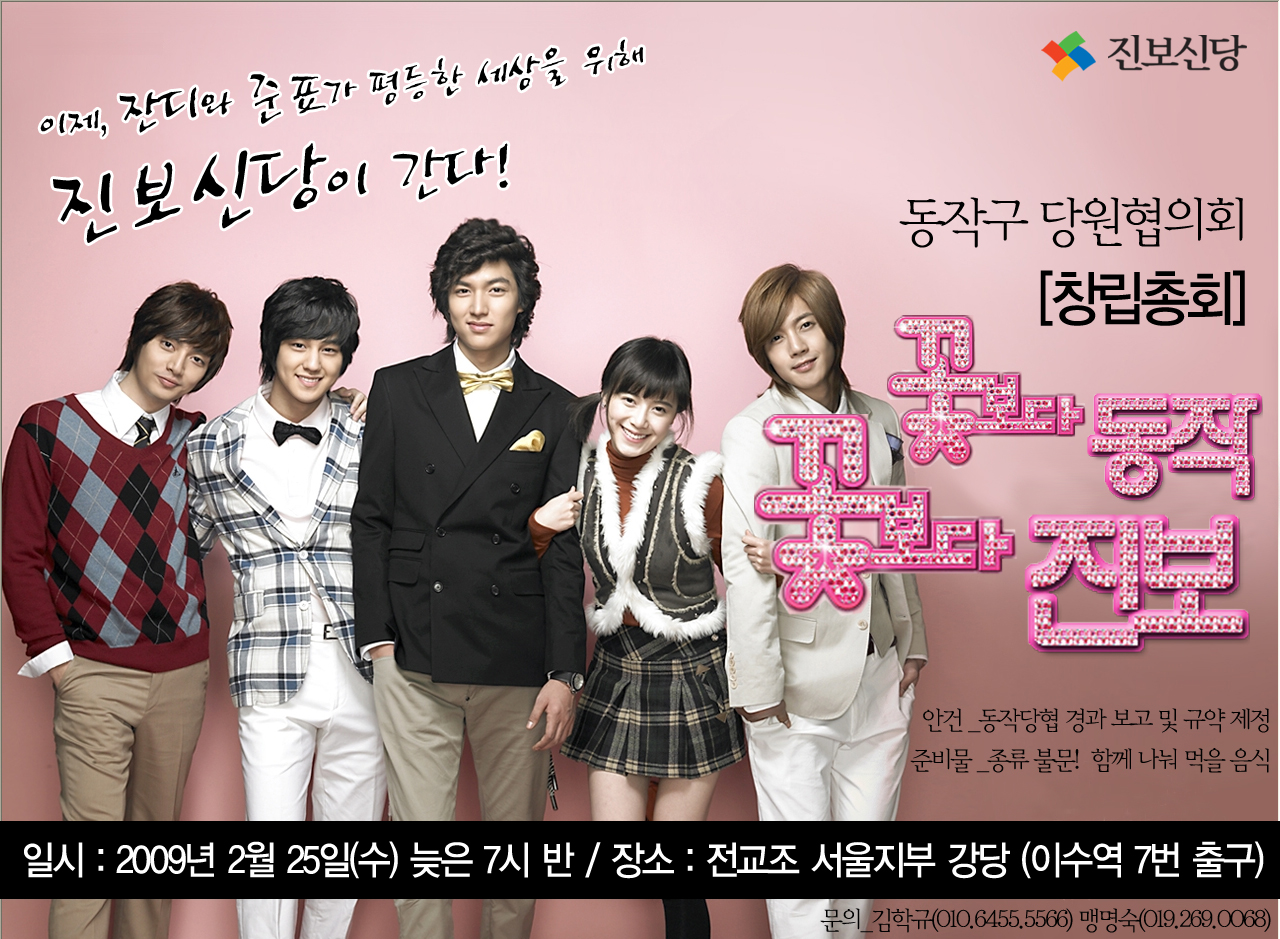
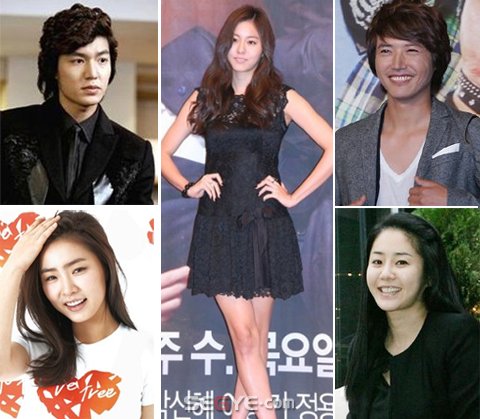
드라마 ‘꽃보다 남자’로 ‘꽃남’이라는 단어가 사람들 입에 오르내렸고, ‘내조의 여왕’의 윤상현은 ‘미중년’이라는 찬사를 받으며 남성들의 뷰티 열풍을 이끌었으며 그룹 에프터스쿨 멤버 유이의 매끈한 허벅지를 일컫는 ‘꿀벅지’와 배우 신세경의 ‘청순글래머’ 등은 여심을 자극하며 바디 열풍을 일으켰다. 여전한 ‘V라인’ 강세 속에 동안(童顔) 열풍 또한 이어져 ‘베이비페이스’라는 단어가 자주 회자됐다.

What were the hot keywords that led trends in the world of entertainment in 2009?

With kkotnam (flower man) and mijoongnam (beautiful middle-aged man), ggoolbokji (honey thighs), babyface and chongsoon-glaemor (innocent glamor) emerging, there were many very distinct trends compared to most years.

From the drama Boys Over Flowers the term “flower man” was on everyone’s lips; from Queen of Housewives the actor Yoon Sang-hyu received a lot of praise for his looks, spawning the word “beautiful middle-aged man” and a strong following among men wanting to emulate him; and women were similarly interested in the After School member UEE’s smooth and velvety thighs known as “honey thighs” and actress Shin Se-kyung’s “innocent glamor.” Finally, in addition to the eternal “V-line,” a strong interest in youthful faces has been shown by the new word “babyface” that is often talked about.

(Source: Unknown)

‘꽃남’·’미중년’, 남성 뷰티(美) 열풍

KBS 드라마 ‘꽃보다 남자’ 신드롬에 힘입어, MBC 드라마 ‘내조의 여왕’ 태봉이 (윤상현 분)가 일으킨 ‘미중년’ 열풍까지 남성들의 뷰티 열풍이 어느 해보다 뜨거웠다. 이를 계기로 남자도 외모 관리를 해야 한다는 인식이 공유되기도 했다.

거친 남성다움보다는 부드럽고 세련된 귀족적인 이미지를 선호하는 분위기로 바뀌며 성형외과나 피부과를 적극적으로 찾는 남성들도 크게 증가했다.

경제 성장을 이루던 90년대에 사회생활을 시작한 현재 30대 후반부터 40대 초반의 중년들은 전통적인 부모 세대와 달리 중년이 돼서도 문화와 여가를 즐기고 자신을 가꾸는 노력에 적극적이기 때문이라는 해석이다.

Combined, the flower man syndrome caused by the KBS Drama Boys Over Flowers and the beautiful middle-aged man craze caused by the character Tae Bong-ee in Queen of Housewives have led to men taking a great interest in their bodies. This is how the notion that men, like women, also have to take care of their bodies and appearance has become accepted wisdom.

In turn, as the preferred image of Korean masculinity has become softer and more polished, refined and noble, cosmetic surgery and skincare clinics are reporting a great upsurge in interest from men.

One additional reason for this is that even though men that grew up and entered the workforce in the 1990s are now in their late-30s and early-40s, they are very different to their parents’ generation, and choose to enjoy culture and their free time more, which includes taking a greater interest in themselves.

‘꿀벅지’ ‘소시지룩’ ‘청순글래머’ 바디 열풍 선도

올 한해 주목할 트렌드는 바디 열풍이다. 소녀시대의 지(GEE) 열풍과 함께 유행한 일명 ‘소·시·지(Gee)룩’. 몸매가 고스란히 드러나는 초절정 스키니진에 타이트한 티셔츠를 입은 여성들이 패션을 주도하면서 여성들의 S라인 욕구는 상승했다.

뒤이어 그룹 애프터스쿨 유이의 건강미 넘치는 탄탄한 허벅지가 주목을 받으면서 꿀이 발린 듯한 매력적인 허벅지라는 뜻의 ‘꿀벅지’라는 신조어까지 탄생했다.

또한 요즘 주가를 올리고 있는 단어는 ‘청순글래머’. MBC 시트콤 ‘지붕 뚫고 하이킥’ 출연하고 있는 신세경은 청순한 매력과 섹시한 관능미를 동시에 지니고 있어 ‘청순 글래머’의 대명사로 불린다. ‘포스트 김혜수’로 주목받으며 휴대전화, 화장품 광고 모델 자리를 꿰차는 등 그 인기를 입증하고 있다.

이에 대해 그랜드성형외과 유상욱 원장은 “과거 여자 톱스타들의 상징이 ‘화장품 모델’이었다면 2009년은 이효리, 신민아, 송혜교, 손담비 등 청바지 모델로 그 중심이 바뀌었다”며 “이 같은 변화는 요즘 대중들의 관심이 바디로 옮겨지고 있다는 증거”라고 설명했다.

2009 was a real year of body trends. First, there was the very popular so called “sausage look” of Girls’ Generation. Hiding nothing, the ensuing fashion of wearing extremely skinny jeans and tight t-shirts among women has sparked an intense interest by women in their S-lines.

(Update — “Sausage look” may be a mistake, as the “소시”, or “soshi”, in “소시지(Gee)룩” is also the Korean shorthand for Girls’ Generation, and the “지”, or “gee”, the name of one of their most iconic songs. So the term may mean “sausage look”, or it may mean, literally, “how Girls’ Generation looked in the Gee music video”, in which they happened to wear skinny jeans. Either way, it’s a good pun!)

Next, as a lot of interest in After School member UEE’s firm, smooth and very healthy-looking thighs emerged, the new word “honey thighs” was coined to describe thighs like them.

Another word that’s stock is rising is “Innocent Glamor.” This comes from the actress Shin Se-kyung that appeared in the MBC sitcom High Kick Through The Roof, described as the icon for women who combine a pure and innocent image with sex appeal. Considered a second Kim Hye-su also, because of her popularity she regularly appears in cellphone and cosmetics commercials.

According to “Grand Cosmetic Surgery Clinic” owner Yu Sang-ok, “in the past the symbol of top female stars was the cosmetic model, but in 2009 women like Lee Hyori, Shin Min-ah, Song Hye-gyo and Son Dam-bi have been mostly modeling jeans instead,” and “this is proof that the focus of people’s attention has moved to star’s bodies now.”

(Source: Naver)

‘V라인’ 강세, ‘베이비페이스’가 위협

올해도 ‘V라인’ 강세는 여전했다. 뭐니뭐니해도 ‘동안’, ‘V라인’, ‘작은 얼굴’은 사람들이 가장 선호하는 이미지이기 때문이다. 갸름하고 부드러운 V라인은 첫인상부터 편안하고 친근한 장점도 있다.

MBC 드라마 ‘선덕여왕’ 미실 역의 고현정은 소름끼치는 연기와 더불어 나이를 가늠할 수 없는 ‘베이비페이스’로 주목을 받았다. 투명한 피부는 물론, 볼륨감이 그대로 살아있는 생기있는 얼굴은 아기 피부 같다는 찬사를 받았다.

‘베이비페이스’는 ‘어려보이면서 입체적인 얼굴’을 말한다. 그 특징은 얼굴 옆이 아닌 앞쪽으로 볼륨감이 살아있는 얼굴로 콧등의 높이와 균형을 이루는 부드러운 곡선 모양의 탐스러운 이마 그리고 갸름하고 조금은 짧은 듯한 턱 선이 생명이다. 이러한 ‘베이비 페이스’의 열풍은 2010년에도 지속될 것으로 전망된다.

Last year, the emphasis on the V-line remained unchanged. After all, the preferred image is to have a dongan “youthful face [for one’s age],” V-line, or jakkun-olgool “small face.” And if you have a long, slender face with a V-line, people’s first impression of you will be softer and friendlier.

Hence the interest in the “Babyface” of actress Ko Hyeon-jeong, who played the character Lady Mishil in the MBC drama Queen Seon Duk, and whose acting was so good that she gave viewers goose pimples. With clear skin and glowing, firm cheeks, she has received a lot of praise for having a face as good as a baby’s.

But a babyface has been described as a “solid, 3D face.” In particular, it’s not just the volume of the cheeks on the side but also the balance with the bridge of the nose, the softness of the curves and the desirability of the forehead that make it look youthful. They look set to remain popular in 2010. (end)

(Source: Naver)

Like I said in an earlier post, I was embarrassed at not realizing how sexist the term honey thighs was when I first heard the term, but I doubt I would have if they’d been described like that instead. And continuing with the theme of  sexual discrimination, I was surprised not to see “chocolate abs” for men also; unlike the commercial that spawned it, perhaps the term itself is more 2010 vintage?

Regardless, please let me know if you can think of any others, and especially if you have alternative explanations for where any of the above ones came from!

Selling Wine to Korean Women

Writing about sexual symbolism in advertisements for so long, it takes a lot to shock or surprise me these days.

Still, I confess I burst out laughing at this one.

Lest you feel that my sense of humor is a little crass however, then perhaps you need the context. Last week, I was skimming an article in the Korea Times about the rivalry between the French wine Beaujolais Nouveau (보졸레누보) above and the Korean rice wine Makgeolli (막걸리), and suddenly noticed this:

Recognized as a simply old-fashioned drink for a long time, Makgeolli is popular with trend-savvy young female customers in the current boom. The biggest group is women in their 20s and 30s, and some of them ended up placing orders for [the new] Makgeolli Nouveau (막걸리누보) when they came to reserve its Beaujolais counterpart, according to Hyundai Department Store.

Now I’ve written a lot on gender-based Korean advertising in recent months, including that of tea-drinks, health-drinks, and attempts to make soju more appealing to women, so I was interested in finding out if that preference was partially the result of (or led to) similar marketing: after all, gender-based advertising is often more indicative of advertisers’ stereotypes and prejudices rather than any empirical evidence that it actually works. And in the case of that for “girly” Korean drinks in particular?

Well, recently at least that has meant nothing more sophisticated than either the use of a lot of pastel colors and/or the breaking of the convention that bottles must be pointing straight-up and in the bottom right-corner of advertisements. Instead, they pop up in a most satisfying manner almost anywhere, and usually at somewhat less than a 90-degree angle (see here and the bottom of here).

Obviously I can see the humor, and even like this one (aimed at men), but I’m beginning to find its repetitiveness kind of patronizing too.

Refreshingly, I actually saw little evidence of either feature in the marketing for Makgeolli Nouveau (see here and here for examples) though. But you can imagine what frame of mind I was in then, when I finally turned my attention to advertisements for Beaujolais Nouveau instead, and was greeted with the magnificent specimen above!

( Source )

In fairness to Korean advertisers, Beaujolais Nouveau certainly seems to be considered a girly drink worldwide also. In Japan it is poured into spas and promoted as giving smooth skin for instance, and the (presumably) international labeling of previous years’ wines similarly featured pastel colors and flowers and so on.

This possibly explains why the “Peninsula Beaujolais Nouveau Party” at Lotte Hotel in Seoul last Friday boasted a lingerie fashion show too.

But more to the point, the text “신의물방울”, in the top-left corner of the advertisement, translates as “The Water Drops of God” or Kami no Shizuku, a Japanese comic book about wine. Extremely popular, and not just in North-east Asia, there is a wealth of commentary on it, so for interested readers I suggest this post at the manga blog Precocious Curmudgeon for the best summary, with many links to longer news articles. Focusing on the original advertisement here though, in one of those links it is argued that the comic’s greatest impact has in fact been on South Korea, with over 1 million copies sold, and the authors were “stunned to be greeted like stars”  on their first visit there in 2007, even finding themselves introduced to candidates during the presidential election.

You can imagine then, the effect on sales here (and worldwide) when Beaujolais Nouveau was featured in it a few years ago, and accordingly in 2007 Japanese distributor Mercian hired the illustrator to design new labels for the drink. Presumably, a Korean language version of that is what we are seeing here.

For those of you more interested the wines themselves though, I recommend this article from Slate more information on Beaujolais Nouveau itself, albeit not a very flattering one (indeed, a rival Japanese food and drink comic book to Kami no Shizuku describes the drink as “little more than a French prank that the Japanese have fallen for hook, line and sinker”), and the recession has recently forced it to be sold there 10% cheaper than in previous years and in plastic bottles.

( Source: unknown )

Meanwhile, for more information on Makgeolli Nouveau I recommend two articles in turn recommended by connoisseur Tom Coyner: the first from early November on the reasons for Makgeolli’s renaissance, and which mentions that women make up only 10% of drinkers of regular Makgeolli but 30% of the fruit-flavored ones; and the second from Wednesday on the difficulties of expanding the market from its current 3.6% of all alcohol sales. In addition, you may also find this article from February about the Japanese role in its resurgence interesting, and finally all of the above should be placed into the context of the Korean government wanting to promote more domestic rice consumption, as evidenced by its attempts to promote “Garaetteok (가래떡) Day,” named after stick-shaped rice cakes, over the more commonly recognized “Pepero Day” earlier this month.

But has anyone actually tried either? Despite writing all that, I actually only started drinking wine and beer myself about 3 months ago(!) at the tender age of 33 (I preferred various cocktails), but if it tastes okay then I certainly wouldn’t mind trying something sweet and cheap like Beaujolais Nouveau. Any variety of Makgeolli however, would be just too weird: I have tried it, and concluded that something that looks like milk should not taste like wine!^^

Update 1: Water Drops of God is being made into a Korean Japanese drama series featuring Bae Yong-jun (배용준), and is scheduled to start next month.

Update 2: As Gomushin Girl has pointed out in the comments, labeling Makgeolli as rice “wine” is probably incorrect. Adding to that, this post at The Marmot’s Hole makes is clear that serving it in a wine glass is particularly inappropriate.

Update 3: Unfortunately, Bae Yong-jun’s drama series has been canceled.

Share

Tamna: A Radical New Korean Drama?

Tamna, The Island

With thanks to reader Ezra de Leon for passing the news on, a new Korean drama called Tamna the Island (탐나는도다) appeared over the weekend, and for readers of this blog especially it is noteworthy in many important respects.

The most obvious is for having a foreigner in the lead role, a 24-year-old French model named Pierre Deporte, who has already appeared on Korean screens in the one-off male version of the Misuda (미녀들의 수다; Chatting With Beautiful Women) talk show. Here, he plays a 17th-Century Englishman who washes up on the shores of Jeju Island, and crucially he has some form of love relationship with the local female diver (haenyo/해녀) who finds him, played by teenager Jang Beo-jin (장버진). This is nothing short of revolutionary for Korean screens.

I haven’t found any confirmation of that relationship beyond this Korea Herald article unfortunately, but the first episode did feature an underwater kiss between them, albeit for the sake of giving him oxygen while hiding. But regardless of the ultimate form of their relationship though, Extra Korea! is correct in noting that it will probably be the first non-negative portrayal of a Western male on Korean television in a long time.* In addition, Javabeans, a rare non-tabloidish source on Korean dramas, also appreciates the drama’s reversal of gender roles:

…in Tamna, the women are hard-working and tough, at all ages from moms down to young girls. The men are painted a little more cartoonishly, but I think there’s potential for more than just comic relief in the setup that shows them as the weak ones in terms of the gender balance. They cower and defer to the ladies, who, while not quite Amazonian, have agency over their own lives and families. I hope the drama explores that dynamic a little more — they don’t have to make a big issue of it, but it’s a refreshing change.

Unfortunately I missed the first two episodes, which played on MBC at 7:55 on Saturday and Sunday night. But never fear, for in that above link a description of the first is provided that is so detailed it will surely take as long to read as it would have to have watched the episode itself!

Tamna The Island

Personally, I’ve been more than convinced to watch the 20-episode series in full, and I plan to download the first two episodes from the MBC website and watch them for myself before this Saturday. Admittedly, the descriptions of the “excruciating English” and “very silly, goofy” style of the drama would normally have put me off, but then I’ve recently learned that it’ s also true that “progressive” Korean directors have a habit of introducing radical social themes through comedy, and I’ve realized that I’ve probably been too dismissive of the genre previously. Certainly that may be reading too much into this particular drama though, so I’ll try to watch it with an open mind.

In the meantime, have any reader seen episodes 1 and 2 already? What did you think?

Update: My wife and I watched Episode 1, and we agreed that it was not without its charm: in particular Jang Beo-jin’s character was very cute, and difficult not to take an instant liking to. And I confess, it was difficult not to keep my eye off her lithe body also, which we got to see rather a lot of. Not to imply that the producers sexed her costume up by any means, but presumably a haenyo’s clothes would indeed have been more functional than modest, and so not without reason have generations of (male) Koreans grown up to images of scantily-clad Jeju divers!

Unfortunately though, the Jeju slang used in the drama was so thick and frequently used that explanations were given for mainland Korean speakers(!), and this rendered the drama very bad for studying Korean, which was my other main aim with watching it. I’ll still follow it via Javabeans then, but personally I’m going to switch to Brilliant Legacy (찬란한 유산) instead, which just finished with record ratings.

Update 2: Invariably a mere ploy to create interest in a drama, I usually never pay attention to rumors of its stars dating, but for what it’s worth Jang Beo-jin was rumored to be dating Im Joo-hwan (임주환) before Tamna aired. He’s the third member of its anticipated love-triangle with Pierre Deporte.

*See here for a positive portrayal of a Southeast Asian man on the big screen recently. Unfortunately those are equally rare, and ironically the movie also features the typical negative stereotypes of Western male English teachers.

(Image sources: Naver; Korea Herald)

Share

Women Getting on Top: Korean Sexuality and Popular Culture in the 1990s

The Adventures of Mrs. Park 박봉곤 가출 사건

For those of you that are interested in the title topic, then let me mention that I’ve finally finished the rather lengthy post on it that I started back in May, which you can read here. Apologies for taking 2 months rather than the promised 2 days to do so, and by why of compensation you can expect a flurry of related posts from me over the next 3 weeks, which by complete coincidence I’ve just realized is all the time I have left to prepare a presentation on the subject for a conference in Daejeon

Seriously though, while it is a much more academic post than usual, even if you just give it a quick scan then you may be simply amazed at how much Korean television and movies have changed in the last 10-15 years, and how important dramas in particular have been at subverting traditional ideologies of female sexuality. This provides a precedent for the impact of things like Friends and Sex and the City on Korean gender relations and consumerism a little later, and hence also myself a newfound respect for them: see here for some recommendations for more recent ones in the same radical vein as the ones mentioned in the post.

Women Getting on Top: Korean Sexuality in Flux in the 1990s

Jule Nav Wedding day(Source: Sunghwan Yoon; CC BY-SA 2.0)

Of course, a society’s accepted norms of sexuality are always in flux, and popular culture both reflections of and a huge catalyst for that. But while you and I will undoubtedly be able to name individual dramas, movies, novels, and so on that have been deeply influential in that regard (yes, Sex and the City was the first thing that came my mind too), it is probably much harder to think of a recent period which had many in rapid succession, fundamentally and forever changing a society as a result. But according to So-hee Lee, who wrote ‘The Concept of Female Sexuality in Korean Popular Culture’ (pp. 141-164) in Under Construction: The Gendering of Modernity, Class and Consumption in the Republic of Korea (ed. by Laruel Kendell, 2002) and the must-read text for Korean gender studies, this is precisely what occurred in Korea in the mid-1990s.

Which is not to say that equivalent periods in Western, English-speaking societies don’t exist: it’s just that with having spent most of my adult life in Korea, then none really spring to mind, although I am interested in learning about any that readers can think of. And there are certainly many instances of Western-Korean cultural transmission too, with Friends and (again) Sex and the City in particular arguably having surprising impacts on Korean consumerism and gender relations here despite – nay, because of – the much more sexually repressed and sexist context in which they were received. But these earlier works Lee discusses were definitely home-grown, and:

…should be considered not only as illustrations of contemporary concerns but also as generating social discourse on female sexuality….each publication and each media screening provoked intense discussions throughout Korea (p. 142).

But although this post is ostensibly about popular culture, even some of my friends in academia that specialize in it admit that the three novels, three films, two dramas, and one play Lee discusses would probably be too dated for them to enjoy watching, let alone worth going to the time and trouble to find. Moreover, my own aim in looking at this subject is primarily to demonstrate that on the eve of the Asian Financial Crisis of 1997-98, Korean women were already very open to challenging sexual stereotypes and their ideals of men, and that this partially explains their alacrity in doing so afterward, as I’ll be arguing in this conference presentation I’ll be giving in Daejeon in August (but which has evolved a lot since I first submitted that abstract many months ago: see here for my latest, hopefully much more nuanced thoughts on the subject, and to which I owe a great deal of credit to commenters on this blog). Hence, with apologies to culture buffs, this post is much more about those “intense discussions” than in the cultural works themselves.
Korean woman wearing Star Fucker t-shirt(Source: Unknown)

Naturally enough, Lee starts with the context in which these cultural works were received, recalling her embarrassment and confusion when she attended some English literature lectures at Cambridge University in the mid-1980s:

My topic was “Women Characters in Victorian Novels”. During the lectures and seminars, I was acutely embarrassed by what I heard. Why was everyone talking about sexuality, masculinity, and femininity?…

In those days, Koreans did not have exact counterpart terms for “sex”, “sexuality”, “sexual intercourse”, and “gender”. I was very confused as I struggled to determine the appropriate meanings. In Korean, one very general term “seong” (성) could be used for these four concepts, its particular meaning dependent on the speaking and listening context….

It’s actually a little more complicated than that, “성” really being the chinese character that means “nature” and “life” as well as “sex”, but that probably adds to rather than detracts from her point.

….Korean society in the mid-1980s did not find it necessary to make sharp distinctions between these concepts. At the annual Korean Women’s Studies Association Conference in 1989, the issue of sex language was raised and discussed. More recently, the Korean counterpart of the term “sexual intercourse” (성교) has gained wide usage, accompanied by the frequent use of the a Korean counterpart for the term “sexual violence” (성폭행)….Sexual violence has now become a recognized issue in need of a discourse.

Korean concepts of sexuality have changed profoundly since the Democratic Revolution of 1987….In 1995, the most popular topics among university students were sexuality, sexual identity, and other sexual subjects. There are many reasons for this…In Korea, there is still no broad popular social discourse on female sexuality outside of marriage.

Which changed a great deal as a result of the 2002 World Cup, as I wrote here, but I’m getting ahead of myself. All of the above I originally typed from the book when I wrote this post about the (literal) Korean language of sex and sexuality, and in which based on my own largely unsuccessful attempts to find Korean-language internet sources on such issues as “sexist advertisements” and “sexual discrimination,” I argued that the change Lee noted was more apparent then real, and that Korean gender studies as an academic discipline clearly somewhat lagged its Western counterparts. Ironically however, that may well add to rather than detract from her arguments for the explosive impacts of the movies and so on that she discusses, for they would have been all the more exceptional and unprecedented at the time.

On top of that, something that can be said with some certainty was how exceptional Korean women (then) in their late-20s and early-30s were in themselves, as they were really the first ever Korean generation to have grown up going to school en masse, alongside their brothers, and while doing so to have learned as an abstract, academic concept the notions of democracy, liberty, and equality. Indeed, Lee is by no means the only author to note Korean military regimes’ curious desire for at least the trappings of democratic legitimacy through (tightly-controlled) elections, and a reflection of this in the education system, replete with references to Thomas Jefferson, the Magna Carta, the French Revolution, and so on. But, this meant that in the 1990s:

Looking at their mother’s lives, Korean women in their early thirties believed that their marriages would be different. Because the Korean standard of living and patterns of material life changed very quickly, they believed that Korean ways of thinking had been transformed with the same speed. This is where their tragedy begins….[this] generation experiences an enormous conflict between the real and the ideal. During sixteen years of schooling, they have learned that equality is an important democratic value, but nowhere have they been taught that women experience the institution of marriage as a condition of inequality. Many married women of this generation have [thus] experienced a process of self-awakening….(p. 144)

And another way in which that process is a novel one is because women of their mothers’ and grandmothers’ generation:

…would have had an entirely different concept of female sexuality. [They] accepted the sexual double-standard as a women’s fate and put their sexual energy into rearing children, identifying themselves as asexual, strong mother figures. [But] Korean women [of this] generation give priority to their identities as sexual beings, struggling to conceptualize a sense of individual selfhood while the mystified ideology of mothering and family obligation, which has repressed Korean women for so long, collapses. (p. 145)

Go Alone Like the Rhinoceros's Horn(Source: Dreamday)

The novel Go Alone Like the Rhinoceros’s Horn (also know as Go Alone Like Musso’s Horn) (무소의 뿔처럼 혼자서 가라, 1993) by Gong Ji-Yeong (공지영) , produced as a play that performed for several months in 1994, and released as a film in 1995 (both adaptations were successful), is about the lives of three married women friends, all 31, and all of whom deal with that process in different ways. Another is the widely-read novel Marriage (결혼) by Kim Su-hyeon (김수현) in 1993, which was made into an even more successful television drama the following year, and about the marriages of three sisters (aged 25, 32, and 34) and their different perceptions of the institution based on their different ages, and indeed it is in Lee’s discussion of it that I first came across the quote that I’ve used repeatedly in this blog:

Generation is an important attribute of identity in Korea, like race in the United States. (p. 146)

But in this section of the chapter I think Lee disproportionately blames Korean husbands seeing their wives as asexual, unattractive ajumma (아주마) for their sexless marriages (and finding their own sexual relief with mistresses and prostitutes and so on), whereas in reality just as many Korean women share widely-held stereotypes and expectations of rarely having sex after getting married or having children, even in 2009 (I am not exaggerating: see here).

Sex is Zero 2 sex scene( Source: KoreanMovie)

Probably by coincidence, at about the time that these were making waves, the new term “Missy” (미시) was invented, which when Lee wrote (it’s not so common these days) was used widely as:

…an expression of the strong desire of young Korean wives in their late twenties for an alternative way of life. The term was first used…in the marketing advertisement of a grand department store in Seoul. As soon as it came out, it was adopted widely to indicate a particular kind of housewife, a married woman who still looks like a single woman. Even the copywriter was surprised at the speed with which this term took on social meaning and evoked specific images of women and femininity. “Missy” rapidly permeated the Korean language once the advertising industry recognized the consumerist implications of this target age group’s flamboyant desires (pp. 149-150).

I think Lee ascribes too much importance to the Missy concept, as both Cho Haejoang in the same book that Lee writes in, and Dennis Hart in this book on Korean consumerism, have written about a steady series of (mostly negative) terms invented in the 1980s and 1990s for different kinds of women that “Missy” is just one example of, culminating in this crass one used today and which in hindsight make Koreans’ recent predilection for naming women’s body-parts and shapes after letters of the alphabet a little more explicable (but still absurd). I also think she exaggerates its novelty, as the Korean advertising industry, buttressed as it was by Neo-Confucianism and associations of the development of a consumer industry with national security (see this series), had developed a profound and intimate relationship with Korean housewives well before 1994. But, regardless, I’m sure you can already see how well the Missy concept meshed with the provocative novels and films I’ve described. Moreover:

The essential condition of being a Missy is a preoccupation with being looked at….Film, as a visual medium, has provided the best representation of this kind of social desire, not confined to material possessions but inclusive of an active and blatant sexuality. While [some characters] in Go Alone Like the Rhinoceros’s Horn and…Marriage decide to have lovers in reaction to their husbands’ relationships with mistresses, the Missy jumps into affairs to satisfy her own needs and desires (p. 150).

And another fundamental condition of being a Missy is having a professional job, yet another reason why women being the first to be fired a few years later during the Asian Financial Crisis would have had a big psychological and cultural impact.

Women Like Men Only Cheaper(Source: Equal Writes)

The film Mommy Has a Lover (also known as Mom Has a New Boyfriend) (엄마에게 애인에 생겼어요, 1995), was about two Missys, and was exceptional in doing away with the previous film conventions of portraying women as reluctant and ashamed when they intentionally or unintentionally had a lover outside of marriage, nor of having a woman somehow punished for her “fall”. At its first screening, reactions were divided along gender lines, men complaining about the ending because it seemed to glorify wives having affairs, whereas no women expressed any complaints. Probably a more influential work involving the development of a late twenty-something’s sexual identity though (and not about a Missy per se, but in a similar vein), was the novel of the same year called The Pornography in my Mind (내마음의포르노), by then only 26 years-old Kim Byeol-ah (김별아), and whom:

…bravely deals with a previously forbidden theme. The novel rebels against the sexual double-standard, insisting on the existence of female sexual desire in contemporary Korea, where adultery is still illegal (p. 143).

Hence:

This novel [played] an important part in an emergent sexual politics by bringing the forbidden theme of sexuality into the public sphere via television talk shows and other media events. However, this public discussion has been confined to the experiences of married women (p. 151).

And which paved the way for the even more provocative and controversial drama The Lover (애인) and the film The Adventures of Miss Park (박봉곤 가출 사건), both of which came out in September the following year. In particular, the drama’s depiction of an extramarital love story between two highly successful professionals in their mid-30s hit Korean society like a bombshell, primarily because television tends to be conservative because of its wide audience of course, but also because both the ages of the characters meant that the drama had to confront the all-important issue of familial duties and roles. Indeed, by October it reached 36.3% of television viewers, and it:

…even was discussed in the National Assembly because of the social implications of its theme, a challenging portrayal of a married woman’s sexuality. This response reveals how powerful the television is in subverting the traditional ideology of female sexuality (p. 154).

my-wife-got-married-bed-scene-ec9584eb82b4eab080-eab2b0ed98bced9688eb8ba4-ecb9a8eb8c80-ec9ea5eba9b4-eb85b8ecb69c(Above: Screenshot from My Wife got Married)

An important point for me to remember, although I would have liked to have also learned more about the contents of that discussion in the National Assembly! There is, however, also a third possibility for its success that Lee does not really mention, and that is that in many senses both characters ostensibly had perfect and desirable lives, with no apparent reason to have affairs, and yet they did anyway: it must have been quite confounding to many, and which may also play a role in “many married men in their 40s and 50s  [calling] the broadcasting company to protest this drama, demanding ‘What is it trying to say?’ (p. 155).”

Rather then getting into details here, for a very thorough examination at The Lover see this lengthy presentation by Kim Sumi entitled “Popular Feminism and the Hegemonic Practice of Mass Media: A study of two South Korean TV dramas, Lovers [The Lover] and The Woman Next Door,” which was presented at the annual meeting of the International Communication Association in New York in May this year, and in passing let me note a point not unimportant to my presentation, which is that like in Mommy Has a Lover, the man that the lead female character has an affair with “has a soft, gentle, and sweet personality, reflecting the new masculinity of 1990s Korea” (p. 155). Meanwhile, Lee sees the drama as having:

…accomplished a great deal in bringing into public discourse the issue of a middle-aged wife’s sexuality. Until recently [which is 2002 at the latest, but I think she’s actually writing in early 1998 – James], the wife’s subjective sexuality has been elided by the web of obligations spun by the husband’s family or by the terms of a wife’s subordination to her husband, as in [one character’s] case in Go Alone like the Rhinoceros’s Horn. However, in the mid-1990s, as the wife’s subjective sexuality emerged through the weakening of Korean familism, a sympathetic rapport between a man and a woman became more important than the functional element of role obligations between a husband and wife, or of a father and mother to their children (pp. 155-156).

Coming out at the same time as The Lover, on the surface The Adventures of Mrs. Park is an average romantic comedy, albeit a very successful one, but Lee notes that unlike the convention of most films in the genre, this one ends with a women running away from a domineering husband, achieving her dream of becoming a singer, and finally entering into a happy second marriage, “thus subverting a traditional morality that expects the runaway wife to come back home to restore everyone’s happiness and family security (p. 156).”
The Adventures of Mrs. Park(Source: Unknown)

As such, Lee notes the film director was concerned about how a conservative audience might respond to the uncommon story and its unexpected ending, and in many ways the movie presents a guerrilla attempt to sneak a serious social message into Korean cinema by presenting it as comedy. In the poster above for instance, it appears that the female character is in possession of two men simultaneously, and what’s more she is bursting into laughter while her soon to be ex-husband and the detective he hires to find her (who falls in love with her instead) stare fiercely at each other, whereas in reality women less wealthy than the Missys described earlier (and the characters in Mommy Has a Lover and The Lover) tended to be (and still are) very economically dependent on their husbands and therefore very submissive to them, and hence that is how they tended to be portrayed in previous Korean movies. Moreover, the happy ending made possible by the comedy genre here implicitly highlighted the grim reality that such an act would entail for most women in that position…and which probably explains much of its success, for it articulated their feelings.
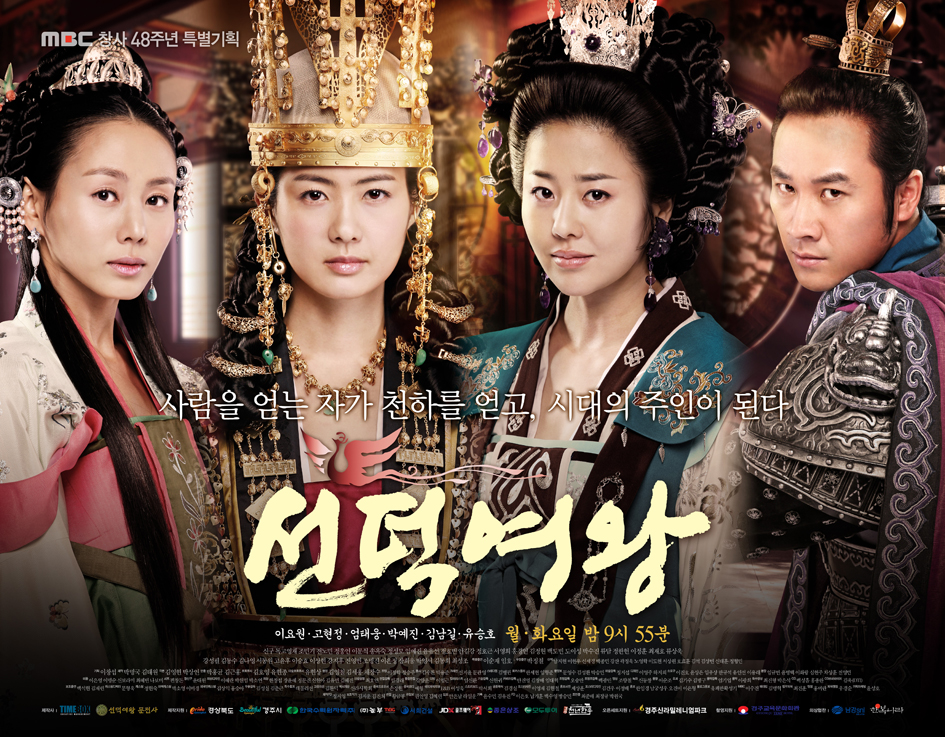
And that marks the end of the works that Lee looks at. By way of conclusion, let me mention just two things that she mentions in her final section of the chapter, entitled “Prospects for the Social Concept of Sexuality in Twenty-First Century Korea”. First:
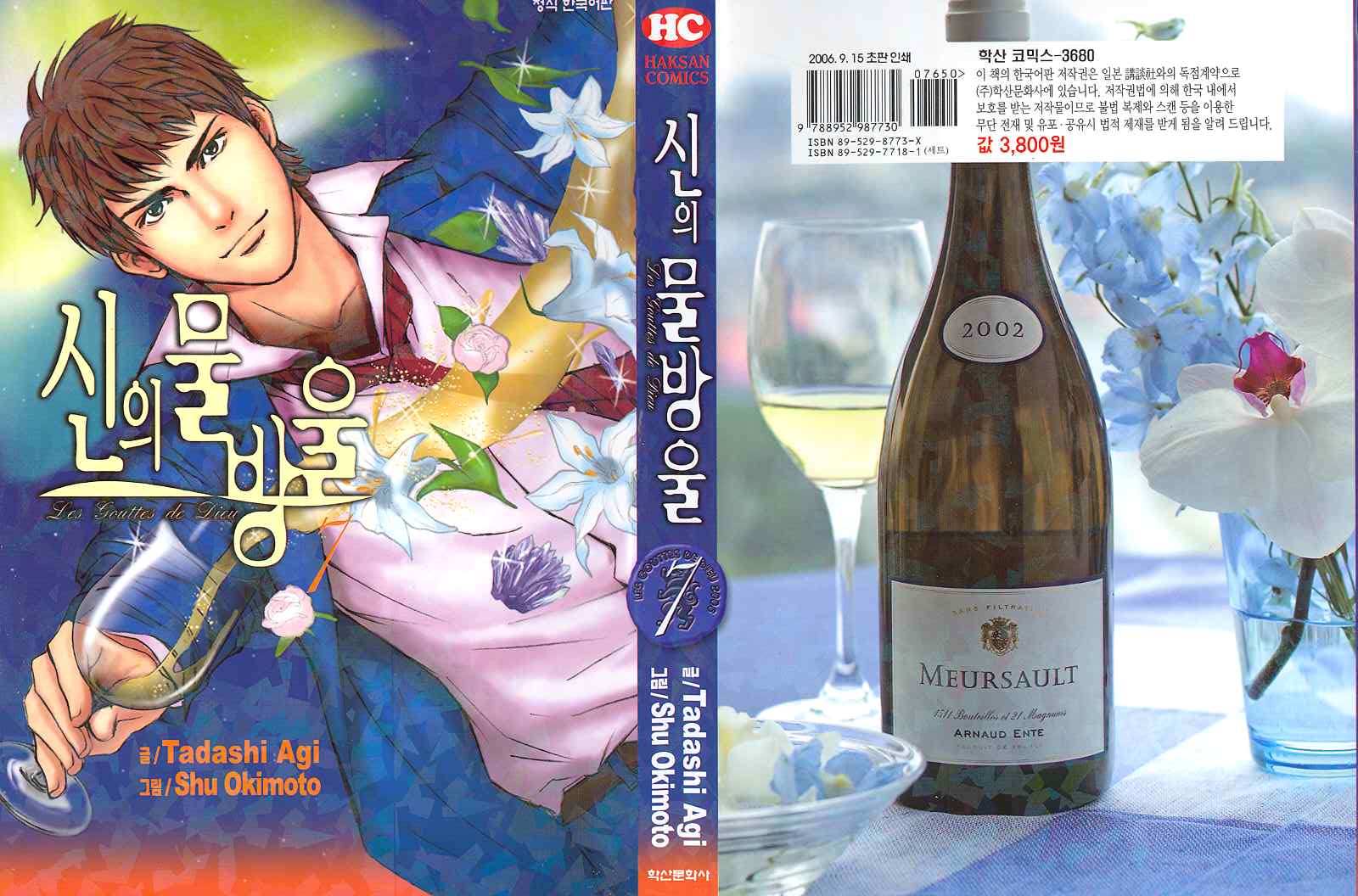
Looking at Korean culture with a certain detachment, I can imagine that the years 1995 and 1996 will be remembered as a critical period for the emergence of a social discourse on sexuality, particularly female sexuality (p. 160). The year 1995 was particularly remarkable in that housewives began, on their own initiative, to speak in public about wives’ subjective sexuality (p. 160).

Although the book this chapter is in was published in 2002, I strongly suspect that Lee actually wrote this in late-1997 at the latest, as only 2 out of 50 or so references are from sources later than 1996, and she writes in the next paragraph that “even with the economic downturn since November 1997, this tide is still in motion.” Unfortunately, when the true extent of Korea’s economic crisis became apparent just a few months later, and in particular its profoundly gendered nature (women, particularly married women, were overwhelmingly targeted for layoffs, under the explicit presumption that they would be provided for by their husbands or fathers), then this “tide” was to proved to be at best a mere ripple against new economic realities.

On the other hand, she proved to be remarkably prescient with the following:

…while this discussion of the changing process of female sexuality in the popular culture from 1993 to 1996 gives the impression that Korean women now are marching to demand their sexual subjectivity, in reality, most Korean women are marching only as the passive consumers of the sorts of cultural products described previously, not as their active cultural producers. When women are able to intervene in the process of cultural production as subjective consumers with a feminist point of view, the Korean concept of female sexuality can be transformed more rapidly than before (p. 159, my emphasis).

And as I explain here in great detail, such an opportunity was provided by the 2002 World Cup, and Korean women more than took advantage of it. That will be the focus of a follow-up post, hopefully to be written well before the conference!

Update) For those of you fluent in Korean, this short essay also discusses some of the movies mentioned here, and adds many more from the 2000s that in the same vein)