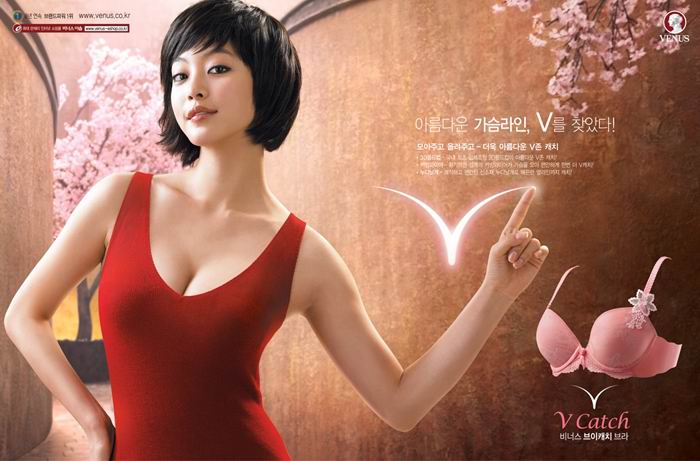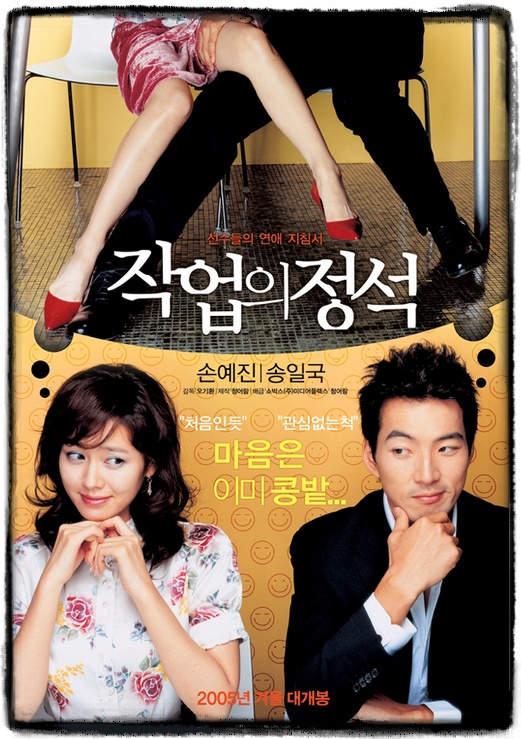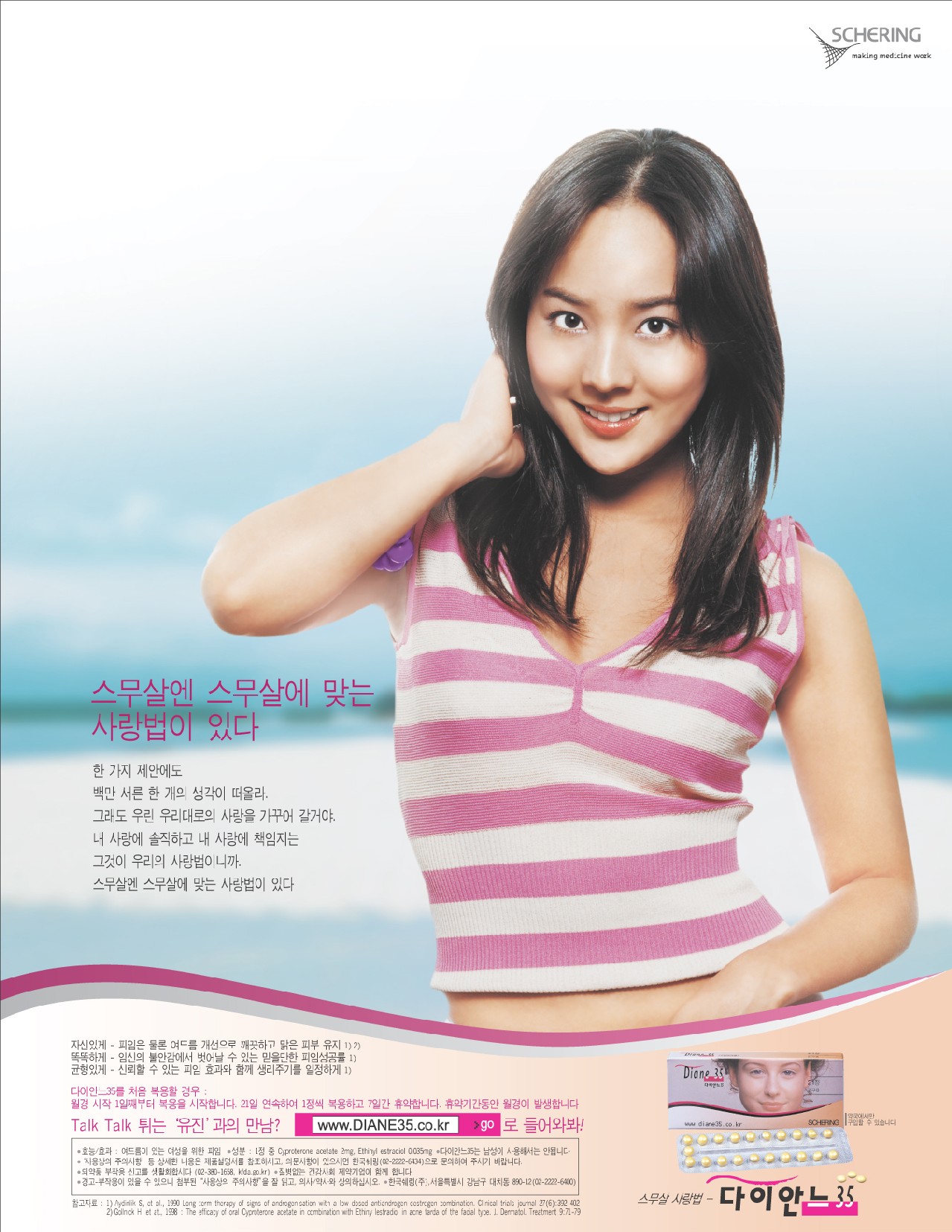
Mise En Scène: The Sexiest Korean Commercial Ever?

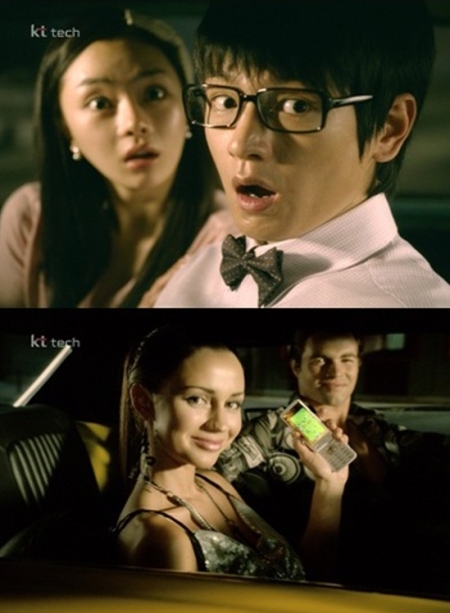
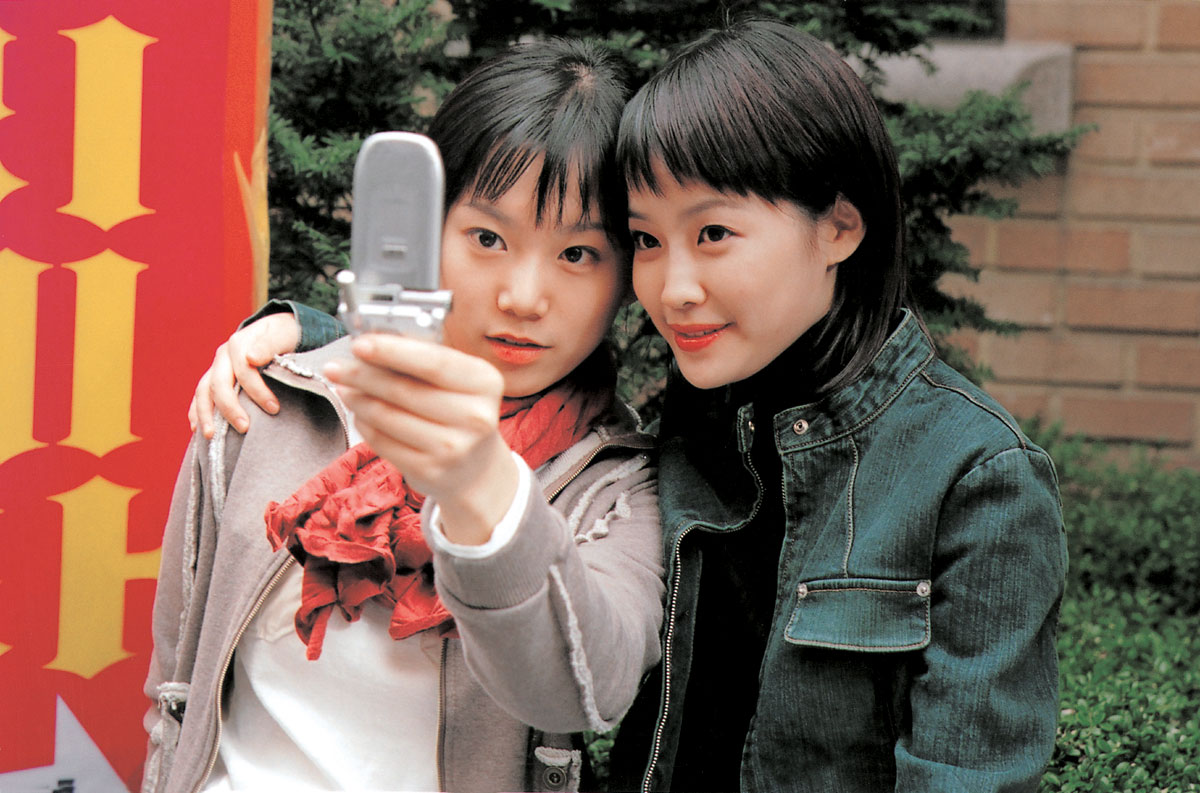
It’s much easier to say than do, but it’s true: sexiness is an attitude. To whomever is responsible for the spate of “sexy dances” in the Korean media in 2009, the vast majority of which have been anything but, let me counter with this 2005 Mis en scène commercial featuring Ha Ji-won (하지원), whose smoldering gaze at Jo In-sung (조인성) has burned in my memory ever since:

Granted, perhaps you had to be there: something really is lost in the transition to your smaller computer screen. And apologies for the poor quality, but this is now the only copy of the 30-second version available that I am aware of. Still, it’s worth preserving, even if only for myself.

I didn’t realize just how much however, until I saw this alternate 16-second version. While this particular copy – again, the only one –  has better video quality, and is worth watching just for that reason, it ultimately falls flat because it lacks the build-up of the music:

By the way, it’s actually her gaze at 0:21 (or 0:09) that really did it for me in 2005, but I’m certainly warming to her long lingering one at the beginning. Meanwhile, like it or loathe it, can anyone suggest any more genuinely sexy Korean commercials, subtle or otherwise? Perhaps I should start a new series…

Update: This was part of a series of several with the couple, most of which you can find here or on Youtube. Considering how easy those were to find though, I was surprised and disappointed at how this one slipped through the net so to speak (no pun intended).

Share

The Alphabetization of Korean Women’s Body Types: Origins

(Update, 2013: See here and here for much more up to date posts on this topic, and for similar cases in English-speaking countries in the 1910s-1930s and 1940s.)

That the female body has occupied a central place in the Western cultural imagination hardly comes as news, says comparative literature writer Susan Suleiman. And while I lack knowledge of Korean counterparts to the historical examples in the visual arts, literature, and religion that she mentions, I don’t doubt that they exist.

But what to make of the recent Korean trend towards categorizing the female body and/or body parts into a plethora of different romanized “lines”? Where do they fit in?

It’s been easy enough to prove that they have become a pervasive feature of Korean popular culture; so much so, that many have acquired a life of their own, bearing little resemblance to the (idealized) women’s bodies they were first used to describe. But those earlier observations of mine were devoid of context, something which began troubling me once I paused to consider the source of the above article on the most recent manifestations of the trend, about Korean cosmetic surgeons classifying woman’s buttocks into four types. To be precise, it raised two questions, which I would appreciate readers’ help with.

The first is that is this trend of categorization qualitatively and/or quantitatively different to that which occurs in the Western media? As to the former, probably not: I need hardly point out the similar obsession with women’s bodies there, or that it also provides often impossible ideals to live up to. And however much English speakers may find Koreans’ romanization habit in this particular case both curious and amusing (and thereby memorable), arguably it merely reflects Koreans’ general obsession with English, grafted on to an interest in women’s body forms that is not dissimilar to that of the West. Indeed, even some native English sources are beginning to describe women’s bodies in terms of letters (see below), and while that failed to catch on, are they really different to describing women’s bodies in terms of bananas and hourglasses and so forth?
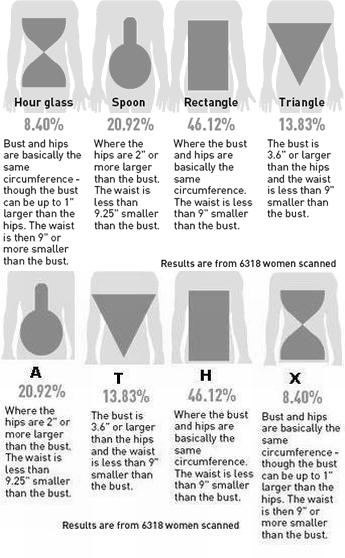
(Image sources: top; bottom. The results are from this 2005 study)

Forgive me for stating the obvious perhaps, and I mention all that not to exonerate the Korean media for the ways in which it warps and distorts women’s body images. Rather, that if I still feel that it does so more than its Western counterparts nevertheless (and I do), then that something more than my gut feeling is necessary to convince skeptics. And perhaps the difference simply lies in the much greater extent to which S-lines and V-lines and so forth are mentioned? After all, not for nothing do I describe them as a “pervasive feature of Korean popular culture.”

Unfortunately however, providing empirical proof of that is rather difficult, at least for a humble blogger. But I can provide indirect evidence in the meantime, which I would very grateful if any readers could add to.

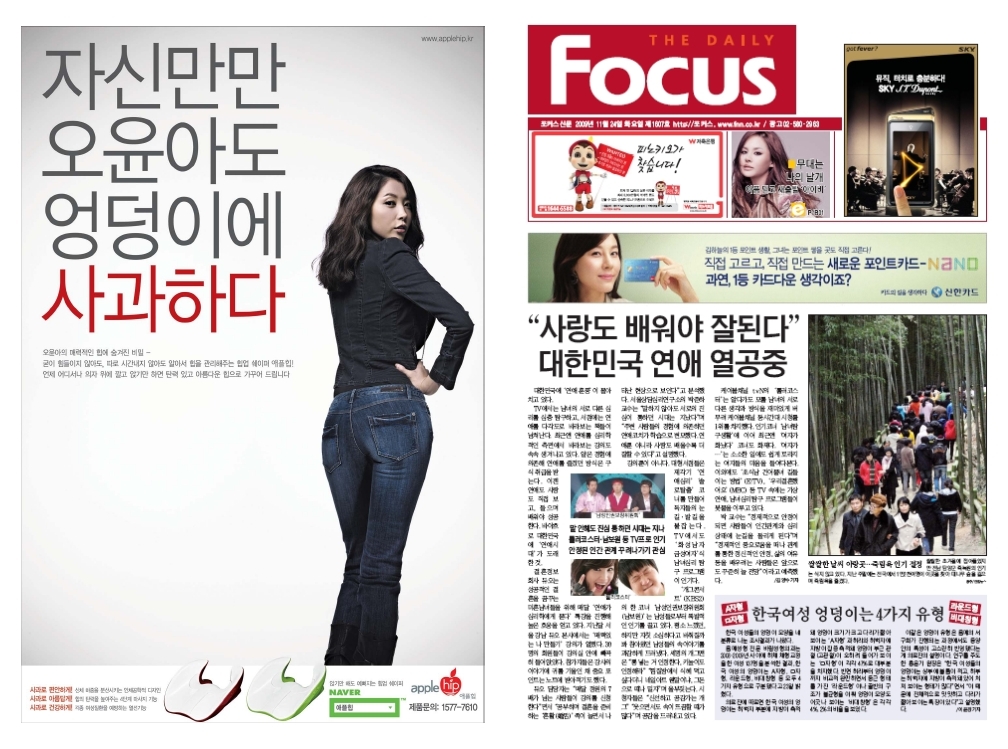
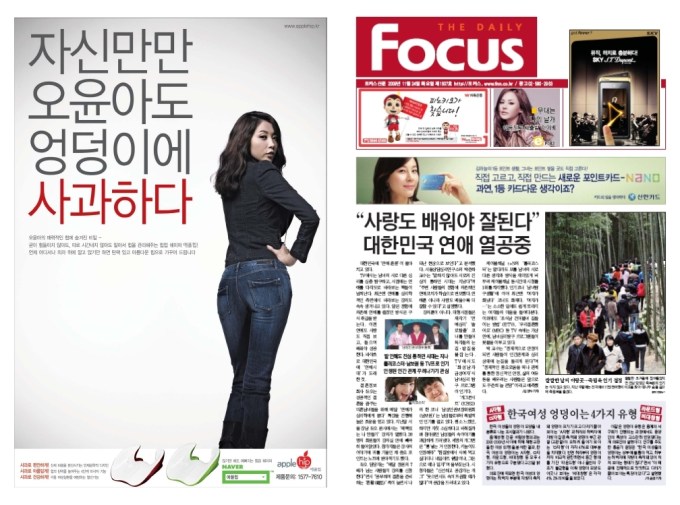
The first is the source of the article on women’s buttocks I’ve translated at the end of this post. While it may not be obvious from the opening image, it’s actually on the front page of Focus, a free daily newspaper: the image on its left, not coincidentally an advertisement for a chair which supposedly shapes one’s buttocks, part of an accompanying cover.

To your average Westerner, I’d wager that this choice would immediately single out the newspaper as a tabloid—”Women have four kinds of ass! Read all about it!”—but I’ve been asking my 20-something students’ opinions of Focus and other newspapers over the past week, and only a minority considered it such. And why would they, considering that the article was also covered by numerous other news sources (see here, here, and here), including the authoritative Hanguk Kyeongjae, a business newspaper, and which even had a helpful graphic?

Ergo, the bar for tabloid journalism is rather lower in Korea, and this extends to mainstream Korean portal sites, about which I wrote the following in my last post:

Unlike their English counterparts, you have roughly a 50% chance of opening Naver, Daum, Nate, Yahoo!Korea and kr.msn.com to be greeted with headlines and thumbnail pictures about sex scandals, accidental exposures (no-chool;노출) of female celebrities, and/or crazed nude Westerners.

To which I should have added—of course—numerous thumbnail pictures of female celebrities’ S-lines, and also a warning to never look at any of the otherwise innocuous images in the “image gallery” at the bottom of Yahoo!Korea in particular, for if you do you’ll frequently be greeted with advertisements for videos of celebrities’ nipple-slips and so on alongside those birds, flowers, and interesting landscapes.

What’s more, if portal sites are fair game, is it any wonder that children are also encouraged to be concerned about their S-lines and so on? And don’t get me started on ubiquitous narrator models.

Finally, consider what Javabeans wrote on the subject, a blogger on Korean dramas who is a much more authoritative source on Korean television than I will ever be:

…while this [romanization] practice is seemingly frivolous on the surface, it actually belies much more pernicious trends in society at large, when you have celebrities vocally espousing their alphabet-lines and therefore actually objectifying themselves as a conglomeration of “perfect” body parts rather than as whole, genuine people. (my emphasis)

With that combination, something has finally clicked for me: why it is so difficult to find Korean language sources on sexism in the media, and on advertisements in particular? I’ve been looking on and off for years now, and while I accept (and would be more than happy to learn) that perhaps I’ve simply been using the wrong search terms and/or looking in the wrong places, that it is so difficult in the first place is surely telling. A solution though, is perhaps provided by Daniel Jonah Goldhagen in Hitler’s Willing Executioners: Ordinary Germans and the Holocaust – no, really – who had this to say about anti-Semitism in Nazi Germany:

A general problem in uncovering lost cultural axioms and cognitive orientations of societies since gone or transformed is that they are often not articulated as clearly, frequently, or loudly as their importance for the life of a given society and its individual members might suggest. In the words of one student of German attitudes during the Nazi period, “to be an anti-Semite in Hitler’s Germany was so commonplace as to go practically unnoticed.” Notions fundamental to the dominant worldview and operation of a society, precisely because they are taken for granted, often are not expressed in a manner commensurate with their prominence and significance or, when uttered, seen as worthy by others to be noted and recorded. (Vintage Books Edition, Feb. 1997; p.32)

Not lost or transformed, but equally obtuse to someone from another culture perhaps, and which I’m still only just starting to make a dent in.
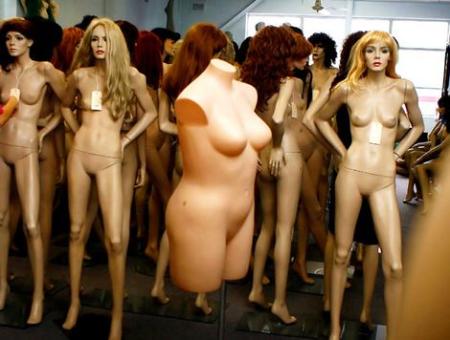
But a good grounding for that would be the origins of Koreans’ obsession with romanizing women’s bodies, the second question the article raised for me. Or to be honest, an element of the subject I realized I’d paid little attention to when, serendipitously, Korean reader Chorahan provided this extremely informative comment on the subject on another post. With permission, I am happy to now place readers in her more than capable hands:

…I think the specifics of the alphabetization of Korean women are best approached in the context of the classification of women into certain rigid subtypes (read: simplified stereotypes) of women. The S-line and V-line are part of the ‘formula’ for the ‘pretty girl’ here, as are humongous pupils in big double-lidded eyes, cosmetically unaided pallor, bone-tight ligaments, etc. I would suggest that people here perpetuate this mind-boggling state of sheeple-ness precisely because this ‘formula’ serves as helpful, socially constructed and ordained criteria – with which to deduce the type of woman being dealt with, and to adjust manners to suit.

Manners are adjusted according to the woman’s ‘type’ because it is widely taken as a given that certain things can/cannot be said/thought about women depending on how they look (value-judgment wise). The socially ‘accepted’ or ‘conceivable’ scenario that follows any such encounter is rigidly stratified into according variations. My take on this phenomenon is that this is directly derived from a warped and popularized Confucian principle popularized in the Chosun dynasty called 정명론 (正名論), or literally ‘right name idea’, in which the ‘father should be fatherlike and the son sonlike etc.’ A beauty should be treated as a beauty, or a ‘talking flower’; an ugly girl can be laughed at/with (hence the ‘ugly’—or, as I like to put it, ‘uglified’—comedian typification.)

I’m a Korean girl and I’ve lived in Seoul nearly all my life, going through the average Korean educational system to enter the undergraduate level here. Inferring from the numerous social contexts in which I’ve encountered such blunt references to conventionally ugly/pretty features, I would venture the possibility that in originally familial, communal societies where everyone had to stick together whether they liked it or not, the ‘insult’ was not only an insult per se, but also employed as a form of veiled endearment. This is widely considered the ideal sort of 부담없는 (easygoing) interaction between two close individuals—dialogue employing insult as endearment, or ‘constructively realistic advice to help you in the real world’—and is often the most commonly resorted-to excuse for horrific verbal abuse. (Coloring vacuous praise according to these featural types is also just such a form of ordained interaction, considered honest and respectful and completely normal.)

I do not, however, think that this should simply be chalked up to individual stupidity on the part of people that blindly follow this line of thought/action—quite the contrary. I think it’s very telling that the homogenizing retardation of the populace in this regard is and has always been spearheaded by *the commercial/entertainment media sector,* which is—big surprise— notoriously homogenized/stereotyped! It has even resorted to homogenizing certain snapshots of stereotyped ‘diversity’ or ‘unconventionality’ in the form of teen idols that are held up on pedestals as somehow being harbingers of Korea’s ‘openness’ and ‘creativity of the youth’.

As a twenty-something Korean woman towards whom those commercials are directly marketed, I find all this very sad and disgusting and lame, and I am very troubled by the thought that people actually think Korean society is improving/ has improved in its bridging of (sexual or gender-based, if that’s your cup of tea, though I don’t think that’s all) dichotomies (if dichotomies are indeed criteria on which to issue any normative judgment.)

I think it is not people being stupid, but the other way around (stupid being people, or stupidity donning the guise of specific individual avatars): the root of the problem (of not seeing people for the people they are, and adjusting social perception/performance according to formulas hammered in by peer pressure since birth) is a sort of warped ‘commodification of human beings’ + ‘Confucian backwash’ that is only being exacerbated as people constantly look to external/ international solutions to symptoms that stem from an overlooked, simplified, but inherently endogenous disease that must be addressed within its own context.

I definitely think something fundamental has to give. This isn’t just an odd cultural quirk to cluck tongues over – this S-line, this V-line trope, this alphabetization of women just as much as the stereotyping of men – it’s seriously symptomatic of some skewed rift in the goodness and saneness and kindness of people here vs. the expressed, contorted manifestations of such potential strengths.

Not exactly concise, but this is my very understandably strong opinion regarding the topic of this post. But I’m no sociologist, so I wouldn’t know.

p.s. In first paragraph—sorry, this could be misunderstood, i don’t propose any normative suggestion—I’m suggesting as an explanation that people ‘are perpetuating’ etc. (end)
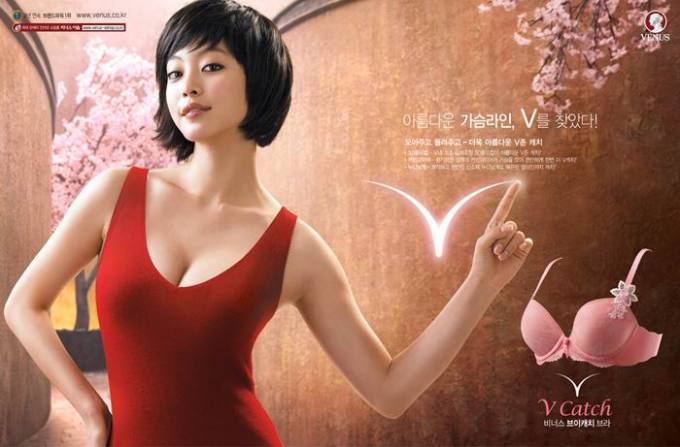
Despite all that context however, one still shudders at the thought that the following was the first thing millions of Koreans read one November morning:
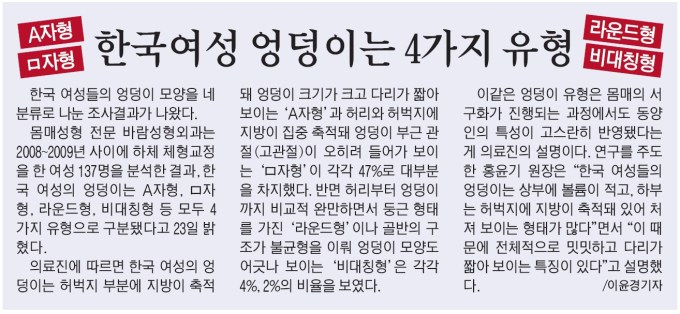
Korean Women Have 4 Types of Buttocks

The results of a survey about the different types of Korean women’s buttocks have just been released.

Baram (wind) Cosmetic Surgery Clinic, which focuses on operations on the body rather than the face, performed operations on the lower bodies of 137 female patients in 2008-2009. An analysis of their different types of buttocks was performed, and the results released on the 23rd of November. All in all, Korean women have 4 types: “A”, “ㅁ,” “Round,” and “Asymmetrical/Imbalanced.”

According to the team of doctors there, women with type A have a lot of accumulated fat in their thighs, making buttocks look big and their legs short, and those with type ㅁ, a lot of accumulated fat in their thighs and around their waists, making their hips look relatively narrow. Both comprise 47% of Korean women each. On the other hand, those with relatively smooth and curved hips and buttocks have a Round type, and those with an asymmetrical or imbalanced pelvis have an asymmetrical or imbalanced type, compromising 4% and 2% of Korean women respectively.

As the doctors explain, even though Korean women’s bodies are Westernizing, Korean women still have these 4 East-Asian types of buttocks.  According to the doctor in charge of this study, Hong Yun-gi, “because Korean women’s buttocks don’t have much volume at the top, but have a lot of accumulated fat at the bottom, they look a little droopy” and so overall “their buttocks look boring overall, and their legs short.” (end)

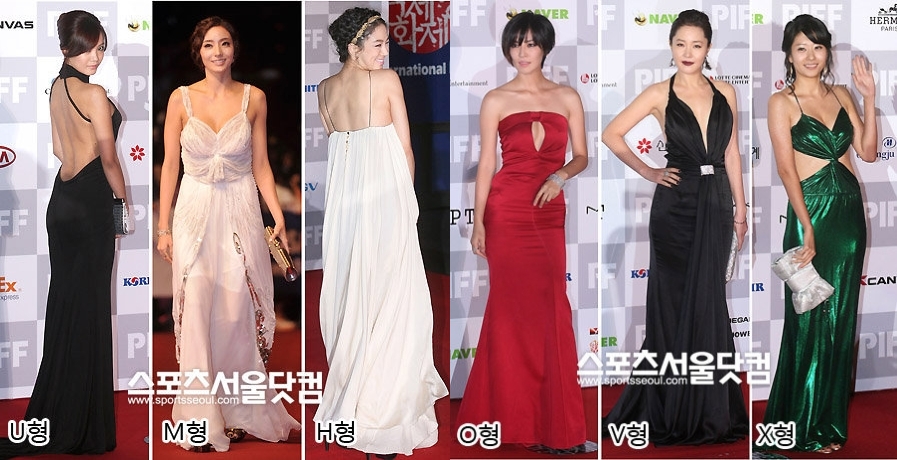
No, the extrapolation from 137 cosmetic surgery patients to all Korean women was not a mistranslation I’m afraid. And I beg to differ on Korean women’s buttocks looking boring also, but that discussion is probably best avoided. Instead consider, first, Jezebel’s take on “the ridiculousness of dressing for your shape,” many guides to which came up as I researched this post, especially this one from The Daily Mail, a UK tabloid. Next, another case of Korean romanization gone mad that I originally planned to look at alongside the above, albeit of women’s dresses rather than their bodies per se:

And finally, literally the very first thing that came to mind when I saw the Korean article on women’s buttocks: the following picture from a post on male objectification from Sociological Images, because I wondered if men’s buttocks would ever similarly be categorized. But given that a page exists on Wikipedia for “female body shape” for instance, but not on male’s, then I suspect not in the near future.

On a side note, and not that I want to repeat the experience anytime soon, but searching for images of Korean men’s buttocks instead proved impossible, at least on Korean portal sites. But perhaps again…*cough*…I’m not looking in the right places?

Korean Sociological Image #27: What, Koreans Can Do The Love Shake Too?

Something that manages to combine both the best and the worst of the Korean media.

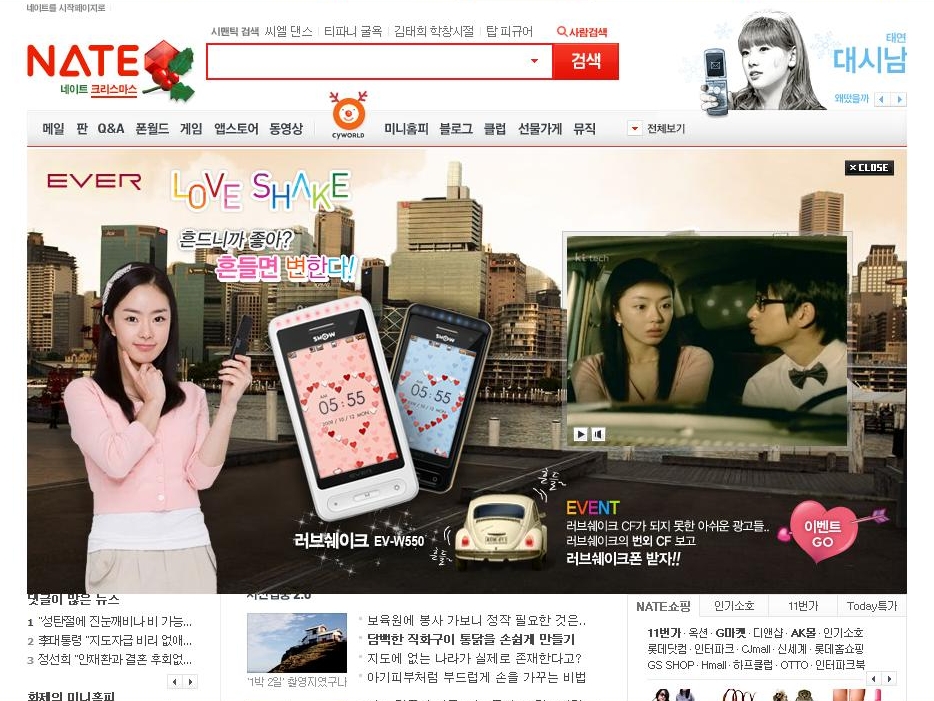
Go to the Korean portal site Nate at the moment, and you’ll see a small advertisement with an old VW Beetle on it with the words “흔들리는 자동차 안에선 무슨일이?” or “What is happening inside the shaking car?”. And if you’re using Internet Explorer – this is Korea after all – then it will invite you to move your cursor over it. If you do, then the screen above will pop up, with the following commercial:

Vodpod videos no longer available.

The good point about the commercial is the joke about having sex in a car…and just a few days after I wrote that you never see that sort of thing in the Korean media too; hopefully, this shows how much attitudes are changing. Not that there wasn’t already a great deal of sexual innuendo and increasing amounts of skin in the Korean media of course, but the latter especially is by no means a reflection of open and healthy attitudes to sex per se.

If any readers can think of any similar references to sex in the media before it though, then I’d be happy to be proved wrong. And if you do, then I’d wager that you too first found them on a mainstream Korean portal site. Unlike their English-language counterparts, you have roughly a 50% chance of opening Naver, Daum, Nate, Yahoo!Korea and kr.msn.com to be greeted with headlines and thumbnail pictures about sex scandals, accidental exposures (no-chool;노출) of female celebrities, and/or crazed nude Westerners. Which brings me to the commercial’s bad point.

I first saw this advertisement on a work computer during a break this afternoon, already thinking of writing about it here as soon as I saw the shaking car (and as a side-benefit, it meant I could put off the translation for the post I originally planned!).  But when I saw who the occupants were I was simply floored. For in a supreme irony, just two minutes earlier I had been doing a free-talking activity with my students about national stereotypes.

Don’t believe me? Sure, I admit I’m not averse to embellishing details for a good story on occasion. But I really had been doing page 22-23 of my edition of Taboos and Issues with them (which I highly recommend by the way, and I was surprised that my students shared many of my stereotypes about European nationalities). And regardless, I would still have been sat there thinking why, oh why, did the second couple have to be Westerners?

Now, I’ve already written a great deal about how many Koreans have stereotypes of Westerners as being much more sexually liberal and promiscuous than Koreans (especially women), so I won’t rehash that here. And of course there’s a certain element of truth in that (most Koreans live with their parents remember), and it’s not meant entirely negatively and/or without a sense of envy either, although I have heard from some Western female friends that it can lead to some Korean men expecting guaranteed sex on a first date, and so on. Examples like this commercial though, demonstrate why that stereotype is unlikely to disappear anytime soon.

Against that, I grant that it appears to have been filmed in a Western city, and that if you watch the video to its conclusion, then you see the Korean couple deciding to get wholeheartedly into the “Love Shake”™ too. But to which I reply a) Why not a Korean city? and b) wouldn’t the Korean couple have appeared more confident and prouder of their nationality if, instead of the Westerners, it had been them in the shaking car, with the Westerners later copying them?

Seriously, how to explain not having either without some serious Occidentalism going on, of which artificial sexual dichotomies have always been a core component? I’m open to suggestions.

Update: On a side note, I know little about the actors Seo Woo (서우) and Im Joo-hwan (임주환) sorry (see Dramabeans for more information on both), but I can confirm that this innocent(ish) looking image of Seo Woo is consistent with her role in both Tamna the Island (탐나는도다), ironically groundbreaking in that it featured a romance between a Korean woman and a foreign male (I think – I only watched the first few episodes sorry), and also Paju (파주; see #7 here)…or at least consistent with the way it was advertised. I just mention that because many Korean celebrities appear in so many commercials that their brand easily gets diluted so to speak, so I couldn’t help but notice that she doesn’t appear to be making the same mistake.

(For all posts in the Korean Sociological Image series, see here)

Share

Lusting After Teenagers…or the Maturing of Women’s Fan Culture?

Update, September 2013: My original commentary on this article became outdated, so I’ve since removed it. Instead, please see here, here, here, and here for more on the controversial “uncle” or “ajosshi” fandom of teen girl-group members, and here for more on why middle-aged women came to dominate soccer fandom back in 2002 — an important precursor to their fandom of pop stars and actors described here.

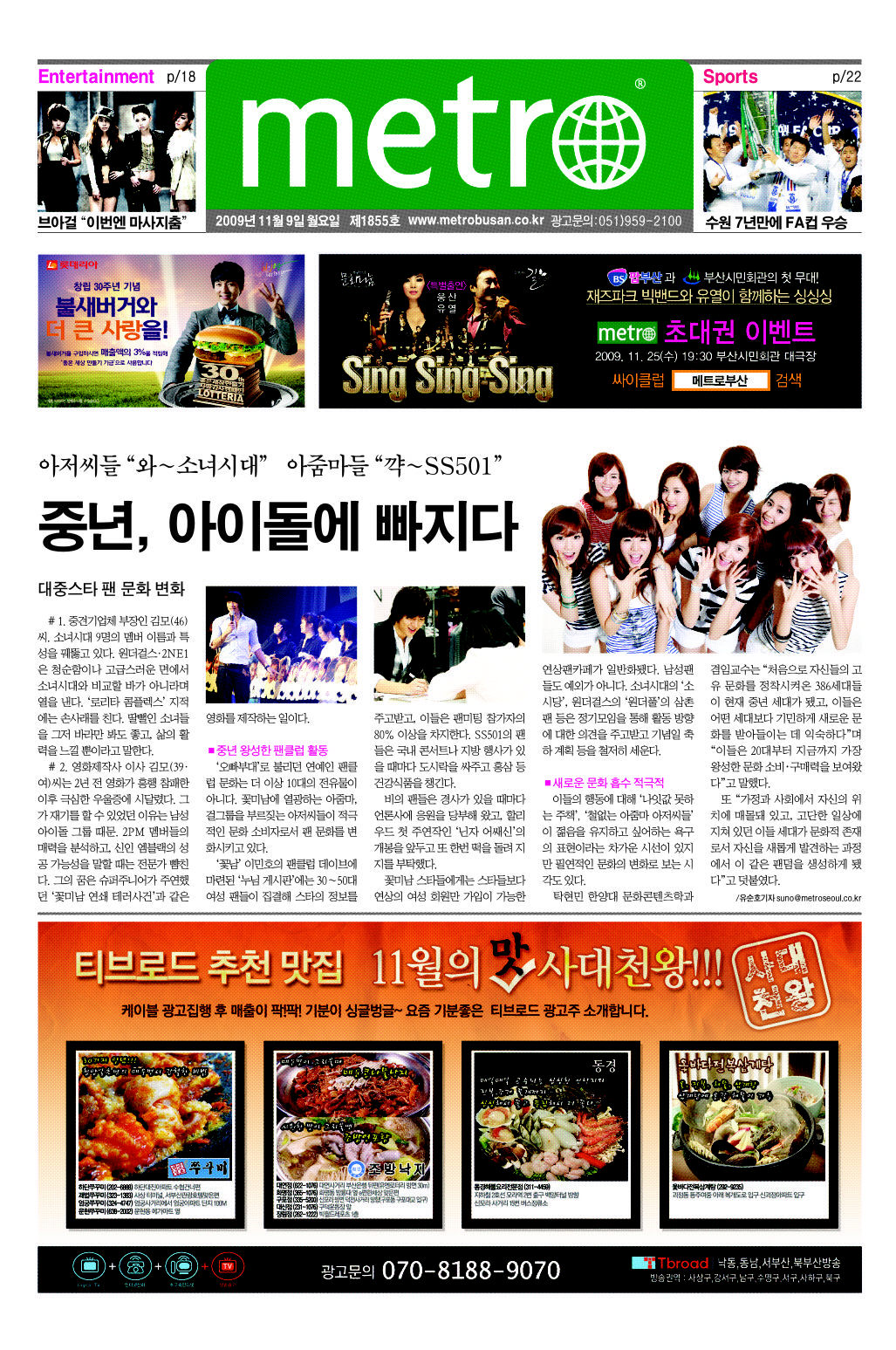
Middle-aged People are Head Over Heels about Young Idols

Fan Culture is Changing

#1. Mr. Kim (46), a department manager of a medium-sized business, knows the names and personalities of all 9 members of Girls’ Generation. He thinks that the Wondergirls and 2NE1 do not even come close in terms of purity and class. He dismisses accusations of having a Lolita complex, and says that watching the girls of Girls’ Generation, who are about the same age as his daughter, give him a feeling of life and vitality.

#2. Film company CEO Mrs. Kim (39), suffered severe depression after her movie did extremely badly 2 years ago. But she was able to recover because of her interest in male idol groups, and when she analyzes the charms of members of 2PM, or discusses the potential for the new group MBLAQ, she is indistinguishable from an expert in the music industry. Her dream is to make a movie like Attack on the Pin-up Boys (2007) that Super Junior starred in.

Middle-aged People Are Actively Participating in Fan Clubs

As the name implies, “older brother” fan club members used to be mainly teenagers, but this is no longer the case. But as active consumers of culture, middle-aged women passionate about flower men‘ and middle-aged men heavily into girl groups are actively changing fan culture.

For instance, on flower man Lee Min-ho’s fan club “Dave,” there is an “older sister” section for 30-50 year old women to exchange information about their star, and when there are fan meetings with him they make up over 80% of the audience. And whenever SS501 [James: if you don’t want to show your age, say “double-ess” rather than “ess-ess”!)] have a concert in Korea or attend some event in their region, their middle-aged female fans prepare packed lunches with healthy foods such as red ginseng for them.

(Source)

And whenever there is an event featuring Rain, his middle-aged female fans call the media and request favorable coverage. Before the release of his first Hollywood movie Ninja Assassin (2009), they even delivered rice-cakes to them, a symbol of good luck for a new venture.

Indeed, it has become quite normal for there to be fan clubs that only allow those older than the flower men themselves to join. And this is true for male-only fan clubs for female idols too. In the Girls’ Generation’s “Girls’ Generation’s Party” and the Wondergirls’ “Wonderful” fan clubs for instance, middle-aged men have regular virtual meetings where they exchange opinions about how the groups can progress and thoroughly how they can celebrate group anniversaries and birthdays and so on.

A New Fan Culture is Actively Forming

Many people have dim views of middle-aged men and women who don’t act their age, dismissing them as merely chasing after their lost youth. But an alternate view is that this demographic shift in membership is an inevitable change.

Professor Tak Hyeon-min, on sabbatical in the Cultural Contents Department of Hanyang University, said “People of the 386 Generation, who have finally established their own unique culture, are used to actively absorbing new things,” and that “from their 20s until now, they have demonstrated that they are the biggest consumers and purchasers of cultural products.”

Also, “members of this generation are stuck with heavy family, home, and/or social responsibilities, so as a means of escapism and renewing themselves, they have created a middle-aged fandom in a sense, fundamentally changing Korean fan-club culture in the process.” (end)

This Little Piggy Went to Kindergarten…

( Source: All Size Wallpapers )

Apologies for the 6-day hiatus everyone: my 3 year-old daughter Alice caught Swine Flu from someone in her kindergarten earlier last week, then my 1 year-old daughter Elizabeth from her, then my wife. Frankly, I’m amazed that I haven’t caught it myself yet.

Testament to my eating a clove of garlic everyday since November? Who needed friends anyway…

Seriously though, naturally I was a little worried when I first heard the news about Alice on Monday, and especially Elizabeth on Wednesday, small for her age. But fortunately all 3 are almost better (my daughters were put on Tamiflu), although Elizabeth is still coughing a little.

Meanwhile, now that things have settled at home, I’m able to concentrate on catching up with writing posts and responding comments and emails and so on. That will take a lot of work though, so I’ve decided to skip adding more by forgoing this week’s open thread sorry. Merry Christmas until the next one on the 26th though!^^

p.s. For those of you wondering when my Korean Gender Reader posts will restart, apologies for the delays, and that will be on Monday the 4th!

Share

Open Thread #2

( Source: Jeong-in )

Some graffiti-art for your enjoyment this week, as I rarely see any in Korea (not that that’s necessarily a bad thing). Now that I look at it more closely though, I’m not entirely certain if it is actually Korean? There are no details at the Korean photography blog I got it from unfortunately.

Meanwhile, I received the following email from reader Jackie earlier this week, which I’ll let speak for itself. If you would like to help her but don’t want to provide details publicly here, then please contact her at jackieee.kim@gmail.com:

“I am a junior sociology major who is hoping to go to Korea this summer to either research with a professor or work for a nonprofit organization. I am contacting you to ask if there were any organizations or people you could direct me towards or connect me with. I’m interested in working in the areas of cultural  exchange, community development, race & ethnicity, gender inequality, or children & youth. I’ve been searching for people and places on my own, but my Korean is only conversational at best and I do not have very many connections so have not had much luck. I will be applying for a summer grant from my school, so I would not need funding. I would really appreciate any help or advice you could give me. Thank you.”

Have a nice weekend everyone!

Share

(NSFW) Korean Movie Review #2: Samaritan Girl/Samaria (2004)

(Source: Naver영화)

To my surprise, there can actually be some advantages to being a fledgling movie reviewer.

For instance, lacking the knowledge of experts, I can drop all pretense of objectivity. And indeed, my long-held preconceptions of this movie did have a profound effect on my ultimate enjoyment of it.

Also, only having seen one other of director Kim Ki-duk’s (김기덕) earlier works in passing – The Isle (2000) –  then I am in no position to analyze Samaritan Girl/Samaria (사마라아) in the context of his movies as a whole.

Well of course, I hear you say. But this is more important than it may at first appear.

This is because of the plethora of reviews already available, I have noticed that positive ones tend to include extensive references to Kim’s Spring, Summer, Fall, Winter…and Spring (2003) in particular, while negative ones are more likely to analyze the movie in isolation. Not exclusively of course, but the division is noticeable. Rather than implying a potential forest for the trees phenomenon here though, I mention it because I have also heard Kim’s movies are very hit and miss, and hence that your opinion of them can be heavily affected by which film you watch first.

And therein lies the problem, for much about Samartian Girl is vague, confused and/or simply incomprehensible, and not in the positive sense that this encourages you to engage more with the movie in order to fill in the blanks. And while I strongly suspect that watching his earlier movies would clarify a great deal, by itself this movie would not encourage most viewers to do so.

samaria-korean-teenage-prostitution(Source: Naver영화)

In fairness though, I did set myself up for being disappointed.

I first heard of it two years ago, via a newspaper article I translated about how 3 in 10 internet dating sites were being used to arrange teenage prostitution. While I haven’t really pursued the subject since, deferring to the excellent work done by Matt at Gusts of Popular Feeling on it instead, the post was picked up by Shinsano at the East Windup Chronicle (as well as by Matt himself), and the back and forth I had with him there gave me the impression that Kim was a much-needed Korean social critic, welcome overseas but ostracized at home because of his constant airing of Korea’s dirty laundry.

That image of him is by no means incorrect. But despite not having seen it, somehow it also inflated the quality of the movie in my mind over the next two years, especially as the blog came to acquire its present focus. Suffice to say that by the time I finally began to watch it last week, I fully expected a fierce and piercing critique of the teenage prostitution industry here.

But just the marketing of the movie itself should have given me pause.

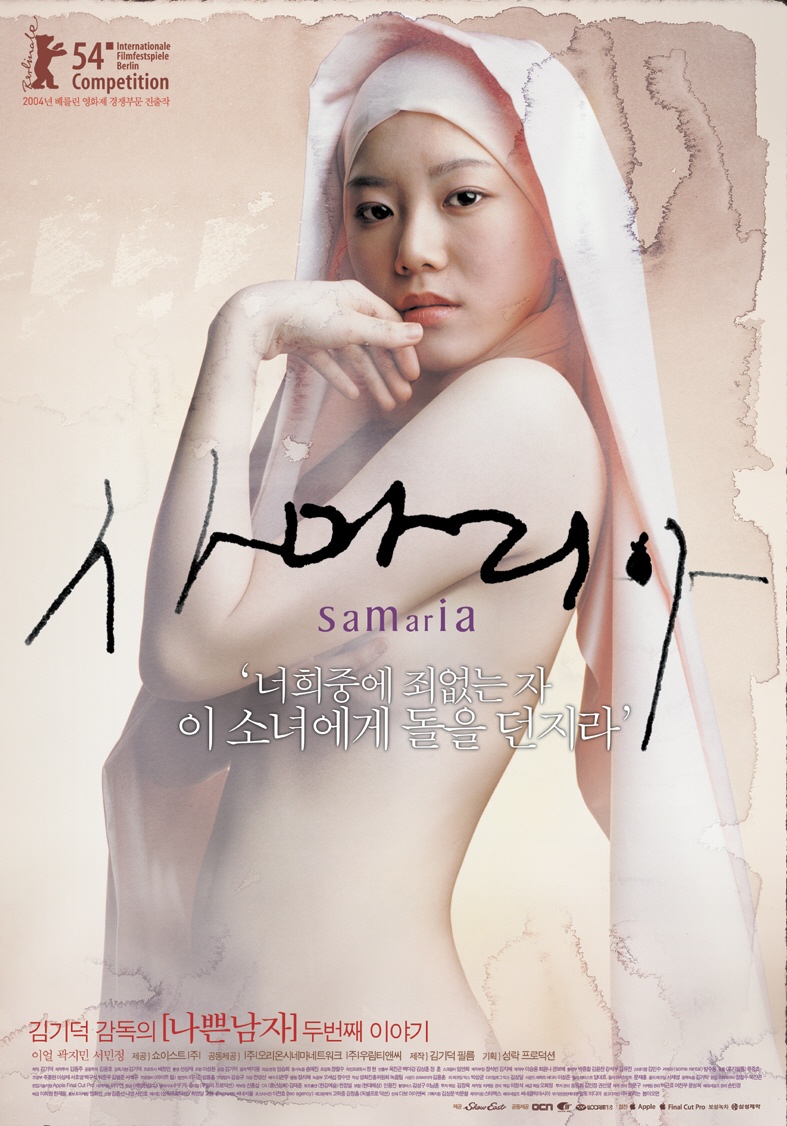
Consider the two promotional posters above from 2004, featuring Kwak Ji-min (곽지민) and Han Yeo-reum (한려름) respectively. Never mind that Kwak is topless, and as a minor when the picture was taken, meant that it was technically illegal; as this case with a 14 year-old in January and this case with an 18 year-old earlier this month demonstrate, the Korean authorities still seem strangely reluctant to prosecute this sort of thing. Rather, the point is that far from discouraging one from having sex with minors, both posters seem to be positively encouraging it.

True, as author of this blog, I can hardly fault someone for using such images for the sake of popularity, even if they send mixed messages. Also, at risk of sounding hypocritical, I’m not going to feign outrage at topless photos of someone just a few months shy of the legal age to pose for them either. But I do have my limits:

samaritan-girl-bathhouse(Source: Celebrity Movie Archive)

This is the second of two bathhouse scenes in the movie, at just 6 minutes and 16 minutes into it respectively. Neither is entirely pointless: the implied lesbian relationship is central to understanding why Kwak Ji-min, pimping for Han Yeo-reum as they save money for permanently escaping to Europe, clearly becomes distressed when Han shows signs of enjoying her work, in particular becoming attached to one of her clients, a music composer. Derek Elly at Variety also notes that:

Wisely, Kim has opted not to show the sex scenes [with clients], and there’s tenderness (with gently lyrical music) in those sequences sketching the girls’ friendship — playing in a park together, or bonding in a Korean-style bathhouse.

Apparently so much tenderness though, that it put blinders on this unnamed reviewer at Asian Film Reviews:

There is minimal nudity in this movie, which is surprising considering the subject matter. The lack of nudity preserves the girls’ innocence and reinforces the integrity of the movie. If Samaritan Girl featured explicit sex, it would seem trashy and the message would be lost in all of the excess. Instead, this movie is a tender, touching story about shattered dreams and lost innocence.

TR at TimeOut London puts it rather differently however:

The actual paedophile sex is kept offscreen, but Kim’s enraptured gaze at the two naked girls washing each other in a public bath is as prurient as they come.

And while both scenes were certainly compelling viewing at the time, I was left wondering if it was really necessary to see them naked to appreciate their bond?

(Source: Naver영화)

Probably not, and this adds a certain poignancy to what Adam Hartzel writes about Ki Ki-duk at KoreanFilm.org:

In tag-lining his Silver Berlin Bear award-winning film Samaritan Girl with the biblical reference, “He who is without sin, throw the first stone,” director Kim Ki-duk has allowed himself cover from critics. Such a tagline deflects any negative criticism before the critic has even criticized. It argues that only the critic who is without criticism themselves should throw damning words at Kim’s film, otherwise, the critic should remain silent. And who among us is without “sin”, hypocrites that we all are? Such underscores the marketing acumen, if not directorial skill, of Kim, a man who has quickly risen, justified or not, to become one of the most recognizable Korean directors throughout the world…

In combination with the posters then, those scenes were arguably far more for commercial reasons rather than the artistic ones Kim Ki-duk is better known for. While that does not make Samaritan Girl a bad movie in itself though, it does point to an emphasis on style over substance that plagues the entire movie, and after just 6 minutes into it to boot.

To a certain extent, this criticism is just personal taste. Friends that recommended Peppermint Candy to me for instance, only to be dismayed by my scathing review of it later, have since pointed out my preference seems to be for movies where everything is explained to viewers. That’s a fair assessment, and indeed my incomprehension at Kwak’s bizarre decision to sleep with all of Han’s former clients after her death, returning their money as some form of atonement (hence the title), means that I would have been unlikely to have ever warmed to Samaritan Girl. And in hindsight, being aware of that element of the plot is what put me off from watching it for two years too.

But I can still acknowledge the benefits of such an approach, and indeed to have provided more detail would probably have detracted from the haunting, slight surreal tone of the film, with occasional combinations of long, drawn-out, but otherwise compelling scenes and stunning cinematography that reminded a newbie like me of, well, the Italian movie Il conformista (1970). There is also a lot of symbolism and references to Christianity, redemption, and – most notably in my book – there is the decision by Kwak and one client to have a liaison on the riverbank in front of the National Assembly Building. A metaphor for something deeper perhaps? A thinly-veiled political message?

(Source: Naver영화)

Alas, probably not. While it would be unfair of me to criticize Samaritan Girl for completely lacking the piercing critique of teenage prostitution I had projected onto it (albeit not unreasonably given Kim’s reputation),  I certainly didn’t expect the movie to almost glamorize it instead. But this is no exaggeration: with the exception of the composer Han became attached to, all of Kim’s clients treat her with (paternalistic) respect and kindness for instance (one can understand Han’s affection for them), most liasons take place in immaculate hotel rooms, and some immediately see the error of their ways after Kim surprises them by giving money back to them afterward.

There is no violence, no refusals to wear condoms, no STDs, no pregnancies and abortions, and apparently no impacts whatsoever on Kim herself, who someone manages to sleep with dozens of men in the afternoons despite being an otherwise ordinary middle-school student.

Indeed, the only unwelcome element in this fantasy is the police, first in the form of the officers raiding the hotel, forcing Han to jump to her death from a hotel window in order to escape, and later in Kim’s detective father Lee Eol (이얼), who discovers what she is doing but who chooses to confront Kim’s clients – in increasingly violent episodes – rather than confronting her.

Of course, Samaritan Girl does have some redeeming qualities. Kwak in particular seems to mature as an actor literally over the course of movie, and the tension between her and Lee – an excellent casting choice – that is the focus of the last third of the movie is both palpable and compelling. But both positive and negative reviews of the movie mention that Kim never quite manages a balance between surrealism and providing a convincing story, and even for those that don’t like to be spoon-fed all the details of a story like myself(!), there are simply too many gaps to make the necessary leaps of faith.

(Source: Naver영화)

Instead of Samaritan Girl then, I heartily recommend You Are My Sunshine (2005) for an examination of the unsavory reality of the Korean prostitution industry, albeit only in passing. But I would appreciate any other suggestions.

Next review: My Wife is a Gangster (조폭 마느라; 2001).

(For all my Korean Movie Reviews, see here)

On Being Green With Envy at Childless Couples…

Apologies for not having a post up since Monday everyone, but for some reason my daughters have been running around until late every night this week, demanding to climb up me to do back-flips, or that I help them build Lego houses. Yesterday, I vaguely recall, I even fell asleep on the lounge floor while watching them…and they proceeded to use the side of my head to put their Lego bricks on.

This morning though, my eldest one thrust the above into my pockmarked face while I was drinking the first of many coffees, loudly exclaiming “Chorok-sek (green) one YOO Daddy! A toast please!”. I decided to forgive her.

I’ll do my best to have one ready by tomorrow. Post I mean. Meanwhile, here is an example of the budding artist’s work from July if you’re curious, and also a brief examination of the gender stereotypes in a popular Korean children’s song if you can’t wait until tomorrow for that sort of thing. But be warned: I wear rather less clothes in Korean summers…

Share

Korean Advertising: Just Beautiful Women Holding Bottles?

Source: Wonder Nostalgia.

Some words of wisdom from Londoner Bruce Haines, currently head of Korea’s largest ad agency Cheil Worldwide (my emphasis):

Q) What’s one big difference between advertising in Korea and the UK?

A) Celebrity endorsement – a huge proportion of Korean ads depend on famous people. Of course, it’s not uncommon in the West for stars to endorse a product, but generally the ad has a core idea and makes use of the celebrity endorsement to enhance the original concept. Not so in Korea. In its crudest form, Korean advertising degenerates to beautiful people holding a bottle. This is one of the things holding back the reputation of Korean advertising worldwide.  (10 Magazine)

At first, I thought “Korean advertising degenerates to celebrities holding a bottle” would have been more accurate myself. And regardless of the rather unflattering picture of Wondergirls singer Sohee (안소희) I chose above!^^

But Haines’s wording does have a nice ring to it. And however obvious his point may be to readers, I confess that it would never have occurred to me personally. Spending most of my adult life in Korea, he made me realize that I fail to notice Korean advertising’s peculiarities sometimes.

Which got me thinking about others. An obvious one, at least to a blogger forcing himself to include more images of men in his posts(!), was that although male celebrities are increasingly used to advertise alcohol in Korea, I really struggled to find any men endorsing a soft drink to illustrate this post with.

Yes: even after half an hour spent flicking through my old Korean advertising magazines, this was still the only one I could think of (although as I write this, this recent one for Powerade is coming to mind; but the actors are not celebrities and thanks to Seri for pointing out that it features the group Epik High). If anyone can think of any more, then please let me know.* But if not, then overwhelmingly having women in Korean soft drink commercials aimed at women seems to provides additional evidence for their preference for passive approaches to losing weight, in the sense that “drink this and get a body like mine” – rather than, say, “drink this as part of a balanced, healthy lifestyle” – is the only narrative offered.

Source: unknown

Of course, soft drink commercials would say that. But the point is that this narrative of passivity is echoed in Korean advertising for a surprising array of products aimed at women.

In particular, as reader Seamus Walsh recently commented, it’s strange (and a pity) just how many Korean female singers get great bodies by dancing, only then to appear in advertisements claiming that it was all the result of drinking, say, a watery tea. A good illustration of which is the Brown Eyed Girls (브라운아이드걸스; above), who – to my great dismay – recently choose to endorse the diet company Juvis (쥬비스), a company I’d already criticized back in February.

And for alternatives? Again I’d struggle, as female celebrities advocating something involving mere exercise instead are unfortunately very rare, either personally or via endorsing related products like exercise equipment or sports clothing. BoA (보아) is one, but can anyone think of any others?

Lest you feel that I’m overemphasizing and/or exaggerating Korean differences regardless though, none of that is to deny that marketing to Korean women does indeed still share many similarities with that of Western countries for instance. And apologies for rehashing a topic already familiar to many readers, albeit from a new and – to me – rather unexpected angle.

But the differences are real, and as a final surprising demonstration of this, consider how gendered yogurt is in Western countries for instance, as demonstrated hilariously by American comedian Sarah Haskins below (see here for many more videos like it). As far as I can tell though, so far yogurt has yet to become “the official food of women” in Korea:

Is that difference because the idea of, well, “drinking” for health is so ingrained in the Korean psyche? Or perhaps for some other reason?

If you reside in South Korea, you can donate via wire transfer: Turnbull James Edward (Kookmin Bank/국민은행, 563401-01-214324)

p.s. For examples of what Korean advertising does have to offer the world, see my “Creative Korean Advertising” series here.

*As soon as my head hit the pillow, a few more examples came to mind, and I realized I needed to make a greater distinction between different kinds of soft drinks: advertisements for tea-drinks at least do indeed almost exclusively feature women, but those for sodas are more mixed, and – with the exception of laxatives – the more medicine-like a health-drink is marketed as, and to be found in a pharmacy, the more likely it is to feature and be intended for men. But I think the distinction I identify in the text is still generally true, and as further evidence for that I suggest thinking of what celebrities you know of that have regularly endorsed any form of soft-drink. I’d wager that while several women will come to mind, you’d still be hard-pressed to think of any men!

Open Thread #1

Source: Gratisography @Pexels.

Why didn’t I think of this months ago?^^

With the proviso that most visitors to a blog about gender and sexuality are usually rather disappointed with what they find(!), the good news is that the popularity of my blog has grown dramatically in recent months, and I really enjoy and appreciate all the additional comments and emails I’ve been getting as a result.

Unfortunately though, all that’s coincided with a much heavier workload at my job. And with a non-working spouse and two young daughters on top of that, then I literally have only about an hour each night to devote to the blog these days.

You’ve probably already noticed the reduction in the number of posts. While I think I’m still pretty good at responding to comments though, that’s definitely at the expense of emails from readers, and I constantly have a backlog of about 20 or so in my in-box. Usually relatively long, intelligently written, and interesting, I consider it a real achievement if I manage to reply to about 3 or 4 in a week.

And as new ones come in, then older ones tend to get further and further down the screen. Some people must surely have given up on me by now, for which I apologize.

But I don’t want to give the impression that I don’t want to be emailed: quite the opposite. And the delay with some isn’t entirely due to my lack of time. More, it’s because I’m not actually the most appropriate person to answer their questions, either because I simply don’t know, and/or I can’t help, however much I’d like to.

In nine-tenths of those cases though, I’d be surprised if readers couldn’t.

I realize what that may sound like: getting my readers to do my work for me. And sure, maybe I am.^^ But by no means is anybody obliged to(!), and regardless it’s surely better to have questions and requests for help getting to the right people rather than have them languishing in my in-box.

Those are just one purpose of having a weekly open thread though, and not necessarily the primary one. The other is to give me a place where I can mention things that are still interesting but which I don’t have time to further develop into a blog post, or – more importantly – for you to bring up and discuss things yourself. Naturally I’d prefer things related to gender, sexuality, advertising and pop-culture, and preferably Korean too, but I’m extremely flexible. And by all means please feel free to link and discuss your own blog posts and so on: with my schedule, that’s probably the only way I’d ever find out about them!

With that in mind, let me provide a few things to get the ball rolling. First, a problem someone emailed me about. I’ve removed the author’s details because – surprise, surprise – I haven’t had time to ask permission to reproduce it publicly sorry, but I’ll make sure to let them know as soon as I can!

…Adoptees, such as myself, who have visited Korea often tend to come back either angry or induced with yellow-fever.  It has often left me wary of my own trip, pending next year and I have been trying to acclimate myself about Korea & culture before visiting.  Korean immigrants often wax poetic about their home country and refuse to discuss anything negative about it.

The reason I’m contacting you, besides to thank you for the well-written pieces, is because I wondered if you have any insight into the adoption attitude in Korea.  So much of what I have read in articles about Korea and how they are addressing adoption is very optimistic and pro-active – they have stated they intend to phase out all international adoptions by 2012.  Yet, from what I understand from other adoptees and social workers, the reason why Korea has such a history of adoption-“exportation” is partly due to the attitudes of single mothers, contraception, and blood-only attitudes.  Most Korean immigrants or visitors immediately apologize when the issue of adoption comes up but then refuse to discuss the topic.  I still don’t have a clear picture of the Korean attitude and was wondering if you have any insight to share.

Source: Center for Korean Studies

And now an interesting point from another email to get some discussion going:

…I enjoy reading your blog tremendously, it is exactly the sort of things I like to think about. I’ve obviously noted that women here in Korea act more “childish” and traditionally feminine than in Europe. In [the European country I’m from] there isn’t really a strong focus on gender or gender roles that much, but women act much more masculine, engaging in sports frequently and heavy drinking. The behavioral difference between genders there is not so great. Still, men occasionally make their silent effort to “out-man” women, by not allowing their girl to become stronger than them, or by trying to unnerve them or trying to have the upper hand. This is all very subtle, and they won’t admit to it usually. In Korea, where the threshold for being more masculine than your girl is so low, it isn’t strange that men allow themselves to adopt relatively feminine characteristics. At the same time they maintain a very macho attitude, to contrast the very femi attitude adopted by women. This is confusing, but interesting all the same.

I’d never considered that, and it puts a interesting spin on all the posts about the development of Korean heterosexuality I’ve written (see “My Constantly Evolving Thesis Topic” on my sidebar). If that’s not up your alley though, then consider Brian in Jeollanam-do’s comment to this post of mine instead, in which he suggests that bottoms are generally viewed asexually in Korea. After reading it, I decided to test his hypothesis by taking a poll of my students’ opinions of the advertisement I wrote about there:

And I’d be interested in hearing what your own (adult) students and Korean friends and partners think too. Personally, while my two classes of 20 and 30-somethings are hardly representative of Koreans as a whole, I see no reason to think that they’re particularly unrepresentative either. And guess what? Only about a fifth of them saw the dancing in that as at all sexual, which simply astounded me…

Finally though, this is the weekend, so the person who writes the best caption to this next wins a free beer when they’re next in my part of Busan!

If you reside in South Korea, you can donate via wire transfer: Turnbull James Edward (Kookmin Bank/국민은행, 563401-01-214324)

Korean-language Sources on Gender and Sexuality #2: “솔직녀의 섹스와 연애 이야기” on Why Sex Before Marriage is Necessary

( Source )

What do you find interesting about Korea? Perhaps even interested enough to study Korean for?

I’d wager that very few of you would consider doing so for pottery or the history of kimchi-making. Unfortunately however, such things are still staples of most Korean textbooks and courses on Korean culture.

But as the blogger I, Foreigner points out:

…sometimes I wonder if Koreans actually know what their own culture is all about. Do they not realize that watching TV on tiny screens on the bus/subway, playing games at the PC bang all day and boiling it up at the Jimjil Bang or Baths are as much part of Korean culture as kimchi is? Would it not be more useful for us to learn more about the history and use of these? Show me ONE teacher who has been here more than a month who has not heard about the whole history of kimchi.

And not just more useful, but also more interesting and more entertaining too. In that vein, let me present the blog “솔직녀의 섹스와 연애 이야기” (An Honest Woman’s Thoughts on Sex and Love) as an alternative Korean study source, and of course as another Korean voice on gender and sexuality in Korea also.

While the author has actually been living in America for 10 years, in her own words she’s had a lot of Korean boyfriends and sexual experiences, and more importantly aims to avoid a loveless and sexless marriage like many of her counterparts back in Korea. In particular, it was this post about teaching Korean to her American boyfriend that first caught my eye, and which readers here might be most interested in. Rather than spoiling that for you though, and being unable to choose from so many interesting-looking posts to translate myself, here is one my wife selected for me instead(!):

( Source )

혼전섹스는 결혼의 필수조건 Why Sex Before Marriage is Necessary

최근에 이글루스에선 처녀 논쟁이 한창이었다.  뭐 보지 않아도 뻔한 논쟁이지만, 아직도 여자는 결혼할때까지 처녀여야 된다고 주장하는 사람들을 보면서 묻고 싶었다.

Recently, on Egloos there was a big debate about virginity and sex before marriage. It was predictable and quite boring really, but it showed me that still some people think that women have to be virgins before marriage. Which made me ask myself the following:

사랑하는 사람이 처녀가 아니면 그 사람과 결혼 못한다는 얘긴가? 누군가를 사귀기 시작해서 좋아하게 됐는데 알고보니 섹스 경험이 있더라.. 그러면 좋았던 감정이 사그라드는건가?  결혼하고 싶은 여자가 있는데 혼전 섹스를 하자고 한다면? 꾹참고 결혼할때까지 기다려 할껀가?

Are there people that would not marry someone they loved if they discovered that they weren’t a virgin? If they found out after starting to like someone that they have had sexual experience, would their feelings for them disappear? How about if a woman they loved suggested having sex before marriage? Do both of them still have to resolutely suppress their desires until the wedding night?

사람마다 가치관이 다르니 누가 옳다 그르다 따지고 싶진 않다. 하지만 누가 나에게 혼전섹스에 대해 어떻게 생각하냐고 묻는다면 난 주저없이 말하겠다.

Everybody’s values are different, and I don’t want to distinguish between right and wrong here. But if anybody asks me what I think of sex before marriage, I wouldn’t hesitate to give my answer:

넌 차 살 때 테스트 드라이브도 안 해보니?

Wouldn’t you test-drive a car before buying it?

모든 남자가 차로 치면 벤츠나 BMW 같을 수는 없지만, 최소한 내가 편안하게 느낄 수는 있어야 되지 않을까?  좀 삐거덕 거리는 부분이 있다면 고칠 수도 있겠지만, 아무래도 어색하고 영 내 몸에 안맞는 차가 있듯이, 사람도 그렇다. 서로 좋아해도 이상하게 섹스에 있어선 영 아닌 경우가 있다.  그리고 섹스가 영 아니다보면 결국 그 남녀관계엔 불만이 생기게 마련이다.

( Source: unknown )

If all men are cars shall we say, then of course not all can be Benzes or BMWs. But at least I should feel comfortable driving it before I buy it, yes? And sure, if there’s a squeaking noise or small problem, then it can be fixed. But still, I wouldn’t feel as comfortable about buying it anymore. Just like people. Strangely, even if a man and a woman really like each other, the sex can be bad. And if it continues to be bad, then of course it will be a problem for their relationship.

1년 정도 사귀었던 남자친구가 그런 경우였다.  원래가 그다지 말이 많은 사람이 아니었지만, 섹스에 관해선 거의 서로 침묵을 지키던 사이었다. 문제는 난 그와의 섹스가 전혀 만족스럽지 않았던거다. 난 나름 그를 흥분시켜주려구 ‘자긴 내가 뭘해주면 좋아?’ 물어보면, ‘음.. 니가 하고 싶은대로 해.’  모든 대답이 이런 식이니..  내가 만족스러운지 어떤지는 한 번도 물어본 적이 없고, 그러니 나도 물어보기 힘들고..  그와는 결국 헤어졌고 (섹스가 가장 큰 이유는 아니었다), 헤어질 때까지도 서로의 섹스만족도에 대해선 한마디도 나누지 못했다.

This happened with a boyfriend I had for one year. Originally, he wasn’t really a talkative person, and although we did have sex we never talked about it with each other. But it was completely unsatisfying for me. I would ask him “What would you like me to do to turn you on?,” but he would always answer “Do whatever you want.” And he never asked me if it was good or not for me, which meant it was kind of awkward for me to ask him n turn. In the end, we split up. Our unsatisfactory sex life wasn’t the biggest reason for that, but then until the split-up we never asked each other even once if it was good for the other person or not.

섹스가 잘 맞는 상대와는 섹스에 대해 솔직하게 얘기하기가 쉽다. 서로 기본적으론 만족스러워하는 걸 아니까. 잘 안 맞는 상대일 수록 섹스얘기를 꺼내기 힘들고, 그러다보면 계속 불만이 쌓이고.. 악순환의 연속인거다.  그런 상황을 피하기 위해서라도 진지하게 좋아하는 상대라면 더욱더 결혼을 결심하기 전에 섹스를 해볼 필요가 있다. 좋으면 다행인거고, 실망이라면 적어도 결혼하기 전에 실망하는게 나으니까.

It’s easy to speak honestly to talk about sex with someone when the sex is good. Basically, because you both already know the other is satisfied. But for those for whom the sex is bad, it’s very difficult to bring the subject up. But that leads to a viscous circle of bad sex leading to not talking about it, which leads to continued bad sex, and so on.  So, if you want to avoid that happening with a partner whom you really like and are thinking about marrying, then you really need to have sex with them before making that decision. It’s better to be disappointed before marriage rather than after.

결혼 상대는 결국 평생의 섹스 파트너가 되는 셈인데 섹스를 테스트해보지 않고 결혼하는건 너무 위험한 결정아닐까?

Your wife or husband will be your lifelong sexual partner, so not having sex before marriage is very risky!

James: Personally, I would rather have stressed the value of talking with your partner particularly if the sex is bad. And I’m a little troubled with her argument that she would still be put off buying a ‘car’ with a ‘small problem’ even if it got fixed, and in turn that she seems to be advocating simply giving up on your partner if they’re bad in bed rather than biting the bullet and talking to them about it!

But I don’t want to potentially misrepresent her views, as I haven’t really read enough of her posts to properly judge her opinions yet. And of course something may be lost in translation, so I invite and would very much appreciate it if any other Korean speakers could check for me.

In the meantime, for those with Korean partners especially, I hope you enjoy the “inside information” she regularly offers!

(For all posts in the Korean Sources on Sexuality and Gender series, see here)

Share

Korean Sociological Image #25 – Women: Apologize to your Bottoms!

(Source)

After all, even actress Oh Yoon-ah (오윤아) does. Or at least according to the black text in the advertisement above.

It also proclaims that her buttocks are worthy of being described as part of a “쭉쭉빵빵” figure, so presumably the logic is that she needs the product being advertised to maintain that figure, with apologies to her buttocks for having used different methods previously.

Yet that’s based on the assumption that, in Korea too, it is a legal requirement for endorsers of products to have already used or be using what they’re advertising. But perhaps that would be applying too much logic here:

Compelling viewing for sure. But then Applehip Korea is essentially arguing that sitting on your ass all day is all you need to get “apple hips” (애플힙) like those of the women above, so possibly the aim of the commercial is more to distract you from that non-sequitur?

To be more precise, at least two hours of sitting in the seat a day are necessary according to this Korean “news” article, preferably with three uses of the massage function. See here and here for instructions, and all yours for a mere 338,000 won (US$288)!

Of course, by no means is South Korea the only country in the world where essentially useless exercise equipment is sold, and the seat may well improve one’s posture. But as this Korean source (refreshingly) laments, while Korean women’s interest in their appearance is excessively high, their interest in exercise is very limited. Indeed the entire beauty, diet, and exercise industries here are predicated on a widespread belief that obtaining the perfect body is possible provided one merely buys and passively uses, applies or digests various products.

Lest that sound like exaggeration, see here and here for further examples and links to studies providing empirical evidence. And, unfortunately, because of a loophole in legislation regarding “health-related” products specifically, there is little to prevent Korean advertisers continuing to make such absurd claims of their products.

On a final note, did anyone else find having a guy standing with a sign saying “Women! Apologize to your bottoms!” a little creepy? How about several of them, standing on a street with placards and a shopping cart full of apples?

Update: Not really related — the buttock-dancing in the commercials is not as much of a jump for Korea as it may at first appear — but the commercials instantly reminded of these ones from Reebok that have created so much controversy in the US recently. For those of you unfamiliar with them, see the ensuing discussion here, here, and here.

(For more posts in the Korean Sociological Images series, see here)

Related Posts:

Selling Wine to Korean Women

Writing about sexual symbolism in advertisements for so long, it takes a lot to shock or surprise me these days.

Still, I confess I burst out laughing at this one.

Lest you feel that my sense of humor is a little crass however, then perhaps you need the context. Last week, I was skimming an article in the Korea Times about the rivalry between the French wine Beaujolais Nouveau (보졸레누보) above and the Korean rice wine Makgeolli (막걸리), and suddenly noticed this:

Recognized as a simply old-fashioned drink for a long time, Makgeolli is popular with trend-savvy young female customers in the current boom. The biggest group is women in their 20s and 30s, and some of them ended up placing orders for [the new] Makgeolli Nouveau (막걸리누보) when they came to reserve its Beaujolais counterpart, according to Hyundai Department Store.

Now I’ve written a lot on gender-based Korean advertising in recent months, including that of tea-drinks, health-drinks, and attempts to make soju more appealing to women, so I was interested in finding out if that preference was partially the result of (or led to) similar marketing: after all, gender-based advertising is often more indicative of advertisers’ stereotypes and prejudices rather than any empirical evidence that it actually works. And in the case of that for “girly” Korean drinks in particular?

Well, recently at least that has meant nothing more sophisticated than either the use of a lot of pastel colors and/or the breaking of the convention that bottles must be pointing straight-up and in the bottom right-corner of advertisements. Instead, they pop up in a most satisfying manner almost anywhere, and usually at somewhat less than a 90-degree angle (see here and the bottom of here).

Obviously I can see the humor, and even like this one (aimed at men), but I’m beginning to find its repetitiveness kind of patronizing too.

Refreshingly, I actually saw little evidence of either feature in the marketing for Makgeolli Nouveau (see here and here for examples) though. But you can imagine what frame of mind I was in then, when I finally turned my attention to advertisements for Beaujolais Nouveau instead, and was greeted with the magnificent specimen above!

( Source )

In fairness to Korean advertisers, Beaujolais Nouveau certainly seems to be considered a girly drink worldwide also. In Japan it is poured into spas and promoted as giving smooth skin for instance, and the (presumably) international labeling of previous years’ wines similarly featured pastel colors and flowers and so on.

This possibly explains why the “Peninsula Beaujolais Nouveau Party” at Lotte Hotel in Seoul last Friday boasted a lingerie fashion show too.

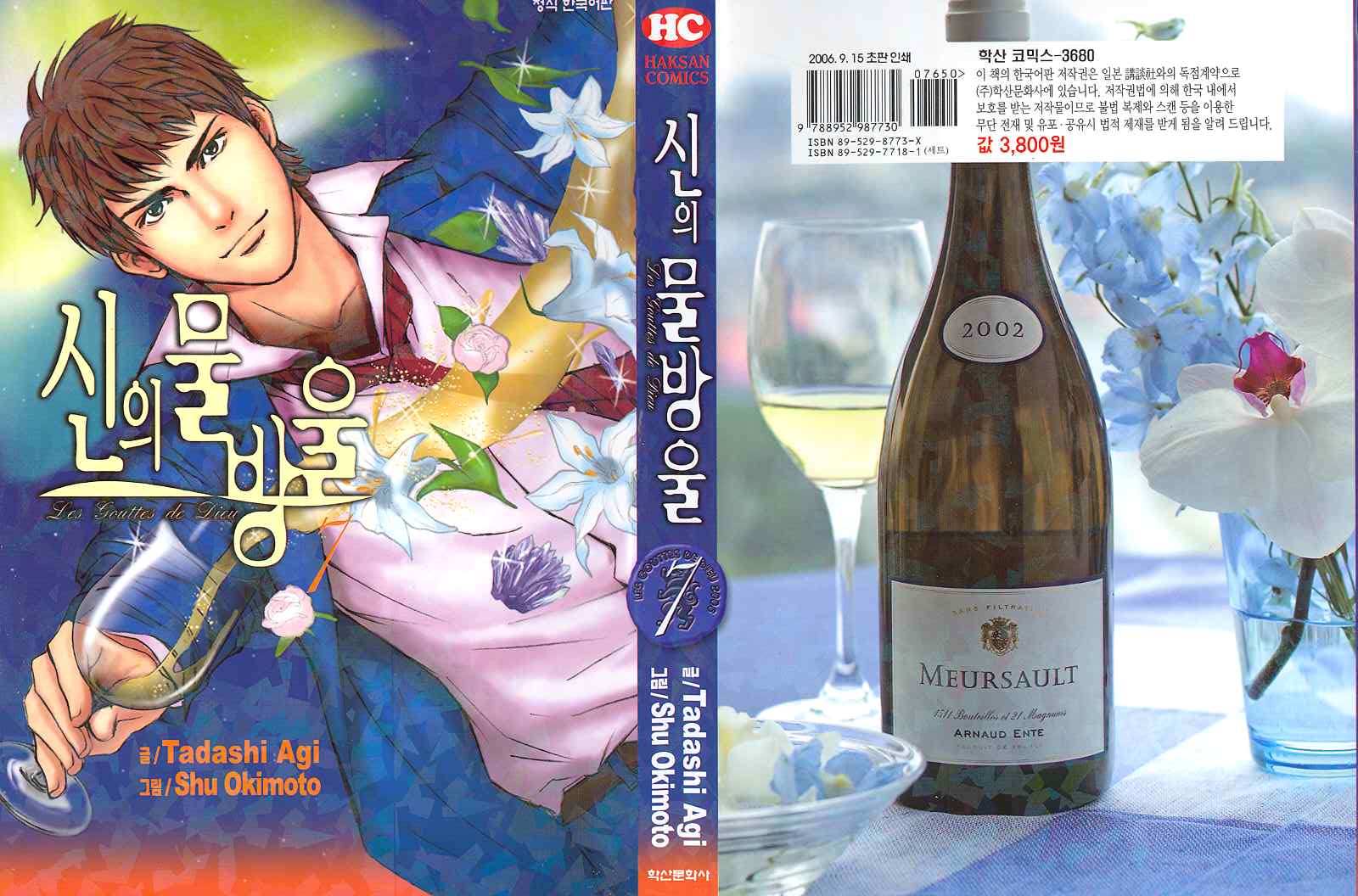
But more to the point, the text “신의물방울”, in the top-left corner of the advertisement, translates as “The Water Drops of God” or Kami no Shizuku, a Japanese comic book about wine. Extremely popular, and not just in North-east Asia, there is a wealth of commentary on it, so for interested readers I suggest this post at the manga blog Precocious Curmudgeon for the best summary, with many links to longer news articles. Focusing on the original advertisement here though, in one of those links it is argued that the comic’s greatest impact has in fact been on South Korea, with over 1 million copies sold, and the authors were “stunned to be greeted like stars”  on their first visit there in 2007, even finding themselves introduced to candidates during the presidential election.

You can imagine then, the effect on sales here (and worldwide) when Beaujolais Nouveau was featured in it a few years ago, and accordingly in 2007 Japanese distributor Mercian hired the illustrator to design new labels for the drink. Presumably, a Korean language version of that is what we are seeing here.

For those of you more interested the wines themselves though, I recommend this article from Slate more information on Beaujolais Nouveau itself, albeit not a very flattering one (indeed, a rival Japanese food and drink comic book to Kami no Shizuku describes the drink as “little more than a French prank that the Japanese have fallen for hook, line and sinker”), and the recession has recently forced it to be sold there 10% cheaper than in previous years and in plastic bottles.

( Source: unknown )

Meanwhile, for more information on Makgeolli Nouveau I recommend two articles in turn recommended by connoisseur Tom Coyner: the first from early November on the reasons for Makgeolli’s renaissance, and which mentions that women make up only 10% of drinkers of regular Makgeolli but 30% of the fruit-flavored ones; and the second from Wednesday on the difficulties of expanding the market from its current 3.6% of all alcohol sales. In addition, you may also find this article from February about the Japanese role in its resurgence interesting, and finally all of the above should be placed into the context of the Korean government wanting to promote more domestic rice consumption, as evidenced by its attempts to promote “Garaetteok (가래떡) Day,” named after stick-shaped rice cakes, over the more commonly recognized “Pepero Day” earlier this month.

But has anyone actually tried either? Despite writing all that, I actually only started drinking wine and beer myself about 3 months ago(!) at the tender age of 33 (I preferred various cocktails), but if it tastes okay then I certainly wouldn’t mind trying something sweet and cheap like Beaujolais Nouveau. Any variety of Makgeolli however, would be just too weird: I have tried it, and concluded that something that looks like milk should not taste like wine!^^

Update 1: Water Drops of God is being made into a Korean Japanese drama series featuring Bae Yong-jun (배용준), and is scheduled to start next month.

Update 2: As Gomushin Girl has pointed out in the comments, labeling Makgeolli as rice “wine” is probably incorrect. Adding to that, this post at The Marmot’s Hole makes is clear that serving it in a wine glass is particularly inappropriate.

Update 3: Unfortunately, Bae Yong-jun’s drama series has been canceled.

Share

Korean Sociological Image #24: Childcare is Women’s Job

Oma(Source: 제동환 via Photo and Share CC)

For traveling parents, this is a godsend:

Asiana’s mother-friendly services have been gaining enthusiastic reviews from those who have been through the ordeals of traveling with infants.

Through the recent launch of “Happy Mom Services,” the airline has been providing exclusive check-in counters for mothers at the airport, breastfeeding covers and baby slings free of charge for travelers with babies.

It gets even better:

In response to the enthusiastic reception, Asiana will extend the “Happy Mom Services” to 66 airports internationally. Also, they will lengthen the age limit from 24 months to 36 months old…

….Passengers with infants will also receive a “Priority Tag” on their checked baggage. Arriving passengers with infants will now be able to quickly retrieve their baggage without the hassle of caring for their infant while waiting at baggage claim…

…For larger infants traveling on children tickets, Asiana is providing free installation of baby safety seats upon reservation. Asiana hopes the service will negate the need for passengers to bring along their own baby seats.

And considering the discriminatory hiring practices of its main rival Korean Air, which refuses to hire men for its cabin crew (see #2 here), then it seems somewhat picky, almost churlish to find any fault with Asiana’s initiative.

But still, “Happy Mom Services”?

(Source: Travel Story)

Yes, easy to overlook, unfortunately we are already barraged with signals that encourage and/or reinforce the notion that childcare is primarily women’s responsibility. For instance, wherever you are in the world, note the warning signs the next time you step on an escalator: only very rarely will you see child stick figures being protected by a male or gender-neutral one rather than a female one. Or, closer to home, consider Seoul Mayor Oh Se Hoon’s recent “Happy Women, Happy Seoul” plan involving the provision of such things as more women’s toilets and the now notorious pink parking spaces: as I point out here, providing larger spaces for those with children and pushchairs to unload is all well and good…but not if fathers are not allowed to use them. And I could go on with many similar examples.

Granted, probably none are confined only to Korea. But in the country with:

…then one suspects that greater attention should be paid to the grass-roots origins of those issues, which unfortunately Asiana’s choice of name only adds to.

Having said that, they’ll still easily be my first choice for traveling with my two young daughters from now on. And if it would be effective, I’d consider writing letters to both English and Korean-language newspapers to draw Asiana’s attention to the problem, hopefully persuading them to change the name to “Happy Parents’ Service.” What do you think?

(For more posts in the Korean Sociological Images Series, see here)

Korean Movie Review #1: A Good Lawyer’s Wife (2003)

A Good Lawyer's Wife Cast( Source )

A Good Lawyer’s Wife defies easy description.

Heavily marketed on the basis of its explicit sexual content, and with probably no longer than 10 minutes between one sex scene and the next, on the surface it is simply pornography masquerading as art-house cinema. Or so I thought when I first saw it at the cinema in August 2003, my – let’s be honest – appreciation of Moon So-ri’s (문소리) nude body tempered by the knowledge that the object of her affections was Bong Tae-gyu (봉태규), then regularly appearing in numerous childish and annoying television commercials. Hardly lacking for access to pornography, I saw no reason to watch it again in the next 6 years.

But the movie was my first introduction to Hwang Jung-min (황정민), whom after seeing his transformation into a bumbling, possibly slightly mentally-handicapped idiot in You Are My Sunshine (너는 내 운명; 2005) a little later, instantly became one of my favorite actors. And then seeing So-ri’s brief but stellar performance in Peppermint Candy (박하사탕; 2000) last week too, I thought I’d give it another chance. After all, my tastes are a little more mature and more discerning now, and far from being put off by depictions of relationships between 30-something women and (often) childish younger men, if all goes to plan I’ll be formally writing a dissertation on precisely that by next March.

Watching it (again) myself over several nights originally then, I was very surprised at how much I liked it this time, and how much of the plot I’d either overlooked or simply gotten completely wrong 6 years ago. Struggling to determine why my opinion had changed so dramatically on a second viewing, I decided to watch it with my wife to see if she liked it also, and more importantly why. Unfortunately, she too thought it was largely pornography masquerading as art-house cinema(!), but she did at least confirm what I’d relearned about the plot. And watching her reactions out of the corner of my eye while ironing shirts (as one does when seeing a highly pornographic movie for the third time), finally it came to me.

A Good Lawyer's Wife Movie Poster

The first thing of note is that its English title is an extremely poor choice. Although it’s true that So-ri’s sexual frustrations with lawyer-husband Jung-min are the catalyst for her having an affair with her teenage neighbor (not actually consummated until close to the end, but – rather than maintaining the suspense – the DVD introduction helpfully shows that scene!), she is by no means a “society wife” smiling inanely at his shoulder at numerous dinner parties and so forth; in fact, she literally has no involvement in his working life and relationships whatsoever. There’s no evidence to suggest that she “gave up her dancing career in order to be a good lawyer’s wife” either, despite what the appalling Wikipedia article on the movie suggests, and one suspects that – like many English-speaking viewers – the writer was misled by the title.

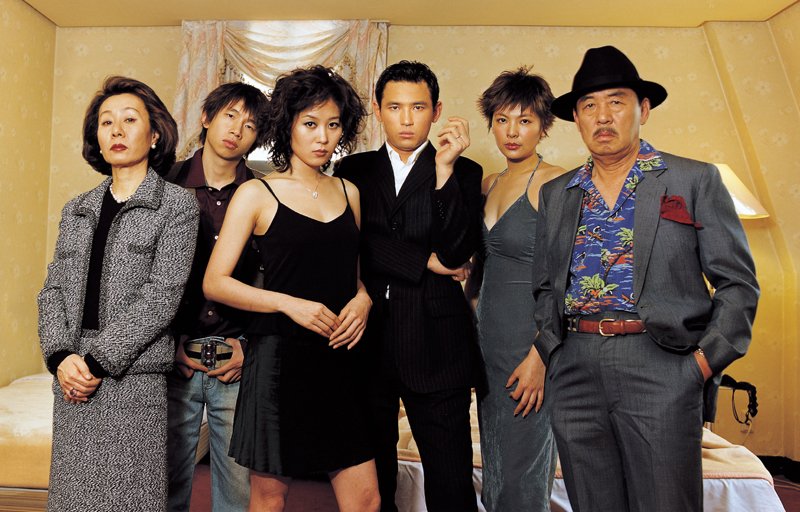
Instead, a much better translation of “바람난 가족” would have been “A Family Having Affairs,” and accordingly it is quickly revealed in the first few minutes that with the exception of Jung-min’s dying father (competently played by Kim In-moon {김인문}) all main adult characters are or will have illicit sexual relationships: Jung-min a long-standing one with Baek Jeong-rim (백정림), a very complex character difficult to get to grips with in just one sitting; his mother Yoon Yeo-jeong (윤여정) with a minor character; and of course So-ri with Tae-gyu. And therein lies the source(s) of the continual sex scenes, which apparently attracted Korean viewers in droves (it was #1 at the box office).

But what, amongst all the sex, were the other points of this movie? What, indeed, was its “moral,” which – as I stressed in my last review – I believe a movie has to have in order to be worthwhile?

Well, without wanting to give any of the plot away, by virtue of all the affairs this is clearly a family with problems (even an adopted son is aware that Jung-min is lying when he says he’s working late). Jung-min’s reasons for his are unfortunately never elaborated, but his mother’s are: like Moon So-ri, she was sexually frustrated.

And how, in a marriage, might one become so?

A Good Lawyer's Wife 2003

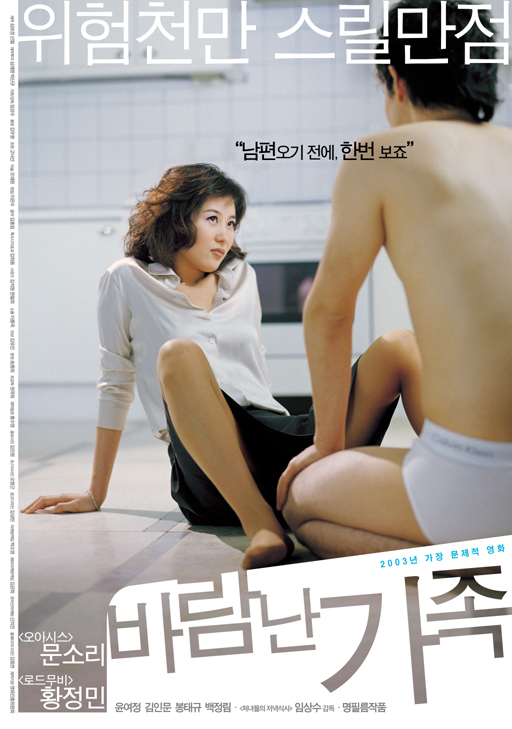
Well, while I’m not naive or intellectually shallow enough to attribute all married couples’ sexual problems to a lack of communication, nor arguing that communicating with one’s spouse (or partner for that matter) automatically solves them, I would wager that – if you’ll forgive the pun – a lack of communication is at the root of the vast majority of them. But whereas So-ri may not have been able to resolve her own sexual frustration with Jung-min given that he was already secretly having an affair, tellingly she doesn’t even try. Instead, as one would expect from a fucked-up family, she seems to have her heart set on fucking Tae-gyu literally the morning after Jung-min fails to satisfy her (the poster on the right is rather misleading).

Granted, to a large extent I’d simply be projecting in seeing meaning in that. After all, after 9 years together as a couple (5 married), my wife and I have naturally had our own sexual issues, especially after the birth of 2 children, but – with the knowledge that not doing so would have grave consequences for our marriage – all happily resolved by simply discussing things. Hence, despite all the attention on them, I do personally see all the affairs and the sex in the movie as natural consequences of and/or metaphors  for something deeper. As I think was the deliberate intention of director Im Sang-soo (임상수).

For instance, as Darcy Paquet in his excellent review at Koreanfilm.org points out, this is not the first time he has presented frank sexuality and nonconformist heroes in his movies. And in particular, bear in mind that with: the longest working hours in the world (albeit many of which are not actually spent working); the lowest women’s workforce participation rate in the OECD; and prostitution accounting for 4.1% of GDP also, then as this Japanese author (and personal experience) suggests, there are a lot of virtually sexless marriages in this part of the world.

Ergo, there may be more to the popularity of this movie than mere voyeurism, particularly as it was the enthusiastic response to finally having such frustrations articulated in popular culture in the mid-1990s that is what made movies like this possible in the first place.

True, I’ve yet to look for confirmation from Korean-language sources of that (watch this space). But as a response to potential accusations of overanalysis and projection then, let me offer this challenge: at the behest of their relatives and descendants, Jung-min’s main legal case in the movie – presented in the very first scene in fact – involves the unearthing of victims of an atrocity, which presumably took place during the Korean War or just before. There are also references to Jung-min’s own extended family being separated by the Korean War. While I have yet to come across any reviewer that interprets the former as any more than merely establishing his character as a lawyer though, and hence easily interchangeable with any other legal case, what purpose could both serve other than as metaphors for the broken family at the heart of this movie?

Likewise, gratuitous sex  is not what this movie is all about. And so compelling are all main characters’ stories, that despite yourself you may be wishing that one or two sex scenes had been removed in favor of further character development by the end of the movie. Indeed, the only criticism of the movie I have personally is that even after 3 viewings, Jung-min’s motivations for his affairs remain a frustrating enigma.

Baek Jeong-rim Hwang Jung-min

Next week, if I can find it: My Wife is a Gangster (조폭 마느라; 2001) Samaritan Girl (사마리아; 2004).

Share

Korean Sociological Image #23: Male Objectification

Acutely aware of the role my heterosexual male gaze can play in my choice of subjects and images for this blog sometimes, ironically I spend more time looking for those involving men these days, hoping to find something of note with which to achieve a balance.

In itself, this new commercial with boy-band 2PM hardly qualifies. But not only is male objectification an increasingly common theme in Korean advertising in recent months (see here and here for two examples featuring Lee Byung-hun {이병헌} and JYP {박진영} respectively), this would easily be one of the most audacious examples I’m aware of.

And coming so soon after this one for Cob Chicken (Cob 구어조은닭) too, then perhaps, like kissing, male objectification will be yet another advertising taboo discarded in 2009?

Granted, this may sound like exaggeration to readers based outside of Korea: all of the above examples are rather tame compared to their Western counterparts (NSFW) for instance, and the frequency of male objectification in the Korean media is easily paled by that of women, whom are also subject to excessive objectification and commodification in daily life here.

Nichkhun's Abs Real Brownie CommercialBut that media imbalance is hardly confined to Korea, and the speed of change is particularly remarkable. After all, however unbelievable it may sound today, recall that social norms prohibited Korean women from publicly admiring men’s bodies until as recently as 2002!
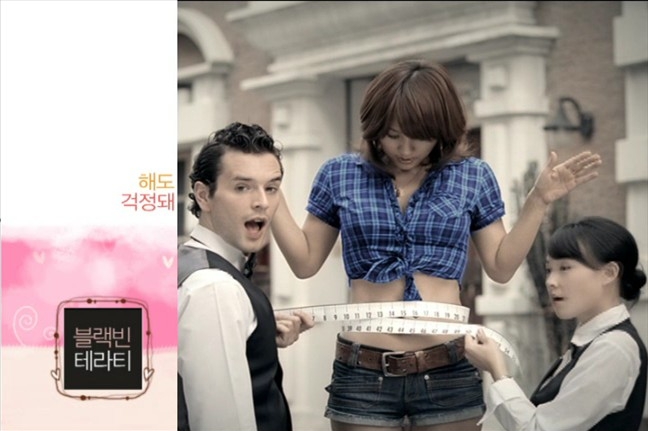
Meanwhile, apologies for not providing a translation for the commercial, but given the product’s name then I think you’ll quickly get the idea!^^ And I would very much appreciate it if readers could tell me of any more examples like it that I may have missed.

(For all posts in the Korean Sociological Images series, see here)

Gendered Tea-drink Advertising in South Korea

Lee Hyori Black Bean Tea(Source)

Granted, Marxism might not be the first thing one thinks of when one sees Lee Hyori’s navel. But as it turns out, it’s a perfect fit.

If you’ll bear with me for a moment, once a market is saturated, I learned at university in New Zealand, there is a inherent tendency for a company’s rate of profit to fall. But this can be offset by re-marketing and/or making new varieties of the original product, and accordingly my lecturer posited the plethora of varieties of Coca-Cola available in the U.S. as a reflection of the greater capitalistic development of its economy (read: saturation of its domestic market) compared to New Zealand’s, which then only had two. Indeed, advertising culture in New Zealand in the late-1990s, he suggested, was only akin to that of the US in the 1950s in its scale and intensity, no matter how brash and “American” New Zealanders regarded it.

It comes as a great surprise then, that even in the U.S. sports drinks are still “wildly skewed towards men”, and only within the last couple of years were drinks developed that took into account their (usually) lower-intensity exercise and dislike of the salty, high-calorie drinks available.

But one seriously wonders if equivalents will ever be available for Korean women. As the following summary of this 2006 study explains:

Diet advertisements in Korean magazines appear to promote more passive dieting methods (e.g., diet pills,aroma therapy, diet crème, or diet drinks) than active dieting methods (e.g., exercise). Results further indicated that women may be misled to believe that dieting is simple,easy, quick, and effective without pain, if they consume the advertised product. This study suggests that there is an urgent need to establish government regulations or policies about diet products and their claims in Korea. Magazine publishers alsoneed to recognize their role in societal well-being and accept some responsibility for advertisements in their magazines.

Korean Diet AdvertismentNaturally, I’ve discussed that study a great deal on the blog (see here for all the links), and it is primarily in that context that I want to examine the burgeoning Korean tea-drink market. But the economics of the industry still matter of course, and so this post is my translation of an article on the subject from the August 2008 edition of IM AD (아이엠애드; Korea’s only remaining advertising magazine), to be used as a resource for that analysis at a later date (or your own).

It’s rather long, so I’ve decided to provide each part in stages over the next week to give readers a better chance to digest them (particularly those interested in the original Korean). As you read this then, I will have just posted part two of three!

블랙빈테라티의 본격 웰빙 마케팅 Full-scale Black Bean Tea Well-being Marketing

음료 시장에서 탄산음료는 서서히 김이 빠지고, 과즙음료는 단맛을 잃었다. 차음료는 백 번을 우려도 남을 만큼 꾸준한 성장을 기록하고 있다. 또 동아오츠카의 블랙빈테라티는 시장에서 검은콩 음료를 새로운 트렌드로 만들어냈다. 그리고 이번에 진행한 온라인 캠페인은 신선한 ‘광고 테라피’라고 불러도 좋다.

While the market for carbonated drinks is slowly losing its fizz over time, and that for fruit drinks is losing its sweetness, the market for tea drinks remains as hot as the first time they are brewed, with the entrance of Donga-Otsuka’s ‘Black Bean Terra’ drink in particular creating a whole new trend. You could call the accompanying online advertisement campaign fresh “Advertisement Therapy” too.

음료 시장의 트랜드 ‘윌빙 + 디이어트’

Drink Market Trends of  “Well-being and Diet”

최근 한국의 음료 시장에는 몇 년 전부터 지속되고 있는 웰빙 트렌드에 맞춰 새로운 브랜드가 끊임없이 등장하고 있다. 소비자의 건강 증시 풍조에 따라 최근 3년간 탄산음료 시장은 6-7%대의 마이너스 성장늘 기록했다. 탄산음료는 2006년 월드컵 특수 등으로 반짝 성장률을 보였지만, 플레이버 음료 및 유성 탄산 브랜드의 매출이 급격히 줄어들면서 현재까지 하향 곡선을 그리고 있다. 과즙음료 또한 2006년 초에 출시된 ‘미녀는 석규를 촣아해’가 인기를 끈 것을 제외하면 대부분 주스 브랜드가 부진에 빠졌다.

Since the beginning of the well-being trend several years ago, new brands taking advantage of it haven’t stopped appearing. In accordance with consumers’ new focus on their health, the consumption of carbonated drinks has decreased 6-7% since 2006, although there was a brief spike in consumption during the 2006 World Cup. The consumption of flavored drinks and milky drinks has shown definite decreases too, and with the exception of the “미녀는 석규를 촣아해” drink popular at the beginning of 2006, the consumption of fruit juice drinks has stagnated.

Black Bean Thera Tea이처럼 대부분의 탄산/과즙음료가 마이너스 곡선을 그렸던 반면, 차 음료는 시장에서 지속적으로 성장하면서 지난해에도 전년 대비 30%에 달하는 신장세를 기록했다. 2000년을 전후로 녹차 제품은 차 음료 시장을 주도하고 있었다. 지나치게 달거나 자극적인 탄산/과즙 음료에 비해 담백한 맛을 지닌 녹차는 고정적인 소비자층을 형성하면서 2004년 당시 차음료 시장의 80%를 차지할 만큼 인기가 높았다. 하지만 녹차가 가진 떫은 맛은 10~20대 소비자들에게 어필하는 데 한계가 있었다. 또한 웰빙은 물론 다이어트와 미용에 관심이 많은 20대 여성이 시장의 핵심 소비자로 떠오르면서 맛과 성분을 개선한 혼합차를 선보이기 시작했다.

Like this, most carbonated and fruit juice drinks have a minus growth curve, but on the other hand the consumption of tea drinks grew by 30% in 2007. Green tea was the most popular tea drink around 2000. Compared to excessively sweet and stimulating carbonated and fruit juice drinks, consumers began to prefer plain green tea drinks and so a market was formed, comprising 80% of the tea-drink market by 2004. But green tea is very astringent, so it had limited appeal to consumers in their teens and 20s. Hence companies have started to develop new, more pleasant blended tea-drinks to be marketed to women in their 20s, who naturally have a lot of interest in dieting and their appearance.

처음 혼합차 시장에서 두각을 나타낸 것은 남양유업의 ‘몸이 가벼워지는 시간 17차’ 였다. 이후 광독제약이 ‘광동 옥수수수염차’를 내놓으면서 경챙은 가열됐고, 현재 옥수수수염 원료 제품만 30여 가지가 넘는다. 한 가지 눈에 띄는 점은 이들 제품의 공통적인 특징이 노화방지와 피부미용 효과가 있는 한약재를 비롯, L-카르티닌 등 지방 연소 기능이 있는 성분을 첨가해 젊은 여성들에게 폭발적인 호응을 얻고 있다는 사실이다. 또 각 업체들은 여성 연예인들 활용한 스타 마케팅에도 공을 들이고 있다. 이들은 전지현 (남양유업), 김태희 (광동제약)와 김아중 (해태음료) 등의 톱 모델을 자사 브랜드 이미지와 접목시켜 여성 소비자들의 구매욕구를 자극하고 있다.

Originally, Namyang’s “Make Your Body Lighter Time 17 Tea” stood out in the blended tea drink market. But a little later, an intense rivalry developed between that and with Gwangdong’s “Gwangdong Corn Cob Roots” drinks, and now there are as many as 30 products with that ingredient on the market. One noticeable point is that all these products contain both some traditional Korean medicine, which helps to prevent aging and maintain skin’s youthful appearance, and also L-Keratin, which helps to burn fat, both of which make these drinks have a very strong appeal to young women. Each company is putting a lot of effort into using famous stars to market their products, such as Jun Ji-hyun for Namyang, Kim Tae Hee for GwangDong, Kim Ah-joong for Haetai, and each hopes to have them and their images firmly associated with their brands by consumers.

독자적인 시장을 형성한 검은콩 음료

A Market for Black Bean Drinks Has Been Formed

외연의 확대는 여기서 그치지 않은다. 지난해부터는 곡물과 한약재 등을 섞은 혼합차 시장에서 검은콩이라는 단일 원료를 부각시킨 제품들이 출시되디 시작했다.

This market has not stopped expanding, and from last year, companies have started developing new blended tea drinks mixed with grains and/or Korean medicinal products. It was in this context that drinks with black beans as the sole ingredient were launched.

지난해 5월 해태음료는 검은콩을 ㅇ뤈료로 한 ‘차온 까만콩차(이하 까만 콩차)’를 선보였다. 한때 일화의 ‘햇살 가득한 까만콩차’가 브랜드명과 용기 디자인 흡사해 미투 (me too) 마케팅 논쟁이 일었을 정도로 검은콩 음료는 단기간에 시장에서 영역을 확장해나갔다.

Jun Ji-hyun Son Dam-bi Tea Advertisments(Source)

The market share of Black Bean drinks has increased rapidly, resulting in many cases of “me too marketing”. Haetai’s “Cha-eon Dark Black Bean Tea” (Dark Bean Tea) for instance, introduced last May, was quickly involved in heated competition with Ilhwa’s similar-sounding “Dark Bean Tea full of Sunshine,” which even had a similar design of bottle too.

까만콩차보다 한 달 앞서 동아오츠카가 론칭한 ‘블랙빈테라티’ 역시 블랙음료 시장을 빠르게 장악했다. 100% 검은콩을 우려냈음을 강조함과 동시에 차카테킨과 L-카르티닌을 함유한 제품 특징으로 기존차 음료의 핵심 타깃인 20 대 여성을 확보한다.

Donga-Otsuka’s “Black Bean Terra Tea” was launched one month before Dark Black Bean Tea, and also quickly established a foothold in the market. It is made entirely of the juices from crushed and squeezed black beans, and its catechin and L-keratin make it especially appealing to its core market of women in their twenties.

사실 무주공산과 다름없던 블랙음료 시장에서 결과적으로 ‘생존’과 ‘성공’을 동시에 달성한 브랜드는 까만콩차와 블랙빈테라티 뿐이라고 할 수 있다. 이 둘은 제품의 내외적인 측면에서 대동소이하면서도 명확한 차이를 보이며 경쟁하고 있다. 까만콩차가 국산 서리태만을 사용하는데 비해 블랙빈테라티 서리태와 서목태를 섞어 맛이 서로 다르다.

Actually, the black bean drink was entirely new, and so the only brands which came to survive and succeed were Dark Black Bean Tea and Black Bean Terra Tea. These two products are very similar, but do have some differences. Dark Black Bean Tea is made from Korean seoritae beans, which are blue inside, while Black Bean Terra Tea is made from seoritae beans and seomogtae (Rhynchosia Nulubilis) beans, and so they taste different.

Ji Hyun-woo Tea또 까만콩차와 영화배우 정우성과 지현우를 CF 모델로 선정해 고정 타깃인 여성뿐 아니라 차 음료시장에서 소외되다시피 했던 남성들을 아울렀던 반면, 블랙빈테라티는 이효리를 브랜드 모델로 선정해 젊은 여성층에게 제품 홍보와 마케팅을 집중시컸던 점 역시 차이를 봉ㄴ다. 물론 오프라인 여역을 토대로 한 무료 시음행사와 가종 이벤트 전략은 두 제품 외에 대부분의 음료 브랜드에서도 볼 수 있는 전통적인 프로모션 형태이다.

Also, Dark Black Bean Tea has used Jung Woo-sung and Ji Hyun-woo (right) in its commercials, indicating that its target consumers are not just women but also men who reject the notion that only women drink tea drinks. On the other hand, Black Bean Terra Tera has used Lee Hyori to market itself exclusively to young women. Of course, just like for other drinks, offline they are also used to market their products in various free-drinking events and so on (end).

보이는 라디오, 끌리는 캠페인

Visual Radio: A Campaign That Draws You In

Lee Hyori Black Bean Tea Online Campaign

(Source)

이번 블랙빈테라티의 온라인 캠페인 (블랙빈FM 이벤트)은 브랜드 론칭 1년여 만에 처음 진행된 것이다. 이전까지는 웹사이트 내에서의 자체 홍보 외에 TV CF와 오프라인 프로므션 위주로 마케팅을 실시했다. 온라인 캠페인을 담당했던 다츠커뮤니케이션의 허정 대리는 “블랙빈테라티의 경쟁 브랜드는 크게 차 음료와 검은콩 음료로 분류된다. 하지만 17차를 비롯한 대부분이 스타마케팅에 의지해 온라인에서는 이밴트와 제품 자체의 홍보에 주력했다면, 블락빈테라티 캠페인은 코어 타깃은 1929여성들이 즐길 수 있는 다양한 콘텐츠를 만들어 자연스럽게 브랜드 인지도를 높이는 것이 목적”이라고 설명했다.

While the Black Bean Terra Tea drink was launched over a year ago, “this Black Bean FM Event” was the first time it has had a big online campaign; previously, minor website promotions, television commercials, and offline promotions were the main methods of promoting the drink. As Heo-jeong, representative for Dartz Communications (in charge of the online campaign) explained, “Black Bean Thera Tea’s competing brands can be categorized into either tea-drinks or black-bean drinks. But while most (including 17 tea) concentrated their efforts on either star-marketing, online events, and promotions of the products itself, the aim of Black Bean Terra Tea’s campaign was to focus on more varied events, so as to better increase brand awareness among its core target of 19-29 year old women.”

실제로 블랙빈 FM이벤트는 이름에서 드러나듯 라디오 동영상과 CM송을 캠페인의 킬러 콘텐츠로 활용하고 있다. 보이는 라디오는 브랜드 모델인 이효리가 DJ로 출연해 미용과 패션, 다이트 등의 다양한 소재로 진행하는 형식으로 구성돼 있으며, 유저들은 라디오를 ‘시청’하면서 댓글을 등록할 수 있다. 때문에 TV광고 제작 당시에 이미 촬영됐었던 이 영상은 마치 사이트에서 실시간으로 유저들과 대화를 나누는 듯한 인상을 주기도 한다. 허정 대리는 “사이트의 커뮤니케션 콘셉트가 ‘젊은 여성들끼리 수다를 떠는것’이었기 때문에 그들의 주된 관심사를 이효리는 통해 전달함으로써 자연스럽게 브랜드와 모델레 대한 호감도가 증가할 수 있었다”고 말했다.

Vodpod videos no longer available.

As is obvious from the name, the Black Bean FM Event’s killer content was the use of radio, videos, and advertising jingles, or a “visual radio.” In addition to model Lee Hyori performing as its DJ, it also consisted of information about various things such as beauty, fashion, and dieting (and so on), which users could register and leave comments about. As Heo-jeong explains, the choice of Lee Hyori as a model naturally encouraged discussion of these topics among young-women – the core of the site’s communication concept – and because of this, a Black Bean FM Event video that gives the impression of Lee Hyori interacting with the user was produced for the website in advance of the TV commercials. Thus, the strategy greatly increased the chances for brand recognition to rise amongst young women.

CM송을 활용한 ‘블랙빈테라티 CM송 콘테스트’ 이벤트 또한 눈에 띄는 부분이다. 최근 CM송을 활용한 이동통신사 광고가 화제를 모으고 있지만, 음료 광고에서는 보기 드문 사례이기 때문이다. 이미 TV 광고와 사이트의 인트로를 통해 CM의 원곡을 감상한 유저들은 이벤트 페이지에서 힙합과 R&B, 트로트 등 4가지 버전의 CM송을 모두 감상한 후 순위를 매긴다. 이벤트에 참여한 유저들은 추첨을 통해 경품을 지급받게 되며, 동영상을 다운로드 또는 스크랩해 미니홈피와 블로그 등에 등록한 경우 재차 경품 기회가 제공된다. 허 데리는 “블랙빈테라티의 CM송을 버전별로 반복 감상함으로써 소비자들에게 브랜드와 제품에 대한 긍정적인 이미지를 형성하게 된다”고 설명하며 “콘테스트 동영상의 다운로드/스크랩을 유도한 전략은 소비자들 스스로 웹사이트의 홍보는 물론 블랙빈 FM과 이벤트 내용을 바이럴하는 ‘MGM (Member Get Member, 일명 ‘권유마케팅’으로 불리며 고객을 통해 또 다른 신규 고객을 확보하는 마케팅 방법)’ 효과를 거둘 수 있었다”고 덧붙였다. 이외에도 지난 5월 1일부터 한달간 진행했던 ‘CF모델 까메오 이벤트’ 역시 소비자들의 적극적인 참여를 유도했다.

Vodpod videos no longer available.

The “Black Bean Terra Tea Advertising Song Contest” event was also a prominent feature of the website. While using advertising jingles is common for advertisements on mobile phones, it is very rare for tea-drinks. But here, users who have had already heard the jingles used in Black Bean Terra Tea’s TV advertisements and website could listen to different versions of them in different music styles such as hip-hop, R&B, trot, and so on, and personally rank them. They could also enter into a lottery and win prizes, and increase the number the times they entered by downloading videos and posting them on their blogs and websites. As Heo-jeong explained, “through being able to listen to the various versions of the jingles, users acquired a positive image of the brand and the product” and ” the viral PR strategy of getting consumers themselves to download and post videos to their own websites, known as ‘MGM,’ (Member Get Member, also called ‘Persuasive Marketing,’ a method by which customers attract new customers themselves) was very effective.” Besides this, from May the 1st there was also a month-long ‘Commercial Model Cameo Event’ which similarly encouraged consumers to actively participate (end).

And the third and final part, which discusses cross-media marketing, will hopefully be up later this week. In the meantime, if this post has piqued your interest in gendered advertising in Korea, then you may also enjoy this post on the evolving images of women in soju advertisements.

65% of Korean Couples Worry About Contraception?

The Sweet Sex and Love 2003( Source: realistic dreamer )

A quick survey on contraception use in Korea that was on the front page of Yahoo! Korea recently.

Unfortunately, not only is there no information about the methodology used, but the accompanying article is rather short, and states the obvious several times. One wonders what the point of it was.

I feel certain that it was not intended to be simply sensationalist though, as if it was then presumably it would have attracted more than 11 comments from Korea’s infamous netizens. And however dubious, its results are broadly similar to those of more reliable surveys, which is why I chose to highlight it here.

The notion that contraception is primarily men’s responsibility really does seem to be an ingrained part of Korean sexual culture then?

男·女 65% ‘피임 고민’ 08/10/09

미혼남녀들의 큰 고민 중 하나가 피임.

One big concern [Korean] men and women face is contraception.

20~39세의 미혼남녀 1,127명을 대상으로 ‘피임’에 대해 설문조사한 결과, 대부분의 미혼 남녀가 피임으로 고민해본 적이 있는 것으로 나타났다.

1, 127 single men and women aged between 20 and 39 were given a survey about contraception, and the vast majority replied that they have worried about it at some point. [Here are the questions and results].

피임으로 고민해본 경험?

Have you ever worried about contraception?

남자 59%, 여자 71%가 ‘고민해본 경험이 있다’고 답했다. 또한 남자보다 여자들이 피임으로 인한 고민이 많은 것으로 나타났다.

59% of men and 71% of women replied that that had. It emerged that more women than men had worried about it.

피임, 남자와 여자 중에 누가 더 신경 써야 하는가?

Who should be more concerned about contraception? Men, or women?

The Sweet Sex and Love

남자 79%, 여자 83%가 ‘당연히 남자가 더 신경 써줘야 한다’고 답했다.

79% of men and 83% of women replied that “Of course it is men that have to be more concerned.”

선호하는 피임 방법은?

What type of contraception do you prefer?

주로 쓰는 피임 방법으로 ‘콘돔’이 63%를 차지, 1위로 꼽혔다. 이어 ‘체외 사정’, ‘배란 주기법’, ‘먹는 피임약’ 사용 등이 뒤따랐다.

The most preferred choice was the condom, with 63% of respondents choosing that. That was followed by the withdrawal method, the rhythm method, and the oral contraceptive pill.

성관계시 피임이 중요한가?

Is contraception important in a sexual relationship?

남자 95.10% 여자 100%가 ‘중요하다’고 답해, 남녀 모두 피임의 중요성에 대해서 인식하고 있는 것으로 나타났다.

95.1% of men and 100% of women replied that it was important. Both men and women perceive it as being important.

이 번 설문조사 결과, 미혼남녀 모두 피임의 중요성에 대해 인식하면서도 정작 피임을 제대로 못해 고민하는 것으로 나타났다. 이는 감정이나 분위기에 휩쓸려 피임을 등한시하는 경우가 많기 때문. 피임도 사랑을 나누는 하나의 과정임을 인식하는 것이 무엇보다 중요할 것이다.

While this survey showed that both men and women perceived contraception as being important, in reality many had experienced difficulties with it. And many people neglected it because of the atmosphere or getting swept away in the heat of the moment also. But people need to acknowledge that using contraception is part of the process of making love (end).

Share

Korean-language Sources on Gender and Sexuality #1: PlayHolic

The Art of Seduction It’s official: from now on, I’ll be using Korean-language sources on gender and sexuality here just as much as English ones.

Partially, this is simply to maintain and improve my Korean ability, which I’ve sorely neglected since starting a new job back in July. But the main reason is that not only can foreign-language commentary on any subject quickly become out of date, it also makes one reliant on the views of those Koreans fluent in English, which are not necessarily reflective of Koreans as a whole.

Consider the following by sociologist Yoshio Sugimoto for instance. He is talking about Japan, but his points are equally relevant to Korea:

Dominating in the upper echelons of society, core subcultural groups are able to control the educational curriculum, influence the mass media, and prevail in the areas of publishing and publicity. They outshine their peripheral counterparts in establishing their modes of life and expectations in the national domain and presenting their subcultures as the national culture. The samurai spirit, the kamikaze vigor, and the soul of the Yamato race, which some male groups may have as part of the dominant subculture of men, are promoted as presenting Japan’s national culture….

More generally, the slanted views of Japan’s totality tend to reproduce because writers, readers, and editors of publications on the general characteristics of Japanese society belong to the core subcultural sphere. Sharing their subcultural base, they conceptualize and hypothesize in a similar way, confirm their portrayal of Japan between themselves, and rarely seek outside confirmation….(An Introduction to Japanese Society, pp. 12-13).

And in particular:

Core subcultural groups overshadow those on the periphery in inter-cultural transactions too. Foreign visitors to Japan, who shape the images of Japan in their own countries, interact more intensely with core subcultural groups than with peripheral ones. In cultural exchange programs, Japanese who have houses, good salaries, and university educations predominate among the host families, language trainers, and introducers of Japanese culture…(p. 13)

After two years of immersing myself in (limited) English-language sources on gender and sexuality then, it’s high time to make Korean language-ones my starting point instead.

MeinkampfTo that end, let me begin by recommending the blog PlayHolic (플레이홀릭) written by a Korean woman from Jeju called Im-ji (임지; probably not her full name). I’ve been following her on Twitter for several months now, but I confess it was only a few days ago that I first really read her tweets, my curiosity picqued by one that mentioned Talk on Sex (토크온섹스), which turned out to be a weekly podcast that she is the co-host of. At over an hour long and (not unreasonably) with no transcripts though, then those are well beyond my ability to keep up, but fortunately her blog entries aren’t. I’ve translated this recent one on Korean attitudes to contraception below.

Coming in addition to this recent post of mine on the subject, admittedly it probably provides no new information for readers of this blog, but it does at least demonstrate that reliable information about the contraceptive pill is available in Korea. Unfortunately Korean women are generally disinclined to seek that information out though, as like I explain here (and Im-ji briefly alludes to), many fear that being proactive and insistent on using contraception will make them appear sluttish to their partners, and in turn possibly their peer group.

For those reasons, I’ll be focusing in the next few weeks on finding any attempts that have been made to counter these stereotypes, and particularly by Korean celebrities and/or institutions. For the former, a good person for me to start might be former S.E.S. member Eugene (김유진), who advertised the contraceptive pill in 2006 (two examples are included below).

(I apologize in advance for any mistakes in the translation, and welcome any corrections if any readers feel it needs them)

피임에 대한 여성들의 고민 / Women’s Troubles With Contraception (20/10/2009)

피임은 인류에게 떼려야 뗄 수 없는 영원한 숙제나 마찬가지이다. 미혼은 미혼이기에, 기혼자들은 미리 세운 가족 계획에 따라 피임을 할 수밖에 없다.

Contraception is inseparable from being human: it is a perpetual problem. But while married women have to make plans about having children, unmarried women shouldn’t have children and so have no choice but to use it.

그 피임 방법이 누구나를 만족시키고, 쉽다면 행복하겠지만 안타깝게도 실제 피임은 그리 간단한 문제만은 아니다.

Everybody should use a contraceptive method that is satisfactory for them, and if it is easy to use then they will be happy. But unfortunately the reality is that choosing contraception is not a simple issue.

Son Ye-jin Song Il-gook The Art of Seduction( Source: Naver Movies )

남녀 모두 각자가 선호하는 피임법이 있기 마련이고, 제대로 피임을 하지 않으면 불안감과 초조감에 섹스를 즐길 수 없다.

Of course, all men and women should use the contraceptive method(s) they prefer, but if they are not used properly then this can make one feel ill at ease and nervous and unable to properly enjoy sex.

아무래도 임신은 여성의 몸을 빌어 나타나기 때문에 피임에 대한 부담감은 여성이 더 크기 마련이다.

However, as it is women’s bodies that are affected by pregnancy then of course women feel more of the burden for contraception.

피임이 제대로 되지 않을 경우, 여성들은 임신에 대한 불안감 때문에 섹스에 집중하지 못한다. 또섹스가 끝나고 나서도 임신 가능성에 대한 공포감에 시달린다. 인터넷 게시판에는 임신진단시약과 사후피임약에 대한 물음이 끊이질 않는다.

If contraception is not used correctly, then women become nervous about becoming pregnant and are unable to concentrate on enjoying having sex. They are very uneasy about this possibility after having sex also. Questions about pregnancy tests and morning-after pills never cease on internet cafes and message boards.

그렇다면 여성들은 과연 피임을 제대로 하고 있을까?

How can women use contraception properly then?

산부인과 전문의들로 구성된 피임연구회가 세계피임의 날을 맞아 19~34세 여성 1,000명을 대상으로 실시한 ‘한국 여성의 피임에 대한 인식과 행태 조사’에 따르면, 2,30대 여성의 44.5%가 ‘피임은 남성이 해야 옳다’고 답했다. 오직 4.8%만이 ‘피임은 여성이 해야 한다’고 대답했다. 이는 여성들이 남성들에게 피임을 의존하고 있다는 것으로 해석해도 무방할 듯 싶다.

Gynecologists and contraception-research centers recently welcomed World Contraception Day, and according to a survey of knowledge and attitudes to contraception of 1000 Korean women aged between 19 and 34, 44.5% replied that “contraception is men’s responsibility,” but only 4.8% replied that it is women’s responsibility. In short, Korean women rely on men to provide and use contraception.

SES Eugene Contraceptive Pill Advertisement

( Source: cupitee )

피임을 하지 않은 상태에서 성관계 후의 대처 방법도 ‘임신진단시약으로 임신 여부를 확인’하는 비율이 62.4%, ‘응급피임약(사후피임약)을 복용하겠다’고 답한 비율이 30.7%로 나타났다.

When those women that don’t use contraception were asked how they dealt with the possibility of becoming pregnant, 62.4% replied that they used a pregnancy test, and 30.7% replied that they used emergency contraception.

피임을 남성의 몫으로 떠넘기는 경우, 콘돔을 사용한다면 그나마 다행이다. 문제는 질외사정법 등으로 피임을 떠넘기는 경우이다. 질외사정법은 엄밀히 이야기하면 올바른 피임 방법이라 할 수 없다. 질외사정은 질 내 사정에 비해 임신 가능성이 줄어들 순 있지만 사정 이전에 이미 정자가 일부 정액에 섞여 분비되므로 엄밀한 의미에서는 피임법이라 부를 수 없다.

In the case of men fulfilling their portion of a couple’s responsibility to use contraception, it is lucky [for women] if they use condoms. Those that use the withdrawal method will have problems though, as it is not a precise method. Of course, if the man does not ejaculate into the woman’s vagina then the possibility of becoming pregnant is lowered, but sperm and semen can still mix and be secreted before a man ejaculates.

가장 많은 연인들이 이용하는 피임법이 콘돔이다. 간편하고, 몸에 무리가 가지 않는 방법이기 때문이다. 그러나 그 이질감 때문에 남성들은 물론 여성들 중 일부도 콘돔 사용을 꺼려하기도 한다.

By far, Korean lovers’ preferred choice of contraception is the condom. It is convenient and does not place a burden on the body. However, because of the reduced feeling many men and also some women don’t like to use it.

그럴 때 선택할 수 있는 피임법이 먹는 피임약이다.

In  that case, one alternative is the contraceptive pill.

Korean Contraceptive Pill Advertisement( Source: Encyber )

그러나 우리나라에서 먹는 피임약은 유달리 그 편견의 정도가 심하다. 체중을 증가시키거나 불임에 이를 수 있다는 오해가 팽배하기 때문이다.

However, in Korea the contraceptive pill has an exceptionally bad reputation. Rumors and misunderstandings about it have spread easily, such as it increasing your weight and causing sterility.

먹는 피임약은 임신을 가능하게 하는 호르몬인 에스트로겐과 프로게스테론을 통해 여성의 배란 및 생리를 조절하는 약이다. 피임 실패율이 낮고 콘돔처럼 성감을 떨어뜨리지 않기 때문에 잦은 성관계를 갖는 연인이나 부부에게 적합한 피임법이다.

[But] through the hormones estrogen and progesterone, the contraceptive pill is a medicine that can control when you ovulate and have your period. It also has a lower failure rate than the condom, and doesn’t reduce sexual feeling. For these reasons, it is particularly appropriate for lovers who often have sex and for married couples.

살이 찌거나 여드름이 나는 등의 부작용 등은 초창기 피임약에서 나타났던 증상이나 최근 저용량 피임약들이 도입되면서 이런 부작용들을 해결하고 있다.

It is true that first generation contraceptive pills did have the side effects of causing women to gain weight and cause acne, but those have been resolved in more recent versions by lowering the dosages.

먹는 피임약은 다른 피임법과 마찬가지로 사용을 중단하면 바로 임신 능력이 회복된다. 장기 여행 등으로 피임약을 복용해 본 여성이라면 약을 먹지 않을 경우, 바로 생리가 찾아오는 것을 경험해봤을 것이다.

Like other contraceptive methods, as soon as you stop using the contraceptive pill your fertility recovers. Women who have gone on extended trips and stop taking the pill have reported that their period returned quickly.

또 먹는 피임약이 호르몬을 조절하기 때문에 막연하게 나쁘다는 이미지가 있는데, 먹는 피임약은 전부 용해되며, 복용하지 않을 땐 체내에 그 성분이 남아 있지 않기 때문에 영향을 미치지 않는 걸로 알려져 있다.

korean-movie-couple-in-passionate-embrace

Because the contraceptive pill works by controlling one’s hormones, then it has a vague, bad image in Korea. But as the contents of the pill are completely absorbed into the body when you take it, then there are no lingering effects if you decide to stop using it.

특히 국내에 최근 출시된 야즈는 기존 먹는 피임약이 21일간 복용하면, 7일간 쉬었던 데 비해 24일간 복용하고 4일은 위약을 복용하는 세계최초의 24/4 용법 방식으로 체내 호르몬 변화의 폭을 감소시켜 전체 생리주기 동안 더 안정된 호르몬 수준을 유지하는 것으로 나타났다.

In particular, a new contraceptive pill called Yaz has been released, and this is the first in the world which you can take for 24 days and have a 4 day break, unlike the standard 21 days and 7 days respectively. This change means that your hormone levels don’t fluctuate so much when you have your period.

임신은 비록 여자가 하는 것이지만 그 과정에 이르기까지에는 남녀 모두가 공동의 역할과 책임이 있다. 그렇기 때문에 피임은 남자의 몫이 아닌 여성과 남성이 함께 챙겨야 하는 당연한 책임이다. 여자가 적극적으로 피임을 하는 것에 대해 주변의 시선을 신경 쓸 필요가 없다는 이야기이다. 자기 몸의 주체는 자신이 되어야 하고, 여성이 먼저 나서서 자신의 몸에 맞는 피임법을 찾는 것이 그 주체가 되는 첫걸음이다.

Even if getting pregnant is only the lot of women, as that process involves both men and women then both have a responsibility to use contraception: not just men. And you should not care about what other people think of you for being proactive and responsible about it: your body is your own, and so the first step is to find the right birth control method for you.

피임을 상대 남성에게만 맡겨두는 것이 아니라 스스로 자신의 몸에 맞는 피임법을 찾고, 성생활 역시 불안감 없이 즐기는 것이 자기 몸을 사랑하는 방법이 될 것이다.

Contraception is not the sole responsibility of men, and finding what method is most appropriate for your bodies and best able to allow you to enjoy your sex life comfortably and safely is something both partners have to do for each other (End).

Eugene SES Contraceptive Pill Advertisement( Source: cupitee )

One very mild criticism I have of the above is that, like the Korean author of the last translation I provided, Im-ji is quite positive about a new form of contraceptive pill called Yaz (야즈), but which as a commenter here has pointed out, is increasingly viewed as too dangerous by Western consumers, and is the subject of numerous lawsuits. Perhaps this information is simply not available in Korean yet?

In line with my new modus operandi, I’ll try to find that out myself this weekend…starting by asking Im-ji directly!

(For all posts in the Korean Sources on Sexuality and Gender series, see here)

Share

Korean Sociological Image #22: Fresh, Young Meat

Kara Cob Chicken Advertisment Male Objectification

For reasons that will soon become clear, girl-group Kara’s (카라) latest commercial for Cob Chicken (Cob 구어조은닭) is making big waves at the moment.

But probably most men are missing just how ground-breaking it really is. Mainly, because of Nicole’s buttocks thrust into their faces just 2 seconds in:

Part of Kara’s “butt dance” used in the choreography to “Mister” (미스터) though, which is playing in the background, it have been very strange not to have used it here. Indeed, it’s become something of a meme in K-pop, aptly demonstrated by this rather surreal clip of perhaps 25 female singers simultaneously performing it in a recent comedy program:

Korean Butt Dance

In light of that, it’s actually the sudden entrance of the well-muscled male at 0:17 that’s the most interesting and surprisng. And no, it’s not “groundbreaking” in the sense that it’s an explicit case of male objectification, which is not exactly a first for Korea. Rather, I label it as such because not only is the first time the makers of a Korean commercial have acknowledged their objectification of women and men therein, it’s also the first in which that acknowledgment has become a central, almost satirical theme of the commercial. Consider the screenshot viewers see immediately after the half-naked man for instance:

Kara Cob Chicken Advertisment Objectification

In English, it reads: “Because the chicken is grilled, the fat is removed completely. Chicken’s young taste,” and, judging by the advertisement from the Cob Chicken website below, the association between chicken meat and lithe young bodies isn’t a one-off. Moreover, although the Korean language lacks the associations the English term “meat market” has, it has a close equivalent in “물이 좋다,” or “The water is good”, and of course there are numerous instances of food terms being used for body parts. For the most recent example, consider Matt’s excellent commentary at Gusts of Popular Feeling on the invention of the term “honey thighs” (꿀벅지), and one high-school girl’s laudable rare attempt to demonstrate how sexist and demeaning such language is.

Kara Cob Chicken Advertisment(Source: Cob Chicken)

Granted, lauding a commercial objectifying both sexes is perhaps a strange choice to include in that vein. But recall that the academic studies of gender studies and feminism don’t really seem to have permeated wider Korean society like they did in the 1960s and ’70s in the West, with the result that a Korean language search for, say, “sexist advertisements”, will provide very few Korean examples. Getting the notion that objectification occurs in advertisements and in wider society out by whatever means then, I’d argue, is a very important first step towards rectifying that (however ironic this particular example is!).

Update: For comparison, numerous examples of the sexualizing and/or gendering of food in Western advertisements are available here.

Update 2: An amusing post from Seoulbeats on how appearing in chicken commercials seems to be a rite of passage for up and coming Korean stars.

Update 3: A photoshopped image that has been spreading around the Korean internet in the wake of the advertisement(s). Normally I’d demur from posting this sort of thing, but it seemed appropriate here:

(Source)

(For more posts in the Korea Sociological Images series, see here)