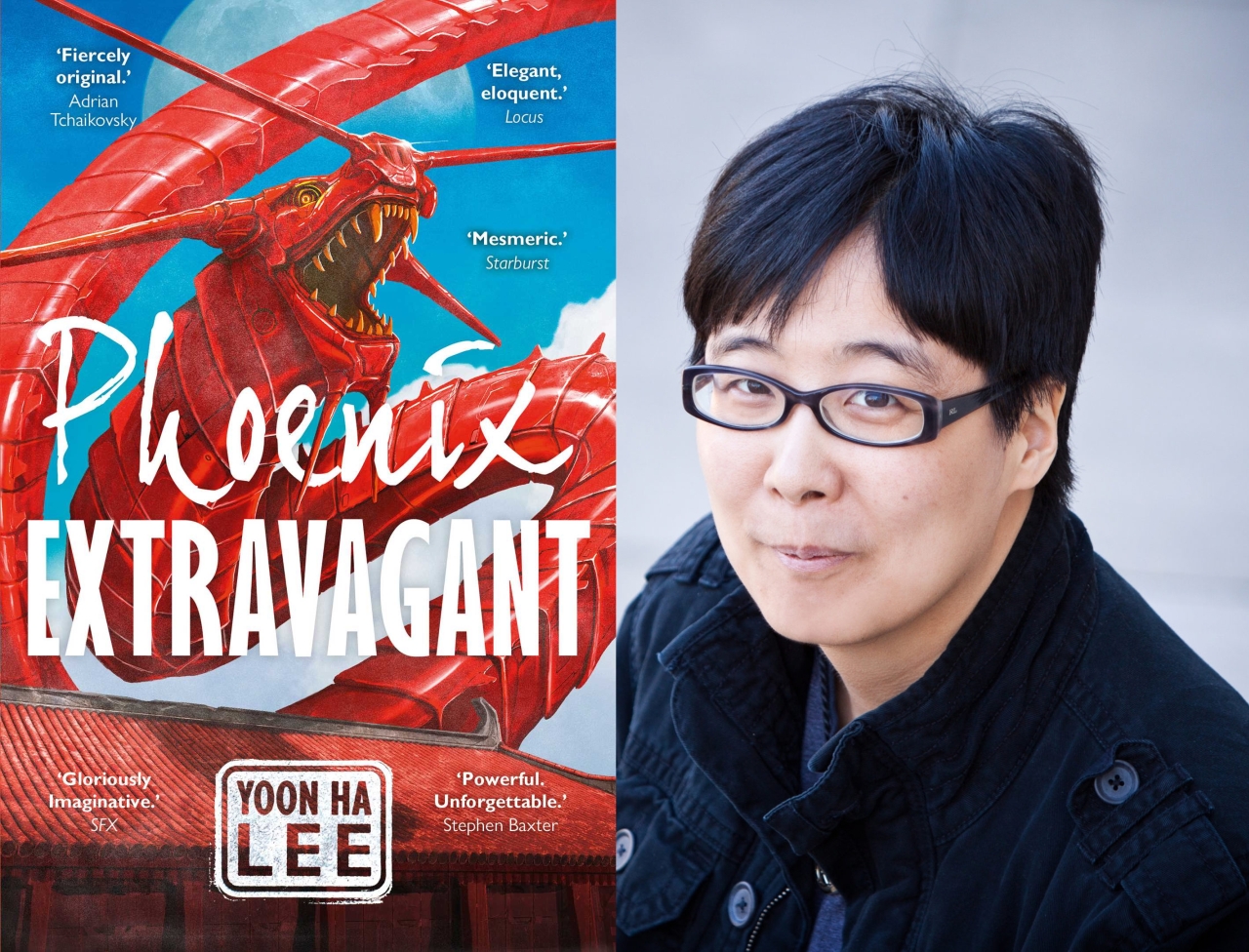
March Book Club Meeting: “Kim Jiyoung, Born 1982” by Cho Nam-joo, Wednesday 15 March, 8:15pm KST

Estimated reading time: 8 minutes.

Knowing a thing or two about Korean feminism, I avoided reading the most popular Korean feminist novel, Kim Jiyoung, Born 1982, for the longest time. Ironic, I know, but I just felt it wouldn’t really teach me anything new.

I wasn’t being arrogant. I’m still no ‘expert’ on Korean feminism, and I’m never going to claim to be one. But expert or not, if you’ve spent nearly two decades immersed in a subject, there’s only so much you’re going to gain from a book aimed at a general audience.

Then March’s book club meeting was coming up, originally planned for International Women’s Day on the 8th (postponed because I was sick). It felt time.

So now, having read it…I actually liked it, and would recommend it. But yeah—it really didn’t teach me anything new.

What it does do, and very well, is open a window onto the lived experiences of Korean girls and women. While much of what gets revealed by that may well not be news to anyone who’s shared, witnessed, listened to, read about, and/or studied those experiences, the way Cho Nam-joo summarizes and puts them all together into a succinct, very readable story is still very skillful, and essential for spreading knowledge of them to a wider audience.

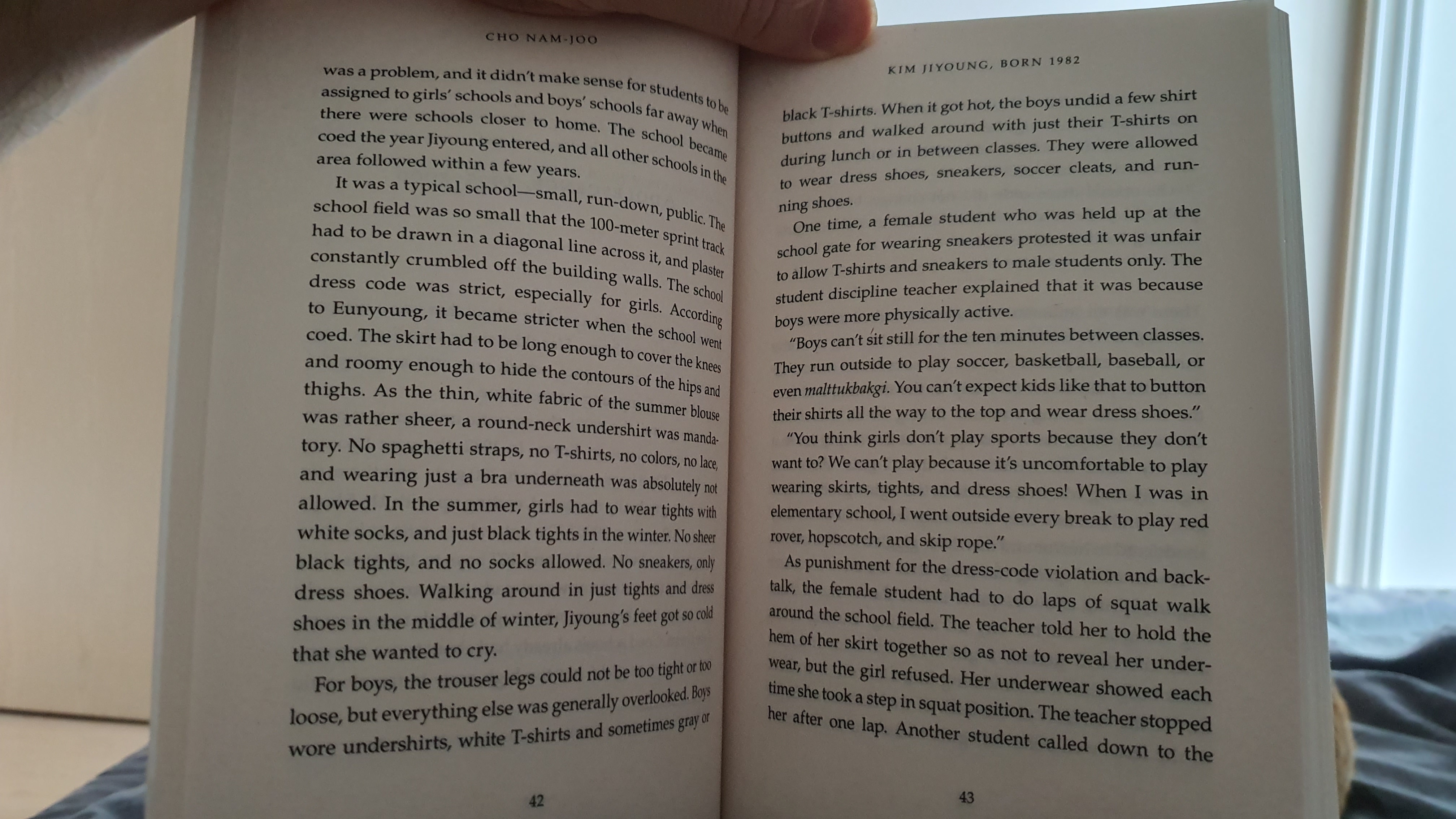
Take the following two pages on many Korean schools’ blatantly unfair, sexualizing, and body-shaming dress codes for schoolgirls for instance. Just these few paragraphs alone are far more evocative of what it’s really like for girls than any of the news reports I’ve translated, and much more likely to spur people to action:

It’s also true that while I can’t really think of anything earth-shatteringly new I learned from it, it covers so many aspects of Korean girls’ and women’s lives that it reminded me of many things I’d almost completely forgotten, and got me interested all over again. To give another for instance, a topic I covered here recently was a ruling against a (usually) rarely-enforced law requiring study-rooms to be sex-segregated; providing some context to that, I explained that in many respects Korea is a surprisingly homosocial society, starting with most Korean schools being single sex. Thanks to that same chapter above, “Adolescence, 1995-2000,” I was reminded that even in ostensibly coeducational schools too, the classes themselves are still often single-sex. And that’s just one important fact about Korean school life, packed in among so many others in the chapter on that subject. Likewise, there’s many more jumping out at you in the sections on university, dating, work, marriage, pregnancy, motherhood, and so on.

Yet I only gave it a 3 out of 5, for three reasons.

First, because of frequent, long seques into discussions of background statistics and trends. (I’d previously encountered them in The Girl with the Dragon Tattoo by Stieg Larsson, finding them very shoehorned in; hearing that they were in Kim Jiyoung too was another big reason why I put off reading it for such a long time.) Sure enough, while there were a lot fewer than I’d expected, they were definitely jarring, completely ruining the immersion in the story. Say, when listening to Jiyoung’s fuming about being discriminated against at job interviews in the mid-2000s, to suddenly being given figures on the numbers of female managers in the mid-2010s, then right back to going back to her fuming ten years earlier. Those stats, to the extent something from ten years in a character’s future even needed including at all, could surely have been brought in much more seamlessly.

Next, for its brevity. For sure, being only 163 pages long will likely have positively contributed to sales. But for what I personally wanted from the book, it felt at least 163 too short.

Specifically, I was approaching it having just read last month’s selection Cursed Bunny by Bora Chung, a collection of light horror-themed, often graphic, sometimes disgusting short stories (in the first, a woman’s doppelganger slowly grows out of her feces in her toilet, and begins talking to her). Struggling to understand these earthy, brutally corporeal choices of subjects, and trying to find a common theme to the stories, I gained a sense of women’s much more visceral relationship with their bodies and awareness of their cycles and rhythms, based on their physical difference with men’s.

Which I realize may sound crude and simplistic, and open to multiple (mis)interpretations. So, to be clear, I’m absolutely not saying that women are any less rational than men, that men can’t be emotional or don’t ever have mood swings, that men shouldn’t also be much more aware of their bodies, or that the similarities between men and women aren’t much stronger than the differences. I also completely understand every women’s outrage at ever being dismissed by men for being “hormonal.”

I still raise that sense though, because I also brought to Kim Jiyoung my own lived experience, discussions with women, and those nearly two decades of immersing myself in various feminist materials and forums, all of which tell me that, yes, speaking very, very generally, (cishet) women do talk about their bodies much more than (cishet) men, talk about men and sex very differently, talk to women very differently than to men (as indeed men do to women), and that the female gaze, libido, and arousal are not at all like cishet men imagine them to be, and so on.

(Update: Having just seen the film, I realize I was so fixated on sex this issue that I neglected several, much more important flaws of the book. So, I cover them in a longer second review here.)

Put that considerable baggage of mine all together, and I was just expecting something much deeper—and less sanitized—from Korea’s most popular and famous feminist novel. Insights into what it’s really like being a woman that I didn’t already know. The numerous things that all women take for granted and so generally don’t discuss, least of all with men, which is why I’m still only learning about them at the tender age of 47.

Indeed, many of them from the first novel I’m (painfully slowly) reading in Korean: Bodies and Women ‘몸과 여자들’ by Lee Seo-su, which I’d easily recommend from anyone wanting an upgrade from Kim Jiyoung. And, given that Bodies and Women is also relatively short, tells me that even in a longer book Cho probably wouldn’t have provided what I was looking for anyway.

Image sources: Aladin, NamuWiki.

The third and final reason though, I couldn’t put my finger on, but somehow felt familiar. Then, as I actually clicked on those 3 stars at The StoryGraph, I was informed that my connection there, Mel of Equal Opportunity Reader, had also given it 3 stars (great minds think alike!), and written a review which hit the nail right on the head. Taken here from the longer one on her blog:

…despite the familiarity of her experiences, Jiyoung herself is nearly impossible for me to relate to. She has an infuriating lack of agency and inner thought–she’s a perfect victim and it’s only her privilege as a member of a stable family who support her financially that keeps her life from being far, far, worse. I found myself frustrated by how safe and protected she actually was and how little she did with that foundation. She’s a flabby marshmallow of a woman who goes along with everything that happens to her and comes out far better than a lot of women do despite that. This is only highlighted by the fact that most of the other women in the story–her mother, her sister, her first boss–all have much more developed, layered personalities, in my opinion.

As she goes on to explain, the book doesn’t really offer any solutions or ways forward, whereas “there [definitely] are in fact ways to claim agency and equity as a woman in the world.” I also suddenly realized the familiarity: all the K-dramas I was exposed to in the early-2000s, in which the hapless long suffering daughters-in-law and/or lowly company employees would just sit there and take abuse all day long, complaining and crying but never actually doing anything about it. Constantly shouting at the screen, just wanting to get up and shake them out of their resignation and passivity, it ruined K-dramas for me for life.

Unlike books ;)

And on that note, if you’re interested in attending the book club meeting—a very safe space, with a maximum of 12 members, but frankly usually more like 4 or 5—then please send me an email, and I’ll pass on the Zoom link before Wednesday. Also, my apologies for the very short notice, but you’re more than welcome to join if you’re just interested in Korean feminism in general, regardless of if you’ve actually read the book. Even most of the reading group questions below, helpfully provided at the end of the edition I bought, don’t at all require it. So please do get in touch!

Update: I forgot to mention there’s still time to cheat by watching check out the movie on Netflix too!

Related Posts

If you reside in South Korea, you can donate via wire transfer: Turnbull James Edward (Kookmin Bank/국민은행, 563401-01-214324)

In Just Two Minutes, My Eyes Were Opened to Why Resolving the Comfort Women Issue is so Necessary for Japan’s #MeToo

Estimated reading time: 5 minutes. Image by Jr Korpa on Unsplash.

For sixteen years, I’ve maintained a strict policy of never covering anything related to the “comfort women” issue. I already have my fair share of trolls, thank you very much, so don’t need to add Japanese and Korean ultra-nationalists to the mix.

With this convenient out-of-sight, out-of-mind attitude though, I recently realized I’ve been missing a crucial connection to present discourses about sexual violence today, especially in Japan.

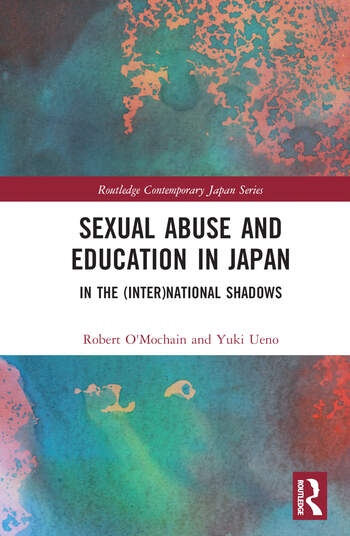
It just took two minutes, taken from the New Book Network’s podcast interview of Robert O’Mochain and Yuki Ueno about their book Sexual Abuse and Education in Japan: In the (Inter)National Shadows (Routledge, 2022):

“The fixation with depicting comfort women as fake victims has repercussions for survivors of sexual assault today. Even if victims of abuse are not aware of comfort women issues, they are aware of the danger of being labeled a higaisha-buru (“fake victim”), and in the book we show how the association of ideas between ex-comfort women, and fake victims, and contemporary women who report sexual assault, is still a factor in the silencing of women, who have a right to report sexual assault, but…they remain in the shadows.

And, I think a good illustration of how this is relevant still today, is something that happened in 2020. There were prominent members of the main political party, the LDP, and there was an event there on a program that was looking at (unintelligible Japanese term?) through comfort women issues, and when the issue was under discussion a member of the House of Representatives, Sugita Mio, she made the comment “Women can lie as much they want.” Now she did issue an apology later for saying [that], but she wasn’t censured by her party for the comment. They actually refused to receive a petition against her then, when it came to the LDP headquarters…she is still around—she continues to exert influence as a lawmaker in the Diet. And the comment [about the refusal?] was “Why do you report it?”, so it’s part of public discourse. So I think it indicated there’s a determination there amongst ultra-conservative groups to depict ex-comfort women as fake victims, to cast doubt on their oral evidence, and that will affect all sexual assault survivors. I think that’s an important question that we’re exploring in the book.”

(Robert O’Mochain speaking,16:24-18:33)

Unfortunately for those of you who likewise now want to get their hands on said book, I think I speak for most of us when I say US$160$204 is slightly out of our price range ㅠㅠ. So too, even US$44$50 for a copy of Voices from the Contemporary Japanese Feminist Movement edited by Emma Dalton and Caroline Norma (Palgrave Macmillan, 2022) that I’ve long had my eye on, when you realize it’s only 141 pages long!

I therefore recommend the podcast interview again then, for more on links to the relative failure of Japan’s #MeToo movement (also Lile Otaki Donohue’s article in Trinity Women & Gender Minorities Review for an excellent 8-page summary and comparison with other countries), and the Daiwa Foundation’s video below for short interviews of the contributors to Voices:

Finally, it’s my birthday next week on—yes, really—International Women’s Day(!), so I think one source on Japan’s #MeToo movement even I can indulge myself on is the self-explanatory Black Box: The Memoir That Sparked Japan’s #MeToo Movement by Ito Shiori :)

Has anyone read any of those books? Or have any other recommendations? Can any Japanese speakers please help with the term I couldn’t make out in the podcast at 17:25? Thanks!

Related Posts:

If you reside in South Korea, you can donate via wire transfer: Turnbull James Edward (Kookmin Bank/국민은행, 563401-01-214324)

“저의 몸과 저의 섹슈얼리티에 대한 이야기를 해보려고 합니다. 이것은 실로 부끄러운 고백이어서 저는 단 한 번밖에 말하지 못할 것 같습니다. 그러니 가만히 들어주세요.”

Estimated reading time: 4 minutes. Image sources: Aladin, NamuWiki.

I want to tell you a story about my body and my sexuality. But it’s going to be so revealing and embarrassing for me, that I can say it only once. So please listen carefully.”

If you can please indulge me, I just want to say I’m very proud of myself for ordering Bodies and Women ‘몸과 여자들’ by Lee Seo-su. It will be the first novel I’ll have read entirely in Korean!

I was instantly sold on it by reviews that mention its intimate coverage of beauty ideals, gender socialization and body-shaming in schools, sexual assault, pregnancy, sex in marriage, pervasive sexual objectification, and the male gaze.

However, there’s also the matter of the other members in The Grand Narrative Book Club,* who are much more knowledgeable and well-read than myself, and have often already read the original Korean versions of the translated novels we discuss. Because while I count myself lucky that I’m never the most interesting person in the (Zoom) room, does the fact I’m the dumbest really need to be so obvious?

In 2023 then, I want to work on disguising that. Starting by getting into the habit of reading novels in their original Korean myself.

Unfortunately, Bodies and Women will not be turning up in the club anytime soon. Lee Seo-su seems to be a relatively new writer, with a discussion in Korean Literature Now about of one of her short stories being all I could find out about her in English. So, although I could translate those persuasive reviews for you here, really any translation add-on for your favorite browser should more than suffice. Instead, hopefully I will find many interesting things in the book itself to pass on later.

Sorry. I did say this post was an indulgence!

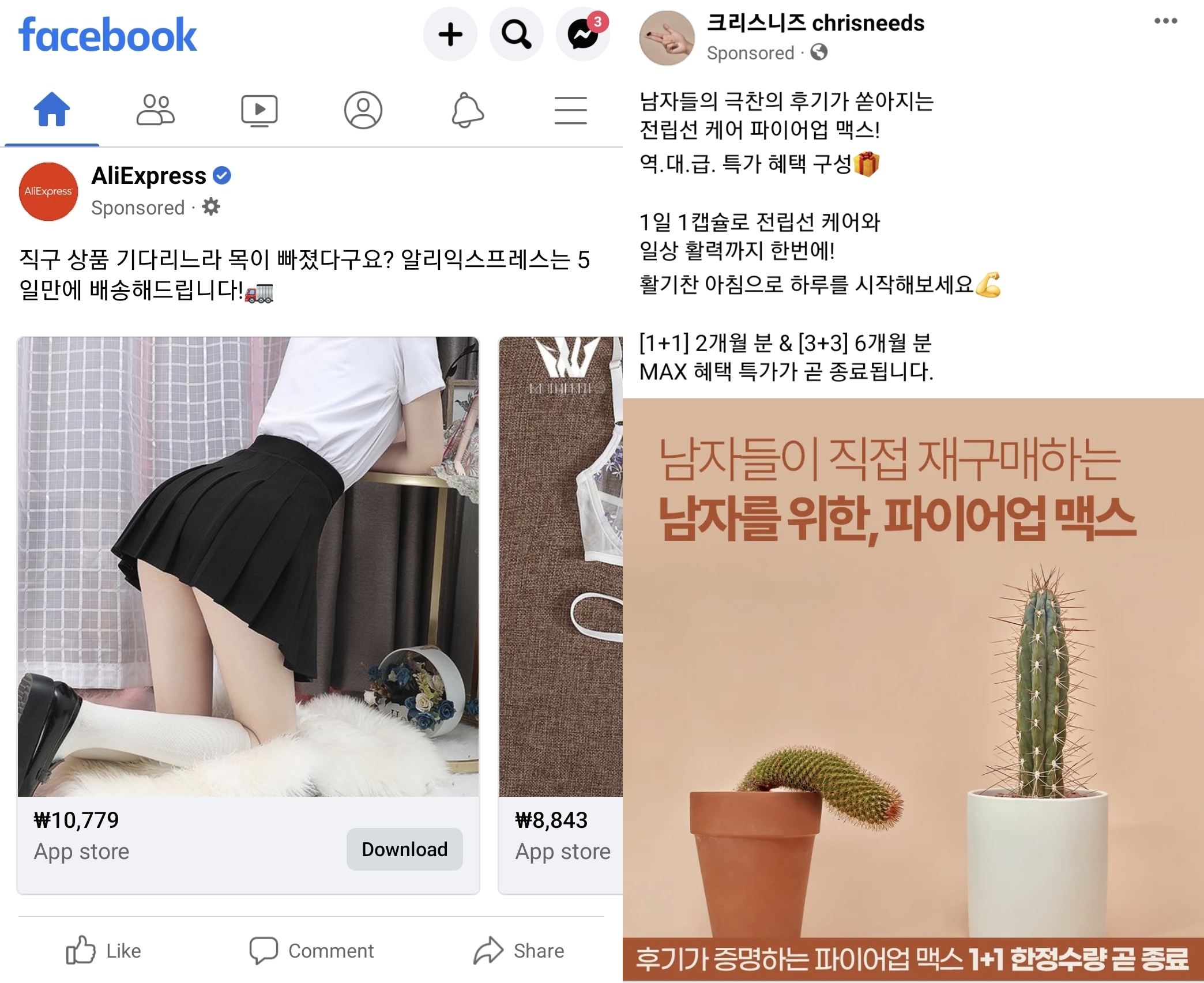
However, with that my writer’s block does seem to be cured now too, so it served its purpose. Let me offer some humor too, as a parting gift—but also, a reminder of precisely why those reviews were so persuasive, and books like it so necessary. For I shit you not: these two sponsored ads on Facebook, I saw back to back after googling “몸과 여자들” the hour previously:

Again frankly, probably the juxtaposition is a complete coincidence. After the book itself, googling “몸과 여자들” in fact mostly brings up images of women perusing fine male specimens. But more to the point, during the evening rush hour, Korean advertisers on Facebook deliberately target men with ads for lingerie etc., which they won’t buy, but which do persuade them to swipe left to be rewarded with more lingerie models, then with ads for oh-so-masculine power tools and gaming equipment which they might.

Also, ever since I hit my mid-40s I’ve been inundated with ads for libido and erectile dysfunction treatments, and doubt it’s just me. I don’t mean to laugh at anyone or their partners who actually need to avail themselves of such products, especially since I’ll probably be joining their ranks sooner rather than later (sigh). But many prove just as creepy as campy. For instance, this one where the model’s head was cut off, in stark contrast to when a different advertiser used the same stock photos of her to advertise diet products to women:

Then there’s these screenshots from yet another ad in my feed today, from which I’ll let you form your own conclusion to this post to!

*Finally, the book for January’s meeting on Wednesday the 18th is Cursed Bunny by Bora Chung (2017), translated by Anton Hur (2021); I’ll put up an official notice soon. Sorry for not doing so earlier, which is my fault for not realizing that I may not be the only person out there who hasn’t actually read it yet!

Related Posts:

If you reside in South Korea, you can donate via wire transfer: Turnbull James Edward (Kookmin Bank/국민은행, 563401-01-214324)

December Book Club Meeting: “I Want to Die But I Want to Eat Tteokpokki: A Memoir” by Baek Se-hee, Wednesday 21 December, 8:15pm KST

Estimated reading time: 2 minutes.

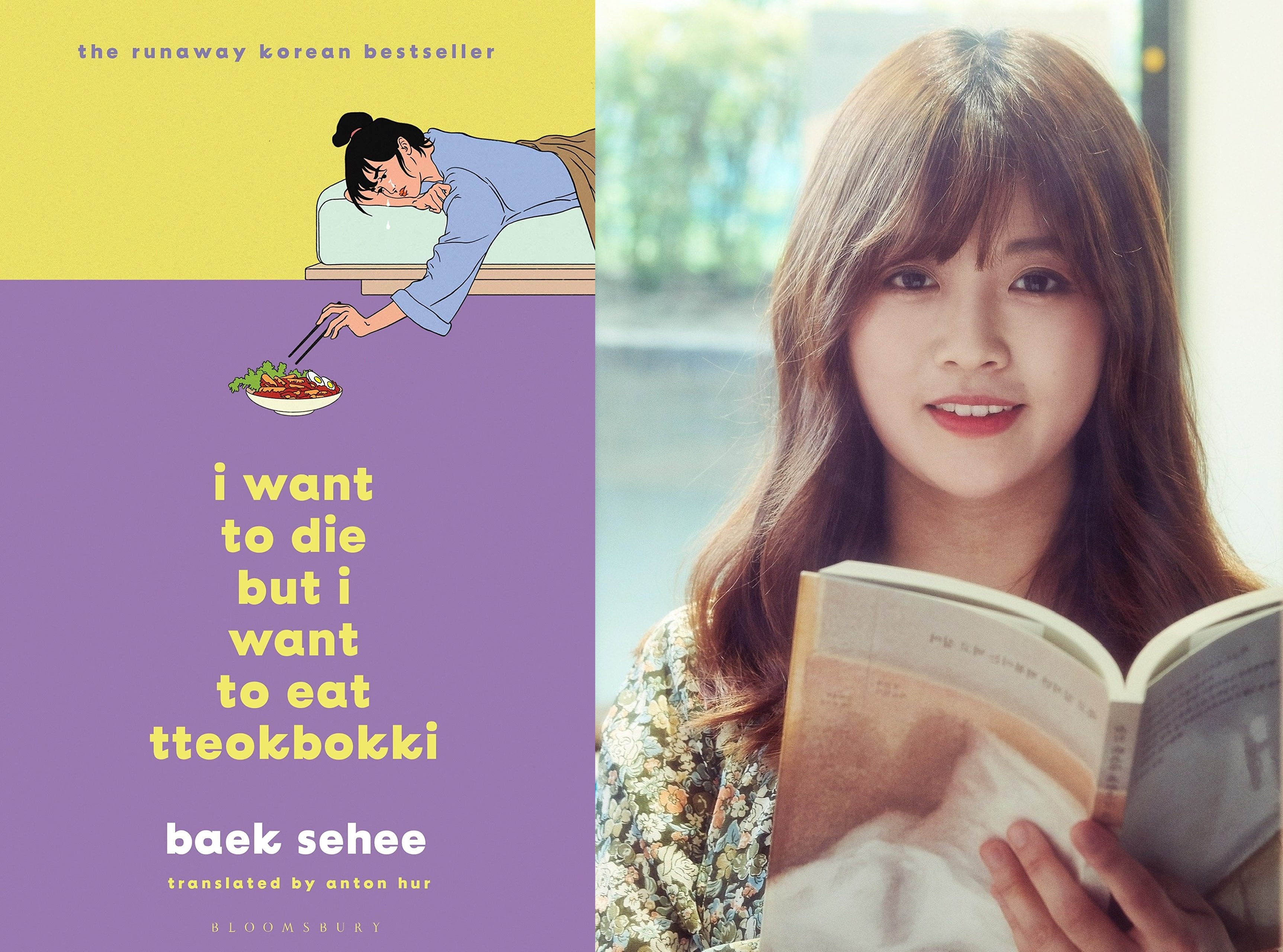
To round off our last book club meeting of the year, may I present I Want to Die But I Want to Eat Tteokpokki: A Memoir by Baek Se-hee, first published in 2018 and recently translated into English by Anton Hur. Described as “part memoir, part self-help book, and completely engrossing,” by The Korea Society, I Want to Die “is a book that captures the edgy relationship many millennials and Gen Z-ers have with hopelessness, hunger, and the pressure to be perfect.” It also provides, according to Willow Heath of Books and Bao, “a window into the mind of someone with depression, and a hand on the shoulder of anyone who suffers with it themselves,” and I just can’t wait to read it!

Please see LibraryThing, The StoryGraph, GoodReads and the videos below for reviews, and then, if I Want to Die still appeals, I’d like to invite you to our meeting on Wednesday 21 December, at 8:15pm Korean time. If you are interested in attending, please contact me via email, or leave a comment below (only I will be able to see your email address), and I will contact you to confirm, and will include you in the club reminder email with the Zoom link a few days before the event. At the same time, I will also post a SPOILER FILLED list of suggested discussion topics and questions below, which we’ll use to loosely structure the meeting (so please watch this space!).

But I want to emphasize that they will definitely only be suggestions, as I stress that the meetings are very small and informal really. And also, to help ensure that they remain as safe a space as possible, that there’s a limit of 12 participants including myself. So please get in touch early to ensure your place (and give you time to read the book!).

See you on Zoom!

♥♥♥

As Willow says, this is a very experimental book, both in subject and in format, so mostly these suggested discussion topics and questions will very much just be my observations:

My first is how valuable it is that a book about depression and therapy has become a bestseller in Korea. Mental problems are still hugely stigmatized here, not helped in recent years by incidents such as a murder/arson case by a schizophrenia patient in Jinju in 2019, as well as numerous attacks by men on women that are invariably attributed to mental illness rather than also acknowledging the role of misogyny, which is a much more politically sensitive subject. Accordingly, the government’s mental health care budget and number of trained personnel fall well below OECD average.

In such circumstances, it is very admirable and brave that Baek Sehee has deliberately set out to explain what depression is like for the public. That despite how vulnerable this makes her, she has shown the non-scary and non-judgemental reality of what therapy is actually like (sort of; I’ll return to this below), which is a good start towards encouraging more people in need to visit therapists. I’ve also heard that, especially in Korea it’s very valuable hearing the experiences of an ordinary person rather than a celebrity, and likewise the strong emphasis on her problems with her body image would find a lot of resonance with Korean readers—and Korean women in particular.

Related, can anyone speak to the impact of BTS’s recommendation? Alas, I’m not a fan, so I’d be interested in hearing more about the circumstances of that. Thanks!

♥♥♥

Next, in raising the subject of therapy we can certainly talk about the different attitudes, perceptions, and experiences of it between Koreans and people from other countries, and perhaps also between US residents and people from other English-speaking countries. Indeed, one Western expert(?) is actually quite scathing in her criticisms of the therapist, and I personally thought the therapist tended to be too quick to label what Sehee was going through, regularly shoehorning her issues into various convenient narratives and/or mental conditions rather than acknowledging her individuality and their complexity.

Speaking to the point earlier about how real a picture of therapy sessions Sehee provides, we can also discuss the issue of the transcripts of the conversations being very packaged and edited to make their points. (There’s no interjections, there’s no pauses, there’s no crying or missing minutes, and so on.) In doing so, I don’t think Sehee was being dishonest per se, as it may just have been a practical necessity for the sake of readability. But you could argue that in giving unrealistic expectations of sessions it slightly undermines her intentions to encourage and guide others to seek therapy.

Also, what sex do you think the therapist was? Why?

♥♥♥

How did you find the structure?

In my reading of reviews, the vast majority of people liked the transcripts, but by the middle began to find them increasingly muddled and repetitive, with no clear theme or narrative. The essays—”random observations”—at the end were also almost universally disliked, some reviewers accusing of them of being just padding to justify the book format. I tend to agree.

♥♥♥

Finally, what were the positives and the negatives of the book for you?

Many, we’ve already covered. Additional potential positives include the author’s honesty, and her therapist’s ability to demonstrate links between her feelings and her negative behaviors and habits of which she had previously been unaware—and which is one of the first steps towards addressing them. Reviewers also mention time and time again just how relatable she is.

I’m going to be a contrarian though, and argue that relatability is mostly because there are just so many experiences and feelings covered. That of course there’s going to be some moments when you can completely identify with Sehee and what she’s going through, because who hasn’t ever been depressed, had issues with coworkers, or felt fat (etc.) at some point?

That said, if you deeply related to any—even many—such moments, if they moved you, if Sehee’s thoughts and feelings and/or the therapist’s advice were truly beneficial to you, then nobody can or should want to deny you any of that.

It’s just…there were no moments like that for me.

Probably, because although a lot of people found that although the book can appear to be a very general one about depression and therapy, really her core problems are very specific to her. The advice given, not really relevant to anyone without the exact same.

Indeed, despite the title, do suicide and tteokbokki get any mention at all? Is the book really as universal and relevant as it’s often described and marketed?

My verdict then: 2 out of 5. How about you?

Sehee does have my great admiration and respect for helping start the long, difficult, but very urgent and necessary conversation about mental health that needs to take place in Korea. Having read I Want to Eat Tteokbokki, now I very much hope to read its sequel, and from other authors it spawns on this topic, a genre which was previously dominated by psychiatrists themselves. But however valuable it was to open the doors for more such possibilities, unfortunately this particular one fell flat for me, the delivery and structure somewhat flawed. Sorry!

If you reside in South Korea, you can donate via wire transfer: Turnbull James Edward (Kookmin Bank/국민은행, 563401-01-214324)

October Book Club Meetings: “Broken Summer” by J. M. Lee, Thursday 13 October; and “Concerning My Daughter” by Kim Hye-jin, Thursday 27 October (Both at 8pm!)

Estimated reading time: 2 minutes.

Sorry for the lack of posts everyone—I’ve just been exceptionally busy and frantic this start of the new semester. On top of all that, my order for Broken Summer seemingly vanished into the aether after processing(!), meaning I finally only received a copy today. That’s much too late for a September book club meeting unfortunately, so instead that one will now be on Thursday October 13, followed by the next one for Concerning My Daughter on Thursday October 27 (both at 8pm).

If you are interested in attending either, please contact me via email, or leave a comment below (only I will be able to see your email address). I will contact you to confirm, and then include you in the club reminder email with the Zoom link a few days before the event.

Once I’ve read it myself, below will be a SPOILER FILLED list of suggested discussion topics and questions for Broken Summer which we’ll use to loosely structure the meeting (I’ll write a separate post and list for Concerning my Daughter next month). But they will be suggestions only, as I stress that the meetings are very small and informal really. And also, to help ensure that they remain as safe a space as possible, that there’s a limit of 12 participants including myself. So please get in touch early to ensure your place (and give you time to read the books!).

In the meantime then, please enjoy the books, and watch this space for an update with the list of discussion topics. And I’ll look forward to seeing you on Zoom! :)

(Update: For various reasons, those discussion topics and questions were sent in the club email rather than posted here. Sorry!)

If you reside in South Korea, you can donate via wire transfer: Turnbull James Edward (Kookmin Bank/국민은행, 563401-01-214324)

August Book Club Meeting: “Violets” by Kyung-Sook Shin, Thursday August 25, 7pm

Estimated reading time: 2 minutes; 8 minutes with questions.

After a brief rest last month, the book club is back in August with Violets by Kyung-Sook Shin, first published in 2001 and translated into English by Anton Hur this year. Probably neither giant in Korean literature needs any further introduction though(!), so let me direct you post-haste to some reviews of the book instead—Books and Bao, The Guardian, Washington Independent Review of Books, Tony’s Reading List—and then, if Violets still appeals, to invite you to our meeting on Thursday August 25 at 7pm Korean time.

If you are interested in attending, please contact me via email, or leave a comment below (only I will be able to see your email address). I will contact you to confirm, and will include you in the club reminder email with the Zoom link a few days before the event.

Finally, below is a SPOILER FILLED list of suggested discussion topics and questions that we’ll use to loosely structure the meeting. But these are only suggestions, as I stress that the meetings are very small and informal really. And also, to help ensure that they remain as safe a space as possible, that there’s a limit of 12 participants including myself. So please get in touch early to ensure your place (and give you time to read the book!).

See you on Zoom!

♥♥♥

1) One thing I really liked about this book was Kyung-Sook Shin’s knowledge of her subject, which she gained from working on a farm for six months. As I read, I was surprised at how I couldn’t help but grow more and more intrigued by the intricacies involved in the care of trees and flowers, despite my having no real interest in the subject previously.

Are there any other books that have piqued an unexpected interest for you like this? Or at least, a greater appreciation of the subject? How about just a respect for the depth of the author’s research? In my own personal recent reading history, “The Secret Lives of Dresses” by Erin McKean comes to mind for the former, and “Limitless” by Alan Glynn for the latter two. How about you?

♥♥♥

2) Showing my age, another thing I enjoyed was the frequent mention of using phonecards and phonebooths, something I too reluctantly spent a lot of my time and loans on as a student in the 1990s. Are there any other little time and/or setting-based details like that which you found endearing? Or put you off for that matter?

♥♥♥

3) Is it a fair characterization to say that the first half of the book comes across as a very contemporary and grounded story, akin to previous book club selections like “If I Had Your Face,” “Love in the Big City,” and “Shoko’s Smile”? Only then, upon San’s second meeting with the photographer, to sequeway into something much darker, psychological, and surreal, more akin to, say, “The Vegetarian”? (One reviewer mentions there are “several moments when the narrative voice takes over, appearing to have more power and agency than the characters”; another, that “at times San felt more like an abstract idea rather than a character.”)

Were any of you surprised with that shift? Or, being more familiar with her novels than I am, already knew that surrealism was characteristic of her work? Were you disappointed by the shift? Alternatively, did you not find the transition so jarring, if indeed you agree there was one at all?

♥♥♥

4) There are many ways in which this book explores the themes of misogyny and sexism. For example, in how San’s mother is so ostracized as a single mother after her husband’s death, and so limited in economic opportunities as a woman in rural 1970s Korea, that even with her hair salon work she still has to live with boyfriend after boyfriend in order to provide for herself, mother-in-law, and her daughter—and yet still finds that task so thankless and miserable, that she ultimately leaves them both.

Without prompting, what other examples of these themes stood out to you, or resonated with you the most? Why?

♥♥♥

5) But now very much with prompting, my unpopular opinion is that I’m also finding a great deal of hyperbole and exaggeration about the book’s contents, with many reviewers shoehorning various feminist themes and elements into the book which I argue simply aren’t there at all. (See The Feminist Press for an extensive collection of such blurbs.)

Let me give two specific examples. First:

I have a deep interest in how our usage of (seemingly neutral) public space is very gendered. So, when I heard from Willow in Books and Bao’s “10 Best Books of 2022 (so far…)” video, where they cover Violets from 4:35 to 6:30, and say that (starts at 5:18)…

“It looks at the ways in which men invade women’s spaces, in a very invisible way that we all just take for granted…by touching their arm, or touching their lower back as they scoot past them in a train aisle, or they all just go up to a woman and talk to her when she’s busy, because they believe they have the right to interrupt women. There’s this sense of patriarchy that what a man has to say or do is more important and more valid than what a woman is doing by herself. And there’s a lot of moments in the book that explore that.”

…then I was instantly sold. That they don’t actually mention any of those moments in that video, was of no consequence because they couldn’t in the two minutes available.

You can imagine my frustration then, as I waited in vain for those moments to appear while reading the book. Likewise, in Willow’s earlier dedicated review video below, in which they expound upon this theme of men invading women’s personal space in great length (starts from 9:00), still they ultimately give one brief instance—the goosebumps incident—from the book itself:

Simply put, I’m just not seeing what they’re seeing. And in that vein, I’m not seeing a lot of what’s claimed in the blurbs either. (Which are exaggerated in order to sell you the book, granted—but I’m finding them echoed verbatim in the reviews.)

That being said, I’m not saying those examples are not necessarily there. They may have just been too subtle for me, consequence of not approaching the book with the right frame of mind, and/or my baggage from a long life of unwittingly dominating my own personal space as a cishet male. If anyone could point out what went under my radar then, I would be very grateful. Similarly, is there anything you expected to see, but likewise struggled to find? Please mention them, and hopefully we can all help each other to find them!

♥♥♥

6) The second specific example: in the afterword written in 2021, Kyung-Sook Shin herself says (my italics):

 “This is the story of a woman unable to find a place to fit in the world, suddenly swept up into a warped desire for love that eventually breaks her; it is the story of a woman punished by violent men in a cruel city because she is unable to express her confused desire for love and connection, who then disappears into the dark.”

Which, not least because it’s coming from the author herself, sounds like a perfectly fair, uncontroversial characterization of the book, especially in light of the brutal ending. But still—would it completely unreasonable to point that except for that specific incident, almost all of the bad things that happen to San seem to be self-inflicted?

Of course, there are good reasons for San’s psychological sabotage and frail, weak, violet-like condition. Many of these reasons—most even—seem clearly related to the patriarchal circumstances of her upbringing, of her society in general, and of her present-day circumstances. But, crucially, only indirectly. So, with the proviso that in the second, more abstract half of the book I struggled to grasp what was happening most of the time, is it not fair to ask:

  • Does she literally only meet the photographer three brief times in the entire novel? The last occasion only after a gap of many months, after which he has no memory of her?
  • If true, how is her overwhelming, consuming obsession with him and his confusion—it can’t even be called rejection—his fault? Or men’s fault in general?
  • Who, other than herself, causes her to enter a fugue-like state and prostrate herself in a  on the construction site?
  • Who, other than herself, “punishes” her? Which “violent men” do so, other than her rapist in the penultimate chapter?

Again, please forgive me if I’m appearing willfully polemical and disingenuous in raising what may seem such awkward questions, but my confusion and slight misgivings about popular descriptions of the contents are genuine. So, if anyone can help address those, and/or help me look at the book in a new light, I’d be very grateful!

♥♥♥

7) But still with the unpopular opinions sorry(!): San’s first meeting with the photographer, in which he is not shy expressing his disdain for what he considers an aesthetically bland photo subject (violets), and by implication shows his dismissal of San’s expertise, occupation, and/or interests, is again often cited by reviewers as a powerful example of the pervasive sexism that San encounters in her daily life. And by all means, I get that vibe too. I appreciate that (most) men often act that way (knowingly or unknowingly) towards women but not men, and so women encounter it to a degree which men might find astounding.

And yet, technically, in that particular scene, can the reasons for the photographer’s attitude be unequivocally tied to his and San’s respective genders or sexes? As a long-term resident of three countries beyond my native UK so far, whose interests and opinions in each have often been decidedly non-mainstream in my host cultures, and sometimes even considered a direct challenge to perceived norms of masculinity and sexuality, I’ve often been the brunt of similar dismissive attitudes towards what I hold dear, from men and women alike. Which is why the claimed gender symbolism of San and the first photographer’s meeting rings a little hollow for me.

♥♥♥

8) Finally, back to Willow’s dedicated review and description of a crucial scene at the beginning of the book (from 8:20 below), in which they say…

“San and her friend [Nam-ae] in Chapter 1 have the most beautiful, romantic moment in literature that I’ve read in literature in years. It took my breath away, these two young girls, exploring their intimacy with one another.”

…and go on to describe it as an unfortunately sad, but very much life-defining moment for San. Which raises two final questions:

8a) San and Nam-ae are only ten in this scene. Ten. Do you have any similarly explosive, life-defining moments from such a young age? Romantic or otherwise?* Because without wanting to detract from anyone’s ability to interpret and enjoy a novel in any way they damn well please, personally I can’t but help but see Willow’s takeaway as a projection of a more mature sensibility onto San than her age really warrants.

(*I realize this may be too private and TMI for a book club meeting. So please don’t worry—as with any of these questions, answering is completely optional!)

8b) Lest we forget, recall we are talking about two nude ten-year old girls kissing.

Although I personally question if “romantic” is really the correct term to describe such an interaction between children, I don’t deny anyone the right to regard it as such, regardless of their age, gender, or sexuality. But do you sense a huge double-standard in who would be publicly admit it? What would be your reaction if you were at a bookish party and met someone like myself, a middle-aged cishet man, who claimed that that scene was the most romantic moment he’d read in years? That he found it so romantic in fact, that it made him cry? No, really?

See you in the meeting! ;)

If you reside in South Korea, you can donate via wire transfer: Turnbull James Edward (Kookmin Bank/국민은행, 563401-01-214324)

June Book Club Meeting: “Korean Teachers” by Seo Su-Jin, Thursday June 30, 7pm

Estimated reading time: 3 minutes

The semester is finally winding down, I’m finding free time to research and write, and I’m happy to announce that I will have new posts for you very soon (thank you for your patience!). But in the meantime, great minds continue to think and…er, read alike, which brings me to this month’s book: Korean Teachers by Seo Su-Jin (Harriet Press, Aladin, Amazon), first published in Korean in 2020 and then in English in March this year. In short, it’s a quick, very readable, and very contemporary book about four Korean teachers in a Seoul university, which anyone who’s ever worked a Korean hagwon, school, or university will instantly be able to relate to, as well as students of Korean too. But as the synopsis from the publisher Harriet Press explains, really it’s about much more than that:

Winner of the Hankyoreh Literature Award, Seo Su-jin’s debut novel follows four Korean language lecturers at Seoul’s prestigious H University over the course of an academic year. Readers will spend one season with each of the four protagonists—Seon-yi in the spring, Mi-ju in the summer, Ga-eun in the autumn, and Han-hee in the winter—getting a close glimpse into the challenges and joys of sharing a new language and culture with students from abroad.

As readers delve into the story of each woman and the unique paths they have chosen to become a Korean lecturer, they watch Seon-yi, Mi-ju, Ga-eun, and Han-hee deal with a myriad of social and ethical challenges that accompany their job and their personal lives. From asserting themselves as modern-day career women braving sexism from both students and coworkers, to the shocking revelation that students, too, are treated unfairly as some are deemed to be more ‘desirable’ than others by H University. Some of the teachers had to bow to these pressures, but what fate would befall those who fought against the grain? Each of these women must ultimately find her place as a conduit between her students and an increasingly multicultural Korean society.

Praised as a novel that questions why highly educated women are still facing the formidable hurdle of ‘becoming somebody’ in Korean society, Korean Teachers is gratifyingly piquant as it skillfully peeks into the lives of contemporary women and how they challenge the societal norm where gender discrimination is ever so prevalent.

For further information, both about the book and more about the reality of conditions for Korean university teachers, please also check out this author interview in the Korea Times and this dedicated Reddit thread.

If you’re interested in attending, please contact me via email, or leave a comment below (only I will be able to see your email address). I will contact you to confirm, and will include you in the club reminder email with the Zoom link a few days before the event.

Finally, below is a SPOILER FILLED list of suggested discussion topics and questions that we use to loosely structure meetings. But the meetings are still very small and informal really, and, to help me ensure they’re as safe a space as possible, there’s a limit of 12 participants including myself. So please get in touch early to ensure your place (and give you time to read the book!).

See you on Zoom!

Update: With many parallels to the issues for Korean teachers raised in the book, the Yonsei’s Korean Language Institute Union is currently in the second year of its dispute with Yonsei University.

Update 2: For the July 28 meeting, we’ve chosen Violets by Kyung-sook Shin (2001, trans. 2022). A separate announcement will be made later, but in the meantime please enjoy these reviews from The Guardian and Books and Bao:

♥♥♥

General Questions/Thoughts

  • Anyone who’s ever worked a Korean hagwon, school, or university will instantly relate to the teachers’ many complaints about their management, bureaucracy, and students. Do you have any similar experiences to share?
  • How about similar experiences as a Korean language student?
  • The teachers in the book all have different opinions on the appropriate levels of how social to be with students, how difficult to make their courses, and what the students’ needs are. Which teacher’s opinions are most like your own?
  • Did anyone else find the romanized Korean words pretty difficult to follow at times? I wish the original Hangul had also been included alongside them, and am frustrated that so few translations of Korean works provide these!

Spring Semester—Seon-yi

  • If you were a teacher, what would you do if you discovered that your adult students were surreptitiously taking (appearance focused, but non-sexual) pictures of you at your workplace and uploading them to social media?
  • Obviously, Seon-yi is very upset that Quan is ultimately going to be deported, losing all the considerable money he and his wife Phuong invested in coming to Korea. It also results in a mass exodus of Vietnamese students, for which she is unfairly blamed. Should she have handled it differently? Could she have handled it differently, seeing as, ironically, she was the only victim among the teachers who didn’t file a police report?

Summer Semester—Mi-ju

  • Have you, or someone you know, made a similarly egregious case of misgendering someone? What happened and what were the consequences?
  • How could Mi-ju have avoided her own mistake?
  • In Korea, my students invariably struggle with my attempts to use even the most basic sexuality and gender-inclusive language in the classroom, and would much prefer I stuck to simply he/she and assuming everyone is heterosexual (admittedly, most of my students are low-level; by no means is their reluctance necessarily due to ignorance or homophobia). What have been your own experiences with using such language in Korea, or indeed in any country where little thought is given to political correctness, let alone preferred pronouns?

Autumn Semester—Ga-eun

  • I liked the point about Ga-eun being popular with the students partially because she teaches low-level classes—whereas as you advance, progress becomes much more difficult and frustrating, and this gets reflected in lower student evaluations for those trying to teach you more difficult stuff. This is reflected in my own evaluations!
  • Are there points where Ga-eun is too accommodating of Tanya’s depression? Which sounds cold, so let me rephrase it: are there instances where accommodating Tanya’s mental health needs ultimately defeats the purpose of her attending the classes at all? To further explain: in a “Korean Gender” summer school course I taught once, I required students to give a presentation, having learned from my own favorite lecturer 20 years earlier that being able to give presentations is a much more useful and necessary skill than writing essays, and that gaining confidence in public speaking, does, well, ultimately require actually speaking in public at some point. Then I was confronted with a student who was able to give a perfectly fine presentation, but only to me alone—which placed me in quite a dilemma.
  • What do you think of Hye-seon’s method of warning Ga-eun of the possible consequences of her illicit relationship with Yuto? Seeing as it shocks her into quitting her job, then I’m guessing not very highly. But how would you have handled it instead?

Winter Semester—Han-hee

  • I respected Han-hee’s realism in this story, her having no illusions about the chances of taking up comfortable university positions in England after her English husband Jacob’s absence from academia for four years. Ironically then, the notion of a PhD holder settling for teaching at a kindergarten, one of the standard, entry level ESL jobs for foreigners in Korea which most do straight after graduating, felt anything but realistic.
  • Were the problems with her physical health ultimately her own fault? How badly did she need to continue working in the late stages of her pregnancy? Certainly, it seems clear that she wouldn’t have been hired at H University again, which is why she wanted to prove how essential she was. But would getting a similar job elsewhere later, at a commensurate or slightly lower pay and level, really have been that difficult? Or am I completely underestimating the sexism and difficulties faced by mothers hoping to return to the workforce?
  • I admired Han-hee’s grit too, in resolving to wait for years if necessary for the sake of justice. But in light of what happens at H University in the next story, do you think in the end she will give up and move to the UK with Jacob?

Short-Term Winter CourseSeon-yi

  • Did anyone else cringe at how immature the international students sounded, finding them more like high-school children than adults?
  • Do you think that, again, Seon-yi will be made a scapegoat, in this case by both H University and the media?

If you reside in South Korea, you can donate via wire transfer: Turnbull James Edward (Kookmin Bank/국민은행, 563401-01-214324)

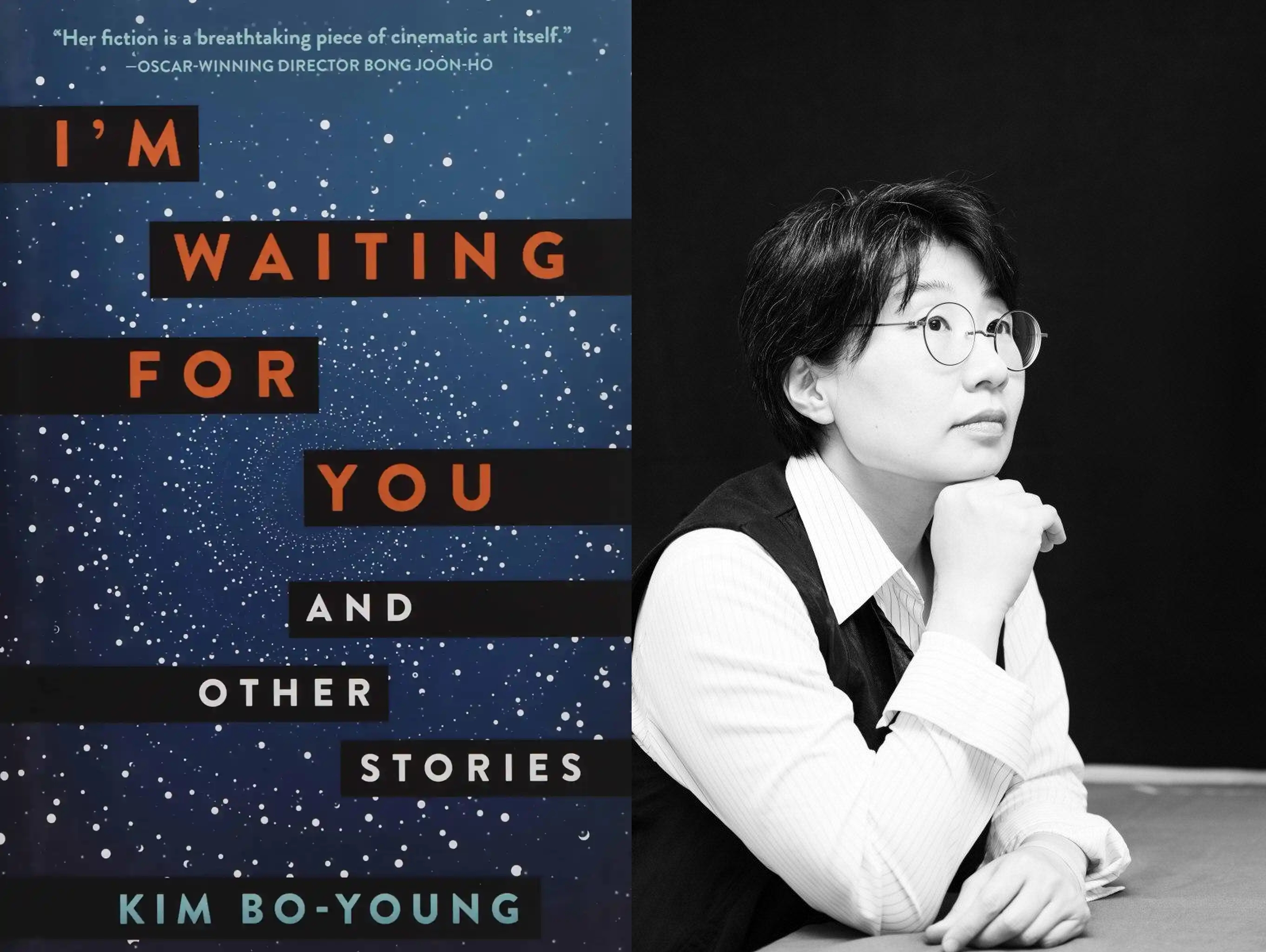
May Book Club Meeting: “I’m Waiting for You: And Other Stories” by Kim Bo-young, Thursday May 26, 7pm

Estimated reading time: 3 minutes.

For this month’s meeting, we’re covering I’m Waiting for You and Other Stories by SF giant Kim Bo-Young (2021), translated by Sung Ryu and Sophie Bowman. As described by Amazon:

Two worlds, four stories, infinite possibilities 

In “I’m Waiting for You” and “On My Way,” an engaged couple coordinate their separate missions to distant corners of the galaxy to ensure—through relativity—they can arrive back on Earth simultaneously to make it down the aisle. But small incidents wreak havoc on space and time, driving their wedding date further away. As centuries on Earth pass and the land and climate change, one thing is constant: the desire of the lovers to be together. In two separate yet linked stories, Kim Bo-Young cleverly demonstrate the idea love that is timeless and hope springs eternal, despite seemingly insurmountable challenges and the deepest despair.

In “The Prophet of Corruption” and “That One Life,” humanity is viewed through the eyes of its creators: godlike beings for which everything on Earth—from the richest woman to a speck of dirt—is an extension of their will. When one of the creations questions the righteousness of this arrangement, it is deemed a perversion—a disease—that must be excised and cured. Yet the Prophet Naban, whose “child” is rebelling, isn’t sure the rebellion is bad. What if that which is considered criminal is instead the natural order—and those who condemn it corrupt? Exploring the dichotomy between the philosophical and the corporeal, Kim ponders the fate of free-will, as she considers the most basic of questions: who am I?

For further reviews, please see Locus, Asia Media, London Korea Links (who advises against the audio version), and, of course, Books and Bao (from 1:52 if the video doesn’t automatically start there):

If you’re interested in attending, please contact me via email, or leave a comment below (only I will be able to see your email address). I will contact you to confirm, and will include you in the club email a few days before the event with a list of suggested discussion topics and questions that we use to loosely structure meetings. But the meetings are still very small and informal really, and, to help me ensure they’re as safe a space as possible, there’s a limit of 12 participants including myself. So please get in touch early to ensure your place (and give you time to read the book!).

See you on Zoom!

(Apologies for the very short notice this month BTW! Meanwhile, the book choice for the next month’s meeting, to be held on Thursday June 30, will be “Korean Teachers” by Seo Su-jin)

If you reside in South Korea, you can donate via wire transfer: Turnbull James Edward (Kookmin Bank/국민은행, 563401-01-214324)

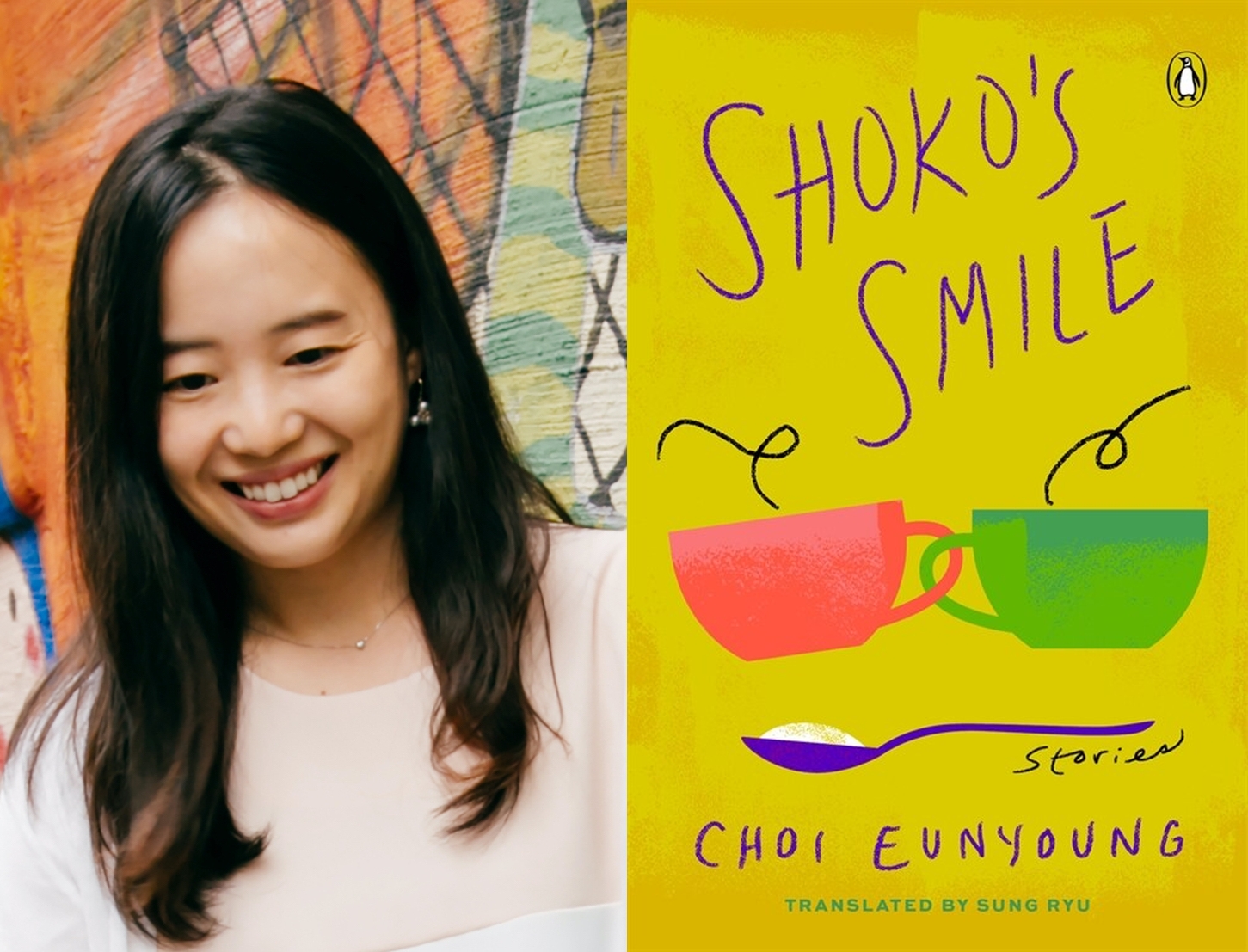
April Book Club Meeting: “Shoko’s Smile: Stories” by Choi Eun-young, Thursday April 28th, 7pm

Estimated reading time: 2 minutes.

Don’t you just hate it when that happens?

The moment I choose the acclaimed Shoko’s Smile for April’s bookclub meeting on Thursday the 28th, I learn that author Choi Eun-young and translator Sung Ryu will be giving a live virtual talk at the Korean Literature Night the night before!

Time may be of the essence though—a note on the signup page says there’s a deadline of April 10 to register. While that may actually just be referring to entering the draw to win a free copy of the book, and indeed a moment ago I was still able to register to attend, if you also want to do so I recommend registering as soon as possible just in case.

But I still recommend attending our own meeting too of course!

If you’re interested, please contact me via email, or leave a comment below (only I will be able to see your email address), and I will contact you a week or so before the event. To keep the meetings remain small and informal, and to help me ensure they’re as safe a space as possible, there’s a limit of 12 participants including myself, so please get in touch early to ensure your place (and give you time to order and read the book!).

See you on Zoom!

If you reside in South Korea, you can donate via wire transfer: Turnbull James Edward (Kookmin Bank/국민은행, 563401-01-214324)

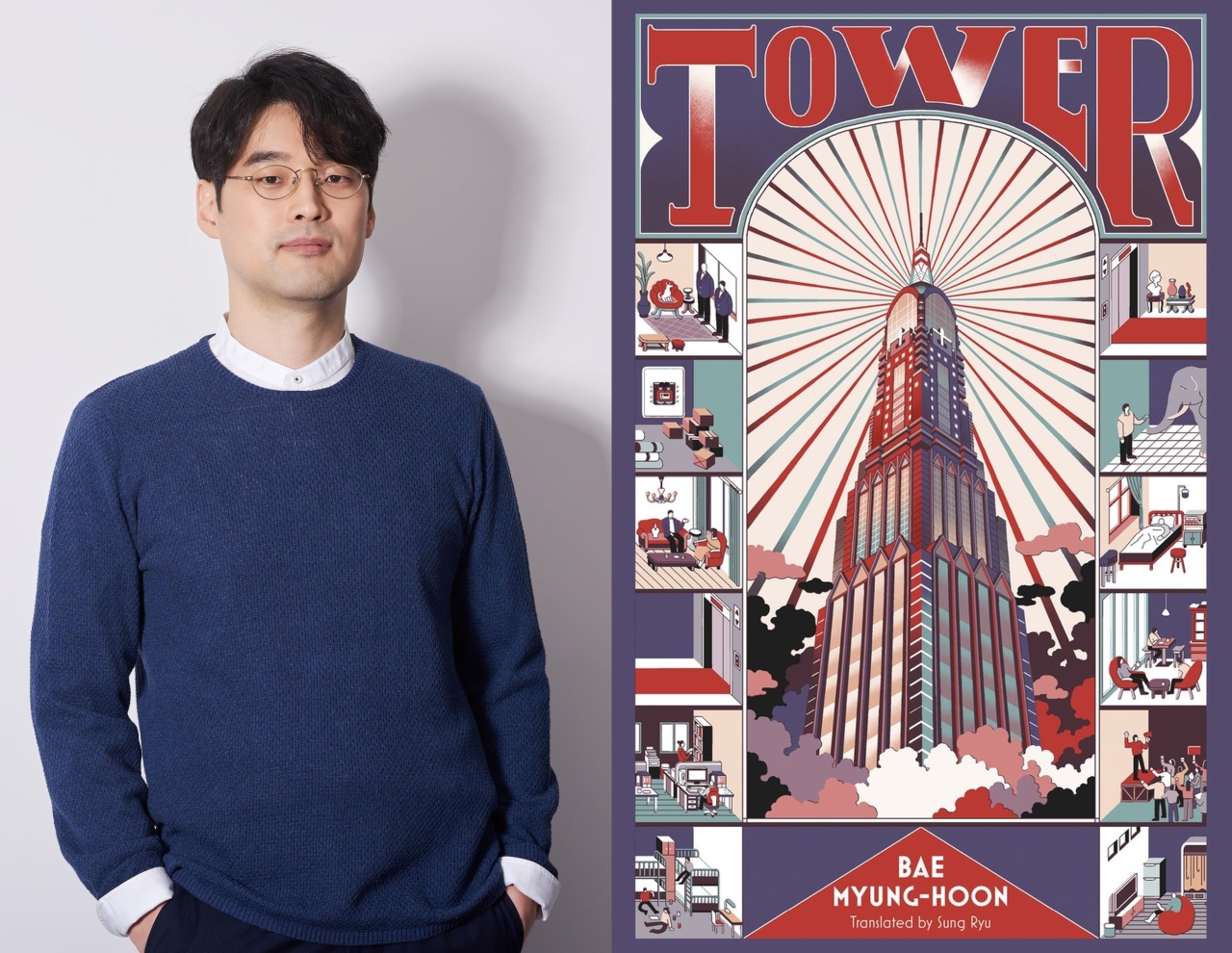
March Book Club Meeting: “Tower” by Bae Myung-hoon, Thursday March 31st, 7pm

Estimated reading time: 2 minutes.

Just a short announcement sorry—this first week of semester has been very hectic, and on Friday I injured my knee, making it painful to walk (did I mention my university is on a steep mountain?). But more posts are nearing completion, and in the meantime it gives me great relief and pleasure to direct you to Philip Gowman’s excellent review and many related links at London Korean Links for this month’s book club choice—Tower by SF maestro Bae Myung-hoon, (2009), released in translation last year.

If you’re interested in attending, please contact me via email, or leave a comment below (only I will be able to see your email address), and I will contact you a week or so before the event. To keep the meetings remain small and informal, and to help me ensure they’re as safe a space as possible, there’s a limit of 12 participants including myself, so please get in touch early to ensure your place (and give you time to order and read the book!).

See you on Zoom!

If you reside in South Korea, you can donate via wire transfer: Turnbull James Edward (Kookmin Bank/국민은행, 563401-01-214324)

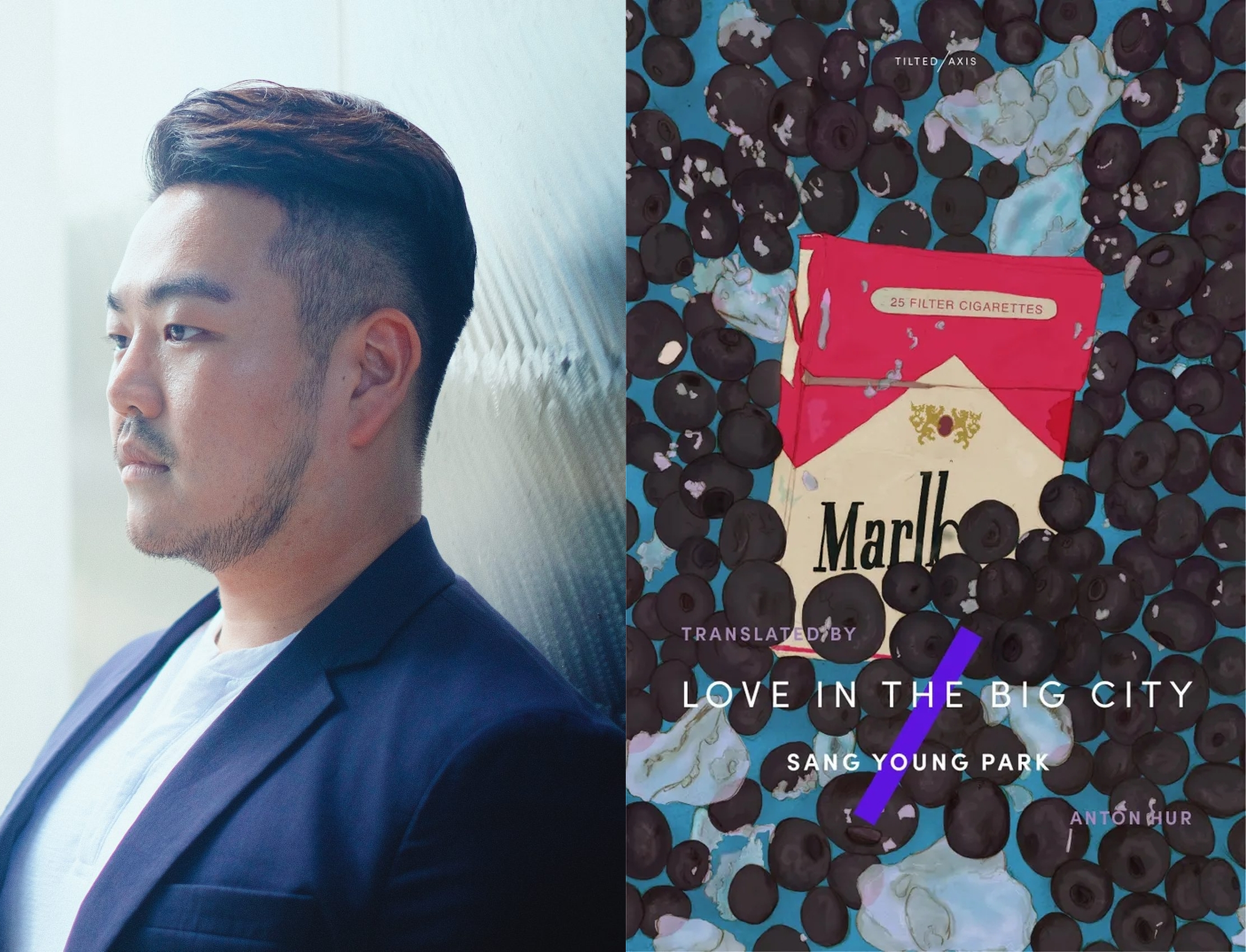
February Book Club Meeting: “Love in the Big City” by Sang Young Park, Thursday 24th 7:00pm

Estimated reading time: 3 minutes.

Hello everyone! For February’s book club meeting on Zoom, we’re reading Love in the Big City by Sang Young Park (2021), translated into English by Anton Hur and recently released in paperback. As described by publisher Grove Atlantic in the US (published by Tilted Axis Press in the UK):

Love in the Big City is the English-language debut of Sang Young Park, one of Korea’s most exciting young writers. A runaway bestseller, the novel hit the top five lists of all the major bookstores and went into nine printings. Both award-winning for its unique literary voice and perspective, and particularly resonant with young readers, it has been a phenomenon in Korea and is poised to capture a worldwide readership.

Love in the Big City is an energetic, joyful, and moving novel that depicts both the glittering nighttime world of Seoul and the bleary-eyed morning-after. Young is a cynical yet fun-loving Korean student who pinballs from home to class to the beds of recent Tinder matches. He and Jaehee, his female best friend and roommate, frequent nearby bars where they push away their anxieties about their love lives, families, and money with rounds of soju and ice-cold Marlboro Reds that they keep in their freezer. Yet over time, even Jaehee leaves Young to settle down, leaving him alone to care for his ailing mother and to find companionship in his relationships with a series of men, including one whose handsomeness is matched by his coldness, and another who might end up being the great love of his life.

A brilliantly written novel filled with powerful sensory descriptions and both humor and emotion, Love in the Big City is an exploration of millennial loneliness as well as the joys of queer life, that should appeal to readers of Sayaka Murata, Han Kang, and Cho Nam-Joo.

For glowing reviews. see Asymptote, Electric Literature, NPR, The New York Times, and you may also be interested in an interview of Park by Hur at Words without Borders, as well as Hurs’ reflections at Literary Hub on translating a bestselling queer Korean novel as a gay Korean man. Alternatively, if videos are more your thing, then check out an author talk at The Korea Society, a conversation between Park and Alexander Chee and an interview of Park by Hur at LTI Korea, and, of course, Books and Bao’s excellent quick review below:

For purchasing the book, try Aladin in Korea (hardback), or publishers Grove Atlantic (US) and Tilted Axis Press (UK).

If you’re interested in attending, please contact me via email, or leave a comment below (only I will be able to see your email address), and I will contact you a week or so before the event. To keep the meetings small and informal, and to help me ensure they’re as safe a space as possible, there’s a limit of 12 participants including myself, so please get in touch early to ensure your place (and give you time to order and read the book!).

See you on Zoom!

If you reside in South Korea, you can donate via wire transfer: Turnbull James Edward (Kookmin Bank/국민은행, 563401-01-214324)

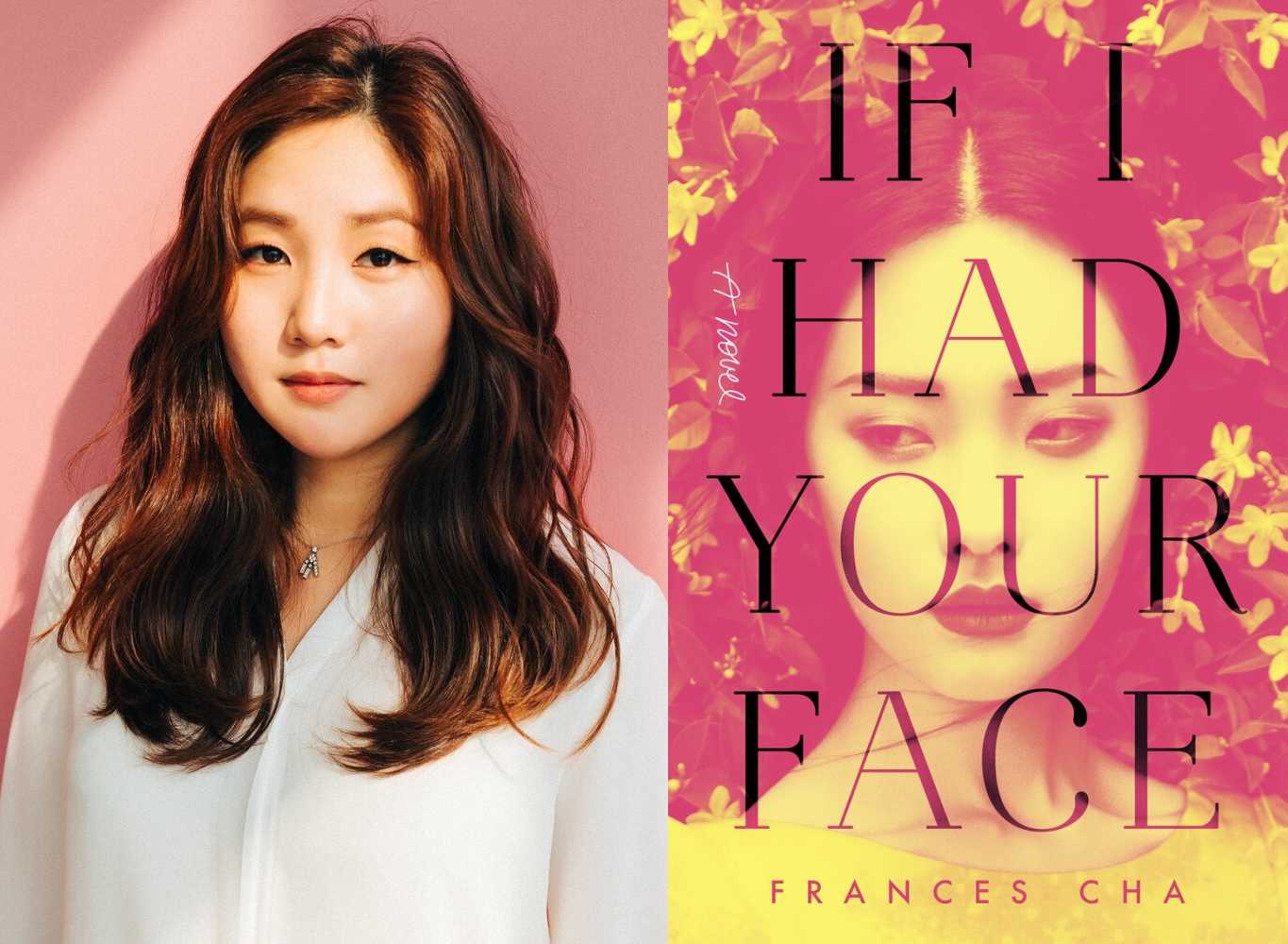
Announcing the First Book of The Grand Narrative Book Club: “If I Had Your Face” by Frances Cha, Thursday 27 January 7:00pm

Estimated reading time: 3 minutes.

If you wannabe my lover, you gotta get with my books.

Or, if you just want to be my friend (your loss!), I’ll settle for a shared love of books in general.

Just as in a romance though, a relationship on that basis can still entail a bittersweet mix of passion and frustrated longing. Specifically, as my own taste in books has rarely meshed with my friends’, I’ve found there’s only so much I can wax lyrical about my latest conquests when they’re so unlikely to ever read them themselves. And with 52 books read in 2021, plus a goal of 72 in 2022, that’s of lot of pent-up passion not to have an outlet for.

But you already know where it’s going to go now.

As I type this, I’m loving If I Had Your Face by Frances Cha, “a fierce social commentary about gender roles, class divisions and, yes, plastic surgery in South Korea.” I’ve been especially struck by how realistically Cha depicts the daily lives and conversations of the four main young(ish) Korean female characters, much more so than in previous Korean or Korea-related fiction I’ve encountered. “Finally,” I said to myself, “I’ve found characters in a book talking just like my Korean friends and I talk!”

Yet we’re not in our 20s or early-30s either. Beyond the swearing and sex talk that I love so much, does Cha indeed portray their lives realistically? It’s been especially difficult for someone with my background to tell, slowing down my reading with so many nagging thoughts and questions.

Then something occurred to me in the shower. It’s a popular book, making Time’s list of 100 must-read books in 2020 for instance, meaning there’s many of you out there with your own opinions, insights, and maybe even your own nagging questions. So why not share them with each other on Zoom?

I’m envisaging something very intimate and informal, cameras on, with a maximum of 12 participants (but in practice probably much fewer than that). To ensure it’s as safe a space as possible, I’ll screen all attendees as much as I’m able, the Zoom link will be invite only, and once it’s started I’ll be very busy behind the scenes to ensure things run smoothly.

Just for that last reason alone, I want to be clear that this will be a discussion, and definitely not any kind of lecture, webinar, or even dominated by me. While in my duties as host I will have prepared many hopefully interesting questions and potential talking points to raise if necessary, I strongly encourage—nay, demand—everyone attending to come up with at least couple of their own (please!).

For those amongst you who are interested but haven’t read the book yet, I’m thinking that by Thursday, January 27 is plenty of time to order, read, and digest it, and that 7pm on that evening (Korean time) is both late enough to drink eat first, and early enough to get a discussion of a decent length in before people get tired. We could also decide the next month’s book then too.

If you’re interested in attending, please leave a comment below (your email address will only be visible to me) or contact me, and I’ll get in touch in a group email closer to the date. Any thoughts, suggestions, and advice for running a book club would also be very welcome.

See you on Zoom!

If you reside in South Korea, you can donate via wire transfer: Turnbull James Edward (Kookmin Bank/국민은행, 563401-01-214324)

Why You’re NOT Living in a Feminist City: Two must-reads on living as a single woman in Korea and overseas

Estimated reading time: 6 minutes. Image (cropped) by Sara Aho on Unsplash.

Daily reports of stalking sharply increase after implementation of anti-stalking law“—The Korea Herald, 18/11/2021.

When I read that, I happened to be in a coffee shop next to Remark VILL, an expensive serviced apartment building in Busan. Last year, I highlighted the owner’s sexist, infantilizing advertising campaign, which featured then 32 year-old actor Im Se-mi enthusing about being able to rely on maintenance staff to change her lightbulbs and unblock her toilet instead of her father, as well as showing us how eager she was to lose her virginity to the male guests she could now invite. (Yes, really. Maybe there’s a good reason those commercials are no longer available.) But while I did have to acknowledge the attraction of and dire need for the security services Remark VILL’s buildings offered their female residents, I also pointed out they represented yet anotherpink tax,” which most single women simply couldn’t afford. And I have to highlight them again today too, for the exquisite coincidence of what I then read next in Feminist City: Claiming Space in a Man-made World by Leslie Kern (2020, pp. 164-165), which I’d gone to that coffee shop to finish:

“In my research on gender and condominium development in Toronto, I found that developers and real estate agents enthusiastically marketed condos to women with the idea that the 24-hour concierge and security staff, as well as technical features such as handprint locks, CCTV, and alarm systems, made condos the safest option for women living downtown. These features were highly touted when condos were arriving in ‘up and coming’ neighbourhoods that had previously been stigmatized or seen as abandoned, industrial areas. I argued then that by making condos ‘safe’ for women, developers were smoothing their path to expansion into neighbourhoods that might otherwise have been risky real estate investments. This expansion certainly wasn’t going to make life any safer for the women who would be displaced by this form of gentrification. Nor does it tackle domestic violence in any way. Furthermore, asking women to ‘buy’ their safety through condo ownership contributes to the trend of privatization, where people are held responsible for their own well-being, even their safety from crime. Making safety a private commodity in the city means that it becomes less and less available to those who lack the economic means to secure themselves. This is certainly a long way from an intersectional feminist vision of a safer city for women.”

“We may not know exactly what a safe city looks like, but we know that it won’t involve private safety measures. It won’t rely on the police to prevent or adequately investigate crimes. It won’t throw sex workers, people of colour, youth, or immigrants under the bus to create the appearance of safety. It won’t be centred on the needs and desires of privileged white women. And it won’t expect physical changes to undo patriarchal dominance.”

My apologies for the white lie of the post title: by no means is Kern only or even mainly concerned with single women in her book, with Korea—as in Seoul—only getting a total five lines in it. Critics also tend to agree on two glaring flaws: her focus on the Global North, and her lack of solutions to the many problems she outlines. Yet her narrow focus can also be considered a strength: personally, I enjoyed that her book is so firmly rooted in her own experiences in Canada and the UK as, variously, a girl, university student, mother, divorcee, single-parent, and feminist geographer, for she brings a lot of wit, personal anecdotes, and insights to those experiences that you sense would be lacking about subjects less close to home. In addition, she is at great pains throughout to point out that her cishet, middle-class, and white privilege mean ethnic, racial, and sexual minorities can have very different experiences to her, as well as to expand upon those.

Even without the coincidence at the coffee shop that threw my own objectivity out the window, it’s an easy, eye-opening, and thoroughly enjoyable read overall, which would appeal to both newcomers to the dreaded F-word and diehard urban activists alike. It should also be required reading for the (overwhelmingly) male architects, urban planners, and city councilors who generally take their own urban lives as the default norm—and so have no idea how inconvenient, difficult, ill-suited, and even dangerous their policies can be for the very different lives of female residents of their towns and cities.

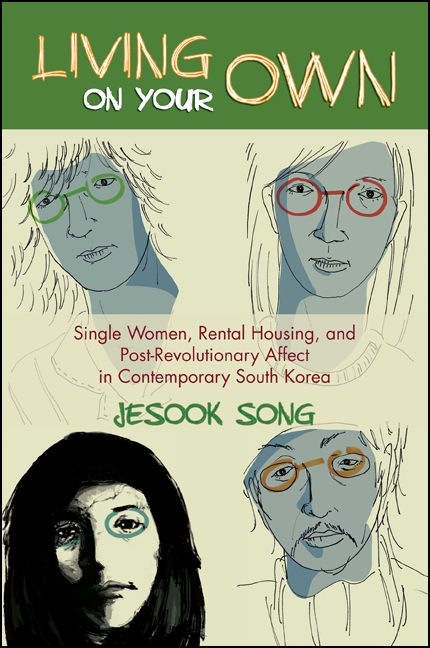
If you would like something more specifically about single Korean women though, then consider Living on Your Own: Single Women, Rental Housing, and Post-Revolutionary Affect in Contemporary South Korea by Jesook Song (2014), based on interviews of 35 single women in late-20s to late-30s.

Actually, this may be a tough sell once you realize those interviews were conducted in 2005-2007; since then, Korea’s single household rate has skyrocketed, a massive demographic shift that has potentially radically transformed many of the issues that Song describes. The book is also especially frustrating for being, well, just too damn short, with less than a hundred pages of actual chapters. In particular, it lacks one on navigating sex and relationships outside of marriage, which would have been invaluable in an era when, thanks to the stigma and fear of being caught engaging in either, other academic researchers had difficulty finding any interviewees at all. Another valid criticism is that her interviewees are unrepresentative, all of them being self-selecting, all remaining unmarried by choice rather than because they lacked the means, 90 percent of them being former activists, and with a significant minority identifying as lesbian. Hence, when compared to their contemporaries, there’s the uncharacteristic strength of their shared wherewithal and inclination to brave living alone at a time when that often led to being ostracized—which Song herself recognizes.

However, she does cover sex and relationships in passing. In addition, given how “stubbornly” unmarried 30-something women are generally considered “difficult” by their families, society, and policymakers alike, with their wants and needs easy to ignore, that Song has provided material on a group so often rendered voiceless and marginalized is reason alone to order the book in my view. But its main strength is how, by (explicitly) providing such a rare examination of what a hitherto abstract concept like “developmental state” means for ordinary people on the ground, she demonstrates how the Korean state’s goals, filtered through the lenses of familial and societal patriarchy, resulted in pervasive financial discrimination against women. So convincing is she of its huge scale in fact, that actually I’m not at all convinced that aspect of single Korean women’s lives has “radically transformed” at all in the 15 years since Song’s interviewees told her about its impacts on them.

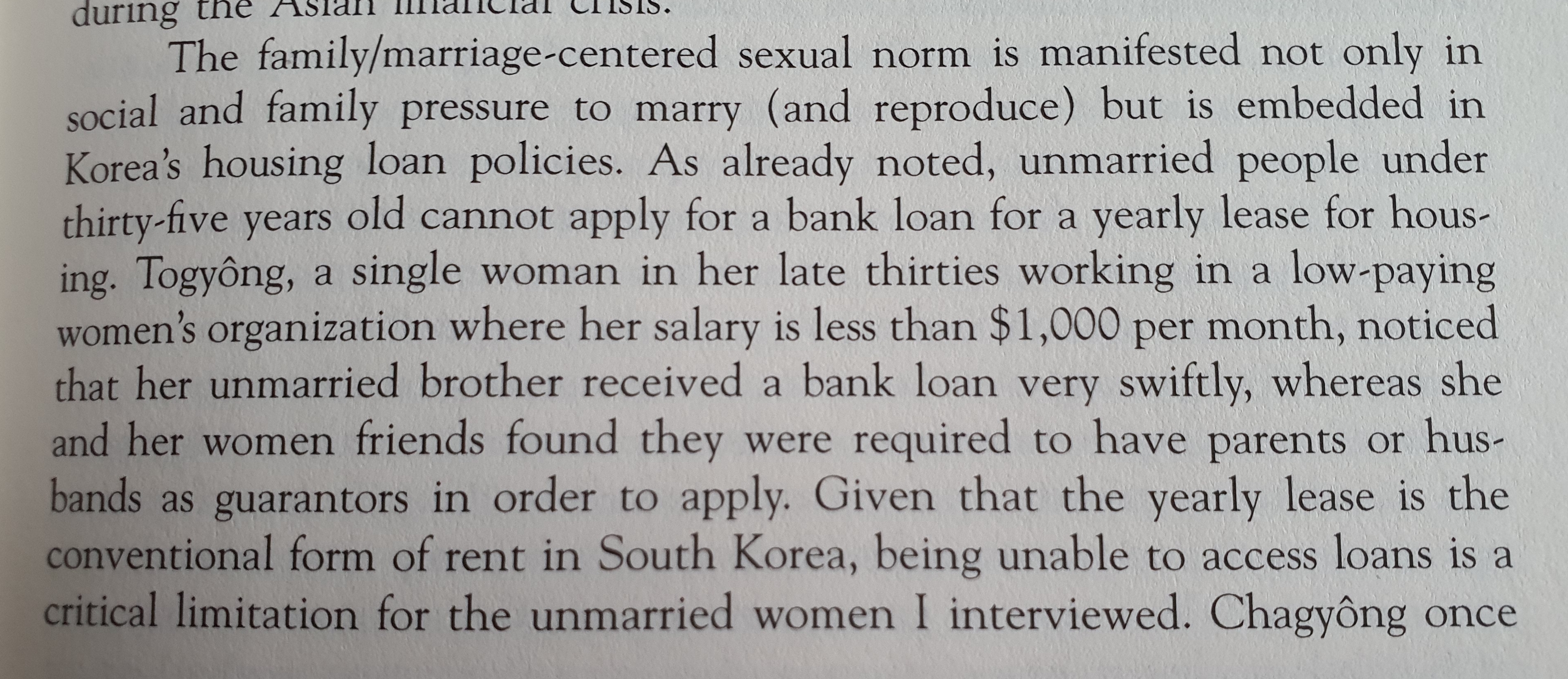
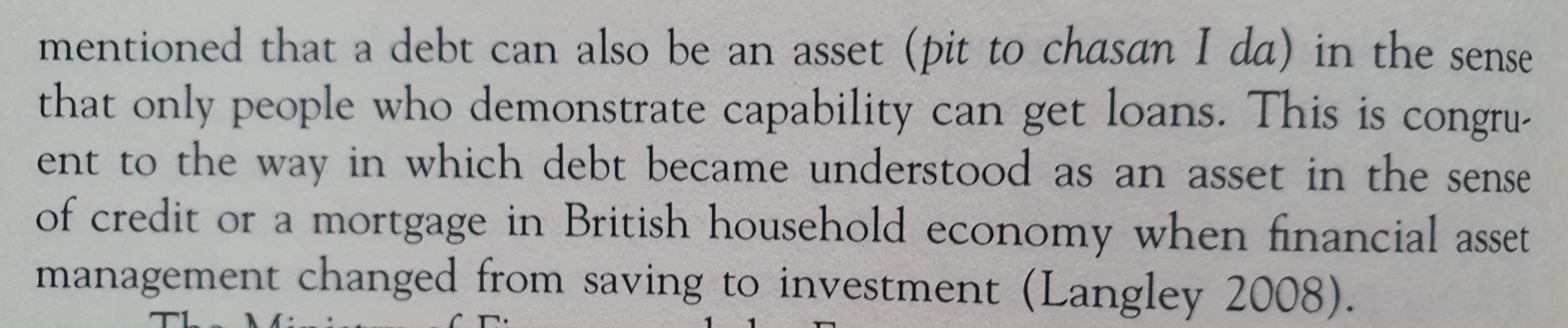
Let me finish with some examples from pages 43-44 of the second chapter, described by one recent reviewer as “discuss[ing] the economic structure that marginalizes single women in trying to finance the lump sum required to secure decent housing. Young single women were excluded not only from official financing measures, driven by neoliberal restructuring, but also conventional informal financing. She also illustrates how cultural gender norms are reflected in loan conditions that only cater for heterosexual married couples, making securing housing even harder for single women”:

Sorry (not sorry) for not having an e-book to copy and paste from, but those are available. Meanwhile, I bought my physical copy from Aladdin in Korea, for about the same price as from publisher Suny Press.

Related Posts:

If you reside in South Korea, you can donate via wire transfer: Turnbull James Edward (Kookmin Bank/국민은행, 563401-01-214324)

One Quick Thing You Absolutely Must Read to Understand Modern East Asia

Estimated reading time: 3 minutes. Original image source: The Chosun Ilbo, August 2015. For a discussion, see here.

It’s not often that one brief book chapter helps your whole degree make sense overnight. Even less often that someone will rescue a nearly 30 year-old, long since out of print tome from obscurity and offer that chapter as a free download.

Let me thank Shuyi Chua of the Education University of Hong Kong then, for providing a scan of Manuel Castells’ “Four Asian tigers With a Dragon Head: A comparative analysis of the state, economy, and society in the Asian Pacific Rim,” from R. Appelbaum & J. Henderson (eds.), States and development in the Asian Pacific Rim (1992). Not only did it give me one of my first genuine Eureka moments at university, but it’s still so relevant and helpful today that it took pride of place in my recent presentation above, and hence my finding Chua’s link.

(It’s probably still technically illegal to offer it publicly though, which is why I’ve never done so myself. So take advantage while you can!)

Let me also thank Professor Michael Free and his students at Kangwon National University, for the opportunity to wax lyrical about some of my favorite topics to them. If anyone reading would also like me to present to their students sometime in person or via Zoom, if for no other reason than to remind them that it’s not just you that gets excited about your subjects, please give me a buzz.

Finally, a big apology to everyone for not writing for so long. With so little physical social interaction over the summer, and with even what face-to-face contact I do get now almost entirely confined to my family and students, then frankly the weeks and months somewhat blurred into one another, making it difficult to pay much attention to the deadlines I set myself on the (always too many) posts I have in the pipeline. Inspired by my work on the presentation now though, I will try very hard to have one of my longer and more thought-provoking ones ready for you next week.

Until then!

If you reside in South Korea, you can donate via wire transfer: Turnbull James Edward (Kookmin Bank/국민은행, 563401-01-214324)

Books I Read in 2021, Part 1: January to June

“Work hard, know your shit, show your shit, and then feel entitled”—Mindy Kaling.

Estimated reading time: 6 minutes. Photo by Andrea Piacquadio from Pexels.

Language was invented, Robin Williams enlightens us in Dead Poets Society, to woo women. But the modern consensus is that it was developed by all sexes, to woo all sexes (PDF). I wonder then, would that have occurred to his progressive character in 1959? Would he have been equally candid teaching in a girls’ boarding school instead?

I like to think so.

Yet if words do indeed possess such power, that means I’m surely doing myself a grave disservice by not showing off how many of them I’ve read so far this year. And how better to do that, than by encouraging discussions about the books they were in?

If my brief seductions below work their magic then (or if you’d just like to show everyone how smart you are yourself!), please let your feelings known in the comments—or in my Zoom talk tomorrow, which is still open for registrations! :)

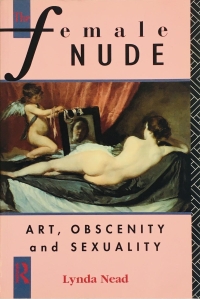
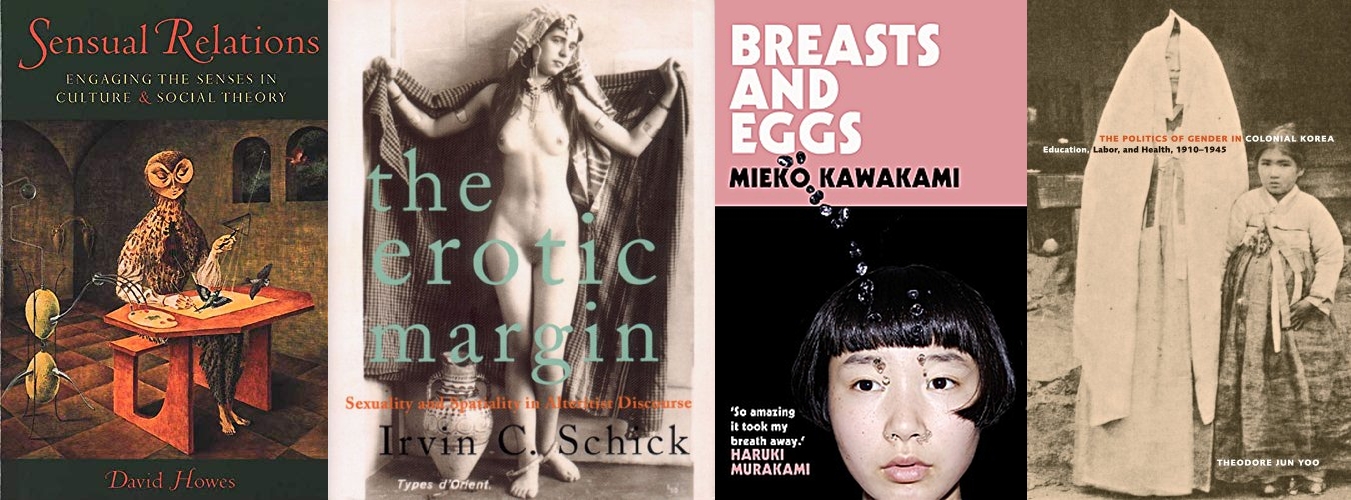
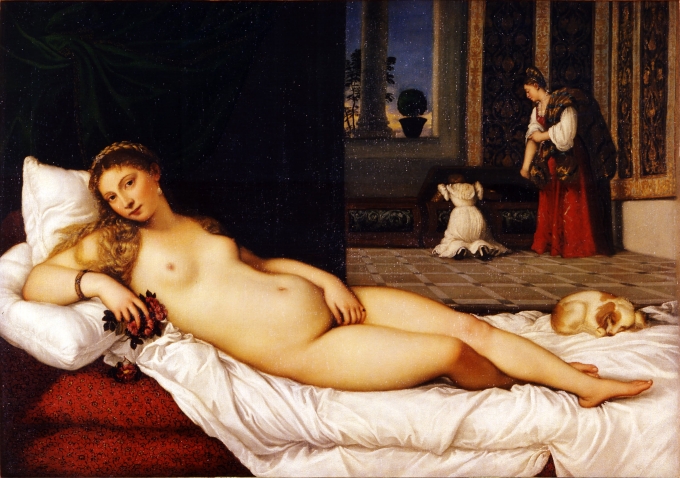
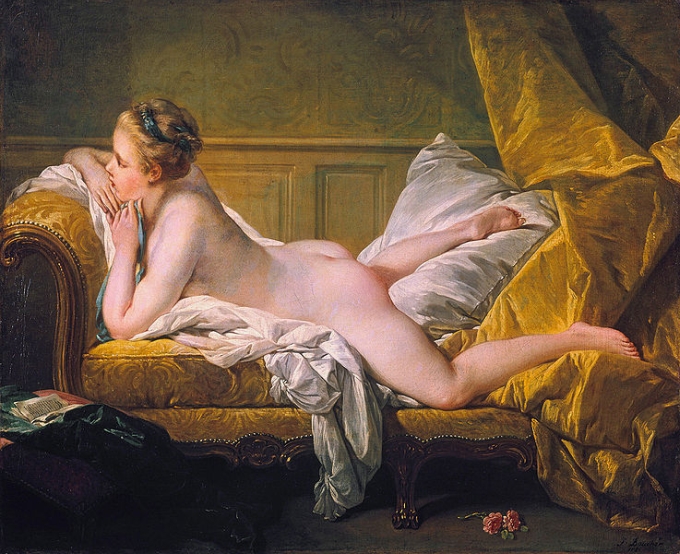
1. The Female Nude: Art, Obscenity and Sexuality (1992) by Lynda Nead, 2.5/5

Nead is insightful on pornography and feminist art here, but frustrates the reader with only 108 pages of text and images before the endnotes, wasting most of them on a somewhat incoherent philosophical argument.

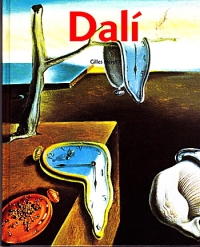
2. Dalí (1996) by Gilles Néret, 2.5/5.

With barely any painting mentioned that isn’t also provided, this visual feast is a great book to inspire further interest in the artist, and would have been especially welcome in the pre-internet age it was published. Unfortunately however, that inspiration is about all it provides today, as Dalí’s other artworks in other media are almost completely ignored, and Néret’s fast-paced prose lacks even basic biographical information.

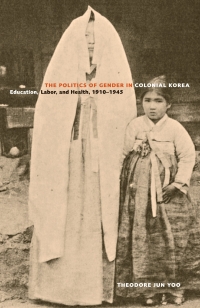
3. The Politics of Gender in Colonial Korea: Education, Labor, and Health, 1910–1945 (2008) by Theodore Jun Yoo, 4/5.

An excellent source on the conditions for female factory workers in particular. Only 4/5 though, for ending so abruptly when it feels like you’re actually only halfway through, and which leaves flustered ebook readers worried that their file has been corrupted!

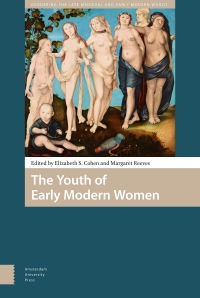
4. The Youth of Early Modern Women (2018), ed. by Elizabeth Storr Cohen and Margaret Reeves, 5/5.

A very eye-opening reveal of the methods, possibilities, and richness of this hitherto “hidden” history, with short, very readable chapter lengths and a wide variety of topics also being a bonus. Of much more relevance to studying women in later periods and/or non-European socities than its title would seem to seem to suggest, I’m very eager to apply its lessons to analyzing modern-day Korea!

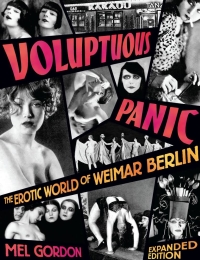
5. Voluptuous Panic: The Erotic World of Weimar Berlin (2006) by Mel Gordon, 3.5/5.

A wild account of a wild time and place. Yet surprisingly short for all the research that clearly went into it, and very frustrating to read due its awkward two-column format and overabundance of images.

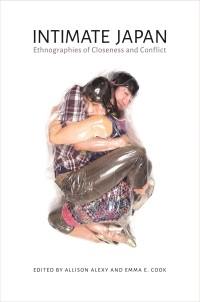
6. Intimate Japan: Ethnographies of Closeness and Conflict (2018) ed. by Allison Alexy and Emma E. Cook (2018), 4/5 (OPEN ACCESS).

Many frustratingly short and uneven chapters, but overall a must-read that exposed big gaps in my knowledge and challenged preconceptions I didn’t realize I had. Has many, many parallels to Korea too.

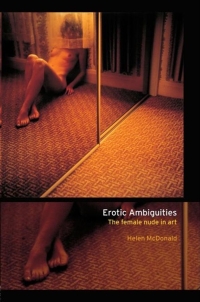
7. Erotic Ambiguities: The female nude in art (2000) by Helen McDonald, 3/5

McDonald is an excellent read when on the solid ground of describing feminist art, and the politics thereof. But her vague, wordy writing style is much less convincing when applied to more abstract topics in later chapters, which are also somewhat outdated.

8. The Politics of the Female Body: Postcolonial Women Writers of the Third World (2006) by Ketu Katrak, 1.5/5.

Many insights here, but unfortunately its theme-based approach covering women writers from former British colonies in, Africa, the Caribbean, and especially India will quickly overwhelm any reader not already intimately familiar with British colonial history, and often it can frankly be quite a challenge to determine which continent the author is actually discussing in any particular paragraph. This is a pity, because had Katrak confined her study to one region, and provided some historical context, this could have been a much more accessible and popular book.

9. Live Nude Girl: My Life as an Object (2010) by Kathleen Rooney, 5/5.

A slim but surprisingly deep, erudite discussion on art, the history of nude modelling, and public perceptions of beauty, told through the author’s own experiences. Recommended!

10. Migrant Conversions: Transforming Connections between Peru and South Korea (2020) by Erica Vogel, 4.5/5 (OPEN ACCESS).

A fascinating look at a community that I frankly didn’t know existed, with much to teach about Korean immigration and religion in the process.

11. Visual Methodologies: An Introduction to the Interpretation of Visual Materials (2001) by Gillian Rose 4/5.

Reading this in 2021, naturally this first edition was a little outdated in its coverage. It was also surprisingly and ironically lacking in images in later chapters, and would have really benefited from including some practical case studies. But it remains a good introduction overall, and I’m looking forward to getting my hands on the 4th edition (2016), which at twice the length probably addresses many of those shortcomings.

12. Sexuality: A Very Short Introduction (2008) by Veronique Mottier, 2/5.

With only 150 pages to devote to the subject, an impossible task for any author, but Mottier’s disjointed, WEIRD-focused attempt still disappointed nonetheless. Much better for the series would have been several regional or country introductions instead.

13. Waiting (1999) by Ha Jin, 2.5/5.

A universal, well-told story, but unfortunately the final Part 3 of the book feels very rushed, the main characters’ unexpected, Crime and Punishment-like transformations coming across as very sudden and inauthentic. A real missed opportunity.

14. Breasts and Eggs (2020) by Mieko Kawakami, 5/5.

A surprisingly universal story with only light touches of its Japanese setting, my only complaints are the frequent vivid dream/vision sequences, ironic for whom are otherwise such realistic characters. Still, totally worth the hype!

15. Sex in Advertising: Perspectives on the Erotic Appeal (2002) ed. by Tom Reichert & Jacqueline Lambiase, 3.5/5.

A very uneven volume, with chapters ranging from outstanding and insightful to vacuous and full of jargon. Generally though, it was very educational and relevant, even two decades later.

16. High-Rise: A Novel (1975) by J. G. Ballard, 2.5/5.
Growing up with many of Ballard’s novels in my father’s bookshelves, I’ve come to expect that I have to make many suspensions of disbelief to enjoy them. But this particular one started off much more grounded and realistic than most, so that it rapidly turned fantastical anyway came as a big disappointment, compounded by the lack of any real conclusion. Although the book is often hailed as a social commentary on class and apartment living then, in my opinion it’s anything but, Ballard squandering that opportunity by having all its protagonists quickly losing themselves into his typical dreamlike fugues.

17. Fatu-Hiva: Back to Nature (1974) by Thor Heyerdahl, 3/5.
An extraordinary man tells about the first extraordinary location he visited—what’s not to like? Yet 25 years after my first reading, my eyes frequently glazed over at his overly histrionic writing style, his philosophical musings about humanity, nature, and civilization frankly not particularly insightful. Had he spent that time giving more voice to his wife accompanying him instead, on providing more practical details on how they accomplished their shared trip and survived on the island, and/or on what he saw there that compelled him to launch his Kon-Tiki expedition 10 years later, I could have seen myself rereading this at least a third time.

Based on my skim-reading however, Senor Kon-Tiki: Thor Heyerdahl (1967) by his friend Arnold Jacoby does appear to fill many of those gaps, so I’ll look forward to that.

18. Asian American Sexual Politics: The Construction of Race, Gender, and Sexuality (2015) by Rosalind S. Chou, 3/5.

An informative and pertinent work, marred by an unceasing victimhood narrative and a dogmatic insistence that nobody can overcome their socialization, prejudices, and racial stereotypes when choosing a romantic partner.

19. Dirt, Undress, and Difference: Critical Perspectives on the Body’s Surface (2005) by Adeline Masquelier (ed.), 4/5.

One of those books that takes a close look at things you took for granted, only to make you realize how culturally specific the meanings you attached to them were—and how profoundly gendered.

Also, very serendipitous to have read before Filthy Fictions: Asian American Literature by Women (2004) by Monica Chiu, which by coincidence I’m finishing as I type this.

20. Sexuality and Marriage in Colonial Latin America (1992) by Asunción Lavrin (ed.), 5/5.

One day in March 1997, I had to read a chapter in this for a Latin American history assignment. A woman sitting across from me in the university library was so intrigued by the title, she was easily persuaded to become my first girlfriend shortly thereafter.

Never underestimate the seductive power of a good book 🤓

(Which it is. Age having robbed me of my rose-tinted glasses, I expected to be thoroughly disappointed upon a rereading. But in fact, it’s even more informative and interesting than I remembered!)

21. Armies of the Caliphates 862-1098 (1998) by David Nicolle, 3.5/5.

Because sometimes you just have to linger over a brief, lavishly illustrated guide like this, and let your historical imagination go wild…

22. To Sail Beyond the Sunset (1987) by Robert Heinlein, 3/5.

A favorite childhood author (which if you know him, explains a lot!), I enjoyed rereading these memoirs of the sassy AF Maureen Long. But the story becomes a mess when it starts focusing less on her than on her time-traveling relatives.

23. The Rape Of Nanking: The Forgotten Holocaust Of World War II (1997) by Iris Chang, 1.5/5.

Without disputing (most of) the harrowing facts presented about the massacre, nor Chang’s invaluable service in raising public awareness of it in the West, I simply can’t recommend this terribly written history.

24. The Woman in the Purple Skirt (2021) by Natsuko Imamura. 1.5/5.

Persuaded to buy this after watching @FestiveBuoy‘s (a.k.a. Books & Bao) video review, I was disappointed to find it only mildly amusing, much too short to find deeper meanings in, and to have a spectacularly underwhelming ending. Still, it’s always good to have one’s horizons expanded, and I have faith that I’ll enjoy the next book I discover through their excellent channel :)

If you reside in South Korea, you can donate via wire transfer: Turnbull James Edward (Kookmin Bank/국민은행, 563401-01-214324)

Books I Read in 2020

Estimated reading time: 3 minutes. Photo by Nathan Bingle on Unsplash.

All the books I read in 2020, with my ratings.

Only the titles and links, alas, as my university’s jam-packed December had me receiving frantic phone calls from students as late as Christmas and Boxing Day. But now that I’m free, I’d love an excuse to talk about any of the books you’ve read or are interested in. Please do give me a buzz if so, either in the comments here or on Facebook or Twitter.

Also, I’m itching to atone for my many unfulfilled writing promises this year. To cut to the chase, by posting every Monday from now on, starting with this warm-up.

How? Why? What’s different?

The old me would be answering those questions now, instead of working on coming posts. Whereas the new me doesn’t have anyone’s time to waste, and has already deleted their social media apps on their phone to help them focus ;)

Until Monday then. And Happy New Year!

1. States and Social Revolutions (1979) by Theda Skocpol, 4.5/5

2. Medieval Technology and Social Change (1966) by Lynn White, 2.5/5

3. The Subtle Art of Not Giving a F*ck: A Counterintuitive Approach to Living a Good Life (2016) by Mark Manson, 2/5

4. The Female Brain (2007) by Louann Brizendine, 2.5/5

5. The Scandal of Pleasure: Art in an Age of Fundamentalism (1997) by Wendy Steiner, 3/5

6. Beyond the Frame: Women of Color and Visual Representation (2005) ed. by N. Tadlar, 1.5/5

7. Dostoevsky: Reminiscences (1977) by Anna Dostoevsky, 3/5

8. We’re Going on a Bar Hunt: A Parody (2013) by Emlyn Rees, 3/5

9. Gender Voices (1991) by David Graddol, 5/5

10. She Found it at the Movies: Women on Sex, Desire, and Cinema (2020) ed. by Christina Newland, 3/5

11. Social and Cultural Anthropology: A Very Short Introduction (2000) by Peter Just, 4/5

12. The Spheres of Heaven (2002) by Charles Sheffield, 3.5/5

13. Glory Season (1994) by David Brin, 4/5

14. Gender and Genius: Towards a Feminist Aesthetics (1990) by Christine Battersby, 3/5

15. Media, Gender and Identity, An introduction (2nd ed., 2008) by David Gauntlett, 5/5

16. The Years of Rice and Salt: A Novel (2003) by Kim Stanley Robinson, 3.5/5

17. The Dark Knight System: A Repertoire With 1…Nc6 (2013) by James Schuyler, 5/5

18. Modern Romance (2016) by Aziz Ansari, 3/5

19. South East Asia in the World-Economy (1991) by Chris Dixon, 5/5

20. Colonial Modernity in Korea (2001) ed. by Daqing Yang, 4.5/5

21. The Problem of Women in Early Modern Japan (2016) by Marcia Yonemoto, 5/5

22. Disco 2000 (1999) ed. by Sarah Champion, 0.5/5

23. Jiggle: (Re)Shaping American Women (2007) by Wendy Burns-Ardolino, 3.5/5

24. Everyday Sexism (2015) by Laura Bates, 4/5

25. Design as Art (1966) by Bruno Munari, 0.5/5

26. The Male Brain: A Breakthrough Understanding of How Men and Boys Think (2011) by Louann Brizendine, 1.5/5

27. The Complete Poems of Sappho (2009) by Willis Barnstone, 3.5/5

28. Secrets of Grandmaster Chess: An expanded edition of a modern classic (2014) by John Nunn, 5/5

And finally #29 and #30, plus—for the sake of maintaining the aesthetics—my next two weeks’ reading also.

29. Sensual Relations: Engaging the Senses in Culture and Social Theory (2003) by David Howes, 3/5

30. The Erotic Margin: Sexuality and Spatiality in Alterist Discourse (1999) by Irvin C. Schick 3/5

Breasts and Eggs (2020) by Mieko Kawakami

The Politics of Gender in Colonial Korea: Education, Labor, and Health, 1910-1945 (2008) by Theodore Jun Yoo

If you reside in South Korea, you can donate via wire transfer: Turnbull James Edward (Kookmin Bank/국민은행, 563401-01-214324)

Boobs, Butts, and Biceps are Beautiful. Don’t Let Knights Tell You Any Different!

Smiling faces, and the consent implied therein, are crucial for determining a person’s beauty. But that doesn’t mean body parts can’t still be beautiful in their absence.

Estimated reading time: 14 Minutes. Photo by PixaBay on Unsplash. NSFW art nudes following.

Can body parts, in isolation, be beautiful?

Feminist bugbear Camille Paglia would say so. In a speech at MIT in 1991, she rejected having to apologize for reveling in beauty, as well as the notion that ordinary-looking women only ever lamented their own appearance in reaction to attractive people. In her words, she wanted to bring back to feminism the right to say what they were really thinking: “What a beautiful person, what a beautiful man, what a beautiful woman, what beautiful hair, what beautiful boobs!”

My own answer too, is such an immediate, adamant yes, that it seems absurd to ask. Yet to openly revel in, say, beautiful boobs? Newly-woke male feminists quickly learn to restrain such temptations. Not only because it would simply be boring for most women, but also because it feels disingenuous considering women’s daily, pervasive objectification and body-shaming. Complicit even, when so many are suffering from Korea’s spycam epidemic, and when even male artists are abandoning female nudes in the wake of #MeToo.

Yet whatever our sex or sexuality, we’re all casting admiring glances on our commutes nonetheless—even asexuals. Complimenting their owners may always be a bit much, let alone leering and catcalls. But we don’t have to put up with being shamed for our internal monologues too.

So, when I was going through Sir Roger Scruton’s Beauty: A Very Short Introduction (2011), and read that body parts are “obscene” when they’re considered in isolation?

Recall the queasy feeling that ensues, when—for whatever reason—you suddenly see a body part where, until that moment, an embodied person had been standing. It is as though the body has, in that instant, become opaque. The free being has disappeared behind his own flesh, which is no longer the person himself but an object, an instrument. When this eclipse of the person by his body is deliberately produced, we talk of obscenity. The obscene gesture is one that puts the body on display as pure body, so destroying the experience of embodiment. We are disgusted by obscenity for the same reason that Plato was disgusted by physical lust: it involves, so to speak, the eclipse of the soul by the body. (pp. 40-41.)

I snapped. Already sick and tired of being belittled and patronized most times I read about my male gaze, Scruton seemed to go one further in implying my liking of boobs was immoral as well.

But outrage and exasperation do not an objective response make. Nor does quoting authors without sufficient context, when it’s not so much their arguments as the assumptions they’re based on that are unsound.

So first: note that only two of the book’s nine chapters are about human beauty. Really, it’s more of an introduction to aesthetics, with beauty only as a framing device, and reads like light philosophy. I’m ill-disposed towards and ill-equipped to deal with books like that, frankly, so that’s why I focus on only those two chapters here instead of giving a full review. Much more important than my unlearned personal tastes though, is that this philosophical approach grounds Scruton’s contrarian approach to beauty too. Because whereas in my experience, most commenters take the approach that beauty can be quantified and measured in terms of how closely one’s body parts, features, lengths, and ratios reach various ideals, Scruton believes such an approach is fundamentally flawed (p. 41):

Those [above] thoughts suggest something important about physical beauty. The distinctive beauty of the human body derives from its nature as an embodiment. Its beauty is not the beauty of a doll, and is something more than a matter of shape and proportion. When we find human beauty represented in a statue, such as the Apollo Belvedere or the Daphne of Bernini, what is represented is the beauty of a person—flesh animated by the individual soul, and expressing individuality in all its parts.

This has enormous significance, as I shall later show, in the discussion of erotic art [in the second chapter on human beauty, “Art and erōs”]. But it already points us towards an important observation. Whether it attracts contemplation or prompts desire, human beauty is seen in personal terms. It resides especially in those features—the face, the eyes, the lips, the hands—which attract our gaze in the course of personal relations, and through which we relate to each other I to I. Although there may be fashions in human beauty, and although different cultures may embellish the body in different ways, the eyes, mouth and hands have a universal appeal. For they are the features from which the soul of another shines on us, and makes itself known.

For all my (over)concern with what he says about people’s other bits in his book however, actually I heartily agree with the relative importance he attaches to faces here. The comparison he makes with his descriptions of the following paintings later, for instance, really brings to life the profundity of the differences the models’ gazes make between them—and the crucial distinction that consent makes.

First, of Titian’s Venus of Urbino (p. 125):

Source: Wikipedia.

“As pointed out, in [Kenneth Clark’s] celebrated study of the nude, the reclining Venus marks a break with antiquity, when the goddess was never shown in a horizontal position. The reclining nude shows the body not as a statue to be worshipped but as a woman to be loved. Even in the Venus of Urbino—the most provocative of Titian’s female nudes—the lady draws our eyes to her face, which tells us that this body is on offer only in the way that the woman herself is on offer, to the lover who can honestly meet her gaze. To all others the body is out of bounds, being the intimate property of the gaze that looks out from it. The face individualizes the body, possesses it in the name of freedom, and condemns all covetous glances as a violation. The Titian nude neither provokes nor excites, but retains a detached serenity—the serenity of a person, whose thoughts and desires are not ours but hers.”

Next, contrast the issues Scruton raises with the model in François Boucher’s The Blonde Odalisque, all of which ring true for anyone who’s ever been dissatisfied with most pornography (i.e., everyone) because of the unrealistic, wholly impractical, often painful-looking, yet somehow supposedly “sexy” positions women are usually presented in. Indeed, Marie-Louise O’Murphy seems so divorced from proceedings here, and so divorced from her own body, that she looks like she’s much more interested in watching Netflix than in whatever the viewer is about to do with her round the back. Or, rather, to her (pp. 134-135):

Does it make any difference that this painting was (possibly) intended only for Louis XV? Or that Marie-Louise, one of his “lesser mistresses,” was only 13 at the time? Source: Wikipedia.

“Turn now to Boucher’s Odalisque, and you will see how very different is the artistic intention. This woman has adopted a pose that she could never adopt when dressed. It is a pose which has little or no place in ordinary life outside the sexual act, and it draws attention to itself, since the woman is looking vacantly away and seems to have no other interest. But there is another way in which Boucher’s painting touches against the bounds of decency, and this is in the complete absence of any reason for the Odalisque’s pose within the picture. She is alone in the picture, looking at nothing in particular, engaged in no other act than the one we see. The place of the lover is absent and waiting to be filled: and you are invited to fill it.”

Yet for all their eloquence, he’s preaching to the converted with those particular passages. They may even buy the book on their basis alone, having secluded themselves in a quiet corner of the bookstore and skipped ahead to those pictures.

The problem is that well before a genuine reader gets to that stage of the book, Scruton’s mere say-so on numerous issues is less than persuasive. By the time you reach its end, you’re not so much unconvinced as infuriated that he wouldn’t make more effort with its readers.

Examples of his arrogant certainty abound. For starters, his opening descriptions of our supposed differences with animals, the science of human desire, and evolutionary-psychology, are trite and shaky at best, and often just plain wrong. There is absolutely no basis to his argument that “Perhaps no sexual experience differentiates human beings from animals more clearly than the experience of jealously,” for instance (p.44). Nor, to his assertion that “Human beings are alone among the animals in revealing their individuality in their faces” (p. 124), which is easily proven false with just 5 minutes of googling. While to his credit, that he discusses science at all is because he acknowledges “it is surely reasonable to believe that there is some connection between beauty and sex” (pp. 32-33), his blithe, continual assertions presented as facts here soon start collapsing under their own weight.

In particular, take his description of kissing (p. 40):

To kiss [the mouth of another person] is not to place one body part against another, but to touch the other person in his very self. Hence the kiss is compromising—it is a move from one self towards another, and a summoning of the other into the surface of his being.

Or, indeed, of sex itself (p. 38):

In the sexual act, there is no single goal that is being sought and achieved, and no satisfaction that completes the process: all goals are provisional, temporary, and leave things fundamentally unchanged. And lovers are always struck by the mismatch between the desire and its fulfilment, which is not a fulfilment at all, but a brief lull in an ever-renewable process.

Both of which, miffed at his disdain at my daily rejoicing at the existence of boobs, originally I looked forward to presenting as eye-rolling demonstrations of his academic, ivory tower absurdness. Which for sure, is a turn-off with Scruton. His overuse of “he” and “his” throughout too, isn’t merely an out of date convention either, but are characteristic of the chapters on “human” beauty that are so overwhelmingly—almost exclusively—focused on female beauty that they read like they’re exclusively, deliberately aimed at cishet men. (The Beautiful Boy this ain’t.)

On a sober second reading though, I had to concede that both passages are fully consistent in the context of the arguments that preceded it, and that they can sound almost sweet too. However reluctantly, I was loath to misrepresent him.

And yet, they bear sooo little resemblance to any of my own experiences, that the very first thing they reminded me of was of this virginal android’s idealized notion of sex (from 1:30):

Hey, I may be a parent in a small apartment who literally has to schedule these things, but it’s not that I can’t appreciate such sentiments, nor that I haven’t even felt them keenly myself on occasion. Scruton’s descriptions do not represent the totality of my kissing and sexual experiences however, nor—and I’d wager good money on this—would they represent Scruton’s either. For him to pretend otherwise is simply disingenuous, and can’t be explained away as a stylistic choice due to space restraints. Rather, he chose to do so because it is his firm belief that beauty is akin to a transcendental, Platonic ideal, and, that if beauty is related to sexual attraction as previously noted, then sex has to be elevated into some transcendental, Platonic ideal too. Hence the absurd descriptions of—lest we forget—fucking, and the setting himself up for the completely unconvincing distinctions between beauty and body parts that got me started on this rant.

Did I mention that he never actually defines “obscenity”?

It was a surprise to learn after finishing the book then, that Scruton’s earlier book on the philosophy of sex, Sexual Desire: A Philosophical Investigation (1986), is actually well-respected, and considered by many a classic in the field. Because in that too, I read, he maintains his duplicitous insistence on eloquent theory trumping sweaty, sticky, lustful practice. And, because in Beauty: A Very Short Introduction, it’s that wilful dogmatism that ineviably, inexorably leads him to shaming anyone associated with pornography and sex work.

Let me confine myself to just one final example, which follows directly on from the quote about Boucher’s Odalisque, and in my view utterly taints it (p. 135, emphasis mine):

Of course there are differences between the Odalisque and the tits and bums on page three of The Sun….The second difference is connected, namely, that we need know nothing of Boucher’s Odalisque in order to appreciate its intended effect, save what the picture tells us. There was a model who posed for this canvas; but we understand the canvas neither as a portrait of her nor as a painting about her. The bum on page three has a name and address. Very often the accompanying text tells you a lot about the girl herself, helps you forward with the fantasy of sexual contact. For many people, with reason I think, this makes a decisive moral difference between the page three image and a painting like Boucher’s. The woman on page three is being packaged in her sexual attributes, and placed in the fantasies of a thousand strangers. She may not mind this—presumably she doesn’t. But in not minding she shows how much she has already lost. No-one is degraded by Boucher’s painting, since no-one real occurs in it. This woman—even though the model who sat for her has a name and address (she was Louise O’Murphy, kept for the King’s pleasure at the Parc aux Cerfs)—is presented as a figment, in no sense identical with any real human being, despite being painted from life.

I wonder too, to close this post with the question that prompted it, what exactly Scruton thinks you have lost when you admire the body parts of other commuters. Whether your focus happens to rest on breasts, butts, biceps, legs, broad shoulders, luscious long hair, or whatever.

Indeed, if you’re on the same crowded subway line as I am, you know that sometimes they’re literally the only part of the owners you can see.

I refuse to believe that those body parts can’t be simply magnificent though, and that I’m immoral for thinking so, merely because their owners may get off my carriage and transfer to another line before I ever get to see their faces.

Nor does—heaven forbid—deliberately seeking out erotic art and pornography, rather than accidentally stumbling upon objects of your affection on your commute, somehow mean the same standards don’t apply to the people in those too. Because whether seen on a Busan subway, or in a video shot in a moodily-lit San Fernando studio? Somehow, inexplicably, I never seem to lose my respect for the owners of those simply magnificent body parts either, nor does admiring their objects mean I ever think or treat them as objects.

I don’t think it’s just me. In fact, I assume the same of everyone else until proven otherwise.

If you do think lesser of them though, and my assumption is proven naive, then please let let me know. Or, if you think many others negatively objectify people, despite you and I respecting them? Then pray, please tell who those “others” are exactly, and please give myself and other readers some actual evidence that they’re really so different. Especially that which comes from actually talking to them, instead of only from what other people with agendas, like Scruton, have written about that heinous group.

No, I didn’t say those others were most cishet men—you thought it! Something to think deeply about on tomorrow’s commute perhaps, if you don’t want to let your eyes wander? ;)

If you reside in South Korea, you can donate via wire transfer: Turnbull James Edward (Kookmin Bank/국민은행, 563401-01-214324)

Related Posts:

Books I Read in 2017

Part 1 of 2. Estimated reading time: 15 minutes. Image source: Pexels (CC0).

“We love coffee! We love books!”

An amusing mantra I’ve taught my young daughters to recite over the breakfast table, all the stranger to hear considering they aren’t allowed to drink coffee. I do worry how much longer their hearts will be in our little morning ritual though, given the bad example with books I’ve been setting—I only ever read them on the subway these days, while home is for online magazine articles. Hence my first resolution for 2018, which is to grab a book and join them more often when they’re reading by themselves. And to find more books we can read together too.

My second is to commit to buying at least one new Korea, feminism, gender, and/or sexuality related-book a month. Partially, because writing about those subjects as a white cishet man, I have an extra responsibility to learn from as many women and Koreans about them as possible. But mostly, because nothing feels quite so thrilling as dropping their quotes in my writing in order to sound smart, and unfortunately Busan’s second-hand English book stores are just not providing.

What are your resolutions for reading in 2018? What books did you read last year? As for mine, apologies that my reviews are very short and personal, but that’s because many of the books are very obscure, and will only be of interest to very few readers. If you are one of those readers though, please let me know, and I’d be very happy to chat more about them with you in the comments.
#1. Divided Korea: The Politics of Development, 1945-1972 by Joungwon Kim (1976) 5/5

Written while Park Chung-hee was alive, and much of which is devoted to his military regime, I was worried this would be little more than a propaganda piece, especially as Park was actually interviewed for the book. Yet while it certainly does have its biases, and hardly delves into the democracy and labor movements, it hardly paints a glowing picture of the period either. Indeed, its main strength is in conveying just how economically desperate and politically unstable Korea was even as late as the time of publication, providing numerous anecdotes and facts and statistics that I’ve since used in my writing and classes. Add that it’s chronologically based, giving an extremely detailed political-economic timeline for the period covered, then it becomes a must-read for any serious Korea Studies geek.

But perhaps only for the serious Korea Studies geek though. I’d be the first to admit that the subject can be a bit dry at the best of times, especially in the absence of photographs and grass-roots accounts from the period. More approachable in-depth books on modern South Korean history I’d recommend would be Korean Workers: The Culture and Politics of Class Formation by Hagen Koo (2001) for the labor movement, Measured Excess: Status, Gender, and Consumer Nationalism in South Korea by Laura Nelson (2000) for gender and economic development, and Troubled Tiger: Businessmen, Bureaucrats and Generals in South Korea by Mark Clifford (1997) for political-economic developments.

Once having read any of those books however, then you’ll have a lot to gain from Divided Korea too. Albeit at a strict maximum of only one chapter per daily commute!

#2. Freud’s Wizard: The Enigma of Ernest Jones by Brenda Maddox (2007) 4.5/5

Reading about Freud for the first time in my early-teens, I quickly pigeonholed him as a complete freak to be avoided, wisely deciding that the “Readers’ Letters” section of my friend’s gifted Penthouse was a much healthier source of salacious reading. And thirty years later, I still think he’s a complete freak to be avoided. But I’ve come to appreciate his huge impact on society, especially after watching the excellent documentary The Century of the Self (2002)* about “how those in power have used Freud’s theories to try and control the dangerous crowd in an age of mass democracy.” More recently, Cody Delistraty’s September article “Untangling the Complicated, Controversial Legacy of Sigmund Freud” at The Cut is a great account of how he came to exert—and continues to exert—such influence in the first place. So buying this book seemed the natural next step.

But I also bought it assuming I would be learning about the originator of the term “Torches of Freedom,” the infamous advertising gimmick that persuaded suffragettes to take up smoking. That it would end with his dealings with US advertising agencies in the 1940s and 1950s, and perhaps give me so much renewed enthusiasm for Mad Men that I’d be able to persuade my wife to try it. That was Freud’s nephew Edward Bernays however, a completely different person. Instead, Ernest Jones was one of Freud’s lifelong closest friends, probably his greatest popularizer in Europe, and ultimately his first biographer. Being the driving force behind the establishment of psychoanalysis in the UK too, biographer Brenda Maddox leaves you fully convinced of the back cover’s claim that he was a “critical, heretofore overlooked, architect of our modern intellectual landscape”, and very much a fascinating figure in his own right—not just because he’s essential for understanding Freud.

Such a noble subject doesn’t necessarily make for a page-turner, but Maddox’s down-to-Earth writing style makes all the difference. Her wry descriptions of Jones’s frequent sexual escapades for instance, are especially amusing, but aren’t there simply to titillate the reader—they’re relevant because they nearly derailed his career. Also, although such inclinations are hardly confined to female biographers, I liked how she seemed to take pains to explain why both Freud and Jones were so popular among their overwhelmingly female patients, despite being reviled by male colleagues, and how she includes a great deal of social history to ground readers and help them appreciate just how scandalous and revolutionary their work was for its time. Let me leave you with an example from Chapter 6, “Hamlet in Toronto”:

Nervousness about sexuality was hardly confined to the United States and Canada. In Dublin in 1907, on the opening night of J. M. Synge’s Playboy of the Western World, the mention of the word “shifts”, referring to female undergarments, caused the audience to stamp their feet, sing patriotic songs, and shout “Kill the author!” The performance had to be abandoned in the second act. “Shifts” had the same connotations as “knickers” and was not to be uttered on a public stage. (p. 74)

*The Century of the Self can be watched online here.
#3. Aesthetics from Classical Greece to the Present: A Short History by Monroe C. Beardsley (1966) 4/5

Bought because of my interest in beauty ideals, under the assumption that the subjects were quite similar. But whereas works on the former tend toward the descriptive and historical, in my limited experience the subject of aesthetics seems more light philosophy, which is not to my taste. Frankly, that means I haven’t retained much from this book then, and feel no closer to answering the questions it raises. But I can still see the merit in asking them, and respect the scholarship that went into what seems a very comprehensive guide to virtually everything that had been written on the subject up to the date of publication.

I would be interested in reading something similar on developments in the subject 50 years since, especially of a more scientific bent. Also, I do have copies of Donald A. Norman’s The Design of Everyday Things (2002 ed.) and Emotional Design: Why we love (or hate) everyday things (2004), and I’m optimistic that his tying of aesthetics to practical examples will make me much more interested in the subject.
#4. The Socialist Feminist Project: A Contemporary Reader in Theory and Politics by Nancy Holmstrom (2002) 3/5

Every time I buy a reader-type book, I remind myself of back when CDs were effectively the only way to listen to music on demand. With songs bundled together like chapters, and so much trash alongside hit singles, I learned to take the plunge on an album only if I liked a least a third of the songs on it.

Did I say every time I buy a reader-type book? Actually usually I don’t, because meeting that ratio is harder than it sounds. Variety, which this book has in spades—nearly forty chapters on topics including PMS, queer theory, domestic violence, Guatemala’s sugar industry, intersectionality, and Asian-American environmental movements—doesn’t necessarily mean one in three chapters will be worth paying money for. It doesn’t help that authors’ writing styles vary widely in this particular reader either, some being so informal they seem very out of place for such a title. (Not that I have a hard-on for hard-core socialist theory. But if I did, I’d be very annoyed not to find it here.)

What makes all the difference with The Socialist Feminist Project though, is that the book isn’t at all US-centric, and that the topics tend towards universal themes rather than contemporary 2002 political issues (although of course some chapters are indeed very dated.) So, one out of three useful and readable chapters, 15 years after publication, is a great ratio really. It helps explain why those chapters I did like, I really liked, and will probably be referring to for years to come. See my post South Korea’s Invisible Military Girlfriends for an example, based on the chapter “Militarizing Women’s Lives” by Cynthia Enloe.
#5. The Female Eunuch by Germaine Greer (1970; with updated introduction, 2001) 1.5/5

It’s easy to see why this is a feminist classic. Much of it is so insightful, taboo-breaking, and confrontational that it reads like it was written today—and must have been mind-blowing to encounter for the first time ever back in the 1970s. Fans of Camille Paglia especially, with whom she seems to have much in common, will appreciate her blunt writing style. Also, for female readers in Korea in particular, her description of UK workplaces then will sound depressingly familiar today.

Like Paglia however, Greer presents many controversial or decidedly odd opinions as if they were universal truths. This forceful style can be very moving on a first reading, but it discourages providing long arguments or evidence for those opinions, meaning a sober second reading leaves you deeply questioning. Also, the format of the book—four main chapters titled “Body,” “Soul,” “Love,” and “Hate,” subdivided into equally vaguely-titled and focused subchapters—makes for a lot of repetition, to the extent that 200 pages in you’re slogging through more out of sense of obligation to the sisterhood than any expectation of learning anything new in the next 200. Hence my surprisingly low, blasphemous rating. And why, despite what the book may have meant to women once, I just can’t recommend it today.
#6. Princeless: The Pirate Princess (Volume 3) by Jeremy Whitley (Author) and Rosy Higgins and Ted Brandt (Artists) (2015) 4/5

Some English practice and wonderful feminist role-models for my manhwa-loving daughters. Need I say more? ;)

I’m very embarrassed to realize that we finished this in April and didn’t follow-up with the next volumes though, so I’m ordering those as I type this.

In addition to the other books in this series, similar, much weightier ones I can highly recommend and wax lyrical about include Zita the Spacegirl, Legends of Zita the Spacegirl, and The Return of Zita the Spacegirl by Ben Hatke (2010, 2012, & 2014);Target Practice (Cleopatra in Space #1) and The Thief and the Sword (Cleopatra in Space #2) by Mike Maihack (2014 & 2015); and finally Rapunzel’s Revenge by Shannon Hale (2008), although the Southern-US English in the last will be a little trying for non-native speakers (and sadly discourages my daughters from reading the book by themselves).
#7. The Price of Salt (Or Carol) by Patricia Highsmith (1952) 5/5

Needing no introduction due to the excellent 2015 film, which by all accounts is very faithful to the book, I think the most helpful thing I can do is to pass on my favorite quote from it:

“The wine in her head promised music or poetry or truth, but she was stranded on the brink. Therese could not think of a single question that would be proper to ask, because all her questions were so enormous.” (p. 98)

Evoking the “pregnant with possibility” line from (I think) The Great and Secret Show by Clive Barker (1989), which I remind myself of whenever I’m about to cross the threshold into some party, if that quote doesn’t speak to your core then you’ll probably find the book too ponderous for your liking, Therese’s character much too self-absorbed and infuriating in her indecision. If it resonates at all though, then you’ll just love The Price of Salt.

I haven’t seen the movie myself yet. Ironically, the more faithful to a book one is, usually the less motivated I am to bother, as I feel it will offer me nothing new (I may never get round to watching Atonement!). Carol (2015) however, is so often mentioned as a stellar example of the female gaze, about which I’m writing a series at the moment, that I guess I’m just going to have to force myself. Oy vey!
#8. Orientals: Asian Americans in Popular Culture by Robert G. Lee (1999) 3.5/5

If you’re reading this post, then you’re well aware that stereotypes of race and sexuality in Korean popular culture have a huge impact on foreigners’ lives here. But perhaps you weren’t aware once, so the hows and whys of their influence were a little to difficult to understand upon first encounter, especially if you had never experienced being a minority before. Learning about the Asian-American experience in the US through familiar pop culture examples through Orientals then, can be very helpful in providing some signposts to the Korean case, as well as revealing surprising and often uncomfortable similarities in one’s own cultural baggage brought here.

But Lee’s book is also useful and interesting simply for shedding light on a much misrepresented social group, and for presenting a history of the US from a perspective that many readers will be unfamiliar with. I especially liked the common thread of what we take for granted about a society actually being a perennial source of contention between dominant and subordinate groups, with what Lee writes about the US below being just as true of Korea:

“The mobilization of national identity under the sign ‘American’ has never been a simple matter of imposing elite interests and values on the social formation, but is always a matter of negotiation between the dominant and the dominated. Subordinated groups offer resistance to the hegemony of elite culture; they create subaltern popular cultures and contest for a voice in the dominant public sphere. The saloon vies with the salon, the boardwalk with the cafe, and the minstrel theater with the opera as an arena for public debate and political ideas.

Although it mobilizes legitimacy, the cultural hegemony of dominant groups is never complete; it can render fundamental social contradictions invisible, explain them away, or ameliorate them, but it cannot resolve them. However deracinated, whether co-opted, utopian, nostalgic, or nihilist, popular culture is always contested terrain. The practices that make up popular culture are negotiations, in the public sphere, between and among dominant and subaltern groups around the question of national identity: What constitutes America? Who gets to participate and on what grounds? Who are ‘real Americans?'” (p. 6)

That said, while learning about the Asian-American experience through familiar pop culture examples can indeed be helpful, many of those selected by Lee were rather dated even at the time of writing. Also, one reviewer claims that “you probably won’t find [the book] interesting or appealing unless you enjoy left-wing polemics.” I think that’s an exaggeration, but it certainly was evident in his one-sided discussion of Michael Crichton’s 1992 novel Rising Suna pet interest of mine—which Lee shoehorns into racist anti-Japanese narratives of the time. That’s still not enough to put me off recommending the book by any means, but it’s something to bear in mind.
#9. What I Wish I Knew When I Was 20: A Crash Course on Making Your Place in the World by Tina Seelig (2009) 4/5

I’m not a big fan of self-help books. Most just seem full of truisms, leaving me not so much motivated to conquer the world as angry and confused that someone was paid for stating the completely obvious. Then bitter, because why wasn’t that person me?

Despite that, it can sometimes help to be reminded of them nonetheless. And a big plus for this book, unlike many others in the genre, is that the real-life examples used to raise them aren’t dated, nor relevant only to those in the US, nor even just to 20-somethings. Frankly, I’ll feeling a little peppier now having just glanced at my bookmarks for this review, which is not bad for the price of a cocktail.

What if—mind blown—I read it while drinking a cocktail though? Hmm…
#10. Tragedy: A Very Short Introduction (Very Short Introductions) by Adrian Poole (2005) 5/5

I had no love for English at high school, and was nonplussed at the two Shakespearean plays—The Merchant of Venice and Romeo and Juliet—I studied there. Older and wiser now though, ironically it’s only through having studied and understood them at school that I understand and like them at all—and find the prospect of learning a third so daunting.

But then in 2016, getting drunk on Black Russians at home while watching the latest episodes of Westworld (my idea of heaven, TBH), I was inspired to overcome my fears, and bought several new plays and books about Shakespeare. Alas, that’s as far as my inspiration ever got with them, but Poole’s book might just give me the final push I need.

Not just because it’s an amazing introduction to the subject, making even an illiterate like myself finally understand what tragedies even are. But especially because of the explanations of what draws audiences to them, one particular passage intimately speaking to my own personal experience of very literally, physically being unable to speak upon suddenly learning of a very close friend’s death 10 years ago:

“What a dream, to be articulate in the midst of passion—anger, desire, grief—yet when we meet it in reality it usually seems specious, a glib and oily artfulness. Great tragic art satisfies our dreams by endowing characters with the verbal resourcefulness we never muster for ourselves, especially when it’s expressed through the body and voice of gifted performers….We remember with gratitude lines and passages, turns of phrase and voice, that seem to grasp the shapes of true passion, the moments when for once, amidst all the inequities of tragedy, language appears equal to what it addresses and expresses.” (p. 90)

On which note, should I delve into Julius Caesar, King Lear, or Macbeth first, the tragedies among those plays I bought? Please let me know in the comments, or anything at all about any of the other books mentioned in the post. Meanwhile, Part 2 is the works too, which you can see my Librarything list of for a sneak preview!

If you reside in South Korea, you can donate via wire transfer: Turnbull James Edward (Kookmin Bank/국민은행, 563401-01-214324)

(Review) Breasts: A Natural and Unnatural History by Florence Williams (2013)

Judy Garland & Lana Turner, Breasts Florence Williams(Source, left: Bombshell Bettie. Source right: unknown)

Many years ago, I was perusing the “Last Word” section of a New Scientist magazine, where readers submit and answer each others’ science questions. If memory serves, that week the questions were about why men are soooo attracted to breasts, and why human females’ are disproportionately large compared to other primates’. Much commentary ensued, in hindsight entirely by men. (And, entirely British men at that—but that’s a subject for another review.) Then, someone who actually had breasts stepped in, and said something along the lines of:

 “It occurs to me that few of the previous commenters have ever suckled a baby. If they had, they’d realize how important the shape is to prevent babies from suffocating while nursing.”

All of a sudden, I realized that much—probably most—of what I’d ever read about the evolution of breasts had been written by men, centered around sexual selection and the all-important male gaze. This lack of women’s voices meant I’d missed out on many obvious observations and insights, which strongly challenged theories I’d long taken for granted.

Much the same experience can be had from the first chapter of Breasts, greatly aided by Florence Williams’ similar, no-nonsense style of writing. For instance, from pages 22-23:

…there are problems with making sweeping statements about evolution based on studies about male behavior in pubs. For one thing, I am still hung up on the nubility hypothesis, which might as well be called the sag hypothesis [that age, gravity, and successive pregnancies take their toll on breasts, signalling to other men that younger women with perkier breasts might be more suitable mates]. But speaking from personal experience, I can report my breasts actually got bigger and fuller after pregnancy. I really can’t say they are sagging, not yet anyway. I am well past the age of what anthropologists call “peak reproductive value.” Does a man really need breasts to tell him a women is getting on in years? Aren’t there more obvious signs that don’t require awkward social glances? And as anyone who’s been to a public shower or springtime college campus can tell you, there is an enormous, and I mean enormous, variety of breast sizes out there. I’m talking 300 to 500 percent differences in volume, and these are in women of roughly the same age. What other body part is so variable, I ask? If breasts were such important communicators, wouldn’t they be more on the same page?

Further complicating the picture, there is also great variety in men’s tastes. [A male scientist interviewed] conceded that male preferences aren’t as universal as he’d hoped…

Nor does she simply critique such theories, but discusses several other equally plausible ones centered around health, fat deposition, and suckling babies. Indeed, “With breasts,” one anthropologist she interviews concludes, “men are just loading culturally a set of symbolizations onto something that really evolved for more direct reasons. We’ve got to be more scientific about it.” That’s a refreshing new perspective, and much-needed imperative, given all the misinformation about breasts out there.
Yet she overcompensates I think, in ending that chapter by rejecting the combined, complimentary roles of natural and sexual selection. Instead, she goes to the opposite extreme, completely dismissing the (literally snowballing) role of breasts’ sexual attraction to men in their greater and greater size over time (pages 34-35):

What if instead of men selecting breasts, the breasts selected the men? It’s possible that…Early Man loved lots of different specimens of Early Woman, some with no breasts, some with small breasts, some with hairy breasts, whatever. Man, for all we know, is sometimes not that picky. Then, for the [physiological] reasons described earlier…the women with the enlarged breasts and their infants gradually outlasted the others…

Consequently, the people who could talk and sing and have the biggest, best-fed brains were the ones born of women with breasts. It makes perfect sense that we would grow up to appreciate and enjoy breasts, eventually putting pictures of them in eye-trackers machines in universities.

Perhaps, all along, the breasts were calling the shots.

It’s just an off-the-cuff conclusion really, but it reminded me that with a breezy, persuasive writing style, tends to come arguments and examples that are often much more debatable than authors make them appear. It also felt alienating, because here she seems less concerned about scientific plausibility than in playing to her likely overwhelmingly female audience, justifiably sick of men lecturing to them about breasts.

To understand what I mean, imagine, say, a male author dismissing women’s preferences for tall men as having had no influence on humans getting taller over time. Rather, tall men just happened to do better in the competition for mates because of physically defeating shorter, weaker rivals for sexual access to passively awaiting women.

As for women’s own sexual preferences, and what they had to say about who they had children with? Or how those sexual preferences arose in the first place? Pfft.

Maybe I’m just making mountains out of molehills. But it helped me realize her book is only a starting point really.

On a first reading though, you’ll be much too busy enjoying it to care.

First, because of the wide variety of topics she covers. I’ve only concentrated on the first chapter here, because of the strong impression it left on me. But, if curves don’t do it for you personally, there’s 13 more topics on various aspects of breasts which may have have a similar impact on you, such as changes during pregnancy, feeding, development in puberty, toxins, cancer, and so on.

Those strongly reflect Williams’ background as a science journalist, so readers hoping for in-depth discussions about fashion, lingerie, and/or cultural attitudes may be disappointed to encounter mentions only in passing (albeit frequent mentions). But I’d still encourage them to buy the book. Because these are breasts we’re talking about. Whatever your sex or sexuality, you do have an interest in and/or some opinion about them, in which case there will be something—probably many things—in this book in for you. (I have so many post-its in my The best moments in reading -- Alan Bennettown copy, it looks like I read it during a ticker-tape parade.)

Also, because however science-focused, it’s so humorous that you won’t want to put it down. For instance, take how she describes undergoing an examination in a cosmetic surgery clinic, to better understand what it’s like for patients (page 60):

The robe came off, and [the surgeon] pulled out a small tape measure, He measured me from collarbone to nipple, from nipple to under-breast fold, and from nipple to nipple, calling out numbers to [the assistant]. He took a step back and mashed my breasts together with his hands, then squeezed each one like a club sandwich. I felt like I was awaiting the word of St. Peter. I was secretly hoping one of the world’s foremost experts on flawed breasts would be so vexed by my nice, very normal breasts that he’d tell me he had nothing to offer.

That also stood out for me because while reading the first sentence, I had a feeling that if I had breasts, I’d like to walk into a cosmetic surgery and be told that mine were different, better somehow. Maybe even exceptional.

Then with the last sentence, Florence Williams literally spoke my mind.

As well as being funny, it gave me a simultaneously eerie and warmly empathetic feeling. One which I hope I’ve sometimes given my own readers in my own writing.

Or, if not, that’s something to aspire to. Helped along, by also providing much more readable—i.e., shorter—and relevant posts for you in 2016. Starting with reviewing only the books I think TGN readers would be interested in, instead of every book I read.

Any thoughts or questions on Breasts? How about on breasts in general? Anything you’ve been meaning to get off your chest? Please let me know in the comments.

Next Review: Nightwork: Sexuality, Pleasure, and Corporate Masculinity in a Tokyo Hostess Club, by Anne Allison (1994).

Related Posts:

Books I Read in 2014: (Part 1 of 4)

my personal space(Source: Luca Vanzella; CC BY-SA 2.0)

Yeah, I may be straining the definition of “fashionably late” here. But most of these 22 books were already quite old, so let’s make this post just as much about the subjects they raise as about their authors and contents, which I hope you’ll find much more interesting.

To that end, it’s very long, which I’ve had to split into four separate posts so as not to overwhelm you. But by all means, just skim ahead just to whatever catches your eye, or to Parts Two, Three, and Four that I’ll link to once they’re completed. And, if you’re tempted to buy one of my recommendations but want to know more about it first, or if you think I’ve misread something by one of your idols, please do let me know in the comments section.

For those of you interested in a breakdown of the authors, 15 of the 22 were written by women, with one more co-authored with a man; needless to say, I’ll never understand men who are too embarrassed to be seen reading female authors, especially when some women are turned on by those that do. (At which point, it behooves me to mention the crucial role of the book I was reading when I met my first girlfriend.) Unfortunately though, to the best of my knowledge only three of the books were written by people of color, or included chapters by them. But, frankly, correcting that remains a luxury I literally can’t afford: just two of the books were new ones ordered by me, and delivery charges often make second-hand books from overseas just as expensive as new ones in Korea. Most of the remainder then, came second-hand from the limited choices available at Fully Booked—since closed down—and Nampodong Book Alley in Busan, or from What The Book in Seoul.

Also complicating matters are my 900-ish books which arrived from New Zealand last year, after 14 years in storage, some 50-100 of which were well overdue for a read even before they were boxed. For example, tempting me from the corner of my eye as I type this is the 654-page The Prospect Before Her: A History of Women in Western Europe, 1500-1800 by Olwen Hufton (1995), which I see from my note on the inside front cover* that I bought on October 26, 1997. Like a lot of things associated with turning 18, I’m not sure I can wait any longer.

Finally, alas, my total pales in comparison to the veritable library read by the person who inspired me to keep track. But I have many uncounted journal articles as an excuse, and it’s still on par with that of a busy io9 writer, as well as an improvement on the measly 16 I read in 2013. With only 13 read so far this year though, I’m going to have to seriously up my game to reach my goal of 30 in 2015.

But that’s what are summers are for, right?

(*A habit I picked up from Clive James)

Seeing Through Clothes thumbnail#1) Seeing Through Clothes by Anne Hollander (1980)

One of those books that completely shifts how you look at the world.

As a student in the mid-1990s, I was constantly disappointed with art history books, which overwhelmed with references to artists, works, and movements that I’d never heard of. But I wasn’t a beginner; if they’d been adequately illustrated, I’d have been able to follow along. Instead, they just left me feeling frustrated and ignorant, as if I shouldn’t even bother reading if I didn’t already have a degree in the subject. Better to learn something else to dazzle women at cocktail parties with, I soon realized, after ranting about snobbish art history writers inexplicably failed to impress.

Twenty years and thousands of books later, many with lots of big words and no pictures at all, I’m much more confident in calling out bad academic writers. But I’m also less quick to judge authors for things that are often out of their control, having some practical experience of my own with the arcane restrictions editors place on the use of images, and I’m much more willing to accept where my knowledge is lacking, and which subjects will need more of a commitment from me than others. For those, I’ve learned to approach via angles which I already have some background in, and know in advance I find interesting.

With art history, my interest was slowly rekindled through Erving Goffman’s occasional allusions to it in Gender Advertisements (1979), which I’ve done extensive work on (scroll down the right sidebar), then later through John Berger’s Ways of Seeing (1972). With Seeing Through Clothes though, I’ve become a giddy, wide-eyed teenager again, as not only does it have over 300 accompanying photographs (if only I’d found it 20 years ago!), but it made made me realize that art is one of our main and sometimes only source on changing notions of fashion, beauty ideals, status, and sexuality for much of human history. Rather than a study of art for art’s sake, that’s what this book is about, which makes it much more interesting and accessible for the lay reader, and means it’s thick with facts and insights that completely overturn what you thought you knew about those subjects. It’s clearly had quite an influence too, being referenced repeatedly in the very next books on fashion—The Language of Clothes by Alison Lurie (1981), and Fashion, Culture, and Identity by Fred Davis (1992)—that I read a year later.

That said, it’s still a solid, academic, 504-page tome, not for the faint-hearted. Also, while the first chapter on drapery was interesting enough (which, again in hindsight, there’s rather a lot of in medieval paintings), and the next two chapters titled “Nudity” and “Undressing” were fascinating, I have to admit that the remaining three of “Costume”, “Dress”, and “Mirrors” were really quite dull by comparison; naturally and obviously perhaps, but I’m not just being facetious, as the difference was so great that it was a genuine relief to finish the book. Still, I heartily recommend buying a second-hand copy at least, even for Korea-based readers that would have to pay $16.95 delivery.

Sadly, Anne Hollander died just a few months after I’d discovered her.

The Politics of Women's Bodies#2) The Politics of Women’s Bodies: Sexuality, Appearance, and Behavior ed. by Rose Weitz (1998)

This was worth it just for Eugenia Kaw’s chapter, “Medicalization of Racial Features: Asian-American Women and Cosmetic Surgery“ (originally in Medical Anthropology Quarterly 7(1), pp. 74-89, March 1993), which led to the revelation I explained in my post “Those Damned Double Eyelids: How can a society still have Caucasian beauty ideals if its members explicitly don’t want to look White?“.

Of course, there’s still 19 more chapters on a very wide range of topics, albeit of widely varying quality, and although many are quite dated (I didn’t even bother with the final chapter on fetal rights), there’s still plenty to interest everyone. Personally, my three other favorites were:

Which has just reminded me that, many years ago, a (necessarily anonymous) reader emailed me on how to overcome that:

“…with Foucault, some people (like me) fall in love with him whereas others just wave him away. To answer your question [of which book is more appropriate for a beginner], his book, Discipline and Punish may be a better pick for you, indeed. It is difficult to understand (or appreciate) The History of Sexuality series truly without systematically following Foucault’s development of thoughts from his earlier books, just because Foucault himself was experimenting his ideas and didn’t really know where things were heading. I think Foucault finally clarified his thoughts, his plans, and his interests in Discipline and Punish and he completed them in History of Sexuality books. Besides, Discipline and Punish is more fun to read than History of Sexuality.”

  • Next, Chapter 5, “From the ‘Muscle Moll’ to the ‘Butch’ Ballplayer: Mannishness, Lesbianism, and Homophobia in U.S. Women’s Sports” by Susan K. Chen, which unfortunately is just as valid today as it was when it was written in 1993. For a good book on similar themes in a Korean context, I highly recommend Transnational Sport: Gender, Media, and Global Korea by (the awesome) Rachel Miyung Joo (2012), whom I’ve been fortunate to meet.
  • Finally, Chapter 8, “Selling Hot Pussy: Representations of Black Female Sexuality in the Cultural Marketplace” by Bell Hooks, who will already be familiar to many of you.* And I can see why: her writing style is very forceful and galvinizing, and I especially liked her brief examination of Tina Turner’s career, which she convincingly argues “has been based on the construction of an image of black female sexuality that is made synonymous with wild animalistic lust.” Then again, forceful writing doesn’t leave much room for nuance, so some of her arguments here are much too categorical for my taste.

(*By coincidence, as I type this I’m busy tweeting “15 Books That Changed Women Forever” open in another tab, where her 1981 book Ain’t I a Woman? is described as “a foundational text of intersectional feminism, explaining how the feminist movement failed to speak to women of color and the working class. Hooks continues to be instrumental in calling out mainstream feminism for its racism and classism.”)

My only, minor complaint with Women’s Bodies as a whole is that it exclusively looks at the US, which doesn’t become apparent until you’re already well into it.

#3) The Symptom of Beauty by Francette Pacteau (1994)The Symptom of Beauty thumbnail

From the introduction (p.13; emphasis in original):

The issue of beauty, as such, played little part in the initial feminist debates about ‘images of women’. Nevertheless, it formed the background against which the debates were staged. The anger directed towards advertising, for example, was basically in protest against a world of representations—in particular, the representation of a world in which a women was young, and ‘beautiful’ or she was nothing. The close-cropped heads, the burned bras, the functional overalls and the eschewal of make-up which characterized the appearance of feminism in the 1970s, represented the will to eject ‘beauty’ (seen as an oppressive male cliche) from the world of women.

Who among you wouldn’t want to buy it after reading that? Yet what followed was one of the most impenetrable volumes I’ve ever read, full of some of the worst excesses of postmodernist and poststructuralist waffle. Occasional semi-readable sections, for example Chapter 4—”The Girl of the Golden Mean”—which added slightly to my knowledge of 1950s narratives about female body shape, were scant compensation for the 19,000 won I’d wasted on a book I could barely comprehend.

In fairness, the back cover did promise “an intriguing psychoanalytic study of beauty that looks into the eye of the beholder and to the mind conjuring behind it”, and pointed out that the author is less interested “in the contingent object of desire than the fantasy that frames it”, and instead “considers the staging of the aesthetic emotion”—not necessarily a flaw of course, but certainly a red flag for those of us more used to focusing on those objects of desire (let alone us plebs not quite used to using the word “contingent” like that). Unspoken is that she also clearly assumes the reader is intimately familiar with the work of Jacques Lacan, although again I imagine that every undergraduate psychoanalysis student would be.

Still, most English speaking undergrads—and I’d venture even their French counterparts—would surely struggle to follow along as she applies her psychoanalytic lens to some extremely obscure figures and cultural works, the very first two discussed being the Sarrasine and The Unknown Masterpiece novellas by Honoré de Balzac (1830 & 1831), followed by the 5th century BC philosopher Hippias of Elis. Again, that’s not necessarily a flaw. But it is heavy going for the very first page of a book about a subject you expected to be much simpler.

Or am I just going to the wrong cocktail parties?

The Cult of Thinness Sharlene Nagy Hesse-Biber, Body Image Sarah Grogan#4) The Cult of Thinness by Sharlene Nagy Hesse-Biber (2007, 2nd ed.), & #5) Body Image: Understanding Body Dissatisfaction in Men, Women and Children by Sarah Grogan (2007, 2nd ed.)

Both excellent, comprehensive discussions of the subject of body image, but both written before the rise of social media (an issue I’ll address in a moment). So, I would encourage you to keep both names in mind, but to holdout for third editions.

When those do come out though, my preference would easily be for Sarah Grogan’s. Primarily, because this edition’s clear chapter structure means that information is easy to find (and hence a much better quick reference guide when I was asked for a quick contribution to an article on “Korean Primetime’s ‘Lookism’ Problem” for the Korea Times), whereas the vague, overlapping ones of The Cult (e.g., Chapter 5 “Becoming a Certain Body”, Chapter 6 “Joining the Cult of Thinness”) makes navigation difficult, and the content somewhat repetitive; this meant finishing the book became more of a chore than a learning experience. Also, because of personal preferences: first, because The Cult overwhelmingly discusses the US, whereas Body Image throws a much wider net, but with a focus on the UK; and second, because The Cult often breaks the text with random collages and so on, in contrast to the more spartan use of images in Body Image. I can hardly critique that on a blog of course, but when it’s in an academic book it does give the impression of catering to a much younger, less-informed readership.

In Body Image, the most interesting and eye-opening section for me was Chapter 5 on media effects, which raised my understanding of the subject to a new level by outlining the major theories of media influence—social comparison theory, self-schema theory, and self-discrepancy theory—and how these can and have been incorporated in strategies to overcome media effects. Students have asked me about the latter sometimes, but frankly I haven’t really known what to say; now though, they’ll be a core part of my presentations.

Also, the concluding paragraph from that section sounds quite prescient in light of recent shifts in model types and messages in advertising, although catering to attractiveness is also not without its critics (p. 132, my emphasis):

“Clearly, media portrayals of the slender (and muscular, for men) body reflect current cultural ideology of the body as well as promoting these ideals. However, since the portrayal of such imagery has been shown to reduce body satisfaction and create body concerns, this is surely sufficient reason for advertisers to opt for the use of models in a range of sizes. Although advertisers may argue that only thin models sell products, recent British evidence from a study by Emma Halliwell and Helga Dittmar [downloadable here] demonstrates that it is attractiveness, rather than size of models, that is crucial in making associated products attractive to consumers.

Originally, this post had 500 more words of breathless praise for Grogan’s book, and of what I learned from it. Wisely, I’ll race ahead to my conclusion instead, which I’d planned to be a lament on how dated both books were, the research I did for my article on the thigh gap teaching me that social media has had a radical effect on the ways and especially speed in which body image trends are formed and disseminated. And, as if to rub that in, theBellybutton Challengewas going viral as I began this post, followed by the “Collarbone Coin Test“(?) that’s emerged as I’m ended it.

Belly Button Challenge(Source: Mashable)

Skimming through Grogan’s book again a year later though, from which I realize I still have a lot to learn, I’m no longer convinced that things are that different to when I was young, and that insights gained about the effects of other, slower media are no longer relevant. Moreover, the rise of social media is hardly a uniform negative either, as a recent interview of young adult fiction writer Louise O’Neill recently taught me:

…Her books are equally unflinching about life in the social media age. “Social media is a double-edged sword,” says O’Neill, herself an enthusiastic user of Twitter. “There are extremely positive elements to it, particularly the way in which it makes it easier for us to connect and build our own communities. Even selfies can be positive – I think there’s something brave and amazing about teenage girls posting pictures of themselves saying, ‘This is how I look and I am beautiful’ but it’s also true that it can exacerbate feelings of not being good enough. There’s so much toxic competitiveness when you’re a teenage girl, so much are my thighs smaller than hers? Am I prettier? Do boys like me more? Social media adds to the pressure and then society tells young women that they must look sexy and act sexy but that they can’t be sexual beings.”

Comments such as this help explain why O’Neill’s books are read as much by the anxious mothers of teenage girls as by the girls themselves. “The key is to be honest,” she says when asked what advice she would give those parents. “I would hope mothers who read my books understand the pressures their daughters are under and why they are acting or behaving the way they are. Try to encourage honest communication, be open and interested, try to understand.”

So by all means, read “old” books on body image if you can get a hold of them, especially these ones. But also keep up with developments, these dozens of journal articles on gender and body image, freely available from Routledge until the end of September, being an excellent place to start (and one of the first ones is about Korean women!). And please feel free to discuss those in the comments too!