Forget the TED Talks. Instead, use this 16-second commercial for a great introduction to Korean gender roles.
By Girls’ Generation’s for Shinhan Card, it’s completely innocuous at first viewing. Take a second and third look though, and it’s extraordinary in how much it reveals:
First, because of the obvious: those legs. Then, because my students barely seemed to notice them when I asked what they thought of the commercial, let alone considered objectifying only the women to be problematic. Probably, because they’re already used to ubiquitous female “assistants” (doumi;도우미) and scantily-clad “narrator models” (나레이터 머델) being used to sell and promote all manner of products, services, and causes. And girl-groups, effectively, are performingvery muchthe sameroles.
But I’m not—I’m singling it out for what the differences between the men and the women reveal. Because my students would surely have noticed more if the men had also been wearing short-shorts, with the well-muscled legs to pull them off. Or, with more male-specific revealing costumes that showed off their abs.
With just women doing silly dances in revealing clothes though? That’s so normal in advertising that most people don’t think twice about it. See what I mean by looking at these images from A Web Essay on the Male Gaze, Fashion Advertising, and the Pose below. What are your gut reactions to them?
(“Most viewers find the images of the men odd or laughable. But the images of the women seem charming and attractive…Why should it seem funny to see a picture of adult men striking a pose when the same pose seems normal or charming to us in pictures of adult women?”)
Obviously, this speaks to gender role portrayals in the media worldwide, not just that of Korea. But, with the latter’s tendency towards cuteness and aegyo, it does seem quite extreme here. And, as if to rub that in, in this particular commercial the text and the song also emphasize that the women are very much just for decoration:
First, the text in blue box: “끝없이 ‘고객만족’을 생각하는 카드”.
“The card that unceasingly thinks about customer satisfaction”.
Then what the men are saying while that is visible: “생각, 생각, 생각, 생각”.
“Think, think, think, think.”
Next Girls’ Generation, dancing with their shoulders while sitting on a bench: “어떡하면, 원하는걸, 다 이뤄줄수 있으까?”.
Then the men again, while the girls are do their leggy dance, then stand in a line with the men and supposedly sing along with them (but we only hear the men’s voices): “손잡고 힘을 모아 다 함께 생각 생각”.
“Let’s cooperate [with the customer] and collect our energy together and think about all that”.
Finally in the voiceover, with the men sitting in contemplative poses and the girls standing behind them clapping : “카드의 길을 생각하다”.
“What is a card’s purpose? Let’s think about that”.
With this text in the blue box above them: “끝없는 제휴혜택으로 더 큰 고객만족을”.
“The card that can be used anywhere in order to increase customer satisfaction!”.
Easy to miss on a single viewing, it emerges that it is only the men that do the thinking in this commercial, and by default, for the bank also. Yes, really: even when they all say “How shall [the card] achieve everything [the customer] wishes?,” if you look closely at roughly 0:08 into the commercial when the girls actually finish saying that (see far above), they clearly turn to the men for an answer. Rest assured then, that if you invest your money in this bank, that it will be in the hands of smart people that will take your concerns very seriously. Those people just won’t be women, that’s all.
Exaggeration? Hardly. Consider the facts: according to a recent report in the Korea Times, there are no female CEOs in the entire financial industry here; there are only 2 women out of a total of 220 team managers in the Financial Supervisory Service (and no executives); there are no women with either position in the Bank of Korea. Moreover, one anonymous (male) government official in finance argued that this is somehow justified by “the country’s financial bureaucrats [having] been overwhelmed with too “serious tasks” to pay attention to gender equality” (as in ever since the early 1960’s, not just the recent crisis), and it’s telling that even Rep. Lee Sung-nam (이성남) of the Democratic Party, a woman and former worker at the FSS, feels that women’s weak point in finance is their “competitive edge.”
Granted, given that Korea has one of the lowest women’s workforce participation rates in the OECD, and that Korea has a surprisingly low “Gender Empowerment Measure” relative to its level of development, which is based on “factors such as the number of female legislators, the percentage of women in senior official and managerial positions, the percentage of women in professional and technical positions, and the income differential between men and women,” then it might seem unfair to single out the financial sector for criticism in this regard. But then if I’d wanted to highlight the lack of women there in particular, then I couldn’t have selected a better commercial to illustrate why that might be so.
Nor for explaining “function ranking” either, a common sexist motif in advertisements. A quick summary (source):
Activities can also be expressive and symbolic—who is shown doing what in the image? For example which gender is most likely to shown caring for children? Very commonly when persons in the image have functions, these functions are ranked, with the male carrying out the senior functions, the female the junior functions. Men act, and women help men act. Males are more likely to be shown in the executive or leadership role, with females in the supportive, assistant, or decorative accessory role.
That and other motifs were first outlined by the late sociologist Erving Goffman in his 1979 work Gender Advertisements, and which is still very much the framework by which sociologists study how gender roles are perpetuated in advertising. Let me leave you with one more observation from it (see the sidebar for many more examinations of Korean advertisements using his framework), then another example from Korean banking:
In our society where a man and a woman collaborate face to face in an undertaking, the man—it would seem—is likely to perform the executive role, providing only that one can be fashioned. This arrangement seems widely represented in advertisements, in part, no doubt, to facilitate interpretability at a glance (p.32).
As indeed is the case with this advertisement for a bank I came across last November:
Technically, the man is a customer, the women clerks (the text reads: “The customer’s best life partner, with Busan bank”). It is very telling though, how difficult it is to imagine an ad with the sexes reversed—let alone find an example in real life.
Thoughts?
Update: For comparison, see here for a Shinhan Card commercial with just the men.
(For all posts in the “Korean Sociological Images” series, see here)
Activities can also be expressive and symbolic – who is shown doing what in the image? For example which gender is most likely to shown caring for children? Very commonly when persons in the image have functions, these functions are ranked, with the male carrying out the senior functions, the female the junior functions. Men act, and women help men act. Males are more likely to be shown in the executive or leadership role, with females in the supportive, assistant, or decorative accessory role.
With thanks to reader Ezra de Leon for passing the news on, a new Korean drama called Tamna the Island (탐나는도다) appeared over the weekend, and for readers of this blog especially it is noteworthy in many important respects.
The most obvious is for having a foreigner in the lead role, a 24-year-old French model named Pierre Deporte, who has already appeared on Korean screens in the one-off male version of the Misuda (미녀들의 수다; Chatting With Beautiful Women) talk show. Here, he plays a 17th-Century Englishman who washes up on the shores of Jeju Island, and crucially he has some form of love relationship with the local female diver (haenyo/해녀) who finds him, played by teenager Jang Beo-jin (장버진). This is nothing short of revolutionary for Korean screens.
I haven’t found any confirmation of that relationship beyond thisKorea Herald article unfortunately, but the first episode did feature an underwater kiss between them, albeit for the sake of giving him oxygen while hiding. But regardless of the ultimate form of their relationship though, Extra Korea! is correct in noting that it will probably be the first non-negative portrayal of a Western male on Korean television in a long time.* In addition,Javabeans,a rare non-tabloidish source on Korean dramas, also appreciates the drama’s reversal of gender roles:
…in Tamna, the women are hard-working and tough, at all ages from moms down to young girls. The men are painted a little more cartoonishly, but I think there’s potential for more than just comic relief in the setup that shows them as the weak ones in terms of the gender balance. They cower and defer to the ladies, who, while not quite Amazonian, have agency over their own lives and families. I hope the drama explores that dynamic a little more — they don’t have to make a big issue of it, but it’s a refreshing change.
Unfortunately I missed the first two episodes, which played on MBC at 7:55 on Saturday and Sunday night. But never fear, for in that above link a description of the first is provided that is so detailed it will surely take as long to read as it would have to have watched the episode itself!
Personally, I’ve been more than convinced to watch the 20-episode series in full, and I plan to download the first two episodes from the MBC website and watch them for myself before this Saturday. Admittedly, the descriptions of the “excruciating English” and “very silly, goofy” style of the drama would normally have put me off, but then I’ve recently learned that it’ s also true that “progressive” Korean directors have a habit of introducing radical social themes through comedy, and I’ve realized that I’ve probably been too dismissive of the genre previously. Certainly that may be reading too much into this particular drama though, so I’ll try to watch it with an open mind.
In the meantime, have any reader seen episodes 1 and 2 already? What did you think?
Update: My wife and I watched Episode 1, and we agreed that it was not without its charm: in particular Jang Beo-jin’s character was very cute, and difficult not to take an instant liking to. And I confess, it was difficult not to keep my eye off her lithe body also, which we got to see rather a lot of. Not to imply that the producers sexed her costume up by any means, but presumably a haenyo’s clothes would indeed have been more functional than modest, and so not without reason have generations of (male) Koreans grown up to images of scantily-clad Jeju divers!
Unfortunately though, the Jeju slang used in the drama was so thick and frequently used that explanations were given for mainland Korean speakers(!), and this rendered the drama very bad for studying Korean, which was my other main aim with watching it. I’ll still follow it via Javabeans then, but personally I’m going to switch to Brilliant Legacy (찬란한 유산) instead, which just finished with record ratings.
Update 2: Invariably a mere ploy to create interest in a drama, I usually never pay attention to rumors of its stars dating, but for what it’s worth Jang Beo-jin was rumored to be dating Im Joo-hwan (임주환) before Tamna aired. He’s the third member of its anticipated love-triangle with Pierre Deporte.
*See here for a positive portrayal of a Southeast Asian man on the big screen recently. Unfortunately those are equally rare, and ironically the movie also features the typical negative stereotypes of Western male English teachers.
For the article in full, on Seoul Mayor Oh Se-hoon’s “Happy Women, Happy Seoul” plan involving more women’s toilets and the notorious pink parking spaces, see here. Meanwhile, for readers coming from there, see #2 here for the specific quote of Lee Myung-bak’s for which the blog was mentioned, and #2 here for more information on Korea’s disproportionately low Gender Empowerment Measure.
I would also add—with no offense to reporter Veronica Zaragovia, who necessarily had to omit most of what was said in our interview—that the argument that “the plan may end up reasserting South Korean women’s secondary status more than boosting it” is also one that I made in our phone conversation. I based it on the knowledge that the pink parking spaces were made wider in order to better accommodate loading and unloading pushchairs and so on (see #3 here), which had reminded me of this post from Sociological Images about the images in our daily lives that serve to subtly reaffirm the notion that childcare is primarily women’s responsibility. In that vein, while the extra space may well be appreciated by mothers, consider that if I were to park in one of those spaces myself, with just as pressing a need for the space to deal with my two young daughters in the back as my wife would have, then as a man I would be likely either be fined or shooed away.
I grant you, it sounds innocuous. But place that into the context of Korean women having the lowest workforce participation rate in the OECD, the result of a combination of a lack of childcare facilities and an enduring male-breadwinner mentality that forces a stark choice between motherhood or a career, then the underlying sexist logic becomes apparent. Moreover, with Korea in turn having the lowest birthrate in the world, the economic effects of which will be felt soon, then one might reasonably ask if the money could have been better spent.
p.s. Apologies in advance for some light blogging this week; I have a conference presentation to give this weekend.
Update, January 19 2010: See TheJoongAng Dailyhere for all the ways in which programs like this have been considerably expanded since this post was written, now including pink spaces for women at bus stops, on buses, in parking lots and special pink taxis under the rubric of improving women’s safety (via: The Marmot’s Hole).
In Korea, it is accepted practice for men to relentlessly pursue the objects of their heart’s desire, sometimes for many years, and despite if said objects clearly, repeatedly, and vehemently express their disinterest.
Far from being viewed as stalking however, it is generally viewed as both a sweet and noble sign of one’s love and dedication. There’s even a proverb specifically for this: “열번찍어 안넘이 가는 나무 없다,” which roughly translates as “There is no tree that can withstand being chopped 10 times.” (Image source, right.)
It’s not that I can’t see those sweet and noble elements, nor how many Korean women would surely exploit the practice, in a playing hard to get fashion (some more Korean that comes to mind is “희망고문하다,” literally to “hope-torture [someone],” or to repeatedly string someone along and then break their heart). But I think that the consensus of most Westerners is that if the woman says she’s not interested…then she’s not interested, and hence that the man’s behavior after being told is stalking, regardless of how sweet or noble his intentions. Unfortunately, in a society that already accepts women being physically dragged into nightclubs, then foreign or Korean, women can probably expect little sympathy when dealing a stalker.
This probably won’t be the first or last time you’ll read about this subject: navigating different expectations when it comes to dating are an integral part of the expat experience, and with my limited dating experience then I can’t add much that hasn’t already had gallons of virtual ink spilt on it. Two useful things I can do though: first, mentioning that of all the guides to navigating those dating minefields out there, that this one by Michael Hurt at Scribblings of the Metropolitician is by far the best, and with many things that informs even my marriage of 6 years; and second, and which was frankly the real inspiration for this post, that over at Sociological Images there is a post that discusses the fact that:
Various journalists and scholars have pointed out over the years that movies and TV shows often portray as romantic behavior that is fairly indistinguishable from stalking.
And then a video created by Jonathan McIntosh of Rebellious Pixels, who:
…edited together scenes from Buffy the Vampire Slayer with scenes of Edward Cullen from the movie Twilight to show how behavior that is depicted as protective and romantic in the film (and book) could also be seen as disturbing
For more, see the original post here. Not that I think that the humorous stalking in, say, There’s Something About Mary had much of an effect on my own opinions of it, nor that seeing it in pop-culture somehow renders real-life examples in any country okay, but still: the next time we feel a sense of righteousness and indignation about hearing Korean examples, it is certainly worth pondering the mixed messages that Western pop-culture provides.
Apologies for the light posting and not responding to comments and emails, but my 50-hour weeks are having their toll. Fortunately, this is the last one, and as I type this I’ve just finished a long post that will be up by tomorrow.
Until then, let me quickly mention this post over at The Marmot’s Hole about a short video cum picture-documentary on the hypocrisy of the Korean media’s stereotypes of Western men as sexual predators and – to the extent that they’re portrayed at all – very negative and sexist images of the Korean women who enter into relationships with them, but at the same time readily (and increasingly) presenting images of Korean men with Western (read: Caucasian) women, albeit with the latter also usually portrayed in an similarly sexist and degrading fashion. To which I present as Exhibit A actor Kang Ji-Hwan’s (강지환) latest photoshoot for Esquire Korea above, which you can see more of here, and as Exhibit B this Somang Cosmetics advertisement below (source) with Ahn Jung-hwan (안정환) from 2003 that it instantly reminded me of, which I discuss a little here. Naturally, I’d be the last person to be offended by women in bikinis in particular, but still, there are alternatives to depicting Korean male-Caucasian female relationships with the latter as something other than mere trophy girlfriends. Yet I can only think of a handful of examples.
But being an understandably large and ongoing concern of the (overwhelmingly male-dominated) Korean blogosphere (see the links at the end of this post), then normally I choose to blog about other aspects of gender-relationships in Korea, but a) I confess that with this post I was *cough* glad to finally find an excuse to post the Esquire pictures sans lengthy analysis, and b) as the creator of the video took a dozen or so images from this blog to make it, then other readers may well find it interesting just for that reason. All the same, I link to the video rather than providing it here myself, as I’m more interested in the issues it raises rather than the video per se. But if you are, then you can certainly depend on a lively discussion of it at The Marmot’s Hole.
With all due respect to the creator of the video though, I would agree with critics there that: to a large extent it is preaching to the choir; it has a confusing message; the reference to the Virginia Tech massacre was completely unnecessary; and, above all, it needs to have Korean subtitles if it has to have any effect at all on most Koreans. But still, a picture does say a thousand words, and despite those handicaps it will probably get much more attention from them then this English-language blog has. Hmmm…
Update: A second, much better video has been made. See here for my post and many comments on it.
Spare a thought for the hapless LG Cyon marketing department. Because after 12 years in the business, it must be really difficult to think of interesting names for new phones.
No, really: how else to explain the singularly uninspired choice of “Black and White” for the latest, well, black and white LV-7400 phones to come out? Sure, the likes of “Lollipop” and “Ice Cream” may hardly have been all that creative either, but at least they spawned quirky and memorable advertising campaigns, whereas this series of advertisements for the LV-7400 seems dull, uninspired, and above all too literal. In fairness though, they do provide an instant and dramatic representation of the product, and the commercial itself has a mild eroticism and sensuality to it that compels you to look more closely.
But of course, it’s not those that made me sit up and take notice:
Yes, that is indeed not a Black man, but a Caucasian man somehow painted black.
It’s so bizarre, and so difficult to rationalize. Because was it really so difficult to find a genuine Black guy? No of course not, and given the extra time and effort involved in painting a Caucasian one then it must have been a deliberate choice. But if so, wouldn’t it have been far more logical and consistent to have also included a Black woman painted white? If not, then what is the “coloring” supposed to signify? And why, oh why, weren’t these blatantly obvious questions asked by LG Cyon?
Very flawed concept and execution aside though, could the advertisement be construed as racist in any sense?
To answer, my first thought was to turn to Michael Hurt post’s about other Korean examples of the “Blackface” phenomenon at the Scribblings of the Metropolitician, and I broadly agree that the examples he gives are indeed offensive. Moreover, a huge multinational company like LG (of which Cyon is just the name of its mobile phone arm) would almost certainly be aware of the reception they would receive in Western markets, and as such cannot claim ignorance of their racist connotations and history, a parallel of which is Coreana’s use of Nazi imagery in a cosmetics commercial (see Brian in Jeollanam-dohere and here for more on that). Nor do I accept the argument that images that Westerners would find problematic are automatically rendered acceptable simply by virtue or being made by and for Koreans, a culturally-relativist argument that at the very least is highly patronizing to the latter.
But despite all that, my gut reaction to first offenses is to give the various Korean institutions, companies, and/or individuals behind them the benefit of the doubt, and to use them as an opportunity for education. In particular, because Korean society almost completely lacks any sense of political correctness (which can be as refreshing as it is annoying), and as, for instance, the recent controversy over the use of icons of its former Japanese colonizers for Girls’ Generation’s new album cover (see here and here) demonstrate, or the choice of a comfort woman theme for a series of erotic photos, many Korean companies can display a shocking ignorance of what might offend just fellow Koreans, let alone foreigners. Moreover, considering that: until as late as 2006 Korean social-science textbooks stated that Korea was a homogeneous society and that this was a source of national strength (see #1 here); that a great deal of manifestations of supposedly Western culture in the music industry especially are mere imitations of domestic acts that have come before them, sans non-Koreans’ cultural baggage and angst; and finally that, in Japan at least there are:
…teenagers who used to dress up, and maybe still do, in a fashion known as Ganguro (ガングロ), which literally means “black-face.”
According to a Western video report on this phenomenon, this look does not come from people of African descent; instead, its origins are traceable to a Japanese comic’s donning of blackface in order to clown around in a loincloth in the guise of an aboriginal Australian.
With influences on Korea also (again, see Michael’s post), then it’s almost surprising that offensive advertisements and so on don’t crop up more often, and perhaps demonstrate that Korean society is improving in this regard, albeit more slowly than surely (see below).
Also, while intent is not the only consideration in judging such an advertisement, it is still probably the most important, and accordingly I’m at a loss as to how the Cyon advertisements could be construed as a deliberate attempt to demean Black people somehow, regardless of how much offense it may or may not generate: indeed, if that was the intention, then it could certainly have been done much more directly.
That said, I’m reluctant to let Cyon completely off the hook. For take its advertisement from last year for the “mix&match SH-240” series of phones on the right for instance (source). In isolation, then they’re not bad at all (sex sells after all), but again, consistent and logical would have been alternative advertisements with a Caucasian man and a Korean women getting it on also, let alone Koreans with partners of other ethnicities, and I see such a lack as both very deliberate and emblematic of the Korean media’s issues with such relationships even in 2009 (see here, here, here, and here). But that’s another blog post, albeit one which I have to write very soon as part of my preparation for this conference in August!
Update, October 17) See here for another controversial example of “contemporary blackface,” this time from the French version of Vogue magazine.
(For more posts in the “Korean Sociological Image” series, see here)
An advertisement from today’s Korea Times, which immediately grabbed my attention for 3 reasons:
It’s for a women’s university, but not only does it feature men, it has more men than women.
It has a Caucasian man in it, whereas the target audience would overwhelmingly be Korean.
The Caucasian man is easily the most prominent feature in it, and is looking at the viewer rather than into the distance like the Korean students.
After just a few minutes thought though, obvious reasons emerge for all of those: men are and should be featured because the program is available to both men and women (well technically, the website doesn’t mention anything about the sex of applicants) for instance, and for all their ethnic diversity Caucasians are still an instant and logical signifier of Western countries. And dealing face to face with an American colleague at an American hospital – ie, having a job at one – is precisely the goal of students that will enter this program too, which in turn is well represented by the Koreans in the advertisement looking towards their futures as it were. As the male Korean is wearing a tie, then I’m a bit unsure as to whether the Koreans are supposed to be students in the program or graduates with jobs looking for better opportunities, but other than that slight confusion then the advertisement appears logical as a whole.
Still, despite myself it gives me misgivings.
One minor reason is because the doctor is male. Nothing wrong with that of course, but it seems strange to have a male role-model in an advertisement for a women’s university. Yes, I know I just said that the doctor is supposed to be a future colleague, yet in addition to representing both that and a life in America he does still have a job that students entering into the program would aspire to. If the primary target of the advertisement is women then, not choosing a female doctor seems like a wasted opportunity to kill three birds with one stone.
But dammit, why’d he have to be so big? As I discuss at great length here, relative size is one of the most powerful tools in advertising, not only making certain features more prominent than others but also – especially when it’s used to contrast two or more people of different sexes, ethnicities, jobs, ages, and so on – both determining and conforming to social norms of ranking, status, and appropriate social roles. For instance, if you take a random man and woman then in 1 in 6 cases the woman will be of equal height or taller, but in advertisements the figure is closer to 1 in 20 or even less. Not that that is evidence of sexism per se though, as women overwhelmingly prefer men that are taller than themselves, and it’s natural that many advertisements would reflect this. Moreover, if you’ve chosen specific celebrities with a significant height difference, say Kang Dong-won (강동원) and Kim Tae-hee (김태희) above, then it would be difficult to engineer a realistic-looking advertisement in which he somehow appears shorter than her.
But then consider this advertisement on the right with the exact same couple (source), in which the height difference has been significantly reduced. Sure, it’s not the only reason why the advertisement has a completely different, more egalitarian vibe than the first, but I’d argue that it’s the most important one. And to hammer that point home, consider how simply bizarre everyone would find the above, gangsterish one if Kim Tae-hee were just a little bigger, let alone if a woman taller than Kang Dong-won had been used.
Ergo, size matters, and so while my concern with Sunghin Women’s University’s advertisement may well only stem from the inherent angst of being a socially-aware Caucasian male, guilty at living in a country where being such undeniably confers certain advantages, it still leaves me feeling a little uncomfortable. I would have much preferred one that focused more on the Korean students themselves, and how the program empowered them, but while retaining the signifiers of America, the job, and so on. Not something that basically says:
Oooh, do this course, and you can talk to and work with White people! In America!!!What more could you ever want?
Okay, that specific vocalization may just be me. Or is it? That’s a rather indelicate way to put it above, but it is certainly true that living and working (and being educated) in America conveys a lot of status in Korean society, so far from me implying that any Korean is a passive dupe for responding positively to advertisements like this it is logical and intelligent for them to do so. Moreover, my wife, who is Korean, pointed out that most Koreans wouldn’t think twice about the Caucasian in this ad. Perhaps my concerns are misplaced then.
What do you think? Mere overanalysis and liberal-arts major angst on my part? Or a legitimate concern? Regardless, admit that the doctor is the first person you noticed too though!
(For all posts in the “Korean Sociological Image” series, see here)
When hearing last week about something as appalling as an actress being sued for daring to show her bruises and black eyes to the media, it’s only human nature to assume the worst of Korean society.
But while Korea certainly does have a great deal of work to do in combating domestic violence—and criminalizing spousal rape would be an essential first step (see #2 here)—it’s also true that police and legal attitudes towards it have considerably hardened in recent years, both cause and effect of a law change in 2007 that requires police to forward all cases of domestic violence to a prosecutor (the previous 1998 law just left it up to their own discretion). In addition, Korean women are now more likely than ever to divorce on the basis of verbal or physical abuse, rather than suffering silently as in past decades.
Indeed, what stands out more than anything else about the court decision is how much it goes against the grain of trends within Korean society, and certainly does not reflect the will of all Koreans. Some quick excerpts from today’s Korea Times for instance:
Women’s groups are angry over the top court’s ruling that ordered the late actress Choi Jin-sil (최진실) to compensate a builder for failing to maintain “dignity” as a model representing its products.
They censured the Supreme Court for not realizing the suffering of domestic violence victims, which included Choi.
Korean Womenlink, the Korea Women’s Hot Line, and the Korea Women’s Association United issued a joint statement Wednesday lambasting the ruling.
On June 4, the court reversed a high court ruling that decided in favor of Choi in a compensation suit filed by Shinhan Engineering and Construction in 2004 against the actress, who was the model for its apartments.
The advertiser claims she did not keep her contractual obligation to “maintain dignity,” because she disclosed to the public her bruised and swollen face which was caused by the violence of her then husband, former baseball player Cho Sung-min. They divorced soon afterward.
For the rest, see here. Also, see here for my original post on this issue and information about similar cases in the past, and here for a quick primer on the numerical rates of domestic violence in Korea (albeit in 2004), with many graphs and tables.
(By the way, although it was already common knowledge, it’s good that the Korean media is now naming the company. But I wonder if it was originally kept anonymous by a court order, or just by convention?)
A simply outrageous story, that couldn’t really wait for my “Korean Gender Reader” on Monday.
But, given the similar case of the singer Ivy (아이비), whose reputation was ruined by her ex-boyfriend threatening to release a sex-video of her to the media in late 2007, and who was later sued by advertisers for this despite the video never actually existing, then this latest case with Choi Jin-sil (최진실) is exceptional only in degree really.
However, in suing an actress that committed suicide, the unnamed construction company (Update: It’s Shinhan/신한건설) below may well have pushed the limits of public acceptability, and this will hopefully incur a backlash that will far outweigh the relatively small gains now to be provided by her estate.
To play Devil’s Advocate for the moment though, the appeal was probably submitted to the Supreme Court well before Choi Jin-sil’s death in October last year (Update: Indeed, it was submitted 5 years ago). But even so, of course it is deplorable that the company submitted the original suit in the first place, and I’m sure that it would have still been possible to withdraw it afterwards.
Models who failed to maintain appropriate dignity as representatives of the products they represent should compensate for the damages caused to their advertiser, the top court ruled.
The Supreme Court reversed the original ruling and ruled in favor of a construction company that filed a suit against the deceased actress Choi Jin-sil, who committed suicide last October.
The company, upon hiring the top actress as their representing model in March 2004, concluded a contract stating Choi’s duties to pay back 500 million won ($399,361), should she depreciate the company’s social reputation.
However, in August, Choi appeared on television and newspapers with her face full of bruises, allegedly caused by the violence of her then husband and retired baseball player Cho Sung-min.
Choi and Cho, who had been living apart since 2002, divorced soon after the incident.
The advertiser company thus filed a suit against the actress, requesting for 3 billion won as compensation. The amount included the 500 million won in damages as stated in the contract, additional compensation of 400 million won and 210 million won in advertising costs spent by the company.
“The purpose of the brand model contract is to use the model’s social reputation and images to draw the customers’ interest,” said the Supreme Court in the ruling. “The model’s failure to maintain an adequate image constitutes a breach of the hiring contract.”
The concept of the apartment Choi was supposed to advertise was dignity and happiness, and Choi, as its model, was under the obligation to act accordingly, said the court.
A lower court said in an earlier ruling that Choi could not be held responsible for depreciating the image of the apartment or the company as she had not been proven guilty of causing her former husband’s violence.
Choi’s mother presented herself at court, as legal representative of her two children who succeeded their mother’s duties and became defendants of the case.
The estimated value of Choi’s estate is about 5 billion won, including real estate and bank savings, according to her family.
See here for more information about domestic violence in Korea, and #2 here for more on a custody battle which Choi Jin-sil’s family also had to face in October 2008, but which her ex-husband was persuaded to give up (see here and here), and which in turn ushered in positive changes in the Korean legal system. Here’s hoping this latest case will similarly have a silver lining, and force Korean companies to rethink the ethics and long-term financial value of insisting on compensation for events beyond celebrities’ control.
Of course, a society’s accepted norms of sexuality are always in flux, and popular culture both reflections of and a huge catalyst for that. But while you and I will undoubtedly be able to name individual dramas, movies, novels, and so on that have been deeply influential in that regard (yes, Sex and the City was the first thing that came my mind too), it is probably much harder to think of a recent period which had many in rapid succession, fundamentally and forever changing a society as a result. But according to So-hee Lee, who wrote ‘The Concept of Female Sexuality in Korean Popular Culture’ (pp. 141-164) in Under Construction: The Gendering of Modernity, Class and Consumption in the Republic of Korea (ed. by Laruel Kendell, 2002) and the must-read text for Korean gender studies, this is precisely what occurred in Korea in the mid-1990s.
Which is not to say that equivalent periods in Western, English-speaking societies don’t exist: it’s just that with having spent most of my adult life in Korea, then none really spring to mind, although I am interested in learning about any that readers can think of. And there are certainly many instances of Western-Korean cultural transmission too, with Friends and (again) Sex and the City in particular arguably having surprising impacts on Korean consumerism and gender relations here despite – nay, because of – the much more sexually repressed and sexist context in which they were received. But these earlier works Lee discusses were definitely home-grown, and:
…should be considered not only as illustrations of contemporary concerns but also as generating social discourse on female sexuality….each publication and each media screening provoked intense discussions throughout Korea (p. 142).
But although this post is ostensibly about popular culture, even some of my friends in academia that specialize in it admit that the three novels, three films, two dramas, and one play Lee discusses would probably be too dated for them to enjoy watching, let alone worth going to the time and trouble to find. Moreover, my own aim in looking at this subject is primarily to demonstrate that on the eve of the Asian Financial Crisis of 1997-98, Korean women were already very open to challenging sexual stereotypes and their ideals of men, and that this partially explains their alacrity in doing so afterward, as I’ll be arguing in this conference presentation I’ll be giving in Daejeon in August (but which has evolved a lot since I first submitted that abstract many months ago: see here for my latest, hopefully much more nuanced thoughts on the subject, and to which I owe a great deal of credit to commenters on this blog). Hence, with apologies to culture buffs, this post is much more about those “intense discussions” than in the cultural works themselves.
(Source: Unknown)
Naturally enough, Lee starts with the context in which these cultural works were received, recalling her embarrassment and confusion when she attended some English literature lectures at Cambridge University in the mid-1980s:
My topic was “Women Characters in Victorian Novels”. During the lectures and seminars, I was acutely embarrassed by what I heard. Why was everyone talking about sexuality, masculinity, and femininity?…
In those days, Koreans did not have exact counterpart terms for “sex”, “sexuality”, “sexual intercourse”, and “gender”. I was very confused as I struggled to determine the appropriate meanings. In Korean, one very general term “seong” (성) could be used for these four concepts, its particular meaning dependent on the speaking and listening context….
It’s actually a little more complicated than that, “성” really being the chinese character that means “nature” and “life” as well as “sex”, but that probably adds to rather than detracts from her point.
….Korean society in the mid-1980s did not find it necessary to make sharp distinctions between these concepts. At the annual Korean Women’s Studies Association Conference in 1989, the issue of sex language was raised and discussed. More recently, the Korean counterpart of the term “sexual intercourse” (성교) has gained wide usage, accompanied by the frequent use of the a Korean counterpart for the term “sexual violence” (성폭행)….Sexual violence has now become a recognized issue in need of a discourse.
Korean concepts of sexuality have changed profoundly since the Democratic Revolution of 1987….In 1995, the most popular topics among university students were sexuality, sexual identity, and other sexual subjects. There are many reasons for this…In Korea, there is still no broad popular social discourse on female sexuality outside of marriage.
Which changed a great deal as a result of the 2002 World Cup, as I wrote here, but I’m getting ahead of myself. All of the above I originally typed from the book when I wrote this post about the (literal) Korean language of sex and sexuality, and in which based on my own largely unsuccessful attempts to find Korean-language internet sources on such issues as “sexist advertisements” and “sexual discrimination,” I argued that the change Lee noted was more apparent then real, and that Korean gender studies as an academic discipline clearly somewhat lagged its Western counterparts. Ironically however, that may well add to rather than detract from her arguments for the explosive impacts of the movies and so on that she discusses, for they would have been all the more exceptional and unprecedented at the time.
On top of that, something that can be said with some certainty was how exceptional Korean women (then) in their late-20s and early-30s were in themselves, as they were really the first ever Korean generation to have grown up going to school en masse, alongside their brothers, and while doing so to have learned as an abstract, academic concept the notions of democracy, liberty, and equality. Indeed, Lee is by no means the only author to note Korean military regimes’ curious desire for at least the trappings of democratic legitimacy through (tightly-controlled) elections, and a reflection of this in the education system, replete with references to Thomas Jefferson, the Magna Carta, the French Revolution, and so on. But, this meant that in the 1990s:
Looking at their mother’s lives, Korean women in their early thirties believed that their marriages would be different. Because the Korean standard of living and patterns of material life changed very quickly, they believed that Korean ways of thinking had been transformed with the same speed. This is where their tragedy begins….[this] generation experiences an enormous conflict between the real and the ideal. During sixteen years of schooling, they have learned that equality is an important democratic value, but nowhere have they been taught that women experience the institution of marriage as a condition of inequality. Many married women of this generation have [thus] experienced a process of self-awakening….(p. 144)
And another way in which that process is a novel one is because women of their mothers’ and grandmothers’ generation:
…would have had an entirely different concept of female sexuality. [They] accepted the sexual double-standard as a women’s fate and put their sexual energy into rearing children, identifying themselves as asexual, strong mother figures. [But] Korean women [of this] generation give priority to their identities as sexual beings, struggling to conceptualize a sense of individual selfhood while the mystified ideology of mothering and family obligation, which has repressed Korean women for so long, collapses. (p. 145)
The novel Go Alone Like the Rhinoceros’s Horn (also know as Go Alone Like Musso’s Horn) (무소의 뿔처럼 혼자서 가라, 1993) by Gong Ji-Yeong (공지영) , produced as a play that performed for several months in 1994, and released as a film in 1995 (both adaptations were successful), is about the lives of three married women friends, all 31, and all of whom deal with that process in different ways. Another is the widely-read novel Marriage (결혼) by Kim Su-hyeon (김수현) in 1993, which was made into an even more successful television drama the following year, and about the marriages of three sisters (aged 25, 32, and 34) and their different perceptions of the institution based on their different ages, and indeed it is in Lee’s discussion of it that I first came across the quote that I’ve used repeatedly in this blog:
Generation is an important attribute of identity in Korea, like race in the United States. (p. 146)
But in this section of the chapter I think Lee disproportionately blames Korean husbands seeing their wives as asexual, unattractive ajumma (아주마) for their sexless marriages (and finding their own sexual relief with mistresses and prostitutes and so on), whereas in reality just as many Korean women share widely-held stereotypes and expectations of rarely having sex after getting married or having children, even in 2009 (I am not exaggerating: see here).
Probably by coincidence, at about the time that these were making waves, the new term “Missy” (미시) was invented, which when Lee wrote (it’s not so common these days) was used widely as:
…an expression of the strong desire of young Korean wives in their late twenties for an alternative way of life. The term was first used…in the marketing advertisement of a grand department store in Seoul. As soon as it came out, it was adopted widely to indicate a particular kind of housewife, a married woman who still looks like a single woman. Even the copywriter was surprised at the speed with which this term took on social meaning and evoked specific images of women and femininity. “Missy” rapidly permeated the Korean language once the advertising industry recognized the consumerist implications of this target age group’s flamboyant desires (pp. 149-150).
I think Lee ascribes too much importance to the Missy concept, as both Cho Haejoang in the same book that Lee writes in, and Dennis Hart in this book on Korean consumerism, have written about a steady series of (mostly negative) terms invented in the 1980s and 1990s for different kinds of women that “Missy” is just one example of, culminating in this crass one used today and which in hindsight make Koreans’ recent predilection for naming women’s body-parts and shapes after letters of the alphabet a little more explicable (but still absurd). I also think she exaggerates its novelty, as the Korean advertising industry, buttressed as it was by Neo-Confucianism and associations of the development of a consumer industry with national security (see this series), had developed a profound and intimate relationship with Korean housewives well before 1994. But, regardless, I’m sure you can already see how well the Missy concept meshed with the provocative novels and films I’ve described. Moreover:
The essential condition of being a Missy is a preoccupation with being looked at….Film, as a visual medium, has provided the best representation of this kind of social desire, not confined to material possessions but inclusive of an active and blatant sexuality. While [some characters] in Go Alone Like the Rhinoceros’s Horn and…Marriage decide to have lovers in reaction to their husbands’ relationships with mistresses, the Missy jumps into affairs to satisfy her own needs and desires (p. 150).
And another fundamental condition of being a Missy is having a professional job, yet another reason why women being the first to be fired a few years later during the Asian Financial Crisis would have had a big psychological and cultural impact.
The film Mommy Has a Lover (also known as Mom Has a New Boyfriend) (엄마에게 애인에 생겼어요, 1995), was about two Missys, and was exceptional in doing away with the previous film conventions of portraying women as reluctant and ashamed when they intentionally or unintentionally had a lover outside of marriage, nor of having a woman somehow punished for her “fall”. At its first screening, reactions were divided along gender lines, men complaining about the ending because it seemed to glorify wives having affairs, whereas no women expressed any complaints. Probably a more influential work involving the development of a late twenty-something’s sexual identity though (and not about a Missy per se, but in a similar vein), was the novel of the same year called The Pornography in my Mind (내마음의포르노), by then only 26 years-old Kim Byeol-ah (김별아), and whom:
…bravely deals with a previously forbidden theme. The novel rebels against the sexual double-standard, insisting on the existence of female sexual desire in contemporary Korea, where adultery is still illegal (p. 143).
Hence:
This novel [played] an important part in an emergent sexual politics by bringing the forbidden theme of sexuality into the public sphere via television talk shows and other media events. However, this public discussion has been confined to the experiences of married women (p. 151).
And which paved the way for the even more provocative and controversial drama The Lover (애인) and the film The Adventures of Miss Park (박봉곤 가출 사건), both of which came out in September the following year. In particular, the drama’s depiction of an extramarital love story between two highly successful professionals in their mid-30s hit Korean society like a bombshell, primarily because television tends to be conservative because of its wide audience of course, but also because both the ages of the characters meant that the drama had to confront the all-important issue of familial duties and roles. Indeed, by October it reached 36.3% of television viewers, and it:
…even was discussed in the National Assembly because of the social implications of its theme, a challenging portrayal of a married woman’s sexuality. This response reveals how powerful the television is in subverting the traditional ideology of female sexuality (p. 154).
An important point for me to remember, although I would have liked to have also learned more about the contents of that discussion in the National Assembly! There is, however, also a third possibility for its success that Lee does not really mention, and that is that in many senses both characters ostensibly had perfect and desirable lives, with no apparent reason to have affairs, and yet they did anyway: it must have been quite confounding to many, and which may also play a role in “many married men in their 40s and 50s [calling] the broadcasting company to protest this drama, demanding ‘What is it trying to say?’ (p. 155).”
Rather then getting into details here, for a very thorough examination at The Lover see this lengthy presentation by Kim Sumi entitled “Popular Feminism and the Hegemonic Practice of Mass Media: A study of two South Korean TV dramas, Lovers [The Lover] and The Woman Next Door,” which was presented at the annual meeting of the International Communication Association in New York in May this year, and in passing let me note a point not unimportant to my presentation, which is that like in Mommy Has a Lover, the man that the lead female character has an affair with “has a soft, gentle, and sweet personality, reflecting the new masculinity of 1990s Korea” (p. 155). Meanwhile, Lee sees the drama as having:
…accomplished a great deal in bringing into public discourse the issue of a middle-aged wife’s sexuality. Until recently [which is 2002 at the latest, but I think she’s actually writing in early 1998 – James], the wife’s subjective sexuality has been elided by the web of obligations spun by the husband’s family or by the terms of a wife’s subordination to her husband, as in [one character’s] case in Go Alone like the Rhinoceros’s Horn. However, in the mid-1990s, as the wife’s subjective sexuality emerged through the weakening of Korean familism, a sympathetic rapport between a man and a woman became more important than the functional element of role obligations between a husband and wife, or of a father and mother to their children (pp. 155-156).
Coming out at the same time as The Lover, on the surface The Adventures of Mrs. Park is an average romantic comedy, albeit a very successful one, but Lee notes that unlike the convention of most films in the genre, this one ends with a women running away from a domineering husband, achieving her dream of becoming a singer, and finally entering into a happy second marriage, “thus subverting a traditional morality that expects the runaway wife to come back home to restore everyone’s happiness and family security (p. 156).”
(Source: Unknown)
As such, Lee notes the film director was concerned about how a conservative audience might respond to the uncommon story and its unexpected ending, and in many ways the movie presents a guerrilla attempt to sneak a serious social message into Korean cinema by presenting it as comedy. In the poster above for instance, it appears that the female character is in possession of two men simultaneously, and what’s more she is bursting into laughter while her soon to be ex-husband and the detective he hires to find her (who falls in love with her instead) stare fiercely at each other, whereas in reality women less wealthy than the Missys described earlier (and the characters in Mommy Has a Lover and The Lover) tended to be (and still are) very economically dependent on their husbands and therefore very submissive to them, and hence that is how they tended to be portrayed in previous Korean movies. Moreover, the happy ending made possible by the comedy genre here implicitly highlighted the grim reality that such an act would entail for most women in that position…and which probably explains much of its success, for it articulated their feelings.
And that marks the end of the works that Lee looks at. By way of conclusion, let me mention just two things that she mentions in her final section of the chapter, entitled “Prospects for the Social Concept of Sexuality in Twenty-First Century Korea”. First:
Looking at Korean culture with a certain detachment, I can imagine that the years 1995 and 1996 will be remembered as a critical period for the emergence of a social discourse on sexuality, particularly female sexuality (p. 160). The year 1995 was particularly remarkable in that housewives began, on their own initiative, to speak in public about wives’ subjective sexuality (p. 160).
Although the book this chapter is in was published in 2002, I strongly suspect that Lee actually wrote this in late-1997 at the latest, as only 2 out of 50 or so references are from sources later than 1996, and she writes in the next paragraph that “even with the economic downturn since November 1997, this tide is still in motion.” Unfortunately, when the true extent of Korea’s economic crisis became apparent just a few months later, and in particular its profoundly gendered nature (women, particularly married women, were overwhelmingly targeted for layoffs, under the explicit presumption that they would be provided for by their husbands or fathers), then this “tide” was to proved to be at best a mere ripple against new economic realities.
On the other hand, she proved to be remarkably prescient with the following:
…while this discussion of the changing process of female sexuality in the popular culture from 1993 to 1996 gives the impression that Korean women now are marching to demand their sexual subjectivity, in reality, most Korean women are marching only as the passive consumers of the sorts of cultural products described previously, not as their active cultural producers. When women are able to intervene in the process of cultural production as subjective consumers with a feminist point of view, the Korean concept of female sexuality can be transformed more rapidly than before (p. 159, my emphasis).
And as I explain here in great detail, such an opportunity was provided by the 2002 World Cup, and Korean women more than took advantage of it. That will be the focus of a follow-up post, hopefully to be written well before the conference!
Update) For those of you fluent in Korean, this short essay also discusses some of the movies mentioned here, and adds many more from the 2000s that in the same vein)
In today’s Korea Times, with links and and a little extra information that couldn’t be squeezed into the 800 word limit:
No Room for Sisterhood in Today’s Workplaces?
In U.S. workplaces, women are primarily bullied by other women rather than by men, the New York Timesreported last week, and the news quickly went viral as it busted some long and deeply-held stereotypes about the women’s movement.
In total, 60 percent of bullies in U.S. workplaces are men, according to the Workplace Bullying Institute (WBI), a national advocacy group. But whereas they tend to target both sexes equally, their female counterparts choose other women as their targets over 70% of the time (source, right: A Muchness of Me).
These figures were surprising because they arrived in an environment where the glass ceiling remains quite strong: a 2008 census by the nonprofit research group Catalyst, for instance, found that only 15.7 percent of Fortune 500 officers and 15.2 percent of directors were women. On that basis, it had been natural to assume that many women workers identify themselves as members of a repressed group, and consequently are more supportive and nurturing of each other in their working lives than men are.
Yet in reality, as numerous examples provided by the WBI attest to, there is little sense of feminist solidarity in the workplace. Why?
One reason is the record number of working women in the U.S., who are now more numerous than working men for the first time in history, primarily because the recession has hit male-dominated industries. Yet reaching this point has long been predicted, and as women also make up more than 50 percent of management, professional, and related occupations, then the surge in their numbers isn’t the result of them taking low paid and/or irregular work to make ends meet during the recession either.
But ironically this may actually increase pressures on women, as with so many now going after top jobs, yet a variety of discriminatory practices still preventing most from acquiring them, then it is logical for women to perceive female coworkers as competitors rather than as possible allies. Add the stereotype shared by both sexes that women are less tough and less likely to complain about bullying than men also, and it’s a wonder that this gender dimension to bullying in the workplace wasn’t noticed much earlier.
If anything, this competition is likely to be more cut-throat in Korea, where it is primarily women that are losing their jobs. As this newspaper reported in March for instance, of the 166,000 of Korean 30-somethings had lost their jobs the previous month, only 9000 were men.
That was not necessarily due to discrimination in itself: in a recession, all companies fire their irregular and temporary workers first. But in Korea, a disproportionate number of these are 30-something women, largely due to this group being singled out for firing during the Asian Financial Crisis of 1997-98.
That was explicitly for discriminatory reasons, the logic being that fathers and husbands would provide for their families or wives respectively. Unfortunately, government and business sentiments have little changed since.
In January, President Lee Myung-bak was quoted as saying that “the most urgent issue on our hands is to create jobs for the heads of households” (see #2 here), and as reported in Wednesday’s Hankyoreh newspaper, many Korean companies are encouraging pregnant women to resign, or are making their working lives intolerable if they don’t.
Consequently, compared to other OECD member countries Korea comes dead last on many indicators of women’s position in economic life, and it was without exaggeration that a 2007 OECD report described the country as the worst to work in for women. For example, in addition to extremely long working hours, the wage gap between men and women, which showed slow but steady improvement in the two decades before the Asian Financial Crisis, has stagnated at women earning roughly 64% of what men do ever since (source, right: unknown).
In these circumstances, it is to be expected that Korea also has one of the lowest women’s workforce participation rates also: according to the Korea Labor and Society Institute, 41.9 percent of all women aged 25-54 were working in 2006, little changed from an average rate of 41.5 percent for 1995-99, or, indeed, of 38.2 percent in 1980. The corollary of this is one of the lowest birth rates in the world, for Korean women are naturally choosing to have one child or none at all in order to work. But at least two are required to maintain a population.
There is perhaps no greater indictment of a society than the unwillingness of its members to raise children in it. But with wages being cut, hours being raised, and stress levels rising for everybody during this recession, Korean women are even less likely to want to do so with having to compete so vigorously with other women just to keep their jobs, let alone break the glass ceiling.
Update) A brief but interesting discussion of the origins of the term “glass ceiling” and the reasons for its persistence is available at the Economisthere.
Well, angry Chinese men to be precise, for in 2005 there were 32 million more Chinese boys under the age of 20 than girls, some of the oldest of which will already have been having problems finding sexual partners. And the the gap is set to get worse over the next twenty years as the demographic “wave” of China’s skewed sex ratio arrives.
That figure comes from this study released last week, according to the New York Times actually the first ever to provide hard data on the scale of the problems coming as a result of China’s “One Child Policy“, so it’s well worth a quick read (it’s only seven pages long).
Certainly the notion of hordes of sexually frustrated young men haunting Shanghai bars may sound facetious at first (aren’t they there already?), but the reality is that throughout history they’ve invariably proved very bad for social stability and security: much better to send them off fighting wars, so they don’t cause trouble back at home. Which, needless to say, is ultimately very ominous-sounding considering the ugly nationalist streak China has been displaying in recent years, particularly by its young people. For more on that, see this excellent article by Michael Ledeen (with thanks to Tom Coyner’s “Korean Economic Reader” mailing list), who argues partially on that basis that it is quite misleading and outdated to think of China as a communist regime, and that it is actually more a fascist one now. He’s very convincing.
Meanwhile, see here for my take on Korea’s own sex-ratio problems, which – despite what you may read elsewhere – were actually acknowledged and largely taken care of back in the mid-1990s. Unfortunately however, that minor detail tends to get overlooked by the overseas media somehow (source, right: Garfield Minus Garfield).
Finally, not that it really has anything to do with this post, but I confess that it inspired the title: if you haven’t heard of the Angry Asian Man blog then be sure to check it out, as it offers an unorthodox (and much needed) perspective on American culture and politics.
A commentator on my recent post on the origins of Korea’s kkotminams (꽃미남), or “flower men”:
Is there anything to back up your assertions in this essay? I’m just curious, because I’ve never run into anything that would suggest such a mass reaction to the IMF crisis from the married women of korea. There very could have been, but I’ve never seen anything to suggest it and I’m curious as to how you developed this conclusion.
“in just a few short weeks forever changing standards of dress, discourses of sexuality, and cementing these new ideals of the Korean man.” – you’re kidding right? A few weeks? Unless you’re talking a bloody revolution, or something similiarly radical, I”m not aware of any social movements that can change societies that quickly. I highly doubt a soccer tourney ranks like that.
Your essay overall suggests something pivotal occured in the gender relations in South Korea due to the IMF crisis, but you just make some bald assertions without even giving examples. It’s a little tough to swallow, especially to people who are not in South Korea to see what you are talking about, if indeed there is anything to support your assertions.
I thought that last point was a little harsh, but still, those are some valid criticisms. Hence my lengthy response below, which I decided to make a post of rather than burying it in the comments section to a post that most people were unlikely to reread!
I do have evidence, but I admit that the charge that I “make some bald assertions without even giving examples” is fair. The lack is partially because I wrote this too much in the style of an opinion piece, and partially because regardless it would have been virtually impossible to provide satisfactory evidence in only 800 words. Like I said in that post, in hindsight this was a very bad choice of subject for a newspaper article.
But that doesn’t mean that what I wrote is somehow all just wild conjecture on my part.
I will be giving a presentation on this subject at a conference in a few months, for which I have to write an accompanying paper first, so if you can wait I will be beginning to present the evidence on the blog in a few weeks. But here’s the gist of what it will include below, and my problems with some of your criticisms.
To start, a discussion of a series of films, novels and plays of the mid-1990s that dealt with married women’s sex lives for the first time. Very controversial when they first appeared, they challenged the widely-accepted notions that women suddenly became asexual upon marriage and that they should simply acquiesce to husband’s affairs and frequent visits to prostitutes, and so many portrayed women (angrily) having affairs of their own as a form of revenge.
Left: Kim Byeol-ah, author of the 1995 novel “The Pornography in my Mind” (내마음의포르노); interview in Korean here(source).
Well before the period of the Asian Financial Crisis (AFC) then, women’s frustrations with popular notions of Korean sexuality were already being articulated, and they were very receptive to new ideals of Korean Men. It is in this context that the Asian Financial Crisis occurred.
Next, that very rapidly after the AFC, there were many dramas indirectly criticizing the fact that married women were overwhelmingly targeted for layoffs (to the extent that they worked hard to keep their marital status a secret from their employers), and there was a sudden spate of movies depicting relationships between older Korean women and younger men. Thinking that there might be some connection is what got me started on this line on research.
Yes, correlation does not imply causation, and while logical, to claim that the changes were primarily a reflection of women’s anger does require a leap of faith to a certain extent. I am working on finding more concrete evidence for that, but unfortunately, occurring in (still) a largely pre-internet era, and with me having a family of four to provide for(!), then practically speaking that is proving quite difficult. So I have been concentrating my research on other aspects of the origins of flower men first.
But of course, even if I am fully correct, am I ever going to find bold, unequivocal statements saying “Fuck those previous ideals of strong provider types. I’m going to fantasize about weaker, effeminate ones to get back at them” to prove the link? And yet even subtler expressions of this sentiment are still going to be few and far between, and more open to (biased) interpretation. True, these days internet forums and so on are indeed full of bold expressions of anger at women, again, being the first to be laid off in the current crisis (see #1 here), but beyond these the reality is that Korean women are still under severe restrictions as to how explicitly they can challenge the current state of gender relations in more traditional forms of media, of which I can provide dozens of examples just off the top of my head (see here for one of the best examples). You can imagine how much more restricted they were in 1998.
Update) In hindsight, of course people don’t really change their tastes so willingly and knowingly like that, do they? Ultimately, it may be quite misguided and pointless of me to seek out explicit confirmations of the shift. Particular events can certainly make people more receptive to new things though, so long as those are available and/or fashionable already…hmmm…
Which begs the question of what would be “sufficient” evidence for my argument exactly? I’m at a loss as to what more evidence than a spate of indirect critiques in popular culture and increased popularity of other ideals there could be really. But then there is the important counter-argument that flower men ideals were primarily, say, the result of imported manga instead, which I will deal with next.
For the record, although I did do this when I first started researching this subject a year ago, now I will never deny that manga did played a large role — hell, the primary role — in the fact that Korean women’s new ideals of men came to be flower men rather than, say metrosexuals, and indeed I was at pains to allude to that in the article in the last paragraph of the article. For that reason had the AFC not occurred, then I admit that it is entirely possible that some new forms of flower men or similar ideals would have eventually emerged in Korea regardless. But it did, and the timing is crucial, as it renders any claim that the teens that read it then were somehow responsible for the movies and dramas of the late-1990s I describe as naïve and anachronistic at best.
Only just now, in 2009, are there signs of a critical mass of Koreans that are prepared to admit that Koreans have pre- and extramarital sex, and lots of it, and that women’s sexual desires in particular are not just miraculously turned on like a light on their wedding night—nor just as quickly turned off after the birth of their first child. But still very much today, and sure as hell back in the late-1990s, what public discourses on women’s sexuality that existed were very much confined to married women and that it should and only occur within the confines of marriage. So in short, young unmarried women, very defensive of their virginal reputations, were in no great position to make demands of and/or have their sexual desires reflected in popular culture.
Finally, enter the 2002 World Cup, which no, I’m definitely not kidding about: while people may not have noticed this particular aspect at the time, anyone that was actually here would readily agree that it was an amazing time to be young and in Korea, and was just as revolutionary in terms of expressions of women’s sexuality as I described. In all seriousness, consider what life was like for unmarried women literally just a week prior to the start of the games: they would often be criticized walking down the street for merely wearing short sleeves – remember that 19 out of 20 women would wear t-shirts over their bikinis at the beaches then – and it was quite taboo to discuss sexual feelings and preferred men’s bodies, even to close friends. Meanwhile, soccer was very much seen as a men’s game – who were originally rather taken aback by women’s sudden interest – and members of the national team(!) made less per year than I made then as an English teacher (source, right: unknown).
And yet four weeks later – yes really, just four weeks – literally millions of women had made soccer their own, often outnumbering men in attendance at games and mass viewings of them on big screens in city streets and then celebrations and rallies and, as it was done in the context of a national event, “allowed” and praised by the media to wear crop tops and so on too, just so long as it was in the context of being “Red Devils,” or supporters for the soccer players, and whose bodies they could now suddenly wax lyrical over (and whom were suddenly making millions in advertising deals). Lest you think that I’m exaggerating about how free women were to do either before though, note that women still came under harsh criticism for doing the same to any foreign players, and that the Korean media basically, well, laughed at Japanese women for doing so. Moreover, although it is not making too much of events to characterize all this as unmarried women taking rapid advantage of an outlet for their frustrations, none of it would have been possible without married women taking part in equal if nor more numbers.
It is certainly true that after the World Cup is when the flower men “wave” really started, spearheaded by attractive soccer player An Jung-hwan who sent Korean women’s hearts aflutter ever time he kissed his wedding ring upon scoring a goal and so on, but as I outline in that earlier post I mention (and which I go into these aspects of the World Cup in much more detail), he’d already been appearing in male cosmetics commercials, for instance, years earlier. So the ground for the wave was paved, so to speak, by married women in the half-decade earlier, and that is why “in just a few short weeks” the World Cup ”forever chang[ed] standards of dress, discourses of sexuality…cementing these new ideals of the Korean man.”
To sum up then, if the AFC has not occurred then we probably still would have flower men today: like I say in the article, the tastes of teenage readers of manga in the late-1990s are now having a strong impact on popular culture. But it did, and without five years of angry, frustrated, and disappointed married women expressing their displeasure in the only (indirect) ways that were permissible in Korea’s deeply patriarchal society to precede it, then flower men ideals for Korean men would not be as entrenched as they are now. And in particular, the 2002 World Cup would not have had the revolutionizing effect on expressions of women’s sexuality that it did, and today Korea as a whole would be a much less liberal place than it is.
Actually I’m surprised that that figure for Korea is so high, regularly hearing that Korea has the lowest rate in the OECD, and which given the high numbers of Koreans in tertiary education and the low wages in the types of jobs open to young women (and men), both of which will only be exacerbated by the current financial crisis, it may still well be if the age range is extended from 25-54 to 15-64. Regardless, it’s very low, and while I’ve written a great deal on the blog over the last two years as to the reasons why (see here and here for starters), a picture really does say a thousand words.
Or more graphs to be precise, the next one below clearly showing Korea’s sharp “M-shaped curve” of women’s labor force participation, the result of women entering the labor force after finishing their schooling, then leaving in droves as they find it impossible to juggle children and work, then returning gradually once the children reach school age, finally to leave again as they retire. This is in contrast to the “upside-down U-curve” of – let’s face it – more enlightened countries (at least when it comes to the position of women), and the “n-curve” for men, which is usefully included as a comparison:
Unfortunately I couldn’t find an online graph showing how Korea’s women’s labor force participation rate has changed over time, but I do have the figures below from page 24 of Working Korea 2007 published by the Korea Labor & Society Institute, which you can compare to the rates of some other countries through these graphs that I could find, luckily for the same age range of 15-64:
In this case, Korea’s figures most resemble Mexico’s I guess. For the sake of future reference, here are some more recent, albeit depressingly similar figures:
2005: 41.7%
2006: 41.9%
Being so…er…ripe for it, then ideally this or a similar ad will also appear in Korea sometime soon; either way, I’m sorry if in the past I’ve sounded a little like a stuck record, so regularly lamenting the low position of women in Korea and all, but hopefully all of the above has provided a stark demonstration as to why I have the focus on the blog that I do!
Just some quick good news that my presentation proposal “Backlash: The Role of the Asian Financial Crisis in the Feminization of Korean Ideals of Male Beauty”has been accepted for the sixth International Convention of Asia Scholars (ICAS) conference at Chungnam National University in Daejeon in August next year. I understand if you won’t be penciling anything in your 2009 diary quite yet though, so I’ll make sure to post a reminder closer to the date—it would be nice to meet any readers while I’m there, and to receive feedback.
In the meantime, here’s the abstract, based on this (5100 word!) post from earlier in the year:
In the mid-1990s, the dominant images of men in Korean popular culture were of strong, masculine figures that protected and provided for women, mirroring the male breadwinner ethos that underlay Korea’s then prevalent salaryman system and which, by dint of being much larger and more integral to the Korean economy than the Japanese one with which it is most often associated, had a correspondingly larger hold on the Korean psyche. Despite this, in accounting for the complete switch of dominant images of men to effeminate, youthful “kkotminam” in just a few short years after the Asian Financial Crisis of 1997-98, what limited literature exists on evolving Korean sexuality and gender roles in the last decade seems to exhibit a curious blind spot as to possible economic and employment-related factors, instead attributing it to, variously, a rising general “pan-Asian soft masculinity”, the import of Western notions of metrosexuality, and particularly of Japanese ones of “bishōnen”.
In this paper, I begin by acknowledging the validity of these factors but argue that the dominance of Japan in East Asian cultural studies has led scholars to overemphasize the latter, in turn ascribing too much agency to Korean women in their late-teens and early-twenties that were the primary recipients of such Japanese cultural products as “yaoi” fan-fiction. This is anachronistic, as public displays and discussions of female sexuality and ideals of male beauty were in reality very much proscribed in Korea for unmarried women before the 2002 World Cup, the locus of which was primarily married women instead. Indeed, as I will next discuss, in the mid-1990s there was an sudden and intense public discourse on both generated by increasingly radical depictions of married women’s sex lives in books and films, partially reflecting the coming of the age of the first generation of Korean women to receive democratic notions of gender and family life through their schooling but then encountering the reality of Korean patriarchy in their marriages, and partially also the concomitant liberation represented by increased numbers of Korean women entering the workforce: small, but growing, and symbolically significant in that they vindicated decades of the relegation of feminist concerns to the wider aims of the democratization movement as a whole, with the understanding that they would be addressed upon its success.
It is in these contexts that the Asian Financial Crisis struck Korea, and married women in particular would be the first to be laid-off as part of restructuring efforts, with the explicit justification that they would be supported by their husbands. Rather than retaining and reaffirming breadwinner ideals of male beauty as encouraged however, in the final part of this paper I demonstrate how images of men in Korean popular culture were suddenly dominated by kkotminam and such indirect criticisms of salarymen as were permitted under prevailing public opinion. This was a natural reaction to circumstances, and I conclude that explanations for the shift that do not consequently take the role of the crisis as a catalyst into account are inadequate.
In hindsight, my overall argument about the increasing popularity of feminine ideals of Korean male beauty—that it at least partially stemmed from a sense of backlash and anger by Korean married women at their mass lay-offs and so forth—could possibly have been made a little clearer in that last paragraph, but then I was only just shy of the 500 word limit, and I’m not sure that I could have fitted everything necessary in otherwise. But it did the job! :D
You can’t blame overseas reporters for just calling them metrosexuals: kkotminam (꽃미남), literally “flower beauty man,” sounds a little strange even in Korean, let alone English.
Done too often though, it’s easy to lose sight of the differences. Combined with scholarship that (over)emphasizes the trend’s roots in popular yaoi manga from Japan, one can easily be forgiven for thinking that Korean men are doing no more than imitating what they see overseas.
This needs rectifying. Not least, because when men suddenly adopt some new fashion en masse, it’s invariably with the specific purpose of getting laid. But what was so special about the 2002 World Cup that made Korean women demand hitherto “effeminate” clothing, personal-grooming, and behaviors from them, if they wanted any hope of doing so?
To answer, you need to consider what happened in the 5 years preceding it, which was a tumultuous period for Korean society. Especially for Korean women, something which tends to get ignored in most accounts of events.
In brief, once democratization began in the late-1980s, women were finally rewarded with the drafting, implementation, and — yes — even enforcement of a wealth of sexual equality legislation, after years of having such concerns ignored or deferred by the military authorities and democracy movement respectively. Also, the female workforce participation rate slowly but surely increased, despite the predominance of the salaryman system and the attendant male-breadwinner ideology. In more ways than one, women could feel justified that their patience was being rewarded.
Then the Asian Financial Crisis of 1997-8 struck. Not only was “expensive” sexual equality legislation indefinitely postponed, but the government-business “solution” was to disproportionately lay off women, the logic being that young single ones, largely living with their parents, would be provided for by their fathers, whereas married women (and their children) would be provided for by their husbands. More advanced in their careers, and thus more expensive, the latter would be particularly targeted, to the extent that many would do their utmost to keep their marriages a secret from their employers, a theme subsequently explored in many dramas.
Lest anyone feel that this overview is a wild generalization, note that, tellingly, president Lee Myung-bak would repeat the same solution in the next financial crisis in 2008, although by that stage there was more of a pure financial logic: by having the most irregular workers in the OECD, which women would form the vast majority of. Back in 1998 though, and coming so soon after supposedly liberating and empowering democratization, which actually only really, qualitatively, began upon the administration of the first civilian president Kim Young-sam (김영삼) from 1993, then I’m going to take a wild guess that women were, in short, pissed off.
And with that prickly conclusion in mind is precisely how one should view the following music video by the Korean girl-group SES, made in 2002:
About which Matt at Gusts of Popular Feeling gives the following insightful commentary, starting with:
Taken at face value, the SES video seems to be about getting revenge on some boorish (white) men and humiliating them, but I think there are other ways to look at this video than just as a representation of Korean anti-Americanism. A very simple question would be: How many working women in Korea interact with foreign bosses, foreign colleagues, or foreign customers? I would imagine that the vast majority of working women never have to deal with foreigners in the workplace. So, for working Korean women…who would the sexist or rude bosses, colleagues, or customers really be?
And a little later:
…could this be seen as a “liberating” narrative of women standing up to boorish, disrespectful men in positions of power over them and humiliating them or otherwise getting revenge on them and asserting their power. In this case, the use of foreign actors to portray these men acts as the spoonful of sugar which makes the medicine go down because images of Korean men being humiliated would never be approved.
Whatever the answer, what’s clear is that, especially in 2002, on TV, Korean men could never have been treated like this, unless it was done with a lot of humor (and probably not even then). It needs to be asked, of course, why it would be acceptable to portray foreign men the way they are in this video, but not Korean men.
Lest you feel that Matt exaggerates the restrictions on how Korean men could be — and still can be — portrayed in popular culture, see here for a wealth of further examples. Yet, despite those, there were other ways women could express their anger. And a lot more besides.
While I should always resist the temptation to generalize my own experiences to the rest of Korea, it is still remarkable just in its own right that, in one of my first ever classes here in 2000, some of my female students mentioned that they were regularly chastised by middle-aged women on the street for — wait for it — wearing short sleeves. For just 2 years later, it would be a point of patriotic pride for them to wear a crop-top made out of the previously sacred national flag during the 2002 World Cup, and very much encouraged by their elders. As Hyun-Mee Kim (see the footnotes) puts it:
Stripping the Korean national flag of its heavy solemnity and nationalism, [women] brought change with their white, red, blue, and black sports bras, scarves, tank tops, and skirts. And the young Korean women who had been the target of criticism by the media every summer for their “excessive spending” and “oversexed outfits” were praised as original and attractive fashion leaders at the soccer scenes (Hyun-mee Kim: 228-229)
To clarify, I am not (yet) making a connection between this and previous events: merely pointing out the speed of the change. But, how to explain that pace? What on earth did soccer — of all things — have to do with the way women chose to dress?
Perceptive readers may already be thinking that all the skin was publicly encouraged to show support of the Korean soccer players, not the first time women’s bodies and sexuality have quite literally been used in service of the South Korean state (see Sex Among Allies by Katharine Moon, or my own series on gender and militarism). And, indeed, the media did soon describe it as such.
But Hyun-mee Kim notes that Korean women were already on the streets wearing sexier and/or more comfortable clothing that summer, well before public perceptions caught up with and condoned the new standards of dress that they had created. Moreover, and crucially, they were also simultaneously publicly discussing, idolizing and objectifying the Korean players and their bodies in ways that would have been previously thought of as shocking. And, as one does not salivate over a guy’s pecs simply by government decree (please correct me if I’m wrong), then it’s difficult to deny that both were definitely initiated by and for women.
Also, that much more was going on than simply women showing more skin, questioning public standards of decency, or talking more about men that they found attractive. Indeed, the process had already begun in popular culture in the mid-1990s.
Writing in 2002, So-hee Lee mentions that in 1995, “the most popular topics among university students were sexuality, sexual identity, and other sexual subjects” but that in 2002 “there is still no broad popular social discourse on female sexuality outside of marriage”. Partially that was because the term barely existed in Korea then as explained, but primarily it was because – for all the stereotypes of married Korean women or ajumma (아주마) having gender but not sex – precisely they that were at the forefront of a veritable sexual revolution in Korea beginning in the mid-1990s. As she explains, many Korean women novelists confessed that it was in marriage that they had begun to recognize their repression as women for the very first time”, and this was because:
Looking at their mother’s lives, Korean women in their early thirties believed that their marriages would be different. Because the Korean standard of living and patterns of Korean life changed very quickly, they believed that Korean ways of thinking had been transformed with the same speed. This is where their tragedy begins. As [a character in a mid-1990s novel discussed] says, “mothers teach daughters to live differently from themselves but teach sons to live like their fathers”….During sixteen years of schooling, they had learned that equality is an important democratic value, but nowhere had they been taught that women experience the institution of marriage as a condition of inequality. Many married women of this generation have [thus] experienced a process of self-awakening…(Lee: 144)
Lee’s chapter is about a succession of novels, movies and TV dramas that suddenly appeared between 1993-1996 which, with their blunt depictions of Korean women’s sexual desires, sexual repression, sexual frustrations within marriage, direct challenges to sexual double standards and so forth, were direct challenges to those stereotypes and provoked intense discussions throughout Korea. Unfortunately, a detailed discussion of them will have to wait for another post (update: and here that is!), but it can be said here that Lee concludes from her study of them that:
Looking back at Korean culture with a certain detachment [in 2002], I can imagine that the years 1995 and 1996 will be remembered as a critical period for the emergence of social discourse on sexuality, especially female sexuality. The year 1995 was particularly remarkable in that housewives began, on their own initiative, to speak in public about wives’ subjective sexuality (Lee: 160).
And that, in a comparison with the US in the 1970s:
My reading of the concept of female sexuality in Korean popular culture might suggest that Korean society is now at a stage of development comparable to America in the 1970s, when every kind of women’s issue appeared in realistic novel form….If this parallel holds, then what kind of story is unfolding in twenty-first-century Korea? Is it not difficult to image that a viable revolution against sexual repression might take place? (158)
With even greater benefit of hindsight, I’m not all that sure that the mid-1990s are remembered quite like that in 2008, and Lee did acknowledge that her discussion possibly:
…gives the impression that Korean women now are marching to demand their sexual subjectivity, in reality, most Korean women are marching only as the passive consumers of the sorts of cultural products described previously, not as their active cultural producers (159).
But quite presciently, she continues:
When women are able to intervene in the process of cultural production as subjective consumers with a feminist point of view, the Korean concept of female sexuality can be transformed more rapidly than before (159, my emphasis).
And of course, just like the 2008 Olympics that are coming in up in 3 weeks time, the World Cup is no longer merely or even primarily a competition for victory between nations, but is a prominent global cultural product. Part of that cultural product is the bodies of the the players themselves, and Korean women in 2002 definitely fundamentally changed the ways in which they “consumed” those.
The Rise of Kkotminam: A backlash against salarymen?
The first change they made was in confirming the dominance of feminized ideals of male beauty that had first begun evolving in the mid-1990s. Consider this description of the previous ideals:
The streets of Seoul are now filled with girlish women. Some look fragile, as if calling for protection. Women of this generation say that want to be protected rather than to protect. Young girls who used to favor gentle “mama’s boys” now turn their backs on them. They are anxious to fall in love with “tough guys” who look strong and even violent, like Choi Min-su and Lee Cheong-jae, who played tough gangsters in the explosively popular 1995 television drama Sand Clock (모레시계). Besides having a “tough guy” as a boyfriend, the women of this emerging generation want a pet. A pretty and coquettish girl, with a tiny, cute dog, beside a tough guy is part of this emergent new image. (Cho Haejoang: 182)
Although the book that was from was published in 2002, by the reference to the television drama and by the focus of other chapters I get the impression she is really writing about the mid to late-1990s. Later in the chapter, she mentions how the country as a whole reverted to a justifying male breadwinner mentality under the banner of “Let’s protect the our fathers who have lost their vitality” or “Let’s restore the authority of the family head” as a result of the IMF Crisis as I’ve discussed, and presumably the natural result would have been that those “tough guy” preferences of Korean women would have been reinforced, or at least the protective elements of them. But in fact, quite the opposite occurred. For instance, by 2000 there was:
…a new type of male emerging albeit in a small number of music videos. It is a de-gendered image of men which is a contrast to the macho image. Male groups such as Y2K, H.O.T., ITYM, and Shinhwa, whose fans are mostly teenage girls, portray this image. They wear make-up and a lot of jewelry and ornaments – which are all considered feminine – and take of their shirts to show off their bodies. This indicates that the male body is also sexually objectified as the female body….The style of the video is similar to that used to show female [bodies] with extreme close-ups to fill the screen with a face, and medium range or full body shots for dances. Although there is a risk of overstating the phenomenon, this image could be interpreted as a signal indicating the possibility of breaking the binary boundaries of men and women that have been formed in a patriarchal culture (Hoon-soon Kim: 207)
And this is corroborated by the fact, as early as the mid-1990s, there were already distinctly feminine advertisements for cosmetics aimed at men. These following ones are all from the Somang Cosmetics website (update: they’ve since been taken down), but I can’t imagine that those of other cosmetics companies would have been significantly different.
1998, with Kim Sung-woo (김승우):
1999, when soccer player Ahn Jung-hwan (안정한) must have signed a modeling contract with them:
And then of course the notorious television advertisement for “Color Lotion” from 2002, featuring Kim Jae-won (김재원) on the left:
Regardless of what women made of that particular homoerotic advertisement, the establishment of distinctly feminine ideals of male attractiveness were at least partially sealed by Ahn Jung-Hwan’s success in the World Cup, when Somang Cosmetics must have thought that all its Christmases had come at once:
Although the Earth must surely have shifted as Korean women collectively put their hands to their chests and sighed as Ahn Jung-hwan kissed his wedding ring every time he scored a goal, I’m not for an instant placing the blame(!) for what came to be known as the “Flower Men” (꽃미남) phenomenon solely on his shoulders. Where does it come from then?
Of course there is some international basis for it. While Taiwan, for instance, both survived the IMF Crisis relatively unscathed and didn’t host the World Cup, much the same phenomenon still happened there:
Josephine Ho (2001: 63-86), a feminist from Taiwan, points out that most of the recent idols of teenage girls are no longer buff and tough men but rather “feminine men” who evoke a sense of sympathy, saying that there is a “clear contrast between teenage girls of enormous strength and their idols of somewhat weak image.” This illustrates that women in their teens are breaking away from the typical framework of heterosexual romance in which women long for me who will devote themselves to, and take care of them, and have started to express their sexuality in an active manner. The preference for men with the capability and personality of the breadwinner as the “most attractive” is being undermined. (Hyun-Mee Kim: 235)
I don’t know enough about modern Taiwanese society to judge the accuracy of that, but I have no reason to doubt that it’s true. But I have many problems with international comparisons.
Firstly, because they mean that the Western notion of “metrosexuality” invariably comes to dominate discussions, years of repetitive comparisons between An Jung-hwan and David Beckham in the Korean English-language media (and, by extension, by foreign observers too) ultimately seeming to absolve Korean women of any ability to determine their own tastes in men. And just like it does to be told personally that my liking any Korean women at all is mere “yellow fever”, it must surely rankle Korean women to be told that them liking say any Korean idol is no different to, say, a British teenage girl liking a member of Westlife.
On top of that, for all their new assertiveness, there were still definite limits on how far women’s new freedoms could go, and they did not extend to publicly praising and/or objectifying non-Korean men. Obviously that’s a crucial point, but as this post approaches (ahem) 4500 words I realize that a discussion of that would be better placed in Part Three; meanwhile, accounting for changes by a simple importation of foreign ideals of male attractiveness portrays Korean women as, well, mindless, uncritical, and passive consumers and again as Part Three will more fully reveal, this was anything but the case.
As the title suggests, I pose a more proactive explanation, and herein (finally) lies the revelation that has so preoccupied me for the past two weeks. First, consider this statement:
When gender discrimination in public areas such as the labor market and politics is still powerfully all pervasive, Korean women often feel helpless in thinking that change won’t come easily. Their sense of devastation leads to displays of resistance and subversiveness in “private areas such as sexuality. Sexuality and intimacy lend themselves to being viewed as the only arena where the women can affect a measure of change through their will or emotions. In this respect, Korean women’s rapid sexual subjectification demonstrates, on the one hand, the power to transform and, on the other, a collective sense of powerlessness (Hyun-Mee Kim: 240).
The first things that came to mind when I read that were the scene in either La Femme Nikita or Point of No Return (I can’t remember which) when, after receiving her training to become an assassin, the main character is placed in a sort of finishing school where her female tutor reveals the existence of “this power” that women have over men. After that was a line from some sex and/or relationship advice book that I read once, which said that women should not consider sex as something to be given to or withheld from partners as a form of reward and punishment.
Yes, considering the virtual gender apartheid that exists in Korea, then an alleged asexuality of ajummas as a form of resistance to patriarchy was one of the first things that came to mind too. But then the next thing was that, maybe, just maybe, flower men became their new ideal of male attractiveness as a act of at least subconscious resistance to the men that had denied them of the opportunity for children and careers that they’d (finally) come to expect? That still maintained that women didn’t even have sexual feelings, but at the same time taking advantage of one of the biggest prostitution industries in Asia? That had the gall, after doing all that, to expect Korean women to continue to hold breadwinners like them on a pedestal? Like I said, they were pissed off, andKorean men that came up with the aforementioned slogans were surely naive to think that things could have gone on simply as before.
Of course, I acknowledge that it will be much more complicated than that in reality. Like I said, I haven’t looked at the 1990s in any great detail here, but in addition to the sexually radical new books, movies and dramas that came out in 1993-96 that Cho Haejeong discusses, there’s a whole host of developments like the “Missy” phenomenon beginning in 1994 and the “Samonim” (사모님) one before that: in other words, things weren’t quite as simplistic as how I’ve depicted them. I haven’t paid enough attention to generational differences either, even though Hyun-mee Kim quite correctly claims that they are as strong markers of identity in Korea as race is in the US, so much so that most chapters in the books used here us them as their base units of analysis, and increasingly books on Korean politics are too.
As I type this, I realize that no description is complete without those, and so they’ll require an unplanned additional post before I talk about the 2002 World Cup proper in now Part Four (or Five)…which is not to imply that this post hasn’t considerably evolved and mutated itself since I first began writing on this, now somewhat amorphous subject.
Another thing I realize is that until recently I’ve been so enamored of my associations of Korea with futurism (see here and especially here for instance) that I’ve mistakenly disdained studying the 1990s previously, feeling that as I looked further and further back in time in Korea then the people become more conservative and unlikeable, the clothes and hairstyles more bizarre, the women less attractive, and the country as a whole much less modern…and so on. That’s not unreasonable given Korea’s breakneck speed of development, but considering that I arrived in Korea as long ago as 2000, and that I first went to university in 1994, then in hindsight my disinterest has been very strange. After all, to understand me, you’d have to understand New Zealand in my formative years as an adult, and indeed just on the bus home yesterday I listened to a Korea Society Podcast on president Lee Myung-bak’s first 100 days in office, in which one panelist argued that the experience of the IMF crisis defines Koreans of my generation. All obvious certainly, but I’ve got some catching up to do.
Regardless of all that though, I think my notion of flower men becoming popular because of a backlash is a definitely a valid one, and I think original too; certainly no-one that I’ve read recently makes a link like that. At the very least, it needs further exploring.
Only having just begun examining the 1990s myself then, I can’t confirm or disprove Gord Sellar’s suggestion that cross-fertilization from some elements of Japanese popular culture may also have played a role in the rising appeal of flower men, and while my gut instinct tells me that it was mostly home grown and that that would only have had a marginal role at best, I still highly recommend his post just for its discussion of the ways in which the phenomenon has evolved and be sustained since 2002 alone. Given that I end my discussion on them in 2002 (for now), then our two posts nicely compliment each other on that score.
Ho, Josephine, “From ‘Spice Girls’ to ‘compensated dating’: sexualization of Taiwanese teenage girls,” Yonsei Women’s Journal, 7, (2001), pp. 63-86.
Hoon-Soon Kim, “Korean Music Videos, Postmodernism, and Gender Politics” in Feminist Cultural Politics in Korea, ed. by Jung-Hwa Oh, 2005, p. 207 pp. 195-227.
Hyun-Mee Kim, “Feminization of the 2002 World Cup and Women’s Fandom” in Feminist Cultural Politics in Korea, ed. by Jung-Hwa Oh, 2005, pp. 228-243.
So-hee Lee, “Female Sexuality in Popular Culture” in Under Construction: The Gendering of Modernity, Class, and Consumption in the Republic of Korea, edited by Laurel Kendall, pp. 141-164.
Update, December 2013: A translation of this article, with my original commentary (and consequently readers’ comments) removed. Here are some quick translations for the captions below too:
“Be picky”
“Embrace your desires”
“Be lazy”
“Think differently”
“Look at them [men] humorously”
“Don’t wait”
“Don’t even look up [at him]”
“Shout”
“Dios Women Cheer Project” (the name of the ad campaign).
최근 TV를 통해 방영중인 LG 냉장고 ‘디오스 여자만세 프로젝트’ 광고가 네티즌들로부터 거센 비판을 받고 있다. 무엇보다 표현이 상식수준을 넘어 보기 민망할 정도로 지나치고 심지어 남녀 역차별을 조장하고 있다는 점을 들어 포털사이트 다음 아고라에서는 ‘디오스 여자만세 프로젝트’ 광고 중지를 요구하는 청원 서명까지 벌이고 있다.
Netizens have strongly criticized the “Dios Woman Cheer Project” advertisement that has recently been playing on Korean TV. On the Daum Agora discussion forum, they have complained that the things said in it defy common-sense standards of decency, even going so far as to promote discrimination against men, and so have set up an online petition calling for it to be taken off the air.
광고에는 ‘여자들이여 까다롭게 굴어라, 더 욕심 부려라, 게을러져라, 딴 생각해라, 우습게 보라, 기다리지 마라, 거들떠보지 마라, 큰소리 쳐라’ 등의 문구가 여성이 남성을 인형처럼 조정하는 자극적인 장면과 함께 등장한다.
In the advertisement, the voiceover and the text say: “Hey, women! Be picky! Embrace your desires! Be lazy! Think differently! Look at them (men) humorously! Don’t wait! Don’t even look up (at him)! Shout!”, and so forth. In one scene women are even encouraged to treat men like puppets.
서명을 주도하고 있는 네티즌 ‘꽃순이’는 “‘여성만세 프로젝트’라는 거창한 이름으로 좋지 않은 말들만 열거하고, 그 대상을 남자로 유도하고 있다”며 “방송에서 안볼 수 있게 해 달라”고 요청하고 나섰다. 또 다른 네티즌은 “만약 남녀 반대로 광고가 만들어졌다면, 사회적으로 큰 파장이 왔을 것”이라며 “남녀 역차별을 조장하고 있다”고 주장했다.
According to the netizen “Flower-Suni” that initiated the petition, “The grand-sounding ‘Woman Cheer Project’ advertisement merely lists and induces negative behavior towards men”, that “people don’t really want to see on their screens”, and demanded that it be taken off the air. Another netizen added that “if an advertisement portraying the same sentiments towards women had been made, then all sectors of society would have been quickly up in arms and insisted that “it promotes inequality”.
광고 내용이 눈에 거슬리기는 여성들도 마찬가지다. 여성이라고 밝힌 네티즌들 대부분 “저런 광고는 여성들에게도 달갑지 않다”, “괜히 여자 안티를 만드는 광고”, “광고가 무척 거슬렸다. 된장녀를 만드는 것인가”라고 비난했으며 “남녀평등이란 서로 만드는 것이다, 한쪽만 강조하는 평등은 또 다른 불평등을 가져온다” 고 지적했다.
By no means is it only men that feel that the contents of the ad were inappropriate. Of those female netizens who have made their gender public on discussion boards, most criticized it, saying things like “it is unacceptable to women just as much as men”; that “the advertisement will make people anti-women”; and that “the advertisement is very offensive, and encourages women to be Bean-paste Girls”. Finally one netizen pointed out that “men and women have to become equal together, and if you overemphasize only one aspect of that then it will actually only lead to further inequality.”
Readers, I’m sure, are familiar with many of the biological and cultural explanations proffered for differences in mental abilities between the sexes. Here’s an an article in the Economist magazine with some strong evidence for, well…both sides to the debate, and with some surprising conclusions about Korea too:
Girls are becoming as good as boys at mathematics, and are still better at reading
TRADITION has it that boys are good at counting and girls are good at reading. So much so that Mattel once produced a talking Barbie doll whose stock of phrases included “Math class is tough!”
Although much is made of differences between the brains of adult males and females, the sources of these differences are a matter of controversy. Some people put forward cultural explanations and note, for example, that when girls are taught separately from boys they often do better in subjects such as maths than if classes are mixed. Others claim that the differences are rooted in biology, are there from birth, and exist because girls’ and boys’ brains have evolved to handle information in different ways.
Luigi Guiso of the European University Institute in Florence and his colleagues have just published the results of a study which suggests that culture explains most of the difference in maths, at least. In this week’s Science, they show that the gap in mathematics scores between boys and girls virtually disappears in countries with high levels of sexual equality, though the reading gap remains.
Dr Guiso took data from the 2003 OECD Programme for International Student Assessment. Some 276,000 15-year-olds from 40 countries sat the same maths and reading tests. The researchers compared the results, by country, with each other and with a number of different measures of social sexual equality. One measure was the World Economic Forum’s gender-gap index, which reflects economic and political opportunities, education and well-being for women. Another was based on an index of cultural attitudes towards women. A third was the rate of female economic activity in a country, and the fourth measure looked at women’s political participation.
As long-term readers will know, I usually have problems with virtually anything the Economist says about international comparisons of education standards, its consistent praise of the high scores of South Korean students, for instance, undermined by South Koreans themselves finding their education system appalling (a fact which a whole five minutes of checking on the internet would reveal). There’s little scope for misinterpretations of correlations between reading and writing scores and measures of sexual equality though, but still, as you can see, the researchers were at pains to keep the variables down to a minimum (source, right: Tattoo Lover; CC BY-SA 2.0).
On average, girls’ maths scores were, as expected, lower than those of boys. However, the gap was largest in countries with the least equality between the sexes (by any score), such as Turkey. It vanished in countries such as Norway and Sweden, where the sexes are more or less on a par with one another. The researchers also did some additional statistical checks to ensure the correlation was material, and not generated by another, third variable that is correlated with sexual equality, such as GDP per person. They say their data therefore show that improvements in maths scores are related not to economic development, but directly to improvements in the social position of women.
That was quite surprising, and confusing. For sure, in terms of its gender empowerment measure, Korea is one of the most sexist countries in the world, and although it was less than a generation ago that girls’ university and even high-school educations were often sacrificed for the sake of their brothers’, I’ve heard from many different sources that the Korean education system today is relatively meritocratic. Indeed, Michael Seth in this must-read book on the subject, argues that it is one of its greatest strengths, albeit one unfortunately (and ironically) at odds with the great respect, status and deference given to high achievers also.
I’d imagined, then, that young Korean women confront sexism more once they enter the workforce, as despite their educations there remain strong societal expectations that they will be happy to work at non-advancing jobs in their twenties and then effectively retire upon marriage, not unlike the situation in Western countries in the 1950s and ’60s.
But then these tests were for 15 year-olds, so clearly there is some sex-based factor at work in the Korean education system that I wasn’t aware of. Why do Korean girls do so badly at math then? I’m open to suggestions.
The only clue I have is that Maths (and English) is considered a hard and difficult subject for students, which is why in its 19-year history the chain of institutes I work for didn’t hire any female teachers to teach it until literally last week, only men being considered authoritative enough to get students to study in class. Certainly, the institutes I work for are quite unique in that regard, and much more demanding of students than most, but still: I think it’s quite telling that the policy was in place. And if students of either sex disliked it so much, then I can’t imagine that girls with interest and/or ability in it would have been particularly encouraged to pursue it, given their relative absence in engineering and scientific fields in Korea. Perhaps Korean education isn’t quite as meritocratic as I thought?
(On a side note, it says a great deal about the sort of English taught at my institute that only men were considered capable of teaching that also, despite — I assume — a majority of English {and languge} teachers in Korea {and probably the world} being women)
The one mathematical gap that did not disappear was the differences between girls and boys in geometry. This seems to have no relation to sexual equality, and may allow men to cling on to their famed claim to be better at navigating than women are….
Again, surprising in a Korean context. I’ve been teaching 13 and 14 year-olds, on-and-off, for a good eight years now, and I’ve noticed that their math textbooks are always just full of geometry, far more than I ever had to do at their age. For sure, frantically copying each other’s answers in breaks between classes doesn’t equate to real learning, something they’re forced to do because they wouldn’t possibly have enough time to do all the homework required of them (let alone — heaven forbid — eat and sleep too). But still, if there’s one country where I’d thought girls would have been good at geometry, it would have been Korea. Something is clearly up (source, right: unknown).
The article gets more interesting (and controversial) after that:
….However, the gap in reading scores not only remained, but got bigger as the sexes became more equal. Average reading scores were higher for girls than for boys in all countries. But in more equal societies, not only were the girls as good at maths as the boys, their advantage in reading had increased.
This suggests an interesting paradox. At first sight, girls’ rise to mathematical equality suggests they should be invading maths-heavy professions such as engineering-and that if they are not, the implication might be that prejudice is keeping them out. However, as David Ricardo observed almost 200 years ago, economic optimisation is about comparative advantage. The rise in female reading scores alongside their maths scores suggests that female comparative advantage in this area has not changed. According to Paola Sapienza, a professor of finance at the Kellogg School of Management in Illinois who is one of the paper’s authors, that is just what has happened. Other studies of gifted girls, she says, show that even though the girls had the ability, fewer than expected ended up reading maths and sciences at university. Instead, they went on to be become successful in areas such as law.
In other words, girls may acquire an absolute advantage over boys as a result of equal treatment. This is something that society, more broadly, has not yet taken on board. Mattel may wish to take note that among Teen Talk Barbie’s 270 phrases concerning shopping, parties and clothes, at least one might usefully have been, “Dostoevsky rocks!”
I’m very much a proponent of the existence of some fundamental biological differences in aptitudes between the sexes myself, and do believe that even in a perfect world that there will always be, say more female nurses than male ones, and more male engineers then female ones and so forth. Not for a moment does that mean that I will ever stop or even not positively encourage my daughter to, say, be an engineer, or not take seriously a male nurse, but the above is yet another inconvenient truth against the argument that all difference is due to prejudice.
For more on that I recommend the book The New Sexual Revolution, by Robert Pool (1994), and especially “The Real Truth About The Female Body” in Time Magazine, March 8 1999. I especially recommend checking out the (naturally) numerous comments to the Economist article; as you have to be a subscriber to make a comment, then the dialogue is a lot more intelligent and civilized than you’ll find on most blogs and forums! I especially like this one of Tom West’s, a healthy cautionary message against what I’ve written above:
“Do all feminists rail against the idea that men and women might actually be inherently different?”
The trouble with acknowledging differences is that human beings tend to turn a generality into a specific rule. As soon as you say that it’s natural that men are over-represented in higher math, it becomes instantly harder for any woman to be even average at math. The meme is simplified into “women can’t do math”, and you soon end up with teacher’s wjho won’t work hard to teach girls math, boys and girls that reject those who are good at math as weird and different, and of course, dissuade many from putting in the effort to become good at math because they themselves believe they can’t do math.
As an aside, in my opinion, that was why Larry Summers deserved to lose his job for his remarks. Not that he was necessarily wrong. It was that by virtue of his widely circulated speech, he had legitimized “women can’t do math” in the minds of many, regardless of what he actually meant or believed. (And that people in authority have to be aware of not what their words say, but of what their words will do.)
(Note: Having my blog posts regularly copied and pasted by others myself, normally I’d be loathe to paste an entire article here. But it was of an annoying length that made simply giving excerpts difficult, yet pasting all of it too much. After much time and repeated links wasted on trying the former, I gave up and chose the latter!)

 (Source: unknown)
 (Source: ZZiixx)
 (“Most viewers find the images of the men odd or laughable. But the images of the women seem charming and attractive…Why should it seem funny to see a picture of adult men striking a pose when the same pose seems normal or charming to us in pictures of adult women?”)

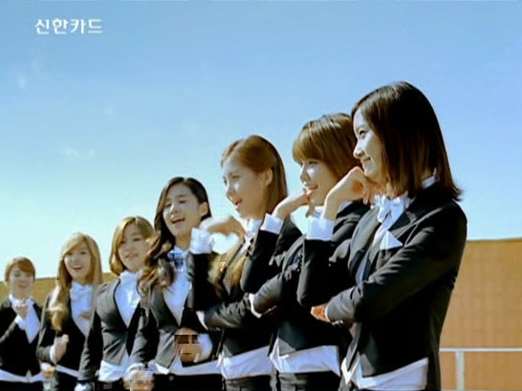 (Source, above and below: Paranzui)
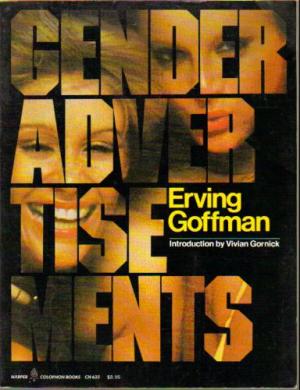 Granted, given that Korea has one of the lowest women’s workforce participation rates in the OECD, and that Korea has a surprisingly low “Gender Empowerment Measure” relative to its level of development, which is based on “factors such as the number of female legislators, the percentage of women in senior official and managerial positions, the percentage of women in professional and technical positions, and the income differential between men and women,” then it might seem unfair to single out the financial sector for criticism in this regard. But then if I’d wanted to highlight the lack of women there in particular, then I couldn’t have selected a better commercial to illustrate why that might be so.
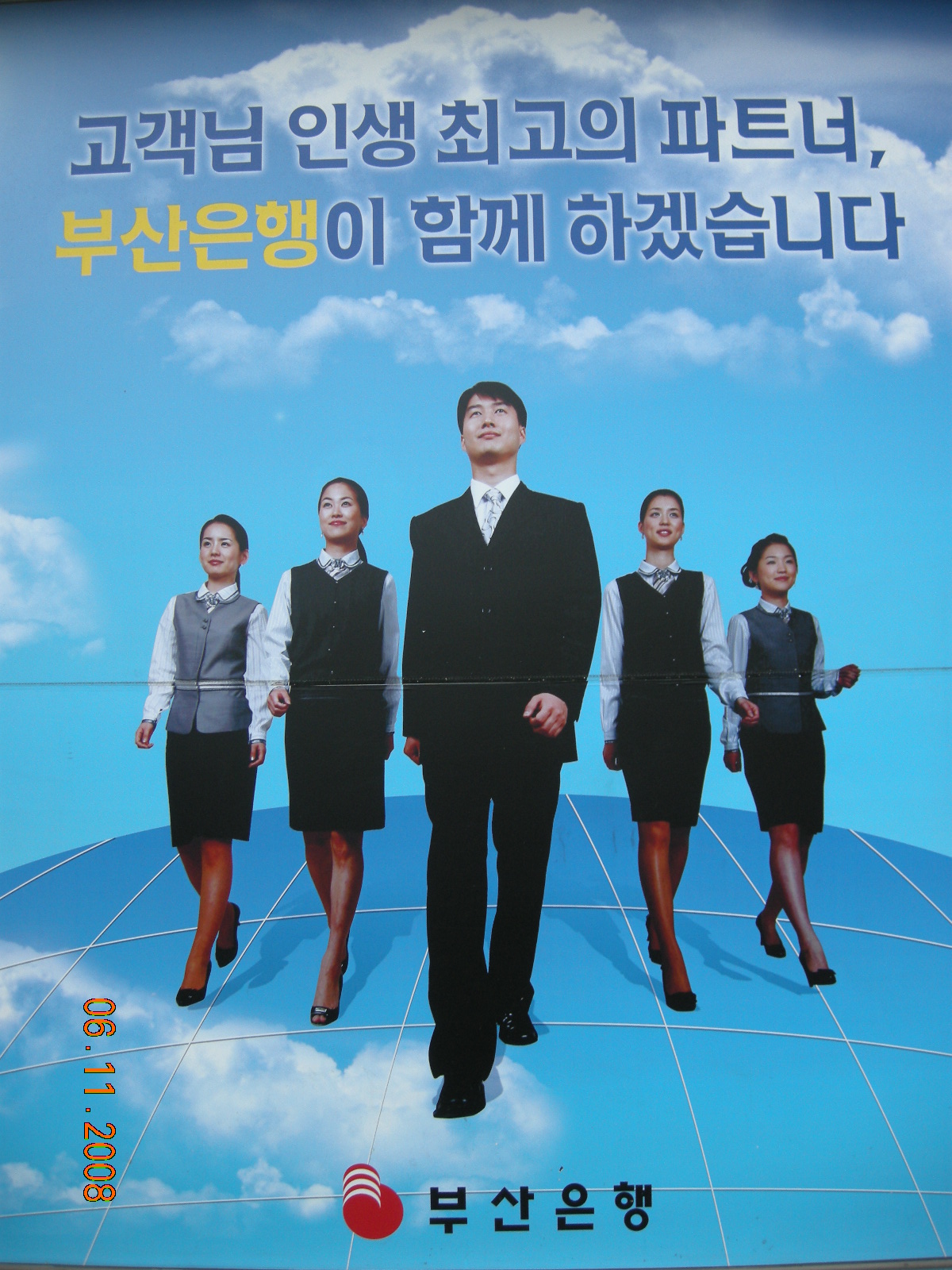 Technically, the man is a customer, the women clerks (the text reads: “The customer’s best life partner, with Busan bank”). It is very telling though, how difficult it is to imagine an ad with the sexes reversed—let alone find an example in real life.

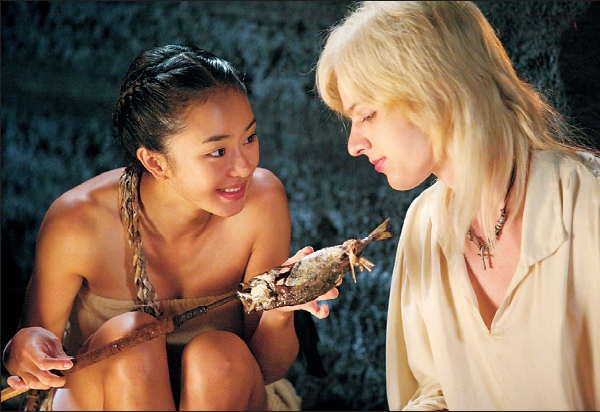


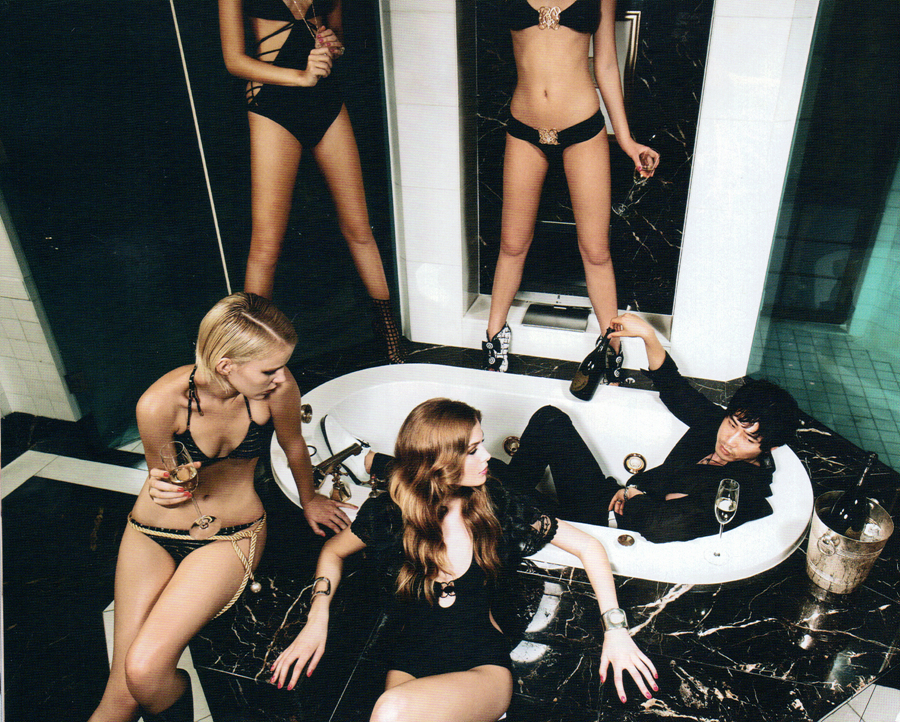
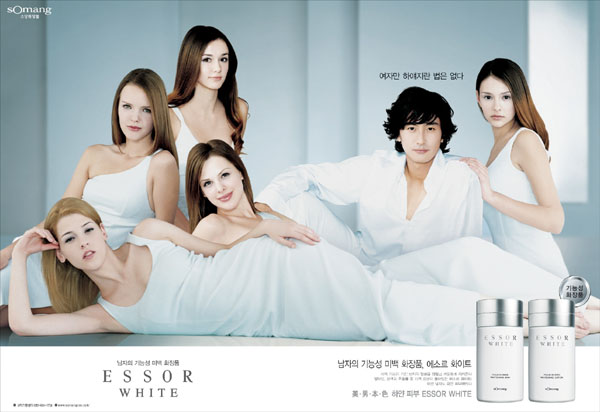



 argument that at the very least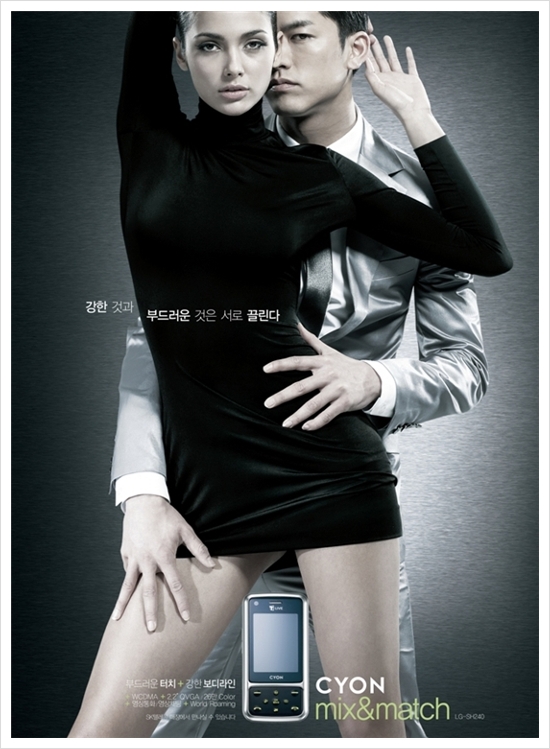

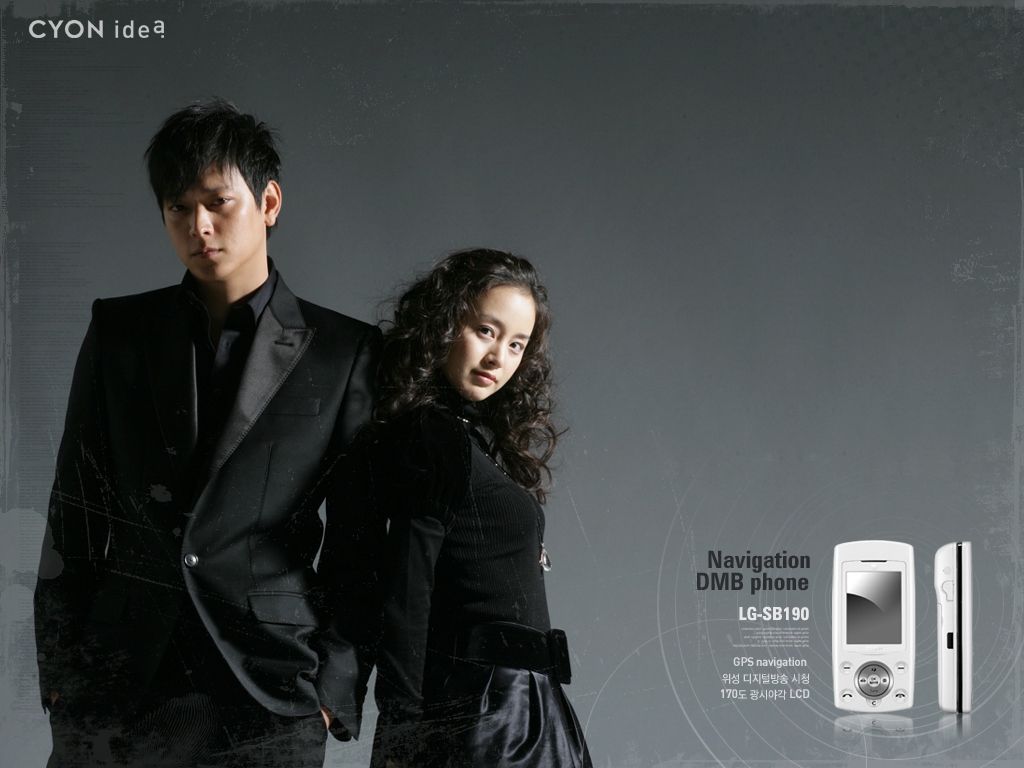
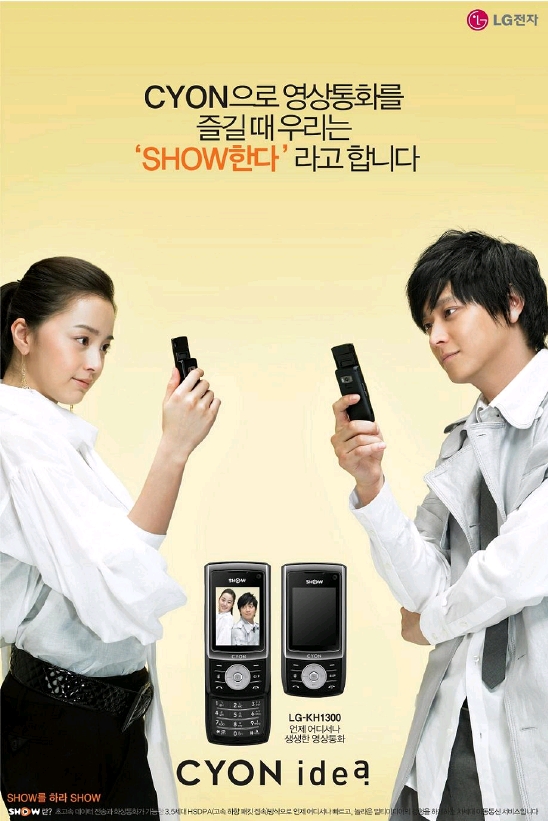
 When
When 
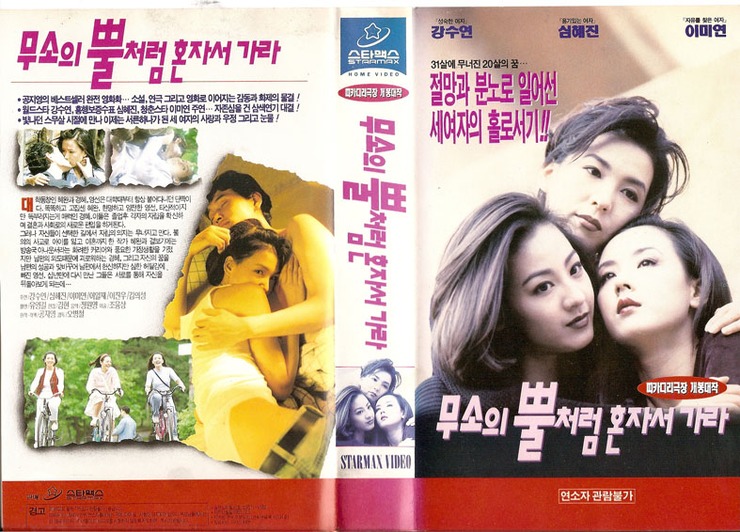



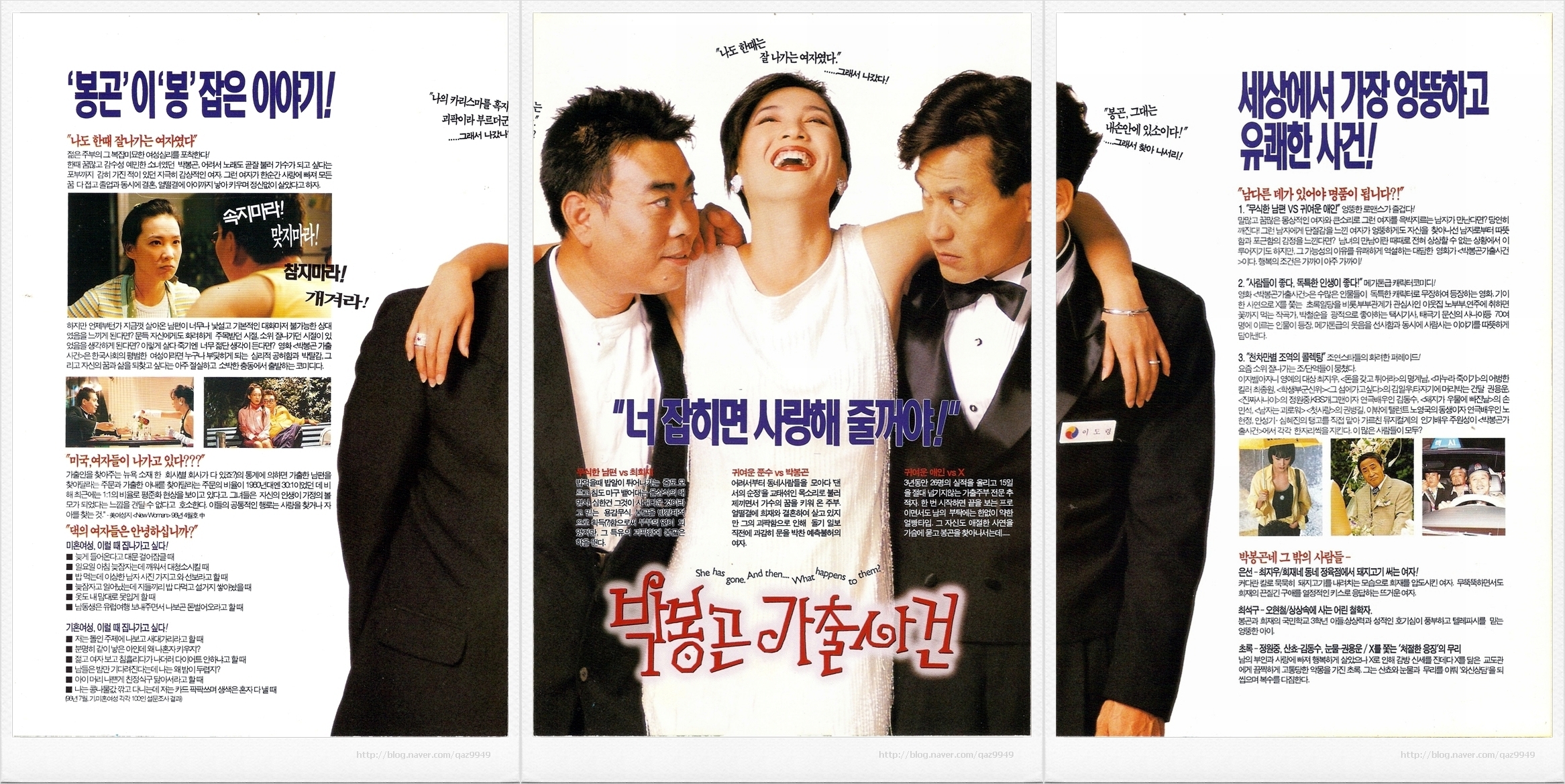

 In January, President Lee Myung-bak was quoted as saying that “the most urgent issue on our hands is to create jobs for the heads of households” (see #2




 Finally, enter the 2002 World Cup, which no, I’m definitely not kidding about: while people may not have noticed this particular aspect at the time, anyone that was actually here would readily agree that it was an amazing time to be young and in Korea, and was just as revolutionary in terms of expressions of women’s sexuality as I described. In all seriousness, consider what life was like for unmarried women literally just a week prior to the start of the games: they would often be criticized walking down the street for merely wearing short sleeves – remember that 19 out of 20 women would wear t-shirts over their bikinis at the beaches then – and it was quite taboo to discuss sexual feelings and preferred men’s bodies, even to close friends. Meanwhile, soccer was very much seen as a men’s game – who were originally rather taken aback by women’s sudden interest – and members of the national team(!) made less per year than I made then as an English teacher (source, right: unknown).

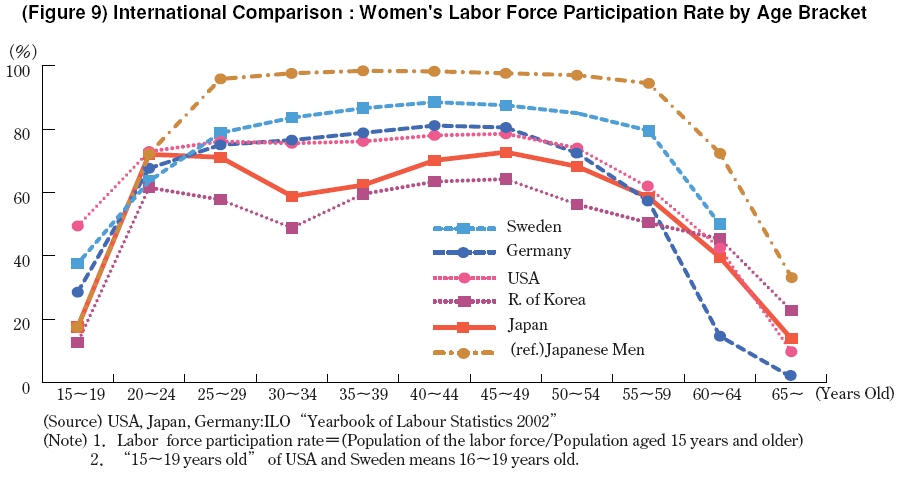
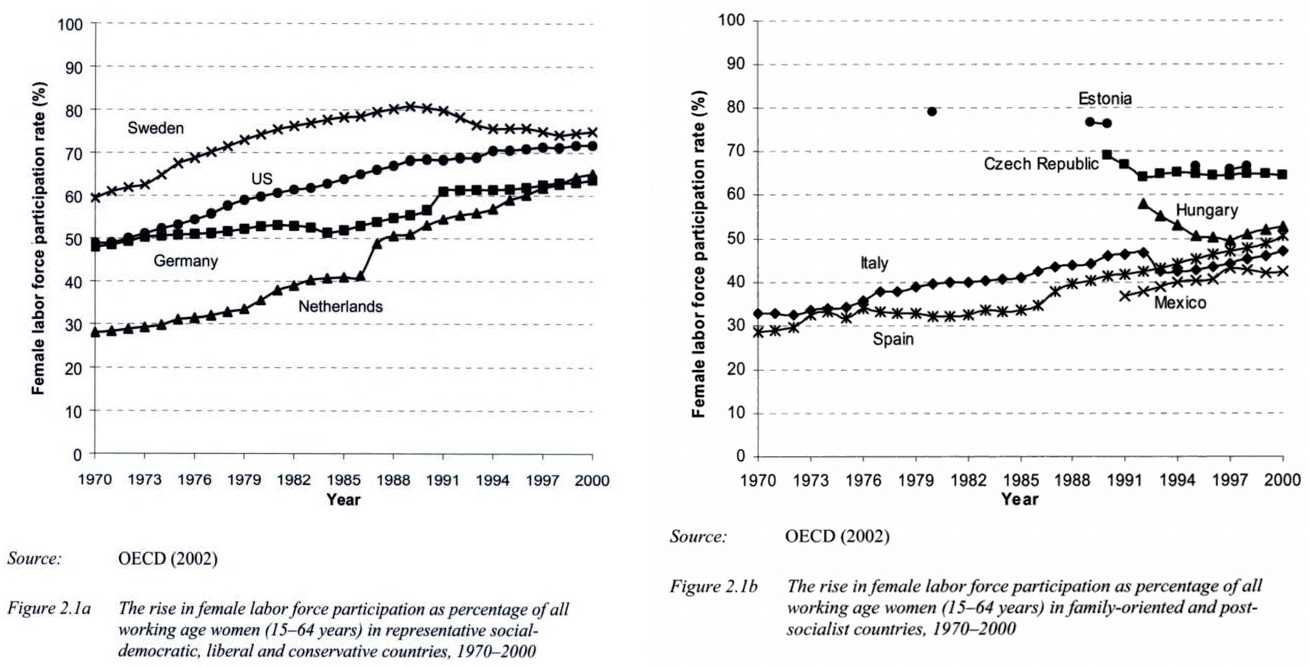

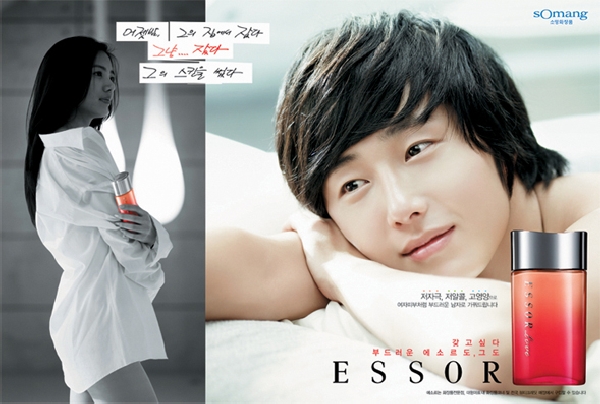 (
(


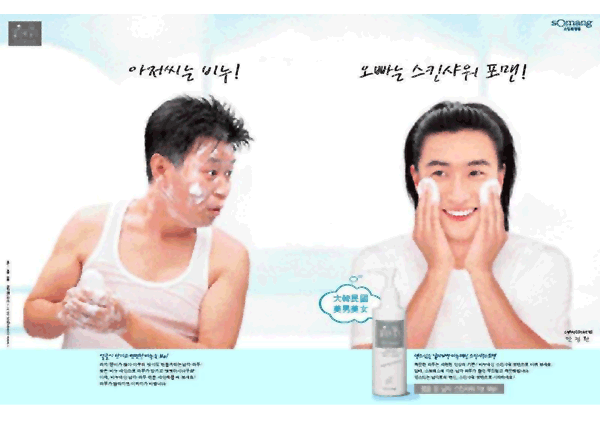


 (Source:

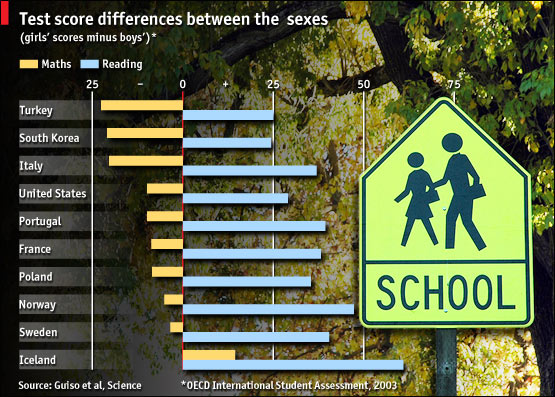 (Source:
 (Source:
  The Grand Narrative
