Basically, because its Korean readers wanted and expected foreign cover models. No matter how many commenters may try to shoehorn narratives of racism and cultural imperialism into those preferences.*
Meanwhile, related to the second half, Carol Dussere, a commenter in the Every Expat in KoreaFacebook group noted:
When I first moved to Korea in 1988, all of the models used in sexy ads on the subway were non-Asians. It definitely carried the message to Korean men that non-Asian women were readily available.
This confused me, as I read years ago (and have often repeated since) that restrictions against foreign models weren’t lifted until as late as 1994. Checking, I found the following on page 103 of “Neo-Confucian Body Techniques: Women’s Bodies in Korea’s Consumer Society” by Taeyon Kim, Body & Society, June 2003 vol. 9 no. 2 97-113:
In June 1994, changes in laws allowed the Korean advertising industry to use foreign models and celebrities, which led quickly to a sharp increase in the use of foreign models to sell domestic wares.
This is repeated on page 7 of “Perpetuation of Female Beauty Stereotypes through Korean Mass Media: Emancipation or Objectification of Women?” by Jee, Min-Joo. and Oh, Byoung-il. in a paper presented to the annual meeting of the American Sociological Association in 2006 (although both are based on Byun, Eun-mi {1997}, ‘Foreign Supermodels Emerge as Fashion Stars on TV Commercials’, in Korea Newsreview Vol. 26{5}: p. 32-3). However, it didn’t necessarily mean that Carol was wrong, and indeed I also found the following, tantalizing line in “Gender Role Portrayals in American and Korean Advertisements” by Roxanne Hovland et. al., in Sex Roles, December 2005, Volume 53, Issue 11-12, pp 887-899:
The use of foreign models in advertisements has been popular since the Korean government lifted restrictions on the use of foreign models in 1989.
And only then did I really notice the continuation of the “Neo-Confucian Body Techniques” article, which resolves everything quite nicely (right: French actress Sophie Marceau advertising LG cosmetics in 1989; source):
No longer were only foreign products sold to Koreans with a foreign face, now even domestic products were marketed to Koreans by the likes of Cindy Crawford, Meg Ryan, and Claudia Schiffer.
When I have time, I’ll try to find some Korean language sources to confirm, and to pinpoint the exact year of the law changes (but even if they do confirm it was 1989 rather than 1988, Carol can certainly be forgiven for her ever so slight inaccuracy 25 years later!). Until then, I’d appreciate any extra information readers can provide, and/or any comments on my article.
*Of course, racism and cultural imperialism are indeed factors to consider here. I’m just a little tired of patronizing, contradictory assumptions of passivity and unwillingness on the part of (especially female) Korean consumers if they enjoy foreign cultural products (are they *forced* to buy them somehow?), and/or that they’re somehow being duped by Caucasian men on Madison Avenue when they do so.
“This bizarre prize giveway ad, with a Hyundai car and hidden-treasure puzzle, circa 1985, features an ‘anti-communism’ prize – first prize, Hyundai car; second prize, set of steak knives; third prize is your fired….oops wrong contest – the first prize is a “anti-communist” Hyundai vehicle and the second prize is a “unification” prize….down the list there’s a Mount Paekdu prize and Mt. Kumgang prize. A really weird one.”
This reminded me of the “Consumption is Virtuous” (소비가 미덕이다) slogan I once read in a Korean newspaper from the late-1970s, back when economic development was explicitly conflated with national security. Previously, I’ve overemphasized how much that sentiment still applies today, not realizing that government and the media actually began to criticize (alleged) overconsumption by the 1990s, in what were really just thinly disguised attacks on women’s new economic rights and freedoms (and important precursors to the “beanpaste girl” {된장녀} stereotypes of the 2000s). This ad though, demonstrates how things were indeed very different just a few years earlier.
Or does it? Moreska, whose Flickr feed is a treasure-trove of retroKoreana, points out how strange it is — so it may have been the exception rather than the rule, even before Korea democratized in 1987. Can any Korean history buffs help out?
(For more posts in the Korean Sociological Image series, see here)
Thanks very much to the 10 Magazine Book Club for being such a great — and forgiving! — audience last weekend. As promised,* here are the books I mentioned in it, as well as some of the websites.
First, there was An Intimate Affair: Women, Lingerie, and Sexuality by Jill Fields (2007), then Pin-up Grrrls: Feminism, Sexuality, Popular Culture by Maria Buszek (2006, which I talk about in much greater depth in Parts 3 and 4 respectively of my Revealing the Korean Body Politic series (which, in turn, is an extended version of my presentation). Although at 375 and 444 pages each, they’re not for the faint-hearted, both are still very accessible, and definitely reward the effort put into studying them.
Of the two, Pin-up Grrrls was much the more eye-opening for me personally (note the ensuing tagline of my blog!), giving a unique perspective and context on US feminism in the 20th Century that deserves a lot more attention. For a taste, see here for a short essay cum summary of the book, and here, here, here, and here for my own Who are the Korean Pin-up Grrrls? series it inspired.
Next, I highly recommended “Feminization of the 2002 World Cup and Women’s Fandom” by Hyun-Mee Kim in Feminist Cultural Politics in Korea, ed. by Jung-Hwa Oh, 2005, pp. 228-243, for an understanding of the radical role the 2002 World Cup played in changing prevailing Korean attitudes to objectification and women’s sexual subjectivity. In hindsight though, that and most of the chapters in the book are a little dated now, so a better choice is probably Transnational Sport: Gender, Media, and Global Korea by Rachael Miyung Joo (2012) instead. I haven’t read it myself yet, but you can see here and here for reviews.
In the presentation, I used Kim’s chapter to argue that the intensely objectifying, body-centric nature of the current Korean Wave represented a confluence of commercial and governmental interests in exploiting women’s bodies, a precedent for which was set by the — for want a better way to describe it — patriarchal accommodation with and co-option of that feminization of the 2002 World Cup. This in turn was preceded by a long history of girl-groups entertaining foreign and then Korean troops, and at one point the exhortation by the Korean government for women to prostitute themselves to the USFK for the sake of acquiring then much-needed foreign exchange. For more on the former see here, and on the latter see Sex Among Allies: Military Prositution in U.S.-Korea Relations by Katherine Moon (1997).
Unfortunately, I don’t have Moon’s book, but I do have — and was blown away by — Militarized Modernity and Gendered Citizenship in South Korea by Seungsook Moon (2005; yes, a different Moon!), which provides a lot of context. In particular, it’s essential to know about the military regimes’ population control policies, which were every bit as draconian as China’s one-child policy, in order to understand modern Koreans’ attitudes to abortion and contraception. And, once you do read it, you realize that the language I used above was by no means simply hyperbole for the sake of making a point!
If you’re more interested in the surge in male objectification in the last decade though, see Korean Masculinities and Transnational Consumption by Sun Jung (2010), or for an online essay see Stephen Epstein’s and (again) Rachael Miyung Joo’s “Multiple Exposures: Korean Bodies and the Transnational Imagination” in The Asia-Pacific Journal last year. The latter also covers — no pun intended! — entertainment companies’ strategic exposure of girl-group members’ legs, and I discuss the role of that in the rise of ‘ajosshi fandom’ and ‘uncle fandom’ here.
Before moving on to women and girls again though, as one does, note that Sun Jung’s book is also essential for anyone further interested in the (very related) rise of kkotminam (꽃미남), which I did a lot of work on a few years ago here and here.
(Update: As mentioned in the presentation, also see Gusts of Popular Feelinghere for more on the perceived spate of sex crimes against children that led the public to seriously question previously uncritical media narratives of ajosshi fandom.)
The next two books I mentioned were Measured Excess: Status, Gender, and Consumer Nationalism in South Korea by Laura Nelson (2000), then The Home Front & Beyond: American Women in the 1940s by Susan Hartmann (1983). The first is essential reading for anyone wanting to know more about the 1990s in Korea, and in particular the frequent government and media campaigns against over-consumption (in practice aimed almost exclusively at women, these were important precursors to the “beanpaste girl” stereotypes of the 2000s). Meanwhile, unfortunately Susan Hartmann’s book is difficult to get a hold of, but if you do you’ll find it’s a wonderful, very comprehensive introduction to the decade (I’d love to get those on the 1920s, ’30s, and ’50s also, albeit all by different authors). And, as I discuss here (and will expand upon in a later post), the minefield of contradictions presented to women as they were encouraged to remain “feminine” despite entering practical, “masculine” wartime industries in large numbers, yet also being criticized for being so wasteful, frivolous, and unpatriotic for beautifying themselves, is eerily reminiscent of the double-standards and backlash arising from women’s rapid entrance into the part-time workforce in the last decade in Korea also.
Finally, see the end of this post on male objectification for those scans of Stuart and Elizabeth Ewen’s prologue to their Channels of Desire: Mass Images and the Shaping of American Consciousness (1992), which should convince even the most die-hard skeptic of the genuine influence that advertising has on us, no matter how sophisticated and aware we like to all think we are.
If anyone would like more information and/or to discuss the books and websites mentioned above, and/or some specific part of the presentation, then please just let me know in the comments. Of course, they’re just a handful of what would be required for such a reading list really (4 of the 10 mentioned don’t even have anything to do with Korea!), so I’d be very happy — and grateful, frankly — if readers would rather recommend, seek information about, and/or discuss any Korea-related book instead really. After all, I’m sure it would useful to get new perspectives on those we’ve already read, and/or to get recommendations for good ones we haven’t! :)
*(Sorry for the long delay with this post, but unfortunately I have a very good — and somewhat graphic — excuse!)
★ YOU MUST RSVP via Email: womens.global.solidarity@gmail.com ★
In Korea, Japan and The Philippines, there are many women with diverse jobs and her stories. Among them, this film focuses on women who are called housewives, sex workers, dispatched workers, migrant workers, comfort women, homeless and so on. The camera tracks them as they go about their everyday lives. These women have never met one another, and their lives look quite different from one another. However, their lives are connected across national borders by the one thing they have in common. That’s their bodies and labor. How can such different forms of labor be linked to the women’s bodies in such a similar way? As we search for answers to this question, we are forced to confront another question: ‘the meaning of labor’ as an ideology that is reproduced in society.
* Entrance Fee: by donation at the door
* Languages: Korean, Japanese, Tagalog and English with English subtitles
The screening will be held at the Colombian Mission Center.
Please note the center is very close to exit 4, and not on the University’s campus.
To get to the center:
1) Take line 4 to the Sungshin Women’s University Entrance 성신여자대학교입구) stop.
2) Go out exit 4 and a building with a traditional Korean roof (hanok) will be in front of you.
3) Go into the building and up to the second floor.
★ Due to a limited number of seats, you must RSVP to womens.global.solidarity@gmail.com and you will receive confirmation when your seat has been reserved.
If recent BBC coverage is anything to go by, marriage in South Korea is like a business. It’s also becoming a bit of an explosive topic as social mobility slows down and the traditional image of the male breadwinner becomes eroded by the increasing participation of females in the labour market. Some of the most widely publicised scandals and controversies on the Korean internet seem to have been, in some way or another, due to this intensifying gender friction.
My apologies for singling out Justin at KoreaBANG, whose post is still excellent overall. And as you’ll soon see, I often make mistakes too.
But that comment I’ve highlighted? Frankly, it just infuriated me. Because even though it’s completely wrong, I seem to hear it all the time these days.
In reality, the Korean female workforce participation rate has stagnated at one of the lowest rates in the OECD ever since 1997-98, when women were overwhelmingly targeted for layoffs during the Asian Financial Crisis. Back then, the logic was that wives would be provided for by their husbands, and 20-something daughters by their fathers. And 10 years later, in the latest crisis, to a large extent this logic was reapplied, although on this occasion there was a clearer economic – not just patriarchal – logic in that women formed the bulk of irregular workers (see here, here, and here for much more information).
Or so I’ve often written. But naturally, it was difficult to find definitive statistics on that when I first reported on it three years ago. At that time, my most up to date source was my copy of Working Korea 2007, published by the Korea Labor & Society Institute. Here is my scan of page 19, which has a graph of the male and female workforce participation rate of 1970-2006:
In hindsight, although it does show a big drop in the female rate in 1997-98, it shows an equally large (even slightly larger?) drop in the male rate too. With my apologies, I’m very surprised I didn’t notice that earlier, and, although it does contradict most of the literature I’ve read about the Asian Financial Crisis, and is just from one source too, it still definitely bears further investigation.
That aside, a year later I found a source going up to 2008 (it shows a fall of 50.3% to 50.0% in 2006-2008; see below also). And today, spurred by Justin’s comment, I tried looking again, and found the following at the National Statistics Office’s website:
The blue bars represent the economically active female population, in thousands (i.e., the first figure is 10.75 million), the pink line the female workforce participation rate. Although the choice of right scale gives the false visual impression that the rate has changed a great deal, as you can see from the numbers it has remained within a narrow band of 49% to 50.5%, last year’s rate being just lower than that of 2002. Also, clearly a 0.9% drop between 2008 and 2009 isn’t quite as big as I’ve been making out, and again is something that bears further exploration.
But still, one thing is clear: the number — well, percentage — of Korean women working has little changed in the last 15 years, and remains very very low by the standards of other developed countries. So it can not be the cause of increasing gender friction.
The perception that Korean women are making significant inroads into the Korean economy though? That’s entirely possible, and indeed I highlyrecommendKoreaBANG for much more on that (indeed, especially the remainder of Justin’s post), as well as manypostsby Gord Sellar too (source, right).
(For more posts in the Korean Sociological Image series, see here)
In the commercial above, a conscripted soldier is happy that his girlfriend is coming to visit him. What really gets him and his buddies running though, in a play on the faster downloading speeds of KT’s 4G LTE network, is the arrival of a girl-group on his army base.
For those many more conscripts not lucky enough to have pretty female celebrities come to their own base though, the blog Sorry, I was drunk provides an interesting, *very frank* insider account of what they thought of girl-groups, as well as prostitution, cheating on partners, Caucasian girlfriends, and marriage. Here’s what the author wrote about the former:
…I knew Korean guys, especially sexually deprived conscripts, liked female celebrities (duh, right?), but I didn’t know how bad that affection was. I learned that Korean conscripts in general are obsessed with K-Pop girl groups, in particular Girls’ Generation. By obsessed, I mean really obsessed. A good example of this is rapper Psy’s description of his military service.
In this show, Psy says he was made to stand guard while watching the TV so he could alert senior conscripts that Girls’ Generation was on it. While it wasn’t that extreme in my unit, it was quite normal to see guys flock to the TV whenever GG or other good looking female celebrities were on air. Every Friday and Saturday, when the major networks have those “music” shows parading group after group, entire units would stay glued to the TV. Guys would watch the same music video or performance repeatedly so they could oggle at the girls. Their bare legs exposed, sexy dancing, and terrible music (not a secret among conscripts either), it was pretty obvious there was only one reason for these “musicians” to exist. These girls are glorified strippers, covered in the thin veil of “music” so it doesn’t seem as creepy and sad as going to a strip club. For conscripts, it’s usually the only form of sexual gratification they’re allowed while on base.
“…[I]n the worldwide retro trend, where is the Korean culture located? Most of the cases, instead of original Korean culture, foreign vintage culture and goods are imported. It is because of the ’70s and ’80s fever for the Westernization then it is hard to find original Korean retro. So you find that only unidentified mixture of retro cultures have mushroomed in Korea without its own color.”
So lamented the Design Journal (디자인저널) back in November 2008. But as it turns out, a veritable treasure-trove of Korean retro has long been available in the Museum of Modern History of Korea (한국 근현대사 박물관) in Paju, just 30km north of Seoul. See here, here, here, and here for some high-definition photos of the exhibits, and here (a PDF) and here for information about the museum in English.
Combined with the Heyri Artist’s Village, and/or the Paju Book City, then you have the makings of a perfect day trip from Seoul, and a very educational and cultured one at that. Any takers?^^
As you may or may not know, the House of Sharing International Outreach Team has recently regrouped under the name, Women’s Global Solidarty Action Network. Our new expanded goals include focusing on issues of sexual slavery, trafficking women and the “comfort women” issue. This Saturday (June 9th), we will be hosting a workshop under the title “U.S. Military Camptown Prostitution in Korea: 1945-Present”. The workshop will be given by Professor Nah Young Lee.
To get to the center, take line 4 to the Sungshin Women’s University Entrance (성신여자대학교입구) stop. Go out exit 4 and a building with a traditional Korean roof (hanok) will be in front of you. Go into the building and up to the second floor. Please note the center is very close to exit 4, and not on the University’s campus.
For more information, email womens.global.solidarity@gmail.com, visit the Facebook event page, or contact Shannon at 010-4534-1553.
The rationale, according to the official that thought of it, was that “the revealing outfits worn by the performers and their provocative dances could have a considerable impact on North Korean soldiers.”
Alas, nothing came of the idea. But the irony was palpable: in the 1970s, such revealing outfits were deemed subversive by the military government, with ruler-bearing policemen stopping women on the street to measure the length of their skirts (they would also cut men’s hair if it was too long).
This difference is humorously illustrated in Samsung’s 2007 commercial for the Anycall Miniskirt (애니콜 미니스커트), with Jun Ji-hyun (전지현):
It’s disappointing that it was set in the UK though, which never had such ‘fashion-police.’ Why not pick from the wealth of Korean video and imagery from that period? (Just look under “미니스커트 다속” for instance, literally “miniskirt control/supervision/clampdown.”)
My first thought was because the ad is already doing some subtle fashion-policing, through informing the Korean public of the new de facto rules. That would be much less subtle with authentic Korean examples though, and the ensuing social message, however refreshing, would be at odds with the cheerful tone of this one.
On the other hand, we can make allowances for creative license; perhaps the advertisers just wanted a swinging ’60s vibe. Also, it’s not like Koreans themselves aren’t afraid to poke fun at their old, ridiculous laws on miniskirt length (not least because they weren’t removed from the books until as recently as 2006), nor critique modern fashion and body-image ideals.
On the left, the black text reads “If it’s only the shape/appearance of LTE, then it isn’t available everywhere,” while on the right the pink reads “If it’s really LTE, then it’s available in every city.” The headline in the middle reads “But it’s different,” and finally the text at the bottom reads “The one and only LTE, in touch in every city nationwide. Automatic roaming in 220 countries worldwide.”
Personally, I think the execution is flawed—if the woman on the left is supposed to only have the shape and/or appearance of the real LTE (confusedly, “모양” means both), then shouldn’t both women actually look and be clothed exactly the same, with some indication that they’re different for some other reason (say, by having the women on the left scowling)?
Either way, the advertisement’s other message is that the woman on the right, with high-heels, a V-line face, impossibly-long (and uneven!) photoshopped legs, and a dress that only just covers her underwear, is quite literally the modern standard that all agasshis (young women) should adhere to. Jun Ji-hyun’s bobbies would be proud.
(For more posts in the “Korean Sociological Image” series, see here)
Unfortunately though, I’ve struggled for years to find Koreans that shared these interests. But that doesn’t necessarily mean that they’re not out there. More likely, I’ve just been looking in the wrong places.
I would never have guessed, for instance, that some of the first critical commentary on Korean ads I would find online would be in the form of studentessays (and in English at that!), or that the first decent Korean discussion of excessive photoshopping in ads—next week’s translation—would be on a blog rather than in expensive advertising magazines. And somehow, inexplicably, it never occurred to me to simply type in “S-line” (S라인) and “history” (역사) into Korean search engines either.
Which is not to say that much came up at all actually. But it did lead me to Lee Yeong-ah’s (이영아, right; source) Making Pretty Women (예쁜 여자 만들기), published last year, en route to me as I type this. Based on the Busan Ilbo review of it I’ve translated below, it appears that while the S-line term itself wasn’t used back in the 1920s and ’30s, those were certainly formative years for Korean consumerism, in which the practice of encouraging and/or pandering to certain looks, styles of dress, and body shapes of especially female consumers was first established.
Many of these centered on what were called “New Women” (shin-yoseong; 신여성), very similar to flappers, who not only took advantage of scandalous foreign fashions and non-traditional lifestyles to assert their sexuality and women’s rights, but would also later face a backlash that would be eerily similar to that faced by “Beanpaste girls” (dwenjangnyeo; 된장녀) in the 2000s, and in similarly strained economic circumstances. Indeed, Yewon Lee of Yonsei Graduate School wrote about precisely that in 2007 (opens a PDF; see the end of the post for a full list of sources), and Gord Sellar and Gusts of Popular Feeling have also madethesameconnection.
Unfortunately however, the reviewer doesn’t mention this self-agency of New Women. Rather, he depicts them only as passive victims of new trends, who had no choice but to accommodate the new demands of the male gaze, manifest in the burgeoning media industry. Also, he ends the review with the curious assertions that, in light of this long history, today’s women shouldn’t be worried about likewise being obsessed with beauty, and that it is sufficient simply to be aware of his history in order to lead a happy life.
While such platitudes are common in the Korean media, I was disappointed to see them in what is otherwise one of the better pieces of Korean writing I’ve read in a while (again, my fault for looking in the wrong places!). And I hope that Lee Yeong-ah doesn’t share them.
Korean women’s history of being obsessed with beauty
‘가슴을 앞으로 그냥 내밀며, 양손을 위로 쭉 뻗었다가, 손끝이 발가락에 닿을 때, 양손을 아래로 뻗으며, 전신을 굽힌다. 이 운동을 계속하면 가슴의 모양이 곱게 발달되고 미끈한 각선미를 갖게 된다.’
“Stick your chest out, stretch both arms up high, bend over and curve your whole body, touching your toes with your fingertips. If you keep doing this exercise, your breasts will beautifully develop and you’ll get a sleek, slender bodyline.”
몸매를 가꾸기 위한 기본적인 스트레칭 동작에 대한 설명이다. 요즘 발행되는 여성잡지에 실린 내용일까. 천만에. 이 미용체조법은 1935년 10월 ‘삼천리’란 잡지에 실렸다. 여성들이 1930년대에 아름다운 몸을 가꾸기 위해 이런 동작들이 필요하다는 것을 알고, 실천했음을 보여주는 사례다. 오늘날 미인들의 필수요건 중 하나인 ‘S라인’이 이미 1930년대부터 각광받기 시작했다는 말이다.
This is an explanation of a basic stretch used for shaping your body. But it’s not from a magazine published today. Rather, it’s from the October 1935 edition of Samcheonri. Women in the 1930s all knew that they had to do this sort of thing in order to get a beautiful body, and an example of them doing it in practice too. These days, beautiful women know they need to get an ‘S-line’, but it was in the 1930s that this sort of thing started becoming popular.
무엇이 이런 변화를 불러왔을까? 당시 조선에 볼거리를 즐기는 시각 중심 문화가 태동한 것이 결정적 이유다. 당시 인쇄매체의 사진과 삽화, 연극과 영화 속 여배우들, 길거리를 활보하는 신여성들을 통해 ‘여성의 몸’은 중요한 문화적 담론으로 부상했다. 여성들이 시각 중심 문화 속 남성들의 시선에 노출되면서부터 몸에 대한 인식의 변화가 시작됐던 것이다. 1931년 삼천리는 미인경연 대회를 개최했고, 미인대회는 갈수록 여성들의 몸을 노골적으로 드러내는데 치중했다. 당시 한 일간지는 여성의 아름다운 기준이 얼굴뿐만 아니라 풍만한 가슴, 잘록한 허리, 볼륨 있는 엉덩이, 미끈한 각선미를 고루 갖춰야 한다고 전했다. 바로 S라인이었다.
What brought about this change? In the final analysis, it was the quickening of Korea’s interest in and enjoyment of visual culture. At the time, through pictures and illustrations in print media, through actresses in plays and movies, and through “new women” just walking on the streets, women’s bodies became an important topic of cultural discourse. Because [this meant] they were increasingly exposed to the male gaze, women started changing Korean body and clothing culture. In 1931, the Samcheomri began holding beauty pageants, which stressed ever more suggestive clothing as time went by. A daily newspaper of the time would proclaim that beauty standards were no longer just focused on the face, but now covered the whole body, requiring voluptuous breasts, an hourglass waistline, voluminous buttocks, and a slender figure. This was the S-line.
1920~30년대 예술지상주의, 유미주의적 경향이 문화계에 확산된 것도 원인이다. 당시 예술가, 문학가, 사회적 유명 인사들은 건강한 몸보다 예쁜 몸에 더 중점을 뒀다. 그들의 ‘미인관’을 단적으로 보여주는 사례가 소설가 현진건의 관점이다. 그는 “키가 조금 큰 듯하고 목선이 긴 여자가 좋다. 제아무리 얼굴이 예쁘장하고 몸맵시가 어울려도 키가 땅에 기는 듯하고 목덜미가 달라붙은 여자는 보기만 해도 화증이 난다”고 했다. 그는 몸매 좋은 여성을 노골적으로 선호하는 데서 그치지 않고 몸매 나쁜 여성에게 화를 내고 있다. 오늘날 여성들이 보면 ‘정말 기가 막히고 코가 막힐’ 멘트다.
One reason for this was that aesthetic trends and the notion of art for art’s sake began to influence culture too. Artists, cultural scholars, and famous society-people all stressed that a beautiful body was more important than a healthy body [James — soundfamiliar?]. One example is the novelist Hyeon Jin-geon, who bluntly wrote that “I like women that are tall with long necks. Even if their faces are pretty, and they have good bodies, if they are so short as to be crawling on the floor then I hate even looking at them”, something which would be considered crazy if written today.
위생을 이유로 여성들의 의복 변화가 권장됐다는 사실도 몸매 중요성 증가에 일조했다. 20세기 초 근대적 지식인들은 조선시대 여성의 옷이 위생에 해롭다며 개선해야 한다고 역설했다. 긴 저고리는 길거리의 더러운 오물을 쓸고 다녀 호흡기 질환을 낳고, 가슴을 동여맨 가슴띠는 흉부 압박을 심화시킨다고 했다. 이에 따라 여성들의 옷이 점차 몸매를 드러내는 쪽으로 바뀌었다. 미니스커트와 브래지어가 등장했다. 옷이 변하자 여성들의 몸에 대한 인식도 달라졌다.
Another reason for this new interest in bodylines was that women were encouraged to change their traditional outer garments for the sake of hygiene. In the early 20th Century, public-health advocates stressed that the Jogori, a traditional coat, was so long that it kept dragging in the dirt of the streets and caused respiratory ailments [James — by raising dust around the home?], and that binding women’s breasts put a lot of pressure on their thoraxes. Accordingly, fashions gradually changed. Miniskirts and bras appeared. And notions and practices about women’s bodies also changed.
여성들은 이런 사회적 분위기 속에서 자신들의 몸을 어떻게 바라보고 관리했을까. 요즘의 여성들이 그러하듯, 그들도 자신의 몸을 대상으로 전환해 바라봐야 했다. 자기 자신을 남성의 시선으로 응시하는 법을 배우고 그것이 정답이라고 세뇌됐던 것이다. 여성들은 지식인, 예술가, 직업부인이 되기 위해 미인이 돼야 했다. 그것은 생존의 문제였다. 그렇게 여성들은 ‘S라인’이 미인이라고 말하는 남성들의 시선에 맞추기 위해 자신의 몸을 가꿔야 했다.
What did women think about this new social atmosphere, and how did they cope? Well, just like women now, they had to objectify their own bodies. It was drilled into them that they had to look at themselves how men would look at them. And in order to be respected [James — lit. a person of knowledge], or to be an artists, or to have a job, they had to become beautiful. It was a matter of survival. They had to adapt to and dress-up themselves to fit this notion of a beautiful woman being one that had an S-line.
예쁜 여자 되기에 성공했던 여성들의 운명은 어떠했을까. 그들은 세련된 미적 감각, 유행을 선도하는 패션, 화려한 외모로 인해 뭇 남성들에게 관심과 욕망의 대상이 됐다. 동시에 그녀들의 진보적인 사유와 자유로운 행보는 멸시와 질타의 대상이기도 했다. 1920년대 대표적 신여성이었던 윤심덕, 나혜석, 김원주 등은 그 누구도 행복한 말년을 보내지 못했다.
What became of the women who were successful in making such a transformation? They became the object of men’s desires for their sophistication, their sense of aestheticism, being leaders in fashion, and for their magnificent bodies. However, they were also the object of contempt and scorn for their progressive and free thinking. Of representative new women of the 1920s, such as Yun Shim-deok, Na Hye-seok, and Kim Won-ju and so on, none were happy in their old age.
‘예쁜 여자 만들기’는 한국 여성들의 미인 강박증 형성 역사를 보여준다. 예쁜 여자가 되기를 강요하고 압박하는 힘이 근대 이후 한국사회에 생겨난 것이기에 오늘날 여성들이 자책감을 가질 필요는 없다는 것이다. 근대의 몸, 여성 등에 관한 담론을 활발하게 제기해왔던 저자는 몸에 대한 모든 관심을 끊고 외양보다 내면의 아름다움을 추구하라는 식의 도덕적 결론을 강요하진 않는다.
Making Pretty Women shows us the history of women’s obsession with being beautiful. As the pressures women face in doing so have been around since the dawn of modern Korea, today’s women should not feel guilty about it. Moreover, in actively raising these discourses about women’s bodies, the writer does not moralize and argue that the practice should be stopped, or that inner beauty is more important than outward appearances.
대신 왜 우리가 몸에 대해 그렇게 지나치게 집착하는지를 제대로 알고, 그러한 앎을 통해 한층 행복한 삶을 사는 방법을 스스로 선택하라고 말한다. 여성들이 ‘앎’을 통해 위로받는다는 것으로도 족하다고 한다. 이영아 지음/푸른역사/343쪽/1만3천900원. 김상훈 기자 neato@busan.com
Rather, the author teaches us about today’s obsession with body image. Through this knowledge,women can choose to live happily, and this is sufficient (review by Kim Sang-hoon).
…American military officers helped make abortion the population control tool of choice in those Asian countries where they wielded influence, first in Japan in the late 1940s and 1950s, then South Korea in the 1960s. USAID, America’s aid agency, provided Jeeps for mobile clinics which roamed South Korea performing abortions. At one point, a quarter of the country’s health budget was going on population control and the number of abortions hit an all-time record in Seoul, where, in 1977, there were 2.75 abortions for every live birth. “What would have happened if the government hadn’t allowed for such easy abortion?” asks one sociologist. “I don’t think sex-selective abortion would have become so popular.”
Apropos of the above quote, let me present some government advertisements of the period to give you a better impression of that amazing zeal for population control back then. Also, that whereas couples were encouraged to have two children in the 1970s, and not to favor boys over girls, that this would be reduced to only one child by the 1980s. Messages about the sex-ratio were invariably diluted.
But first, some context. All 30 or so advertisements I’ve been able to find were produced by the Planned Parenthood Federation of Korea (대한가족계획협회; now known as the Planned Population Federation of Korea {PPFK; 인구보선복지협회}) and/or the now defunct Ministry of Health and Social Affairs (보건사회부), and can be found here, here, here, and here, as well as (best) on the PPFK’s website.
(Text, both calenders—”Did you know that the most effective, safest, and simplest device is the loop (IUD)? People who want one, please go to a welfare or family planning center.” Black headline, right calender—”Let’s have the proper number of babies, and raise them well!”)
Formed in April 1961 just before the coup, the PPFK would soon have the strong support of the military government. But according to Seungsook Moon in Militarized Modernity and Gendered Citizenship in South Korea (2005; pp. 81-2), its activities wouldn’t really take off until the 1970s, which possibly explains its rather uninspired efforts above (but note though, that the government itself was extremely active in population control well before then):
The modernizing state had to launch aggressive propaganda for family planning because the idea of contraception was foreign to most Koreans, who tended to believe that having many children meant good luck and that every child would bring his or her own food into the world….
….The state…worked closely with the PPFK to change the public perception of birth control, establishing a department of public relations in 1970 to make the idea and practice of contraception familiar to the populace. The PPFK increasingly relied on mass media (radio, television, newspapers, magazines and education texts of its own) to disseminate positive images and information about families with a small number of children. To encourage popular participation, the PPFK organized popular contests of various kinds, ranging from posters, songs, and slogans to stories of personal experiences by mothers and wives concerning contraception.
A fascinating book, it’s difficult not to quote much more here, as the next few pages make it clear that Korea’s population policies were just as systematic and draconian as China’s. In light of what is revealed in Hvistendahl’s more recent book though, it is strange that it doesn’t also discuss abortions, but it does mention that while IUDs insertions were offered freely in the 1960s (with the Marine Corps mobilized to provide them to isolated islanders), and considered the “patriotic” and “ideal” form of contraception (but with the pill also introduced in 1968 to alleviate their effects, in stark contrast to Japan), by the second half of the 1970s it would be female sterilization that was offered and aggressively applied, becoming “what can only be described as a sterilization mania” by the 1980s. Between 1982 and 1987, over 2 million Korean women would be sterilized, a “semiforced mass sterilization” that “led to abrupt reductions in the fertility rate and the rate of population growth in the 1980s” (p. 85).
(Left, umbrella—”The path to youth and beauty is family planning.” Both posters—”Don’t discriminate between boys and girls, have only two children and raise them well.” {This slogan can be seen on many 1970s posters}.)
(Left, headline—”Which method is good?”; cup—”Family planning consultations”; man, text —”I’ll do it”; text, bottom—”1975 is International Women’s Year.” Right, 19th Family Weekly Magazine May 5-12 1974—”The World has One Destiny”; “NCC=The National Council of Churches in Korea.”)
This poster on the left above is particularly interesting, and not just because that was the year that March 8—which *cough* happens to be my birthday—was made International Women’s Day (alas, I was born a year later). Rather, it’s because of the guy saying “I’ll do it”, which couldn’t help but remind me of young Koreans’ surprising attitude that contraception isexclusivelymen’sresponsibility (as indeed the Japanese think too). However, women were overwhemingly the focus of population control drives back then (Moon notes that only 1 vasectomy was performed for every 10 IUD insertions, although I think the ratio to female sterilizations would have been more useful), and women’s organizations co-opted or specifically created by the state to carry them out, so it seems anachronistic to see a connection between young Koreans’ attitudes today and those of their parents at the same age.
Indeed, this one on the left below turns out not to be about family-planning at all, but rather women’s rights:
(Left, headline—”We are all [the same] human”; Man (clockwise from hat)—”Family registry rights, parental rights, inheritance, children, estate”; Text—”Women’s Family Law Change Committee”. Right, arrow—”The path to a Gross National Income of of $1000 in 1981″; Text, below—”[Previous 1970s’ slogan]”.)
Next, before moving on to posters from the 1980s, note that sterilization campaigns would come to be complimented by various economic incentives (p. 85):
In 1981, confronting negative economic growth for the first time since 1982, along with a decrease in the number of sterilization acceptors, the state issued “Countermeasures to Population Growth.” These measures were characterized by incentives to a family with one or two [James – ?] children; priority in getting housing loans and business loans, monetary support of low-income families, and free medical service for the first visit. During the 1980s, variations of these kinds of incentives were introduced almost every year.
(Left—”Two children is many too!”. Right—”Korea’s population has already exceeded 40 million”.)
And here are two posters with sons, and then two with daughters. But note that, confusedly, there were also some with two children like those in the 1970s though, and that clearly the government and PPFK were still very much concerned about the sex-ratio.
However, like I said that message was surely somewhat diluted by having some posters featuring and explicitly praising having a son, and it would be interesting to do a content analysis to determine the ratio of those that depicted sons to daughters, two children, or (preferably) a sex-neutral image like the eggs above:
(Left—”One family, full of love. One child, full of health”. Right, headline—”Because of one son”; Text—”Overpopulation is everybody’s responsibility”.)
(Top—”A blessing of one child, loved strongly”. Bottom—”Raise one daughter well, and you won’t envy [those who have] ten sons”.)
(Left, sign—”Korea’s current population: 40,524,837, Korea is overflowing”; Text in map—”Even if you only have one child, Korea is overflowing”. Right—”Korea is already overflowing”.)
Finally, please note that these posters are just a handful of those available on the PPFK website, and which in turn must be a small sample of all that were produced. But in combination with what I’ve learnt from Militarized Modernity, they’ve still lead me to an interesting conclusion. Which is that, bearing in mind Koreans’ reputation for procrastination, yet doing things with outstanding zeal and efficiency once they set their minds to them (albeit usually precisely because of putting them off for so long), sexual matters are no exception, despite Koreans’ conservative reputation. Moreover, and intriguingly, it appears that young Korean couples of the 1970s and 1980s were likely to have been much better educated and informed than their children are now.
Assuming it does exist, what on Earth happened in the 1990s and 2000s to account for this curious generation gap? And why, even though technically adults rather than children were the target of government campaigns in the 1970s and 1980s, is sex education in Korea today so appalling?
I wrote an article for Busan Haps this month, about a topic which many of you will recognize from my The Gender Politics of Smoking in South Korea series (Part 1, Part 2, Part 3, Newsflash, Part 4;Living as a female smoker in Korea). Rather than have anyone sift through those thousands of words just to find sources for the statistics I mention in the article though, let me make it easier by providing them all here instead (in order of their appearance):
• Here is the July 8 2010 Busan Metro article, with my translation.
• In that article, the OECD average male smoking rate of 28.4% (in 2007) was unsourced, but the same figure — albeit for 2008 — can be found at Asian Correspondent’stranslation of thisYonhap News report.
• Gallop Korea’s figure of “almost as many as 1 in 5” young Korean women smoking (technically 17%) comes from Gallop Korea: Investigating the Actual Condition of Smoking in South Korea, mentioned in footnote 28.
• That is also the source for the figure of 83.4% of Koreans disapproving of women smoking.
• Mathias Specht was the Korea Times reader who witnessed an old man slapping women in the face for smoking in March 2010.
• I’m No Picasso is an example of one expat female smoker who has changed her smoking habits because of the stigma against women smoking. More can be found in comments to the posts in my blog series.
• More on the “1989 National Health Promotion Law Enforcement Ordinance” can be found in the Globalization and Health article.
• C. Paul Dredge’s Smoking in Korea article, from the Vol. 20., No.4, April 1980 Korea Journal, can be downloaded as a PDF here (the March 1980 reference is a typo by me). For a change though, probably scrolling down Part 1 of my series is actually a much quicker way of finding the text I refer to.
With thanks to Shannon Heit for passing it on, this Saturday at Dongguk University in Seoul there will be a free screening of “63 Years On”, a documentary about the Comfort Women. Starting at 3pm, see the Facebook event page or this press release for further details, and here for a campus map. Also, please note that it does have English subtitles.
Update 1:Ask a Korean! reports that, sadly, a former Comfort Woman just passed away today. That leaves only 73 registered ones still alive.
Update 2: For anyone further interested in the topic of Comfort Women, consider also grabbing a copy of Behind Forgotten Eyes, an award-winning 2007 documentary (via @ornamentity).
“Smoking Among Men Drops to Record Low” reads a recentheadline in The Chosunilbo, with only 39.6% of Korean men over 19 now doing so: a drop of 3.5% from a year earlier, and of 17.1% from 2003. Which is something to be celebrated for sure, but, strangely, the even more amazing news that almost half of women smokers also quit last year barely gets a mention. Why not?
Of course, it may just be an oversight. But there is some context to consider: overemphasizing reductions in the male smoking rate is intrinsic to the Ministry of Health and Welfare’s (보건복지부) tobacco control policies for instance, and it also has a long track record of exaggerating its successes. Possibly then, the report just reflects the Ministry’s own emphases in its press release.
Alternatively, readers too may not have been interested in a paltry reduction of 4% to 2.2%. The rate has always been low, they may have said. And with a 2007 Gallup Korea study finding that 83.4% of Koreans thought that women shouldn’t smoke too, with some even slapping them in the street if they do, then apparently the consensus is that so it should be too.
But given that background, then as you’d expect there is chronic under-reporting of smoking by women, best estimates of their real numbers being closer to 20%. Add the absence of any dramatic social or economic changes to prompt women to give up the habit in droves in just the past year too, then it’s difficult not to conclude that these latest figures are essentially meaningless.
Was a line or two to that effect really too much to expect from a newspaper?
But I’ve already discussed both statistical issues and taboos against women smoking in great depth in Parts One, Two, and Three (and in a newsflash), and, with the benefit of *cough* 6 months’ hindsight (sorry), then there’s little more to add on those topics really. Instead, let me continue this series by looking at the ways in which transnational tobacco companies (TTCs) have successfully targeted Korean women ever since the cigarette market was liberalized in the late-1980s, despite legislation specifically designed to prevent that. Fortunately, the journal article I’ll be relying on – Kelley Lee, Carrie Carpenter, Chaitanya Challa, Sungkyu Lee, Gregory N Connolly, and Howard K Koh in “The strategic targeting of females by transnational tobacco companies in South Korea following trade liberalisation”, Globalization and Health 2009, Volume 5, Issue 2 – is freely available for online-viewing or as a PDF download, and is short and very readable, so I’ll just summarize the main points here.
First, some historical context: this is not the first time tobacco companies have encountered strong taboos against women smoking, with attitudes towards it in the U.S. in the 1920s sounding not unlike those of Korea today (in 1922, a woman was even arrested for smoking on the street). The solution was to get women to associate smoking with equality and female emancipation, as ably described in the following segment of The Century of the Self (2009):
If that gives you a taste for watching the full documentary, as I suspect it might, then see here for links to all episodes. If you’d rather just read an explanation though, then let me refer you to towards the end of this short interview of producer, writer, and director Adam Curtis. Or for something even shorter, then this alternative explanation also gives the gist:
Edward Bernays, the man who supposedly invented most modern PR techniques, in the 1920s convinced women to start smoking. Supposedly at the time smoking was considered gross and basically for men only so very few women smoked. The show claims he hired a bunch of women to march in the New York Thanksgiving Day Parade (a big yearly parade) and had them put a pack of cigarettes in their garters. On cue they were all to lift their dresses and light one up. He then told the press to come to the parade because there was going to be a protest for women’s equality. On cue the women light up, the press took photos and reported lighting up a cigarette as the symbol for women’s equality and like over night it was now seen as if you supported equality for women you should be smoking.
And internal TTC documents demonstrate that that same logic has also been applied to emerging markets across Asia since the early-1990s. Focusing more specifically on Korea here though, crucial is the 1989 National Health Promotion Law Enforcement Ordinance, which bans all tobacco advertising, marketing and sponsorship aimed at women and children (yes really, and for more on this enduring paternalistic attitude, see Part 1). This has been circumvented by TTCs in 4 main ways:
First, if not blatantly targeted at them, then advertising of each cigarette brand remains permitted up to 60 times a year in print media, and “tobacco companies are also allowed to sponsor social, cultural, music, and sporting events (other than events for women and children) using company names but not product names” (pp. 4-5). Consequently, sometimes TTCs have simply used ostensibly “gender-neutral” advertisements to target women, in the mid-1990s the former Brown & Williamson promoting the Finesse brand (sold as Capri outside of Korea) by using romantic imagery of couples for instance.
Next, in the 1990s at least there was a focus on retail distribution in venues which tended to be frequented by young women, such as coffee shops, restaurants, event lunches, bars, nightclubs, and so on. Especially the first, and which is worth expanding on here, as it might sound strange in an era of ubiquitous, smoke-free, multinational chain-stores. But then it wasn’t so long ago that they were the place to hang out for young people, a rare oasis from school, work, and/or extended families living under the one, cramped roof. As described in Yogong: Factory Girl for instance (published in 1988, but really about the 1970s):
Often [18 year-old Sun-hi] goes to the home of a friend from her work. Three or four girls, all from the same factory, may walk together, stopping in at a tea room (다방/dabang) for coffee or cola and to listen to music. Or, if they have less money, they may stop to buy a packaged ice cream confection at the local grocer’s. But whether on the street corner or at the tea room, where, for the price of a drink, one may sit without interruption, there is ample opportunity to see and be seen by boys of the same age. (p. 140)
In the 1970s, cafes…became more commercialized, and owners sought to sell an image rather than a drink. “The dabang was a place for socializing. People didn’t care much about the taste of coffee ― and it tasted terrible,” said Mr. Lee.
The hugely popular “music dabangs” were associated with long hair, blue jeans and folk guitarists. Dabang deejays became the idols of teenage girls. When that trend faded, “ticket dabangs” emerged, where sexy hostesses would do more than just pour your coffee.
After half a century of popularity, dabangs started giving way to modern and chic cafes in the 1980s. Specialty cafes such as Jardin and Waltz House ― imitations of Japanese versions of European style cafes ― spread everywhere. This type of cafe, however, had its limits. Despite expensive interiors and espresso machines, the coffee quality was still poor. “Neither cafe owners nor coffee drinkers knew what a cup of good coffee tasted like,” said Mr. Lee.
During my first week in Korea back in 1990, I started going to a small coffeehouse Jardin, just down the street from the language institute where I taught. It was one of these upscale gourmet-type coffeehouses that, according to an article I had read in one of the English-language newspapers, had suddenly started springing up everywhere in the city….Now almost over night, people could choose a variety of coffee concoctions and flocked to these coffeehouses.
This was a big change in the early 90s in Korea. It might have seemed subtle to some people who just wanted to enjoy their coffee, but what was really happening was a break from tradition.
Young Koreans wanted something new and modern. They did not want to hang out in the dank, dark dabangs that were more often than not frequented by middle-aged Korean men and women. Likewise, the tea houses and cafés their parents had gone to in the 70s and 80s were not hip enough for the urban chic beginning to appear.
And as for what happened after 1999, when the first Starbucks opened, then I recommend this recent article in 10 Magazine. But then *cough* this post is actually about gender and smoking rather than coffee per se, so let me just highlight two aspects of that most recent development here.
First, that these new, Western establishments have been more heavily patronized by women than men, as explained by Gord Sellar back in 2008 (and recently expanded upon by him here):
The interesting thing to look at is the emergent young women’s consumer society. I’ve been trawling about online, trying to piece together the story of the Soybean Paste Girl archetype (or, dwenjang nyeo{된장녀}, as she’s called in Korean), and what I’ve found is that almost all of the criticism of this young woman is focused on her female-consumerism. That is: when she buys a coffee from Starbucks for W4,000 (usually about $4, though the won is doing badly these days) coffee, she gets criticized, but when a young man of the same age consumes two bottles of eminently acceptable (read: Korean) soju, nobody thinks to criticize it. The soju, that’s normal, but the Starbucks… that’s all foreign, all “expensive,” and more disturbingly, it’s “girly.” Girls can go there and have fun without men. (Which is doubly threatening to young men who frustratedly already see such women as “out of their league.”) As in, you see women in Starbucks with women, you see women in Starbucks with men. You almost never see men in Starbucks with men. Starbucks, like Gucci and Prada and Luis Vuitton before it, and like Outback and other “Western” restaurants since, are distinctly of appeal to women.
It would be interesting to look into the correlation between the development of coffee shop culture in Korean and that of the growth rate of female smokers. I’ve seen maybe five women smoking on the street in my nearly two years in Korea, and at least three of those were ducked into telephone booths or alleys. However. When I sit in the smoking rooms of cafes (which I do quite often), they are often (particularly in the afternoon, when the coffee shops are full almost exclusively of women, with no male audience around to balk) overflowing with groups of young women smoking. A commenter above mentioned the lack of public space available for such behavior. The coffee shop seems to have become a safe haven for women smoking openly in public. I would say the growth of the popularity of coffee shops have encouraged women to be seen, at least here, smoking in public. Which has probably had an influence on the acceptance of the behavior in general, which has no doubt increased its popularity.
Meanwhile, for cigarette advertising at nightclubs then I highly recommend the 2003 Tokyo Inc. article “The Night is Still Young” about a similar strategy in Japan, and which was quite a shock to someone who used to attend dance parties naively thinking they were more about peace, love, unity, and respect:
Liquor and cigarette companies initially started to push their products to Japan’s club generation about five years ago, when new legislation banned them from advertising to people under 20. Since you have to be over 20 to legally enter a club in Japan, clubs become the perfect forum for legitimate advertising to young people. (Advertisers know, of course, that many people under 20 are habitual clubbers who can easily get into the venues). Ishihara calls it a “closed world,” a guaranteed market of self-selected consumers. Indeed, the rapid rise of tobacco sponsorship in clubs and bars since the 1990s globally has been well documented. Corporate sponsorship started conspicuously in Japan in 1996, notes Ishihara, when Grammy award-winning producer and DJ Little Louis Vega received an unprecedented [yen] 3 million from Gordon’s Gin to spin his magic in a Tokyo club.
And, getting back on track now, then a third strategy to circumvent legislation by TTCs has been “trademark diversification”, also known as “brand stretching”. In short, it means to extend a well-known brand to things with which it isn’t traditionally associated, and the article notes that in 1996, Brown & Williamson took great interest in the fact that leading Korean tobacco company KT&G:
…had advertised its brand Simple in numerous magazines aimed at female readers. Strategies included the coupling of cigarettes with bottles of Chanel perfume, and the placement of advertisements in foreign language women’s magazines available in South Korea. (p. 5)
And which as I explain here, are much more popular among young women than Korean magazines. But finally, and semi-related to the last, TTCs also used—again—ostensibly gender-neutral sports sponsorship to discreetly target females, in 1991 British American Tobacco creating “a Kent Golf Sponsorship program targeted at higher-educated, male and females aged 25 years or older with above average incomes” for instance.
But that was 20 years ago. And indeed, one big criticism of this otherwise excellent journal article (and as far as I know, the only one of its kind), is that despite the authors’ searches of internal TTC document searches being conducted between May 2006 and March 2008, literally all the practical examples of TTC strategies to target Korean women they provide are from the 1990s. Why?
Granted, there may be legal reasons and/or questions of access to consider, but these are not mentioned. But regardless, as I type this I’m suddenly left wondering as to if and/or how much they still apply in 2011, and it seems inopportune to continue as intended with more prosaic matters, like, well, how TTCs determined the appropriate cigarette circumference size for the Korean female market.
Instead then, let me reserve that for a new, final Part 5, and I’ll finish here by opening that above question to the floor: what evidence have you yourself noticed of any of the strategies being used by TTCs described here? Or are they a little passé in 2011? And if so, then what else explains why so many young Korean women and teenagers are taking up the habit these days, as explained in previous posts?
A receipt from a recent visit by blogger My Jihae to an upscale restaurant in Seoul, about which she wrote:
I’m not sure how many restaurants do this, and why this restaurant bothers to do this in the first place, but on the top of the receipt they blatantly keep track of whether the guests are locals or foreigners. They pegged me right away, I guess it’s that obvious.
For those of you that can’t read Korean, for now let’s say that waegookin (외국인) on the right generally means a foreigner, and naegookin (내국인) on the left a Korean person. And that does indeed describe My Jihae and her dining partner respectively, although she is actually Korean-American. But why bother to note the distinction between two ethnically-identical customers at the same table?
Some commenters to her post speculate that it may have been done for taxation purposes, which I wrote would be something good to know if true, as otherwise:
…many expats (myself included) may simply chalk things like this up to Koreans typically and completely unnecessarily pointing out our foreignness, when in fact they may be nothing of the sort.
And see Occidentalismhere and here for a similar case in Japan. Unfortunately however, not all perceived Korean tendencies towards exclusion are simply misunderstandings on the part of non-Koreans.
…where when speaking in Korean, Koreans freeze up because they have some silly preconceptions that foreigners simply ‘can’t’ speak Korean or that they just ‘shouldn’t’ speak to us in Korean – the latter which comes without the help of the government and medias insistence in the last 10 years or so that ‘globalization’ means that Koreans should all have to speak English whenever they encounter big-nosed white people.
And which personally used to get me extremely frustrated and angry while learning Korean a few years ago, although now I believe that that reaction from Koreans more often stems from simple inexperience and/or nervousness in dealing with non-Koreans. Still, whatever combination of factors are responsible in any given case, all have clear solutions, something which can not be so easily said of the ways in which Korean notions of nationalism, citizenship, and even the Korean language itself arguably inherently exclude others. Focusing on the latter in this post, I identify 2 main ways in which it does so:
First, because Koreans might take a vacation to New Zealand, say, and describe New Zealanders as waegookin while they’re there, so clearly “foreigner” doesn’t quite cut it as a translation. Perhaps “non-ethnic Korean” would be more suitable? But then what about about My Jihae back in the restaurant?
Given such confusion, then as you might expect the question of the most appropriate English term has already attracted a great deal of attention from many generations of expats, and so if you can forgive my heemanggomoon (희망고문; literally “hope-torture” or “stringing someone along”, and one of my favorite Korean words), I’ve decided that it would be unhelpful to repeat any of that here. Instead, let me refer you to this excellent post by regular commenter Seamus Walsh for the most recent and comprehensive discussion of this aspect of the language issue (but this and this post by others are also helpful), only passing on myself what I wrote in my own post on it 2 years ago:
It may not sound like much, but like I said in this forum, Korea’s (and Japan’s) bloodline-based notions of nationalism and citizenship emphasize and exaggerate the differences between natives and non-natives to an extent rarely found elsewhere in the world, and the constant reminders of these quickly become wearisome to anyone who’s spent even just a few months living here, let alone 8 years. And ironically, constantly hearing the term waegookin in our daily lives probably means that we come to adopt some of the same notions of division and distance ourselves too, and the effect snowballs.
Naturally, Seamus also covers the the second reason in that post, the fact that Koreans never say “my home”, “my wife”, “my language”, or “my country” for instance, but say “our” (우리) instead. And that I can add something useful to here, as by coincidence there was recently a lively discussion on that very topic on the email-based Korean Studies Internet Discussion List, prompted by the following question by William Pore of Pusan National University (source, right: Asadal Thought):
Dear List:
For any comparative Asian linguists, Ural Altaic linguists (?), or, maybe even Korean linguists on the list, I would like to inquire if a pronoun similar to the Korean we (i.e. ‘uri’) occurs with the same frequency/prominence in any related languages to the same degree that it does in Korean. Should we accept the assertion that I nearly always have had that the prominence of that pronoun in Korean is due to a particular Korean mindset alone?
And rather than have you scroll through the full June archive yourself, my contribution is in presenting a truncated and much(!) more readable version of the most pertinent comments instead. Starting with JMF’s reply then:
Perhaps this is not directly related, but I witnessed some very interesting aspects of “uri” while raising my daughter in Korea. Not only my daugher but all of her “pure Korean” friends as well naturally used the words “I/my” almost exclusively. I saw and heard all of them say in Korean “my house,” my school,” “my Mommy/Daddy,” etc. Of course, they were quickly corrected/reprimanded by parents and teachers until they capitulated and began to use “we/our” almost exclusively where they had once felt that “I/my” was more natural. In a word, “uri” is not somehow “organic” to Korean-ness or Korean language but rather externally injected and enforced.
Frank Rudiger, University of Vienna:
And here comes something even less directly related, yet not completely unrelated: In Russian, there is a similar way of saying “we” when actually meaning “I”, for example “me and my mother” would literally be “us with mom” (my s mamoj). In other words, this is not necessarily a purely Korean phenomenon. I guess Russian is not the only example. What about “we won” (wir haben gewonnen) meaning “our team has won” in German (at least)?
Dr. Balazs Szalontai, Mongolia International University:
In Mongolian language, which has some interesting grammatical similarities with Korean, this practice is carried even further. One would often hear a lady utter the term “manaa nuhur” (our husband), rather than “minii nuhur” (my husband), though she supposedly does not intend to share the said individual with any additional ladies.:)
Alison Tokita, Tokyo Institute of Technology:
I know Japanese much better than I know Korean, but clearly the Korean uri has its equivalent in Japanese language and usage. The Japanese equivalent of uri has indeed been very frequent in recent decades as an aspect of Nihonjinron (theories or discourse of Japanese uniqueness), but is probably declining in the younger generation. The Japanese equivalent actually uses archaic forms of the pronoun. Some examples:
Japan is expressed as not only Nihon, but as waga kuni (our country; cf the softer watashitachi no kuni). The Japanese are not only Nihonjin, but wareware Nihonjin (we Japanese). My or our house can be wagaya (cf watashitachi no uchi).
Then there is the use of koku (country, nation): Japanese literature is koku bungaku (recently the use of Nihon bungaku is starting to replace this); Japanese history is kokushi (now changing to Nihonshi); Japanese (national) language is kokugo: what is taught to Japanese in schools is kokugo and what is taught to non-Japanese is Nihongo.
The use of our and national instead of the country name conveys a somewhat closed country, nationalistic mentality, and as Japan is becoming more internationalized this seems to be going out of favour. These are only my impressions, but others may know of research on this linguistic phenomenon.
Dr. Edward D. Rockstein:
Of course, the usage of koku [a Sino-Japanese loan word] you describe has antecedents in Chinese usages such as guoyu national language, guoshi national history, guowen national writing system or national literature, ddeung ddeung, nado nado, deng deng.
(Source: Unknown)
And by Owen Miller, with a similar example from England that I was very surprised and happy to see as a former Geordie myself(!), and with most of my extended family still in the region:
I wouldn’t like to step to far into the territory of the linguists on this list but I really wonder whether the case can be made empirically that the pronoun we is more frequent in Korean than in other languages. While I’m sure that John Frankl is right about its enforced use (as a result of ideological norms of national and familial collectivity that probably have relatively recent *historical roots), this doesn’t mean that it isn’t used **frequently** in similar ways in other languages. *
The use of the ‘national we’ is not uncommon in the UK, although perhaps uncommon enough that it makes me wince when I hear it. For example, teaching the First Opium War last year I found myself feeling strangely uncomfortable when the students spontaneously started discussing how terrible it was that ‘we’ had done this bad thing to China.
In certain British English dialects ‘we’ is also very commonly used in the way that Ross King describes above (exclusive first-person plural pronoun) in non-national contexts. For example, the Geordie English pronoun ‘wor’, as in ‘wor lass <http://en.wiktionary.org/wiki/wor_lass>’.
It strikes me that the Korean discourse on the use of ‘uri’ is probably something of a self-reinforcing feedback loop: Encourage the use of a word in official discourse so as to strengthen national collectivity –> discover that word is used frequently –> find that this is evidence of strong national collectivity –> further encourage use of word etc etc.
Finally Jonathan:
Is there evidence of widespread vernacular use of uri prior to the twentieth century? I ask because I wonder if its use was prompted by the Japanese use of ware as in wareware Nihonjin?
And after all that, a clear message that this lingusitic feature of Korean is by no means as unique to Korean as many of us probably thought!
Thoughts?
Update 1:As several people have suggested in the comments, and Sara confirmed, the reason that upscale restaurants keep track of non-Koreans is so that they can determine which dishes are the most popular among them, and adjust their menus accordingly. Which is certainly nothing to get upset about, but then wouldn’t actually be all that helpful either, and it would make much more sense to note customers’ nationalities instead (provided staff had the ability to politely ask them).
Regardless however, certainly Koreans in the service industry do frequently unnecessarily keep track of customers which are non-Koreans. As I originally thought Brian in Jeollanam-do‘s receipt on the right was a prime example of for instance, but after reading his explanation:
In my case, I was at a Lotteria (shut up, it’s pretty good) in a Kim’s Club next to my apartment, and the “foreigner” was to help identify who the take-out order went to. Just to preempt any commenters from James’ post, no, I’m not terribly offended and it’s not the worst thing to ever happen to me. It’s just an odd default term considering the people working the counter usually just announce the order to the crowed in order to connect people with food. There’s no reason not to just announce “Bulgogi Burger set,” or whatever, unless the person assumed I wouldn’t understand the announcement. A good posibility, in spite of me having ordered in Korean.
…then I realize that it would indeed make sense to identify a foreign customer if the person taking his or her order felt that they’d be unlikely to understand their announcement. But I disagree with Brian’s first last line though (why assume that someone who can order in Korean couldn’t also understand that it’s arrived?), and which is just the sort of thing which so aggravates me about speaking Korean in this country like I explained. Hence the “외국인” was actually unnecessary then, but rather more because of the Lotteria worker’s preconceptions of non-Asian foreigners’ Korean ability (they would never do the same to a Japanese person) than anything inherent to the Korean language.
Either way, it’s good to remember that whenever one is highlighted like this, then it could be for any number of reasons, and 99% of the time the people responsible do not mean to and are probably completely unaware that they may be causing offense. Moreover, as Brian’s discussions here and here of decades-old journal articles on this subject attest to (see this one at Gypsy Scholar also), this is something one just has to get used to.
For all my love of Korean culture, I’ve never really understood the appeal of modern hanbok (한복).
Primarily, because of their impracticality: after performing the ancestor worship rites known as cha-ryae (차례) in mine at my parents-in-laws’ house on various Korean holidays for instance, I find it very difficult to eat the traditional breakfasts that follow with such baggy sleeves getting in the way, especially at the low tables that most Koreans use. It also has no pockets, no zipper, and can get uncomfortably hot very easily, especially during Chuseok (추석) when the weather can still be quite warm. And my wife has similar problems with hers too, adding that women also seem to find their slightly more elaborate version more uncomfortable than men do theirs.
For those reasons, I fully expected the Wikipedia article on hanbok to mention that despite popular perceptions, only the small elite known as the yangban (양반) ever really wore them historically, who were notorious for being resolutely opposed to performing anything that smacked of physical labor. Was Koreans’ pride in their “national dress” a little misplaced then, and just another inventedtradition like the kilt in Scotland?
Alas, it doesn’t say, although it does seem reasonable to suppose that practical considerations were undoubtedly more important for the bulk of the population. But what the article does demonstrate though, is that the hanbok has as rich and varied a history as, say, the Western suit (it was naive of me to be surprised at that), and the frequent changes in the various forms and usages of the garment over time indicate that its role as a signifier of class, status, and occupation was much more complicated than I first thought.
Still, I can’t think of a more unflattering garment for women.
No, I’m not so uncouth as to think that women can only be attractive in clothes that are form-fitting and/or show some skin. But then from the neck down, the hanbok is almost like a burqa in that it’s impossible to tell if there’s a man or woman under it, so I certainly can’t imagine anyone ever describing as a woman as sexy in it. Beautiful, yes. Pretty, cute, charming, handsome—sure, you name it. But sexy? Judge for yourselves at Flickr, or from the hanbok sections of recent Miss Korea pageants:
Of course, possibly I’m being too harsh, and by all means feel free to disagree with me: these two bloggers here and here certainly do for instance. (Update: in turn, I disagree with this blogger’s response that being “traditional” means that the clothes shouldn’t be sexy, and that only “a non-Korean male writer” would think they could be both. I’d also point out that they were once considered everyday clothes, with many different purposes. So why should how they now “honor [one’s] tradition and culture” be the only criteria we evaluate them on?). But regardless, hopefully now at least you can understand why I did a double-take when I saw the following new designs last week:
Unfortunately, the only information about them are in clumsily-written advertorials from the company that makes them (see here, here, here, and here), but at least they do explain a little about the logic to the new designs. Here’s my rough translation of the first of them, which incidentally also has the best quality version of the image on the left(!):
한국의 아름다움을 오롯이 담고 있는 우리의 옷, 한복. 복을 부르고 화를 쫒는다는 뜻을 담고 있는 한복은, 인생의 중요한 순간마다 반드시 갖춰 입어야 하는 우리 생활의 일부이자 소중한 문화유산이다.
The hanbok is the item of clothing that completely and harmoniously shows Korea’s beauty. It has the meaning of bringing good luck and dispelling anger, and at every important event in your life you should wear this vital part of our cultural inheritance.
한복을 아름답게 입기 위해서는 속적삼과 속치마는 물론이고 긴 치마와 저고리까지 제대로 갖춰야 하지만, 시대가 변하고 젊은 층의 안목도 새로워지면서 한복은 어느새 고리타분하고 촌스러운 옷으로 전락하는 듯 했다. 그러나 명품 한복 브랜드들을 위시해 전통한복을 계승하고 퓨전한복과 한복 드레스를 내놓으며 젊은 층은 물론이고 나아가 세계인의 시선까지 사로잡는 상품을 개발함으로서, 한복은 다시금 아름다운 우리의 옷으로 발돋움하고 있다.
In order to beautifully wear the hanbok, of course you need to the undershirt, petticoat, long skirt, and top and to properly wear them, but as times change the hanbok is become old-fashioned and rustic in young people’s eyes. However, the hanbok is currently taking a big step in becoming all Koreans’ beautiful clothing again by the entrance on the market of a new brand which has developed a fusion style of traditional hanbok and long skirts that will appeal to everyone from the young generation to globalized people.
한복 알리기와 보급에 주력해 온 명품 브랜드 <안근배 한복 대여> 역시 초미니 한복 드레스와 퓨전 한복 등, 차별화된 디자인과 소재 개발로 고객들의 다양한 요구를 충족시키고 있다. 최근 2010/2011 신상품 70여개를 출시한 <안근배 한복 대여>는 높은 퀄리티의 전통 한복뿐만 아니라 파격적인 초미니 한복 드레스와 퓨전 한복등을 선보이며 화제를 모으는 한편, 우리 고유의 멋을 계승하며 신세대 고객들의 입맛까지 사로잡았다는 평가를 받고 있다. 특히 <안근배 한복 대여>는 전통 한복의 아름다움은 그대로 살리면서도, 더운 여름철에 쾌적하게 한복을 입고 싶어 하는 고객의 구미에 맞는 상품을 전략적으로 출시해 눈길을 끌었다.
Angunbae Hanbok Rentals (AHR) is a company that has concentrated on supplying and letting people know about this new style of hanbok, and in addition to having one fusion type with and ultra-short miniskirt, is differentiating its designs and materials in order to satisfy the varied demands and requirements of customers. Recently, AHR has launched 70 new designs for the 2010/2011 season, and these have been attracting lots of attention not just for their high quality traditional forms but also their fusion with unconventional ultra-short miniskirts, and have been gaining a lot of praise for their coolness that satisfies customers’ modern tastes. In particular, AHR has been noticed for strategically providing customers with hanbok that, while showing off the garments’ traditional beauty, are also a comfortable choice for their summer tastes.
<안근배 한복 대여>는 초미니 한복뿐만 아니라 전통 한복과 한복 드레스 등 다양한 상품으로 인기몰이중이며, 업계 1위의 브랜드답게 전문화된 콜센터 운영과 홈페이지 운영으로 고객들을 만족시키고 있다. 특히 공식홈페이지 http://www.hanbokrent.kr에서는 7월 한 달 간 진행되는 신랑 신부 커플 한복 20% 할인 행사 안내와 다양한 신상품들을 확인할 수 있다.
AHR doesn’t just provide hanbok with ultra-short mini-skirts, but is also popular for its traditional hanbok and hanbok dresses and so on, and provides a wide variety of products to rent; as the top brand in the business, it operates a call center staffed by experts and a homepage to make sure to fully satisfy customers’ needs. And please note: any couples about to get married, visit www.hanbokrent.kr to get a 20% discount on couple hanbok and/or a variety of new products.
Is 300,000 won reasonable to rent the first ones? Regardless, see many more examples at the “Fusion” section of AHR’s website, and I’m all for changes to any popular item of clothing that make it more comfortable, cooler to wear in the summer, and a little sexier and more elegant too.
But this post wasn’t intended to be only about hanbok. In fact, the humble podaegi (포대기), or traditional Korean baby sling, may ultimately be much more interesting:
Quite simple to put on once you get the knack, it’s very easy to see why Korean mothers would use these while working in fields, or even just the kitchen (scroll down here a little for a picture). Hell, if I had to carry a baby for hours while doing manual labor, then I’d probably choose something that comfortable and tight too, and so I wasn’t surprised to hear from my father’s Nigerian colleagues that my wife’s was just like Nigerian ones, where, naturally enough, they’re called “wrappers,” and the act of wearing one “backing.” (Thanks to reader eccentricyoruba for the terms.)
Still, note that the shoulder straps are a recent adaptation carried over from Western baby harnesses, and there weren’t many versions with them available in 2006 when my first daughter was born; wearing a version like this without them then, my wife’s back got tired quickly, and she speculates that perhaps that would have been less of a problem had she been bending over in a field in it like her mother and grandmother did (she eventually got a Western-style baby harness). Also, as you can imagine they can get extremely hot in the summer, which is why these modern mesh types are now available (and I’m sure ones with shoulder-straps are available too):
Clearly then, podaegi manufacturers are also quite capable of adapting their products to modern tastes. But still, one big, possibly insurmountable problem with them remains.
Men usually refuse to wear them.
(Source: unknown)
At this point, I should probably mention that I don’t wear anything to carry either of my 2 daughters myself: when Alice was born in June 2006, I was working long hours and my wife became a housewife, so it was only natural that she carry her while I carried groceries and so on; when Elizabeth was born in August 2008, my wife carried her whereas I had Alice to either walk with me, chase after, and/or only briefly carry when crossing roads. Sometimes I wish I had used a Western style baby carrier though: both daughters refuse to sleep or be carried in my left arm, often crying until I put them in my right one, and I’m sure that I now have a slightly crooked spine as a result.
Still, of course I did wear my wife’s poedagi at home sometimes, especially when she was out and I had to put them to sleep in the way that they were used to. But in public? Never, for I think I’m safe in assuming that the vast majority of Koreans consider the podaegi as inappropriate on a men as a bra, and which is why you’ll only ever see pictures of them in podaegi if they’re posed in comical situations like the above.
Western-style harnesses however, you’ll see plenty of Korean men wearing them, which leads me to a question I’d like to throw open to readers: are podaegi then, in a sense an impediment to changing people’s beliefs that childcare is only a women’s job?
Yes, of course popular perceptions of clothes and senses of appropriate fashions are constantly changing, and of course there are also a myriad of reasons completely unrelated to clothing that explain why Korea has the highest number of housewives in the OECD. But recall that throughout our daily lives, we are in fact constantly bombarded with subtlemessages that reinforce the notion that parenting is women’s job, so it doesn’t seem unreasonable to suppose that this may also have an impact.
Alternatively, look at it this way: if you were a woman expecting a baby soon, which style would you buy if you wanted your male partner to take equal responsibility for carrying the baby after it arrived?^^
Update: See FeetManSeoul (or The Marmot’s Hole) for a post about upcoming fashion shows featuring Jung Jun Hong and Lee Young Hee, the latter of whom:
…is considered the greatest living hanbok designer. And her stuff is smoking, every season. It’s one of the classiest shows of the season, consistently. She really does hanboks like they should be done — who knew hanbok style was still evolving, and evolving quite stylishly? The former, designer Jung, has a more modern take on the hanboks and always has some of the most colorful shows out there.
ung Jun Hong and Lee Young Hee, the latter of whom is considered the greatest living hanbok designer. And her stuff is smoking, every season. It’s one of the classiest shows of the season, consistently. She really does hanboks like they should be done — who knew hanbok style was still evolving, and evolving quite stylishly? The former, designer Jung, has a more modern take on the hanboks and always has some of the most colorful shows out there.
A teaser for the next posts in the series (click to enlarge):
With apologies for the poor quality of the scans, those are from an activity in the ESL activity book Decisionmaker: 14 Business Situations for Analysis and Discussion (1997) by David Evans, which I happened to be doing with my advanced students when a reader sent me the journal articles that inspired this series. It seemed a pity not to mention the interesting coincidence!
Yet another coincidence is that before I moved from Jinju (진주) to Busan in late-2003, I also happened to have a 23-year old female Korean friend who was similarly attracted by the possibility of working for British American Tobacco, which was then setting up a manufacturing plant in Sacheon (사천) just a few kilometers away (it’s still there). We didn’t quite have a conversation like Kim Jin-hiu did with her family, although I did try to discourage her from applying; as I would today too, although I’d have a much better appreciation of her motivations. In the end though, she ignored me and managed to get an interview, but surprisingly wasn’t offered a job.
Meanwhile, as David Evans explains, the marketing plan in the “secret memo” does sound outrageous, but in fact:
…some cigarette companies have undoubtedly targeted children in their marketing strategies. A leaked memo from a Canadian tobacco company listed teenagers as a target group, and cigarette adverts are regularly shown on children’s TV in Japan (James: is this still true?). In 1991, a study showed that American children as young as six could identify Joe Camel (a cartoon character advertising Camel cigarettes) as easily as Mickey Mouse!
And in Part 4, which I’ll link to below once it’s up next week, I’ll outline how internal industry documents reveal that cigarette companies in Korea (including British American Tobacco) have indeed been using many of the same strategies mentioned above, albeit technically not explicitly to girls (or boys for that matter). Watch this space.
As numerous expats can attest to, coming to live in Korea can be quite a jarring experience sometimes. But probably not as much as you’d expect, for Korea too is a modern, developed country, with institutions and services that match – nay, are often better – than equivalents in your home country. Comparatively speaking, the transition is really rather smooth.
Scratch below the surface however, and decidedly archaic twists to many aspects of daily life do soon emerge, many of which are profoundly gendered too. For example, after a few months here I began teaching a group of highly intelligent women already fluent in English, who attended my class merely as a hobby. All housewives, later I learned that they likely did so because while Korea has been providing an equal education to both sexes for decades now, and indeed as many as 82% of high-school graduates go on to university, just a few years after graduating women are routinely fired and/or are pressured to resign upon getting married or becoming pregnant. Which makes one wonder what the point of women’s higher education was exactly, and accordingly a study conducted just a few years earlier (Women’s education, work, and marriage in Korea: women’s lives under institutional conflicts by Mijeong Lee, 1998, pp. 161-163) found that, à la Jane Austen, it was largely to secure higher-earning husbands.
It is true though, that modernization the world over has invariably entailed such “housewifization” and nuclearization of the family, so in that sense at least Korea is arguably simply repeating the experience of societies that developed earlier. One way in which Korea does stand out then, is the case of smoking, and you’re probably well aware that it once had the highest male smoking rate in the world, whereas that for women has historically been extremely low. But unless you are already living in the country, then you may not have realized that this is not necessarily by choice, but rather because women can still get slapped for simply smoking in the street, even in 2010. And as testament to the strength of this taboo, it has influenced the smoking habits of at least one female blogger here too for instance, even though most Koreans excuse expats from the vast majority of Korean social norms (source, right).
This brief four-part series is about that gender politics of smoking in Korea, starting in this post with how such an artificial gender binary emerged in the first place; a later one will provide detailed statistics on the number of smokers in Korea, followed by a discussion on the ways in which tobacco companies have (largely successfully) targeted Korean girls and women over the last two decades. As you’ll soon see, it is really a little naive to speak of a “Korean smoking rate” or even “Korean male” or “Korean female” smoking rate when the results differ so widely by age, gender, class, and/or marital status, and the widely perceived notion that Korean women don’t and/or shouldn’t smoke is obscuring the fact that in reality more and more are over time (very roughly 1 in 5), and that success in reducing the number of male smokers comes in the midst of a looming health crisis among female ones.
But first, perhaps “taboo” is not strong enough a word. Consider why the Seoul Metropolitan Council recently proposed banning smoking in public spaces for instance:
“I suggested the bill to protect pregnant women and children from second-hand smoke on streets and at other public spaces” Park Hee-sung, a city councilor, said. “It also secures the right to smoke by designating smoking areas.”
No mere slip of the tongue, this is really a bizarre rationale for banning public smoking: don’t men and non-pregnant women also suffer from passive smoking? But place it in the context of decades-old legislation that posits both children and all women alike as in need of protection however, as mentioned in Kelley Lee et. al. in “The strategic targeting of females by transnational tobacco companies in South Korea following trade liberalisation”, Globalization and Health 2009; 5: 2 (download here), then it does begin to make some sense:
The National Health Promotion Law Enforcement Ordinance, adopted in 1989, bans all tobacco advertising, marketing and sponsorship aimed at women and children including both print and broadcast media.
Although as I’ll explain in Part 4, cigarette companies have largely managed to circumvent this restriction. In the meantime, how did the gender ideology behind the law come about?
Well, consider the thoughts of C. Paul Dredge in “Smoking in Korea” published in the Korea Journal back in April 1980, (downloadable here), which are worth quoting at some length. From page 28:
With a clear logic rooted in Neo-confucianism, this explanation intuitively makes sense, and I feel confident that I speak for almost everyone when I say that if that excerpt was all of Dredge’s article that was still available, then we’d be more than satisfied with it.
You can imagine how I felt then, when I read on and learned that that was actually bullshit. From pages 28-29:
A good lesson to remember when trying to understand any society better, and indeed I’ve previously made a similar point in the context of how authority and/or hierarchical relationships are portrayed differently in Korean and Western advertisements, so I should have given it a little more thought myself.
With a newfound respect for Dredge then (does anyone know more about him?), I highly recommend reading his article for yourself to learn more (it’s only 11 pages long), in which he goes on to discuss how the above affected Korean women’s smoking habits (at least in 1980). Also analyzing how they differed in the context of the aforementioned divisions of age, class, and marital status however, then I’ll leave that discussion for Part 3 next week.
For now, I’d be more interested in hearing about your own experiences and opinions of smoking in Korea. Alas, although I’ve never lectured anyone about smoking, I confess that I’m an anti-smoking Nazi myself, and possibly for that reason I only have 2 very occasional smokers among my friends to ask. So I would really appreciate it!^^
Update 1: For those interested in smoking culture in North Korea also, see here.
Update 2: An interesting response to this post by a Korean blogger (in English) is available here.
Lest the last email from a reader featured here gives you the wrong first impression, Jacob Lee of California clearly put a lot of thought and attention into this one on the subject of Korean women’s body ideals, and has never ceased to be polite as he patiently waited almost 2 months(!) and many excuses from me before responding to it properly. Given the wait, he may be surprised to learn that I actually agree with most of the points he makes, although we draw very different conclusions from them.
For the sake of both making the email easier to read and distinguishing my interspersed comments from it, I’ve decided to preface the latter with pictures of myself, and, lacking a picture of Jake, one of popular Korean heart-throb Lee Seung-gi (이승기) to represent him. But no means do I mean to give the impression that I’m treating Jake’s email facetiously with that choice though, nor by the format that this was actually a two-way conversation. And I warn you: Jake’s email was over 2500 words long, and my response here brings that up to over 4300, so this post is definitely not for the faint-hearted!
Jake: Hello, Mr. Turnbull. I was browsing through your site the last few days when I came across your post, “From Asian to Caucasian,” at the end of which you wrote:
So although I’m always open to changing my mind, and think I have a pretty good record on this blog for admitting when I’ve been mistaken and/or changing my mind upon hearing new evidence, until someone actually addresses that point at all then I’ll continue to believe that “Caucasianness” is a very strong, albeit usually subconscious and/or indirect, influence on modern Korean women’s cosmetic surgery choices.
Well, hopefully, I can add a new, well… wrinkle to the topic of modern Korean women’s cosmetic surgery choices.
James: For readers’ sakes, let me reiterate that point here, which was that arguments that modern Korean ideals of appearance are merely extensions of historical associations of light skin and so forth, must confront the:
…big, fat, white elephant in the room that is America and the West. You have to consider how having white skin here in Korea is not simply a matter of lightness anymore, of being a sign that one doesn’t have to work outside in a field. The relative pallor of one’s skin is now inevitably linked to notions of civility and class that are also reflected against the very real presence of white people, who are not surprisingly, positively associated with notions of civility and class.
As Michael Hurt wrote in 2005. And so readers know what to expect, my main critique of Jake’s email is that while he does indeed add a great deal of new information to the subject, the points he make are essentially ahistorical, and he certainly doesn’t address that issue above.
Jake: First of all, let me just say that I do appreciate the work you are doing. I may not always agree with your conclusions, or the way you couch your arguments, but I do believe that for the most part, you are doing work that needs to be done, and saying things that need to be said as it pertains to Korean culture.
If you haven’t guessed already, I’m ethnically Korean. I’m a 23 year old guy living in Southern California. In the past few months especially, I’ve been interested in the question of Asians wanting to be Caucasians. Rather, I’m interested in the perspective of Caucasians regarding this topic. I suppose it wasn’t a really big surprise to learn that there are many Caucasians out there who firmly believe, as you do, that Asian women (in your case Korean women) are strongly influenced by “Caucasianness.” And no matter how vehemently these Asian women deny wanting to look white, the response invariably seems to be, “Yes you do. You just don’t know it b/c it’s subconscious, or you don’t want to admit it.” From youtube videos, Tyra Banks, the racist website stormfront.org, the list seems interminable.
To you and other non Asians, it seems that because many Asian women want larger eyes and a straighter nose, this is very strong evidence for their wanting to be white since these are deemed to be white standards of beauty…
James: Let me stop you there for a moment, as I think you’re careless with your choice of words here, unnecessarily and probably unintentionally generalizing myself and other Caucasians. Yes, I have indeed said that Korean women are strongly influenced by Caucasianness, but that’s not quite the same as saying that they subconsciously want to look White, and as far as I’m aware I’ve certainly never intentionally asserted such, either online or in person. I do agree that discussions on the subject by myself and others can certainly seem to have that dynamic you describe though, but in my own experience that’s frequently the result of either a misunderstanding or even a deliberate misrepresentation of non-Asians’ views.
Having said that, I do believe that the plethora of cosmetic surgery advertisements marketed towards Northeast-Asians but featuring Caucasians would suggest that – surely – some Koreans do indeed deliberately or subconsciously “want to look White.” But I’m not going to labor that point: it’s unnecessary. Rather, however cliched it is to do so, consider, say, that women wanting to look sexually aroused (and thereby more arousing) and men’s fondness for phallic symbols undoubtedly had big roles to play in origins of the modern habits of lipstick and tie-wearing respectively, but that doesn’t mean men and women deliberately or even subconsciously do so for those reasons now: instead, they are merely following cultural practices and/or norms surrounding them that have considerably evolved since. And in that vein, I’ll readily admit that the vast majority of Korean women that get lighten their skin and/or get cosmetic surgery operations that, to my eyes, make them look more Caucasian, actually do so to look more like Korean celebrities and/or merely follow Korean cultural norms. But while those certainly built on preexisting Korean ones, especially associations of light skins with an indoor, non-agricultural elite, they have also been heavily influenced by notions of class, civility and wealth literally embodied by Caucasians, as Michael Hurt pointed out.
That may all seem to be mere semantics, but because of the heated and often quite vitriolic debate this subject invariably seems to generate in the blogosphere, I want to remove that emotive element from any discussion immediately: I am not claiming here that Korean women simply want to look White, nor have I ever done so. With that out of the way then:
Jake: …But in the last few months, I’ve found that there has been some significant research done, mostly by evolutionary psychologists, which seem to strongly support the idea that there is, generally speaking, no white standard of beauty, Asian standard of beauty, black standard of beauty, or Hispanic standard of beauty – there is only a universal standard of beauty that is innate, recognizable by most, and aspired to by many.
I highly recommend the book, Survival of the Prettiest: The Science of Beauty by Nancy Etcoff, a psychologist and faculty member of the Harvard Medical School and of Harvard University’s Mind/Brain/Behavior Initiative.
Here’s an excerpt:
Despite racism, misperceptions, and misunderstandings, people have always been attracted to people of other races. Today the world is a global community where international beauty competitions have enormous followings (although many complain that these contests favor Western ideals of beauty). There must be some general understanding of beauty, however vaguely defined, since even three-month-old infants prefer to gaze at faces that adults find attractive, including faces of people from races they had not previously been exposed to. In recent years scientists have taken a deep interest in the universality of beauty.
It turns out that people in the same culture agree strongly about who is beautiful and who is not. In 1960 a London newspaper published pictures of twelve young women’s faces and asked its readers to rate their prettiness. There were over four thousand responses from all over Britain, from all social classes and from ages eight to eighty. This diverse group sent in remarkably consistent ratings. A similar study done five years later in the United States had ten thousand respondents who also showed a great deal of agreement in their ratings. The same result has emerged under more controlled conditions in psychologists’ laboratories. People firmly believe that beauty is in the eye of the beholder, and then they jot down very similar judgments (image right: source).
Our age and sex have little influence on our beauty judgments. As we have seen, three-month-old babies gaze longer at faces that adults find attractive. Seven-year-olds, twelve-year-olds, seventeen-year-olds, and adults do not differ significantly in their ratings of the attractiveness of the faces of children and adults. Women agree with men about which women are beautiful. Although men think they cannot judge another man’s beauty, they agree among themselves and with women about which men are the handsomest.
Although the high level of agreement within cultures may simply reflect the success of Western media in disseminating particular ideals of beauty, cross-cultural research suggests that shared ideals of beauty are not dependent on media images. Perhaps the most far-reaching study on the influence of race and culture on judgments of beauty was conducted by anthropologists Douglas Jones and Kim Hill, who visited two relatively isolated tribes, the Hiwi Indians of Venezuela and the Ache Indians of Paraguay, as well as people in three Western cultures. The Ache and the Hiwi lived as hunters and gatherers until the 1960s and have met only a few Western missionaries and anthropologists. Neither tribe watches television, and they do not have contact with each other: the two cultures have been developing independently for thousands of years. Jones and Hill found that all five cultures had easily tapped local beauty standards. A Hiwi tribesman was as likely to agree with another tribesman about beauty as one American college student was with another. Whatever process leads to a consensus within a culture does not depend on dissemination of media images.
James: Not that this detracts from either the points made in the book or in your email, and in fact I agree with all of those made in this *cough* rather lengthy excerpt, but let me point out here how I’m increasingly skeptical of the validity of any reports on the body and face preferences and so forth of isolated jungle tribes. Primarily, this is because of the way in which they are almost invariably used in the media, literally thrown into the discussion to support almost any hypothesis. Just this June for instance, Newsweek used some other South American tribes to argue the exact opposite, arguing that men’s ideals of women’s hip-to-waist ratios were heavily dependent on women’s economic position in their culture.
Cross-cultural studies have been done with people in Australia, Austria, England, China, India, Japan, Korea, Scotland, and the United States. All show that there is significant agreement among people of different races and different cultures about which faces they consider beautiful, although agreement is stronger for faces of the same race as the perceiver.
In the Jones and Hill study, people in Brazil, the United States, and Russia, as well as the Hiwi and Ache Indians, were presented a multiracial, multicultural set of faces (Indian, African-American, Asian-American, Caucasians, mixed-race Brazilian, and others). There was significant agreement among the five cultures in their beauty ratings and some differences. For example the Hiwi and the Ache agreed more with each other than they did with people in Western cultures. This is not because they share a culture – they don’t – but because they have similar facial features, and they are sensitive to the degree of similarity between their facial features and the features of the people in the photographs. For example, although the Ache had never met an Asian person, they were curious about the Asian-American faces, attracted to them, and aware of a similarity between these faces and their own. The Ache gave less favorable ratings overall to African-American faces, and they called the Caucasian anthropologists “pyta puku”, meaning longnose, behind their backs. One Caucasian anthropologist was given the nickname “anteater”.
Since the Hiwi and the Ache had never encountered Asians and Africans, had met only a few Caucasians, and were not accustomed to using the scientists rating scales, any level of agreement with the Western cultures is intriguing. Jones found a number of points of agreement. People in all five cultures were attracted to similar geometric proportions in the face. They liked female faces with small lower faces (delicate jaws and relatively small chins) and eyes that were large in relation to the length of the face. Jones called these “exaggerated markers of youthfulness”, and they are similar to the features mentioned in other cross-cultural studies of beauty. For example psychologist Michael Cunningham found that beautiful Asian, Hispanic, Afro-Caribbean, and Caucasian women had large, widely spaced eyes, high cheekbones, small chins and full lips.
People tend to agree about which faces are beautiful, and to find similar features attractive across ethnically diverse faces. The role of individual taste is far more insignificant than folk wisdom would have us believe.
Jake: And you can find the NYTimes book review here which offers some more insight (James: free registration required). Her book was even the basis for a discovery channel special which discussed the idea of a universal standard. Popseoul! (which I believe you are familiar with) even talks about it here.
No surprise that Kim Tae-hee (김태희) fits the standard perfectly, eh? Well, it wasn’t for me at least.
There might be the question, Do Caucasians fit the universal standard more than any other race? It doesn’t appear so. I can’t find the study anymore, but I’ll include it anyways just on the chance that you’ve come across similar studies or made comparable observations yourself, however informal. This study (one that was unrelated to this idea of universal beauty) suggested that 3 out of 4 people, regardless of race, were deemed to be either plain or ugly by participants who, themselves, were from various racial backgrounds. And only a very small percentage (less than one percent in each racial group if I recall correctly) was given the highest rating of beautiful.
My interpretation of this data is that since there are roughly 25% of people in each racial group who are considered somewhat attractive or beautiful, all racial groups have about the same proportion of people who fit the universal standard. It’s just that when we miss these standards, we miss them in different ways, e.g., small eyes for Asian women and big noses for Caucasian females.
Since I don’t have the source for this study, I wouldn’t blame you for ignoring it. But even if people want to believe that Caucasians fit the universal standard more than any other race, that still doesn’t change the fact (or at least what I believe to be a fact) that Asian women are trying to reach a universal ideal and not a white ideal.
James: I don’t mind that you don’t have the source for the study – I trust your interpretation of it – and I definitely agree that there are many features of human’s bodies and faces that are universally preferred: worldwide, people find symmetrical faces more trustworthy for instance.
But with that last sentence especially, I really think that you begin to carry the notion of universalism too far, as it leaves little room for what can be very influential culturally-based ideals, however malleable. And who exactly said that Caucasians fit the “universal standard” more than any other race? I know I certainly haven’t, and I challenge you to provide sources. The only sense in which I’d regard them as a universal standard is because of people’s associations of class, civility and wealth with Caucasians as explained, but that’s very different from saying that people have preferences for Caucasian features and so on for innate, biological reasons.
Update: One important thing I should add is that if Caucasian women have noses bigger than the universal standard, one would expect that Caucasian women would be getting operations to have them reduced with the same alacrity that Korean women, say, get double-eyelid surgery. I have no figures at hand and am frankly not inclined to search them out, but I’d wager that that isn’t at all the case. This ties in with the next quote by Michael Hurt I give a little later also.
Jake: So to paraphrase Nancy Etcoff, which is more likely? That a select group of men on Madison Ave. and in Hollywood determined what the ideal beauty should be and was able to influence countless billions of men and women over the next fifty years, even infants as young as one week old, even people living in the remotest parts of the world, such as the jungles of South America, people whom the only Caucasians they’ve seen were the few researchers who contacted them, researchers who were called “anteaters” behind their backs, but because of the stong influence of “Caucasianness, these people from all around the world, consistently chose what you consider to be the white standard of beauty, as their ideal standard of beauty, and they didn’t have the awareness, nor the capabilities, nor the will to resist such an influence, even knowing, perhaps only on a subconscious level, that they will never be able to measure up.
(“Qi BaiShi vs. Marilyn Monroe”, by Zhang Wei, Oil on canvas 2006. Source)
Or, could there be a universal standard of beauty, a certain facial structure that the significant majority of the people from all races and cultures find attractive, something that we are all born with, something we’ve always had even before the “westernization” of the world, just like we’ve always had an innate universal preference for the taste of fat and sugar, and a universal preference for certain sounds, rhythms and smells, and a universal enjoyment for the feeling of a soft fabric on bare skin, and a universal understanding of a smile and expressions of sadness and anger. And perhaps these advertising people on Madison Ave. and in Hollywood were as influenced by these standards as the rest of us?
Now I know that this is a gross simplification of a very complicated issue, and the “westernization” of the world is much more complicated and has many more facets including cultural, political, and economic imperialism, but at its core, the question that Nancy Etcoff poses needs at the very least to be considered….
James: Sorry, but “a gross simplification” is putting it mildly. And what’s to consider? Nancy Etcoff would find no disagreement from me that there are universally appealing facial features and shapes and so on. I’d even concede that double-eyelids, for instance, may not be quite as “Caucasian” as I first thought, and that Korean women may get the operation simply to make their eyes look bigger (and thus more attractive, by universal standards or otherwise) and/or just out of cultural habit…Caucasian ideals be dammed. But there’s so much more to the Caucasianness of the cosmetic surgery choices of Korean women then mere eyelids. As Michael Hurt points out (yes, him again, but then his post would be a adequate critique of your email in itself):
Deference to white skin here is so alive and well [here], how can one deny that it plays any role in the decision to get one’s eyes cut larger, nose Romanized, old-school high cheekbones shaved down to size, breasts enlarged, asses and lips pumped full of silicone, and nerves in the calves snipped? One can say that plastic surgery in the States or the West is also in major effect these days, but the crucial difference is that Westerners aren’t getting their epicanthic fold removed, breasts reduced, cheekbones raised, nose bridges removed, or calves fattened up. Let’s get real here – cultural sadaejuui (사대주의; flunkyism, toadyism, deference) goes in one direction. That’s what makes the case so sad when it comes to one culture trying to attain a beauty standard set by another one.
Moreover, as he eloquently puts it, you’re simply ignoring the big, fat, White elephant in the room that is America and the West:
You have to consider how having white skin here in Korea is not simply a matter of lightness anymore, of being a sign that one doesn’t have to work outside in a field. The relative pallor of one’s skin is now inevitably linked to notions of civility and class that are also reflected against the very real presence of white people, who are not surprisingly, positively associated with notions of civility and class.
In particular, I fail to see how a preference for light skin, taken to such extremes here that Korean women have among the lowest Vitamin D levels in the world, is anything but culturally determined.
Jake: To be sure she and her book are not without their critics, the most prominent being feminists (such as Naomi Wolf) and certain academics who have tried to downplay the importance of beauty for various reasons in the last few decades (James: see Popmatters for a recent feature article on this subject). But no one to my knowledge has been able to dismiss or discredit the significant amount of research she has included in her book. And judging by your other posts and your references to and criticisms of scholarly or journalistic pieces of work, I’m sure this won’t dissuade you from trying, lol. This book came out ten years ago, and since that time much research has been done which have only strengthened her conclusions. A couple of examples: first, from Psychology Today, and the BBC’s The Human Face documentary:
It is very Caucasian centric, but the conclusions Dr. Stephen Marquardt reaches parallels those of Dr. Escott in many ways.
Let me also say that I don’t want to give the impression that I believe “Caucasianness” had no influence on Korean women. Clearly, there has been. I think hair and eye colors are good examples of that. These aren’t universalities, so the fact that Korean women started dying their hair en masse during the eighties and started wearing colored contacts in the 1990’s tell me they were strongly influenced by white standards in this regard.
However, as Nancy Etcoff and others have pointed out, these culture specific standards (e.g. foot binding, lip plates, piercings, etc.) have a way of changing, sometimes very rapidly, to take on an altogether different meaning, such as what happened with the perception of a woman’s weight here in the U.S (source right: Scoubi).
In a similar way, I think the reasons why Korean women started dying their hair also changed along the way. Now, I think they do it for the same reasons Caucasian women do it – simply because they believe it makes them look better and they just want to try a different look. I also believe that they change the color of their hair to look more like Korean female celebrities. I don’t have anything to base my conclusions on because as far as I know, there hasn’t been any studies done on this issue. I’m only going by the word of the Korean women themselves and my understanding of how greatly Korean women admire the beauty of many Korean actresses.
And regarding colored contacts, that fad seems to be largely over.
James: Well, you can’t have it both ways. You’ve certainly made your point that some aspects of women’s facial and/or body ideals are really innate and universal, but like you and Nancy Etcoff say, others can be culturally determined. The onus is now on you to provide a list of which is which, otherwise it’s difficult to continue the discussion.
I strongly suspect though, that most of the cosmetic surgery operations that Korean women undergo (that to my eye make them look more Caucasian) will be extremely difficult to explain in terms of adherence to a universal standard, and which is in itself probably very much open to interpretation. If you do admit that some choices are culturally determined though, then again you really need to address the question posed at the beginning of this post.
Jake: In one of your posts, you wrote:
But I think the point that average Korean women are whitening their skins and undergoing cosmetic surgery because they want to look like rich and famous Korean women is, to be blunt, irrelevant: it merely changes the focus of our attention, but doesn’t answer the question of why rich and famous Korean women (rather than average Korean women) are doing so.
Well, to me, the answer is quite clear.
Anyways, I support what you are trying to do as it relates to women’s and children’s issues in Korea. Even though I’ve lived most of my life in the U.S., I still feel a deep connection to the country of my birth, and I have a great amount of respect for what it has been able to accomplish in such a short amount of time, especially since I sense an earnest attempt to continually improve itself. But that doesn’t blind me to its faults, and unfortunately, there are still too many.
Hope to hear from you soon concerning this topic. Take care.
Jake.
James: Apologies if I ultimately seem a bit dismissive of all your efforts, but I do really appreciate all the time and effort you put into your email, which I learned a great deal from on. And I really hope to keep the discussion going with yourself and other readers, either in the comments or by email. Naturally my preference is for the former, to make it a real discussion and all, but if you or anyone else would like to send further emails to be published here on this subject (or anything else) then by all means please do so. Preferably ones at least *cough* 50% shorter than 2500 words though!
Update:This post at Ask a Korean! about the differences in beauty standards between Koreans and American gyopos (ethnic Koreans living overseas) is a healthy reminder to be more specific about exactly which groups of ethnic Koreans we are discussing in the future. For the record then, I’ve only ever been referring to Korean women in Korea.
With thanks to reader Ezra de Leon for passing the news on, a new Korean drama called Tamna the Island (탐나는도다) appeared over the weekend, and for readers of this blog especially it is noteworthy in many important respects.
The most obvious is for having a foreigner in the lead role, a 24-year-old French model named Pierre Deporte, who has already appeared on Korean screens in the one-off male version of the Misuda (미녀들의 수다; Chatting With Beautiful Women) talk show. Here, he plays a 17th-Century Englishman who washes up on the shores of Jeju Island, and crucially he has some form of love relationship with the local female diver (haenyo/해녀) who finds him, played by teenager Jang Beo-jin (장버진). This is nothing short of revolutionary for Korean screens.
I haven’t found any confirmation of that relationship beyond thisKorea Herald article unfortunately, but the first episode did feature an underwater kiss between them, albeit for the sake of giving him oxygen while hiding. But regardless of the ultimate form of their relationship though, Extra Korea! is correct in noting that it will probably be the first non-negative portrayal of a Western male on Korean television in a long time.* In addition,Javabeans,a rare non-tabloidish source on Korean dramas, also appreciates the drama’s reversal of gender roles:
…in Tamna, the women are hard-working and tough, at all ages from moms down to young girls. The men are painted a little more cartoonishly, but I think there’s potential for more than just comic relief in the setup that shows them as the weak ones in terms of the gender balance. They cower and defer to the ladies, who, while not quite Amazonian, have agency over their own lives and families. I hope the drama explores that dynamic a little more — they don’t have to make a big issue of it, but it’s a refreshing change.
Unfortunately I missed the first two episodes, which played on MBC at 7:55 on Saturday and Sunday night. But never fear, for in that above link a description of the first is provided that is so detailed it will surely take as long to read as it would have to have watched the episode itself!
Personally, I’ve been more than convinced to watch the 20-episode series in full, and I plan to download the first two episodes from the MBC website and watch them for myself before this Saturday. Admittedly, the descriptions of the “excruciating English” and “very silly, goofy” style of the drama would normally have put me off, but then I’ve recently learned that it’ s also true that “progressive” Korean directors have a habit of introducing radical social themes through comedy, and I’ve realized that I’ve probably been too dismissive of the genre previously. Certainly that may be reading too much into this particular drama though, so I’ll try to watch it with an open mind.
In the meantime, have any reader seen episodes 1 and 2 already? What did you think?
Update: My wife and I watched Episode 1, and we agreed that it was not without its charm: in particular Jang Beo-jin’s character was very cute, and difficult not to take an instant liking to. And I confess, it was difficult not to keep my eye off her lithe body also, which we got to see rather a lot of. Not to imply that the producers sexed her costume up by any means, but presumably a haenyo’s clothes would indeed have been more functional than modest, and so not without reason have generations of (male) Koreans grown up to images of scantily-clad Jeju divers!
Unfortunately though, the Jeju slang used in the drama was so thick and frequently used that explanations were given for mainland Korean speakers(!), and this rendered the drama very bad for studying Korean, which was my other main aim with watching it. I’ll still follow it via Javabeans then, but personally I’m going to switch to Brilliant Legacy (찬란한 유산) instead, which just finished with record ratings.
Update 2: Invariably a mere ploy to create interest in a drama, I usually never pay attention to rumors of its stars dating, but for what it’s worth Jang Beo-jin was rumored to be dating Im Joo-hwan (임주환) before Tamna aired. He’s the third member of its anticipated love-triangle with Pierre Deporte.
*See here for a positive portrayal of a Southeast Asian man on the big screen recently. Unfortunately those are equally rare, and ironically the movie also features the typical negative stereotypes of Western male English teachers.

 (Source: Unknown)
 (Source)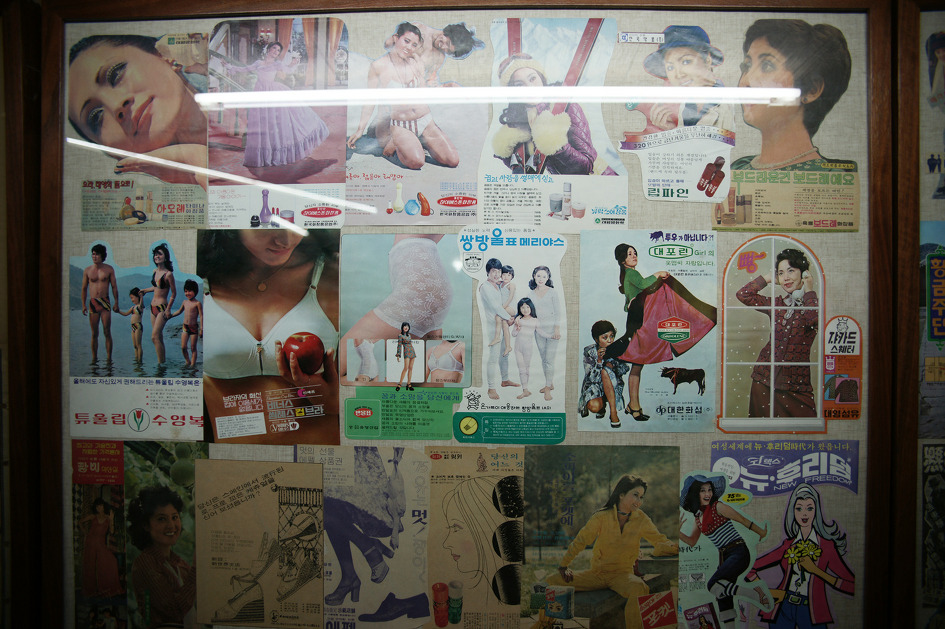
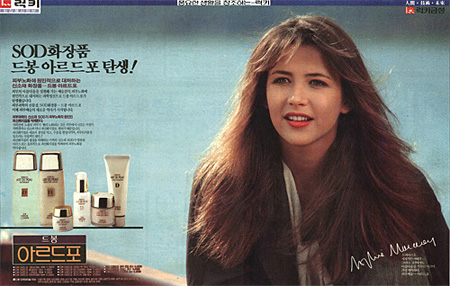 And only then did I really notice the continuation of the “Neo-Confucian Body Techniques” article, which resolves everything quite nicely (right: French actress Sophie Marceau advertising LG cosmetics in 1989; source):
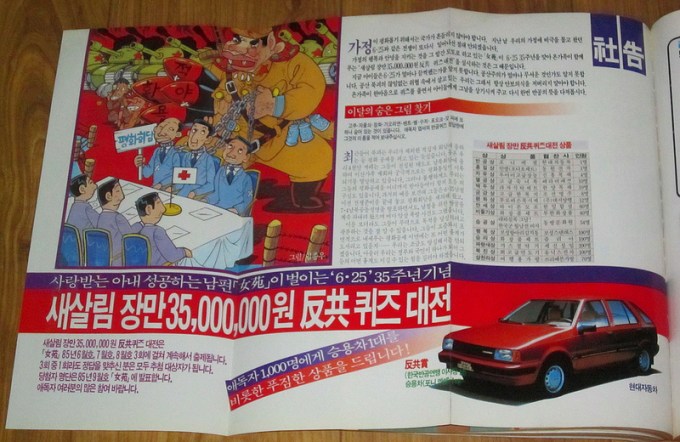
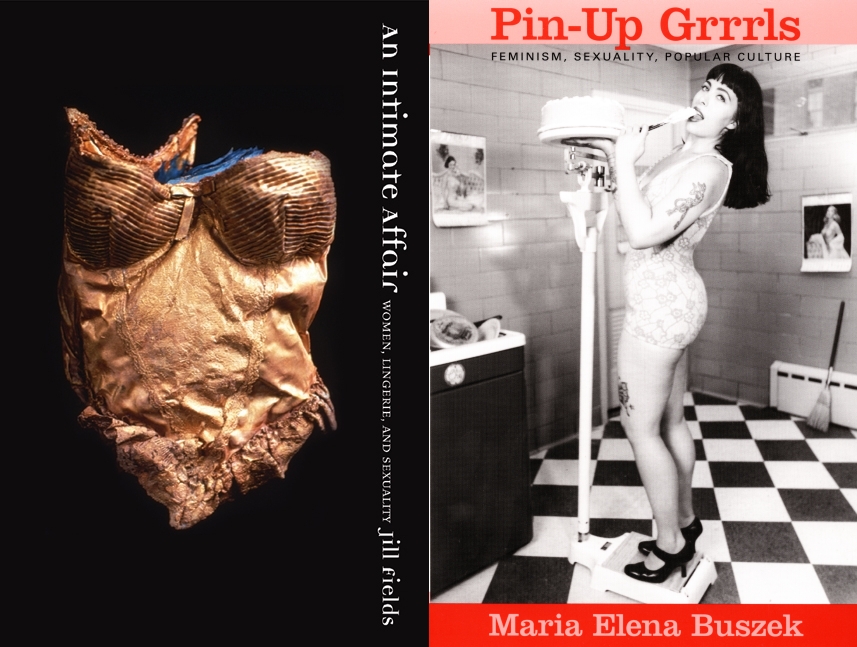
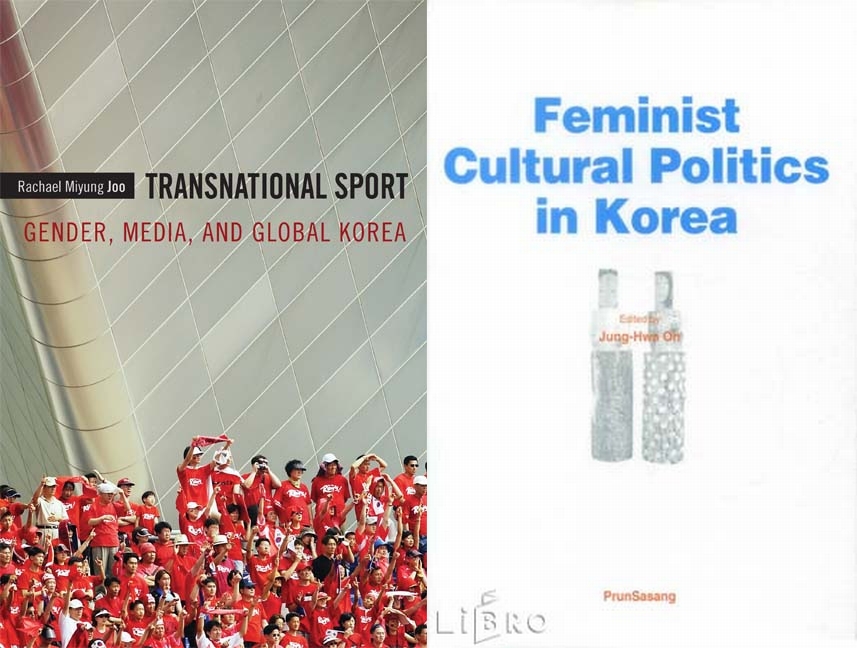

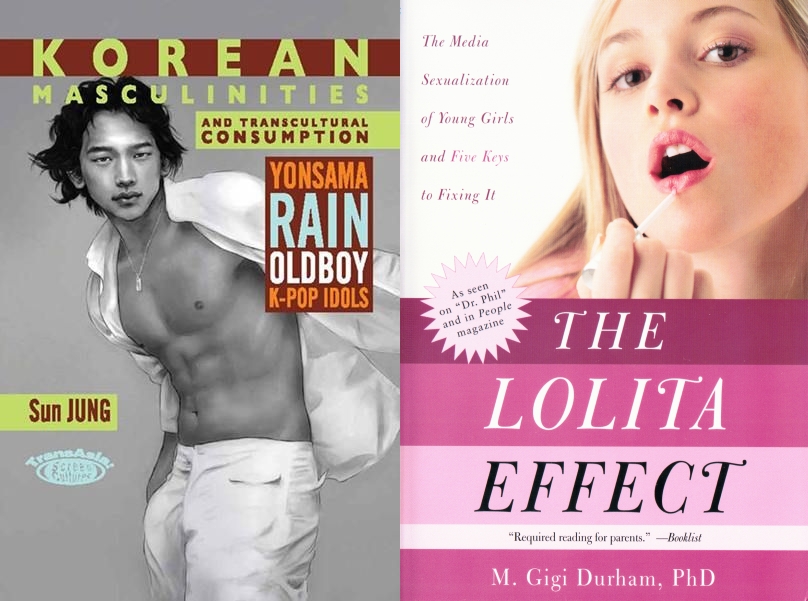
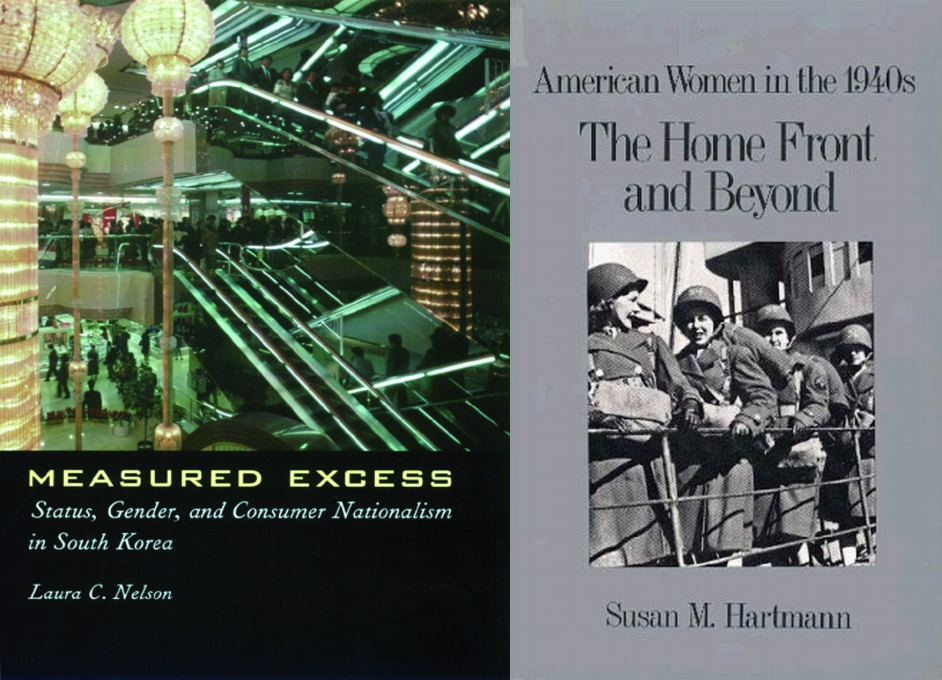
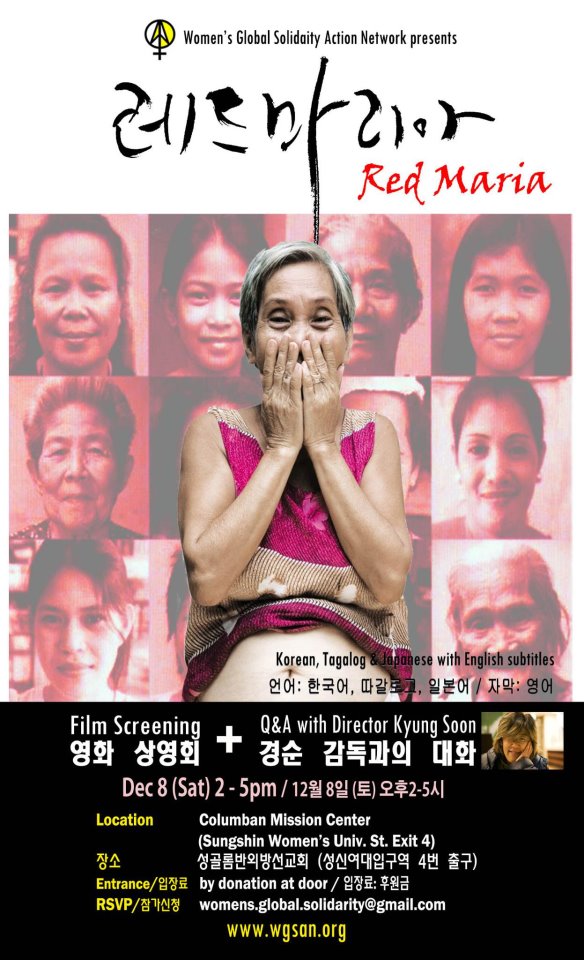
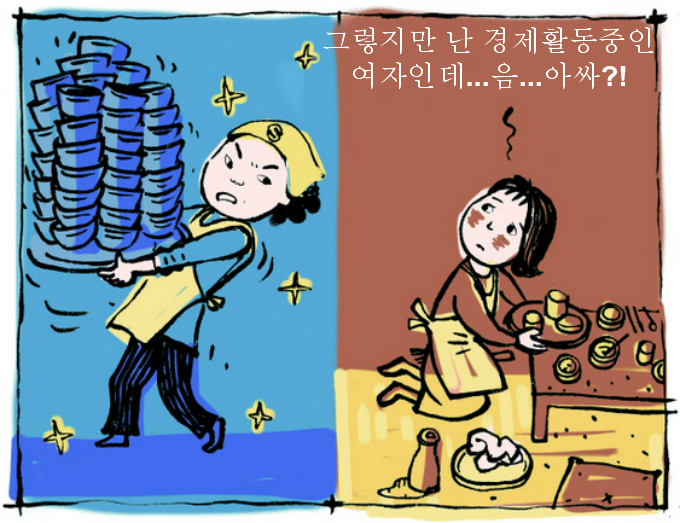
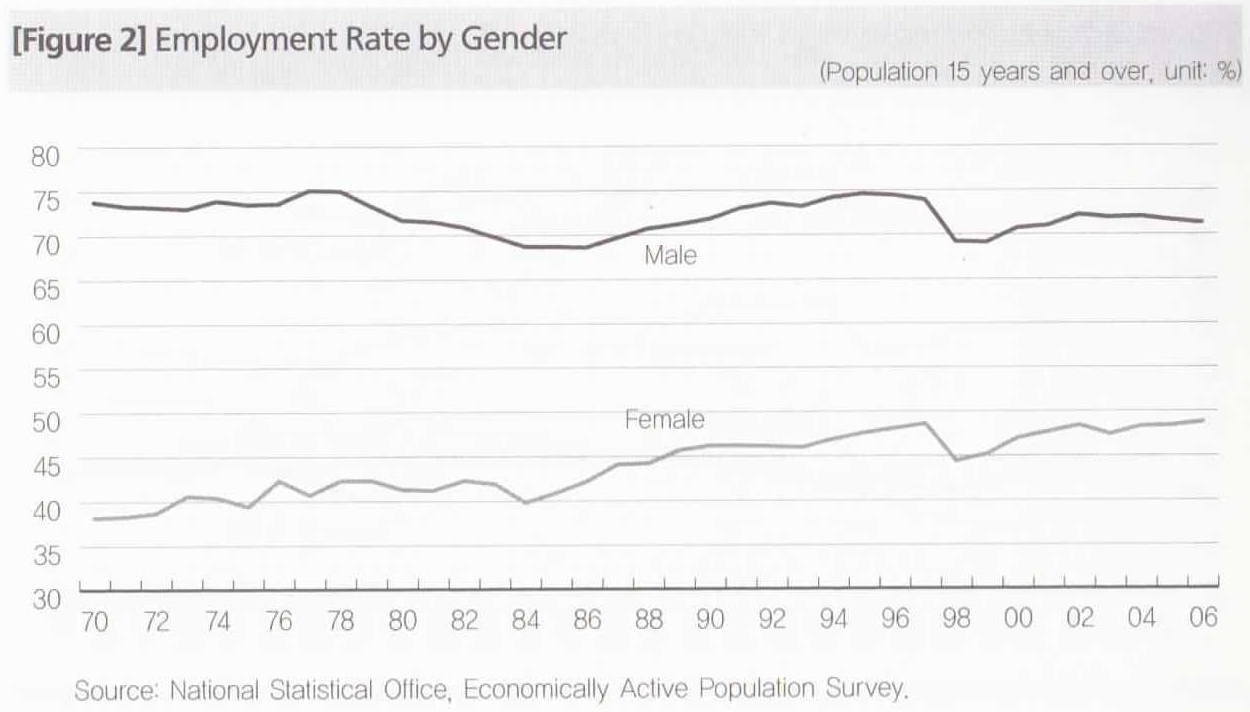
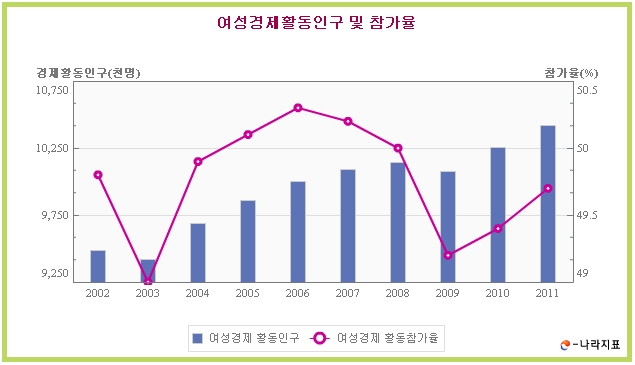
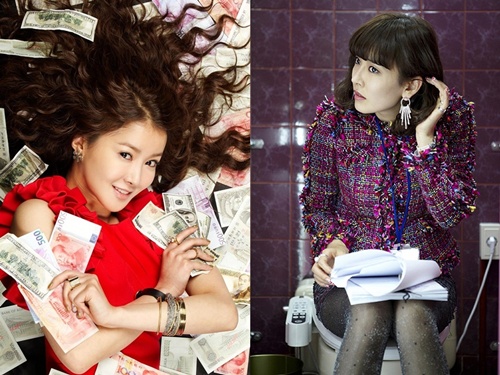
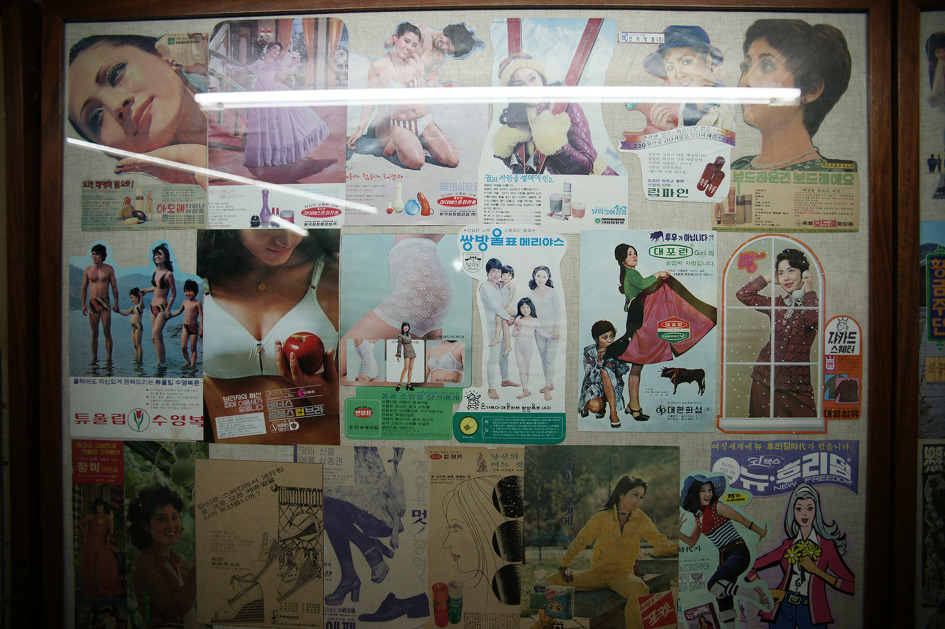
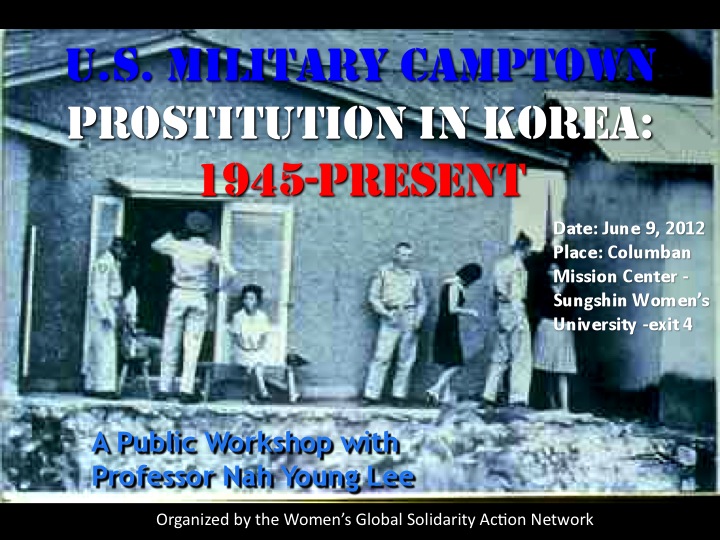


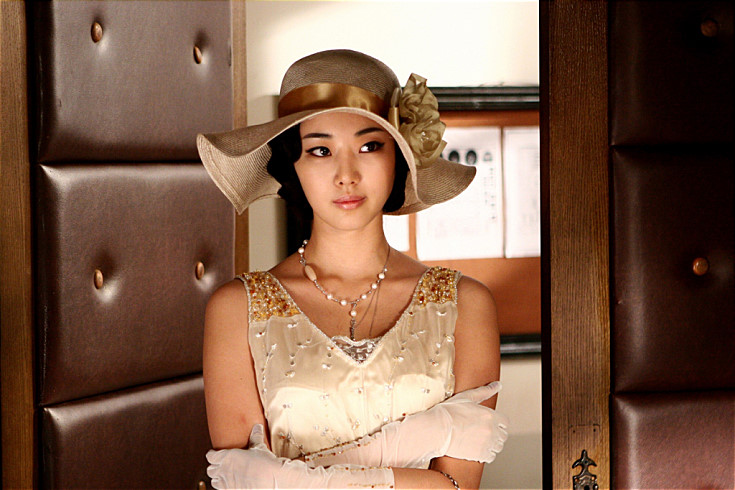
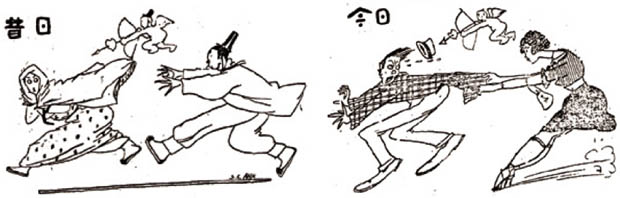
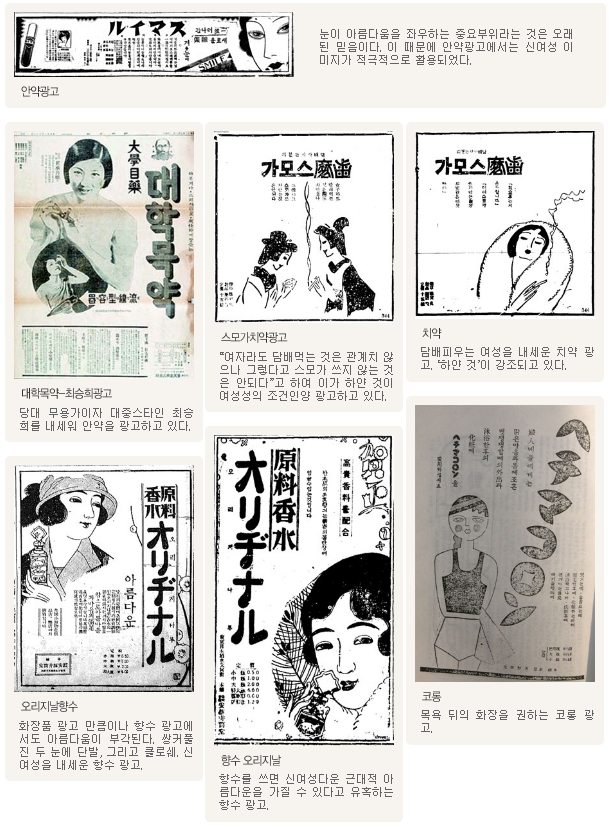
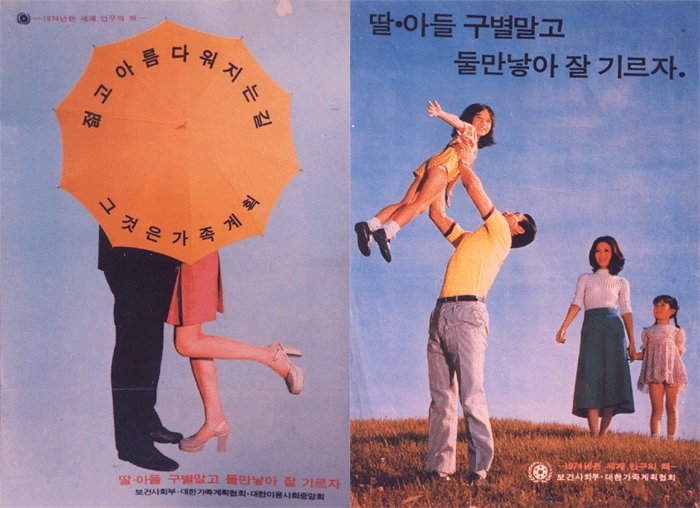
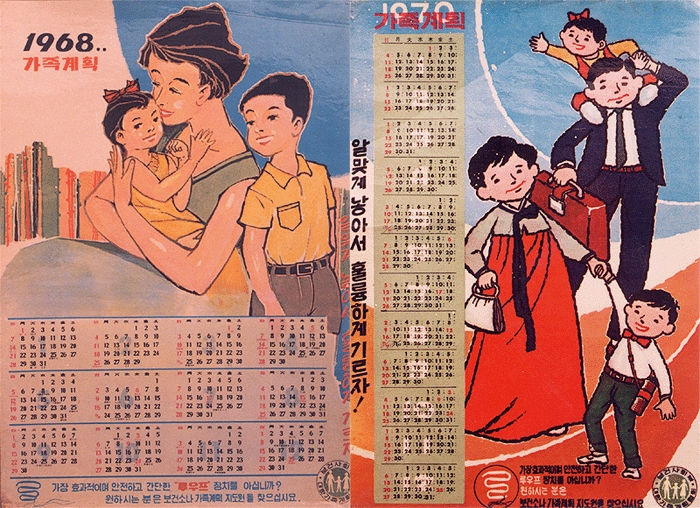


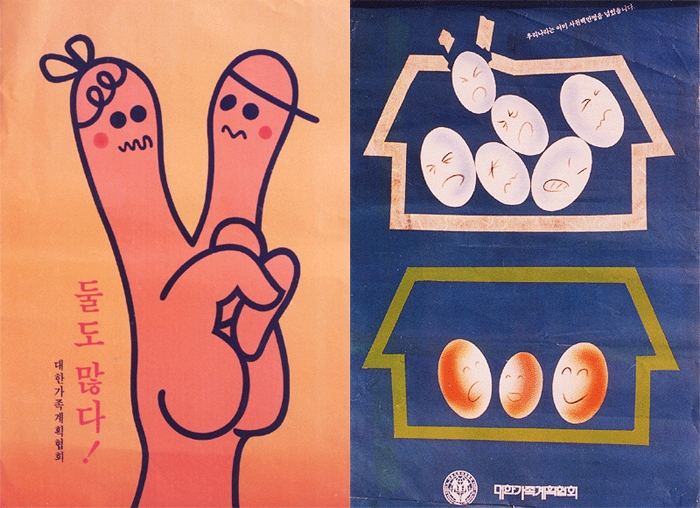


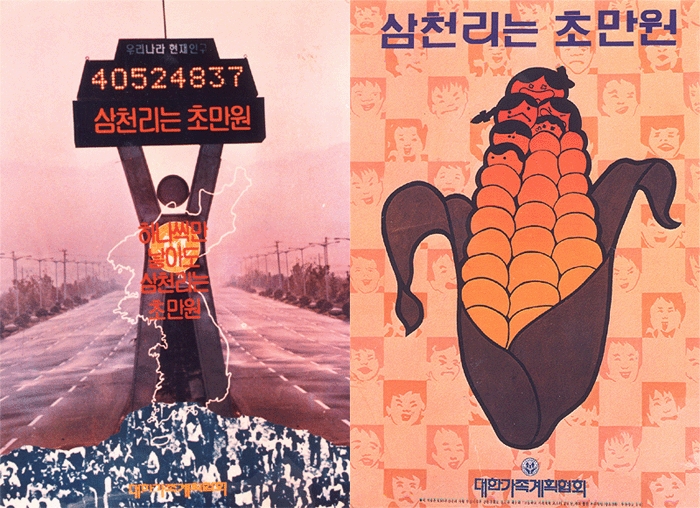
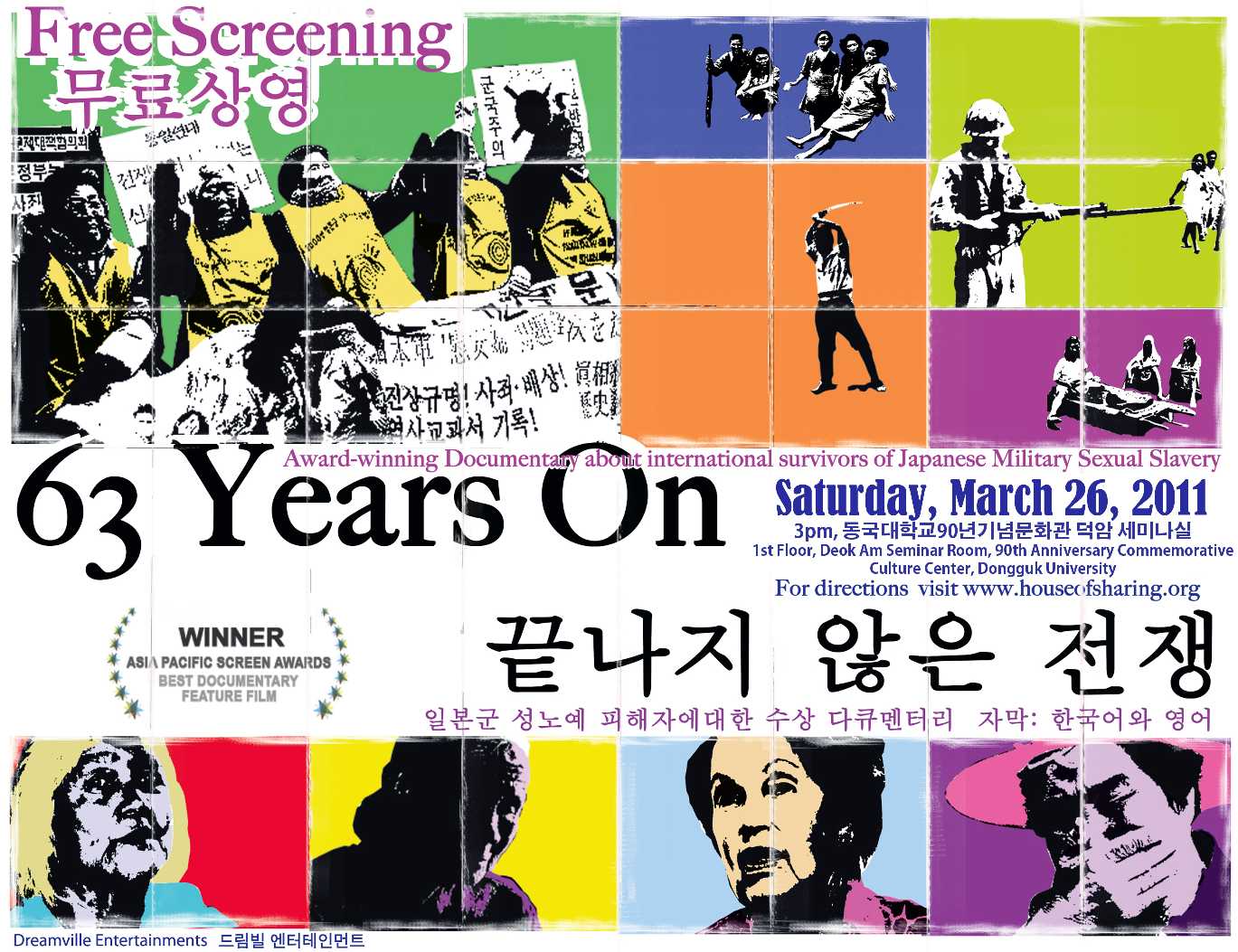

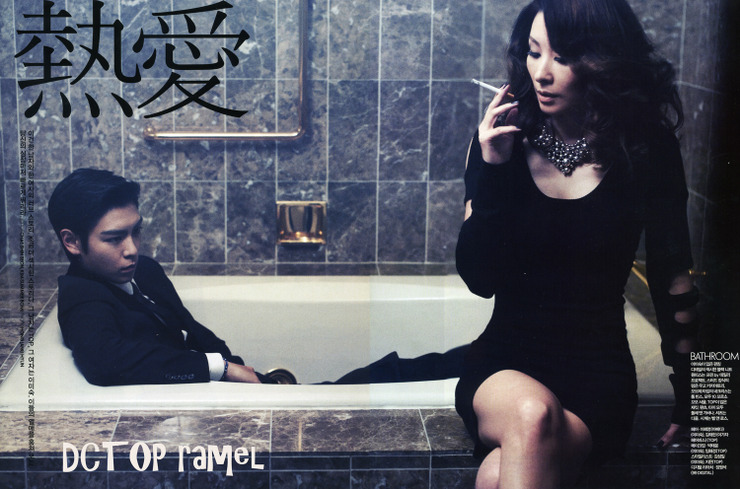
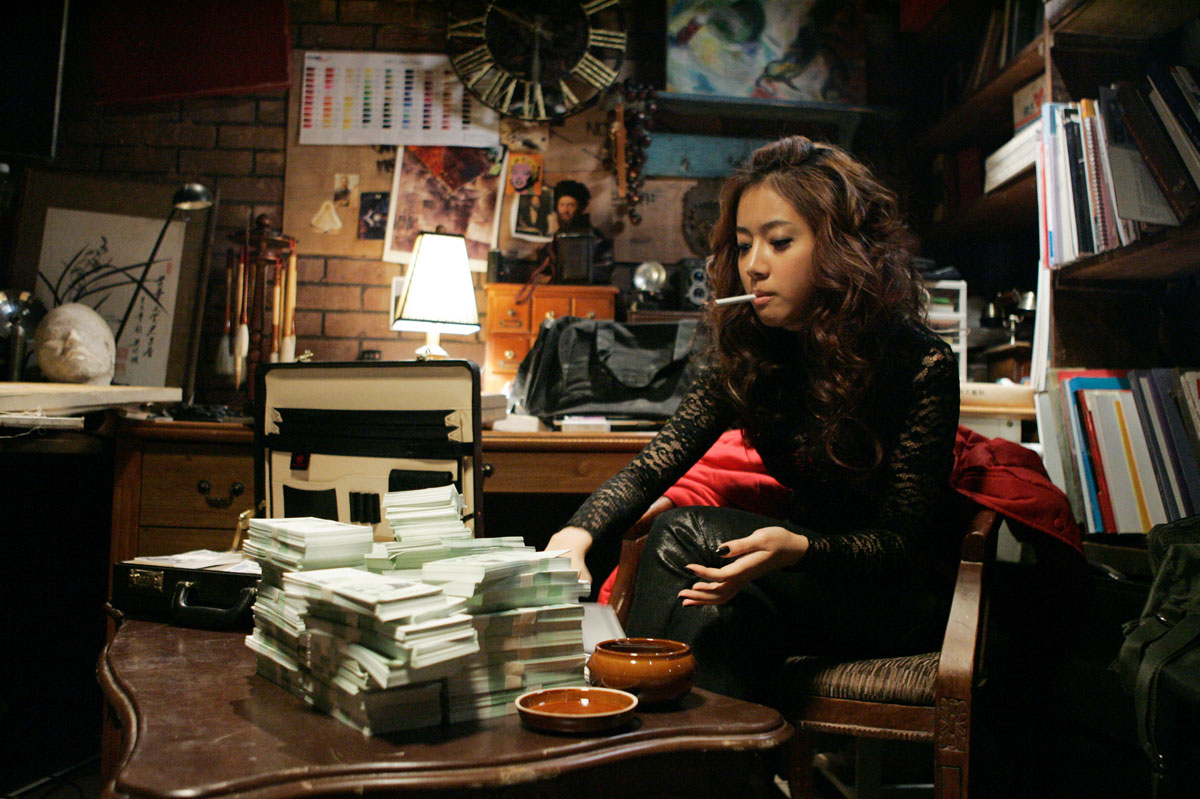
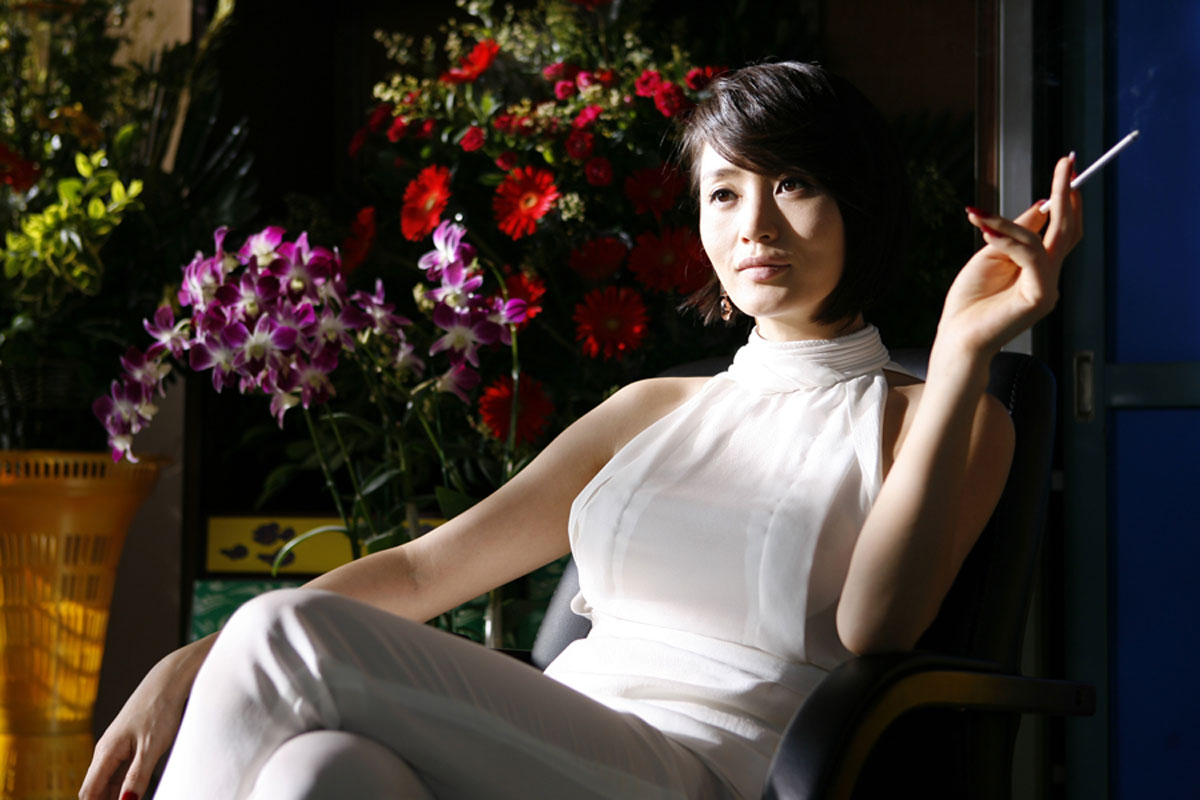
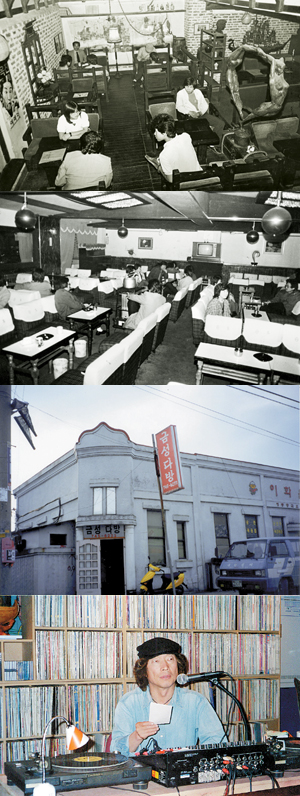
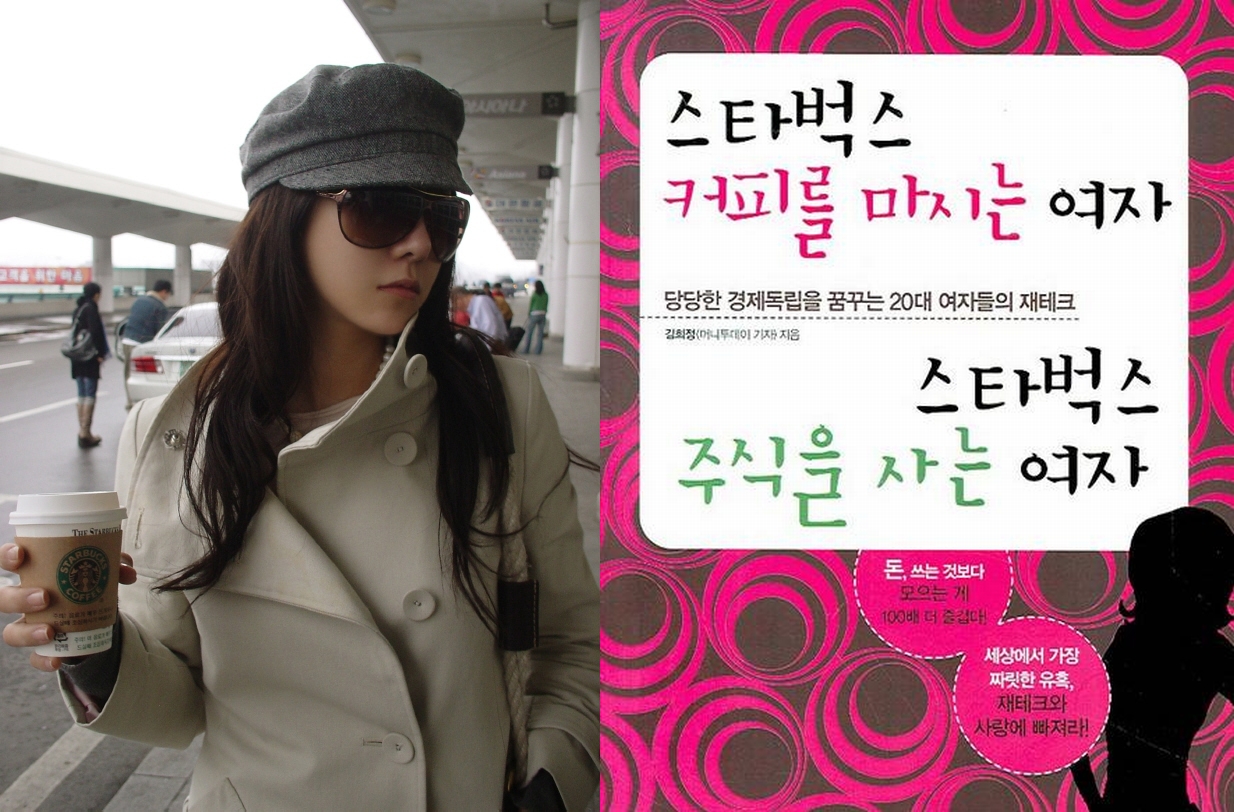
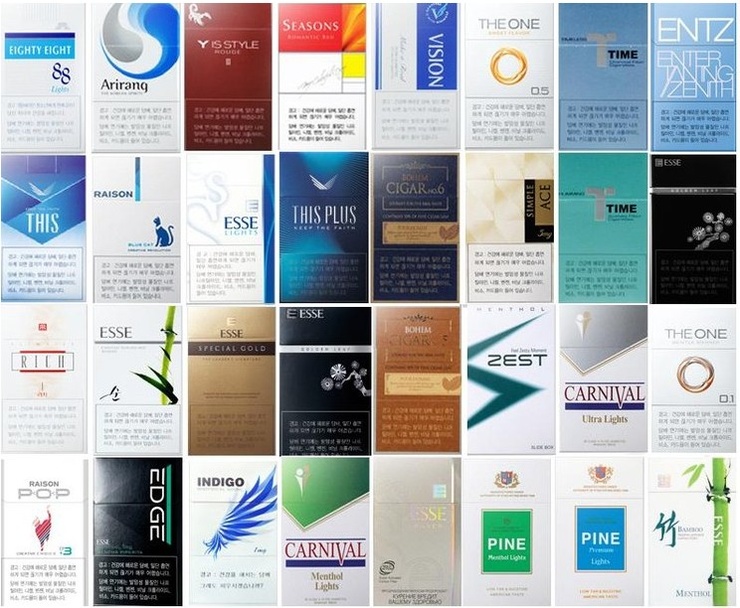

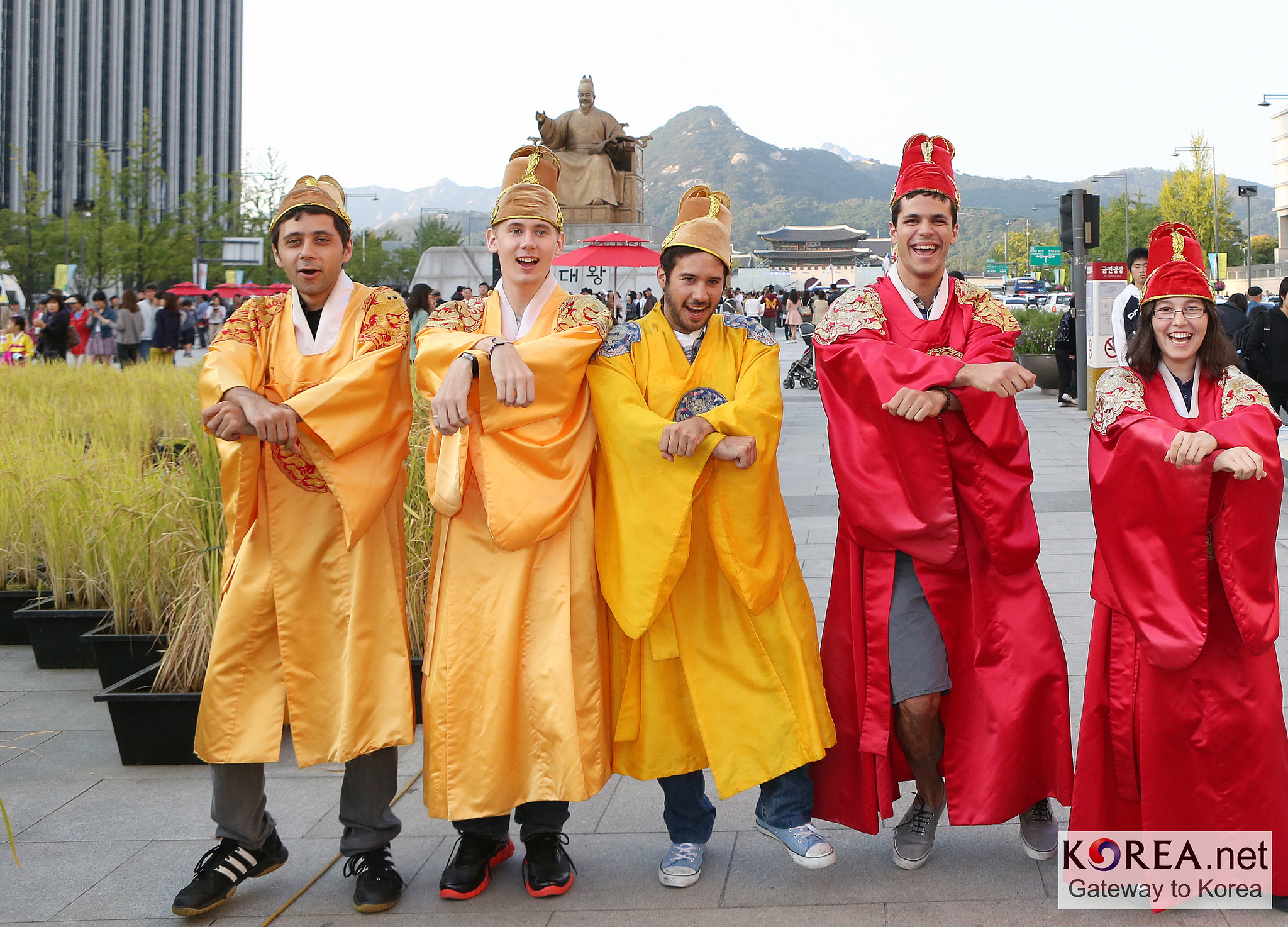
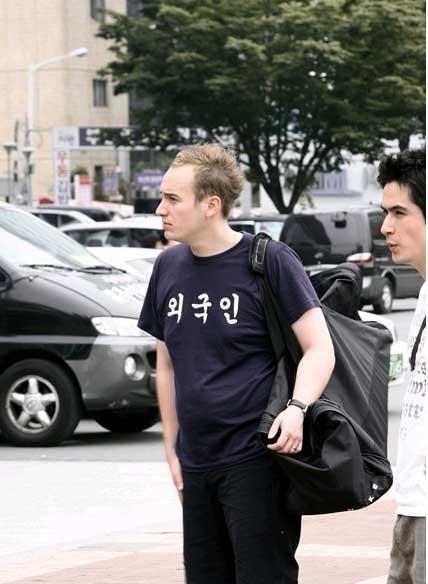
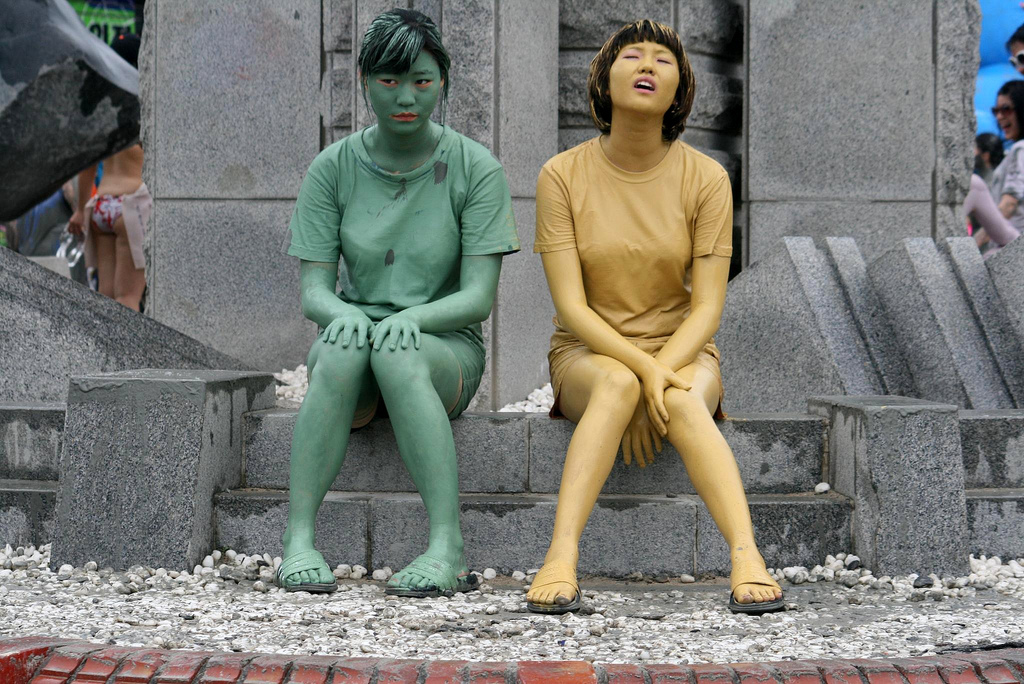
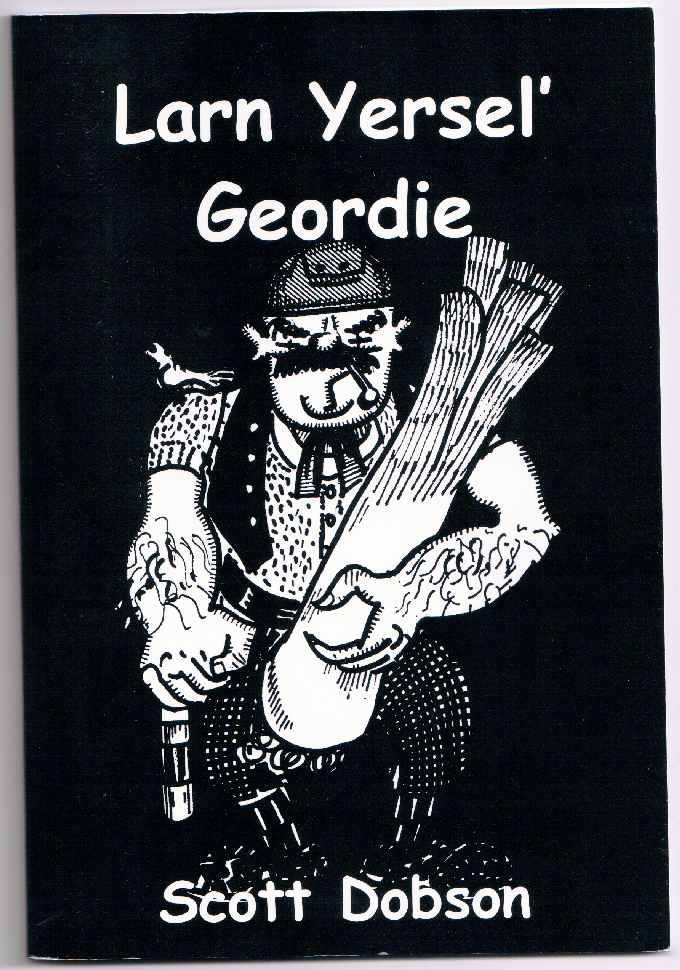



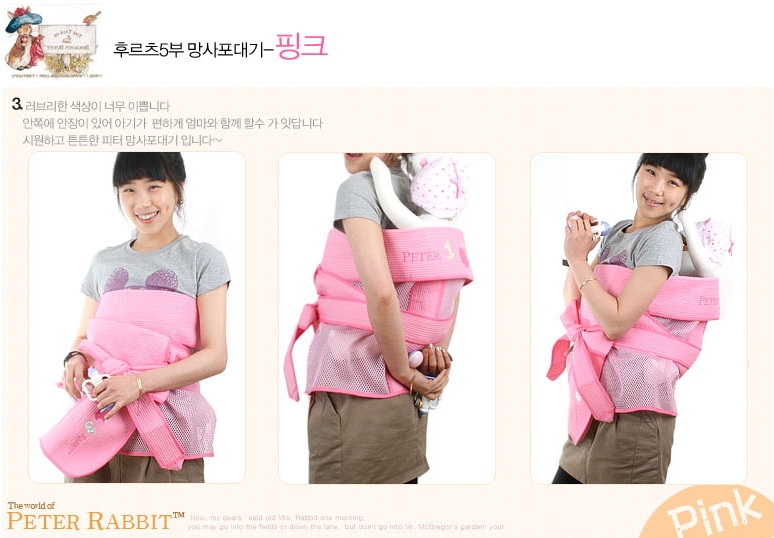

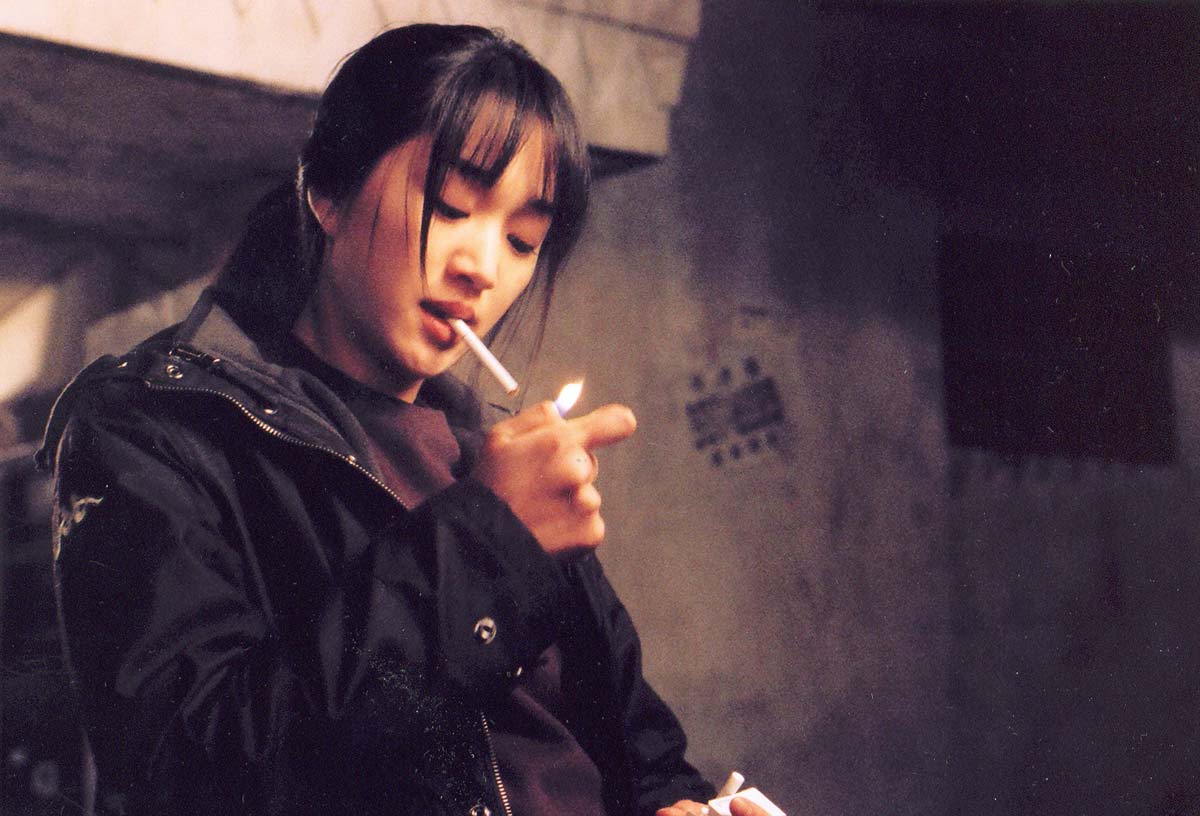
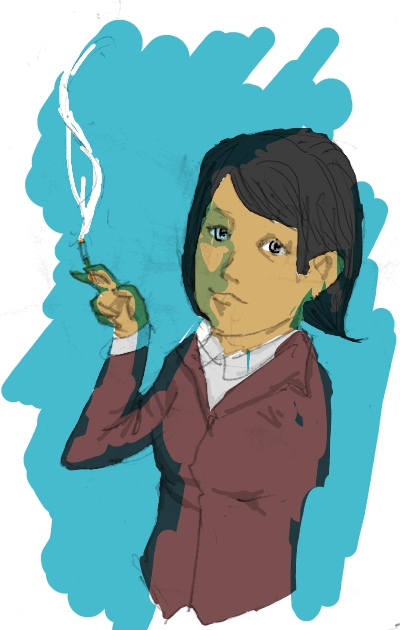

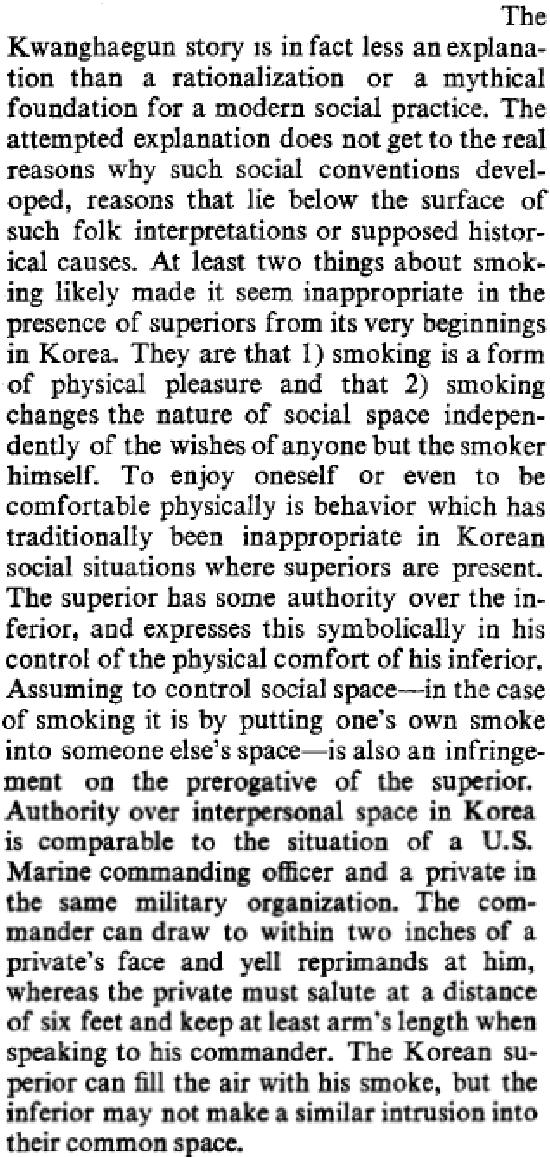


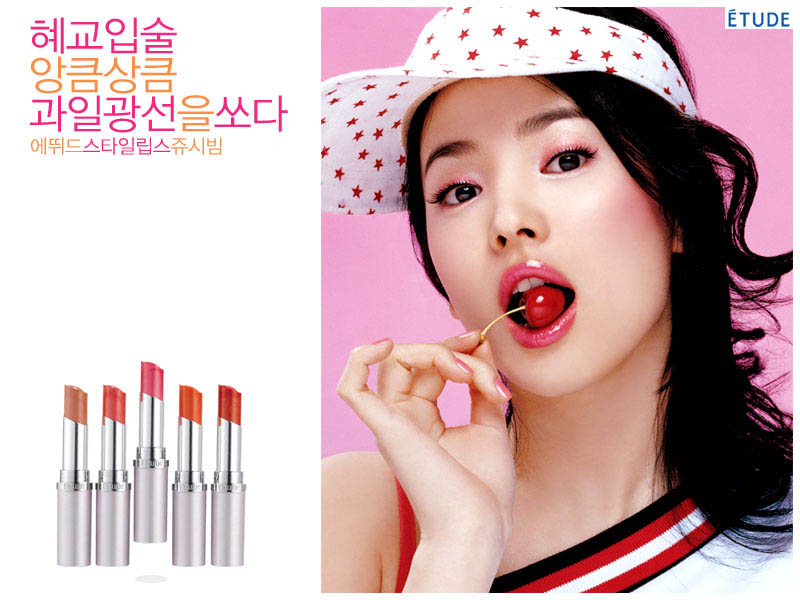


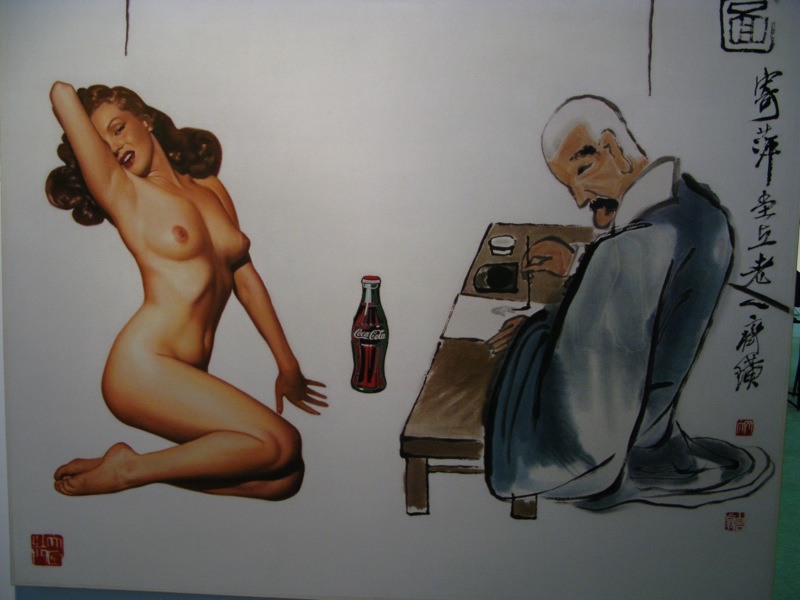

 The Grand Narrative