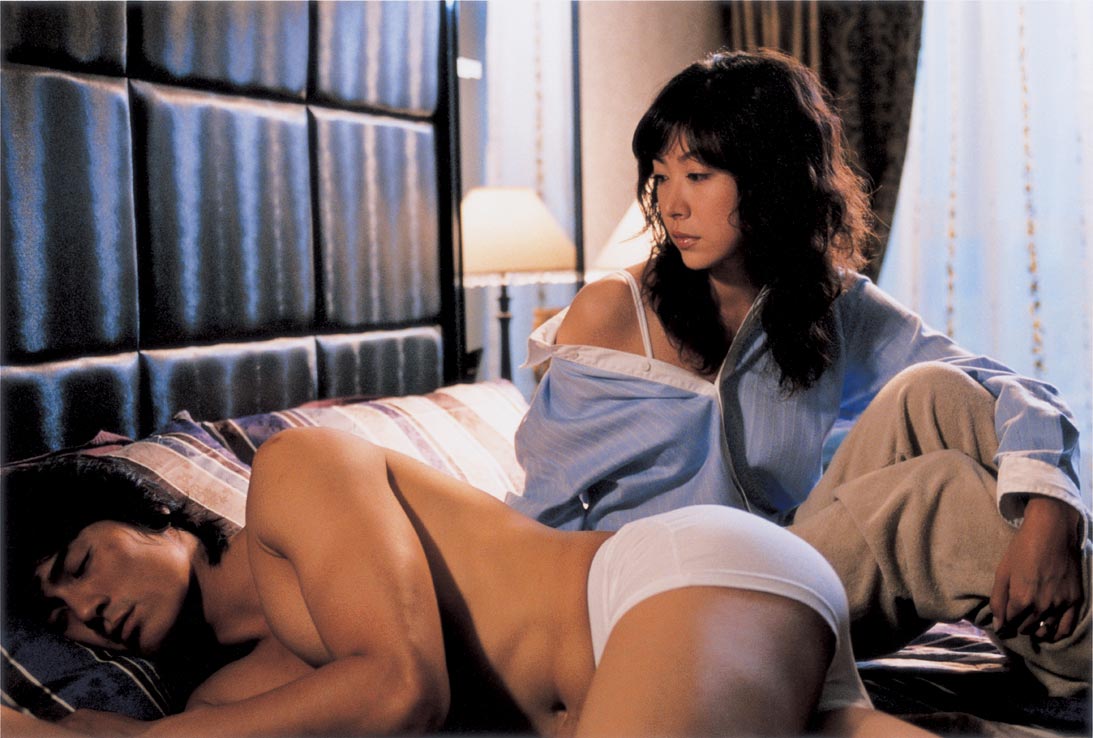
Bust Magazine on “Bagel Girls” (베이글녀)

(Sources: left, right)

It’s a short article, with much that is already familiar to regular readers. But thanks to Grace Duggan of Bust Magazine for asking for my contribution, and I especially liked her insightful point about the artificial dichotomy the term imposes on young women. Indeed, if you extend it to behavior also, then that dichotomy pretty much describes the way they’re presented by the entire Korean media really:

Sexualizing young women for having childlike features sets off all kinds of alarms, regardless of whether or not they are over 18. The “bagel girl” label does more than infantilize women. It compartmentalizes them by applying two irreconcilable ideals: looking like a baby and a full-grown woman at the same time.

Read here for the rest, and here and here for some wider context. Also, here is my post about the “X-line” referred to in the article.

On a positive note, I was happy to read that actor and model Shin Se-kyung (신세경) at least rejects the term. But I’m not entirely convinced: just that single picture above, for instance, shows that she’s quite comfortable presenting herself as innocent-yet-sexy when it suits her. I’m unfamiliar with her career beyond noticing her numerous commercials and magazine photoshoots in passing though, so if people that do know her find that she’s, say, deliberately shedding her childlike image as she ages, then I’d be happy to change my mind!

Should the Sexualization of Teens in K-Pop be Banned?

(15 year-old f(x) band member Sulli {최설리} in February 2010 Oh! Boy Magazine; source)

In short, “yes, but…”(!), as I explain in this opinion piece I recently penned for the Korea Herald. It’s pretty faithful to the original, for which I’m grateful, but unfortunately two crucial sentences on boy-bands got edited out at the beginning of paragraph 4. It should read:

This is why this discussion is overwhelmingly about girls. However, owners of boy-bands too have been affected by the ensuing pressure to make them stand out from their competitors. Add in Korea’s notoriously high levels of illegal downloading, ensuring that profits in the Korean music industry are overwhelmingly from concerts and commercial endorsements (and which explains why 75% of Korean commercials feature celebrities), then courting controversy with ever more provocative performances is a no-brainer really.

Still, only 800 words long even with those inserted, at best the article only gives an introduction to some of the issues involved really. For any interested new readers and old readers that haven’t already then, please read my post Reading the Lolita Effect in Korea, Part 2: The role of K-pop and the Korean media in sexual socialization and the formation of body image for a much more comprehensive discussion of those, and for the many caveats I would have liked to have added to the generalizations in the article!^^

Sprechen sie Deutsch?

(Source)

If so, then let me direct you to an interview I gave last week for Deutschlandradio, on the economic factors behind the sexualization of minors in K-pop (I’m on at about 3:05).

Meanwhile, English speakers never fear(!), for I should have a newspaper article on the same subject coming out either this week or the next. And Part 2 of my translation of the “What did Depraved Oppas do to Girls’ Generation” article will be up tomorrow.

Update – With special thanks to Curtis for translating it, here is the short article that accompanied the radio report:

Economic Factors: Girlbands

Report by Malte Kollenberg and Fabian Kretschmer

(Girl- and boybands are an important part of the economy in South Korea. Source: plynoi)

South Korean boy- and girlbands are also internationally successful. A general music- and dance-style concept is created and from this concept a look is agreed upon.  To acheive this look, the young band members go under the knife ever more frequently.

Pop music in South Korea is a major economic factor for the country.  In 2009 the industry earned 30 million dollars, and according to government statistics, this number doubled in 2010.  The most important market is the country itself, but Japan and the USA are also markets of interest.  Korea’s largest record label, S.M. Entertainment, currently tours around the world with different bands in a Global-Audition-Tour.

Lavish Choreography

Girl- and boybands who present lavish choreography in large shows are typical for K-Pop – for example, the 13-member boyband Super Junior and Wondergirls.  As is usual in the international music market, the bands are cast, and the musical style and looks of the artists are decided by the record label.  Plastic surgery is generally accepted by South Korean society and is a standard in K-pop.  From this arise greatly deliberated and perfectly coordinated images.

Share

Is Divorce in Korea Finally Socially Acceptable?

(Source)

Sorry for the lack of posts recently, and the very short notice with this one, but in an hour from now (7:45pm Korean time) I’ll briefly be on 101.3 TBS eFM’s evening show, talking about the title topic. For the details, see here, and note that unfortunately you can only listen live on Internet Explorer sorry.

Update – Well, that was a little embarrassing: because of a miscommunication, technical problem, and/or a last minute editorial decision, I didn’t actually get called in the end!

But for anyone still interested in the subject though, then I was going to mention that while on the one hand the stigma surrounding divorce is certainly disappearing over time, with 1 in 4 marriages now involving a divorcee and in particular both the numbers of women remarrying and their rate of increase outstripping those of men, on the other hand the profoundly gendered effects of the recent economic crisis here have left Korean women more financially reliant on their husbands than ever, as explained at #2 here, here, and #15 here.

Meanwhile, see here for more information on both the high rates and the practicalities of getting a divorce in Korea, and here for more on the hoju or family-registry system (호주), which had a huge role in drawing attention to people’s marital status (or parents’ status) and consequently being able to discriminate against them on that basis. Moreover, although that has recently been abolished, one final point I was going to make was that unfortunately that’s just one of many superfluous things corporations take into account in their hiring practices, as demonstrated here, at #8 here, here, here, and here, and so it’s probably going to take a while before Korean business culture catches up with the social reality.

Share

The effeminacy of male beauty in Korea

( Attack on the Pin-Up Boys, 2007. Source )

With thanks to author Roald Maliangkay for the kind words about this blog in it, see here for his short and very readable article of that title in the latest International Institute for Asian Studies newsletter, which I also highly recommend taking 2 minutes to subscribe to. (Email me for a PDF if the link doesn’t work).

For the specific post of mine he refers to, and many more on the kkotminam (꽃미남) phenomenon in general (literally “flower-beautiful-man”), scroll down to the sidebar on the right until you come to the “My Constantly Evolving Thesis Topic” section.

(Update: that’s been removed after a change in theme. Please see here for a list of recommended posts instead)

True, he actually argues that the factors I cite are just some of many that were ultimately responsible for the emergence of that, but then my own views have considerably evolved since first writing about the subject over 2 years ago, and I think we’re in broad agreement really.

Alternatively, perhaps that just reflects how persuasive his own article is?^^ What do you think of it?

The Grand Narrative on Air

This time, a live phone-interview on tomorrow’s This Morning show on TBS e-FM, Busan e-FM’s sister station in Seoul. Hosted by Dr Hans Schattle, a political science professor at Yonsei University, I’ll be talking alongside Dr. Robert Kushner of Northwestern University on the overuse of diet pills in Korea, with me focused on the sociological aspects of dieting and body image in general. Catch me there from roughly 8:40am either before, together with, or after Dr. Kushner, and there’ll be an opportunity for listeners to call in also.

Meanwhile, you may find the text in this related cartoon I’ve just found amusing! For non-Korean speakers, the man is saying:

“Young woman! You seem to be fat. You should register in this diet program, yes? [Just look at this] We never exaggerate or do false advertising!”

And the woman is thinking:

“The nerve of that A-hole: he’s fatter than me! And who gets fooled by those sorts of photos these days anyway? Are people’s bodies like balloons?”

Alas, as Ill explain tomorrow, this is by no means an unlikely conversation in Korea. But at least he’s not actually lying about the advertising: as the next panel reveals, it’s two sisters in the pictures!^^

Share

The Grand Narrative On Air

( Source: Kevindooley )

With apologies for forgetting to mention them much earlier, see #56 here for my interview about blogging and Korean gender issues on Busan e-FM’s Let’s Talk Busan show back on July 11, and then here for the subsequent video webcast with Koreabridge owner and manager Jeff Lebow and fellow blogger Alexandra Karpen of Alex’s Adventures in Asia.

Unfortunately the first link doesn’t work in Firefox, and also requires installing an ActiveX control in Internet Explorer, so if you’d like to avoid all that hassle then please simply go here instead.

Please feel free to ask me any questions about or to expand upon any topic mentioned in either: unfortunately, time goes very quickly when you’re being interviewed about your favorite subjects!

Share

Radio Show and Live Webcast This Sunday

( Source: A. Germain )

Yes, I’ll be talking about Korean gender issues on Busan e-FM’s “Let’s Talk Busan” show on Sunday evening again, this time with new host and also Koreabridge owner and manager Jeff Lebow. Please tune in via the station website at 7pm Korean time if you’d like to listen, and as soon as that finishes at 8 I’ll be doing a live video webcast at Koreabridge too, where you’ll be able to talk to me either via the chatroom or by calling me directly via Skype (with or without a webcam).

As you’d expect though, the Busan e-FM interview was actually done a week ago, and unfortunately I tried to say too much in too short a space of time. I’ll probably want to use the webcast to qualify and/or add more details to the sometimes broad generalizations I made in that then(!), but of course we can talk about anything other callers like really. If you don’t get distracted by my two young daughters that is, who will probably be climbing all over my lap or dancing on the desk as soon as they hear me speaking!^^

For those of you that miss either show though, never fear, for I’ll post the files for you to download and/or listen to next week.

(Update: See here for those links)

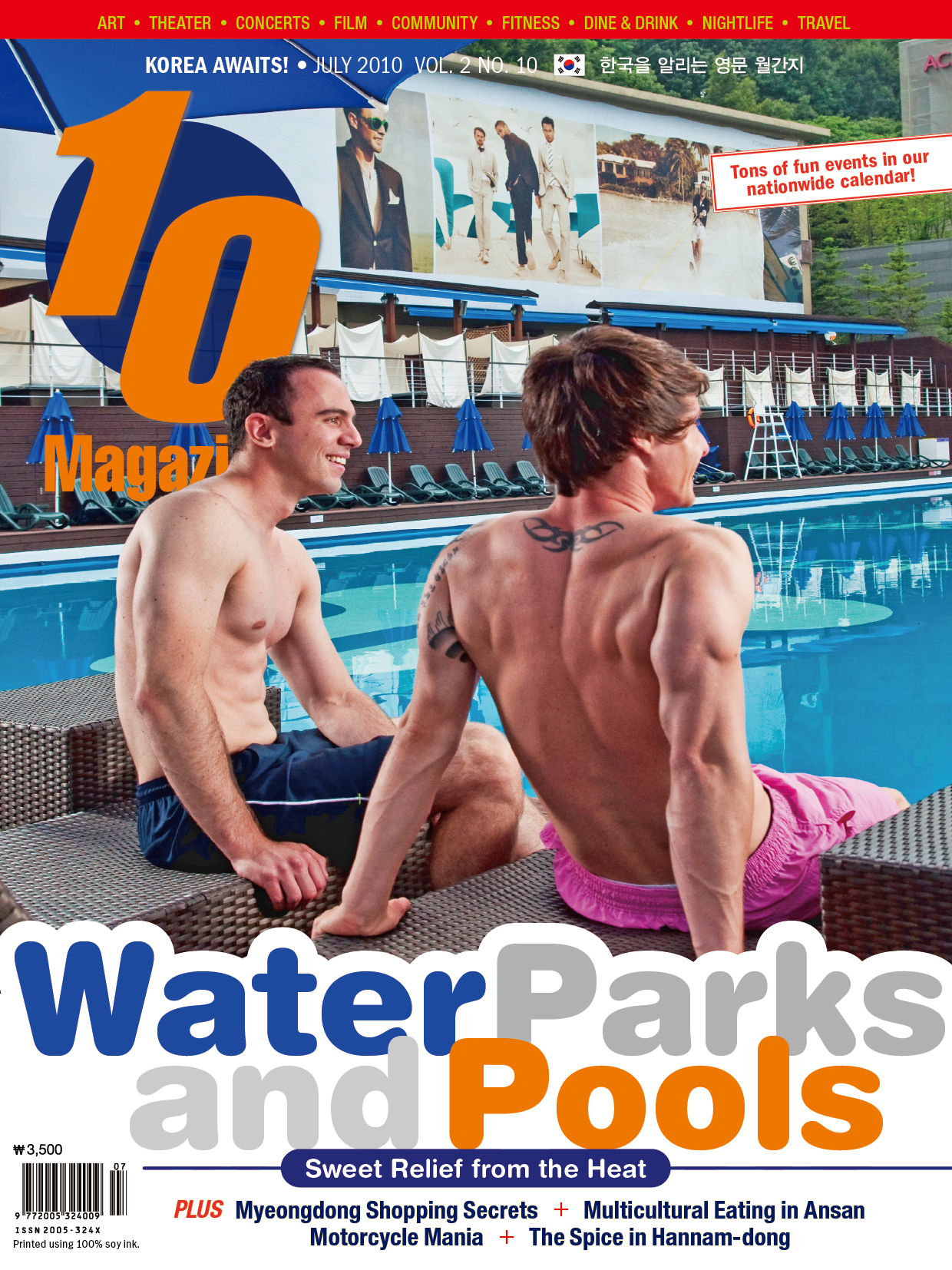
Meanwhile, thanks very much to 10Magazine also for selecting The Grand Narrative as its Blog of the Month for July. Unfortunately, that probably makes any subsequent endorsement of mine sound a little insincere, but for what it’s worth if I was single or didn’t have any children then I really would regard its calender section alone as indispensable for living in Korea. Much easier to read in a magazine format than online though, you could do much worse than pick up a copy for a mere 3500 won.

Share

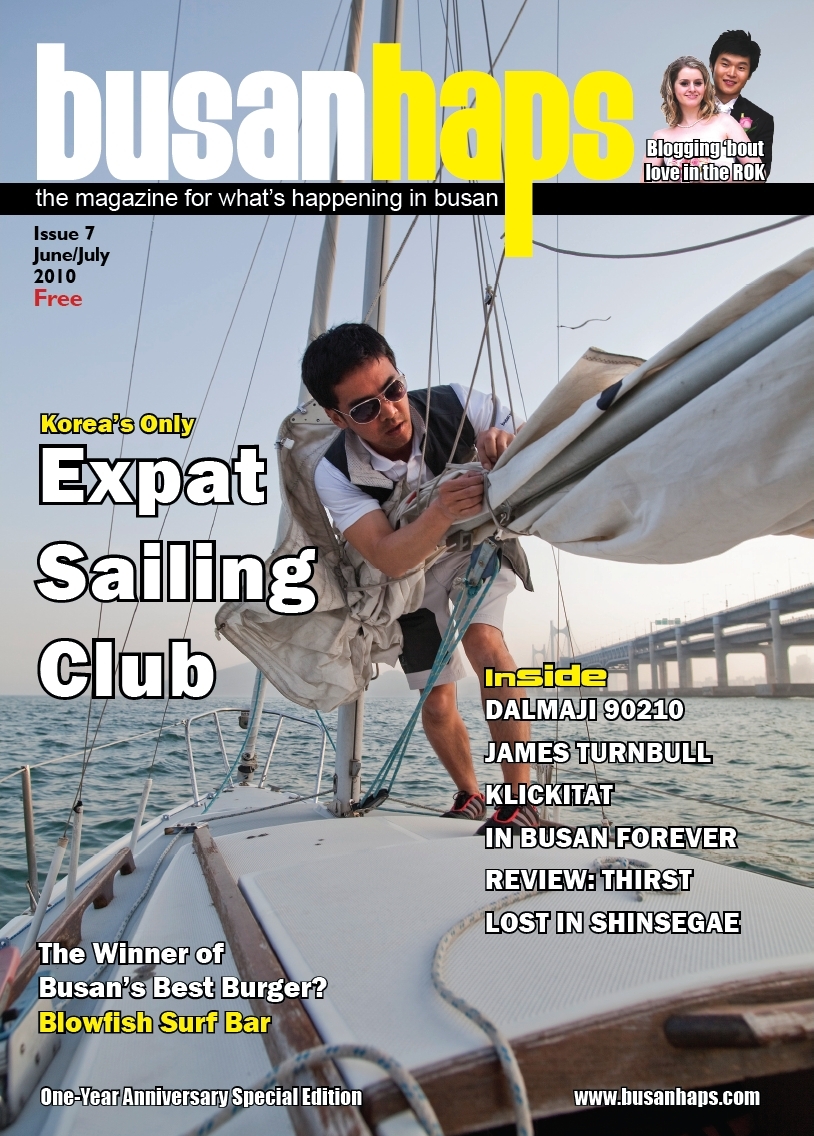
“Blogging ’bout Love in the ROK”

With apologies for not being able to mention more of you in the 800 word limit, here is my article in Busan Haps magazine based on your thoughts on the sudden increase in the number of bloggers discussing dating and marrying Korean men. Thanks again for your help!

Update: Ironically, just 2 days after that went up, Hot Yellow Fellows reports a lull in the number of new blogs on the subject, and most of the rest going “into dating hibernation, either due to leaving Korea (what’s up.), having gotten into relationships, or running into bad luck/apathy”!

(If you’d like to leave any comments, please do so on the Busan Haps website)

Share

Gender Studies 101: How the media perpetuates negative body images

(Source)

Alas, I’m still taking a break from blogging for another week or so(!), so let me just quickly pass on a Korea Times article on “X-lines” and women’s body images that I’m quoted in today. New readers who want to learn more about them, please see:

  • Here for a quick summary of all the various “lines” used to describe women’s bodies at the moment
  • Here for a much longer analysis and a discussion of how and why they’ve developed from being mere fads to become enduring parts of Korean media culture
  • Here for the ways in which even prepubescent girls are socialized to develop a concern for achieving such lines in the future
  • Here for the deep roots this Alphabetization craze has in various Korean philosophical and linguistic traditions, rendering it qualitatively different to similar sounding name-assigning in English.
  • And finally here, here, and here for more on the fact that Korean women are the slimmest in the OECD, but still consume the most diet drugs.

Meanwhile, I’m very grateful to author Cathy Rose A. Garcia for asking for my input, and for then including so much of what I wrote in our email exchange. It seems almost churlish of me to critique it so severely after that, but I’m afraid I must, for it seems rather naive, almost disingenuous to write an article about how popular X-lines are when the only evidence for that comes from a company that has a vested interest in making people think so:

Three out of four female college students consider X-line, a term referring to a slim waist with ample breasts and hips, to be the ideal body shape, according to a survey by Amore Pacific’s V=B Program. The survey covered 1,000 female college students from Ewha Woman’s University and Dongduk Women’s University from May 13 and 17.

Granted, Cathy does mention later:

Amore Pacific’s V=B Program, which sponsored the survey of college students, offers a line of herbal Oriental beauty supplements. It recently introduced the “S-line slim DX,” which claims to reduce body fat and abdominal fat.

But the conflict of interest should have been made more explicit, and indeed is rather ironic in light of one of my quotes:

“Companies do have a vested interest in creating new, artificial body ideals that purchasing their products can supposedly help you achieve. And given the media’s overwhelmingly uncritical reporting and active dissemination of these ideals, then it is difficult not to conclude that the media is at least passively colluding with its advertisers in this regard,” Turnbull said.

Moreover, as I explain here, the X-line is by no means a “new” obsession of Korean women, but is at least 2 years old, originally created by – you guessed it Amore Pacific, who created the monstrosity on a computer when Yoon Eun-hye’s (윤은혜) actual body failed to deliver:

(Sources: left, right)

In fairness, Amore Pacific did use more human-like realistic images of her body in some of its advertisements for the V=B Program that year, but those in no way compensate for encouraging women to obtain a literally impossible body shape in the first place. And call me picky, but any news article on X-lines is severely remiss in not mentioning that.

What do you think? Are my critiques of the article fair?

The Grand Narrative in The Washington Post

Photo by Dương Nhân from Pexels

While the background will be very familiar to regular readers, I confess I was still intrigued when Washington Post reporter Blaine Harden emailed me about this last month:

With pressures high, South Korean women put off marriage and childbirth

SEOUL — In a full-page newspaper advertisement headlined “I Am a Bad Woman,” Hwang Myoung-eun (황명은) explained the trauma of being a working mom in South Korea.

“I may be a good employee, but to my family I am a failure,” wrote Hwang, a marketing executive and mother of a 6-year-old son. “In their eyes, I am a bad daughter-in-law, bad wife and bad mother.”

The highly unusual ad gave voice to the resentment and repressed anger that are common to working women across South Korea…

With thanks to Blaine Harden for asking for my input, see here for the full report, and further details are included in this similar report from the JoongAng Daily last week also.

New readers further interested in any of the issues mentioned in either, please see: #2 here for more on Korea’s extremely low score in the UNDP’s “Gender Empowerment Measure” on which I based my email statement “….despite Korean women having good health and excellent education, they still have a much greater chance of becoming a politician or even a middle manager or computer programmer in countries like Kyrgyzstan, the Dominican Republic, Botswana or Nicaragua” that Blaine Harden quoted, and here for a recent survey on the discrimination expectant mothers face in Korean workplaces, which mentions that nearly 25% of them either got fired or were forced to quit once their pregnancies were revealed. For all others, please see the list of links I provided when I was involved in a report on a very similar topic for TIME Magazine last year, and another in a more recent post on childcare and socialization.

Unfortunately, judging by the handful of news articles available on the internet, then this story seemed to get little attention in the Korean-language media, although as I type this the Washington Post article itself has prompted a couple more. But see here for the original text of the advertisements, and here, here and here for some of the original reports from October and November last year, and I’d be very grateful to hear from anybody who saw her television interviews!

If you reside in South Korea, you can donate via wire transfer: Turnbull James Edward (Kookmin Bank/국민은행, 563401-01-214324)

The Grand Narrative in TIME Magazine

Going Down David Smeaton(Going Down by David Smeaton; used with permission)

For the article in full, on Seoul Mayor Oh Se-hoon’s “Happy Women, Happy Seoul” plan involving more women’s toilets and the notorious pink parking spaces, see here. Meanwhile, for readers coming from there, see #2 here for the specific quote of Lee Myung-bak’s for which the blog was mentioned, and #2 here for more information on Korea’s disproportionately low Gender Empowerment Measure.

I would also add—with no offense to reporter Veronica Zaragovia, who necessarily had to omit most of what was said in our interview—that the argument that “the plan may end up reasserting South Korean women’s secondary status more than boosting it” is also one that I made in our phone conversation. I based it on the knowledge that the pink parking spaces were made wider in order to better accommodate loading and unloading pushchairs and so on (see #3 here), which had reminded me of this post from Sociological Images about the images in our daily lives that serve to subtly reaffirm the notion that childcare is primarily women’s responsibility. In that vein, while the extra space may well be appreciated by mothers, consider that if I were to park in one of those spaces myself, with just as pressing a need for the space to deal with my two young daughters in the back as my wife would have, then as a man I would be likely either be fined or shooed away.

I grant you, it sounds innocuous. But place that into the context of Korean women having the lowest workforce participation rate in the OECD, the result of a combination of a lack of childcare facilities and an enduring male-breadwinner mentality that forces a stark choice between motherhood or a career, then the underlying sexist logic becomes apparent. Moreover, with Korea in turn having the lowest birthrate in the world, the economic effects of which will be felt soon, then one might reasonably ask if the money could have been better spent.

p.s. Apologies in advance for some light blogging this week; I have a conference presentation to give this weekend.

Update, January 19 2010: See The JoongAng Daily here for all the ways in which programs like this have been considerably expanded since this post was written, now including pink spaces for women at bus stops, on buses, in parking lots and special pink taxis under the rubric of improving women’s safety (via: The Marmot’s Hole).

Koreans, Criticism, and the Korean Language

(Taking too close a look at the frogs in the well? Source: FARK)

For those of you that don’t already know, yours truly was briefly mentioned in an article on how Koreans handle criticism by foreigners by Bart Schaneman in The Korea Herald on Monday. It resulted in a lot of hits on the day, and even some offers of being paid to write from some other sources, so all in all pretty good for something that I originally declined to respond to. Citing his space restrictions, I thought that replies of mine to Bart’s email questions would be reduced to mere one-liners, but obviously I relented, and to his credit he did manage to get a lot of information into the article. You can see a full PDF of that here; in this post I’ll just clarify and expand upon some of the points in my own short contribution to it:

…We’re not that different

New Zealander James Turnbull runs The Grand Narrative. He calls it “An irreverent look at social issues.” Much of his work deals with Korean advertising and media as well as social commentary. In his eighth year in Korea, Turnbull teaches English in Busan.

“I find the notion that only Koreans are ‘permitted’ to speak about Korean problems simply absurd,” he said. “That isn’t to say that all foreigners’ opinions on them are equally valid, but if the roles were reversed then I’d be quite happy to hear the opinions of, say, a Korean person who had spent some time in New Zealand and who made an active effort to study and know New Zealand society and learn the language. In fact, probably more so than someone who was merely born there.

(I should really give credit to Gomushin Girl for at least the inspiration for that last point).

One thing I would add to that, albeit too egotistical sounding for me to have offered to Bart, is that I think that I’d probably be more likely to feel that way more than most New Zealanders themselves, or indeed the natives of any country. As a teenager I moved around a lot, at one point going to six different high schools in three countries in three years(!), and while it was a difficult and much resented experience at the time, it did at least mean that as an adult I’ve tended to be a bit more objective about a country’s good points and bad points than the natives. The flip side of that, though, is that to a greater or lesser extent I’ve always felt like an outsider in all of the four countries I’ve lived in, which goes some way towards explaining my newfound sympathies for the experiences and opinions of Koreans living there.

But neither that ability, nor the fact that I’ve been here for eight years automatically makes my opinions on things Korean more accurate or helpful than a newbie’s; actually, they’re just as likely to be simply more cynical and jaded instead. My point in the article then, admittedly not very subtle, is that the right to have one’s opinions about Korea to be taken seriously has to be earned, regardless of whether you’re a newbie, old-timer, or even Korean yourself. It’s true that that process takes a little more work in Korea than in many countries, but still, I wasn’t lying when I said the next:

“The majority of netizens aside, I’ve actually found a significant number of Koreans to feel much the same way about the opinions of non-Koreans.

The following though, really does suffer from lack of the example I gave to justify it, but once you read my expanded version of that below then you’ll understand why Bart left it out.

“Another advantage to using and considering Korean-language sources as much as possible is that it makes you realize how much you may stereotype and generalize Koreans yourself without being aware of it.

I wrote that because a few years ago, I realized that I was very guilty of both myself. Not despite me being a Korea studies geek; actually, probably precisely because of it.

The occasion was listening to the radio on the bus home one night in 2005. Frustrated with never getting any Korean listening or conversation practice, and being unable to find a Korean drama to watch that I didn’t find nauseating and/or wholly unrealistic, I spent my commuting time those days listening to the traffic channel on my small hand-held radio (94.9FM in Busan). Not an obvious first choice, no, but there was minimal music, and it did have a lot of interviews and talkback callers whose conservations I could usually at least get the gist of. That day, a woman from the Ministry of Health and Welfare was on, and she was explaining the numbers of HIV positive and AIDS cases in Korea and how they contracted the disease.

Naturally my ears pricked up at that, because, as we all know, not only do all Koreans think that both are “foreign diseases”, but they also believe that there are absolutely no Korean homosexuals. So how on Earth were she and the interviewer going to work around those?

Korea LGBT(Source: InSapphoWeTrust; CC BY-SA 2.0)

In short, they didn’t. She calmly and patiently explained the number of cases contracted from drug users, mother to foetus transmission, homosexual partners, heterosexual partners, homosexual prostitutes….and so on, in a matter-of-fact manner that indicated that there was nothing exceptional or noteworthy about the subject. Neither did the interviewer nor later callers question the figures nor get into any racist hysterics about “foreign gay contamination of Korean blood” either. What the hell was going on? It was just as sedate as any similar discussion in any Western country.

And then I realized that in fact I’d only ever read that Koreans thought like that, and I’d never actually asked a single Korean about homosexual Koreans and/or AIDs myself. That may sound strange, but then I saw no reason not to believe the books, and I can think of more appropriate free-talking topics for conversation classes.

Why did the books say that then? Well, because undoubtedly a majority of Koreans once did once think like that once, and, as this recent case of teenage prostitution illustrates, some still do, but despite that clearly most Koreans had long since moved on from whatever book on that particular aspect of Korean society I’d read was published. Hence my next and final point, and kudos to Bart for also retaining my (indirect) criticism of the very paper the article was printed in:

“Without any Korean ability, foreigners are usually forced to rely on either the limited English language media or books for the bulk of their information, and both have problems: the former for often presenting a rose-tinted version of Korea to the world, and the latter for being quickly out of date in a country as rapidly changing as Korea.”

It sounds obvious, but it took me five years to realize that, like I said probably because I’m more of a Korea studies geek/bookworm than most. But I’m glad I did, and on the plus side – although my Western and Korean friends will scoff at this – it has made me a bit more humble and circumspect in my comments and criticisms about Koreans and Koreans ever since.

Update: Anyone further interested in the numbers of HIV and AIDS cases in South Korea, please see here and here