From the accompanying email (slightly edited by me):
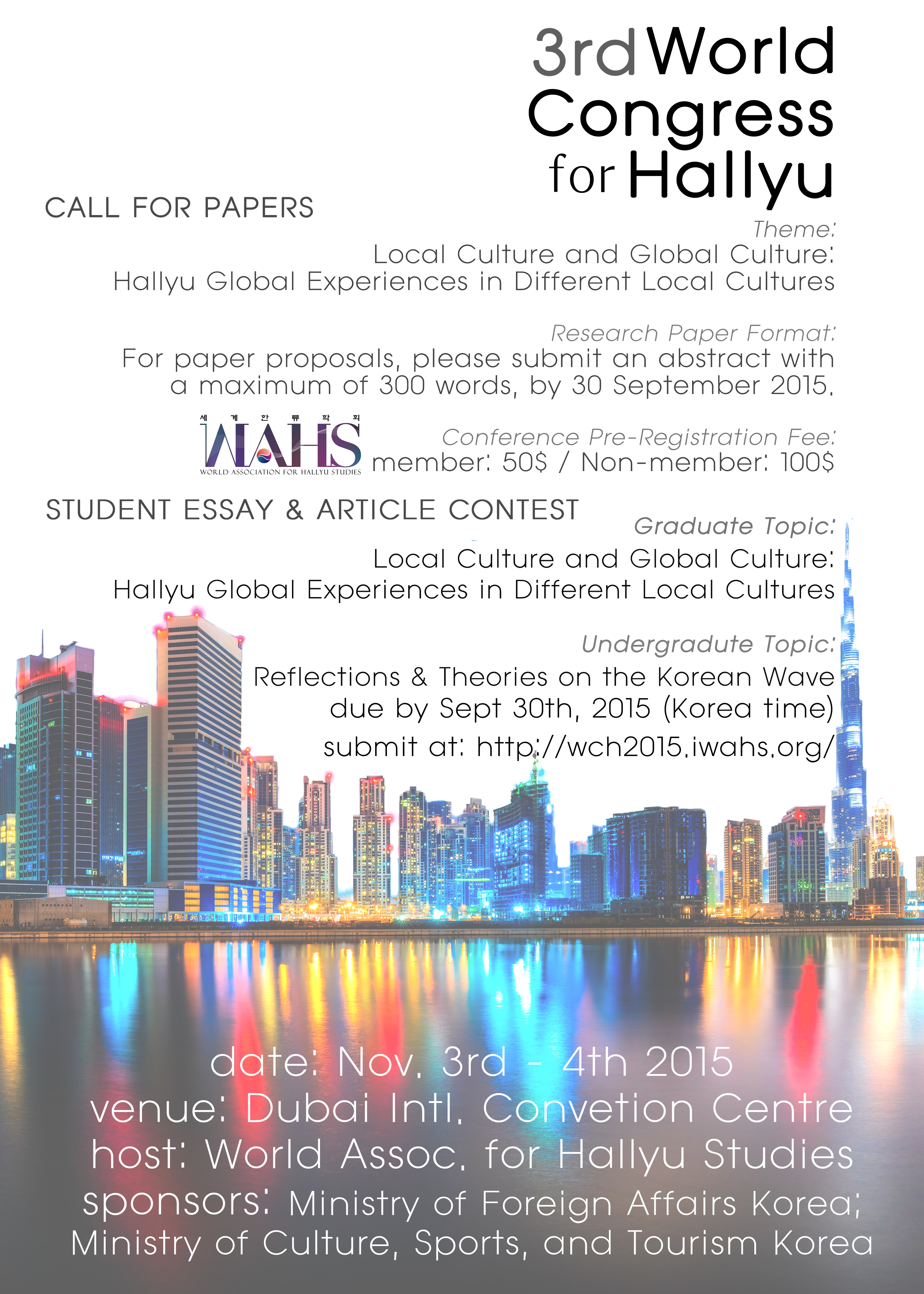
…I am emailing on behalf of WAHS to inform you of an upcoming international conference in Dubai on Hallyu Studies. The conference, World Congress on Hallyu, is the third of its kind and aims to bring together academics, students, and organizations who have an interest in the phenomenon of the Korean wave, known as Hallyu. Currently, we have branches of research in the Middle East, Southeast Asia, North America, and Europe.
I have a attached a flyer for an official “call for papers” for undergraduate and graduate students. I hope that you can pass it along to students who would be interested in submitting to the conference or contest. The undergraduate student essay winners are eligible to win a cash prize for their research, while graduate students are eligible for free airfare and accommodation to the conference to present their research. Graduate students seriously interested in attending are urged to sign up for a WAHS membership to receive a discount conference entrance fee and possible stipends for our future spring conference.
Join with me please, in bursting out laughing at the caption to this image on the Chosun Ilbo website…
Models pose with the taegeukgi or national flag in front of the Lotte World Tower in Seoul on Thursday, ahead of the 70th anniversary of liberation from the Japanese colonial rule.
“And now we go to our leader’s house, where earlier today, a spontaneous demonstration took place.”
“A grateful duck has written a new song for our beloved leader, and she is here joined by the chorus of the Animal Guard!”
No? I assure you, it’s much funnier in the officious, slightly hungover voice of the pig making the announcement. But the fact remains: promotions like Lotte’s are like theaters of the absurd. Because really: what was the point of the models exactly?
Was it because otherwise disinterested heterosexual men and lesbians feel more patriotic if they see attractive women? Was it because they inspire people to learn more about Korea’s history, and to be more concerned about Korea’s image abroad? Was it because other less objectifying, less patronizing methods have been tried and failed?
No? Then why are young female models so routinely used to promote nationalist causes in Korea?
As if Lotte Group was posing the questions to news outlets itself, perhaps half ofall theillustrated newsarticles on its tower flag I quickly surveyed didn’t even mention the models at all. So too the first English article I encountered, which instead offered a borderline advertorial on its deep numerical symbolism.
It’s almost as if wrapping themselves up in the national flag and posing in front of highly symbolic, highly controversial chaebol mega-projects is just something young women spontaneously like to do.
Also, no-one supposes that these models weren’t hired by Lotte Group, as part of an obvious ploy to counter criticisms of excessive chaebol power in Korean political and economic life, and that Lotte Group is not even a Korean company at all. Some tweeters I found via the seong sangpoomhwa (성상품화/sexual objectification) search feed on Twitter I subscribe to (who doesn’t?), for example, said:
롯데그룹 지배권 분쟁 여론 악화 타개책 : 애국심 마케팅 + 성 상품화 = 높은 건물에 태극기 달고, 날씬한 여자 모델에 태극기 입혀서 사진 찍기. 대한민국에서 애국심은 이렇게 사용된다. 적나라한 참상. pic.twitter.com/pv8ihi0yNX
“Lotte Group’s solution to weaken public opposition to its power: patriotic marketing + sexual objectification = a tall building with the flag and thin models wearing flags. In Korea, patriotism is used like this. Oh, how bold!”
“Who are these women? Don’t use yourselves as tools of sexual objectification. Especially on a meaningful day like today. How come you can use our national flag like that, which was used to support and give courage to the Korean independence movement?”
“[Here’s some] women in hot pants wearing the Korean flag like a skirt, in front of the Lotte Tower, which has been accused of causing problems with the the air force’s flight paths and [consequently] implementation of strategy during wartime. How wily: even Lotte Group’s promotion strategy is Japanese-orientated.” [James — Eh? Because Japan would be the enemy in the event of a war? And surely he means the building location, rather than the promotion?]
Sigh. Of course, I don’t pretend for a moment that a twitter wordsearch represents everything being spoken about a subject. So I’m sure that, somewhere, people are asking such questions as:
Why is it almost always only young female models are ever chosen for promotions like these?
Why only models with a very narrow range of body types?
What kind of gender and sexual roles are they promoting, when women are mere decorations for a cause?
As always, I’d be grateful for any pointers to where people are doing so. But, if it turns out people aren’t really talking about such a widespread phenomenon or belief though, then that’s precisely why we should look more closely at it. Because, as Amy Wharton explains in her book The Sociology of Gender: An Introduction to Theory and Research (2005):
…understanding gender requires us to go beyond the obvious and to reconsider issues we may think are self-evident and already well understood. Challenging the taken-for-granted is one essential component of the sociological perspective. In fact, sociologists argue that what people view as unproblematic and accept as “the way things are” may be most in need of close, systematic scrutiny.
@ASAnews Why I #lovesociology: because thinking critically has ruined approximately 90% of my daily small talk.
So to encourage further conversation along those lines, and to highlight the issues raised by this example, next month I’ll examine another highly symbolic instance of Korean “patriotic marketing [through] sexual objectification” then demonstrating why it’s more problematic than it may at first appear (apologies for the split, but it’s necessary for 5000 words). Until then, I appreciate hearing your thoughts on the flag-wearing promotions, and any other questions they raise.
I’ve been asked to pass on the following by Dr. Daniel Nehring, a British sociology lecturer:
My project looks at the experiences of Korean-Western couples currently living in Korea, of any sexual orientation. It involves conversational interviews of approximately one hour, covering various aspects of everyday life in a transnational relationship; I interview the Western participants in English, while my Korean (female) colleague interviews the Korean participants in Korean. I work according to the code of ethical conduct of the British Sociological Association, so participation is confidential and anonymous, which includes not divulging one partner’s responses to the other(!). I am looking for participants aged 25 to 45 who are settled in Korea and currently live in a long-term transnational relationships. I could meet participants in a place of their choice; alternatively, the interview(s) could take place on Skype. I would be happy to answer any further questions about my research; my e-mail address is d.nehring@worc.ac.uk.
I’d add that I’ve had the pleasure of meeting Daniel several times, and that he has conducted similar projects in Mexico and China; see here for one of his journal articles on the latter, which is still ongoing, while the Mexican interviews ultimately became part of a book.
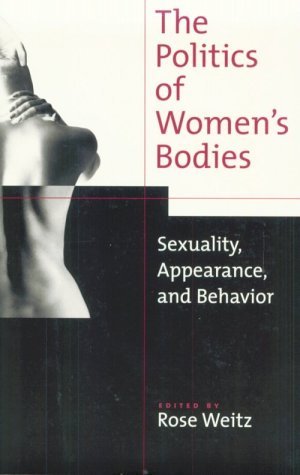
Yeah, I may be straining the definition of “fashionably late” here. But most of these 22 books were already quite old, so let’s make this post just as much about the subjects they raise as about their authors and contents, which I hope you’ll find much more interesting.
To that end, it’s very long, which I’ve had to split into four separate posts so as not to overwhelm you. But by all means, just skim ahead just to whatever catches your eye, or to Parts Two, Three, and Four that I’ll link to once they’re completed. And, if you’re tempted to buy one of my recommendations but want to know more about it first, or if you think I’ve misread something by one of your idols, please do let me know in the comments section.
For those of you interested in a breakdown of the authors, 15 of the 22 were written by women, with one more co-authored with a man; needless to say, I’ll never understand men who are too embarrassed to be seen reading female authors, especially when some women are turned on by those that do. (At which point, it behooves me to mention the crucial role of the book I was reading when I met my first girlfriend.) Unfortunately though, to the best of my knowledge only three of the books were written by people of color, or included chapters by them. But, frankly, correcting that remains a luxury I literally can’t afford: just two of the books were new ones ordered by me, and delivery charges often make second-hand books from overseas just as expensive as new ones in Korea. Most of the remainder then, came second-hand from the limited choices available at Fully Booked—since closed down—and Nampodong Book Alley in Busan, or from What The Book in Seoul.
Also complicating matters are my 900-ish books which arrived from New Zealand last year, after 14 years in storage, some 50-100 of which were well overdue for a read even before they were boxed. For example, tempting me from the corner of my eye as I type this is the 654-page The Prospect Before Her: A History of Women in Western Europe, 1500-1800 by Olwen Hufton (1995), which I see from my note on the inside front cover* that I bought on October 26, 1997. Like a lot of things associated with turning 18, I’m not sure I can wait any longer.
Finally, alas, my total pales in comparison to the veritable library read by the person who inspiredme tokeep track. But I have many uncounted journal articles as an excuse, and it’s still on par with that of a busy io9 writer, as well as an improvement on the measly 16 I read in 2013. With only 13 read so far this year though, I’m going to have to seriously up my game to reach my goal of 30 in 2015.
One of those books that completely shifts how you look at the world.
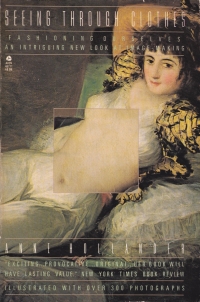
As a student in the mid-1990s, I was constantly disappointed with art history books, which overwhelmed with references to artists, works, and movements that I’d never heard of. But I wasn’t a beginner; if they’d been adequately illustrated, I’d have been able to follow along. Instead, they just left me feeling frustrated and ignorant, as if I shouldn’t even bother reading if I didn’t already have a degree in the subject. Better to learn something else to dazzle women at cocktail parties with, I soon realized, after ranting about snobbish art history writers inexplicably failed to impress.
Twenty years and thousands of books later, many with lots of big words and no pictures at all, I’m much more confident in calling out bad academic writers. But I’m also less quick to judge authors for things that are often out of their control, having some practical experience of my own with the arcane restrictions editors place on the use of images, and I’m much more willing to accept where my knowledge is lacking, and which subjects will need more of a commitment from me than others. For those, I’ve learned to approach via angles which I already have some background in, and know in advance I find interesting.
With art history, my interest was slowly rekindled through Erving Goffman’s occasional allusions to it in Gender Advertisements(1979), which I’ve done extensive work on (scroll down the right sidebar), then later through John Berger’s Ways of Seeing (1972). With Seeing Through Clothes though, I’ve become a giddy, wide-eyed teenager again, as not only does it have over 300 accompanying photographs (if only I’d found it 20 years ago!), but it made made me realize that art is one of our main and sometimes only source on changing notions of fashion, beauty ideals, status, and sexuality for much of human history. Rather than a study of art for art’s sake, that’s what this book is about, which makes it much more interesting and accessible for the lay reader, and means it’s thick with facts and insights that completely overturn what you thought you knew about those subjects. It’s clearly had quite an influence too, being referenced repeatedly in the very next books on fashion—The Language of Clothes by Alison Lurie (1981), and Fashion, Culture, and Identity by Fred Davis (1992)—that I read a year later.
That said, it’s still a solid, academic, 504-page tome, not for the faint-hearted. Also, while the first chapter on drapery was interesting enough (which, again in hindsight, there’s rather a lot of in medieval paintings), and the next two chapters titled “Nudity” and “Undressing” were fascinating, I have to admit that the remaining three of “Costume”, “Dress”, and “Mirrors” were really quite dull by comparison; naturally and obviously perhaps, but I’m not just being facetious, as the difference was so great that it was a genuine relief to finish the book. Still, I heartily recommend buying a second-hand copy at least, even for Korea-based readers that would have to pay $16.95 delivery.
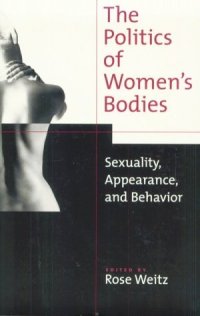
Of course, there’s still 19 more chapters on a very wide range of topics, albeit of widely varying quality, and although many are quite dated (I didn’t even bother with the final chapter on fetal rights), there’s still plenty to interest everyone. Personally, my three other favorites were:
Chapter 3, “Foucault, Femininity, and the Modernization of Patriarchal Power” by Sandra Lee Bartky, on similar themes to Body Politics: Power, Sex, and Non-verbal Communication by Nancy Henly (1977) that I just finished, and am not surprised to see mentioned. It was also a much better introduction to Foucault than Foucault himself, his The History of Sexuality, Volume 1: An Introduction (1976) being a complete and utter turn-off for me.
Which has just reminded me that, many years ago, a (necessarily anonymous) reader emailed me on how to overcome that:
“…with Foucault, some people (like me) fall in love with him whereas others just wave him away. To answer your question [of which book is more appropriate for a beginner], his book, Discipline and Punishmay be a better pick for you, indeed. It is difficult to understand (or appreciate) The History of Sexuality series truly without systematically following Foucault’s development of thoughts from his earlier books, just because Foucault himself was experimenting his ideas and didn’t really know where things were heading. I think Foucault finally clarified his thoughts, his plans, and his interests in Discipline and Punish and he completed them in History of Sexuality books. Besides, Discipline and Punish is more fun to read than History of Sexuality.”
Next, Chapter 5, “From the ‘Muscle Moll’ to the ‘Butch’ Ballplayer: Mannishness, Lesbianism, and Homophobia in U.S. Women’s Sports” by Susan K. Chen, which unfortunately is just as valid today as it was when it was written in 1993. For a good book on similar themes in a Korean context, I highly recommend Transnational Sport: Gender, Media, and Global Korea by (the awesome) Rachel Miyung Joo (2012), whom I’ve been fortunate to meet.
Finally, Chapter 8, “Selling Hot Pussy: Representations of Black Female Sexuality in the Cultural Marketplace” by Bell Hooks, who will already be familiar to many of you.* And I can see why: her writing style is very forceful and galvinizing, and I especially liked her brief examination of Tina Turner’s career, which she convincingly argues “has been based on the construction of an image of black female sexuality that is made synonymous with wild animalistic lust.” Then again, forceful writing doesn’t leave much room for nuance, so some of her arguments here are much too categorical for my taste.
(*By coincidence, as I type this I’m busy tweeting “15 Books That Changed Women Forever” open in another tab, where her 1981 book Ain’t I a Woman? is described as “a foundational text of intersectional feminism, explaining how the feminist movement failed to speak to women of color and the working class. Hooks continues to be instrumental in calling out mainstream feminism for its racism and classism.”)
My only, minor complaint with Women’s Bodies as a whole is that it exclusively looks at the US, which doesn’t become apparent until you’re already well into it.
From the introduction (p.13; emphasis in original):
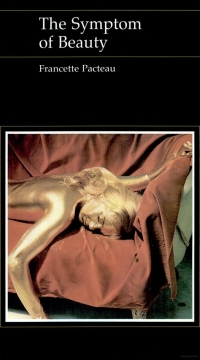
The issue of beauty, as such, played little part in the initial feminist debates about ‘images of women’. Nevertheless, it formed the background against which the debates were staged. The anger directed towards advertising, for example, was basically in protest against a world of representations—in particular, the representation of a world in which a women was young, and ‘beautiful’ or she was nothing. The close-cropped heads, the burned bras, the functional overalls and the eschewal of make-up which characterized the appearance of feminism in the 1970s, represented the will to eject ‘beauty’ (seen as an oppressive male cliche) from the world of women.
Who among you wouldn’t want to buy it after reading that? Yet what followed was one of the most impenetrable volumes I’ve ever read, full of some of the worst excesses of postmodernist and poststructuralist waffle. Occasional semi-readable sections, for example Chapter 4—”The Girl of the Golden Mean”—which added slightly to my knowledge of 1950s narratives about female body shape, were scant compensation for the 19,000 won I’d wasted on a book I could barely comprehend.
In fairness, the back cover did promise “an intriguing psychoanalytic study of beauty that looks into the eye of the beholder and to the mind conjuring behind it”, and pointed out that the author is less interested “in the contingent object of desire than the fantasy that frames it”, and instead “considers the staging of the aesthetic emotion”—not necessarily a flaw of course, but certainly a red flag for those of us more used to focusing on those objects of desire (let alone us plebs not quite used to using the word “contingent” like that). Unspoken is that she also clearly assumes the reader is intimately familiar with the work of Jacques Lacan, although again I imagine that every undergraduate psychoanalysis student would be.
Still, most English speaking undergrads—and I’d venture even their French counterparts—would surely struggle to follow along as she applies her psychoanalytic lens to some extremely obscure figures and cultural works, the very first two discussed being the Sarrasine and The Unknown Masterpiece novellas by Honoré de Balzac (1830 & 1831), followed by the 5th century BC philosopher Hippias of Elis. Again, that’s not necessarily a flaw. But it is heavy going for the very first page of a book about a subject you expected to be much simpler.
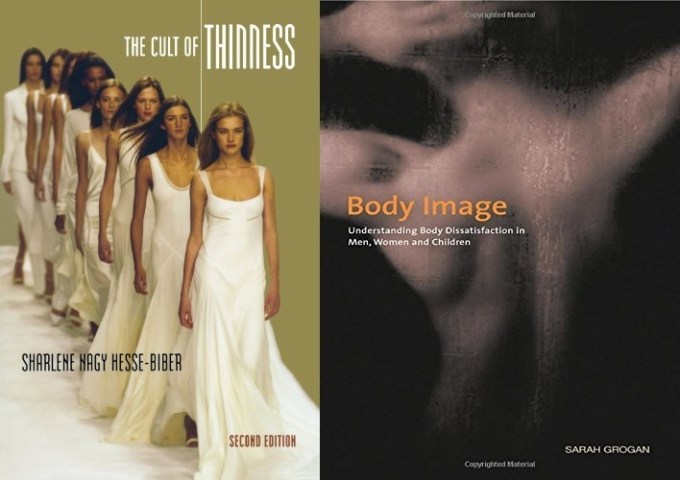
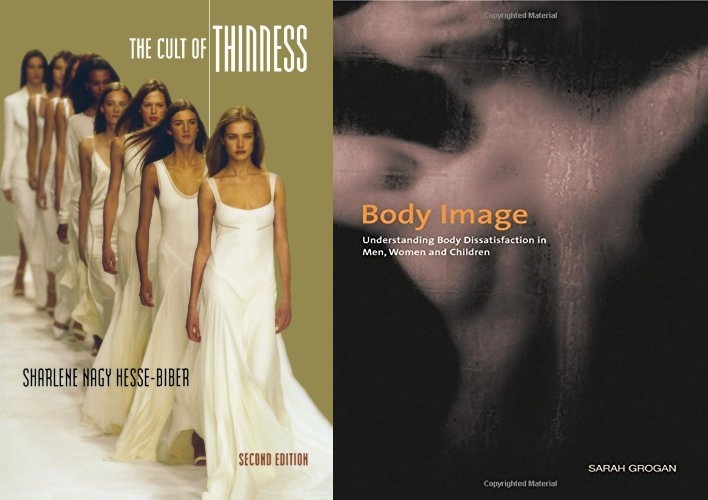
Both excellent, comprehensive discussions of the subject of body image, but both written before the rise of social media (an issue I’ll address in a moment). So, I would encourage you to keep both names in mind, but to holdout for third editions.
When those do come out though, my preference would easily be for Sarah Grogan’s. Primarily, because this edition’s clear chapter structure means that information is easy to find (and hence a much better quick reference guide when I was asked for a quick contribution to an article on “Korean Primetime’s ‘Lookism’ Problem” for the Korea Times), whereas the vague, overlapping ones of The Cult (e.g., Chapter 5 “Becoming a Certain Body”, Chapter 6 “Joining the Cult of Thinness”) makes navigation difficult, and the content somewhat repetitive; this meant finishing the book became more of a chore than a learning experience. Also, because of personal preferences: first, because The Cult overwhelmingly discusses the US, whereas Body Image throws a much wider net, but with a focus on the UK; and second, because The Cult often breaks the text with random collages and so on, in contrast to the more spartan use of images in Body Image. I can hardly critique that on a blog of course, but when it’s in an academic book it does give the impression of catering to a much younger, less-informed readership.
In Body Image, the most interesting and eye-opening section for me was Chapter 5 on media effects, which raised my understanding of the subject to a new level by outlining the major theories of media influence—social comparison theory, self-schema theory, and self-discrepancy theory—and how these can and have been incorporated in strategies to overcome media effects. Students have asked me about the latter sometimes, but frankly I haven’t really known what to say; now though, they’ll be a core part of my presentations.
Also, the concluding paragraph from that section sounds quite prescient in light of recent shifts in model types and messages in advertising, although catering to attractiveness is also not without its critics (p. 132, my emphasis):
“Clearly, media portrayals of the slender (and muscular, for men) body reflect current cultural ideology of the body as well as promoting these ideals. However, since the portrayal of such imagery has been shown to reduce body satisfaction and create body concerns, this is surely sufficient reason for advertisers to opt for the use of models in a range of sizes. Although advertisers may argue that only thin models sell products, recent British evidence from a study by Emma Halliwell and Helga Dittmar [downloadable here] demonstrates that it is attractiveness, rather than size of models, that is crucial in making associated products attractive to consumers.“
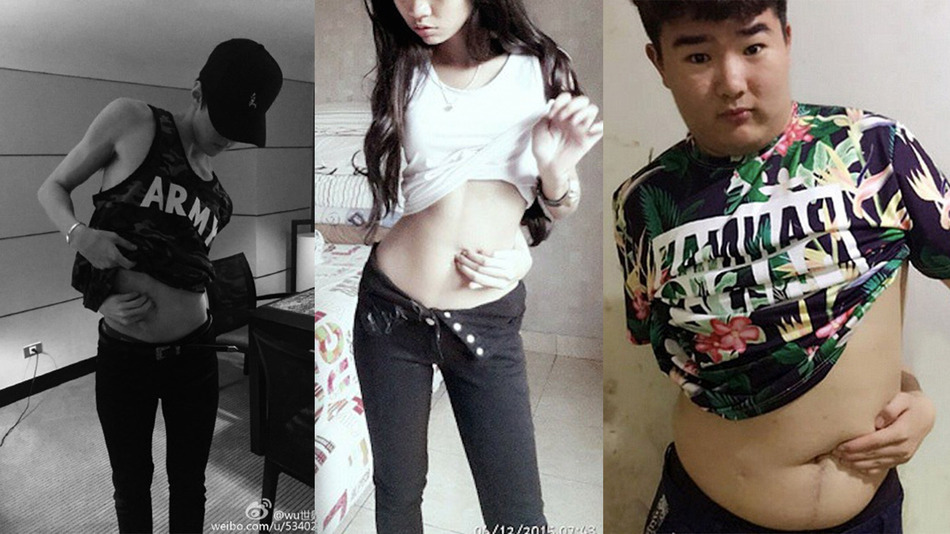
Originally, this post had 500 more words of breathless praise for Grogan’s book, and of what I learned from it. Wisely, I’ll race ahead to my conclusion instead, which I’d planned to be a lament on how dated both books were, the research I did for my article on the thigh gap teaching me that social media has had a radical effect on the ways and especially speed in which body image trends are formed and disseminated. And, as if to rub that in, the “BellybuttonChallenge” wasgoing viral as I began this post, followed by the “CollarboneCoin Test“(?) that’s emerged as I’m ended it.
Skimming through Grogan’s book again a year later though, from which I realize I still have a lot to learn, I’m no longer convinced that things are that different to when I was young, and that insights gained about the effects of other, slower media are no longer relevant. Moreover, the rise of social media is hardly a uniform negative either, as a recent interview of young adult fiction writer Louise O’Neill recently taught me:
…Her books are equally unflinching about life in the social media age. “Social media is a double-edged sword,” says O’Neill, herself an enthusiastic user of Twitter. “There are extremely positive elements to it, particularly the way in which it makes it easier for us to connect and build our own communities. Even selfies can be positive – I think there’s something brave and amazing about teenage girls posting pictures of themselves saying, ‘This is how I look and I am beautiful’ but it’s also true that it can exacerbate feelings of not being good enough. There’s so much toxic competitiveness when you’re a teenage girl, so much are my thighs smaller than hers? Am I prettier? Do boys like me more? Social media adds to the pressure and then society tells young women that they must look sexy and act sexy but that they can’t be sexual beings.”
Comments such as this help explain why O’Neill’s books are read as much by the anxious mothers of teenage girls as by the girls themselves. “The key is to be honest,” she says when asked what advice she would give those parents. “I would hope mothers who read my books understand the pressures their daughters are under and why they are acting or behaving the way they are. Try to encourage honest communication, be open and interested, try to understand.”
So by all means, read “old” books on body image if you can get a hold of them, especially these ones. But also keep up with developments, these dozens of journal articles on gender and body image, freely available from Routledge until the end of September, being an excellent place to start (and one of the first ones is about Korean women!). And please feel free to discuss those in the comments too!
And I’m still quite fond of K-pop, although we’ve long since agreed to see other people. But, thinking about old flames over a drink last night, one thing led to another, and soon the whole family would be dancing to My Ear’s Pig, a parody performed with comedian Gang Ho-dong on the February 21, 2010 episode of 1 Night 2 Days. With lines like “My ear’s pig, number 1 rated wild pig…put it on top of lettuce”, it’s the perfect antidote to a rainy Monday (especially the guy at 1:48), 100% guaranteed to leave you grinning from ear to ear:
Here’s a longer version, which includes scenes from Gang-ho Dong’s month-long preparation for the performance:
But then I saw a 2014 version with fellow comedian Lee Guk-joo, and quickly sobered up:
Why? Because while Gang-ho Dong is often the butt of jokes because of his weight and size, he is also a former ssireumchampion, and retains an image as a genuinely strong ex-wrestler…
…whereas Lee Guk-joo is overweight, in a country where a lot of television humor revolves around female comedians’ supposed ugliness and obesity. So, not knowing anything about her, and watching her perform for the first time above, it suddenly felt like I was joining in that all too common chorus of laughing at the fat girl; My Ear’s Pig, suddenly rendered a guilty pleasure at best, until I see Baek Ji-young perform it with people of a range of body types.*
But first impressions can be mistaken. Because Lee Guk-joo, it turns out, is the very last person in need of my pity:
To learn why, read more about her cosmetic endorsements, her other cover songs, and her general, all-round spunkiness at Seoulbeats, in a post which I can’t possibly do justice to here. Sorry for the abrupt ending, but it’s true.
To further persuade you (my emphasis):
…She is not allowing her weight to pigeonhole her personality, which she has expressed in an interview. Unlike what some would have you believe, she is fully capable of expressing her true self without apology and refuses to be discriminated for superficial reasons. Her physical makeup will neither hinder nor propel her for the simple fact that she has made up her mind not to be marketed through purely visceral means.
Having someone like this come into the market as a new role model for women is a welcome change in Korean entertainment. Lee Gook-joo doesn’t shy away from the spotlight because others would deem her unworthy, but rather she exhibits a glowing confidence that isn’t to be underestimated. She is a role model for those of us who appreciate a fun, outspoken woman who isn’t afraid to work her way to the top…
I’ve never been so happy to be so mistaken.
And how was your Monday? ;)
Related Posts:
Are Gorgeous Comediennes Really That Rare? Your Thoughts (The Atlantic)
What Donald Duck, Hani, and Big Tits Taught Me About Body-Image in Korean Comedy (The Grand Narrative)
“I am a plus sized girl living in Korea and I feel so unattractive.” (Life)

*The lyrics do require meat-lovers, but not necessarily those with the girth to match. And that applies to Baek Ji-young’s lines just as much as her partner(s)’.
With the decriminalization of adultery in February, Koreans seem more open about sex than ever before. But advertisers are slow to challenge traditional gender roles.
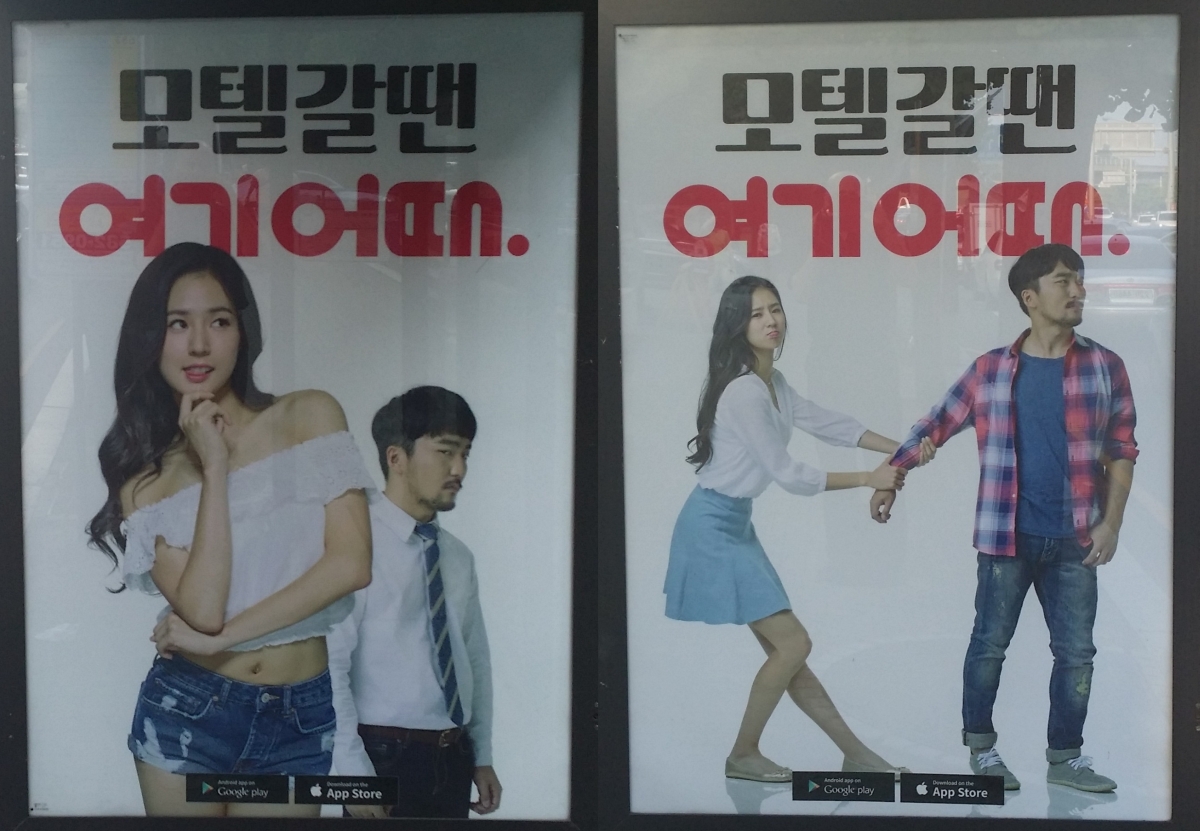
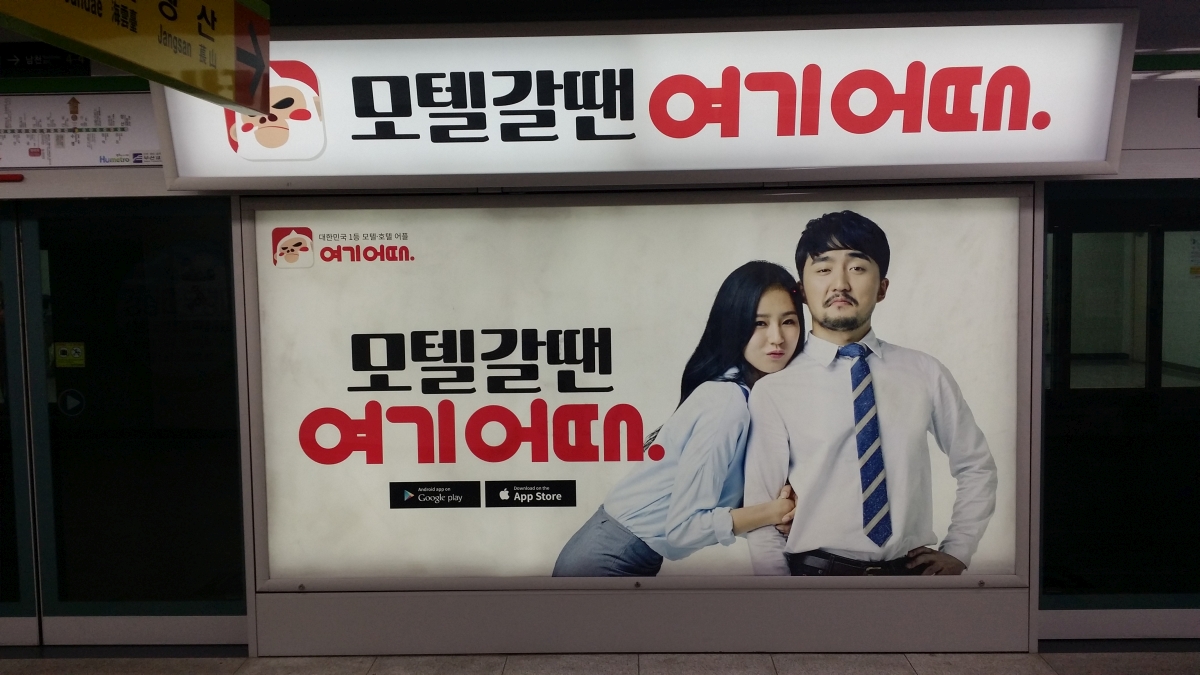
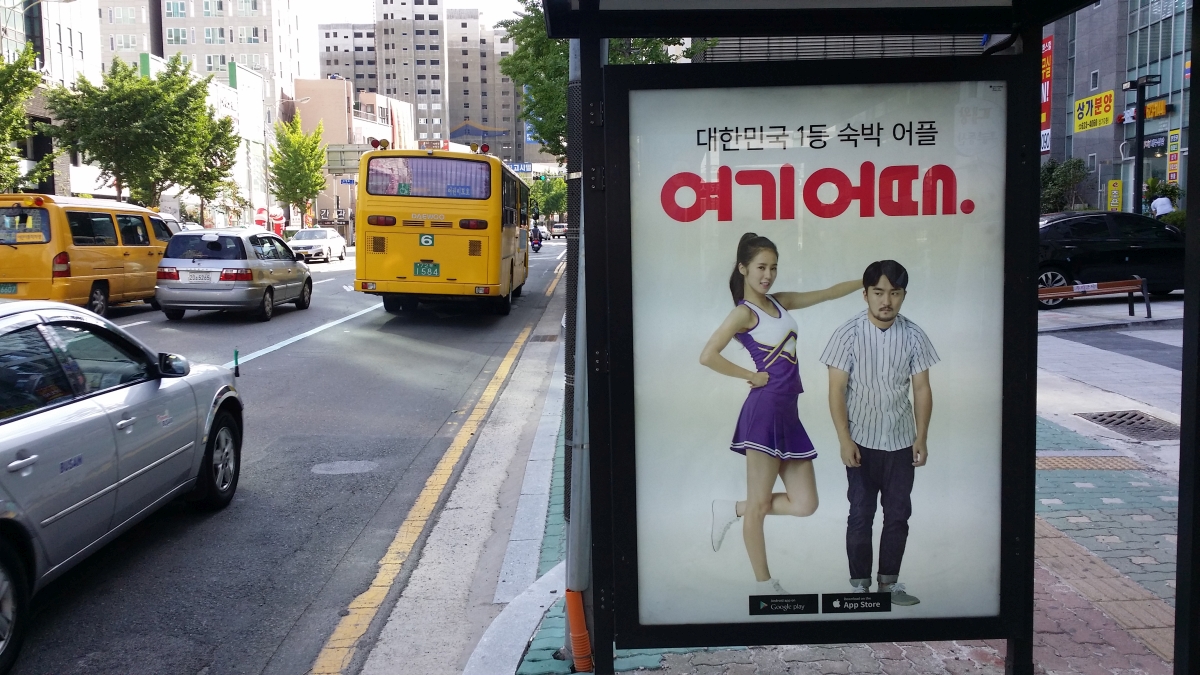
That Korean youth would include my two daughters, just off-camera in these pictures I took at a local bus stop. And the shameless hussy would be cheerleader Park Ki-ryang (a.k.a. “The Baseball Goddess”), intent on hooking-up with SNL writer and comedian Yoo Byung-jae in their ads for 여기어때 (Yogi-oddae, “How about here”), a motel-finding app. For someone whose first Korean girlfriend had a 10pm curfew, and who arrived in Korea the same year singer Baek Ji-young was disgraced for unknowingly being taped whilehaving sex, it was remarkable to see something so brazen.
Ironically though, they were gone from Busan bus stops the next day; I wondered if they had indeed been too much for the Korean public. But I couldn’t find any news about any complaints or controversy, and found another ad in my local university district the day after that:
19일 관련업계에 따르면 인터넷서비스업체 위드웹이 운영하는 여기어때가 방송작가 겸 방송인으로 활동 중인 유병재를 앞세운 광고를 ‘tvN’ 등 케이블 채널을 통해 이날부터 방송하기 시작했다. 유병재는 최근 대형 연예기획사인 YG엔터테인먼트와 전속계약을 체결하며 주목받고 있다.
유병재의 광고 파트너로는 ‘야구여신’으로 불리는 롯데자이언츠 인기 치어리더 박기량이 낙점됐다. 유병재와 박기량이 등장하는 광고는 ‘불타는 청춘을 위하여’라는 주제로 숙박업종에 걸맞게 ’19금’ 위주로 내용이 구성된다. 관련 광고방송은 이날부터 유튜브 등 동영상사이트를 통해 검색이 가능하다.
위드웹 관계자는 “지난 4월 개그맨 유상무가 등장하는 첫번째 광고를 내보낸데 이어 이번이 방송광고 2탄”이라며 “광고는 숙박앱을 주로 이용하는 20대와 30대 젊은층의 공감대를 이끌어내고 웃음을 제공하는 내용으로 구성됐다”고 말했다.
According to an industry spokesperson, Yogi-oddae, run by the internet service company Withweb, started airing the commercials with Yoo Byung-jae…on cable TV channels such as tvN from the 19th of June. [He] is getting a lot of attention recently, due to signing with YG Entertainment. [The same entertainment company that has signed the likes of 2NE1 and Big Bang—James].
His partner in the commercials is Park Ki-ryang…the theme is “For The Burning Youth,” and, appropriately for the motel industry, have adult content. They can also be found on YouTube.
A spokesperson from Weedweb explained that, “This is the second series of commercials for this accommodation app; the first series with gagman Yoo Sang-moo aired in April. They are designed to get the attention of 20 and 30-somethings, and make them laugh.”
(A few hours before finishing this post, all of the bus stop ads were back up. Clearly, someone at Yogi-oddae is just winding me up.)
Based on the bus stop ads, I looked forward to a cheeky take on Korean sexual double-standards, akin to Korea’s first (and I still think only) example of femvertising from 2009. Instead, Park Ki-ryang is much more indirect than those suggested, and grossly overdoes the childishness and the aegyo:
(For non-Korean speakers: in the first, she needs somewhere to wash up; then, she had a nightmare about ghosts, and doesn’t want to be alone; they’re watching (presumably) a sex scene in the movie, and she asks “Is that possible?”; she says it’s late and the taxi is on a more expensive rate, which means the ride would cost 50,000 won, comparable to a night at a cheap to mid-range motel; and finally, her favorite male perfume is his own smell. For Korean speakers, here’sboth discussing the making of the commercials.)
That said, my wife, very much in the target demographic, actually found them quite funny. I warmed to them too, the more I watched, as every guy can relate to that feeling of sudden realization that he’s getting some that evening. But therein lies the problem: not only do the commercials celebrate traditional dating roles, but they’re all done entirely from Yoo Byung-jae’s perspective.
This emphasis on male consumers was indirectly confirmed by Etoday:
지난 19일 공개한 TV CF 5편의 에피소드 중 ‘응원 편’과 ‘꿍꼬또 편’이 박기량의 섹시함을 익살스럽게 표현해냈다는 평가다. 20~30대 남성팬들에게 큰 호응을 얻고 있으며 CF 영상은 여기어때 유튜브 채널을 통해 빠르게 확산되고 있다.
People say that out of the 5 commercials released on the 19th, Park Ki-ryang’s sexiness is humorously expressed and well shown in the cheerleader and ghost dream versions especially. This has had a big effect on male 20 and 30-something fans in particular, who have been rapidly spreading the commercials via YouTube.
Yogi-oddae is in stiff competitionwith Ya-nolja, a similar, much older company that has also recently launched its own app, and its previous advertisements were much tamer. So, however much I want to read into the campaign, it’s difficult not to conclude that Yogi-oddae was just exploiting the hype surrounding the decriminalization of adulteryin February. Nothing wrong with jumping on that bandwagon of course, but it does frustrate with not delivering on its promise of a shameless hussy. (Not unlike Ashely Madison, which turns out to be a rather unreliable source for would-be Korean adulterers.)
I do concede that they’re just commercials though, and that I’ve got nothing but praise for the advertisements. It’s just that it would be nice to see a Korean advertiser place challenging gender stereotypes at the core of a campaign again. Not in a haphazard, conflicting fashion like in this one, or, like Durex Korea, by occasionally copying positive foreign examples, but quickly returning to its normal, very laddish themes thereafter. I’m also confused by the bizarre lack of attention to female consumers in the commercials, which seems to be an increasingly common trend.
But my biases are clear, and perhaps I’ve misjudged how positively Korean women would respond to it. What do you think of them? Or this example by American cosmetics manufacturer Benefit?
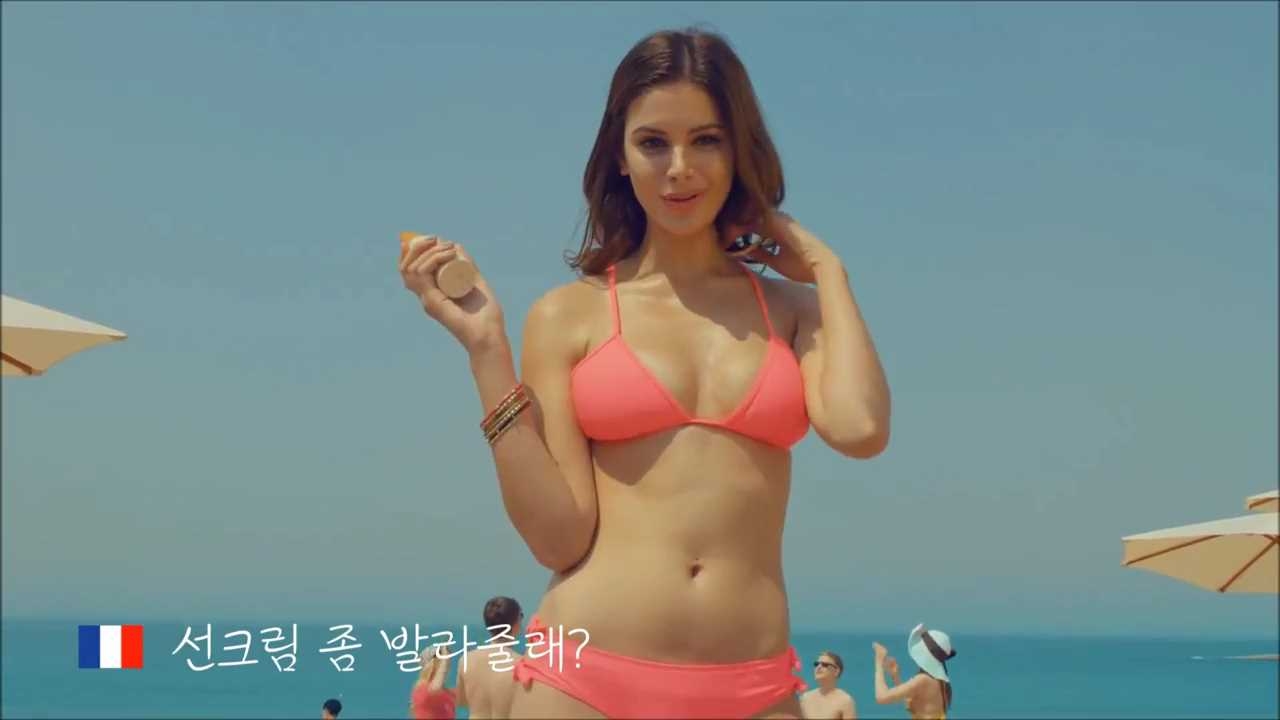
As pointed out by Lizzie at Beyond Hallyu (see also: Branding in Asia), it’s much more daring, yet again it ultimately falls short (my emphases):
This change in attitudes can be seen no more clearly than in this advert. A few years ago even the hint at the idea of a woman having the agency to initiate a sexual encounter with a stranger would have been scandalous. But this is not just a woman, it’s a married woman and it’s not just a hint, it’s a full-on kiss scene which takes up a third of the commercial’s one minute long run.
Clearly the ad is an example of a massive shift in attitudes surrounding women’s relationship with sexuality that has occurred in recent years in Korea. We’ve seen that lately on shows like Witch Hunt where even female idols have been hinting at the fact they may actually have a sex life.
(James: That’s Girls’ Generation on the right, shortly before some of their members—and seemingly every other K-pop idol—either started publicly dating, or admitted that they’d been doing it all along. Source: unknown.)
But even so, condoning adultery is still a bit of an iffy move on Benefit’s part and I’m not entirely sure how this is supposed to entice female viewers. Perhaps this is supposed to make women feel empowered to make their own sexual decisions but I can’t help but feel it serves mostly just to reinforce the idea that women are liars.
Alternatively, it could be Benefit trying to show how in touch they are with the social issues in South Korea. Or maybe it’s just intended as a clever gimmick to show how long-lasting and non-smudging the tint is.
Intentions good or otherwise, the cynic in me sees this as nothing more than a half-hearted attempt at female ‘sexual empowerment’ in order to sell more lipstick.
I agree about the K-pop stars dating of course, best symbolized to me by Suzy, “The Nation’s First Love,” being caught going to hotels with Lee Min-ho after less than a month of dating, and it’s true that celebrities have a disproportionaterole in sparking—or legitimating—new social trends in Korea. But, for us mere mortals, has there been “a massive shift in attitudes surrounding women’s relationship with sexuality” though? (My emphasis.) I’m not so sure, and would cite such things as: the female celebrities receiving the brunt of fans’ anger for all those dating ‘scandals’; the government restricting access to the pill for the sake of shoring up doctors’ incomes; the ongoing (re)criminalization of abortion, in order to increase the birth rate (but effectively only making it more inaccessible and expensive for the poor); and Korea’s curious lack of politicians willing to stick their neck out for those and other progressive issues, epitomized by Seoul Mayor Park Won-soon backtracking on his support for LGBT rights.
Which, by coincidence, was also mentioned by journalist and author Daniel Tudor, in an interview for The Hankyoreh that appeared as I was finalizing this week-long post:
The New Politics Alliance for Democracy is basically just the shadow of the Saenuri Party. [In most democracies] if you’re progressive, you care about social minorities, weak people, poor people in society. You care about women’s equality, maybe gay rights, you care about things like that. But I don’t see much of that [in Korea]. These two parties are dominating the Korean political scene.
What do you think? How would you assess shifts in attitudes surrounding women’s relationship with sexuality? What criteria should we use? Please let me know, so that I can finally begin working on my follow-up to Korean Sociological Image #89: On Getting Knocked up in South Korea(!) :D
Addendum: Eagle-eyed readers may have noticed the name Yoo Sang-moo being mentioned as launching Yogi-oddae’s campaign back in April, not Park Ki-ryang and Yoo Byung-jae. For the sake of completeness, he was indeed hired, along with freelance model Bae Da-bin (a.k.a. Lisa Bae), and their own versions of the commercials were talked about in the media in the same heady terms as those by their replacements a month later, with no indication that their endorsements would only be temporary. I suspect they were just quickly and quietly let go then, because:
a) Yang Sang-moo looked just a little too goofy in his commercials;
b) At nearly 35, he was towards the upper limits of the target market, and had too much of an age gap with 21 year-old Bae Da-bin (whereas Park Ki-ryang and Yoo Byung-jae are 23 and 28 respectively);
And finally c), because the popularity of Yoo Byung-jae and especially Park Ki-ryang was just too great to pass up.
Which again points to the campaign being very haphazard, rather than a concerted attempt to smash the patriarchy :(
Addendum2: Just for readers’ interest, here’s two fun videos about using the Ya-nolja app, found in passing while researching this post. Have any readers also used it, or Yogi-oddae?
(For more posts in the Korean Sociological Image Series, see here)
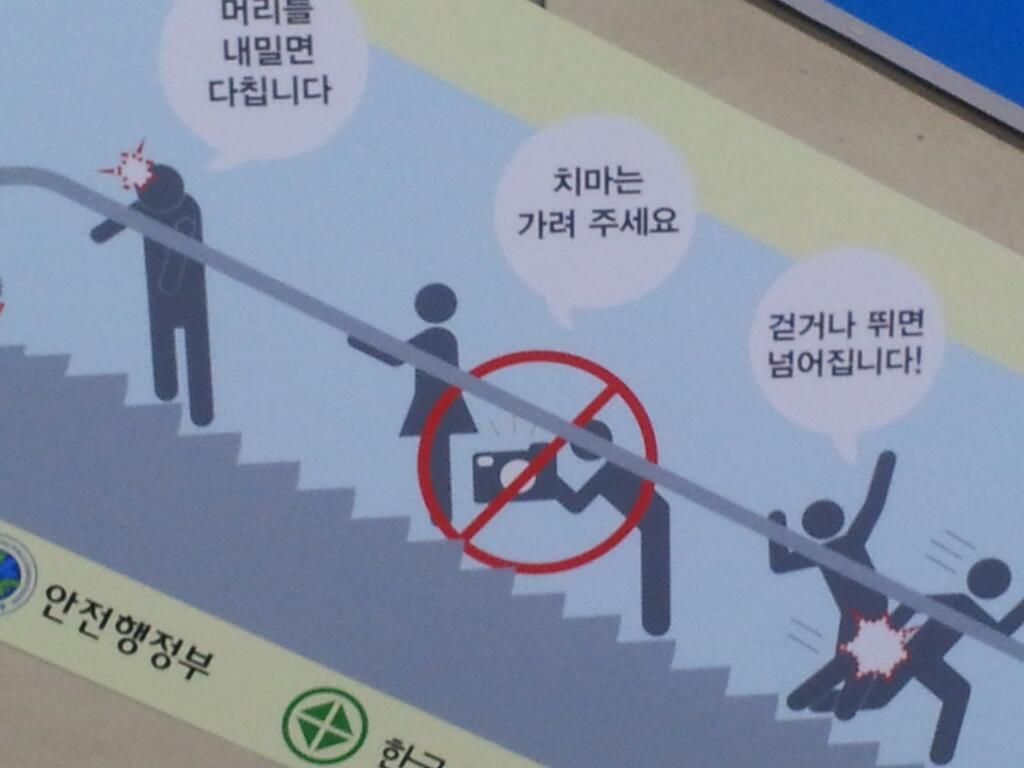
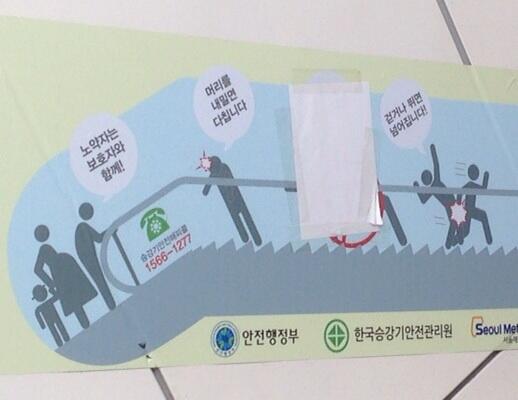
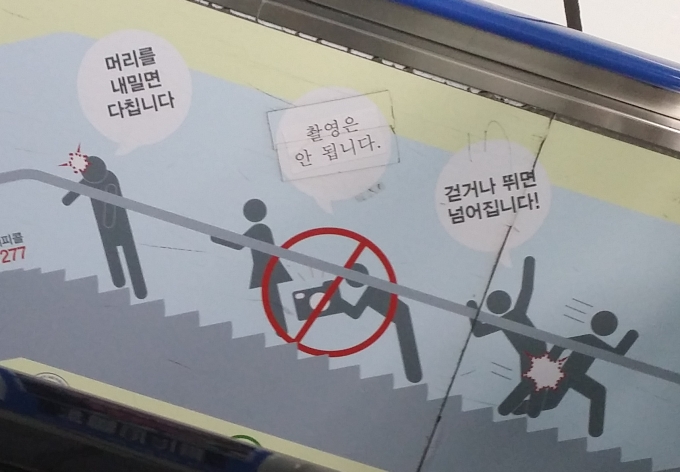
For those of you who can’t read Korean, the text accompanying the center image read “Please cover your skirt.” Which seemed to blame the victims of upskirt photos, rather than those who took them.
What’s more, even covering up can be a problem too. Because, as Hwang So-yeon of OhmyNews explained in March, apparently that can really upset some men’s delicate sensibilities:
…백번 양보해 범죄예방 차원에서 치마를 가린다고 해도 또 다른 문제에 봉착한다. ‘마치 뒤에서 올라가는 사람을 치한·변태·성범죄자 취급한다’는 사회적(?) 압박에서 자유로울 수 없기 때문이다.
…even if for the sake of argument, we allow that women do have cover up their skirts, they still face the constant fear that the men following behind them may be deviants or rapists.
치마를 주로 입는 여성들에게 씌워지는 잣대 역시 문제가 된다. “아니, 저 사람은 치마를 입고도 가리질 않네, 경박해라”와 “아니, 왜 내가 뒤에 있는데 치마를 가려? 나를 치한으로 보는 거야 뭐야?” 등의 시선이 동시에 여성을 옭아맨다. 치마를 입은 사람들이 뒷모습을 가리는 것이 아무렇지 않게 받아들여지는 것은 기대하기 어렵다. 가리지 않는 것도 마찬가지다.
Yet while women who wear short skirts are also pressured by people saying things like “That woman isn’t covering up, how trashy”, at the same time they face accusations like “Why is she looking at me like that, for standing behind her? Does she think I’m a pervert?”. It’s hard for women to live up to such conflicting standards and expectations.
이는 온라인에서 이미 오래된 논란 중 하나다. “나를 치한이나 변태·범죄자로 보는 기분”이라며 불쾌해하는 사람들이 많다. 물론 앞에 가는 사람이 뒷사람을 치한 취급하는 듯한 말을 한다면 기분 나쁜 건 당연하고, 나아가 항의도 할 수 있다. 그러나 정말 치마를 가리는 게 뒷사람을 모욕하는 일일까. 대화도 아닌, 단지 행위만으로 ‘일면식 없는 사람들을 무안주는 일’이라고 판단할 수 있는 근거는 어디에 있는지 의문이다.
This has been a long-standing point of controversy online, as some men feel uncomfortable by women covering themselves up in front of them. Of course, if women do treat the men around them as such, and go so far as to verbally accuse them of being perverts, then the men will be upset and complain. However, is just the act of women covering up really so offensive? You really have to ask why something so innocuous could make some men so angry.
나 역시 이 도식을 보고 치마를 가려야 하는 것 아닌가라고 판단했다. 그러나 곧 내 잘못도 아닌데 왜 치마를 가려야 하며, 더 나아가 ‘치마를 가리든 말든 무슨 상관인가’라고 생각했다. 둘 모두 개인의 선택이며, 모두 누군가에게 피해를 주는 행동이 아니다. 애초에 ‘어그로'(짜증 나는 행위를 하는 상대방에게 위협수준을 높인다는 뜻의 인터넷 용어)가 되지 말아야 할 이야깃거리가 바로 ‘치마 가리기’다.
At first, [when I considered this sign], I thought women should indeed cover up. But then I started thinking, “[People’s problems with it] are not my fault, so why should I?”. And, furthermore, “Who cares if women cover up or not? It’s a personal choice, and, whatever they decide, neither choice harms anyone.” So, really, this shouldn’t be an issue at all.
여성이 경험하는 이런 동시성은 에스컬레이터 벽에 붙은 문구와 다르지 않다. ‘치마 속을 촬영하는 것은 범죄지만, 일단 치마를 입은 사람이 나서서 가려야 한다’는 논리가 그렇다. 치마를 가리는 여성에 대한 왜곡된 시선은 ‘범죄는 스스로 예방해야 하지만 내 기분 나쁘지 않게 치마는 적당히 가려달라’는 어투의 연장선이다. 치마를 가리는 일도 어렵지만, 이 모순된 시각 속에서 행동을 결정해야 하는 과정은 더욱 어렵다.
These conflicting standards women are faced with are no different to those underlying the controversy surrounding this sign. So, while it’s a crime to take upskirt pictures, it’s women who are wearing skirts that should cover up? That’s part of the same view that women who don’t cover up are trashy, yet at the same time should never cover up so as to make a man feel accused as they do so.
Covering up can be certainly be uncomfortable and inconvenient. But it can be even more so just trying to figure out what is right to do! (end)
Meanwhile, for those of you who were wondering what happened to them, a couple of months later the Segye Ilbo explained that in most Seoul subway stations the offending image and text had been covered with A4 paper. It also added that:
…이에 대해 안행부 관계자는 “에스컬레이터 안전 홍보물을 제작하면서 불법적인 촬영을 하지 말라는 취지로 만든 것인데 표현이 부적절했다”며 “문구가 잘못됐다는 것을 인지하고 ‘촬영은 안 됩니다’로 수정하기 위해 잘못된 부분만 따로 다시 제작하고 있다. 며칠 내로 수정하겠다”고 해명했다.
…An official from the Ministry of Government Administration and Home Affairs said, “Our intention was to make people aware that it is illegal to take upskirt pictures, but the accompanying text was unwisely chosen. The signs will be changed to ‘No pictures allowed’ in a few days.”
안행부에 따르면 이 홍보물은 지난해 12월 산하기관인 승강기안전관리원이 200장 가량을 제작했다. 이후 지하철을 운행하는 전국 광역도시 지하철공사에 배부해 주요 에스컬레이터 벽면에 부착했다.
According to the Ministry, 200 copies of the sign were made in December 2013 by the Korea Elevator Safety Institute, and distributed to cities with subways all over Korea. (end)
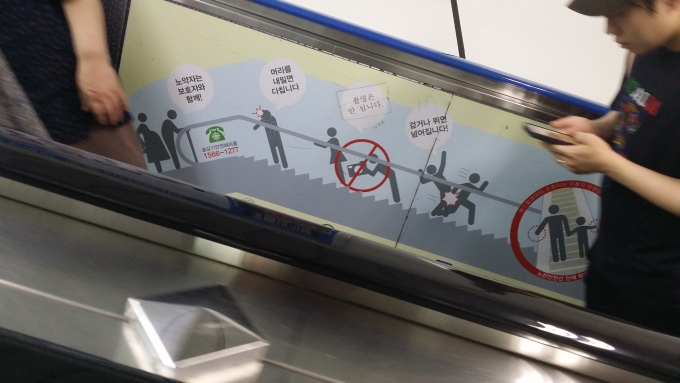
And which brings me to why I’m suddenly talking about this sign over a year later: I was leaving Seomyeon station in Busan recently (Exit #9, if you’re curious), and noticed the changed version above. It was actually the first time I’d seen the sign in person, which I’d assumed had only been distributed around Seoul.
Have any readers also noticed the changed signs? Or originals that subway staff didn’t get around to? Please let me know in the comments. I’m also curious if men being offended by women covering up in front of them is really a thing, or if you feel that Hwang So-yeon was exaggerating. Have any of you ever encountered such attitudes in Korea, or elsewhere?
Update: To clarify, I’m not talking about simple misinterpretations of men’s gazes by women, which of course do happen, and which, like me, I’ll assume most guys just shrug off. If (some? many?) Korean women are so worried as to not want to offend men by covering up in front of them however, as Hwang So-yeon claims, then I’m guessing that a vocal minority of Korean men aren’t shy about complaining about false accusations of ogling, nor in exaggerating their frequency.
Either way, note that the sign was still well-motivated, as the numbers of cases in Seoul have been increasing rapidly in recent years, as explained by Hwang So-yeon below; also, subway sexcrimesin general, of which these upskirt photos make up about a third. However, the increase may also reflect greater policing, awareness, and willingness for victims to come forward:
…서울지하철이 걱정해야 할 정도로 치마는 위험한 옷차림일까. 계단이나 에스컬레이터 아래에서 카메라로 촬영하는 사람들이 당국의 골칫거리이긴 한가 보다. 지하철 역사 내 ‘도촬’ 범죄는 증가 추세에 놓여 있다. 몰래 카메라 성범죄 발생 건수는 2009년부터 807건(검거 인원 716명)에서 2010년 1134건(1051명), 2011년 1523건(1343명), 2012년 2400건(1816명)으로 꾸준히 증가했다. 지난해 8월 말 기준으로는 2766건(1816명)의 몰래카메라 촬영 성범죄가 발생했다.
…Are short skirts so provocative and dangerous that Seoul subway companies have to worry about? It is true that people taking upskirt pictures on escalators and stairs are an increasing source of concern for authorities. The numbers of people being caught for it have been steadily increasing. In 2009, there were 807 cases perpetrated by 716 people; in 2010, 1134 by 1051; in 2011, 1523 by 1343; in 2012, 2400 by 1816; and; up to August 2013, 2766 by 1816.
See the Facebook event page or community page for the details (English and Korean). All proceeds to go to ISHAP, an amazing human rights group who provide anonymous and free HIV, AIDS and STI testing; and Queer in PNU, Busan’s first university founded LGBT human rights group, who strive to make the city a safer and brighter place for at-risk gay youth.
I’ll be there again, and mingling. So please make sure to say hi! ;)
Two back-to-back YouTube commercials for SK Telecom’s “T Roaming” Service, which have a blatant double standard:
In the first, actor Son Ho-jun freaks out when his girlfriend tells him she’s going on an overseas trip with her old college friends. First, he asks if any men are coming with her, but relaxes when she reminds him that she went to a women’s college. Only to freak out again when he learns she’s going to Italy:
My immediate reaction? Whatever your gender or sexuality, if your partner can’t trust you not to bang your friends or the natives when you’re more than a few days away from each other, then in my book that’s your excuse to move on and do precisely that.
But I’ll grant that it’s just a commercial, and that Son Ho-jun’s reactions are exaggerated for comedic effect. Also, provided you’re not too clingy, there’s nothing wrong at all with staying in touch while your partner’s away.
The double-standard lies in the huge contrast with the second commercial, which shows what Ho-jun would need the roaming service for when he’s overseas: access to a translation app, without which he doesn’t realize the local women are throwing themselves at him.
Or, once he does realize that “With T Roaming, [he] can translate, take pictures, and do anything [he likes]”, that he can set up his own harem:
Again, it’s innocuous in itself, and I’m all for taking advantage of technology to make sure people don’t miss out on any potential liaisons. Given the selling point of the first commercial though, it’s a bizarre choice of follow-up.
Instead, I would have plumped for a more provocative, much more memorable version with his girlfriend and foreign men, showing Ho-jun exactly what she thinks of insecure boyfriends who want to keep electronic tabs on her.
Or, if that was indeed deemed too provocative, then simply two more commercials with the sexes reversed. As the only extra costs would have been the additional male actors and the extra shooting time, then you really have to wonder why not.
Because without those versions, these ones not only seem entirely aimed at men, but it’s very difficult not to contrast his Korean girlfriend’s childishness in the first—and lack of an angry response to his question about her male friends—with the boldness and confidence of the foreign women in the second. It’s also difficult not to place the commercials in the Korean media’s long history of depicting foreignwomen assexual conquests, but foreign men as somethingto defendKorean women against. (Although this has been improving in recent years.)
What do you think?
(For more posts in the Korean Sociological Image Series, see here)
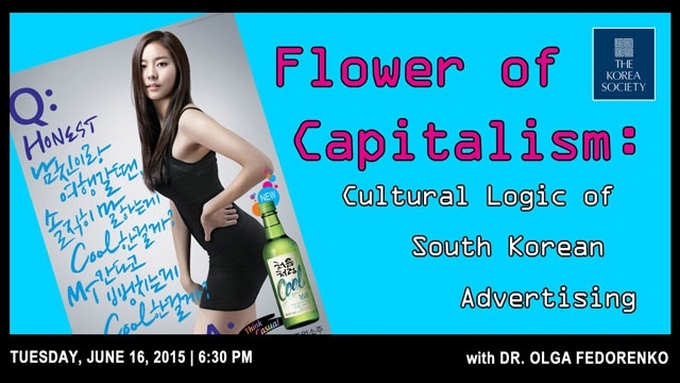
First up, I wouldn’t usually make an announcement about an event in far-off New York, but I have no hesitation in making an exception for friend and fellow Korean Popular Culture Reader contributor Dr. Olga Fedorenko, who’s lecturing at the Korea Society on Tuesday evening. As the FB event page and Korea Society website explain:
Advertising in South Korea is often referred to as a “flower of capitalism.” Rather than calling attention to the inherent links between commercial advertising and capitalism, this clichéd metaphor presents advertising as a wholesome, creative medium of public good and positive contribution to society. South Korean’s consume advertising as a product of popular culture and celebrate it for the humanist societal ideals it often promotes, instead of viewing it as an intrusive commercial message. Dr. Fedorenko explores the origins of such attitudes toward advertising through some notable contemporary examples, and considers challenges of using advertising for public good in the twenty-first century South Korea.
As I type this I’m unsure if her lecture will be recorded unfortunately, but it probably will—most Korea Society lectures are made into podcasts, and increasingly online videos are provided too. Either way, I’ll provide a link once her’s is/are ready later this week.
Update: Here is the video. It is also available as a podcast here or here.
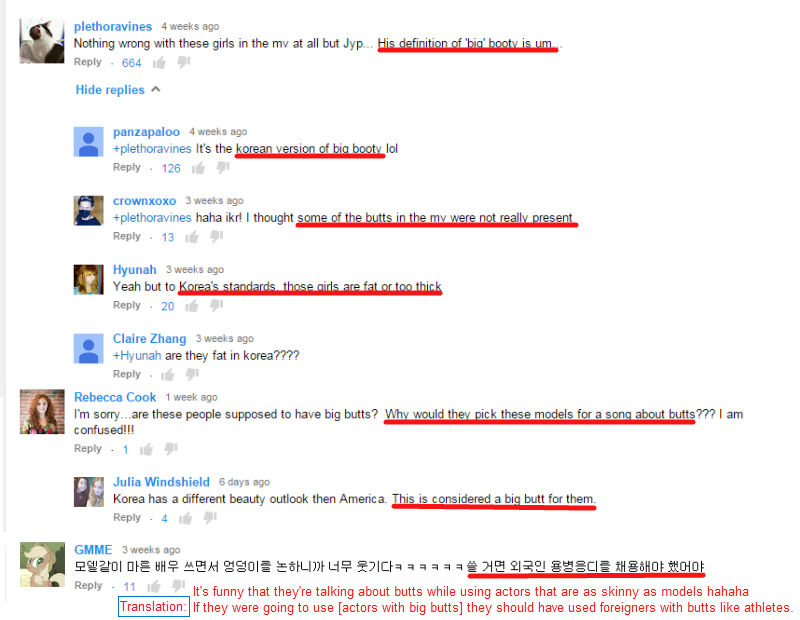
For those of you who watched the music video of JYP’s latest hit, Who’s Your Mama, you’ll know exactly what I’m talking about.
The entire song is a tribute to big booties. When I first read the song title, I immediately remembered Will.i.Am’s song, I Got It From My Mama, which—surprise, surprise—is also a worship song for killer female bods.
Although the feminist in me wants to point out the fact that JYP’s entire song revolves around sexual harassment at the gym, that’s not what I’m going to talk about today.
But first, I need to quickly introduce myself. I’m a half-Korean hapa, who mostly identifies as a Korean. Although I was born in Seoul, the majority of my childhood was spent in Hong Kong because my parents decided to move there when I was 3. But thanks to my mother’s fear of me getting out of touch with my Korean roots, I spent almost every single vacation with my grandmother in Seoul.
Having grown up with in an interracial household, and in a cultural hub like Hong Kong, I considered myself to be pretty open-minded. Literally all of my Korean friends have often told me that my personality was “so American,” and I agreed with them (never mind the fact that I’ve never even lived in the States until I was 18).
But I was still very much tied to Korean culture whether I liked it or not. For example, up until high school, I was naturally skinny. And by skinny, I mean that I was basically skin and bones. But everyone in Korea always commented how my thigh gap was so nice, and how bony my arms were. A friend once casually commented on this by saying, “You have the ideal body—it’s like you have limb anorexia.”
Limb anorexia? Really?
But because the thin ideal is so prevalent in Korean society, I embraced it. I was so glad that I never gained any weight despite eating so much junk. However this “privilege” stopped in high school, when my metabolism completely slowed to a halt. I started gaining weight from my bad eating habits. Having been only used to wearing size 2 clothing, I cried the first time I wasn’t able to fit into my skinny jeans.
The funny thing is, I was never “fat.” It was the fact that I lost my thigh gap and “limb-anorexia look” that upset me. This led me to doing what any normal Korean female would do. I looked up dieting tips on Google and religiously researched any and every diet program I came across.
But this all changed when I chose to attend university in America.
Upon my arrival in the States, I realized that the standard for a “hot body” was much different. Sure, people thought thin people had nice figures, but for the most part—it was all about the curves. Fast forward to Sophomore year, I started feeling so much more comfortable in my own skin. I started weight training at the gym, which led me to discover the amazing sport of powerlifting. Watching my strength and endurance increase with each passing week allowed me to stay religiously devoted to my workout regimen. People started commenting on how “fit” I looked. The best part about weight training was that I could eat a lot more calories without worrying about looking fat. Hello restaurant deliveries.
After committing to a year of serious weight training, I went back to Korea to spend the summer. It was hilarious to hear my family and friends gasp and exclaim at how “big” I looked. My grandma said I looked obese. I tried to explain that it was muscle not fat—but she wasn’t convinced.
I thought I’d find more peace of mind at a gym, so I joined my neighborhood gym right away. It was a rather large chain, so their trainers were all “experienced.” On my first day at the gym, a few trainers came up to me and commented that I was lifting “too heavy.” I just brushed them off.
At least twice a week, some other gym-goer would come up to me to say that I was “lifting too heavy for a girl.” I didn’t care what anyone said. Their comments fueled my workouts. I loved that I was able to deadlift and squat more than most of the men at my gym.
I’d often have ahjussis or ajummas come up to me to say that I was really strong for a girl and that I should probably stop working out too much because I’d likely “hurt myself.”
My girl friends kept commenting on my “huge bicep” and “horse-like thighs” whenever we hung out. They weren’t trying to be mean—they just couldn’t understand why a skinny person wanted to get muscular.
I was in no way large. I finally reached a healthy BMI instead of being underweight. I was finally toned and healthy, and I was getting criticized for it. It’s funny to think that Koreans praise gool-bok-ji, or honeythighs (AKA healthy and toned thighs), but they’re only interested in seeing them on celebrities instead of normal people.
The standard of a fit body for Korea and the rest of the world is vastly different. Let’s refer back to the JYP video—the YouTube comment sections were all filled with non-Koreans exclaiming that none of the girls in the M/V were fit/curvy enough.
What do you think about these standards? Do you agree with my experience and observations? I’d love to hear your thoughts through the comment section below!
Anum Yoon hails from Korea, where she was raised on spam and eggs (with sesame oil and gochujang of course). She spent the last 4 years in America, tackling her cultural identity crisis, one awkward moment at a time. She’s currently blogging over at Current On Currency.
Update, James: Via Omona! They Didn’t, here’s a video showing model Eom Sang-mi’s reaction to her role in Jay Park’s Mommae MV, which is similarly objectifying. Alas, it’s not about JYP, as I misread when I first saw it, and it’s pretty laddish overall, but Sang-mi’s comments—e.g., “Why are they only showing my boobs?!”—are quite amusing and telling:
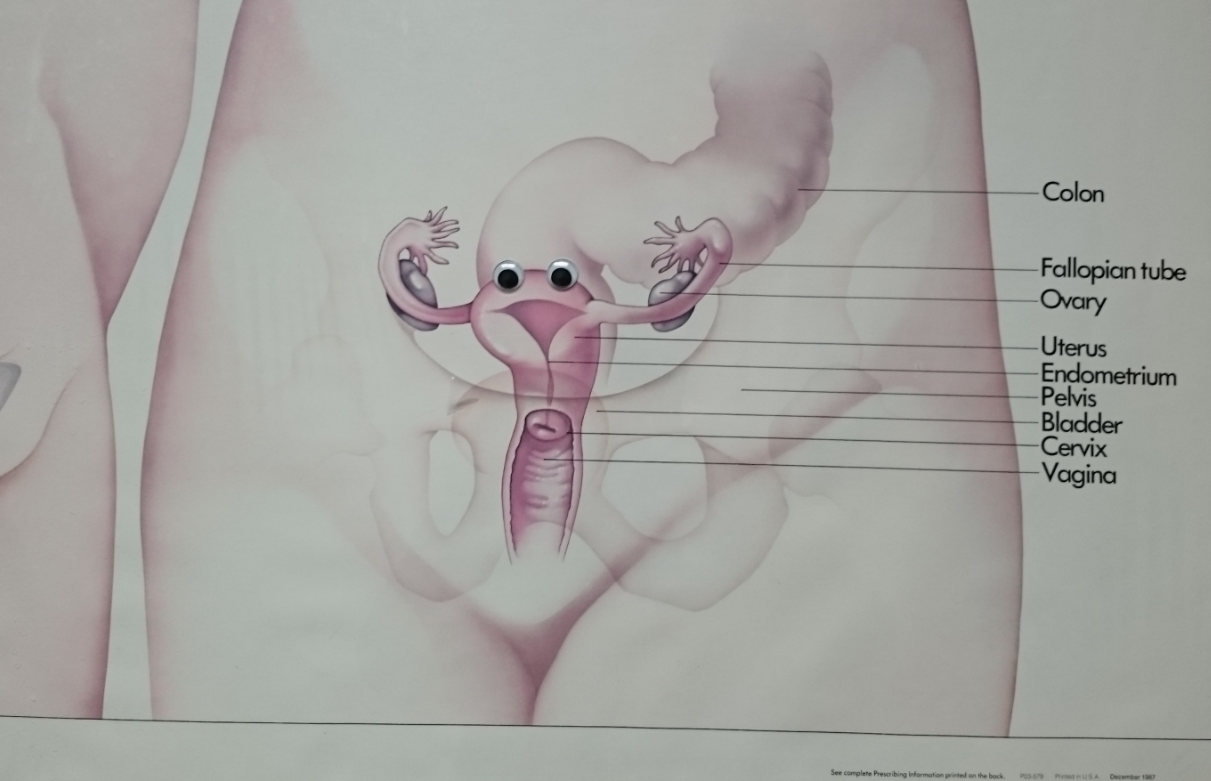
(“Thought I’d liven up one of the rooms at the OBGYN.” Source: Reddit)
A request for help from a reader, edited for anonymity. Thanks in advance to anyone that can give her any assistance:
******…I don’t want to ask my Korean co-worker for help and all my Korean friends are very religious—so it’s awkward.
Anyways, I don’t take birth control for a multitude of reasons including blood clots with the last time I tried. I also haven’t been sexually active for awhile so birth control hasn’t been a priority to me until now.
I’ve dug into pages on the Internet, but all birth control in Korea searches are about the pill or condom. I went to Dr. Sung’s clinic [in Itaewon], but they were only helpful in regarding IUDs and the pill. I wanted some information about spermicide or the sponge, which I’ve used successfully in the past.
Anyways, I’ve met an awesome guy. He’s great and understands my choice about birth control. He’s willing to try condoms and spermicide combination, which I’ve used in the past with a long term relationship.
He was able to find his western brand of condoms, but I’m at a lost as to how to obtain spermicide or the sponge. Can you get either in Korea…?
An update:
******…I live in the Gangnam area and went to all 4 pharmacies on my way to school and asked for spermicide using Google translate. [Saljeongje/살정제] is the word for it, but at each pharmacy it took about a minute to figure out what I was asking for and locate it.
The first pharmacy was only men and they looked it up on the computer and told me they didn’t have any. The second pharmacy (the one I usually go to) was a young female pharmacist who speaks English but she had to look it up on the computer and then asked me if it was for not getting pregnant and I said yes. All she had were depositories (which are not as good as gel or foam) and they were hidden behind the vitamins. She said she didn’t know if there was a gel or foam spermicide available. The third pharmacy (a large hospital one) all female pharmacists of different ages didn’t have any. The younger pharmacists didn’t know what I was talking about and asked the older one who was a bit confused so she asked an old lady customer who explained what it was. The fourth pharmacy was two older female pharmacists who had to discuss it and then asked why not go to the doctor for “not pregnant medicine” I said “make very sick”. She then digs around in a drawer pulls out a box looks at the ingredients and says “Yes. For no baby.” But this was also a depository.
All in all the pharmacists were very helpful and kind, but slightly confused as to what spermicide is. I am going to start walking into every pharmacy I see ~ maybe only depositories exist and only a limited supply. It’s strange. Back home I can get a huge box at CVS or Walmart!
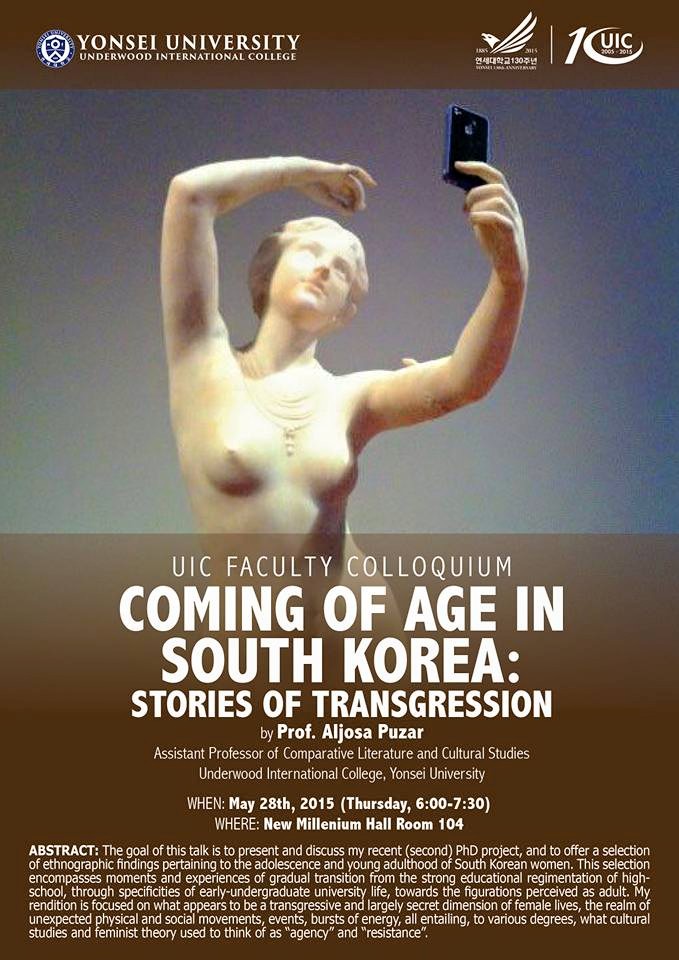
Don’t just take my word for it though: Aljosa is not just a cool guy (we’ve met a few times), but he’s also the author of “Asian Dolls and the Westernized Gaze: Notes on the Female Dollification in South Korea”, in Asian Women Vol.27 No.2, which should ring bells among many of you. If not, it can still be read online here (or email me if you’d like your own copy), and I highly recommend Melissa Johnson’sposts ondollification in K-pop to accompany it.
Sorry for the slow blogging everyone. Not just for the last few weeks, but for the last few months. Many of you have noticed and have been wondering, so I thought I should offer a quick explanation.
Long story short, I’ve got much less time than I had in 2014.
I’m doing a Master’s again. I’m teaching more classes this semester. I’m working on my first academic journal article. My daughters have started a (lovely) alternative school for multiracial children, which is a long commute away; it’s nice spending the extra time with them, but that’s another 10 hours a week that I used to spend on other things. And so on.
Still, I could and did work on the blog a little. But then I caught an on-off, debilitating flu for over a month. As you can imagine, now I’m behind on just about everything.
All that said, after 8 years of blogging, I am in a bit of a rut with regards to topics and style, and am looking for new ideas to motivate myself—and hopefully to interest and entertain you too. One possibility might be an episode by episode discussion of the recent(ish) drama Misaeng, which I’ve heard was a very realistic portrayal of Korean corporate life, and especially of the position of women therein. I’ve already watched the first episode, and, although it wasn’t earth-shattering, it was refreshingly free ofK-Dramacliches, especially the childish female roles. If, like me, you’ve been disappointed with “progressive” Korean dramas before, this might finally be one worth getting stuck into.
If you’re interested in following along with me, at the pace of one episode per week say, please let me know in the comments. And/or, about anything else you’d like to see more of on the blog. Thanks!
Update (July):Thanks for the comments everyone, and sorry for the false starts in June. I’ll start sometime this month.
p.s. Three Cheers for Halcion, the only way I managed to finally get a good night’s sleep last night!
*******WOMENLABKOREA is a creative space to test ideas, initiatives, and projects, a space to co-create, to co-design and prototype with other women, a supportive space where risks can be taken.
WOMENLABKOREA is about social innovation, empowerment and entrepreneurship!
The purpose is to help women step out of their comfort zones to improve their lives and the lives of women around them.
Next Thursday, May 7th we are hosting another #WMLABTALK called “We are Korean Women.”
We have conceived of these #WMLABTALKS as events where we can share and understand more about our lives; events to discover more about our wishes and hopes.
We wanted to create a space where women can speak freely and be ready to challenge stereotypes.
Furthermore, we wanted to dedicate a time to celebrate us, to celebrate women’s rhythms and women’s vision of the world´s cultures. To celebrate how far we have come and all that we have conquered.
“We are Korean Women” will be a female-focused collective dialogue to challenge stereotypes and clichés about being a woman in South Korea.
We will practice yogafit with Uliana Golovko and taste the traditional Spanish tapa pantumaca, a Catalonian breakfast or snack.
Following the breakfast, we will begin our presentation and open dialogue (the World Café process created by Juanita Brown and David Isaacs).
Korea has come so far in fifty years, how have women driven that growth? What are the challenges that women face in Korean society? We seek to break down stereotypes and go beyond clichés. Varying cultural opinions will deepen the discussion and hopefully widen our viewpoints.
Finally, we will taste and learn about Sogokju, the 1500 year old beverage, and be captured by Simcheongjeon, a story of Korean Pansori storytelling tradition.
For further details and RSVPs, please contact Ana Dols at 010-4119-7790 or womenlabkorea@gmail.com. Also, make sure to check out their blog, their Facebook page, and pinterest board.
I’m going to start with 여신왕쥬 (Goddess Wang-ju), who doesn’t mince words about what impact they’ve had on her. Or, more precisely, about what impact they’ve had on Korean men, who constantly compare her to slim, big-busted K-pop stars.
That’s a sweeping generalization about the men of course (my apologies), but you’ll soon understand her need to rant once you listen. NSFW warning for the Korean swearing:
Wang-ju is a little difficult to pin down: she’s made hundreds of videos, on a wide variety of subjects. Generally though, she seems refreshingly outspoken, and funny, a combination which has won her hundreds of thousands of subscribers on YouTube, Facebook, and Afreeca TV.
Unfortunately, this video seems to be the only one a fan has added English subtitles to, so I’ll have to let readers know if I find any more (or please let me know!). In the meantime, for Korean speakers, here’s her most recent one on body-image, from two days ago:
My latest article for Busan Haps, on (mostly) US teenage girls’ latest body image obsession, and why, to my great dismay, they themselves prove to be largely responsible for its success. Researching it taught me a lot about how people negotiate the messages about body image perpetuated by the media — read: never assume any groups are simply passive consumers — and how crucial it is to examine the role of social media to understand body image in 2015.
Also, I mention that, in December, the UK’s Advertising Standards Authority forced Urban Outfitters to remove a photo of a model with a thigh gap; since writing, France’s Parliament has also moved to make it a crimeto use modelsbelow a certain BMI. I’m still not convinced that demonizing one body type (or part) is necessarily the answer though.
What do you think? Please let me know in the comments, either here or in the article.
Hello Grand Narrative readers! I’m reaching out for some help for a research project I’m working on about female empowerment trends in Korea and opportunities for brands to play in that space.
I’m looking for recent examples of brands, organizations and entertainment personalities empowering girls and females through products, campaigns, messages or services in Korea, similar to Nike’s SeoulWomen’s Race, Whisper’s #likeagirl campaign or femvertising campaigns abroad.
Unfortunately, these are hard to find as Korea hasn’t quite embraced the trend like other nations. As such, I’m also looking for the opposite — recent examples of who is doing it completely wrong and sending messages of conforming to male-informed and limiting traditional stereotypes?
Any help, examples, or opinions are greatly appreciated! Please email me at amynwilliams@gmail.com.
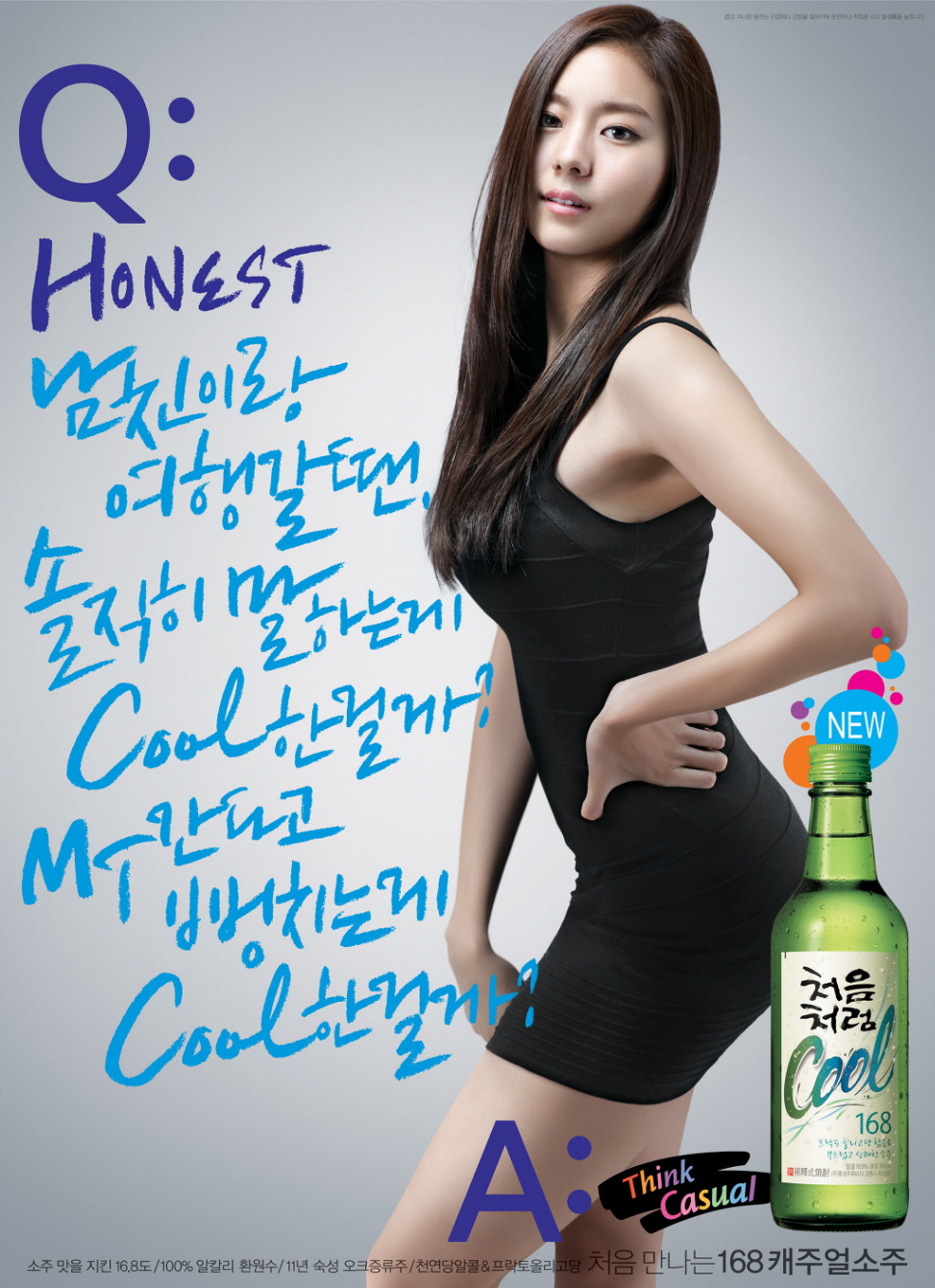
James: Alas, all the examples I can think of are quite old. Still, to get the ball rolling, and because I think its empowering aspects deserve to be much better known, let me take this opportunity to quickly mention the best, and possibly first and only well-executed one: Lotte Liquor’s ‘Think Casual’ campaign for Cheoum Cheoreom (“Like the First Time”) Cool soju, from back in Autumn 2009:
But it was different. That “Am I really your first?” question, and the men’s reactions? Those may seem pretty innocuous from a Western perspective, but they still got netizens riled-up. As did messages in posters like the one below, easy to reject as just another soju pin-up if you—ahem—didn’t take the time to read the text. Because ultimately, not only was the campaign breaking strong taboos on openly acknowledging this thing called sex, but it was directly challenging the double standards for women too.
(The text reads: “Q: When you travel with your boyfriend, which is cooler: admitting it to your parents, or lying and saying you’re going on a trip with your university friends? A: Think Casual”. Source: Naver blog, untitled.)
Rather than backtracking in the face of the ensuing negative publicity however, the advertisers were justifiably proud of what they were doing, as explained by Olga Fedorenko in her chapter “South Korean Advertising as Popular Culture” in The Korean Popular Culture Reader (2014, p. 356):
…[Uee’s] ‘cool shot dance’ achieved a viral popularity, young women recording their own versions and posting them online. Many other [netizens], however, were offended by what they saw as encouragement of promiscuity, noting that Uee looked “too easy,” that her coolness about sexual matters was inappropriate for her young age and “innocent face.” As I investigated the campaign, I was surprised to learn that the advertising team behind it included a few young and well-educated women who saw the ad as empowering and were hoping that young people, whom the ad targeted to broaden the traditional demographics of soju consumption, would perceive it the same way. In other words…they pushed for individual sexual freedom against oppressive norms, and the ‘Think Casual’ campaign became a site for negotiating parameters of female sexuality. The advertising agency took a leading a role in challenging patriarchal mores — reflecting the worldview of advertising workers, who saw themselves as representing the worldviews of the target consumers.
That said, things may have reached a tipping point. Because, given their overexposurein popular culture, Korean celebrities are very much considered role models, who are expected to follow high moral standards accordingly. With so many revealed to be in relationships now though, and getting caught spending their limited time together in hotels, it’s just getting too difficult to defend the notion that us mere mortals can’t or shouldn’t be able to do the same, or pretend that we haven’t always been doing so anyway.
But that’s a subject for another post. In the meantime, good or bad, please pass on more examples of femvertising to amynwilliams@gmail.com, and/or mention them here, even if you can’t remember all the details. (I’ll follow them up.) Also, if it emerges that there haven’t really been any femvertising campaigns in the last six years, or at least none as provocative as this one, then I’d be very interested in hearing your thoughts on why. Thanks!
Update: One more recent example of positive femvertising could be Zigbang’s campaign aimed at 20 and 30-somethings stuck living with their parents — something which again points to the need for evaluating empowerment in terms of its cultural context, and for preparing campaigns accordingly. But I still draw the line at anything that includes aegyo!
Many smart peopleloathe the word “problematic.” Others, because it’s “frequently used in progressive political settings among White People of a Certain Education,” or because they think they’re the best judges of what the rest of us should concern ourselves with. And maybe they have a point. I do often use the word; I am indeed White; I’ve had a “certain education” I guess; and, if it’s both “progressive” and perverse for someone like me to be troubled about body-image in Korea, then guilty as charged.
That is to say, I couldn’t give a rat’s ass about the dictates of any self-appointed arbiters of cultural criticism. So let me shout it from the rooftops, loud and proud: Korean comedy’s body-policing is damned problematic sometimes. This post, very much a #longread, is about several recent cases in point.
But before I got to work on what was all set to be my usual diatribe, I came across some comments made by Lizzie Parker of Beyond Hallyu, someoneI do pay attention to. Learning that she too dislikes the word, I realized with that great power of not giving a rat’s ass, comes great responsibility:
It’s such a cop out…problematic is just lazy-speak for ‘there is something bad about this and I can’t be bothered to figure out what’. It’s bad writing.
Lizzie’s comment was made in a different context, but it resonated with what I’d just been reading in Cultural Imperialism: A Critical Introduction by John Tomlinson (1991), and I’ll take my muses in whatever guises they appear, thank you very much. Specifically, it clicked because Tomlinson discussed scholars’ tendency to assume the nefarious impacts of Western consumer products on local cultures, but reluctance to explain the actual means by which those products (allegedly) do so. If I just confine myself to one illustrative example from the book here, about How to Read Donald Duck: Imperialist Ideology in the Disney Comic by Ariel Dorfman and Armand Mattelart (English ed.,1975; quoted in italics):
To service our ‘monoproduct’ economies and provide urban paraphernalia, we send copper, and they send the machines to extract copper and, of course, Coca Cola. Behind the Coca Cola stands a whole superstructure of expectations and models of behavior, and with it, a particular kind of present and future society and an interpretation of the past. (p. 97.)
So, imported cultural goods — Coke, Disney — somehow ‘contain’ the values of American consumer capitalism and offer an implicit interpretation of the good life. Still, we have yet to see how these cultural goods are supposed to transmit the values they contain and the social vision they ‘offer’. When the explanation comes, it is frankly disappointing:
The housewife in the slums is incited to buy the latest refrigerator or washing machine; the impoverished industrial worker lives bombarded with the images of the Fiat 125. [in the same way]….Underdeveloped peoples take the comics at second hand, as instruction in the way they are supposed to live and relate to the foreign power center. (p. 98)
When it comes to the crucial question of ideological effects, Dorfman and Mattelart can only offer an unproblematized notion of the manipulative power of the media text. They simply assume that reading American comics, seeing adverts, watching pictures of the affluent yanquí lifestyle has a direct pedagogic effect. (p. 44.)
Tomlinson may well be another White Person of a Certain Education, but his book is easily one of the most enlightening and well-explained cultural studies texts I’ve read in years, and provides an obvious solution to the challenge presented by Lizzie. Yet in my bid to look smart, I quote him at my peril. For now I’m obliged to demonstrate just how exactly Korean comedy teaches such harmful messages about body image, and why its constant, egregious examples can’t be dismissed as just harmless fun—all without patronizing Korean audiences in the process.
It’s a tall order. So, to set the stage, let’s see what happened when long-limbed Hani recently stepped onto that of Vitamin, a health-cum-variety show on KBS:
큰 키의 미녀가 한 계단 위에 올라서 있는 키 작고 통통한 여성들과 비교대상이 된다. 그리고 ‘못난이 삼형제’라는 자막이 버젓이 표시된다. 비웃는 패널들의 표정은 덤이다. 미스코리아 선발대회의 한 장면이 아니다. KBS 건강 프로그램 <비타민>에서 등장한 장면이다.
A tall beauty stands to the side; some short, tubby women stand on a step next to her to be compared. “The 3 Ugly Sisters” appears in the captions, with a shot of [the beauty’s?] fans laughing thrown in too. But this is not a scene from the Miss Korea contest. It’s from Vitamin, a health program on KBS.
미녀로 등장한 것은 대세로 떠오른 그룹 EXID의 하니이고, 못난이로 묶인 연예인들은 신봉선, 김숙, 김영희, 조혜련 등 개그우먼이다.
개그맨들의 단골 소재도 외모에 관한 것이다. 외모가 개성적이거나 뚱뚱한 개그맨은 자신의 얼굴이나 몸을 희화화해서 웃기기 일쑤다. 이런 현상은 예능에서 쉽게 찾아볼 수 있다. 예쁜 게스트들이 나오면 환호하고 상대적으로 외모가 떨어지는 개그맨들과 비교선상에 놓는다. 남자고 여자고 할 것 없이 같은 취급을 받는 것이다.
Comedians regularly use the subject of appearance for joke material. They will routinely make fun of their own bodies and faces if they are tubby, or in any way unique; examples are very easy to find in entertainment programs. So, if an attractive guest appears on their show, the guest will be cheered by the audience, and their bodies will be compared to the inferior ones of the comedians. This is done to both men and women.
<비타민>의 한 장면, 여성들의 키와 몸매가 비교당하는 장면이 공중파에서 버젓이 방영되고 있다 In a scene from Vitamin, women’s heights and bodies are openly compared on air.
외모에 관한 차별은 우리 사회에 뿌리 깊게 박혀 있다. 예쁘면 좋고, 못생기면 나쁘다는 식의 고정관념은 단순히 성형외과 광고에만 있지 않다. 이미 2015년 현재 TV속에서 벌어지고 있는 현실이다.
Discriminating against people on the basis of looks is something deeply rooted in our society. The notion that if you’re attractive, you’re good, and if you’re ugly, you’re bad, is not something that you only find expressed in advertisements for cosmetic surgery clinics. Rather, it is the reality of our television screens in 2015.
작년 여름 <1박2일>에서도 난데없는 외모 차별 논란이 일었다. 예쁜 여성들과 데이트하는 ‘상’과는 반대로 개그우먼들과 데이트해야 하는 ‘벌’이 주어졌기 때문이다. 많은 사람들은 이 장면을 두고 갑론을박을 벌였다. ‘분명한 외모 차별’ ‘여성의 성 상품화’라는 이야기부터 ‘외모가 부족한 남성 패널들이 같은 취급을 당하는 것은 왜 묵과하느냐’ ‘이정도는 용인 될 수준’이라는 이야기까지 설전이 벌어졌지만 결국 명확한 결론은 나지 않았다.
Last summer, some controversy arose over the body discrimination displayed on the show 1 Night, 2 Days. In one episode [aired July 27th; a clip is below — James], dates with attractive women were offered as prizes [to the all male cast] while dates with female comedians were provided as punishments, leading to charges that this was a clear case of both body discrimination and sexual objectification of women, as well as a double-standard in that the less desirable male comedians on the show weren’t treated in the same manner as the female ones were. This provoked a lot of heated discussion, but no clear conclusions.
그러나 이런 논란이 일어나는 것 자체가 아직까지 한국에서 외모를 두고 비난할 수 있는 환경이 얼마나 자연스럽게 이루어지고 있는지를 보여준다. 예능 프로그램에서 이영자나 이국주는 단순히 ‘잘 먹는’ 캐릭터가 아니라 ‘뚱땡이’ ‘과체중’이라는 캐릭터로 각인되어 있고 상대적으로 외모가 부족한 여성들은 예쁜 연예인들과 비교 선상에 놓이고 무시당해도 당연하게 받아들여야 한다. 그렇지 못하면 쿨하지 못한 것이 되기 때문이다.
The fact that this incident occurred shows that openly criticizing people on the basis of appearance is seen as natural in Korea. On entertainment programs, the comedians Lee Young-ja and Lee Guk-ju are not recognized simply as ‘characters that eat well,’ but are instead known as ‘fatties’ and for being overweight. [Also,] ordinary women that appear on the shows are unfavorably compared to pretty entertainers, and are expected to just roll with the criticisms and disrespect, lest they be considered uncool [and putting a damper on things].
이 같은 현상은 공개 코미디에서 더욱 심화되어 나타난다. 개성적인 외모가 주를 이루는 개그맨들은 외모를 무기로 코미디를 하려는 경향이 강하다 보니 이런 패턴에서 벗어나기가 쉽지 않다. 특히 개성적인 외모와 과체중의 소유자라면 그런 경향은 반복된다.
This trend is most evident in comedy programs. On them, it is the norm for comedians to take advantage of some very obvious bodily feature or aspect of their appearance to make jokes, and it is not easy to break out of this trend.
현재 <개그콘서트>에서도 ‘크레이지 러브’나 ‘속상해’ 같은 코너는 외모의 비교라는 전제를 두고 진행된다. ‘크레이지 러브’는 이 공식을 살짝 비틀긴 했지만 여전히 웃음 포인트는 박지선이 김나희에게 못생겼다고 독설을 퍼붓는 역설적인 형식으로 표현된다. ‘속상해’는 이 희화화의 대상을 여성에서 여장을 한 남자 정태호로 바꾸기는 했지만 외모 때문에 무시 당하는 노처녀라는 설정은 이전과 크게 다르지 않다.
One example on TV screens at the moment is Gag Concert, which has two regular skits called ‘Crazy Love’ and ‘I’m Hurt’ that are both based on comparing people’s appearances. In the former, the humor revolves around Park Ji-song berating Kim Na-hee for her ugliness, despite Park actually being the uglier of the two; while in the latter it’s about Jeong Tae-ho dressing as an old maid, who’s always ignored by suitors because of her ugliness.
이제까지 <개그콘서트>에서는 이런 코미디가 반복돼왔다. 단순히 못생긴 여성이 무시당한다는 설정보다 더 심각한 문제는 외모가 부족한 여성들이 잘생긴 남성에게 집착하며 눈치도 없어 남성들에게 쉽게 여겨지고 비아냥을 당해도 좋은 여성으로 묘사된다는 점이다.
This comedic theme is normal for Gag Concert. But more serious than unattractive women getting ignored, is the notion that if they obsess over attractive men, they can be treated tactlessly and thought little of, as if their only value is their potential for sarcasm and ridicule.
이는 코미디의 소재 부족을 여실히 느끼게 한다. 현재 <개그콘서트>는 예전에 비해 히트작이 나오지 못하고 있다. 코미디의 패턴이 반복되고 있는 와중에 그들의 웃음 포인트가 단순히 외모나 분장을 활용하는 것 이상으로 흐르지 못하고 있기 때문이다. 통렬한 풍자나 패러디는 물 건너 간지 오래다. 대표 코미디 프로그램인 <개그콘서트>가 이 정도면 다른 프로그램들은 더욱 심각하다. 단순한 패턴도 지겨워지는데 외모적인 특징으로 하는 1차원적인 개그는 어느 순간 불편한 지경에까지 이르렀다. 그들의 개성적인 외모가 개그맨이는 새로운 길을 열어주었을지는 모르지만 그 외모로 발산하는 에너지가 긍정적이지 못하다면 그들의 코미디에 마음 놓고 웃을 수는 없는 노릇이다.
This dramatically shows how lacking comedy is these days. Compared to the past, Gag Concert no longer has any really popular skits. Its humor is repetitive, relying on little more than laughing at costumes or appearance. It no longer has any biting satire or parody. [What’s more,] if a representative comedy program like Gag Concert is like this, you can imagine what other comedy programs are like. Their simplistic patterns are getting tedious, and the gags poking fun at some special aspect of people’s appearance have become uncomfortable and embarrassing. While that focus can open the door for comedians, as an audience it feels insincere to still laugh at such things.
외모가 예쁘면 물론 좋다. 그러나 누구나 다 예쁘게 태어나지는 않는다. 외모의 다양성과 개성을 존중하지 않고 단순히 ‘이렇게 생겨야 한다’는 고정관념 속에서 사람들은 지쳐간다. ‘강남 미인도’ 같은 풍자가 나오는 것이 이런 분위기와 무관하지 않다. 그러나 여전히 대한민국은 지금 ‘외모’ 하나만으로 사람을 판단하는 경향이 강하다. 단순히 못생긴 얼굴을 무시하는 경향이 문제가 아니다. 예쁜 얼굴이라 할지라도 ‘자연미인’이냐는 시험대에 놓인다. 예쁜 것을 원하면서도 성형을 한 얼굴이나 화장으로 달라진 얼굴에 뭔가 하자가 있는 것처럼 묘사되는 것은 아이러니다.
[Of course,] it’s good to look pretty. But not everybody is born that way. There is a great deal of variety among people really, and we are exhausted by strong prejudices in Korea against those that don’t live up to the ideal, which is partially related to the ‘Gangnam beauty’ stereotype. [See here for a classic satire of that by SNL Korea— James]. This is not just a problem of people being ignored if they have an ugly face though, because even if you’re pretty, you’ll always be on the judgement table over whether you’re a ‘natural beauty’ or not—it is such an irony that, even while judging people based on their appearance, we’ll criticize them if they use cosmetic surgery or cosmetics to look prettier.
단순히 못생긴 여성이나 남성에 대한 무시뿐 아니라 자연적으로 예쁘게 태어난 여성이나 남성에 대한 지나친 환호 역시 우리 사회가 외모 지상주의에 멍드는 현실을 여실히 나타내 준다.
The issue here is not just that ugly women and men are ignored, but that we so loudly cheer those of us that are naturally born attractive, showing how broken our present society is.
외모는 타고 난다. 성형한 외모가 아무 노력없이 얻은 것이라 비판할 수 있다면 자연미인 역시 그 외모를 가지려고 노력한 것은 아니다. ‘뚱땡이’ ‘못난이’ 등의 캐릭터가 버젓이 TV에서 통하고 그 외모로 사람을 평가하는 분위기는 김치와 한국인을 비하했다는 할리우드 영화 <버드맨>보다 훨씬 더 심각하게 생각해야 할 문제가 아닐까.
Our appearance is something that we’re born with. But if you criticize those who get cosmetic surgery to look attractive as doing it without any hardship or effort, [then you’re being hypocritical,] for natural Beauties didn’t expend any effort also. Surely the characters like ‘fatties’ and ‘uglies’ that appear on TV shows, and the atmosphere created by judging people so harshly on their appearance, are some things much more important to think about and criticize, than a character in a Hollywood movie saying that kimchi smells? (End.)
Ajummification
Woo Dong-gyoon’s article starts well with its raising of an important issue, but disappoints with its repetitive platitudes. Also, in a mental note not to repeat the same mistake myself, he probably makes few converts among Korean comedy fans with his sweeping denunciations of the entire genre. (Edit: In fairness, it’s more of an op-ed than an article really.)
His greatest and most surprising sins though, were ones of omission. First, what of the comedians jokingly imitating Hani’s (now famous)dance move?
Yes, in isolation it was all good fun, and yes, even Hani herself comes across as pretty goofy here, and shy and endearing on the episode overall. (The contrast with her on-stage presence is really quite remarkable.) In the context of body-shaming the comedians because they don’t match the very narrow height and weight range of typical girl-group members however, it adds insult to injury by suggesting that women of their ages and body-types couldn’t possibly be sexy either, the notion that they could get their groove on being self-evidently absurd.
If all this sounds familiar, that may be because I wrote about a very similar example nearly five years ago, in which Hyuna of 4Minute performed her own ‘sexy pelvic dance’ on the MBC variety show Quiz That Changes The World.Unfortunately, I’ve long since deleted the post sorry, and remaining copies of the full episode (#62, 10 July 2010) are behind paywalls, but I can tell you that after Hyuna performed:
First, then 51 year-old male singer KIm Heung-gook would get up and parody her:
(Source: KBS Conting. Technically, this is from an earlier part of the show, but you get the idea.)
(Update: I was able to find a low resolution copy of the episode here, from which I took the above screenshot.)
Then finally the 12 year-old daughter of retired footballer Yoo Sang-chul, the guest in the yellow t-shirt (the “13” in the video was likely her ‘Korean age’):
As you might expect, the episode quickly generated a lot of controversy for its sexualization of an adolescent girl. Alas, that ‘girl’ would actually be 18 year-old Hyuna, a bizarre blind spot that I went on to explore in my Reading the Lolita Effect in Korea series. More to the point here though, if viewers had few qualms about laughing to a 12 year-old thrusting her crotch in their faces, then presumably they’d have even less about the stereotypes of asexual, unattractive ajummas perpetuated by almost always only having 20-something women doing the sexy dances on such shows, every 30+ woman only the goofy parodies.
Rather than outrage though, I was strongly reminded of a (very) old skit by the UK comedian Ben Elton instead, in which he laments he can never be a great comedian because he lacks…
Big Tits
And it’s worth quoting him at length, because replace all the “big tits” below with “he/she’s fat/ugly/unsexy/too old” jokes, then I feel exactly the same way about the Korean comedy programs I’ve just described. From An Approach to Traditions of British Stand-up Comedy by Oliver John Double (PhD thesis, University of Sheffield, 1991, pp. 298-299):
In another of his routines, Elton makes a more political attack on clichéd comic style, satirizing the British tradition of smutty humor. A hypothetical situation comedy is described, which contains a number of covert references to breasts. Elton deconstructs these jokes, and adds ironic laughter:
I saw this sitcom, working title: Can You Show Me the Way to Oldham?. That was the first laugh: Oldham sounds a bit like “hold ’em” doesn’t it, very very funny, well done BBC, well worth sixty five quid a year license money I don’t think. I watched ’em all, Benny Hill…laugh? I nearly did, fantastic. And in this sitcom, there was Gloria, behind the bar, she’s a big woman, bring in the camera, steam up the lens, everybody loves it, big tits, best gag in the world, that’s the one for the British punter. In comes Tom, he’s an amicable northern stereotype, ‘e says, “By ‘eck, you don’t get many of those to the pound”, ‘e gets a laaauuuugh!! Nice one Tom, ‘cos she’s got big tits, oh ho ho ho ho! ‘E says, ‘By ‘eck, I wish I were her doctor’, yes Tom, second laugh, same pair o’ tits, I couldn’t believe it, it’s happening in front of me. ‘E says, “By ‘eck, no wonder they built the extension,” go on Tom, you’re winning, ‘e says, “By ‘eck, that’s the loveliest pair of…eyes I ever saw!”. Oh, amazing Tom, we thought he was gonna say “tits'” didn’t we? Faaantastic!
After ridiculing the simplicity of the joke-structures of breast innuendo humor, Elton then tackles the root of the problem. Jokes which make covert references to breasts rely on the idea that breasts are rude, naughty objects of desire, which cannot be overtly mentioned. Elton destroys this conception, by reincorporating the jokes from his hypothetical situation comedy in the context of a woman’s getting dressed in the morning. This robs the breasts of their naughty connotations, restoring their status as ordinary physiological features, and thus making the jokes laughably unfunny:
Come on girls, how do you get dressed in the morning, dear me ladies, you must die!! Bathroom mirror, up with the nightie, there’s my tits! Fuckin”ell, these are funny!! I’ll ‘ave a good laugh at my tits while I’m brushing my teeth! Ooh, I wish I were my doctor, ho ha ho ho ho!! I’m glad I built the extension, tee hee. These are the loveliest pair of… eyes I ever saw…! Fuck me, I nearly said I ‘ad big tits!!
Update — I was able to find a video of that first performance from 1981, but have to admit that it hasn’t aged well, partially because his delivery was much too fast (in fairness, he was only 22; he improved as he got older):
Elton’s skit clicked with me because in my experience, Korean comedy is very physical and slapstick, and seems to repeat many of the same childish jokes, as described above. Friends and colleagues I’ve discussed this with though, chosen because they’ve watched much more Korean comedy than me, say that my characterization is unfair, with sitcoms like High Kick, for instance, being just as sophisticated as the likes of Friends. And they’re probably right. Rather than discussing Korean comedy then, which I’ve already stated that I can’t and shouldn’t generalize, I think it’s more correct to say that, as a whole, Korean television is very comical, primarily because it has an unusually large number of variety programs—which include shows like Vitamin and Quiz That Changes The World:
“Much of Japanese television content, including even what is aired during [prime time], consists of ‘infotainment’ on subjects that range from science and diet to current affairs and travel. Rather than being broadcast as straightforward factual television, these shows are often bifurcated into segments that involve a panel of celebrities who discuss and interpret the informational content in an entertaining way. By cutting back and forth between factual and entertaining content, celebrities remain central to Japanese televisual discourse. As opposed to a continuum defined by fact and fiction, Japanese variety TV generally alternates between fact and celebrity.”
Yes, that quote was actually about Japan. But if I was so desperate for sources that I still used it in my recent conference paper on the disproportionate role of celebrities in Korean popular culture, then I’m just going to go right ahead and extrapolate from it here too. Because seriously, it does sum up Korean television rather well, and serves to suggest that the compulsion for panels of celebrities to “interpret informational content in an entertaining way” is a strong one, for which crude body-shaming and physical, slapstick jokes would be easy methods to rely on. (Not tomention racistjokes.)
Moreover, whatever the explanation, I suspect that all these examples are just the tip of the iceberg. For instance, in the very next episode of Quiz That Changes the World, Ga-hee opined that because she was tall, she preferred to date men over 183cm, prompting her and fellow tall guest Juilen Kang to line up against much older and shorter hosts Kim Gu-ra and Jo Hyung-gi. (Never fear: afterwards, she did some completely spontaneous sexy dances to make them feel better.) Also, here’s three more examples from 2012; another from this February; another from March; and God knows how many more I’d find if I actually watched the damn things…
I Should Really Be Doing More Interviews by Now, Dammit…
But do such examples have “a direct pedagogic effect” on Korean girls and women watching though? Or on Korean boys, on Korean men, or on pretty much anyone that watches them for that matter? Or do they instead see them as merely harmless fun, are fully aware of their damaging messages about body-image and sexuality, and reject them completely? After all, the second main take-away point of Tomlinson’s book, and which should surely be a mantra for all cultural-studies students, is the question of “who speaks?”, the necessity of acknowledging and analyzing (supposed) victims’ negotiation of ‘texts’ they’re confronted with being Tomlinson’s very next point:
Any advance in [an approach to cultural imperialism based on texts rather than institutions] is dependent on an analysis of the relationship between text and audience. This is something that, as Boyd-Barrett points out, few critiques of cultural imperialism have addressed (pp. 44-45):
The orthodox view of audiences in the West is now one that stresses the social context in which communications are received, and which stresses the individual’s capacity for active selection and selective retention. This view does not seem to have carried over sufficiently to Third World contexts….Individual capacity for psychological compartmentalization and rationalization is underestimated to an extraordinary degree. Much more attention needs to be given to the processes by which individuals and groups interpret, translate, and transform their experiences of foreign culture to relate to more familiar experiences.
(J.O. Boyd-Barrett “Cultural Dependency and the Mass Media”, in M. Gurevitch et al. (eds) Culture, Society, and the Media, London, Methuen, (1982, p. 193.)
In light of that, the second failing of Woo Dong-gyoon’s article on Hani and the 3 ugly sisters is that he doesn’t attempt this, not interviewing a single person. By extension though, it is also my own for relying on such articles, rather than scouring Korean academic journals and/or conducting my own ethnographic research, and consequently failing the challenge I set myself in the introduction. But this is just a blog sorry, academic Korean is tough, and the approximately $10 a year in donations I receive these days don’t allow for much fieldwork. (Yes, it does feel a little awkward and distasteful to mention that; but doing so could hardly lead to less donations, right?!) Given those constraints, I would be very interested in and grateful for readers’ own interpretations of any of the examples mentioned here, of what they know of Koreans’ interpretations of them, and/or for links or any other sources with more.
Also, necessity being the mother of invention, for your help in establishing a second means to fulfill the challenge. Because if Korean popular culture is actually just bursting with positive representations of non-skinny, non-tall, and/or 30+ women looking and feeling sexy, and rare proud girl-groups with larger than average members don’t feel compelled to slim down…then sure, maybe it’s all just harmless fun. If not though, then maybe, just maybe, those fat jokes are indeed—yes—problematic.
Like a lot of people, I don’t feel particularly comfortable being labelled. Once a label is stuck on you, separating it from your identity is like trying to scrape a price sticker from the bottom of a shoe — it takes ages and you can never seem to get rid of the damn thing entirely.
‘Feminist’ is one label I happen to like, partly because I chose to bear it…
Oh, but I do so love the label-makers. I love their audacity in insinuating that vaginas should be called ‘Y-lines’. I revel in their mysterious ability to see a women’s profile in that of a phone’s. I’m astounded at how they keep coming up with labels centered around critiquing women’s spending habits, but never around men’s. I relish discovering who has the chutzpah to homogenize the hobbies, spending habits, work ethics, and hopes and dreams of millions of women through their labeling of them, despite no more basis than the women’s shared academic and career success, ages, and/orincome levels. I’m intrigued by how they come to possess the status and social capital to be taken seriously by marketers and the media.
I love the The Kimchi Queen too, for its excellent reporting on Korean LGBT issues, which is why I don’t cover them as much as I’d like to here sorry (I have to prioritize!). When The Kimchi Queenrecently discussed the ‘벅찬년/bokchannyeon‘ label used in the gay community though, and linked to “an article that looks at the appropriateness of gays to use this word among themselves from the perspective of a female”, I took advantage of the opportunity to combine both interests.
But first, its definition. In itself, ‘벅차다/bokchada’ just means ‘too much’, as in ‘beyond one’s capacity’ and/or ‘overflowing’. As part of the slang-word discussed here though, The Kimichi Queen explains that:
According to the Korean gay dictionary, 벅차다 is used to describe gays who have many personal connections in the gay community. The first time I heard it, it was combined with 년 (bitch) to form 벅찬년…
[벅차다]…isn’t used really as a compliment. Rather, as the boundary between friendship and love can be ambiguous there are often worries about someone cheating on their lover. A 벅찬년 would often break up with a boyfriend soon after they started dating.
‘벅찬 년’, ‘보갈 년’에 대한 어느 레즈비언의 소고 / A Lesbian’s Thoughts on Using ‘bokchanyeon‘ and ‘Slut-bitch’
조나단(동성애자인권연대 웹진기획팀) / Jonathan [Yes, I’m a little confused by the male name too — James] (Gay Human Rights Association Webzine Team)
1 April 2014
모든 게이가 그런 것은 아니지만, 내가 만난 많은 게이들은 스스로를 여성화시켜 지칭한다. 트랜스가 아닌 시스젠더 게이임에도 섹스 포지션에 관계없이 자신뿐 아니라 친밀한 상대방을 ‘벅찬 년’, ‘웃기는 년’, ‘보갈 년’이라고 부른다. 그럴 때마다 시스젠더 레즈비언으로서 많은 생각이 들었다. 그 말을 들었을 때, 어떤 태도를 취해야 하는지, 그 말들은 언어 사용에 있어서 정치적으로 올바르지 않은 경우에 해당하는지 구분이 되지 않았다. 어떻게 바라봐야 할 지 정리가 되지 않은 상태에서 불쾌하거나 당혹스러운 경우도 있었고 함께 깔깔거리며 웃을 때도 있었다. 그러면서도 답답했던 것 같다. 그래서 여성의 날을 맞아 준비한 특집호에서 게이들의 대화에서 흔히 들을 수 있는 여성화자적 언어 사용에 대해 생각을 정리해 보고자 한다. 내가 들어본 적 있는 언어 사용에 한해서 말이다.
Not all gays are like this, but many I have met describe themselves as feminized. Despite being cisgender and not transgender, and despite being bottoms or tops, they call their partners ‘bokchannyeon‘, funny-bitch’, and ‘slut-bitch’. As a cisgender lesbian, I got to thinking a lot whenever I heard these terms. I wondered if it was really okay to use them or not, and what my attitude towards them should be. Until I’d decided, I either felt uncomfortable and upset, or I just laughed them off. But still, I felt a little frustrated and uneasy. So, in celebration of Women’s Day, for this special feature I’m going to talk about this common, [derogatory] use of feminized terms in conversations between gays.
대부분의 경우, 게이들의 여성화자적 언어사용은 자기 희화화의 성격을 띤다. 자기 희화화란 자신의 외모나 성격, 또는 자신이 겪은 사건이 의도적으로 우스꽝스럽게 묘사되거나 풍자되도록 만드는 것이다. 풍자는 다른 것에 빗대어 비웃으면서 폭로하고 공격하는 것인데, 왜 게이들은 자신들을 여성에 빗대어 표현하게 된 것일까?
In most cases, gays’ use of feminized words is to make fun of themselves. It involves making fun of one’s body, one’s personality, and/or an incident one went through, and exaggerating it to make it seem more ridiculous and funny. This is satire: mocking or attacking something by comparing it with something else. But why do gays choose to compare themselves with [heterosexual] women?
흔히 듣는 가설은 사회적으로 남성보다 낮은 지위에 있는 여성과 게이 자신의 지위를 동질화 시켜 생각하기 때문이라는 것이다. 그렇다면 애교처럼 들리는 여러 종류의 ‘~년’은 물론이거니와 성매매 여성을 낮게 보고 이르는 말인 ‘갈보’에서 변화된 ‘보갈년’의 사용은 그렇게 ‘퀴어(Queer)’가 동성애자 자신을 지칭하게 된 것 같은 역사를 품고 있을 수도 있다. 퀴어(Queer)는 ‘이상한, 괴상한’을 의미하는 단어로, 이성애자들이 동성애자를 얕잡아보며 부르는 말이었다. 그러나 ‘정상적 기준’에 의문을 제기하며 우리 자신을 이상한 사람, 퀴어라고 적극적으로 수용한 것이다. 게이들의 이야기를 듣다 보면, 자신이 ‘여자’같다며 놀림을 받았다는 말을 자주 들을 수 있다. 그런 배경을 놓고 보면, 어쩌면 비슷한 맥락의 역사적 배경을 가지고 있다고 볼 수도 있겠다.
An often-heard explanation is that, in a patriarchal, heteronormative society, gays think of themselves as having the same inferior rank or status as heterosexual women. In this sense, not just several kinds of ‘bitch’ terms, albeit which can be cute sometimes (like when referring to the use of aegyo), but also the use of ‘slut-bitch’ (which came from ‘galbo‘, which means female prostitute) are used derogatively to describe something that deviates from the male, heterosexual ideal, just like ‘queer’, which means ‘strange’ and ‘weird’, has been historically used to refer to gays and lesbians. [Yet it is also true that] gays and lesbians have questioned that ideal by embracing the word. Also, many gays can recount being teased by being called women. Considering that background, such [positive, challenging] attitudes might also play a role in their use of bokchannyeon.
그럼에도 불구하고 왜, 순간적으로 불쾌감이 들었을까? 두 가지 이유를 생각해보았다. 첫째는 남성이 발화했기 때문이다. 게이라도 남성으로서 교육받고 자연스럽게 남성으로서의 지위를 누려온 사람들이 여성비하적인 언어를 발화한 것이다. 둘째로 우스꽝스럽게 여겨지는 지위에 나 자신이 놓이고 싶지 않았기 때문이다. 희화화되어 유머를 위해 빗대어지는 대상이 내 정체성에 해당되는 것이 불쾌했기 때문이다. 비장애인 이성애자 사이에서 서로를 농담처럼 ‘호모’나 ‘애자’라고 부른다고 할 때, 동성애자들과 장애인이 불쾌감을 느끼듯이 말이다. 하지만, 불쾌감으로만 끝나지 않고 답답했던 것은 실제로 그들이 여성만큼이나 차별받고 있음을 알기 때문이다. 그리고 커뮤니티 문화에 정치적 잣대를 들이대는 것이 소위 먹물이 들어, 옳고 그름의 문제로만 현상을 바라보려고 하기 때문인가 싶어 망설여졌기 때문이다.
Despite that, why do I immediately feel bad whenever I hear the word? For two reasons I guess. First, because it originated with men. Although they are gay, they still grew up as men and enjoyed male privilege, and it’s in this context that they use such a misogynistic term. Second, because it puts me in an uncomfortable position, as the humor derives from disparaging a part of my identity [i.e., disparaging women]. Between non-disabled heterosexuals, when they call each other ‘homo’ or ‘aeja’ [a degrogatory term for disabled people], homosexuals and disabled people feel uncomfortable; I feel the same way about bokchannyeon and so on.
I don’t feel frustrated just because of these words; I also get frustrated because I know that gays get discriminated against just as much as women. But from what I know about the gay community in Korea, if I raise this with gay men I worry that they would misinterpret me, thinking that I see using the words as just a black and white issue.
글이 마무리로 향하고 있는데도, 역시 어떻게 결론을 내어야 할 지 조심스럽다. 되도록 사용을 자제하는 것을 부탁하는 것으로 마무리 지어야 할 지, 그럴 자격이 있는 것인지도 잘 모르겠다. 웅에게 같은 기획으로 글을 의뢰했는데, 웅의 결론이 궁금할 뿐이다. 화두는 던져놓고 무책임하게 마무리하는 것 같지만, 평소 같은 생각을 한 적이 있는 분이라면 댓글로 의견을 들어보고 싶다.
Now that I’m nearly finished, I’m hesitant about making a conclusion. I’m not sure if I have to ask gay men to stop using that term, and/or if I’m even in a position to ask them. So, I’ve asked Woong to also write about this, and I wonder what his conclusion will be. I’m going to finish here then, by just having raised the topic. Please let me know what you think in the comments (end).
And she did indeed get a few brief comments; if people would like me to translate those, and/or Woong’s (much longer) article, please let me know. Either way, apologies as always for any mistakes in the translations, and thanks in advance for any corrections. Also, please note that, beyond the article I’ve translated, I have personal no knowledge of the terms described and how often and/or why they’re used in the Korean gay community (or not), so I’d very much appreciate being educated about the subject. Are things like in the “How Misogyny Shows Up in the Queer Community” cartoon that the above panel is from, posted just last week on Everyday Feminism? Or would that be an exaggeration? Thanks!
(Update) A friend on Facebook responded:
“I’ve also noted quite a bit of misogyny among gay male and mtf transgender message boards and anonymous forums made for Korean-speakers. I thought that might be what this blog post would be about, but this is more about language use. (That overt hatred towards straight cis-gender women was kind of fascinating, if depressing to observe >_< ) It’s been a while since I looked at those websites, but as best as I can recall such sentiments consisted of things like:
jealousy towards straight women for being able to express romantic interest towards or openly flirt with desirable males
annoyance at straight women for demanding attentions and considerations they (straight women) would expect from straight men
a great deal of annoyance towards a certain sector of straight women for romanticizing/straight-washing/sexualizing gay relationships for their own purposes
annoyance at straight women for conceptualizing gay men as accessories (blame sex and the city :P) and ignoring those who aren’t fabulous or good looking
annoyance and even anger at cis-women for having what they (mtf transgenders) do not
Of course, this is all filtered through my interpretations of the motivating forces behind the disparagement of and anger towards women expressed in thise forums.”
She admits though, that:
“I have some doubts as to how relevant my observations are…Like, at best they’re indications that gay men are not immune to the social cues/examples they are presented with in male-spaces of society at large. Cuz that’s what a lot of biased language really is, isn’t it? You are provided with some pre-made, mass-manufactured molds, and you get used to throwing everything that fits into that mold and in turn strenghthening your belief in it. Ish?”