Open Thread #4 (Updated)

Have a nice weekend everyone! I’m off to a wedding in a couple of hours myself, then buying a couple of books on the Korean media to try and begin to place the censorship of recent years – invariably quite arbitrary, hypocritical, and inconsistent – into some sort of context, most likely that of the corporate interests of the various ministries and companies involved themselves.

Note that I’m talking largely about censorship of sexually-related material though, obviously influenced by but not directly related to the general curtailing of media freedoms under the Lee Myung-bak Administration. And why yes, after thinking deeply about and rejecting several other possibilities over the last two weeks, something along those lines is indeed what I’m going to settle on for a 50,000 word MA thesis topic, finally getting the application process started by perhaps the end of next month. How did you guess?

Seriously though, I’d be very happy and very grateful to bounce ideas off readers this weekend before I present something to my supervisor, but of course I’d also be happy to chat about anything else Korea and/or sociology-related readers are interested in. And perhaps that discussion about censorship should wait until Monday really, when I’ll have finished my post about what has effectively been censorship of a recent sexually-themed webtoon of Girls’ Generation. Yes, that one, and I forbid discussion of it until then!^^

Update: That post will be slightly delayed sorry, caused by my eldest daughter having a high fever all day Sunday, with the most violent shivering from her I’ve ever seen. Fortunately it doesn’t appear to be meningitis, but to make sure my wife and I will have to keep a vigil overnight in case her temperature goes up too much.

Share

Sex, Marriage, and Sex Work in South Korea

Korean Wedding Sidelong Glance(Source: Matt Scott; CC BY 2.0)

With my considerable gratitude to its author for passing it on, I’ll let the following email speak for itself:

…As a foreign woman married to a Korean man, myself and my husband face a unique set of cultural obstacles in our marriage. It can be trying at times, but we are usually able to work out our differences through a serious commitment to communication. However, there is one aspect of being married to a Korean man that I continually struggle with. From what I have observed throughout my time in Korea (and please correct me if I’m wrong), it seems that frequenting prostitutes is an accepted part of life for Korean married men. In fact, it is often required of businessmen if they want to be successful and accepted among their coworkers. For example, I have a friend who was offered a highly coveted position with a certain large corporation. While working there, he was required to regularly go out drinking and visiting prostitutes with his team. Given the strong hierarchical nature of Korean society, he felt unable to say no to his superiors, yet his religious beliefs compelled him to reject this lifestyle. As a result, he had no other choice but to quit and try to find another line of work.

I am told by Korean friends that going out drinking and womanizing with coworkers is an integral part of business in Korea (and, I imagine, another way that female employees are excluded and held back in business). Although this was shocking to me at first, it wasn’t hard to believe once I became more familiar with the language and more observant of my surroundings. It’s impossible to go anywhere in this country without being faced with a constant barrage of prostitution venues. Of course, they often masquerade as something else- massage parlors, karaoke rooms, barber shops, tea shops, PC rooms, bars, rest houses, etc., but they all offer at least the possibility of sex. It’s not exactly comforting to walk around in the middle of the day and see middle-aged men in business suits going into cheap motels on their lunch breaks or after work before returning home to their families. Although I know my husband is a good man and he has assured me that he’ll never engage in that type of behavior, I find it hard to trust him completely when every man in his life, including his father, his friends, and his mentors, sets this kind of example.

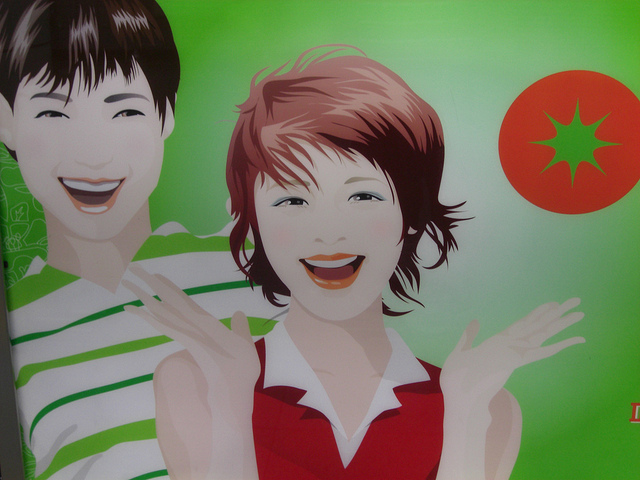
When I ask my female friends how Korean women put up with this from their husbands, they tell me that it’s what the men must do if they are to be successful. One said that even though the husbands stay out all night with prostitutes, drink with them, touch their bodies, etc., it is their choice whether or not they go all Korean Tomato Couplethe way. I simply can’t wrap my head around this rationalization. Where I come from, if a spouse cheats, it is expected that the couple will either get divorced or go into some serious marriage counseling. It is not simply tolerated, or at least not by those who have any self-respect. As I love my husband deeply, my greatest fear is that he will give in to his peers and join them some time, resulting in the end of our marriage. I can’t conceive of how Korean men can not only hurt and disrespect their wives like this, but also spend all their time fraternizing with coworkers and women rather than spending it with their children. This aspect of Korean culture is toxic to families, and is one of the reasons I don’t believe I could raise a family in Korea. I am truly interested to hear how other married women – both Korean and foreigners – deal with this problem. Have they experienced the same fears that I have, or have their experiences been different? Do they tolerate their husbands going out with coworkers and meeting women, and if so, why? Finally, for those like me who are greatly disturbed by this aspect of the culture, how do they overcome these anxieties and learn to trust their husbands? (end)

Korean Businessman Playing Guitar(Source: Simon Helle Nielsen; source above: Shawn Perez. Both CC BY 2.0)

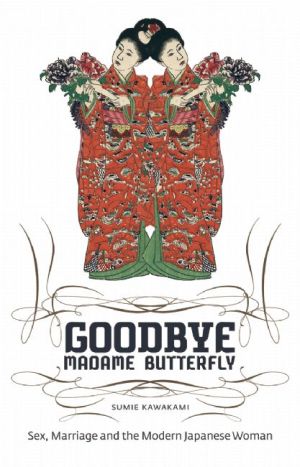
As I too would soon quit any job that required regularly drinking with colleagues, let alone visiting prostitutes, then I don’t have anything to add to the email I’m afraid. But I can point you towards my discussion of the effects on married couples’ sex lives, based around my review of Goodbye Madame Butterfly: Sex, Marriage and the Modern Japanese Woman by Sumie Kawakami (2007); as I explain there, the experiences and attitudes described there are very relevant to Korean couples, largely because both countries share the same salaryman working culture, with husbands (and indeed wives) working late most evenings.

Also, by coincidence Michael Hurt at the Scribblings of the Metropolitician has just written a post on Korean society’s denial of the pervasiveness, ubiquity, and above all systematic nature of prostitution that is highly relevant to the discussion here. A snippet:

…I posit that the resistance to what every outsider observes as KOREAN SOCIAL REALITY in terms of the commodification and subjugation of women in this society, especially as embodied in the rampant institutionalized prostitution that is as observable in terms of the sheer numbers and types of such places of business (room salons, business clubs, barber shops, massage parlors, handjob rooms, juicy bars, miin-chon, 단란주점, 도우미 노래방, which goes without even mentioning the vast numbers of red-light districts in every part of Seoul and every city in Korea) NARY REQUIRES statistics, either.

What I see as the frequent resistance of people to believe something that is OBVIOUS in observed reality if one simply COUNTS the number of houses of prostitution on a single city block in any part of this city — Kangnam Station to Shinchon to City Hall to Apkujeong to Chungdam to nearly any neighborhood after midnight, when the plastic balloons, mini-trucks, and neon signs come on that aren’t on during the day — is partially a denial of obvious reality, coupled with the urge to throw out the many statistics that bolster easy observation because they make one very uncomfortable.

But I’m a human being. I understand emotions. But what makes it so easy for me to recognize that the US brutally kidnapped, displaced, and murdered MILLIONS of human beings for the sake of material gain, which has resulted in creating some negative aspects to my culture, i.e. discrimination and institutionalized racism? But when I mention institutionalized prostitution as a legacy of compressed and authoritarian development in the Korean context, people instantly start equivocating and dismissing my argument, while holding it to such an abnormally high bar of scrutiny, one would be hard-pressed to assert ANYTHING particular about Korean society….(end)

Read the rest there.

Related Posts:

Korean Women Angry at Being Promoted Less Than Men

Gender Gap Angry Woman(Source: TheDailyEnglishShow.com,via studio tdes)

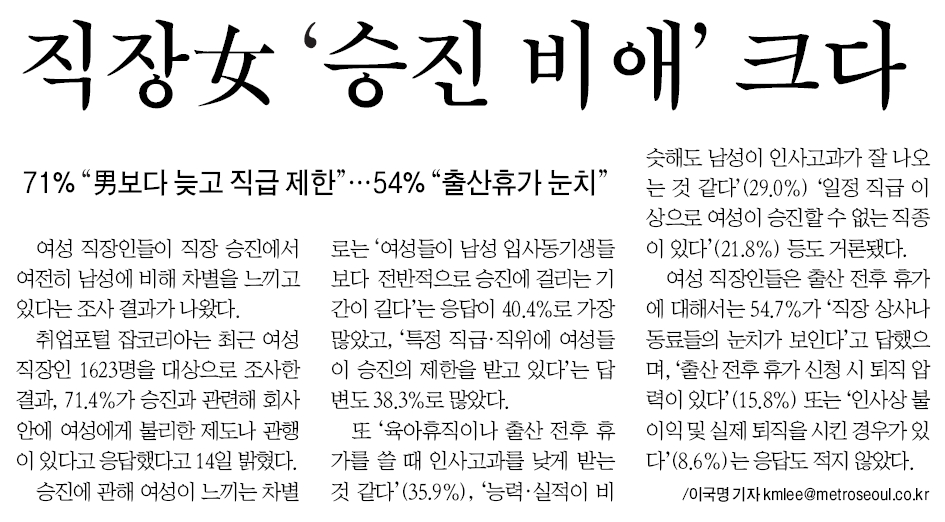
A snapshot of some of the different forms of sexual discrimination experienced at Korean workplaces, from the January 15 edition of Metro Busan:

Women Workers’ “Promotion Grief” is Big

71% Say “Compared to Men, Promotions Come Late and with Limits”…54% Say “We Feel Inhibited From Asking for Maternity Leave”

A survey of women workers has revealed that when it comes to promotion, they still feel that they suffer from sexual discrimination.

The results of a survey of 1623 women workers by job portal site JobKorea, released on the 14th, showed that 71.4% believed that the promotion systems at their companies placed women at a disadvantage.

Asked for more information about this discrimination, 40.4% [of the 1623 women] said that “compared to men that enter the company at the same time, women have to wait longer to get promoted,” and 38.3% added that “women are excluded from some higher positions.”

In addition, 35.9% mentioned that “if we take maternity leave or time off before and after giving birth, we get lower scores on our evaluations by the personnel department,” 29% that “even if we have the same ability and practical know-how as men, we get lower scores,” and 21.8% that women simply are excluded from certain kinds of jobs.

Also, 54.7% replied that they found it very difficult to ask their superiors or coworkers for time off for childbirth, 15.8% said that they felt pressure to quit their jobs after having a baby, and finally 8.6% were aware of cases where recent mothers were indeed forced to quit. (end)

With no information given about the methodology used, then all those results should be taken with a grain of salt unfortunately.

In particular, considering that it is still common practice to fire women upon marriage, then that last figure sounds rather low to me. Also, consider that before the current economic crisis, not only did Korea already have one of the lowest women’s workforce participation rates (and the highest wage gap) in the OECD, but that those few that did work formed a disproportionate number of irregular workers. This ensured that they would be laid-off en masse last year (see #15 here also), and they are unlikely to return to work soon given Korea’s jobless recovery.

(In stark contrast, the decline in the construction industry in the US, for instance, means that for the first time in history actually more women work than men there now.)

Meanwhile, the effects of all the above on Korea’s low birthrate have also been somewhat predictable, now the world’s lowest for the third year running. But never fear, for the Korean Broadcasting Advertising Corporation (KOBACO) is on the case:

(See here {Korean} for more on the making of the campaign)

In KOBACO’s defense, the first women featured does actually have a job. Is it churlish of me to point out that she still goes home early to cook while her husband burns the midnight oil…?

Update 1: Lest the commercial not succeed though, then the Ministry for Health, Welfare and Family Affairs (보건복지가족부), in charge of raising the country’s birthrate, is insisting that its employees go home at 7:30 pm on the third Wednesday of each month, all the better to have sex with their partners and have more babies.

No, unfortunately I’m not making that up.

Update 2: This satire of that is so good, it’s difficult not to believe that it’s the real thing!

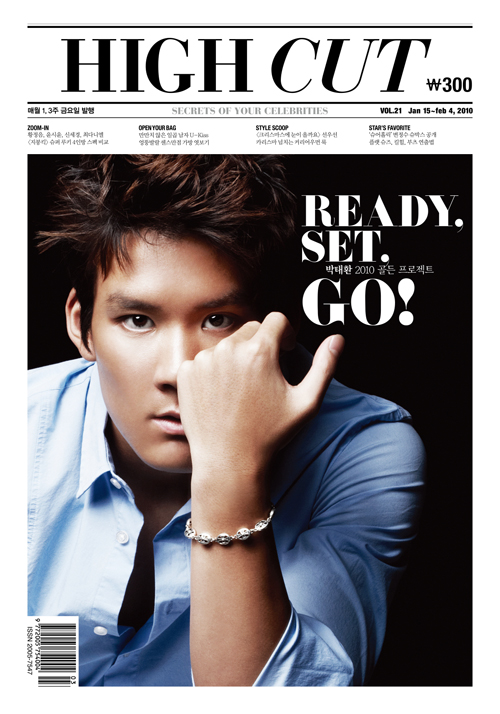
Korean Photoshop Disaster #3: Park Tae-hwan’s Babyface

( Source: High Cut )

Granted, it’s not the most egregious case of a Korean athlete’s face being photoshopped. That dubious honor still remains firmly in the hands of Gillette Korea, whose choice of pockmarked Manchester United footballer Park Ji-sung (박지성) to endorse them last year is probably also the most glaring example of the over-reliance on celebrities in Korean advertising too.

Unlike him though, youthful Olympic medalist Park Tae-hwan (박태환) already has unblemished and unusually smooth skin, which raises the question of what the photoshopping was for exactly?

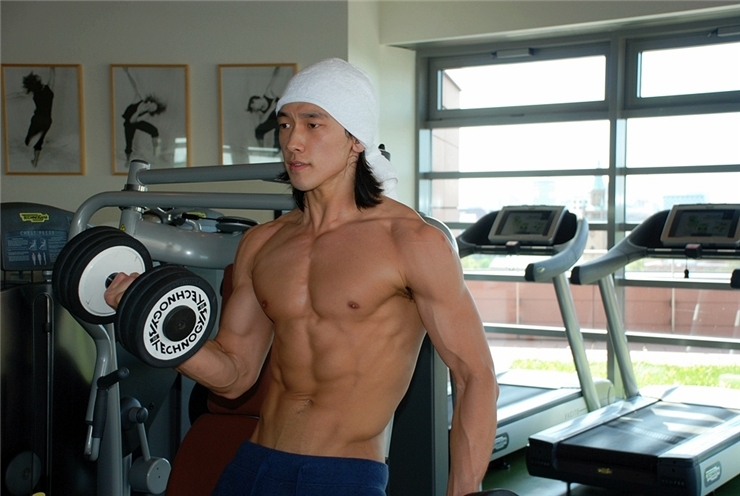
Personally, it reminds me of the airbrushing of Milla Jovovich’s face in Resident Evil: Extinction (2007), which many viewers found unnecessary, confusing and/or distracting. Indeed, while I’ll be the first to admit that Tae-hwan has a great body (more of which you can see in the last post), and with the proviso that I’m a (jealous) heterosexual male, I’d say that in the second picture in the series his now somewhat seal-like face simply draws too much attention away from his abs…

Can anyone think of similar examples, particularly Korean ones? Please pass them on!

(For all posts in the Korean Photoshop Disasters series, see here)

Share

Korean Sociological Image #30: Exploiting Koreans’ Body Insecurities

Like everywhere else, Korea has a long tradition of celebrities endorsing government campaigns.

Unlike everywhere else, a “huge proportion of Korean ads depend on famous people,” says Bruce Haines, head of Korea’s largest ad agency Cheil Worldwide, a tendency which in its crudest form degenerates Korean advertising into merely “beautiful people holding a bottle.” In turn, that leads to a scramble for and subsequent overexposure of whichever Korean stars are most popular at that moment, regardless of their inappropriateness for the product(s).

Government campaigns are no different, to my mind the most notorious case still being the National Election Commission’s (중앙선거관리위원회) choice of The Wondergirls (원더걸스) to encourage people to vote in local elections in April 2008. Needless to say, I can’t think of anyone more inappropriate than teenagers (two of whom were only 15), and their choice of outfits simply beggars belief:

Vodpod videos no longer available.

But again, no different to what they wore in commercials at the time. Which is precisely my point: regardless of their merits, major trends in advertising are bound to be reflected in government campaigns sooner or later.

And as long term readers of this blog will be well aware, one trend is encouraging consumers to associate certain foods and drinks with certain desired body shapes. While it is hardly unique to Korea, it is done to excess here.

Is it any wonder then, that with the decline of the domestic rice industy, and concerns food security as a whole, that the government would do the same when promoting the consumption of domestic foods and drinks?

Last year for instance, I gave the example of how the Korean rice wine Makgeolli (막걸리) was being marketed to women on the basis that it is supposedly good for one’s skin. Now, I’ve found two more examples by the Ministry for Food, Agriculture, Forestry and Fisheries (농림수산식품부; MIFAFF), using the new group 4Minute (포미닛) and the Olympic medalist Park Tae-hwan (박태환) respectively:

Vodpod videos no longer available.

Vodpod videos no longer available.

To be clear, I am not saying that either are inappropriate choices. Actually I think they’re rather good: both are very popular, and it turns out that 4minutes’ egg song is a variation of their recent hit “Hot issue” too. I also fully concede that the connections between consumption of the product and obtaining an attractive body are fleeting (4minute) or merely implied (Park Tae-hwan) at best.

But still, they’re there. And given the long-term problems with Korean agriculture as identified above, then I hereby predict that we’re going to be seeing many more public campaigns like these in 2010. In particular, the links made between the products being advertised and obtaining an “S-line” and so on are going to be made more explicit.

Sound like an exaggeration? Well, recall how quickly commercial incentives have transformed decades-old standards for soju advertisements: just three years ago, they overwhelmingly offered virginal images of women, whereas now it’s rather difficult to find ones that don’t present them as eminently sexually available. Moreover, in an effort to appeal more to women, soju companies too are encouraging them to associate new lower-strength brands with maintaining a good body, however implausibly.

But perhaps an even more appropriate example is soy milk. If you’ll bear with me, being allergic to milk means that I follow developments in the soy milk industry here pretty closely, and Starbucks Korea’s belated decision to add soy to its menu in 2005 had a huge impact on my quality of life here! Not unlike the drinks themselves though (anybody know where I can find these flavored ones?) – or, indeed, government campaigns – soy milk commercials tend to be rather bland, so I certainly sat up and took notice when I first saw this one a few days ago:

Vodpod videos no longer available.

Soy milk companies too then, seem to be adopting the tactics of their more popular counterparts now. Lest I appear overly critical though, consider the scene 0:03 from 0:06 where 17 year-old Kim Hyun-ah’s says “[S]라인을 유지하려면 어쩔 수 없어,” or “If you want to maintain your S-line, you have no choice but to [drink] this.” Despite my constant criticisms of that sort of thing, and my earnest desire that my daughters don’t grow up to repeat it, I have to admit that I can’t help but find her expression and tone of voice, well, extremely cute…

Yes, I know: very hypocritical of me, and I await your counsel. But on a final, more serious note, consider Garaetteok Day (가래떡데이), MIFAFF’s scheme since 2006 to get people to eat stick-shaped rice cakes instead of Pepero chocolate sticks on November 11 each year. Promoted mostly as a romantic event for couples, as are most imported and/or artificially created holidays (Christmas Day, for instance, is the date the most condoms are sold in Korea), is it really too much of a jump to imagine that concerns about one’s appearances will be added to that too? Watch this space!

Update: An alternative way of exploiting Koreans’ associations with November 11 (source):

(For all posts in the Korean Sociological Images series, see here)

Share

What IS the Age of Consent in South Korea?

Considering the abysmal state of sex education in Korea, part and parcel of a society reluctant to admit that teenagers have sex or even sexuality, then the notion that it’s only thirteen sounds simply absurd.

Despite myself though, that’s precisely what I’m going to argue.

Not because that’s the consensus of English-language materials on the subject however. The vast majority never provide a source for their information on South Korea specifically (see here, here, here and here for some examples), and following the trail of those of that do almost invariably leads to a chart of the age of consent in various countries on Wikipedia, itself unsourced (but which has recently been edited as I’ll explain). Indeed, highlighting how problematic that makes them was my original intention in writing this post.

But first, the catalyst was this post at Omona They Didn’t!, a popular K-pop site. There, commenters discussed singer G-Dragon’s (지드래곤) concert performance below that featured simulated sex scenes, and which he is now being investigated for (but not yet prosecuted) because it had been rated suitable only for ages twelve and above (see here, here, here, here and here for the latest developments). Arguably somewhat arbitrary and hypocritical considering similar performances by other singers that haven’t been, the outrage is even stranger if the age of consent is thirteen, as pointed out there by a commenter with the handle “hallerness.”

(Update: See here for a detailed explanation of what exactly happened at the concert and the legal response, including an interview with the performer on the bed)

Queried on that low age by other commenters though, this blog got mentioned, and she emailed me asking for clarification. With apologies for the delay, this post is my response.

The first step in preparing it was simply to ask my students. But although their confusion was not entirely unexpected (whereas I’ve been writing about Korean sexuality for a long time now!), it still took a great deal of time and effort to explain what the concept was.

Not to imply that they’re stupid and/or ignorant of course, but that Korean adults needed an explanation at all is surely indicative of how alien the notion of teenage sexuality is here (or at least public discussion of it).

Once that was out of the way, then all said it was 18, like I also thought: after all, almost everything else sex-related is, including buying contraception, having access to or appearing in pornographic materials, and working in de facto sex-related industries. But they had no idea of what the Korean term was, hesitant suggestions including 법정나이 (literally “correct age”) and 법적나이제한 (correct age limit).

Turning to an online dictionary next then, I found 성관계 승낙 연령 (sexual relationship consent age) instead, with the explanation 합법적으로 성관계를 승낙할 수 있는 연령 (legally sexual relationship can consent to age). Paste it into Korean search engines, and you do get some results, although most appear to be about Canada (see a little later for why). Rather than wading through those though, I had no hesitation in turning to Matt at Gusts of Popular Feeling instead, who has written a great deal about teenage prostitution. And fortunately he does have a post in which he discusses this issue.

To be specific, it is about controversial rulings in two teenage prostitution cases in July 2001 and July 2009 (known in Korean as wonjo gyoje; 원조 교제). And while technically The Korea Times articles he quotes also do not mention any specific law, the age of consent being thirteen proved crucial in both cases, and I recommend reading his post in full to understand why.

From the 2001 article (link broken):

Under related laws, those who have sex with minors younger than 13 should be punished, regardless of whether the minors agreed or whether there was a financial deal. However, having sex with minors aged 13 or older, which does not involve financial deals, is not punishable if the minor consents.

And from the 2009 one:

In Korea, a person is not guilty of any crime for having sex with a minor aged 13 and over unless it is paid for or forced. Sex with those under the age of 13 is punishable even if it is carried out under mutual consent.

And Matt’s reaction was exactly the same as mine would have been. In particular:

….I found the age of consent shocking because I’d heard for so long that it was 19. Keep in mind that in the 1990s I think Canada’s age of consent went from 16 to 14 (or 12, if the other person was 14) which I also thought was quite low. It recently was put back up to 16 due to people considered predators on MySpace, etc. finding young girls to sleep with [James: which is what most Korean articles on 성관계 승낙 연령 were about]. Considering Korea’s internet culture and the fact so much wonjo gyoje is organized online, you’d think more would have been done by now….

…I’m surprised that the age of consent hasn’t been raised here, considering, as I mentioned, how much online activity is to be found with men looking to have sex with underaged girls, and how it’s routinely stated (even by the police on their website) that the age of consent is actually 19. Also, considering how in the late 1990s how youth sexuality and changing youth behavior (and rising crime, including sex crimes) was discussed as if teens were a virus infecting society, the low age of consent is perplexing – not looked at through a moral lens, but through the discourse in the media surrounding teens at the time (and to a lesser extent now).

(Source)

Six months earlier, he wrote the following on this post of mine about a 14 year-old Korean model that posed nude, and I’d be interested if the second case in 2009 changed his mind:

…“However, having sex with minors aged 13 or older, which does not involve financial deals, is not punishable if the minor consents.” That contradicts the 19 year old age of consent the police say they adhere to, but if I have to choose between the police and a 7 year-old KT article, I’ll go with the police.

And when I wrote that post, the Wikipedia entry on the age of consent in South Korea gave it as 13n, citing this chart as a source but which in turn implies that the entry for South Korea comes only from “verified information from our correspondents,” given that the other sources cited there have no information about South Korea. Very recently though, the Wikipedia entry has been edited to “The age of consent in South Korea is not currently known,” and if you go on to examine the discussion about that this is what you find:

I’d hoped that that link to the Seoul Metropolitan Police Agency would save me the trouble of following up Matt’s mentions of it myself, but unfortunately it doesn’t appear to be working, and besides which might be unreliable like “Truthfulchat” pointed out.

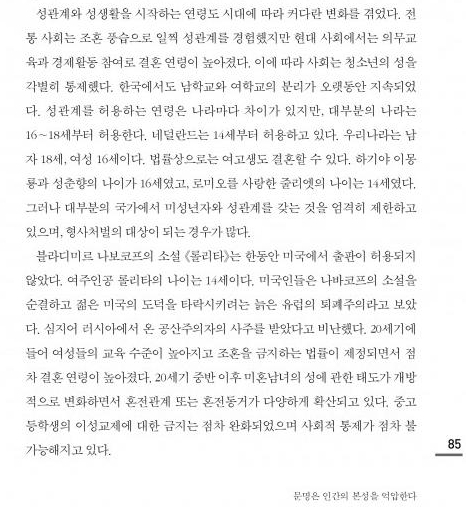
So, if Matt doesn’t read this post for himself first, then I’ll contact him for help with that source from the Korean police (I’ve given up trying to navigate their various sites), and besides which would be very grateful for his input. As I type this however, I’ve had my long-suffering wife looking on her computer for more Korean sources (her Korean is rather better than mine!), and yet after twenty minutes she has only been able to find this page from a 2007 book entitled Gyoyanginul Ouihan Saegyaesa (교양인을 위한 세계사), or World History for Civilized People by Kim Yun-tae:

With apologies for the small size, that states that in Korea the age of consent is 18 for men, and 16 for women!

In conclusion then, to put it mildly the jury is still out on what the age of consent in Korea is, and so this seems an opportune moment to throw open the floor to suggestions on how to continue from readers, which would be very much appreciated (not least by my wife!).

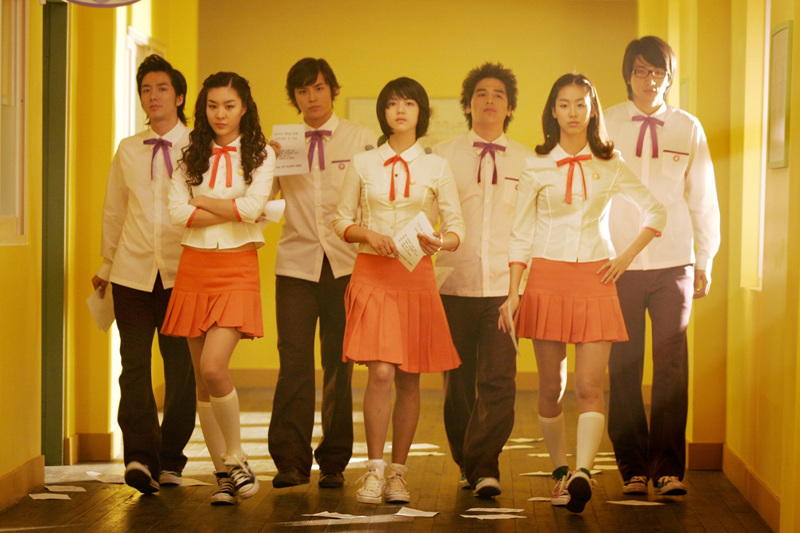
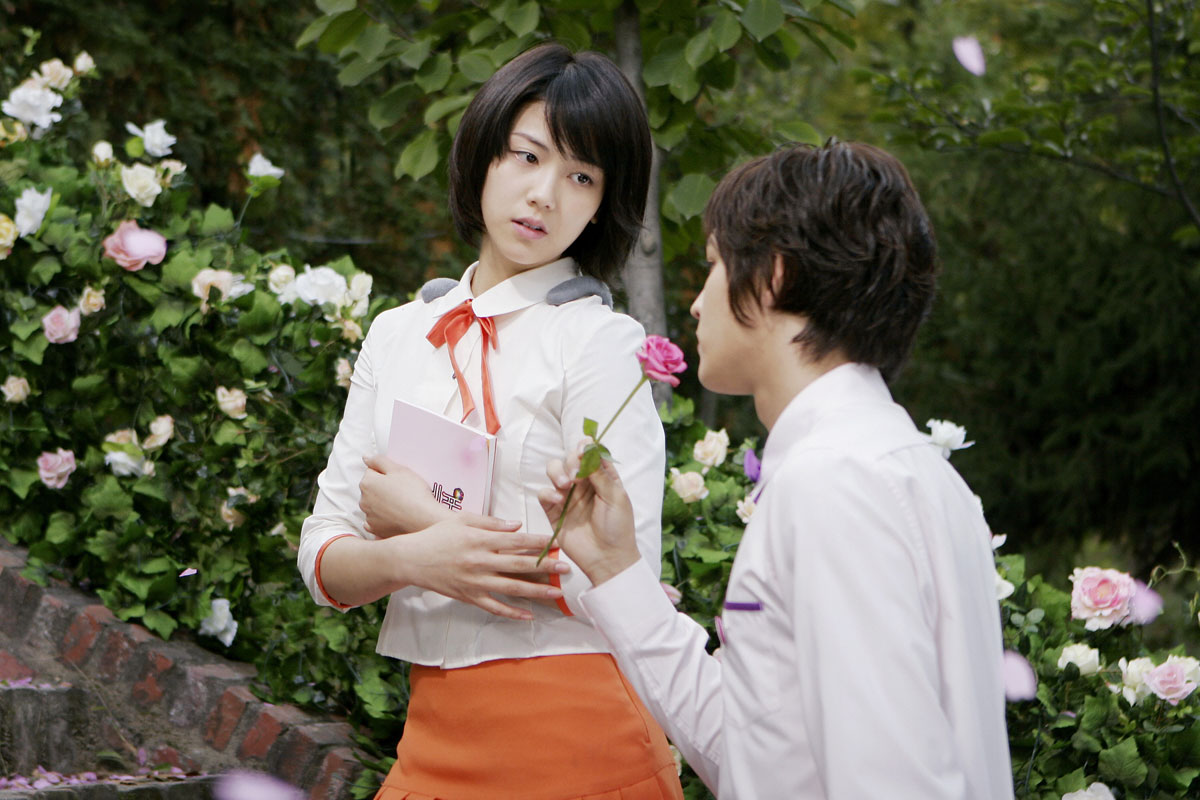
Before I do though, if you’re curious then the first two images above (source), then they are from the 2006 movie Dasepo Naughty Girls (다세포 소녀), which appears to be an excellent satire on Korean sexual mores; see here for an extensive review by – who else? – Matt. And finally, although they’re not related at all sorry, the more I wrote this post the more the following safe sex posters (NSFW) by James Jean kept coming to mind:

(Source: I Believe in ADV)

See BoingBoing for an extensive comments thread about them.

Open Thread #3

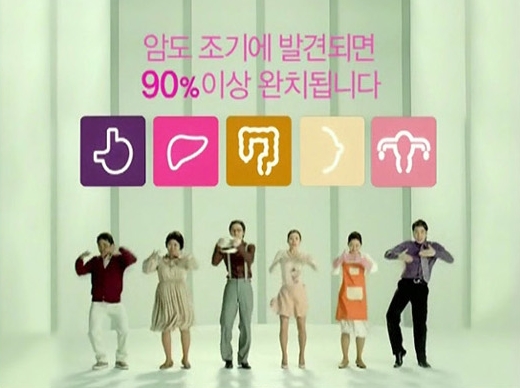
I may be wrong in assuming that public service announcements in Western countries still don’t feature stylized breasts and vaginas(?),  but regardless I love Korea’s no-nonsense attitudes to the body and bodily functions, in this case at least easily trumping any qualms that the Ministry for Health, Welfare and Family Affairs (보건복지가족부) may have had about featuring them in its campaign for people to get regularly checked for cancer.

What I really love though, is that it has been turned into the song and dance below:

Vodpod videos no longer available.

Easily to laugh at perhaps, but are more serious but otherwise rather dull campaigns in Western countries really more effective?

Meanwhile, apologies to all those readers who were looking forward to my promised restarting of the Korean Gender Reader series in the new year,  but after much soul-searching this week – prompted by my catching a cold after writing the last two posts until the small hours – I’ve been forced to admit that I still don’t have the time. I may have next month if some anticipated changes are made to my job, but until then, please feel free to pass on and discuss any Korean gender, media and sexuality-related stories yourselves here!

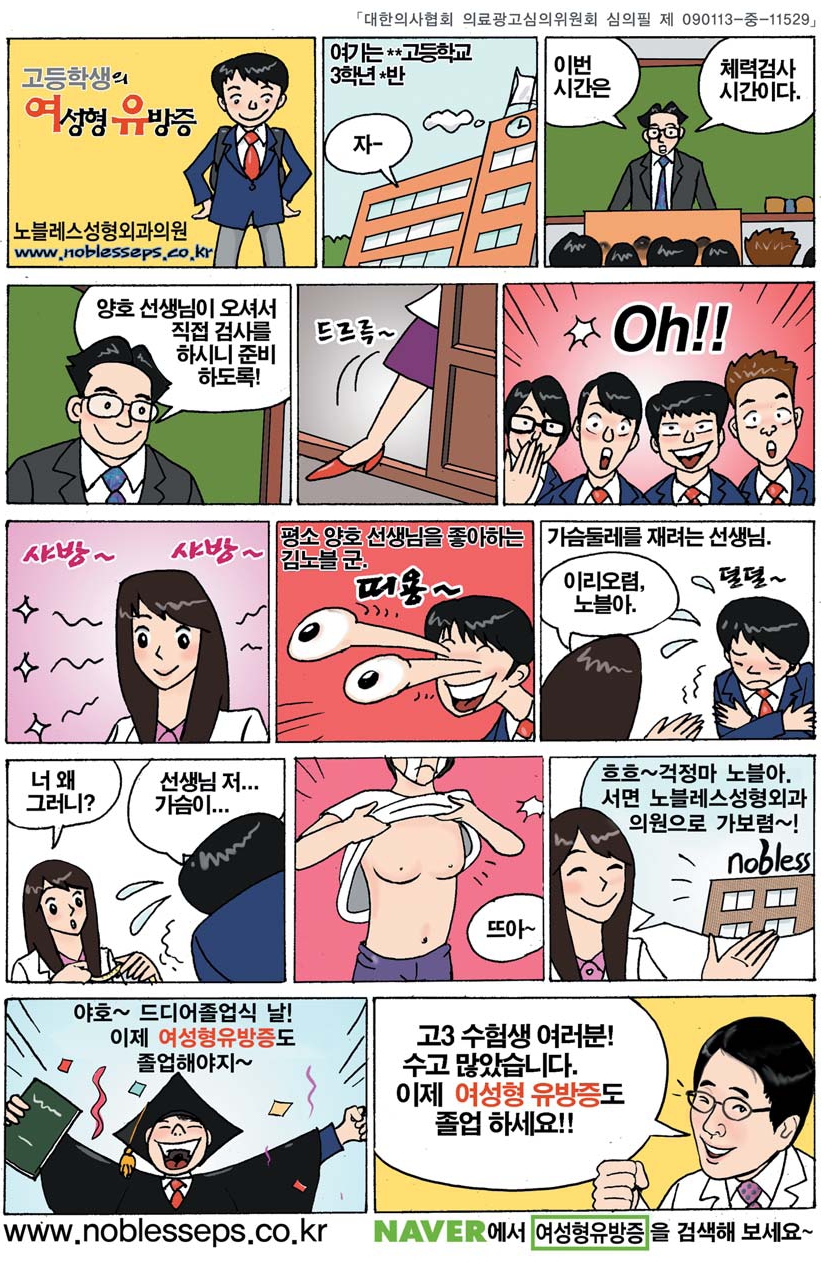
Update – Seeing as we’re talking about Korean oddities, consider the following advertisement for a cosmetic surgery clinic here in Busan:

From page 18 of the 4th of January Busan edition of Focus newspaper – the entertainment section no less. And don’t get me wrong: with the proviso that Noblesse has a vested interest in fostering insecurities about one’s body image, I’d image that female-like breasts are no laughing matter for the high-school boys with the misfortune of having them.

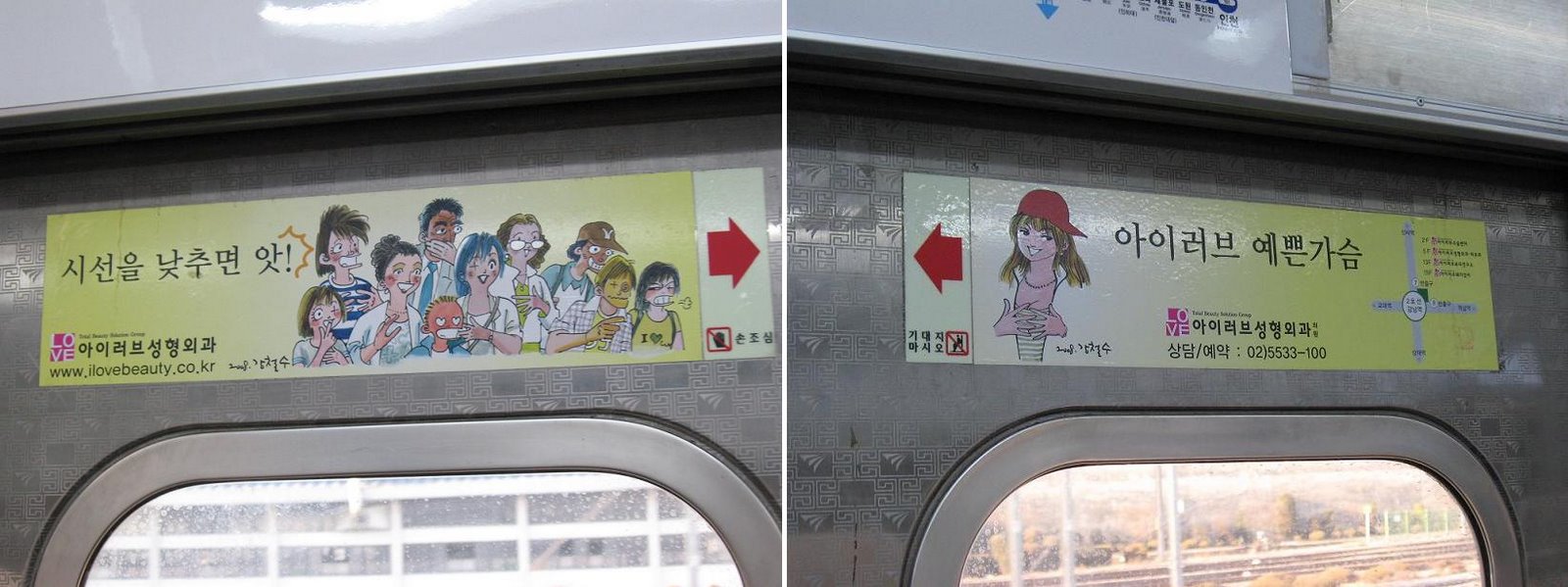
It is also common for Korean cosmetic surgery clinics to use comics in their advertisements, one that readily comes to mind consisting of a group of people gaping in either awe, lust, or jealousy at a woman who has just received breast implants. You may have seen it on the Seoul subway:

Thanks to reader Marilyn for passing on the photo. And again it is unsophisticated perhaps, but regardless of one’s opinion of cosmetic surgery in general, it was probably effective: it got both Marilyn’s and my own attentions at least!

Granted that the Noblesse advertisement remains just plain bizarre though, albeit a little less so when you realize that the woman featured was either the school nurse or a visiting government health inspector, not simply a new teacher.

Finally, while we’re on the subject of cartoons, here’s one I couldn’t help smiling at a couple of days later (from Focus newspaper again):

In case you don’t get it, the young man is living with his older sister but has to find his own place. At first, he thinks the place the real estate agent shows him is too old for the rent being asked, but he changes his mind when he sees the view from his window. In the final panel, the real estate agent crumbles about how difficult his job is these days…

More problematic in Japan than in Korea perhaps, where I hear that voyeurism is so taken for granted that women can expect their underwear to be stolen if it is hung from the first or even the second floor, or is that just an exaggeration? Alternatively, is it a problem in Korea too?

Share

Korean Sociological Image #29: JYP’s Objectification of Women

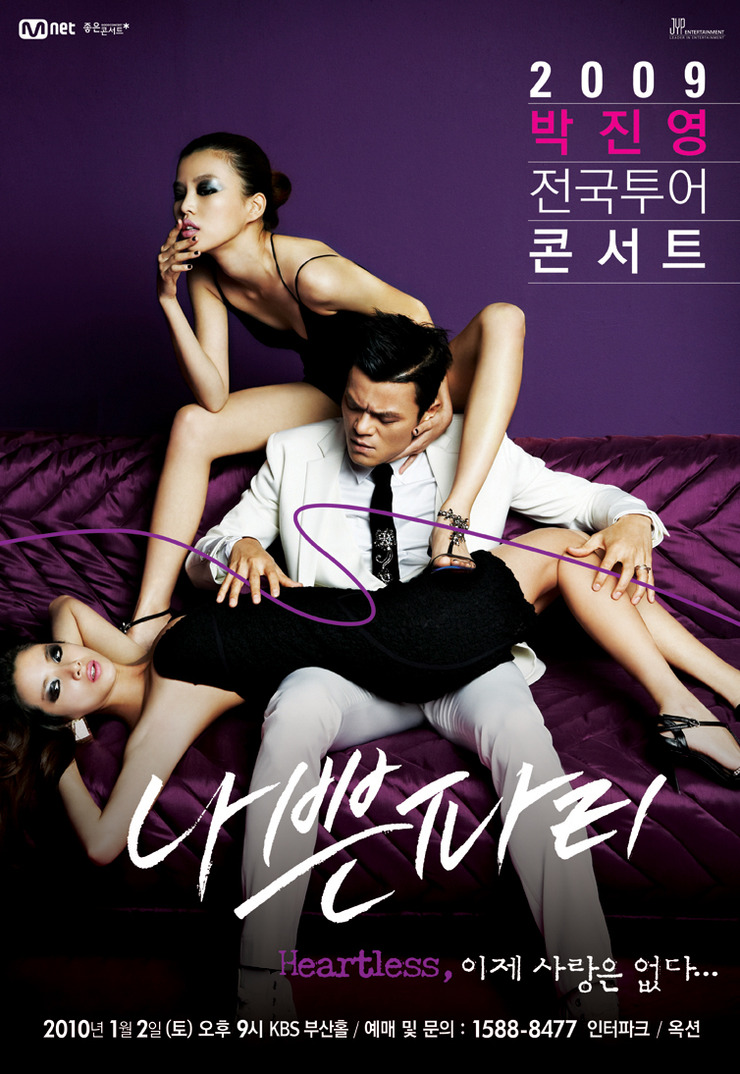
(Source)

What’s wrong with this advertisement?

When I first saw it, I couldn’t really put my finger on it, other than noting the similarity to some iconic but controversial music videos by Robert Palmer. Which was kind of ironic, considering what Park Jin-young (박진영) is putting his fingers on.

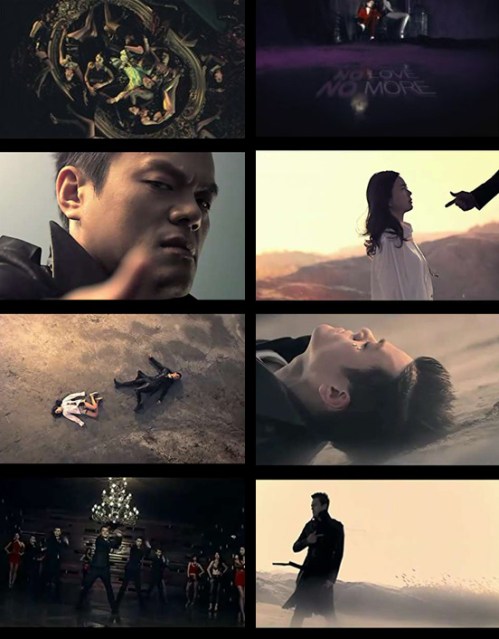
With thanks to an anonymous reader for passing it on, both these problematic elements and more are present in his new music video No Love, No More (노러브노모어), the main subject of this post. But first, a quick explanation of what was so controversial about those Robert Palmer videos exactly, for many of my younger readers may not even have heard of him.

As Alyx Vesey explains in Feminist Music Geek, the crucial one was “Addicted to Love” from 1986, and as a feminist she had trouble with it:

…for one big, obvious, highlighter-yellow reason. It’s so blatantly sexist. The models who comprise Palmer’s backing band are normatively beautiful, musically inept, interchangeable, ornamental, passive, and blankly spectacular. They’re kinda like a Busby Berkeley chorus line, only on sedatives and with visible nipples.

And while it’s a little off-topic for a post ostensibly about JYP, I think it’s worth quoting her a little more:

And yet. I can’t let this one go so easily. It’s an indelible image that is simple and yet iconic in design (it’s so effective that ”Simply Irresistible” and “I Didn’t Mean to Turn You On” only mildly revise the concept). Thus, it’s also easily replicable. When you put “Addicted to Love” alongside another lexicon 1980s video like, say, Michael Jackson’s “Thriller,” it’s much easier to match (many people, including Jackson, tried and failed to reach or exceed that video’s epic proportions).

It’s also an easy concept to subvert, which is my primary interest. I’d like to highlight a few instances where women take on “Addicted to Love” and, in the process of recasting and reconfiguration, potentially disrupt the original music video’s sexist aims.

Which I highly encourage you to check out. Meanwhile, let me also present the Simply Irresistible music video here, for I think that with the women dancing in the background, it is the most similar of the three to No Love No More:

Finally, No Love No More itself. Regardless of the criticisms in this post, it probably has the best picture quality of any music video I’ve ever watched on Youtube, so make sure to click on “HD”:

Clearly not a carbon copy of Robert Palmer’s videos then, and JYP, or whomever was responsible for them, might reasonably claim not to have been at all influenced by those. But whatever the origins, the women in the barn (and in the poster) are indeed extremely similar, and almost all are objectified.

And yet there are still more problematic elements in it, pointed out to me by the reader who passed the video on. Unfortunately, I didn’t have time to ask permission to quote her email before writing (apologies for my over-enthusiasm), so she’ll have to remain anonymous:

…the video infuriates me. Maybe it’s because I come from a country where explicit violence against women is not only extremely taboo but also illegal to portray in music videos. Still, given that domestic violence is such a formidable problem in this country, I find it mind-blowingly irresponsible that the most powerful man in Korean music at the moment puts out a video like this (source, right: unknown).

Shooting his girlfriend execution-style (apparently it’s okay to show her blood spraying out as her body crumples to the ground but it’s not okay to show an actual gun doing the shooting)… he then turns the “gun” on himself, and we’re expected to sympathize with him as a tear runs down his cheek as he takes his last breath. He executed his girlfriend, but the poor guy must have felt immense pain to have been driven to do such a thing. Break to the rest of the video, which simply consists of JYP dancing while dozens of women stand around or grope him as sexual props. JYP’s entire image seems to rely on the objectification of women, as demonstrated by [that poster], for one example…

…in which he is fingering a woman’s breasts, “playing her” as if she was a musical instrument. Now I’m definitely no fan of K-pop, and normally have nothing to do with it, but this video of his has been playing over and over on TV, and I can’t help but fear the message it sends young Koreans. JYP is, after all, immensely popular and influential in the K-music world, as he owns one of the most successful music labels in Korea and appears on countless TV shows and commercials. I find it surprising that no one seems to take offense to this video, which romanticizes violent “crimes of passion” (end).

(Source)

I agree, and as that reader is almost entirely responsible for this post, I encourage her to give me permission to print her name so that she can receive the credit for it!

But I would of course appreciate it if any other readers had more to add, on either the music video, the poster, and/or JYP’s marketing in general. And I confess, I know little about JYP’s music. So, to any fans of his in particular, would you say that that characterization of him is fair?

(For more posts in the Korean Sociological Image series, see here)

Korean Sociological Image #28: Cosmetic Surgery Advertisements Featuring Caucasians

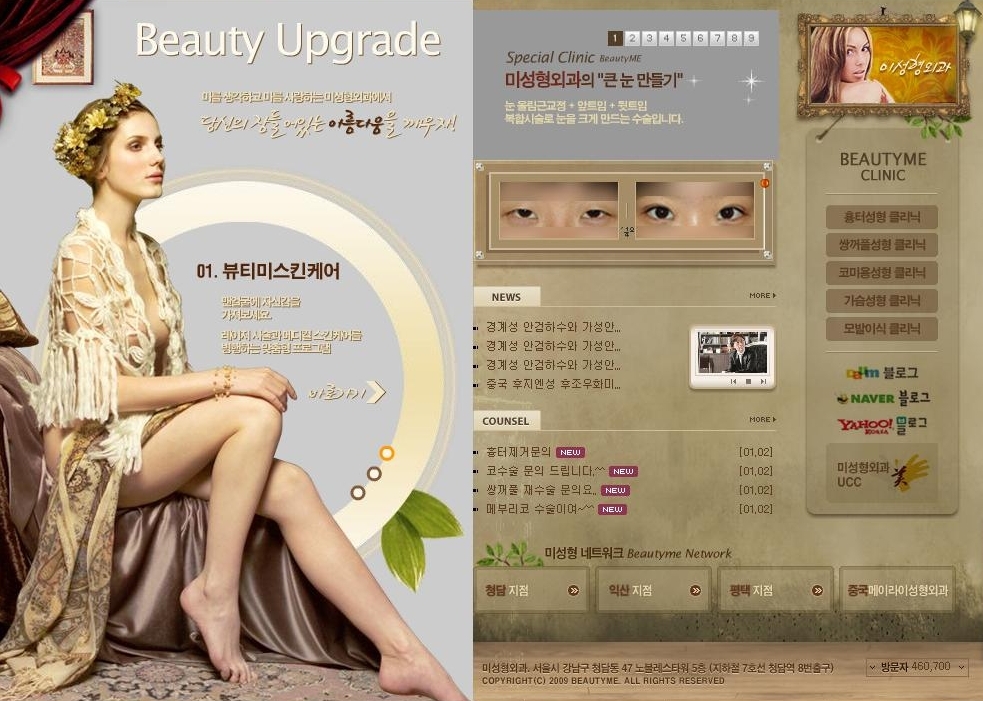
(Source)

I’ve never done any systematic study of advertisements for Korean cosmetic surgery clinics. But still, I’d wager that the overwhelming majority do not feature Caucasians.

And why should they? Like frequent commenter Whatsonthemenu pointed out in an email to me, she has never seen a tanning product advertisement in North America, for instance, that used a model of African descent, and most models look European or possibly Hispanic. Similarly, advertisements for hair straightening products, generally aimed at Black women, always use Black models (usually light-skinned ones), never Caucasian or Asian.

One reason for this is that correlation does not imply causation, and that tanned Caucasians happen to look darker does not necessarily mean that they want to look like Africans. Rather, the consensus view of tanning’s origins is that it developed as a status symbol, implying the wealth to take vacations to warmer climes.

In the case of hair-straighteners however, let me pass on Whatsonthemenu’s comment that “the desire for straight hair almost certainly originates in the desire to look closer to Caucasians,” and that this stems from back when house slaves, who were more likely to have Caucasian fathers or grandfathers, had higher status than field slaves. Which leads one to ask what Caucasians’ absence in advertisements implies?

Perhaps that when it comes to something as personal as dramatically altering one’s body and/or appearance in particular, there is a universal tendency to deny one might be imitating some aspect of another culture, race and/or ethnicity? After all, not to implies acknowledging a (perceived) flaw with your own, unlikely to go down well with other members of it.

Which is what makes Koreas’ exception to the rules so interesting.

(Source: unknown)

Whatsonthemenu noticed this advertisement for the BeautyMe Clinic on The Chosun Ilbo’s website last weekend, clicking on which took you to their homepage above. The Caucasian woman you see there is featured quite prominently throughout the site, and, judging by the the single page discussing double-eyelid surgery for men also featuring a Caucasian man, the choice of her race is not due to mere laziness or accident on the web designer’s part.

So why?

One obvious answer is that some Korean cosmetic surgery patients genuinely do want to look more Caucasian. But I think that they’d be a very small minority, even among those getting only those procedures that ultimately have that effect. Meanwhile, probably the vast majority don’t have that goal, either explicitly or subconsciously, and would justifiably take great offense at the suggestion.

However, clearly the intended customers would have no problems with associating cosmetic surgery in general and/or specific operations with Caucasians, nor find the choice of the model’s ethnicity strange. If they did, then presumably the proprietor of BeautyMe Clinic and others with similar advertisements (see here and here) would have chosen a Korean woman instead, as most do.

Yet they didn’t, and that those (positive or neutral) associations presumably existed prior to exposure to the advertisement puts paid to any notion that “Caucasianness” has had absolutely no role in Koreans’ modern ideals of beauty. And, in turn, to the notion that Koreans finding light skins and double-eyelids and so on attractive today are merely continuations of unaltered historical Korean tastes that existed prior to contact with Caucasians. Indeed, like blogger Michael Hurt wrote in 2005, it’s high time to acknowledge:

…the big, fat, white elephant in the room that is America and the West. You have to consider how having white skin here in Korea is not simply a matter of lightness anymore, of being a sign that one doesn’t have to work outside in a field. The relative pallor of one’s skin is now inevitably linked to notions of civility and class that are also reflected against the very real presence of white people, who are not surprisingly, positively associated with notions of civility and class.

But, and I stress, to do so is not to deny a role – and probably a much greater role – for historical Korean beauty ideals (and definitely not to claim that Koreans just “want to look White”). For a sense of the weight of the respective roles of each, and their possible mechanisms, please see the debate in previous posts.

(For more posts in the Korean Sociological Images series, see here)

Mise En Scène: The Sexiest Korean Commercial Ever?

It’s much easier to say than do, but it’s true: sexiness is an attitude. To whomever is responsible for the spate of “sexy dances” in the Korean media in 2009, the vast majority of which have been anything but, let me counter with this 2005 Mis en scène commercial featuring Ha Ji-won (하지원), whose smoldering gaze at Jo In-sung (조인성) has burned in my memory ever since:

Granted, perhaps you had to be there: something really is lost in the transition to your smaller computer screen. And apologies for the poor quality, but this is now the only copy of the 30-second version available that I am aware of. Still, it’s worth preserving, even if only for myself.

I didn’t realize just how much however, until I saw this alternate 16-second version. While this particular copy – again, the only one –  has better video quality, and is worth watching just for that reason, it ultimately falls flat because it lacks the build-up of the music:

By the way, it’s actually her gaze at 0:21 (or 0:09) that really did it for me in 2005, but I’m certainly warming to her long lingering one at the beginning. Meanwhile, like it or loathe it, can anyone suggest any more genuinely sexy Korean commercials, subtle or otherwise? Perhaps I should start a new series…

Update: This was part of a series of several with the couple, most of which you can find here or on Youtube. Considering how easy those were to find though, I was surprised and disappointed at how this one slipped through the net so to speak (no pun intended).

Share

The Alphabetization of Korean Women’s Body Types: Origins

(Update, 2013: See here and here for much more up to date posts on this topic, and for similar cases in English-speaking countries in the 1910s-1930s and 1940s.)

That the female body has occupied a central place in the Western cultural imagination hardly comes as news, says comparative literature writer Susan Suleiman. And while I lack knowledge of Korean counterparts to the historical examples in the visual arts, literature, and religion that she mentions, I don’t doubt that they exist.

But what to make of the recent Korean trend towards categorizing the female body and/or body parts into a plethora of different romanized “lines”? Where do they fit in?

It’s been easy enough to prove that they have become a pervasive feature of Korean popular culture; so much so, that many have acquired a life of their own, bearing little resemblance to the (idealized) women’s bodies they were first used to describe. But those earlier observations of mine were devoid of context, something which began troubling me once I paused to consider the source of the above article on the most recent manifestations of the trend, about Korean cosmetic surgeons classifying woman’s buttocks into four types. To be precise, it raised two questions, which I would appreciate readers’ help with.

The first is that is this trend of categorization qualitatively and/or quantitatively different to that which occurs in the Western media? As to the former, probably not: I need hardly point out the similar obsession with women’s bodies there, or that it also provides often impossible ideals to live up to. And however much English speakers may find Koreans’ romanization habit in this particular case both curious and amusing (and thereby memorable), arguably it merely reflects Koreans’ general obsession with English, grafted on to an interest in women’s body forms that is not dissimilar to that of the West. Indeed, even some native English sources are beginning to describe women’s bodies in terms of letters (see below), and while that failed to catch on, are they really different to describing women’s bodies in terms of bananas and hourglasses and so forth?
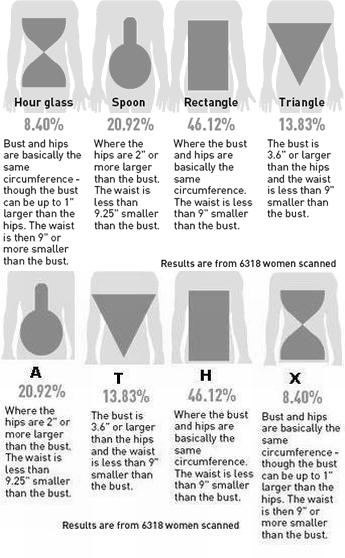
(Image sources: top; bottom. The results are from this 2005 study)

Forgive me for stating the obvious perhaps, and I mention all that not to exonerate the Korean media for the ways in which it warps and distorts women’s body images. Rather, that if I still feel that it does so more than its Western counterparts nevertheless (and I do), then that something more than my gut feeling is necessary to convince skeptics. And perhaps the difference simply lies in the much greater extent to which S-lines and V-lines and so forth are mentioned? After all, not for nothing do I describe them as a “pervasive feature of Korean popular culture.”

Unfortunately however, providing empirical proof of that is rather difficult, at least for a humble blogger. But I can provide indirect evidence in the meantime, which I would very grateful if any readers could add to.

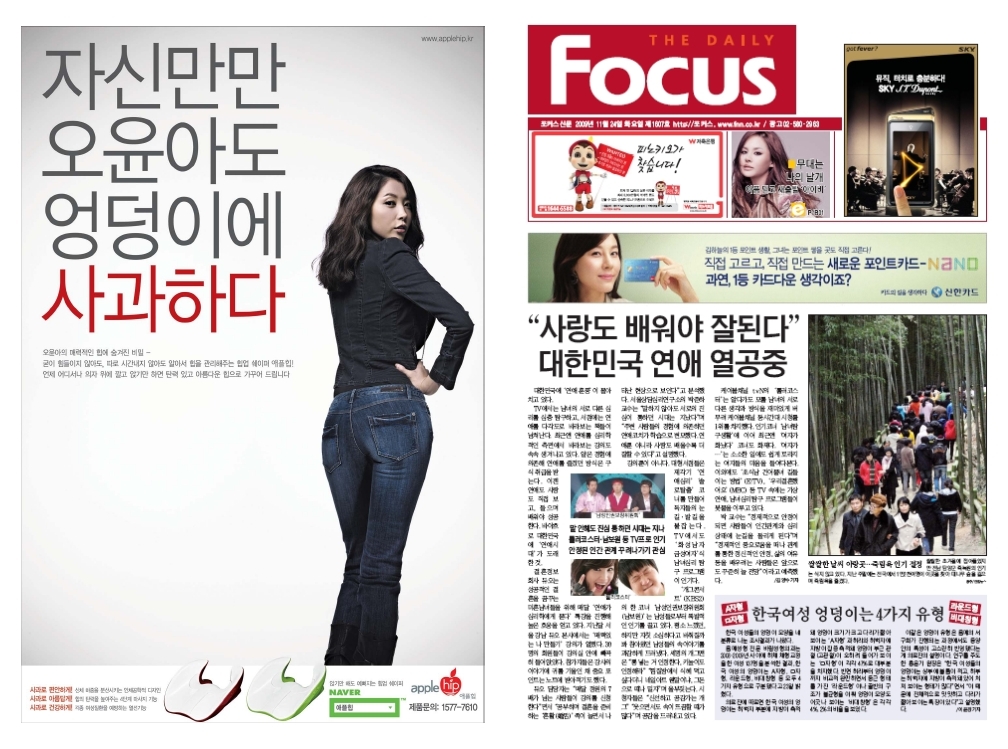
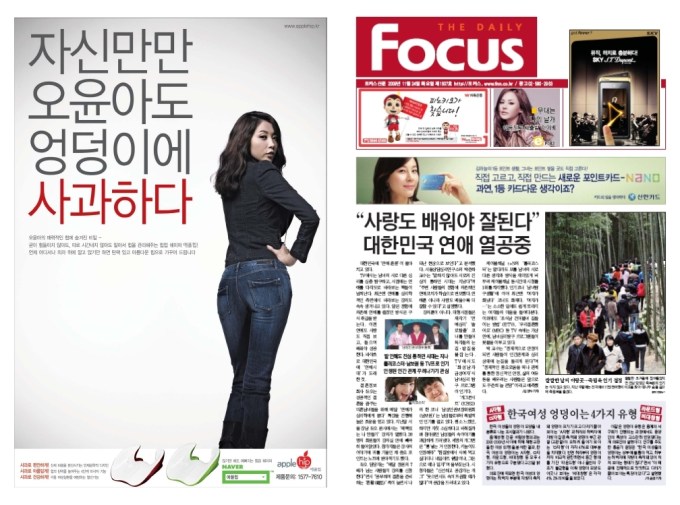
The first is the source of the article on women’s buttocks I’ve translated at the end of this post. While it may not be obvious from the opening image, it’s actually on the front page of Focus, a free daily newspaper: the image on its left, not coincidentally an advertisement for a chair which supposedly shapes one’s buttocks, part of an accompanying cover.

To your average Westerner, I’d wager that this choice would immediately single out the newspaper as a tabloid—”Women have four kinds of ass! Read all about it!”—but I’ve been asking my 20-something students’ opinions of Focus and other newspapers over the past week, and only a minority considered it such. And why would they, considering that the article was also covered by numerous other news sources (see here, here, and here), including the authoritative Hanguk Kyeongjae, a business newspaper, and which even had a helpful graphic?

Ergo, the bar for tabloid journalism is rather lower in Korea, and this extends to mainstream Korean portal sites, about which I wrote the following in my last post:

Unlike their English counterparts, you have roughly a 50% chance of opening Naver, Daum, Nate, Yahoo!Korea and kr.msn.com to be greeted with headlines and thumbnail pictures about sex scandals, accidental exposures (no-chool;노출) of female celebrities, and/or crazed nude Westerners.

To which I should have added—of course—numerous thumbnail pictures of female celebrities’ S-lines, and also a warning to never look at any of the otherwise innocuous images in the “image gallery” at the bottom of Yahoo!Korea in particular, for if you do you’ll frequently be greeted with advertisements for videos of celebrities’ nipple-slips and so on alongside those birds, flowers, and interesting landscapes.

What’s more, if portal sites are fair game, is it any wonder that children are also encouraged to be concerned about their S-lines and so on? And don’t get me started on ubiquitous narrator models.

Finally, consider what Javabeans wrote on the subject, a blogger on Korean dramas who is a much more authoritative source on Korean television than I will ever be:

…while this [romanization] practice is seemingly frivolous on the surface, it actually belies much more pernicious trends in society at large, when you have celebrities vocally espousing their alphabet-lines and therefore actually objectifying themselves as a conglomeration of “perfect” body parts rather than as whole, genuine people. (my emphasis)

With that combination, something has finally clicked for me: why it is so difficult to find Korean language sources on sexism in the media, and on advertisements in particular? I’ve been looking on and off for years now, and while I accept (and would be more than happy to learn) that perhaps I’ve simply been using the wrong search terms and/or looking in the wrong places, that it is so difficult in the first place is surely telling. A solution though, is perhaps provided by Daniel Jonah Goldhagen in Hitler’s Willing Executioners: Ordinary Germans and the Holocaust – no, really – who had this to say about anti-Semitism in Nazi Germany:

A general problem in uncovering lost cultural axioms and cognitive orientations of societies since gone or transformed is that they are often not articulated as clearly, frequently, or loudly as their importance for the life of a given society and its individual members might suggest. In the words of one student of German attitudes during the Nazi period, “to be an anti-Semite in Hitler’s Germany was so commonplace as to go practically unnoticed.” Notions fundamental to the dominant worldview and operation of a society, precisely because they are taken for granted, often are not expressed in a manner commensurate with their prominence and significance or, when uttered, seen as worthy by others to be noted and recorded. (Vintage Books Edition, Feb. 1997; p.32)

Not lost or transformed, but equally obtuse to someone from another culture perhaps, and which I’m still only just starting to make a dent in.
But a good grounding for that would be the origins of Koreans’ obsession with romanizing women’s bodies, the second question the article raised for me. Or to be honest, an element of the subject I realized I’d paid little attention to when, serendipitously, Korean reader Chorahan provided this extremely informative comment on the subject on another post. With permission, I am happy to now place readers in her more than capable hands:

…I think the specifics of the alphabetization of Korean women are best approached in the context of the classification of women into certain rigid subtypes (read: simplified stereotypes) of women. The S-line and V-line are part of the ‘formula’ for the ‘pretty girl’ here, as are humongous pupils in big double-lidded eyes, cosmetically unaided pallor, bone-tight ligaments, etc. I would suggest that people here perpetuate this mind-boggling state of sheeple-ness precisely because this ‘formula’ serves as helpful, socially constructed and ordained criteria – with which to deduce the type of woman being dealt with, and to adjust manners to suit.

Manners are adjusted according to the woman’s ‘type’ because it is widely taken as a given that certain things can/cannot be said/thought about women depending on how they look (value-judgment wise). The socially ‘accepted’ or ‘conceivable’ scenario that follows any such encounter is rigidly stratified into according variations. My take on this phenomenon is that this is directly derived from a warped and popularized Confucian principle popularized in the Chosun dynasty called 정명론 (正名論), or literally ‘right name idea’, in which the ‘father should be fatherlike and the son sonlike etc.’ A beauty should be treated as a beauty, or a ‘talking flower’; an ugly girl can be laughed at/with (hence the ‘ugly’—or, as I like to put it, ‘uglified’—comedian typification.)

I’m a Korean girl and I’ve lived in Seoul nearly all my life, going through the average Korean educational system to enter the undergraduate level here. Inferring from the numerous social contexts in which I’ve encountered such blunt references to conventionally ugly/pretty features, I would venture the possibility that in originally familial, communal societies where everyone had to stick together whether they liked it or not, the ‘insult’ was not only an insult per se, but also employed as a form of veiled endearment. This is widely considered the ideal sort of 부담없는 (easygoing) interaction between two close individuals—dialogue employing insult as endearment, or ‘constructively realistic advice to help you in the real world’—and is often the most commonly resorted-to excuse for horrific verbal abuse. (Coloring vacuous praise according to these featural types is also just such a form of ordained interaction, considered honest and respectful and completely normal.)

I do not, however, think that this should simply be chalked up to individual stupidity on the part of people that blindly follow this line of thought/action—quite the contrary. I think it’s very telling that the homogenizing retardation of the populace in this regard is and has always been spearheaded by *the commercial/entertainment media sector,* which is—big surprise— notoriously homogenized/stereotyped! It has even resorted to homogenizing certain snapshots of stereotyped ‘diversity’ or ‘unconventionality’ in the form of teen idols that are held up on pedestals as somehow being harbingers of Korea’s ‘openness’ and ‘creativity of the youth’.

As a twenty-something Korean woman towards whom those commercials are directly marketed, I find all this very sad and disgusting and lame, and I am very troubled by the thought that people actually think Korean society is improving/ has improved in its bridging of (sexual or gender-based, if that’s your cup of tea, though I don’t think that’s all) dichotomies (if dichotomies are indeed criteria on which to issue any normative judgment.)

I think it is not people being stupid, but the other way around (stupid being people, or stupidity donning the guise of specific individual avatars): the root of the problem (of not seeing people for the people they are, and adjusting social perception/performance according to formulas hammered in by peer pressure since birth) is a sort of warped ‘commodification of human beings’ + ‘Confucian backwash’ that is only being exacerbated as people constantly look to external/ international solutions to symptoms that stem from an overlooked, simplified, but inherently endogenous disease that must be addressed within its own context.

I definitely think something fundamental has to give. This isn’t just an odd cultural quirk to cluck tongues over – this S-line, this V-line trope, this alphabetization of women just as much as the stereotyping of men – it’s seriously symptomatic of some skewed rift in the goodness and saneness and kindness of people here vs. the expressed, contorted manifestations of such potential strengths.

Not exactly concise, but this is my very understandably strong opinion regarding the topic of this post. But I’m no sociologist, so I wouldn’t know.

p.s. In first paragraph—sorry, this could be misunderstood, i don’t propose any normative suggestion—I’m suggesting as an explanation that people ‘are perpetuating’ etc. (end)
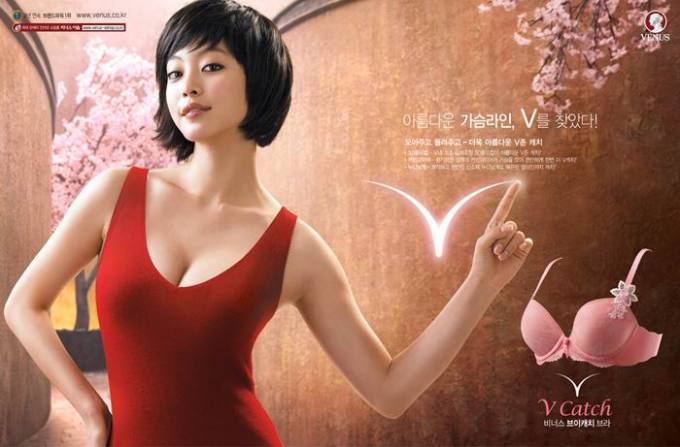
Despite all that context however, one still shudders at the thought that the following was the first thing millions of Koreans read one November morning:
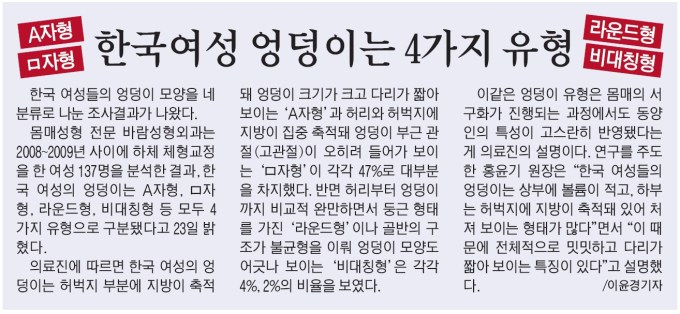
Korean Women Have 4 Types of Buttocks

The results of a survey about the different types of Korean women’s buttocks have just been released.

Baram (wind) Cosmetic Surgery Clinic, which focuses on operations on the body rather than the face, performed operations on the lower bodies of 137 female patients in 2008-2009. An analysis of their different types of buttocks was performed, and the results released on the 23rd of November. All in all, Korean women have 4 types: “A”, “ㅁ,” “Round,” and “Asymmetrical/Imbalanced.”

According to the team of doctors there, women with type A have a lot of accumulated fat in their thighs, making buttocks look big and their legs short, and those with type ㅁ, a lot of accumulated fat in their thighs and around their waists, making their hips look relatively narrow. Both comprise 47% of Korean women each. On the other hand, those with relatively smooth and curved hips and buttocks have a Round type, and those with an asymmetrical or imbalanced pelvis have an asymmetrical or imbalanced type, compromising 4% and 2% of Korean women respectively.

As the doctors explain, even though Korean women’s bodies are Westernizing, Korean women still have these 4 East-Asian types of buttocks.  According to the doctor in charge of this study, Hong Yun-gi, “because Korean women’s buttocks don’t have much volume at the top, but have a lot of accumulated fat at the bottom, they look a little droopy” and so overall “their buttocks look boring overall, and their legs short.” (end)

No, the extrapolation from 137 cosmetic surgery patients to all Korean women was not a mistranslation I’m afraid. And I beg to differ on Korean women’s buttocks looking boring also, but that discussion is probably best avoided. Instead consider, first, Jezebel’s take on “the ridiculousness of dressing for your shape,” many guides to which came up as I researched this post, especially this one from The Daily Mail, a UK tabloid. Next, another case of Korean romanization gone mad that I originally planned to look at alongside the above, albeit of women’s dresses rather than their bodies per se:

And finally, literally the very first thing that came to mind when I saw the Korean article on women’s buttocks: the following picture from a post on male objectification from Sociological Images, because I wondered if men’s buttocks would ever similarly be categorized. But given that a page exists on Wikipedia for “female body shape” for instance, but not on male’s, then I suspect not in the near future.

On a side note, and not that I want to repeat the experience anytime soon, but searching for images of Korean men’s buttocks instead proved impossible, at least on Korean portal sites. But perhaps again…*cough*…I’m not looking in the right places?

Korean Sociological Image #27: What, Koreans Can Do The Love Shake Too?

Something that manages to combine both the best and the worst of the Korean media.

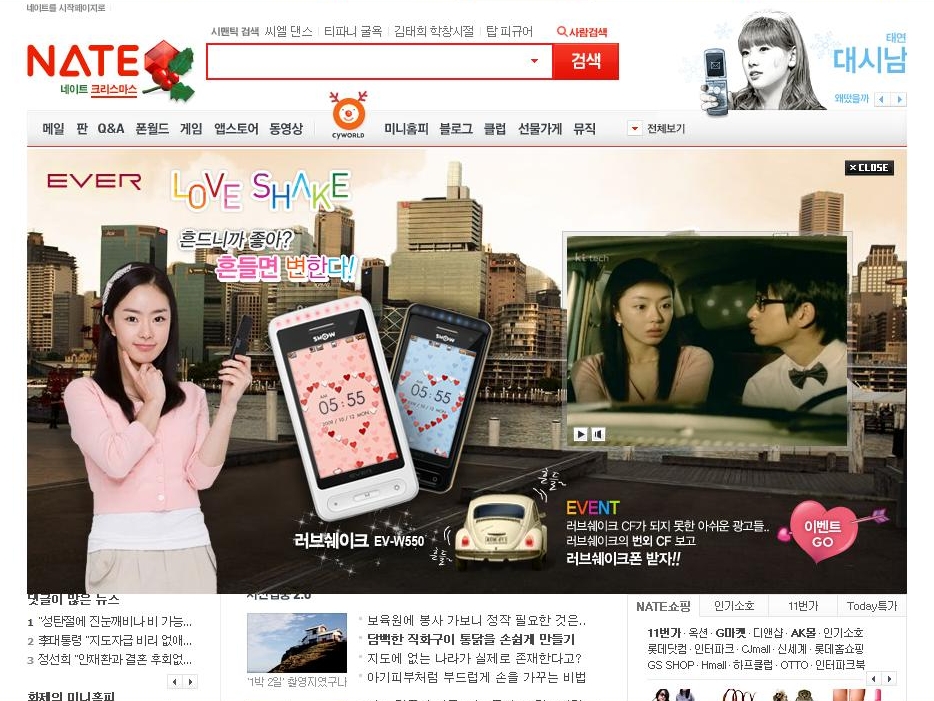
Go to the Korean portal site Nate at the moment, and you’ll see a small advertisement with an old VW Beetle on it with the words “흔들리는 자동차 안에선 무슨일이?” or “What is happening inside the shaking car?”. And if you’re using Internet Explorer – this is Korea after all – then it will invite you to move your cursor over it. If you do, then the screen above will pop up, with the following commercial:

Vodpod videos no longer available.

The good point about the commercial is the joke about having sex in a car…and just a few days after I wrote that you never see that sort of thing in the Korean media too; hopefully, this shows how much attitudes are changing. Not that there wasn’t already a great deal of sexual innuendo and increasing amounts of skin in the Korean media of course, but the latter especially is by no means a reflection of open and healthy attitudes to sex per se.

If any readers can think of any similar references to sex in the media before it though, then I’d be happy to be proved wrong. And if you do, then I’d wager that you too first found them on a mainstream Korean portal site. Unlike their English-language counterparts, you have roughly a 50% chance of opening Naver, Daum, Nate, Yahoo!Korea and kr.msn.com to be greeted with headlines and thumbnail pictures about sex scandals, accidental exposures (no-chool;노출) of female celebrities, and/or crazed nude Westerners. Which brings me to the commercial’s bad point.

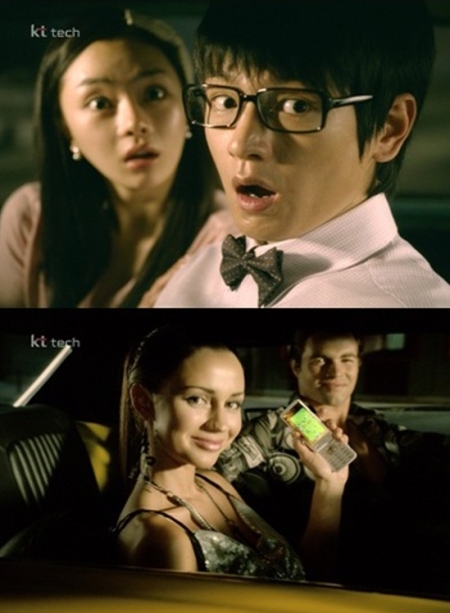
I first saw this advertisement on a work computer during a break this afternoon, already thinking of writing about it here as soon as I saw the shaking car (and as a side-benefit, it meant I could put off the translation for the post I originally planned!).  But when I saw who the occupants were I was simply floored. For in a supreme irony, just two minutes earlier I had been doing a free-talking activity with my students about national stereotypes.

Don’t believe me? Sure, I admit I’m not averse to embellishing details for a good story on occasion. But I really had been doing page 22-23 of my edition of Taboos and Issues with them (which I highly recommend by the way, and I was surprised that my students shared many of my stereotypes about European nationalities). And regardless, I would still have been sat there thinking why, oh why, did the second couple have to be Westerners?

Now, I’ve already written a great deal about how many Koreans have stereotypes of Westerners as being much more sexually liberal and promiscuous than Koreans (especially women), so I won’t rehash that here. And of course there’s a certain element of truth in that (most Koreans live with their parents remember), and it’s not meant entirely negatively and/or without a sense of envy either, although I have heard from some Western female friends that it can lead to some Korean men expecting guaranteed sex on a first date, and so on. Examples like this commercial though, demonstrate why that stereotype is unlikely to disappear anytime soon.

Against that, I grant that it appears to have been filmed in a Western city, and that if you watch the video to its conclusion, then you see the Korean couple deciding to get wholeheartedly into the “Love Shake”™ too. But to which I reply a) Why not a Korean city? and b) wouldn’t the Korean couple have appeared more confident and prouder of their nationality if, instead of the Westerners, it had been them in the shaking car, with the Westerners later copying them?

Seriously, how to explain not having either without some serious Occidentalism going on, of which artificial sexual dichotomies have always been a core component? I’m open to suggestions.

Update: On a side note, I know little about the actors Seo Woo (서우) and Im Joo-hwan (임주환) sorry (see Dramabeans for more information on both), but I can confirm that this innocent(ish) looking image of Seo Woo is consistent with her role in both Tamna the Island (탐나는도다), ironically groundbreaking in that it featured a romance between a Korean woman and a foreign male (I think – I only watched the first few episodes sorry), and also Paju (파주; see #7 here)…or at least consistent with the way it was advertised. I just mention that because many Korean celebrities appear in so many commercials that their brand easily gets diluted so to speak, so I couldn’t help but notice that she doesn’t appear to be making the same mistake.

(For all posts in the Korean Sociological Image series, see here)

Share

Lusting After Teenagers…or the Maturing of Women’s Fan Culture?

Update, September 2013: My original commentary on this article became outdated, so I’ve since removed it. Instead, please see here, here, here, and here for more on the controversial “uncle” or “ajosshi” fandom of teen girl-group members, and here for more on why middle-aged women came to dominate soccer fandom back in 2002 — an important precursor to their fandom of pop stars and actors described here.

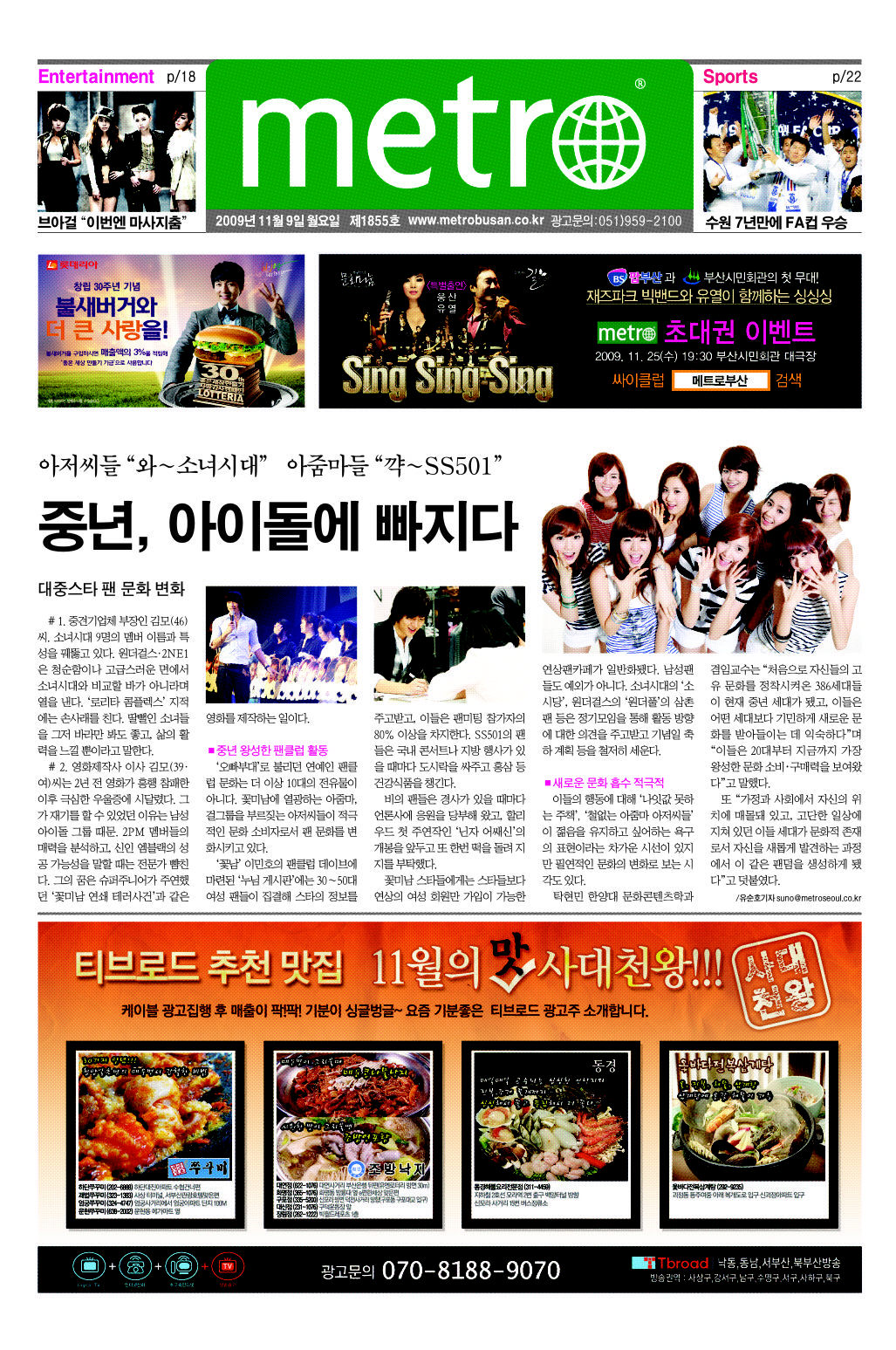
Middle-aged People are Head Over Heels about Young Idols

Fan Culture is Changing

#1. Mr. Kim (46), a department manager of a medium-sized business, knows the names and personalities of all 9 members of Girls’ Generation. He thinks that the Wondergirls and 2NE1 do not even come close in terms of purity and class. He dismisses accusations of having a Lolita complex, and says that watching the girls of Girls’ Generation, who are about the same age as his daughter, give him a feeling of life and vitality.

#2. Film company CEO Mrs. Kim (39), suffered severe depression after her movie did extremely badly 2 years ago. But she was able to recover because of her interest in male idol groups, and when she analyzes the charms of members of 2PM, or discusses the potential for the new group MBLAQ, she is indistinguishable from an expert in the music industry. Her dream is to make a movie like Attack on the Pin-up Boys (2007) that Super Junior starred in.

Middle-aged People Are Actively Participating in Fan Clubs

As the name implies, “older brother” fan club members used to be mainly teenagers, but this is no longer the case. But as active consumers of culture, middle-aged women passionate about flower men‘ and middle-aged men heavily into girl groups are actively changing fan culture.

For instance, on flower man Lee Min-ho’s fan club “Dave,” there is an “older sister” section for 30-50 year old women to exchange information about their star, and when there are fan meetings with him they make up over 80% of the audience. And whenever SS501 [James: if you don’t want to show your age, say “double-ess” rather than “ess-ess”!)] have a concert in Korea or attend some event in their region, their middle-aged female fans prepare packed lunches with healthy foods such as red ginseng for them.

(Source)

And whenever there is an event featuring Rain, his middle-aged female fans call the media and request favorable coverage. Before the release of his first Hollywood movie Ninja Assassin (2009), they even delivered rice-cakes to them, a symbol of good luck for a new venture.

Indeed, it has become quite normal for there to be fan clubs that only allow those older than the flower men themselves to join. And this is true for male-only fan clubs for female idols too. In the Girls’ Generation’s “Girls’ Generation’s Party” and the Wondergirls’ “Wonderful” fan clubs for instance, middle-aged men have regular virtual meetings where they exchange opinions about how the groups can progress and thoroughly how they can celebrate group anniversaries and birthdays and so on.

A New Fan Culture is Actively Forming

Many people have dim views of middle-aged men and women who don’t act their age, dismissing them as merely chasing after their lost youth. But an alternate view is that this demographic shift in membership is an inevitable change.

Professor Tak Hyeon-min, on sabbatical in the Cultural Contents Department of Hanyang University, said “People of the 386 Generation, who have finally established their own unique culture, are used to actively absorbing new things,” and that “from their 20s until now, they have demonstrated that they are the biggest consumers and purchasers of cultural products.”

Also, “members of this generation are stuck with heavy family, home, and/or social responsibilities, so as a means of escapism and renewing themselves, they have created a middle-aged fandom in a sense, fundamentally changing Korean fan-club culture in the process.” (end)

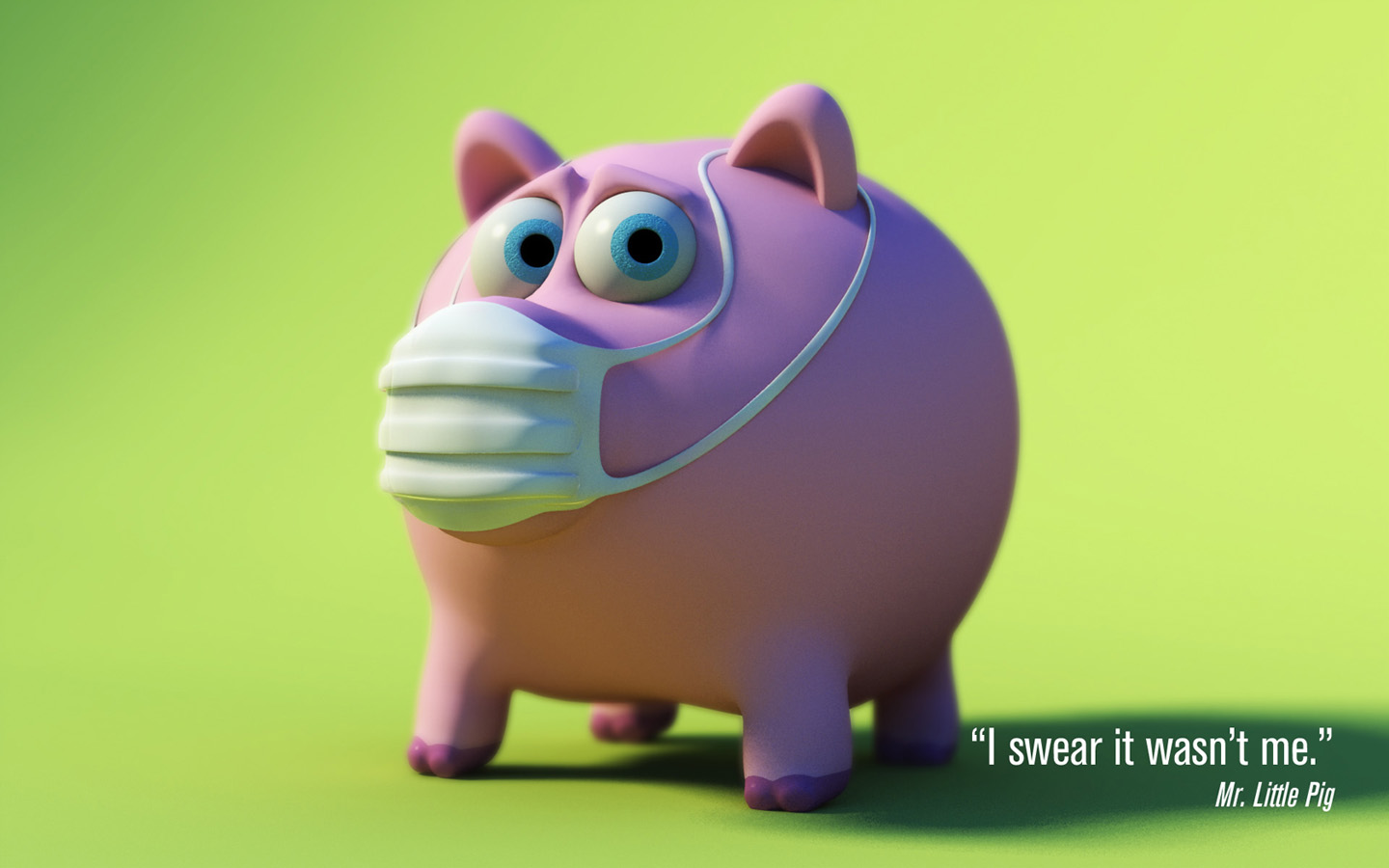
This Little Piggy Went to Kindergarten…

( Source: All Size Wallpapers )

Apologies for the 6-day hiatus everyone: my 3 year-old daughter Alice caught Swine Flu from someone in her kindergarten earlier last week, then my 1 year-old daughter Elizabeth from her, then my wife. Frankly, I’m amazed that I haven’t caught it myself yet.

Testament to my eating a clove of garlic everyday since November? Who needed friends anyway…

Seriously though, naturally I was a little worried when I first heard the news about Alice on Monday, and especially Elizabeth on Wednesday, small for her age. But fortunately all 3 are almost better (my daughters were put on Tamiflu), although Elizabeth is still coughing a little.

Meanwhile, now that things have settled at home, I’m able to concentrate on catching up with writing posts and responding comments and emails and so on. That will take a lot of work though, so I’ve decided to skip adding more by forgoing this week’s open thread sorry. Merry Christmas until the next one on the 26th though!^^

p.s. For those of you wondering when my Korean Gender Reader posts will restart, apologies for the delays, and that will be on Monday the 4th!

Share

Open Thread #2

( Source: Jeong-in )

Some graffiti-art for your enjoyment this week, as I rarely see any in Korea (not that that’s necessarily a bad thing). Now that I look at it more closely though, I’m not entirely certain if it is actually Korean? There are no details at the Korean photography blog I got it from unfortunately.

Meanwhile, I received the following email from reader Jackie earlier this week, which I’ll let speak for itself. If you would like to help her but don’t want to provide details publicly here, then please contact her at jackieee.kim@gmail.com:

“I am a junior sociology major who is hoping to go to Korea this summer to either research with a professor or work for a nonprofit organization. I am contacting you to ask if there were any organizations or people you could direct me towards or connect me with. I’m interested in working in the areas of cultural  exchange, community development, race & ethnicity, gender inequality, or children & youth. I’ve been searching for people and places on my own, but my Korean is only conversational at best and I do not have very many connections so have not had much luck. I will be applying for a summer grant from my school, so I would not need funding. I would really appreciate any help or advice you could give me. Thank you.”

Have a nice weekend everyone!

Share

(NSFW) Korean Movie Review #2: Samaritan Girl/Samaria (2004)

(Source: Naver영화)

To my surprise, there can actually be some advantages to being a fledgling movie reviewer.

For instance, lacking the knowledge of experts, I can drop all pretense of objectivity. And indeed, my long-held preconceptions of this movie did have a profound effect on my ultimate enjoyment of it.

Also, only having seen one other of director Kim Ki-duk’s (김기덕) earlier works in passing – The Isle (2000) –  then I am in no position to analyze Samaritan Girl/Samaria (사마라아) in the context of his movies as a whole.

Well of course, I hear you say. But this is more important than it may at first appear.

This is because of the plethora of reviews already available, I have noticed that positive ones tend to include extensive references to Kim’s Spring, Summer, Fall, Winter…and Spring (2003) in particular, while negative ones are more likely to analyze the movie in isolation. Not exclusively of course, but the division is noticeable. Rather than implying a potential forest for the trees phenomenon here though, I mention it because I have also heard Kim’s movies are very hit and miss, and hence that your opinion of them can be heavily affected by which film you watch first.

And therein lies the problem, for much about Samartian Girl is vague, confused and/or simply incomprehensible, and not in the positive sense that this encourages you to engage more with the movie in order to fill in the blanks. And while I strongly suspect that watching his earlier movies would clarify a great deal, by itself this movie would not encourage most viewers to do so.

samaria-korean-teenage-prostitution(Source: Naver영화)

In fairness though, I did set myself up for being disappointed.

I first heard of it two years ago, via a newspaper article I translated about how 3 in 10 internet dating sites were being used to arrange teenage prostitution. While I haven’t really pursued the subject since, deferring to the excellent work done by Matt at Gusts of Popular Feeling on it instead, the post was picked up by Shinsano at the East Windup Chronicle (as well as by Matt himself), and the back and forth I had with him there gave me the impression that Kim was a much-needed Korean social critic, welcome overseas but ostracized at home because of his constant airing of Korea’s dirty laundry.

That image of him is by no means incorrect. But despite not having seen it, somehow it also inflated the quality of the movie in my mind over the next two years, especially as the blog came to acquire its present focus. Suffice to say that by the time I finally began to watch it last week, I fully expected a fierce and piercing critique of the teenage prostitution industry here.

But just the marketing of the movie itself should have given me pause.

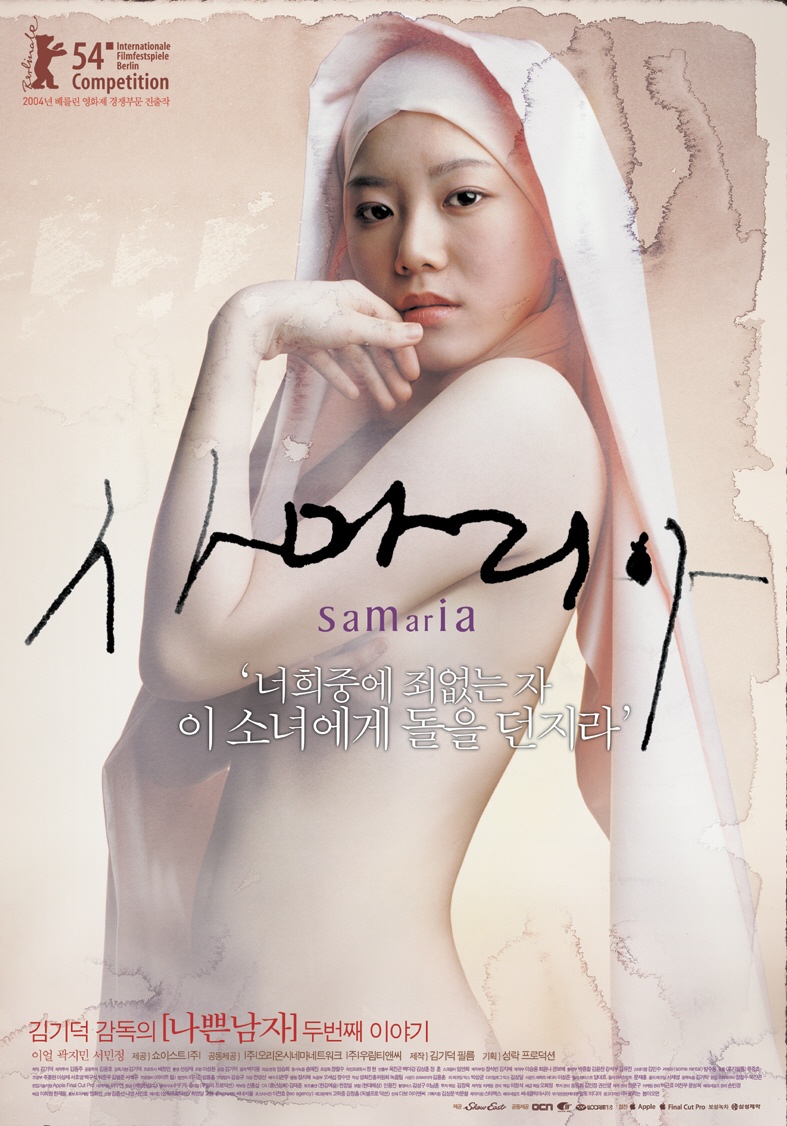
Consider the two promotional posters above from 2004, featuring Kwak Ji-min (곽지민) and Han Yeo-reum (한려름) respectively. Never mind that Kwak is topless, and as a minor when the picture was taken, meant that it was technically illegal; as this case with a 14 year-old in January and this case with an 18 year-old earlier this month demonstrate, the Korean authorities still seem strangely reluctant to prosecute this sort of thing. Rather, the point is that far from discouraging one from having sex with minors, both posters seem to be positively encouraging it.

True, as author of this blog, I can hardly fault someone for using such images for the sake of popularity, even if they send mixed messages. Also, at risk of sounding hypocritical, I’m not going to feign outrage at topless photos of someone just a few months shy of the legal age to pose for them either. But I do have my limits:

samaritan-girl-bathhouse(Source: Celebrity Movie Archive)

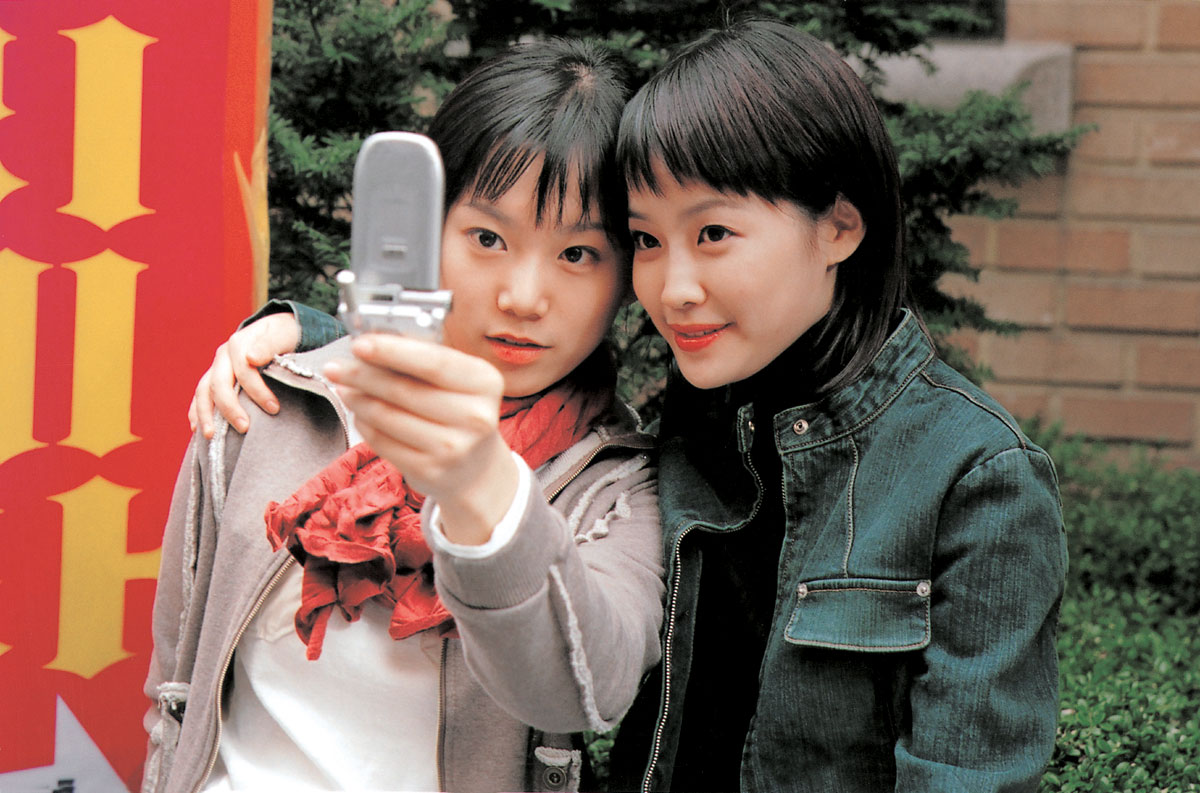
This is the second of two bathhouse scenes in the movie, at just 6 minutes and 16 minutes into it respectively. Neither is entirely pointless: the implied lesbian relationship is central to understanding why Kwak Ji-min, pimping for Han Yeo-reum as they save money for permanently escaping to Europe, clearly becomes distressed when Han shows signs of enjoying her work, in particular becoming attached to one of her clients, a music composer. Derek Elly at Variety also notes that:

Wisely, Kim has opted not to show the sex scenes [with clients], and there’s tenderness (with gently lyrical music) in those sequences sketching the girls’ friendship — playing in a park together, or bonding in a Korean-style bathhouse.

Apparently so much tenderness though, that it put blinders on this unnamed reviewer at Asian Film Reviews:

There is minimal nudity in this movie, which is surprising considering the subject matter. The lack of nudity preserves the girls’ innocence and reinforces the integrity of the movie. If Samaritan Girl featured explicit sex, it would seem trashy and the message would be lost in all of the excess. Instead, this movie is a tender, touching story about shattered dreams and lost innocence.

TR at TimeOut London puts it rather differently however:

The actual paedophile sex is kept offscreen, but Kim’s enraptured gaze at the two naked girls washing each other in a public bath is as prurient as they come.

And while both scenes were certainly compelling viewing at the time, I was left wondering if it was really necessary to see them naked to appreciate their bond?

(Source: Naver영화)

Probably not, and this adds a certain poignancy to what Adam Hartzel writes about Ki Ki-duk at KoreanFilm.org:

In tag-lining his Silver Berlin Bear award-winning film Samaritan Girl with the biblical reference, “He who is without sin, throw the first stone,” director Kim Ki-duk has allowed himself cover from critics. Such a tagline deflects any negative criticism before the critic has even criticized. It argues that only the critic who is without criticism themselves should throw damning words at Kim’s film, otherwise, the critic should remain silent. And who among us is without “sin”, hypocrites that we all are? Such underscores the marketing acumen, if not directorial skill, of Kim, a man who has quickly risen, justified or not, to become one of the most recognizable Korean directors throughout the world…

In combination with the posters then, those scenes were arguably far more for commercial reasons rather than the artistic ones Kim Ki-duk is better known for. While that does not make Samaritan Girl a bad movie in itself though, it does point to an emphasis on style over substance that plagues the entire movie, and after just 6 minutes into it to boot.

To a certain extent, this criticism is just personal taste. Friends that recommended Peppermint Candy to me for instance, only to be dismayed by my scathing review of it later, have since pointed out my preference seems to be for movies where everything is explained to viewers. That’s a fair assessment, and indeed my incomprehension at Kwak’s bizarre decision to sleep with all of Han’s former clients after her death, returning their money as some form of atonement (hence the title), means that I would have been unlikely to have ever warmed to Samaritan Girl. And in hindsight, being aware of that element of the plot is what put me off from watching it for two years too.

But I can still acknowledge the benefits of such an approach, and indeed to have provided more detail would probably have detracted from the haunting, slight surreal tone of the film, with occasional combinations of long, drawn-out, but otherwise compelling scenes and stunning cinematography that reminded a newbie like me of, well, the Italian movie Il conformista (1970). There is also a lot of symbolism and references to Christianity, redemption, and – most notably in my book – there is the decision by Kwak and one client to have a liaison on the riverbank in front of the National Assembly Building. A metaphor for something deeper perhaps? A thinly-veiled political message?

(Source: Naver영화)

Alas, probably not. While it would be unfair of me to criticize Samaritan Girl for completely lacking the piercing critique of teenage prostitution I had projected onto it (albeit not unreasonably given Kim’s reputation),  I certainly didn’t expect the movie to almost glamorize it instead. But this is no exaggeration: with the exception of the composer Han became attached to, all of Kim’s clients treat her with (paternalistic) respect and kindness for instance (one can understand Han’s affection for them), most liasons take place in immaculate hotel rooms, and some immediately see the error of their ways after Kim surprises them by giving money back to them afterward.

There is no violence, no refusals to wear condoms, no STDs, no pregnancies and abortions, and apparently no impacts whatsoever on Kim herself, who someone manages to sleep with dozens of men in the afternoons despite being an otherwise ordinary middle-school student.

Indeed, the only unwelcome element in this fantasy is the police, first in the form of the officers raiding the hotel, forcing Han to jump to her death from a hotel window in order to escape, and later in Kim’s detective father Lee Eol (이얼), who discovers what she is doing but who chooses to confront Kim’s clients – in increasingly violent episodes – rather than confronting her.

Of course, Samaritan Girl does have some redeeming qualities. Kwak in particular seems to mature as an actor literally over the course of movie, and the tension between her and Lee – an excellent casting choice – that is the focus of the last third of the movie is both palpable and compelling. But both positive and negative reviews of the movie mention that Kim never quite manages a balance between surrealism and providing a convincing story, and even for those that don’t like to be spoon-fed all the details of a story like myself(!), there are simply too many gaps to make the necessary leaps of faith.

(Source: Naver영화)

Instead of Samaritan Girl then, I heartily recommend You Are My Sunshine (2005) for an examination of the unsavory reality of the Korean prostitution industry, albeit only in passing. But I would appreciate any other suggestions.

Next review: My Wife is a Gangster (조폭 마느라; 2001).

(For all my Korean Movie Reviews, see here)

On Being Green With Envy at Childless Couples…

Apologies for not having a post up since Monday everyone, but for some reason my daughters have been running around until late every night this week, demanding to climb up me to do back-flips, or that I help them build Lego houses. Yesterday, I vaguely recall, I even fell asleep on the lounge floor while watching them…and they proceeded to use the side of my head to put their Lego bricks on.

This morning though, my eldest one thrust the above into my pockmarked face while I was drinking the first of many coffees, loudly exclaiming “Chorok-sek (green) one YOO Daddy! A toast please!”. I decided to forgive her.

I’ll do my best to have one ready by tomorrow. Post I mean. Meanwhile, here is an example of the budding artist’s work from July if you’re curious, and also a brief examination of the gender stereotypes in a popular Korean children’s song if you can’t wait until tomorrow for that sort of thing. But be warned: I wear rather less clothes in Korean summers…

Share

Korean Advertising: Just Beautiful Women Holding Bottles?

Source: Wonder Nostalgia.

Some words of wisdom from Londoner Bruce Haines, currently head of Korea’s largest ad agency Cheil Worldwide (my emphasis):

Q) What’s one big difference between advertising in Korea and the UK?

A) Celebrity endorsement – a huge proportion of Korean ads depend on famous people. Of course, it’s not uncommon in the West for stars to endorse a product, but generally the ad has a core idea and makes use of the celebrity endorsement to enhance the original concept. Not so in Korea. In its crudest form, Korean advertising degenerates to beautiful people holding a bottle. This is one of the things holding back the reputation of Korean advertising worldwide.  (10 Magazine)

At first, I thought “Korean advertising degenerates to celebrities holding a bottle” would have been more accurate myself. And regardless of the rather unflattering picture of Wondergirls singer Sohee (안소희) I chose above!^^

But Haines’s wording does have a nice ring to it. And however obvious his point may be to readers, I confess that it would never have occurred to me personally. Spending most of my adult life in Korea, he made me realize that I fail to notice Korean advertising’s peculiarities sometimes.

Which got me thinking about others. An obvious one, at least to a blogger forcing himself to include more images of men in his posts(!), was that although male celebrities are increasingly used to advertise alcohol in Korea, I really struggled to find any men endorsing a soft drink to illustrate this post with.

Yes: even after half an hour spent flicking through my old Korean advertising magazines, this was still the only one I could think of (although as I write this, this recent one for Powerade is coming to mind; but the actors are not celebrities and thanks to Seri for pointing out that it features the group Epik High). If anyone can think of any more, then please let me know.* But if not, then overwhelmingly having women in Korean soft drink commercials aimed at women seems to provides additional evidence for their preference for passive approaches to losing weight, in the sense that “drink this and get a body like mine” – rather than, say, “drink this as part of a balanced, healthy lifestyle” – is the only narrative offered.

Source: unknown

Of course, soft drink commercials would say that. But the point is that this narrative of passivity is echoed in Korean advertising for a surprising array of products aimed at women.

In particular, as reader Seamus Walsh recently commented, it’s strange (and a pity) just how many Korean female singers get great bodies by dancing, only then to appear in advertisements claiming that it was all the result of drinking, say, a watery tea. A good illustration of which is the Brown Eyed Girls (브라운아이드걸스; above), who – to my great dismay – recently choose to endorse the diet company Juvis (쥬비스), a company I’d already criticized back in February.

And for alternatives? Again I’d struggle, as female celebrities advocating something involving mere exercise instead are unfortunately very rare, either personally or via endorsing related products like exercise equipment or sports clothing. BoA (보아) is one, but can anyone think of any others?

Lest you feel that I’m overemphasizing and/or exaggerating Korean differences regardless though, none of that is to deny that marketing to Korean women does indeed still share many similarities with that of Western countries for instance. And apologies for rehashing a topic already familiar to many readers, albeit from a new and – to me – rather unexpected angle.

But the differences are real, and as a final surprising demonstration of this, consider how gendered yogurt is in Western countries for instance, as demonstrated hilariously by American comedian Sarah Haskins below (see here for many more videos like it). As far as I can tell though, so far yogurt has yet to become “the official food of women” in Korea:

Is that difference because the idea of, well, “drinking” for health is so ingrained in the Korean psyche? Or perhaps for some other reason?

If you reside in South Korea, you can donate via wire transfer: Turnbull James Edward (Kookmin Bank/국민은행, 563401-01-214324)

p.s. For examples of what Korean advertising does have to offer the world, see my “Creative Korean Advertising” series here.

*As soon as my head hit the pillow, a few more examples came to mind, and I realized I needed to make a greater distinction between different kinds of soft drinks: advertisements for tea-drinks at least do indeed almost exclusively feature women, but those for sodas are more mixed, and – with the exception of laxatives – the more medicine-like a health-drink is marketed as, and to be found in a pharmacy, the more likely it is to feature and be intended for men. But I think the distinction I identify in the text is still generally true, and as further evidence for that I suggest thinking of what celebrities you know of that have regularly endorsed any form of soft-drink. I’d wager that while several women will come to mind, you’d still be hard-pressed to think of any men!

Open Thread #1

Source: Gratisography @Pexels.

Why didn’t I think of this months ago?^^

With the proviso that most visitors to a blog about gender and sexuality are usually rather disappointed with what they find(!), the good news is that the popularity of my blog has grown dramatically in recent months, and I really enjoy and appreciate all the additional comments and emails I’ve been getting as a result.

Unfortunately though, all that’s coincided with a much heavier workload at my job. And with a non-working spouse and two young daughters on top of that, then I literally have only about an hour each night to devote to the blog these days.

You’ve probably already noticed the reduction in the number of posts. While I think I’m still pretty good at responding to comments though, that’s definitely at the expense of emails from readers, and I constantly have a backlog of about 20 or so in my in-box. Usually relatively long, intelligently written, and interesting, I consider it a real achievement if I manage to reply to about 3 or 4 in a week.

And as new ones come in, then older ones tend to get further and further down the screen. Some people must surely have given up on me by now, for which I apologize.

But I don’t want to give the impression that I don’t want to be emailed: quite the opposite. And the delay with some isn’t entirely due to my lack of time. More, it’s because I’m not actually the most appropriate person to answer their questions, either because I simply don’t know, and/or I can’t help, however much I’d like to.

In nine-tenths of those cases though, I’d be surprised if readers couldn’t.

I realize what that may sound like: getting my readers to do my work for me. And sure, maybe I am.^^ But by no means is anybody obliged to(!), and regardless it’s surely better to have questions and requests for help getting to the right people rather than have them languishing in my in-box.

Those are just one purpose of having a weekly open thread though, and not necessarily the primary one. The other is to give me a place where I can mention things that are still interesting but which I don’t have time to further develop into a blog post, or – more importantly – for you to bring up and discuss things yourself. Naturally I’d prefer things related to gender, sexuality, advertising and pop-culture, and preferably Korean too, but I’m extremely flexible. And by all means please feel free to link and discuss your own blog posts and so on: with my schedule, that’s probably the only way I’d ever find out about them!

With that in mind, let me provide a few things to get the ball rolling. First, a problem someone emailed me about. I’ve removed the author’s details because – surprise, surprise – I haven’t had time to ask permission to reproduce it publicly sorry, but I’ll make sure to let them know as soon as I can!

…Adoptees, such as myself, who have visited Korea often tend to come back either angry or induced with yellow-fever.  It has often left me wary of my own trip, pending next year and I have been trying to acclimate myself about Korea & culture before visiting.  Korean immigrants often wax poetic about their home country and refuse to discuss anything negative about it.

The reason I’m contacting you, besides to thank you for the well-written pieces, is because I wondered if you have any insight into the adoption attitude in Korea.  So much of what I have read in articles about Korea and how they are addressing adoption is very optimistic and pro-active – they have stated they intend to phase out all international adoptions by 2012.  Yet, from what I understand from other adoptees and social workers, the reason why Korea has such a history of adoption-“exportation” is partly due to the attitudes of single mothers, contraception, and blood-only attitudes.  Most Korean immigrants or visitors immediately apologize when the issue of adoption comes up but then refuse to discuss the topic.  I still don’t have a clear picture of the Korean attitude and was wondering if you have any insight to share.

Source: Center for Korean Studies

And now an interesting point from another email to get some discussion going:

…I enjoy reading your blog tremendously, it is exactly the sort of things I like to think about. I’ve obviously noted that women here in Korea act more “childish” and traditionally feminine than in Europe. In [the European country I’m from] there isn’t really a strong focus on gender or gender roles that much, but women act much more masculine, engaging in sports frequently and heavy drinking. The behavioral difference between genders there is not so great. Still, men occasionally make their silent effort to “out-man” women, by not allowing their girl to become stronger than them, or by trying to unnerve them or trying to have the upper hand. This is all very subtle, and they won’t admit to it usually. In Korea, where the threshold for being more masculine than your girl is so low, it isn’t strange that men allow themselves to adopt relatively feminine characteristics. At the same time they maintain a very macho attitude, to contrast the very femi attitude adopted by women. This is confusing, but interesting all the same.

I’d never considered that, and it puts a interesting spin on all the posts about the development of Korean heterosexuality I’ve written (see “My Constantly Evolving Thesis Topic” on my sidebar). If that’s not up your alley though, then consider Brian in Jeollanam-do’s comment to this post of mine instead, in which he suggests that bottoms are generally viewed asexually in Korea. After reading it, I decided to test his hypothesis by taking a poll of my students’ opinions of the advertisement I wrote about there:

And I’d be interested in hearing what your own (adult) students and Korean friends and partners think too. Personally, while my two classes of 20 and 30-somethings are hardly representative of Koreans as a whole, I see no reason to think that they’re particularly unrepresentative either. And guess what? Only about a fifth of them saw the dancing in that as at all sexual, which simply astounded me…

Finally though, this is the weekend, so the person who writes the best caption to this next wins a free beer when they’re next in my part of Busan!

If you reside in South Korea, you can donate via wire transfer: Turnbull James Edward (Kookmin Bank/국민은행, 563401-01-214324)

Korean-language Sources on Gender and Sexuality #2: “솔직녀의 섹스와 연애 이야기” on Why Sex Before Marriage is Necessary

( Source )

What do you find interesting about Korea? Perhaps even interested enough to study Korean for?

I’d wager that very few of you would consider doing so for pottery or the history of kimchi-making. Unfortunately however, such things are still staples of most Korean textbooks and courses on Korean culture.

But as the blogger I, Foreigner points out:

…sometimes I wonder if Koreans actually know what their own culture is all about. Do they not realize that watching TV on tiny screens on the bus/subway, playing games at the PC bang all day and boiling it up at the Jimjil Bang or Baths are as much part of Korean culture as kimchi is? Would it not be more useful for us to learn more about the history and use of these? Show me ONE teacher who has been here more than a month who has not heard about the whole history of kimchi.

And not just more useful, but also more interesting and more entertaining too. In that vein, let me present the blog “솔직녀의 섹스와 연애 이야기” (An Honest Woman’s Thoughts on Sex and Love) as an alternative Korean study source, and of course as another Korean voice on gender and sexuality in Korea also.

While the author has actually been living in America for 10 years, in her own words she’s had a lot of Korean boyfriends and sexual experiences, and more importantly aims to avoid a loveless and sexless marriage like many of her counterparts back in Korea. In particular, it was this post about teaching Korean to her American boyfriend that first caught my eye, and which readers here might be most interested in. Rather than spoiling that for you though, and being unable to choose from so many interesting-looking posts to translate myself, here is one my wife selected for me instead(!):

( Source )

혼전섹스는 결혼의 필수조건 Why Sex Before Marriage is Necessary

최근에 이글루스에선 처녀 논쟁이 한창이었다.  뭐 보지 않아도 뻔한 논쟁이지만, 아직도 여자는 결혼할때까지 처녀여야 된다고 주장하는 사람들을 보면서 묻고 싶었다.

Recently, on Egloos there was a big debate about virginity and sex before marriage. It was predictable and quite boring really, but it showed me that still some people think that women have to be virgins before marriage. Which made me ask myself the following:

사랑하는 사람이 처녀가 아니면 그 사람과 결혼 못한다는 얘긴가? 누군가를 사귀기 시작해서 좋아하게 됐는데 알고보니 섹스 경험이 있더라.. 그러면 좋았던 감정이 사그라드는건가?  결혼하고 싶은 여자가 있는데 혼전 섹스를 하자고 한다면? 꾹참고 결혼할때까지 기다려 할껀가?

Are there people that would not marry someone they loved if they discovered that they weren’t a virgin? If they found out after starting to like someone that they have had sexual experience, would their feelings for them disappear? How about if a woman they loved suggested having sex before marriage? Do both of them still have to resolutely suppress their desires until the wedding night?

사람마다 가치관이 다르니 누가 옳다 그르다 따지고 싶진 않다. 하지만 누가 나에게 혼전섹스에 대해 어떻게 생각하냐고 묻는다면 난 주저없이 말하겠다.

Everybody’s values are different, and I don’t want to distinguish between right and wrong here. But if anybody asks me what I think of sex before marriage, I wouldn’t hesitate to give my answer:

넌 차 살 때 테스트 드라이브도 안 해보니?

Wouldn’t you test-drive a car before buying it?

모든 남자가 차로 치면 벤츠나 BMW 같을 수는 없지만, 최소한 내가 편안하게 느낄 수는 있어야 되지 않을까?  좀 삐거덕 거리는 부분이 있다면 고칠 수도 있겠지만, 아무래도 어색하고 영 내 몸에 안맞는 차가 있듯이, 사람도 그렇다. 서로 좋아해도 이상하게 섹스에 있어선 영 아닌 경우가 있다.  그리고 섹스가 영 아니다보면 결국 그 남녀관계엔 불만이 생기게 마련이다.

( Source: unknown )

If all men are cars shall we say, then of course not all can be Benzes or BMWs. But at least I should feel comfortable driving it before I buy it, yes? And sure, if there’s a squeaking noise or small problem, then it can be fixed. But still, I wouldn’t feel as comfortable about buying it anymore. Just like people. Strangely, even if a man and a woman really like each other, the sex can be bad. And if it continues to be bad, then of course it will be a problem for their relationship.

1년 정도 사귀었던 남자친구가 그런 경우였다.  원래가 그다지 말이 많은 사람이 아니었지만, 섹스에 관해선 거의 서로 침묵을 지키던 사이었다. 문제는 난 그와의 섹스가 전혀 만족스럽지 않았던거다. 난 나름 그를 흥분시켜주려구 ‘자긴 내가 뭘해주면 좋아?’ 물어보면, ‘음.. 니가 하고 싶은대로 해.’  모든 대답이 이런 식이니..  내가 만족스러운지 어떤지는 한 번도 물어본 적이 없고, 그러니 나도 물어보기 힘들고..  그와는 결국 헤어졌고 (섹스가 가장 큰 이유는 아니었다), 헤어질 때까지도 서로의 섹스만족도에 대해선 한마디도 나누지 못했다.

This happened with a boyfriend I had for one year. Originally, he wasn’t really a talkative person, and although we did have sex we never talked about it with each other. But it was completely unsatisfying for me. I would ask him “What would you like me to do to turn you on?,” but he would always answer “Do whatever you want.” And he never asked me if it was good or not for me, which meant it was kind of awkward for me to ask him n turn. In the end, we split up. Our unsatisfactory sex life wasn’t the biggest reason for that, but then until the split-up we never asked each other even once if it was good for the other person or not.

섹스가 잘 맞는 상대와는 섹스에 대해 솔직하게 얘기하기가 쉽다. 서로 기본적으론 만족스러워하는 걸 아니까. 잘 안 맞는 상대일 수록 섹스얘기를 꺼내기 힘들고, 그러다보면 계속 불만이 쌓이고.. 악순환의 연속인거다.  그런 상황을 피하기 위해서라도 진지하게 좋아하는 상대라면 더욱더 결혼을 결심하기 전에 섹스를 해볼 필요가 있다. 좋으면 다행인거고, 실망이라면 적어도 결혼하기 전에 실망하는게 나으니까.

It’s easy to speak honestly to talk about sex with someone when the sex is good. Basically, because you both already know the other is satisfied. But for those for whom the sex is bad, it’s very difficult to bring the subject up. But that leads to a viscous circle of bad sex leading to not talking about it, which leads to continued bad sex, and so on.  So, if you want to avoid that happening with a partner whom you really like and are thinking about marrying, then you really need to have sex with them before making that decision. It’s better to be disappointed before marriage rather than after.

결혼 상대는 결국 평생의 섹스 파트너가 되는 셈인데 섹스를 테스트해보지 않고 결혼하는건 너무 위험한 결정아닐까?

Your wife or husband will be your lifelong sexual partner, so not having sex before marriage is very risky!

James: Personally, I would rather have stressed the value of talking with your partner particularly if the sex is bad. And I’m a little troubled with her argument that she would still be put off buying a ‘car’ with a ‘small problem’ even if it got fixed, and in turn that she seems to be advocating simply giving up on your partner if they’re bad in bed rather than biting the bullet and talking to them about it!

But I don’t want to potentially misrepresent her views, as I haven’t really read enough of her posts to properly judge her opinions yet. And of course something may be lost in translation, so I invite and would very much appreciate it if any other Korean speakers could check for me.

In the meantime, for those with Korean partners especially, I hope you enjoy the “inside information” she regularly offers!

(For all posts in the Korean Sources on Sexuality and Gender series, see here)

Share