It’s Official: UNDP Says Korea Now Feminist Paradise (NOT April 1 Joke!)

(Source: unknown)

If there was only one statistic that best sums up contemporary Korean society, then that would be its “Gender Empowerment Measure” (GEM). Calculated by the UNDP, it is:

…an indicator of women’s degree of participation in political and economic activity and the policy-making process, using for its evaluation factors such as the number of female legislators, the percentage of women in senior official and managerial positions, the percentage of women in professional and technical positions, and the income differential between men and women (source).

Or, to put it graphically (see here for more details):
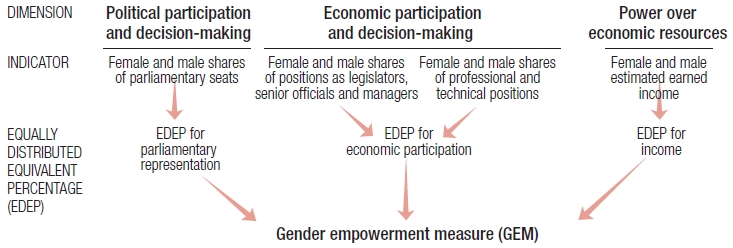
And why Korea’s GEM is so revealing is not just because of its abysmal ranking, which, at 68th out of 179 countries surveyed, is bested even by developing countries such as Kyrgyzstan, the Dominican Republic, the Philippines, Vietnam, Moldova, Botswana, and Nicaragua. Rather, it’s because that rank is so out of sync with its other rank of 25 in the Human Development Index (HDI), which measures a country’s  standard of living. Surely, as I explained two years ago, there is no greater testament to the palpable gender apartheid here, than the fact that Korea does such a good job of educating and taking care of the health its citizens, only then to effectively exclude fully half of them from political and economic power?

(Source: unknown)

Mentioning this in a conference paper I’m writing on Korean girl groups however, as one does, earlier today my coauthor quite reasonably asked me if a more up to date ranking wasn’t available?

Alas, no. But there did appear to have been some recalculating of the 2008 figures done, with the first thing I saw from my search giving Korea a new ranking of, well, 20th best in the world:
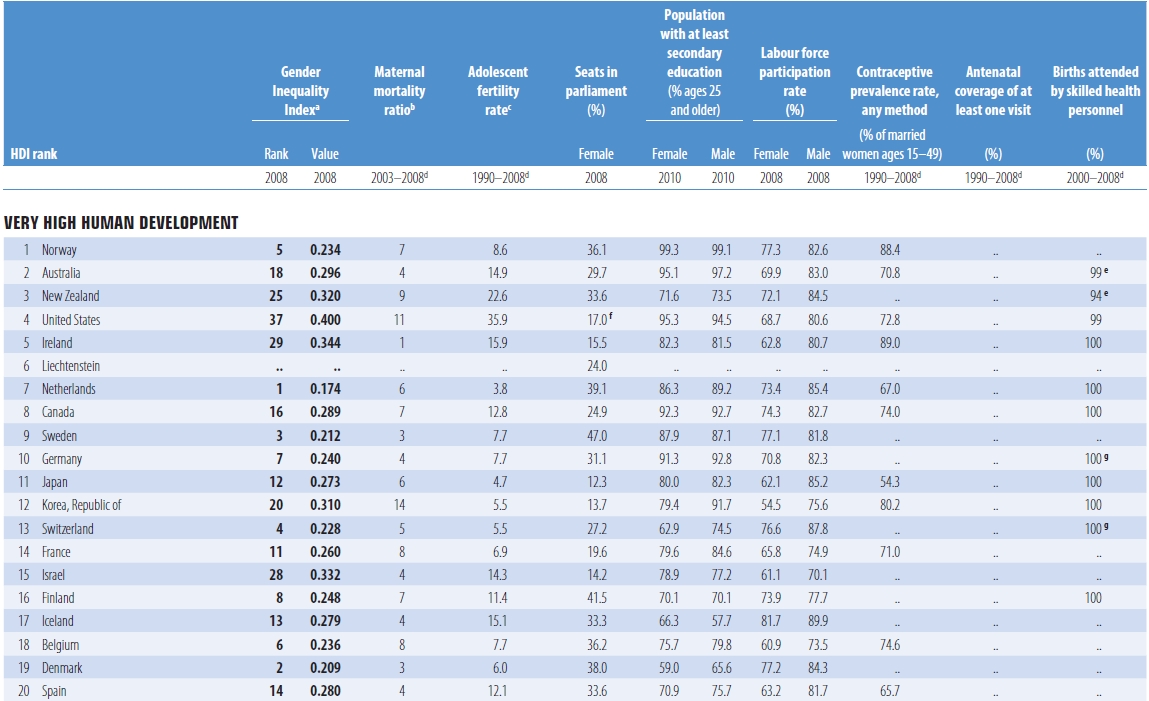
Needless to say, I did a double-take. And indeed, as most of you have probably already guessed, actually the GEM has been abolished. Instead, Korea now has a ranking of 20 in what’s called the “Gender Inequality Index” (GII), calculated according to the following criteria:

What to take away from this? Well first, if I do say so myself, that it’s a pretty interesting thing to end up with, having originated from a paragraph that just one line earlier discusses Girls’ Generation’s signature hot pants.

But more seriously, I do want to stress the incredible achievements that Korea has made in terms of affordable, quality healthcare, well-illustrated by a recent anecdote from Ask a Korean! on a Korean stroke victim in New York, who quite rationally choose to fly 13 hours back to Korea rather than be treated in a hospital there. And it’s also indicative of how dangerous it can still be for women to give birth in many parts of the world, with 1 in 16 new mothers dying in Sub-Saharan Africa for instance, that the UNDP has good reason to think that the Maternal Mortality Ratio needs to be considered in any worldwide measure of gender inequality.

Nevertheless, while budding Canadian politicians, for example, are already taking advantage of their country’s new ranking behind Japan (yet another new paragon of feminist virtue) to say it’s all the government’s fault, it’s probably Korea jumping from 68th to 20th that should be getting the most attention. After all, albeit with apologies to long-term readers for the frequent mention, it does have: among the lowest female workforce participation rates in the OECD; the lowest rate of employment for educated women in the OECD (in fact, Korea is the only country in the OECD where the more educated the woman, the less likely she is to be employed); the largest gender wage gap in the OECD; only 13.7% of its legislators women; and a President that encouraged the mass firing of women to get over the latest financial crisis.

(Source)

At the very least then, Korea’s example seriously questions the applicability of the GII to developed countries. But can readers can think of any other issues raised?

Share

Sex and the University, Part 4: A Scared 19 Year-Old’s Ob-Gyn Experience

(Source: Dramabeans)

With thanks to Marilyn for translating it, allow me to present the fourth and final article in the Sex and the University series:

겁많은 스무살 기자의 산부인과 검진 체험기 / A scared 20 year-old reporter’s ob-gyn exam experience (19 in Western age)

대한산부인과학회는 지난 5월 ‘퍼플리본 캠페인’을 시작했다. 올해부터 매년 5월 셋째 주에 진행될 예정인 이 캠페인은 여성암 중 사망률 2위를 차지하고 있지만 비교적 잘 알려지지 않은 자궁경부암에 대해 알리고 검진율이 낮은 20~30대 여성들의 관심을 유도하기 위한 것이다. 김상운 사무총장은 “많은 여성질환들이 젊을 때부터 정기검진을 하면 예방효과가 크다”며 대학생들도 산부인과 검진을 받을 것을 권했다. 그러나 이러한 필요성에도 불구하고 많은 여대생들이 병원을 찾기를 꺼린다. 산부인과는 임신한 여성들만 찾는 다는 인식이 미혼 여성들로 하여금 산부인과 문턱을 넘는 일을 어렵게 만들기 때문이다.

Last May, the Korean Society of Obstetrics and Gynecology started the “purple ribbon” campaign.   This purposes of this campaign, planned to take place during the third week of May from this year [2010] on, are to raise awareness of cervical cancer, which, though the second deadliest of cancers that only affect women, is not well known, and to increase interest among women in their 20s and 30s, who rarely get screenings.  Secretary-general  Kim Sang-woon said, “If many female patients get regular screenings from a young age, there will be great preventative effects,” and recommended that university students get ob-gyn exams as well.  However, despite such necessity, many female college students are reluctant to visit a clinic.  This is because the belief that only pregnant women go there makes entering the ob-gyn’s office difficult for unmarried women.

(Source)

이런 상황에 놓인 여대생들을 대표해 10학번 새내기 기자가 직접 산부인과를 방문해 검진을 받아보기로 했다. 미혼여성을 대상으로 한 가장 기본적인 검진은 초음파 검사와 혈액검사라고 한다. 기자는 인터넷을 통해 신촌의 산부인과를 수소문한 끝에 신촌역 근처 S산부인과로 결정했다. 방문 전 인터넷사이트의 예약 게시판에 평소 생리통이 심했던 기자의 고충을 적고 예약을 완료했다.

Representing college women put in this kind of situation, this freshman reporter, who entered university in 2010, agreed to personally visit an ob-gyn and get an exam.  It is said that the most basic exam for unmarried women is an ultrasound and a blood test.  After asking around about Sinchon-area obstetrician-gynecologists on the Internet, I chose ‘S’ Obstetrics-Gynecology, near Sinchon Station.  Before going, I wrote on the appointment board on the clinic’s website that my problem was severe menstrual pain and booked my appointment.

예약한 날짜가 다가와 초조한 마음으로 병원을 찾았다. 산부인과와의 인연은 20년 전 태어나며 맺었던 것이 마지막이라 그곳에서 무슨 일이 생길지 도무지 감이 잡히지 않았다. 잠시 기다리자 접수대에서 이름이 호명됐고 전문의와 오늘 받을 검진의 기본적인 사항에 대한 이야기를 나눴다. 혈액검사는 난소암 유무를 가리기 위한 것이고, 초음파 검사는 자궁에 근종이나 난소에 혹이 있는지를 알아보기 위한 것인데 항문 또는 질을 통해 검사한다고 했다. 검진 받는 여성의 성관계 여부에 따라 추가적인 암 검사가 더해진다. 그렇게 접수를 마치고 이유 모를 공포에 휩싸여 호명되기를 기다렸다. 내 나이 꽃다운 스무살, 산부인과에 있다는 사실만으로도 이미 부인과 질병에 걸려버린 느낌이라 불안감은 점점 더 증폭됐다 (source, below).

The appointment date approached and I went to the clinic with an anxious heart.  My last connection to the ob-gyn had been made when I was being born twenty years ago, so I had no clue what was about to happen there.   After waiting a moment, my name was called by the front desk and I talked with the specialist [prob. the doctor] about the basics of the exam I would receive that day.  The specialist said the blood test would detect ovarian cancer, and the ultrasound would check for uterine fibroids and ovarian cysts; the exam would be done through the anal passage or vagina.  Contingent upon the sexual activity of the woman receiving the exam, additional cancer screenings are added.   In that manner, I completed my registration and then, filled with fear without knowing why, I waited for my name to be called.  I am a 20-year-old in the bloom of youth, but just the fact that I was at the ob-gyn gave me the feeling that I already had a gynecological disease, and my discomfort continued to increase.

먼저 초음파 검사를 받기 위해 탈의실로 가 아래를 모두 벗고 발목까지 오는 긴 치마를 입었다. 두려운 마음으로 검진실 문을 열자 특이한 모양의 의자가 보였다. 치과 의자처럼 생겼는데 다리를 벌려 고정하는 받침대가 추가된 형태였다. 좋지 않은 예감이 든다. 예감적중, 간호사가 의자에 누워 다리를 벌리라고 한다. 겁에 질려 검사가 아프냐고 묻자 간호사는 태연하게 “불편할 수 있어요”라고 대답한다.

First, in order to get the ultrasound exam, I went to a changing room, took off all of my lower-body clothing and put on a long skirt that reached to my ankles.  Fearfully, I opened the exam room door and saw a specially-shaped chair.  It looked like a dentist’s chair but with the addition of a rack to which spread legs could be fastened.  I had a bad feeling about that.  My feeling was right – the nurse told me to lay down on the chair and spread my legs.  Scared, I asked if the exam would hurt; the nurse calmly answered, “It may be uncomfortable.”

이윽고 냉철한 표정의 여의사가 들어와 초음파 검사 도구를 항문에 집어넣는다. 간호사 말대로다. 아프지는 않지만 확실히 ‘불편’했다. 마치 배변을 보고 있는 듯한 느낌이 몰려왔다가 사라졌다. 윤활제를 바른 탓에 시원한 느낌이 들었다. 기분이 묘하다. 이 와중에 그나마 여의사라 다행이라는 생각을 한다.

(Sources: left, right)

Before long, the female doctor entered with a dispassionate expression and put the ultrasound exam instrument in my anal passage.  It was as the nurse had said.  It didn’t hurt, but it was certainly uncomfortable.  A strong feeling that I was about to have a bowel movement came and disappeared.   Because of the lubricant spread [on the instrument], there was a cool sensation.  I felt strange.  At that time, I thought it was at least fortunate that it was a woman doctor.

누워서 눈앞의 스크린을 보자 나의 자궁과 난소가 보인다. 혹이나 다른 이상은 발견되지 않았다. 스크린을 보던 의사가 “생리하실 때 아플 것처럼 생긴 자궁이네요”라고 말했다. 산부인과에 온 목적이 해결되는 감동적인 순간, 내 몸에는 전혀 이상이 없으며 단지 ‘자궁 모양’ 문제였음을 깨닫는다. 산부인과에 진작 왔으면 불안에 떨지 않아도 되었을 것을. 며칠 뒤에는 “난소암 혈액검사 결과, 정상입니다”라는 간략한 문자가 도착했다. 모든 검사 종료, 이제야 안도했다.

(Source)

As I lay and looked at the screen in front of me, my cervix and ovaries were visible.  No cysts or other irregularities were detected.  The doctor, looking at the screen, said, “Your cervix looks like it would hurt during menstruation.”  At this emotional moment in which my purpose for coming to the ob-gyn was resolved, I realized that there was nothing wrong with my body, only a problem with “cervix shape.”  Also, that had I come to the ob-gyn earlier, I wouldn’t have needed to be anxious [about the pain].  A few days later, the brief text message, “Your ovarian cancer blood test results were normal” arrived.   At the end of all the exams, I finally felt relieved.

스무살 기자에게 산부인과 검사는 약간의 수치와 6만원이라는 비용을 수반한다는 점에서 그리 유쾌한 경험은 아니었다. 하지만 자신의 몸을 위해 한 번은 가볼 필요가 있는 것 같다. 기자의 경우 마침 결과가 좋아 적어도 5년 동안은 다시 이 경험을 하지 않아도 되겠다 싶어 안심했다. 그러나 부인과 질병에 가족력이 있거나 성관계 경험이 있을 경우 1년에 한 번씩은 산부인과에 가는 것이 좋다고 하니, 참고하면 되겠다.

Considering the slight shame and the 60,000 Won fee, the ob-gyn exam was not a very pleasant experience for this 20 year-old reporter.  However, it does seem that going once is necessary, for the sake of one’s body.  I felt relieved that I wouldn’t have to have this experience again for at least five years because the results happened to be good in my case.  Just know that if you have a family history of gynecological diseases or have sexual experience, though, they said that going to the ob-gyn once a year is good (end).

(Source)

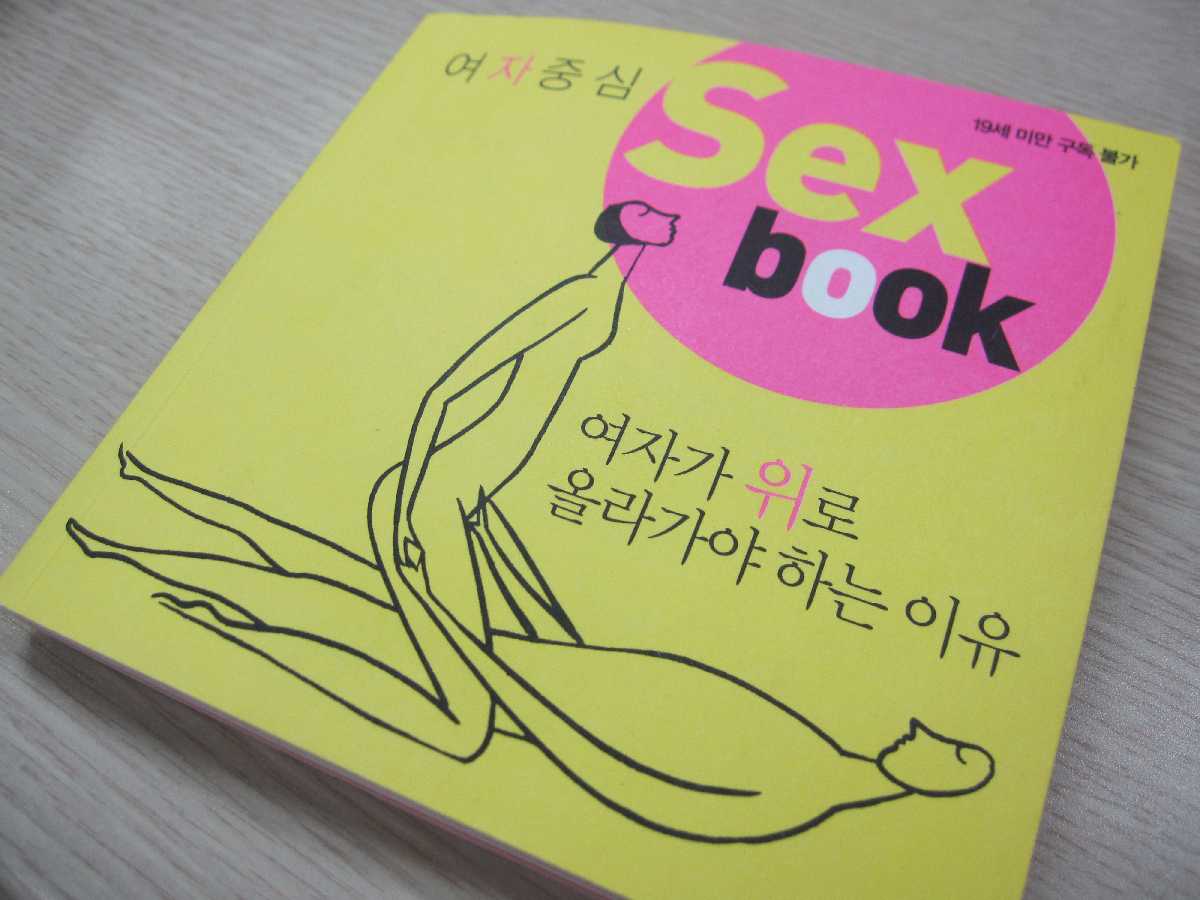
A little disappointed with the reporter’s plan not to lose her virginity in the next 5 year however, a genuine waste of one’s youth(!), then let me end on a rather more lecherous note via the above image, found in passing while preparing this post. Indeed, with a cover that says “Reasons Women Have To Get On Top“, the book sounds intriguing, and now I feel like doing some translating of my own next week!^^

(For more in the Sex and the University series, please see Parts 1-3 on students’ levels of sexual experience and activity, on an interview with a sex columnist, and on students’ cohabitation culture respectively)

Perfect Upper Bodies, But “Healthy” Legs: Update

(Source)

Do you think Arirang should have removed its Twist in Figures video from YouTube?

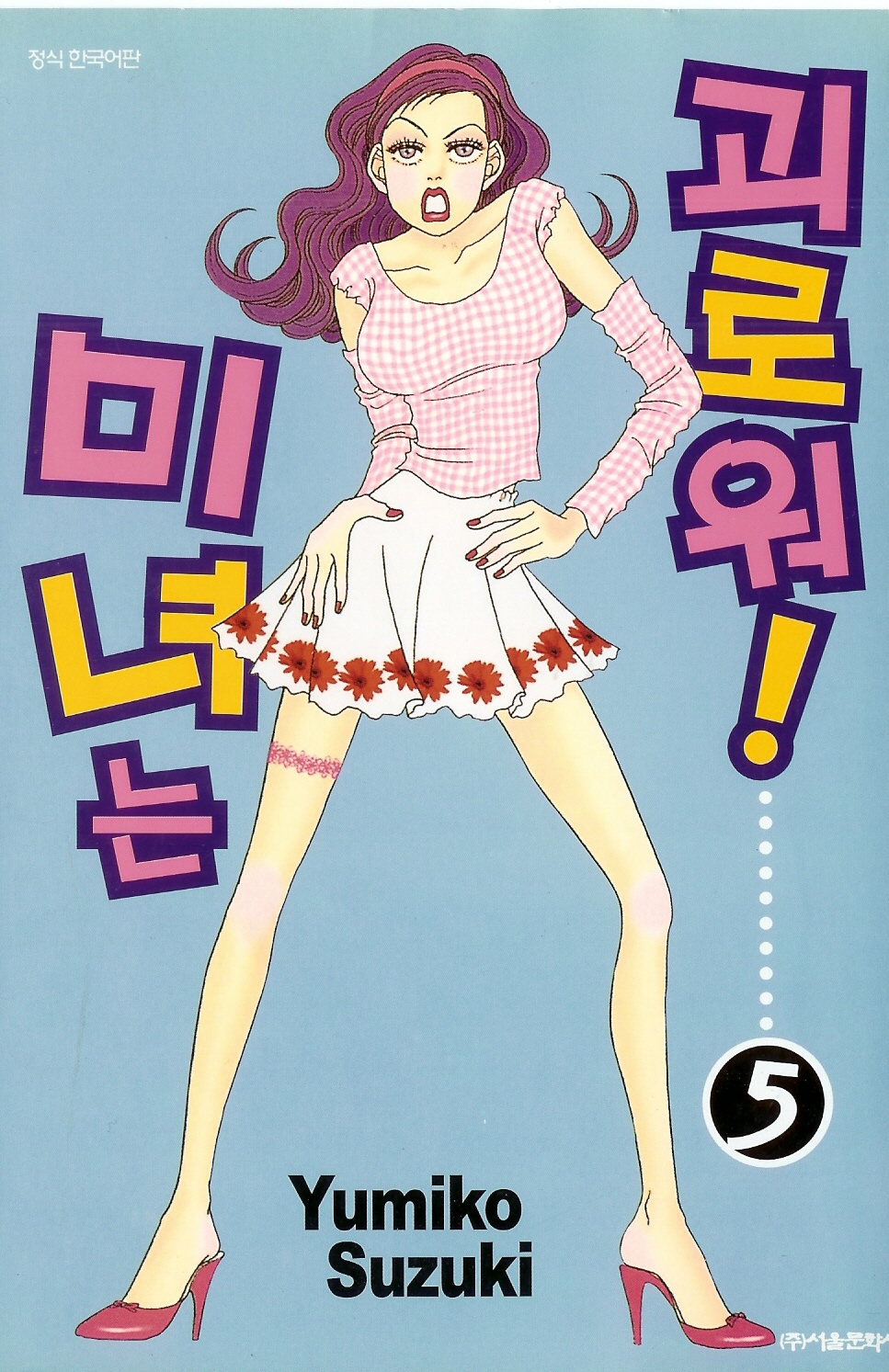
Shocked and outraged at something that castigated healthy, attractive women for not having legs like the manhwa figure above, then my initial reaction was to insist on it. Preferably, the original film burned and the ashes buried too.

However, reading the reaction from the Korea Studies community at the Korea Studies Discussion List later, now I think that actually it may have been more useful had it remained up. Certainly, the issues raised by the video are far more complex than they may at first appear.

Here’s some selected comments from the discussion thread that make that clear. First, from Stephen Epstein:

I don’t usually send out links to the list, but the below piece from Arirang is one of the most absolutely reprehensible items of journalism that I ever seen and deserves wide circulation, as it offers an opportunity to combat the attitudes it reflects. The piece takes examples of female pop stars in Korea with “healthy” legs (yes, “healthy” is their word) but tries to suggest that “healthy” (i.e. anything but very nalsshinhada) is, in fact, bad. The promotion of extremely unhealthy body images and eating disorders is the logical outcome here.

The piece is getting hammered on YouTube (it’s only been up a day so far and running 15 to 1 dislike to like, maybe more, a ratio I’ve never seen, and the comments have all been appropriately scathing.). In any case, for those of you who ever have to teach anything about body image or plastic surgery in Korea, this will be eye-opening for students; you may want to download it as I suspect it will be taken down soon. Hopefully this piece will get wide attention (my own aim in sending this out) and Arirang will be forced into issuing a high-profile apology.

(Source)

A surprising and disappointing reaction from Don Kirk:

Thank you for posting this piece back on you-tube. It’s quite an amusing commentary, actually, on Korean fashion, “girl groups,” models and society. There’s no reason to carry on a crusade about it. Arirang has a right to run such a feature. It seems extremely odd that academics, the first to defend freedom of speech and democratic rights, should attempt, in the name of political correctness, to want to suppress a simple feature piece that has colorful, fun, appealing images, pleasant and interesting commentary and actually something to say about current fashions and thinking.

There are views other than those of like-minded academics, who are not necessarily correct in all their political correctness. Shame on you, in the name of PC, for this disgraceful effort at suppression of free speech, free idea and free reporting.

A reply from Stephen:

I am willing to accept that suppressing the video is perhaps not the right tactic, and may infringe on expression of free speech.  In fact, in retrospect, it probably would be better for the original to be up on the Arirang channel to allow it to take the scathing criticism it deserves and to encourage debate and draw attention to a serious problem in Korean society. I hardly wish to be part of a PC censorship brigade.

I also accept that the piece says something about current fashion and thinking. But it clearly crosses the line into promoting and not just reflecting that thinking. If you or anyone else really believes that this is a ” simple feature piece that has colorful, fun, appealing images, pleasant and interesting commentary”, without real world consequences, then I merely ask that you read some of the comments from YouTube users, hardly “politically correct academics”, on the original post from Arirang (I made sure to save them before the video might be taken down) and reconsider (source, below):

• Since when was being “healthy” a flaw? Healthy legs are not a good thing to have? tons of women would kill to have the women on that list’s legs!! This is disgusting: the girls you mentioned have fantastic figures. Note also that Suzy and Sulli are not even 18 yet! :|

Again, I am highly disappointed in the way Arirang is encouraging UNHEALTHY body images. These girls have nice legs, with well-developed muscles. Why is that so wrong? Are girls supposed to project a helpless, useless image so that men will like them, is that it?

Shame on you, Arirang, for all of these stories. Help promote healthy, positive images for women in Korea and the rest of the world and stop telling them that “healthy” or “sturdy” or “muscular” is a bad thing.

This is dumb. You’re promoting a ridiculous body image that will only make millions of girls insecure. These female celebs are perfect as they are. They don’t need a stick thin legs to support their upper bodies. As a broadcast station that goes international to promote South Korea and its culture, this only shows how ridiculous the standard of beauty and body image in Korea. Please re-evaluate the content of your programs and scripts before airing it. Avoid offensive contents like this.

This is an awful message. Arirang you are promoting body shaming and purporting that healthy body images (actually all of the ladies in this video are probably TOO skinny) are wrong or unfashionable.

As someone who has had to deal with body issues and faced extreme pain over it, I hope you know that this video harms those in it and those watching it. Suzy is only turning 17 this year. As a teenage girl, Arirang, you have disgusted me with your lack of respect to the celebrities and ignorance.

Do you realize how disgusting and twisted and WRONG it is for you to describe what you call imperfections in their lower bodies as “healthy.” If they are healthy, that means that don’t need to improve because they’re already perfect the way they are! The fact that you describe their supposedly imperfect legs as “healthy” implies that if they were to make the improvements you suggest, they would then become unhealthy. It’s this logic that pushes already beautiful women into eating disorders.

(Source: @ornamentity)

Later, another point from Lauren Deutsch:

Thanks, guys, for taking the conversation public. Is it being debated likewise in Korea? Therein lies the clue to why the video and its free-wheeling commodification of women’s bodies are considered enough of a norm to be created and aired at all. It’s easier to study the culture (and others like it) from afar, but to willfully live in country gives this feminist pause for concern about a quality of life.

Then from Michelle Cho:

I agree that it’s important to think about the cultural norms that this video reflects, rather than isolating Arirang as the source of the problem (though I agree that the media should be held responsible for their integral role in circulating these sorts of images and “reports”). Many of the commenters on the Arirang youtube channel reserved their ire for Arirang and its tone-deafness, without mentioning the public’s appetite for the manufacture of celebrity bodies whose “perfection” is precisely not “healthy” because, in many ways, it’s not supposed to be human.

And this seems a good point to mention that, in fact, Arirang gave a very good report on excessively high rates of cosmetic surgery in Korea back in April 2010, as I wrote about (but forgot) here. Stressing how some women wanted cosmetic surgery for a slimmer figure, despite already being slimmer than average, it’s both a pity and genuinely strange that Arirang would post a report with such a radically different message less than a year later:

Continuing with Michelle Cho’s comment:

As a bilingual researcher, I found [the original video] especially illuminating for the sense of estrangement it elicited in me, precisely because the report was delivered *in English*. This makes me wonder whether Arirang international simply translated and rerecorded the narration for an entertainment story that ran in Korean. (I don’t know much about the English language Arirang channel and whether it produces its own content). Stories like this are not uncommon on Korean language television; it’s likely that “healthy” was a poor translation (I can think of a couple words that can connote both “stocky” and “healthy” in Korean). But the main point I’m trying to make here is that the politics of language are certainly at play here and shouldn’t be minimized.

Update: With thanks to commenter dogdeyedblack for finding it, it was indeed originally from a Korean entertainment program, which can be seen (with a Korean transcript) here.

Finally, another aspect of the report that I found quite interesting had to do with the latent discourse of proportionality and phenotype, which came through in one of the “expert commentators” analysis of one of the celebrities’ decision to wear ankle boots with a mini-dress. The commentator explains that it is difficult for East Asian women to pull off this fashion, because of their proportions, so the stakes of the standardization of correct proportions could also be read as an expression of anxiety regarding Western beauty ideals, at the same time that it signifies a desire to erase “East Asian” characteristics. (I hope I won’t be misunderstood here–I’m not suggesting that any of these putatively ethnic characteristics be given any legitimacy, I’m just pointing out the way the discourse seems to be operating).

Echoing Lauren, my thanks for bringing this discussion to the list. I believe it’s far more complex than it may seem at first glance, and I hope we can take this beyond criticisms of Arirang (though I think that was a good place to start.)

(Source: @ornamentity)

From Henny Savenij:

I posted the video on Facebook and the Koreans liked it while the foreigners abhorred it, I guess that says enough.

Finally, from  Tommy Vorst:

Obviously, the piece is offensive to many.  But that’s not a crime.  And it’s certainly not out of step with the entire fashion-celebrity industry, in any country.  I can’t think of one that *doesn’t* consistently send out misogynist, unhealthy messages.  The idea that any of these women were “in need of improvement” is ludicrous, of course. But they have chosen a profession in which such scrutiny is understood, expected and even appreciated.  As a feminist, I cannot suggest that they are unwilling victims of such media criticism: they play the game voluntarily.

Arirang is no different from any other media outlet in its reporting: one need only look at any supermarket magazine rack or entertainment reporting programme to see that.  What is surprising is the (IMO disingenuous) shock some are expressing.  There is nothing shocking about such reports.  Arirang may be the self-appointed face of Korea outside Korea (though I dispute this), but looking at popular Hollywood websites suggests Arirang is more in-step with their western counterparts than it is likely to be ‘an embarrassment:’

http://teens.aol.com/style/celebrity-body-parts

http://www.skinnyvscurvy.com/

This discussion is a valuable one.  One of our duties as academics is to shine the light on the cockroaches.  But let’s not pretend this is anything out of the ordinary: this is an example of endemic sexism, not a shocking outlier.  It’s appalling because of its normalcy.

(Source)

What do you think? Was it indeed disingenuous to be shocked by the report, as Vorst suggests? Or, does the video clearly cross a line into promoting and not just reflecting on a current fashion trend, and a pernicious one at that?

Meanwhile, in the event that YouTube does remove the video again (but with thanks to Roald Maliangkay for reuploading it), please note that it can be downloaded here.

Share

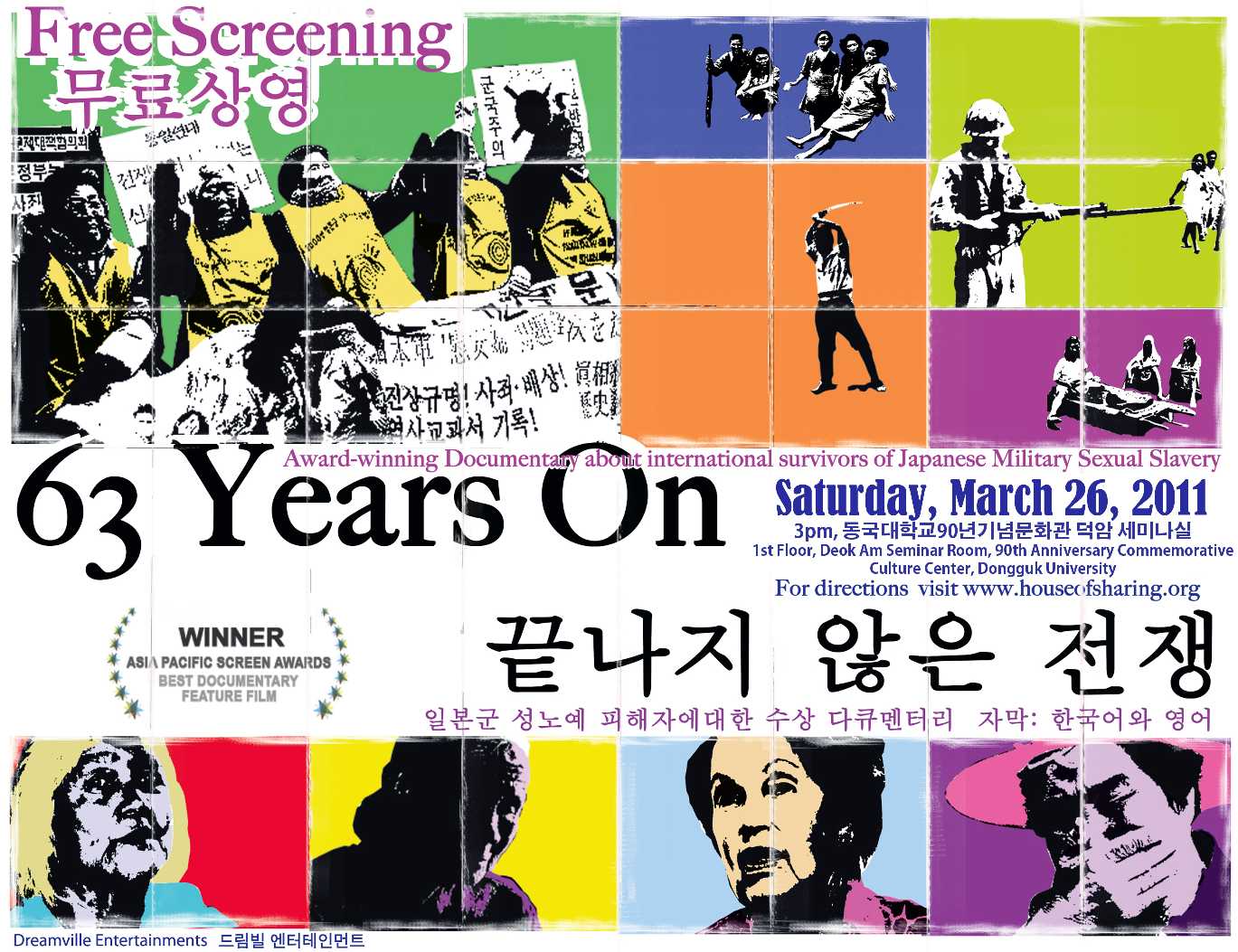
“63 Years On: The Story of the Comfort Women” Screening This Saturday

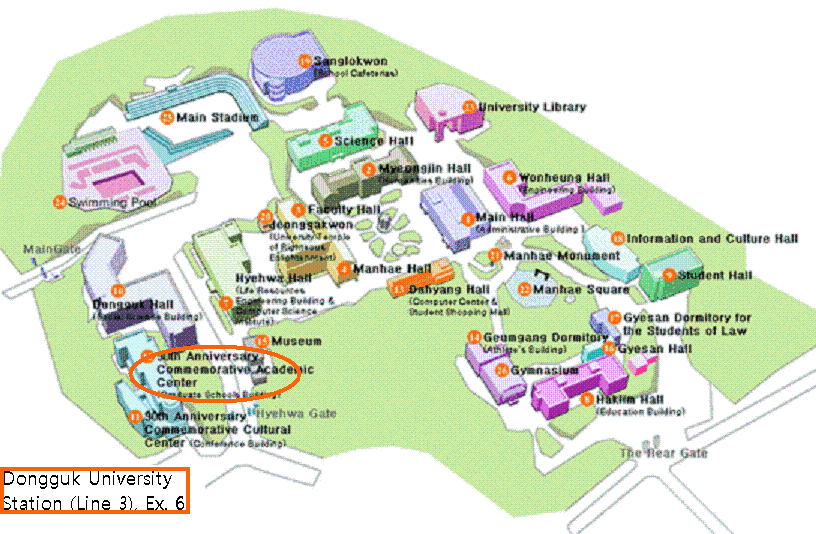
With thanks to Shannon Heit for passing it on, this Saturday at Dongguk University in Seoul there will be a free screening of “63 Years On”, a documentary about the Comfort Women. Starting at 3pm, see the Facebook event page or this press release for further details, and here for a campus map. Also, please note that it does have English subtitles.

Update 1: Ask a Korean! reports that, sadly, a former Comfort Woman just passed away today. That leaves only 73 registered ones still alive.

Update 2: For anyone further interested in the topic of Comfort Women, consider also grabbing a copy of Behind Forgotten Eyes, an award-winning 2007 documentary (via @ornamentity).

Share

Vaginas & Street Fashion: Two Great Things to Check Out This Weekend!

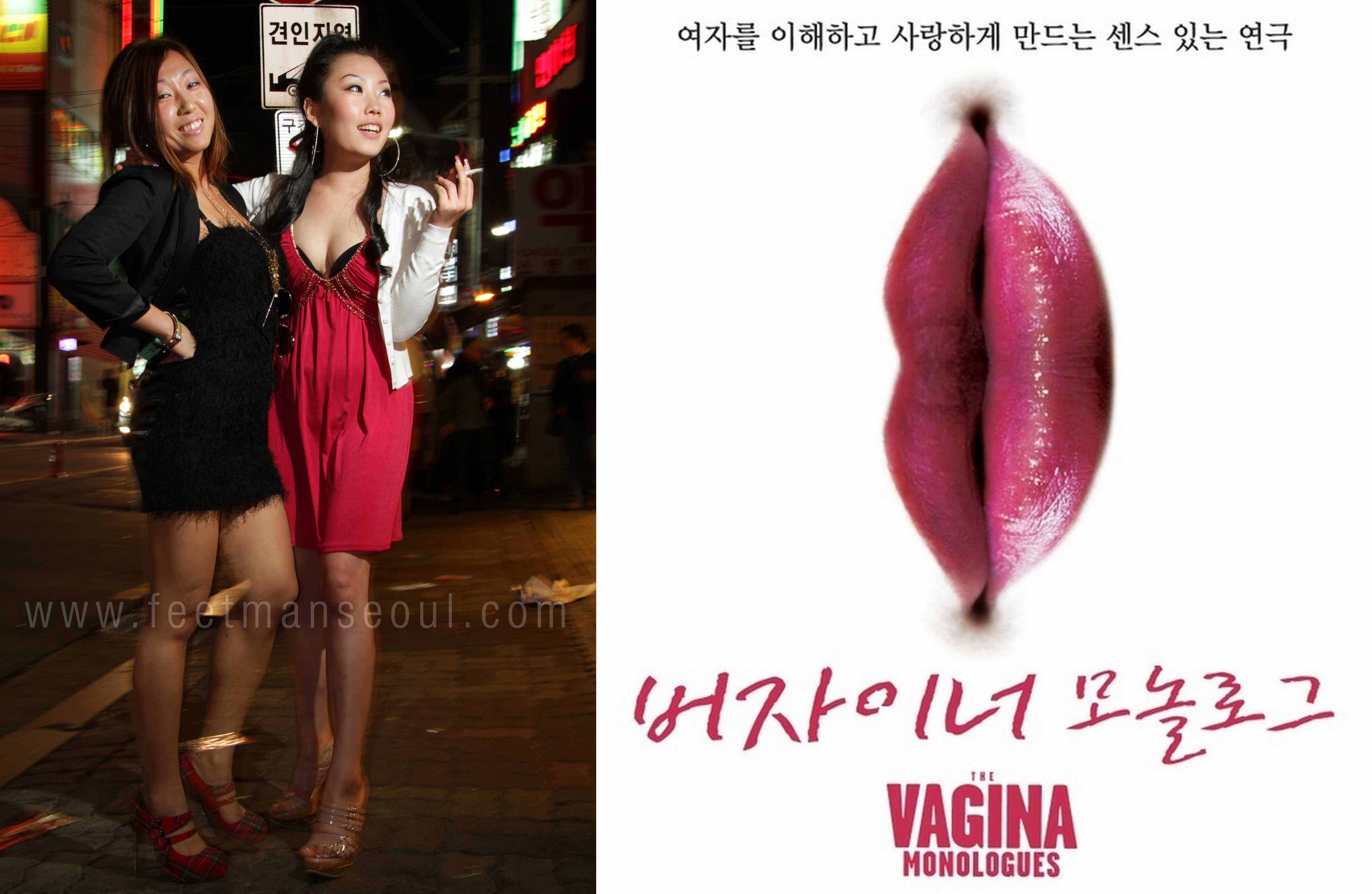
(Sources, used with permission: left; right)

Two very interesting events this weekend, at both ends of the country!^^

First, this Saturday at 4pm, there will be a performance of “The Vagina Monologues” at Changwon Women’s Development Center, with an after-party to follow: see here for details and further links. And again, guy or girl, I highly recommend it, especially if you’re already in the neighborhood and missed Busan’s performance in February.

Next, this Sunday at 12pm, Michael Hurt will be launching his “The Fashion of the Korean Street” photography exhibition at Cafe Bene, just outside exit #5 of Chungmuro Station in Seoul. Just his name alone surely being enough to persuade The Grand Narrative readers to go(!), please see his Facebook event page or his blog for further details.

Finally, there will be further performances of “The Vagina Monologues” in Jeonju on April the 2nd, in Seoul on April the 2nd and 3rd, and again in Seoul (but in a different location) on April the 9th and 10th. But I’ll remind everyone again closer to the dates.

If there’s any more events anybody would like me to publicize, please let me know in the comments or via email.

Share

Korean Sociological Image #57: Perfect Upper Bodies, But “Healthy” Legs

(Update – to download the video, click here)

Normally, I’d reserve something like this for the next Korean Gender Reader. But then as a friend aptly put it, this video is “totally fucking reprehensible”, and deserves highlighting. And indeed, if it’s not removed from Youtube soon, then we’ll both be contacting ArirangWorld to complain about it.

A quick language note before you begin watching though: a mistake many Korean learners make, including myself, is to complement someone by saying “건강해 보여요”, or literally “healthy [you] look”, not realizing that “healthy” often has connotations of being fat in Korea. And as you’ll soon see, this is carried to simply absurd proportions in the video.

For further context, see Korean Sociological Image #21, on popular calf-reduction surgery.

Update 1: I wrote the following in 2 comments on the ArirangWorld YouTube channel. Or rather, I tried to, as although they registered in the comment count, they never actually appeared. Creating a new account and trying again, for some reason still only the 2nd paragraph squeaked through. Sigh.

As the author of thegrandnarrative.com, the most well-read English language source for information on Korean gender issues, almost every day I learn of the often tragic consequences of the incredibly damaging messages about health, weight, and body image that the Korean media promotes, and have very real concerns about raising my two young daughters here. Will they never exercise, because videos like “Twist in Figures” tell them that toned, healthy legs are unattractive? Will they too, like fully HALF of Korean high school girls, end up so malnourished and anemic from dieting that they are unable to give blood?
I implore ArirangWorld to remove this video immediately, and suggest that an alternative video outlining Korea’s problems in this regard, but also – crucially – demonstrating what positive steps various groups, organizations, and individuals are doing to correct these, would be a far better way of promoting Korea to the outside world.

For more on the shocking statistic about high school girls, see here. And you may also find this advertisement from 2009 interesting:

Update 2: The video has been made private. Which does mean that it can’t be watched at least, but on the other hand choosing to do that rather than simply deleting it could be construed as refusing to admit how problematic it was. Certainly ArirangWorld has yet to make any kind of formal apology for it.

If anyone would still like to see it, then I did save the video before it was made private, but unfortunately at 55MB it’s much too big to send via email. I can send it via Skype though, so please feel free to add me to your list of contacts and request it (my id is “Jtur001”).

Update 3: Although I’d wager I’m a much more pleasant middleman than most(!), you can now avoid me and download the video directly here.

Update 4: See here for the Korea Studies community’s reaction to the video.

(For all posts in the Korean Sociological Image series, see here)

Share

What’s going on in a Gangnam Host Bar at 2am? (Part 2)
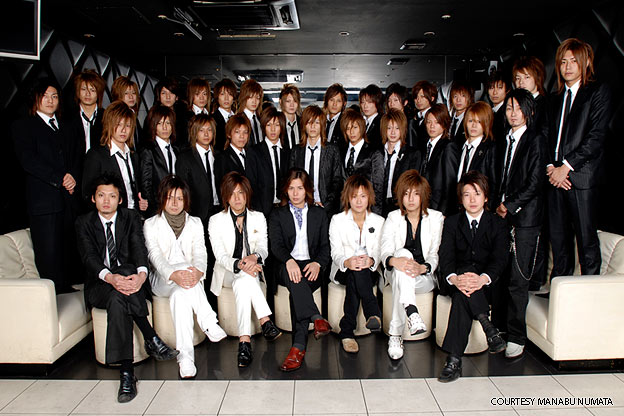
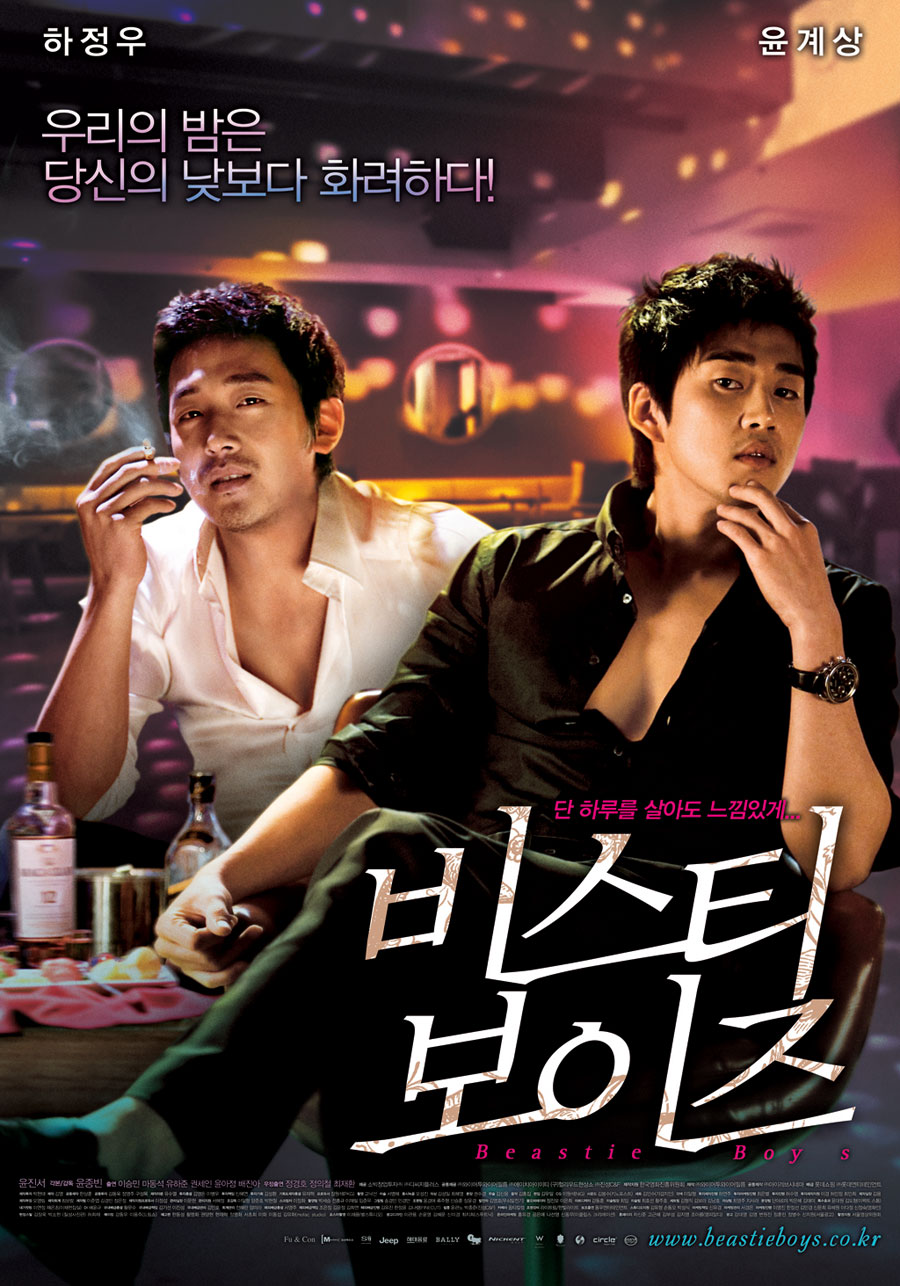
( Source )

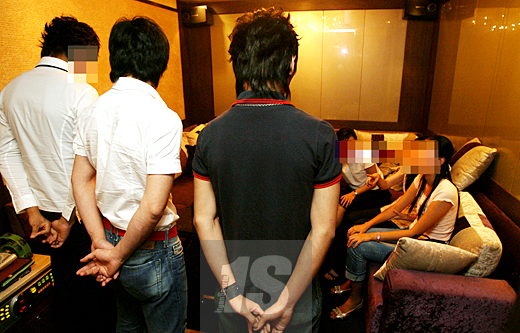
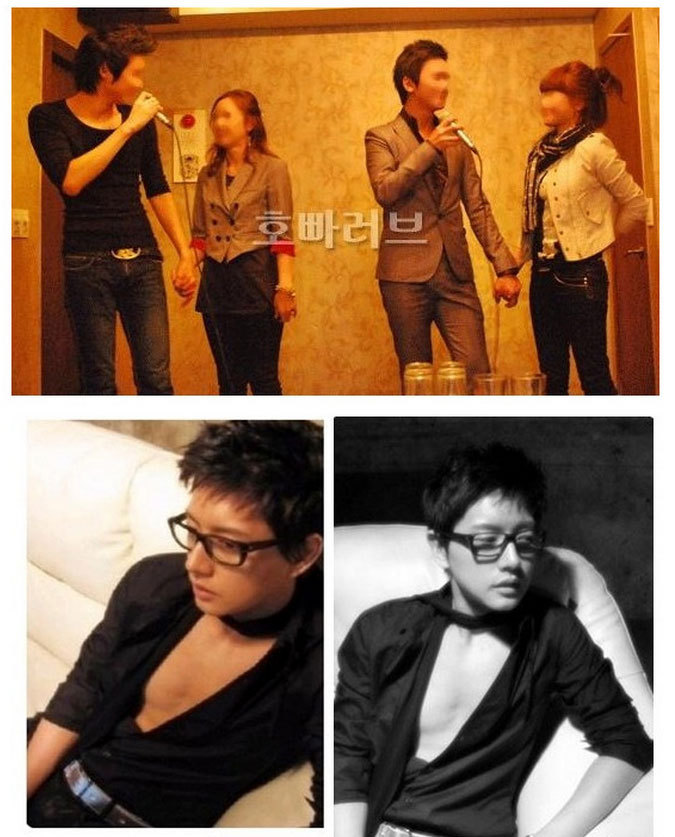
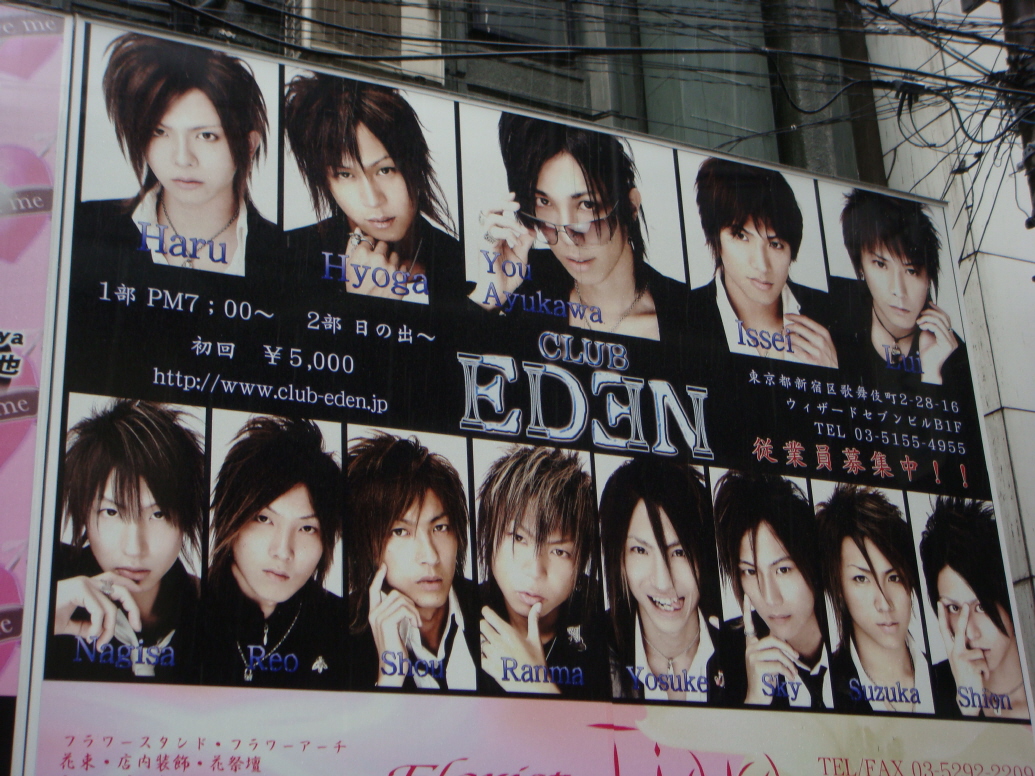
Part 2 in the series from the Seoul Shinmun, kindly translated by Marilyn; for Part 1 and a wider discussion of what “Host Bars” are exactly, see here. Meanwhile, yes, I realize that those are actually Japanese hosts above, but then I’m afraid images of their less brazen Korean counterparts are rather harder to come by!^^

새벽 2 강남호빠 무슨 일이… “누나, ‘민짜원해? 있기야 있지”… 여성 탈선무법지대’ / What’s going on in a Kangnam ‘ho-bba’ at 2 a.m…“Noona, do you want ‘minjja’? Of course we have it!”…A lawless area of female deviance

지난달 말 서울 논현동 유흥가. 새벽 2시 무렵 우성아파트 사거리 일대를 지나 한쪽 골목으로 들어서자 현란하게 네온사인을 밝힌 유흥주점이 줄지어 나타났다. 이 중에서 룸살롱과 호스트바가 ‘1, 2부 형식’(저녁에는 룸살롱, 새벽에는 호스트바)으로 운영된다는 K업소를 찾았다.

At the end of last month in Seoul’s Nonhyeon-dong adult entertainment district, after passing the area around the Woo-seong Apartment Complex intersection at about 2 a.m. and entering an alley to one side, adult entertainment bars with flashy neon signs appeared in rows.  Among these, we went to ‘K’ business, which was being operated as a room salon and host bar in a ‘1, 2 part form’ (room salon in the evening, host bar late at night).

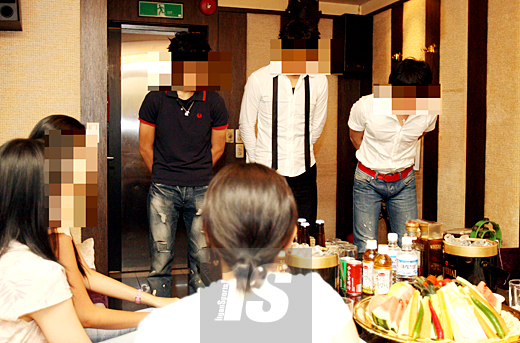
(Photo caption: Entrance to Seoul Samseong-dong host bar at 1 p.m. on the 18th.  Four young men who look like hosts are saying goodbye to two women)

내부로 들어서자 문 열린 객실 틈으로 40대 중년 남성들과 업소 아가씨들이 섞여 앉아 술잔을 기울이는 모습이 눈에 들어왔다. 바로 옆방에서는 20대 초반으로 보이는 앳된 남성들이 30~40대 여성들에게 입으로 안주를 먹여 주거나 윗옷을 벗고 춤을 추는 등 낯뜨거운 광경이 펼쳐졌다. 같은 공간에 남녀 접대부들이 섞여 있는 모습이 낯설었다. 이 가게의 1부 영업을 관리한다는 한 실장은 “1, 2부를 확실히 구분지어 영업한다. 업소 아가씨들이 남성 접대부들과 같이 일하는 것을 불편하게 여겨 그만두는 일이 잦기 때문”이라고 귀띔했다.

Upon entering, through the crack of an opened door middle-aged men in their 40s and the business’ young women sitting together and pouring drinks could be seen.  In the very next room, baby-faced men who looked like they were in their early 20s feeding snacks to women in their 30s or 40s or taking off their shirts and dancing, and other embarrassing scenes could be observed unfolding.  Male and female hosts mixing in the same space was unusual.  A director who runs this business’ first part said “We run the two parts very separately.  It is because the business’ young women consider it uncomfortable to work with male hosts and so often quit.”

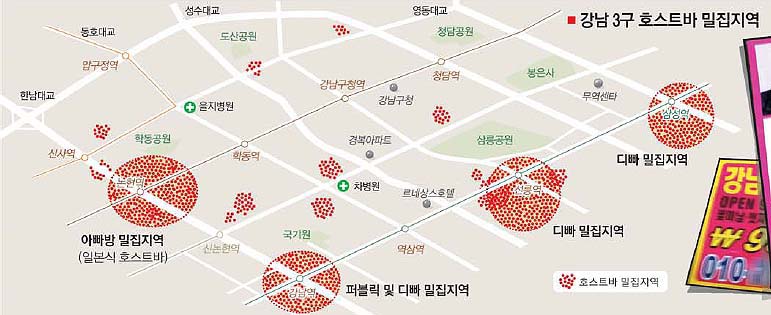
(Map of host bars in Gangnam-3-Gu)

팁은 시간 3만원 / Tips around 30,000 per hour

이곳에서는 양주 한병에 기본 18만원을 내야 한다. 고급 호스트바에 비해 상대적으로 저렴해 일부 주부들과 회사원 사이에 ‘부담 없이 놀기 좋은 장소’란 입소문이 난 곳이다. 5분 남짓 기다리자 ‘모델’, ‘보이’ 등으로 불리는 ‘박스’(10명 안팎의 호스트들로 꾸려진 팀)가 일렬로 들어왔다. ‘선수’(호스트를 지칭하는 은어)들은 업소에 상주하지 않고 손님이 찾을 경우 다른 곳에서 대기하다가 전화를 받고 오는 일명 ‘보도’ 형태로 운영되고 있었다. 남성 호스트에게 지불되는 팁은 시간당 3만원. 비교적 ‘저렴한’ 가격 때문에 오후 9시 이후에는 주부와 회사원, 새벽에는 여대생부터 유흥업소 종사자들까지 다양한 부류의 여성들이 찾는다고 했다.

Here, one must pay at least ₩180,000 for a bottle of Western alcohol.  Compared to top-level host bars, this is relatively cheap so it has gained a reputation among ordinary housewives and office workers as a “good place to have fun without a burden.”  After waiting over 5 minutes, a “box” (a team of 10 or so hosts) called “Model”, “Boy”, [Marilyn – I guess these are names of different box –?] and so on entered in a row.  “Seonsu” (the designated slang term for hosts [lit. “players”, as on a sports team]) who aren’t stationed at a business but are standing by so that when customers visit they receive a phone call and come, are managed as “bodo.”  Male hosts receive a tip of ₩30,000 per hour.  Because of the comparatively “cheap” price, housewives and office workers after 9pm, and at dawn, diverse types of women from university students to adult entertainment business professionals said they come here.

선수들 가운데는 고교생 티를 벗지 못한 앳된 얼굴도 보였다. “화끈한 준이에요.”, “끝나게 노는 현우예요.” 이런 투의 자기소개가 이어졌다. 두 명을 ‘초이스’한 뒤 이야기를 나눴다. (source, below)

Among the seonsu, there were babyfaces who haven’t yet shed their high school student look.  “I am Wild Joon”, “I am Hyeon-woo who plays hard.”  The self-introductions continued in this kind of tone.  Two people talked with us after “choice” [Marilyn – choosing ceremony?].

“더 어린 친구는 없나?”

“You don’t have any younger friends?”

누나 ‘민짜’(미성년) 좋아해? 있기야 있지. 아까 두 번째 애도 올해 수능 봤어.”

“Does noona like minjja (underage)?  Of course we have it!  The second kid just now also took the college entrance exam this year.”

4년째 호스트 생활을 하고 있다는 20대 남성 A씨는 “미성년자는 주로 업소보다 보도에 많다.”면서 “간혹 여자 손님 중에 미성년자도 있다.”고 털어놨다.

Mr. A, a man in his 20s who has been a host for four years, confessed, “There are usually more underage at bodo than at businesses.”

이른바 ‘2차’가 가능한지 물었다. “에이, 알면서…. 누나가 맘에 들어 해서 좋아. 근데 이게 시간당 계산되는 거라서….”

This reporter asked if the so-called “second stage” were possible.  “Come on, you already know … I like noona so that’s fine. But it’s an hourly-calculated thing, so…”

(Source)

일부 룸안에서 즉석 성매매 / As far as prostitution on the spot in some rooms

한 20대 선수는 눈치를 살피며 말꼬리를 흐렸다. 2차 비용에 대한 이야기인 듯싶어 “50만원 정도면 어때?”라고 물었더니 고개를 끄덕였다. 간혹 룸 안에서 즉석 성매매가 이뤄지는 경우도 있다고 했다.

A seonsu in his twenties trailed off while watching for a reaction.  It seemed to be talk about the price of a second stage, so this reporter asked “How about ₩500,000 or so?” and he nodded.  He said there are sometimes cases in which on-the-spot prostitution occurs in a room.

그는 이어 “경찰 단속이 뜨면 내가 웨이터라고 말하거나 누나랑 아는 사이라고 하면 돼.”라며 손님으로 가장한 취재진을 안심시켰다.

He then gave comfort to the reporter disguised as a customer, saying, “If the police come in, all I have to do is say I’m a waiter or that noona and I know each other.”

한참을 ‘놀다’ 일어서려는 취재진에게 한 선수가 투정 부리듯 말했다. “누나, 단속은 걱정 안 해도 돼요. 다 방법이 있어요.”

To the reporter who had “played” for a good while and was standing up to leave, a seonsu complained, “Noona, you don’t have to worry about a crackdown.  Everything has a solution.”

(Links to be provided as posts go up: Part 1, Part 3, Part 4)

Share

Korean Sexuality: Still Awaiting a Revolution?

(The Beast and the Beauty, 2005. Source)

On a recent episode of Thinking Allowed, a BBC4 radio show and podcast, host Laurie Taylor talked to Kate Fisher and Simon Szreter about their new book Sex Before the Sexual Revolution, an “illuminating exploration of intimate life in England between 1918 and 1963, which involved them speaking frankly and in depth to almost a hundred people about their sex lives in the period”. Fascinating in its own right, my ears immediately pricked up upon hearing the following at 16:10 (source, below right):

Laurie Taylor:

Let’s turn to some things you found out as a result of your, I mean, very sensitively conducted conversations…I mean, Kate, one of the things is about this, this…the notion is that people were utterly ignorant about sex before marriage. Does the research bear this out?

Kate Fisher:

Yes and no. This is a world in which sexual info is increasingly available, but it’s still one in which parents are reluctant to talk to their children, where schools don’t…er…give away information until after 1944, and even still, that’s fairly limited. So people are having to piece things together, listen to jokes, overhear other people…

But what’s particularly striking, is the ways in which women in particular, even when they did come across information, they were careful to not find out too much. They wanted to maintain a sense of ignorance in order to…

Laurie Taylor:

Yes, particularly working-class women though, yes…this idea that they should be innocent…

Kate Fisher:

They should be innocent and indeed they saw innocence as part of an attractive naivety…Their attractiveness was bound up with appearing naive, and innocent, and sort of coy.

Which as you’ve probably already guessed, has striking parallels with the attitudes of Korean women today.

Not that I want to overstate those of course. But I do think it’s no coincidence, and it’s certainly got my intellectual juices flowing. In particular, over whether UK society at the time had its own equivalent to aegyo (애교), and, regardless, how much such notions of female sexuality underscore it (albeit very much in combination with financial dependence on male breadwinners).

Food for thought anyway!^^ Meanwhile, for a glowing review of the book itself, see The Guardian here (I’m sold!), and to listen to the full interview, scroll to 11:35 here, or alternatively you can download the whole podcast here (it’s the February 16 episode).

Update – Naturally, the point that most got my attention in the interview of the authors was also mentioned in the book review:

The book’s three sections – “What was sex?”, “What was love?” and “Exploring sex and love in marriage” – take us through the whole cycle of the interviewees’ awareness of sex, from the rudimentary and often non-existent provision of sex education, through courtship, petting, birth control, marriage and parenthood. The social context is clearly delineated, but even the woeful ignorance of the young about sex – “the profound and beautiful ignorance of sex”, as one respondent calls it – is examined with great subtlety. “For women of all classes, the preservation of innocence and modesty was a complex cultural accomplishment in which many around them had to play their protective role and with which they had to comply. It was an enduring positive element of their self-identity, instilled into them by their parents, especially their mothers.”

Korean Gender Reader

(Source)

1) Reebok capitalizes on and perpetuates cute-sexy-I’m-so-innocent-make-me-squeal stereotype of Asian women

Well, I’d be lying if I said I didn’t always enjoy seeing attractive women in their underwear. But I can still certainly understand objections to the way in which Reebok appropriated The No Pants Subway Ride in Taiwan last month. Like  commenter Riff complained:

Oh, lovely, thanks, my fellow Asian women, for perpetuating our cute-sexy-I’m-so-innocent-make-me-squeal stereotype, which somehow just gets worse when a whole crowd of you clones take off your pants for an advertisement to capitalize on the sexualization of women in Asia. Great job, girls. Continue being cute.

And Doug:

As usual for East Asia, they’ve taken the wacky and fun American version, and made it aggressively sexual and really creepy.

And Jedd Oliver noted that the original Chinese-language marketing indicated that Reebok was very much taking advantage of the “liberating the lower body” slogan of the unisex, New York-based Improv Everywhere original. Which strongly reminded me of the following point about the way the advertising industry sometimes deals with feminist criticism:

…some advertisers, aware of the objections of the feminist movement to traditional images of women in ads, have incorporated the criticism into their ads, many of which now present an alternative stereotype of the cool, professional, liberated women…Some agencies trying to accommodate new attitudes in their campaigns, often miss the point and equate ‘liberation’ with a type of aggressive sexuality and very unliberated coy sexiness (G. Dyer, Advertising as Communication, 1982, pp. 185-186)

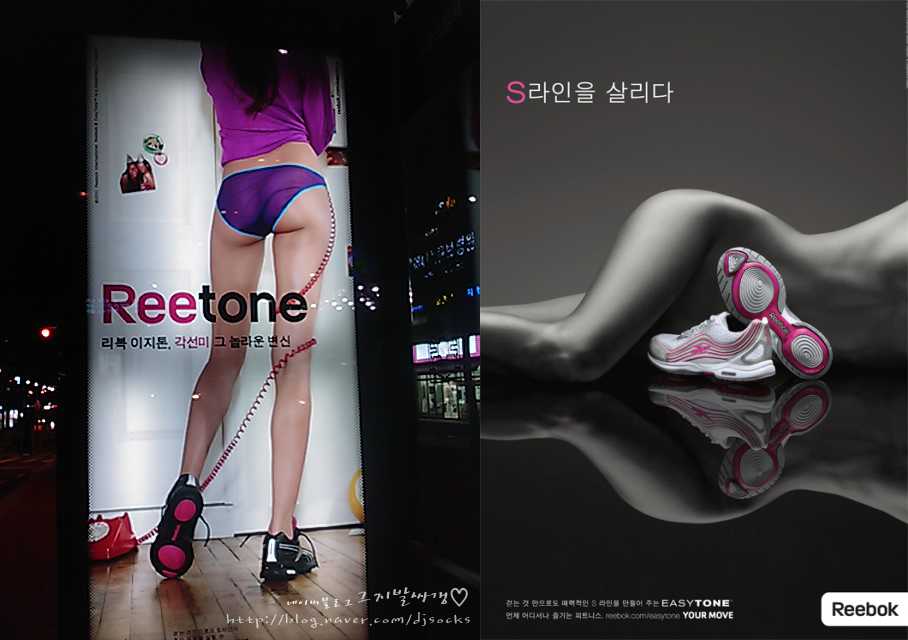
(Sources: left, right)

But to play devil’s advocate, Reebok has already been using such “assvertising” for its EasyTones for a long time, as have other companies with similar products (which as you can see above, includes the obligatory reference to one’s “S-line” in Korean versions). So, while I remain dismayed that, yet again, something that uses false advertising to encourage women not to exercise has become so popular, arguably this campaign is just a flesh and blood version of what people have already been seeing on subway trains for years.

What do you think? (via SeoulPodcast)

2) Newest phenomenon in South Korean prostitution: hug rooms

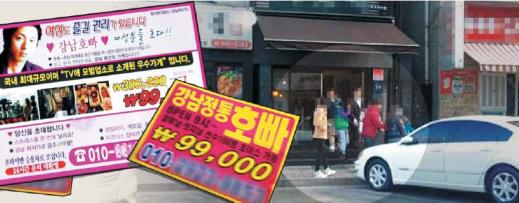
Ho-bba, jeong-bba, d-bba (all forms of host bars) yesterday, and now this. Frankly, it’s becoming difficult to keep track of all the ways brothel-owners easily circumvent Korea’s asinine prostitution laws.

3) KoreAm interviews Lisa Lee, founder of Thick Dumpling Skin, “the new community website focused on Asian Americans, eating disorders and body image”

4) “Not all population trends are bad in Korea”

Or are they? While I’d like to report on good news if and whenever possible, I’m not sure that the recent revelation that the Korean “sandwich generation” – those financially responsible for both children and parents – isn’t as big as expected is quite enough to compensate for Korea’s coming demographic crunch. As, indeed, the World Street Journal tacitly admits in its conclusion to its own report:

After 2016, though, things start to get really, really rough for South Korea. That’s when the working-age population starts to fall. Then, the number of people saving and paying taxes and contributing to the asset base will start to decline while the number of people drawing from the asset base will start to rise.

5) Former president Kim Young-sam invited to kophino center in Philippines

Hopefully he will actually go, thereby drawing some much needed attention to the plight of fatherless Korean-Filipino children there.

As Robert Neff mentions, as of last year Koreans have replaced Americans as the biggest group of foreigners to visit the Philippines. And a 2009 Korea Times article also explains that the rise in numbers of Kophinos is:

…a product of the mindset of Koreans who were visiting the Philippines to enjoy life but not to get married to Filipino women. Enjoying life, of course, means hitting strip bars, paying for sex and getting temporary Filipina girlfriends.

They never think of marrying Filipino women and just enjoy their lives here, she said.

But, for some Filipino women, they consider relationships with foreigners as their ticket out of poverty. Unfortunately, this often turns out to be wishful thinking as Korean men quickly abandon the women after a night of sex or when they learn they are pregnant.

Son explained that the Korean cultural history of disapproving of mixed marriages has been a factor in the abandoning of Filipino children.

6) Japanese trains equipped with anti-groping cameras

7) Sex eduction in the spotlight

While it’s slightly old, this December 2009 JoongAng Daily article provides an excellent summary of the dismal state of sex education in Korea, and which unfortunately is probably little different today. The caption to the picture on the right, for instance, mentions that “most of the nation’s practical sex education programs are only available outside the classroom”, and later the article discusses how progressive teachers’ efforts are frequently thwarted by parents’ complaints that showing students how to use the pill or put on condoms correctly, say, simply encourages them to be promiscuous.

Sigh.

8) Life at a Korean University

Strictly speaking, not a gender issue, but of course a knowledge of Korean university life is essential for understanding Korean 20-somethings. See here for a handy quick guide by The Three Wise Monkeys then, with 1 bad – but many good – anecdotes from the related “MT” (membership training) mentioned by Joe Seoulman here.

Meanwhile, the Hankyoreh reports that, unfortunately, living costs for university students are skyrocketing these days. And, to make things worse, they’re being excessively targeted by Christian evangelicals while on campus!

9) Seoul government extends location-tracing service for elementary school children

Although it’s a little difficult to keep track of all the pilot schemes that preceded this, Hanpolis provides a good summary of them in a September article here. And like that says, already the plan then was to have 75% of the city under the “U-Seoul Children Safety Zone” by 2014.

With one daughter of mine just 2 years from starting school, I’m beginning to take a great interest in this, and am wondering if other cities are going to follow suit. And especially because of the rape of a middle school girl by 4 of her classmates in Busan last month, which occurred just a couple of subway stops from my apartment.

(Sources: left, right)

10) The Jang Ja-yeon Letters

Two years after actress Jang Ja-yeon (장자연) committed suicide over being forced by her management companies to have sex with various entertainment, media, and business executives, the revelation that 50 handwritten letters have emerged in which she names them – 31 in all – has rocked the Korean public. Like the Wall Street Journal explains:

Reaction on Internet forums and micro-blogging site Twitter show that people are seething. An unverified list of the men purportedly identified in the letters has been widely circulated via Twitter, causing concerns that some can be falsely accused.

And the police who originally investigated are under fire for glossing over the case. South Korea’s media, who dropped the story shortly after rumors spread that some of the industry’s leading executives had liaisons with Ms. Jang, is also under scrutiny.

See there and Global Voices for excellent summaries, the latter of which discusses some of those reactions on Twitter in more detail. Also, Omona! They Didn’t has a quick list of some of those names, as well as the International Forensic Science Laboratory’s refutation of claims that the letters were fabricated.

Meanwhile, actress Yoo In-na (유인나), who rose to prominence after her supporting role in the popular drama High Kick Through The Roof (지붕뚫고 하이킥), has alleged that she was sexually harassed by her former entertainment agency CEO. And Asian Correspondent has translated an article that says that according to the National Human Rights Commission (국가인권위원회), “cases of sex discrimination and sexual harassment have increased 25-fold in the past eight years, from 13 cases in 2002 to 336 cases in 2010”.

Share

What’s going on in a Gangnam Host Bar at 2am? (Part 1)

(Source)

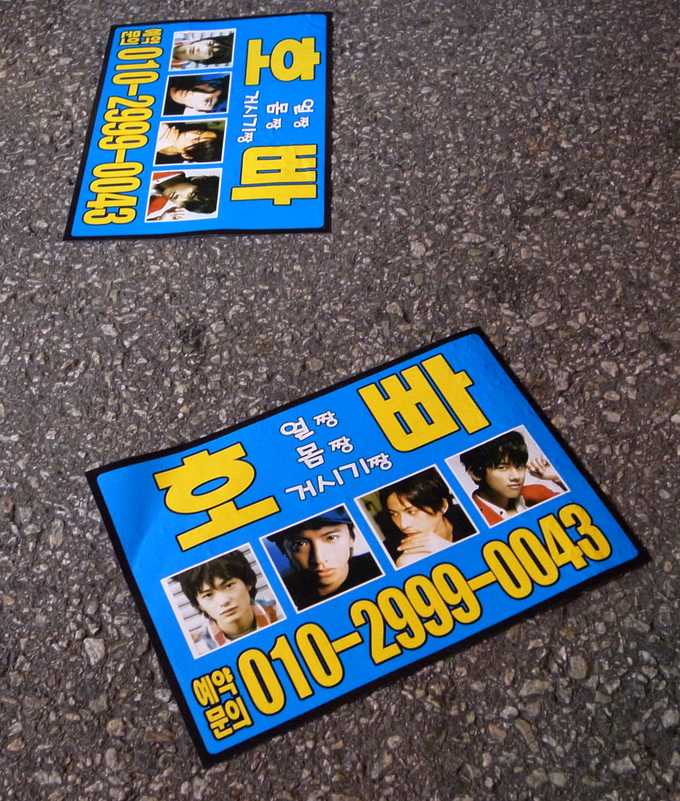
Host Bars? I’d always assumed they were one-off novelties, largely created for the purpose of perpetuating Westerners’ sexual stereotypes of the Japanese. Any Korean versions would surely be even more rare and exotic.

It turns out, actually they’re a booming industry, in both Japan and Korea. There’s hundreds of establishments just in the wealthier parts of Seoul alone.

Not to be confused with the unfortunately named “Ho Bar” chain in Hongdae, they’re known as ho-bba (호빠) in Korea (“host clubs” in Japan),  which translator Marilyn strongly suspects the name is a play on obba (오빠) or (lit. “older brother”, but often used romantically).  Just like a friend of hers said the jeong (정) in the more upmarket jeong-bba (정빠) version is short for jeong-teong (정통), or “authenticity/legitimacy”.

(Source: Urbantofu)

Intrigued, I was a little disappointed that the following article in the Seoul Shinmun, the first in a series of four, provides little more than basic statistics. Fortunately however, a quick search produced:

In light of that last, perhaps the current boom isn’t quite as recent or as unprecedented as the following article suggests. What do you think? Have any readers been to themselves?

Update: with thanks to commenters for passing them on, From Noona With Love has a mini-interview with a former Busan host-bar worker here, and the drama Jungle Fish (정글피쉬) also featured a character that worked at a host-bar.

(Source)

새벽2, 강남 호스트바에선 무슨일이() / 여성 고객 하루 1만명주부, 10 급증탈선

What’s going on at a Kangnam host bar at 2am? / 10,000 female customers daily… housewives, teens rapid increase is “deviation”

서울 강남에 독버섯처럼 돋아난 호스트바(속칭 호빠)가 탈선의 온상이 되고 있다. 18일 경찰 및 업계에 따르면 강남 일대 최소 100곳의 합·불법 호빠에 하루 평균 1만여명의 여성 손님이 오고, 이들 가운데 상당수는 성(性)을 구매한다. 이는 지난해 11월 24일부터 지난 17일까지 호빠 밀집지역인 논현·서초·청담동 등에 대한 본지의 탐문 취재에서도 확인됐다. 복수의 업소 관계자의 증언을 종합하면 강남지역 호빠의 전체 매출액은 연간 3000억원 이상으로 추산된다. 하지만 대부분의 업소들이 무허가 영업이나 속칭 ‘2부 영업’을 하고 있기 때문에 세무당국에 매출이 포착되지 않고 있다.

Kangnam, in Seoul, is becoming a hotbed of deviation in which host bars (popularly known as ho-bba) sprout like poisonous mushrooms.  According to police and the industry on the 18th, in the Kangnam area at least 100 ho-bba, legal and illegal, are visited daily by an average of 10,000 female customers, a considerable number of whom purchase sex.  This has been confirmed by this paper’s investigative coverage of areas with many ho-bba like Nonhyeon-dong, Seocho-dong, Cheongdam-dong, and others, from Oct. 24 of last year through Jan. 17.  Putting together the testimony of several industry sources, the total yearly sales of Kangnam-area ho-bba are estimated at ₩300 billion.  However, because most businesses operate without a license or are “two-part businesses”, these sales are not being detected by tax authorities.

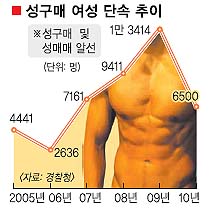
(Table caption: Progress of crackdown on female sex-purchasing   * Purchasing of sex and procuring of prostitution  {unit: people})

(Source)

100여곳 성업年매출 3000

Around 100 places thriving … 300 billion in sex sales

업소 관계자들은 강남·서초·송파구 등 ‘강남 3구’에만 100여곳의 호빠가 성업 중이라고 입을 모았다. 탐문취재 결과 ‘정빠’(고급 호빠)는 D, P, B 등 5곳으로 조사됐고, ‘일본식 호빠’(일명 아빠방·정빠에서 밀려난 25~30대 후반 남성이 고용된 호스트바)는 R, V, B 등 10여곳 정도 파악됐다. ‘디빠’(덤핑 바·저렴한 가격의 호빠)와 ‘퍼블릭’(성매매까 지 이뤄지는 호빠)은 M, S, G 등 각각 3곳이었다. 특히 현장 확인 결과 무허가나 업종을 바꿔 불법 영업을 하고 있는 곳도 5곳이나 되는 것으로 드러났다. 이처럼 업소가 늘어나면서 지하철 2호선 강남역 일대에만 1300~2000명의 남성들이 정빠 등 호스트바에서 일하는 것으로 조사됐다. 호스트바의 인원, 매출, 위치 등 구체적 실태가 확인된 것은 처음이다.

Industry sources unanimously said the hundred or so ho-bba that can be found just in “the three Kangnam boroughs” – Kangnam, Seocho, and Songpa – are thriving.  Investigative coverage found five jeong-bba (high-level ho-bba), including “D”, “P, and “B”, and it is estimated there are about ten “Japanese-style ho-bba” (also known as “dad rooms”; host bars that hire men ousted from jeong-bba, from the ages of twenty-five to late thirties), including “R”, “V”, and “B”.  There were three each of “D bba” (dum-ping bar – a low-price ho-bba) and “public” (ho-bba in which prostitution occurs), including “M”, “S”, and “G”.  The results of the special site check revealed that there are also five businesses without a license or that have changed their type of business into an illegal one.  It was found that, as this type of business increases, between 1,300 and 2,000 men work at jeong-bba or other host bars just in the Kangnam Station area on subway line 2.  This is the first time the specific, actual conditions of host bars, like the number of people involved, sales, location, and so on, have been confirmed.

지난 17일, 20대 일반여성들이 자주 찾는다는 논현동의 S호스트바에서 5시간 동안 여성 고객 숫자를 세어 본 결과 시간당 평균 5명 안팎이 업소를 찾았다. 보통 오후 10시부터 다음 날 오후 2시 무렵까지 문을 여는 점(16X5)을 감안하면 하루 80명 안팎의 여성들이 이곳을 찾는 것으로 추산된다. 경찰 관계자는 “개인적으로 알고 있는 업소만 100곳이 넘고, 고객도 1만명이 넘는다.”면서 “여성 손님의 30% 정도가 2차를 나가는 것으로 알고 있다.”고 전했다

On the 17th at Nonhyeon-dong’s “S” host bar, where average women in their twenties often go, counting the number of female customers for five hours showed that about five people per hour visit the business.  Considering that it is usually open from 10pm to 2pm the next day, it is estimated that around 80 women visit this place every day.  A police source said, “Just the number of places I personally know exceeds 100, and there are more than 1,000 customers,” and added, “I know that about 30% of female customers go out for a second stage.”

(Source)

10% 이상 ‘2’… 적발 매년

More than 10% [go to] “second stage”… every year rapid increase in number caught

업계 관계자들 역시 “업소당 하루 평균 100명 안팎의 손님이 찾아오고, 10명 중 한두 명은 2차를 나간다.”며 “2차는 고급 호빠인 정빠보다 보도(전화로 부르는 접대부)와 디빠 등에서 주로 이뤄진다.”고 털어놓았다. 이를 반영하 듯 돈을 주고 성을 사다 적발되거나 성을 알선한 여성 성매매 사범의 숫자도 2006년 2636명, 2007년 7161명, 2008년 9411명, 2009년 1만 3414명으로 해가 갈수록 증가하고 있다. 특히 유흥업소 여성들이 주요 고객이었던 이전과 달리 최근에는 가격이 싼 ‘보도방’과 ‘아빠방’을 위주로 10대와 가정주부 고객이 급증한 것으로 드러나 심각성을 더하고 있다. 경찰 관계자는 “물증찾기가 힘들어 단속이 어렵다.”고 말했다.

Industry sources also said, “Every day an average of roughly 100 customers come to each business, and one or two out of every ten people go on to a second stage,” and confessed, “The second stage usually takes place with a bodo (a host contacted through the phone) or at a D-bba, rather than at a high quality jeong-bba.”  Reflecting this, the number of sexual commerce offenses in which women are caught paying for sex or procure sex for others is increasing every year – from 2,636 people in 2006 to 7,161 people in 2007, 9,411 people in 2007, and 13,414 people in 2009. The seriousness grows as it is revealed that, different from most female customers of adult entertainment businesses in the past, currently the number of teenage and housewife customers, mainly at low-priced “bodo rooms” and “dad rooms”, is quickly increasing.  A police source said, “It is hard to find evidence so crackdowns are difficult.”

(Source)

(Links to be provided as posts go up: Part 2, Part 3, Part 4)


Korean Sociological Image #56: Start ‘Em Young! (Updated)

(Source)

Apologies for the continued slow posting folks, but I have several good excuses, one of which involves spending a lot of time in doctors’ waiting rooms. Unlike most normal people however, that’s actually something I look forward to(!), as it gives me the opportunity to peruse the hundreds of advertisements in the notoriously thick women’s magazines there.

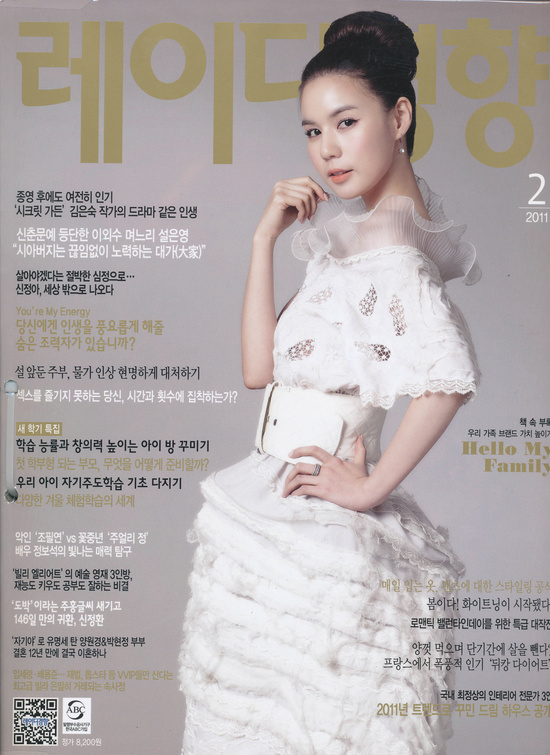
Like Laedygyeonghyang (레이디경향; Lady Trend) for instance, which at 8200 won (US$7.32) a pop, is normally much too expensive to buy just for the sake of a few pictures. But then I saw the February edition, and was hobbling to the nearest bookstore literally as soon as my bandages were changed (the nurses had to call me back inside for my injection).

(Source)

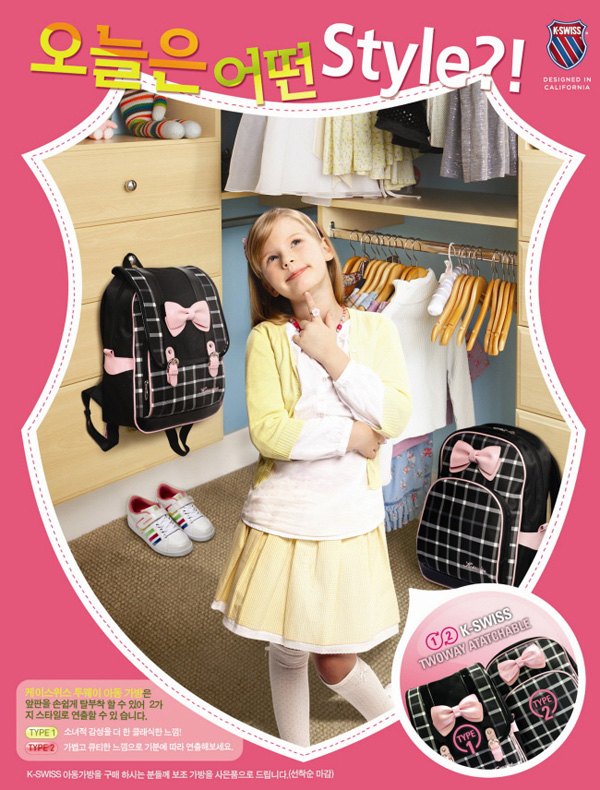
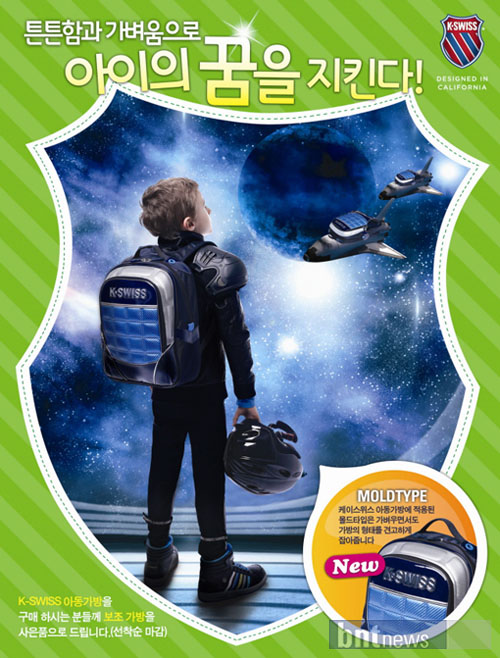
You see, February to March being the start of the school year in Korea, then the first 30 pages or so had 6 full page advertisements for children’s schoolbags. And all of those aimed at girls stressed how attractive or pretty they would make them look, whereas all of those aimed at boys stressed how they could help them achieve their dreams, their appropriateness for rough and tumble play, and so on. Perpetuating gender stereotypes in a manner much more reminiscent of the 1960s and ’70s than something you’d expect to see in 2011, this was really quite shocking, and an indictment of how – in terms of socializing children at least – advertising has definitely regressed in recent years.

Unfortunately, the magazine was no longer available, but as you can see above I did manage to find at least the 2 K-SWISS (케이스위스) ones online later (the other 4 were from HEAD {헤드}). Paraphrasing just a little, the Korean on the girl’s ad reads “What style shall I choose today?!”, while that on the boy’s reads “Through [this bag’s] strength/firmness and lightness, achieve children’s dreams!”. Sigh.

(Source)

Update 1 – Of course, those messages were pretty obvious from just the visuals. And given that, the fact that Caucasian models were used, and that K-SWISS is an American company, then I was curious as to if this was in fact an American ad that had been used in other markets, with just the text translated. A quick check of its main website though, shows that only the Asian branches had kids’ lines, but which still leaves the possibility that they’re generic ads for the East Asian region.

Have any readers based there seen their own local versions? Or – wherever you are – any other children’s ads like these?

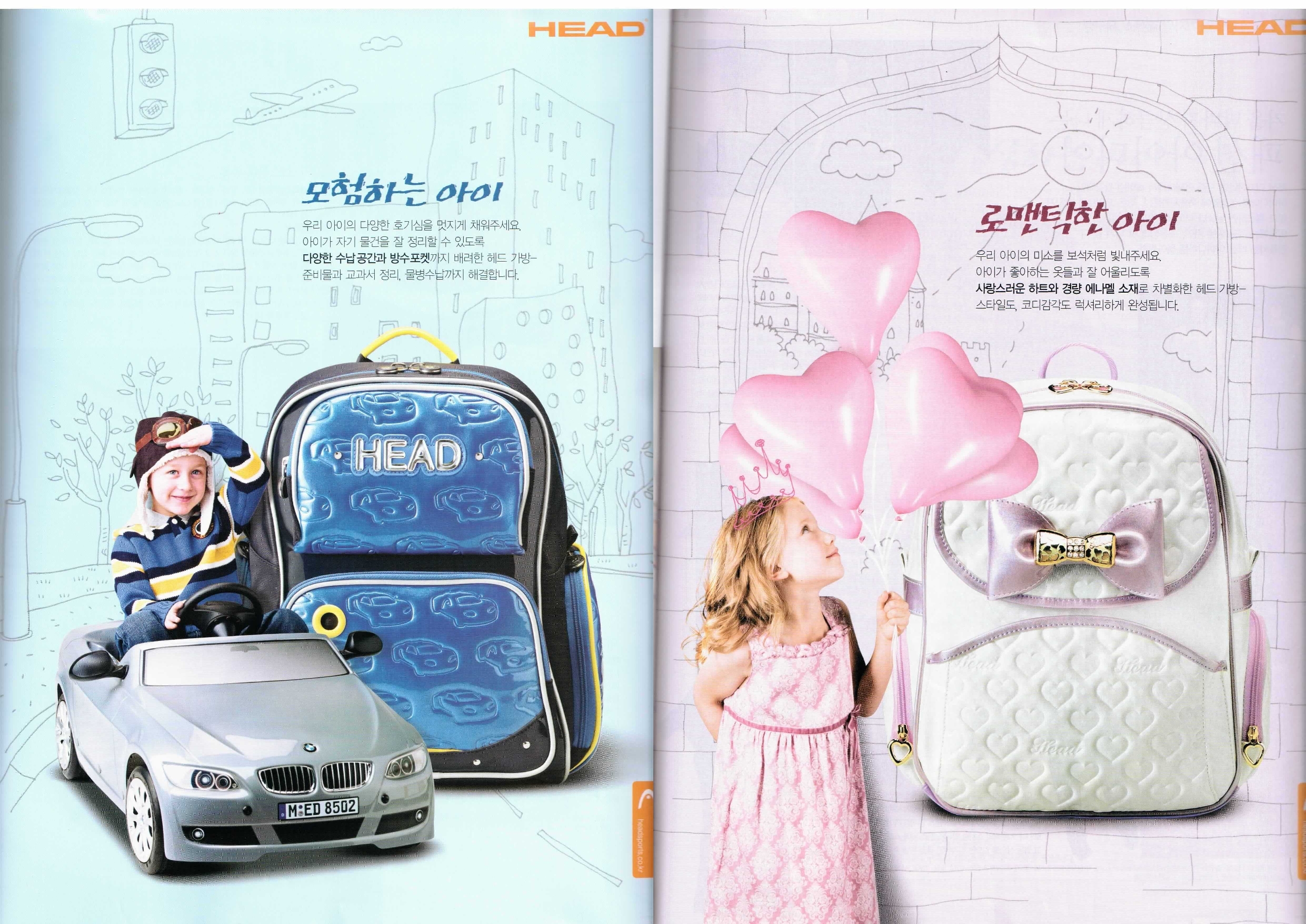
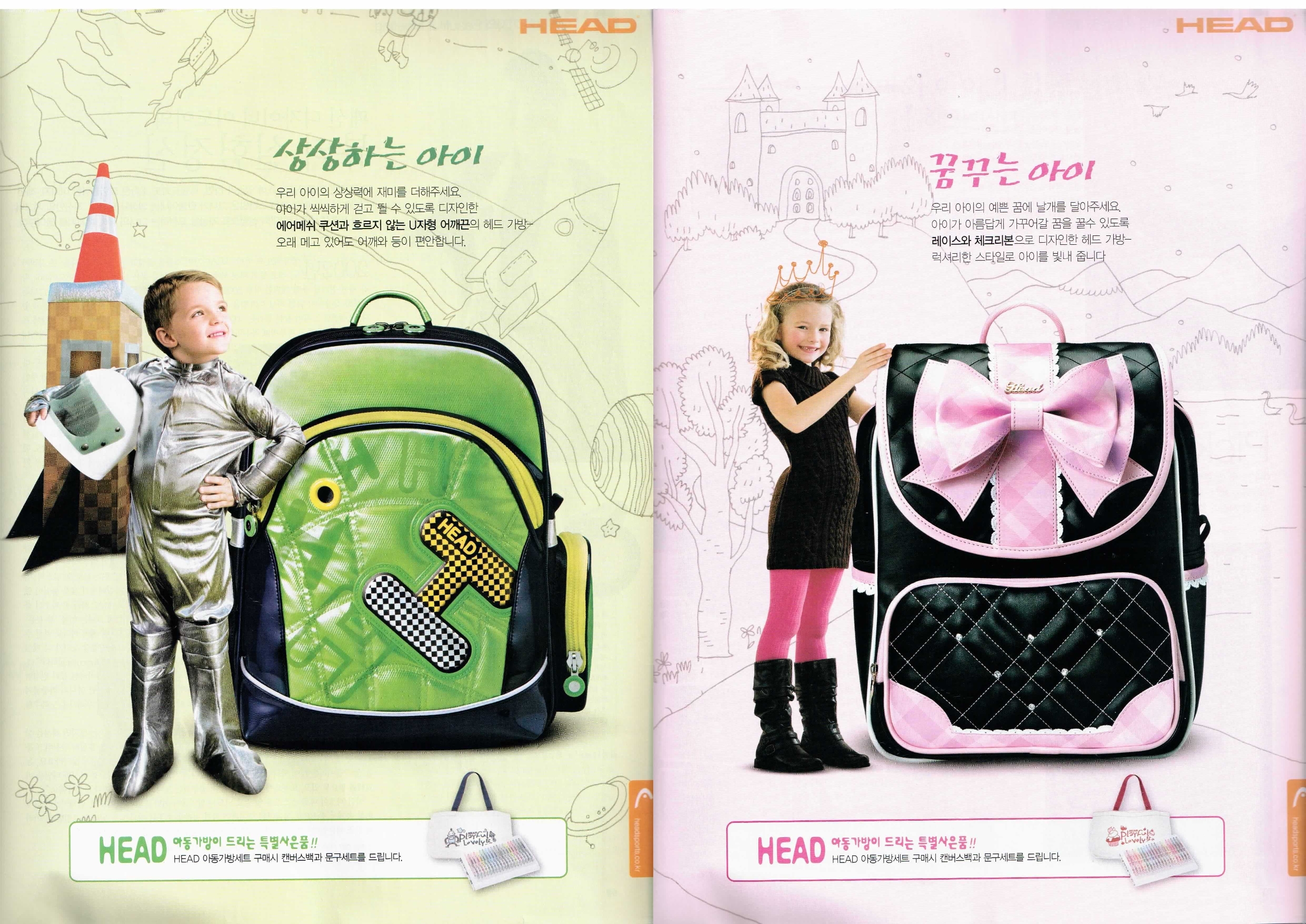
Update 2 – With my thanks to the staff of Dr. Lee’s Orthopaedic Clinic, I was allowed to take the magazine home to scan. While my memory had been a little faulty – the advertisements for school bags were in the first 100 pages, not 30; there were also advertorials for them later; and there were 3 advertisements from other companies that were fine –  I’d made no mistake about the HEAD ones:

The title on the left reads “Adventurous Children”, and that on the right “Romantic Children”. In the next ones they (literally) say “Imagining Children” and “Dreaming Children”, which technically speaking is fine I suppose, but then just look at what each child is imagining…

(For more posts in the Korean Sociological Images series, see here. Or, for more on the Korean women’s magazine industry specifically, please see here)

Share