TradWife TikToks Trouble Me

From banking to taking care of babies, it can be a real headache living and working in Korea as a foreigner. So much so, it’s usually objectively easier to let a Korean partner deal with any bureaucratic issues. And very, very possible to fall into some decidedly traditional gender roles in the process.

Estimated reading time: 5 minutes. Photo by Elle Morre on Unsplash.

Heartache, I expected from getting divorced. Backache? Not so much.

Every Saturday morning though, I have to contort myself like Houdini to clean my apartment’s tiny bathroom, lest I be judged on it later that evening. I have to vacuum and mop my floors often too, desperate to avoid the distinctive, single middle-aged guy smell my friend’s girlfriends all point out when they come over to break up with him. And in particular, I absolutely have to wash my dishes after every meal, because I have to do them in a kitchen sink that was expressly designed for the 155-160cm height of the average Korean woman of over 40 years ago. Let three meals’ worth pile up though, and it’s not just my lack of self-discipline that I’ll be wincing at.

Seriously, walking around my apartment like a hunchback every day gives a whole new meaning to feeling single. As a cishet, ostensibly middle-class, able-bodied man, it’s quite the novelty being a victim of the many gender norms literally built into our homes and cities.

Perhaps that’s why during my latest recuperation on my hard living room floor, I was finally persuaded to reach over and pick up Sociology of Everyday Life in New Zealand, ed. by Claudia Bell (2001), heading straight to the chapter “Negotiating Housework,” by Ruth Habgood (pp. 52-69). Amongst many other gems from the book I wish I’d seen earlier, this part really stood out:

Continue reading “TradWife TikToks Trouble Me”

Studying Sociology with Simu Liu!

Estimated reading time: 6 minutes. Sources: WBur, Mimi Thian on Unsplash (cropped).

I went on a date through Bumble recently. Yes, even I manage to pull that off sometimes. And no, don’t worry—this post is about Simu Liu.

You see, for the benefit of those blessed without ever having used dating apps, most give you the option of using prompts to get conversations going with nervous matches. You can come up with your own, or use one of the app’s suggestions. My suitress chose one of the latter—”What’s the last thing that made you smile?”. Commence instant mad pacing of my apartment. How to sound smart, sexy, and sincere in response, and all in just the one initial paragraph Bumble allows before—if—you get a reply?

Then it hit me—she’d recently lived in Canada for a number of years. I was 1/3rd into Liu’s autobiography, We Were Dreamers: An Immigrant Superhero Origin Story (2022) for a bookclub meeting soon. That was the connection. I could say how, never having watched any of his work, nor particularly wanting to, I hadn’t been all that enthused about the club’s choice. Only then, that the story of his parents falling in love and moving to Canada was just so damned wholesome and nice, that I couldn’t help but smile while reading it. That I was seriously annoyed at how much I was enjoying it.

I know, right—seducing by just being yourself, and saying the actual truth? And it worked? Who’d have thought?!

Little did I know, the next few pages would begin to outline the ‘Tiger Parenting’ he received, which was really just plain emotional neglect and physical abuse. And, in the first of two excerpts from the book I want to share with you, I especially remembered what he wrote at about the period his parents “graduated from spanking to full-on hitting” when he was 12. Which was also when his hormones were appearing, he was a Chinese boy growing up in Canada, and he needed emotional support more than ever (Chapter 9, pp. 104-5):

“I came out of the whole experience [of my crush] with a lot of anger…at myself for being completely ill-equipped to deal with my feelings, and at my parents, who I felt had trapped me into a life I no longer wanted. They had given me neither the emotional maturity nor the social wherewithal to have any shot with girls.”

“And then, of course, there was the total mindfuck that came with growing up Asian and male, in a society that saw us as nothing more than a bunch of derogatory stereotypes. Asian men were frequently depicted in Western media as awkward, nerdy and completely undatable—pretty much exactly what my parents were trying to make me into. I know this is a lot of really heavy stuff to put into the psyche of a twelve-year-old, but it definitely affected me, and it definitely affected every Asian boy that grew up in a Western country. The double whammy of being teased on the playground with ching-chong noises and then seeing ourselves ridiculed on the screen robbed us of our natural confidence. Without proper guidance from our parents, who were not terribly concerned with our self-confidence, most of us grew up feeling like we weren’t worthy to be loved or desired; like whatever we were was not enough.”

“Disillusioned and embittered, I began to pull away from my parents, my upbringing and my heritage. I started acting out, talking back and refusing to do homework. I didn’t want to be a math genius, or a scientist, or a sidekick—I wanted to be Thomas MacDonald, the mediocre-yet-charming leading man who got B-minuses and called his parents by their first names. I didn’t want to be Jackie Chan or Jet Li—I wanted to be hot stuff like Justin Timberlake, the kind of guy that dated Britney Spears and had bras thrown at him onstage.”

“Obviously, my parents were not down with my newfound rebelliousness.”

“‘Look at everything we’ve invested in you,’ they spat. ‘You’re a spoiled brat who’s squandering all of our effort and money, and wasting time on useless things. You’re nothing but a loser!'”

“’Fuck you! I don’t want any of it.'”

“WHAP!”

Update: It’s a point made many times before. But just two days later, its continuing relevance was demonstrated to me by blog mentor  Jae-Ha Kim 김재하, who covered a very similar same issue in the post “Does Racist Vintage Art Get a Pass?” on her SubStack K-Culture with Jae-Ha Kim. I’ll post two images from that to demonstrate what I mean, and encourage you to read the (non-)controversy in full:

Source: K-Culture with Jae-Ha Kim.

Next, for reasons I’ll explain in a moment, let me pass on what the second excerpt from We Were Dreamers immediately reminded of before I give Simu Liu’s words themselves: this paragraph from “Dropping Out” by Daniel Pinchbeck, (pp.102-3), in the autobiographical story collection Personals: Dreams and Nightmares from the Lives of Twenty Young Writers, edited by Thomas Beller (image source: Amazon):

“For one Wesleyan history class, I read the works of Pierre Bourdieu, a French sociologist. Bourdieu wrote about the concept of ‘cultural capital’—how cultural experiences acted as a boundary between the elite and the lower classes. I saw how the high price of the Wesleyan degree was a prime example of ‘cultural capital.’ The purpose of Wesleyan and other, similar colleges is not education so much as it is a way of signifying one’s membership in a certain class. An elite liberal arts degree is an indoctrination in high expectations, not hard actualities. I still maintain a sharp awareness of how the machinery of privilege works, how certain universities create an elite that reinforces itself through school connections, and the alumni’s shared, smug belief in their own entitlement.”

I first provide that because, unlike when I read the following by Liu, in the cold light of day it feels I was projecting to a certain extent, and a little unfair to connect his classmates with it when they were guilty of no more being driven and ambitious whereas Liu (and I!) were not. But no matter. If it provides an opportunity to pass on where I first learned what cultural capital was, a concept that has been very helpful to me over the last nearly 30 years (sigh) and so am very happy to share, then I’ll gladly take advantage (Chapter 14, pp. 160-161):

“On my first day of classes I could immediately tell that I was dealing with a vastly different breed of student. Incumbent Ivey [School of Business] kids were not at all like the dumb, borderline illiterate eighteen-year-olds that I’d wiped the floor with during my freshman year—these guys read the Wall Street Journal every morning and monitored the stock market religiously. They were alphas, who strode around campus with the absolute conviction that they were the literal white knights at the vanguard of a capitalist society just ready to be exploited for all it was worth, and they were ready to make it go their way. Most of them came from considerable wealth—some were scions of multibillion-dollar corporations.”

“You could mock their American Psycho–level douchery and harp on their arrogance, but there was no denying that these were men and women with goals. Unfortunately, the same could not be said about me.”

Thank you Liu! And I will watch your stuff now!

Related Posts:

If you reside in South Korea, you can donate via wire transfer: Turnbull James Edward (Kookmin Bank/국민은행, 563401-01-214324)

Older Korean Men Just LOVE the F-Word?

Just an amusing coincidence for your Friday night. But don’t worry, Korean Feminism geeks—I’ve also got you covered!

Estimated reading time: 2 minutes. Image source: Aladin.

No, not that F-word—although these days, it’s just as taboo to say either. And no, I don’t quite know how Easy to Read Feminism: Who Says Feminism is Difficult (Background information for beginners to feminism) / 쉽게 읽는 페미니즘: 페미니즘 누가 어렵대 (패미니즘 입문자를 위한 배경지식서), by the BT Humanities Research Institute / 비티인문학 연구소 (2019), ended up on my phone screen exactly. Probably, watching Blue is the Warmest Colour (2013) the week before subliminally affected me somehow. But, however it got there, I couldn’t help but notice the age and sex breakdown of customers who had already bought the book, which seemed to mirror the gender gap underlying the interest—or antipathy towards—feminism among the wider Korean public.

Source: @HeejungChung

I too lament that gender gap, but also found the image amusing, so am sharing it for that reason.

I don’t really mean to imply anything more meaningful in it beyond that! Indeed, just a quick perusal of other Korean books on feminism I’ve recently bought, showed that that same buying pattern didn’t apply to those.

If that leaves you dissatisfied though, let me also take this opportunity to link to what I somehow found next: “A new variation of modern prejudice: young Korean men’s anti-feminism and male-victim ideology” by Han Wool Jung, in Volume 14-2023 of Frontiers in Psychology. Probably the most comprehensive, crucially open-access article I’ve ever encountered on the subject, it should keep you—and me!—occupied for several hours at least.

Enjoy!

Related Posts:

If you reside in South Korea, you can donate via wire transfer: Turnbull James Edward (Kookmin Bank/국민은행, 563401-01-214324)

How “Cast Away” Helped Me Better Understand “The Girl with Seven Names” and Potential Survivorship Bias in North Korean Escapee Stories. No, Really.

Smart people tend to make more logical, more directly-related parallels and connections between the news and the pop culture they consume. So, my niche has to be providing the wilder and more bizarre ones instead.

Estimated reading time: 4 minutes. Image sources: University of Minnesota Retirees Association and Amblin.

Last week, our Busan Book Club covered The Girl with Seven Names by Hyeonseo Lee (2014—The StoryGraph, LibraryThing, GoodReads). A tale of her escape from North to South Korea via a decade spent in China, and later her returning to the border to help her mother and brother also escape, generally we found it very informative and moving. But, we were also struck by her incredible naivety, and sheer luck. In particular, without her family’s high status within North Korea, and without being able to rely on wealthy connections and generous benefactors at the last moments, there would have been no story to tell at all.

The smart takeaway is how, by coincidence, those last two points dovetailed with one about North Korean representation made a few days later by my Donsgeo University colleague, B. R. Myers, as part of a presentation he gave at Seoul City Hall at the Seoul Forum on North Korean Human Rights 2024. From his blog, Sthele Press:

“….This brings me to the escapee issue. These days talk of the grim punishment awaiting repatriated escapees is often contradicted in the same breath by reference to how so-and-so just saved up enough money for a second escape. The sum needed just before the pandemic—if my sources are correct—was over $5000, and let’s face it, that’s more than the average American has in the bank, so I worry that if we continue to present these people as representative, we’ll be creating confusion about what living standards in North Korea are really like. I’m not downplaying the ordeals that they all go through, especially the women who are trafficked across the river, but it’s time, I believe, that we concentrated on the great mass of people inside North Korea.”

“That goes also for the issue of North Korean workers in China and Russia. If you spread the blame between three regimes, Kim gets off lightly. Just how bad are conditions at home, that people compete to get treated like slaves in foreign countries? I think that’s what we should focus on.”

Read the rest of Myers’s presentation there. While my own thoughts may seem flippant by comparison, especially given the gravity of those conditions in North Korea, that is absolutely not my intention. Rather, I feel they only help underline his point about representation all the more.

Specifically, reflecting on Lee’s incredible run of good luck while I was reading her book, I couldn’t help but constantly be immediately reminded of a free-talking activity I’ve been using for the last 20+ years with my ESL students, about what supplies to prioritize in the event of a plane crash in the Pacific Ocean. (I call it Cast Away after the 2000 movie, but these days most students have never heard of it.). Which I grant does indeed sound bizarre, but the connection is there:

You see, most students, and me too if I didn’t already know better, rank obvious things like the fishing line and hooks very highly. Only, as I think it was the US Coast Guard that explained things in the version I originally got this from, in fact both those and 12 other things on this list are completely useless.

The reason being, quite unlike in movies like Cast Away, where the main character quickly paddles to a deserted island to survive on, in most oceans 99 per cent of plane crash survivors simply wouldn’t. So, unless they were found within 2-3 days, they’d die of thirst and sun exposure.

Which generally doesn’t make for riveting viewing.

That means we only get movies about the 1 per cent that do make it to land instead. Leading my students to prioritize hooks, matches, and so on. Whereas really, the only genuinely useful things are the flare gun to help rescuers find you, and the bottles of water to give them an extra day or so to do so while you’re still capable of firing it:

(Let me know if you’d like a copy of my PPT, and the rationale behind the specific ranking).

Wisely, I spared the other book club members this huge segue in our meeting in the coffee shop. But, now that I’ve put pen to paper here, I am indeed intrigued at how this—unfortunately named—’survivorship bias‘ potentially colors narratives about North Korean and its escapees.

And also intrigued whether Lee is asked about her incredible luck in this 1.5 hour interview. I’ll let you know!

Related Posts:

If you reside in South Korea, you can donate via wire transfer: Turnbull James Edward (Kookmin Bank/국민은행, 563401-01-214324)

New Books from Japan #6: “Women in Asia under the Japanese Empire,” Friday, May 31, 2024, 9:00-10:30 PM KST

Estimated reading time: 2 minutes. Photo by cottonbro studio @Pexels.

Sounds like another wild Friday night!

Tatsuya Kageki (Keio University) presenting the new book “Women in Asia Under the Japanese Empire” in conversation with Marnie Anderson (Smith College). Register for Zoom here: https://mjha.org/event-5684823

Presenter: 蔭木 達也 (Tatsuya Kageki, Keio University)

Discussant: Marnie Anderson (Smith College)

Contributors to this book provide an Asian women’s history from the perspective of gender analysis, assessing Japanese imperial policy and propaganda in its colonies and occupied territories and particularly its impact on women. Tackling topics including media, travel, migration, literature, and the perceptions of the empire by the colonized, the authors present an eclectic history, unified by the perspective of gender studies and the spatial and political lens of the Japanese Empire. They look at the lives of women in, Taiwan, Korea, Manchuria, Mainland China, Micronesia, and Okinawa, among others. These women were wives, mothers, writers, migrants, intellectuals and activists, and thus had a very broad range of views and experiences of Imperial Japan. Where women have tended in the past to be studied as objects of the imperial system, the contributors to this book study them as the subject of history, while also providing an outside-in perspective on the Japanese Empire by other Asians.

本書は、植民地と占領地における日本帝国の政策とプロパガンダ、特に女性への影響を評価し、ジェンダー分析の視点からアジアの女性史を提示する。メディア、旅行、移住、文学、被植民者による帝国に対する認識などのトピックを扱いながら、著者はジェンダー研究の視点と日本帝国の空間的・政治的レンズによって統一された折衷的な歴史を提示する。寄稿者たちは、台湾、朝鮮、満州、中国本土、ミクロネシア、沖縄などの女性の生き方を見ている。これらの女性たちは、妻であり、母であり、作家であり、移住者であり、知識人であり、活動家であったため、大日本帝国に対する非常に幅広い見方と経験を持っていた。これまで女性は帝国システムの対象として研究される傾向にあったが、本書の寄稿者たちは彼女たちを歴史の主体として研究し、同時に他のアジア人による大日本帝国へのアウトサイド・インな視点も提供している。

See you there! :D

Related Posts:

If you reside in South Korea, you can donate via wire transfer: Turnbull James Edward (Kookmin Bank/국민은행, 563401-01-214324)

“This may be the first time I’ve encountered a Black man in fiction stepping up when the women in his life have checked out.”

Estimated reading time: 3 minutes. Photo by Muhammad-taha Ibrahim on Unsplash.

By virtue of what I research and write about, I’d say roughly 2/3rds of the books I read are by women, split evenly between white women and women of color. And of the latter, probably almost all of them are Koreans and Asian-Americans.

So, it’s been a real pleasure and eye-opener this week to read Girl, Woman, Other by Bernadine Evaristo (2019), which has 12 short stories about the linked lives of (mostly) black British women.

Most of it is very metropolitan, so you don’t have to be at all familiar with London or the UK to enjoy it. But I have to admit I’m especially enjoying the later stories set in Newcastle and Northumberland by the Scottish border, where I’m originally from.

Intrigued then, now I’m thinking the next one about black women I’ll read will be Mama Said: Stories by Kristen Gentry (2023), also a collection of linked short stories about mostly black women, this time set in Louisville, Kentucky. Which to be sure, is quite a leap from the UK. But what instantly sold me was actually her depiction of black men, as explained by Deesha Philyaw in her recommendation at Electric Literature. Specifically of Parker, the point of view character in the story “A New World”:

“Despite carrying the weight of several worlds on his shoulders, Parker’s brand of masculinity never disappoints. This may be the first time I’ve encountered a Black man in fiction stepping up when the women in his life have checked out. Further, Parker isn’t a Black man looking for praise or credit for doing the shit he’s supposed to do, to paraphrase a classic Chris Rock stand-up bit. Parker doesn’t want to be a hero. He just doesn’t want to be a coward.”

Please read the rest of Philyaw’s recommendation there, which also has the full story.

Related Posts:

If you reside in South Korea, you can donate via wire transfer: Turnbull James Edward (Kookmin Bank/국민은행, 563401-01-214324)

Today, I Learned That 3x More Korean Women in Their 20s Attempt Suicide Than Men.

For sure, the patriarchy harms men just as much as women, and 3x more Korean men than women attempt suicide overall. But this dramatic reversal among Korean 20-somethings is truly shocking.

Estimated reading time: 5 minutes. Photo by Brandon Wong on Unsplash.

Not going to lie—when first reading the following tweet, this old Korea book geek felt a frisson of recognition. That warm feeling, and wanting to quickly joke about my overwhelming confirmation bias, is what initially made me want to share. Thinking about the horrifying content only came later:

Source: 나도계란/@aravis12
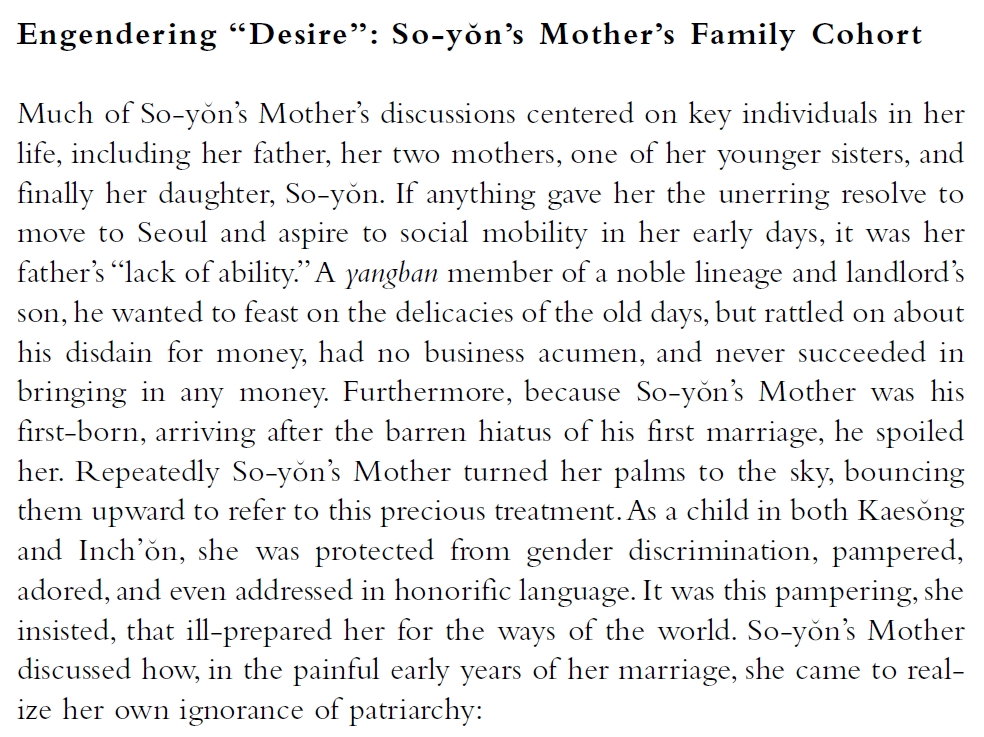
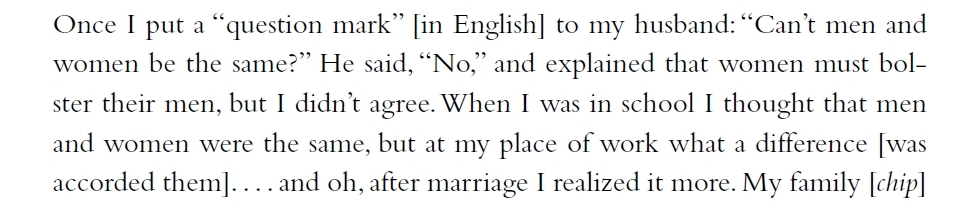
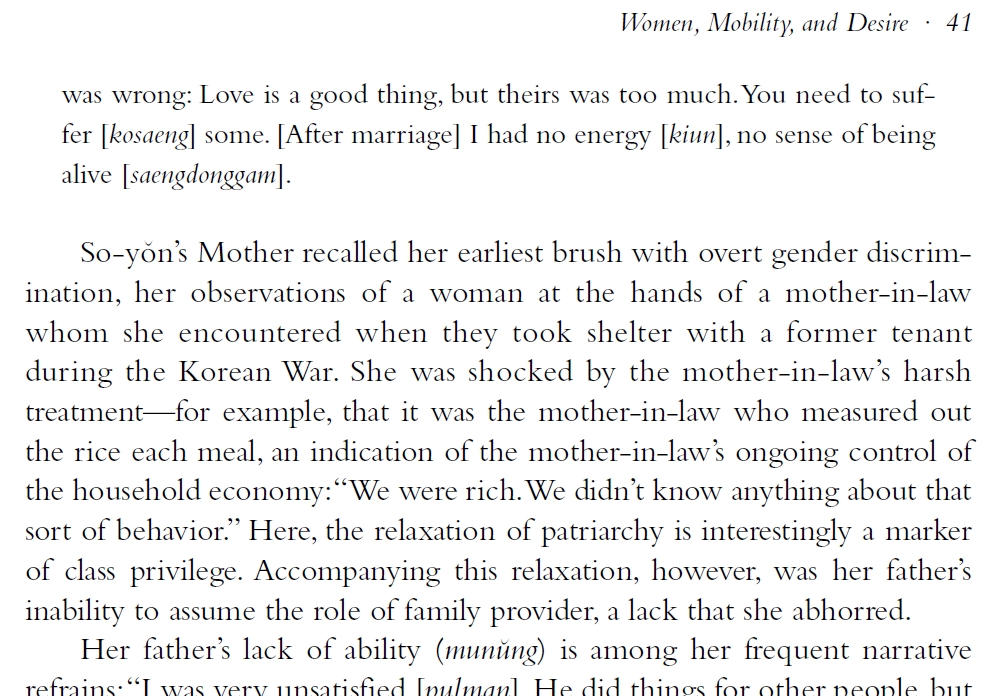
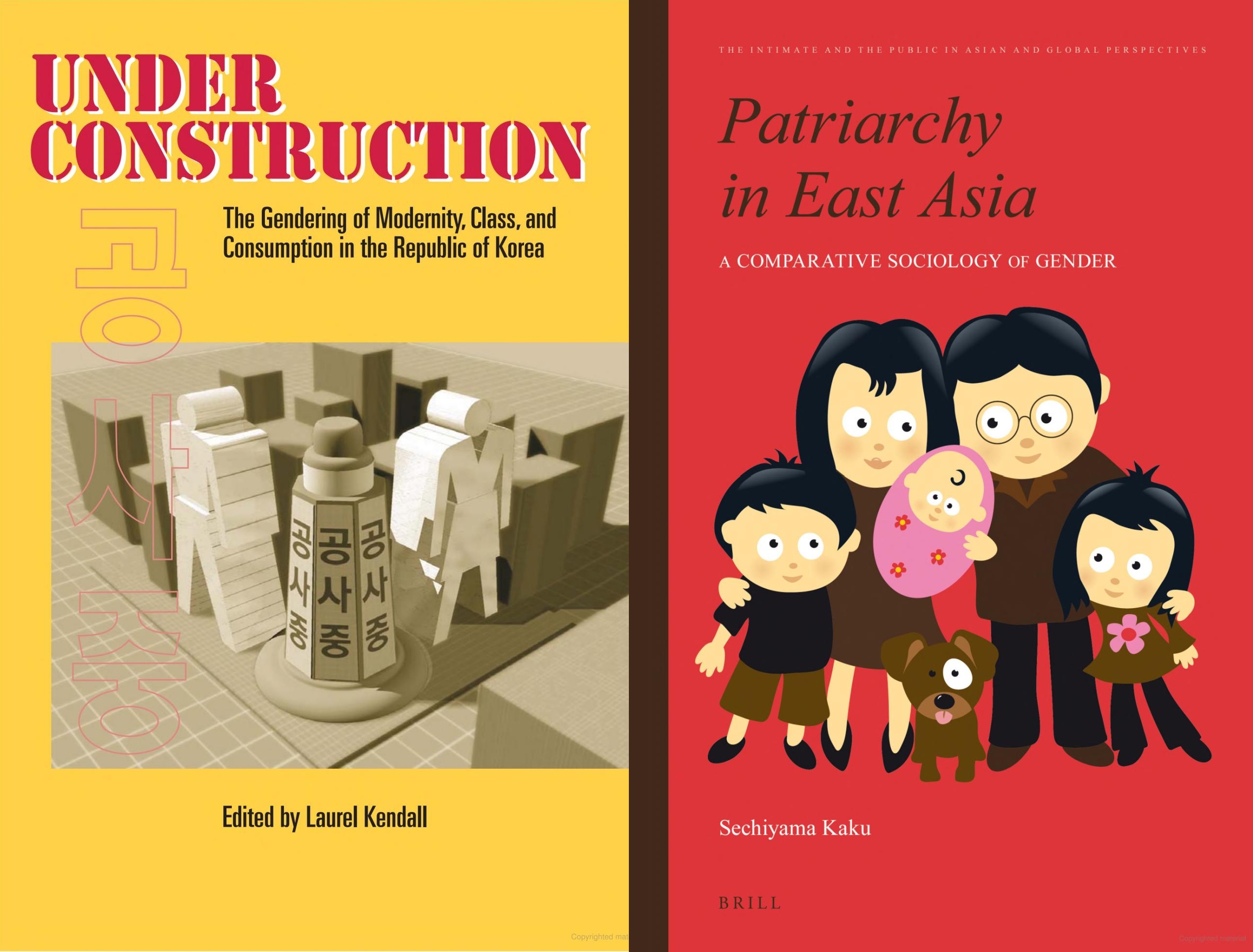
Its similarity is to the following from Chapter 2, “Women, Mobility, and Desire: Narrating Class and Gender in South Korea” by the late Nancy Abelmann, in Under Construction: The Gendering of Modernity, Class, and Consumption in the Republic of Korea, edited by Laurel Kendall (2002):

Feeding into what I would learn from Under Construction and other sources about the strength of egalitarian and democratic ideals in Korea, which the education system promoted even during the height of its various military dictatorships, that point really stuck with me 20 years ago. It’s been in the back of my mind when thinking about Korean workplaces and marriages ever since.

Then I read the tweet again, and it finally hit me what so little change in two decades actually meant—”Women in their 20s are collapsing into dystopian depression.”

Also highly recommended: Patriarchy in East Asia: A Comparative Sociology of Gender by Kaku Sechiyama (2013)

That’s from what the link was to—an interview of Professor Kim Hyeon-ah (김현아) of Hallym University Sacred Heart Hospital, author of My Daughter Was Quietly Falling Apart (딸이 조용히 무너져 있었다; 2023), about her struggles with her bipolar daughter who self-harmed and attempted suicide.

Through it, I learned that although men still comprise the bulk—three quarters—of Korean suicides overall, as myself and probably everyone reading would expect, the (translation) “number of female suicides has increased by 64.5% since 2015, compared to 19.7% for men. Also, that as of 2020, mood disorders such as depression were twice as common among women as among men, and were especially prevalent among those in their 20s.”

Only, those suicide statistics, by being generalized to all women, annoyed more than clarified.

You see, by coincidence I’d read yesterday that the smoking rate for Korean women was now 4.5%. Which was a huge red flag. Because as I demonstrated in my series on that a decade ago, the taboos surrounding female smoking in Korea meant rates varied hugely by age, with the rate for 19-29 year-olds then coming to 23.1%, and rising quickly. So quickly in fact, I’d estimate that their rate is now closer to 33%, and will try to confirm that in a much-needed follow-up to that series for you soon.

With that in mind, while a 64.5% rise in suicide rates for Korean women is of course terrible, as is a 19.7% rise for men, it doesn’t sound so dramatic considering the much, much lower figures for women overall. With not unlimited funds available for suicide prevention measures, it’s not unreasonable to suppose that, put that way, both policymakers and the public might be swayed into downplaying the changing gender dynamics of the problem. That perhaps specific age and sex-based policies aren’t necessarily the best use of resources.

I’m absolutely not blaming the reporter here, or claiming any sort of agenda over a few statistics that should have been presented differently. But it did mean an age-based breakdown of those suicide statistics was absolutely necessary, which I found in The Korea Bizwire:

When analyzed by gender, the highest rate [of self harm and suicide attempts] among males was among those over 80 years old (125.9 per 100,000), followed by those in their twenties (105.4), teenagers (69.1), and those in their thirties (65).

Among females, the highest rate was in those in their twenties (284.8 per 100,000), followed by teenagers (257.8), those in their thirties (119.9), and those in their forties (86.3).

And on that note, my apologies. This was supposed to be a light post, expressing my joy at finding something so similar to something meaningful that I once read 20 years ago. Then, joking at this curmudgeon’s ever-growing confirmation bias, and admonishing him to constantly seek sources that challenge his outdated views. Only now having done precisely that…I simply don’t know what to say.

Most suicide victims worldwide being men, I am just too shocked. Not just that the rate for Korean women in their 20s is higher than than that for men at all, but that also it’s almost triple. For the first time ever, this issue makes me genuinely scared for my daughters, whom I don’t live with any longer and don’t see day to day, and one of whom will be doing the university entrance exam this year.

What do you think needs to be said?

Related Posts:

If you reside in South Korea, you can donate via wire transfer: Turnbull James Edward (Kookmin Bank/국민은행, 563401-01-214324)

The 66 Books I Read in 2023

Estimated reading time: 4 minutes. Photo by Aziz Acharki on Unsplash.

It’s good to be writing again. And I can’t think of a better topic to start with than books!

Honestly I’m so enthused, that in 2024 I aim to read 100 of them, and to write quick reviews of each as I do.

Or at least, of those I think you’d find interesting. As you’ll see from the covers of those I read in 2023, my tastes are pretty eclectic.

Other reasons to write reviews include expanding my writing skills, and to cover a glaring absence—in hindsight, it’s just bizarre how few reviews I have actually written here over the years, despite talking about books so often. There’s also my wanting to better connect with fellow bibliophiles, and my desperate need to appear smart and know big words and stuff.

Suddenly writing sixty-six reviews at the end of 2023 was beyond even my enthusiasm though, and not just because I had a broken finger. So, I’ll wisely focus on my TBR pile instead.

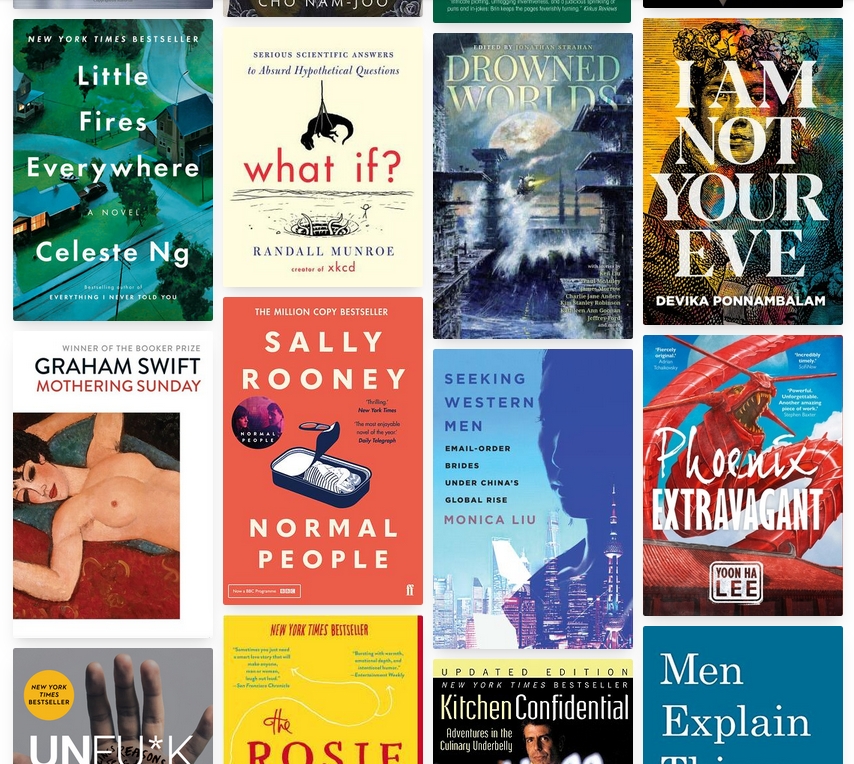
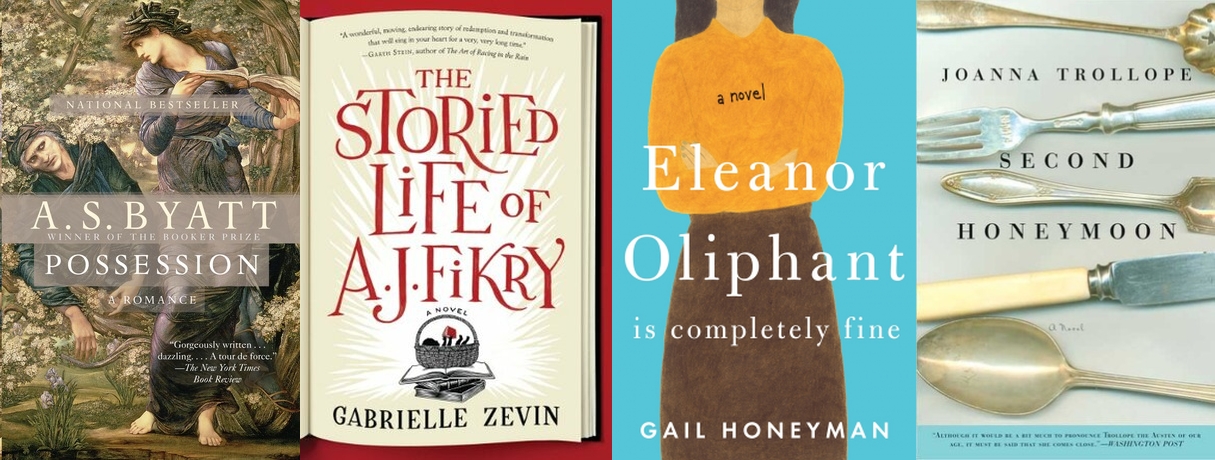
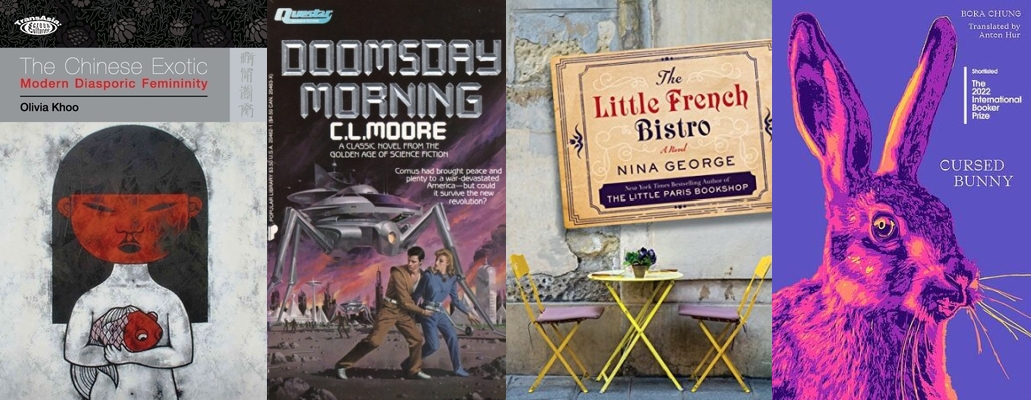
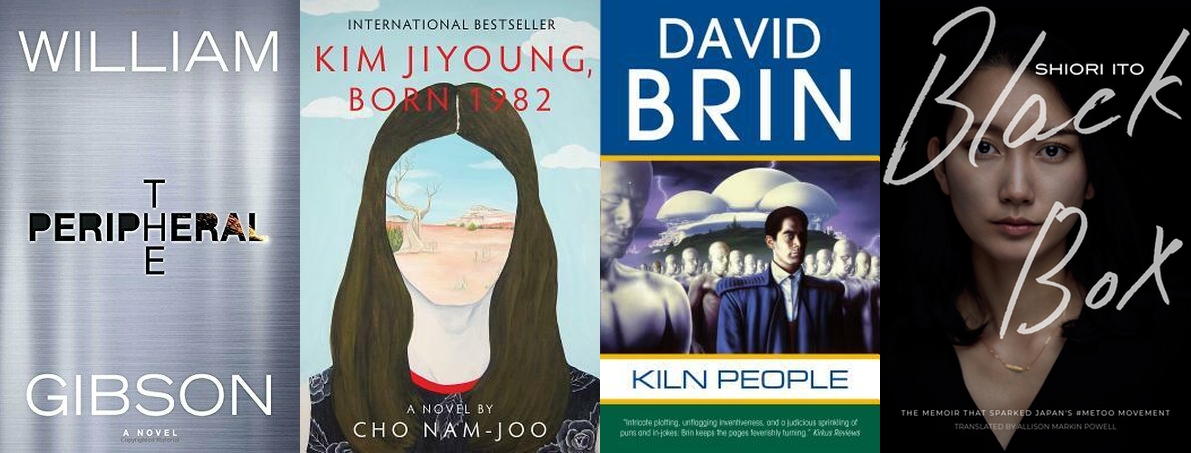
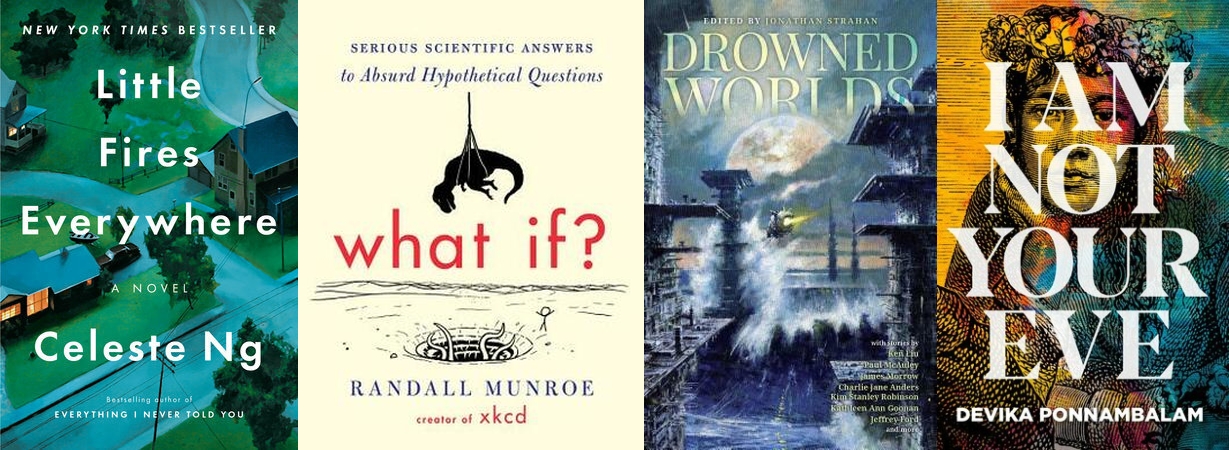
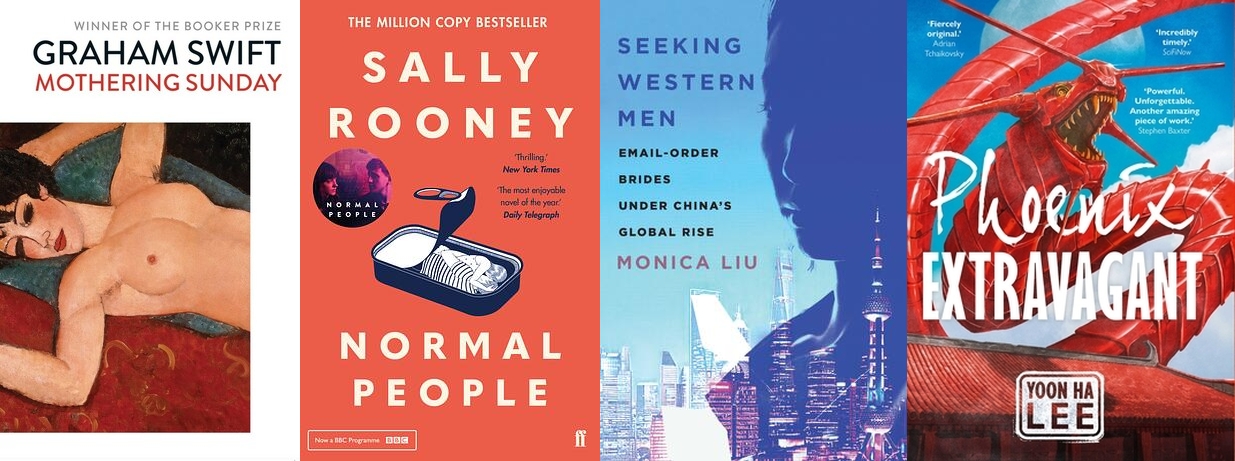
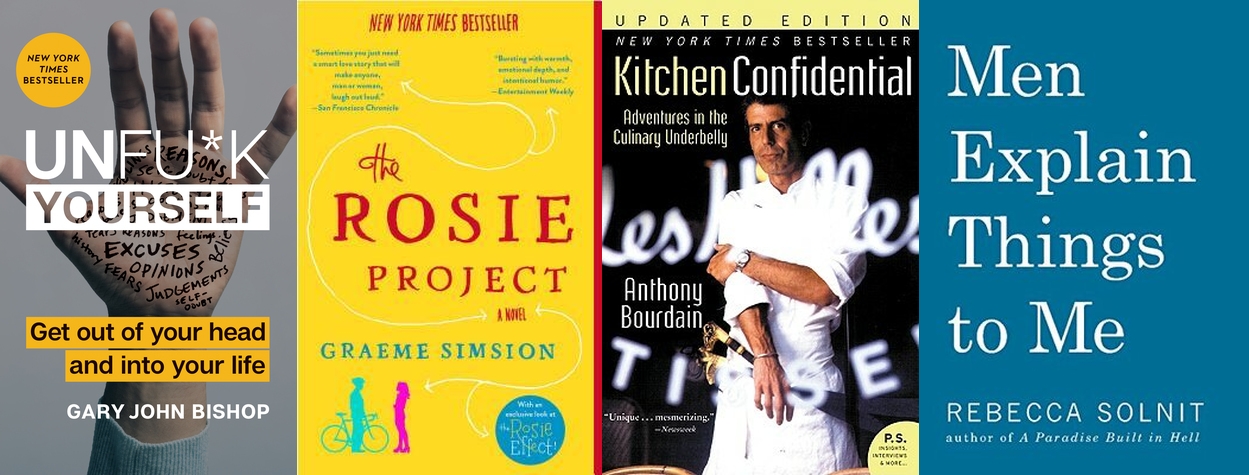
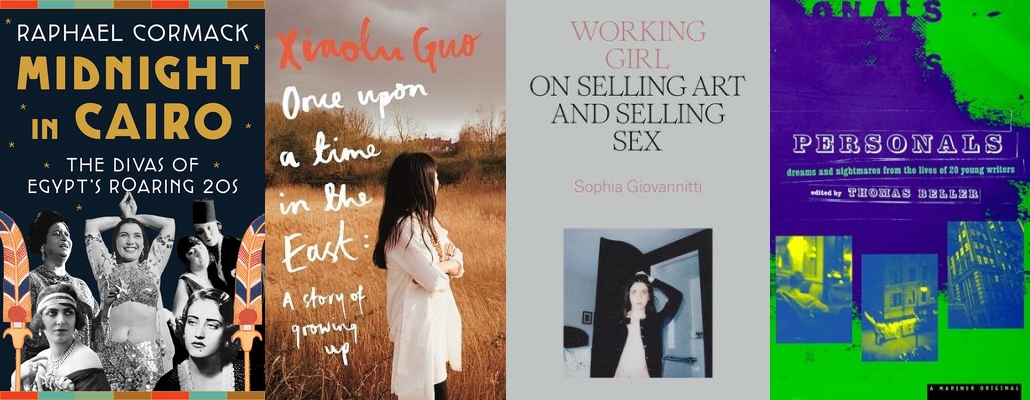
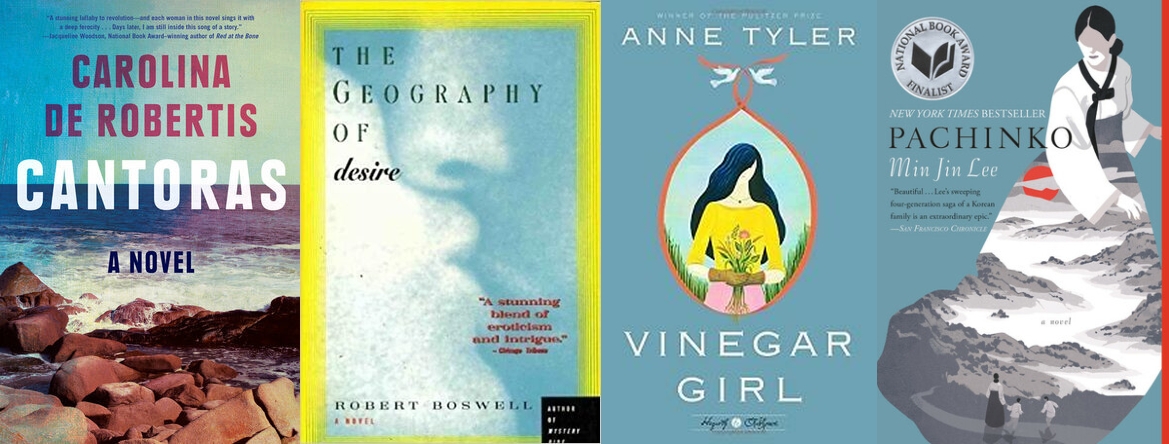
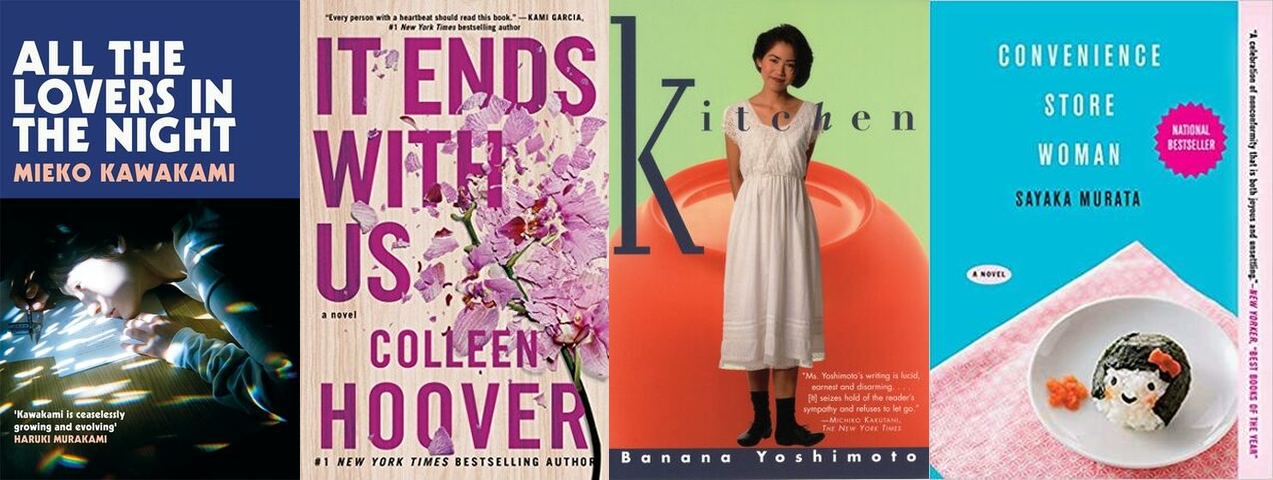
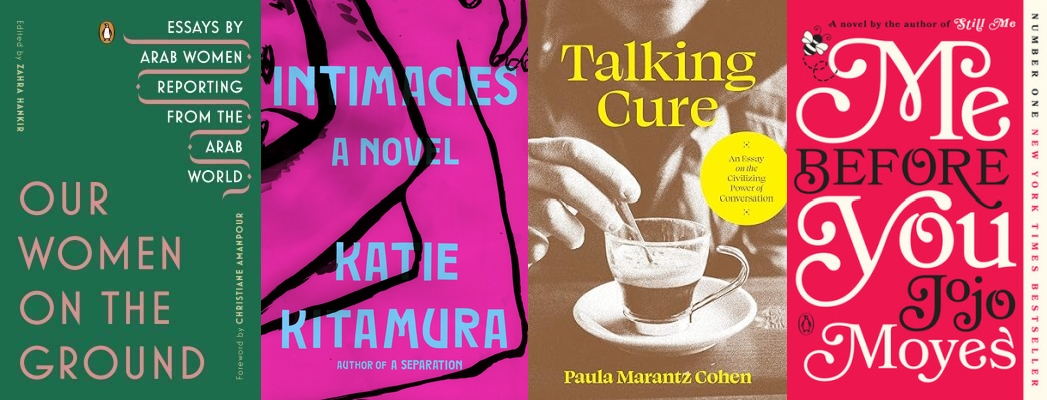
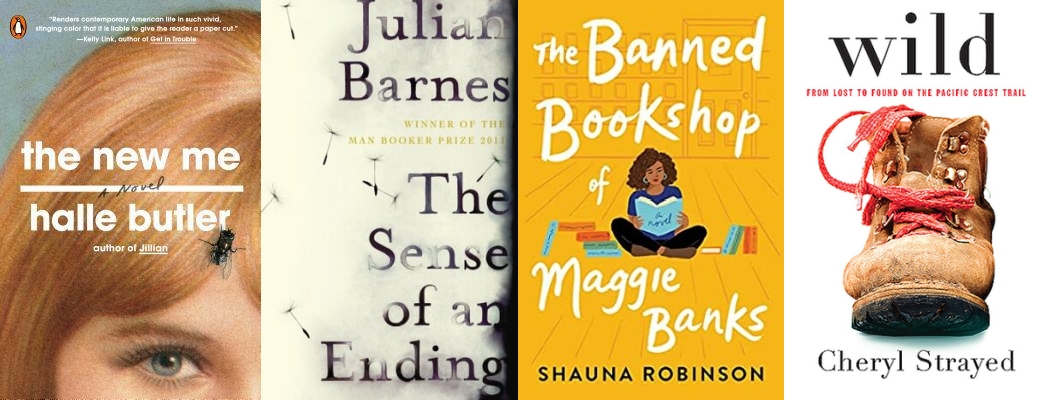
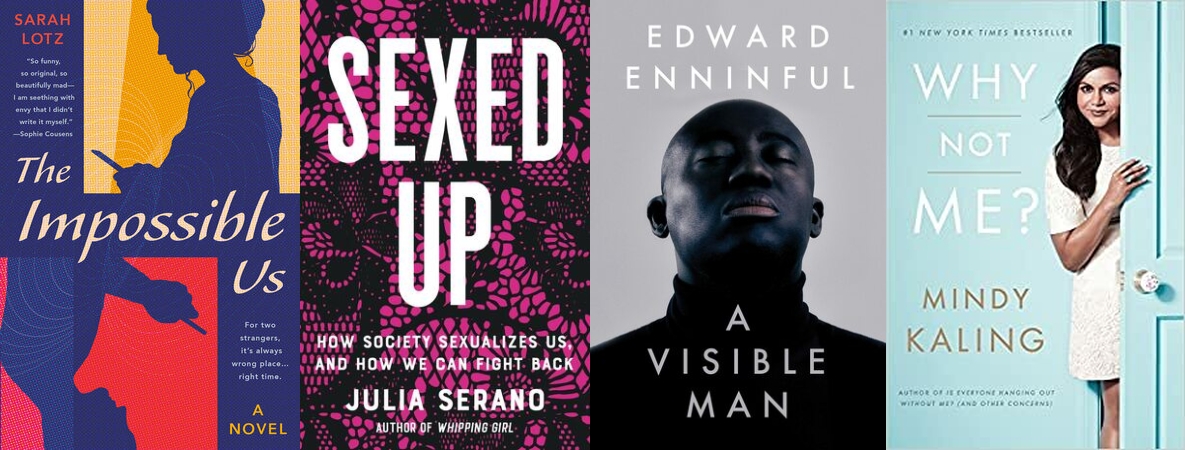
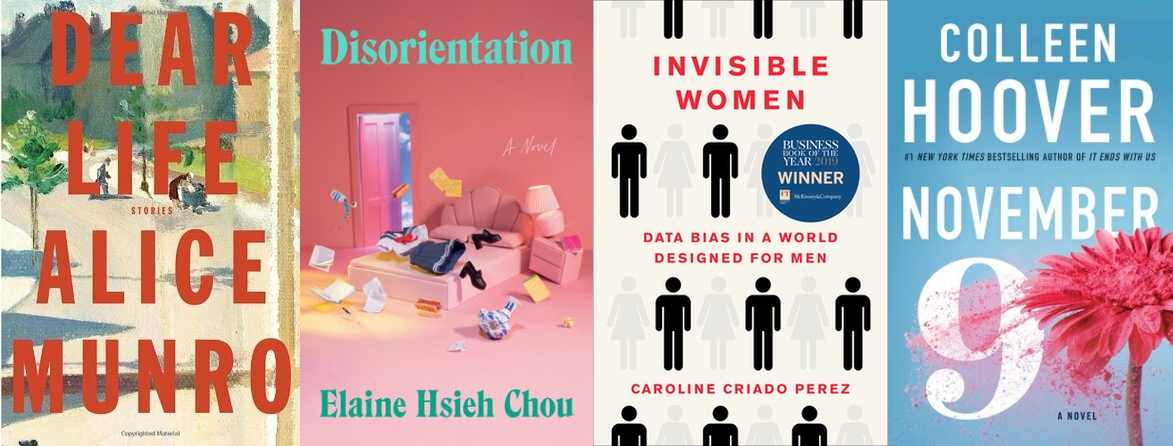
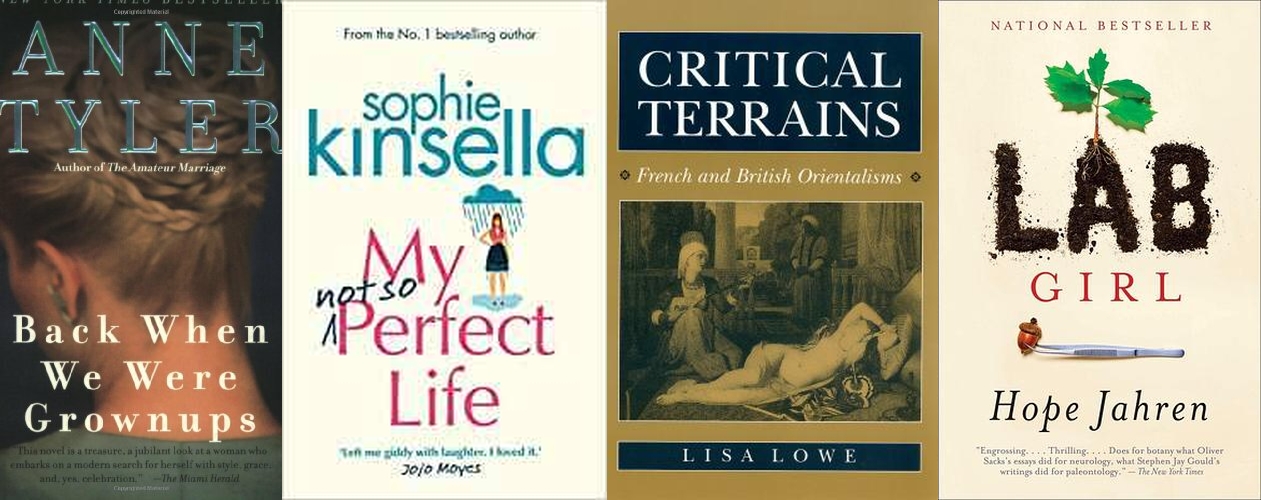
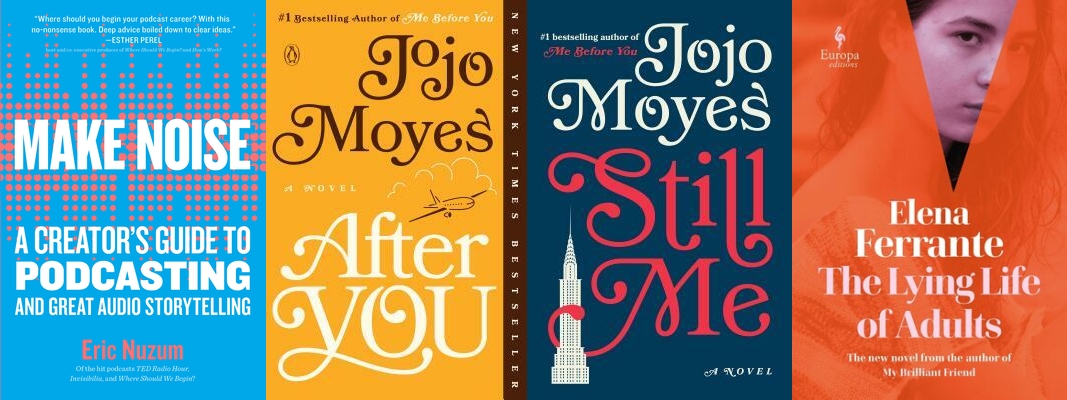
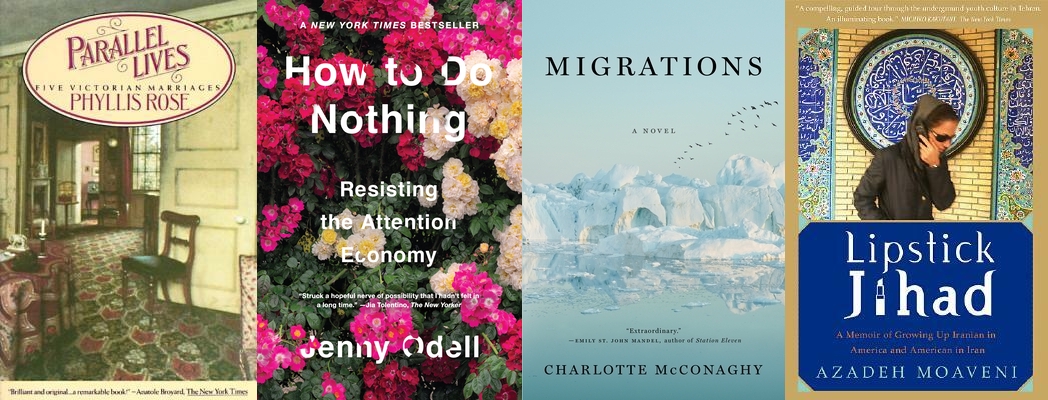
As I go through it then, in the meantime here are the covers of those sixty-six books from 2023 to flex for your interest. And if any do look worth a read, please go to my 2023 Reading Wrap-Up at The StoryGraph (I include the link in the numbers in bold too), quickly scroll down to “2023 at a glance” at the bottom, and you can click on the covers for their details there. Which is admittedly not very tech-savvy sounding of me sorry, but frankly the 5 seconds that will take you is a much better use of our time than my creating 66 separate titles and links is (which few people would click on anyway)!

If you do take the time though, and would even like to talk about any of the titles below, please be warned I will rant or (mostly) rave about them for hours them in gratitude. If that prospect doesn’t faze you, then absolutely please do get in touch, either in the comments or via my social media! (Facebook Page, Twitter, Linkedin, Threads, Bluesky, Post, Instagram)

Happy New Year! 🤓

1-4:

5-8:

9-12:

13-16:

17-20:

21-24:

25-28:

29-32:

33-36:

37-40:

41-44:

45-48:

49-52:

53-56:

57-60:

61-64:

65-66, and, for good measure, 1-2 of 2024!

If you reside in South Korea, you can donate via wire transfer: Turnbull James Edward (Kookmin Bank/국민은행, 563401-01-214324)

Performing in “Public” Spaces in Korea and Japan—Can Anyone Do it? Or Mostly Just Men?

“Musicians’ experiences of dis/comfort, im/mobility, security and threat, as well as their coping strategies, are all gendered.”

Estimated reading time: 5 minutes. Photo by Chris Barbalis on Unsplash.

My TBR pile is glorious, and it is teetering. So, I really should have known better than to even glance at the New Book Networks feed…

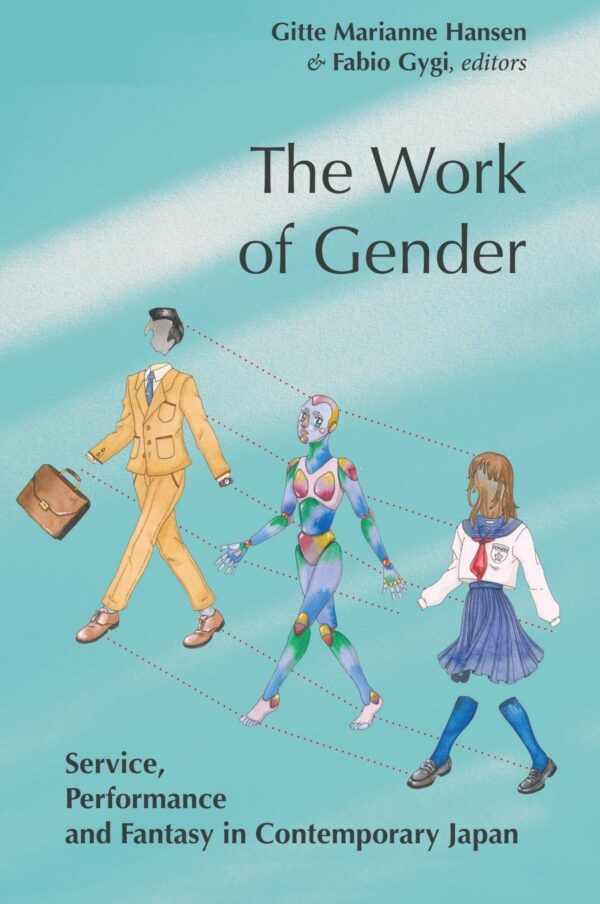
Assuming I can actually find the space then, this latest, slightly pricey candidate is all due to Tuesday’s interview of Dr. Gitte Marianne Hansen and Dr. Fabio Gygi, editors of The Work of Gender: Service, Performance and Fantasy in Contemporary Japan (NIAS Press, 2022). Specifically, the section from 28:35-31:10 where Dr. Gygi talks about Chapter 6, in which his colleague, Dr. R. J. Simpkins, shares his findings from months of observing and talking to buskers and street performers near a Tokyo train station. Like me, listening will probably immediately remind you too, my beloved tribe (*hugs*), of Feminist City: Claiming Space in a Man-made World by Leslie Kern (Verso, 2020; see my review here). You also get how tempted I am right now then, as I almost seem to hear the soft serenade of  “지금 택배로 주문하면 11월 24일 출고” sweetly whispered into my ear…Oh! Aladin, you tease…

Ahem.

With no further ado then, sorry for any mistakes in my transcript of that section of the podcast below. And please don’t worry about giving offense if you’d rather jump ahead to a reviewer’s excellent summary below that instead!

“Well, I think this is a wonderful chapter, because Rob, the author, was actually playing as a street musician himself, and that’s how he entered the field, and he’s been there for quite a long time, and it’s a wonderful ethnography, and very detailed. But towards the end he realized, ‘Well, I’m only talking to men. I know a few female performers but it seems to be a very different experience for them.’ So he started to focus a little bit more on the differences, and one of the things that he really found was that it’s all about space-making.”

“So, it’s a public space, you’re exposed to the gaze of the passers-by, but as a musician or performer you have to create…you have to take this public space and turn it into something else, like a concert venue or a venue for self-expression. And this of course takes on a very strong gender dimension. So men felt very much at ease, you know…especially the more rock-type musicians who would just start to play…there would be a good vibration and people would sort of assemble. But women working as performers felt very much exposed in a very different way. Now, you have to imagine, during commuter rush hour it’s mostly men…it’s salarymen who come back from work, often in a state of inebriation, and there would be a lot of sexual harassment, there would be a lot of unwanted attention, or rather boundary-breaking attention, so people would come, they would listen to a song, and then they would try to chat you up or get close or break the sort-of boundaries that you have created. And so there was a much greater sense of vulnerability, and what he sort-of concluded from that is a public space is also to a strong degree male-coded, it’s the male gaze that defines what is happening.”

“So if you expose yourself to that, you have to be aware of the gendered dynamics of the space and so his artists chose very different and very creative strategies [to deal with those]…Reyna(?) for example performed in a mask to deflect from the fact that she was a female performer, and so it is very important to understand that this public sphere itself is gendered…not something we would normally, you know, have a good understanding of.”

These difficulties and dangers are underscored by co-editor Dr. Hansen then going on to note that this was the most difficult subject in the book for any of the contributors to research. Because, unlike with other venues and performances, the rules of engagement (and enforcement) were not set. My personal additional takeaway from that being, those rules were also more open to exploitation and abuse by those with (male) privilege.

Photo by Victoriano Izquierdoh Barbalis on Unsplash.

For the busier feminist book geek among you though, as promised here is an excellent summary of Dr. Simpkins’ chapter by Dr. Kai E. Tsao, taken from her review in Feminist Encounters:

“Simpkins observed and interviewed music performers at a Tokyo station, and his chapter demonstrates that the musicians’ experiences of dis/comfort, im/mobility, security and threat, as well as their coping strategies, are all gendered. Male musicians considered their experience, occupying and transgressing in public space, as performing their authentic self and self-realisation. This sentiment was not shared by the female musicians. Instead, they performed ‘charm’ and created a ‘non-threatening atmosphere’ to navigate social interactions in a station space with a predominantly male presence. Public space around the station is coded: compared to their male counterparts who ‘naturally’ hung around to interact with their supporters, female musicians were much more cautious about the risks of inviting passers-by to take an interest in their performance. This makes me wonder: how is the performance of invitation gendered? How might female musicians be perceived if they invited an audience in a space where they were ‘not supposed to be’?”

And which also makes me wonder, what are the Korean parallels? Where are those spaces?

Frankly, I can’t really think of any. In fact, the only place I ever encounter buskers and street performers at all is the main drag of Gwangalli Beach close to where I live, which ironically I don’t visit very often because it’s always jam-packed with happy, 20-something, heterosexual couples (sigh). That very different audience composition to a busy Tokyo subway station then, as well as the very public and open setting, would likely mean performances there were almost completely devoid of the (negative) gendered dynamics described above.

Maybe various Korean laws are responsible for making them much less common than in Japan?

Or maybe not? Are there buskers in, say, Hongdae in Seoul? In Nampo-dong here in Busan, which I haven’t visited for years? Performers in busy Seoul subway stations? Please do let me know then, if know of any similar Korean spaces to what Dr. Simpkins outlines in Tokyo, and your experiences of them. And how do think the gender dynamics play out in those?

Related Posts:

If you reside in South Korea, you can donate via wire transfer: Turnbull James Edward (Kookmin Bank/국민은행, 563401-01-214324)

Note to Self—Check Thy Orientalism!

Lady Mary Wortley Montagu, an 18th Century woman of letters, had a keen eye for ignorant European male travel writers who projected their sexual fantasies onto Turkish women, and why they waxed lyrical about women’s suffering under barbarous Turkish men. Her skills at exposing hidden agendas, and at highlighting women’s shared experiences of misogyny, rather than stressing exoticism and difference, remain just as useful and necessary today.

Estimated reading time: 10 minutes. Photo, right, by Kazi Mizan on Unsplash.

Now, I know you’re totally jealous I have a physical copy of Critical Terrains: French and British Orientalisms, a.k.a. “a sustained reflection on Orientalism, with feminist accents” by Lisa Lowe (1991), and not just an open-access PDF.

Or not? Perish the thought. Still, while this particular tome does make its central point that orientalism “is profoundly heterogeneous,” I can concede it’s also very academic and literary and critical-theory heavy, requiring a lot of concentration. So, if you’re actually just trying to impress fellow bibliophiles and geeks on the subway in the mornings with it, or beat crippling insomnia in the evenings when that fails to elicit the companionship you seek, much of it will simply fail to stick.

But of the two parts that did stand out to me, which I’ll highlight in two separate posts, I wasn’t expecting the first to make me feel so…uncomfortable.

Specifically, it was the second chapter on Lady Mary Wortley Montagu’s Turkish Embassy Letters, a collection of her reflections on her travels through the Ottoman Empire between 1716 and 1718, published in 1763 just after her death. In those, she criticized European men’s writings about Turkish men and women for presenting the former as barbarous, and using the alleged civilized treatment of women in Christendom as evidence of that, compared to their supposed abject misery under Islam in Turkey. In other words, they presented a false dichotomy between a feminist West and patriarchal East that, well, you could probably see faint echoes of in my own first attempts writing about Korea nearly two decades ago.

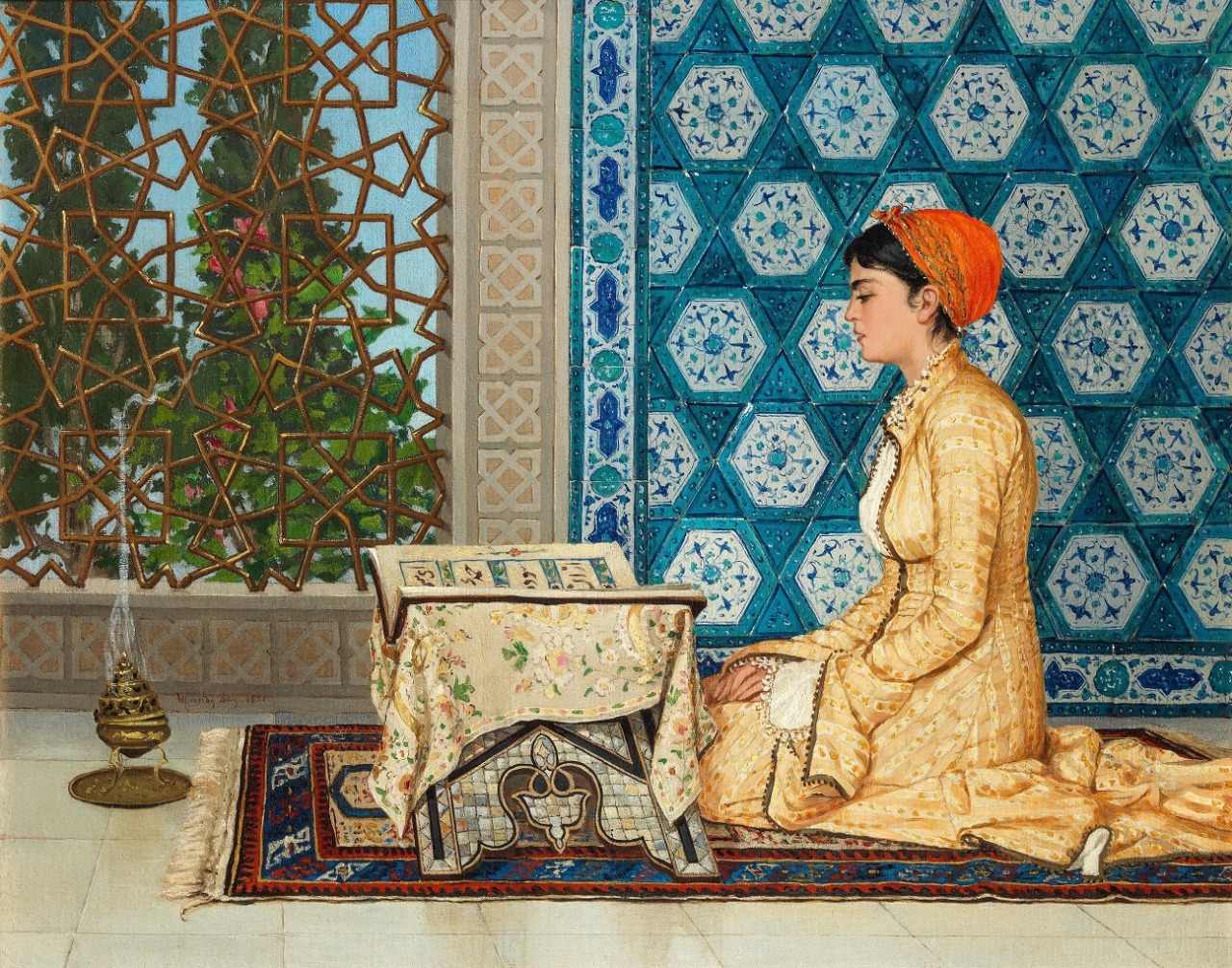
Image: Young Woman Reading, 1880 by Osman Hamdi Bey (Turkish, 1842–1910).

Mercifully, the offending posts have long since been deleted. I don’t think I could ever have been accused of projecting my sexual fantasies onto Korean women like Montagu’s male contemporaries did Turkish women either, let alone doing so while acknowledging they had no knowledge on which to base those fantasies whatsoever, as we’ll see.

But that false dichotomy? Stressing the differences between the men and women ‘over there’ compared to ‘here,’ rather than emphasizing shared experiences and potential solutions to, say, overcoming the patriarchy?

That’s definitely something to be remain wary of. In particular, when so many negatives of women’s position in Korea are genuinely objectively worse than in the countries interested English-speaking readers tend to hail from, it’s deceptively easy for any Korea-related news to simply confirm one’s preexisting prejudices and stereotypes about Korean men and women, or to pander to those if you want your work to be read. And I’m just as open to temptation as anyone.

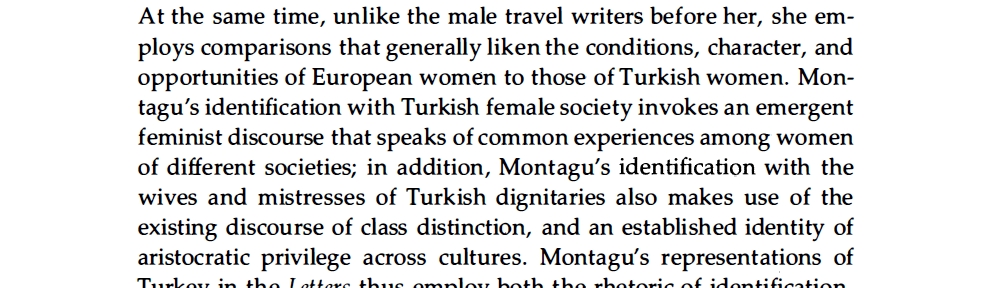
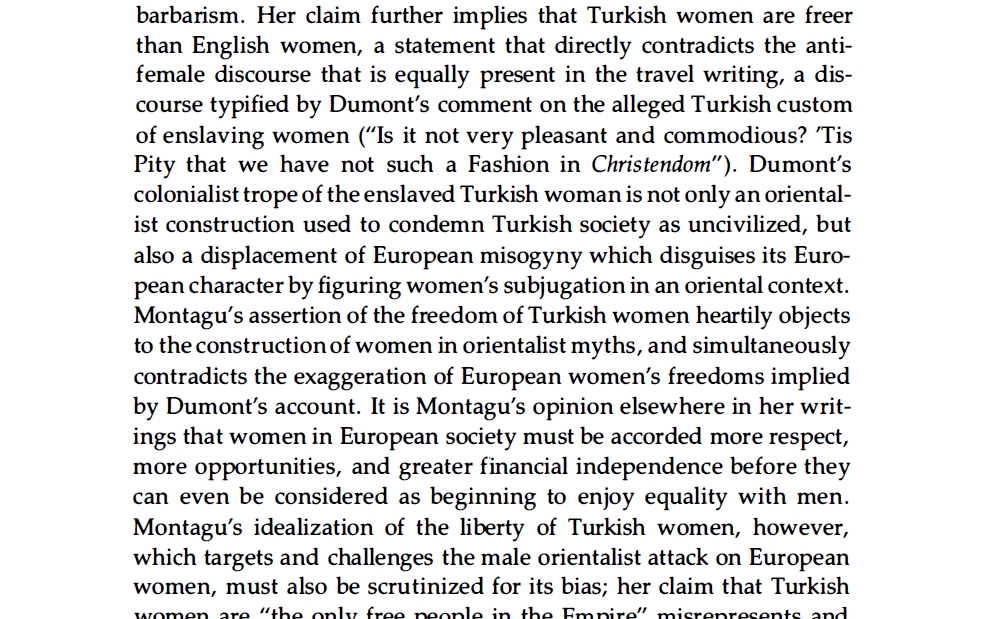
So, to help maintain that awareness, let me highlight the relevant passages from the second chapter of Critical Terrains for you here. Starting with the first mention of the letters on page 31:

Then on page 32, introducing the crucial additional theme that for all her proto-feminism, Montagu was also very elitist and aristocratic, both in her concerns and in the Turkish women she most interacted with. But for more on that, you will have to read the chapter for yourself sorry!

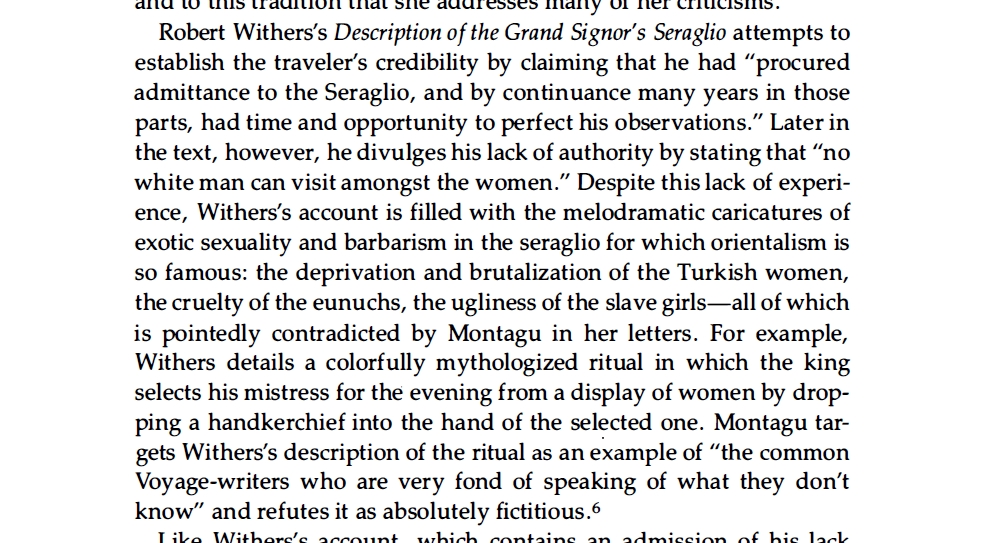
Then on page 38, on one of those European men waxing lyrical about what goes on in the fabled harems, despite never actually visiting one…

Continuing with yet another man doing the same:

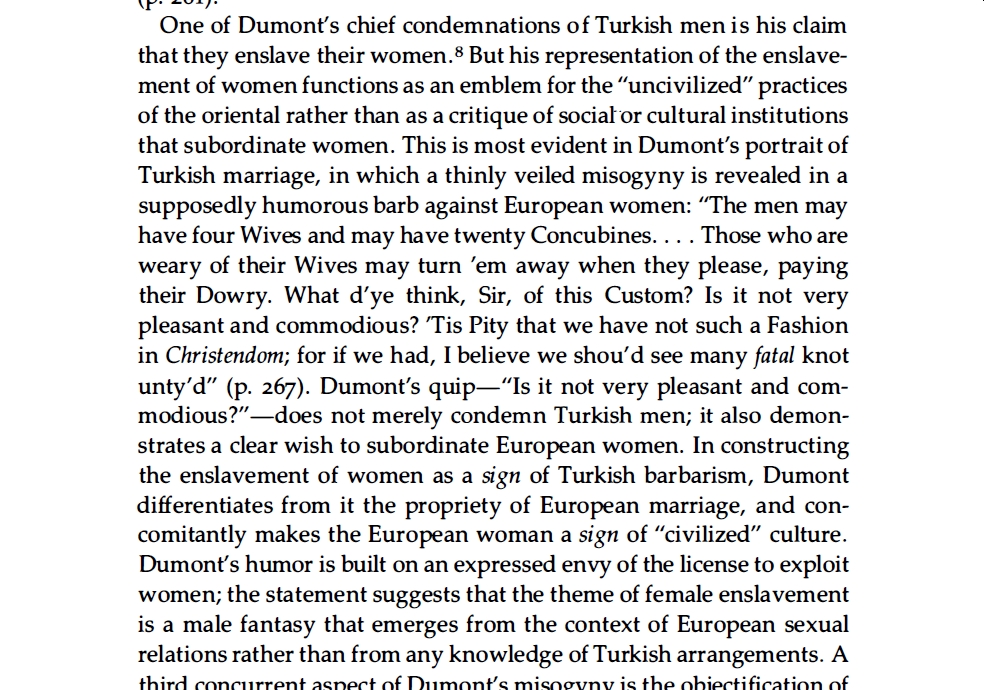
Continuing past the page break into page 39:

Continuing:

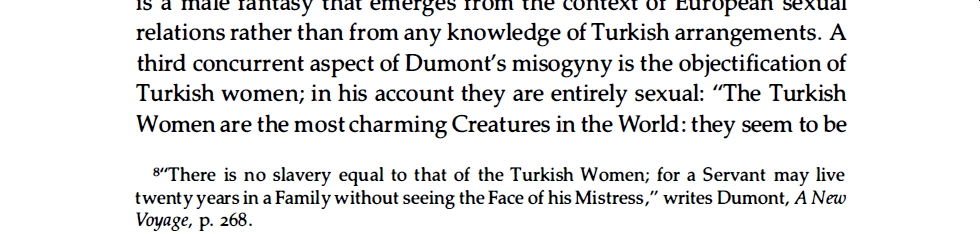
Continuing:

Page 40, which I especially liked for its point about Turkish and European women’s shared experiences:

And finally from page 44 (NSFW image coming below):

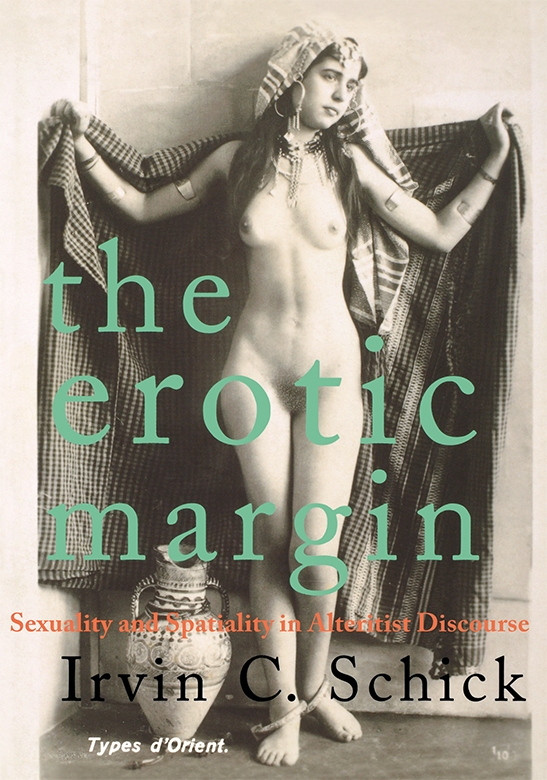
If you’ll please bear with me a moment, Orientalism, I find, is a bit like the Theory of Relativity. (Hey, I did ask you.) As in, like my physics professor once pointed out back when I was studying to become a professional astronomer (it’s a long story), Einstein’s theory, for all the creativity, originality, and genius behind it, is actually quite simple to understand after a couple of lectures or good YouTube videos. Which is my somewhat arcane excuse for why, wanting to learn more about Lady Montagu, I consulted my other books exclusively devoted to Orientalism, and discovered to my horror and shame that I actually only had two: Culture and Imperialism by Edward Said (1993), and The Erotic Margin: Sexuality and Spatiality in Alterist Discourse by Irvin C. Schick (1999). Alas, Said didn’t mention Lady Montagu at all (perhaps it’s time to finally purchase Orientalism?). But Schick did…

…and then I finally noticed a certain similarity of cover theme with that of Critical Terrains. Potential accusations of hypocrisy by authors and/or publishers and a certain blogger aside though, and how much that extends to the genre as a whole or not (Culture and Imperialism actually has quite a bland cover), obviously both covers were used to sell more copies of both books. Or, to put it crudely, there was an agenda behind the choice to put naked Oriental women on both.

Which finally brings me to how, even 150 years after the publication of Montagu’s letters, Schick explains that the British public, industry, government, and press, for a wide variety of reasons and agendas, were all just too fundamentally committed to their own agendas—an alternative, collective ‘truth’ about the Orient so to speak—to really care less about what its men and women were actually like. Which is also why, sadly, Montagu’s letters ultimately made little impact:

From Pages 211-212:

And finally, from pages 50-51:

Related Posts:

If you reside in South Korea, you can donate via wire transfer: Turnbull James Edward (Kookmin Bank/국민은행, 563401-01-214324)

“Devotion to anything, if you were female, could make you ridiculous.”

It seems my blog is devolving into rambling book recommendations about life, the universe, and female sexuality. Sorry not sorry!

Estimated reading time: 9 minutes. Photo by John Cahil Rom at Pexels.

But seriously, longform Korea-related content is coming soon.

In the meantime, you may recall one of my most recent longform posts was on how we talk about biological, sex-based differences. Like men’s slightly better ability to mentally manipulate 3D objects, or women’s to endure long-term pain.

I’d recently been forced to confront beliefs about those I’d held for nearly 30 years, and found them wanting. In the process, I learned so much from so many sources in so short a space of time, that I just had to share.

Naturally then, almost no one read it!

So, not going to lie—my first of six goals today is highlighting it again for anyone who may have missed it the first time.

Source: DiversityUK.

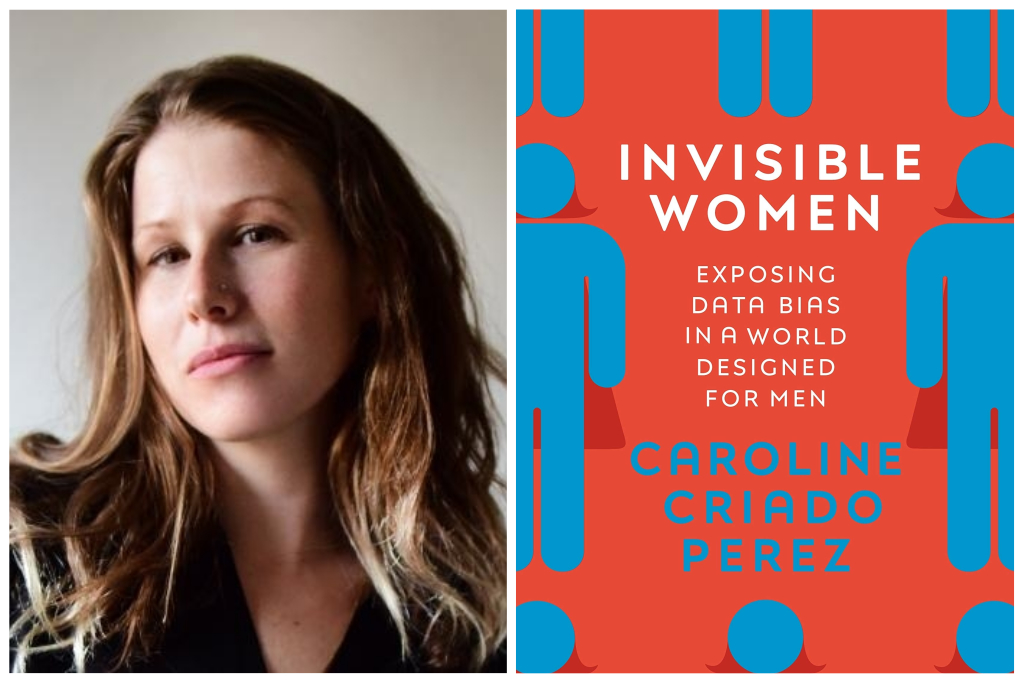
To help persuade you, the spark was a passage in Invisible Women: Exposing Data Bias in a World Designed for Men by Caroline Criado Perez (2019), about how gender role expectations and social pressure prevent most girls and women from devoting themselves to their passions, whereas boys and men are giving much freer reign to obsess. So, more of their numbers going on to dominate in and excel in various stereotypical male fields like chess or coding was no simple consequence of those sex differences alone. Also, I read elsewhere that, despite the differences being very real, and many of them undeniably innate, people’s brains were remarkably pliable too, requiring surprisingly little training to overcome them.

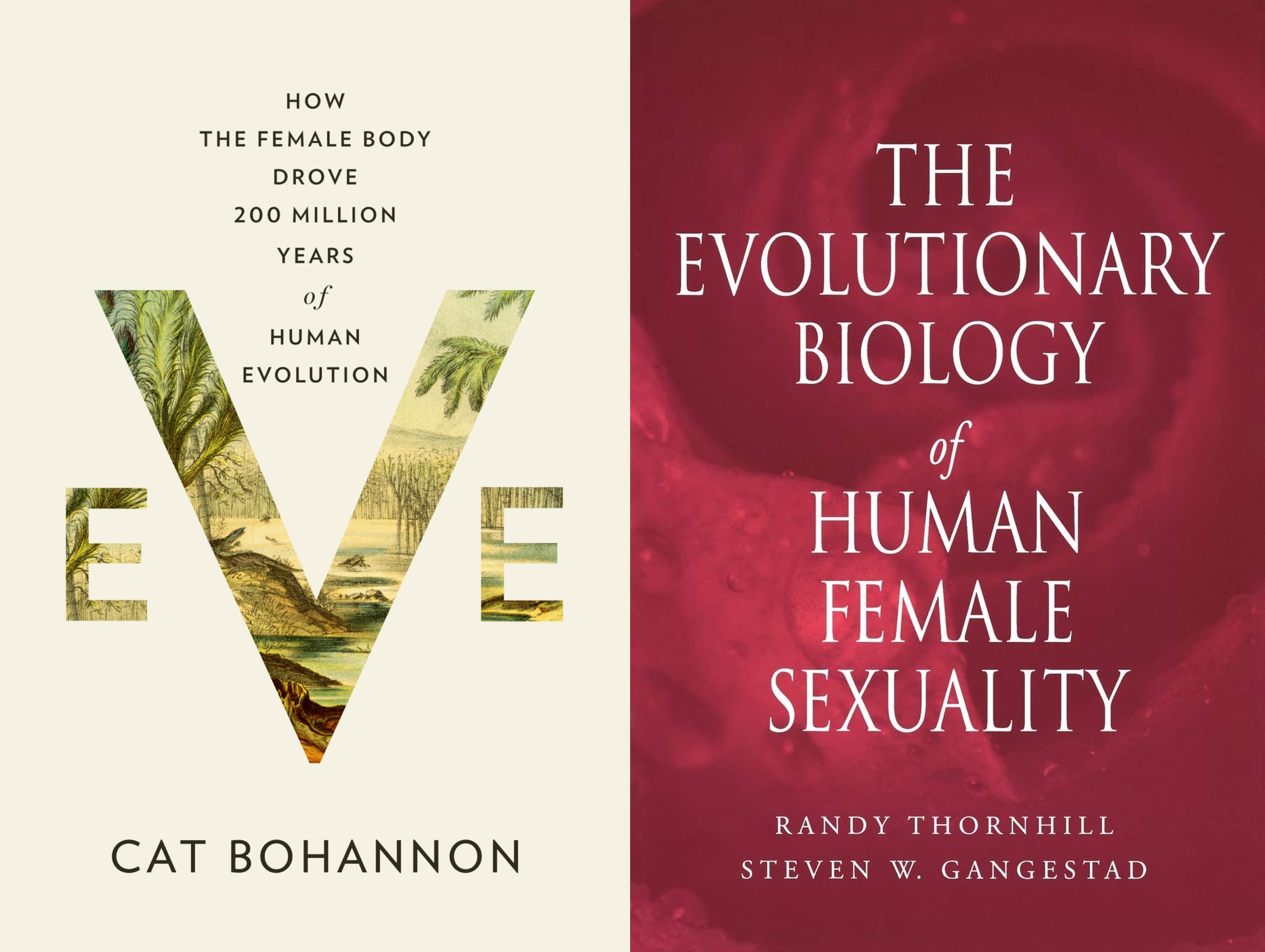
And if that sounds interesting, let proceed with my second goal—availing myself of the opportunity to not only recommend Invisible Women, but also Eve: How the Female Body Drove 200 Million Years of Human Evolution by Cat Bohannon (2023), which I’ve recently ordered because reviews (Undark, The Atlantic) indicate it discusses many of those themes. Let me recommend The Evolutionary Biology of Human Female Sexuality by Randy Thornhill and Steven W Gangestad (2008) too, which I’ve also just ordered because it’s actually what Eve first reminded me of, and because it’s easily the most thorough, most challenging and demanding, but also most rewarding tome I’ve ever encountered on its subject. (Much more academic and narrowly focused than Eve though, see here for a positive review, here for a negative one, and here for the authors’ response to the latter.)

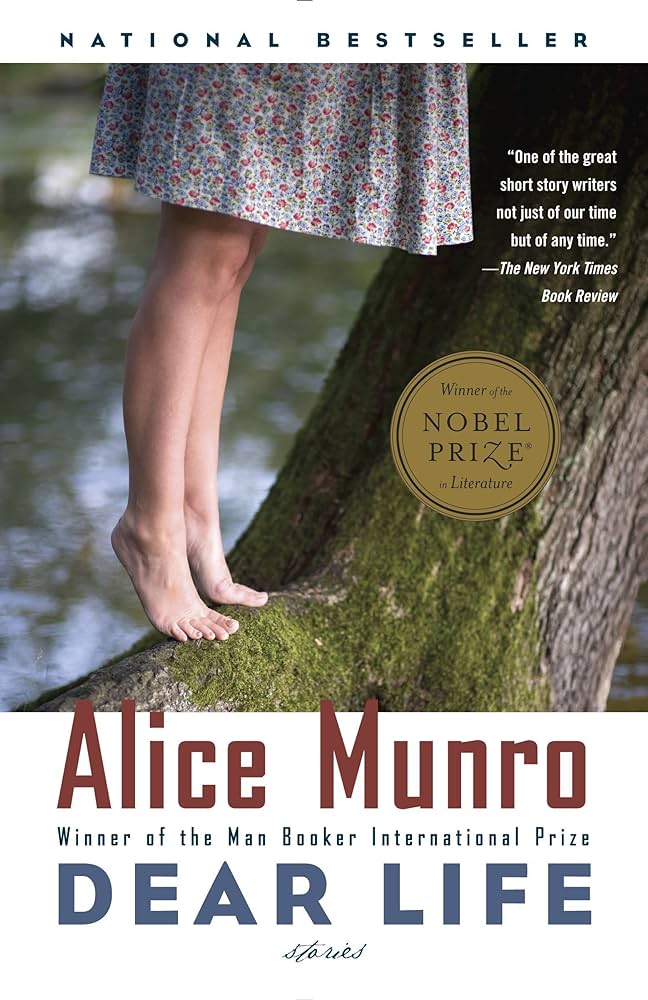
Which is all quite the introduction to why today’s title quote jumped out at me from “Haven” by Alice Munro, part of the short story collection Dear Life (2012), which I’ll give the full passage it’s from in a moment. All that explanation felt necessary to fully convey the connection I felt though, and why it brought me the frisson of joy it did, which I wanted to share—my third goal today.

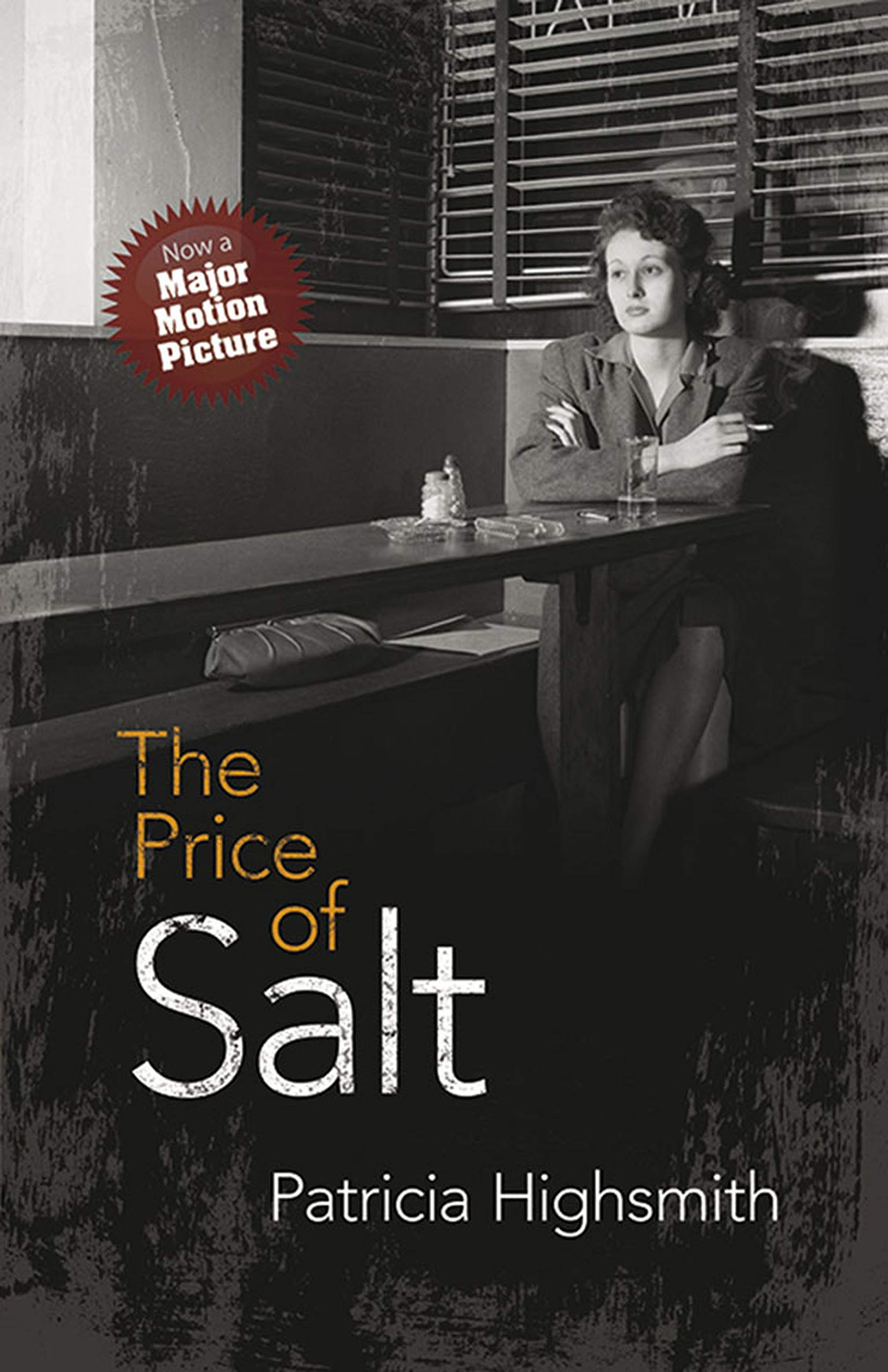
But before I do pass it on, frankly it feels more important to explain how I came to be reading Dear Life in the first place. Which was actually because I first read the lesbian classic, The Price of Salt by Patricia Highsmith (1952; renamed as Carol, 1990), and specifically because this passage from Chapter 10 really resonated with me:

Therese watched Abby’s fork cutting the scaloppine into small bites before she picked up any. “Do you take trips a lot with Carol?”

“A lot? No, why?” Abby asked.

“I should think you’d be good for her. Because Carol’s so serious.” Therese wished she could lead the conversation to the heart of things, but just where the heart of things was, she didn’t know. The wine ran slow and warm in her veins, down to her finger tips.

“Not all the time.” Abby corrected, with the laughter under the surface of her voice, as it had been in the first word Therese had heard her say.

The wine in her head promised music or poetry or truth, but she was stranded on the brink. Therese could not think of a single question that would be proper to ask, because all her questions were so enormous.

I return to it often, because—please bear with me a moment—I’ve lived in Korea for most of my life, where house parties are just not a thing. Compared to what I remember of social gatherings in my 20s in New Zealand then, those I’ve been to here have tended to be quite structured, where most people already knew each other. Yes, I’m generalizing, and, now that I’m in my late-40s, maybe it’s just that I don’t get invites from the cool kids anymore. But add that Koreans generally don’t strike up conversations with strangers in coffee shops or on the subway either, least of all bald middle-aged white men they assume can’t speak any Korean, then I do so miss the opportunities parties gave for meeting interesting strangers and having deep conversations. Having the type of encounters that render evenings so memorable and magical for being pregnant with possibility, with friendships, romances, careers, and hopes and dreams hinging on what’s said—or not said—in a moment, before fracturing into a multitude of unreachable, mysterious alternate timelines and what ifs ever after.

Everyone has books and films that are merely good for them, until a passage, moment, scene, glance or you name it renders it great instead. For Carol the book, the above passage is that tipping point for me. And I type it all out here, rather than being content with photographing the page in the book for you, in my fourth goal, or rather hope, that somewhere out there are others who feel exactly the same way about it, and that one day we’re able to make a connection through them googling it :)

Alas, I haven’t actually watched the film yet—ironically, the better adaptations are, the less enthusiastic I am about watching, because I know what to expect. My fifth goal then, is to ask those that have watched, does that scene get included? How are the inner dialogue and tension conveyed? Please let me know!

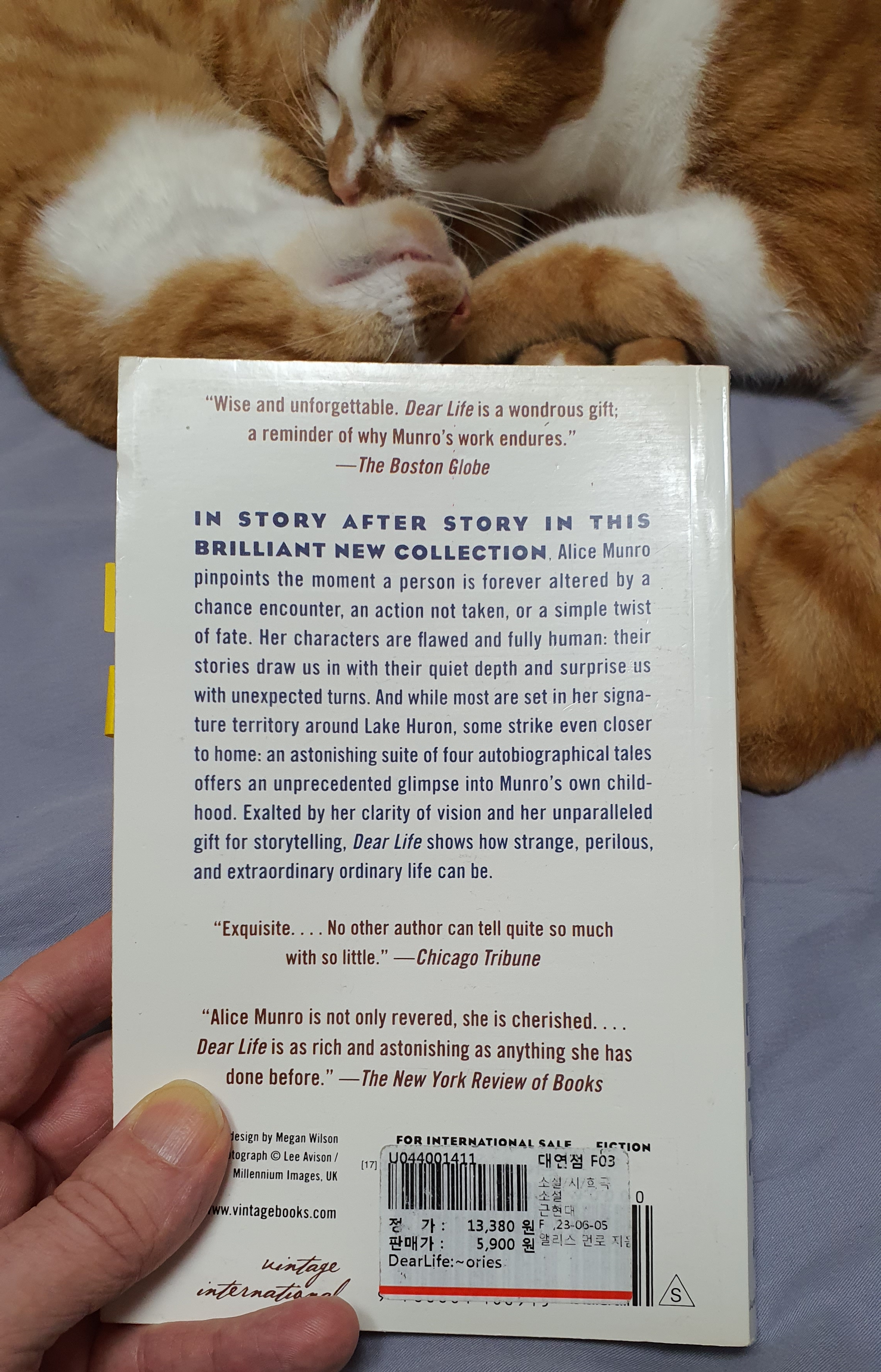
Which finally brings me to the blurb to Dear Life then.

Thank you for reading this far. And, if you have, you’ll see why I was instantly sold on it:

And here’s the specific passage from “Haven” which precipitated this whole post. For context, the main character, a girl in her late-teens, has to live with her uncle and aunt while her parents spend a year abroad. Her uncle, perhaps not so much patriarchal as deeply controlling, has a sister (Mona), a gifted classical musician, and an unusually tall woman, whom he resents for vague, largely undisclosed reasons. So much so, that the main character only learns of the very existence of her aunt by accident:

Some of my ideas had changed during the time I had been living with my aunt and uncle. For instance, I was no longer so uncritical about people like Mona. Or about Mona herself, and her music and her career. I did not believe that she was—or had been—a freak, but I could understand how some people might think so. It wasn’t just her big bones and her big white nose, and the violin and the somewhat silly way you had to hold it—it was the music itself and her devotion to it. Devotion to anything, if you were female, could make you ridiculous.

And earlier in the same story, for even more context, and the obvious parallels with the inexplicable hatred all too many obsessive middle-aged male fans of, say, American football share, with anything whatsoever teenage girls like:

“…They’ve got too much sense, your parents. Too much sense to join all these people who are fussing and clapping and carrying on like [classical music concerts are] just the wonder of the world. You know the kind of people I mean? They’re lying. A load of horse manure. All in the hope of appearing high-class. Or more likely giving in to their wives’ hope to appear high-class. Remember that when you get out in the world. Okay?”

I agreed to remember. I was not really surprised by what he was saying. A lot of people thought that way. Especially men. There was a quantity of things that men hated. Or had no use for, as they said. And that was exactly right. They had no use for it. so they hated it. Maybe it was the same way I felt about algebra—I doubted very much that I would ever find any use for it.

But I didn’t go so far as to want it wiped off the face of the earth for that reason.

Did my providing a photo of the blurb, rather than my typing it out à la the passage from Carol, foreshadow my ultimate disappointment with the book though? Or did my adorable cats distract?

Because in so many of the stories, the characters just didn’t feel fully-formed, particularly in the senses that we could predict their actions and know what they were feeling. While the promised “unexpected turns” were very real then, I tended to find them jarring. And those “quiet depths”? Only the results of our own imaginations, which we’re forced to project into the voids that are the characters’ back stories. What does—can—a reader take away then, with say a married female character having a sudden tryst with a random man, when we know so little about ther, let alone her husband or the state of their marriage?

But I realize grandiose, evocative blurbs are ripe for criticism, and easy to feel duped by. I also realize the book is critically acclaimed, that I’m in a minority of bibliophiles in disliking it, and that having to fill the blanks with one’s own imagination would actually be a draw for many people. (Before I’m pigeonholed for having supposedly blunt, direct, and altogether much too shallow tastes though, its a draw for me too actually. But I do have limits.) So my sixth and final goal is to please hear from and engage with anyone who has read Dear Life themselves. Until then, I’m forced to google for definitive analysis instead. And find vindication in my charges of overprojection, or should I say unconcious need to compensate for those voids, in the very first hit being a two-hour long video. No, not about the book, which would be reasonable. Just about the first, 28-page story:

To be fair, I haven’t watched it yet. I only have a suspicion that the length is the result of overanalysis. And I know I can go on and on myself sometimes (cough). So, I will watch, and will be happy to learn something, and/or proven wrong about my dismissal of the book.

Or not. I write today, only to connect. To seek further conversations about Dear Life, or my takes on any of the half-dozen books I’ve mentioned.

So whether rants or raves, please do get in touch. About any of them!

If you reside in South Korea, you can donate via wire transfer: Turnbull James Edward (Kookmin Bank/국민은행, 563401-01-214324)

“Asian Men…[Are] Not Allowed to be Angry and Articulate and Powerful.”

One of these Korean men is not like the others? 🤔 Estimated reading time: 4 minutes.

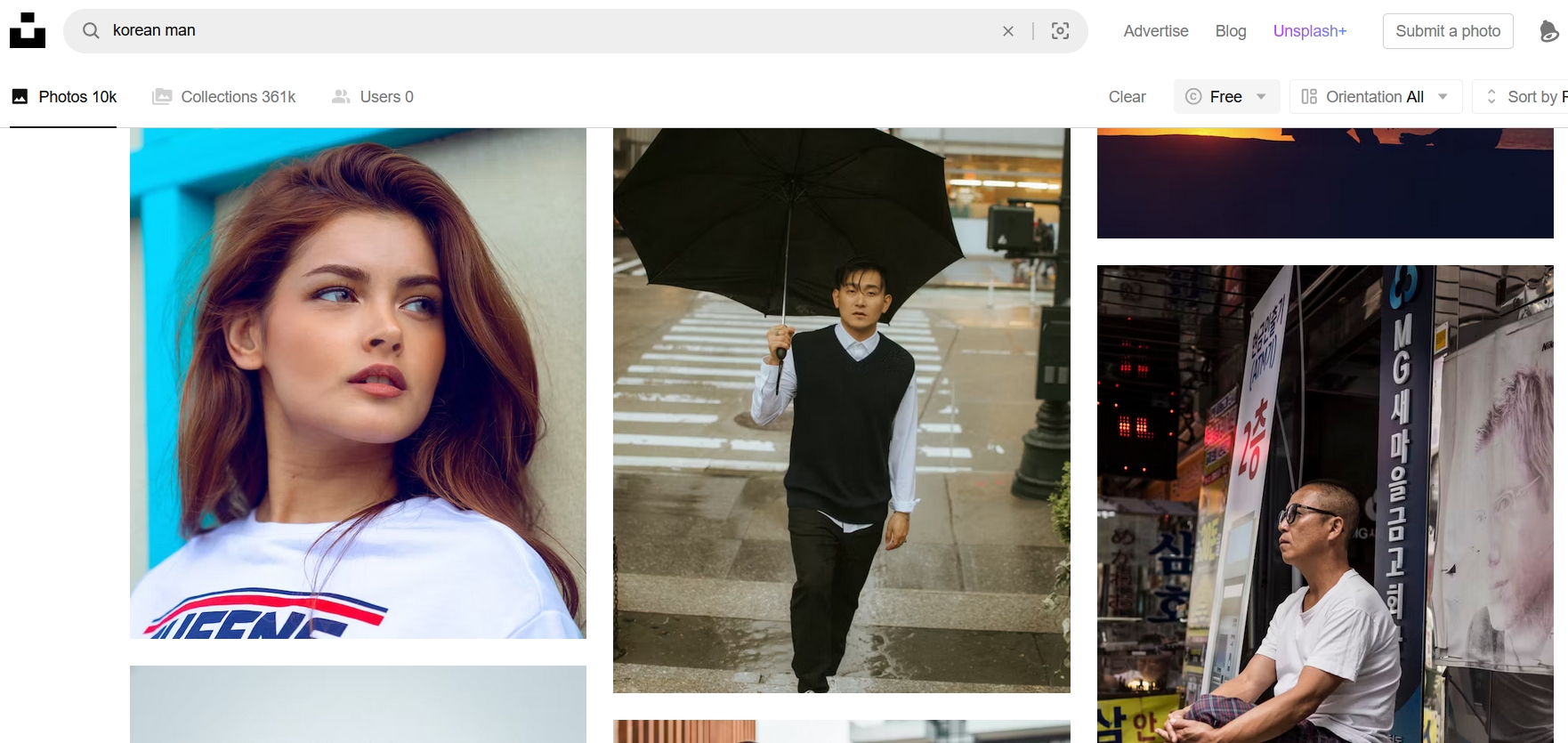
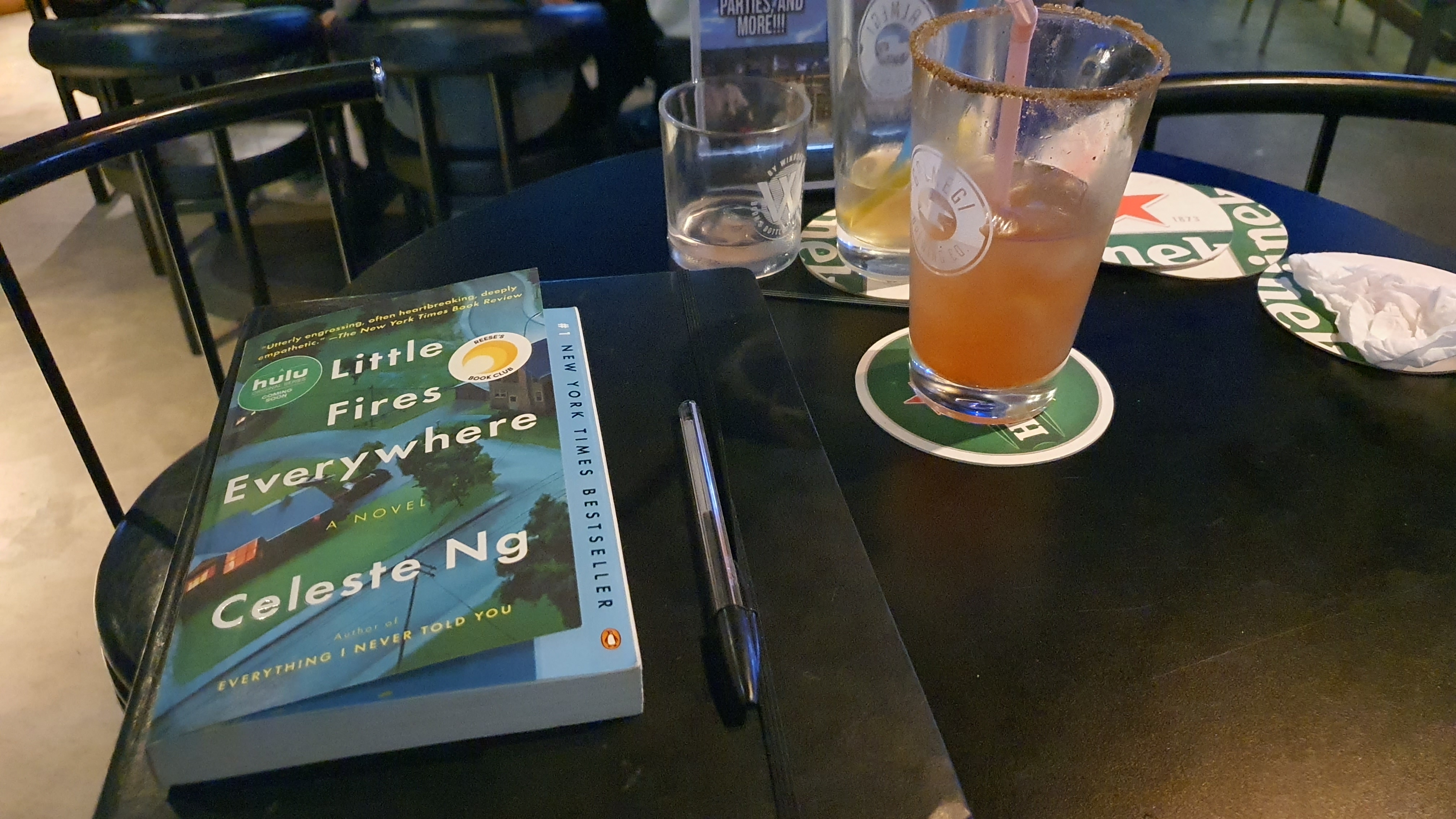
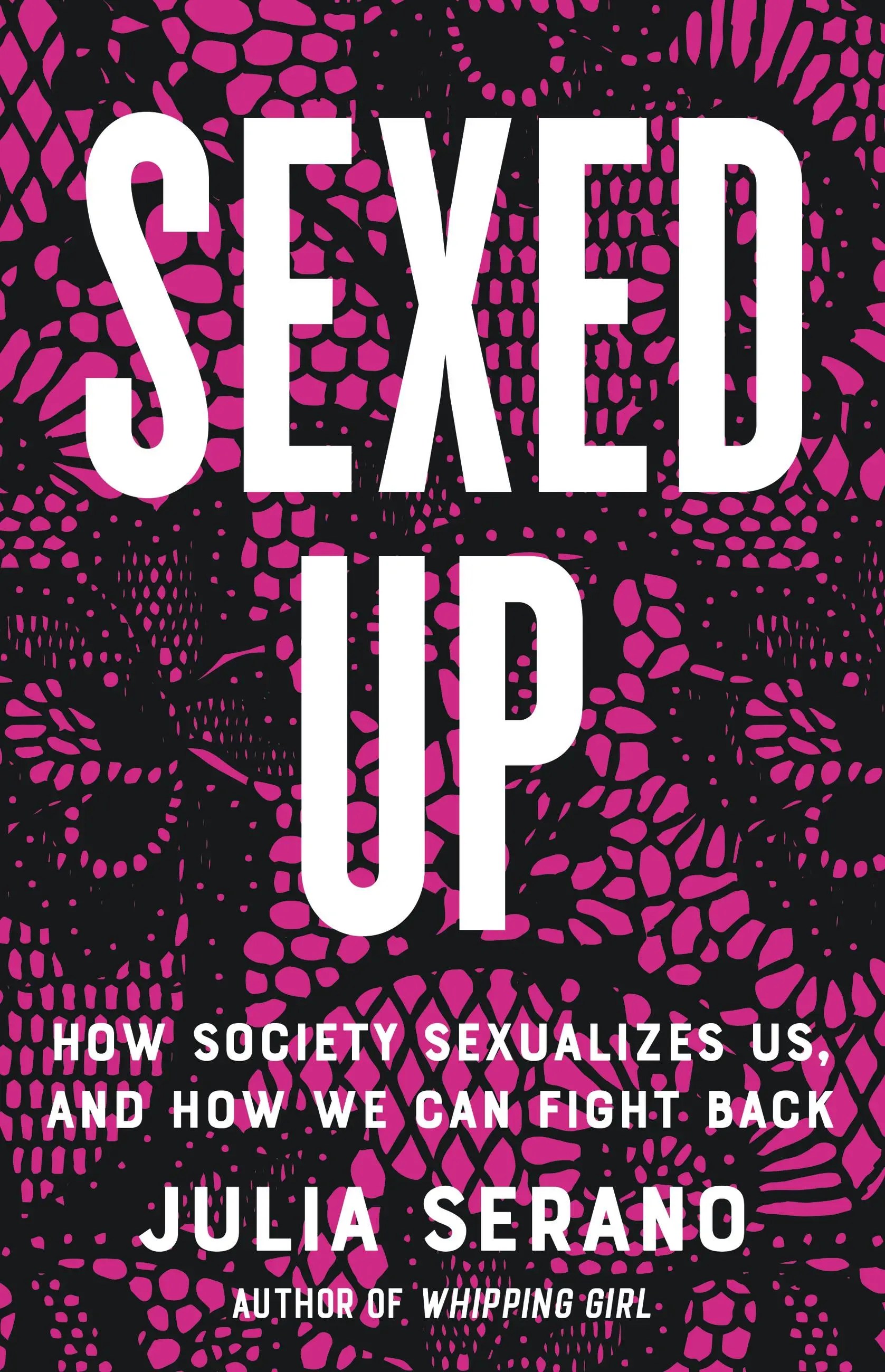
If you’re reading this, you’re probably already well aware of the emasculation and feminization of Asian men in US popular culture—which my image search for a “Korean man” at Unsplash above almost seems to be rubbing in.* But a few brief mentions towards the end of a book I just finished, Sexed Up: How Society Sexualizes Us and How We Can Fight Back by Julia Serano (2022), suddenly reminded me of a powerful passage about that from the novel Little Fires Everywhere by Celeste Ng (2017), which I want to share with you.

But first, to set the tone, here’s two of those mentions from Sexed Up, starting with (p. 153, Chapter 7):

…hypersexualized stereotypes are projected onto Asians (particularly East Asians). While there are occasional examples of Asian men being depicted as dangerous or predatory, they are more routinely depicted in an emasculated or desexualized manner, likely as a result of Asians more generally being stereotyped as “feminine” relative to other ethnicities.

And (p. 206, Chapter 9):

…within white-centric gay male dating scenes…men of color often encounter sexual exclusion, or else find themselves pigeonholed into particular sexual roles (tops, bottoms) in accordance with previously discussed racial stereotypes (Black people being perceived as “masculine” and “aggressive,” and Asian people as “feminine” and “submissive”).

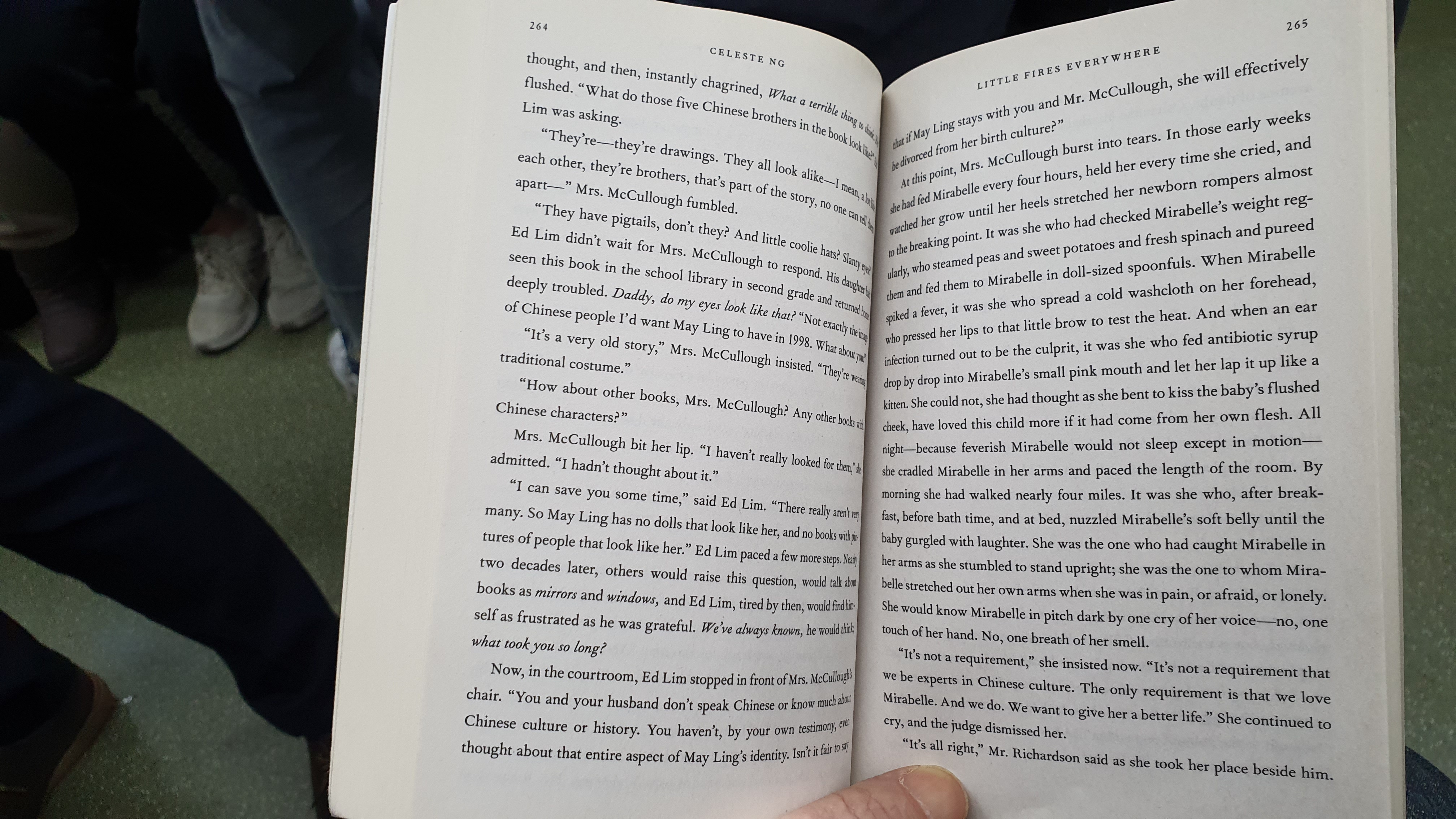
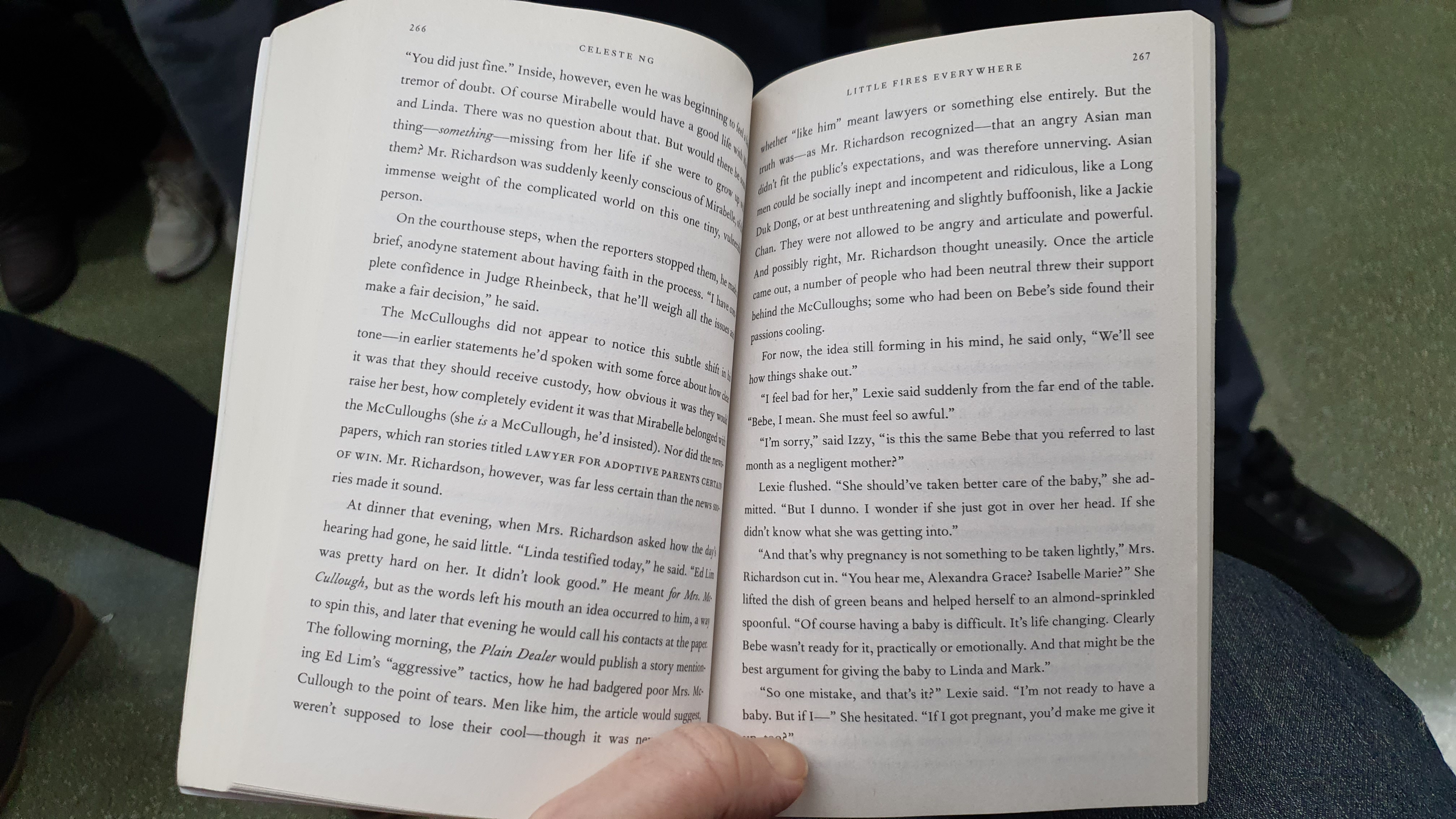
Which suddenly brought me to the titular passage from Little Fires Everywhere, at the top of page 267, Chapter 16 (in the top-right of the last picture; apologies that my camera skills weren’t the best on the subway that cold day in March!). For context, much of the novel revolves around Chinese immigrant Bebe Chow fighting to regain custody of her baby daughter that she put up for adoption when she was destitute. Mark and Linda McCullough are the girl’s adopted (Caucasian) parents, and Edward Lim, the angry, articulate, powerful Asian-American man, is Chow’s pro-bono lawyer:

I’ve since learned that the book was also made into a mini-series in 2020:

Has anyone seen it? Do you know if that scene, and/or the racist tactics used by the McCullough’s lawyer are included or conveyed somehow? Please let me know!

*(In fairness to Unsplash, the inclusion of a Caucasian woman was just random—once a search request starts running out of hits, Unsplash starts offering increasingly less related photos rather than just empty space. Personally I just find that frustrating, but I guess Unsplash judges that users may realize they could use some of those other photos instead.)

Related Posts:

If you reside in South Korea, you can donate via wire transfer: Turnbull James Edward (Kookmin Bank/국민은행, 563401-01-214324)

“The Allure of Empire: American Encounters with Asians in the Age of Transpacific Expansion and Exclusion” by Chris Suh (2023)

Estimated reading time: 2 minutes.

Via City Koh, an interesting recent addition to my TBR list—I had no idea there were such intimate connections between events in Korea and US immigration and racial policies a century ago. Enjoy!

The Allure of Empire traces how American ideas about race in the Pacific were made and remade on the imperial stage before World War II. Following the Russo-Japanese War, the United States cultivated an amicable relationship with Japan based on the belief that it was a “progressive” empire akin to its own. Even as the two nations competed for influence in Asia and clashed over immigration issues in the American West, the mutual respect for empire sustained their transpacific cooperation until Pearl Harbor, when both sides disavowed their history of collaboration and cast each other as incompatible enemies.

In recovering this lost history, Chris Suh reveals the surprising extent to which debates about Korea shaped the politics of interracial cooperation. American recognition of Japan as a suitable partner depended in part on a positive assessment of its colonial rule of Korea. It was not until news of Japan’s violent suppression of Koreans soured this perception that the exclusion of Japanese immigrants became possible in the United States. Central to these shifts in opinion was the cooperation of various Asian elites aspiring to inclusion in a “progressive” American empire. By examining how Korean, Japanese, and other nonwhite groups appealed to the United States, this book demonstrates that the imperial order sustained itself through a particular form of interracial collaboration that did not disturb the existing racial hierarchy.

Update: How could I have missed this interview of the author at New Books Network back in June??

If you reside in South Korea, you can donate via wire transfer: Turnbull James Edward (Kookmin Bank/국민은행, 563401-01-214324)

How Were Korean New Women and Modern Girls Different? DID Their Rights Have to be Put Aside for the Sake of Achieving National Independence First?

I know what vernacular modernism means, and I’m not afraid to use it.

Estimated reading time: 8 minutes. Photo by Aleisha Kalina on Unsplash.

It’s tough impressing guests at my cocktail parties these days.

By definition, all of them are already bibliophiles—why else would I invite them? But that also means some guests don’t so much as bat an eyelid at my paltry 1500+ tomes, no matter how strategically I arrange their titles.

Hitherto my main trump card, and source of cultural capital, suddenly being exposed as neither smart nor well-read has become a real source of concern. And, when I do sense a guest’s moment of realization is finally arriving, my cats, trained to pose for Instagram, can only distract them for so long.

Increasingly desperate then, I’ve started preparing for said parties by attending esoteric Zoom presentations, hoping to drop the big words I learn therein. In particular, I now have “vernacular modernism” saved in my repertoire, which I first heard of via Northern Illinois University Professor E. Taylor Atkins talking about his new book, A History of Popular Culture in Japan: From the Seventeenth Century to the Present (2nd. ed., 2022):

(From 28:10) “Into the Twentieth Century, I write about the culture of…Japanese modernism, as expressed in these two icons, the mobo and the moga, and the era of what’s called ‘Erotic Grotesque Nonsense.’ One of the arguments I make in the book, is that if you went to Japan in the 1910s, ‘20s, and ‘30s, you would recognize a lot of the forms of entertainment, because they were…at least originally, they came from other parts of the world, particularly North America and Europe. But they also looked different. Scholars call this ‘vernacular modernism.’ Where [something is] part of a global movement, but is articulated in very specific ways in specific places and for specific reasons. And so, even though these people look like flappers and dandies…and they evoke some of the same moral panic, they also were challenging very specifically Japanese norms and were fulfilling particular Japanese needs.”

I hear your thoughts, all half-dozen or so of you still reading: what grown adult only hears of vernacular modernism for the first time in their late-40s? How can I even call myself a man? Have I no shame at all??

“How could he string me along like that? I really thought he would have more books(Sigh) Men can be such pigs…”. Photo (cropped) by Killian Pham on Unsplash.

But I’ll be way ahead of any guests voicing the same, already reaching for their raincoats and umbrellas. For I’ll use a cunning trick on them I’ve learned from a local book club I recently joined.

In those meetings, which are twice a week. we read our own books silently for an hour, then have a quick bathroom break, then go around in turns quickly summarizing our books, before finally posing a related question to the other members to answer. The ensuing discussions generally last until we’re kicked out of the various coffee shops. And—you guessed it—the most interesting and lively conversations tend to spring from questions that actually have no relationship to people’s books at all. So too, given how obvious my need for constant validation is, you can also guess that a not inconsiderable amount of my free time between meetings is spent preparing the most popular questions. Then, on procuring related books I can bring along to feign they just spontaneously came to me from my casual, cursory hour’s reading.

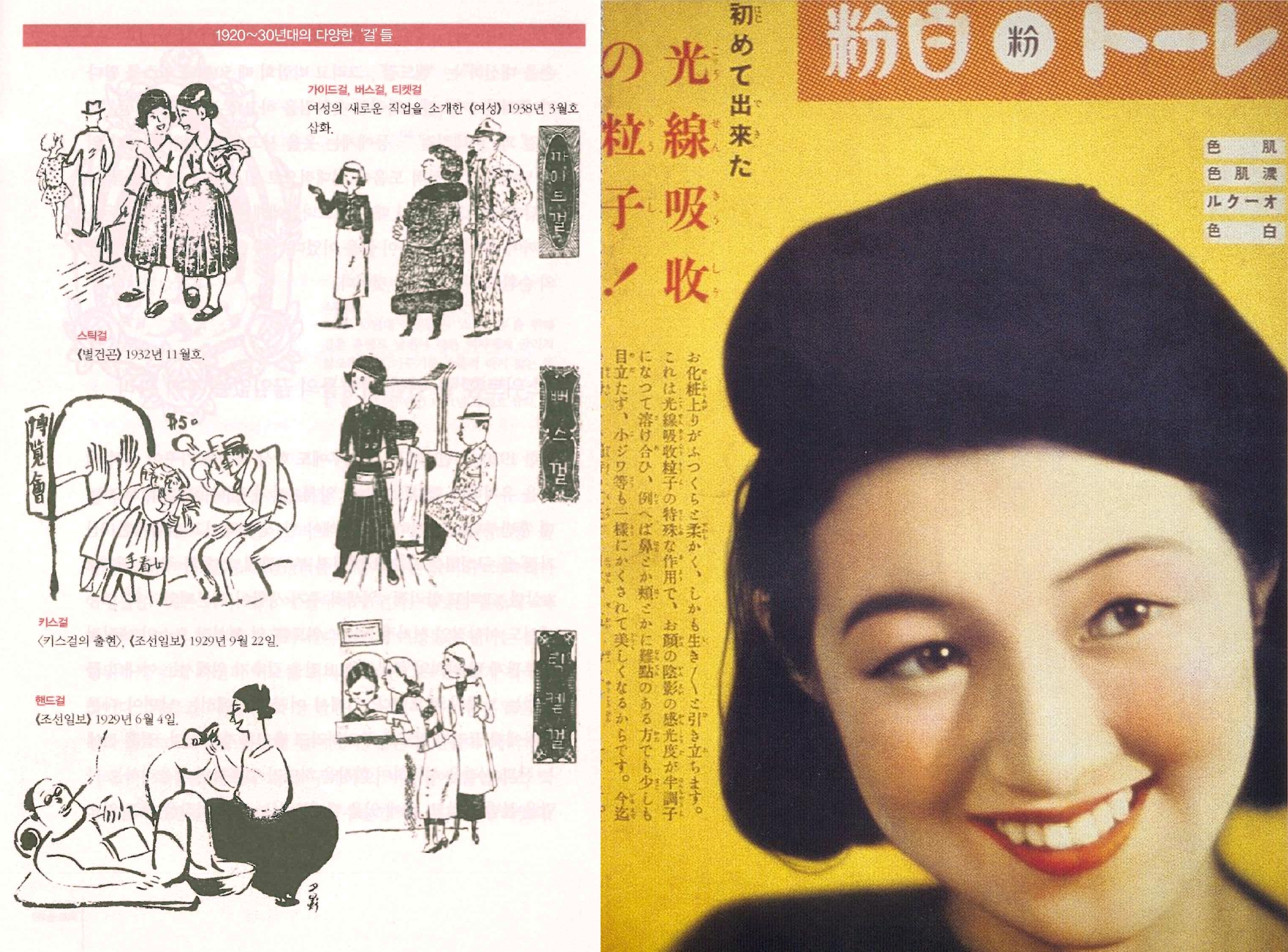
So, I will distract and impress my more discerning cocktail party guests not with big words, but by posing the first titular question: How were Korean new women and modern girls different…to their equivalents in other countries? Other than so many of their new fashions, beauty products, consumer goods, new education and employment opportunities, new beliefs about family life, sexuality, and women’s rights, being so closely associated with, forced by, enabled through, and/or utterly tainted by the Japanese colonial regime that is?

“Interesting questions James,” my guests will reply, stumped. “We misjudged you. Let’s bring your cats back for some more cute photos, then brainstorm some ideas. Oh, you already have a whiteboard and markers set up in the next room you say?”

Yes, I’m vastly overgeneralizing. But I know you too are intrigued by the prospect of learning the extent of the similarities and differences between Korean women and their Taiwanese and Manchurian counterparts in the 1920s and ’30s, let alone between those living in other colonial regimes. Indeed, the party will only just be getting started.

Left: “The various types of ‘girls’ in the 1920s to 1930s”; scan, 예쁜 여자 만들기, p. 245. Right: Actor Hideko Takamine, Japanese White Powder Foundation advertisement, 1930s; via The Flapper Girl.

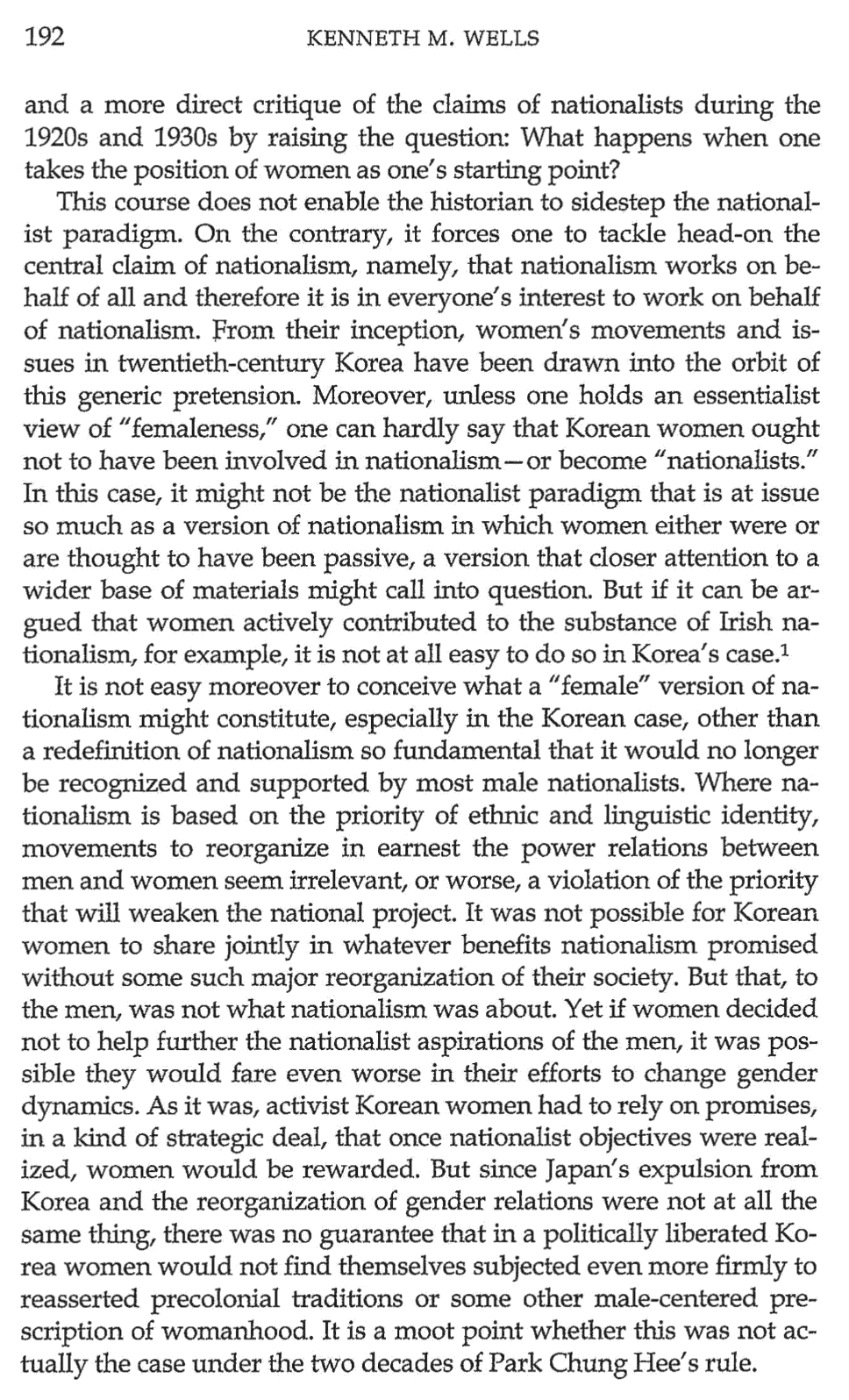
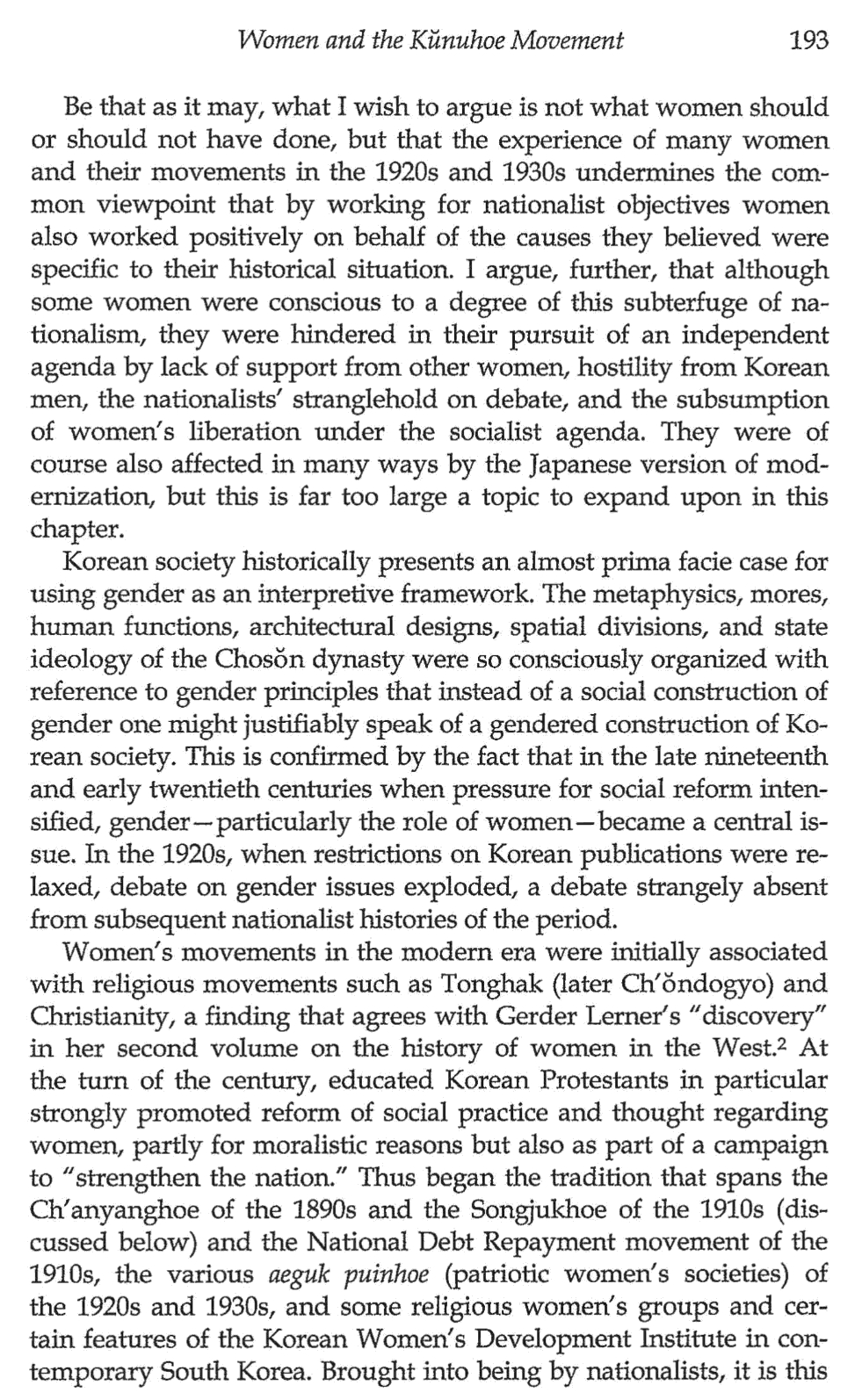
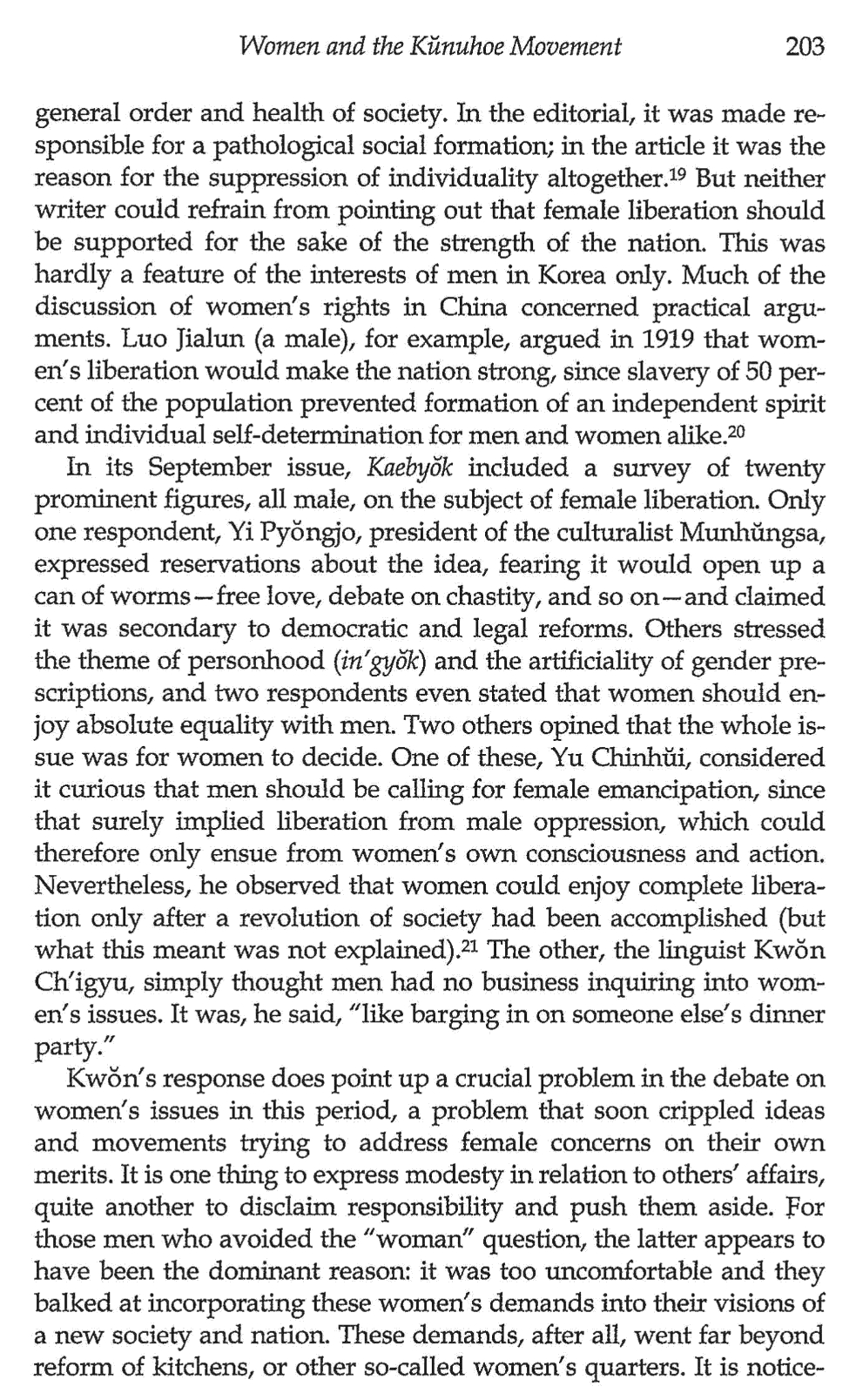
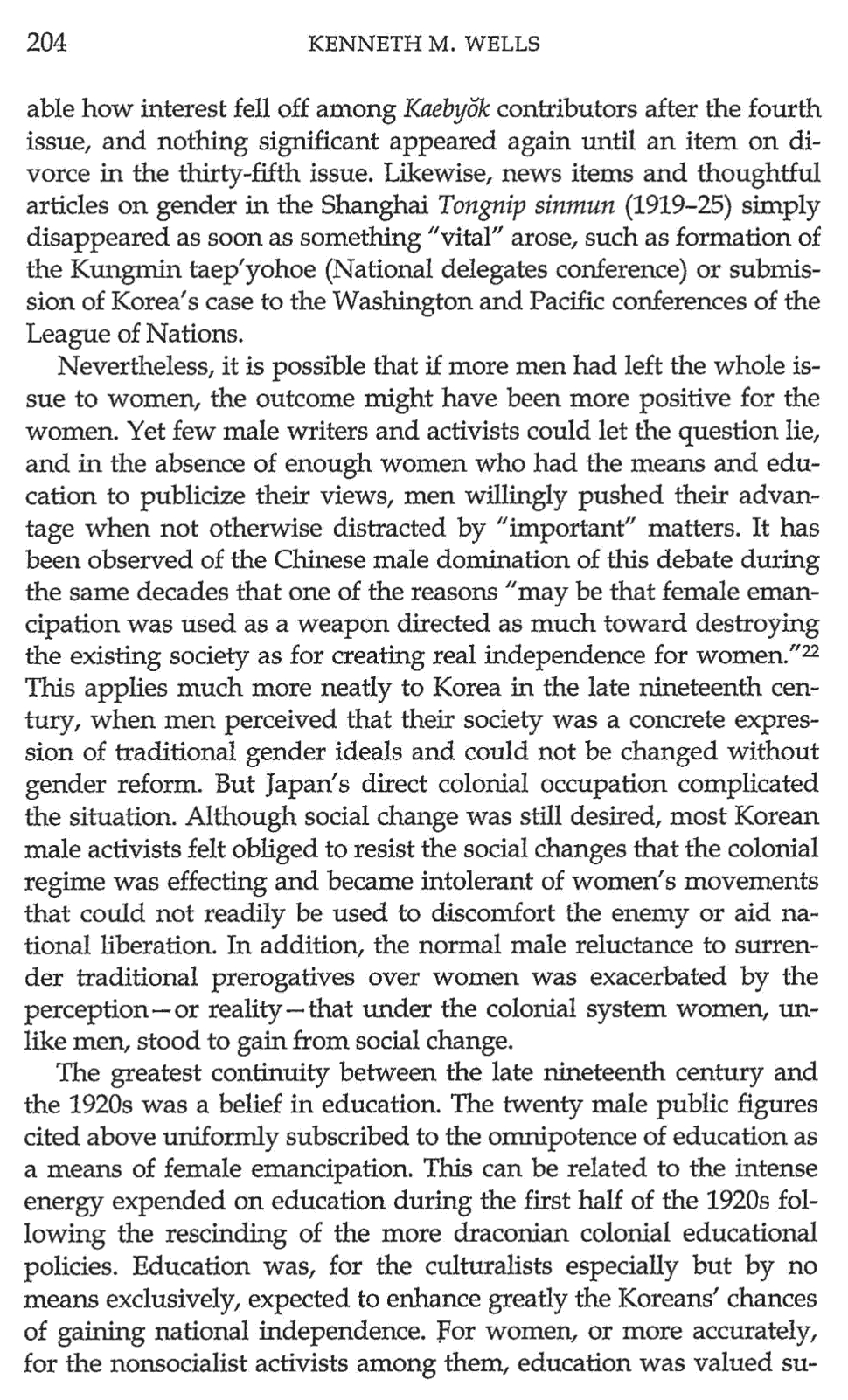
Unfortunately, my desire to learn from my guests’ answers will be so genuine, that I’ll quickly forget all my pretensions to aloofness and sophistication. So, when we move on to the next question, I’ll be quite unable to restrain my joy at recently (re)discovering an exceptional background source, and wanting to repay by sharing. Namely, albeit again vastly overgeneralizing, one that elaborates on how Korean women’s rights were put on the backburner in the first half of the Twentieth Century for the sake of focusing on liberation from the Japanese, then in the second half for the sake of democratization—which has basically informed just about everything I’ve ever written about Korean feminism here for the last 16 years. That is, Colonial Modernity in Korea, edited by Gi-Wook Shin and Michael Robinson (1999), and more specifically Chapter 7. “The Price of Legitimacy: Women and the Kunuhoe Movement, 1927–1931” by Kenneth M. Wells. Fortunately, much of the chapter is available via Google Books, including the following four pages (192-193, and 203-204) that will surely persuade you to buy your own copy:

Frankly, I’m embarrassed that this was a lengthy rediscoveryrather than immediately hitting the books the moment my curiosity was piqued by Atkins’s lecture, all I had to do was consult my own courses. I suspect it is not my—the—original source for that overarching narrative about Korean feminism either. More likely, that would have been a chapter in Under Construction: The Gendering of Modernity, Class, and Consumption in the Republic of Korea, edited by Laurel Kendall (2002) which I read first, and would have easily been the most relevant and useful book on Korean feminism available until Flowers of Fire: The Inside Story of South Korea’s Feminist Movement and What It Means for Women’s Rights Worldwide by Hawon Jung that came out earlier this year.

But only embarrassed by myself to myself, because clearly I’m already way past being worried about my reputation among you, my dear readers. And glad to have had the opportunity to recommend a book too you, or more generally to have shared something useful and/or interesting. Because no matter how long I sometimes take to get there, that, after all, is always the point.

“Pretty weird guy, but…yeah, that does sound like a good book. I must order it post haste.” Photo by Brooke Cagle on Unsplash.

On which note, so what if, technically speaking, I haven’t actually had a single guest in my home since moving in six months ago? Or that my toasting my cats with Pepsi lime zero and cheap whiskey every other evening for, say, not vomiting over my meager possessions that day, doesn’t exactly qualify as my hosting “lavish cocktail parties” either? These are mere minutiae in the pursuit of great art. Or, indeed, of great books!

Related Posts:

If you reside in South Korea, you can donate via wire transfer: Turnbull James Edward (Kookmin Bank/국민은행, 563401-01-214324)

Tidy Desk, Tidy Mind: Smug Cliché about the Power of Decluttering Proves to be True

Hey, I’m annoyed too. But here’s hoping how I got over my writer’s block inspires your own breakthroughs!

Estimated reading time: 4 minutes. Photo by Wei Ding on Unsplash.

So, we all know real writers leave piles of books and papers lying around their homes or workspaces, right?

After all, how else to impress real women?

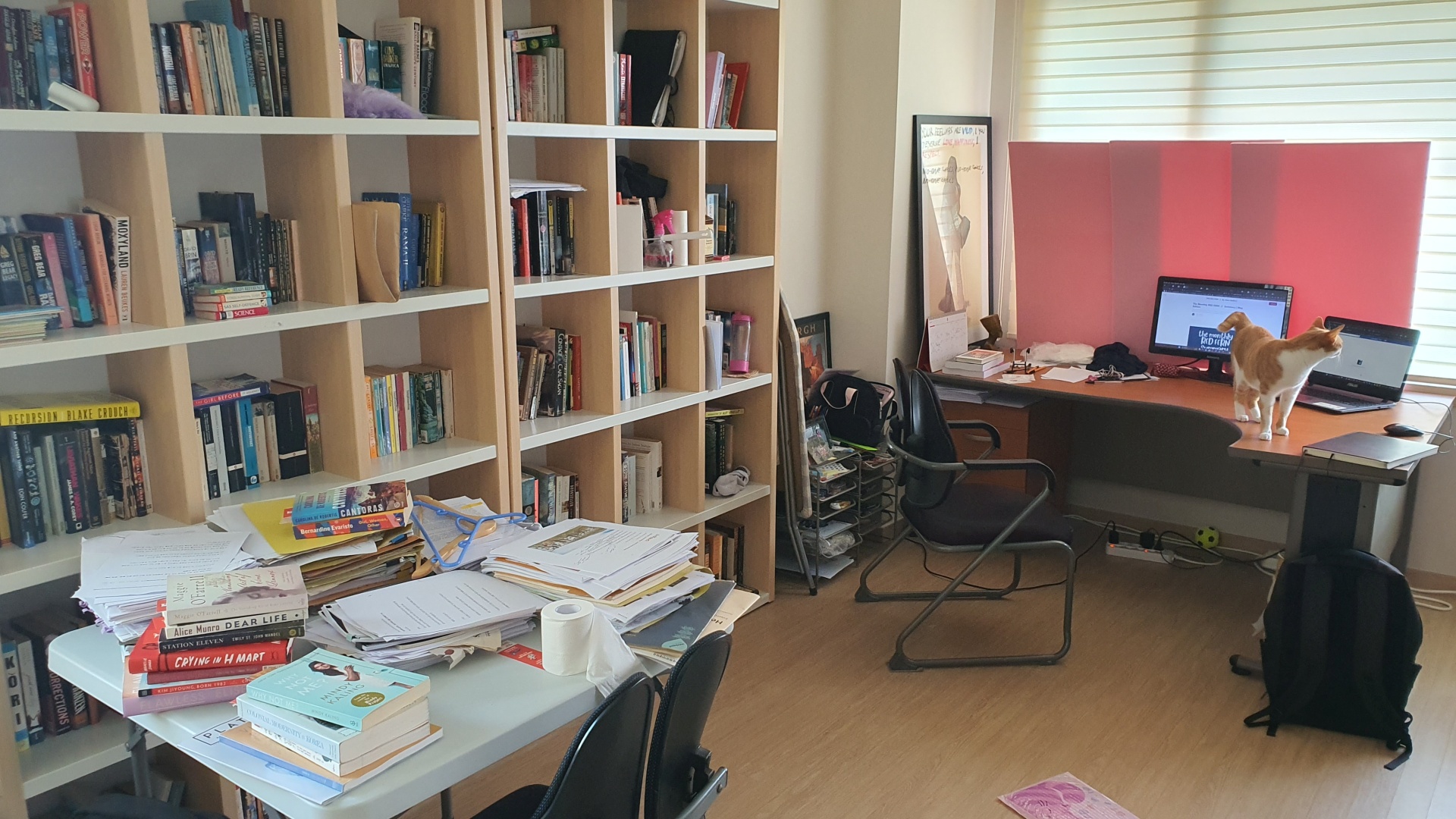
When I tried that however, there’d be a lot of vomiting involved. By my cats on my books and papers I mean. Which meant they had to go on my “temporary,” set-up and put-away as you need it “writing table” instead, which had limited space.

June 13, 2023

It wasn’t enough. Instead of encouraging resolution of the epiphanies and writing ideas contained therein, old piles would simply get pushed aside for new piles as inspiration stuck me. Then pushed under new piles once I had even more new ideas, destined to be forgotten.

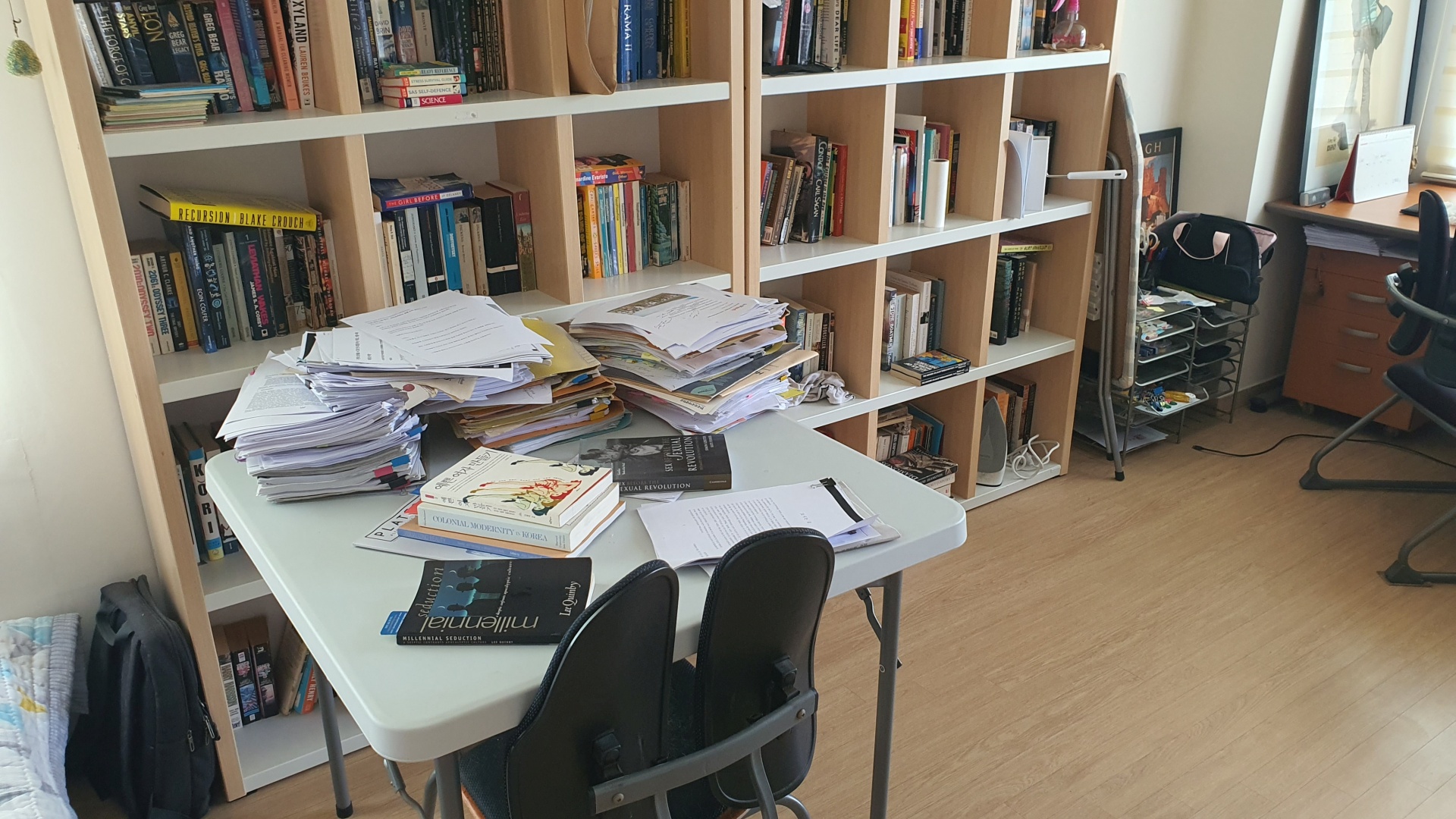
July 6, 2023.

Eventually, the prospect of clearing my literal physical and mental space just became overwhelming. Some of those piles you see above had even endured my divorce, somehow emerging unscathed on my table—the table—from one apartment to the next. (Joking not joking.)

If I couldn’t follow through on any one writing idea though, then I couldn’t come up with any new ones either, lest the books and papers collapse and crush me under their weight. Which, in a sense, happened anyway: having a constant physical reminder that I was unable to ever follow through on anything, was like an albatross around my neck, robbing me of all passion and motivation. Love continued to forsake me. As did my friends, embarrassed at my naivete when choosing my bookcases.

I consoled myself in drink.

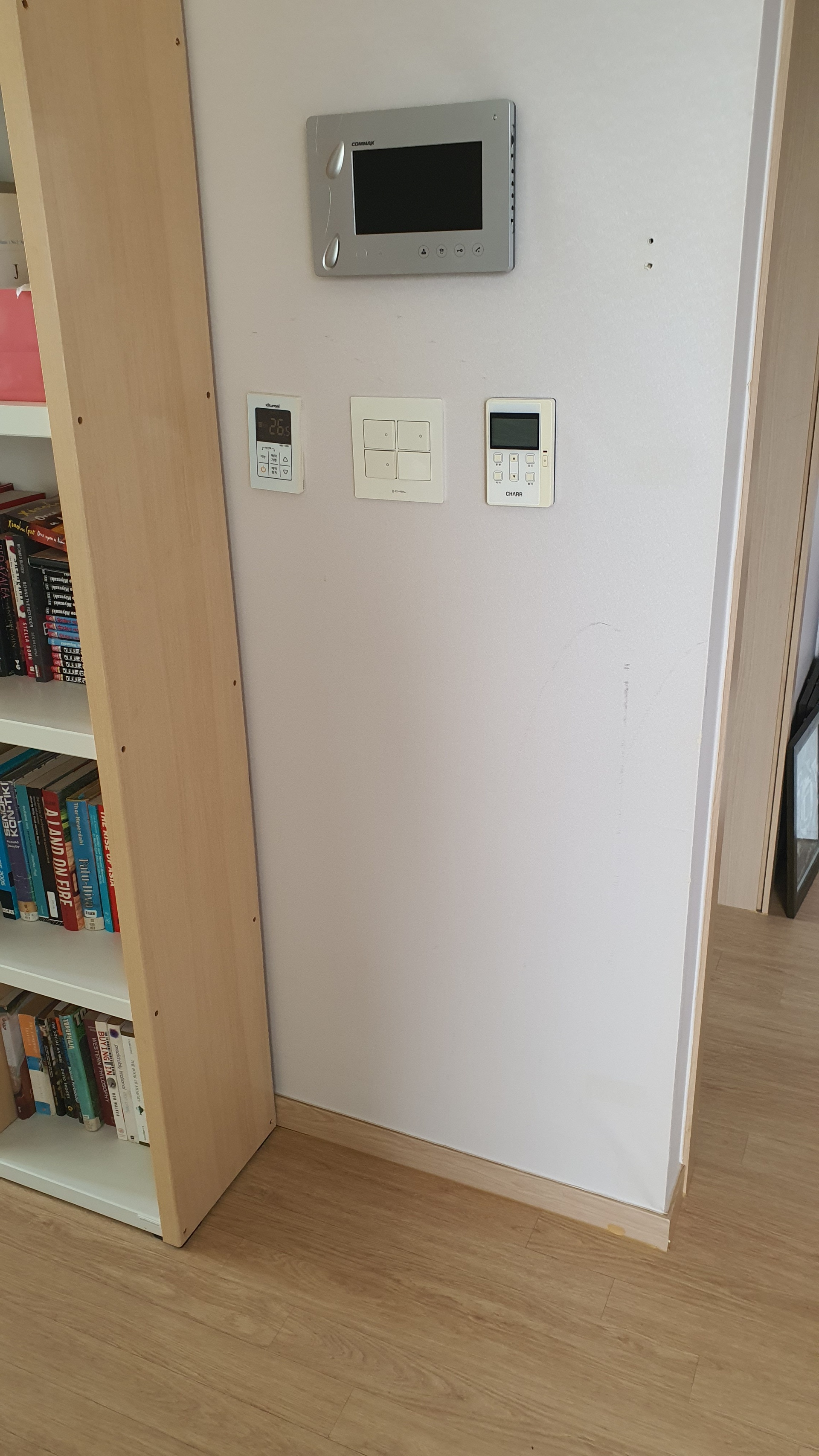
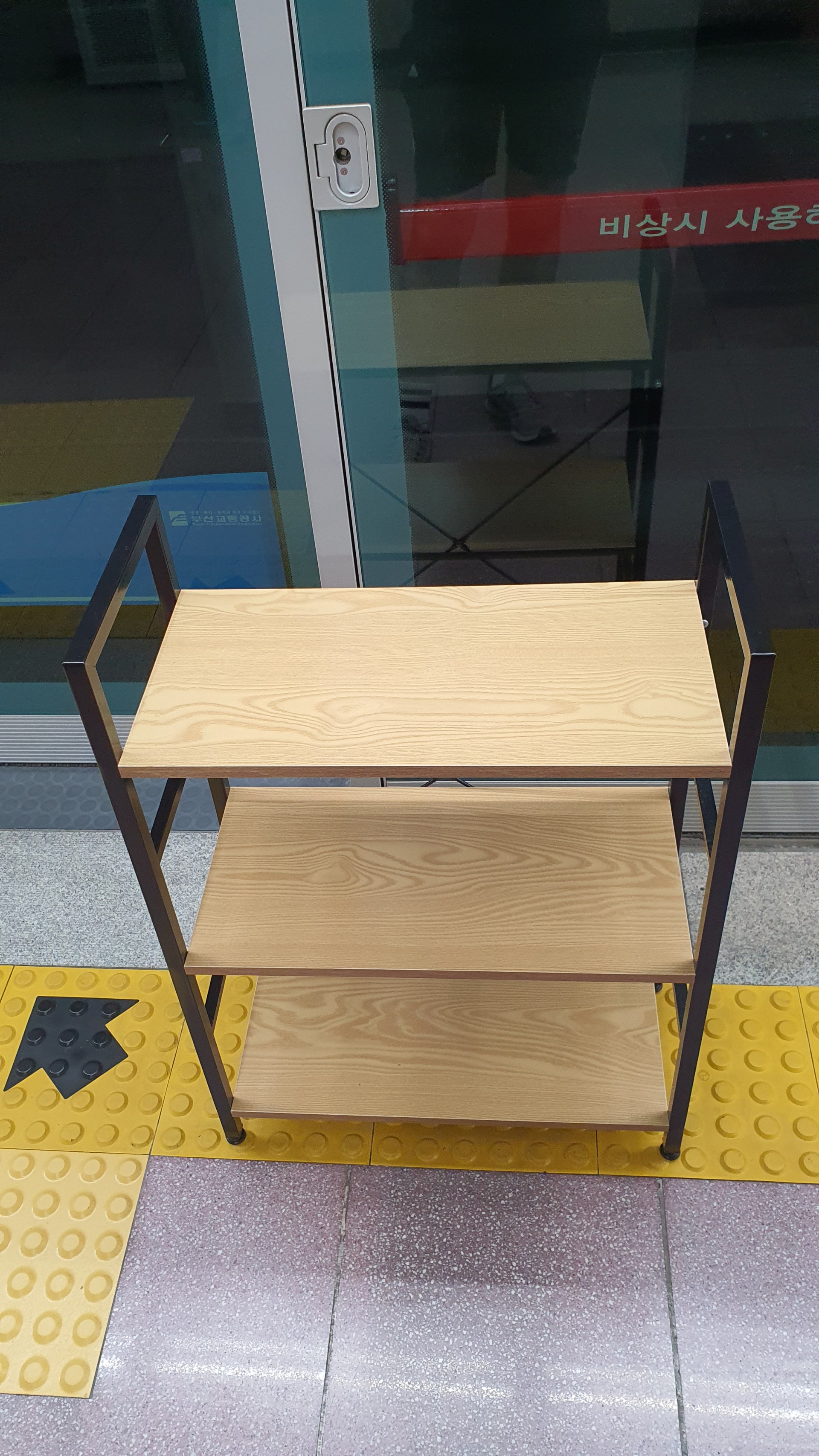
But then one evening, looking up from my couch in a drunken fog, I made out an unused space through the haze. And then a Facebook alert about someone in the neighborhood selling furniture brought sudden, rare clarity…

From that point on, things proceeded quickly:

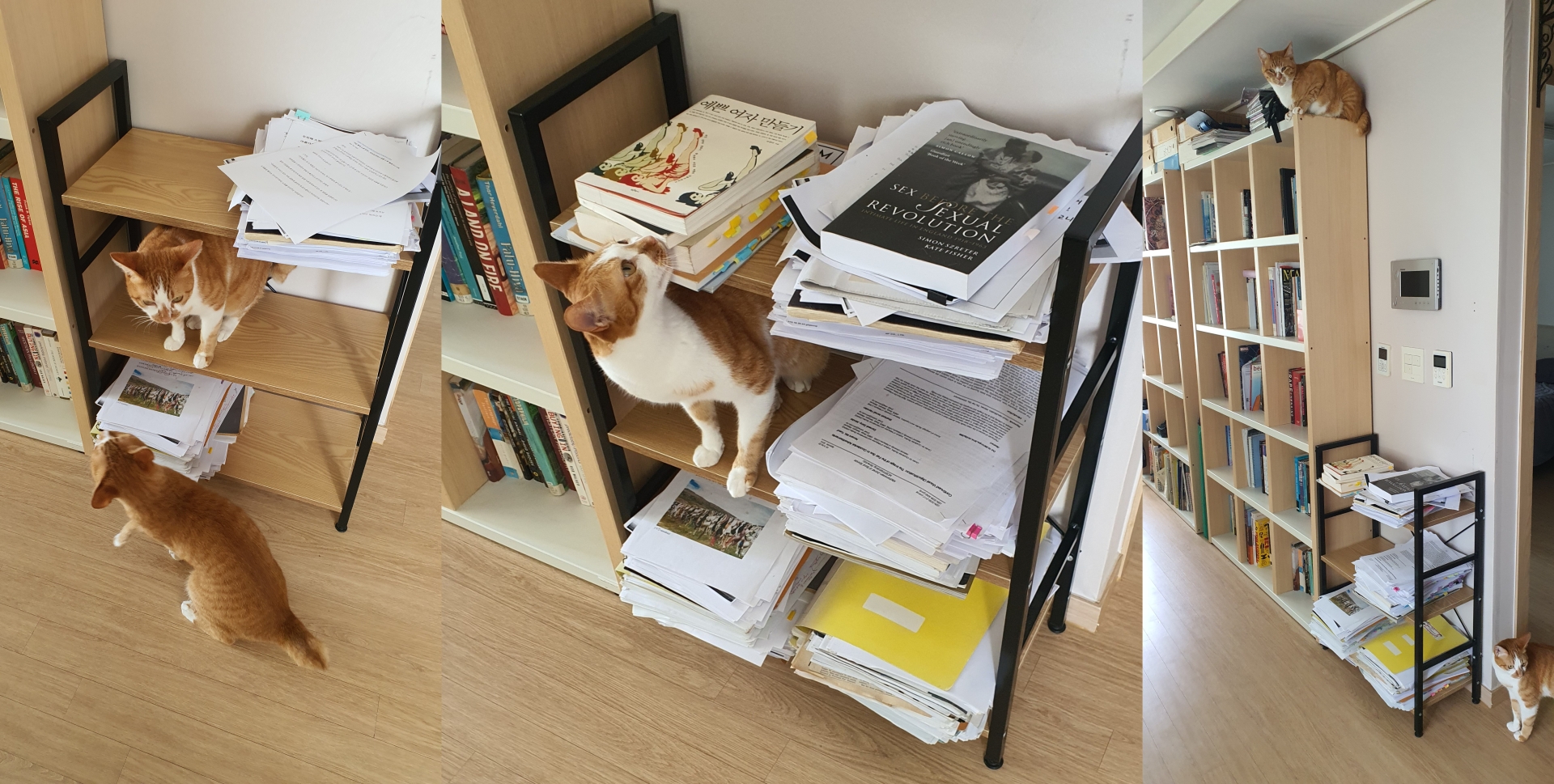
To secure the bookcase, I had to reserve it before getting approval from my roommates. Fortunately though, that would soon be granted after arrival:

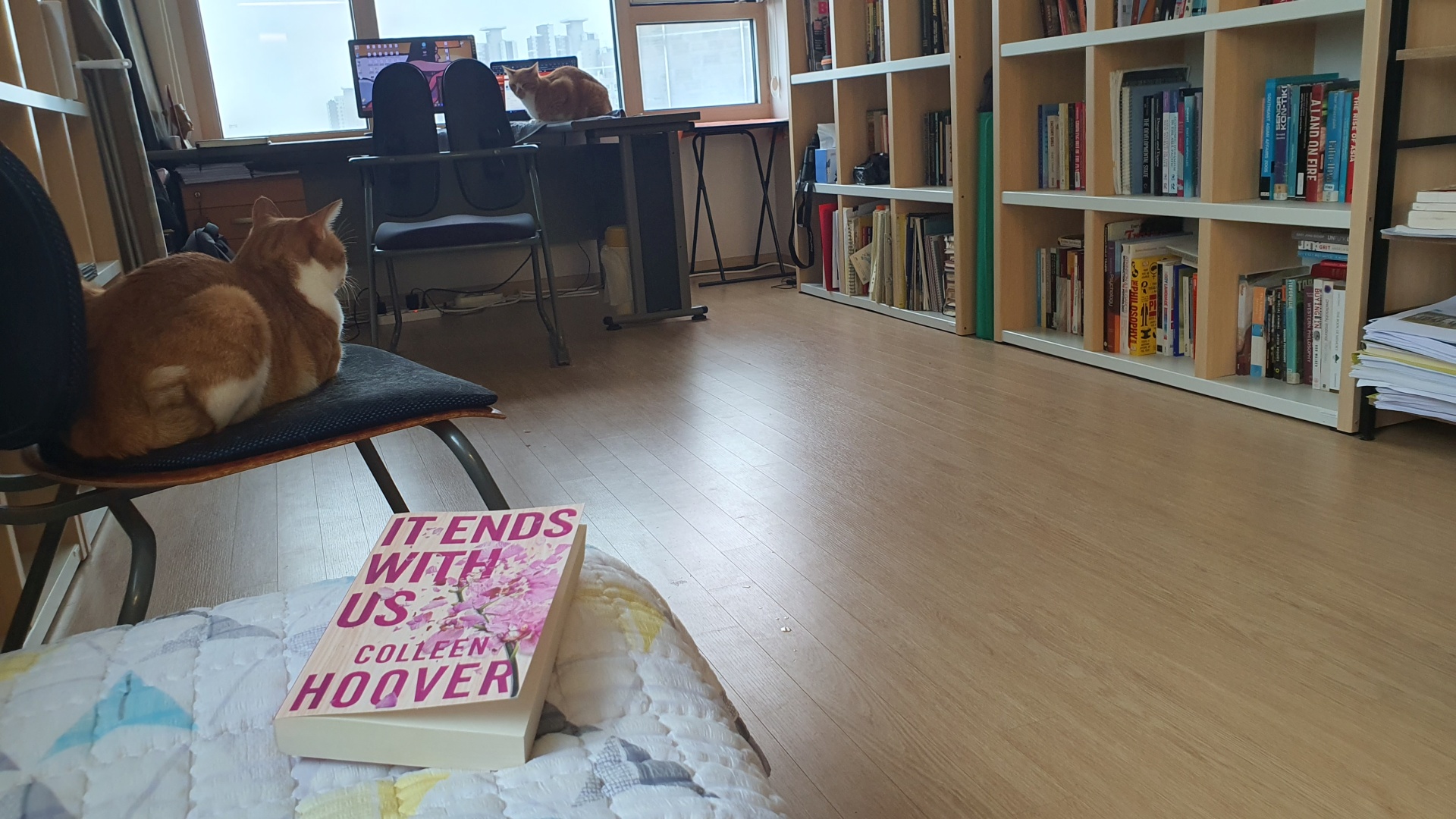
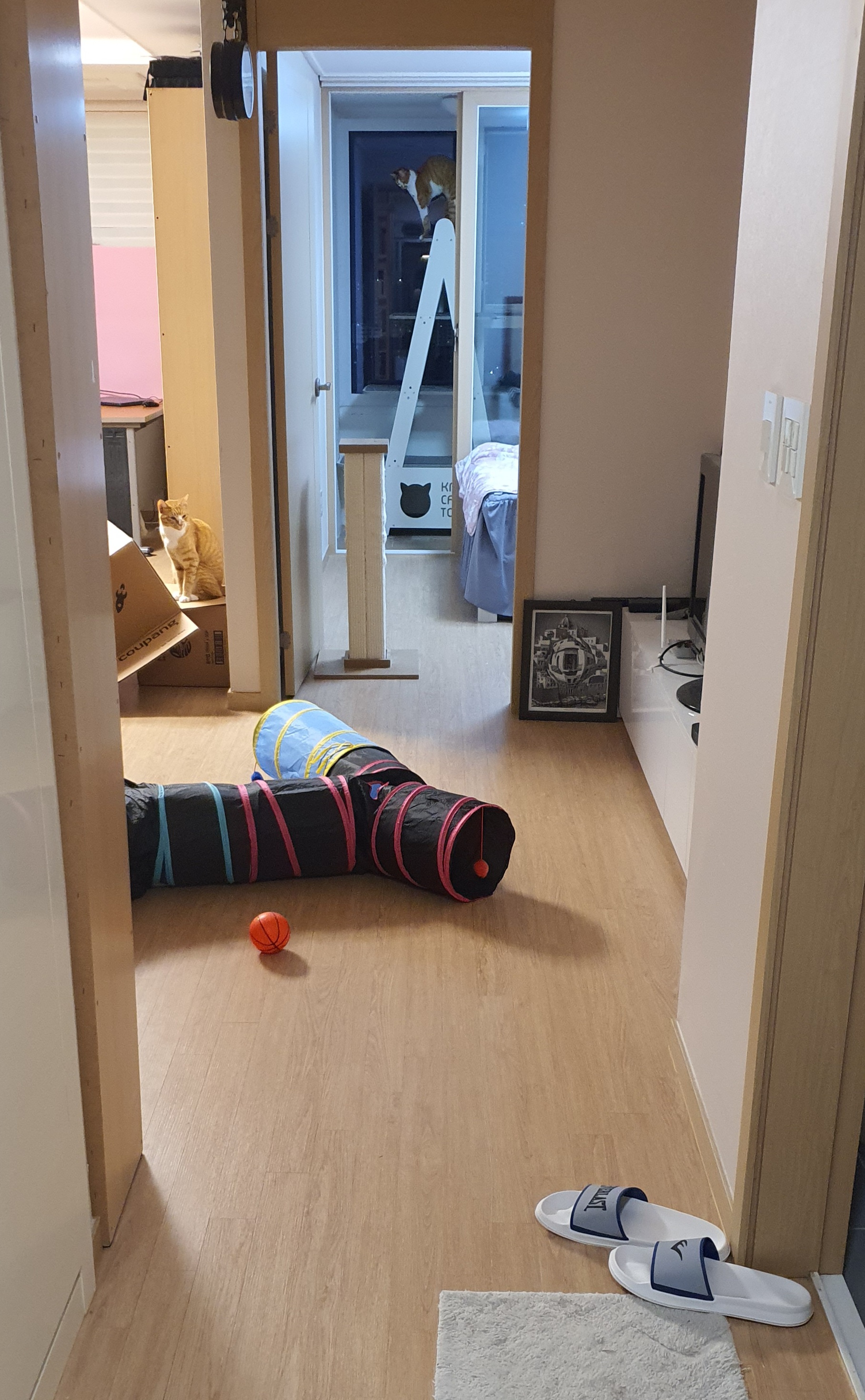
I made other changes around the apartment too. From now on, visitors to my humble abode will no longer think they’re entering a cat cafe:

Rather, they will be greeted by at least one guard, to whom they must submit themselves for inspection. Once they have been given approval though, and allowed to proceed, they’ll immediately be subliminally influenced by whatever books I’ve placed on my new bookcase for their arrival…

Don’t worry—I’m not a total monster. I still regularly leave the cat tunnels out for the guards, especially late at night when regular visiting hours are over. I leave the (now clear) temporary table out for them to jump on too, and they appreciate having more room to jump on and off it.

But in all seriousness…I have been serious throughout this post. I really have been in quite a funk these past few months, and the act of clearing the table, and sorting and moving those piles really does feel like I’m finally emerging out of it. I haven’t even had a drink since that day either.

So, if simply buying a small bookcase proves to be such a catalyst for personal change, I’ll happily take it.

And I’m not ashamed I needed this crutch at all. Rather, I’m sharing so that, if it feels like some things are holding you back in life too, you may be more inspired to pinpoint what they are, and less embarrassed to act on them. However simple and mundane they may seem to other people.

Good luck!

If you reside in South Korea, you can donate via wire transfer: Turnbull James Edward (Kookmin Bank/국민은행, 563401-01-214324)

Do We See Someone as a Man or Woman Before We See Them as a Person?

Knowingly or unknowingly, how do you think you react differently to people depending on their sex?

Estimated reading time: 5 minutes. Photo by leah hetteberg on Unsplash.

“When you’re communicating with someone, but don’t know if they’re a man or woman, you feel a little guarded. You can’t help it. Until you can resolve their identity, your conversation is stilted and awkward, because you just can’t be yourself. ”

Or something like that—I can’t remember when and where I read it, but it resonated with my experience of chatrooms in the early days of the internet, or phone calls before Caller ID. Over the next decade, as realistic-sounding, AI-based chatbots become increasingly common in customer service roles, along with all their inherent gender biases and stereotypes, I expect younger generations will also experience the same moments of confusion and hesitation I did.

Or will they? Is it just me that sees sex first, and reacts to that? Do moments of ambiguity mean I actually behave and talk fundamentally differently around men and women, once their identity is resolved? I’ve often wondered. So, I was interested recently when I was listening to a New Books Network interview of Julia Serano, a transsexual woman, about her, well, new book, Sexed Up: How Society Sexualizes Us and How We Can Fight Back (2022), and learned that it was her experience that people reacted to their perception of her sex before anything else. Listen from 15:40 to see how, or read below:

“When I was about to begin my [male to female] transition, I really didn’t know what personally to expect, other than I figured there’d be this period of time where I’d be in, like, a gender limbo, when people wouldn’t be able to figure out if I was a boy or girl. And I had a couple of instances like that, but much to my surprise, almost always people would make the determination that I was male or female [for themselves]. It’s just that their determinations often differed from other people in the exact same room. So I describe a lot of anecdotes I had, including…having a conversation, for instance, where someone who knew me as male before I transitioned and wasn’t aware that I was transitioning, introduced me to…another man, who—he was very flirty with me. And I could tell, because of what I was going through at the time, that he was reading me as female, but, like, my friend didn’t pick up on that…because from my friend’s perspective, we all obviously knew that we were [just] three guys talking together. And there’d be a lot of situations like that where people would read me as one way or the other, and they’d really believe whatever their initial determination was, that’s what they believed and that’s how they viewed me, and it was really hard a lot of times to convince people in the other direction.”

“….The conclusion I came out of [those experiences], is that first and foremost, we don’t really see people—we see men and women. And that’s kind of how we’re socialized to see the world, and becomes really unconscious…and, you know, the fact that we automatically categorize people as male or female, obviously this has implications for trans people, and for non-binary people—it creates a lot of obstacles in our lives. But more generally, if we categorize people [like this], it really shapes a lot of the assumptions that we place on people, and it results in us filtering out other aspects of their person…like once I transitioned, there were aspects of my person that people couldn’t really see any more, that they used to react to.”

The title of the book, not to mention its description, is actually a little misleading—the book is no prudish, anti-sex tirade. Instead, it’s more her observations and thoughts about sexualization, objectifiction, sex and gender roles, socialization, pornography, and so on based on her experiences before and after transitioning. In other words, fascinating, and more than enough to decide I couldn’t wait for a paperback version to come out.

As for my own answers to the various questions I’ve raised? Actually I completely disagree with Serano that we’re socialized to see people’s sexes first. Women, in particular, who didn’t immediately register someone as a man, and weren’t more wary of the potential danger a man represented, were more likely to be a victim of violence, and less likely to pass on their genes. Also, with the exception of asexuals, our well-documented, subconscious reactions to other’s heights, signs of youth, indicators of wealth, and other attractiveness criteria demonstrate that most people can’t help but immediately consider others as potential mates or rivals, even if we don’t consciously frame them as such.

Or, very, very consciously once suddenly becoming single again, at a frequency that surprises even myself…

Photo by Tomas Robertson on Unsplash.

But I stress that to acknowledge these gut reactions, usually so short-lived to even notice them, doesn’t mean they aren’t easily overcome. Nor should they ever provide excuses for boorish behavior. For instance, I’m acutely aware that many men dominate women’s personal spaces, whether through being unaware or through deliberately taking advantage of their male privilege to do so. So, when I’m around women, I constantly try to check myself from manspreading, and so on. Also, befriending mostly women for most of my adult life, because of reasons, I’ve often questioned if I talked and behaved differently around them, and if there were subjects that I wouldn’t broach with them that I would with men, and vice-versa?

Recently starting to make more male friends again because I suddenly have a social life now, I’m leaning towards that I actually treat everyone pretty much the same. Which is to say I don’t actually have ‘friends’ so much as “like-minded folks [that] fill very specific needs,” at varying levels of closeness, with whom their sex is only one of many factors influencing how I behave around them and what we talk about. And which in my experience is much less important than nationality—at least amongst Westerners.

So, although I haven’t met any yet, I don’t think I would feel compelled to ‘assign’ any openly genderfluid or non-binary people at all. And, to those I am fortunate to meet, I can only apologize in advance for not lacking the restraint to want to immediately ask you all these questions too. Including the most important one:

Was it necessary for Jane Austen to avoid conversations between men in her novels? Well??

Recommended Related Books:

Related Posts:

If you reside in South Korea, you can donate via wire transfer: Turnbull James Edward (Kookmin Bank/국민은행, 563401-01-214324)

Unpopular Opinion: “Kim Jiyoung: Born 1982” Didn’t Hit Hard Enough

Kim Jiyoung: Born 1982 scores points for its raising of numerous feminist issues, but its treatment of them is frequently quite superficial. Here’s how one scene should have been handled differently, shattering stereotypes and suggesting solutions in the process.

Estimated reading time: 8 minutes. Photo by Gabe Pierce on Unsplash.

I didn’t like the novel Kim Jiyoung: Born 1982 much at all. There, I said it.

It’s basically a Korean Feminism 101 compendium, which means it didn’t really teach me anything new. Its constant shoehorning of facts and statistics into the narrative ruined it as a work of fiction too. But the biggest flaw was Jiyoung’s constant, infuriating lack of agency, with its flipside that author Cho Nam-joo didn’t really offer any solutions to the numerous hardships she faces either.

That doesn’t mean those hardships aren’t well-described. Like I said in my earlier review, I don’t think it’s a bad book at all. If you personally learned a great deal from it, and/or laughed, cried, and seethed in anger alongside Jiyoung, then I’m hardly going to claim that my own disappointment and frustration mean I’m somehow a much better, more knowledgeable feminist than you.

But Jiyoung’s lack of agency, and Cho’s lack of solutions, are absolutely a hill I’m prepared to die on. One scene in the film set in a subway toilet, albeit not mentioned in the book, illustrates both very well.

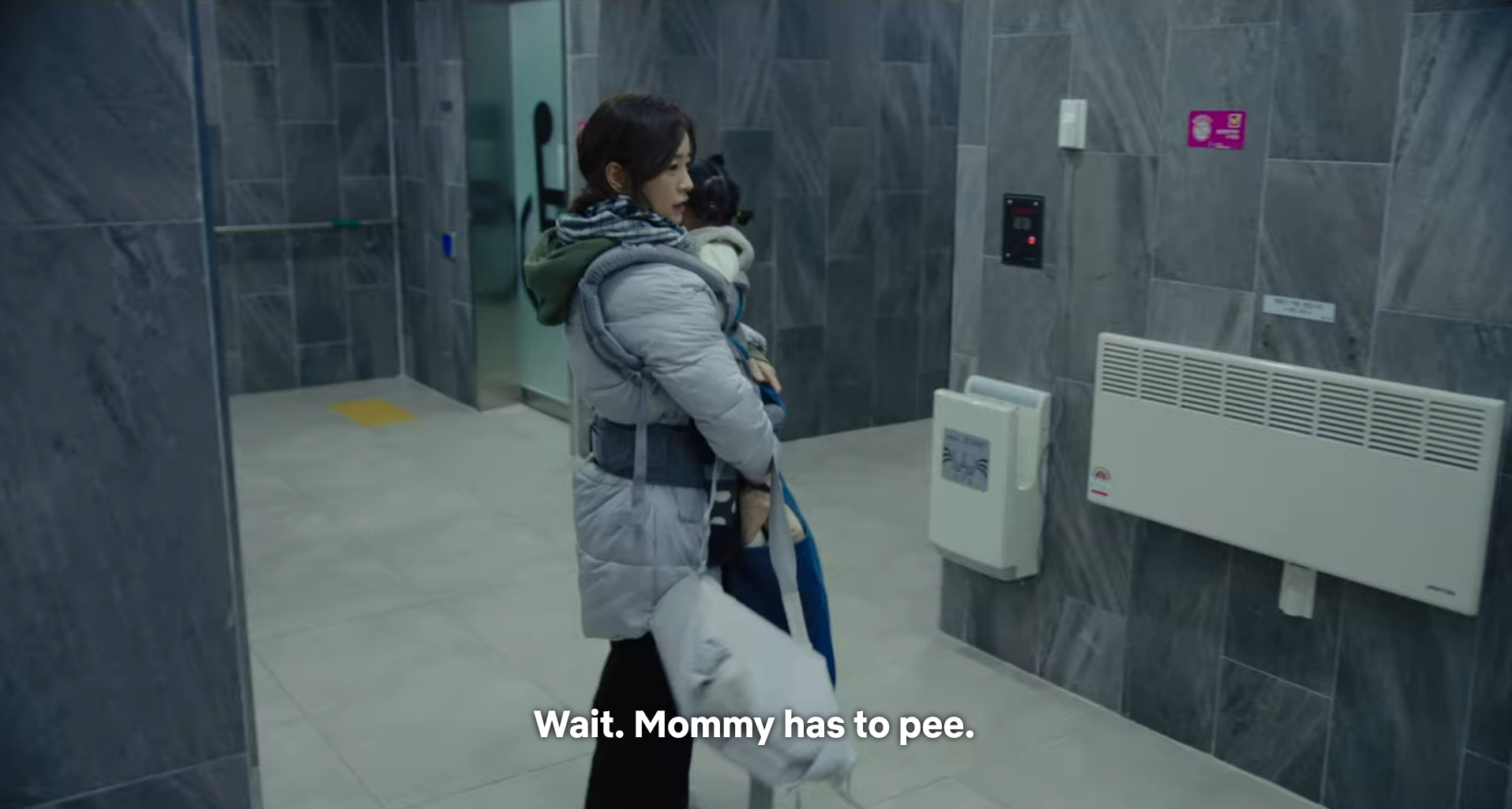
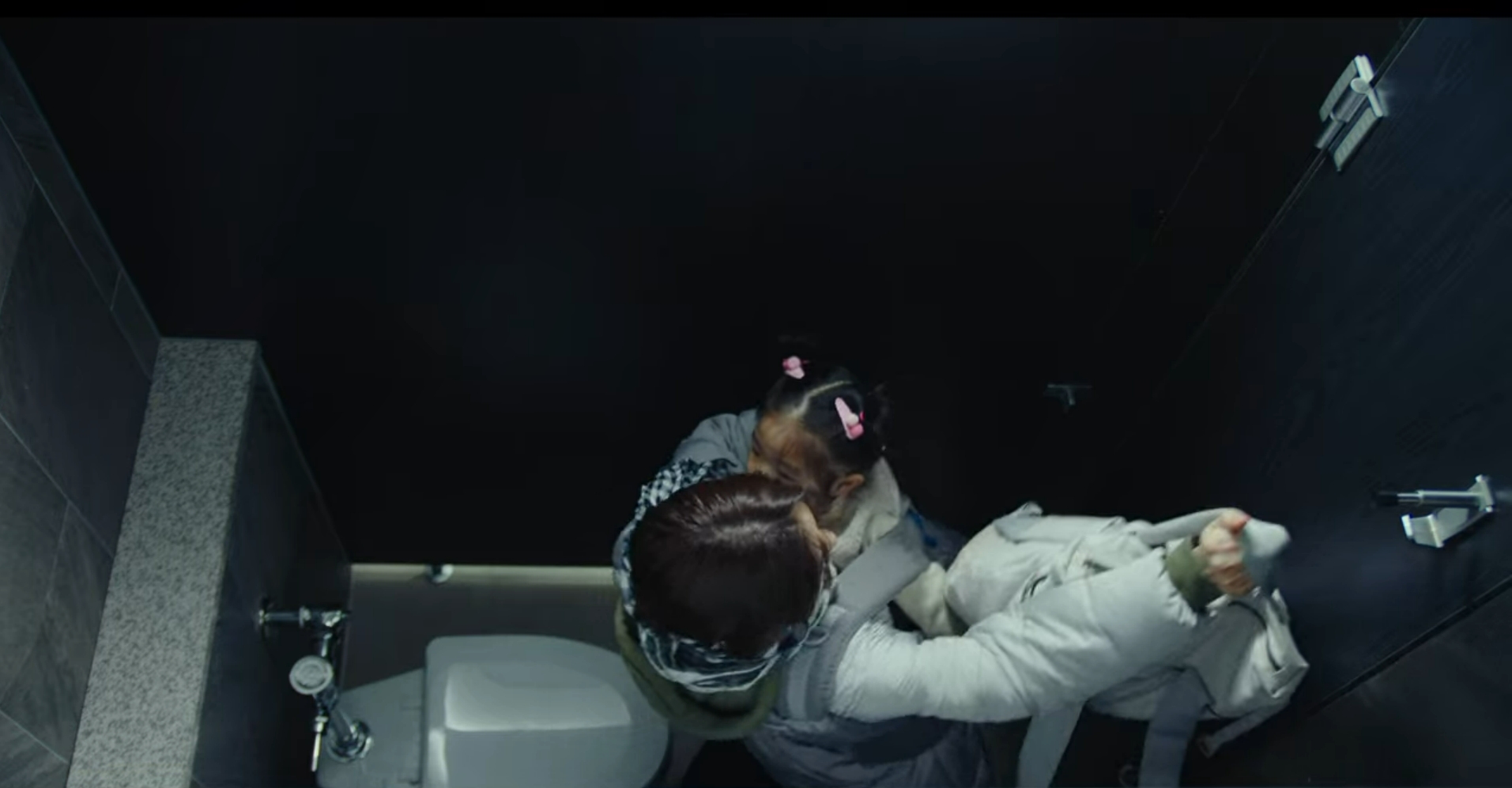
In it (55-56:00), Jiyoung (played by Jung Yu-mi) has to get off the subway to change her bawling infant daughter. Once that’s done, she realizes she needs to pee herself, but struggles in the narrow cubicle to hang up her heavy bag with her daughter strapped to her chest. Then, before she attempts again, she eyes the walls and lock nervously, remembering a recent molka (spycam) incident at the place she used to work. The scene then shifts to her home, implying she gave up and went there instead.

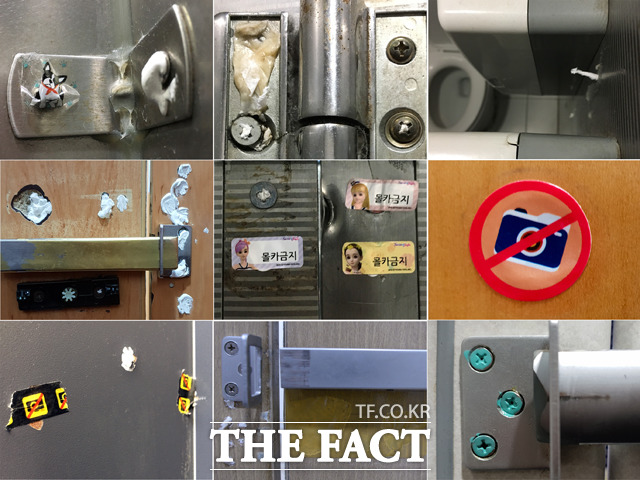
At first viewing, it’s difficult to find any fault here at all. Given that the burden of childcare falls overwhelmingly on women, then more men—or, indeed, more unsympathetic childless women—sometimes really do need to be literally shown just how much effort that actually involves. So too, do more men need to realize how stressful it is having to worry about being secretly filmed literally every single time you used any toilets outside of your home, as well as the potential health consequences if you understandably chose to avoid them.

Admittedly, that may seem like a lot to ask of a one-minute scene. Yet with just a little tweaking, it could have achieved those aims very effectively and forcefully. Instead, it largely fails, for three reasons.

The first is because, ironically, guys can relate to the practical difficulties. The indignity of using a cubicle while wearing a suit and carrying a backpack, desperately trying to prevent either from touching all the urine and smokers’ spittle on the floor, is absolutely no joke. As for childcare specifically, my ex-wife would naturally take our daughters with her to the female toilets when they were young, but it’s not like I wasn’t often in just as awkward and uncomfortable situations with them in other cramped locations.

Devoid of any wider context then, which I’ll provide myself in a moment, men’s own issues with using cubicles can mean women’s complaints fall on deaf ears, let alone calls to make women’s toilets bigger than men’s. (In fact, some men even consider the proposal to be reverse-sexism.) This lack of sympathy is misguided, of course, but I can understand it—unless men are flat out told or shown why not, it’s perfectly reasonable to assume that more cubicles in place of urinals suffice for women’s need to sit down. That women somehow still have to queue nonetheless, delaying everyone? Pop culture reveals that’s just their own fault, thanks to all the primping, preening, and gossiping that really goes on in there.

Next, the scene doesn’t do enough to convey the visceral fear of spy cameras. This is indeed much harder for men to relate to, because they never have to think about them when using public toilets. So, something much more forceful than Jiyoung’s brief nervous glances was required.

Best would have been a tweak to an earlier scene, which I’ll outline in a moment. But as an emphasis in this one, a more realistic cubicle should have been shown, with every nook, cranny, screw, bolt, and indent jammed with toilet paper and gum. Rather than the toilet the scene was actually shot in, which, complete with a rare heater, was easily the most pristine in Korea, seeing what it’s actually like in women’s toilets would surely have rammed home just how big of a problem spycams are in Korea—in a way that abstract news reports never could.

Image source: The Fact.

That earlier scene (44:30-47:30) is where Jiyoung’s former coworkers discover a spycam had been set up in one of the female toilets, and that their male coworkers had been sharing the videos, followed by meeting Jiyoung in a coffee shop to let her know. In hindsight, it’s all over surprisingly quickly. Whereas in the book, the incident is dealt with over three pages, and among the many grave consequences the coworkers reveal in those is that one victim overdosed on meds—possibly intentionally. This is omitted entirely in the film, but fits with the film’s much more kid-gloves, family-friendly tone overall (In particular, Jiyoung’s husband, played by Gong Yoo, is a vastly more sympathetic and likeable character than in the book. Perhaps a truer portrayal was rejected as harmful to his image?). In its place, the coworkers are not so much in tears as almost laugh off the affair, one joking about borrowing Jiyoung’s daughter’s diapers from now on.

Not only would I have absolutely kept that line about the coworker’s potential suicide instead, I would have devoted a minute to visiting her in hospital too. Was that not worth it to show that spycams have very real, devastating effects on people’s lives?

But if I only had an extra minute’s grace, I would use it to shift Jiyoung’s toilet scene to a few years earlier in her life, before she stopped working to have her daughter. She would be in her smart workclothes and high heels at a hweshik, an (effectively mandatory) after-work dinner with her boss and coworkers, and have to go to the toilet as everyone was preparing to leave to go to a second round at a bar. She would take longer than many of the men would like, because—and herein lies that context, as explained by Sora Chemaly in Time. Because, yes, it really does need explaining, as it’s not at all just about sitting vs. standing:

Women need to use bathrooms more often and for longer periods of time because: we sit to urinate (urinals effectively double the space in men’s rooms) [note also, “Women empty their bladders more frequently than men and take longer – an average start-to-finish time of 60 seconds for men, but 90 for women”—James], we menstruate, we are responsible for reproducing the species (which makes us pee more), we continue to have greater responsibility for children (who have to use bathrooms with us), and we breastfeed (frequently in grotty bathroom stalls). Additionally, women tend to wear more binding and cumbersome clothes, whereas men’s clothing provides significantly speedier access. But in a classic example of the difference between surface “equality” and genuine equity, many public restrooms continue to be facilities that are equal in physical space, while favoring men’s bodies, experiences, and needs.

So when Jiyoung did rejoin the group, one of those impatient men could have made an all too common complaint or joke about holding everyone up for the sake of putting on her lipstick. To which she could have angrily pointed out it wasn’t her fault, for any number of the above reasons she could have chosen to highlight (and/or by having to spend time ramming toilet paper into all those potential camera holes, would have killed two birds with one stone). She could have followed that the obvious solution of “potty parity”—mandating 2:1 or 3:1 female to male toilet size ratios in all new building plans, and/or building more shared toilets—wasn’t at all reverse-sexism, but would benefit both women and the men who had to wait for them.

Indeed, this scene would not be unlike the—MILD SPOILER—final scene in the film, in which Jiyoung actually does confront a guy who accuses her of being a “mom roach,” living the high life gossiping in coffee shops, a parasite on her rich husband and the hard workers who pay the taxes for her holiday of maternity leave. Which is a rare credit to the film, and certainly a better alternative to her just slinking away in shame like in the book, then getting gaslighted by her husband when she complains about it. However, as it’s the conclusion to what’s actually an extremely saccharine-feeling film overall as discussed, it’s somewhat underwhelming as a climax—SPOILER ENDS.

With an extra minute still, I would also add a scene of her as a teenager, suffering from bladder and dehydration problems that her much fawned-over brother avoided, because he could obviously better endure Korean schools’ notoriously dirty and outdated toilets. But I digress. The point is, Jiyoung in the subway toilet with her daughter is just one scene of many that could have been dramatically improved. I curse having read the book Feminist City: Claiming Space in a Man-made World by Leslie Kern (2020) in particular, which means I can just no longer unsee the flaws in the scenes in either the book or film. Although, given the former’s popularity, now I do appreciate the value of seeing one’s own lived experiences represented in print, even if Cho neither presents Jiyoung as a role model nor offers any potential solutions to what she faces.

Those responsible for the film however, could have and should have responded to the backlash by taking up that mantle, exploiting the potential of the new visual medium to shock and shame. Instead, they wasted the opportunity by making it as saccharine as possible, all for the sake of people who had probably never actually read the book and were even less likely to watch the film.

Related Posts:

If you reside in South Korea, you can donate via wire transfer: Turnbull James Edward (Kookmin Bank/국민은행, 563401-01-214324)

“Hashtag activism found in translation: Unpacking the reformulation of #MeToo in Japan”—Zoom Presentation by Ms. Saki Mizoroki, Friday April 28, 5:30-7pm JST

Estimated reading time: 4 minutes.

Do any of you reading this in Korea volunteer for a local feminist organization?

As a Western male feminist, or feminist ally if that’s your jam, frankly I’ve never seriously considered it. I’ve always just assumed my presence would be more awkward and complicated than helpful, and probably quite rightly so. There’s visa restrictions against non-Koreans participating in “political” activity too, even for permanent residents.

But are my assumptions correct? Or are they really just excuses?

Because I’ve recently become more interested in contemporary Korean feminist activism than ever. Perhaps, the day I get off my armchair and test those assumptions will come sooner than I think.

If you do ever see my bald head pop up on mutual Instas we follow then, blame Ito Shiori’s Black Box: The Memoir That Sparked Japan’s #MeToo Movement. Not just because because it well deserves its seminal title, but because I was shocked to learn just a few weeks later of the relative failure of that movement compared to South Korea’s. Why? What are the similarities and differences between #미투 and #KuToo? What mutual lessons do they offer for each other? I have to know.

Naturally then, I’ll be all over next Friday’s presentation below (note the open access accompanying article). I’ll also soon be cracking open my copy of Flowers of Fire by Hawon Jung (of course), but first will have to try the more specialized but older (2014) Practicing Feminism in South Korea: The women’s movement against sexual violence by Kyungja Jung while it’s hopefully still relevant.

If you have any other recommendations, please let me know. And I hope to hear your thoughts about next Friday’s presentation too! :)

Join Zoom Meeting https://sophia-ac-jp.zoom.us/j/99468537215 Meeting ID: 994 6853 7215 Passcode: 982771

In 2017, the MeToo hashtag spread across the globe. However, it showed limited success in the Japanese Twittersphere and instead inspired local initiatives such as #WeToo and #Furawādemo (“flower demo”). To understand this reformulation, we analyzed 15 interviews with Japanese social media users and 119 Japanese newspaper articles. The results corroborate the framework we label VTM (values, topics, media), suggesting that an intersection between perceived Japanese values, the topic’s gendered and sexual nature, and media affordances explain the movement’s local development. While perceived Japanese values clash against those associated with #MeToo, new formulations “soften” the protest by blending in values such as reserve and harmony. Overall, we show how perceptions of popular values rather than values as essential orientations shape activism. Finally, we discuss the study’s implications for understanding cultural variance in cyberactivism, highlighting how divergent notions of “safe space” shape such movements.

Saki Mizoroki is a doctoral student at the University of Tokyo and a visiting research fellow at the Hebrew University of Jerusalem, Israel. Her research focuses on feminist media studies, drawing on her extensive experience as a journalist. She holds a Bachelor of Arts from Sophia University and a Master of Public Policy from the University of California, Berkeley. She has worked as a journalist for a top-national Japanese newspaper, The Asahi, as well as internet media, BuzzFeed Japan.

This talk is organized by David H. Slater (Professor of Anthropology, FLA).

*Mizoroki, S., Shifman, L., & Hayashi, K. (2023). Hashtag activism found in translation: Unpacking the reformulation of #MeToo in Japan. New Media & Society, 0(0). https://doi.org/10.1177/14614448231153571

Flyer (PDF): Download from here

Related Posts:

If you reside in South Korea, you can donate via wire transfer: Turnbull James Edward (Kookmin Bank/국민은행, 563401-01-214324)
April Book Club Meeting: “Phoenix Extravagant” by Yoon Ha Lee, Wednesday 26 April, 8:15pm KST

Estimated reading time: 3 minutes.

A medley of steampunk, fantasy, and magic realism? And featuring multiple animal characters? Frankly, none of those I like at all, let alone when all put together. But, expanding my literary horizons was of the main reasons I started this book club, as was supporting more LGBTQ representation in Korean and Korean-American fiction. So I was already well sold on Phoenix Extravagant (2021) by American writer Yoon Ha Lee (Wikipedia; interview) for this month’s book choice, only then to be even further persuaded by the following excellent, quick review by a fellow club member (posted with permission):

The genre is new to me, a giant leap really. Lots of norm transgressions, in the best possible way. Is it Steampunk, SciFi- Fantasy, Alternative History, Parody…??? Or none/ all?

American-Korean author Lee is not just transgressive in genre blending, but in the themes and characters of his story here. Lee himself identifies an a trans man/ queer (choosing “him/ he”) and his protagonist here is a gender neutral “them/they”. This was less confusing than the anti-woke mob might presume when reading. Non traditional nuclear/ heteronormative families, relationships and people populate this story with disarming naturalness. The whole book eschews complicated narrative and linguistic features, offering an ostensibly straightforward plot and “young adult” level vocabulary (albeit with some rather clever invented vernacular for the world described).

But the themes and historical parallels it clearly (maybe too obviously for a Korean audience) makes to Korea’s colonial experience are also subtly transgressive. It questions the ideas of nationalism and independence (for whom), as well as whether a foreign tyranny is worse than an indigenous one. In historical parallelism, it also questions who or what a loyal citizen/ collaborator is, in the face of daily needs to survive. The role of art also arises, and whether the effects of art can be attributed/ blamed on the artist?

There’s escapism and juvenile fantasy too – if you chose to read it that way. Worth a read!

Please see LibraryThing, The StoryGraph, and/or GoodReads for further reviews, and then, if Phoenix Extravagant still appeals, I’d like to invite you to our meeting on Wednesday 26 April, at 8:15pm Korean time. Just a small, informal event, with a limit of 12 participants to help ensure that they remain as safe a space as possible, please contact me via email or leave a comment below (only I will be able to see your email address) if you are interested in attending. I will contact you to confirm, and will include you in the club reminder email with the Zoom link a few days before the event.

See you on Zoom!

If you reside in South Korea, you can donate via wire transfer: Turnbull James Edward (Kookmin Bank/국민은행, 563401-01-214324)
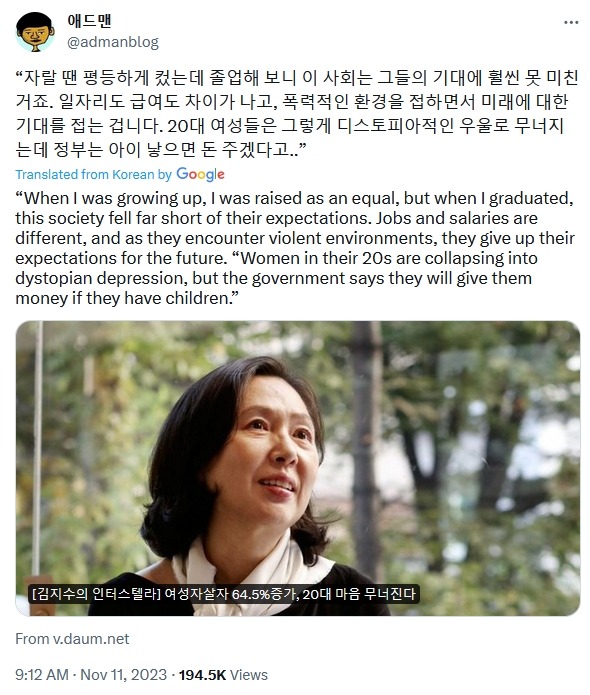
BUY THIS BOOK—”Seeking Western Men: Email-Order Brides Under China’s Global Rise” by Monica Liu (2022)
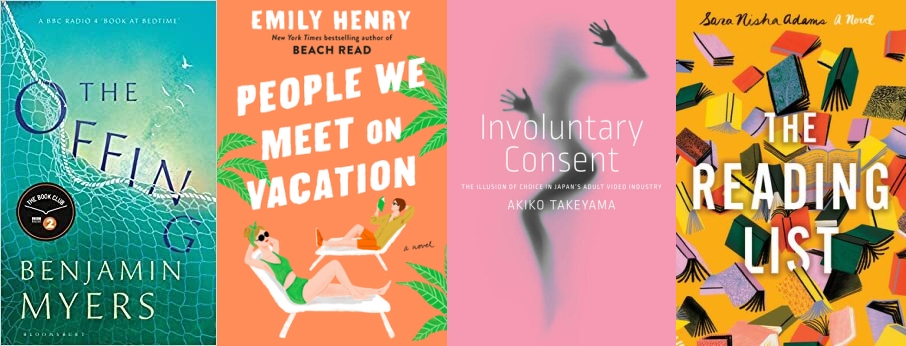
Don’t let my glorious laser tits deter you from an eye-opening interview, and a must-read!

Estimated reading time: 11 minutes.

First, a quick update to explain my absence this past month,

Basically, I’ve finally gotten my shit together.

I could count the ways. Instead, suffice to say I’m so enthused and energized that I’ve even started paying attention to my laser tits again.

You read that right. (You’ll thank me for passing on this “꿀팁” later.) Ten random notifications from a reminder app a day, I advise, is the sweet spot for perking you up before starting to get annoying:

Naturally then, life chose to reward my newfound drive by bookending those past four weeks with two debilitating colds. Repetitive strain injury has flared up in my right arm too,* leaving me in agony every time I want to do anything even remotely fun or pleasurable with my hand. Like, say, eating or sleeping (what did you think I meant?), let alone banging away at a keyboard.

With my resolve being so sorely tested, literally, my response is to push even harder through my huge backlog of writing, as well as my new plans to completely overhaul this blog and my social media use. What those plans actually are, I’m going to tend towards doing before explaining. But one I already announced back in October—more geeking out over things that bring me joy, no matter how obscure or academic. The difference now being, I realize life is just too short to worry about losing followers who don’t share my obscure passions, or curious, ribald sense of humor.

On that note, the New Book Network’s (NBN) recent podcast interview of Monica Liu, about her new book Seeking Western Men: Email-Order Brides Under China’s Global Rise (2022), is conspicuously bereft of laser tits, but is no less jaw-dropping for all that. Primarily, for Liu’s emphasis on the women’s perspectives and their sense of agency, which in hindsight I’ve much neglected in my own coverage of migrant brides to Korea over the years (understandably, given how so many are exploited and abused, but a neglect nonetheless). Moreover, despite the title of the book, and NBN’s synopsis below, it quickly becomes clear while listening to the interview that Chinese seekers of marriage with Western men share many of the same issues and goals with those Chinese, Central Asian, Russian, and Southeast Asian women seeking Korean men.

Her study of China’s email-order bride industry offers stories of Chinese women who are primarily middle-aged, divorced, and proactively seeking spouses to fulfill their material and sexual needs. What they seek in their Western partners is tied to what they believe they’ve lost in the shifting global economy around them. Ranging from multimillionaire entrepreneurs or ex-wives and mistresses of wealthy Chinese businessmen, to contingent sector workers and struggling single mothers, these women, along with their translators and potential husbands from the US, Canada, and Australia, make up the actors in this multifaceted story. Set against the backdrop of China’s global economic ascendance and a relative decline of the West, this book asks: How does this reshape Chinese women’s perception of Western masculinity? Through the unique window of global internet dating, this book reveals the shifting relationships of race, class, gender, sex, and intimacy across borders.

I strongly recommend listening to the interview yourself; at 39 minutes long, it doesn’t at all drag on like, frankly, most other NBN interviews do. To encourage you to do so, here are several eye-opening excerpts, all lovingly, painstakingly transcribed by myself (my apologies for any minor errors).

(Too young, and too well-off?) Photo by bruce mars on Unsplash.

First, from 7:30-8:45, an important difference between Chinese women seeking Western men to migrant brides in Korea: the former tend to be much older and financially well-off. As we’ll see soon, this has big implications for the power dynamics between prospective partners:

Q) Why really did the Chinese women seek Western men?

A) For a couple of different reasons. Across the board, one main reason I saw was that the women felt aged out of their local dating market, because men of similar age and economic standing tended to prefer much younger, never-married women without children, and so women believed Western men were more open to dating women their age. And there’s also some differences based on the women’s socioeconomic class. A lot of women who are financially well-off have previously been married to very wealthy Chinese men that cheated on them and left them for younger women, and so think that Western men are going to be more loyal and more family-orientated—that being the primary reason. While women who struggled financially, have often divorced Chinese ex-husbands that lost their jobs and couldn’t support their families, and so these women are also seeking financial stability in their new marriages. Finally, there’s also a group of women who wish to send their kids to college in the US, to escape the very, very brutal college entrance exam in China, but they couldn’t do that as single moms that were financially struggling.

Next, from 10:20-11:20, on how Chinese dating marriage agencies both respond to and perpetuate Occidental stereotypes:

Q) Tell us about global financial crisis of 2008 when the men lost their jobs. Did this impact the dating scene?

A) Yes, this certainly impacted the dating scene. At the dating agencies, before the crisis there would be this idea that many of the men would possibly be financially well-off, but actually after the crisis a lot of women were actually discovering off-site that those men that they thought were financially well-off were not in that position, and as a result one of the tactics that the agencies used to promote these men to the women was that these men were loyal, devoted, and family-oriented, and thereby worth of marriage, even if they’re not particularly financially well-off.

Photo by Marcelo Matarazzo on Unsplash.

Then from 13:28-15:11, on the racial hierarchies contained within those Occidental stereotypes. But already, Chinese women’s agency is evident in their readiness to reject or subvert these:

Q) You talked about the discrimination against Black men with the Chinese women, but not other racial groups. Tell us more.

A) When I stepped into the dating agency, I found that Chinese women were very reluctant to date Black men. And for that reason, the agencies actually had a policy to not entertain emails from Black men unless given special permission from the women, in order not to “offend” the women. I’m not exactly sure what their personal reasons were…but I do know China has a long-standing history of anti-Black prejudice where Blacks are stereotyped as savage, hypersexual, and violent.

However, the women didn’t seem to discriminate against other racial groups, and to them, interestingly, the term “Westerner” included not only Caucasians but also Latinos and Native Americans. And occasionally some women would actually refer to Western men of Northern- or Central-European ancestry as “pure white,” and Latin-American men, or men of South-European ancestry, for example Italian men, or Native American men, as “non-pure white.” However, being pure white didn’t seem to actually boost the men’s desirability in the women’s eyes, and in fact I saw that some women in fact preferred the non-pure white look and they found the darker hair and eye color to be more Asian-looking, and more familiar and more pleasing to their eye than someone who is, say, blond-haired and blue-eyed.

Photo by Roselyn Tirado on Unsplash.

From 18:24-19:52, on the traditional, patriarchal values the Western men using international dating agencies often bring to their anticipated relationships with Chinese women. Obviously, by no means all (or even a majority) do. But just as obviously, it’s surely no coincidence that many Korean men do the same:

Q) Now give us the profile of the Western male seeking a Chinese woman.

A) The majority of the men enrolled tended to be older, divorced, and tend to come from lower-middle class or working class backgrounds, although some were middle class. I’ve seen a lot of truck drivers, lots of small business owners, and these men tend to feel left behind by globalization as agriculture, manufacturing, and small businesses started declining. So these men actually viewed this changing economic landscape as a threat to their masculinity.

Now a lot of sociologists’ studies show that marriage rates have declined among working class men, and poor men, because women within their own class find them to be too poor to be marriage worthy. So for these men, having slipped down the socioeconomic ladder, they really struggle to hold on to what privilege they have left by pursuing so-called “traditional” marriages, possibly with foreign brides, because they think this will allow them to exert some kind of dominance and control at home. And there’s also some middle class men who, despite being financially stable, they still feel left out of place within the new gender norms that have emerged in Western societies, [supposedly] dominated by feminists who they see as destroying the family and nation through their spoiled behavior and materialism.

Photo by Conikal on Unsplash.

And, reluctantly, a final excerpt from 23:21-25:10 (there were so many I wanted to highlight!), on the upending of global masculinity and racial ideals when women are empowered to reject those marriages:

Q) Let’s look now at some of the theories about Western masculinity. What did you find concerning race, class, gender, globalization, and migration?

A) First, I challenge readers to rethink the relationship between race and class…the question I ask is, does Western masculinity still command some degree of hegemonic power in China, despite China’s global rise—and I confirm that it does, by showing how Chinese dating agencies market their Western male clients as morally superior to Chinese men despite their lack or wealth. So the fact is that this portrayal still sells in China, and this reflects this continued superiority of Western culture within the Chinese women’s imagination.

However, in this book I also show a lot of moments when Western masculinity is starting to lose its hegemonic power, and this typically happens in the latter stages of the courtship process, when couples go offline and start meeting face-to-face. And in this book, I show how some of these women quickly rejected their working class, Western suitors, once they realized these men didn’t embody the type of elite masculinity that they were seeking in a partner, and instead these women would choose to continue having affairs with their local Chinese lovers, even if those men were married and not willing to leave their wives. And this is because [they] had these refined tastes, lifestyles, and sexual know-hows that a lot of their foreign suitors lacked.

Two final points of interest to round off. First, by coincidence, shortly after listening to this interview I got an alert that Kelsey the Korean was busy dismantling Western masculinity’s hegemonic power in Korea too:

Next, another well-timed coincidence: the latest issue of the Korean Anthropology Review just dropped, with an article by Han Seung-mi—”Critique of Korean Multiculturalism as Viewed through Gendered Transnational Migration in Asia: The Case of Vietnamese Returnee Marriage Migrants“—that sounds perfectly placed to challenge my own image of migrant brides in Korea as passive victims (my emphasis):

This article analyzes “returnees from marriage migration” by focusing on Vietnamese women from Cần Thơ and Hai Phong who have been to South Korea for marriage migration. In contrast to prevalent concerns in South Korea about the possibility of “child abduction” by Vietnamese mothers/divorcees, the author found many “deserted” Korean Vietnamese children and their mothers in Vietnam through this research. There is also a growing number of Vietnamese “return marriage migrants,” women who came back to South Korea after their first divorce and return to Vietnam. The article emphasizes the complexities and multidirectional trajectories of marriage migration and highlights the agency of female migrants, whose contribution to family welfare and to “development” is often overshadowed by their status within the family.

Does it really matter that, technically, my copy of the book hasn’t actually arrived yet? If you’ve read this far, I hope you too will indulge yourself (38,170 won on Aladin!), and I look forward to hearing your thoughts.

*I first had repetitive strain injury about 10 years ago, consequence of having my keyboard too close to me, forcing me to bend my arms to type; fortunately, it resolved itself in a few weeks once I moved my computer just shy of arm’s length. This time round, it’s undoubtedly due to spending hours in bed on my phone, again bending my arms to use it; now that I’ve stopped, hopefully again the pain will go away just as quickly.

In the meantime, I can’t stress enough how much my arm can hurt at the moment, nor how debilitating it is to be literally too scared to use your right hand as a result. So, if you reading this, please do take a moment to consider how you physically use your devices, and for how long!

Related Posts:

If you reside in South Korea, you can donate via wire transfer: Turnbull James Edward (Kookmin Bank/국민은행, 563401-01-214324)