어깨 축 쳐진 아빠에게 아이들이 용기를 줬던 노래인데 이 노래가 양성평등을 저해한다는 판정이 나와 문화관광부가 해명자료까지 내는 소동이 벌어졌습니다.
This is the song which gives encouragement to exhausted, depressed fathers, but it has been recently criticized for hindering gender equality. In response, the Ministry of Culture, Sports, and Tourism issued a statement clarifying what the song is really about.
무슨일인지, 박철현 기자가 보도합니다.
Park Cheol-hyon reports:
“아빠 힘내세요, 우리가 있잖아요”
1997년 발표된 동요 ‘아빠 힘내세요’입니다.
“Dad, cheer up/be strong, you have us”: this is the children’s song released in 1997.
“IMF때 굉장히 많이 들어봤고요. 아이들이 보자마자 불러줬을 때 저절로 힘도 났고..”
Cho Hong-joon, Person on the street #1:
“I heard this song a lot during the IMF Crisis. It cheered me up when my kids sang it to me”.
그런데 문화관광부는 이 노래가 우리 사회 양성 평등 의식을 해치는 대표적인 사례 중 하나라는 연구 결과를 발표했습니다.
However, in a statement of research results released by the Ministry of Culture, Sports, and Tourism, this song was given as an example of something hindering gender equality awareness.
이 노래가 경제활동을 하는 것은 남성이라는 고정 관념을 키워준다는 겁니다.
This song encourages the notion that it is only men that should partake in economic activity.
특히 엄마가 요리하면서 아빠를 기다리는 만화 동영상은 여성은 가사 노동만 한다는 선입견을 심어줄 수 있다고 지적했습니다.
In particular, a popular accompanying video for the song depicts women cooking while waiting for their husbands, perpetuating traditional gender roles.
[James: Actually, only one of videos shown in the report does that; it can be viewed here.]
“여자들도 많이 일을 하고 더 힘들어요. 여자가 들어봤을 때는 별로인 것 같아요.”
Park Hyeon-joo, Person on the street #2:
“Women work a lot, and it’s harder for us. When they hear it, women don’t care for this song.”
하지만 황당하다는 반응이 많습니다.
But many people replied that the criticisms were nonsense.
“노래는 노래일 뿐이지, 거기에 그런 의미를 부여한다면 그게 더 문제..”
Jeon Byeong-rok, person on the street #3:
“This song is just a song, it only becomes problematic if you read too much into it.”
노래를 만든 현직 초등학교 교사 한수성씨는 가사는 아내가 썼고 이 노래로 국무총리 표창까지 받았다며 황당해했습니다.
The song writer Han Soo-seong, who is an elementary school teacher, said that the lyrics were written by his wife, and pointed out that he received an award from the Prime Minister for it.
“가사가 그렇게 깊은 뜻을 담고 있는 지 몰랐습니다. 말도 안되는 거죠”
“I don’t think that the lyrics have that deeper [sexist] meaning. It’s ridiculous to say so.”
논란이 커지자 문화관광부는 양성 평등 교육에 참고하라고 진행된 연구 결과일 뿐 유해 가요로 지정한 건 아니라고 해명했습니다.
In response to the controversy, the Ministry of Culture, Sports and Tourism clarified that the research was only conducted to further the cause of gender equality, not naming and shaming. (End.)
This report is actually a few years old. But the topic still regularly pops up in my Google Keyword Alerts and on Twitter, albeit usually only leading to Ilbeand DC Inside users having a good laugh at the feminazis. Emboldened perhaps, by the Ministry’s criticisms falling on such deaf ears.
Because it’s still taught to just about every Korean child, even those too young to understand it:
Demanding it of guests is still part of the repertoire of the variety-show hosts, used to elicit infantilized gender performances from girl-group members. For instance, from 20 year-old Yoo-a of Oh My Girl below (which is not to say her tears aren’t genuine):
It’s still such an ingrained part of Korean culture, that even insurance company employees will name their project teams after it, and the media will raise it in reports about the dutiful daughters of male politicians (as well as commenting on their beauty):
And finally, because Korean fathers still work among the longest hours in the world, and wish they could be home in time to see their families. As this recent feel-good advertisement makes clear:
Who else but a feminazi would deprive Korean fathers of such a small source of joy?
But wait. Most of those examples above aren’t exactly compelling reasons to continue teaching the song to children. What’s more, even if you still don’t find the song problematic, or how it’s used, there remains the inconvenient fact that MOTHERS WORK TOO:
(“Women work a lot, and it’s harder for us. When they hear it, women don’t care for this song.”)
Is Park Hyeon-ju referring to work inside the house, outside, or both? A song about the former would hardly challenge traditional gender roles. Yet even that would be an improvement on something that only acknowledges the work of men. Twenty years after Cheer Up Father was written, it’s high time to acknowledge its flaws, and to begin teaching children something much more inclusive.
My suggestion is for the government to arrange a national songwriting competition. It should be determined by popular vote (the public tends to be better judges of what’s catchy), with the winning entry to replace Cheer Up Father in kindergartens and elementary schools.
Do any readers know of any examples like that from other countries? How did they go?
Update: A friend mentioned it would be a pity to lose such a catchy song, and jokingly suggested replacing appa “아빠” (father) with eomppa “엄빠,” a combination of appa and eomma “엄마” (mother) which is actually a word already, although one of those ones everyone knows but has never actually used. But I’d be all for that, especially if the videos and songbook illustrations were changed accordingly. While using the word would be awkward at first, much of this blog is about Korean companies’ and the media’s proclivity for inventing new labels and buzzwords, many—most—of which were also very awkward at first, but some of which have definitely stuck. So why not?
(Caption: 이렇게 입으면 혼난다?: 경찰청의 과다 노출 단속 지침은 그 기준이 애매해 단속 경찰관과 대상자들 간에 갈등이 생길 것으로 예상된다. If you dress like this, you’ll get a telling-off? Police guidelines for cracking down on excessive exposure are vague; disputes between the police and public are expected)
I react pretty strongly when people claim I have no place writing about Korean feminism.
Partially, simply from turning 40. Because when you do, you realize that half of your life has passed, and that you probably have less than half remaining. Suddenly, you have zero time and patience for other people’s bullshit.
It’s quite liberating, frankly.
The second reason is more personal. I’ve emigrated five times. The first time, from the U.K. to New Zealand with my family, when I was 11. Which means that for nearly 30 years now, I’ve had people lecturing me about how I couldn’t possibly ever understand some things about where I lived, simply because I wasn’t born and raised there.
So, I was already sick and tired of that before I came to Korea. Once I got my bearings, I was never going to put up with it for very long.
Where Korea differs from other countries I’ve lived in though, is that I didn’t really need to with Koreans. Not after a couple of years here, anyway. Maybe it’s just because I’m writing in English, but it’s always been more other expats and people outside of the country who would place limits on what are appropriate subjects for me to write about, solely based on my sex and ethnicity.
That’s not to say I don’t have many limitations with being a white, middle-aged, cisgender, heterosexual man working on the subjects I cover. Of course I do. When those raise legitimate issues in my writing, I can but do my best to overcome them, and to constantly remind myself of the importance of listening and research.
It’s also important to remember to sometimes write provocative and unusual introductions too, to make sure I’m actually read.
In that vein, this one, I hope, explains why I am so interested in “framing” with regards to Korean feminism, sexuality, and pop-culture, and why I chafe so much when their many gatekeepers tell me I can’t ask questions.
Which brings me to this week’s post: a magazine article from 1996(!), about a police crackdown on women’s revealing clothing that summer. Originally, I just planned to translate it for its own sake, for reasons I’ll explain later. I was also tempted to trick you by only revealing its age at the end, to highlight just how little victim-blaming attitudes have changed in 21 years. But, knowing that dominant media and governmental discourses about women’s bodies and revealing clothing would change so radically just 6 years later, and especiallywiththe second, K-pop-led Korean wave from 2006, I realized the contrast served as a chilling reminder of how brazen and manipulative our designated authorities can be, and how quickly they can make a volte-face when it serves their interests.
[문화현실] 노출이 강간 유혹?…허튼소리 말라 Wearing Revealing Clothes Leads to Rape? Don’t Be Absurd.
과다 노출→성충동→성범죄’ 물증 없어…경찰의 단속은 여성에게 올가미 씌우기. There is no evidence for the notion that revealing clothing leads to sexual urges, leads to sexual assaults. This police crackdown is victim-blaming.
지난 여름은 여성의 노출이 그 어느 때보다 심했다. 80년대 말부터 불기 시작한 60~70년대풍 복고 바람에다, ‘육체도 패션의 한 요소’라는 새로운 인식이 덧붙었기 때문이다. 젊은 여성들의 거리 패션은 육체 그 자체와 육체의 선을 선명하게 드러내는 특징을 보였다. 광적인 다이어트 열풍도 여기에 합세해 날씬한 몸매를 과시하는 노출을 한껏 부채질했다.
This summer, women have been wearing more revealing clothing than ever before. This is because of the drive, since the late-1980s, to restore the freedom of the fashions of the 1960s to the [early-]1970s, and because of the new belief that one’s body is also a fashion item. Young women’s street fashions now emphasize and clearly display their figures. A fanatical dieting boom is also adding to this desire to display one’s body.
그런데 여름이 다 가고 가을이 오는 마당에 노출의 계절이 ‘연장’되고 있다. 국가 공권력도 복고풍의 영향을 받은 것일까. 지난 8월25일 경찰청은 70년대에 ‘유행’했던 복장 단속을 실시하겠다고 발표했다. 경범죄처벌법 제1조 제41항 ‘과다 노출’ 규정을 적용해 불특정 다수 또는 다수인의 눈에 띄는 장소에서 ‘알몸을 지나치게 내놓은 행위’등을 단속하라는 지침을 일선 파출소에 보냈다.
But the summer is almost over, and the autumn is coming. Yet still, the season for showing off one’s body seems never-ending. In response, the government’s zeal to crackdown on such fashions has also risen. On the 25th of August, the police announced that they will be invoking Clothing Misdemeanor Law, Chapter 1, Clause 41, to launch a crackdown on clothes, with guidelines sent to regional departments. (Just like in the 1970s.)
경찰청은 △여성의 신체 노출이 점점 과다해지는 추세인데, 유림 및 시민단체에서 강력히 단속해 달라는 건의가 있고 △과다 노출이 풍기 문란 및 성범죄의 원인이 되고 있는 실정이며 △배꼽 및 상반신 과다 노출에 대해 무죄가 선고되어 소극적 단속을 해왔다는 사실이 이번 단속의 배경이라고 설명했다.
Explaining the background to this crackdown, the police stated:
Women’s body exposure is increasing, and civic groups’ suggestions and requests to counter this have increased in response.
Excessive exposure is becoming a cause of excessive PDA and sexual crimes
Exposing the navel and more of the breasts have so far been considered publicly acceptable, and so the police have not actively cracked down on it. [Attitudes are hardening however.]
(Caption: 70년대 미니 스커트와 잘리는 장발: 70년대 초 사진이다. 당시 경찰관들은 30cm 자를 들고 다니며 여성들의 치마 길이를 쟀고, 짧은 치마를 입지 못하도록 무릎 위를 때려 빨갛게 만들기도 했다. 장발은 당시 젊은이들이 정권의 물리적 위협에 반발하는 일종의 문화적 저항 행위이기도 했다. 90년대 들어 남성들은 경찰관이 머리를 자르지 않아도 머리를 깎는 경찰관(위 사진 왼쪽)과 같은 머리 모양을 하고 있다.)
(A woman wearing a mini-skirt and men’s hair being forcibly cut in the eary-1970s. Back then, the police carried 30cm rulers with them and measured women’s skirt lengths; if they were too short, they hit the women above the knees until they were red. Meanwhile, young men grew their hair long as a rebellious act of defiance against the government. [Prompting the police to cut it off.] In the 1990s, however, young men tend to have the same hairstyles as the police.)
경찰의 뒤늦은 단속을 지켜보며 풍기 문란을 염려해오던 쪽에서는 잘한 일이라며 응원을 보내고 있지만, 또 한쪽에서는 ‘시대착오적인 발상’이라며 비판을 서슴지 않는다.
There have generally been two kinds of responses to this crackdown from the public. On the one hand, people are relieved that the police are dealing with the excessive exposure. On the other, that this is a big step backward, which is completely out of touch with the changing times.
한국은 92년부터 스웨덴을 제치고, 미국에 이어 성폭력 세계 2위라는 오명을 안고 있다. 성범죄를 예방하기 위한 당국의 고육책인지 모르지만, 경찰청의 단속 지침은 예방보다는 성범죄와 관련한 통념, 즉 ‘여성의 몸가짐에도 잘못이 있다’는 고정 관념을 더욱 고착화할 것이라는 우려를 낳고 있다.
Since 1992, Korea has had the second highest rate of sexual assaults in the world, overtaking Sweden [James: I think the author actually meant in the OECD. Either way, both Korea and Sweden’s high rankings beg further investigation, but unfortunately no source is given for them]. This crackdown may be a desperate response to that, but the police guidelines have more to do with laying the blame on women and their bodies than with genuine preventive measures. There is a worry that the crackdown will lead to greater victim-blaming and bias against and stereotyping of women.
문제는 과다 노출이 성 ‘충동’이 아닌 성 ‘범죄’의 직접적인 원인이 되고 있느냐 하는 점이다. 한국여성의전화•한국성폭력상담소 등 관련 단체에 따르면, 노출 패션이 성범죄와 직접 관련이 있다는 근거는 없다. 조사 자료를 살펴보면, 성폭행을 당한 여성 중 19세 미만이 50% 이상(13세 미만은 전체의 30%)으로 노출 패션과 거의 관련이 없는 학생층이 절반 이상을 차지하고 있다.
The issue here is that while greater exposure does greater sexual urges, but does it lead to greater sexual crimes? This needs to be determined. According to the Korea Women’s Hot Line and the Korea Sexual Violence Relief Center, there is no evidence of a relationship. A survey of female rape victims (50% of whom were under 19, 30% of whom were under 13), shows that they were not wearing revealing clothes at their time of their rape.
다음은, 성폭력이 계절과 관련이 있다고 보는 인식의 문제이다. 노출의 계절이라고 해서 성폭력이 증가하는 것은 아니다. 성폭력 발생 빈도는 계절과 관련이 없다. 게다가 성범죄에서 가해자와 피해자의 관계를 보면, 친인척•직장 상사•데이트 상대•교사•동네 사람 등 아는 사람이 70% 이상을 차지하고, 모르는 사람의 경우도 대부분 계획된 범죄를 저지른다. 노출 패션이 성 충동을 불러일으킬지는 몰라도, 성폭력과 직접적인 관련이 있다는 근거는 없는 것이다.
Next, the notion that sexual violence is related to the season is also problematic. In fact, they are completely unrelated; so, just because it is the summer, it doesn’t mean there will be a spike in sex crimes. Moreover, if you break down the statistics of sex crimes based on the relationship between the perpetrators and victims, more than 70% are relatives, coworkers, dates, teachers, neighbors, and so on. Also, in the cases of perpetrators unknown to the victims, their crimes tend to premeditated. In other words, they are planned and executed regardless of the clothing of the victim at the time. So, there is no evidence for a direct relationship between exposure and sex crimes.
“경찰력 과다 노출이 노출 패션보다 심각” “The Excessive Use of Police Power is a More Serious Problem then Excessive Exposure”
성충동, 곧 성욕이 성폭력을 낳는 것도 아니다. 한국여성의전화 정춘숙 부장은 “성폭력은 여성을 성적 대상으로 삼아 지배하는 행위이지, 성욕과는 별 관계가 없다. 성폭력의 대상이 반항하지 못하는 어린 연령층으로 자꾸 내려가는 추세는 이 때문이다”라고 말했다. 일반적으로 성폭행은, 자기가 처한 환경에 대해 분노나 소외감을 갖는 이들이 자기보다 약한 사람을 지배하거나 통제력을 행사하는 차원에서 이루어지는, 철저한 권력의 문제인 것으로 알려져 있다.”
Sexual desire doesn’t a role in sex crimes. Jeong Choon-sook, the director of the Korean Women’s Hot Line, said, “Sex crimes are a case of dominance targeting women sexually; they are little related to sexual urges. This is why the targets of sexual crimes are getting younger over time.” In general, sex crimes are known to be power games. So those who have feelings of loneliness or anger about their situation, they want to control those [they consider] weaker than themselves.
경찰청이 단속의 근거로 내세운 ‘과다 노출→성충동→성범죄’화살표 공식은, 단순한 심증만 있을 뿐 확실한 물증이 없다. 경찰청의 단속은, 노출 패션을 성범죄의 원인으로 간주함으로써 1차적 책임을 가해자가 아닌 피해자에게 돌릴 개연성을 안고 있다. 또 과다 노출을 성범죄와 연관시킴으로써 여성뿐 아니라 남성들마저 모욕하고 있다는 비판을 받고 있다.
There is little evidence to support the police’s logic that excessive exposure leads to sex crimes. Consequently, their crackdown has a strong possibility of victim-blaming, based solely on the victims’ clothing. The police have also received complaints that men can not control themselves in the face of excessive exposure belittles men also.
“경찰이 여전히 ‘여성 유발론’이라는 통념을 갖고 있다는 사실을 보여주는 단속이다. 여성에게 1차적 책임을 묻는 것은 가해자인 남성에게 면죄부를 주는 일이자, 피해자인 여성에게는 또 하나의 올가미를 씌우는 일이다.” 한국성폭력상담소 최영애 소장의 말이다.
According to Choi Yeong-ae, director of the Korea Sexual Violence Relief Center, “This crackdown clearly shows that the police still subscribe to the conventional wisdom that women can be partially responsible for their rape. This indulges male perpetrators, and frames women.”
패션, 그 가운데서도 거리 패션은 한 시대의 정치•사회•문화 환경과 그로 인한 심리를 민감하게 반영한다고 알려져 있다. 신경정신과 전문의 신승철씨(광혜병원 원장)의 분석을 들어 보자. “정신분석학으로 보면, 노출 패션은 단순해지는 인간 관계에서 말미암는 것으로 보인다. 인간 관계에서 자꾸 소외되다 보면 몸을 통한 자기 표현 욕구가 극대화한다.”
Considering fashion, street fashion represents people’s feelings and thoughts about the politics, society, culture, and environment of its era. Neuro-psychologist Shin Sung-cheol, head of Gwanghye Hospital in Seoul, said, “According to psychoanalytic research, wearing revealing clothing comes from a need for relationships. People experiencing loneliness and/or who feel left out a lot experience an increased urge to express themselves through their bodies.”
[James: This is just as bizarre as the notion that revealing clothing is a cause of rape, and it hardly advances the author’s argument. Nevertheless, I don’t think it’s a mistake with my translation.]
경찰청의 단속 발표를 시대착오적인 발상이라고 비판하는 정유성 교수(서강대•교육학)는, 문제는 결국 여성의 노출이 아니라 성을 지배하고 소유하려는 남성들의 음험한 눈이라고 말했다. 어떻게 보이느냐가 중요한 것이 아니라, 어떻게 보느냐가 중요하다는 지적이다.
Education professor Jeong Yoo-seong of Sogang University, who criticized the police’s crackdown, described it as outdated, and that the problem is not women’s exposure, but rather an insidious desire of men to control and police women’s bodies. The issue is not with attracting the male gaze, but with the male gazers.
(Caption: 모호한 단속 기준:‘지나친 애정 표현’도 경찰의 단속 대상이다. Vague crackdown guidelines; public displays of affection are also a target.)
경찰청이 정한 단속 기준은 대부분 모호하다. ‘알몸을 지나치게 내놓은 행위’ ‘보는 사람으로 하여금 수치심을 느끼게 하는 행위’‘불쾌감을 주는 행위’등 단속 경찰관의 주관적·개인적 판단에 맡길 수밖에 없는 기준들이다.
The majority of the police’s guidelines are rather vague. Things like “revealing one’s body excessively,” “acts which make people feel embarrassed and humiliated,” “acts that cause discomfort among others,” and so on are extremely subjective.
“70년대의 장발 단속이 지금은 웃음거리가 된 것처럼, 이번 경우도 나중에 웃음거리밖에 안되는 단속이 될 것이다. 데모대에 총기 사용을 불사하겠다, 고무 총탄을 쓰겠다는 발표와 더불어 민주화 이후의 개방 분위기에 역행하는 조처로 보인다”라고 전상인 교수(한림대·사회학)는 말했다. 전교수는 시민 사회에서 숨어 있어야 할 경찰의 ‘과다 노출’이 ‘패션 노출’보다 더 심각한 문제라고 지적했다.
Just like crackdowns on long hair in the 1970s are now considered laughable, this one will be too. Sociology Professor Jeon Sang-in of Hallym University said “This crackdown is an anti-democratic step backward, on a par with statements like ‘We will shoot protestors.'” He pointed out “Police excessive use of power is more serious than excessive exposure. Police are supposed to blend in seamlessly into civil society.”
“과다 노출이 비록 눈살을 찌푸리게 하는 일이더라도, 그것은 개인이 결정하는 자기 표현의 한 방법이므로 그 나름으로 존중해 줘야 한다. 성폭력을 방지하는 길은, 이런 유치한 수준의 단속이 아니라 성 태도 교육을 비롯해 사회 전체가 성문화에 대해 공개적이고 진지하게 성찰해야 가능하다” 라고 정유성 교수는 말했다.
“Even though excessive exposure can be something to frown upon, it is an individual’s decision to make as well as a way of expressing oneself. This is something to be respected,” continued Jeong Yoo-seong. “In order to prevent sex crimes, the public should be educated about sexual attitudes and public sex culture. Not endure childish crackdowns like this.”
경찰청의 노출 단속은 촌극으로 끝날 가능성이 많다. 일간지의 독자투고 난과 컴퓨터 통신을 통해 반대 여론이 거세지자 ‘주의를 환기하자는 뜻에서 발표했다’고 경찰청 관계자가 밝히고 있거니와, 무엇보다 노출의 계절이 지나갔기 때문이다. 게다가 패션 주기가 급격하게 짧아지고 있는 만큼 내년 여름이면 또 다른 유행이 거리 패션을 휩쓸지도 모른다.
The police’s crackdown is more likely to end in comedy than anything else. Because, as opposition has increased among the public, the police have since responded that “The announcement of the crackdown was just intended to make people more cautious.” The season of excessive exposure is almost over, and fashions change rapidly. Maybe next summer, even modesty might come back in style. (End.)
That extra reason I just wanted to post this translation just for the sake of it? Simply because it came from one of many popular tweets I’ve saved, from my Hootsuite Twitter feeds for “페미니즘,” “여성주의,” and so on, where I’m constantly finding interesting new stuff to read instead of writing. Whats more, unlike gender studies as an academic discipline here, which my professor friends lament is still grappling with second-wave feminism, I’ve found the Korean feminist Twitterverse to be really quite vibrant and progressive. I highly recommend following it, even if your Korean isn’t fluent enough to follow the links—just the tweets themselves provide convenient, bite-sized Korean practice.
I highly recommend following KLAWGURU too, who wrote about a change that has actually been made since 1996. In November last year, Korea’s exposure law was found unconstitutional, because its wording was too vague and subjective (see above). Ironically and perhaps tellingly however, it was a man contesting his fine for being half-naked in public that led to it being re-examined:
You know the media plays some role in perpetuating misogyny—let’s just take that as a given.
Let’s also take it as a given that the first step in dealing with a problem is determining how big it is. For a government that wants to show it’s serious about misogyny, that means setting up an organization tasked with monitoring it in the media, rather than simply relying on the public and NGOs. It means actually acting on what that organization finds too, challenging instances as they occur.
Unfortunately however, today’s story below is not so much about the heroic KIGEPE doing a sterling job under difficult circumstances, as about it not being given enough resources to do its job whatsoever. In short, the government just seems to be going through the motions, rather than really grappling with some of the underlying causes of misogyny.
Ministry of Gender Equality and Family Monitors Sexual Discrimination in Mass Media for 6 Years, But Makes Only 21 Requests to Challenge Cases in That Time
공감신문, 04.11.2016, 김송현 기자 By Kim Song-hyeon, GoKorea.
지난 2일 박주민 국회의원(더불어민주당/서울 은평갑)이 여성가족부로부터 제출받은 자료에 따르면 여가부는 2010년부터 “대중매체 양성평등 모니터링 사업”을 실시한 이후 6년 간 진행한 개선요청이 21건에 불과하다고 밝혔다. 이 가운데 권고 등 시정조치가 이루어진 경우는 4건에 그쳤다.
This November 2, Congressperson Park Ju-min (Seoul Unpyeong District, Democratic Party of Korea), claimed that, according to materials provided by the Ministry of Gender Equality and Family, its Mass Media Sexual Equality Monitoring Project has only made 21 requests to remove or adapt offending segments in over 6 years of operation. Out of these requests, only 4 resulted in action actually being taken.
한국양성평등교육진흥원은 여가부로부터 예산 지원을 받아 2010년부터 대중매체를 모니터링해 성차별·편견·비하를 드러낸 내용에 대해 개선을 요청하는 사업을 진행해왔다. 그러나 모니터링 기간은 짧았고 그 대상범위도 협소하였다.
The Korean Institute for Gender Equality Promotion and Education is responsible for the monitoring, under the auspices of the Ministry. From 2010 onwards, the institute has been monitoring mass media for cases of sexual discrimination, sexual prejudice, and sexual insults. But the actual monitoring period each year is very short.
지난해 대중매체 양성평등 모니터링은 방송의 경우 단 1-2주의 기간 동안 10개 방송사에 대해서 이루어졌으며, 인터넷 포털사이트 내의 언론기사의 경우 35개 매체에 대해 단 1주일만 모니터링이 이루어졌다. 신문의 경우 월마다 신문사를 지정하여 6개월 간 6개의 신문을 모니터링했다.
Last year, the institute’s monitoring period of the 10 main television channels was only 1-2 weeks long, and 1 week for 35 news portal websites. For newspapers, 1 newspaper is chosen to be examined per month, up to a total of 6 newspapers in 6 months.
2016년 9월 기준으로 언론중재법에 따라 등록된 언론사의 수는 지상파 48개, 종합유선(위성)방송 31개, 방송채널 241개, 신문 등 간행물 16,520개에 이르고 있다. 최근 인터넷을 통한 개인방송이 늘어나는 실정까지 감안하면 여성가족부의 사업 규모가 지나치게 작다는 지적이 나오는 이유이다.
However, as of September the number of mass media-related outlets includes 48 main TV channels, 31 satellite channels, 241 cable channels, and 16,520 print publications. Considering the recent rapid growth of personal broadcasting on the internet also, the institute’s monitoring of the media is clearly inadequate.
여가부는 모니터링 사업에 지난 2014년부터 매년 3,600만원의 예산을 지원해왔다. 최근 온라인상 각종 혐오 문제가 대두되면서 이 사업의 확대실시와 내실화를 위해 예산을 늘려야한다는 목소리가 정치권에서 제기되었음에도, 여성가족부는 2017년 예산안으로 전년도와 동일한 3,600만원을 편성하였다.
From 2014, each year the Ministry has provided 36 million won in funds to the institute. [James: To get a sense of how much that is, that’s the annual salary of a completely hypothetical lowly assistant professor.] This amount has continued at this level despite the increasing problems of misogyny in Korea society however, and the growing calls to expand the monitoring project and funds made available.
박주민 의원은 “대중매체에 실린 혐오 표현은 부지불식간에 확산되기 쉽기 때문에 성평등한 문화 조성을 방해하는 심각한 요인으로 작용할 수 있다”고 지적했다. 또한 “갈수록 늘어나는 온라인 매체를 고려하면 예산을 증액하여 사업을 내실화할 필요가 있다”이라고 지적했다.
Congressperson Park Ju-min pointed out that “Expressions of misogyny in the mass media can easily spread and negatively impact on efforts to achieve sexual equality.” Also, “Considering the increasing growth of the online mass media, a reorganization of the project and more funds are urgently needed.” (End.)
Another article gives a few more details about those 4 cases that were acted upon:
지난해 한 예능 프로그램에서 방송인 강용석 씨가 “외국신부를 데리고 와서 결혼하는 바람에 사회적인 문제로 번질 가능성이 굉장히 높다”는 내용의 발언을 하는 장면에 대해 방통심의위원회가 권고 조치를 내고, 한 음악 프로그램에서는 그룹가수 출신 위너 송민호가 “딸내미 저격 산부인과처럼 다 벌려”라는 가사로 랩을 해 방심위가 과징금을 부과했다.
Last year, on one entertainment program [above], the [controversial] panel-member Gang yong-seok said “The more marriages there are to foreign women, the more social problems Korea will have.” However, The Korea Communications Standards Commission simply let him off with a warning. Next, the singer Song Min-howas finedfor rapping, “I’m targeting your daughters; [they’ll] spread their legs like they’re at a gyno’s'” on a music program.
또 한 신문사는 특정 외국배우의 신체부위를 필요 이상으로 세밀하게 표현하고 선정적인 사진을 게시해 한국신문윤리위원회로부터 ‘주의’ 조치를 받았다.
한 드라마에서는 여성에게 술잔을 던지며 폭력을 행사하는 장면에 대해 방심위가 의견을 제시하는 등 2건의 조치가 이루어졌다.
Also, one newspaper received a warning for posting unnecessarily revealing pictures of a foreign actress. And finally, in one drama, they suggested alternatives to a scene in which a male character attacked a female one by throwing a glass of alcohol at her. (End.)
I’ve been unable to find out which newspaper and which drama sorry; if you do, please let me know thanks, and I’ll consider translating this (frankly) much more interesting related article, which provides some positive examples of combating sexual inequality and stereotypes too.
Update: Korea Bizwirereported back in September that the “The Korea Communications Standards Commission announced…[it] will be revising its regulations on broadcasting deliberation in an effort to promote gender equality on television programs and for online video content.” Given that it already said something similar in April however, as did the Ministry in January, then you can understand Park Ju-min for raising a fuss.
The 2016 US presidential election can be viewed as a struggle for power. Not only was it a struggle for political power, but there was a very basic struggle that permeated throughout the entire election season — the struggle between men and women. Late into last Tuesday night, we saw Donald Trump, a man with a history of misogyny, triumph over Hillary Clinton and dashing the hopes of those wishing to see the first female president in US history. As I sat in my living room watching the results unfold, I couldn’t help but think to myself, “Misogyny is sexy.”
Misogyny, defined as an ingrained prejudice against women, is at its core an ideology which allows the man to assert power and dominance over the woman. This can be manifested in many variations, a prominent form of which is portrayed through the culture of sex. Misogyny is highly embedded into the culture of sex in that sex is often times presented as a power trip for men. Under the context of misogyny, women are the gatekeepers of sex and men are the conquerors who must get past the gatekeeper in order to claim the prize. By viewing sex as a competition of man versus woman, misogyny is inherently at play. In this cat and mouse game, the woman is initially presented as having the upper hand and the man’s goal is to shift the balance of power by conquering the woman through obtaining sex. In essence, misogyny is normalized in this kind of relationship and, in turn, a man’s dominance over a woman is at the very center of this culture of sex.
As with any form of culture, its inherent values are often highlighted in the media, and K-pop is no exception. Misogyny is widely at play in many concepts, storylines, and character tropes of our favorite groups and idols. It’s the normalization of misogyny, and its influence on our perception of sex, which makes some of these examples so subtle and hard to distinguish. However, it’s important to recognize misogyny in the things we consume and to identify the difference between what’s sexy and what’s sexist.
The roots of misogyny appear in many forms among a wide variety of cultures. Many civilizations have a popular mythology which represents the female embodiment of wrongdoing in which the foundation of misogyny resides. The most well-known of these mythological scapegoats among Christian societies is the story of Eve and the Original Sin which resulted in man’s exile from the Garden of Eden. Under the influence of the snake, Eve bites the apple despite God’s specific instructions not to and, as a result, Adam and Eve are booted from paradise. By listening to the treacherous snake and indulging in the Tree of Knowledge, Eve decided that knowledge was worth the price of utopia, and her female descendants have had to bear the scorn of her mistake ever since. The characteristics of the snake, the embodiment of deceit and evil, also happen to be attributed to Eve.
Ancient Greece introduced the idea of women as dangerous creatures who lured unknowing male seamen into shipwreck by their irresistible song. The Sirens of Homer’s The Odyssey are a prominent example of the demonization of women in popular mythology. They are the classic representation of a trope which depicts women as duplicitous, treacherous, and all the while irresistible to their male victims. The song sung by the Sirens introduces an element of temptation. The allure of their song can easily be interpreted as the irresistible offer of sex which draws in unsuspecting men. Very much like Eve’s snake, the Siren’s song is another embodiment of the deceitful and ill-intent female. In the case of the Sirens, these females are directly portrayed as villains and their ill-intent is specifically targeted at men.
Korea is not without its share of misogynistic roots in its popular mythology, the most prevalent of which is the Kumiho. As legend would have it, a nine-tailed fox that lives for a thousand years turns into a shapeshifting creature who’s out to ingest men. One of its most poignant tricks is to change into the shape of a seductive woman in order to attract men and devour them. While comparisons to the Sirens can be easily drawn, the Kumiho is certainly much more vicious in her deceit. The premise of shapeshifting, the ability to look like anyone or anything, can be truly horrifying when the creature is clearly a predator out for the blood of men. At best it’s a trope which adds to the element of deceit introduced by the Sirens, but at worst it may also be viewed as a painstaking metaphor for women who seem insincere, double-dealing, and generally untrustworthy — terms which happen to be associated with Hillary Clinton.
Not surprisingly, the Kumiho is often depicted as the Korean version of the treacherous, man-hating woman whenever she appears in K-dramas and in K-pop MVs. T-ara’s “Bo Peep Bo Peep” depicts the Kumiho as a seductive woman who frequents nightclubs to lure her prey, not unlike the monster in the Species franchise. There’s also this A-Jax MV which combines an odd mishmash of mythologies.
Woori, formerly of girl group Rainbow, plays a villainous mix of Eve, Siren, and Kumiho all at once. The boys are on some deserted island which may indicate that they were shipwrecked at some point. They happen upon the lifeless body of Woori who eventually awakens to entrap and devour each A-Jax member one by one. She’s constantly shown biting into an apple and there’s even a sequence of shots which shows five skulls by her feet, one for each victim. Then the screen flashes and the skulls turn into apples. As if the heavy imagery was not enough to drive home the point, the English title of the song is somehow translated into “Snake.” The tone of the MV is silly yet it hits upon many subtle points that are associated with this trope — women are lying evildoers who are dangerous because they possess the power of attraction.
Despite what these tropes may implicate, they alone do not indicate misogyny. However, these tropes point to a perceived suspicion of women and the power that men believe women have over them due to their ability to use attraction as a form of deception. This correlates with the notion that women are the gatekeepers of sex and that they hold all the power in deciding who gets to have sex. By equating sex with power, it creates a power structure where women have all the power and men must gain it back by obtaining sex from women. And thus misogyny rears its ugly head as it is used as a tool for men to regain the power they feel they have lost due to the perceived imbalance of power in their pursuit of obtaining sex.
Under this notion, men become naturally drawn to mediums which reassure them of their power, and nowhere is this balance of power so skewed, so unevenly distorted in the favor of men as it is in porn. As explained in this brilliant Ted Talk, porn is often a misogynistic power fantasy for men which reaffirms the “male domination of women, [the] subordinance of women, not only as a sexual preference [but] as a way of being, a genderial hierarchy of this world.” Porn has the power to dictate what is sexy by giving men what they truly crave and wish to reclaim — power. As a result, because corporations know that sex sells, mainstream media has imitated the imagery of porn in order to appeal to men. In other words, what is sexy becomes influenced and ultimately defined by porn. And because porn is influenced by misogyny, it’s easy to cut out porn as the middleman and make the logical leap that what is sexy is defined by misogyny.
Aside from the skimpy fetishized uniforms that Sailor Moon and her team of Sailors transform into, there is a gendered power structure which the show very subtly exploits to further insatiate the sexual appetite of its male audience. On the surface, the Sailors are presented as powerful women with extraordinary powers which allow them to overcome obstacles and destroy their enemies. Despite their powerful demeanor, however, there are many incidences where they fall for some sort of trap laid out by the villain, get tied up, and require the rescue of the show’s male protagonist, Tuxedo Mask. In these moments where strong female characters are shown to be physically vulnerable and in need of a man’s rescue, there’s a shift in power which reaffirms the man’s dominance. Despite all the time the show spends displaying the strength of its female characters, they still must rely on a stronger male character to save them. Combined with the sexual imagery of underage girls in fetishized costumes, the shift in power from the powerful women to the more powerful man invites the male viewer to take further sexual pleasure in the show’s underlying message.
It’s not too dissimilar from the Women in Refrigerators trope which uses the murder of a strong female character to motivate a male character into action, subtly implying that the strength of the female character is inferior when juxtaposed against the power of the male character, reaffirming the shift in power which once again favors that of the man.
In similar fashion, the idea that even an empowered woman can be conquered by the sexual desires of a man makes it so alluring, so provocative, and so misogynistic all at the same time. Not only is it sexy to depict a strong and confident woman as being physically and sexually subordinate to a powerful male figure, it’s even sexier to depict her as being physically and sexually resistant to the man’s advances before eventually succumbing to them. This is the ultimate shift in power that caters to the male viewer’s delicate ego and fuels his power-hungry libido. Under this context, sexual assault can even be viewed as sexy, as is conveyed by Mamamoo’s “Decalcomanie” beginning at the 3:14 mark.
As mentioned in Qing’s review at Seoulbeats, the encounters depicted during a sequence of scenes are borderline displays of sexual assault against each member, deploying wrist grabs and wall slams in order for the male figure to secure a kiss, and possibly more depending on how one interprets the symbolism of the bursting fruit and blindfold removing imagery. The MV subtly builds to this climactic moment by portraying the male in each scene as a stranger to each of the members and implying that these are completely random encounters in very isolated and vulnerable environments for the victim, such as the side of the road, an empty hallway, and inside an elevator. Not to mention that there was an actual struggle depicted between Solar and the man in the elevator which was quickly edited out after Mamamoo’s agency received a litany of complaints from upset viewers.
Furthermore, we’ve come to know Mamamoo as a strong and confident girl group through their powerful singing and rapping voices, funny and confident variety personalities, and elegant yet non-exploitative concepts. “Decalcomanie” seemed to follow the same pattern until scenes of sexual assault were seemingly strung in for none other than to satiate the sexual appetites of its male audience. The shots of Solar struggling against her male assailant (I was unfortunate enough to see the original MV before the edits) is in the same vein of Sailor Moon getting tied up and Barbara Gordon, aka Batgirl, falling victim to the Joker in The Killing Joke — it’s a form of misogyny meant to satisfy the male libido by demeaning a strong female persona.
In a culture where misogynistic portrayals of women are considered sexy to the point where sexual assault, entrapment, and even murder is used to stimulate a man’s sexual desires, is it really that surprising that the same narrative occurred in this year’s presidential election? A woman with decades of political experience was defeated by a man who’s never held a political office. With the odds heavily in his disfavor, the man was able to shift the balance of power and triumph over the woman to reaffirm for all men that the gender hierarchy is still in their favor.
Like the men who feel disempowered by the culture of sex, many voters gravitated towards Donald Trump because he was misogynistic. They turned to him because his narrative is one they can understand and are familiar with. They turned to him because misogyny is sexy while acceptance and inclusion is not. The misogynistic culture of sex which exemplifies the degradation of women as a form of sexual arousal is harmful, distasteful, and discomforting. It also provides insight into how a misogynist was elected into the highest political office in the US.
(Guest posts reflect the opinions of the author{s}, and do not necessarily reflect those of The Grand Narrative. Please get in touch if you’d like to make your own contribution.)
Back in August, I was interviewed by reporter Isabella Steger for her article “An epic battle between feminism and deep-seated misogyny is under way in South Korea”, which came out at Quartz today. It’s a good introduction to current trends and conditions, as well as being a great read. So for this post, let me just add a few links and extra context to those segments attributed to me. Starting with:
In the late 1990s, the Asian financial crisis upended the stability of the Korean “salaryman.” Many men who lost their jobs started to compete with women for work. “A lot of the negative stereotypes about women, a lot of very gendered labels, started appearing in the early 2000s,” says James Turnbull, a long-time resident in the southern city of Busan who writes about feminism.
To be more precise, a large cohort of men lost their regular, full-time jobs between 2002-2004, and started having to compete for irregular work with women, who’d already lost their own regular, full-time jobs five years earlier in the wake of the Asian financial crisis (under the rationale that they would be provided for by their husbands or fathers). Then another point of friction came in 2013, when the percentage of women in their 20s that were working began to slightly surpass that of men.
Tellingly, the media portrayed achieving equality with men as a “tornado” of female power.
For the exact statistics, and my analysis of their implications, see part 6 of this series in the links below. As for those negative labels and gendered stereotypes, see Parts 3 and 4, or Part 7 for a summary.
While overall crime and homicide rates in Korea remain very low, more women in Korea are murdered than men, which is unusual in a developed country, says Turnbull. The United Nations singles out Japan, Hong Kong, and Korea as places with some of the lowest homicide rates in the world but where the share of male and female victims is near parity, with intimate partner violence also an acute problem in Japan (pdf, p.54-56).
In addition to the extra information on that provided in Isabella’s article, see this Facebook post by a friend of mine (which he generously made public) for a breakdown and analyses of the statistics involved, which was originally prompted by the blog post “Women Are More Likely To Be Murdered In South Korea Than The U.S.” by Matt Pressberg.
Reporter John Power also provides some things to think about:
While women have gained some power and independence in Korea, a preference for male children in the 1970s and 1980s has resulted in an excess of men–and the disparity in numbers contributes to tensions. In 1990, thanks to the availability of selective abortion, Korea’s sex ratio at birth was 116.5, meaning 116.5 boys were born per 100 girls, a ratio that since has evened out (paywall). Many of those 1990 male babies are now grown men unable to find girlfriends and wives, says Turnbull. At the same time, more Korean women are choosing not to marry at all.
Again, see Part 6 for more detailed information on those statistics and their implications (also see the tweet below, which graphically shows the number of excess men by age group.) By a huge coincidence, the Korean media would only finally begin reporting on the potential consequences of this imbalance in April this year, just a month before the murder in Gangnam.
과거부터 남아선호사상과 인구억제정책이 맞물려 여아낙태(성감별낙태)가 이어져왔고 그 결과가 지금 한국사회의 심각한 성비 불균형인데 한마디 남성잉여세대가 도래한 것임..열명 중 세명은 평생 결혼못함https://t.co/bwzWgR8U5s
Sorry that I haven’t posted for so long everyone. I was very busy with offline work for two weeks, then I caught a terrible cold which lasted another two weeks…which means now I’m busier than ever. But, I would like to get writing here again, and I can think of no better way to start than by offering a book giveaway!
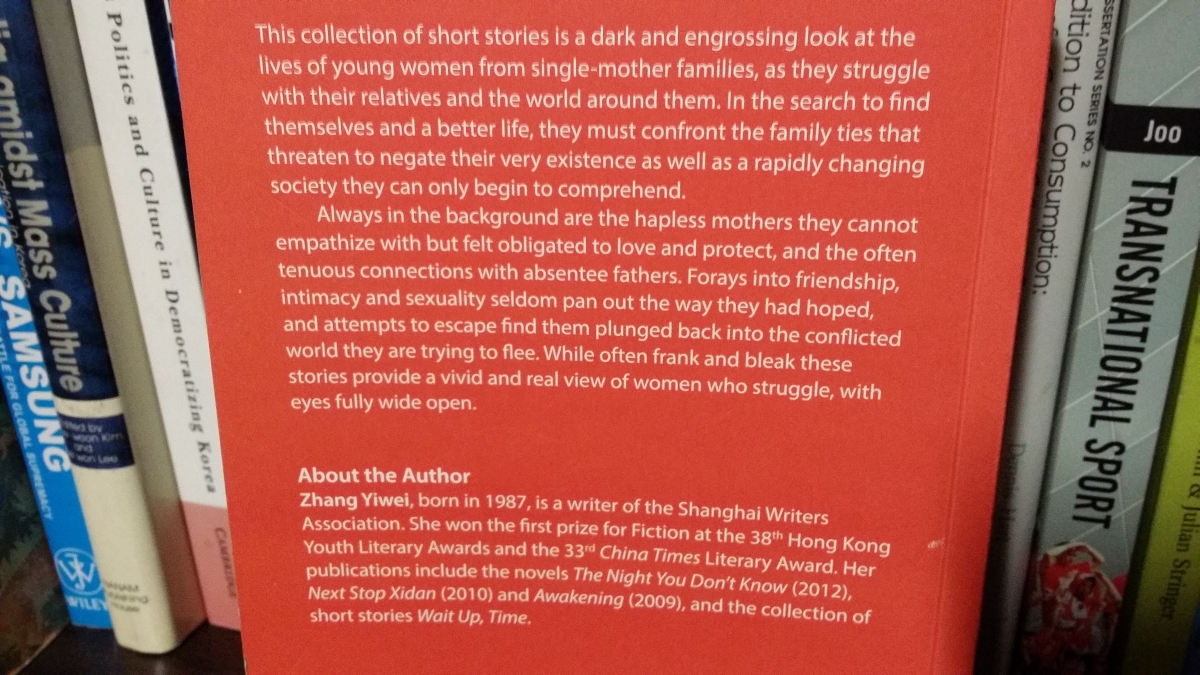
For this first one, I’ve selected Labyrinth of the Past by Zhang Yiwei. It’s a good book, but frankly it was a frustrating read for me personally, because the publisher’s website gave me the wrong impression of what to expect. Know what it’s really about though, and you’ll enjoy it from the get-go.
Here’s the offending description, which has two big problems:
Labyrinth of the Past is a collection of short stories that explore the lives of young women raised by single mothers in China, a country that is unforgiving to unmarried women and their children.
A dark, yet engrossing look at the lives of these girls, each story examines their personal struggles with family and the greater world around them. Coping with the stigma of being the daughter of a single mother, most of these women can’t seem to form anything but dysfunctional relationships, from mothers to friends to lovers.
While often frank and terribly bleak, these stories provide a vivid and real view of the women who struggle against a history they can’t change, in a culture that has difficulty accepting them.
That stigma surrounding unwed mothers is very realinKorea, so I partially chose the book to gain some insights into what it was like living with it. You can imagine my surprise and disappointment then, when it never even came up. Primarily, because none of the mothers are “unmarried” in the sense of never having married, but are all divorcees or widows instead. Which, given China’s skyrocketing divorce rates since Deng’s reforms, probably doesn’t carry any stigma at all:
The number of divorces has risen steadily in the new millennium, with one in five marriages now ending in separation. In 2006, the divorce rate was about 1.4 per one thousand people—twice what it was in 1990, and more than three times what it was in 1982….The number of divorces in the first three months of 2011 increased 17.1% year-on-year….Beijing leads the country with nearly 40 per cent of marriages ending in divorce, followed closely by Shanghai.
I’m happy to be corrected by any readers raised by female divorcees or widows, and/or with more knowledge of China, who may be able to read between the lines and see the influence of a stigma on the characters where I can’t. But if so, it’s still a very peripheral theme at best, and should really be removed from the description on the website (fortunately, it’s not mentioned on the back cover, which I wish I’d read instead).
The second problem is that the book is about the lives of young women, yet two of the seven stories—”Scab Addiction” and “No Choosing Today”—are entirely about the characters’ childhoods. In particular, in the former the character-narrator is revealed to be still in high school, making it a terrible choice for an opening story. Had I picked up the book in a store, expecting it to delve straight into the lives of adult Chinese women, I would have rejected it on the spot.
Again, this is not a criticism of the book per se, and of course all the remaining stories are indeed from women’s perspectives, with “A Good Year”, “Love,” and “Summer Days” all covering dating, marriage, and/or sex. “I Really Don’t Want to Come” too, covering the narrator’s increasing disdain for kowtowing to ancestors as she grows older, and frustration with what the ceremony means for her split family, is something many Koreans (and their foreign partners) will surely relate to. (“Memory is the Slowest” though, I just found confusing—I’m still not really sure what it’s about). But it’s also a real pity, because, once I got over the disappointment of reading something very different to what I’d been sold, and was able to take a fresh look at the book, ironically I came to find Zhang Yiwei’s depictions of childhood to be one of its biggest strengths. Her ability to evoke its timelessness, the sense of children’s whole worlds confined to just a few streets and fields, and our fuzzy, malleable memories of that phase of our lives is really quite remarkable (frankly, it immediately reminded me of the magic realism of 100 Years of Solitude), and that should be highlighted in its marketing.
Another strong point is showing how profoundly the issue of housing impacts ordinary Chinese citizens’ lives. That may sound rather boring at first, but it looms large in a country with such breakneck development, huge internal migration, and consequent vast urban/rural and home-owning/renting divides, and accordingly it’s a constant concern for many of the characters in the book, some of whom are stuck in limbo because their property is in an absentee husband or father’s name. Indeed, as if to rub that in, recently the government manipulated the ownership laws in a bid to thwart the divorce rate, taking a great leap backward for women’s rights in the process:
…the Chinese government has expressed alarm at the soaring number of divorces and its threat to the traditional Chinese family. In 2011, China took controversial steps to discourage divorce, reinterpreting the marriage law so that residential property is no longer regarded as jointly owned and divided equally after a divorce. Instead, it will belong exclusively to the spouse who bought it or whose name is on the deed, which is usually the husband, even if the wife helped pay for the property. This means that upon divorce many women might find themselves homeless.
At a time of soaring property prices, real estate is often a couple’s most valuable possession, and the revised law has caused many women to consider more carefully whether they really want to get married. Chinese media reported that marriage registrants plummeted as much as 30 percent in some cities weeks after the revised law was announced in 2011.
The verdict? I can’t lie—despite its strengths, the cover price of $13.95 is a little steep for such a slim book (160 pages), especially with some of the stories being so frustratingly short. But it’s definitely worth the $10-ish or even cheaper on various websites it’s selling for at the moment, especially if you know what you’re in for.
But first, remember I have two free copies to give away! Please just leave a comment below, and a week from now I’ll pretend to select two of you at random to receive them (make sure your email address is correct!). Really though, if you’d like to get to the head of the queue, please do bribe me with interesting comments about single mothers and/or something China-related!
Sorry for the slow posting everyone: I recently had food-poisoning, some editing deadlines and my students’ end of semester exams are looming, and on my days off I’ve been on a mini-whirlwind tour of Korean universities giving presentations about body-image. But I hope to be posting again soon, and, until then, the latest issue of Groove Magazine will easily provide more than enough insights and new information to whet your appetites!
If you can’t get a physical copy, please click on the image above to read it at Issuu (a quick registration is required), or to download a PDF (click on “share” to get the link).
Update: I forgot to mention that I was interviewed for Annie Narae Lee’s article on page 58, but it may not appear online unfortunately. Also, I’m still too busy to listen myself, but Groove’srecent podcast on abortion in Korea sounds useful and interesting.
Ironically though, thebacklashin much of the 2000s wasnot due to women taking over “men’s jobs”. In fact, it was the other way round, with a significant number of men losing better paid, advancing, more secure, regular work and being forced to compete for the irregular jobs that were—and still are—primarily done by women. You can see this in following slides I used in my last presentation (see here for the source and a more detailed explanation).
First, here are graphs showing the percentage rates and numbers of all workers (both men and women) doing regular and irregular work over time:
To be clear, the above graphs give no indication that it was primarily men that lost those regular jobs, and were forced to take up irregular ones instead. However, unstated is the fact that women with regular work were already targeted for layoffs in the aftermath of the 1997 Asian Financial Crisis, with the result that they took up irregular work in droves before 2002. So it’s a safe assumption.
What’s more, there’s the next graph, which shows the the percentage rates and numbers of men and women doing irregular work. As women’s rates barely changed, the implication is that the regular jobs men lost weren’t taken over by women:
With rates settling in 2004 though, it’s a bit of a stretch to blame the ongoing backlash in 2014 on the shift (although it certainly echoes in popular culture, with today’s freshmen—of both sexes—espousing the negative stereotypes). Today’s generation of young, job-seeking men are much more used to the difficulties of finding regular work, and certainly have no objective reason to fear or resent working women.
Or do they? See my next slide, a screenshot from thisArirang news video:
What’s more, Yonhap just reported that the gap has continued to widen—in fact, that the crossover occurred as early as 2010. As translated by koreaBANG (my emphases):
The trend in the employment rate of female to male workers in their twenties over the last 4 years has made a historic reversal. Due to so-called ‘female power’, the gap is getting larger.
According to the National Statistics Office’s statements on the 19th, the employment rate of 20-something female workers last year was 57.8%. This is 2.1 percentage points higher than their male counterparts(56.8%)…
…Since 2010, the employment rate of female workers in their twenties has been higher than their male counterparts.
In 2010, the employment rate of female 20-something workers, at 58.3%, surpassed the rate of males by 0.1%. In 2011, the lead increased to 0.4%, and in 2012, as women lead by 1.5%, the gap continues to widen.
The rate of economic participation of female 20-somethings was 62.5% in 2011, then rose to 62.9% in 2012. Conversely, the men went from 64% down to 62.6%, being surpassed by the women for the first time by 0.3%.
The labor market is changing little by little as women obtain higher levels of education and more positions in the workplace.
In every part of society, the female tornado is blowing strong even in specialized careers, and women are making considerable advances.
A gap of 2.1% hardly sounds like a “tornado” of “female power” to me, and much more like natural variation. But I can understand how news of women’s “considerable advances” might rankle, especially in the context of Korea’s lowest twenty-something employment rates since 2000, and the numbers of students deferring graduation nearly doubling in the last two years. It’s not at all difficult to empathize with a male graduate stuck working at (say) a convenience store, frustrated at how some women he went to university have regular jobs because they gained skills and qualifications during the two years he was stuck in the military.
Still, likely that’s not the only reason he’s angry:
Put simply, most of Korea’s extra boys are now men, and many of them can’t find girlfriends and wives. Most likely, precisely those who lack the steady jobs and money to be considered good partners.
Yes, I know what you’re all thinking, so let’s not mince words. I mean they can’t get laid.
That may sound facetious, and/or that I’m laughing at them. I’m not. Because fourteen years ago, frankly I was in a very similar situation myself. After graduating, I too couldn’t find a good job, and had to work three part-time ones just to scrape by (when my Doc Martins got holes in them, I had to put cardboard in them every day until I could afford new ones; yes, really). Needless to say, I didn’t have much time for dating, and wouldn’t have been very successful if I did.
I felt trapped.
Fortunately, I had the privilege of being able to take up a well-paying job (for a 24 year-old) in Korea, and, desperate in more ways than one, I took advantage of that just six months after graduating. So, while I can definitely empathize with how my students must feel today, on the other hand I can only imagine what it must feel like to never have the option to escape that I had, with no prospect of a partner or steady job for your entire twenties or beyond.
Still, I wasn’t spewing hatred about New Zealand women back in 2000, and likewise most of Korea’s angry young men (or indeed, China and India’s) aren’t destined to be misogynists in 2014 either. Most do direct their anger at the government and chaebol that deserve it.
Unfortunately though, all too many seem to firmly believe in such charming stereotypes as ‘kimchi bitches‘ instead. Moreover, China and India’s own “angry young males” are already considered huge sources of instability, crime, and sexual violence in those countries. Why would Korea’s be any different?
Also, the data raises a simple but important question: do the statistics about twenty-something men and women’s economic participation rates take into account the fact that there’s actually far more twenty-something men than women out there? That while a greater proportion of women than men are working now, that more men than women may still be working overall?
If not, then that “tornado” of “female power” may prove to be nothing more than hot air. Which makes you wonder why the media seems so full of it…
Either way, of course I’m grossly overgeneralizing in this post, so please feel free to call me out on that, and add any important information I’ve overlooked (I acknowledge I’m no great statistician too, and would appreciate any additional sources of data). But I think these demographic realities do significantly add to the many, often quite legitimate reasons for many young Korean men’s sense of anxiety in post-crisis Korea (which is not to say that things are any rosier for young Korean women), and it’s also fair to say that anxiety seems to be manifesting itself in excessive, distorted, and/or caricatured critiques and stereotypes of women. So at the very least, I hope knowing about all the extra men out there provides some much-needed context to current employment statistics and women-blaming. In hindsight, it’s extraordinary that any discussions of either wouldn’t take them into account.
In a nationwide survey conducted by the Federation of Korean Industries in 2010, marriage was the leading cause for South Korean women to quit their jobs – not childrearing. According to the poll, females in general have a 37.8 percent higher chance to give up work after getting married than if they were single – a percentage that shoots up to 58.2 for those in their 20s. The likelihood, however, of married mothers to leave their jobs was only 2.9 percent higher than married women without children. The federation explains these statistics by saying it is due to the foundational social belief that females should be full-time homemakers…
…Despite these numbers, measures to change cultural expectations – that it is not only the woman’s responsibilityto carefor children – are being opposed. In January, the Ministry of Labor and the Ministry of Strategy and Finance rejected one of President Park’s campaign promises: mandatory paid paternity leave, or “Father’s Month.” Ministry officials quoted potential financial problems such as the depletion of employment reserve funding for the opposition against the bill. They added that they will work towards a resolution but are unsure how they will initiate it.
Students at Sungkyunkwan University has created this poster, among many others to point out all the gender discrimination happening with common phrases said between friends and colleagues. The centered text in red reads “WHY do we have to listen to these things” / “WHY do we have to deal with these phrases” (translation open to interpretation)
some of the background text deals with homophobia, rape culture, negative gender stereotypes and heteropatriarchy.
Every time I the conversation of feminism or conversation of gender and sexuality in Korean, it makes me feel good. Because my Korean is very limited, I love adding new words to my dictionary, especially about these things.
Just recently I learned that the Korean translation of Women’s studies is 여성학.. I havent found the equivalent translation for Women’s and Gender studies but Im leaning towards something like 성(sexuality)과 여성학 .?
This is in marked contrast to the South, where a thin figure and big breasts have become symbols of beauty.
According to defectors, if a woman appears well-endowed in the North, people think she is intentionally and lewdly stressing her femininity, and she can easily come to be regarded as a slut. You have an atmosphere that doesn’t allow women to wear revealing clothing, and the North is still a male-dominated society.
One defector from Hoeryong said she had a work friend with large breasts who often ate chives because she’d heard they make your boobs smaller. She added that she was surprised upon learning that women in the South actually have operations to make their breasts bigger.”
Alas, The Joongang Ilbo provides nothing to verify those claims. But, I see no reason why the defectors would lie, and negativestereotypes of large-breasted women are by no means confined to North Korea. Also, who would ever question that “a thin figure and big breasts have become symbols of beauty” in the South?
Fortunately though, Liminality did, who in a must-read response shows that however much the Korean beauty industries and media promotesuch an ideal, and however much East Asian-women may have a genetic predisposition towards small breasts, cosmetic surgery patients at least hardly consider themselves lacking in that department. In fact, quite the opposite:
Per capita, far more breast surgery operations are performed in European and North and South American countries than in Korea (or Asia)
Despite having the highest per capita number of cosmetic surgery operations overall, Korea only came 22nd in the number of breast surgery operations performed per capita
Of those operations, Koreans had slightly less augmentation and lift operations than their counterparts in the US and Brazil, and slightly more reduction surgeries (source, above; reproduced with permission)
Similar attitudes may exist in Japan too, where even lingerie maker Wacoal was surprised by the number of women who told told them they wanted a bra that made their breasts look smaller, and then by the huge popularity of the—yes, really—’Bra That Makes Big Breasts Look Small’ design they developed in response. Also, Japanese mail order fashion magazine Bellemaison has developed a ‘Chest Line Cover’ (see second image below) that “promises to be a cool alternative to wearing a real camisole as Japan prepares for another hot summer made even hotter with another year of power rationing,” which I’m sure readers of both sexes can confirm would probably be just as big a hit in Korea.
But readers don’t need me to tell them that showing cleavage is still a big taboo in Korea, or that there’s a big disconnect between ordinary Koreans’—and even models’—attitudes to fashion, body image, and sexuality and what you may see on Korean TV. And I can’t claim any special expertise on ordinary North Koreans’ attitudes either.
However, when I read that original post at The Marmot’s Hole, by coincidence I’d also just finished The Home Front and Beyond: American Women in the 1940s by Susan M. Hartmann (1983), in which she explains that the massive social dislocations of that decade—in particular, women suddenly entering the workforce in large numbers—were responsible for big changes in women’s fashion there, as well as preferred breast sizes. And, as it happens, North Korea is also going through a very turbulent period at the moment, with power relations between the sexes undergoing especially dramatic change:
Imagine going to work every day and not getting paid. Then, one day, you’re told there’s no work to do — so you must pay the company for the privilege of not working.
This is the daily reality facing Mrs. Kim, a petite 52-year-old North Korean. Her husband’s job in a state-run steel factory requires him to build roads. She can’t remember the last time he received a monthly salary. When there are no roads to build, he has to pay his company around 20 times his paltry monthly salary, she says.
“He had to pay not to work for about six months of last year,” Mrs. Kim told NPR, sighing. “You have to pay, even if you can’t afford to eat. It’s mandatory.”
So she is the one who must keep the family alive, as her husband wrestles with this state-sanctioned extortion.
Welcome to the Orwellian world of work in North Korea. In this reclusive country, profound social change is happening beyond the view of the outside world. The demands of politics have dramatically redrawn gender roles, forcing women to become the breadwinners.
The NPR goes on to mention that one major consequence of that emasculation is skyrocketing domestic violence, against which speculating about ensuing changes in fashions can admittedly sound frivolous. But those have changed regardless—indeed, by government decree. First, in July last year:
Supreme leader Kim Jong-un appears to be loosening the government’s grip on how women dress by allowing them to wear pants, platform shoes and earrings, ABC News reported.
Previously, pants were only permitted as uniforms for females in the factories or the fields — and not for making a fashion statement.
“If caught, sometimes they would cut your pants right there in public to make it into a skirt,” Park Ye-Kyong, who defected to South Korea in 2004, told ABC News.
That doesn’t mean North Korean women don’t enjoy preening, Park added.
“Yes, we were hungry but desire to look beautiful lies in any woman,” she said.
In addition, the next month a 20 year-ban on women riding bicycles was lifted. Ostensibly imposed for women’s safety, numeroussources also mention its supposed incompatibility with juche, related educational television promoting “the idea of a woman wearing a skirt while riding a bicycle [being] contrary to socialist custom.” (See NK News{source, right} for more on North Korean ideals of women). Moreover, in 2009 Human Rights Watch also noted that:
…the ban on pants and bicycles for women is symptomatic of a range of other, often-overlooked, problems.
Across North Korea’s conservative, male-dominated society, there is discrimination against women, a knowing disregard for the consequences of such policies, and an opportunistic manipulation of power by police officers trying to make easy money by preying on an undervalued and underprivileged population.
In light of that, most likely the lifting of the bans was mainly simple populism on the part of a new leader, as well as — despite those state gender ideologies described above — a reluctant concession to the new realities of female breadwinners. Sure enough, in typical North Korean fashion (pun intended), just 5 months later the ban on women riding bicycles would actually bereinstated. Also, while technically they can still keep their pants on, in practice opportunities for women to beautify themselves remain limited, with both sexes punished for straying from officially-sanctioned hairstyles; sharp divisions in what is permissible for married and unmarried women; and a general lack of (beauty-related) resources overall, including such simple things as hairdryers.
Perhaps, things are not changing in North Korea as much as they first appear?
Yet in South Korea at least, it’s true that the last 15 years have seen a vast increase in the numbers of women competing with—and increasingly displacing—men for irregular and part-time work, despite the (extremely low) overall female workforce participation rate remaining unchanged. This has spawned quite a backlash, and—à la The Beauty Myth (1991)—a rapid increase in (overwhelmingly female) objectification in popular culture. So, while again I stress my ignorance and lack of knowledge with anything North-Korea related, it’s not unreasonable to suppose that, surely, the sudden large influx of women into the workforce may also be having some sort of impact there.
Either way, reading about similar experiences elsewhere can inform an understanding of what’s happening in both countries. So, with the obvious—but still necessary—caveat that of course both countries are very different to the US in the 1940s, for the remainder of this post let me try to pass on some of what I’ve learned about what happened there.
First, it’s important to get a sense of the numbers (pp. 77-8):
The female labor force grew by 6.5 million during the war
In 1944, 37% of all adult women were reported in the labor force, but nearly 50% of all women were actually employed at some time during that year
The greatest changes took place among married women
1 in 10 married women entered the work force during the war, representing over 3 million of those 6.5 million new female workers (3.7 million, according to Marilyn Yalom in A History of the Wife {2002; p. 320})
2.89 million were single, the rest widowed or divorced
So, for the first time in US history there were more married women than single women in the workforce.
Note however, that the war resulted in many more marriages than there would have been normally — approximately 1 million more, according to Yalom. Moreover, wives of absentee husbands were twice as likely to seek jobs, with half of all servicemen’s wives being in the labor force
The percentage of wives that worked grew from 13.9 in 1940 to 22.5 in 1944 (Yalom says 15 in 1940 to over 24 in 1945)
The percentage of women with children that worked grew from 7.8 in 1940 to 12.1 in 1944
By 1945, half of all working women were over 35; slightly more than 1 in 4 were 45 or older
The typical female worker had shifted from younger and single to older and married, a pattern which was maintained in the postwar years
As Hartmann elaborates throughout her book, these figures represent an ensuing era of relative opportunity and freedom for many women (including sexual freedom; see Pin-Up Grrrls {2006} by Maria Busnek, pp. 213-224; see below also), even if it was usually simple economic necessity that compelled them to work in the first place (and usually at tedious, menial, and unfulfilling work at that). Accordingly, it definitely set the stage for second-wave feminism in the 1950s and ’60s, and deserves the place it’s gained in the Western historical imagination.
However, it’s also true that despite the huge public and private need for women to enter the workforce, that need was still considerably tempered by both sexes’ preexisting gender and racial ideologies, with both official propaganda and popular culture glamorizing women’s work and stressing its patriotic importance on the one hand, yet emphasizing its strictly temporary nature on the other. Not least, to nervous male workers and servicemen, who: lacked our knowledge that the war would lift the US out of the Depression (source, right); were very much judged by their ability to provide for their families, in an era where many simply couldn’t (note that one big difference between the Depression and the current financial crisis is that many people were literally starving during the former); and who sometimes had genuine difficulties with employment after demobilization, particularly in the shrinking war industries in which the women had been recruited (Hartmann, p. 63).
Buszek summarizes the contradictions of this era well (pp. 214-5):
And in particular:
Despite the huge demand for workers, and the ultimate, relative flexibility both employers and male employees would demonstrate in incorporating Caucasian women into their midst, African-American women remained largely unwelcome (e.g., 10 months after Pearl Harbor, there were fewer than 100 out of 3000 women in Detroit war industries). So, while the numbers of them working did increase from 1.5 million in 1940 to 2.1 million in 1944, their share of the female labor force actually dipped from 13.8 to 12.5. By 1950, their employment patterns were very similar to those of 10 years earlier, albeit partially because by then their husbands were making more money. (Hartmann, pp. 60, 78-9)
Partially, the huge numbers of wives that entered the workforce is because there were previously bans against them by many companies, let alone being against social convention; even schools discriminated against them. It’s amazing how quickly bans were dropped once the need for labor arose though, with some previously hostile managers coming to express a “preference for married women as more stable and conscientious than their single sisters” (pp. 59-60). And this provides encouraging news for Korea, which unfortunately still largely retains those conventions, and where as recently as 2009 I was working for a company that — yes, really — fired women upon marriage (source, right).
Nevertheless, there remained extreme public and private ambivalence about working mothers. Officially seen as more of a social problem than something to be encouraged, officials did recognize “that financial need compelled some mothers to work and that in localities with severe labor shortages production goals would requite the employment of mothers,” and urged employers not to discriminate against them (p.58). But on the other hand, the government would also constantly remind them that homestay mothers were essential for children’s development; popular culture was full of stories of child neglect; and daycare provision, while expanded, was ultimately completely inadequate, paling behind that which was provided in the UK, and prompting frustrated managers of some defense plants to set up their own (Yalom, pp. 324-6).
But, lest we forget, this post is about breasts. And changes in women’s fashions which came with the contradictions involved with entering the workforce, with women having to confront rampant sexual harassment on the one hand, and often being blamed for the “distraction” they posed, but on the other relishing their newfound freedoms (Buszek, pp. 216-7):
However, the combination of war-time shortages and women’s entrance into the workforce meant that people suddenly became used to women in functional, masculine clothing and with more practical hairstyles, and that women’s fashions became more simplified, comfortable, less overtly sexual, and changed less frequently than before. So, when you learn that popular culture stressed the exact opposite, for example…
That female workers were still “glamorous” and feminine despite their new roles (Hartmann, p. 199)
As were female sport stars, women’s sports enjoying a lot of popularity while their male counterparts were occupied (p. 194)
Lingerie manufacturers coped with wartime shortages and new demand by producing much practical bras, yet these coincided with pinup photographs that emphasized their subjects’ breasts (Jill Fields, An Intimate Affair: Women, Lingerie and Sexuality, 2007, p. 106). As explained in Part 3 of this series, this ultimately led to the fashion for large and uplifted breasts that remains to this day.
…then it is very easy and natural — indeed, this is my very strong impression from the books discussed here, although exact page references are suddenly proving maddeningly elusive(!) — to argue that this alternate ideal was imposed by, for want of a better word, the patriarchy, to encourage women to enter the workforce yet at the same time remind them that their place there was unnatural and temporary. And, to be clear, not for a moment am I arguing that this wasn’t very much the case (source, right).
However, as Hartmann explains on p. 198 below (echoed by the other sources), it’s also true that women themselves were just as passionate about preserving their femininity (indeed, they would understandably revel in impractical but much more feminine fashions once war rationing ended):
In particular, and especially in light of the new opportunities open to them as mentioned, I think it’s both overly dogmatic and patronizing to dismiss choosing to use those feminine adornments as mere false consciousness and women’s own mindless incorporation of patriarchal values. Also, although it’s true that the period was rife with pop psychology theories (it was conveniently claimed that women like boring, monotonous work much more than men for instance) it’s very unlikely that men and women rationalized and articulated their choices and concerns in such patriarchal terms. Even if those did operate on a subconscious level, and patriarchy is still the only thread which can bring otherwise disparate developments in the period together, surely men did not think, for example, that if they saw more big-breasted women in popular culture, emphasizing the differences between the sexes as increased use of lipstick did in the workplace, that this would make them feel more secure in their jobs.
In addition, while changes in attitudes were certainly quick, they didn’t happen overnight, Jill Fields (p. 106) noting that “uplift” and “separation” trends in bras for instance, which accentuated the projection of the breast silhouette, had actually already started back in the 1930s. Finally, if you’re confused like I am, because I just noted above that bras actually became more practical during wartime, and am now stating that women could simultaneously be censured and praised for wearing distracting clothes, that’s because contradictory and competing trends coexisted simultaneously, the 1940s being just as messy, complicated, and contradictory as modern life.
And on that note, thank you very much for bearing with me in this admittedly equally messy, complicated, and contradictory post, the result of me personally trying to understand what patriarchy means in practice as well as theory. And, with the proviso that my relief — and frankly joy — at discovering historic parallels (and especially English-language historiography!) to modern North and South Korean developments should make me wary of projecting too much, and not blind me to the significant differences, I’m very happy to have pointers towards further study, and very much welcome readers’ own suggestions! (source, right)
Update: See Fit, Feminist, and (almost) Fifty for “the medical condemnations of women’s cycling [which are] fascinating for what they tell us about what people thought (and maybe still think?) about women’s athletic capabilities and potential.”
Update 2: “Saudi daily al-Yawm cited an unnamed official as saying women can now ride bikes in parks and recreational areas. According to the official, the ruling stipulated that women must wear a full-body abaya, be accompanied by a male relative, and stay within certain areas. They are allowed to bike for recreational purposes only, not as a primary mode of transportation.” (Aljazeera)
The other day Kim Young-hee (26) smoked in public instead of a cafe. She took out a cigarette impulsively while waiting for the bus home after a few drinks with her friends.
“I was a bit tipsy and felt like a puff. After I lit the cigarette, a random middle-aged man came up to me and started shouting as if I had done something very bad. He said, ‘I will slap your face if you don’t throw your cigarette away right now.’ He called me ‘dirty little woman.’”
She still thinks it was ridiculously unfair for him to reproach her because the man was also holding a cigarette…
See The Korea Times for more stories of similar incidents, and my The Gender Politics of Smoking in South Korea series (Part 1, Part 2, Part 3, Newsflash, Part 4, Korea’s Hidden Smokers) for more context. As explained in the latter (see the article in the last link for a summary of the series), the stigma against women smoking leads to massive under-reporting by them, resulting in official figures of roughly 2-5% of Korean women smoking, against best estimates of roughly 20% (see here for a handy international comparison). What’s more, the previous government was accused of deliberately downplaying the figures to stress its success in lowering the (admittedly more pressing) high male smoking rate, and while technically I haven’t seen the same accusations leveled at the outgoing Lee Myung-bak Administration, I haven’t found any official acknowledgement of how problematic its figures are either.
Meanwhile, since my last post in the series was published nearly a year ago, probably the biggest developments have been the Seoul City Council’s continuing efforts to implement its 2011 plans to increase the number of public areas being designated smoke-free to 1/5th of the city by 2014 (smoking on sidewalks was already banned in 2010); and also efforts by some companies, both public and private, that have gone so far as to make being a non-smoker a prerequisite for promotion. For more details on both of those, see “Getting Tough: Korean Smokers Passed Over for Job Promotions” by Bobby McGill at Busan Haps, who also notes that (source, right: sungjinism):
The central government is doing what it can while avoiding Korea’s third-rail of politics, the “sin tax”. Few things more quickly turn the public against you here than raising taxes on Korean’s beloved cigarettes and alcohol. And the evidence shows that aside of potentially costing elected officials their jobs, it does little to curb smoking anyway.
The last time the government raised taxes on cigarettes was in 2004 by 354 won (30 cents) when 52 percent of the male population was smoking. The rate dropped a paltry seven points to 45 percent by 2007, but then increased the three subsequent years hitting 48.3 percent in 2010 before leveling off back at the current 45 percent.
I’d agree that the government is avoiding the sin tax, but disagree that that 2004 tax hike constitutes evidence against its effectiveness: a raise of 354 won being moot when just last year, packs were still at “the very smoker-friendly price of 2,700 won each” (US$2.53 as I type this). Moreover, in November “The International Tobacco Control Policy Evaluation Project’s team of some 100 health experts from around 20 countries” said that “it is imperative for South Korea to raise taxes on tobacco products,” and also 50% of respondents in a December 2010 survey by The Ministry of Health and Welfare “said that they would seriously consider quitting if the price was at least 8,000 won per pack.”
What do you think, about any of the above? Especially those among you that smoke yourselves? Personally, when I hear of women getting threatened, even slapped in the face for smoking in 2013, I’m very skeptical about news of improvements. But I realize that that is likely much more a manifestation of general misogyny than being anti-smoking per se, with Nathan McMurray of Korea Law Today, for instance, being much more optimistic about changing attitudes:
Reducing smoking is a process that will require the collective willpower of the entire country, because it is a habit so deeply ingrained in the culture. However, positive strides have been made to reduce the number of male smokers. In fact, since I have been in this country, I have noticed that the perception/acceptance of smoking has morphed into something different than it used to be.
Either way, let me conclude by passing on some further reading I’ve come across in the past year. First, specifically gender and smoking-related, which show that — of course — it’s by no means just Korea where the number of female smokers is soaring (source, right: Jude Lee; CC BY 2.0):
Tomorrow at about 8:30am, there’ll be a brief interview of me in the “Morning Coffee” section of the 7-9am Morning Wave program on Busan e-FM. More about me than than anything Korean feminism, sexuality, or pop-culture related sorry(!), if you’re still interested you can listen in at 90.5 FM or online here, or catch it later in the archives.
If recent BBC coverage is anything to go by, marriage in South Korea is like a business. It’s also becoming a bit of an explosive topic as social mobility slows down and the traditional image of the male breadwinner becomes eroded by the increasing participation of females in the labour market. Some of the most widely publicised scandals and controversies on the Korean internet seem to have been, in some way or another, due to this intensifying gender friction.
My apologies for singling out Justin at KoreaBANG, whose post is still excellent overall. And as you’ll soon see, I often make mistakes too.
But that comment I’ve highlighted? Frankly, it just infuriated me. Because even though it’s completely wrong, I seem to hear it all the time these days.
In reality, the Korean female workforce participation rate has stagnated at one of the lowest rates in the OECD ever since 1997-98, when women were overwhelmingly targeted for layoffs during the Asian Financial Crisis. Back then, the logic was that wives would be provided for by their husbands, and 20-something daughters by their fathers. And 10 years later, in the latest crisis, to a large extent this logic was reapplied, although on this occasion there was a clearer economic – not just patriarchal – logic in that women formed the bulk of irregular workers (see here, here, and here for much more information).
Or so I’ve often written. But naturally, it was difficult to find definitive statistics on that when I first reported on it three years ago. At that time, my most up to date source was my copy of Working Korea 2007, published by the Korea Labor & Society Institute. Here is my scan of page 19, which has a graph of the male and female workforce participation rate of 1970-2006:
In hindsight, although it does show a big drop in the female rate in 1997-98, it shows an equally large (even slightly larger?) drop in the male rate too. With my apologies, I’m very surprised I didn’t notice that earlier, and, although it does contradict most of the literature I’ve read about the Asian Financial Crisis, and is just from one source too, it still definitely bears further investigation.
That aside, a year later I found a source going up to 2008 (it shows a fall of 50.3% to 50.0% in 2006-2008; see below also). And today, spurred by Justin’s comment, I tried looking again, and found the following at the National Statistics Office’s website:
The blue bars represent the economically active female population, in thousands (i.e., the first figure is 10.75 million), the pink line the female workforce participation rate. Although the choice of right scale gives the false visual impression that the rate has changed a great deal, as you can see from the numbers it has remained within a narrow band of 49% to 50.5%, last year’s rate being just lower than that of 2002. Also, clearly a 0.9% drop between 2008 and 2009 isn’t quite as big as I’ve been making out, and again is something that bears further exploration.
But still, one thing is clear: the number — well, percentage — of Korean women working has little changed in the last 15 years, and remains very very low by the standards of other developed countries. So it can not be the cause of increasing gender friction.
The perception that Korean women are making significant inroads into the Korean economy though? That’s entirely possible, and indeed I highlyrecommendKoreaBANG for much more on that (indeed, especially the remainder of Justin’s post), as well as manypostsby Gord Sellar too (source, right).
(For more posts in the Korean Sociological Image series, see here)
A long time ago, a Korean friend told me that banks were like a microcosm of all Korean workplaces — almost all the tellers were women, and seemed to do most of the actual work, but made the least money. In contrast, their male supervisors seemed to just sit at the back, occasionally approving a form the tellers would bring to them. But they’d probably be paid twice as much.
I don’t know how fair that portrayal was, and indeed later I befriended a Korean bank teller who didn’t think much of it, who loved her work at an all-female branch. Nevertheless, as the following The Joongang Ilbo report makes clear, the banking industry still has the largest gender pay gap, with women making an average of only 57% of what men make.
Undoubtedly, that is primarily because most of the women in banking, well, are tellers, as one banker explains below. On the other hand, it’s also true there are some deeply sexist attitudes within the industry — e.g., women lack a “competitive edge” — that underlie that gender division. For more on that, see this post on the 2009 commercial by Shinhan Bank above, which has a clear message that men should do the thinking while women should merely look good.
Also, after reading this post, compare my “University Graduates: One Woman Hired for every Four Men” one from November, where many commenters pointed out that the companies examined were most heavy industries, for which such a gender division was to be expected. This report sheds more light on that, including the surprising news that it’s actually the Hyundai Motor Group that gives the highest average salaries to women.
성별임금따져보니 / Let’s find out the sex difference in salaries
대기업 여성 연봉 순위는 남성 랭킹과 확연히 달랐다. 1위는 평균 7100만원을 주는 현대자동차였다. 남성 평균(9000만원)의 79% 선이다. 이 회사 남성 직원 평균 근무 연수가 17.8년으로 여성(12.2년)보다 고참이 많다는 점을 감안하면 사실상 남녀 간에 임금격차가 없는 셈이다. 현대차 허정환 이사는 “자동차 산업의 특성상 힘든 생산라인에는 여성이 거의 없고 대부분 상대적으로 연봉이 높은 사무직에서 근무하다 보니 여성의 평균 임금이 높다”고 설명했다. 현대차에서 일하는 여직원은 모두 2442명으로 이 중 생산·정비직은 184명뿐이다.
The order of companies that pay the highest average salaries to men and women are completely different. For women, Hyundai Motor Group is number one, which pays 71 million won a year. This is only 79% of men’s average of 90 million won, but when their level of seniority is taken into account (women’s average number of years worked is 12.2, men’s 17.8) then they’re not significantly different. Asked about this, CEO Heo Jeong-hwan explained: ” The car industry is unique — women do not have the strength to work on the production line, so most do office work, where they make more money than the men on the floor. Out of 2442 women working at Hyundai, only 184 work on the production line or in maintenance.”
현대차뿐 아니라 현대차그룹 계열사들은 대부분 여성의 급여가 높았다. 기아자동차(6400만원)가 88개 대기업 중 3위, 현대모비스(5700만원)가 6위였다. 삼성전자는 여성이 평균 5350만원(11위), 남성은 8860만원을 받았다. 삼성전자는 여성들이 생산 라인에서 많이 일하고 있다. 이 업체는 생산직 여성 수를 사업보고서에 기재하지 않았다.
It’s not just Hyundai Motor Group, but also in companies affiliated with the Hyundai Group in which women’s average salaries are high. Kia Motors comes in at number 3 of 88 large companies with an average of 64 million won, and Hyundai Mobis number 6 with 57 million won. At Samsung Electronics, number 11, women receive 53.5 million won and men 88.6 million won. Many women work on the production line at Samsung Electronics, although The Joongang Ilbo is unaware of exact numbers.
전체 88개 기업의 여성 평균 연봉은 4270만원으로 남성 평균 7002만원의 61%였다. 평균 근무 연수는 남성이 12년, 여성이 7.7년이었다. 대기업 남녀 간 임금 격차에는 이런 근무 기간의 차이 때문에 생긴 부분도 있다.
All together, out of 88 large companies the average women’s wage was 42.7 million won, 61% of the average men’s wage of 70.02 million won. Most of this can be attributed to the difference in the average number of years worked, which is 7.7 years for women and 12 years for men.
성별에 따른 차이는 유통업체가 제일 심했다. 여성 평균 임금(2090만원)이 남성(3191만원)의 43%에 불과했다. 매장에서 상품 진열 같은 시급제 아르바이트를 하는 여성이 많다 보니 생긴 일이다. 최근 들어서는 특히 대형마트나 수퍼마켓에서 아르바이트를 하는 중·장년 여성들이 늘고 있다. 남편은 은퇴하고 자녀들은 청년 취업난에 좀체 일자리를 구하지 못하자 주부들이 생활비를 벌려고 나서는 것이다.
(James — There must be a typo in one of the above figures: 20.9 million won is not 43% of 31.91 million won, but 65%; and this is higher than the 61% mentioned in the last paragraph, even though this paragraph is about the lowest comparative figures. Given that, and the mention of a lot of women working part time, then I’m going to assume that it’s the average women’s salary that is the incorrect one, and that it should be 43% of 31.91 million won, or 13.72 million won)
The highest gender gap was in the sales and distribution industry, with women’s average salary of 13.72 million won being only 43% of men’s 31.91 million. The reason is that most of the women are middle-aged and late middle-aged part-time workers in sales, compelled to work in large supermarkets to make a living because their husbands are retired and their adult children find it difficult to get work.
고액 연봉 직종의 대명사인 금융 쪽도 여성과 남성의 차이가 컸다. 평균적으로 여성(4800만원)이 남성(8460만원)의 57%를 받는 데 그쳤다. 남성 연봉 1위인 하나대투증권의 경우 여성 평균 연봉은 6200만원으로 남성의 절반이 채 되지 않았다. 성별 연봉 격차는 8200만원에 달했다. 한국스탠다드차타드은행 또한 남성은 8900만원으로 전체 순위 7위였지만 여성은 그보다 5300만원 적은 3600만원으로 51위에 그쳤다. 외환은행(차이 4500만원)과 삼성화재(4200만원)도 남성과 여성 간에 급여 차이가 많았다. 금융회사들이 남녀 임금 격차 상위를 줄줄이 차지한 것이다.
The largest gender gap is in the finance industry, with women making an average of 57% (48 million won) of what men make (84.6 million won). In the number 1 company for men, Hana Daetoo Securities, women make an average of 62 million won but men make 144 million, more than half as much again [James – That’s 43% of the men; maybe that figure got moved to the wrong paragraph?]. At Standard Chartered Korea, 7th best for men, they make 89 million won, but the company is only 51st best for women, who make 53 million (a difference of 36 million). At Korea Exchange Bank, the gender gap is again high at 45 million won, as it is at Samsung Fire and Marine Insurance. Across the board, the gender gap is very high in this industry.
이에 대해 스탠다드차타드은행 홍보실 정한용 부장은 “고액 연봉을 받는 사무직이나 영업직은 주로 남성이고 여성은 대부분 계약직 창구 직원(텔러)이기 때문”이라며 “여성의 근속 연수도 남성보다 짧다는 점 역시 작용했다”고 말했다. 통신업종은 남성에 대한 여성 임금 비율이 72%로 가장 격차가 적었다.
김영민 기자
Standard Chartered Korea PR Head Jeong Han-young explained: “The reason for the difference is because in our company, it is mostly men that are involved in business and commercial operations whereas most of the women are irregular workers, working as tellers.” Also, “the male workers have been working for the company for much longer.”
The smallest gender gap was in the telecommunications industry, with women making on average 72% of the men.
Reporter: Kim Yong-Min
Update — Thank you to Sky Kauweloa, who pointed out on the blog’s Facebook page that The Korea Times produced a similar, short report. Alas, it doesn’t help resolving those typos above, but it does have information about some more companies, and also the nice graphic I’ve added on the right:
If you’ve been following my The Gender Politics of Smoking in South Korea series (Part 1, Part 2, Part 3, Newsflash, Part 4, Korea’s Hidden Smokers), you’ll know that there’s a huge stigma against women smoking here. This leads to chronic under-reporting by female smokers, which in turn leads to the government and media regularly giving female smoking rates as low as 2-4%. In reality though, best estimates put the rate among young women at roughly 20%, pointing to a looming health crisis.
Even if the coming presidential election brings more enlightened officials to the Ministry of Health and Welfare (보건복지부) however, which has previously overwhelmingly focused on—and been accused of exaggerating—reductions in the male smoking rate, there’ll still remain the problem of finding out how many young Korean women actually smoke.
Or will there? With my thanks, let me pass on a reader’s partial solution:
My coworker, the assistant haksaengbu (학생부) at my high school, made a list of students caught smoking. This is at a small-town girls high school, with 330 students age 15-18 in western years. So far this year (since 2 March) 14% of the students have been caught smoking, with 9.5% of the academic (moongwha; 문과) students caught and 25% of the vocational (sanggwha; 상과) students caught.
I would think that 14% would be the absolute minimum possible average in Korea, considering that we’re in a fairly conservative area and teachers can still punish students (though it’s pretty inconsistent and haphazard). Considering that those are only the ones who’ve been caught and there’s almost nothing in the way of lunchtime and after-school supervision, I’d guess that the amount who smoke on a daily basis is 50% higher and the ones who’ve tried it on occasion is double that.
In any event, if you wanted some incontrovertible statistics about teenage girls smoking in rural Korea based on a sample size in the hundreds there you go!
Later, they added:
If you’d like the breakdown it was 21 out of 226 moonghwa students and 26 out of 106 sangwha students. I believe a couple of the sangwha students have dropped out/gone awol/transferred.
What do you think? How does this compare to readers’ own schools?
If you reside in South Korea, you can donate via wire transfer: Turnbull James Edward (Kookmin Bank/국민은행, 563401-01-214324)
It’s easy to criticize an industry that – in Korea at least – so needlessly stresses age and appearance, and to consider the young women that aspire to it as hopelessly vain and naive. However, despite these stereotypes, not only do the limited options available to Korean women arguably make stewardessing a rational, adventurous, and even quite rebellious career choice, but Korean airlines even require university degrees from applicants too (and some cabin crew actually have Ph.Ds!).
See the Korea Herald here for more information. Guaranteed, you’ll be much more sympathetic to Korean stewardesses (and hopefuls) after reading it!
Written by me last October, a couple of years after a Qatar Airways-bound student of mine forced me to rethink some of my own assumptions about stewardesses. One of the most intelligent and ambitious 23 year-olds I’ve ever met, I was reminded of her resolution and determination yesterday when I read that Asiana Airlines stewardesses hadprotested the company’s “sexist guidelines regarding female flight attendants’ appearance”, their union head arguing that:
Flight attendants are not Barbie dolls. We are professionals with diverse characteristics who strive to become successful. We should not be judged by how we appear outside. We cannot be subject to any discrimination at work just because we are women.
If anything, this stress on appearance is confirmed by the following advertisement for a Korea stewardess school, which begins by mentioning the benefits of becoming a stewardess, but then has a promotion about a competition to find the “uniform queen” on the back.
On the other hand, it is just the one ad, so we should be wary of drawing too many conclusions from it. I’m just presenting it here mostly for the sake of readers outside of Korea, who may never have seen a Korean one.
Also, from Korea-based readers, I’d be interested in hearing if any other universities likewise got inundated with other schools’ ads at the end of last semester, how they compare, and how effective you’d think they’d be with students (don’t dismiss the cartoon format though — recall that everything is cute in Korea!):
– If you’re a woman, who doesn’t want to become a stewardess? But there’s probably many women who don’t know what you have to do to prepare to be one (nod nod).
– I thought like that too when I began. I was short, my appearance was just average, my English wasn’t good…could I really do it? I worried a lot about it.
– But now you’re the perfect crew member, despite all that. Unbeliv[able]~!! (I don’t believe you!)
– [Older Sister]!! If you become a crew member, what are the benefits?
– The days off are great
– You get discounts on air travel
– You get global opportunities
– You make lots of money
– You even get support for your children’s tuition
– And lots more…
(Wow!~Amazing~)
– So, older sister, how did you prepare? I too absolutely want that challenge!
– I’ll tell you how I did it.
– Okay then! Seonyeong’s stewardess success story, here we go~!!!
Keen eyes will have noticed that that was just Part 1; alas, I don’t have any more in the series, and can’t seem to find them on the school’s website sorry. But here is the back:
The title and first paragraph say:
– Find the Cosea Uniform Queen!!
– Cosea has a school vacation event for students with the dream of becoming crew members!
Next, there’s the details of that event:
– After having a free consultation and an image test, have your picture taken with an instant camera. The best student will win a free course at the school!!
– 1st prize: a free course
– 2nd prize: a set of interview clothes
– 3rd prize: a voucher for a free interview make-up and hair-styling session
– *Everybody that participates will get a personal color image check [James – ???]
Finally, it tells you how to enter the competition. But if you’re interested, then I’m afraid you’re on your own with that!^^
A brief report from YTN on Wednesday, which you can see the video of here (I can’t embed it sorry). Unfortunately, it provides no actual sources for its assertion that sexual harassment is common at interviews, but I’m inclined to believe it given how invasive and often needlessly humiliating the job interview process already is in Korea.
Indeed, when even Samsung admits that many Koreans “take it for granted that they have to tolerate anything in return for getting paid”, then it’s difficult not to see such an interview style as an integral and deliberate part of indoctrinating new workers.
Lest you scoff at the ensuing passivity and regular unpaid overtime however, and claim that you would never tolerate that crap from your boss, note that a 2011 OECD report found that “Korean workers [are the] most vulnerable to an economic crisis compared with their counterparts in other OECD countries, due to the country’s extraordinarily low levels of unemployment benefits” (i.e., lose your job in Korea, and you’re screwed). Also, that it’s very common to be interviewed in a group rather than individually, especially at larger companies, and that particularly stressful and demeaning interviews are so common as to have their own special name (abbak-myeonjob/압박면접, or ‘pressure interview’), mentioned at the end of the report.
“면접때성적모욕감느꼈다면성희롱” / “If you feel insulted from sexual jokes at a job interview, that’s sexual harassment”
Anchor Comment:
여성 구직자들이 입사 면접을 볼 때 면접관들이 성적인 농담을 던질 때가 종종 있습니다.
구직자가 이런 말을 듣고 모욕감을 느꼈다면 성희롱에 해당된다는 국가인권위원회의 판단이 나왔습니다.
조임정 기자가 보도합니다.
Female job seekers report frequently receiving jokes of a sexual nature from interviewers at job interviews. If they feel insulted as a result, that’s sexual harassment according to a judgment of the National Human Rights Commission (NHRC). Jo Im-jeong reports.
Reporter:
취업을 앞두고 면접에 다녀온 여성들은 종종 무력감에 빠지곤 합니다.
면접 때 던져지는 이상한 질문들 때문입니다.
Prior to getting a job, women feel powerless after having an interview. That’s because they receive such strange questions in them.
Interview — Miss Gomo, a student preparing to start working:
“성적인 수치심을 느끼는 질문을 한다면, 사실 면접자 입장에서는 어떻게 강하게 대응할 수 있는 부분이 아니고…”
“If an interviewee feels a sense of sexual shame [from the questions in an interview], they’re not in a strong position to do anything about that…”
Interview — Son Ji-hee, 4th year university student:
“성품을 보기 위해서 그렇게 자극적으로 얘기하는 것에 대해서, 정말 실효성이 있는지는 두고봐야겠지만, 그렇게까지 상처를 받는 사람이 있다면, 자제될 필요는 있다고 생각합니다.”
“Saying provocative things like that in order to determine one’s personality…it has to be seen if that’s effective. And if it’s done to the extent that people are hurt by it, then it needs reconsidering.”
이처럼 면접을 비롯한 구직 과정에서 성적 굴욕감을 느꼈다는 진정이 잇따라 국가인권위원회에 접수되고 있습니다.
지원자에게 “남자친구 몇 명을 사귀어봤는지”처럼 업무와 관련 없는 질문을 던지거나, 심지어 회사 대표가 면접 과정에서 지원자의 특정 신체 부위를 만지는 경우도 있었고, 채용이 확정된 뒤 회식 자리에서 남자 직장 상사와 블루스를 출 것을 강요한 경우도 있었습니다.
인권위는 입사 면접 과정에서 면접관의 발언 때문에 구직자가 성적 굴욕감을 느꼈다면 성희롱에 해당한다고 판단했습니다.
문제는, 면접에서 결정적인 권한을 가진 회사 관계자가 성희롱을 해도 절대적 약자인 구직자가 제대로 대처하기 힘들다는 겁니다.
People who have felt humiliated like this in interviews have appealed to the NHRC.
Applicants report being asked questions like “How many boyfriends have you had?” that have no relationship to the job, and there have even been cases of company representatives touching certain body parts of theirs during the interview. Or, after they’re hired, of male superiors forcing them to dance the blues with them at company dinners.
Feeling sexual shame because of comments by interviewers has been judged sexual harassment by the NHRC.
The problem is that when the final decision about hiring is by the sexual harassers themselves, interviewees are in a weak position and find it difficult to cope with what has happened.
Interview — Kim Min-jeong, NHRC Discrimination Department Investigator
“압박면접을 시행하더라도 개인의 직무 능력이나 본인의 가치관 등을 알아볼 수 있는 질문을 하는 것이 훨씬 더 중요하다고 생각합니다.”
인권위원회는 해당 기업 관계자에게 인권위가 주최하는 특별 인권교육을 받고 피해자들에게 손해배상금을 지급하라고 권고했습니다.
YTN 조임정[ljcho@ytn.co.kr]입니다.
“Even if people are doing a ‘pressure interview’, we think questions about one’s work ability and the person’s value and so on are far far more important.”
The NHRC recommends that offending employees are given human rights education, while the victims should receive financial compensation.
I wrote an article for Busan Haps this month, about a topic which many of you will recognize from my The Gender Politics of Smoking in South Korea series (Part 1, Part 2, Part 3, Newsflash, Part 4;Living as a female smoker in Korea). Rather than have anyone sift through those thousands of words just to find sources for the statistics I mention in the article though, let me make it easier by providing them all here instead (in order of their appearance):
• Here is the July 8 2010 Busan Metro article, with my translation.
• In that article, the OECD average male smoking rate of 28.4% (in 2007) was unsourced, but the same figure — albeit for 2008 — can be found at Asian Correspondent’stranslation of thisYonhap News report.
• Gallop Korea’s figure of “almost as many as 1 in 5” young Korean women smoking (technically 17%) comes from Gallop Korea: Investigating the Actual Condition of Smoking in South Korea, mentioned in footnote 28.
• That is also the source for the figure of 83.4% of Koreans disapproving of women smoking.
• Mathias Specht was the Korea Times reader who witnessed an old man slapping women in the face for smoking in March 2010.
• I’m No Picasso is an example of one expat female smoker who has changed her smoking habits because of the stigma against women smoking. More can be found in comments to the posts in my blog series.
• More on the “1989 National Health Promotion Law Enforcement Ordinance” can be found in the Globalization and Health article.
• C. Paul Dredge’s Smoking in Korea article, from the Vol. 20., No.4, April 1980 Korea Journal, can be downloaded as a PDF here (the March 1980 reference is a typo by me). For a change though, probably scrolling down Part 1 of my series is actually a much quicker way of finding the text I refer to.
Last week, I posted a translation of an article about sexual discrimination in the hiring practices of several major Korean companies, some only hiring one woman for every four men. As a follow-up, here’s a recent interview of a young woman looking for work, to give readers a better sense of what that discrimination means from job-seekers’ perspective. Naturally, the focus is on women, but much of what the interviewee describes applies to men too:
“여자신입사원들은지들이공주인줄알아” / “New female employees all think of themselves as princesses”
“엄마가 없는 형편에 정장 사주면서 꼭 취업하라고 했는데… 엄마 목소리 들으니까 눈물이 나.”
“My mom bought me a suit in our poor circumstances and told me I must get a job…hearing her voice makes me cry.”
13일 저녁 중곡동의 한 포장마차에서 혼자 술을 마시던 김선희(가명?24)씨는 전화기를 부여잡고 울고 있었다. 포장마차 테이블 넘어로 들려오는 그녀의 울음 섞인 대화에 가슴이 저릿해 몰래 엿들었다.
On the evening of the 13th at a food stand in Junggok-dong, Kim Sun-hee (false name, 24), drinking alone, was clutching a phone and crying. Her tearful conversation, audible beyond the food stand table, moved me so I secretly eavesdropped.
김해에서 서울로 상경해 수도권에 있는 사범대를 다니는 김씨는 대학졸업반이다. 그녀의 서울 생활만큼 취업은 녹록지 않았다. 전화 통화를 끝낸 그녀에게 말을 붙여 혼자 술을 마시게 된 사연을 들을 수 있었다.
Kim, who had moved from Gimhae to Seoul and who attends a college of education in the capital area, is a senior. Getting a job is not as easy as her life in Seoul. After she finished her conversation I approached her and heard the story of how she had come to be drinking alone.
“좀 청승맞죠? 근처에 사는데 오늘은 정말 너무 힘들어서 술이라도 안 마시면 화병 날 것 같았어요. 오늘 면접을 5군데 봤어요. 서울 남쪽, 북쪽 할 것 없이 면접보러 다녔어요. 긴장을 풀었다 놓으니까 정말 미치겠더라고요. 나중에는 (면접보면서) 헛소리까지 했어요. 제가 너무 긴장을 해서 눈을 못 마주치니까, 면접관이 사시냐고 물어보더라고요. 아마 떨어지겠죠.”
“Pitiful, aren’t I? I live in the area, and today was so hard, if I don’t at least drink alcohol I think I’ll get sick from repressing anger [hwabyeong]. Today I had 5 interviews. I went around north Seoul, south Seoul, everywhere, to interview. I kept going from nervous to calm, so I thought I’d go crazy. Later (as I was being interviewed) I was even talking nonsense. I was so nervous that I couldn’t make eye contact, so the interviewer asked if I was cross-eyed. I must have failed the interview.”
Image Caption: “하이킥 짧은 다리의 역습” 미 래의 88만원 세대 백진희가 인턴으로 취직을 하기 위해 면접을 보고 있다 /Future 880,000 won generation member Baek Jin-hee is interviewed for an internship in comedy program “High Kick: Short Legs’ Counterattack.”
취업하기위해춤과노래를권유하는사회/ A society that urges singing and dancing to get hired
대기업 인턴, 자격증, 교생실습, 알바까지 그녀의 대학 생활은 ‘낭만’이 아닌 ‘알바와 스펙쌓기’로 채워졌다. 1년의 휴학 기간 조차 그녀에겐 휴식이 아닌 이력서에 채울 경험을 쌓으면서 보냈다. 그렇게 열심히 대학 생활을 한 그녀였지만, 면접에서 쏟아지는 질문들은 그녀를 난처하게 만들었다.
Her university life, with its internship at a large company, certificates, teaching practice, and even part-time work, was filled with “accumulating part-time work and qualifications”, an activity which lacked romance. Even the one-year break she took from university was not a rest, and was spent gaining experiences to fill her resume. Though she had worked so hard during university, the hailstorm of questions at the interview landed her in difficulties.
“오늘 면접 본 회사에서는 대놓고 이런 말을 했어요. 회사는 일을 배우려고 하는 사람을 뽑는 곳이 아니고, 일을 잘 해서 성과를 낼 수 있는 사람을 뽑는다. 당신 같은 사람보다는 잘하는 사람 뽑고 싶다고… 기업은 이윤을 창출하는 곳이니까 안타깝지만 어쩔 수 없죠.”
“At the company where I interviewed today, they said this to my face: this company is not a place that hires people who intend to learn the work, it hires people who do this work well and so get results. We want to hire people who do better than someone like you. A business is a place that creates profit, so though it’s regrettable, it can’t be helped.”
그녀가 면접을 본 외국계 회사 중 한 곳은 면접에 들어가자마자 영어로 질문을 했다고 한다. 자기 소개를 하기 전부터 쏟아지는 영어 질문에 그녀는 적잖게 당황했다고 한다. 심지어 취업상담센터에서는 그녀가 쓴 이력서의 취미란을 ‘춤추기와 노래하기’로 고치라고 권유했다.
She said that at one of the foreign companies at which she interviewed, they started asking her questions in English as soon as she entered the interview [room]. This rain of English questions that came before she introduced herself flustered her more than a little. Furthermore, an employment counseling center urged her to amend her hobbies to “dancing and singing” on the resume she had made.
“지루한 사람으로 보일 수 있겠지만, 제 취미는 진짜 독서랑 요리예요. 그런데 취업상담센터에서는 회사 레크리에이션과 회식자리에서 잘 놀 수 있는 사람을 뽑을 수 있으니까 춤추기, 노래하기로 취미를 바꾸래요. 취업하는데 춤추고 노래까지 불러야 해요?”
“It might make me look boring, but my hobbies really are reading and cooking. But the employment counseling center said companies can choose people who can have fun during company recreation activities and office dinners so I should change my hobbies to dancing and singing. I’m [just] looking for a job – I even have to dance and sing?”
취업준비생들에게 이력서 취미란은 고민되는 항목이다. 평범하게 적으면 불이익을 받을 수도 있고, 막상 돋보이게 적으려고 해도 ‘색다른 취미’란 것이 없기 때문이다. 그래서 남자 취업준비생들 가운데 대부분은 취미란에는 축구와 등산을 적는 이들이 많다.
What they write down as hobbies on their resume is a cause for worry for job-seekers. That’s because if they write it in an average way, they could be at a disadvantage, but even if they try to write it so that they stand out, they don’t actually have an “unusual hobby.” So among male job-seekers, there are many who write down soccer and hiking as their hobbies. (source, right)
대놓고 신입사원에 대한 험담을 하는 회사도 있었다.
There are companies that badmouth new employees in their presence
“한 회사는 ‘요즘 여자 신입사원들은 뽑아 놓으면 지들이 공주인줄 알아. 밑바닥부터 시작할 생각을 해야지. 어디서 공주 행세야’라고 말하는 회사도 있었어요. 전 공주 소리 들어본 적도 없는데… 그래서 저는 (사장님께) 30분 먼저 출근해서 책상을 닦아 드린다고 말했어요. 책상이 깨끗하면 그 날 하루를 기분 좋게 시작할 수 있으니까요. 은근히 그런 거 바란다니까요. 기업 문화도 문제지만, 이 정도는 각오해야죠.”
“One company said, ‘These days, we hire new female employees and they think of themselves as princesses. They should expect to start at the bottom. Why are they acting like princesses?’ No one’s ever called me a princess … so I said (to the company president) that I would arrive at work 30 minutes early and clean his desk. Because if your desk is clean, you can start the day in a good mood. Because inwardly, that’s what they want. Business culture is also a problem, but you have to be prepared to do that much.”
눈물을 훔치는 그녀의 말 끝에서 안타까운 한숨이 흘러 나왔다. 기자와 김씨의 대화를 듣고 있던 4년차 직장인인 기자의 지인은 “회사는 외국계인데, 사장은 한국 사람이구나”라고 말했다.
As she finished speaking, wiping away tears, she sighed pitifully. An office worker in her 4th-year and acquaintance of this reporter who had been listening to our conversation said, “Ah, so it’s a foreign company, but the boss is Korean.”
화제 전환을 위해 그녀에게 선생님이 될 생각은 없냐고 물었다. 그녀는 실제로 교생실습을 하기도 했으며, 이번 학기를 마치면 교원자격증을 취득한다. 하지만 그녀가 선생님이 되는 길은 멀고도 험한 길이었다.
To change the subject, I asked her if she had thought of becoming a teacher. She had had actual teaching practice, and when she finished this semester she would acquire her teaching certificate [with which she can teach at some private schools and is eligible to take the test to work at public schools]. However, she said the path to becoming a teacher was long and rough.
“선생님 되고 싶죠. 과정이 힘든 것은 견딜 수 있어요. 하지만 대학 졸업 후에도 임용시험 준비한다고 부모님께 손 벌릴 수는 없잖아요. 그리고 사립학교 교사라도 되려면 몇 천만원을 내야 돼요. 저희 집에는 그렇게 큰 돈 없어요. 공립 학교는 준비하는데 몇 년 걸리고, 합격하기 어려워요. 만약 임용 시험에 실패하면 나이 27살에 이력서에 ‘임용 준비’ 이렇게 쓸 수 없잖아요. 그래서 선생님이 되는 것 포기하고, 일반 기업에 취업하려고 하는데 잘 안 되네요.”
“Yeah, I want to be a teacher. I can endure that the process is difficult. But even after graduating university, if I prepare for the [public school] teaching certification test, my parents can’t afford to pay for that. And if I want to become even a private-school teacher, I have to pay tens of millions of won [tens of thousands of dollars]. My family doesn’t have that much money. Preparing for a public school takes a few years, and it’s difficult to pass the test. If I fail the teaching certification test, I can’t put “teaching certification test preparation” on a resume when I’m 27, you know. So I gave up on becoming a teacher and intended to get a job in a regular business, but it’s not going well.”
그녀의유일한소망은 ‘직장인‘ / Her only wish is [to be] an ‘office worker’
“정치권에서 청년들이 취업을 못하는 이유는 열정과 창의력이 없기 때문이래요. 저는 한 직장에서 뼈를 묻을 만큼 열심히 할 자신 있어요. 열정도 있고, 창의력도 있어요. 그런데 취업을 못해요. 돈도 없어요. 이명박 대통령, 나경원 서울시장 후보가 청년들 일자리 만들어 준다고 하잖아요. 그 사람들이 어떻게 청년들 현실을 알아요. 돈 많고, 배부른 사람들인데…(이번 서울시장 재보궐 선거도)말이 아닌 진심으로 청년실업 문제 해결한다고 하면 청년들이 뽑아주겠죠. “
“Political circles say that the reason that young people can’t get jobs is because they have no passion or creativity. I’m confident that I can work hard enough to die at an office. I have passion and creativity. But I can’t get a job. I don’t have money, either. President Lee Myung-bak, the Seoul mayoral candidate Na Gyeong-won, you know they said they would create jobs for young people. How do those people know young people’s reality? They are people who have a lot of money, and whose stomachs are full but… (in this Seoul mayoral re-election too) if they sincerely say that they will solve the youth employment problem, young people will vote for them.”
그녀는 소위 말하는 ‘개념 찬 대학생’이다. 2008년 미국산 쇠고기 수입에 반대하는 촛불집회에 참여하기도 했고, 노무현 전 대통령의 추모식 때 자원봉사를 하기도 했다. 정치에 대한 얘기가 나오자 그녀는 한층 격앙된 목소리로 말을 이어갔다.
She is a so-called “thoughtful university student” [lit. “full of concepts,” but has more to do with being aware of your world and taking care of it].” She participated in the candlelight rallies against importing beef from the United States in 2008, and did volunteer work at former president Roh Moo-hyun’s memorial service. As the topic turned to politics, she went on in an increasingly agitated voice. (source, right)
“(이번 선거는) 꼭 투표할 거예요. 대학생들 중에서 투표 안 하고, 정치에 무관심한 것이 쿨한 줄 착각하는 학생들이 있어요. 사실 정치는 우리 삶과 연관되어 있기 때문에 정치에 무관심하면 나중에 자신한테 돌아와요. 부메랑처럼.”
“(In this election) I will definitely vote. There are some university students who don’t vote, and mistakenly think that not being interested in politics is cool. Actually, because politics is connected to our lives, if you are not interested in that, it will come back on you. Like a boomerang.
“서울에서 살기 너무 힘들어요. 전세금, 물가 비싸잖아요. 전 학교 다니면서 생활비를 다 벌어서 썼어요. 아르바이트를 쉰 적이 없었어요. 뭘 하려고 하면 돈이 필요하니까요. 정말 닥치는 대로 일했어요. 사실 대기업 가려는 이유도 돈 때문이잖아요. 연봉은 물론이고, 퇴직금도 두둑하잖아요. 대기업다니는 직장인들은 월급이 스쳐지나간다고 하잖아요. 통장에 찍힌 월급 명세서를 볼 때 유일하게 행복하대요. 제 희망연봉은 2200만 원이에요. 이 정도 (연봉) 못 받으면 서울에서 살기 힘들어요. 근데 대기업은 매번 떨어지니까, 눈을 낮춰서 일반 중소기업이라도 감사하게 생각하고 들어가려고 해요”
Living in Seoul is really hard. Prices and key-money leases are expensive. While going to school I made and spent all of my money for living expenses. I haven’t had a break from doing part time work. Because if I want to do something, I need money. I’ve really done any work I could. Actually, the reason I want to work at a major company is also because of money. Because of the salary, of course, and the pension is also generous. They say that the monthly pay of employees at major companies flashes by [comes regularly]. Their only pleasure is seeing their monthly pay statement stamped in their bankbook. The salary I would like is 22 million won [about 19,800 USD]. If I can’t get that much, living in Seoul will be hard. But because I keep failing to get into a major company, I plan to lower my standards and be thankful for and work at even an average mid-size company.
그녀는 면접관에게 “이 회사에서 뼈를 묻겠다고 말했다”고 했다. 한 직장에서 뼈를 묻을 정도로 오래 일하는 것이 가능하지도 않지만, 안타까운 것은 ‘뼈를 묻는다’는 절박한 표현을 써야하는 우리 사회의 암울한 취업 현실이었다. 안타까운 마음이 들어 그녀에게 ‘꿈’에 대해서 물었다.
She said she told an interviewer, “I will work until I die at this company.” It’s not possible to work at one office so long that you die, but the regrettable thing was the grim employment situation of our society, that must use the desperate expression “die [lit. “bury bones”].” Feeling pity, I asked her about her “dreams.” (source, right)
“취직해서 시집갈 수 있을 정도로 적금 들고, 집에 많지는 않지만 생활비 보내드릴 수 있을 정도로 사는 거예요. 소박하죠. 근데 이 꿈조차 이룰 수 없게 우리 사회가 막막해요. 취업을 하는 것도, 직장에서 안 잘리고 버티는 것도 어렵잖아요. 원래는 꿈이 거창했는데, 사회의 쓴 맛을 보니 소박한 꿈도 쉽지 않은 것을 알게 됐어요.”
“Getting a job so I can save enough money to get married, and living so that I can send money home – not a lot, but living expenses. Simple, aren’t they? But our society, that can’t let me realize even these dreams, puts me at a loss. Getting a job, and then not getting fired and enduring at a workplace are hard. Originally, my dreams were grandiose, but after being taught a bitter lesson by society, I found out that even simple dreams are not easy.
그녀는 1%가 아닌 99%다. 소위 ‘SKY’라는 일류 대학을 졸업하지 않았고, 자녀에게 수십억의 자산을 물려줄 수 있는 부유한 부모님 밑에서 자라지도 않았다. 또한 취업을 통해 ‘신분상승’이 이루어질 것이란 꿈도 꾸지 않는다. 그녀가 유일하게 소망하는 것이 있다면 ‘직장인’이 되는 것이다.
She’s one of the 99%, not the 1%. She didn’t graduate from one of the top-tier “SKY” universities, and she didn’t grow up with wealthy parents who could leave their children inheritances of billions [millions in USD]. Also, she doesn’t dream that, through getting a job, she can become “upwardly mobile.” If there’s one thing she wishes for, it’s becoming an “office worker.”
4년의 서울 생활이 그녀에게 안겨준 것은 학자금의 빚과 사회의 높은 문턱이었다. 한 시간이 조금 넘도록 얘기하면서 그녀는 틈틈이 눈물을 닦았고, 틈틈이 소주 반 잔을 입속에 털어 넣었다. 그리고 혼자 술을 마시던 그녀를 걱정해 한 걸음에 달려온 그녀의 친구 앞에 다시 눈물을 흘렸다.
What four years of life in Seoul have given her are student loan debts and society’s high threshold. While talking for a little over an hour, she wiped away tears from time to time and poured a half-glass of soju past her lips from time to time. Also, she cried again in front of her friend, who had come running without hesitation because of worry over her friend drinking alone.
‘아프니까 청춘이다’라는 말이 있다. 기왕이면 안 아픈 청춘이면 좋으련만, 우리 시대의 청춘 가운데 99%는 현실의 높은 벽에 부딪혀 아프고 절망한다. 20대라면 누구나 잠시 거쳐가는 성장통일까? 아니면 경쟁을 강권하는 우리 사회가 만들어 낸 어쩔 수 없는 아픔일까? 후자라면 ‘어디’를 점령해야 해결될 문제인지 고민해 볼 필요가 있지 않을까? 이런 저런 생각을 하는 동안 그녀는 “다음에 여기서 검은 정장을 입고 혼자서 술을 마시고 있으면 또 면접 떨어진 줄 아세요”라고 말하며 떠났다.
There is a saying [from the title of a recent book]: “Youth is pain [Lit: “it hurts so you are young”].” That said, a youth without pain would be nice, but 99% of our era’s youth are running into the high wall of reality and feeling pain and despair. Is it the fleeting growing pains that anyone in their 20s feels? Is it the unavoidable pain created by a society that compels competition? If it’s the latter, isn’t it necessary to think about where we need to take control of in order to fix this problem? While I was thinking about that, she said, “Next time, if I’m wearing a suit and drinking alone, know that I’ve failed an interview again,” and left. (end)
Update: See I’m no Picassso for an interesting follow-on post.
Women – not men – were fired in droves at the start of the 2008 financial crisis. But was that as outrageously sexist as it sounds?
After all, they were the bulk of irregular workers back then, when Korea had a greater percentage of them than any other OECD country. Insecurity was a given, which is why the status and rights of irregular workers was a big political issue years before the crisis.
In such strained circumstances, it sounds almost churlish of women to complain about that arrangement.
But women were also the first to be fired during the the 1997 Asian Financial Crisis, back when Korea had the smallest number of irregular workers in the OECD. Indeed, it was generally only this newly emerging irregular work that was made available to women – especially mothers – once the Korean economy began to recover, and accordingly the Korean female workforce participation rate has stagnated at the lowest or near-lowest rate in the OECD ever since, and Korea has by far and away the largest gender wage gap.
Considering this, mere economic rationales of why women have again been treated so differently – badly – by employers in the latest financial crisis should be treated with a great deal of suspicion. In particular, they can’t explain why Korean companies are currently hiring roughly only one female graduate for every four male ones, as the following MK article makes clear:
“취업성차별” 여대생들의눈물 / “Sexual discrimination in hiring” [causes] female university students’ tears
31 October 2011
서울 소재 중상위권 대학 졸업반인 이 모씨(25ㆍ여)는 금융권 취업이 목표다. 그는 지난 7월부터 2개월간 한 증권회사 지점에서 인턴사원으로 일하며 우수한 평가를 받아 정규직 전환 1순위로 꼽혔다. 하지만 결과는 실패였다.
The goal of one Ms. Lee (25), member of the graduating class of an upper-mid-level Seoul university, is to get a job in finance. Starting last July, she did a two-month internship at a branch of a securities company, where her superb evaluations caused her to be considered the top choice to be given a permanent position. However, she was unsuccessful.
며 칠 후 이씨는 상사에게서 충격적인 말까지 들었다. “미안하지만 본부에서 남자만 뽑으라는 지시가 내려와 어쩔 수 없었다”는 것. 이씨는 “각 지점에서 매긴 인턴 성적은 여성이 훨씬 높았는데도 당시 정규직으로 입사한 여성은 단 한 명도 없었다”며 “다른 이유도 아니고 ‘여자’라서 꿈이 무너졌다고 생각하니 억울하다”고 토로했다.
A few days later, Ms. Lee even heard these shocking words from her superior: “I’m sorry, but we got instructions from headquarters to only hire men, so there’s nothing I could do.” Ms. Lee revealed, “Though at each branch, the ranked interns’ marks were much higher for women, at that time there was not a single woman among those hired as permanent employees. I think my dream was crushed for no other reason than that I’m a woman, and it’s not fair.” (source, right)
극심한 취업난 속에서 여대생들이 취업 문턱에서 좌절하며 눈물 짓고 있다. 여성 고학력화로 곳곳에서 여풍(女風)이 불고 있지만 채용시장에선 남성 지원자를 선호하는 성(性) 차별이 심각한 것으로 확인됐다.
Amid severe unemployment, female university students at the threshold of getting jobs are being frustrated and shedding tears. Through women’s increased high levels of education, “female wind” is blowing [female influence is making an impact] everywhere, but it has been confirmed that, in the job market, sexual discrimination in favor of male applicants is serious.
지 난달 31일 매일경제신문이 국내 10대 기업을 대상으로 지난해 대졸 신입 공채 합격자 남녀 비율을 조사한 결과 여성은 신입사원 10명 중 1~2명꼴로 나타났다. 여성 신입사원 비율을 평균 내보니 18.5%로 20%를 채 넘지 않았다.
On Oct. 31, the results of an investigation by the Maeil Kyungjae newspaper into the gender ratios of new university graduates hired by 10 major domestic companies last year found that women made up 1 or 2 of every 10 hires. They averaged the percentages of new female employees and found it was 18.5%, not even 20%.
기업별로 보면 롯데그룹이 27.5%로 가장 높았고, LG와 SK는 20%, GS는 18%, 한화는 17.1%였다. 현대ㆍ기아차는 10% 후반대로 나타났으며 현대중공업이 9.7%로 대졸 여성 신입직원 비율이 낮았다.
Broken down by company, Lotte Group was the highest at 27.5%, LG and SK were at 20%, GS was at 18%, and Hanhwa was at 17.1%. Hyundai Kia Motors was in the high teens, and Hyundai Heavy Industries had the lowest percentage of women among the recent university graduates they hired, at 9.7%.
최 근 대학생들 사이에 큰 인기를 끌고 있는 두산그룹 기업 이미지 광고 ‘사람이 미래다’에는 취업을 준비하는 여대생이 자주 등장하지만 해당 기업에 여자 신입사원 비중은 18.8%로 매우 낮은 것으로 알려졌다. 두산 관계자는 “업무 특성상 남자 비율이 압도적으로 높아 여성 신입사원 비중이 낮은 편”이라고 말했다. 한진은 대한항공 등 일부 계열사로 공개 범위를 제한했고, 삼성은 공개 자체를 거부했다.
Female college students looking for employment often appear in the corporate image advertisements of Doosan Group, which is gaining popularity among current university students, but it has become known that the ratio of female new employees at this company, at 18.8%, is very low. A Doosan official said, “The nature of this business is [requires] an overwhelmingly high percentage of men and so a pretty low ratio of women.” Hanjin limited the range [of information] made public to some subsidiaries like Korean Air, and Samsung refused to release any information.
통계청에 따르면 지난해 여성 대졸자는 27만1773명으로 남성 대졸자(26만8223명)를 10년 만에 처음 앞질렀다. 하지만 대졸 여성 실업자 수는 14만2000명으로 관련 통계 조사를 시작한 후 사상 최고치를 기록했다.
According to the National Statistical Office, the number of female university graduates last year, at 271,773, outstripped that of male graduates (268,223) for the first time in 10 years. However, the number of female graduates who were unemployed was 142,000, the highest on record.
결국 기업들이 여성 인재를 적극 채용할 수 있는 제도적 기반 마련에 미흡하다는 지적이 나오고 있다. 전문가들은 섬세함과 부드러움, 배려심, 소통 능력 등 여성만이 가진 강점에 주목해 기업이 경영전략 차원에서 인식을 바꿔야 한다고 강조했다. 김왕배 연세대 사회학과 교수는 “후기 산업사회로 넘어오면서 남성성을 상징하는 ‘하드웨어 소사이어티’보다 섬세함으로 대변되는 ‘소프트웨어 소사이어티’가 부각되고 있다”며 “소비자 욕구를 잘 잡아내는 기업이 살아남기 때문에 여성 인력 장점을 극대화할 필요가 있다”고 설명했다.
In the end, it is being noted that there is a lack of arrangements for institutional groundwork from which businesses can actively hire talented women. Experts have emphasized that businesses need to take notice of strengths that only women possess, like delicacy, softness, thoughtfulness, and communicative ability and so change their perceptions at the level of corporate strategy. Kim Wang-bae, a sociology professor at Yonsei University, explained, “As we become a post-industrial society, ‘software society,’ which represents delicacy, is becoming emphasized over ‘hardware society,’ which symbolizes masculinity. Because businesses that excel at capturing consumer demands survive, it is necessary to maximize the strengths of female personnel.” (end)
As always, news like this strongly challenges narratives of a glorious future of Korean grrrl power that pervade the English language media about Korea (see here for a discussion of the above video for instance). But I confess that I was still shocked at the figures above, although perhaps I shouldn’t have been when even an implicit advocate of women’s rights like Professor Kim Wang-bae above subscribes to the same delicate women / tough men worldview that Doosan Group does!

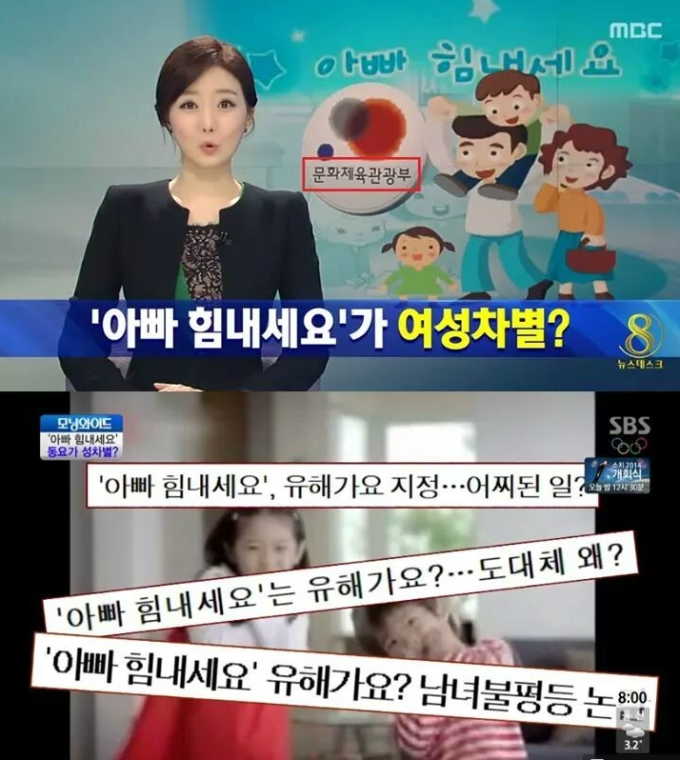
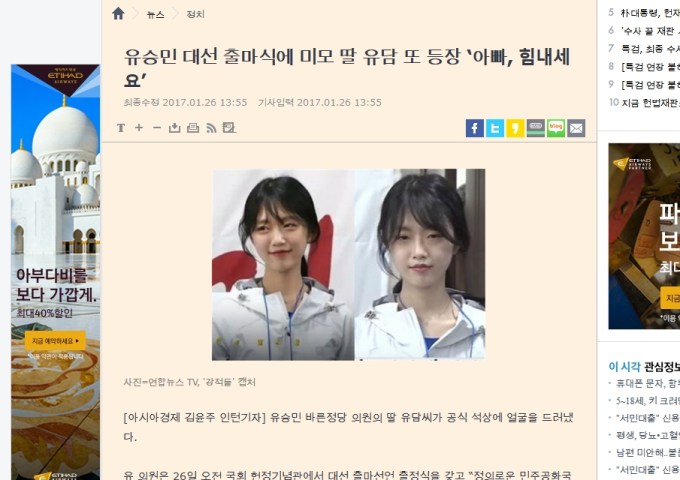 (Source: Asiae)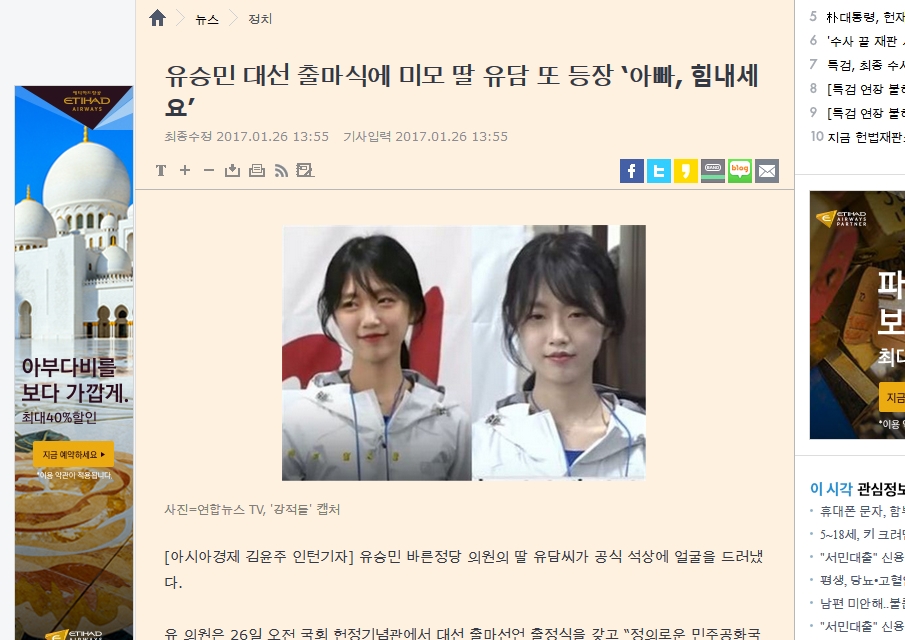
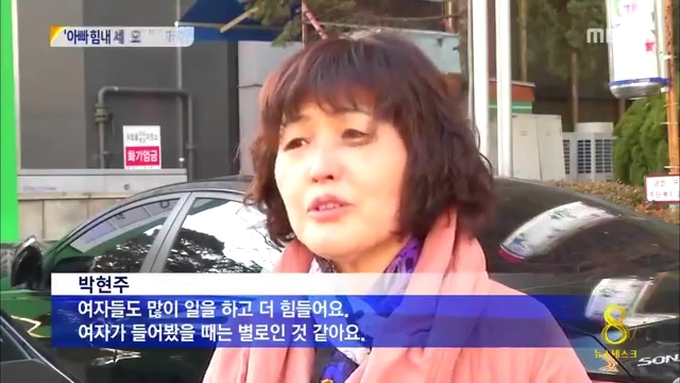 (“Women work a lot, and it’s harder for us. When they hear it, women don’t care for this song.”)

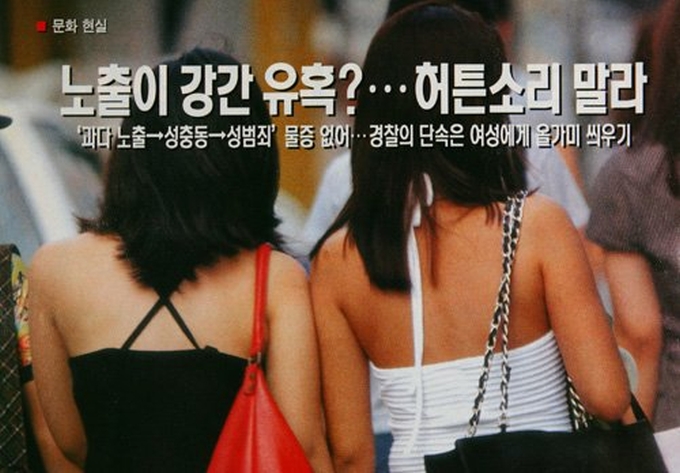

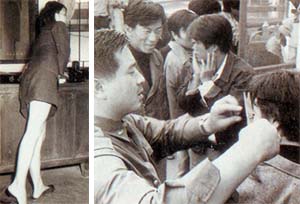

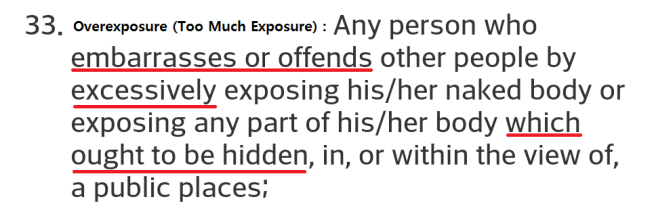

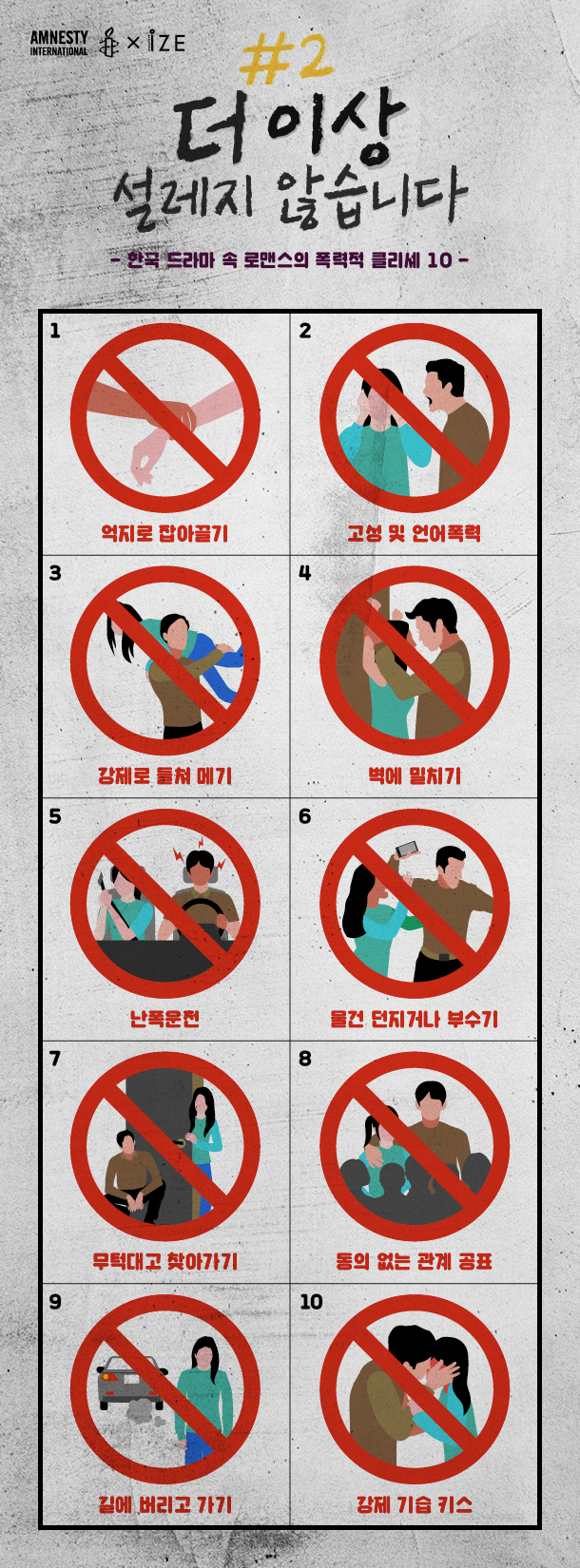
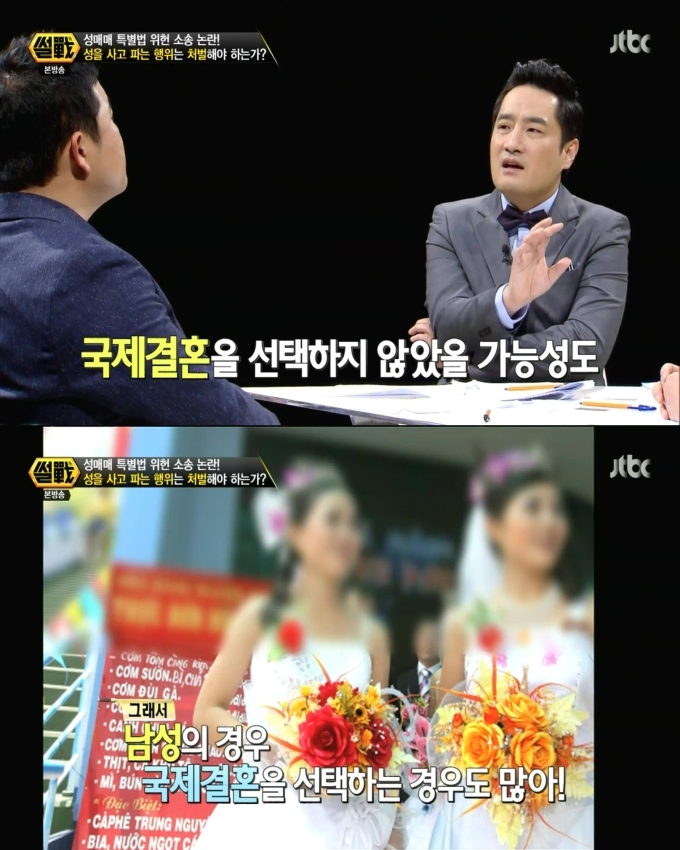


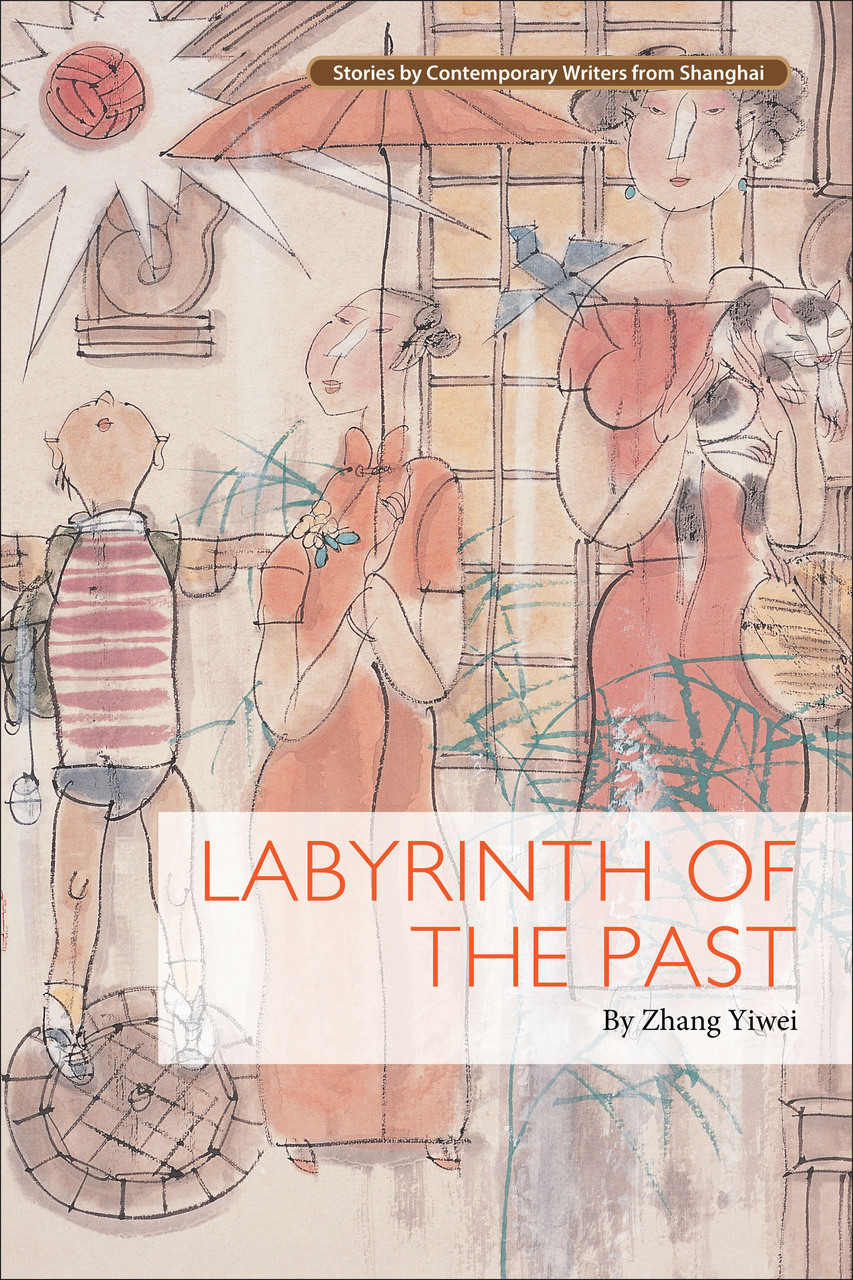


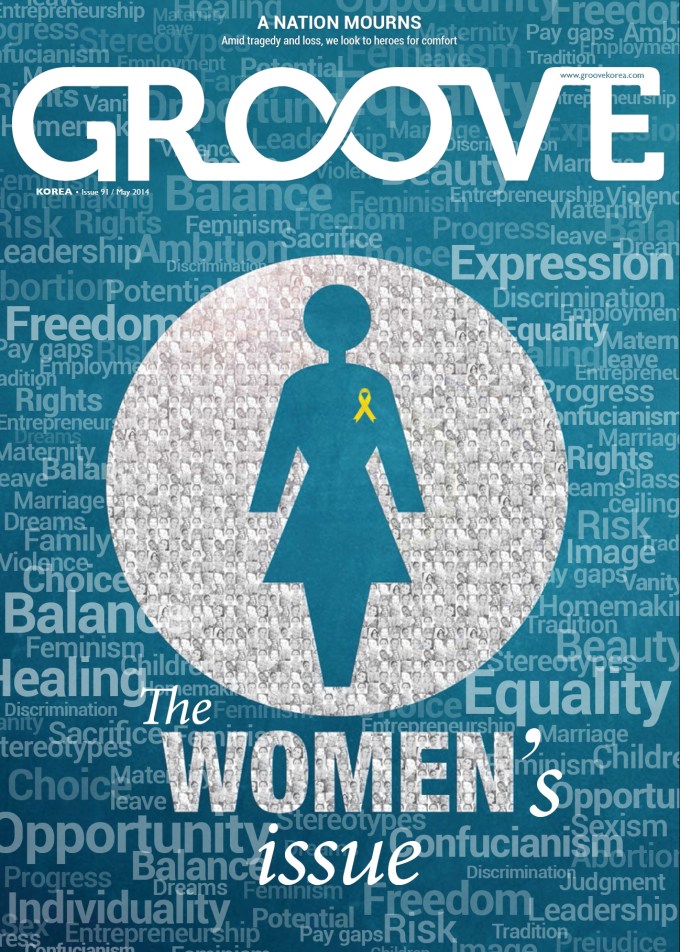


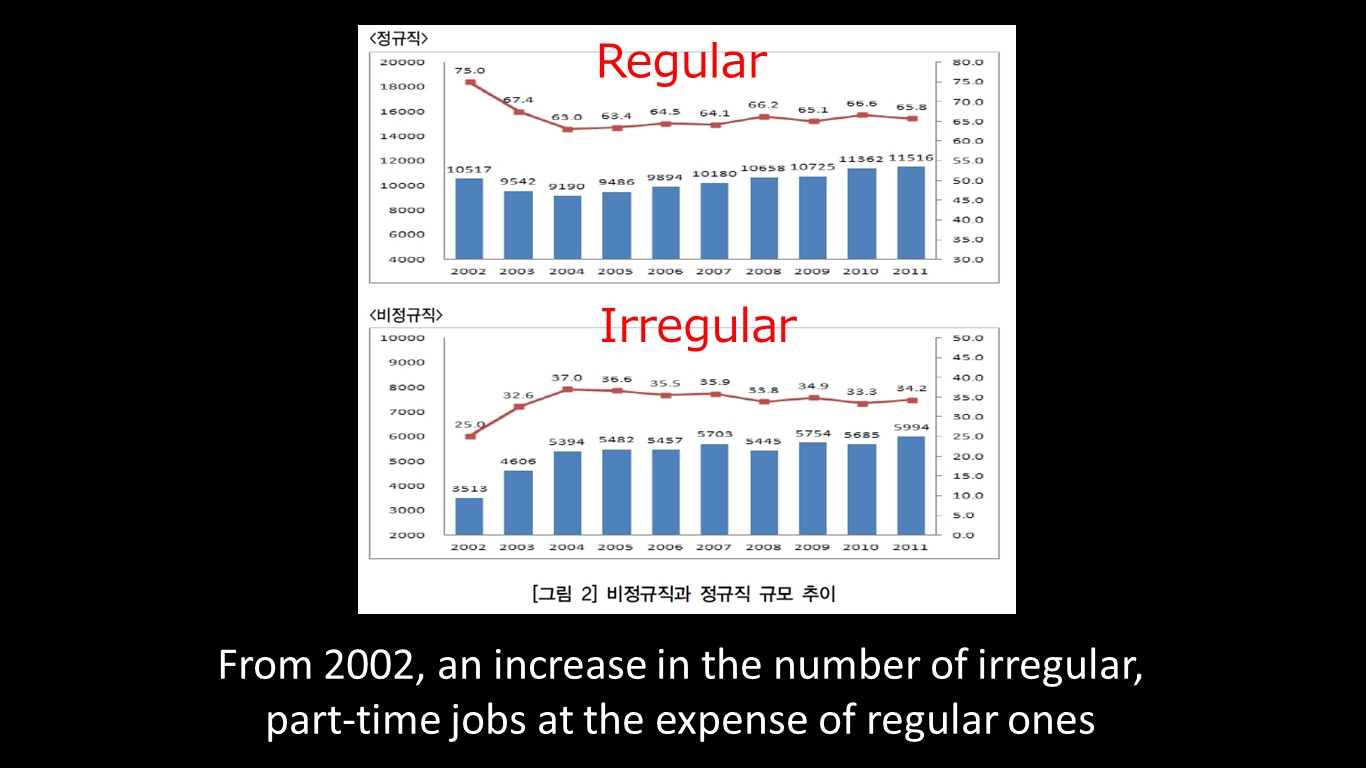
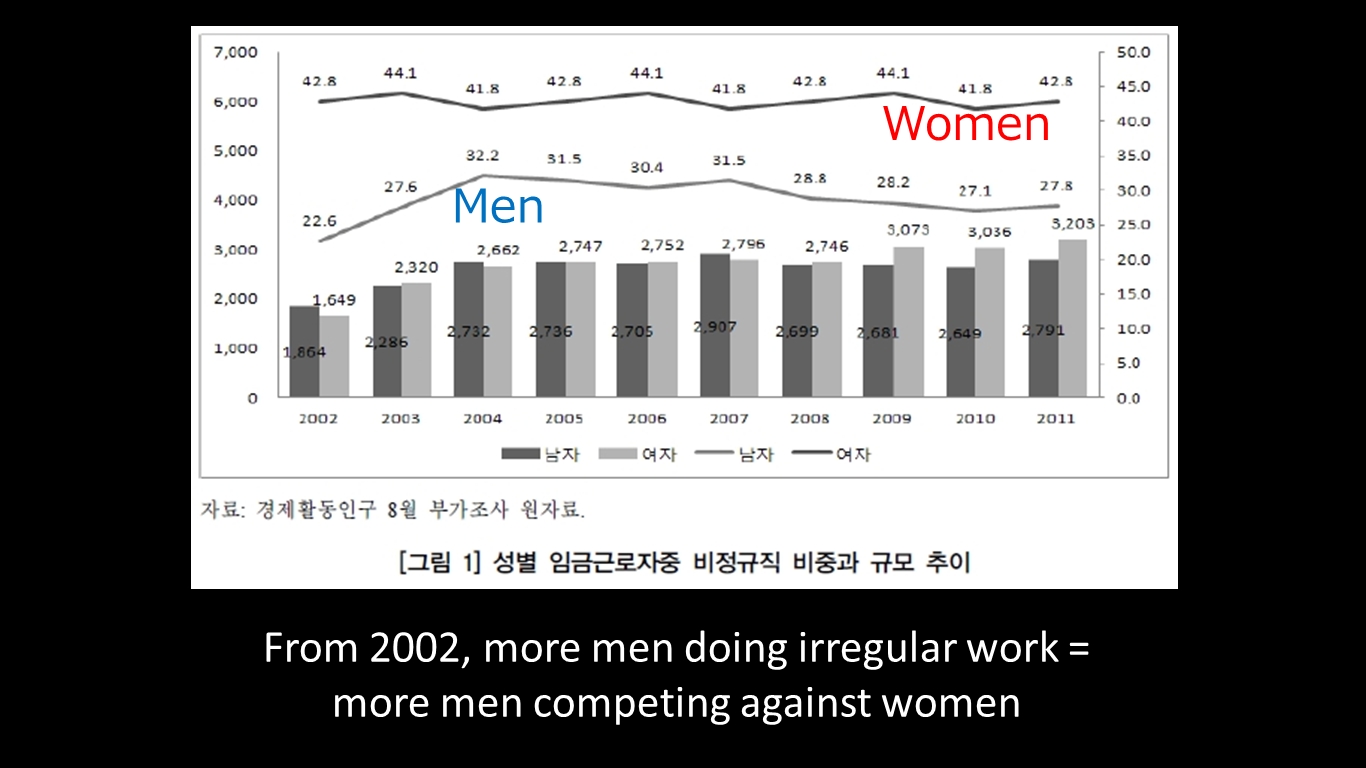
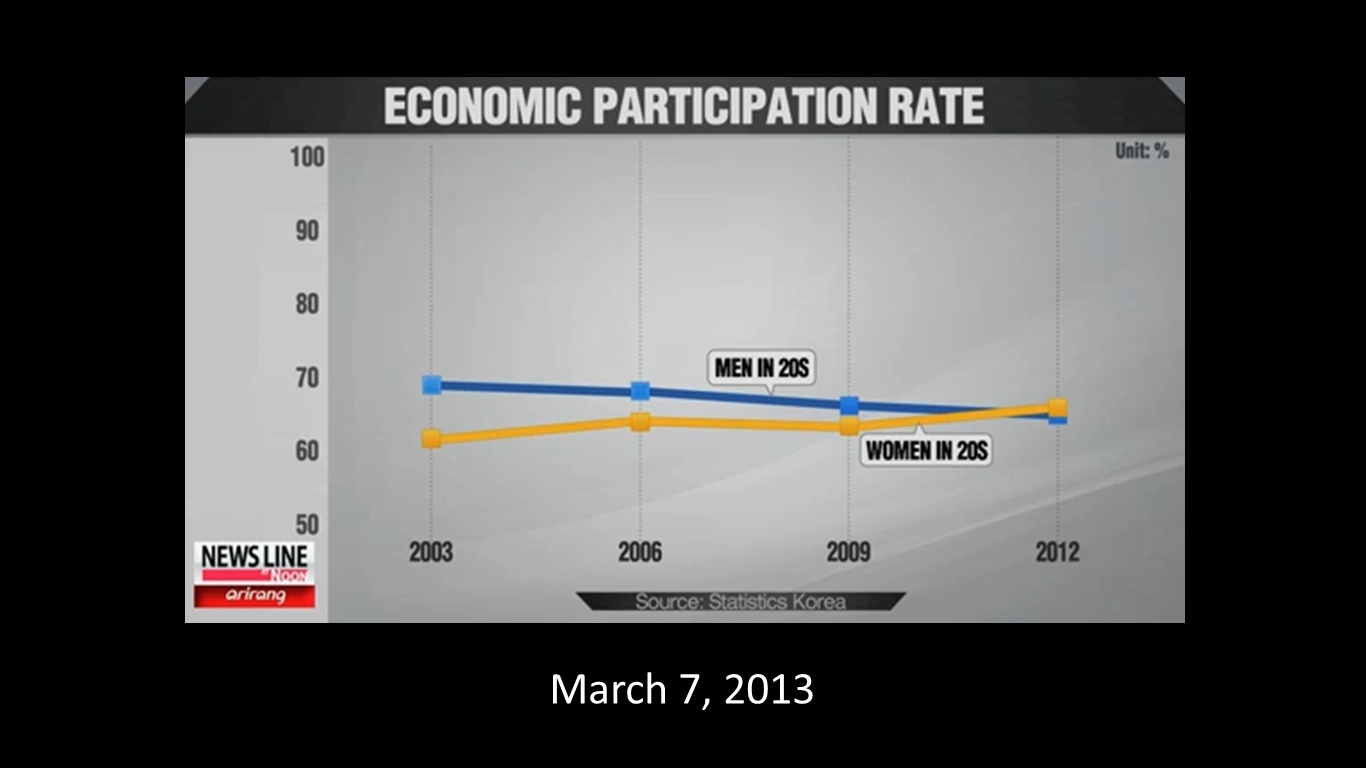
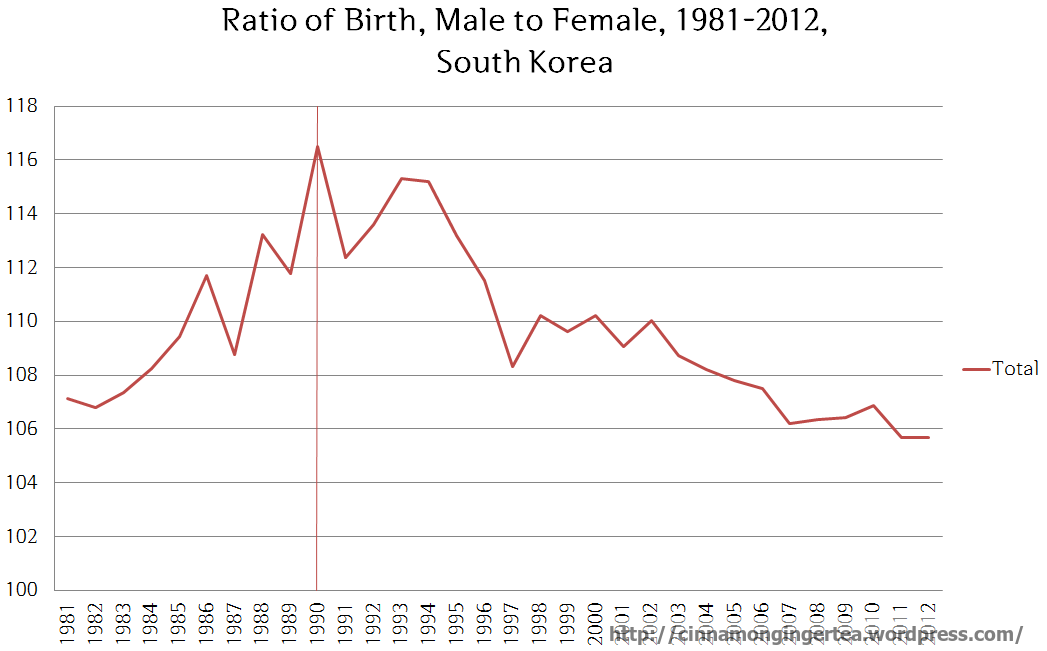

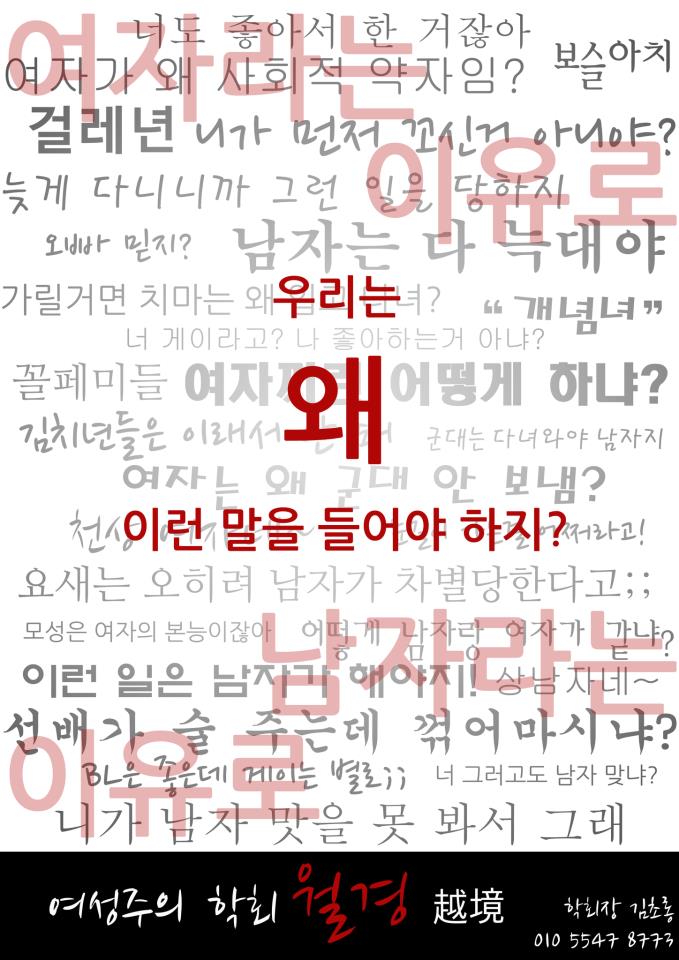

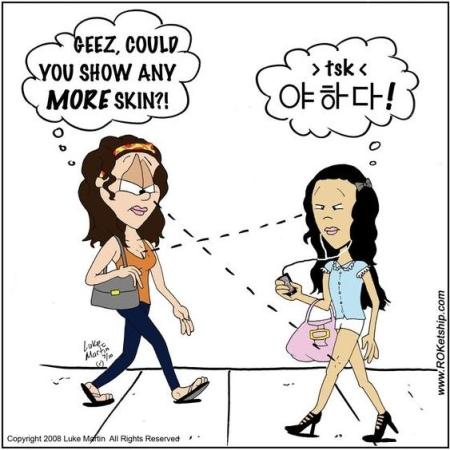
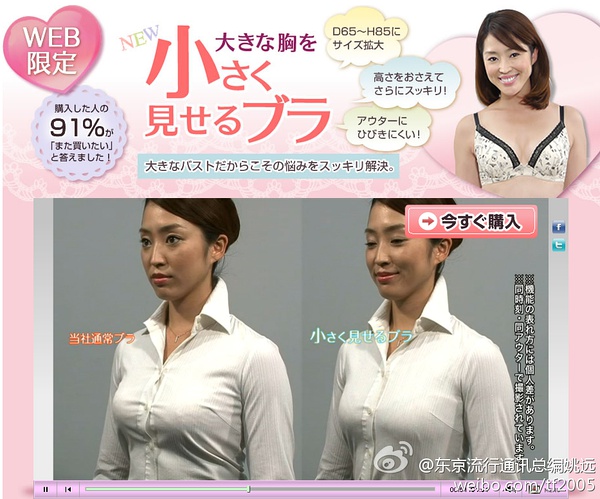
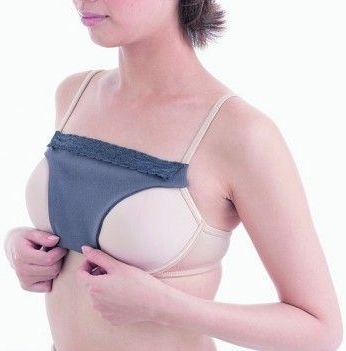
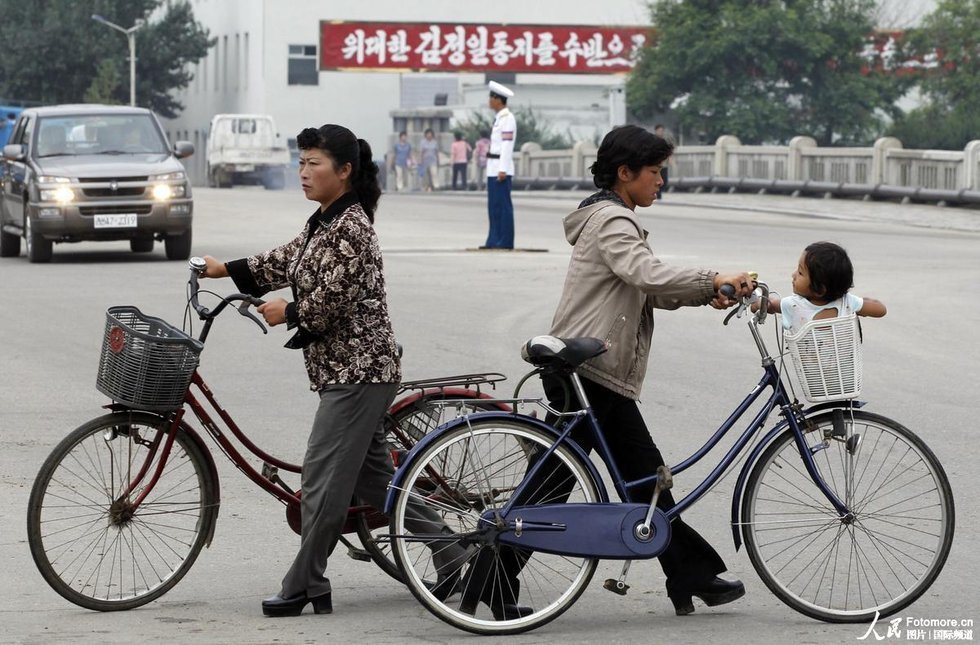


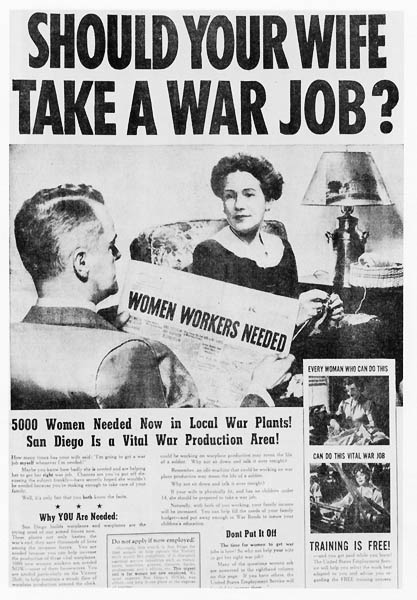
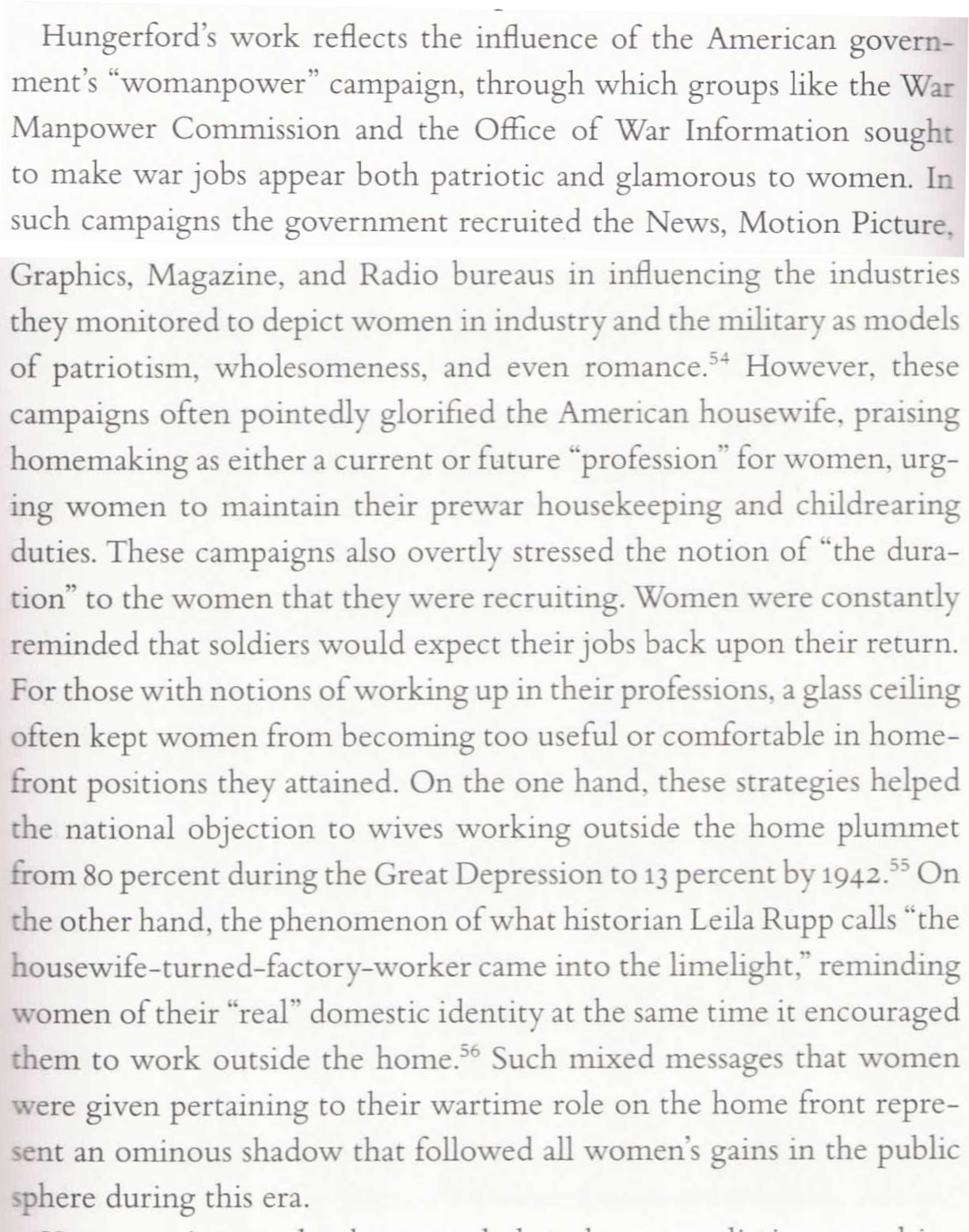
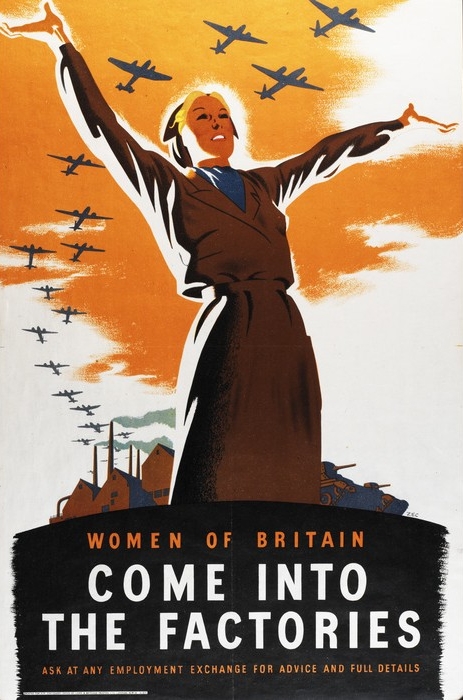

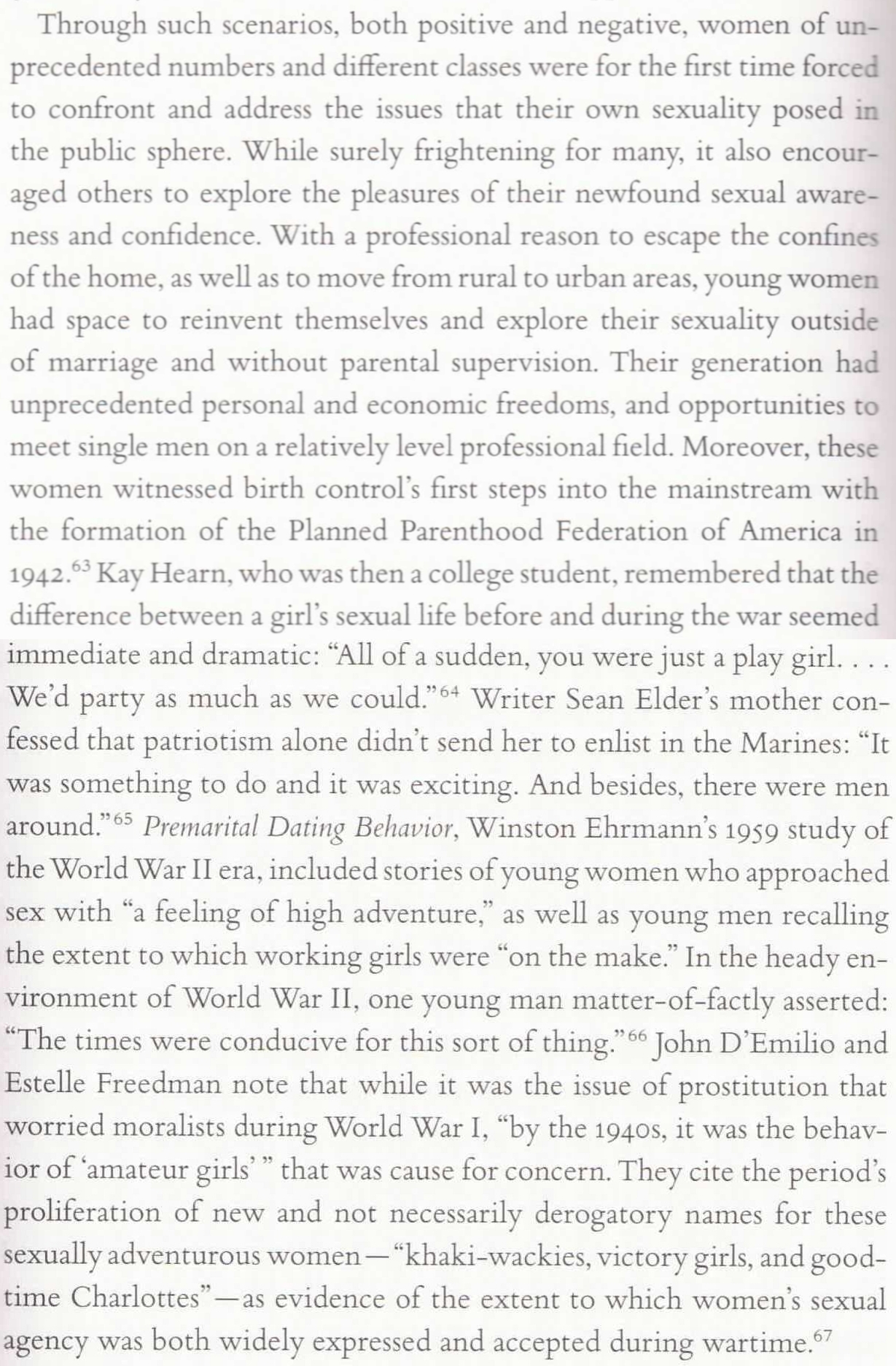

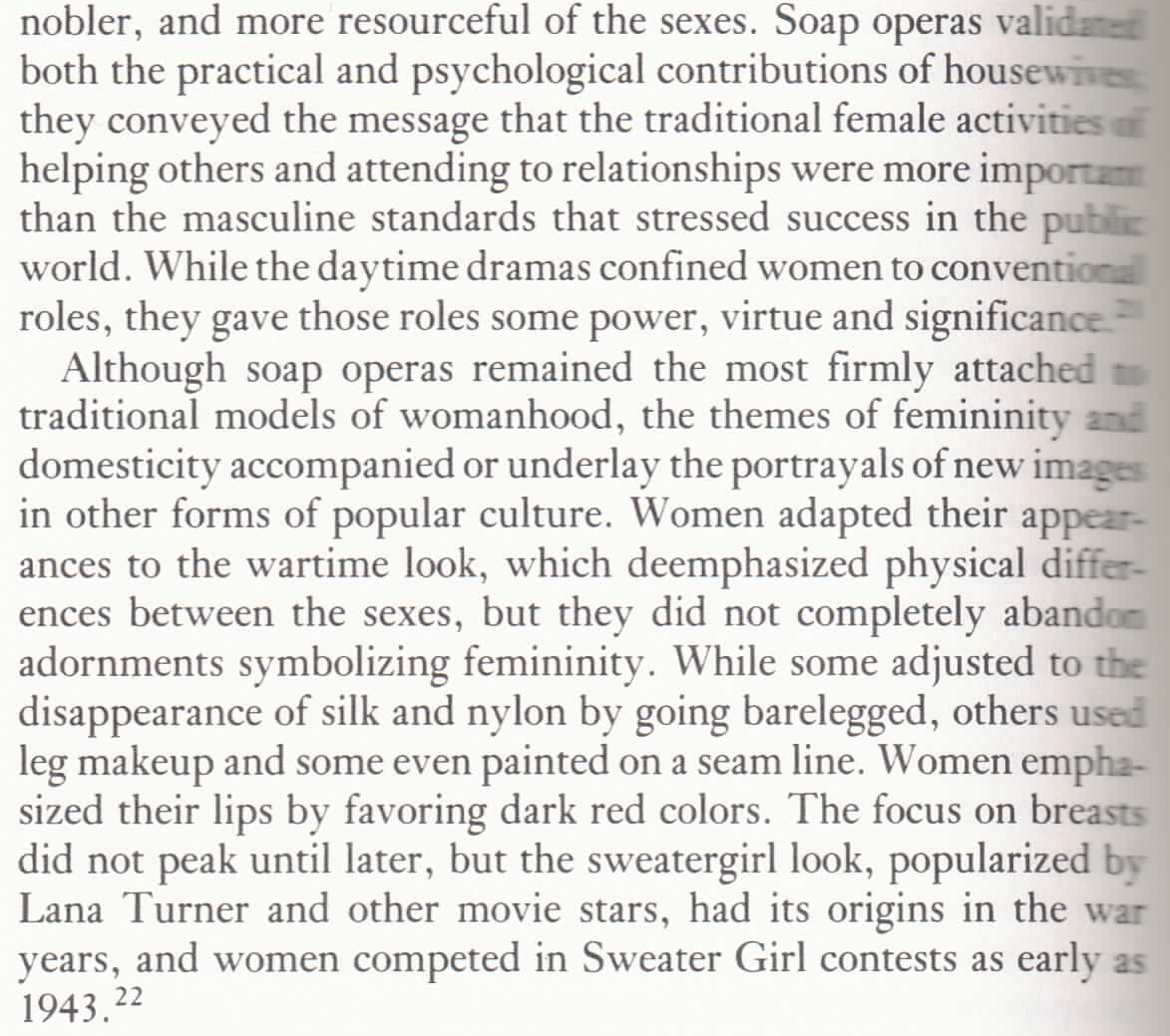
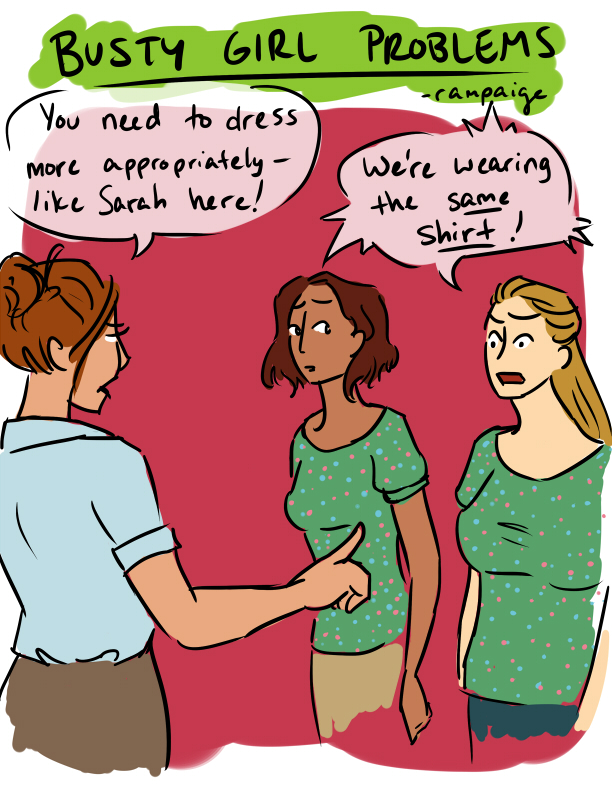
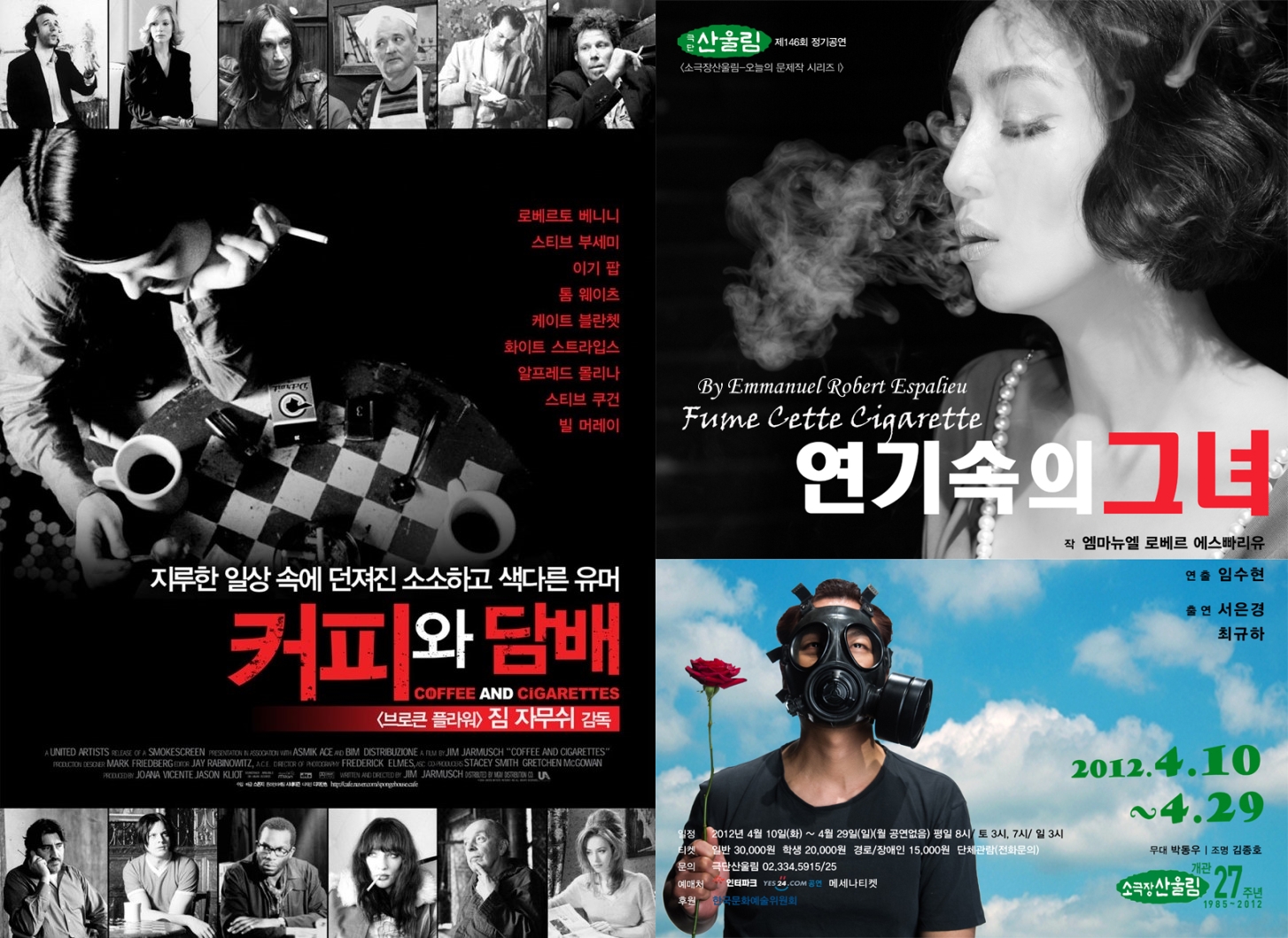


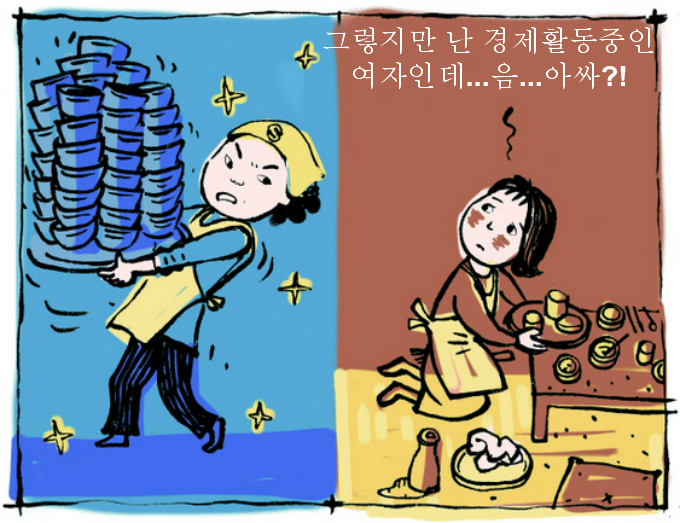
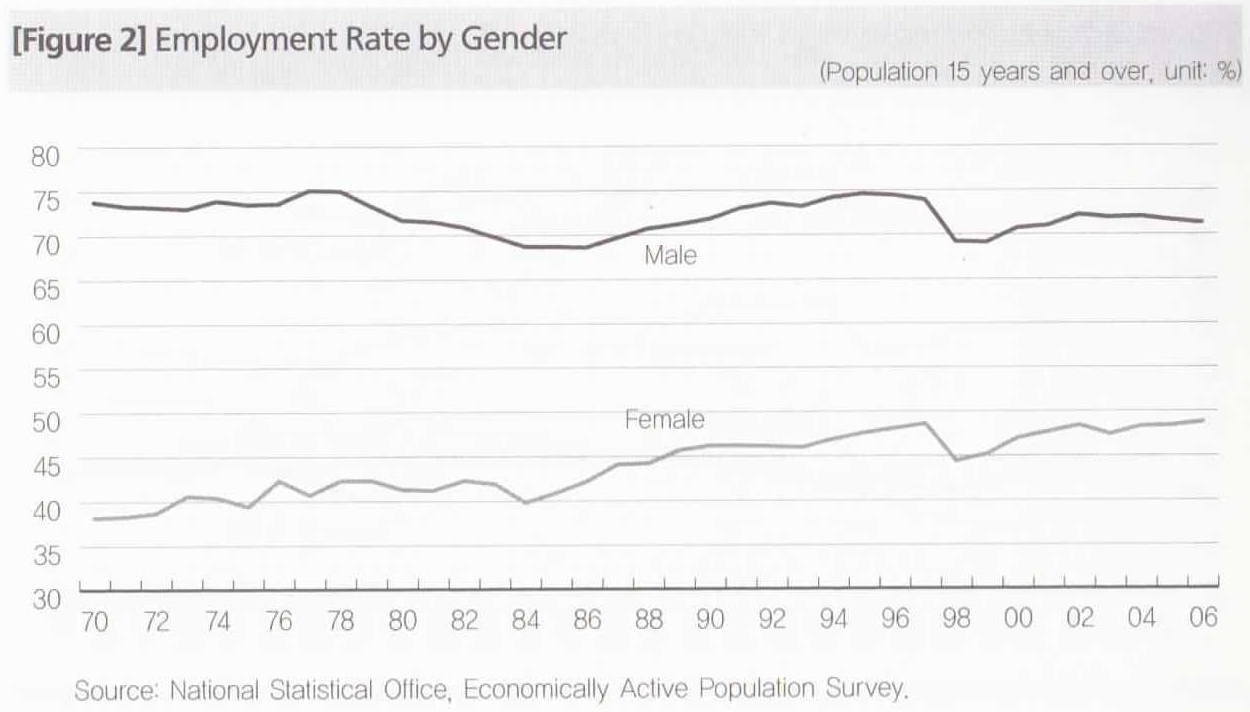
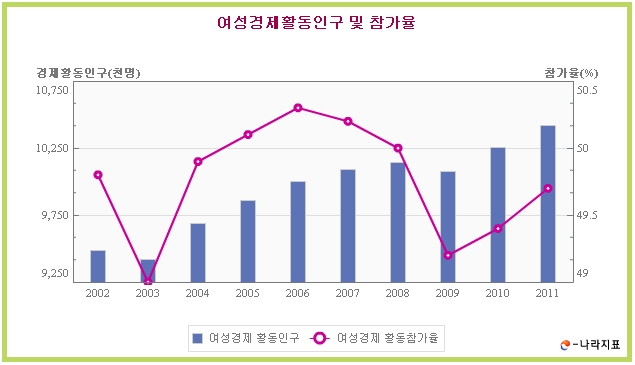
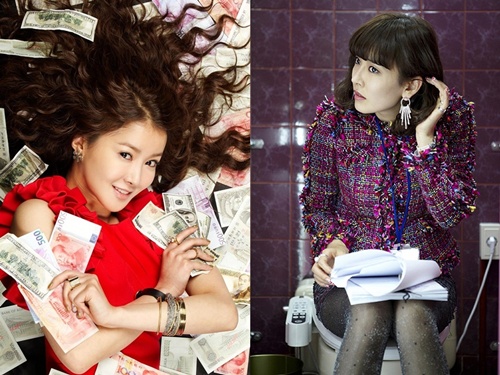







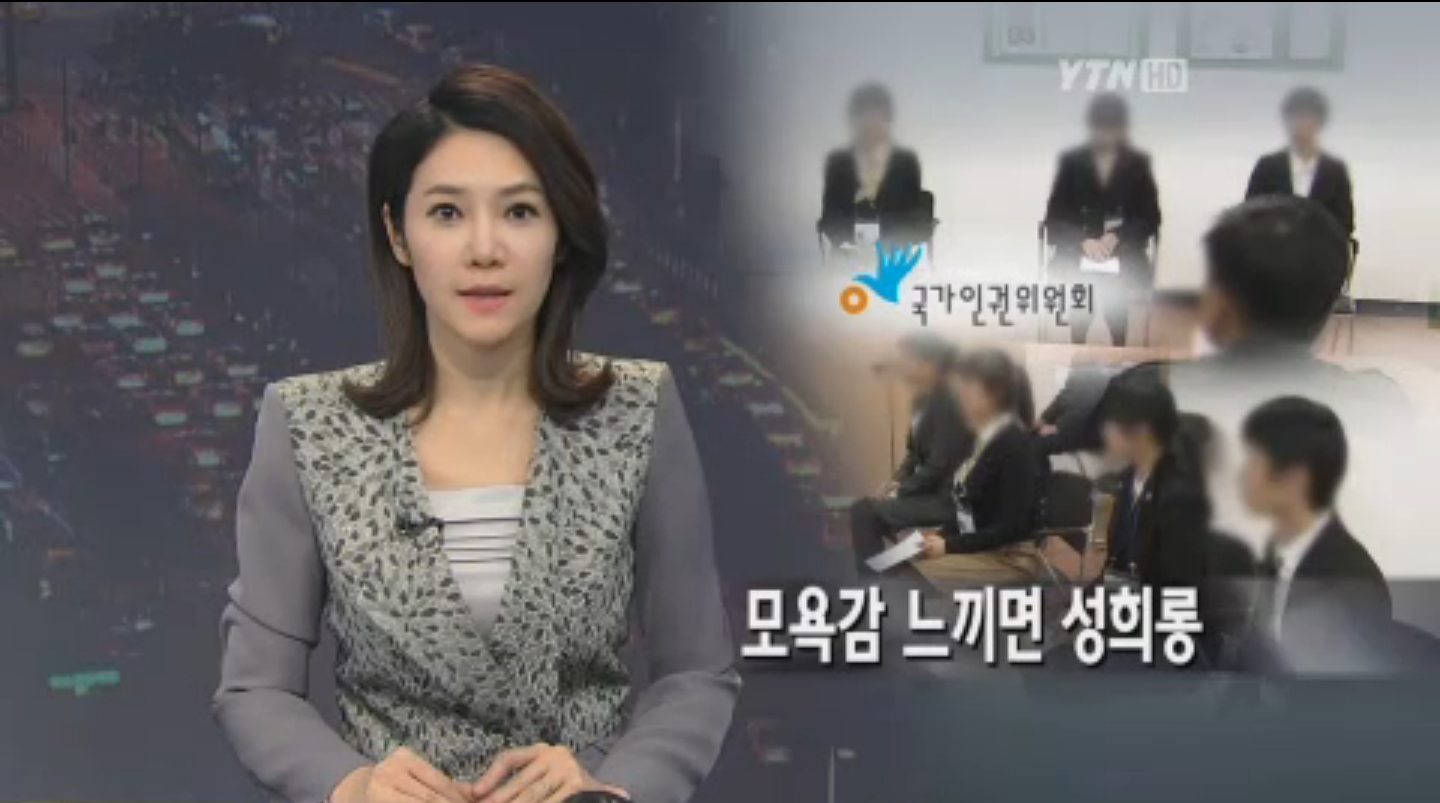
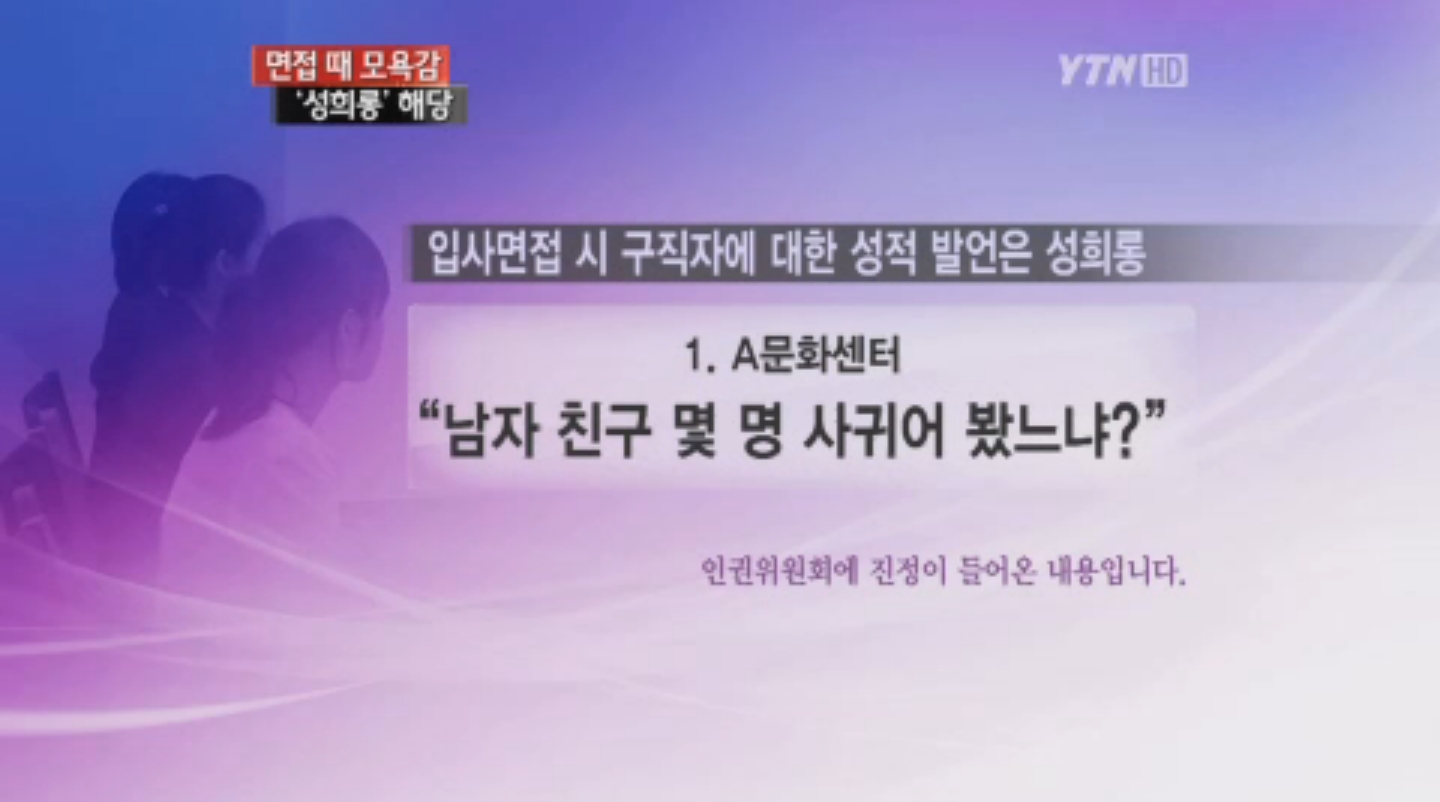
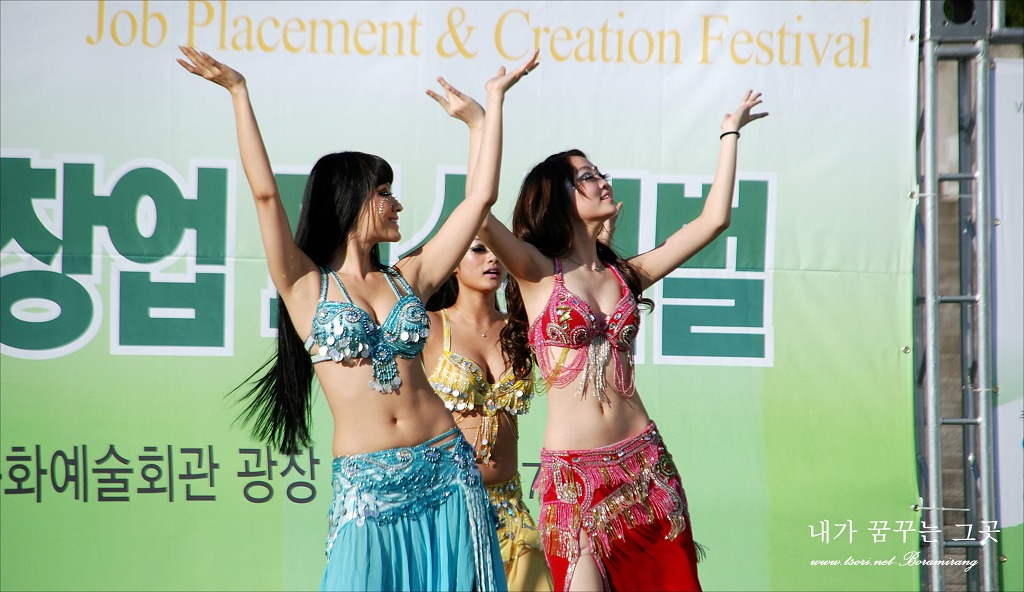

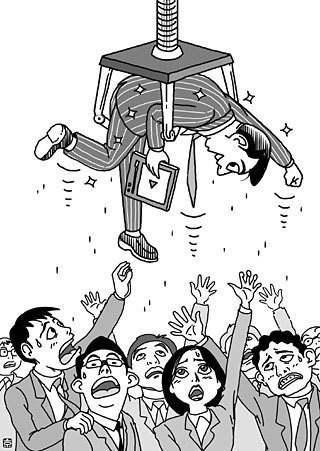
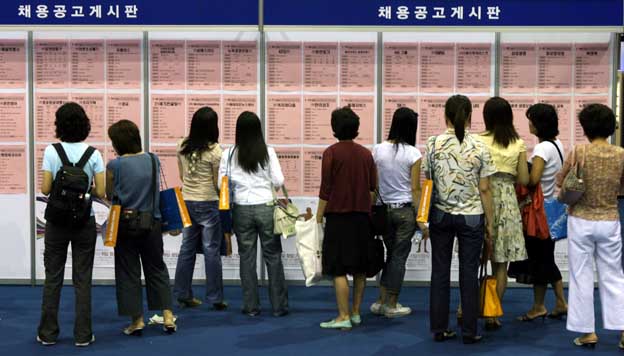
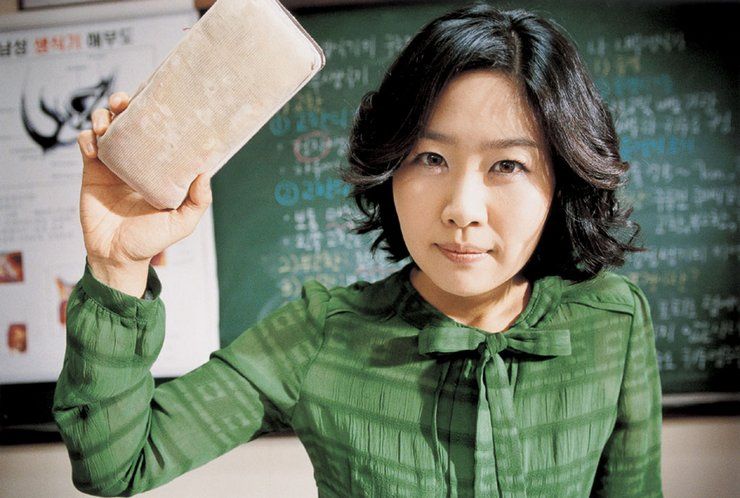
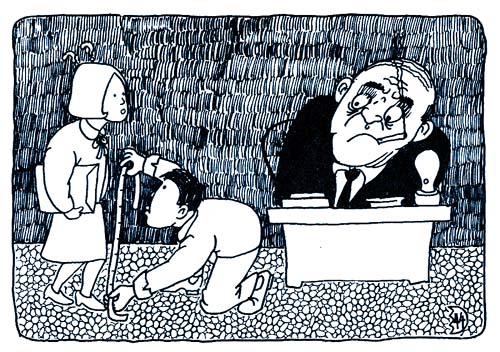

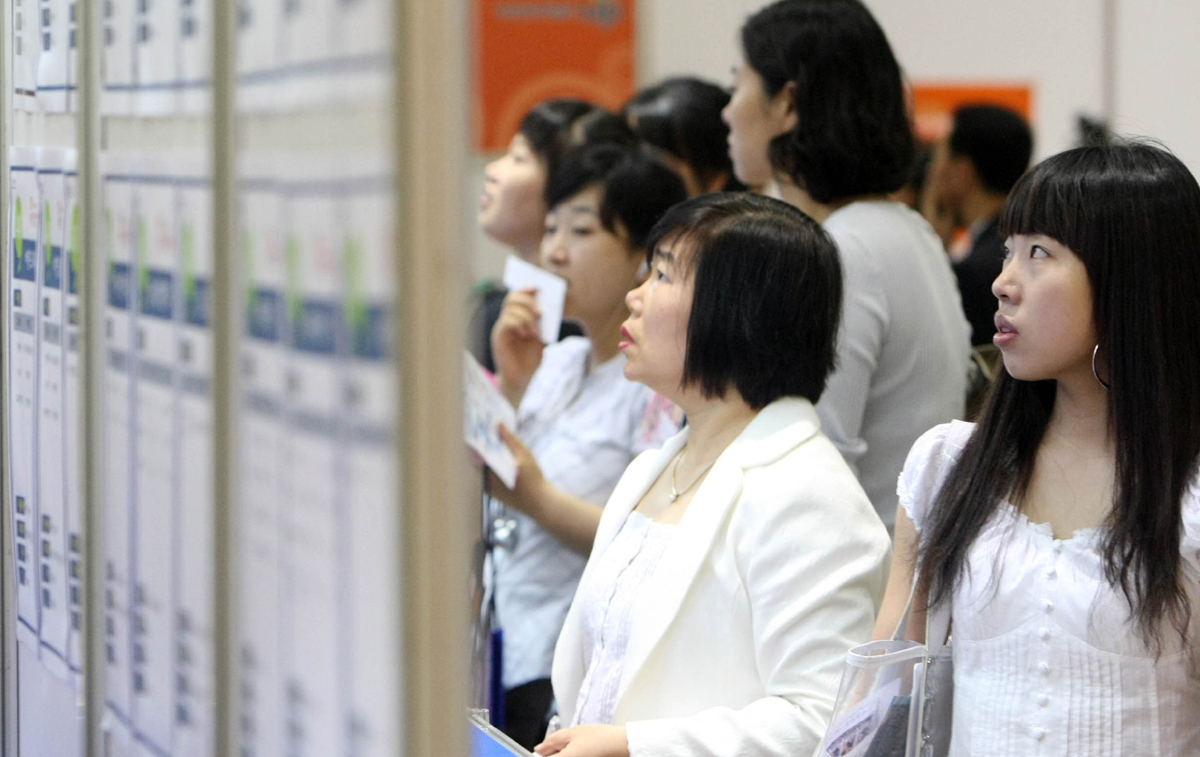




 The Grand Narrative